Author: Aaron M. Renn

  • Let’s Not Fool Ourselves on Urban Growth

    There has been a lot written lately about the return to the city. I’ve noted myself how places like central Indianapolis have reversed decades of population declines. That’s exciting. And the New York Times, for example, just trumpeted how “smart growth is taking hold” in America.

    But let’s not kid ourselves here. In my view this represents a possible inflection point, but it is way too early for the type of triumphalist rhetoric being bandied about by advocates.

    Let’s take a look at the change in the regional population share in core counties in 2009 vs. 2008 for the Midwest cities I typically focus on.

    City  Core County Share Change   2009 Core County Share   2008 Core County Share 
    Columbus 0.02% 63.83% 63.81%
    Pittsburgh 0.02% 51.74% 51.72%
    Milwaukee (0.01%) 61.52% 61.53%
    Minneapolis-St. Paul (0.02%) 50.84% 50.86%
    Chicago (0.06%) 55.19% 55.24%
    Louisville (0.07%) 57.33% 57.41%
    Kansas City (0.11%) 34.13% 34.25%
    Cincinnati (0.17%) 39.37% 39.54%
    St. Louis (0.18%) 47.68% 47.86%
    Indianapolis (0.23%) 51.09% 51.32%
    Cleveland (0.26%) 61.00% 61.26%
    Detroit (0.32%) 43.47% 44.06%

    For St. Louis, I use St. Louis city + St. Louis County as the core. For Minneapolis-St. Paul, I used Hennepin+Ramsey as the core.

    As you can see, only two regions managed to increase core county share of population, and these by a minuscule amount. Everyone else lost core county share. Keep in mind that even these “core” counties have many places with suburban characteristics. Now you might prefer a purely core city measure, and if so, be my guest. But don’t be surprised if the data gets even worse in many cases. Even in Chicago, which might have experienced the biggest urban core construction boom in America, the city lost population while Cook County gained it. Looking at the core city would make Chicago’s share loss worse.

    I think this shows there is still some work to do, to put it mildly.

    So why the difference versus the EPA study the NYT trumpets? Well, for one thing, the EPA study is worthless as a measure of urban health. They measure only new building permits, not people. This I think taps into a subtle suburban mindset in our outlook, that new housing units must represent net new inventory and net new people moving in, but in urban areas that’s not necessarily the case.

    The sad fact is, many of our urban cores have experienced significant housing abandonment and demolition. So in addition to construction of net new units, there’s a countervailing force of reduction. For example, the greater downtown area of Indianapolis has been seeing lots of construction. But the regional center comprehensive plan noted that between 1990 and 2000, the net number of dwelling units actually decreased. “The actual number of housing units declined over the 10-year period as some housing became dilapidated or was demolished and as some projects were emptied to await renovation (the Census only counts habitable units).”

    What’s more, as yuppies move in, and others move out, there is bound to be an effect on household sizes. Is it is really a good idea to price out larger immigrant families to the inner ring suburbs so that DINK’s can move in? How’s that for the environmental footprint of the region?

    I’m glad we’ve got big increases in urban construction and even population increases in some neighborhoods, but let’s not get ahead of ourselves by trumpeting a “fundamental shift”, as the EPA does, when the demographics don’t back it up.

    The New York Times article is also a disappointment. It fails to do any independent analysis of the data and only talks to people who are cheerleaders for the study, making it a sad piece of journalism.

    Someone recently described me as an “apologist for sprawl”. I in no uncertain terms reject that label. I am a passionate urban advocate who wants to see our core cities thrive and prosper. I want more growth there. I live in a city in a walkable neighborhood and rarely drive.

    But advocacy research of the type urbanists are quick to decry in others does a disservice to the cause. To change the trajectory of our cities and our built environment in America, we need to start with something called “reality”. I am optimistic that there’s a change in the air. But let’s not make claims about “fundamental shifts” that are simply not supported by any realistic look at the totality of the data.

    This post first appeared at The Urbanophile.

  • Midwest Success Stories

    Most observers do not associate the Midwest with urban success, but quite the opposite in fact. But while there are plenty of places that are legitimately suffering, there are also plenty of success stories out there that don’t always get the mindshare or press they deserve.

    First on my list of Midwest success stories is Des Moines, Iowa. This is a smaller,, largely under the radar city, but it has emerged as one of the strongest performers anywhere in the United States. This city defines the term “easy living”, while still managing to be home to major industries like insurance. Being smaller has proven an asset here, as Des Moines has avoided many of the large scale boondoggles like pro sports stadiums cities sometimes engage in to try to prove they are “major league”.

    Instead of competing for bragging rights, Des Moines instead has grown its job base significantly during the “lost decade” of the 2000s. Between 2001 and 2009, it added over 25,000 jobs – a healthy 8.9% clip – and boasts a close to rock bottom (for these times) 6.5% unemployment rate. Des Moines metro grew its population at 15.5% between 2000 and 2008, nearly double the national average, belying the notion that no one wants to live in Iowa. Despite this growth, labor shortages remain a long term local concern. That’s called a nice problem to have.

    Indianapolis is another standout, with a profile closer to the Sun Belt than the Rust Belt. It grew its population at a rate 50% greater than the national average, and also had strong net in-migration,with almost 65,000 net people deciding to pack up and move to Indy. Its demographic and economic stats are very comparable to Portland, Oregon, the urban policy poster child. In fact, Indianapolis actually added more jobs than Portland – where job growth has been largely in the suburban periphery – last decade thanks to an aggressive pro-business attitude and local industry clusters like life sciences, motorsports, and internet marketing.

    Indianapolis may also be the least expensive major housing market in America, but it maintains a full range of urban amenities and is only three hours drive from Chicago for those things it lacks. This is one reason Business Week just named the large suburb of Fishers the best affordable suburb in the United States. Indy has also quietly established a position as an urban innovator, with unique to the nation projects like a downtown urban trail. It is also a leader in modern roundabouts, with suburban Carmel having 5% of all the modern roundabouts in the entire United States.

    Head east on I-70 and three hours later you’ll arrive in Columbus, Ohio, Indy’s “twin city”. Like Indianapolis, an artificially chosen state capital, Columbus is thriving in a struggling state. Like Indy, it also has strong population growth and net in-migration, and a below average unemployment rate. It’s home to powerhouse Ohio State University, which boasts the nation’s largest college campus, and stunning historic neighborhoods like German Village. Columbus is home to a thriving LGBT community, and the second largest gay pride parade in the Midwest after Chicago, one of the top ten in the country, attracting over 100,000 attendees.

    West along I-70 is Kansas City. Described as a “zone of sanity”, Kansas City avoided the housing boom and thus largely the bust, remaining another affordable and attractive place to live. It too has had strong population growth and net in-migration, along with below average unemployment. The city is the second largest rail hub in the United States after Chicago, but lacks that city’s legendary rail congestion. Unsurprisingly, rail carriers are investing heavily there. With rail connectivity to Mexican ports, and sitting along I-35, Kansas City is looking to be one of the winners of NAFTA. Plentiful fountains and miles of lush parkways make Kansas City a lovely city. It is also a cultural hub, with the respected Nelson-Aktins Museum at the high end and the thriving Crossroads Art District on the grass roots side.

    Madison, Wisconsin is one of the rare Midwest cities that actually gets national respect. Its location along a narrow isthmus creates a charming physical setting and compact urban core. Home to the University of Wisconsin, its progressive credentials are unimpeachable. But it is also an economic success story, with strong job growth of 6.6% from 2001-2009, along with impressive population growth. Part of this is the university’s powerhouse researchers, who attracted the likes of Google to open an office. The city is also the state capital. Despite being a smaller city, it boasts amenities worthy of America’s elite metropolises, including super-high end denim retailer Context Clothing and the luxurious Candinas Chocolatier.

    Despite its reputation for frigid weather and its geographically peripheral location, Minneapolis-St. Paul offers both economic strength and high quality of life. Its residents embrace the recreational opportunities provided by numerous nearby lakes, including several inside the Minneapolis city limits, as well as the winter. The region was early to the starchitect game, with Frank Gehry designing the metallic Weisman Art Center before the Bilbao Guggenheim. But it’s not all fun and games there. The region has an unemployment rate well below average and a GDP per capita well above it. It is home to numerous household name firms like Target, Best Buy, and 3M. And it is a center for the medical device industry.

    These six cities show that there’s a lot more to the Midwest than rusted steel mills, shuttered auto plants, and abandoned houses. It is also home to healthy cities and thriving suburban communities that are outpacing the nation demographically and economically. These places offer affordability and a high quality of life, but still manage to feature many more urban amenities and innovations than commonly assumed. These characteristics make them well-positioned to be among the urban winners in the 21st century.

    Aaron M. Renn is an independent writer on urban affairs based in the Midwest. His writings appear at The Urbanophile.
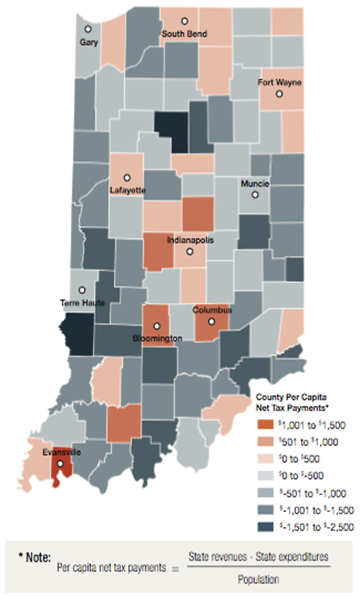
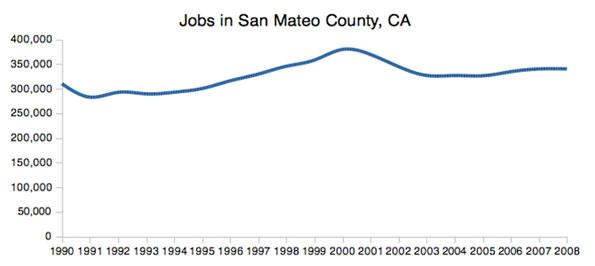
    Photo by Carl Van Rooy (vanrooy_13)

  • The 10 Percent Solution to Urban Growth

    What if we achieved the urbanist dream, with people deciding en masse to move back to the city? Well, that would create a big problem, since there would be no place to put them. Many cities hit their peak population in 1950, when the US total was 150 million. Today it is over 300 million, with virtually all the growth taking place in the suburbs.

    So where would these new urbanites reside? With the enormous losses in our urban housing stock, our cities lack the residences to hold even their 1950 population. A recent survey found that one third of all the lots in Detroit are now vacant, for example. And even if all the old housing was rebuilt, declines in household sizes, particularly in urban areas, has reduced the effective carrying capacity of the old urban fabric even at historic densities.

    But there’s an even bigger challenge to wholesale urbanization from future population growth. The Census Bureau estimates that the US will add nearly 100 million more new people by 2050. If you look at the few cities in the country that have large inhabited urban cores, they hold a relatively small percentage of the current population. New York City, Los Angeles, Chicago, Philadelphia, San Francisco, Boston, Seattle and Washington, DC combined barely hold 20 million people. Even if all these cities doubled in population by 2050, they would only be able to hold 20% of the net new growth expected over the next four decades.

    And achieving even that level of urban growth is simply not realistic. Most of the existing highly urbanized cities are already largely full of buildings. Even where land is available, zoning restricts what can be built there, and increasing densities is politically difficult. New York City has been the most aggressive on the growth front, rezoning 20% of the city under the Bloomberg administration, although many sections have actually been downzoned.

    But even this effort could accommodate a projected one million new residents by 2030. Chicago is going the other direction. When it introduced new zoning under the Daley administration, permitted densities were actually reduced in most cases, though Chicago remains perhaps the only truly urban city with large amount of vacant or underutilized land for redevelopment. Ed Glaeser calls for building skyscrapers in California, but San Francisco residents are imbued with a strong anti-development mindset and have long railed against the “Manhattanization” of their city.

    America could not be reshaped from a primarily suburban to a city-centric country without a massive shift in local political mind-sets. Rather than attempting that exercise in futility, urban advocates should adopt much more modest goals that, although limited, could be completely transformational for our cities.

    There’s been much made of the return to the city. Indeed, large tracts of the urban cores of many places have been utterly remade. But most of the cities where this has happened have been America’s largest tier one cities – New York, Chicago, Boston, etc. They have achieved the point of self-sustaining urban growth, and are well positioned to attract more residents, particularly the upscale and childless, young singles and students and recent immigrants.

    In contrast, smaller cities have seen a few hundred downtown condos and such, but not a real urban renaissance. There is still a lot of work to do in those places.

    The way to do this is to adopt the “10 percent solution”. That is, for most cities, they should develop a strategy that tries to capture somewhere between 5 and 15 percent of the net new growth in their metro areas. If a city can get more, great. But for any growing region, even 10 percent would create a dynamic of massive change in the urban core.

    Consider Indianapolis, a region with healthy regional growth that is above average but not among the nation’s leaders. The Indianapolis metro area is adding people at a rate of about 200,000 people per decade. Center Township, which is the urban core of the city, peaked in population in 1950 at 337,000 people. Today it is at 167,000, a decline of 50%, on par with America’s greatest urban collapses

    But what if the urban core managed to capture 10% of that new growth? That’s 20,000 new residents, very easy to physically accommodate within a decade. What would 20,000 new residents do to central Indianapolis? What would it do to the entire dynamic of the city? It could be completely transformational.

    Such a modest capture of new population would catapult central Indianapolis into one of the absolute top growth areas in the region. Only one suburb is on track to add that many or more people during the 2000s. Many other suburbs are considered prosperous and fast growing despite adding only a few thousand people. Even that limited influx creates a pattern of growth vs. stagnation and decline. That’s where urban Indianapolis needs to get.

    One of the great advantages of targeting 10% market share in new growth is that it frees the city to pursue a market segmentation strategy. It doesn’t have to try to convince vast numbers of suburbanites – the vast majority of whom are likely to stay in place – to make a radical lifestyle change. Rather, the core can market to specific segments that it is best positioned to attract, and put together the most compelling and differentiated product to attract them.

    One potential market is those who want an urban environment but can’t afford to live in one of the expensive tier one cities. They could market themselves to people who find themselves priced out of the biggest cities, but would settle in a smaller, but still vibrant urban environment.

    Can Indianapolis do it? As with many cities, there is already some evidence that it could. In the 2000s, decades of population decline came to an end in 2006, and Center Township started adding an estimated 400 people per year. The jury is still out on whether the estimates are confirmed by the census count and whether it can be sustained, but it still amounts to 4,000 people per decade, showing that the city is already starting to make progress.

    Cincinnati provides another example. It is a metro growing a bit less than the national average, but still adding people at a rate of about 150,000 per decade. The city of Cincinnati declined from a peak of 503,998 in 1950 to 333,336 today, a loss of 170,000 people. Again, if the city captured 100% of just regional growth, in little more than a decade it would be back to a record high population. That’s not realistic of course, but 10% of that total, or 15,000 people, would still make a tremendous impact on the city. Like Indianapolis, there’s already some sign of an inflection point, as the city population began growing again in the 2000s.

    Can this 10% solution really happen? The answer is a resounding Yes, because it is already happening in Atlanta. Its reputation as a sprawlburg overshadows the fact that it is experiencing one of America’s most impressive urban core booms. The city of Atlanta has added almost 120,000 new residents since 2000, an increase of 28%. This is a mere 10.5% of the metro area’s growth during that time – but it has totally changed the city. Atlanta lost over 100,000 people from its 1970 peak, but is now at an all time high.

    Viewed in this realistic light, there is huge reason for optimism about rebuilding the urban cores of even our Rust Belt cities. Frankly, with the required market share of growth to get there so low, there’s no excuse for not making it happen. If city leaders can’t figure out how to attract even 10% of the market, they deserve to lose. If they can do better, great. And once they’ve captured that 10% base, and restarted a growth pattern, they can figure out how to get more ambitious and expand market share.

    For regions with population decline, like Detroit and Cleveland, there’s a different and much more challenging dynamic. But for cities with even modest regional population growth, there’s all the opportunity in the world to attract new urban residents and completely change the game for their urban cores.

    Aaron M. Renn is an independent writer on urban affairs based in the Midwest. His writings appear at The Urbanophile.
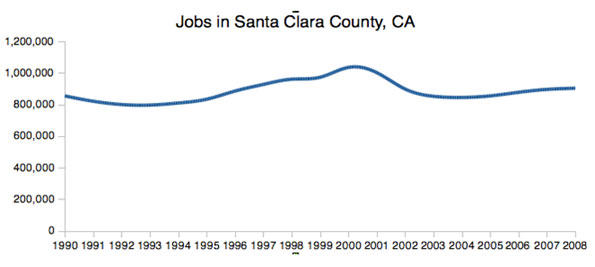
    Photo: Carl Van Rooy (vanrooy_13)

  • Reforming Anti-Urban Bias in Transportation Spending

    State governments have to stop treating transportation like yet another welfare program.

    Among urban and rural areas, who subsidizes whom?

    It’s methodologically difficult to measure net taxation, but the studies that have been done suggest that, contrary to the belief of some, urban areas are big time net tax donors. For example, a recent Indiana Fiscal Policy Institute study found that Indiana’s urban and suburban counties generally subsidize rural ones.

    Just the consolidated city-county of Indianapolis-Marion County sends $420 million more to the state annually than it receives every year. That’s equal to the entire public safety budget of the city. The rest of the metro area sends another $340 million to the state annually.

    Similarly, a 2009 Georgia State University study found that the Atlanta metro area accounted for 61% of state tax collections but only but only 47% of expenditures. A 2004 University of Louisville study found that the state’s three major urban regions – Louisville, Lexington, and Northern Kentucky (south suburban Cincinnati) – generate over half the state’s tax revenues but only receive back about one third in state expenditures, an annual net outflow of $1.4 billion per year.

    The Atlanta and Indianapolis examples are particularly instructive, since both are the capital and by far the largest city of their state. They are sometimes presumed to benefit from disproportionate state spending as a result, but the reality is quite different.

    That’s not to say that this is necessarily bad. The fundamental basis of any government is a commonwealth, a body of citizens who see themselves as fellows, who believe each other’s fates are linked. Thus, generally spreading the burdens on some type of a progressive basis is broadly considered equitable, and assistance to the less fortunate constitutes a core function of government. To the extent that cities generate the most wealth in today’s economy, and have the highest incomes, it is no surprise they pay more in taxes. This doesn’t per se mean there’s an anti-urban bias in policy.

    Indeed, income redistribution is one of the key functions of state government. Actual welfare and safety net programs, including things like health care for the poor, are a major budget item in every state. But it goes beyond that. K-12 education could be treated as a purely local service, but every state spends large amounts on it. One could argue this is strictly to ensure a minimum level of funding equity between rich and poor districts. That is, it’s purely redistributive. Indeed, states sadly spend more time fiddling with funding formulas than in actual education reform and improvement. Even corrections disproportionately and unfortunately affects the poor. We are, in effect, a collection of 50 welfare states.

    The fact that so many of the functions of state government have taken on a redistributive cast also comes with downsides. Most importantly, even functions that should have little to do with welfare or equity have come to be seen through that lens.

    Exhibit A is transportation. Two-thirds of Americans live in large metro areas, yet less than half the federal transportation stimulus funds are going to the top 100 metro areas. Missouri is spending half its stimulus money on 89 small counties that account for only a quarter of the state’s population. In Ohio, the state cancelled plans to spend $100 million in stimulus funds on the crumbling Cleveland Inner Belt bridge in order to divert them to paying for a $150 million bypass around Nelsonville – a town of only 5,000 people. This is part of a plan to construct a four lane divided highway into sparsely populated southeast Ohio as part of a “build it and they will come” economic development plan. Mecklenburg County, NC, the state’s largest and home to Charlotte, received only $7.8 million out of the first $423 million in projects in that state. The Atlantic Monthly described this as a contest between a “mayor’s stimulus” and a “governor’s stimulus” – and the governor won.

    State after state has rural “roads to nowhere.” Without any legitimate economic development strategy on offer for depressed rural areas and small industrial cities, salvation is said to lie in access to four lane highways. The logic is that until every county in America is crisscrossed with these things, somehow residents are deprived of their due. This plays well to rural resentment, allowing people who are by nature proud believers in self-reliance and dismissive of welfare to claim instead that they’ve been cheated out of their “fair share” of transportation money. One suspects at least some deep inside understand the fiscal reality, which accounts for the self-righteous rhetoric designed as much perhaps to convince themselves as others.

    Regardless, a lack of transportation investment is crippling our cities, many of which have congested, crumbling roads and shaky bridges. Earmark reform would help at the federal level. Earmarked projects and “high priority corridors” are too often, as with “strategic” corporate programs, projects for which no traditional justification can be found.

    But beyond this, governance reform at the state level is critical to bring transportation funding allocations in line with real population and economic development measures. That’s not to say that rural areas should get no funding. There are many areas where legitimate state funding is warranted, such as replacing substandard bridges or correcting roads with dangerous geometry. But that doesn’t mean states should spend huge amounts of money on large rural expansion projects of dubious value that rob urban areas of the funds needed for projects with genuine transportation merit and real economic development potential.

    If states won’t act to reform this, then, despite legitimate governance concerns in our system of federalism, the federal government may need to step in to take a more direct role in funding formulas to ensure that a proper share of the money gets sub-allocated to metro areas. The federal government simply can’t allow states to continue diverting critical and limited transport money to boondoggles.

    With metro areas as the economic locus of the 21st century, failing to take action to make sure our cities get the transportation investment they need puts both the state treasury and national economic competitiveness at risk. Cities can only continue to play their role as wealth generators and sources of transfer funds for their states if they themselves are economically healthy, which requires infrastructure investment. As the Indiana, Georgia, and Kentucky examples show, state treasuries and rural funding are dependent on urban economic health. You can’t redistribute money from urban to rural areas if there’s nothing to distribute.

    Aaron M. Renn is an independent writer on urban affairs based in the Midwest. His writings appear at The Urbanophile.
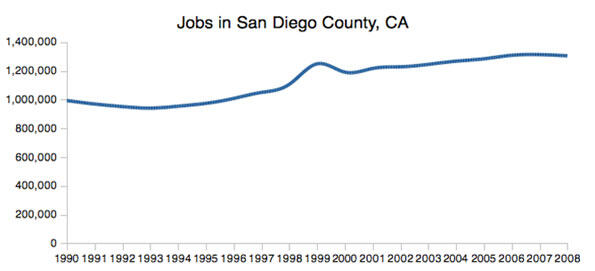
    Photo: Pete Zarria

  • “First” vs. “Worst”

    Taking on the Portland mystique is not easy – and likely I’ll find out again with my most recent piece: Picture-perfect Portland?

    But I’d also like to take a Midwest perspective that shows some surprising things. Let’s compare Portland to a similarly sized and less acclaimed Midwest city, Indianapolis. You can think of Portland as being in “first place” from a policy perspective by popular acclaim. It has an urban growth boundary, extensive transit, excellent urban density, a strong biking culture, a strong culture of civic engagement, the most microbreweries per capita, and on down the line. It is a place people want to live in so badly that they will move there with no job in hand and would be one of the cities that comes to mind among similar sized metros as a talent hub.

    If Portland is first, then you’d have to characterize Indianapolis as “worst”. Indianapolis is surrounded by expanding suburbia with very pro-sprawl policies on all four sides. It is one of the least dense cities in America. It has no rail transit and only the 99th largest bus system, along with one of the lowest transit market shares in the country. It is currently in the middle of a multi-billion program to widen about 60 miles of freeway. It just recently put in its very first bike lanes and scores near the bottom in green measures of sustainability. Its brand image also is hardly the best. You don’t hear too many people around the country going, “Man, I’ve gotta get me to Indianapolis.”

    But let’s look at how these cities compare on various quantitative measures of urban performance.


    Portland

    Indianapolis

    Population Growth (2000-2008)

    14.5%

    12.5%

    Domestic In-Migration (2000-2008)

    5.4%

    4.2%

    International In-Migration (2000-2008)

    3.7%

    1.4%

    Job Growth 2001-2009 (QCEW)

    10,300 (1.1%)

    17,100 (2.1%)

    Job Growth 2001-2009 (CES)

    23,800 (2.4%)

    31,000 (3.6%)

    Unemployment Rate (Nov 2009)

    10.8%

    8.2%

    Per Capita GMP (2008)

    47,811

    46,450

    Per Capital GMP Growth (2001-2008)

    22.4%

    1.7%

    Median Household Income (ACS 2008)

    $58,758

    $53,671

    Median Monthly Housing Cost (ACS 2008)

    $1,522

    $1,125

    College Degree Attainment (ACS 2008)

    33.3%

    31.8%

    Travel Time Index (Texas A&M)

    1.28

    1.21

    Now in most of these Portland does beat Indy, but not by a lot. In job growth and unemployment – two big factors in today’s economy – Indy actually does better. Portland’s higher incomes are offset by higher housing costs. There are only two stats – international migration and GMP per capita growth – where Portland has a big lead.

    Given the wide difference in their policies, it is striking to see these cities so close. By rights, it should be total world domination by Portland – but it isn’t.

    Now obviously these aren’t the only statistics to measure a city by. Portland residents would no doubt tout their many livability advantages. Yet at some point isn’t livability supposed to translate into superior demographic and economic performance? Isn’t it supposed to make a city attractive to the talent pool needed to thrive in the 21st century? And isn’t that talent supposed to power the economy? I was particularly struck by how close the cities were on college degree attainment. While I called Portland a talent hub, perhaps I spoke too soon. Contrast with Boston, which has 41.9% of its over 25 population with a bachelors degree or better.

    It may be that policy changes act with a lag. But Portland has been at this a long time. The UGB dates to 1973 and the light rail system started construction in the early 80s, for example. Perhaps other factors play a bigger role than many imagine. Land use and transportation policies might provide benefits to cities, but they do not, by themselves, create an economic dynamo.

  • High Tech Won’t Save California’s Economy

    Much has been made of California’s struggles, but some still say California’s best days are ahead of it. In this calculus, innovation in high tech, biotech, green tech, clean tech, any tech will ultimately pull the state out of its current funk and to even greater success tomorrow. Promoters of this view cite an impressive roster of statistics around venture capital, patents, new business formation, etc., along with obligatory anecdotes of ambitious new startups with world changing products (coming soon) and their slick, dynamic founders. This view reached its apotheosis in a Time magazine cover story called “Why California Is Still America’s Future”.

    This view of the world is correct – but incomplete in a fundamental way. These emerging industries are in many ways the future of America, and they all have their creative epicenter in California. But they aren’t generating many net new jobs there.

    Let’s consider the counties that make up the heart of these industries. Silicon Valley’s San Mateo and Santa Clara Counties both experienced slow job growth between 1990 and 2009. San Mateo County only added 30,000 net jobs, an average of less than 1,700 new jobs per year, or a compound annual growth rate of 0.5%.

    Santa Clara County added around 50,000 jobs over that 18 year period – about 2,700 jobs per year, but only a CAGR of only 0.3%.

    Both counties added significant new jobs in the late 90s, but these were lost when the dotcom bubble collapsed. The recovery from that decline only reached back to the levels just before the early 90s recession, continuing the long running Silicon Valley boom-bust cycle. Silicon Valley actually added jobs at a slower rate than California as a whole during this period.

    You can see the employment impacts just driving down the 101 freeway; there are more than 43 million square feet of unoccupied space, the equivalent of 15 Empire State Buildings. Twenty one percent of “Class A” space and low rise flex space – used for high-tech research and development – is empty. Unemployment overall in Santa Clara county hovers around 12%, substantially over the national average.

    San Diego County, one of the key centers of the biotech industry, did much better, adding 310,000 jobs over the same timeframe. This is over 17,000 jobs per year, or a CAGR of 1.53%, much better than Silicon Valley, but hardly enough to reflate California’s job market. For example, Los Angeles County added almost a million people during this time, but actually lost jobs.

    A critical consideration may well be that the future could be different from the past for these industries, and that over the next 20 years they will generate far more jobs than in the previous. But the evidence seems to be the other direction.

    California clearly has no shortage of dynamism in high-end economic sectors. There are still plenty of new innovative firms being founded in California or even moving there. And it seems likely these firms will continue to generate significant wealth for the state in the future. Given its current tax structure, the state treasury has significant “operational leverage” to the upside here. Another strong recovery cycle might even replenish the state’s coffers, though won’t offer solace for some time at least.

    But these industries won’t generate many net new jobs. And that is becoming the problem in both Silicon Valley and the state.

    Therein lies California’s dilemma. The ability to generate large amounts of wealth on a narrow job base isn’t enough to support a state of 37 million people. Brazil generates enormous wealth too, and supports lavish stores like Daslu, where you can’t walk in off the street, but there’s a helipad on the roof – and a favela just down the street. But Brazil doesn’t have a middle class economy.

    With innovation the watchword of the day, and no other realistic prospects available in the near term, it is easy to see why places from California to Michigan are placing their hopes on such high end information age jobs. Unlike most, California is already winning the war for the highest value jobs and talent in the space. The headquarters, R&D, core software development, design, and prototyping will be done in California. But it is unlikely to be where the manufacturing, customer support, sales, warehousing, back office support, and other core functions get done. And those are where the jobs are. The back of the iPhone says everything we need to know. “Designed by Apple in California. Assembled in China.”

    California is clearly right to make these industries a priority. The danger is that it comes to focus on them so exclusively that it implements policies that are overly favorable to those select functions, but hostile to everything else. California needs to make sure it has a strategy for middle class and working class jobs beyond the low end service sector. That’s a much harder problem than maintaining Silicon Valley’s dominance, but it’s clearly at least equally as important. The high end portion of various “tech” sectors alone are never going to provide enough jobs to secure a prosperous future for the vast majority of Californians.

    Aaron M. Renn is an independent writer on urban affairs based in the Midwest. His writings appear at The Urbanophile.

  • Will Anyone Stand Up for American Industry?

    “Esau for one morsel of meat sold his birthright. For ye know how that afterward, when he would have inherited the blessing, he was rejected: for he found no place of repentance, though he sought it carefully with tears.” – Hebrews 12:16-17

    Built from 1933-1936, the Bay Bridge linking San Francisco to Oakland was an engineering marvel of its day. A complex series of multiple spans, when it opened – six months ahead of the more famous Golden Gate Bridge – it was both the longest suspended bridge deck in the world and the longest cantilever bridge in the world. The western suspension bridge section, technically two bridges in one, had to settle for being only the second and third longest suspension bridges in the world.

    The 1989 Loma Prieta earthquake badly damaged the Bay Bridge. The iconic western suspension span was seismically reinforced, but the eastern steel truss section required replacement. San Francisco wanted another iconic span, not just a functional one. A striking self-anchored suspension structure was selected and is under construction.

    The dubious part of this new span isn’t the usual matter of being way late and massively over budget – though it is – but where it’s being made. The steel for the bridge is not being built in America but in China.

    Why is this bridge being fabricated in China? The troubling answer, according to a lengthy article in the SF Public Press, is that no American company can do the job. America, a country that once pulled off the most audacious of engineering projects with panache, one that put a man on the moon in the 1960s, now can’t even build a bridge to replace one it constructed with ease in the 1930s.

    What’s more disturbing, is that China can’t really build it either – but we are teaching them, and paying for them to learn how.

    When you drive across that new Bay Bridge, your tolls will literally be helping to finance the advancement of China’s industrial base and the evisceration of America’s.

    I believe in free trade, strongly. I believe America can compete in a free market. But the United States is a country curiously uncommitted to industry. Other countries build, promote and protect industrial champions. They blockade their markets against American competitors. India freely sells us software and BPO, but passes laws to hamper Wal-Mart and other American firms. China demands many foreign companies do business there only through joint ventures, and transfer technology to local partners. It also intervenes to keep its currency artificially low. Many countries outright ban foreign involvement in many sectors such as energy. They view even their privately owned firms, many of which have close and corrupt ties to the state, as instruments of national and foreign policy.

    These places see Japan as a model to follow, a country that used its closed market to build industrial champions, even in high technology markets. Perhaps in time the same problems that hobbled Japan – asset bubbles, debt, demographic collapse, or an inflexible economy – will similarly afflict these emerging markets. But by that time it might be too late for American industry. And those problems are just as likely to affect us as them.

    This raises difficult questions about the future of America. Can we thrive as a purely post-industrial economy? Can we have a long term prosperous society built on little more than selling each other ever more exotic pieces of financial paper, creative consultancies, typing away at computers, serving up caffe lattes, and the like? Can we have a just social order as a two-tier society of only highly-paid elite knowledge workers and a low end service class, but not the robust middle class a manufacturing economy – along with agriculture and energy – supported?

    Can America even retain its military industrial strength under such conditions? In the past, military technologies launched spin-offs to the commercial world. Today, the reverse is as likely to happen. Already the only major ship builders left in America are captive suppliers to the US Navy. Only the anomalous Jones Act has kept a tradition of small and medium sized commercial shipbuilding alive.

    There’s a positive reinforcement cycle at work. The less we manufacture, the less we can manufacture. We slowly lose the skills, the facilities, the institutions, and the culture that enable a robust manufacturing economy to thrive. Eventually, we won’t be able to recover.

    Maybe we won’t even want to. The less we make, the less we want to make. As we become unmoored from our agro-industrial roots, we fail to see them as central to our national identity and frequently treat them with hostility. As Douglas and Wildavsky put it in Risk and Culture (1982):

    A larger proportion of the population of working age was disengaged from the production process than had been before. The economic boom and educational boom together produced a cohort of articulate, critical people with no commitment to commerce and industry.

    Increasingly, Americans have no personal experience with industry, and even no family experience with it. What was once common is just another niche, much like military service has become. This means most people have little familiarity or affection for industry, agriculture, or energy production. Many, especially urban dwellers, view most productive industry as a negative, as a source of blight where once others saw jobs and a strong tax base.

    Portland provides the perfect example. It views its waterfront as prime territory for residences and recreation, but not for industry. As the Oregonian reports:

    The question makes Jay Zidell uncomfortable. When will he stop building barges on the waterfront and start building high-rises? The room goes silent….Oregon power brokers have nudged the Zidell family for decades to do more with their prime Portland real estate…In the 1970s, Gov. Tom McCall called Jay Zidell’s late father, Emery, to suggest he stop adding industrial buildings. As Jay Zidell has told the story, McCall said: “We have big plans for the waterfront.”

    Those big plans don’t include manufacturing. Portland is the perfect example of where America is heading. It’s a place where thousands of highly educated but often underemployed young people sip lattes by the light rail while on the waiting list for a job at Starbucks. Meanwhile people in third world countries, hungry for more, hustle to build an ambitious future for themselves and their nation. Americans increasingly view manufacturing as an undesirable activity, particularly in an urban context, when in fact we should be looking to build new industrial cities – updated, re-imagined, and re-designed for a 21st century economy.

    Also, too often industry is viewed only as a source of pollution. Many industrial expansions are opposed on environmental grounds. But from a global, not local perspective, an ever stricter regime of regulation is sending firms offshore where pollution standards are usually far laxer. Corporations put a green gloss on their branding campaigns while building their products in China, where they get electricity from one of the new coal fired power plants that open at a rate of more than one per week. They also escape independent unions, anything like the Environment Impact Statement process in the US, and operate in a regime of weak property rights, questionable worker health and safety conditions, and a limited ability for the public to dissent. It’s not just cheap labor, it’s regulatory arbitrage. It’s like inverse colonialism, only this time the joke’s on the West. And the end result is a global environment that ends up worse, not better.

    To really protect the environment, we should be doing more manufacturing at home, where we can keep an eye on it and prevent the worst abuses. It’s like the Steak ‘n Shake boast about their open kitchens: “In sight, it must be right”.

    The sometimes exception to this negative take on manufacturing is, of course, “green” industry, notwithstanding that the concept does not exist except as a transitory state. In a decade there will just be “manufacturing”, and virtually all will adhere to green standards. But if America can’t succeed at traditional manufacturing, why would anyone think it will be different with green manufacturing? Even if so, by then there might not be many major American producers left to succeed.

    American firms and labor have made many mistakes over the years, but more often today they are adopting the new approaches needed to compete in tomorrow’s world. American labor can compete, even against cheap foreign workers, since it is the best and most productive workforce in the world. But not when public policy implicitly favors shipping manufacturing overseas.

    The answer is not protectionism, it’s freeing American labor to compete and developing policies designed to advance American manufacturing interests. Alexis de Tocqueville talked about Americans knowing the difference between raw, naked self interest, and “self-interest well-understood”. Likewise, we need to find a new approach to create “free trade, well understood”, a modern day trade equivalent of speaking softly, but carrying a big stick. Billions for American infrastructure, but not one $4 Bay Bridge toll to finance China’s technology ambitions.

    Alas, this seems unlikely. American industry is trapped between a political right that can’t see beyond instinctive anti-federalism and an overly ideological vision of free trade, and a political left that, while paying lip service to labor interests, no longer embraces industry. Almost alone among nations, America today lacks political champions for its industry. That, more than anything, is why it is being left to wither. Will anyone stand up and be counted before it’s too late?

    Aaron M. Renn is an independent writer on urban affairs based in the Midwest. His writings appear at The Urbanophile.