Author: Aaron M. Renn

  • Carrier and the Commonwealth

    I was asked by Fortune to contribute a piece about Trump’s Carrier deal. They had gotten a lot of people criticizing it and were looking for someone who would give a different perspective. I think many of the criticisms are valid in a sense, but miss the larger context. So I wrote the piece which is now online. Here’s an excerpt:

    Alexis de Tocqueville pointed out that one of the keys to America’s unique success was its sense of enlightened self-interest. Americans worked and competed hard for themselves, their families, and their businesses, but they understood that a purely selfish mindset was self-destructive in the long term. Tocqueville observed inDemocracy in America, “Each American knows when to sacrifice some of his private interests to save the rest; we [the French] want to save everything, and often we lose it all.

    Businessmen once understood this link between national, local, and personal success. The men of the Commercial Club of Chicago who commissioned Daniel Burnham to create his famed 1909 plan for that city had personal fortunes deeply tied to Chicago. They needed the city as a whole to succeed for them to succeed. Likewise, General Motors CEO Charles Erwin Wilson once famously said, “For years I thought what was good for our country was good for General Motors, and vice versa.” He understood that his company’s fortune and America’s were intertwined: GM couldn’t make any money if no one could afford to buy its cars.

    As these restrictions were lifted, these businesses left enlightened self-interest behind in favor of quarterly profits. They forgot their community in favor of global capital. Their business models evolved to delink profits and executive compensation from broad-based American prosperity. They could take a portfolio view of local communities and even countries. It was all very economically efficient. These firms and their managers could thrive even while much of America fell into ruin. Or so they thought.

    Click through to read the whole thing.

    Some people were a bit critical, saying, “Why not say this when Obama bailed out the auto industry?” or “Why is it only good when Trump does it?” In fact, I’ve actually written on this theme before.

    Back in November 2008, shortly after Obama’s election, I posted a piece in which I criticized the auto companies’ management and came out in favor of a federally backed restructuring of the auto industry. While I am critical of some aspects of how Obama handled this, the idea of bailing out the car companies was something I was on record as supporting before it happened. Here are some excerpts from that:

    Even if you assume a lot of this [auto company management behavior] is exaggerated for effect or outright BS, I’ve heard so many similar type things from people who’ve been associated with the auto industry that there must be a kernel of truth in it somewhere. I lead with this because it is so common to blame the UAW and its $73/hour or some such wage packages for the problems facing the Big Three. And indeed in the modern era that is not sustainable. But there has been particularly little focus on the management excesses of the auto industry, and the corporate cultures of those companies, and by analogy that of Detroit.

    I’ve seen estimates that 2-3 million jobs could be lost and that chaos would ensue if the auto makers went bankrupt. That’s probably true if GM, Ford, and Chrysler just waltz down to the court house and file. But it is not the case if they have a government sponsored, pre-packaged bankruptcy.

    Even so, we can’t lose track of the fact that there are real human beings, labor and management, with real trauma in their lives. Even if they are at least partially to blame for the mess they are in, that doesn’t mean they deserve what they are getting. It’s like a Greek tragedy: the suffering is disproportionate to the crime. And there but for the grace of God go you and I. I also work in a restructuring industry, and may yet join the auto workers in their pain.

    The stories you hear in the Detroit papers are heartbreaking. One that really stuck with me was about people losing their life’s possessions when they couldn’t pay the rental fees on storage lockers. People who had already lost their homes to foreclosure put their possessions in storage, only to lose them too as the storage companies auctioned them to pay the bills. I’m not an emotional guy, but this makes me sick to my stomach. I don’t know about you, but I don’t think this should be happening in a country like America. People who made decisions in good faith, who showed up to work every day, who did the right things to care for their families, shouldn’t be left to lose everything because of the action of economic forces they can’t understand or control. Not in America. That’s why we absolutely need a federal safety net program here. Michigan alone can’t fund this.

    I probably anticipated more of a bite the bullet approach than actually happened (which is one reason restructuring is still ongoing), and my views have probably changed somewhat in eight years, but clearly the same general themes are present.

    Where I would take issue with Trump, is in the idea of “bringing the jobs back” as the theme. This sort of nostalgia for a bygone idyllic era that never really was is powerful in the Midwest. It’s very backwards looking and based on a language of resentment. I can understand why the appeal to this works rhetorically, but as an actual policy goal it’s not realistic. The ship has already sailed too far to return to the harbor. That doesn’t mean we should double down on the status quo, but we’ll have to chart a different path forward to the future, not roll back the clock. (Fortunately, Trump’s working class supporters seem realistic on this point and don’t expect him to literally do every single thing he said).

    This perhaps explains why I’m more positive on intervention to save existing jobs than to try to lure new ones. That and the difference in the price tags. It’s one thing to try to preserve actually existing businesses already woven into the fabric of the community, but it’s another to try to speculatively create something new. I’m not under any illusion that we’ll get rid of economic incentives, but it does seem excessive to me to spend, say, $750 million (corruptly, as it appears to have turned out) to lure a solar panel factory to Buffalo. I’m ok with the idea of spending a billion dollars of state money in Buffalo, but there have to be better ways to do it. (Mayor Stephanie Miner of Syracuse said if she had a billion, she’d spend three fourths of it to fix her city’s water pipes – a prescient pledge made prior to the Flint debacle).

    It’s also the case that we need to be willing to face the unpleasant reality that many communities are poorly positioned for the future economy. That doesn’t mean abandoning them, but we do have to level with them. And those communities, not just the federal government, also need to be willing to make some changes.

    But all that doesn’t mean that simply pushing forward with more of what we’ve already been doing is a viable option. Trump understood that, and beyond the politics of it, the Carrier deal was a symbol that he intends to pursue a new direction.

    Update: In line with these themes, a commenter pointed me at this recent blog post by South Bend mayor Pete Buttigieg.

    Aaron M. Renn is a senior fellow at the Manhattan Institute, a contributing editor of City Journal, and an economic development columnist for Governing magazine. He focuses on ways to help America’s cities thrive in an ever more complex, competitive, globalized, and diverse twenty-first century. During Renn’s 15-year career in management and technology consulting, he was a partner at Accenture and held several technology strategy roles and directed multimillion-dollar global technology implementations. He has contributed to The Guardian, Forbes.com, and numerous other publications. Renn holds a B.S. from Indiana University, where he coauthored an early social-networking platform in 1991.

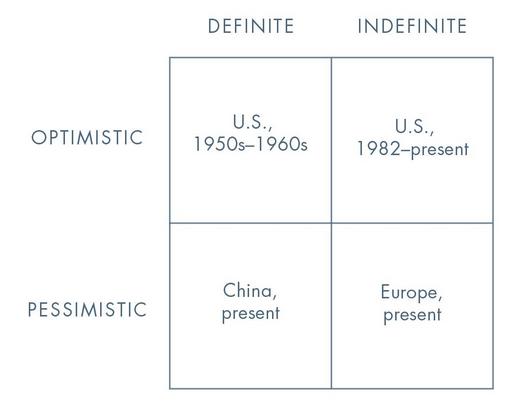
    Photo: By Carrier Corporation (http://www.teamworkmarinesxm.com/) [Public domain], via Wikimedia Commons

  • “There Can’t Be a Successful Indianapolis Without a Successful Indiana”

    Back in 2008 or 2009 I gave a Pecha Kucha presentation in Indianapolis in which I said:

    “Cities can’t survive on gentrification alone. The broad community has to be a participant in its success. That’s why I’m somewhat down on the notion of the creative class. It’s good as far as it goes, but it’s a self-consciously elitist vision. Where’s the working class in that?

    Arguing among ourselves [city vs. suburbs] is like beggars fighting over table scraps. We need to build the city up without tearing the suburbs down.

    There can’t be a successful Indianapolis without a successful Indiana….While [metro] Indy has 25% of the states’ population, it has 60% of the state’s population growth and 80% of its economic growth. That’s not healthy. Like it or not, we’re dependent on the state for critical infrastructure funds and other things. So our challenge is how to bring the rest of the state along with us.”

    I’ve long been an advocate for the restoration what I call the commonwealth, the idea that we rise and fall together as a people and all have skin the game. This idea has gone by the wayside to say the least.

    It may well be that American society has become irredeemably tribalized. I hope not. At a minimum, there are significant sized groups with fundamentally incompatible ideas of the public good. There’s a lot to unpack in that statement, but not today.

    Richard Florida has talked about a “great reset” of the economy. Clearly we need some sort of institutional reset to contain or resolve these differences. We’ve done this before in creating the original Constitution to replace the Articles of Confederation, fighting a Civil War and redefining the federalism of that constitution, the New Deal era changes, and perhaps others.

    What that looks like, I don’t know. But if we are to reach it without even more severe upheavals, it’s likely to involve some renewed form of federalism, agree to disagree, live and let live, etc – and on durable basis, not just an opportunistic and self-interested one.

    This will involve painful change and difficult decisions. One of them is that we must be willing to give others the freedom to make choices for themselves and their communities that we fundamentally disagree with.

    To the extent that we believe all of the big decisions of our society are morally determined, and thus not properly the subject of political debate, this means we are in a winner take all world. If you want that world, you’d better be really sure you are right and sure you are going to win – because you face ruination if you’re wrong on either count.

    It also means that we need to figure out how to have both love and accountability towards all of our citizens. Right now that means that rural white Republicans in victory cannot ignore the continued urgent need to integrate urban black America into full participation in middle class success and to address other aspects of what Richard Florida has labeled the “new urban crisis.”

    It also means that working class whites must be challenged to change. I have made no secret in these pages that these communities too often have sabotaging traits that really aren’t necessary to cling to – such as the disparagement of ambition for better.

    But urban and left leaning populations, including minority groups, need to likewise address travails of the white working class, and be willing to make painful changes of their own.

    To be honest, I’m not optimistic. But I am hopeful. The future hold possibilities for ill that we cannot know – but it likewise holds the possibility for good things we can’t yet imagine.

    Aaron M. Renn is a senior fellow at the Manhattan Institute, a contributing editor of City Journal, and an economic development columnist for Governing magazine. He focuses on ways to help America’s cities thrive in an ever more complex, competitive, globalized, and diverse twenty-first century. During Renn’s 15-year career in management and technology consulting, he was a partner at Accenture and held several technology strategy roles and directed multimillion-dollar global technology implementations. He has contributed to The Guardian, Forbes.com, and numerous other publications. Renn holds a B.S. from Indiana University, where he coauthored an early social-networking platform in 1991.

    Photo: By Daniel Schwen (Own work) [CC BY-SA 4.0], via Wikimedia Commons

  • The End of Eyes on the Street

    Jane Jacobs talked about the “sidewalk ballet” of her neighborhood and the importance of eyes on the street. But her conception of that, one where shopkeepers policed the sidewalks in front of their stores and kept an eye out for neighborhood kids, is far away from what we have today.

    My latest post looking at this is over at City Journal and is called “The End of Eyes on the Street“:

    “The bedrock attribute of a successful city district is that a person must feel personally safe and secure on the street among all these strangers,” wrote Jane Jacobs in The Death and Life of Great American Cities. Jacobs is revered as an urban prophet, but key facets of her prescription for how to keep streets safe and maintain thriving urban neighborhoods are increasingly being ignored in New York today.

    Key to safe and thriving sidewalks is what Jacobs called “eyes on the street”: people taking an active interest in what’s happening around them. Citizen vigilance, she believed, was even more important than the police. Public peace, she wrote, was “kept primarily by an intricate, almost unconscious network of voluntary controls and standards among the people themselves, and enforced by the people themselves.” Some eyes on the street were more important than others–especially those belonging to local business owners. “Storekeepers and other small businessmen are typically strong proponents of peace and order themselves,” Jacobs observed. “They hate broken windows and holdups; they hate having customers made nervous about safety.”

    Click through to read the whole thing.

    What’s amazing to me is that at the same time we’re told we can’t do anything about things like a panhandler following my wife a block down the street cursing at her because she refused to give him money (which happened recently), or when we can’t stop mentally ill people from pushing people in front of subway trains and killing them (as happened yesterday at Times Square), we have immense effort being put into farcical items like stopping “microaggressions.” It certainly belies a lot of the rhetoric around what we can and can’t do in society.

    Aaron M. Renn is a senior fellow at the Manhattan Institute, a contributing editor of City Journal, and an economic development columnist for Governing magazine. He focuses on ways to help America’s cities thrive in an ever more complex, competitive, globalized, and diverse twenty-first century. During Renn’s 15-year career in management and technology consulting, he was a partner at Accenture and held several technology strategy roles and directed multimillion-dollar global technology implementations. He has contributed to The Guardian, Forbes.com, and numerous other publications. Renn holds a B.S. from Indiana University, where he coauthored an early social-networking platform in 1991.

    Photo: Andy C (Own work) [CC BY-SA 3.0 or GFDL], via Wikimedia Commons

  • San Francisco Observations

    I made quite a few trips to San Francisco during the late 90s into the early 2000s, but hadn’t been back in a very long time – probably close to 15 years.

    Recently I was there for a conference and a long weekend and got to spend some time exploring the city. I won’t claim a comprehensive review, but I did have a few takeaways to share.

    1. Fewer homeless than expected. Based on the rhetoric you read in the papers, I expected SF to be overrun with aggressive homeless people. This wasn’t the case. There were visible homeless to be sure, but no more than I remember from 15 years ago and no more than I see in New York. And they were not particularly aggressive in any way.

    2. A curiously low energy city. It’s tough to judge any American city’s street energy after living in New York, but San Francisco felt basically dead. Tourist areas around Union Square and the Embarcadero were crowded, and the Mission on a Friday night was hopping, but otherwise the city was very quiet. Haight-Ashbury was nearly deserted and many neighborhoods had the feel of a ghost town. It’s very strange to be walking around a city with such a dense built fabric but so few people.

    3. San Francisco is too small to support a centralized economy. The Financial District has a number of skyscrapers, and SOMA is awash in construction – the biggest changes I observed were in this district – but central San Francisco is too small to serve as a global city business center. And the city as a whole is not big enough to support that kind of a resident base. The bottom line is that San Francisco’s constrained geography renders the construction of a CBD in the style of a Chicago or New York very difficult. Also, at only around 856,000 people – an all time record high – the absorption capacity of the city is limited. Contrast with NYC at 8.5 million, LA with 4 million and Chicago with around 2.7 million in much bigger geographies. Also, the transport geography of San Francisco does not include the type of massive commuter rail system that NYC, London, Chicago, etc. have. In short, I don’t see SF having the capacity for a much greater degree of employment centralization.

    4. Major construction is undesirable in San Francisco. As I’ve written before, San Francisco is one of America’s most achingly beautiful cities with a very unique building stock. It’s also, like Manhattan, mostly fully developed. So new construction in most places would involve demolition of the existing building stock. No surprise SOMA is where the construction is, because there’s room to do it and/or lower quality buildings to replace. To make a serious increase in the quantity of residential or office space would involve significant damage to the character of the city and would not in my view be desirable. Nor, given the point above about its small size, is it likely to make much of a difference anyway. It’s hard to see how the city of San Francisco itself changes its trends without an economic pullback.

    5. San Francisco doesn’t feel like it has the services of a high tax city. Taxes are high in San Francisco, but it many ways it doesn’t feel like it. In New York, our taxes are high, but the level of services is highly visible, at least in Manhattan. Just as one small example, SF’s storm drains were often partially blocked with leaves, and there were pools of standing water even on Market St. In NYC, BID employees or building supers regularly clear storm drains and sweep water into sewers. Our parks are in better shape. I was surprised to see that SF still has curbs with no ADA ramps. In short, while the city is beautiful and such, it doesn’t radiate the feel of high services.

    6. Barrier and POP transit system. I ran into a curious situation while riding transit. Muni, the city’s transit agency, has a light rail system called Muni Metro. It runs as a subway under Market St. Because it runs on street elsewhere, the trainsets are pretty short. I rode the subway portion, which has a barrier system. But then on the train my ticket was checked again by a conductor. Why have barriers if you are running a POP system on top of it? I’m glad I saved my ticket.

    7. San Francisco Opera. I attended my first opera in San Francisco. The San Francisco Opera is a very globally respected company. The opera, Janacek’s The Makropulous Case, was very good. It was well-patronized but there were plenty of empty seats too. It has the feel of the Lyric Opera of Chicago, where the majority of attendees are subscribers. The average age was very high – much higher than the Met Opera, which although suffering a serious attendance problem draws quite a few young people. The SF Opera’s patron base is getting up there. I also took a look through the program. I did not see a single tech company on their list of corporate sponsor, nor did I see any tech names I recognized on their major donor list. Opera in San Francisco appears to be an old money affair, with the emphasis on old. This doesn’t bode well for the future of this flagship cultural organization if it can’t find a way to tap into younger attendees and donors. I’d have to caveat this somewhat given that my investigation is very limited. But this is a trend affecting many similar organizations.

    Aaron M. Renn is a senior fellow at the Manhattan Institute, a contributing editor of City Journal, and an economic development columnist for Governing magazine. He focuses on ways to help America’s cities thrive in an ever more complex, competitive, globalized, and diverse twenty-first century. During Renn’s 15-year career in management and technology consulting, he was a partner at Accenture and held several technology strategy roles and directed multimillion-dollar global technology implementations. He has contributed to The Guardian, Forbes.com, and numerous other publications. Renn holds a B.S. from Indiana University, where he coauthored an early social-networking platform in 1991.

  • Were Urban Freeways a Good Idea?

    It’s almost a truism in urbanist circles that construction of urban freeways was a bad idea.

    Indianapolis Monthly magazine takes a somewhat more charitable view in its retrospective on the 40th anniversary of the completion of the downtown “inner loop” freeway.

    “But even before its grand opening, the inner loop—31 miles of interstate within I-465, built at a cost of nearly $300 million—had begun paying downtown dividends. Real estate values around the superhighway increased in the early 1970s, reversing a 35-year decline, and Mayor Hudnut also credited the road with stimulating such projects as the Hilton Hotel, the Indiana National Bank building, and the $150 million expansion of Eli Lilly & Co.

    Hudnut predicted the new freeway would spur 20,000 new jobs, and state legislators embraced the spirit: In 1973, when a federal reimbursement slowdown threatened to add 10 years to its completion date, they fronted the money for the last leg of I-65/I-70.”

    The conventional wisdom is that downtown freeways were unmitigated disasters. It says they destroyed vast tracts of urban neighborhoods, with a racist targeting of black ones, then remained as huge barriers to redevelopment.

    The Indy Monthly article acknowledges the downsides of the construction:

    “But little relief awaited the neighborhoods that were carved up for the inner loop. The project displaced a total of 17,000 residents, including 6,000 from Fountain Square (one-fourth of the population).

    Linda Osborne, owner of Arthur’s Music Store, remembers Fountain Square as a vibrant full-service community during the 1950s and early ’60s. “There were theaters, grocery stores, shoe stores—all the things you have in a small town,” says Osborne, whose family business opened in 1952. Interstate construction, however, dug a wide channel that isolated Fountain Square from downtown. Then as now, a Virginia Avenue bridge carried traffic over the chasm, but the commercial district soon tanked, Osborne says.”

    I previously posted an article documenting the destruction in Fountain Square. It features pictures from Historic Indianapolis, including this one showing the scale of the destruction.

    historic indianpolis

    I don’t have Fountain Square’s demographics at the time, but what evidence I do have suggests it was a largely white community, which it remains to this day. So in this case the place with the most destruction wasn’t a minority area.

    Indy Monthly also points out the example of downtown Ft. Wayne. That city decided to go with a bypass option rather than a downtown alignment. The result was that they did indeed prevent neighborhoods from being destroyed, but those neighborhoods and the city’s downtown severely declined anyway. While there are some interesting things going on downtown Ft. Wayne to be sure, it’s unarguable that Indy’s downtown is on a completely different plane of development, though to be sure Indy is a much larger city.

    In fact, this is the pattern we see. Urban decline happened pretty much everywhere, urban freeway or no. When there’s a downtown freeway to blame, people do that. Where there’s not, people blame the bypass. Hence most attributing of blame for decline to urban freeways is simply incorrect.

    Indy Monthly argues that the freeway system provided for convenient access to downtown. Without that access. businesses would have fled, it would be impossible to host large events, etc.

    There is something to this, I think. If there were no freeway access to downtown Indianapolis, it seems likely it would be a much diminished urban center. Keep in mind, there was limited transit access and no real prospect of creating it.

    But we should separate two things, the freeways that provide access to downtown and the ones that run through it. It’s certainly possible that freeway spurs could have been built into the center of the city without building them as through-routes. This is the idea behind much of the boulevarding advocacy movement.

    Twice within the last decade, the state implemented multi-month closures of the Indianapolis inner loop to through traffic. This was a good real world test of whether it was needed at all.

    I wasn’t living there at the time but did do some driving around rush hour during one of the closures. The best alternate route for through traffic is to use I-465 to the south. This did get heavily congested, suggesting that this road would need to be widened prior to removing the inner loop. Some folks did say some surface routes near downtown were more congested during rush hour. But there didn’t seem to be any show-stoppers to permanent closure.

    In my view, removal of the inner loop is feasible, though highly unlikely to ever occur. But it goes to show that the benefits of freeway access to downtown could have been implemented in ways that were less invasive, using freeway spurs and boulevard distributors. In this scenario, the inner loop itself would no longer be a barrier, and the demolition associated with its construction could have been largely avoided. The freeway spurs could have been build with lower capacity, since no through traffic need be designed for. Some interchange complexes would have been eliminated.

    Removing or never building the inner loop would indeed likely add to peak of the peak congestion. The extent to which this dominates local thinking is hard to overstate. It’s revealing that the biggest source Indy Monthly used for quotes was Bill Benner, a sports columnist, and sports and events loom large.

    “To fully appreciate Indy’s middle-aged expressway, imagine 65,000-plus NFL fans spilling out of Lucas Oil Stadium and heading home on the stoplight-laden likes of Meridian Street, Washington Street, Kentucky Avenue, and other prime thoroughfares of yesteryear. Or don’t imagine it—because without this key piece of infrastructure, there might never have been a Lucas Oil Stadium.

    “It was a series of dominoes,” Benner recalls. “Without the interstate, it would have really held back downtown development. So maybe you don’t have the Hoosier Dome, or the Indianapolis Colts, or the Super Bowl. And maybe you don’t have Circle Centre or Victory Field.”

    Designing a transport system around sports event peaks, particularly low-frequency ones like NFL home games, illustrates the Faustian bargain Indianapolis made to revive its downtown.

    Indianapolis made its downtown America’s most friendly to major events. So you can get people to and from the Super Bowl the one time the city hosts it. (I would suspect getting people to and from the Indianapolis Motor Speedway for so many decades powerfully shaped this mode of thinking).

    But the design of the transport system is very hostile to almost everything else, whether that be residential uses or pedestrian access. This has changed somewhat with the Cultural Trail, Georgia St. and others. But to truly change the game would require a major change in psychological orientation to be able to care less about peak of the peak congestion after Colts games and more about the average ordinary experience of the city. I suspect a similar dynamic is at play in many other places.

    Aaron M. Renn is a senior fellow at the Manhattan Institute, a contributing editor of City Journal, and an economic development columnist for Governing magazine. He focuses on ways to help America’s cities thrive in an ever more complex, competitive, globalized, and diverse twenty-first century. During Renn’s 15-year career in management and technology consulting, he was a partner at Accenture and held several technology strategy roles and directed multimillion-dollar global technology implementations. He has contributed to The Guardian, Forbes.com, and numerous other publications. Renn holds a B.S. from Indiana University, where he coauthored an early social-networking platform in 1991.

    Photo: By reddit user MikeSanborn. Cf. https://www.reddit.com/r/indianapolis/comments/3jx7n5/my_favorite_view_of_indianapolis/cut6n4k?context=3 (https://imgur.com/oJLlvTS) [CC BY 4.0], via Wikimedia Commons

  • Corporate Mustard Showroom Helps Explain New York’s Retail Rent Crisis

    The story of skyrocketing rents has two components: residential and commercial.

    My New York neighborhood, the Upper West Side, features fairly stable residential rents, but commercial rents seem to have been soaring. This has caused the familiar angst over the loss of neighborhood businesses to the ubiquitous bank branches and drug stores.

    But today even chains are getting priced out. The quintessential marker of gentrification, Starbucks, was recently forced to relocate in my neighborhood. They vacated their stores at 67th and Columbus when the landlord raised their rent to $140,550/month.

    You’ve got to sell a lot of grande’s to cover that kind of rent check. How many businesses can realistically survive at this location? (Maybe none – it’s still vacant).

    A block up the street, another store helps illustrate the forces sending retail rents through the roof. It’s the Maille “mustard boutique” at 68th and Columbus pictured above.

    Maille is a supermarket brand of dijon mustard. It’s a product of Unilever, the Anglo-Dutch food and consumer products giant. You may not know Unilever, but you know their brands, including Hellman’s, Dove, Lipton, and even Ben and Jerry’s.

    This particular location provides mustard tastings, and sells dijon in a variety of flavors not typically available. I believe they also have some vinegars. I was once needed some dijon and purchased a jar of their regular flavor for $7 – which is $3 more it sells for at the grocery store a few blocks away.  They apparently charge as much as $99 for a jar of black truffle mustard.

    I don’t know what their monthly rent is. It’s a smaller, mid-block store than the former Starbucks location. Based on square footage equivalents, the rent would be somewhere around $30,000 a month.

    Can you really sell enough mustard to cover that kind of rent (to say nothing of the “mustard sommelier” and other employees they have on staff and all the other costs of operations)? I see people in the store, but it’s never crowded. And it’s rare to see someone walking out with a shopping bag.

    It strikes me as dubious that this store could even break even, much less turn a profit that would earn the required return on invested capital.

    But ultimately it doesn’t matter if this store makes money or not. The rent isn’t even a rounding error to Unilever and can easily be justified as a marketing expense.

    If there’s one thing it’s not hard to find in this world, it’s gourmet mustard. This neighborhood needs a corporate mustard showroom like it needs a hole in the head.

    But we have one anyway. And there’s actually a second location in the Flatiron. These are the only Maille stores in the US, save for what appears to be a popup going into a Connecticut mall.

    You can tell a lot of amazing “only in New York” stories. But this is an example of a bad one. These showrooms may be exclusive to the city, but they put upward pressure on retail rents and make it harder for actual neighborhood serving businesses to make it. (This location was closed over the summer for a sidewalk replacement project and I was hopeful it wouldn’t reopen – alas, it was to be denied).

    Multiply two Maille mustard showrooms by all the other major corporations who use NYC as a branding platform, and it’s easy to get a sense as to why retail rents are so high in Manhattan.

    Aaron M. Renn is a senior fellow at the Manhattan Institute, a contributing editor of City Journal, and an economic development columnist for Governing magazine. He focuses on ways to help America’s cities thrive in an ever more complex, competitive, globalized, and diverse twenty-first century. During Renn’s 15-year career in management and technology consulting, he was a partner at Accenture and held several technology strategy roles and directed multimillion-dollar global technology implementations. He has contributed to The Guardian, Forbes.com, and numerous other publications. Renn holds a B.S. from Indiana University, where he coauthored an early social-networking platform in 1991.

    Photo: Maille mustard “boutique” on Columbus Ave at 68th St.

  • The Rival Future Visions of Peter Thiel and Scott Adams

    Our mental model of the world shapes our behavior at fundamental levels in ways we often can’t even recognize. I was struck by this when reading two books almost back to back, Scott Adams’ How to Fail at Almost Everything and Still Win Big and Peter Thiel’s Zero to One.

    Both authors lay out a schema for modeling the future and how to behave relative to it, but come to very different conclusions.

    Scott Adams, creator of the Dilbert comic strip, has a simple model: systems over goals. That is, it’s better to have a good system with high odds of success vs. setting a concrete goal and working towards it. In other words, get your lifestyle right when it comes to diet and exercise, don’t focus on losing X pounds to reach Y weight.

    This strategy implies a single worldview axis: goals-systems, with a preferred end of the axis on which one should align his personal decision making.

    Thiel, founder of PayPal, has a more formal framework, but adopts the same axis of decision making. In his case, he labels it definite-indefinite. He then combines this with an axis of optimist-pessimist to produce the following 2×2 matrix:


    Peter Thiel future model matrix. Image via Will Price’s Zero to One review.

    Both Thiel and Adams are American, so reside in the top half of the chart, so let’s focus there. To Thiel, a goal is a definite view of the future. That is, you have an exact idea of what the future should be, and set about making it happen. A system would be an indefinite future. In this view, we can’t fundamentally control the future, so we put ourselves in the best position to benefit from the chance that comes our way.

    Now these two don’t have perfect alignment. Adams’ systems are in many cases designed to achieve results that could be viewed as a goal (e.g., a ripped physique). As a serial entrepreneur, he’s not afraid of starting companies, but does not put everything at risk while doing so. Most of what Adams would call goals Thiel would still label indefinite because they present incremental improvement vs. revolutionary change (e.g., lose 15 pounds vs. “We chose to go to the moon.”)  But there’s a rough correspondence.

    Adams, as we saw, comes down firmly on the indefinite/systems side of the equation. Thiel says that the would be startup founder should be in the definite/goals quadrant, and believes that part of the reason America has gone off course is that we’ve shifted from a definite to indefinite view of the future.

    In the 1950s, people welcomed big plans and asked whether they would work. Today a grand plan coming from a schoolteacher would be dismissed as crankery, and a long-range vision coming from anyone more powerful would be derided as hubris.

    In addition to his more formal framework for thinking about the future, Thiel also tries to explain why people like Adams have an indefinite view of the future:

    But perhaps you can’t understand Malcolm Gladwell without understanding his historical context as a Boomer (born in 1963). When Baby Boomers grow up and write books to explain why one or another individual is successful, they point to the power of a particular individual’s context as determined by chance. But they miss the even bigger social context for their own preferred explanations: a whole generation learned from childhood to overrate the power of chance and underrate the importance of planning. Gladwell at first appears to be making a contrarian critique of the myth of the self-made businessman, but actually his own account encapsulates the conventional view of a generation.

    Adams is a baby boomer, putting him squarely within this generational psychoanalysis.

    Is one of the two right? I think it’s more complex than that, and in part comes down to what you want, what your temperament is, and what your experiences have been in life.

    Thiel obviously has gargantuan Silicon Valley ambitions and an ego to match. And he’s got over a billion dollars to show for it.

    Adams’ success is much smaller scale – but still well into the millions of dollars, plus a significant amount of fame. He appears to be fully satisfied with his life.

    So at the individual level, you can succeed either way. At a societal level, Thiel may have a point, though Robert Gordon and others posit different explanations for the economic growth slowdown.

    In any case, the key is that how you think about the future, particularly the degree to which you can shape the future, determines a lot about the strategies you are going to use for your life. On the one hand perhaps a concentrated bet and effort to sculpt the future. On the other a more open or diversified strategy to try get the best result in in uncertain future. (I should note that Thiel says this kind of diversification is a myth, saying, “Life is not a portfolio”).

    I also recently read and reviewed Antifragile by Nassim Taleb. While I’m not familiar with his full corpus, his high view of randomness suggests that he’s favors a more Adams-like approach. He advocates that people should adopt what he calls a “barbell” strategy. That is, on one end you try to derisk your core life as much as possible. And on the other you place multiple, small, high risk bets with a chance of a significant payoff. This sounds like a system to me. On the other hand, Taleb also says that entrepreneurs who risk the definite should be treated with honor as heroes, even if they fail.

    In any case, it’s worth thinking about how we view the future. Is it something that’s primarily within our control or something that’s more dominated by outside forces or even chance? How we answer that question will determine a lot about how we go about living our lives.

    Aaron M. Renn is a senior fellow at the Manhattan Institute, a contributing editor of City Journal, and an economic development columnist for Governing magazine. He focuses on ways to help America’s cities thrive in an ever more complex, competitive, globalized, and diverse twenty-first century. During Renn’s 15-year career in management and technology consulting, he was a partner at Accenture and held several technology strategy roles and directed multimillion-dollar global technology implementations. He has contributed to The Guardian, Forbes.com, and numerous other publications. Renn holds a B.S. from Indiana University, where he coauthored an early social-networking platform in 1991.

  • Carnegie Deli and Other Bad New York Restaurants

    When you’re a kid, there are certain cartoons you just love. That love remains over time as your warmly think back on childhood memories. It lasts, that is, until you foolishly go back and watch an episode of two of a favorite show, what which point you say, “Holy cow! That show is terrible.”

    I was thinking of this as I read the surprisingly large press that greeted the news that New York’s Carnegie Deli will be closing. It even made the front page of the Financial Times print edition this weekend.

    About 10 or 15 years ago I decided to go check Carnegie Deli out. The food was awful.

    I couldn’t finish my sandwich – not because it was so big, but because it was so bad.

    As all these old line NYC businesses go under one by one, replaced by something suitably gentrified, everybody is bemoaning the loss of places they used to patronize over the years.

    What you don’t get from reading these is just how terrible most of these businesses actually were.

    Carnegie Deli was a case in point. When’s the last time your average New Yorker actually ate there? How much of this sentimental attachment to these places comes from people who used to go them long ago but never patronize them anymore building them up in their minds the way we build up our childhood cartoons? A lot, I suspect.

    Not every genre of old-school NYC business is bad. The hardware stores I’ve been in have been solid. But restaurants in particular are mostly awful.

    Crain’s New York did a big piece on the disappearance of the New York diner. There’s a reason for this. Diners in New York are horrible, at least the ones in Manhattan. I’ve never once been to a good one – and I keep trying new ones. My benchmark dish is the turkey club. In Manhattan the turkey is invariably so dry I can’t finish it, even with a glass or two of water. (The outer boroughs may fare better. I’ve had great diner food on Staten Island, for example).

    I don’t have the sentimental attachment to these places because I’m a newcomer to the city. I would still love to see places like Carnegie Deli survive, but ultimately the quality is just not there.

    These places are failing the marketplace test, not just because of rising rents, but because they are selling a product that might have worked in the 1970s but is no longer up to par in the 21st century.

    Aaron M. Renn is a senior fellow at the Manhattan Institute, a contributing editor of City Journal, and an economic development columnist for Governing magazine. He focuses on ways to help America’s cities thrive in an ever more complex, competitive, globalized, and diverse twenty-first century. During Renn’s 15-year career in management and technology consulting, he was a partner at Accenture and held several technology strategy roles and directed multimillion-dollar global technology implementations. He has contributed to The Guardian, Forbes.com, and numerous other publications. Renn holds a B.S. from Indiana University, where he coauthored an early social-networking platform in 1991.

    Photo Credit: Jtmichcock CC BY-SA 3.0

  • Is Peter Thiel Right About Chicago?

    Peter Thiel recently made one of his trademark provocative statements by saying, “If you are a very talented person, you have a choice: You either go to New York or you go to Silicon Valley.”

    The problem for Thiel was that he said this while speaking at an event in Chicago. No surprise, it didn’t go over well. An enquiring questioner wanted to know, “Who comes to Chicago if first-rate people go to New York or Silicon Valley?”

    Thiel sputtered a bit and suggested he was employing hyperbole, but said “It’s an extremely important question, and it’s the type of question that we don’t ask enough,” though admitting he isn’t sure “exactly what Chicago should be doing right now.”

    After being initially reported by the Chicago Tribune, the story was picked up by Vanity FairChicagoist, and Crain’s. A blogger named John Carpenter posted a sharp retort at Forbes.

    Having lived nearly 20 years in Chicago and now two in New York, I’ve had a few observations about the differences between the two cities that I’ve resisted posting because it would inevitably be seen as taking a cheap shot at a city I chose to leave. But given the hook of Thiel’s comments, I decided to take the plunge.

    Is Thiel right? Factually speaking, no. Obviously there are first-rate people in places other than San Francisco or New York. Given its size, history, status, etc. Chicago has a number of them.

    But Thiel is highlighting something real with uncomfortable implications for the Windy City.

    Cities of Ambition

    Let’s rephrase Thiel slightly and we’ll get a stronger statement: if you’re a person with global-scale ambition, you move to either New York or Silicon Valley.

    There’s a lot of truth to this version of the statement. Think about the egos and the ambition of the people in Silicon Valley. People like Thiel (Paypal, Palantir, others), Mark Zuckerberg (Facebook), and Travis Kalanick (Uber) practically define Silicon Valley. In New York, think about the incredible ambition of a Michael Bloomberg or a Donald Trump – two radically different people to be sure, but both extremely ambitious.

    How many of these kinds of people live anywhere in the US outside those two cities? A few. You can think of Bill Gates (Microsoft) and Jeff Bezos (Amazon) in Seattle. Or Elon Musk (Tesla, Space X, et. al) who lives in LA. But there aren’t many. It’s telling that Mark Zuckerberg started at Harvard and moved to the Valley. It’s similar for Mark Andreesen (Netscape) and many others before them.

    The bottom line is that the ambition level in Silicon Valley and New York is simply off the charts. That kind of ambition is not what you find in Chicago (or pretty much anywhere else). It can exist from time to time – think Barack Obama – but is a big anomaly.

    If you are someone who is dreaming big – really big – it helps to be in an environment where other people are dreaming big. That means NYC or SF.

    America’s New Upper Class Elite

    Charles Murray’s book Coming Apart charted the rise of a new upper class, an elite – the people who really call or influence the shots in American business, politics, culture, etc – that increasingly lives in self-segregated bubbles of others just like them.

    These bubbles of the American elite are heavily concentrated in four coastal cities:

    [I]t is difficult to hold a nationally influential job in politics, public policy, finance, business, academia, information technology, or the media and not live in the areas surrounding New York, Washington, Los Angeles, or San Francisco. In a few cases, it can be done by living in Boston, Chicago, Atlanta, Seattle, Dallas, or Houston—and Bentonville, Arkansas—but not many other places.

    Murray here puts Chicago in a special class; it’s one of the handful of cities outside the Big Four where it’s possible to be part of the national elite. That’s not nothing. But clearly there’s a big gap in there.

    Murray undertook a variety of quantitative analyses to try to sleuth out the geography of the new elite. One of them was to look at where the graduates of elite schools lived, particularly the Big Three of Harvard, Princeton, and Yale (HPY). Here is what he found:

    As mature adults, fully a quarter of the HPY graduates were living in New York City or its surrounding suburbs. Another quarter lived in just three additional metropolitan areas: Boston (10 percent), Washington (8 percent), and San Francisco (7 percent). Relative to the size of their populations, the Los Angeles and Chicago areas got few HPY graduates—just 5 percent and 3 percent, respectively. Except for the Philadelphia and Seattle areas, no other metropolitan area got more than 1 percent.

    There’s an East Coast bias to these schools as we might expect, but New York has over eight times as many HPY grads as Chicago. San Francisco has over two times as many, and notably has more than much larger Los Angeles. This is pretty remarkable given that the region’s focus is technology, not exactly what comes to mind when you think HPY (although Gates and Zuckerberg tell a different tale, even if not actually graduates).

    So Murray’s research also foots to Thiel’s observation in a generalized sense.

    Personal Observations

    I had four of my own previous observations.  First a pre-observation: I never noticed any difference between the caliber of Accenture people in Chicago vs. New York. (It generally seemed to me that in the consulting space, the talent level of Accenture employees was pretty consistent across geographies). Obviously I had a network that included a lot of Accenture type corporate people in Chicago, whereas in New York my network is more skewed to policy, media, finance, and startups (though includes quite a few Accenture people too).  These network differences obviously shape my personal experiences, but my observations are consistent with Murray and with some others who lived in both cities and with whom I’ve compared notes.

    With that, my observations are:

    1. New York has a higher horsepower rating. Growing up in Laconia, I was a straight-A student and valedictorian of my high school without studying. Similarly, I was simply smarter than most people in college. As I moved up in life, the competition got tougher, obviously, but even at Accenture I basically just had more horsepower to throw at problems than most. (You may recall that I was also somewhat lazy during this period). In New York, that’s just not true. I am constantly around people who are at least as smart as I am, if not smarter. You can’t just think you can get ahead here by throwing more MIPS at the problem than the next guy, because he’s just as good as you or more so.
    2. New Yorkers have incredibly vast and wide-ranging knowledge. That famous New Yorker cover portrays NYC as an incredibly provincial place. And it is. But I continue to be astonished about how much New Yorkers know about what’s going, not just around the world but across the country. A couple years before moving there I was visiting the city and had dinner with Fred Siegel in Brooklyn. When I mentioned Indianapolis, he proceeded to provide a number of extremely accurate and insightful comments about the city. I was taken aback. What were the odds he would know anything about Indianapolis? I’ve since come to see that kind of encyclopedic knowledge as commonplace. People in NYC are connected to networks and have their fingers on the pulse of what is going on all over the country and the world. I’ve similarly ceased to be amazed every time I run into someone with a vast array of cultural knowledge. People here are just like that. This is a world away from the much less connected and more limited expanse of knowledge in Chicago.
    3. Chicago is Big Ten, New York is the Ivy League. The numbers above illustrate this well. Chicago is dominated by Big Ten grads and Notre Damers. New York has a vast seat of Ivy League and other elite school grades.  This is well attested above, so no more on that.
    4. New Yorkers are connected to the highest levels of politics, business, media, and culture. This is almost a truism, but it’s remarkable when you actually experience it. This is where the sausage is made. (I suspect one can get a similar feeling in DC, or in SF for tech, or Houston for energy). A friend of mine who was also a long time Chicago area resident that now lives in Philadelphia observed, “Chicago doesn’t know they’re not in the game. They’re in a game, but they’re not in the game.”

    None of these is probably news in a sense. They were things I could have probably told you before. But intellectual awareness of truth is one thing, visceral experience of it is another.

    The Draw of New York and San Francisco

    Now, none of this is to say one must live in NYC. I love it, but when I was two years into living in Chicago, I loved that city even more.  Some people have a transformational experience in college as they are exposed to new experiences, ideas, people, etc. That wasn’t the case for me. But I did have that in Chicago. Moving to Chicago was personally transformational for me in a way that moving to New York was not. (Of course, I was much younger then too). And there are lots of places in America that I think I could enjoy living in. Let’s not invest too much in NYC and SF.

    On the other hand, let’s not invest too little either. It’s clear that Greater Greater New York, and the Bay Area, are uniquely dominant and have a unique draw. It’s the same with London in Europe. (No surprise that the top overseas expansion destination for Chicago based firms is London. Boeing has 2,000 people in London – four times as many as at its Chicago HQ – and plans to double that. Where do you think the top intercontinental investment location for London firms is?)

    If you want to get a sense of this, just read Ted Gioia’s piece in the latest City Journal abouthow New York became the capital of jazz, displacing New Orleans and Chicago, and beating back a midcentury challenge from LA.  And Michael Agovino’s piece in the Village Voice, “Almost Famous, Almost Broke: How Does a Jazz Musician Make It in New York Now?”  As Gioia puts it,

    Jazz has gone global. Just like your job, your mortgage, and the cost of gas at the pump, the music now responds to global forces. As a jazz critic, I now need to pay attention to the talent coming out of New Zealand, Indonesia, Lebanon, Chile, and other places previously outside my purview. Almost every major city on the planet now has homegrown talent worthy of a worldwide audience.

    Yet one thing hasn’t changed on the jazz scene: New York still sits on top of the heap. Great jazz artists often don’t come from Manhattan, but they struggle to build a reputation and gain career traction if they don’t come to Manhattan. The recent sensation over Indonesian jazz prodigy Joey Alexander is a case in point. At age eight, this formidable youngster had already caught the attention of jazz icon Herbie Hancock, and at nine, he beat out 43 musicians (of all ages) from 17 countries to win a prestigious European competition. A year later, Alexander’s parents moved to New York, realizing that even the greatest prodigy in jazz needed what only that city could offer.

    And as Joel Kotkin, who frequently speaks to audiences full of civic leaders around the country, told me, “No matter where I go, invariably the richest guy in the room has a kid in either New York or San Francisco.”

    Chicago: The Semi-Elite City

    This problematic status of Chicago as “semi-elite” is really at the root of many of its problems. It’s something I’ve talked about before, such as by noting its global city functions are weaker, and resultantly it spins off far less wealth and tax revenue. Or my notion that it’s the duck-billed platypus of cities.

    This isn’t unique to Chicago. It affects other cities like Amsterdam. Simon Kuper of the Financial Times wrote a column on the rise of the global capital about how young up and comers in the Netherlands had their sights set on London, not Amsterdam. As he put it, “Many ambitious Dutch people no longer want to join the Dutch elite. They want to join the global elite.”

    As with Thiel, I don’t have the answer to this problem, but he’s absolutely right that it’s one that’s too seldom asked, but which needs to be squarely faced. Studying and comparing notes with these other cities like Amsterdam and how they are coping with this problem might be a good start.

    In the meantime, to end on a positive note, I do think there are fields where one could unquestionably have top level talent and ambition, and move to Chicago in search of success.  I would include aspiring comedians, chefs, architects, and indie rockers in this list. There may be others. Protecting and building on these while finding a strategic response may be another good place to start.

    Aaron M. Renn is a senior fellow at the Manhattan Institute, a contributing editor of City Journal, and an economic development columnist for Governing magazine. He focuses on ways to help America’s cities thrive in an ever more complex, competitive, globalized, and diverse twenty-first century. During Renn’s 15-year career in management and technology consulting, he was a partner at Accenture and held several technology strategy roles and directed multimillion-dollar global technology implementations. He has contributed to The Guardian, Forbes.com, and numerous other publications. Renn holds a B.S. from Indiana University, where he coauthored an early social-networking platform in 1991.

    Photo Credit: Berlin, Germany, March 19, 2014. Hy! Summit – Image by Dan Taylor. www.heisenbergmedia.com

  • Lone Star Quartet

    Texas’s spectacular growth is largely a story of its cities—especially of Austin, Dallas–Fort Worth, Houston, and San Antonio. These Big Four metropolitan areas, arranged in a layout known as the “Texas Triangle,” contain two-thirds of the state’s population and an even higher share of its jobs. Nationally, the four metros, which combined make up less than 6 percent of the American population, posted job growth equivalent to 30 percent of the United States’ total since the financial crash in 2007. Within Texas, they’ve accounted for almost 80 percent of the state’s population growth since 2000 and over 75 percent of its job growth. Meantime, a third of Texas counties, mostly rural, have actually been losing population.

    Texas is sometimes described as the new California, an apt parallel in terms of the states’ respective urban geographies. Neither state is dominated by a single large city; each has four urban areas of more than 1 million people, with two of these among the largest regions in the United States. In both states, these major regions are demographically and economically distinct.

    But unlike California, whose cities have refocused on elite priorities at the expense of middle-class occupations, Texas offers a complete spectrum of economic activities in its metros. Another key difference is that Texas cities have mostly embraced pro-development policies that have kept them affordable by allowing housing supply to expand with population, while California’s housing prices blasted into the stratosphere due to severe development restrictions. Texas cities also benefit from favorable state policies, such as the absence of a state income tax and a reasonable regulatory and litigation environment. These factors make Texas cities today what California’s used to be: places to go in search of the American dream.

    In Texas, the major metros also have the advantage of being in a fairly compact region. San Antonio and Austin are separated by an 80-mile drive, almost entirely filled in with development along the I-35 corridor, with significant future opportunities in towns near enough to serve both markets, such as San Marcos. The other regions are all within a three- to three-and-a-half-hour drive of one another—not much different from the Acela train connections linking New York, Boston, and Washington.

    This proximity makes the Texas Triangle one of the premier emerging American mega-regions. All four cities rank in the top ten for percentage population growth since 2000 among major metro areas (those with more than 1 million people). Three of the four rank in the top ten for percentage job growth during that time. (Dallas just misses, with a rank of 11th.) Houston, San Antonio, and Austin are in the top ten metro areas for growth in residents with college degrees and in the top five for growth in millennials (ages 25–34) with degrees since 2000. But while these successful cities have much in common, they’ve each done it their own way.

    Dallas–Fort Worth doesn’t usually come to mind when one thinks about America’s largest cities. But with a population topping 7 million, Dallas is now the fourth-largest metropolitan area in the country. If current growth rates continue, Dallas would pass Chicago and move into third place in regional population before 2050.

    Chicago and Dallas have much in common. Both lie within the central time zone, with large airports that serve as ideal hubs for air travel around the United States. Both cities boast large, diversified corporate centers not reliant on a single industry, with deep talent pools and thick labor markets. Both are key national logistics hubs. Both are home to diverse populations, with Dallas now exceeding Chicago in its share of foreign-born residents. Chicago retains some advantages: the Loop remains America’s second-largest business district and is currently booming. And the Windy City’s downtown beat out Dallas in a competition to lure Boeing’s headquarters back in 2001.

    But while Chicago remains dominant in urbanity and global-city functions, Dallas increasingly prevails in everything else. If Chicago is downtown-dominated, Dallas is perhaps the most multipolar urban region in America, with two distinct cities in Dallas and Fort Worth, as well as premier suburban business centers in Plano and Richardson. Firms can choose from a range of environments. While America’s elite urban centers increasingly attract niche, if high-value, employers, Dallas remains a place where companies can afford to hire thousands of people—or relocate them, as Toyota decided to do in 2014, when it announced that it would move 5,000 employees and contractors from Southern California to the Dallas area, settling them into a new campus in Plano. The Japanese automaker joins other large-scale employers in the area, including American Airlines (25,000 employees), Lockheed Martin (13,700), and Texas Instruments (13,000).

    Dallas strives to be not only a welcoming place for commerce but also a high-quality place to live. The city is spending big to fulfill that goal. Fort Worth’s cultural district was already home to the renowned Kimbell Art Museum and the Modern Art Museum. Dallas, which has seen a boom in its urban core, particularly its Uptown district, recently invested in a $1 billion downtown performing-arts district that includes a concert hall, opera house, and other buildings designed by prominent architects.

    Generous philanthropic communities are Texas’s secret weapon. Donations—including 134 separate donations of $1 million or more—provided almost all the performing-arts center’s financing and also helped pay for the new Klyde Warren Park, built on a deck over a freeway, and a signature bridge design by Santiago Calatrava. Like northern capitalists of the great industrial age, wealthy Texans are willing to spend big to put their hometowns on the map. High-quality urban amenities cost money, and a robust Texas private sector made these kinds of investments possible. But it was the philanthropic culture of the Texas money men that led them to put their cash to work to expand the area’s cultural offerings.

    Not all the money has been well spent. Dallas built the longest light-rail system in the United States, at 90 miles, but the DART rail system carries only about 100,000 passengers per day, a drop in the bucket for the region. DART cost billions to build and requires about $75 million per year in subsidies to operate, and unlike the cost of the performing-arts center, these costs are financed by tax dollars.

    With a population of 6.5 million, Houston is the fifth-largest metro area in the United States, giving Texas two of the five largest regions in the country. Unlike diversified Dallas, Houston is known for being the global center of the energy industry.

    Houston is such an energy magnet that even companies with headquarters elsewhere have a huge presence there. Headquartered in Dallas, ExxonMobil is building a new Houston campus that will employ 10,000. Chevron is based in the Bay Area but has more employees (8,000) in Houston and has been shifting more jobs there. International energy firms with a Houston presence include Total, BP, Shell, Repsol, and Petrobras. Houston dominates oil services, with firms like Schlumberger and Halliburton.

    Powered by the energy sector, Houston has added more than 700,000 jobs since 2000, despite two recessions. Recent declines in oil prices will no doubt be a drag on Houston’s economy in the near term, just as federal retrenchment has affected Washington, D.C. But like Washington’s, Houston’s long-term fundamentals remain strong. Economically, the city is not a one-horse town. It boasts one of America’s largest ports. It has the nation’s largest petrochemical manufacturing complex (which benefits from low oil prices). Houston is home to NASA’s Johnson Space Center and the Texas Medical Center, the world’s largest, serving thousands of international patients each year. Philanthropy has played a substantial role in supporting the medical center.

    Houston famously has no zoning inside city limits, though the city’s building code imposes some zoning-like restrictions, and many private developments utilize deed restrictions that mimic zoning. Houston’s physical development pattern is not unlike that of most other sprawling American cities. But the lack of use-based zoning illustrates the city’s pro-development and pro-business mind-set. For example, the city of Houston issued permits for more apartment construction in the year ending May 2015 than anywhere else except New York City.

    Coastal dwellers portray Texas as culturally retrograde, but Houston, where one of America’s best opera companies performs, was the first of America’s biggest cities to elect an openly homosexual mayor, pro-market Democrat Annise Parker. The area is 23.1 percent foreign-born, ranking seventh in the country among major metros in its share of such residents; and 91 consulates, trade offices, or other foreign missions operate there. The Houston area’s Asian population, half a million strong, has more than doubled since 2000. The city also famously opened its doors to thousands of mostly black New Orleans residents displaced by Hurricane Katrina. Many chose to stay in Houston, attracted by its economic opportunities.

    Like Dallas, Houston built a dubious light-rail system. More astutely, it recently reengineered its bus service to focus on high-frequency routes, without adding costs. It’s also investing substantially in parks, such as the ten-mile-long Buffalo Bayou Park. So Houston, too, is focusing on getting better, not just bigger.

    The oldest major city in Texas, San Antonio was for decades its largest city. Demographically, it is a Latino stronghold. It has the highest share of its population of Hispanic origin of any region over 1 million people in the U.S.—even more than Miami—and it’s the only one where over half the population is Hispanic. San Antonio’s Hispanics have long-standing roots in the community, however: only 12 percent of the metro area is foreign-born, simultaneously the smallest foreign-born and smallest Anglo population among major Texas cities.

    With its long history, San Antonio enjoys a thriving tourism industry. More than 30 million visitors each year come to see the city’s historic sites, such as old Spanish missions, including the famed Alamo. San Antonio’s Riverwalk is widely known around the country, with many cities trying to replicate it.

    The real engine driving the city’s economy, though, is a strong military presence, including such installations as Fort Sam Houston and Lackland Air Force Base. Though the military has downsized, San Antonio has benefited from consolidation. Much of its military presence is high-value, such as its Medical Education and Training Campus. Home to the Air Force’s Cyber Command and a National Security Agency cryptography center, among other related operations, San Antonio has also become an unlikely center for cyber-security, with the city’s University of Texas campus offering the nation’s top-rated program in that discipline. The military presence has also spawned related private-sector businesses, such as financial-services giant USAA, which serves military members, veterans, and their families.

    Military life has lured many permanent residents to the area. Every year, 4,200 people get discharged from the service in San Antonio, and many decide to stay in the city. This high-quality, reasonably priced labor force has attracted firms like Accenture, which employs 1,200 at a service center in the region.

    The military has also served as a vehicle for integrating Hispanics into the city’s middle class. City leaders boast of excellent relations between ethnic groups. For example, though not known as a black population center, San Antonio has one of the nation’s largest Martin Luther King Day parades. These ethnic connections go back a long way. A stronghold of Latinos and German immigrants, San Antonio was a pro-Union city during the Civil War.

    While San Antonio excels in middle- and working-class job growth—Toyota recently built a truck plant there—its educational attainment rates rank third from the bottom among major metros. Only 26.3 percent of its adults hold college degrees. Unlike elite coastal cities, San Antonio continues to attract the less educated, though the region is growing its number of people with degrees at one of the fastest rates in the country.

    If one Texas city can boast “street cred” among coastal elites, it’s Austin, the state capital and home to the flagship campus of the University of Texas, giving it many attributes of a college town. This includes its live music scene, nationally known thanks to PBS’s Austin City Limits, the longest-running music program in television history, which has developed into one of the country’s largest annual music festivals and a permanent music venue in downtown Austin. The city also hosts the global SXSW festival, originally a music event and now arguably the hippest technology conference in the country, drawing talent from around the globe.

    Austin is a city of distinct neighborhoods and districts. A campaign to preserve local small businesses spawned the slogan “Keep Austin Weird,” now copied by cities like Portland and Louisville. Austin ranks as the sixth-most educated region in the country, with 41.5 percent of its adults having college degrees. It’s regularly listed as among America’s most physically fit cities.

    Austin’s technology industry has roots in the city going back to the 1960s, when IBM and Texas Instruments opened up shop. Motorola arrived in the 1970s, while the 1980s saw the arrival of chip-industry consortium Sematech and the founding of Dell Computer. Today, Austin has one of the country’s fastest-growing tech sectors, with a flurry of start-ups as well as offices from a who’s who of Silicon Valley firms, including Apple (approaching 7,000 local employees), Oracle, Facebook, Google (which is bringing its Google Fiber product to the city), and Intel.

    With its big-government and university heritage, Austin unsurprisingly has the blue politics amenable to coastal dwellers and its many public employees—and it shows some signs of emulating the negatives of California and Silicon

    Valley. Its median home-price multiple—the price of the median home divided by the regional median income—has crept up to 4.0, the highest of the Texas urban quartet. The city of Austin’s share of children is declining. Already the least diverse major Texas metro, Austin is seeing its share of blacks decrease. And the city has failed to invest in infrastructure to keep up with its rapid growth. As Ryan Streeter at the University of Texas put it: “Austin thought that if the city didn’t build it, they wouldn’t come—but they came anyway.”

    While all four Texas metro areas rank among the most booming cities in America, they face threats to future prosperity. When their growth cycles inevitably come to an end, they will have to prove themselves again, as Chicago, Detroit, Los Angeles, and New York once did. Time will tell whether they can renew themselves across economic cycles, as New York has done—or fall, like Detroit. The Texas metros also must demonstrate that they can grow their per-capita incomes over time, not just add lots of jobs. Their record here is mixed, with only the Houston region significantly outperforming the national average. Austin and Dallas have lost ground versus the country as a whole since 2000. San Antonio did better but still trails the U.S. average.

    The cities face short-term risks, too, especially poor municipal balance sheets. The Hoover Institution ranked Dallas and Houston among the worst cities for their unfunded pension liabilities as a percent of government revenues. Houston’s unfunded pension liability, including pension obligation bonds, stands at $5.9 billion, and the city faces a budget crunch. Dallas’s estimated pension shortfall is between $3 billion and $5 billion, depending on how one calculates it. Last fall, S&P and Moody’s downgraded the city’s credit rating. Other risks include failing to expand infrastructure in line with growth—as may have happened in Austin already—and potentially unsustainable development patterns in Dallas and Houston.

    But perhaps the most serious near-term concern is that these cities might forget what made them successful. Dallas passed a plastic-bag fee (since repealed), and Austin banned plastic bags altogether. Denton, in north suburban Dallas, banned fracking within city limits, though the state overturned the ban. Texas already faces an external threat from environmental activists who would destroy its energy business and suburban-oriented development model if they could. As the fracking ban shows, a regulatory mind-set has begun to creep in, one that could eventually undermine the Texas economy.

    Antidevelopment advocates have also targeted highway construction. Houston’s new mayor, Sylvester Turner, has said, “We need a paradigm shift [away from roads and single-occupancy vehicles] in order to achieve the kind of mobility outcomes we desire. . . . We need greater focus on intercity rail, regional rail, High Occupancy Vehicle facilities, Park and Rides, Transit Centers, and robust local transit.” But in regions adding more than 1 million new residents per decade, roadway expansion is critical. If Los Angeles can’t increase transit ridership with billions of dollars’ worth of new rail lines, there’s no prospect that Texas cities can do so. Investment in buses, cycling, and sidewalks is important but no substitute for core highway infrastructure. Yes, the urban cores of these cities should become more dense and walkable, but that shouldn’t mean becoming hostile to suburbs.

    Texas isn’t California. Many people are willing to pay a lot to live in gorgeous, transit-friendly San Francisco or Southern California’s perfect climate. But no one will pay a premium to live in flat, sweltering Texas. To continue succeeding, Texas cities need to become the best possible version of what they already are—not a poor man’s substitute for something that they can never be.

    This piece is part of The City Journal’s special Texas issue. Check it out here. Top graphic courtesy of The City Journal.

    Aaron M. Renn is a senior fellow at the Manhattan Institute, a contributing editor of City Journal, and an economic development columnist for Governing magazine. He focuses on ways to help America’s cities thrive in an ever more complex, competitive, globalized, and diverse twenty-first century. During Renn’s 15-year career in management and technology consulting, he was a partner at Accenture and held several technology strategy roles and directed multimillion-dollar global technology implementations. He has contributed to The Guardian, Forbes.com, and numerous other publications. Renn holds a B.S. from Indiana University, where he coauthored an early social-networking platform in 1991.