Author: Aaron M. Renn

  • Is This Hell or Indianapolis?

    I’ve observed many times that cities outside of the very top tier almost always come across as generic, cheesy, and trying too hard in their marketing efforts. They highlight everything about their city that is pretty much a variant on things everybody else already has (beer, beards, bicycles, etc) while downplaying the things that truly reflect their community. Call it “aspirational genericism.”

    Most places are extremely desperate to be part of the cool kids club, and so they buy the right preppy clothes, etc. and treat the things that are authentic and true about themselves as something to be ashamed of instead of celebrated.

    Today lots of cities produce videos to showcase themselves. But a while back it was cities commissioning songs, hoping for something like Frank Sinatra’s standards about New York and Chicago. These were for the most part embarrassingly cringe worthy.

    Indianapolis did the same a while back, in an effort I won’t given specifics on to protect the guilty, who were, after all, operating with the utmost sincerity.

    What I do want to highlight is though is that Indianapolis has one of the greatest songs ever recorded about a city, the Bottle Rockets’ “Indianapolis.” I have not, however, ever heard anyone in the city actually bring it up.

    And it’s easy to understand why. The song is an extremely negative take on the city in every respect. The refrain is:

    Can’t go west
    can’t go east
    I’m stuck in Indianapolis
    with a fuel pump that’s deceased

    Ten days on the road
    Now I’m four hours from my hometown
    Is this Hell or Indianapolis
    with no way to get around?

    He proceeds to regale us with a series of humorous but negative observations about the city, such as:

    Who knows what this repair will cost
    Scared to spend a dime
    I’ll puke if that jukebox
    Plays John Cougar one more time.

    Having seen the Bottle Rockets in concert many times, I can tell you that songwriter and lead singer Brian Henneman really does seem to dislike Indianapolis, where he apparently had an actual bad experience. (His hometown is somewhere near St. Louis, and he spent a lot of time with the Uncle Tupelo crew in Southern Illinois – and environment one would not expect to encounter someone looking down on Indy).

    Nevertheless, this is an amazingly great song. Here’s a 1991 acoustic demo version recorded with Jeff Tweedy and Jay Farrar. If the video doesn’t display, click over to listen on You Tube.

    While it’s probably a bridge too far to suggest that the city should embrace this song as a branding anthem, I’d like to point out that many nicknames and branding aspects of cities started out as digs. And let’s be honest, the idea of being trapped in Indy without a car isn’t that far from the truth. I might also observe that gangster rap became a phenom precisely because it did not deny the reality of life in the inner city.

    Here’s another, though not a song but a TV commercial. This one is a local legend. You’ll have to watch it to believe it. It’s a TV ad for local institution “Don’s Guns.” The eponymous Don was famous for his slogan, “I don’t want to make any money, folks. I just love to sell guns.” If the video doesn’t display for you, click over to watch on You Tube.

    If you search “Don’s Guns” on You Tube you can watch a variety of other colorful ads.

    Again, this is not likely to be something that will be used in the chamber of commerce’s marketing materials anytime soon. But if you don’t live in Indy, wouldn’t you find the idea of a bunch of people there who love guns believable? Of course you would, because it’s true. Indiana is a state that explicitly includes a right to bear arms for self defense in its constitution. Now, many people locally may not like guns, but at some point people are going to discover the actual reality of the place, even if you don’t tell them about it. And believe it or not there’s a large market of people who have an interest in guns. If you want to try to market to the gun-free crowd, are they likely to put Indy at the top of their list anyway? You’re probably fighting an uphill battle.

    Then lastly back to music. If there’s one thing that people around the world know about Indianapolis, its the Indianapolis 500. So it’s no surprise that the city and race were featured in the 1983 song “Indianapolis” by Puerto Rican boy band Menudo. There’s even a music video for it. You should click over to watch on You Tube as this copyrighted music has playback restrictions.

    This one, it’s true, is a cultural relic that has not stood the test of time, other than for retro flourish purposes (though it’s not a bad song). But it seems to be little known locally. I didn’t know about it until a message board commenter linked some years back. And I haven’t seen a marketing campaign around the city focused on auto racing in a long time.

    The struggles of working class life in a car dependent town, guns, and auto racing. Not the makings of glamour, but certainly authentic. Jim Russell and others have written a lot about rembracing the industrial heritage of the Midwest as “Rust Belt chic.” Indy is not really Rust Belt in the same sense as Cleveland or Pittsburgh. But these items are part of its own unique take on the formula. What could potentially be done with them?

    Certainly Texas has done well by being Texas. And Nashville has succeeded by being unapologetic about country music. And I’ll point out again that the Midwest repudiated its own heritage of agriculture, workwear, and blue collar lagers only to have them picked up by Brooklyn hipsters and made cool again. The Midwest threw its culture away and Brooklyn bought it out of the thrift store. Now the region is reimporting is own birthright after it has been made “safe” by the embrace of the cool kids. Midwest cities should have owned local and urban agriculture. But of course, in a region of places like Columbus that are deeply ashamed of being seen as “cow towns”, that was simply impossible. If Brooklynites ever start buying up old Chevy Vans, expect that only then will a place like Indy embrace the reality of that culture as well.

    Aaron M. Renn is a senior fellow at the Manhattan Institute and a Contributing Editor at City Journal. He writes at The Urbanophile, where this piece first appeared.
  • Recent Growth and Decline of Children in Major Metropolitan Areas

    That America has an aging population is well known. Estimates data released this summer by the Census Bureau illustrate this transition in progress – and paint a picture of an actual shrinking number of children in many major American metro areas.

    From 2010 to 2014, the percentage of the population of residents under the age of 18 shrank in every single metro area with more than a million people. This reflects the aging of the population in progress.  But it’s not just that there are more older people. In about half of these major American metros, the actual number of children declined

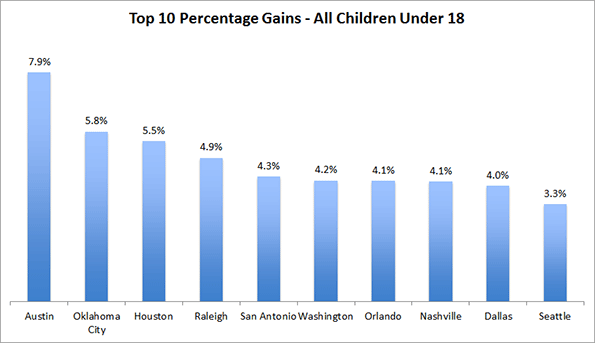
    These results roughly fall alone lines that would be expected, with regions that are rapidly growing their total population, like Austin, also strongly growing in children. In fact, Austin was the top gainer with a 7.9% increase in children. Houston (+5.5%), Washington, DC (+4.2%) and Denver (+3.1%) were also among those posting strong gains.

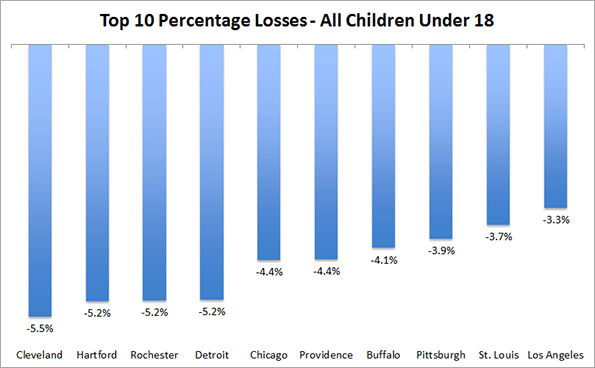
    The loss department is dominated by usual post-industrial suspects, with Cleveland being the “biggest loser” at -5.5%. Detroit (-5.2%), Chicago (-4.4%), and Philadelphia (-2.7%) were also among the losers.  But you don’t have to have crummy weather to lose kids. Notable among those losing children is Los Angeles, whose child population dropped by 3.3% or over 100,000 people. This loss is not being made up, as in the past, by the Inland Empire, with Riverside-San Bernardino also seeing its child population shrink, by 2.1% or over 25,000 people. This is a remarkable reversal for Los Angeles, once one of America’s great growth stories.

    This loss of children augurs poorly for reversing population loss or stagnation in many of these regions. With the next generation of women of childbearing age smaller than the one before it, this suggests even further declines are possible.

    In sum, while very few regions are losing population on a total basis, many more   are failing at creating the next generation of residents. Of course it  is possible to make up for natural increase in population by attracting newcomers, but consider that these statistics include the children of those recent arrivals as well.

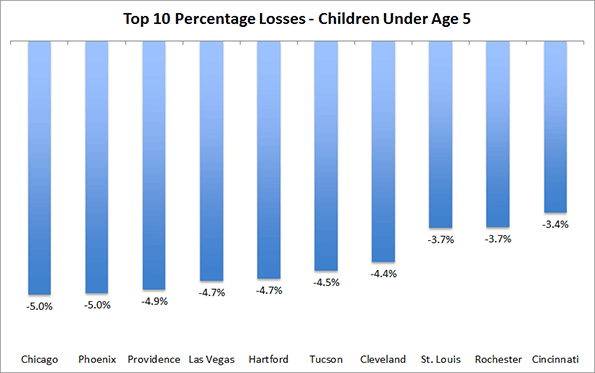
    Looking at younger, pre-school age children under the age of five, even more – 34 out of 54 – large metro areas showed a decline. This includes surprising small losses even in rapidly growing, traditional family magnets like Atlanta, Charlotte, Nashville and Kansas City. This reflects how pervasive low birthrates have become.

    Conversely, again some traditionally slower growth cities and some conventionally viewed as not child friendly– San Francisco, Seattle, and Boston  are seeing slight  gains in their population of young children even though their percentages drop. Keep in mind these are metropolitan area numbers, not central city ones, as most children, particularly those older than five, end up in suburbs. But even so, the performance of these regions is remarkable compared to declines in celebrated urban areas like Chicago and Los Angeles.

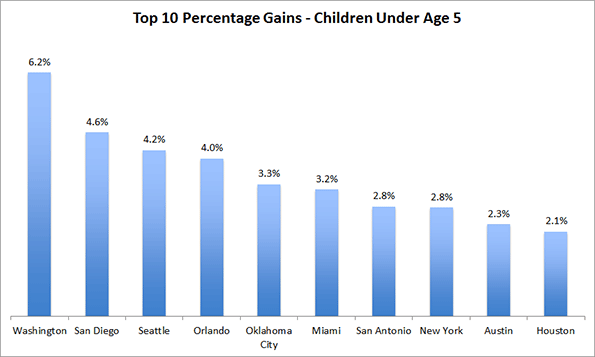
    The Pacific Northwest cities of Portland and Seattle also make for an interesting contrast. Both have experienced similar, and healthy, overall population growth since 2010, with Portland growing slightly faster.  But the Seattle area was a much stronger performer when looking at children. In fact, Seattle ranked #10 (out of 53) large metros in the country with 3.3% growth.  Portland, however, eked out only 0.4% growth.  Looking at children under age five, Seattle actually ranked third in growth at 4.2% while Portland shrank by 2.6%.

    And New York City is a particularly interesting case. Its total child population declined by over 47,000 people, or 1.1%.  But its under five population grew by over 33,000, or 2.8%, and it was one of only two large metros, along with Buffalo, that actually increased it share of the population in that age group.  Brooklyn and Manhattan led the way, each posting double digit percentage growth, though from a low base in Manhattan’s case. Queens did nearly as well.  Staten Island, traditionally the most family centered area, was the only borough to lose young children.  Long Island, Westchester, and Dutchess County lost them as well. 

    The real question is whether places like Manhattan will be able to retain these families as the kids reach school age. Its population of those 5-17 has continued to decline. Given its high costs, it’s not realistic to expect Manhattan to ever be a premier family magnet. But there are surely some city-dwellers with children who might want to stay if life with children could be incrementally better supported in the city with things, such as low crime, clean parks and good schools, that tend to matter to families. This challenge will be felt by all cities as their youth populations begin to enter their prime childbearing years.

    Aaron M. Renn is a senior fellow at the Manhattan Institute and a Contributing Editor at City Journal. He writes at The Urbanophile.

    Baby photo by Bigstock.

  • Behind the Facade in St. Petersburg

    St. Petersburg, Peter the Great’s new European style capital for imperial Russia, is the most visited city for tourists in Russia. It has a ton of great buildings, energetic street life in its smallish central core, and world-renowned cultural institutions like the Hermitage Museum and the Mariinsky Theater.

    As with Moscow, however, I am not going to attempt to replicate what you can find better elsewhere online or in a guidebook. Rather, I want to show a few things that reflect on something a person there told me, namely that “St. Petersburg is like a facade of a city,” similar to the Hollywood western sets in which the “storefronts” have nothing behind them.

    I’m not sure exactly what this guy was trying to communicate about his city, but I did experience a few things that I think relate to it, in which the interior of a space is completely different from what you might expect from the exterior. St. Petersburg would appear to be, like many places, a city where you need a local in the know to really show you around.

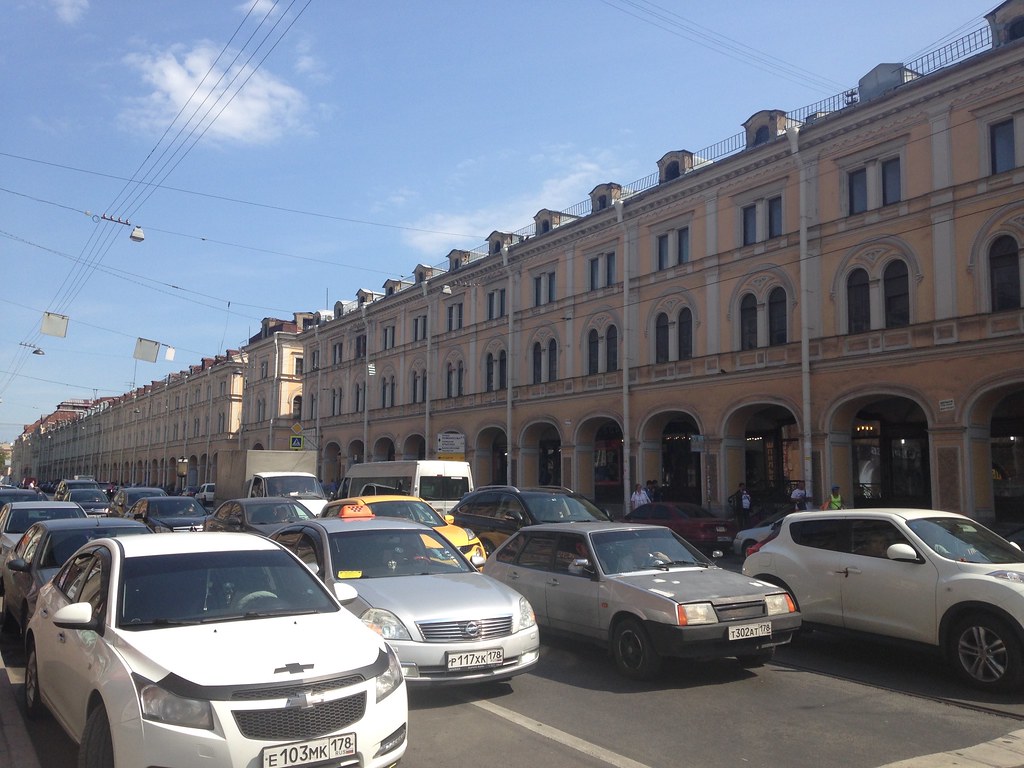
    Consider, for example, this long, well-maintained, genteel, colonnaded, and I think somewhat dull facade.

    St. Petersburg - August 2015

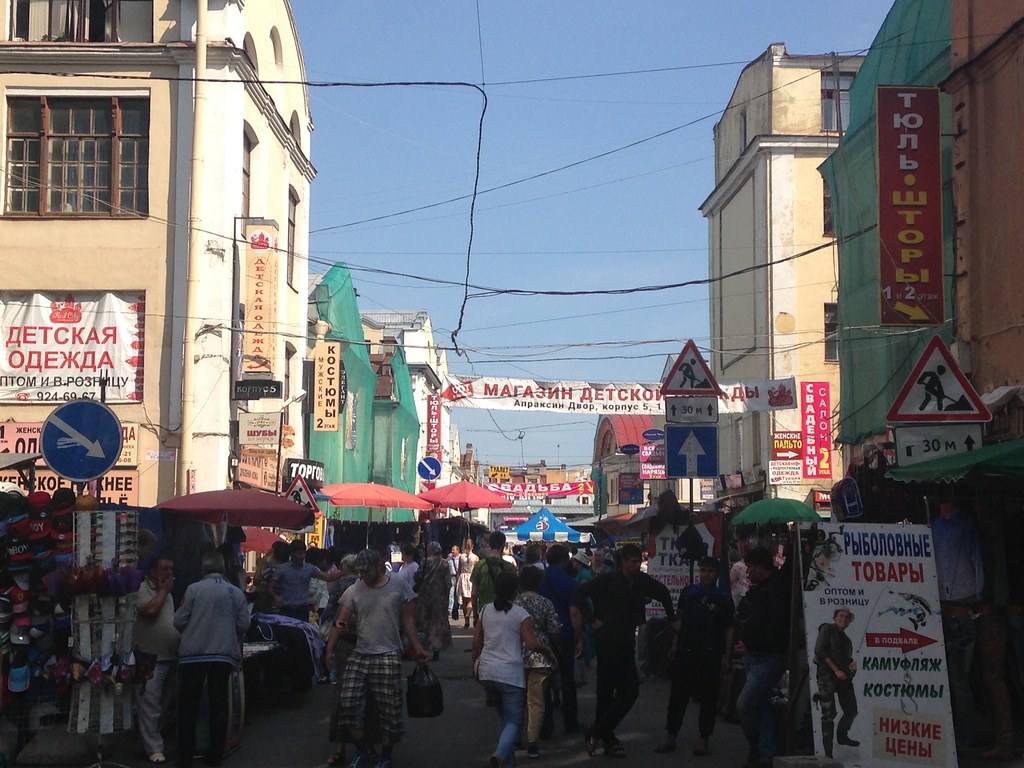
    What do you think is behind it? Would you believe this:

    St. Petersburg - August 2015

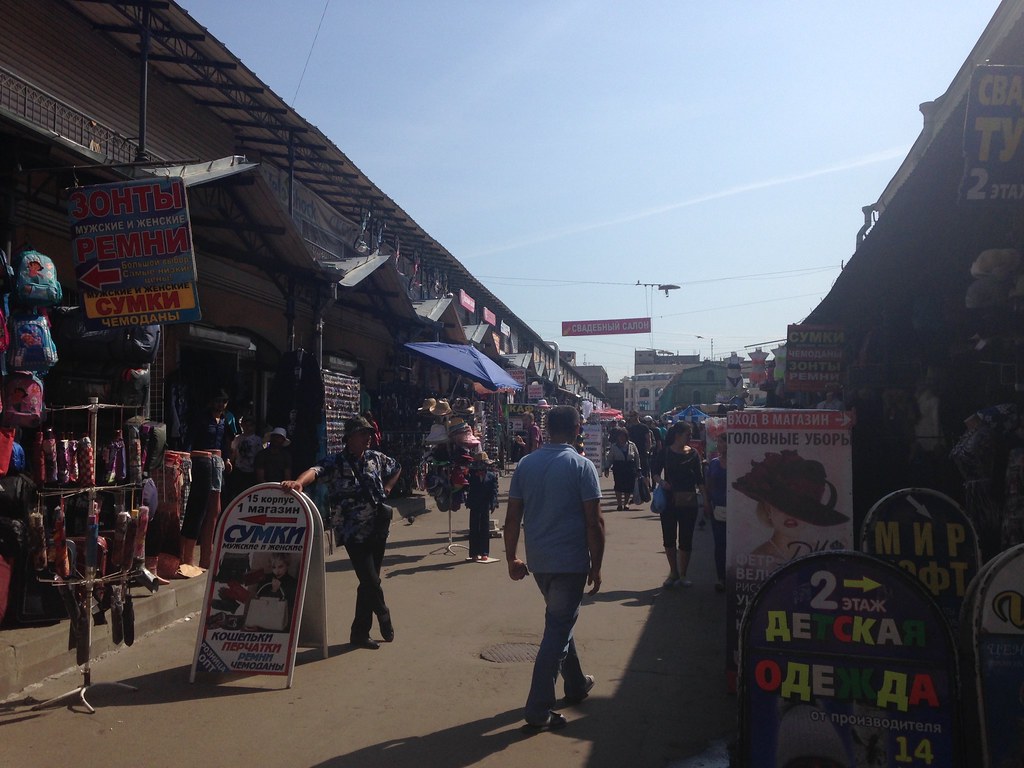
    It’s a large and high energy street market in a sort of courtyard space. Here’s another passageway with vendor:

    St. Petersburg - August 2015

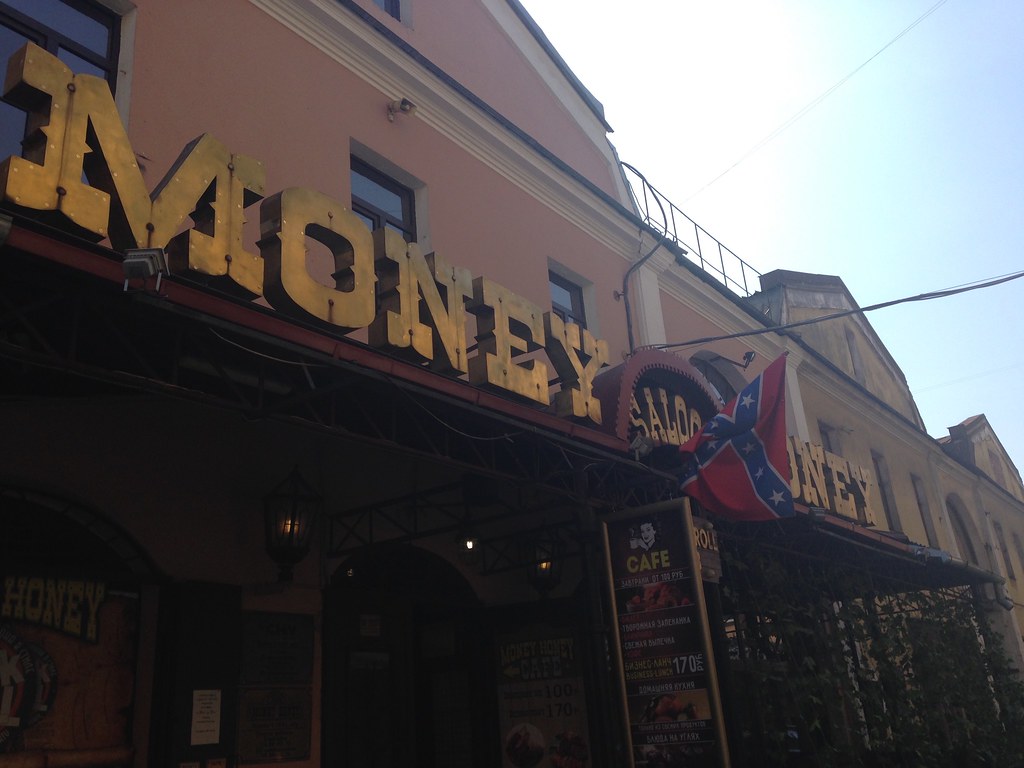
    And this place, which left me speechless:

    St. Petersburg - August 2015

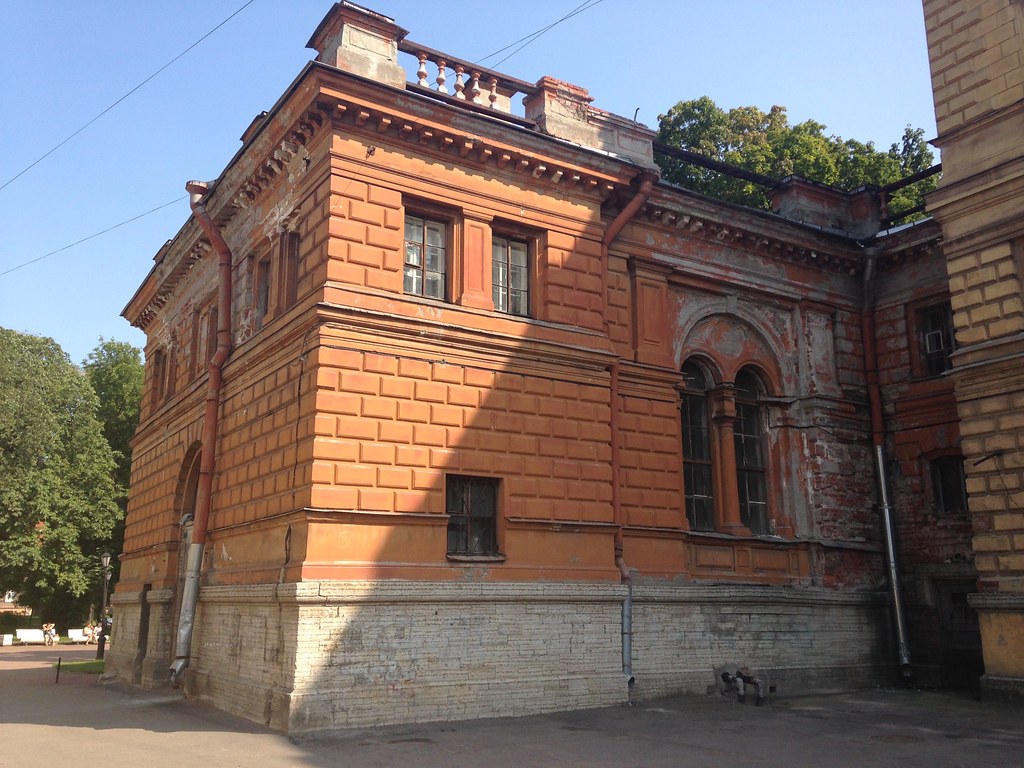
    Then there’s this building, which the person I was with thought was actually abandoned.

    St. Petersburg - August 2015

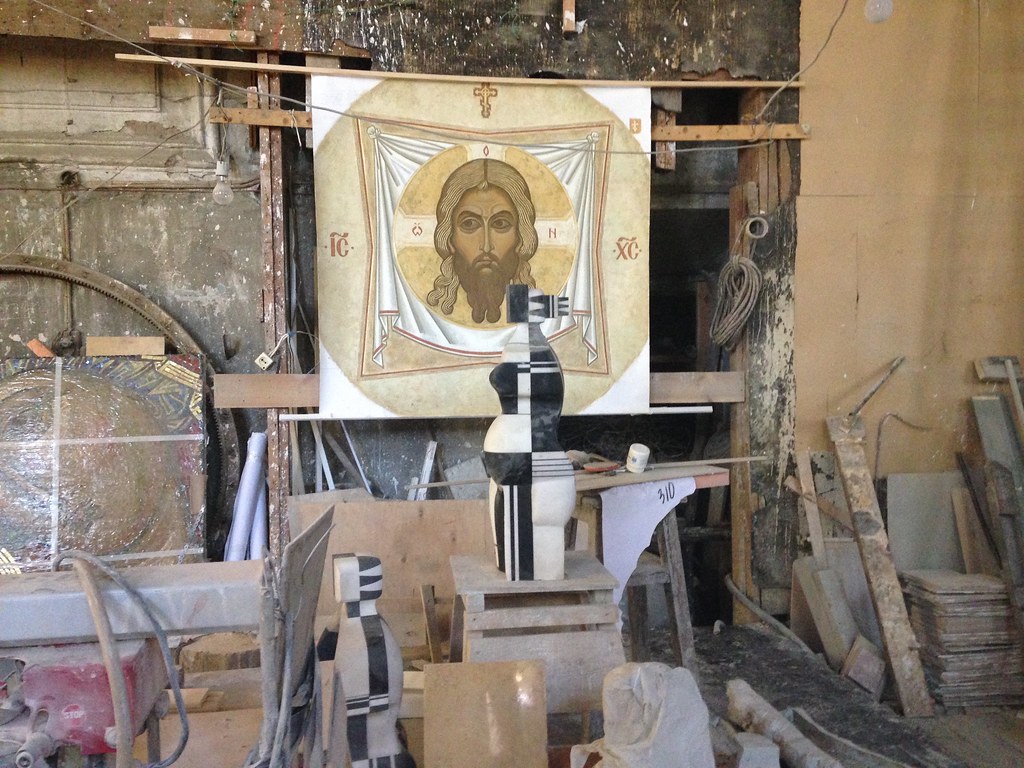
    There was somebody sitting out front on a folding chair who looked like a construction worker because his trousers were covered in plaster. We asked to take a peek and it turns out the whole thing was being used as a studio by several artists.

    St. Petersburg - August 2015

    I had a much cooler picture of an amazing sculpture someone was working on, but he didn’t want it photographed.

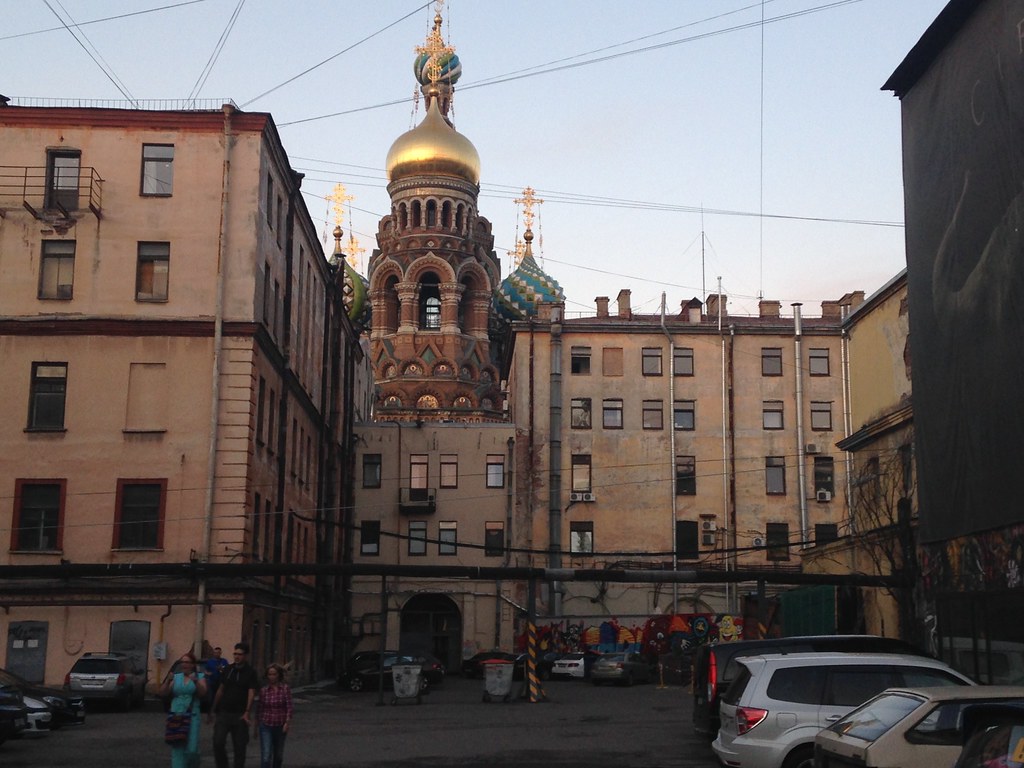
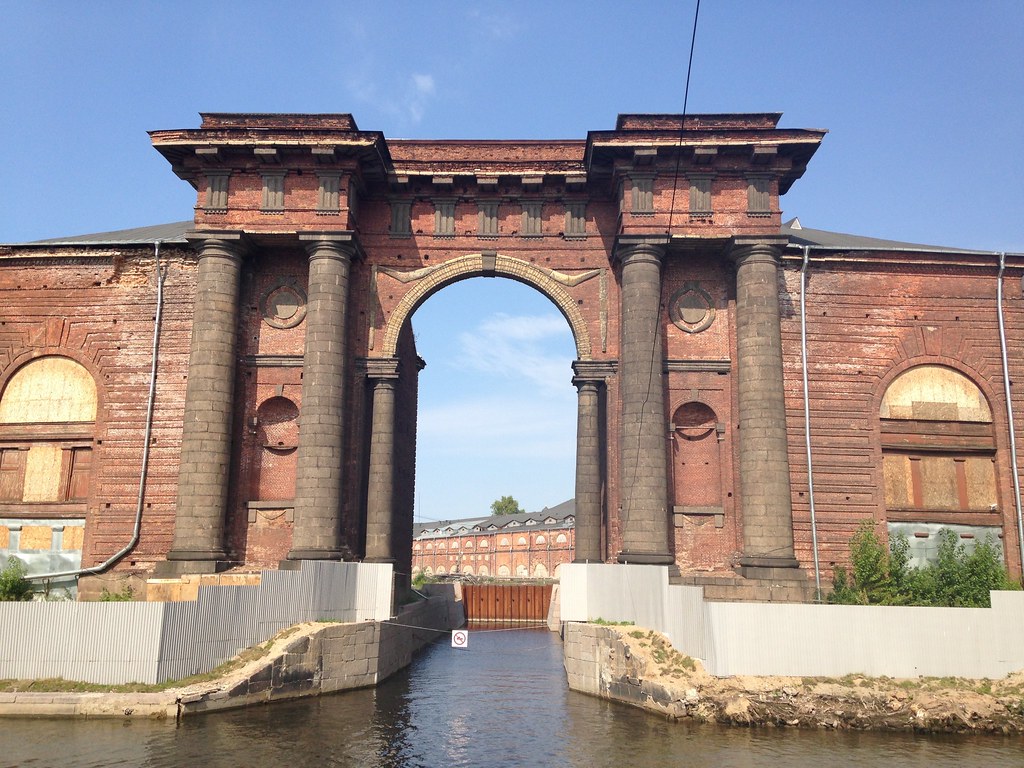
    Then there are derelict industrial buildings that are more than what they seem, like this one which is in the very center of town, which you can tell from the cathedral sticking up behind it.

    St. Petersburg - August 2015

    In addition to being home to several creative firms and software companies, the interior of this space also has clubs and bars, one of which I enjoyed a craft beer at. It was a very cool space but I sadly neglected to take a picture.

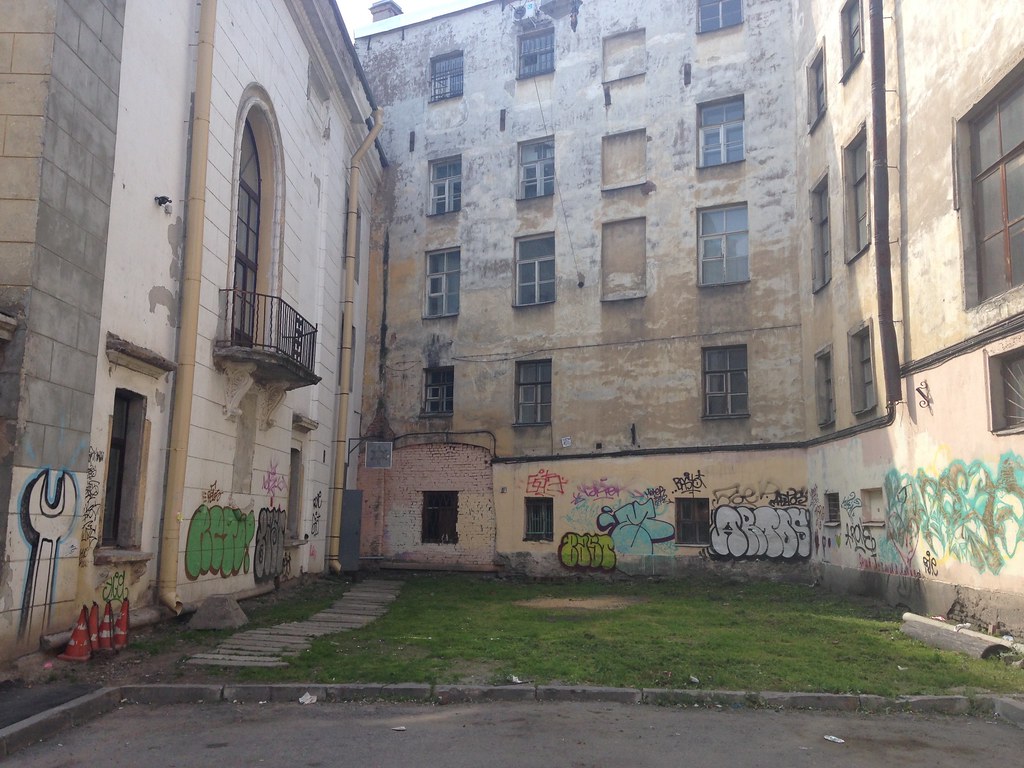
    Here’s another building that at first look doesn’t appear to have much promise.

    St. Petersburg - August 2015

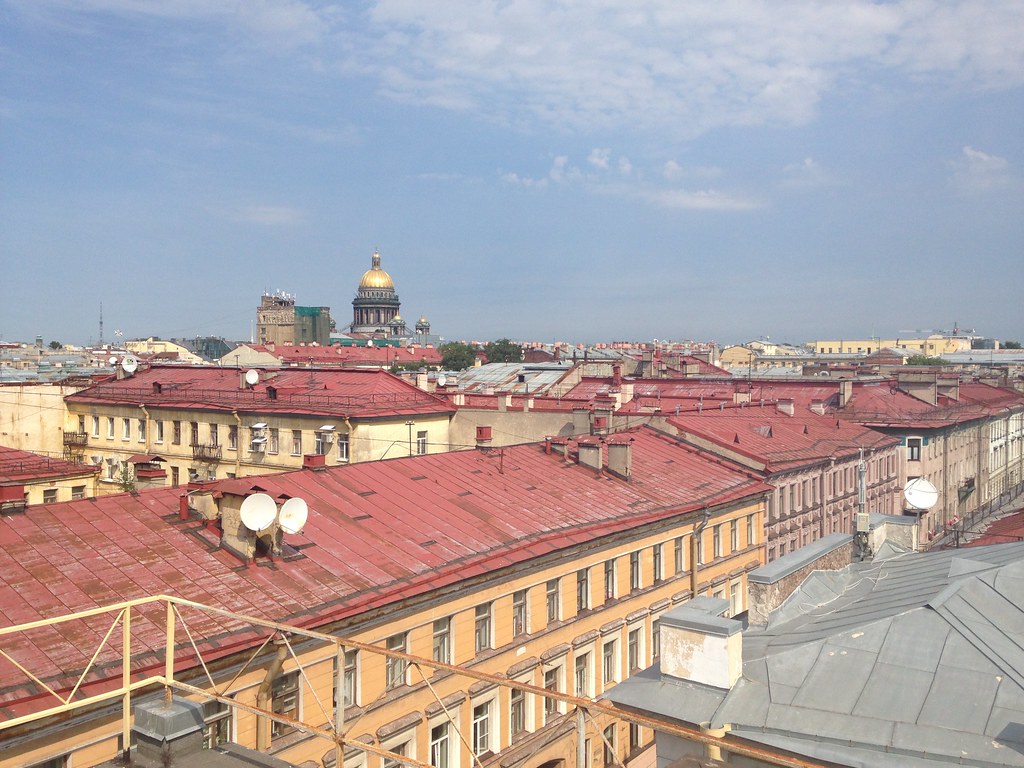
    But follow that path to a metal door on the back left corner, walk up the staircase to the roof, and there’s a great cafe with excellent coffee and amazing rooftop views of the city.

    St. Petersburg - August 2015

    What’s in here, I wonder? Not sure. It’s owned by Roman Abramovich, who did not invite me over for tea.

    St. Petersburg - August 2015

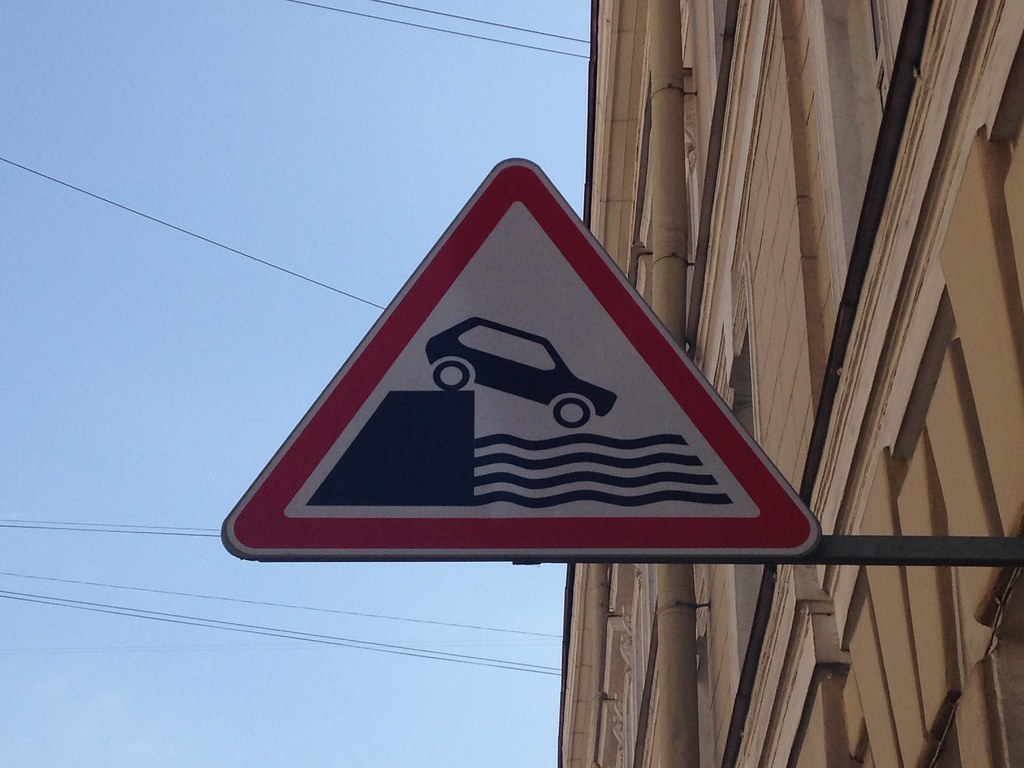
    I’ll wrap up with a couple of urban planning notes. First, a street sign warning of, well, you get it.

    St. Petersburg - August 2015

    Both St. Petersburg and Moscow have Uber, by the way. I’m not sure how useful it is for tourists, since the two times I took it in St. Petersburg, extensive phone conversations with the driver needed to take place to physically connect, and my Russian speaking companion took care of that. St. Petersburg, as you might have gathered, has a lot of canals and other bodies of water, and they have rolled out UberBOAT service there as well.

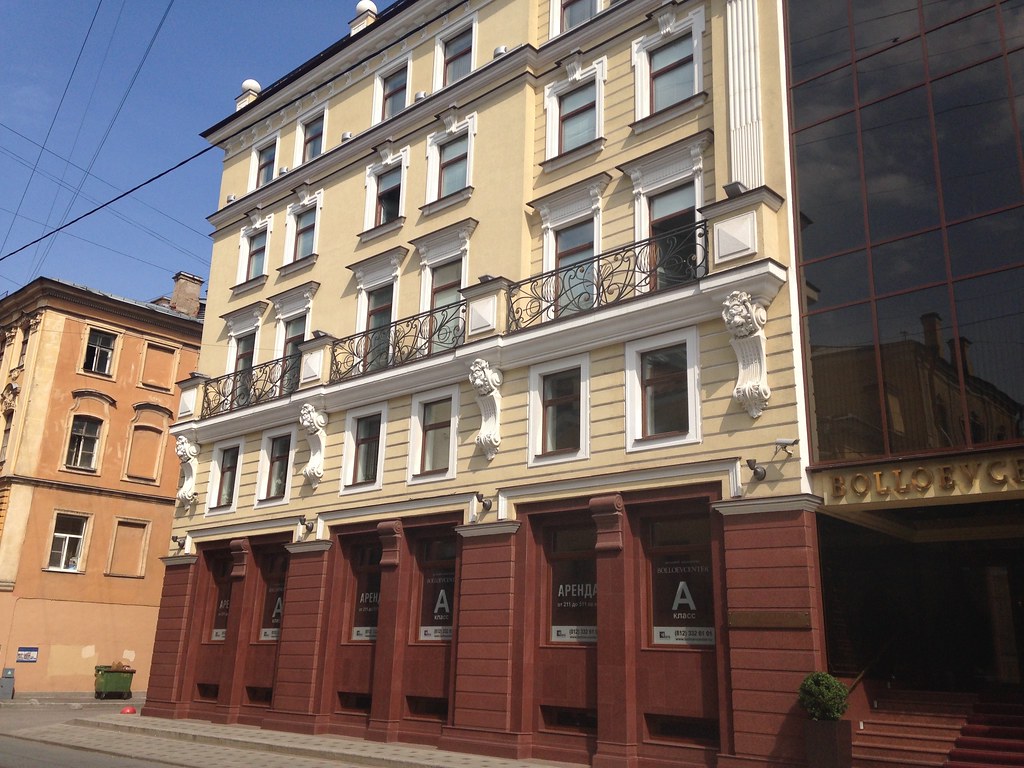
    I’ll wrap up with a picture of a newish building.

    St. Petersburg - August 2015

    The local person who was showing me around noted that there were often disputes over buildings like this, with some architects demanding better designs. You’ll note the ground floor treatment could be improved, and the upper floors are EIFS or some similar product, which urbanists there seem not to like any more than we do here.

    You can view more of my iPhone pictures of St. Petersburg on Flickr.

    Aaron M. Renn is a senior fellow at the Manhattan Institute and a Contributing Editor at City Journal. He writes at The Urbanophile.

  • America’s Shrinking Cities Are Gaining Brains

    If there’s one thing that’s a nearly universal anxiety among cities, it’s brain drain, or the loss of educated residents to other places. I’ve written about this many times over the years, critiquing the way it is normally conceived.

    Since brain drain seems to be a major concern in shrinking cities, I decided to take a look at the facts around brains in those places. Looking at the 28 metro areas among the 100 largest that had objective measures of shrinkage – in population and/or jobs – between 2000 and 2013, I looked what what happened to their educational attainment levels.

    My results were published in my Manhattan Institute study “Brain Gain in America’s Shrinking Cities.” As the title implies, my key findings were:

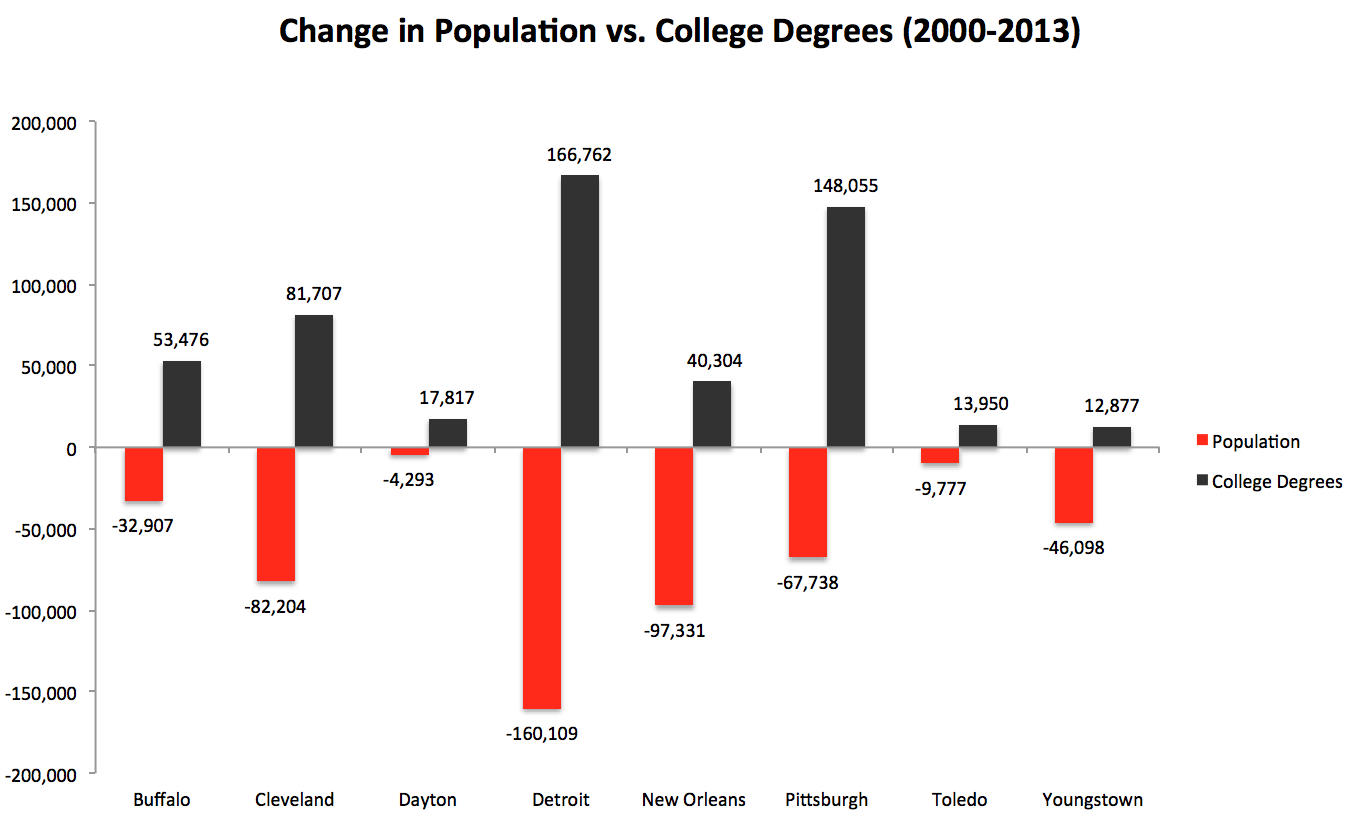
    • Every major metro area in the country that has been losing population and/or jobs is actually gaining people with college degrees at double digit rates.
    • As a whole the shrinking city group is holding its own with the country in terms of educational attainment rates, and in many cases outperforming it.
    • Even among younger adults, most shrinking cities are adding more of them with degrees, increasing their educated population share, and even catching up with the rest of the country in their college degree attainment levels.

    The following chart of metro area population change vs. degree change for select cities should drive the point home.

    Click through to read the whole thing.

    In short, for most places, it looks like the battle against brain drain has actually been won. As people there can attest, thanks to many improvements public and private over the years, they are now viable places to live for higher end talent in a way they weren’t say 20 years ago. This means the attention and resources that have been devoted to this issue can now be put to more present day tasks such as repairing civic finances, rebuilding core public services, and creating more economic opportunity for those without degrees.

    More commentary later perhaps, but for now please check out the report and share widely.

    Aaron M. Renn is a senior fellow at the Manhattan Institute and a Contributing Editor at City Journal. He writes at The Urbanophile.

  • Urbanists Missing Strategy Gene

    Looking at the things now decried by so many urbanists, ranging from urban renewal to freeways to restrictive zoning that makes building difficult, it’s notable how many of them are well-nigh ubiquitous.  Surely some city, somewhere must have realized that these were mistakes, if mistakes they were. But very few did.

    Why is that?

    Thinking about cities takes place in a world without any concept of strategy. Harvard business professor Michael Porter, the godfather of strategy, has said, “Competitive strategy is about being different. It means deliberately choosing a different set of activities to deliver a unique matrix of value.”  This is exactly the opposite of thinking that goes into cities, in which no matter what the locale, urbanists or policy advocates of various stripes always seem to have the same solutions that they prescribe for every community, regardless of how different our places are.

    To see this in action, just look at how some urban advocates see the future in Chicago.  Today’s urbanist orthodoxy says cars bad, transit good – basically always and everywhere.  This logic has been internalized by them in Chicago. Consider a recent proposal by the city to reduce parking requirements an increase density near transit stops.  This one is actually a laudable policy that makes a lot of sense.

    But it’s worth considering the broader strategic context in Chicago. What is it, fundamentally, that sets the city apart in the marketplace? Why live in Chicago instead of say New York, San Francisco, or Boston?

    When you compare Chicago against other cities that are providing a genuine big city urban product, you see that Chicago has two killer advantages:

    1. Price. A middle management couple with children can actually afford to buy a sizeable, 2-3 bedroom, modern condo, with a parking space, in the city.  Even if taxes go up substantially to pay off its mountain of debt, Chicago will retain a big cost advantage over coastal metros. Many of the city’s neighborhoods remain very reasonably priced, even for working class households.  Unlike the way a lot of other cities are trending, Chicago is much more than micro apartments for Millennials. It’s a place you can actually afford to stay and raise a family.

    2. Car Friendliness.  Chicago gives you the best of both worlds. You can ride the L, take a bus, walk, bike, or taxi when it suits your needs, but still own and park a car affordably and use that when it makes sense.

    The latter point is one urbanists are loath to acknowledge, but is huge, particularly for families. Parents can commute by transit to the Loop, cab to dinner, walk with the kids to the corner ice cream shop, etc.  But when they want or need to, they can pile into the car and drive to a full sized supermarket, Target, Home Depot, Costco, etc. and stock up. (And their large apartments and condos mean they can actually store the stuff they buy).  They can also strap the kids into car seats and drive to Wisconsin on the weekend, or to visit family. Or have a car for reverse commuting to the suburbs.

    To see the value of this, consider this interview with a resident of New York’s Upper West Side, who cites as the best thing about a local grocery store called Fairway that, “You could find everything at Fairway.” This might seem an odd compliment in most of America, where grocery stores that carry “everything” are ubiquitous. But not in some of these places like central New York, which are dominated by bodegas and small footprint stores, you can’t drive, and there’s nowhere to put a massive supply of food anyway.

    On Saturday, for example, I, also on the Upper West Side, needed a bottle of regular light (non-extra virgin) olive oil to make mayonnaise. By the time I needed it, I knew Trader Joes would have massive lines stretching around the entire store. So I walked to the nearest (small) grocery store, which only had extra virgin olive oils. Faced with either a long walk to another grocery, which also might not have it, or trying my luck with various nearby bodegas, I ordered it on Amazon Prime Now for two hour delivery. Luckily I didn’t need it immediately. Delivery is awesome, but it should be possible to find basic things without resorting it.

    I can assure you in my old place in Chicago, one quick trip to Jewel or any of the other plentiful supermarkets would have taken care of that.  Stores like that, or like Sam’s Wine and Spirits and host of others, only exist because they are able to draw from a trade area served by the car, and because people can buy large quantities best transported by car.

    In short, the car is a bit part of what gives Chicago its livability advantage over coastal cities. So while accommodating those who don’t own a car is great, degrading the urban environment for those who do is not.

    Unfortunately, this is what many transport advocates want to do.  For example, they are backing a proposed Bus Rapid Transit (BRT) line on Ashland Ave that would reduce the number of travel lanes from four to two, and ban most left turns, for 16 miles.  Fortunately, this appears to be dying on the vine in the face of neighbor opposition, but it’s a valuable lens into urbanist thinking.

    Where Ashland Ave. BRT fails is not in its attempt to improve transit service or to accommodate those who choose not to have cars. Rather, the problem is that it is rooted in a vision, propounded mostly by coastal urbanites, that believes car use should be deliberately discouraged and minimized – ideally eliminated entirely – in the city. Thus the project is not just about making transit better, but also about actively making things worse for drivers. That might work in New York, San Francisco, or Boston, where the car is more dubious, but in Chicago this philosophy would erode one of the greatest competitive advantages the city enjoys. In Chicago, the car free strategy only works along the north lakefront and downtown, not the Ashland Ave corridor or most of the rest of the city.

    The no-car philosophy as the norm, not just an option, would undermine one of the greatest strategic advantages of Chicago. Why would you want to do that? Particularly when it would also make family life in the city more difficult for many. There is where urbanists need to start putting on their strategic thinking hat. Otherwise they may end up undermining the very places they seek to improve.

    There is certainly plenty of room to make investments in non-car travel modes in Chicago.  The North Main L clearly needs renovation, and it’s ridiculous that the CTA spent so much money on much more lightly traveled lines while ignoring its crown jewel.

    But where Chicago has the chance to really shine is in urban cycling. The city is nearly ideally suited for bicycling. It’s flat. Its citizens are hardy types who aren’t afraid of a little cold or bad weather. A grid street system combined with diagonal routes provides fast anywhere to anywhere biking in ways often even faster than transit, which often requires transfers for destinations other than the Loop.  Buffered or fully protected bike lanes are feasible in many places without major degradation of the driving experience. Plus, with the city’s financial problems, bicycle infrastructure is very attractive on a price/performance basis. Chicago has already done a lot for biking under Emanuel, and it can easily continue to do more.

    But actively degrading the ability of residents to use a car in the city is not a good idea for Chicago.

    Advocates for urban areas have a lot of good ideas that can make our cities better, but they need to think about how those ideas apply in the context of specific city or neighborhood in question. One size fits all thinking didn’t work in the past, and it’s still a bad idea today.

    Aaron M. Renn is a senior fellow at the Manhattan Institute and a Contributing Editor at City Journal. He writes at The Urbanophile.

    Chicago photo by Bigstock.

  • A Visit to Kazan

    St. Petersburg and Moscow are typical destinations in Russia, but if you’re looking for other places to visit, where do you go? I can’t claim to answer that question as I have not fully surveyed the realm, but I did visit the city of Kazan for a day, so want to share a few observations and photos.

    Kazan is a city of a bit over a million people about 450 miles east of Moscow (a flight of around 1:20). It’s the capital of the Tatar Republic of the Russian Federation. The Tatars were a nomads of Turkish ethnicity who established an independent kingdom in the region before being conquered by Ivan the Terrible. They are very proud of their unique ethnicity and history, and have obtained a great deal of autonomy (at least as much as exists in Russia). Originally the province was called Tatariya, but they renamed it Tataristan. To locals, the “-stan” suffix suggests strength and independence on par with other fully independent republics in the region. While they can certainly choose whatever name makes them feel most proud, names ending in “-stan” certainly don’t inspire confidence in America. I don’t think they fully understand the negative brand equity in that term, but don’t let the name scare you off. It’s a modern and as far as I can tell perfectly safe city.

    In fact, it’s extraordinarily modern and new. There’s been a vast amount of infrastructure investment, much of it done in conjunction with international sporting events. They hosted the 2013 Summer Universiade (an Olympics for students, I gather), and the 2015 World Aquatics Championship was underway while I visited. They’ve got a brand new airport, brand new freeway network, numerous new buildings, etc.

    Looking at Kazan in fact, you might get the impression it’s a boomtown. But it’s not a boom of the type you’d find in the US based on private sector growth. Though the region boasts oil and gas reserves and several manufacturing operations, most revenues go to the federal treasury in Moscow, so it would appear that Putin has showered the region was cash and that is the reason for the construction boom. The difference vs. St. Petersburg, which appeared to be starved for money, was evident. Everything in Russia is more or less state directed, and this is no exception.

    Having said that, the state could have invested in purely megalomaniacal projects as has happened in some other regional -stans. Instead a lot has gone into core infrastructure. Yes, some of it is tourist oriented, but the neighborhoods infrastructure I saw was in pretty good shape, and my cab driver said that the city had done a ton of upgrades to neighborhoods streets and such too. They also built a short metro system, though apparently it is under-patronized.

    Putin has been favoring the region with money in part to highlight and reward what Russians described to me as “good Muslims.” The Tatar region is about 55% Muslim and 45% Russian Orthodox. The split is basically along ethnic lines (though there’s a segment of Tatars that converted to Christianity). The Muslims in the area have long been known for their moderate brand of Sunni practice, and religious relations have been good, including a high degree of intermarriage (or so I’m told). Google tells me there were some extremist attacks in 2012, so I’m not sure what the status of that is, but I personally wouldn’t let it stop me from visiting there.

    The locals are really pushing the religious co-existence angle, which makes sense in a world that is looking for examples of Christianity and Islam getting along. That’s a shrewd marketing strategy.

    They also have gone beyond the modern and have pushed historic preservation. While no one is going to confuse Kazan for St. Petersburg, they have tried to restore what they have and have focused on obtaining UNESCO certifications. They are also pushing the Tatar cultural angle. There are plenty of elements of regional cuisine and I thought the food was excellent. Of course they would send me to their best places, but since I was only there one day, that didn’t matter. Kazan also has an important university, so has some attributes of a college town. Several famous Russians spent time living in Kazan, including Leo Tolstoy and Maxim Gorky.

    Is Kazan a must-see? No. But if you’re interested in checking out a Russian city other than the big two, it’s definitely worth a visit.

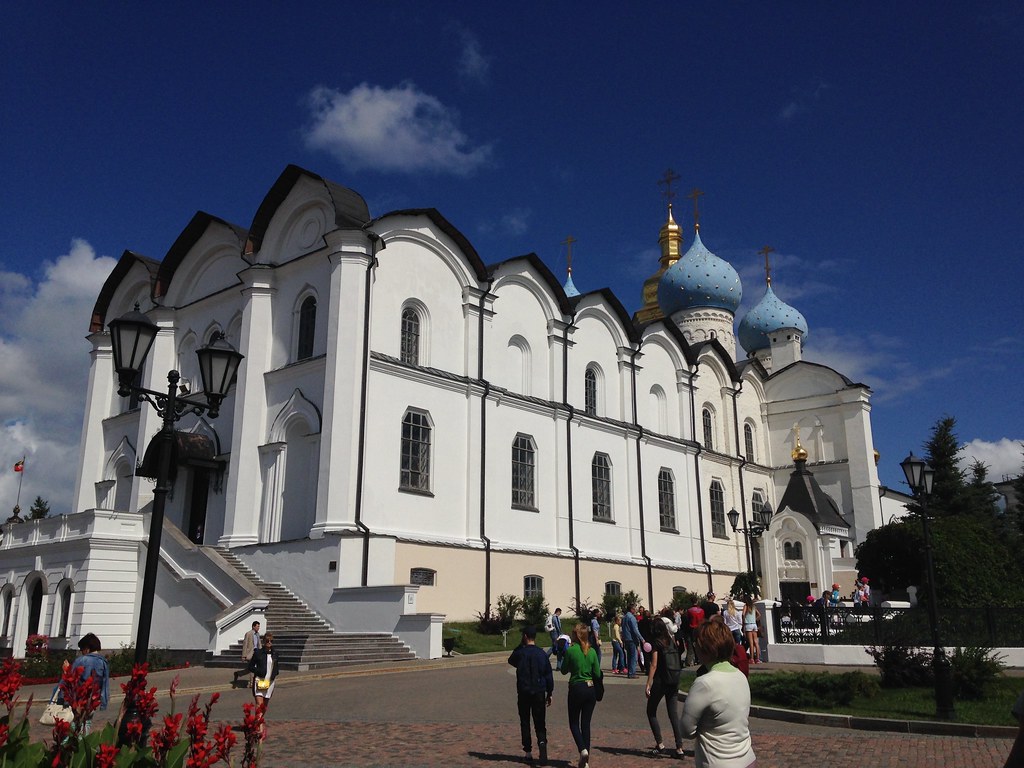
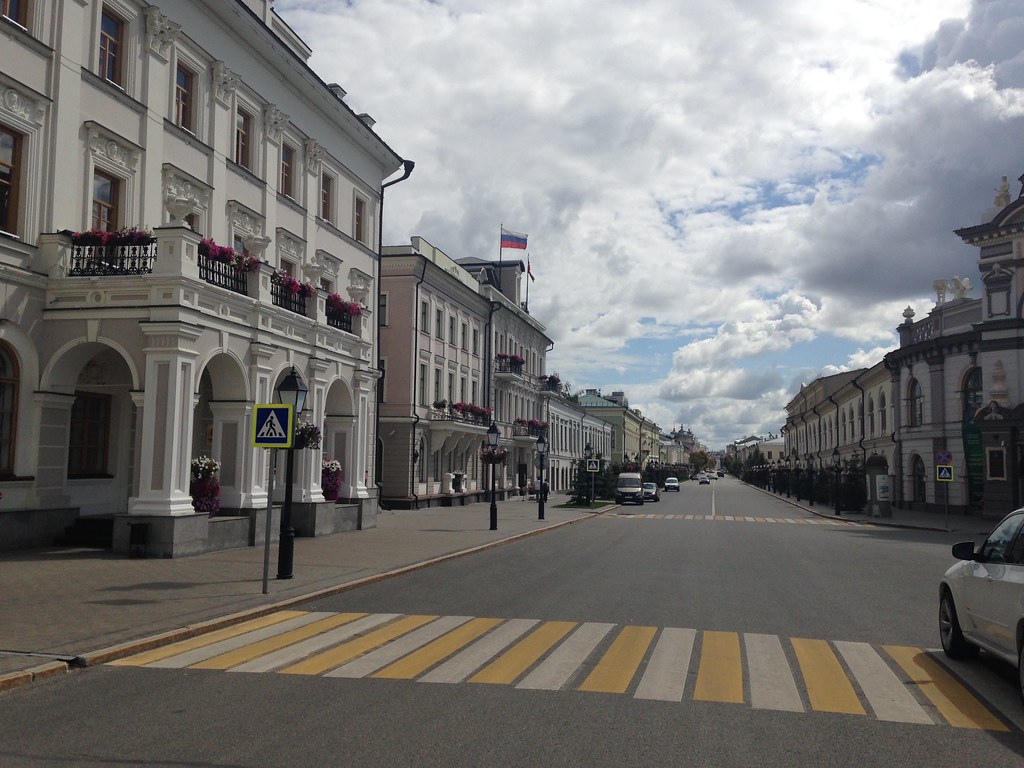
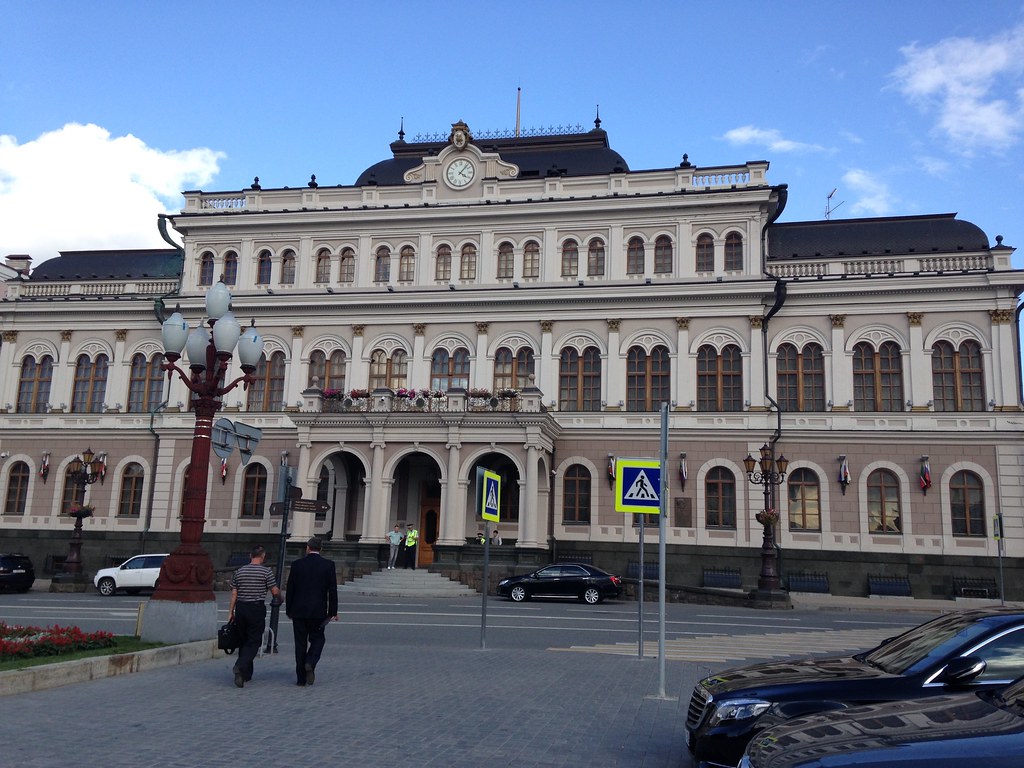
    I’ll share a few photos. The one at the top is the main entrance to the Kazan Kremlin. (The term kremlin is an old word meaning “fortress”). Here’s the Russian Orthodox cathedral there:

    Kazan, Russia - August 2015

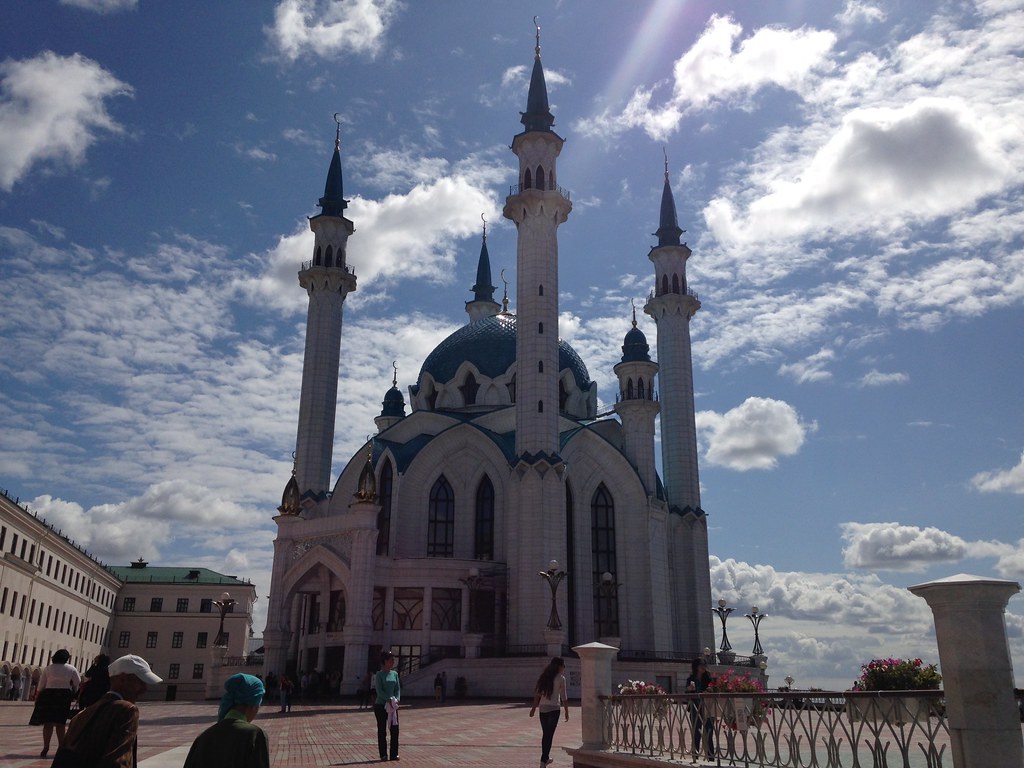
    There was originally a mosque in the kremlin that was destroyed when Russians conquered the area. Recently, a new mosque was built on the site to maintain the symbolic religious balance in the area. I think it’s a very nice building.

    Kazan, Russia - August 2015

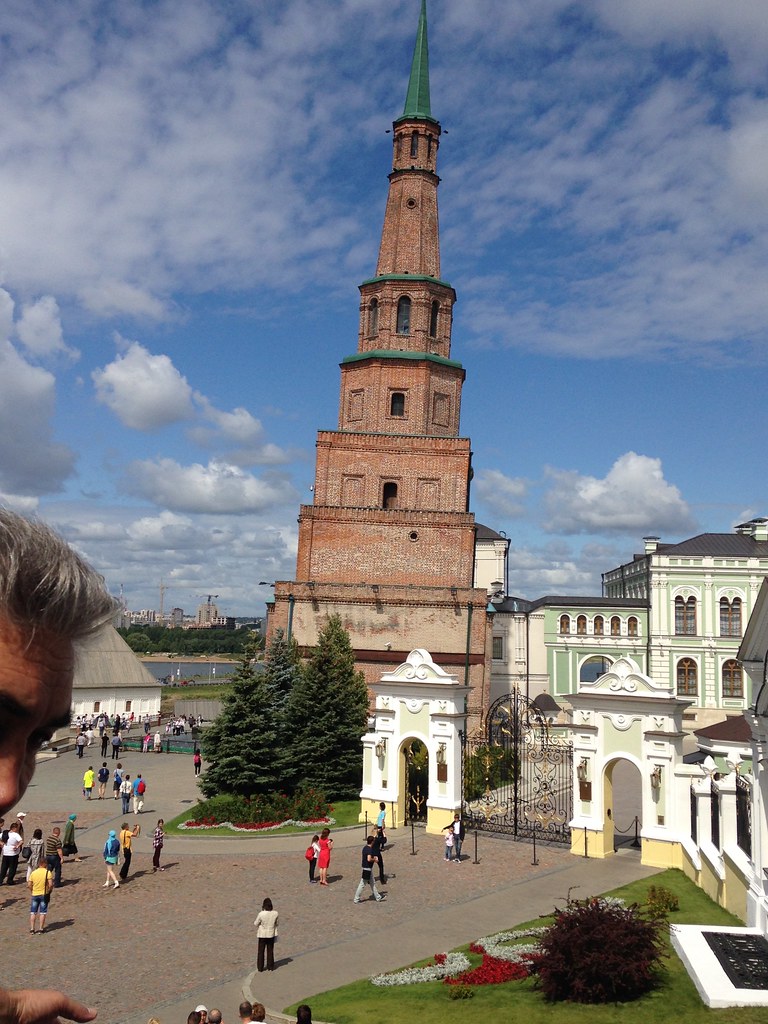
    They have their own leaning tower.

    Kazan, Russia - August 2015

    The main street leading to the kremlin.

    Kazan, Russia - August 2015

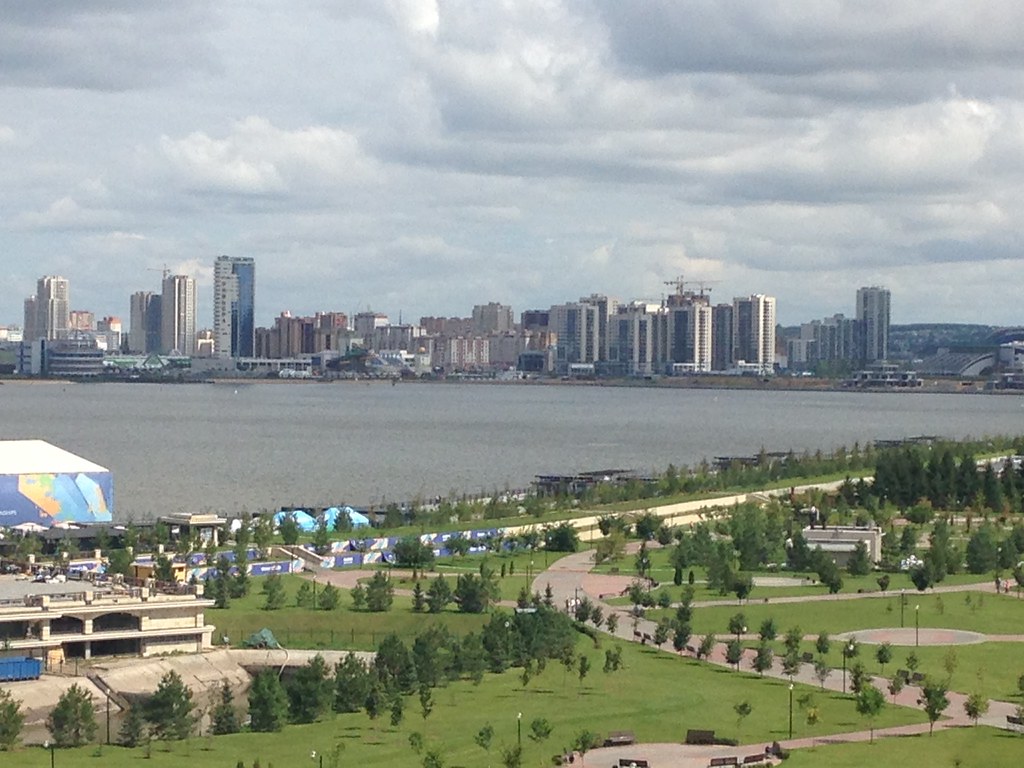
    The kremlin has nice views. There are several rivers and lakes in the area, including the Volga, and plenty of nice vistas.

    Kazan, Russia - August 2015

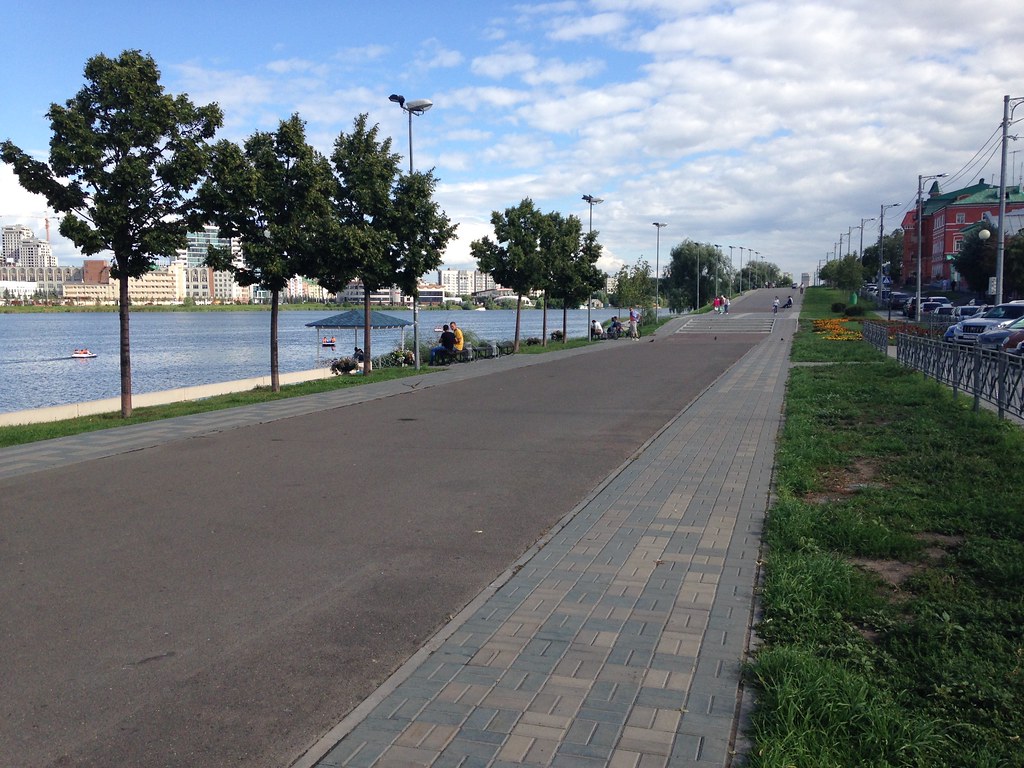
    Take a nice stroll along the lake.

    Kazan, Russia - August 2015

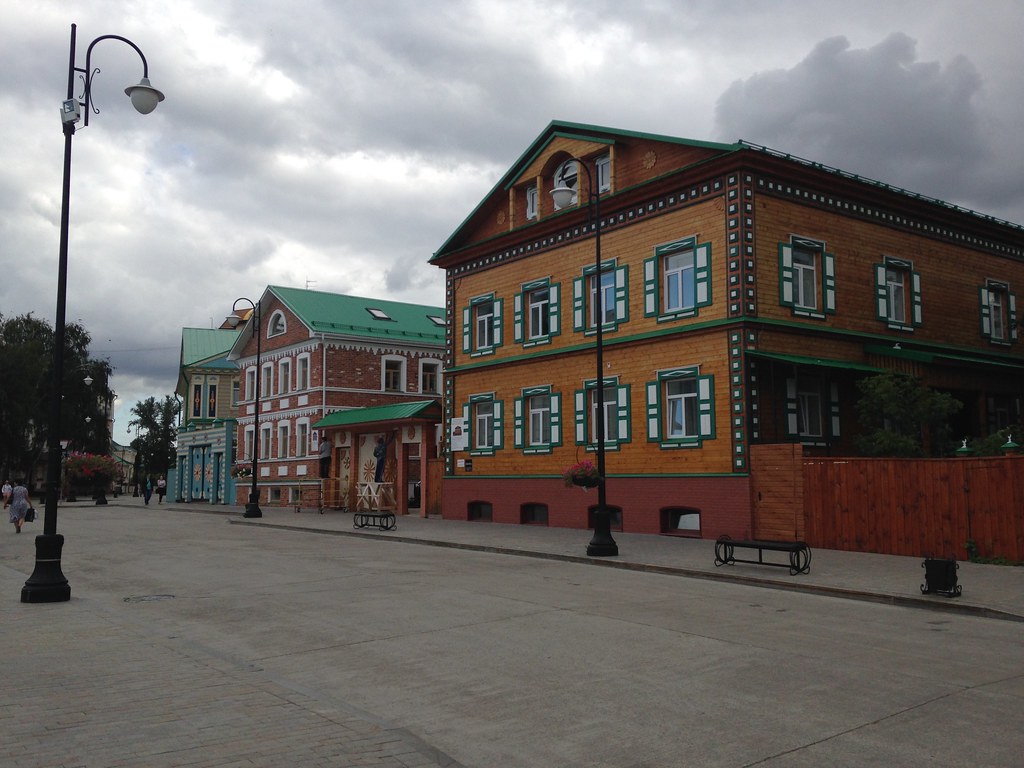
    Renovated buildings in the old Tatar Quarter

    Kazan, Russia - August 2015

    There’s a bit too much hardscape on that redone street for my taste. But it’s interesting because they took out a streetcar and pedestrianized the street. Apparently the vibrations were causing problems with the old buildings in the area, so they wanted to eliminate all vehicles.

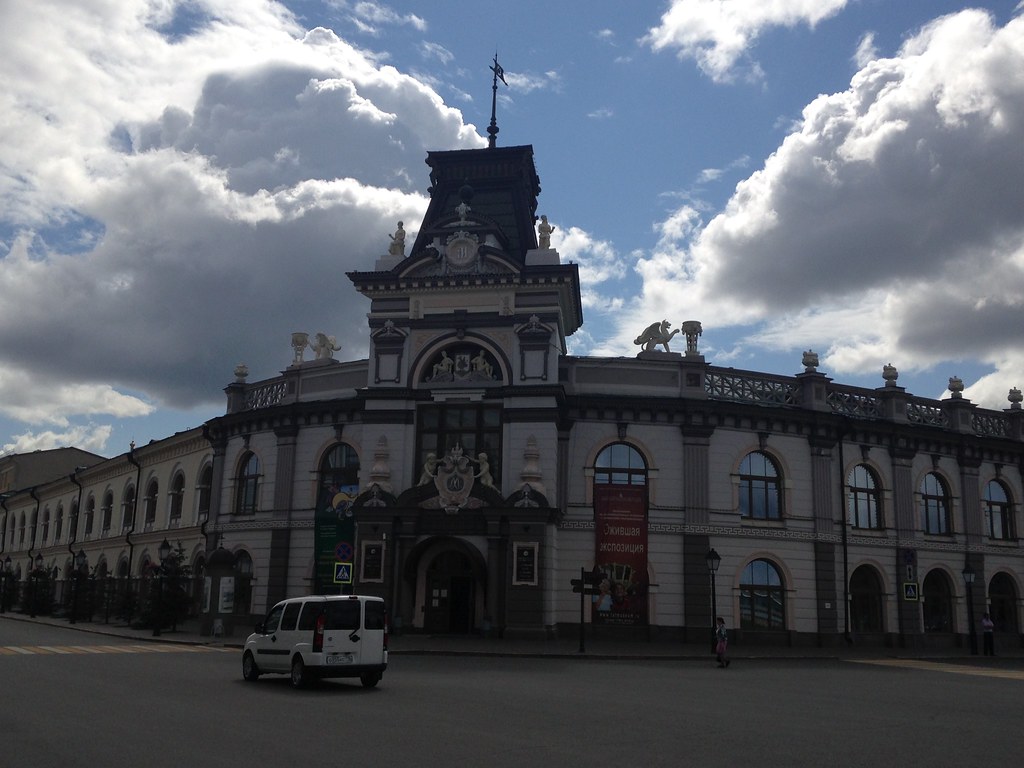
    Not sure what this is, but it’s in my Kazan file.

    Kazan, Russia - August 2015

    Dittos.

    Kazan, Russia - August 2015

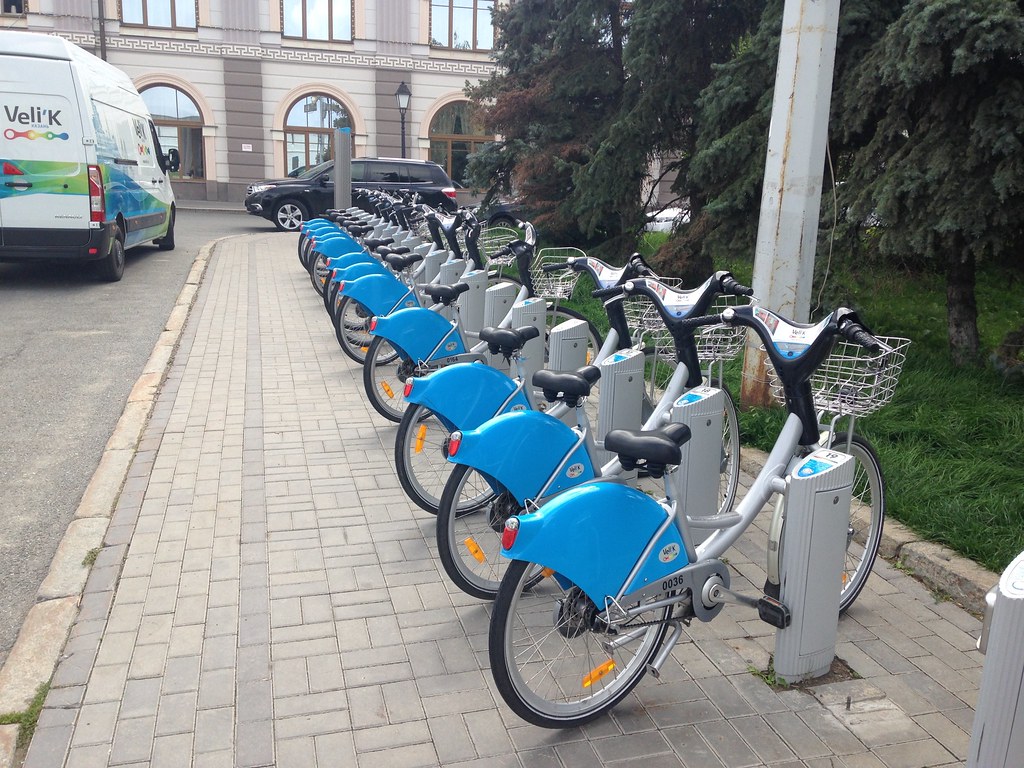
    I’ll wrap up with a bit of transport geekery. Yes, they have a bike share system.

    Kazan, Russia - August 2015

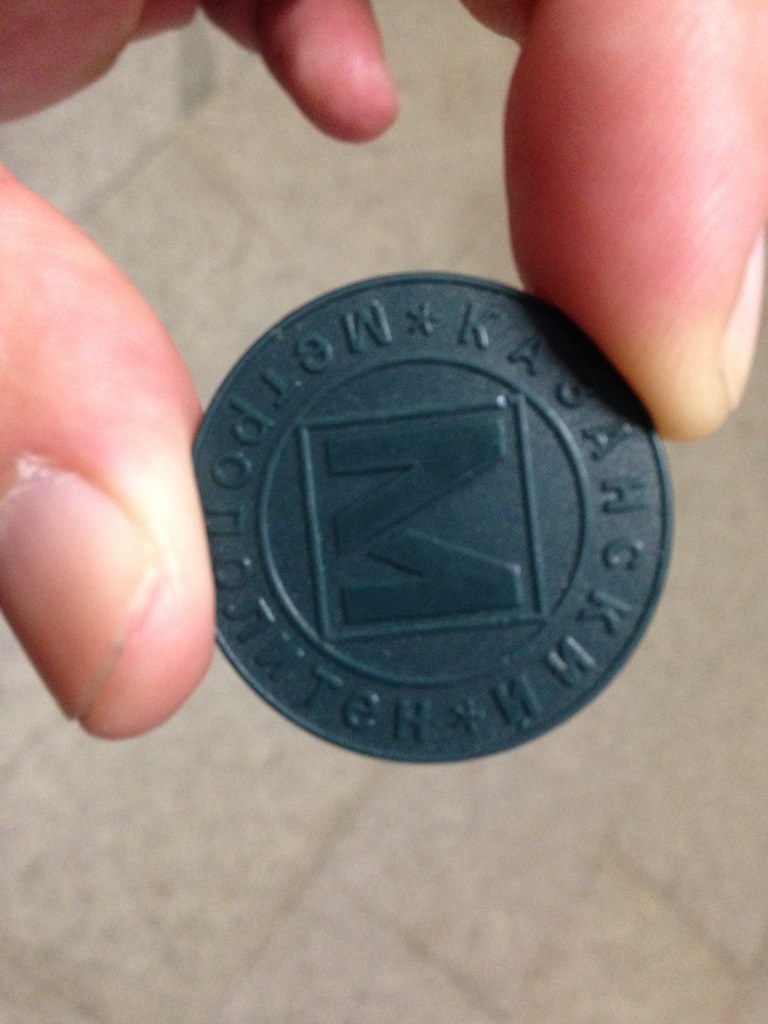
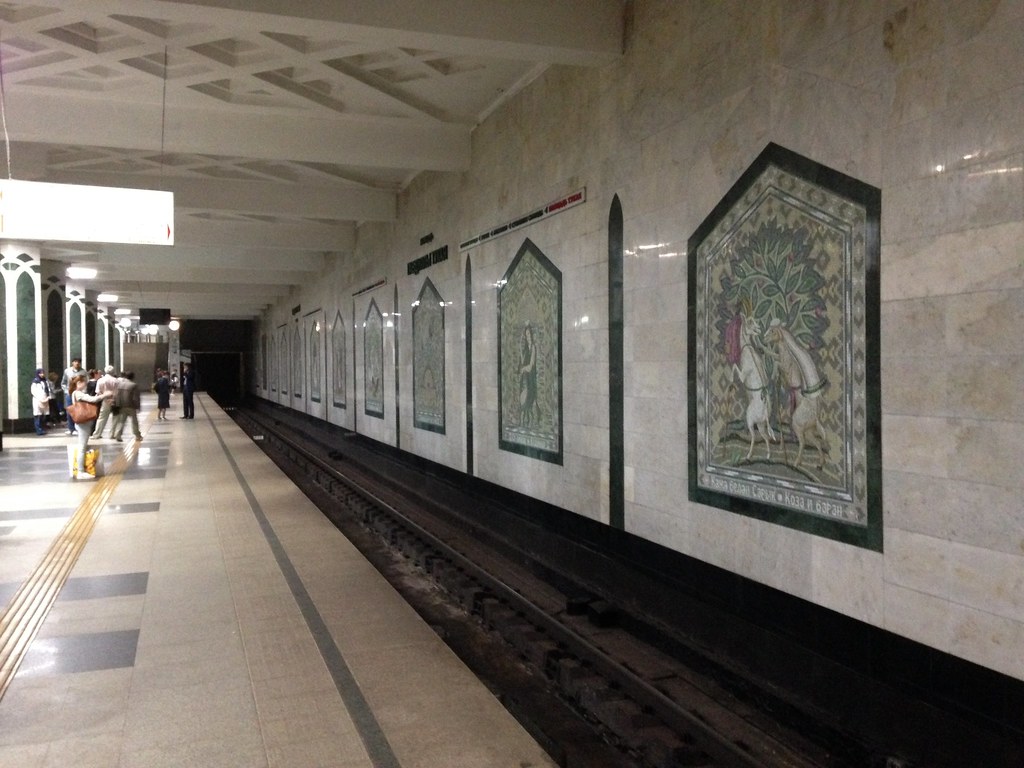
    Their new metro system is in the Russian style with lots of marble, etc. The system “M” logo is similar to Moscow but in green (the traditional color of Islam). Instead of Moscow style tap cards they are using plastic tokens.

    Kazan, Russia - August 2015

    A metro station.

    Kazan, Russia - August 2015

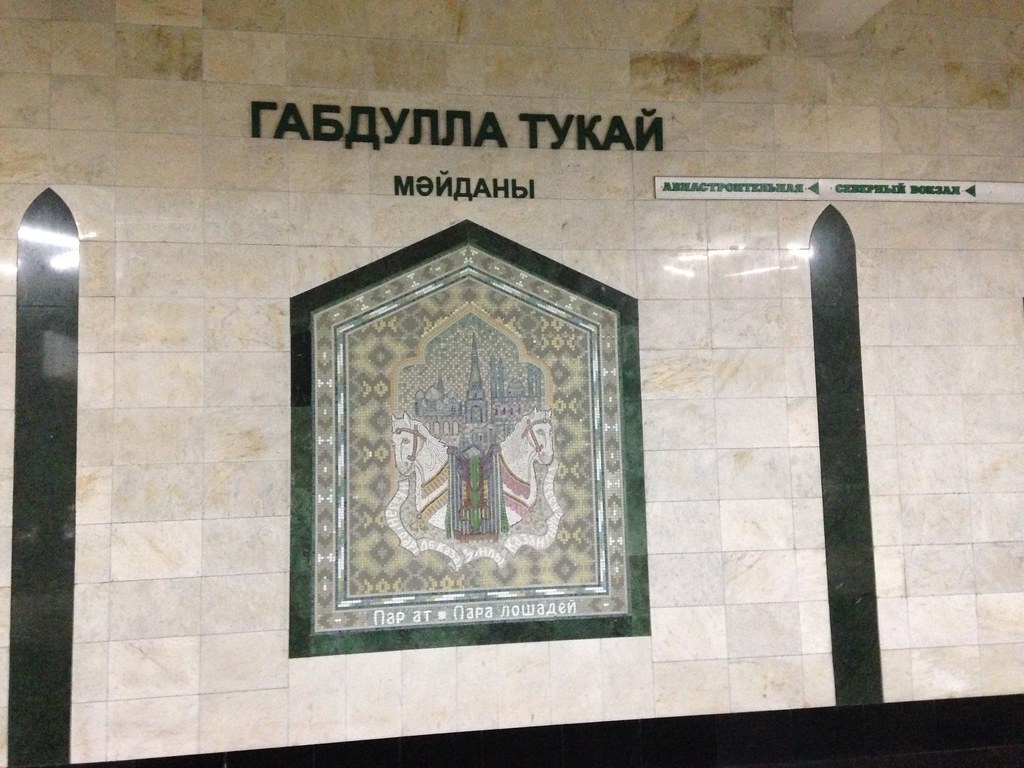
    Station name signage. I believe the top is Russian and the bottom is the Tatar language, which is also written using the Cyrillic script. Interestingly, for at least while into the Soviet period, Tatar was written using the Latin alphabet, but they were apparently forced to change.

    Kazan, Russia - August 2015

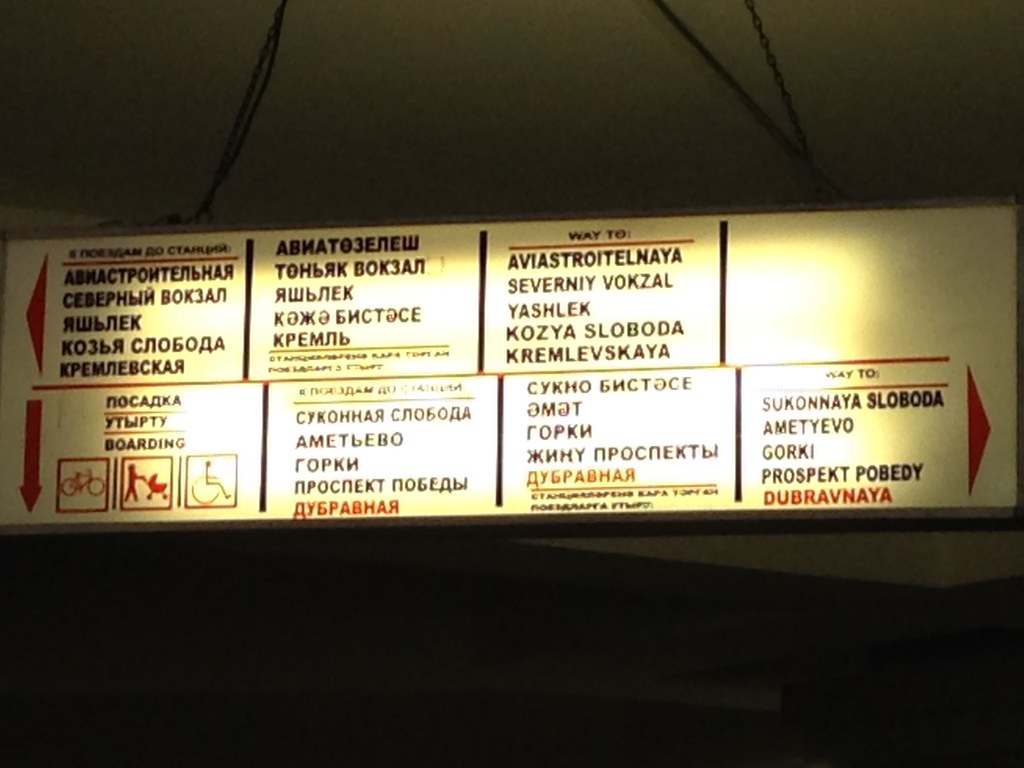
    Signs.

    Kazan, Russia - August 2015

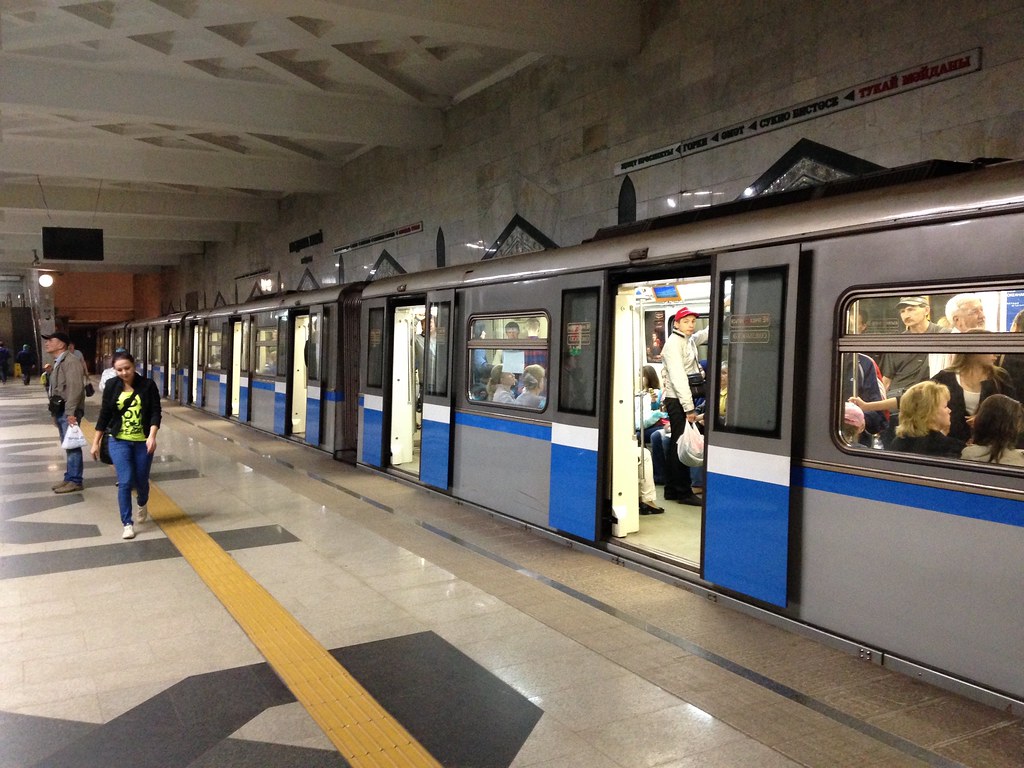
    Here’s a train in the station. These are the exact same trainsets as the new Moscow ones I mentioned by didn’t have a picture of.

    Kazan, Russia - August 2015

    As I said, I was only there a day but was glad I went. It was good to get to see a city further into the Russian interior. Lots of money is being spent there, so I’d expect many further developments in the future.

    Aaron M. Renn is a senior fellow at the Manhattan Institute and a Contributing Editor at City Journal. He writes at The Urbanophile, where this piece first appeared.
  • Transport in Moscow

    I was in Russia last week and plan to share a few relevant notes from the trip. Since you can easily find better photos of places like the Kremlin than I’ll ever take online, when it comes to Moscow I’m going to focus on more planning and transport items. There’s a lot of other commentary I might make, and if you want to read it, be sure to sign up for my exclusive content by email if you haven’t already, because I may write up further observations on the political scene there.

    Writing anything positive about public space and transport in Moscow runs the risk of coming across as seeming to say that “at least Putin makes the trains run on time.” But as he is fully occupied with such critical tasks of state as destroying illicit supplies of Nutella and brie, I doubt he’s bothering himself with such prosaic concerns as transport. Should you be interested, the NYT just ran a good piece on the combination of urban improvement and authoritarianism in Russia’s capital city.

    Moscow reminded me a bit of an inverted Buenos Aires. Whereas in BA you get a clear sense that this was once the Paris of South America now well faded, Moscow comes across as a dilapidated city on the rise. You definitely see plenty of run down communist era architecture – the quantity of Corbusian nightmares evident from an aerial view of the city is astonishing – but there are new buildings on the rise and significant evidence of attempts to improve the lived experience of the city.

    Moscow is clearly a driving and transit city, not a walking city. Though there is some street life, it’s far lower than comparable high density megacities. But before knocking them too much, keep in mind that Moscow gets bitterly cold in the winter. Even in August the temperature in the afternoon was only the low 70s. Ideal to be sure, but that’s only for a narrow window of the year. Moscow is at 56 degrees north latitude compared to 41 in New York. Moscow is actually further north than every major Canadian city. The sky was already getting light before 4am.

    Nevertheless, the outdoor experience there is being enhanced through a number of projects.

    Moscow River

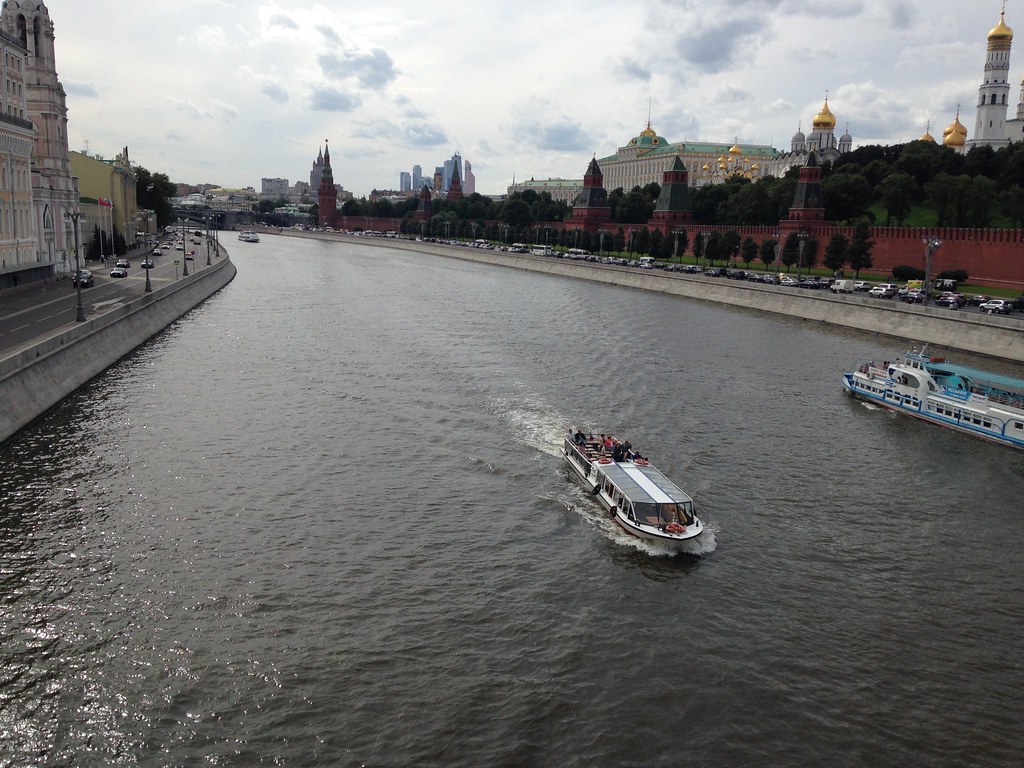
    The Moscow River flows through the city, passing alongside the Kremlin as you can see in his photograph.

    Moscow - August 2015

    You see that on both sides it is lined with roads and very narrow sidewalks. It’s not even clear how you would easily get to the riverside on the Kremlin side. A stroll along the bank across from the Kremlin, Cathedral of Christ the Savior, and other landmarks should be amazing, but it is not.

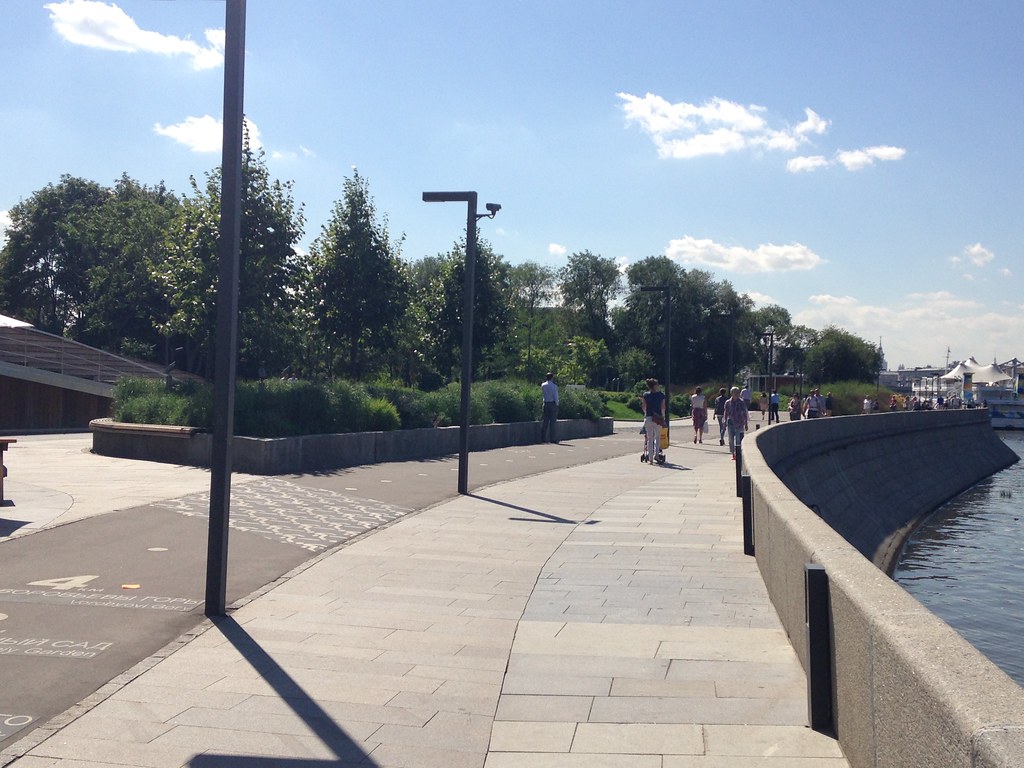
    There’s apparently a tender underway that would completely redo this for the better. In the meantime, one section of the river called the Krymskaya Embankment has been redone to a slick, albeit somewhat generic design. This has radically transformed the riverfront for the better, and if the rest of the Moscow River upgrade is similar, this will be a huge transformation for the city.

    Moscow - August 2015

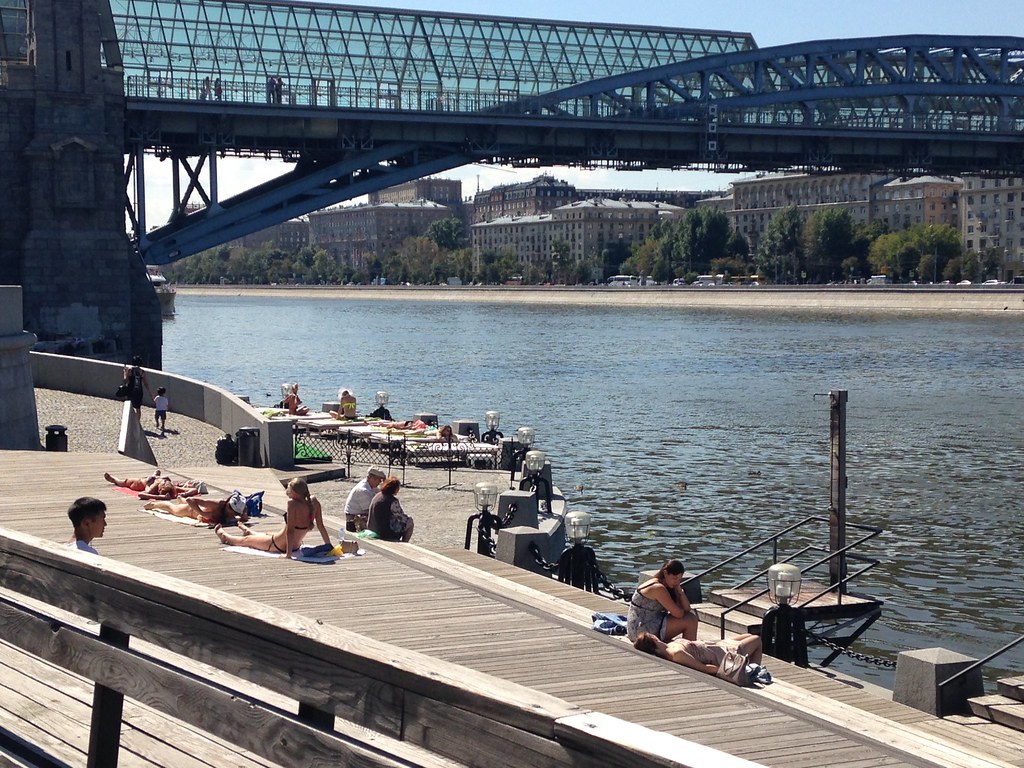
    People enjoying the waterfront.

    Moscow - August 2015

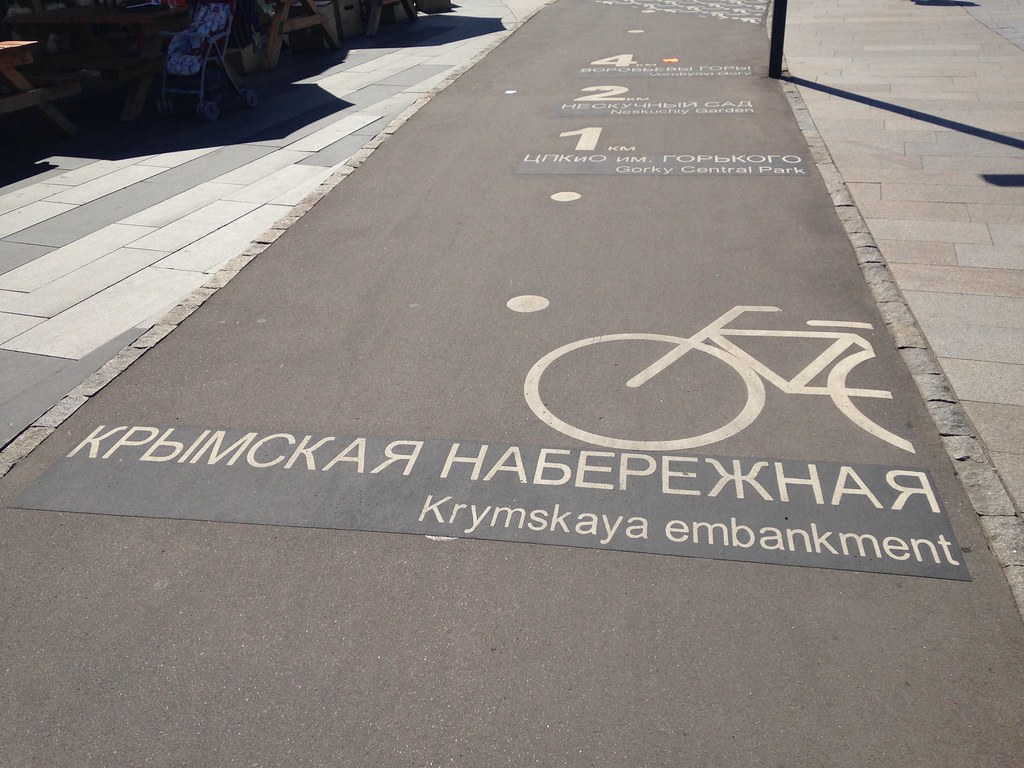
    Here’s a closeup of the bike lane.

    Moscow - August 2015

    The numbers and the text in the background give distances to attractions such as Gorky Park.

    Neighborhood Streets

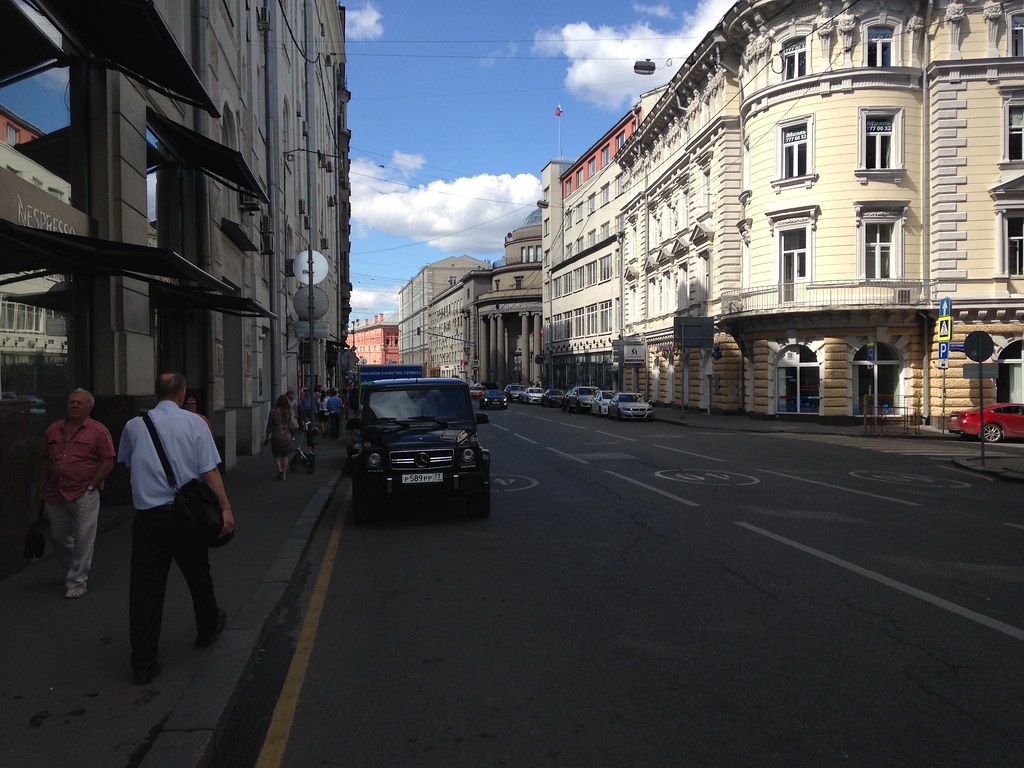
    In a way similar to the riverbank, there’s been an effort to upgrade neighborhood streets to improve the pedestrian experience. Traditionally, these have had fairly narrow, basic sidewalks. Here’s a typical example:

    Moscow - August 2015

    And here’s a street that’s been put on a road diet.

    Moscow - August 2015

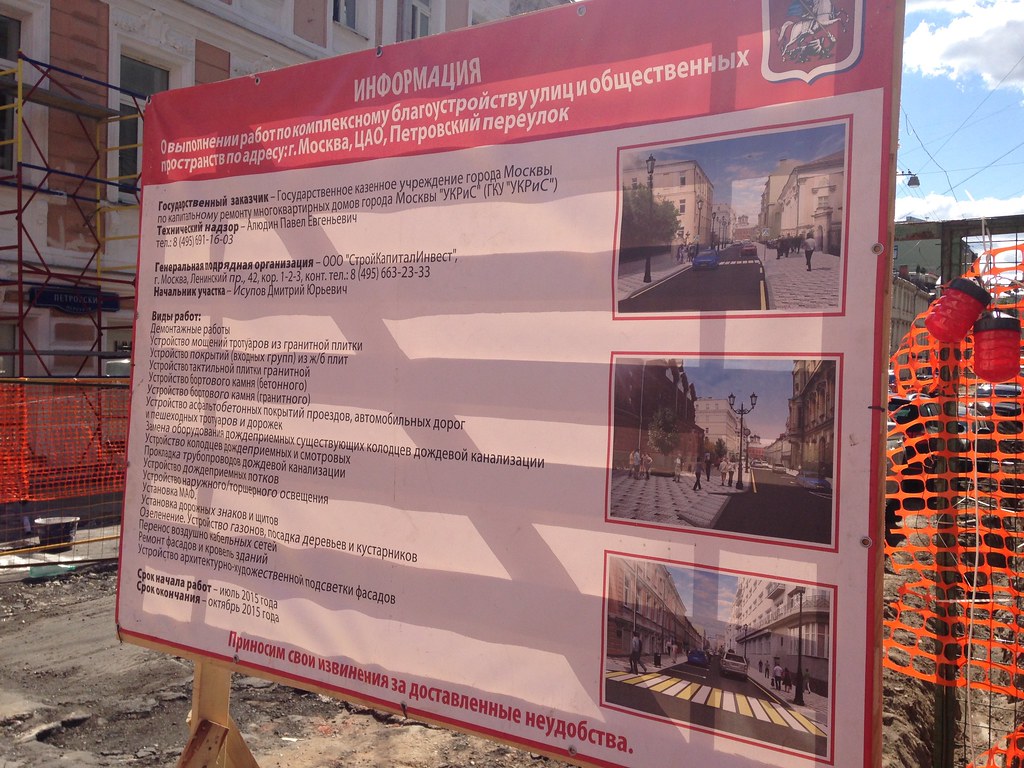
    This program is ongoing, as this sign touting forthcoming improvements shows.

    Moscow - August 2015

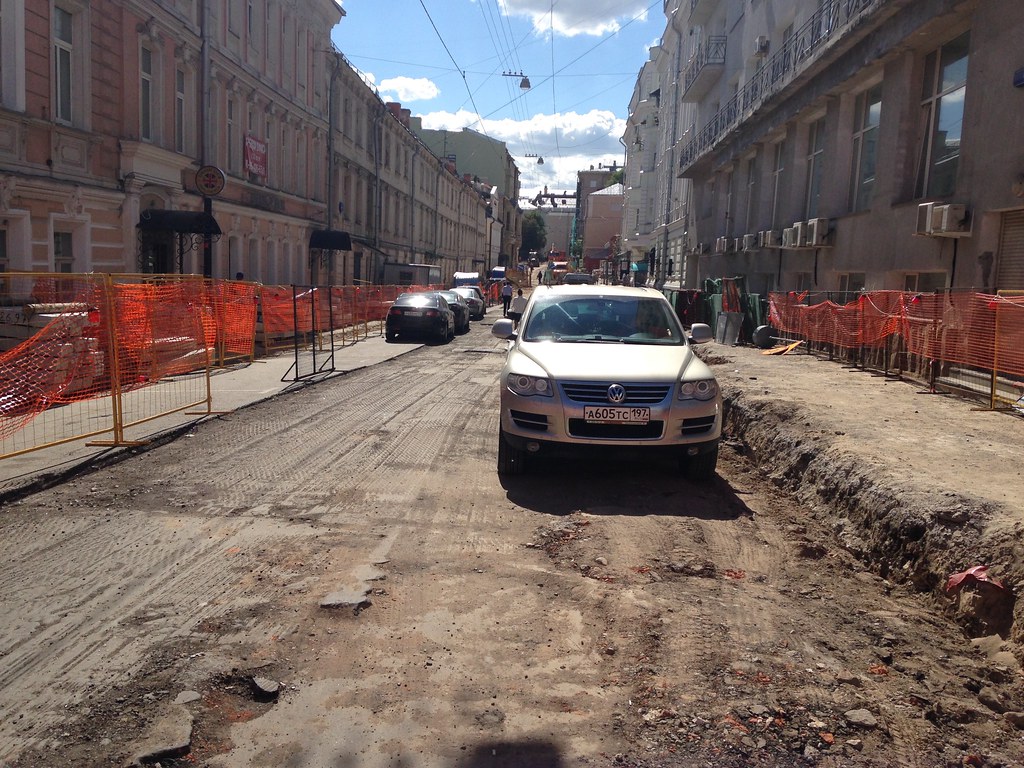
    And a picture of the construction in progress.

    Moscow - August 2015

    There’s also a bike share system.

    Moscow - August 2015

    Arterial Streets

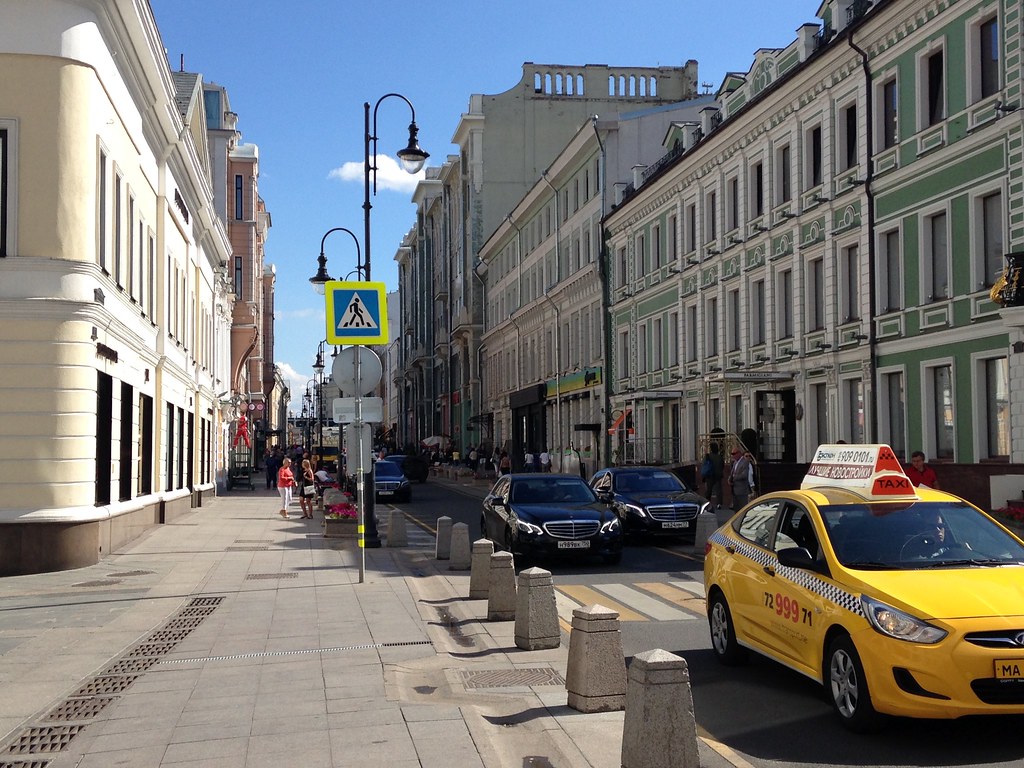
    While there are plenty of smaller, human scaled side streets in Moscow, the arterial roads are mega-wide thoroughfares (“prospekts” in the local parlance) that function as quasi-freeways. Here’s an example that isn’t a perfect photo, but let’s you get the gist of it.

    Moscow - August 2015

    You’ll see at least six lanes in a single direction. This building is actually decent, but illustrates what you also see along these high capacity arterials, namely a preponderance of horizontally oriented buildings. Even with broken up facades, these are buildings that are most legible at driving speeds, not walking.

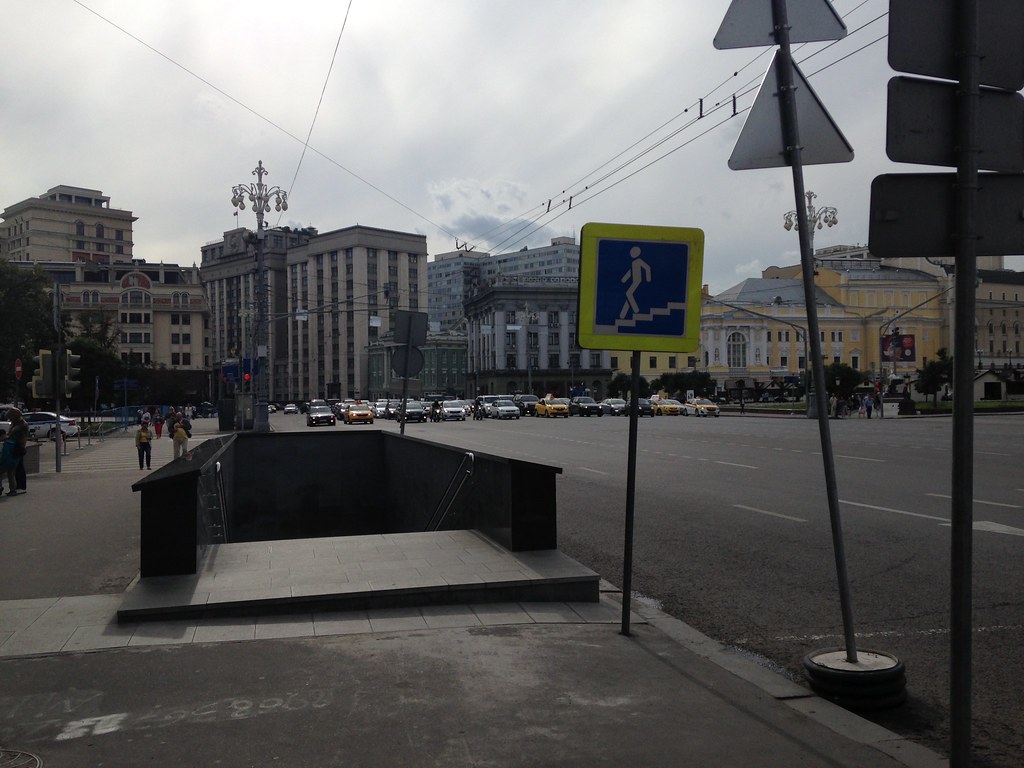
    You might wonder how people cross these things, and the answer is that they mostly don’t. For these streets, there’s a heavy reliance on pedestrian underpasses for pedestrian safety. (This also reduces the number of stoplights, which allows for long distances of high speed travel even in the center city). Metro entrances also do double-duty as protected passageways through intersections. Here’s an entrance to one such pedestrian underpass along a one way street that appears to be ten lanes wide.

    Moscow - August 2015

    This might seem inhumane, and it is. But it also functions well. Though I’m told traffic is much lighter in the summer when many vacate the city, there is nothing like the gridlock of a New York, and these roads tended to move pretty good most of the time I was there.

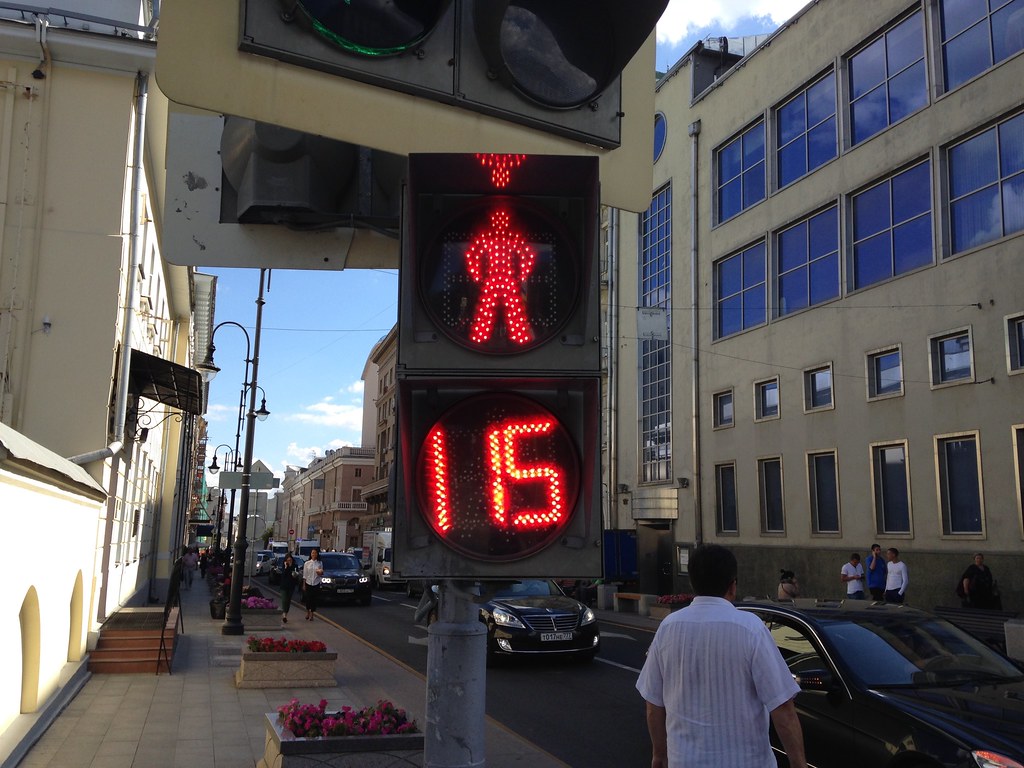
    Where there were crosswalks, they featured countdown timers on both the walk and don’t walk cycle.

    Moscow - August 2015

    That’s not a misprint. Some of these lights have extremely long cycles.

    Some arterials have a nicer design. One is the so-called “boulevard ring,” which is one of the many ring roads in Moscow. I think (though can’t promise), this shot is from it. Even if not, it’s representative of its design.

    Moscow - August 2015

    Moscow Metro

    Moscow is famous for its metro system, which is one of the world’s busiest and has lavish station designs. I saw some of these and they are indeed pretty great, though this system should never be applauded without remembering that it was built with gulag labor. Again, I won’t show many pictures of the stations, since my iPhone isn’t the best at low light underground shots. Google is your friend on this.

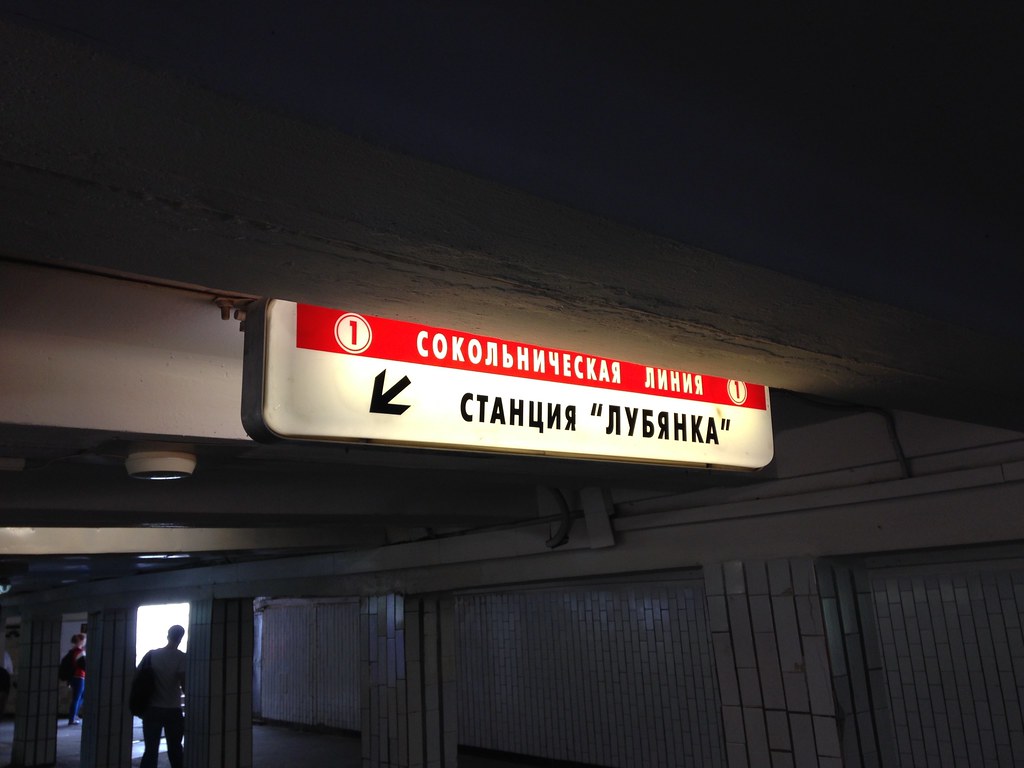
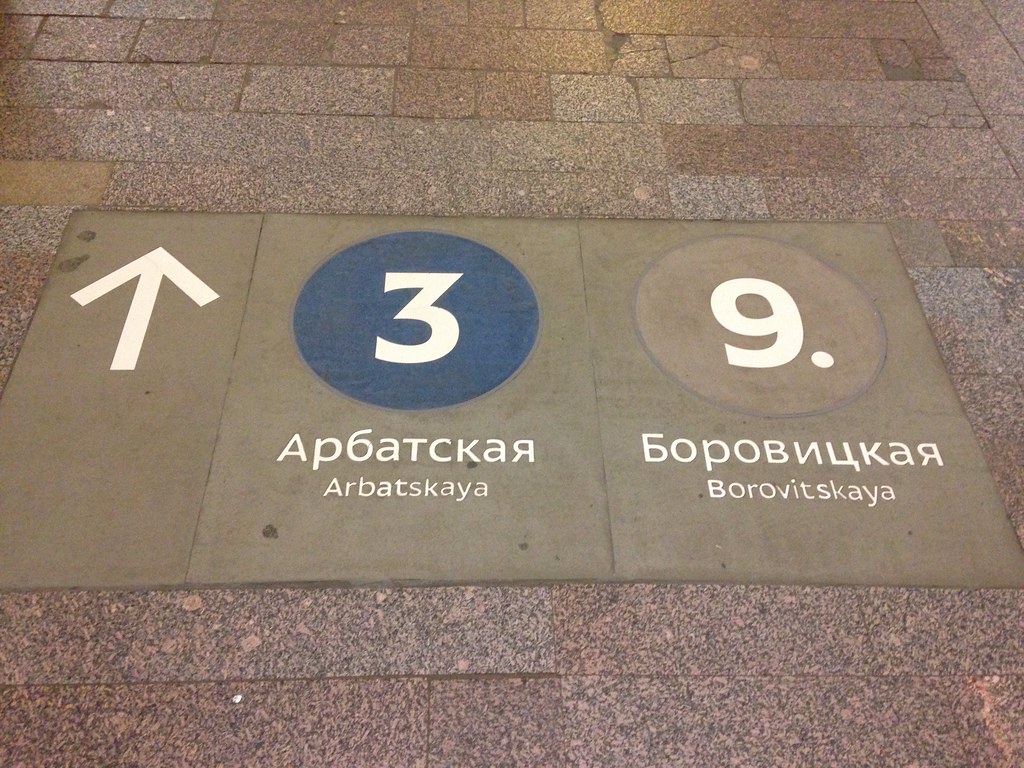
    The metro fare is about a buck. Tap cards are sold at automated kiosks that have English available. Lines are numbered and color coded. Here’s an example of the system signage.

    Moscow - August 2015

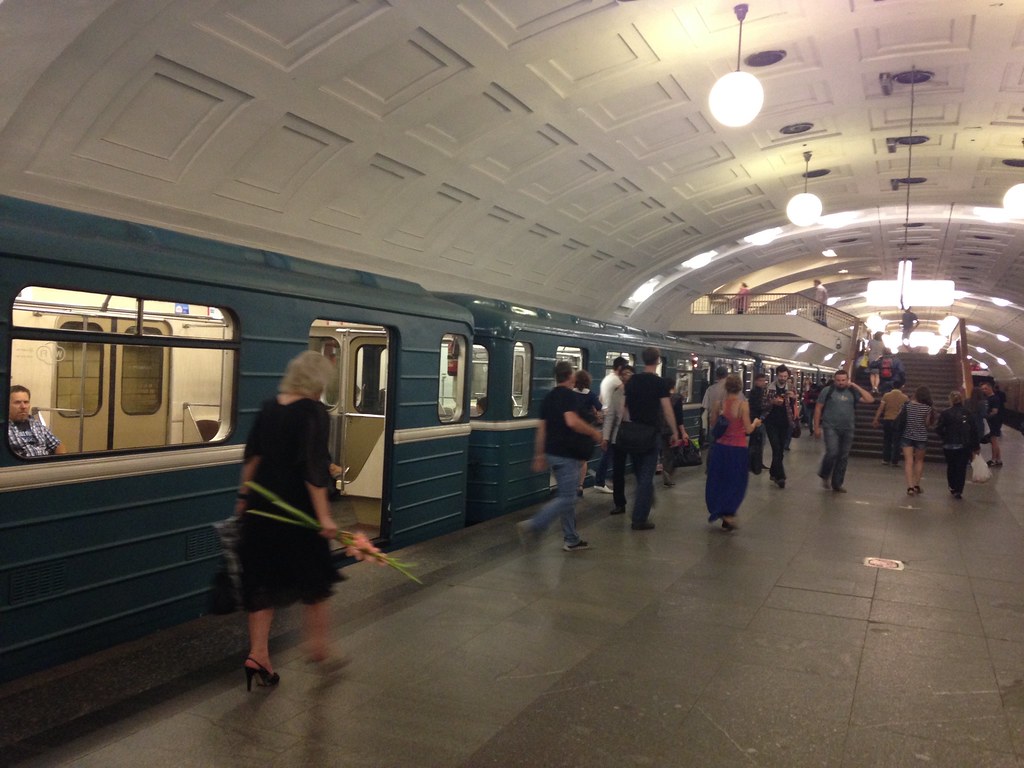
    It’s one train right after the next more or less. Even at 11:30 pm there were three minute headways. The cars are older but function well, and there is wifi, which I’m told works even between stations.

    Moscow - August 2015

    There are some newer cars that appear to be married pairs with open gangway between the two linked carriages, but not between pairs.

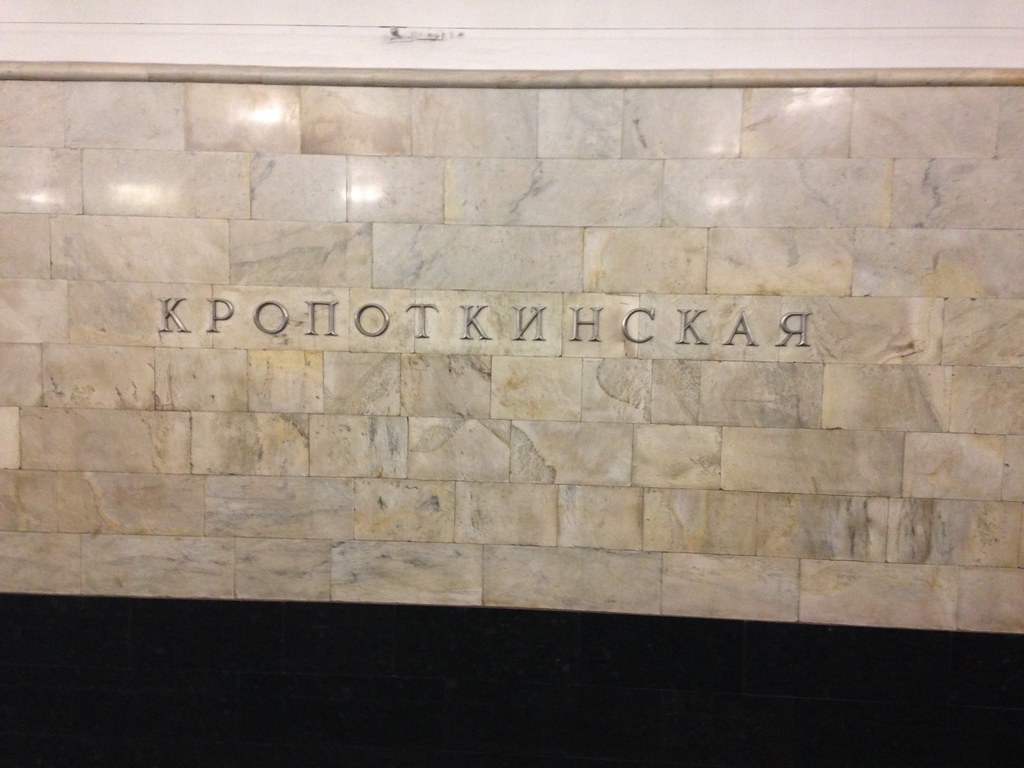
    While you can buy a ticket in English, the bulk of the signage is in Russian only. This isn’t a problem for the most part, but I found the remembering station names in the Cyrillic alphabet was a challenge compared with Latin alphabet stations in other foreign countries. I would suggest that the station name be transliterated into Latin script to make the system more friendly to international users. (The rest of the signage is fine as is). Here’s an example:

    Moscow - August 2015

    If I translate that right, this station is Kropotkinskaya (Kropotkin was a Russian intellectual of the 19th and early 20th centuries). The name is certainly easier to recognize in Latin script for westerners (and probably most others who use English as their international lingua franca). But even in Russian only, you should be able to figure it out how to navigate the system if you pay close attention.

    Here’s an example of some transliterated signage. This probably goes above and beyond the call of duty as the numeric indicators suffice.

    Moscow - August 2015

    Air Travel

    Moscow has two main airports, I believe, both at a significant distance from the city center. I flew using Sheremetyevo, which is serviceable if not overly pleasant. You have to pass through security immediately upon entering the terminal, then again when going to the gate area. Even domestic transfers require re-screening and passport checks. (I was told by a local, “Russians love checking passports.”)

    The most depressing part of the trip was flying three domestic segments on Aeroflot. When I was younger they had an extremely bad reputation, and flew of a fleet of dodgy Soviet made jets. Today, the planes I flew on were newish A-320s and the service levels exceeded US domestic standards (though that’s a low hurdle to jump). They even still serve food on short haul flights. Quite a role reversal there. Red is still their flight attendant colors, and their hammer and sickle logo is still in use.

    High Speed Rail

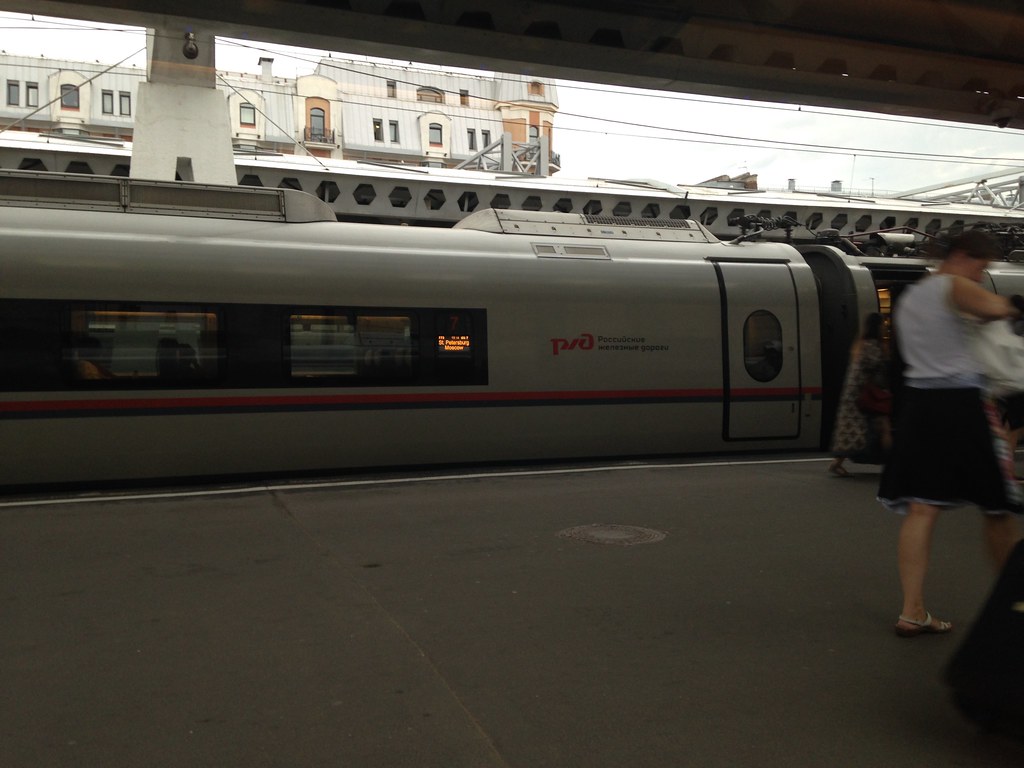
    There are a number of rail routes throughout the country, and while I didn’t make a comprehensive survey, I did ride the high speed “Sapsan” service from St. Petersburg to Moscow. IIRC, the fare was around $55. Though using Siemens trainsets derived from the rolling stock used on Germany’s ICE trains, the max speed was 220 km/h (135 mph), comparable to the Acela. However, unlike the Acela, the Sapsan cruises at 200 km/h or higher most of the trip. The journey takes a bit less than four hours and is a pleasant way to travel.

    Here’s a picture of one of the trains I took in St. Petersburg’s Moscow Station.

    St. Petersburg - August 2015

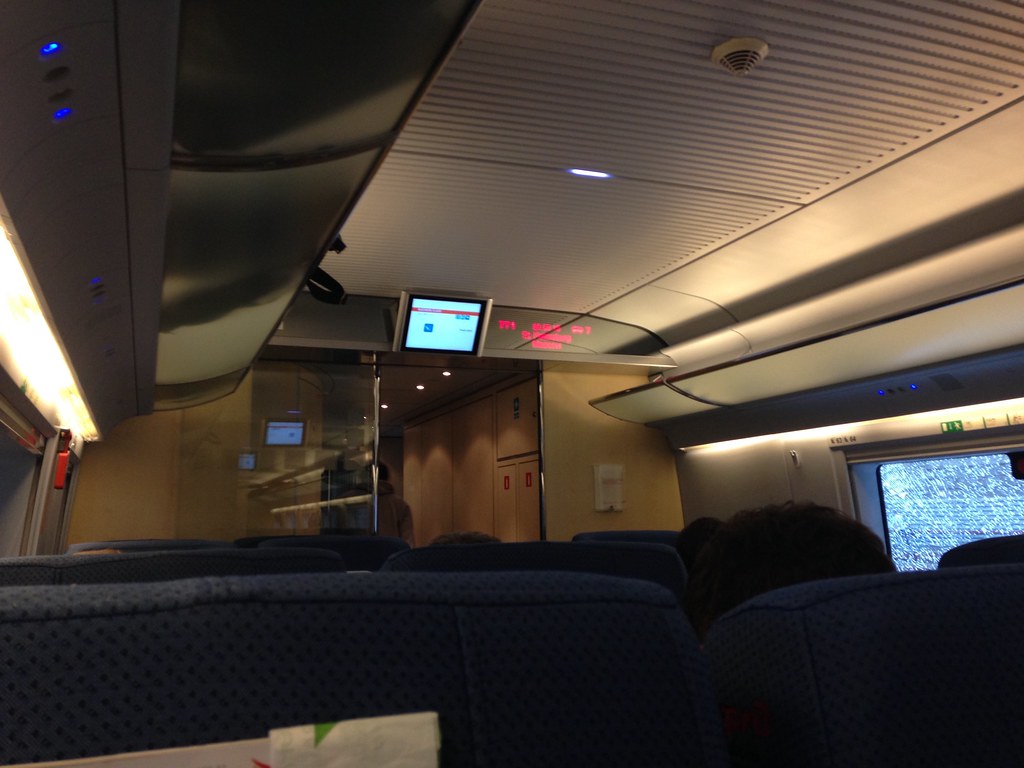
    An interior shot.

    St. Petersburg - August 2015

    Conclusion

    I hope this gives a bit of a feel for transport in Moscow. The city is obviously spending to try to upgrade its urban environment. Whether physical improvements in Moscow or elsewhere will survive Putin’s authoritarian turn is to be seen, but as the examples of the Moscow subway and many of the historic ruins we visit around the world show, it’s certainly possible for the cruelest of dictatorships to produce magnificent physical artifacts in select places. The success of these regimes should not be judged by that measure.

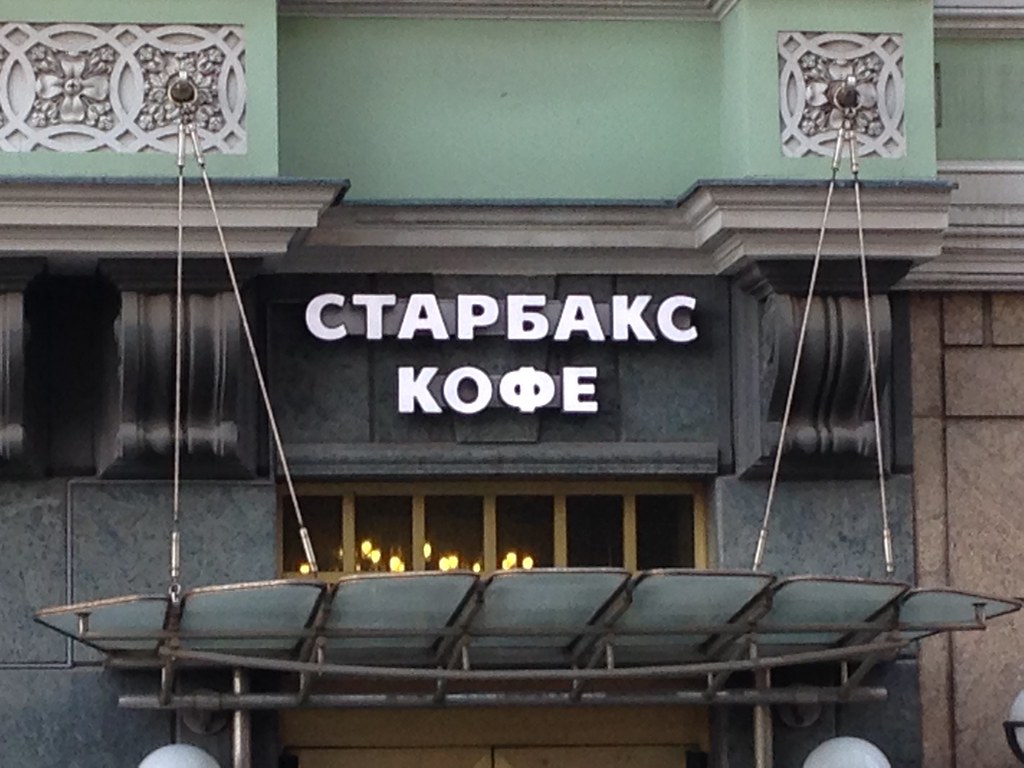
    In closing, I’ll leave translating the following as an exercise for the reader.

    Moscow - August 2015

    If you are interested, there’s an album of iPhone photos I took available on my Flickr page.

    Aaron M. Renn is a senior fellow at the Manhattan Institute and a Contributing Editor at City Journal. He writes at The Urbanophile, where this piece first appeared.
  • LA’s Tale of Two Cities

    It’s the best of times and the worst of times in Los Angeles.

    Los Angeles is now attracting notice as a so-called “global city,” one of the world’s elite metropolises. It is ranked #6 in the world by AT Kearney and tied for 10th in a report by the Singapore Civil Service College that I contributed to.  Yet it also has among the highest big city poverty rates in the nation, and was found to be one of the worst places in America for upward mobility among the poor. Newspaper columns are starting to refer to LA as a “third world city.”

    Though the Bay Area gets the headlines, the LA region likes to boast it’s coming on strong in tech.  With a diverse set of marquee names including Snapchat, Tinder, Oculus, and SpaceX, LA’s startup scene continues to grow. But tech growth overall has been middling, ranking 28th out of the country’s sixty-six largest region in information job growth, according to a recent Forbes survey.

    More disturbing, job growth has also been slow, ranking 35th overall, at a time when it’s long time rivals in the Bay Area occupy the top job and tech rankings. Some of this reflects the loss of a key industry, aerospace, but also the departure of major corporations such as Lockheed,  Northrup Grumman, Occidental Petroleum, and Toyota, which has left LA’s once vaunted corporate community but is a shell of its former self.

    Yet LA’s glitz factor remains potent. The fashion industry has gained considerable recognition.  Tom Ford set up shop and brought his runway show to the city. Locally grown brands like Rodarte have a major following.   LA also is increasingly a global center of gravity in the art world.

    Yet behind the glitz, in the city of Los Angeles, aging water mains regularly erupt and the streets and sidewalks decay, with the city’s own report estimating it has an $8.1 billion infrastructure repair backlog.

    One report chronicles the flight of cash-strapped New York creatives fleeing to sunny, liberating, and less expensive LA.  Another how high prices and the Southern California grind are sending those same creatives packing.

    What’s going on here?

    What we are witnessing is LA changing in the context of the two tier world —divided between rich and poor — that we live in. This has been made worse by a city that has excessively focused on glamour at the expense of broad based opportunity creation.

    Los Angeles may be a creative capital and a great place to live as a creative worker, but it was always much more than that. It was also a great place to build the middle class American Dream or run a business that employed people at scale. For example, it was and still today remains the largest manufacturing center in the United States.  Yet it has lost half of its manufacturing job base since 1990.  That’s over half a million manufacturing jobs lost in the region since then, with over 300,000 of those just since 2000. Unlike Detroit, Houston, Nashville and even Portland, the region has not benefited at all from the resurgence of US manufacturing since 2009.

    Manufacturing decline, of course, is hardly unique to LA, but the city’s problems are particularly acute because region is so huge and diverse, being both the second largest metro area in the country, and the most diverse major region in America.  LA has a higher share of Hispanic population than any major metro apart from San Antonio – one twice as high as the Bay Area.  The LA/Inland Empire’s 8.4 million Hispanics would by themselves be the fourth largest metro area in the country, and are more than the total number of people living in the Bay Area. The area also has over a million black residents.

    With their heavily well-educated populations the Bay Area and Boston can perhaps get away with operating as sort of luxury boutiques for upscale whites and Asians, however dubious a decision that may be. Not so LA.

    The problem is that LA and California more broadly have adopted the luxury boutique mindset.  Policies are made in ways that favor the glamorous industries like Hollywood, high tech, and the arts – industries that don’t employ a lot of aspiring middle class people, particularly Hispanics or blacks.  

    These policies include strongly anti-growth land use and environmental policies designed to produce the kind pristine playgrounds favored by glamour industries and creative elite. But they have rendered the region increasingly unaffordable to all but the highly affluent or those who were lucky enough to buy in long ago. 

    Tech firms and entertainment companies can afford to pay their key workers whatever they need to live in LA.  That’s tougher for more workaday businesses. Ditto for business regulations, where many industries don’t have the margins to spend on things like a phalanx of compliance attorneys.

    Now that high prices are starting to hurt younger hipsters who want to join the creative industries, this is starting to get attention. But if it’s a problem for young, educated Millennials, it’s a disaster for the working class. 

    LA does deserve credit for potentially opportunity expanding investments in transit. But if transit can be seen as a potential winner, most political  leaders seem more concerned with finding ways to simply attempt to politically reallocate some money to those being squeezed by their policies, all at the expense of growth. The $15 minimum wage is Exhibit A. Like rent control, a high minimum wage benefits a few lucky winners while harming others and making it harder to justify business investment that would create more jobs and entry level opportunities onto the ladder of success, while raising consumer prices. The fact that nearly half of LA’s workers might be covered by the new minimum is a damning testament to the erosion of the region’s middle class job base.

    The real measure of success for LA is not how many runway shows, startups, and elite rankings it can achieve, but whether it can recover its role as an engine of opportunity for its large and diverse population to achieve their American Dream. Local leaders would be better served looking for policies that will expand opportunity instead of the ones they are following that actually reduce it.

    Aaron M. Renn is a Senior Fellow at the Manhattan Institute for Policy Research and a Contributing Editor at its magazine City Journal.

  • Chicago’s Great Financial Fire

    My latest piece is online in City Journal and is called “Chicago’s Financial Fire.” It’s a look at the ongoing financial crisis in that city, which has all of a sudden gotten very real thanks to a downgrade of the city’s credit rating to junk by Moody’s. Here’s an excerpt:

    While some sort of refinancing may be required, the proposed debt issue contains maneuvers similar to those that helped get Chicago into trouble in the first place—including more scoop and toss deferrals, $75 million for police back pay, $62 million to pay a judgment related to the city’s lakefront parking-garage lease, and $35 million to pay debt on the acquisition of the former Michael Reese Hospital site (an architecturally significant complex Daley acquired and razed for an ill-fated Olympic bid). The debt-issue proposal also includes $170 million in so-called “capitalized interest” for the first two years. That is, Chicago is actually borrowing the money to pay the first two years of interest payments on these bonds. In true Chicago style, the proposal passed the city council on a 45-3 vote. Hey, at least the city is getting out of the swaps business.

    Even with no further gimmicks, Emanuel will be six years into his mayoralty before the city can stop borrowing just to pay the interest on its debt. And without accounting for pensions, it will take the full eight years of both his terms to get the city to a balanced budget, where it can pay for the regular debt it has already accumulated.

    Click through to read the whole thing.

    Rahm donned a sweater during his reelection campaign and told the public he recognized he needed to change his ways, saying that he knows he “can rub people the wrong way.” The title of that ad was “Chicago’s Future.”

    I decided to take him up on his new approach. When I was working on this piece, I tried to get some information of the mayor’s press office. I asked them such extremely hard hitting questions as, “Is there a consolidated location where all of the mayor’s most recent financial proposals can be seen in their current form?” I emailed them and got no response. So I followed up with a phone call. I was put on hold for a while then told the person I needed to talk to was away from her desk, but I should email her at a XYZ address. So I did. No response. This is the same pattern all previous inquiries I’ve made have followed, though I believe on occasion I’ve been put through to a voice mail from which I got no callback. Now, it’s not like I try to get stuff from these guys every day, but the message is pretty clear. I gather that this experience is not at all unusual when dealing with Rahm.

    Having his press office simply refuse to respond at all to even basic inquiries from (the apparently many) people on his blacklist is naught put pettiness. Rahm takes people who could be friends and does his best to turn them into enemies. No wonder the Sun-Times titled a recent about him, “Rahm’s troubles plentiful, allies scarce.”

    Thus it is that Chicago, a city of grand and expansive history and ambition, a city so big it overflows the page, comes to have a mayor with a certain smallness of spirit.

    Aaron M. Renn is a senior fellow at the Manhattan Institute and a Contributing Editor at City Journal. He writes at The Urbanophile, where this piece first appeared.
    Chicago photo by Bigstock.

  • Hooray For the High Bridge

    My latest article is online in City Journal and is a look at the restoration and reopening of the High Bridge in New York City. Part of the original Croton Aqueduct system that first brought plentiful clean water to New York, portions of the High Bridge are the oldest standing bridge in the city. Here’s an excerpt:

    It’s worth asking whether, with its $61 million price tag, the High Bridge project was really needed. Strictly speaking, the answer is: No. The structure was in no danger of falling down. And, just a half mile to the north, the Washington Bridge provides a functional, if unpleasant, pedestrian crossing over the Harlem River. Yet, the High Bridge is an important part of New York history and deserves its loving restoration. Spending serious money on outlying neighborhoods that are mostly minority and heavily poor to give their residents a humane environment instead of a minimalistic one shows that New York does care about all its citizens. Great cities don’t just do great things in a sanitized downtown Green Zone for visitors. They create greatness in their workaday neighborhoods, too, with projects that speak not merely to the pragmatic, but to the human spirit. The High Bridge restoration again shows what great commercial success allows a city to do for its citizens.
    Click through to read the whole thing.

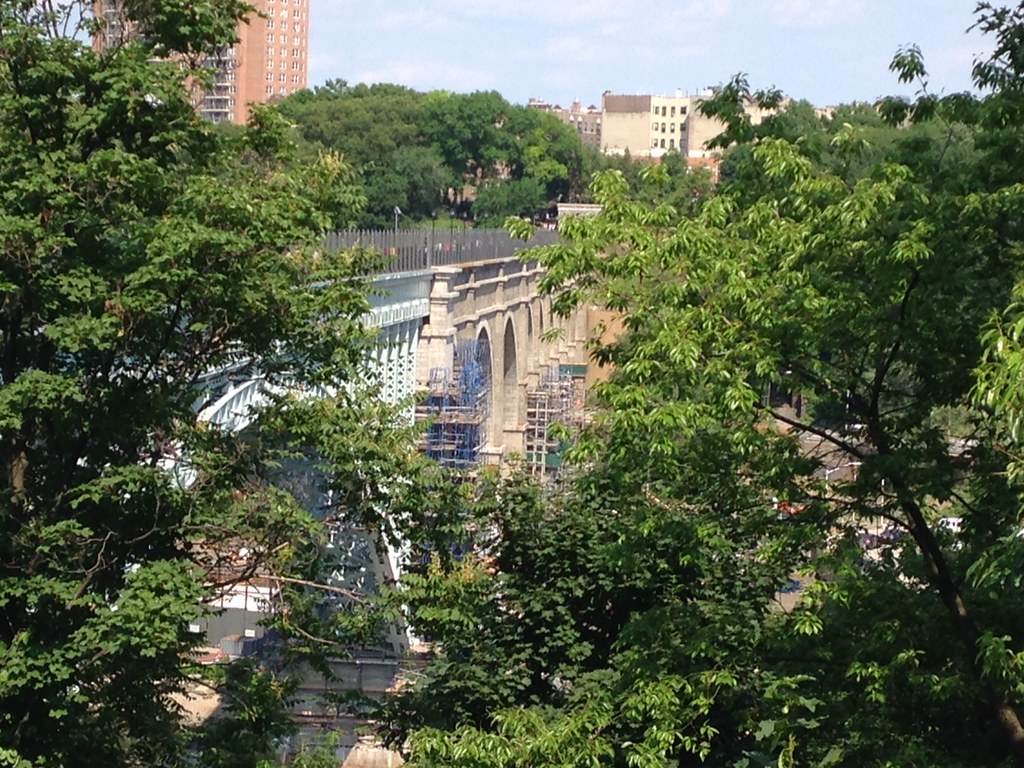
    Here are some additional pictures I took. First, the High Bridge peeking through the trees from the Manhattan heights. You can see both the original stone arch spans and the longer steel arch span.


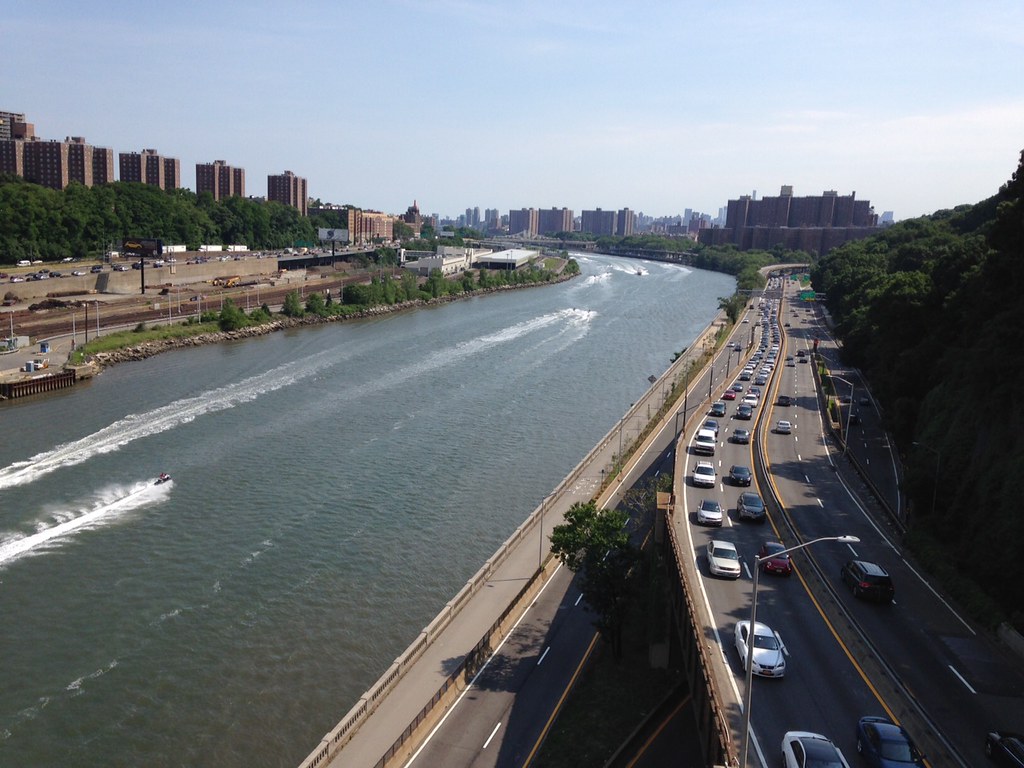
    Looking south:


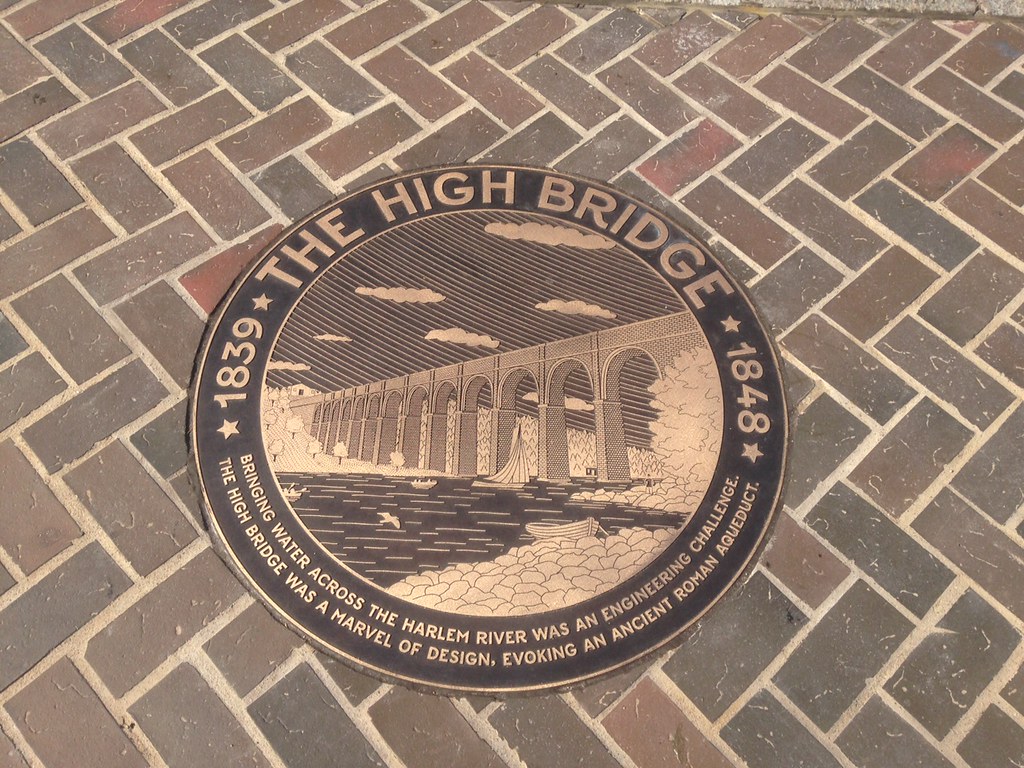
    Embedded seal in the bridge pavement with historical info. There are quite a few of these discussing various aspects of the project.


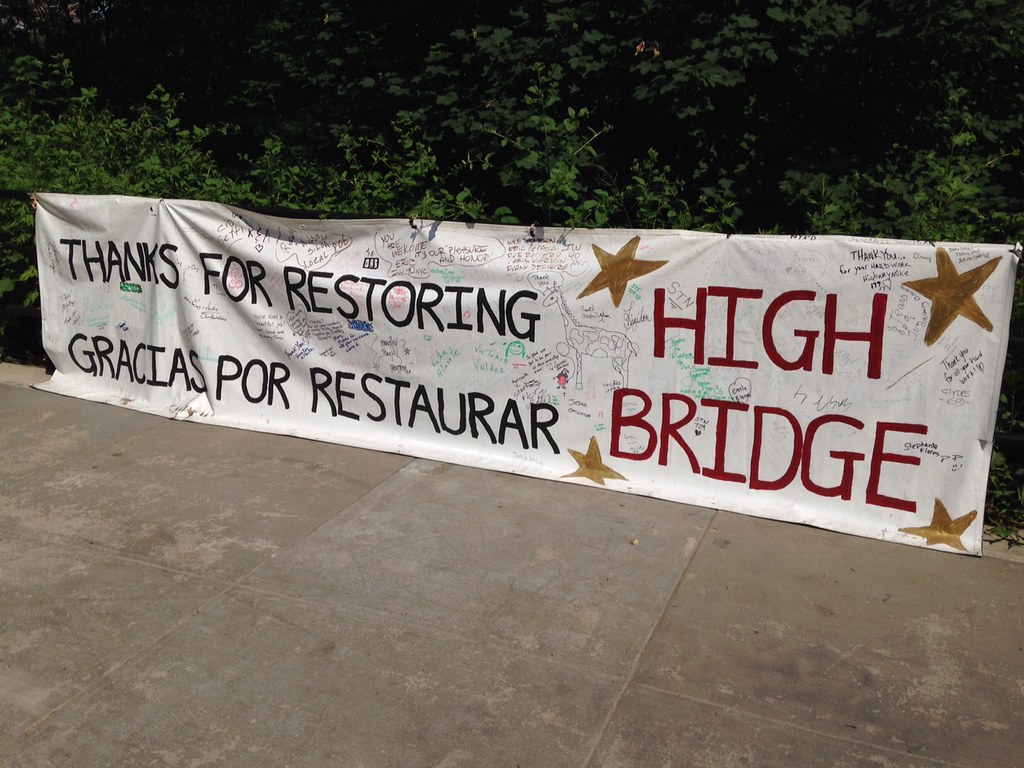
    The neighbors are fans:

    Aaron M. Renn is a senior fellow at the Manhattan Institute and a Contributing Editor at City Journal. He writes at The Urbanophile, where this piece first appeared.