Author: Adam Mayer

  • USC Extorted by the City of Los Angeles

    With California State Redevelopment Agency money gone, the city of Los Angeles ought to welcome new large-scale private development, and the economic stimulus and job creation it brings, with open arms. City Hall, faced with an anemic municipal budget, could also use the increased tax revenue. One such project that would help abate the city’s budget woes and create new jobs for the city is the University of Southern California’s proposed $1.1 billion “The Village at USC” project.

    Surprisingly (or perhaps not), the city’s Planning and Land Use Management Committee delayed approval of the project for the second time last week, citing a need for more time to digest data regarding the project’s gentrifying effects on the surrounding community. The city is not fooling anyone – the delay amounts to nothing short of extortion – an attempt to ensure that committee members receive their proper concessions.

    The site for “The Village at USC” is located directly north of the campus on University-owned land. Currently a dilapidated retail center, the new project calls 350,000 square feet of retail and will add up to 5,200 much needed student beds. The project would also create 12,000 new jobs for the city (8,000 permanent and 4,000 construction-related).

    Comprehending the short-sightedness of delaying the project requires an understanding of USC’s role in its surrounding neighborhood (full disclosure: this writer is a graduate of USC). The university was founded in 1880, when LA was nothing more than a far outpost of western American expansion. Situated just 2 miles south of downtown, the city grew outward around the campus. Once an upscale neighborhood, the area immediately adjacent to USC lost its luster with the development of the city’s Westside, including Hollywood and Beverly Hills. Post WWII suburban expansion and the construction of the 110 and 10 freeways further eroded the area.

    Today the area surrounding USC’s campus is racially and economically polarized. Part of LA’s notorious South Central (now more politically correct referred to as “South LA”), the area was hard hit by the riots of 1992. Yet while crime is still an issue, the area has markedly improved since the riots. Much of the improvement is thanks to a shift in the University’s relationship to its surrounding neighborhood post-1992. Rather than continuing to see itself as an island fortress in a sea of urban chaos, USC reached out to the local community, sponsoring programs for community members and supporting local businesses. The University’s extensive community outreach efforts led it to be named TIME magazine’s “University of the Year” in 2000.

    As Los Angeles developed, USC had several opportunities to relocate its campus to other parts of the city and even Orange County, but its commitment to staying in the city’s center stood the test of time. The University is the largest private employer in Los Angeles and serves as a wellspring of knowledge and talent for the city. Given these contributions to LA, it is unfortunate and even appalling that the city’s Planning and Land Use Management Committee would question the University’s intentions and delay its plans to develop on land it owns with its own money (and without any handouts from the city or state).

    Adam Nathaniel Mayer is an American architectural design professional. In addition to his job designing buildings he writes the China Urban Development Blog. Follow him on Twitter: @AdamNMayer.

  • Form Follows Zoning

    When Louis Sullivan, purveyor of modern American high-rise architecture, said more than 100 years ago that ‘Form Follows Function’, he perhaps didn’t realize the extent to which building form would not be determined only by building type and the laws of physics, but by zoning laws, building safety codes, real estate developer balance sheets and even vocal neighborhood groups.

    For every new building project, an architect’s role is to balance these opposing forces, while also delivering a scheme that is aesthetically pleasing and appropriate for its surroundings. This can be a challenge, but also an opportunity for designers to find creative solutions working within constraints.

    Following are just a few of the many parameters an architect must work with when designing this type of project:

    Form Follows Zoning

    Zoning is a term with broad implications, used to describe the set of regulations put forth by local governments that dictate what type of building can be built where. For each land plot, zoning laws also indicate floor area ratio (FAR, or how much area of building can be constructed), allowable building height, bulk limits, site density, setbacks, and parking requirements, among other constraints.

    The FAR number is of paramount importance: it is the magic number used as a multiplier of a site’s area, resulting in the allowable gross floor area. The higher the FAR number, the more area is allowed to be built on a given plot. In most U.S. cities FAR numbers are difficult to amend except through cumbersome political and legal processes. On the other hand, in developing countries such as China, FAR numbers change on an almost daily basis as zoning regulations remain malleable in order to meet of the moment economic growth needs.

    For high-density commercial and multi-family residential buildings, real estate developers typically seek to maximize FAR to get the highest return on investment. For tall buildings, that means building to the height limit, and then asking for a variance to exceed the height limit if it does not max out the FAR.

    Bulk limits deal with the ascending bulk of skyscrapers, mandating setbacks in the building form as the tower rises up to mitigate shadow impact. That is how you end up with ‘wedding cake’ buildings like the Chrysler Building and the GE Building at Rockefeller Center, both of which were a result of setback mandates in New York City’s 1916 Zoning Resolution. These Art Deco masterpieces are prime examples of how architects cleverly worked within zoning laws to design handsome buildings.

    Form Follows Parking Requirements

    While parking requirements are indicated in zoning laws, this constraint warrants its own category. It is remarkable how much influence the personal automobile has in shaping the modern city, not only in terms of road infrastructure but also in the space required for parking when cars are stopped. Parking requirements are responsible for urban design situations like the ubiquitous linear strip mall setback a great distant from the street, separated by a sea of parking spaces.

    Even in dense urban environments, parking is usually a requirement for new buildings. This means that when designing a multi-story building, the parking layout is what sets the structural column grid that stacks vertically throughout the entire height of the building. A typical 30 ft. column bay (measured from center to center) will accommodate 3 parking spaces, which then results in the building’s entire structure being based on the 30’ column grid.

    Parking garages are either below grade or above grade (above lobby level), and usually do not count towards FAR. There are various reasons (including geological/topographical) for placing a parking garage either below or above grade, but in either case, structure is ultimately designed to accommodate the needs of automobiles.

    Form Follows Rentable/Saleable Area

    In addition to zoning requirements, architects must also meet the needs of their developer clients. This entails realizing in form what real estate bean counters calculate to be the appropriate mix of area for what is to be built.

    If it is commercial office space, developers follow the Building Owners and Managers Association (BOMA) standards of measurement to calculate how much ‘rentable area’ can be squeezed out of a building’s floor given a building’s envelope. Of utmost importance in this calculation is the ‘load factor’ or ratio of rentable area to usable area, determining how much building owners can charge their tenants.

    Also important is the ‘lease span’, with a 45 ft. clear span from service core to exterior wall being the ideal. This allows flexibility in office layout and also ensures enough natural light penetrates deep enough into the office space.

    In residential buildings, saleable are is what developers are after and that determines the mix of unit types (studios, 1 bedrooms, 2 bedrooms, etc…) in a given market. This can frequently change during the design process based on changing market conditions

    For towers with a mix of uses, designing a functional building places tremendous onus on the architect to balance competing forces of different building types consolidated into one vertical structure. With financial rewards ultimately more important than aesthetic outcome, architects have to struggle to create a beautiful building within these constraints.

    Form Follows NIMBY Demands

    In the U.S., and other democratic countries with strong property rights, new building projects are subject to the scrutiny of local neighborhood and vocal environmental groups. Often derided as NIMBYs (Not-In-My-Back-Yard) by those on the pro-development side of a new project, these groups usually have predictable objections, the most common being    increases in traffic. Yet if these NIMBYs, especially in urban settings, have objections to traffic, rather than protest individual projects, they should write their local city councilman suggesting a change in zoning to modify parking requirements.

    Even after the approval of extensive traffic and environmental studies, NIMBYs may criticize a building’s appearance in a last ditch effort to prevent construction. Objections include obscure criticisms such as a design does not fit in with ‘neighborhood character’. This criticism reflects a fundamental misunderstanding that even in historic neighborhoods, a well designed counterpoint or contrast can be a suitable proposal. After all, cities are not static museums frozen in time but dynamic and evolving organisms.

    Unfortunately, the NIMBY victory can often be a final blow to what would’ve otherwise been a successful, beautiful design.

    Conclusion

    For architects, designing a building is more like solving a puzzle rather than an exercise in unrestrained creativity. Surprisingly, there is little discussion of the real world constraints in architecture schools. This is perhaps due in part to the fact that regulations vary greatly from place to place, but the fundamental importance of planning and zoning should be emphasized more often.

    For all stakeholders involved in new building projects (developers, local officials and planning departments, the design team, concerned neighbors) what is written in the local zoning code provides the basis for every decision made. For those interested in making better, more informed planning decisions, individuals and governments should focus less on singular building projects and more on easing the process of making changes to local zoning codes.

    Adam Nathaniel Mayer is an architectural design professional from California. In addition to his job designing buildings he writes the China Urban Development Blog.

    Follow him on Twitter: AdamNMayer

    Chicago skyline photo by Bigstockphoto.com.

  • China and the Future of Hong Kong

    Last week Hong Kong’s new leader Leung Chun-ying was sworn into office by Chinese President Hu Jintao. The ceremony coincided with the 15th anniversary of the British handover of Hong Kong to China so there was plenty of rhetoric about ‘strengthening ties with the motherland’. Yet not far from the ceremony, tens of thousands of Hong Kong citizens marched in protest showing discontent with growing inequality and what they perceive as Beijing’s increasing assault on the territory.

    The relationship between Hong Kong and mainland China is complex. Beijing for the most part has kept its promise to uphold the ‘one country, two systems’ mandate. Officially, Hong Kong is considered a ‘Special Administrative Region’ (SAR), which means that it is treated as a separate country from an immigration standpoint and continues to circulate its own currency, the Hong Kong dollar. Hong Kong also retains an independent legal and judicial system inherited from the previous British rulers.

    Most importantly, Hong Kong has avoided the draconian media censorship common on the mainland. A free press is consistent with its reputation as a global center of banking and commerce. Hong Kong’s ease of trade and doing business frequently leads it to being named one of the world’s freest economies.

    So if Beijing continues to hold up its end of the deal, why do so many Hong Kong residents march in protest? The relationship is more nuanced than it appears on the surface. Politically, Hong Kong residents do not have the freedom to elect their leader (CY Leung was appointed by a 1,200-person electoral college made up primarily of pro-China business leaders), although democratic elections are set to commence in the next five years. Underlying this frustration is what Hong Kong residents see as an infiltration of growing mainland influence on the city.

    On the ground, Hong Kong experienced a huge increase in mainland tourists to the city since the handover. Hong Kong doesn’t have the same high tax rate on imported goods that mainland China does, so mainlanders flock to the city primarily for shopping, hunting for bargains on electronics and luxury fashion brands. It is not uncommon to see long queues of mainland tourists in front of shops of famous fashion brands like Gucci, D&G or Prada. The droves of mainland shoppers spending money in Hong Kong are great for the local economy, but many locals decry the constant flow of tourists as invading ‘locusts’.

    Yet more significant than what is happening on the ground is what is taking place high above in the sky. The phenomenon of wealthy mainlanders purchasing real estate in the city has driven   housing prices to astronomical levels, approaching the market just before the Asian Financial Crisis of 1997. For well-off Chinese mainlanders, Hong Kong real estate is seen as a safer long-term investment than China’s still somewhat risky real estate market and unpredictable stock market. A severely limited land supply coupled with the fact that a handful of powerful real estate oligarchs control the market for new development means that prices will probably stay high barring another economic crisis.

    Land-use policy is perhaps the most critical factor in determining both the future of Hong Kong and the mainland. As anyone who has been to the city can attest to, Hong Kong has some of the best infrastructure in the world, including a first-class international airport, extensive rail system and a booming seaport. Much of that infrastructure comes from the city’s land-auctioning system, which is the government’s primary source of revenue. This is also what helps keeps taxes low.

    Furthermore, unlike in the U.S., where infrastructure is traditionally financed publicly, Hong Kong’s infrastructure is increasingly built with private funds. For instance, the city’s Mass Transit Railway (MTR) Corporation, founded as a public entity, went fully private in 2000 and is traded on the Hong Kong’s stock exchange. In addition to operating and maintaining the city’s existing rail system, MTR Corporation is responsible for building new lines. What makes MTR Corporation different from most other transit authorities is that its primary earnings do not come from passenger ticket sales but from developing the land on top of and around its metro stations.

    Cheung Kong Holdings, led by Hong Kong’s richest man Li Ka-shing, is not only one of the city’s largest property developers, its business interests also include Hutchinson Port Holdings (a port operator that handles 13% of the world’s container traffic) and Hutchinson Telecommunications Limited (which builds and operates mobile phone networks). Sun Hung Kai, another powerful Hong Kong property developer also owns stakes in logistics and telecommunications businesses (although its founders, the Kwok brothers, were recently arrested on corruption charges).

    The mode of urban development in mainland Chinese cities is heavily influenced by Hong Kong. Yet instead of powerful corporations, State-Owned Enterprises (SOE), large entities owned by the government, dominate urban development related businesses. China’s land auctioning system is far from perfect, with well-documented instances of corrupt land seizures and the unfair advantages government backed SOEs have in the bidding process over private developers. But with virtually no property taxes in mainland cities, land sales remain the primary source of revenues for local governments to support infrastructure development.

    There is growing evidence that suggests China plans to alter the direction of its development model in the coming years by consolidating and privatizing its SOEs. Already, Hong Kong property developers are active in the mainland real estate market with Chinese companies eager to learn from their expertise. The cozy relationship between Hong Kong developers and mainland SOEs is a cause for concern by Hong Kong citizens, as they see their local developers as more interested in appeasing Beijing authorities than providing affordable housing for its own citizens.

    Yet this is inevitable. The city of 7 million cannot expect to forever be completely independent of a country of 1.3 billion to which it is now irrevocably attached. This is true even in spite of Hong Kong’s role as an international center of trade.

    Throughout history, Chinese culture survived through its sheer mass and cultural osmosis. When CY Leung gave his inaugural speech last week, it was in Standard Mandarin, the official language of China. Although the citizens of Hong Kong are also Chinese, their official language is Cantonese, a completely different and not mutually intelligible dialect. Leung’s move was seen as a slight to the people he was chosen to serve, yet given who he has to report to in Beijing, it made perfect sense.

    Adam Nathaniel Mayer is an architectural design professional from California. In addition to his job designing buildings he writes the China Urban Development Blog.

    Follow him on Twitter: AdamNMayer

    Hong Kong photo by BighStockphoto.com

  • Architecture Critic Paul Goldberger on Silicon Valley, San Jose, and Apple

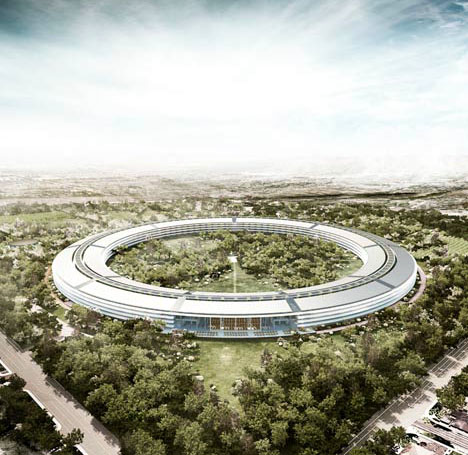
    Last week Paul Goldberger, Pulitzer Prize winning architecture critic for the New Yorker and Vanity Fair, sat down with Allison Arief of the San Francisco Planning and Urban Research Association (SPUR) in downtown San Jose to discuss the state of 21st Century urbanism with a focus on Silicon Valley. Though admired the world over as the preeminent center for technological innovation, Silicon Valley has never been known for its great architecture. Goldberger suggested that this reputation could’ve improved had Apple not missed the mark with the design of their proposed Apple Campus 2 building in Cupertino.

    While acknowledging that Apple is probably the best design company at the moment, Goldberger asserted that the company’s design abilities end with small consumer gadgets and fail spectacularly at the urban level. Calling the Norman Foster designed building for the new Apple Campus a ‘beautifully designed donut or spaceship’, he lamented the lack of context and connection to anything around it. Speaking to an audience that included members of San Jose’s city government, Goldberger suggested that Apple missed the opportunity to take the reins to help transform San Jose by relocating at least some of its operations to help its long struggling (and subsidized) downtown.

    The reality is that most of the big tech companies in the Valley, not just Apple, have an extreme indifference to place-choosing to locate operations in suburban office parks. This has much to do with the history of Silicon Valley planning as it does with the nature of tech companies, which tend to employ legions of introverted computer engineering types and go to great lengths to remain insular and secretive (Apple taking this to the extreme). Perhaps it also makes perfect sense that rather than even acknowledging the true urban environment, companies whose primary business is creating the virtual world in which we increasingly experience public life take an active stance on turning their backs on the city.

    Yet for those still interested in experiencing the delights of pre-Information Era, pre-21 Century urbanism, there is always San Francisco not far up the road.  Goldberger made the point that the handful of tech companies who do choose to locate their operations in the city probably have a different mindset than those that stay in the Valley. Twitter being the prime example of the moment- the micro blogging site just leased 400,000 square feet of space on a long-maligned section of Market Street. Up in Seattle, Amazon recently announced its plan to build three new 37-story towers in the downtown area, which the proposal’s architect said is “not about building a corporate campus, it’s about building a neighborhood.”

    So even though not every tech company is averse to the city, the Richard Florida argument that high urban density is a prerequisite for innovation and creativity is a bit of a stretch, as the economic success of suburban Silicon Valley continually disproves. Near the end of the discussion, Goldberger suggested that deliberately designing space for innovation might be a bit too self-conscious. This implies that rather than design, factors such as human resources, access to capital and a culture with openness to trial-and-error matter more than the traditional urban hardware of cities.

    Adam Nathaniel Mayer is an American architectural design professional currently based in China and California. In addition to his job designing buildings he writes the China Urban Development Blog. Follow him on Twitter: @AdamNMayer.

  • Understanding Chongqing and the Fall of Bo Xilai

    The demise of Bo Xilai, the former Party Secretary of Chongqing, has turned into one of the biggest political scandals in China in recent memory and now includes allegations that Bo’s wife Gu Kailai is connected to the murder of a British businessman close to Bo’s family. It is even rumored the businessman, Neil Heywood, may have had an affair with Gu.

    Yet the international espionage drama has not shed much light on the peculiar politics and evolution of Chongqing, the western Chinese city which has become its unlikely setting. As a three year resident of Chengdu, a city two hours northwest by train and a traditional economic rival, I have been fascinated by Chongqing’s unique history and political culture.

    1940-1946: China’s Wartime Capital

    In many ways, Chongqing is China’s version of the Wild West. Known for the rough and tumble nature of its locals, the city, divided by the mighty Yangtze River, has carried with it a crude reputation since the days of Chiang Kai-Shek when his Kuomintang (KMT) held the city as their capital. Even after the remainder of the KMT fled from the Mainland to Taiwan after defeat, the atmosphere of gangsterism and corruption nurtured by Chiang Kai-Shek and the KMT remained deeply imbedded.

    China might’ve taken a different path had the American forces succeeded in getting the KMT and the Communist Party to unite against the common Japanese enemy. It was in Chongqing at the KMT compound where U.S. General Joseph Stilwell arranged a meeting between Chiang-Kai Shek and Mao Zedong to try to broker the deal that ultimately failed. On an official tour of the city last year, Joel Kotkin and I had the opportunity to visit the site of the meeting- a leafy hillside compound which is now a museum and a must see for visitors to the city.

    1997: The Creation of Chongqing ‘Direct-Controlled Municipality’

    After breaking from Sichuan province 15 years ago, Chongqing direct-controlled municipality became by some measures the biggest city in the world.

    Though the specific reasons for the creation of Chongqing municipality were never officially articulated, general consensus is that the decision was to administratively abate the negative effects of Three Gorges Dam project and the resulting destruction of nearby villages. Incorporating these villages as part of Chongqing was an easy way to solve the administrative problem of transferring household registration (‘hukou’) status and mobility for the hundreds of thousands of residents who had to relocate.

    Separating Chongqing from Sichuan also had the added benefit of removing competition with the provincial capital of Chengdu. Under the administration of the Central Government, Chongqing could now move forward with unfettered development without having to deal with the demands of Chengdu. This would also provide Bo Xilai a far greater stage to promote his career ambition.

    2007 – 2012 : The Reign of Bo Xilai

    Bo landed in Chongqing in late 2007 with what some analysts saw at the time a demotion from his previous position as China’s Minister of Commerce. Prior to working for the Central Government, Bo was governor of north China’s Liaoning Province and Mayor of Dalian- the second largest city in the province.

    A port city of about 3 million people, Dalian sits on the Liaodong Peninsula that juts out into the Bohai Sea. It is here where Bo proved himself as an adept politician, serving the city as Mayor from 1992 – 2000. Bo was noted for his progressive urban planning policies, putting emphasis on modernizing the city, improving the environment, adding greenbelt corridors and preserving architectural gems from Russian and Japanese colonial periods. For his progressive urban planning policies, Bo was even awarded a UN-HABITAT “Scroll of Honour” award in 1999.

    To this day, Dalian still often ranks as one of China’s most ‘livable’ cities, a title that the city’s residents attribute to the work of Bo. Yet, if top-down urban planning initiatives were a popular success in Dalian, the same could not be said as unequivocally for Chongqing. While some applauded Bo’s efforts, others saw his overly aggressive methods as detrimental to the existing urban fabric.

    Chongqing and Dalian couldn’t be further apart in character or its stage of economic development. Whereas Dalian is a pleasant seaside town based on tourism, banking and IT, Chongqing is a rough manufacturing megalopolis, known for its craggy mountains chopping through the city and unbearably hot summers.

    Perhaps Bo thought he get away with a more strong-arm approach given Chongqing’s history of being a city on the frontier far away (both physically and psychologically) from Beijing. When he became Party Secretary of the municipality, he came in with guns blazing, initiating a bloody campaign to crack down on organized crime. He and Wang Lijun (his former right-hand man and police chief who would later try to defect to the U.S. Consulate in Chengdu) took down the previous police chief, Wen Qiang, sentencing him to death for corruption.

    Initially many locals were pleased with Bo’s very public display of taking down the gangs, but not everyone was as easily convinced. As one of my friends who is a native of the city once said to me “Bo Xilai just replaced the previous mafia with his own mafia”. If this is ultimately discovered to be the case, then it is perhaps not surprising for a city with a history of such internal struggles.

    In Chongqing, Bo also initiated similar strategies he employed in Dalian by promoting greenbelts, the development of public transportation networks (including monorails to traverse the unforgiving topography), and an ambitious affordable housing program. Yet these urban planning projects were overshadowed by Bo himself, who wanted to be seen both by the residents of Chongqing and the decision-makers in the Communist Party headquarters in Beijing as the new star in China’s political firmament.

    In addition to the organized crime crackdown, Bo also initiated the now well-documented ‘red’ campaigns, promoting the singing of Mao-era songs in public parks and converting the local television stations into 24-hour commercial free broadcasts of red propaganda. He even went so far as to establish a museum at the city’s Public Security Bureau (PSB) displaying his crackdown on crime to show off to visiting delegations.

    Somewhat unnervingly, Kotkin and I were taken to the PSB as the last stop on our visit to the city. The compound, a huge Stalinist piece of architecture, features two quarter-mile long covered colonnades extending out in front of each side of the building. We were led down the first wing by an attractive young woman shouting into a microphone, introducing us first to pictures of the ‘great leader’ Bo shaking hands with China’s top leaders, Hu Jintao and Wen Jiabao, as well as with visiting foreign officials.

    Immediately following, we were bombarded with gruesome images of Bo and Wang’s campaign to oust crime, showing the horrors committed by the gangs. Dead, mutilated bodies filled the walls, as well as photomontage of images from the execution of Wen Qiang. Inside the PSB main building, the contraband seized from Wen Qiang and his associates was on display, including every kind of narcotic you can think of, weapons including AK-47s and gigantic machetes, and millions of dollars worth of historic Chinese art pieces that were used for money laundering.

    The exhibit was meant to show the righteous power of Bo, and belittle the previous group who ruled Chongqing. Afterwards, we were invited to coffee in the opposite wing, where prominent images of Josef Stalin, Vladimir Putin, and Mao Zedong were displayed next to imaged of Bo. The experience was so bizarre that by the time we made it onto the high-speed train to Chengdu both Kotkin and I breathed a sigh of relief to make it out of the city alive.

    All of that is gone now, and Chongqing moves on without Bo. The Bo Xilai saga is a very telling narrative about where China is today. On the political side of things, Bo’s takedown is a message to Chinese citizens and the world that nothing will get in the way of the country’s urban development program, especially a rogue politician who draws too much attention to himself.

    It also means that, for commentators in the West who think that China needs to urgently reform to a more democratic system of free elections, the individuation of high-level charismatic politicians required for this kind of style of government cannot be tolerated at this stage in development. Unfortunately at this stage, popular elections run the risk of choosing someone who cultivates a personality cult.

    From the urban development standpoint (which is actually inextricably linked to the political realm, both in China and in the West), the more top-down local government policies are, the more there is the risk that those in power will abuse those powers in other ways. Finding a balance is key. Many of Bo’s initiatives both in Dalian and Chongqing have their merit in improving urban life, but the manner they were initiated, and the authoritarian, self promoting style, appear now to have been a cover for something more sinister.

    Adam Nathaniel Mayer is an American architectural design professional currently living in China. In addition to his job designing buildings he writes the China Urban Development Blog. Follow him on Twitter: AdamNMayer.

    Chongquing at Night photo by Wiki Commons user Jonipoon.

  • Information Technology and the Irrelevance of Architecture

    Throughout history, architecture served as the primary communication device of common cultural values. Whether inspiring religious awe or displaying the power of an empire, great works of architecture went beyond mere utility to reflect the shared expression of time and place.  Modern architecture, with its right angles and smooth surfaces devoid of ornamentation expressed the early 20th Century zeitgeist of efficiency and mass production. In many ways, the Modern architectural language also conveyed common cultural values of the time as it became the model for socialist utopia.

    The information technology revolution of the late twentieth century changed the role of architecture forever. With digital information readily available at our fingertips, buildings are no longer needed as a communication device. This new paradigm has largely gone unnoticed by the architectural establishment, which itself has been through a series of futile stylistic phases in recent decades ranging from the campy Postmodernism to the cynical Deconstructivism. The soul-searching continues today, as leading architects promote the use of technology to justify the creation of wild, superfluous forms that are for the most part nothing more than self-referential, sculptural contortions.

    Function still matters, but building design often no longer serves the higher aim of communicating a shared culture to a civic audience. Rather, it is the mobile IT products created by companies like Apple that do a superior job of communicating and transferring information while at the same time filling a human desire for great design.

    The implications for urbanism are enormous. Cities, as they are thought of in the traditional sense of high-density concentrations of people and buildings, are no longer required for a productive economy. No other place represents this new reality better than Silicon Valley. Rather than being an exalted futuristic urban landscape as one might expect given the amount of innovation that goes on there, Silicon Valley is a non-descript amalgam of low-density suburban villages. The headquarters of internet giants like Google, Yahoo! and Facebook are just as anonymous—bland office parks that turn inwards and are indifferent to the street.

    Los Angeles Times architecture critic Christopher Hawthorne blasts this reality in a critique of the proposal for the new Apple headquarters, which he calls a ‘retrograde cocoon.’ The proposal is a huge four-story concentric ring set among a park-like setting in the Silicon Valley town of Cupertino which Hawthorne laments as what he sees as the continuation of an unfortunate land-use pattern of low-density sprawl.


    Urbanists cannot afford to ignore the fact that technology is unsympathetic to architecture. Computer programmers and IT innovators, people who require countless hours of focused concentration, might actually prefer the pastoral landscape and low-key nature of Silicon Valley to the noisy and bustling urbanism that define what we traditionally think of as a ‘city’. Taking this into consideration, the new Apple HQ is an appropriate design for its purpose and also serves as reminder of the irrelevance of architecture in the twenty-first Century.

    This essay originally appeared in the architecture journal CLOG: APPLE

    Adam Nathaniel Mayer is an American architectural design professional currently living in China. In addition to his job designing buildings he writes the China Urban Development Blog.

  • The U.S. Needs to Look Inward to Solve Its Economy

    Over the past months as the global economy heads for another recession, U.S. lawmakers have done their best to deflect blame by focusing on various external forces including the most popular straw-man of the day: China’s currency.

    Almost every year for the last few years, Congress and the White House have pressed China to revalue its currency, the renminbi. And every time this happens, China responds that it will do what it always does: let it appreciate gradually, at about 5% per year as it has done for the last several years.

    With the APEC Summit in Honolulu last month, Obama and the White House strategically — and perhaps with an eye to the coming re-election campaign —prodded at China and also managed to further deflect America’s problems by focusing attention on the Eurozone Crisis. Timothy Geithner, tailoring his speech for the Asia-Pacific audience, said Europe needs to “move quickly as instability hurts the U.S. and Asia.”

    Geithner, the godfather of “too big to fail” from his days at the New York Fed, is an expert at delivering economic policy speeches that do not address America’s problems head-on. He is the mouthpiece of American weakness and misdirection, and has been recently seen so not only in China, but in Europe where people scoff, understandably, at the very idea of his giving advice to the bedraggled Eurozone.

    The fact is that, right now, the US cannot dictate the conditions of economic gain. Although still the world’s largest economy by far, the US can no longer impose its mantra of ‘free-trade’ on the rest of the world.  Instead it needs to take an honest look at the reality of the 21st Century global marketplace to better assess what it can do to improve its situation. The following suggestions might be a good start:

    Forget About Economic and Political Ideologies

    Many Americans, including politicians, are under the impression that certain ‘isms’ are magic bullets for prosperity while other ‘isms’ hold prosperity back. For instance, conservatives like to use the talking point that ‘socialism’ will destroy America. Similarly, many of those on the left protest against as what they see as ‘capitalism’ leading to widening inequality. Being for or against a particular ‘ism’ does nothing to improve the economic situation but only serves to inflame rhetoric and kill policies that could potentially help the U.S. economy.

    One example is domestic government investment. Conservatives detest any kind of public spending proposal as ‘socialism’, even if public funds would be used for practical things like improving roads or public schools. On the other side, those on the left confuse high-level collusion between the financial sector and federal government with free-enterprise, which it is not.  Geitner is not a capitalist, but a collusionist. He is no more a free-market capitalist than he is a Maoist.

    Stop Blaming China

    Nothing else debunks the validity of mainstream political and economic ideologies better than China’s rise to economic prominence. Still considered a ‘communist’ state by Cold-War minded individuals, China’s development would be best described as a gradual evolution in policy decisions rather than a static, ideologically-based approach. To be sure, the Communist Party desire to stay in power remains paramount. But this leads to policies designed to keep the economic engine humming as a way to maximize social stability.

    Despite its advances, China still has tremendous obstacles to overcome including a still very low per-capita GDP and an environment polluted from industrial development. Yet it is the height of hypocrisy for the U.S. government to call out China on its currency manipulation and intellectual property theft when U.S. companies have benefited enormously from China’s opening up of the past three decades. This also has allowed U.S. consumers buy coveted products at low prices.

    Of course, politicians at the Federal level (and even some Republican Presidential candidates) talk tough on China to score brownie points with voters. But meanwhile local state and city governments as well as prominent business leaders continue to send delegations to China in droves to promote cooperation and trade. Yes, China’s competitive cost of labor and lack of regulations has had a direct impact on the loss of jobs in the U.S. Unfortunately forcing China to float its currency will not reverse this trend as manufacturing jobs move to lower cost locales, and will continue to do so, perhaps to other countries.

    Acknowledge That Not All Regulation Is Created Equally

    Conservatives love to point the blame for economic malaise on government regulation. This argument is only half correct. For one thing there is not enough regulation on large banks in terms of how they divert investments when huge recent profits can be traced largely to fiscal largesse from Washington. Large banks received huge stimulus injections from the Federal Reserve during QE I and II, but did not invest enough of that money into the domestic economy. Instead, investment banks were free to take that money wherever maximum returns were to be had. That’s fine for an investor who has made his own way, but when the bank profits have stemmed from taxpayer largesse, some other priorities should creep in.

    At the state and local municipal levels, regulation is perhaps the greatest roadblock to restoring economic prosperity. Crippling state and local taxes, along with outdated zoning regulations – such as restrictions on something as simple as running a business from one’s own home – slow enterprise formation. This is not to mention the cost of obtaining permits from various authorities and the constant threat of lawsuits. Clearly the pendulum – at least in some states such as California – has swung too far in the wrong direction. Unfortunately, given ubiquitous budget shortfalls across state and local levels, it is unlikely that local governments will be willing to decrease taxes and fees when they are in desperate need of revenue generation.

    Reassess the American Social Contract

    Conservatives balk at any mention of social programs, yet they fail to acknowledge that American corporate institutions no longer play the role they once did in promoting social stability. Across the board, businesses are understandably cutting retirement and healthcare benefits just in order to survive. America’s broken social contract is perhaps the greatest obstacle to restoring prosperity and economic growth.

    Politicians are under the impression that high-taxes and runaway government spending are the primary cause for economic malaise. The reality is that America’s economy lags because individual spending is paralyzed due to increased costs of living across the board. The costs of housing, healthcare, and higher education have all increased in the past 10 years while wages and job opportunities have stagnated. This paralyzes risk-taking and investment in new businesses. Not only that, the presence of large oligopolies in everything from high-tech and cellular phones to food processing work to reduce competition from  entrepreneurial upstarts.

    Conclusion

    The U.S. needs to stop looking at external factors as the source of its problems. Instead, American leaders should look inwards and take an honest assessment of the current problems resulting from the changes in the world over the past 20 years.

    Unfortunately, no one on either side of the political aisle seems willing to step forward and lead the country out of its predicament. The Republican presidential contenders continue to waste time bickering about irrelevant social issues while President Obama jet sets around the world trying to allay doubts about the country’s decline.

    America needs a concrete plan to get up and running again. This will mean more regulation at the macro level and less regulation at the lower levels. It will mean that Americans need to be confident that basic needs like housing and healthcare are taken care of so they can get on with starting businesses and creating employment. Education needs to promote trade skills and remove the stigma that expensive college degrees are mandatory for future prosperity.

    Until these things happen, the U.S. economy will be stuck in its rut.

    Adam Nathaniel Mayer is an American architectural design professional currently living in China. In addition to his job designing buildings he writes the China Urban Development Blog.

    Photo courtesy of Bigstockphoto.com

    .

  • A Guide to China’s Rising Urban Areas

    From a Rural to Urban Dispersion in the Middle Kingdom

    China’s rise to economic prominence over the past 30 years has rested in large part to its rapid    urbanization. Prior to ‘reform and opening up’ that started in earnest during the 1970s, cities in China were viewed as pariahs by the party leadership. Millions of young urban dwellers were forced into the countryside to labor on farming communes during the Cultural Revolution. In stark contrast, today millions of rural migrants make their way to the city.

    The scale at which this is happening is unprecedented. Currently, there are 85 metropolitan areas in China with more than 1 million people, compared to 51 in the US. By 2015, urban regions will account for half of China’s population and by 2025, the urban population’s share should reach about 75%.

    To date, international attention has remained fixated on China’s largest cities of Beijing and Shanghai (and to a lesser extent, Guangzhou and Shenzhen). This is not without good reason, as Beijing and Shanghai are not only the respective government and financial centers of mainland China, but both were host to two of the most visible world events of the past decade: the 2008 Summer Olympics and the recently concluded World Expo.

    Second and Third-Tier Cities Enter Onto the World Stage

    Increasingly, however, the real trajectory of urban growth is shifting to China’s so-called ‘second-tier’ and ‘third-tier’ cities. To the outside observer, China’s lesser-known cities might seem all too similar to one another given the monotonous aesthetic of their newly constructed cityscapes. Indeed, the newfound appearance of Chinese cities is a point of contention among local urban development scholars who are concerned about the converging ‘identical faces’ of these urban areas.

    Yet to Chinese locals and foreigners who have spent some time living here, it Chinese cities are defined more by their local cuisine, dialect, history, geography, culture and climate rather than their architectural character. These often-overlooked nuances of local culture are much more essential to the identity of these cities than buildings. In the future, these distinctions may prove more effective in attracting investment and talent than flashy new construction projects.

    Here’s a short guide to these rising urban areas by region and their current identities and prospects.

    TOP 20 URBAN AREAS IN CHINA: 2010 ESTIMATES
    Rank
    Urban Area
    2010
    Area: SqMi
    Density
    Area: SqKM
    Density
    Base Year
    Base Year Pop.
    1 Shanghai, SHG 18,400,000 1,125 16,400 2,914 6,300 2010 18,400,000
    2 Shenzhen, GD 14,470,000 550 25,900 1,425 10,000 2008 14,000,000
    3 Beijing, BJ 13,955,000 1,275 10,800 3,302 4,200 2008 13,545,000
    4 Guangzhou-Foshan, GD 13,245,000 760 17,000 1,968 6,600 2007 12,600,000
    5 Dongguan, GD 10,525,000 535 19,200 1,386 7,400 2007 10,000,000
    6 Tianjin, TJ 6,675,000 500 13,100 1,295 5,000 2007 6,400,000
    7 Chongqing, CQ 5,460,000 280 19,100 725 7,400 2007 5,240,000
    8 Hangzhou, ZJ 5,305,000 250 20,600 648 8,000 2007 5,015,000
    9 Wuhan, HUB 5,260,000 275 18,700 712 7,200 2007 5,040,000
    10 Shenyang, LN 5,160,000 280 18,100 725 7,000 2007 4,950,000
    11 Chengdu, SC 4,785,000 220 21,300 570 8,200 2007 4,585,000
    12 Xi’an, SAA 3,955,000 205 18,900 531 7,300 2007 3,785,000
    13 Harbin, HL 3,615,000 235 15,100 609 5,800 2007 3,460,000
    14 Suzhou, JS 3,605,000 245 14,300 635 5,500 2007 3,400,000
    15 Nanjing, JS 3,550,000 330 10,500 855 4,100 2007 3,400,000
    16 Dalian, LN 3,255,000 270 11,800 699 4,500 2007 3,105,000
    17 Changchun, JL 3,170,000 145 21,300 376 8,200 2007 3,010,000
    18 Kunming, YN 3,070,000 130 23,100 337 8,900 2007 2,925,000
    19 Wuxi, JS 2,925,000 150 19,000 389 7,300 2007 2,760,000
    20 Taiyuan, SAX 2,900,000 120 23,600 311 9,100 2007 2,755,000
    Source: Demographia World Urban Areas: Population & Projections: 6th Edition. http://demographia.com/db-worldua.pdf


    The Interior Rises

    Chengdu (成都): It was the devastating 2008 Wenchuan Earthquake that first out Chengdu onto the international radar, but it’s the rapid expansion of its massive high tech sector that may define its long term prospects.  The aerospace industry also plays an important role in the capital city of Sichuan Province as it is the site of the development of China’s first stealth fighter, the Chengdu J-20. Despite all the new development, Chengdu remains a pleasant city, known for pandas and spicy food as well as its generally relaxed and agreeable disposition. The local government has done a good job of promoting ‘quality of life’ and relatively low cost of living to attract both investment dollars and skilled labor away from the prohibitively expensive eastern metropolises.
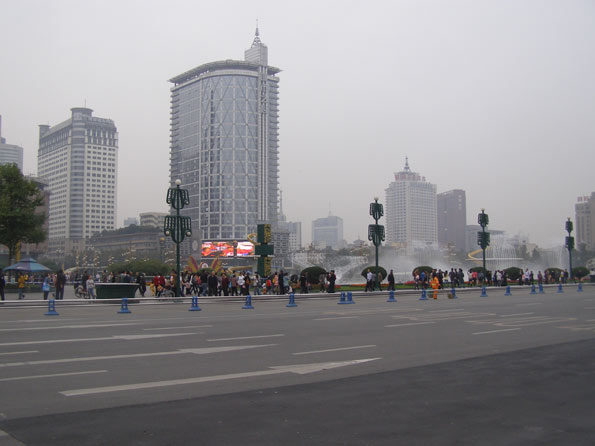
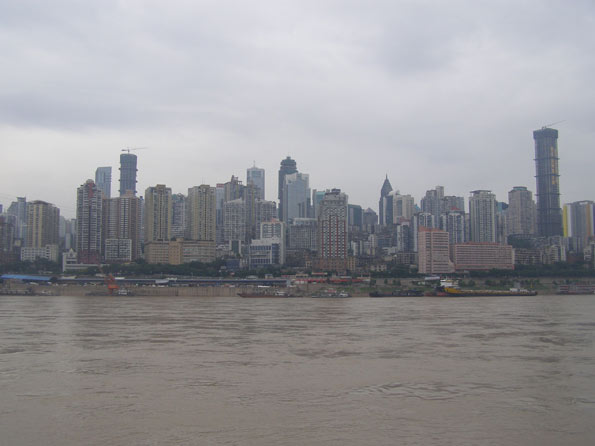
    Chongqing (重庆): Also known for spicy food, this municipality, which falls under direct control of the central government, is bisected by the Yangtze River. Its urban vista is unique, with deep gorges. It long has been known as a rough and tumble place, long plagued by organized crime. This has abated under the leadership of Communist Party Secretary Bo Xilai who has waged a war against organized crime in Chongqing since assuming office there in 2007. Though a controversial leader with a penchant for strong “red” leanings, the ambitious Bo has been applauded for cleaning up the city and implementing a large-scale public housing program.
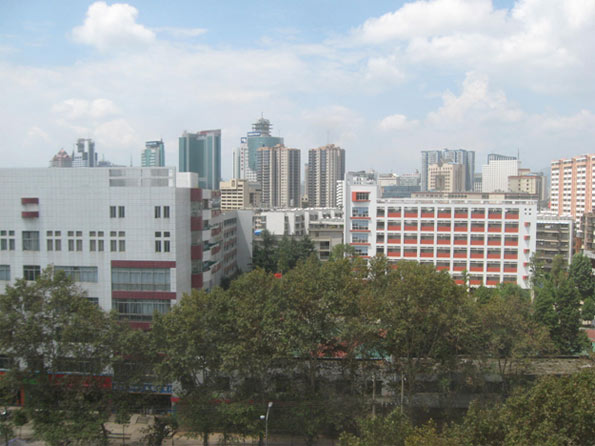
    Kunming (昆明): The city of Eternal Spring and the capital of China’s ethnically diverse southern Yunnan Province, Kunming claims the best weather in the country. As such, Kunming’s residents would rather enjoy the sunshine then spend their days indoors working in factories. The lack of industrial production doesn’t mean this city isn’t important- as Kunming has China’s 6th busiest airport and is the country’s gateway to Southeast Asia. If China goes forward with its ambitious plans to link itself with Southeast Asia via high-speed rail, Kunming could enhance its status an international transportation node.
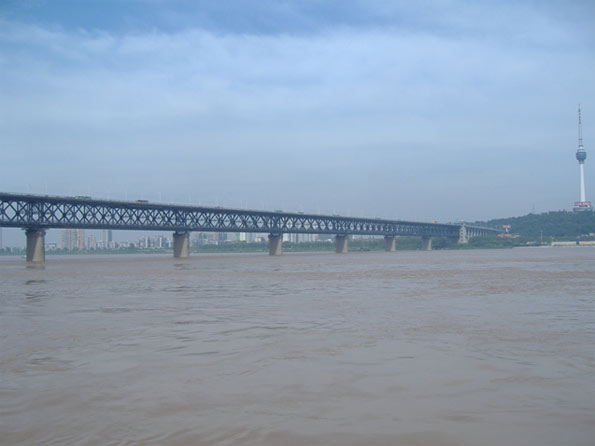
    Wuhan (武汉): Wuhan, capital of Hubei Province, is an important rail and river transport hub at China’s central crossroads. Known for its unbearably hot summers, Wuhan sits on the Yangtze River a few hundred kilometers downstream from the infamous Three Gorges Dam. The city is China’s center for the optical-electronic industry, with a focus on the production of fiber-optics. It was also recently announced that Wuhan will get China’s third tallest building, the 606 meter Greenland Center.
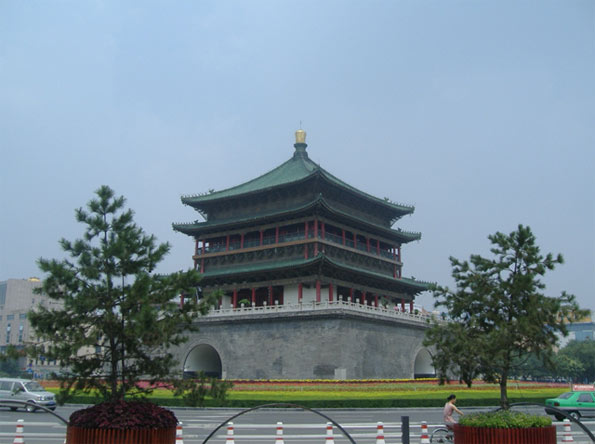
    Xi’an (西安): Once known as Chang’an (‘eternal peace’), Xi’an was the capital of multiple Chinese dynasties throughout history. It remains as one of the most popular international tourist destinations in China thanks to its world-renowned Terracotta Warriors. But today this ancient city and present day capital of Shaanxi Province is also positioning itself as a hub for the development of the software and aerospace industries. The city is also host to several reputable universities, which could help supply a strong local talent pool.
     

    Yangtze River Delta (Greater Shanghai)

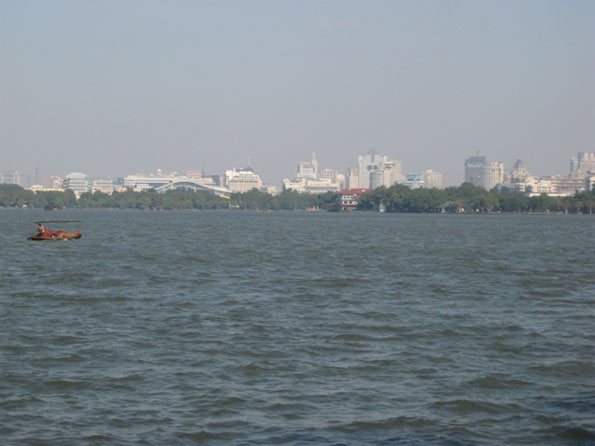
    Hangzhou (杭州): Arguably China’s most naturally beautiful large city, Hangzhou is famous for its scenic Xihu or ‘West Lake’, which just became a UNESCO Heritage Site. The capital of Zhejiang Province not only attracts tourists, but investment as well, especially in the light manufacturing and textile industries. Already somewhat of a ‘bedroom community’ for Shanghai’s wealthy, The recently inaugurated Shanghai-Hangzhou high-speed rail line, which has cut travel time down to 45 minutes between the two cities, means that Hangzhou stands to further benefit from this connection.
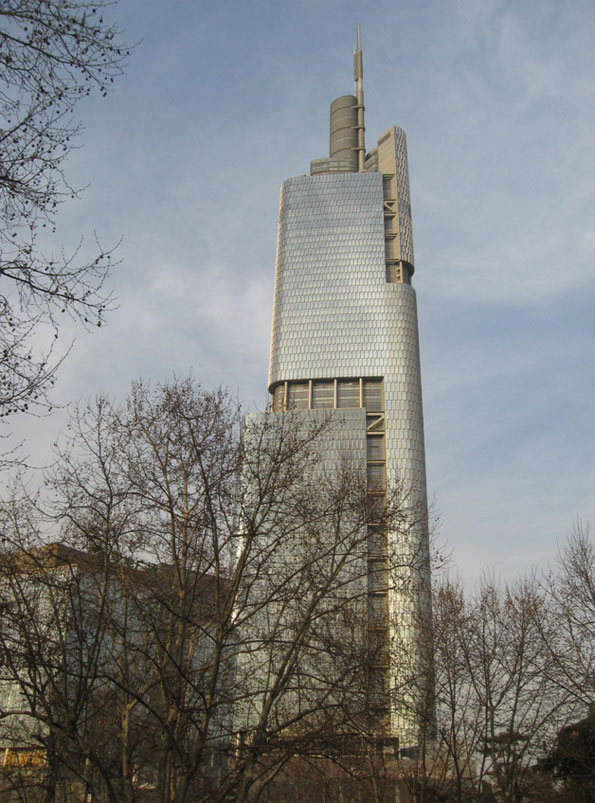
    Nanjing (南京): One of the ‘Four Great Ancient Capitals of China’, the capital of prosperous Jiangsu province is today a bustling modern metropolis. Located on the Yangtze River, Nanjing has greatly benefitted its location within the greater Yangtze River Delta Region. The city’s close proximity to Shanghai means that is has absorbed some spillover from investors looking for a lower-cost alternative. Nanjing is also home to one of China’s tallest towers, the newly opened Nanjing Greenland Tower and Asia’s largest railway station.
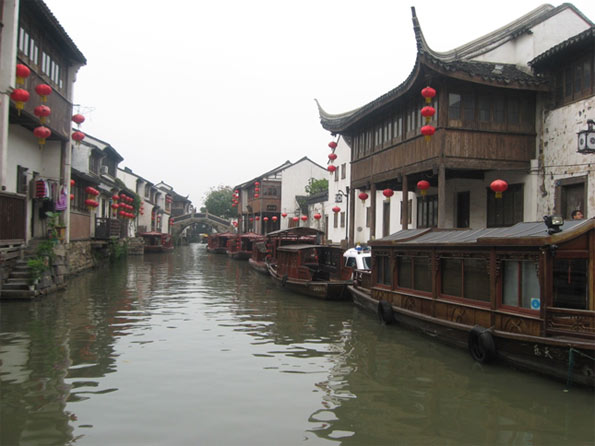
    Suzhou (苏州): Situated in Jiangsu Province en route from Shanghai and Nanjing, Suzhou is strategically located in the center of a booming region. Often referred to as the ‘Venice of the East’, the city is famous for its historic canals and classic Chinese gardens. In addition to being a popular tourist destination Suzhou is an emerging hi-tech center. The China-Singapore Suzhou Industrial Park, the largest strategic partnership between the two governments, has been established in the city.
    Wuxi (无锡): Only 50 km from Suzhou, Wuxi straddles the north shores of Lake Taihu. With 3,000 years of history, Wuxi is today one of China’s most business friendly cities. Wuxi is particularly attractive to Japanese businesses, with companies like Sony, Nikon, and Konica Minolta owning manufacturing and assembling facilities in the city’s New District. The city’s relatively new airport, which opened in 2004, serves the city as well as neighboring Suzhou.


    The Industrial North: China’s Rustbelt

    Changchun (长春): Changchun was the last capital of Manchuria and the seat of Japan’s ‘Puppet Government’ during their occupation of the region during WWII. Today the capital of China’s northern Jilin Province stands as “China’s Detroit” as the country’s largest automobile producer.The Changchun Automotive Economic Trade and Development Zone is home to the country’s biggest wholesaler of used cars, automotive spare parts and tires.

    Dalian (大连): Consistently ranked as one of the ‘most livable’ of China’s big cities, Dalian sits strategically on the Liaodong Peninsula making it the principle seaport for the country’s northeast (‘DongBei’) region. Banking and IT is big here, with semiconductor giant Intel just having recently opened a $2.5 billion manufacturing facility in the city. The Dalian Commodity Exchange, highlighted by the trading of soybean contracts, is China’s largest futures exchange. Bo Xilai also left his mark on the city when he was Mayor before heading to Chongqing by initiating a campaign to add significant green space to the city.

    Harbin (哈尔滨): The capital of Heilongjiang province, Harbin is the country’s northernmost big city. Famous for its local beer and annual winter ice sculpture festival, Harbin is China’s gateway to neighboring and resource-rich Russia. Russian culture has also left its mark on the city, influencing everything from the local cuisine to the architecture. Today Harbin’s economy is focused on textiles and power equipment manufacturing.

    Shenyang (沈阳): Shenyang, the capital of Liaoning province, is the largest city in China’s northeast. Once the capital of the Manchurian Empire during the 17th Century, Shenyang is today an industrial powerhouse producing industrial equipment,  construction vehicles, power tools, and biomedical equipment. Shenyang is also a hub for agriculture and the production of foodstuffs.
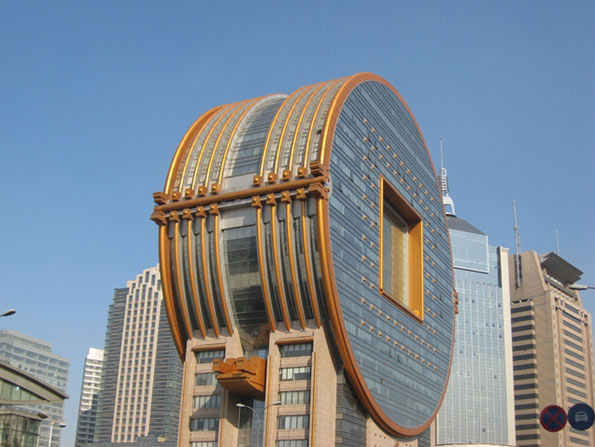
    Taiyuan (太原): The capital of coal producing Shanxi province, Taiyuan is moving up on China’s urban radar. The city serves as the administrative center for both Chinese state-owned and foreign enterprises involved in the coal mining business. The city is also home to the Taiyuan Steel and Iron Company, China’s largest producer of stainless steel. Unfortunately, due to the heavy industrial activity in the region, Taiyuan is also one of the country’s most polluted cities.
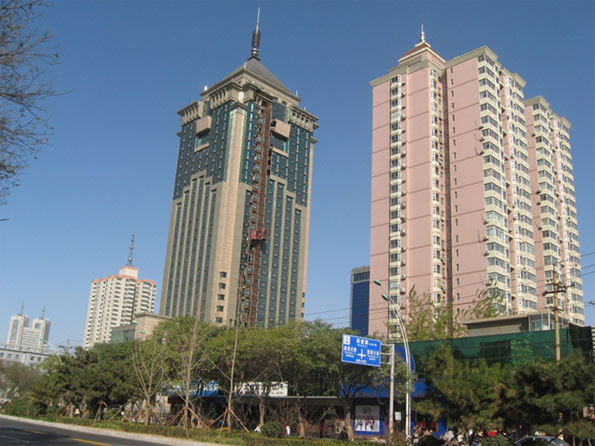
    Tianjin (天津): Long ridiculed by Beijingers, Tianjin is ambitiously positioning itself as a financial and sea logistics center for northern China. One of China’s four direct-controlled municipalities, Tianjin is less than 30 minutes from nation’s capital by high-speed train yet still has a distinct dialect and culture. The city is divided into two distinct parts: the charming historic city center, which retains colonial buildings from 19th Century foreign concessions, and the Binhai New Area, an up-and-coming Special Economic Zone next to the Bohai Sea. Tianjin is also aiming to become the center of China’s burgeoning biotech industry.


    The Outlier

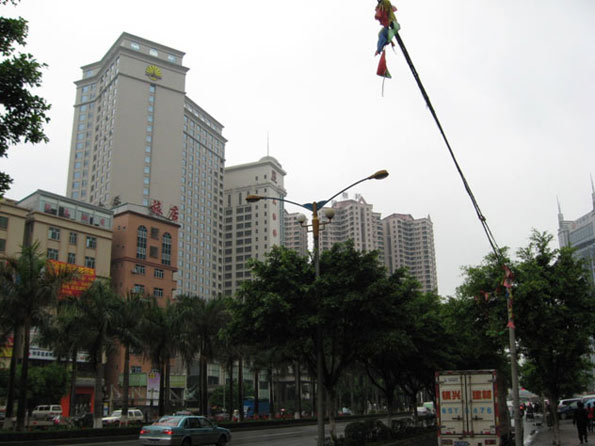
    Dongguan (东莞): As the fifth largest city in China by population, Dongguan should register more prominently on the international radar. Unfortunately the most defining characteristic about this urban amalgam is its lack of character. A sprawling unplanned mass of factories in the Pearl River Delta situated between Shenzhen and Guangzhou, Dongguan is the largest city in the world without an airport. As the Pearl River Delta de-industrializes as more factories move into the lower-cost inland regions of China, Dongguan will need to reinvent itself.
    Adam Nathaniel Mayer is an American architectural design professional currently living in China. In addition to his job designing buildings he writes the China Urban Development Blog.

    Photos: Chengdu and Chongqing photos by author. All other photos by Wendell Cox.
  • How China’s Megacities Have Avoided Problems of Other Developing Cities

    Urbanist media can’t seem to get enough of the megacity these days. Much of the commentary surrounding this topic is disconcertingly celebratory about these leviathans despite such phenomena as overcrowding, high levels of congestion and sprawling slums.

    Yet absent from most of the commentary is any mention of cities in China. This is perhaps due in large part to the lack of serious social problems in comparison to its developing city counterparts in other countries. If a megacity is defined as a city with a population of more than 10 million, then China is home to 5 megacities: Shanghai, Beijing, Shenzhen, Guangzhou and Dongguan. As the country continues to urbanize, more Chinese cities are bound to join the ranks of these megacities.

    How has China been able to avoid the pitfalls facing other developing megacities? No one is denying that Chinese cities don’t have problems including unequal income distribution, pollution and growing traffic congestion. Yet China’s megacities seem to have largely avoided social dangers such as violent crime, disease and slum proliferation that plague urban areas of other developing countries.

    How have China’s cities avoided these issues?

    1. Construction of New Housing Units

    Western media continues to bawl over the amount of new residential construction in China, calling it the ”biggest bubble ever.” I have pointed out before how this might be an overestimation of the problem and that the housing market is actually more stable than many think. One thing is clear: the ample construction of new housing units in cities across China remains the essential component leading the way in the country’s development. The ability to provide modern accommodations for millions of aspiring urban dwellers has also directly prevented the proliferation of slums and large-scale shantytowns.

    2. Development of Public Transportation

    The ability to move efficiently through an urban area is paramount to opportunity and quality of life. When one thinks of megacities such as Jakarta or Mexico City, automobile gridlock often comes to mind. Beijing might have its traffic problems as well, but China’s development of public transportation, including extensive underground subway networks, ensures citizens will have other options to move around besides motor vehicles. The more connected by different forms of a transportation a city is, the more opportunity people have to live where they want and have access to a wider geographic range of job options.

    3. Land-Use and Zoning Flexibility

    The often-overlooked reality of zoning and land-use regulations plays a much greater role in the shaping the character of megacities then it is given credit for. Mumbai’s draconian 1.33 floor-to-area ratio (FAR) throughout most of the city means that it is limited to construction of low-rise buildings,leading to the growth of overcrowded sprawling slums. Chinese cities, in contrast, allow for high FAR, promoting construction of high-rise buildings that leave room for ample green space.

    Furthermore, Chinese cities are not limited by ”urban growth boundaries” and allow development to occur on newly annexed land outside of traditional urban cores. Even traditionally ”dense” cities like Shanghai and Hong Kong allow for new development outside of their traditional centers: the Pudong New Area in Shanghai and the New Territories in Hong Kong are huge areas that are still largely underdeveloped when compared to their respective downtown areas.

    Critically, these nominally suburban or even “exurban” expansions are not mere bedroom community; they are frequently attached to areas of intense commercial, industrial and technical development. In many cities, including Chengdu, where I reside, most of the new economic growth takes place in such communities.

    4. Providing Economic Incentives with Special Trade Zones

    As China enters its third decade of rapid development, competition is heating up between its cities for domestic and foreign investment. The winners will ultimately be cities that are most business friendly and offer incentives like tax breaks to companies looking to set up operations. Many of China’s cities have gone about this by establishing special ‘economic and trade zones’, usually outside of traditional urban cores. As a matter of fact, one of new China’s most economically successful cities, Shenzhen, largely started as a ‘Special Economic Zone’ (SEZ). Special economic and trade zones that are not actual cities, but part of a larger city, thrive because they usually built on more affordable land on urban peripheries, opening up more investment for construction of state-of-the-art manufacturing and R&D facilities.

    5. Willingness to Learn from Outside Experts

    When it comes to political issues at the Central Government level, it is clear that China does not want to be told how to run its country by outside diplomats and foreign policy experts. Yet at the municipal level, Chinese government and business leaders are earnestly open to listening to experts in planning and development from outside its borders. One only needs to take a look at the countless architecture and urban planning practices from the West, Singapore and even Taiwan who currently work in China. This open exchange of ideas taking place is what allows best practices to come to fruition.

    Adam Nathaniel Mayer is an American architectural design professional currently living in China. In addition to his job designing buildings he writes the China Urban Development Blog, where a version of this piece originally appeared.

    Photo by xiquinhosilva

  • China Housing Market More Stable Than You May Think

    The sensationalist reporting of rising China tends to celebrate the country’s ascent. But there is one area where both economists and casual observers see a potential disaster: the real estate market.  Media reports of skyrocketing housing prices in first tier cities like Beijing and Shanghai and photo essays of Chinese ‘ghost cities’ inject sober skepticism into the otherwise bewildering reality of rapid growth.

    The claims about real estate, however, are as exaggerated as the breathless accounts of the country’s path towards world economic domination. It is absurd to argue that all it will take for China to fall would be a bust in the housing market. In reality, the country has too many economic fundamentals working for this one sector to wreak too much havoc.   

    Above everything, China remains a manufacturing powerhouse, providing the developed world with everything from children’s toys and athletic shoes to iPads and other electronic devices. Yes, the Great Recession did have a negative impact on China’s export business; this is why the Central Government took steps to direct massive amounts stimulus money towards infrastructure and real estate development.

    Far from being limited by exports, China is just beginning to unleash the power of its domestic consumer market. Imported goods (in reality, foreign brands, even if they are manufactured within China) are highly taxed, encouraging Chinese consumers to spend money on cheaper, local brands, thus keeping the money supply circulating through the domestic market.

    Yet this does leave China somewhat subject to real estate speculation. With   limited channels for investment, a risky domestic stock market, and little-to-no interest accrued by holding money in Chinese bank savings accounts, there is, for many individuals, nowhere else to spend their money but in the housing market.

    There are a few other forces at work here as well. Since the Chinese government still technically owns all of the land in the country, real estate developers are given the right to develop land based on a bidding process, with the rights going to the highest bidder. Auctioning of land for development typically happens at the municipal level. Once a developer is awarded the right to develop a piece of land, there is a time limit (usually no more than a few years) before it returns to the hands of the government.

    The purpose of this is two-fold: one is to manage the urban influx of new migrants and also to discourage land speculation by developers. As you can imagine, savvy developers often wait until the last minute to build a project to get the maximum profits from their projects.

    Since income taxes are low by international standards (and easily evaded through the preponderance of ‘grey money’ or hidden income) and property taxes are virtually nonexistent (up until recently at least), land auctioning is by far the largest source of income for local governments. This becomes the main way these governments fund infrastructure and public works projects.

    This same process is happening in cities across China. Why? Quite simply, the demand is there. The booming housing market is a revolution of sorts. This is really the reflection of the emergence of a true Chinese middle-class. The U.S. media, on the other hand, tends to remain focused on a massive China real estate bubble, perhaps as a projection of America’s own recent experience of real estate exuberance.

    Yet there are some major differences. For example, few Chinese purchase homes with little or no money down. Banks are not lending ‘creative mortgages’ such as ARMs to homebuyers. Government measures seek to discourage speculation.

    For instance, Chinese home buyers are limited to purchasing 2 homes and must put at least 30% down for the first home and 60% down for the second home. Investment by foreigners into the real estate market is strictly regulated in order to reduce the amount of ‘hot money’ coming into the country. Non-Chinese citizens are limited to purchase one home only and must hold onto it for 5 years before being allowed to resell it.

    Due to the massive size of China’s population, the majority of homes being purchased are flats in newly-built residential high-rise compounds. The size of these units might be a little too cozy for Americans or even Europeans, but to young Chinese homebuyers (of which most are first-time buyers), it represents an aspiration unimaginable only a few years ago.

    Take 26 year old Mei Li for example: late last year she, an administrative assistant at a construction company, and her husband, an IT professional, bought a home in the fast growing western district of Chengdu, between the 2nd and 3rd Ring Roads. The young couple put a 30% down payment on a 2-bedroom, 80 m² (860 ft²) flat on the 23rd floor of a tower that is part of a brand new residential development.

    At RMB 7,500/m², the total cost of their flat was RMB 600,000 (about $91,000 USD). As required, and with some help from their parents, Ms. Li and her husband put a down payment of 30%, or RMB 180,000, and qualified for a 30-year, 6% fixed-interest home loan from Bank of China. With a combined income ranging from about RMB 8,000-10,000 ($1,200 USD – $1,500 USD) per month, their monthly mortgage payment of RMB 2,500 ($380 USD) is easily manageable.

    Ms. Li and her husband are glad they got in when they did. Even though their new unit won’t be ready for move-in until the end of this year, they have already seen the value of their investment increase by 10%. Located adjacent to a planned stop for an underground metro line currently under construction, the value of their investment is bound to further increase due to its convenient access to public transportation. In the future, taking the subway will be just one of their transportation options as Ms. Li and her husband plan to buy their first car by the end of this year.

    Multiply Mei Li and her husband’s story by the millions and you have a better idea of what is really behind the China housing boom. To be sure, speculation certainly exists, but predominately it is middle-class aspiration that is fueling urbanization.

    In Chinese, the word for ‘family’ and ‘home’ are the same: jia (家). The family is the critical unit of Chinese culture, making ownership of a home a critical priority. For the world, middle-class home-ownership also promotes peace and stability in China, providing the basis for the evolution of a more consumer oriented, less predatory Chinese economy.

    Adam Nathaniel Mayer is an American architectural design professional currently living in China. In addition to his job designing buildings he writes the China Urban Development Blog.