Author: admin

  • The State Government Deconstructors

    The results of the mid-term election of 2010 will be written over the next two years. Can the Republicans really make good on their promise of fiscal discipline? A glimpse of our future federal budget may be seen in the fiscal actions (and inaction) of America’s governors. Most states are struggling to balance budgets in troubled economic times with projected shortfalls nationwide of more than $100 billion for Fiscal Year 2012. Federal bail-outs are no longer an option. The hard choices are tax increases, reduction of services or innovative fiscal solutions like deconstruction. These bold and innovative governors, or “Deconstructors,” are what Alexander Hamilton had in mind when he wrote in The Federalist that “energy in the executive is a leading character in the definition of good government.”

    New Jersey Governor Chris Christie was the first Deconstructor to emerge. He wasted no time when he was sworn into office in January of 2010, declaring a fiscal state of emergency and freezing billions of spending. This week he announced 1,200 more public workers will get the axe come January. Governor “Wrecking Ball” is attracting plenty of national attention.

    Governor Mitch Daniels of Indiana has an approval rating today over 70%. This Deconstructor, a former U.S. Office of Management and Budget Director, inherited a $600 million deficit and within a year turned it into a $300 million surplus. Four years later, the state had a $1.3 billion surplus. In 2008, “The Blade” as he is called, ushered through the legislature a bill that cut property taxes on the average house by more than 30%, making Indiana one of the nation’s lowest property tax states.

    Along the way, Daniels decertified the public service unions. Within a year, 92% of government employees quit paying their union dues. He reduced the number of state employees by 14% to a level last seen in 1982. He leased the Indiana Toll Road to foreign investors for $3.85 billion, which he sequestered in an escrow account, where it can only be used for road construction. Today, Indiana is one of nine states with a triple-A bond rating and, it is creating jobs. Despite only 2% of the national population, Indiana generated 7% of all new jobs created in the U.S. last year.

    Mr. Daniels predicted that Americans would come to realize how much of what government now does “we can get by without.” He questions, “will the public sector be the servant, the enabler of the free economy…or will they be the master?” “Some of the anger out there now”, he said, “is directed not just at Wall Street but government employees and their unions.” In August 2010, The Economist wrote of, “his reverence for restraint and efficacy,” adding, “He is, in short, just the kind of man to relish fixing a broken state — or country.”

    Another Deconstructor is Governor Bob McDonnell of Virginia. Since taking office in 2010, Governor McDonnell converted a $1.8 billion deficit into a $200 million surplus. He overhauled Virginia’s pension system, saving $3 billion over 10 years. He imposed an immediate, statewide hiring freeze that covers all noncritical areas of state government. He saved $20 million per year by cutting and consolidating boards and agencies. State employees, who experienced a wage freeze for four years, identified $28 million is savings and will be rewarded with an $83 million bonus this year.

    Governor Haley Barbour of Mississippi inherited a budget deficit of $720 million deficit when he took office and created a surplus without raising taxes. Today Mississippi runs on less money than required two years ago, a lesson Barbour says the federal government needs to learn. Barbour championed serious tort reform. “We’ve gone from being labeled as a judicial hellhole and the center of jackpot justice to a state that now has model legislation,” says Charlie Ross, a Republican who chairs the state Senate Judiciary Committee. He increased funding for education and job training. The reward for his success is talk that Barbour may be a candidate for President in 2012.

    West Virginia Governor Joe Manchin, a Democrat, was elected to take Senator Byrd’s place in the Senate. As governor, he was routinely described as a penny-pincher and a tightwad. Manchin has been so focused on controlling state spending when an employee quit, he refused to allow new hires without his direct permission. West Virginia had a budget surplus last year while other states fired cops, fireman and teachers. The Charleston Gazette called the governor, “Penny wise and pound foolish,” but others praised his budget discipline. Conservative CATO Institute gave Manchin an A for his money management.

    What do these Deconstructors have in common? Despite the Great Recession, they each created a budget surplus. They did so by deconstructing the state government (and state deficits) they inherited. They used bold ideas (selling the toll road) and innovation (decertifying the unions) to do what others said cannot be done.

    The success of these deconstructors should offer some hope for badly managed states like California, Illinois, New York, and Michigan. The question is whether politicians in Sacramento, Springfield, Albany, or Lansing are ready to learn from these early deconstructors or will continue to bankrupt their states. Crunch time is approaching now since, thanks to the election, there is likely little appetite in Washington to bail these states out of their morass.

    **************************

    The Great Recession of 2007 – 2012 will be followed by a period during which budget deficits, unfunded obligations and credit restraints force tremendous change to the core structure of governments worldwide. This period will come to be known as THE GREAT DECONSTRUCTION.

    Robert J Cristiano PhD is the Real Estate Professional in Residence at Chapman University in Orange, CA and Head of Real Estate for the international investment firm, L88 Investments LLC. He has been a successful real estate developer in Newport Beach California for twenty-nine years.

    ¬¬¬
    Other works in The Great Deconstruction series for New Geography
    Deconstruction: The Fate of America? – March 2010
    The Great Deconstruction – First in a New Series – April 11, 2010
    An Awakening: The Beginning of the Great Deconstruction – June 12, 2010
    The Great Deconstruction :An American History Post 2010 – June 1, 2010
    A Tsunami Approaches – Beginning of the Great Deconstruction – August 2010
    The Tea Party and the Great Deconstruction – September 2010
    The Great Deconstruction – Competing Visions of the Future – October 2010The Post Election Deconstructors – Mid-term Election Accelerates Federal Deconstruction – November 2010
  • Asia’s Go-to Cities: Moving Between Mumbai and Singapore

    As someone who has lived in both Singapore and Mumbai, I can appreciate both in their uniqueness. Each city has its own unique place in the world, neither lesser than the other.

    In 2006, I left behind a slightly laid back, well run Singapore, a city trying to come to terms with its boring and over-regulated image. The Singapore of 2010 that I returned to, as a newspaper put it recently, has “grown up‟. It is a speeding, futuristic looking city. You can see signs of progress everywhere and among the people an almost obsessive desire to get ahead. The famed fines and traffic rules are still there, but you can see that the police force has its hands busy with issues that come with a fast pace of growth.

    Surprisingly Mumbai has much in common with Singapore. The India I had left behind was resigned to accept its second rate status in the developing world. Today’s Mumbai has become a city proud of its bustling economy, rearing to get ahead and much like the country, confident of its emergence on the world stage.

    The Immigration issue

    Although very different in their level of development both Mumbai and Singapore are very much ”go-to” cities, places where people believe ”things will get better.”.

    In Mumbai, there is an alluring aura that notwithstanding your education or background, if you were hardworking, you could get lucky. It was an “equal opportunity” city. This attracts opportunity seekers who migrate to the city from other parts of India. They are often seen as undercutting existing employment. This has led to widespread discontent and unrest among the existing unskilled population who have so far been enjoying the fruits of no competition.

    This has long been an issue in Mumbai, but the numbers of immigrants are so large politicians can no longer ignore the issue. Attacks on immigrants are now part and parcel of daily life in Mumbai, directed against fellow countrymen from poorer parts of North India.

    Singapore also faces an immense immigration issue. Many “locals” worry about the growing number of immigrants who have been accepted by the government as either Singaporeans or as permanent residents. The target of discontent could be anyone: the handymen or construction workers brought in from neighboring countries to cater to the booming construction industry or the highly paid executives brought in for their expertise. Of course, unlike Mumbai things never get too out of control. Most of it discontent is spoken quietly among individuals or discussed muted in few newspaper columns.

    Immigrants are a necessity for Singapore, perhaps even more essential than for Mumbai. Inviting foreigners was their way of coping with one of the world’s lowest birthrates and most rapidly aging populations.

    Bread and Butter

    Singapore has never been known for ”cheap food.” The small nation imports almost all of its fresh food produce from neighboring countries driving up prices significantly.

    As a result, food costs are a significant part of my household expenses here in Singapore, much more so than in Mumbai. The tropical temperatures do not allow long storage of fresh produce, enabling frequent trips to the supermarket or wet markets. Food is a very important part of life and a large part of the appropriately named ”cost of living.” Our family of four spends a lot to keep a regular, non-fancy table.

    The fact that I had just moved from Mumbai didn’t help. The diverse income segments and the need to woo them all in a democracy has led to a long tradition of government controlled, subsidized food pricing. Unprecedented inflation has toppled governments. Most importantly, unlike Singapore, the double digit wage inflation is quite ahead of the growth in cost of living, enabling more disposable income. In other words, even with lower tax rates of Singapore, I am outside my home country and poorer for it!

    On the topic of disposable income, families thirty years ago saved bit by bit to get their children married off. A lavish wedding, where you invited all to pay off your social debts was the one dream celebration of an Indian household. A wedding was the social antenna, the marriage bellwether, the occasion to be one up on your entire fraternity. They were occasions to savor and discuss for years to come. Everyone desired to hold/create a wedding for their children/close family that would henceforth be the new standard for weddings to come.

    Increasing affluence has given people the opportunity to make the ”lifetime celebration“ a more frequent affair and what could be a better occasion to show off that income than a birthday party for your little ones? Recently, my six year old was invited to a classmate’s birthday party. Everything about the party, starting from the invite and box of custom made chocolates tells you that no expense had been spared. The bash was at a swanky five star hotel in the suburbs, with two hundred invitees. There were chocolate fountains, different kinds of cuisine and professional entertainment: all elements that are by now mandatory parts of any self respecting birthday party. However, it was the custom labeled return gift, an I-Pod shuffle, which lifted the commonplace ”return gift” to a level significantly above the Joneses.

    Social pressures are similar in Singapore but they manifest themselves differently. The bar is always what you don’t have:,the latest BMW coupe, a condominium at the swankiest address in town, or the latest Louis Vuitton bag. Birthday parties are not the highlights but these acquisitions are.

    Condo-mania

    Every weekend, all Singaporeans indulge in property-porn, poring over newspaper advertisements on new construction openings, walking through the show flats, and marveling at the impressive fittings.

    Four years back, I lived within striking distance of the famous Orchard Road, near enough to walk to it, far enough to breathe. It had several condominiums but was punctuated nicely with green stretches of land. Come 2010, much of the greenery has vanished and been replaced by tall and narrow sky scrapers, most of them glass monstrosities. Many more are similarly taking up every inch of green space.

    Mumbai, like Singapore, is a growing island city where space is at premium. Growth is all vertical. Property prices are high and rising, albeit for completely different reasons.

    Mumbai’s population density of 22,000 people per sq km exceeds that of small Singapore by a factor of three. But the mentality is similar. Owning a place of your own in Mumbai is as much a dream as it is in Singapore. Your “own space“ could be just a small hovel or shanty or a flat in any suburb of Mumbai. The desire to own a place in any part of the city in a market tightly controlled by builders and ineffectively regulated by politicians, ensuring that prices will stay high. A 600 sq ft size of condo, in a distant suburb is priced at between USD$100-120,000.

    Of course, this is out of reach for most of the city’s residents. So most of them plod on, spending a significant part of their incomes squeezed into tiny rented spaces dreaming of a day when they can afford a roof of their own. More than the rentals, most landlords demand a fat lump sum equivalent to a year’s rent, ubiquitously termed ”deposit.” In the absence of any regulation, this safeguards the owner from renters who might refuse to vacate units or destroy and mutilate them. It also benefits the renter, as it sits in the bank for a year and earns interest which – given India’s comparatively high interest rates – is not insignificant.

    On the other hand, 82% of Singaporeans stay in state-provided Housing Development Board flats. What keeps the real estate market fanned and growing is the desire to upgrade; from a rented property to an owned one, from a HDB flat to an executive condominium and from there to a private condominium with its own swimming pool and gymnasium.

    Wherever you turn you can see signs of show flat enticing you to invest more than USD 1 million for a mere 600 sq ft of private condominium space. Since space is at a premium, the buildings get narrower, the units get smaller and prices only go north. Builders try to outdo each other on the concept; enticing buyers with high end kitchen fittings like wine chillers and coffee machines from aspirational European brand names like “Kupperbusch” and “Gaggenau”.

    Most of the investors – Singaporeans and outsiders – have bought property for its appreciation, not to create a source of rental income. Therefore rent is high, averaging USD 3-4 for every sq ft. And you if plan to be here for the long haul, that is a significant part of your income.

    In Conclusion

    Moving between countries is always an enlightening experience. Among other things, it also teaches you to appreciate things about the country you have left behind. When I left Singapore for Mumbai, I took with me an appreciation of systems that work, roads clean enough to eat off and a daily routine that largely remained unchanged for four years.

    On my return to Singapore, I have brought with me memories of a dynamic city, confident that it will only offer a better life to its citizens. I have come from one a growing, global city to another, still unsure of what the implications of that term will be in how people can live.

    Vatsala Pant is a management graduate with several years of business leadership experience and a connoisseur of people, places and cultures. She currently lives in Singapore.

    Photo by a-n-d-y-l-e-o-s-s

  • The Post Election Deconstructors

    Mid-term Election Accelerates Federal Deconstruction

    The mid-term election of 2010 has already been labeled a political earthquake. It was more like a shift of tectonic plates than a mere earthquake, and its results may be felt for decades. The landmark election signaled the beginning of deconstruction at the federal level in the United States. The Young Guns of the Republican Party (Representatives McCarthy, Cantor and Ryan) will lead a freshman class of 65 new members of Congress on a budget crusade to rein in government spending. Their first act will be to return federal spending to 2008 levels. There will be many acts to follow. These Congressmen will follow the lead of the “Deconstructors” who began deconstruction at the state level earlier this year.

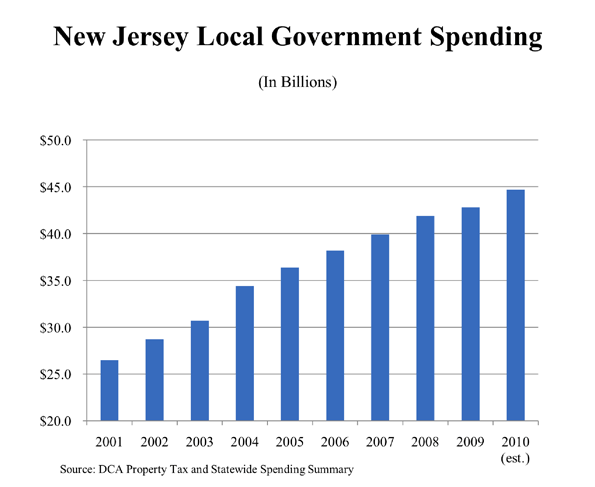
    Republican Governor Chris Christie was sworn into office in January of 2010 in a blue state election shocker. He wasted no time declaring a fiscal state of emergency. New Jersey had raised taxes 115 times in eight years and increased spending from $26 billion in 2001 to $45 billion when Christie took office. The state had a $10 billion deficit and had exhausted its borrowing capacity. Christie slammed on the brakes and froze $2.2 billion of spending. He refused to raise taxes. Christie tackled the Teachers unions, forced the Democratic legislature to impose pension reform, and even cancelled the $10 billion ARC tunnel between New Jersey and New York, the most costly public works project in the United States. Governor Christie has emerged as the first Deconstructor.

    California’s inconsistent governor, Arnold “The Terminator” Schwarzenegger may be forced to become “The Deconstructanator” before he leaves office. Faced with a $19 billion deficit, Arnold was forced to furlough 200,000 government workers. His plan for three day a month furloughs, equivalent to a 14% pay cut, was upheld by California’s Supreme Court. Six labor unions and 37,000 workers settled with Arnold accepting pension reform over furloughs. Further Deconstruction is inevitable.

    Newly elected Governor Brown will not have revenues from housing and dot.com bubbles to sustain the largess of his legislators. On October 23rd, the LA Times reported California shed 37,300 jobs in September. According to the state Employment Development Department, local government absorbed 32,400 of the job losses in September. The public employee layoffs are just beginning as cities and counties join the state in austerity measures. Where the private sector absorbed the brunt of the layoffs in 2008 and 2009, and Obama’s Stimulus bill insulated the public sector in 2010, the next wave will decimate the public employees of California.

    With the mid-term election mandate, federal bail-outs are no longer a viable solution to balance state budgets. Dozens of states have projected budget shortfalls of more than $100 billion for Fiscal Year 2012. Joining California in the state fiscal train wreck category are Illinois, Michigan and New York. Illinois has a budget of $26 billion that is $13 billion in the red. Despite its huge deficit, Illinois legislators increased state spending by 15% this year based on wishful projections that revenues will increase by 17%. Michigan is not far behind with a $4 billion deficit and a budget that was only balanced with $1 billion from the federal government.

    New York has a FY 2012 deficit of $13.5 billion. Its state government is dysfunctional and in denial. Newly elected Governor Cuomo has presented vague plans to solve New York’s misery. E.J. McMahon, executive director of the conservative Empire Center for New York State Policy said, “Cuomo’s budget proposals boil down to vague pledges of reducing costs and rooting out inefficiencies.” Cuomo is no Deconstructor and he will not be able to hide from New York’s fiscal reality. Where rationale fiscal management has long been ignored, Greek-like austerity measures and Deconstruction are inevitable.

    Not All States are Mismanaged

    Rhode Island was in dire straits last year with a $60 million deficit, declining revenues and unemployment at 12%. Governor Donald Carcieri realized the only way out of financial trouble was to make tough choices and embrace “fiscal responsibility.” He trimmed the state workforce through layoffs, attrition and leaving jobs unfilled. A classic deconstructionist, he streamlined and combined offices and agencies. He raised the retirement age for state pensions, cut benefits, and negotiated better contracts with unions and health care providers.

    Another Deconstructor is Governor McDonnell of Virginia. When McDonnell was swept into office with Governor Christie in 2010, Virginia had a $1.8 billion deficit. Virginia’s state budget had grown by 73.4% between 2000 and 2009, much faster than its population and inflation. Since taking office, Governor McDonnell converted the deficit into a $200 million surplus. He overhauled Virginia’s pension system saving $3 billion over 10 years. He imposed an immediate, statewide hiring freeze that covers all noncritical areas of state government. He cut and consolidated boards and agencies saving $20 million per year.

    Deconstruction Goes Global

    Global Deconstruction began in 2010 as a result of reduced worldwide government revenues caused by the prolonged Great Recession. No nation is exempt, including the US. Some like Germany have opted for fiscal discipline, helping to maintain Europe’s strongest economy. The Greeks ignored the crisis and rioted in response to the austerity plan imposed by the European Union. Yet despite their displeasure, austerity is an imposed reality Greek workers cannot avoid.

    The French responded characteristically with paralyzing civil strikes in response to the Sarkozy government increasing the retirement age from 60 to 62. The French unions are adamantly opposed to any change to the pension system. Sarkozy said he would shore up the pension system with “new levies on France’s highest earners and on company profits”. (France 24 International News October 5, 2010)

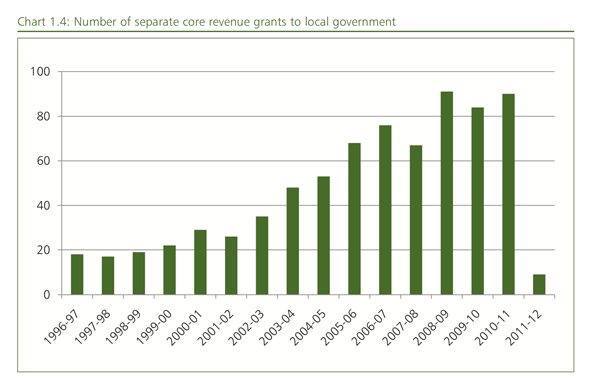
    In England, the response to the fiscal realities of the Great Recession have been draconian cuts which will cost 490,000 public sector jobs 2015. The cuts of $128 billion over 4 years made on “Axe Wednesday” represent 4.5% of their 2014-2015 GDP, equivalent to $650 billion in cuts to the US budget. (Chart 1.4 – SPENDING REVIEW 2010 Presented to Parliament by the Chancellor of the Exchequer by Command of Her Majesty October 2010). The BBC will see its funding cut by 360 million pounds, the budget of all its national radio services combined. Hundreds of London based diplomats will see their jobs disappear. Even the sacrosanct defense budget will receive cuts of 8%. (FT.com Daniel Pimlott October 20, 2010).

    Deconstruction is not limited to Europe. In Russia, Nikolai Volgin, president of the National Assembly of Labour and Social Policy Specialists, said he anticipates widespread layoffs this year, with as many as 1.5 million more people losing their jobs. Russia already has 8 million unemployed. Volgin said, “I do not rule out that there may be 9 to 9.5 million jobless in the country.” If Volgin’s predictions are correct, Russia will see an unemployment rate of 12 to 12.7 percent in 2011.

    Even Cuba has felt the chilling winds of deconstruction. President Raul Castro startled his people in August by stating 20% of Cuban workers may be redundant. He announced they will eliminate 500,000 state jobs in March of 2011 and allow some workers to work for themselves. Cubans are allowed to sell their own fruits and vegetables for the first time. The Cuban workforce is 5.1 million and 95% work for the state. Castro’s deconstruction will effect 10% of all Cuban workers.

    The difficult deconstruction occuring both at home and abroad is just in its earliest stages. Those countries and regions that take the opportunity to reform themselves will be the ones who will emerge with greater prosperity after the Great Deconstruction.

    Robert J Cristiano PhD is the Real Estate Professional in Residence at Chapman University in Orange, CA and Head of Real Estate for the international investment firm, L88 Investments LLC. He has been a successful real estate developer in Newport Beach California for twenty-nine years.

    ¬¬¬

    Other works in The Great Deconstruction series for New Geography
    Deconstruction: The Fate of America? – March 2010
    The Great Deconstruction – First in a New Series – April 11, 2010
    An Awakening: The Beginning of the Great Deconstruction – June 12, 2010
    The Great Deconstruction :An American History Post 2010 – June 1, 2010
    A Tsunami Approaches – Beginning of the Great Deconstruction – August 2010
    The Tea Party and the Great Deconstruction – September 2010
    The Great Deconstruction – Competing Visions of the Future – October 2010

  • The Urban Bike Tribes of Los Angeles

    A recent Los Angeles Times article chronicled a showdown between drivers and bicyclists, inspired by the installation of bike lanes and — more significantly — the reduction of auto traffic lanes on a San Fernando Valley boulevard. The change was clearly intended to encourage cyclists, but I had to wonder: Which ones? In a city as diverse as Los Angeles, even the bike riders are divided, loosely, into different tribes.

    On a San Andreas Fault tour, on the San Francisco Peninsula skirting Silicon Valley, my friends and I passed large numbers of people riding back and forth on bicycles. They had brought their bicycles up into the Santa Cruz Mountains in the backs of their SUVs, and were riding back and forth, exercising their legs. Most of them were dressed in bicycle helmets, and costumes that looked like a cross between a surfer’s short wetsuit and a ballet tutu. It did not seem to me that this sort of activity was really going to replace the automobile for any serious purpose, and anyway, they were not commuting..

    In my own Orange County “paleo-urbanist” community we have the people of the helmets and ballet tutus, who use the streets. But we also have regular folks, who dress in shorts and often T-shirts. These ordinary adults and children use the sidewalk, not the street. I hear that many parents forbid their kids to ride in the street, especially when the street is Pacific Coast Highway. It is actually, as I understand it, illegal to ride a bicycle on most sidewalks. It is also against the law to drive more than 65 miles per hour on the freeway, to drink alcohol if you’re under 21, or (at least till November) to possess or smoke marijuana. As the young folks like to say, Bwahaha.

    I’ve heard about (I think there was an LA Times story some years ago) what I would like to call Los Midnight Riders – those who ride bicycles to work for economic reasons, not ecological ones, because they A) have jobs that don’t pay enough to support owning a car and B) have jobs with hours or locations that preclude using public transit; it either doesn’t run to where they’re going, or it shuts down long before they can go home. These people are the real bike commuters. They often cannot, alas, afford proper front and rear night lights, which makes them a hazard. And they live in parts of town that may not be the best equipped with bike lanes, bike lanes being a rather bourgeois-bohemian interest.

    I taught myself to ride a bicycle at college when I was 21, not having had much opportunity or daring to learn earlier. There was a campus fad for bike riding at the time, but there were no ballet tutus or anything resembling them – ordinary shorts and the like were the costume for our rides. I felt incredibly self-righteous. For some time afterward I used the bicycle once in a while for local trips. But I did so less and less as time wore on. I still have a bicycle, and still use it occasionally, but bikes need to be kept in working order, and being of a certain age I fear I must confess that yes, yes, I do walk my bike up long or steep hills. I don’t wear a tutu, though when I get off a bike I often understand why other people do: My “privates” have gone to sleep, and when I dismount they begin to wake up with a tingling that is about as different as can be from titillation.

    Will bicycles ever become a transit option for masses of commuters? Office dress and decorum has not yet deteriorated to the point where bicycle commuting will be practical without a locker room. One would arrive at the office a sweaty mess and need to shower and change, I’d think, which could be as much of a hassle as going to a health club, and just as time-consuming.

    About a month from now I will be in Copenhagen. There, bike paths run between the street and the sidewalk, including right in front of hotels. Anyone getting out of a car must keep this in mind, for bicyclists are moving past at very high speeds! They seem to be dressed, for the most part, in long pants, and even in business suits. Not having spent a lot of time meeting with Danish bankers and lawyers, I don’t know whether or not they reek of sweat, or if their offices include huge locker rooms.

    But three factors should be noted: A) Copenhagen is a very flat city, so a cyclist might not work up that much of a sweat, B) The weather is not very warm most of the time, so there’s less opportunity to work up a sweat anyway, and C) They’re Danish. I don’t know if they have different tribes of bicyclists, but they may have a different metabolism.

    Photo by Buz Carter of bicyclists crossing the Seventh Street Bridge in Los Angeles.

    Howard Ahmanson of Fieldstead and Company, a private management firm, has been interested in these issues for many years.

  • Living In Denial About Transportation Funding

    The reaction of various advocacy groups to President Obama’s recent call for a $50 billion stimulus spending plan for transportation infrastructure was predictable. They applauded the President’s initiative and thought that Congress should promptly approve the spending request. The benefits of investing in infrastructure are undisputable and the need for funds is urgent and compelling, they (or their press releases) proclaimed.

    But convincing the next Congress of the need to act, whether to fund the infrastructure “down payment” of $50 billion or to authorize a proposed $500 billion multi-year surface transportation program, will not be easy. Most congressional lawmakers do not perceive infrastructure as an urgent priority. They see no signs of a popular outcry about the stalled transportation reauthorization, nor do they perceive a groundswell of grassroots support for massive transportation investments.

    Indeed, what the lawmakers see is just the opposite. They witness New Jersey voters strongly approving Governor Chris Christie’s decision to cancel work on the long-planned rail tunnel under the Hudson River because, says the Governor, “the state simply doesn’t have the money” to pay for overruns in the potential $9-14 billion project. Mr. Christie, no doubt, has in mind the experience of Boston’s Big Dig which was projected in 1982 to cost $2.8 billion and ended up costing $15 billion.

    The lawmakers also see Republican candidates for governor in California (Meg Whitman), Florida (Rick Scott), Ohio (John Kasich) and Wisconsin (Scott Walker) pledging to cancel high-speed rail projects in their states if elected — and running ahead of their Democratic opponents who unanimously support President Obama’s $8 billion high-speed rail initiative. They see the public greeting with a yawn a bold and visionary Amtrak proposal to link Boston and Washington with a dedicated high-speed rail line. They read in a much noticed Sunday Times Magazine article “Education of a President,” (October 12) that the President himself thinks “there’s no such thing as ‘shovel-ready projects’ when it comes to public works.” And they hear an Administration unable to explain how the $50 billion infrastructure initiative will be paid for. When asked, a top administration official could only lamely reply “Stay tuned, we’ll let you know.”

    More evidence of public reluctance to spend on infrastructure comes from the findings of a new October 2010 survey by the Pew Center on the States and the Public Institute of California titled “Facing the Facts: Public Attitudes and Fiscal Realities in Five Stressed States.” By a large margin, respondents in five states (California, Arizona, Florida, Illinois and New York) showed a strong unwillingness to support additional transportation funding and offered to put transportation on the chopping block when asked which of their state’s biggest expenses they would least protect from budget cuts.

    It may be impolitic to suggest it, but dire warnings about the sorry state of the nation’s infrastructure seem to come largely from organized interests — stakeholders and advocacy groups. That is not to say that the nation’s transportation infrastructure has not been neglected or that America does not need better roads and transit systems. But rightly or wrongly, congressional lawmakers often discount cries about “crumbling infrastructure” as self-serving demands for more government money, often for projects that yield small economic return.

    Moreover, many lawmakers come from rural districts that experience little traffic congestion, whose roads are well maintained and which never hope to benefit from high-speed rail service. Their reluctance to spend more money on public works also has been fueled by what they see as disappointing results from the stimulus initiative. As Rep. John Mica (R-FL), ranking member of the House Transportation and Infrastructure Committee and potential future T&I Committee chairman in the 112th Congress likes to point out, more than 60 percent of the stimulus infrastructure dollars still remain unspent, while unemployment in the construction industries remains high. All this adds weight to the legislative reluctance to tackle an ambitious infrastructure spending bill any time soon.

    As one of our colleagues, a sincere and lifelong transportation advocate, put it, “the transportation community is mostly talking to itself and living in denial about the changing political mood.” That mood—in the nation at large as well as in the next Congress— is unmistakably becoming more conservative and skeptical of big government. An overwhelming 70 percent of Americans think the government does not spend taxpayers’ money wisely, according to a recent Rasmussen poll. Newly elected members of Congress will be marching to the drum of fiscal discipline and looking for ways to curb out-of-control spending, a GOP aide told us. Congress will be closely questioning costly new federal initiatives no matter how well intentioned, he added. The expansive federal-aid surface transportation program as we have known it in the past may no longer be thought politically acceptable or fiscally affordable.

    And who knows, the new mood of fiscal restraint may even infect the White House. As one senior White House adviser, quoted in the Sunday Times Magazine story, put it, “there’s going to be very little incentive for big things over the next two years unless there’s some sort of crisis.” And we doubt that by this he meant “infrastructure crisis.”

    Ken Orski has worked professionally in the field of transportation for over 30 years.

    Photo by woodleywonderworks

  • The Future of a Hub: Can Singapore Stay On Top of the Game?

    Viewed from a broad, historical perspective, Singapore’s position as a hub is far from inevitable or unassailable. History shows that hubs come and go. Malacca used to be the centre of the spice trade in Southeast Asia. Venice was the centre of East-West trade throughout the Middle Ages. Rangoon, now Yangon, was the aviation hub of Southeast Asia before 1962.

    Is Singapore in danger of also ceding its hub status as a result of forces beyond our control? The case of Malacca is instructive. By the 16th Century, the city on the Malay peninsula had become the most important port in Southeast Asia. It served as the bridge between the spice-producing islands of Southeast Asia and the markets in Europe and Asia. Malacca became so integral to East-West trade that a Portuguese traveller and writer, Tome Pires, proclaimed that “who is Lord of Malacca has his hand on the throat of Venice”.

    Malacca was a forerunner of the free port that Singapore was to become. It welcomed foreign merchants as well as their trade. But after the Portuguese conquest of the city in 1511, it declined as the spice hub of the region, as the Portuguese – and later the Dutch – sought to achieve monopolistic control of the spice trade. Fierce competition from neighbouring ports such as Johor meant that traders had other options. The city soon declined and today is best known as a tourist attraction.

    Half a world away from Malacca, Venice emerged as the European hub of the global trading network. For nine hundred years, Venice was a flourishing centre of trade between Europe and Asia, especially in silk, grain and spices. Geography played an important role in Venice’s rise. Its relative isolation from the mainland insulated it from the confusing and often deadly politics of the Italian states.

    Venice concentrated its resources and energies on advancing its commercial interests in distant regions. By the 13th century, Venice was the second largest city in Europe after Paris, and its most prosperous. It linked the main trade routes between Europe and Asia.

    But eventually Venice also declined. The fall of Constantinople to the Ottomans in 1453 disrupted the traditional overland trade route from Europe to Asia, forcing Europe to find alternative trade routes to the East. At the turn of the 16th century, Portugal’s discovery of a sea route to the East Indies undermined Venice’s monopoly. New ports emerged to become Europe’s main intermediaries in the trade with the East, striking at the very foundation of Venice’s wealth. With its centrality as a commercial hub broken, Venice declined and eventually fell to the Austrians in 1797.

    The Theory of Hubs

    Malacca and Venice are both examples of hubs in that first flourished and then declined as trade routes and technologies changed. Simply defined, hubs are the exceptionally well-linked nodes in a network. Malacca and Venice exploited their commanding positions in the main trade networks of their times. They consolidated their hub positions by astute diplomacy, openness to talent from elsewhere, and broadening the range of their activities beyond just trade.

    Throughout history, hubs have been the main engines of economic growth and development. Network theory provides us with insights to explain why hubs acquire wealth more easily than other nodes in a network. Today, as in the past, the world’s economic geography remains dominated by hubs which are the focal points of opportunity, growth and innovation. Firms locate where skills, capabilities and markets cluster.

    A recent study identified the existence of 40 mega-regions worldwide. They are defined as places that claim large populations, large markets, significant economic capacity, substantial innovative activity, and highly skilled talent. Many of these 40 mega-regions are formed by hub cities growing outward and into one another. Singapore is one of these hubs.

    Today, of course, air transport plays a critical role in establishing hubs. Air hubs make previously unlinked cities accessible to one another in just one or two links. Singapore is classified as a “connector” hub – it is a hub within the East Asian/Southeast Asian region, with a high number of links to cities in other regions. So in 2007, while Changi Airport was ranked 19th by the Airports Council International in terms of passenger numbers, it was ranked 6th if only international passengers are considered.

    If Singapore is a central node connecting different regions, what might undermine this position? Challenges could come from two directions. The first is competitors in the region, such as Kuala Lumpur, Bangkok and Hong Kong, as well as those from other regions, such as Dubai. Dubai is the largest aviation hub in the Middle East and is a fierce competitor for the Australia-Europe traffic. Another challenge is from long-haul flights. The same technology that allows Singapore Airlines to bypass Tokyo on flights to Los Angeles could one day allow Emirates to fly non-stop from Dubai to Sydney, and Qantas or British Airways to fly non-stop along the “kangaroo route” from London to Sydney.

    The more cities move away from the hub-and-spoke model of air transportation to point-to-point transportation, the more difficult it will be for Singapore to retain its status as an aviation hub. This is conceptually no different from Venice losing its hub status because alternative and more direct trade routes were found between markets in Europe and spice producers in the East.

    This threat underlines the importance of constantly re-inventing Singapore as a hub. It would be fatal to assume that the density of connections that we have today and the centrality that we enjoy in today’s networks – whether in air transportation, maritime, or other networks – are permanent. New technologies might create new networks with their own hubs and connectors. Whether we will continue to be a hub in the networks that emerge will depend on our capabilities, on our ability to seize early mover advantages, and on how quickly the new networks emerge.

    I think it is possible to distil five factors that determine the success and sustainability of hubs like Singapore.

    1. Establish your role early. Singapore built the first container port in the region. This gave us first-mover advantage. We exploited it, and Singapore was propelled to the front rank of global container ports.
    2. Ensure open access and maximum connectivity. Singapore under the British thrived because of its status as a free port. In contrast places like Jakarta languished under the Dutch policy of controlling and taxing trade. Being well-connected and plugged into dense networks confer far more advantage than efforts to monopolise production or to control access to resources.
    3. Capitalise on and exploit small initial advantages. The research on networks suggests that the economic development process is highly path-dependent: the choices we face today are largely shaped by the choices we made in the past and the capabilities that we have already built up. Singapore was able to become a leading petrochemicals hub because we were able to build on our early success in attracting oil refinery activities.
    4. Constantly re-invent and diversify the hub’s value proposition. In Singapore’s context, our status as a maritime hub gives us the opportunity to develop strengths in new areas that go beyond our traditional role as a port. These include ship financing, ship insurance and various ancillary activities that the shipping industry depends on. This diversification will also give us greater resilience in the face of uncertainties and rapid changes in the maritime industry.
    5. We need a strong sense of belonging. If people only see Singapore as “Hotel Singapore”, then when there is an economic downturn or other problems, they will move to where the opportunities are greater. The challenge is to maintain a core that will sustain the hub through economic cycles.

    Singapore’s continued success as a hub depends both on its connections to the world, as well as connections to its citizens wherever they may now live. Our strategic response to the limitations of our physical size must be to strengthen our hub position by boosting not only its physical connections to networks, but also in other domains – an R&D hub, an intellectual hub, and even a cultural and entertainment hub.

    To avoid the fate of Malacca or Venice, we must re-invent and re-position ourselves and stay ahead of the competition. This is the imperative that will determine our future as a city-state, as both a place and a nation.

    Peter Ho is Senior Advisor to Singapore’s Centre for Strategic Futures. Before retirement, he was the Head of Civil Service in the Singapore Government.

    Photo by Storm Crypt