Author: admin

  • VITAMIN G

    I need a stronger dose of Vitamin G. No, not Riboflavin or Vitamin B2 as it is sometimes called, but Vitamin G: the Green Space Vitamin! Everyday there seems to be more data confirming my personal beliefs that being around, in and associated with green space promotes health, well-being and an enhanced social safety network (reducing stress, anger, frustration and aggression) in all of us. There is a strong, positive relationship found between the amount of green space in our living environment and physical and mental health and longevity.

    Researchers have been studying this issue for some time and have discovered that us, human beings, are “phytotrophic”- we are attracted to environments that include trees, grass and other natural elements.

    Much like a vitamin that you eat, drink or rub on your skin, Vitamin G can be taken in many ways. Research shows the benefit of nature broadens to varying avenues of exposure and beneficial contact with nature need not involve getting one’s hands dirty. Gardening is beneficial, but so is walking, jogging, biking or even canoeing through a natural setting.* Even non-nature focused activities, such as reading or playing basketball, in a relatively green setting is more beneficial than the same activities indoors or in a less green outdoor setting.* Even a simple window view has measurable effects. Also like a vitamin, evidence suggests that contact with nature is needed in frequent and regular doses.

    “Vitamin G seems to be beneficial regardless of its physical form. Research shows that the benefits of nature seem to extend to a tremendous variety of stimuli (e.g. large forests, small urban gardens, prairies, nature preserves, vest-pocket parks, mountains, landscapes with water features, an aquarium in an office, tree-lined city streets, shady back yards, and soccer fields).”* Seeing and being in any form of green space benefits us, regardless of its shape, size and texture.

    Unfortunately, many policy makers, at least up until now, view green space as a luxury good rather than as a basic necessity, overlooking the important and beneficial effects of green space on our health, well-being and safety. In fact, for those of us tied to our homes a bit more closely (elderly, children, low income adults), defined green spaces are even more important to our health! “The tight integration of natural elements into the urban fabric can now be thought of as preventative medicine – a public health measure designed to reduce physical, social, and psychological breakdown in urban dwellers.”

    For many of us that don’t have the opportunity (and that green peace of mind derived from this) of owning a cabin or destination green space, we need better policy, design and implementation to happen within our communities, in order to maximize our exposure to Vitamin G. I know in St. Louis Park, we try to incorporate many green items, for example we have a master sidewalk and trail plan (some of it still needs to be implemented, but it is planned for) that provides opportunities to experience green boulevards, parkways, wooded areas and other green features. We also provide many parks, of varying size, easily experienced by most folks, since all are within a quarter mile of any residence. But there is room for improvement in our attaining our recommended doses of our citywide Vitamin G.

    Vitamin G is a critically important vitamin. I hope Vitamin G becomes a daily staple of every community and person’s diet…our health and welfare depends upon it!

    Jim Vaughn is the Environmental Coordinator of the City of St. Louis Park, Minnesota. This blog originally appeared in the St. Louis Park Sun-Sailor.

  • LA the Least Gentrified Major City?

    Los Angeles has been “gentrified” and made more stable in many of its areas by immigrant settlement, but the phenomenon of Anglo “gentrification” – what used to be “yuppies” or their more contemporary counterparts (original “yuppies” are now in their 50s) upgrading a formerly “bad” neighborhood by pushing up rents and squeezing out existing relatively poor folks – is rarer in Los Angeles than in almost any other American city.

    The closest thing to it has occurred in a few “paleo-urbanist” beach communities. (“Paleo-urbanist” means planned to New Urbanist specifications, but nearly a century ago!) And I think the reason for it has to do with the massive projects by the Irvine Company especially in the 60s and 70s. These projects, plus the nearby existence of Newport Beach – already a “watering spot” for the WAS (WASP but including Catholics, this being California) – plus the riots of 1965, plus the perception that the air in the Irvine and Newport region was less polluted at a time when smog was worse than now, led to a massive secessio patriciorum, a secession of the patricians, It was a physical manifestation of Christopher Lasch’s The Revolt of the Elites. Corporate headquarters relocated en masse. Second homes near Newport Bay often became first homes. Many of the people that might otherwise be gentrifiers in Los Angeles were removed to the first great Edge City, at the head of Newport Bay.

    Los Angeles proper ultimately recovered from the Great Secession. It did so with the help of immigrants on the one hand, and the entertainment industry on the other. In days of old “Hollywood” and “Los Angeles” had been two separate cities occupying the same space. Outsiders who were concerned with the film industry often didn’t refer to “LA” at all, but to “Hollywood” or “The Coast.” “LA” was the rather bourgeois city that happened to occupy the same physical space.

    I remember, for example, when Los Angeles magazine was socially conservative enough to declare, “Why is it they never organize against the popular smut [pornography] – movies like Beach Party, for instance?” This is unimaginable now. I also remember how few were the movie stars in attendance at the openings of the major Music Center (now LA Performing Arts Center) in 1964 and 1967.

    It is now recognized that Hollywood is at the center of cultural life in Los Angeles. The two largest political parties in the state are the Hollywood Democrats and the Eastside LA Democrats, with quite different social priorities. The third party, the Republicans, is desperately trying to hold on to its veto on taxation and the budget. As a matter of fact, the terms Westside and Eastside are used a lot more now. When I lived in Hancock Park in my high school years, I had somewhat of a perception that I was in the exact middle. Wilshire Boulevard, the grand prestigious street of Los Angeles, had, because of foolish zoning, a strip of vacant lots where it went by the Hancock Park residential district (not to be confused with the city park of the same name, two miles west, where LACMA and the Page Museum are}. These lots were not built on until the 70s, when condos were allowed there.

    The so called “Park Mile” did provide a separation between the Miracle Mile on one side and the Wilshire Center – not in those days Koreatown, and in fact a serious rival to Downtown – but the separation between West and East has grown sharper as the Miracle Mile has faded a bit, and Koreatown is what it is and not a rival of Downtown any more. The perceived border between Westside and Eastside LA seems to run near Vine Street, through Old Hollywood and Hancock Park.

    Pasadena and Santa Monica, both singularly uncool places 40 years ago, have become among the coolest parts of the city. Remarkably, Pasadena and nearby areas were the main source of the secessio patriciorum of 40 years ago. The vacuum has been filled in a very interesting way!

    In contrast, downtown San Diego feels a lot like downtown Denver, except with palm trees and water. Both of those downtowns fill up on weekends at night with hard-partying young Anglos, not exactly to be seen on Broadway in LA at any hour. If there was a secessio patriciorum in San Diego, it was only to the UCSD area near La Jolla, much closer. If the secessio had gone, say, to Carlsbad, and upper class San Diegans had relocated to Carlsbad and La Costa en masse, downtown San Diego might be the ethnic wonderland Downtown LA now is. Carlsbad may be 30 miles away but the few Carlsbadians I know seem a lot more loyal to San Diego than OCers are to Los Angeles. Who knows?

    Howard Ahmanson of Fieldstead and Company, a private management firm, has been interested in these issues for many years.

  • A Bad Business Cycle for the Creative Economy

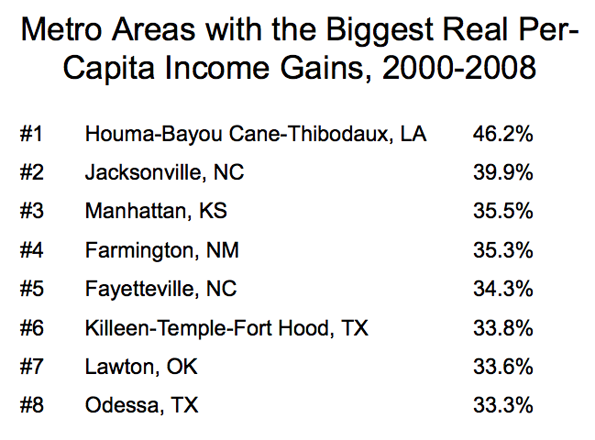
    Here’s a simple question for you…which metro areas did prospered the most during the past business cycle? (2000-2008)  Were the winners the highly-educated communities that make up the Creative Economy?  Or did someone else zoom ahead?

    I asked myself these questions when I was preparing for a talk that I was giving at the Rochester Institute of Technology on innovation and economic development.  Being a man of numbers,  I calculated the gains in real-per capita income for all metro areas. Who do  you think was #1, and who do you think was #366 (out of 366)?

    A bit surprising, isn’t it?  The common themes are guns and oil. The big gains in the #1-ranked Houma region are mainly connected with the increase in oil drilling, since BLS data shows that wages in the mining/oil industry in Terrebonne Parish, where Houma is located, soared from $58K a year to $78K from 2005 to 2008.  #2 Jacksonville (NC) is the location of Camp Lejeune. Fayetteville (NC). #5 Fayettville (NC) is home to Fort Bragg, one of the larget military bases in the world. #6 Killeen is obviously home to Fort Hood.  #8 Odessa, Texas, is  riding the oil boom.

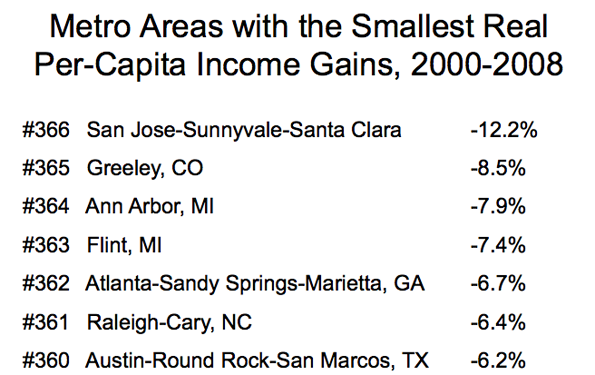
    Now let’s look at the metro areas which were the biggest losers in real per-capita income, 2000-2008.

    Uh, oh.  This is not the list you might have expected, in a world where brains and innovation are supposed to be important. There’s Silicon Valley at the top (or the bottom) of the list, where incomes didn’t recover from the popping of the tech bubble that peaked in 2000.  But other tech-type metro areas, such as Raleigh and Austin were hit hard as well.

    Brains and education did not seem to count too much in success in the last business cycle. Overall, the top ten cities, measured by growth in per capita income, had an average college graduate rate of 17.7% The bottom ten cities had a college graduate rate of 31.8%.

    Is this inverse relationship between growth and education going to persist into the future? Impossible to say. My personal view is that the lack of rewards for education–which show up in the individual income statistics as well–is correlated to the lack of commercially-successful breakthrough innovations, which would immediate sop up all the excess college graduates.

    To put it another way, innovative industries tend to locate where they can get a lot of college graduates. That means high education areas attract new companies, boosting growth.

    But without innovation,  the whole economic development dynamic changes. You can’t attract growing innovative companies because they are few and far between. For their part,   companies are more likely to view cost as a main consideration in deciding where to locate.  Goodbye San Jose and Austin, hello China and India.

    Mike Mandel is Editor-in-Chief of Visible Economy. This post originally appeared on his blog “Mandel on Innovation and Growth.”

  • Shanghai: The Rise of the Global City

    The opening of the World Expo heralds Shanghai’s coming of age, the rising economic might of China, and the financial power of Asia’s legendary metropolis.

    But that’s only part of the story. The World Expo also reflects the rise of Shanghai as a global city and the intensity of competition among emerging Chinese mega-cities.

    At the eve of the World Expo, Shanghai was buzzing with anticipation and excitement. Presented by 192 countries and 50 international organizations, the World Expo will continue for six months. It will also be the largest world exhibition ever and is expected to attract 70 million visitors from home and abroad.

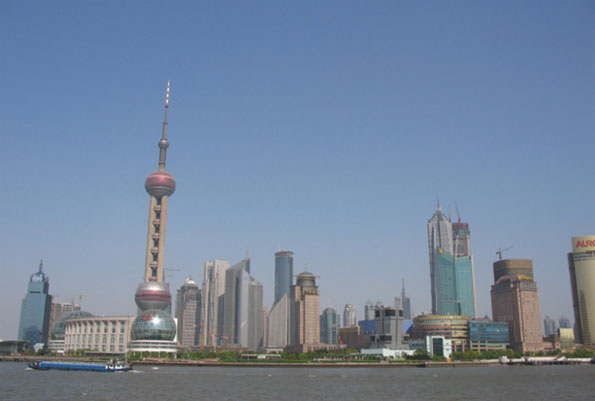
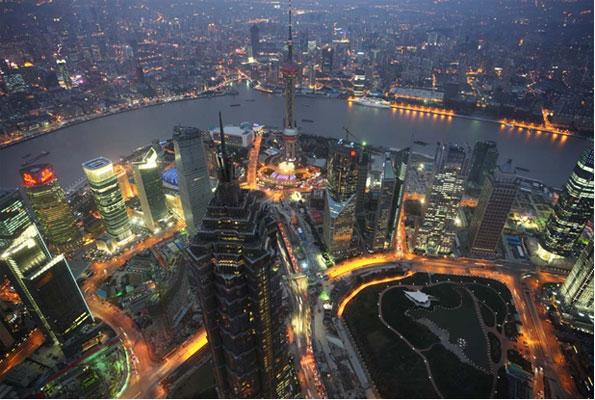
    With a population of over 20 million people, Shanghai is a hugely popular tourist destination renowned for its historical landmarks such as the Bund with its historical buildings lining the Huangpu River. In turn, Shanghai’s increasing financial power and China’s rapid economic development is reflected by the ultra-modern and ever-expanding Pudong skyline, with the Oriental Pearl Tower, the Jin Mao, and the 492-meter (1,614 ft) World Financial Center.

    For foreign sinologists, the World Expo heralds not only the resurgence of the great metropolis, but the “comeback of the city’s brash patrons.” In reality, Shanghai’s comeback started in the early 1990s, and today the resurgence of the colossal city may still be in its infancy.
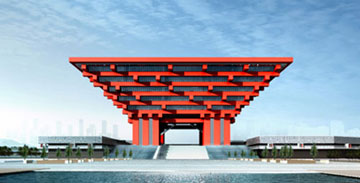


    China Pavilion Preview
    Theme: Chinese Wisdom in Urban Development
    The main structure of the China Pavilion, “The Crown of the East,” has a distinctive roof, made of traditional dougong or brackets, which date back more than 2,000 years.



    Shanghai Pavilion
    Theme: New Horizons Forever
    Taking the form of Shikumen, Shanghai Pavilion seeks to blend history and modernism, the East and the West.

    In 2005, the wealthiest metropolises, as measured by their estimated GDP, were still led by the great urban centers of the leading advanced economies. By 2020 a third of these wealthy cities will be in the large emerging economies. Shanghai‘s strategic position at the mouth of the Yangtze River has made it an ideal location to assume a position in the urban paragon.

    In fact, Shanghai and the Yangtze River Delta already constitute one of the largest concentrations of adjacent metropolitan areas in the world. It is the home to some 80-90 million people with GDP (PPP) of some US$2 trillion, or about the economic size of France. However, unlike France, which is growing at the rate of 1-2 percent in 2010-2011, Shanghai enjoyed a double-digit growth in 1992-1997 and continues to grow at about 8-9 percent per year.

    Shanghai’s Resurgence

    Originally a fishing and textiles town, Shanghai grew to importance in the 19th century. The rapid development of the city began in the aftermath of the Opium War of 1840 when the Western powers forced China to open five of its coastal cities, including Shanghai, to foreign trade. The colonial powers forced the weak Qing government to sign treaties granting them the right to establish foreign concessions. In Shanghai, the part of the city proper west of the Huangpu River grew ever larger in size, whereas Pudong on the east side of the river was left untouched.

    Back in 1918, founder of the Republic of China, Dr. Sun Yat-sen put forward the idea of building a major harbor in East China with Pudong as its base. By the 1920s and the early 1930s, Shanghai was a major center of international trade and finance in the East Asian region.

    Shanghai’s Pudong and the Lujiazui Financial District
    In the late 1930s and 1940s, Shanghai was engulfed by one calamity after another. First it was battered by the currency crisis in 1935, the Sino-Japanese War starting in 1937, the onset of the Pacific War in late 1941 and, in the aftermath of World War II, the Civil War (1945-1949).

    After the declaration of the People’s Republic of China in 1949, most foreign firms moved their offices to Hong Kong, as part of an exodus of foreign investment. As Shanghai fell into a historical oblivion, Hong Kong thrived. The “Pearl of the Orient” lost its position as East Asia’s main financial center.

    During the 1950s and 1960s, Shanghai was transformed into an industrial center. It paid a crippling price in terms of taxes; until 1990, one-sixth of the central government’s revenue came from Shanghai. After China embarked on its open-door policy in the early 1980s, things began to change. After decades of neglect,there rose a resurgence of trade and investment.

    A Wedding Couple by the People’s Heroes Memorial on the Bund
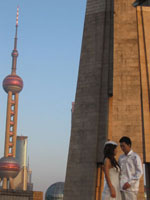
    The great transformation came in the early 1990s, when Deng Xiaoping declared that Shanghai would be “the head of the dragon” pulling the country into the future. The development of Pudong helped to restore Shanghai’s historical role for the Yangtze River Delta and, more broadly, to China.

    In a whirlwind of two decades, Shanghai increased its role in finance, banking, and as a major destination for corporate headquarters. It became a major lure to the highly educated portion of China’s workforce.

    Dusk in Pudong’s Financial District
    Tale of Two Cities

    Since the early 2000s, Shanghai and Hong Kong have increasingly been seen as rivals for the economic center of the Greater China region. Hong Kong has the advantage of a less opaque legal system, international market integration, broader economic freedom, greater banking and service expertise, lower taxes, and a fully-convertible currency. Shanghai has stronger links to both the Chinese interior and the central government, and an impressive base in manufacturing and technology.

    Since the late 1990s, Shanghai has been booming and thriving, while Hong Kong, despite its historical wealth and capabilities, has been haunted by anxiety and doubt over the future. Yet Hong Kong remains one of the world’s great financial centers. According to Financial Development 2009 by the World Economic Forum (WEF), Hong Kong ranks 5th worldwide in terms of financial sector development. Along with Tokyo and Singapore, it stands as one of the premier financial centers in Asia.

    With the recent global financial crisis, Asian cities are closing in on London and New York as leading financial centers. Although still behind Hong Kong, Shanghai has been catching up.

    The financial strength of Hong Kong has been boosted by decades of globalization. The rise of Singapore as a financial center has been also driven by determined government policies and multinational investment. Shanghai’s emergence as a future financial hub has been shaped by similar forces: years of financial reforms and multinational investment and more recently, a strong support by the central government.

    In early 2009, China’s State Council approved Shanghai’s plans to position itself into one of the world’s leading financial and shipping centers by 2020. A month later, five major trading cities – including Shanghai – got the nod from the central government to use the yuan in overseas trade settlement, which reflects China’s recent, gradualist moves to expand the use of its currency globally.

    In the long term, China will play a major role in the emerging global financial architecture. What is less certain is how this emergence will shape the roles of Shanghai and Hong Kong. Already Shanghai’s stock market is worth more than Hong Kong’s, but the city’s financial sector lacks Hong Kong’s depth and the breadth. Hong Kong has an active financial futures market, whereas Shanghai trades commodities futures. In fixed income markets, Hong Kong is far more active in global bonds than Shanghai, which is far more active in domestic currency trading.

    A big barrier: the Hong Kong dollar can be traded freely in international markets, whereas China’s RMB is not fully convertible. But over time this barrier will dissolve. Hong Kong’s regulatory system is considered independent and transparent, whereas Shanghai’s whereas Shanghai’s regulator is part of the government’s state council. In addition to the regulatory regime, there are substantial systemic differences with legal system and taxation.

    In the future, some observers expect China to have a single dominant financial center. Others believe that, due to China’s massive size, multiple centers are conceivable. In the third scenario the assumption is that, in the medium-term, Shanghai and Hong Kong will co-exist as complementary centers. But in the long-term, Shanghai will become China’s international financial center.

    Competition of Chinese Cities

    As can be seen in other parts of the world, there is increased competition among China’s cities. But since the number and scale of Chinese cities is far higher relative to their counterparts in advanced economies, the implications of Chinese urban rivalry are broader and global.

    Having suffered relative decline since the establishment of the People’s Republic of China, Shanghai’s population base increased faster relative to other cities only briefly during the massive infrastructure projects of the 1990s. Economically, Shanghai is still growing, but doing so more slowly relative to other Chinese first-tier cities such as Beijing, Shanghai, Guangzhou, Shenzhen, and in particular the emerging second-tier cities such as Chengdu, Dalian, and Shenyang. In the footprints follow the third-tier cities from Harbin to Ningbo and the fourth-tier cities from Kunming to Hefei.

    The criteria for these tiers comprise GDP per capita adjusted to purchasing power parity, level of economic development, property markets, foreign direct investment, distance to ports, and so on. As productivity levels are increasing in the more prosperous cities, the old low-margin industries are migrating to poorer regions. The process of migration predates the global crisis, but the latter has amplified it. Today, Shanghai’s growth model is predicated increasingly on innovation and high-value industries.

    Yet despite the rise of second and third tier cities, the true competition for global financial preeminence in China will boil down to a contest between Shanghai and Hong Kong. However, it may not result in a win-lose scenario. As Shanghai is evolving into China’s global financial hub, Hong Kong’s efforts to accelerate IPOs and regional innovation and the proposed merger of Hong Kong and Shenzhen could support a Nasdaq-like stock exchange in the future Pearl River Delta Metropolis.

    Meanwhile, China is giving rise to a number of megacities, which seek for specialized competitive advantages. The central government is urging and providing incentives for the wealthiest urban centers to cooperate with other cities in order to accelerate urban growth regionally. Shanghai is no exception; emulating the lessons of the Pearl River Delta, it is boosting the regional innovation system in its Yangtze River Delta.

    Shanghai’s advantage lies in its size and industrial diversity, the competitiveness of several manufacturing subsectors, and the emergence of business services. At the same time, Shanghai’s expanding technological capabilities are being nurtured by a deepening pool of human capital, increasing R&D, FDI in high-tech activities, and the openness of the city to the rest of the world. The dynamic megapolis is driven by a growing middle class, which is feeding a nascent demand for innovation. With its advanced services, large population base, and China’s largest retail sales, Shanghai is well-positioned to emerge as China’s premier business city.

    Just as New York City exemplified the strengths and aspirations of emerging America in the 20th century, Shanghai, perhaps more than any old or emerging rival, will personify the capabilities and dreams of rising Asia in the 21st century.

    Dr. Dan Steinbock is research director of international business at the India, China and America Institute (USA). He currently also serves as senior fellow at the Shanghai Institute for International Studies (SIIS), and visiting professor at the Shanghai Foreign Trade Institute. He focuses on the post-crisis integration of G-7 and BRIC economies worldwide and advises companies, governments and municipalities on issues of competitiveness and innovation. He divides his time between New York City, Shanghai and Guangzhou, and occasionally Helsinki, Finland.

  • Bungled Parliament:: The Price of Pursuing Safe Society Over Growth and Opportunity

    On May 6 British voters handed themselves a hung Parliament for the first time since 1974. No political party has a governing majority. This has surprised most pundits who have assumed for several years that the Conservatives would reclaim government in Britain by 2010, ending 13 years of Labour rule and the tenure of Gordon Brown, the prime minister everyone loves to hate.

    The reasons for the conservative’s disappointing performance are complex. Certainly the surprisingly adroit performance in the first-ever prime ministerial debates by Nick Clegg, the even-more-telegenic-than-David Cameron leader of the Liberal Democrat party, did not help. But Clegg’s lustre – which became known as “Cleggmania” – eventually wore off by election day, and the Lib Dems ended up losing five seats.

    The real reason for the Conservatives disappointing performance lay elsewhere. To many, it seemed that David Cameron, the Conservatives’ young and telegenic leader, represented a new type of Tory politician – one concerned with social justice and the environment while remaining true to core beliefs about smaller government and enterprise.

    Yet the bigger issue may well be this: the Conservatives, like their rivals, failed to make a compelling case how to restore an environment of growth and opportunity capable of bringing Britain out of its profound economic doldrums.

    Given Britain’s fiscal situation and a widely spread sense of economic malaise, the overall paucity of good policy ideas and public messages about opportunity and economic recovery is difficult to fathom. The fact that the Conservatives – erstwhile harbingers of enterprise and growth – managed to remain vague on economic fundamentals is particularly astounding.

    Days before the election, only 29 percent of voters said they trusted the Conservatives to do the best job dealing with unemployment, compared to 28 percent who preferred Labour. On the economy overall, 37 percent believed Conservatives were the best party compared to 36 percent who preferred Labour’s approach, an amazing result given the fact that Labour has controlled the government for thirteen years. Only on taxes did the British public clearly prefer the Tories to Labour, 31 to 24 percent, which is likely owing to the fact that the Conservatives very publicly opposed Labour’s promise to raise the National Insurance tax (similar to the payroll tax in the U.S.). This ended up as the only economic issue for which Tories showed any public passion in the weeks leading up to the election, and the opinion polls suggest their message got through. But they didn’t capitalize on the lesson.

    The roots of the problem run deep. British politicians have grown too accustomed to thinking about safety and security rather than policies that would require taking some risks for growth. Each party admitted in one way or another that public spending cuts would be necessary to deal with Britain’s deficit, but none – including, shockingly, the Conservatives – laid out an aggressive vision of how these cuts could be combined with the types of policies needed to increase entrepreneurship, create more jobs, attract investment, and promote greater overall opportunity in the economy.

    Consider the third and final televised party leader debate, which focused on the economy. Cameron, to his credit, was the only one to use the word “entrepreneur” or one of its derivatives. He did so three times. The three candidates together only spoke of “growth” six times, and no one ever said anything about creating opportunity. They spoke a lot about the importance of jobs but talked about what is required to create them less than a half dozen times. Meanwhile, Clegg used the word “fair” or one of its derivatives 19 times, and Brown did the same 12 times – addressing everything from the need to make tax increases fair to making compensation for bankers fair. Cameron never engaged in fairness drivel, but he also never countered by laying out a strong growth oriented agenda. In a fundamental way, he punted away his best issue.

    Months earlier, the Conservatives launched an ad campaign with Cameron’s face plastered all over England with the less-than-comprehensible slogan: “We can’t go on like this. I’ll cut the deficit, not the NHS.” With a budget deficit of 11.1 percent of GDP and a national debt of nearly £1 trillion (the interest on which costs the government more than it spends on education), you don’t have to be a financial wizard to know you can’t cut the deficit without touching the NHS.

    Then, at the end of the campaign, Cameron’s team began using the expression “Big Society” as its unifying theme. No one really knew what to make of it. Was it the same as a Fat Society? Was Big better than Effective or Strong? In other words, total tripe. The Conservatives seemed to be promoting social rotundity while saying little about the future of growth, enterprise, education reform (for which the party has a very forward-looking plan) and anything that would create opportunity in this increasingly fragmented, class-bound society.

    All of this is somewhat surprising, given that the Conservative manifesto has important things to say about creating an environment favorable to investment, lower taxes, and progress through important growth sectors such as high-tech exports. It certainly compares well with Labour’s manifesto, which talks blithely about tax hikes and a growing public sector with no sensible formula to restore long-term growth. That the Tories did not exploit this difference seems inexplicable but as a result, they did not look different enough from their competitors to earn the solid majority that was once seen as all but inevitable.

    Ryan Streeter is a Senior Fellow at the London-based Legatum Institute.

    Photo by bixentro

  • Finding the Good in This Bad Time

    This year’s best places rankings held few great surprises. In a nation that shed nearly 6.7 million jobs since 2007, the winners were places that maintained or had limited employment declines. These places typically had high levels of government spending (including major military installation or large blocs of federal jobs) or major educational institutions. Nor was the continued importance of the energy economy surprising in a nation where a gallon of gas is still about $3 a gallon.

    Even including part of 2010, only 13 cities (out of 397) showed growth, reflecting the breadth and depth of the downturn. In an economy where the most promising statistic is a “limited” decline in the number of new job losses from month to month, where is the proverbial silver lining?

    It is found in two places: (1) areas that show some resilience in this dour economy; and (2) a newly retooled American economy positioned to compete more strongly in the future.

    Regions of Current Hope
    With disaster as a backdrop, the early signs of buoyancy in the economies of the Intermountain West, the Great Plains, and even parts of the Midwest are quite impressive. Many predicted these areas would mirror the collapse of their larger, high-growth counterparts in California, Florida, Arizona and Nevada. To the contrary, these relatively rural locations are emerging as beacons of hope.

    In the big cities, there have been across-the-board declines in most sectors led by the collapse of construction and financial services. Thousands of small businesses have disappeared in addition to huge layoffs by large employers. You see many “For lease” signs now at what were once your favorite shops and watering holes.

    In a business climate like this, a lot can be said for slow and steady. Comparatively, slower-growing cities across the middle parts of the country are recovering more easily and more quickly.

    Perhaps the most important lesson is that the economies of the future are not all about the “knowledge class” and that “too-good-to-be-true” high wage jobs may be just that. As seen in the dot-com bubble and in this real estate bubble, those fancy, high-wage finance and tech jobs are highly vulnerable to swings in the economy and high-paying construction jobs are only as good as the housing market.

    This is simply because markets eventually adjust. In the case of overheated stock and real estate markets, the losses are felt by the knowledge class, financiers and construction workers. In the case of manufacturing, as the price is bid up through labor costs, other places become more competitive.

    During volatile times, places with the broad-based growth strategies — like Texas and Utah — do best. Cities that are heavily dependent on a narrow set of industries leave themselves vulnerable, paying back the gains of good years in poor years.

    Part of the success of Texas is not just energy (as the modest performance of Midland and Odessa shows), but rather to the state’s adjustments to a past crisis, the savings and loan crisis of the 1980s. The state instituted new laws that imposed a range of disciplines on financial markets — such as limiting home equity lines — thereby minimizing the damage to the state’s economy as those markets went topsy-turvy.

    Regions of Future Hope
    There remains hope for the future in the story of this recession. One of the defining aspects of this recession was not just that certain sectors were hit hard, but that it was also broadly distributed across the economy. This pervasiveness extended deeply enough to cause every enterprise in America to seriously reconsider their business model and re-engineer how they served their customers.

    Consequently, the American economy is leaner and cleaner than it was three years ago. Businesses are more in touch with what makes them successful. While growth will be slower, it will be focused on areas that will bring about quick increases in productivity across the economy and bring new, real wealth to the local economies.

    Where will this happen most quickly? In those places where businesses survived best. Expect the Intermountain West and smaller manufacturing hubs across the United States to lead the charge (because of their lower costs), but large metros like Los Angeles, Chicago, Houston, Minneapolis, and Dallas, with their deep inventories of manufacturers and large labor pools, should see these returns before too long.

    Similar stories can be told for nearly every sector although the beneficiaries will be different. Much of the growth in information sector, for example, will continue to take place outside Silicon Valley. Business services will grow most rapidly where there is growth in business overall, initially outside the core hubs. Midsized and small communities will lead this recovery, and the big cities will eventually follow.

    Economies open to a wide array of occupations will do better than those that are less diversified. Places like Portland and Atlanta, so deeply focused on attracting high-wage, knowledge-based jobs are likely to miss out on the “basic” job growth that will fuel the first stage of the American recovery. Venture capital is still tight across the nation and capital markets are uncertain, especially with new government regulations up in the air. Consequently, high-end, white collar, and high tech jobs, with their insatiable need for investment capital, will develop more slowly. Even among the high-tech superstars, high profits will not lead to huge surges in hiring.

    Why Government Holds the Key
    Government’s actions over the next six to 12 months will define potential and the pace of this recovery. With an election looming, all sides will be jockeying for electoral advantages in November. They will cater legislation to many competing constituencies, fostering tremendous uncertainty in the private sector.

    One thing is certain, however. The current pace of government spending is unsustainable. Not even the US economy can support ongoing deficits in excess of $1.5 trillion per year. Either government spending must slow or someone must pay a lot more. The only alternative — high inflation — will have its own negative effect. One way or another some combination of the three MUST happen.

    Additionally, current regulatory initiatives will change the dynamics and employment patterns within some important sectors. Whether it is the complete restructuring of the health care industry (part of one of the only bright spots in the current economy), or the prospective new regulation in the financial services sector, potentially destabilizing change is coming.

    And the feds are not the only destabilizing government actors. California’s aggressive climate legislation, for example, and the mixed signals it is sending businesses across the state’s 28 MSAs will certainly shape their near and midterm economic futures.

    So what should the federal and state governments be doing at this time? Most importantly, they need to ensure stability: stable capital and lending markets, a consistent and stable tax code, focusing interventions on broad-based, low-shock actions, and developing a plan for moderating and containing the national deficits and mounting national debt. The key to continued prosperity in these times is a growing private job base, not a growing government sector.

    Moreover, government needs to learn the lessons of the private sector. Even as private firms retrench, governments at all levels need to reduce their cost structures. This is happening in many localities, at least on a temporary basis, as even unionized local employees are accepting wage and benefit reductions to retain jobs. Localities and states must recognize the true cost of the services they provide. They must either find consistent ways of providing funding for them, or eliminate them to preserve more critical services.

    Finally, public and private sectors alike must learn that this has been a transformational recession. Unlike downturns in the past, business and government cannot expect things will return to the way they were. Markets and banks will not be printing imaginary value increases in real property for consumers to spend any time soon and capital markets are cautious about financial good news,,preferring the old tried and true winners to novelties.

    Government and government employees are behind the curve understanding this transformation. Wage and benefit concessions given up during this recession are not likely to reappear. The concepts of furlough and unpaid time off are here to stay. Even as the private sector has been forced to reconsider its baseline practices, so, too, the political pressure now will be on government to retain savings obtained during the recession.

    Michael Shires, Ph.D. is a professor at Pepperdine University School of Public Policy.