Author: Candy Evans

  • Census 2010: A Texas Perspective

    If you want to get a glimpse of the future of the U.S., check out Fort Worth, TX. Never mind the cowboy boots, but you might want to practice your Spanish.

    Texas is growing explosively and much of that growth is among Latinos.   The latest Census Bureau figures show the Lone Star State grew by 20%, to over 25 million people, recording about a quarter of the nation’s overall growth. The rate of growth was twice the national average. The implications are huge politically, as Texas stands to gain 4 new Congressional seats from this expansion, and Hispanic leaders want in.

    A majority of the Hispanic growth came from births to families already living here. While migration from other states and countries contributed about 45%.  

    The Texas story stands in contrast to the Rust Belt states and the Northeast, where overall growth is minimal.   Texas’s Hispanic-fueled growth spurt out-paced the entire countries, helped brace our housing market and our economy.

    A close look at Texas growth reveals much about   American’s home-buying habits. Rural areas got smaller – few want to live in the boonies of far west Texas while it appears suburban areas won over the most transplants.

    But arguably the biggest winner was Ft. Worth, or Cow Town as we call it. Fort Worth grew by a whopping 38.6%, the largest increase in the state, followed by Laredo’s 33%, Austin at 20.4%, and San Antonio at 16%. In contrast the city of Dallas, my home, grew by a scant .8% – a bit deflating to a city all puffed up about a $354 million arts center, a downtown park and greenway, and the $185 million Perot Museum of Nature & Science underway.

    Houston remains the state’s largest metropolitan area but sustained growth of only 7.5%, though Harris County – mostly due to growth in the suburbs – grew by 20%. As in Ft. Worth and elsewhere, Hispanics have been the driver, and now comprise 41% of the Harris County population. The biggest growth took place in formerly rural towns just outside the big cities, one-shop stop farmer’s crossings or granaries.  

    Curtis Tally shakes his head at how fast little Justin, north of Fort Worth, has grown. Subdivisions sprouted up on what was once farmland around his Justin Feed Co. in southern Denton County. From 1891 residents in 2000, Justin has 3,246 today.  

    "We were selling seed for pastures; now we’re selling seeds for lawns," Tally, 74, who has been in business in Justin since 1958, told the Fort Worth Star Telegram.

    If you think that’s amazing, wait ‘till you get to Fate, Texas, 25 minutes east of Dallas on Interstate 30. Ten years ago you would have missed Fate, a town of 500 so small the utility invoicing was done on postcards if you blinked while driving. Today, Fate is the fastest-growing town in the state, with 6,357 residents – an increase of 1,179%!  Residents who live there say it’s far enough away from Dallas to be in the country, but still close to the big city. Fate draws many first time homebuyers who are starting families (home prices range from $50,000 to $300,000) Here’s what Fate resident Tina Nelson told The Dallas Morning News:

    “My kids can go ride bikes all day long and I don’t have to worry too much about where they are,” said Tina. “It’s like the 1950s (here) the sun goes down and everyone’s porch light comes on.”

    On the western side of Lake Ray Hubbard, a few minutes from Fate and slightly closer to Dallas is Sunnyvale, another fast-growing little hick town where professionals are building $2 million dollar homes on a 124 acre family ranch turned into home sites called St James Park. They send their children to a two-year old, $50 million public school with the highest ratings in the state.

    The young man building homes on the 49 two acre estate sites is Jojy Koshy of Atrium Fine Homes. At 31, Jojy holds a masters in business from the University of Texas and tells me, with pride, how his parents immigrated to the Dallas suburb of Plano in 1986 from India.

    “My parents instilled a strong work ethic in us,” he says. “I know this market is challenging, but I believe that if I work longer, harder, and keep our clients completely satisfied, we will have a great business.”  

    It’s the same story across the state. The Interstate 35 corridor between Austin and San Antonio filled in with development as the cities merged closer to becoming one big schizophrenic metropolis. The string of counties along the Rio Grande, anchored by Brownsville and McAllen have been growing, and may be beneficiaries of the crime wave south of the border.   A sharp Dallas Realtor took out an ad in the Monterrey newspaper advertising homes for sale in Dallas and snagged several buyers. Even the wife of the Monterrey mayor moved to a Dallas suburb, escaping the cartel and seeking to be closer to her family here.

    Aside from escaping death in Mexico, what is driving people to Texas? Start with our rising star, Fort Worth. The city has both a cowboy pizzazz personality and a lower crime rate than Dallas. Fort Worth’s arts district has overshadowed Dallas’s for years, and the neighborhoods offer true community – places where the kids can still walk, not be bussed, to school. Rose Bowl winner Texas Christian University is on the upswing, downtown is charmingly vibrant, and an urban renaissance is taking hold on the city’s western edge called West 7th.   

    What are people seeking in Texas? I’d call it quality of life with room for upward mobility: affordable homes with mortgage payments that leave some money for recreation, good public schools for their kids and generally less onerous tax regime.

    Yet with our many gains, Texas faces great challenges. The state has the third-highest teenage pregnancy rate in the nation, which is actually an improvement from last year, when we were number two. There are a rising number of children are living in poverty in Texas. Many of these children may be anchor babies born to illegal immigrants who cross the border to ensure their children and ultimately, themselves, citizenship. In 2006, 70% of the women who gave birth at Dallas County’s Parkland Memorial Hospital were illegal immigrants.  

    Increasingly, Latinos, illegal or not, take those babies home to the suburbs. Texas suburbs are no longer lily-white.  This is true in working class places like Bedford, Texas, outside Fort Worth, where the black population has almost doubled. In affluent Southlake, the population this decade shifted from 95 percent Anglo down to 88 percent.   Looking for a great selection of Asian food? You’ll starve (or go broke) in downtown Dallas. Go north to Carrollton, Texas where you’ll find a 78,000 square foot Super H Mart in what was once a Mervyns department store. Inside you’ll find seven types of gray, fuzzy, Chinese long, acorn, spaghetti, butternut, and kombucha squash eight food stalls said to rival any of those found in Seoul and Singapore, two cities known for their gourmet street food. Manduguk, anyone?

    The new Texans are coming here not just to live, but to dig in economically.  

    In the end, we are seeing the birth of a Texas that is neither the white bread, big hair idyll of the cultural conservatives or the free market dystopia imagined by liberals. It is becoming more diverse, without losing its capitalist energy. With all its blemishes,  the emerging Texas may well become the model for how America evolves in the coming decades.

    Candy Evans is an independent journalist based in Dallas, Texas, She covers Texas for AOL’s HousingWatch and blogs at secondshelters.com.

    Photo by Rick
  • New Feudalism: Does Home Ownership Have a Future?

    In mid August, as we were beginning to feel a pulse in the nation’s housing market, an academician and housing expert from the University of Pennsylvania named Thomas J. Sugrue wrote an article in the Wall Street Journal proposing that, for many people, the new American Dream should be renting.

    Sugrue is writing a book on the history of real estate in America, a tome I cannot wait to read because it will apparently illustrate how epic events in our nation’s history have shaped and molded our real estate market, hence our lives. He quotes builder William Levitt, considered the father of affordable suburban mass housing, saying “no man who owns his own house and lot can be a Communist.”

    That was said during the Cold War and McCarthy era: Levitt was marketing his wares, playing off the public’s fears like any good salesman. And for many politicians – from Herbert Hoover to Bill Clinton and George W. Bush – expanding ownership of homes remained critical to the nation’s identity.
    But is all this changing? The Obama Administration seems at best ambivalent about homeownership. It seems determined to put more resources into rental housing while promulgating policies that may coerce Americans out of the suburban single family homes and back into dense, multifamily urban housing.

    This would mark a major change in what we usually consider the American dream. Enabling home ownership is like crack cocaine for politicians: the impetus for the Great Recession of 2008 may well have been formed on the day President Bill Clinton launched National Homeownership Day in 1995. And I remember sitting terrified in front of the television post 9/11 when President George W. Bush reassured us that America was strong and would recover. Our housing market is strong, he said, a theme that would echo throughout his presidency. Seeing two by fours go up and mortar flying gave Americans a sense of calm, of rebuilding.

    The attacks of 9/11 almost brought down our economy. The housing market helped prop it up.

    Most of us still love our homes. Sugrue quotes a Pew survey that faintly echoes the national health care debate: nine out of ten homeowners view their homes as a comfort in their lives. He seems to argue we should change everything for ten percent. To be sure, as he suggests, for some home ownership has become a source of panic and despair: 53,000 people packing a Save the Dream fair at Atlanta’s World Congress Center. Georgia’s housing market has been hit hard – 338,411 homes went into foreclosure in May and June, 2009.

    But it’s not just Georgia. Since the second quarter of 2006, housing values across the nation have plummeted to values roughly equivalent to post 9/11. We are not immune even here in Texas, with one of the nation’s strongest large state economies: our prices are soft, down anywhere from five to 20%, and buyers want deals. Go north to Little Elm; you might think you are in Atlanta. Homes may not be selling for thirty cents on the dollar as they are in Phoenix, but a house in the trophy community of University Park listed for $999,000 recently, sold in the mid $800s. The owner of a Preston Hollow mansion not too far from George W. Bush turned down a $38 million dollar offer two years ago, insulted. He recently sold his nine-plus acre property for $28 million.

    And just one week ago I spoke with an Allen, Texas home builder who told me that current tough love lending standards were keeping a lot of people out of the jumbo market – that is, halting them from buying million dollar homes. When you have to put down 30%, he said, that’s $300,000 on a million dollar home. If homes are not appreciating, he said, smart people say, why do we want to tie up that much money in our homestead?

    Yet we have been here before. Half of all U.S. mortgages were in default during The Great Depression, although it’s true far fewer people owned homes. This is when Herbert Hoover and Franklin Roosevelt created government programs to help save homeowners from foreclosure. I remember my grandmother telling me how Mr. Roosevelt saved her home in 1932 – she voted Democratic in every election because of it until the day she died in 1966. In 1938, Fannie Mae was created to buy mortgages on the secondary market, an effort to stimulate credit.

    After World War II, when the government made home loans accessible for thousands of GIs returning from the wars, home ownership rates climbed like the staircases in a suburban colonial. Now more than two-thirds of Americans own their homes.

    The government’s role in shaping this industry has been pretty explicit. Government programs gave us those first FHA loans that got many of us on the housing track, out to the suburbs, allowing people to leave more congested, and often dangerous, inner cities. Government is the hand that keeps the mortgage industry in motion, like a giant conveyor belt of money. But the hand might be pushing us where we shouldn’t go.

    This is certainly true for many in the communities traditionally underserved in the housing market. The government tried to fix this through creation of the Department of Housing and Urban Development, and by pushing Fannie Mae to underwrite loans to “riskier” buyers. The result: in 2006, Sugrue writes, almost 53% of blacks and more than 47% of Hispanics got sub-prime mortgages.

    Those were the loans that were packaged to spread the risk, and sold off as securities. Very lucrative for banks, who always make out like bandits either way, our federal government stood in the background as a silent backer. An appraiser I interviewed recently told me that Fannie Mae will now be ordering appraisals on loans before they buy them.

    You mean, I said, they weren’t doing this before?

    Then there’s the former sub-prime mortgage lender, now turned real estate agent. You, I scolded, how could you approve a school teacher for a loan on a $400,000 house? Shame on you. Well, he told me, if I would have denied her the loan, she could have come back at me for discrimination, or she would have just gone to someone else. So I made the loan and took my commission.

    Yet for all this, I am bullish on home ownership. I think it gives homeowners a sense of security, a blanket of protection that may or may not be a mirage. Economists, who see the world in a “cash nexus”, do not understand this; planners, believing they know a better way, don’t realize that a rental apartment in a dense development does not usually provide our peaceful havens from the cruel world like a single family home or a townhouse that we have a stake in.

    Homeownership may be precarious, but it does provide a greater sense of permanency for families and communities. Home ownership also stimulates the economy. Consumers never buy as much as they do the first few days in a new home – countless trips to Lowes, Home Depot, Bed, Bath & Beyond, the Container Store. A tenant or landlord may buy for their place, but perhaps never with the care and fervor that comes with homeownership. Apartments are built with, at the most, 30 year life spans. I’ve seen enough Section 8 housing to tell you – you don’t want to live in them at the end of their life-cycle. Apartments are considered temporary, places for people who are in transition or not really sure they are going to stay, one reason why they drive higher crime rates.

    Homes are more permanent. Children thrive with structure and feel more secure coming home to a familiar place day after day. Children who live in homes score higher on standardized tests. They may eventually move from one home to another, but will always come back to it and show a friend – that is the house where I grew up.

    Home ownership also forges financial security. Mortgages are like forced savings accounts. Pay your mortgage and in 30 years you’ll have an asset that could cushion your retirement. Either you will own your home outright, or you will have equity to supplement your income when you sell and downsize. The problems came when we started using our homes as slot machines or banks. Home equity lines of credit were illegal in Texas until 1997 as a consumer protection, and the banking industry led the charge to loosen that law with a constitutional amendment. In Texas, the total of all mortgage debt on your home (including HELOCs) is limited to 80% of the home’s fair market value, among other stipulations.

    What we need now is not to move against homeownership but return to more basic fundamentals that seemed to work just fine for 50-plus years. The cost of a house should reflect more of people’s ability to pay. But do we want to be a nation of renters? My bet is no.

    Candace Evans is the Editor of DallasDirt, a Dallas-based real estate blog for D Magazine Media Partners.

  • The Rich Home on the Range

    Have your home on the range, access to a few thousand acres …without paying for it all!

    By Candace Evans

    Mark Lowham was raised on a ranch in Casper, Wyoming. He got away from roping steers and repairing fences to study at Stanford Business School. Lowham thought he might return to ranching one day, but he never dreamed that instead of roping steers, he’d be marketing ways to rope adults into a herd of conservation-minded land-owners.

    Lowham is senior vice president of WEST*GROUP, where he works with Gerald T. Halpin, a former rocket scientist renowned for having the perfect nose for real estate deals. Halpin’s best to date, according to Lowham, was his 1962 acquisition of two dairy farms, Storm and Ulfelder, in the Washington suburbs. They became a significant part of Tyson’s Corner, now the 12th largest commercial business district in the United States. Tyson’s Corner, says Lowham, is larger than downtown Atlanta or Denver. WEST*GROUP, the company Halpin started in 1962 with partners Thomas F. Nicholson, Col. Rudolph G. Seeley and Charles B. Ewing, Jr. is the largest landowner in Tyson’s with more than thirty three city blocks still under Halpin’s sharp eye.

    Though he launched in the greater Washington area, Halpin had seen the west in his extensive travels, and focused on the natural beauty of the Grand Tetons near Jackson Hole, Wyoming.

    In 1989, WEST*GROUP formed a partnership called Meridian, whose mission was to develop a 1400 acre ranch in Jackson Hole, Wyoming, just minutes from the most perfect snow midway between the town of Jackson Hole and the Jackson Hole ski area.

    The spread was initially zoned and approved for 1160 home sites but Halpin decided to turn what he called Indian Springs Ranch into a hybrid of private land ownership and common space sharing. Owners would hold title to a specific portion of the overall ranch – their homestead – and have access to the rest, much like a country club.
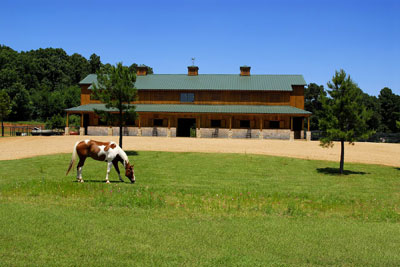
    Those 1400 acres would only house 46 home sites of approximately seven acres each, enough really to be anyone’s Ponderosa. But you’d still get all the perks of ranch ownership: acres of protected ranch land, grazing cattle, horses to ride, barns, pool, tennis courts and a gathering lodge for community. The seven acre parcels of land on the ranch would be separated by several acres between homesteads, on which owners could build in their “envelope”.

    This trend has been growing for a decade. Movies like the 1991 film “City Slickers” projected the romance of ranching into every movie theatre in America. Ted Turner and other significantly high net worth individuals began buying up huge land parcels in the west – Wyoming, Montana, and Colorado, “glamorizing” recreational ranch ownership. Halpin’s first vision for Indian Springs, circa 1989, was to have a small exclusive guest ranch on the order of Lost Creek Ranch & Spa, the exclusive Jackson Hole guest ranch run by Halpin’s son and daughter in law. Lost Creek is one of those places where city slickers can temporarily escape the city and play cowboy outdoors while dining indoors on lobster claw salad, Venison Rosini, and halibut stuffed with crab. Then they get to dunk boot-weary toes in the Jacuzzi after a hard day riding herd and fall asleep beneath the stars on Frette sheets.

    Prominent people bought early sites: Connie Stevens, the actress; Carol and Robin Farkus, he the N.Y.C. Chairman of Alexanders Department Stores, Tom Bolger, chairman of Bell Atlantic. Buyers came from California, New York, the Midwest, the Minneapolis region. They attracted other well-heeled people, which helped sell out the homesites.
    Meridian’s first venture was so profitable, Lowham led the company to develop a Texas Hill Country ranch in 1998; a new ranch in Mesquite, Nevada is currently in the works.

    Though vacation home sales are now slower than they once were, they are not dead. The shared ownership ranch offers owners a shot at full home ownership while splitting the costs of the ranching operation as well as amenities. Some operations even eek out a small profit, but what these buyers are really looking for is a way to pay a fraction of the operating costs while enjoying the whole property. There’s a strong conservationist edge: most shared ownership ranches, like Indian Springs, its Texas Hill Country sibling, The Preserve at Walnut Springs (Ken Starr is an owner, as is yours truly), and Cross Pines Ranch Preserve in East Texas near Mineola, scatter a handful of homes across the vast acreage to create a true sense of isolation, leaving the majority of land to breathe.

    “Ranchers are looking for a way to preserve land and conserve it while not going bankrupt,” says Dallas Addison, developer of Cross Pines, based on a conservation easement where each owner has a one-fortieth interest in the entire property. The conservation concept will soon be crossing the Pacific. Addison has partnered with fellow Texan Alan Friedman, owner of Trisept Inc., to develop Bosque Canyon Ranch at Lake Whitney in the Texas Hill Country, and a 7,000-acre project on Hawaii’s Big Island.

    Other ranches cluster homesteads in one area to preserve as much raw open space as possible; the forever-open range becomes a prime selling point.

    “Clustering is a much better land use process,” says Larry Corson, senior vice president with Dallas-based Hunt Realty Investments. Hunt is the developer of Cornerstone, a 6,000 acre ranch near Telluride, CO. “Our owners actually prefer it, knowing what they have preserved in perpetuity for the environment and wildlife.”

    Cornerstone was once a plain Jane hunting ranch owned by Texans. It was foreclosed and sold at auction to a local investor. Corson literally spotted the site for his employer, Dallas oilman Ray Hunt, off a dirt road. After two years of working with local officials on the development plan, construction began in 2004. The property opened in 2006. Homesteads range from one to one hundred acres, starting prices at $175,000 to seven figures plus an $80,000 club initiation fee and $6,000 a year dues, which are fairly typical.

    Perhaps helped by the relatively vibrant Texas economy, in 2008 the company reported $8 million in sales. The land Corson saw had full potential for a five-star plus ranch: horseback riding, an extensive trail system for hiking, riding or jeeping, fly fishing onsite and private access to the nearby Uncompahgre River, snow mobiles, cross-country skiing, snow shoeing, ice skating, toboggans, and downhill skiing at nearby Telluride in the winter months. But the best selling point of all was the art in every window – breathtaking views of the San Juan Mountain range from every angle.

    It’s City Slickers roughing it on Gulfstreams.

    Corson immediately saw potential for the one thing Telluride was sorely lacking: a high quality, private golf course. The spread held a natural plateau for what has become a world-class, Greg Norman-designed golf course. So there you have it – take a hike, go fish, study the migration patterns of deer and elk, saddle up for a Kamikaze ride, or golf.

    The owners come from all over, but most are from Texas, like investment banker Richard Moses, who was in Telluride for all of 24 hours when he bought not one but two lots. In a tough market, says Corson, if people are going to make a real estate purchase it’s going to be a lifestyle decision: is this the place I really want to be? And of course, are there enough toys to keep me entertained for weeks?

    “At Cornerstone, we once had a little bear cub one morning sitting on our outside barbecue licking the grease off the grill,” he says.

    Just because it’s a ranch, doesn’t mean there must be cattle. At Cornerstone, management discovered that as soon as they stopped running cattle on the property, the songbirds returned – not a bad trade. The grazing killed off the shallow grassland savannah that the bison had once protected.

    Sometimes the city slickers are more conservation conscious than the country folk, and more self-conscious and contentious. Owners at one shared-ownership ranch recently disagreed, albeit briefly, over the herd. Some owners thought keeping methane-producing Longhorns was not worth the massive carbon footprint, or hoof print, for 2,500 lbs of western eye candy. Of course, they were not as concerned over the carbon footprint etched by their private jet flights to the local FBO.

    Shared ownership of course has its downside: you actually have to share – opinions, design, tastes and common areas. You may not have quite everything the way you would if the whole place was yours alone. Strong management, which can sometimes double as a counseling service, is essential.

    “In this market,” says Corson, “buyers are really doing their homework to make sure the developer can deliver on all the promises.”

    Or just keep peace at the ranch.

    Candace Evans is the Editor of DallasDirt, a Dallas-based real estate blog for D Magazine Media Partners.

  • Are Farms the Suburban Future?

    More than fifty years ago, Frances Montgomery and Philip O’Bryan Williams bought a 500-acre stretch of prairie north of Dallas as a horse farm. It was designed to be a place for their children to run wild on weekends, ride horses, a family escape light years from the Frette-linen, Viking-kitchen and fully staffed second and third home palaces enjoyed by today’s junior high net worth set. The main residence was a recycled World War II barracks; the one bathroom was the only luxury.

    In those days Dallas was an upstart city just taking control of the Trinity River that flooded neighborhoods to the south, one reason why everyone moved north. As the post World War II building boom spread the population further north, the Montgomery family knew it would only be a matter of time before the family farm was surrounded by development, if not swallowed.

    Yet now what is left of places like Montgomery Farms could become a major testing ground in the future of suburban development. In the urban development world, there are two camps, says Williams’ son, Philip Jr., a former CPA who spends his days nurturing the changes that have come to his family’s land. If development had to come, Williams sought intellectual control and the lightest load. One group wants to re-populate the cities with higher density condos and more urban living – the Congress of New Urbanism (CNU). The other camp looks towards the Conservation Subdivision Development (CSD), integrating farming and urbanism to add vitality to a community. A recent New Urban News story quoted Miami architect Andres Duany as saying that agriculture is looming large for new urbanism:

    “Agriculture,” he said, “is the new golf.”

    In fact, studies show that property viewing or abutting agricultural lands is as valuable as those overlooking the golf-course, maybe more so if residents can grow fresh, pesticide-free foods and reduce long-distance trucking. (Fresh cow’s milk, children feeding baby goats not on field trips but recess.) Organic farms, says Missouri developer Greg Whittaker, could also be a revenue-generating business with sales of bedding plants, pumpkins and Christmas trees. Unless, of course, you live in Connecticut, where state Representative Rosa DeLauro wants to make growing your own food against the law and punishable by a fine of up to $1,000,000.

    At Montgomery Farm, CNU and CSD have met in the middle, says Williams, blending agriculture with sub urbanism – with an added artistic touch.

    As Philip, his sister, and the Montgomery farm team were masterminding their agricultural suburban development, they laid out firm ground rules. Art and conservation would trump development profits. Builders would not erect cookie cutter, “they-all-look-alike” homes or McMansions. The city was to put a road through the farm from Highway 75, slicing one of the more heavily wooded cross-sections of the acreage. A road is not a road in the Williams’ world. Seeking a highway that would be as unique as the lifestyle they were offering, the team gathered a group of Connemara Conservancy artists who, along with civil engineers, sponsored a road design contest in 1996.

    “It was a road with no intersections, which meant no idling cars and pollution,” says Williams. Signage was kept to a minimum and international Dark Sky requirements reduced light pollution. This was a farm, where you wanted to find stars at night, not spotlights. Berms were added along the side to mask the homes and muffle noise, and the street was curved, not a straight-arrow shot with stoplights. The City of Allen provided a variance and footed thirty percent of the cost for Bethany Road.

    What’s wrong with suburbia, asks Williams? Driving. Look at the new Honda Minivans: every seat has a TV, 3 plugs for a microwave, more than one giant cup-holder and even eating trays. It’s as if automakers were trying to put a kitchen and laundry room in the car – why not get a Winnebago? Montgomery Farm was designed for walking and biking: the 52 acre mixed-use Watters Creek development – a creek really runs through it – is within walking distance of the home developments. Kids can walk to school, and everyone can walk to the subway station that can whisk them to the heart of downtown Dallas.

    Further up Highway 75, the Southern Land Company is building a development some Texans might consider sac-religious. Southern aims to bypass 25 years of traditional suburbia and build the way communities were designed and built one hundred years ago: porch and street-centered neighborhood, not just sprawl. Streets are old-fashioned boulevards lined with huge trees sporting medians and open spaces.

    About the time developers were drooling to slice and dice Montgomery Farm’s Allen terrain, Tim Downey, founder and CEO of Southern, had a vision in Chattanooga, Tennessee. In 1988 he saw that few developers were looking into the future and considering lifestyle and design components, the way residents might be faring ten years after the developers finished their job. Entire neighborhoods were cropping up without conscious design, architectural or horticultural input. Production building was everywhere, it seemed, a mass of rooflines that all looked the same.

    “If we are going to design and build neighborhoods, let’s look at what they did 100 years ago,” says Jim Cheney, Vice President of Communications, Southern Land Company. “Not what they did 25 years ago.”

    In 1996, Southern flew its architecture department from Franklin, Tennessee to one of Dallas’s old, historic neighborhoods with cameras and notebooks, challenged them to find the most charming and enduring architectural styles and re-create them for Tucker Hill, an 800-acre master-planned community about 20 miles north of those homes. The architects were told to design the way their grandparents might have lived, not re-create McMansions.

    They banned repeated elevations and offered expensive landscape packages with each home. And if builders didn’t want to spend $10,000 on trees, they could build elsewhere. It was almost a foreign process to both builders and buyers. Southern had developed three Tennessee communities before Westhaven, outside Nashville, and the Texas property called Tucker Hill.

    “People just have this mindset,” says Cheney. “6000 square feet, large back-yards so I can hide – not be a part of the neighborhood.”

    But if half the Nashville population thought Downey was insane for Westhaven, Tucker Hill was an even gutsier move to pull off in ranch-mentality Texas. Southern puts a tremendous emphasis on the front of the home and its relation to the street. No front-loading garages; backyards are small and made up for by numerous parks and water features designed to get people out and together – think Hank Hill shooting the breeze with his buddies by the lake, not over the barbecue.

    The concept is similar to the Park Cities, home of Southern Methodist University and one of the most solid communities in the country. Property values in Highland Park and University Park have held strong – even risen – through repeated recessions, thanks in part to the community’s strong school system, low crime, walkability, and perception as a family community with numerous parks and fountains.

    For those who find the lots too small, the houses too congested, Southern’s projects may not be a good fit. But for those who truly want to commune, it’s home. In Nashville, the Westhaven community was barely a year old but 700 people turned out for a block party. The diverse age mix ranges from young families to empty-nest baby boomers to retirees who want to live near their children, but not under the same roof.

    Retirees in the suburbs? Urbanites may cringe, but many Baby Boomers grew up in the suburbs and, when given a choice, do not want to live in the gritty city, says Cheney. Now they can enjoy the ‘burbs and live green. Developers such as Phillip Williams and Tim Downey are offering innovative lifestyles that may help re-define suburban development as living light on the land.

    “America’s land is less than six percent developed,” says Philip Williams. “We are developing without regard for what we left behind, constructing 40 year life homes from trees that take 80 years to grow.”

    Almost like a financial world living on credit, and we’ve now seen where that has led us. But perhaps we can also change our suburbs, and our lives, for the better.

    Candace Evans is the Editor of DallasDirt, a Dallas-based real estate blog for D Magazine Media Partners.

  • George W. Bush: Welcome Back to Dallas, Sort Of

    Any moment now I expect to see the familiar face of our former President, George W. Bush, in the parking lot of our local grocery store. Maybe I’ll run into Laura Bush on the treadmill at the Cooper Aerobics Center where both worked out on trips to Dallas. Once they are settled into 10141 Daria Place, I expect her mailbox to runneth over with invitations from countless charitable organizations, asking her as a former First Lady to be honorary chair and spearhead fundraising. And if only I attended Highland Park United Methodist Church, I may even have the benefit of praying with both the former President and his wife in that venerable Dallas institution: Bible Study.

    But the Bush family’s return to Dallas may not be as spectacular as they are hoping. Not that local journalists would be so rude as to throw a shoe, but when your 27 year-old hairdresser tells you she would refuse to style the former First Lady’s locks, you know something ain’t right.

    When George and Laura Bush left Dallas in 1994, we were sad to see them move. They sold a 3600 square-foot Austin stone home with a gravel driveway in Preston Hollow – a grassy, treed Dallas neighborhood known for its rich share of high net worth individuals. The Bushes lived in a lovely but modest part of PH – they owned a half-acre lot, a far cry from the one to 12 acre mansions west of Preston Road

    Texas pretty much loved his leadership, though it has been said that the governor of Texas really doesn’t do much of anything. “In 35 years of hanging around the Capitol…I have never seen anyone that good at the game of politics,” wrote Texas Monthly’s Paul Burka in 2004. “It was impossible to be around the guy and not like him. He filled a room. He was always himself. He said what he thought. He had the ability to let down his guard without losing the dignity of ‘I am your governor’. Not the governor – your governor.”

    In the Capitol, Bush was a uniter, not a divider and, as Burka writes, he fought the extremists in both parties. “He had the courage to tackle the most important issues: public education and the tax structure. He had a great staff. He made appointments based on ability, not litmus tests. He had the decency to stay above petty politics.” Their twin girls, who had attended the same exclusive private girl’s school in Dallas as my own daughter, opted for Austin public schools. That choice clearly planted the new governor as a “man of the people”.

    Down here, we thought Washington was a mess led by a shameful president. Bush would go to Washington and ditch most of the BS.

    In 2000, he was the man of the hour. A devout Christian, a conservative; nod nod, wink wink, we never believed Laura really was all that conservative. We didn’t think the President was, either. After all, this was the man who lost his 1978 run for Congress to a conservative Christian Democrat named Kent Hance, who stung the Bush campaign by spreading word that young Bush was plying college voters with alcohol, the drink of the devil.

    Then our attention turned to the fact that religious fanatics from another part of the world murdered 2,000 Americans at the Pentagon, World Trade Center, and in a wooded Pennsylvania field on September 11, 2001. Stem cell research, abortion rights, the $1.6 trillion tax cut were no longer Job One – we feared for our safety and couldn’t even open the mail without concern the envelope was laced with Anthrax.

    Post 9/11, Dallas was solidly supportive of the Bushes. Then came the Iraq invasion and all the other disastrous bookmarks of his dual terms that made even the most loyal hometown supporters wonder – what is up with him? What happened to our governor? Bush had promised us a crisp, tight-ship of state. Instead, we got two wars and evidence of more disorganization, culminating with the worst financial meltdown since the Great Depression.

    America was fed up; even Dallas was losing patience. Prior to the November election, I gasped one day while driving through the backstreets of Preston Hollow. The Bushes’ own neighborhood had more Obama yard signs than McCain, even in the yards of the homes flanking his old one. President Obama picked off the three largest urban counties in Texas – Dallas, Harris (Houston, home of papa Bush) and Bexar (San Antonio, heavily Hispanic). McCain did win Texas, but Obama racked up 43.8 percent of the total vote.

    Texas has changed in the 15 years since the Bushes left Dallas. We are more diverse, and a Hispanic majority is on the horizon. Not sure how they view the former president, but they adore his nephew, handsome and half-Latino George P. Bush – someone to watch closely.

    Meanwhile Dallas’s population has expanded exponentially, and we are poised to become one of the largest urban centers in the country. Our population is younger, a combination of maturing offspring – children of the Baby Boomers like Jenna and Barbara – and an influx of people who moved here from other metro areas, many post 9/11.

    We are finally developing an urban core, though the recession and credit crunch has slowed progress and put several developments on hold. We have a Ritz Carlton, a W Hotel and Residences. Even Philippe Starck has his imprint etched on Dallas glass. The Perots and Tom Hicks built a magnificent downtown sports arena that promises to be a Times Square. The Mandarin Oriental got us all stirred up then put on the brakes. More recently, one charming high rise project halted construction, leaving a skeleton shell and returning the few buyers’ deposits. Other ambitious projects are leasing cheaply just to pull in warm bodies.

    We have more foreigners living in Dallas; Mexican food is no longer the only exotic fare in town. Travel north of LBJ/Interstate 635, the major highway that divides blue-ribbon real estate from the ‘burbs, and you find entire communities of Sikhs, Buddhists, Muslims – including a sprawling mosque.

    George Bush may have super-glued himself to the religious right, but while he was gone, Dallas grew more liberal and tolerant. Gay men hold hands, kiss in public, and lead corporations. A gay Dallas couple has just filed the state’s first same-sex divorce case. You see more crunchy people and Birkenstocks: Whole Foods has stores across the city. We eat more granola and yogurt and shun the preservatives.

    Even our garbage collection has changed: the president will have to divide paper from plastic into big blue bins to be rolled out bi-weekly.

    There are vestiges of the past: Harvey Goff sold his family hamburger shop, famous locally for insulting their own customers even as they munch on a thick, greasy burger. Jimmy Francis – a Bush supporter – bought the stores and shut down the Lover’s Lane location to make room for a Geek Squad. But there is still a store near SMU.

    Most significant, however, is how the Housing boom changed the face of North Dallas, including Preston Hollow. Dallas may remember how the economy Bush inherited was not in the best of shape, either, and was in fact sinking into recession. The Bush housing policy aimed to make home ownership a dream come true for every American via low interest rates. The cheap money made Dallas a crane-city. The mid-century ranches were scrapped to make way for everyone’s dream home – a 7000 square-foot stone castle-ette with turrets, porte cocheres, media rooms. While this began at the tail of the 90s dot.com boom, Bush housing policies – those low interest rates – magnified the momentum. Now even homes built in 1994 are looking worn.

    So you can’t say that George Bush didn’t change Dallas. But as the Bushes settle in, they also might notice how much the place has changed while they were gone.

    Candace Evans is the Editor of DallasDirt, a Dallas-based real estate blog for D Magazine Media Partners.