Author: Matthew Stevenson

  • Bruce Springsteen: The Wrecking Ball Strikes Europe

    It makes sense that the European continent would enthusiastically welcome Bruce Springsteen this summer on his Wrecking Ball Tour. Europe is in its second year of a prolonged recession, and its economic union looks like a failed savings and loan association. As he has in the past, the Boss is making The Grand Tour. Instead of gracing luxury hotel suites, though, he’s filling up the kinds of cost-overrun stadiums in Barcelona, Paris, Düsseldorf, and Cork that are one reason the European Union is starting to look like Youngstown.

    I caught the Wrecking Ball in the Geneva soccer stadium, known locally as La Praille, that was built at the cost of millions for the UEFA European championships in 2006. It has since stood largely empty, a symbol that local politicians are better at spending bread than putting on circuses.

    According to the stadium’s promoters, La Praille was to have played host to the local soccer team, FC Servette, which was “shackled and drawn” with bad debts just when the stadium was finished. Now the organizers are filling in with the odd rock concert, rugby friendlies, and the peripatetic longtime French rock and roller, movie star, and all around heartthrob Johnny Halliday, whose concert industry is the only thing standing between the EU and collapse.

    Not even the Boss and the E Street Band could fill La Praille, although they arrived with a multiplex cinema in tow and started the concert at the distinctly suburban hour of 7:30 p.m., mindful that Switzerland is intolerant of rockers making noise after 10:00 p.m. (the hour in some Zurich apartment buildings when “upright urinating” is shut down).

    The Boss’s handlers evidently taught him enough French (clearly not a subject pushed at Freehold Regional High School) so that when he came on stage he could say “bon soir” and “merci beaucoup” to a crowd so carefully dressed and well behaved that it could have been the summer jamboree of an international actuarial association.

    Those toward the front held aloft carefully lettered signs welcoming the Springsteen to Geneva. These placards were not of the heavy-metal variety, suggesting after-party wastage or death to American droners, but rather mild exhortations to the Boss for song requests, or slow dances in the dark.

    The Boss’s stage presence is much more upbeat than his lyrics. I am not sure anyone cared whether or not this town is “a death trap, it’s a suicide rap,” when he was cavorting with the crowd and mussing the hair of small children—Uncle Bruce from the Jersey Shore on his way around Europe.

    As you would expect, he was dressed for the concert in the apparel of a hardware store assistant—tight shirt and jeans—although, in a concession to his age (63), he had two large wrist bands and what looked like sensible shoes (I’m guessing maybe Rockports?). During the performance he was in perpetual motion around the stage, with that uptempo air of ’80s exercise guru Richard Simmons, and the same hypnotic effect on what in French are called “women of a certain age.”

    From where I was standing, the E Street Band was a thin black line on a stage of Nuremberg proportions. Fortunately, the Boss had his own multi-screen video feeds, and all around the stadium there were cameras and roadies, beaming the concert live to the Megatron screens that surrounded the stage.

    When I went on my toes to see Bruce or the band live, the E Streeters looked like porcelain miniatures in some Franklin Mint rocker collection (“…collect them all”).

    On the nearby silver screens, however, the Boss and his cohorts were the size of floats in the Macy’s Thanksgiving Day parade. At times I felt like I was squeezed into the world’s largest electronics store with all the televisions tuned to the E Street network.

    I confess that my middle-aged ears, even with the plugs they passed out at the main gate, could not pull down all the lyrics from the pulsing sound system. So I took it on faith that his girlfriend was pregnant, the plant was closing, and the Vietnam War wasn’t working out.

    Because English is not as widely understood in Switzerland as you might think, I suspect that some of the lyrics were lost in translation. For example, in Geneva, “working on the highway” is practically a white collar job. I can imagine local puzzlement at the thought that anyone holding “a red flag” and watching “the traffic pass me by” would lead to the contemplation that there is “a better life than this.” Around here traffic wavers get early retirement and full European social benefits.

    Nor are the American depressions that the Boss evokes equivalent to recent European hard times. Industrial America downsized and shipped the jobs to Asia (‘death to my hometown’) while the recession in Europe is the result of an overvalued currency and social costs for its aging population. Nobody is thinking ‘we gotta get out while we’re young,’ if the goal is to hang on until the state pension starts ‘treating us good.’

    I have no idea what the Boss is like at home. In person he sounds a little like Rocky Balboa saying “Yo, Adrian.” But his stage presence is magnetic, warm and empathetic. Because his wife, E Street band member Patty Scialfa, was tending home fires (‘Got a wife and kids in Baltimore, jack’), the Boss danced with a number of women from the front rows—did their signs have phone numbers?—and he let numerous fans share his mic.

    I was on my feet for four hours in what felt like a crowded elevator, waiting for the TV in the corner to play Born in the U.S.A. So, during the concert, I had time to reflect on the E Street corporate culture and came to the conclusion that Springsteen is an inclusive manager, something often missing in rigid, hierarchical European companies.

    The band looks happy, and Springsteen Inc. is very good at retaining key employees, even though on stage Stevie van Zandt looked like a jet-lagged pirate and Nils Lofgren hopped around like a chimney sweep.

    The irony of the concert is that it was held the night before the 4th of July, normally a moment, even overseas, when the United States can bask in its refracted glory. Before insurance premiums closed down the carousels, even Geneva had one of the largest July 4th parties abroad. Now, however, Swiss and American relations are at a low ebb.

    Like the rest of Europe, the Swiss “celebrated” the 4th with the news that the National Security Agency has tapped European Union phones, much the way the U.S. has used local airports for rendition flights and beaten up on local bankers and the euro.

    Nevertheless, the two flags of the so-called sister republics flew over the stage, ‘waitin’ on a sunny day,’ and the Boss closed with Thunder Road. When he belted out, ‘It’s a town full of losers/ And I’m pulling out of here to win,’ there was no hint as to whether he was eulogizing the American dream or European decline.

    Matthew Stevenson, a contributing editor of Harper’s Magazine, is the author of Remembering the Twentieth Century Limited, a collection of historical travel essays. His next book is Whistle-Stopping America.

    Flickr photo by Maripuchi: The Wrecking Ball Tour in Gijón, Spain, a few days before it arrived in Switzerland.
  • Fantasy Baseball Leagues: Let the Cities Compete!

    When a city bankrupts itself on the debt service of municipal bonds that were issued to keep some local pro team from bolting, residents and fans get the worst of both worlds. Losing teams and crippling interest payments are the signatures of bad deals in Cincinnati, Miami, Phoenix, and Cleveland, which collectively have taken on more than $1 billion in stadium debt to keep the Bengals, Marlins, Cardinals, and Browns in their loss columns.

    Nor, nationally, is the debt burden more manageable. According to Bloomberg, American taxpayers are on the hook for $4 billion in stadium subsidies of the total $17 billion outstanding in bonds, which only mean jobs for ushers, investment bankers, parking lot attendants, and team owners.

    The major-league losers are the municipalities. Hostage to the private fortunes of professional teams, these cities are saddled with billion dollar white-elephant stadiums that, in some cases, get used 20 days a year.

    Most new billion-dollar stadiums do nothing for city neighborhoods. For example, the new stadiums of the Yankees and Cowboys (price tag $3 billion) might as well be on offshore islands, for all that they contribute to neighborhood development.

    Nor can most local fans afford the prices to the big-league games. In many venues, tickets and hot dogs for a family can cost hundreds of dollars. Major league baseball publications say a family of four can go to a game for $62, although it must define “go to” as the cost of parking.

    To level the playing fields of major-league oligopoly, here are few ideas for professional sports that put fans and cities first:

    Create a city league: Given that the World Series is named after a New York newspaper, not the globe itself, I propose a City Series that will group each city’s sport franchises into a formula that can be ranked alongside the results of other cities.

    For example, into this formula for New York would go the results of the Mets, Yankees, Giants, Jets, Rangers, Islanders, Knicks, and Nets, and each time a team won or lost a game, the city ranking would change. Newspapers and web sites could track the city standings (with appropriate credit to New Geography, of course).

    The calculation would have to take into account that Cincinnati only has the Bengals and Reds, and that Los Angeles is without a football team. Green Bay and Milwaukee might pool their resources. Divisions could be created around the number of teams in a city.

    One simple way to rank each city might be according to the average winning percentage of each professional team (weighted by the number of games they play each season). This would prevent big cities from being favored over smaller ones. Perhaps the Super Bowl could be awarded to the winning city?

    Handicap the standings in each city according to population size, so that New York is not given an unfair advantage over Kansas City.

    The goal would be to show at the end of each year which American city is the best at professional sports, and to give incentive to teams, such as the Jacksonville Jaguars or the Charlotte Bobcats, that otherwise find little reason to try at the end of their dismal seasons.

    Imagine the enthusiasm in September if the Cleveland Indians needed a few wins to boost the city average, and its opponent was the Houston Astros. Normally, such a game would draw about 4,000 fans on a cold autumn night on Lake Erie. Maybe now each game would count.

    Repeal antitrust exemptions: The reason sports teams can hold their home cities hostage — for sweetheart cable and stadium bond deals — is because Congress made the mistake of giving football and baseball exemptions from antitrust legislation. Are they such precious commodities that we need to limit competition? Under the outdated laws, the leagues, as opposed to the fans, decide which cities deserve a pro team.

    Supply and demand ought to govern the number of baseball teams, not the guild of MLB owners determined to limit supply and drive up the prices of sky boxes. Without this cabal, would the hapless New York Jets be worth an estimated $1.2 billion?

    Let the market play: With an increased supply, it would not be necessary for cities like Oakland to fear the departure of the A’s to the warmer climes of San José. The team would be free to join whichever league suited their budget and aspirations.

    Ideally, many leagues would operate like European soccer, which “relegates” those franchises at the bottom of the tables and allows improving teams to “move up” to the next level.

    In such a federation, the Houston Astros and Kansas City Royals might be relegated to Triple A, while the Indianapolis Indians and Durham Bulls would move up to the majors. Right now in most major leagues, losing has no consequences, especially when revenues are shared.

    Allow pro sports to be covered as news: Because of the antitrust exemption, teams own their own broadcast rights, which they flog off to friendly networks or use to create a cable empire, as in the case of the Atlanta Braves (Turner Broadcasting, but now owned by Liberty Media).

    Under the current system the leagues regulate the video supply, which explains the monopolistic pricing that allows the Yankees to pay Alex Rodriquez $27 million a year for hitting on more starlets than fastballs.

    If, however, the results of sporting matches were treated as news (not unlike elections or town meetings), all media would be allowed to cover the games. Without the closed shop of the current arrangements, anyone with a hand-held camera could upload the action.

    In this unregulated market, team revenue would collapse in many sports, but the same money would, I believe, be spread more equally among a greater number of players and teams. All we have now is professional oligopoly.

    Flickr photo by John Dalton: The Bronx from left field at Yankee Stadium, August 2009.

    Matthew Stevenson, a contributing editor of Harper’s Magazine, is the author of Remembering the Twentieth Century Limited, a collection of historical travel essays. His next book is Whistle-Stopping America.

  • The Vatican Bank: In God We Trust?

    When the cardinals sent billowing white smoke from their conclave and elected Jorge Mario Bergoglio as Pope Francis I, little did the Catholic Church realize that two millennia of ecumenical liturgy might come unraveled on the heresy of offshore banking regulations. Among the many frustrations that drove Pope Benedict XVI to take early retirement was his role as guardian angel of the Institute for the Works of Religion (the formal title for the Vatican Bank), which can no longer get past compliance questions by answering that its beneficial owner is “the Almighty.”

    The financial inquisition results, according to Concordat Watch, recently included “…two blows to the reputation of the Vatican Bank… The US State Department for the first time listed the Vatican as potentially vulnerable to money laundering, a notch below those states for which it has solid proof of this.” The second revelation was that banking giant JPMorgan Chase had closed its papal account.

    Benedict XVI’s day job presumably encompassed giving the sacrament to the bank’s audit committee (made up of cardinals), and among the many attacks against the church the most successful have been those of global regulators who have had little patience accepting Vatican credit on faith.

    The bank is located in a tax haven — Vatican City, population 800, with a legal system on tablets — lets its managers come to work in robes and sandals, and has clients that deal in cash gathered on collection plates. Because of this, post-2008 regulators have looked upon the Institute as just another bolt-hole trafficking in black money, if not clearing the accounts of pharmaceutical sinners, bigamists, or Lutherans.

    Founded in 1942, at a time when the Catholic Church needed some latitude when transferring money between good and evil, the Institute has operated around the world as the cardinals’ piggy bank. Along with taking the deposits of Sunday’s offerings, it has also handled pay-outs of hush money to abused altar boys and booked advances against papal indulgences.

    In response to probing questions from the watchdogs — Who is the ultimate beneficiary? Do you know the source of the funds? — the cardinals who run the bank, sometimes with the help of lay bankers, have only had answers that led to further investigations.

    Imagine telling some pencil pusher from the European Central Bank, the Bank of Italy, or the US Federal Reserve that the shareholder of record is “one God in three persons.”

    Nor did Benedict XVI find much absolution in the press coverage of his bank, which treated the operation as little different from some Mafia numbers racket.

    Take, for example, a recent New York Times article that, in thirty paragraphs, managed to link the bank to the failed Banco Ambrosiano — whose former chairman, Robert Calvi, found eternal salvation in 1982 while hanging from Blackfriar’s Bridge — insurance fraud, front companies, suspicions of money laundering, Cuban payments, and management incompetence. In the last case, for example, the CEO was described as a “German aristocrat,” as if his days were spent quail hunting or chasing Sabine women.

    Amusingly, the Times’ reporters were unable to distinguish, on a visit to the headquarters, the bank managers from the security guards. (A correction was later published, but no picture of the dapper security personnel.)

    Nor did the paper of record show much numeric literacy, summing up the Vatican Bank’s accounts, in their entirety, as having in 2011 “20,772 clients, 68 percent of them members of the clergy, and $8.2 billion in assets under its management. The bank has said it has around 33,000 accounts.”

    As God’s credit union issuing debit cards and checkbooks to clergymen, it is doubtful that the bank manages $8.2 billion at its discretion for its clients (including 14,124 men and women of the cloth). More likely, the $8.2 billion in “assets” are liabilities, demand deposits due to its clients and not “under management.” I doubt that the average priest has savings at the bank of $400,000 and that the bank is investing such money in stocks and bonds.

    Nevertheless, the article varies little from other disparaging accounts about the bank that level charges of compliance heresy, and imply that its senior managers, including the fired president Ettore Gotti Tedeschi, are regulatory apostates.

    Part of the reason that the Vatican Bank earns such poor grades from international regulators, not to mention from the US State Department, is because the Institute is believed “vulnerable” to the risk of processing terrorist funds. The belief that the Vatican Bank is funneling money to al-Qaeda says more about the bonfires of the regulators than it does about Catholicism. The Catholic Church historically has had more in common with Homeland repression than it has with fifth columnists. To use the worn phrase, “know your client.”

    The degree to which international bank regulation is just an excuse for Regulatus Pax Americana can be discerned in a report by Moneyval — the monitoring committee of the Council of Europe — on the Vatican Bank’s efforts to recite its compliance rosaries. It concludes: “The Holy See has come a long way in a very short period of time and many of the building blocks of a system to combat money laundering and the financing of terrorism are now formally in place.”

    Perhaps the reason the cardinals went with Cardinal Bergoglio as their front man is because he looks like the last man at a conclave who would short derivatives, or know how to hedge (either in ecumenical or currency terms) the church’s overexposure to developing markets.

    In his first comments on the global financial crisis, the Argentine Jesuit attacked the “cult of money” and “ideologies which uphold the absolute autonomy of markets and financial speculation, and thus deny the right of control to States, which are themselves charged with providing for the common good.” Noble sentiments indeed, but not ones often heard from a bank chairman or a Vatican theologian, especially one wearing a triregnum.

    Francis I’s words are a long way from those of a predecessor, Leo X, who in 1513 wrote to his brother, the Duke of Nemours, “Since God has given us the papacy, let us enjoy it.” Or those of Leo’s Medici ancestor, Cosimo the Elder, who in the fifteenth century was approached by an archbishop to stop the clergy from gambling. “Maybe first,” said the Medici banker, “we should stop them from using loaded dice.”

    Unfortunately for the Pope and his financial acolytes, many international regulators are out to prove that all banks are processing payments for the devil. In the meltdown’s aftermath, a small unregulated bank is unusually suspect, especially when operating in a “sacerdotal-monarchical state established under the 1929 Lateran Treaty” and reporting to an abstract nominee with an ethereal address. Nor can it help that the bank is a market-maker in loaves and fishes.

    The best that the new Pope can hope for is that the regulators will dispense with a fiery auto-da-fé and instead accept the bank’s penance of its heresy and apostasy. Maybe the central bankers will allow the Vatican to grant itself an indulgence for all those spiritual options marketed in Sicily? High ranking clergy could even argue that, under the company’s accounting rules (as divined from scripture), origination revenue is recognized when the sin is committed, not when the soul is saved.

    After all, running a bad bank — as Citigroup, Bank of America, Goldman Sachs, and many other heathens know — is not a mortal sin.

    Matthew Stevenson, a contributing editor of Harper’s Magazine, is the author of Remembering the Twentieth Century Limited, a collection of historical travel essays. His next book is Whistle-Stopping America.

    Flickr Photo: security personnel in Vatican City, by Trishhhh

  • Bank Collapse in Cyprus: Which Way Now?

    Having run out of options to solve its bigger problems, European Union commissioners, in the spirit of famed bank robber Willy Sutton, have decided to go after depositors’ money on Cyprus for a simple reason: “That’s where the money is.” Will the current shake down of bank depositors on Cyprus save or sink the Euro? It stretches the imagination to fathom how putting bank depositors in play will comfort European Union bondholders or other EU banks.

    In exchange for $13 billion in bailout money for the Cyprus government, the EU has demanded that the local banking system, bloated with offshore deposits including many from Russia and Eastern Europe, pony up in the interests of Euro harmony.

    An island divided into Greek and Turkish spheres of influence, Cyprus was allowed into the EU, and later the Euro, as an early attempt to gloss over European ethnic fault lines and pump hot money into the sovereign debts of Greece and East European countries. Greek Cyprus is the tax haven of choice for Russian companies and oligarchs, many of whom register their worldwide assets under Cypriot holding companies and maintain huge deposits in the local banking system.

    Before the recent crisis, the Cypriot banking system held assets in its banks and fiduciary companies that amounted to more than five times the country’s gross domestic product.

    Business as usual in Cyprus meant that, with few questions asked locally, an overseas investor — including many from Serbia, Romania, and the Ukraine, as well as Russia—could set up a front company, open a bank account, and run his or her financial empire away from the long arm of any government accountants.

    The problem for the Cypriot banks wasn’t attracting deposits, it was finding a place to put them once they arrived by SWIFT (the international transfer system), the Fed Wire, or suitcases.

    Confusing their swelling balance sheets with the genius of J.P. Morgan, local bankers made several fatal mistakes. They lent their newfound money to the Greek government by buying its bonds, they invested in now-failing real estate deals, and they funded these long-term bets with deposits that could be withdrawn in less than ninety days.

    In justifying these strategies to clients, the Cyprus banks claimed that their long positions in Greek government bonds, denominated in Euros, came with an implicit EU guarantee, which also served as a reason to pay minimum rates on short-term deposits, and to bet the ranch on long-term Euro bonds. The Euro gave Cyprus cover for punting.

    In the era of the Greek drachma, German leader Angela Merkel would not have delayed a hair appointment to keep Greece solvent, let alone to save its lovechild in Nicosia, a Balkan money-changing city hard up against the border of the Turkish mercenary state in northern Cyprus. Still, even today, the Cypriot pyramid might have withstood the lazy stress test of a buoyant market.

    The first Cyprus rescue plan called for the island’s bank depositors (whose deposits totaled $82 billion at the peak) to cough up 10% of their wealth into the stabilization fund. That financial haircut, however, called also for a 7% trim from local clients, not just a shave for Russian oligarchs. Local Cypriots voted with their middle fingers.

    Although the inspiration to drain local bank accounts to offset subsidies from Brussels was attributed to EU bureaucrats, if not Merkel and French President François Hollande, the impulse for an open season on passbook savings comes from the worldwide assault on tax havens, led by the United States.

    In its search for money to balance it own mismatched accounts, the US has taken the position that the dollar, instead of an international commodity or method of exchange, is a national loyalty oath, and is imposing tax obligations on those that have some in their wallets. Even though the EU is more a tariff union than a functioning government, Brussels has warmed to the idea that bank depositors within its fragile borders are fair game for a fleecing.

    The revised Cyprus plan walked back from skimming all bank deposits, and shook down the depositors only of the two largest banks, the Bank of Cyprus and Laiki (Cyprus Popular) Bank. It demanded the sale of $500 million in the central bank’s gold, unsettling financial markets.

    While the heist was in the planning stage, all Cypriot banks were closed, to keep the hot money from turning into flight capital, once removed.

    The Bank of Cyprus will survive, barely, although Laiki is going belly up, which through the magic of bankruptcy laws will put its €24 billion in deposits at the disposal not just of local liquidators but also of EU “structural reformists,” who have more in common with Butch Cassidy and the Sundance Kid than with International Monetary Fund economists.

    The biggest losers are the Cyprus banks’ shareholders, bondholders, and depositors, who are being bled dry so that the Euro might live. Think of these write-downs as a pan-European tax, assessed mostly on shady front companies that don’t vote in German regional elections. Russian President Vladimir Putin isn’t thrilled that his offshore economy was chosen to make the world safe for par-value Spanish bonds.

    As a consequence, bank depositors will flee not just failing Mediterranean banks, but those in Milan, London, and Frankfurt. They will seek safety in gold, real estate, art, stock markets, and hedge funds, leaving money-center banks down the road to scramble for their liabilities (in the accounting world, deposits are something you owe).

    The bigger problem with the Cypriot financial collapse of 2013, though, is that it threatens to turn the EU into a divided nation — not unlike Cyprus itself — that may need to balance its books with offshore money and lax accounting.

    More than the crises of Italian elections or French unemployment, the Cyprus bank run threatens to pull apart the rickety architecture of a union that can no longer roll over its Eurobonds on what Willy Loman used: “a smile and a shoeshine.” Because of bad balance sheets in Cyprus, as well as in Spain, Italy, Ireland, and Greece, bondholders are no longer “smiling back” at the EU.

    German Chancellor Otto von Bismarck said in the late nineteenth century that “some damn thing in the Balkans” might drag Russia into war with Austria-Hungary, or with his Prussian confederation. In that instance, the murder of an Austrian archduke in Sarajevo shattered Europe into fragments that lasted for most of the twentieth century, a division that the EU and its Euro were designed to glue together.

    When the dust settles on Cyprus, the losers will be the local economy — headed for a double-digit recession — and Europe’s bank depositors, who in theory should be the backbone of a successful economic union.

    Matthew Stevenson, a contributing editor of Harper’s Magazine, is the author of Remembering the Twentieth Century Limited, a collection of historical travel essays. His next book is Whistle-Stopping America.

    Flickr photo by Leonid Mamchenkov taken in Limassol, Cyprus.

  • CSI Switzerland: Anatomy of an iPod Theft

    When my seventeen year old son was mugged this year, coming home on a late weekend tram, he lost his iPod along with his Beats headset. I felt sympathetic, but not shocked, that he had been shaken down, even though we live in a quiet village on the outskirts of Geneva.

    The city has been experiencing a crime wave—at least by the standards of the Swiss countryside—with about 700 house break-ins a month. Unemployment for youths under 25 in nearby France, about a mile from our house, is now more than 25%, but more than double that for illegal immigrants, for whom house burglaries in Geneva are one of the few growth industries.

    Nor is it unusual to hear that a teenager has had something stolen or been roughed up. In my son’s case he wasn’t badly hurt; he took some punches to the head. Most of his wounds were to his childhood sense of security.

    He reported the incident to the police, who picked him up at the tram crime scene, drove around looking for the muggers, and dropped him back at home. A few days later he filed a more substantial report with a detective, who promised to look at the security tapes on the tram. We expected the matter to end there.

    Under the sway of late-night television, I was for staking out the tram on weekend nights, a proposal my wife dismissed as worthy only of Charles Bronson (Yeah? Well, what if the cops can’t handle this?). My wife rolled her eyes.

    A few weeks later, however, the Geneva police called to say that they not only had apprehended the muggers—all local Swiss, not Lyonnais gangsters—but had gone to the house of one of them and found a stash of loot, including my son’s iPod and his Beats.

    Equally incredible, that night two detectives came to our house close to midnight and returned the robbed goods. The detectives explained to my son that he had the option to press charges against the three, and give testimony in court, which he agreed to do, and that he could claim damages from the incident.

    We showed up at the appointed hour and were led into a wood-paneled, sparely furnished courtroom, locally called “Le Tribunal des Mineurs.” The only police officers were sitting outside in a waiting room, next to one of the defendant’s parents.

    As if called to the principal’s office, the three attackers were seated on small chairs directly in front of the judge, who sat alone behind a long desk. They looked like other teenagers I see on the street — jeans, sneakers, varsity jackets, and vacant expressions — but without iPhones. Behind the defendants sat three lawyers, testament that the muggers came from some means.

    Dressed casually, without robes or a necktie, the judge began by asking my son what happened. In Swiss cases, the judge hears the witnesses and dictates a summary to a court reporter. There was no jury.

    My son went over how these three kids, about sixteen- or seventeen-years-old, had sat behind him on a bus, and followed after him when he changed to a tram. When they were the only ones left on the street car, they asked him for a cigarette (he said he didn’t smoke).

    When the tram reached the end of the line, my son chose to sit tight in the bright lights under the surveillance cameras, rather than to make a run for the doors. He’d been unable attract the attention of the driver. When he finally decided to make a break, the gang of three surrounded him, shoved him back into his seat, hit him with their fists, and made off with his gear.

    The judge asked my son what he did next, and he said, “I called 117” (the police). The judge responded quickly, “But how?” My son described how, when the kids sat down behind him on the empty train, he managed to slip his phone and wallet into his underwear. The judge almost whistled when he said, “Bravo.”

    Then he questioned the attackers professionally, sternly, and, often, incredulously. He asked them if the testimony was true, and they said it was. He asked if they wanted to “say anything to the victim.” From their three mouths came stuttered, awkward apologies.

    The judge ended the court session by asking the three muggers what they would do if they saw their victim on the street (my son chuckled when one said he would “shake his hand”). The three were forced to go on the record, before a judge, that they would do him no additional harm if they met by chance.

    The court reporter printed out the transcript, my son signed three copies, and the judge explained that because it was a juvenile court the sentencing would not be made public.

    As juveniles, the three will not be sentenced to jail, but to a court program dealing with youthful offenders. I can imagine them attending anger-management classes, unless they were part of some larger, more violent crime syndicate, although I doubt that is the case. The pros don’t roll their victims under security cameras and stash the loot in bedrooms decorated with soccer posters.

    When the judge excused us, he walked over to my son, and said, “It took courage for you to come here today.” He shook his hand.

    I felt as if it were 1935 and I was listening to a justice of the peace lecture three kids about delinquent behavior. He wasn’t looking to send them up the river, but he spoke for a society that does not condone personal violence, especially in public places against strangers. I sensed the three got his message. At least, they were forced to hear it.

    In the annals of crime, this mugging means nothing, except to those involved. The prosecution did nothing to reduce the wave of house burglaries; those are the work of gangs operating out of Lyon and elsewhere in France. But the Geneva judge treated this matter as if he had the fate of several lives in his hands, and, in my view, he handled those lives with professionalism and care.

    Matthew Stevenson, a contributing editor of Harper’s Magazine, is the author of Remembering the Twentieth Century Limited, a collection of historical travel essays. His next book is Whistle-Stopping America.

    Flickr Photo by Alain Rouiller- rouilleralain — a street in a village near Geneva.

  • CEO Bonuses: Who Pays the Price?

    Because so many chief executives of failed or mediocre companies have walked away with millions in bonuses and swag bags, both Switzerland and the European Union recently voted to put a cap on corporate bonuses, limiting them to a small multiple of base salary. What prompted the acceptance of the “Minder Initiative”—named after the independent parliamentarian who sponsored the referendum — is a string of stunning business losses that had no affect on the bonuses paid to the sitting executives.

    Swissair went bankrupt in 2001, although not before it could pay out a $10 million bonus to its grounded chairman. The chief executive of the Swiss pharmaceutical giant, Novartis, was recently offered a $78 million sendoff. The Swiss bank, UBS AG, appears regularly in the headlines as the poster-child of bad loans ($40 billion absorbed by the government), LIBOR rate rigging ($1.5 billion in fines), and other dim practices (a so-called rogue trader lost $2.3 billion in London), although the losses are never enough to drain the bonus pool.

    The architect that turned the once-staid UBS into an off-track betting parlor, chairman Marcel Ospel, regularly paid himself CHF (Swiss Francs) 24 million in annual salary, something that Swiss voters had in mind, along with the Novartis proposal, when casting their votes with Minder. After the vote, UBS quietly offered an incoming executive a $28 million sign-on bonus — something the law, when enacted, will prohibit.

    In the US, corporate activists and some regulators want shareholders to have a “say on pay” of the top CEOs, or for Congress to tax away paycheck windfalls. So far, most reforms have been non-binding.

    Members of the business community, nevertheless, resent the intrusion of state or federal bureaucracies into their corner offices. In their minds, salaries are best left to compensation committees and captive boards of directors, which are free to rain money on a handful of senior executives, some of whom are chairmen of the same boards that dole out their pay.

    According to the latest estimate, Fortune 500 CEOs have to scrape by with compensation that averages $12 million a year and that is 380 times the pay of the average worker. In 1965, this ratio stood at 24 times and in 1990 it was 71 times.

    Meanwhile, real American wages have been declining since 1974, and per capita average income in the country is about $27,000, just above the poverty line of $21,000. The median income for American households is about $50,000 a year. The reason most American corporations reward senior management and stiff the rest of the work force is because many public companies are little different from banana republics.

    In theory, the shareholders elect the board, and the board watches their interests, a mandate that includes signing off on the top salaries. In practice, shareholders, even big ones, have little say in who is put on the board, especially if the CEO is also chairman. In those cases, board members serve at the whim of the same CEO. Often such an approval rating depends on voting the prince a big salary, along with big bonuses and stock options.

    Under the new Swiss law and other corporate reform proposals, shareholders are given the right to approve the top pay packages in a company. This sounds democratic enough, except that most corporate proxy votes turn out results that would be familiar to commissars in the Soviet Union.

    One reason is that many mutual and pension funds, which own the large positions in many public companies, are required by charter to vote with management or, if they disagree, to sell the positions. It’s unusual for a large institutional shareholder to both hold on to a position and vote against management. So letting shareholders approve top compensation will not keep managers from pocketing $50 million pay envelopes.

    The usual justification for multimillion-dollar rewards is that the company has performed well “in the market” or “exceeded the budget forecasts.” Of course, meeting such a benchmark explains a bonus of $250,000, not necessarily one of $20 million. Yes, the CEO has responsibilities and “duties of care,” but if the board were to auction off the position of CEO in most companies, it’s likely that they would find many qualified takers for $1 million a year.

    The truism about salaries—“You don’t get what you deserve; you get what you negotiate”—does not apply to the C-suite, which gets what the board is dumb enough to give away almost blindly. They go along with the lavish payouts based on similar compensation paid by competitors.

    Because of this mutual-remuneration self-congratulatory circle, salaries have skyrocketed, even if stock prices have remained flat or plummeted. General Electric’s CEO has earned $54 million in the past five years, while the company’s stock went from $37 to $7 and back up to $23 a share. As the Death of Salesman line goes, “No man only needs a little salary.”

    Ex-Treasury Secretary Robert Rubin pulled down $126 million from 1999 to 2009 as a top Citigroup senior executive, but when it went bust said that he had no responsibility for the bank’s creditworthiness. He confessed, “My great regret is that I and so many of us who have been involved in this industry for so long did not recognize the serious possibility of the extreme circumstances that the financial system faces today.” But he didn’t give back any of the money. Rubin’s boss, Charles Prince, left the chairmanship of Citi with about $80 million in his pockets, even though the company went to the wall the moment he was out the door.

    The goal should not be just to limit CEO pay, but to increase average wages and salaries, and think of increasing the dividend, especially in companies eager to throw millions at the boss. Stock options and profit sharing could be allocated equally to all employees, and not simply reserved as corner-suite perks.

    Likewise, cumulative voting of board directors allows smaller blocks of shareholders to elect a representative (you put all of your votes on one candidate).

    Many top CEOs live in a bubble of private jets and pillowed suites, and are accountable to only a handful of cronies—certainly not the vote of the employees or the shareholders. They thrive in the cozy confines of oligopoly — think of a golf club lounge — in which a corporation’s success is due only to the top managers, not to the shareholders’ capital or to the workers.

    Why not have a companywide plebiscite on the chief executive every two years? The Greeks knew that war was too important to be left to the generals, and had their soldiers elect them.

    Employees, pensioners and shareholders all ought to have seats at the table. The Chinese garment workers in sweat shops who stitch together all those sailor suits that are sold at vast markups might be less inclined to pay Ralph Lauren $66 million a year than the board in New York would.

    Minder’s law and its clones in the EU or, were legislation to come about, in the US, won’t solve the problem on their own. Rather than passing legislation that sounds good in the headlines (The Economist: “Fixing the Fat Cats”) but achieves little reform at the office, the most significant recovery for the ransoms paid to many senior executives would be to overhaul how boards of directors are established and operated — to make them legally accountable for the company’s performance and representative of all stakeholders, including the work force. Keep in mind that when salesman Willy Loman asked for a golden parachute, he only needed fifty dollars “to set his table.”

    Flickr photo by World Affairs Council of Philadelphia: Former Citigroup Director and executive Robert Rubin. Is that the size of his bonus?

    Matthew Stevenson, a contributing editor of Harper’s Magazine, is the author of Remembering the Twentieth Century Limited, a collection of historical travel essays. His next book is Whistle-Stopping America.

  • New York City’s Revival: The Post-Sandy Apple

    Although its manufacturing jobs are gone forever, New York continues to ride the crests of its paper-profits prosperity. Housing in once-notorious slums now costs more than $1.5 million. The waterfront is getting a green-space makeover. The city’s future depends on Wall Street’s ability to attract capital, be it from clients or bailouts. And the jury is still out how the rise and rise of New York reflects on the legacies of former mayors Rudy Giuliani, Ed Koch, and (soon to be former) Michael Bloomberg.

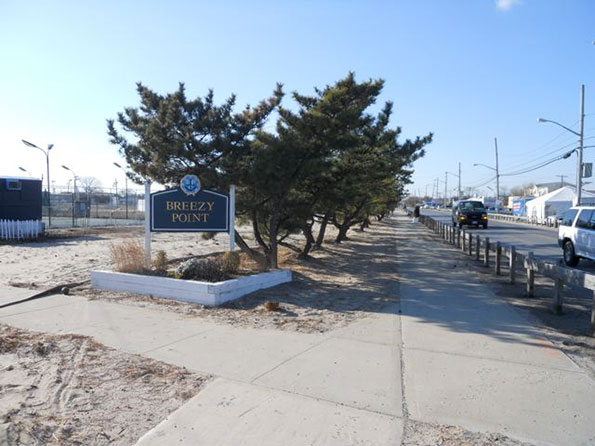
    While in New York for the last month, I took stock of the city (post Great Recession and post Hurricane Sandy) on a number of bicycle rides, in the company of city-pigeon friends, from Breezy Point in Queens to the northern reaches of the Bronx.

    Biking around New York is a lot easier now than it was when I last lived in the city, from 1976 to 1991. Bike lanes were nonexistent in those days, the curbs were littered with broken glass, and many potholes were the size of Lake Erie.

    Thanks to Mayor Michael Bloomberg (a riding friend said, “He’s not pro-bike; he’s anti-car”), the city now has a growing network of dedicated, at least with paint, bike lanes. One runs up First Avenue, another goes from Williamsburg to downtown Brooklyn, and a great one travels the length of the West Side.

    One of the longer rides took us from midtown Manhattan out to Breezy Point, to see what remains of the beach community that Sandy flooded and burned. From the Queensboro Bridge, we took in Greenpoint and Williamsburg, two of Brooklyn’s hottest neighborhoods (“hot” means rents have tripled and Sunday brunch costs $29), and then meandered through Bedford Stuyvesant, another stop on the gentrification express.

    In the 1980s, Bed Stuy meant vacant lots and high crime rates. Now it’s a neighborhood of elegant—million dollar plus—brownstones and a growing number of boutiques. At Atlantic and Flatbush avenues, the new Barclay Center, home to the Brooklyn Nets, looms over the tracks of the Long Island Rail Road.

    I don’t believe in stadiums as anchor tenants in transitional neighborhoods: most of the time they are empty, and when in use they provide jobs only for ushers. Nor do I care much for the center’s rusted-iron exterior; Brooklyn has enough corroded steel. But if it helps to brand Brooklyn as a modern and dynamic city or bring a wine bar to our old Flatbush neighborhood, I will not complain.

    At the southern end of the borough, Breezy Point is the tip of an Atlantic barrier peninsula. As we rode toward Sandy’s ground zero, we passed emergency services checkpoints and many police out on patrol, although the approach is along a desolate road and the community has the feeling of Appalachia-by-the-sea.

    Breezy Point isn’t a summer beach colony so much as a year-round enclave of firefighters and police who like the location as a world apart. Even riding bikes along the main streets, we felt like trespassers. When we couldn’t find the blocks of houses that burned during the storm, I asked directions from one of the police officers. His answer was: “Are you kidding me? Get the fuck out of here.”

    The bizarre rumor that I heard in the Rockaways is that some residents torched their own houses, as fire insurance covers more damage than that underwritten for hurricanes and floods. Such speculation is impossible to verify, although the media obsession with the beached whales from Sandy—and thus the need for disaster-relief millions—was at odds with what we saw: a beach community suffering after a bad storm but still mostly intact.

    At the other end of the Rockaways, the more substantial houses came through the storm fine, although many had flooded to their first floors, alas, a hazard that comes from living near the beach and, again, not a national tragedy.

    Uptown Manhattan neighborhoods never lost power during Sandy, although the Lower East Side, a mix of high-rise apartments and funky restaurants, had some buildings in the dark well into December.

    Nor did the storm or, for that matter, the Great Recession, sidetrack Harlem’s latest renaissance, which can be seen on many of the area’s roughly 200 blocks. When I was a student at Columbia University in the 1970s, Harlem was overrun with arsonists and drug dealers. Morningside Park, which borders the university, was nicknamed Needle Park. The neighborhood’s proud history as a spawning ground for Jews, Italians, Latinos, and African-Americans was shrouded in the dark waters of abandoned buildings, graffiti, and nighttime sirens.

    This time, I rode my bike, as if on a lawn mower, up and down the blocks between 110th and 145th streets and was charmed to find so many renovated apartments and brownstones, not to mention restaurants and trendy stores on the avenues. In his elegant history, Harlem, Jonathan Gill quotes Langston Hughes: “I would rather have a kitchenette in Harlem than a mansion in Westchester.” Ed Koch said the same.

    Sadly, the jazz and night clubs are largely gone, and the Apollo Theater is among the last of its cultural generation still in use. Many longtime Harlem residents are now being priced out of the neighborhood. Nevertheless, the streets around Mount Morris Park (Fifth Avenue and 120th Street) and Striver’s Row (West 137th and 138th streets) are more elegant than many on Manhattan’s East Side. The only thing now being traded in Morningside Park appears to be Pampers.

    Because I was in New York when Koch died, much of the handlebar conversation, especially as we rode around his Crotona Park birthplace in the Bronx, was about whether he or Rudy Giuliani deserved the most credit for New York’s return from the dead. Not part of the discussion was the mayoralty of David Dinkins, including the legendary three or four showers that he took each day in office.

    I argued for Koch, as he became mayor at the city’s ebb tide in the late 1970s, when Howard Cosell said, during the World Series, “Ladies and gentlemen, the Bronx is burning,” and President Jimmy Carter visited the smoldering rubble of Charlotte Street (now a suburban-like development). Gill wrote: “Huge swatches of the neighborhood began to resemble the bombed-out European cities of World War II.”

    The argument for Giuliani’s contribution is that he took on petty crime, which in turn got bigger criminals off the streets, although my revivalist heart is with Koch, who as mayor had accepted an invitation to lunch that my friends and I extended (in person he was more serious and very tall). More than Giuliani, he epitomized the city, as when he said: “If you agree with me on 9 out of 12 issues, vote for me. If you agree with me on 12 out of 12 issues, see a psychiatrist.”

    Koch understood that cities rise or fall on questions of confidence or, as he asked rhetorically, “How’m I doin’?” Giuliani, despite his 9/11 heroics, always struck me as having the soul of a TV detective, although with less empathy than Kojak. Bloomberg is praised as being a grown up—competent and capable at managing city affairs, even if he sounds like a shoe salesman.

    On one subfreezing, windy day I biked the length of the Bronx’s Grand Concourse, stopping to warm up in a hospital waiting room when no Starbucks appeared on the frigid horizon. I loved the Botanical Gardens, but loathed the pretentious new Yankee Stadium, whose $1.5 billion construction budget did little for the South Bronx (hand-lettered signs for game parking probably do not count).

    The risk of the New York renaissance is that the era of good-feeling is a variation on the bonds for the new stadium. It’s something that’s funded on Wall Street, which may explain why Harlem brownstones cost $2 million, but the only new jobs in the neighborhood are for part-time clerks at CVS or Dunkin’ Donuts.

    Photos by the author: A bike lane near Mount Morris Park in Harlem; Breezy Point; the author’s former home in Brooklyn.

    Matthew Stevenson, a contributing editor of Harper’s Magazine, is the author of Remembering the Twentieth Century Limited, a collection of historical travel essays. His next book is Whistle-Stopping America.

  • Central Banking’s Hogwarts Syndrome

    Central banks—the US Federal Reserve is one—come with the mystique of Oz. While the Fed fiercely denies that it is powerful enough to cure recessions with a click of the heels, there are those who believe it’s true. If, however, you look behind the velvet curtains and columned lobbies, you will find good men, but bad wizards. In mid-December, the bank’s Open Market committee pledged $85 billion a month until unemployment drops below 6.5 percent. Such policies are a long way from Kansas and prudent finance.

    Around the world central banks have become convenient instruments of public and private bailouts, accommodating lenders when citizens reject tax hikes and governments need a few trillion to bail out Greece or prop up the housing market. It helps that they are shrouded in mystery and give the impression that they hold their meetings at Hogwarts, perhaps with Albus Dumbledore presiding.

    The reason that the Federal Reserve, like many of its European counterparts, looks like a failing credit union is that its balance sheet numbers don’t add up. On November 12, 2012, the Fed showed a assets of $2.9 trillion against equity of $69 billion. In other words, the bank’s leverage is 42 times its capital. At its peak, Lehman was geared 36 times; a prudent limit might be eight times. At this time next year, its assets (which would more properly be considered, liabilities) will be $4 trillion.

    $1.6 trillion on the Fed’s book is held in US Treasury securities, although, I can assure you that money has been spent, perhaps on that swell new $3.4 billion “campus” for the Department of Homeland Security.

    Before 2008, the Fed’s balance sheet was less than $900 billion, and assets were short-term interbank loans and Treasury securities. Now the balance sheet is $2.9 trillion, and mixed in with the gold at Fort Knox is $886 billion in mortgage-backed securities, making the Federal Reserve the nation’s Savings & Loan. (Imagine the toasters given away to build up such a loan book.)

    One reason that the Fed’s balance sheet is not available for a congressional audit is that it might scare world markets to death to discover that the US central bank is awash with non-performing assets, not British gilts or J.P. Morgan’s gold bars. As lenders of last resort, many central banks now have vaults that are crammed with junk bonds, subprime exposure, unwound credit default swaps, out-of-the-money options, and sovereign debt issued by governments that have long since vanished.

    Take the European Central Bank. After the 2008 crisis it encouraged banking groups to load up on sovereign credits, hoping that this would prevent further collapse and stimulate local economies.

    The same practice of offloading substandard loans to the Federal Reserve governed the stimulus programs of the Bush and Obama administrations, which “stimulated” the economy by moving bad loans off Wall Street and into the Fed.

    Another definition for quantitative easing (QE3 in its last rendition) might be “government payday loans.” Together, the central banks of the United States and Europe are holding more than $6 trillion as “assets” on their balance sheets, which if they were accurate might read: “Advances against street demonstrations.”

    How did we get to these diminishing returns? In their modern incarnation, central banks replaced market makers and robber barons that got tired of business cycles and having to bail out commercial banks and stock jobbers that had hit the skids.

    In the US, the panic of 1907 (which J.P. Morgan mitigated, although to his own ends) pushed the country to later enact legislation creating the Federal Reserve System that, in the future, would provide liquidity during periods of recession; its current dual mandate is to fight inflation and maximize employment.

    Given that economics was deemed a science of predictions, the presence of strong central banks in North America and Europe was supposed to mean the end of sharp volatility, even though it has been convincingly argued that the Federal Reserve has made little difference in the many recessions since 1913, notably in the Great Depression, when it restricted the money supply.

    In his history of central banking, Lords of Finance: The Bankers Who Broke the World, Liaquat Ahamed makes the point that the leading central banks in and after World War I—those of England, France, the United States, and Germany—routinely made bad decisions when it came to issuing currency, propping up the money supply, or regulating the amounts of credit and bonds in various banking systems.

    The biggest problem with central banks is that they are mortgaged to the political classes and have become the funding arm of various get-elected-quick schemes rather than sticking to their job of fiddling with the money supply. The Fed’s evolution into a casino cashier window started sometime after 1996 and continued into the administration of George W. Bush, when the equity in American homes became just another chip for Wall Street croupiers to sweep into their aprons.

    Under patriotic banners proclaiming that home ownership was a democratic rite of passage, both Congress and the Fed made it easy for banks to grant mortgages based on little, if any, collateral (remember “liar loans?” I bet Alan Greenspan does). They also looked the other way when the administration decided to pay for its wars and tax cuts by using home equity to keep consumer markets irrationally exuberant. Why? Prosperity has a lot to do with reelecting incumbents, and it was those officials who regulated the regulators. Furthermore, member commercial banks, not the US government, own the Fed, even if the US President appoints the chairman.

    What might hasten a reckoning of these wobbly accounts is that central bankers are finding it harder to agree that their temples of finance are ministries of magic. A few, like the German and Swiss central banks, dread inflation and take a dim view of speculators. Those attitudes find little sympathy in Italy, Spain, or Greece—should we add California?—which need to kite checks to pay state pensions.

    The US isn’t sufficiently flush to help bail out the European Union. Alas, not even the Fed has deep enough pockets to fund trillion dollar annual deficits. Nor should anyone think that the US government is a likely candidate to bail out the Fed, as right now it is the Fed that is bailing out America.

    Flickr photo by Lance McCord: Federal Reserve Bank of Atlanta Eagle: Eagle sitting atop a decorative (though once-structural) column outside the Federal Reserve Bank of Atlanta on Peachtree Street; it dates from an earlier incarnation of the Atlanta Fed’s home.

    Matthew Stevenson, a contributing editor of Harper’s Magazine, is the author of Remembering the Twentieth Century Limited, a collection of historical travel essays. His next book is Whistle-Stopping America.

  • The Gun Control Debate That Went MIA

    Intellectually — despite the events in Newtown, Connecticut — I can appreciate that the “right to bear arms” is a fundamental constitutional guarantee, inherited from both the Glorious (1688) and American revolutions. I still wonder, though, whether it applies to a society in which most people live in suburban condos and tract houses, which are largely absent of Redcoats or the Hole in the Wall gang. Why have guns in our lives? We know the status quo ante of the 18th century Second Amendment isn’t working. The issues surrounding guns failed to make even a cameo appearance in the recent election, and, when they have been raised in the recent past they certainly did not elicit the same tears that they did at the Newtown press conferences.

    Americans own 300 million guns, which kill about 30,000 people each year; about half of the deaths are suicides. Teenagers are involved in a disproportionate number of the shootings and deaths in the violent exchanges, and teens and children are at high risk from all gun violence, which in 2007 and 2008 claimed the lives of 5,740 young victims across the United States (that’s almost three “Newtowns” a week). What has become of the original intent of gun rights, if in those years firearms wounded 34,387 teens and children?

    Ironically, gun legislation is not much of a deterrent to loss of life from gunshot wounds. In 2008, shooting deaths per thousand in Vermont, with few gun laws, were about the same as those in nearby Massachusetts, which has some of the most strict gun-control laws in the country. The gun laws in the District of Columbia do little to prevent criminals from carrying them into the capital from nearby Virginia or Maryland.

    On average about 24 Americans are murdered every day with a gun, and since 9/11 some 300,000 have been gunned down. I came to many of these statistics and reflections while reading Craig Whitney’s Living with Guns: A Liberal’s Case for the Second Amendment, which searches for the middle ground between the National Rifle Association “standing its ground,” and those that would wish away the 300 million firearms that are in American hands.

    I had turned to the book hoping to find an argument that the gun right of the Second Amendment was tied to militia enlistment, and that without a call to arms at Lexington or Concord few outside of law enforcement officers needed firearms. What I got instead was a well-reasoned argument for gun ownership, provided that the firearms are handled, bought and sold with care.

    Whitney, a former New York Times editor, argues that guns are synonymous with the founding of the American republic, and that the only way to reduce gun violence is to see that firearms, like the equally deadly automobile, are only used in safe hands and in a responsible manner. He believes strict laws that prevent ordinary citizens from having guns to ward off intruders and attackers are unproductive and unconstitutional.

    Among his suggestions for ways to keep guns out of the hands of those that would open fire in malls and schools are tighter background checks for buyers and sellers, including at gun shows; nationwide standards to teach responsible gun handling and the issuance of permits for owners who complete rigorous courses; better data bases to trace missing or stolen guns; harsher penalties for illegal gun use; and easier methods to trace bullets and handguns discharged in a criminal act.

    My own view of guns is that they scare me. Before moving to Europe in 1991, we lived in New York City. One evening, standing on the doorstep of our Flatbush brownstone, I heard the firing from an automatic weapon on a nearby block and decided that maybe there were other places to raise my children.

    Living in Brooklyn didn’t give me much sympathy for the NRA, given that the borough has more liquor stores than deer, and that most local weapons are used during open seasons on shop owners. I constantly had in mind a newspaper report about teenagers carrying concealed weapons on the subway. A police detective interviewed for the story said, “I can’t say that every fourteen-year-old on the subway is carrying a gun. But I can say that every other kid has one.”

    Part of the reason I react so negatively to guns is because I came of age between the assassinations of John and Robert Kennedy in, respectively, 1963 and 1968. By chance, I saw each one in person just before he was killed, so the image of their head wounds (from cheap mail-order or pawn shop guns) contrasted vividly with my recent memories of their thick, wavy hair and broad smiles.

    Like many, I only think about guns after hearing about shootings like those at Sandy Hook Elementary, or that a madman went berserk at Virginia Tech or at the movies in Colorado, sacrificing dozens of innocent lives on an altar that is later covered with flowering clichés from the Second Amendment (“If only the Batman moviegoers had been armed…”). Does a linebacker for the Kansas City Chiefs really need nine guns for protection, especially when he is only hunting down his girlfriend?

    Despite these negative feelings, I listened carefully to Whitney’s arguments that gun control has little effect on preventing murders or crimes, and that guns are in America to stay, whatever the consequences. I found myself uncomfortably weighing his long interview with a gun advocate who believes that the only deterrence to gun violence is to have everyone packing heat. Could he be right?

    Although I can accept hunting rifles over the hearth and even registered handguns for home defense, I have a harder time with “the right to bear arms” when I think how easy it is anywhere in the country for a lunatic to buy an automatic weapon and use it on school kids or postal coworkers. Better registration procedures and tracking of guns might keep them away from the likes of Tucson’s Jared Lee Loughner. But do we really want the dress code at places like Sandy Hook elementary to include full metal jackets?

    Flickr photo: Newtown, Connecticut, Bus Arriving by AskJoanne.

    Matthew Stevenson, a contributing editor of Harper’s Magazine, is the author of Remembering the Twentieth Century Limited, a collection of historical travel essays. His next book is Whistle-Stopping America.

  • The New York Marathon Vs the NFL

    The ING New York City Marathon was cancelled, but the football game of the New York Giants against the Pittsburgh Steelers went ahead. Why? The nation places a higher value on sedentary spectators popping Advil and Viagra, than on lean and wiry runners, whose idea of a big night out is pasta and a few sips of Gatorade. It also helps that pro football has a televised address on 21st and Primetime, while the pleasure of a marathon is simply to finish one, even in the dark.

    In canceling the road race, New York Mayor Michael Bloomberg made the decision that it would have been insensitive to have marathoners running around a city that was still digging out from the wreckage caused by Sandy, or past those lining up with gas cans. Nor did anyone want police officers or emergency health workers officials involved with the marathon when they could be assisting the recovery of Staten Island or Breezy Point.

    On the same Sunday, however, the National Football League, took the position that, even with gasoline short for essential services, the game must go on, much as it did earlier this fall when the regular game officials were locked out of work. The office of NFL Commissioner Roger Goodell spends a lot of time invoking the mysticism of “the Game,” as though it were the Force or the Church—a higher being (“brought to you by Ford…”).

    To protect the interests of the Game, the commissioner regularly suspends or levies fines on coaches or players for putting out bounties, making unfair hits, showing positive drug tests, or for conduct “unbecoming” an NFL player, which ranges from sponsoring dog fighting to taking part in drive-by shootings. His job description is to sustain the illusion that the Raider Nation is the spiritual heir to those chariots of fire.

    The reason the NFL takes itself more seriously than, say, the Vatican, is that its revenue stream is built on the faith that the games are sport: athletic contests with winners and losers, not simply pay-per-view broadcasts that seek to divide each given Sunday into thousands of thirty-second spots, each of which can be sold to beer companies, hotel chains, and airlines.

    The league structure is an oligopoly, sustained by a sweetheart antitrust exemption, with each franchise sharing the collective revenue. Having a winning season doesn’t make the owner of an NFL team richer; the Jets are worth about as much as the 49ers (who actually win their games), and the average value of each franchise is more than $1 billion. The value of the NFL is that it can sell everything from diapers to cures for erectile dysfunction.

    To get an idea of the extent to which team owners have contempt for the actual sport of football, look no further than the Great Referee Crisis. The calamity began when about a hundred NFL game officials, at the time of a contract renegotiation, decided that they were entitled to keep their defined-benefit pension plans—meaning, their retirement packages would continue to be a percentage of their annual salaries, which average about $150,000 (for three hours of work, seventeen weeks a year, with a twenty-minute break for halftime).

    Owners of the NFL’s 32 football franchises—which have annual payrolls (measured in “cap space”) of $120 million and evenly split a revenue jackpot of $9.5 billion—reacted with indignation that the referees had the temerity to expect a pension from the league, and locked them out from work, pending a contract settlement.

    Instead of canceling the games as well, the Dickensian owners scoured the playing fields of Pop Warner and Arena football to find officials capable of throwing a few flags and uttering the phrase, “After further review, the ruling on the field stands.”

    The replacement refs showed up at the games like dads waylaid from the stands to umpire at Little League. They mastered the coin toss, some rudiments of whistle-blowing, and were given directions to the sideline peep shows that rerun the booth reviews of controversial plays. The replacement officials thought they were judging a game, and never understood they were regulating an industry.

    Without the regular officials seamlessly stopping the game after each punt, incomplete pass, out-of-bounds, or change of possession, there would be no way to securitize the game’s three hours into marketable segments lasting thirty seconds, which is how the league pulls down $9.5 billion a year. Untrained in choreography, the stopgap refs had to go.

    In its formative years, when the Game was played with leather helmets, games lasted sixty minutes. At half time, the teams switched ends. The two-minute warning was a courtesy to coaches, but not the occasion to hawk Ram Tough pickups, eTrade, Geico, and Domino’s Pizza. Imagine how little the Game would be worth if the clock simply ran for an hour?

    When football was a sport, players were expected to play offense, defense, kick, tackle, run, pass, and block. Now, as befits a featherbedded monopoly, the average pro team has about twenty coaches and specialists are engaged to handle kick returns, long snapping, field-goal holding, and obscure functions in “nickel” and “dime” formations on defense. Hyped as he might be, Tim Tebow is scorned as a marginal player in the age of free substitution. In the glory days, however, he would have been compared favorably to Jim Thorpe, as he can do it all.

    Perhaps the reason that this year’s New York marathon was deemed unworthy to help heal the wounds of a flooded city is because it is only a sport. Its participants are amateurs who buy their own uniforms, travel at their own expense, and sleep on sofas. The runners are in it for the love of the game, to compete, perchance to finish — not to provide a stage set for Cialis-popping men to leer at their wives.

    When the networks and corporations finally get their hands on the New York City Marathon, maybe then it will become worthy of a superstorm indulgence. It could go on air with about 32 runners, national sponsors, halftime around mile 13, booth reviews, and coaches’ challenges. The spectacle could last all day, and Dan, Shannon, Boomer, and Coach Cowher could analyze the winners. Then no one would mess with the Race.

    Matthew Stevenson, a contributing editor of Harper’s Magazine, is the author of Remembering the Twentieth Century Limited, a collection of historical travel essays. His next book is “Whistle-Stopping America”.

    Flickr photo by Joe Shlabotnik: Little Giants. A wall of New York Giants clothes for sale at BuyBuy Baby.