Author: Scott Beyer

  • San Antonio: Growth and Success in the Mexican-American Capital

    This essay is part of a new report from the Center for Opportunity Urbanism titled “The Texas Way of Urbanism“. Download the entire report here.

    For decades, as many U.S. cities declined, and others became overly exclusive, cities in Texas evolved into places of opportunity. Due in large part to liberalized economic policies, the state’s “Big Four” metro areas — Houston, Dallas, Austin and San Antonio — consistently rank among the nation’s leaders in population growth and job growth, experiencing the rapid urbanization once common among America’s legacy cities. In a state once defined by cowboy towns, these metros have become intense human and business agglomerations, growing more global and ethnically diverse in the process.

    In many ways, the newcomer to these ranks of opportunity cities is Texas’ oldest urban area, San Antonio. In recent decades, San Antonio has been considered the underdog of the foursome, able to outshine other Texas cities in professional basketball, but not in economic or cultural reputation. Houston, a mega wealthy oil town, has reached remarkable heights in health care, luxury shopping and housing development. Dallas has emerged as a mid-American banking center. Austin has become Texas’ yuppie capital, full of educated techies who are turning the city into “Silicon Hills.” But San Antonio, as America’s northernmost gateway with Mexico, has been viewed as a magnet for poor immigrants and thus a place of low incomes and education levels.

    “There has been a long perception of San Antonio as a poor city with a nice river area,” says Rogelio Sáenz, dean of the public policy school at the University of Texas-San Antonio. “Even today, despite being the seventh-largest city in the country, many people outside Texas have little information about our city.”

    But as I discovered while living in San Antonio for six weeks this spring, these negative stereotypes are outdated. Thanks to a commitment toward growth by the city’s political and business establishment, San Antonio in 2016 offers a much more diverse urban profile, catching up to some degree with Texas’ other major cities and surpassing many in other states.

    The leading cause has been a good economy. San Antonio first grew thanks to a few key sectors, most notably its voluminous military presence, which earned it the nickname “Military City USA.” But its economy has diversified recently, seeing growth in sectors that benefit both from proximity to the military and from the broader Texas growth machine. The city’s financial industry has been propelled by providing banking for service members. The tech industry, which had overlooked San Antonio for trendier cities like Austin and San Francisco, now has a presence here; since 2010, San Antonio’s information sector has expanded by over 15 percent, placing the city 17th among the 70 largest U.S. metros in a 2016 Forbes magazine survey. The city has even seen manufacturing growth, as corporations take advantage of Texas’ corporate welfare and proximity to Mexico’s supply chains. Along with San Antonio’s more traditional economic drivers, such as health care and tourism, this expanding private sector has turned the city into a jobs engine.

    And this is impelling people to move here, creating a more interesting demographic mix. The city’s historic ties to Mexico have long cemented it as the Mexican-American capital, viewed as much a part of “northern Mexico” as of the United States. It remains a majority-Hispanic city, but this, rather than being a liability, has infused San Antonio with a young, energetic population, making it a case study for how an increasingly diverse America can function. This includes “Tejanos” — native Texans of Mexican descent — and the more recent increase in Mexican nationals, professional-class immigrants escaping the violence in their homeland. Meanwhile, people throughout the U.S. seeking well-paying jobs and low living costs — including young white professionals, African Americans, Asian Americans and immigrants of every variety — are flooding into San Antonio.

    This explosive job and population growth has bred all the familiar elements underpinning an urban renaissance. Indeed, just like in other rapidly growing Texas cities, there is a certain buzz about San Antonio, as it has become denser, more global and more cosmopolitan than when I previously visited in 2007. The new developments emerging in and around downtown fuel restaurants and bars that are slammed during weekends with everybody from international jet-setters to Tejano ranchers in cowboy hats. This imprint has extended to outlying areas, where new country clubs and luxury shops spring up on formerly virgin land.

    Yet amid this new shine sits a more traditional culture. Just as parts of modern-day San Antonio were built during the first stirrings of civilization within Texas, the city is dominated by families who have lived here for generations, instilling a small-town, community feel. This combination of old and new — which extends across a landscape largely built by, and for, people of Mexican descent — is what makes San Antonio the most compelling of Texas’ urban success stories.

    Evolution into the Mexican-American Capital

    San Antonio’s Hispanic ties date to the late 1600s, when Spanish explorers mixed with the native Yanaguana population.115 The Spanish founded the city in 1718, built several missions, including the Alamo, and by 1773 made San Antonio de Bexar the capital of Spanish Texas.

    By the 19th century, these religious structures were transformed into forts, as San Antonio became a prime battleground for Spain’s imperial ambitions. The city suffered from numerous battles in the early 1800s, with Spain defending its territory against ragtag armies of Anglos and natives. In 1821, Spain granted independence to Mexico,relinquishing much of modern Mexico and the U.S. Southwest, and San Antonio became the new nation’s foremost northern entryway.116 Several years later, Mexico adopted a constitution, but leaders soon violated it by forming a centralized government even more oppressive than Spain’s.

    In response, many Texas towns, which were peripheral Mexican territory anyway, revolted, and San Antonio became ground zero in the Texas war for independence. This climaxed in February and March 1836, when 200 defenders encamped inside the Alamo held out nearly two weeks against a several-thousand-man Mexican militia that ultimately overwhelmed and killed them. Texas seceded soon after and became a republic, before the U.S. annexed it in 1845.

    In following decades, rail connections made San Antonio an industrial crossroads. Culturally, it enjoyed influences from European and American frontiersmen and indigenous people from Mexico. By 1900, San Antonio had 53,000 residents, making it Texas’ largest city.
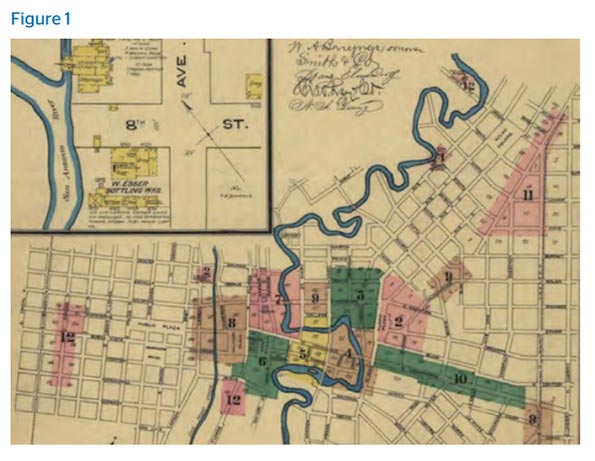
    San Antonio’s major step forward, however, came during the Mexican revolution of 1910, an event supported by city residents. In 1876, Porfirio Diaz became Mexico’s president, overseeing a multi-decade dictatorship. In 1910, a popular dissident candidate named Francisco Madero ran for president and was imprisoned. After his family posted bail, Madero fled to San Antonio, joining other expats fomenting revolution. They organized an armed struggle that lasted for decades within Mexico, causing a refugee surge. From 1900-30, the Mexican population in the U.S. grew from 100,000 to 1.5 million, and San Antonio’s total population more than quadrupled, with refugees viewing it as a safe and culturally familiar city.

    “At that time, San Antonio was the center, not Los Angeles,” T.R. Fehrenbach , a Texas-based historian, told the San Antonio Express-News in 2010. “San Antonio was the capital of the Latin American world outside of Latin America.”

    Newcomers consisted largely of Mexico’s business elite. For example, the grandparents of former San Antonio mayor Henry Cisneros, and the parents of famed former local congressman Henry Gonzalez, came to San Antonio during this period. The influx of Mexican business savvy helped make San Antonio a modern city.

    After slowing during the Great Depression, San Antonio resumed growth during World War II. From its inception, San Antonio was a military city, the linchpin in the defenses of Texas. This continued following statehood, as San Antonio became a prime location for military installations. Fort Sam Houston, which still sits on the city’s east side, was founded in 1845. Kelly Air Force Base opened during World War I. Other military functions would follow, and by World War II they were running on all cylinders.

    The large civilian workforce that flooded into San Antonio during this time created severe labor shortages in rural areas. The federal government responded with the Bracero Program. From 1942-64, 4.6 million Mexican agricultural guest workers entered the U.S.121 Like with past Mexican migrations, many gravitated to San Antonio, and by 1970 the dusty old Spanish colonial outpost had become a 654,000 person city.

    Postwar Economic Growth and Political Equality

    Since then, the region has added an average of approximately 300,000 new residents per decade. Much of the influx has resulted from the organic movement between America’s colder and warmer climes. But much also stemmed from local sources and initiatives.

    Economic growth and job creation are enhanced by transportation systems that allow people to reach employment and other destinations throughout the metropolitan area. Metro San Antonio has a highly ranked roadway system, with comparatively light traffic congestion. San Antonio ranks 10th in per-capita freeway capacity among the 53 U.S. metropolitan areas with 1-million-plus populations. This contributed to San Antonio’s ranking of 22nd best in overall traffic congestion delay among 172 urban areas in 30 nations, according to the 2015 Tom Tom Traffic Index. The metropolitan area has two freeway beltways (ring roads), like a number of other cities.

    Like Texas’ other cities, San Antonio has also benefited from pro-growth state policies. Texas has no income tax and has the fifth-lowest overall state tax burden. Texas routinely ranks near the top in surveys tracking ease of doing business. Such liberalization has produced statewide in-migration of people and businesses, mostly to the major metros.

    But the city’s establishment has also embraced the growth agenda. This is because San Antonio, says Cisneros, who in 1981 became the first Hispanic mayor of a large U.S. city, perceives itself as an opportunity zone for Hispanics.

    “For a good part of its history, San Antonio was a poor city,” he suggests. The establishment has responded by making economic development “the central current of San Antonio’s political discourse and electoral politics … [giving] us the basis on which we decide other questions.”

    This has meant, on one hand, subsidizing a number of flashy projects. San Antonio’s famed River Walk, first restored in 1941, has been serially expanded to connect key downtown tourist spots. San Antonio hosted the World’s Fair in 1968, rebranding itself as the northernmost Latin American gateway into the United States. And public money was used to retain the San Antonio Spurs, who proceeded to win five NBA titles, putting the city on the map perhaps more than anything else.

    But growth has mainly occurred because local and regional officials embraced the unsexy projects needed to enhance San Antonio’s infrastructural footprint. For example, the city pumps water from the vast Edwards Aquifer that spans central Texas. Thus San Antonio has more reliable water access — and cheaper water rates — than other cities, who rely on surface-level infrastructure and are more subject to droughts.

    In the 1970s, San Antonio joined its municipal energy company — CPS Energy — with a south Texas regional nuclear power network. Unlike other cities that joined, CPS entered the partnership to generate its own power, rather than renting it from a third party, making it the nation’s largest city-owned utility for gas and electricity. This has helped the company eradicate the middle man, selling energy to San Antonio residents and businesses at 10 percent to 20 percent less than in Dallas and Houston.

    Another area has been key to San Antonio’s political development and the rise of Hispanics. From 1955-75, San Antonio’s City Council was controlled by the Good Government League, a mostly white group that endorsed pro-business candidates. The group fought patronage politics, but was exclusionary in nature. In the early 1970s, San Antonio became ground zero for La Raza Unida, a national movement dedicated to increasing Hispanic representation within government. Working against the GGL, the movement organized voter drives throughout the early 1970s, and by 1977 had helped inspire council elections by district, rather than at-large. This meant that following the 1977 election, the majority-minority city had filled five of 10 council seats with Hispanics and another seat with an African American. This diversity at City Hall has continued.

    But, according to Michael Cary, a writer for the San Antonio Current, the political establishment has still championed the pro-growth leanings of the GGL, thus merging two constituencies that otherwise remain divided. This merger was embodied by Cisneros, who was elected to council in 1975 and later served four terms as mayor.

    “Cisneros broke with the liberal Chicano ranks and ran on the West Side Good Government League ticket,” wrote Cary, serving “as a bridge between Anglos and Hispanics.”

    The former mayor agreed that this unity remains intact, thanks to the citywide “political consensus” favoring growth.

    “We’re not going to do it with welfare, we’re not going to do it with income maintenance, we’re not going to do it remaining contentious and divided,” Cisneros said, summarizing the Latino and Anglo establishments’ attitudes. “We’re going to do it if we come around a single theme — jobs.”

    Diversifying Economy

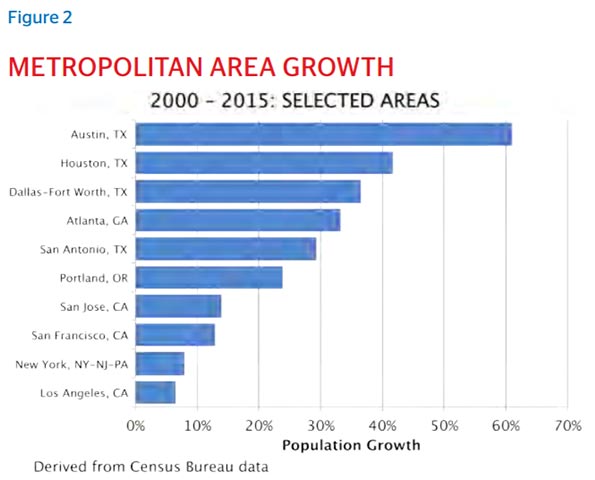
    This approach has powered San Antonio near the top on various growth and prosperity metrics. Since 2000, San Antonio has been No. 8 among the 50 major U.S. metro areas in population growth rate.
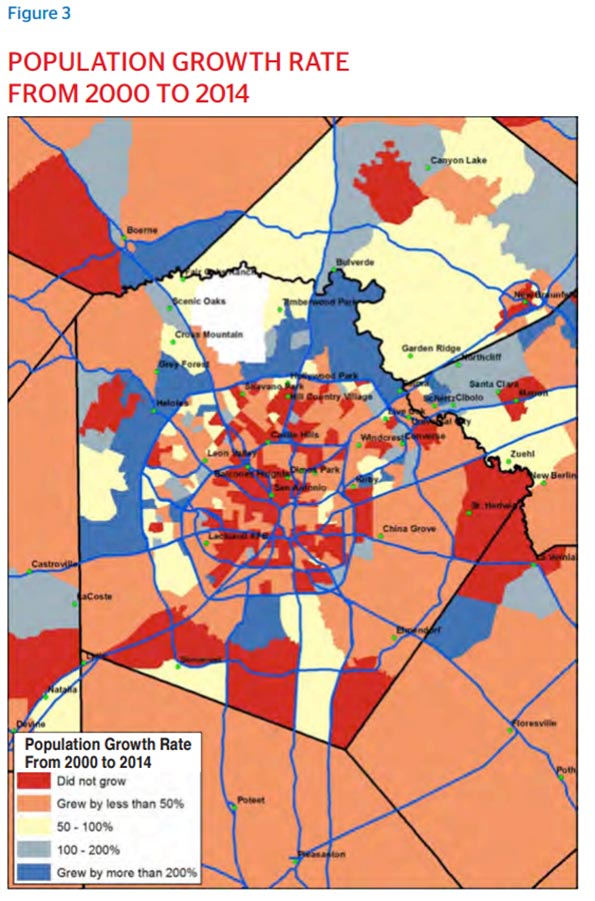
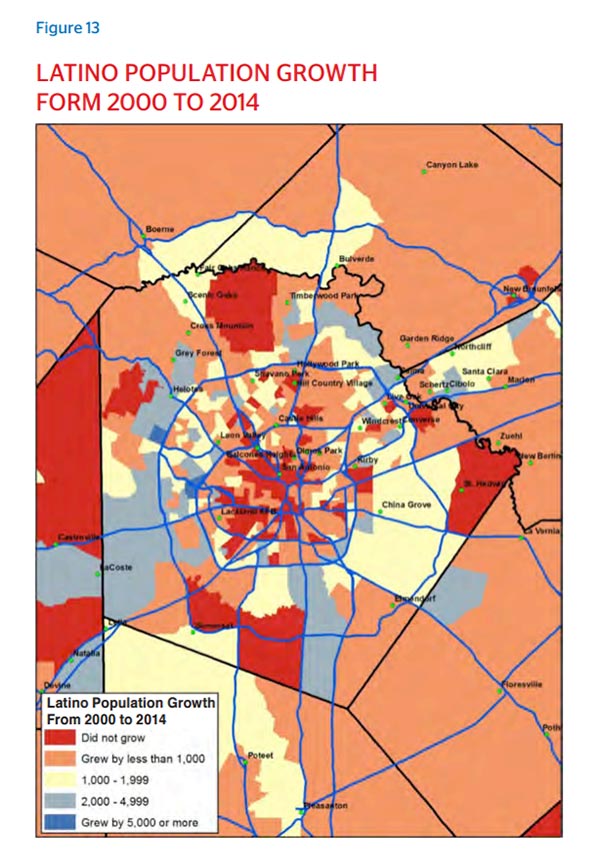
    Critically, this growth has been due largely to Latinos. Since 2000, the area has been among the leaders in net Hispanic population growth, adding over 400,000 residents. Economic prosperity explains much about why people are coming. Over this time, San Antonio has been No. 6 in job growth rate among these metros, and the highest income growth among major metropolitan areas since 2005, according to Forbes magazine. When comparing Hispanic populations in the 53 largest metros, San Antonio has been one of only four to see median household income gains since 2000 and has the 15th-highest median household income for Hispanics when adjusted for living costs. According to the Kauffman Foundation, San Antonio is No.10 in startup activity, and the area unemployment rate is nearly two percentage points below the national average. The Milken Institute ranked San Antonio No. 12 among its best-performing major metros, although it has ranked higher in previous years.
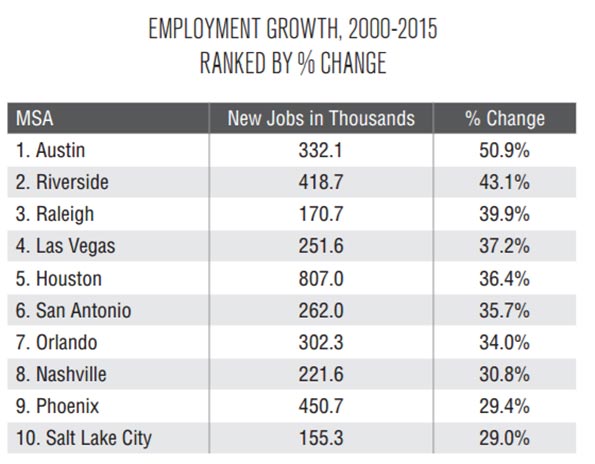
    The backbone of this growth is an economy that has strengthened and diversified. In 2011, Mario Hernandez, former CEO of the San Antonio Economic Development Foundation, wrote about how San Antonio was evolving beyond its “big three” industry sectors — tourism, military and health care. His points have only strengthened since.

    Among the original big three, military remains the strongest. According to a study by the city government, San Antonio “is home to more Department of Defense students and active runways than any other military installation.” The metro area also includes 55,000 military retirees. The military has a $27.7 billion economic impact and employs 189,148 people. Lackland Air Force Base and Fort Sam Houston are by far the area’s largest employers, at 37,000 and 32,000 workers, respectively, while other significant installations include Randolph Air Force Base and Camp Bullis (the names of all four begin with the moniker “Joint Base San Antonio”). There is also a special relationship between the military and the city’s Hispanics, who have historically viewed military service as an opportunity for well-paying jobs, free educations and integration into mainstream American society.

    Bioscience and health care is another vast sector, having grown from $12 billion to $30.6 billion in annual economic impact since 2003.136 The industry employs 164,000, or one of six San Antonians.137 In many ways, the sector is an outgrowth of the military, as medical workers receive training for — and often operate on — personnel preparing for, or returning from, battle. Following the federal Base Realignment and Closure Commission’s report in 2005, many of the Pentagon’s medical functions were concentrated in San Antonio, infusing billions of dollars into the city. This was highlighted by the new Medical Education and Training Campus built at Fort Sam Houston, the world’s largest facility for military medical education, research and training. The center’s students often apply their knowledge at nearby Camp Bullis, a site that specializes in combat training. Just down the block within Fort Sam Houston, meanwhile, is Brooke Army Medical Center, an inpatient hospital that is the military’s largest health care organization.

    Yet the military’s medical functions only scratch the surface of San Antonio’s health care sector, with much of the private and nonprofit institutions located on the northwest side. The city benefits from the South Texas Medical Center, the Baptist, Methodist and University Health Systems, the University of Texas Health Science Center, the Children’s Hospital of San Antonio, and numerous other hospitals, research labs and medical startups.

    Tourism has been the city’s third economic staple, employing one in eight San Antonians. This is centered on traditional attractions like the Alamo and the River Walk, and outlying lures like Six Flags and SeaWorld. The impact will surely expand, because last year San Antonio’s five former Spanish missions were given UNESCO World Heritage status.

    Aside from the big three economic drivers, San Antonio is expanding into manufacturing, aviation, finance, technology and education, all tied somewhat to the military. While not traditionally a manufacturing city, San Antonio is now Texas’ fourth-largest manufacturing market, with the industry accounting for 57,000 jobs. One notable coup came when San Antonio, thriving on the corporate relocation momentum throughout Texas, compelled Toyota to build its largest manufacturing plant on the city’s south side in 2003. There was a combination of factors involved — the state offered $133 million in corporate welfare; the city government made infrastructure upgrades; local entrepreneurs stepped up to create a supply chain; and the city is proximate to the strong truck-buying markets in Texas and Mexico. As The Rivard Report, a local news website, noted 10 years later, “the company’s total direct investment in the plant has reached $2.1 billion, with $1.5 billion or more invested by the supplier community.”

    The aviation industry, an offshoot of both the military and manufacturing, has also grown exponentially in recent decades. Key to this has been Port San Antonio. In 1995, following the Cold War’s end, Kelly Air Force Base was closed. A government entity was created to repair and lease out the vast space to private companies, and the port has become a profitable facility, avoiding the graft and waste endemic in other American ports. Port San Antonio, which is located not near water but near heavily trafficked I-35, is dedicated to heavy industrial and aerospace uses and includes tenants like Boeing, Lockheed Martin and StandardAero, although it also houses cybersecurity and IT companies.

    The military has also brought growth to San Antonio’s financial industry, specifically through the rise of niche companies that loan to military members, who are traditionally seen as higher risk. The granddaddy of them all is USAA, a Fortune 500 firm headquartered in northwest San Antonio that employs 17,000. Significant mainstream banking institutions include JP Morgan Chase, which employs 5,000 locals, and Frost Bank, based in San Antonio. By year’s end, the latter company will break ground on a new 23-story downtown headquarters.

    The military has driven tech growth, as well. Some of this $10 billion impact is generated by federal agencies that contract with local IT and cybersecurity firms, making San Antonio No. 2 in the country in concentration of data centers. Much of the rest comes from a more subdued private startup scene, which has benefited from the city establishment’s focus on tech, and the energy of one man, city native Graham Weston. In 1998, Weston co-founded Rackspace, a cloud computing company in northeastern San Antonio that employs 3,300 and is valued at $3.29 billion. Weston has since made it his mission to grow a tech scene downtown, renting out incubator space and filling it with small organizations that collaborate on ideas, including Weston Urban, the 80/20 Foundation, Geekdom, Techstars and Tech Bloc.

    Lastly, the military — and San Antonio’s wider network of STEM enterprises — is inspiring educational growth. While San Antonio has historically enjoyed several small, renowned liberal arts schools, it more recently strengthened its public higher education. A University of Texas branch opened in 1969, and a Texas A&M branch followed in 2009. UT San Antonio, has an enrollment of 28,000. Its cyber security program is ranked first in the nation by tech industry professionals, meaning that graduates can plug into the region’s tech and military scene. The local community college system, Alamo Colleges, has partnered with Port San Antonio to establish workforce development programs, and the general focus for its roughly 60,000 students is on aerospace, manufacturing and IT.

    One industry in San Antonio that has not been particularly strong — likely to the benefit of the others — is local government. In many major U.S. cities, the largest employers are some combination of city governments, county governments and various civil service authorities. In San Antonio, the city government is the ninth-largest employer at 9,145.

    But perhaps the biggest economic driver has been population growth itself, with the city proper adding 325,000, and the metro area growing by 673,000 since 2000, creating a greater demand for housing, cars, services and food. San Antonio’s most inspiring private-sector story provides a window into that growing consumption. The region’s largest private employer, at 20,000 people, is H-E-B, a San Antonio-headquartered supermarket chain. Founded in 1905 by Florence Butt, who opened a small shop in nearby Kerrville, it has skyrocketed under her grandson Charles’ leadership, largely by remaining based in one of America’s consistently fastest-growing states. H-E-B has 316 stores in Texas and 52 in Mexico, and is one of America’s most highly
    valued companies, at $22 billion.

    Demographic Momentum

    So which groups are driving this population increase? The San Antonio area , at 63.2 percent, is the most Hispanic major MSA in the country, well ahead of Miami MSA at 43.8 percent. San Antonio’s Hispanic population largely consists of Tejanos, a south Texas term describing native Texans of Mexican descent. According to Pew Research Center data, 89.6 percent of San Antonio’s Hispanic population is Mexican. This is the largest share among Texas’ Big Four cities. But, notably, San Antonio has by far the lowest percentage of Hispanics who were foreign-born. While the share of foreign-born Hispanics is 32.4 percent in Austin and around 45 percent in Houston and Dallas — not to mention 42 percent in Los Angeles and New York City, 54 percent in Washington, D.C., and 66 percent in Miami — it is only 17 percent in San Antonio. This is because many of them have lived in San Antonio for generations.

    Additional Mexican-American influxes originate from Texas border towns like Laredo, Brownsville, McAllen, and other parts of the Rio Grande Valley. Tejanos have traditionally viewed San Antonio as a destination for jobs, education and entertainment. At the same time, the city is a short drive from their families. This proximity is important, explains Stephanie Reyes, a public-affairs staffer at the San Antonio Chamber of Commerce and a Brownsville native.

    “In most Hispanic cultures, [families] want you to stick around, they want to see you grow, especially if there’s that possibility of you raising a family elsewhere that they’re not going to get to take part in, seeing them grow up or seeing them every weekend. Here in San Antonio, [south Texas Tejanos] have that opportunity.”

    Nonetheless, there is still a lot of Mexican immigration into San Antonio, although the profile has changed. The stereotypical Mexican entering the city postwar was the poor agricultural worker. More recently, San Antonio has seen an explosion of professional-class Mexican migrants from major cities like Monterrey, five hours south on I-35. This group’s wealth has made them targets for kidnappings in their homeland. So they have moved to the U.S., with over 50,000, according to a Los Angeles Times report, coming to San Antonio, thanks to its proximity and ingrained Mexican culture. They have worked in white-collar professions and inhabited north-side gated communities, becoming known for lavish consumption. This is evident on any weekend in the upscale north-side mall of La Cantera, where parking lots are jammed with luxury cars and the walkways with Spanish-speaking shoppers in designer clothing.

    Javier Paredes, a local architect who grew up in Morelia, Mexico, epitomizes some of these trends. Eight years ago, his mother, an influential mining broker, was kidnapped and forced to reveal company secrets. After her release, the family settled together near downtown San Antonio, because of the city’s cultural familiarity.

    There has also been substantial in-migration from many races and places throughout America. San Antonio has become, like the other Texas cities, a major lure for domestic migrants. This is in stark contrast with major ocean coastal cities such as New York, Los Angeles and Chicago.
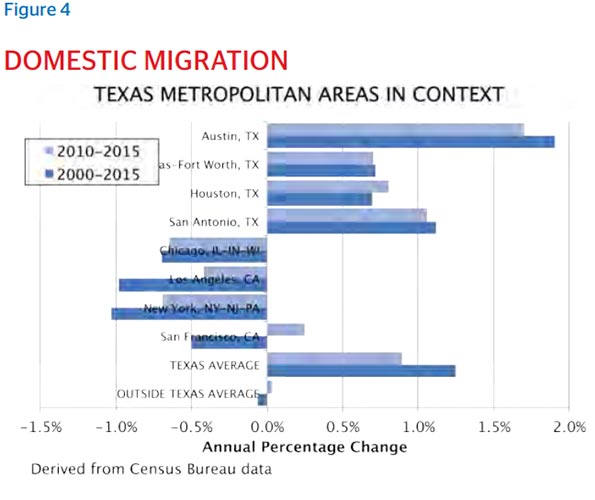
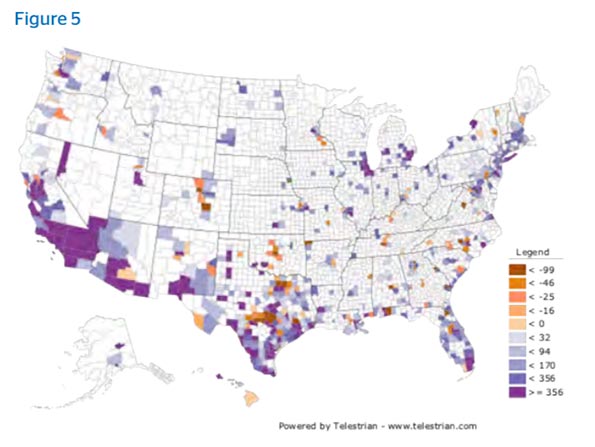
    This domestic growth was displayed in a map by Manhattan Institute senior fellow Aaron Renn, showing which parts of America people net are leaving for San Antonio. There are only a handful of areas that had positive net migration from San Antonio, most notably Austin, 80 miles to the northeast. Meanwhile, whole swaths of the country — including much of California, Cascadia, Florida, the Southwest, the Northeast and the Rust Belt — are pushing people out and into San Antonio.
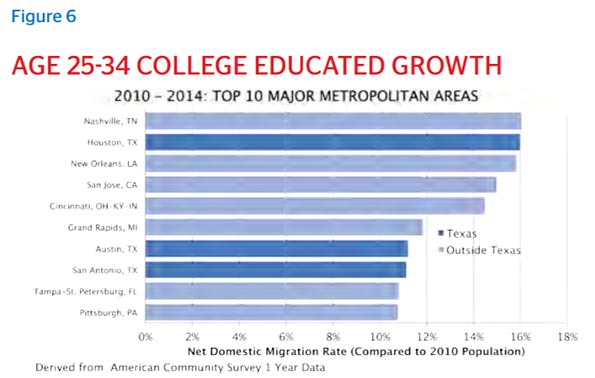
    This is particularly true for the young. Once an area that had trouble holding onto younger educated people, the region has now emerged as one of the fastest-growing destinations for them, outpacing in terms of growth such traditional “brain gain” centers as New York City, Boston and San Francisco. From 2010-13, San Antonio had the second-highest percentage growth among college-educated persons ages 25-34, and the fastest growth rates over that period for 20-to-29–year-olds of all education levels.
    The reasons are multifaceted: Some people may be seeking warmer weather, better amenities or a historical setting. More likely, migrants are drawn to San Antonio for pragmatic reasons. The cost of living is relatively low, highlighted by median home prices that, at $131,000, are $55,000 below the national median. San Antonio also has strong employment opportunities and companies desperate to hire, explaining the wage growth.
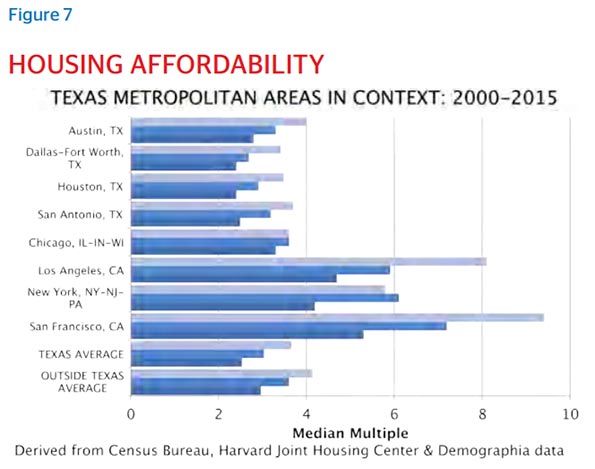
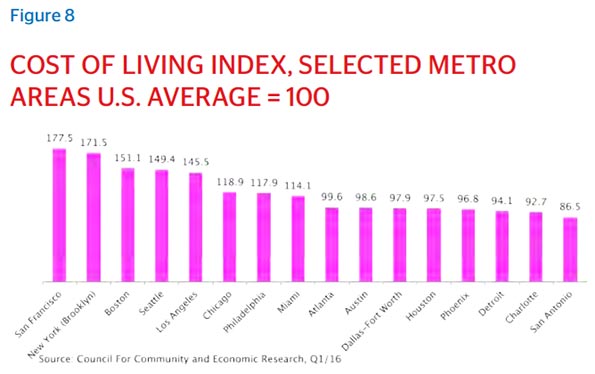
    These low housing prices explain much of San Antonio’s relatively low cost of living. According to the Council For Community and Economic Research, San Antonio’s living costs are less than half those of New York or San Francisco, and considerably less even than sunbelt boom towns such as Houston, Dallas-Ft. Worth, Austin, and Phoenix.
    “We don’t have enough people,” says Tony Quesada, editor-in-chief of the San Antonio Business Journal, “so we wind up importing talent from other parts of the country.”

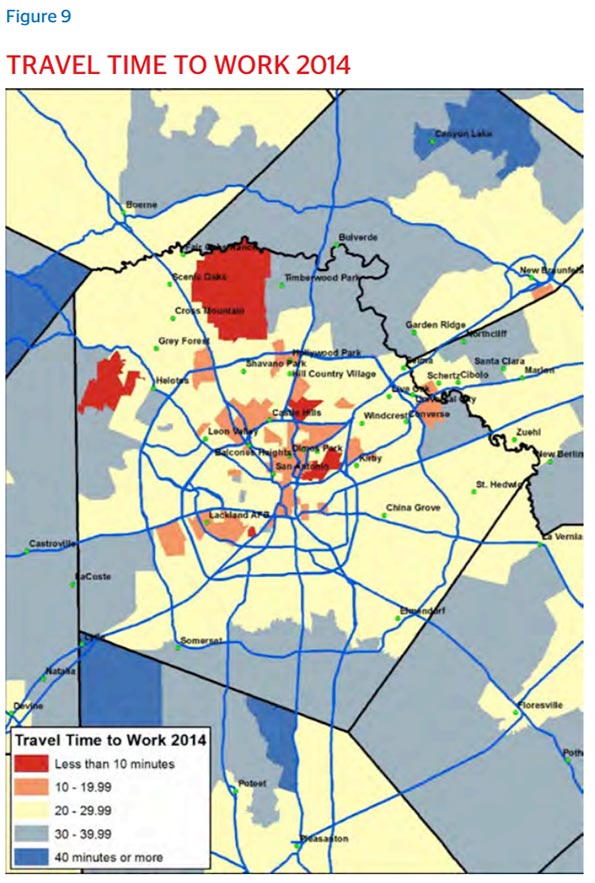
    Then there are quality-of-life factors: Average one-way commute times are several minutes below the U.S. average, at 22 minutes. And, once drivers get off the city’s highways, they will likely be strolling through any number of quiet, secluded neighborhoods.
    But complementing these factors is an attraction that you hear repeatedly during interviews and will find anecdotally while navigating the streets — “comfort.” San Antonio is a big city with a small-town feel, where people are friendly, and community relations are tight. This was reaffirmed in July, when Travel + Leisure magazine named San Antonio America’s Friendliest City, based on reader surveys.

    Former mayor Cisneros called this dynamic the city’s “secret sauce,” claiming that it has helped unify whites and Hispanics, as well as competing factions of the business and political communities. The sentiment was echoed by outsiders, including 31-year-old real estate developer Juan Cano. By his mid-twenties, he’d grown frustrated with San Diego’s traffic, high costs and mediocre job market. So he studied what city he should relocate to, and, after combining several economic and quality-of-life factors, chose San Antonio.

    He said the best thing he’s encountered in his seven years here is the city’s homey atmosphere.

    “What San Antonio beats people out on is not weather, is not number of activities or amenities; but what they beat out other cities and states on is congeniality,” he said. “People here really care about how your day is going.”

    Cano agrees with Cisneros that this openness also bolsters the business climate, including for small entrepreneurs like him, looking to make connections.

    Formation of a New Kind of City

    Of course, growth doesn’t occur in a bubble; when various factors drive lots of people into an area, there will be tangible changes at street level. A traditional urban commentator might guess that such growth would produce infill densification, as it did for the coastal cities that boomed during America’s industrial era.

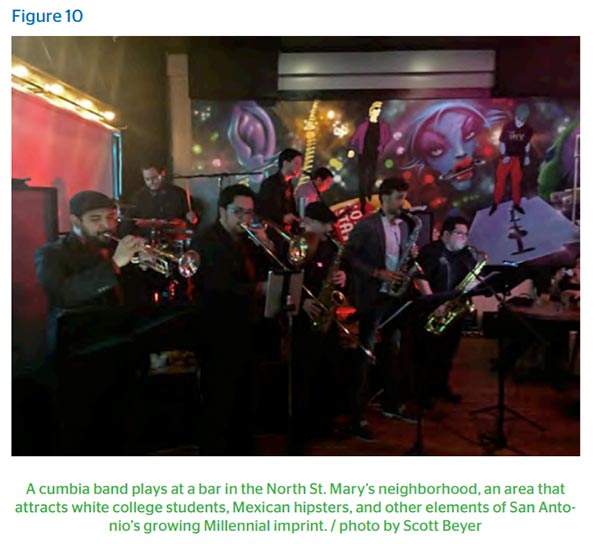
    And to some degree, such “buzz” is now felt in Texas’ opportunity cities, including San Antonio. While its downtown remains largely for tourists, adjacent areas are growing more vibrant and cultured, thanks to millennial population growth and city-funded enhancements. The River Walk has been extended north and south of downtown, sparking mid- and high-rise development. Along the “Southtown” portion of the route, new condos mix with historic homes and mostly unpretentious nightlife. Along the route’s northern portion, the city pursued a public-private partnership to create the Pearl District, a mixed-use, master-planned development that has become one of America’s leading warehouse revitalization stories. Other interior neighborhoods — North St. Mary’s, Tobin Hill and the Market Square area in west downtown — are slowly filling in.
    But if San Antonio is showing some welcome growth in its inner ring, the city’s trajectory continues further outward, primarily to the north. This section of town long was the exclusive white area, while lower-income Mexican-American families dominated the west and south sides, and African Americans the east side. This segregated pattern still defines San Antonio, although things are changing.
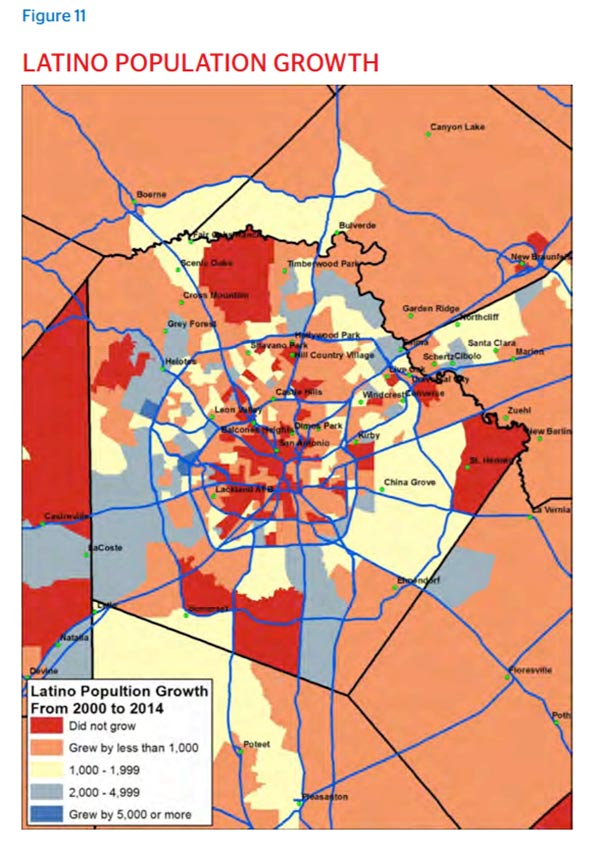
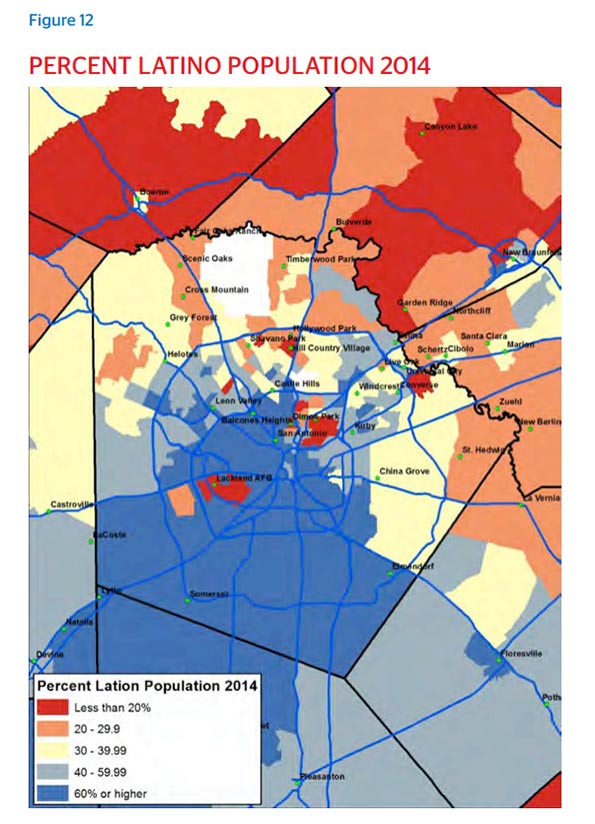
    Stone Oak is the prototypical example: Once a stretch of undeveloped Texas Hill Country extending north from the state Highway 1604 loop circling the central city, it has become a gargantuan master-planned community of 31,000 residents in just two decades.159 It features densely packed single- and multifamily housing and retail rolling for miles.

    Stone Oak accommodates much of San Antonio’s new money, which is to say that it is one-third Hispanic. The community is populated by health workers, techies, staffers at nearby UTSA and most notably, Mexican nationals.

    Growth is even occurring in the historically hyper exclusive suburbs carved out within San Antonio’s city boundaries, like Alamo Heights and Terrell Hills. According to Sáenz, these areas were once forbidden to minorities. Today, there is a Hispanic presence in both suburbs, and generally throughout San Antonio’s north side. This suggests that the city is providing upward mobility for large portions of its Hispanic population.
    Future Challenges

    Cities that enjoyed the rapid growth now experienced by San Antonio have also suffered the downsides. New York, San Francisco and Los Angeles, among others, are economically dynamic and culturally interesting, yet overwhelmed by overloaded infrastructure, service failures, growth-killing regulations and patronage-ridden political machines that only worsen these problems. When I asked community leaders how San Antonio could avoid this fate in coming decades, two answers surfaced.

    The first was that San Antonio needed to continue expanding infrastructure, a point emphasized by local billionaire and Spurs owner Red McCombs. This could mean everything from doubling down on housing and highway construction to exploring 21st-century solutions like green energy. While there have been recent expansions, the San Antonio-Austin corridor lacks a top-notch airport, which may explain why neither city has had the same success attracting corporations as had Houston and Dallas. In other cases, however, the city is taking the initiative in infrastructure growth. In May, the San Antonio Water System board approved the takeover of the Vista Ridge Pipeline, a new project that will diversify the water supply. San Antonio also recently launched SA2020, a plan designed to improve the city on 58 quality-of-life indicators.

    Fortunately, San Antonio is in a financial position for such expansion; while other U.S. cities’ pension debts have prevented them from even providing well-paved streets. San Antonio has among the lowest per capita unfunded pension liabilities of any major city. For six consecutive years, the city has received a perfect bond rating. It also has a population, said McCombs, while overlooking the downtown skyline from his north-central office, that understands intuitively the connection between capital investment and prosperity.

    “You give Texans a good reason for paying taxes,” he said, “and they’ll pay them.”

    Secondly and perhaps even more critically, San Antonio needs to continue mobilizing its minority population, mainly by improving its K-12 education system. While there are countless success stories here, there are also Mexican-Americans and African Americans who have lived in multigenerational poverty on the city’s west, south and east sides, and low-skilled, non-English-speaking immigrants are still arriving. Many of their neighborhoods, while certainly nicer than most urban American slums, are nonetheless rundown and have lower-performing public schools than those in outlying areas. The city and the state have taken several recent measures to address the problem, including a city voter-approved sales tax increase for Pre-K schooling, and charter school expansion.

    Other K-12 measures have been more innovative. The SA Works program, for example, is a partnership between the city and the Chamber of Commerce to connect high school and college students with local companies and other supporting agencies, who then offer internships and job-shadowing opportunities.

    In June, a partnership was launched between the San Antonio Independent School District and H.E.B. to open five specialty schools that will plug students into the local employment scene.

    If San Antonio continues embracing new ideas to address its infrastructure and education challenges, it will remain a regional growth engine, and an example for other cities. America, after all, is slated to become 23 percent Hispanic by 2035. San Antonio represents an extreme early version of this demographic shift, and an example of how it can work.

    “San Antonio,” concluded Cisneros, is “driven by the understanding that jobs and incomes are the way we’re going to progress, and, in fact, we have. I see it in the quality of restaurants, the [more diverse] crowd at the Spurs [games], in the retail mix of the city, the integration in neighborhoods, with Latinos and African Americans moving into neighborhoods once beyond their reach. Intermarriage. It’s almost as if a new culture has emerged. … It’s one culture adapting the things that it likes about another culture.”

    These same economic and cultural improvements can be observed in other big Texas cities, suggesting that they are the outcome of liberalized polices. San Antonio, as the Mexican-American capital, has long been the underdog of the four great Texas cities. But today its Latino character is proving to be yet another asset, contributing a unique wrinkle within Texas’ broader urban growth story.

    Scott Beyer is a Forbes columnist and cross-country traveler who covers U.S. urban issues. For three years, he’s circling America to live for a month each in 30 cities, starting from Miami and ending in New York City. The point is to write a book about revitalizing cities through Market Urbanism — which is the intersection of classical liberal economics with urban issues. But he also writes articles on multiple other city subjects.

    Top photo: Zereshk [GFDLCC-BY-SA-3.0 or CC BY 2.5], via Wikimedia Commons
  • Havana, Cuba–Stagnation Doesn’t Preserve Cities, Nor Does Wealth Destroy Them

    Before taking my trip to Havana, one thing that I was curious about was how a half-century of Communism had affected the built fabric. While there are obvious disadvantages to economic stagnation, I figured that it would have at least created a charming-looking city. There are, after all, a handful of U.S. cities, and numerous European ones, that have resisted growth, modernization, and the automobile, only to remain quaint and historic. But it didn’t take even a 10-minute cab ride from the airport to realize that my assumption about Havana had been naïve—even if it is still held by many of the city’s blissfully uncurious tourists.

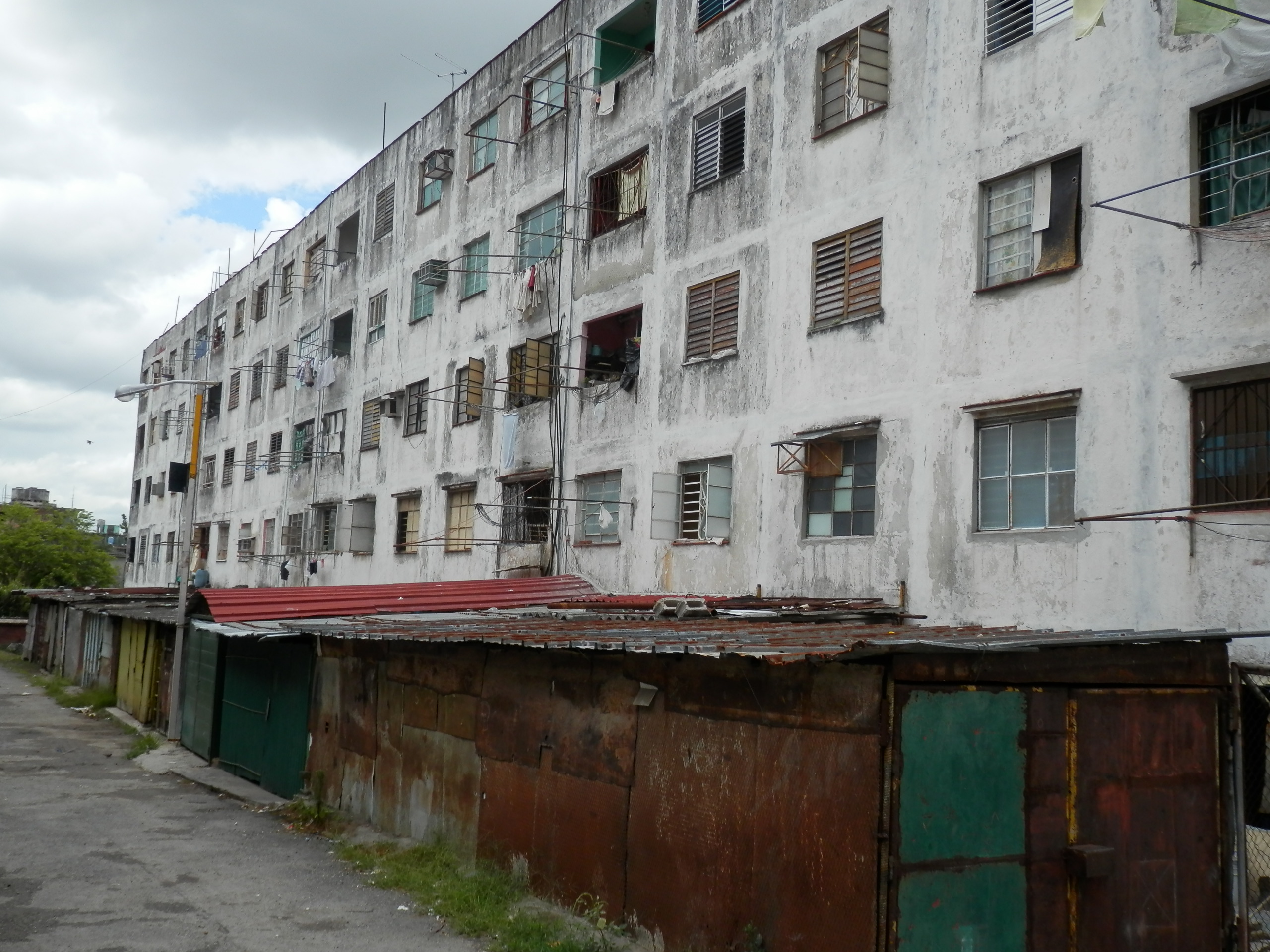
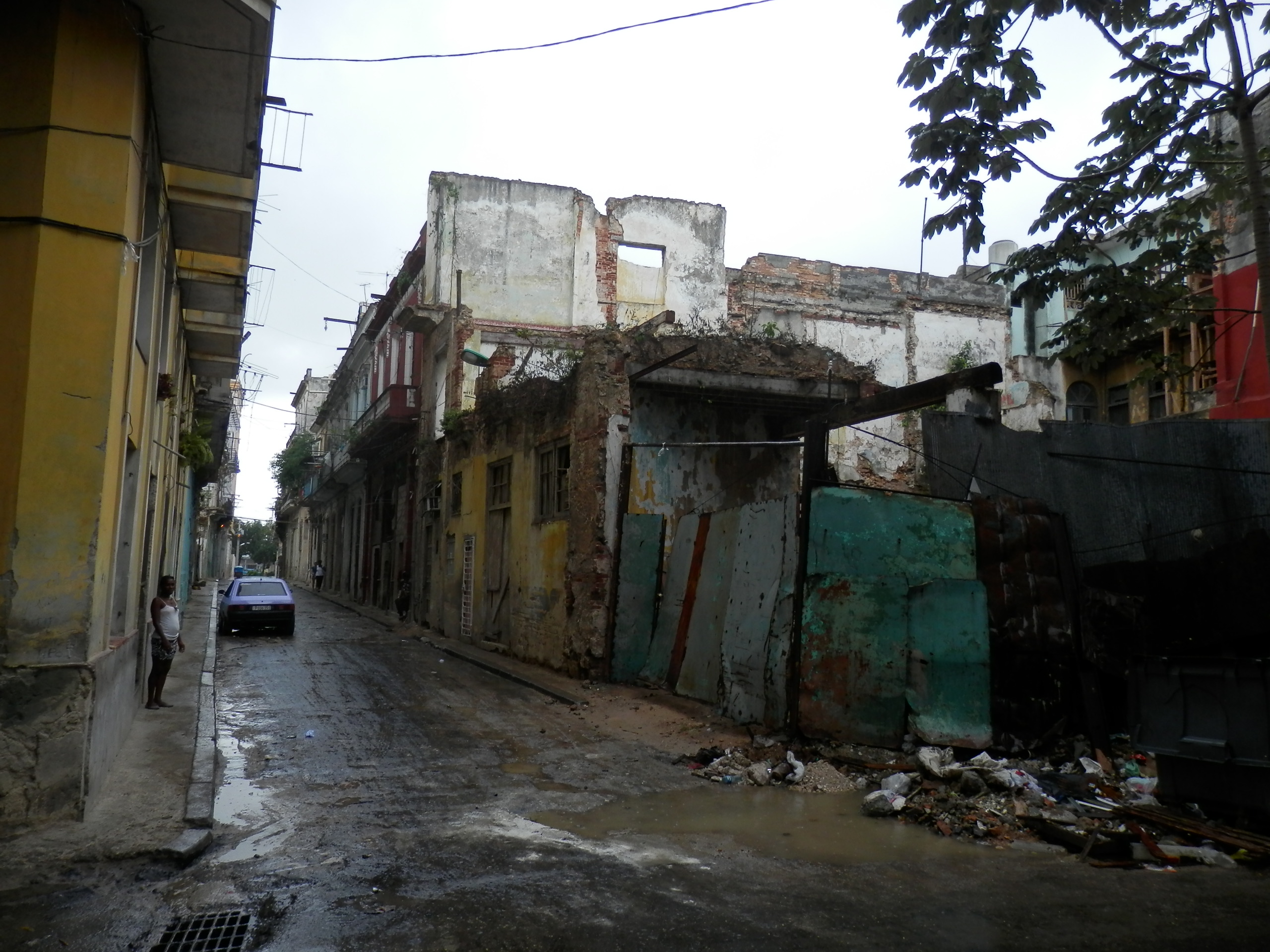
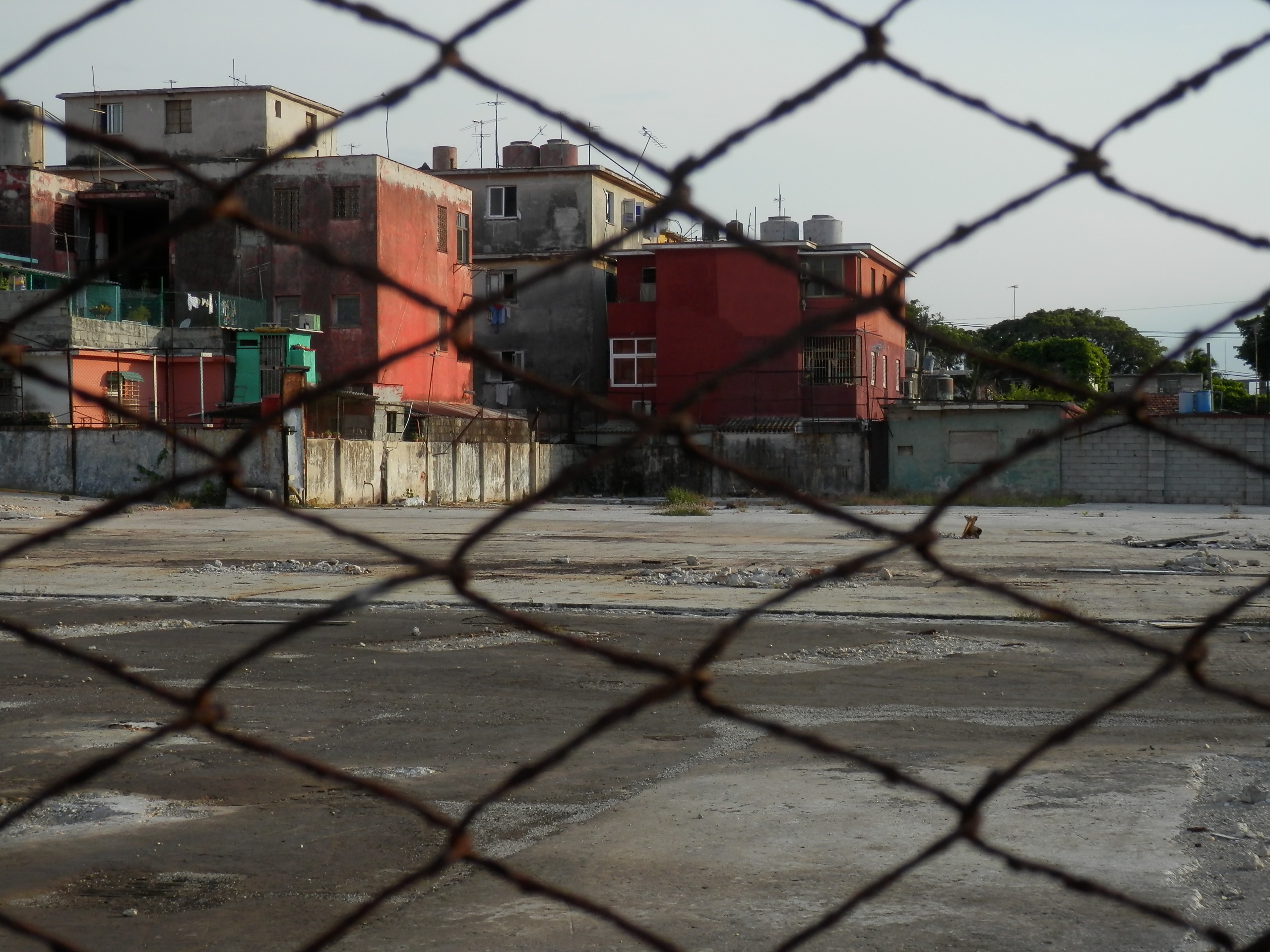
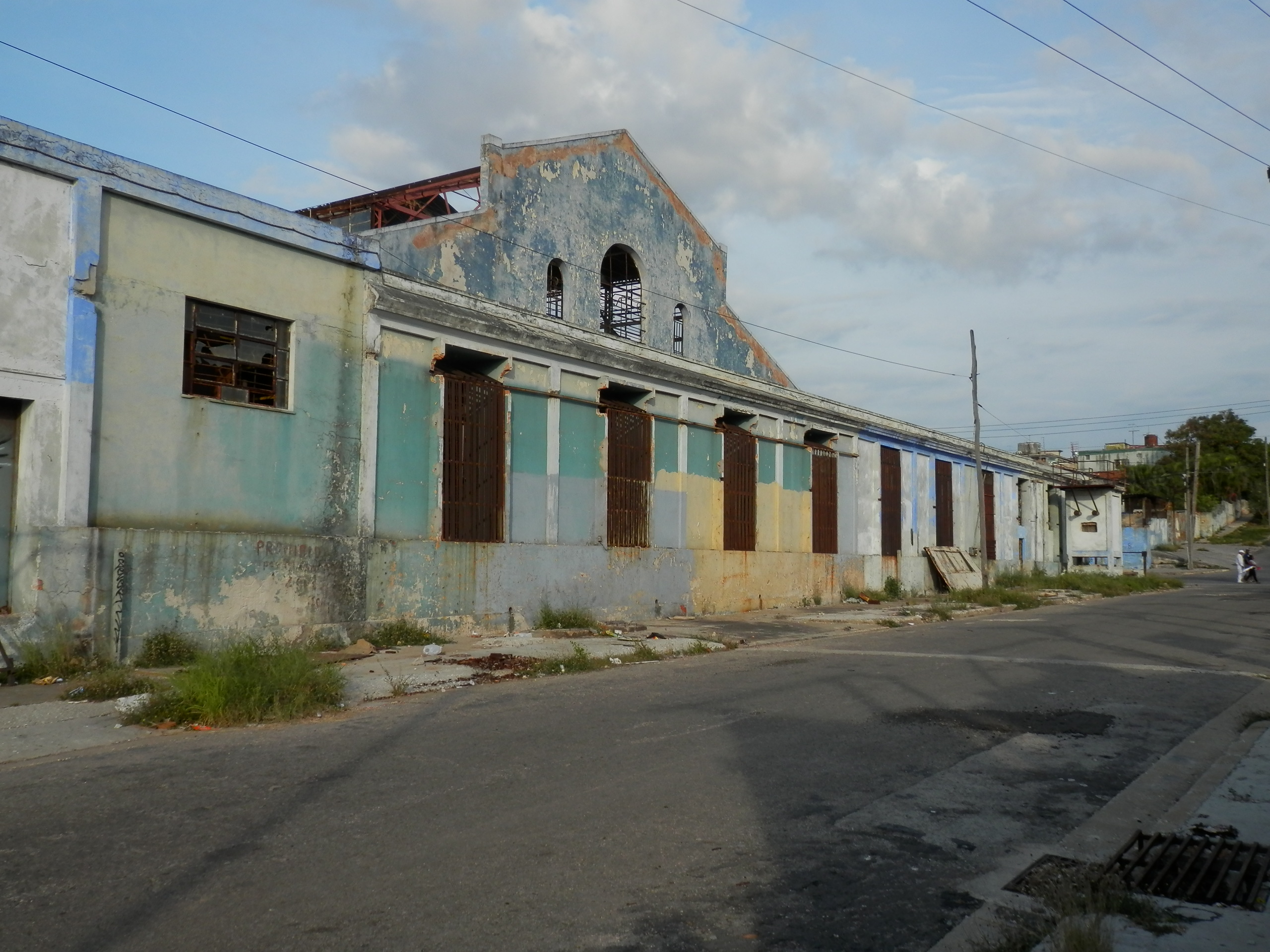
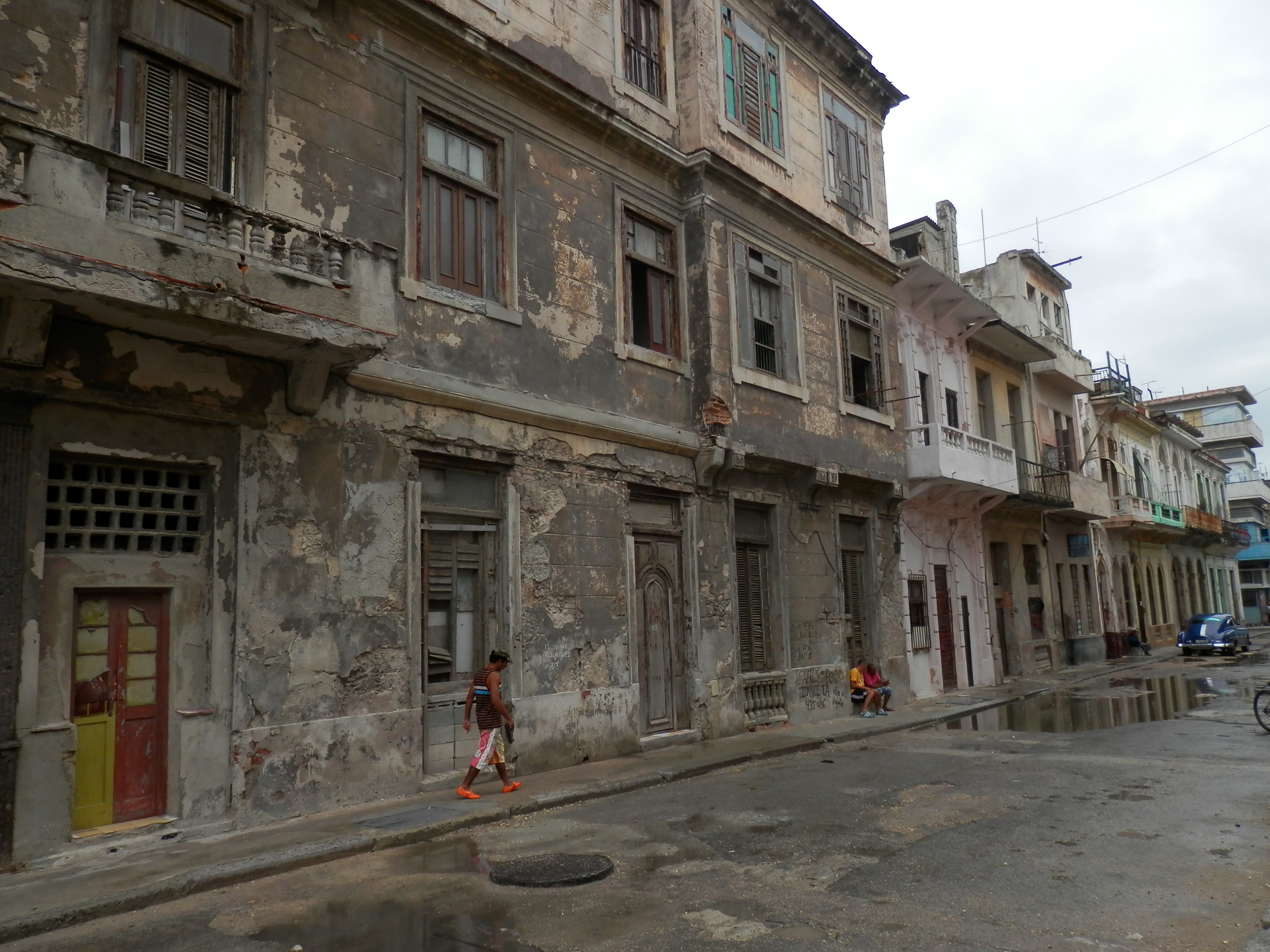
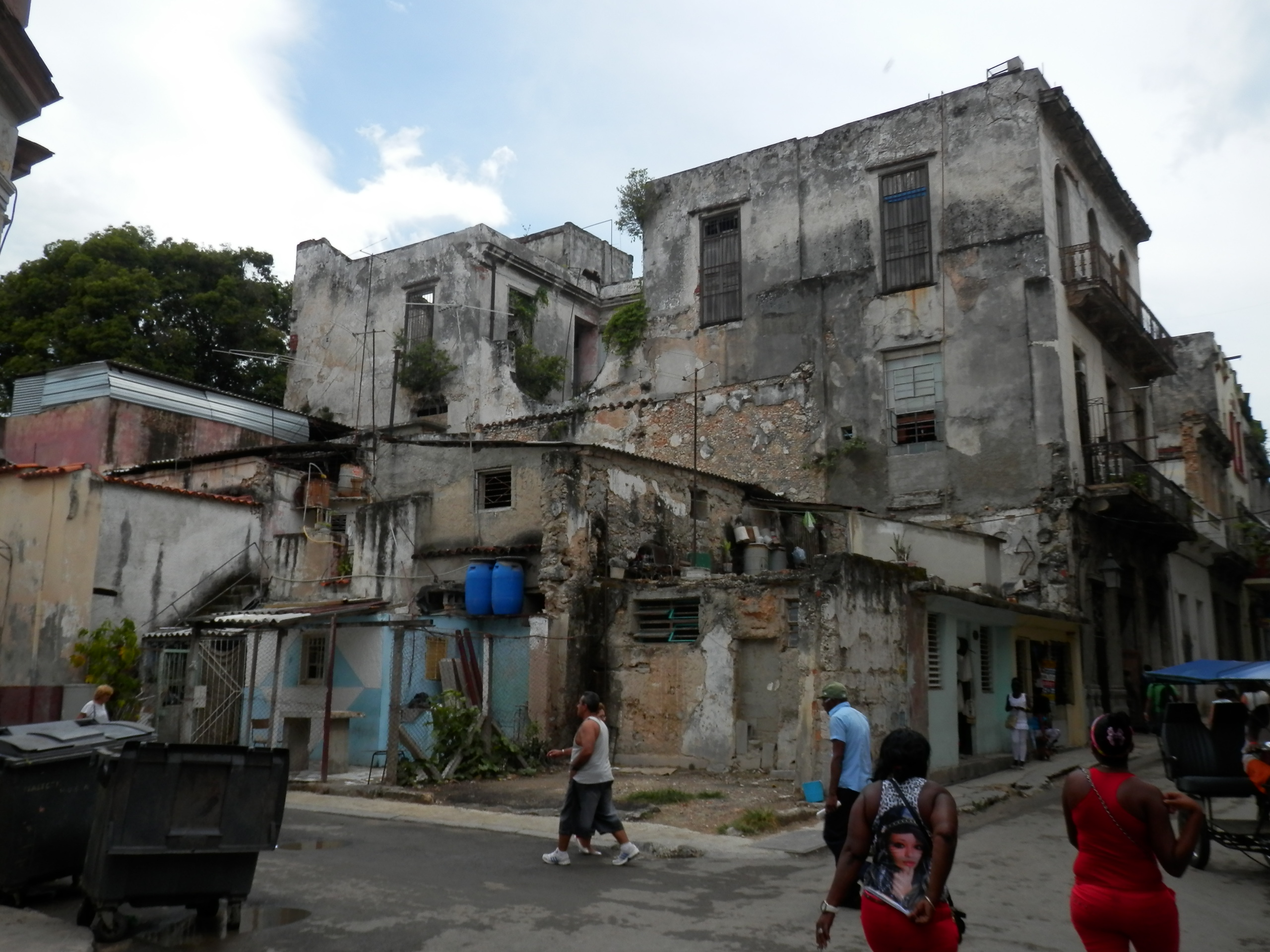
    In fact, very little about Havana has been “preserved.”  Instead, everything in the city is merely old, and because little gets produced, nothing is replaced. This applies to the automobiles, furniture, hand tools, manufacturing equipment—and most certainly the buildings. Collectively, this stagnation has destroyed the look of the city, with a physical blight that stretches nearly every block from downtown to the outer slums.

    OLYMPUS DIGITAL CAMERA

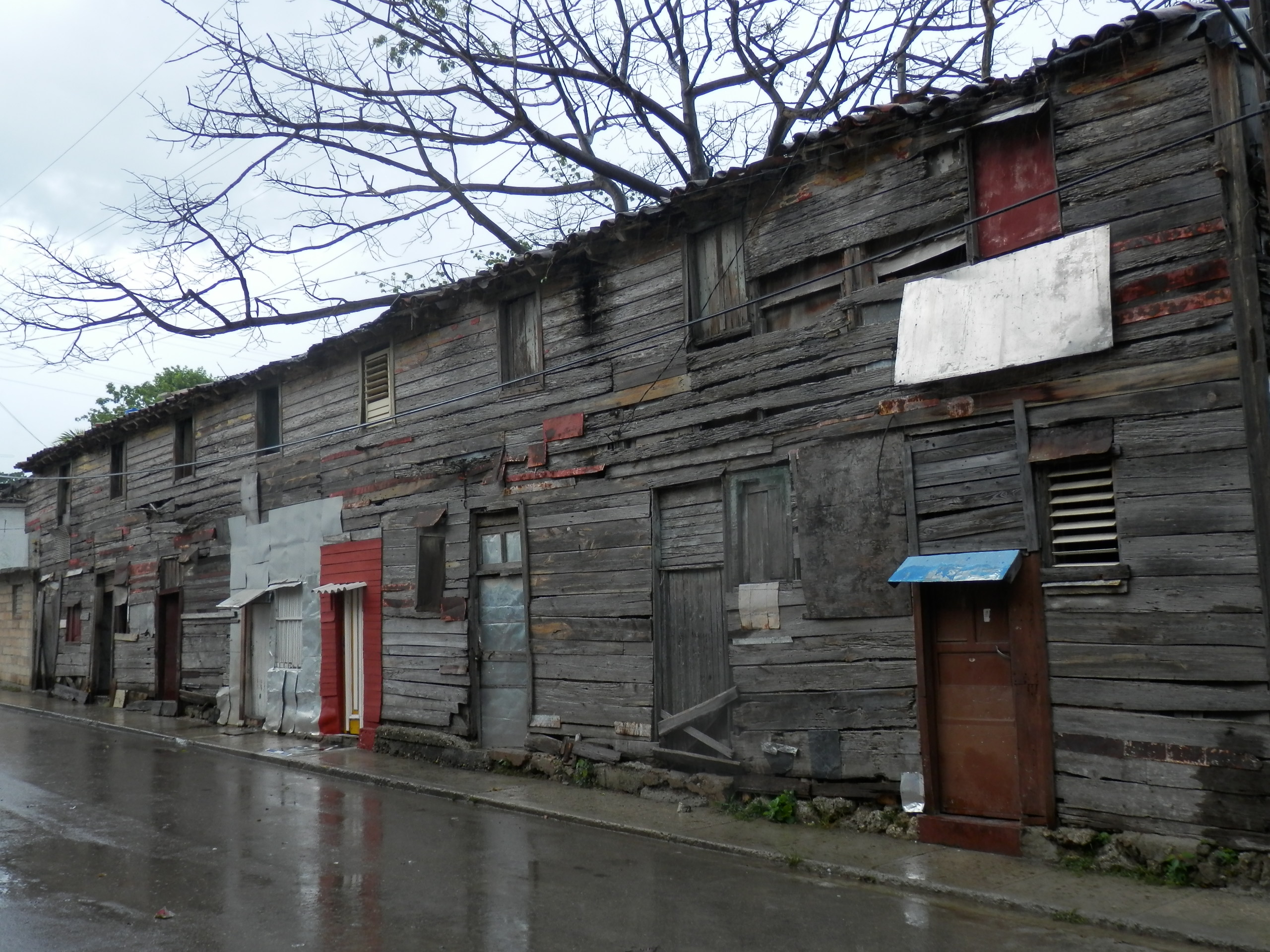
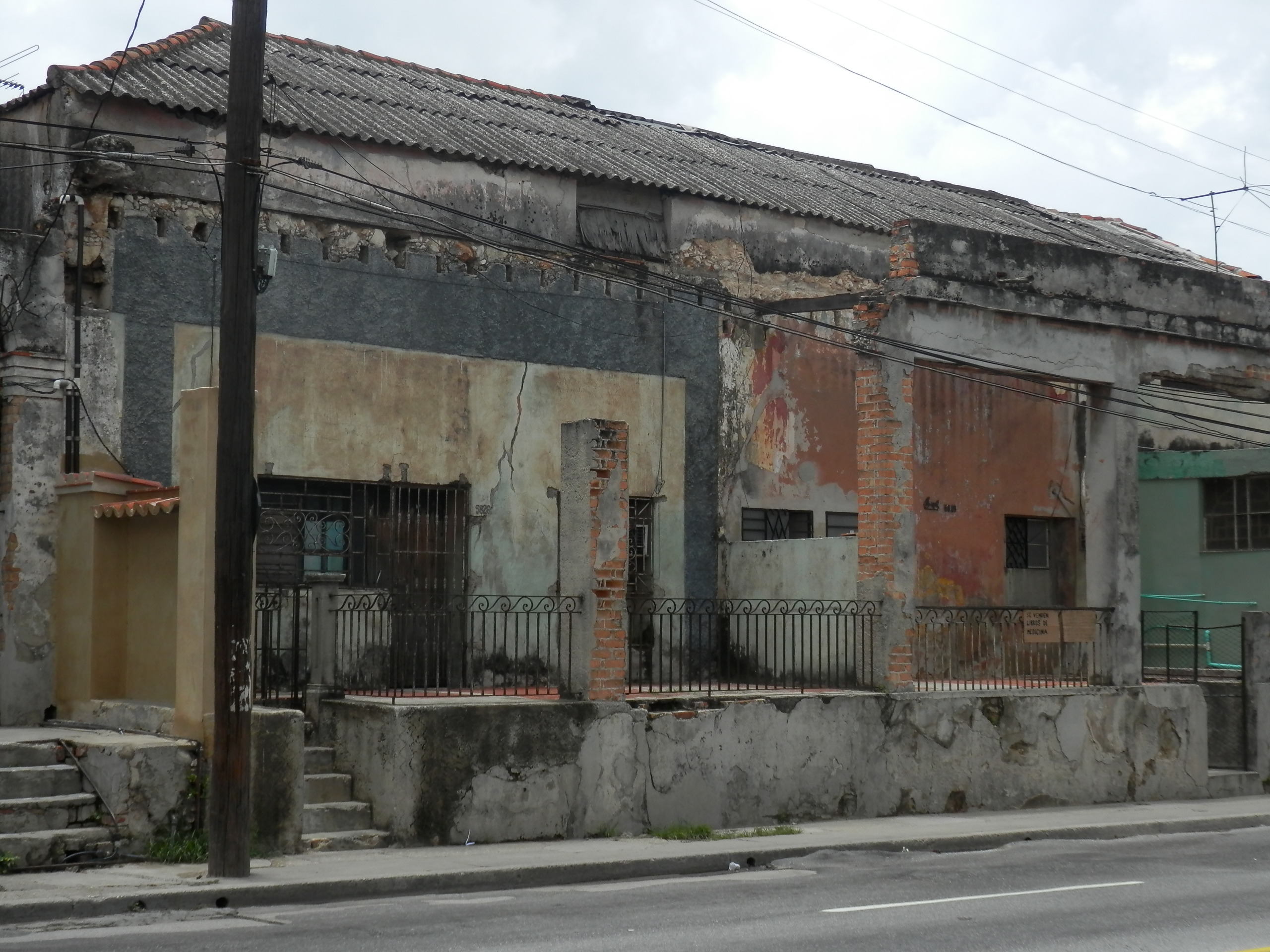
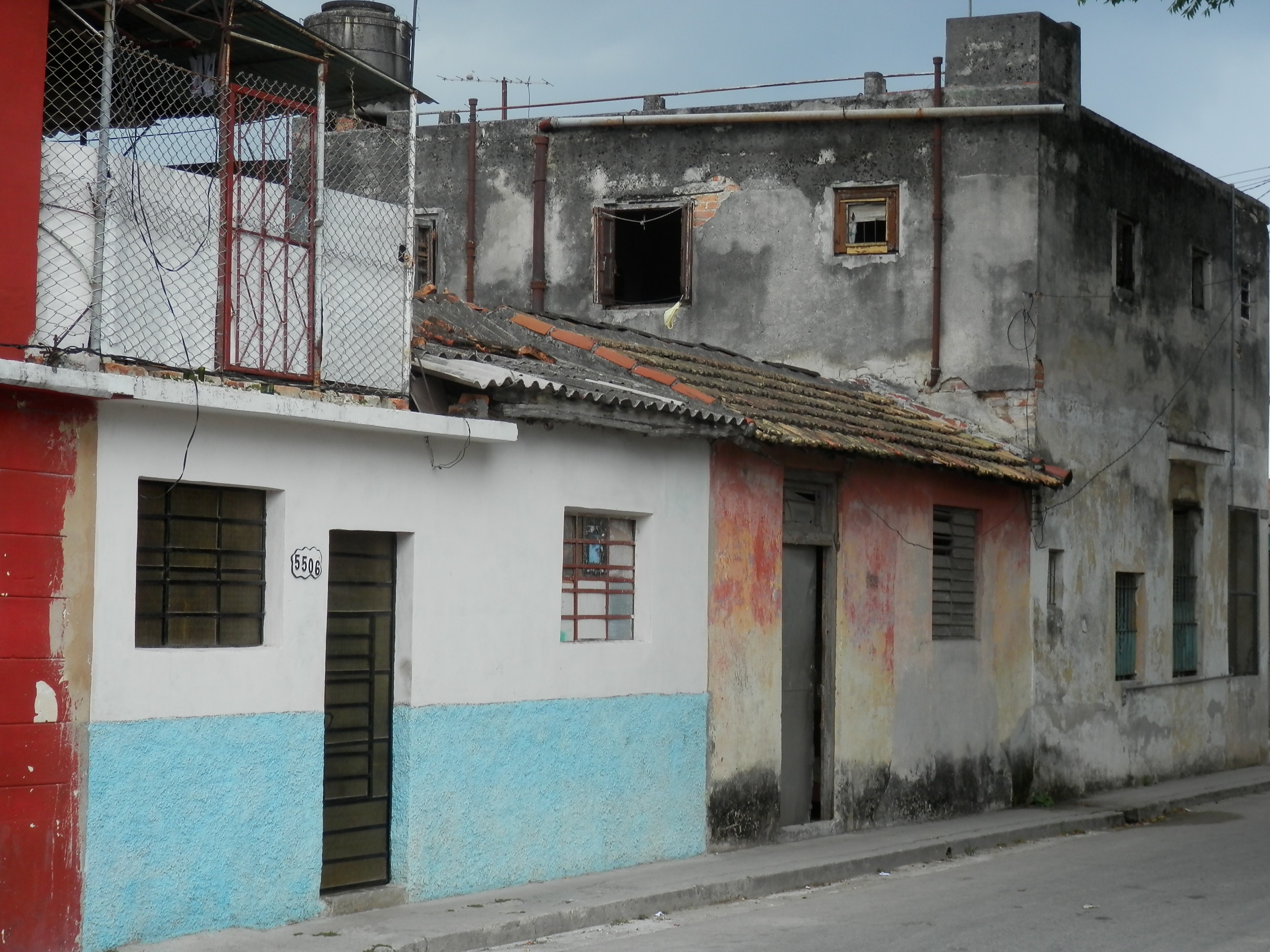
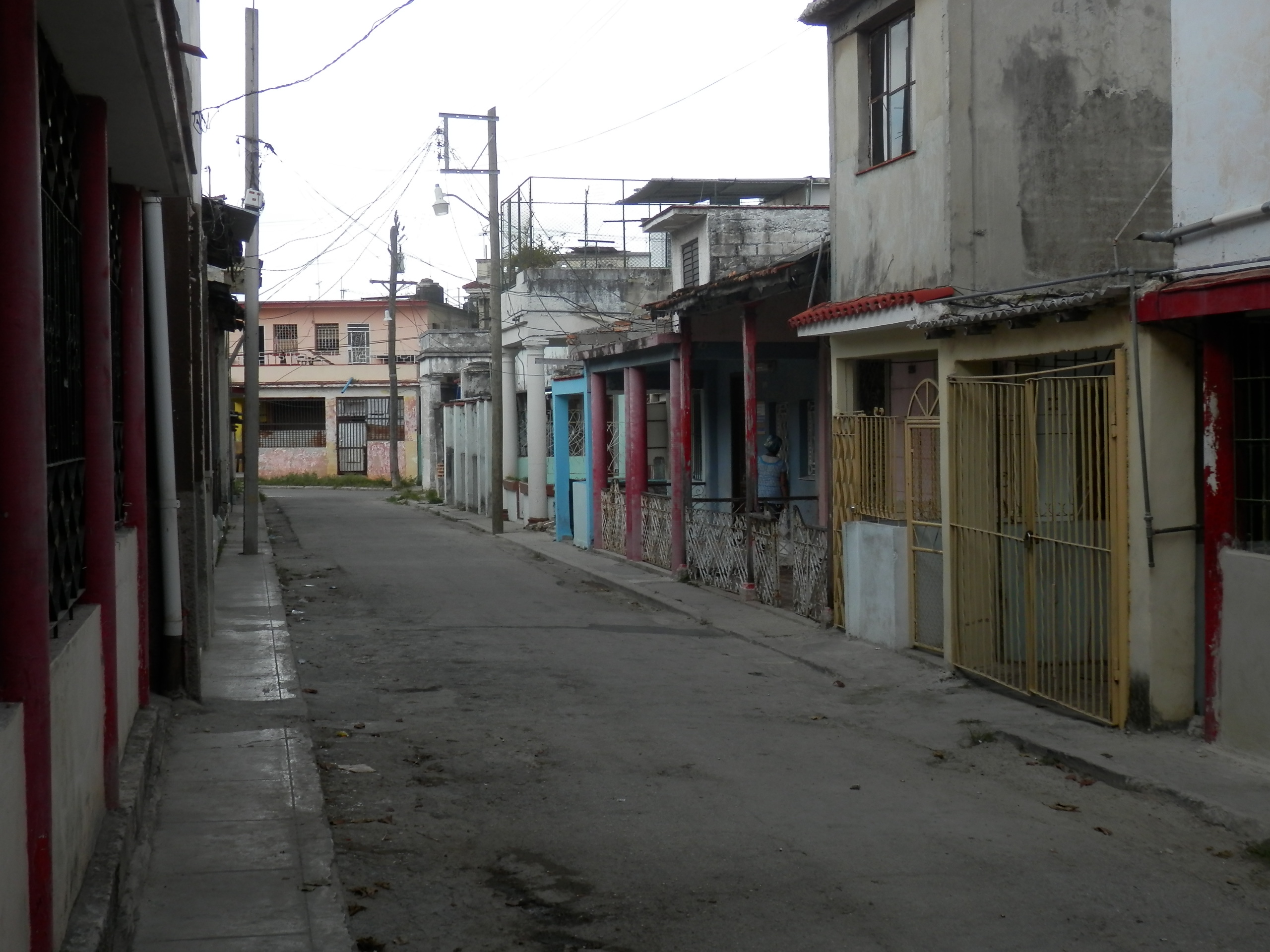
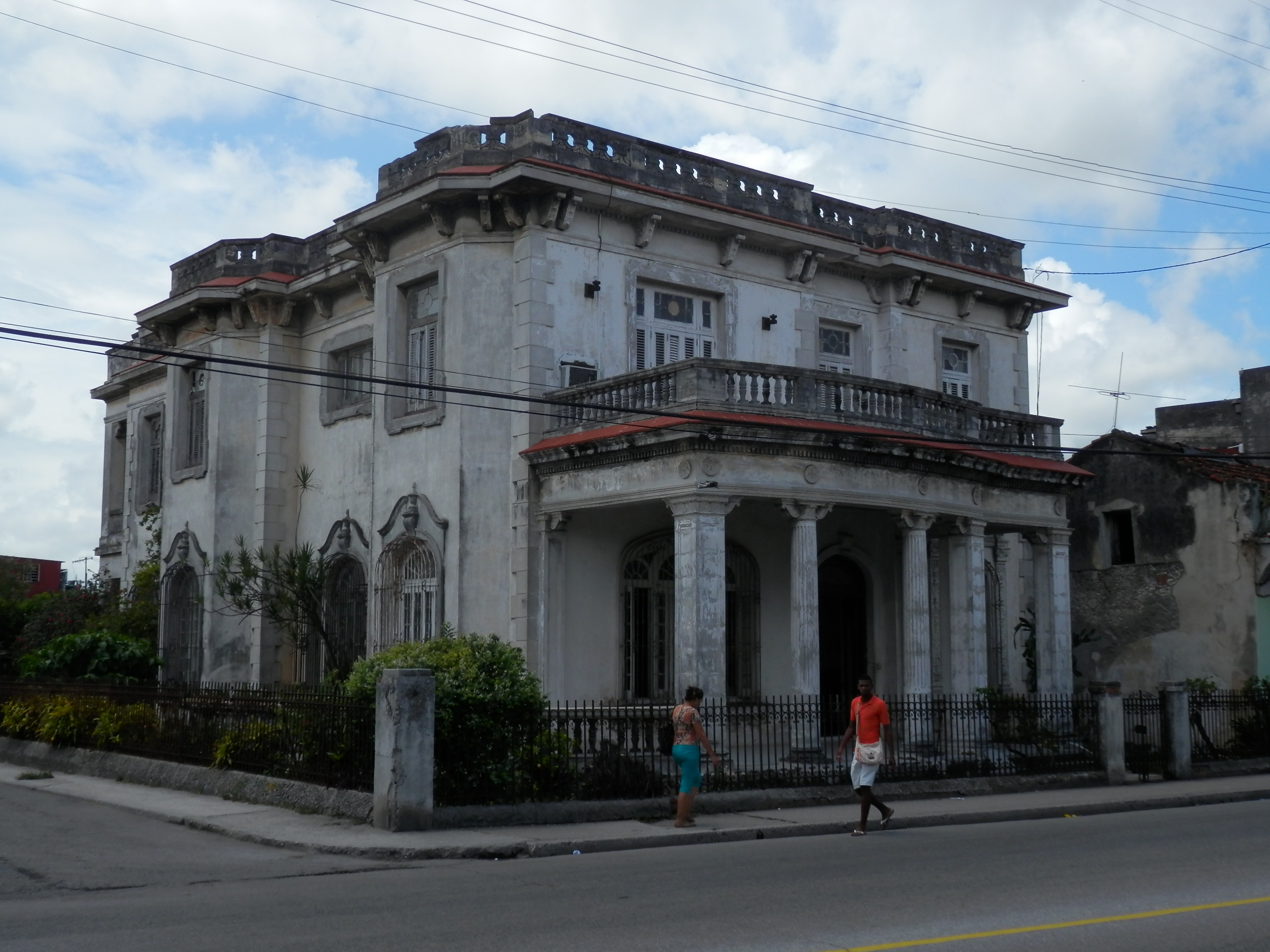
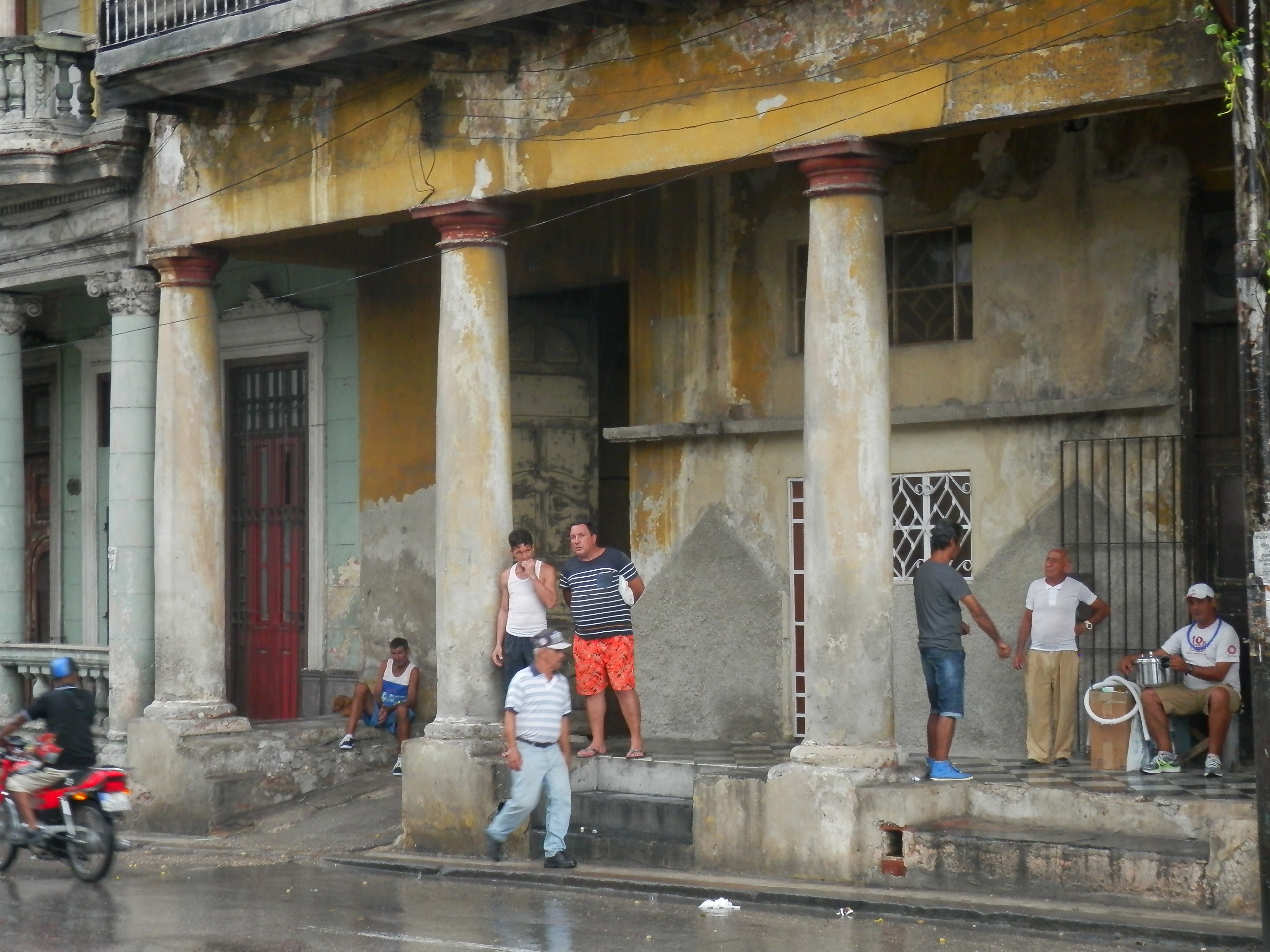
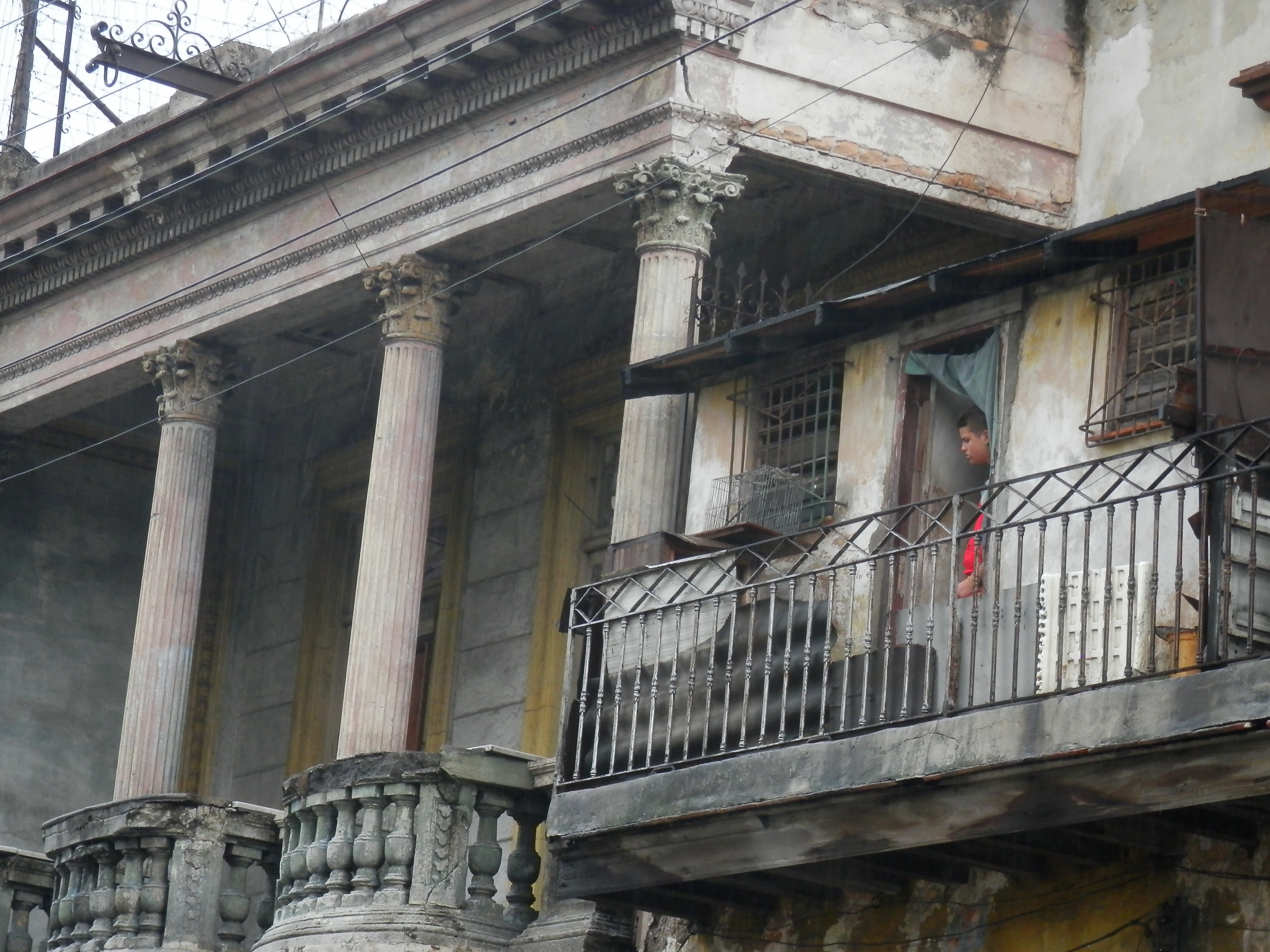
    If I could define in one statement what Havana looks like, after four days of extensively biking and walking through, I’d call it the Latin American Detroit. It was a once-great city that declined because of bad policies, and its pervasive ruination serves as a constant reminder of this. The houses themselves, while large and ornate, are almost uniformly inadequate by U.S. standards. If they have not crumbled to the ground altogether, many are caving in. The foundations are crooked, full of holes, and marred by broken windows and doors. Because of Havana’s European roots, stucco is a common material, but on most buildings is falling off, or in some cases has disappeared. Almost every building has dirt and grime, while some are covered in it.
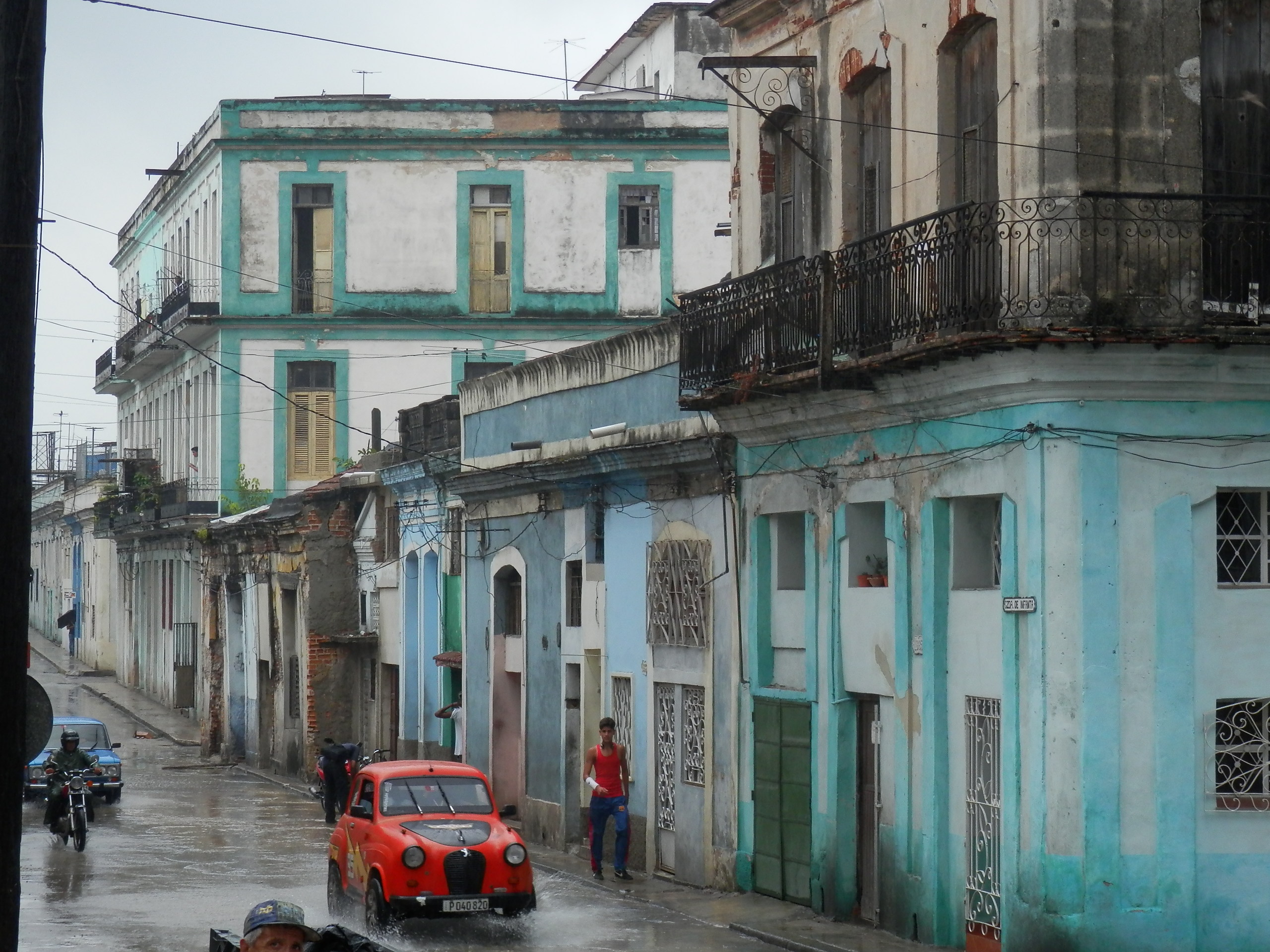
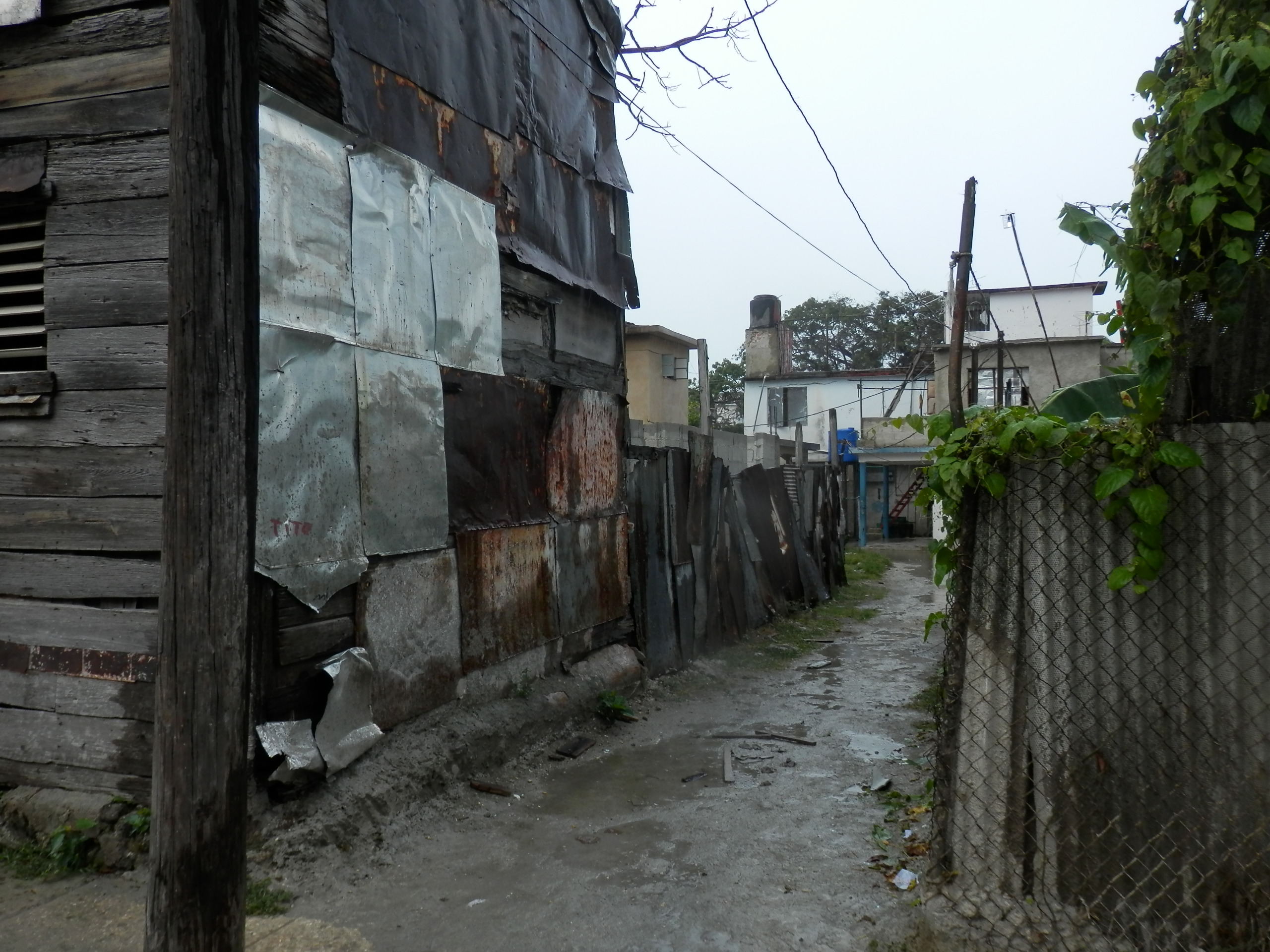
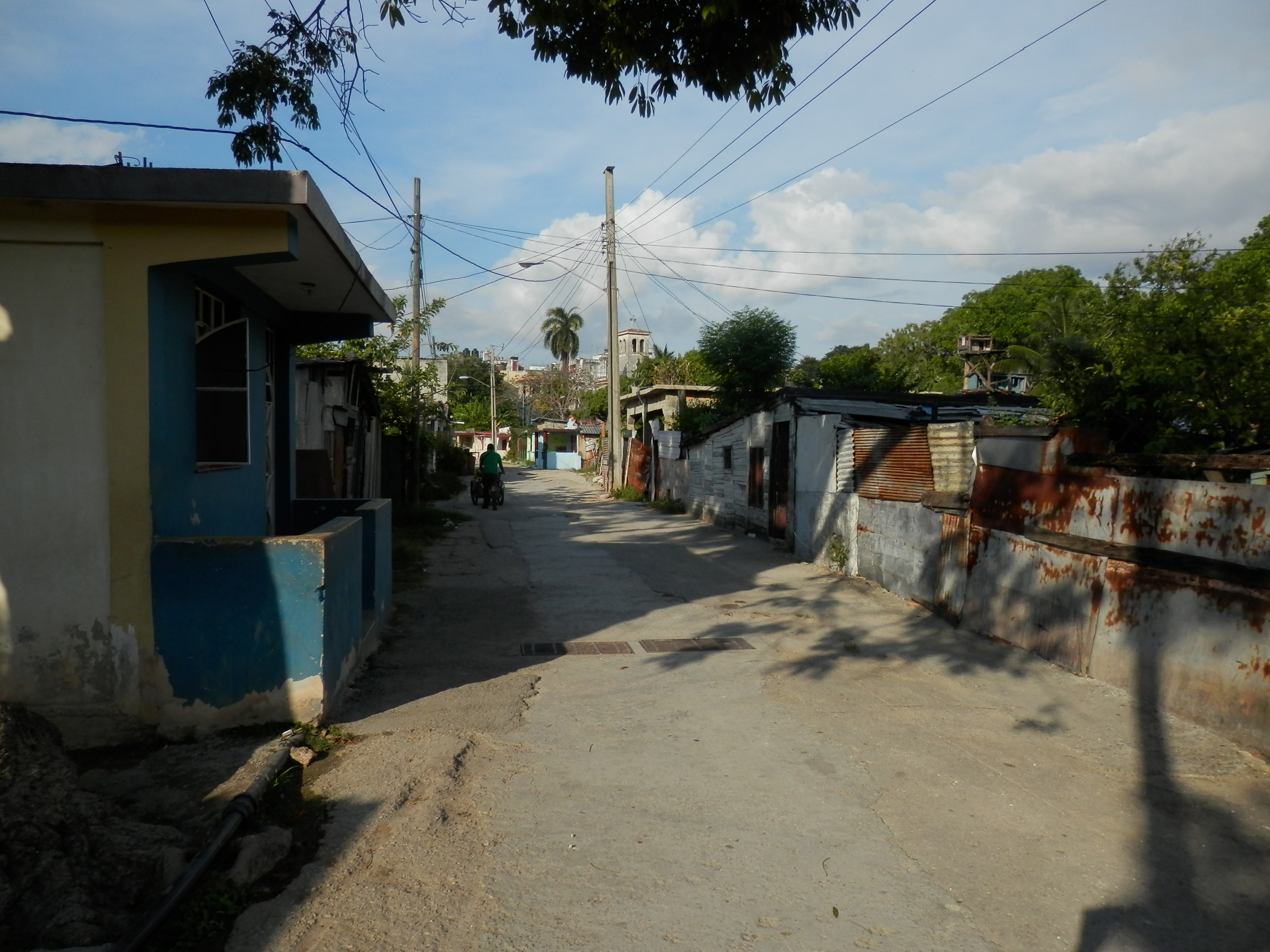
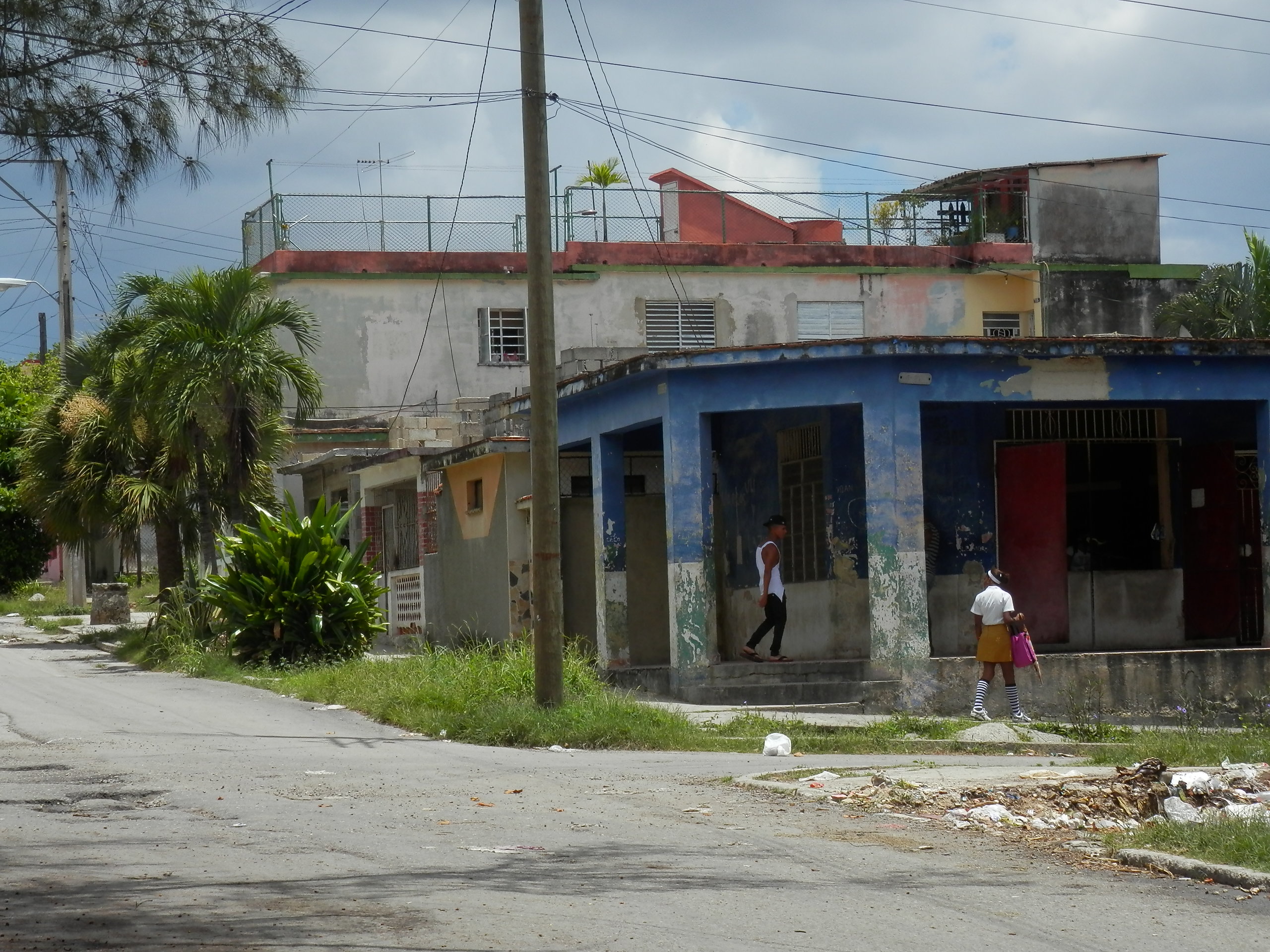
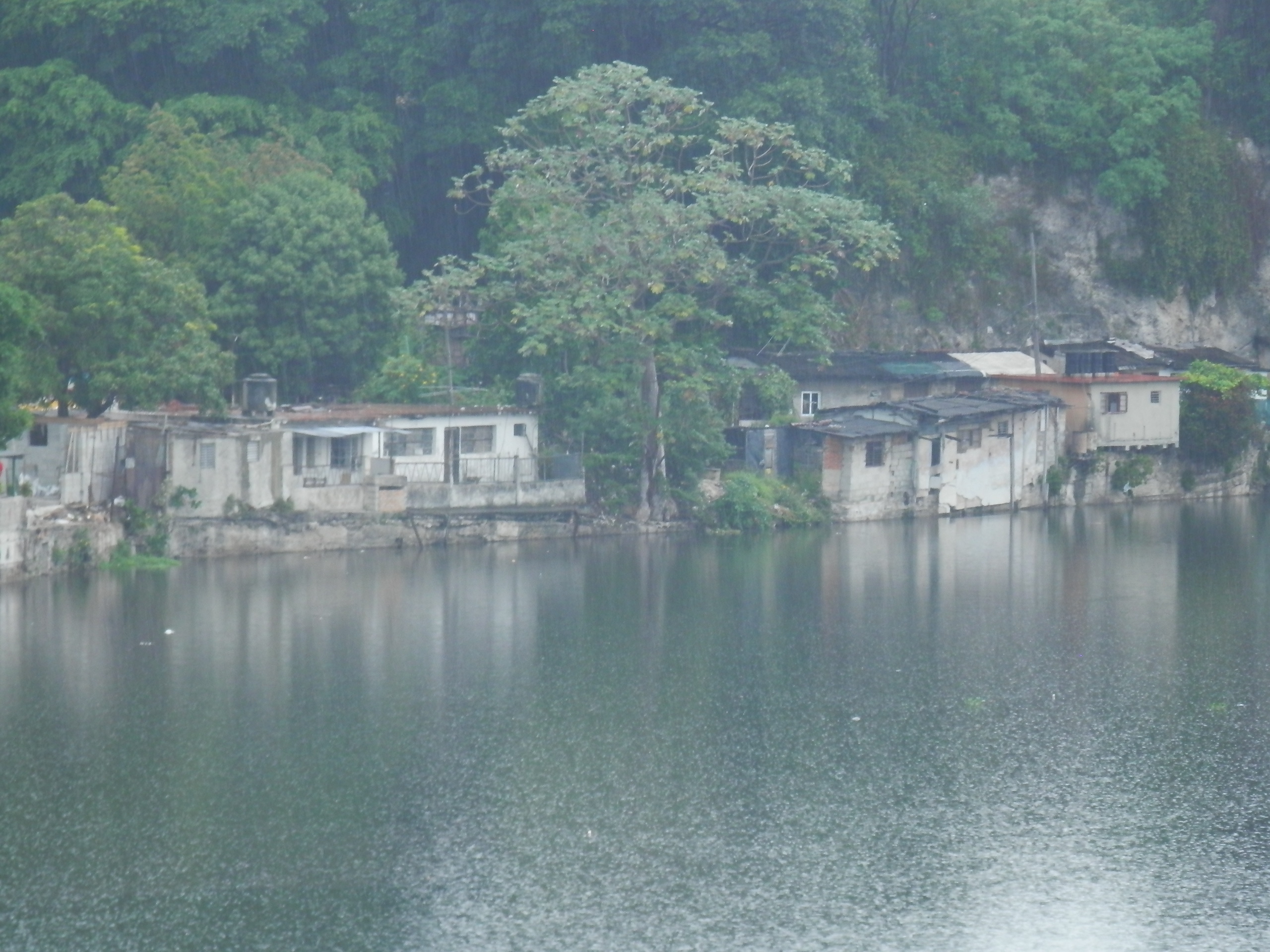
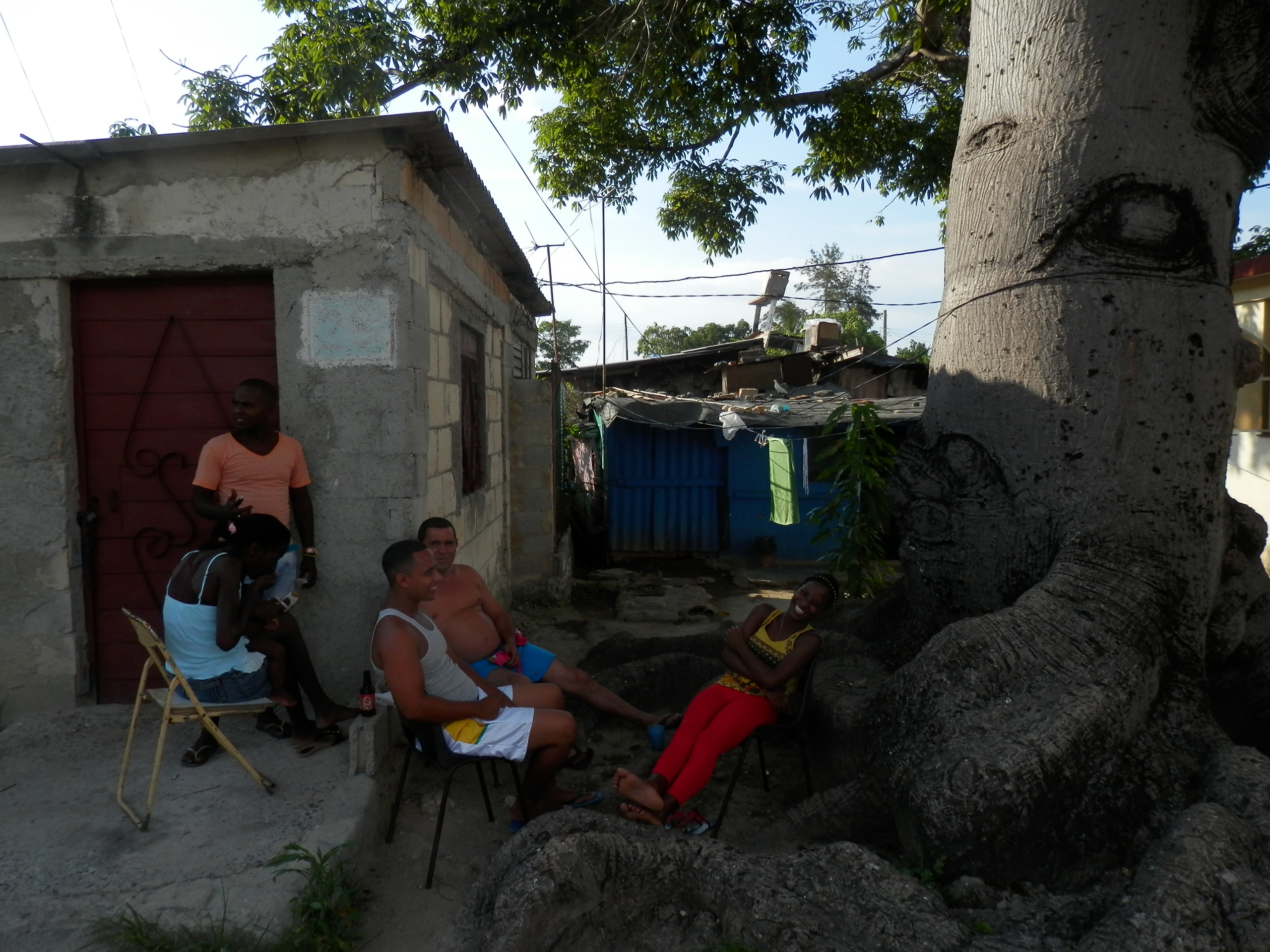
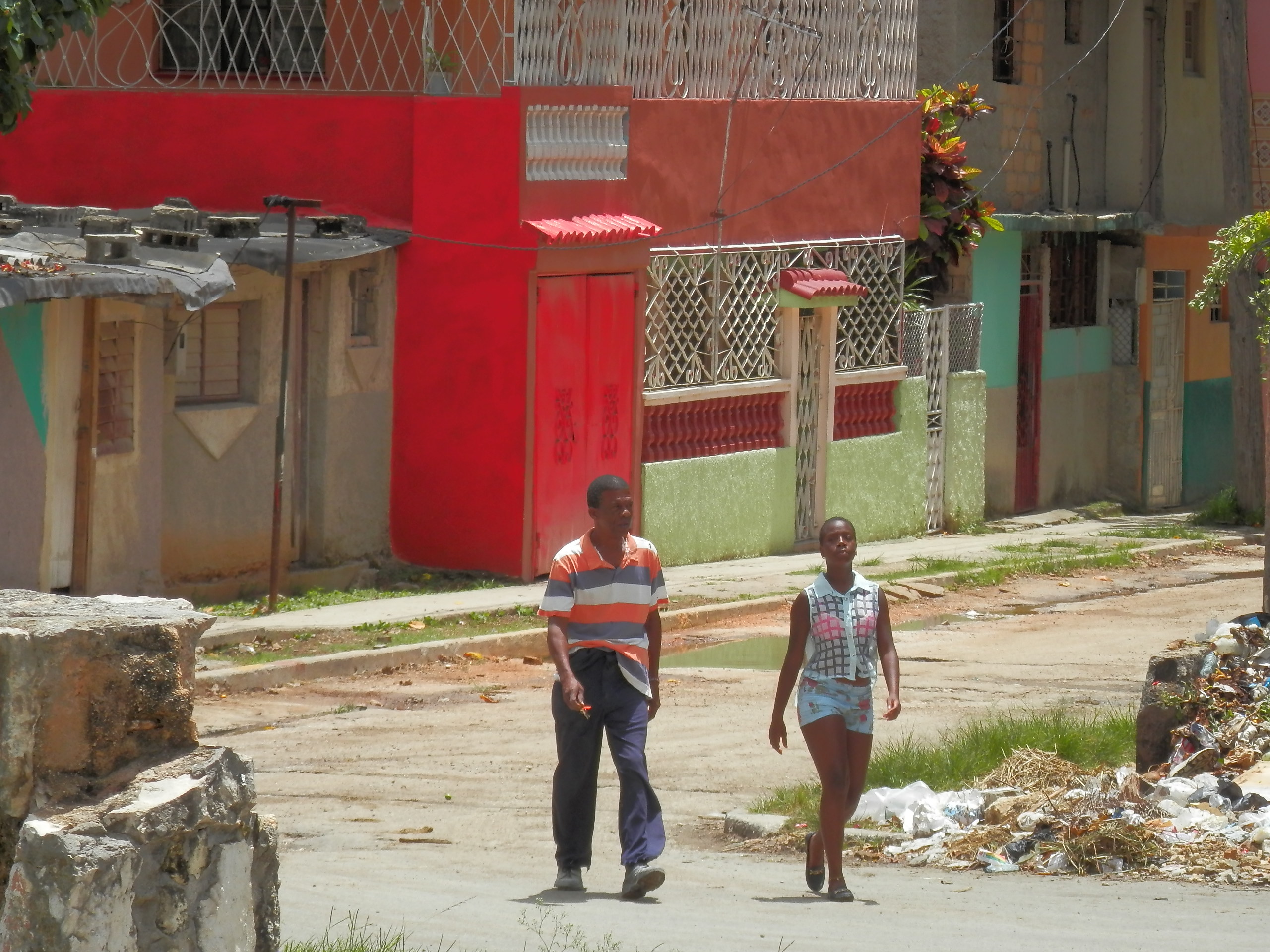
    And this is for Havana’s nice parts. Once I began biking out of the central neighborhoods and into the slums, I found that symbols of past wealth disappeared altogether, and were replaced with what in the U.S. would be considered shacks. These structures were usually patched up with knotted wood, metal scraps, and thatching. One gentlemen who lived in the poor neighborhood of Cerro, and who I spoke with at length, described his area as akin to a Brazilian favela—which I found believable. The two pictures I took below were from his front porch, and mirrored the aesthetic of such areas.

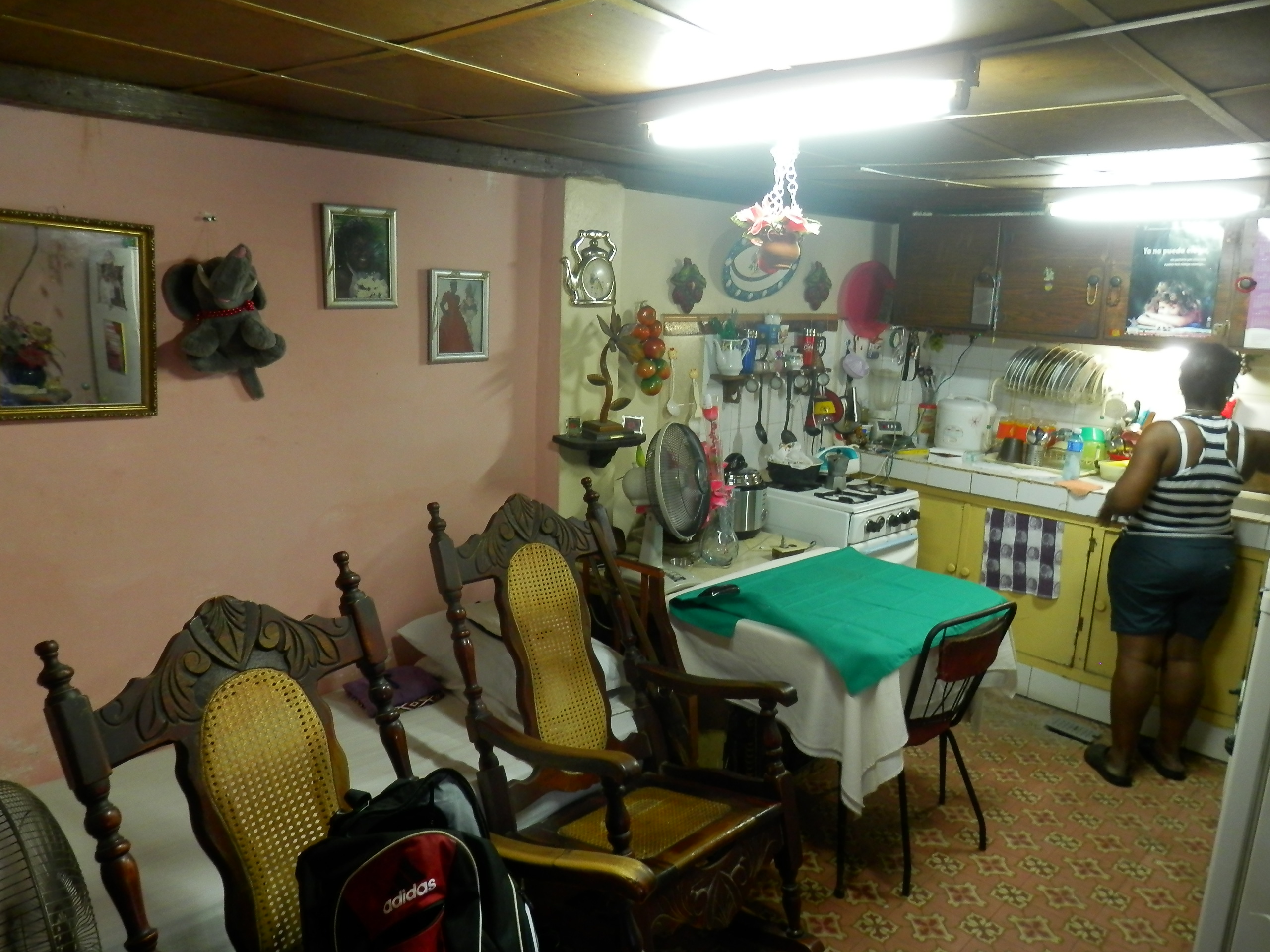
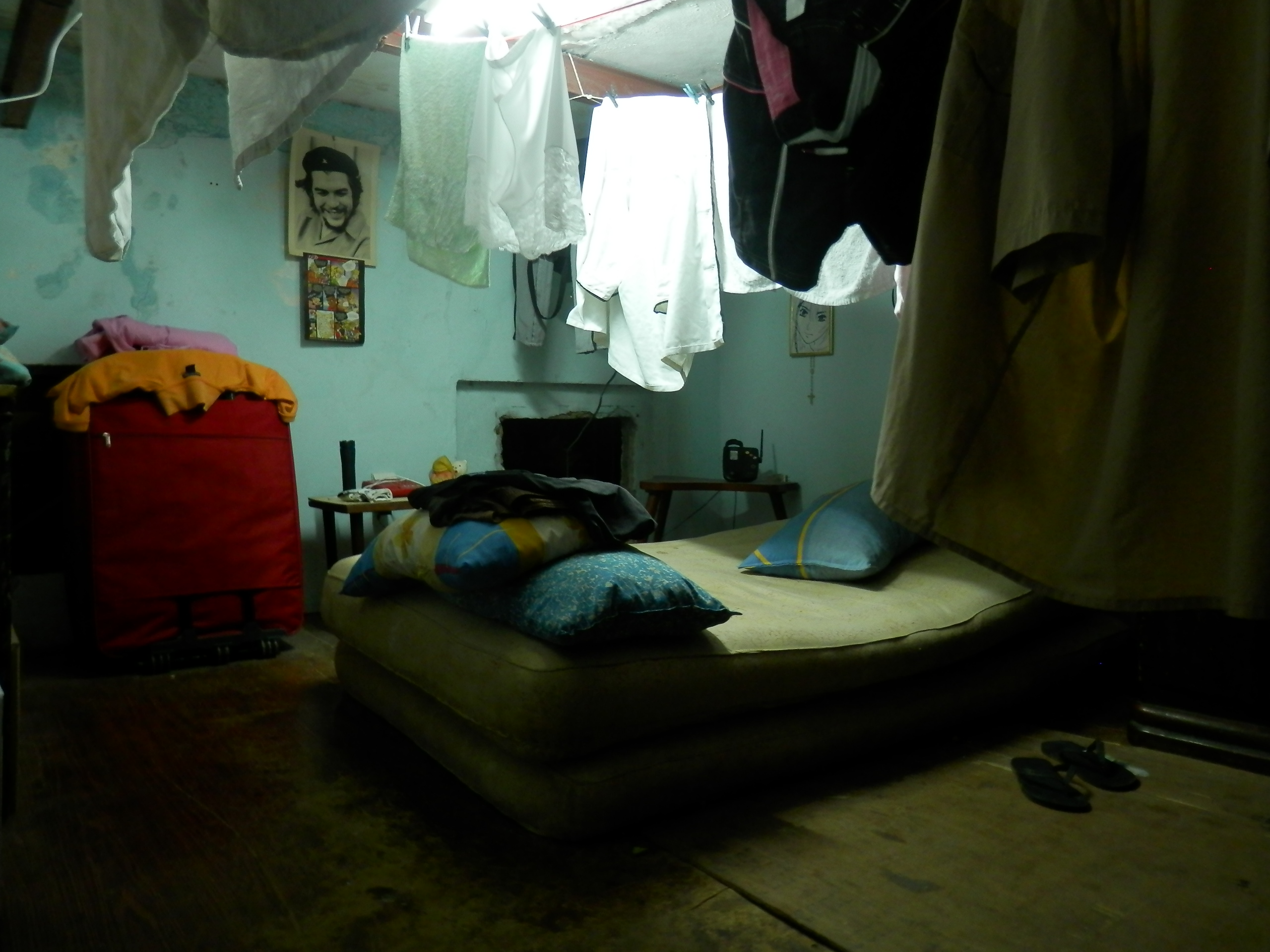
    So what is it like to live and work in these buildings? As one might expect, the outside decay permeates to the inside. The best access I got was through a 24-year-old working-class woman named Indira. I met Indira on my first night in Havana when stopping to ask directions, and after noticing that she spoke good English, took her to dinner. We became friends, and she invited me into her downtown apartment, where she lived with her mother and father-in-law. The apartment was roughly 150 square feet—far smaller than a typical New York City micro-unit. Because it had a high ceiling, the family had built a horizontal wooden floorboard halfway up the wall that served as the second floor, and built a makeshift staircase leading up. This upstairs “room” was for the mother and father-in-law, while Indira lived in the main room below, sleeping crammed against the kitchen.

    Even in such a small space, there were numerous malfunctions. There was no hot water, either for cooking or showering. In fact, the shower did not even work, meaning that the family instead took scrub baths. Because the toilet didn’t flush, they had to pour water into it each time after use to accelerate the draining. The built-in wooden floorboard was clearly sagging under the weight of the upstairs furniture, raising concerns that it would one day collapse. As for the actual roof—it had been crumbling for years, and was fixed recently by a neighborhood handyman. To pay for the work, the family had to spend over a year saving up $150.
     

    The main story of Indira's apartment.

    The main story of Indira’s apartment.


    The second story, upheld by a wood board

    The second story, upheld by a wooden board


    Public Infrastructure

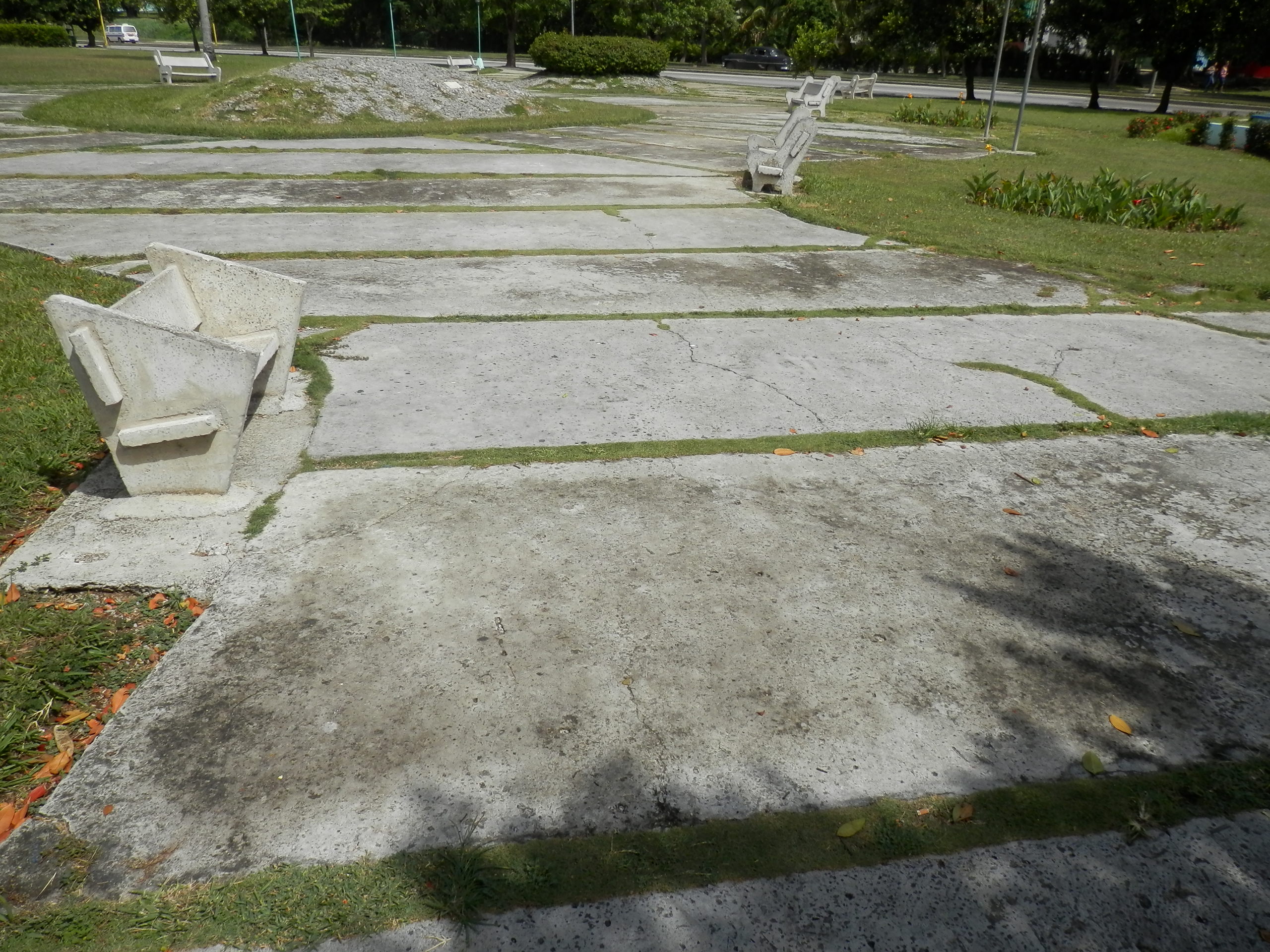
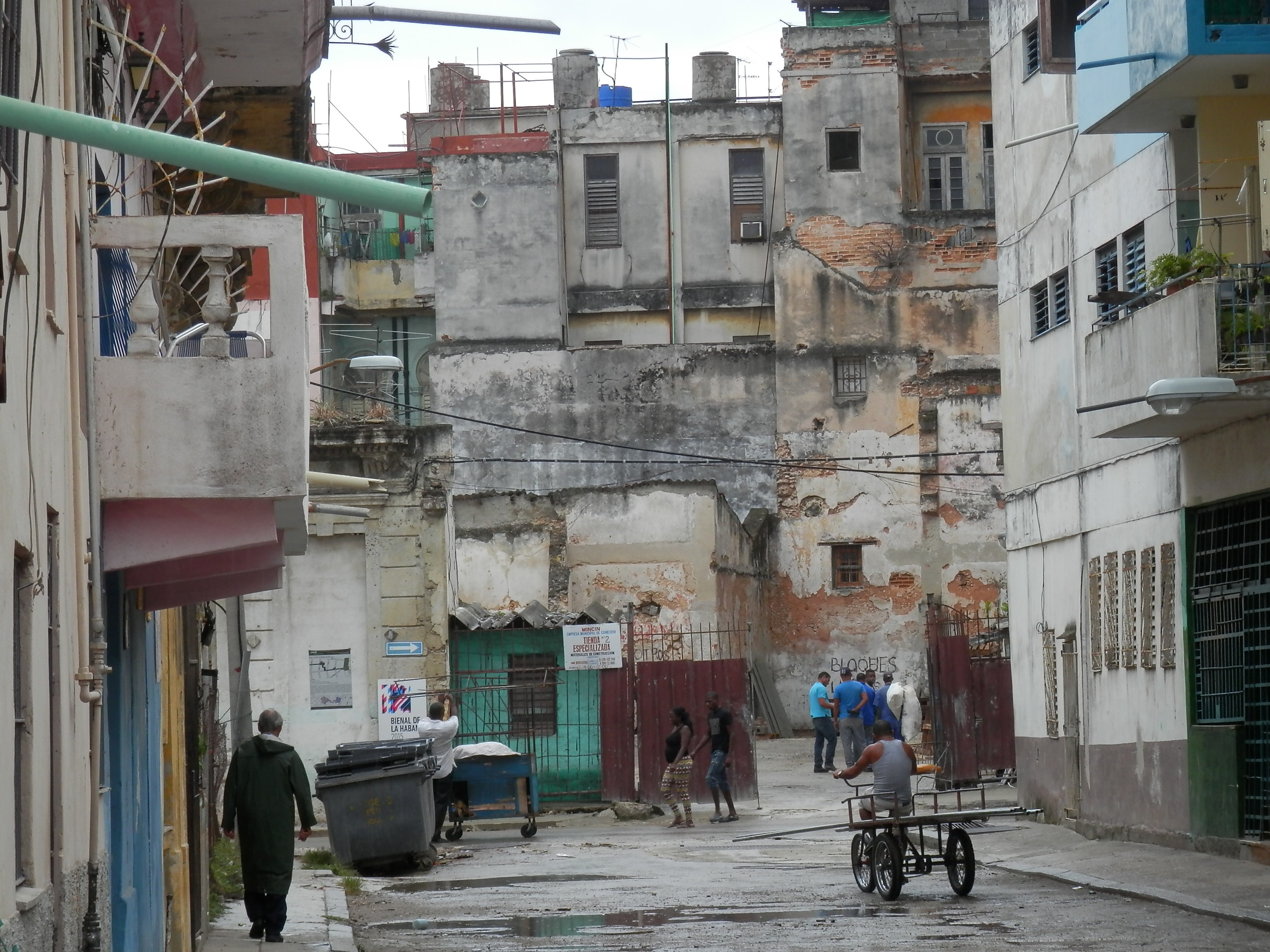
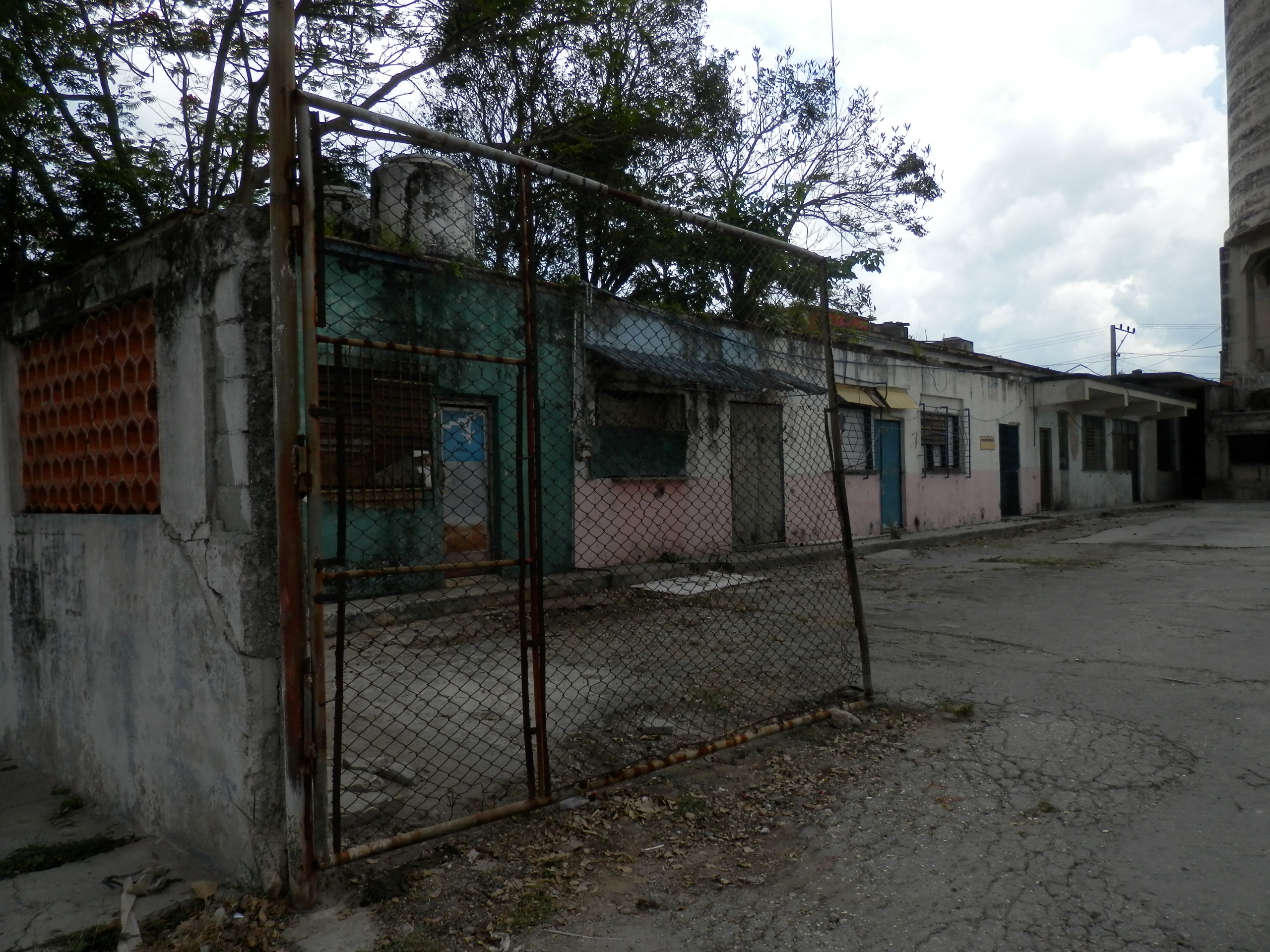
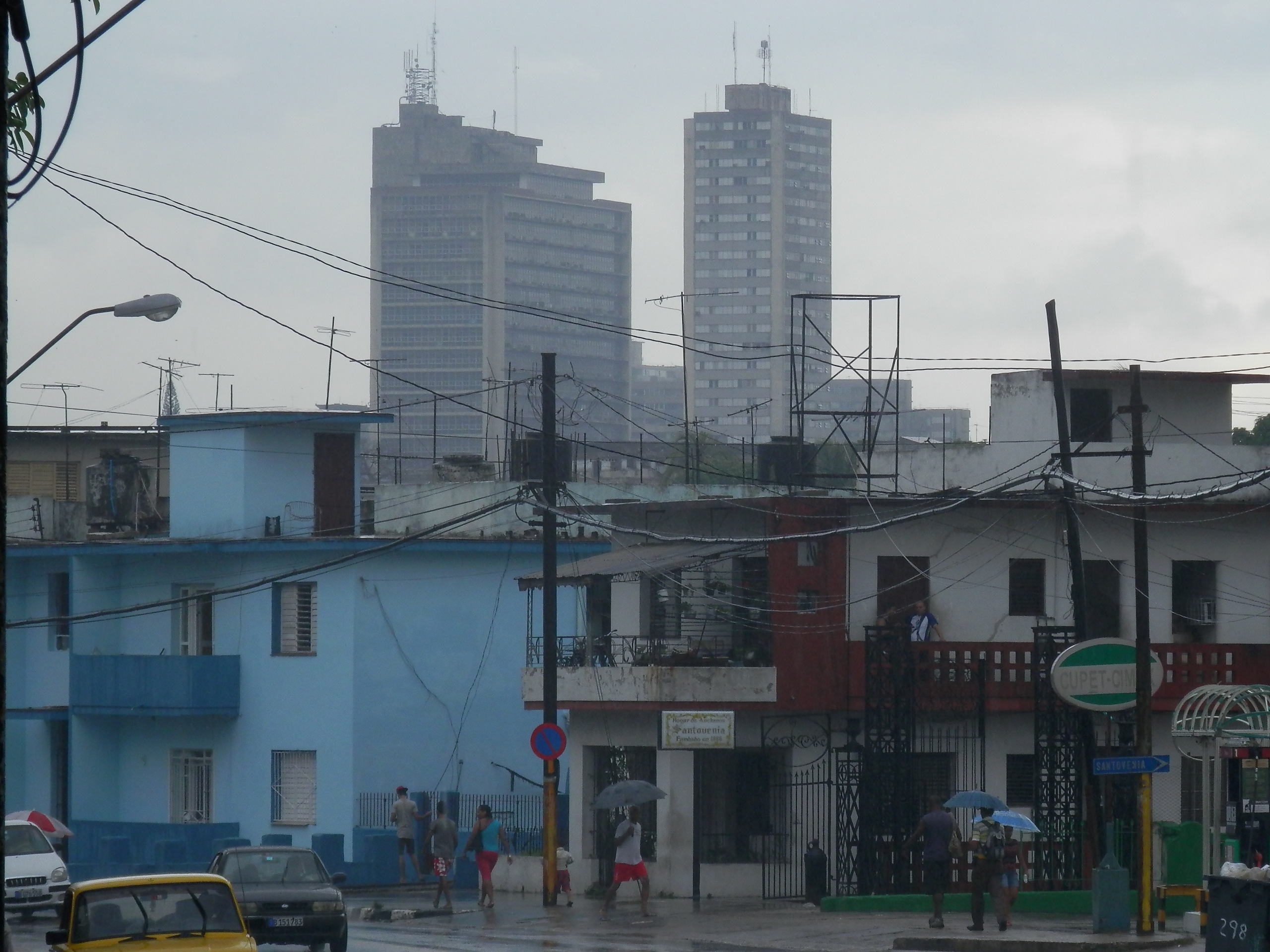
    Just as peoples’ private houses were crumbling, so too was the public infrastructure—again, much like Detroit. The public spaces, while well-used, were typically full of trash, overgrown weeds, and broken objects. Many parks, for example, were defined more by concrete than grassland. Streets, if they were even completely paved, were filled with potholes and had such poor drainage that, after it rained, they would gather huge puddles.

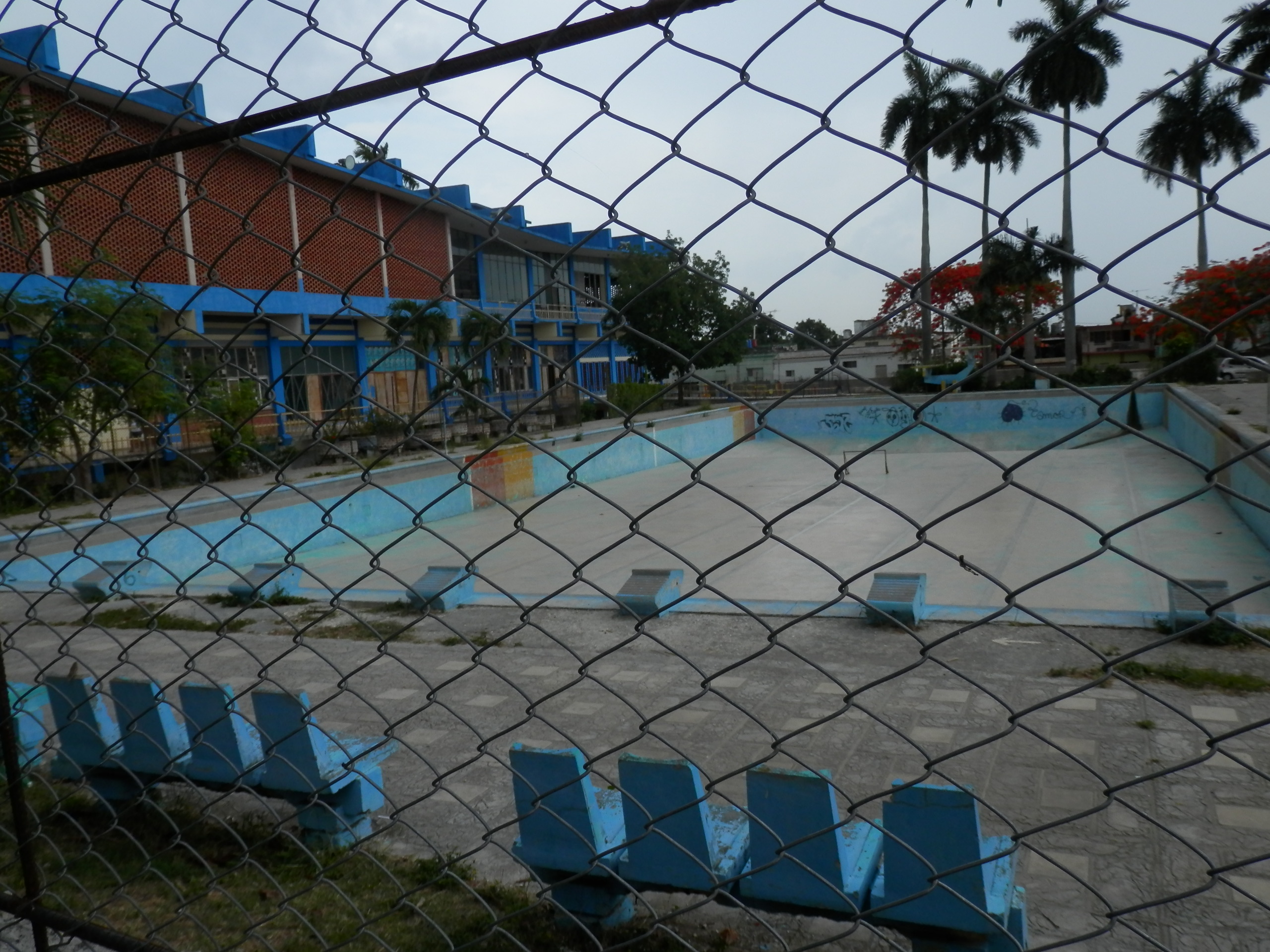
    A water-less pool

    A water-less pool

    I wasn’t able in my short time there to analyze the underground infrastructure. But if it is like everything else in Havana, I would assume that it, too, is crumbling. For example, contrary to what tourist brochures say, Havana’s tap water is considered undrinkable by locals, and I was routinely offered bottled water to avoid catching chlorida.

    Indeed, the substandard nature of Havana’s built entities were so common that after awhile I stopped noticing. For example, when I attended a rainy futbol match at a renowned Havana stadium, I sat underneath a roof that leaked constantly, getting soaked alongside other fans. Can anyone imagine this being tolerated at a U.S. arena? When I used bathrooms even in nice establishments, I would find that there often weren’t toilet seats, door locks, or (you guessed it) toilet paper. Schoolyards had swimming pools without water and basketball hoops without rims. And on it went.

    This is how life is in Havana. And I soon realized, given this, how buffoonish it would have been to go around looking for examples of “historic preservation.” Such preservation is an aesthetic notion from the First World, driven by those who are willing to pay more to retrofit attractive old housing. But in a city of extreme poverty, preservation is the pragmatic steps people take to prevent their roofs from caving in.

    a public park...

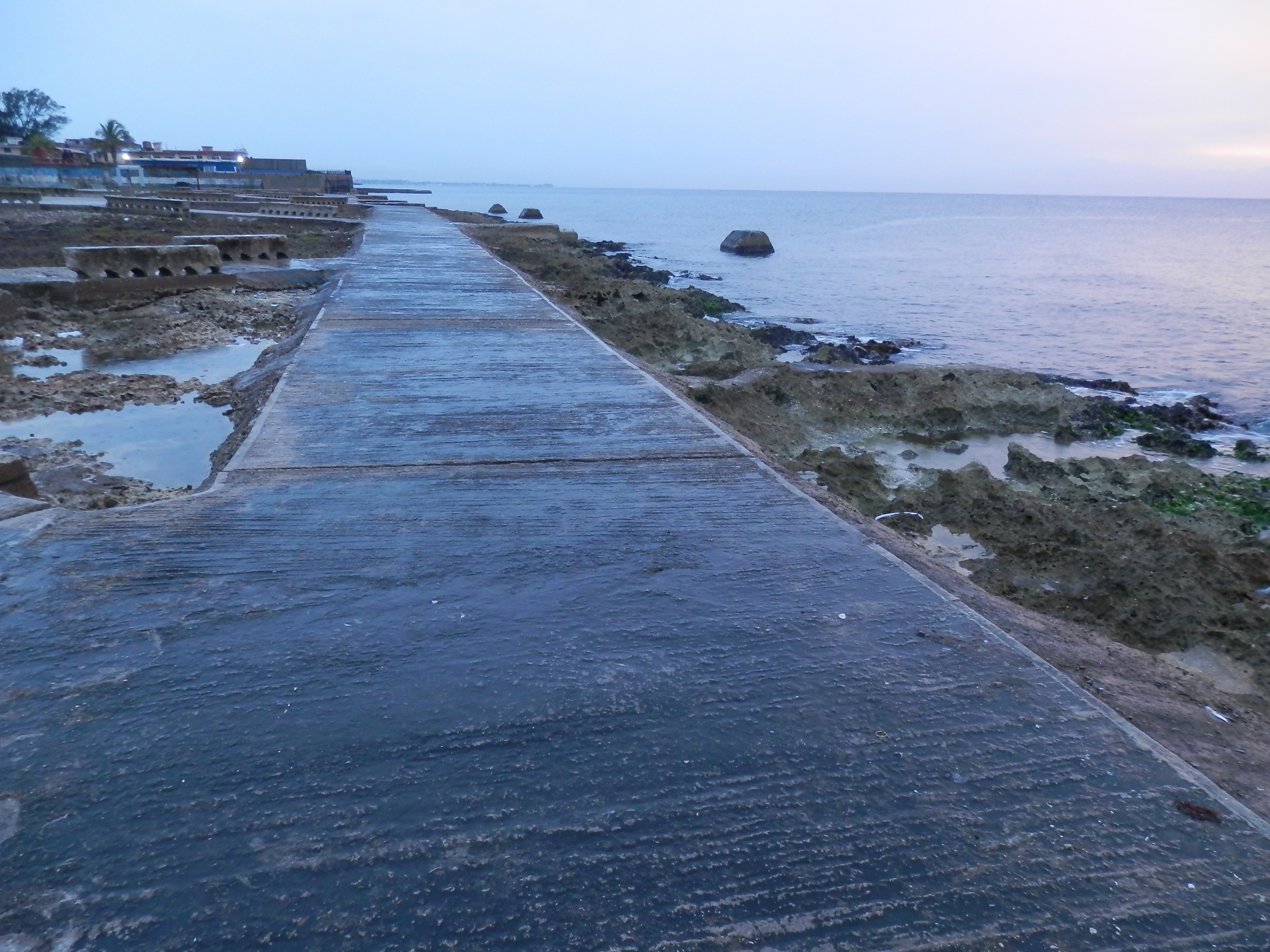
    and a public waterfront

    So How Does Havana Compare To…San Francisco?

    Have you ever read an article that was so hilariously wrong that you wanted to pick your laptop up and chuck it across the room? This was my reaction to one article I read several days after returning from Havana, with the city’s horrific conditions still on my mind. On June 8, MarketWatch.com published an article by columnist Therese Poletti called “New Tech Money Is Destroying The Streets Of San Francisco.” Poletti explained that a flood of wealthy executives were moving into San Francisco, buying old homes, and altering the interiors.

    It is now hard to find a Victorian home for sale that has not been gutted, its architectural details stripped and tossed. And owners or developers — looking to sell at a premium in the frenzied real estate market to “techies with cash” — hope to appeal to the tastes (or lack thereof) of current buyers, by turning once-charming homes with detailed woodwork, built-ins and art glass, into clones of Apple’s minimalist retail stores.

    This trend has been developing for several years, but it seems far more prevalent today, with construction sites sprouting across the Bay Area and especially in San Francisco. And in addition to the remodeling frenzy, older buildings appear to be disappearing at a scary pace.

    Before even addressing Poletti’s point, let me just set the record straight: San Francisco is not being “destroyed.” I can testify from having lived there in 2012, and visiting several times more, that the city is an architectural gem that has largely stayed in character since being rebuilt after the 1906 earthquake. Much of the city—including almost the entire northeast portion—is an oasis of historic Italianate, Queen Anne, Craftsman, and Art Deco construction. These buildings roll along the hills flanked by clean, well-paved streets, and small, impeccably-landscaped yards. From a purely aesthetic standpoint, San Francisco surpasses any other major U.S. city, and perhaps any European one.

    The reason for this is two-fold. San Francisco has expansive historic preservation laws that make it difficult or illegal to alter thousands of structures. Compelling arguments have been made that the city takes this preservationist impulse too far, to the detriment of adding new housing supply–although such laws help maintain its unique character. But the other factor—to which Poletti seems oblivious—is that the city has a large professional class with the financial wherewithal to maintain these homes.

    I would argue that this second factor, more than the first, has preserved San Francisco. You could put a historic overlay designation across Detroit, and it wouldn’t change much. The Motor City suffers from decay because it has undergone six decades of depopulation, and this has left no one around to preserve its own large historic stock. But the Bay Area has been flooded with capital during this period, and this has strengthened its culture of preservation. Maintaining a historic home, after all, can be an expensive endeavor that requires ripping out floorboards, replacing pipes, and other structural changes. It is usually done by educated, well-off households who have either the money to fund repairs, or the time to dedicate sweat equity. Perhaps not every family preserves their homes precisely to Poletti’s specifications, and I don’t blame them, since it is difficult to live in a floor plan that was laid out a century ago. But she should not miss the broader point, which is that San Francisco has remained as it is because of the demographics it attracts.

    Instead, she claims that these groups are “destroying” the city. She is thus spouting the same myth that is advanced about historic preservation by urban progressives, who seem to think that wealth and gentrification works against preservation. But a fair-minded look at U.S. cities demonstrates the opposite. If one looks at America’s most notable historic neighborhoods–the Back Bay in Boston; Capitol Hill in DC; the French Quarter in New Orleans; much of northern San Francisco; much of Manhattan and northern Brooklyn; downtown Savannah; and downtown Charleston–a unifying feature is that they have great residential wealth. Meanwhile, there are numerous cities—Baltimore, Philadelphia, Detroit, St. Louis, Cleveland—that have a similar number of historic structures. But many of them sit hollowed-out because of decline.

    The same could be said when comparing Havana with Poletti’s San Francisco. Both cities have similar architecture and planning, but their differing economic histories have led to opposite preservationist destinies. Wealthy and growing San Francisco is a city where thousands of structures remain in superb shape, and where people grieve over minor alterations. Havana’s system has produced a crumbling city where the desire for preservation gets lost in a sea of basic needs. If Poletti really wants to see a “destroyed” city, she should visit the latter.

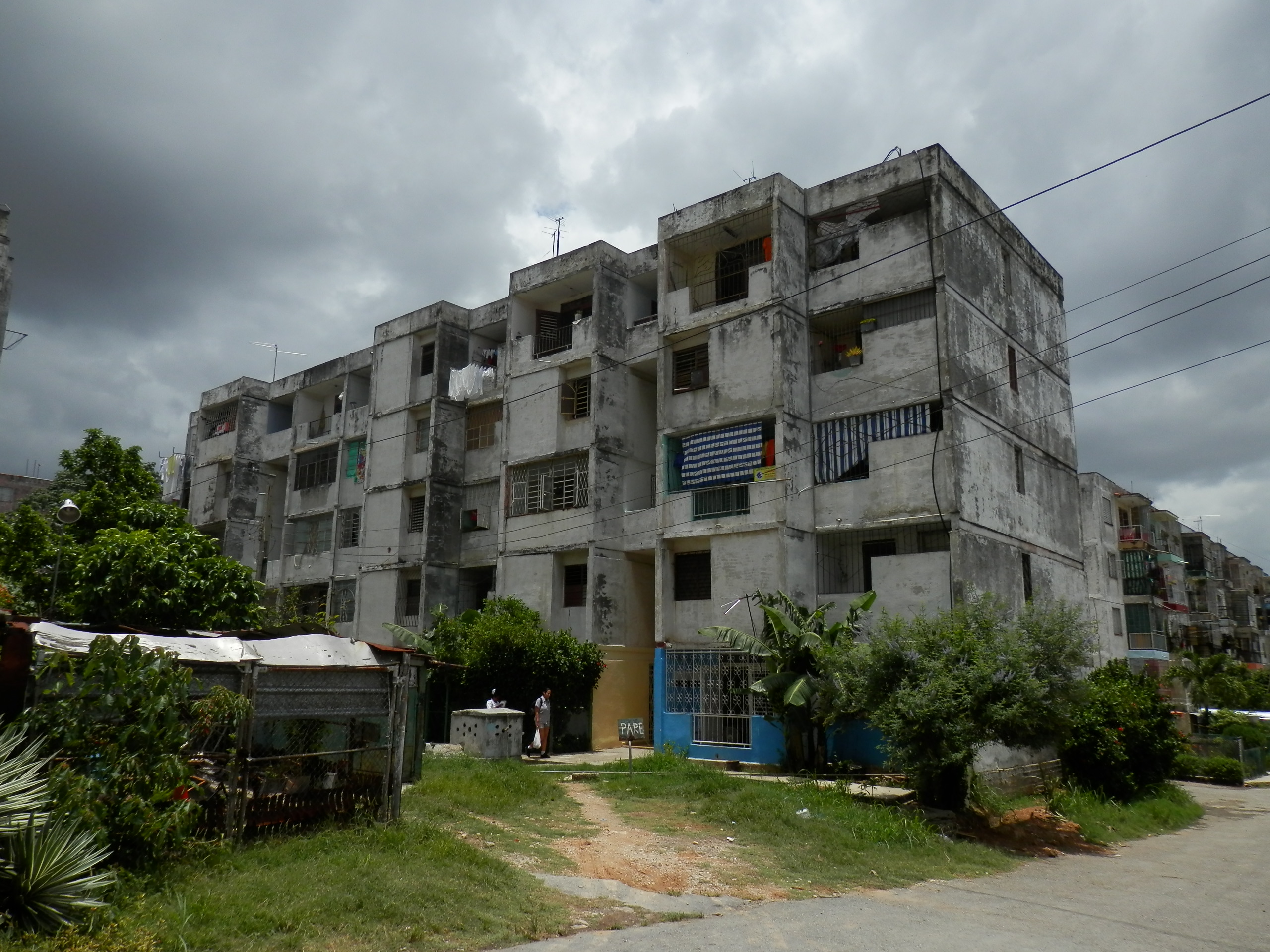
    a public housing complex from the outside...

    a public housing complex from the outside…


    and from the inside.

    and from the inside.


    OLYMPUS DIGITAL CAMERA

    OLYMPUS DIGITAL CAMERA

    OLYMPUS DIGITAL CAMERA

    OLYMPUS DIGITAL CAMERA

    This piece originially appeared at Market Urbanism.

    Scott Beyer is traveling the nation to write a book about revitalizing U.S. cities. His blog, Big City Sparkplug, features the latest in urban news. Originally from Charlottesville, VA, he is now living in different cities month-to-month to write new chapters.

  • Havana, Cuba–The City Of Scarcity

    1. I’m now a week removed from my Cuba trip, where I spent 4 days in Havana biking through the city’s near-hourly mix of high heat and torrential rainfall, returning to my bed & breakfast each night covered in soot. My first few days back in Miami I spent sick and exhausted in a hotel, but managed in the latter half to pump out a Forbes article on Miami’s inequality. The piece was slammed the next morning by the Miami New Times–a local alternative rag–for making arguments that staff writer Kyle Munzenrieder found “structurally racist.” I sent an email asking him to elaborate on the racism charge (since he didn’t in the article), but haven’t heard back.

    2. That said, my mind mostly remained in Cuba. It would be hard to summarize on this page everything that I learned there, since the nation has a complex history, and enforces a dizzying array of Communist-inspired regulations that would mystify Americans, and that has impoverished average Cubans. In coming weeks, I’ll explore these economic policies–and the effects of the U.S. embargo–in depth for other publications. But I’ll say a quick word here about Havana’s living conditions, peppered with a few of the more than 300 photographs I took.

    While exploring Havana’s neighborhoods, the thing that jumped out was not the city’s poverty (although there was plenty of that), but its scarcity. Because Cuba’s government does not value or comprehend mass production–namely not for agriculture–there are shortages of everything. In America, we take for granted that any basic convenience is but a short drive away. But in Havana, running errands isn’t that simple. City residents have limited mobility: the bus system is cheap but unreliable, the newly-private taxi system is efficient but costly, and for most Cubans, owning a bicycle–much less an automobile–requires years of savings. So they must stick to neighborhood stores with minimal inventory, and even if they did all have cars, there would still be few outside options.

    To understand why, just imagine a city where every store is literally 1% of what it would be in America.

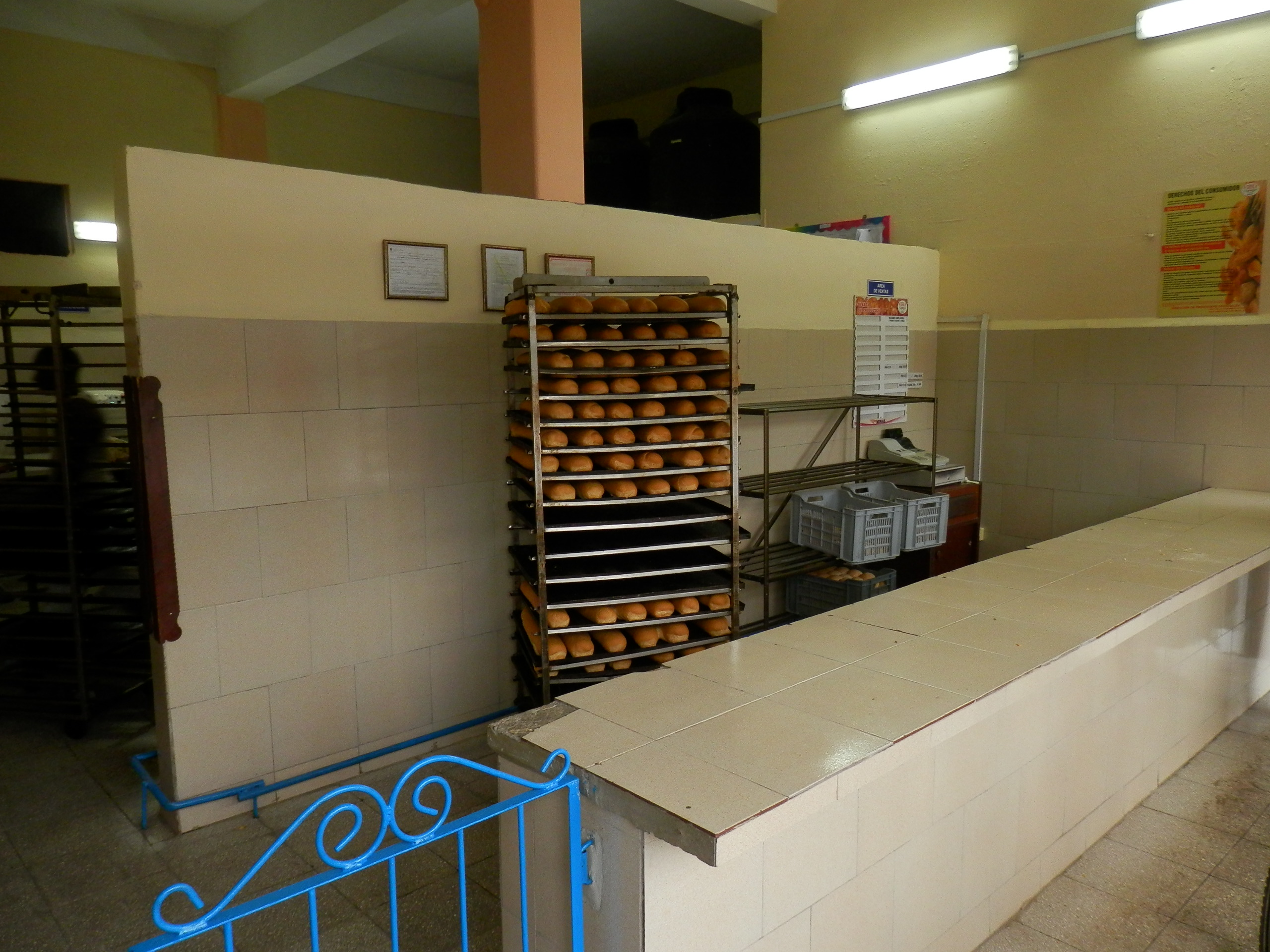
    A typical bakery in Havana.

    A typical bakery in Havana.


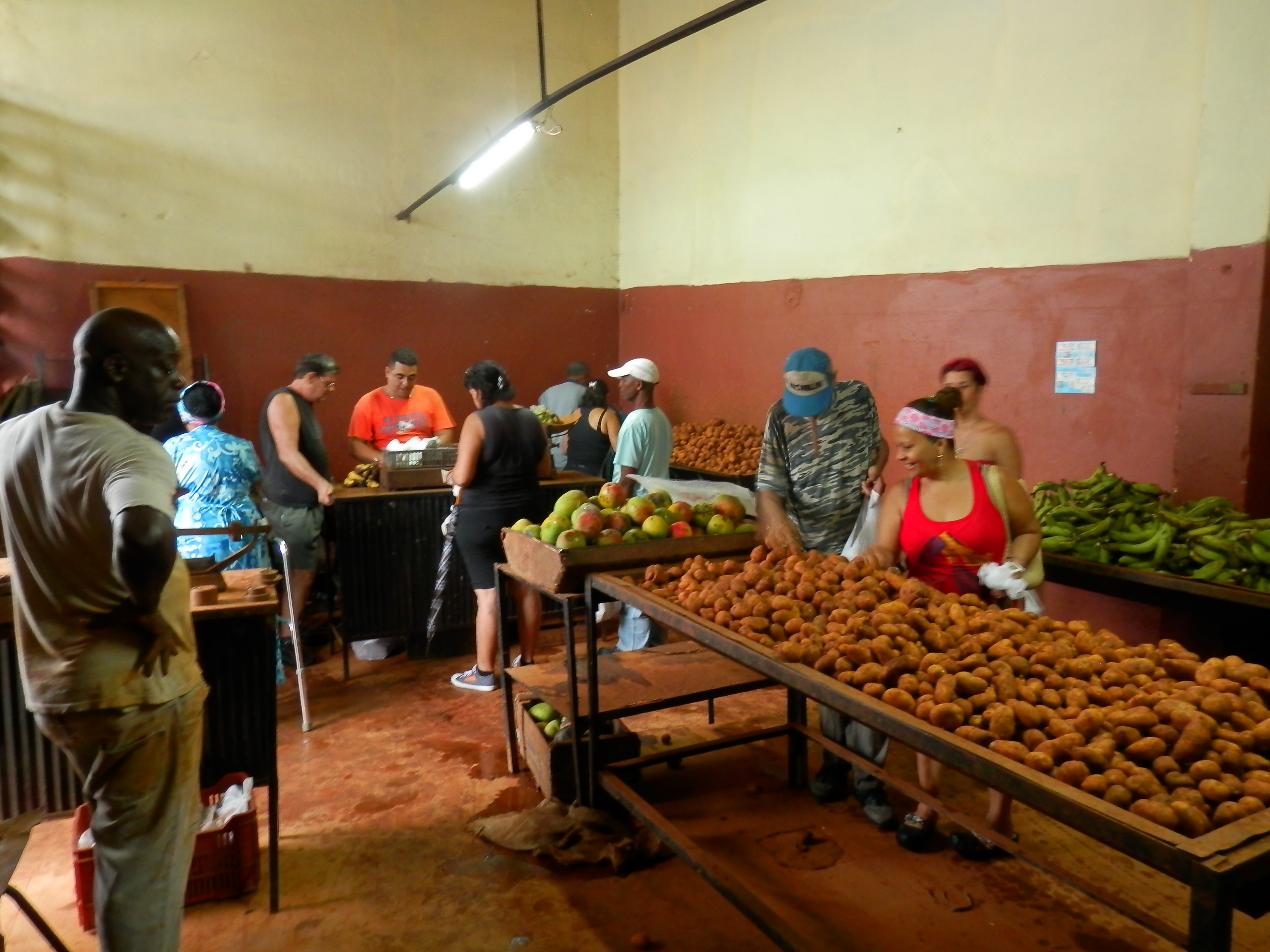
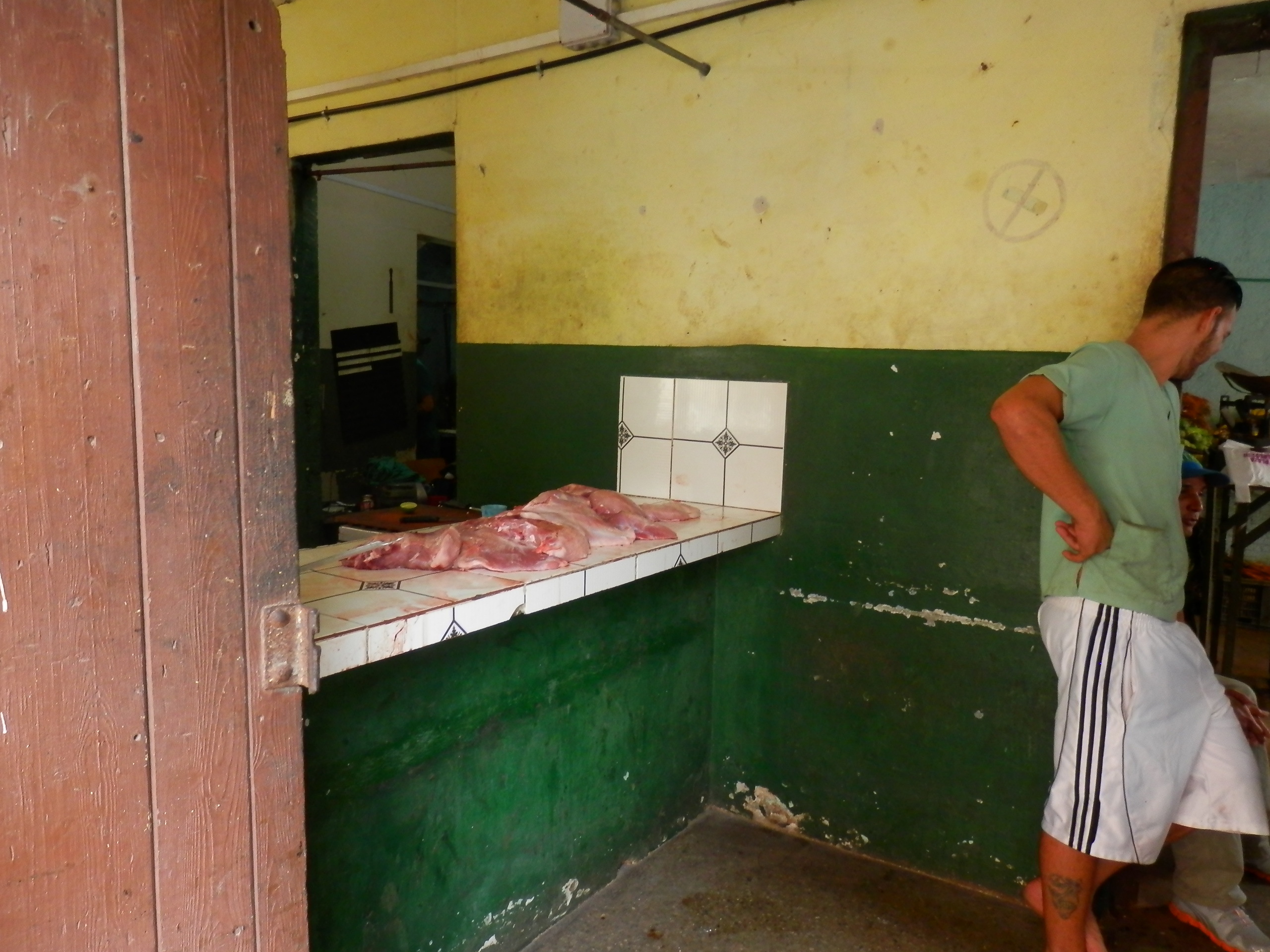
    While a U.S. pharmacy like Walgreens or CVS sells not only drugs, but numerous foods, beverages, household goods, etc., the average Havana farmacia has a few shelves with maybe 100 drugs–and that’s it. Modern U.S. grocery stores often exceed 50,000 square feet, and sell thousands of products. In Havana, different food types are sold separately in small, rickety stores that often contain one or two items. Mercados sell fruit and veggies; carnicerias sell meat; and many panaderias (pictured above) sell a low-nutrition roll that would be served as a side at a crappy American road diner. The typical gas station had not even one-tenth of what you would find in a 7-Eleven.

    A mercado that sold only mangos and potatoes.

    A mercado that sold only mangoes, plantains and potatoes.


    Half of the available meat supply at a downtown carniceria

    Half of the available meat supply at a downtown carniceria


    This isn’t surprising, since most Cubans earn about $20/month, and thus have minimal spending power. But the scarcity effects all income groups. For example, as an American tourist, I was considered massively wealthy by Cuban standards. That said, my expenditures were mostly limited to my B&B, my bike rental, bottled water, cheap cafes, and cab fares. My one splurge was taking a local couple who I had befriended out to a restaurant that, by Cuban standards, was exquisite, but that didn’t exceed the quality or cost of an Applebee’s. Over 4 days, all this cost $360. Compared to the few other U.S. tourists I met, this was an extremely economical budget–but was still more than what many Cubans spend annually.

    Yet despite this, I found myself unable to buy basic things. For example, during my first night in Havana, I didn’t realize–until it was too late–that the B&B landlord had not provided toilet paper. In America, this would be a glaring oversight, but in Havana, I would discover, is normal. This forced me to navigate my neighborhood at 3am, offering pesos to the many teenage boys still standing outside, to bring out “papel higienico” from their houses. Every time I tried this, they would each explain, in rather comical fashion, that none was available. Finally I found a teenager who spoke passable English, and asked him how this could be. After sending his little brother in to find something, he explained that “in Havana, toilet paper is a delicacy–like chocolate,” and that most residents don’t just have any sitting around. So how did people cope?

    “Here in Havana, we have a saying,” he quipped. “We say, ‘Cubans have a good ass. Our asses work for all kinds of paper. Toilet paper, newspaper, book paper–any kind of paper’.”

    When his younger brother reemerged from the house, he was holding for me a single sheet torn from his school journal. I would later learn while interviewing impoverished Cubans that other “delicacies” included soap, meat, milk, cheese, and ice cream, not to mention the hundreds of gadgets and appliances found in a typical American home.

    3. One thing I mentioned before leaving for Havana was that I wanted to see how urban street life functioned in a city suffering from 50 years of stagnation. I found much that was good and bad, but for the sake of brevity, will describe this week what was good.

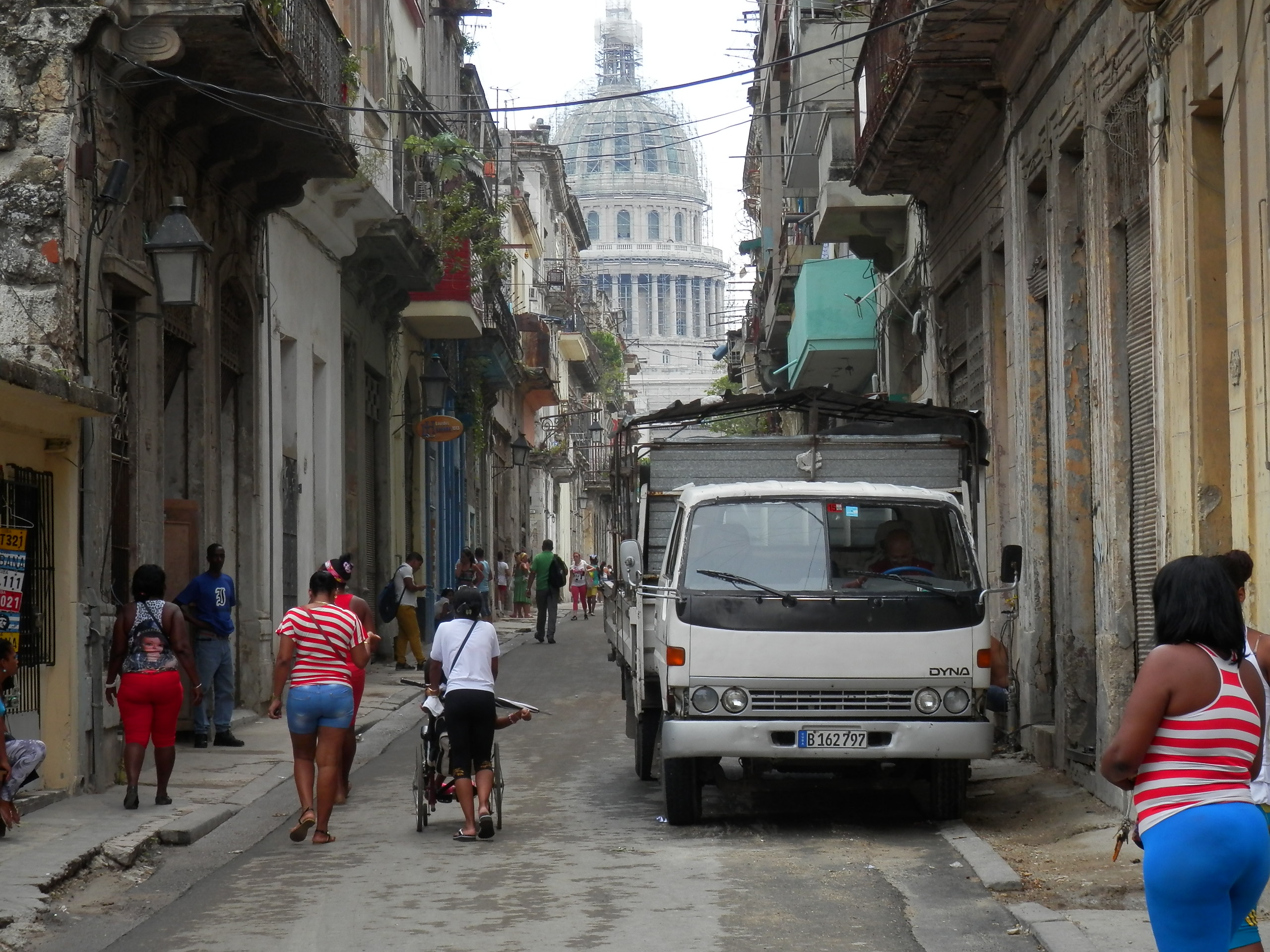
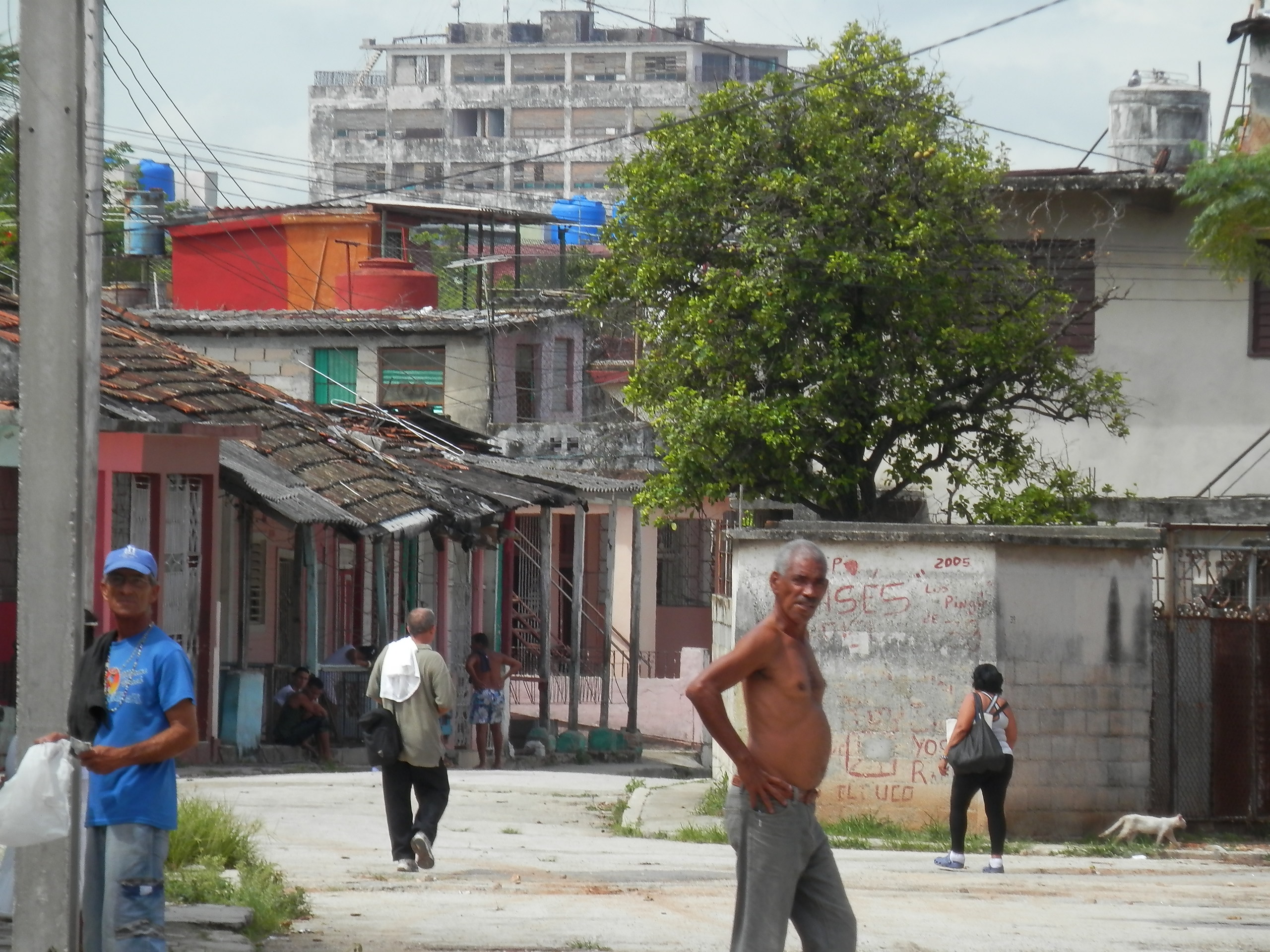
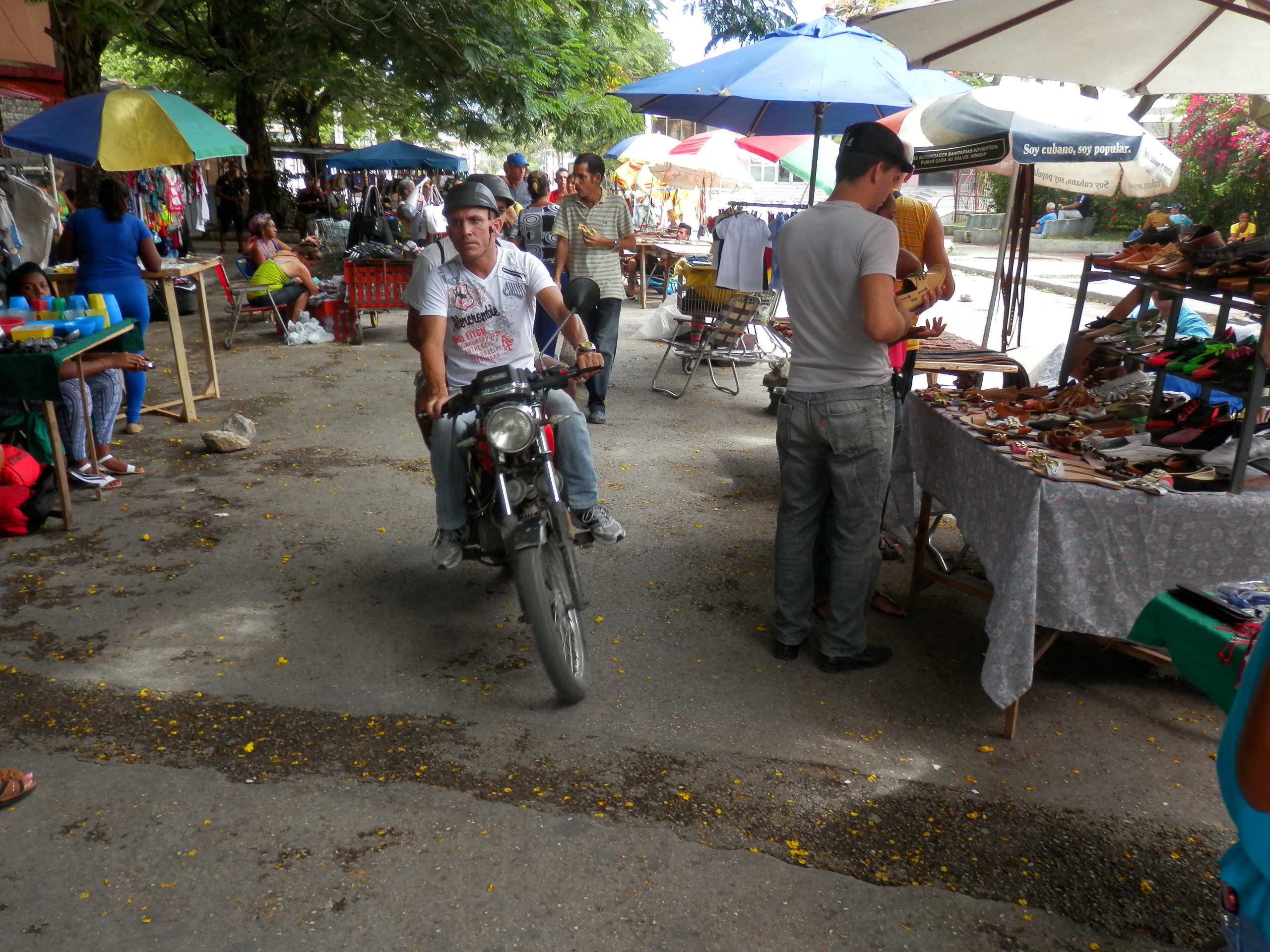
    Havana, both in downtown and the neighborhoods, offers a scintillating street culture dominated by people, music, and commerce (spartan as it may be). In many ways, it is an urban flaneur’s dream, as one can spend hours weaving through crowded streets full of friendly people who will spill their life details to a stranger. There are, in fact, few places one can go without finding numerous people on each block, and rather than ignoring one another, many are in perpetual communication, often yelling to each other from adjacent buildings.

    Just blocks from the Capitol building.


    A busy street in the southwestern Havana slum where I stayed.

    A busy street in the southwestern slum where I stayed.


    This atmosphere continues well into the early morning, as mostly teenagers stand on corners to laugh, drink and sing. For them, a rich gringo passerby is not a target, but a source for amusing dialogue, especially since they will bend over backwards to try overcoming the language barrier.

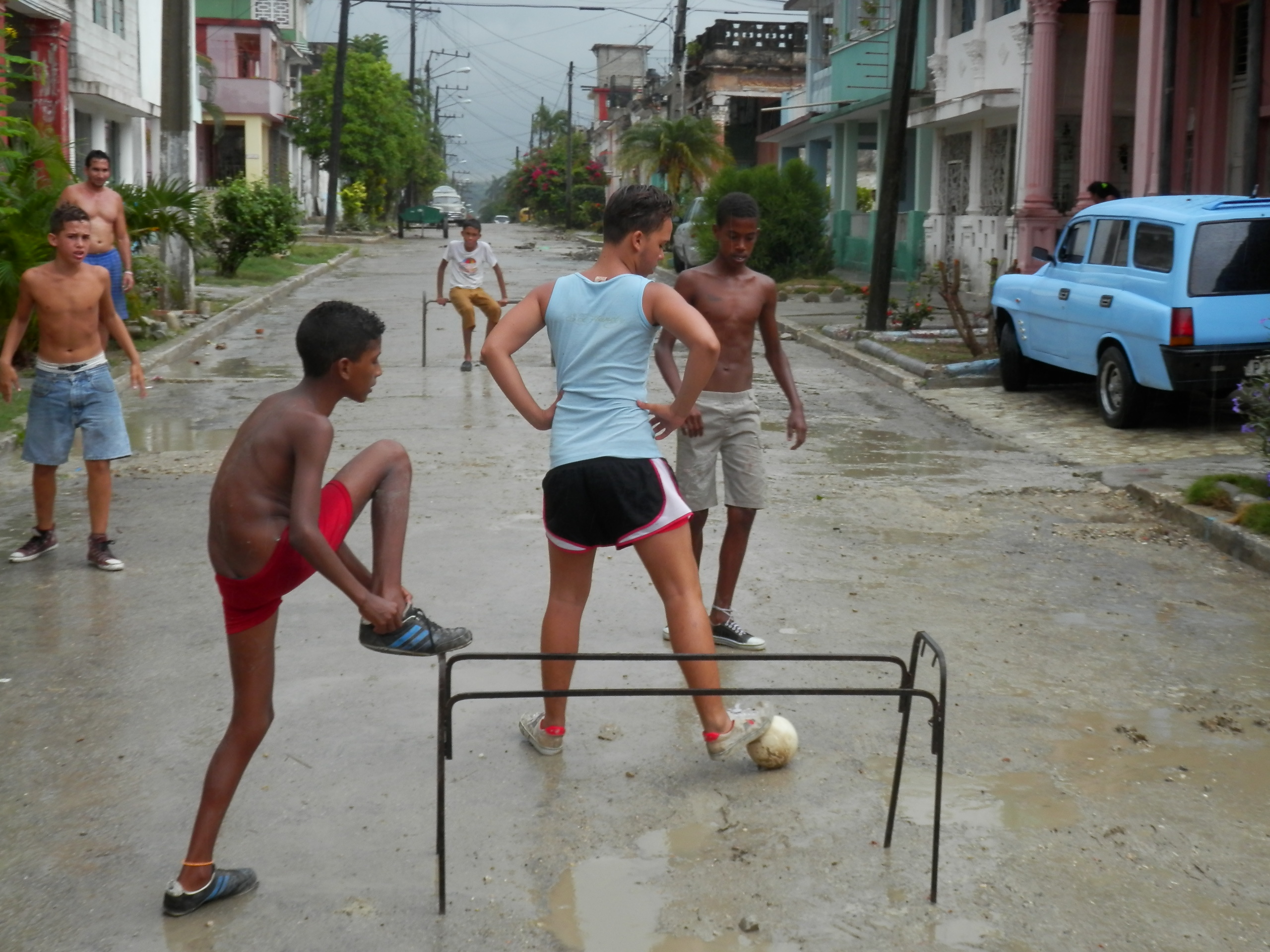
    But this street life seems less rosy when you consider that it is rooted in hardship. Many Cubans are forced by poverty to live cramped together–sometimes 10 to a house, according to one person I spoke with–so naturally they would escape to the street. Because some cannot afford front doors and windows, much less advanced security, there is little privacy, and people treat sidewalks like their extended living rooms. Because so few people own cars–and because those cars run slower than in America–traffic is less menacing, allowing pedestrians to linger in roadways. Because parks are in such disrepair, sporting children instead compete in the streets. And the built fabric itself is so narrow because modern buildings are seldom constructed.

    An equally fascinating aspect of Havana’s street culture, to be covered next week, was the physical decline. It was not difficult to tell that Havana was once a very advanced society indeed, defined by a merchant and governing class who had sophisticated urbanist sensibilities. At times while biking through Havana’s mild hills, I would get these weird flashbacks of San Francisco, when observing large, elaborate Spanish architecture that interspersed gracefully alongside pocket parks, public stairways and boulevards. But imagine if San Francisco had undergone 50 years of Detroit-style decline and neglect, and you’ll get an idea of the blight that pervades Havana. Many of the photos I provide next week will alarm you.

    4. I could go on and on about other aspects of Havana’s street life, but here are a few tidbits that readers will find interesting.

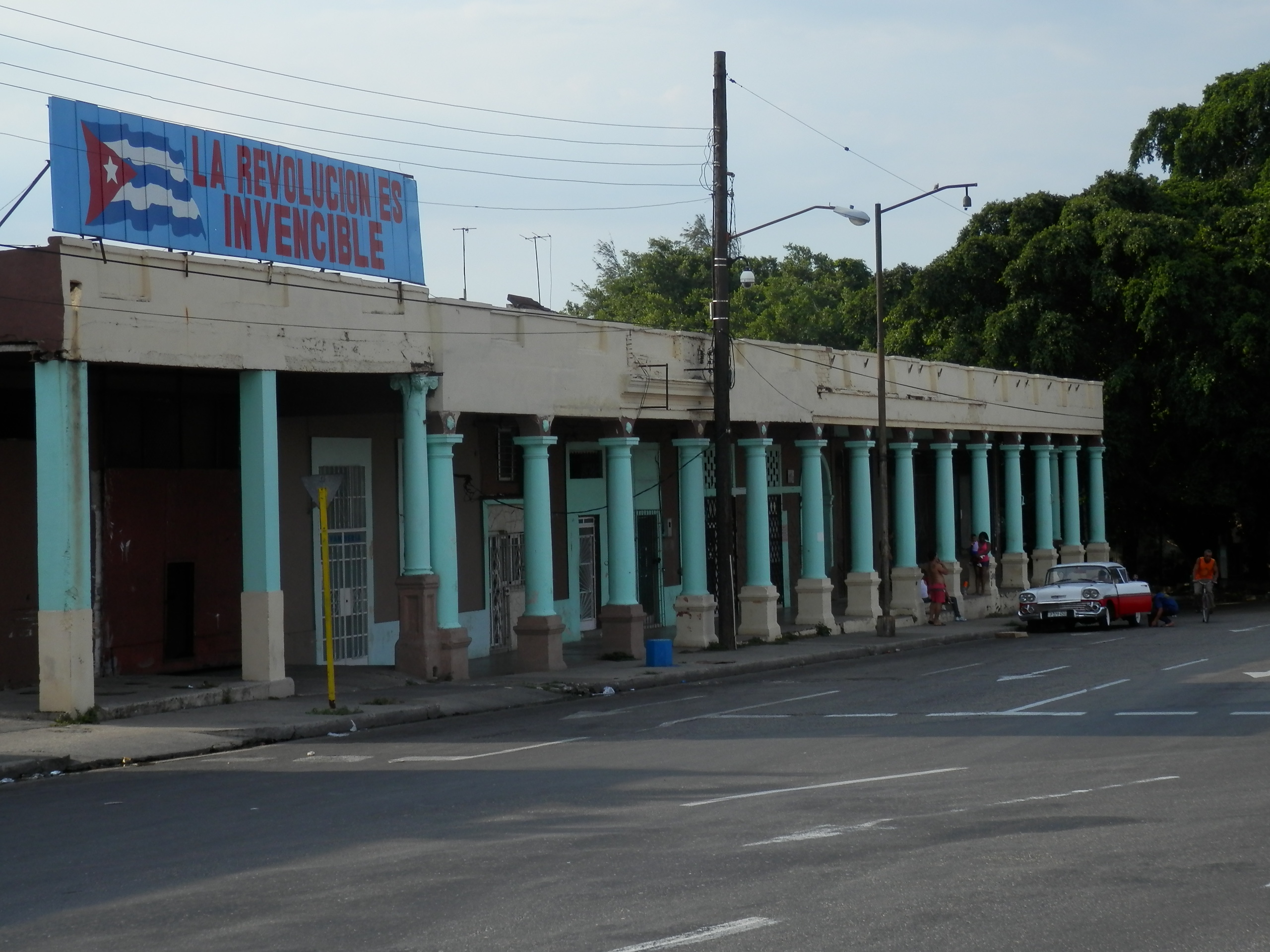
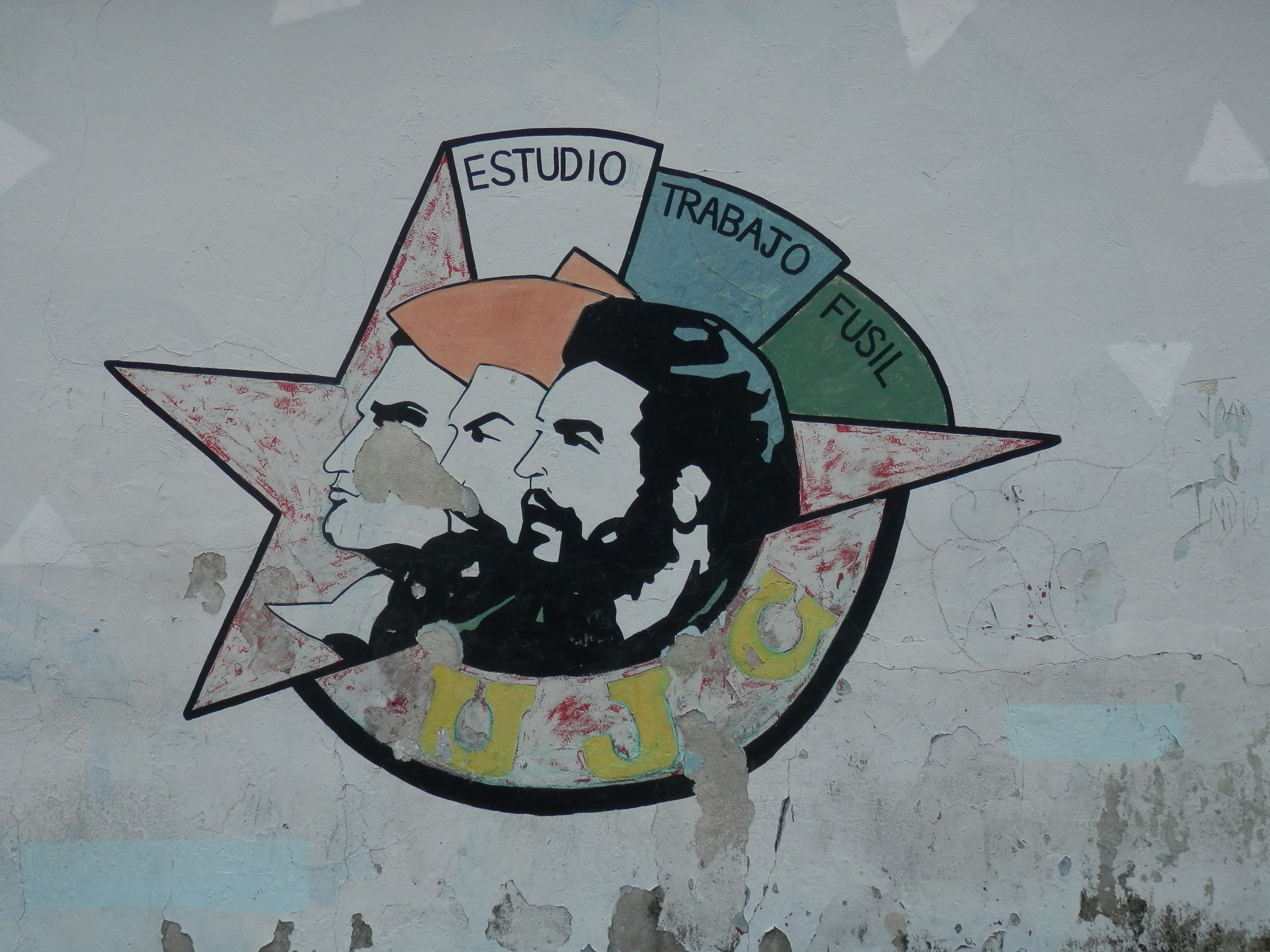
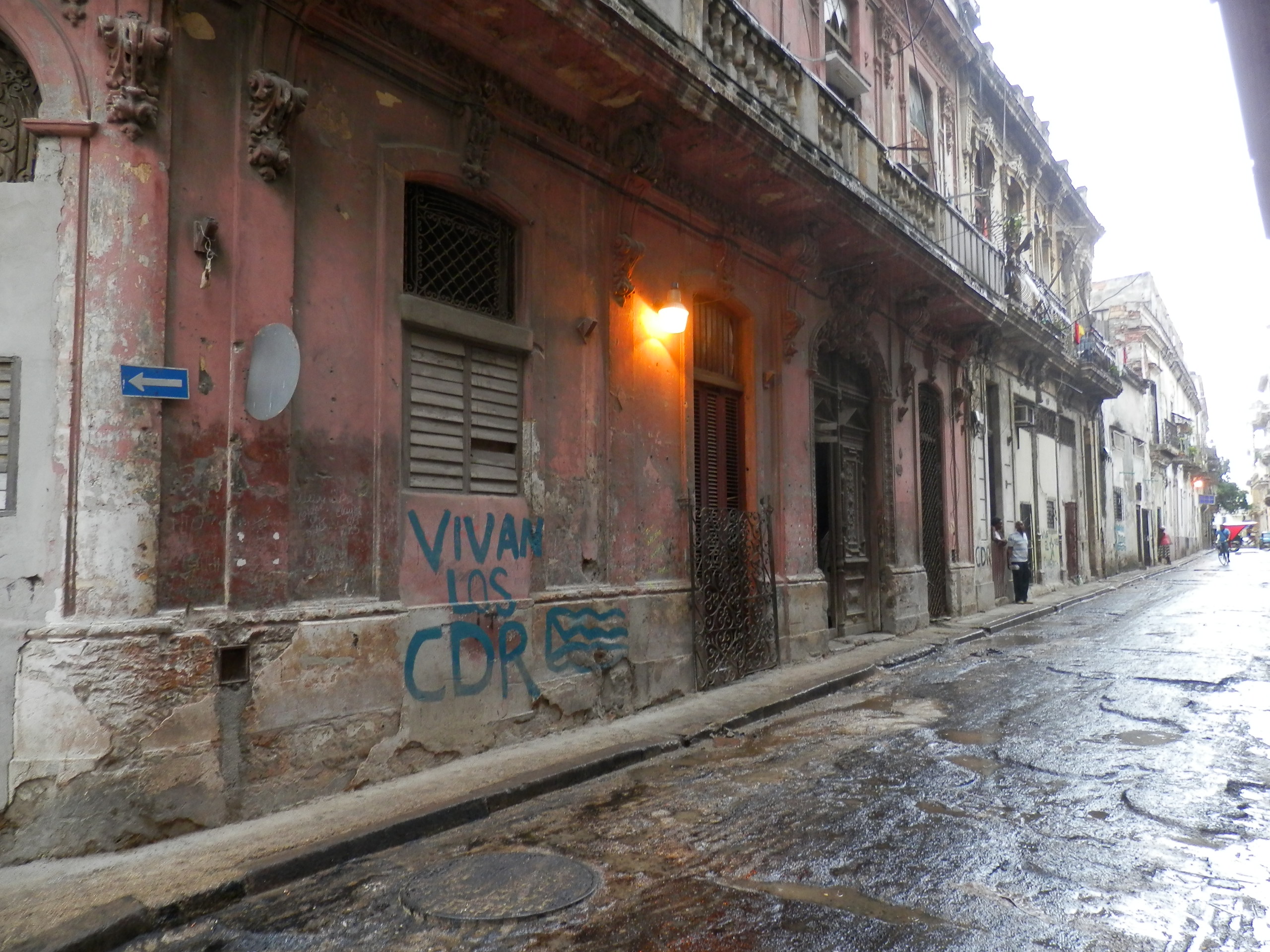
    – As might be expected from a Communist dictatorship, there were few religious symbols, but numerous political insignia celebrating the Revolution’s enduring strength. Ironically, many of these signs were in disrepair.

    OLYMPUS DIGITAL CAMERA

    Translation: 'study, work, rifle.'

    Translation: “study, work, rifle.”


    A celebration of CDRs, the network of neighborhood watchdogs tasked with upholding the Communist order

    A celebration of CDR, the network of neighborhood watchdogs tasked with upholding the Communist order


    – Cuba’s many old automobiles might be charming, but are terrible for the environment. Old age and poor maintenance mean that many spew out toxic exhaust that blows into pedestrians’ faces. In the central parts of Havana, where streets were narrow and buildings taller, the stench lingers, making life unbreathable.

    They also frequently break down; it’s hard to bike 10 blocks without finding some car on the side of the road, hood popped.

    – In America, farmer’s markets have become boutique destinations that sell products of greater quality and expense than what is found in a supermarket. Tables are often run by “gentlemen farmers” who view their activity as a hobby. In Havana, by contrast, such markets expose the desperation of the Cuban people, as many tables offer screws, dishes, spare auto parts, and whatever else a family may have scavenged.

    – Street drainage is terrible after it rains.

    – And more:

    OLYMPUS DIGITAL CAMERAOLYMPUS DIGITAL CAMERAOLYMPUS DIGITAL CAMERAOLYMPUS DIGITAL CAMERA

    Here I am with my host family

    Here I am with my host family

    This piece originially appeared at Market Urbanism.

    Scott Beyer is traveling the nation to write a book about revitalizing U.S. cities. His blog, Big City Sparkplug, features the latest in urban news. Originally from Charlottesville, VA, he is now living in different cities month-to-month to write new chapters.

  • Root Causes of Detroit’s Decline Should Not Go Ignored

    Recently Detroit, under orders from a state-appointed emergency manager, became the largest U.S. city to go bankrupt. This stirred predictable media speculation about why the city, which at 1.8 million was once America’s 5th-largest, declined in the first place. Much of the coverage simply listed Detroit’s longtime problems rather than explaining their causes. For example a Huffington Post article asserted that it was because of “racial strife,” the loss of “good-paying [sic] assembly line jobs,” and a population who fled “to pursue new dreams in the suburbs.” Paul Krugman, who has increasingly become America’s dean of misguided thinking, downplayed the city’s pension obligations, instead blaming “job sprawl” and “market forces.” The implication is that Detroit’s problem just arose organically from structural economic changes, and within decades somehow produced a city of abandoned homes and unlit streets.

    But a closer look suggests that Detroit’s problems, which include 16% unemployment, 36% poverty, and 60% population decline, were self-inflicted by a half-century of government excess. Thomas Sowell nicknamed this excessiveness the “Detroit Pattern”, and defined it as the city’s habit for “increasing taxes, harassing businesses, and pandering to unions.” These three problems have proven as instrumental to decline as the “Big Three” automakers once were to Detroit’s rise. Analyzing their background, and potential for reform, could expedite the city’s turnaround.

    The foremost measure would be addressing taxes. Currently Detroit has one of America’s largest tax burdens for major cities, offering notoriously bad services in return (police response times average 58 minutes, and 40% of streetlights do not work). Its property tax rates are the nation’s highest, exceeding 4% for some buildings. This has caused particular disinvestment in the city’s large stock of abandoned homes, some of which sell for below $1000, but are avoided since they get assessed at far above their actual worth, leaving owners with inflated tabs.

    Detroit could also help its cause with a business climate that better encouraged entrepreneurship. For decades it has done the opposite, championing a growth policy that mirrored the city’s overly-centralized private sector. It has gambled—with tax breaks, subsidies, and extensive eminent domain—on stadiums, casinos, office towers, factories, and a downtown monorail, only to find that these didn’t produce nearly the anticipated benefits. Meanwhile it has squelched small businesses, which are generally better at creating jobs, with a cobweb of protectionist regulations—on food trucks, taxis, movie theaters, and so on. This was summarized in economist Dean Stansel’s recent “economic freedom” study, which ranked the regulatory and tax climates of U.S. metro areas. In a field of 384, Detroit placed 345th.

    These regulations have emanated from Detroit’s vast, union-controlled public bureaucracy. Recent debate about this bureaucracy has focused on retirement benefits, which apologists note are far less generous than in other big cities. But this does not detract from the sheer number of retirees, which at 20,000 are nearly twice Detroit’s existing public workforce, and account for obligations of potentially half the city’s $18 billion debt.

    Less discussed is the way unions protect existing workers also, by stifling needed service reforms. When a philanthropist offered $200 million in 1999 to open the city’s first charter school, which would require changes to state law, the Detroit Federation of Teachers organized a work stoppage to protest in Lansing, ultimately causing withdraw of the donation. Various other city unions (which total 47) have resisted reduction or privatization of water utilities, trash-pickup, street lighting, and transportation. This is despite the city having proven wildly incompetent at providing these services itself, a point made recently in the Wall Street Journal by a former transportation chief. He claimed that unionization of the 1,400-employee DDOT had ensured worker protections for rampant absenteeism and poor performance, thus creating a climate in which 20% of scheduled buses did not arrive. Similar protections from firings and layoffs existed in other city departments, he wrote, perhaps explaining why Detroit, at over 10,000 workers, remains one of the most overstaffed big cities in America, while managing to do so little with them.

    Of course many would argue that Detroit’s post-World War II racial conflicts were the real reasons for decline. More plausible is that these conflicts were inflamed by that era’s top-down government policies, which became all the worse when enforced by seemingly prejudiced officials. Throughout the 1950s and 1960s white mayors steamrolled roadways through functioning black neighborhoods like Black Bottom, and housed the displaced in dangerous, high-rise government projects. Funding for this and other “urban renewal” came from federal programs like President Johnson’s Model Cities, and using Detroit as a flagship, was meant to modernize aging urban communities. But the programs instead fragmented them, including a Detroit black population that, according to Sowell, then had 3.4% unemployment and “the highest rate of home-ownership of any black urban population in the country.” For them this “renewal” created a housing shortage, and along with discrimination and police brutality, inspired riots in 1967.

    These riots killed dozens, injured nearly 1,200, and along with the ones inspired by Martin Luther King’s assassination, immediately spurred a mass white exodus. This cemented the demographic changes needed for both the 1973 election of Detroit’s first black mayor, Coleman Young, and subsequent policies that instead targeted the city’s whites. A paper by economist Edward Glaeser argues that this was done intentionally by Young as a way to further drive political rivals to the suburbs, and increase the share of his poor black voting base. He did this, writes Glaeser, by cutting off services in white neighborhoods, imposing onerous taxes, and displacing thousands of Polish households for a GM factory in the Poletown neighborhood. This led to further white exodus and diminishment of the tax base.

    All these are examples of rampant abuses, under both black and white leadership, that have resulted because of Detroit’s notorious governing “pattern.” But one silver lining of its bankruptcy is the opportunity for structural change. This could occur by channeling the urban reforms—from charter schools, to defined-contribution pensions, to looser permitting, to plain-old lower taxes—that have helped other U.S. cities the last two decades. If these reforms can thrive in the Motor City than they probably can anywhere, turning it at the very least back into a functioning city, and at best into a reemerging economic star.

    Scott Beyer is traveling the nation to write a book about revitalizing U.S. cities. His blog, Big City Sparkplug, features the latest in urban news. Originally from Charlottesville, VA, he is now living in different cities month-to-month to write new chapters.

    Photo by Kate Sumbler.

  • Is Michael Bloomberg Finally Ready for His Close-Up?

    After being elected New York City’s mayor in 2002, Michael Bloomberg quickly expanded on the city’s progress during the 1990s. He combined predecessor Rudolph Giuliani’s reforms in welfare and policing with his own. He rezoned land for needed housing, reduced public school inefficiencies, and advanced major transportation projects like the 7-train extension and rapid buses. Along with these, he pioneered changes in the urban fabric—from the High Line Park to an automobile-free Times Square—that may have seemed insubstantial to outsiders, but were appreciated by New Yorkers.

    These and other measures supported Bloomberg’s reputation as a pragmatic-businessman-turned-public-servant who could generate economic dynamism in a city often hostile to it. Journalists described Bloomberg as, for example a “centrist” and data-driven “technocrat” who was “beholden to no one.” The mayor quickly gained national credibility, and was even mentioned as a possible independent presidential candidate.

    Now, as Bloomberg nears the end of his third term, the thought of him having this platform seems far less attractive. Just as the term itself violated local term limit legislation (that was overturned before his election), the policies he’s enacted show that his ideal model of government is not just one that spurs growth and delivers services, but that excessively polices private behavior, setting a dangerous precedent for urban America.

    The best-publicized of these was Bloomberg’s recently-defeated measure to ban large sodas. But this only echoed other products the board of health has targeted, including trans-fat in cooking oils, Styrofoam containers, and salt. He extended New York’s decade-long ban on cigarette smoking in bars to some other public spaces.

    These measures may seem like benevolent ways to protect New York’s citizens from themselves. But they underlie a broader willingness to intrude in other ways. For example, following the Kelo v. New London Supreme Court case, Bloomberg enthusiastically supported eminent domain for land transfers in both Brooklyn’s Atlantic Yards and by Columbia University in Harlem.

    Bloomberg has also expanded New York’s unpopular stop-and-frisk policy, which allows police to search people not after arrest, but based on “reasonable suspicion.” The policy was begun in the 1970s as a way for police to intervene in overtly threatening situations. But under Bloomberg it has been used reflexively five million times. It overwhelmingly targets minorities, and has proven to be poor at accomplishing its stated goal of collecting illegal guns. According to an analysis by Columbia University law professor Jeffrey Fagan, the first 4.4 million stop-and-frisks under Bloomberg yielded under 6,000 guns, (just over 0.01% of stops).

    Some of the same behaviors discouraged by Bloomberg are violated in his personal life. His insistence that New York rigorously combat global warming is ironic, given that he frequently flies private jets to homes in Bermuda, London, and Colorado. He blasted attempts by businesses and unions to roll back campaign finance reform, even after forming his own super-PAC for favored Congressional candidates, and using hundreds of millions of his personal fortune on his own mayoral campaigns. This same chutzpah is evident in his endless bloviating on national issues. While sometimes refreshing, it seems inane coming from a jet-setting mayor who, in lusting for national attention, ignores his own city. Although unemployment has decreased recently, it still remains over 8%, above the national average. The city continues to suffer from high taxes and slow job growth. Income inequality in Bloomberg’s New York has also risen at well above the national rate.

    Bloomberg doesn’t necessarily have control over all of this. But he can at least control what appears as his administration’s priorities. Over the course of his mayoralty, they seem to have shifted from addressing practical aspects of city management to pet peeves about citizen behavior. This has brought New York City negative publicity, and grown offensive to many of those who value personal freedom, with all its flaws, over the tedious and destructive encroachment of “technocrats.”

    Flickr photo from Be the Change, Inc. by Gillooly/PEI.

    Scott Beyer is traveling the nation to write a book about revitalizing U.S. cities. His blog, Big City Sparkplug, features the latest in urban news. Originally from Charlottesville, VA, he is now living in different cities month-to-month to write new chapters.

  • Richard Florida’s Federal Fantasy

    Urbanist Richard Florida, in a New York Daily News op-ed, has called for President Obama to define his legacy not only by focusing on gun control, immigration and climate change, but by zeroing in on an even more important issue: America’s urbanization.

    This is because today, he explains, the nation’s 50 largest metros contain two-thirds of US population, produce three-quarters of its economic output, and are home to a great concentration of its innovations. Florida, author of Rise of the Creative Class and one of New Urbanism’s prime theoreticians, believes that these metros have been neglected by a government that romanticizes suburbs and small towns, while ignoring the greater productivity of dense areas. The answer to this misallocation of resources, he writes, would be for Obama to form a Department of Cities.

    According to his proposal, this would fold into the now-dated Department of Housing and Urban Development (HUD), and would represent a shift in how government approaches cities. While HUD was “created to mitigate poverty at a time of wide-scale suburban flight” by providing housing and jobs for vulnerable populations, this new department would enact reforms more in fitting with urban America’s renewed prosperity. That would include redirecting infrastructure money back into city centers, and funding bike lanes, mass transit and pedestrian zones. Zoning and building codes would be modified to allow for greater densities.

    What’s wrong with this idea? It’s hard to know where to begin.

    The proposed department would tread beyond just growth and infrastructure, and become a comprehensive bureaucracy. Its modifications to zoning laws, for example, would interfere with traditionally local police power. And the department would “absorb pieces” from a half-dozen agencies, like the Departments of Commerce and the Interior. That way, it could deal with climate change, immigration and gun control, as well as crime, education, and inequality. The department’s bipartisan advisory board, which would include mayors, developers, and academics, could even dabble in foreign affairs, by demonstrating how “urbanism and sustainability should underpin a new US ‘grand strategy’.”

    Florida justified such a department by saying it would make government leaner, through the better coordination of different agencies. That, in turn, would help it streamline economic vitality and job creation in cities, using a “cut to invest” approach. But Florida didn’t note that such a department would only be possible if approved by the Obama administration that would be forming it. And that seems unlikely, given that the president’s current urban vision is little different than the old HUD model Florida bemoans. Obama’s choice for HUD secretary was Shaun Donovan, a former New York City housing commissioner who launched the city’s “inclusionary zoning” program, making it available even for six-figure households.

    Obama, after all, came of age in Chicago, a city long mired in that department’s policies. He has continued funding some of its more anachronistic programs, like Community Development Block Grants, and started Choice Neighborhoods, which is an expanded version of the old Hope VI program. Meanwhile, the economic benefits of his new HUD measures are no more evident than past ones. The Strong Cities Strong Communities Initiative gave grants to six declining cities, including Detroit, which has received gobs of federal money before, but has failed to improve largely because of problems within city hall. Both the Neighborhood Revitalization Initiative and the Promise Neighborhoods grants are all-encompassing attempts by the federal government to solve poverty, going beyond just housing, to include schools, policing, and health care.

    The Sustainable Communities Initiative is meant to centralize the various municipalities within a given metro area. While the strategy can have advantages, it has been used by Obama merely to advance a far-left agenda: its been known to restrict suburban development.

    So how likely is it that Obama would fill this new Department of Cities with the market-oriented appointees suggested by Florida, like economist Edward Glaeser, and Tony Hsieh, founder of Zappos, the online shoe retailer? Probably less so than Obama filling it with ones who, like himself, seem to believe the government can solve every urban problem if only given more money. Such thinking has led to continued wastefulness within HUD, and might inhibit a new city department from its stated goal of spurring growth.

    Even if such a department did spur growth, it might, like other top-down entities, do so abusively—a point that seems lost on Florida. While discussing the article on MSNBC, he explained that “HUD was great for its time,” as “the bulwark of both urban renewal…and providing affordable public housing,” and that the new department would simply need to adapt to modern conditions. But the “renewal” he celebrates caused the widespread destruction of neighborhoods—and arguably cities altogether—in the 1950s and 1960s, while the public housing that replaced them was crime-ridden.

    There’s no reason to think that those who ran a Department of Cities would learn from these mistakes. Yesterday’s urban renewal exists today merely in different forms. There has been a vast expansion of eminent domain powers because of 2005’s Kelo v. New London, which legalized taking private property for other private uses, and is now being used for local economic development strategies, particularly in New York City. Under Mayor Michael Bloomberg—Florida thinks he would make a great cabinet member—there have been attempted condemnations of large areas, including the Atlantic Yards project underway in Brooklyn. Property would be confiscated from thousands of owners, while reshaping whole swaths of the city into master-planned projects. Who is to say a Department of Cities wouldn’t implement this method nationwide, wiping out poor neighborhoods to build yet more “redevelopments”—aka convention centers, malls, and stadiums—that perform even more poorly than the original neighborhoods did?

    Florida ends his article about federalizing urban policy by, ironically, repeating a quote Bloomberg once made about the virtues of local governance: “While nations talk, but too often drag their heels—cities act.”

    This just summarizes the problem with a “Department of Cities.” It would concentrate power at a level of government that is known for sluggishness in some cases, and arbitrariness in others. While a department that focused only on redirecting infrastructure into dense areas might be beneficial, the comprehensive one described by Florida would prove politically toxic, since it would veer into multiple other issues. And it would be controlled by someone who, like Obama, might use it not for economic growth, but to further propagate the growth—and wastefulness—of the federal bureaucracy.

    Flickr photo by Anthony Fine: Atlantic Yards construction, Brooklyn.

    Scott Beyer is traveling the nation to write a book about revitalizing U.S. cities. His blog, Big City Sparkplug, features the latest in urban news. Originally from Charlottesville, VA, he is now living in different cities month-to-month to write new chapters.