Category: Demographics

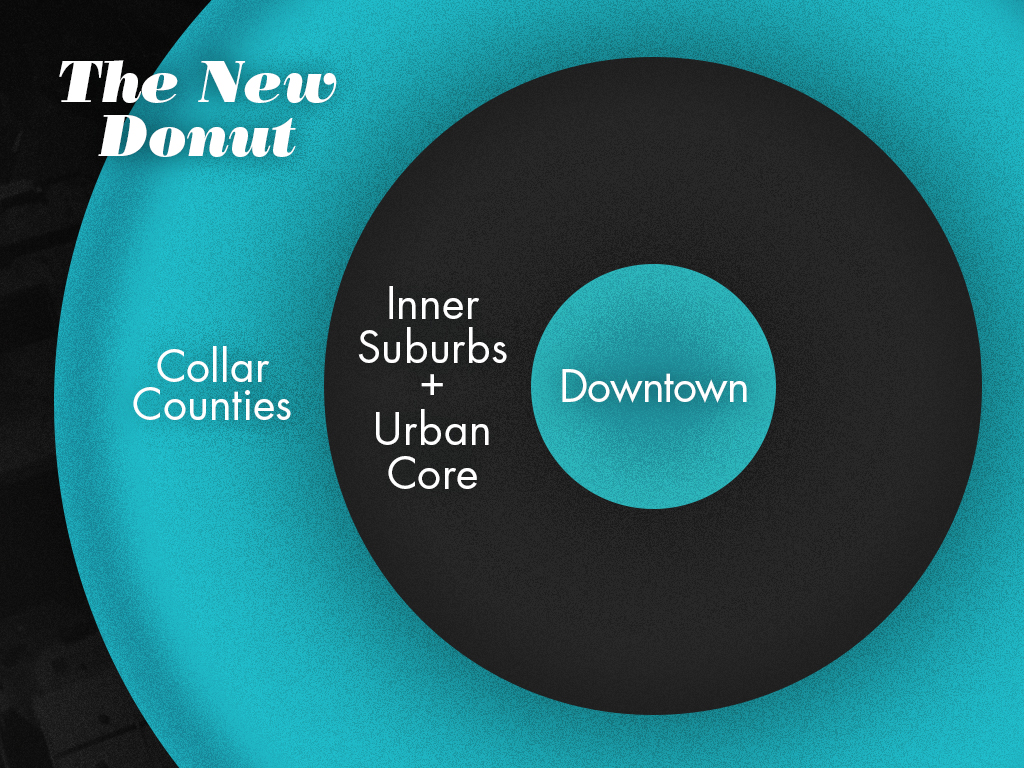
  • The New Donut

    Former Indianapolis Mayor Bill Hudnut used to like to say that “you can’t be a suburb of nowhere.” This is the oft-repeated notion has been a rallying cry for investments to revitalize downtowns in America for three decades or so now. The idea being that you can’t have a smoking hole in your region where your downtown is supposed to be. This created a mental based on a donut. You can’t let downtown become an empty hole. For reason that will become apparent soon, I call this model “the old donut”.

    Filling in the hole became every city’s mission. Pretty much any city or metro region of any size has pumped literally billions of dollars into its downtown in an attempt to revitalize them. This took many forms ranging from stadiums to convention centers to hotels to parking garages to streetcars to museums and more. It’s popular today to subsidize mixed use development with a heavy residential component.

    These efforts have paid off to a certain degree. Most big city downtowns have done very well as entertainment and visitor districts, eds and meds centers, etc. More recently we’ve seen an influx of residents, even in places where the overall city or even region has struggled or declined. Cleveland added about 4,000 net new downtown residents in the 2000s. St. Louis added 3,000. With most cities in some stage of an apartment building spree consisting of a few thousand units, these numbers should only improve.

    Key weaknesses remain in private sector employment (declining in most places) and retail (not enough high income residents yet). And other than the tier one types of cities like Chicago, few places seem to have reached a sustainable market rate development level yet – pretty much everything is getting public assistance. Yet its pretty evident that most larger downtowns have made huge strides and are experiencing overall reasonable health.

    In short, the donut hole has been filled in. Where does that leave us? I’d argue with a paradigm I call “the new donut”:


    In this model, the old donut is inverted. What used to be the ring of health – the outer areas of the city and the inner suburban regions – are now struggling. Whereas the downtown is in pretty good shape, and the newer suburban areas are booming. (You might add in a fourth outer ring with troubles – these were the exurbs where very low-end housing proliferated because development standards were very low).

    You see this in the population figures. Wendell Cox cranked the numbers and found that major metro areas gained 206,000 residents in the two mile radius from the center, but lost 272,000 residents from the 2-5 mile ring. Growth picked up strongly beyond that arc. This is the new donut area, though the start and end of it vary by metro and some have thicker rings of challenge than others.

    We’ve got three decades of experience in downtown revitalization, but much less in dealing with this newer challenge zone. I’ve said that suburban revitalization may prove to be the big 21st century “urban” challenge. This is where it is happening in many cases. These areas have an inferior housing stock (often small post-war worker cottages or ranches), sometimes poor basic infrastructure, and are sometimes independent municipalities that, like Ferguson, MO, are often overlooked unless something really bad happens. Unlike the major downtown, they are often “out of sight, out of mind” for most regional movers and shakers.

    What’s more, while downtown provides a concentrated location for massive public investment, this more spread out area is too big to fix by throwing money at it. And how many stadiums and convention centers does a region need in any event?

    This is where we need to be doing a lot of thinking about how to bring these places back, look at what’s being done, etc. And also, given the inequality in the country, to try to think about ideas that don’t involve gentrification. One project that appears to be in this kind of zone, for example, is Atlanta’s Beltline project, though there’s a gentrifying aspect to this one. Regions that figure this one out will be at a big advantage going forward.

    Aaron M. Renn is an independent writer on urban affairs and the founder of Telestrian, a data analysis and mapping tool. He writes at The Urbanophile, where this piece originally appeared.

  • Battle of the Upstarts: Houston vs. San Francisco Bay

    “Human happiness,” the Greek historian Herodotus once observed, “does not abide long in one place.” In its 240 years or so of existence, the United States has experienced similar ebbs and flows, with Boston replaced as the nation’s commercial capital first by Philadelphia and then by New York. The 19th century saw the rise of frontier settlements—Cincinnati, Pittsburgh, Cleveland, and finally Chicago—that also sought out the post position. In the mid 20th century, formerly obscure Los Angeles emerged as New York’s most potent rival.

    Today we are seeing yet another shuffling of the deck among American regions. New York remains the country’s preeminent city, but its most powerful rivals are likely to be neither Chicago nor Los Angeles, but rather two regions rarely listed in the hierarchy of influential regions: the San Francisco Bay Area and Houston.

    Making of a new pecking order

    The Bay Area does not rank among the 20 top global cities in most studies, such as the 2014 A.T. Kearney listings. In the respected rankings of the London-based Globalization and World Cities Network, the Bay Area stood below not only Chicago, which is considered an “alpha” global city, but also such places as Toronto and Mexico City.

    Yet such rankings vastly underestimate the power now being wielded by the San Francisco region. As the headquarters for the largest concentration of cutting edge tech firms in the world, the Bay Area increasingly shapes the operations of companies from manufacturing and marketing to retail and media. And given that roughly half the nation’s venture capital is still being lavished on area start-ups, it is not surprising that Silicon Valley ranks number one in the world as a place to launch tech ventures, according to the Startup Genome.

    Tech dominance, according to a recent study on global cities conducted by my firm NewGeography, explains why the San Francisco Bay Area nudges out much larger Los Angeles for bragging rights on America’s Pacific Rim. Technology leaders, including Intel, Apple, Oracle, Google, and Facebook, are based in Silicon Valley, while Asian global tech firms such as Samsung also have North American headquarters there. Top technology firms from other cities often have their key R&D functions in the Bay Area. Even a frugal firm like Wal-Mart is enlarging its Silicon Valley presence.

    The current social media bubble will surely pop, but as Michael S. Malone and others have noted, the Bay Area’s preeminence will likely continue, fueled by its unique concentration of engineers, entrepreneurs, and risk capital. As a lure for the ambitious, Silicon Valley and San Francisco are replacing Wall Street. Google alone has 1,200 employees who formerly worked for large U.S. investment banks, and migration from the Big Apple to California is now at its highest level since 2006.

    Much of the appeal of the Bay Area is a result of happy coincidence of history and geography. The Bay Area—where I went to school and got my start in journalism, and where parts of my family have resided since the ’50s—has been blessed with excellent higher education and is centered around what is arguably America’s most beautiful city. Good weather, beautiful vistas, and access to nature have made the Bay Area a natural lure for people who can afford to live wherever they want.

    The Energy Capital

    Houston, where I have been working as a consultant, hardly qualifies as one of the most physically attractive or temperate cities. San Francisco may well have been, as Neil Morgan suggested a half century ago, “the Narcissus of the West,” but Houston, in most accounts, has been widely disparaged as hot, steamy, ugly and featureless. Yet despite this, its ascendency is no less compelling than that of the Bay Area.

    Houston’s trump card, like the Bay Area’s, resides in its control of one strategic industry, in this case energy. The majority of traded foreign oil majors, such as London-based Shell and British Petroleum, have their U.S. headquarters in Houston, and even companies based elsewhere boast a significant Houston presence. For example, Exxon, although it has its headquarters in Dallas-Fort Worth, is opening a massive Houston campus that will be home to 10,000 employees. Additionally, a majority of the world’s largest oil services companies, such as Baker Hughes, Schlumberger, and FMC Technologies, are based in Houston.

    Altogether, more than 5,000 energy-related companies call Houston home. The city employs three times more people in energy than its second place rival, Dallas-Ft. Worth, and more than the next five cities combined. This growth is likely to accelerate because foreign companies, notably from Germany, have begun buying up energy firms in the area, including Siemens’s recent $7.6 billion dollar purchase of the Dresser Rand Group, an energy equipment firm.

     Houston has added more than 10 percent more jobs since 2008, almost twice the increase in the Bay Area. Since 2000 Houston’s employment figures have shot up 32 percent, while the Bay Area has grown by barely 4 percent. And it’s not just energy that’s driving things—Houston is now the nation’s largest export port and boasts the world’s largest medical center. It has also become, by some measurements, the most ethnically diverse (PDF) region in the country. In the last decade, for example, Houston increased its foreign-born population by 400,000, second only to New York and well ahead of much larger Los Angeles.

    The big losers: LA and Chicago—but also New York

    In the past century New York and Los Angeles have dominated American media. This is being severely undermined by the Bay Area’s digital economy. Since 2001, notes Mark Schill at Praxis Strategy (where I am a senior fellow), book, periodical, and newspaper publishing—all traditionally concentrated in the New York area—have lost some 250,000 jobs, while Internet publishing and portals generated some 70,000 new positions, many of them in the Bay Area or Seattle.

    Google and Yahoo are already among the largest media companies in the world. (Yahoo now refers to itself as a digital media company rather than a technology company). With the ubiquity of its iTunes platform, Apple exercises ever greater control over consumer distribution of entertainment products such as music and video; Netflix, Hulu, and YouTube could become the studios of the future. This could shift global media decision-making from its familiar New York-Los Angeles axis to the Bay Area.

    This is particularly bad news for Los Angeles, whose grip on the entertainment industry was weakening even before Silicon Valley’s rise. Since 2004, LA’sentertainment industry lost roughly 11 percent of its jobs, as production shifted to Canada, Louisiana, and other locales.

    The decline in media employment comes on the heels of a rapid industrial decline—the area has lost more than 90,000 aerospace jobs since the end of the Cold War. The situation is so dismal that a report issued by many of the region’s top business and political leaders concluded that the city “is barely treading water while the rest of the world is moving forward.”

    Chicago’s situation is arguably even worse, but it is more threatened by Houston, which has already passed the Windy City in numbers of corporate headquarters. Since 2010, when U.S. industry began recovering, Houston manufacturing employment expanded by more than 17 percent, compared to flat growth in Chicago.

    “Houston is the Chicago of this era—like the old Chicago,” remarks David Peebles, who runs the Texas office of Odebrecht, a $45 billion engineering firm based in Brazil. “In the ’60s you had to go to Chicago, Cleveland, and Detroit. Now Houston is the place for new industry.”

    With its industrial base eroding, Chicago is no longer a strategic hub for any key industry. Outside of trading commodities, it also no longer serves as a major global financial center. Regional population growth has been meager over the past decade, and the city’s own pension issues may be worse than Detroit’s.

    Chicago retains its brilliant skyline, great cultural institutions, powerful political influence, and a strong business community. But its days of America’s number two city are long gone, and, as we enter the mid-2000s, it is falling behind not only Los Angeles and New York but the two rising Texas cities, Houston and Dallas, both expected to pass the “city of big shoulders” in population by mid-century, or earlier.

    Engineering the Future

    In the coming decades, New York will remain the nation’s top global city, due to its remarkable urban legacy, the power of Wall Street, and the entrenched traditional media. But its Achilles heel is a lack of the engineering power necessary to address key challenges such as the digitization of industry, energy efficiency or climate change. New York is profoundly weak in engineering talent (PDF)—ranking 78th out of 85 metropolitan areas in engineers per capita.

    In contrast, the Bay Area represents the epitome of engineering power, with the San Jose area boasting the largest per capita concentration of engineers of any major metropolitan area. The Bay Area’s power to develop new technologies and its almost unfathomable wealth will continue to undermine traditional institutions, from Hollywood and Wall Street to business services, tourism, automotive, and even aerospace industries.

    Far less appreciated, Houston, rather than being a southern city of duller wits, actually ranks second in engineers per capita. If the Bay Area is master of the digital economy, Houston ranks as the technological leader of the material one; it is the capital for the energy-driven revival of U.S. industry, not only in Texas but throughout the old industrial heartland. Revealingly, Houston actually has seen far more rapid growth in both college educated and millennial population since 2000 than the Bay Area, as well as New York, Chicago, and Los Angeles.

    Rival Approaches to Urbanism

    The Bay Area, for all its vaunted progressivism, increasingly resembles a “gated community” whose high prices repel most potential newcomers, particularly families. Already by far the nation’s least affordable city—only 14 percent of current residents can possibly afford to buy a home—it represents a growth model that is by definition exclusive, almost a throwback to medieval forms where the rich clustered inside the city gates.

    High housing prices, notes economist Jed Kolko, account for the fact that, despite the boom, population growth in the Bay Area remains well below national averages. From 2000 to 2013, the region lost approximately 550,000 domestic migrants. Despite sizable immigration, the regional population growth rate has fallen below the national average.

    In contrast, Houston is among the fastest growing regions in the country, with rapid increases both in domestic migrants and newcomers from abroad. This stems from both lower housing prices and a growth model that is far more amenable to higher paid blue collar and middle management positions. Since 2000, Houston’s population has grown by 30 percent compared, three times that of the Bay Area.

    Ironically, Houston’s growth has been more egalitarian than that of the notionally super-progressive San Francisco region. A recent Brookings report found that income inequality has increased most rapidly in what is probably the most left-leaning big city in America, where the wages of the poorest 20 percent of all households have actually declined amid the dot com billions.

    This inequality has a distinct racial element. The Bay Area gap between white residents (who dominate the tech economy) and minorities is among the highest in the nation while, during the boom, income has fallen for Hispanics and African-Americans, according to Joint Venture Silicon Valley.

    This racial divergence is far less pronounced in Houston, while the growth of poverty since 2000 has been slower, increasing at one third the rate of New York and San Francisco, and half that of Los Angeles. The Texas city may lack the great views of San Francisco, but Houston has turned out to be a better city for middle class minorities. Homeownership among African Americans stands at 42 percent and for Latinos at more than 53 percent; this compares to 32 and 37 percent in the Bay Area.

    Perhaps the biggest differences can be seen in families. Of the nation’s 52 largest metropolitan areas, the Bay Area has the lowest percentage, 11.5 percent, of people ages 5 to 14. In Houston, 23 percent of the population fits this age category. In particular San Francisco is notoriously inhospitable to families, with the lowest percentage of kids of any major city.

    The two regions also reflect very different urban forms. The Bay Area’s leadership has opted to favor dense “in fill” growth and sought to restrict suburbandevelopment. Houston has taken a different tack. As its population has expanded, so too has the metropolitan area. This includes the development of many planned communities that appeal to middle class families and many immigrants. In 2013, Houston alone had more housing starts than the entire state of California.

    But it would be wrong to dismiss Houston’s model as merely “sprawl.” Instead it is better seen as simply expansive. In fact, arguably no inner ring in the country has seen more rapid growth, with high-rise, mid-rise and townhouse development in many long neglected districts. The increase in high-density housing tracts (more than 5,000 per square mile) since 2000 has been almost ten times higher than the Bay Area.

    The Political Battle for the Future

    Increasingly America’s future will be determined by these two cities, with the issue of addressing climate change at the fore. Much of the Bay Area’s leadership—led by the likes of Google Chairman Eric Schmidt and investor Tom Steyer—have all but declared war on the oil and gas industry. Several colleges and universities in the region, including Stanford, have shed their energy holdings, and Silicon Valley has nurtured movements such as Bill McKibben’s 350.org that seek to revoke the “social license” of big oil, a tactic used previously against the tobacco companies and firms that did business in apartheid South Africa.

    The elites of Silicon Valley and San Francisco are not just interested in saving the earth; they wish to profit from a change in the nation’s energy economy. Google, Sun Microsystems founder Vinod Khosla, and top venture capitalists such as John Doerr have bolstered their already ultra-thick wallets by capitalizing on “green energy” subsidies and outright grants from various levels of government. Given these investments, it’s easier to understand the Valley’s support for draconian climate change legislation, complete with attempts to demonize “Texas oil.” (One won’t see such populist zeal on , say, increasing capital gains rates.)

    The Valley’s hostility to fossil fuel energy, and its jihad to destroy an entire industry, is only barely recognized in Houston. I also have never heard anyone there suggest that Silicon Valley should be closed down as a danger to the planet (or at least a threat to the attention span of younger Americans). Houstonians, particularly in the energy industry, generally lack media savvy, which is one reason why energy is widely rated as the country’s least popular industry. Also missing, thankfully, is the sense of entitlement and self-congratulation one finds in the Bay Area. But once the intention to devastate the oil and gas industry is better understood, expect the energy capital to square off against the tech center, generating what may be the regional battle royal of our era.

    This piece originally appeared at The Daily Beast.

    Joel Kotkin is executive editor of NewGeography.com and Roger Hobbs Distinguished Fellow in Urban Studies at Chapman University, and a member of the editorial board of the Orange County Register. His newest book, The New Class Conflict is now available at Amazon and Telos Press. He is author of The City: A Global History and The Next Hundred Million: America in 2050. His most recent study, The Rise of Postfamilialism, has been widely discussed and distributed internationally. He lives in Los Angeles, CA.

    Photos courtesy of University of Texas Health Science Center at Houston Office of Communications and Vincent Bloch.
  • Seniors Dispersing Away from Urban Cores

    Senior citizens (age 65 and over) are dispersing throughout major metropolitan areas, and specifically away from the urban cores. This is the opposite of the trend suggested by some planners and media sources who claim than seniors are moving to the urban cores. For example, one headline, "Millions of Seniors Moving Back to Big Cities" is at the top of a story with no data and anecdotes ranging that are at least as much suburban (Auburn Hills, in the Detroit area) and college towns (Oxford, Mississippi and Lawrence, Kansas), as they are big city. Another article, "Why Seniors are Moving to the Urban Core and Why It’s Good for Everyone," is also anecdote based, and gave prominence to a solitary housing development in downtown Phoenix (more about Phoenix below).

    Senior Metropolitan Growth Trails National

    Between 2000 and 2010, the nation’s senior population increased approximately 5.4 million, an increase of 15 percent. Major metropolitan areas accounted for approximately 50 percent of the increase (2.7 million) and also saw their senior population increase 15 percent. By contrast, these same metropolitan areas accounted for 60 percent of overall growth between 2000 and 2010, indicating that most senior growth is in smaller metropolitan areas and rural areas.

    Senior Metropolitan Population Dispersing

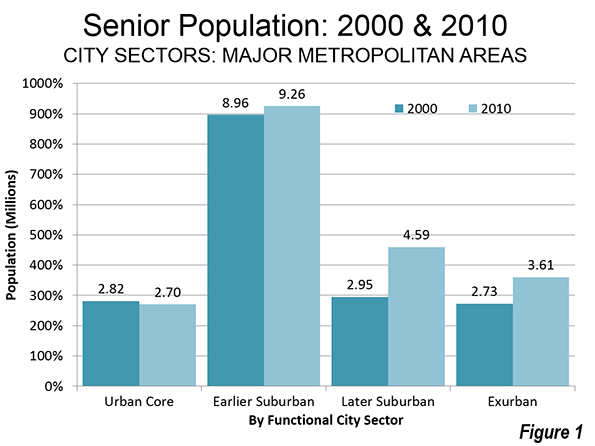
    The number of senior citizens living in suburbs and exurbs of major metropolitan areas (over 1,000,000 population) increased between 2000 and 2010, according to census data. The senior increases were strongly skewed away from the urban cores. Suburbs and exurbs gained 2.82 million senior residents over the period, while functional urban cores lost 112,000. The later suburbs added 1.64 million seniors. The second largest increase was in exurban areas, with a gain of 0.88 million seniors. The earlier suburbs (generally inner suburbs) added just under 300,000 seniors (Figure 1).

    During that period, the share of senior citizens living in the later suburbs increased 35 percent. The senior citizen population share in the exurbs rose nearly 15 percent. By contrast, the share of seniors living in the functional urban cores declined 17 percent. Their share in the earlier suburbs declined 11 percent.

    This is based on an analysis of small area data for major metropolitan areas using the City Sector Model.
    City Sector Model analysis avoids the exaggeration of urban core data that necessarily occurs from reliance on the municipal boundaries of core cities (which are themselves nearly 60 percent suburban or exurban, ranging from as little as three percent to virtually 100 percent). It also avoids the use of the newer "principal cities" designation of larger employment centers within metropolitan areas, nearly all of which are suburbs, but are inappropriately joined with core municipalities in some analyses. The City Sector Model" small area analysis method is described in greater detail in the Note below.

    Pervasive Suburban and Exurban Senior Gains

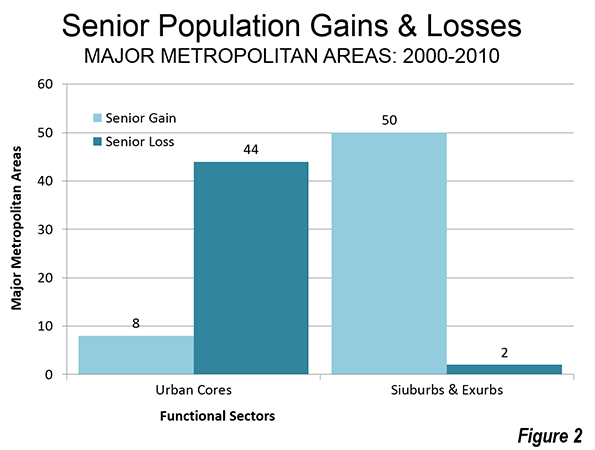
    The gains in functional suburban and exurban senior population were pervasive. Among the 52 major metropolitan areas, there were gains in 50. In two areas (New Orleans and Pittsburgh), there were losses. However, in each of these cases there was an even greater senior loss in the functional urban cores. In no case did urban cores gain more or lose fewer seniors than the suburbs and exurbs. Eight of the functional urban cores experienced gains in senior population, while 44 experienced losses (Figure 2)

    Largest Urban Cores

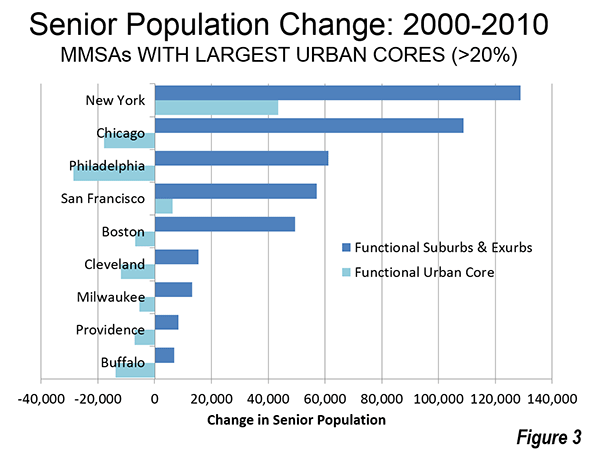
    The major metropolitan areas with the largest urban cores (more than 20 percent of the population in the functional urban cores),  would tend to be the most attractive to seniors seeking an urban core lifestyle. But they  still saw their seniors heading  to the suburbs and exurbs (Figure 3). Senior populations declined in the functional urban cores of all but two of these nine areas, New York and San Francisco. However, in both of these metropolitan areas, the increases in suburban and exurban senior populations overwhelmed the increases in the urban cores. All of these nine major metropolitan areas experienced increases in their suburban and exurban senior populations.

    Moreover, the Phoenix anecdote cited above is at odds with the reality that the later suburbs and exurbs gained 165,000 seniors between 2000 and 2010. The earlier suburbs lost 7,000 seniors (No part of Phoenix has sufficient density or transit market share to be classified as functional urban core).

    Consistency of Seniors Trend with Other Metropolitan Indicators

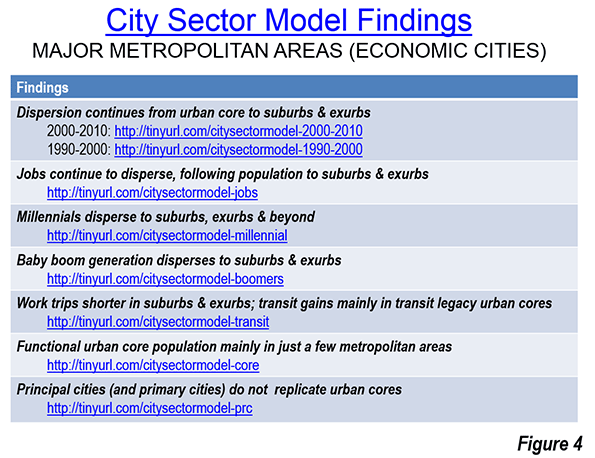
    As has been indicated in previous articles, there continues to be a trend toward dispersal and decentralization in US major metropolitan areas. There was an overall population dispersion from 1990 to 2000 and 2000 to 2010, which continued trends that have been evident since World War II and even before, as pre-automobile era urban cores have lost their dominance. Jobs continued to follow the suburbanization and exurbanization of the population over the past decade away as cities became less monocentric, less polycentric and more "non-centric." As a result, work trip travel times are generally shorter for residents where population densities are lower. Baby boomers and Millennials have been shown to be dispersing as well, despite anecdotes to the contrary (Figure 4). The same applies to seniors.

    Note: The City Sector Model allows a more representative functional analysis of urban core, suburban and exurban areas, by the use of smaller areas, rather than municipal boundaries. The more than 30,000 zip code tabulation areas (ZCTA) of major metropolitan areas and the rest of the nation are categorized by functional characteristics, including urban form, density and travel behavior. There are four functional classifications, the urban core, earlier suburban areas, later suburban areas and exurban areas. The urban cores have higher densities, older housing and substantially greater reliance on transit, similar to the urban cores that preceded the great automobile oriented suburbanization that followed World War II. Exurban areas are beyond the built up urban areas. The suburban areas constitute the balance of the major metropolitan areas. Earlier suburbs include areas with a median house construction date before 1980. Later suburban areas have later median house construction dates.

    Urban cores are defined as areas (ZCTAs) that have high population densities (7,500 or more per square mile or 2,900 per square kilometer or more) and high transit, walking and cycling work trip market shares (20 percent or more). Urban cores also include non-exurban sectors with median house construction dates of 1945 or before. All of these areas are defined at the zip code tabulation area (ZCTA) level.

    —-

    Wendell Cox is principal of Demographia, an international public policy and demographics firm. He is co-author of the "Demographia International Housing Affordability Survey" and author of "Demographia World Urban Areas" and "War on the Dream: How Anti-Sprawl Policy Threatens the Quality of Life." He was appointed to three terms on the Los Angeles County Transportation Commission, where he served with the leading city and county leadership as the only non-elected member. He was appointed to the Amtrak Reform Council to fill the unexpired term of Governor Christine Todd Whitman and has served as a visiting professor at the Conservatoire National des Arts et Metiers, a national university in Paris.

    Photo: Later Suburbs of Cincinnati (where most senior growth occurred from 2000 to 2010). By Author

  • Diverging Fortunes in Portland

    A recent New York Times Magazine had a story on Portland that featured Yours Truly. I recapitulated a few observations I’ve had over the years, including that it’s truly remarkable how a small city like Portland has captured so many people’s imagination, and also that “people move to Portland to move to Portland.”

    A Portland writer named Steve Duin appears to have had an aneurysm over the piece and, among other things, criticized my statement about why people move to Portland, saying:

    She quotes Aaron Renn, an urban-affairs analyst, who insists that while Los Angeles attracts starlets and New York the financiers, “People move to Portland to move to Portland,” as if the city is a space between Pacific Avenue and Park Place on the Monopoly board, not a vibrant, creative, accessible and accommodating urban scene.

    Which only proves that he completely missed the point. All I’m saying is what he’s saying in different words, namely that people move to Portland for its lifestyle and amenities. This is exactly what every Portland booster claims, namely that what they’ve created is attractional. I’m simply pointing out the obvious: people move to Portland primarily for lifestyle and leisure, not career or economic reasons. People move to Portland because they want to live there.

    Portland’s economy has actually picked up of late. Its unemployment fell below the national average in 2013 after having been above it for 14 straight years. But I want to highlight a disconnect between a couple measures of economic performance.

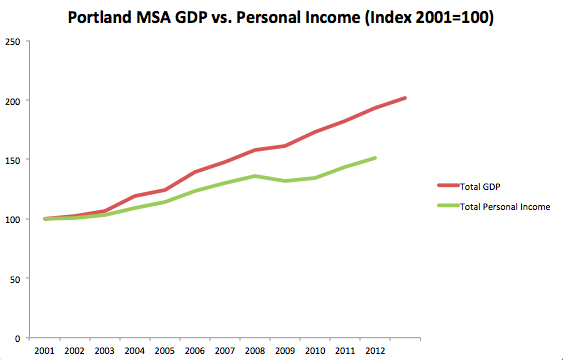
    I’ve written many times that Portland has done very well in terms of per capita GDP. In fact, from 2001 to 2013 (the maximum range of data available from the feds), Portland was #1 out of all 52 large metros in the US in its percentage increase in real per capita GDP.

    On the other hand, looking at how much of that economic value ends up in people’s pockets tells a different story. From 2001 to 2012 (I don’t think 2013 has been released yet), Portland only ranked 40th out of 52 in its percentage increase on this metric. Portland declined from a per capita income of 104.9% of the US average in 2001 to 98.6% in 2012.

    I threw this divergence into a quick chart:


    portland-gdp-vs-persinc

    It would be interesting to dig into these numbers. I did a quick back of the envelop calculation of total GDP growth by industry. Only a few industry totals are available, but the biggest gainer was Manufacturing, up 300%. Education, Health, and Social Assistance were #2, followed by Professional and Business Services. Natural Resources, Retail. Information, and FIRE were at the bottom.

    Speaking of San Jose, I see an even more remarkable divergence there. It was #2 in per capita GDP growth over the 2001-2013 time frame. Looking at the overall Bay Area total real GDP, it increased by 30.1% from 2001 to 2013. Keep in mind I’m using the inflation adjusted figured here, so there’s no inflation in that metric. But at the same time the Bay Area lost 2.4% of its jobs.

    The Bay Area grew its economy by almost a third while shedding over 75,000 jobs. Pretty remarkable.

    Aaron M. Renn is an independent writer on urban affairs and the founder of Telestrian, a data analysis and mapping tool. He writes at The Urbanophile, where this piece originally appeared.

    Portland Oregon” by Jamidwyer – Own work. Licensed under Public domain via Wikimedia Commons

  • New Commuting Data Shows Gain by Individual Modes

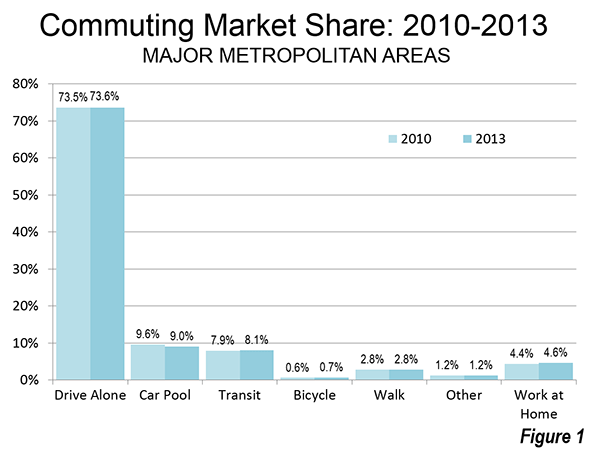
    The newly released American Community Survey data for 2013 indicates little change in commuting patterns since 2010, a result that is to be expected in a period as short as three years. Among the 52 major metropolitan areas (over 1 million population), driving alone increased to 73.6% of commuting (including all travel modes and working at home). The one mode that experienced the largest drop was carpools, where the share of commuting dropped from 9.6% in 2010 to 9.0% in 2013. Doubtless most of the carpool losses represented gains in driving alone and transit. Transit grew, increasing from a market share of 7.9% in 2010 to 8.1% in 2013 in major metropolitan areas; similarly working at home increased from 4.4% to 4.6%, an increase similar to that of transit (Figure 1). Bicycles increased from 0.6% to 0.7%, while walking remained constant at 2.8%.

    Transit: Historical Context

    Transit has always received considerable media attention in commuting analyses. Part of this is because of the comparative labor efficiency (not necessarily cost efficiency) of transit in high-volume corridors leading to the nation’s largest downtown areas. Part of the attention is also due to the "positive spin" that has accompanied transit ridership press releases. An American Public Transportation Association press release earlier in the year, which claimed record ridership, have evoked a surprisingly strong response from some quarters: For example, academics David King, Michael Manville and Michael Smart wrote in the Washington Post:"We are strong supporters of public transportation, but misguided optimism about transit’s resurgence helps neither transit users nor the larger traveling public." They concluded that transit trips per capita had actually declined in the past 5 years. 

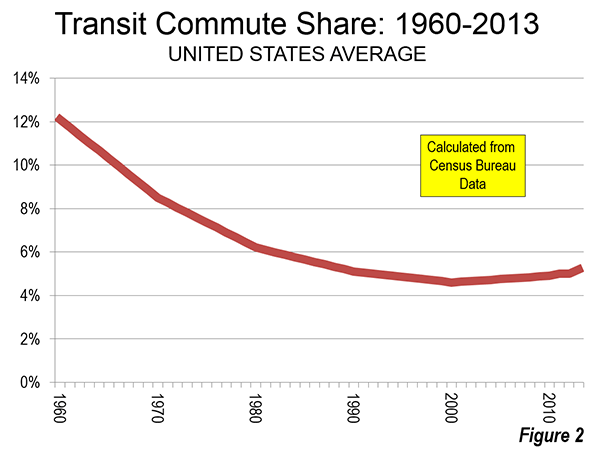
    Nonetheless, transit remains well below its historic norms. The first commute data was in the 1960 census and indicated a 12.6% national market share for transit for the entire U.S. population. By 1990, transit’s national market share had dropped to 5.1%. After dropping to 4.6% in 2000, transit recovered to 5.2% in 2012. But clearly the historical decline of transit’s market share has at least been halted (Figure 2).

    Even so, in a rapidly expanding market, many more people have begun driving alone than using transit. More than 47 million more commuters drive alone today than in 1980, while the transit increased about 1.4 million commuters over the same time period.

    The largest decline occurred before 1960. Transit’s work trip market share was probably much higher in 1940, but the necessary data was not collected in the census, just before World War II and the great automobile-oriented suburbanization. In 1940, overall urban transit travel (passenger miles all day, not just commutes) is estimated to have been twice that of 1960 and nearly 10 times that of today.

    Transit’s 2010-2013 Trend

    To a remarkable extent, transit continues to be a "New York story." Approximately 40% of all transit commuting is in the New York metropolitan area. New York’s 2.9 million transit commuters near six times that of second place Chicago. Transit accounts for 30.9% of commuting in New York. San Francisco ranks second at 16.1% and Washington third at 14.2%. Only three other cities, Boston (12.8%), Chicago (11.8), and Philadelphia (10.0%) have transit commute shares of 10% or more. 

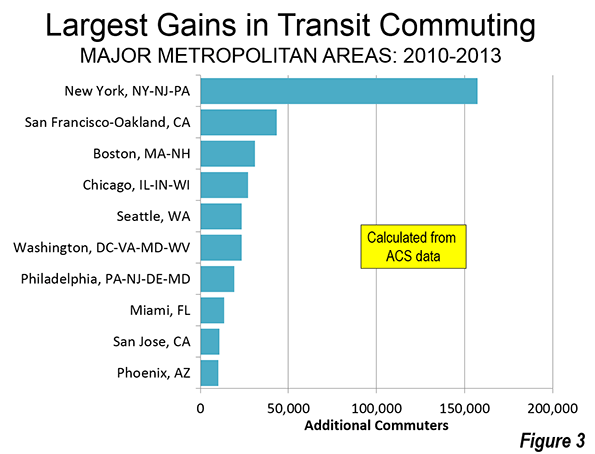
    From 2010 to 2013, transit added approximately 375,000 new commuters. Approximately 40% of the entire nation’s transit commuting increase occurred in the New York metropolitan area. This was included in the predictable concentration (80%) of ridership gains in the transit legacy metropolitan areas, which are the six with transit market shares of 10% or more. Combined, these cities added 300,000 commuters, 89%, on the large rail systems that feed the nation’s largest downtown areas.

    Perhaps surprisingly, Seattle broke into the top five, edging out legacy metropolitan areas (Figure 3) Philadelphia and Washington. Seattle has a newer light rail and commuter rail system. Even so, the bulk of the gain in Seattle was not on the rail system. Approximately 80% of its transit commuter growth was on non-rail modes. Seattle has three major public bus systems, a ferry system and the newer Microsoft private bus system that serves its employment centers throughout the metropolitan area. All of the new transit commuters in eighth ranked Miami were on non-rail modes, despite its large and relatively new rail system. New rail city Phoenix (10th) also experienced the bulk of its new commuting on non-rail modes (93%). Rail accounted for most of the gain in San Jose (9th), with a 58% of the total  The transit market shares in Miami, San Jose and Phoenix are all below the national average of 5.2%.

    Outside the six transit legacy metropolitan areas, gains were far more modest, at approximately 75,000. Seattle, Miami, San Jose, and Phoenix accounted for nearly 60,000 of this gain, leaving only 15,000 for the other 42 major metropolitan areas, including Los Angeles, which had a 5,000 loss. Los Angeles now has a transit work trip market share of 5.8%, below the 5.9% in 1980 when the Los Angeles County Transportation Commission approved the funding for its rail system (the result of my amendment, see "Transit in Los Angeles"). Los Angeles is falling far short of its Matt Yglesias characterization as the "next great mass-transit city."

    Since 2000, the national trend has been similar. Nearly 80% of the increase in transit commuting has been in the transit legacy metropolitan areas, where transit’s share has risen from 17% to 20%. These areas accounted for only 23% of the major metropolitan area growth since 2000. By contrast, 77% of the major metropolitan area growth has been in the 46 other metropolitan areas, where transit’s share of commuting has remained at 3.2% since 2000. There are limits to how far the legacy metropolitan areas can drive up transit’s national market share.

    Prospects for Commuting

    At a broader level, the new data shows the continuing trend toward individual mode commuting, as opposed to shared modes. Between 2010 and 2013, personal modes (driving alone, bicycles, walking and working at home) increased from 82.3% to 82.7% of all commuting. Shared modes (carpools and transit) declined from 17.7% of commuting to 17.3%. These data exclude the "other modes" category (1.2% of commuting) because it includes both personal and shared commuting. None of this should be surprising, since one of the best ways to improve productivity, both personal and in the economy, is to minimize travel time for necessary activities throughout the metropolitan area (labor market).

    Wendell Cox is principal of Demographia, an international public policy and demographics firm. He is co-author of the "Demographia International Housing Affordability Survey" and author of "Demographia World Urban Areas" and "War on the Dream: How Anti-Sprawl Policy Threatens the Quality of Life." He was appointed to three terms on the Los Angeles County Transportation Commission, where he served with the leading city and county leadership as the only non-elected member. He was appointed to the Amtrak Reform Council to fill the unexpired term of Governor Christine Todd Whitman and has served as a visiting professor at the Conservatoire National des Arts et Metiers, a national university in Paris.

    Photograph: DART light rail train in downtown Dallas (by author)

  • The Sick Man Of Europe Is Europe

    The recent near breakup of the United Kingdom — something inconceivable just a decade ago — reflects a deep, pervasive problem of identity throughout the EU. The once vaunted European sense of common destiny is decomposing. Other separatist movements are on the march, most notably in Catalonia, Flanders and northern Italy.

    Throughout the continent, public support for a united Europe fell sharply last year. Opposition to greater integration has emerged, with anti-EU parties gaining support in countries as diverse as the United Kingdom, Greece, Germany and France.

    The new reality is epitomized by France’s ascendant far-right political figure, Marine Le Pen, who is now leading in many polls to win the next presidential election. “The people have spoken loud and clear … they no longer want to be led by those outside our borders, by EU commissioners and technocrats who are unelected,” she declared recently. “They want to be protected from globalization and take back the reins of their destiny.”

    These attitudes suggest that the EU could be devolving from a nascent super-state to something that increasingly resembles the Holy Roman Empire, a fragmented landscape of small, unimportant states wrapped in a unitary, but ephemeral crepe. This challenges the view of some Americans, particularly but not only on the left, who see Europe as a role model for the U.S.

    Not long ago progressive authors like Jeremy Rifkin could project the European Union to be one of the world’s great and admirable powers. Today, Rifkin’s 2005 tome “The European Dream,” and a host of similar tracts, seem absurd amid growing political unrest and spreading economic stagnation.

    Economic Decline

    Some pundits, such as Paul Krugman, routinely describe Europe’s approach to economic, environment and social policy as more enlightened than America’s. Wherever possible, progressives push for European-style action in areas such as curbing carbon emissionsand rapidly converting to “green” energy.

    Yet these policies are not working. The one large relatively fast-growing economy in Europe (excluding Turkey) is Poland.

    Several years ago Germany and the Netherlands were exemplars as opposed to the much-disdained PIGS (Portugal, Italy, Greece and Spain). But German growth rates have plummeted, going negative in the last quarter, along with France and Italy. More stagnation is likely as energy costs surge and key export markets, notably in Russia and China, begin to contract. Today, the “sick man” of Europe is not any one country, or collection of countries; the “sick man of Europe” is Europe.

    Europe’s poor economy stems in large part from policy. The strong welfare state so admired by progressives here has also made Europe a very expensive place to do business. High taxes and welfare costs, long tolerable in an efficient economy like Germany, have a way of catching up with companies and countries. This has been particularly notable after the financial crisis; since 2008 the unemployment rate has shot up 5 percentage points while dropping steadily in the Untied States.

    The European-wide embrace of “green” energy policies has been tough particularly for manufacturers. Under Chancellor Merkel, Germany has embraced a massive shift to green energy that has helped raise electricity costs for companies by 60% over the past five years to double the rates in the United States.

    The Russians, Europe’s one relatively inexpensive energy source, may have calculated that, in the long run, China may prove a better customer than the Europeans. Ironically, some European countries, including Germany, have been forced to boost their use of coal, certainly not much of a climate change win, to make up for shortfalls created by shuttering nuclear plants and overreliance on often erratic green energy.

    Ultimately, high energy prices tend to fall most painfully on the middle and working classes in the form of higher electricity bills. Some may see their jobs threatened as European employers look forlower-cost alternatives, such as in the energy rich South and middle of the United States.

    Demographic Disasters

    The young are arguably the biggest losers in Europe’s decline. Even though birthrates are very low throughout much of Europe from Germany, Italy and Spain to the eastern countries, those now coming into the workforce face extraordinarily high levels of unemployment, topping 50% in some places. It’s no wonder that some are dubbing them a “lost generation.”

    The combination of low birth rates and declining prospects contribute to rising concerns about immigration. Immigration has always been a more contentious issue in Europe, where many countries are dominated by a single ethnic group and the residents prefer something closer to homogeneity. This nativism has been painfully evidenced in recent decades from everything from the violent breakup of Yugoslavia and the far more civilized dismantling of Czechoslovakia to assaults on the Roma in France, the Czech Republic, Greece and other countries.

    In Britain, the anti-immigrant and anti-EU U.K. Independence Party’s recent strong showing in the European Parliament elections reflected this concern. Diversity in London, which by some counts has the world’s largest concentration of immigrants, thrills London’s media and business communities but stirs great resentment, particularly among working and middle-class voters. The fact that by some estimates that most new jobs generated in the recovery have gone to immigrants has not warmed sentiments.

    A Region Without Meaning

    Chancellor Merkel has noted that “multi-culturalism” in Germany has “utterly failed.” Muslims in Europe drifting to ISIS is just one reflection of the continent’s weakness. The slow integration of immigrants into the economy, even in relatively prosperous, enlightened countries like Sweden, reflects also the inability of Europeans to integrate the newcomers who could help provide a workforce and consumer base in the future.

    Perhaps the greatest challenge to Europe is not demographics, economics or energy, but one of identity. In highly secularized Europe, Christianity, which bound the continent around some similar values, is increasingly rarely practiced or believed. More Czechs, for example, believe in UFOs than in God. Outside of some vaguely anti-American, neo-druid communitarianism among some, there’s not much holding Europeans together.

    All this suggests that Americans would do better than look to Europe for future solutions to our own problems. However attractive the European model may seem to our pundit class, the reality on the ground shows something more to be avoided than embraced.

    This piece originally appeared at Forbes.

    Joel Kotkin is executive editor of NewGeography.com and Distinguished Presidential Fellow in Urban Futures at Chapman University, and a member of the editorial board of the Orange County Register. His newest book, The New Class Conflict is now available at Amazon and Telos Press. He is author of The City: A Global History and The Next Hundred Million: America in 2050. His most recent study, The Rise of Postfamilialism, has been widely discussed and distributed internationally. He lives in Los Angeles, CA.

  • Millennials: A Powerful, Suburban Living Generation

    The latest survey data on the  living preferences of the Millennial generation (born 1982-2003) once again validates the picture of a cohort  that, contrary to urban legend, actually prefers the suburbs, even as they prepare to shape the suburbs in their own image. We and others have previously made this data-based point on this website. The results of the survey challenges the often wishful thinking of academics and ideologues who yearn for a more urbanized, denser America. 

    The Demand Institute commissioned the Nielsen company, to survey 1000 Millennial households about where and how they plan to live over the next five years, The results suggest a major transformation of the country’s housing markets is about to take place that will benefit those who know and understand Millennials and respond to their desires.

    There are 13.3 million households headed by Millennials today. During the next five years that number is projected by the Demand Institute to increase by over 60% to 21.6 million as many Millennials take their first steps toward marriage and family formation. While only 30% of the 18-29 year olds interviewed were now married, seven out of ten said they expected to be within the next five years. A majority (55%) also anticipate becoming parents during this period. As a result, 71% of those interviewed said, that over the next five years, they planned on moving to a  better home or apartment; about half expect to “own, not rent” their new home.   

    This burst of family formation, of course, is quite typical for thirty-year olds, a plateau that millions of Millennials will reach in the next half-decade. And, rather than diverge from the pattern, Millennials are following it in their own way. This is good news long term for the economy since their major lifestyle changes will lead to a burst of spending by Millennials. The Demand Institute’s report suggests that, between now and 2018 the generation will spend $1.6 trillion on home purchases and $600 billion in rent. The big questions are where will they spend all that money and what will they spend it on?

    The Suburbs is the clear answer to the first question. Forty-eight percent of the Millennials interviewed said they planned on moving to the suburbs, while only 38% said they would be moving into large urban areas.  A scant 14% planned to move to rural environments.

    The type of suburban living these Millennials favor, however, is a little different than many of the developments builders are planning to offer. Sixty-one percent say they are looking for more space in their next home than they currently enjoy. An additional 24% want at least the same amount of space. A mere 15% express a desire to live in less space, something often assumed by retro-urbanists, in a presumably more crowded urban environment. Furthermore, although substantial numbers prefer having major amenities within walking distance, most Millennials say they are willing to take a “short drive” to restaurants (54%), grocery stores (61%), and even shopping centers (57%). This suggests that new “walkable” suburbs, including large planned developments on the fringe and Millennial-“gentrified” close in suburbs, all with single family homes, are likely to be the places that benefit most from this wave of Millennial family formation and spending on housing.  

    The single biggest barrier to the country enjoying this burst of new spending remains the Millennial generation’s unique burden of student debt. While three-fourths of Millennials believe home ownership is both an important long term goal and a good investment, only 36% believe they will be able to buy their next home, rather than rent. The impact of student debt on this purchasing decision can clearly be seen in the current behavior of 30-35 year old Millennials.  Only half of those with student debt now own homes, while two-thirds of those lucky enough to graduate college without such debt are home owners. This clearly indicates that student debt reform is the single most important issue facing realtors and home builders future success. It should be their priority in Washington.

    In the meantime, there may be some creative ways to confront this problem; 69% of the four-in-ten Millennials who believe they could not qualify for a traditional mortgage are open to leasing a new home with an option to buy it later.  

    The results of this survey make it clear that the nation’s housing future remains in its suburbs. Those communities which can offer Millennials the type of lifestyle they desire will be rewarded with growth. Those that cling to outdated notions of what constitutes urban or suburban living will find it difficult to compete for the Millennial generation’s housing dollar and the vibrant economic activity that will flow from their choices.

    Morley Winograd and Michael D. Hais are co-authors of the Kindle book Millennial Majority, along with Millennial Momentum: How a New Generation is Remaking America and Millennial Makeover: MySpace, YouTube, and the Future of American Politics and fellows of NDN and the New Policy Institute.

  • Paving Over Hunan? The Portland Model for China

    For two centuries, people have crowded into urban areas, seeking higher standards of living than prevail in the rural areas they abandoned. Nowhere is this truer than in China. In just four decades, it has risen from 17.4 percent to 55.6 percent urban, adding nearly 600 million city residents. This has been accomplished while lifting an unprecedented number of people out of poverty.  

    Yet in the future, China faces tough urbanization challenges. The United Nations forecasts that another 200 million residents will be added to the cities by 2035, increasing the urban population by nearly another one-third.

    Los Angeles Style Suburbs in China?

    For years, western planners have sought to impose their visions of the future on China’s cities (see: China Should Send the Western Planners Home). There are more recent rumblings from Britain. Writing in The Guardian, Bianca Bosker finds considerable fault with Chinese cities. In criticizing China’s perceived copying of US and European models, her article conveys an impression that detached housing (called "villas in China) makes up a large part of China’s suburbs, as in the United States ("Why Haven’t China’s Cities Learned from America’s Mistakes?" with an intriguing subtitle "Faceless estates. Sprawling suburbs. Soulless financial districts … are in vogue in China").

    Having traveled widely within all but two of China’s 25 largest cities, I would have to disagree. You have to look hard to find detached housing in China. This is quite unlike the case in US suburbs, as well as those of Japan, Britain, France, Germany, Canada, Australia and elsewhere.

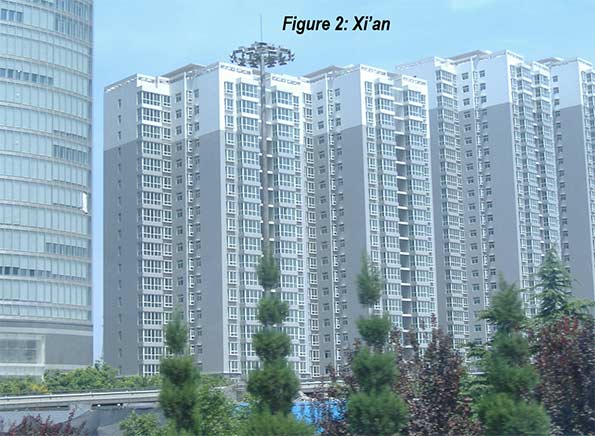
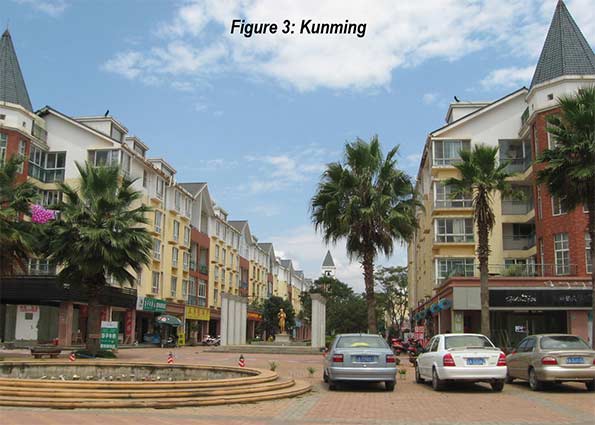
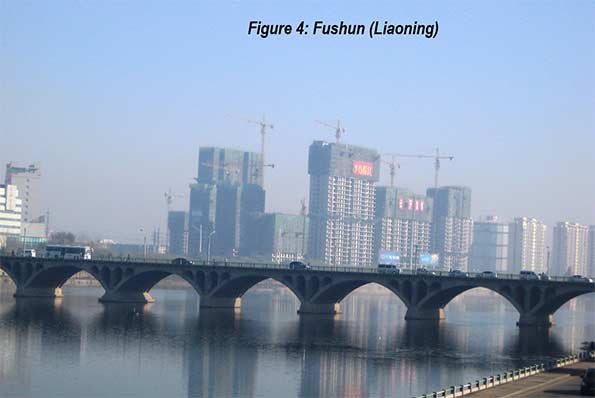
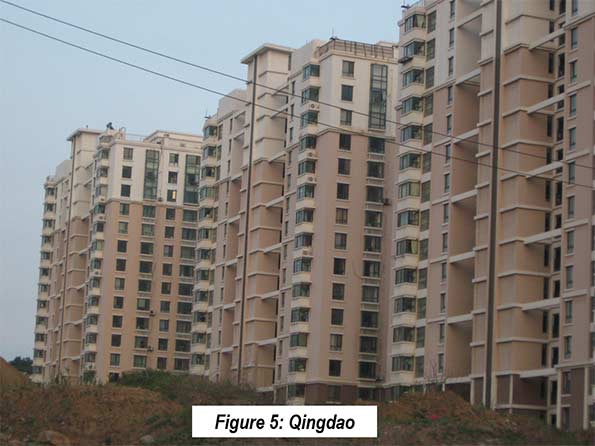
    In fact, the suburban areas of Chinese cities are largely high-rise and mid-rise multi-family buildings, with their attendant high densities. Detached housing has accounted for between 4 and 6 percent of new housing floor space. The actual percentage of detached units is probably smaller, since their average floor space of detached housing is greater. The type of housing in the photographs at the bottom of the article (Figures 2 through 6) is typical of China’s suburbs.

    Bosker also criticizes about China’s "towers in the park" high-rise development, noting that "The desire to escape sardine conditions in these superblocks, where greenery often consists of sickly shrubs gasping between six-lane roads, has in turn multiplied the number of land-devouring compounds like Rancho Santa Fe." In fact, villa developments like Rancho Santa Fe, nearby Shanghai’s Honquiao Airport, are very high income enclaves, and small. Rancho Santa Fe itself occupies less than 90 acres and the gross average lot size is approximately one-quarter acre (1/10 hectare), smaller than the average middle income suburban lot in the United States. No ordinary “tower in the park" resident can afford to move to the pricey villa developments.

    California’s High Urban Densities

    The article also condemns the "urban sprawl" of Los Angeles and California (this is nothing new).  However, the reality is that Los Angeles is the most dense major urban area in the United States (and thus the least sprawling) and nearly as dense as Toronto. Further, California has the highest urban density of any state, leading even New York. The average urban density of the state and even that of smaller California cities, such as Fresno, Stockton, Modesto and Salinas, is more than that of urban planning Nirvana Portland (below).

    Los Angeles: Land of Gridlock?

    The article calls Los Angeles the "land of gridlock," and there is no doubt that its traffic is intense. Yet, Los Angeles ranks only in a 20th place tie with Paris out of 125 cities in the latest Tom Tom Traffic Index. Traffic is worse in Brussels and Rome, almost as bad in London and far worse in places like Moscow, Istanbul, Rio de Janeiro, Mexico City and Sao Paulo. In spite of the traffic congestion, Los Angeles has the shortest work trip travel times of any world megacity for which there is data, the result of its dispersed residential and employment pattern (call it "sprawl" if you like).

    In Los Angeles, suburban residents have shorter work travel times than people living in the urban cores, which is the general situation among US major metropolitan areas (more than 1,000,000 population). This is to be expected, since lower densities are associated with less traffic congestion and shorter travel times.

    Paving Over Hunan?

    Ms. Bosker suggests that China may be poised to follow the "Portland model." A planner is quoted: “Portland is a really great model.” That, I would suggest, depends on your perspective.

    The Portland model has its philosophical roots in the British Town and Country Planning Act of 1947. As early as 1973, Sir Peter Hall and his colleagues characterized the Act having had the "reverse effect" an important policy goal, to benefit less affluent households, by virtue of the house price escalation that ensued.

    Portland has drawn an urban growth boundary around the city beyond which development is generally prohibited, and within which there is insufficient space to maintain competitive land prices. Portland has also has sought to attract people out of their cars by both building an extensive light rail system and   loath to provide new highway capacity to meet demand.

    After more than 30 years of its urban containment ("smart growth") policy, Portland’s urban density remains at only 1,350 per square kilometer (3,500 per square mile), less than one-quarter that of China’s cities with more than 500,000 population (5,750 per square kilometer/14,900 per square mile). Los Angeles is twice as dense as Portland. Portland’s urban density is closer to that of the world’s most sprawling large urban area, Atlanta, than it is to that of Los Angeles. Planning whipping boy Houston is only 15 percent less dense than Portland.

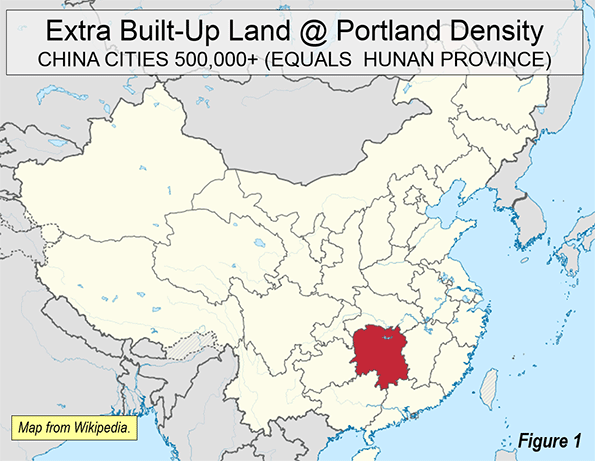
    To equal Portland’s density, Chinese cities would need to expand their footprints by 210,000 square kilometers (80,000 square miles). This would require the equivalent of paving over Hunan province (Figure 1), the state of Minnesota or the combination of England and Scotland.

    Portland is no model to copy, unless all you care about is inputs (like light rail and not building freeways and suburban housing). The outputs tell a completely different story. In 1980 (the last data before the first light rail line was opened) 65.1 percent of commuters drove alone to work. By 2012, that figure had increased to 70.8 percent. Transit was down from 8.4 percent to 6.0 percent. Approximately one-quarter as many people worked at home as commuted by transit in 1980 (2.2 percent). By 2012, more people in the Portland metropolitan area worked at home than rode transit (6.4 percent).

    This is not surprising. Portland’s "model" transit system (now with five light rail lines) can get the average commuter to only 8 percent of the jobs in 45 minutes. This is not very attractive in contrast to travel by automobiles, which provides access to virtually 100 percent of the jobs in less time (30 minutes).

    Meanwhile, Portland’s anti-highway policies have been rewarded with some of the most rapidly increasing traffic congestion in the United States. In the early 1980s, Portland ranked 47th worst out of the 101 US urban areas ranked by the Texas A&M Transportation Institute. By 2011, Portland’s traffic congestion had deteriorated to sixth worst, a stunning failure for a city with a population that doesn’t even rank the top 20. Meanwhile, Houston, castigated for its wide freeways, has improved from the worst traffic congestion in the middle 1980s to four positions better than Portland (10th), despite adding having added three times as many new residents as Portland.

    American Cities

    If outputs are more important than inputs (which I suggest is true), then US cities do very well. They have the highest incomes in the world, occupying 36 of the top 50 positions in gross domestic product per capita. They have some of the most affordable housing in the world, if cities following the Portland model are excluded. They have shorter work trip commutes and less traffic congestion than their peers in other high income world nations. And, they are poised for huge progress in environmental protection. The US Department of Energy forecasts large reductions in gross greenhouse gas emission from the national automobile fleet in the coming decades.

    Overwhelmingly, the growth of cities happened because rural residents sought higher standards of living and an escape from lower incomes and poverty, in rural areas. Few, if any moved to cities for wise urban planning, for "soulful financial districts" or to commute by light rail. Overall, US city outputs correspond very well with the purpose of cities — which is why they attracted residents.

    China: Setting its Own Course

    No one could have predicted China’s urban progress that was to follow in the decades following Deng Xiao Ping’s assumption of power. China’s cities have provided for their growing number of citizens. By that standard, both Chinese and American cities have done very well. China has charted its own urbanization course and seems likely to do so in the future. It is unlikely to seek to follow the advice of western critics whose plans fail the needs of their own citizens, much those in a complex, rapidly changing place like China.

    Top photograph: Suburban development, Changsha, Hunan. (All photographs by author).

    Wendell Cox is principal of Demographia, an international public policy and demographics firm. He is co-author of the “Demographia International Housing Affordability Survey” and author of “Demographia World Urban Areas” and “War on the Dream: How Anti-Sprawl Policy Threatens the Quality of Life.” He was appointed to three terms on the Los Angeles County Transportation Commission, where he served with the leading city and county leadership as the only non-elected member. He was appointed to the Amtrak Reform Council to fill the unexpired term of Governor Christine Todd Whitman and has served as a visiting professor at the Conservatoire National des Arts et Metiers, a national university in Paris.

  • Brooklyn is Getting Poorer

    I’m trying to make more of an effort, whenever I write or talk about gentrification, to point out that the real issue is larger: that gentrification is only one aspect of income segregation – specifically, the part where the borders between rich and poor neighborhoods shift – and that the real problem is that we have such sharply defined rich and poor neighborhoods to begin with.

    I might also throw in that income segregation used to be much less severe.

    Anyway, one problem with our obsession with gentrification as the end-all of urban equity issues is that it discourages us from talking about other important things happening in our cities. In some instances, gentrification has become such a dominating narrative that it has completely erased broader trends that we really ought to be concerned about.

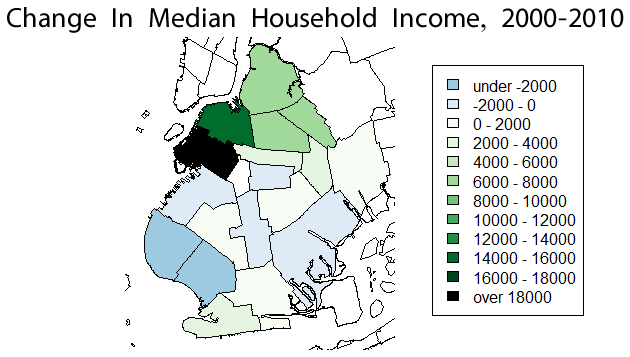
    Case in point: Brooklyn is getting poorer.

    Does that shock you? Were you under the impression that all of Brooklyn was in the process of becoming one giant pickle boutique? That would be forgivable, given that nearly every article filed from Brooklyn for a decade or so has been about gentrification. But no.

    I recently ran across a post from data-crunching blog extraordinaire Xenocrypt, which noted that from 1999 to 2011, median household income in Brooklyn fell from $42,852 to $42,752. That’s not a huge drop, obviously. The national median income fell from $56,000 to $50,000, so Brooklyn is actually catching up, sort of, to the country as a whole. But it still got poorer in absolute terms.

    Moreover, if you map (as Xenocrypt did) the borough’s neighborhoods by change in median income, you get a really striking picture:


    Credit: Xenocrypt.blogspot.com

    …which is that, indeed, a good three-fifths or so of Brooklyn is actually getting poorer. Have you read any articles about that? No, I will wager that you have not. Neither have I. I strongly suspect that is because they don’t exist – at least not in any outlet that might be considered mainstream.

    And what about housing prices?


    Brooklyn Gentrification Map: Increase, Decrease in Home Values 2004 vs. 2012
    Credit: http://www.citylimits.org/

    So in large parts of Brooklyn, real estate prices are falling.

    I have nothing particularly intelligent to say about this – these maps were news to me – except that it’s maybe the most dramatic example I’ve seen yet of just how limiting our fixation on gentrification is. I mean that both in a sort of journalistic sense, in that we’re being deprived of an accurate sense of what is actually going on in our cities, as well as from an advocate’s perspective: how can we claim to be working for fairer, more equitable, etc., cities, if we’re ignorant of their most basic economic and demographic changes?

    This post originally appeared in City Notes on May 3, 2014. Daniel Hertz is a masters student at the Harris School of Public Policy at the University of Chicago.

    Lead photo: “BK” by Theeditor93Own work. Licensed under CC BY-SA 3.0 via Wikimedia Commons.

  • Baby Boomtowns: The U.S. Cities Attracting The Most Families

    With the U.S. economy reviving, birth rates may be as well: the number of children born rose in 2013 by 4,700, the first annual increase since 2007. At the same time new household formation, after falling precipitously in the wake of the Great Recession, has begun to recover, up 100,000 this June from a year before.

    This impacts the economy strongly in such areas as single-family home construction, the supply of labor and consumer demand.

    For cities, being family friendly may become increasingly important as the large millennial generation starts entering their 30s, the primary years for raising children. In order to identify the parts of the country where new families are being formed most rapidly, we turned to demographer Wendell Cox. He crunched the data on the changes in the number of 5- to 14-year-olds since 2000 in the nation’s 52 largest metropolitan statistical areas.

    We picked this age range because it encompasses when parents often move due to such issues as school quality, the cost of housing and long-term economic security. A toddler can do quite well in a small apartment, but when it’s time to go to school, or if the parents decide to have a second or a third child, many parents are forced to make what are often difficult and long-lasting choices about where to live.

    Baby Boomtowns

    Virtually all the metro areas where there has been the strongest growth in families from 2000 to 2013 are highly suburban, highly affordable and located in the South and Intermountain West. If they also have a strong economy, like top-ranked Raleigh, N.C., they are even more attractive. In concert with strong net in-migration, the number of children in the Raleigh metro area between the ages of 5 and 14 grew by 63,600 from 2000-13, or 55.7%. That’s roughly 10 times the national growth rate of 0.5% for this demographic.

    The same combination of affordable housing and economic growth has helped No. 2 Austin, Texas, where there were 86,200 more children in 2013 than in 2000, growth of 49.3%, as well as  No. 4 Charlotte, N.C. (+82,100, 32.9%).

    Several of the high-ranked metro areas on our list are housing bubble hot spots that experienced rapid population growth in the first half of the last decade but then stalled out in the Recession.  No. 3 Las Vegas posted 35% growth among 5 to 14 year olds from 2000 to 2010. Since 2010 its child population has expanded at a modest 2.3% rate. A similar pattern can be observed in No. 5 Phoenix.

    In most of the top 10 metro areas on our list kids in the age range we looked at account for over 14% of the total population, compared to a national average of 13%. The city with the largest share of kids is No. 12 Salt Lake City, where 16.2% of the residents are between the ages of 5 and 14.

    The Great American Kiddie Desert

    The largest declines in the 5 to 14 cohort since 2000 have almost all occurred in the large coastal metropolitan centers, led by Los Angeles, 46th out of the 52 cities on our list, where the child population has dropped by 303,000, or 15.3%, since 2000. In the New York metro area (40th), the number of 5- to 14-year-olds fell by 238,000.

    Economics alone does not explain this. Some of these metro areas, notably New York and Boston (38th, -8%), have done fairly well in the aftermath of the Great Recession. Yet they are only doing marginally better in attracting families than the (mostly) hard-hit metro areas at the bottom of our list: Buffalo and Rochester, N.Y. , Pittsburgh and Detroit. (New Orleans actually ranked last behind Buffalo, but that’s a function of population flight due to Hurricane Katrina.)

    So why are otherwise thriving areas losing families? One possible explanation may come from cultural and political factors. As Austrian demographer Wolfgang Lutz has pointed out, an increasingly childless society creates “self reinforcing mechanisms” that make childlessness, singleness and one-child families increasingly predominant. In this process, which is further advanced in Japan, much of East Asia and throughout large parts of Europe, civic priorities often favor adult cultural amenities over things like parks and schools that are more important to families. Many areas that are increasingly child-free also often embrace density-oriented land use policies that lead to less affordable housing.

    Of course, there’s a steady drumbeat in the media proclaiming that families with children are returning to dense cities and expensive regions. In reality, the numbers don’t add up.  Among the 10 large metro areas with the lowest percentage of children are New York, Boston and San Francisco-Oakland, where the percentage of 5- to 14-year-olds is 11.5%, the lowest in the nation except for Pittsburgh (10.8%).

    All else being equal, high housing prices, particularly for single-family homes, drive people with young children away. Across the country, the biggest decline in child populations found in the 2010 Census took place in the urban core and close-in suburbs of expensive metro areas, while net increases were counted almost exclusively in further out suburbs. In Los Angeles, the central city and older suburbs have had large declines in children while almost all family growth has occurred in suburbs like the Inland Empire , Irvine , the Antelope Valley and Valencia.

    A Different Kind Of Divide?

    Much has been written about the various divides — political, racial, cultural, religious — afflicting the country. The geography of family formation poses yet another. In some parts of the country families appear to be proliferating, notably the Southeast and Intermountain West. In others, mostly in coastal California and the Northeast, they seem to be becoming rarer.

    To some extent, this parallels the “red” and “blue” divide, but not entirely. Some bluish regions have enjoyed growth in their 5 to 14 population, most notably No. 2 Austin, although this is helped largely by the booming Texas economy and liberal land regulation, particularly in the burgeoning suburban ring. Only three others slipped into the top 20 of our list: Denver (13th), greater Washington, D.C. (17th),  and Portland, Ore. (20th). Washington’s government driven job growth is doubtless a factor. Denver and Portland are more than 90% suburban and exurban, and boast housing that is relatively affordable compared to the Bay Area, Los Angeles or New York.

    Far more than politics, the interplay of economics and affordability tend to drive family migration. Take San Francisco-Oakland (33rd), which has had a robust economy over the past five years, but high housing prices have slowed the growth of families. Since 2000, the number of 5- to 14-year-olds in the metro area has dropped 2.7%.  A recent real estate survey showed a million dollars would buy only 1,500 square feet in San Francisco, 2,000 in Boston, 2,198 in Washington and roughly 2,300 in either New York or Los Angeles. In contrast, that amount of money could purchase over 10,000 square feet in Houston and 8,850 in Raleigh.

    Perhaps more important, high housing prices also make moving into a desirable area — particularly one with good schools — very difficult. In some core cities like Los Angeles, generally only the wealthiest areas have reliably decent public schools. In other parts of the country, you can still purchase a nice house for under $250,000 and be close to excellent schools. Unless the more expensive urban areas can expand their educational choices, many families will continue to look elsewhere for the critical combination of affordable housing and decent education for their children.

    Ultimately, these metro areas, so favored in the media, will face increased competition from those that can better attract young families. Even most hipsters eventually grow up, start a family, seek to buy a house and aspire to a middle-class life. Places that can attract young families will have several things going for them compared to their increasingly child-free rivals: a growing adult labor force, an expanding consumer market and a spur to the local construction industry. If demography is destiny, nowhere is this more likely the case.

    No. 1: Raleigh, N.C. MSA

    Rise In No. Of Children Aged 5-14, 2000-13: 55.7%
    No. Of Children Aged 5-14, 2013: 177,886
    Percentage Of Children Aged 5-14 In Total Population, 2013: 14.6%

    No. 2: Austin, Texas

    Rise In No. Of Children Aged 5-14, 2000-13: 49.3%
    No. Of Children Aged 5-14, 2013: 261,199
    Percentage Of Children Aged 5-14 In Total Population, 2013: 13.9%

    No. 3: Las Vegas

    Rise In No. Of Children Aged 5-14, 2000-13: 39.0%
    No. Of Children Aged 5-14, 2013: 275,663
    Percentage Of Children Aged 5-14 In Total Population, 2013: 13.6%

    No. 4: Charlotte, N.C.

    Rise In No. Of Children, 2000-13: 32.9%
    No. Of Children, 2013: 331,956
    Percentage Of Children In Total Population, 2013: 14.2%

    No. 5: Phoenix, Ariz.

    Rise In No. Of Children, 2000-13: 29.3%
    No. Of Children, 2013: 633,123
    Percentage Of Children In Total Population, 2013: 14.4%

    No. 6: Dallas-Ft. Worth, Texas

    Rise In No. Of Children, 2000-13: 28.2%
    No. Of Children, 2013: 1.05 million
    Percentage Of Children In Total Population, 2013: 15.4%

    No. 7: Atlanta, Ga.

    Rise In No. Of Children, 2000-13: 26.1%
    No. Of Children, 2013: 808,811
    Percentage Of Children In Total Population, 2013: 14.6%

    No. 8: Houston, Texas

    Rise In No. Of Children, 2000-13: 25.8%
    No. Of Children, 2013: 965,259
    Percentage Of Children In Total Population, 2013: 15.3%

    No. 9: Nashville, Tenn.

    Rise In No. Of Children, 2000-13: 22.7%
    No. Of Children, 2013: 237,119
    Percentage Of Children In Total Population, 2013: 13.5%

    No. 10: Orlando, Fla.

    Rise In No. Of Children, 2000-13: 22.6%
    No. Of Children, 2013: 288,091
    Percentage Of Children In Total Population, 2013: 12.7%

    This piece originally appeared at Forbes.

    Joel Kotkin is executive editor of NewGeography.com and Distinguished Presidential Fellow in Urban Futures at Chapman University, and a member of the editorial board of the Orange County Register. His newest book, The New Class Conflict is now available at Amazon and Telos Press. He is author of The City: A Global History and The Next Hundred Million: America in 2050. His most recent study, The Rise of Postfamilialism, has been widely discussed and distributed internationally. He lives in Los Angeles, CA.