Category: Demographics

  • California Wages War On Single-Family Homes

    In recent years, homeowners have been made to feel a bit like villains rather than the victims of hard times, Wall Street shenanigans and inept regulators. Instead of being praised for braving the elements, suburban homeowners have been made to feel responsible for everything from the Great Recession to obesity to global warming.

    In California, the assault on the house has gained official sanction. Once the heartland of the American dream, the Golden State has begun implementing new planning laws designed to combat global warming. These draconian measures could lead to a ban on the construction of private residences, particularly on the suburban fringe. The new legislation’s goal is to cram future generations of Californians into multi-family apartment buildings, turning them from car-driving suburbanites into strap-hanging urbanistas.

    That’s not what Californians want: Some 71% of adults in the state cite a preference for single-family houses. Furthermore, the vast majority of growth over the past decade has taken place not in high-density urban centers but in lower-density peripheral areas such as Riverside-San Bernardino. Yet popular preferences mean little in a state where environmental zealotry increasingly dictates how people should live their lives.

    Some advocates do cite market forces to justify their policies. Economists on the left and right have cited the recent housing bust as proof that homes are not great investments, suggesting people would be better off leaving their money to the tender mercies of Wall Street speculators. Some demographers also suggest that young people will choose to live in high-density regions throughout their lives and that as boomers age they too will opt out of suburbs for urban apartment living.

    These “facts” may be more grounded in academic mythology than reality. Some widely quoted experts, like the Anderson Forecast at UCLA, cite Census information to say that demographics are shifting demand from single-family homes to condos and apartments, although the Census asked no such question. These experts also fail to address why condo prices have dropped even more in the major California markets than single-family home prices; the percentage of starts that come from single-family houses shifts from year to year, but last year’s number tracks around the same level as seen in the 1980s.

    Perhaps the biggest weakness in the analysis lies with long-term demographic factors. As I wrote last week, many of the “young and restless” folks whom city planners try to court tend to move into suburbs and affordable low-density regions as they grow older and begin starting families. Similarly, the vast majority of boomers, according to AARP, want to remain in their old homes as long as possible. Most of those homes are located in suburban, low- to medium-density neighborhoods.

    But who needs facts when you have religion? Take the Association of Bay Area Governments (ABAG) and Metropolitan Transit Commission’s (MTC) new “sustainable communities strategy,” a document designed to meet the requirements of the state’s draconian anti-greenhouse gas legislation.

    This “strategy” seeks to all but reduce growth in the region’s lower-density outer fringe – eastern Contra Costa County as well as the Napa, Vallejo and Santa Rosa metropolitan areas — which grew more than twice as fast as the core and inner suburbs. Instead the ABAG-MTC projects a soaring increase in demand for high-density housing and its latest “vision” report calls for 97% of all the region’s future housing be built in urban areas, virtually all of it multi-family apartments, to accommodate an estimated 2 million residents

    The projections underpinning ABAG’s strategy are absurd. Over the past decade the population of the region’s historic core cites San Francisco and Oakland — where much of the dense growth would be expected to take place — increased by 1.7%, compared with 6.5% for the suburbs. Overall regional growth stood at a modest 5.1%, roughly half that of the previous decade and just about half of the national and state averages.

    Given this record, a more reasonable assumption would be population growth at something closer to 1 million, half the projected amount. Assumptions about the economy to support even this growth are also dubious. The ABAG report, for example, fantasizes that by 2030 the Bay Area will increase its employment by 900,000 — a neat trick for an area that overall lost 300,000 positions over the past decade.

    So, why wage war on the house? Some greens seem to regard the single-family house as an assault on eco-consciousness. Yet in many cases, these objections are overstated. Research supporting higher-density housing , for example, has routinely excluded the greater emissions from construction material extraction and production, building construction itself and& greenhouse gas emissions from common areas like parking levels, entrances and elevators.

    Further, higher densities are associated with greater congestion, which retards fuel efficiency and increases greenhouse gas emissions, a factor not sufficiently considered. Given that less than 10% of Bay Area residents take transit — and barely 3% in its economic engine Silicon Valley — higher density likely would create greater, not fewer, emissions.

    The ABAG report also studiously avoids mentioning the potential greenhouse gas reductions to be had by expanding telecommuting, which is growing six times faster than the fervently pushed transit commuting in the region. The Silicon Valley already has 25% more telecommuters than transit users. Clearly, by pushing telecommuting, you could get big reductions in GHG without a “cramming” agenda.

    Ultimately the density agenda reflects less a credible strategy to reduce GHG than a push among planners to “force” Californians, as one explained to me, out of their homes and into apartments. In pursuit of their “cramming” agenda planners have also enlisted powerful allies – or perhaps better understood as ”useful idiots” — developers and speculators who see profit in the eradication of the single family by forcibly boosting the value of urban core properties.

    In the end, however, substituting religion for markets and people’s preferences is counterproductive. For one thing, people “forced” to live densely will find other places to live the way they like — even if it means leaving California. This is already happening to middle class families in places like San Francisco and may soon be true of California’s traditionally middle-class-friendly interior as well.

    In the end, two markets are likely to grow in the Bay Area. One is low-end rental housing for students and an expanding servant class — after all Google millionaires need people to walk their dogs and paint their toenails. The other is luxury retirement facilities for the region’s growing population of aging affluents. Once a self-consciously “cool” youth magnet, Marin County, for example, is now one of the country’s oldest urban counties, with a median age of 44.5; San Francisco is headed in the same direction.

    Developers can drool over the prospects of building high-end assisted living joints for all those aging hippies who made their bundle during the state’s glory days and settled into places like Mill Valley. After all, unlike young families, these affluent oldsters will be able to afford indulging in the state’s mild climate, natural food restaurants and brilliant scenery. And with easily accessible medical marijuana and a good sound system for playing Grateful Dead recordings, the gray-ponytail set could be in for a hell of a good time, at least as long as it lasts.

    This piece originally appeared at Forbes.com.

    Joel Kotkin is executive editor of NewGeography.com and is a distinguished presidential fellow in urban futures at Chapman University, and an adjunct fellow of the Legatum Institute in London. He is author of The City: A Global History. His newest book is The Next Hundred Million: America in 2050, released in February, 2010.

    Photo by Mike Behnken

  • India Conquers the World

    From the exclusive Club Lounge on the 19th floor of Singapore’s Mandarin Oriental, Anish Lalvani gazes out at the city’s skyline, a dazzling array of glass and steel and vertical ambition. The Lalvani family has come a long way since the days when Anish’s paternal grandfather, Tirath Singh Lalvani, got his start in business by retailing medicines to King George VI’s soldiers in Karachi. Back then the city was a part of British colonial India—until independence arrived in 1947, and its inhabitants suddenly found themselves amid the bloody turmoil of the newborn Pakistan. The Lalvanis, like millions of others on both sides of the border, fled for their lives. But instead of making new homes in present-day India, the Lalvanis sought their fortunes abroad. Today the family’s Hong Kong–based Binatone Group employs some 400 people on four continents. “We couldn’t break the old boys’ network,” says Anish. “But overseas we created our own.”

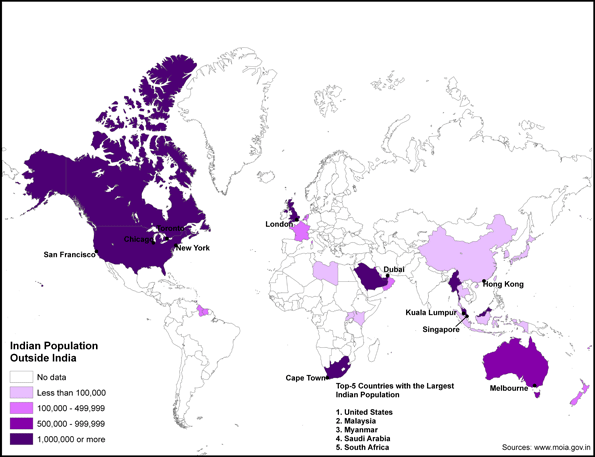
    The Lalvanis’ voyage from refugees to moguls embodies a worldwide phenomenon: the growing size and sway of the Indian diaspora. The exile population now numbers some 40 million people, spread across West Africa, the Americas, and East Asia. And in many of those countries—including the United States, Britain, Canada, Singapore, and Australia—Indian immigrants and their offspring have both higher incomes and higher education levels than the general population.

    The international importance of India itself is rising to an extent unmatched since the onset of the European-dominated global economy in the 17th century. And with the country’s economy growing at roughly 8 percent a year for the past decade—more than double the rate of the United States—India’s influence can only continue to strengthen. Most economists predict that by 2025 the country will outstrip Japan to become the world’s third-largest economy.

    India is more dynamic than any other major country in demographic terms as well. Its population today is 1.21 billion, second only to China’s 1.3 billion, and thanks to the latter’s one-child policy, India’s numbers are expected to surpass those of China by the late ’20s, when India will have an estimated 1.4 billion people versus China’s 1.39 billion. Currently home to the world’s second-largest contingent of English speakers, India seems destined to step into first place, ahead of the United States, by 2020.

    But the mother country’s rise has been more than equaled by that of India’s émigrés. In fact, the diaspora remains one of India’s most important sources of foreign capital. According to the most recent available figures, workers from India in 2009 sent $49 billion in remittances to relatives back home, outpacing China by $2 billion and Mexico by $4 billion. Four percent of India’s gross domestic product comes from North American remittances alone.

    In fact, India’s business community tends to be family–centered, both at home and abroad. Chinese entrepreneurs are more than twice as likely to be financed through banks, most of them state-owned. In contrast, Indian firms and business networks tend to be essentially familial and tribal, extending in networks across the world. “Much of the Indian middle class has ties outside India,” notes researcher Vatsala Pant, formerly with the Nielsen office in Mumbai. “Our ties around the world are also family ties.”

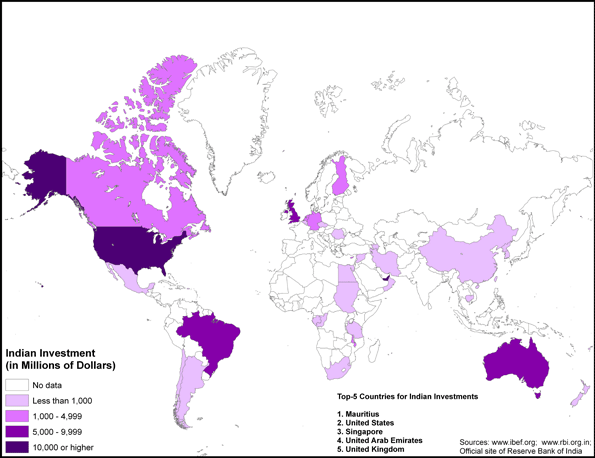
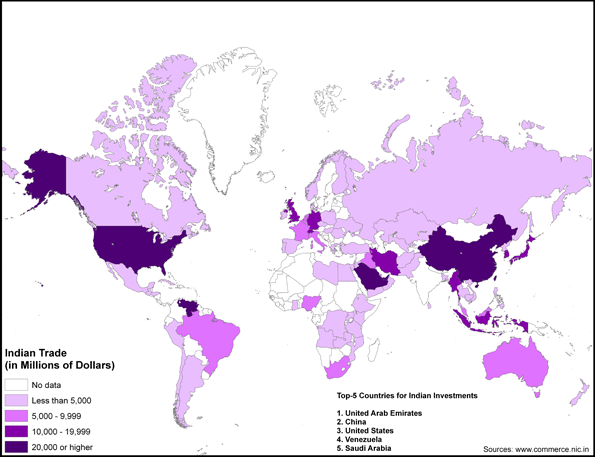
    The importance of such familial links can be seen in the close relationship between diaspora settlement and commerce. The top five areas for Indian investment—Mauritius, the Americas, Singapore, the United Arab Emirates, and the U.K.—have large, established Indian communities and -Indian-run companies that are particularly active in electronics and software.

    Today, even the largest Indian firms, such as Tata and the Reliance Group, are controlled by groups of relatives whose power is enhanced by their wide geographic reach. “We’re very flexible about doing business,” notes Lalvani, who was raised in Britain, is a permanent resident of Hong Kong, and is married to an Indian-American. “We’re global and cosmopolitan—ethnically Indian but also tied to the U.S., U.K., and Hong Kong. They’re all things that make me who I am, and make our business work.”

    That business illustrates nicely the worldwide extent of India’s entrepreneurship. In 1958 Anish’s father, Partap Lalvani, and his uncle Gulu teamed up in London to launch Binatone as a supplier of Asian-built consumer electronics and electrical goods. Its range of products grew to include domestic appliances like kettles, toasters, and irons, and today its employees are active in otherwise neglected markets, such as the former Soviet republics of Central Asia and off-the-grid corners of Africa.

    The Indian diaspora began when Indian workers fanned out across the British Empire during the late 18th century. The exodus intensified after Britain abolished slavery in 1834, setting off a major demand for labor around the globe. Indians were sent out to become contract laborers on Malaya’s rubber plantations, or to work as indentured servants in the West Indies. Although many eventually returned home, others stayed in their new countries, and in many cases became integral parts of the national economy. Some rose to skilled positions in the colonial civil service and military, while others became businessmen, teachers, doctors, and moneylenders.

    Even after the empire’s end, émigrés kept pouring out of India to seek better lives abroad—and with them they brought brains and a willingness to work hard. In the United States, where the Indian diaspora represents less than 1 percent of the population, its members account for roughly 13 percent of the graduate students at the country’s top universities. Overall, 67 percent of people of Indian descent living in America hold at least a bachelor’s degree, compared with 28 percent of the total population. And those statistics are echoed elsewhere in the world. In Canada, people of Indian descent are twice as likely to hold graduate or professional degrees. In Britain, some 40 percent of the medical students and doctors in the National Health Service are of Indian, Pakistani, or Bangladeshi origin.

    Indians’ presence in the business realm is no less notable than in the world of higher learning. According to the latest survey by the University of Essex, the per capita income of ethnic Indians in Britain is about £15,860 (nearly $26,000), higher than that of any other ethnic group in the country and almost 10 percent above the median nation-al income. The study found that the unemployment rate among ethnic Indians is close to half the national average. In the United States, recently published data estimate average household income at $50,000, but it’s $90,000 for ethnic Indians—and a 2007 survey found that between 1995 and 2005, more companies were launched by ethnic Indians than by immigrants from Britain, China, Japan, and Taiwan combined.

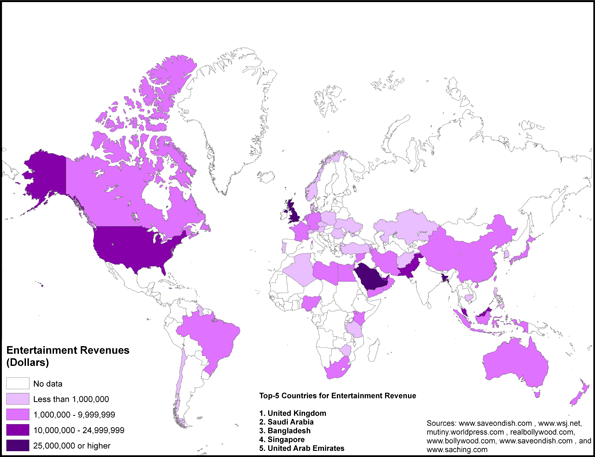
    The expatriates have brought their culture with them—and that too is spreading into the general population wherever they go. Two million Brits enjoy at least one Indian meal per week, and onscreen entertainment from India has permeated the global market. Not so long ago, Bollywood movies were largely intended for domestic consumption, but foreign sales have become significant in recent years, with the large markets in the dominant diaspora countries. Today, Bollywood movies and television shows command an estimated $3 billion to $4 billion in overseas receipts, placing India’s film industry second only to Hollywood itself. In fact, India beats the rest of the world in the number of movies made and tickets sold, and industry sources estimate that as many as a third of ticket buyers in the West are non-Indians.

    Back in India, conditions remain harsh despite the country’s recent advances. The average life span in Mumbai is barely 56 years, a full quarter century less than in Britain and the United States, and poverty across the country remains at shocking levels, with four in 10 Indians living on less than $1.25 a day. Statistics like that are scarcely an incentive for members of the diaspora to return to their homeland.

    For entrepreneurs like Anish Lalvani, however, there’s a more compelling reason to remain abroad: it helps them stay in closer touch with the global marketplace. Having his home base in Hong Kong provides Lalvani with access to Chinese manufacturing and a broad talent pool. “We don’t have many Indians in our management,” he says proudly of the Binatone Group’s operations. “We get the talent from around the world.”

    As large as it may be, Binatone is far from the scale of its Chinese, American, or Japanese competitors. That means it has to keep a keen eye out for new opportunities that the bigger guys have overlooked. Building family businesses through such dogged opportunism is what has driven the expansion of Greater India. “The emerging markets are small, and it takes a lot of flexibility to get in there,” Lalvani says. “We have to go into places where the costs are low, and there are minimal chain stores, so we can get our stuff on the shelves.” But as far as Lalvani and others like him are concerned, it’s a matter of fundamental self-respect. “It’s more than just ginning up cash,” he says. “It’s about not screwing up what your father started.”

    This piece originally appeared in Newsweek.

    Joel Kotkin is executive editor of NewGeography.com and is a distinguished presidential fellow in urban futures at Chapman University, and an adjunct fellow of the Legatum Institute in London. He is author of The City: A Global History. His newest book is The Next Hundred Million: America in 2050, released in February, 2010.

    Parulekar is an engineer by training. He holds a master’s in -finance and an M.B.A.

    Research for this piece was financed by the Legatum Institute.

    Maps by Ali Modarres.

    Photo by lecercle

  • Australia’s 2011 Census: Chock Full of Surprises

    There is nothing better than a good old count to check out what’s really happening.  And a lot has happened across Australia over the last five years.  But what actually has happen to the country’s demographic fabric might surprise many. 
    There are ten trends which I think will emerge out of our next national count on Tuesday 9th August.

    1.            Acceleration towards suburbia.  Despite what we are feed by the intelligentsia most Australian’s want to live in a suburban settling.  The amount of new development on the fringe and the proportion of the population living out there will have increased over the last five years.  This trend is also likely accelerate in coming decades as to will a shift to “opportunity” regions, many of which being regional towns.  And there is the real surprise, many of those that moved to suburbia are young – the 25 to 34 age group. 

    2.            Increase in household size.  Household sizes are no longer shrinking.  2006’s 2.6 people per household average will be closer to 2.8 this census and may rise even higher in the future.  Why?  The baby bonus, change in overseas migrant mix, low housing affordability and poor government decisions like, ironically, the first home owners grant and the more recent increase in owner-resident transfer duties in Queensland.

    3.            More family households.  Despite forecasts of more lone person and couple households, we are likely to see an increase in the proportion of family households this census.  In fact the proportion of lone households is likely to fall, as many are forced to live in shared arrangements or move back home with family. 

    4.            Increase in net wealth.  Despite the GFC, rising household costs and now declining house prices our net household wealth will have risen sharply between census periods; as too will our household incomes. Equity in our homes (and investment properties) will have also risen, with more people owning their home outright than ever before.  The August 2011 poll will also find that Australia’s net household wealth is also at a record high.

    5.            Working longer.  The number of hours reported as worked each week will be up, but when they were clocked will be increasingly outside of the core 9 to 5.  Yet, and whilst not a census measurement, our productivity and ability to innovate will be down.  In broader terms our economic measurements are wrong – we have suffocating, quarterly consciousness and proprietary trading rather a focus on nurturing talent and innovation.  The county is far less dynamic as a result.

    6.            Change in demographic mix.  A shift in overseas migrants from China, India, Africa and the Middle-East and less arriving here from more traditional sources such as the United Kingdom, Europe and New Zealand.  This means bigger household groups, a younger age profile and rising demand for detached housing (and burqas too).  

    7.            Larger homes.  Whilst there has been shrinkage in apartment sizes of late and only really to make them easier to sell, most other housing types across Australia over the last five years have gotten bigger.  High and rising land costs, relatively cheap building costs and increasing household sizes are the main reasons why.  Our aging demographic will also want big new homes – assuming that baby boomers move – but how cheap new housing will be to build in the future is uncertain at present.  Home owners are also moving less often and the distance, when the do move, is becoming less.  “Fewer moves, local focus” should be the catch-cry for the next decade.

    8.            Fewer marriages.  And those that are taking the plunge are getting married later.  The average age of mothers having their first child should exceed 30 years. 

    9.            Dissolution of relationships.  Not only are fewer Australians getting married, but we are breaking off relationships at an increasing rate.  Family and relationship disbanding reflects our declining resiliency and mounting acceptance of the nanny state.  We don’t seem to overcome hardships these days, just “cut and run”.  From a housing prospective if our households are fracturing so easily, then why are our prescriptions for housing increasingly rigid?

    10.          Less religion.  Last census more Australia’s nominated that they believed in the Order Of The Jedi than Christianity, so maybe the census is bunkum after all.  Yet more Australian’s are likely to nominate that they have no religion at all.  Whilst we are not America, we do live largely an American way of life and were founded on similar values – industriousness, honesty, marriage and social cohesion – but these seems to be unravelling.  This census count should show us how far lost we have become.

    To paraphrase international urban authority Joel Kotkin “Whatever your politics or economic interests, the 2011 census will show that the country is changing and in a dramatic way – if not always in the ways often predicted by pundits, planners or the media.  It usually makes more sense to study the actual numbers than largely wishful thinking of mostly urban-centric, big-city based and often quite biased analysts.”  As we wrote after the last census, it maybe time for the planning industry to take a breather and set a different course with regard to our urban land use.  Hopefully this time around the planning intelligentsia will take some notice.

    The Matusik Snapshot is opinion and not advice.  Readers should seek their own professional advice on the subject being discussedComments are welcome, contact me on michael@matusik.com.au.

  • Why America’s Young And Restless Will Abandon Cities For Suburbs

    For well over a decade urban boosters have heralded the shift among young Americans from suburban living and toward dense cities. As one Wall Street Journal report suggests, young people will abandon their parents’ McMansions for urban settings, bringing about the high-density city revival so fervently prayed for by urban developers, architects and planners.

    Some demographers claim that “white flight” from the city is declining, replaced by a “bright flight” to the urban core from the suburbs. “Suburbs lose young whites to cities,” crowed one Associated Press headline last year.

    Yet evidence from the last Census show the opposite: a marked acceleration of movement not into cities but toward suburban and exurban locations. The simple, usually inexorable effects of maturation may be one reason for this surprising result. Simply put, when 20-somethings get older, they do things like marry, start businesses, settle down and maybe start having kids.

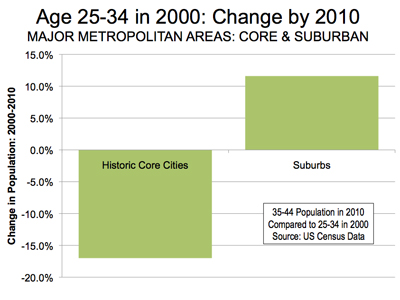
    An analysis of the past decade’s Census data by demographer Wendell Cox shows this. Cox looked at where 25- to 34-year-olds were living in 2000 and compared this to where they were living by 2010, now aged 35 to 44. The results were surprising: In the past 10 years, this cohort’s presence grew 12% in suburban areas while dropping 22.7% in the core cities. Overall, this demographic expanded by roughly 1.8 million in the suburbs while losing 1.3 million in the core cities.

    In many ways this group may be more influential than the much ballyhooed 20-something. Unlike younger adults, who are often footloose and unattached, people between the ages of 35 and 44 tend to be putting down roots. As a result, they constitute the essential social ballast for any community, city or suburb.

    Losing this population represents a great, if rarely perceived, threat to many regions, particular older core cities. Rust Belt centers such as Cleveland and Detroit have lost over 30% of this age group over the decade.

    More intriguing, and perhaps counter-intuitive, “hip and cool” core cities like San Francisco, New York and Boston have also suffered double-digit percent losses among this generation. New York City, for example, saw its 25 to 34 population of 2000 drop by over 15% — a net loss of over 200,000 people — a decade later. San Francisco and Oakland, the core cities of the Bay Area, lost more than 20% of this cohort over the decade, and the city of Boston lost nearly 40%.

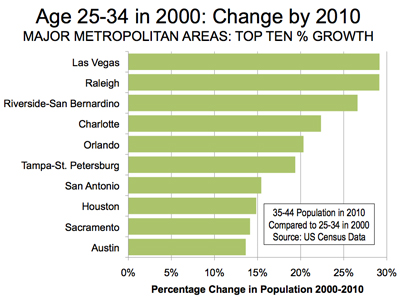
    In contrast, the largest growth among this peer group took place in metropolitan areas largely suburban in form, with a strong domination by automobiles and single-family houses. The most popular cities among this group — with increases of over 10% — were Las Vegas; Raleigh, N.C.; Riverside-San Bernardino, Calif.; Charlotte, N.C.; Orlando, Fla.; San Antonio, Houston and Dallas-Fort Worth, in Texas; and Sacramento, Calif..

    Furthermore, most of the growth took place not in the urban centers of these regions but in the outlying suburbs. This cohort expanded by more than 40% Raleigh’s suburbs — 37,000 people — over the decade. Houston’s suburbs gained the most of any region of the country, adding 174,000 members of this particular generation.

    These findings should inform the actions of those who run cities. Cities may still appeal to the “young and restless,” but they can’t hold millennials captive forever. Even relatively successful cities have turned into giant college towns and “post-graduate” havens — temporary way stations before people migrate somewhere else. This process redefines cities from enduring places to temporary resorts.

    Rather than place all their bets on attracting 20-somethings cities must focus on why early middle-age couples are leaving. Some good candidates include weak job creation, poor schools, high taxes and suffocating regulatory environments. Addressing these issues won’t keep all young adults in urban settings, but it might improve the chances of keeping a larger number.

    Our findings may also give pause to those developers who often buy at face value the urbanist narrative about an city-centric real estate future. In the last decade, many developers have anticipated  a continuing tsunami of wealthy young professionals, as well as legions of “empty-nesters,” flowing into the urban cores. This led to a rash of high-end condominium developments. Yet in the end, the condo market turned out far less appealing than advertised, crashing virtually everywhere from Chicago and Las Vegas to Atlanta, Portland and Kansas City. This has left many investors with empty units, distress auctions or far less profitable rentals.

    One hopes the development community might still learn something from that failure. But the Urban Land Institute among others increasingly maintain that vast new frontiers for new high-density growth will develop in the inner-ring suburbs. Yet in many areas with strong central cores, such as New York, Seattle and Chicago, inner suburbs usually grew slowly, particularly in comparison with the further out peripheral expanses.

    Critically, the notion of mass suburban densification is likely to meet strong resistance from local residents. This will be particularly marked in attractive, affluent “progressive” areas like the Bay Area’s Marin County, Chicago’s North Shore suburbs and New York’s Hudson Valley. People who move to these places are attracted by their leafy, single-family-home-dominated neighborhoods and village-like shopping streets. Nothing short of economic catastrophe or government diktat would make them accept any intense program of densification.

    Of course, some urbanists claim that the new millennial generation, born after 1983,  will prove “different” from all their predecessors. Yet research to date finds older millennials may prove more attracted to suburban living than many density advocates suggest. According to a survey  by Frank Magid and Associates, more millennials consider suburbs as their “ideal place” to settle than do  older groups.

    As generational chroniclers Morley Winograd and Mike Hais have noted, the fact that most millennials plan to get married and have children only reinforces this trend over time. Another problem may prove that millennials may be running out of ideal urban options.  Back in the 1990s it was far easier to buy a home in one of the nation’s handful of really attractive cosmopolitan urban settings — for example,  brownstone Brooklyn, Northside Chicago, LA’s beach communities or San Francisco. Today these areas suffer some of the highest housing prices relative to incomes of any places in the country.

    Rather than blindly accept the vision of a mass movement back to the urban centers, developers might focus instead on what kind of housing, and community, addresses the needs and affordability concerns of millennials as they move into full adulthood. Over the next ten years, the number of millennials entering their mid-30s will expand by over 40 million   – a population larger than those of elderly residents who will be old enough to give up their homes.

    This large group is also most likely to continue moving to the lower-density, more affordable South and  West. These areas already boast disproportionate percentages of millennials, Hais and Winograd report.

    It’s time for developers and planners to look more closely at how young adults as they enter their 30s vote with their feet. Unless there has been a mind-numbing change in attitude or an unexpected return to good governance in cities, young adults entering middle age will continue their shift toward suburban and lower-density areas in the decade ahead, upending the predictions of most pundits, planners and development experts.

    This piece originally appeared at Forbes.com.

    Joel Kotkin is executive editor of NewGeography.com and is a distinguished presidential fellow in urban futures at Chapman University, and an adjunct fellow of the Legatum Institute in London. He is author of The City: A Global History. His newest book is The Next Hundred Million: America in 2050, released in February, 2010.

    Photo by mamamusings, Liz Lawley, Upstairs Window – Encroaching fog

  • The Evolving Urban Form: Chicago

    Looks can be deceiving. No downtown area in the western world outside Manhattan is more visually impressive than Chicago. Both the historic Loop and the newer development north of the Chicago River, especially along North Michigan Avenue have some of the most iconic structures outside of emerging Asia. Yet these vertical monuments mask a less celebrated reality: that of dispersing, low density urban area.

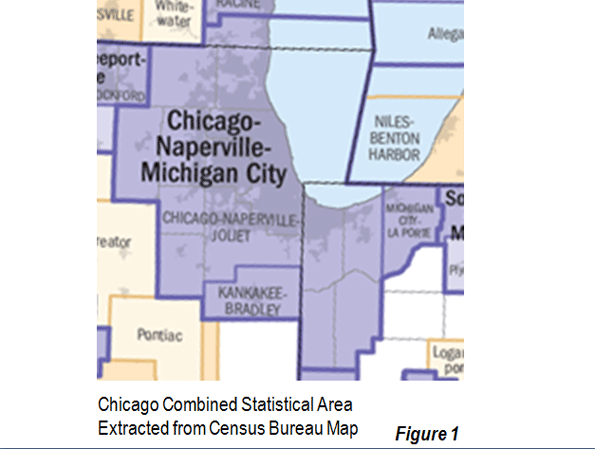
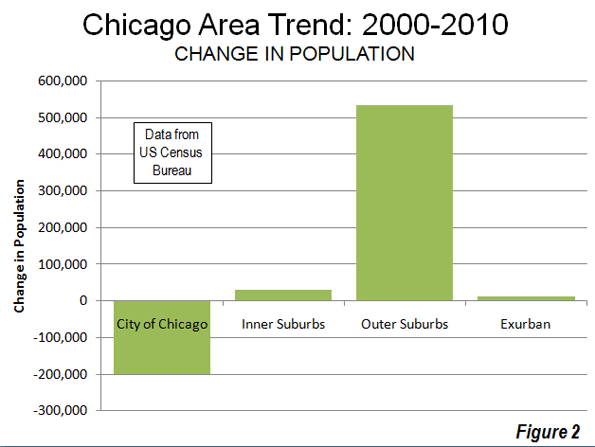
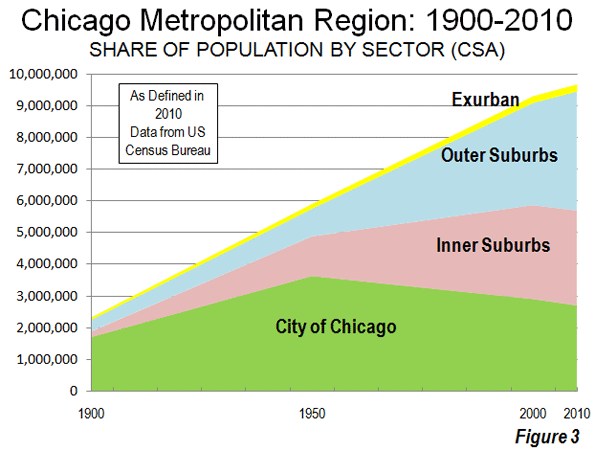
    Chicago Combined Statistical Area: Let’s take a close look at the 2010 census data. Overall, the combined statistical area, which includes the metropolitan area (Note 1) and two exurban counties added nearly 365,000 people, for a growth rate of 3.9 percent. This is well below the national growth rate of approximately 10 percent (Map, Figure 1). Chicago followed the general trend of with growth being greatest in the outer suburbs while declines took place both in the inner suburbs and the historical core municipality (Figure 2).

    Massive Core City Loss: The historical core city of Chicago lost but 200,000 people, and fell to a population of 2.7 million, the lowest count since the 1910 census. The population is down 925,000 from 1950 and at the current rate would drop at least 1 million from the 1950 peak by the 2020 census.  Chicago is at risk of joining London and Detroit as the only two historical core municipalities in modern times that have lost more than 1 million people.

    Inner Suburbs: As in New York and Seattle, Chicago’s inner suburbs grew slowly. The inner suburbs include the part of Cook County that is outside the city of Chicago as well as Lake County, Indiana (home of Gary), which shares the city of Chicago’s eastern border. The inner suburbs added fewer than 30,000 residents and grew only one percent.

    This suggests some limitations to the newly developing mantra that has inner suburbs will be the locus of future growth although there are scattered inner suburbs in other cities (such as Hoboken, New Jersey) that did see growth. Perhaps the old mantra, about people returning to the city from which they had never come was finally quashed by the realities of the 2010 census.   

    Outer Suburbs: The outer suburbs, which include the remaining counties of the metropolitan area, grew at a rate of 16.5 percent, actually grew faster than the national average of approximately 10 percent. The outer suburbs added more than 500,000 people. The largest growth, 175,000 was in Will County, to the south, one of the five “collar counties” that used to define the boundaries of the metropolitan area. McHenry County, the most distant of the collar counties added 100,000. The fastest growth was in far suburban and also southern Kendall County, which more than doubled in population.

    Chicago Metropolitan Area: Overall, the Chicago metropolitan area added approximately 360,000 people and grew 4.0 percent from 2000. This is well below the national average population growth rate, however was above that of the Los Angeles metropolitan area, once among the  nation’s of leading growth areas until the last decade.

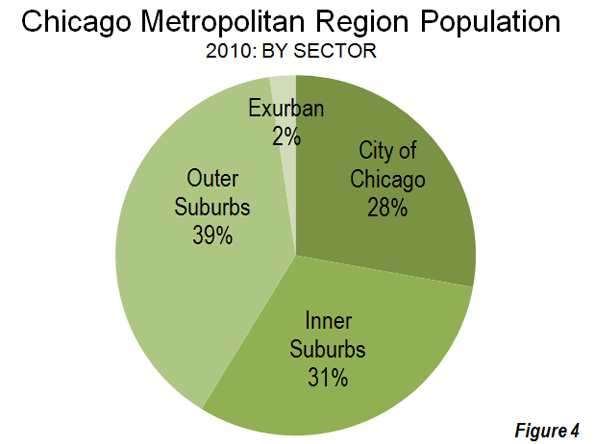
    Historical Trends: The city of Chicago, like other historical core cities, had previously been dominant in its metropolitan area. The earliest Census Bureau metropolitan area (“metropolitan district”) estimates from 1900 indicated that more than 90 percent of the region’s population was contained in the city of Chicago. By 1950, the city of Chicago had fallen to 66 percent of the metropolitan area as defined in that year.  The city of Chicago now has only 28 percent of the combined statistical area population of 9.7 million (Figure 3, Table and Note 2).

    CHICAGO METROPOLITAN AREA
    POPULATION TREND BY COUNTY: 2000 TO 2010
    1900 1950 2000 2010 Change: 2000-2010 % Change: 2000-2010
    HISTORIC CORE MUNICIPALITY
    Chicago   1,698,575   3,620,962   2,895,671 2,695,598 -200,073 -6.9%
    INNER SUBURBAN      178,052   1,255,982   2,965,634 2,995,082 29,448 1.0%
    Cook County, IL      140,160      887,830   2,481,070 2,499,077 18,007 0.7%
    Lake County, IN        37,892      368,152      484,564 496,005 11,441 2.4%
    OUTER SUBURBAN      378,896      884,980   3,237,011 3,770,425 533,414 16.5%
    DeKalb County, IL        31,756        40,781        88,969 105,160 16,191 18.2%
    DuPage County, IL        28,196      154,999      904,161 916,924 12,763 1.4%
    Grundy County, IL        24,136        19,217        37,535 50,063 12,528 33.4%
    Jasper County, IN        14,292        17,031        30,043 33,478 3,435 11.4%
    Kane County, IL        78,792      150,388      404,119 515,269 111,150 27.5%
    Kendall County, IL        11,467        12,155        54,544 114,736 60,192 110.4%
    Kenosha County, WI        21,707        75,238      149,577 166,426 16,849 11.3%
    Lake County, IL        34,504      179,097      644,356 703,462 59,106 9.2%
    McHenry County, IL        29,659        50,656      260,077 308,760 48,683 18.7%
    Newton County, IN        10,448        11,006        14,566 14,244 -322 -2.2%
    Porter County, IN        19,175        40,076      146,798 164,343 17,545 12.0%
    Will County, IL        74,764      134,336      502,266 677,560 175,294 34.9%
    CHICAGO METROPOLITAN AREA   2,255,523   5,761,924   9,098,316 9,461,105 362,789 4.0%
    EXURBAN METROPOLITAN COUNTIES        75,540      150,332      213,939 224,916 10,977 5.1%
    Kankakee Coiunty, IL        37,154        73,524      103,833 113,449 9,616 9.3%
    La Porte County, IN        38,386        76,808      110,106 111,467 1,361 1.2%
    CHICAGO COMBINED STATISTICAL AREA 2,331,063 5,912,256 9,312,255 9,686,021 364,150 3.9%
    Data from the US Census Bureau


    Since 1950 (Note 3), all of the growth in the Chicago area has been in the suburbs. By 2000, both inner suburbs and the outer suburbs each had more people than the city of Chicago. Today the outer suburbs, with forty percent of the region’s population, represent the largest demographic force in Chicago (Figure 4).

    We do not usually associate Chicago with the dreaded term “sprawl” but Chicago now stands as the third largest urban agglomeration in the world in land area, trailing only New York and Tokyo. The Chicago urban area covers more land than Los Angeles, which has a far higher urban density.

    Dispersing Employment: Chicago’s dispersion extends to employment. Despite having the second strongest central business district in the nation (after Manhattan), jobs are rapidly decentralizing. Last year the Downtown Loop Alliance reported that private sector employment in the Loop fell 20 percent during the last decade. Overall, the downtown area of Chicago now represents approximately 10 percent of regional employment, barely half the percentage of Manhattan or Washington, DC.

    American community survey data from 2009 indicates the total employment in the North West corridor along Interstate 90 has at least as much employment as downtown Chicago. This corridor, anchored by the edge city (Note 4) of Schaumburg, is typical of emerging suburban centers around the nation. Only two percent of workers in this corridor use transit for commuting.

    Another corridor, along Interstate 88 (anchored by Lisle and Aurora) has at least two thirds the employment of downtown, with only one percent commuting by transit. The North Shore corridor encompassing parts of northern Cook County and Lake County is of similar size to the Interstate 88 corridor and has a larger transit work trip market share of five percent.

    Downtown, on the other hand, has the third largest transit work trip market share in the nation, following Manhattan and Brooklyn. In 2000, 55 percent of people working downtown (the larger downtown including the Loop, north of the River and adjacent areas to the west and south) commuted by transit. This illustrates the strength of transit for providing access to the largest, most dense downtown areas in contrast to dispersed suburban areas.

    Perhaps more telling, the number of jobs and resident workers (the “jobs-housing” balance) in the city of Chicago are converging toward equality. According to American community survey data, there are 1.1 jobs in the city of Chicago for each working resident. This is substantially less, for example, than Washington (2.6), Atlanta (2.0), Boston (1.7), San Francisco (1.4) and Baltimore (1.4).

    On the other hand, two of the three large suburban corridors have higher ratios of jobs to workers than the city of Chicago. The Interstate 88 corridor has 1.3 jobs per worker, while the North Shore has approximately 1.5 jobs per worker. The Interstate 90 corridor has slightly more jobs than workers. These data indicate that Chicago is well on the way to a more evenly distributed employment pattern that has become more common around the nation.

    Middle America’s Leviathan: The Chicago area has been very resilient through the years. After nearly a century as the nation’s “second city,” Aaron Renn points out the area could fall from its much cherished “global city” status. Still, Chicago remains the dominant urban area between the coasts. Virtually all of its Midwestern competition has fallen away (such as Detroit, St. Louis and Cleveland). However, in the longer run Chicago could be displaced by Dallas-Fort Worth and Houston. Nonetheless, the urban area’s visually arresting business district will retain its iconic status even if, overall, the region looks more and more like the rest of highly dispersed Middle America.

    ——

    Note 1: This article uses metropolitan area and combined statistical areas as defined by the authoritative US Office of Management and the Budget.

    Note 2: The 1950 references provided because the closest to the Post-War democratization of homeownership and car ownership and expansion of car oriented suburbanization. Before World War II, most US historical core cities were comparatively dense, while a far smaller share of the population lived in the suburbs.

    Note 3: Figure 3 and the Table show data for the 2010 geographical definition of the combined statistical area. Earlier metropolitan area definitions are also referred to in the text.

    Note 4: An “edge city” is a major employment center outside the central business district (downtown).  “Edge city” became a part of the language as a result of Joel Garreau’s 1991 book, Edge City: Life on the Urban Frontier.

    Photograph: Downtown Chicago from the Air (by author)

  • Are Millennials the Solution to the Nation’s Housing Crisis?

    During his Twitter-fed Town Hall, President Obama admitted that the housing market has proven one of the “most stubborn” pieces of the economic recovery puzzle to try and fix.  The President — as well the Congress and the building industry — should  consider a new path to a solution for housing by tapping the potential of the very generation whose votes brought Barack Obama into the White House in the first place.   

    The Millennial Generation (born 1982-2003) represents not just the largest generation in American history but the largest potential market for both existing and new housing in the United States. There are over 95 million Millennials and over the next five years the first quarter of this cohort will enter their thirties, an age when people are most likely to buy their first home.

    Contrary to what is often written about this generation it is very much interested in owning a home, preferably in the suburbs. Sixty-four percent of Millennials say it is very important for them to have an opportunity to own their own home; twenty percent named it as one of their most important priorities in life, right behind being a good parent and having a successful marriage.

     And, contrary to the usual claims of “new urbanists” (themselves largely members of the older X and Boomer Generations) most Millennials want to live in the suburbs where the current housing crisis is most acute. According to a study by Frank N. Magid Associates, 43 percent of Millennials describe suburbs as their “ideal place to live,” compared to just 31 percent of older generations, most of whom still yearn for the smaller towns and rural settings of an earlier America.  

    Most Millennials already live in suburbs and enjoyed growing up in suburban settings surrounded by family and friends that supported them.  A certain portion, of course, enjoy living an urban life while young, but most tell researchers that they want to raise the families many are about to start in the same suburban settings they grew up in.

    Furthermore, Americans between the ages of  25 and 34, both Millennials and those on the “cusp” of the generational change from X to Millennial,  represent a greater proportion of the overall population in the South and West than elsewhere. These are the very regions that suffered the most from the collapse of housing prices that stemmed from the mortgage financing scandals of the last few years. Unleashing this potential demand for suburban housing in these hard-hit areas would bring two huge benefits. It would stabilize prices for existing homes while at the same time boosting the prospects for new housing construction.  

    The challenge is how to enable the Millennial Generation to achieve its desire to own homes without reigniting the speculation and unsustainable financial leverage that   triggered the Great Recession. Clearly, in the immediate future at least, the current excess of supply in the housing market should mitigate the risk of too much demand chasing too few houses.  As much as they are criticized by the financial industry and its Republican allies, the recently enacted financial regulatory reforms might also provide an additional bulwark against allowing the market to misbehave a second time.

    But the biggest factor may be the lessons learned from experience.  Millennials have borne much of the brunt of the Great Recession and tend to be keenly aware about the importance of living within your means.  Wanting a suburban home does not mean, as many urbanists assert, that Millennials want McMansions. Like earlier generations, especially their GI Generation great grandparents, they are likely to be cautious and frugal home-buyers. However, this frugality and caution does not translate into a meek acceptance or desire for a future as apartment renters, as some suggest will be the case.    

    In the short run, Millennials will not be able to engineer a turnaround all by themselves; most Millennials can’t afford much beyond the next month’s rent, let alone the down payment on a mortgage. Many are still living with their parents to avoid having to pay rent and the cost of a college education at the same time.

    To address this part of the challenge, the federal government needs to do what it did to revive the moribund housing market in the 1930s. The New Deal created today’s commonly accepted 30 year mortgages with a 20 percent down payment by making them a financial instrument that the newly formed Federal Housing Administration would insure. Before that landmark legislation, home mortgages were rarely offered for more than half of the home’s value and normally had to be repaid in no more than five years.

    As a result that era’s civic generation (the GI or Greatest Generation) was able to afford single family homes with a surrounding tract of land, an offer returning World War II veterans seized with alacrity. These houses now make up much of the country’s inner suburb housing stock.    Today’s housing crisis requires a similarly radical reinvention of the basic home mortgage to be offered to those buying their first home. Under this proposal the length of the mortgage could be extended up to as many as 50 years, reflecting the increased life expectancies — and longer working careers — that most Millennials can expect to enjoy. Since no market for such debt instruments currently exists, it would be up to the federal government to create one through the process of reinsurance, just as it did in 1934.

    To further encourage home buying by Millennials, the federal government should also provide incentives to financial institutions to swap out the principle of the Millennials’ student loans in exchange for a new loan, whose principal would be collateralized by the value of the real estate the former student would be acquiring. The student loan would be paid off as part of the mortgage, making Millennials better able to afford a home and freeing up additional discretionary spending that current worries over student debt curtail. Today’s lower housing prices today might make this package both attractive to investors and financially viable.

    Many economists today argue against the whole notion of encouraging home ownership by anyone, let alone young Millennials. Some point out that when looked upon strictly as an investment choice, the value of a home rarely appreciates faster than the overall stock market.

    This type of analysis, which forms the basis for arguing against any federal policy that would further encourage home ownership, ignores the proven benefits to the nation that derive from home owners committed to the success of their local community.  Voting participation rates among home owners, for instance, traditionally run higher than rates among renters, and neighborhoods of owners tend to be more stable places to raise children. 

    More important still is what homeownership means to the nature of a property-owning republic. Survey after survey shows that home ownership remains a central part of the American Dream and a central aspiration, particularly for immigrants and young people. A policy that works against this ideal presents a political risk that any politician should be wary of taking.

    To restore this part of the American Dream, and to lift the worry of millions of Americans whose house is worth less than what they owe on their mortgage, the Obama administration must take bold steps to restore a vibrant residential housing market.    President Obama, who built his winning margin in 2008 through an unprecedented mobilization of Millennial voters, is the ideal person to combine a plan for economic recovery efforts with meeting the aspirational goals of most Millennials to own their own home.

    To save the housing market, and extend the recovery beyond the financial elites, America will need a new wave of home buyers.  If the President works to tap this resource, he can begin to turn around the “stubborn problem” of the housing market and restore the middle class economy. If he does so, the whole country will soon be tweeting his success.

    Morley Winograd and Michael D. Hais are fellows of NDN and the New Policy Institute and co-authors of Millennial Momentum: How a New Generation Is Remaking America to be published in September and Millennial Makeover: MySpace, YouTube, and the Future of American Politics.

    Photo by 3Ammo

  • A Most Undemocratic Recovery

    Unemployment over nine percent, the highest rate this far into a “recovery” in modern times, reflects only the surface of our problems. More troubling is that over six million American have been unemployed for more than six months, the largest number since the Census began tracking their numbers. The pool of “missing workers” – those neither employed nor counted as unemployed – has soared to over 4.4 million, according to the left-of-center Economic Policy Institute.

    Not surprisingly, working class and even educated middle class Americans have become increasingly pessimistic about their children’s ability to achieve their level of well-being.2 Average consumers are more pessimistic about their financial prospects that at any time for a quarter century.3 The failure of this “recovery” to reach the middle class is unprecedented in modern American history in its scope. The consequences – economic and political – could be profound.

    In sharp contrast, for the affluent few, things improved rapidly even before the recovery started. Large financial institutions, in particular, have been blessed with cheap money and implicit government guarantees for their survival; this has boosted the size, profits and wealth among the very sector most implicated in creating the great financial crisis. Top pay for CEOs of financial companies, including those bailed out by the taxpayers, is once again soaring.4 Stock prices have risen, mostly benefiting the top one percent, who own some forty percent of equities and sixty percent of financial securities.

    How did this very undemocratic scenario unfold? One explanation lies in the significant demographic, economic and geographic shifts within the Democratic Party, epitomized by Barack Obama.

    The Triumph of Gentry Liberalism
    From the beginning, Obama has been first and foremost a gentry candidate. Even in the Democratic primaries, his strongest base lay, outside of the African-American community, within college towns, affluent urban areas and the toniest suburbs. Unlike his predecessors Bill Clinton or Jimmy Carter, he never connected well with working class and middle class suburbs.

    The gentrification of the Democratic Party, of course, predates Obama. Starting in the 1970s, the party has focused more on the liberal social and green values of concern to the urban upper classes than the bread and butter issues of middle or working class voters.

    For financial support, Obama and his Party have become increasingly close to Wall Street. Hedge fund managers have done very, very well under Obama; the top 22 managers in 2010 earned a remarkable $25 billion. Overall in 2010, Wall Street compensation hit a new record of $135 billion. And despite the fact that some hedge fund and bank executives have recoiled at the President’s occasional public chastisement, the financial community and the Republican Party, as the American Prospect recently noted, are the ones “drifting apart.” One source of division lies with the Tea Party movement that, along with its radical fringes, reflects a genuine grassroots middle class disdain for the financial hegemons and their political allies.

    This does not necessarily apply to many Republicans who may play up to Tea Party populist sentiments but in practice favor policies – for example in terms of financial legislation and taxation – that favor financial hegemons and large corporations. As you speak to business groups around the country, particularly in small and mid-sized cities, one senses little more enthusiasm for corporatist Republicans than for their Democratic counterparts.

    Obama’s gentry liberalism is no less corporate and tailored to the powerful than that of the Republicans but differs in what constitutes its economic and political base. President Obama’s other key pillars of support include “new economy” centers as Silicon Valley, Hollywood and the heavily subsidized “green” industrial complex. From the beginning, “green jobs” have been one of the linchpins of the Administration’s job creation strategy and arguably one of its biggest disappointments. Heavily dependent on government mandates and subsidies, the growth trajectory of solar, wind and battery companies, at least in the near term, remains dubious, particularly against even more lavishly subsidized foreign competition.

    At the same time, the Administration has been almost unfailingly hostile to the green-industrial complex’s greatest nightmare, the orderly development of the nation’s prodigious oil and gas resources. This has occurred despite rising fossil fuel prices, expanded off-shore drilling in ascendant countries such as Brazil, and the fact that the country continues to burn a dirtier fuel – coal – while buying much of its oil from other nations.

    The Administration’s green tilt also infects its urban policy. The dogged emphasis on expensive programs like high-speed rail and support for “smart growth” initiatives around the country reveal a cultural mindset that rejects the fundamental aspirations of a vast majority of Americans to own their homes in low-density neighborhoods.

    Here is the ultimate political irony of the Obama era and gentry liberalism: the metropolitan areas most passionately committed to the progressive agenda – which have adopted them on the state and local level – also tend to be those with the highest rates of inequality and the deepest poverty. Indeed, if cost of living is included, most of the urban counties with the highest percentage of poor people are located in the very bluest areas of New York, California or Washington, D.C., which together account for five of the nation’s ten poorest counties. As a state, California, once a prototype for democratic capitalism, now suffers the worst income inequality in the country.

    This is also the case in New York, the other anchor of the Obama economy. Wall Street – the beneficiary of Administration fiscal and monetary policies – is booming, but as the Fiscal Policy Institute notes, the poorest 50 percent claimed barely 8 percent of the city’s income while a shrinking middle class just about 34 percent. Overall, Gotham has become, as The Nation recently noted, “the most unequal large city in America.”

    In contrast to much of the country, government centers, notably Washington and its suburbs, are flourishing. Five of the richest counties in the country are located in the belt around the nation’s capital. The region is also the only one in the nation seeing real estate price gains.

    If you believe some pundits, California, New York and Washington, D.C. represent progress due to the enlightened social and environmental rhetoric espoused by the media, academics and politicians based in these regions. But in reality this new ruling class seems likely to create an American future that looks a lot like today’s Great Britain, with a significant affluent population concentrated in core cities and some affluent suburbs that lives an exciting life at the top of the world economy, surrounded by a large underclass and a fading middle class.

    Learning from the New Deal
    The gentry liberalism that has triumphed in the Obama era differs radically from its New Deal forbearers. For one thing, many places closest to Obama are themselves almost “failed states,” including the President’s nearly-insolvent home state of Illinois. In contrast, the New Deal was forged by a New York that was at the time a leader in economic growth, infrastructure development and social democracy. In the 1920s and 1930s, small entrepreneurs and skilled craftsmen, office workers and the unskilled flocked to New York. Today those same populations are deserting the Obama bastions in huge numbers for places, notably Texas, that embrace a very different political philosophy.

    Unlike the urban-centered Obama, Roosevelt also focused heavily on the nation’s less developed regions. Indeed, the Hudson Valley gentleman farmer had among his stated goals “to make the country in every way as desirable as city life…” The New Deal great hydro-electric plants, for example, literally brought light to large areas that had barely emerged from semi-feudalism, particularly in the South.

    Instead of narrowing his base, Roosevelt’s policies expanded the Democratic Party’s sway from cities to many rural areas which historically might have opposed a progressive agenda. Similarly his successors – notably Truman, Johnson and Clinton – embraced suburbanization as means to assure upward mobility and reduce the overcrowding and unhealthy living conditions associated with cities. To be sure, sometimes bipartisan enthusiasm sparked a surplus of unwise credits to boost homeownership, but at least the party embraced the lifestyle aspirations of Americans, as opposed to seeking to transform them to an urbanist model.

    These approaches must be changed if the Administration and their allies want to create the basis for, as they often claim, a long-term progressive era. Here again the New Deal model could be helpful. One idea, particularly in an era of long-term persistent unemployment, would be to revive the Work Progress Administration (WPA), which along with the Civilian Conservation Corps, which employed roughly three million of the unemployed during the height of the Depression. To be effective, and worth it to the public, a new WPA should concentrate on such things as the expansion of ports, roads, electrical transmission lines and other critical elements needed to revive American industry.

    Most future growth would come from the private sector, but one has to ask what kind of industries should be fostered. Do we really need to spend money for more post-modernist English professors and lawyers, or to lend billions to investment bankers? Perhaps policies should be redirected instead towards bolstering those “basic industries” – notably agriculture, energy and manufacturing – that since the beginning of the Administration have received, at best, mixed signals.

    This approach would counter the fashion, common among both techno-libertarians and “creative class” enthusiasts, asserting that the country’s future can be assured by hip startups, software companies and videogame producers alone. As Intel co-founder Andy Grove has noted, we cannot rebuild our job base just with sexy start-ups; we need to also “scale up” our emerging companies, the very thing that made Silicon Valley and its counterparts across the country such prodigious opportunity regions in the past.

    Rather than being excoriated, for example, the oil and natural gas industries need, with improved regulation, to expand at a time of growing global demand and rising prices. Farmers, notably in the West, have been greeted with pronouncements by senior Interior Department officials about the end of dam-building, a critical source of water, at a time of generally rising demand and prices.

    Manufacturers, particularly smaller ones, have been hard-pressed by regulatory reform when their competitors elsewhere are dialing into the developing country market. There is a pervasive sense that the Administration favors only large and well-connected crony firms, such as General Electric (which paid no taxes last year) and the kinds of green start-ups backed by John Bryson, who has been selected to be Obama’s next Commerce Secretary.

    The well-connected sections of the investment community may well howl at such changes, but ultimately the future of our financial industry depends upon the health of the America’s productive sectors. Without a strong US economy at its back, in the long-term, Wall Street will become ever weaker in its growing competition with London, Frankfurt, Singapore, Shanghai and Hong Kong.

    Ultimately, the only progressive agenda that can work – from the environment to healthcare to education – rests on the foundation of widely dispersed economic growth, not upon policies that favor a few influential sectors at the expense of everyone else.

    This piece was originally published by The New America Foundation Economic Growth Program Decent Jobs Forum.

    Joel Kotkin is executive editor of NewGeography.com and is a distinguished presidential fellow in urban futures at Chapman University, and an adjunct fellow of the Legatum Institute in London. He is author of The City: A Global History. His newest book is The Next Hundred Million: America in 2050, released in February, 2010.

    FDR fireside chat statue photo by Tony the Misfit

  • A Divided Vietnamese Community in France and Its Political Repercussions

    Several countries with the largest Vietnamese populations today – United States, Canada and Australia – did not have such communities until after the Vietnam War. France, the largest non-English speaking community in the Vietnamese diaspora with about 300,000 strong, illustrates a much more complex tapestry of Vietnamese immigration that started well before the Fall of Saigon in 1975.

    The diversity among the migrant stock from Vietnam has led to a notably divided Vietnamese community in France. This has worked against attempts to develop a sense of ethnic solidarity in the community over the years.

    The Vietnamese first began immigrating to France in large numbers in the early 1900s as a direct result of French rule over Indochina from 1885 to 1954. With colonial ties to the West, the Vietnamese initially migrated to France as soldiers, workers and students long before the arrival of the refugees.

    As a result, there were already tens of thousands of Vietnamese immigrants living in France even before the onset of the Vietnam War. At least 20,000 Vietnamese workers had immigrated to France during World War II alone. These pre-war Vietnamese immigrants differed greatly from the post-war Vietnamese refugees that followed them.

    The older wave of Vietnamese immigrants did not share the same anti-communist fervor as the newer wave of Vietnamese refugees who had been forced to flee their homeland after 1975. In fact, some of the older immigrants openly supported the communist ideals and even desired to one day return to communist Vietnam.

    The existing pro-communist sector of French Vietnamese community in France soon fell into conflict with the staunchly anti-communist new wave of Vietnamese refugees after the Vietnam War.

    According to some sources, this division initially manifested through violence in the late 1970s with several Vietnamese on both sides being hospitalized after physical altercations. Today, the Vietnamese community in France is still divided, but the division no longer expresses itself through overt violence but instead through covert avoidance.

    Recent conversations with those in the community depicted much calmer relations involving the evasion of politics in Vietnamese public places such as cultural events. Yet separation within the community still exists. There are, for example, two completely separate events for holidays such as Tết (i.e. Lunar New Year); one for the pro-communists and one for the anti-communists.

    The apparent political division among the Vietnamese in France also has made it difficult to progress as one cohesive ethnic community with political influence. The Vietnamese in France have excelled in economic and educational achievements as individuals. However, at the community level, they have been unable to achieve any notable successes.

    The pro-communist vs. anti-communist division in France explains, to a certain extent, the lack of a Vietnamese voice in French politics. In the United States where most Vietnamese came after 1975 as refugees and are more politically homogeneous, the community has attained various political seats in several states. Former U.S. Representative Joseph Cao of Louisiana is just one of nine Vietnamese Americans who either had or currently have prominent political positions in the federal government.

    In contrast, Vietnamese representation in French politics has been largely absent. Some Vietnamese in France commented on how, unlike in the United States, there were no well-known Vietnamese politicians in their country.

    In an attempt to change the Vietnamese political track record in France or lack thereof, the Union des Vietnamiens Republicains (i.e. Union of Vietnamese Republicans) recently held an open debate in Paris to address issues concerning the Vietnamese community and the Asian population, in general, in France.

    The UVR, which was formed in the last couple years, seeks to act as a liaison between the Vietnamese community and the Union pour un Mouvement Populaire (i.e. Union for a Popular Movement), a center-right political party in France, which openly opposes the largest opposition group, the Parti Socialiste (i.e. Socialist Party) as well as the Parti Communiste Francais (i.e. French Communist Party), a party supported by the pro-communist Vietnamese.

    Given their challenging political situation, what does the future hold for the Vietnamese community in France? Although the relationship between the pro-communist and anti-communist Vietnamese in France has become less violent over the years, it is difficult to see any signs of ethnic solidarity in the community given the ongoing opposition between the two political camps.

    Only when this divide in the community is breached will the Vietnamese in France be able to achieve the political voice of their American cousins.

    Jane Le Skaife is a doctoral candidate in the Department of Sociology at the University of California, Davis. She is currently conducting her dissertation research involving a cross-national comparison of Vietnamese refugees in France and the United States.

    Photo by wakingphotolife.

  • America’s Burgeoning Class War Could Spell Opportunity For GOP

    Last week’s disappointing job reports, with unemployment rising above 9%, only reinforced an emerging reality that few politicians, in either party, are ready to address. American society is becoming feudalized, with increasingly impregnable walls between the classes. This is ironic for a nation largely defined by its opportunity for upward mobility and fluid class structure.

    According to the latest data, the current unemployment rate is the highest it has been so deep into a recovery since the 1940s.  Even more troubling, over 6 million Americans have been unemployed for more than six months — the largest number since the feds have begun tracking this number decades ago.

    That’s not the worst of it.  The pool of “missing workers” — those who are unemployed but are not counted as such — has soared to over 4.4 million. And under the first African-American president the employment rate for black men now sits at a record low since the government started measuring the statistic four decades ago.

    This recovery has been particularly parlous to the middle class, of all races. Despite the massive stimulus, small businesses — the traditional engines of job growth and upward mobility — have barely gotten off the matt. Indeed, according to a recent National Federation of Independent Business survey, they are now more likely to reduce payrolls than expand them.

    Many blue-collar and middle-class Americans are becoming increasingly pessimistic about the future and their children’s chances for achieving their level of well-being. Middle-age college graduates, who supported Obama previously, increasingly have shifted from the administration.  Even the young seem to have lost their once fervent enthusiasm. After all, they are seeing their prospects dim dramatically.

    Overall disapproval of President Obama’s economic policies now stands at 57% and will likely grow due to the latest job numbers.  And while the middle and working classes have seen their prospects worsen, the very rich have enjoyed a huge boom.

    Of course, no one in a capitalist country should begrudge the earned wealth of the rich.  But there must be some sense that the prospect of greater prosperity extends beyond the privileged. The policies of Fed chief Ben Bernanke and Treasury Secretary Tim Geithner have done little for the small businesses on Main Street while enriching the owners and managers of financial companies by showering them with cheap money and implicit government guarantees for their survival. Top pay for CEOs of financial companies, including those bailed out by the taxpayers, has soared.  The rise in stock prices has benefited the wealthiest 1% of the population, which owns some 40% of equities and 60% of financial securities.

    The consequences will be profound — socially and politically.  For one thing, the president, despite his occasional barbs against “the rich,” has turned out something of a faux populist. If a George Bush recovery was as bad as this one, we would never hear the end of it from the “progressives” who still cling to Obama.

    Of course, not all the blame belongs to the White House. The formerly Democrat-controlled Congress largely ignored the middle class’ concerns over the economy and jobs. Instead they focused on health care — which, according to the Pew Foundation survey, ranks as only a middling concern among voters — and climate change, which ranked dead last among the top 20 issues for the electorate.

    Even with the Main Street economy grasping for air, Congress chose to impose new regulations and taxes on the entrepreneurial class. Meanwhile Washington has given huge government support to often marginal green ventures such as Tesla, which is building $80,000 plus electric cars. Such assistance was not extended to the struggling garment-maker or semiconductor plant forced to compete globally largely on their own.

    Of course Democrats resort to stirring up class resentments, but their credibility is thin. After all it’s New York Sen. Charles Schumer, not some fat-cat Republican, who remains the financial industry’s designated hitter on the Hill. Instead of chastising the big financial institutions, the administration has largely coddled them. Despite the obvious abuses behind the financial crisis, there have been virtually no prosecutions against what Theodore Roosevelt once identified as “the malefactors of great wealth.”

    This has created a class divide large enough to propel a Republican sweep next year. Some Republicans, like former Bush aide Ryan Streeter, understand this opportunity. Streeter argues for the GOP to become more economically populist approach.  He calls for an “aspiration agenda” based on policies to spark private sector economic growth and a wide range of entrepreneurial ventures. To succeed, the GOP needs a viable alternative to middle and working class voters who are losing faith in Obama-style crony capitalism but who do not want to replace it with policies focused on enhancing the bottom-lines of the top 1% of the population.

    Yet at a time when people are worried primarily about paying their bills and prospects for their children, many Republicans seem determined to campaign on social fundamentalism, something that is already distressingly evident in the Iowa primary race. This may have worked in the past, in generally more prosperous times. Right now what sane person thinks gay marriage is the biggest issue facing the nation?

    Neither right-wing ideology nor mindless support for corporate needs constitute a winning strategy in a nation plagued by a sense that the system works only for the rich and well-connected.  Only by focusing on working and middle class concerns can the GOP permanently separate the people from the party which pretends to represent them.

    This piece originally appeared at Forbes.com.

    Joel Kotkin is executive editor of NewGeography.com and is a distinguished presidential fellow in urban futures at Chapman University, and an adjunct fellow of the Legatum Institute in London. He is author of The City: A Global History. His newest book is The Next Hundred Million: America in 2050, released in February, 2010.

    Official White House Photo by Pete Souza

  • A Guide to China’s Rising Urban Areas

    From a Rural to Urban Dispersion in the Middle Kingdom

    China’s rise to economic prominence over the past 30 years has rested in large part to its rapid    urbanization. Prior to ‘reform and opening up’ that started in earnest during the 1970s, cities in China were viewed as pariahs by the party leadership. Millions of young urban dwellers were forced into the countryside to labor on farming communes during the Cultural Revolution. In stark contrast, today millions of rural migrants make their way to the city.

    The scale at which this is happening is unprecedented. Currently, there are 85 metropolitan areas in China with more than 1 million people, compared to 51 in the US. By 2015, urban regions will account for half of China’s population and by 2025, the urban population’s share should reach about 75%.

    To date, international attention has remained fixated on China’s largest cities of Beijing and Shanghai (and to a lesser extent, Guangzhou and Shenzhen). This is not without good reason, as Beijing and Shanghai are not only the respective government and financial centers of mainland China, but both were host to two of the most visible world events of the past decade: the 2008 Summer Olympics and the recently concluded World Expo.

    Second and Third-Tier Cities Enter Onto the World Stage

    Increasingly, however, the real trajectory of urban growth is shifting to China’s so-called ‘second-tier’ and ‘third-tier’ cities. To the outside observer, China’s lesser-known cities might seem all too similar to one another given the monotonous aesthetic of their newly constructed cityscapes. Indeed, the newfound appearance of Chinese cities is a point of contention among local urban development scholars who are concerned about the converging ‘identical faces’ of these urban areas.

    Yet to Chinese locals and foreigners who have spent some time living here, it Chinese cities are defined more by their local cuisine, dialect, history, geography, culture and climate rather than their architectural character. These often-overlooked nuances of local culture are much more essential to the identity of these cities than buildings. In the future, these distinctions may prove more effective in attracting investment and talent than flashy new construction projects.

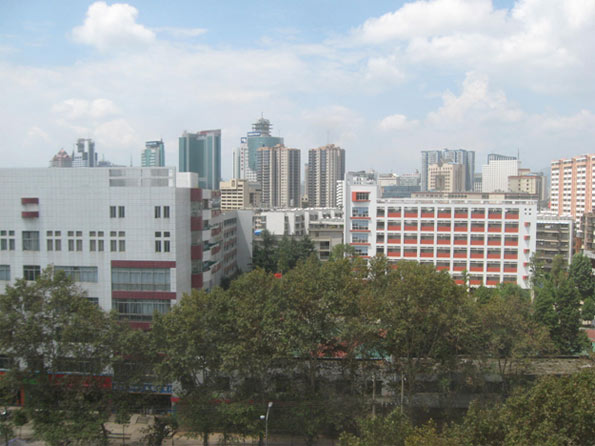
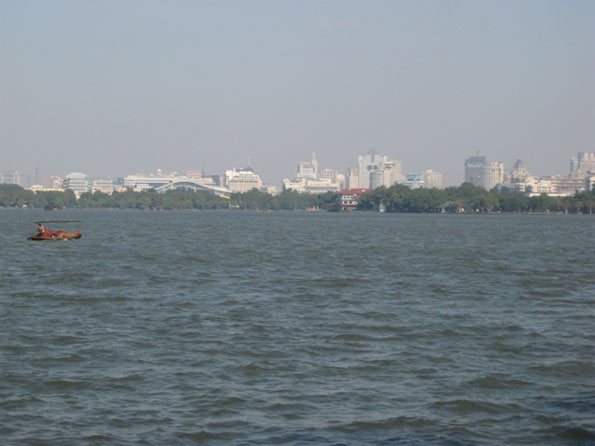
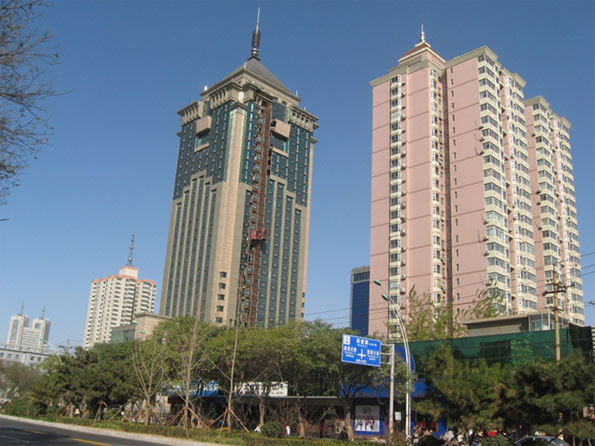
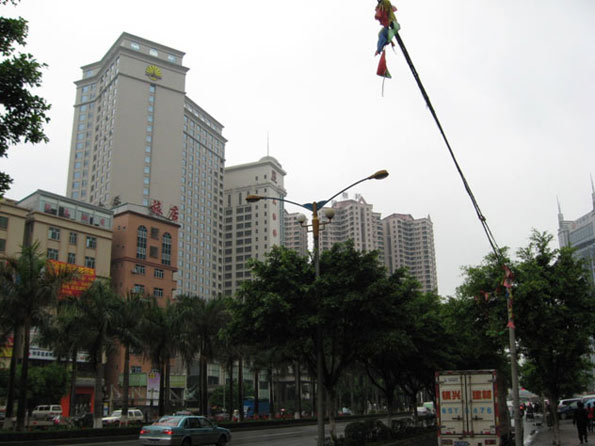
    Here’s a short guide to these rising urban areas by region and their current identities and prospects.

    TOP 20 URBAN AREAS IN CHINA: 2010 ESTIMATES
    Rank
    Urban Area
    2010
    Area: SqMi
    Density
    Area: SqKM
    Density
    Base Year
    Base Year Pop.
    1 Shanghai, SHG 18,400,000 1,125 16,400 2,914 6,300 2010 18,400,000
    2 Shenzhen, GD 14,470,000 550 25,900 1,425 10,000 2008 14,000,000
    3 Beijing, BJ 13,955,000 1,275 10,800 3,302 4,200 2008 13,545,000
    4 Guangzhou-Foshan, GD 13,245,000 760 17,000 1,968 6,600 2007 12,600,000
    5 Dongguan, GD 10,525,000 535 19,200 1,386 7,400 2007 10,000,000
    6 Tianjin, TJ 6,675,000 500 13,100 1,295 5,000 2007 6,400,000
    7 Chongqing, CQ 5,460,000 280 19,100 725 7,400 2007 5,240,000
    8 Hangzhou, ZJ 5,305,000 250 20,600 648 8,000 2007 5,015,000
    9 Wuhan, HUB 5,260,000 275 18,700 712 7,200 2007 5,040,000
    10 Shenyang, LN 5,160,000 280 18,100 725 7,000 2007 4,950,000
    11 Chengdu, SC 4,785,000 220 21,300 570 8,200 2007 4,585,000
    12 Xi’an, SAA 3,955,000 205 18,900 531 7,300 2007 3,785,000
    13 Harbin, HL 3,615,000 235 15,100 609 5,800 2007 3,460,000
    14 Suzhou, JS 3,605,000 245 14,300 635 5,500 2007 3,400,000
    15 Nanjing, JS 3,550,000 330 10,500 855 4,100 2007 3,400,000
    16 Dalian, LN 3,255,000 270 11,800 699 4,500 2007 3,105,000
    17 Changchun, JL 3,170,000 145 21,300 376 8,200 2007 3,010,000
    18 Kunming, YN 3,070,000 130 23,100 337 8,900 2007 2,925,000
    19 Wuxi, JS 2,925,000 150 19,000 389 7,300 2007 2,760,000
    20 Taiyuan, SAX 2,900,000 120 23,600 311 9,100 2007 2,755,000
    Source: Demographia World Urban Areas: Population & Projections: 6th Edition. http://demographia.com/db-worldua.pdf


    The Interior Rises

    Chengdu (成都): It was the devastating 2008 Wenchuan Earthquake that first out Chengdu onto the international radar, but it’s the rapid expansion of its massive high tech sector that may define its long term prospects.  The aerospace industry also plays an important role in the capital city of Sichuan Province as it is the site of the development of China’s first stealth fighter, the Chengdu J-20. Despite all the new development, Chengdu remains a pleasant city, known for pandas and spicy food as well as its generally relaxed and agreeable disposition. The local government has done a good job of promoting ‘quality of life’ and relatively low cost of living to attract both investment dollars and skilled labor away from the prohibitively expensive eastern metropolises.

    Chongqing (重庆): Also known for spicy food, this municipality, which falls under direct control of the central government, is bisected by the Yangtze River. Its urban vista is unique, with deep gorges. It long has been known as a rough and tumble place, long plagued by organized crime. This has abated under the leadership of Communist Party Secretary Bo Xilai who has waged a war against organized crime in Chongqing since assuming office there in 2007. Though a controversial leader with a penchant for strong “red” leanings, the ambitious Bo has been applauded for cleaning up the city and implementing a large-scale public housing program.

    Kunming (昆明): The city of Eternal Spring and the capital of China’s ethnically diverse southern Yunnan Province, Kunming claims the best weather in the country. As such, Kunming’s residents would rather enjoy the sunshine then spend their days indoors working in factories. The lack of industrial production doesn’t mean this city isn’t important- as Kunming has China’s 6th busiest airport and is the country’s gateway to Southeast Asia. If China goes forward with its ambitious plans to link itself with Southeast Asia via high-speed rail, Kunming could enhance its status an international transportation node.

    Wuhan (武汉): Wuhan, capital of Hubei Province, is an important rail and river transport hub at China’s central crossroads. Known for its unbearably hot summers, Wuhan sits on the Yangtze River a few hundred kilometers downstream from the infamous Three Gorges Dam. The city is China’s center for the optical-electronic industry, with a focus on the production of fiber-optics. It was also recently announced that Wuhan will get China’s third tallest building, the 606 meter Greenland Center.

    Xi’an (西安): Once known as Chang’an (‘eternal peace’), Xi’an was the capital of multiple Chinese dynasties throughout history. It remains as one of the most popular international tourist destinations in China thanks to its world-renowned Terracotta Warriors. But today this ancient city and present day capital of Shaanxi Province is also positioning itself as a hub for the development of the software and aerospace industries. The city is also host to several reputable universities, which could help supply a strong local talent pool.


    Yangtze River Delta (Greater Shanghai)

    Hangzhou (杭州): Arguably China’s most naturally beautiful large city, Hangzhou is famous for its scenic Xihu or ‘West Lake’, which just became a UNESCO Heritage Site. The capital of Zhejiang Province not only attracts tourists, but investment as well, especially in the light manufacturing and textile industries. Already somewhat of a ‘bedroom community’ for Shanghai’s wealthy, The recently inaugurated Shanghai-Hangzhou high-speed rail line, which has cut travel time down to 45 minutes between the two cities, means that Hangzhou stands to further benefit from this connection.

    Nanjing (南京): One of the ‘Four Great Ancient Capitals of China’, the capital of prosperous Jiangsu province is today a bustling modern metropolis. Located on the Yangtze River, Nanjing has greatly benefitted its location within the greater Yangtze River Delta Region. The city’s close proximity to Shanghai means that is has absorbed some spillover from investors looking for a lower-cost alternative. Nanjing is also home to one of China’s tallest towers, the newly opened Nanjing Greenland Tower and Asia’s largest railway station.

    Suzhou (苏州): Situated in Jiangsu Province en route from Shanghai and Nanjing, Suzhou is strategically located in the center of a booming region. Often referred to as the ‘Venice of the East’, the city is famous for its historic canals and classic Chinese gardens. In addition to being a popular tourist destination Suzhou is an emerging hi-tech center. The China-Singapore Suzhou Industrial Park, the largest strategic partnership between the two governments, has been established in the city.

    Wuxi (无锡): Only 50 km from Suzhou, Wuxi straddles the north shores of Lake Taihu. With 3,000 years of history, Wuxi is today one of China’s most business friendly cities. Wuxi is particularly attractive to Japanese businesses, with companies like Sony, Nikon, and Konica Minolta owning manufacturing and assembling facilities in the city’s New District. The city’s relatively new airport, which opened in 2004, serves the city as well as neighboring Suzhou.


    The Industrial North: China’s Rustbelt

    Changchun (长春): Changchun was the last capital of Manchuria and the seat of Japan’s ‘Puppet Government’ during their occupation of the region during WWII. Today the capital of China’s northern Jilin Province stands as “China’s Detroit” as the country’s largest automobile producer.The Changchun Automotive Economic Trade and Development Zone is home to the country’s biggest wholesaler of used cars, automotive spare parts and tires.

    Dalian (大连): Consistently ranked as one of the ‘most livable’ of China’s big cities, Dalian sits strategically on the Liaodong Peninsula making it the principle seaport for the country’s northeast (‘DongBei’) region. Banking and IT is big here, with semiconductor giant Intel just having recently opened a $2.5 billion manufacturing facility in the city. The Dalian Commodity Exchange, highlighted by the trading of soybean contracts, is China’s largest futures exchange. Bo Xilai also left his mark on the city when he was Mayor before heading to Chongqing by initiating a campaign to add significant green space to the city.

    Harbin (哈尔滨): The capital of Heilongjiang province, Harbin is the country’s northernmost big city. Famous for its local beer and annual winter ice sculpture festival, Harbin is China’s gateway to neighboring and resource-rich Russia. Russian culture has also left its mark on the city, influencing everything from the local cuisine to the architecture. Today Harbin’s economy is focused on textiles and power equipment manufacturing.

    Shenyang (沈阳): Shenyang, the capital of Liaoning province, is the largest city in China’s northeast. Once the capital of the Manchurian Empire during the 17th Century, Shenyang is today an industrial powerhouse producing industrial equipment,  construction vehicles, power tools, and biomedical equipment. Shenyang is also a hub for agriculture and the production of foodstuffs.

    Taiyuan (太原): The capital of coal producing Shanxi province, Taiyuan is moving up on China’s urban radar. The city serves as the administrative center for both Chinese state-owned and foreign enterprises involved in the coal mining business. The city is also home to the Taiyuan Steel and Iron Company, China’s largest producer of stainless steel. Unfortunately, due to the heavy industrial activity in the region, Taiyuan is also one of the country’s most polluted cities.

    Tianjin (天津): Long ridiculed by Beijingers, Tianjin is ambitiously positioning itself as a financial and sea logistics center for northern China. One of China’s four direct-controlled municipalities, Tianjin is less than 30 minutes from nation’s capital by high-speed train yet still has a distinct dialect and culture. The city is divided into two distinct parts: the charming historic city center, which retains colonial buildings from 19th Century foreign concessions, and the Binhai New Area, an up-and-coming Special Economic Zone next to the Bohai Sea. Tianjin is also aiming to become the center of China’s burgeoning biotech industry.


    The Outlier

    Dongguan (东莞): As the fifth largest city in China by population, Dongguan should register more prominently on the international radar. Unfortunately the most defining characteristic about this urban amalgam is its lack of character. A sprawling unplanned mass of factories in the Pearl River Delta situated between Shenzhen and Guangzhou, Dongguan is the largest city in the world without an airport. As the Pearl River Delta de-industrializes as more factories move into the lower-cost inland regions of China, Dongguan will need to reinvent itself.

    Adam Nathaniel Mayer is an American architectural design professional currently living in China. In addition to his job designing buildings he writes the China Urban Development Blog.

    Photos: Chengdu and Chongqing photos by author. All other photos by Wendell Cox.