Category: Economics

  • New York, Two States of Mind

    Is New York City helping or holding back Upstate New York?

    Towards the end of times, when all of mankind congregates in a final purgatory to draw the main lessons of this grand adventure called Life, there will be special attention paid to the centuries’ long efforts at harmonizing individual happiness with the needs of the collective. There will be seminars on leadership and war. There will be a thick chapter on the blessings and dangers of science. There will be a long section, co-written by poets and undertakers, on the success of freedom and the failure of tyranny. There will be wonder and consternation about religion and the nature of the universe. And there will be, inevitably, extensive reporting on economic ideology.

    Here, a slim primer on laissez-faire will easily outshine ponderous encyclopedic tomes on communism, socialism and other failed -isms. Capitalism, the word and the theory, will be presented as a zealous and perhaps unnecessary attempt at creating a code for laissez-faire, something that occurs naturally. Cronyism will be understood as the corruption and distortion of laissez-faire and the phrase crony capitalism will be dismissed as an oxymoron and an unwarranted amalgamation.

    Finally, there will be a footnote on dirigisme, or the state’s effort at orchestrating and controlling economic growth by directing public and private funds towards its own selection of industries and businesses. Some will call it national industrial policy, or picking winners and losers. Others will deride it as a pretext for cronyism to assert itself under the guise of policy. There will be references to its various forms and intensities in France under De Gaulle, in Japan with MITI and in many other places.

    It will be mentioned in passing by bemused Americans that it was also tried once upon a time in New York State and that it led to the same dead end of wasted resources and corruption. Among the evidence presented will be reports of public/private investments organized by the state’s government in the early 2000s and the uncovering of a scandal in 2016.

    New York, Two States of Mind

    Meanwhile, if we rewind and zoom in on present day New York, it is clear that there is no other state in the nation like the Empire State. It has New York City, a dynamic universal metropolis, and it has a huge land area Upstate that is demographically and economically stagnant. No other state is so economically polarized. In California, Texas and Florida, the population and wealth are less geographically concentrated.

    On many measures, New York City and State have little in common. Consider the following:

    New York City covers less than 1% of New York State’s land area and is home to 43% of the State’s population. Including downstate suburbs, the New York City metro area adds up to 65% of the state’s population.

    In the City, 53% of people are white (including hispanics) and 37% are foreign-born. Outside the City, 83% are white and 11% foreign-born. If you exclude seven downstate counties that are near the City (see tables), the percentage of the Upstate population who are foreign-born drops to 5%. By way of comparison, the entire US population is 77% white and 13% foreign-born. So New York City is less white and much more foreign-born than the United States. And New York State is more white and much less foreign-born.

    Because there is a higher percentage of poor people in the City, notably in the Bronx, the median household income at $52,737 is lower than the $58,687 for the state overall. However the average income is much higher in the City due to its high-paying jobs in law, media, finance and health care. The weight of the 1% or 5% highest earners would be more visible in the average than in the median. As shown in the table, the median income in the downstate suburbs is significantly higher than in the City or Upstate. The median household income in the United States is $53,482.

    screen-shot-2016-09-19-at-3-01-43-pm-2


    Home values are much higher in the City and surrounding counties than in the rest of the state. In the City, the median home value is $491,000 whereas a median home can be obtained in most counties Upstate for less than $200,000. The higher ratio of median home value to median income underlines the greater income disparity in the City.

    In New York county (Manhattan), the median home value is $838,000 or 12 times the median household income of $72,000. This would be unsustainable if the average income did not deviate significantly from the median, or in other words, if there was not a small percentage of people earning large and very large incomes every year. In Manhattan, the average income of the top 1% is $8.1 million. And the average income of the bottom 99% is $70,468. The ratio of the first to the second is 116. (sources: Economic Policy Institutehowmuch.net).

    By contrast, in Allegany county for example, the median home value is only 1.6 times the median income. The average income of the top 1% is $358,554 million and that of the bottom 99% is $25,595. The ratio of the first to the second is 14.

    In the United States overall, the median home value is $175,500, or 3.3 times the median income. In 2013, the average income of the top 1% was $1.1 million and that of the bottom 99% was $45,567, resulting in a ratio of 25.

    screen-shot-2016-09-19-at-3-01-38-pm-2


    It is tempting to conclude from these figures that New York City is doing very well and that New York State is doing, depending on one’s perspective, as well or as poorly as the rest of the country. But on closer scrutiny, both the City and the state face some challenges that are unique to New York.

    Stagnant Demographics

    The most obvious is the fact that the size of New York’s population has barely budged in the past forty-five years except for getting older. In 1970, there were 18.2 million people in New York State and in 2015 only 19.8 million. This change amounts to an 8% cumulative increase over 45 years, a very low figure compared to the 58% growth in the US population over the same period.

    screen-shot-2016-09-19-at-11-16-10-am-2


    If there had been instead a modest annual population growth rate of 0.5% due to new births, the cumulative growth over 45 years would have come to 25%. Further, because New York City is a magnet for new immigrant arrivals, one would expect that cumulative growth to have exceeded 25%. Instead, the 8% figure over 45 years means that there has been a steady large migration of New Yorkers towards other states.

    New York State had 9% of the country’s population in 1970 and 6.2% in 2015. The state and City have not been choice destinations except for people seeking employment in specific industries or for recent immigrants looking for a social gateway into the United States via their own national communities.

    Also worth noting is the fact that the state’s entire population growth (800,000 people) since 2000 has been concentrated in the City and downstate suburbs. The size of the population Upstate has flatlined for years while getting older.

    Of course, this stagnation is partly explained by the large migration over several decades of Americans heading to sun belt and mountain states in the West, South and Southwest. No doubt the invention of affordable air conditioning and the expansion of the interstate highway network facilitated this exodus from North to South.

    Other legacy large industrial states like Pennsylvania and Ohio also show weak single digit growth in the period 1970 to 2015. But neither has a large universal metropolis like New York City and neither shows as great a divide between its largest city and Upstate region. Meanwhile the populations of California, Colorado, Texas and Utah have doubled or more than doubled in 1970-2015, as have those of Southeastern states like Florida, Georgia and the Carolinas. Arizona has quadrupled and Nevada grown six fold, albeit from a low base in both cases.

    A closer to home comparison is only marginally more comforting. If New York State was a state on its own today, its demographics would compare poorly to those of its neighbors. Next door Vermont and New Hampshire have both grown smartly despite lacking a significant industrial base and large metro areas. The largest employers in both states are IBM and a collection of ski resorts, hospitals, colleges, retail stores and insurers/banks/asset managers. New Hampshire has also benefited from its proximity to Boston, with some tax-minded commuters choosing to declare residence in the southeastern corner.

    Part of this may be a public relations issue. Both New England states have done a better job than New York in associating their names with autumn foliage, winter sports and summer boating even though New York has similar colors, ski areas and lakes.

    pictures-126

    Vermont or Upstate New York?

    And compared to New England, Upstate is rarely showcased in movies. Wikipedia has long lists of movies set in New England and in New York City but no such list for New York State. In the 1987 movie Baby Boom, management consultant J. C. Wiatt (Diane Keaton) escapes New York City’s chaos and complexity, and dumps New York State without a thought on her way to a simpler life in Vermont that ends up delivering not only space, beauty and peace but also greater wealth and even romance.

    Weather can also be an important factor. Some parts of New York State get much more snow and have many more overcast days every year than do Vermont, New Hampshire, Pennsylvania and Ohio.

    Policies for Upstate

    Nonetheless, if weather is the work of Providence, government policy is very much man-made and should be designed to capitalize on the state’s assets and to mitigate its handicaps. The empirical evidence so far is that policy has not done enough to improve conditions Upstate.

    To the South and West, both Pennsylvania and Ohio have enjoyed a better economy than Upstate thanks in part to the shale energy boom while New York maintains a ban on fracking. It can afford to do so thanks to its large tax revenues coming from the City. According to a 2011 Rockefeller Institute study, in 2010 New York City contributed 48.7% of the state’s tax revenues. The downstate suburbs contributed an additional 23.6%, leaving a modest 27.7% coming from the rest of Upstate.

    These revenue percentages don’t deviate significantly from the weight of the population in the various regions. But the same Rockefeller Institute study showed that expenditures are more favorably weighted towards Upstate which received 42.2% of the state’s spending while the City and downstate suburbs received 40% and 17.7% respectively. In other words, Upstate has not been self-sufficient in terms of tax expenditures vs. tax receipts and has been receiving funds from the metro area.

    Some will allege that this is how a state should operate. Less productive areas receive assistance from more productive ones. But New York State could do better by making itself more tax-friendly to businesses and households. Our populyst state-by-state analysis shows that a median household in New York keeps 82.5% of its income after taxes, a percentage that places the state in the lowest quintile of all states on this measure. By contrast, a median household in Florida, Tennessee, Nevada, Texas or Washington State keeps over 88% of its income. The difference in after-tax take-home incomes would be even greater for higher earning households.

    The table below shows total and per capita state government tax collections for fiscal year 2013. On a per capita basis, New York State is in the first highest quintile for all state taxes, and second only to Connecticut for individual and corporate income state taxes. Among states with large populations, it is comfortably first in both categories, higher than California, Illinois, Pennsylvania and Ohio, and much higher than low-tax Texas and Florida.


    None of this may be a surprise, given that New York routinely ranks among the highest-tax states in the country. But instead of cutting taxes across the board and letting the market work its magic, the state has opted to launch a number of targeted public and public/private initiatives to reenergize the economy Upstate.

    Start-Up NY offers tax free zones to research-oriented businesses. In order to qualify, a business must partner with a university and must operate in one of the sectors targeted by the program.

    Judging by this recent announcement, the impact so far has been helpful on a local level but negligible in improving the state’s overall condition:

    Governor Andrew M. Cuomo today announced that 18 new businesses will join START-UP NY, relocating or expanding their operations across the state through innovative tax-free zones associated with public colleges and universities. These 18 businesses have committed to create at least 135 new jobs and invest nearly $10 million over the next five years in Western New York, the Southern Tier, Central New York, the Capital District, New York City and Long Island.

    and further:

    START-UP NY now has commitments from 172 companies to create at least 4,175 new jobs and invest more than $229.2 million over the next five years in New York State.

    That comes to  an average of 24 jobs and an investment of $1.33 million per company, small figures in a state of 19 million people and a GDP of $1.4 trillion. Perhaps the choice of a few sectors and the required linkage to a college should be removed and a tax abatement should be offered to all startups.

    Though its impact is small, Start-Up NY at least has the distinction of a hip dynamic name. By contrast, other initiatives that have a greater immediate dollar impact are encumbered by vaguely Soviet-sounding names such as the Regional Economic Development Council Initiative and the Upstate Revitalization Initiative.

    In both of these initiatives, development funds are allocated to New York’s ten regions through a process of competitive applications. From the former’s website:

    This year, the 10 Regional Councils once again competed for funding and assistance from up to $750 million in state economic development resources as part of Round V of the REDC competition. Additionally, the Governor established a new competition in 2015 – the Upstate Revitalization Initiative – to award a total of $1.5 billion to three regions, which will help to transform local economies by providing $500 million over the next five years to support projects and strategies that create jobs, strengthen and diversify economies, and generate economic opportunity within the region. Of the state’s 10 regions, seven were eligible for the URI competition: Finger Lakes, Southern Tier, Central New York, Mohawk Valley, North Country, Capital District, and Mid-Hudson.

    quick scan of the dollars awarded in these initiatives shows that many, though not all, are earmarked for marginal improvements or investments and are unlikely to lead to large economic returns.

    The Inevitable

    If this was the only problem with dirigisme, we might simply lament it as a well-intentioned but wasteful approach to economic growth. However, it is usually accompanied by an increase in cronyism and corruption. The fact that the state has been collecting a tax surplus in the City and diverting it Upstate created an opportunity for administrators to play favorites in awarding contracts and to contravene the rules of competition that usually prevail in a free market. When this kind of opportunity emerges, it is inevitable that someone will seize on it.

    And so the scandal that has just broken with the charging of nine people in Governor Cuomo’s entourage should not come as a surprise. City Journal takes a similar view:

    Eager to revive the depressed counties of New York’s heartland and Southern Tier, Cuomo lacked the courage to use his considerable influence with the Albany legislature to prune taxes and pare regulation. His solution was to bury the problem in tax dollars. This approach isn’t intrinsically criminal, but it does attract people of low degree, some of whom have recently been posting bail. And it betrays poor judgment on Cuomo’s part—in the policies he pursues, in the people he trusts, and in the electorate at large.

    The New York Post is equally skeptical of government-orchestrated public-private investments:

    The cloud of alleged corruption now surrounding billions of dollars in state economic development investments is an outgrowth of Cuomo’s highly secretive and centralized management style.

    Compared to previous Albany-directed corporate-welfare binges, Cuomo’s approach has featured a uniquely close intertwining of government and corporate interests — complete with state ownership of the means of production.

    To an outside observer, it may have seemed curious that development of a solar-panel factory in Buffalo [the case being investigated] was being guided by a state college administrator in Albany.

    This free market distortion is primarily systemic at its root. It grows naturally from the state’s involvement in the economy. As noted by City Journal, bad systems have a way of empowering bad actors. It is likely therefore that more revelations will surface about more malpractice elsewhere in the state’s initiatives.

    Now would be a good time to re-evaluate the overriding economic strategy. So far, the state’s initiatives have weighed in favor of a top-down set of targeted solutions instead of a blanket laissez-faire approach that would foster growth from genuine grassroots entrepreneurship. But this experiment with dirigisme has led to the usual distortions of cronyism and wasted or misallocated resources. The state should consider stepping back from its deeper involvement and instead moving forward with lower tax rates for middle-income households and with lower regulation for businesses.

    New York City’s high paying jobs generate the tax receipts needed to meet spending needs in the rest of the state. But the surplus from City tax revenues can also be seen as the enabler of bad policy and as the reason why the state has not implemented the fiscal policies needed Upstate. The City is a huge asset for the state but it may be holding back the measures needed to reignite a demographic and economic revival in all of New York.

    This at least could be the conclusion drawn when we look back from the future at our present predicament. But so far, the Governor has shown no inclination of changing course, stating after the charges surfaced:

    I am more committed to western New York’s revitalization than ever before… We are not going to miss a beat.

    Note: The dependency ratio in the tables is calculated as the sum of people aged less than eighteen and more than 65, divided by the number of people aged 18-65.

    This piece first appeared at Populyst.net.

    Sami Karam is the founder and editor of populyst.net and the creator of the populyst index™. populyst is about innovation, demography and society. Before populyst, he was the founder and manager of the Seven Global funds and a fund manager at leading asset managers in Boston and New York. In addition to a finance MBA from the Wharton School, he holds a Master’s in Civil Engineering from Cornell and a Bachelor of Architecture from UT Austin.
  • Urbanism, Texas-Style

    Cities, noted René Descartes, should provide “an inventory of the possible,” a transformative experience—and a better life—for those who migrate to them. This was certainly true of seventeenth-century Amsterdam, about which the French philosopher was speaking. And it’s increasingly true of Texas’s fast-growing metropolises—Houston, Dallas–Fort Worth, Austin, and San Antonio. In the last decade, these booming cities have created jobs and attracted new residents—especially young families and immigrants—at rates unmatched by coastal metropolitan areas. Approximately 80 percent of all population growth in the Lone Star State has been in the four large metropolitan areas since 2000. Texas now boasts two of the nation’s five largest metros, the first time any state has enjoyed that distinction. At its current rate of growth, Houston could replace Chicago as the nation’s third-largest city by 2030, and the Dallas–Fort Worth region could surpass Chicagoland as the nation’s third-largest metropolitan area by the 2040s.

    Historically, those who think and write about urban living have regarded Texas cities with disdain. The midcentury journalist John Gunther dismissed Houston, now the state’s largest city, as a place “where few people think about anything but money.” Gunther predicted that the area’s population would eventually grow to a measly 1 million people. He was off by a bit: close to 7 million people now call the Houston metropolitan area home. Houston and the other flourishing Texas metros are neither downtown-focused like New York nor highly regulated and densely packed like Los Angeles. They aren’t disproportionately brain-intensive or tech-oriented; and they aren’t dominated by green politics and, generally speaking, strict planning. Though booming, they have kept living costs down. In all this, they differ from San Francisco, Seattle, Portland, Los Angeles, and Boston—places that may continue to thrive in the future but that show little interest in creating the economic opportunity and affordability that attracts aspirational middle- and working-class families. In short, Texas’s cities are reshaping urbanism in America, albeit in ways few scholars or planners seem to appreciate.

    Though some east/west coastal cities—notably, San Francisco—have enjoyed vigorous growth of late, none has been nearly as proficient in creating jobs in the new millennium as Texas’s four leading metros. Overall, Dallas–Fort Worth and Houston have emerged as the nation’s fastest-expanding big-city economies. Between 2000 and 2015, Dallas–Fort Worth boosted its net job numbers by 22.7 percent, and Houston expanded them by an even better 31.2 percent. Smaller Austin (38.2 percent job-base increase) and once-sleepy San Antonio (31.4 percent) have done just as well. New York, by way of comparison, increased its number of jobs in those years by just 10 percent, Los Angeles by 6.5 percent, and San Francisco by 5.2 percent, while Chicago actually lost net employment. And the Texas jobs are not just low-wage employment. Middle-class positions—those paying between 80 percent and 200 percent of the national median wage—have expanded 39 percent in Austin, 26 percent in Houston, and 21 percent in Dallas since 2001. These percentages far outpace the rate of middle-class job creation in San Francisco (6 percent), New York and Los Angeles (little progress), and Chicago (down 3 percent) over the same period.

    The energy industry can take some credit for Texas’s impressive numbers, but only some. In fact, despite assertions that dense coastal cities are the natural incubators of innovative tech firms, an analysis of the last decade and a half shows that Texas’s sprawling metropoles are growing Science, Technology, Engineering, and Math (STEM) jobs more rapidly than the Bay Area—and far faster than New York, Los Angeles, and Chicago. Since 2001, STEM employment in Austin is up 35 percent, while Houston has increased these desirable positions by 22 percent and Dallas by 17 percent. STEM jobs have increased 6 percent in San Jose and 2 percent in New York over this same period. L.A. has seen no STEM growth; Chicago has lost 3 percent of such positions.

    Recent Pew Research Center data give further evidence of the Texas urban boom. Among 52 American metropolitan areas with more than 1 million residents, San Antonio had the largest gain in its share of middle- and upper-income households—that is, the percentage of households in the lower-income category in the city actually dropped—from 2000 to 2014. Houston ranked sixth, Austin 13th, and Dallas–Fort Worth 25th in the Pew survey. The performance is even more impressive, given Texas’s absorption of 1.6 million foreign-born residents since 2000, a 60 percent larger intake than California’s, proportionate to the two states’ populations.

    All this dynamism reflects Texas urbanism’s remarkable culture of opportunity. These are business-friendly cities. According to Site Selection magazine, executives consistently rank Texas as the best or second-best locale to do business in the United States. Taxes are among the lowest in the country. (New York has the heaviest tax burden; California isn’t far behind and seems determined to catch up.) Regulations are light. Coastal urban areas often impose draconian climate-change rules or favor high density, thus discouraging industries like manufacturing, logistics, and home construction—all thriving under Texas urbanism’s market-friendly reign.

    “The consensus in San Antonio,” observes former mayor and longtime Democrat Henry Cisneros, “is all about jobs. Everything is driven by that.” One can say the same about the other big Texas metros. The jobs focus can be seen in the many corporate relocations and expansions in Texas, which are often large-scale, employing many middle managers—unlike highly publicized relocations of “executive headquarters” in cities such as Chicago, which frequently employ, at most, several hundred people. The recent movement of Occidental Petroleum from Los Angeles to Houston as well as transfers of jobs from Chevron—still headquartered in the San Francisco Bay Area, at least for now—alone represented some 2,000 jobs.

    A key part of this opportunity culture rests on housing affordability. Property inflation plagues east/west coastal cities, largely because of restrictive planning policies that slow development, making the cost of living exorbitant. Texas cities are instead pro-development—“self-organizing,” in the words of Rice University’s Lars Lerup—and, as they happily expand their peripheries, they encourage a healthy supply of housing at all income levels. The inexpensive housing, a major draw for those relocating firms, has helped shift a long-standing migration pattern of jobs and people. In the last tech boom, more people moved from Texas to the Bay Area; in this one, it’s the other way around. Last year, at least three dozen companies either expanded away from or moved out of Santa Clara, San Francisco, and San Mateo Counties—ten of them to Texas, according to a recent report by Spectrum Location Solutions, an Irvine business-consulting firm that tracks corporate “divestment” from California. When Toyota recently moved its headquarters from Los Angeles County to the Dallas area, for example, executives said that the L.A. area’s rising housing prices—roughly three times what they are in Dallas–Fort Worth, adjusted for income—had much to do with it.

    Dallas–Fort Worth might be the big metro that benefits most from this movement. The typical corporate expansions in the Dallas area—not just Toyota but also State Farm, Liberty Mutual, and Amazon—have included headquarters and back-office centers in the area’s northern suburbs, creating thousands of jobs. As Southern Methodist University scholars Klaus Desmet and Cullum Clark found in a soon-to-be-published study, jobs are shifting from Chicago and surrounding areas to Dallas–Fort Worth in such numbers that the Texas city is increasingly poised to replace the Windy City as the business center of the mid-U.S.

    People are coming in droves. “Gone to Texas” or “GTT”: the phrase became famous during the nineteenth century as Americans fleeing debts (especially after the Panic of 1837) headed to the Lone Star State to escape impoverishment or even prison. Texas also attracted the ambitious, the desperate, and, in some cases, the downright dishonest. The phrase may become popular again. Over the last decade and a half, Texas’s four major cities ranked among the nation’s ten fastest-growing large metropolitan areas. Since 2000, Dallas–Fort Worth has boosted its population by 33.6 percent; Houston did even better, expanding 38 percent. Boston, Chicago, Los Angeles, and New York, by comparison, grew less than 10 percent over that period. Last year, Houston and Dallas–Fort Worth each gained more people than New York or L.A.

    The domestic migration numbers are truly striking. Over the past 15 years, Houston and Dallas–Fort Worth have gained an estimated 1 million domestic migrants, even as New York lost more than 2.4 million net migrants, L.A. bled 1.5 million, and Chicago 800,000. As a percentage of the population, the Texas cities averaged a 1 percent net migration gain annually; Chicago, L.A., New York, and San Francisco have seen strong net losses annually. San Antonio and Austin have also been gaining migrants at a rapid rate. In fact, Austin has attracted more newcomers as a percentage of its population than any major metropolitan area in the country since 2000. Texas Monthly calls it “the city of the eternal boom.”

    Many of the new Texas urbanites are arriving from places—above all, California—to which Texans had once migrated. Between 2001 and 2013, more than 145,000 people, net, have moved from the greater Los Angeles area to Texas cities, while more than 90,000 have come from New York and nearly 80,000 from Chicago. The newcomers are better educated than the average Texan, and they elevate the quality of the workforce, observes Dallas Morning News columnist Mitchell Schnurman. “If oil prices don’t go up, Texas can always count on California—and New York, Florida, Illinois, and New Jersey.”

    The domestic migrants’ numbers include many blue-collar workers seeking a better future, so the migrants’ average education level falls slightly below that of people moving, say, to Boston or San Francisco. But the Texas metropoles are increasingly attractive to the young, educated workers who often flock to those coastal cities. According to a recent Cleveland Foundation study, three of the four major Texas cities ranked among the top-ten regions nationally in the growth in educated residents aged 25 to 34. The migrants’ imprint is evident in the expanding urban amenities of Texas cities, including a vibrant restaurant scene and innovation in the arts.

    Affordability is a major draw for these younger newcomers. The ten regions losing the most millennials last year, according to Trulia, include Chicago, New York, Washington, and the area along California’s coast—all much pricier than the Lone Star State. More than 30 percent of millennials still live at home in Los Angeles and New York City, according to Zillow data, more than one-third higher than the rate in Dallas and Houston.

    Texas is also drawing massive migration from overseas. Like the young migrants crowding the clubs and hip eateries of the Texas boomtowns, the foreign-born are, in their own ways, transforming the economy and culture of the state. Asian immigrants, barely present before 2000, have been the fastest-growing group. Over the last decade, Houston and Dallas–Fort Worth had a larger increase in their Asian populations (including Chinese, Indians, Vietnamese, and Koreans) than all but three American cities—New York, Los Angeles, and San Francisco. Houston now has the fifth-largest Asian population among the nation’s major metropolitan areas.

    Much of this growth isn’t taking place in traditional “Chinatowns” or even in core cities but instead in the less expensive suburban and even exurban areas. More than 95 percent of the expansion of Dallas–Fort Worth’s Asian population and 85 percent of Houston’s, for instance, has occurred in the suburbs. A Rice University study found Fort Bend County, southwest of Houston, the most ethnically diverse county in the nation: 36 percent white, 24 percent Latino, and more than one-fifth black, Asian, or other ethnicity. The county is home to one of the largest Hindu temples in America.

    In fast-growing Cinco Ranch, a suburb built on an expanse of Texas prairie 31 miles west of Houston, one in five residents is foreign-born, well above the Texas average. “We have lived in other places since we came to America ten years ago,” says Indian immigrant Pria Kothari, who moved to Cinco with her husband and two children in 2013. “We lived in apartments elsewhere in big cities, but here we found a place where we could put our roots down. It has a community feel. You walk around and see all the families. There’s room for bikes—that’s great for the kids.”

    Over the last two decades, Texas’s big cities have also received a huge infusion of immigrants from Latin America. Between 2000 and 2014, the Latino population of Dallas–Fort Worth grew 39 percent, while Houston’s expanded 42 percent, Austin’s 60 percent, and San Antonio’s 39 percent. Texas’s population is already nearly 40 percent Latino, a percentage likely to increase in the years ahead.

    Much of this rapid demographic shift stems from, again, Texas’s opportunity urbanism. Though many of the newcomers—along with “Tejanos,” native Texas Latinos—are poor and often not well educated, they’re much better off economically than their counterparts in New York, Los Angeles, or Miami. Texas’s vibrant industrial and construction sectors, in particular, have provided abundant jobs for Latinos. In 2015, unemployment among Texas’s Hispanic population reached just 4.9 percent, the lowest for Latinos in the country—California’s rate tops 7 percent—and below the national average of 5.3 percent.

    Texas Latinos show an entrepreneurial streak. In a recent survey of the 150 best cities for Latino business owners, Texas accounted for 17 of the top 50 locations; Boston, New York, L.A., and San Francisco were all in the bottom third of the ranking. In a census measurement, San Antonio and Houston boasted far larger shares of Latino-owned firms than did heavily Hispanic L.A.

    In Texas, Hispanics are becoming homeowners, a traditional means of entering the middle class. In New York, barely a quarter of Latino households own their own homes, while in Los Angeles, 38 percent do. In Houston, by contrast, 52 percent of Hispanic households own homes, and in San Antonio, it’s 57 percent—matching the Latino homeownership rate for Texas as a whole. That’s well above the 46 percent national rate for Hispanics—and above the rate for allCalifornia households. (The same encouraging pattern exists for Texas’s African-Americans.)

    California and Texas, the nation’s most populous states, are often compared. Both have large Latino populations, for instance, but make no mistake: Texas’s, especially in large urban areas, is doing much better, and not just economically. Texas public schools could certainly be improved, but according to the 2015 National Assessment of Educational Progress—a high-quality assessment—Texas fourth- and eighth-graders scored equal to or better than California kids, including Hispanics, in math and reading. In Texas, the educational gap between Hispanics and white non-Hispanics was equal to or lower than it was in California in all cases.

    Though California, with 12 percent of the American population, has more than 35 percent of the nation’s Temporary Assistance for Needy Families welfare caseload—with Latinos constituting nearly half the adult rolls in the state—Texas, with under 9 percent of the country’s population, has less than 1 percent of the national welfare caseload. Further, according to the 2014 American Community Survey, Texas Hispanics had a significantly lower rate of out-of-wedlock births and a higher marriage rate than California Hispanics.

    In California, Latino politics increasingly revolves around ethnic identity and lobbying for government subsidies and benefits. In Texas, the goal is upward mobility through work. “There is more of an accommodationist spirit here,” says Rodrigo Saenz, an expert on Latino demographics and politics at the University of Texas at San Antonio, where the student body is 50 percent Hispanic. It’s obvious which model best encourages economic opportunity.

    Texas urbanism is also producing the next generation of urbanites. Increasingly, the dense urban cores of America’s favored cities—New York, San Francisco, Seattle, Los Angeles, and so on—are becoming child-free, or child-scarce, zones. (See “The Childless City,” Summer 2013.) The trend is powerfully visible in San Francisco, a city with reportedly 80,000 more dogs than kids.

    In Texas cities, the situation is strikingly different. According to American Community Survey data, the four big Texas cities all rank above the national average and in the top 15 of the 50 major American metropolitan areas in children per household. Houston ranks third, Dallas–Fort Worth fourth, San Antonio fifth, and Austin sixth. New York is 31st and San Francisco 45th. Like cities throughout history—think of the Chicago described in Saul Bellow’sAdventures of Augie March—Texas cities appeal to people at every stage of their lives, not just when they’re young and unencumbered.

    By allowing the market to work, these expanding urban areas offer vibrant inner cities, where young singles and couples can congregate, as well as affordable nearby neighborhoods for families and the middle-aged and elderly. A Texas urbanite doesn’t have to contemplate the choice of staying in the city that he or she loves or having a family. How many San Franciscans or New Yorkers can say the same?

    In part because of their rapid growth, Texas’s cities face numerous challenges. One is worn-out infrastructure, as seen in recent Houston flooding. Poverty levels for Hispanics and blacks are still high in the Texas boomtowns. Urban schools in Texas require major redress. Municipal debt, particularly in the core cities, is mounting.

    The biggest threat, however, is that Texans will decide—particularly as more residents arrive from the liberal coastal cities—to abandon the culture of opportunity behind their cities’ remarkable success. Market-oriented zoning policies and pro-business regulatory and tax environments are part of what has made Texas’s urban areas private-sector dynamos and magnets for the aspirational. If Texas stays true to what has made it great, Lone Star cities will continue to shine as the new exemplars of American urbanism.

    This piece is part of The City Journal’s special Texas issue. Check it out here.

    Joel Kotkin is executive editor of NewGeography.com. He is the Roger Hobbs Distinguished Fellow in Urban Studies at Chapman University and executive director of the Houston-based Center for Opportunity Urbanism. His newest book, The Human City: Urbanism for the rest of us, will be published in April by Agate. He is also author of The New Class ConflictThe City: A Global History, and The Next Hundred Million: America in 2050. He lives in Orange County, CA.

    Wendell Cox is principal of Demographia, an international pubilc policy and demographics firm. He is a Senior Fellow of the Center for Opportunity Urbanism (US), Senior Fellow for Housing Affordability and Municipal Policy for the Frontier Centre for Public Policy (Canada), and a member of the Board of Advisors of the Center for Demographics and Policy at Chapman University (California). He is co-author of the “Demographia International Housing Affordability Survey” and author of “Demographia World Urban Areas” and “War on the Dream: How Anti-Sprawl Policy Threatens the Quality of Life.” He was appointed to three terms on the Los Angeles County Transportation Commission, where he served with the leading city and county leadership as the only non-elected member. He served as a visiting professor at the Conservatoire National des Arts et Metiers, a national university in Paris.

    Dallas photo by Bigstock.

  • Biggest Income Gains In U.S. Accrue To Suburban Cities

    After a long period of  stagnation, last week’s announcement of the first substantial annual income gains since 2007 was certainly welcome. Predictably, analysts inclined toward a more favorable view of President Obama’s policies reacted favorably. Progressive icon Paul Krugman crowed that last year the “economy partied like it was 1999,” which he said validated the president’s “trickle up economics.”

    Equally predictably, conservative pundit Stephen Moore wrote that the stagnant longer-term numbers were actually a ”stinging indictment” of both the Obama and Bush records.

    The reality may be in between. The 5.2% increase over the past year was the largest in the nearly 50-year history of the Census Bureau’s Current Population Survey, and does represent some progress. Yet real incomes remain approximately 2.5% below the 1999 peak. This is an extraordinarily long time for incomes not to have risen, a decade longer than the previous modern record (1989 to 1995), according to the Federal Reserve Bank of St. Louis.

    And there are some reasons to be skeptical about the dramatic gains, as outlined in a virtually unprecedented report by the economist Gary Burtless of the generally left-leaning Brookings Institution. He suggests that the year-to-year increase may have been much less and that the CPS had been under-reporting annual income increases since 2003. John Crudelle of the right-leaning New York Post notes that recent CPS methodology changes could also have inflated the 2015 increase.

    To be sure, there are no signs of an economic boom that will sustain income gains — the 1.1% real GDP growth in the second quarter is no indication of a miraculous recovery.

    Nonetheless, real income gains were made last year, but they were not distributed evenly across the nation. We sought to assess the areas that did the best – and worst.

    The media has spun the story as further evidence of suburban decline and the resurgence of dense, hip cities. The Wall Street Journal went so far as to point to the migration of “highly educated millennials” to downtown areas as a factor, something that simply could not be deduced from the data that was reported.

    With more than 80% of millennials residing in the suburbs, this was heroic conjecture. Within metropolitan areas, CPS reports only “inside principal cities” and “outside principal cities.” The Census Bureau abandoned “central city” and “principal city” data more than a decade ago, in recognition of the fact that many suburban communities had become major employment hubs. As a result, principal cities include such low density, sprawling suburban behemoths as Mesa, Ariz. (Phoenix), Hillsboro, Ore. (Portland), Arlington, Texas (Dallas-Fort Worth), and, Anaheim, Calif. (Los Angeles). Simply put, the data does not support the assumption that hipster urbanism played a part in the one-year upsurge.

    The numbers suggest a more nuanced picture. For one thing, downtown residents represent little more than 1% of our metropolitan population, and less than 10% of the jobs. Nor did the biggest income gains occur in the metropolitan areas with the large, elite urban cores. Indeed, it is hard to imagine results more at odds with theme of dense urban core gain and suburban malaise.

    By far the largest gain was in Nashville, where household income rose 10.2% to $57,985. Nashville’s downtown is doing well, as is the case with many metropolitan areas. However, Nashville is hardly a model of the urban density planners would like to force around the nation. Its urban density is one-fourth that of nation-leading Los Angeles, a third that of New York and half that of Portland. The vast majority of its growth has taken place outside the core, and largely in the suburbs.

    Perhaps most surprising is second-ranked, Birmingham, Ala. It is harder to imagine a more poorly performing metropolitan area in the rapidly expanding South, but last year household income there grew 9.4% to $51,459, according to the CPS data. Just after World War II, Birmingham was a third smaller than Atlanta; now Atlanta is five times as large. Nor does Birmingham set any density records. No metropolitan area the world with a population over a million has a lower urban area density.

    Atlanta ranked third, with an increase of 7.2% to $60,219. The metropolitan area has the lowest population density among world urban areas with more than 2 million residents.

    Other metro areas with suburban core cities in the top 10 include No. 5 Kansas City; No.7 Memphis, which could be argued has performed as poorly as Birmingham in recent decades; and No. 8 Orlando. None of these has an urban density much higher than the national average, which includes urban areas as small as 2,500 population. In 10th-ranked San Jose, the core of Silicon Valley, household income rose 5.7% to $101,980, the highest of any metropolitan area in the nation. It is a virtually all suburban metro area, having developed almost entirely since World War II, and among the most automobile oriented, with a miniscule 4% of commuters using its bus, light rail and commuter rail services. Milwaukee, another metropolitan area that has lagged economically for years, ranked ninth.

    To be sure, the urban elites were not shut out. San Francisco, buoyed by spillover growth from suburban Silicon Valley, ranked fourth with a center that is the very definition of a dense urban core. Urban planning model Portland ranked sixth, yet it has an urban density 40% below that of all-suburban San Jose.

    The nation’s three largest metropolitan areas did poorly. New York, ranked 39th, with income growth of 2.5%, well below the 5.2% national gain. Los Angeles, the nation’s densest region, grew slightly better, at 3.4%, but still ranked only 32nd; Chicago, the nation’s third largest ranked just above New York at 38th.

    In last place is Oklahoma City, where, amid the oil and gas bust, household income dipped 0.4% to $52,221.

    Thus, the story is not about media-favorite cities or their favored urban core, as the progressive punditry may suggest. The one-year spike is perhaps the first long overdue indication that things could be getting better for the struggling working class. The biggest gains were in poorer metro areas. It could signal, to some extent, higher wages as employment tightens, particularly at the lower end of the job spectrum.

    Overall, it’s clear that even modest economic growth, sustained long enough, would bring some blessings to the poor, particularly in the inner cities. The question is whether these gains can be sustained in an economy where growth seems to trending slower still.

    This piece first appeared at Forbes.

    Joel Kotkin is executive editor of NewGeography.com. He is the Roger Hobbs Distinguished Fellow in Urban Studies at Chapman University and executive director of the Houston-based Center for Opportunity Urbanism. His newest book, The Human City: Urbanism for the rest of us, will be published in April by Agate. He is also author of The New Class ConflictThe City: A Global History, and The Next Hundred Million: America in 2050. He lives in Orange County, CA.

    Wendell Cox is principal of Demographia, an international pubilc policy and demographics firm. He is a Senior Fellow of the Center for Opportunity Urbanism (US), Senior Fellow for Housing Affordability and Municipal Policy for the Frontier Centre for Public Policy (Canada), and a member of the Board of Advisors of the Center for Demographics and Policy at Chapman University (California). He is co-author of the “Demographia International Housing Affordability Survey” and author of “Demographia World Urban Areas” and “War on the Dream: How Anti-Sprawl Policy Threatens the Quality of Life.” He was appointed to three terms on the Los Angeles County Transportation Commission, where he served with the leading city and county leadership as the only non-elected member. He served as a visiting professor at the Conservatoire National des Arts et Metiers, a national university in Paris.

    Photograph: Downtown Nashville from BigStockPhoto.com

  • Lone Star Quartet

    Texas’s spectacular growth is largely a story of its cities—especially of Austin, Dallas–Fort Worth, Houston, and San Antonio. These Big Four metropolitan areas, arranged in a layout known as the “Texas Triangle,” contain two-thirds of the state’s population and an even higher share of its jobs. Nationally, the four metros, which combined make up less than 6 percent of the American population, posted job growth equivalent to 30 percent of the United States’ total since the financial crash in 2007. Within Texas, they’ve accounted for almost 80 percent of the state’s population growth since 2000 and over 75 percent of its job growth. Meantime, a third of Texas counties, mostly rural, have actually been losing population.

    Texas is sometimes described as the new California, an apt parallel in terms of the states’ respective urban geographies. Neither state is dominated by a single large city; each has four urban areas of more than 1 million people, with two of these among the largest regions in the United States. In both states, these major regions are demographically and economically distinct.

    But unlike California, whose cities have refocused on elite priorities at the expense of middle-class occupations, Texas offers a complete spectrum of economic activities in its metros. Another key difference is that Texas cities have mostly embraced pro-development policies that have kept them affordable by allowing housing supply to expand with population, while California’s housing prices blasted into the stratosphere due to severe development restrictions. Texas cities also benefit from favorable state policies, such as the absence of a state income tax and a reasonable regulatory and litigation environment. These factors make Texas cities today what California’s used to be: places to go in search of the American dream.

    In Texas, the major metros also have the advantage of being in a fairly compact region. San Antonio and Austin are separated by an 80-mile drive, almost entirely filled in with development along the I-35 corridor, with significant future opportunities in towns near enough to serve both markets, such as San Marcos. The other regions are all within a three- to three-and-a-half-hour drive of one another—not much different from the Acela train connections linking New York, Boston, and Washington.

    This proximity makes the Texas Triangle one of the premier emerging American mega-regions. All four cities rank in the top ten for percentage population growth since 2000 among major metro areas (those with more than 1 million people). Three of the four rank in the top ten for percentage job growth during that time. (Dallas just misses, with a rank of 11th.) Houston, San Antonio, and Austin are in the top ten metro areas for growth in residents with college degrees and in the top five for growth in millennials (ages 25–34) with degrees since 2000. But while these successful cities have much in common, they’ve each done it their own way.

    Dallas–Fort Worth doesn’t usually come to mind when one thinks about America’s largest cities. But with a population topping 7 million, Dallas is now the fourth-largest metropolitan area in the country. If current growth rates continue, Dallas would pass Chicago and move into third place in regional population before 2050.

    Chicago and Dallas have much in common. Both lie within the central time zone, with large airports that serve as ideal hubs for air travel around the United States. Both cities boast large, diversified corporate centers not reliant on a single industry, with deep talent pools and thick labor markets. Both are key national logistics hubs. Both are home to diverse populations, with Dallas now exceeding Chicago in its share of foreign-born residents. Chicago retains some advantages: the Loop remains America’s second-largest business district and is currently booming. And the Windy City’s downtown beat out Dallas in a competition to lure Boeing’s headquarters back in 2001.

    But while Chicago remains dominant in urbanity and global-city functions, Dallas increasingly prevails in everything else. If Chicago is downtown-dominated, Dallas is perhaps the most multipolar urban region in America, with two distinct cities in Dallas and Fort Worth, as well as premier suburban business centers in Plano and Richardson. Firms can choose from a range of environments. While America’s elite urban centers increasingly attract niche, if high-value, employers, Dallas remains a place where companies can afford to hire thousands of people—or relocate them, as Toyota decided to do in 2014, when it announced that it would move 5,000 employees and contractors from Southern California to the Dallas area, settling them into a new campus in Plano. The Japanese automaker joins other large-scale employers in the area, including American Airlines (25,000 employees), Lockheed Martin (13,700), and Texas Instruments (13,000).

    Dallas strives to be not only a welcoming place for commerce but also a high-quality place to live. The city is spending big to fulfill that goal. Fort Worth’s cultural district was already home to the renowned Kimbell Art Museum and the Modern Art Museum. Dallas, which has seen a boom in its urban core, particularly its Uptown district, recently invested in a $1 billion downtown performing-arts district that includes a concert hall, opera house, and other buildings designed by prominent architects.

    Generous philanthropic communities are Texas’s secret weapon. Donations—including 134 separate donations of $1 million or more—provided almost all the performing-arts center’s financing and also helped pay for the new Klyde Warren Park, built on a deck over a freeway, and a signature bridge design by Santiago Calatrava. Like northern capitalists of the great industrial age, wealthy Texans are willing to spend big to put their hometowns on the map. High-quality urban amenities cost money, and a robust Texas private sector made these kinds of investments possible. But it was the philanthropic culture of the Texas money men that led them to put their cash to work to expand the area’s cultural offerings.

    Not all the money has been well spent. Dallas built the longest light-rail system in the United States, at 90 miles, but the DART rail system carries only about 100,000 passengers per day, a drop in the bucket for the region. DART cost billions to build and requires about $75 million per year in subsidies to operate, and unlike the cost of the performing-arts center, these costs are financed by tax dollars.

    With a population of 6.5 million, Houston is the fifth-largest metro area in the United States, giving Texas two of the five largest regions in the country. Unlike diversified Dallas, Houston is known for being the global center of the energy industry.

    Houston is such an energy magnet that even companies with headquarters elsewhere have a huge presence there. Headquartered in Dallas, ExxonMobil is building a new Houston campus that will employ 10,000. Chevron is based in the Bay Area but has more employees (8,000) in Houston and has been shifting more jobs there. International energy firms with a Houston presence include Total, BP, Shell, Repsol, and Petrobras. Houston dominates oil services, with firms like Schlumberger and Halliburton.

    Powered by the energy sector, Houston has added more than 700,000 jobs since 2000, despite two recessions. Recent declines in oil prices will no doubt be a drag on Houston’s economy in the near term, just as federal retrenchment has affected Washington, D.C. But like Washington’s, Houston’s long-term fundamentals remain strong. Economically, the city is not a one-horse town. It boasts one of America’s largest ports. It has the nation’s largest petrochemical manufacturing complex (which benefits from low oil prices). Houston is home to NASA’s Johnson Space Center and the Texas Medical Center, the world’s largest, serving thousands of international patients each year. Philanthropy has played a substantial role in supporting the medical center.

    Houston famously has no zoning inside city limits, though the city’s building code imposes some zoning-like restrictions, and many private developments utilize deed restrictions that mimic zoning. Houston’s physical development pattern is not unlike that of most other sprawling American cities. But the lack of use-based zoning illustrates the city’s pro-development and pro-business mind-set. For example, the city of Houston issued permits for more apartment construction in the year ending May 2015 than anywhere else except New York City.

    Coastal dwellers portray Texas as culturally retrograde, but Houston, where one of America’s best opera companies performs, was the first of America’s biggest cities to elect an openly homosexual mayor, pro-market Democrat Annise Parker. The area is 23.1 percent foreign-born, ranking seventh in the country among major metros in its share of such residents; and 91 consulates, trade offices, or other foreign missions operate there. The Houston area’s Asian population, half a million strong, has more than doubled since 2000. The city also famously opened its doors to thousands of mostly black New Orleans residents displaced by Hurricane Katrina. Many chose to stay in Houston, attracted by its economic opportunities.

    Like Dallas, Houston built a dubious light-rail system. More astutely, it recently reengineered its bus service to focus on high-frequency routes, without adding costs. It’s also investing substantially in parks, such as the ten-mile-long Buffalo Bayou Park. So Houston, too, is focusing on getting better, not just bigger.

    The oldest major city in Texas, San Antonio was for decades its largest city. Demographically, it is a Latino stronghold. It has the highest share of its population of Hispanic origin of any region over 1 million people in the U.S.—even more than Miami—and it’s the only one where over half the population is Hispanic. San Antonio’s Hispanics have long-standing roots in the community, however: only 12 percent of the metro area is foreign-born, simultaneously the smallest foreign-born and smallest Anglo population among major Texas cities.

    With its long history, San Antonio enjoys a thriving tourism industry. More than 30 million visitors each year come to see the city’s historic sites, such as old Spanish missions, including the famed Alamo. San Antonio’s Riverwalk is widely known around the country, with many cities trying to replicate it.

    The real engine driving the city’s economy, though, is a strong military presence, including such installations as Fort Sam Houston and Lackland Air Force Base. Though the military has downsized, San Antonio has benefited from consolidation. Much of its military presence is high-value, such as its Medical Education and Training Campus. Home to the Air Force’s Cyber Command and a National Security Agency cryptography center, among other related operations, San Antonio has also become an unlikely center for cyber-security, with the city’s University of Texas campus offering the nation’s top-rated program in that discipline. The military presence has also spawned related private-sector businesses, such as financial-services giant USAA, which serves military members, veterans, and their families.

    Military life has lured many permanent residents to the area. Every year, 4,200 people get discharged from the service in San Antonio, and many decide to stay in the city. This high-quality, reasonably priced labor force has attracted firms like Accenture, which employs 1,200 at a service center in the region.

    The military has also served as a vehicle for integrating Hispanics into the city’s middle class. City leaders boast of excellent relations between ethnic groups. For example, though not known as a black population center, San Antonio has one of the nation’s largest Martin Luther King Day parades. These ethnic connections go back a long way. A stronghold of Latinos and German immigrants, San Antonio was a pro-Union city during the Civil War.

    While San Antonio excels in middle- and working-class job growth—Toyota recently built a truck plant there—its educational attainment rates rank third from the bottom among major metros. Only 26.3 percent of its adults hold college degrees. Unlike elite coastal cities, San Antonio continues to attract the less educated, though the region is growing its number of people with degrees at one of the fastest rates in the country.

    If one Texas city can boast “street cred” among coastal elites, it’s Austin, the state capital and home to the flagship campus of the University of Texas, giving it many attributes of a college town. This includes its live music scene, nationally known thanks to PBS’s Austin City Limits, the longest-running music program in television history, which has developed into one of the country’s largest annual music festivals and a permanent music venue in downtown Austin. The city also hosts the global SXSW festival, originally a music event and now arguably the hippest technology conference in the country, drawing talent from around the globe.

    Austin is a city of distinct neighborhoods and districts. A campaign to preserve local small businesses spawned the slogan “Keep Austin Weird,” now copied by cities like Portland and Louisville. Austin ranks as the sixth-most educated region in the country, with 41.5 percent of its adults having college degrees. It’s regularly listed as among America’s most physically fit cities.

    Austin’s technology industry has roots in the city going back to the 1960s, when IBM and Texas Instruments opened up shop. Motorola arrived in the 1970s, while the 1980s saw the arrival of chip-industry consortium Sematech and the founding of Dell Computer. Today, Austin has one of the country’s fastest-growing tech sectors, with a flurry of start-ups as well as offices from a who’s who of Silicon Valley firms, including Apple (approaching 7,000 local employees), Oracle, Facebook, Google (which is bringing its Google Fiber product to the city), and Intel.

    With its big-government and university heritage, Austin unsurprisingly has the blue politics amenable to coastal dwellers and its many public employees—and it shows some signs of emulating the negatives of California and Silicon

    Valley. Its median home-price multiple—the price of the median home divided by the regional median income—has crept up to 4.0, the highest of the Texas urban quartet. The city of Austin’s share of children is declining. Already the least diverse major Texas metro, Austin is seeing its share of blacks decrease. And the city has failed to invest in infrastructure to keep up with its rapid growth. As Ryan Streeter at the University of Texas put it: “Austin thought that if the city didn’t build it, they wouldn’t come—but they came anyway.”

    While all four Texas metro areas rank among the most booming cities in America, they face threats to future prosperity. When their growth cycles inevitably come to an end, they will have to prove themselves again, as Chicago, Detroit, Los Angeles, and New York once did. Time will tell whether they can renew themselves across economic cycles, as New York has done—or fall, like Detroit. The Texas metros also must demonstrate that they can grow their per-capita incomes over time, not just add lots of jobs. Their record here is mixed, with only the Houston region significantly outperforming the national average. Austin and Dallas have lost ground versus the country as a whole since 2000. San Antonio did better but still trails the U.S. average.

    The cities face short-term risks, too, especially poor municipal balance sheets. The Hoover Institution ranked Dallas and Houston among the worst cities for their unfunded pension liabilities as a percent of government revenues. Houston’s unfunded pension liability, including pension obligation bonds, stands at $5.9 billion, and the city faces a budget crunch. Dallas’s estimated pension shortfall is between $3 billion and $5 billion, depending on how one calculates it. Last fall, S&P and Moody’s downgraded the city’s credit rating. Other risks include failing to expand infrastructure in line with growth—as may have happened in Austin already—and potentially unsustainable development patterns in Dallas and Houston.

    But perhaps the most serious near-term concern is that these cities might forget what made them successful. Dallas passed a plastic-bag fee (since repealed), and Austin banned plastic bags altogether. Denton, in north suburban Dallas, banned fracking within city limits, though the state overturned the ban. Texas already faces an external threat from environmental activists who would destroy its energy business and suburban-oriented development model if they could. As the fracking ban shows, a regulatory mind-set has begun to creep in, one that could eventually undermine the Texas economy.

    Antidevelopment advocates have also targeted highway construction. Houston’s new mayor, Sylvester Turner, has said, “We need a paradigm shift [away from roads and single-occupancy vehicles] in order to achieve the kind of mobility outcomes we desire. . . . We need greater focus on intercity rail, regional rail, High Occupancy Vehicle facilities, Park and Rides, Transit Centers, and robust local transit.” But in regions adding more than 1 million new residents per decade, roadway expansion is critical. If Los Angeles can’t increase transit ridership with billions of dollars’ worth of new rail lines, there’s no prospect that Texas cities can do so. Investment in buses, cycling, and sidewalks is important but no substitute for core highway infrastructure. Yes, the urban cores of these cities should become more dense and walkable, but that shouldn’t mean becoming hostile to suburbs.

    Texas isn’t California. Many people are willing to pay a lot to live in gorgeous, transit-friendly San Francisco or Southern California’s perfect climate. But no one will pay a premium to live in flat, sweltering Texas. To continue succeeding, Texas cities need to become the best possible version of what they already are—not a poor man’s substitute for something that they can never be.

    This piece is part of The City Journal’s special Texas issue. Check it out here. Top graphic courtesy of The City Journal.

    Aaron M. Renn is a senior fellow at the Manhattan Institute, a contributing editor of City Journal, and an economic development columnist for Governing magazine. He focuses on ways to help America’s cities thrive in an ever more complex, competitive, globalized, and diverse twenty-first century. During Renn’s 15-year career in management and technology consulting, he was a partner at Accenture and held several technology strategy roles and directed multimillion-dollar global technology implementations. He has contributed to The Guardian, Forbes.com, and numerous other publications. Renn holds a B.S. from Indiana University, where he coauthored an early social-networking platform in 1991.

  • Are-You-Better-Off: 2016 Update

    The 2016 US Presidential campaign has gotten so crazy that the term “silly season” just doesn’t do it justice. In a September 2012 article on ng, I asked the question “Are you better off today than you were four years ago?” Eight years ago, the answer in the swing states was clearly “no” as I described it then:

    “Comparing the swing states not to their conditions four years ago, but how they might feel compared to the rest of the nation, Virginia, Colorado and New Hampshire appear to be “better off” than the average American. But in North Carolina, Florida and Pennsylvania, prices for the basic necessities are above the national average while median incomes are lagging. If consumer confidence translates into voter confidence, then the elections in some of the key swing states will belong to the Republicans in 2012.”

    Indeed, in November 2012, despite winning the White House, the Democrats, lost nearly every contested race for seats in the Senate while also losing governorships and seats in the House of Representatives.

    This time, the economic picture is less clear. States like Colorado are doing well: despite a higher than national average cost of living, their median income is even higher by comparison and the unemployment rate is more than 20% below the national average. Although they were enjoying the same higher incomes in 2012, their unemployment rate then was at the national average – higher by comparison than in 2016. In contrast, Nevada is clearly worse off now than they were in 2012 – unemployment remains high, above the national average. The cost of living stands 6% above the national average while the median income has fallen from slightly above the national average to a little below. With the exception of Wisconsin, every swing state is worse off going into this election than they were going into the 2012 election . In the table, we use red figures to indicate where conditions in the swing states worsened relative to the national average between 2012 and 2016, either a reduction in relative state median income or an increase in relative unemployment (expressed as a percent of the national average).

    Contested State

    2012 income

    2016 Income

    2012 unemployment

    2016 Unemployment

    CO

    118%

    110%

    100%

    78%

    FL

    85%

    88%

    106%

    96%

    IA

    100%

    98%

    64%

    84%

    NC

    85%

    87%

    116%

    96%

    NH

    131%

    128%

    65%

    59%

    NV

    105%

    97%

    145%

    133%

    OH

    92%

    91%

    87%

    98%

    PA

    98%

    99%

    95%

    114%

    VA

    121%

    125%

    71%

    76%

    WI

    101%

    100%

    88%

    86%

    Unemployment from BLS.gov, median income from Census.gov

    Only 4 of the swing states have both cost of living and median income above the national average (Virginia, New Hampshire, Colorado and Iowa). In the other six, the cost of living index is above the national average while the median income is near or below the national average. A lot of Republican voters may be thinking it is time for a change. The Republican pundits will want to blame Donald Trump for “down ballot” losses. Trump seems unconcerned about working with a majority of Democrats in Washington. If the change in Congress occurs, it will more likely be the result of these poor economic conditions in the states than anything specifically that Donald wished for or caused.

    Contested State

    Cost of Living

    Income

    CO

    106%

    110%

    FL

    110%

    88%

    IA

    92%

    98%

    NC

    95%

    87%

    NH

    117%

    128%

    NV

    106%

    97%

    OH

    101%

    91%

    PA

    120%

    99%

    VA

    100%

    125%

    WI

    106%

    100%

    Cost of living overall from Payscale.com for major city in each state. Unemployment from BLS.gov, median income from Census.gov.

    In an April 2009 NG article, I compared measures of economic well-being before and after passage of the Emergency Economic Stabilization Act of 2008, more commonly known as the Bank Bailout Bill. Then Treasury Secretary Hank Paulson assured Congress who in turn assured voters that they would improve “the economic well-being of Americans.” The numbers showed a very different story. We were, in fact, largely worse off in the first six months after the bill passed. Between October 2008 and April 2009, foreclosure rates were no lower, unemployment was higher and the stock market pretty much tanked.

    Looking at the same data again, I think it is pretty clear that the US economy is in an improved condition, across the board. By every measure, we are also even a little better off than this time last year.


    2008

    2009

    2015

    2016

    National Unemployment

    7%

    8%

    5.5%

    4.9%

        Lowest state unemployment

    3.3% (WY)

    3.9% (WY)

    2.6% (NE)

    2.8% (SD)

        Highest state unemployment

    9.3% (MI)

    12% (MI)

    7.6% (CO)

    6.7% (AK)

    National Foreclosure rate (per 5,000 homes)

    11

    11

    5

    3.3

        Lowest state foreclosure rate

    < 1 in 7 states

    < 1 in 6 states

    <1 in 4 states

    <1 in 6 states

        Highest state foreclosure rate        

    68 (NV)

    71 (NV)

    12 (FL)

    9 (DE)

    Dow Jones Industrial Average

    10,325

    7,762

    18,126

    18,404

    2008 figures are as close as possible to passage of the Bank Bailout Bill (October 3, 2008); the date of the 2009 figures varies slightly by category from February through April 2009. 2015 data are May and 2016 are August. Unemployment and foreclosure rates by state were available at Stateline.org for 2008 and 2009; more recent national and state unemployment rates are available from BLS.gov; foreclosure rates are also available from Realtytrac.com. Dow Jones Industrial Average from Google Finance.

    What this means is that the national voter (meaning that majority that usually carries the Presidential election) will be answering the lead question with “yes” – yes, I have been made better off with a Democrat in the White House than I was with the last Republican in the White House. If Democrats take the White House in November, they are likely to take the House and the Senate down ballot.

    Susanne Trimbath, Ph.D. is CEO and Chief Economist of STP Advisory Services. Dr. Trimbath’s credits include appearances on national television and radio programs and the Emmy® Award nominated Bloomberg report Phantom Shares. She appears in four documentaries on the financial crisis, including Stock Shock: the Rise of Sirius XM and Collapse of Wall Street Ethicsand the newly released Wall Street Conspiracy. Dr. Trimbath was formerly Senior Research Economist at the Milken Institute. She served as Senior Advisor on United States Agency for International Development capital markets projects in Russia, Romania and Ukraine. Dr. Trimbath teaches graduate and undergraduate finance and economics.

    Top image by DonkeyHotey (Hillary Clinton vs. Donald Trump – Caricatures) [CC BY-SA 2.0], via Wikimedia Commons

  • California’s Boom Is Poised To Go Bust — And Liberals’ Dream Of Scandinavia On The Pacific

    As its economy started to recover in 2010, progressives began to hail California as a kind of Scandinavia on the Pacific — a place where liberal programs also produce prosperity. The state’s recovery has won plaudits from such respected figures as The American Prospect’s Harold Meyerson and the New York Times’ Paul Krugman.

    Gov. Jerry Brown, in Bill Maher’s assessment, “took a broken state and fixed it.” There’s a political lesson being injected here, as well, as blue organs like The New Yorker describe California as doing far better economically than nasty red-state Texas.

    But if you take a look at long-term economic trends, or drive around the state with your eyes open, the picture is far less convincing. To be sure, since 2010 California’s job growth has outperformed the national average, propelled largely by the tech-driven Bay Area; its 14% employment expansion over the past six years is just a shade below Texas’. But dial back to 2001, and California’s job growth rate is 12%, less than half that of Texas’ 27%. With roughly 10 million fewer residents, Texas has created almost 2.8 million jobs since the turn of the millennium, compared to 2.0 million in California.

    Even in the Bay Area, the picture is less than ideal. Since 2001, total employment in the San Francisco area has grown barely 12% compared to 52% in Austin, 37.8% in Dallas-Ft. Worth, 36.5% in Houston and 31.1% in San Antonio. Los Angeles, by far California’s largest metro area, scratched out pedestrian job growth of 10.3%, slightly above the national increase of 9.3% over that time span.

    Remarkably, despite the recent tech boom, California’s employment growth in science, technology, engineering and mathematics-related fields (aka STEM) since 2001 is just 11%, compared to 25% in Texas. Both Austin and San Antonio have increased their STEM employment faster than the Bay Area while Los Angeles, California’s dominant urban region and one-time tech powerhouse, has achieved virtually no growth. This pattern also holds for the largest high-wage sector in the U.S., business and professional services.

    Geographic Disparity: Relying On Facebook

    “It’s not a California miracle, but really should be called a Silicon Valley miracle,” says Chapman University forecaster Jim Doti. “The rest of the state really isn’t doing well.”

    This dependence on one region has its dangers. Silicon Valley has only recently topped its pre-dot-com boom jobs total, confirming the fundamental volatility of the tech sector. And there are clear signs of slowing, with layoffs increasing earlier in the year and more companies looking for space in less expensive, highly regulated areas.

    Consolidation and dominance by a few giants like Google, Facebook, Apple threaten to make Silicon Valley less competitive and innovative, as promising start-ups are swallowed at an alarming rate. Even Sergei Brin, a co-founder of Google, recently suggested that start-ups would be better off launching somewhere else.

    Housing poses perhaps the most existential threat to the Bay Area, particularly among millennials entering their 30s. Only 13% of San Franciscans could purchase the county’s median home at standard rates and term. For San Mateo, the number is 16%. No surprise that as many as one in three Bay Area residents are now contemplating an exit, according to an opinion poll this past spring.

    Outside the Bay Area, where tech is weaker, the situation is much grimmer. In Orange County, the strongest Southern California economy, tech and information employment is lower today than in 2000. In Los Angeles, employment has declined in higher-wage sectors like tech, durable goods manufacturing and construction, to be replaced by lower-wage jobs in hospitality, health and education. A recent analysis by the Los Angeles Economic Development Corp. predicts this trend will continue for the foreseeable future.

    Expanding Inequality

    Perhaps nothing undermines the narrative of the California “comeback” more than the state’s rising inequality. A recent Pew study found California’s urban areas over-represented among the metro area where the middle class is shrinking most rapidly. California now is home of over 30%  of United States’ welfare recipients, and almost 25% of Californians are in poverty when the cost of living is factored in, the highest rate in the country.

    Even in Silicon Valley, the share of the population in the middle class has dropped from 56% of all households to 45.7%, according to a recent report by the California Budget Center. Both the lower and upper income portions grew significantly; today lower-income residents represent 34.8% of the population compared to 19.5% affluent.

    Such disparities are, if anything, greater in Los Angeles, where high rents and home prices, coupled with meager income growth, is deepening a potentially disastrous social divide. Renters in the L.A. metro area are paying 48% of their monthly income to keep a roof above their heads, one reason why the Los Angeles area is now the poorest big metro area in the country, according to American Community Survey data. Overall California is home to a remarkable 77 of the country’s 297 most “economically challenged” cities, based on levels of poverty and employment, according to a recent study; altogether these cities have a population of more than 12 million.

    One critical sign of failure: As the “boom” has matured, the number of homeless has risen to 115,000, roughly 20% of the national total. They are found not only in infamous encampments such as downtown Los Angeles “skid row” or San Jose’s “the Jungle” but also more traditionally middle class areas as Pacific Palisades and through central parts of Orange County.

    The Fiscal Crisis

    California’s “comeback” has been bolstered by assertions that the state has returned fiscal health. True, California’s short-term budgetary issues have been somewhat relieved, largely due to soaring capital gains from the tech and high end real estate booms; just 5,745 taxpayers earning $5 million or more generated more than $10 billion of income taxes in 2013, or about 19% of the state’s total, according to state officials.

    Most likely this state deficit will balloon once asset inflation deflates. Brown is already forecasting budget deficits as high as $4 billion by the time he leaves office in 2019. The Mercatus Center ranks California 44th out of the 50 states in terms of fiscal condition, 46th in long-run solvency and 47th in terms of cash needed to cover short-run liabilities.

    Despite this, the public employee-dominated state government continues to increase spending, with outlays having grown dramatically since the 2011-12 fiscal year, averaging 7.8% per year growth. No surprise that Moody’s ranked California second from the bottom among the states in its preparedness to withstand the next recession. Brown’s own Department of Finance predicts that a recession of “average magnitude” would cut revenues by $55 billion.

    The Cost Of The Climate Jihad

    Relieved over concerns in the short run budget, the rise in revenues has provided a pretext for Brown to push his campaign to fight climate change to extremes. New legislation backed by the governor would impose more stringent regulations on greenhouse gas emissions, mandating a 40% cut from 1990 levels by 2030.

    Brown has no qualms about the economic impact of his policies since he tends to prioritize one sin — greenhouse gas emissions — even above such things as alleviating poverty. Brown’s moves will, by themselves, have no demonstrable impact on climate change given California’s size, temperate climate and loss of industry, as one recent study found. Brown knows this: he’s counting on setting an example that other states and countries will follow. Perhaps less recognized, California’s efforts to reduce emissions may account for naught, since the industry and people who have moved elsewhere have simply taken their carbon footprint elsewhere, usually to places where climate and less stringent regulation allow for greater emissions.

    California’s climate policies, however, are succeeding in further damaging the middle and working class. Environmental regulations, particularly a virtual ban on suburban homes, are driving housing prices up; mandates for renewables are doing the same for energy prices. This hits hardest at traditionally higher-paying blue-collar employment in housing, manufacturing, warehousing and even agriculture.

    California’s climate agenda has accelerated the state’s continued bifurcation — by region, by race and ethnicity, and even by age. Of course the green non-profit advocacy groups and the media will celebrate California’s comeback as proof that strict regulations and high taxes work. They seem not to recognize that that human societies also need to be sustainable, something that California’s trajectory certainly seems unlikely to accomplish.

    This piece first appeared in Forbes.

    Joel Kotkin is executive editor of NewGeography.com. He is the Roger Hobbs Distinguished Fellow in Urban Studies at Chapman University and executive director of the Houston-based Center for Opportunity Urbanism. His newest book, The Human City: Urbanism for the rest of us, will be published in April by Agate. He is also author of The New Class ConflictThe City: A Global History, and The Next Hundred Million: America in 2050. He lives in Orange County, CA.

    Photo: Troy Holden

  • Cities Need Connectivity in the Global Economy

    My latest column is now online in the September issue of Governing magazine. It’s about the criticality of connectivity to success in the global economy.

    One of the most important ways for cities to get connected is through migration. Jim Russell and his collaborator Richey Piiparinen at Cleveland State University’s Center for Population Dynamics have been documenting how Cleveland has been getting more connected to the global world through this process. This includes foreign immigration but isn’t limited to that. A key part of it is the influx into places like Cleveland of people who have lived in major global cities like New York, then cycled out.

    There are many reasons for this kind of migration, but living costs are certainly one of them. America’s major global urban centers have become extraordinarily expensive to live in. Life in a “microapartment” in New York is less attractive when you are in your 30s and married with kids than it is when you are 22, single and fresh out of college.

    What Rust Belt cities like Cleveland can offer is an authentic urban experience in a genuinely historic place at a price that can’t be beat. No one will mistake it for life in Brooklyn, but these cities’ price/performance ratio has a growing appeal, as their downtown population growth shows.

    Click through to read the whole thing.

    Aaron M. Renn is a senior fellow at the Manhattan Institute, a contributing editor of City Journal, and an economic development columnist for Governing magazine. He focuses on ways to help America’s cities thrive in an ever more complex, competitive, globalized, and diverse twenty-first century. During Renn’s 15-year career in management and technology consulting, he was a partner at Accenture and held several technology strategy roles and directed multimillion-dollar global technology implementations. He has contributed to The Guardian, Forbes.com, and numerous other publications. Renn holds a B.S. from Indiana University, where he coauthored an early social-networking platform in 1991.

    Photo by wzefri

  • The Evolving American Central Business District

    After decades of serious economic decline, the inner cores in many of America’s largest metropolitan areas have experienced much improvement in recent years. This is indicated by the “City Sector Model,” (Image 9) which we developed to analyze the largest cities (metropolitan areas) using small functional areas, ZIP Code calculation areas (ZCTAs). The 2015 update to the City Sector Model added a fifth broad category of urbanization, when the Urban Core was divided into the Urban Core: CBD, and the Urban Core: Inner Ring (hereinafter referred to as CBD and Inner Ring).

    The CBDs have far higher densities of employment and population than the surrounding Inner Rings that surround them. The largest CBDs are nearly all products of the pre-World War II period, when metropolitan employment was more concentrated. Overall both the CBD and the Inner Ring are more similar than not, with higher densities than the suburban and exurban sectors and with greater use of transit, walking and bicycles in commuting. In contrast, the suburban and exurban areas have near universal use of automobiles.

    This article includes analysis of the Urban Core: CBD (CBD) using the latest data from the American Community Survey for 2010 to 2014 (Note 1), with a middle year of 2012. The defining feature of the CBD is high employment densities. The City Sector Model uses employment densities of 20,000 and greater for designation of the CBDs. There are other dense employment centers in metropolitan areas, such as the “edge cities,” but they tend to be characterized by less concentrated development with their buildings, including high-rises, separated by green spaces and parking lots (Image 1). CBDs, on the other hand, typically have their high-rise buildings adjacent to street oriented sidewalks, with less space between the buildings (Image 2).


    Population Trends

    Since 2000, the CBDs have added approximately nine percent to their population. The CBD population growth rate largely tracked the overall metropolitan area growth rate. Critically, these remain a very small part of the urban population. Some 1.3 percent of the metropolitan population lived in the CBD in 2000, a figure that remained virtually the same in 2012.

    This growth rate, however, was not sustained throughout the Urban Core, which includes the much larger Inner Ring. The Inner Ring, which includes 91 percent of the Urban Core population, grew only 0.3 percent. The much larger Inner Ring drops the Urban Core growth rate down to only 0.9 percent, far below the 9 percent in the CBD component.  The other functional sectors grew faster, from two percent in the Earlier Suburbs to 39 percent in the Later Suburbs.

    Becoming More Residential

    Historically largely business districts, CBDs are becoming much more residential. Old, largely abandoned commercial buildings have been converted to new apartments and condominiums. In some places, there is new residential construction. There are new restaurants and other amenities that are associated with vibrant residential areas. There is more of a look of prosperity.

    Indeed, it may be surprising, given these developments that CBDs have not grown more. The net effect is that of the nearly 20 million new major metropolitan area residents added since 2000, less than 0.1 percent have been in the CBDs. However, as some people have moved in, others have moved out (Note 2).

    The growth in CBD population has been dominated by higher income ethnicities (Image 3). While the CBDs were adding 175,000 residents, the growth in Asian and White-Non-Hispanic residents was 215,000. African-American population declined more than 50,000, while Hispanic population edged up less than 10,000.

    Astoundingly, the CBDs, with barely one percent of the population, have attracted 32 percent of the major metropolitan White-Non-Hispanic growth. The 135,000 growth in White-Non-Hispanics compared to their slow, overall growth of 435,000. The share of the population growth among African-Americans, Asians and Hispanics in the CBDs has been far less (Image 4).

    Trends in the Inner Ring have been much different. There has been an exodus of approximately 600,000 of both white non-Hispanics and African-Americans. This has been somewhat more than offset by increases in the Asian and Hispanic population. Since 2000, Inner Ring has gained approximately 150,000 residents, somewhat less than the 175,000 gain in the CBDs (Image 5).

    The CBD Employment Market

    Another defining feature of CBDs is a huge imbalance between employed residents and jobs. The most recent data indicates that the CBD boasts  nearly six jobs for every employed resident. Elsewhere in the metropolitan areas there was a much closer balance between jobs and resident workers (Image 6).

    This huge excess of jobs provides a rich employment market for residents. This and the growth in higher income ethnicities have combined to make the CBDs the most affluent sector in the major metropolitan areas by 2012, at nearly $77.300. This compares to the overall median household income of $64,800, the second ranking $74,900 in the Later Suburbs and the $51,600 in the Inner Ring. The median household income in the Inner Ring was by far the lowest (Image 7).

    Overall, as we speak about the core, the lower incomes of the Inner Ring dwarf the higher incomes in the CBD. Overall, the Urban Core (including the CBD and Inner Ring) median household income is $54,400, approximately 30 percent below that of the CBD (Image 8), and well below incomes in the suburbs, exurbs and metropolitan area as a whole.

    Assessing CBD Progress

    The CBDs have made significant progress. This is an important development because they, like other sectors of the city, best play their part as vibrant and healthy areas, rather than the depressed places that they used to be. They have attracted many younger people (Millennial age).

    In context, however, the progress in the CBD has been more symbolic than substantive. The CBD is not a model for what the rest of the metropolitan area. It cannot be. Metropolitan areas are labor markets. This means that they have a jobs to resident worker ratio of approximately 1.0. By definition, labor markets cannot have six times as many jobs as employees. Even with their impressive attraction of younger people, more than 97 percent of Millennial population growth since 2000 has been outside the CBDs.

    CBD population growth has been impressive, but small in relation to the metropolitan area. When combined with the much larger urban core component, the Inner Ring, its income advantage and demographic dynamism fades. Reviving the CBDs is a good thing. But the much larger Inner Ring needs revival as well.

    The bottom line:  the city is better off when all of its component parts are healthy, from the core to the exurbs.

    Note 1: This is the latest available data for small areas and was collected from 2010 to 2014. Thus, approximately one-fifth of the data was collected in each of the five years. For convenience, this article refers to the data as being reflective of 2012 (the middle year).

    Note 2: The ethnic analysis is based on one-race and Hispanic data. This represents 98 percent of the major metropolitan area population.

    Wendell Cox is principal of Demographia, an international public policy and demographics firm. He is a Senior Fellow of the Center for Opportunity Urbanism (US), Senior Fellow for Housing Affordability and Municipal Policy for the Frontier Centre for Public Policy (Canada), and a member of the Board of Advisors of the Center for Demographics and Policy at Chapman University (California). He is co-author of the "Demographia International Housing Affordability Survey" and author of "Demographia World Urban Areas" and "War on the Dream: How Anti-Sprawl Policy Threatens the Quality of Life." He was appointed to three terms on the Los Angeles County Transportation Commission, where he served with the leading city and county leadership as the only non-elected member. He served as a visiting professor at the Conservatoire National des Arts et Metiers, a national university in Paris.

    Photo: Kansas City CBD (by author)

  • The Bridge from Laissez-Faire to Socialism

    Cronyism remains unchecked in the world’s largest economy.

    We might object to the phrase crony capitalism for two reasons:

    First, because cronyism is in some ways the antithesis of capitalism. The freedom to compete and the freedom to fail that are central tenets of capitalism are severely compromised by cronyism when in the former case powerful politicians intervene to shield their friends in business and finance from competition, and in the latter intervene again to save them from bankruptcy or occasionally from criminal prosecution. Of course, these friends in turn are no disloyal slouches and they later show themselves to be supremely appreciative by underwriting, financially and otherwise, those same politicians who had all but guaranteed their continued dominance in normal times and their survival against bad odds in times of distress.

    Second, because cronyism is just as prevalent, or arguably more prevalent, in a socialist system than in a capitalist one. Socialism is made popular by charismatic figures appealing to the idealism of some voters but wherever it succeeds in establishing itself, its anonymous toiling bureaucrats turn out to be expert cronies of the very first order, if we are to judge by the experience of many countries in the past century.

    Laissez-faire to cronyism to socialism

    This experience suggests the following chronology of events: cronyism gradually creeps into and takes over the laissez-faire economy. After some time, its extractive practices and excesses make socialism appear desirable and reasonable to an increasing number of voters. Finally if socialists manage to take control of government, they trumpet the victory of the people and the dawn of an egalitarian era but in their actions simply replace one set of cronies with another. If this is accurate, socialism then would not be the system that replaces capitalism, but rather the culmination of cronyism. Cronyism is a disease on the body of laissez-faire and socialism is an ultimate manifestation of that disease, investing all the organs of the body and bringing about its final demise.

    For evidence, see Venezuela. Did the downward spiral start with the socialist Hugo Chavez? Or did it start with the cronyism that preceded Chavez and that made Chavez attractive to an increasing number of people? A case can be made for the latter, even if Chavez in the end played a key role in precipitating the downfall.

    The hypothesis is that when laissez-faire is compromised by cronyism, the entire social and economic architecture becomes more vulnerable to the siren call of socialism. This may be because lower income people instinctively understand and accept that a Henry Ford or a Steve Jobs would earn a large fortune as a just reward for his innovations and business genius and large contributions to the advancement of mankind. The same people also understand and accept that lesser Fords and Jobses would earn smaller fortunes that are commensurate with their own lesser contributions, and so on. But these same people have a more difficult time accepting the vast sums extracted from the economy by people who take few risks, contribute little, and owe their advancement and wealth mainly to the lottery of birth or to the connections they have made in the higher circles of learning, politics or business. To say so is not a refutation of capitalism, but of cronyism.

    It makes sense then to decouple the words crony and capitalism and to not let the spread of cronyism be used as a pretext to abandon laissez-faire. The Economist recently acknowledged this difference by identifying some industries where cronyism is rampant:

    Some industries are prone to “rent seeking”. This is the term economists use when the owners of an input of production—land, labour, machines, capital—extract more profit than they would get in a competitive market. Cartels, monopolies and lobbying are common ways to extract rents. Industries that are vulnerable often involve a lot of interaction with the state, or are licensed by it: for example telecoms, natural resources, real estate, construction and defence. (For a full list of the industries we include, see article.) Rent-seeking can involve corruption, but very often it is legal.

    More on this later but note in passing that the term capitalism itself has a tenuous pedigree since its use did not become widespread until the mid 19th century mainly as an antonym to socialism or communism. It has little other reason to exist and proponents of freedom in commerce may be well advised to use the term laissez-faire instead, or an English equivalent, and not let themselves be ensnared in a futile debate of one -ism against another. People who engage in a free and mutually beneficial exchange of goods and services don’t cast about looking for an -ism to describe their activity, just as breathing comes to us naturally and we are not looking to encode a complex ideology to justify its benefits. We need breathing to support life, and we need laissez-faire for the very same reason.

    Cronyism around the world

    Until about two decades ago, the problem of cronyism was mainly present in smaller economies in the developing world where the governing elite was small and dominated by local business interests. In each of these places, politicians and business leaders were closely related by class or clan or blood or marriage, and they successfully perpetuated a system that preserved their wealth and power.

    More recently, cronyism has been on the rise in the United States. Indeed it has become one of the objects of our fascination but, as with the weather, everyone talks about it and no one does anything about it. That can be in part because cronyism is difficult to identify and to expose. Often it is not illegal, a fact that gives moral comfort to its practitioners and ensures its continued advance. Most cronies probably don’t see themselves as cronies but merely as savvy business people trying to do good by influencing policy, or as members of an intelligentsia who have a duty to get involved in government.

    The zero hour of cronyism may have been in 2008 when the financial crisis was so severe that cronyism came into full public view, like a bad family feud normally played out behind closed curtains suddenly erupting in the town square. The depredations of 2008 look like a textbook script of how cronyism works. Failed capitalists did not fail but were given by their powerful friends another chance and they later employed this new chance not only to cement their own positions and to weaken their competitors, but to also cement the positions of the powerful friends who bailed them out. Everything seems to have worked out just fine so long as not too many people asked questions as to how and why it all happened in the way that it did.

    But our understanding of this phenomenon has only grown since then. Some of the general workings of cronyism were described in the 2012 book Why Nations Fail: The Origins of Power, Prosperity and Poverty by Daron Acemoglu and James Robinson in which the authors differentiate between extractive and inclusive economies. Extractive economies are dominated by cronyism while inclusive economies are closer to a competitive laissez-faire model.

    It was alleged and accepted that extractive economies were most often in emerging markets, and that inclusive ones were generally in developed nations. Yet shortly after the publication of Acemoglu and Robinson’s book, this separation came under increased scrutiny. For example, The Economist in 2012 took the “extractive” label and stuck it on the financial industry of the West. In an article titled The Question of Extractive Elites, it wrote:

    There are two potential candidates for extractive elites in Western economies. The first is the banking sector. The wealth of the financial industry gives it enormous lobbying power, including as contributors to American presidential campaigns or to Britain’s ruling parties. By making themselves “too big to fail”, banks ensured that they had to be rescued in 2008.

    If it is true that banking is “extractive”, no one should be surprised that eight years after the 2008 bailouts, the socialism of Bernie Sanders and the populism of Donald Trump have reached a very ripe and receptive audience of disgruntled voters. On our thesis, the success of these two candidates is a natural result of the decades-old drift from laissez-faire to cronyism.

    The problem with cronyism is that it is a form of corruption, albeit one that is nebulous and often legal. A very large sum paid to a former or future government official for consulting or lobbying or for a speech may not technically rise to the level of a bribe but it does look like an attempt to capture that individual and to secure his loyalty before he returns to government where he would then be most appreciative towards his financial patrons. Perhaps then we may think of cronyism as a form of corruption that has thrived temporarily in the absence of the laws and regulations needed to fight it. Or perhaps no new laws are needed and instead a more vigorous judiciary is needed to implement existing laws, that is a judiciary whose independence is not already corroded by the spread of cronyism.

    Corruption Perceptions Index

    Among the many watchdog organizations that study corruption around the world, Berlin-based Transparency International (TI) publishes an annual ranking of countries in itsCorruption Perceptions Index. In 2015, TI ranked the United States 16th of 167 countries. Except for Canada, Singapore, Australia and New Zealand, all of the countries that ranked ahead of the US were in Western and Northern Europe, with Denmark, Finland and Sweden achieving the top scores.

    Large emerging countries fared poorly in the index. Brazil now in the throes of an impeachment battle and several corruption scandals ranked 76th. India was also 76th and Mexico was 95th. China was 83rd and Russia 119th. At the bottom were socialist countries and countries beset by war and internal strife.

    Overall therefore the US score was not as good as those of small relatively homogeneous European nations, but it was far above those of countries with large populations and growing economies.

    Yet with the vast amounts of money sloshing around the US economy, courtesy of the Federal Reserve’s zero interest rate policy, and given the rise of cronyism for over a decade, it is fair to wonder aloud whether Transparency International is being too kind with its US ranking.

    In order to answer this question, we try to estimate the size of the crony economy in the US. This is a difficult endeavor because there are few sources that can be helpful in measuring and quantifying cronyism. The Economist gave it a good try by developing acrony-capitalism index in 2014 and by updating it in 2016.

    In the US, the wealth of billionaires in crony industries adds up to a relatively small percentage of GDP, 2.2% in 2014 and 1.8% in 2016. According to the Economist, this measure of cronyism is a much bigger issue in other countries such as Russia (18% in 2016), Malaysia (13%) and even Singapore (1o.7%).

    Screen Shot 2016-08-18 at 4.25.43 PM

    On the other hand, measured in actual dollars, the wealth controlled by crony billionaires in the United States comes to $334 billion and is second only to that of their counterparts in China. This amount is about ten times the amount of crony wealth in more corrupt (per TI’s estimation) countries such as Brazil and others. So, in raw numbers, the US could be by far one of the largest theaters of cronyism in the world.

    The Economist writes that, because of the crash in commodity prices, the size of the global crony economy is smaller now than it was in 2014:

    Our newly updated [2016] index shows a steady shrinking of crony billionaire wealth to $1.75 trillion, a fall of 16% since 2014. In rich countries, crony wealth remains steadyish, at about 1.5% of GDP. In the emerging world it has fallen to 4% of GDP, from a peak of 7% in 2008. And the mix of wealth has been shifting away from crony industries and towards cleaner sectors, such as consumer goods

    but The Economist still sees cronyism as a significant factor in the 2016 US presidential election. Regarding Donald Trump:

    Despite this slowdown, it is too soon to say that the era of cronyism is over—and not just because America could elect as president a billionaire whose dealings in Atlantic City’s casinos and Manhattan’s property jungle earn him the 104th spot on our individual crony ranking.

    and Hillary Clinton, via some of her donors:

    The rich world has lots of billionaires but fewer cronies. Only 14% of billionaire wealth is from rent-heavy industries. Wall Street continues to be controversial in America but its tycoons feature more prominently in populist politicians’ stump speeches than in the billionaire rankings. We classify deposit-taking banking as a crony industry because of its implicit state guarantee, but if we lumped in hedge-fund billionaires and other financiers too, the share of American billionaire wealth from crony industries would rise from 14% to 28%.

    This lumping together of commercial/retail banks and investment banks/hedge funds under the crony banner would have been largely unjustified before 2008, notwithstanding the controversial rescue of Long Term Capital in 1998, but it does not look as far-fetched after the 2008 bailout of banks of all stripes.

    After the election, we may see a continued advance of cronyism or we may see a retreat. A trend often turns on itself after it reaches a new apex. In order to dial away from socialism and populism and move back towards laissez-faire, we could step up our efforts to limit and roll back cronyism. Otherwise we may see an even stronger drive towards populism or socialism at the next election.

    See also The Economist Daily Chart: Comparing Crony Capitalism Around the World.

    This piece first appeared at Populyst.net.

    Sami Karam is the founder and editor of populyst.net and the creator of the populyst index™. populyst is about innovation, demography and society. Before populyst, he was the founder and manager of the Seven Global funds and a fund manager at leading asset managers in Boston and New York. In addition to a finance MBA from the Wharton School, he holds a Master’s in Civil Engineering from Cornell and a Bachelor of Architecture from UT Austin.
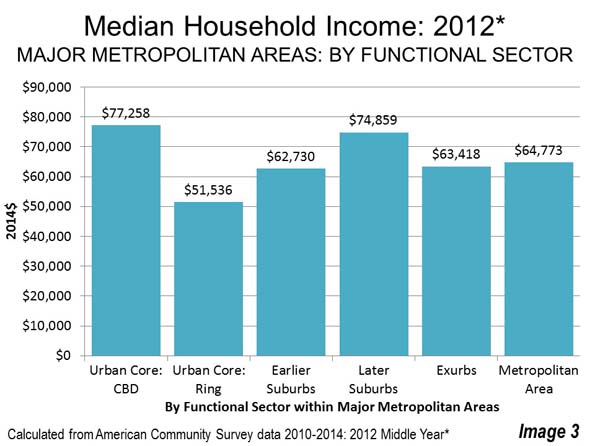
    Photo of Hugo Chavez by Victor Soares/AgenciaBrasil via Wikipedia.

  • Why Evangelicals Matter to the Labor Movement

    Conventional wisdom tells us that all evangelicals must be anti-union because they are theologically and politically conservative. Therefore, you might assume, labor has nothing to gain from the sixty two million adult adherents of evangelicalism in the U.S. Yet evangelicals were at the forefront of many progressive movements in the nineteenth century, such as abolitionism. Today, evangelicals play leading roles in issues of climate change, immigration reform, torture, and human trafficking. Some are also active in the labor movement.

    To understand why, we need to look beyond the Moral Majority of the 1970s to the history of evangelicalism. I bet you didn’t know that, according to evangelist Dr. J. Edwin Orr, “the first trade union was formed by evangelicals as a protest against low salaries.” Orr had in mind the six Tolpuddle martyrs, Methodist and evangelical, who attempted to form a union in Dorchester, about 130 miles southeast of London. They were arrested and transferred to an Australian penal colony in 1834, but evangelical activists successfully fought to secure their release.

    In keeping with this legacy, the 2004 NAE publication “For the Health of the Nation: An Evangelical Call to Civic Responsibility” argues that a good government “preserves the God-ordained responsibilities of society’s other institutions, such as churches, other faith-centered organizations, schools, families, labor unions, and businesses.” Unions have a positive part to play in public life, even for evangelicals.

    It also helps to have a clearer sense of what it means to be an evangelical, a topic adherents have debated among themselves for years. Just this past October, the NAE and LifeWay Research issued a jointly sponsored report that emphasized that evangelicals are people of faith who should be defined by their beliefs and not by their politics or race.

    So what beliefs lie at the heart of evangelicalism? In short, the Bible is the highest authority for belief. There, evangelical Christians are taught to encourage non-Christians to trust Jesus Christ as savior. Christ’s death on the cross removes the penalties for sin. Trust in Jesus Christ alone as savior makes it possible to receive God’s free gift of eternal salvation. Around 30% of Americans hold these beliefs, and they come in all shapes and sizes. Contrary to media representations, evangelicals include many African-American Protestants, even though they are often “separated out of polls seeking to identify the political preferences of evangelicals.” Evangelicals also include many working-class people, members of unions, and others who are sympathetic to unions.

    I found powerful evidence of this in interviews that I conducted with African-American evangelical workers, members of then Local 369 of the IAMAW, in the aftermath of their 2009 strike against Moncure Plywood in central North Carolina. Their views suggest creative avenues for future labor evangelicals, if that spark ignites. For example, evangelicals have an especially acute sense of God’s personal presence in every aspect of daily life. One member, Charles Raines, saw no distinction between being on strike and being a faithful Christian. Raines has been a member of nearby Mount Olive Missionary Baptist Church since 1981 and a skilled worker on nearly every phase of plywood production since his first day on the job in June 1968. His pride in his work at Moncure Plywood was unmistakable. His theology of work argues that one has to “earn his living by the sweat of his brow, you don’t work, you don’t eat” – a deft combination of verses from the Old and the New Testament.

    Unions also “work,” in Raines’s view, by making a tough job doable at the plywood factory. When the firm was sold to new anti-union owners, the workers hit the picket line. Raines argued that the picket line can be equated with the Church itself: “We’ve already heard of the phrase where there is unity there is strength, where two or three are gathered in my name, He will be in the midst. If God is in the midst of something, you got to be strong.” Raines invoked the Bible verse that describes what’s necessary to form a church – a small collection of believers who gather in the name of Jesus to invoke his presence. God was in the midst of Local 369: “I know that he had our backs, because when people come together like at Pentecost when the Holy Spirit came in like a mighty rustling wind, everyone was of one accord, they received the Holy Spirit, tongues, so when people get together, believers, and pray about a thing, God is in it, because he can’t go back on his word.” Raines used a story from the New Testament to reinforce his point that God was in the midst of their resistance, blessing and supporting that work.

    Working-class American evangelicals have much to contribute to the labor movement. Their theology of work is undergirded by the doctrine that everyone is created in the image of God. They teach that we are all co-creators with God to make the world a better place as we also look forward to its ultimate redemption on the basis of Jesus Christ’s sacrifice on the cross. Just the thought of it is dizzying, but evangelicals really believe this even as they recognize the dire effects of sin on the workplace. If anyone believes it is possible to bring to birth a new world from the ashes of the old, it is your evangelical co-worker. The wayin which that will occur may be unfamiliar and may well be uncomfortable in many ways. But it is unlikely that any revival of working-class prospects or the labor movement is possible in the United States without the involvement of its millions of evangelicals.

    This piece first appeared in Working-Class Perspectives.

    Ken Estey is an associate professor of Political Science at Brooklyn College and the author of A New Protestant Labor Ethic at Work. His research centers on the intersection of politics and religion with a particular focus on labor and Christianity.

    Cross photo by Wowzamboangacity (Own work) [CC BY 3.0], via Wikimedia Commons