Category: planning

  • UK Moves to Reform Planning Disaster

    This piece originally appeared at Macrobusiness.

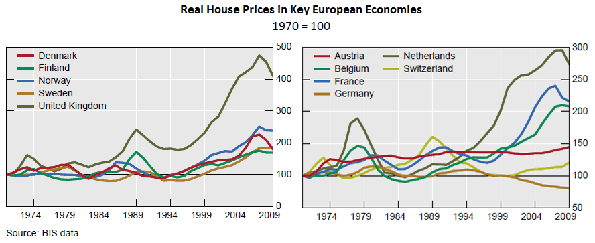
    The United Kingdom (UK) housing system is arguably the worst in the world because of a myriad of policies that work to severely restrict supply, pump demand, and make renting a highly undesirable substitute for home ownership. These policies have led to the UK housing market experiencing:

    1) a higher level of house price inflation than most other European nations:

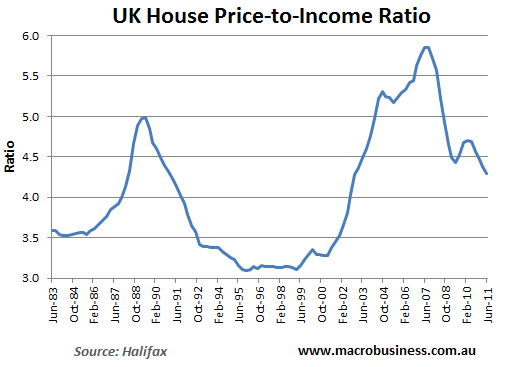
    2) Relatively expensive housing on a price-to-earnings basis:

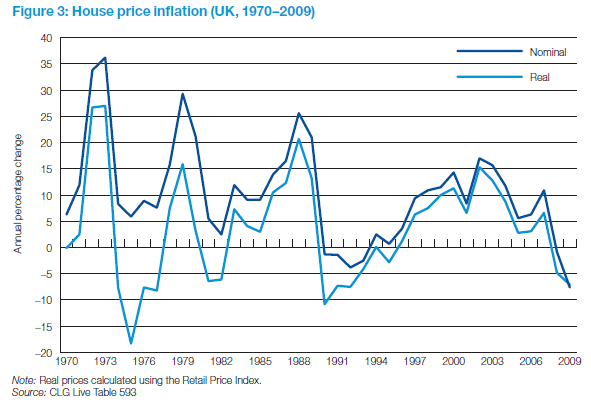
    3) Extreme house price volatility:

    4) Which has also increased the volatility of the economic cycle due to the positive effects on consumer spending of equity withdrawals from rising home values and heightened austerity in the bust phase:
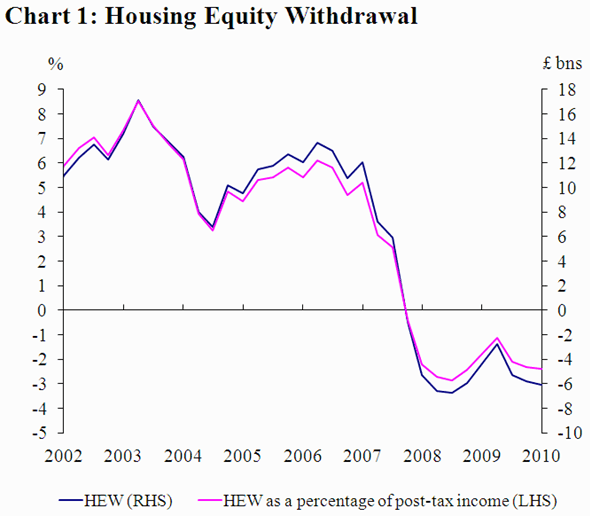
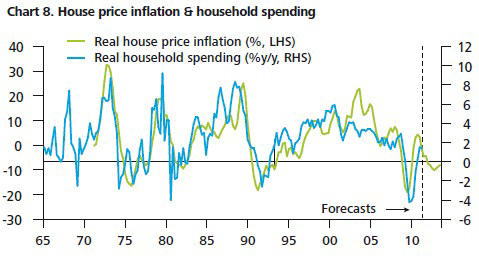

    At the core of the UK’s housing problems is the straightjacket that was placed on housing supply following the passage of the Town and Country Planning Act in 1947, which nationalised development rights. Essentially, the pre-existing right of landowners to build-on or re-develop their land was removed and handed to the state, thereby requiring land owners to seek planning permission before anything other than minor renovation work was undertaken.

    UK housing supply effectively became a centrally planned system whereby government bureacrats would attempt to predict some years ahead the required numbers of dwellings that ought to be built in an area to meet demand. However, as explained brilliantly in a detailed paper by the Policy Exchange, the key outcome from the UK planning system has been a housing market that has delivered some of the oldest, smallest and most expensive homes in Europe of a type that are least preferred by households. Put simply, UK households are paying more for housing than their European counterparts and receiving less in return:

    Central planning attempts to ensure that what is thought best for the people by the central planners is what is produced. So, as we showed earlier, the system currently attempts to produce exactly the number of dwellings which are estimated to be required from calculations of need, calculations involving assessments of demographic change, household formation, household splits, migration, deaths, births, etc. Built into the system is a pressure at all levels to provide the minimum. Using green field sites is politically problematic. The cry goes up that the countryside is being buried under tarmac. And anyway, as we have shown, the system adjusts. If too little housing is provided, house prices rise and housing becomes expensive. When it is more expensive, people can afford less and so buy smaller homes. With smaller homes, more dwellings can be provided on less land because homes can be built at higher densities, namely flats or houses with tiny gardens.

    But is this really what people want? In March 2005, a widely reported survey carried out by MORI on behalf of the Commission for Architecture and the Built Environment found that over 50 per cent of those questioned wanted a detached house and 22 per cent preferred a bungalow. Only 2 per cent per cent expressed a preference for a low rise flat and less than 1 per cent a flat in a high rise block. But since detached houses and bungalows use more land than other kinds of house, fewer and fewer are built each year. And many are also demolished to make way for terraced houses or blocks of flats. So while as recently as 1990 only about an eighth of newly built dwellings were apartments, by 2004 the proportion had increased to just under a half…

    So whilst people may not want to live in them or want them built where they live,more and more blocks of flats of just this type are being built because the central planners think that they should have them, and because the production norms are filled more easily in this way than by building houses or bungalows…

    The British planning system means that the most important thing the developer has to do is to obtain planning permission. Once this has been obtained, given the demand for housing, whatever is built can be sold. So the way to make the greatest profit, having obtained permission, is to produce the permitted dwellings at the lowest possible cost. Adding good design is an unnecessary expense because whatever is built will sell. So the constraints imposed by the planning system work against the achievement of a better architectural environment, something which might be achieved with less pressure to build at the lowest possible cost. Competition between developers on design becomes largely unnecessary because they know that they will be able to sell whatever they produce.

    So the current position is that what people want, when asked, is lower density housing. What they get, what the planning system now insists upon, is high density development, much of it in the least desired form – blocks of flats…

    British housing tends to be older than elsewhere in Western Europe. Because they are older their efficiency, in terms of heating for example, tends to be less. The houses [also] tend to be smaller… New houses tend to be even smaller on average than existing houses. In addition, house prices rise faster in the UK so that, year on year, housing in Britain has been getting more expensive relative to that in the rest Europe…

    If fifty years of planning has achieved one thing… Britain [now] has the oldest, pokiest, housing in Europe.

    Compounding the above regulatory constraints on land/housing supply are the greenbelts that have been errected around all of the UK’s major housing markets, which have excluded large swathes of agricultural land from urban development and helped to push-up land prices. A map of the UK’s greenbelts is provided below:
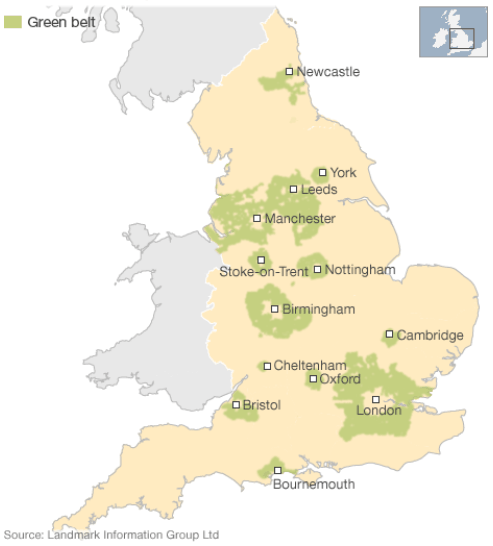

    In addition, the overriding planning objective in the UK has increasingly become one of ‘urban containment and ‘densification’. In the 1990s, the Central Government explicitly required that 60% of all new land for housing must be brownfield land – i.e. land which has already been developed for some other purpose.

    This 60% in-fill requirement necessarily meant the restriction of land supply and higher land prices. It has also produced some perverse outcomes owing to the fact that many brownfield sites that come onto the market for redevelopment are not necessarily located where there is demand for housing. Key amongst these perverse outcomes are the construction of high density developments in poorly located areas as well as ‘leapfrog’ developments far away from the existing urban fringe:

    In southern England, where demand is great, the brown fields norm is complied with by constructing high-density developments whenever and wherever the land has become available, whether centrally, in the inner suburbs, in the outer suburbs, or in the middle of the country miles away from public transport. So the site of a house or hotel in the middle of the London Green Belt may be redeveloped to provide more houses or a larger hotel. The development is on a brown field site so that fulfils the production norm, to be sure. But the development neither preserves the countryside, nor does it reduce the use of private transport. Indeed, it actually increases it above what might have been achieved on a green field site bordering the town.

    A final related roadblock to housing supply in the UK is its centralised fiscal system, whereby local authorities – which are the primary decision makers on development and have statutory obligations to provide services for new houses – receive very little revenue from increased population and housing. As such, these local authorities tend to be biased against development.

    Combined, these regulatory constraints on new housing construction have meant that housing supply in the UK has been incapable of responding quickly and efficiently to changes in demand, thus placing upward pressure on prices and creating expectations of future capital growth.

    According to the Joseph Rowntree Foundation’s (JRF) Housing Market Taskforce report on reducing volatility in the UK housing market, only an average of around 180,000 homes per annum were completed in the UK over the past two decades – only slightly above construction volumes in Australia, despite the UK having nearly triple the population (around 62 million).

    And as shown below, despite the massive run-up in prices between 2000 and 2007, there was only a minimal supply response towards the end of the latest housing bubble, confirming that UK housing supply is highly unresponsive (‘inelastic’) to changes in demand.
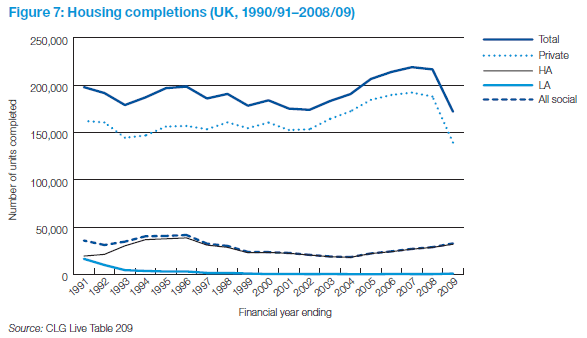

    More worryingly still, new home construction has reportedly fallen to its lowest level since the 1920s, with just 105,000 new homes completed in 2010.

    The supply constraints present in the UK housing market ensured that the extra demand arising from the UK’s deregulated mortgage market – where lenders were offering 100% plus LVR (i.e. no deposit) mortgages to first-time buyers at the height of the most recent housing bubble – manifested into escalating prices rather than new home construction. By contrast, in the wake of the global financial crisis, UK lenders rationed credit and demanded higher deposits (reduced LVRs), which contributed to the falling prices.

    In a similar vein, the UK’s deregulated rental market and lack of security of tenure (whereby six month leases are the norm) has ensured that renting is a second rate option, thereby encouraging residents to strive (and borrow big) for owner occupancy. With this extra demand for owner-occupied housing not met by increased supply, the inevitable result has been ’panic buying’ from first-time buyers when house prices are rising and the opposite when prices are expected to stagnate or fall.

    Change in the air?

    The concerns about the UK housing situation appear to have come to a head, with the Central Government moving to reform the planning system by:

    1. streamlining the development process by reducing more than 1,000 pages of regulations and red tape to just 52 pages; and
    2. implementing a “presumption in favour of sustainable development”, which has the potential to open up the greenbelts to new housing development.

    The UK Prime Minister, David Cameron, has described the planning system as “slow and bureaucratic” and argues that reform is essential. He also laments the fact that the average first-time buyer without parental help in the UK is 37 years of age.

    However, conservationists and NIMBY groups have rallied against the changes arguing that the reforms risk concreting over the UK’s precious country side and robbing the nation of productive farmland – a ridiculous claim when you consider that:

    1. only around 8% of UK land is urbanised, which is lower than the Netherlands (15%), Belgium (15%), Germany (13%), and Denmark (9%); and
    2. the proportion of UK land used for agriculture is among the highest in the old European Economic Community: 78% compared with an average of 64%.

    According to Dr Oliver Marc Hartwich, an economist and planning expert at Sydney’s Centre for Independent Studies, concerns that the UK will concrete over the country side if the proposed planning reforms are implemented are misguided:

    Dr Oliver Hartwich, an economist with the Centre for Independent Studies, who has studied the British system, believes that without the postwar planning system, the UK would only “look slightly different, but not much”.

    Instead, he suggests the real impact of the green belt has been to fuel house price inflation and push development further into the “real” countryside beyond the green belt, leading to more commuting, fuel use and stress.

    “No-one wants to concrete over the countryside,” he adds. But British cities are overcrowded.

    “What this sort of planning does is encourage a system where bubbles are likely. The idea that you need to get into the property market in your early 20s is very harmful but it’s something that this planning system promotes.”

    Dr Hartwich is particularly well placed to comment on the UK planning system given that he was born and educated in Germany – a country regarded as having one of the best planning systems in the world – before residing in England in the 2000s. He has also written detailed studies of planning systems from around the world (for example, see Why Some Countries Plan Better than others).

    Whether the UK Central Government will ultimately succeed in reforming the UK planning system remains to be seen. Nevertheless, it is heartening to see it taking on vested interests and fighting the good fight.

    Photograph: New, smaller exurban housing in the London area (by Wendell Cox).

    Leith van Onselen writes daily as the Unconventional Economist at MacroBusiness Australia. He has held positions at the Australian Treasury, Victorian Treasury and currently works at a leading financial services company. Follow him @leithVO.
  • Are 20th Century Models Relevant to 21st Century Urbanization?

    Analysis of the state of the world’s cities 2010/2011 by UN-Habitat focused on the narrowing urban divide, with 227 million people moving out of slum conditions over the preceding decade.  While acknowledging uncertainty over cause and effect, the report notes that:

    urbanization … is associated in some places with numerous, positive outcomes such as technological innovation, forms of creativity, economic progress, higher standards of living, enhanced democratic accountability and women’s empowerment. … the report calls for policy-makers and planners to understand that urbanization can be a positive force for economic development, leading to desirable social and political outcomes.

    The North Atlantic solution

    The report acknowledges the diversity of urbanisation[1], making its authors’ somewhat singular approach to managing it (more density) incongruous.  Their prescription is based on resisting urban sprawl, reflecting the experience of North America.  They also suggest that sprawl is a sign of “divided cities”, translating into

    an increase in the cost of transport, public infrastructure and of residential and commercial development. Moreover, sprawling metropolitan areas require more energy, metal, concrete and asphalt than do compact cities because homes, offices and utilities are set farther apart.

    The report denounces sprawl in suburban zones of high and middle income groups and in extensive slums on the city edge.  On the latter, they invoke issues of governance, saying it occurs because

    authorities pay little attention to slums, land, services and transport. Authorities lack the ability to predict urban growth and, as a result, fail to provide land for the urbanizing poor.

    Can one size fit all?

    It is difficult to accept prescription predisposed to a particular view. Urbanisation is not a single condition. Differences in the stage of urbanisation, vastly different physical, cultural and economic settings of “urban” settlement, and different institutional arrangements belie the idea of a universal response or that any particular form is best for all cities. 

    Apart from anything else, “western” cities [2] don’t really feature in 21st century urbanism.  Consider the figures.  In 1950 western cities accounted for 43% of the world’s urban population.  This was down to 23% in 1990 and 18% in 2010. UN projections have the figure down to 15% in 2030, accounting for between just 3% and 4% of all urban growth between now and then.

    What Size City?

    This post looks at some more numbers that help illustrate the diversity of urbanisation – the size of urban settlements. 

    According to UN figures,  8% of the world’s population lives in 53 cities housing over 5 million people; 12% in 388 cities of between 1 and 5 million; and 31% in cities of under 1 million. Any prescriptions for urban governance and urban form need to reflect quite extreme divergence between the few megacities and the many smaller settlements where the majority of urbanites live.

    The Urban Growth Trajectory

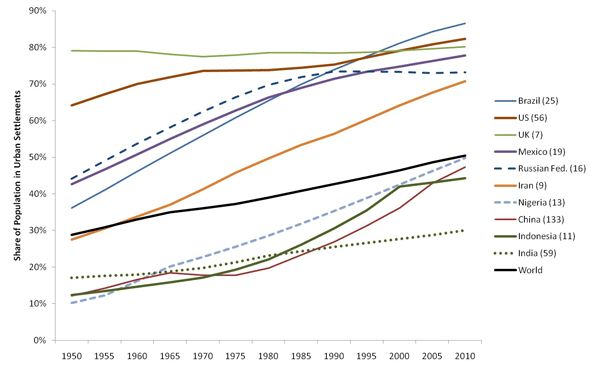
    Urbanisation experiences vary, also.  The different national experiences of the past 60 years can be illustrated using ten quite different countries (Chart 1).  By 2010, Brazil, US, UK, Mexico, and Iran were all heavily urbanised.  But the level of urbanisation changed little for the US and the UK over thelate 20th century, while it grew rapidly in the others.

    In yet another trajectory, erstwhile rapid urbanisation in Russia stalled after the mid 1980s. 


    Chart 1: Urbanisation Trends, Selected Nations, 1950-2010

    Urbanisation is accelerating in China, but has flattened off in Indonesia.  It has been increasing steadily in Nigeria and slowly but still steadily in India.

    Most people moving into smaller cities

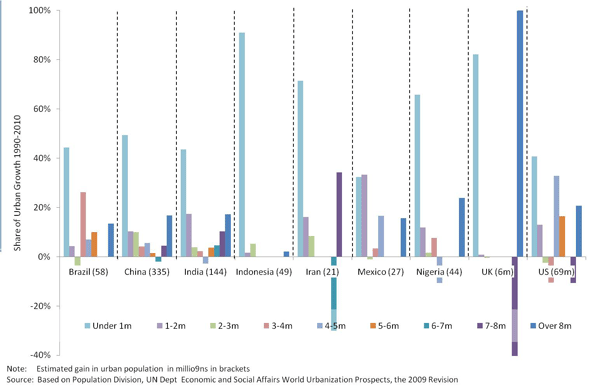
    Chart 2 shows shares of growth by city size groups over the last twenty years. (Russia is omitted because urbanisation actually declined by 5.5%.) 

    Cities of under 1 million residents dominate gains, strongly favouring developing countries.  They accounted for 90% of urban growth in Indonesia, 71% in Nigeria and 66% in Iran. 

    US experienced growth more or less across all size categories, although Chicago went from the 7m-8m to the 8m plus category, reducing down the former.

    Chart 2: Where Populations Grew – Cities by Size Category, 1990-2010

    Brazil, China, and Indonesia saw significant growth across the most size groups.  There appears to be a contrast within these countries between the centralising influence of few large cities and dispersed urbanisation in many much smaller settlements.

    (The picture for the UK reflects a gain of around 1 million people in London — to 8.6m — shifting it between categories.  Smaller cities actually accounted for 82% of the net UK gain in urban population, suggesting a duality between the growth of the capital and decentralisation through growth in smaller settlement). 

    So where are the big cities?

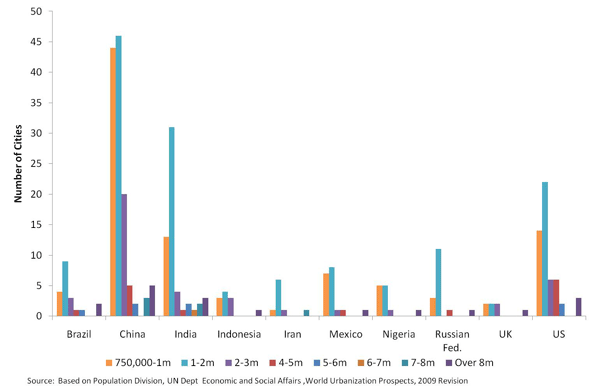
    The US has five urban agglomerations with a population of more than 5m, centred on New York, Los Angeles, Chicago, Philadelphia and Detroit (Chart 3).  Compare this with China, with twelve cities of over 5m, and five cities of more than 8 million people (Shanghai, Beijing, Chongqing, Shenzhen, and Guangzhou); or India, with eight over 5m and three over 8m (Mumbai, Kolkata, and Chennai).

    At the same time, China has 90 cities of between 750,000 and 2m, India 44 and the US 66.  Mexico has 15, Russia 14 and Brazil 13. 

    Chart 3: Number of Cities by Size Category, Ten Nations 2010

    Primacy – a mixed picture

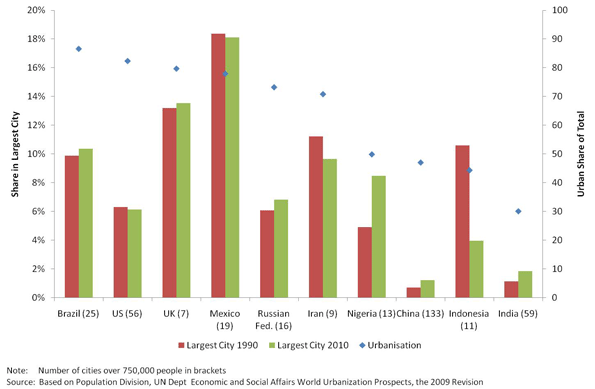
    Single centres that dominate national populations are termed “primate”.  Their rise and fall may be symptomatic of national economic fortunes.  Excessive primacy may increase economic volatility because the contrast between a rich centre and poor periphery is politically destabilising. One centre dominating financial, human, and intellectual resources may also increase national vulnerability to structural decline.

    The picture is mixed across our sample (Chart 4).  Mexico City and London stand out.  High levels of primacy are also evident in Iran and Indonesia, but have been easing, contrasting with Nigeria where it is increasing.  It is least pronounced in the countries with the largest urban populations – China and India — suggesting a strong population pull from a number of state or provincial capitals, as well as a host of much smaller cities.

    Chart 4: Population Share of Largest City, Ten Nations, 1990 and 2010

    So what does all this mean?

    The data confirms huge diversity in the sizes of cities people live in across and within nations.  It generates more questions than answers, though, the main one being whether it is relevant simply to transfer urban governance, management, or planning models from one place to another.  Apart from contrasts within and between nations, it is clear that the west is no longer the focus of urbanisation and is unlikely to hold many of the answers to today’s urban growth challenges.

    The evidence also indicates a tendency for urbanisation to take place in small, dispersed settlements rather than mega-cities.  More modest scale makes different demands on infrastructure and institutions.  It may also help manage urbanisation and ensure that benefits can be better accessed by larger numbers of people.  Small cities, sub-centres in large cities, and districts of modest scale may be better suited to adaptable and innovative planning and management than large scale, extensive cities with their more centralised, remote, and inevitably bureaucratic political and administrative systems. 

    Very large agglomerations do exist, even if they are not as dominant in the wider urban picture as their size and profiles might suggest.  The question they raise is whether they should continue to dominate national and international agenda for urban growth and management.  Dispersed urbanisation may better reflect the resources and capacities needed to support an exploding urban population in the 21st century.

    Phil McDermott is a Director of CityScope Consultants in Auckland, New Zealand, and Adjunct Professor of Regional and Urban Development at Auckland University of Technology.  He works in urban, economic and transport development throughout New Zealand and in Australia, Asia, and the Pacific.  He was formerly Head of the School of Resource and Environmental Planning at Massey University and General Manager of the Centre for Asia Pacific Aviation in Sydney. This piece originally appeared at is blog: Cities Matter.


    [1]  The lowest level of urbanisation incorporated by the UN depends on the conventions of individual nations but may refer to settlements with as few as 2,000 people.

    [2] Treated here as North America, Northern Western and Southern Europe, and Australasia

    Photo by NASA’s Marshall Space Flight Center.

  • What Boomers Are Choosing

    In 1989, a man came to my office and introduced himself as the vice president of development for the Del Webb Corporation.  He retained my firm to prepare a master plan for their first active-adult community outside of their typical desert southwest market. 

    This led me to an exploration of what made a successful active adult community.  I learned they required unique and distinct considerations quite different from those used in more conventional master planned communities.  During the information gathering process, I toured each of the Sun City projects, interviewing staff and visiting residents to understand the qualities and features which attracted buyers and provided the lifestyle sought by retirees. 

    Since that initial project, I and my partners have had the opportunity to plan and design over 60 active adult communities, many of which were realized and built out over the past 10 years.  We have also worked with existing active adult communities to expand or enhance their amenities and programming to remain relevant to the changing needs of the boomer resident and buyer.

    Over the past several years, our firm began working with small towns and rural communities utilizing our insight and knowledge of the retiree market and desired community amenities to create or enhance their position as a retirement destination.  Additionally, we have assisted them in establishing programs to recruit retirees as an economic development strategy that taps into economic, social, educational and professional attributes of the boomers. 

    Through my work with both the active adult and rural/small town communities I have observed changing trends in the retiree market as the Eisenhower generation gave way to the boomers.  The following are some of the patterns and behaviors which are vital to the boomer home buyer as they make decisions on their retirement living.

    Trend 1 – When making a decision regarding retirement housing, boomers are savvy consumers, typically having purchased between 3 – 9 homes in their lifetime.  These are buyers who know what they want and are reluctant to compromise their selection criteria.

    Trend 2 – Recreation preferences have shifted significantly over the 35 years I have worked in this market.  In the late 80s, virtually all active adult communities relied on golf as the primary community amenity.  Now golf ranks 8th as the preferred amenity of retirees and continues to decline in popularity.  Walking facilities are by far the most requested amenity in retiree focus groups followed by fishing, bocce, tennis and pickleball.

    Trend 3 – The preferred design of single family homes sought by retirees remains one-story living with no steps between parking and front door.  The size of individual dwellings is smaller but still well constructed and featuring no reduction in amenities.  However, specialty rooms are being replaced by multi-use space.  My favorite analogy is the comparison of a Cadillac to a BMW.  There is also increased demand for design and construction techniques which enhance the conservation of water, electricity and natural gas.

    Trend 4 – Community size is smaller, ranging from 10,000 to 2,500 units.  The trend now reflects a growing demand in the market for smaller, more intimate communities.  Finance and entitlement issues further support this trend.

    Trend 5 – 65% of boomers desire to continue their education through formal and informal means during retirement.  This preference drives the decision to purchase a home in towns with a college or an established academic program.  Communities which do not have higher learning institutions have brought in private education, on-line and community educational entities.  Senior University in Georgetown, Texas was established to meet this demand by the residents of Sun City Texas.

    Trend 6 – Historic residential sales patterns show that the “resort-style active adult community” appeals to only 7% of the age and income qualified boomer market.  Small towns and rural locations, however, are finding themselves the preferred destination for boomers in retirement.

    Trend 7 – We know there are many factors which are essential to attracting retirees including affordability, health care, transportation, established social fabric, significant retention of visual history and moderate climate.  However, there is a much greater emphasis on proximity to family, especially grandchildren.  This is driving the relocation decision for many boomers.  Additionally, safety and security have been identified by a greater portion of focus group participants. This preference has become more difficult to realize due to a growing reluctance by municipalities to allow private roads and secure entry gates as a facet of the community’s security program.  The requirement for connectivity is also complicating this trend.

    Trend 8 – Boomers are not flocking en masse to multi-family dwellings in urban cores.  Robert Charles Lesser and Company recently reported that only 4% of affluent empty nesters indicated they would move to a condo downtown in their current metro area while 3% would chose a condo in a suburb of their current metro area.  Essentially, there is little migration of retirees from rural communities and the suburbs to the urban core, contrary to widely held beliefs.

    Overall, the boomer market is diverse and no one solution will appeal to the entire market.  A knowledgeable developer or small town councilman must formulate their plans on local preferences and values.  And remember that many of the myths perpetuated by the media – notably the return en masse of boomers into the city – are just that, a myth.

    Joe Verdoorn, a Principal at SEC Planning, LLC, has over 40 years land planning and development experience working with clients such as Pulte/Del Webb, Motorola, Apple and Hunt Investments.  He is a pioneer in the field of active adult community design who continues to research the retiree market to understand their evolving wants and needs. 

  • The Evolving Urban Form: Milan

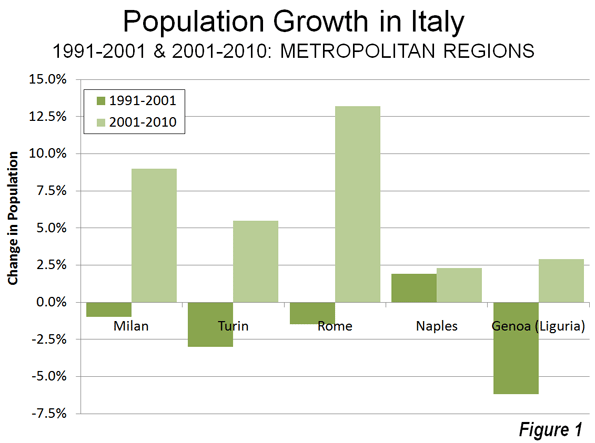
    Italy’s population growth has been stagnating in recent decades, but has turned around during the last decade, with the annual growth rate increasing 16 times (from 0.04 percent to 0.69 percent). According to United Nations data, Italy added more international migrants in the 2000s (3.8.5 million) than it added people in any ten year period since 1960. Some of the strongest growth has been in the Milan metropolitan region, which has begun to grow again after years of stagnation. This is not due to any increase in Italian birth rates but principally because of surging international migration.

    Much of this has to do with the enlargement of the European Union (EU) from 15 to 27 member states, and the consequent removal of all legal barriers to internal migration. The Milan metropolitan region, occupies much of Lombardy, Italy’s most populated region. Milan added 634,000 foreign residents in just six years (2000 to 2008, the latest year for which data is available).  The largest share, 103,000, was from the EU’s Romania, with 50,000 from Albania, 47,000 from Morocco, 30,000 each from Ecuador and Egypt and 27,000 from Ukraine. Over the period, more than 80 percent of Lombardy’s growth has come as a result of international immigration.  The key to this lies with the region’s economy, which is the strongest in Italy and all of southern Europe.

    International migration has also fueled large population increases elsewhere, especially in both northern and central Italy, such as Rome and Turin. Further south, however, growth (such as in the Naples area) has continued to be comparatively slow (Figure 1).

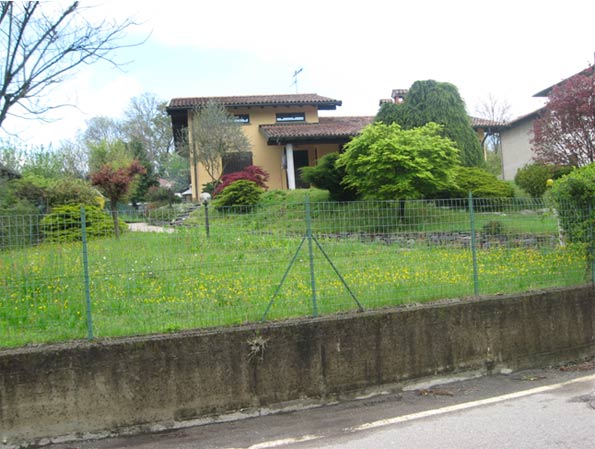
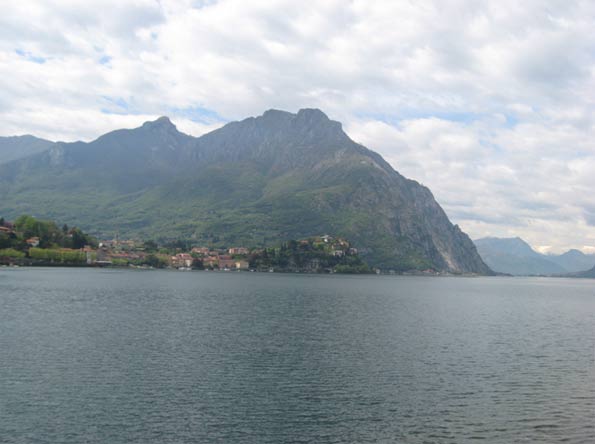
    The Urban Area: The Milan urban area is the largest in Italy. The Milan urban area stretches from the core of Milan northward to the Alps and includes development in the provinces of Varese (photo), Como, and Lecco (Photo: Lecco) as well as Monza and Brianza. The province of Como is home to the picturesque Lake Como, while Varese sits at the foot of the Simplon Tunnel (of "Venice Simplon-Orient Express" fame) and the highway over Simplon Pass to Brig in Switzerland’s Rhone Valley and the Matterhorn.


    Varese


    Lecco: Northernmost suburbs


    There is also considerable development both to the east and the west in the province of Milan and more limited development to the south. Overall, the urban area has a population of approximately 5,400,000 (Note 1), covering approximately 800 square miles (2,100 square kilometers) for a population density of approximately 6,700 per square mile (2,500 per square kilometer).  This is similar to that of Los Angeles or Toronto.

    Growth in the Metropolitan Region: Until the recent increase in international migration, the Milan metropolitan region was growing slowly and more recently even losing population. Between 1991 and 2001, the metropolitan region lost one percent of its population. However, since 2001 the metropolitan region has gained 9.0 percent, an improvement from the minus 1.1 percent between 1991 and 2001. The last decade’s growth was at an average annual increase rate of 0.96 percent which is slightly more than the United States (0.94 percent) and slightly less than Canada (1.04 percent). 

    The Inner City: The commune of Milan is the central municipality of Milan metropolitan region. The population of Milan peaked in 1971 at just under 1,700,000 people. By 2001 the population had fallen to approximately 1,250,000 people, a loss of approximately 25 percent and its lowest population since before the 1951 census. The central municipality of Milan continued to lose population to 2001. From 1991 to 2001, Milan lost more than 100,000 people and nine percent of its population. Milan is not unusual in this decline. Declines have been characteristic for virtually all Western European central municipalities, except where there was substantial greenfield space to accommodate new suburban development (such as in Rome).

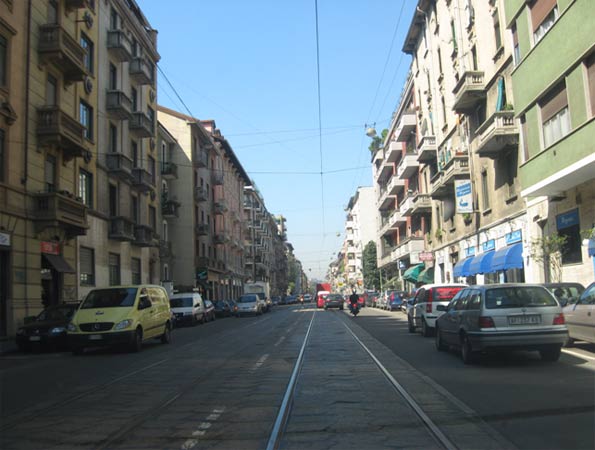
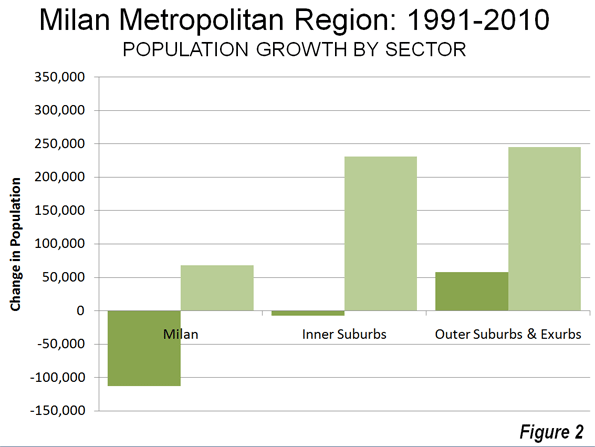
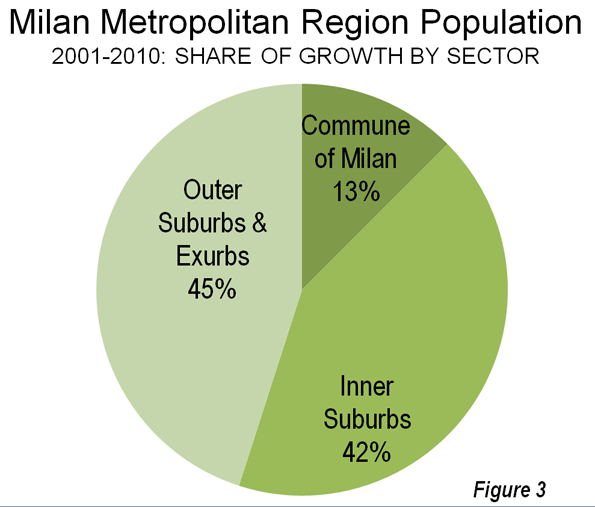
    However, the commune of Milan has begun to grow again. Milan’s population has increased by nearly 70,000 people or 5.4 percent. Milan now has a population density of 18,600 per square mile (7,200 per square kilometer), slightly higher than that the city of San Francisco (Photo: Milan). Even with the recent increase, however, all of the growth in the Milan metropolitan region since 1991 has been in the suburbs and exurbs (Figure 2) and 87 percent in the last decade (Figure 3).


    Milan

    Much of the commune’s population increase has been the result of international migration, since many Italians continue to migrate to the surrounding suburban and exurban areas, as is the case in a number of European metropolitan regions.  Domestic out-migration continued from the commune of Milan, while the suburbs and exurbs attracted domestic migrants (Note 2).

    Inner Suburbs: The inner suburbs of Milan include portions of the province of Milan outside the commune of Milan and the (single) province of Monza and Brianzia, which was separated from the province of Milan earlier in the decade. The inner suburbs also lost population between 1991 and 2001. This was reversed between 2000 and 2010, when the inner suburbs added approximately 230,000 people, and grew at an overall rate of 9.4 percent. The inner suburbs have a population density of approximately 5,000 per square mile (1,900 per square kilometer), somewhat less than the Sydney urban area and 1.5 times that of Portland.

    Outer Suburbs and Exurbs: The outer suburbs and exurbs stretch north to the foot of the Alps, as well as to the south of the province of Milan. The largest population is to the north, with a far smaller population to the south, in the exurban provinces of Pavia and Lodi. Unlike the commune of Milan and the inner suburbs, the outer suburbs and exurbs have grown in each of the last decades.  Between 1991 and 2001, the outer suburbs and exurbs accounted for all the growth, though at a modest rate of 2.5 percent. The growth has substantially increased since 2001 with the addition of more than 245,000 new residents and a growth rate of 10.4 percent. International migration accounted for 93 percent between 2002 and 2008, 93 percent were foreign (202,000).

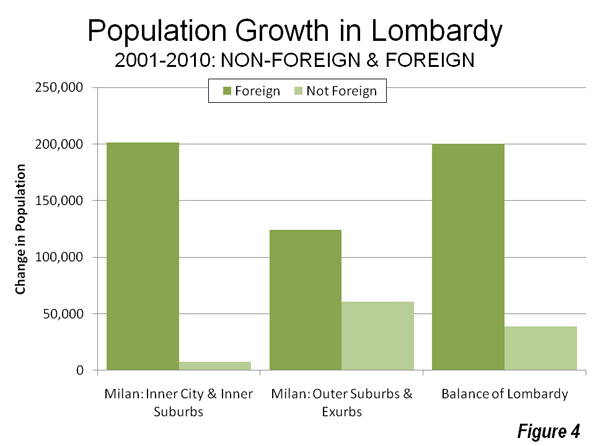
    Where the Immigrants are Moving: As might be expected with strong international migration, most of the new entrants have moved to the inner city and inner suburbs. Between 2002 and 2006, 97 percent of the population growth was from international migration, with an addition of 202,000. The overall foreign population increased 119 percent from 2002 to 2008. Yet, the percentage growth was much stronger in the outer suburbs and the exurbs, where the foreign population grew 171 percent (125,000). However, this represented a smaller share of the overall growth (67 percent), which is likely to be an indication of strong outbound domestic migration from the inner city and the inner suburbs to the outer suburbs and exurbs. There was also strong foreign population growth in the balance of Lombardy, with an increase of 147 percent, which constituted a somewhat higher share of overall growth, at 84 percent (Figure 4).

    Decentralizing, Diversifying Milan: Like the other international urban areas (Note 3), Milan continues to suburbanize, though growth has also resumed in the historic core municipality. At the same time, international migration is changing Milan and Italy. United Nations (UN) data indicates that the number of international migrants to Italy was 10 times higher in the 2000s than in the 1990s. The UN projects that the inflow will drop by 50 percent between 2010 and 2015 and then to approximately one-third the 2000s influx to beyond 2050. Whatever the result, because of its strong economy, the Milan area will doubtless continue to attract a disproportionate share of the new arrivals.

    Wendell Cox is a Visiting Professor, Conservatoire National des Arts et Metiers, Paris and the author of “War on the Dream: How Anti-Sprawl Policy Threatens the Quality of Life

    —–

    Note 1: Milan is one of a small number of large urban areas that is often dismissed as being much smaller than it really is. This is because data for metropolitan regions is not routinely produced in Italy and Milan. As a result, analysts often referred to the population of the historical core municipality which has only 20 percent of the metropolitan population. Similar problems of national reporting occur in Germany’s Rhine – Ruhr (Essen-Dusseldorf) metropolitan region and Jakarta, Manila and Kuala Lumpur. The Rhine-Ruhr does not appear on the United Nations urban agglomeration list of all over 750,000, despite the fact that it has 7 million people in close proximity, at near average Western European large urban area densities (7,100 per square mile or 2,800 per square kilometer, compared to the Western European average of 8,000 per square mile or 3,100 per square kilometer)

    Note 2: More detailed data is not available on the internet from the Istituto Nazionale di Statistica Italia, Italy’s statistical bureau.

    Note 3: See additional reviews in the "Evolving Urban Form" series, at : Beijing, Chicago, Dallas-Fort Worth, Jakarta, Los Angeles, Manila, Mexico City, Mumbai, New York, SeattleSeoul and Shanghai .

    Photo: Duomo (Cathedral), Milan. Photographs by author.

  • The Ambiguous Triumph of the “Urban Age”

    In its State of the Population report in 2007, the United Nations Population Fund made this ringing declaration:  “In 2008, the world reaches an invisible but momentous milestone: For the first time in history, more than half its human population, 3.3 billion people, will be living in urban areas.”

    The agency’s voice was one of many trumpeting an epoch-making event.  For the last several years, newspaper and magazine articles, television shows and scholarly papers have explored the premise that  because most of the world now lives in urban rather than in rural areas things are going to be, or at least should be, different.  Often the conclusion is that cities may finally get the attention they deserve from policy makers and governments.  This optimism dovetails nicely with a sizeable literature of urban advocacy chronicling the rejuvenation of central cities and extolling the supposed virtues of high-density city living, even predicting the withering away of the suburbs.

    This supposed triumph of the urban is fraught with ironies, however.   The first is that, rather than a simple rush of people from the hinterlands into the centers of high density cities, there has also been, within almost every urban area in the world, a significant move of the population outward, from dense city centers into peripheral suburban areas and beyond them into very low-density exurban regions.   

    We can use Paris as a typical example.  The city of Paris reached its peak population of nearly 3 million in the 1920s.  It has lost nearly a third of its population since then.  What remains in the city is a smaller and wealthier population.  At the same time the suburbs, accommodating both families of modest income forced out of the city as well as a burgeoning middle class,  have grown enormously, from two million to over eight million.  And this does not count a great deal of essentially urban population that that lives in a vast ring of exurban or “peri-urban” settlement.  Certainly the majority of “urban” dwellers in the Paris region do not live in the elegant apartment blocks along the great boulevards familiar to the tourist.   They live in houses or small apartment buildings in the suburbs and use the automobile for their daily transportation needs.

    In fact, Paris is a good example of an even more fundamental irony.  At the very moment when urban population has been reported to surpass the rural, this distinction has lost most of its significance, at least in many parts of the affluent world.  Two hundred years ago, before automobiles, telephones, the internet and express package services,  cities were much more compact and rural life was indeed very different from urban life.  Most inhabitants of rural areas were tied to agriculture or industries devoted to the extraction of natural resources. Their lives were fundamentally different from those of urban dwellers. 

    Today the situation has changed radically.  Most people living in areas classified as rural don’t farm or have any direct connection with agriculture.  They hold jobs similar to those in urban areas.  And although they might not have opera houses, upscale boutiques or specialized hospitals nearby, the activities that take place in these venues are available to them in ways that they never were before.

    I can confirm the way the distinction between urban and rural has broken down by looking out the window of the house in Omro, WI where I am staying this weekend.  Omro, population about 3000, is located 8 miles west of Oshkosh and is  legally a city under Wisconsin law.  It is also an “urban” place according to the Census Bureau which, like those of other countries, defines urban largely by density standards.   In the case of the US, this means, in simplest terms, a density of at least 1000 people per square mile or just under two people per acre. 

    At one time this 1000-people-per-square-mile figure did provide a logical demarcation line.  Above those densities were places that could afford urban services like public water and sewers, sidewalks, streetlights, municipal fire departments and libraries.  Below that level were places that either didn’t have these services or had to depend on faraway county governments.  Unless you were closely associated with agricultural production or other rural economic activities or you were wealthy enough to provide your own services, it was quite inconvenient to live in rural areas. 

    Today, the automobile, rural electrification, the internet and the rise of alternate and privatized services has transformed what it means to live in rural areas.  “Country living” today has few of the drawbacks that made it inconvenient for middle class residents as recently as fifty years ago, and the migration of so many urbanites into the country has blurred the distinction between urban and rural.

    The view out my window bears this out.  When I look one direction what I see are city streets and houses on land that is technically urban.  Of course, Omro, with a single main street, two traffic lights and only a handful of stores, is not at all the kind of place that most people associate with the words “city” or “urban.”  Like the majority of small urban places in this country, its densities are lower than those found in the suburbs of larger cities.   When I look out the other direction I see mostly fields beyond the city limit.  But, unlike the case in the past,  there is no sharp divide.  There has been a significant increase in the number of houses out in the area that is technically “rural.”  Some of these used to be farmhouses, but there are few farmers anywhere for miles around.  Most farming is now done under contract or  as a large industrial-scale operation.   

    Most of the houses in the “rural” area around Omro have been built in the last decade or two and never housed anyone with any direct connection to farming.  They are suburban in appearance and mostly inhabited by people who work at home, are retired or commute some distance to jobs spread across a vast swath of urban territory that stretches from Fond du Lac south of Lake Winnebago to Green Bay where the Fox River meets Lake Michigan. 

    The result is that today, as you drive outward from the center of Fond du Lac, Oshkosh, Appleton or Green Bay, the number of houses per square mile diminishes, but there is no clear break between city and country.  It is a crazy quilt of agricultural, residential and other uses.  Commuting patterns, if charted on a map, would form a giant matrix of lines running in all directions.  Whether one is in the center of Oshkosh or 50 miles away, however, one can still live an essentially urban existence.   

    This same diffused urban condition holds true for very large swaths of the United States wherever there is enough underground water to allow wells. It is particularly conspicuous in the older and more densely settled eastern part of the country.  A state like New Jersey exhibits a pattern of dense older cities, radiating suburbs, vast exurban territories and farmland and open space, overlapping in ways that confound traditional notions about what is urban and rural. In places like New Jersey, the census distinction has lost almost all of its meaning.

    I don’t mean to suggest that that the news that the majority of the world’s population is now urban has no significance.  In fact this move from the countryside to urban areas has been one of the defining events of world history over the last several centuries.  Although this process was mostly finished in Western Europe and the United States decades ago, it still continues in most of Latin America, Africa and Asia and accounts for a great deal of the dramatic upward surge in income throughout the world.

    Nor am I suggesting the demise of the great cities of Europe or America.  Far from it.  Many rich families in particular will probably continue to choose high-density neighborhoods like those on the Upper East Side of New York or the 16th arrondissement in Paris, although often with a rural retreat as well  As the world gets wealthier, more people may make a choice to live in this way.

    However, current trends give no reason to believe that places like Manhattan or central Paris are going to increase in population and density as part of a “back-to-the-city” movement.    As cities gentrify, they undoubtedly become more attractive, but increased demand leads to higher prices keeping out many families who might choose to live in them.  Furthermore, the gentrifiers tend to have smaller families than those they replace, and they also tend to demand  more room, larger and better equipped housing units, more parks and open spaces.  Because of this, the gentrifiers, citing the need to preserve existing neighborhoods, frequently put up all kinds of barriers to new development and increased population and density, particularly by less affluent citizens.  For all these reasons,  existing city centers in the affluent world are unlikely to accommodate a significantly larger percentage of the population.

    Even in the developing countries, as urbanist Shlomo Angel has shown, most cities are spreading outward at ever lower overall densities just as cities have been doing for many years in the affluent West. For those who don’t have a lot of affluence, and even some who do, low density suburban- and increasingly, even lower density exurban- living, remains alluring for many in both the affluent and the developing world.   In fact, we might even be seeing the initial stages of a major reversal of the kind of urbanization that characterized industrializing cities in the West in the 19th and early 20th centuries. The sharp increase in houses outside Omro may presage at least a partial return to a pre-industrial condition seen, for example, in nineteenth century America when people were more evenly spread across the landscape. 

    This continuing urban sprawl is, of course, deplored by many of those who celebrate the supposed triumph of the “urban age. “ Yet  as I have argued in my book Sprawl:  A Compact History, this phenomenon is by no means as bad as most anti-sprawl crusaders imagine it to be.  Continuing to spread the population could conceivably result in a more equitable, more sustainable pattern of living, particularly as renewable energy and other resources are harvested close to home with less need of the giant systems necessary to maintain our dense industrial-age cities.  In any case, despite all of the planning regulations put in place in cities throughout the affluent world to control growth at the edge, the periphery continues, inexorably, to expand almost everywhere. 

    Nowhere does the evidence suggest that we are witnessing the final triumph of the traditional high-density city.  In fact, the much-ballyhooed urban majority might be in great part a statistical artifact, a way of counting the population that over-emphasizes the move from country to city and fails to account for the powerful counter-movement from the city back toward the countryside.  Indeed the emerging reality of overlapping patterns of high density centers, lower-density peripheries and vast areas of very low density urban settlement, all of them interspersed with agricultural lands and protected open spaces, threatens to upend altogether the traditional notion of what it means to be urban.   

    Robert Bruegmann is professor emeritus of Art history, Architecture and Urban Planning at the University of Illinois at Chicago.

    Photo by urbanfeel.

  • High-density Housing Reflects Dense Government Thinking

    Citizens in Australia’s major cities are becoming increasingly unhappy about what they perceive as the escalating deterioration in their quality of life – traffic congestion, overloaded public transport, unaffordable housing for young people, increases in the costs of basic services and overcrowding. There is little doubt that recent election results and unfavourable opinion polls are partly an expression of this dissatisfaction.

    ‘Save Our Suburbs’ believe that these adverse trends are the result of high-density policies that have been imposed onto communities by state governments. Due to the misleading misinformation that has accompanied these policies, the public may not fully realise the connection between these policies on the one hand and deteriorating standard of living on the other. It is only when one sweeps the propaganda veil aside that one realises how shallow, trivial and sometimes downright deceptive the spin has been.

    We should start out by making it clear that we have no issue with anyone that prefers living in a high-density area or with the free market construction of buildings to fulfill this preference. The issue we have is with the enforced imposition of high density housing upon the bulk of Australians that don’t want it.

    The premise behind this government totalitarianism is that high-density living is better for the environment. They say that people will use their cars less and that greenhouse gas emissions will be greatly reduced. While these two propositions sound very much like commonsense the unfortunate fact is that the data does not bear them out. An idealised Melbourne study currently being quoted assumes that people, no matter where they live, will drive to the central business district daily. This is a completely unrealistic assumption.  Only 9.9 per cent of employment in Melbourne is in the CBD. The majority of destinations for most people in the suburbs lie close to where they live and they do not in fact make daily trips to the CBD.

    To get a better understanding we should look at the Australian Conservation Association’s Consumption Atlas, which shows greenhouse pollution per person in each postal code. The underlying research shows that the actual travel energy used by dwellers in inner Sydney suburbs is more than those in the outer suburbs, even when air travel is excluded.

    When domestic energy is added to travel energy, the energy total for people in the inner suburbs is 22 per cent more than those living in the outer suburbs.  This is because of energy needed in high-rise buildings for communal lifts, scores of individual clothes driers and ever-present security lighting in foyers and garage spaces.

    While we do concede that private transport generates somewhat higher greenhouse gas emissions than public transport, the difference is not nearly as much as people think. Greenhouse gas emissions per passenger kilometer on Sydney City Rail are 105 gm. The figure for the average car is 155 gm. It is much less for modern hybrid vehicles, being a mere 70 gm.

    Furthermore, a study of Melbourne areas shows that the people squeezed into newly converted dense areas did not use public transport to any greater extent and there was little or no change in their percentage of car use compared to living in the previous low-density.
    In fact, traffic congestion increases whenever high-density policies are imposed wherever you are in the world. Any slight increase that may occur in the proportion of people using public transport is overwhelmed by the greater number of people squeezed into that area. The resulting congestion causes higher fuel consumption and dangerous exhaust emissions. The authorities fail to admit that many people still require their cars for getting to the many workplaces, sporting facilities, and relatives and friends homes not easily reached by public transport and for transporting items that are impractical or illegal aboard public transport such as weekend recreation equipment and the family pet.

    High density advocates claim that high-density saves money. This is palpable nonsense. We are all acutely aware that high-density policies have resulted in a dramatic rise in the price of housing, due to the government enforced infill policy causing land scarcity, thereby locking out an entire generation of young people from the housing market. We are also conscious of substantial rises in the cost of services such as electricity, water and sewerage due to the incredibly inefficient modifications required to increase capacity in areas originally designed for lower densities.

    A tragic and often overlooked failure of high-density policies is the adverse effect on human health, especially mental health. There is a considerable body of peer-reviewed research proving the link between density and ill health. An article published on 23 June 2011 by eleven authors in the prestigious scientific journal, Nature, states that the incidence of schizophrenia in city dwellers is double that of people living in less crowded conditions. This article has received worldwide media attention. In view of the serious mental health situation existing in our society, those forcing high-density onto communities that do not want it, should hang their heads in shame.

    We reiterate that we have no issue with those of us that prefer living in a high-density area or with the free market construction of buildings to fulfill that limited demand. What we object to, is having draconian high density policies based on demonstrably faulty premises forced upon the 83 per cent of people that Australian research shows prefer to live in a free-standing home.

    This is especially so when the result is maddening traffic congestion, more greenhouse gases, a creaking and overloaded infrastructure, the young and disadvantaged unable to afford their own home and poorer health outcomes.

    This piece first appeared in On Line Opinion.

    (Dr) Tony Recsei has a background in chemistry and is an environmental consultant. Since retiring he has taken an interest in community affairs and is president of the Save Our Suburbs community group which opposes over-development forced onto communities by the New South Wales State Government.

    Photo by drewish.

  • Suburbanized Core Cities

    The suburbs of major metropolitan areas captured the overwhelming majority of population growth between 2000 and 2010, actually increasing their share of growth, as has been previously reported. However, it is often not understood that much of the recent central city (Note 1) growth has actually been suburban in nature, rather than core densification. In fact, historical core cities (Note 2) vary substantially. In some cases, core cities are largely pre-war and transit oriented, such as New York, Chicago and San Francisco. In other cases, much of historical core city is automobile oriented suburban in character. This article provides a classification of historical core cities based upon the extent of their pre-automobile cores as well as population and land area data.

    Central Cities before World War II: Auto-oriented suburbanization began before the Great Depression.  In 1940, transit’s urban market share in the United States appears to have been higher than that of Western Europe today (Note 3). Each of the nation’s largest metropolitan areas (then called "metropolitan districts") boasted a strong, dense core, and could be generally delineated by the city limits of the largest municipality.

    In the years after the Second World War, many cities annexed considerable territory. At the same time, a number of new major metropolitan areas emerged which effectively lacked a dense core. For the purposes of analysis, the historical core cities of the 51 major metropolitan areas (those with more than 1,000,000 population) have been divided into three categories, based upon the extent of the suburban development within their borders. The categories are defined in Table 1 and data is provided in Tables 2 and 3 in the attached PDF document.

    Table 1
    Classification of Historical Core Municipalities

    Nature of Historical Core Municipality:
    Classification based upon 2010 City Limits

    Large Urban Core in 1940?

    2010
    City Limits

      Pre-War & Non-Suburban

    Yes

     Is pre-war core; nearly all included land area was developed by 1940. Little development that is post-war suburban in character. Little or no change in boundaries since 1940.

      Pre-War  & Suburban

    Yes

    Includes pre-war core, however contains substantial development that is post-war suburban in character (2010 boundaries contain substantial areas that were greenfield in 1940)

      Post War & Suburban

    No

    Has smaller pre-war core: less than 100,000 population in 1940 and nearly all development is post-war suburban in character.

    The historical core municipality is the municipality with the largest 1940 population in the present metropolitan area (metropolitan statistical area).
    There can be more than one historical core municipality in a metropolitan area, with the exception below.
    There can be a second historical core municipality if (1) it is adjacent to a historical core municipality classified as "Pre-War  & Non-Suburban," (2) had a 1940 population at least 25 percent of the first historical core municipality and (3) a population density of at least 5,000 per square mile.
    Multiple municipality names listed in some other metropolitan areas for reference purposes.

    Pre-War & Non Suburban: The first category is the "Pre-War & Non Suburban" historical core cities. Each of these 19 cities is itself a pre-automobile core. City boundaries have changed little since before World War II and nearly all land was developed at that time (Note 3).

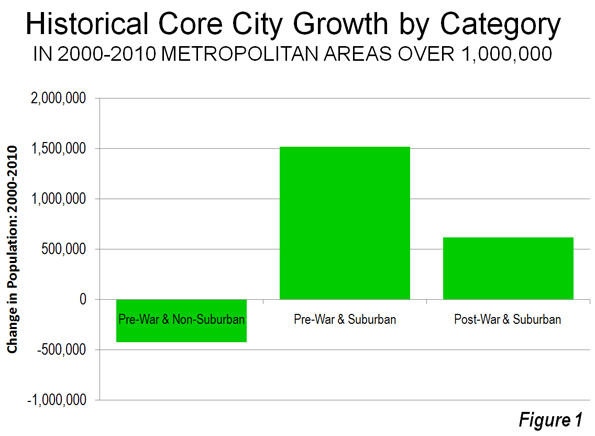
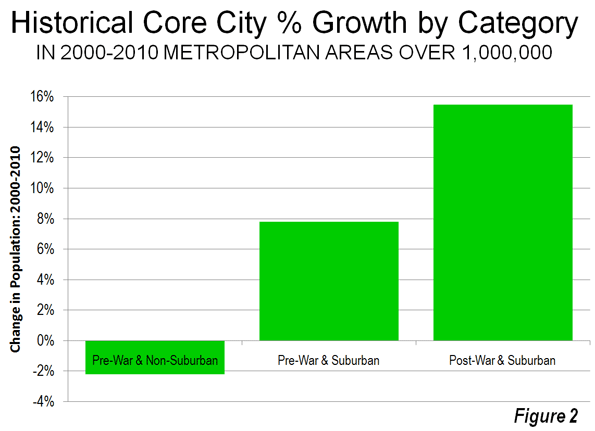
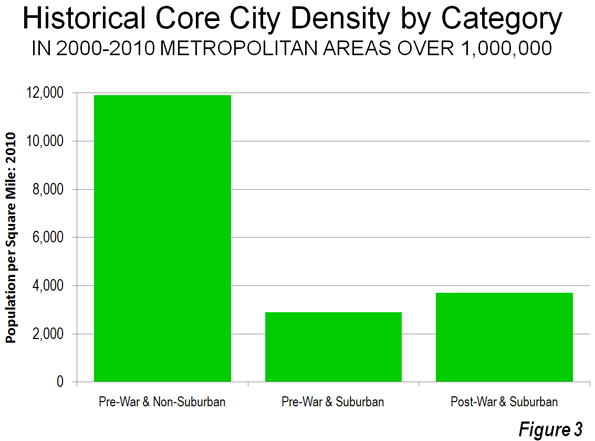
    Overall, these cities had a population density of 11,900 per square mile in 2010 (Figure 1). However, 16 of the cities have lost population since 1940, with only New York, San Francisco and Oakland having gained population, albeit very modestly. (Oakland lost population over the past decade.) Between 2000 and 2010 the "Pre-War & Non Suburban" historical core cities lost 424,000 people, or 2.2 percent of their population (Figures 2 and 3). Seven gained population, though in five of these cases (Boston, Hartford, Philadelphia, Providence and Washington) the 2010 population remained well below mid-century levels.

    Pre-War & Suburban: The second category is the "Pre-War & Suburban" historical core cities. These 27 cities had pre-automobile cores, usually quite small, in 1940, but also include (in their 2010 borders) substantial land that was undeveloped in 1940. Substantial automobile-oriented suburban development has occurred in these areas. The strong automobile oriented suburban influence is indicated by the average population density of 2900 people per square mile of land area, approximately one-fourth the density in the "Pre-War & Non Suburban" category.

    On average, the 2010 land area of the "Pre-War & Suburban" historical core cities is 3.2 times the land area of the corresponding urban areas in 1950 (areas of continuous development or the "urban footprint"). These urban areas included both the historical core city and the suburbs (Note 4).   The city of Jacksonville covers the most land area relative to its 1950 urban area, at 14.7 times. The city of Portland, the recipient of frequent praise by advocates of densification, covered more area in 2010 than its entire urban area in 1950 and its population density today is less than that of the entire urban area in 1950.

    The "Pre-War & Suburban" historical core cities added 1,520,000 people between 2000 and 2010. This translates into an average growth of 7.8 percent relative to the 2000 population. Three cities grew more than 100,000. Louisville added 341,000 people principally through a city – county merger, after its previous annexations had failed to stop its population decline. Between 1950 and 2000, Louisville has lost nearly one-third of its population while adding more than 50 percent to its land area.

    Charlotte added 191,000 people, principally due to a continuing annexation program. San Antonio and Houston took advantage of considerable undeveloped land within their city limits to add 183,000 and 146,000 people respectively.

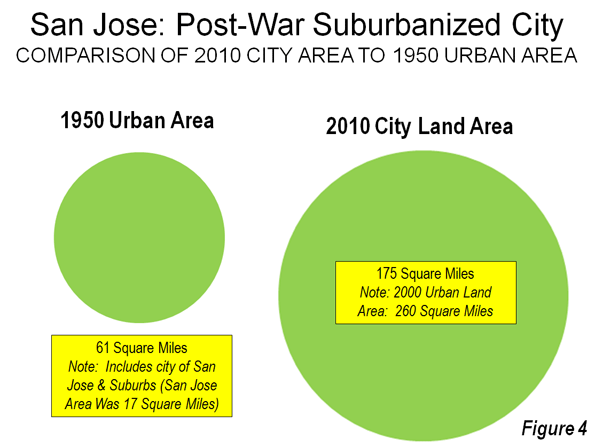
    Post-War & Suburban:  The third category is the "Post-War & Suburban" historical core cities. None of these seven cities had more than 100,000 population in 1940 or a large pre-automobile core; these are essentially suburbanized cities.  In each case, the cities have undertaken huge annexations. On average, the 2010 city limits include nearly 6 times as much land as the corresponding urban areas in 1950. The city of San Jose, known for its densification policies, covers nearly 3 times as much land as its entire urban area in 1950, which included the city and all of the suburbs (Figure 4).

    The "Post-War & Suburban" historical core cities added 619,000 people between 2000 and 2010, for an increase rate of 15.5 percent, the largest percentage growth of the three categories.

    Perhaps surprisingly the population density of the "Post-War & Suburban" historical core cities was one-quarter above that of the "Pre-War & Suburban" category, at 3700 per square mile. This may be at least partially driven cities like San Jose, Las Vegas and Riverside-San Bernardino, which have generally avoided planning that required larger lots and below market densities.

    The cities of Philadelphia and Phoenix reflect these differing patterns.   In 2010 Philadelphia had a population density of more than 11,300 people per square mile and covered an area of 135 square miles. The city of Phoenix had a population density of under 3000 people per square mile and covered more than 500 square miles. Not even one square mile of the 2010 city of Phoenix equals the average density of Philadelphia. In 1940, Philadelphia had a population of 1.9 million, 30 times that of the 65,000 in Phoenix.

    As would be expected in a dense historic core city, Philadelphia has a substantial transit work trip market share, at 25 percent. This is five times that of the surrounding suburbs (5 percent). In contrast, the city of Phoenix has s a transit work trip market share of only three percent, below that of the Philadelphia suburbs. 

    Suburban Development Makes Cities Grow: As the data above indicates, virtually all net core city population growth over the past decade has been suburban in nature. Core cities characterized by substantial automobile-oriented suburbanization added more than 2.1 million residents, while the cities with little   automobile-oriented suburbanization lost more than 400,000. It turns out that even most “core” cites are more suburban than many imagine.

    ——————–

    Note 1: "City" has multiple meanings and analysts have not always provided  sufficient clarity when using the term. For example, "city" can mean a metropolitan area, and urban area, a municipality (incorporated jurisdiction) or as in China, a region either at the provincial or sub-provincial level. As used in this article, the term "city" means a municipality unless otherwise indicated.

    Note 2: The historical core city is the city in the present metropolitan area that had the largest population in 1940. Usually, this is the first named city in the official Census Bureau title. However, in two cases (Virginia Beach-Norfolk and Riverside-San Bernardino), the second named city is the historical core city because it was the largest in 1940.

    Note 3: There are no comparable data on overall transit market shares between Europe and the United States. However, Eurostat data for nearly 150 European metropolitan areas indicates that transit’s work trip market share averages approximately 17 percent. The same population range (over 100,000) of US metropolitan areas has a transit work trip market share of six percent. In 1940, the overall US transit market share was approximately 14 percent. Because transit work trip market shares are generally substantially higher than overall shares, it is suggested that the 1940 US transit market share was greater than the current share in Europe.

    Note 4: The city of Chicago made a substantial annexation largely to incorporate the land for O’Hare International Airport. This annexation did not materially increase post-war suburban development in Chicago and the city is thus classified as "Pre-War & Non-Suburban."

    Note 5: 1950 used because urban areas were not designated before that time.

    Wendell Cox is a Visiting Professor, Conservatoire National des Arts et Metiers, Paris and the author of “War on the Dream: How Anti-Sprawl Policy Threatens the Quality of Life

    Photo: City of San Antonio annexation map from the San Antonio Planning and Development Department. The red rectangle is the land area of the city in 1940. 

  • Dulles Metrorail Silver Line Vs Bus Rapid Transit

    Long overdue rapid transit service from Washington DC to Dulles airport is now under construction. The Dulles Corridor Metrorail Project, known as the Silver Line, may seem like it was an obvious choice as a way to improve the region’s public transportation. Construction began in March 2009, and service is expected to begin by 2013. As those who have used bus service from the DC area to the airport can attest, the current system — a regular city bus equipped with luggage racks — is inadequate. The buses are low capacity, and are not designed for highway driving.

    While rail might seem like the most obvious solution, it is also by far the most expensive and slowest option. The price tag is staggering, and the rail extension will take years to construct. The better option would have been to make use of the existing roadways, and implement an expansive bus rapid transit system (BRT).

    The 23 mile extension of the Washington Metro rapid transit system is forecast to cost $6.8 billion dollars; roughly $296 million per mile. The constant scramble to finance the over-budget project has resulted in more than one construction setback.

    In contrast, consider how a BRT system could have worked, and what it would have cost. One lane in each direction on the Dulles Toll Road could have been designated as a high occupancy vehicle (HOV) lane, to ensure that buses could move relatively quickly. The average cost of implementing a BRT system running on an HOV lane is $8.97 million per mile (in 1999 dollars), which would have brought the cost to roughly $230 million. It should be noted that this average is heavily skewed by one costly project; two million to five million dollars per mile is more typical, which would make the final cost in DC between $52 million and $130 million.

    The buses themselves would have had to be fully articulating — the kind that bend in the middle, also known as accordion buses — with overhead luggage compartments, and a capacity of roughly 87 passengers. They would likely cost somewhere between $750,000 and $1.68 million.

    The overwhelming likelihood is that busses to Dulles would cost near the low end of the price range. The high end is based on the cost of buses used in Boston for their Silver Line BRT system to Logan Airport, where dual fuel electric/natural gas buses are used; these buses run underground, where they cannot burn gas, as well as on surface streets where there aren’t any overhead electric lines.

    The cost per passenger trip is likely to be lower for rail than for BRT, because of rail’s higher capacity per vehicle; the train will transport about 175 passengers per car. Despite this, the lower per passenger operating cost doesn’t come anywhere near making up for the massive capital cost. The interest alone on the $6.8 million dollar loan would equal $1,067,317 per day (amortized over 30 years at a 4% interest rate). This doesn’t factor in the cost of the principle, or the operating cost.

    Even after spending $6.8 billion, only about 10% of travelers to Dulles are likely to arrive by public transportation, according to projections by the Airport Authority. Compare that to 16% for Reagan , which is right in the city (Dulles is more than 25 miles outside of DC’s central business district. This highlights another advantage of BRT: modularity. Instead of all or nothing, BRT can be gradually introduced, and levels of service can be adjusted to meet demand.

    While access to Dulles isn’t the full justification for the Silver Line, it’s hard to imagine the rail extension ever paying for itself. At the end of the day, cost is the number one issue, and BRT wins hands down.

    Steve Lafleur is a Policy Analyst with the Frontier Centre for Public Policy.

    Photo: Metrorail Construction; truss erecting span at I-459 and Rte 123

  • Commercial Real Estate: Shrinking to Fit

    We are going to need less commercial real estate in the future, at least on a per-unit-of-population basis. Advances in communications technology are causing profound and sometimes unanticipated changes in our lives.

    Retail Markets
    The coming change is most obvious in retail markets. Americans are increasingly shopping online. However, we’ve really just started to scratch the surface. According to the U.S. Census Bureau’s 2009 E-Stats report issued in May, 2011, E-commerce only accounted for 3.99 percent of U.S. retail sales in 2009.

    I was surprised at how small that number was. Certainly it is higher now, and the 2009 number was almost double 2004’s 2.13 percent, but there is huge room for increased internet retail sales. This is a growth business with a capital G.

    Originally, I believed that traditional brick-and-mortar retailers would have the advantages of customer service and product knowledge, and internet purchasers would be product-savvy shoppers looking for products that they already knew about. That has turned out not be the case at all.

    It is true that the initial internet retail sales successes have been in products where technical knowledge is not critical, and tastes are well established; products such as music, movies, and books. However, online retailers have made impressive gains in providing customer assistance to shoppers looking for more technical products.

    Ratings of products and retailers were an initial step, along with detailed technical data. More recently, internet retailers have added chat windows, some with pictures of the salesperson. It won’t be long until voice or live video are offered, if it isn’t already.

    It is now the case that you are more likely to find more informed assistance on the internet than you will from a brick-and-mortar retailer. This is not to say you can’t find good assistance at a traditional retailer. But your online experience is likely to be better than what you will receive if you walk into a store and deal with the first person you bump into.

    As internet sales increase, expect to see fewer traditional retailers and less demand for retail space. Already, shopping centers anchored by a music store, a video store, or a book store have felt the impacts. This is only the beginning.

    Commercial rents will be softer and vacancies higher in large regional centers and in neighborhood strip malls. This will tend to drive retailers to ever larger centers with more traffic. Smaller centers will likely slowly deteriorate and die. In the end, we’ll have fewer retail centers, but the average center will be larger than it is today.

    Office Markets
    While the number of workers telecommuting is still small, it is growing; someday, it will be very large. Initially, the growth in telecommuting was driven by workers’ desires to physically commute on fewer days. Today, the initiative is changing to employers.

    Companies that adapted to telecommuting employees began to learn how to supervise these workers. Some companies have gone further. My son works for a company that has closed many physical offices, but kept most employees. Everyone was told to telecommute.

    For companies that have made the strategic decision to reduce office space, the advantages must be large. Certainly rent goes down, but other expenses go down too. Heating and cooling costs go away. The company no longer needs to support a local network, with the local network’s support costs.

    I haven’t seen research on telecommuters’ productivity, but it is easy to imagine it increases. Think “happy employees are productive employees.” It is also easy to imagine that productivity decreases. Think “unsupervised employees are unproductive employees.” Clearly, telecommuter productivity is the key to profitably running an office-free operation. As someone once said “any job performed on a computer can be performed anywhere.”

    The lower demand will result in lower office space rental prices and higher vacancies. Again, this should lead to office-dependent operations migrating to the better addresses. In the end, the less-desirable buildings will be empty.

    Industrial Markets
    We’ve seen the huge increase in overseas manufacturing, and we’ve seen the steady decline of U.S. manufacturing jobs. That is just the first stage of a profound transformation in the way things are produced. As the song goes., “You ain’t seen nothing yet.”

    Manufacturing’s future is nicely exemplified by three-dimensional printing. Today, you can Google “three dimensional printing” to find links to videos of three-dimensional printers producing amazingly complicated products, or find companies that have three-dimensional printers. Or you can use a three-dimensional printer to produce something.

    I expect the growth of three-dimensional printers to be something like what we saw with copy machines. The first copy machine I used was in a drug store, and it was coin operated. Then, the banks made them available to customers. Today, we all have at least one in our home and one at the office.

    The day will come when three-dimensional printers will be ubiquitous. You will download instructions for products from some company like Amazon. Then you will produce your good, without the need for an industrial building or a brick and mortar retailer. Producers of products that can’t be printed will print parts, reducing the demand for other producers, inventories, and shipping.

    Any Growth Areas?
    Buildings associated with providing healthcare may be the major exception to declining commercial real estate demand. The aging population, new technology, and long-term wealth trends are likely to continue to drive growth in the economy’s only sector that has grown consistently throughout the recession. At least so far, technological advances in medical care have increased demand for space instead of decreasing it.

    Specialized R&D space may also buck the trend. Many of these facilities can be specialized, however, to the point of being profitably used by only one company. That implies that these buildings are risky investments.

    Policy Implications
    The decline in commercial real estate demand will pose serious challenges to governments. We’re already seeing states and local governments struggle with loss in retail taxes from internet sales . Declining revenues are just the beginning, though. Expenses will increase.

    Empty buildings generate crime. In the case of retail centers, the crime will be very public. Nearby residential property values could decrease, with additional lost revenue to governments. Residents will not stand idly by. They will demand effective action — action that could be very expensive.

    To minimize the fiscal damage, local governments will need to be nimble, a characteristic that few governments possess. They will need to be willing to change zoning codes to adapt to the decline in commercial real estate. They need to allow owners of existing space to redevelop or change their product mix. They may need special tax districts to deal with the blight created by vacant properties.

    Growing population and an eventual real recovery will eventually fix the residential real estate problem. Commercial real estate’s challenges will not be so easily addressed. The impacts are not only on owners, developers, and contractors . All of us will be affected. The time to plan for those changes is now.

    Bill Watkins is a professor at California Lutheran University and runs the Center for Economic Research and Forecasting, which can be found at clucerf.org

    Photo by Mark Lyon — Full Floor For Rent.

  • Queensland’s Future: Diverse and Dispersed

    I was recently asked to outline my thoughts on how the Queensland urban landscape might look 40 to 50 years from now.  Go on, you can laugh.  I did too.  It’s hard enough to forecast the next 12 months, let alone two generations away, but I’ve given it a go, of sorts, so here it is:

    First though, it might be best to outline my methodology.  In short, this forecast will be based on underlying trends, some understanding of human nature, and importantly, the Australian mindset.  My outlook is supported by evidence – what people actually do rather than say – and importantly, not by urban myths or fallacies, despite the frequency with which they have been aired of late.  Unfortunately, we don’t have the space or the time here to support every claim or go into massive detail; so this discussion is confined to broad shapes – not nitty gritty.

    Queensland’s urban future (and that of Australia) can best be summed up in two words – Diverse and Dispersed.

    Let’s deal with the second D – dispersion – first.  Our regional centres are likely to become a whole lot bigger and at the expense of the already crowded south-east corner of the state.  The move away from the world’s bigger cities is already underway, as evidenced in the recent census in the United States, but also throughout much of Europe.  Several Asian and Middle-eastern countries are now also following suite  As a Mckinsey Institute study recently found, smaller cities, particularly in the developing world, are growing considerably faster than the much discussed megacities.

    The annual ABS small-area population data suggests this trend is also very true in Australia and particularly in Queensland, which, over the past decade, been the fastest growing state on the continent, appears to be following the same trend, something likely to be borne out by 2011 Census, due later this year .

    Within our capital cities themselves, the much ballyhooed move downtown will slow – again, it already is doing so – as the cost to live within close proximity to the CBD is just too high compared to the real benefits. 

    The irrational assertions about the trend towards denser living rest on urban myths that promote inner city density over other housing forms. These include the notion that suburban growth worsens carbon emissions and traffic congestion; people are being forced to live far from jobs concentrated in our CBDs and denser development will make it cheaper for them to get to work. These notions are all largely exaggerated or incorrect. More to the point, they stand in opposition to the basic preferences of the market.  

    Instead of having a single high-density city core, with lower development density radiating outwards, the most likely urban shape in the future will be one of more even distribution of housing density throughout the city; concentrated more, no doubt, around middle-ring transport hubs and new master planned town-centres.  Our middle-ring and outer suburbs will have much more compact urban settings but will remain primarily dominated by relatively low density housing.

    Diversity relates to the housing stock itself.  The current push towards smaller dwellings has little to do with demographics and the market’s wants, but reflects basic reaction to diminished housing affordability.   There is a demand for tightly-sized product, but it is nowhere as near as high, nor is the long-term trend towards such as strong, as the urban boosters advocate.

    Taking a wider view, Australia (and America too) is still in its frontier or "barbaric" stage of its cultural evolution.  We walk with wide gaits, worship most things large from roadside bananas to women’s appendages, and don’t really like crowded spaces or queues Most of us like our space; aren’t really ready to give it up, and are not likely to do so for many decades to come.

    Rather than remaining focused on density and concentration, it could well serve the community to focus on what appeals to the vast majority of the population, particularly the middle and working class families.  A more practical approach might be to foster the development of smaller, more efficient cities, as well as expansive suburbs and revived small towns rather than engage in a manic drive towards persistent centralization. 

    Rather a forced density agenda on a largely unwilling population, it makes sense to consider how to make a more dispersed (and diverse) urban future more workable and sustainable. Innovations in work environments, notably increased use of telecommuting and dispersed workplaces, and more fuel efficient cars hold more promise than plans that force Aussies to live a way the vast majority do not prefer.

    This article originally appeared in the June/July 2011 edition of the UDIA Queensland’s Urban Developer Magazine.

    Michael Matusik is a qualified town planner and director of independent residential development advisory firm, Matusik Property Insights.

    Photo by Michael Zimmer.