Category: Policy

  • Protecting Cities in Fire-Prone Regions

    If you live in a fire-prone area, which includes most of California, it is not a good idea to allow ivy and other plants to cover the sides of your building, as this winery and this church did near Santa Rosa. Both were lost to last week’s wildfires.

    Similarly, if you are a legislator in a fire-prone state, it is not a good idea to outlaw fire-resistant developments. As now-retired Forest Service researcher Jack Cohen relates in the above video, one requirement for making your home fire-safe is to have no large flammable structures within 100 feet of the home. That pretty much means people should build on one-acre or larger lots.

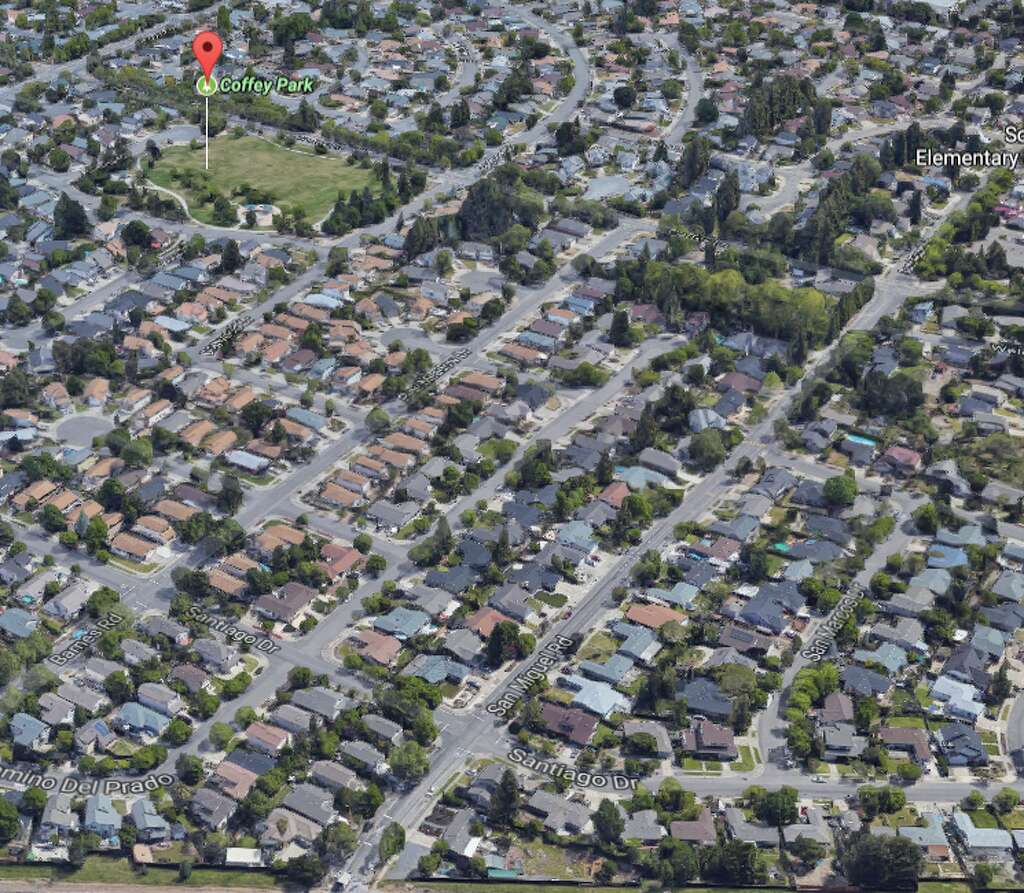
    But in California, the nation’s most fire-prone state, urban planners’ mania for density has led the legislature to effectively outlaw such low-density development. Santa Rosa’s Coffey Park neighborhood consisted of conventionally sized suburban homes on 50-by-100-foot lots–small for a modern suburb–resulting in many houses being only a few feet apart from one another. If one house caught fire during a dry spell, the intense radiant heat would be sure to set off the next home. As a result, the neighborhood is now a smoking ruin.

    As the Antiplanner noted a decade ago, California developers have built shelter-in-place neighborhoods that are so fire-resistant that it is safer for residents to stay in their homes than to evacuate. Wildfires have swept by these neighborhoods and not harmed a single home.

    Sadly, this technique has been criticized by even the California Department of Forestry, which argues that making homes fire-safe will just encourage people to live in fire-prone areas (meaning almost all of California). They suggested that people build their homes closer together to make them “easier to protect.” That didn’t work very well in Santa Rosa.

    If California had allowed urban areas to grow in the modern way, with density at the center and increasingly low densities at the edges, then a ring of low-density, shelter-in-place neighborhoods around Santa Rosa and other cities could have provided a fire break protecting the denser developments. But this is practically forbidden in California. So, we will get more disasters like the one in Santa Rosa and the 1991 Oakland Hills firestorm.

    This piece first appeared on The Antiplanner.

    Randal O’Toole is a senior fellow with the Cato Institute specializing in land use and transportation policy. He has written several books demonstrating the futility of government planning. Prior to working for Cato, he taught environmental economics at Yale, UC Berkeley, and Utah State University.

    Photo: Homes burned by a wildfire are seen, Oct. 11, 2017, in Santa Rosa, California via VOA News.

  • Housing Unaffordability Policies: “Paying for Dirt”

    Issi Romem, buildzoom.com’s chief economist has made a valuable contribution to the growing literature on the severe unaffordability of housing in a number of US metropolitan areas. The disparities between the severely unaffordable metropolitan areas (read San Jose, San Francisco, Los Angeles, San Diego, Portland, Seattle, Portland, Denver, Miami, New York, Boston, Sacramento and Riverside-San Bernardino) and the many more affordable areas in America are described in “Paying For Dirt: Where Have Home Values Detached From Construction Costs“. Romem points out that: “In the expensive U.S. coastal metros, home prices have detached from construction costs and can be almost four times as high as the cost of rebuilding existing structures.”

    “Paying for dirt” refers to the ballooning land costs that now comprise an unprecedented part of house values, such as in the severely unaffordable metropolitan markets above. This has created an environment where affordability is impossible. In many of these metropolitan areas, a modest house commands an exorbitant price well beyond the financial capacity of most middle income households. Land has become so expensive that it doesn’t matter what is built on it, whether the average house or a tent, the price will be too high. The market distortions are so great that Romem is able to show that, for example, the average house value in Columbus, Ohio, a delightful metropolitan area, is less than the average land value per lot in Portland (Oregon).

    The research suggests that the variation in construction costs between US metropolitan areas pales by comparison to the differences in the land costs. In the most expensive housing market, San Jose, the average house value is seven times that of Buffalo, the least expensive. By contrast, the highest cost construction market (San Francisco) is only twice as expensive as the least (Las Vegas). The land cost differences are stark, exceeding a 40 times difference in San Jose compared to Buffalo or Indianapolis. In Indianapolis, new detached house construction in 2017 was 2.5 times that of much larger and more expensive San Diego.

    The Research

    Romem’s research is similar to that of Harvard’s Edward Glaeser and Wharton’s Joseph Gyourko (“The Economic Implications of Housing Supply”), who separated US metropolitan areas into those with “well-functioning” housing markets and those without. In the well-functioning housing markets homebuilders could construct houses for what the researchers called the “minimum profitable production cost. Their list of high cost markets that are not well-functioning nearly matches Romem’s list of metropolitan areas where land costs have risen most compared to construction costs. Romem provides estimates down to the ZIP Code level in major metropolitan areas, illustrating a substantial depth of analysis.

    Consistent with Glaeser and Gyourko, Romem finds that “absent restrictions on housing supply, competition among developers tends to maintain average metropolitan home prices tethered to the cost of construction.”

    The Problem of Excessive Land Use Regulations

    In the highly regulated metropolitan areas, promoters of the urban containment policies often hide behind the fiction of topographical or geographical barriers as having created the land scarcity. A particular favorite for this blather is the San Francisco Bay Area (which includes the San Francisco and San Jose metropolitan areas) that has driven house prices up so much. There is no question that topography and geography can create such a shortage, as this photograph of Maldives capital Male shows. But nothing in the Bay Area looks like Male (photograph above).

    But San Francisco and San Jose are nothing like Male. In fact, the San Francisco Bay Area has enough land for development that millions of new houses could be constructed. San Francisco’s urbanization is dense, with at least 15 more residents per square mile than the New York urban area (population centre). Its population, nearly one-third that of New York, lives in an even smaller one-fourth the land area. There would be no need for urban containment in the Bay Area if the topography genuinely limited development.

    Toward A More Unequal Society

    In a note, Romem says that “The stark differences in land value per home are driven largely by land use policy enacted in the expensive coastal metros since the 1970s, which has inhibited these cities’ growth. These metro areas have gradually slowed down their outward expansion, i.e. they have had success in stemming sprawl, but they have failed to compensate through densification. As a result, the economic vitality of these metros has been channeled away from population growth and into housing price growth.”

    “Stemming sprawl” while maintaining housing affordability through higher densities is a time-worn theory. The record seems to indicate that it is more likely Santa will come down the chimney than density will solve the problem. There are no virtually examples of housing markets (metropolitan areas) where increasing densities has restored affordability. This is not to suggest there is no value to increased density, but rather that it is an all too convenient diversion from solutions that have a chance of working.

    Appropriately, Romem puts this childish notion to rest that increasing densities “will reduce the land value component of homes simply by dividing a fixed land value over a greater number of units.”

    The bottom line is that the house price appreciation in the high cost metropolitan areas suppresses population by “selectively determining who can and cannot afford to live there” according to Romem. This policy outcome could not be more inconsistent with encouraging economic aspiration among middle-income households, who pay the price of the greater inequality imposed by public policy. Further, those effectively “zoned out” by these policies have greater financial challenges than their parents, who generally grew up in periods of greater economic growth and were not saddled with unprecedented student loan debt.

    The financial and exclusionary challenges weigh particularly hard on the large number of disadvantaged African-Americans and Hispanics, especially those living in the most progressive cities, where pious pronouncements about affordable housing initiatives are boilerplate, but rarely amount to anything remotely substantive. In fact, distorted land and housing markets in the expensive metropolitan areas represent a colossal government failure.

    Necessary Reforms

    To the contrary, housing affordability requires well-functioning housing markets. It requires home values that have not become detached from construction costs. A minimum condition is that land use regulations not stand in the way of building low cost housing tracts on the periphery of urban areas. This does not require building on the monstrous size lots of suburban Boston, where zoning and other land use restrictions have made housing far more expensive and exclusive than it needs to be. The key is to restore the competitive market for land, so that houses on comparatively small lots, such as one-quarter or one-fifth of an acre can be built at the historic land costs (including necessary infrastructure). Glaeser and Gyourko found this factor to account for about 20 percent of final purchase prices (as did I).

    Romem expresses a hope that things will improve. “The disparity between the appearance of homes and their price tags is more than a home buyer’s gripe: it is a telltale indication of restricted housing supply. Such restrictions – rules governing land use, installed by incumbent residents or their predecessors – are exclusionary by nature and amount to the gating of access to opportunity. Hopefully, this study has helped identify where gates must be opened.”

    Indeed.

    Wendell Cox is principal of Demographia, an international public policy and demographics firm. He is a Senior Fellow of the Center for Opportunity Urbanism (US), Senior Fellow for Housing Affordability and Municipal Policy for the Frontier Centre for Public Policy (Canada), and a member of the Board of Advisors of the Center for Demographics and Policy at Chapman University (California). He is co-author of the “Demographia International Housing Affordability Survey” and author of “Demographia World Urban Areas” and “War on the Dream: How Anti-Sprawl Policy Threatens the Quality of Life.” He was appointed to three terms on the Los Angeles County Transportation Commission, where he served with the leading city and county leadership as the only non-elected member. He served as a visiting professor at the Conservatoire National des Arts et Metiers, a national university in Paris.

    Photograph: Male (capital of the Maldives): Where there are genuine topographical constraints.
    https://upload.wikimedia.org/wikipedia/commons/6/67/Male_maldives.jpg

  • Local Empowerment Should Be About Local Matters

    I’ve generally been someone who wants to see local governments have more power and flexibility to meet local needs. My rationale is simple. States are full of diverse communities that are a bad fit for one size fits all policies. Chicago, Danville, Peoria, Cairo, etc. are radically different places. They have different circumstances, needs, and local priorities. Hence it makes sense for them to have the ability to chart their own course to some degree. Some states have accommodated this to some extent through classes of cities with different powers based on size. Others give even more flexibility through home rule or individualized city charters.

    A good example of responding to local needs was Austin’s regulation of Uber. They were responding to specific local complaints about sexual assault by Uber drivers. And they put in place regulatory requirements including fingerprint background checks directly targeted at this problem.

    Similarly Oklahoma City used its sales tax powers to put forth a series of referendums to approve temporary tax hikes to fund capital improvements like parks, sidewalks, and school renovations. (This was their Metropolitan Area Projects (MAPS) initiative).

    Today though we are seeing cities abuse their local authority. Rather than using them for bona fide local matters, they are deploying them to politically grandstand and/or affect federal or state policy.

    For example, we hear about cities and mayors being the locus of the “Resistance” to Trump. We also see explicit strategies like the “Fight for $15” minimum wage effort that is attempting to create a new national minimum wage through bottoms up change at the local level. Note at the $15/hr minimum wage has little to do with local economic conditions, but is the target in all kinds of places. It may well be that people can’t get the full $15/hr through, but it’s being promoted as the new base.

    Regardless of the merits or lack thereof of any of these items, when cities explicitly state their desire to, for example, subvert US foreign policy, this weakens the case against state preemption laws and for local empowerment generally. When local leaders get outside the areas where they are clearly chartered to do business (infrastructure, education, sanitation, etc) and get into areas traditionally more heavy on state or federal rulemaking and not nearly so obvious a local function (economic regulation, climate policy, etc), don’t be surprised when the other levels of government who see themselves running the show in those matters swoop in and drop the hammer.

    Obviously, this won’t necessarily protect you. Austin was not trying to tell the state or national government or any other city how to regulate Uber. The Texas legislature, wrongly in my view, override their ordinance anyway. But it’s still not a good idea to gratuitously invite trouble.

    Mayors do not in fact rule the world. In the US, municipalities are structurally weak entities in most cases. We can debate all day long whether things should be different, but at this point that’s reality. To earn the right to go to legislatures to get more authority, or even to just keep the authority that they have, cities should be good stewards of that authority and use it for matters and reasons they make very clear are local, not national or state in scope.

    This piece originally appeared on Urbanophile.

    Aaron M. Renn is a senior fellow at the Manhattan Institute, a contributing editor of City Journal, and an economic development columnist for Governing magazine. He focuses on ways to help America’s cities thrive in an ever more complex, competitive, globalized, and diverse twenty-first century. During Renn’s 15-year career in management and technology consulting, he was a partner at Accenture and held several technology strategy roles and directed multimillion-dollar global technology implementations. He has contributed to The Guardian, Forbes.com, and numerous other publications. Renn holds a B.S. from Indiana University, where he coauthored an early social-networking platform in 1991.

    Photo: w:en:User:Soonerfever [Public domain], via Wikimedia Commons

  • Does the Tax Code Favor Homeowners?

    For many years, a common complaint has been that the provisions of the Federal Internal Revenue Code, and most state income tax codes, favor homeownership in the form of major tax deductions for mortgage interest and property taxes. With the exception of those who reside in government housing of some type (subsidized apartments, public college dormitories, military housing, jails and penitentiaries), the homeless, almost all U.S. residents either live in a home they, or their family, owns or is paying off the mortgage, or they rent. Therefore, when looking at tax subsidies for home ownership, the valid analysis is not just to total these subsidies, but to compare home ownership subsidies to the tax benefits to owners of residential rental property – and, more to the point, the renters who live in them.

    Although the widespread conventional wisdom is that homeowners get huge tax benefits, the reality is that renters actually do far better. Typical is this statement by Kenneth Harvey in the LA Times:

    “In all, homeowners will split about $102 billion in direct federal largess (in fiscal 2002). Renters, meanwhile, will receive zero in direct federal transit subsidies.”

    (See also these from the Brookings Institution and Matthew Desmond in the New York Times.)

    The key in the above is the word “direct.”

    Almost every homeowner, and many non-homeowners, is very aware of deductions for home mortgage interest and property taxes from Federal income tax returns. Further, they know that residential renters do not have mortgages, nor do they receive property tax bills, so they have nothing to deduct on their tax returns.

    But it simply never occurs to many people (particularly renters) that their landlords do have these tax deductions, and many more – and that the resulting tax savings to the landlord are largely passed through to the renters through lower rents. There are even CPA’s that get caught up in this error.

    Yes, homeowners can deduct mortgage interest and property taxes – and virtually nothing else in most cases (Note 1). In contrast, landlords can deduct these, plus depreciation on the capital cost of the property and, depending on the details of the rental agreements, insurance, maintenance and repairs, most other taxes and assessments, utilities, and many other valid business expenses.

    I’m going to focus on the third of a recent series by Devon Marisa Zuegel (Note 2), “Exempting Suburbia – How Suburban Sprawl Gets Special Treatment in our Tax Code.” I’m using Ms. Zuegel’s work because she puts so many of the usual flawed arguments in one place.

    This paper has three major headings; the first is: “Homeowners get major tax breaks” – which is, of course, true, but the comparable, even more favorable, tax treatment of residential rental property and rents is absent from her paper.

    The second, “Profits on home sales is not taxed;” is, as Ms. Zuegel acknowledges, not totally correct. Under current law, capital gains on sales of homes where the taxpayers meet the requirements are not taxed on the first $250,000 gain for singles and $500,000 for couples. She also points out that, pre-1997, taxes on sales of homes could be delayed – or, in many cases, even eliminated entirely – by reinvesting in a home of equal or higher value.

    However, for landlords, the art and science of minimizing taxes on disposal of residential rental property is very well developed. For example, a “Section 1031 like-kind exchange” works almost exactly as the pre-1997, buy-a-more-expensive-home-and-don’t-pay-any-taxes provision – except that, it applies to residential rental property. The residential real estate portion of this provision is still very in place and is well utilized.

    Also, if the “active” owner of a residential rental property sells at a loss, that is tax-deductible; if a personal home is sold at a loss; no such benefit is available.

    The third heading is “New construction is a tax shelter.” Again, true, but, the points above clearly make residential rental property a far bigger tax shelter than home ownership.

    Interesting, Ms. Zuegel leads here with a quote from Brookings fellow Steven M. Rosenthal in the New York Times, “There’s probably no special interest that’s more favored by the existing tax doe than real estate.” Somehow, she misses that this article is entirely about the real estate “industry” – such as the likes of the National Multifamily Housing Council – the trade association of apartment owners, managers, developers, and lenders – with only one brief mention of home ownership in the article.

    One very important point to keep in mind is that the value of tax deduction to a taxpayer is directly proportional to the taxpayer’s marginal tax rate and that while there are certainly home owners in the highest tax brackets, there are also many in lower ones. This explains why many owners of residential rental property covet it since they generally are in high tax brackets where the deductions for these rental properties have major value.

    What is even more important is that many renters pay little, if anything, in Federal and state income taxes and, even for those that do, many do not itemize, and/or are in low tax brackets, and would receive little, if any, benefit from tax deductions on their own returns. In contrast, if their high-tax rate landlord gets major benefits from such deductions, the renters get a major share of these benefits passed on to them through lowered rents.

    An interesting comparative perspective can be found in a recent paper by Margaret Morales for the Sightline Institute, “Why Seattle Builds Apartments, But Vancouver, BC, Builds Condos:”

    “When it comes to condominium development, Cascadia’s two largest cities couldn’t be more different. Last year nearly 60 percent of new housing starts in the city of Vancouver, BC, were condominiums; meanwhile, Seattle saw no new condominium buildings open. And that’s not changing anytime soon: less than 10 percent of all building slated for downtown Seattle in the next three years will be condos. What’s the difference—why the blossoming of condominium construction in one city and the almost complete dearth in the other? The short answer is economics. In Vancouver, apartments are saddled with an unfavorable tax code, making condos the more lucrative multi-family housing investment even despite high rental demand. In Seattle’s skyrocketing rental market, one that’s climbed even faster than the condo market in recent years, apartment buildings are much more financially attractive, while condos come with bigger risks and, typically, lower returns.”

    While Ms. Morales discusses other factors that impact the huge difference between home ownership and residential construction offerings in Seattle and Vancouver, it is very clear that she sees the difference between U.S. and Canadian tax treatments of these as the most important factor.

    The conventional wisdom is that the U.S. (and most state) tax codes provide great advantages to U.S. homeowners, advantages that can be seen as subsidies of home ownership. While this is certainly true, it is, unfortunately, very rare that the authors and advocates who make such statements take their analysis any further to the real – the whole – truth: that the U.S. tax code greatly favors almost all owners of real estate – and that, in many cases, there are far greater advantages for owners of residential real estate in the form of many more deductions, of greater value, than the mortgage interest and real estate taxes that a homeowner can utilized.

    Also, because of these greater tax advantages, residential real estate has been a major tax-advantaged investment for high-income taxpayers for decades, often combining positive cash flow, little or no current income tax payments, potential for long-term gains, and, frequently, opportunities to delay, minimize, or even escape taxes on ultimate disposal. Because an effective real estate market demands that the major share of these tax advantages be passed on to tenants in the form of lower rents, much of these residential real estate tax breaks ultimately wind up favoring tenants – who are often in such low income tax brackets, if they pay income taxes at all, that they would receive no significant advantages if they directly paid real estate loan interest, property tax, depreciation, insurance, utilities, or any of the other expenses that are deducted – in a major way, for the tenants’ benefit – by their landlords.

    Yes, homeowners get significant tax breaks – but renters are generally the beneficiaries of far more.

    Note 1: Yes, a fire, earthquake, flood, etc. could produce a major casualty loss for tax purposes, this is hardly a common situation anticipated by homeowners when they entered into home ownership.

    Note 2: Ms. Zuegel indentifies herself as a software engineer at Affirm, a section leader for introductory programming classes at Standard, and Editor Emeritus of The Stanford Review, who blogs on a number of topics:
    http://devonzuegel.com/. This is the third of a three-part series by Ms. Zuegel. The first two, “Subsidizing Suburbia – A Forgotten History of How the Government Created Suburbia” and “Financing Suburbia – How Government Mortgage Policy Determined Where You Live,” are both accessible through the above link. While the primary focus of these is an exposé of U.S. governmental actions which Ms. Zuegel believes have led to the undesirable result of American suburbia, my instant purpose is on the impacts of tax policy on home ownership vs. renting; therefore, the relative pro’s and con’s of suburbia is a topic left for another day.

    Tom Rubin has over 35 years in government surface transportation, including founding the transit industry practice of what is now Deloitte & Touche, LLP, and growing it to the largest of its type. He has served well over 100 transit agencies, MPO’s, State DOT’s, the U.S. DOT, and transit industry suppliers and associations. He was the CFO of the Southern California Rapid Transit District, the third largest transit agency in the U.S. and the predecessor of Los Angeles County Metropolitan Transportation Authority.

    Photo: Andrew Smith, via Flickr, using CC License.

  • How To Deal With An Age of Disasters

    When Hurricane Harvey flooded Houston, followed by a strong hurricane in Florida, much of the media response indicated that the severe weather was a sign of catastrophic climate change, payback for mass suburbanization — and even a backlash by Mother Nature against the election of President Donald Trump.

    Yet, these assumptions are often exaggerated. Although climate change could well worsen these incidents, this recent surge of hurricanes followed a decade of relative quiescence. Hurricanes, like droughts and heavy rains, are part of the reality along the Gulf Coast and the South Atlantic, just as droughts and earthquakes plague those of us who live in Southern California.

    The best response to disasters is not to advance hysterical claims about impending doom, but rather resilience. This means placing primary attention on bolstering our defenses against catastrophic events, whether in protecting against floods, ice storms, earthquakes or droughts.

    The limits of original sin

    Days after Hurricane Harvey hit, Quartz opined that “Houston’s flooding shows what happens when you ignore science and let developers run rampant.” The Guardian’s climate columnist, George Monbiot, even portrayed the event as a kind of payback for being the world capital of planet-destroying climate change.

    In ascribing every disaster — even the Syrian civil war — to human-caused warming, we may be venturing into something more akin to the religious notion of original sin than to rational science. We should want to reduce greenhouse gases, but, as both rational skeptics like Bjorn Lomborg and true believers like NASA’s James Hansen agree, such things as the Paris climate accord are unlikely to make much of an impact on the actual climate in the near term — or even in the medium term.

    In the short run, then, who sits in the White House is pretty irrelevant. Having Barack Obama, or even Bill Nye, the “Science Guy,” in the White House would not make an appreciable difference in addressing nature’s fury.

    Read the entire piece at The Orange County Register.

    Joel Kotkin is executive editor of NewGeography.com. He is the Roger Hobbs Distinguished Fellow in Urban Studies at Chapman University and executive director of the Houston-based Center for Opportunity Urbanism. His newest book is The Human City: Urbanism for the rest of us. He is also author of The New Class ConflictThe City: A Global History, and The Next Hundred Million: America in 2050. He lives in Orange County, CA.

    Photo: Jill Carlson (jillcarlson.org) from Roman Forest, Texas, USA (Hurricane Harvey Flooding and Damage) [CC BY 2.0], via Wikimedia Commons

  • California Politicians Not Serious About Fixing Housing Crisis

    California’s political leaders, having ignored and even abetted our housing shortage, now pretend that they will “solve it.” Don’t bet on it.

    Their big ideas include a $4 billion housing subsidy bond and the stripping away of local control over zoning, and mandating densification of already developed areas. None of these steps addresses the fundamental causes for California’s housing crisis. Today, barely 29 percent of California households, notes the California Association of Realtors, can afford a median-priced house; in 2012, it was 56 percent.

    At the heart of the problem lie “urban containment” policies that impose “urban growth boundaries” to restrict — or even prohibit — new suburban detached housing tracts from being built on greenfield land. Given the strong demand for single-family homes, it is no surprise that prices have soared.

    Before these policies were widely adopted, housing prices in California had about the same relationship to incomes as in other parts of the country. Today, prices in places like Los Angeles, the Bay Area and Orange County are two to three times as high, adjusted for incomes, as in less-regulated states. Even in the once affordable Inland Empire, housing prices are nearing double that of most other areas, closing off one of the last remaining alternatives for middle- and working-class families.

    How did we get here?

    Largely in response to regulatory constraints, the state has been underproducing housing since the 1970s. So far this year, Los Angeles, the nation’s second-largest metropolitan region, has produced fewer homes than much smaller areas like Dallas-Fort Worth, Houston and Atlanta.

    The California Environmental Quality Act and other laws and restrictions have helped to make building the number of houses needed by California’s middle-income families unattainable. The state’s more recent draconian climate change policies are also making the building of more affordable homes, usually on the fringe of urban areas, almost impossible.

    Some developers and planners blame much of the problem on NIMBYs, or “not in my backyard” activists, who oppose high-density development in their communities. NIMBYism, often aligned with green policies, is part of the problem, but high-density housing is expensive, and there are not enough people looking for “micro-apartments” to solve the affordability crisis.

    Indeed, housing in buildings of more than five stories requires rents approximately two-and-a-half times those from the development of garden apartments, notes Gerard Mildner, academic director of the Center for Real Estate at Portland State University. In the San Francisco Bay Area, the cost of townhouse development per square foot can double that of detached houses (excluding land costs), and units in high-rise condominium buildings can cost up to seven-and-a-half times as much.

    Longtime San Francisco journalist Tim Redmond points out that luxury apartments tend to replace the often more affordable older buildings in urban neighborhoods. There’s been a gusher of high-rises built in places like San Francisco or Los Angeles, but these are generally very expensive, and have not discernibly lowered prices.

    Read the entire piece at The Orange County Register.

    Joel Kotkin is executive editor of NewGeography.com. He is the Roger Hobbs Distinguished Fellow in Urban Studies at Chapman University and executive director of the Houston-based Center for Opportunity Urbanism. His newest book is The Human City: Urbanism for the rest of us. He is also author of The New Class ConflictThe City: A Global History, and The Next Hundred Million: America in 2050. He lives in Orange County, CA.

    Wendell Cox is principal of Demographia, an international public policy and demographics firm. He is a Senior Fellow of the Center for Opportunity Urbanism (US), Senior Fellow for Housing Affordability and Municipal Policy for the Frontier Centre for Public Policy (Canada), and a member of the Board of Advisors of the Center for Demographics and Policy at Chapman University (California). He is co-author of the “Demographia International Housing Affordability Survey” and author of “Demographia World Urban Areas” and “War on the Dream: How Anti-Sprawl Policy Threatens the Quality of Life.” He was appointed to three terms on the Los Angeles County Transportation Commission, where he served with the leading city and county leadership as the only non-elected member. He served as a visiting professor at the Conservatoire National des Arts et Metiers, a national university in Paris.

    Photo credit: refundrealestate.com

  • Spotlight on Infrastructure After Harvey

    The recent tragic events in Houston and across the Gulf Coast once again demonstrated the woeful inadequacy of our infrastructure. Hopefully, some good will come of Hurricane Harvey. Hopefully, it will jump-start the long-awaited Trump initiative on infrastructure, which may be the one issue that could unite this country.

    Northeastern University’s post-disaster resiliency expert Daniel Aldrich notes the need for better storm water drainage systems and for fortifying existing infrastructure — and not just in Houston. Helping promote such investments represents perhaps the last best chance for creating a significant Trump legacy.

    Once a leader in world infrastructure, the United States now ranks 11th in the overall quality of its infrastructure, according to the latest World Economic Forum Global Competitiveness Index. This decline has consequences. In California, for example, the lack of investment in water storage both worsened the recent drought and reduced the state’s ability to take advantage of heavy rains when they arrived.

    A concerted effort to restore our nation’s bridges, roads, harbors and other critical infrastructure would also mark a significant break from the Obama era stimulus which focused more on propping up renewable energy and often underused mass transit systems. Meanwhile, our overall infrastructure continued to deteriorate during the Great Recession, even with the stimulus, with spending in decline from over $300 billion in 2008 to under $250 billion in 2013.

    Spending Smartly

    “Efficiency is doing things right,” legendary management guru Peter F. Drucker once proclaimed. “Effectiveness is doing the right things.” In the context of infrastructure, being effective means placing our bets on things that are really needed, and could reward our society with greater productivity, wealth and new employment.

    At Newgeography.com, where I serve as executive editor, we recently carried a report from the Houston-based Center for Opportunity Urbanism,Doing the Right Things Right,” which lays out what an infrastructure strategy would look like given current budget constraints. The United States faces a national debt of $20 trillion, while the federal government deficit was projected to reach $693 billion for fiscal year 2017.

    A strong U.S. transportation infrastructure system facilitates economic growth, job creation, a better standard of living and less poverty by minimizing travel times and improving labor market efficiency. Yet, as “Doing the Right Things Right” makes clear, not all investments are the same, or should receive federal subsidies, whether for direct expenditures or to issue infrastructure bonds to support private investment. There have been too many examples of spending on lower priority infrastructure because politicians were more interested in securing pork, or votes, than accelerating economic growth or reducing constituents’ travel times.

    To be sure, America’s infrastructure has performed well enough to provide the highest standard of living for the largest number of people in the world. The legacy of earlier infrastructure decisions, such as the completion of the interstate highway system, is still evident. Overall, the amount of time America’s commuters spend in peak period traffic congestion is generally better than that of international competitors.

    Yet traffic problems are increasing in the nation’s largest metropolitan areas. A recent study found that traffic congestion imposed $132 billion in excess fuel and time costs for automobile drivers and $28 billion in freight costs annually — all ultimately absorbed by consumers.

    The key question is how we meet these challenges. One proposed solution is to increase spending on traditional mass transit. This works well largely in “legacy cities” such as Washington, Chicago, Boston, Philadelphia, San Francisco and New York. The city of New York alone represents a remarkable 36 percent of all U.S. transit commuting, yet has only 3 percent of the jobs. Outside of these cities, the new transit projects, principally rail lines, have done little or nothing, as a recent report on transit from Chapman University demonstrates, to slow congestion or attract significant ridership.

    Among 19 metropolitan areas that added high-capacity transit systems since 1980, both bus and rail, transit’s market share has fallen from 4.7 to 4.6 percent compared to the last data before the systems opened. Transit has not, on balance, reduced solo driving, which increased from an average of 73.0 percent to 76.6 percent.

    The cities with rail systems opening after the 1990 Census experienced a modest decline in transit work trip market share, from 3.8 percent in 1990 to 3.7 percent in 2013.

    Take the absurd example of Los Angeles, which has spent over $15 billion trying to become what some mass transit enthusiasts call the “next great transit city.” Yet, Los Angeles County Metropolitan Transportation Authority system ridership stands at least 15 percent below 1985 levels, when there was only bus service, at a time when the population of Los Angeles County was 20 percent lower. Since 1990, transit’s work trip market share in the Los Angeles metropolitan area has dropped from 5.6 percent to 5.1 percent. No surprise, then, that according to a recent USC study, the new lines have done little or nothing to lessen congestion.

    Doing Your Homework

    The irony is that billions are being spent on these ineffective systems, when the places that depend on transit, like New York and Washington, are seeing their systems become less reliable and even dangerous. We are dumping money in some locations that don’t work all that well, but can’t find funds to fix systems that remain essential to “legacy cities” with large downtowns ideal for transit ridership.

    With the expense and ineffectiveness of new rail systems, it seems that the time has arrived for transit services that focus on less expensive bus systems, including those run by private companies, which can carry so many more riders for so much less in taxpayer subsidies. There are also opportunities to make lightly used but highly subsidized services more cost-effective by adding ride-hailing systems, like Uber and Lyft, cited as a factor in recent ridership declines in Los Angeles and even New York. In suburban San Francisco, a local transit operator has established a pilot program to extend service through ride-hailing and cancelled a lightly patronized bus route, reducing costs while providing quicker door-to-door service.

    One of the most promising alternatives, virtually ignored by transit advocates, is to encourage options for working at home. In many metropolitan areas, more people already telecommute than take transit. Since 1980, the number of people working at home has grown three times that of transit riders. All this, at virtually no cost to taxpayers.

    In the future, rapidly evolving autonomous technologies could make our present transit systems archaic in most cities. Under any circumstance, these advances seem likely to further weaken conventional transit. Given these trends, why base our transit policy on 19th century technologies when we are about to enter the third decade of the 21st?

    Back to the Gulf: Resiliency, not Hysteria

    “Smart growth” advocates have been quick to argue that Hurricane Harvey’s unprecedented damage can be traced to Houston’s freewheeling, free-market approach to real estate development. Sure, the area got 50 inches of rain, but it fell both on communities that eschew strict zoning and those which embrace it. They somehow forget that a lesser storm, Hurricane Sandy, devastated the highly planned communities of greater New York just a few years ago, causing $19 billion in damage in the city alone – and with far less rain.

    Rather than imitate Portland or San Francisco, Houston and other Gulf communities need to maintain policies that have allowed it to avoid the kind of insane price hikes one sees on the West Coast and some Northeastern housing markets. To force Houston to act like San Francisco would kill its economy. If Texas real estate prices approach California’s, people will simply move elsewhere, where prices are lower.

    Some changes may be necessary, including “coastal restoration” efforts that limit the impact of storms like Harvey. Major engineering challenges, like building more water storage facilities and improved drainage, need to be imposed, as well.

    What Houston needs, and would naturally adopt, is a kind of enlightened free market approach. After the devastation of Galveston in 1900 hurricane, Houston famously built a ship channel while Galveston built an elaborate sea wall; Houston is no less a creation of private innovation and government than New York or Los Angeles. Like America itself, Houston thrives by combining good public investment with a maximum of economic flexibility.

    The more these decisions are made locally, by people who are directly impacted, the better. My colleague Tory Gattis, based in Houston, suggests that new developments and older ones “should be required to have adequate rainwater retention, either with ponds, tanks, or permeable surfaces.” There are already examples of some of this kind of planning, particularly in exurban communities such as the Woodlands. This may mitigate the ill effects of such storms, but not likely to prevent disasters like Harvey from inflicting huge damage.

    These policies could mean, over time, that Houston and other Gulf communities might build an infrastructure more reminiscent of Frank Lloyd Wright’s Broadacre City, scattered communities with ample open land around them. But the vision must be a localized one, not drawn from example of generally slower-growing, older regions facing very different natural challenges. The benefits to customizing local infrastructure is go beyond economic reality and even disaster mitigation. With enough focus on local needs, we need not wait for natural disasters to witness the heartwarming sights of multi-cultural first responders – and ordinary citizens – all pulling together. “Social networks and cohesion are an important part of recovery and survival,” professor Aldrich suggests. “Houston should be investing in bringing neighborhoods together.”

    This is the real secret sauce for resiliency, as Houston has been showing throughout this crisis. The more that people who are impacted control the till, whether repairing levees, imposing regulations or planning transit systems, the better. Rather than let Leviathan rule and impose conformity, we should let regions — whether in Texas or elsewhere — figure out how to meet infrastructure challenges that effect every community differently.

    This piece originally appeared on Real Clear Politics.com.

    Joel Kotkin is executive editor of NewGeography.com. He is the Roger Hobbs Distinguished Fellow in Urban Studies at Chapman University and executive director of the Houston-based Center for Opportunity Urbanism. His newest book is The Human City: Urbanism for the rest of us. He is also author of The New Class ConflictThe City: A Global History, and The Next Hundred Million: America in 2050. He lives in Orange County, CA.

    Wendell Cox is principal of Demographia, an international public policy and demographics firm. He is a Senior Fellow of the Center for Opportunity Urbanism (US), Senior Fellow for Housing Affordability and Municipal Policy for the Frontier Centre for Public Policy (Canada), and a member of the Board of Advisors of the Center for Demographics and Policy at Chapman University (California). He is co-author of the “Demographia International Housing Affordability Survey” and author of “Demographia World Urban Areas” and “War on the Dream: How Anti-Sprawl Policy Threatens the Quality of Life.” He was appointed to three terms on the Los Angeles County Transportation Commission, where he served with the leading city and county leadership as the only non-elected member. He served as a visiting professor at the Conservatoire National des Arts et Metiers, a national university in Paris.

    Photo: Hurricane Harvey flooding by Jill Carlson, via Flickr, using CC License.

  • Post-Work Won’t Work

    Proposals to institute a basic income are increasingly popular, especially in Silicon Valley. Philippe Van Parijs and Yannick Vanderborght make their case for it in Basic Income: A Radical Proposal for a Free Society and a Sane Economy. A basic income—an annual, unconditional cash grant to every adult, regardless of need, and without a work requirement to obtain it—would be non-taxable and total about 25 percent of GDP. The amount of the grant could vary depending on the age of the recipient, but it would start at birth. It would supplement existing safety-net programs and replace only those whose benefits are less than the basic income amount; thus, the grant would establish a floor, but not a ceiling, on government income transfers. (Publicly financed health care would remain outside the system, for example.)

    The overarching goal of the basic-income proposal is to ease economic distress stemming from the structural disappearance of work and declining real incomes for lower-skilled workers. Technology has eliminated countless jobs, and there’s no reason to believe that this process won’t continue. Researchers from MIT and Oxford have estimated that technology already in development, such as driverless cars, could eliminate nearly half of all current jobs in the United States. One does not have to accept this particular analysis to recognize the anxieties that exist—one reason why Silicon Valley supports the idea.

    Another goal of the basic income is to redirect the negative incentives created by current welfare systems. When you pay people for being poor or unemployed, unsurprisingly, they’re often motivated to remain poor. Welfare benefits get phased out as income rises; the poor and lower-income workers can face effective marginal tax rates as high as 85 percent, according to the Congressional Budget Office. Working longer hours or seeking out a higher-paying but more difficult job doesn’t make much sense in a system that punishes good behavior and traps people at the bottom of the income ladder.

    Unfortunately, the authors’ version of basic income has several critical practical and philosophical flaws. A more controlled, restricted immigration system would be essential if everyone in the United States were entitled to a significant basic income just for being here. To their credit, the authors say that eligibility for basic income “excludes tourists and other travelers, undocumented migrants, and employees of supranational organizations [emphasis added].” While they would prefer a global basic income with open borders, they understand that, “if generous national (or, more generally, subglobal) basic incomes are to be made sustainable in the era of globalization, it will therefore not be possible to dispense with some version of the exclusionary [immigration] strategy.”

    This would likely be a showstopper for basic income in the United States. Championing de facto unlimited immigration and the rights of illegal migrants is arguably the highest priority of a significant portion of the American political class. Chicago Mayor Rahm Emanuel closed 50 schools, shuttered half the city’s mental-health clinics, and cut library hours, but still found $1 million to pay for legal aid for illegal migrants. Until America reestablishes control over immigration and limits the number of poor migrants it accepts, basic income will be completely unworkable—as the authors concede.

    Some humility from the authors would have been welcome about the risks of the radical restructuring that basic income would entail; Van Parijs and Vanderborght see only upside. To illustrate the downside potential, consider the poor results from annual per-capita payments of casino revenues to American Indian tribes (not discussed in the book). Some tribes enjoy a very high “basic income”—sometimes as high as $100,000 per year— in the form of these payments. But as the Economist reports, “as payment grows more Native Americans have stopped working and fallen into a drug and alcohol abuse lifestyle that has carried them back into poverty.” The magazine contrasts this fate with that of more successful tribes like Washington State’s Jamestown S’Klallam, which eliminated poverty by investing in tribal-owned small businesses instead of handing out cash grants.

    Another major problem with the basic-income thesis is that its intrinsic vision of society is morally problematic, even perverse: individuals are entitled to a share of social prosperity but have no obligation to contribute anything to it. In the authors’ vision, it is perfectly acceptable for able-bodied young men to collect a perpetual income while living in mom’s basement or a small apartment and doing nothing but play video games and watch Internet porn. A basic income “differs from conditional minimum-income schemes in having no strings attached,” the authors concede. “It carries no obligation for its beneficiaries to work or be available on the labor market. In this precise sense, we shall say that a basic income is obligation free.” Their attempts to address the problems implicit in their asymmetric view of society are some of the weakest arguments in the book.

    As is often the case with social reformers, Van Parijs and Vanderborght are making an argument that is fundamentally moral, not empirical or practical. “An unconditional basic income is what we need, we argued, if what we care about is freedom, not just for a few but for all,” they write. “We thereby appeal to an egalitarian conception of distributive justice that treats freedom not as a constraint on what justice requires but as the very stuff that justice consists in distributing fairly.” Make no mistake about what this means: if justice requires a basic income, then there is no moral right to dissent from it, and thus all disagreement with their position must ultimately be exiled from the realm of politics, democracy, and polite society. If a basic income were ever implemented, any attempt to remove it would be treated by its advocates as not just a bad policy idea, but evil, regardless of public support.

    Basic income sounds to many like an attractive idea—but closer examination reveals that it’s also a dangerous one, based on dubious social and moral logic. Though it surely wasn’t their intention in writing this book, Van Parijs and Vanderborght have made the dangers clearer.

    This piece first appeared on City Journal.

    Aaron M. Renn is a senior fellow at the Manhattan Institute, a contributing editor of City Journal, and an economic development columnist for Governing magazine. He focuses on ways to help America’s cities thrive in an ever more complex, competitive, globalized, and diverse twenty-first century. During Renn’s 15-year career in management and technology consulting, he was a partner at Accenture and held several technology strategy roles and directed multimillion-dollar global technology implementations. He has contributed to The Guardian, Forbes.com, and numerous other publications. Renn holds a B.S. from Indiana University, where he coauthored an early social-networking platform in 1991.

    Photo: http://401kcalculator.org, via Flickr, using CC License.

  • The Great Transit Rip-Off

    Over the past decade, there has been a growing fixation among planners and developers alike for a return to the last century’s monocentric cities served by large-scale train systems. And, to be sure, in a handful of older urban regions, mass transit continues to play an important — and even vital — role in getting commuters to downtown jobs. Overall, a remarkable 40 percent of all transit commuting in the United States takes place in the New York metropolitan area — and just six municipalities make up 55 percent of all transit commuting destinations.

    But here’s an overlooked fact: Transit now serves about the same number of riders as it did in 1907, when the urban population was barely 15 percent of what it is today. Most urban regions, such as Southern California, are nothing like New York — and they never will be. Downtown Los Angeles may be a better place in which to hang out and eat than in the past, but it sorely lacks the magnetic appeal of a place like Manhattan, or even downtown San Francisco. Manhattan, the world’s second-largest employment center, represents a little more than 20 percent of the New York metropolitan area’s employment. In Los Angeles, by contrast, the downtown area employs just 2 percent.

    Transit is failing in Southern California

    As we demonstrate in a new report for Chapman University, our urban form does not work well for conventional mass transit. Too many people go to too many locales to work, and, as housing prices have surged, many have moved farther way, which makes trains less practical, given the lack of a dominant job center. But in its desire to emulate places like New York, Los Angeles has spent some $15 billion trying to evolve into what some East Coast enthusiasts call the “next great transit city.”

    The rail lines have earned Mayor Eric Garcetti almost endless plaudits from places like the New York Times. Yet, since 1990, transit’s work trip market share has dropped from 5.6 percent to 5.1 percent. MTA system ridership stands at least 15 percent below 1985 levels, when there was only bus service, and the population of Los Angeles County was about 20 percent lower. In some places, like Orange County, the fall has been even more precipitous, down 30 percent since 2008. It is no surprise, then, that, according to a recent USC study, the new lines have done little or nothing to lessen congestion.

    This experience is not limited to L.A. Most of the 19 metropolitan areas with new mass transit rail systems — including big cities like Atlanta, Houston, Dallas and even Portland, Ore. — have experienced a decline in transit market share since the systems began operations.

    Read the entire piece at The Orange County Register.

    Joel Kotkin is executive editor of NewGeography.com. He is the Roger Hobbs Distinguished Fellow in Urban Studies at Chapman University and executive director of the Houston-based Center for Opportunity Urbanism. His newest book is The Human City: Urbanism for the rest of us. He is also author of The New Class ConflictThe City: A Global History, and The Next Hundred Million: America in 2050. He lives in Orange County, CA.

    Wendell Cox is principal of Demographia, an international public policy and demographics firm. He is a Senior Fellow of the Center for Opportunity Urbanism (US), Senior Fellow for Housing Affordability and Municipal Policy for the Frontier Centre for Public Policy (Canada), and a member of the Board of Advisors of the Center for Demographics and Policy at Chapman University (California). He is co-author of the “Demographia International Housing Affordability Survey” and author of “Demographia World Urban Areas” and “War on the Dream: How Anti-Sprawl Policy Threatens the Quality of Life.” He was appointed to three terms on the Los Angeles County Transportation Commission, where he served with the leading city and county leadership as the only non-elected member. He served as a visiting professor at the Conservatoire National des Arts et Metiers, a national university in Paris.

    Photo: Esirgen (Own work) [CC BY-SA 3.0], via Wikimedia Commons

  • A Different Kind of Border Wall

    To slow mass migration, stop the illicit capital flight from poor to rich countries.

    An asset manager called ____ Capital recently sent out this email seeking referrals:

    The US Investor visa program allows one to invest $500,000 U.S. in a government licensed fund for a period of about five years and in around 18 months, a conditional green card is attained for the investor and their immediate family. The investor and their family can live, work and study anywhere in the United States and there are no educational, age or English language requirements.

    Most experts report that on September 30th the investment amount will increase from $500k to $1.3m, a significant jump that will price out many potential investors.

    There is still time to file before September 30th if you start your process with ____ Capital now.

    Others can comment on the practice of selling green cards (and ultimately US citizenships) to wealthy foreigners while millions of other applicants, some of whom would be greater contributors to the United States, continue to wait in line for years. Our concern is one step removed and has to do with the legality of this money.

    Give me your rich, but no huddled masses. (photo: populyst)

    It would be unfortunate if foreign money inflows into the US, whether green card-related or not, benefited only a small number of American fund managers and real estate developers while they lowered the standard of living of larger numbers of Americans, for example by crowding them out of some cities because of rising home prices. But it would be doubly unfortunate if some of this money was also illicit, in other words stolen or obtained through dubious maneuvers by corrupt or crony foreign government officials and corporate executives.

    Indeed, to use just one example, the fact that the identity of many buyers in New York’s newest condominiums is cloaked by the use of shell companies is unhelpful to anyone claiming that these vast incoming sums are mostly clean money. For more on this, see Manhattan Ultra-Luxury ‘Battling the Serpent of Chaos’.

    Why Mass Migration

    Before we loop and close this circle, let us examine a very related issue: the mass migration of people from poor countries towards Europe, North America and other wealthy nations.

    When considering the migrant crisis, from the Middle East, Asia and Africa into Europe, or from Asia and Latin America into the United States, the question among policy makers has been on whether and on how to allow or to stop the inflow of people: when, where, how and how many?

    But an antecedent question should be: what in the first place is causing these people to migrate thousands of miles, often at the risk of their own lives? Clearly the answer resides in the poor economies of their home countries. But then what accounts for this poor state of their economies?

    Capital flight must be one of the most important reasons. Modern economics and globalization encourage the free flow of capital. But what if this capital leaving poor countries was ill-obtained? What if it was stolen by corrupt government officials or corrupt corporate executives, or diverted unethically by cronies operating on the margin of legality?

    We do know that wealth and opportunity in many of these countries are hoarded by a small, insecure and often corrupt governing elite. Indeed it is the insecurity that accompanies such hoarding that naturally leads to a significant share of this capital being exported towards jurisdictions where the risk of seizure is deemed to be minimal.

    Yet rich country economies are already awash in capital due to extremely accommodative central bank monetary policy while at the same time poor countries are in dire need of capital to improve their own infrastructure and economy. Simply put, their economies need this money a lot more than ours do. If anything, our own economies may be suffering from too much capital because of extremely low interest rates.

    Closing the Loop

    This then is the reality of today. Rich countries have been on the one hand accepting with open arms the capital coming from poor countries and profiting from it handsomely, and on the other hand balking, to put it euphemistically, at accepting the people from these poor countries who are emigrating in part as a result of this large capital flight.

    The Honest Accounts report estimates that illicit capital outflows from sub-Saharan Africa alone totaled $67.6 billion in a single recent year and that the continent is a net creditor to the world to the tune of $41.3 billion per year.

    One way to think about it then is that migrants are coming to our shores after their country’s money has already come to our shores. As with your typical human being, their search for better living conditions are forcing them to follow the money, some of which happens to be their money. This is not to justify illegal immigration but to explain that it is at least partially a result of our open and undiscriminating stance towards incoming wealth.

    If, as Pope Francis recently stated, corruption steals from the poor, then its younger brother, cronyism, steals from the middle class. Of course, most poor countries don’t have a middle class and their elites therefore often don’t even bother to become cronies. With a weak judiciary, they go directly into corruption, usually with impunity until the levers of power change hands, which is not all that often.

    Parenthetically, it stands to reason that elites in poor countries would not love democracy at home because it reconfigures the power structure every few years in a way that threatens their standing and prosperity. These same elites however do love the democracy and fair play of rich countries because they are the conditions that allow them to safeguard their assets.

    For better or for worse, things are different now due to demographics and technology. For decades, all the power players – government officials, foreign corporations, safe-haven banks – have extracted a large share of wealth because the poor in underdeveloped nations were few, disorganized and largely uninformed. But now they are far more numerous, goaded by smugglers to emigrate, and better informed through the internet. See Working Age Population Around the World to understand the potential magnitude of the migrant issue.

    Where the Money Goes

    The image of the elite from poor countries living in the lap of luxury, jetting to their homes in New York, Miami and London, visiting their financial advisors in Zurich and Cayman, and educating their children at tony private colleges while the masses of their countries subsist in abject poverty, often without sanitation, water or electricity, is so widespread and so real that it has almost become an accepted cliche to most people.

    But to the European and American business and financial elite, the moneyed foreign elite is irresistibly cool, usually not because it is foreign but because it is moneyed and often free-spending. For every American consumer whose appetite for luxury goods is flagging, there may be two or three new wealthy consumers in emerging nations who are eager to collect luxury status symbols. If Louis Vuitton and BMW revenues were to stall in the United States, these firms would merely intensify their focus on new customers in the Middle East, Africa and Asia.

    Foreign elites are also big investors in the United States and Europe. The destination of flight capital is usually one of the following:

    • Banks or financial institutions that offer some secrecy and safety. Historically, this has been private banks domiciled in Switzerland but more recently, it has become any financial institution in an offshore financial center such as the Cayman Islands, Bermuda, Panama, Cyprus, the Channel Islands or other. The Tax Justice Network estimated in 2016 that $12 trillion from developing countries were parked in offshore havens.
    • This capital is then funneled by these banks to asset management firms, be they stock and bond funds, private equity funds or other, to be put to productive use through investments in the public or private markets (see footnotes 1 and 2).
    • Real estate projects in New York, Miami, London, Vancouver and many other places. In 2015, a report by the New York Times estimated that in six of Manhattan’s most expensive buildings, shell companies owned between 57 and 77 percent of the condominiums. (see footnote 3).
    • Other asset classes such as art where funds can be parked safely.

    So, here today, we are faced with this question: is it right to accept into our country another people’s money but to turn away the people themselves? And if we cannot, due to their sheer numbers, accept the people themselves without risking a disruption of our own politics and economics, shouldn’t we then at least turn away the illicit capital that is fleeing their countries? Shouldn’t that capital remain in their countries where it can help them build a better economy and thus remove or reduce their need to emigrate across the sea?

    Given that the number of working-age Africans and Asians is about to swell by hundreds of millions of additional job seekers, it would be prudent for us to encourage the capital originating in their countries to stay at home rather than come to rich countries where it is distorting prices in real estate and other markets. We may not be able to enforce a barrier against all such capital but it behooves us to try and limit the migration of illicit wealth, or to face the inevitable blowback, a human wave of tens of millions of migrants banging on the door to enter the rich world.

    Cruelty plays its hand artfully. Some large beneficiaries of foreign money inflows are also vociferous proponents of greater limits on immigration. These two positions can coexist harmoniously within the same brain only until the connection between the trillions in capital flight and the millions of migrants is exposed in full relief.

    _____________________

    1. Most of the returns on this capital underperform the major stock indices but custodians seem indifferent while they extract their own hefty fees. Meanwhile the owners of the capital don’t worry about a few percentage points of underperformance when their main motive is the safety of the principal. This is the real reason why hedge funds continue to thrive despite delivering poor performance. Their investors are more tolerant of subpar returns because the main alternative is to keep their money in their home countries where they could lose some or all of it in an unfriendly crackdown.

    2. In theory, the Patriot Act required financial institutions to investigate the sources of funds that they receive from foreign countries. But in practice, depositors with no suspected connection to terrorism are ostensibly granted the all clear. Finance firms are simply not staffed or equipped to differentiate between ill-gotten funds and clean funds.

    3. Here too, investors are relatively indifferent to the return they obtain and are merely looking to garage their wealth. Some of New York’s new high-rise condominiums have been called “safety deposit boxes with a view”.

    This piece originally appeared on Populyst.net

    Sami Karam is the founder and editor of populyst.net and the creator of the populyst index™. populyst is about innovation, demography and society. Before populyst, he was the founder and manager of the Seven Global funds and a fund manager at leading asset managers in Boston and New York. In addition to a finance MBA from the Wharton School, he holds a Master’s in Civil Engineering from Cornell and a Bachelor of Architecture from UT Austin.

    Photo by Mstyslav Chernov/Unframe (Own work) [CC BY-SA 4.0], via Wikimedia Commons