Category: Policy

  • The Urbanist’s Guide to Kevin Rudd’s Downfall

    The political execution of Prime Minister Kevin Rudd by his own Australian Labor Party colleagues was extraordinary, the first time a prime minister has been denied a second chance to face the voters.

    According to the consensus in Australia’s mostly progressive media establishment, Rudd fell victim to his “poor communication skills”, a somewhat Orwellian take since until recently he was hailed as a brilliant communicator. What went wrong?

    Certainly, Rudd’s style of communication was a factor. Yet the media’s disjointed interpretations avoid what, for them, is an inconvenient truth. As much as any defects in the man himself, Rudd’s linguistic meltdown can be traced to deep socio-economic divisions wracking today’s Australian Labor Party.

    Australia has its own version of the American red and blue state dichotomy. But with a much smaller, highly urbanised population, and only six states, the social fault line runs through major metropolitan regions rather than state boundaries. Left with a fractured support base, federal Labor often struggles to hold onto majority support. Rudd clearly underestimated the persisting social divide, and his obsession with a media driven solution was disastrous.

    In Australia, post-war suburbanisation and gentrification played out differently than in the US. Since in the 1970s, Australian cities have experienced a broad geographic sorting along class lines. On the one hand, rising land values and car ownership dispersed the old industrial core, and its working class population, to the middle and outer suburbs. On the other, a booming generation of university graduates, many immersed in the counter-culture, and employed in expanding government agencies, flooded into inner-city tenements.

    Lacking the racial frictions of some American cities, and typically adjacent to attractive harbour foreshores (Australia’s major cities are all coastal), these nineteenth century streetscapes were ripe for gentrification. Before long, all remnants of the old working class gave way to restaurants, upscale bars, coffee shops, cinemas, bookshops, art galleries and other favourite amenities of a new upper middle class.

    Over time, urban polarisation has far-reaching political consequences. While the new professional class voted Labor, and transformed the Labor Party in their own image, they dominated only a handful of electorates (electoral districts). Most of these are in the inner precincts of Sydney and Melbourne. The overwhelming majority of electorates are suburban or regional, populated by blue-collar, routine white-collar and self-employed private sector workers. Whether former inner-city residents, or newly arrived migrants, they embraced the suburban ideal of reward for work, free-standing homes on a quarter acre block and the prospect of upward mobility, particularly for their children. Later, social commentators labelled them “aspirationals”.

    Increasingly, inner-city elites and suburban aspirationals inhabited different worlds. By 1996, many aspirationals felt Labor had lost touch with their priorities. Apart from his poor record on inflation and interest rates, sensitive issues in the mortgage-belt, then Prime Minister Paul Keating became a champion of the elite’s obsession with race and gender. Having infiltrated Labor’s apparatus, progressives now seized control of the party’s policy agenda.

    Ultimately, Labor’s historic bond with working people was severed at the 1996 election, when masses of aspirational voters defected to the conservative John Howard. Howard retained their support over four terms in office. During this time they acquired another label – “Howard Battlers” (an antipodean variant of Reagan Democrats).

    Labor spent these years wavering between elite and aspirational programs, failing to reconcile their deep-seated differences. Successive leadership changes were a flop. Not until 2006, when Howard showed signs of running out of steam, was victory finally in sight. Leaving nothing to chance, the popular Rudd was installed as leader, and handed the task of herding both progressive and aspirational voters into Labor’s camp. Rudd’s strategy may have won him the election, but it bore the seeds of his destruction.

    On sensitive issues, Rudd resorted to an elaborate form of doublespeak: headline rhetoric crafted for aspirationals with policy small print pitched at progressives. He was confident enough in his mastery over the media cycle to pull this off. And he assumed aspirationals were too unsophisticated to catch on. He was proved wrong on both counts, but only after winning office.

    Take his handling of housing, transport and urban development. Housing affordability and traffic congestion loomed as hot topics in the 2007 election. Before the late 1990s, Australian cities had generally liberal approaches to land release and suburbanisation, and the motor vehicle was supreme. Urban planning was the province of state governments, which had long considered motorways the wave of the future, given the country’s increasingly dispersed patterns of residential, commercial and industrial development.

    As the century drew to a close, however, sentiment in the planning profession, including state officials, many now religiously green, shifted from growth to consolidation (“smart growth“) and the revival of rail transport. More recently, the climate panic accelerated this trend. On the whole, state governments, mostly Labor in the decade to 2007, proved compliant. Considering that Australian cities were experiencing high rates of population growth, in part due to very high levels of immigration, land values and house prices soared and roads, particularly in the middle to outer suburbs, couldn’t cope with traffic volumes. These problems were especially bad in Sydney. For the first time, many Australians feared that their children would never achieve the dream of home ownership.

    Leading up to the election, Rudd took to calling housing affordability “the ultimate barbeque stopper”, a subject on everyone’s lips. He convened a Housing Affordability Summit, and released a strategy paper. His campaign launch speech, weeks out from polling day, reminded voters that Labor had “put forward a national housing affordability strategy – so that we can keep alive the great Australian dream of one day owning your own home”. Rudd’s rhetoric on “infrastructure bottlenecks” was just as high-blown. “For 11 years”, he said repeatedly, “Mr Howard’s government has failed to provide leadership in developing our nation’s infrastructure”. References to traffic congestion were made in this context.

    But the policies didn’t match the rhetoric. Since elite sentiment was, by this stage, in the grip of climate alarmism, there was little way Rudd would address the root causes of these problems. Restricted land supply and urban growth boundaries, to contain Australia’s “ecological footprint”, combined with population growth, were driving up land values and inducing developers to bank their land holdings rather than release them. Rudd’s plan just tinkered around the edges. There were to be tax breaks on capped home saver bank accounts, subsidised rental accommodation for low income earners, and a massive boost in social housing stock. Conceived by activists who saw housing as a welfare issue, these measures did little for the mass of aspirationals or their children. A later boost to the existing “first home buyer grant” probably inflated prices further. Far from saving the great Australian dream, Rudd cast it into the dustbin.

    After the election, the small number of infrastructure projects selected for funding had limited potential to ease traffic congestion. In his landmark October 2009 speech on urban policy, Rudd had more to say on shifting motorists out of cars and onto trains than upgrading roads to improve traffic flows. For Sydney’s long-suffering commuters, there was no sign that “missing links” in the Orbital Motorway Network ring road would be completed.

    Well into 2010, house prices had been escalating for over a year, and mortgage interest rates began to creep up again, having been slashed during the financial crisis. More and more Australians thought Rudd’s performance, on a broad range of policy fronts, was falling short of his elevated rhetoric. He was “all talk and no action”. When his opinion poll ratings plummeted, with no revival in sight, Labor Party power-brokers feared their government would be thrown out after just one term, a first since 1932. Either Rudd or the Labor government had to go. They chose Rudd.

    John Muscat is a Sydney lawyer and co-editor of The New City (www.thenewcityjournal.net), a web journal of urban and political affairs.

    Photo by London Summit

  • G-20 Summit: There is No One Size Fits All

    There is one thing you need to remember as you listen to the debate about economic and fiscal policy at the G-20 Summit this weekend in Toronto: There is No One-Size-Fits All. There is not even a “One-Size-Fits Twenty.”

    Back in 2001, I summarized the few things about finance and economics that most scholars agree will support a growing economy and healthy capital markets:

    “Four strategies can be shown to generally promote stable national financial systems: 1) having independent rating agencies; 2) having some safety net; 3) minimizing government ownership and control of national financial assets; and 4) allowing capital market participants to offer a wide-range of services.”

    As of today:

    1) Our rating agencies are independent of government, but not from the financial institutions who buy the ratings (who also buy the government, but I’ll leave that story to Matt Taibbi over at Rolling Stone …); 2) we bankrupted the Federal Deposit Insurance Corporation in late 2009, before the end of the recession (and that doesn’t even count all the bailouts of Wall Street and Main Street); and 3) the government took ownership positions in all US major financial institutions during the bailout.

    I’ll come back to #4 to another time – Congress has vowed to ruin even that one before the 4th of July recess by passing the Wall Street Reform Act.

    The United States delegation to the G20 Summit consists of President Obama, his economic advisor Larry Summers and (your friend and mine) Treasury Secretary Tim Geithner. At least one of them should know better than to go around insisting that every nation at the meeting should have the same policy as the United States: damn the torpedoes, full speed ahead! In other words, just as Federal Reserve Chairman Ben Bernanke is firing up the helicopters, keep dropping dollar bills on the economy until something starts growing. In a letter sent to the G-20 leaders in advance of the Summit in Toronto, they made it clear that the rest of the G-20 countries should do the same. While President Obama writes in the letter that the G-20 should “commit to restore sustainable public finances in the medium term” the underlying context is that there should be more fiscal stimulus in the short term.

    I’m not the only economist to have said this before: When it comes to developing robust capital markets and a vibrant economy, there is no “one size fits all”. This lesson should be familiar to the US delegation. To make it clear, let’s look at the numbers.


    2000

    2001

    2002

    2007

    2008

    2009

    Consumer Inflation Rate

    Canada

    2.7%

    2.5%

    2.3%

    2.1%

    2.4%

    0.2%

    France

    1.7%

    1.7%

    1.9%

    1.5%

    2.8%

    0.4%

    Germany

    1.5%

    2.0%

    1.4%

    2.3%

    2.6%

    0.0%

    United Kingdom

    2.9%

    1.8%

    1.6%

    4.3%

    4.0%

    2.2%

    United States

    3.4%

    2.8%

    1.6%

    2.9%

    3.8%

    -0.4%


    Economic Growth Rate

    Canada

    5.2%

    1.8%

    2.9%

    2.7%

    0.4%

    -2.5%

    France

    3.9%

    1.9%

    1.0%

    2.3%

    0.4%

    -2.2%

    Germany

    3.2%

    1.2%

    0.0%

    2.5%

    1.3%

    -5.0%

    United Kingdom

    3.9%

    2.5%

    2.1%

    3.0%

    0.7%

    -4.8%

    United States

    3.7%

    0.8%

    1.6%

    2.0%

    0.4%

    -2.4%

    The numbers in question are 2007 through 2009, those associated with the current recession. I include 2000-2002 in the table to show what happened in the last recession, for a little perspective. The players in question are US, UK, France and Germany – I include Canada as a courtesy because they are the host country for the summit,. The first thing you’ll notice is that the US is the only one among the group that did not see positive prices increases last year – hence, their continued willingness to employ the cash-dropping helicopters.

    French Finance Minister Christine Lagarde is outspoken this week on the subject of getting the federal budget under control in France instead of expanding economic stimulus programs: she believes what’s best for France is to get the deficits under control, which means reducing the budget and not more spending. On this one, I’m with Minister Lagarde: Vive La Différence!

    There’s one more thing you need to know about economic growth and that is this: It takes more than a 2.4% increase to make up for a 2.4% decrease. Think of this way: if you start at 1,000 and reduce by 50%, you are left with 500. Now, at 500 if you get a 50% increase, you are only back to 750. To get from 500 back to 1,000, you need a 100% increase. As I wrote back in January: “At this rate, it will take 11 quarters (nearly 3 years) to catch up.” More government spending, however, will not provide a healthy long-term solution.

    Susanne Trimbath, Ph.D. is CEO and Chief Economist of STP Advisory Services. She will be participating in an Infrastructure Index Project Workshop Series throughout 2010. Her training in finance and economics began with editing briefing documents for the Economic Research Department of the Federal Reserve Bank of San Francisco. She worked in operations at depository trust and clearing corporations in San Francisco and New York, including Depository Trust Company, a subsidiary of DTCC; formerly, she was a Senior Research Economist studying capital markets at the Milken Institute. Her PhD in economics is from New York University. In addition to teaching economics and finance at New York University and University of Southern California (Marshall School of Business), Trimbath is co-author of Beyond Junk Bonds: Expanding High Yield Markets.

    Photo by carlossg

  • Immigrant Entrepreneurs Can Turbocharge Cleveland’s Flagging Economy

    In seeking to lure a Chinese lightbulb-maker to town, Cleveland leaders revealed both a vision and a blind spot.

    Cleveland Mayor Frank Jackson and his team should be given credit for recognizing the tremendous opportunity in attracting foreign direct investment, or “FDI,” and the new jobs that it provides.

    According to a 2008 report by the U.S. Chamber of Commerce, foreign firms employed more than 5.3 million U.S. workers through their U.S. affiliates and have indirectly created millions of additional jobs. More than 30 percent of direct hires are in manufacturing. In Ohio, 600 foreign-based corporations from 28 countries are operating 1,000 facilities and employing about 180,000 people.

    One exciting new trend is the rise in the annual number of foreign investment projects in the U.S. renewable energy sector, jumping from 4 projects in 2003 to over 40 in 2008.

    In its eagerness to attract a foreign company offering energy-saving light bulbs, however, City Hall fell into traps which may have been avoided if had it tapped the cultural resources at their fingertips.

    When Mayor Jackson’s administration waded into unfamiliar waters to partner with an LED light bulb company in Ningbo, China, no one thought to talk with Chinese-American entrepreneurs and professionals living in Northeast Ohio. These individuals are eager to assist the City in helping identify appropriate partners in China, supporting the due diligence, and generally advising on a culture that dates back to 5,000 B.C. and has only opened-up in recent decades.

    As reported by Crain’s Cleveland Business, local immigrants were not viewed as a resource.

    ‘Why weren’t we informed; we could have helped you?’ asked Hong Kong-born immigration attorney Margaret Wong….

    Ms. Wong made the statement last Thursday evening, May 20, in the Red Room, a conference room attached to Cleveland Mayor Frank Jackson’s office at Cleveland City Hall. She was there with a group of local small business owners, clergy and other civic leaders invited by the mayor to a meeting to enlist their support in his effort to bring Chinese lighting manufacturer Sunpu-Opto Semiconductor Co. to the city.

    Ms. Wong was asking chief of staff Ken Silliman why the Mayor, who was not present, hadn’t sought the assistance of people such as her and the others in the room sooner in his attempt to make Cleveland the U.S. beachhead of Sunpu-Opto, a maker of energy-efficient LED lighting.

    Mr. Silliman didn’t have a ready answer.

    The answer may be that in this region immigrants are often not viewed as a valuable resource to support the region’s business development, or viewed as people with the skills to help Northeast Ohio navigate the language, cultural and market barriers abroad.

    This must change.

    Yes, it is important that the City and the region aggressively pursue FDI, not only with passion, but also with skill, networks, and on-the-ground experience.

    To make these efforts successful, however, leadership should look to leverage the foreign-market experience of our immigrant entrepreneurs and innovators, particularly in relation to China and India, where booming economies, mounting foreign currency reserves, and relationship-based business culture create unique opportunities and challenges.

    Cleveland’s immigrants, some of whom enjoy business and governmental relationships in the homeland that go back generations, are eager to be a partner in revitalizing the city and the region. They are in a unique position to help our region capture our share of the $245 billion of foreign direct investment streaming into the U.S, to ramp-up our exports to global markets where 95% of the world’s consumers live, and to attract the world’s best and brightest innovators, entrepreneurs, and professionals driving a changing economy.

    There is precedent in leveraging ethnic and global networks for local development Northeast Ohio’s Jewish community, which enjoys extensive business, family and social ties in Israel, has helped the region attract tens of Israeli companies in recent years.

    What is needed now is a bold regional plan to take this formula for success to a larger scale, particularly targeting markets such as China where the government is encouraging its businesses to expand into the United States.

    The path to this global journey, however, should begin with a few short steps at home, launching a multi-purpose International Welcome Center which will help the region build a bridge to the world.

    The Welcome Center will not only provide a much-needed platform to coordinate local resources for attracting FDI, but it will also help educate the region on why the development of a global culture is an economic necessity and on what steps we can all take to welcome and partner with international resources, such as the immigrant talent living right now in Northeast Ohio.

    This represents a bit of conundrum. How do we recruit and welcome foreign companies, their executives, and their families, if we do not fully value our existing immigrant entrepreneurs and innovators? How do we attract foreign direct investment when overseas companies are feared as job-takers?

    In responding to the dichotomy of not welcoming immigrants while trying to lure foreign companies to Cleveland, Anne O’Callaghan, founder of the Welcome Center in Philadelphia said in her City Club of Cleveland speech last year:

    Do the region’s leaders think that foreigners should just stay in the homeland but still wire you their money?

    Northeast Ohio’s immigrant community is rich in technology, entrepreneurship, global market knowledge, and new wealth.

    To make a credible push to attract foreign companies which can establish manufacturing, research, and corporate headquarters in Northeast Ohio and in-source thousands of new jobs, the region can take a bold step forward by partnering with immigrants already here and put out the “welcome mat” for those who may arrive tomorrow.

    Richard Herman is a Cleveland lawyer, Co-Chair of TiE Ohio (The International Entrepreneur), and Co-Author of Immigrant, Inc. (Wiley & Sons, 2009).

    Photo by Caveman 92223 — On the 2010 US Tour

  • Stimulus, Spending and Animal Spirits: How to Grow the Economy

    The most fanatical Keynesians are losing their composure. Brad DeLong, a prominent Berkeley economist and Keynesian, is virtually yelling that “We Need Bigger Deficits Now!”, emphasis his. Paul Krugman does DeLong one better, calling proponents of fiscal responsibility madmen.

    They are following the gospel of John Maynard Keynes, who famously advocated government deficits to pay people to dig holes, increasing demand and therefore economic activity. This is, to be polite, bunk.

    It is worse than that actually. The logic implies that any government expenditure funded by debt will result in sustained economic growth. The result has been a stimulus plan that completely lacks coherence. Instead, we have a hodgepodge of spending initiatives that provide a temporary illusion of growth, but that will leave us with little that is long-term, except for huge hangover of debt which will be a drag on economic activity for years.

    Keynesian stimulus theory comes about because of what is called a liquidity trap, a situation where the interest rate is zero, because no one wants to invest. The logic is that you can spend your way out of a liquidity trap; that by spending, government can increase sales. Eventually the increased sales will cause businesses to invest, driving interest rates up.

    It is an article of faith among Keynesian economists that if the stimulus is big enough, it will generate sustained long-term growth. Call this the Tinkerbell Principle. You only have to believe in animal spirits to have expectations of a better future.

    Consequently, when the spending doesn’t achieve the desired result, Keynesians always call for more deficit spending, just as we see in the above-linked DeLong and Krugman arguments. And, when that doesn’t work, like a broken record, they will call for more, but there can never be enough.

    There is a case to be made for expectations, but they need to be rational. The recession was similar to a bank run, which can kill a bank, even when there is no initial weakness to generate the run. In this case, we had a run on the world’s financial system. Call it a regime shift from a good equilibrium to a bad equilibrium.

    Can government spending alone bring us back to a good equilibrium? It can if you believe in animal spirits, but I don’t.

    I believe that people are not excessively stupid. Economists call this concept rational expectations, the idea that most people can see obvious consequences most of the time.

    I believe that people spend out of wealth: the value of the assets they hold and the present value of future income. This may not be an easily calculated number, but people keep track of it. It is something like a fielder’s response when a batter hits a ball. This is a complex problem, but fielders respond instantly. The fielders are moving in the correct direction at the correct speed to intercept the ball while the bat is still in motion.

    Finally, I believe that people try to smooth consumption. That is, they like to eat a little every day rather than go without for several days and binge on other days.

    Let’s analyze typical deficit-financed government spending programs using these beliefs. Somebody is going to have to repay the debt someday. It can be the person who receives the money, some other person who is currently working, or some future worker.

    If the person who receives the money is the one who must repay it, she will normally save it. Her wealth has not changed, she knows that she will have to repay the money, and she’s not excessively stupid. She’ll want the money there when she needs it. We saw this with the Bush “tax rebates.” Consumers saved the rebates, and the administration did not see the consumption boost they had anticipated.

    There is another possibility though. She could be what we call ‘liquidity constrained’, holding no cash and unable to borrow. Her wealth is still unchanged, but she wants to smooth consumption — keep it at a relatively steady level — so she may spend some or all of the money. However, this implies that her future spending stream will be reduced. We’re taking from tomorrow’s economy to support spending today. This may be justifiable on humanitarian grounds, but it doesn’t generate sustained long-term economic growth.

    Suppose it is another worker who will repay the government debt. His wealth has just decreased. He’ll spend less, and, also being a consumption smoother, he’ll start spending less right now. Again, there is nothing here to generate sustained long-term economic growth.

    Finally, suppose it is some future worker who will repay the debt. He or she will enter life or the workforce with a debt. I’ll ignore the ethical implications of enabling increased consumption by current citizens by imposing, without consent, debt on future workers; instead, I’ll stick just to the economics.

    Our future worker starts a career, absent some other endowment, with a negative net worth. Over the course of his career he’ll spend and invest less than if he had started with a zero net worth. Again, this is not a prescription for sustained long-term economic growth.

    What we have to face is that by borrowing to consume now, we are taking away from the future. This is just not the way to achieve sustained long-term economic growth.

    So what to do if you are a politician who thinks something must be done?

    The liquidity trap comes about because no one wants to invest. What government should do in response is try to increase demand for investment. This would increase economic activity now and in the future. Increased demand for investment can be created by investing in public capital that makes private capital more productive, and by lowering the cost of borrowing.

    When the government borrows and invests the money in projects that increase private capital’s productivity, it is increasing the return to capital. Increasing returns to private capital increases the demand for private capital and investment. Current and future economic activity is increased.

    We have lots of examples of these types of investments, including canals, dams, highways, public utilities like the Tennessee Valley Authority, and more.

    The other approach to increasing investment is to lower the interest rate. This is difficult to do directly when the interest rate is zero, but the government can achieve the same result another way. An investment tax credit effectively lowers investors’ borrowing costs.

    So, if the government is going to actively stimulate the economy, it would be far better to invest in public capital that improves the returns to private capital. It will also help to provide a meaningful investment tax credit. Consumers could then rationally expect their future income stream, hence their wealth, to improve. With increased wealth their spending will increase, and we will be on our way to sustained long-term economic growth.

    Flickr photo “Búho Real” by sıɐԀ ɹǝıʌɐſ

    Bill Watkins is a professor at California Lutheran University and runs the Center for Economic Research and Forecasting, which can be found at clucerf.org.

  • The Downside of Brit-Bashing

    Obama may be spanking BP’s brass today. But the other crisis—Europe’s economic mess—reminds us why it’s important that the U.S. and U.K. stick together.

    The controversy over the BP spill threatens to drive US-UK relations to a historic low point. When recently in London, several people worried that the President may be engaging in “Brit-bashing” at the expense of our historically close ties. This theme has been widely picked up in the UK press.

    “It’s the gushing geyser of Obama’s anti-British rhetoric,” screams Melanie Phillips this week in the Daily Mail,” that now urgently needs to be capped.” Indeed, however much President Obama wants to beat up the Tony Hayward, who certainly deserves to be both tarred and feathered, he might want to consider how “Brit-bashing” may not be in our long-term interest. This is particularly true at a time hat the world’s other big crisis—the collapse of the euro—offers a unique opportunity to shore up our now beleaguered “special relationship.”

    The British Empire may be little more than a historical relic, but the current euro crash could make those old ties between mother country and her scattered former colonies, including America, more alluring. After a decade marked by sputtering movement towards greater integration with Europe, the United Kingdom, particularly its beating heart—London—might be ready to drift away from the continent and back towards America and Canada and the rest of the world beyond.

    This process will be accentuated by the fact that while Europe’s population and economy, particularly on its southern and eastern tiers, seems set to decline even further, the future of North America—largely due to mass immigration and its large resource base—continues to appeal to British investors and companies. In addition, the rise of other parts of the world, notably Russia, India and China, suggests that Britain’s future, like that of North America, rests increasingly outside of Europe.

    Social forces in Britain today will accentuate these trends. In London today you do hear many European languages, but the big money you see around posh places in Mayfair more often speaks not Italian or French, or even German, but Hindi, Arabic , Russian and, increasingly, Chinese. London today is not so much a British city as a global one, with a percentage of foreign-born residents—roughly one-third—equivalent to that of such prominent American multi-racial capitals as New York or Los Angeles.

    Just take a look at the over 200,000 people who became UK citizens last year, up from barely 50,000 annually a decade earlier. The EU accounted for barely three percent of the total; all of Europe, including the former Soviet bloc, represented eight percent. In contrast the biggest source of new subjects was from the Indian subcontinent—roughly 30%—and Africa, which provided another 27 percent.

    This ethnic transformation—much like the one taking place and widely celebrated by Obamanians in the United States—helps tie Britain, despite its proximity to the continent, more to the rest of the world. The UK may not be ready for its own version of Barack Obama, but a post-European future seems increasingly likely through ties of both blood and money. To be sure, in the coming year the level of immigration may decline under the Tories, whose party competes for voters with nativist groups. But economics—and the disastrous state of the Euro—may prove an even larger factor in the country’s transformation.

    Already there is growing concern that the sovereign debt issues of places like Greece, Spain, Italy and Portugal—the so-called swilling PIGS—could force Britain, with its already weak economy, to raise interest rates and cut its budgets more than might be advisable. Last month London’s FTSE 100 has lost fifteen percent of its value as a result of the euro crisis, a steep fall made only marginally tolerable by the even worse results on the continent. Future euro-moves could prove even more threatening. Wide ranging attacks on financial speculation, so popular in an increasingly hegemonic Germany, are like a gun aimed at Britain’s economic core. After all, the UK’s exports are built not around cars, steel or fashions but its role as the world’s banker, consultant and business media center. “The euro zone,” complains one columnist in the right-leading Daily Telegraph, “may be leading us into a double-dip recession.”

    But declining euro-enthusiasm is not limited to those considered conservative “nutters” by Britain’s continentally-minded sophisticates. You don’t have to be an unreconstructed Thatcherite to resist tying the country to the future feeding of widely irresponsible “Club Med” countries or kowtowing to Berlin. Rather than the Germans and their PIGS, Britain may be better off linking with both the BRIC countries—Brazil, Italy, India and China—as well as a rebounding North America.

    As the ultimate capitalist entrepot, Britain’s trump lies in being hugely attractive to Americans. In this respect, beating up BP, however justified, may also be squandering an opportunity to solidify a relationship that is needed on so many fronts from battling Islamic extremism—the Brits and the Canadians are our only strong reliable allies—to preventing German-style controls over the global entrepreneurial economy.

    Herein lies our opportunity. Although not “anti-European,” Britons tend to be “deeply skeptical about the institutions of the European Union,” notes Steve Norris, a former MP, onetime chairman of the ruling Conservative party and two times that party’s candidate for Mayor of London. As he puts it: “The British do not want a federal Europe in which significant powers pass from sovereign parliaments to Brussels.”

    Although Labour also resisted rapid integration into Europe, the current government under the new Prime Minister David Cameron, Norris notes, has made it clear that it is even more resistant to this trend. This may prove an embarrassment to Cameron’s historically Europhile deputy prime minister, the Liberal Independent’s Nick Clegg, but the movement away from Europe seems increasingly inevitable.

    For one thing, the future of the euro may depend on expanding Brussels’ control of member nation’s budgets, something few British MPs of any party are likely to embrace. Attempts by France and Germany to expand the power of Brussels to save the Euro are likely to chase away even the most devoted Europhiles in Britain.

    All this is good news for a strengthened US-UK alliance—something that should not be threatened by excessive “Brit bashing.” For all its many shortcomings, Great Britain remains one of the globe’s great outposts of both civilization and dynamic market capitalism. Its economic power may be a shadow of what it once was, but its cultural, political and role as a transactional center keep the place globally relevant.

    A Britain both more Atlanticist and global also can play a more positive role by adding its weight to ours in slowing a shift to protectionism, battling terrorism and in resisting the now ballyhooed trend towards state-based capitalism. And that would bode well for Britain itself, allowing the country to play to fundamental strengths that derive from its unique historical legacy.

    This article originally appeared in The Daily Beast.

    Joel Kotkin is executive editor of NewGeography.com and is a distinguished presidential fellow in urban futures at Chapman University. He is author of The City: A Global History. His newest book is The Next Hundred Million: America in 2050, released in Febuary, 2010.

    Photo by Public Citizen

  • L.A.’s Economy Is Not Dead Yet

    “This is the city,” ran the famous introduction to the popular crime drama Dragnet. “Los Angeles, Calif. I work here.” Of course, unlike Det. Sgt. Joe Friday, who spoke those words every episode, I am not a cop, but Los Angeles has been my home for over 35 years.

    To Sgt. Friday, L.A. was a place full of opportunities to solve crimes, but for me Los Angeles has been an ideal barometer for the city of the future. For the better part of the last century, Los Angeles has been, as one architect once put it, “the original in the Xerox machine.” It largely invented the blueprint of the modern American city: the car-oriented suburban way of life, the multi-polar metropolis around a largely unremarkable downtown, the sprawling jumble of ethnic and cultural enclaves of a Latin- and Asian-flavored mestizo society.

    Yet right now even the most passionate Angeleno struggles to feel optimistic. A once powerful business culture is sputtering. The recent announcement of Northrop Corp.’s departure to suburban Washington was just the latest blow to the region’s aerospace industry, long our technological crown jewel. The area now has one-fourth as many Fortune 500 companies as Houston, and fewer than much-smaller Minneapolis or Charlotte, N.C.

    Other traditional linchpins are unraveling. The once thriving garment industry continues to shift jobs overseas and has lost much of its downtown base to real estate speculators. The port, perhaps the region’s largest economic engine, has been mismanaged and now faces severe threats from competitors from the Pacific Northwest, Baja, Calif., and Houston. Although television and advertising shoots remain strong, the core motion picture shooting has been declining for years, with production being dispersed to such locations as Toronto, Louisiana, New Mexico, Michigan, New York and various locales overseas.

    Once a reliable generator of new employment, over the past decade L.A. has fared worse than any of the major Sun Belt metros–including hard-hit Phoenix–losing over 167,000 jobs between 2000 and 2009. Historic rival New York notched modest gains, while the rising big metro competitors, Dallas and Houston, enjoyed strong and steady growth. L.A. may not be Detroit, and probably never will be, but its once proud and highly diversified industrial base is eroding rapidly, losing one-fifth of all its employment since 2004. In contrast to the rest of the country, unemployment still continues to rise.

    To give you an idea how much L.A. has sunk, look to this year’s Forbes best city rankings, which measures both short- and mid-term job growth. Once perched in the upper tier of major cities, Los Angeles now ranks a pathetic 59th out of 66 large metro areas, far below not only third-place Houston and fourth-place Dallas but also New York and even similar job-losing giants like San Francisco and Philadelphia.

    It takes a kind of talent to sink this low given L.A.’s vast advantages: the best weather of any major global city, the largest port on this side of the Pacific, not to mention the glamour of Hollywood, the Lakers and one of the world’s largest and most diverse populations of creative, entrepreneurial people.

    Jose de Jesus Legaspi, a prominent local developer, pins much of the blame for this on what he describes as “a parochial political kingdom”–with Antonio Villaraigosa, mayor since 2005, wearing the tinsel crown. A sometimes charming pol utterly bereft of economic acumen, Villaraigosa is a poor manager who is also highly skilled at self-promotion. His idea of building an economy revolves around subsidizing downtown developers and pouring ever more funds into the pockets of public sector workers. No surprise then that L.A. suffers just about the highest unemployment rate of any of the nation’s 10 largest cities outside Detroit. One in five county residents receive some form of public aid.

    But the real power in L.A. today is not so much Villaraigosa but what the Los Angeles Weekly describes as a “labor-Latino political machine,” whose influence extends all the way to Sacramento. These politicians represent, to a large extent, virtual extensions of the unions, particularly the public employees.

    The rise of the Latino-labor coalition does stir some pride among Hispanics, but it has proved an economic disaster for almost everyone who doesn’t collect a government paycheck–L.A.’s city council is the nation’s highest paid–or subsidy. Although perhaps not as outrageously corrupt as the Chicago machine, it is also not as effective. L.A.’s version manages to be both thuggish and incompetent.

    According to an analysis by former Mayor Richard Riordan, the city’s soaring pension liabilities will grow by an additional $2.5 billion by 2014, by which date the city will probably be forced to declare bankruptcy.

    So is the city of the future doomed for the long term? Not necessarily. Although Latino politicians and “progressive” allies strive to derail entrepreneurialism, our grassroots remains stubbornly entrepreneurial. This is particularly true of Latino and other immigrant businesspeople in Los Angeles. In 2006, for example, roughly 10% of the foreign born population was self-employed, almost twice the percentage of the native born.

    To be sure, much of this activity takes place in smaller area municipalities–Burbank, Glendale, Lynwood, Monterey Park–that are mercifully outside the reach of the City of Los Angeles, which accounts for somewhat less than half of L.A. County’s 10 million people. But as Legaspi, who came to L.A. from Zacatecas, Mexico, in 1965, points out, ethnic enterprises–Armenian, Iranian, Israeli, Korean, Chinese as well as Mexican and Salvadoran–continue to thrive even within the city limits. You rarely find in L.A. the kind of desolation found in dying cities like Detroit or Cleveland or even large swaths of New York or Chicago.

    All this suggests there’s still hope for Los Angeles to blossom further as a hub for international trade, global culture and fashion. But to achieve that goal the city needs a government that will nurture its grassroots rather than stomp or extort them. “Los Angeles is a potential great world city, but it needs to be ruled like a world city,” Legaspi points out. Until that happens, our putative city of the future will exist more as dreamscape than reality.

    This article originally appeared in Forbes.com.

    Joel Kotkin is executive editor of NewGeography.com and is a distinguished presidential fellow in urban futures at Chapman University. He is author of The City: A Global History. His newest book is The Next Hundred Million: America in 2050, released in Febuary, 2010.

    Photo by k.landerholm

  • Florida: Amendment 4 Pushes the Reset Button on Development

    by Richard Reep

    Like a heroin addict going cold turkey, Florida appears poised to get off the growth drug this coming fall. If massive overbuilding, unemployment, depopulation, and a tourist-chasing oil slick weren’t enough, Florida’s voters are in the mood to vote yes on a referendum called Amendment 4, which would make every future change to the state’s comprehensive plan subject to voter approval, rather than be reviewed through a representative public process. The referendum capitalizes on short-term voter outrage over everything. But in the long term, Florida will likely languish in the twilight of missed opportunities as businesses relocate elsewhere to avoid risky, lengthy public campaigns to build their presence in this state.

    Between 1845 and 2009 Florida became the fourth most populous state in the nation. Because of its immense desirability, land developers have become legitimate partners in Florida politics, and have dictated much of its growth management legislation in the modern era. A byproduct of this process, however, has been increasing resentment among those who came for affordability and a low-density lifestyle, as cow pastures and orange groves got mowed down for subdivisions and malls.

    Traffic and congestion, which many migrants thought they would magically leave behind up north, came with them. Since before the 1980s, the popular press has published article after article about citizens who came for the good life, only to see nature replaced by concrete. Many who came seemed genuinely puzzled about this transformation, as if they expected that human activity would have no noticeable impact.

    Laissez-faire politicians kept the debate from becoming a serious topic, for the land seemed limitless, and the state’s leadership preferred not to dignify this seeming selfishness with a response. The response to those who wanted to lock the door after they had arrived was silence. This time around, emotions have acquired a larger momentum in the form of Amendment 4. Those who support it, such as writer Dori Sutter of the Orlando Sentinel, claim that Florida is overbuilt and has the ability “to create jobs and revenue and to accommodate population growth of more than 80 million people.”. In other words, Sutter’s point is that the current growth management model will accommodate an additional 60 million people over Florida’s current population – if the future immigrants are content to use this model exactly as it is drawn today, with no exceptions.

    Right now is an opportune moment for Florida to clean up its act. Voters might be more likely to approve housekeeping moves to repurpose abandoned properties and improve the aesthetics of the built environment. This kind of activity, however, depends upon businesses moving in, and most business owners handle enough risk without adding a political campaign to their plates. If Florida resembled, say, Europe in its sense of place, then Amendment 4 would be a stroke of genius.

    As it is, Amendment 4 would be the mother of all reset buttons, and voters who push this button in November would freeze the state’s built environment at its worst, not its best. This pause would bifurcate the state’s economic pathway away from the previous course of growth for growth’s sake, and set the stage to diversify the economy and allow Floridians to discover their own destiny through direct democracy. As such, it represents a grand experiment in process, replicating New England-style town hall debates over the nature and the future of the community.

    In the long term, however, this new pathway is far from guaranteed to make for a better process. For one thing, rational facts and figures hold little stock compared to emotional appeals during an election campaign, and every change to the built environment will face as many detractors as it will supporters. Decision-making will likely result in as many bad calls as the process does now.
    Property development is a complex, high-stakes game involving many public and private players. Emotional appeals to voters will tend to reduce this process to matters of style and aesthetic appeal, glossing over technical issues. And, when these matters are put to broad votes, safe pathways will likely win over innovative pathways and inventive ideas, further miring the state in the past. This is why property development has historically been left to the government to handle, with representative democracy in the form of public development commissions, and limited participation by way of public hearings.

    Those who want to put every 7-11 and office building to the vote recognize the change that it would make to Florida’s growth management process, as well as to the state itself. This season of voter outrage seems to be the moment to punish Florida’s favorite villain, the evil developer, as well. Florida seems to have hit an impasse where the current process has yielded an unfavorable product. While citizen input has largely gotten the state where it is today, the results are widely viewed as unsatisfactory.
    Currently, no compelling argument has been put forth against Amendment 4. Homebuilders and developers protest that the process is fine as it stands. Citizen boards, administrative review boards, and public hearing stakeholders are made up of Floridians who approve a Comprehensive Plan every five years, and then review changes to the Comprehensive Plan when landowners request these changes to suit their needs. Sophisticated and complex, this process already involves environmental protection, detailed technical work, and deep pockets.

    Those put in charge of growth management find it hard to say “no” when the state’s property tax coffers, (along with sales taxes) fund much of the public realm. Since growth — development — funds much of the state government’s activities, growth management acts as a financial conduit, one hardly likely to be restricted by those in charge of it. Saying “no” is just not part of the process.

    If the process represents a public conversation about how a city or a region should grow, disgust with the conversation has risen to new levels. Floridians are in the mood for grand solutions: witness last October’s vote in Miami for Miami 21, a form-based zoning code that replaces the zoning process with a product, a Master Plan, of sorts, for the city. Miami 21 appears to be stopping the conversation by limiting future generations’ ability to influence the pathways on which the city may economically develop.

    Amendment 4, rather than reforming the process, also tries for a grand solution. Public debate will be characterized by posturing and politicizing, hardly conducive to rational discussion of complex, technical issues. Where growth is already been well-managed, this might be acceptable, as these regions will organically fine-tune their infrastructure. Where growth has been poorly managed, however, lack of services, traffic congestion, and patchwork development patterns will punish residents and governments alike with declining property values and reduced quality of life.
    The long-term consequences will inexorably reshape Florida’s future, and income from activities other than real estate development will have to be considered for the very first time in Florida’s history. Gaming – already looming large in Florida’s future – is one possibility. A state income tax is a distant possibility, although a state with a large, low-wage service population will likely be unsatisfied with this kind of shot in the arm.

    Thomas Jefferson said, “The government you elect is the government you deserve,” and Florida’s government managed growth in a way that Floridians deserve. Today, with profound disgust at the result, voters appear poised to start over, this time without the government’s help. If growth is no longer Florida’s favorite drug, then with Amendment 4 the state will suffer through cold turkey as businesses relocate elsewhere. A diverse, robust economy may or may not result from this dramatic change. If it does, then Florida will truly get the state that it deserves, and emerge stronger from the depths to which it has sunk. If, however, this move cripples the state’s recovery, then politicians will have some hard work ahead to reestablish trust among voters, and adapt the state’s revenue system and growth management system to a new, no-growth public mentality.

    Flickr photo of a vintage Florida postcard by Mary-Lynn

    Richard Reep is an Architect and artist living in Winter Park, Florida. His practice has centered around hospitality-driven mixed use, and has contributed in various capacities to urban mixed-use projects, both nationally and internationally, for the last 25 years.

  • An Awakening: The Beginning of the Great Deconstruction

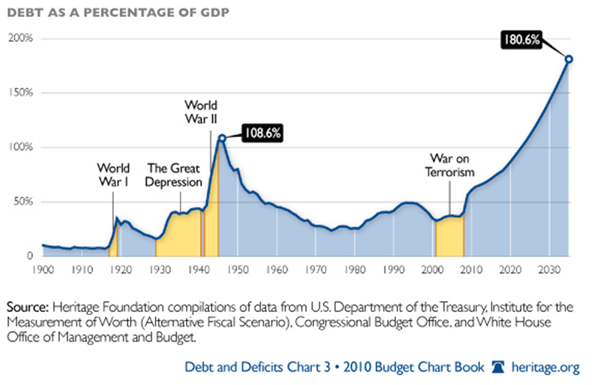
    The federal debt climbed above $13 trillion this month. An easier way to define the national debt is to comprehend that we each owe more than $39,000 to the Chinese, Japanese, and Arabs of the Persian Gulf. The budget deficit will exceed $1.5 trillion this year and forty-seven states are running deficits. California has a $19 billion deficit and its legislature’s landmark response was to pass a law banning plastic bags. Our cities are in worse shape. The former mayor of Los Angeles, Richard Riordan, says that a bankruptcy by that city is inevitable. At the same time, the United States’ Congress voted themselves a 5.8% pay increase. It is no wonder why Americans are nervous.

    Americans are stressed out because of debt, according to an Associated Press-GfK poll. They are trimming their debt at the fastest rate in more than six decades, according to the Federal Reserve. The average amount owed on credit cards is $3,900, the poll said. That’s down from $5,600 last fall and $4,900 last spring. Household debt fell 1.7 percent last year to $13.5 trillion, according to the Fed. It was the first annual drop, based on records going back to 1945. As Americans get their own house in order, the approval rating for Congress has fallen to an all time low. The public will likely make them pay for their angst in November.

    The American people are about a year ahead of the politicians. The spending by Washington, Sacramento, Los Angeles, and by politicians in general, is unsustainable. The people understand that it must be changed. As Senator Tom Coburn (OK) told me last week, either we change our ways or they will be changed for us. Leaders like Senator Coburn will begin The Great Deconstruction. The nation can no longer afford the government it has created.

    The Department of Energy was created by President Carter in 1977 after an OPEC embargo caused gas lines and rationing. In 1977, America imported 33% of its oil. The DoE’s goal was to eliminate our dependence on imported oil. The DoE budget for 2010 was $26.4 billion. It employs 116,000 workers. We now import 66% of our oil. America can no longer afford such an inefficient bureaucracy. Bureaucracies like the DoE that have lost sight of their purpose must be deconstructed.

    Senator Coburn is preparing legislation to rescind $120 billion in 2010 spending by rescinding 2010 budget increases, consolidating 640 duplicative governmental agencies, returning unspent appropriations and cutting wasteful spending. A few examples:

    • Congress has a discretionary budget of $4.7 billion per year. They voted themselves a 6% increase in 2010. Coburn wants this increase rescinded for a saving of $250 million.
    • The Department of Education spends $64.2 billion per year. They spend $1 billion each year administering 207 separate programs at 13 different federal agencies to “encourage” students to take math and science.
    • The Department of Agriculture owns 57,523 buildings. More than 4,700, valued at $900 million, are vacant. Despite this vacant space they spend $193 million per year renting an additional 11 million square feet.

Our politicians have perfected the art of spending money, or as we now know, wasting money. Last year, they loaded spending bills with $11 billion of earmarks – after spending $860 billion on a Stimulus Bill. A new breed of politician, like Senator Coburn, will begin the long process of deconstruction.

There is precedent for deconstruction. In 1945, federal spending ballooned to $106 billion, $93 billion of which was for defense. The deficit jumped from $40 billion in 1938 to $253 billion in 1945. A Democrat President and a Republican Congress established the Commission on Organization of the Executive Branch of the Government in 1947. President Truman put a former Republican President, Herbert Hoover, in charge. It became known as the Hoover Commission. It created the structure of government that exists today and generated savings of $7 billion at the time. A total of 273 recommendations were presented to Congress in a series of nineteen separate reports. A 1955 study concluded that 116 of the 273 recommendations were fully implemented and that another 80 were mostly or partly implemented. By 1949, the federal budget had fallen to $40 billion.

It will come to be known as The Great Deconstruction because it must occur at every level of government. Federal spending is unsustainable. Moody’s is already speculating that we may lose our AAA rating. The states are in crisis with 46 in deficit. The press is referring the California as a “failed state” and “our Greece”. The $860 billion Stimulus Bill sent approximately 30% to the states to support their public employees. But it was a one-year fix. This year, the states are burning through their reserves and next year, they will be forced to cut services, raise taxes, or both. Connecticut, the wealthiest state on a per capita basis with personal income of $54,397 in 2009 (Department of Commerce) saw its Fitch rating lowered from AA+ to AA. Connecticut needs to borrow $956 million to close a budget gap this fiscal year and it borrowed $947.6 millionto cover last year’s deficit.

The cities are no better off with many states raiding their reserves. Many cities are exploring municipal bankruptcy, Chapter 9, as a way out of unsustainable contracts. The Great Deconstruction will take a decade or more. Like the Hoover Commission before it, this process will transform the role of government, and the image of government as it transforms the cost of the people’s business.

***************************************************

The Great Deconstruction is a series written exclusively for New Geography. Future articles will address the impact of The Great Deconstruction at the national, state, county and local levels.

Robert J. Cristiano PhD is the Real Estate Professional in Residence at Chapman University in Orange County, CA and Director of Special Projects at the Hoag Center for Real Estate & Finance. He has been a successful real estate developer in Newport Beach California for twenty-nine years.


Other works in The Great Deconstruction series for New Geography

The Great Deconstruction :An American History Post 2010 – June 1, 2010
The Great Deconstruction – First in a New Series – April 11, 2010
Deconstruction: The Fate of America? – March 2010

  • The Vote: Democracy or Disease?

    When the California polls closed on Tuesday, the most costly primary race in the state’s history—thus far—came to an end. Like many high profile races for Senator and Governor nationwide, the spending attracted national attention.

    Of course, this isn’t the first time that California politics and political trends have captured the national imagination and spread like a virus. Given the particularly brutal economic meltdown in California, one would not expect the state’s notoriously dysfunctional governance system to be a role model for others to follow. Alas, it unfortunately seems that it is. Three examples below from the Midwest show that California-style governance definitely has its fans. Indeed, the rise of using constitutional amendments to make policy, and of big money/ special interest- backed referendum petitions shows that the California governance disease is starting to metastasize, even in the Heartland.

    The first example is Missouri, where billionaire Rex Sinquefield launched launched a successful drive to get an initiative on the ballot to eliminate the city earnings tax in Kansas City and St. Louis. Sinquefield is a self-made man who became rich after, among other things, creating the first S&P 500 index fund. Known for his ardent support of free market views, Sinquefield has followed in the footsteps of George Soros and other wealthy financiers in pushing his ideas politically, albeit in a smaller arena. Like Soros, Sinquefield channels plenty of money to candidates, and even has his own think tank, the free market Show Me Institute.

    Sinquefield’s latest crusade is to change state law to prohibit new cities from having local earnings taxes, and to require those cities where they are already in place to put them to a vote every five years and phase them out if ever voted down, with no mechanism for ever reinstating such a tax, even if the city’s voters approve it. While this is a state law change, it targets two specific cities, Kansas City and St. Louis; the latter gets a third of its revenue from the earnings tax. Sinquefield says he wants to replace the earnings tax with a land value tax – an excellent idea – though his actual initiative text doesn’t replace it with anything.

    Whatever one thinks of the actual policy, the idea of billionaire-backed petition drives is right out of the California special interest playbook. Also, while Sinquefield might reasonably want to eliminate the earnings tax in St. Louis, where he lives and pays taxes, it isn’t clear what skin he has in Kansas City’s tax. In effect, Kansas City residents are will have their city’s fiscal future determined by voters who largely live outside the city limits, in a campaign financed by an out-of-town billionaire who lives 250 miles away on the far side of the state.

    And there will be more than 20 other referendum votes on the Missouri ballot this fall. In this governance environment, it shouldn’t be surprising that a significant number of Kansas City businesses are migrating across the state line to Overland Park and other Kansas suburbs where they don’t have to deal with this type of politically induced uncertainty. The political risk in Missouri is commercially toxic.

    The second example is Indiana. Prodded by court rulings, Indiana switched from a property assessment system that undervalued older buildings to one more reflective of market values. This, in combination with the elimination of an inventory tax, led to a spike in property taxes across the state. The spike, along with an income tax increase, led to the mayor of Indianapolis losing his reelection bid to a total political neophyte without any significant financial or establishment backing.

    This stunning upset jolted the legislature into action. Indiana sales taxes were raised by one percentage point, the state took over several key municipal expenses, including educational operations costs and juvenile justice, and it bailed out underfunded local pensions. In return, property taxes were capped to prevent a repeat of the tax crisis.

    So far, so good. By most accounts the financial restructuring and the tax caps are working reasonably well. But state politicians aren’t satisfied. They are in the process of amending the state constitution to write the tax caps into law.

    This is a mistake on two levels. First, it assumes a constitutional tax cap is a substitute for political will on fiscal policy. The notion that if property taxes are limited, then legislative spending won’t increase has been disproven; the example of Prop 13 in California immediately comes to mind. In fact, writing the tax caps into the constitution might actually cause future legislatures to breathe easy and take their eye off the fiscal ball.

    The second is that constitutions should deal with the structure and general powers of government, not with setting tax rates. Writing specified property tax rates into the constitution is simply an attempt by the current legislature to take advantage of high current popularity for a particular policy, and to prevent future legislatures from changing that policy, even if conditions or public opinion change. As a general rule, one legislature or governor should not be able to bind the terms of policy of their successors. If that is established as a valid exercise of legislative power, it seems likely to be used again and again in the future, perhaps for more dubious policies.

    The last and most incredible example is Ohio, where a group of developers wanted to open casinos. Led by Rock Ventures, the investment vehicle of Quicken Loans owner Dan Gilbert of Detroit, the group spent $47 million to draft, put on the ballot, and pass a constitutional amendment permitting casino gambling in Ohio. But this initiative did much, much more than that. It only permitted casinos on four specific properties — properties controlled by the referendum backers — and thus granted them exclusive rights to open casinos. It exempted their casinos from zoning or most other types of local control, authorized them to operate 24 hours a day, and specified a very low license fee of only $50 million per casino to the state. It also permitted them not only to run any game currently allowed by any surrounding state, but also any game those states might approve in the future. It’s undoubtedly one of the most incredible constitutional amendments in the history of the United States.

    Casino companies are far from the only special interest groups to use Ohio’s liberal initiative process to their own ends. Other users include the conservative Cincinnati anti-tax group COAST – Citizens Opposed to Additional Spending and Taxes. COAST does endorse candidates, but in general has a poor track record of getting politicians elected. It has, however, used initiatives to defeat or delay a slew of projects locally. On another front, animal rights advocates at the Humane Society are trying to amend the Ohio constitution to implement their preferred standards for treatment of animals in agriculture.

    The takeaway on Ohio referendums for any special interest group is very clear: “Why not us, too?”

    The legislature is starting to get fed up. Rep. John Domenick wants to amend the constitution to require future changes to obtain a two-thirds supermajority vote, not just a simple majority. He cites the growing ability of deep pocketed, out-of-state interest groups like the Michigan-based casino developers to effectively take over policy making from elected officials.

    Domenick is on the right track. Direct democracy can play an important role in many cases. For example, there’s nothing wrong with requiring voter approval for large tax increases or bond issues for major civic programs after they are approved by elected officials. This gives the matters in question extra legitimacy. But referendum petitions that are too easy to submit and approve only lead to political gridlock and a special interest takeover of the levers of power. The lessons of California suggest that going too far down the road of reliance on constitutional restrictions can become a substitute for political will.

    Flckr photo by SanFranAnnie

    Aaron M. Renn is an independent writer on urban affairs based in the Midwest. His writings appear at The Urbanophile.

  • Toronto’s G-20 Conference: Financial Boon or Boondoggle?

    Ever since the ill fated 1999 WTO meeting in Seattle, there has been some debate over the merits of hosting meetings of international organizations in major cities. Some argue that there are economic spin offs from the tourism generated by these conferences, but others argue that the security costs far outweigh the benefits. In the lead up to the G-20 meeting in Toronto, scheduled for June 26-27, there has been a flurry of controversy over the price tag for conference security. The combined security tab for the G-8 and G-20 could end up as high as $900 million dollars (Canadian). The tourism industry does have the potential to reap some gains from the G20.

    The best case scenario for the industry would see 50,000 rooms booked for the conference. Unsurprisingly, Greater Toronto Hotel Association’s Terry Mundell is excited. “It’s a good news story for us,” he claims. If we assume (optimistically) that each room goes for $300/night, the hotel industry could make $30 million out of the deal. On top of this, people will obviously be spending money while they’re in town. Let’s assume that these 50 thousand people consume 4 meals/day at $100/person. This would be a cool $40 million for the restaurant industry. Maybe these folks will have a few drinks. Let’s budget in $100/night. After all, these are affluent folks. That’s $10 million for the bars. Maybe a few souvenirs to bring back for the kids? Let’s say another $10 million. And what if they need some Tylenol? Toothbrushes? Toss in another $10 million. We’re up to about $100 million in direct economic benefits. But wait, people need to get to Toronto, and to get around the city. We’ll be generous and throw in $100 million for airfare, though the benefits of this are not entirely injected into the Canadian economy. Add to that $100/day in cabs, and we have another $10 million. This brings the grand total to $210 million. Far from negligible. Unfortunately, that’s about double the official estimate of $100 million. Like I said, this is a best case scenario.

    On the cost side of the ledger, it is important to note that the costs will be divided between the G-20 Conference in Toronto, and the G-8 conference in Huntsville, 2 ½ hours north of the city. Let’s be extremely generous and assume it is an even split. Of the $833 million already announced, we’ll say $400 million is going to the Toronto conference. This still leaves us with a shortfall of $190 million, even under an extremely optimistic scenario.

    Here’s the bad news: even under the optimistic scenario, we still haven’t factored in opportunity costs. So far it has been confirmed that three Blue Jays games will be moved to Philadelphia, and the University of Toronto will shut down during the conference. In anticipation of former Jays star pitcher Roy Halliday’s first return to Toronto, the team had budgeted for 90,000 fans to attend. At an average revenue of $39/fan, that’s a loss of $3.5 million dollars. It’s hard to say how many fans would have come into the city from out of town, but it wouldn’t be at all unrealistic to say that the city is going to lose at very least another $3.5 million in spin offs.

    Even without any similar cancellations, Seattle business managed to lose at least $10 million in revenue as a result of the WTO meeting in 1999 (not to mention the $2 million in property damage). Furthermore, if the G-20 wasn’t going to be in Toronto, we don’t know how many hotel rooms would have been rented out for other events, or whether the conference goers will crowd out other patrons from restaurants. This is the difficulty with these types of estimates. They take into account the benefits that we see, but not the unseen opportunity costs. It’s hard to count a family that decided not to to Toronto for recreation or a cultural event because they want to avioid crowds or inflated room rates.

    One might argue that the short term costs will be mitigated by long term benefits. After all, some people might like the city so much that they’ll want to visit again. Perhaps some number of people will even want to move to the city. I had a similar experience during the G-20 in Pittsburgh last year (though haven’t followed through). If we look at it this way, any shortfall could be seen as a tourism advertising expense. Will this pay off in the long run? Unfortunately it is impossible to tell.

    So let’s assume that the shortfall for the conference is $200 million dollars. That seems pretty reasonable at this point. Let’s further assume that there will be a non-trivial long term tourism benefit to the city. In fact, let’s assume they make it all back. I still don’t buy into the idea of holding major international political conferences in major cities.

    Here’s why. There is an enormous inconvenience to city residents, which will likely include many people being caught up in violent protests and police retaliation. No one should have to get tear gassed in the name of boosting tourism. I was in Pittsburgh during the last G-20 meeting when stores were being smashed in, and the police were gassing protesters. Given that I was wise enough to stay away from the protests, I didn’t personally witness the chaos. Having said that, there is plenty of footage showing the violent clashes between protesters and police. After Seattle, London, Pittsburgh, and many other cities have endured chaos during these conferences, politicians should have learned their lesson. Forget tourism dollars. These conferences are about solving major economic problems. The G-8 meeting is being held in tiny Huntsville, where the G-20 originally was supposed to be held. That’s how it should be.

    It’s easier to import police to a small town than evacuate the downtown of a major city. Unfortunately, governments have not learned from history They seem determined to let their citizens pay the price for their cherished few days in the sun.

    Steve Lafleur is a public policy analyst and political consultant based out of Calgary, Alberta.

    Photo by Sweet One