Category: Politics

  • Job Creation Under the Next President

    Retraining the employed and the unemployed for higher value-added skills is now more important than simply adding to the number of jobs.

    Coal and steel magnate Wilbur Ross, a senior policy advisor to the Trump campaign, has just made in the pages of the Wall Street Journal an economic prediction that looks mathematically unattainable.

    Writing with Professor Navarro of UC – Irvine, Mr. Ross forecast that policies enacted by a President Trump would lead to the creation of 25 million new jobs, ostensibly over an eight year period:

    Donald Trump will cut taxes, reduce regulation, unleash our abundant energy and eliminate our trade deficit through muscular trade negotiations that increase exports, reduce imports and eliminate cheating. These policies will double our economic growth rate, create 25 million new jobs, boost labor and capital incomes, generate trillions of additional tax revenues and reduce debt as a percentage of GDP.

    To evaluate the 25 million figure, remember that new job creation during the booming Ronald Reagan and Bill Clinton two-term presidencies amounted to 16.1 million and 22.5 million, respectively. Given the growth of the population, you could say that a 25 million target compares reasonably to these figures. It is optimistic but, on the face of it, not outlandish.

    That is, until you scrutinize the underlying demographics. A new job requires not only an open paid position but also a person to occupy this position. In order to have 25 million new jobs, we need 25 million people to fill these jobs. So does the US even have 25 million people who would be available in the next eight years? It doesn’t seem like we do.

    job numbers

    Now as at any time, there are three main sources of new workers:

    Increase in working-age population: During the 1980s decade (which includes the two Reagan terms), the population aged 20 to 64 grew by 18.5 million. During the 1990s (including the two Clinton terms), it grew by 19.1 million. In the coming decade ending in 2025 by contrast, it will only grow by a much smaller 2.6 million.

    What explains this decline in growth for this segment? Simply put, there were many more new babies in the 1960s than in the 1910s, resulting in strong growth in the 1980s. But there were only a few more babies in the 2000s than in the 1950s, resulting in lower growth in the 2016-25 decade. Put another way, a rising number of boomers are turning 65 every year and exiting the 20-64 age bracket. This means that, unlike in the 1980s and 1990s, a large percentage of people going into these 25 million jobs will have to come from other sources.

    Immigration: Assuming an annual influx of one million immigrants (green card holders), we estimate another 7 new million workers for the decade, and a prorated 5.6 million over eight years.

    The idle and unemployed: The current official unemployment rate is hovering around 5%. However, the U6 measure of unemployment now stands at 9.7%, not far from its historical average. If we assume generously that U6 will drop by 3% towards its low of October 2000, there would be an additional 4.8 million people available for work.

    Adding all these figures (and making adjustments from 10 to 8 years where needed), we see that there is still a shortfall of 12.5 million people, or half the 25 million needed to meet the new supply of jobs.

    Keeping an open mind, we could speculate that an additional 12 or 13 million people, counting for example a large number of women and elderly, could decide to join or remain in the labor force. But this seems unlikely within the big economic boom described by Mr. Ross and Professor Navarro. If the economy will be doing that well, fewer spouses may choose to work and more people will retire early.

    Finally, the next President could increase the number of immigrants to address the labor force shortfall. This decision would require doubling or tripling the number of visas and green cards awarded annually, a policy that runs against the grain of Trump campaign pledges.

    To sum up, an optimistic level of job creation under the next President, whether Trump or Clinton, would be 12 to 15 million. But even this lower target will prove to be too ambitious if, as is widely anticipated, automation and the internet of things take over more job functions.

    Further, because the marginal demand for jobs will be less than in the past, an effort to boost the supply looks not only ill-fated but also misdirected, like that of a general preparing to fight the last war. At this juncture of changing demographics and increased automation, it will be more important to upgrade jobs to higher value-added functions than to simply count the number of net new jobs. Bringing the old jobs back would in theory provide much needed relief to households that are struggling, but retraining these same workers for better jobs will ultimately lead to more favorable outcomes.

    In this vein, investments in education and retraining seem more critical now than in the past. Rather than merely adding jobs, a more promising employment strategy for the next President would be to facilitate retraining programs for people who have not kept up with the economy because of outsourcing or other factors.

    All this will probably be unconvincing to Mr. Ross and Professor Navarro who downplay the role of demographics in the economy and who believe that a sufficient amount of can-do spirit will overcome the facts of a hard-nosed analysis:

    Some falsely assert that the U.S. and other developed countries have settled into a “new normal” of slower economic growth due to greater competition from developing countries and demographic changes beyond our control.

    But to quote Mr. Trump’s running mate, Gov. Mike Pence, “People in Scranton know different. People in Fort Wayne know different.”

    We shall see.

    One clear fact remains however: the golden decades ending in 2005 were in part powered by a fast-growing population and a declining dependency ratio, two conditions that are now fading.

    Sami Karam is the founder and editor of populyst.net and the creator of the populyst index™. populyst is about innovation, demography and society. Before populyst, he was the founder and manager of the Seven Global funds and a fund manager at leading asset managers in Boston and New York. In addition to a finance MBA from the Wharton School, he holds a Master’s in Civil Engineering from Cornell and a Bachelor of Architecture from UT Austin.

    Photo: neetalparekh
  • Erasing Anglo cultural heritage risks what makes our republic diverse

    It’s increasingly unfashionable to celebrate those who made this republic and established its core values. On college campuses, the media and, increasingly, in corporate circles, the embrace of “diversity” extends to demeaning the founding designers who arose from a white population that was 80 percent British.

    In this American version of Mao’s “Cultural Revolution,” which tried to eviscerate traces of China’s past, venerable buildings are being renamed, athletes refuse to stand for the national anthem and, on some campuses, waving the American flag is now considered a “microaggression,” while English students at Yale want to avoid reading the likes of Milton, Shakespeare and Chaucer.

    Of course, some changes are justified. Asking anyone, particularly African Americans, to revere the Confederate flag or attend schools named after the founder of the Ku Klux Klan is, indeed, offensive. But in our zeal to address old wrongs, we may also be sacrificing the very things that have made this republic so attractive to millions from distinctly different backgrounds for the last two centuries.

    Why we come here

    Just to clear the air, I have not a single drop of British blood in me. The closest ties I have to what I consider my cultural and political home country come from my great uncle Simon, who served in Gen. Allenby’s Jewish brigade in World War I, and that my wife, born in Montreal, came into the world a subject of Her Majesty, Queen Elizabeth. Career wise, I did work for a think tank in London for several years.

    But what ties most Americans to the founders is not race, but our embrace of a political and legal culture based on distinctly Anglo-Saxon ideas about due process, representative government, property rights and free speech. These proved infinitely superior to the divine right of czars, kaisers, emperors and other hereditary autocrats for generations of non-Anglo-Americans.

    This system, always capable of amendment, has allowed waves of traditional outsider groups — African Americans, Latinos, women, Mormons, Jews and Muslims — to join the economic, political and cultural mainstream. In some cases, as in the case of President Obama, they have also secured the highest reaches in the national firmament.

    Read the entire piece at the Orange County Register.

    Joel Kotkin is executive editor of NewGeography.com. He is the Roger Hobbs Distinguished Fellow in Urban Studies at Chapman University and executive director of the Houston-based Center for Opportunity Urbanism. His newest book, The Human City: Urbanism for the rest of us, will be published in April by Agate. He is also author of The New Class ConflictThe City: A Global History, and The Next Hundred Million: America in 2050. He lives in Orange County, CA.

    Photo: William Robert Shepherd [Public domain], via Wikimedia Commons

  • Trump Will Go Away, but the Anger He’s Stirred Up Is Just Getting Started

    For progressives, the gloating is about to begin. The Washington Monthly proclaims that we are on the cusp of a “second progressive era,” where the technocratic “new class” overcomes a Republican Party reduced to “know-nothing madness.”

    To be sure, Trump himself proved a mean-spirited and ultimately ineffective political vessel. But the forces that he aroused will outlive him and could get stronger in the future. In this respect Trump may reprise the role played another intemperate figure, the late Senator Barry Goldwater. Like Trump, Goldwater openly spurned political consensus, opposing everything from civil rights and Medicare to détente. His defeat led to huge losses at the congressional level, as could indeed occur this year as well.

    Goldwater might have failed in 1964, but his defeat did not augur a second New Deal, as some, including President Lyndon Johnson, may have hoped. Instead, his campaign set the stage for something of a right-wing resurgence that defined American politics until the election of President Obama. Pushing the deep South into the GOP, Goldwater created the “Southern strategy” that in 1968 helped elect Richard Nixon; this was followed in 1980 by the victory of Goldwater acolyte Ronald Reagan.

    History could repeat itself after this fall’s disaster. People who wrote off the GOP in 1964 soon became victims of their own hubris, believing they could extend the welfare state and the federal government without limits and, as it turned out, without broad popular support. In this notion they were sustained by the even then liberally oriented media and a wide section of the “respectable” business community.

    Three decades later a similar constellation of forces —- Hollywood, Silicon Valley, Wall Street—have locked in behind Hillary Clinton. But it is the transformation of the media itself both more ideologically uniform and concentrated more than ever on the true-blue coasts, that threatens to exacerbate Progressive Triumphalism. In this election, notes Carl Cannon, no Trump fan himself, coverage has become so utterly partisan that “the 2016 election will be remembered as one in which much of the mainstream media all but admitted aligning itself with the Democratic Party.”

     Progressive Triumphalism may lead the Clintonites to believe her election represented not just a rejection of the unique horribleness of Trump, but proof of wide support for their favored progressive agenda. Yet in reality, modern progressivism faces significant cultural, geographic, economic and demographic headwinds that will not ease once the New York poseur dispatched.

    Successful modern Democratic candidates, including President Obama and former President Clinton, generally avoid openly embracing an ever bigger federal government. Obama, of course, proved a centralizer par excellence, but he did it stealthily and, for the most part, without the approval of Congress. This allowed him to take some bold actions, but limited the ability to “transform” the country into some variant of European welfare, crony capitalist state.

    Hillary Clinton lacks both Obama’s rhetorical skills and her erstwhile husband’s political ones. Her entire approach in the campaign has been based on creating an ever more intrusive and ever larger federal government. Even during Bill Clinton’s reign, she was known to be the most enthusiastic supporter of governmental regulation, and it’s unlikely that, approaching 70, she will change her approach. It seems almost certain, for example, that she will push HUD and the EPA to reshape local communities in ways pleasing to the bureaucracy.

    Yet most Americans do not seem to want a bigger state to interfere with their daily life. A solid majority—some 54 percent—recently told Gallup they favor a less intrusive federal government, compared to only 41 percent who want a more activist Washington. The federal government is now regarded by half of all Americans, according to another poll by Gallup, as “an immediate threat to the rights and freedoms of ordinary citizens.” In 2003 only 30 percent of Americans felt that way.

    Nor is this trend likely to fade with time. Millennials may be liberal on issues like immigration and gay marriage, but are not generally fans of centralization, fewer than one-third favor federal solutions over locally based ones. 

    Due largely to Trump’s awful persona, Hillary likely will get some wins in “flyover country,” the vast territory that stretches from the Appalachians to the coastal ranges. In certain areas with strong sense of traditional morality, such as in Germanic Wisconsin and parts of Michigan, notes Mike Barone, Trump’s lewdness and celebrity-mania proved in the primaries incompatible with even conservative small town and rural sensibilities, more so in fact than in the cosmopolitan cores, where sexual obsessions are more celebrated than denounced.

    Yet Trump’s strongest states, with some exceptions, remain in the country’s mid-section; he still clings to leads in most of the Intermountain West, Texas, the mid-south and the Great Plains. He is still killing it in West Virginia. This edge extends beyond a preponderance of “deplorables” and what Bubba himself has referred to as “your standard redneck.”

    Exacerbating this cultural and class discussion is the growing division between the coastal and interior economies. Essentially, as I have argued elsewhere, the country is split fundamentally by how regions makes money. The heartland regions generally thrive by producing and transporting “stuff”—food, energy, manufactured goods —while the Democrats do best where the economy revolves around images, media, financial engineering and tourism.

    Energy is the issue that most separates the heartland from the coasts. The increasingly radical calls for “decarbonization” by leading Democrats spell the loss of jobs throughout the heartland, either directly by attacking fossil fuels or by boosting energy costs. Since 2010, the energy boom has helped create hundreds of thousands of jobs throughout the heartland, many of them in manufacturing. At the same time, most big city Democratic strongholds continued to deindustrialize and shed factory employment. No surprise then that the increasingly anti-carbon Democrats control just one legislature, Illinois, outside the Northeast and the West Coast.

    Trump’s romp through the primaries, like that of Bernie Sanders, rode on the perceived relative decline of the country’s middle and working classes. For all her well-calculated programmatic appeals, Hillary Clinton emerged as the willing candidate of the ruling economic oligarchy, something made more painfully obvious from the recent WikiLeaks tapes. Her likely approach to the economy, more of the same, is no doubt attractive to the Wall Street investment banks, Silicon Valley venture capitalists, renewable energy providers and inner city real estate speculators who have thrived under Obama.

    Yet more of the same seems unlikely to reverse income stagnation, as exemplified by the huge reserve army of unemployed, many of them middle aged men, outside the labor force. The fact remains that Obama’s vaunted “era of hope and change,” as liberal journalist Thomas Frank has noted, has not brought much positive improvement for the middle class or historically disadvantaged minorities.

    The notion that free trade and illegal immigration have harmed the prospects for millions of Americans will continue to gain adherents with many middle and working class voters—particularly in the heartland. We are likely to hear this appeal again in the future. If the GOP could find a better, less divisive face for their policies, a Reagan rather than a Goldwater, this working-class base could be expanded enough to overcome the progressive tide as early as 2018.

    The one place where the progressives seem to have won most handily is on issues of culture. Virtually the entire entertainment, fashion, and food establishments now openly allied with the left; the culture of luxury, expressed in the page of The New York Times, has found its political voice by identifying with such issues as gay rights, transgender bathrooms , abortion and, to some extent, Black Lives Matter. In contrast, the Republicans cultural constituency has devolved to a bunch of country music crooners, open cultural reactionaries and, yes, a revolting collection of racist and misogynist “deplorables.”

    Yet perhaps nowhere is the danger of Progressive Triumphalism more acute. Despite the cultural progressive embrace of the notion that more diversity is always good, the reality is that our racial divide remains stark and is arguably getting worse. As for immigration, polls say that more people want to decrease not just the undocumented but even legal immigration than increase it.

    And then there’s the mountain rebellion against political correctness. Relative few Americans have much patience with such things as “micro-aggressions,” “safe spaces,” the generally anti-American tone of history instruction whose adherents are largely concentrated in the media and college campuses. Fewer still would endorse the anti-police agitation now sweeping progressive circles. For some, voting for Trump represents the opportunity to extend a “middle finger” to the ruling elites of both parties.

    Yet Trump’s appeal also represented something of a poke in the eye for the old-school religious right; Trump has actually helped the GOP by embracing openly gay figures like Peter Thiel. He may have caused many bad things, but the New Yorker succeeded, as no Republican in a generation, in making the holy rollers largely irrelevant.

    The dangers for the Democrats lie in going too far in their secularism. As recent emails hacked by WikiLeaks have demonstrated, there is widespread contempt in left circles for most organized religion, most importantly for the moral teachings of the Roman Catholic Church, even under a more progressive Pope. Some Democrats may argue that irreligiosity will remain “in” among millennials. Yet this was also said about boomers and turned out to be wrong. Few sociologists in the 1970s would have expected a religious revival that arose in the next decade.

    Simply put, millennials’ economic and cultural views could shift, as they become somewhat less “idealistic” and more concerned with buying homes and raising children. They could shift more the center and right, much as Baby Boomers have done.

    No matter what happens this year, the battle for America’s political soul is not remotely over. Trump may fade into deserved ignominy and hopefully obscurity, but his nationalist and populist message will not fade with him as long as concerns over jobs, America’s role in the world, and disdain for political correctness remain. If Hillary and her supporters over-shoot their nonexistent mandate and try to impose their whole agenda before achieving a supportable consensus, American politics could well end up going in directions that the progressives, and their media claque, might either not anticipate or much like.

    This piece first appeared in The Daily Beast.

    Joel Kotkin is executive editor of NewGeography.com. He is the Roger Hobbs Distinguished Fellow in Urban Studies at Chapman University and executive director of the Houston-based Center for Opportunity Urbanism. His newest book, The Human City: Urbanism for the rest of us, will be published in April by Agate. He is also author of The New Class ConflictThe City: A Global History, and The Next Hundred Million: America in 2050. He lives in Orange County, CA.

    Photo by Gage Skidmore [CC BY-SA 3.0], via Wikimedia Commons

  • Unsustainable solutions in the name of sustainability

    The other day when I was riding my bike in Minneapolis crossing I-94 near Riverside I encountered a small townhome project built during the first (failed) green era under the Carter administration. It was built to showcase the future. One thing I’ve learned over the years building my own green homes is to not listen blindly to the experts who parrot others’ ideas without thinking of the ramifications.

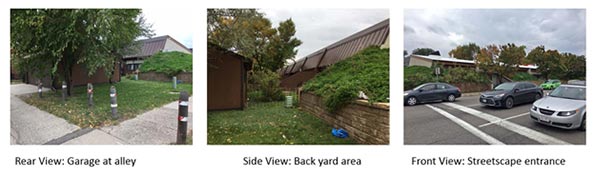
    The world’s first solar and earth-berm grass-roof townhome projects look like this today:

    image of townhome

    The original townhomes were built with earth covered roofs, with south facing solar panels for heating, and stored the heat collected over a long period of time in a room full of boulders. In 1983, I also owned an earth-berm solar heated home overlooking a lake in another part of town. Back then we thought, as the world freezes over (no global warming at that time), we would be nice and toasty in our ‘energy-independent’ homes powered by the sun itself. I went even further with a 10kW Bergey Wind Generator on a 100′ tall tower. Heated by the sun and powered by the wind.

    As you see in the above pictures, this experiment, which had the University of Minnesota involved (from what I remember), did not age well, nor did it work – at all! Gone are the solar panels that used to collect the heat positioned along the bare brown steel roof panels, and gone is grass roof that leaked. Banished is the room full of boulders to store the heat, which got so hot often windows needed to be opened to let in cold winter air, a problem my own solar home had also.

    In 1983, my 4,000 square foot lake front solar home cost $120,000 and after tax credits, my Wind Generator cost $12,000. These smaller townhome units cost $80,000 at the time. One of the original residents who stayed over the decades experienced failed systems and lawsuits. They eventually sold their home – for $80,000! Quite the investment these fancy schmancy trendy homes. A Nigerian investment scheme via an E-Mail might have been less risky. You would think the first home owners would have been the architects and professors who were behind this project – but they themselves didn’t buy in, so there’s an indication that maybe the idea was not so terrific. This is the lesson I’ve learned, never take advice from anyone who is not willing to personally invest and take the same risk as they suggest to others in a new concept.

    The Carter era was a troubled one, with energy widely predicted to be running out, and home mortgage rates as high as 18%. It’s hard to imagine there was any new housing being built, but some were. The initial residents of these townhomes (including myself) believed we were the smart ones, preparing for the energy costs skyrocketing and never having to worry. Hell could freeze over – but we wouldn’t.

    That was then, but how does this apply to now, especially with an election just days away?

    Hillary Clinton was promising half a billion solar panels on rooftops. OK, now picture the above bare rooftops – that’s how the roofs will look when the lifespan of those half billion heavily subsidized solar panels reach the end of their usefulness – in two decades. Where do you think most solar panels are made today? If you answered China, you deserve a star! And if a roof needs repair or replacement prior to the end of the panels’ lifespan, will the government subsidize the extra cost of repairs? Who will pay for cutting down the mature trees along the streets so that the sun can reach these panels? Oh, wait, you are supposed to keep those mature, beautiful, and value increasing shade trees? My bad. You think Obama Care was a terrible idea… just wait for the Hillary program, and the social engineering sure to follow, and sure to fail.

    Trump? I imagine he’d be politically incorrect of course, calling those solar townhomes: ugly, hideously, awful useless, fat, blemished, blight… only unlike comments about women, he’d have a lot who would agree. I don’t know what a Trump administration would look like, but I’m pretty confident that it would not involve social engineering, nor have subsidies go to China or Mexico. I hope that if he had a wind or solar agenda, the panels would be produced here with a fair and proper competition to award the vendors with the best price/performance ratio and make them bond a 20 or 30-year fund if the mechanisms wear prematurely.

    I hope that Trump or Clinton look into creating new programs that encourage private new developments or large scale redevelopment to have their own ground based solar gardens instead of the current wave of public investments of solar farms which have federal tax advantages but seem, at least to me, a questionable investment at best. They are even promoting these solar investments at the Best Buy store in Minnetonka, Minnesota with the promise of a consistent energy cost, but they require a 20-year commitment, even though the average home sells once every 6 years.

    These are heavily subsidized by you, the tax payers. Some of these solar fields are supposed to supply the power companies themselves, for example Ivanpah in the California desert which was to supply power for PG&E. Ivanpah was a solar system using mirrors heating up over 170,000 panels to create steam, but failed to deliver the power the ‘experts’ promised. Besides killing thousands of birds, the 1.5 billion dollars of your tax money was pretty much a really bad investment – oopsie! A more viable alternative is to create a more localized system as part of new developments or large scale redevelopments.

    Having a solar garden in a subdivision eliminates the problem with roof-top application, cleaning ice and snow off the panels, and streets could still have those shade trees. Each resident in the subdivision would have their share of the power and as technology improves, every resident would benefit from the latest technologies – be it solar, wind, or both. Such a Federal program does not exist – but should.

    Top photo by https://pixabay.com/en/users/Kenueone-2397379/ [CC0], via Wikimedia Commons

    Rick Harrison is President of Rick Harrison Site Design Studio and Neighborhood Innovations, LLC. He is author of Prefurbia: Reinventing The Suburbs From Disdainable To Sustainable and creator of LandMentor. His websites are rhsdplanning.com and LandMentor.com

  • Today’s Orange County: Not Right Wing—and Kinda Hip

    What comes to mind when you think about Orange County? Probably, images of lascivious housewives and blonde surfers. And certainly, at least if you know your political history, crazed right-wing activists, riding around with anti-UN slogans on their bumpers in this county that served as a crucial birthplace of modern movement conservatism in the 1950s.

    Yet today, Orange County—or the OC, as locals call it—is becoming a very different place. Today close to half the population of this 3-million person region south of Los Angeles are minorities, primarily Latino and Asian, and the county’s future belongs largely to them.

    These days you color the OC both ethnically diverse and politically purplish. The Republican share of the electorate has dropped from 55 percent in 1990 to under 40 percent today. Two of the seven people who represent the area in Congress are Latino, and a third is of Middle Eastern descent. Four of the 10 people the county sends to Sacramento are minorities, three Asians and one Hispanic. Asians, now 20 percent of the local population, represent the majority on the county Board of Supervisors. In 2012 Mitt Romney took the county with 53 percent of the vote; this year it may be far closer than that.

    The cultural landscape is also changing. What was historically a land of hamburger dives (we still have some) and little Mexican restaurants (we have many) is now home to some of Southern California’s best restaurants—including two on the top 30 list ofLos Angeles Times food critic Jonathan Gold. The OC is also home to one of the country’s leading venues for new plays, South Coast Repertory. Alongside the ubiquitous malls have arisen some of the nation’s most innovative urban environments, some of them revived small town main streets, from Santa Ana’s 4th Street Market to Orange to Laguna Beach and Fullerton.

    When urbanists talk about the future, they usually imagine an environment of dense buildings, connected by train transit and highly centralized workplaces. Yet the bulk of all the nation’s economic and population growth takes place in “post-suburbia,” a term first applied to the OC. Post-suburbia, noted two urban scholars in 1991, reflects a “decentralized, multi-centered area” that puts “into question the mainstream urbanist’s concept of central-city dominance.”

    This new geography of urbanity—far more than the much-discussed recovery of the urban core—dominates our metropolitan life; since 2000 over 80 percent of all metropolitan area jobs and population have remained outside the urban core. Post-suburbia predominates among our most demographically and economically vital regions, including STEM-intensive regions such as Silicon Valley, the northern reaches of Dallas, the western suburbs of Houston, Johnson County west of Kansas City or virtually anything around Raleigh or Austin. Orange County’s STEM sector (PDF) has expanded at twice the rate of L.A. County, despite all the considerable hype about the emergence of “Silicon Beach.”

    Post-suburbia was not designed to be a traditional commuter suburb, where people pile onto trains or the highways to get “downtown.” The vast majority of OC people work in the plethora of county worksites, and many others, particularly from the Inland Empire to the east, drive into the area for work.

    What places like the OC sell is both work and quality of life. The area ranks 10th out of 3,111 counties in the U.S. for natural amenities, and even outpaces Los Angeles among cities for best recreation. The roads are less congested, and there’s more open space. Urban Los Angeles has 9.4 acres of parks and recreation areas per 1,000 residents; Irvine has 37 acres per 1,000 residents, meaning that over 20 percent of the city’s land is dedicated to parks, five times the national average. No wonder the Irvine city motto is “Another Day in Paradise.”

    All changes are not for the better, of course, and one of the chief problems in today’s OC is the cost of housing. Irvine is a city of 236,000 people that was once a classic Anglo suburb and is now 40 percent Asian and less than half white. Housing, once distinctly middle class, now averages near $800,000, in large part due to purchases by Chinese investors. According to the real-estate information firm DataQuick, the 25 most common last names of homebuyers last year were Chen, Lee, and Wang.

    The landscape has also changed, with massive rows of multi-family houses crowding the wide boulevards of the city, clogging traffic and making “paradise” a little less bucolic. Since 2000, Orange County’s prices have increased 3.5 times that of incomes, one of the highest rates of increase in the country. The middle class who came to experience a Disneyland urban existence now finds the county largely beyond their means.

    These price increases have benefited many older property owners, particularly along the strip near the Pacific Ocean—now among the most expensive places to live in the country—but have sent rents soaring as well. Santa Ana, right next door to Irvine, is home now to much of the county’sgrowing homeless population, now estimated at 15,000, in large part reflecting rents increasingly out of reach to the working poor. If one full-time worker rents a two-bedroom apartment in Orange County they can expect to spend over 40 percent of their income (PDF) on rent.

    High prices are making the OC increasingly unaffordable for young families. Despite the assertions by density advocates, most millennials remain deeply interested in home ownership and generally move to places they can afford a house, which is usually somewhere else. This is one reason why Orange County, once an epicenter of youth culture, is going grey—and quickly.

    Orange County’s old folks feel little reason to move, short of being carried out feet first. The OC’s perfect weather, coupled with Proposition 13 protections, keeps seniors in their homes long after their offspring have left. With grey ponytails common even among surfers, the OC by 2040 is on track to be the oldest major county in California.

    The big hope may be the aging of millennials who by 2018 will on average be over 30. With safe cities and exceptional schools, the OC is a great place for “grownup millennials” looking to raise a family. Kina De Santis, CMO of the Orange County-based tech startup Motormood, calls it “very family oriented,” and Lee Decker, CMO at IGNITE Agency praises it for having the right environment for those with families who still want to focus on their startups, explaining, “As I prepare to get married to my kick ass and ridiculously supportive fiancé, I’m deciding to firmly root myself here in OC.” 

    In a famous scene from the play Hamilton, the future treasury secretary and his friend, Marquis de Lafayette, celebrate America’s revolutionary victory with the words—“immigrants, we get the job done.” As the OC evolves in the coming decades, the fast-growing foreign born population, and their offspring, will play the leading roles.

    In 1970, 80 percent of OC residents were non-Hispanic white. Many feared new immigrants, with the OC Grand Jury—a body of 19 to 23 members impaneled for one year to investigate and report on both criminal and civil matters within the county—in 1993 calling for a three-year ban on all immigration. Since 2000, the area’s Latino growth rate has been roughly 50 percent greater than Los Angeles’s. By 2014, the non-Hispanic white population dropped to 43 percent of the population, while the Hispanic share rose to 35.3 percent.

    The growth of the Asian population has been, if anything, more dramatic. One critical turning point was the arrival of the Vietnamese after the 1975 fall of Saigon, which turned Westminster from a sleepy town to one of the largest settlements of Vietnamese outside the mother country. More recently, Koreans and ethnic Chinese have arrived in significant numbers.

    Since 2000, Orange County’s Asian population has been growing at roughly 3 percent annually, roughly 50 percent faster than Los Angeles County. The OC’s rate is roughly equal to that of such Asian migration centers as Santa Clara, San Francisco, and New York. Overall, Orange County is the nation’s fourth most heavily Asian county over 1 million, at roughly 20 percent.

    Although they differ in appearance from the old OC denizens, these new OC residents are attracted by many of the same things that brought earlier immigrants to the area—single family homes, parks, and good public schools. They have created a dazzling series of ethnic “villages” from the heavilyVietnamese band from Westminster to Garden Grove, to the expanding “Little Korea” in the same area, the “Little Arabia in Anaheim and the El Centro Cultural de Mexico, located in Santa Ana.

    These newcomers and their kids are reshaping the OC’s culture, which plays a huge part in the area’s economy, employing well over 50,000 people; overall, the county lags only New York and Los Angeles in terms of the role of creative industries. In the past much of this was tied to the surfer culture, most notably serving as the fashion capital of the surf wear world—known to some Boomer adepts as “Velcro valley,” built around surf wear icons Hurley, Quicksilver, and O’Neill. The creative sector is adding jobs across a range of other industries such as architecture and interior design. Orange County is increasingly proving itself capable to draw the talent and support the lifestyle to compete with other creative powerhouses such as Los Angeles and New York.

    Immigrants provide much of the impetus. Much of the best food in Orange County is produced by newcomers and their children. The immigrant reshaping of the OC also is reflected in the bustling ethnic shopping malls that dot the county, packed with shops selling groceries, clothing, travel packages, and videos to the increasingly diverse population. Even more important is the growing cross-fertilization of ethnic styles and tastes. Urban amenities such as locally owned restaurants, bars, and retail shops at Huntington Beach’s Pacific City, keep things interesting as people are increasingly looking to spend their money on regionally tuned experiences (PDF), rather than typical suburban chains.

    Perhaps the most influential figure here is Shaheen Sadeghi, a Persian-American and former CEO of the surf wear line Quicksilver. Sadeghi’s company has taken a dozen sites, many of them deserted industrial and warehouse spaces, and converted them into exciting urban spaces. Perhaps his most impressive is the Packing House in Anaheim, a gigantic food court located in a former fruit-packing facility, which teems with ethnic food vendors.

    Critically, Sadeghi’s vision goes well beyond the usual urbanist dreamscape of a culture dominated by hip singles and childless couples. He wants to appeal to families, just in an updated way. “The international community tends to be more family oriented,” he notes, “on the weekend at the Packing House you’ll see a family from Asia putting all the tables and chairs together.”

    Building this new vision for OC will not be easy, he realizes, given the regulatory vise exercised by California regulators on small business. Yet he sees the area’s decentralization—epitomized by the county’s 34 separate cities—as providing consumers with greater diversity and choice. “Each city has its own identity, brand, and culture,” he suggests. “It’s like there’s more cookies in the cookie jar.”

    Sadeghi is bringing the old OC model to the future, proving that post-suburban “sprawl” can coexist with diversity and culture. Like the visionaries who created Disneyland, Irvine and other earlier iconic expressions of the county’s past, innovators like Sadeghi are willing to buck models, urban or otherwise, in pursuit of a unique sensibility. The OC should not aspire to become another Brooklyn, he suggests, but exploit all its natural advantages, as well as its efflorescent diversity to reinvent itself. “After all,” he says with an inner reassurance those of us who live here tend to have, “we still have a couple of things no one else has—ocean and good weather. And they aren’t going away.”

    Joel Kotkin is executive editor of NewGeography.com. He is the Roger Hobbs Distinguished Fellow in Urban Studies at Chapman University and executive director of the Houston-based Center for Opportunity Urbanism. His newest book, The Human City: Urbanism for the rest of us, will be published in April by Agate. He is also author of The New Class ConflictThe City: A Global History, and The Next Hundred Million: America in 2050. He lives in Orange County, CA.

  • The New War Between the States

    In this disgusting election, dominated by the personal and the petty, the importance of the nation’s economic geography has been widely ignored. Yet if you look at the Electoral College map, the correlation between politics and economics is quite stark, with one economy tilting decisively toward Trump and more generally to Republicans, the other toward Hillary Clinton and her Democratic allies.

    This reflects an increasingly stark conflict between two very different American economies. One, the “Ephemeral Zone” concentrated on the coasts, runs largely on digits and images, the movement of software, media and financial transactions. It produces increasingly little in the way of food, fiber, energy and fewer and fewer manufactured goods. The Ephemeral sectors dominate ultra-blue states such as New York, California, Oregon, Washington, Massachusetts, Maryland, and Connecticut.

    The other America constitutes, as economic historian Michael Lind notes in a forthcoming paper for the Center for Opportunity Urbanism, the “New Heartland.” Extending from the Appalachians to the Rockies, this heartland economy relies on tangible goods production. It now encompasses both the traditional Midwest manufacturing regions, and the new industrial areas of Texas, the Southeast and the Intermountain West. 

    Contrary to the notions of the Ephemerals, the New Heartland is not populated by Neanderthals. This region employs much of the nation’s engineering talent, but does so in conjunction with the creation of real goods rather than clicks. Its industries have achieved  generally more rapid productivity gains than their rivals in the services sector. To some extent,  energy  and food producers may have outdone themselves and, since they operate in a globally competitive market, their prices and profits are suffering.

    Despite deep misgivings about the character of Donald Trump, these economic interests have led most Heartland voters  somewhat toward the New York poseur, and they are aligning themselves even more to down-ticket GOP candidates. In generally purple states like Missouri, Ohio and Iowa, where manufacturing is key, Trump still leads—at least he was before the latest spate of Trump crudeness was revealed, this time regarding women.

    The Republicans’ strongest base is in the energy belt where Trump has suggested policies that call for greater domestic production. This naturally resonates with businesses and working people in states ranging from Texas, Oklahoma and Louisiana to West Virginia, Wyoming and Alaska, which have borne the brunt of nearly 100,000 layoffs so far this year. It’s no surprise that all of these states constitute increasingly a lock for the GOP.

    Historical Precedents

    The conflict of economic interests has long defined American politics. America’s revolution was largely started by New England merchants rebelling against colonialist policies that sought to strangle our nascent capitalism in its infancy. The great economic tensions of the early 19th century centered on a struggle between the Jeffersonian and Jacksonian yeomanry and the powerful merchant class in the great Northeastern cities. A major point of contention was around such issues as the establishment of a national bank and high tariffs, bitterly opposed in the nation’s interior and the South.

    The biggest national crisis in our history underscored this clash of competing economic interests. Although the galvanizing issue on both sides of the Mason-Dixon line was slavery, the Civil War was also a war, as Karl Marx suggested, of competing economic visions: the agrarian, slave-fueled economy of the South vs. the rapidly industrializing Northeast and Midwest. 

    Post-war conflicts revolved about hostility between the urbanizing North and the more rural South and West. Finance and industrial capital, usually in cities like New York and Chicago, was largely Republican and protectionist. Democrats tried to cobble a coalition of Southern agriculturalists and the big city, ethnic working class. With the onset of the Great Depression, Democrats gained primacy by melding this coalition to a rising and increasingly progressive professional class.

    In the past, Democrats competed in the Heartland and backed its key industries. Lyndon Johnson was a proud promoter of oil interests; Robert Byrd never saw a coal mine he didn’t like for all but the end of his career. Powerful industrial unions tied the Democrats to the production economy. Now those voters feel abandoned by their own party, and even are dismissed as “deplorables”  

    Increasingly few Heartland Democrats, outside of some Great Lakes states, win local elections. In the vast territory between Northeast and the West Coast, Democrats control just one state legislature, the financial basket case known as Illinois.

    For their part, Republicans are becoming extinct in the Ephemeral states, a process hastened by the growing concentration of media on the true-blue coasts. Wall Street, Silicon Valley and Hollywood have been drifting leftward for a generation, and Trump has accelerated this movement. Joined by the largely minority urban working and dependent classes, progressives now have a lock on   the Northeast and the West Coast.

    The New Battle Lines

    The new conflict between regions reflects a conflict between different ways of making money. Ephemeral America’s media and academic adjuncts generally portray the New Heartland’s economy as exploitative and environmentally harmful. A massive oil discovery in Alaska may be welcome news there, but a horrific prospect in places like Seattle, New York, or San Francisco.

    Climate change increasingly marks a distinct dividing line. Manufacturing, moving goods, industrial scale agriculture, fossil fuel energy all consume resources in ways many progressives see as harming the planet. Progressives threaten these industries with increasingly draconian schemes to reduce greenhouse gas emissions. Gone are the days of supporting moderate shifts — which could work with some Heartland economies — from coal to gas and improving mileage efficiency.

    Instead the demand from the left is for a radically rapid de-carbonization, which will reduce jobs in the Heartland and lower living standards everywhere. In California, Jerry Brown  is fretting about ways to curb cow flatulence, an obsession that is unlikely to be popular in Kansas, Nebraska or Iowa.

    These divergent politics between states are accelerating the gap between the two economies. Since 2010, as the recovery kicked off, the big industrial job growth took place mostly in the Heartland — in Detroit, Charlotte, Atlanta, Phoenix and Houston. New York, Los Angeles, Philadelphia and Boston all managed to lose jobs. Since 2000, Los Angeles and New York together have lost over 600,000 manufacturing positions.

    As industry weakens in an area, opposition to radical climate mitigation declines. Someone representing an increasingly de-industrialized east Los Angeles or Brooklyn feels no pressing reason to advocate for industry. High energy and housing prices, both connected to draconian climate change policies, gradually empty out the middle-class families, the demographic bulwark of the GOP. Meanwhile, in their coastal bastions, the grandees of Silicon Valley and Wall Street increasingly disdain anything reliant on fossil fuels.

    The New Heartland has reason to resist such policies, which could turn what have been burgeoning economies back into backwaters. Regulatory regimes that radically boost energy costs, as in California and New York, hasten de-industrialization. The  rapid decline of areas such as interior California and upstate New York testifies what may be in store for the Heartland under a Hillary Clinton administration and a Congress controlled by the Democratic Party.

    This conflict will deepen in light of the ongoing gradual decline of key tangible industries — durable goods like heavy equipment and car manufacturing, fossil fuel energy, agribusiness. Back in 2012, all these sectors were doing well, something that helped President Obama win much of the old Rust Belt. In the current economic climate Republicans could still make significant progress, even with Trump at the top of the ticket. 

    In the process, the GOP, to the horror of many of its grandees and most entrenched interests, is becoming transformed. It is becoming something of a de facto populist party, based in the New Heartland, while the Democrats remain the voice of the coastal oligarchies who almost without exception back Hillary

    In the immediate future, given the likely trajectory of a Clinton presidency, things may get tougher times for the New Heartland and its industries. Federal regulators will ape their California counterparts, extending controls that seem sensible in San Francisco into dramatically different geographies.

    But don’t count the New Heartland, or the GOP, out. Once Trump is gone, there will be enough political will and money to mount a counter-offensive against the Ephemerals. The new War Between the States will not end in November. It will have hardly just begun.

    This piece first appeared in Real Clear Politics.

    Joel Kotkin is executive editor of NewGeography.com. He is the Roger Hobbs Distinguished Fellow in Urban Studies at Chapman University and executive director of the Houston-based Center for Opportunity Urbanism. His newest book, The Human City: Urbanism for the rest of us, will be published in April by Agate. He is also author of The New Class ConflictThe City: A Global History, and The Next Hundred Million: America in 2050. He lives in Orange County, CA.

  • How to Make Post-Suburbanism Work

    Are you ready to become a “real” city yet, Southern California? Being “truly livable,” our betters suggest, means being “infatuated” with spending more billions of dollars on outdated streetcars (trolleys) and other rail lines, packing people into ever small spaces and looking toward downtown Los Angeles as our regional center.

    Our cognitive elites dislike the very idea that Los Angeles, as Dorothy Parker once supposedly described, has long been “72 suburbs in search of a city.” Yet, Southern California, as I discuss in a new Chapman University report, has from its early emergence grown around a “post-suburban” model of dynamic, smaller clusters. This urban form has become common in many major metropolitan areas as automobiles have replaced transit as the primary means of getting around.

    This model worked here brilliantly for most of the last half century — until planners, real estate speculators and California bureaucrats decided that we needed to emulate New York City and other older monocentric core cities. Like the provincials they consistently prove themselves to be, our leaders have generally complied.

    So, after nearly 15 years spent in pushing this direction, what have we accomplished? A transit system that barely serves as many people as it did before we started building trains, housing prices among the highest in the nation, super-high poverty rates and a population that continues to seek to go somewhere else, including some 1.6 million net domestic migrants who have left the L.A. and Orange County area since 2000.

    The density mirage

    Some see densification as necessary to meet the demands of an expanding population. Yet, both L.A. and O.C.’s populations are growing slower than both the state and national average. Nor has the pro-density regime relieved any of the pressure on housing and rent. For one thing, high-density housing is far more expensive on a per-square-foot basis, either for townhouses or detached housing. It can only accommodate the poor at the cost of massive subsidies.

    The drive to re-engineer our post-suburban form assumes that downtown Los Angeles can become like the more historic central business districts of New York, Chicago and San Francisco. These CBDs have from nearly double to 10 times the employment levels as downtown L.A. Suffice it to say, downtowns in New York, Chicago and San Francisco have retained regional significance, as others, including Los Angles, have declined in relative influence, with little growth in their share of regional employment. Even the most generous definition of downtown Los Angeles encompasses considerably less than 5 percent of the metropolitan area’s employment, and that share has not grown appreciably since 2000. All the net job growth has been in newer suburbs and exurbs.

    Fundamentally, in “post suburban” regions like southern California, the “sell” is a different one than in places like New York. It is based on a largely suburban quality of life. This does not mean we need to lag economically. Many of the most successful high-tech regions — notably, Silicon Valley; Austin, Texas; Raleigh-Durham, N.C., and the northern reaches of Dallas —– are largely suburban and less dense than the L.A. area. Certainly, densification policies so far have not turned Los Angeles County into a high-tech haven. The county suffers from below-average tech employment, while more suburban Orange County remains 20 percent above average. The fastest increases, albeit from a low base, are occurring in the Inland Empire.

    Read the entire piece at The Orange County Register.

    Joel Kotkin is executive editor of NewGeography.com. He is the Roger Hobbs Distinguished Fellow in Urban Studies at Chapman University and executive director of the Houston-based Center for Opportunity Urbanism. His newest book, The Human City: Urbanism for the rest of us, will be published in April by Agate. He is also author of The New Class ConflictThe City: A Global History, and The Next Hundred Million: America in 2050. He lives in Orange County, CA.

    Photo by Thomas Pintaric (Pintaric) [GFDL or CC-BY-SA-3.0], via Wikimedia Commons

  • Honolulu Rail: From $4.6 B to $8.6 B in Eight Years. Now What?

    With its official cost now having risen to $8.6 billion and a funding gap of $1.8 billion, both of which are certain to rise, Honolulu’s rail project will run out of money before construction reaches the downtown area, perhaps even before it reaches Middle Street.

    The Federal Transit Administration says it will demand a return of all federal money if rail does not reach Ala Moana Center, which is possible only if the state Legislature or Honolulu City Council increase taxes dramatically:  An average family of five would have to pay more than $1,000 per year just to complete rail, according to the Tax Foundation of Hawaii. Once completed, the annual cost of operating and maintaining a safe and reliable rail system would require comparable tax payments each year for the lifetime of the rail system.

    State and city lawmakers are reluctant to raise taxes so dramatically, but abandoning the project at this late date would make those who had been supporting it look like idiots.  They must be asking themselves, “How did we get ourselves into this mess?”

    Almost immediately after being elected in 2004, Mayor Mufi Hannemann announced that he wanted a steel-on-steel rail system rather than the bus rapid transit (BRT) that his predecessor had proposed. Hannemann envisioned a 34-mile route that would cost $2.7 billion. By the time it was put to a vote in 2008, the route had shrunk to 20 miles and the projected cost was up to $4.28 billion.

    Some of the 50.6% of voters in that election who authorized the city to build a steel-on-steel system might have been influenced by claims that two-thirds of the $4.28 billion construction budget would be paid by tourists and the federal government; that rail construction would create 10,000 new jobs for local residents; and that traffic congestion would be significantly reduced once rail was operational.

    Though HART’s latest official cost estimate is “only” $8.6 billion, construction costs are expected to skyrocket to upward of $10.8 billion; local residents will end up paying more than two-thirds of total construction costs; the actual number of good jobs for local residents was a tin percentage of the promised number; and that the impact of rail on traffic congestion will be similarly miniscule.

    Had it not been for the media, the public would still be in the dark about the massive cost overruns. According to the Honolulu Authority for Rapid Transportation website, the cost overrun is a myth:

    “It’s important to understand that HART’s existing contracts are on budget and we continue to have a healthy contingency fund of more than $500 million. So far, about 60% of HART’s contracts have been awarded. The construction of the first 10 miles of guideway is underway, the Rail Operations Center is about 70% complete, and HART’s fleet of 80 rail cars is under production and the first cars are expected to arrive here in early 2016.”

    The kindest word we can think of for that explanation is propaganda.

    That so much money has already been spent is reason enough to keep going, according to HART and other rail supporters: If construction stopped now, all that money would have been wasted! 

    They think the funding problem can be solved quickly and easily by the Legislature extending the 0.5% rail surcharge one more time. That would cost island residents a mere “half a penny on each dollar spent,” according to HART.

    This kind of thinking is muddled, at best.

    The Honest Way to Approach Rail

    The rational way to approach the rail question begins with three simple questions:

    • How much more money would local taxpayers have to pay to construct and maintain a safe and reliable rail system?
    • What would be the benefit of having such a system?
    • What alternatives could be pursued if we were to stop rail now, and what would be the benefit of those alternatives?

    Honesty should be presumed only if the factual inquiry and decision-making processes are transparent so the public can see how the answers were reached.

    The $3.5 billion spent thus far is gone under any circumstance. If construction is continued, the total construction cost could reach $10.8 billion, according to the Federal Transit Administration. Although no one knows what the total actual cost would be, there is no rational basis for starting the decision-making process with an optimistic projection.

    If rail is completed, the annual operating cost will exceed $100 million. A comparable amount would also need to be set aside each year to ensure that the system remains safe and reliable. Based on the average life of system components elsewhere, the combined amount would be at least $200 million per year.

    Even if that kind of money were readily available, one wonders exactly what the benefit of rail would be. City and HART officials now acknowledge that traffic congestion would be “worse in the future with rail than what it is today without rail.” That quote comes from the Final Environmental Impact Statement and a letter from the city’s transportation director.

    City and HART officials will quickly add that traffic in the future with rail would be better than traffic in the future without rail, which is necessarily true only if one assumes, as they do, that the alternative to building rail is do nothing (the so-called no-build option). That is a false choice, intended to obfuscate rather than illuminate.

    There are ways to reduce today’s level of traffic congestion, such as by aggressively adding new traffic lanes to existing roads, as has already been done successfully on each side of the central part of H-1 freeway. Installing flyovers and bypasses in chokepoint areas like the Middle Street merge and adding new contra-flow and bus-on-shoulder options would also make a major difference.

    Each of these is a proven strategy that, unlike rail, would directly benefit all commuters.

    Major improvements could also be made to Honolulu’s award-winning bus system. This includes increasing the number of express buses that go where commuters want to go, rather than eliminating most of them, as is part of the rail plan.

    All of these strategies could be accomplished for less than half the money saved by terminating rail now. Rail supporters point out that the above strategies could be pursued along with rail, but that assumes a tax base that never goes dry. The cost of living in Hawaii is already exceptionally high and there’s a limit to how hard island taxpayers can be squeezed.

    Rail Surcharge Burdens Island Residents

    Hawaii’s general excise tax is a tax on sellers of just about everything in this state, including groceries, services, and business-to-business transactions. Consumers are generally aware of only the portion that is shifted to them at the point of sale. A much larger portion is invisible to consumers but is borne by them anyway because it gets up embedded in the price of things consumers have to buy in Hawaii.

    This hidden portion of the excise tax burden is surprisingly large for several reasons, including that taxes paid on business-to-business transactions pyramid. A national expert wrote in the first Price of Paradise book that it would take a sales tax rate of up to 16% to replace the revenue generated by the 4% excise tax at that time.

    Because of subsequent changes in the taxation of business-to-business transactions, the current equivalent rate is roughly 11%. The point is that Hawaii’s general excise tax is quite different from conventional sales tax systems, which is why the above-mentioned expert cautioned that comparing a conventional sales tax to Hawaii’s general excise tax is like comparing a firecracker to a hand grenade.

    The point that needs highlighting is that the burden of Hawaii’s general excise tax is largely hidden from view.  Consumers pay it in the form of higher prices on virtually everything they have to buy in Hawaii.

    The 0.5% rail surcharge currently raises about $250 million each year. According to data from the tourist agency, slightly less than 15% of that amount is being paid directly by tourists. The remaining 85% averages out to $212 per man, woman and child on Oahu, which is slightly more than $1,000 each year from an average family of five.

    HART calls this number a “myth.” It contends that the average cost to each local resident is much less, but does so on the unspoken assumption that consumers bear the burden of the rail surcharge only when it is identified at the point of a purchase, and that the rest of the rail surcharge is never borne by consumers. This approach is intellectually dishonest.

    Any form of rail tax that extracts a quarter-billion dollars from our local community each year (as does the current rail surcharge) creates a quarter-billion-dollar burden. In this case it would be a quarter-billion dollars each year to build the rail, and then nearly that much each year — forever — to operate and maintain a safe and reliable system, including the cost of major rehabilitation every decade.

    In addition to being borne by consumers, the general excise tax is notoriously regressive — that is, disproportionately burdensome to people with relatively low incomes. The concept of regressivity is not simple, but anyone who contends that Hawaii’s general excise tax is not regressive, or that a regressive tax is not disproportionately burdensome to people with relatively low incomes, is either ill-informed or dishonest.

    Pro-rail supporters have argued that a general excise tax surcharge is the best way to fund rail despite being regressive, because a third of it is borne by tourists. Studies differ on the exact percentage of excise taxes ultimately borne by tourists (including by purchasing things made more expensive because of unstated excise taxes), but they generally agree that the share of the burden borne by tourists would be roughly the same, perhaps even greater, if the property tax were used to fund rail, rather than the excise tax. They also show that the property tax is significantly less regressive than is the general excise tax.

    Our elected officials should be honest about this:  General excise taxes rather than property taxes are being used to fund rail simply because they are less noticeable. It would take a 29% increase in everyone’s property taxes to replace the revenue generated by the 0.5% rail surcharge. The political fallout from such an increase would be dramatic.

    We doubt that an average family of five would quietly continue paying $1,000 per year for the rest of their lives for a non-solution to an obvious traffic-congestion problem.

    Members of the state Legislature could stop the madness by repealing the 0.5% rail surcharge, which would put members of the City Council to the test: Do they want rail badly enough to take the political heat for imposing an immediate and permanent 29% increase in property taxes?

    Because candidates for the Legislature and Honolulu City Council are currently seeking political support, now is a perfect time to ask them these questions:

    • Will a particular candidate for the Legislature vote to end the rail surcharge?
    • Will a particular candidate for the City Council vote to replace any such lost revenue by raising property taxes by 29%?

    There’s one additional question for the media: Why not publish every candidate’s position on the funding of rail? After all, rail was by far the largest public works project in the state’s history even before the costs skyrocketed.

    A version of this story originally appeared at Civil Beat.

    About the Authors
    Cliff Slater  Cliff Slater is a businessman who founded Maui Divers. He was a plaintiff in a federal lawsuit challenging the process by which the city selected elevated heavy rail.
    Randall Roth  Randall Roth is a professor at the William S. Richardson School of Law whose areas of expertise include taxation and professional responsibility.  He co-authored Broken Trust and was a plaintiff in above-mentioned lawsuit.
    Panos Prevedouros  Panos Prevedouros is a University of Hawaii professor and chairman of the department of civil and environmental engineering. He has twice run for Honolulu mayor.

    Photo by Musashi1600 (Own work) [CC BY 3.0 us], via Wikimedia Commons

  • California’s Road to Leviathan

    At a time when technology and public opinion should be expanding the boundaries of innovation and self-expression, we appear to be entering a new era of ever greater economic and political centralization, Wendell Cox and I suggest in a new paper.

    The trend to a more centralized economy is particularly evident in the information and media sectors, once hotbeds of entrepreneurial opportunity but now dominated by a handful of leviathan firms who gobble up competitors and often control markets at will. This trend is also evident in Washington, which increasingly regulates all aspects of our life, under an unprecedented welter of presidential and regulatory decrees, often bypassing the legislative process.

    But nowhere is the centralist leviathan being incubated more than in the once fiercely individualist state of California. President Obama’s centralizing can be at least partially justified by the antics of an obstructionist Congress which has shown little desire to work across party lines. But that’s not the case here in California, which functions largely as a one-party dictatorship of crony business oligarchies, an aloof and arrogant bureaucracy, the green lobby and public-sector unions.

    From “Small is beautiful” to “L’état, c’est moi”

    In his quirky first term, Jerry Brown was skeptical of central control and an open adherent of the decentralist, “small is beautiful” philosophy of the late British philosopher E.F. Schumaker. Now he seems to be enamored with creating a “coercive state” that would have fit better during the reign of France’s “Sun King,” Louis XIV.

    California already leads the country in imposing state regulations and laws on everything from gender rights, to cow flatulence, to fair pay, to new licensing requirements for a never-ending panoply of professions. This huge extension of government has already reshaped the cost of such essentials as energy, particularly on the state’s impoverished, heavily Latino interior, and seems likely to escalate already inflated property values to even more absurd levels.

    Read the entire piece at the Orange County Register.

    Joel Kotkin is executive editor of NewGeography.com. He is the Roger Hobbs Distinguished Fellow in Urban Studies at Chapman University and executive director of the Houston-based Center for Opportunity Urbanism. His newest book, The Human City: Urbanism for the rest of us, will be published in April by Agate. He is also author of The New Class ConflictThe City: A Global History, and The Next Hundred Million: America in 2050. He lives in Orange County, CA.

  • Is there a future for the GOP?

    Whether he loses or, more unlikely, wins, Donald Trump creates an existential crisis for the Republican Party. The New York poseur has effectively undermined the party orthodoxy on defense, trade and economics, policies which have been dominant for the last half century within the party but now are falling rapidly out of fashion among the rank and file.

    In this sense, Trump’s nomination could be seen as both an albatross and something of a life preserver. His rallying of a large working-class base, particularly in the Heartland, provides a potential new direction for the party that has lost irretrievably the business elite, the coastal states, minorities and the educated young. Clearly, the party needs to revise its electoral strategy.

    Geography and economics

    Trump’s raw and poorly considered economic nationalism positions the GOP against Hillary Clinton’s crony corporate establishment — anchored by Wall Street, Silicon Valley and the coastal media. This resonates broadly among many Americans, who are increasingly disaffected with the oligarch-dominated, big-bank-driven economy.

    Now the Democrats have become the party of the urban gentry, public employees and the government-dependent poor, an identification that hurts them elsewhere.In contrast, Trump’s strongest support comes from small towns and, to a lesser extent, the suburbs. In these geographic heartlands, low labor participation rates, declining incomes, struggling Main Street businesses and collapsing opportunity incite resentment and a call for radical change. The disconnect with the power centers is further stoked by the celebratory coverage received by the asset/inflation-driven “false economy.”

    Clearly, the traditional Republican path to victory — pandering to the ultrarich — seems misplaced, if not a trifle masochistic. Trump may boast about how he benefited from cronyism, but his critiques resonate more with the owner of a bar on a small town Main Street or a 20-person machine shop who knows that he can’t count on the Treasury Department defending his tax avoidance, as has occurred in the case of big-time Democratic donor Apple.

    Similarly, Trump’s crude assault on undocumented immigration makes more sense to many lower-skilled Americans who compete with them for jobs. Additionally, Trump’s attack on the Democrats’ ever more strident decarbonization drive has brought Appalachia firmly into the GOP realm, and may also deliver some key Midwestern swing states, such as Iowa and Ohio.

    Bill Clinton, who once effectively reached such voters, now denounces the “coal people” like they are a bunch of mindless Bubbas. His wife’s recent attack on Trump supporters as homophobes, racists and xenophobes revealed an unflattering glimpse at the inner thoughts of the “party of the people.”

    Read the entire piece at The Orange County Register.

    Joel Kotkin is executive editor of NewGeography.com. He is the Roger Hobbs Distinguished Fellow in Urban Studies at Chapman University and executive director of the Houston-based Center for Opportunity Urbanism. His newest book, The Human City: Urbanism for the rest of us, will be published in April by Agate. He is also author of The New Class ConflictThe City: A Global History, and The Next Hundred Million: America in 2050. He lives in Orange County, CA.

    Photo by Gage Skidmore from Peoria, AZ, United States of America (Donald Trump) [CC BY-SA 2.0], via Wikimedia Commons