Category: Politics

  • The Post Election Deconstructors

    Mid-term Election Accelerates Federal Deconstruction

    The mid-term election of 2010 has already been labeled a political earthquake. It was more like a shift of tectonic plates than a mere earthquake, and its results may be felt for decades. The landmark election signaled the beginning of deconstruction at the federal level in the United States. The Young Guns of the Republican Party (Representatives McCarthy, Cantor and Ryan) will lead a freshman class of 65 new members of Congress on a budget crusade to rein in government spending. Their first act will be to return federal spending to 2008 levels. There will be many acts to follow. These Congressmen will follow the lead of the “Deconstructors” who began deconstruction at the state level earlier this year.
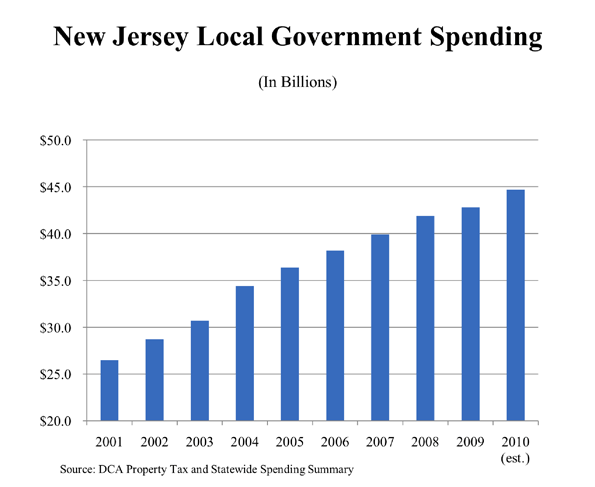
    Republican Governor Chris Christie was sworn into office in January of 2010 in a blue state election shocker. He wasted no time declaring a fiscal state of emergency. New Jersey had raised taxes 115 times in eight years and increased spending from $26 billion in 2001 to $45 billion when Christie took office. The state had a $10 billion deficit and had exhausted its borrowing capacity. Christie slammed on the brakes and froze $2.2 billion of spending. He refused to raise taxes. Christie tackled the Teachers unions, forced the Democratic legislature to impose pension reform, and even cancelled the $10 billion ARC tunnel between New Jersey and New York, the most costly public works project in the United States. Governor Christie has emerged as the first Deconstructor.

    California’s inconsistent governor, Arnold “The Terminator” Schwarzenegger may be forced to become “The Deconstructanator” before he leaves office. Faced with a $19 billion deficit, Arnold was forced to furlough 200,000 government workers. His plan for three day a month furloughs, equivalent to a 14% pay cut, was upheld by California’s Supreme Court. Six labor unions and 37,000 workers settled with Arnold accepting pension reform over furloughs. Further Deconstruction is inevitable.

    Newly elected Governor Brown will not have revenues from housing and dot.com bubbles to sustain the largess of his legislators. On October 23rd, the LA Times reported California shed 37,300 jobs in September. According to the state Employment Development Department, local government absorbed 32,400 of the job losses in September. The public employee layoffs are just beginning as cities and counties join the state in austerity measures. Where the private sector absorbed the brunt of the layoffs in 2008 and 2009, and Obama’s Stimulus bill insulated the public sector in 2010, the next wave will decimate the public employees of California.

    With the mid-term election mandate, federal bail-outs are no longer a viable solution to balance state budgets. Dozens of states have projected budget shortfalls of more than $100 billion for Fiscal Year 2012. Joining California in the state fiscal train wreck category are Illinois, Michigan and New York. Illinois has a budget of $26 billion that is $13 billion in the red. Despite its huge deficit, Illinois legislators increased state spending by 15% this year based on wishful projections that revenues will increase by 17%. Michigan is not far behind with a $4 billion deficit and a budget that was only balanced with $1 billion from the federal government.

    New York has a FY 2012 deficit of $13.5 billion. Its state government is dysfunctional and in denial. Newly elected Governor Cuomo has presented vague plans to solve New York’s misery. E.J. McMahon, executive director of the conservative Empire Center for New York State Policy said, “Cuomo’s budget proposals boil down to vague pledges of reducing costs and rooting out inefficiencies.” Cuomo is no Deconstructor and he will not be able to hide from New York’s fiscal reality. Where rationale fiscal management has long been ignored, Greek-like austerity measures and Deconstruction are inevitable.

    Not All States are Mismanaged

    Rhode Island was in dire straits last year with a $60 million deficit, declining revenues and unemployment at 12%. Governor Donald Carcieri realized the only way out of financial trouble was to make tough choices and embrace “fiscal responsibility.” He trimmed the state workforce through layoffs, attrition and leaving jobs unfilled. A classic deconstructionist, he streamlined and combined offices and agencies. He raised the retirement age for state pensions, cut benefits, and negotiated better contracts with unions and health care providers.

    Another Deconstructor is Governor McDonnell of Virginia. When McDonnell was swept into office with Governor Christie in 2010, Virginia had a $1.8 billion deficit. Virginia’s state budget had grown by 73.4% between 2000 and 2009, much faster than its population and inflation. Since taking office, Governor McDonnell converted the deficit into a $200 million surplus. He overhauled Virginia’s pension system saving $3 billion over 10 years. He imposed an immediate, statewide hiring freeze that covers all noncritical areas of state government. He cut and consolidated boards and agencies saving $20 million per year.

    Deconstruction Goes Global

    Global Deconstruction began in 2010 as a result of reduced worldwide government revenues caused by the prolonged Great Recession. No nation is exempt, including the US. Some like Germany have opted for fiscal discipline, helping to maintain Europe’s strongest economy. The Greeks ignored the crisis and rioted in response to the austerity plan imposed by the European Union. Yet despite their displeasure, austerity is an imposed reality Greek workers cannot avoid.

    The French responded characteristically with paralyzing civil strikes in response to the Sarkozy government increasing the retirement age from 60 to 62. The French unions are adamantly opposed to any change to the pension system. Sarkozy said he would shore up the pension system with “new levies on France’s highest earners and on company profits”. (France 24 International News October 5, 2010)

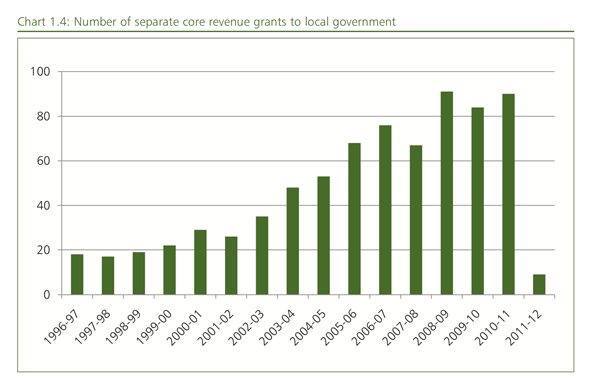
    In England, the response to the fiscal realities of the Great Recession have been draconian cuts which will cost 490,000 public sector jobs 2015. The cuts of $128 billion over 4 years made on “Axe Wednesday” represent 4.5% of their 2014-2015 GDP, equivalent to $650 billion in cuts to the US budget. (Chart 1.4 – SPENDING REVIEW 2010 Presented to Parliament by the Chancellor of the Exchequer by Command of Her Majesty October 2010). The BBC will see its funding cut by 360 million pounds, the budget of all its national radio services combined. Hundreds of London based diplomats will see their jobs disappear. Even the sacrosanct defense budget will receive cuts of 8%. (FT.com Daniel Pimlott October 20, 2010).
    Deconstruction is not limited to Europe. In Russia, Nikolai Volgin, president of the National Assembly of Labour and Social Policy Specialists, said he anticipates widespread layoffs this year, with as many as 1.5 million more people losing their jobs. Russia already has 8 million unemployed. Volgin said, “I do not rule out that there may be 9 to 9.5 million jobless in the country.” If Volgin’s predictions are correct, Russia will see an unemployment rate of 12 to 12.7 percent in 2011.

    Even Cuba has felt the chilling winds of deconstruction. President Raul Castro startled his people in August by stating 20% of Cuban workers may be redundant. He announced they will eliminate 500,000 state jobs in March of 2011 and allow some workers to work for themselves. Cubans are allowed to sell their own fruits and vegetables for the first time. The Cuban workforce is 5.1 million and 95% work for the state. Castro’s deconstruction will effect 10% of all Cuban workers.

    The difficult deconstruction occuring both at home and abroad is just in its earliest stages. Those countries and regions that take the opportunity to reform themselves will be the ones who will emerge with greater prosperity after the Great Deconstruction.

    Robert J Cristiano PhD is the Real Estate Professional in Residence at Chapman University in Orange, CA and Head of Real Estate for the international investment firm, L88 Investments LLC. He has been a successful real estate developer in Newport Beach California for twenty-nine years.

    ¬¬¬

    Other works in The Great Deconstruction series for New Geography
    Deconstruction: The Fate of America? – March 2010
    The Great Deconstruction – First in a New Series – April 11, 2010
    An Awakening: The Beginning of the Great Deconstruction – June 12, 2010
    The Great Deconstruction :An American History Post 2010 – June 1, 2010
    A Tsunami Approaches – Beginning of the Great Deconstruction – August 2010
    The Tea Party and the Great Deconstruction – September 2010
    The Great Deconstruction – Competing Visions of the Future – October 2010

  • The Smackdown Of The Creative Class

    Two years ago I hailed Barack Obama’s election as “the triumph of the creative class.” Yesterday everything reversed, as middle-class Americans smacked down their putative new ruling class of highly educated urbanistas and college town denizens.

    More than anything, this election marked a shift in American class dynamics. In 2008 President Obama managed to win enough middle-class, suburban voters to win an impressive victory. This year, those same voters deserted, rejecting policies more geared to the “creative class” than mainstream America.

    A term coined by urban guru Richard Florida, “the creative class” also covers what David Brooks more cunningly calls “bourgeois bohemians”–socially liberal, well-educated, predominately white, upper middle-class voters. They are clustered largely in expensive urban centers, along the coasts, around universities and high-tech regions. To this base, Obama can add the welfare dependents, virtually all African-Americans, and the well-organized legions of public employees.

    These are the groups for whom Obama’s persona and policies pack the greatest appeal. Since Obama took office, the prime beneficiary of fiscal and monetary policies has been Wall Street, which has seen a nice 30% rise in the market and record bonuses. Large corporations, which are largely financed by stocks and bonds, have seen their profits soar over 40%, in part due to access to easy money.

    The financial boomlet is most marked in key creative class strongholds such as Manhattan, Boston and San Francisco, as well as their surrounding, super-affluent suburbs. The largesse benefits not only the traders, but the high-priced lawyers, accountants and publicists serving the financial elite. It has also benefited the high-end consumer industry, including the arts, which support much of the creative class. Not surpisingly, the Democrats scored well in these areas last night despite the GOP tide.

    The creative class also has benefited from the lavish expenditures of public funds to major universities for research. This has lifted the prospects of the professoriate at the elite colleges from which Obama takes much of his advice. Finally the administration has rewarded its friends and funders among Silicon Valley venture capitalists. Once self-described paragons of entrepreneurial risk-taking, they increasingly search out government incentives and subsidies to pay for their large bets on renewable energy technology.

    In contrast, the traditional middle class has not fared well at all. This group consists of virtually everyone who earns the national household median income of $50,000 or somewhat above. They tend to be white, concentrated outside the coasts (except along the Gulf), suburban and politically independent. In 2008 they divided their votes, allowing Obama, with his huge urban, minority and youth base, to win easily.

    Since Obama’s inauguration all the economic statistics vital to their lives–job creation, family income, housing prices–have been stagnant or negative. Not surprising then that suburbanites, small businesspeople and middle-income workers walked out on the Democrats last night. They did not do so because they loved the Republicans but because the majority either fears unemployment or already have lost their jobs. Many were employed in the industries such as manufacturing and construction hardest hit in the recession; it has not escaped their attention that Obama’s public-sector allies, paid with their taxes, have remained not only largely unscathed, but much better compensated.

    Of course, few on the progressive left–more expressive of a dictatorship of the professoriate than that of the proletariat–seem likely to confront these class realities. Many will ascribe last night’s disaster to the dunderheadness of the American people, or to the clever venality of the right. Certainly some tea party candidates, inexperienced and untested, did appear incapable of passing a high school civics test. But the results had less to do with Karl Rove’s money than the Democrats disconnect with the middle class.

    The real problem for the Democrats lies with fundamental demographics. The middle class is a huge proportion of the population. Thirty-five million households earn between $50,000 and $100,000 a year; close to another 15 million have incomes between $100,000 and $150,000. Together these households overwhelm the number of poor households as well as the highly affluent.

    In contrast, the “creative class” represents a relatively small grouping. Some define this group as upward of 40% of the workforce–largely by dint of having a four-year college degree–but this seems far too broad. The creative class is often seen as sharing the hip values of the Bobo crowd. Lumping an accountant with two kids in suburban Detroit or Atlanta with a childless SoHo graphic artist couple seems disingenuous at best. In reality the true creative class, notes demographer Bill Frey, may constitute no more than 5% of the total.

    At the same time, this affluent constituency may be more than offset by another more traditional upper class. This consists of people closely tied to such basic sectors as agriculture, fossil fuel production, suburban home-builders and the aerospace industry. These voters have, for the most part, remained solidly Republican for generations, and but many followed the “creative class” into the Democratic Party in 2006 and 2008. Last night this part of the upper class shifted back toward their political home.

    But the real decider–to use George W. Bush’s unfortunate phrase–remains the much larger, more amorphous middle class. Given the economy of the past two years, the subsequent alienation of this group should pose no mystery. Suburban swing voters didn’t suddenly turn into racists or right-wing cranks. Instead they have seen, correctly, that Obama’s economic policy has to date worked to the advantage of others far more than themselves or their families. Until the Democrats and Obama can prove that they once again can serve the interests of these voters, they will continue to struggle to recapture the optimism so appropriate two years ago.

    This article originally appeared at Forbes.com.

    Joel Kotkin is executive editor of NewGeography.com and is a distinguished presidential fellow in urban futures at Chapman University. He is author of The City: A Global History. His newest book is The Next Hundred Million: America in 2050, released in February, 2010.

    Photo by World Economic Forum

  • “Redneck” Calgary Elects Liberal Muslim Academic Mayor: World Doesn’t End

    Calgary municipal politics rarely makes news outside of the city. Going into this year’s municipal election, I had reason to believe this would change. I came to Calgary to manage the campaign of the runner up from the last election. He is a Muslim (specifically Ishmaili), and an outsider to the political establishment. People told me there’s no way someone like that could be elected in Calgary. I’m happy to say that they were proven wrong. Unfortunately, I had nothing to do with this.

    My former candidate is a colorful guy. He had lived in Calgary for less than five years before running for mayor the first time around. His odds were pretty steep. Mayor Dave Bronconnier had garnered over 80% of the vote in the previous election. His closest rival had just over 5%. My candidate spent over a million dollars of his own money to run a viable campaign against the two term incumbent. He finished that election with a quarter of the votes. Internal polling suggested he had a serious chance, until false allegations concerning his past business dealings in Kenya derailed his candidacy.

    He is also a strong believer that Calgary’s redneck image is outdated. Calgarian values are old fashioned in many ways, many of them good. There is no major Canadian city where people are as supportive of free-enterprise as Calgary. Think of it as Houston North. The economy is largely driven by the oil and gas money, and it is perceived as being a very socially conservative, predominately white city. This perception is out of date. Nearly a quarter of Calgarians are members of visible minority groups, and the city elected Canada’s first Muslim Member of Parliament. My candidate mocked this perception. One of his ice breakers with skeptics of his candidacy was to tell them that “redneck Calgary is ready to elect a brown, bald guy from Kenya” as Mayor. It turns out he was right about the “brown” part.

    I ended up leaving that campaign early. We had different visions for the campaign, and the candidate always wins that argument. He wound up pulling out of the race the day before the election officially got underway. I harbored suspicions that the only reason he came in second the last time was that he happened to be the only guy willing to spend a million bucks to run against a popular incumbent. Had he not run, the two term incumbent would have walked to another landslide victory. Some people were angry with the incumbent, and he was the other name on the ballot they recognized.

    My faith that a member of a visible minority group could be elected Mayor of Calgary dwindled. But in the last few weeks of the campaign, something odd began happening in the polls. A man by the name of Naheed Nenshi started to poll at 20%. Few people took his candidacy seriously before this. His numbers began to climb into the 30% range in the final week. I started making long shot bets with friends that Nenshi would win, but I didn’t really expect it to happen. Surely the polling was wrong. Redneck Calgary couldn’t possibly elect a Liberal Muslim academic as Mayor.

    The polling actually was wrong. Since many young people only have cell phones, they are underrepresented in polls. It turns out that the polls massively underestimated Nenshi’s support. He didn’t just sneak by. Turnout was an astonishing 53%–shattering records for the last 3 decades—and he grabbed 40% of the votes. This was supposed to be a two way race between fiscal hawk alderman Ric McIver, and popular news anchor Barb Higgins. Elections don’t always turn out as they’re scripted by the pundits.

    The fact that we’ve actually elected a Muslim Mayor has lead to a serious rethink of Calgary’s redneck reputation. Pundits claim that this represents a shift in the city’s attitude towards immigrants. I disagree. Like its American energy town counterpart Houston, it’s an open, opportunity-oriented city. People don’t care if you’re white, brown, or from Saskatchewan. Calgary is a magnet for entrepreneurial people. It is a city that was built on people from all over the world seeking opportunities. One fifth of Calgarians are immigrants.

    “Go west, young man” is not a mantra that was exclusively adopted by white Protestant men. Nenshi was born and raised in Calgary, but his mayoralty would not have been possible if it weren’t for the hospitable Calgarian attitude.

    Frankly, he’ll probably do an alright job. Nenshi has an impressive business background, and his knowledge of urban public policy and municipal government is extensive. He’s more of a market liberal, than the dogmatic leftist that his critics painted him as. He wants more public amenities, but understands fiscal prudence and the need for efficient regulations.

    No matter how much his critics called him a socialist, Nenshi was the candidate who was able to convince voters that he knew how to provide the necessary services without breaking the bank. Voters wanted a clear vision of the city’s future, and that’s what Nenshi provided. People knew what they were voting for. Frontrunner Ric McIver offered slightly lower tax increases, combined with major spending initiatives. We’ve all seen what happens when politicians promise tax cuts without a plan to reduce spending. This isn’t a vision, so much as a recipe for disappointment.

    Calgarians wanted to elect a Mayor who would clean up City Hall. Nenshi offered that, and people didn’t care what God he worships (or doesn’t). Calgarians didn’t vote for a Muslim mayor any more than they voted for a Protestant Mayor the last election. They voted for the guy they thought would get things done. That’s the Calgarian attitude.

    Photo by 5of7

    Steve Lafleur is a public policy analyst and political consultant based out of Calgary, Alberta. For more detail, see his blog.

  • The Real OC: Diverse, Dynamic and — Dare I Say — Progressive

    I recently returned to Orange County after a decade’s absence, fully aware that a stereotype of all-white, card-carrying-John Birchers still exists among many who remain unfamiliar with facts on the ground here.

    I never bought that old saw in the first place.

    And now, on a second venture into OC, I’m amazed by how deeply those old stereotypes have been buried under the accumulated accomplishments of everyday folks.

    The truth is that OC can rightfully claim ground as a leader when it comes to all sorts of popular buzzwords that are falsely applied to a lot of so-called cosmopolitan places.

    Start with “diversity,” a sop for all seasons in Los Angeles and other urban centers, where ethnic communities often are treated like so many pawns.

    Then there’s “dynamic,” another adjective that many metropolitan areas seem to think is theirs simply for the taking.

    Dare I add the presumptuous “progressive” to the list of over-used and seldom-earned buzzwords?

    I shall.

    In many ways OC, with its suburban reputation and libertarian leanings, comes closer to living up to the actual meaning of those words compared to many of the so-called cosmopolitan centers that cling to old stereotypes about this place.

    How do I figure?

    Take the campaign between Democratic incumbent Loretta Sanchez and Republican challenger Van Tran for the 47th District seat in the U.S. House of Representatives, an area that includes much of Central County.

    Tran has made Sanchez work hard in her re-election bid, no small feat considering her long incumbency.

    Neither candidate can count on ethnic appeal alone to propel them to the top. Latinos account for about 68% of the population in the district, which helps Sanchez. But voter registration is a different matter. Asians make up a smaller-but-still-significant base for Tran, with about 15% of the district—slightly more than whites. The winner will have to pick up a good chunk of voters outside their respective ethnic bases.

    That makes for a competitive race in a general election.

    And that’s a rarity in too many metropolitan areas.

    Consider Los Angeles, where ethnic communities too readily are factored like so many widgets into the calculus of ethnic politics. Electoral districts are carved up to turn this or that ethnic community into a lock for one political party or another.

    Candidates in these tailored districts typically get in line with power brokers before launching campaigns. There are occasional primary contests. But the differences between candidates in those intraparty affairs are usually so small that any debate is dominated by minute matters rather than any real difference in philosophies or policies.

    That’s stagnation.

    Some so-called cosmopolitan types might look at OC and say that the Sanchez-Tran race is an anomaly because of the challenger’s heritage. The local Vietnamese community ended up in OC after its founders fled a communist government, making it a natural for conservative, Republican politics here. That makes the community an outlier in terms of politics, ethnic or otherwise.

    That might hold up if it weren’t for Phu Nguyen, the Democratic nominee for the 68th District seat in the California Assembly, a territory that stretches from Anaheim to Newport Beach.

    Nguyen and Tran—Democrat and Republican— together belie any notion that the Vietnamese community is an outlier because of over-riding Republican loyalties in the local Vietnamese community.

    Nguyen’s opponent for the Assembly seat, Costa Mesa Mayor Allan Mansoor, points in the same direction as he engages in their high-spirited debate.

    Mansoor is a Republican who springs from Arabic and Finnish stock. The district that he and Nguyen vie to represent takes in parts of Little Saigon and Little Arabia, but does not feature a majority of voters of Vietnamese or Arabic heritage. There’s no big Finnish contingent, either.

    So you have a couple of candidates who can be readily identified by their ethnicities locked in an electoral battle that goes well beyond ethnic politics. They must reach beyond ethnic politics because the district in the heart of OC is too diverse for such narrow appeals.

    I don’t see any saints in the local political lineup. I’m willing to bet that both parties have tried to slice and dice the map to come up with districts that would make cynical use of ethnic communities.

    The point here is that OC attracts the sort of residents who reach beyond the familiar, pushing out here and bumping into one another there. Sure, Little Saigon is the major center of Vietnamese-American life, Santa Ana has an undeniably Latino core, and there is a Little Arabia in Anaheim. Yet those centers function more as cultural touchstones and less as assigned areas for members of those respective ethnic communities.

    The truth is that OC’s population mix is pretty well spread geographically and socioeconomically, with plenty of ambition—political and otherwise—throughout.

    That’s a different sort of diversity compared to what we hear so much about in a lot of so-called cosmopolitan centers.

    Sounds pretty dynamic.

    You might even call it progressive.

    Sullivan is managing editor of the Orange County Business Journal (ocbj.com)

    Photo by vansassa

  • Help Mexico: Legalize Pot

    Mexico is disintegrating. Bombings, kidnappings, assassinations, and shootings are now common. Recently, the mayor of Tancitaro Mexico was stoned to death. Mexican corruption is so rampant that United States law enforcement officials are reluctant to work with their Mexican counterparts out, fearing perverse results.

    The crimes are perpetuated by ruthless criminals whose depravity cannot be overstated. These are after all, people for whom torture, rape, and beheadings are normal parts of their business, and they show little reluctance to commit these atrocities against children. This link needs a strong-stomach warning.

    Most of Mexico’s violence and corruption has as much to do with our war on drugs than anything indigenous. It is thus preventable with a change of U.S. policy. This is not only in Mexico’s interest but ours as well: the drug-related violence has already begun to spill over into the United States.

    This cannot be avoided. The United States provides the customer base and the distribution network for Mexican drugs necessarily permeates the country. Increasingly, the product is produced in the United States. Travel in less-frequented California and Arizona wildernesses and parks is already dangerous. The problem is so pervasive that a fishing magazine, California Flyfisher, had an article in its October 2010 issue on how to avoid violent encounters with marijuana growers while fishing. The article documents how widespread and serious the problem is in California.

    The most immediate impact of Mexico’s violence’s will be felt along our common border. It’s already a violent place. It will become even more violent. However, the impacts will eventually be felt throughout the United States, challenging prison officials and law enforcement everywhere. Eventually, the corruption will infect our government and police, and the violence will impact everyone. For those who doubt that it can happen here, I recommend reviewing the history of prohibition in the United States.

    There will be other less direct implications of continued drug violence in Mexico. Immigration from Mexico will increase, but the composition of the immigrants will likely change. To date, our Mexican immigrants have mostly been relatively young, low-human-capital workers. As Mexican property rights—and what property rights can exist if your life is not reasonably secure?—decline, the middle and upper-middle class will be looking for alternatives. Many of them will see the United States as an attractive option.

    This can only be good for America. We should welcome these people, the wealth, the human capital, and the physical capital they will bring. They will provide a vigorous stimulus to our economy and our communities. These benefits, however, will not outweigh the costs of the crime and corruption.

    If we want to avoid the crime and corruption, we really need to abandon prohibition. We have a precedent.

    America’s 13-year nightmare of alcohol prohibition was initially popular. The eighteenth constitutional amendment creating prohibition passed both houses of congress with votes of 65 to 20 in the Senate and 282 to 128 in the House. It was ratified by 36 of the then 48 states in only 13 months. Eventually, 46 states ratified the amendment with only Connecticut and Rhode Island rejecting it.

    Ironically, the 21st amendment repealing prohibition was at least as popular as the 18th amendment that created prohibition. It passed the Senate with a vote 63 to 21 and the House by a vote of 289 to 121. Ratification by the necessary 36 states was achieved in only ten months, through State Ratifying Conventions. To date, the repeal of prohibition is the only constitutional amendment ratified by state conventions rather than by state legislatures.

    In only 13 years, prohibition went from being popular to being so unpopular that the amendment repealing it was ratified in 10 months. Something had changed. Prohibition had sparked an upsurge in crime and expanded the Mafia into a national powerhouse. Enforcement costs had soared. Government revenues had declined, and many officials corrupted. John D. Rockefeller summarized America’s change of heart:

    When Prohibition was introduced, I hoped that it would be widely supported by public opinion and the day would soon come when the evil effects of alcohol would be recognized. I have slowly and reluctantly come to believe that this has not been the result. Instead, drinking has generally increased; the speakeasy has replaced the saloon; a vast army of lawbreakers has appeared; many of our best citizens have openly ignored Prohibition; respect for the law has been greatly lessened; and crime has increased to a level never seen before.

    Today, alcohol still imposes huge personal and social costs, but we know that those costs are less than what we paid for prohibition. Drugs also impose huge personal and social costs, and the costs could increase in the event of legalization. The impacts of alcohol and drugs abuse on the abuser and those around him are terrible. The impacts of prohibition are worse.

    Continuation of drug prohibition will result in increased crime, increased corruption, and ever more of our public lands being diverted to illegal production. Thousands of people will continue die in the United States, Mexico, and other countries. The numbers of bombings, kidnappings, assassinations, and shooting will continue to increase. Thousand more will survive with diminished lives, a result of wounds, the loss of property, the loss of loved ones, or a life dominated by fear.

    Californians, by voting for Proposition 19, have to opportunity to take the first step in reducing the costs of prohibition. Despite the heartache and loss that drug abuse brings, voting for Proposition 19 is the humane thing to do, and it is one way that California can restore its now beleaguered reputation as a national thought leader.

    Bill Watkins is a professor at California Lutheran University and runs the Center for Economic Research and Forecasting, which can be found at clucerf.org.

    Photo by Troy Holden

  • Governor Christie Cancels Under-Construction Tunnel in Unprecedented Move

    New Jersey governor Chris Christie reaffirmed his decision to cancel the “access to the regional core” tunnel across the Hudson River from New Jersey to New York. Christie had suspended his previous decision pending discussion of alternatives with the US Department of Transportation.

    In the final analysis, according to Christie, none of the alternatives would have capped New Jersey’s liability at its present level, which assumed a project cost of $8.7 billion. Christie told the Moorestown Community House, “No more blank checks from the taxpayers of New Jersey, not on my watch.”

    Current estimates for the project have range from $9.8 billion to more than $12 billion, which would require New Jersey to pay an additional $1.1 billion to $3.3 billion, since under the funding agreement approved by former governor John Corzine, New Jersey was responsible for any cost overruns. In fact, based upon the experience with other projects (such as Boston’s Big Dig), New Jersey could have seen its bill run to another $10 billion or more.

    Christie’s decision is unprecedented. This may be the first time in decades that a major infrastructure project already under construction has been cancelled because its costs had spiraled out of control. Such cost performance has been the rule, rather than the exception. Major research by Oxford University professor Bent Flyvbjerg, Nils Bruzelius (a Swedish transport consultant) and Werner Rottenberg (University of Karlsruhe and former president of the World Conference on Transport Research) covering 80 years of infrastructure projects found routine under-estimation of costs and over-estimation of ridership and revenue (Megaprojects and Risk: An Anatomy of Ambition ).

  • The Privatization-Industrial Complex

    “I think this is just the latest way for people to make money off state and local governments. This is the new way the investment banks, their lawyers, and consultants squeeze the taxpayers….They’re going around making these deals, and it’s very lucrative. It’s like a circus coming to town.” – Clint Krislov

    Privatization has long been advocated by many conservatives as a good government measure. Traditionally, privatization was used a tool that subjects government monopolies to competition from the marketplace, driving down costs and improving quality of service. Privatization pioneer Steve Goldsmith, former mayor of Indianapolis and now deputy mayor of New York City, used to apply what he called the “Yellow Pages test.” If he could open the Yellow Pages and find several companies providing a service, he wondered why government should be in that business.

    As Mayor, Goldsmith privatized dozens of city services in Indianapolis, saving the city an estimated $120 million the process. This ranged from contracting out services, to forming a public/private partnership to implement a $500 million infrastructure improvement plan to hiring private managers to run – but not own or lease – the airport and water utility.

    Today, sadly, privatization is less about Goldsmith style operational effectiveness and more about providing jackpots for financiers who stand at the core of a growing privatization-industrial complex. Cities and states salivate over ways to sell or lease off underperforming public asset for large payouts. With local governments cash-strapped and the public unwilling to pay more in taxes, it is politically difficult to even bring user fees to a market rate. Combined with the potential billions in payoffs – Indiana received $3.9 billion for its toll road and Chicago $1.1 billion for its parking meter system – the appeal is obvious.

    But these transactions differ markedly from the Goldsmith-style privatization. They are driven not by efficiencies but by an investment banker mindset focus on money and narrow parameters of the asset operations. They also provide enormous temptation to elected officials to grab the money now even at the expense of future generations. They are also rife with potential conflicts of interest and incentive problems.

    One major source of conflict comes with the professional advisors that drive the deals. Since long term leases involve so much money and are so complex, they require millions of dollars of services from investment banks, lawyers, financial advisors, etc. Unlike for typical government transactions such as issuing bonds or contracting out services like printing, building maintenance, or call centers, for which cities have some experience, the vast majority of cities have little in house expertise for complex financial transactions.

    Thus local officials are at the mercy of these out of town experts to give them the best advice they need to defend the public’s interest. But what advice can we expect from these firms, who have a stake on highly leveraged deals? The people in the firm may be technically competent and possess the highest levels of personal integrity, but still are prisoners of a structural conflict of interest in promoting privatization transactions.

    Consider Morgan Stanley. An arm of Morgan Stanley was the winning bidder on the Chicago parking meter lease. That deal is widely seen as a disaster, giving the idea privatizing meters a black eye, and engendering such headlines as “Morgan Stanley’s $11 billion makes Chicago taxpayers cry (Bloomberg) and “Company [Morgan Stanley] Piles Up Profits from City’s Parking Meter Deal” (NY Times).

    Now Morgan Stanley is back, this time advising Pittsburgh and Indianapolis on potential parking meter privatizations. Morgan Stanley has a huge structural incentive to want those deals to go through. It would restart the market for parking meter privatization, and position the firm as the preferred advisor to cities. Even where they were not the city’s advisor, a restarted parking meter market means they could potentially bid on many more assets.

    If you make money on privatization transactions, then no deals means no money. So obviously these firms have every reason in the world to promote privatization and see deals go through regardless of whether any particular deal is good or not. This doesn’t mean they are crooks, it’s just the reality. These firms now form of the core of the “privatization-industrial complex” with an incentive to cheerlead for leading public assets because that’s how they make their money. They need deal flow, the more transactions the better.

    This was picked up on by Harrisburg, PA. Facing bankruptcy, the state offered an $850K grant to hire Scott Balice Strategies of Chicago, one of the nation’s top privatization financial advisors. The city council turned it down. As one city councilor noted, “Their recommendation is always the same: ‘sell assets’”.

    Many of these investment banks, operators, financial advisers, and law firms also have tight links with each other, and participate on deals together, often as partners, other times as opponents. The Pittsburgh Post-Gazette noted how many of these firms have ties to Chicago’s earlier round of privatization. “When Pittsburgh proposed leasing its public parking facilities, the city became a magnet for a passel of firms – many of them connected to Chicago by blood, politics or business – that pursues similar deals around the country. The firms may be partners in one city, rivals or referees in the next.” The winning bidder on the Pittsburgh parking transaction is actually Morgan Stanley’s partner in the Chicago deal, for example.

    These potential conflicts make it very difficult for cities to know they are making a good deal, especially since they lack the experience necessary to independently judge it. Right now, they often are at the mercy of their advisors. And ask yourself this: when was the last time a city or state looked seriously at one of these deals and their advisors told them not to do it?

    This is frequently combined with traditional clout driven contracting. Many of the Chicago parking meter firms had tight links to the Daley administration. Similarly, in Indianapolis a city-paid chief advisor to the office of the mayor is conveniently also a registered lobbyist for the winning bidder. This combination is a recipe for disaster, resulting in very long term deals that could be very bad for the public.

    Long term lease deals can still make sense – if they are done right. The Chicago Skyway and Indiana Toll Road deals were both home runs, for example. But given the enormous risks if something goes wrong, governments must put into a place a robust process for protecting the public, with a full airing and mitigation plan for the bad incentives that populate so many areas of this field.

    Aaron M. Renn is an independent writer on urban affairs based in the Midwest. His writings appear at The Urbanophile.

    Photo by ehfisher

  • Suburban Nation, but Urban Political Strategy

    Ideologues may set the tone for the national debate, but geography and demography determine elections.

    In America, the dominant geography continues to be suburbia – home to at least 60 percent of the population and probably more than that portion of the electorate. Roughly 220 congressional districts, or more than half the nation’s 435, are predominately suburban, according to a 2005 Congressional Quarterly study. This is likely to only increase in the next decade, as Millennials begin en masse to enter their 30s and move to the periphery.

    Now the earth is shaking under suburban topsoil — in ways that could be harmful to Democratic prospects. “The GOP path to success,” according to a recent Princeton Survey Research Associates study of suburban attitudes, “goes right through the suburbs.”

    The connection between suburbs and political victory should have been clear by now. Middle- and working-class suburbanites keyed the surprising election win of Republican Sen. Scott Brown in Massachusetts in January. Suburban voters were also crucial to the 2009 Republican gubernatorial victories in Virginia and New Jersey, two key swing states.

    Nationally, suburban approval for the Democrats has dropped to 39 percent this year, from 48 percent two years ago. Disapproval for President Barack Obama is also high — nearly 48 percent of suburbanites disapprove, compared to only 35 percent of urbanites. Even Obama’s strong support among minority suburbanites, a fast-growing group, has declined substantially.

    Many suburban voters, notes Lawrence Levy, executive director of the National Center for Suburban Studies at Hofstra University, appear to be undergoing “buyer’s remorse” for backing Obama and the Democrats last time around .

    Much of the suburban distress, of course, stems from the still perilous state of the economy. Obama’s mix of fiscal and monetary policies has provided much succor to Wall Street, where stock prices have soared 30 percent, and to big corporations, whose profits have risen by 42 percent. This has been great for Manhattan plutocrats — but not particularly helpful for the suburban middle class.

    Indeed the indicators most important to suburbanites – private sector employment, weekly earnings, home prices and disposable income – have all stagnated or even fallen since Obama took office. Fifty-three percent of suburban residents, according to the Princeton study, described their financial situation as “bad.” The vast majority have either lost their job or know someone who has lost theirs. Almost 40 percent have either lost their home or know someone who did – up from 27 percent in 2008.

    Given the stubbornness of this recession, neither the current administration or Congress gets credit for improving conditions. Barely 10 percent of suburbanites polled think the stimulus helped, one-third thought it hurt and the rest said it made little difference.

    But there may be other, perhaps more nuanced, reasons for the administration’s suburban disconnect. Many of the administration’s most high-profile initiatives have tended to reflect the views of urban interests – roughly 20 percent of the population – rather than suburban ones.

    When the president visits suburban backyards, it sometimes seems like a visit from a “president from another planet.” After all, as a young man, Obama told The Associated Press: “I’m not interested in the suburbs. The suburbs bore me.”

    More recently, Obama made clear that he is more interested in containing suburbia than enhancing it. In Florida last February, the president declared, “the days of building sprawl” are “over.”

    Much of the Obama policy agenda – from mass transit and high-speed rail to support for “smart growth” policies – appeals to city planners and urbanistas. Transportation Secretary Ray LaHood has spoken openly of “coercing” Americans out their cars and the Department of Housing and Urban Development is handing out grants to regions which support densification strategies that amount to forced urbanization of suburbs.

    This is a problem since the vast majority of Americans – consistently more than 80 percent – do not prefer to live in dense big cities. Most want a house rather than being forced to live in an apartment. And for all but a handful, a car, not a bus or train, remains not only the preferred way to get to work, but often the only feasible means to get work — mostly in the suburbs.

    If the Democrats want to mount an electoral comeback in suburbia, they need to take these realities into account . There are just not enough votes in core cities, upscale close-in suburbs or college towns to knit together a majority.

    Recovering suburbia s is not impossible for Democrats. Obama himself proved this in 2008, by essentially tying for the suburban vote — a remarkable achievement. Bill Clinton won in 1992 and especially 1996 by competing well in suburbs and exurbs. In the last two election cycles, the shift of suburbanites to the Democrats keyed the party’s steady gains in the Congress – accounting for, according to GOP sources, as many as 24 seats in the last two congressional elections.

    Most important, suburbanite identification with the Republican Party has continued to erode over the past two years, according to the Princeton survey. Instead the big winners have been independents, who have grown to 36 percent from 30 percent of the suburban electorate.

    These voters, for the most part, also tend to be less strident in their cultural views than either secular urbanites or rural evangelicals. More than one in five suburbanites is an ethnic minority — which could also help the Democrats.

    But to win even these suburban voters, the Democrats must offer solutions to suburbanites that go beyond devising their forced conversion to dense urbanity. They could refocus their efforts on climate change to suburbs-friendly strategies like telecommuting — perhaps the cheapest, quickest and most socially acceptable way to cut down on greenhouse gas emissions.

    Outside of greater New York, which has half the nation’s transit users, there are already about as many telecommuters as transit riders. Why not work to expand this phenomena, so well suited to the vast majority of the country?

    These suburb friendly approaches should be examined as the Democrats reflect on what many expect to be midterm electoral setbacks. They can only compete successfully on a national basis by jettisoning their apparent disdain toward the aspirations of suburban homeowners and begin treating them with respect.

    This article originally appeared at Politico.

    Joel Kotkin is executive editor of NewGeography.com and is a distinguished presidential fellow in urban futures at Chapman University. He is author of The City: A Global History. His newest book is The Next Hundred Million: America in 2050, released in February, 2010.

    Photo by Caesar Sebastian

  • Prosperity Index Shows That Democracy Still Works Best

    With the Cold War well behind us, the real choice between systems lies in a growing variation in the form of capitalisms. Choices now range from the Chinese Leninist model – essential centrally planned exploitation of the greed gene – to various kleptocracies, divergent Anglo-American systems and varied forms of European capitalism.

    None of these systems are likely to excite the most rabid Hayekian, especially now that the once free market haven Hong Kong is being integrated into the Chinese command and control system. But still, according a new study by my colleagues at the Legatum Institute, when it comes to delivering the best economic environment for people and families various forms of liberal capitalism still perform best.

    The Legatum Prosperity Index found that all the more prosperous places – not only by income, but by quality of life, environment, education and health care – almost exclusively are democratic states. “Prosperity,” the report concludes, “is found in entrepreneurial democracies that have strong social fabrics.”

    This is a critical point given the current focus and admiration for the more centralized, state-controlled models emerging in places like Russia, China and Brazil. As an emerging country, China may enjoy the highest rate of growth but overall still does not provide most of its citizens anything close to what we might consider the “good life.” China, the Legatum study found, still lags behind in a host of factors besides democracy, ranging from poor health care and a degraded environment to an overweening state role in the private sector.

    In contrast, without exception, the most prosperous states are not so much the fastest-growing economies but those democracies that have been able adjust successfully to the emerging reality. At the top of the list are the northern democracies, led by Scandinavian countries Norway (#1), Denmark (#2), Finland (#3) and Sweden (#6). These are joined by other small, compact cold-weather states such as the Netherlands (#9) and Switzerland (#8). Rounding out the top 9 on the list are three resource-rich Anglo-American states, (#4) Australia, (#5) New Zealand and (#7) Canada.

    All these countries sell either resources – Norway, Australia and Canada – to emerging Asian super-powers or expertise and services. Most countries possess powerful niches that drive their economies and promote exports to developing countries. These include green technology (Denmark), motor vehicles, telecommunications, pharmaceuticals and forestry (Sweden), information technology (Finland), engineering and finance (Switzerland), business services , chemicals and plant science (Netherlands). The tiny Netherlands, for example, is China’s second largest European trading partner.

    The ability to shift gears also can be seen in Germany which improved its ranking to 15 due in part to rising industrial exports to emerging economies. Like the Scandinavian countries, Germany economy has also become significantly less regulated in the past decade. They are no longer the ultra generous social welfare states imagined by some liberals , but increasingly adapted to a tougher global marketplace.

    In this sense these northern states resemble the old Hanseatic trading cities of 13th century northern Europe, which created, in the words of historian Fernand Braudel, a “common civilization created by trading” from England to Russia. At its peak the League included dozens of cities across Northern Europe. Like the old Hansa, today’s version share largely Germanic or Nordic cultural roots, and have found their niche by selling high value goods, to distant burgeoning markets in Russia China, and India.

    This strong performance contrasts dramatically with the emergence of what might called ”a second Europe” made up of what I call the Olive Republics. These countries – Spain, Portugal, Italy, and Greece – remain functioning democracies but without the kind of effective governance found in their better managed, more fiscally responsible northern neighbors. These states have all fallen in over the past year in the Legatum rankings , falling into the 20s and even 30s – something very rare for long established European economies.

    Once again, the critical issue lies with adjustment. In contrast to the northern powers, the Olive Republics do not appear to be adjusting well to the general shift of global demand to the east. After all, besides a great history and culture, how much do these countries have to sell the Chinese, Indians and Brazilians ? Trips to Barcelona or expensive Italian food may be popular among the new rich of Shanghai or Singapore, but its Volvos, Mercedes, BMWs, not Fiats, that crowd the streets. In high tech, increasingly dominated by the U.S. and Asian countries like India and South Korea, the only big player along the Mediterranean is now greater Tel-Aviv.

    What about the other big Western democracies? Most rank between the ascendant Hansa and the depressed Olive Republics. The mega-giant of the liberal democracies, the U.S., ranks 10th, followed by the 13th ranked United Kingdom, 18th ranked Japan and 19th ranked France. All these countries retain strong technological prowess and entrepreneurial savvy, but have proven more adept at consuming goods and services from the rising Asian powers than selling to them. Governance, particularly fiscal management, also generally has been less impressive than among the Hansa states.

    But perhaps the best proof that democracy remains an economic asset can be found not in Europe or North America, but among the developing economies. China may dominate the world’s current trajectory through its huge population and expanding economy but its level of prosperity still lags that of democratic Australia and New Zealand. It also ranks well below demonstrably more democratic countries (albeit imperfectly liberal) like #17 Singapore, #22 Taiwan and #27 South Korea. These are emerging as the Hansa of Asia, selling high-technology products and services to the emerging Asian powers . If China ever could achieve some level of democratic governance say of South Korea, the world would need to really watch out.

    Similar patterns can be found across the rest of the developing world.In the Middle East, the relatively tolerant United Arab Emirates (#30) that leads the list. The only legitimate constitutional democracy in the region, Israel (#36), soars way ahead of repressive but oil-rich Saudi Arabia (#49) not to mention such stark autocracies as Syria (#83), Iran (#92) and Yemen (#105).

    In sub-Saharan Africa, democracies such as Botswana (#52) and (#66) South Africa generally lead the pack, while resource rich, but dictatorship ridden Zimbabwe ranks a meager 110. In Latin America, liberal democracies such as #28 Uruguay, #32 Chile and #33 Costa Rica sit on top while minerals rich but autocratic Venezuela (#75) and Bolivia (#82) sink closer to the bottom.

    Of course, it’s fashionable today in some circles to toast autocracy – particularly among our growing ranks of Sinophiles on both right and left. But the Legatum study suggests that democracy, not top-down dictatorship, remains the surest way to build a prosperous society. True, sometimes a dictatorship can spark faster growth in the short and even medium run but only democracies have proven capable of steering countries beyond rapid growth and into true, sustained prosperity. For this reason, democratic capitalist countries remain at the apex of the global economy outperforming challengers by the measure that most matters: delivering a secure, healthy and affluent life to the vast majority of their citizens.

    This article originally appeared at Forbes.com.

    Joel Kotkin is executive editor of NewGeography.com and is a distinguished presidential fellow in urban futures at Chapman University. He is author of The City: A Global History. His newest book is The Next Hundred Million: America in 2050, released in February, 2010.

    Photo by Rob Boudon

  • Shifting Voter Demographics: America is a Different Country

    As we head to the unpredictable 2010 elections, many pundits have been left scratching their heads and admitting that they really have no idea how this election is going to turn out. Nate Silver, today’s most careful analyst of election statistics and forecasting, examined a variety of indicators and concluded that there were more closely contested and hard-to-predict congressional races this election than ever before.

    The biggest reason for this uncertainty lies in the fact that America’s electorate is changing as fast as the country’s demographic and generational characteristics, and in the process these changes overturn old assumptions about how politics works – and too often doesn’t work – in America.

    In 1965 the nation was 89% white and 11% black, about the same as it had been during the previous century. Since then, high levels of Asian and Latin immigration have produced an America today which is 66% white and 33% “people of color,” a tripling of the minority population in only four decades. Remarkably, 10% of Americans are of Mexican descent and about 5% of the electorate speaks primarily Spanish. For the first time in US history a president of mixed race, although one who considers himself to be African-American, resides in the White House.

    The second big demographic change is the emergence of the largest, most diverse generation in American history: the Millenials. Like it or not, this generation will dominate the political and cultural life of 21st century America as much as the Boomers did in the late 20th century. The Millennial Generation, born from 1982-2003, is sometimes condescendingly referred to as the “youth vote,” but it should be more accurately recognized as the biggest and most important new voting cohort in America. There are about 95 million Millennials, about half of whom are now of voting age. One out of four eligible voters in 2012 will come from this generation. That will expand to more than one out of three voters by 2020.

    This is the fundamental driver of American political change: Every two years the percentage of non-whites and Millennials increases, a trend likely to continue in the decades ahead. Non-whites will grow from 33% of the population today to as much 50% by 2042. There will also be a rapid increase in the “mixed race” population, which might further complicate matters.

    As these populations grow, a new political reality will take hold in areas most immediately affected, especially in the Southwest and coastal areas of the country. The power of these population shifts to upend conventional political wisdom was demonstrated by Barack Obama’s victories over heavily favored establishment candidates in both the Democratic primary and the general election in 2008

    These demographic transformations are changing the political loyalties and beliefs of the American electorate. Democrats now have their largest lead in national party identification since the early 1960s. In the most recent Pew survey, only 15% of Americans claimed to be completely unaffiliated independent voters, while about half (48%) identify with the Democratic Party and 37% with the Republican Party. By contrast, in 1994, the last time in which a newly elected Democratic president faced a midterm election against an aroused GOP, the two parties were tied in party identification at 44% each. This Democratic advantage is due in large part to Millennials and Hispanics who identify as Democrats by a 2:1 margin over Republicans.

    Survey data also shows that most Americans continue to favor using government to address their economic concerns and societal challenges. This summer, in a survey conducted for the progressive think tank NDN, a clear majority (54% vs. 31%) of Americans favored a government that actively tries to solve societal and economic problems rather than one that takes a hands-off approach.

    These numbers virtually unchanged since Barack Obama’s inauguration. More recently, only 29% of those surveyed this fall told Pew they wanted all of the Bush-era tax cuts to remain in place, while a majority (57%) preferred either that those on the wealthy should be allowed to expire or that all of the Bush tax cuts should end. Forty percent of adults told an Associated Press survey they didn’t think the new health care law went far enough, while only 20% felt the federal government shouldn’t be involved in healthcare at all. These pro-government attitudes are likely to grow as more and more Millennials enter the electorate. By a 60% to 36% margin the generation favors a bigger government providing more services over a smaller government providing fewer services.

    Rather than being surprised every two years by the changing politics of a nation altered by a rapidly changing demography, pundits would be wiser to anticipate that American politics is going to keep changing and evolving every two years, and will never again look like the politics of the 20th century. In the shorter run, the operative question in this year’s midterm elections is the extent to which the rising elements in the electorate make their presence felt at the polls in November. President Obama, who is concentrating his final campaigning efforts on college campuses and minority neighborhoods, clearly recognizes the challenge—but also the rare opportunity—presented by the 21st century electorate. His success in energizing these newest members of the Democratic Party’s base will determine the still uncertain outcome of the midterm elections.

    But the longer term direction of American politics will clearly continue to be driven by the demographic and generational changes now sweeping the country. And unless the Republican Party finds a way to appeal to the emerging groups, they may find themselves enjoying only the most fleeting kind of renaissance.

    Morley Winograd and Michael D. Hais are fellows of the New Democrat Network and the New Policy Institute and co-authors of Millennial Makeover: MySpace, YouTube, and the Future of American Politics (Rutgers University Press: 2008), named one of the 10 favorite books by the New York Times in 2008.