Category: Small Cities

  • A Better Way

    My recent post at Granola Shotgun described how a town in Georgia spent an enormous amount of public money on a new civic center and road expansions, but somehow managed to devalue nearby private property in the process. Here’s an example of a neighborhood in Nashville, Tennessee that took a different approach that cost a lot less and achieved a radically better set of outcomes.


    Screen Shot 2016-08-25 at 6.01.50 PM

    Screen Shot 2016-08-25 at 5.49.18 PM

    The McCabe Park Community Center was designed by a local firm rather than an international starchitect. Municipal funds were recirculated right in town and used to foster native talent and professional employment. And while the facilities are available to everyone in Nashville this center is scaled and programmed primarily to serve the immediate neighborhood.

    Screen Shot 2016-08-25 at 9.25.20 PMGoogle

    Screen Shot 2016-08-25 at 6.41.04 PM

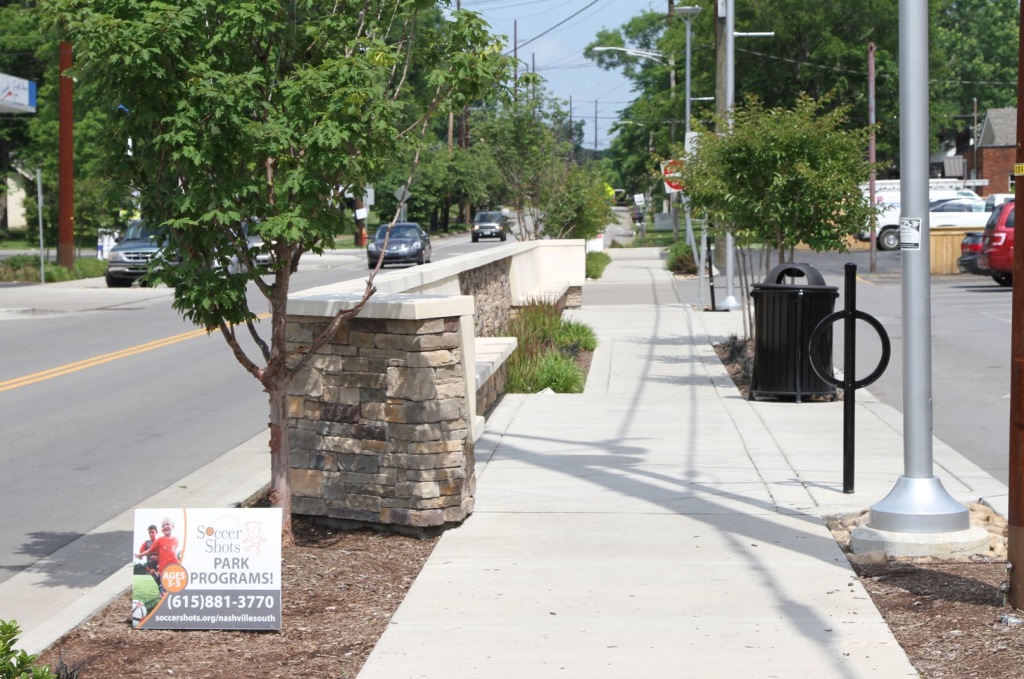
    A conscious decision was made to accommodate pedestrians rather than provide the usual endless automobile infrastructure. There are the required handicap accessible parking spaces close to the entrance at the rear. There are a few dozen off street parking spots along the baseball diamond. But that’s it. It’s absolutely possible to arrive by motor vehicle, but the cars don’t dominate the landscape.

    Screen Shot 2016-08-25 at 11.08.02 PM

    Screen Shot 2016-08-25 at 5.48.42 PM

    Screen Shot 2016-08-25 at 6.01.06 PM

    Bicycle and pedestrian infrastructure make it clear that it’s safe, pleasant, convenient, and dignified to arrive without a car. One of the goals of this community center is to facilitate a more active and healthy lifestyle.

    Screen Shot 2016-08-25 at 11.40.11 PMGoogle from 2009

    Screen Shot 2016-08-26 at 1.07.16 AMGoogle Street View from 2009

    Screen Shot 2016-08-26 at 1.05.07 AMGoogle Street View from 2009

    Screen Shot 2016-08-26 at 1.06.32 AMGoogle Street View form 2009

    Screen Shot 2016-08-26 at 1.48.03 AMGoogle Street View form 2009

    The road out front was a standard suburban affair of wide lanes, fast moving vehicles, no distinction between the road surface and adjacent parking lots, and no sidewalks. This landscape made it very clear that if you weren’t in a car you just weren’t important. It was also brutally ugly and lined with aging low value buildings and struggling businesses.

    Screen Shot 2016-08-26 at 1.29.53 AM


    Screen Shot 2016-08-25 at 5.46.54 PM

    Screen Shot 2016-08-25 at 6.00.19 PM

    Screen Shot 2016-08-25 at 5.49.32 PM

    Screen Shot 2016-08-25 at 5.59.23 PM

    Screen Shot 2016-08-26 at 2.04.37 AM

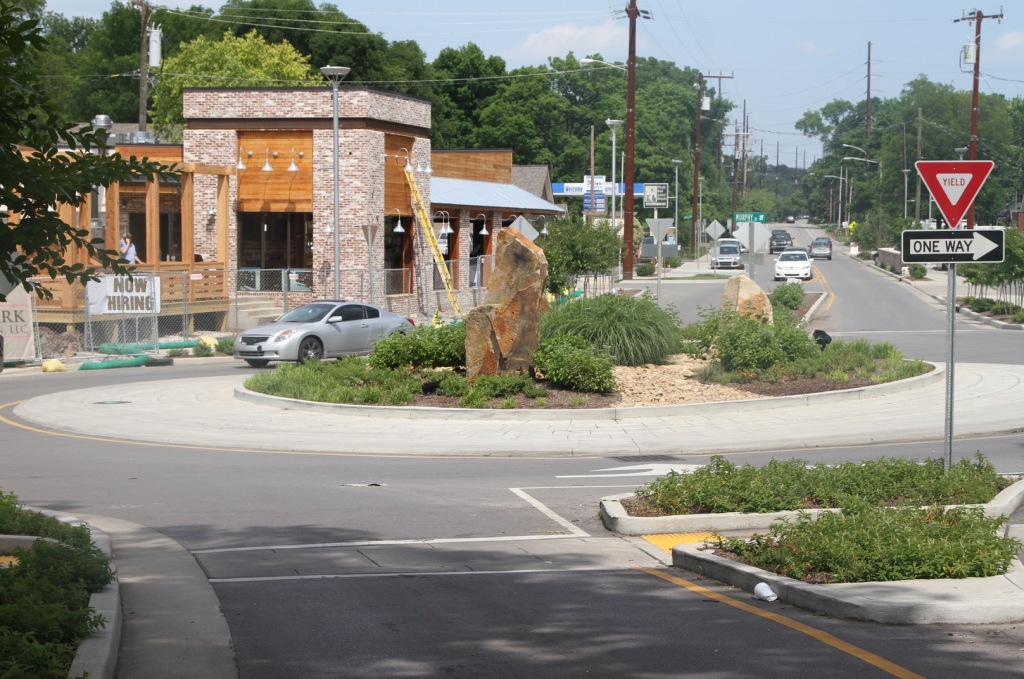
    The new traffic roundabout has transformed the intersection in several crucial ways. First, instead of stopping at a light cars now slow down a bit, but continue on. This means more cars move through the space in less time so traffic congestion has actually been reduced.

    Screen Shot 2016-08-26 at 1.35.08 AM

    Screen Shot 2016-08-26 at 1.35.18 AM

    Screen Shot 2016-08-26 at 1.35.55 AM

    Second, there are significantly fewer accidents because cars are moving at slower speeds and drivers are made to pay more attention to their surroundings as the street narrows. Cars are still welcomed here, but they’ve been disciplined to share the space with humans.
    Screen Shot 2016-08-26 at 1.36.39 AM

    Screen Shot 2016-08-26 at 2.04.12 AM

    Screen Shot 2016-08-26 at 1.39.18 AM

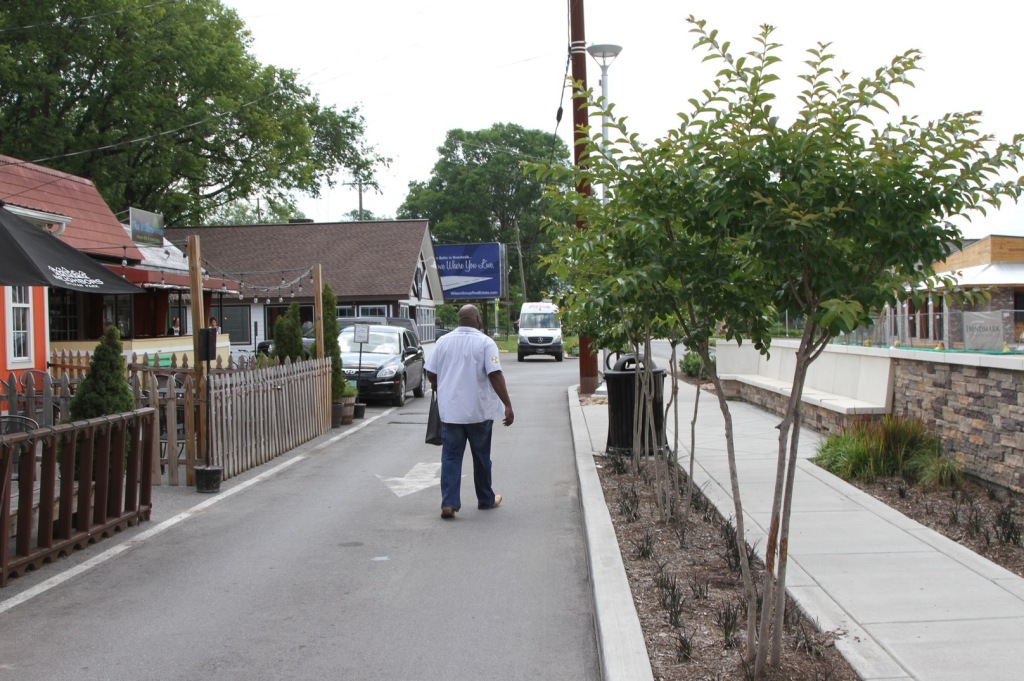
    Third, pedestrians and cyclists can now traverse the area safely so more people are willing to arrive without a car. With more foot traffic shops are able to repurpose some of the asphalt in front for outdoor seating. That translates to more sales, more employment, more profit, and more tax revenue.

    Screen Shot 2016-08-26 at 1.53.49 AM

    Screen Shot 2016-08-26 at 1.52.05 AM

    Screen Shot 2016-08-26 at 2.01.46 AM

    Screen Shot 2016-08-26 at 2.02.54 AM

    Screen Shot 2016-08-26 at 1.52.51 AM

    Screen Shot 2016-08-26 at 1.59.23 AM

    Screen Shot 2016-08-26 at 2.00.44 AM

    Fourth, land values have improved and older buildings are now seeing major improvements that also boost employment and generate new tax revenue. People don’t like paying taxes, but that money is what funds everything people expect the city to provide. The alternative is the slow death of deferred maintenance, budget cuts, and even higher fees and stealth charges on existing low value properties.

    Screen Shot 2016-08-26 at 2.58.33 AM

    Screen Shot 2016-08-25 at 11.07.40 PM

    Parking hasn’t been eliminated as much as redistributed. As sidewalks were installed on-street parking was added. The parked cars create a physical as well as emotional buffer between pedestrians and moving vehicles.

    Screen Shot 2016-08-25 at 5.50.59 PM

    Screen Shot 2016-08-25 at 5.51.14 PM

    Screen Shot 2016-08-25 at 5.52.40 PM

    Screen Shot 2016-08-25 at 5.52.56 PM

    Screen Shot 2016-08-25 at 5.51.36 PM

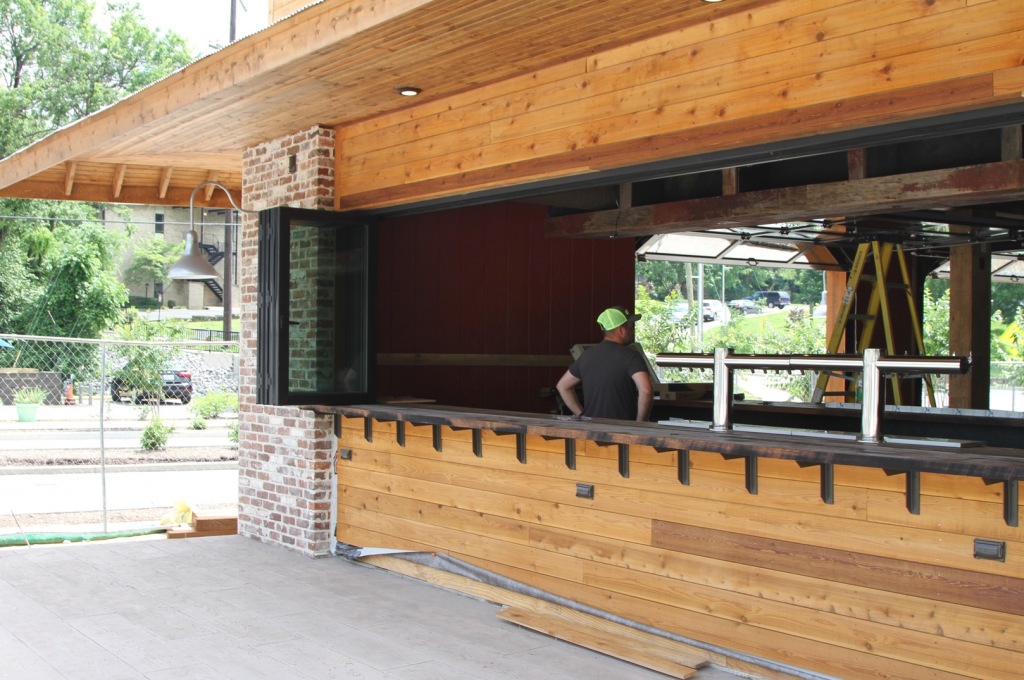
    The reorganized street supports smaller locally owned shops that keep money circulating in the community. This is the opposite of typical road widening projects that devalue small businesses in older neighborhoods while subsidizing big box corporate chains way out on the edge of town.

    Screen Shot 2016-08-26 at 3.16.43 AM

    Screen Shot 2016-08-26 at 3.17.03 AM

    Screen Shot 2016-08-26 at 3.16.12 AM

    Screen Shot 2016-08-26 at 3.16.26 AM

    Screen Shot 2016-08-26 at 3.15.58 AM

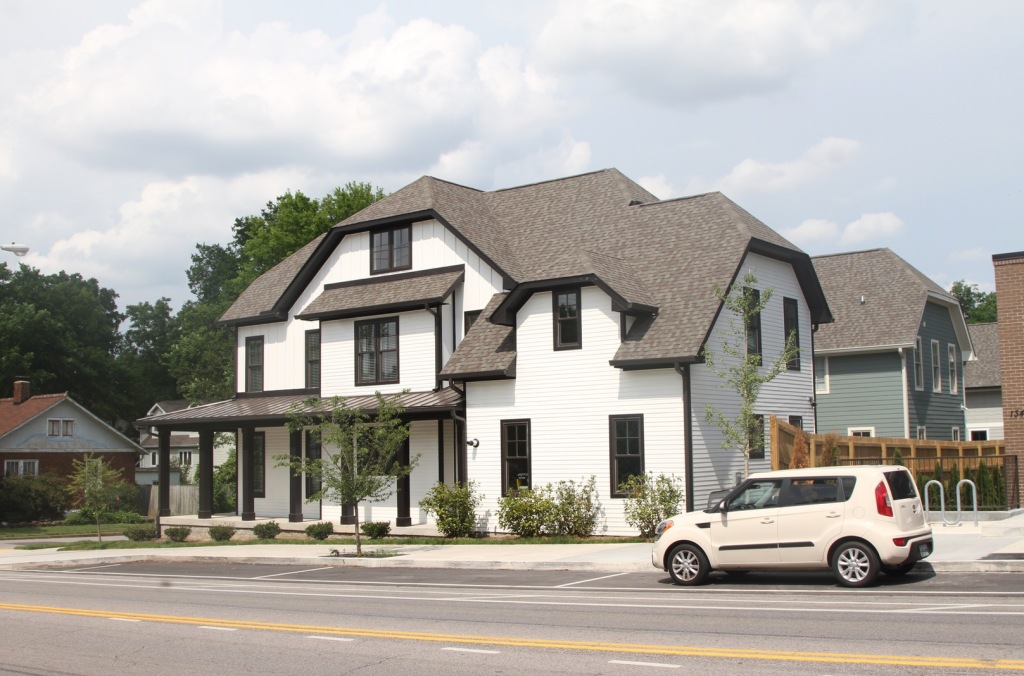
    Here’s something that breaks all the rules of suburban development. It’s supposed to be the kiss of death to have a business situated right next to a fully detached single family home. Yet in this location the shops and the properly designed street actually make these houses more desirable. The usual amenity of residential isolation has been exchanged for the amenity of good walkable urbanism. This kind of arrangement is so incredibly rare in America today that people are willing to pay a premium for such properties.
    Screen Shot 2016-08-25 at 6.02.46 PM

    Screen Shot 2016-08-25 at 6.03.00 PM

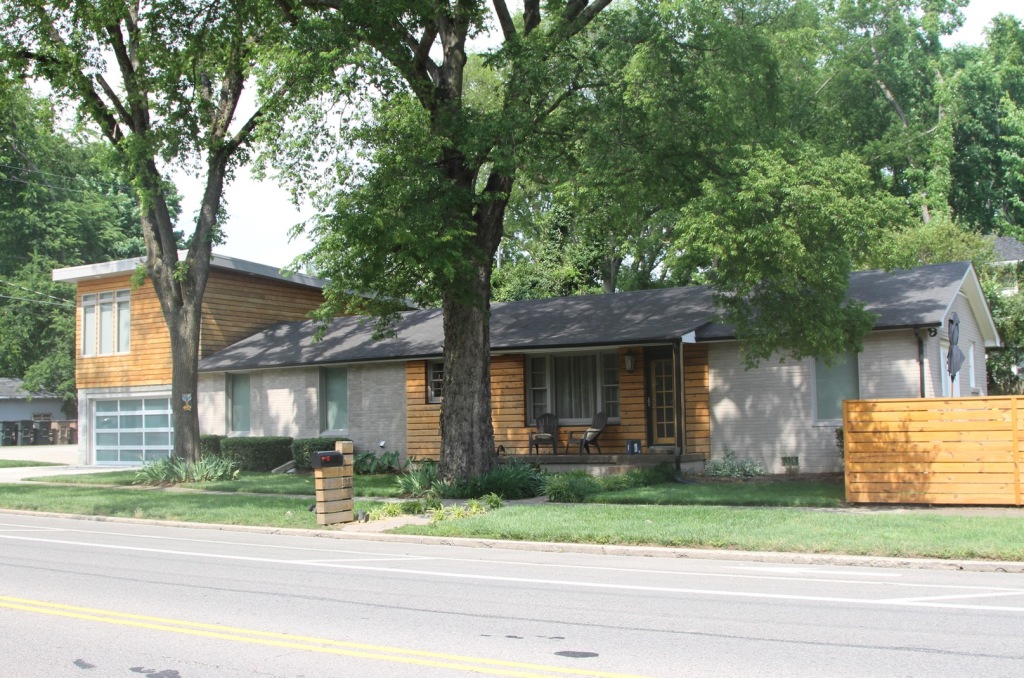
    Finally, we have the 1950’s tract homes that could have started the long slide into low rent crappiness as is so often the case when suburban roads are widened in a hopeless attempt to ease traffic congestion. Here, the road diet and nearby improved commercial district  have inspired property owners to invest in substantial renovations and improvements to otherwise outdated homes.

    The future of most suburbs is to change from what they are now to something else. That “something” could be relentless decline or steady incremental rejuvenation. I don’t believe most places understand how to reinvent themselves in a cost effective yet culturally acceptable manner. The politics of inertia, fear, and vested interests are awfully powerful. That means the few places that can successfully pull it off will be miles ahead of the competition. Look around wherever you live. Then think long and hard about how your town will manage in the years ahead.

    John Sanphillippo lives in San Francisco and blogs about urbanism, adaptation, and resilience at granolashotgun.com. He’s a member of the Congress for New Urbanism, films videos for faircompanies.com, and is a regular contributor to Strongtowns.org. He earns his living by buying, renovating, and renting undervalued properties in places that have good long term prospects. He is a graduate of Rutgers University.
  • Local Govt. Control: The Ignored Campaign Issue

    In an election cycle full of spittle and bile, arguably the greatest issue — the nature of governance and the role of citizens — has been all but ignored. Neither candidate for president has much feel for the old American notion of dispersed power. Instead each has his or her own plans for ever greater centralization: Trump by the force of his enormous narcissistic self-regard; Hillary Clintonthrough the expansion of the powers increasingly invested in the federal regulatory apparatus.

    This profound disregard for the restraints of federalism comes at a time when our economy is undergoing profound centralization. Regulatory and monetary policy has benefited those with access to the most capital, making this economy more concentrated than at any time in recent history. This is particularly true in the information sector, which is now dominated by a handful of firms able to devour any competitor without  fear of anti-trust objections from Washington.

    Ultimately the very things James Madison and the other Founders worried about — the concentration of wealth in a few hands, the devolution of republican institutions and the rise of a central imperium — are becoming increasingly evident, with precious little debate about what this means or how it could be reversed.

    Is This What People Want?

    This centralization is not occurring by popular demand. By a wide margin — 64 percent to 26 percent, according to a 2015 poll — Americans say they feel “more progress” comes from the local level than the federal level. Majorities of all political affiliations and all demographic groups hold this same opinion.

    The preference for localism also extends to attitudes toward state governments, many of which have grown more powerful and intrusive in recent years. Seventy-two percent of Americans, according to Gallup, trust their local governments more than they do their state institutions; even in California, the mecca for ever-expanding government, large majorities favor transferring tax dollars from Sacramento to the localities.

    This also applies to millennials. Though liberal on issues like immigration and gay marriage, they are not generally fans of centralization. Fewer than one-third of them favor federal solutions over locally based ones.  “Millennials are on a completely different page than most politicians in Washington, D.C.,” notes pollsterJohn Della Volpe.  

    The federal government, a source of pride in the days of the New Deal, the Second World War, the Cold War and the civil rights struggle, is now regarded by  half of all Americans, according to Gallup, as “an immediate threat to the rights and freedoms of ordinary citizens.” In 2003 only 30 percent of Americans felt that way. A recent survey conducted by Chapman University  found that more Americans now have a greater fear of their own government than they do of outside threats.

    Has Centralization Reached Its Peak?

    Although he is hardly the originator of this trend, President Obama has become one of the most prolific authors of executive power in U.S. history. Critically, this has occurred in a time of relative peace and no compelling national emergency.

    The conservative Heritage Foundation estimates that by 2015 the Obama administration had passed at least 184 “major rules” (regulations with at least a $100 million economic impact) and thousands of smaller ones. During its first six years, the administration promulgated more than twice as many major rules as during the first six years of the predecessor George W. Bush administration.

    Many  directives  have been implemented as a way around legislative approval, a marked shift from earlier eras of legislative-executive cooperation during both the Reagan and Clinton  administrations. Some of this stems from the antics of an often obstructionist Congress but much of the long-term damage to federalism largely rests with the president. As Obama prepared for his last year in office, his agendawas defined primarily by new executive orders and regulatory edicts.

    Once executive power has been validated, the road back to a more balanced federalism may prove difficult. The tools of dictatorship grow ever more comfortable in the hands of those of wield it, whatever their politics, something that occurred in the decades before the collapse of Roman Republic.

    Not a Partisan Issue

    In a new paper, “Our Town: Restoring Localism,” my colleague Wendell Cox and I argue that centralization should not be regarded as a partisan issue. Some progressives, particularly in academia, assert that support for localized decision-making rests “not in facts but rather in ideology and politics.” Some also link any devolutionary agenda to the crimes committed in the name of “states’ rights,” most notably slavery and the post-Reconstruction Jim Crow laws.

    Yet, historically, many on the progressive left, including Justice Louis Brandeis, favored decentralization. As governor of Arkansas, Bill Clinton supported the view that local governments were often better suited to address civic problems. In his forward to David Osborne’s book “Laboratories of Democracy,” Clinton praised “pragmatic responses” to key social and economic issues by both liberal and conservative governors. Such state-level responses, Clinton noted, were critical in “a country as complex and diverse as ours.”  

    Nor are centralized solutions as efficient as some claim. After a half-century of massive federal investment, poverty rates are now worse than before the advent of the Great Society. Similarly, educational outcomes continue to deteriorate even as federal officials seek to intrude ever more into the minutiae of public schools.

    Nor have attempts to consolidate local areas enhanced efficiency or reduced spending, as is commonly suggested. Overall, large consolidations have proven inefficient, with higher costs  and levels of indebtedness than smaller ones.

    More important still is the critical role of localism in maintaining the traditions of American democracy. This is understood by many self-described progressives who express support for Main Street businesses and local farms and as a reaction against globalization and domination by large corporations.  Progressive author Heather Gerken has argued that social causes such as gay marriage and marijuana legalization tend to be adopted first at a local level before spreading to other areas.

    Sadly, the closer one gets to the Washington honey pot, the more that progressive passion for localism tends to fade. Some liberals embrace nothing short of an administrative dictatorship in pursuit of their policy agendas. Last year, a writer in the Atlantic actually called for the creation of a “technocracy” to determine energy, economic and land-use policies throughout the world. This regime would impose such unpopular notions as energy austerity on an already fading middle class, limiting mundane pleasures like cheap air travel, cars, freeways, suburbs and single-family housing.

    Such top-down approaches may gain much favor under Hillary Clinton, a centralizer by nature. Federal regulators would almost certainly nest ever deeper into what was once the realm of local governments in matters of zoning, housing, education and control of neighborhood demographics in ways that will hamper local initiatives and sap grassroots democracy.

    Over time, these efforts may elicit resistance not only among conservatives or libertarians, but also left-leaning professionals who won’t want to cede all control over their local communities to the federal super-state. The next generation of hipster merchants may share an affinity for social liberalism, but they will chafe at increasing regulatory burdens already hampering entrepreneurial growth.

    Despite the powerful economic and political forces behind it, the triumph of Leviathan is not inevitable. There is no compelling reason why the emerging Information Age needs to become an electronic dictatorship controlled by a few players, concentrated overwhelmingly on the coasts. Internet technology,  a gift originally funded by taxpayers, could instead be harnessed to effectively distribute power and authority downward across this vast country to states, regions, towns, neighborhoods and families.

    We need to forge a new path that empowers the grassroots economy and polity, and respects the diversity of contemporary America. We can’t expect that this movement will draw much interest from Washington institutions, which gorge on centralization, but it could be propelled by local communities and people who still believe in the decentralized democracy envisioned by the Founders.

    This piece first appeared in Real Clear Politics.

    Joel Kotkin is executive editor of NewGeography.com. He is the Roger Hobbs Distinguished Fellow in Urban Studies at Chapman University and executive director of the Houston-based Center for Opportunity Urbanism. His newest book, The Human City: Urbanism for the rest of us, will be published in April by Agate. He is also author of The New Class ConflictThe City: A Global History, and The Next Hundred Million: America in 2050. He lives in Orange County, CA.

    City Hall photo by Flickr user OZinOH.

  • Our Town: Restoring Localism

    This is an introduction to a new report from the Center for Opportunity Urbanism, "Our Town: Restoring Localism." Download the full report here.

    America is facing a critical moment in its evolution, one that threatens both its future prosperity and the integrity of its institutions. Over the past several decades, government has become increasingly centralized, with power shifting from local communities to the federal level. This has been accompanied by a decline in non-governmental institutions, a matter of concern to thinkers on both the right and the left.

    The issue here is not the irrelevance or intrinsic evil of government itself, nor is it a debate of liberalism vs conservatism. Rather, it is a question of how to meet society’s primary challenges. Is it most effective to try and solve our myriad problems from a central federal, state or regional authority, or from a more local one?

    We believe the right answer, in many cases, is to make a shift back towards local governing agencies, to neighborhoods, and to families. This change in direction would be a return to the roots of our current federal system, which allows different levels of government to make their own decisions, providing a market- place for various ideas and approaches.

    To be sure, local governments also make mistakes, and they can be authoritarian, corrupt, and short-sighted in meeting the needs of residents. But for the most part, locally generated negatives remain contained to local jurisdictions, and can be fixed through the democratic process at the more accessible local level.

    Download the full report here.

  • A Window Into the World of Working Class Collapse

    Some time back my brother recommended I watch the documentary film Medora, about a high school basketball team from rural Southern Indiana. I finally got around to doing it.

    Someone described this film as an “inverse Hoosiers“, which is an apt description. Hoosiers is a fictional retelling of the Milan Miracle, the legendary story of how tiny Milan High School (enrollment 161) won the state’s then single-class basketball championship in 1954.

    There’s no such happy ending in prospect in Medora (available on Netflix). The town’s basketball team had gone 0-22 the season before the film. The question is not whether they will win a championship or even the sectional, but if they can win just a single game.

    The basketball team is a proxy for the community as a whole, a once proud town fallen on hard times.  The town of Medora (pop ~700) and its surrounds, locals believe, used to be prosperous, socially cohesive, and have a great basketball team too.

    This history is part mythological. I don’t doubt that these towns once had all the doctors and lawyers and such that people say they did. I’ve heard the same stories about where I grew up (two counties south). But that was a different era and I doubt there was ever real prosperity. Rural and small town life has always been tough in America.

    But the social history certainly has much truth.  Even in my own childhood I remember that people not only didn’t lock their houses, they left their keys in their cars.  City water service, cable TV, garbage pickup, and even private telephone lines may not have been available, but it had its upsides too.

    Today those Mayberry like characteristics are long gone.

    In Medora we see not only poverty, but nearly complete social breakdown. I don’t recall a single player on the team raised in an intact family. Many of them lived in trailer parks. One kid had never even met his father. Others had mothers who themselves were alcoholics or barely functional individuals. They sometimes bounced around from home to home (grandmother, etc.) or dropped out of school to take care of a problematic mother.

    These kids are also remarkably unsophisticated about the world. Once we see someone drive to Louisville – to pick his mother up from a rehab center – and another time one kid visits a seminary, but otherwise there’s no indication that these kids have spent much time or in some cases ever left Medora. One flirts with enlisting in the military. Another with what appears to be a for-profit technical college. But all of these are clearly unable to apply an independent knowledge or critical thought to what the sales reps for these entities are telling them.

    Much of what structure exists in the town and the kids lives appears to be imported. Both the coach and one assistant coach appear to be from Bedford – 30 miles away. Neither really seems equipped to deal with these troubled kids.

    Nothing indicates that these kids have much prospect of success in life.

    Yet we see that there’s also little motivation on the part of the people in the town to actually change that.  They are steeped in nostalgia and cling to a idealized vision of a past community that they surely know can never be reclaimed, yet insist on grasping until it is physically pried from their grip.

    Medora is one of the last unconsolidated small town high schools left in Indiana. (I attended a small school, but one that was already consolidated, with the uninspiring name of South Central High School).  It’s clearly not really viable as an independent school – it’s facing a major budget shortfall during the film – yet they steadfastly refuse to consider consolidation.

    The town residents believe that the loss of the school would be the death knell of their community. They aren’t wrong about that. Merging the school would destroy the locus of identity. But the cold reality is that the modern world doesn’t need towns like Medora anymore. Always changing is the future as they say, but it’s hard to imagine anything that would sustainably restore the town.  America is full of towns like Medoras. Some of them may experience a miracle. Most won’t, and will slowly bleed away to a dysfunctional rump community. (Interesting, Medora’s population grew by 23% during the 2000s, something worthy of further investigation).

    The residents of Medora refuse to surrender their town and resolutely refuse to leave. In that they are not unlike the handful of people hanging on in depopulated Detroit neighborhoods who will accept planned shrinkage only over their dead bodies. It’s irrational to those of us who have no such attachment to a place, but it is clearly a sentiment that animates many such people all over the world.

    The National Review’s Kevin Williamson blames the residents of these towns for their own demise. This is manifestly false. The people in these communities did not change the structure of the economy to render their homes obsolete. They did not invent the technology that destroyed the need for agricultural labor. They did not create the divorce revolution. They did not invent Oxycontin.  These towns have always been belated, sometimes unwilling consumers of what is created elsewhere.

    Yet the fact that outside forces acted on them does not absolve them from taking action now. Williamson is right about that. Much of the rural Midwest was settled by homesteaders who ventured off into the risky unknown, or German immigrants like the Renn family. These places were created by people who embodied different values than those who live there now, people who had no choice but to do something desperate in response to desperate conditions.

    I chose to leave my hometown. Many other chose to stay. I know that many people there think it is God’s country and can’t imagine anyone ever leaving. I don’t want to claim that their attachment to place is less valid than my lack of it. Even in the city, to the extent that no one is attached to the place, to their neighborhood, for anything other than immediate self-interest, that’s not a good sign for the long term. I see today the consequences of viewing places purely as a mechanism for extracting personal or corporate profit in the now.

    Yet the reality is that to the extent that people do choose to stay in the Medoras of this world, their future prospects aren’t good. Nor are those of their children. But if they leave their towns will die, along with a way of life. This isn’t a pleasant choice. They didn’t ask to be faced with it. But it’s the choice they face nevertheless.

    Aaron M. Renn is a senior fellow at the Manhattan Institute, a contributing editor of City Journal, and an economic development columnist for Governing magazine. He focuses on ways to help America’s cities thrive in an ever more complex, competitive, globalized, and diverse twenty-first century. During Renn’s 15-year career in management and technology consulting, he was a partner at Accenture and held several technology strategy roles and directed multimillion-dollar global technology implementations. He has contributed to The Guardian, Forbes.com, and numerous other publications. Renn holds a B.S. from Indiana University, where he coauthored an early social-networking platform in 1991. His personal urban affairs website is Urbanophile, where this piece originally appeared.

  • How Art Critics Create Community

    Orlando has taken on a new “web city” form. Its dispersal over a wide geographical area allows distinct and unique pockets of culture to arise within it, a kind of archipelago of art and design. It is a microcosm of the archipelago of many Florida cities. The overall effect is marvelous, if somewhat diluted by distance, and the broad metropolitan area has come to be a proving ground for artists, architects, and urban designers. As an artist and designer commenting on these topics, the single biggest trend I have seen in the last fifteen or so years is a growing sense of maturation. What else have I seen? And, over the years, what have my observations, and those of other critics, contributed to the art scene?

    In a city like Orlando, the art and design critic must have an exceptionally broad range, because the arts scene is flung between Daytona and Winter Haven, two poles that are each about 110 miles away from the city’s downtown area. The art scene in pre-World War II Central Florida consisted of a rare, purpose-built art colony simply called “The Research Studio,” where artists from the northeast wintered and pursued creativity.

    Near Winter Haven, Edward Bok, retired Harvard president and publisher of the Ladies’ Home Journal, created a cultural retreat of his own. Daytona, meanwhile, attracted automotive technology aficionados to the race track, bringing with them a uniquely American appreciation of pop culture and art. The artistic geography of Central Florida reflects the artistic range of America in many ways as a whole.

    More than one of Frank Lloyd Wright’s disciples relocated to Orlando as early as World War I, eying Florida’s inevitable growth potential. Few creatives sought Orlando specifically, and they gravitated here for different reasons. Jack Kerouac, for example, came to live with his sister while On the Road was prepared for publication, using Orlando as a place to escape. This escapism instinct would later inform millions of people a year, when tourism came to the area.

    In the aftermath of World War II, Orlando was a sleepy railroad and citrus-shipping town. Its binary heart was born in the ’60s with the arrival of Disney. Escapism as an industry brought thousands of performers, artists, and writers to the area. Downtown Orlando today is a hub where artists and writers congregate, while the themed-entertainment industry focuses artistic talents around the southwest side of town.

    As in any city, artists and designers have day jobs as well. But the Orlando area is one of the nation’s few metropolitan places of affordability and ease of lifestyle. We have artists whose work is collected nationally; artists who have works in major museums across the United States, and art events such as Snap! Orlando, a regional photography exhibition.

    Today, these artistic pursuits are being supplemented by new efforts in a wider range of locations. West Volusia County’s mixture of Stetson University and the Museum of Art – DeLand has become an artist’s haven. The Atlantic Center for the Arts, in New Smyrna Beach, has continued to program international artists, musicians, and writers in a secluded, tree-canopied forest near the Intracoastal Waterway. In financial parlance, these creative expressions are thriving new ventures.

    Art and design have always had an impact on quality of life. This is more important than ever in the twenty-first century as we re-invent the meaning of human habitation, and artists and designers articulate our current age visually. Performing arts and music also have profoundly influenced the visual arts and the notion of good design. The impact works in reverse as well: our thriving farm-to-table food scene nurtures — literally! — our creative community.

    But it is the conversation about art that is key, and the critic stimulates that discussion. As Oscar Wilde said, “The only thing worse than being talked about is not being talked about.” I come to the role of critic as a practitioner, one who walks in the shoes of the creative individual or team. I’d rather make art than talk about it, but still, I have a few thoughts to offer on what constitutes good criticism.

    Foremost, it is important to have standards, but standards are a little different than rules. Many urban designers are like artists who fret about using complimentary colors in the wrong way, overlooking the big picture. Standards of good art and design are universal, and are about getting an idea, a story, or a theme across in a satisfying or visually compelling way.

    I also pay little attention to credentials. Some of the best artists and designers come to the art world without any credentials at all. In this age, credentials are everything, but they haven’t made a great deal of difference in art and design. Some of the nation’s most highly credentialed urban designers were involved in creating Orlando’s Baldwin Park, which suffers from low business occupancy and high residential turnover.

    Meanwhile, the frowsy Audubon Park, just a half mile away, built in the 1940s, is a 2016 Great American Main Street Award-winner, and is bursting with independent entrepreneurial projects: coffeehouses, urban farms, an exquisite fishing gear business, and some of the best food in the city. Successful design isn’t about credentials; it is about the practical world of what works.

    In the fine arts, local museum leadership has undergone a transition, and curators have been set free to show relevant, impactful work. What the curators do with this freedom will be telling. So far, they have created an annual cash prize for the best Florida contemporary artist, unleashed a world-class private art collection free to the public, extended exhibitions to a college museum, and served as juries on artist-in-residence programs. All of this has been fueling the exchange of ideas and stories.

    Telling the exciting story of Central Florida art and design has been part of my good fortune. Because it is such a great story, the Association of Alternative Newsmedias has selected three stories about the Central Florida arts scene as finalists in a national competition, beating out stories from rivals such as Austin, Oakland, and Charlotte, three cities of similar size.

    An experimental building or a stunning painting is nothing if it is hidden or ignored. Today, with technology and imagination pushing the boundaries, it is often difficult to have a conversation about new art and architecture. Criticism helps to frame the conversation; it sets a standard for the dialogue about what we see. It also serves the purpose of applauding good results, and pointing out results that should be good, but are not. We make our cities better by agreeing on what works.

    Since coming to Central Florida in the mid 1990s, I have seen the artistic scene here mature. Experimental work, street art, and emerging talent continues to “bubble up” into the mix. In the past, the bubbles tended to pop, or to float away to places like New York City where the art would be noticed. Now, it seems that good artists are sticking around, trying to make this place better — and beginning to take us to the next level.

    Richard Reep is an award-winning artist and architect who writes art and design criticism for a variety of publications. You may nominate him as Best Arts Advocate 2016 by clicking http://orlandoweekly.secondstreetapp.com/l/Orlando-Weeklys-Best-of-Orlando-Readers-Poll-2016/Ballot/ARTSampCULTURE.
    Anyone visiting Central Florida can find a discussion of visually compelling aspects of the area in Reep’s Orlando Weekly column.

    Photograph by the author: “Cedar of Lebanon” by local artist Jacob Harmeling graces the southern quarter of Lake Eola Park in Downtown Orlando, one of the few original artworks commissioned as part of the city’s public art program.

  • Population Change, 2015: Not Very Good News for Those Angry White Men

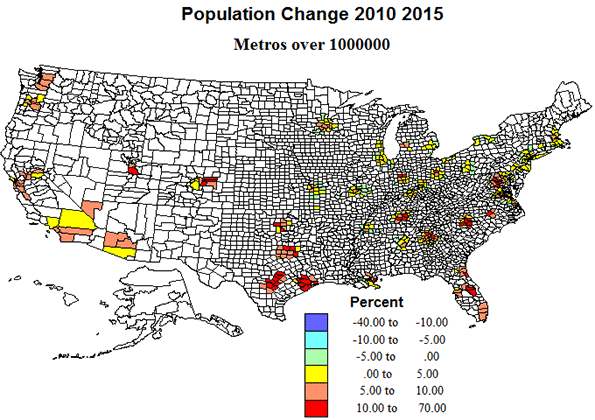
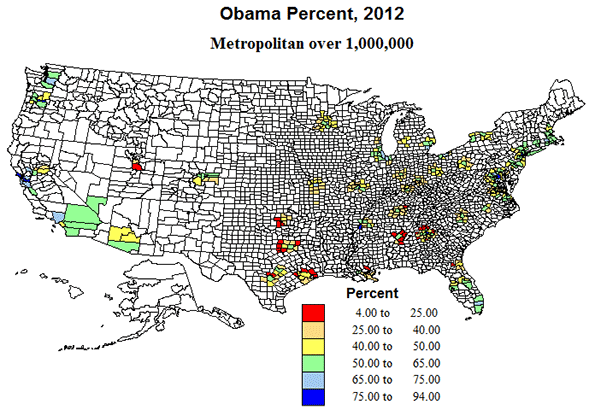
    Data on population growth from 2010 to 2015 show a continuing concentration of people in metropolitan areas, especially in the large areas with over a million people, where presumably traditional values are most challenged.  I show an amazing table, in which I have disaggregated population change by type of settlement, from the million-metro areas to the purely rural counties, comparing growth amounts and rates, plus noting how these areas actually voted in 2012. From the title, the news that growth is greatest in the biggest places seems bad for Republican prospects, but the accompanying maps also show that the greatest growth may well be in more Republican parts of metropolitan America – a story of geography vs. demographics.

    The data from the table are dramatic. Note that 275 million, or 86%, live in census-defined metropolitan areas (with urban agglomerations over 50,000), and 55.5% in just the 58 metro areas of over 1,000,000.  The biggest metro areas (but not the super large New York, Los Angeles, and Chicago) grew by 9.4 million, or 5.5%, the smaller metro areas by 3.4 million, or at 3.3 %, while non-metropolitan America dropped from 46.3 million to 46.1 million, down to 14% of the total population. 

    The final column of the table shows how these areas voted in the 2012 presidential election. Obama won the big metro areas of over one million by taking 57.6 percent of the 2 person vote, which enabled him to get almost 52% of the total US vote while winning the three megacities – New York, Los Angeles and Chicago – by an even wider margin. This meant that despite LOSING all other settlement categories – 48% in smaller metro areas, only 41% in micropolitan areas, and a pathetic 40 percent in rural small town America, the President still won handily.

    Population Change by Settlement Type, 2010 2015
      # Counties 2010 Pop 2015 Pop Change % Chg % of Pop 2015 % Obama, 2012
    Million Metro Center Counties          255   156,143    164,749      8,606 5.5% 51.3%
    Million Metro Outlying Counties          179     13,661      14,416         749 5.5% 4.5%
    Total Million Metros          434   169,804    179,165     9,355 5.5% 55.7% 57.6
    Other Metro Center Counties          473     85,634      89,005      3,371 3.9% 27.7%
    Other Metro Outlying Counties          259       7,025         7,086           61 0.9% 2.2%
    Total Other Metros          732     92,659      96,091     3,432 3.7% 29.9% 48.3
    Micro Center Counties          559     26,422      26,533         111 0.4% 8.3%
    Micro outly            92       1,080         1,070          (10) -0.9% 0.3%
    Total Micropolitan Areas          651     27,502      27,603         101 0.4% 8.6% 41.4
    Rural Sm Town          727     14,058      13,899       (159) -1.1% 4.3%
    Rural Sm Town          598       4,731         4,663          (68) -1.4% 1.5%
    Total Non-metro Counties      1,325     18,789      18,462       (327) -1.7% 5.7% 40
    ALL      3,142   308,774    321,435   12,664 4.1% 100.0% 52


    So the good news for the Democrats is that the greatest population growth occurred in larger cities where Obama did best in and fell in areas he did poorest in.

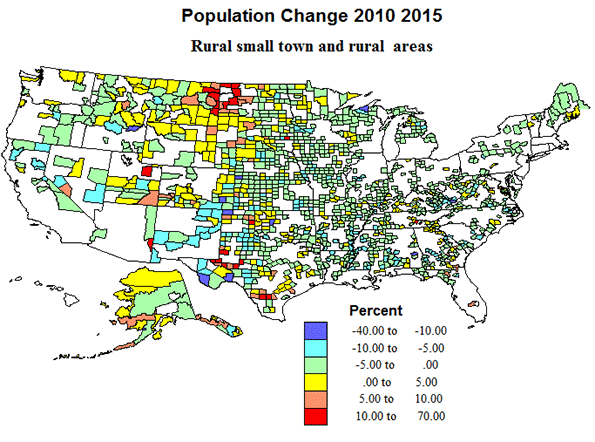
    But the story gets complicated once you get beyond the metro level. I now show maps, first of the pattern of population change by type of settlement, and then show how well Obama did in 2012 by these same settlement types. First we have a general map of population change for all US counties, in which I can display both the absolute change by symbol size and the percent change by color. Most apparent are the dominance of growth in metropolitan areas, especially in suburbs, and notably in the South and West. Note that quite a few of the growing counties appear to be in areas where Obama was not that strong (in maps to follow).

    Population Change by Settlement Type

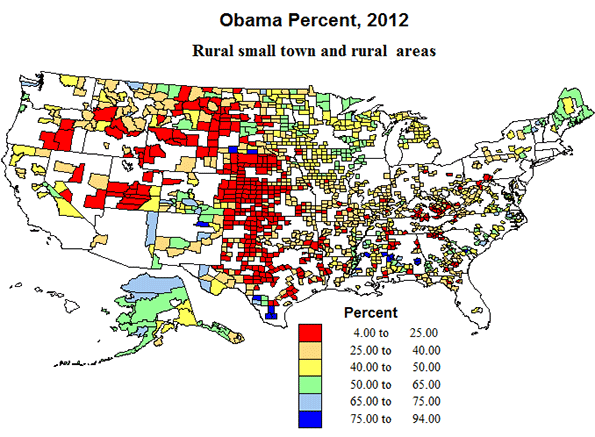
    Rural and rural-small town areas include about 40% of counties and of the territory, but now hold under 6 percent of the population. Modest population loss is most common, especially across the eastern half of the country, while the pattern of change is more complex in the western half, with pockets of gain in areas of energy development, as in ND-MT, and TX-OK, undoubtedly temporary, and scattered areas of growth in environmental amenity areas farther west. The greatest extent of rurality is still from west Texas, north through Oklahoma, Kansas, Nebraska, South and North Dakota  and Montana.

    Politically, Republican Romney swept most rural, small town territory over sizeable contiguous areas in the high plains, as well as the Mormon realm, but Democrats did win in majority Black counties in the south, Latino counties in Texas, and in Native American Indian counties in the far west. In sum, not a story to comfort Republican hopes.

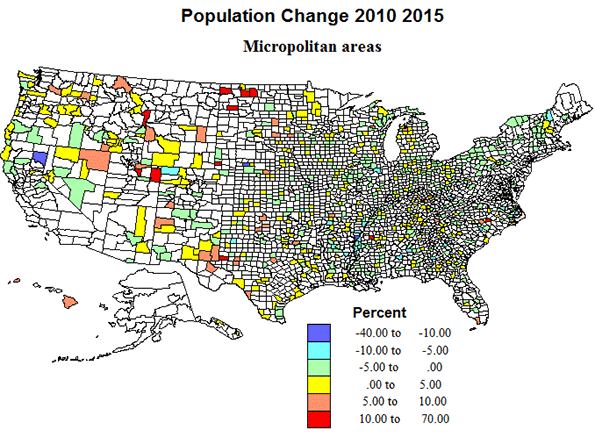
    Micropolitan areas now include about 20 percent of counties and of territory, and house almost nine percent of the population. They experienced only modest population growth from, 2010 to 2015. They are quite widely dispersed across the country, with the exception of most of California.  Just as with rural small-town territory, a pattern of modest loss prevails over the eastern half of the country and a more mixed pattern in the west, echoing the higher growth in areas of energy development, and in parts of the Mountain states and far west, including some environmentally attractive areas.

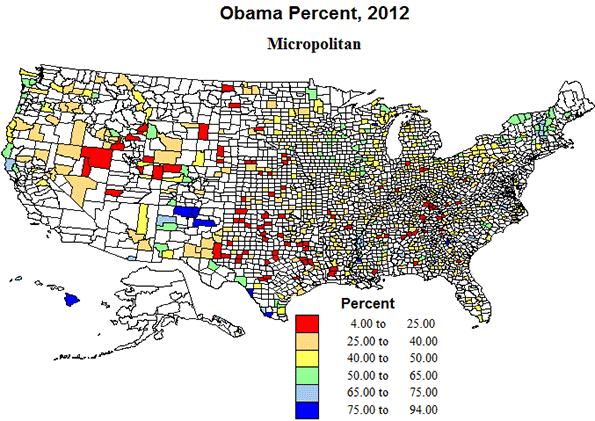
    Politically, the micropolitan areas, with urban agglomerations between 10 and 50 thousand were almost as supportive of Republican Romney as the more rural areas, and in essentially the same geographic areas, in southern Appalachia, the high plains from Texas to North Dakota and in the Mormon realm, and with the same Democratic outliers in majority minority areas. Again, a pattern not too comforting for Republican prospects.

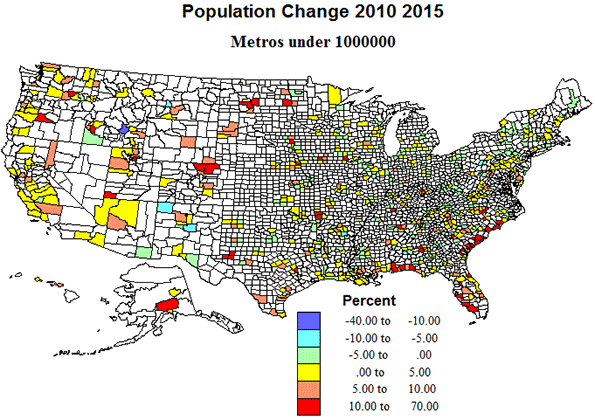
    Metropolitan areas under 1 million  represent what could be called middle, compromise America, with about one-fourth of US counties, and with 30% of the population. Their geographic pattern is one of broad distribution in the interior of the country, but with a marked coastal concentration in the Gulf and South Atlantic.  Similarly, growth was modest or losses occurred in most of the interior eastern US,  but big gains in southeastern coastal areas, and across most of the far west.

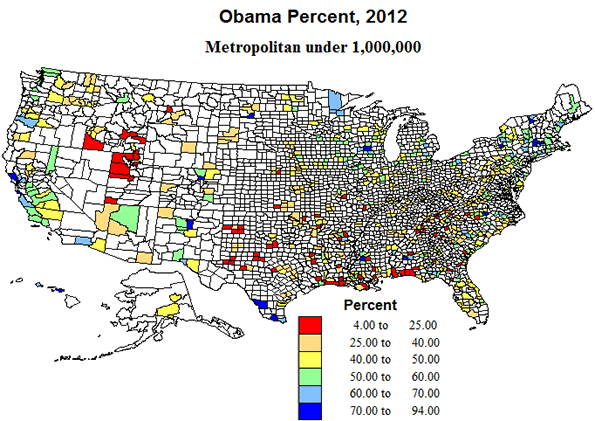
    Politically, too, these areas are intermediate, with Obama receiving 48% of the vote in 2012.  The outlying smaller metropolitan counties are indeed often quite rural.  Some of the growing areas were tilted  more  Republican, as on the Gulf coast and especially in the Mormon west, but in the Atlantic coastal states, and Pacific coast states, Obama did much better.  

    Metro areas over 1 million.  Okay, these are the behemoths, one-seventh of counties with over half the population, and three-quarters of the growth.  But the fastest growth was across the south and in the west, with moderate growth and even modest losses in the north. The biggest metros – NY, Chicago and LA — grew well below national averages. Also, contrary to the perception of the death of suburbia, the outlying counties of this set experienced very high growth. 

    Politically, these suburban areas around the big metros may prove decisive, with the voting eligibility and inclinations of a diverse population critical to outcomes of the presidency and of Congress. Those suburban counties in the South appear to vote Republican, while those in the north and west became modestly Democratic. Size may benefit Democrats, but growth tilts Republican. Ultimately whichever proves most decisive may determine the election.

    Richard Morrill is Professor Emeritus of Geography and Environmental Studies, University of Washington. His research interests include: political geography (voting behavior, redistricting, local governance), population/demography/settlement/migration, urban geography and planning, urban transportation (i.e., old fashioned generalist).

  • Urban Future: The Revolt Against Central Planning

    In Milton Keynes, perhaps the most radical of Britain’s post-Second World War “New Towns,” the battle over Brexit and the culture war that it represents is raging hard. There, the consequences of EU immigration policy, of planning instituted by national authority, and of the grassroots yearning to preserve local character have clashed together to shape a platform that may set a precedent for whether central planners or local residents will determine the urban future.

    Milton Keynes is unusual for planned cities. Founded in 1967 and having matured in the last few decades, it defies virtually every tenet of contemporary planning orthodoxy. In its day it was a product of Britain’s national planners; despite that, today Milton Keynes drives the country’s national planners crazy. Instead of a mixed-use, dense, transit-oriented bastion of urbanism – the predictable and commonly reiterated goals of many British town planning leaders today – Milton Keynes is exactly the opposite, intentionally.

    A modernist experiment, Milton Keynes was planned to be low-density. It was also planned to be auto-oriented, and suburban. Its houses are large, its buildings do not front streets, and its transportation modes are separated by grade: that is, they are at different heights, with different means of transport often moving at different speeds. This is the antithesis of the now-favored idea of “complete” streets. The town’s downtown shopping enclave is an inward-facing mall – the largest in Britain – with downtown as a whole designed as a business and commercial center rather than a mixed-use playground. Mixed-use development is clustered in the city’s low-density neighborhoods and villages, all on a grid, rather than scattered with the UK’s more favored randomness.

    Milton Keynes was designed to be livable and functional, family-friendly, job-friendly and conducive to convenient mobility. The daily grind, by design, was to bear a closer resemblance to a rural experience than to an urban one. Original advertisements promoted a healthy, carefree lifestyle sheathed in nature, away from the nuisances of the big city. Even the logic of its location, equidistant from Britain’s other large cities, sought convenience over traditional planning rationales.

    To those with a one-track view of what a city should be, Milton Keynes is unrecognizable. To these people, the city is bland, sterile, and without the day-to-day vibrancy that defines cities. In many planning texts it has been written off as a failure, and to many residents of Britain, Milton Keynes is not a preferred destination.

    But in many of the most important metrics that define urban success, Milton Keynes shines. It has virtually no traffic, it attracts lots of families, and it has the highest job growth in the country. Its population has swelled over 20 percent since 2001, over twice the national average, to 255,000 , and its residents ardently defend it. It has built out nearly identically to the original vision, with its millions of trees and lush, anti-urban character earning it the affectionate moniker “Urban Eden”.

    Today, however, Milton Keynes faces ever-mounting threats to the integrity of its original character. Thanks to the consequences of EU immigration policy, which spurred population growth in the UK to a level that exceeded housing construction to the tune of 70,000 units a year, or roughly 50 percent, cities like Milton Keynes are under fire to take up their “fair share” of the difference. Although Milton Keynes was originally developed independently through a long-range loan to the Milton Keynes Development Corporation, the nation’s housing issue led Britain’s deputy prime minister to effectively lift the city’s self-rule in 2004 in a sweeping authoritarian central takeover.

    That move transferred planning authority from local government to a national regeneration authority. The authority promptly set a housing quota for the city based on national targets, and began the task of systematically increasing density, narrowing roads, reducing unit sizes, instilling a transit-oriented ethos, discontinuing the grid, and concocting plans to build new development that directly fronted the street, all at odds with the city’s original masterplan.

    The new ideas reflect tenets frequently promoted by the Royal Town Planning Institute, Britain’s central planning body. The moves reflect what has become a familiar narrative of planner as a high-minded savior and opposition as selfish NIMBY (“not in my backyard”) residents, who lack regard for the broader picture. That Milton Keynes’ defenders are arguing on behalf of a thoughtful vision – one shaped decades ago and misaligned with contemporary planners’ aspirations – is a complicating wrinkle. In contrast to the narrative that the suburbs were an unfortunate accident that have destroyed communities, Milton Keynes’ defenders are trying to save a city that was planned to be suburban and that is successful today, and are defending it by citing affection for its character and sense of community.

    Because of Milton Keynes’ unusual design, traditional NIMBY dynamics have been inverted. In a rare twist on the oft-repeated Jane Jacobs narrative of residents against the planners, Milton Keynes’ defenders are fighting for the planned suburban character of their town: a primary complaint is that the central planners promoting density and mixed-use development lack creativity or an understanding of the bigger picture vision that shapes their sense of place, even though the tactics the planners are employing are often advocated using the same argument in reverse. Far from being ad-hoc selfish obstructionists, the Milton Keynes defenders are well-organized and thoughtful: a group called “Urban Eden” offers a well-composed six-point vision as the baseline for alternatives to the central plans.

    Milton Keynes belies the narrative of a lack of intentionality as a disqualifier for suburbia. More importantly, its future will tell us much about whether creativity and self-determination can continue to exist in Britain at the local scale, and whether the forces that induced Brexit can topple an internal bureaucracy, in addition to an external one.

    While local freedoms may ultimately help cities like Milton Keynes preserve their unique character, additional bureaucracy in the UK must be lifted to solve the larger national issue of housing affordability. In particular, Britain should free the private land development market, which has been effectively nationalized since 1947. Britain’s self-imposed shortage of developable land is the primary reason British housing production is well under half what it was when Milton Keyes was originally conceived. In an ironic twist, if it maintains such strict centralized planning strategies, Britain may continue to choke the character of its cities over the issue of housing production, wielding a national-scale bully pulpit to try to solve a crisis that could perhaps best be solved by eliminating the nationalization of property development altogether.

    Brexit offers a lesson to planners world-wide, with Milton Keynes a creative case study of an alternative to the hegemony of contemporary urban planning. While many planners loathe Milton Keynes, many residents like it, and its demonstrable successes suggest it should be a worthy case study. So many planning bodies are dominated by a singular ideology. Instead, a new era of open-mindedness to local creativity should be embraced… lest Britain and the world rise up to circumvent the planners behind a movement with a nickname as catchy as Brexit.

    Roger Weber is a city planner specializing in global urban and industrial strategy, urban design, zoning, and real estate. He holds a Master’s degree from the Harvard Graduate School of Design. Research interests include fiscal policy, demographics, architecture, housing, and land use.

    Flickr photo by Sarah Joy: Double Rainbow, Milton Keynes

  • The Best Small And Medium-Size Cities For Jobs 2016

    When we look at how the U.S. economy is performing, we usually focus on the largest metropolitan areas. But some 29% of non-farm jobs in the U.S. are in small and midsize metro areas. And since they tend to be less economically diverse and more volatile, these metro areas often are where we can more clearly see the fissures in the economy — the sectors that are growing, and which are shrinking.

    In this year’s edition of our Best Cities For Jobs survey, 13 of the 20 metro areas with the fastest job growth are small (under 150,000 total nonfarm jobs) and medium-sized (between 150,000 and 450,000 total nonfarm jobs).

    Many of the smaller places creating jobs at the fastest pace are located in booming regions like the Intermountain West, near college towns and in regions with attractive natural amenities. Meanwhile, times are turning tougher in West Texas and other energy-dependent areas.

    The winners and losers also reflect demographic trends, notably the tsunami of downshifting boomers, that will shape our society and economy for years to come.

    The Utah Superstars

    As is the case with larger areas, it usually helps if a smaller region has more than one economic pillar. This is certainly true for our No. 1 city overall, St. George, Utah. The job count in this metro area has grown a remarkable 32 percent since 2010. Last year St. George’s job growth rate was 7 percent, roughly 3.5 times faster than the national rate, and one reason the area leaped 30 places in our overall rankings from last year.

    Located in the scenic southwestern part of the state near the Arizona border, and a magnet for retirees and tourists, St. George has had a remarkable population boom, growing from fewer than 100,000 residents in 2000 to 155,600 people as of 2015.

    This demographic surge can be seen where you would expect it, with rapid growth in construction sector jobs – up over 50 percent since 2010 — as well as leisure and hospitality, where employment expanded 37.8 percent over the same span.

    Yet this is not just a sleepy retirement and tourist town. The metro area has a median age of 32, three years older than the Utah average, but well below the national average of 37.2. Despite this younger demographic, job growth has occurred in sectors that tend to employ older workers, such as manufacturing, up 40.9 percent since 2010, and professional business services, up 34.6 percent.

    Not surprisingly if you want to find other local economies that reflect this kind of dynamic, the best place to look is elsewhere in the Beehive State. Our second-ranked area nationally, Provo-Orem has also achieved rapid job growth, with employment expanding 27.4 percent since 2010. Like St. George, this metro area has enjoyed strong growth in construction and hospitality, but also in higher-wage fields, including information, which has expanded employment 43.9 percent since 2010, and professional business services, up 34.3 percent.

    Home to Brigham Young University, the Harvard of Mormondom, the metro area is among the youngest in the nation, largely due to large Mormon families. It’s also, according to Gallup, the most religious as well as one of the best educated: almost 40 percent of its population over 25 holds bachelor’s degrees and almost 5 percent have advanced degrees, just ahead of San Jose, Calif., and Nashville, Tenn.

    Also placing highly from Utah is No. 15 Ogden-Clearfield, which rose 25 notches over last year. Employment has expanded 16.2 percent since 2010. Like St. George and Provo-Orem, this region has experienced strong expansion in its construction and hospitality sectors, but also boasts great economic diversity. Since 2010, manufacturing employment has grown 10.4 percent while professional business service jobs have expanded a healthy 31.3 percent.

    The Amenity Regions

    Of course, you don’t have to be a Latter Day Saint to have a successful small city. But it helps a great deal if you happen to be in a place that has standout natural and cultural amenities. This trend may be greatly enhanced by the movement of seniors, particularly affluent ones, to what may be called “amenity regions” throughout the country. Contrary to the urban mythology pressed by the mainstream media, Census data shows that seniors are not moving “back to the city” in great numbers but generally to smaller, less dense regions, if they move at all.

    Being in a nice place, of course, is an asset for any city; after all, entrepreneurs and young families also like to live somewhere good times beckon. At the same time, some of these areas also benefit from a strong hospitality and second home market. Another critical advantage belongs to college towns which, by their very nature, usually offer more by way of arts, restaurants and entertainment than other places.

    The highest ranked of these metro areas this year is Fayetteville-Springdale-Rogers, AR-MO, which comes in sixth on our overall list. It enjoys the benefits of being home to the University of Arkansas as well as close to the Ozark Mountains, one of the premier recreation areas in middle America. Since 2010, employment in the metro area has jumped 19.6 percent, or 40,000 jobs, with a 4.7 percent expansion last year. Like other top small cities, the areas has enjoyed strong growth in construction and hospitality jobs, up 37.2 percent since 2010, but also professional and business services, which expanded 38.2 percent over the same time period.

    Some other of the fastest-growing areas metro are tourism and retirement destinations on the tech-rich West Coast. Five years ago, Napa, Calif., and Bend-Redmond, Wash., were mired toward the bottom of our ranking in 344th and 36rd place, respectively. But as the coastal tech economies have surged, so have they, rising to 13th and 14th place this year. Hospitality and construction have been the big job gainers for both, with some jobs added in professional services as well.

    Losing Ground In The Oil Patch

    As tech-linked areas ascend, many energy-producing towns are slipping, with oil and gas prices in the dumps and the coal industry racked by the government-guided transition to cleaner forms of power production.

    West Virginia’s metropolitan areas have all suffered major declines on our list, with Wheeling dropping 54 places from last year’s survey to 396th on a 0.7 percent contraction in employment on the year. In Charleston, W.V., which has fallen to five spots from the bottom of our list, mining and natural resources employment declined 9.8 percent last year and is off 31.5 percent since 2010. Big job losses have occurred also in Wyoming, a major coal producing area, where Cheyenne dropped 82 places to 206th as mining and natural resources employment contracted 6.2 percent last year.

    Many once red-hot areas in the oil patch have taken devastating hits. Former high-flyer Victoria, Texas, dropped from 24th place last year to 115th. But no place reflects the flagging fortunes of the West Texas energy economy more than Midland, which, just last year ranked first on our list; this year it’s at 139th after losing 14.7 percent of its natural resources jobs and 6.9 percent of its jobs overall. Odessa fell from third last year to 173rd this year on the back of an 8.8 percent contraction in employment, and 20.4 percent in the natural resources sector.

    Several Louisiana metro areas have suffered steep job losses, including Houma-Thibodaux, down 183 places on our list to 325th after an 8 percent contraction in employment. Several smaller Oklahoma communities have taken serious hits, including Tulsa, which dropped to 222nd. Bismarck, N.D., a prime beneficiary of the Bakken oil boom, dropped 67 places from last year to 102nd as 6.8 percent of its natural resources jobs evaporated, while Bakersfield, Calif., one of the country’s largest oil producing areas dropped 70 places to 109th as natural resources employment contracted 11.5 percent.

    The Rust Belt: Is The Bounce Back Over?

    The picture is less uniform in the industrial sector than in energy. Some manufacturing-oriented areas are booming, such as No. 4 Gainesville, Ga., and No. 10 Columbus, Ind., home to Cummins. Nationwide manufacturing employment grew a paltry 0.3 percent last year, with some local declines that devastated the affected economies.

    In the Midwest, the big losers include Midland, Mich., which dropped 75 places to 245th, Green Bay, Wisc., which fell 83 places to 286th, and Fond du Lac, Wisc., which lost 173 places to 293rd. In Pennsylvania, Scranton-Wilkes Barre-Hazelton fell 97 places to 373rd and Williamsport dropped an astounding 212 places since last year to 383rd, with manufacturing employment off 13.2 percent since 2010 and overall employment down 3.5% last year. And then there’s Johnson, Pa., in last place at 421st.

    Like the energy economies, the industrially oriented metro areas are likely to stagnate for the time being as declines in global markets, the high dollar as well as lower demand from the energy sector take their toll. The International Monetary Fund predicts a modest 3.2 percent global growth rate for 2016, held down in significant part by a faltering Chinese economy. At the same time, OPEC overproduction and the addition of Iranian oil to global markets will likely keep the price below the $70-$80 per barrel range that energy producers need to start expanding energy investments again.

    This means, for the time being at least, the strongest smaller cities will be those which attract people and companies from bigger places by offering better amenities, cheaper housing, better schools, growing populations and, in many cases, college campuses—all offering a better quality of life but in a smaller, usually more affordable place.

    This piece first appeared at Forbes.

    Joel Kotkin is executive editor of NewGeography.com. He is the Roger Hobbs Distinguished Fellow in Urban Studies at Chapman University and executive director of the Houston-based Center for Opportunity Urbanism. His newest book, The Human City: Urbanism for the rest of us, will be published in April by Agate. He is also author of The New Class ConflictThe City: A Global History, and The Next Hundred Million: America in 2050. He lives in Orange County, CA.

    Michael Shires, Ph.D. is a professor at Pepperdine University School of Public Policy.

    By UtahStizzle (Own work) [Public domain], via Wikimedia Commons

  • What the Midwest can learn from the Middle East

    Why is Saudi Arabia suddenly the pit stop of choice for an impressive laundry list of major companies? How is it positioned among the growing number of Middle-Eastern industrial free zones? And should Rust Belt cities like Cincinnati look this way for answers?

    If a nation’s cities are the products of their ingredients, the Saudi Arabian pantry leaves much to be desired, with a grueling climate, a monopolistic economy built on the extraction of fossil fuels, looming regional threats, and conservative social practices that hinder freedoms, especially for women.

    The resulting menu reflects the bleak inputs. Expansive wealth has combined with poor urban design to generate an unsavory cocktail of high-speed pedestrian-hostile highways and walled single-use compounds. Erratic industrial development and heavy utility infrastructure haphazardly dot the desert landscape. For decades, Saudi Arabia’s physical development has emulated American suburbia, prioritizing privacy over community to the extent it’s been organized at all. The nation’s prosperity, driven by oil, yields few private sector jobs. Reform has been slow and modest, and educational advances, primarily for men, have focused on growing computer and technical skills with little attention to intellectual fields.

    But, despite all of its downsides, Saudi Arabia is advancing because it has recognized that oil wealth cannot drive the country forever. Much like America’s Rust Belt, Saudi Arabia is confronting the reality that, in the future, the economy needs to find new drivers.

    To do this, Saudi Arabia committed to developing several new cities designed to generate opportunities for the country’s exploding young population to stay at home. The intent was to invest existing surpluses to develop new and different kinds of economies to fuel the country’s future. This contrasts with the region’s reputation for lavish “living in the moment.”

    Rather than pressing solely for an emergence of finance or innovation that it is ill-equipped to attract, Saudi Arabia has made a tactical decision to leverage its industrial infrastructure, considering the regional advantage of its unique global positioning along the Red Sea at the confluence of busy shipping routes.

    One of these cities, the King Abdullah Economic City, is by some measures the biggest development project in the history of the world. KAEC includes an unusual confluence of many modes of industrial transport, matching a seaport with a rail port and highways connecting the Indian Ocean and Suez Canal into the Middle East and Eastern Europe. Smartly, much of its investment has focused on increasing and humanizing its industrial infrastructure, leveraging the location by luring major industrial and shipping outfits to conduct midstream logistics activities here, midway through their global journey.

    By increasing the attractiveness of this junction to global companies, KAEC is hoping to trade one heavy industry — oil — for a diverse array of others. Unlike recent Chinese megaprojects designed to passively accommodate inevitable increases in demand around existing economic drivers, KAEC is endeavoring to actively spur the organic emergence of a new economy by making the world take notice: first, of the things that Saudi Arabia’s population is capable of handling today, and later, of more cosmopolitan industries that can only thrive once slowly-materializing social advances have taken root. It’s well-understood that, as part of the logical phasing by which most cities historically have grown, short-term industrial growth is the key to driving future gains in white collar fields over time.

    KAEC is also the world’s first publicly-traded city. While growth has been slow, the city has stayed afloat through investment by half of the Saudi population and a rising stock price that over the last three years has outpaced the Dow. Its growth is predicated on continued public buy-in of its strategies; its fortunes are intrinsically tied to national transformations.

    KAEC is one of many industrial free zones that are all the rage in this part of the world. The Middle East is now dotted with hundreds of them, and their power and attractiveness is leading the world to slowly reshape logistics activities around them. The massive economic shifts that these strategic investments have attracted seem by and large to be working. Another economic zone known as Al Duqm is rumored to be high on the military’s list of landing spots for relocating US military operations in the Middle East; it is a site that a few years ago could barely sustain a small fishing village.

    On the other side of the world, thousands of miles away in the heartland of the United States, dozens of cities once buoyed by manufacturing are similarly trying to reshape their identities, among them Detroit, Buffalo, Pittsburgh, Milwaukee, Cleveland and Cincinnati. For some of them, a Saudi-inspired back-to-the-basics industrial approach could be part of the answer.

    Many of these cities have already identified an increased midstream logistics role brought on by the ripple effect of the planned expansion of the Panama Canal. Chicago, the traditional link between the Mississippi River and the St. Lawrence Seaway, is reducing its water-based industrial volumes as it orients its river toward tourism. This further emboldens the ambitions of cities like Cincinnati to take up the slack — it has recently worked to up the profile of its river port from forty-ninth to ninth-largest by merging with adjacent cities.

    A realignment in the nation’s energy transport arteries is also opening the door for smaller inland cities to become energy transport hubs. A decrease in energy from the Middle East, an increase from Canada and the northern United States, and increased local cultivation through renewables, natural gas, and small-scale drilling are broadening the energy transport infrastructure beyond well-established coastal ports.

    As America’s manufacturing profile has shifted, freight transport has remained steady between water, rail, ground, and air modes. As a result, cities that link them are well-positioned as potential logistics hubs. New trends in shipping demands also suggest positive prospects for ports that can accommodate water-based deliveries further inland. Cincinnati is particularly well-positioned, because its proximity to the wide Ohio River makes it more attractive than similar cities on smaller rivers.

    Despite many reasons for cities like Cincinnati to embrace a logistics-based future, obstacles have stood in the way. For one, trends in modern urban design and economic development do not favor industry. Even though manufacturing makes up 35 percent of the American economy, most planning theory has focused on eliminating or reusing industrial sites for dense urbanism, rather than embracing them for industry, taking humane factors into greater account. The latter would be a logical approach, given that many industrial nuisance qualities have been eliminated. Instead, planners have shunned most industrial activity as inherently hostile to cities, even amid a chorus of advocates for an increase in local production.

    Many Midwest mayors have paid lip service to manufacturing, recognizing the need to accommodate the logistics needs of major companies. Simultaneously, however, planners have been empowered to transform large swaths of industrial land into developments full of the urban frills popular on the East Coast. Uniquely positioning cities to spur organic growth seems far less popular than trying to out-duel other cities for a share of millennial and corporate migration to duplicate versions of generic amenities. The limited embrace of industry has come through so-called “innovation districts,” geared at capturing a piece of the creative tech economy, rather than more place-specific heavier logistics.

    Today, many hot spots are emerging that will be barometers of the struggle between the industrial opportunists and the urban development hegemony. In Cincinnati, these battles are subtly being waged over sites like Queensgate, a rare swath of intact industrial land at the precious confluence of water, rail, and highway. Its proximity to downtown has won it attention – and made it a prized trophy – in the strategy struggle between those who want to capitalize on a strategic industrial position and those who want to grow Cincinnati’s urban core. As Cincinnati works to attract companies away from flashier cities, it can do both, by embracing Queensgate’s unique industrial potential as an asset.

    As Cincinnati looks for an answer, it may consider turning to the unlikeliest of case studies. Somewhere between the character of Midwestern cities and those on the East coast, there may be an answer that lies in the Middle East.

    Roger Weber is a city planner specializing in global urban and industrial strategy, urban design, zoning, and real estate. He holds a Master’s degree from the Harvard Graduate School of Design. Research interests include fiscal policy, demographics, architecture, housing, and land use.

    Flickr photo by Joel Willis: John A. Roebling Bridge, Ohio River, Cincinnati

  • Florida’s Interstate-Adjacent Fantasy

    As 2015 wanes, many swimming in Florida’s new wave of growth are still being carried by a swift current. Everywhere one gazes, new apartments can be seen that accommodate some of the million-plus new residents who have moved here in the last five years. With over 140,000 people migrating to Florida from other states during 2014, and over 100,000 people moving to Florida from other countries, Florida’s GDP is predicted to have grown 3.2% in 2015, the highest in the country and well ahead of the national average. The tide has definitely come in.

    For natives and long-term residents, it feels like everyone up north woke up one Tuesday morning and said, “Hey honey, let’s quit our jobs, move to Florida, and get an apartment overlooking the interstate.” From Tampa to Daytona, mid-rise wood frame structures loom over semi-trucks and cars that whizz by, a new voyeur culture in the making.

    At first glance, the recent growth seems low quality and monolithic, blandly designed and structured to meet a uniform real estate development formula. The land along Interstate 4 is cheap and available for development. Like coral reefs that grow on the poisonous crags of undersea volcanoes, however, these apartments are an infrastructure for an ecology of both dreams and nightmares. Dispossessed by capitalism, many laid-off Americans seek a new start in the apartments of the Sunshine State. In these drywall-lined niches grow polyps of hope.

    Some newcomers come to Florida with job offers. Along with those taking advantage of the economic climate, there are others who show up without employment; many without jobs move to Florida and fill apartments only with the hope of a new life and prosperity. Such is the Florida of the nation’s imagination, a place of such bountiful employment opportunities that one can pick a job off a tree, like a wild orange. Do-over dreams hang in the air around these giant rental reefs, interwoven with expectations of an easy, low-cost retirement lifestyle. “I have several friends,” writes one retiree, “who all went south from Connecticut to Ft. Lauderdale years ago, and drifted north to Melbourne over the years… it seems like a nice place to live.” An image of retirees drifting around the state, like so many jellyfish drifting along a reef face, seems idyllic.

    Many have suffered more severe economic hardships. The third busiest bankruptcy court in the nation none other than the Middle District of Florida, housed in sunny Ft. Myers. Those without the means or the qualifications for a mortgage often retreat into Florida’s apartment culture, licking their financial wounds. Setting one’s sights a little lower and squeezing into a small apartment cosigned by a family member may be a humiliating, but necessary step towards a new beginning. The symbiotic relationship between debt and dreams can be seen through the glass walls of these buildings.

    Quite a few renters are also paying off student debt. “We cannot afford a house right now. Maybe not ever,” writes Selena in Florida about the student loans she and her husband have. The rental life, tinged with a very bitter dose of recent reality, is the color of all of the aspirations that swirl around the stucco, false mansard roofs, clubhouses and glittery swimming pools.

    The Florida resort lifestyle, jammed up against the interstate highway, is an unlikely scaffold for dreams. Percolating between the swaying palms are new beginnings, fresh starts, and resolutions to do better. Some of these dreams may blossom and grow out of the balconies and windows of these monolithic blocks of monthly rent, making these apartments a nomad’s brief sanctuary on the journey back to prosperity. These are the lucky ones, the temporary renters; those who stay in an apartment for a year or two while getting back on their feet.

    As viewed from the middle lane of I-4, these giant rental shoals, and the thought of the imagination that supports them, seem at once reassuring and terrible. Reassuring, because the idea that Florida is universally beloved still makes Floridians smile. Terrible, because this new biodiversity is voracious, and brings with it congestion. These mid-rises inhale a dense population, only to exhale them out onto Florida’s flat expanse of rooftops that spread ever further into Florida’s vanishing natural environment.

    Like coral reefs, which grow in the ocean where the surf is most active, these apartments grow in Florida where the weather is most active. The hurricane capital of America, the lightning capital of the world, and the humid heat are the real parts of the lingering illusion of a tropical wilderness that comes with this postcard paradise. Once arrived, many of the newcomers find the weather intense. Hopes and dreams cling to the apartments like barnacles, fluttering from the windows and balconies, despite the heavy summer rains.

    Apartment dwellers are a transient lot, often staying not longer than their lease term. When one moves out, workers clean and repair the unit to be ready for the next. Each new dweller from out-of-state brings his or her own illusions of Florida. Others bring a more grounded reality from their previous Florida experience. Either way, the dwellers’ new impressions blend with the redolent ecosystem of hopes and dreams surrounding the edifice.

    These Florida apartments are inspiration-gardens, attracting migrants seeking a better life. Only the individuals who dwell within them can activate their hopes. As rather expensive offerings, they are not analogous to the New York tenements of the nineteenth century, which were full of families crowded off of the European boats. Instead, these are high amenity, middle-income places to live. They act in the same way, as a distribution system for dreams, but are far more luxurious and appointed than the slums of old.

    The urgent, massive dream-reef construction project that has gone up alongside I-4 is in its peak phase, with a few nodes already complete between Tampa and Daytona. Apartments are clustered like a gigantic fringe along the denser population centers: Lakeland, Lake Buena Vista, Orlando, and Winter Park. Those living in earshot of the interstate’s mighty roar of traffic must have an ironic, contemporary sense of place. As a concrete reality, the I-4 corridor is not a particularly prestigious address. But as an abstraction that speaks of today’s politics, it has an importance of the first magnitude. If these two opposites— the dream of the America we desire and the reality of the America being constructed now — can be reconciled, then Florida’s growth is a healthy ecosystem that offers hope for the future.

    Richard Reep is an architect with VOA Associates, Inc. who has designed award-winning urban mixed-use and hospitality projects. His work has been featured domestically and internationally for the last thirty years. An Adjunct Professor for the Environmental and Growth Studies Department at Rollins College, he teaches urban design and sustainable development; he is also president of the Orlando Foundation for Architecture. Reep resides in Winter Park, Florida with his family.

    Photo by Cooper Reep: Typical new mid-rise on I-4 in Florida