Category: Suburbs

  • It Wasn’t Rural ‘Hicks’ Who Elected Trump: The Suburbs Were — And Will Remain — The Real Battleground

    Much of the New York and Washington press corps has concluded that Donald Trump’s surprising journey to the Oval Office was powered by country bumpkins expressing their inner racist misogyny. However, the real foundations for his victory lie not in the countryside and small towns, but in key suburban counties.

    The popular notion of “city” and “country,” one progressive and “vibrant,” the other regressive and dying, misses the basic geographic point: the largest metropolitan constituency in the country, far larger than the celebrated, and deeply class-divided core cities, is the increasingly diverse suburbs. Trump won suburbia by a significant five percentage point margin nationally, improving on Romney’s two-point edge, and by more   outside the coastal regions.

    Despite the blue urbanist cant that dense metro areas — inevitably labelled “vibrant” — are the future, in fact, core cities are growing at a slower pace than their more spread out suburbs and exurbs, which will make these edge areas even more important politically and economically in the coming decade. The states that voted for Trump enjoyed net domestic migration of 1.45 million from 2010 to 2015, naturally drawn from the states that were won by Hillary Clinton. Democrat-leaning ethnic groups, like Hispanics, are expanding rapidly, but Americans are moving in every greater numbers to the more conservative geographies of the Sun Belt, the suburbs and exurbs.

    Suburbs Drive Swing States

    The future battles between the parties will have to be waged where the people and jobs are: suburbia. Suburban voters particularly put Trump ahead in the crucial Midwestern states of Michigan, Wisconsin, and came close to winning him supposedly deep blue Minnesota. This is where the Democratic falloff from the Obama years was most evident, notes Mike Barone, falling from  dropping from 54 percent for Obama to 2008 to 45 percent this year.

    Clinton did win some suburban counties, especially in the Philadelphia area, but by lower margins than President Obama had in 2012. Clinton’s margin was also lower in some older rustbelt urban counties: Erie (Buffalo), Onondaga (Syracuse), Monroe (Rochester), Albany, and Hamilton (Cincinnati). A number of college towns and state capitals also invariably voted for Clinton, overwhelmingly.
    Overall, though, most suburban counties in the swing states supported Trump. In Michigan, Trump lost Detroit, and surrounding Wayne County, by better than two to one, but captured four of the five surrounding suburban counties. His margin greatly exceeded that of Romney in these counties, which, combined with his strong support in smaller cities and rural areas outside the major metropolitan areas, put him over the top in this critical state.

    A similar pattern can be seen in Pennsylvania. Clinton, of course, won overwhelmingly in the large urban counties — the city of Philadelphia went for her by 82 to 15. She also won some nearby suburban counties around the city, as was expected. But elsewhere Trump did better. He lost Allegheny County (Pittsburgh) but won all the surrounding suburban countries by piling up 54 percent to 74 percent of the votes; he lost the state capital of Harrisburg but made that up by crushing her in the suburban counties. Particularly striking was his victory in historically Democratic Erie County (population 280.000), west of Buffalo; Obama had won the county by 16 points in 2012.

    Much the same can be said about Wisconsin, where Trump was not expected to be too competitive, as well as Ohio, someplace he was expected to win. Clinton’s edge in Ohio’s smaller, blue collar urban constituencies fell well below the levels enjoyed by President Obama while surrounding suburban counties went, almost without exception, heavily for Trump.

    The Political Geography Of The Future

    Ultimately the road to recovery for Democrats does not lie in expanding the urban core vote. As Mike Lind has suggested, progressives embrace a kind of post-national “open borders” ideology that makes sense in denser, global cities — where the demand for low-end service labor is greater — than in suburban or small town and rural areas that tend to be more egalitarian and, for the most part, whiter.

    There may be growing unanimity of Democratic support in core areas, but urban cores are growing more slowly, or not at all, compared to the suburbs. Indeed the urban vote in the cores, although obviously tilted blue, has dropped in recent years, with the exception of the Obama run in 2008. Nor do attempts to call suburban or “countryside” people “deplorable,” racist and even too fat constitute much of a strategy to appeal to these areas.

    In contrast, Trump’s geographic coalition between the deep red countryside and the suburbs demonstrated an alternative that can work, particularly in key swing states. Despite the wishes of many planners, and their Democratic allies, suburbs and small towns are not about to go away in the near future. Areas outside million-plus metropolitan areas accounted for 100 percent of the vote in Iowa, 61 percent in Wisconsin, 47 percent in Michigan and Pennsylvania, and 44 percent in Ohio. They may not be demographically ascendant, but they still carry considerable heft.

    Nor can blue state advocates continue to claim that millennials will not move to suburbia, because that is clearly happening. Urbanist mythology now holds to a fallback position that millennials move to the suburbs simply because they have been priced out. However, they don’t look at other compelling reasons — notably shaped by life stage — for suburban growth. As most millennials will soon be over 30, its seems likely more will head to the periphery, as did earlier generations to gain more space to raise a family, better schools and safety. Even after the Great Recession people continued to move in large numbers from urban core counties to the less dense suburbs and exurbs. Between 2010 and 2015, suburban counties of major metropolitan areas added 825,000 net domestic migrants, while the urban core counties lost nearly 600,000. The real question is whether millennials will turn these red-trending areas bluer, or will their experience as homeowners and parents make them more traditional and conservatively minded suburbanites?

    The basic geographic and demographic conclusion: the balance of political power lies with suburban and exurban counties, particularly in swing states. Republicans need to build on their success by appealing more the minorities and immigrants who are also moving to the periphery. To return to power, the Democrats should   shift their attention from their urban core base and look more to the periphery. In the end, they need to provide compelling reason why these areas should support a party that, at least for now, seems generally favorable  to their exclusion and even ultimate demise.

    This piece originally appeared in Forbes.

    Joel Kotkin is executive editor of NewGeography.com. He is the Roger Hobbs Distinguished Fellow in Urban Studies at Chapman University and executive director of the Houston-based Center for Opportunity Urbanism. His newest book, The Human City: Urbanism for the rest of us, will be published in April by Agate. He is also author of The New Class ConflictThe City: A Global History, and The Next Hundred Million: America in 2050. He lives in Orange County, CA.

    Wendell Cox is principal of Demographia, an international public policy and demographics firm. He is a Senior Fellow of the Center for Opportunity Urbanism (US), Senior Fellow for Housing Affordability and Municipal Policy for the Frontier Centre for Public Policy (Canada), and a member of the Board of Advisors of the Center for Demographics and Policy at Chapman University (California). He is co-author of the “Demographia International Housing Affordability Survey” and author of “Demographia World Urban Areas” and “War on the Dream: How Anti-Sprawl Policy Threatens the Quality of Life.” He was appointed to three terms on the Los Angeles County Transportation Commission, where he served with the leading city and county leadership as the only non-elected member. He served as a visiting professor at the Conservatoire National des Arts et Metiers, a national university in Paris.

    Electoral map by Ali Zifan (This file was derived from:  USA Counties.svg) [CC BY-SA 4.0], via Wikimedia Commons

  • Cat and Mouse in Frogtown

    A friend recently expressed an interest in how some cities are reforming their land use regulations. “I mean, there are places like LA that say they’ve thrown out the code books and are rewriting their zoning.” My short response was… No. The reality is that the city plays an expensive and byzantine game of cat and mouse with each individual neighborhood.

    screen-shot-2016-09-20-at-12-46-43-am


    There’s a little sliver of brassiere shaped land wedged between the Los Angeles River and the Golden State Freeway that sums up a lot of what constitutes the land use regulation process in LA. When poor Mexicans were forcibly removed in order to build Dodger Stadium in the late 1950’s they resettled in this inexpensive semi-industrial zone called the Elysian Valley, which is also commonly known as Frogtown.

    screen-shot-2016-09-24-at-5-53-58-pm

    screen-shot-2016-09-24-at-5-54-44-pm

    screen-shot-2016-09-25-at-5-12-11-pm

    screen-shot-2016-10-01-at-4-30-10-pm

    It’s been a solid working class neighborhood for decades. Families have long managed to own modest homes and live in respectable obscurity among the auto body shops, plumbing supply warehouses, and municipal maintenance facilities.

    screen-shot-2016-10-01-at-8-26-31-pm

    screen-shot-2016-10-02-at-2-15-09-pm

    screen-shot-2016-09-25-at-5-35-22-pm

    screen-shot-2016-09-25-at-5-35-49-pm

    screen-shot-2016-09-25-at-5-49-55-pm

    screen-shot-2016-09-25-at-6-00-20-pm

    In recent years the adjacent neighborhoods of downtown Los Angeles, Echo Park, Silver Lake, Atwater Village, and Glassell Park (all previously ignored and undervalued) have become newly fashionable and prohibitively expensive. Pent up market demand acts like a balloon – if you squeeze the middle the ends bulge. In this case home buyers, renters, and businesses have scoured the area looking for alternatives. Frogtown is a centrally located and relatively affordable compromise.

    screen-shot-2016-10-02-at-9-02-47-pm

    screen-shot-2016-10-02-at-9-20-26-pm

    screen-shot-2016-10-02-at-9-21-04-pm

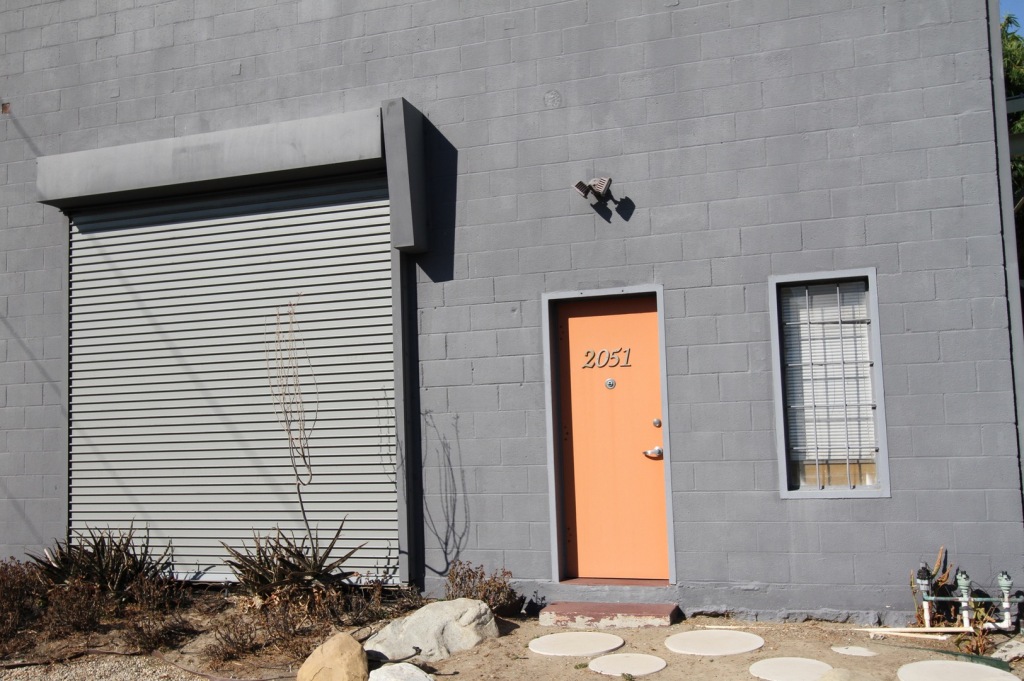
    Design firms, architects, photographers, tech incubators, high end specialty fabricators, and other such enterprises have moved in to the nondescript buildings of Frogtown. If you’re willing to celebrate concrete block walls and corrugated steel as honest industrial materials you can create the trendy Dwell look with paint and landscaping on the cheap. Compare this process with the expense of restoring a more exotic historic property in a tony neighborhood.

    screen-shot-2016-10-02-at-9-13-11-pm

    screen-shot-2016-10-02-at-9-09-21-pm

    screen-shot-2016-10-02-at-9-08-32-pm

    screen-shot-2016-10-02-at-9-07-54-pm

    screen-shot-2016-10-02-at-9-07-03-pm

    screen-shot-2016-10-02-at-9-06-32-pm

    Art Yanez is a Los Angeles native and the son of immigrants. He’s also the principal of FSY Architects. He purchased three contiguous parcels in Frogtown and created a campus for his firm.

    screen-shot-2016-10-17-at-5-18-27-pm

    screen-shot-2016-10-02-at-9-15-37-pm

    screen-shot-2016-10-02-at-9-15-50-pm

    screen-shot-2016-10-02-at-9-19-49-pm

    screen-shot-2016-10-02-at-9-06-02-pm

    screen-shot-2016-10-02-at-9-05-53-pm

    screen-shot-2016-10-02-at-9-12-49-pm

    screen-shot-2016-10-02-at-9-04-15-pm

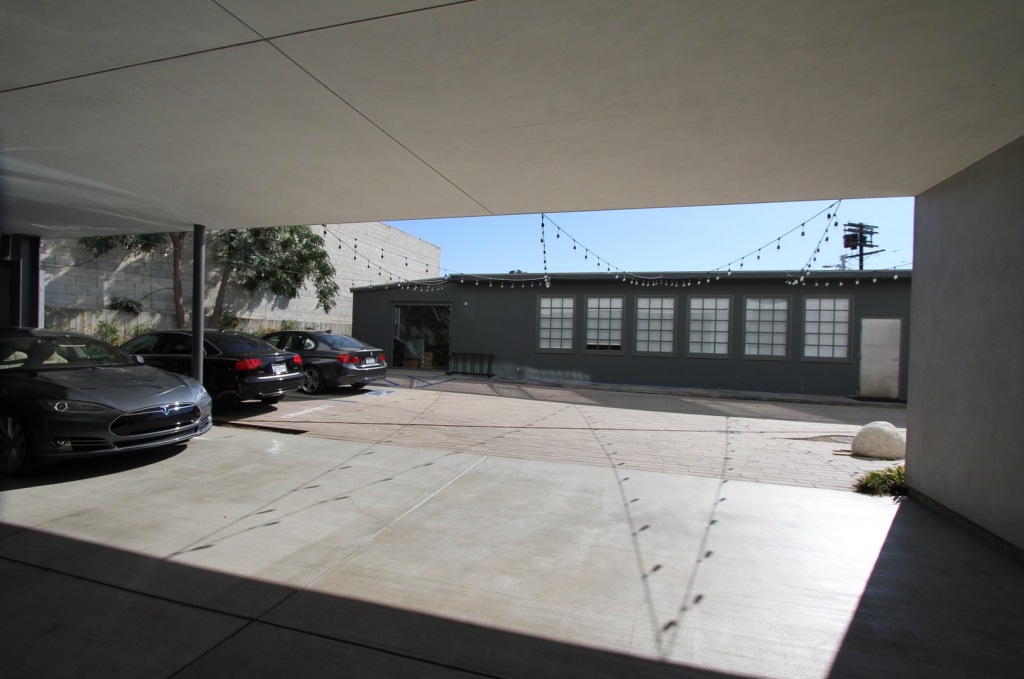
    The space incorporates pre-existing industrial warehouses as well as new construction with shops and offices that are now rented for supplemental income. The architecture firm’s own offices are currently oversized to accommodate anticipated expansion as business continues to ramp up. But construction is a cyclical industry, so the space can be subdivided and rented during future downturns.

    screen-shot-2016-10-02-at-9-12-41-pm

    screen-shot-2016-10-02-at-9-16-58-pm

    screen-shot-2016-10-02-at-9-11-58-pm

    screen-shot-2016-10-02-at-9-12-06-pm

    The new building achieves the legally required off street parking standard as well as the fire marshal’s demand that a full size fire engine be able to drive around the entire structure in an emergency. The parking is convenient (this is Los Angeles after all), but the outdoor space does double duty as a plaza for human activities on occasion. Strings of cafe lights, movable furniture, potted plants, and people transform the place quickly and easily.

    screen-shot-2016-10-02-at-9-21-21-pm

    screen-shot-2016-10-02-at-9-03-00-pm

    screen-shot-2016-10-02-at-9-16-40-pm

    screen-shot-2016-10-02-at-9-14-17-pm

    screen-shot-2016-10-02-at-9-02-32-pm

    screen-shot-2016-10-02-at-8-02-41-pm

    screen-shot-2016-10-02-at-8-02-50-pm

    Part of FSY’s strategy was to create a place that would activate the entire community, not just a building containing offices. The initial concept involved repurposing shipping containers and pressing them into service as small shops. The building code wouldn’t permit that so a stick built version mimics the container look and scale. Actual containers are parked in back and are used for low cost storage. Local artists were invited to install distinctive motifs for the exterior of the corner cafe. All of this was as-of-right construction within the established city code.

    screen-shot-2016-10-01-at-4-30-34-pm

    screen-shot-2016-10-01-at-8-24-41-pm

    screen-shot-2016-10-01-at-4-30-58-pm

    screen-shot-2016-10-01-at-8-27-09-pmscreen-shot-2016-10-01-at-8-25-40-pm

    screen-shot-2016-10-01-at-8-23-39-pm

    For the last century the Los Angeles River has been a concrete industrial drainage canal sealed off by barbed wire fences and cinder block walls. Most people in LA have no particular relationship to the “riverfront.” But that’s changing as city officials have announced a billion dollar program to transform the river into a ribbon of green and blue public amenities lead by none other than starchitect Frank Gehry.

    screen-shot-2016-09-24-at-5-55-16-pm

    screen-shot-2016-09-24-at-5-55-37-pm

    screen-shot-2016-09-24-at-5-55-51-pm

    The success of small infill developments in Frogtown along with the city’s plans to transform the river have attracted large scale production developers. Previously ignored sites began to sprout upscale apartment buildings and condo complexes on dead end streets at the river’s edge.

    This process was viewed with scorn by existing property owners and community organizers who haven’t forgotten how their families were bulldozed to make way for Dodgers Stadium. So they lobbied for new regulations to make it harder to build anything new and to work around the perception that political figures are corrupt and on the take for developer’s money. The new regulations now make projects like Art Yanez’s building non-conforming and subject to special review processes for height, bulk, and so on.

    The result is that now only very small projects can be built as-of-right, and only very large and expensive projects can overcome the newly implemented regulatory hurdles. All the incremental in-between projects that might have been built are now much less viable and far more expensive to push through. This is what land use policy actually looks like on the ground.

    John Sanphillippo lives in San Francisco and blogs about urbanism, adaptation, and resilience at granolashotgun.com. He’s a member of the Congress for New Urbanism, films videos for faircompanies.com, and is a regular contributor to Strongtowns.org. He earns his living by buying, renovating, and renting undervalued properties in places that have good long term prospects. He is a graduate of Rutgers University.

    Top photo: John Sanphillippo

  • Real Estate Doesn’t Make an Economy

    From Southern California to Shanghai and London, inflated real estate prices have evolved into a simulacrum for broader prosperity. In an era of limited income gains, growing inequality, political dysfunction and fading productivity, the conjunction of low interest rates and essentially free money for the rich and well-placed has sparked the construction of often expensive, high-density residential housing.

    This heady period of rapid real estate asset inflation could soon be coming to an end, followed by a potentially nasty correction in high-density, high-cost, more urban core locations. Since the 2008 crash, centered in overpriced single-family housing, density has been the new mantra, a trend largely echoed in the media, academia and among the planning professions.

    The notion that dense, expensive urban real estate would dominate the future rested on two assumptions. First, it was widely explained to developers that millennials would prefer to rent small apartments for the foreseeable future, padding the profits of the investor class. Second, it was assumed that money would continue to pour into elite Western cities from the newly rich of China, Russia, Latin America and the Middle East.

    Today, both trends are diminishing. Millennials are getting older, and by 2018 more will be in their 30s — when most people seek out single-family homes — than in their 20s. We are already reaching “peak urban millennials,” as University of Southern California demographer Dowell Myers suggests, while the replacement generation, known as the “Z” or “plurals,” will be somewhat less numerous.

    At the same time, high-end residential investors from the once booming BRICS countries — Brazil, Russia, India, China and South Africa — are, with the exception of India, now experiencing slower or negative growth. They are likely to be a far less reliable source of funds for high-end luxury housing.

    Read the entire piece at the Orange County Register.

    Joel Kotkin is executive editor of NewGeography.com. He is the Roger Hobbs Distinguished Fellow in Urban Studies at Chapman University and executive director of the Houston-based Center for Opportunity Urbanism. His newest book, The Human City: Urbanism for the rest of us, will be published in April by Agate. He is also author of The New Class ConflictThe City: A Global History, and The Next Hundred Million: America in 2050. He lives in Orange County, CA.

    Photo by Mark Lyon — Full Floor For Rent.

  • Suburban. Comma. Transit.

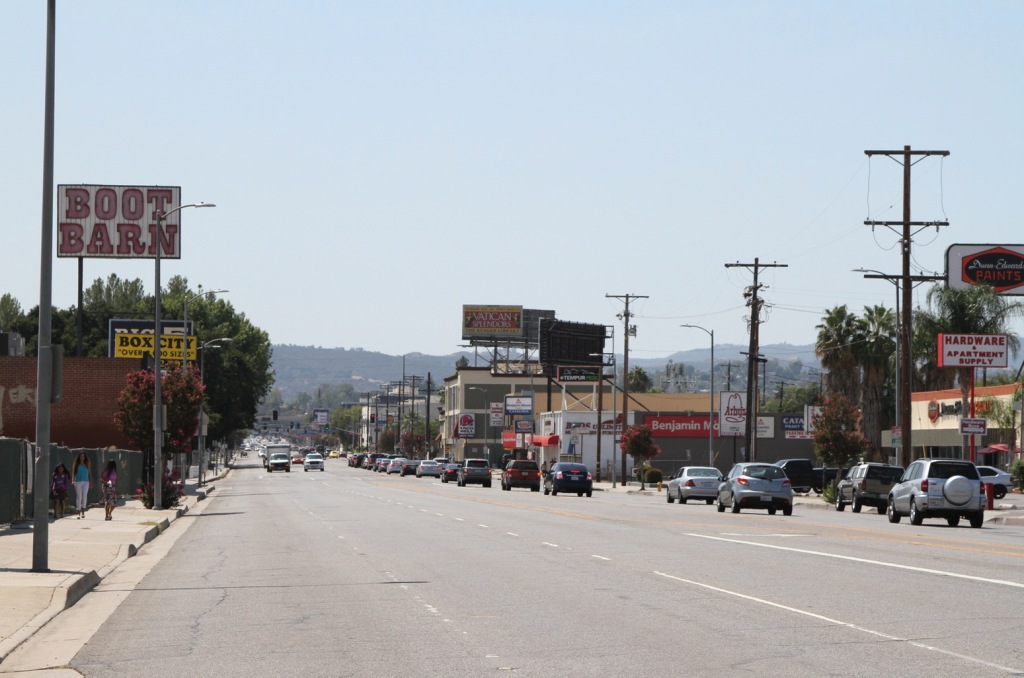
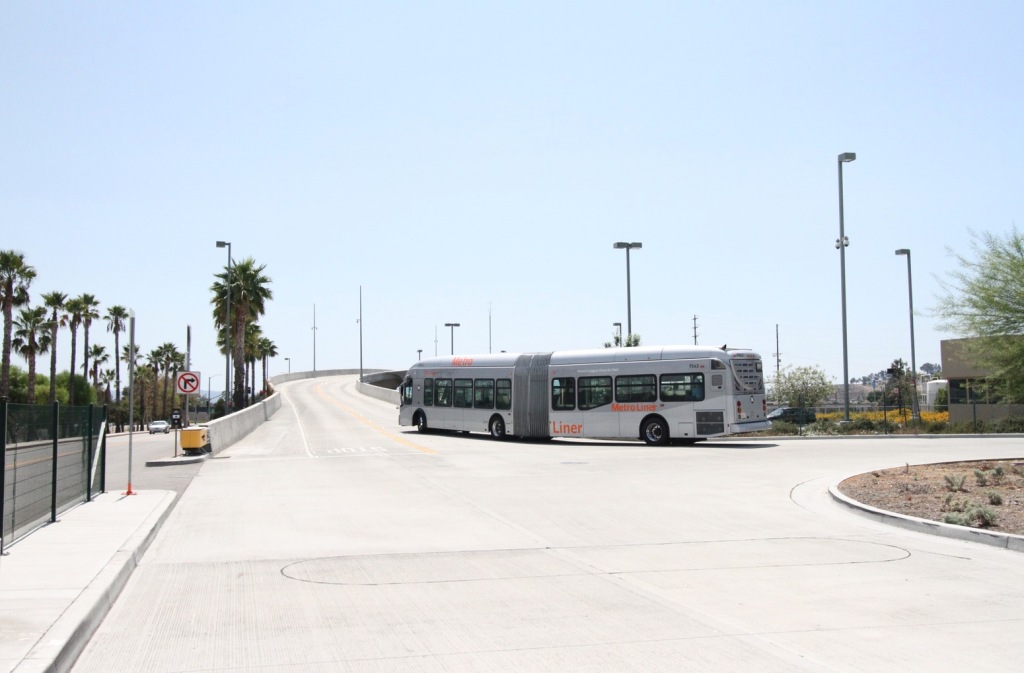
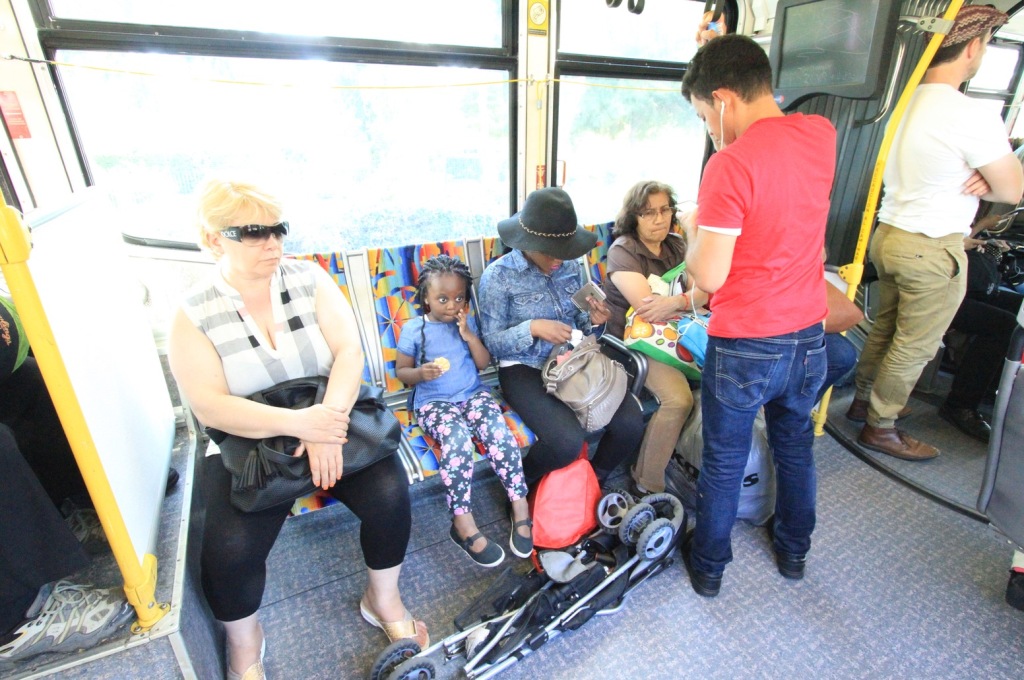
    I explored the Orange Line Bus Rapid Transit (BRT) system that runs for eighteen miles across the San Fernando Valley in Los Angeles. The Valley is a profoundly suburban city-within-a-city and home to 1.8 million people spread out over 260 square miles. Attempts to upgrade public transit by the central authorities in LA proper have been fought tooth and nail by folks in the Valley and illustrate why transit just doesn’t work when the local culture doesn’t want it. I’m not sure why LA keeps pushing on this particular string.

    Screen Shot 2016-09-04 at 7.29.48 AM

    screen-shot-2016-09-06-at-1-33-01-pm

    screen-shot-2016-09-06-at-1-37-08-pm

    Transit works best when one compact highly productive walkable neighborhood is connected to another compact highly productive walkable neighborhood. Manhattan or Hong Kong isn’t required. A plain vanilla Main Street with two and three story buildings works just fine.

    Suburbia is the exact opposite. Everything is spread out and oriented around private space, leisure, and consumption. Public space is an afterthought and any hint of density is anathema. Transit is believed to attract “the wrong element.” If this is the kind of world these folks want to inhabit… I say walk away and let them all enjoy the Jiffy Lubes and drive-thru burger joints without transit.

    Screen Shot 2016-09-04 at 7.44.46 AM

    Screen Shot 2016-09-04 at 7.45.15 AM

    Screen Shot 2016-09-04 at 7.29.12 AM

    Screen Shot 2016-09-04 at 8.36.14 AM

    This is the standard suburban environment with its sad begrudging crumbs of half assed bus service. It’s a monumental waste of scarce public funds to attempt to operate public transit here. The land use pattern and culture are in direct conflict with efficient cost-effective transit. And it’s punishing for the people who have no choice but to walk or take the bus: the young, the elderly, the infirm, and the poor.

    Screen Shot 2016-09-04 at 8.35.25 AM

    Screen Shot 2016-09-04 at 8.36.39 AM

    Screen Shot 2016-09-04 at 8.37.30 AM

    Screen Shot 2016-09-04 at 8.35.04 AM

    Screen Shot 2016-09-05 at 3.14.34 AM

    Screen Shot 2016-09-05 at 3.13.22 AM

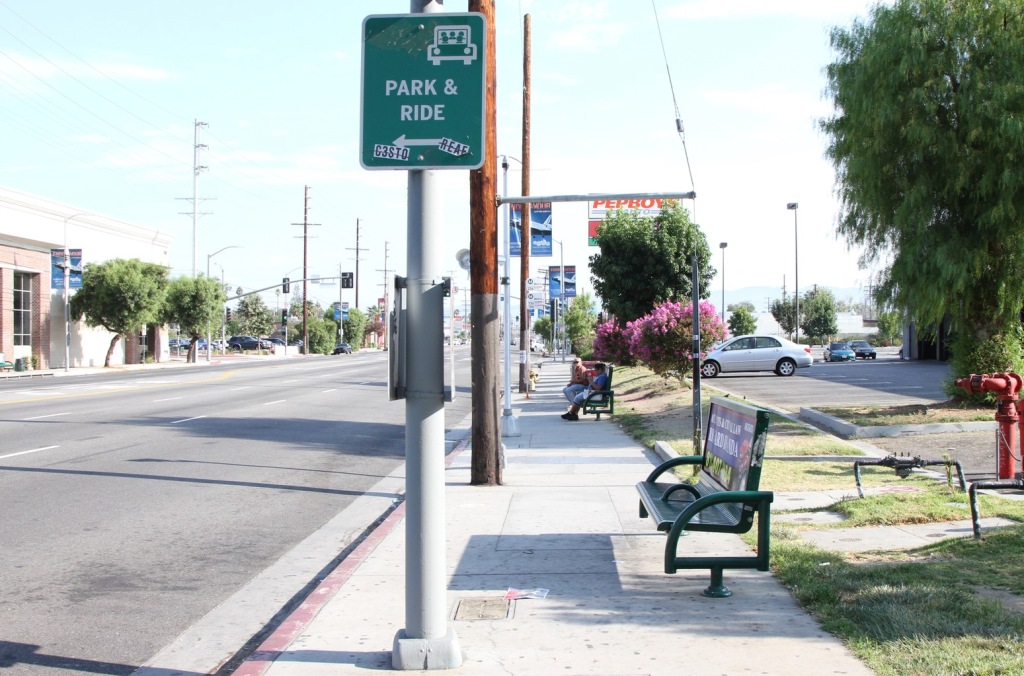
    Here’s how suburban communities typically deal with transit. To the extent that it’s tolerated at all the transit station is hidden away behind a row of self storage facilities and plumbing supply warehouses. The entrance is treated as if it were an office park. There’s an enormous amount of surface parking. The assumption is that people will drive to the bus or train station since transit is a bridge between the comforts of the private automobile and the necessary evil of commuting to a more congested urban destination.

    Screen Shot 2016-09-04 at 8.32.46 AM

    Screen Shot 2016-09-04 at 8.32.12 AM

    Screen Shot 2016-09-05 at 3.14.07 AM

    Screen Shot 2016-09-04 at 8.31.57 AM

    Screen Shot 2016-09-04 at 8.33.55 AM

    The Park and Ride model of transit like this Metro stop in Chatsworth (the terminus of the Orange Line) is moderately acceptable to middle class suburbanites so long as the station is properly landscaped. Absolutely nothing can be built anywhere near the station. Loitering must be prevented at all costs. Theoretically it’s possible to walk to and from the station, but the location and design of the place ensure it isn’t a common practice.

    Screen Shot 2016-09-05 at 4.07.31 AM

    Screen Shot 2016-09-05 at 4.06.35 AM

    Screen Shot 2016-09-04 at 9.04.15 AM

    Screen Shot 2016-09-04 at 9.03.57 AM

    Screen Shot 2016-09-04 at 9.04.53 AM

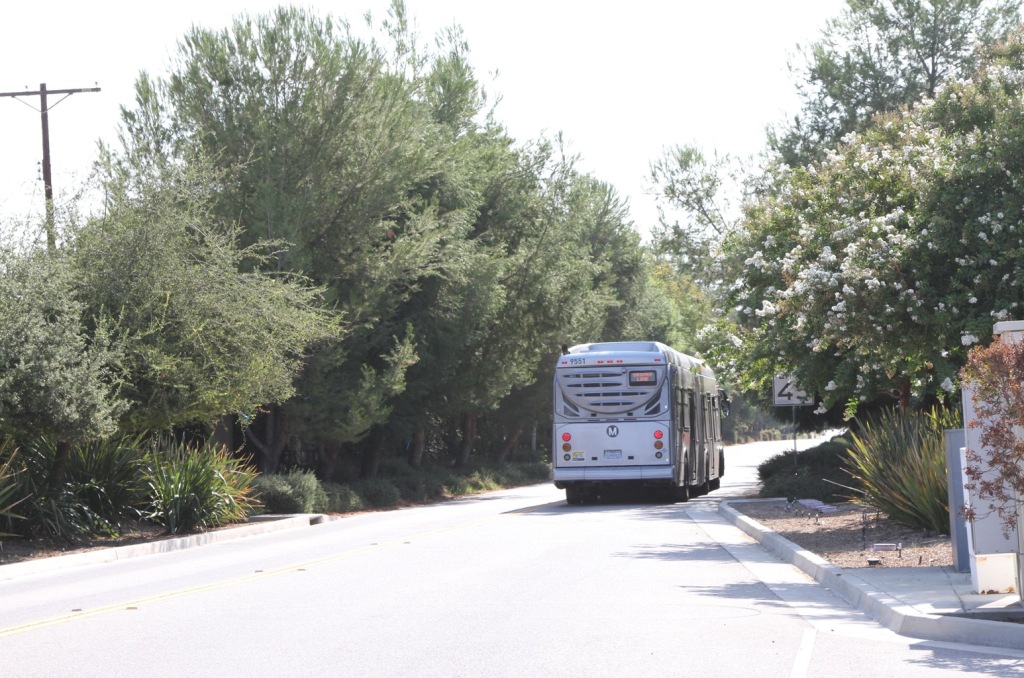
    I followed the entire route of the Orange Line and found the stations themselves are well designed, convenient, and efficient. The fully segregated busway disguised in a tunnel of greenery mean buses are never stuck in the same traffic that afflicts cars and trucks. The buses come frequently and predictably and travel is comfortable and fast. BRT simulates the benefits of a light rail system, but at a tenth the cost.

    Screen Shot 2016-09-04 at 9.06.44 AM

    Screen Shot 2016-09-04 at 11.53.30 PM

    Screen Shot 2016-09-04 at 9.05.59 AM

    Screen Shot 2016-09-04 at 9.06.25 AM

    Screen Shot 2016-09-04 at 9.07.05 AM

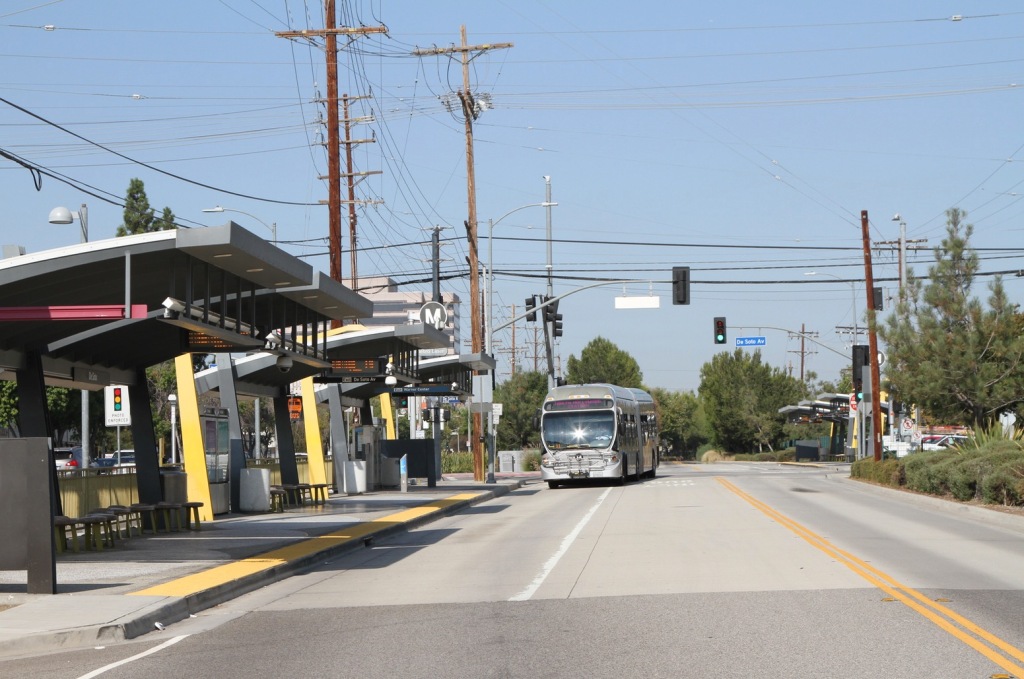
    But each station was built in a spot that makes it unlikely that transit will live up to its full potential. This is the De Soto stop. The buses do a great job of getting passengers from one isolated station to another. This isn’t an accident. It’s the only set of arrangements the locals would tolerate – and the locals have a lot of lawyers. Transit is associated with the lower class and home owners here want no part of it. So they litigated for years until the proposed rail line was beaten back to a bus route and some decorative shrubbery that didn’t go anywhere too offensive.

    Screen Shot 2016-09-05 at 12.37.57 AM

    screen-shot-2016-09-06-at-9-41-43-am

    screen-shot-2016-09-06-at-9-40-09-am

    screen-shot-2016-09-06-at-9-41-24-am

    screen-shot-2016-09-06-at-9-40-35-am

    screen-shot-2016-09-06-at-9-46-41-am

    Here’s the Balboa station. Abundant surface parking, plenty of landscaped strips, and a location that doesn’t infringe on nearby private property lets people drive to the bus. Unfortunately the effectiveness of good transit is negated by the barren surroundings. If you had access to a car and could drive to the bus… you wouldn’t really need the bus.

    Screen Shot 2016-09-04 at 11.57.48 PM

    Screen Shot 2016-09-04 at 11.54.47 PM

    Screen Shot 2016-09-05 at 12.09.34 AM

    Screen Shot 2016-09-04 at 11.51.50 PM

    Screen Shot 2016-09-04 at 11.52.09 PM

    Here’s the Sepulveda station. Notice how the pattern repeats. In the Valley it’s now possible to take a highly effective bus trip from the Costco parking lot in Van Nuys to a strip mall a dozen miles away in Canoga Park. That’s progress of a sort since the BRT is so much better than traditional suburban bus service. But the public investment in infrastructure isn’t being complimented by the required private investment near any of the stations. That’s because the culture rejects the kind of infill development that would make the stations economically meaningful.

    Screen Shot 2016-09-04 at 11.55.42 PM

    Screen Shot 2016-09-04 at 11.50.02 PM

    Screen Shot 2016-09-04 at 7.25.03 AM

    Screen Shot 2016-09-04 at 7.31.10 AM

    Screen Shot 2016-09-04 at 7.23.44 AM

    Screen Shot 2016-09-04 at 7.24.28 AM

    Bicycle and pedestrian paths parallel the BRT busway along many miles of the system. This allows people to get from Point A to Point B in a way that doesn’t rile up the locals quite as much as the proposed light rail did. Fenced in landscaped bike paths follow the suburban “Sunday in the park” model of leisure that’s at least borderline socially acceptable in the Valley. The fact that low income people also use the paths to peddle to work is an unfortunate and much lamented side effect. I noticed more than a few Spandexed guys on $4,000 bikes yelling at slow moving folks to get out of the way.

    screen-shot-2016-09-06-at-10-40-38-am

    The eighteen miles of Bus Rapid Transit in the Valley cost $324 million dollars to construct. That’s $18 million per mile. Compare that to the recent $1.1 billion road improvement project on a ten mile stretch of freeway in the Valley. The freeway was already ten lanes wide so adding slightly better on and off ramps and tweaking the car pool lanes did exactly nothing to relieve traffic congestion. That’s $110 million dollars per mile. The same people who lament the waste of taxpayer money on transit think the city should be spending more to upgrade the roads.

    Over the years community groups and their elected representatives in the Valley have created legislation that forbids the construction of light rail or the use of sales tax revenue to fund a subway. Other local groups created rules that mandated a fully underground subway system because they objected to surface or elevated rail lines in their neighborhoods. And the ubiquitous anti-infill and anti-density brigades continue as always.

    Personally, I don’t see the point of fighting locals who don’t value transit. I say give this part of the city no transit at all. But also require the locals to fund their own road projects from their own immediate tax base as well. Actually, I would love to see things taken a step farther. Cut the Valley loose from the City of Los Angeles altogether as so many folks in the Valley have attempted to do for decades. Let the Valley keep its own tax revenue and pay for its own services and infrastructure as an independent city. And let Los Angeles be free to focus on projects that actually make sense in the coastal communities that actively want transit and more intensive development. If that means the region is less integrated as a result… I don’t see how things could be worse.

    John Sanphillippo lives in San Francisco and blogs about urbanism, adaptation, and resilience at granolashotgun.com. He’s a member of the Congress for New Urbanism, films videos for faircompanies.com, and is a regular contributor to Strongtowns.org. He earns his living by buying, renovating, and renting undervalued properties in places that have good long term prospects. He is a graduate of Rutgers University.

  • A Capital Improvement and Revitalization Idea for Detroit

    You may have heard that Detroit is in the midst of a modest but enduring revival in and around its downtown. Residents and businesses are returning to the city, filling long-vacant skyscrapers, prompting new commercial development and revitalizing adjacent old neighborhoods. As a former Detroiter I’m excited to see the turnaround. After so many false starts, Detroit’s post-bankruptcy rebound seems very real.

    However, there seems to be a growing awareness that the city’s current revival has its limits. On one hand, what’s happening now in Detroit could be considered a rather elongated recovery for the city instead of growth, as the city races to catch up with cities that have had a 20-year head start on urban revitalization. One could argue that the Motor City is slowing losing its taint, and the investment that’s coming to the city now is investment that never left, or never left at such a scale, in other cities. Maybe its reclamation rather than revitalization.

    But more broadly speaking, there’s a sentiment that the city’s revival hasn’t been inclusive. In a majority-black city, startlingly few African-Americans appear to be involved in the rebound, either as developers, homebuyers or even consumers of new amenities. Because of this, two vastly different kinds of fears seem to trouble much of the city’s black community — the revitalization could burn through the city like a wildfire and lead to widespread displacement, or the rebound could peter out before it has a chance to transform even more of the city.

    How can that be? Maybe because people and businesses are coming back not because of an economic change in the city, but a socio/cultural one. Detroit is still the Motor City, and that won’t change anytime soon. Detroit will remain the headquarters of American auto production and be a key manufacturing center for generations to come, and it will continue to ride the wave of manufacturing ebbs and flows. That’s why I say the economy is driving little of what’s happening in Detroit today. The Big Three are only eight years away from a true existential threat, and are still in the process of righting the ship. By my eyes, Detroit still hasn’t found a new economic raison d’etre that could vault it into the next phase of its development.

    As the fears that drove white and middle-class flight from the city from the 1960’s onward recede into the distant memory, many people are willing to reconsider Detroit and return.

    Detroit is at an interesting juncture in its history. After 125 years of focusing on its national and global economic prominence and leaving city-building behind, maybe now Detroit can focus on being a thriving, livable city. For everyone. There is an opportunity for Detroit to build on its rich urban design legacy to include more of the city, and more of its people, in its revival. There is an opportunity to set the stage for good — even innovative — urban development in the Motor City as the city continues to search for a new economic catalyst.

    I believe the city should undertake a capital improvement/revitalization plan that utilizes its grand arterial streets — Gratiot, Woodward Grand River and Michigan avenues — and Grand Boulevard, the parkway necklace around the city’s inner core, as assets and foundations for growth. After that, the city could extend similar improvements to the locations where the arterial streets intersect with the defunct Detroit Terminal Railroad, further out from the city center. Finally, the improvements could be extended even further outward to Detroit’s other boulevard necklace, Outer Drive, near the city limits. Just as interstate highway development had the net impact of opening up outer bands of suburbia to city residents, this plan could open up languishing parts of the city for revitalization.

    Here’s the five-phase process:

    • Transform Gratiot, Woodward, Grand River and Michigan avenues into true boulevards — landscaped medians, streetscaping, wide sidewalks, bike lanes, etc. — from their sources in downtown Detroit to their intersections with Grand Boulevard.

    • Establish public squares where each new boulevard intersects with Grand Boulevard.

    • Develop a connected greenway along the path of the former Detroit Terminal Railroad.

    • Extend boulevard treatment along Gratiot, Woodward, Grand River and Michigan avenues to a new terminus at Outer Drive.

    • Complete and connect Outer Drive where necessary, and establish new public squares where the boulevards intersect with Outer Drive.

    Each step of the plan would include zoning changes along the affected areas with the intent of increasing residential and commercial development choice, and send a signal that the city is ready for transformation.

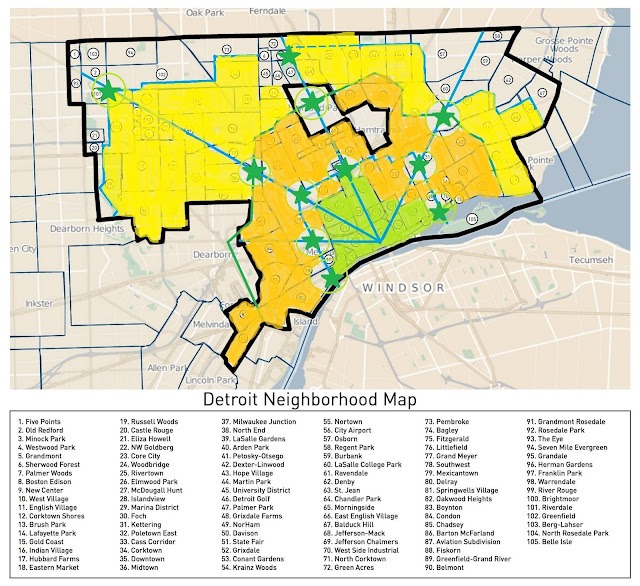
    Here’s how this project would look conceptually, looking at the entirety of Detroit:

    image of detroit

    First, please excuse my crude Microsoft Paint illustration. Hey, it serves its purpose. Second, let’s consider the broad areas of the city highlighted in various colors. The green areas are the downtown and downtown-adjacent areas that have been experiencing a pretty significant rebound over the last 5-10 years. In fact, you could say that revitalization took hold there with the opening of the Comerica Park baseball stadium in 2000 and the Ford Field football stadium in 2002. This area also includes the Midtown area north of downtown that includes Wayne State University and a host of city cultural institutions. The orange areas are the parts of the city that capture the dystopian imagination of Detroit. This area is quite — but not totally — abandoned, where much of the city’s older residential and industrial treasures have been lost. There’s still some intact neighborhoods that have a solid walkable foundation, but they’re often disconnected from each other by some serious abandonment. The yellow areas are the areas that might be described as imperiled; they could soon look like the orange zone if action isn’t taken, and in fact some parts of it (like the Brightmoor neighborhood, on the far west side, are quite abandoned already). The gray or uncolored areas on the far northeast and northwest edges of the city represent the most stable residential neighborhoods of the city, but they, too, are threatened by the challenges experienced by the rest of the city.

    When you hear Detroiters expressing concern that downtown revitalization isn’t reaching the neighborhoods, they often come from the yellow and gray/uncolored areas, with fewer and fewer voices coming from the relatively open orange areas. Viewed this way it can be understood that people see the city’s rebound as having a low ceiling; there is a half-empty quarter that sits between them and the promise of revitalization.

    My idea is to utilize strategic infrastructure investment and zoning reform to attract new development to key corridors, utilizing the city’s radial network. The radial blue lines on the map emanating from their intersection downtown represent (clockwise, from the left) Michigan, Grand River, Woodward and Gratiot avenues. The blue line that connects them, just outside the green revitalization area, is Grand Boulevard. The blue line that connects the radial streets further out is Outer Drive. The green stars represent public squares or plazas that could be built, and the light green circles indicate an approximate extent of impact outward from the squares or plazas. The green line that serves as the dividing line between the yellow and orange areas is the Detroit Terminal Railroad, and it would become a connecting trail.

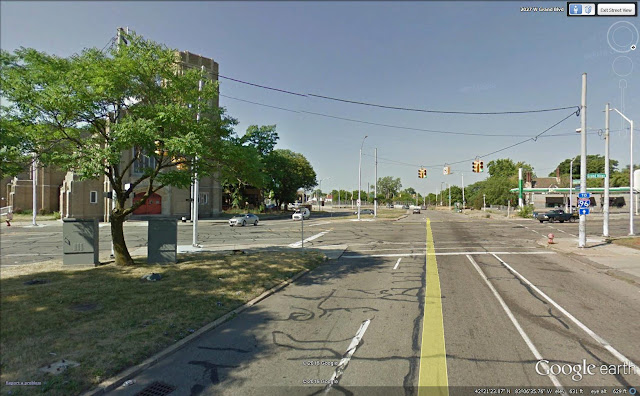
    Detroit was blessed early on with an excellent radial street system, but it quickly abandoned it as growth took hold in the early 20th century. Detroit missed an opportunity for grand public spaces at the same time that other cities were incorporating them into their urban fabric — and those public spaces became the foundation for their rebound. Consider this image, where Grand River Avenue intersects with Grand Boulevard:

    google image of grand river avenue intersecting with Grand Boulevard

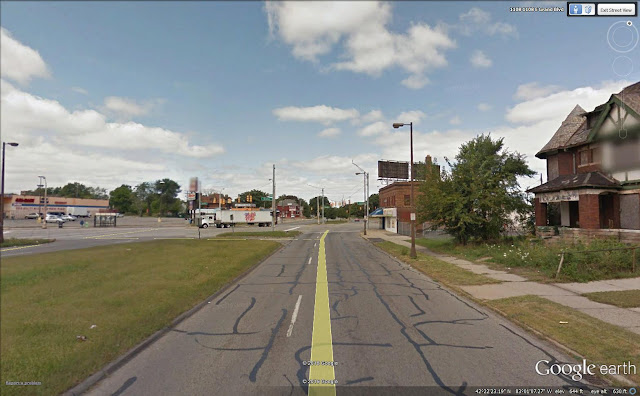
    Or, worse yet, where Gratiot Avenue and Grand Boulevard meet:

    google image of Gratiot Avenue and Grand Boulevard

    This was a missed opportunity for Detroit to have majestic entryways into neighborhoods beyond the city center. This was also a missed opportunity to develop areas that could become more mixed use and multifamily in character, as opposed to the dominant single-family home city that Detroit is today.

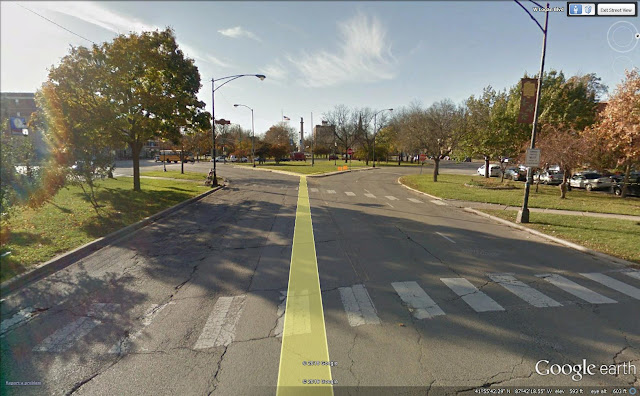
    If Detroit had the foresight 100 years ago to make strategic infrastructure investments, it could have put in place something like Chicago’s Logan Square, located at Milwaukee Avenue and Logan Boulevard (also a radial street and boulevard intersection):

    google image of Chicago's Logan Square

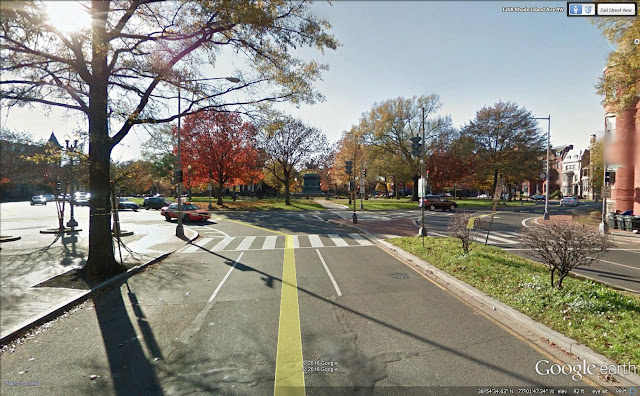
    Or Logan Circle, in Washington, DC:

    google image of Logan Circle

    The public squares on the radial avenues could have the effect of drawing development and revitalization outward from the city center, as has happened in Chicago and DC. This could continue outward to the DTR trail and Outer Drive, if the city sees success in such a measure, finds the appropriate resources and desires to extend it further.

    Detroit should certainly see the merits of such an investment. The city renovated and rededicated a new Campus Martius Park in 2004, and it has become a focal point for downtown revitalization.

    Without a doubt, this would be a costly measure, maybe even a folly for a city just out of municipal bankruptcy and still struggling to provide basic city services. that’s why I would envision this as a long term proposal, perhaps a 10-year project.

    That’s the basis of the idea. I’ll follow up with more details soon.

    Top photo: detroit.curbed.com

    Pete Saunders is a Detroit native who has worked as a public and private sector urban planner in the Chicago area for more than twenty years.  He is also the author of “The Corner Side Yard,” an urban planning blog that focuses on the redevelopment and revitalization of Rust Belt cities.

  • Two Cheers for NIMBYism

    Politicians, housing advocates, planners and developers often blame the NIMBY — “not in my backyard” — lobby for the state’s housing crisis. And it’s true that some locals overreact with unrealistic growth limits that cut off any new housing supply and have blocked reasonable ways to boost supply.

    But the biggest impediment to solving our housing crisis lies not principally with neighbors protecting their local neighborhoods, but rather with central governments determined to limit, and make ever more expensive, single-family housing. Economist Issi Romem notes that, based on the past, “failing to expand cities [to allow sprawl] will come at a cost” to the housing market.

    A density-only policy tends to raise prices, turning California into the burial ground for the aspirations of the young and minorities. This reflects an utter disregard for most people’s preferences for a single-family home — including millennials, particularly as they enter their 30s.

    In California, these policies are pushed as penance for climate change, although analyses from McKinsey & Company and others suggest that the connection between “sprawl” and global warming is dubious at best, and could be could be mitigated much more cost-effectively through increased work at home, tough fuel standards and the dispersion of employment.

    Read the entire piece at The Orange County Register.

    Joel Kotkin is executive editor of NewGeography.com. He is the Roger Hobbs Distinguished Fellow in Urban Studies at Chapman University and executive director of the Houston-based Center for Opportunity Urbanism. His newest book, The Human City: Urbanism for the rest of us, will be published in April by Agate. He is also author of The New Class ConflictThe City: A Global History, and The Next Hundred Million: America in 2050. He lives in Orange County, CA.

  • Welcome to Rosemont, IL

    Millions of people pass through O’Hare, settle into the adjacent hotels, go to conferences and meetings in the nearby convention centers, shop in the nearby stores or drink and eat in the nearby bars and restaurants, and believe they’re in Chicago.  But they’re not.  In most cases, they’re in the small village of Rosemont, the tiny town that’s done more than any community I know to capitalize on its location.

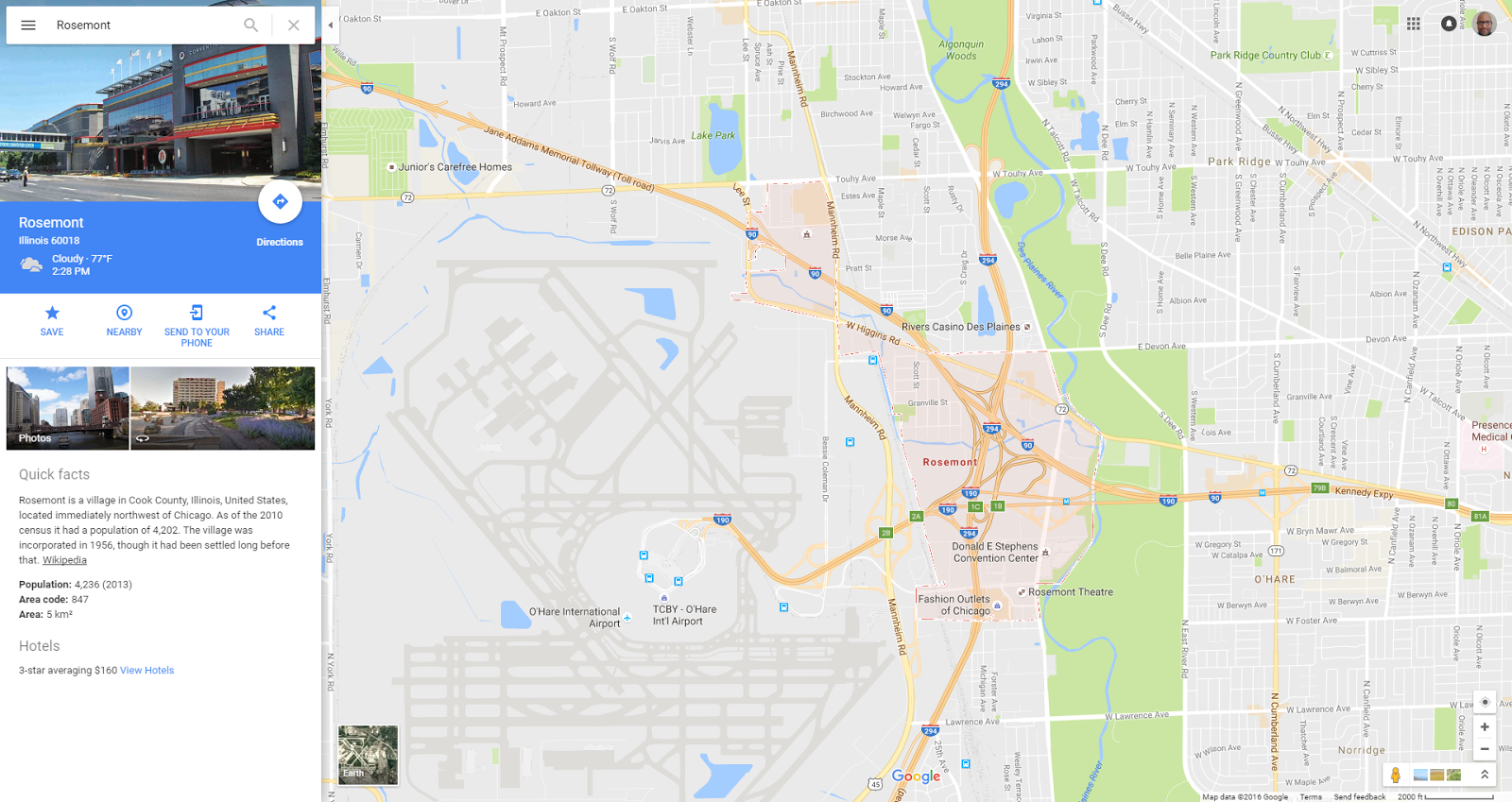
    Last week my wife and son flew out of town for a quick vacation on the West Coast.  As for me, duty called and I was unable to join them.  But I did drop them off and pick them up from Chicago’s main international airport, O’Hare.  While I waited for their arrival, I drove around the area surrounding the airport. For reference, here’s Rosemont’s boundaries, courtesy of Google Maps.  Rosemont is the area shaded in faint red (click on the map if you need to make it larger):

    Here’s what many people don’t know.  Yes, O’Hare International Airport is technically within the City of Chicago.  The airport is owned and operated by the City; Chicago Transit Authority (CTA) “L” lines can take you directly from downtown Chicago to the airport within 30-40 minutes.  But the airport is connected to the rest of Chicago by a sliver of property that follows the parcels fronting Foster Avenue for about a half mile, before connecting with the broad tarmac that is the airport.  Immediately east of the airport, where all the highways meet that connect the airport to the region, stands little Rosemont.

    But “little” hardly applies in any sense to Rosemont.  The village is a dizzying mix of hotels, convention centers, restaurants, large and small-scale entertainment venues, tightly packed against the interstates that wind their way through the community.  Those familiar with the area know that the area has almost a Vegas Strip feel to it, with a scale that can overwhelm.  Here’s some screenshots from Google Earth:

    What you see above are hotels, a convention center, office complexes, an outlet mall, and Allstate Arena, a venue for professional and collegiate sports teams.  What have I not included?  Myriad bars and restaurants, a performing arts center, even a field for a professional women’s softball team.  There’s even a casino, but it’s in yet another suburb, Des Plaines, just feet from the Rosemont boundary.  All of this within a 1.8 square mile area that holds only 4,200 residents.

    How did this happen?  Two words, one man — Donald Stephens.

    Airplane construction had taken place on the site that is now O’Hare for many years prior to the airport’s official opening in 1963.  The City of Chicago annexed the property for manufacturing uses in the 1940s, using the Foster Avenue sliver mentioned earlier to reach the site.  Chicago, as well as neighboring suburbs Des Plaines, Park Ridge and Schiller Park, all passed on annexing the land just east of what was a major manufacturing hub.  However, the Interstate Highway Act, which initiated the construction of the Interstate Highway system, was passed in 1956.  That act opened up possibilities for the development of an airport and changed how the empty lands would be viewed.  Donald Stephens, an insurance underwriter, led the effort to incorporate the community that same year.

    Rosemont’s boom as a commercial center paralleled the growth and expansion of O’Hare.  First came the hotels, and then smaller commercial uses like bars and restaurants.  The Donald Stephens Convention Center and Allstate Arena opened in 1975 and 1980, respectively, and throughout much of the ’80s the entertainment district also grew and expanded.  The airport-driven uses continue to gather in the community; the Rosemont Theater for the Performing Arts opened in 1995.  The Fashion Outlet Mall of Chicago opened in 2013.

    This extreme concentration of commercial, recreational and entertainment uses led to a unique development in Rosemont.  In 1995, residents living within the small residential core of the community voted to enclose all portions of residential Rosemont as a gated community.  Rosemont residents may fight major traffic when going to or coming home from work, but they have a sense of security that usually comes with living in upper class enclaves.

    Rosemont’s growth didn’t come without controversy.  Stephens, who was the only mayor of Rosemont from its founding in 1956 until his death in 2007, was often dogged with accusations of associations with Chicago organized crime.  Twice he was brought up on political corruption charges, for tax fraud and bribery, but was acquitted.  After Stephens’ death, his son Bradley assumed the position of mayor.

    Rosemont’s unique location has led to a unique set of statistics about the community. The community’s residents are firmly middle- and working-class: the median household income for residents is about $46,000, just below the metro area’s median of $55,000.  Demographically speaking, the community is about 57% non-Hispanic white and 35% Hispanic/Latino.  Rosemont residents lag behind the metro area in terms of educational attainment by one measure 13.1% of residents over age 25 have a bachelor’s degree or more, compared to 35.3% in the metro area.

    But none of that matters when the community has outsized economic numbers related to its location.  In a region that averages about 1.1 jobs per household, Rosemont has 11.3.  In a region that averages about $14,500 in general merchandise retail sales per capita, Rosemont has over $163,000.  In 2014, Rosemont had an equalized assessed value, or a value for all property in the community, of nearly $260 million.  Schiller Park, just to the south of Rosemont and nearly three times its size in terms of residents, had an equalized assessed value of $290 million.

    So, in many respects Rosemont is less a community than a state-chartered commercial and entertainment district.  Its successes cannot be replicated.  But that doesn’t mean that its successes are enduring.  On my brief visit there, I saw many pedestrians walking across Rosemont from one commercial or entertainment venue to another, in what is a challenging walkable environment.  The network of interstates that meet in the village means that it is an environment for cars, and there’s currently no way around that.  If Rosemont wishes to maintain its position as a commercial and entertainment venue, it may really need to consider improved walkability as a way to reach new and younger demographics travelling through Chicago.

    As for me, I often wonder how the area would look if Chicago had the foresight and vision to annex the property prior to the development of O’Hare,  If it had, the uses may have been quite similar but the look very different.

    Top photo: The Hyatt Regency O’Hare, located in Rosemont, IL.  Source: totsandtravel.com

    Pete Saunders is a Detroit native who has worked as a public and private sector urban planner in the Chicago area for more than twenty years.  He is also the author of “The Corner Side Yard,” an urban planning blog that focuses on the redevelopment and revitalization of Rust Belt cities.

  • How to Make Post-Suburbanism Work

    Are you ready to become a “real” city yet, Southern California? Being “truly livable,” our betters suggest, means being “infatuated” with spending more billions of dollars on outdated streetcars (trolleys) and other rail lines, packing people into ever small spaces and looking toward downtown Los Angeles as our regional center.

    Our cognitive elites dislike the very idea that Los Angeles, as Dorothy Parker once supposedly described, has long been “72 suburbs in search of a city.” Yet, Southern California, as I discuss in a new Chapman University report, has from its early emergence grown around a “post-suburban” model of dynamic, smaller clusters. This urban form has become common in many major metropolitan areas as automobiles have replaced transit as the primary means of getting around.

    This model worked here brilliantly for most of the last half century — until planners, real estate speculators and California bureaucrats decided that we needed to emulate New York City and other older monocentric core cities. Like the provincials they consistently prove themselves to be, our leaders have generally complied.

    So, after nearly 15 years spent in pushing this direction, what have we accomplished? A transit system that barely serves as many people as it did before we started building trains, housing prices among the highest in the nation, super-high poverty rates and a population that continues to seek to go somewhere else, including some 1.6 million net domestic migrants who have left the L.A. and Orange County area since 2000.

    The density mirage

    Some see densification as necessary to meet the demands of an expanding population. Yet, both L.A. and O.C.’s populations are growing slower than both the state and national average. Nor has the pro-density regime relieved any of the pressure on housing and rent. For one thing, high-density housing is far more expensive on a per-square-foot basis, either for townhouses or detached housing. It can only accommodate the poor at the cost of massive subsidies.

    The drive to re-engineer our post-suburban form assumes that downtown Los Angeles can become like the more historic central business districts of New York, Chicago and San Francisco. These CBDs have from nearly double to 10 times the employment levels as downtown L.A. Suffice it to say, downtowns in New York, Chicago and San Francisco have retained regional significance, as others, including Los Angles, have declined in relative influence, with little growth in their share of regional employment. Even the most generous definition of downtown Los Angeles encompasses considerably less than 5 percent of the metropolitan area’s employment, and that share has not grown appreciably since 2000. All the net job growth has been in newer suburbs and exurbs.

    Fundamentally, in “post suburban” regions like southern California, the “sell” is a different one than in places like New York. It is based on a largely suburban quality of life. This does not mean we need to lag economically. Many of the most successful high-tech regions — notably, Silicon Valley; Austin, Texas; Raleigh-Durham, N.C., and the northern reaches of Dallas —– are largely suburban and less dense than the L.A. area. Certainly, densification policies so far have not turned Los Angeles County into a high-tech haven. The county suffers from below-average tech employment, while more suburban Orange County remains 20 percent above average. The fastest increases, albeit from a low base, are occurring in the Inland Empire.

    Read the entire piece at The Orange County Register.

    Joel Kotkin is executive editor of NewGeography.com. He is the Roger Hobbs Distinguished Fellow in Urban Studies at Chapman University and executive director of the Houston-based Center for Opportunity Urbanism. His newest book, The Human City: Urbanism for the rest of us, will be published in April by Agate. He is also author of The New Class ConflictThe City: A Global History, and The Next Hundred Million: America in 2050. He lives in Orange County, CA.

    Photo by Thomas Pintaric (Pintaric) [GFDL or CC-BY-SA-3.0], via Wikimedia Commons

  • A Better Way

    My recent post at Granola Shotgun described how a town in Georgia spent an enormous amount of public money on a new civic center and road expansions, but somehow managed to devalue nearby private property in the process. Here’s an example of a neighborhood in Nashville, Tennessee that took a different approach that cost a lot less and achieved a radically better set of outcomes.


    Screen Shot 2016-08-25 at 6.01.50 PM

    Screen Shot 2016-08-25 at 5.49.18 PM

    The McCabe Park Community Center was designed by a local firm rather than an international starchitect. Municipal funds were recirculated right in town and used to foster native talent and professional employment. And while the facilities are available to everyone in Nashville this center is scaled and programmed primarily to serve the immediate neighborhood.

    Screen Shot 2016-08-25 at 9.25.20 PMGoogle

    Screen Shot 2016-08-25 at 6.41.04 PM

    A conscious decision was made to accommodate pedestrians rather than provide the usual endless automobile infrastructure. There are the required handicap accessible parking spaces close to the entrance at the rear. There are a few dozen off street parking spots along the baseball diamond. But that’s it. It’s absolutely possible to arrive by motor vehicle, but the cars don’t dominate the landscape.

    Screen Shot 2016-08-25 at 11.08.02 PM

    Screen Shot 2016-08-25 at 5.48.42 PM

    Screen Shot 2016-08-25 at 6.01.06 PM

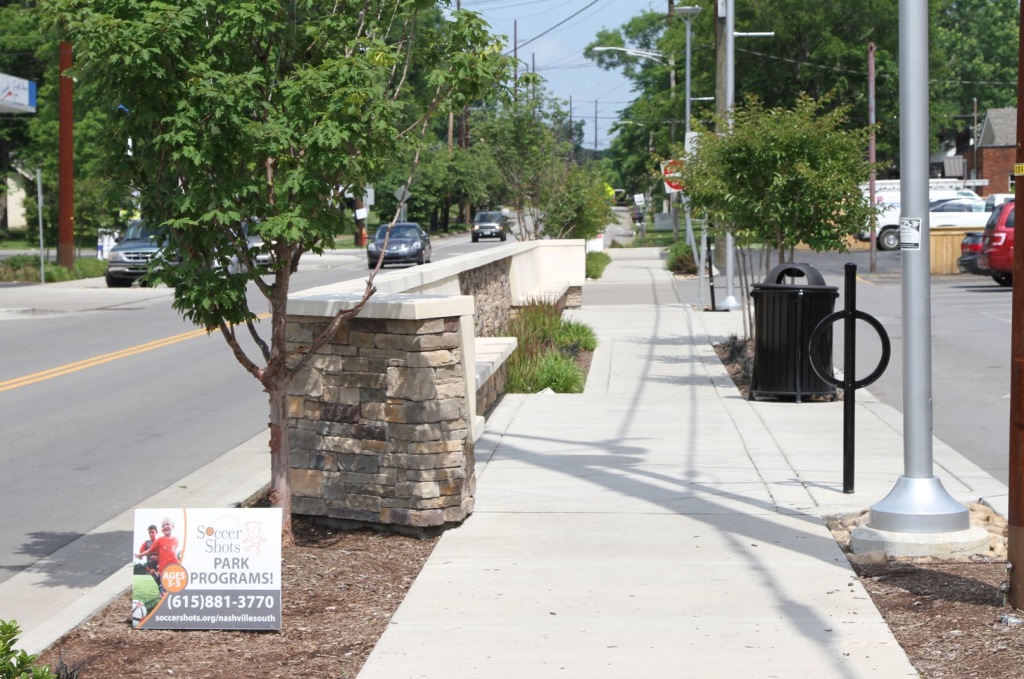
    Bicycle and pedestrian infrastructure make it clear that it’s safe, pleasant, convenient, and dignified to arrive without a car. One of the goals of this community center is to facilitate a more active and healthy lifestyle.

    Screen Shot 2016-08-25 at 11.40.11 PMGoogle from 2009

    Screen Shot 2016-08-26 at 1.07.16 AMGoogle Street View from 2009

    Screen Shot 2016-08-26 at 1.05.07 AMGoogle Street View from 2009

    Screen Shot 2016-08-26 at 1.06.32 AMGoogle Street View form 2009

    Screen Shot 2016-08-26 at 1.48.03 AMGoogle Street View form 2009

    The road out front was a standard suburban affair of wide lanes, fast moving vehicles, no distinction between the road surface and adjacent parking lots, and no sidewalks. This landscape made it very clear that if you weren’t in a car you just weren’t important. It was also brutally ugly and lined with aging low value buildings and struggling businesses.

    Screen Shot 2016-08-26 at 1.29.53 AM


    Screen Shot 2016-08-25 at 5.46.54 PM

    Screen Shot 2016-08-25 at 6.00.19 PM

    Screen Shot 2016-08-25 at 5.49.32 PM

    Screen Shot 2016-08-25 at 5.59.23 PM

    Screen Shot 2016-08-26 at 2.04.37 AM

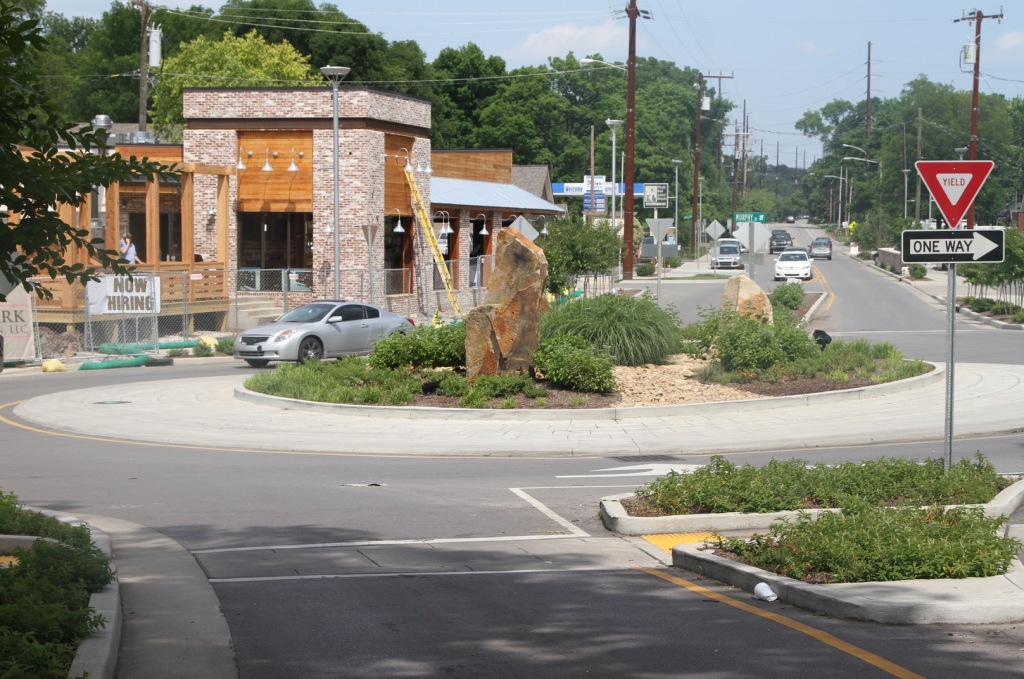
    The new traffic roundabout has transformed the intersection in several crucial ways. First, instead of stopping at a light cars now slow down a bit, but continue on. This means more cars move through the space in less time so traffic congestion has actually been reduced.

    Screen Shot 2016-08-26 at 1.35.08 AM

    Screen Shot 2016-08-26 at 1.35.18 AM

    Screen Shot 2016-08-26 at 1.35.55 AM

    Second, there are significantly fewer accidents because cars are moving at slower speeds and drivers are made to pay more attention to their surroundings as the street narrows. Cars are still welcomed here, but they’ve been disciplined to share the space with humans.

    Screen Shot 2016-08-26 at 1.36.39 AM

    Screen Shot 2016-08-26 at 2.04.12 AM

    Screen Shot 2016-08-26 at 1.39.18 AM

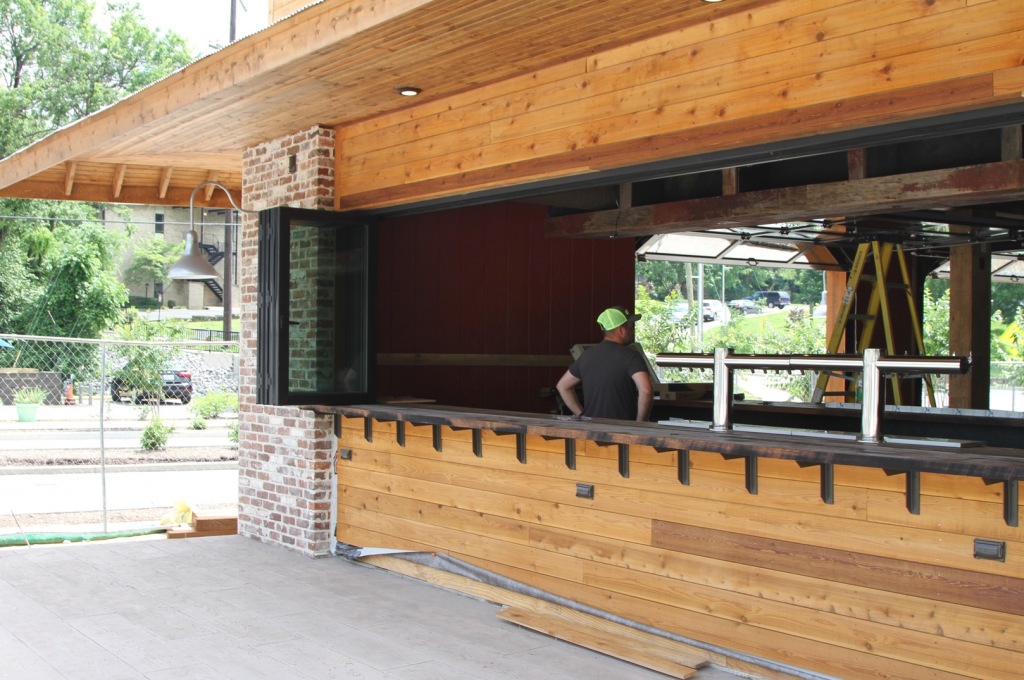
    Third, pedestrians and cyclists can now traverse the area safely so more people are willing to arrive without a car. With more foot traffic shops are able to repurpose some of the asphalt in front for outdoor seating. That translates to more sales, more employment, more profit, and more tax revenue.

    Screen Shot 2016-08-26 at 1.53.49 AM

    Screen Shot 2016-08-26 at 1.52.05 AM

    Screen Shot 2016-08-26 at 2.01.46 AM

    Screen Shot 2016-08-26 at 2.02.54 AM

    Screen Shot 2016-08-26 at 1.52.51 AM

    Screen Shot 2016-08-26 at 1.59.23 AM

    Screen Shot 2016-08-26 at 2.00.44 AM

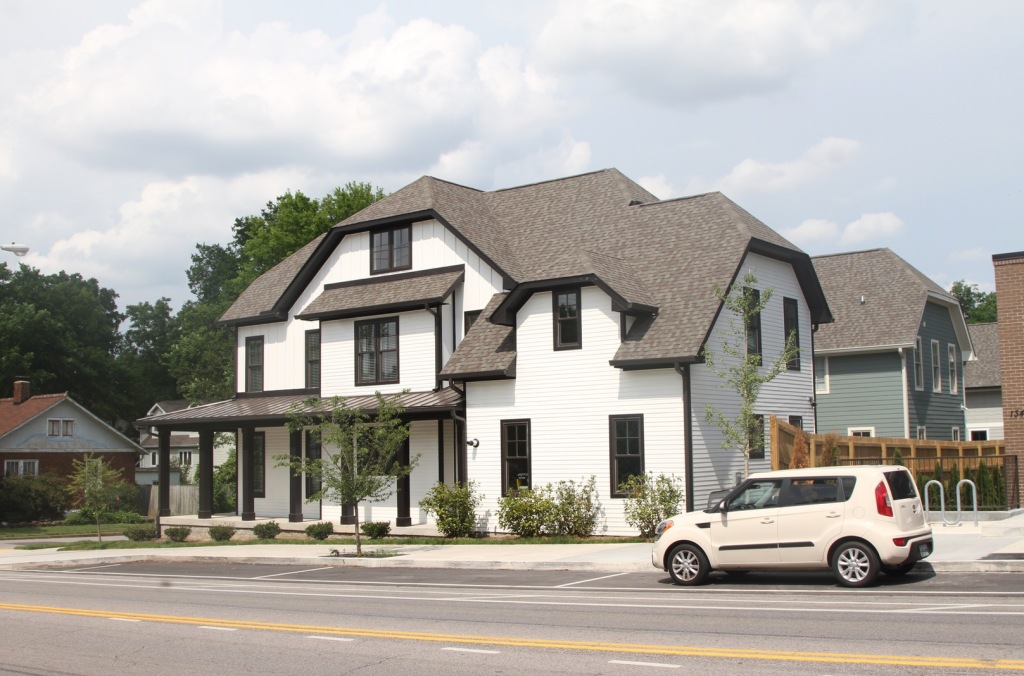
    Fourth, land values have improved and older buildings are now seeing major improvements that also boost employment and generate new tax revenue. People don’t like paying taxes, but that money is what funds everything people expect the city to provide. The alternative is the slow death of deferred maintenance, budget cuts, and even higher fees and stealth charges on existing low value properties.

    Screen Shot 2016-08-26 at 2.58.33 AM

    Screen Shot 2016-08-25 at 11.07.40 PM

    Parking hasn’t been eliminated as much as redistributed. As sidewalks were installed on-street parking was added. The parked cars create a physical as well as emotional buffer between pedestrians and moving vehicles.

    Screen Shot 2016-08-25 at 5.50.59 PM

    Screen Shot 2016-08-25 at 5.51.14 PM

    Screen Shot 2016-08-25 at 5.52.40 PM

    Screen Shot 2016-08-25 at 5.52.56 PM

    Screen Shot 2016-08-25 at 5.51.36 PM

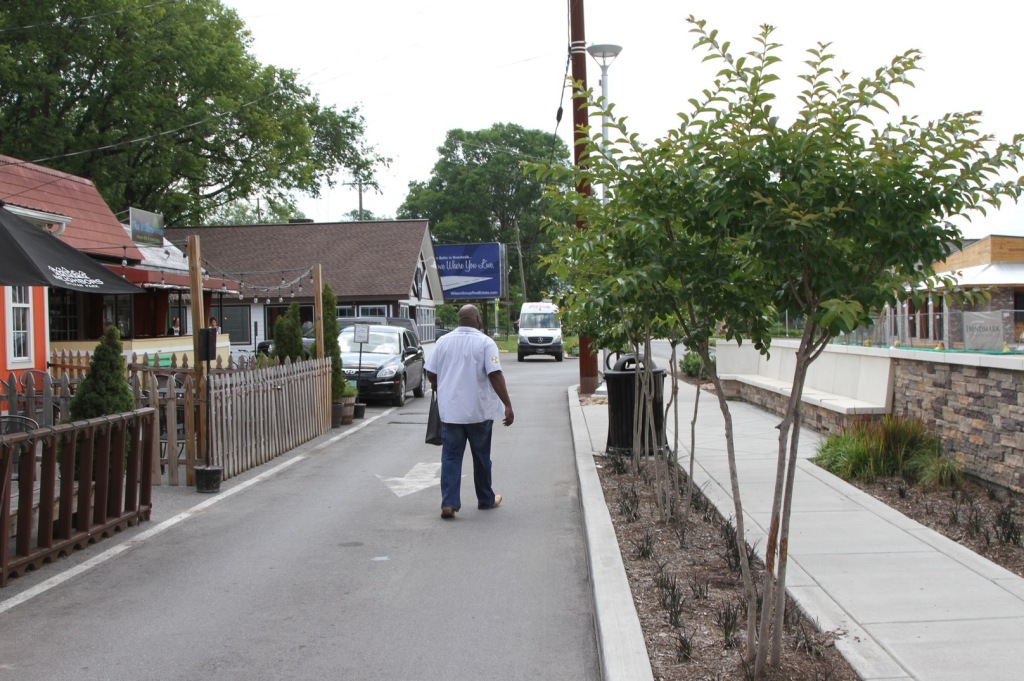
    The reorganized street supports smaller locally owned shops that keep money circulating in the community. This is the opposite of typical road widening projects that devalue small businesses in older neighborhoods while subsidizing big box corporate chains way out on the edge of town.

    Screen Shot 2016-08-26 at 3.16.43 AM

    Screen Shot 2016-08-26 at 3.17.03 AM

    Screen Shot 2016-08-26 at 3.16.12 AM

    Screen Shot 2016-08-26 at 3.16.26 AM

    Screen Shot 2016-08-26 at 3.15.58 AM

    Here’s something that breaks all the rules of suburban development. It’s supposed to be the kiss of death to have a business situated right next to a fully detached single family home. Yet in this location the shops and the properly designed street actually make these houses more desirable. The usual amenity of residential isolation has been exchanged for the amenity of good walkable urbanism. This kind of arrangement is so incredibly rare in America today that people are willing to pay a premium for such properties.

    Screen Shot 2016-08-25 at 6.02.46 PM

    Screen Shot 2016-08-25 at 6.03.00 PM

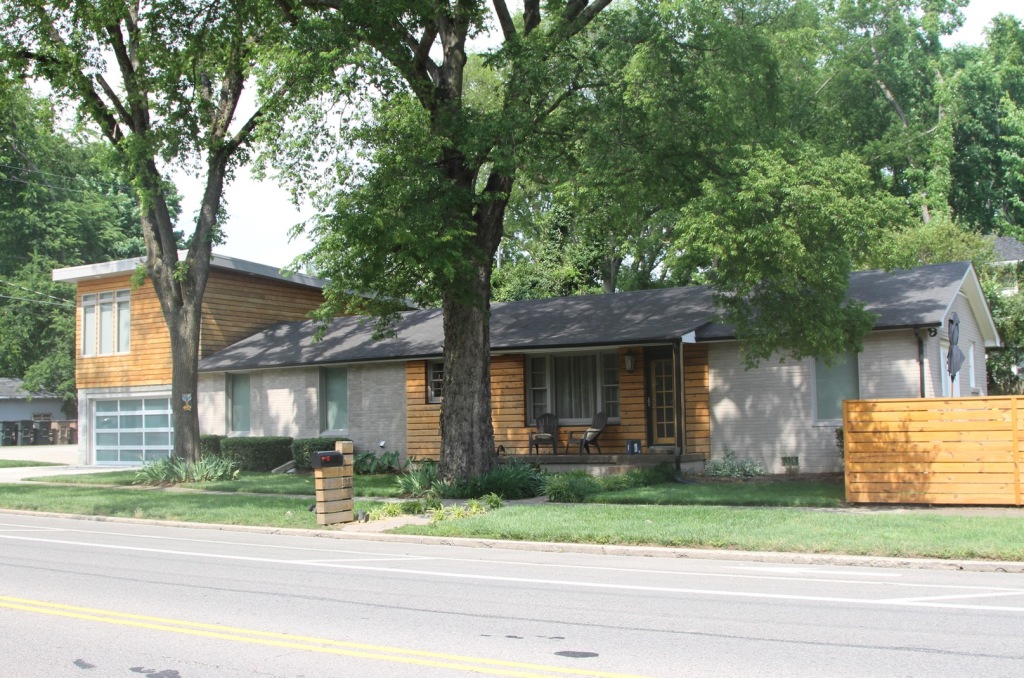
    Finally, we have the 1950’s tract homes that could have started the long slide into low rent crappiness as is so often the case when suburban roads are widened in a hopeless attempt to ease traffic congestion. Here, the road diet and nearby improved commercial district  have inspired property owners to invest in substantial renovations and improvements to otherwise outdated homes.

    The future of most suburbs is to change from what they are now to something else. That “something” could be relentless decline or steady incremental rejuvenation. I don’t believe most places understand how to reinvent themselves in a cost effective yet culturally acceptable manner. The politics of inertia, fear, and vested interests are awfully powerful. That means the few places that can successfully pull it off will be miles ahead of the competition. Look around wherever you live. Then think long and hard about how your town will manage in the years ahead.

    John Sanphillippo lives in San Francisco and blogs about urbanism, adaptation, and resilience at granolashotgun.com. He’s a member of the Congress for New Urbanism, films videos for faircompanies.com, and is a regular contributor to Strongtowns.org. He earns his living by buying, renovating, and renting undervalued properties in places that have good long term prospects. He is a graduate of Rutgers University.

  • Palo Alto and the Tech Shop of Horrors

    This piece by Zelda Bronstein (original to 48hills.org) goes behind the story of the Peninsula planning commissioner who made national news by saying she had to leave town to buy a house for her family.

    On August 10, Kate Vershov Downing, a 31-year-old intellectual-property lawyer, set the media aflutter when she posted on Medium a letter to the Palo Alto City Council stating that she was resigning from the city’s Planning Commission because she was moving to Santa Cruz. The reason for her move: She and her 33-year-old husband Steven, a software engineer, couldn’t find a house they could afford to buy in Palo Alto. Downing said that they currently rented a place with another couple for $6,200 a month, and that if they “wanted to buy the same house and share it with children and not roommates, it would cost $2M.”

    She reasoned that “if professionals like me cannot raise a family here, then all of our teachers, first responders, and service workers are in dire straits.” The fault, Downing wrote, lies with the Palo Alto council, which “ignores the majority of residents,” who have asked that housing be the city’s “top priority.” Instead, the council approves “more offices” and “a nominal amount of housing,” while paying “lip service to preserving retail that simply has no reason to keep serving the average Joe when the city is affordable only to Joe Millionaires.”

    The upshot is a place “where young families have no hope of ever putting down roots” and civic culture is on the decline, thanks to the onslaught of “middle-aged jet-setting executives and investors who are hardly the sort to be personally volunteering for neighborhood block parties, earthquake preparedness responsibilities, and neighborhood watch.”

    Downing’s post went viral. Within a week, her story had been picked up by media ranging from the San Francisco Business Times, the Huffington Post, and Curbed to the Washington Post, the L.A. Times, and the Guardian (UK). Thomas Fuller, the San Francisco bureau chief of the New York Times, did an extensive video interview of the Downings in front of their about-to-be-former Palo Alto residence followed by a driving tour of the town. Last week she appeared live on Bloomberg News.

    I’d hoped to talk to Kate Downing myself. We’d exchanged emails in February 2015, when I was working on a story about the inaugural forum of SFBARF (San Francisco Bay Area Renters Federation), in which she’d participated as a panelist representing Palo Alto Forward, the pro-development, smart-growth group she co-founded in August 2014.

    This time Downing she failed to respond to my repeated requests for an interview. I wonder if her reticence indicated an expectation that I would ask some hard questions.

    If so, she was right. Her statements to a generally credulous press and her posts on Medium contain a few good points buried in a jumble of obfuscation, neoliberal dogma, and startling ignorance.

    Far more troubling is the generally credulous reception she’s gotten from the media. Only Curbed, the Stanford Political Journal, and the New York Times bothered to interview a member of the Palo Alto council, Mayor Pat Burt. With the Times’ Fuller, Burt rated only a two-sentence quote (no driving tour). Bloomberg News displayed a quotation from Burt stating that the city was “looking to increase the rate of housing growth but decrease the rate of job growth” and then asked Downing if that was “reasonable.” None of her interviewers contacted members of the community who hold opposing views, in particular representatives of the slow-growth group Palo Altans for Sensible Zoning.

    Given that Downing appears to have become a prominent spokesperson for millenial market fundamentalism, her ideas and her actions deserve scrutiny. Here’s a start.

    Are four bedrooms and two-plus baths necessary to raise a family?

    Citing the price of housing, Downing asserted that “professionals like me cannot raise a family” in Palo Alto.

    Curbed reporter Adam Brinklow asked: “Why not buy a cheaper place? There are some cheaper places.”

    Downing dodged the question. “Sure,” she said, “we could move half an hour away. But if I can afford to move half an hour away to San Mateo, what happens to the people who have to move out of San Mateo?”

    Brinklow tried again: “I don’t mean half an hour away, I mean right in Palo Alto. There are cheaper homes. Not very cheap, but not $2.7 million either?

    Another dodge: “Well, that comment about the price of the house was really just an anchor for reference. But even if I found a cheaper home, even $2 million is more than I have to spend, and anything less is usually a project. Remember, you can’t take out a loan for construction.”

    Okay, but there are non-fixer-uppers with two bedrooms in Palo Alto, presumably large enough for a budding family, that the Downings could afford—which is to say, places selling for what they paid for their new home in Santa Cruz: $1,550,000. The difference is that those places are condos and townhouses.

    What Downing didn’t tell Brinklow (and he didn’t ask) is that she and her husband wanted the same kind of house that they were renting in Palo Alto: a 4-bedroom, 3-bath detached house measuring 2,338 square feet.

    That’s what she got in Santa Cruz: a 2,751-square-foot, detached, single-family home with four bedrooms, two-and-a-half baths, and a two-car garage. In Palo Alto, that kind of house is indeed selling for over $2 million dollars. (Zillow suggests that it’s selling for the same price in Santa Cruz: the listing for the Downings’ new place said it was “$700-845k below active comparables.” Apparently they got a deal.)

    The irony is that Downing disparages Palo Altans who, she says, want to maintain the city’s suburban character, while she’s chosen to move to a suburb and to a house whose Walkscore is a “car-dependent” 39 out of 100.

    When a commenter on the Palo Alto Forward blog questioned her purchase of the Santa Cruz house, Downing dodged his question, too: “I’m making choices and trade-offs for my family, that I’m very privileged to be able to make,” she bristled. “The fact that we can afford to buy anything at all and that we have jobs that allow us flexibility is a giant privilege most working class people don’t have.”

    Nobody is questioning Downing’s privilege. It’s the discrepancy between her stated and evident motives for leaving Palo Alto that rankles.

    “Abusive” cities

    Downing’s disconnect aside, housing prices in Palo Alto really are insane. In July theaverage rent for a two-bedroom apartment was $3,806. The median home value is $2.486 million.

    Downing blames the eye-popping prices on the city’s gross jobs-housing imbalance, which she in turn attributes to the council’s having approved tons of office development but not the housing for all the people who would be working in those offices. As of 2014, Palo Alto had almost three times as many jobs (95,460) as employed residents (31,165).

    The upshot, she writes, is “the bizarre reverse commute in the Bay Area where more people live in San Francisco but work in Palo Alto or Mountain View.” In her view, the fault isn’t the companies that came to Silicon Valley.

    [T]hey were invited with open arms. Part of the reason it happened that way is that in the 70s [sic] San Francisco created a stringent cap on office expansion, and it’s one of the reasons why it’s the Peninsula that became Silicon Valley and not the city of San Francisco until maybe the last 7 years or so. Companies went to where they were wanted. It’s the cities which are abusive because they take all that tax revenue from those companies but then don’t shoulder any of the burden of housing the people that work there—claiming…that other cities should bear that burden instead.

    A good point (local jobs-housing imbalances stink)…

    Yes, Silicon Valley cities have been encouraging massive development without permitting housing commensurate with the number of new workers.

    The latest poster child for this sort of reckless behavior is not Palo Alto but rather the city of Santa Clara, which on June 29 approved Related Companies’ $6.5 billion, 9.7 million square-feet CityPlace project. To be built just north of Levi’s Stadium on 240 acres of city-owned land (a former landfill), CityPlace will include up to 5.7 million square feet of offices, 1.1 million square feet of retail, 700 hotel rooms, a 35-acre park, and up to a paltry 1,360 apartment units. It will create 25,000 new jobs.

    As reported in the Silicon Valley Business Journal by Nathan Donato-Weinstein:

    “This project, looking at the real estate side of it, and the fact that we own it, it’s whipped cream with a cherry on top,” said Mayor Lisa Gillmor prior to the vote. “Not only will we get the development that services our community, but also we’ll reap the financial benefits of having a cash flow into our general fund for generations to come.”

    On July 29 San Jose, where housing far outnumbers jobs, sued Santa Clara over the project, alleging that the huge gap between the number of new jobs City would generate and the housing it would provide contradicted Santa Clara’s General Plan and would have profound and unnecessary environmental impacts in the region. Land use anarchy, anyone?

    …and bad history (letting Stanford off the hook)

    San Francisco voters passed the city’s office cap in the mid-80s, not the 70s, a good two decades after the Peninsula became Silicon Valley. And the impetus for the Peninsula’s transformation did not come just from local governments but from the ambitions of a giant private landowner and developer: Stanford University.

    “Palo Alto city government,” Downing avers,

    openly and decisively created and embraced the Stanford Research Park which now houses many of the biggest technology companies in the world (VMware, Tesla, SAP, HP, etc.) and more than 100,000 workers. Stanford Research Park LONG predates the likes of Google and Facebook and Page and Zuckerberg — it was created in 1951.The city had to re-zone that space and specifically entice tech companies to come there.

    Palo Alto did not create the Stanford Research Park; Stanford did.

    University of Washington history professor Margaret O’Mara tells the story in her fascinating 2005 book Cities of Knowledge: Cold War Science and the Search for the Next Silicon Valley. Originally called Stanford Industrial Park, the project was the postwar brainchild of Stanford administrators, notably Provost Frederick Terman and President Wallace Sterling. They remade their rich but undistinguished school into a scientific research powerhouse and a vehicle of regional economic development by leveraging federal R&D monies, shrewdly exploiting Stanford’s extraordinary land holdings, and capitalizing on the area’s beauty and fine climate and California’s booming militarized economy. It was Stanford that enticed high-tech companies to come to the park, and the park’s 1960 expansion “grew out of the demands of its tenants for more space.”

    Nor, as Downing indicates, did the city of Palo Alto and its residents view Stanford’s development of its land with unconditional enthusiasm. Though encouraging high-tech industrial production was the major thrust of the university’s economic agenda, its to-do list also included building a mall, the Stanford Shopping Center. Palo Alto elected officials initially opposed the mall, fearing that it would drain revenue from the city’s downtown retail, and threatened “not to provide sewer service to the site.”

    They soon dropped their opposition. “Palo Alto readily agreed to incoporate the land developments into the city, thereby providing Stanford with public utilities and road upkeep (and providing the city with tax revenues.” Stanford doesn’t pay taxes, but the companies at Stanford Research Park and the Stanford Shopping Center do. The city “made no further efforts to control the path of development.”

    The city’s residents were not so easily pacified. When Stanford announced in 1960 that the Industrial Park would be expanded into the foothills, “neighborhood opposition…led to a fiercely fought ballot referendum campaign that President Sterling called ‘the Battle of the Hills.’” The university won that battle and proceeded with the expansion. In a public relations gesture, it replaced “Industrial” in the park’s name with “Research.”

    What Stanford did not do is change its suburban model of land use.

    A 1962 survey showed that the majority of the Park’s 10,500 employees did not live in the immediate area but commuted from communities south of Palo Alto (56 percent). Seven percent lived outside the ‘regional area’ of the Peninsula altogether. Palo Alto residents made up 21 percent of the workforce. Employees overwhelmingly depended on cars to get to work.

    And, O’Mara writes, Stanford came to be regarded as a “model city,” a prototype for regional economic development around the world—and on the Peninsula.

    [B]ecause of developments like the Industrial Park, the Peninsula was on the leading edge of the trend toward living in one suburb and working in another. The residential and commuting patterns seen in the Park in 1962 also presaged the later housing shortages that would face the Bay Area, particularly Palo Alto, where by the end of the twentieth century few professionals could find available and affordable places to live.

    In a post-resignation-announcement interview, Stanford Political Journal reporter Andrew Granato asked Downing, “What do you see as Stanford’s role in housing politics, and do you think it can or should do anything?”

    Downing equivocated, praising the university for “trying to add a certain amount of housing for its employees or students or faculty,” but subtly criticizing the school for not doing more:

    I think that Stanford has always tried very hard to be a good neighbor to Palo Alto. They’ve tried to be very friendly and supportive….[A]t the same time, Stanford has been relatively quiet about what’s going on in Palo Alto and the Bay Area in general with respect to housing.

    Far from being a good neighbor, Stanford has long been a major source of the jobs-housing imbalance that Downing deplores. Now, in its largest-ever off-campus expansion, the university is planning to build a $568 million office park that will accommodate 2,400 university employees on a 35-acre site in Redwood City. Stanford considered putting the project in Palo Alto but couldn’t find enough space.

    To be sure, as per Downing’s argument, like Palo Alto, Redwood City has given Stanford a go-ahead. The university got it in 2013, when Redwood City approved Stanford’s plan for the property in return for more than $15 million in public benefits, including bike lanes, a business boot camp for Redwood City residents, a free speakers series from the Graduate School of Business, and a free shuttle for its employees and members of the public from the Redwood City Caltrain station to the offices. In keeping with Stanford’s suburban commuter model, the complex will include a gym with a pool, cafes and a small park—but no new housing.

    “After the construction is completed,” wrote Chronicle reporter Wendy Lee, “Stanford is expected to become one of Redwood City’s largest employers.” Redwood City Economic Development Manager Catherine Ralston enthused: “ ‘It’s a really great opportunity for Redwood City. It’s going to bring a lots of jobs to the area.’”

    Redwood City Councilmember Jeff Gee told Chronicle reporter Wendy Lee that a Stanford survey found only 8 percent of its employees living in or near Redwood City. “The Redwood City council considered and rejected allowing housing on the site,” wrote Lee, stoking some residents’ fears that an influx of Stanford employees would further inflate already high rents.

    The Prop. 13 factor

    Why do cities pursue jobs and not housing? One reason is that new housing, especially housing for families with school-age children, requires many more municipal services than commercial development.

    Another is that Prop. 13 severely constrains property taxes by limiting annual increases to 2%; only when a parcel is sold or new construction occurs can a property’s value be re-assessed. The law favors parties that hold on to their property for a long time, above all big corporate landholders. It disproportionately burdens most homeowners, especially new ones, and new businesses. One study found that enacting a split-roll initiative that taxed corporations on the market value of their property would generate $8.2 to $10.2 billion in annual revenues for California.

    Downing’s position is confusing. She stands with the Evolve campaign to maintain current Prop. 13 protections for all residential property, provide an exemption for small businesses, and establish a regular, yearly reassessment of all non-residential property in California. “Corporations used to pay the bulk of property taxes, she writes, “but now 75% are paid by residential properties, and places like Disney literally pay as much in property taxes as a reasonably sized single-family home.”

    But she also embraces the argument that eliminating Prop.13 and allowing all property to be assessed every year would discourage Nimbyism and encourage development. As one of her correspondents on Medium, Eric Kingsburgy, wrote:

    NIMBYism is able to take hold in places like Palo Alto because [in a system where property taxes don’t change,] more development provides absolutely no benefit to incumbent property owners….More people only means more traffic, busier parks, and more crowded schools….

    A California without Proposition 13 would still face hurdles to development, and the abuse of land use regulations—no one likes crowded parks or traffic—but to a much lesser extent….Residential that bought $100,000 homes in Palo alto in the 1980s would have seen their property taxes skyrocket along with their property values, leaving them with two options: move to a lower cost area or push for measures that would make their property less valuable.

    Downing responds: “Agree with everything you’ve written!” And then she refers “folks who are interested in Prop. 13 reform” to the Evolve campaign. Go figure.

    The numbers game: how much of Palo Alto is zoned for single-family homes?

    By contrast, when it comes to property values, the housing crisis, and zoning, Downing is unequivocal: the way to lower housing prices is to loosen zoning laws that restrict development by imposing “an artificial constraint on supply.”

    Her reiterated example is Palo Alto’s zoning. “Only something like three percent of the city,” she told Brinklow, “is zoned for any sort of multi-family use. For most places it’s illegal to build a duplex.”

    Brinklow asked Mayor Burt: “Is it true that 97 percent of the city is zoned R-1?”

    Burt: “That is a misrepresentation.”

    Correct. According to the city’s Comprehensive Plan, 4% of Palo Alto’s 26 square miles is zoned for multiple-family dwellings, and 25% is zoned for single-family dwellings. (Forty percent of the city is zoned for parks and preserves, another fifteen percent is dedicated to agriculture and other open space.)

    But zoning doesn’t tell the entire story. The Plan also says that 38% of the housing stock is multiple-family units, and 62% is single-family. So single-family predominates, but not to the extent that Downing has implied.

    Downing supported Jerry Brown’s anti-democratic giveaway to the real estate industry

    In an interview with Los Angeles Times reporter Michael Hiltzik, Downing praised Jerry Brown’s controversial by-right housing legislation, Trailer Bill 707, declaring that it “does everything that needs to happen.”

    It’s a curious endorsement, because one thing Brown’s proposal doesn’t, or more precisely, didn’t—since it just died in the Legislature—do is the thing that, Downing thinks, needs to happen: relax residential zoning standards in Palo Alto or anywhere else in California.

    Trailer Bill 707 specified that if a project conformed to local zoning and contained 5-20% affordable housing, it would be permitted by right, meaning without any environmental or other public review. A draconian giveaway to the real estate industry, the measure was defeated by a statewide coalition of affordable housing advocates, environmentalists, and labor organizations.

    Given her concern about the lack of civic engagement in Palo Alto—in her words: “there’s maybe one thousand people who pay attention to city government….A minority of wealthy homeowners can create a network to get candidates elected very easily”—you might think Downing would have been put off by Trailer Bill 707’s hostility to local democracy.

    Instead, Downing shares that hostility. She favors a strong, centralized state. “Countries like Germany and Japan,” she writes,

    do not make planning decisions at the local level. They make them at the national level….They do what’s best for all the people, not just the people in one small city[,] and they do what’s best for the country’s economy as a whole…

    In good neoliberal fashion, she thinks planning is all about economics, and that what’s best for the economy is a state that vigorously intervenes in behalf of market freedom. At her last Planning Commission meeting, on July 27, she voted against raising the affordable housing development impact fee from $20.37 per square foot to $60, stating that the “massive and aggressive” increase would discourage the construction of affordable housing.

    I’m guessing, then, that Brown’s bill appealed to Downing because it drastically curtailed local say in development, to the fulsome benefit of property capital. “Capitalism and property ownership,” she writes,

    are enshrined in literally hundreds of thousands of laws on [sic] this country, including our constitution. For so long as the U.S. constitution still stands, this is the only system that we have and understanding its rules remains a critical element of making policy for the future.

    Perhaps Downing skipped constitutional law class; the U.S. constitution says nothing about capitalism.

    Given Downing’s outrage at the “astronomical” cost of housing in Palo Alto’s and her professed solicitude for “the average Joe,” you might also think that she would have deplored a bill that greased the permit process for projects with as much as 95% market-rate housing.

    Market-rate housing, however, is all that Downing wants to see built. Responding on Medium to a correspondent who doubted the superiority of “national zoning decision-making” and “centrally created affordable housing,” Downing wrote:

    I’m only talking about lifting zoning restrictions so that more market-rate housing is legally allowed to be built in the city. So I’m most definitely not talking about “centrally created affordable housing.” My goal and belief is that housing growth (market-rate) must keep up with job growth.

    She points to “places like Texas which have far fewer zoning restrictions (none at all in Houston).”

    [E]ven though they’re experiencing an unprecedented population boom, their prices aren’t soaring like California’s. And it’s because they have something much closer to a free market where people can supply enough housing to actually meet demand.

    Ahem. Prices in Texas, including Houston, have been soaring—not to the Bay Area’s catastrophic levels, but soaring (50% leap in 2010-15) nonetheless.

    But let’s talk about California, and specifically our region. Here the textbook theory of supply-and-demand—prices fall as supply increases—doesn’t apply. As I wrote in 48 hills last December:

    What’s making home prices soar in our region is the simultaneous incursion of hundreds of thousands of highly-paid tech workers and a flood of foreign investment. In June the Contra Costa Times reported that “[h]igh-tech employees make a yearly average of $124,000 in Santa Clara County, $107,000 in the San Francisco-San Mateo area, and $101,000 in the East Bay.” By contrast, wrote George Avalos, tech workers nationwide average about $84,000 a year. “This is a very, very hot area to live and work,” [demographer] Steve Levy told Avalos, “and the wage growth is pushing up housing prices.”

    (Levy, by the way, sits on the board of Downing’s Palo Alto Forward.)

    Downing presumably thinks that if enough market-rate housing were produced, housing prices would fall to affordable levels. I always like to ask someone who holds that view:  how much housing would it take? So far, the answer has been: I don’t really know. That’s what former Trulia Chief Economist Jed Kolko told me. Ditto for George Mason University Law Professor Ilya Somin, who wrote a Washington Post op-edpraising Downing’s attack on “restrictive land use regulations.” I bet Downing has no idea, either.

    In her case, further questions seem to be in order: how much and what kind of new housing would it take to lower the price of four-bedroom, two-plus bath single-family homes in Palo Alto from $2.6 to $1.55 million dollars?

    The Palantirization of downtown Palo Alto

    In Palo Alto, the tech tsunami hasn’t just driven up housing prices; it’s also decimated the city’s retail sector, which has been colonized by tech offices. Things got so bad that in May 2015 the council passed a 45-day urgency interim ordinance that prohibited the conversion of existing ground-floor retail to offices. A month later it extended the ban to April 30, 2017.

    As an employee of Peter Thiel’s Palantir Technologies who works in downtown Palo Alto, Downing’s husband Steven is implicated in the tech displacement of the city’s retail businesses.

    Palantir, wrote San Jose Mercury reporter Marisa Kendall in April, is “taking over” downtown Palo Alto. The secretive company rents at least nineteen properties comprising 250,000 square feet, or about 12 percent of all downtown’s commercial space downtown. Office rents have climbed accordingly. Now tech start-ups are having a hard time finding space that they can afford.

    Can a city have too many (tech) jobs?

    To Downing, only a maniac would entertain this question. Responding on Medium to an unnamed correspondent who apparently asked whether Palo Alto would try to shed some tech businesses, Downing wrote:

    I don’t think Palo Alto is going to choose to get rid of the companies. If they do, their tax base will shrivel and they’ll have a hard time paying city employees and paying off all the pensions they’re already obligated to fulfill…

    And…what kind of insanity is it to be trying to kill high paying jobs and forcing companies out of town when the rest of America is bending over backwards trying to attract those companies?….Everyone else in the world is looking at Palo Alto and scratching their heads at the thought of a city that thinks its grand solution is to slaughter the golden goose.

    Actually, the golden goose metaphor doesn’t work for the tech industry in the Bay Area today. As depicted by Aesop and other fabulists, that bird was killed by the greed of its owners, who forced it to lay more than its customary single egg a day.

    A better analogy is Audrey II, the man-and-woman-eating plant in film The Little Shop of Horrors, whose exponential growth drew customers to the shop but whose insatiable appetite threatened to destroy everything around it. When its owner, the unprepossessing Seymour, realizes that it cannot be appeased or controlled—indeed, that it’s about to eat him—he kills it.

    Like all metaphors, this one has its limitations. Unlike Audrey II (but like zoning), the tech industry is a human artifact and thus susceptible to human control. Accordingly, some Palo Altans are contemplating additional curbs on tech’s growth in their city—for example, Mayor Burt.

    “Palo Alto’s greatest problem right now,” the mayor told Brinklow,

    is the Bay Area’s massive job growth. Cities are still embracing huge commercial development with millions of square feet of office space they can’t support….[W]e have to do away with this notion that Silicon Valley must capture every job available to it….We’re looking to increase the rate of housing growth, but decrease the rate of job growth.

    Brinklow was incredulous: “You want fewer jobs?” [italics in original]

    Burt: “I know, it’s a strange idea to contend with. But this doesn’t mean we want no job growth….We want metered job growth and metered housing growth, in places where it will have the least impact on things like our transit infrastructure.”

    For a city official to espouse less job growth in his town is beyond strange; it’s unheard-of. As a challenge to the prevailing growth ideology, it’s on par with 48 hills editor Tim Redmond’s recent piece welcoming the drop in San Francisco land values that, according to the city’s Controller, would result from requiring twenty percent of the units in new apartment buildings to be below-market-rate. But you expect such radical pronouncements from Redmond, not from a mayor, especially the mayor of a Silicon Valley city who’s a tech executive to boot.

    Burt’s stated goal is to accommodate some growth and still maintain Palo Alto’s distinctive character. That means going slow, because, he contends, the rate of the region’s job growth

    is just not sustainable, if we’re going to keep [Palo Alto] similar to what it’s been historically. Of course we know that the community is going to evolve. But we don’t want it to be a radical departure….[W]e balance things….[W]e’re looking at increasing our developer fees and investing more in affordable housing. We have 2,500 units of BMR [below-market-rate] housing over the last decades, and a lot of hard work went into that.

    Improving transit, said Burt, is key: “The community would be more willing to embrace new development, even commercial development, if we could solve the transit problem….[J]ust in the last year, for the first time ever, I’ve become really confident that things will get better.”

    Brinklow: “Why?”

    Burt: “The single biggest thing is probably electrifying Caltrain.” He’s also encouraged by the extension of BART to San Jose, Palo Alto’s rideshare app, Scoop; the Palo Alto Transportation Management Association; and the advent of  “shared, autonomous vehicles powered by carbon-free electricity.”

    The real culprit: baby boomers “aging in place”

    To Downing, Burt epitomizes the chief culprit in the affordability crisis—not the “middle-aged, jet-setting executives and investors” named in her resignation letter but rather “older homeowners,” boomers who got into the housing market when the middle class could still buy a house in Palo Alto, and who are now, in her indelicate phrase, “aging in place.” She attributes their slow- or in her view, no-growth agenda—“they just plain don’t want to see more people in the city”—to two motives: maintaining or, better yet, increasing the values of their property; and preserving Palo Alto’s suburban character.

    What’s worse, she says, they’re elitist hypocrites. When Brinklow noted that the slow-growthers argue that the city’s transit infrastructure and water use should be limiting factors in development, Downing interjected:

    The exact same people who complain about infill housing will show up to complain when you want to expand transit….These people will say anything, but they don’t really care about congestion or water use. They care about keeping the town looking exactly the way it is….They think public transit is for the poor and apartments are for people on welfare.

    Brinklow: “You allege that all of these policy objections are just a cover for a personal agenda?”

    Downing: “Well, we know that.”

    Slow growth vs. smart growth

    I emailed Cheryl Lilienstein, the president of Palo Altans for Sensible Zoning, and another “older homeowner,” asking if her group opposed expanding transit in town. Lilienstein replied that it depended on the kind of transit.

    “For years and years,” Lilienstein emailed, “we’ve been asking for cross-town shuttles to take us to schools, large job centers, hospitals, and community services nowhere near El Camino.”

    Regarding high-density development around mass transit—for example, at the Caltrain stations, being pushed by Palo Alto Forward, the Santa Clara Valley Transportation Authority (VTA), the Silicon Valley Leadership Group, and ABAG—she wrote:

    We oppose it. VERY few residents now living in high density housing near transit use it. They live there because they want to live in Palo Alto, and they still use cars to get where they need to go, so it’s unrealistic to assert new high density development will be car-free. It won’t.

    By common consent, traffic congestion in Palo Alto is horrendous, due to the huge number of commuters driving into town. The question is, what to do about it? The issue is front and center in the current public process to update the Comprehensive Plan.

    PASZ’s basic position, set forth in its comments on the Draft EIR for the update, is that before increasing population, the city needs to do what it can to decrease traffic and the associated air pollution in accordance with “a set goal.” Only then, should the city “proceed with a slow housing program that prioritizes housing for those whose presence would provide diversity for an economy that serves all residents”—specifically:

    • People who under present conditions will never be able to buy here, typically defined as the middle class: clerical workers, city staff, middle management, tradespeople, low income workers, service workers, small business owners
    • Seniors living here who don’t own their houses or still have mortgages and want to retire
    • The homeless

    TKPASZ wants to maintain Palo Alto’s suburban character and still build housing that’s affordable to low-income people. From their Platform:

    Reduce the maximum development volume in certain zoning districts so that when state-mandated density bonuses are applied, the resulting volume matches what current zoning maximums would allow. In other words, state density bonuses for low income housing should not be used to produce buildings that are massive and out of scale with the surrounding neighborhoods.

    ….

    Development should be compatible with existing neighborhoods and take into account school impacts.

    I also asked Lilienstein what she thought of the transportation innovations that give the mayor hope.

    Burt,” she replied, ‘is overly confident, in my view, yet I wish his vision was possible.” Her top priority is “increas[ing] ease of movement INSIDE the city.” To that end, she wrote,

    I don’t see how electrifying CalTrain and increasing the ridership (both are good things) will do anything but increase crosstown gridlock for Palo Alto, since there is no grade separation” for the train tracks. The single greatest transformative investment would be to trench the tracks so there can be an increase in cross-town flow. Without, even the future promised technology improvements will be insignificant.

    If  BART is ever extended to San Jose, down the east side of the bay, how would that help us? The Transportation Management Association might put a dent in the traffic problem, but it’s basically underfunded and complicated/expensive to enforce. Scoop is a good idea, a good use of public money, but do Palo Alto worker actually use it?

    Downing, by contrast, thinks that “adding housing…is going to relieve a lot of the congestion we’re seeing” by allowing people “to live in the same community where they work. If you look at the people who actually live and work in Palo Alto,” she told Brinklow, “a substantial number…are walking or biking to work, so they’re not part of the traffic.” Now most of the in-commuters live far away.

    Palo Alto Forward’s website lists “five common-sense reforms that could remove barriers to housing”:

    • Encourage studio apartments and smaller units
    • Encourage residential units over ground-floor retail
    • Make it easier for homeowners to build second units
    • Allow car-light and car-free housing in walkable areas near transit
    • Facilitate new senior housing, including alternative models

    The underlying assumption is that growth is essential to economic health and hence must be accommodated. From its platform:

    On its current course, Palo Alto will continue to experience traffic and parking issues from denser uses of existing buildings, but it will have turned away new businesses and new workers who no longer have appropriate housing. The very economic growth that makes Silicon Valley a gem in America’s economic crown will slowly be chipped away, hurting local businesses, school funding, and employment rates alike.

    Dancing around the growth issue

    What the PAF platform never quite makes clear is whether the group can thinks the city should seek to accommodate as much growth as possible.

    Brinklow asked Downing: “What about people who argue that a city like Palo Alto just can’t ever build enough housing to really satisfy demand?”

    Downing: “I think it’s a misconception that you can never build up to demand. We have a pretty good idea what demand is: Every day, the effective population of the city [66,000] doubles from the number of people who come in just for work. That tells us something about how much housing we need. It’s not infinite.”

    But elsewhere, she indicates that growth per se is advantageous.  A member of the Bloomberg News team asked her if she thought “it’s fair for a community to collectively say, we don’t want to get any bigger, we don’t want to increase our population, we don’t want to live in a more dense area.” She replied: not if it’s a job hub. “As for these companies getting big,” she wrote in one of her Medium posts,

    —that’s something to celebrate and be happy about, not to lament. It means you live in a prosperous area with lots of high paying jobs and that your city is getting tons of tax revenue to support the sort of services and programs residents want to see. The response is to build out the necessary infrastructure to make sure your city can handle the growth and plan thoughtfully about how to grow in a way that will be beautiful and convenient. The response isn’t to murder the golden goose which is making your city so desirable in the first place.

    One of the qualities that made Palo Alto so “desirable in the first place” to the tech industry was the very thing that Downing would readily dispose of: the town’s suburban character. Paradoxically, that character is now jeopardized by the industry’s rampant growth. For Downing, however, nurturing that growth is paramount. Constraining it, she says, will lead to the decline of Silicon Valley.

    “[I]f [what Palo Alto is doing],” she tells Granato,

    continues this way, eventually we really are going to drive businesses and young people away. I mean it’s driving me away, right? And at that point, the locus of organization and development is going to shift; it’s going to go somewhere else. And I think that will be an extraordinarily painful thing for Stanford. It means less opportunities for its students, it means less collaboration between businesses and professors. I don’t think Stanford wants to be in a place that used to be the innovation capital of the world, but that’s kind of where we’re headed.

    Forbidden questions

    I’m no fan of Kate Vershov Downing—that’s been clear since the start of this story. I confess, however, that until recently, I shared Downing’s view that cities should strive to house the people who work in the businesses within their city limits, and that those who don’t should be judged harshly. Downing calls Palo Alto and other tech towns with jumbo job-housing imbalances “abusive,” referring to their unwillingness to house their tech workers. To me, the abusiveness involved dumping their housing and traffic issues on other cities—the sight of a “Google bus” parked in a Muni bus stop makes me scowl—and clogging the roads with long-distance commuters: when I left Palo Alto at 4 p.m. one afternoon last February, it took me two and a half hours to reach my north Berkeley home in my car, lurching forward in stop-and-go traffic all the way.

    Contemplating the fight over growth in Palo Alto has made me rethink my position. Pace Downing, the Bay Area’s tech sector seeks infinite expansion. A report released by the Silicon Valley Competitiveness and Innovation project last February found that for the first time since 2011, more residents—7,600—left Silicon Valley for other parts of the U.S.—Seattle, Austin, southern California—than arrived from other parts of the country. The area still had a positive net migration, but many of the new arrivals came from abroad. The American-born workers are headed to places where the cost of living is lower; the competition for jobs, space, and venture capital less intense; single-family homes more affordable; and traffic less daunting.

    In the report’s introduction, the sponsors of the project, the Silicon Valley Leadership Group and the Silicon Valley Community Foundation, called these numbers “warning signs” that “skyrocketing housing costs and increasing traffic congestion are eroding our quality of life” and making it hard to draw and retain sought-after employees.

    In response, the SVLG and the SVCF lay out much the same agenda as Kate Downing: sustain the local tech industry’s warp-speed job growth by building a commensurate amount of housing and expanding the region’s transit infrastructure accordingly. Just so, SVLG supported Brown’s by-right housing bill, though, in a move that I suspect Downing, with her opposition to “centrally controlled affordable housing,” would criticize, it also cheered the California Supreme Court’s decision that upheld San Jose’s inclusionary housing ordinance.

    Concentrated power undermines democracy. I’m talking about the economy, of course. Right now about a fifth of total jobs in the region—746,100—are in tech. The Bay Area’s appalling income inequality and its associated housing affordability crisis exist not in spite of but largely because of the high-rolling tech cataclysm.

    But democracy entails more than economic equality; it also involves political freedom. Money talks, and these days tech oligarchs are speaking much too loudly in our public life—think, for starters, Ron Conway and Airbnb.

    This quest for endless growth needs to be put on hold and replaced with a debate over the region’s carrying capacity and relevant public policy. How many jobs and people can the Bay Area support without further degrading the region’s quality of life, its cities’ distinctive characters, and the stability of their neighborhoods? Is it worth sacrificing these things for the sake of competitiveness? Who really benefits from the competitiveness race? Should a city’s receipt of a company’s taxes obligate that city to approve housing for the company’s workers? Do people have a right to live wherever they want? Barring prospective residents from your town on the basis of race or ethnicity or gender is wrong—and illegal. What about setting a limit on density or the size of a city’s population? And where’s the proof that people living in dense, transit-oriented development drive significantly less?

    For the region as a whole, the best thing that could come out of the Downing imbroglio is the expansion of the debate that’s roiling Palo Alto—not just to every city hall, but to every state and regional planning agency and legislative body. One point of universal agreement is that neither Palo Alto nor any other city can resolve the jobs-housing conundrum on its own. But today the growth ideology reigns supreme; no questions allowed. As long as that’s the case, the conundrum will persist and worsen.

    This piece originally appeared at 48hills.org.

    Zelda Bronstein, a journalist and a former chair of the Berkeley Planning Commission, writes about politics and culture in the Bay Area and beyond.

    For ongoing, in-depth coverage of Palo Alto’s land-use politics, see the reporting of Gennady Sheyner in the city’s alternative newspaper, the Palo Alto Weekly.