Category: Suburbs

  • A Threat To Home Owners Associations

    In the 1990s, just about the only site amenity that most suburban developments offered was a fancy entrance monument. Usually, there were no other additions beyond ordinance minimums and even those weren’t generally elaborate. Some of these monuments did cost millions, but once past the gilded gates, the seduction ended, and residents were greeted by familiar monotonous cookie cutter subdivisions.

    As neighborhood planners, we educate our developer clients regarding the virtues of building site amenities that improve Quality of Life (trails, gazebos, decorative ponds and fountains, etc). You would think these amenities were an easy sell to the cities approving the developments. After all, great developments create a great city, right? It’s not that simple, because all of these amenities require maintenance, and that places a burden on tax payers. No city wants to create a tax burden for all, when the likely benefit accrues to the few within the development.

    The solution to that problem was simple: The Home Owners Association. We are not talking about the type of Stepford-like association where lifestyles and flower plantings are strictly dictated, but the more limited type that adds a small monthly fee to service the common outdoor site amenities. In other words, only those extra amenities are cared for. Private yards still remain the financial burden of the individual homeowners. In the North, with snow removal, these neighborhood association fees are likely to be higher if the trails and walks are cleared. Since these Associations do not have to maintain private yards or address maintenance of buildings typical of townhome projects, the monthly fees are minimal. Some associations were formed in the North that did give options for snow removal on private driveways, at a very reasonable cost (after all, why not clear a few extra driveways while you are out clearing the trails?).

    The developer could now offer a much higher living standard and create more valuable lots that would be easier to sell. The majority of the neighborhoods we designed in the late 1990s through 2006 (the recession) offered the advantages that these minimal cost Associations could provide. We encouraged developers to spend less on elaborate entrance monuments and instead spread real value through the development where people lived.

    How HOAs May Be At Risk The recession has not just brought about massive foreclosures and reduced home prices. It has escalated real-estate taxes (the home value may be 40% less but the tax remains at pre-recession rates) and put the very idea of a Home Owners Association at risk. With failed development, there are often also failed Associations. With little or no maintenance of a development that was once cared for by private funding, cities may have to take over the burden until the economy recovers, and in some areas, if it recovers. Comprehensive associations that maintain all of the grounds (where there are no privately maintained yards),including the building exteriors and rooftops, as well as the streets, are at the greatest risk. The limited Associations that were typical of the neighborhoods we designed are not as much of a problem, but could easily be lumped into “all Associations are bad news” category in the minds of those approving future developments, after the economy returns.

    This affects all types of residential development.

    Developments that exceed minimum standards typically offer site amenities to make the development more enticing. Someone must maintain these extras. Fear of HOA failures will certainly be more on the minds of cities after the recession, but without HOAs, who will maintain the amenities? A two million dollar entrance monument does not make a neighborhood sustainable. Spreading value through the neighborhood with features that enhance quality of life, is a better investment. The Homeowners Association must not fall victim to the recession.

  • A Return to the City or a New Divide in the Nation’s Capital Region?

    Census data continue to suggest that fringe areas still grow faster than cities, but some have continued to argue that the flight to the suburbs has ended, or at least slowed, and that we are experiencing a resurgence of urban living. In a 2005 article for the Journal of the American Planning Association, Robert Fishman predicts a new pattern of migration – a so-called Fifth Migration – that will revitalize inner core neighborhoods that were depopulated through decades of suburbanization. In a 2004 study of the New York region, James W. Hughes and Joseph J. Seneca contemplate the beginning of a “third transformation,” or a post-suburban regional geography, characterized by the end of population dispersion and the beginning of recentralization.

    Anecdotes, rather than hard data, have tended to drive the back to the city case. Data brought to bear on the issue usually shows the suburbs are still going strong. Yet it also appears that all suburbs are not created equal and population data may be missing subtle population shifts within a metropolitan area. The flow of households within a metropolitan area can show early signs of a change in a region.

    This analysis considers the extent to which there is the beginning of a back to the city movement in the Washington DC metropolitan area using county-to-county migration data from the Internal Revenue Service. We must start with the assumption that the Washington area is unique among American metropolitan areas. The presence of the national government largely shapes the structure and geography of the regional economy. A large share of the region’s jobs is concentrated in the core, due to the role of the Federal government in the region. However, in addition to being the seat of the Federal government, the Washington DC metropolitan area also serves a varied set of private sector employers, and is home to a diverse population with growing suburban and city neighborhoods.

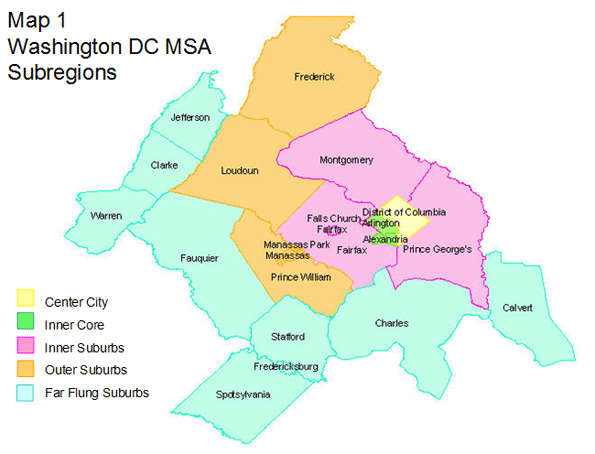
    The metro area is defined by 22 counties and cities in the states of Maryland, Virginia and West Virginia and has at its center city the District of Columbia. For this analysis, the Washington DC metropolitan area is divided into five sub regions: Center City, Inner Core, Inner Suburbs, Outer Suburbs and Far Flung Suburbs (see Map 1). According to Census Bureau population estimates, between 1987 and 2007 the population of the Washington DC metropolitan area grew from 3.92 million to 5.31 million people, an increase of about 35.5 percent. The population growth rates over this period varied considerably within the metropolitan area. The Center City experienced a 7.6 percent population decline between 1987 and 2007 while all of the other subregions in the metropolitan area grew. The fastest growing subregion was the Outer Suburbs, where the population grew by 109.6 percent over the 20-year period, followed by the Far Flung Suburbs (80.0%), Inner Suburbs (27.4%) and Inner Core (23.7%).

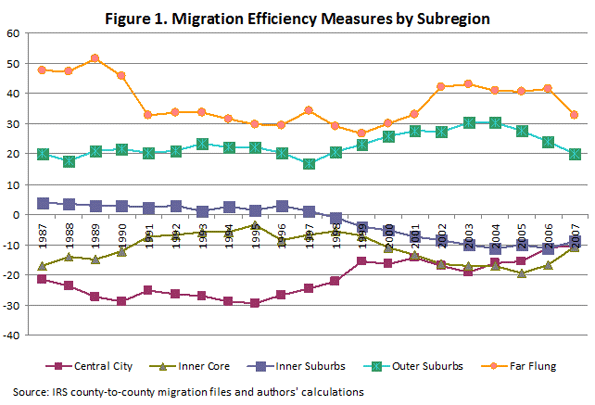
    Figure 1 shows that the subregions furthest from the region’s core, the Outer Suburbs and Far Flung Suburbs, consistently have the highest rates of net migration, which indicate that they have been net gainers of households from other parts of the metropolitan area over the past 20 years. For the Inner Suburbs, net migration is positive (but small) until 1998 when it becomes negative. Both the Inner Core and Center City have negative net migration over the entire period, reflecting losses of households to the rest (i.e. the suburban portions) of the metropolitan area.

    Looking at the entire 20-year period suggests that the suburbs of the Washington DC metropolitan area have gained population at the expense of the closer-in jurisdictions. However, in the last few years, since 2005, the net migration rates for the Outer Suburbs and Far Flung Suburbs have declined while the rates for the Inner Core and Center City have become less negative. These three years of data suggest that the more distant suburbs have started gaining households more slowly while the closer-in jurisdictions have lost households more slowly with net migration rates moving towards zero. While three years do not necessarily constitute a trend, this analysis suggests the possible beginning of a modest back to the city movement in the Washington DC area.

    However, household gains (or a slowdown in losses) in the inner jurisdictions may be coming more at the expense of the Inner Suburbs as opposed to the more distant suburban jurisdictions. The Inner Suburbs subregion is continuing the downward trend in net migration rates that began in the late 1990s, losing households to both the outer suburban and core jurisdictions. If this trend continues, the Washington DC metropolitan area may experience a relative population decline of its Inner Suburbs, while the more far flung suburbs continue to grow (albeit more slowly) and the population of the inner jurisdictions stabilizes or even grows slowly.

    Despite the beginning of a small back to the core movement, the suburbs of the national capital region will continue to gather most future growth, and that suburban growth will be even further out. Over the last three decades, jobs have followed people into suburban communities; a place like Tyson’s Corner in Fairfax County now has almost as many jobs as Washington’s downtown business district. Workers can live in the Outer Suburbs and Far Flung Suburbs, benefiting from the relatively lower housing costs and commute with relative ease to jobs in these suburban employment centers. Some share of the population will choose to move back to the city, but there will always be demand for suburban life.

    The Inner Suburbs are caught in the middle of population moving in and moving out. The Inner Suburbs have become more urban and congested, as well as more racially and ethnically diverse. These changes may cause some households – including both native born persons and upwardly mobile immigrants — to look even further out for a traditional suburban lifestyle. A younger metropolitan area, the result of the large millennial or “echo boom” generation, may lead to more people moving out of the congested Inner Suburbs to a “real” urban neighborhood in the core, which is also crowded, but has public transit and walkable communities. This trend, however, may well be short-lived if, when this generation hits their mid-30s by 2015, it acts like previous generations, starting to raise families and move again to suburbs, most likely in the further periphery.

    All this suggests, for the short run at least, a possibility that this new pattern of household redistribution could create a new divide in the national capital region. Different from the well-documented east-west divide, the emerging divide will be between the “urbanites” and the “far flungs.” The divide will be demographic, economic and political and will characterize the future challenges to forming transportation, housing and other regional policies.

    Lisa Sturtevant is an Assistant Research Professor at George Mason University School of Public Policy, Center for Regional Analysis.

  • The Infrastructure Canard

    One of the principal arguments used against suburbanization is that its infrastructure is too expensive to provide. As a result, planners around the high income world have sought to draw boundaries around growing urban areas, claiming that this approach is less costly and that it allows current infrastructure to be more efficiently used.

    Like so many of the arguments (a more appropriate term would be “excuse”) used to frustrate the clear preferences about where people want to live and work, the infrastructure canard holds little water upon examination.

    Becoming Less Affordable as Demand Declines: Within the new world high-income nations, there was considerable urban growth between World War II and 1980. Nearly all of this growth was in the suburbs, where infrastructure was provided through borrowing, taxation and utility user fees. Yet, even as population growth has slowed, the diminished bill has been declared beyond the capability of governments which have often opted for what is seen as more affordable compact development (smart growth).

    Estimating the Cost of Suburban Infrastructure: The seminal volume Costs of Sprawl – 2000 projected a need for $225 billion more in costs from 2000 to 2025 for expanding suburban infrastructure than would be required for more compact development. This superficially large number melts down to $30 per capita on an annual basis. This is hardly the kind of expenditure increase that brings bankruptcy to local governments, even if it were not disputable.

    Higher Cost Infill Infrastructure: Costs of Sprawl – 2000 and other analyses generally rely upon a “build up” of infrastructure costs, which is then extrapolated to develop overall estimates. These estimates are rarely, if ever, calibrated for consistency with actual experience as reported in government financial sources. Moreover, they generally assume that the cost of building comparable lengths of sewer, water or roads are equal throughout the urban area. They are not. Generally, costs are far higher in infill areas, for a variety of reasons, especially higher labor costs.

    Public and Private Costs: Further, many of the infrastructure costs decried in Costs of Sprawl – 2000 and other sources, are not government costs at all but incurred by private companies. Virtually all local roads and some arterials are built and paid for by developers, with the costs passed on to homeowners. Sewer and water expenditures are usually financed by user fees, either paid to private companies or municipally owned utilities.

    Cost Differences are Minimal: Moreover, my analysis with Joshua Utt of municipal water and sewer user fees from all reporting jurisdictions in 2000 indicated a 1,000 increase in population per square mile is associated with a $10 reduction per capita, a figure that does not justify strong-armed land use regulation.

    The High Cost of Infill Infrastructure: Proponents fail to account for the fact that infill development also requires more infrastructure. The existing water and sewer systems in densifying areas are likely to require upgrades, now or later. In many older cities, these systems are older, even obsolete and may not have the capacity to meet the increased demand. Constructing these upgrades will generally be far more expensive in an already developed area than building new, state of the art facilities in greenfield areas.

    Building Gridlock: The proponents virtually never propose expansion of roads to deal with the increased traffic that occurs in densifying conditions. Yet, the national and international evidence is clear: higher densities produce more traffic. Without more capacity, this means slower speeds, more intense pollution and more greenhouse gas emissions.

    There is no point in imagining that it can be any different. For example, the most dense part of the nation is New York’s Manhattan. It is served by a rail system that is far more comprehensive than any other place in the nation. Yet, traffic volumes (total vehicle miles) per square mile in Manhattan are more than 3.5 times that of the nation’s most congested urban area, Los Angeles, and 12 times that of the nation’s least dense major urban area, Atlanta.

    Thus, any savings that might be obtained from not expanding roads to meet demand is achieved by retarding service levels. Further, the longer travel times would stunt economic growth.

    The Transit Infrastructure Canard in Australia: One of the more ludicrous features of the infrastructure canard in Australia is the fixation with rail transit, which planners frequently justify to ban or limit suburban expansion. This is a Neanderthal view that fails to recognize that only a small portion of urban fringe dwellers work in the downtown areas, which are the only employment centers effectively served by rail. The minute roads are opened, the infrastructure for transit is in place. Bus service can quickly and efficiently be established to downtown, local employment poles, or the nearest rail station for those few outer suburbanites who can get to work more conveniently by transit than by their cars. Overall, less than 20% of commuters work downtown in Australian urban areas, and the farther out they live, the less likely they are to commute downtown.

    Operating Costs are the Problem: Moreover, the focus on construction of new facilities is misplaced, because, construction costs are not the principal driver of public expenditures. Less than 20% of local government expenditures are for construction, while more than 80% covers day to day operations. New population, or the same population in a larger area will require similar government operating expenditures. It is likely that compact development will require just as many teachers and just as many public servants. Moreover, they will probably be paid more, since older, more dense communities have significantly higher government employee wages and salaries per capita than average.

    Cost Consequences of the Infrastructure Canard: More importantly, the infrastructure canard imposes far greater costs on society than any savings even its most ardent proponents can imagine. This is because compact development materially increases housing costs.

    Destroying Housing Affordability in Australia: There’s ample evidence of this down under. Planners have tied a noose around all Australian urban areas which virtually outlaws development on or beyond the urban fringe. As economics would predict, land for development has become scarce, which in turn has increased its price. Once known for its affordable housing, most Australian areas have seen the price of homes relative to incomes double or triple since the new policies were enacted. Nearly all of this increase has been in the price of the land, not in the house construction (inflation adjusted). Land for development is so scarce in this less than 0.5% developed nation that its urban areas are likely to be buried by blizzards before housing affordability returns.

    Destroying Housing Affordability in the United States: In the United States, compact development polices have also increased house prices. For example, even after hitting bottom earlier this year, house prices in compact development markets such as California, Seattle and Portland remained as much as twice as expensive related to income than in less strongly regulated markets. The annual US infrastructure savings suggested in the Costs of Sprawl – 2000 are so small that they would pay less than one-third of the excess higher annual mortgage payments in California attributable to compact development (Note).

    Fastest Growing Metropolitan Areas: Doing the Impossible: While planners in California, Portland, Seattle and elsewhere delude the public and elected officials into believing that suburban infrastructure is unaffordable, faster growing metropolitan areas found the opposite. Atlanta, Dallas-Fort Worth and Houston are the three fastest growing metropolitan areas with more than 5,000,000 population in the high income world. Rather than restraining suburbanization, these metropolitan areas allowed it to continue. Their reward was not only delightful communities (despite their being despised by the planners), but also the retention of housing affordability. None of this has slowed some positive inner-ring development, particularly in Houston, to meet that niche demand.

    A Matter of Will: The fast growing metropolitan areas demonstrate that suburban infrastructure can still be provided without a material financial burden to the community. Indeed, given the house price escalating effects of compact development, the cost of living will be lower where suburban expansion is allowed. It is not a matter of suburban infrastructure being too expensive but the resistance of planners and urban land autocrats to crafting policies that actually reflect the desires of the vast majority of people in most advanced countries.


    Note: Estimated based upon the approximate 50% house price premium compared to metropolitan areas without compact development, assuming the average house price, a mortgage of 90% of the house value, amortized over 30 years at 5% and applied to the approximately 75% of houses that are mortgaged.

    Wendell Cox is a Visiting Professor, Conservatoire National des Arts et Metiers, Paris. He was born in Los Angeles and was appointed to three terms on the Los Angeles County Transportation Commission by Mayor Tom Bradley. He is the author of “War on the Dream: How Anti-Sprawl Policy Threatens the Quality of Life.

  • So Much for Evidence-Based Planning

    Has evidence-based planning fallen from grace in favour of catchy slogans and untested assumptions? In the case of urban planning, arguably that is just what’s happened. The evidence, in Australia at least, is worrying.

    “We must get people out of cars and onto public transport.” “We must stop urban sprawl and the consumption of valuable land.” “We must build higher density communities to achieve sustainable environmental outcomes.” Phrases like this are now de rigueur across many discussions about urban planning in the media, in politics and in regulatory circles in Australia. They are rarely challenged on the basis of what the actual social, economic or scientific evidence is really saying. It’s produced an Animal Farm like dogma: ‘Four legs good, two legs bad.’ Or ‘Napoleon is always right.’ Denial, followed by ‘pass the buck’ and ultimately ‘shoot the messenger’ are responses to legitimate questions.

    But given the far reaching social and economic changes which will invariably flow from some of the regulatory planning schemes now being legislated, we should at least ask whether the various policies will actually achieve their stated goals. After all, these regulatory planning schemes are intended to govern our urban growth over the next 20 years. It would be a shame to get it badly wrong, simply because assumptions weren’t tested.

    The rise of the big plan

    Since the late 1990s, there has been a raft of Australian regional planning schemes dealing with urban growth in our major centres. The common theme has been the creation of urban growth boundaries and increased density in established urban areas, with an emphasis on public transport as opposed to the private vehicle.

    Typical of these schemes is the recently released ‘South East Queensland Regional Plan 2009-2031’ (SEQRP) which aims to ‘manage growth and protect the region’s lifestyle and environment.’ The plan, like others of its type, is influenced by a desire to contain urban growth and implicitly assumes that we are at risk of reckless growth if we don’t. But Australia’s total population is currently around 24 million people, in a land mass roughly the size of continental USA. This puts us below Nepal and Uzbekistan but ahead of Madagascar in population rankings. Reports that Australia’s population may reach 35 million in another 40 years (the current population of Canada) have raised domestic fears that we might become over populated. (See my blog post ‘Australia Explodes’ for more on this).

    The State of Queensland is the second largest state by area, but contains only 4.4 million people in total. Its population growth rates have in the past been amongst the highest of any region in Australia, growing at up to 1500 people per week (close to 80,000 per annum). Much of this growth has occurred in the south east corner of the state, surrounding the capital city – Brisbane. While modest by global standards, this rate of growth has thrown governments and some sections of the community into apoplexy. How will we ever cope? The region of southeast Queensland (population 3 million) has even been compared to California (population 38 million) in terms of its growth rates and population pressures.

    Against this context, the SEQRP identifies the need to provide a further 750,000 dwellings in the period to 2031, with roughly 50% to be developed in established urban areas via infill, and the balance through new detached housing development on land within an urban growth boundary. The challenge for infill is greater in Brisbane, where 138,000 new dwellings are expected to be developed in established urban areas, especially around transit centres (typically rail).

    One of the many assumptions that underpin the core strategy of the SEQRP have to do with
    the risk of sprawl. This suggests that modest and manageable growth rates of 1500 people per week are somehow tipping the big end of the global scale. The region’s current population of 3 million shows obvious signs of urban expansion as a result of growth to date, yet, with some notable exceptions in recent years, infrastructure has generally kept pace with the growth. Even at the urban fringe, new housing development has been at higher rates of dwelling density than in years past (lot sizes are shrinking).

    There is also an assumption that we are running out of land. But South east Queensland has vast tracts of land suitable for urban expansion and has several established regional centres readily capable of servicing new expansion with infrastructure and town centres already in place and capable of upscaling. The urban growth boundary imposed by the SEQRP is approximately 300 kilometres in length as it curtains the urban area. An expansion of this boundary by as little as a kilometer (under a mile) would create a notional land supply suitable for an additional 500,000 detached homes at 15 to the hectare (or six to the acre).

    Behind the plan lies an accepted wisdom that demand for ‘the quarter acre block’ is driving excessive expansion. The evidence, however, suggests this is now ancient history: lot sizes have not been anywhere near a quarter acre since the 1960s. The typical lot size now is 400 square metres, or around one tenth of an acre, hardly an irresponsible over-consumption of land for housing.

    It is also assumed that all this growth imperils quality farm land. This assumption can only come from those with a vague understanding of farming practices. In the south east corner of Queensland, typically two types of land have been conserved for this reason. The first is land devoted to growing sugar cane which is no longer economically efficient. This agriculture produces a biodiversity desert and is far better suited to the more tropical north.

    The second type of land conserved under this rationale is land historically devoted to cattle grazing. This was always marginal grazing land in the main – dry, shallow soils that struggle to hold moisture or grow pasture. As technology improved and transport economics developed, more efficient grazing country has been opened up further from city markets. But as farmers are prevented from selling their land for housing, despite its logical location for that purpose, herds of bony cattle continue to roam the urban fringes of the metropolis.

    This assumption also seems to hold dear the notion that, for sustainability reasons, regions should source their food needs from within a nearby catchment, minimizing transport costs. Were this true, Queenslanders would not enjoy apples (grown in southern temperate zones) and neither would Tasmanians (our cool climate southern state residents) ever enjoy bananas (two thirds of Australia’s crop of which are grown in Queensland). It would also mean our agricultural industries, which rely heavily on export, would fail.

    The cost of infrastructure provision is a subject that preoccupies governments in growth regions. Perhaps for this reason, the suggestion that infrastructure is more economically deployed in established urban areas, as opposed to newly provided in outer growth areas, found much support in treasury corridors. However, the evidence suggests otherwise: established urban areas‘ essential services (electricity, water, sewerage, stormwater) are ageing and incapable of serving significantly higher demand loads. The replacement and upgrade cost of retrofitting these services is demonstrably higher than the cost of installing new services in new growth areas.

    It is also assumed outer suburban growth will mean worsening urban congestion. Yet relatively few residents of new outer suburban growth areas are employed in inner city areas: according to the Census and other official government data, most jobs are in suburban locations – 90% of all jobs in fact. The CBD (our downtown) is a high density focus area for many headquarter operations, but at 2 million square metres of office space, it cannot by any stretch of the imagination provide sufficient space for the majority of the region’s workers.

    There is the assumption that infill and higher density will get more people using public transport. Current public transport usage represents under 15% of all trips. With higher density housing in established areas, especially in and around transit nodes (TODs), that figure could theoretically increase. But even the most heroic of assumptions would put the future rate at little more than 30%. Meaning 70% of new residents will still be auto dependent. There is also an unanswered question on the capacity of existing rail and bus services to cope with additional demand (frequent reports mention chronic overcrowding) combined with the high level of public transit subsidies per passenger, which will somehow have to be funded.

    Finally, it’s assumed that high density housing is more ‘sustainable.’ But according to several Australian University studies, unit and townhouse dwellings actually consume more energy than equivalent detached dwellings. Common area lighting, lifts, clothes driers and airconditioning are all more commonplace in high density dwellings than detached (where natural light, cross flow ventilation and solar power for drying clothes are the norm). Factor in the higher number of persons per dwelling in detached housing, and the per person energy consumption of inner city, high density housing looks ordinary. No less an authority than the Australian Conservation Foundation actually proved this in their Consumption Atlas which revealed that inner city high density residents had much larger carbon footprints than their suburban cousins.

    On balance, many of the assumptions that underpin the central strategic intent of regulatory planning schemes such as The South East Queensland Regional Plan, just don’t stand the test of evidence. Indeed in many cases, the evidence suggests the opposite of what is assumed. But evidence, it seems, is out of favour and slogans are in.

    Four legs good, two legs bad. Napoleon is always right. Why consult the facts when the mantra will do?

    About the author: Ross Elliott has 20 years experience in the property and development field, including stints in research, advocacy and urban economics. He writes an occasional blog, which you can find here and works as a consultant in marketing, strategy and business development, specializing in the property sector.

  • It’s A Mall World After All

    If Indian Prime Minister Manmohan Singh wants a taste of home during his visit to Washington this week, he might consider a trip to McLean, Va., home to the region’s largest indoor mall, Tysons Corner Center. After all, there are few groups more mall-crazy than India’s expanding affluent class.

    Back here in the U.S., urban boosters and planners like to predict that malls are “vanishing.” But while consumer-deflated America may suffer from mall fatigue and a hangover from overbuilding, much of the developing world has experienced no such malaise. In 2000, for example, India was virtually mall-less. Today it has several hundred, with scores of new ones on the drawing boards.

    Malls are particularly attractive to India’s “aspiring” middle class, including those who have returned from work, study or travel abroad, suggests Vatsala Pant, director of client solutions at AC Neilson in Mumbai. Indian novelist and Mumbai blogger Amit Varma suggests that these folks like malls “because they are relatively clean and sanitized” as opposed to the city’s pollution-choked, beggar-ridden and often foul-smelling streets.

    Malls such as those built by mall developer Inorbit in suburban Malad or the new Paladium closer to the center of Mumbai boast many brands familiar to the suburban malls of the West–from Pizza Hut and Reeboks to Marks & Spencer. But they also contain scores of swanky shops selling saris and other Indian-made merchandise as well as trendy restaurants like the vegetarian thali palace Rajdahni. All cater almost exclusively to locals.

    This mall mania extends well beyond India. Today Asia is the site of seven of the world’s 10 largest malls, mainly in places like Beijing, Dongguan, China, Dubai and Kuala Lumpur, Malaysia. By 2010, China alone may be home to seven of the biggest shopping arcades on the planet.

    The rapid growth of mall culture in Asia and elsewhere reflects the rising incomes and expectations taking place across the globe. So while many malls struggle in North America, they are thriving in Asia due in part to suburbanization and automobiles. In the first 10 months of 2009, Chinese consumers alone purchased more cars than their American counterparts. India is also going through an automotive revolution, with sales up 20% since April and local firms like Tata, developer of the $2,500 minicar, Nano, gearing up for long-term growth.

    It’s not just growing affluence, car culture and suburbanization that are driving people into malls in India and other developing nations. Many of these places–like the American south and southwest–suffer hot, inhospitable climates. In Dubai, where the temperatures even in November hover well into the 90s, malls provide both a diverse shopping experience and relief from the heat.

    These malls also play a surprisingly democratic function often under-appreciated by urban theorists, planners and purveyors of architectural nostalgia. While Mumbai’s malls may not host the city’s scores of beggars, they can not be described as the exclusive province of the rich. The affluent may be there, of course, but so would their drivers, the factory workers and others of India’s growing aspirational population.

    “You get to see a massive cross-section of people, there for different reasons, all breathing the same [air conditioning],” Varma observes. “And really, these people only come together in the malls.”

    This oddly democratic phenomenon is also evident in the nearly 6 million square foot Dubai Mall. Of course, there are the evidently wealthy local Arabs in their traditional white flowing robes, but you also can spot the Filipino maids, British bankers, American and Korean engineers and a diverse array of Indians all shopping, eating and conversing in the air-cooled commercial oasis.

    “It’s the one place where people share a common culture,” observes Tabitha Decker, a Yale Ph.D. candidate working at the Dubai School of Government. “In a place like this, these are the boulevards.”

    This mall-ization of the developing world predictably offends many American and European critics who wish that the Third World remain “authentic.” The widely read Mexico City-based blogger Daniel Hernandez thinks places like Mexico’s swank Centro Santa Fe, on la capital’s southern edge, represents “all that is wrong with the rapid commercialization and privatization of urban development.”

    I wonder if he has tried making that case to the shoppers who flock west to the Santa Fe mall or the more middle-income Centro Comercial Perisur. These commercialized Mexicans look, dress and act remarkably like, well, Texans at the Houston Galleria rather than denizens of the traditional marketplaces so beloved by tourists and writers.

    Mexico-born developer Jose de Jesus Legaspi suggests that Mexicans come to malls because they find them more appealing than the somewhat grimy, and sometimes crime-ridden, traditional downtowns. “Some second- and third-generation Latinos may feel Mexicans should be dressing in huaraches, but really these places are like the traditional zocolo, a place to gather on Sunday,” Legaspi says.

    This social role, Legaspi believes, may prove critical to the future of the malls in America as well. Like many things in post-crash America, shopping is changing. But even though they’ve cut their purchases, Americans are hardly deserting malls any more than they are traditional urban downtown shopping districts. Just look at the dismal condition of Chicago’s State Street.

    Yet despite their travails, most malls likely won’t be stripped down in favor of dense urban neighborhoods or green fantasy zones for vegetable hothouses or bio-fuel production. Instead their future will depend on evolving from a purely consumptive palace to a “gathering place” that is safe and friendly, particularly for working- and middle-class families. In this sense, India, China, Dubai and Mexico may be not imitators as much as harbingers.

    Not surprisingly, in America the ethnic market is setting the new tone. The Latino-oriented mall Plaza Mexico in Lynwood, Calif., a 400,000 sq. foot open-air commercial center, consciously recreates the old zocolo through historic architecture, music and family-oriented fun. Even more ambitious is the enormous 1.2 million square foot La Gran Plaza in Fort Worth, Texas, which features such family-friendly fare as mariachis, Mayan dance, horse shows and even a Sunday Mass presided over by a local bishop.

    Equally revealing, both these centers also accommodate smaller, independent businesses in an adjacent mercado, in La Gran Plaza’s case one that extends 120,000 sq. feet. And you don’t have to have an ethnic focus for this formula to work. The Grove, a highly successful Los Angeles Mall, has emphasized family entertainment and a nearby link to the Farmer’s Market, a long-standing bastion of small, independently run businesses.

    Rick Caruso, the developer of the Grove, which now ranks among Southern California’s top tourist destinations, sees future American malls focusing on their social role, with closer links to local cultural events and celebrations. This is one way, Caruso believes, malls can compete with both big-box stores–stand alone centers built around a Wal-Mart, Target or Costco–and the rising force of Internet marketing.

    “The discussion of retail in America is really about community,” Caruso notes. “Lots of communities want to preserve something of Main Street and to keep the organic retailers who grew up in the area and are one of a kind. I think it works best in the long run. The key for a developer is how to keep both that feeling and the newer developments. You want to be seen as part of the future of the community.”

    Despite the predictions of their demise, the mall, both at home and abroad, appears far from finished. Like all urban forms, they must adjust to changing conditions but will likely thrive well after most of their critics are enjoying their university pensions. It looks like our increasingly small, globalized world will also be a malled one.

    This article originally appeared at Forbes.com.

    Joel Kotkin is executive editor of NewGeography.com and is a distinguished presidential fellow in urban futures at Chapman University. He is author of The City: A Global History. His next book, The Next Hundred Million: America in 2050, will be published by Penguin Press early next year.

    Photo by Rohtak8

  • Migration: Geographies In Conflict

    It’s an interesting puzzle. The “cool cities”, the ones that are supposedly doing the best, the ones with the hottest downtowns, the biggest buzz, leading-edge new companies, smart shops, swank restaurants and hip hotels – the ones that are supposed to be magnets for talent – are often among those with the highest levels of net domestic outmigration. New York City, Los Angeles, San Francisco, Boston, Miami and Chicago – all were big losers in the 2000s. Seattle, Denver, and Minneapolis more or less broke even. Portland is the only proverbially cool city with a regional population over two million that gained any significant number of migrants.

    Those who find this an occasion for a schadenfreude moment attribute it to tax and regulatory climates. Clearly, things like cost of doing business are clearly very important. And indeed this is often under-rated by cool city proponents. And other things equal, people do prefer low tax jurisdictions. Still, is this the only answer, or is there another explanation? Could it be that rather than high costs driving migration, both costs and migration are being driven by other underlying factors?

    Perhaps the root problem is structural change in the economy in the age of globalization. As business became more globalized and more virtualized, this created demand for new types of financial products and producer services – notably in the law, accounting, consultancy, and marketing areas – to help businesses service and control their far flung networks. Unlike many activities, financial and producer services are subject to clustering economics, and have ended up concentrated in a relatively small number of cities around the world.

    These so-called “global cities” serve as control nodes for various global networks and key production sites for these services, along with other specialized niches they long had. In effect, more distributed economic activities requires increasing centralization of select functions, particularly the most highly value-added functions. Yet these activities are not set in stone; for example, areas that were once centers for global business, like Cleveland or Detroit, are fading; others like Houston and Dallas are rising.

    Yet unlike the Texas cities, which retain a strong middle-class and middle-echelon economy, many of the more elite, established urban centers – for example New York and London – increasingly create parallel economies and labor markets in those cities. These cities now generally contain two kinds of people and firms: those who are part of the global city functions and those who are not. Those who are engaged in global city functions operate in a world of very high value-added activities; specialized, niche skill markets; and rising demand conditions. Those skills are not readily acquired outside of global cities. Often, they are sub-specialized to particular places as different global cities specialize in different niches.

    In many cases, these functions have not yet migrated to India or China or often even another global city. This tends to inflate salaries significantly for these specialized, niche skill jobs.

    On the other hand, many people who once thrived in these cities have not benefited from these economic forces. They often are in occupations where labor arbitrage is feasible, and their jobs can either be off-shored, or readily transferred to lower cost locales in the US. This includes manufacturing work, but also important but less specialized white collar occupations like basic accounting, loan officers, corporate IT, and HR. In short, the routine side of the traditional monolithic corporate headquarters and services firm.

    In effect, in these global cities, two economic geographies share the same physical geography – and those economic geographies are in conflict. One set requires catering to high skill, highly paid workers and firms where cost is a secondary concern. The other involves occupations and industries where cost is very much a concern. The occupants of these two geographies have very different public policy priorities. Which of them will win out?

    In a global city, particularly a mature and expensive one, the elite geography wins. It is generating the most money, and with money comes power and influence. Additionally, the high wage workers in these industries are simply able to pay more for real estate and other items. Their mere paychecks are driving up costs in the city they live in. They are re-ordering the city in their own high income image, aided and abetted by a speculative financial fueled housing bubble.

    The prestige of these industries burnishes the civic brand, making them attractive to civic boosters. What’s more, leaders in global cities feel that these are their businesses of their future. For them the attractiveness of concentrating in areas where you think you can create a “wide moat” advantage makes sense.

    This is why cities like Portland, Minneapolis, Denver, and Seattle haven’t fared nearly so badly – they aren’t really full metal global cities and thus, while not always cheap, have remained relatively affordable versus places like San Francisco and New York.

    At the same time it is not easy for these more expensive cities to adopt a low tax, low cost approach. For many reasons, places like San Francisco, New York, and London will never, no matter what they do, be able to match Atlanta, Houston, or Dallas, or even Chicago in a war on costs. That would be a suicide mission. Their logical strategy is to follow the law of comparative advantage, and specialize where you have the best competitive position in the market, and that’s global city functions.

    Many other cities have followed this strategy, but with differing success. Fearing to end up like the next Michigan and Detroit pair, many states and cities have invested heavily to build up urban amenities to cater to the global city firms and their workers: transit systems, showplace public buildings, art and culture events, bike lanes, and beautification. Cost fell by the wayside as a concern, as did investments in priorities of the traditional middle class.

    This explains why, for example, not only have taxes gone up, but things like schools and other basic services have declined so badly in places like California. Traditional primary and secondary education is not important to industries where California is betting its future. Silicon Valley, Hollywood, and biotech draw their workers from the best and brightest of the world. They source globally, not locally. Their labor force is largely educated elsewhere. Basic education and investments in poorer neighborhoods has no ROI for those industries. With the decline of high tech manufacturing in Silicon Valley, even previously critical institutions such as community colleges are no longer as needed.

    The same goes for growth and sprawl. They are playing a game of quality over quantity. They specialize in elite urban areas and elite suburbs or exurbs. For example, San Francisco also has Marin, Palo Alto and Los Altos Hills. New York has, in addition to Manhattan, Greenwich and northern Westchester. The only thing they need size for is sheer scale in certain urban functions, and they already have it. Growth is unnecessary for them and only brings problems.

    It also explains the highly pro-immigration stance of these cities, as a large service class is needed for globalization’s new aristocrats. Immigrants are needed as low cost labor in the burgeoning restaurant and hotel business. In America’s global cities immigrant housekeepers, landscapers, and nannies are common. They may not dress like His Lordship’s butler, but that doesn’t make them any less servants.

    Lastly, it explains why we have seen the same polarizing class pattern so consistently despite broad geographic and socio-political differences between places like Los Angeles, Boston, and Chicago, to say nothing of overseas locales like London. A common global phenomenon probably has a common underlying cause.

    The traditional middle class, feeling the squeeze, is simply moving to where its own kind is king and its own priorities are catered to. In a battle of conflicting economic geographies, the one with higher value added wins, displacing others in what Jane Jacobs termed the “self-destruction of diversity”. First, an attractive environment draws diverse uses, then one becomes economically dominant and, through superior purchasing power, displaces other uses over time. The story ends when that dominant economic activity exhausts itself – the true danger facing global cities, though fortunately they are generally not dependent on just one small niche. It’s basic comparative advantage.

    If you are just an average middle class guy, why live in one of those global cities anyway? Unless you have roots there that you value, take advantage of something you can’t get anywhere else such as by having a passion for world class opera, or are one of globalization’s courtiers – a hanger on like a high end chef, artist, or indie rocker, perhaps – why put up with the high cost and hassles? It makes no sense. You’re better off living in suburban Cincinnati than suburban Chicago.

    And frankly, the folks on the global city side prefer it if you leave anyway. Immigrants are unlikely to start trouble, but a middle class facing an economic squeeze and threat to its way of life might raise a ruckus. That won’t happen if enough of them move to Dallas and rob the rest of critical mass and resulting political clout.

    Many of those leaving are college educated, especially, when they get older, get married, and start having families. A relatively large number of these people could be replaced by a smaller number of elite bankers, biotech PhDs, and celebrity chefs. In that case, both “narratives” could hold simultaneously. One type of talent moves in, while a greater number of a different kind moves out. As with trade generally, this could even be viewed as a win-win in some regard.

    Again, it is easy to blame the costs and public policy. Clearly there is room for improvement in governance such as reigning in out of control civil service pay and pensions in places like California and New York. But what is more pernicious is the rising income gap in America, and the likely outcomes it drives when a city acquires a small elite economic class with incomes that far outstrip the average, and lacks strong economic linkages to the rest of the city other than for personal services. It sets in motion economic logic that undermines the traditional middle class, which then starts leaving, exacerbating the gap.

    For years we worried that a large, stable middle class with a permanent, largely minority underclass constituted an unjust order. As it turns out, the alternatives are sometimes worse. Ultimately some American cities have come to take on the cast of their third world brethren, a perhaps somewhat less extreme version of Mexico City or São Paulo, where vast wealth and glitter exist side by side with the favelas.

    This explains why America’s global cities often feel more kinship with their international peers than with many of the places in their own country. The global cities, which now enjoy something of a political ascendency, are also sundering the American commonwealth. Taking steps to prevent a further widening of the income gap may be the only way to save these cities’ middle class – and maintain the solidarity of the country.

    Aaron M. Renn is an independent writer on urban affairs based in the Midwest. His writings appear at The Urbanophile.
  • When the Fat Lady Sings: The Fate of Commercial Real Estate

    During the first ten days of October 2008, the Dow Jones dropped 2,399.47 points, losing trillions of investor equity. The Federal Government pushed TARP, a $700 billion bail-out, through Congress to rescue the beleaguered financial institutions. The collapse of the financial system was likened to an earthquake. In reality, what happened was more like a shift of tectonic plates.

    ***********************************

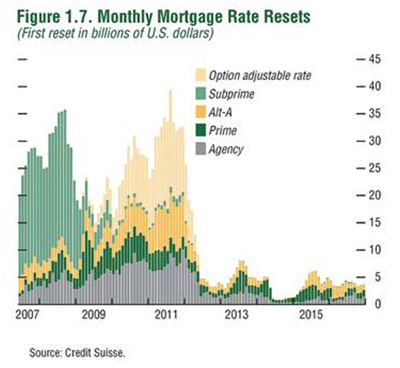
    Like the Roaring Twenties of a century ago, the real estate bull market of the last ten years crashed in dramatic style in late 2008. The collapse of the residential market was led by massive defaults in ill-conceived “sub-prime loans”. Millions of American homes are now in default and in the process of loan modification, abandonment or foreclosure. There is no end in sight as Prime, Alt-A, and Option ARM loan resets come due beginning in 2010.

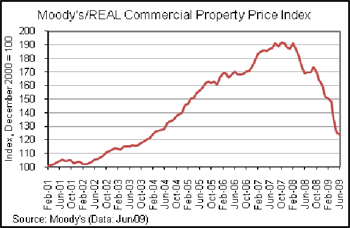
    Lurking around the corner, literally unnoticed by the average American worried about keeping his home, is a similar crisis in commercial real estate. For over a year commercial property values have been plummeting and have not begun to recover. A drive through both major cities and suburbia tells the story. Vacant stores, empty shopping malls, cancelled mixed use developments and eerily empty car lots presage bad things to come.

    We have discussed the origins of the housing crash before and the role played by feckless politicians and over-ambitious bankers. Now this crisis has spread to the commercial sector. Banks and commercial lenders saw in the new housing starts an equally promising demand for new shopping malls and suburban offices. Lenders forgot about pre-leasing requirements and made speculative loans on buildings that had no pre-leasing. As with housing, the rule book was thrown out the window. Like the aftermath of any wild party, there is hell to pay in the morning. It is morning in the commercial marketplace and the fat lady is singing.

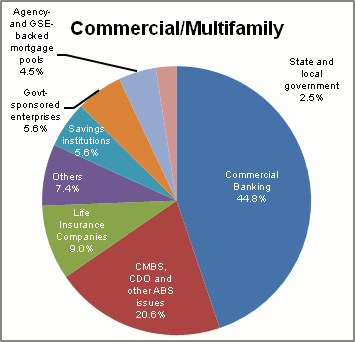
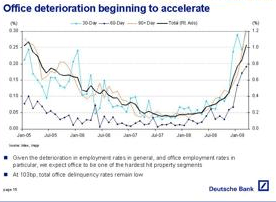
    Depository institutions hold about half of the $3.2 trillion of debt on US commercial property. The default rate in the first quarter of 2009 was just 2.25%. Sounds OK until you do the math and realize that $36 billion was in default and it is just beginning. The FDIC puts troubled banks on “the problem list”. In early 2008, there was one bank on the list. At the end of June 2009 there were 416, up from 305 at the end of the first quarter when the default rate was just 2.25%. Total assets at these problem institutions total $299 billion. The problem is that the total reserves of the FDIC are just $42 billion. The FDIC has closed over 100 banks and one good estimate is that they will close around 10% of US banks, 500 to 1,000, before the crisis runs its course. The losses will dwarf the $394 billion of the RTC and may surpass a trillion dollars. Is there any wonder why banks are loathe to make new loans?

    So what happens to commercial real estate? With prices plummeting, there must be some great buys out there, one must assume. But do not bet on it. This was not just an earthquake. The plates shifted, and like musical chairs, when the music stops there will be fewer chairs and many people left standing. Consolidation is the next step. There will be the inevitable drop in rents and with it property values. The better and stronger tenants will flee the less attractive Class B and Class C space and move to Class A properties. Class A properties will survive due to full occupancy and stable cash flow. But the lesser properties that were leased will empty.

    Like the suddenly quiet auto malls with the empty Pontiac, Saturn and Chrysler dealerships, lesser properties will lose their anchor grocery stores, Targets, and big box users. With the anchors gone, and traffic with it, the mom and pop small businesses cannot survive. There is no future for the marginal Class C shopping center. Tenants will flee to better locations and more affordable lease rates. Class A offices will survive. Well located and attractive Class B properties may muddle through at reduced revenues – if they can survive the refinancing maze. But, the poorly located Class C office will remain a “see-through” for years to come. Old, tired, and mostly vacant Class C office buildings line the crumbling freeways of Detroit, Cleveland, Youngstown, and countless smaller rust belt cities where excess capacity has eliminated the need for new development.

    A year from now, the landscape of America will be forever changed. The office and retail markets will be vastly different than they look today. Not much of it will be good. Five years from now, will empty shopping centers and auto dealerships remain shuttered or will they be rebuilt or torn down and their use converted to something more productive? Will our politicians cease their meddling in the market and allow the market to heal itself? These are questions that will haunt our economy for the next decade.

    ***********************************

    This is the fourth in a series on The Changing Landscape of America. Future articles will discuss real estate, politics, healthcare and other aspects of our economy and our society.

    Robert J. Cristiano PhD is a successful real estate developer and the Real Estate Professional in Residence at Chapman University in Orange, CA.

    PART ONE – THE AUTOMOBILE INDUSTRY (May 2009)
    PART TWO – THE HOME BUILDING INDUSTRY (June 2009)
    PART THREE – THE ENERGY INDUSTRY (July 2009)
    PART FOUR – THE ROLLER COASTER RECESSION (September 2009)

  • Bowling Alone or Bowling Along?

    It has long been cultural sport to mock or to misunderstand the social life of suburbs. More recently, however, sport itself has been identified as a major arena for social decline in suburbia.

    In his Bowling Alone, published with an almost apocalyptic sense of timing at the beginning of the present century, the esteemed social scientist Robert Putnam focused upon the decline of the American bowling leagues as symptomatic of a lost America. League bowling took off during the fifties and peaked during the sixties before its decline set in after 1970. From this downward trajectory, Putnam widens his analysis to raise serious and important questions about the culture of civic engagement in the USA. In other works, Putnam has also viewed the localised politics of northern Italian towns in a more favourable light than the sprawling suburbs of the USA.

    Putnam worries that both community involvement and church attendance is lower in the central cities and suburbs of major metropolitan areas than in the smaller towns of the USA of which he is clearly enamoured. He places this in the wider context of the more mobile, privatised and suburban way of life that has developed in America and other countries, including Britain, since the fifties. Somewhat ironically, perhaps, the decade that was once diagnosed as bringing about the Organisation Man and the Lonely Crowd of tract suburbia, is now viewed as a decade of suburban neighbourliness. What Putnam terms the ‘compulsive togetherness’ of the fifties has been eroded, apparently, by atomised isolation, self-interest and ever widening widths of commuting and social connectivity.

    Yet Putnam’s own statistics do not support the widely cited assertion of declining suburban sociability as compared to urban centers. In his argument that “community involvement is lower in major metropolitan areas” we find from tables in Bowling Alone that in the central areas of cities with one million or more people, about 7 per cent had served in a local community group, and almost 9 percent had attended a public meeting on town or school affairs. In the suburbs of that same-sized metropolis, over 10 per cent had served in a local community group, and over 15 percent had attended a public meeting on town or school affairs.

    In communities between 250,000 and 1 million people – quite a range of cities – again the suburbs manifest higher levels of civic engagement than the city centres. In the town of 50,000 to 250,000 however, we find a slightly more mixed picture: 14 percent living in central areas had served in a local community group compared to 13 percent in the suburbs. This is a paltry differential. However, whereas over 15 percent in central cities of this size had attended a public meeting on town or school affairs, it was over 20 percent in the suburbs, a much wider gap.

    When Putnam analyzes church attendance, his findings tend to exonerate suburban living. In the ”major metropolitan area of more than 2 million”, the “non-central city” manifests higher levels of regular church attendance than the central city. Yet in smaller metropolitan areas and towns both central and non-central areas have almost identical levels of church attendance.

    Surely this all raises a significant questions about the common notion that suburbanisation is bad for local community life. Of course, these figures may also be qualified by ethnicity, gender, occupational class and tenure. For example, home owners tend to be more rooted than renters, says Putnam. But most people living in the American suburbs are home owners, whereas rental levels are higher in downtown areas. Perhaps there is a weaker relationship between faith and tenure than between tenure and community participation?

    So what about sports? Over time-spans of decades, people learn to like other sports, or new ones, and the younger generation does not always emulate the interests of its parents or grandparents. Interests and disposable income are shifted onto other pursuits. Baseball leagues and American football may be declining, but Putnam pays only lip service to the growing popularity of sports such as skating, snowboarding, fitness walking and going to the gym. These are sports that now bind young people together via discussion on social networks and in media like fuel.tv in terms of fashion and popular events.

    For his part, Putnam sees these as symptomatic of a modest demise in team sports as more individualised pursuits become increasingly common. Yet he may be missing the social aspects of the new “extreme” sports.

    He also seems oblivious to the growing social role of soccer, particularly in the suburbs. He gives it three mentions in Bowling Alone. Relative to other countries, soccer may be a relatively small team sport in the USA, encouraged by immigration from soccer-loving countries, and cheered on by the soccer moms of America. But more important is the expansion of amateur soccer which attracts more young people. I would argue that the relative vitality of local soccer leagues is more important than the success of the professional leagues. After all, the issue is grassroots, volunteer social interaction, not mass behavior.

    Soccer was originally born in England, and remains a vital force of social cohesion, particularly in suburban working-class council estates. The Old Left thinkers, many of whom have embraced Putnam’s ideas remain woefully ignorant of the energy and diversity of working-class suburban life.

    Soccer remains the working-class sport that has refused to die, even when the English working class has been diagnosed with terminal decline. Whether at grassroots amateur level, in the lower professional leagues, and in the glamorous world of the Premier League and international competitions, the game continues to draw people together in parks, at football stadiums, around their television sets, and in a million and more websites dedicated to the sport.

    The internet brings people together not just across the world but also in a local context. Online communities, and formal and informal emailing, are mechanisms not of isolation but of interaction. For example, in some research I have been doing on a poor suburban council estate in Southern England, the local tenants’ groups have established and maintain websites. And local amateur soccer in the English provinces has no shortage of websites dedicated to the sport and the teams who play it. And poorer working class areas are currently viewed by politicians and cultural commentators as possessing historically low levels of social capital.

    Ultimately, Putnam is saying little that is new. In both England and the United States of America writers, film directors and metropolitan journalists have long played the game of bashing the suburbs. This elitist lineage can be traced back from the late-Victorian Diary of a Nobody to the nobodies at The Office, and from Babbit to American Beauty. The message takes on different emphases and tones but at its heart is contempt or faux sympathy for the allegedly alienated and privatised suburbanite. Films such as Backfield in Motion or Bend it Like Beckham give us a different take, but they aren’t as widely popular as American Beauty. Why is that? Perhaps their message is too optimistic. The chattering classes continue to want to paint suburbs as bastions of privatism rather than as a flexible and sociable context for community and association. The fact that they are, on the whole, woefully wrong is likely not to change their opinions, but should inform those who have not yet closed their minds.

    Mark Clapson is a social historian, with interests in suburbanisation and social change, new communities in England and the USA, and war and the built environment.

  • Obama Still Can Save His Presidency

    A good friend of mine, a Democratic mayor here in California, describes the Obama administration as “Moveon.org run by the Chicago machine.” This combination may have been good enough to beat John McCain in 2008, but it is proving a damned poor way to run a country or build a strong, effective political majority. And while the president’s charismatic talent – and the lack of such among his opposition – may keep him in office, it will be largely as a kind of permanent lame duck unable to make any of the transformative changes he promised as a candidate.

    If Obama wants to succeed as president he must grow into something more than movement icon, become more of a national leader. In effect, he needs to hit the reset button. Here are five key changes that Obama can implement to re-energize and save his presidency.

    1. Forget the “Chicago way.” The Windy City is a one-party town with a shrinking middle class and a fully co-opted business elite. The focused democratic centralism of the machine – as the University of Illinois’ Richard Simpson has noted – worked brilliantly in the primaries and even the general election campaign. But it is hardly suited to running a nation that is more culturally and politically diverse.

    The key rule of Chicago politics is delivering the spoils to supporters, and Obama’s stimulus program essentially fills this prescription. The stimulus’s biggest winners are such core backers as public employees, universities and rent-seeking businesses who leverage their access to government largesse, mostly by investing in nominally “green” industries. Roughly half the jobs saved form the ranks of teachers, a highly organized core constituency for the president and a mainstay of the political machine that supports the Democratic Party.

    The other winners: big investment banks and private investment funds. People forget that Obama, even running against a sitting New York senator, emerged as an early favorite among the hedge fund grandees. As The New York Times’ Andrew Sorkin put it back in April, “Mr. Obama might be struggling with the blue-collar vote in Pennsylvania, but he has nailed the hedge fund vote.”

    At best, the president’s policy seems like Karl Rove in reverse, essentially smooching the core and ignoring the rest. This is a formula for more divisiveness, not the advertised “hope” Americans expected last November.

    2. Focus on Real Jobs, Not Favored Constituencies . The Chicago approach works better in a closed political system controlled by a few powerbrokers than in a massive continental economy like the U.S. Health care and education, which depend on government largesse, are surviving. But the critical production side of the economy that generates good blue-collar jobs – like agriculture, manufacturing and construction – is getting the least from the stimulus.

    These industries need more large-scale infrastructure spending, as well as more focused skills training and initiatives to free capital for politically unconnected entrepreneurial businesses. Instead, productive industries face the prospect of more regulation while capital for small businesses continues to dry up.

    Those in post-industrial bastions tied to speculative capital – think Manhattan and the Hamptons – are the ones most benefiting from Obamanomics. College towns like Cambridge, Mass., Madison, Wis., Berkeley, Calif., and Palo Alto, Calif., will also prosper, becoming even richer and more self-important. It seems, then, that Obama has done best for elite graduates of Harvard and Stanford and other members of the “creative class.”

    The rest of America, however, is still waiting for a real sustained recovery. Industrial and office properties remain widely abandoned not only in Detroit but Silicon Valley. The future sustainability of our economy depends mostly on what happens to those who previously staffed these facilities – those who produced actual goods and services – not just on a relative handful of people working at Google or the national laboratories. In other words, we need jobs for machinists, welders and marketers as well as scientists with Ph.D’s.

    3. Step on the Gas. Providence has handed America – and Obama – an enormous gift in the now recoverable deposits of natural gas found across the continent. Proven levels have been soaring and now amount to 90 years’ supply at current demand. More will be found, and across a wide section of the country.

    Natural gas may be a fossil fuel, but it is relatively clean and thus the perfect intermediate solution to our energy problems. The problem: The president’s green advisers will seek to prevent developing these resources.

    Although Obama should support strong environmental controls on gas extraction, the greens should not be allowed to block this unique and historic opportunity to shift economic power back to North America. Along with modest increases in domestic and Canadian oil, natural gas could end our dependence on fossil fuels from outside North America. This would relieve our military from the onerous task of defending other people’s oil supplies. But most important, the new energy sources could expand our industrial and agricultural economies so they can capitalize on the huge potential growth from markets at home and in the developing world.

    The natural gas era could then finance continued research and deployment of renewable fuels. Let’s give it the 10 or 20 years that great transformations require. Quick fixes will lead us to subsidize the purchase of rapidly dated technology from China or Europe; we should aim at the energy equivalent of the moon shot, helping forge a huge technological advantage.

    4. Rediscover America. As a candidate, Obama spoke movingly about his Kansas roots, but lately he seems to have become all big city all the time. This administration offers very little to people who live in places like Kansas, as many of my heartland Democrat friends complain.

    Urbanites often forget that this is an enormous country. Crowded into dense cities themselves, they fail to look down from the window when crossing the country by plane. The vast majority of America is, well, vast – sparsely settled, if settled at all.

    Moreover, Obama’s people need to understand that 80% of America live in suburbs or small towns. They do not want to live in dense cities or realize a move there would mean living in less than idyllic conditions. If Obama wants to shape a green America, he must find ways that work with the majority’s preferences.

    But so far the president’s housing, transport and planning advisers seem to be pushing the death of suburbia and promoting ever more densification. It’s hardly surprising, then, that suburbs and small towns feel left out. After finally starting to inch toward the Democrats, they are now turning again to the right. If Democrats want to retain their majority, they need the strong support of these constituencies – without it the Congressional majority will be gone by the end of the second term, if not the first.

    5. Chuck the Nobel; Embrace Exceptionalism. Many progressives love Obama because they see him as one of them in the struggle with what the immortal Bill Maher calls “a stupid country.” But the president should remind himself that the country may not be quite as dumb as it sometimes looks from Oslo – or from Dupont Circle, Cambridge or Soho.

    Being smart was part of the reason the Republicans lost the majority. The voters understood the country was wasting resources – and young people – on internecine conflicts for energy that we could produce at home. The Bush years also undermined any GOP claim to fiscal responsibility.

    Initially Obama allowed us to redefine American exceptionalism as something more than monomaniacal use of force and overconsumption. He spoke to our traditions of inclusiveness, adaptability and idealism. He offered the perfect vehicle because he and his story are so exceptional. Yet Obama sometimes seems more interested in serving as the apologizer rather than as commander in chief. His vision appears less American than pseudo-European.

    This is not the path to success for American presidents. Whether Ronald Reagan or Franklin Roosevelt, Harry Truman or even Bill Clinton, a president has to be a spokesman for his country. Right now, on the world stage, Obama is looking more and more like Jimmy Carter.

    I suggest these things because, for all his missteps over the past year, Barack Obama is my president and I want him to succeed. But to do so, first he needs to hit his own reset button – and the sooner the better. Unlike some, I do not believe the Obama presidency is already doomed. Presidents often grow in office: Despite his exceptionalism in other areas, let’s hope that Obama proves the norm here.

    This article originally appeared at Forbes.com.

    Joel Kotkin is executive editor of NewGeography.com and is a distinguished presidential fellow in urban futures at Chapman University. He is author of The City: A Global History. His next book, The Next Hundred Million: America in 2050, will be published by Penguin Press early next year.
    Official White House Photo by Pete Souza

  • Congress and the Administration Take Aim at Local Democracy

    Local democracy has been a mainstay of the US political system. This is evident from the town hall governments in New England to the small towns that the majority of Americans choose to live in today.

    In most states and metropolitan areas, substantial policy issues – such as zoning and land use decisions – are largely under the control of those who have a principal interest: local voters who actually live in the nation’s cities, towns, villages, townships and unincorporated county areas. This may be about to change. Two congressional initiatives – the Boxer-Kerry Cap and Trade Bill and the Oberstar Transportation Reauthorization Bill – and the Administration’s “Livability Partnership” take direct aim at local democracy as we know it.

    The Boxer-Kerry Bill: The first threat is the proposed Senate version of the “cap and trade” bill authored by Senator Barbara Boxer-Kerry (D-California) and Senator John Kerry (D-Massachusetts). This bill, the Clean Energy Jobs and American Power Act (S. 1733), would require metropolitan planning organizations (MPOs) to develop greenhouse gas emission reduction plans. In these plans, the legislation would require consideration of issues such as increasing transit service, improvements to intercity rail service and “implementation of zoning and other land use regulations and plans to support infill, transit-oriented development or mixed use development.” This represents a significant step toward federal adoption of much of the “smart growth” or “compact development” agenda.

    At first glance, it may seem that merely requiring MPOs to consider such zoning and land use regulations seems innocent enough. However, the incentives that are created by this language could well spell the end of local control over zoning and land use decisions in the local area.

    True enough, the bill includes language to indicate that the bill does not intend to infringe “on the existing authority of local governments to plan or control land use.” Experience suggests, however, that this would provide precious little comfort in the behind-the-scenes negotiations that occur when a metropolitan area runs afoul of Washington bureaucrats.

    The federal housing, transportation and environmental bureaucracies have also been supportive of compact development policies. As these agencies develop regulations to implement the legislation, they could well be emboldened to make it far more difficult for local voters to retain control over land use decisions. There could be multiple repeats of the heavy-handedness exercised by the EPA when it singled out Atlanta for punishment over air quality issues. In response, the Georgia legislature was, in effect, coerced into enacting planning and oversight legislation more consistent with the planning theology endorsed by EPA’s bureaucrats. No federal legislation granted EPA the authority to seek such legislative changes, yet they were sought and obtained.

    There is also considerable support for the compact development agenda at the metropolitan area level. The proclivity of metropolitan and urban planners toward compact development is so strong as to require no encouragement by federal law. The emerging clear intent of federal policy to move land use development to the regional level and to densify existing communities could encourage MPOs to propose plans that pressure local governments to conform their zoning to central plans (or overarching “visions”) developed at the regional level. Along the way, smaller local jurisdictions could well be influenced, if not coerced into actions by over-zealous MPO staff claiming that federal law and regulation require more than the reality. It would not be the first time. Further, MPOs and organizations with similar views can be expected to lobby state legislatures to impose compact development policies that strip effective control of zoning and land use decisions from local governments.

    Surface Transportation Reauthorization: The second threat is the Surface Transportation Authorization Act (STAA or reauthorization) draft that has been released by Chairman James Oberstar (D-Minnesota) of the House Transportation and Infrastructure Committee. This bill is riddled with requirements regarding consideration of land use restrictions by MPOs and states. Unlike the Boxer-Kerry bill, the proposed STAA includes no language denying any intention to interfere with local land use regulation authority.

    Like the Boxer-Kerry Bill, the Oberstar bill significantly empowers the Department of Transportation and the Environmental Protection Agency and poses similar longer term risks.

    The Administration’s “Livability Agenda:” These legislative initiatives are reinforced by the Administration’s “Livability Agenda,” which is a partnership between the EPA, the Department of Housing and Urban Development and the Department of Transportation. Among other things, this program is principally composed of compact development strategies, including directing development to certain areas, which would materially reduce the choices available to local government. Elements such as these could be included in an eventual STAA bill by the Obama Administration.

    The Livability Agenda: Regrettably, the Boxer-Kerry bill, the Oberstar bill and the “Livability Agenda” will make virtually nothing more livable. If they are successful in materially densifying the nation’s urban areas, communities will be faced with greater traffic congestion, higher congestion costs and greater air pollution. Despite the ideology to the contrary, higher densities increase traffic volumes within areas and produce more health hazards through more intense local air pollution. As federal data indicates, slower, more congested traffic congestion produces more pollution than more freely flowing traffic, and the resulting higher traffic volumes make this intensification even greater.

    There are also devastating impacts on housing affordability that occur when “development is directed.” This tends to increase land prices, which makes houses more expensive. This hurts all future home buyers and renters, particularly low income and minority households, since rent increases tend to follow housing prices. It is particularly injurious to low income households, which are disproportionately minority. The large gap between majority and minority home ownership rates likely widen further. So much for the American Dream for many who have not attained it already.

    The Marginal Returns of Compact Development Policies: These compact development initiatives continue to be pursued even in the face of research requested by the Congress indicating that such policies have precious little potential. The congressionally mandated Driving and the Built Environment report indicates that driving and greenhouse gas emissions could be higher in 2050 than in 2000 even under the maximum deployment of compact development strategies.

    Local Governments at the Table? The nation’s local governments should “weigh in” on these issues now, while the legislation is being developed. If they wait, they could find bullied by EPA and MPOs to follow not what the local voters want, but what the planners prefer. Local democracy will be largely dead, a product of a system that concentrates authority – and perceived wisdom – in the hands of the central governments, at the regional and national level.

    Even more, local citizens and voters need to be aware of the risk. It will be too late when MPOs or other organizations, whether at their own behest or that of a federal agency, force the character of neighborhoods to be radically changed, as Tony Recsei pointed out is
    already occurring in Australia.

    Wendell Cox is a Visiting Professor, Conservatoire National des Arts et Metiers, Paris. He was born in Los Angeles and was appointed to three terms on the Los Angeles County Transportation Commission by Mayor Tom Bradley. He is the author of “War on the Dream: How Anti-Sprawl Policy Threatens the Quality of Life.