Category: Urban Issues

  • Kevin Starr, chronicler of the California dream

    “From the Beginning, California promised much. While yet barely a name on the map, it entered American awareness as a symbol of renewal. It was a final frontier: of geography and of expectation.”

    — Kevin Starr, “Americans and the California Dream, 1850-1915” (1973)

    In a way, now rare and almost archaic, Kevin Starr, who died last week at age 76, believed in the possibilities of California, not just as an economy or a center for innovation, but also as precursor of a new way of life. His life’s work focused on the broadest view of our state — not just the literary lions and industrial moguls but also the farmworkers, the plain “folks” from the Midwest, the grasping suburbanites who did so much to shape and define the state.

    His California was not just movie stars, tech moguls, radical academics, talentless celebrities and equally woeful party hacks who dominate the upper echelons. A native San Franciscan, who grew up in a contentious working-class Irish family and never forgot his roots, Kevin’s California was centered on providing, as he said in a recent interview with Boom California magazine, “a better life for ordinary people.” The diverging fortunes of our people — with many in semi-permanent poverty while others enjoy unprecedented bounty — disturbed him profoundly, and, in his last years, darkened his perspective on the state.

    Over recent years, Kevin was increasingly distraught by what he saw as “the growing divide between the very wealthy and the very poor, as well as the waning of the middle class” that now so characterizes the state. He saw San Francisco changing from the diverse city of his youth, made up of largely ethnic neighborhoods, to a hipster monoculture. With typical humor, he labeled his hometown as essentially “a Disneyland for restaurants,” a playground with little place for raising middle-class families. California has, indeed, changed over the decades, but not always in a good way.

    Kevin Starr’s California

    Kevin Starr represented another, more congenial California, one where people could still disagree on issues, but work for common goods. He was, as his wife Sheila told the New York Times, largely a man of the 1950s, a creature of consensus seekers. He served as state librarian under governors Pete Wilson, Gray Davis and Arnold Schwarzenegger. A conservative-leaning centrist Democrat, he did not fit comfortably in a state that has drifted from a vibrant two-party culture to a dominant progressive monoculture with little more than a Republican rump.

    In today’s hyperpartisan environment, the Golden State must either be a dystopia (the conservative view) or an emerging paradise on earth (the common progressive mantra). Starr, as a fair-minded historian, saw both realities — not only today but through time. In his multipart “California Dream” series, Starr both confronted reaction against ethnic change and celebrated the process of integration, whether for Latinos, Asians or Anglo Okies, whose unique presence, outside of their descendants, is all but lost in contemporary California.

    But what most separated Kevin’s view of California from many others were his humanity and empathy with the aspirations of the state’s middle- and working-class families. Many intellectuals denounce suburbs as racist and exclusionary, as well as environmentally and culturally damaging. Starr saw in them something else — what author D.J. Waldie has described as “Holy Land” — in places like Lakewood, the Bay Area suburbs and Orange County. To him, these were not only places of opportunity, but also landscapes of a reborn “more intimate America,” home to an expanding middle class.

    Read the entire piece at The Orange County Register.

    Joel Kotkin is executive editor of NewGeography.com. He is the Roger Hobbs Distinguished Fellow in Urban Studies at Chapman University and executive director of the Houston-based Center for Opportunity Urbanism. His newest book, The Human City: Urbanism for the rest of us, was published in April by Agate. He is also author of The New Class ConflictThe City: A Global History, and The Next Hundred Million: America in 2050. He lives in Orange County, CA.

    Photo: Institute of Museum and Libraries Service (IMLS website) [Public domain], via Wikimedia Commons

  • Best Cities for Middle-Income Households: The Demographia Housing Affordability Survey

    The 13th Annual Demographia International Housing Affordability Survey measures middle-income housing affordability in 92 major housing markets (metropolitan areas with more than 1,000,000 population) in Australia, Canada, China (Hong Kong ), Ireland, Japan, New Zealand, Singapore, the United Kingdom and the United States. These include five of the largest metropolitan areas in the high income world, the megacities of Tokyo-Yokohama, New York, Osaka-Kobe-Kyoto, Los Angeles, and London, all with more than 10 million population.

    Rating Middle-Income Housing Affordability

    The Demographia International Housing Affordability Survey rates middle-income housing affordability using the “Median Multiple,” which is the median house price divided by the median household income. Historically, liberally regulated markets have exhibited median house prices that are three times or less that of median household incomes, for a Median Multiple of 3.0 or less. The ratings are in Table 1.

    Table 1

    Demographia International Housing Affordability Survey

    Housing Affordability Ratings

    Housing Affordability Rating

    Median Multiple

    Affordable

    3.0 & Under

    Moderately Unaffordable

    3.1 to 4.0

    Seriously Unaffordable

    4.1 to 5.0

    Severely Unaffordable

    5.1 & Over

    Median multiple: Median house price divided by median household income


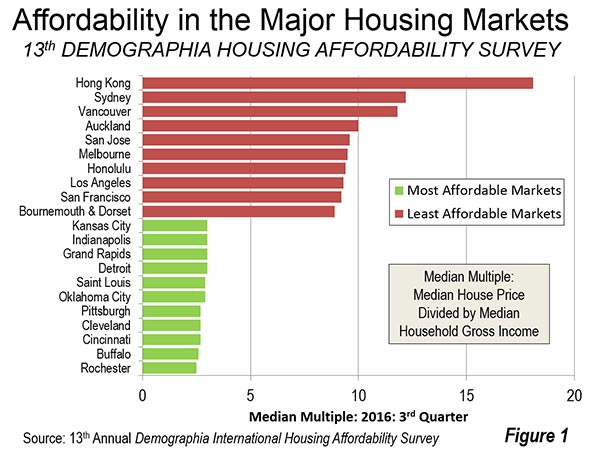
    This year, the least affordable major housing markets Hong Kong (with an 18.1 median multiple — the median house price divided by the median household income). Sydney is second least affordable, at 12.2 and Vancouver is 11.8 is third, suffering a huge deterioration from last year’s 10.8. Auckland is fourth, at 10.0, San Jose at 9.6, Honolulu at 9.4, Los Angeles at 9.3 and San Francisco at 9.2 (Figure 1).

    Overall, there are 29 severely unaffordable major housing markets, including all in Australia (5), New Zealand (1) and China (1). There are 13 severely unaffordable major markets in the United States, out of 54. Seven of the United Kingdom’s 21 major markets are severely unaffordable and two in Canada. Toronto, Canada’s second most costly market experienced a deterioration in housing affordability equal to that of Vancouver, rising to a median multiple of 7.7 from 6.7.

    There are 11 affordable major housing markets in 2016, all in the United States. Rochester is the most affordable, with a Median Multiple of 2.5, followed by Buffalo (2.6), Cincinnati (2.7), Cleveland (2.7), Pittsburgh (2.7), Oklahoma City (2.9), St. Louis (2.9) and four at 3.0, Detroit, Grand Rapids, Indianapolis and Kansas City.

    Among the megacities, Osaka-Kobe-Kyoto is the most affordable, with a median multiple of 3.4, while Tokyo, the world’s largest urban area, has a seriously unaffordable median multiple of 4.7.

     “Best Cities” for Middle-Income Households

    Every year, “best cities” and “most livable cities” lists are produced by various organizations. Aimed at the high end of the housing market, these surveys evaluate housing affordability. Yet, the media often mischaracterizes the findings as relevant to the majority of households.

    In fact, a city cannot be livable, nor can it be a “best city” to middle-income households that cannot afford to live there. Households need adequate housing.

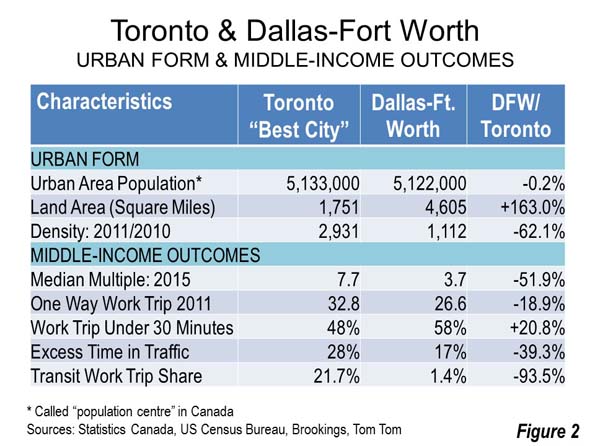
    The “best cities” for housing affordability are often better on middle-income outcomes that the high-end best cities that attract media attention for their luxury lifestyles. This is illustrated by a comparison between Dallas-Fort Worth, where housing affordability is far better and Toronto, which was rated as the “best city” by The Economist. In addition to better housing affordability, traffic congestion is better. Dallas-Fort Worth has the least traffic congestion of any city over 5,000,000 in the world. This is despite the fact that Toronto employs the most favored urban strategies, which Dallas-Fort Worth does not (such as densification and discouragement of auto use). This is not to dispute Toronto’s luxury rating, but it is of little use to the much larger number of middle-income households being priced out of home ownership (Figure 2).

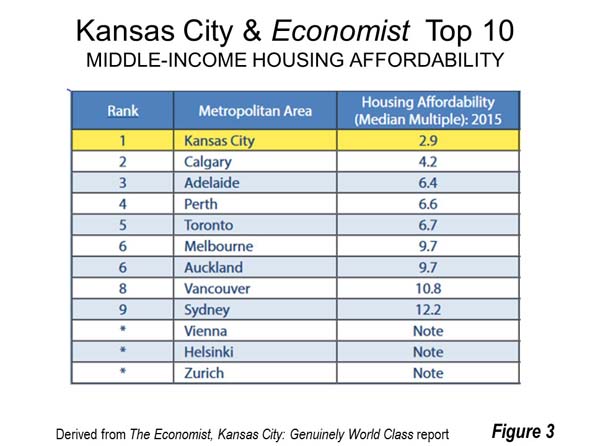
    Another comparison shows that Kansas City has substantially better housing affordability than all of The Economist’s top 10 cities. In addition, Kansas City has the least traffic congestion of any city with more than 1,000,000 population (Figure 3) in the world (tied with Richmond).

    Urban Containment and Severely Unaffordable Housing

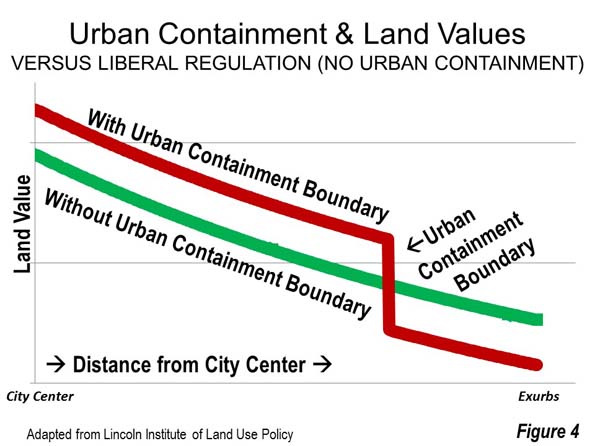
    Excessive land use regulation (housing regulation), principally urban containment policy, has been implemented in the major housing markets with severely unaffordable housing. Urban containment has been associated with much higher house prices, which is to be expected, because severe limitations on supply drive prices higher (as the experience with oil and OPEC shows). The process is illustrated in Figure 4.

    Prime Minister Bill English of New Zealand (then Deputy Prime Minister) noted in his introduction to the 9th Annual Demographia International Housing Affordability Survey that “Land has been made artificially scarce by regulation” locking up land for development. “This regulation has made land supply unresponsive to demand” and “translates to higher prices rather than more houses …”

    Excessive housing regulation has also been identified as having significantly reduced economic growth in the United States (nearly $2 trillion annually) and inequality internationally. It has made the job of central reserve banks more difficult by fueling inflation.

    Economic uncertainty is a substantial concern for households. It is important to keep housing affordable, so that households can have a better standard of living and poverty rates can be lower. This requires avoiding urban planning policies associated with artificially raising house prices, specifically the “killer app” of urban containment. Failing that, housing affordability is likely to worsen further.
    Paul Cheshire, Max Nathan and Henry Overman of the London School of Economics recently suggested that “… that the ultimate objective of urban policy is to improve outcomes for people rather than places” and that “… improving places is a means to an end, rather than an end in itself.”

    Following that policy prescription, a number of cities (such as Dallas-Fort Worth, Kansas City and others) have achieved the objective of putting people over place. For most of society, middle-income households as well as lower income households, the best cities are where governments have overseen local housing markets competently, evidenced by housing that is affordable, all else equal. In such cities, the cost of living tends to be lower, as households are able to afford a more affluent life.

    Oliver Hartwich, of the New Zealand Initiative notes in his introduction, “We should not accept extreme price levels in our housing markets. High house prices are not a sign of city’s success but a sign of failure to deliver the housing that its citizens need.”

    Wendell Cox is principal of Demographia, an international public policy and demographics firm. He is a Senior Fellow of the Center for Opportunity Urbanism (US), Senior Fellow for Housing Affordability and Municipal Policy for the Frontier Centre for Public Policy (Canada), and a member of the Board of Advisors of the Center for Demographics and Policy at Chapman University (California). He is co-author of the “Demographia International Housing Affordability Survey” and author of “Demographia World Urban Areas” and “War on the Dream: How Anti-Sprawl Policy Threatens the Quality of Life.” He was appointed to three terms on the Los Angeles County Transportation Commission, where he served with the leading city and county leadership as the only non-elected member. He served as a visiting professor at the Conservatoire National des Arts et Metiers, a national university in Paris.

    Photograph: Rochester, New York: Most Affordable Major Housing Market in 2016 by Theresa Marconi (Personal Communication) [CC BY-SA 3.0], via Wikimedia Commons

  • Doing What Actually Works

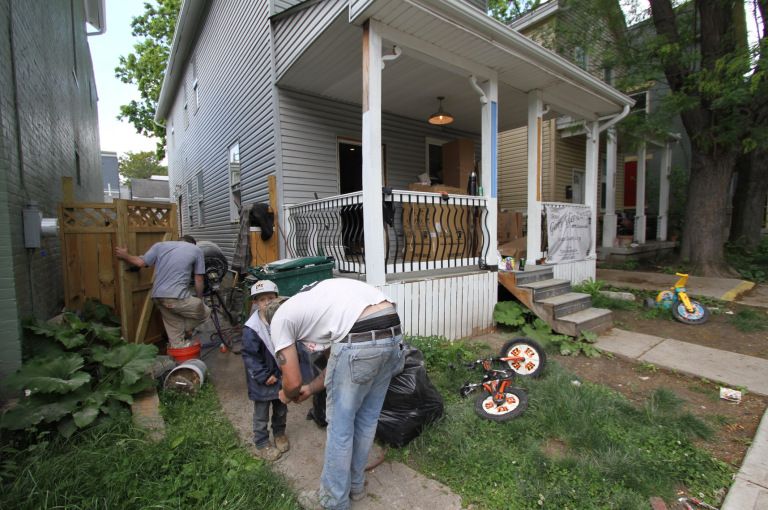
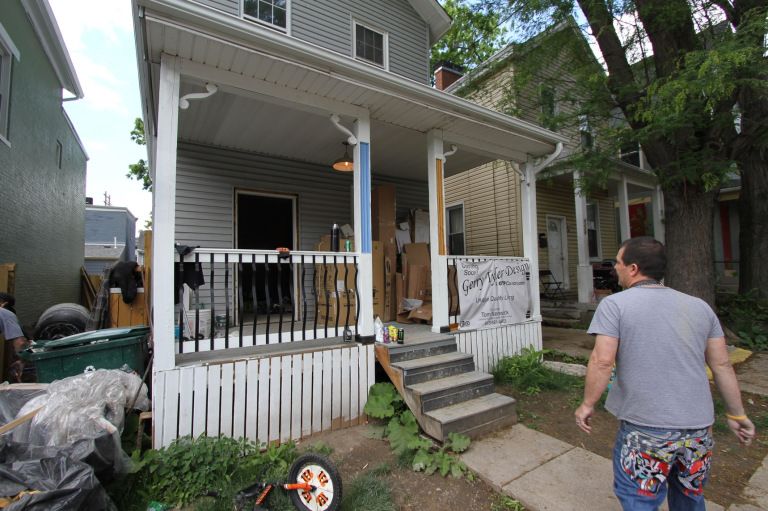
    Last year I engaged in a failed attempt to renovate and expand an old house in an 1890’s era neighborhood in Ohio. It ended badly. So I thought I’d do a follow up on what actually does work given the legal parameters and cultural context.


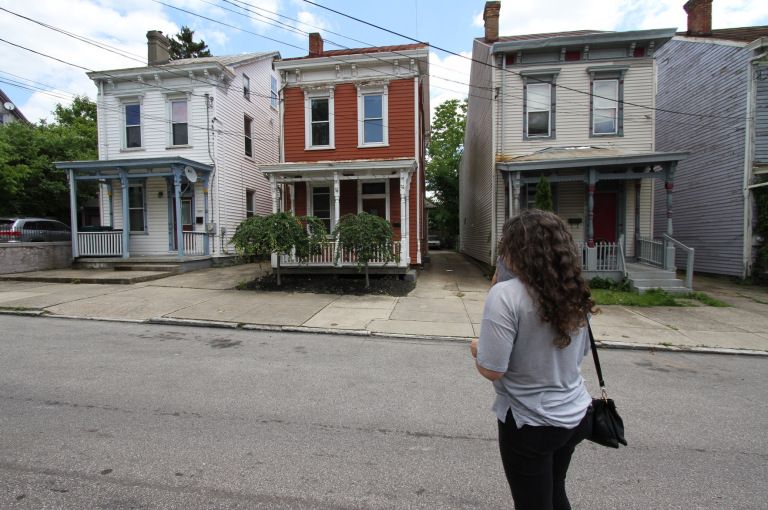
    I sold the house to a smart young local guy who bought eight similarly run down properties on the same block within a short period of time. He gathered private funds from a group of personal investors to finance the venture. Then he hired a family owned contracting company from across the river in Kentucky to renovate all the homes. He’s selling the properties as they become ready for market and distributing the profits to his investors, keeping a percentage for himself. It’s a really good economic model with a fast lucrative turn around.

    The new owner and his contractor never dreamed of changing any of these buildings in a way that would have required any kind of special permission or variances from the city authorities. That way lies ruin. This smart team of savvy professionals brought these abused and neglected husks up to respectable middle class standards quickly and efficiently in a way that only marginally involved municipal officials with plain vanilla over-the-counter permits and ho-hum inspections. Once the new kitchen cabinets and fancy appliances go in along with the new windows and flooring these homes have instant market appeal. They’ve been selling very well, particularly because the collective renovations of multiple buildings at the same time in the same concentrated area feeds a palpable sense that the neighborhood is rapidly gaining value.

    It helps that the new owner went to high school in the area. In a provincial town like Cincinnati these things really matter to the locals. And he’s selling single family homes, presumably to future owner/occupants. In contrast, I was reviled in social media as both a carpetbagging gentrifier who was driving out long time working class residents and an absentee slumlord who would dump “the wrong element” on to the neighborhood and degrade property values and the quality of life for nearby homeowners.

    The end result is that the house I paid $15,000 for will ultimate sell for six figures even though it’s still exactly the same size and shape – give or take a nice cosmetic skin job – after it’s flipped at a generous profit. So the folks who worry about gentrification will experience the same resultant condition relative to what I had in mind for the place. And there’s no guarantee that it won’t eventually be purchased by someone who will choose to rent the property rather than live in it themselves. But all that is beside the point. The regulatory environment and cultural perceptions are the defining constraints. The new owner is just a whole lot better at effectively piloting his way around those shoals. I have to respect his business acumen.

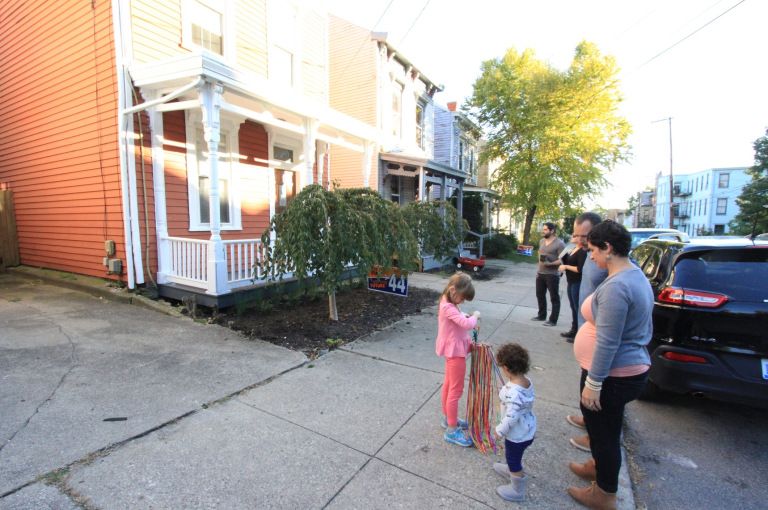
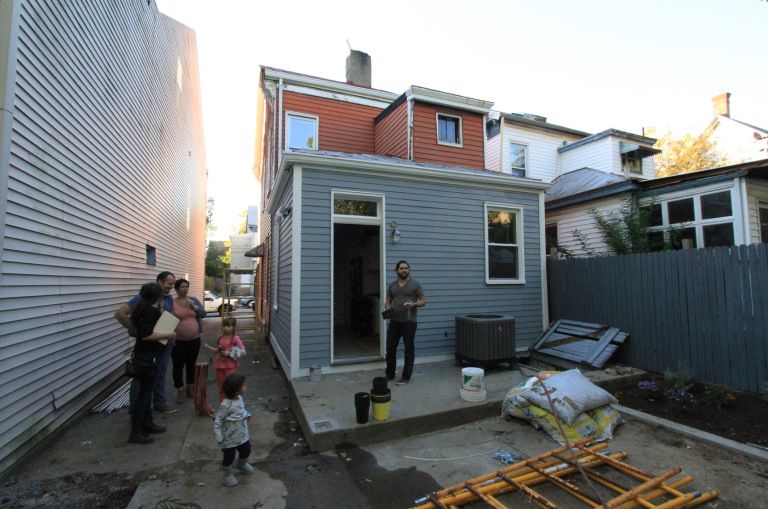
    Over the past five years I’ve followed a variety of young talented industrious people in the neighborhood. One couple has been engaged in another business model that works beautifully. They buy a distressed property at a reasonable price point. They move in and occupy the space themselves for about a year while they renovate it. Then they buy their next property, move in, and rent the one they just completed. Instead of flipping properties they’re steadily building a long term portfolio with positive cash flow and equity. They’re currently managing a dozen units and filling them with good quality people from the community.

    The crucial point is that they never buy a property that requires special permission to upgrade or needs extraordinary amounts of structural work to bring it up to code. They buy a solid shell and clean it up. Full stop. If they encounter an otherwise great building that happens to need fire sprinklers, or an elevator, or a zoning variance they steer well clear of it. Let some other poor bastard kill themselves in the meat grinder of endless bureaucracy and public outrage. (That was me…)

    To do absolutely anything else is technically possible, but hideously time consuming, difficult, and untenably expensive – and your neighbors will call you all sorts of terrible names and project all their fears on to you. For folks who believe in building great new places that mirror the charming old compact mixed use walkable neighborhoods of a century ago… Let it go. We have the dregs we inherited from previous generations and they can be shined up. But that’s it.

    John Sanphillippo lives in San Francisco and blogs about urbanism, adaptation, and resilience at granolashotgun.com. He’s a member of the Congress for New Urbanism, films videos for faircompanies.com, and is a regular contributor to Strongtowns.org. He earns his living by buying, renovating, and renting undervalued properties in places that have good long term prospects. He is a graduate of Rutgers University.

    All photos by Johnny Sanphillippo

  • Are America’s Cities Doomed to Go Bankrupt?

    I’m a fan of Strong Towns and share their thesis that the biggest sustainability problem with much of suburbia is its financial sustainability.

    recent article there about Lafayette, Louisiana has been making the rounds. That city’s public works director made some estimates of infrastructure maintenance costs and which parts of the city turned a “profit” from taxes and which were losses. Here’s their profit and loss map.

    The obvious conclusion that we are supposed to draw is that dense, compact, traditional urban development is profitable and good, but low density sprawl is a money loser and bad.

    There’s some truth in this, but taking that simplistic view can give a misleading impression. For example, let’s consider why high density central business districts tend to have such density of development and high property values per acre (and thus taxes). It’s obvious that these districts derive a great part of their value from the overall scale of the community, i.e., sprawl.

    Let’s do a quick thought experiment. Lower Manhattan below 59th St. is certainly incredible valuable property. However, if the rest of the metro area were some how chopped away leaving only this super-valuable part, how much value would that land retain? In part, Manhattan is valuable because it’s the center of a vast megacity region where tremendous amounts of human capital that lives in dispersed communities can be concentrated in a small area for commercial purposes.

    This article says that only about five cities in America don’t suffer from a fatally flawed financial model. I seem to recall that elsewhere they said NYC and SF are the only two cities that can survive in the long run financially.

    But it wasn’t that long ago that NYC nearly went bankrupt and had to be rescued. A recent study just said that its structural finances are the second worst of any major city in the country, primarily because of its gigantic liability for retiree health care. NYC looks good now because its economy has been booming. Let’s see how it does it a major downturn, particularly without a strong fiscal hand like Bloomberg at the tiller.

    San Francisco is unaffordable to all but very high income residents. It’s a de facto gated community. It may well be that pricing everybody but the rich out is a viable strategy for financial sustainability, but that’s obviously a path foreclosed to most places, even if they wanted to try it.

    We also need to consider that there’s infrastructure we have maintained. By and large our telecommunications infrastructure and electricity infrastructure are in very good shape, for example.  For telecom especially we’ve made vast investments to not only maintain, but dramatically upgrade our infrastructure. How did we manage to pull that off if it’s financially impossible to maintain and upgrade infrastructure? What lessons could we learn from that?

    In short, I agree with the general Strong Towns thesis that we need to look at the long run “total cost of ownership” of sprawl. In many cases, the math just doesn’t add up and some cities are in an infrastructure hole so deep they’re unlikely ever to get out. But they are overstating their case here.

    Aaron M. Renn is a senior fellow at the Manhattan Institute, a contributing editor of City Journal, and an economic development columnist for Governing magazine. He focuses on ways to help America’s cities thrive in an ever more complex, competitive, globalized, and diverse twenty-first century. During Renn’s 15-year career in management and technology consulting, he was a partner at Accenture and held several technology strategy roles and directed multimillion-dollar global technology implementations. He has contributed to The Guardian, Forbes.com, and numerous other publications. Renn holds a B.S. from Indiana University, where he coauthored an early social-networking platform in 1991.

    Photo "Downtown Lafayette, Louisiana" by Patriarca12 (Own work) [CC BY 3.0], via Wikimedia Commons

  • Detroit’s New Streetlights Show Service Rebuilding in Action

    I’ve been arguing that one thing struggling post-industrial cities need to do is take care of their own business, doing things like addressing legacy liabilities and rebuilding of core public services.

    Last week I write about Buffalo doing just this by completely re-writing its zoning code and creating a new land use map of the city to bring its planning ordinances up to date for the 21st century.

    Michael Kimmelman, architecture critic at the New York Times, recently wrote a feature on another good example: the replacement of Detroit’s entire street light inventory.

    Detroit had 88,000 street lights, but only about half of them worked. Many of them were ridiculously old, some dating to the early 20th century I believe. Many of these were historic and charming as a result, but alas they didn’t work and couldn’t be maintained either. What’s more, thieves kept stealing the wire out of them for the copper.

    The new system consists of 65,000 new LED lamps. As the Times puts it:

    Let’s hope that if anyone writes a history of Detroit’s rejuvenation, a chapter is devoted to the lights returning. Like picking up the trash, fixing potholes and responding to emergencies, these efforts signal that no matter where you live in Detroit, you are no longer forgotten — that government here can finally keep its basic promises.

    This is where the new lights come in. They’re spread all across town. The project cost $185 million, paid by the city and the state. The Public Lighting Authority of Detroit, backed by the mayor, received a critical assist from the Obama administration: Energy Department experts advised local officials to swap out the old, costly, broken-down sodium lamps, which vandals had been stripping bare for copper wire.

    They recommended LED technology. Investments by the Obama administration in energy-efficient lighting have reduced costs, making LEDs feasible for a city like Detroit. Three years ago, nearly half the 88,000 streetlights in the city were out of commission. The more potent LED lights allow the authority to replace those 88,000 old fixtures with 65,000 new ones, strong enough for you to read one of those glossy magazines after dark.

    Detroit said that it needed to actually deliver high quality services to its residents. Streetlighting is literally a high visibility service. And unlike some human services areas or economic development, it’s a straightforward piece of physical infrastructure that should be well within the ability of the city to actually deliver. And the new lighting authority did deliver:

    The whole thing came in under budget and on time. When was the last time anyone could say that about a major infrastructure project in Detroit? “An example of how good government should work,” as Lorna L. Thomas, chairwoman of the lighting authority, put it at the switch-flipping ceremony.

    It’s also an example of how one smart urban-design decision can have ripple effects. Some residents here grumbled about fewer lights. That said, the stronger new ones turn out to save Detroit nearly $3 million in electric bills. They use aluminum wiring, which nobody wants to strip, discouraging crime. The technology even cuts carbon emissions by more than 40,000 tons a year — equivalent to “taking 11,000 cars off of your streets,” [said Shaun Donovan].

    Part of creating a willingness to spend more money on government is recreating a sense that government is actually competent. Delivering a project on time, under budget, that will save millions in operating costs, reduce theft, and be more environmentally friendly is a step in the right direction.

    I’m not the biggest fan of LEDs and might be with the grumblers on wanting a higher density solution. But my preferences for gold level services aren’t always realistic. This appears to be a high quality, cost effective solution the city should feel good about. Other post-industrial cities should take note.

    Click over to read the rest of the Times piece.

    Image via Laura McDermott/The New York Times

    Aaron M. Renn is a senior fellow at the Manhattan Institute, a contributing editor of City Journal, and an economic development columnist for Governing magazine. He focuses on ways to help America’s cities thrive in an ever more complex, competitive, globalized, and diverse twenty-first century. During Renn’s 15-year career in management and technology consulting, he was a partner at Accenture and held several technology strategy roles and directed multimillion-dollar global technology implementations. He has contributed to The Guardian, Forbes.com, and numerous other publications. Renn holds a B.S. from Indiana University, where he coauthored an early social-networking platform in 1991.

  • Them that’s got shall have. Them that’s not shall lose.

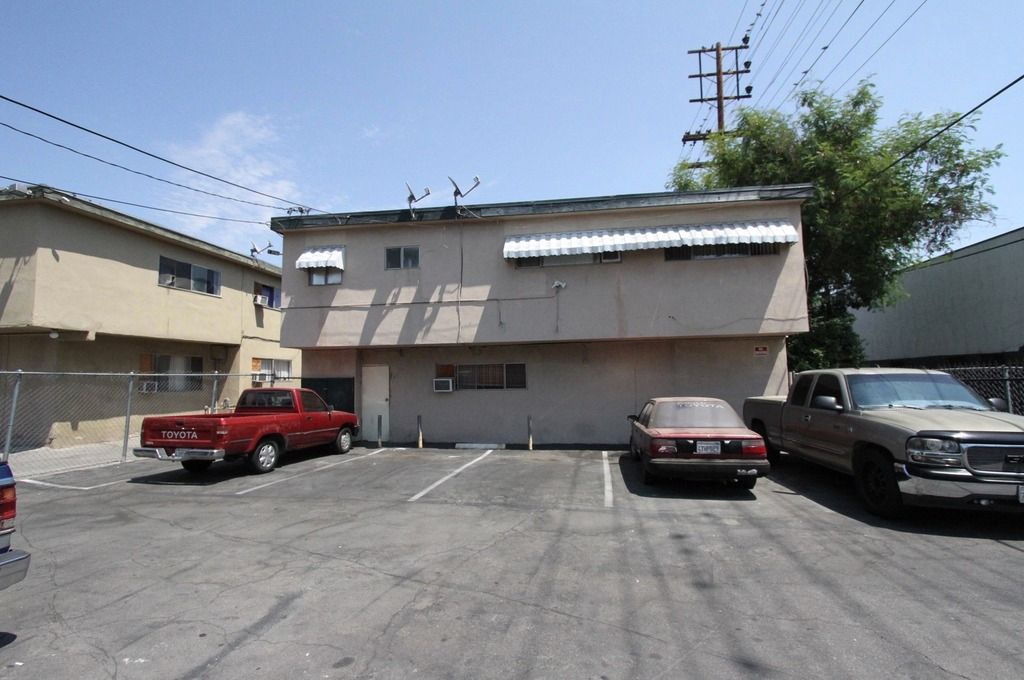
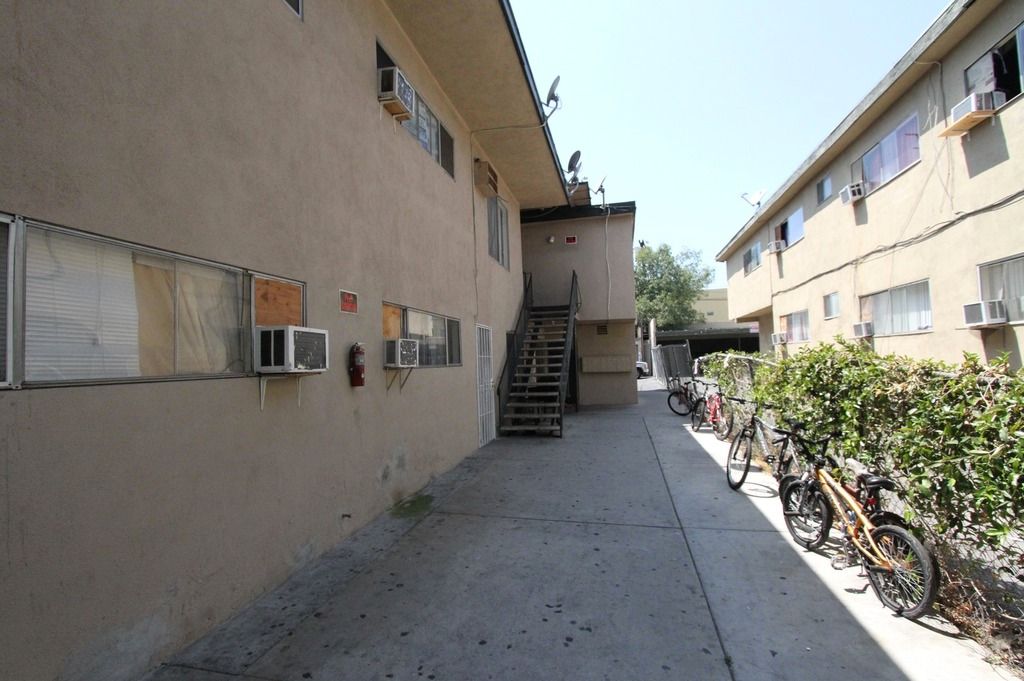
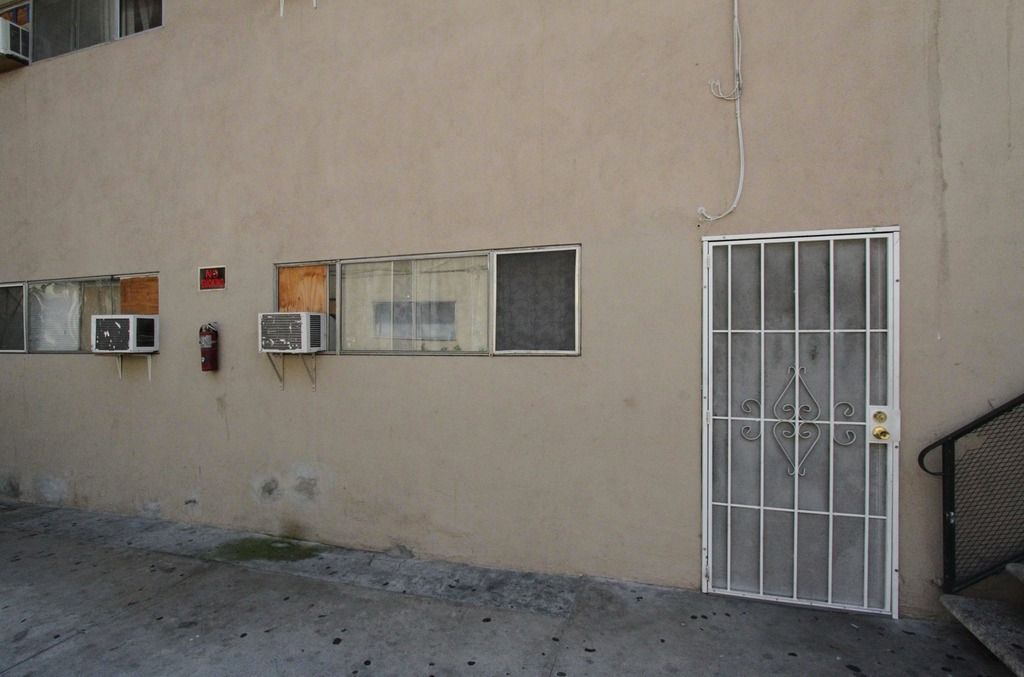
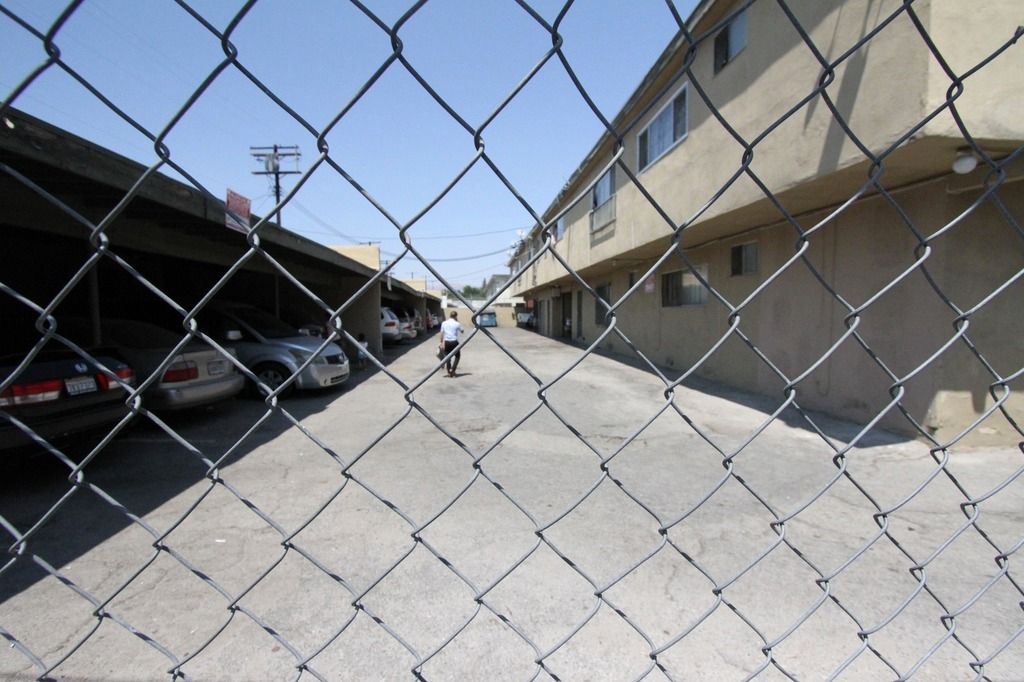
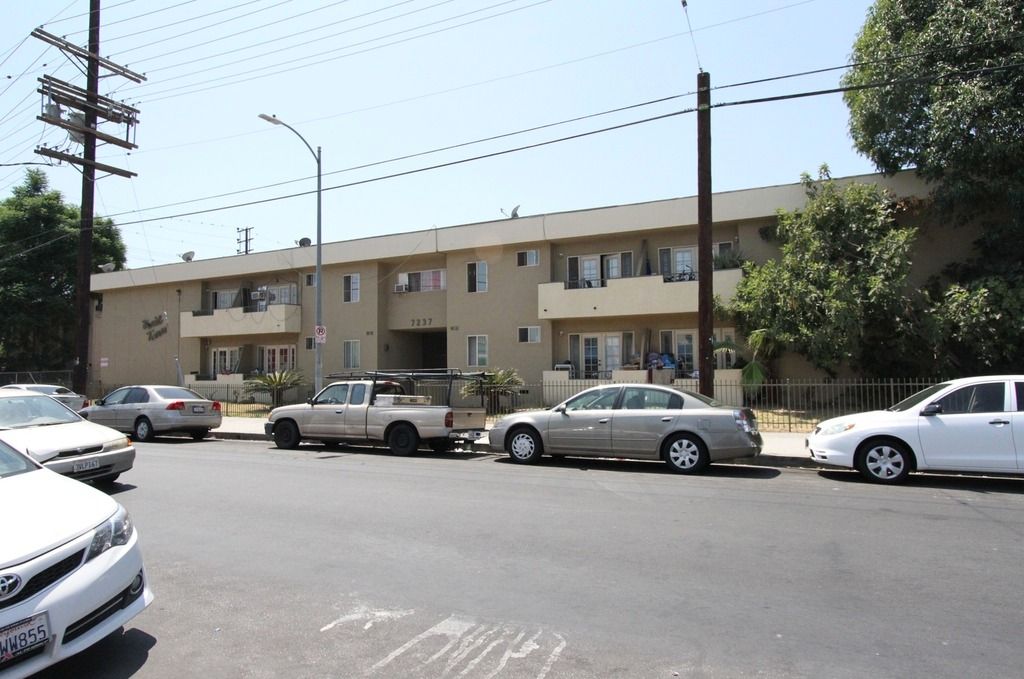
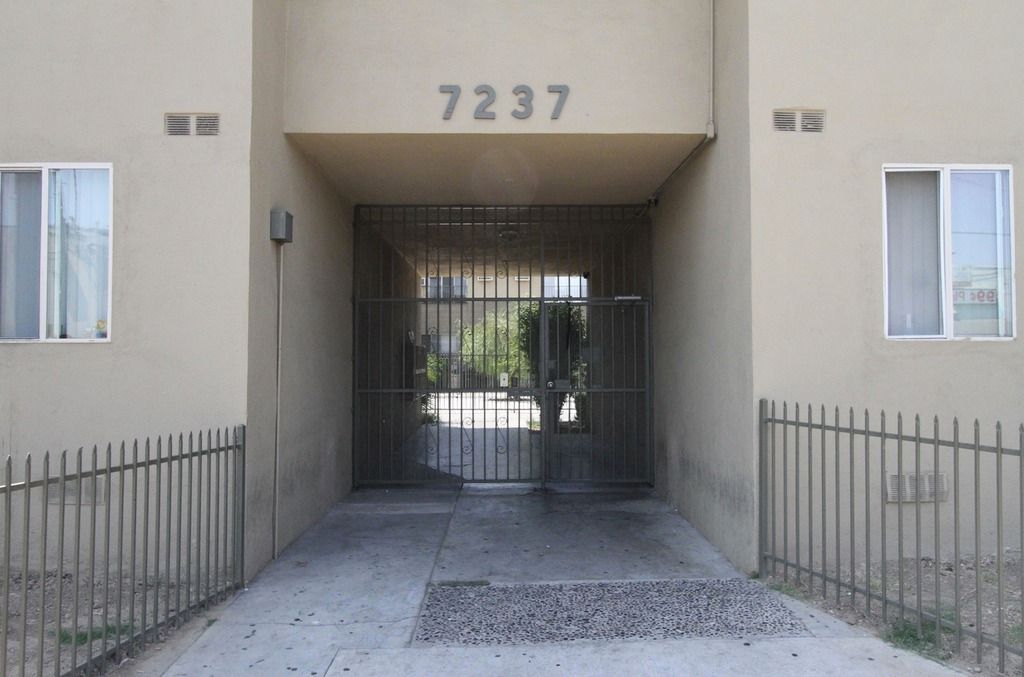
    My family lived in this building when I was a kid in the 1970’s. This was the door to our old apartment. It’s in a nondescript part of the San Fernando Valley in Los Angeles. There are a million places just like this all over the Southland. These beige stucco boxes are the workhorses of semi-affordable market rate housing in California. The place hasn’t changed in forty years other than the on-going deferred maintenance.

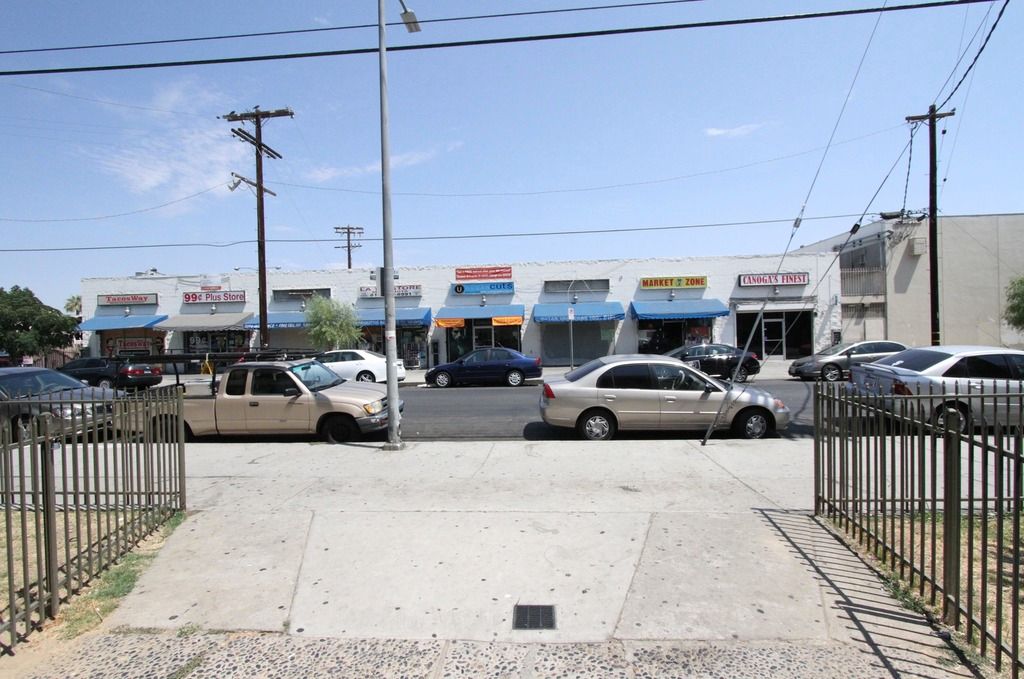
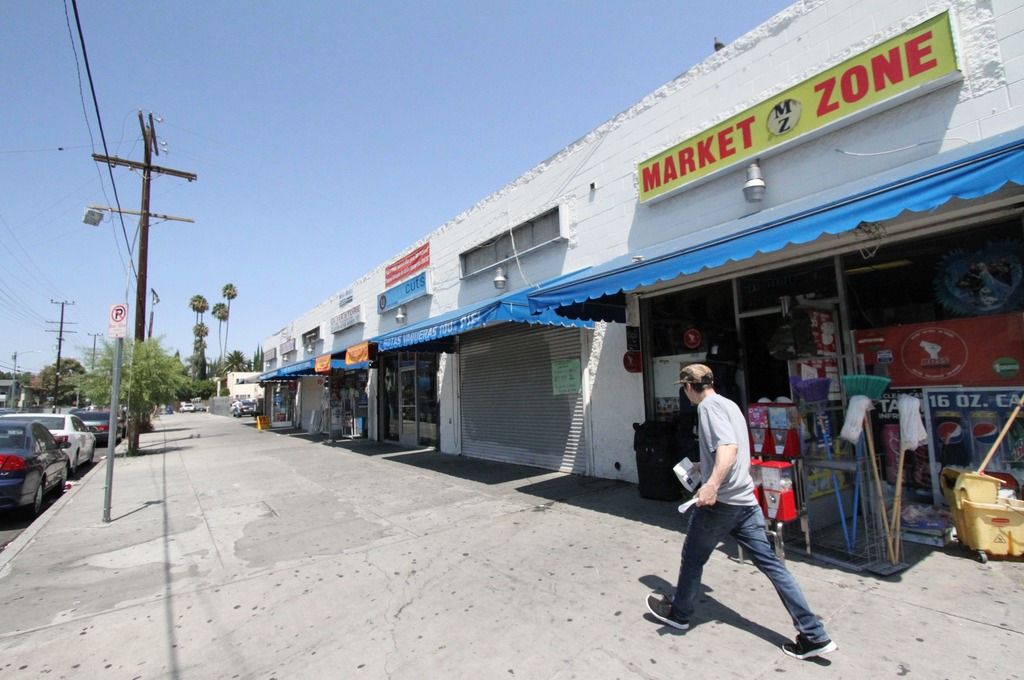
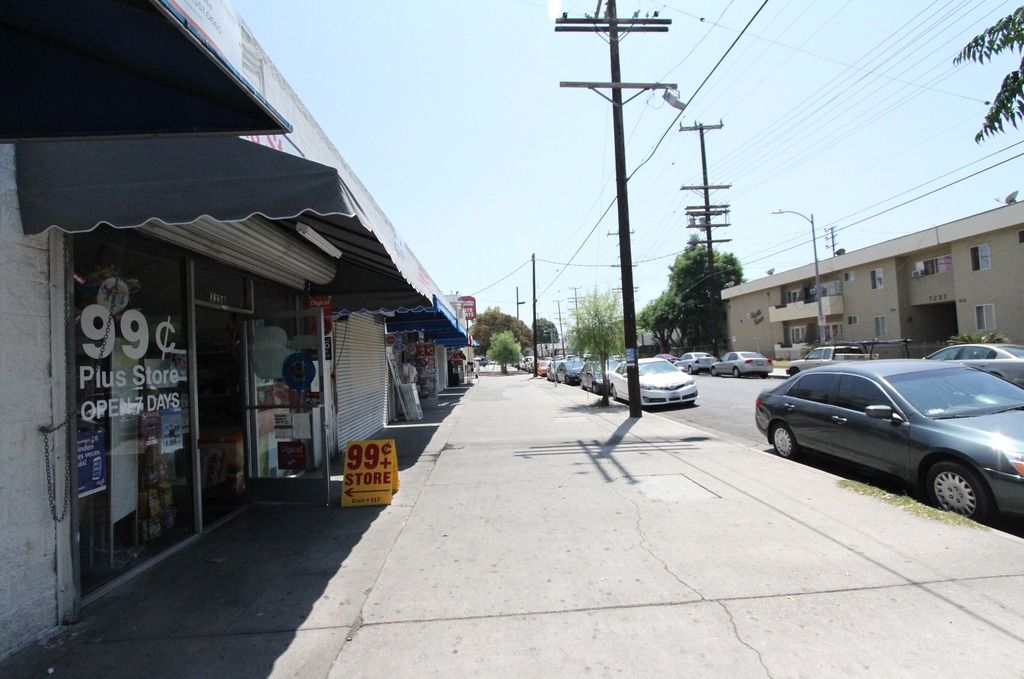
    I walked around the block to see the buildings where my friends used to live and the shops where we bought groceries and such. I can’t say I felt nostalgia. These weren’t happy times. But I was aware of the fact that the people who live here now are the same as my family was then – basically good people who are scraping by with almost no money doing the best they can with what they have. These are the minimum wage workers who do all the invisible dirty work of the city. Real incomes for these folks haven’t changed since I was a kid. But the cost of everything important from owning a home to health care to a proper education has skyrocketed.

    I want to go back to my last post about the exclusive homes in the fringe suburbs. The people who can afford to live here do so in large part so they can distance themselves from the people in my old neighborhood. Fair enough. I completely understand. I don’t want to live in my old neighborhood again either.

    But there’s that lingering problem of public infrastructure vs. the tax base of various forms of development. The city has spent almost nothing on my old block for decades. Yet those sad buildings keep spinning off revenue year after year. And there are a lot of them. Collectively they generate enough excess cash that the authorities can siphon it off to fund other activities. When it comes time to allocate resources who do you think has the most likely chance of getting what they need? The people who live in my old apartment, or the folks who live in the $700,000 homes up on the hill?

    As a society we want to believe that the poor are draining the public coffers dry. We need to blame the lower end of the working class for whatever we don’t like about the country. We want it to be true that they are undeserving compared to the better people who begrudgingly support them from a distance. Welfare. Food stamps. Section 8. But the reality – if you look at the budget and the actual numbers – is that without the poor packed tightly in their crappy apartments all working for crumbs in underfunded sections of town there could be no exclusive enclaves.

    Billie Holiday said it best. Them that’s got shall have. Them that’s not shall lose.

    John Sanphillippo lives in San Francisco and blogs about urbanism, adaptation, and resilience at granolashotgun.com. He’s a member of the Congress for New Urbanism, films videos for faircompanies.com, and is a regular contributor to Strongtowns.org. He earns his living by buying, renovating, and renting undervalued properties in places that have good long term prospects. He is a graduate of Rutgers University.

    All photos by Johnny Sanphillippo

  • World Automotive Sales Setting New Records

    The world has come a long way since 1929, when 80 percent of the world’s car registrations were in the United States, which also manufactured 90 percent of the vehicles. Now China produces the most cars and its annual sales rank top in the world. China overtook the United States in vehicle sales during the Great Recession. But it’s not like Americans are no longer buying cars; the US broke its own record last year. In 2016, sales records were also set in nations as diverse as China, the United Kingdom, Canada, Australia and Mexico.  

    China

    China has emerged as the world’s largest automotive market. In 2016, China’s sales of passenger cars, light trucks (including sport utility vehicles, or SUVs) and commercial vehicles reached 23.9 million. This is 6.5 million more cars than were sold in the United States. This gap is likely to grow, because China’s large population offers greater opportunity for growth. The United States has about eight times as many vehicles per 1,000 population as China. The US leads in total vehicles with 260 million compared to China’s 140 million, according to OICA, the international vehicle manufacturers organization (Organisation Internationale des Constructeurs d’Automobiles), 

    From virtually the beginning of motorization more than a century ago, the United States dominated world automotive production but during  the Great Recession   China assumed sales leadership. As sales dropped precipitously in the US, Chinese sales rose 47 percent in 2009.

    Sales in 2016 were aided by temporarily lower taxes on small engine vehicles, which ended on December 31. Still, analysts expect another four to five percent growth in vehicle sales in 2017.

    As in a number of other nations with rising volumes, SUVs took an increasing share of total sales figures. SUV sales were up 44 percent, eight times the increase in passenger car sales. Now, nearly three-quarters as many SUVs as passenger cars are sold in China (Note).

    Buick was one of the international pioneers in China’s automobile market, from agreements after US President Richard Nixon’s early 1970s visit. Buicks had been favored by some government officials. and were the first American cars built in China (in a joint venture with local SAIC ). China’s Premier Zhou Enlai, who served from 1949 to 1976, owned one before World War II (Photo: Premier Zhou En Lai’s Buick, Museum in Nanjing). Today, 80 percent of the world’s Buicks are sold in China.

    In recent years the Chinese  market has become more diverse. Virtually all of the international players sell in China and there are a number of local manufacturers. Sweden’s flagship brand, Volvo, now owned by Chinese interests, who now ship a “made in China”  model to the United States (the only Chinese import).

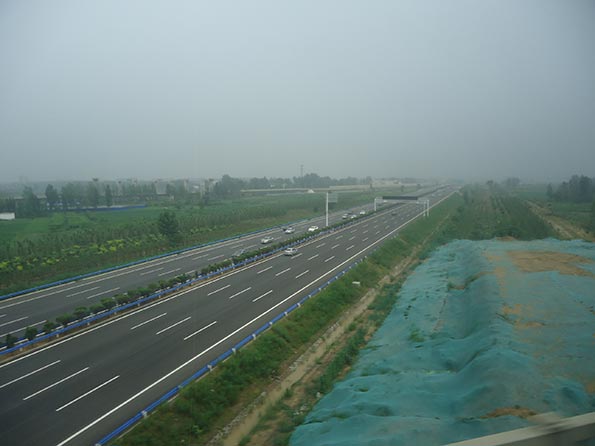
    China’s infrastructure is well prepared for its record breaking sales. China leads the world in its length of motorways (freeways or controlled access expressways), with 123,500 kilometers (76,700 miles) as of the end of 2015 (Photo: G4 Expressway between Zhengzhou, Henan and Wuhan, Hubei). This compares to the latest available US total of 104,500 (64,900 miles) in 2014.

    China’s cities are served by extensive freeway systems. In Beijing  there are five freeway ring roads and a sixth partially opened. But cars have become so popular that the high city densities have predictably created both horrific traffic. Further, despite effective emission controls, the high density of traffic contributes to the country’s severe air pollution problems . The plan for a more decentralized Beijing and environs (Jin-Jing-Ji) is aimed at least partially at reducing traffic congestion.

    Photo: Zhou En Lai’s Buick, Zhou En Lai Museum, Nanjing

    Photo: G4 Expressway between Zhengzhou, Henan and Wuhan, Hubei

    United States

    A record 17.6 million light vehicles were sold in the second largest market, the United States, which broke last year’s record of record of 17.4 million. Light duty truck sales captured nearly 60 percent of the market, with an annual increase of 7.2 percent. This included SUV’s, (and “crossovers”) with 38 percent of the market and a 7.4 percent increase. Passenger cars continued their decline by 8.1 percent, to 40 percent of the market.

    Western Europe

    The core European Union 15 nations, along with Norway and Switzerland taken together account for the third largest car market.  . There was no new record there last year but the strongest volume since 2007. Nearly 14 million light vehicles were sold, approximately six percent below the record set in 1999.

    The United Kingdom set a record, with sales of 2.6 million vehicles, up two percent from 2015. Fifteen of the seventeen nations had sales increases. Italy, Portugal and Ireland had the greatest gains, at 17.5 percent, 16.2 percent and 15.8 percent respectively. Spain also exceeded a ten percent gain (10.9 percent), while Finland gained 9.3.

    Strong gains were also posted in Sweden, Finland, Denmark and Belgium, with increases of from seven to eight percent. However, neighboring Netherlands had by far the largest drop, 14.7 percent. Large markets France (up 5.1 percent) and Germany (4.5 percent) contributed importantly to the higher Western Europe sales number. Sales were down 2 percent in Switzerland.

    A More Mobile World

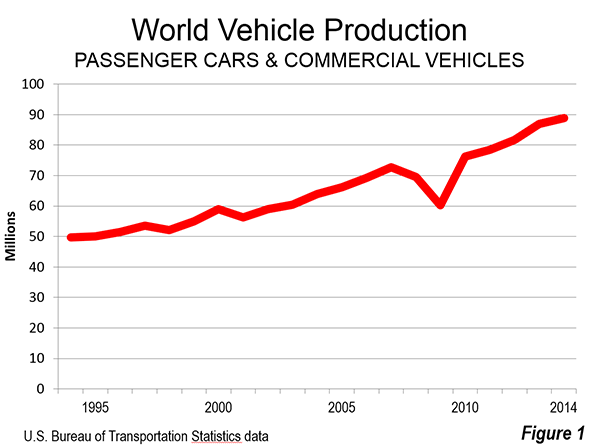
    In 2014, world vehicle sales reached 89 million (Figure 1). Between 2004 and 2014, world car sales rose at a rate of 3.3 percent annually. Even with the reverses of the Great Recession, this was a more than one-quarter increase from the 2.6 percent rate of the previous decade. If the trend of recent years continues, production will exceed 100 million by 2020.

    According to OICA, international vehicle manufacturers organization (Organisation Internationale des Constructeurs d’Automobiles), there were 1.2 billion vehicles in the world in 2014, 180 per 1,000 population.

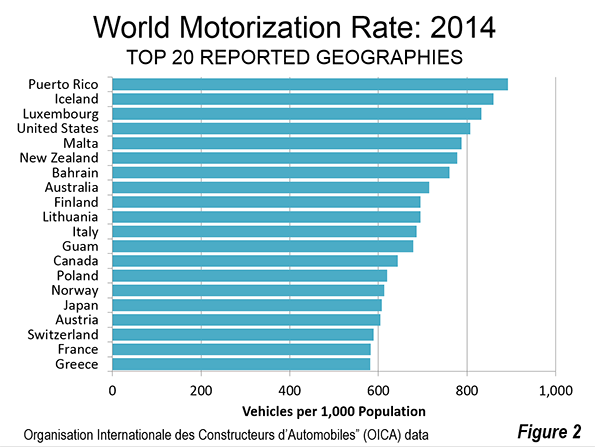
    It might be expected that the greatest motorization would have been reached in the United States, the most affluent of the larger nations. That would be partly right, but not the 50 states, rather Puerto Rico is the most intensively motorized geography in the world, with 892 vehicles per 1,000 residents, according to OICA (Puerto Rico is routinely reported separately, for cars and other data .  This is surprising, given that Puerto Rico’s median household income was only one-third of the 50 states in 2015, and less than one-half that of 50th ranked Mississippi (Figure 2).

    The United States has to settle for fourth position, following Iceland and Luxembourg. Even that may seem high, especially in view of data in The Economist’s The World in Figures, which says that the US  ranks 36th in cars per 1,000 population. But in the United States, cars aren’t even half the story. In the US, peak sales of traditional passenger cars  was reached in 1974 and sales have dropped nearly 40 percent. Consumers have been buying SUVs and pickups instead. Motorization is measured by personal vehicles, not cars. According to OICA, in 2014 86 percent of Western European vehicles were cars, compared to 47 percent in the United States, In fact, in 2016, the top three selling vehicles in the United States were pickups, led by the Ford F Series, which is also the top seller in Canada (photo: Ford F-150 Pickup), where nearly two-thirds of 2016 sales were pickups and SUVs.

    Photo: Ford F-150 (2017 model)

    World motorization continues to grow strongly. The cars are cleaner , safer and will continue to get more environmentally friendly. The mobility they have facilitated has made an important contribution to the continuing improvements in the quality of life and will continue to do so, despite efforts of governments and planners to discourage their use.

    Note: Vehicle types may not be standardized in national reporting and thus caution is required in interpreting this data.

    Wendell Cox is principal of Demographia, an international public policy and demographics firm. He is a Senior Fellow of the Center for Opportunity Urbanism (US), Senior Fellow for Housing Affordability and Municipal Policy for the Frontier Centre for Public Policy (Canada), and a member of the Board of Advisors of the Center for Demographics and Policy at Chapman University (California). He is co-author of the “Demographia International Housing Affordability Survey” and author of “Demographia World Urban Areas” and “War on the Dream: How Anti-Sprawl Policy Threatens the Quality of Life.” He was appointed to three terms on the Los Angeles County Transportation Commission, where he served with the leading city and county leadership as the only non-elected member. He served as a visiting professor at the Conservatoire National des Arts et Metiers, a national university in Paris.

    Photo: Chang’an Avenue, Beijing by Australian cowboy at the English language Wikipedia [GFDL], via Wikimedia Commons

  • Globalization’s Winner-Take-All Economy

    “If you are a very talented person, you have a choice: You either go to New York or you go to Silicon Valley.”

    This statement by Peter Thiel, the PayPal founder and venture capitalist, unsurprisingly caused a stir, given that he made it in Chicago. Simon Kuper had made a similar observation in the Financial Times when he described how young Dutch up-and-comers had their sights set on London, not Amsterdam. “Many ambitious Dutch people no longer want to join the Dutch elite,” Kuper wrote. “They want to join the global elite.”

    Populist movements in Europe and the United States have fueled talk of social and economic division, of a small class of winners at the top and a far larger group of increasingly disaffected lower-skilled workers at the bottom. This attitude seems to flow through to places as well, with global city winners like London and post-industrial losers like Flint, Mich.

    Because these divides cleave along social class, educational and cultural lines, they are clear and easy to see. But there’s another — less visible — divide cutting across the seemingly monolithic group of the successful. This one separates those who are indisputably winners from those whose success is ambiguous, more qualified and more contingent. This difference is the one between the hedge fund principal, raking in wealth seemingly effortlessly, and the young adult struggling to pay urban rent despite possessing an excellent degree and professional employment. It’s the difference between New York and Cincinnati — or even Chicago.

    The same forces of globalization that  have pulled top Midwest talent into Chicago from below are also acting on the city from above, drawing its talent further up the global city hierarchy. The knowledge economy favors the college degreed over the less educated, but those with the highest and most differentiated skills are most favored, while those whose skills are second tier — less perfectly in tune with the emerging economy — are more vulnerable to competitive pressures.

    It’s easy to see that the Flints of this world have struggled. Less visible are the stresses put on second-tier cities — the Chicagos and Cincinnatis — from a system that is disproportionately giving the greatest rewards to those at the very top of the hierarchy while threatening even the seemingly successful cities with being left behind.

    Economist Richard Florida calls this phenomenon “winner-take-all urbanism.” It’s the superstar athlete or celebrity effect transposed into the urban world. Just as A-list stars earn far more than the merely famous, the top business talent and the top cities are reaping disproportionate riches over the merely prosperous.

    This divide is harder to spot because the people and places involved are often superficially similar. The people in both possess university degrees. They share similar cultural norms, aspirations and politics. The places they live in all have their farm-to-table restaurants, tech startups, artisanal coffee roasters and bicycle commuter infrastructure. As with a sports team, they all wear the same uniform. But some are all-stars while others are role players who are more easily replaced.

    When young workers or artists struggle to find an affordable apartment in a global capital, this isn’t just proof of a failure to deregulate housing development. It’s also a marketplace sending a powerful signal that their position among the winners of society is much more precarious than they might imagine. Most would agree that there are some businesses and people who shouldn’t be in New York or San Francisco. We shouldn’t expect a peanut butter spread of talent and economic activity across the country. The nature of the industries concentrated in these places produces a higher-end specialization. So there will be some economic value line below which it isn’t viable to be there.

    There’s an argument to be made that building more housing to reduce rents can draw the line lower. But that still presumes a line. When aspirational millennials — or even older people like me — can’t afford the current rent, that’s a signal that they are near or below that line. In a time in which rewards seem to be skewed to the top, that should be worrisome to them personally, not just to the poor or working classes.

    Similarly, cities that remain a notch below the top tier should be worried. Chicago’s financial crisis, population loss, violent crime spike and other problems suggest fundamental structural challenges facing the city. And if even Chicago is not fully achieving the global-city status it craves, shouldn’t other cities be worried?

    Yet the leaders of these cities, and the ambiguously successful people who live in them, have tended to identify themselves as among the winners. They haven’t really grappled with the fact that the global economy puts them at risk. It’s not just people in Flint or Youngstown, Ohio, who are being buffeted by globalization. If these people and cities ever came to view themselves as at risk, they could become a powerful voice for reforming the system to be more equitable while retaining its fundamentally open character. They are the exact potential champions for change in a system that badly needs it so that we can broaden the pool of success.

    Unfortunately, those among the ranks of the second-tier successful have instead sided with the global capitals and the global elite to defend the economic status quo, leaving the reform fight to the populists who prefer an overly closed system. They may yet discover to their chagrin that the very system they so vigorously supported will ultimately become their own undoing.

    This piece originally appeared in Governing Magazine.

    Aaron M. Renn is a senior fellow at the Manhattan Institute, a contributing editor of City Journal, and an economic development columnist for Governing magazine. He focuses on ways to help America’s cities thrive in an ever more complex, competitive, globalized, and diverse twenty-first century. During Renn’s 15-year career in management and technology consulting, he was a partner at Accenture and held several technology strategy roles and directed multimillion-dollar global technology implementations. He has contributed to The Guardian, Forbes.com, and numerous other publications. Renn holds a B.S. from Indiana University, where he coauthored an early social-networking platform in 1991.

    Photo: Kevin D. Hartnell (Own work) [CC BY-SA 3.0 or GFDL], via Wikimedia Commons

  • The Demographics of Poverty in Santa Clara County

    Tucked away in the bottom corner of the San Francisco Bay, tech royalty make themselves at home in their silicon castles. Santa Clara County is the wealthiest county in California, and 14th in the nation, boasting an average median household income of $96,310. However, where there are kings, there must be subjects. Despite its affluence, Santa Clara remains one of the most unequal counties in the United States. The combined forces of enormous wage gaps, exorbitant housing prices, and shifts in the regional economy have compounded over recent years, resulting in a shrunken middle class and increased poverty levels.

    Santa Clara County contains just over 1.9 million people and is home to much of the Silicon Valley. The relatively recent explosion of growth in the high-wage technology industry has generated a new rank of upper-middle class to fabulously wealthy individuals. But, even in the economic miracle that is Silicon Valley, poverty remains a prevalent force and affects a disturbing number of lives in the region. Although, according to the Census Bureau, only 8.3% of Santa Clara County residents live at or below the Federal Poverty Level (FPL), this number drastically underestimates the true number of people that are experiencing financial hardship in the region. In a study conducted by United Way, it was found that the real cost budget for a family of four residing in Santa Clara County stands at $65,380 per year, or 281% of the FPL.

    High regional housing costs account for much of the discrepancy in poverty levels between the county and the nation. A study out of the California Budget and Policy Center calculated that the poverty rate in Santa Clara County soars to 18% when factoring in housing costs, meaning nearly one in five residents live in poverty.

    It is for this reason that the region has one of the largest homelessness populations in the nation, with around 7,600 homeless individuals residing within Santa Clara County. When local homeless individuals were surveyed regarding obstacles to securing housing, the top four answers were as follows: No job/income, no money for moving costs, bad credit, and lack of available housing. Of course, poverty is cyclical, and these answers affect one another to some extent: a lack of income means no money for moving costs, which may lead to bad credit and which could then lead to an inability to secure permanent housing. Around 56% of survey respondents also reported being homeless for over a year, up significantly from 47% just two years prior, indicating that the homeless in Santa Clara County continue to face significant obstacles to securing housing. High homelessness rates are symptoms of a greater trend: the fact that gross income inequalities in Santa Clara County have created a society of have’s and have not’s, separated by an income gap that shows no sign of closing.

    Housing Trends

    The most significant impediment to financial security in the county is the volatile housing market and the exorbitant cost of owning a home. According to a report conducted by the U.S. Department of Housing and Urban Development on the South Bay Area, the average price of houses sold in 2014 stood at $788,500 for an existing home and $828,000 for a new home. This is over four times the median value of homes nationally, which stands at $178,600. The disparity is even more prevalent in the areas of the region closer to large technology firms, such as Palo Alto, where the average home costs $2.43 million. San Jose also has the 7th largest share of renters in major U.S. cities, 56 percent, a rate that only continues to increase as housing costs do the same. The median gross rent in Santa Clara County stands at $1705 per month, nearly double the national average.

    Current trends indicate that the increasing housing costs show no signs of reversing, which does not bode well for residents that are already struggling financially. A study from the California Budget and Policy Center found that, in 2013, over 50% of households classified as low-income were at risk of moving out of the area due to increased housing costs.
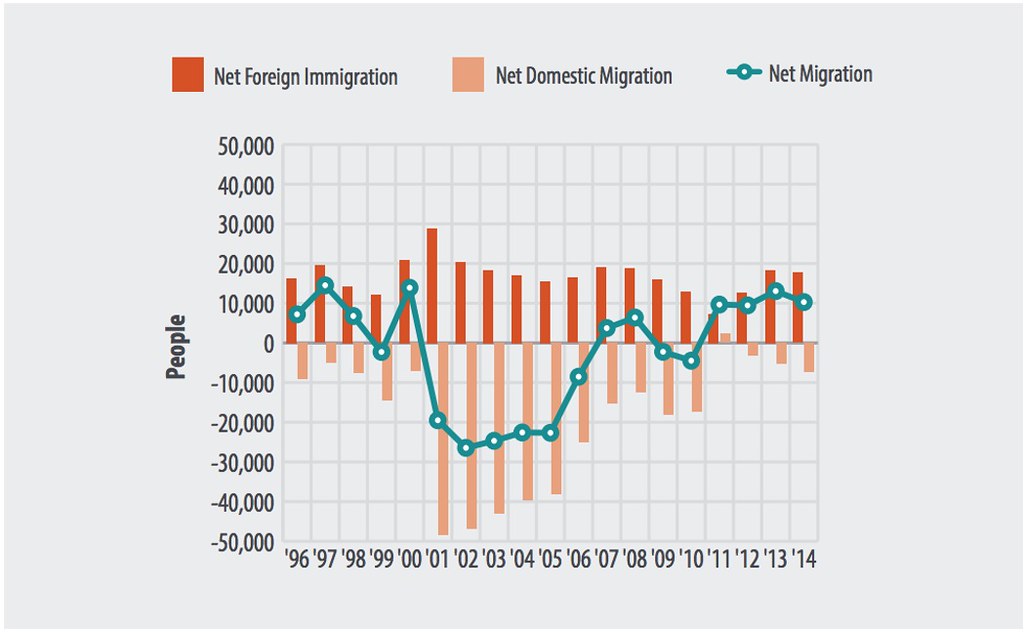
    Net domestic migration in Santa Clara County is overwhelmingly negative.

    The result of high housing costs? Net domestic migration has been negative every year since 1996, except 2011, and appears to be dipping further, despite the fact that the population of Silicon Valley has grown continually in recent years. This can be attributed to a combination of natural births and massive foreign immigration rather than domestic migration. Therefore, negative net domestic migration suggests that a large portion of residents are leaving the area due to a lack of an income that cannot keep up with rising costs of living.

    However, for those who stay, high housing prices lead to a plethora of other disadvantages, creating a cycle of poverty that decreases social mobility in the region. A search for cheaper housing has led many to seek living arrangements in the southern and eastern parts of San Jose, where housing is cheaper, but comes at the cost of higher crime rates and worse school districts. Additionally, job growth has been concentrated in the western parts of the county. The search for cheap housing has led to an increase in overcrowded households, as residents move in with one another in order to share the costs of rent. The Santa Clara County Department of Public Health concluded in 2014 that 14% of residents were living in overcrowded households, with 5% living in severely overcrowded households. Latinos in the region are disproportionately affected, with 31% living in overcrowded households and 12% living in severely overcrowded households.

    The combination of these factors limits social mobility by undermining each individual’s access to economic opportunity. Moving into an overcrowded house in an underfunded public school district limits potential to obtain a quality education that may provide access to high-skilled, high-wage jobs.

    The Income Gap

    Inequality in the region is perpetuated by a growing income gap, and the ardent hunt for afford-able housing may be explained by the gross income disparities among residents. As housing prices have skyrocketed over recent years, incomes simply have not kept up with costs of living, particularly at the lower end of the spectrum.
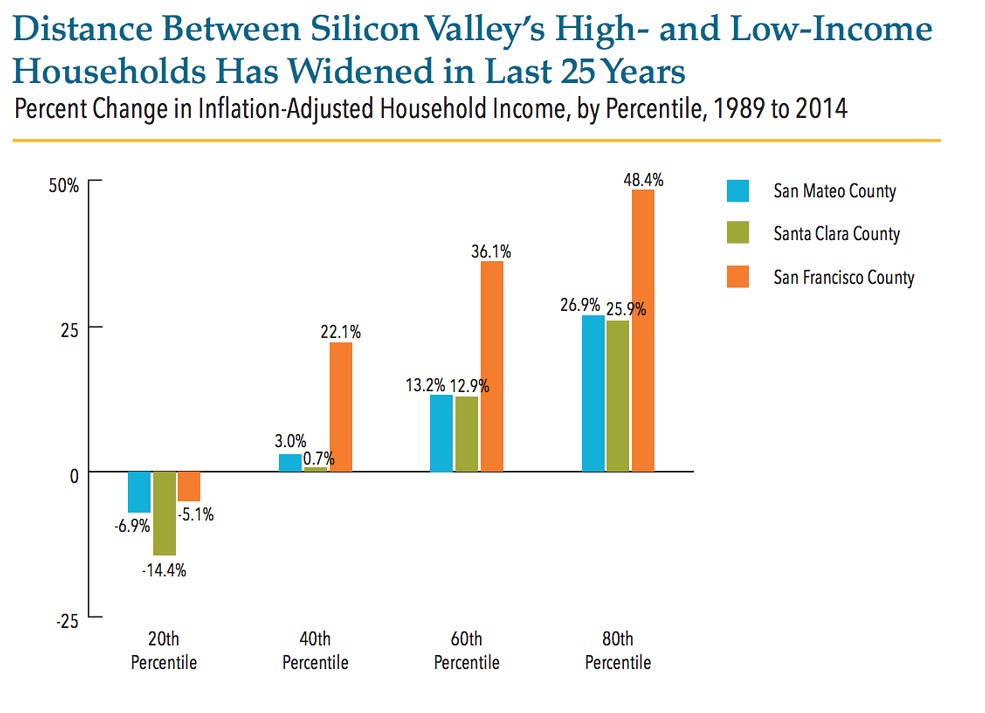
    Santa Clara County’s income gap has widened considerably since 1989.

    Economic gains in the region have flowed overwhelmingly to the top quintile of income-earners, who have seen their wages increase by over 25% over the past 25 years. In a shocking comparison, income levels have declined for low-income households since 1989, a clear sign of a widening wealth gap in the region. Those at the bottom also find themselves working harder for less money: the average income for those living above the previously described real cost of living in Santa Clara County stands around $27 per hour, whereas the average income for those living below the real cost of living comes in at a bit over $10, around the current California minimum wage.

    To make matters worse, government efforts have proven relatively ineffective in remedying regional inequality. A recent study has shown that even when a family is a recipient of CalWORKS and CalFresh benefits, government-funded initiatives to provide benefits to needy families, an average family of four is still tens of thousands of dollars away from comfortably subsisting in Santa Clara County. Additionally, government benefits are not reaching populations that would benefit from them the most: a United Way study found that less than 19% of single mothers and less than 5% of immigrants statewide subscribe to these programs.

    Shifts in the Regional Economy

    Efforts to increase wages of low-paying jobs may alleviate financial hardship to a certain degree, but these actions fail to consider an underlying trend in Santa Clara County: low-skilled, blue collar jobs are disappearing. Wage increases in industries heavily populated by lower income earners matter little if those jobs do not exist. Historically, Santa Clara County was a manufacturing hub, famous for producing semi-conductors along with other components vital to the burgeoning technology industry. However, recent years have seen manufacturing jobs leaving the area in droves, either to other parts of the country or abroad.

    Sector growth in the region, percentage change, 2000-2014.

    The chart above shows that job growth in Santa Clara County has only been observed in a few sectors of the local economy. Despite this growth, total nonfarm payroll employment has decreased in the past 15 years, and the impact of this job loss may be observed across the economy. The most significant reductions of the workforce have occurred in sectors referred to as “blue-collar,” typically middle income jobs that may or may not require higher education. These types of jobs cover many of those within the goods-producing sectors, comprised here of the mining, logging, construction, and manufacturing industries.

    The rapid decline of “blue collar” jobs in the region may be attributed at least in part to the explosive growth of Silicon Valley. As the region attracts more skilled workers, increases the region’s desirability, and pays workers competitive wages capable of keeping up with costs of living, those very expenses will continue to drive upwards. As a result, workers across all economic sectors have demanded higher wages, a sentiment exemplified in the recent minimum wage hikes. Unfortunately, this drives lower-paying blue-collar industries to relocate, often out of the state, so they can lower their input costs, creating a polarized society of high-wage earners in the information sector along with low-wage earners in a service sector dedicated to the needs of the technocrats.

    Santa Clara County is a place of immense, but heavily-concentrated wealth. Multi-billion-dollar technology campuses dot the landscape like behemoths, yet the wealth and progress that accompanied the growth of the Silicon Valley has also left a significant proportion of its population behind. The environment is increasingly hostile to social mobility, the manufacturing sector has skipped town, and government efforts to mitigate the effects of these changes have proven relatively unsuccessful. Trends have shown that the region’s poor are increasingly confined to specific industries and geographies, and their freedoms restricted as they are subject to a degree of economic violence that shows no immediate signs of relenting. Significant shifts in local policy are needed to reverse the current social and economic trends and ameliorate the situation in an increasingly polarized Santa Clara County.

    Alex Thomas is currently a sophomore at Chapman University pursuing a major in Political Science. He is originally from San Jose, California, and has worked extensively within the city and surrounding areas. He hopes to further his interest in local politics through continued study and community involvement in the upcoming years.

    Photo: Coolcaesar [CC BY-SA 3.0], via Wikimedia Commons
  • Our Most Popular Stories of 2016

    2016 is gone, 2017 is here. Here’s a look back at the most popular stories at New Geography in 2016. Happy New Year, and thanks for reading.

    12. This is Why You Can’t Afford a House. Back in February, Joel Kotkin made the case that housing costs are a huge burden on America’s middle class and argued for more discussion on the topic at the national level. This piece was also published by The Daily Beast.

    11. Super Bowl: Super Subsidy Sunday. Just in time for last year’s Super Bowl, Matthew Stevenson outlined the massive public subsides enjoyed by pro sports franchises.

    10. The New War Between States. In this Real Clear Politics Essay, Joel points out the variation in economic DNA across different regions of the country and the need to adjust policy to leverage those differences as a national competitive advantage.
    9. What Happens When Wal-Mart Dumps You. Joel breaks down the future of the retail industry and its potential impacts on communities of all types: urban areas, suburbs, and small towns. This piece was also published by The Daily Beast.

    8. Farewell Grand Old Party. From his weekly Orange County Register column, Joel notes how the rise of Trump signals a turning point for the Republican Party.

    7. America’s Next Boom Towns: Regions to Watch in 2016. One year ago Joel and I created an index to identify some of the best-performing large U.S. metropolitan areas. This piece appeared in Forbes.

    6. Best Cities for Jobs 2016. Our annual Best Cities for Jobs index ranks all of America’s metropolitan areas according to short- and longer-term job growth performance. Follow the link to see the various topical rankings.

    5. New York’s Incredible Subway. In this piece Wendell Cox describes New York City’s subway system, unlike any other transit system in the United States.

    4. Best and Worst: 2015 International Housing Affordability Survey. Wendell’s Annual Demographia International Housing Affordability Survey is a critical comprehensive reference on worldwide housing affordability by urban area. Here’s the highlights of the report.

    3. Today’s Tech Oligarch’s are Worse than the Robber Barons. Joel argues that the political influence of high-tech business leaders are worse than the robber barons of the last century because today’s tech firms offer little to improve the lives of the middle class.

    2. An Open Letter to the Democratic National Committee from a Rural Democrat. Former North Dakota State Senator Tyler Axness offers his advice to Democratic Party leaders from the perspective of rural America.

    1. Largest Cities in the World: 2016. Wendell’s annual World Urban Areas report is perhaps the most comprehensive resource for worldwide urban population data. This April 2016 article summarizes the report.

    Mark Schill is a community and corporate strategy consultant with Praxis Strategy Group and Managing Editor of New Geography.