Category: Urban Issues

  • Are Farms the Suburban Future?

    More than fifty years ago, Frances Montgomery and Philip O’Bryan Williams bought a 500-acre stretch of prairie north of Dallas as a horse farm. It was designed to be a place for their children to run wild on weekends, ride horses, a family escape light years from the Frette-linen, Viking-kitchen and fully staffed second and third home palaces enjoyed by today’s junior high net worth set. The main residence was a recycled World War II barracks; the one bathroom was the only luxury.

    In those days Dallas was an upstart city just taking control of the Trinity River that flooded neighborhoods to the south, one reason why everyone moved north. As the post World War II building boom spread the population further north, the Montgomery family knew it would only be a matter of time before the family farm was surrounded by development, if not swallowed.

    Yet now what is left of places like Montgomery Farms could become a major testing ground in the future of suburban development. In the urban development world, there are two camps, says Williams’ son, Philip Jr., a former CPA who spends his days nurturing the changes that have come to his family’s land. If development had to come, Williams sought intellectual control and the lightest load. One group wants to re-populate the cities with higher density condos and more urban living – the Congress of New Urbanism (CNU). The other camp looks towards the Conservation Subdivision Development (CSD), integrating farming and urbanism to add vitality to a community. A recent New Urban News story quoted Miami architect Andres Duany as saying that agriculture is looming large for new urbanism:

    “Agriculture,” he said, “is the new golf.”

    In fact, studies show that property viewing or abutting agricultural lands is as valuable as those overlooking the golf-course, maybe more so if residents can grow fresh, pesticide-free foods and reduce long-distance trucking. (Fresh cow’s milk, children feeding baby goats not on field trips but recess.) Organic farms, says Missouri developer Greg Whittaker, could also be a revenue-generating business with sales of bedding plants, pumpkins and Christmas trees. Unless, of course, you live in Connecticut, where state Representative Rosa DeLauro wants to make growing your own food against the law and punishable by a fine of up to $1,000,000.

    At Montgomery Farm, CNU and CSD have met in the middle, says Williams, blending agriculture with sub urbanism – with an added artistic touch.

    As Philip, his sister, and the Montgomery farm team were masterminding their agricultural suburban development, they laid out firm ground rules. Art and conservation would trump development profits. Builders would not erect cookie cutter, “they-all-look-alike” homes or McMansions. The city was to put a road through the farm from Highway 75, slicing one of the more heavily wooded cross-sections of the acreage. A road is not a road in the Williams’ world. Seeking a highway that would be as unique as the lifestyle they were offering, the team gathered a group of Connemara Conservancy artists who, along with civil engineers, sponsored a road design contest in 1996.

    “It was a road with no intersections, which meant no idling cars and pollution,” says Williams. Signage was kept to a minimum and international Dark Sky requirements reduced light pollution. This was a farm, where you wanted to find stars at night, not spotlights. Berms were added along the side to mask the homes and muffle noise, and the street was curved, not a straight-arrow shot with stoplights. The City of Allen provided a variance and footed thirty percent of the cost for Bethany Road.

    What’s wrong with suburbia, asks Williams? Driving. Look at the new Honda Minivans: every seat has a TV, 3 plugs for a microwave, more than one giant cup-holder and even eating trays. It’s as if automakers were trying to put a kitchen and laundry room in the car – why not get a Winnebago? Montgomery Farm was designed for walking and biking: the 52 acre mixed-use Watters Creek development – a creek really runs through it – is within walking distance of the home developments. Kids can walk to school, and everyone can walk to the subway station that can whisk them to the heart of downtown Dallas.

    Further up Highway 75, the Southern Land Company is building a development some Texans might consider sac-religious. Southern aims to bypass 25 years of traditional suburbia and build the way communities were designed and built one hundred years ago: porch and street-centered neighborhood, not just sprawl. Streets are old-fashioned boulevards lined with huge trees sporting medians and open spaces.

    About the time developers were drooling to slice and dice Montgomery Farm’s Allen terrain, Tim Downey, founder and CEO of Southern, had a vision in Chattanooga, Tennessee. In 1988 he saw that few developers were looking into the future and considering lifestyle and design components, the way residents might be faring ten years after the developers finished their job. Entire neighborhoods were cropping up without conscious design, architectural or horticultural input. Production building was everywhere, it seemed, a mass of rooflines that all looked the same.

    “If we are going to design and build neighborhoods, let’s look at what they did 100 years ago,” says Jim Cheney, Vice President of Communications, Southern Land Company. “Not what they did 25 years ago.”

    In 1996, Southern flew its architecture department from Franklin, Tennessee to one of Dallas’s old, historic neighborhoods with cameras and notebooks, challenged them to find the most charming and enduring architectural styles and re-create them for Tucker Hill, an 800-acre master-planned community about 20 miles north of those homes. The architects were told to design the way their grandparents might have lived, not re-create McMansions.

    They banned repeated elevations and offered expensive landscape packages with each home. And if builders didn’t want to spend $10,000 on trees, they could build elsewhere. It was almost a foreign process to both builders and buyers. Southern had developed three Tennessee communities before Westhaven, outside Nashville, and the Texas property called Tucker Hill.

    “People just have this mindset,” says Cheney. “6000 square feet, large back-yards so I can hide – not be a part of the neighborhood.”

    But if half the Nashville population thought Downey was insane for Westhaven, Tucker Hill was an even gutsier move to pull off in ranch-mentality Texas. Southern puts a tremendous emphasis on the front of the home and its relation to the street. No front-loading garages; backyards are small and made up for by numerous parks and water features designed to get people out and together – think Hank Hill shooting the breeze with his buddies by the lake, not over the barbecue.

    The concept is similar to the Park Cities, home of Southern Methodist University and one of the most solid communities in the country. Property values in Highland Park and University Park have held strong – even risen – through repeated recessions, thanks in part to the community’s strong school system, low crime, walkability, and perception as a family community with numerous parks and fountains.

    For those who find the lots too small, the houses too congested, Southern’s projects may not be a good fit. But for those who truly want to commune, it’s home. In Nashville, the Westhaven community was barely a year old but 700 people turned out for a block party. The diverse age mix ranges from young families to empty-nest baby boomers to retirees who want to live near their children, but not under the same roof.

    Retirees in the suburbs? Urbanites may cringe, but many Baby Boomers grew up in the suburbs and, when given a choice, do not want to live in the gritty city, says Cheney. Now they can enjoy the ‘burbs and live green. Developers such as Phillip Williams and Tim Downey are offering innovative lifestyles that may help re-define suburban development as living light on the land.

    “America’s land is less than six percent developed,” says Philip Williams. “We are developing without regard for what we left behind, constructing 40 year life homes from trees that take 80 years to grow.”

    Almost like a financial world living on credit, and we’ve now seen where that has led us. But perhaps we can also change our suburbs, and our lives, for the better.

    Candace Evans is the Editor of DallasDirt, a Dallas-based real estate blog for D Magazine Media Partners.

  • Is Germany the Planners’ Valhalla?

    Urban planners and anti-sprawl advocates point to Germany as a wonderland of appropriate land use. It is true that Germany has been better at preserving open space between former villages; the non-stop development that seems continuous throughout most of the United States cannot be found here.

    However, this triumph of planning has also come at a cost, in terms of affordability, and has kept a large percentage of the population from being able to own their own home. Germany is expensive because of forced scarcity of land and an extremely unproductive building industry, with certain peculiarities of German culture creating additional costs.

    The reasons for the lack of productivity in the German housing industry stretch back to land holding patterns in the Middle Ages, when the southern and western provinces of Germany were divided into countless small duchies and bishoprics. These small holdings stayed in the families for generations and prevented the consolidation of plots. The large plots common in America are all but impossible to find, depriving the building industry of the economies of scale possible in most of America. This in turns negatively affects the cost of housing, pushing home prices higher than they need be.

    There are also the vested interests of those who have bought into the German Dream and do not want to see their homes lose value. The German Statistics Agency issued a report stating that the average home in Germany is worth 6.1 times the average income. According to demographia.com anything above 3.0 is expensive.

    Blame can be placed on two factors. The first is that the productivity of German builders is far lower than that of American builders. KB homes can produce a house for about $400 per square meter and the cheapest German builders charge $1,300 per square meter (both prices do not include the price of land). A recent New York Times article stated that a passive house filled with expensive high-tech gadgetry only costs about 9% more than a standard German house. No wonder, when a standard German house costs 300% more than an average American house. Not all European countries have such high building costs; the Dutch are actually able to build housing stock at American prices; the problem in the Netherlands is the enormous costs associated with clawing a country from the North Sea. Nevertheless, Dutch builders are able to more easily assemble large plots of land on the reclaimed islands.

    Choices in building materials also play a role. Germans tend to prefer heavy and expensive concrete and brick construction over wood and steel-framed houses. A lot of Germans travelling to the US invariably will express their shock at how flimsy many American houses seem. Many Germans want to have a basement as well, even though the winters are more than mild enough here to allow for simple concrete slabs. The preference for basements and solid construction have a lot to do with owning a building that will not burn down in an incendiary bomb attack and a basement for the family to hide out in should the apocalypse come again.

    The collective trauma of the twentieth century lives on in the contemporary German psyche. Germans have learned their lesson from history and many of them are genuinely ashamed of it. The threat of imminent destruction was only recently lifted: up until 1989 the allied defense plans put the first line of real resistance on the Rhine, meaning that the entire country would have probably been flattened before the Allies could stop the forward thrust of the Red Army.

    Another factor is the huge mobility tax that the German government slaps on its citizens. The German government charges a punitively high tax for each liter of gasoline sold, equal to 80% of the price paid for fuel. Germans still drive a lot: the country invented the freeway and the ease and opportunity that an automobile offers still trumps the government billions spent on public transit. The German Sueddeutsche Zeitung, (the German equivalent of the New York Times) wrote a lengthy article, stating essentially that the automobile has survived every dire threat that it has faced over the last hundred years and will probably remain the king of the road. At least, they added, until a transit approaches the convenience and flexibility offered by the car. As it is, most new construction still takes place in the outer suburbs.

    Germans love the woods. German identity since the time of Tacitus is closely linked with the woods. Herman the German was able to use the cover of the forest to wipe out the Roman legions in the Teutoburger Forest. The folklore costumes that one occasionally sees here are almost always hunter green. Many Germans do not necessarily see nature as the unscathed landscape made to order by God. The forest is not wild here; it is an almost entirely man-made affair. German forests are essentially tree farms but Germans love them. They use these forest preserves as well. They are a ritualized part of the landscape, every Sunday they fill with locals walking off their Sauerbraten.

    In Germany, the natural world is something already conquered; it is viewed as something useful, a garden that the Germans themselves are stewards to. It is not the vast pristine wilderness of America. It is more like a vast public garden. German farmers and foresters have to allow pedestrians the right to walk on their land. Open space is also public space. The positive side is that the livability in many of these communities is much higher for those who can afford it. There is always a forest or a bike path/jogging path somewhere nearby.

    Germany is still rather affordable compared to other European countries, especially those that were caught up in the real estate bubble of the last decade. France, The Netherlands, Switzerland and Ireland have all experienced housing booms that have pushed the median multiple for housing affordability well above 6 to 7 or 8 and in places like Ireland and the greater London area to well above 10. Prices are also shrinking in the East, which is losing people every year.

    The East is actually one of the more interesting markets due to its loss of people and resulting housing price slumps. Government infrastructure investments could turn the Leipzig and Jena areas as well as Dresden into potential growth markets. Certain areas like the east and the Ruhr Valley, where cities like Bochum and Monchengladbach are worse off than some parts of the East.

    Germany, along with most of Europe, cannot be transposed to the US. The sundry factors contributing to its present-day appearance are not replicable in the US. Germany is a place of small plots and inefficient builders with prices severely limiting home ownership. It is not all bad, especially for those already in place. However, it limits Germans ability to improve their quality of life. Germans, like the vast majority of citizens in industrialized countries, prefer the speed, convenience and comfort of the automobile. Germans, for better or worse, saw how the conquerors from the US lived and tried to emulate it in their own lifestyles. Many still see America as a role model, even though that will not stop the cognoscenti here from writing sanctimonious articles condemning America and trying to stop cities from “sprawling”.

    Kirk Rogers resides in Bubenreuth on the outer edges of Nuremberg and teaches languages and Amercan culture at the University of Erlangen-Nuremberg’s Institut für Fremdsprachen und Auslandskunde. He has been living in Germany for about ten years now due to an inexplicable fascination with German culture.

  • Enough “Cowboy” Greenhouse Gas Reduction Policies

    The world has embarked upon a campaign to reduce greenhouse gas (GHG) emissions. This is a serious challenge that will require focused policies rooted in reality. Regrettably, the political process sometimes falls far short of that objective. This is particularly so in the states of California and Washington, where ideology has crowded out rational analysis and the adoption of what can only be seen as reckless “cowboy” policies.

    Last year, California enacted Senate Bill 375, which seeks to reduce future GHG emissions by encouraging higher urban population densities and forcing more development to be near transit stations. Yet there is no objective analysis to suggest that such an approach will work. Of course, there are the usual slogans about people giving up their cars for transit and walking to work, but this occurs only in the minds of the ideologues. The forecasting models have been unable to predict any substantial reduction in automobile use, and, more importantly, such policies have never produced such a result.

    In fact, higher densities are likely to worsen the quality of life in California, while doing little, if anything to reduce GHG emissions. California already has the densest urban areas (which includes core cities and surrounding suburbs) in the United States. The Los Angeles urban area is 30 percent more dense than the New York urban area. The San Francisco and San Jose urban areas are also denser than the New York urban area. Sacramento stands as the 10th most dense among the 38 urban areas over 1,000,000 population, while Riverside-San Bernardino ranks 12th and San Diego ranks 13th.

    This high density creates the worst traffic congestion in the nation. The slower stop and go operation of cars in traffic congestion materially intensifies local air pollution and increases health hazards. It also consumes more gasoline, which increases GHG emissions. Finally, California’s prescriptive land use regulations have destroyed housing affordability. By the early 1990s, land use regulation had driven prices up well beyond national levels relative to incomes, according to Dartmouth’s William Fischell. Over the next decade the rationing effect of California’s excessive land use restrictions tripled house prices relative to incomes, setting up the mortgage meltdown and all that has followed in its wake.

    The implementation of Senate Bill 375’s provisions seems likely to make things worse. California’s urban areas already have plenty of dense “luxury” housing, much of which is now empty or is now converted from condos to rentals. Wherever they are clustered, particularly outside traditional urban centers like San Francisco, such areas experience intense traffic congestion, with all the resultant negative impact on both people and the environment.

    Yet despite the problems seen in California, the ideological plague has spread to Washington state. Last year the Washington legislature enacted a measure (House Bill 2815) that requires reductions in driving per capita, for the purpose of GHG emission reduction. By 2050, driving per capita is supposed to be halved. This year there was a legislative proposal, House Bill 1490, that would have mandated planning for 50 housing units to the acre within one-half mile of light rail stations. This would have amounted to a density of nearly 50,000 per square mile, 3 times the city of San Francisco, 7 times the density of the city of Seattle and more than that of any of more than 700 census tracts (small districts) in the three-county Seattle area. Areas around stations would be two-thirds as dense as Hong Kong, the world’s most dense urban area.
    The density requirement has since been amended out of the bill, but the fact that it made it so far in the legislature indicates how far the density mania has gone. The bill appears unlikely to pass this year.

    Extending the density planning regime is not likely to help the people on the ground, much less reduce GHGs. Seattle already has a housing affordability problem, which is not surprising given its prescriptive planning policies (called growth management or smart growth). Theo Eicher of the University of Washington has documented the close connection between Seattle’s regulatory structures and its house price increases.

    As in California, Seattle house prices rose dramatically during the housing bubble, nearly doubling relative to incomes. At the same time, much of the debate on House Bill 1490 has been over affordable housing. Yet there has been virtually no recognition of connection between Seattle’s low level of housing affordability and its destructive land use regulations. House Bill 1490 would have only made things worse, and still could. Proponents have indicated that they have not given up.

    The theory behind House Bill 1490 parallels that of California’s SB 375. It assumes high densities would significantly reduce driving and attract people to transit. As in California, however, this is based upon wishful thinking, and has no basis in reality. No urban area in the developed world has produced a material decline in automobile use through such policies.

    Regrettably, the special interest groups behind the California and Washington initiatives appear more interested in forcing people to change their lifestyles than in reducing GHG emissions. This is demonstrated by the Washington driving reduction requirement.

    A good faith attempt to reduce GHG emissions from cars would have targeted GHG emissions from cars, not the use of cars. The issue is GHG emission reduction, not behavior modification, and the more the special interests target people’s behavior, the clearer it becomes how facetious they are about reducing GHG emissions.

    Technology offers the most promise. Already the technology is available to substantially reduce GHG emissions by cars, without requiring people to change their lifestyles. Hybrids currently being sold obtain nearly three times the miles per gallon of the average personal vehicle (cars, personal trucks and sport utility vehicles) fleet. And that is before the promising developments in decades to come in alternative fuels and improved vehicle technology. In addition, the rapid increase in people working at home – a number on track to pass that of transit users by 2015 – would also represent a clear way to reduce GHG emissions.

    Finally it is not certain that suburban housing produces higher GHG emissions per capita than high rise urban development. The only comprehensive research on the subject was conducted in Australia and found that, generally, when all GHG emissions are considered, suburban areas emitted less per capita than higher density areas. This is partially because dense urbanites tend to live a high consumption lifestyle, by eating out at restaurants serving exotic foods, having summer homes and extensive travel. It is also because high density living requires energy consumption that does not occur in lower density suburbs, such as electricity for elevators, common area lighting, and highly consumptive central air conditioning, heating, water heating and ventilation, as Energy Australia research indicates.

    Further, tomorrow’s housing will be more carbon friendly than today’s. Japan has already developed a prototype 2,150 square foot, single story suburban carbon neutral house.

    Much of the anti-suburban and anti-car sloganeering ignores these developments and generally assumes a static world. If the world were static, we would still be living in caves.

    The California and Washington initiatives were not based upon any comprehensive research. There were no reports estimating the tons of GHG emissions that were to be reduced. There was no cost analysis of how much each ton removed would cost. United Nations Intergovernmental Panel on Climate Change (IPCC) has said that the maximum amount necessary to accomplish deep reversal of GHG concentrations is between $20 and $50 per ton. Responsible policy making would have evaluated these issues. (It seems highly improbable that Seattle’s currently under-construction University light rail extension remotely matches this standard, with is capital and operating costs per annual patron of more than $10,000.)

    The price that society can afford to pay for GHG emission reduction is considerably less today than it was just six months ago. The history of the now departed communist world demonstrates that poorer societies simply do not place a high priority on environmental protection. That is not surprising, since people address their basic human needs before broader objectives, such as a better environment. That may not comport with the doctrines of political correctness, but it is reality.

    In such times, communities should be careful not to undertake policies based on assumptions or the preferences of those planners, architects and ideologues who seem to hold suburbs and personal mobility in such contempt that they would not be satisfied even if they emitted no GHGs. These radical motives are inappropriate. “Cowboy” policies enacted ad hoc at the bequest of ideologues openly disdainful of our basic lifestyles threaten not only the future prosperity of a society but our most reasonable path to long-term environmental improvement including reducing GHG emissions.

    Wendell Cox is a Visiting Professor, Conservatoire National des Arts et Metiers, Paris. He was born in Los Angeles and was appointed to three terms on the Los Angeles County Transportation Commission by Mayor Tom Bradley. He is the author of “War on the Dream: How Anti-Sprawl Policy Threatens the Quality of Life.

  • The Chevy Chase Club: Real Estate And Racism

    A website that focuses on land use, and on urban and suburban design is a particularly appropriate forum in which to discuss country clubs – those large occupiers of choice real estate – and how the social structure of country club membership fosters, institutionalizes and perpetuates racial attitudes that are decades behind the attitudes reflected in all other elite American institutions.

    The racial bias pervading elite country clubs is back in the news today, as rumors grow that the country club set is angling to assert its power in the Republican party by dumping newly-elected RNC chief Michael Steele. Katon Dawson, the South Carolina Republican party leader, made a pro-forma “effort” (one letter in August 2008) to reform the racial bias of members of his own country club, which should fool no-one about whether he really cares enough about racial integration. Dawson is at the center of rumors reported in National Review On-line (which Dawson denies) that Steele may be dumped if Republicans fail in the March 31st special election to take the New York congressional seat vacated by Democrat Kirsten Gillibrand, appointed to fill Hillary Clinton’s US Senate seat.

    Fifty-five years after Brown v. Board of Education (1954), it seems that every private school, university, major law firm, and corporate board room in Washington, D.C., has made a genuine (though by no means complete) effort at racial integration. In our working lives, and our children’s school lives, we are more and more within an integrated environment that has moved beyond tokenism. So it is unsettling to set foot on the grounds of an elite country club, and enter a world that is as white as it would have been in the 1950s or, indeed, in the 1910s.

    I speak from experience. For four generations, my family have been members of the Chevy Chase Club, established in the late 1890s in Maryland just over the District line. As the club that sitting Chief Justice John Roberts chose to join (effective Sept. 2007), it has not only historical significance, it has current significance today, both in Washington, D.C. and in the nation as a whole.

    As described in The American Country Club, Its Origins and Development by James M. Mayo, the idea of the country club arose in connection with the development of the street-car systems that made possible the development of “street-car suburbs” in the late 1890s. Including a country club in connection with a housing development is a successful pattern that’s still used today to make new housing developments more attractive, by offering a center for golf and tennis, formal rooms in the clubhouse for wedding receptions and other gatherings, and restaurants for casual or formal dining.

    The problem arises because the suburbs, as conceived and developed in the 1890s, institutionalized racial segregation. At the time, successful efforts were underway — not just in the South, but in the North — to end the integrationist effects of Reconstruction and to enforce “Jim Crow.” The developer and first President of Chevy Chase Club was the noted virulently and openly racist U.S. Senator, Francis G. Newlands of Nevada, and there can be no doubt that Newlands, in choosing the others who would serve on the Board of his Club, chose only those who shared his racist prejudices.

    The initial Board was the body vested with the power to admit members: applicants who were “one of us”; people with whom the Board members socialized and knew well, and who no doubt shared these prejudices.

    Americans accustomed to the rapid pace of change in the US don’t realize the institutionalized resistance to change, extending over decades, that characterizes country clubs. Each one is a local “House of Lords” of heredity privilege and conservatism. Because membership in such a club is central to the sense of prestige and superiority that members cherish, once someone became a member, he (it was always “he” until a few decades ago when women were allowed to join in their own right) would never resign. Indeed, perpetuation of ancient attitudes is reinforced by policies in which persons who have been members for, say, 50 years, are released from the obligation to pay dues. Retired from their board rooms and law firms, for them, the club becomes their focus of attention, a place where they can preserve the kind of world they grew up in; a world where African-Americans exist to deliver drinks and meals to the tables.

    There was no need for bylaws to state a bar against African-Americans. Rules that required letters of support from a certain number of current members (today at Chevy Chase Club, 14 different members) to bring prospective new members forward provided a defacto exclusionary rule. The current members simply were not the sort of people who would ever get to know any African-Americans well enough to want to sponsor one.

    The racial attitudes of the older generation in power in the 1950s did not change when the Supreme Court said that the Constitution required integrated schools. Some of the private schools attended at that time by the children and grandchildren of members undertook efforts to integrate. St. Albans, in Washington D.C., my school (1973), which was also my father’s school (1950), admitted its first African-American student the same year as Brown; Sidwell Friends, my mother’s school (1952), did the same about a decade later.

    The leadership on racial matters was provided by the headmasters of these schools, who were education professionals and religious leaders who came from outside the clubby world of alumni-dominated boards, and who pushed their boards to integrate. It did not find a counterpart in the leadership of the clubs.

    By the early 1970s, when my own class at St. Albans was about 10% African-American, and when the president of the student body, Randall Kennedy (now a noted professor at the Harvard Law School) was African-American, the membership of the Club was still lily-white. It was impossible to know if there might be one or two African-American members. Certainly none of the photos in the club bulletins of the children who played in the tennis or golf tournaments included anyone other than whites.

    Almost 40 years later, nothing has really changed. And if left to themselves, these clubs will never change. The reactionary “House of Lords” mentality of the older generation filters out dissenters of the younger generations, and ensures that only those members of the new generation who accept the attitudes of the old rise to positions of power.

    The progressive integration of more and more institutions of society signals an increasingly great disconnect between the clubs and the rest of society. It tells our children that in school they are in an integrated environment, but when they cross the boundary line onto the grounds of a club, they enter a whites-only environment. For their parents to be members, and yet condone this, tells the next generation that we, their parents, feel a segregated environment is OK.

    For governments to permit golf courses that are, in effect, segregated plantations in the midst of fancy neighborhoods, sends an unacceptable signal to everyone who drives past these large reserved tracts of racially-exclusive land. When I see Tiger Woods take a swing on the course of one of these clubs, I wonder: Does he realize the symbolic sense of what he is doing?

    Country clubs such as Chevy Chase Club are institutions of exclusion and segregation whose time has passed. No longer do they serve as magnets to increase the value of newly-developed land. Instead, now they are obstacles to the integration of society as a whole. The leaders of these clubs, through their political donations and social positions, wield tremendous power in county and state politics. So meaningful change is unlikely to come about without federal action.

    There is little hope that these clubs can ever meaningfully reform themselves from within, without significant outside pressure. The larger community can and should take action. I propose an increase in real estate taxes commensurate with the value of the land if it were turned into de-segregated residential or commercial use. The Department of Housing and Urban Development should institute a program whereby it calculates the total taxes from real estate value, sales revenue, and other sources that a city or county would generate if a private club or golf-course were instead developed similarly to the land-use patterns around it, such as residential or retail use. The amount of various federal grants and subsidies to the relevant city, county, or state could then be reduced by that amount. Federal aid to local government could then be freed to aid neighborhoods that need it far more.

    And those communities that condone the continued operation of defacto segregated leisure plantations would have to face the financial implications of allowing prejudiced institutions to continue to operate as if still in the world of a racially-prejudiced past.

    Edward Sisson is a Washington, D.C., lawyer and cultural commentator.

  • Cash, Not Pretense: An Entrepreneur’s Guide to the Credit Crisis.

    Compared with most businessmen, 41-year-old Charlie Wilson has some reason to like the economic downturn. President of Salvex, a Houston-based salvage firm he founded in 2002, Wilson has seen huge growth in the bankruptcy business over the past year. It is keeping his 10-person staff, and his 55 agents around the world, busy.

    But the credit crunch still creates headaches for Wilson. With loans hard to secure, many would-be customers cannot bid on the merchandise in his inventory. “We are booming with more deals because people are defaulting,” Wilson notes, “but the buyers are gun-shy because they can’t get the money to pay.”

    So what do you do in these circumstances? Charlie Wilson is taking a back-to-basics approach. Rule No. 1: Stay away from people who rely on credit, not cash. This means private companies – including many outside the U.S. – are often better customers than larger, but now cash-strapped, public ones. “The further away I get from Wall Street, the better I feel,” Wilson says.

    Cheap is the new hip. Focus on cutting costs and streamlining operations. Don’t spend money on unnecessary employees or hard infrastructure; use the Internet wherever possible. It helps, Wilson says, to be located in an affordable building and in a place, like Houston, where taxes, regulatory costs and rents are generally cheap. “I work out of a Class C building,” he says, “and now everyone thinks it’s sexy.”

    Expand your range of customers. Look for new customers who have cash resources and access to markets that are still growing. This has led Wilson to look outside the U.S, to places like India or China, where many companies still have cash and see the current crisis as a great opportunity for bargain hunting.

    These three trends – the growing importance of cash, cost cutting and expanding one’s customer base – are defining entrepreneurial response to the credit crash. All three trends can be seen in the strategies of entrepreneurs who are focusing on burgeoning, often cash-oriented immigrant markets.

    Consider the success of La Gran Plaza, a massive Latino-themed shopping center on the outskirts of Ft. Worth, Texas. Not so long ago, La Gran Plaza was a failing suburban shopping center. Now it’s thriving, but only after being regeared to service the cash economy of the local Latino community. Similar success can be seen elsewhere in the country, even in Southern California, which has been hard-hit by the recession but where ethnic malls and supermarkets continue to thrive.

    Some urbanists, like scholar Richard Florida, maintain that the post-crash environment favors densely populated (and very expensive) cities like New York. But in fact, it may make more sense for entrepreneurs concerned with costs to work out of places like Houston, or even the Great Plains states, where local governments are more business-friendly. And everything, from housing to energy, tends to be less expensive.

    Indeed, over the past few recessions, the basic pattern has been that cities come into the downturns late and stay in them longer. In the last decade, many big cities have become very dependent on Wall Street and asset inflation. In 2006, for instance, financial services accounted for a remarkable 35% of all of New York City’s wages and salaries, compared with less than 20% 30 years earlier.

    So it seems likely that the credit crisis will hit pretty hard in those places most addicted to credit – places like New York, San Francisco and Chicago. This occurred early 1980s, the early 1990s and will occur again now. It might even be worse this time around. The federal takeover of the banks will mean lower salaries and bonuses, which will make such places less attractive to ambitious young people. If you are limited to $250,000 a year, it’s much easier to “get by” in Charlotte or Des Moines than it is in Manhattan.

    The biggest hope for New York, Los Angeles and other big cities lies with immigrants and the fact that lower property prices could keep some talented individuals from migrating elsewhere. But the one expensive big city really well-positioned for the credit crunch may be Washington, D.C., since it “creates” its own credit. As key financial decision making shifts to the capital, we can expect to see some financial-industry titans (and their retainers) spending more time in, or even moving to, the capitol. Washington, it’s time for your close-up.

    Beyond the beltway, the credit crunch will eventually benefit places with lower costs of living – including Houston. High rents, strong regulatory restraints and prestige spending make little sense in a cash-short environment. Now, fancy high-rise offices in elite areas are an albatross for even the strongest business.

    The remade economy may hold some much-needed good news for hard-hit sun-belt markets. Some places, like Phoenix, may be poised for a comeback. “Phoenix is paying for being overbuilt, but [lower] prices will attract people back,” explains local economist Elliot Pollack. “The fundamentals that drove the growth are still here with the return of lower costs – the ease of doing business, lower taxes and the attractiveness of the area.”

    But the real winners may be the people now leaving big companies to start new firms. Unburdened by bad habits developed in the bubble, they will be able to fit their business models in lean times. Many won’t mind being in an un-fancy building or neighborhood. Whether they are forming new banks, energy companies or design firms, they will need to do it more efficiently – with less overhead, smarter use of the Web and less pretension.

    “People are watching their companies go under. You get three vice-presidents who get laid off but know their business,” Wilson says. “They start a new company somewhere cheap that is more efficient and streamlined. These are the companies that will survive and grow the next economy.”

    This article originally appeared at Forbes.

    Joel Kotkin is executive editor of NewGeography.com and is a presidential fellow in urban futures at Chapman University. He is author of The City: A Global History and is finishing a book on the American future.

  • Restoring the Real New Orleans

    Like so many others, I have long been a visitor to New Orleans. In my case, the first visit was 1979, when we studied the city to influence the design of the new town of Seaside. I have been back often – for New Orleans is one of the best places to learn architecture and urbanism in the United States. My emphasis on design might seem unusual, but it shouldn’t be, for the design of New Orleans possesses a unique quality and character comparable to the music and the cuisine that receives most of the attention.

    During those visits, sadly, I did not get to know the people – not really. The New Orleanians I met were doing their jobs but not necessarily being themselves. Such is the experience of the tourist.

    This all changed when Katrina brought me back in the role of planner. Engaging the planning process brought me face to face with the reality.

    Apart from the misconceptions of the tourist, I had also been predisposed by the media to think of New Orleans in a certain way: as a charming, but lackadaisical and fundamentally misgoverned place long subjected to unwarranted devastation, with a great deal of anger and resentment as a result. That is indeed what I found at first; but as I engaged in the planning process I came to realize that this anger was relative. It was much less, for example, than the bitterness that one encounters in the typical California city with nothing more than traffic gripes. The people of New Orleans have an underlying sweetness, a sense of humor, and irony, and graciousness that is never far below the surface. These were not hard people.

    Pondering this one day, I had an additional insight. I remember specifically when on a street in the Marigny I came upon a colorful little house framed by banana trees. I thought, “This is Cuba,” (I am Cuban). I realized in that instant that New Orleans is not really an American city, but rather a Caribbean one.

    Looking through the lens of the Caribbean, New Orleans is not among the most haphazard, poorest or misgoverned American cities, but rather the most organized, wealthiest, cleanest, and competently governed of the Caribbean cities. This insight was fundamental because from that moment I understood New Orleans and began to truly sympathize. Like everyone, I found government in this city to be a bit random; but if New Orleans were to be governed as efficiently as, say, Minneapolis, it would be a different place – and not one that I could care for. Let me work with the government the way it is.

    It is the human flaw that makes New Orleans the most humane of American cities. (New Orleans came to feel so much like Cuba that I was driven to buy a house in the Marigny as a surrogate for my inaccessible Santiago de Cuba.)

    When understood as Caribbean, New Orleans’ culture seems ever more precious – and more vulnerable to the effects of Katrina. Anxiety about cultural loss is not new. There has been a great deal of anguish regarding the diminishment of the black population, and how without it New Orleans could not regain itself.

    But I fear that the city’s situation is far more dire and less controllable. Even if the majority of the population does return to reinhabit its neighborhoods, it will not mean that New Orleans – or at least the culture of New Orleans – will be back. The reason is not political, but technical. You see, the lost housing of New Orleans is quite special. Entering the damaged and abandoned houses you can still see what they were like before the hurricane. These houses were exceedingly inexpensive to live in. They were houses that were hand built by people’s parents and grandparents, or by small builders paid in cash or by barter.

    Most of these simple, and surprisingly pleasant, houses were paid off. They had to be, because they do not meet any sort of code, and are therefore not mortgageable by current standards.

    I think that it was possible to sustain the culture unique to New Orleans because housing costs were minimal. These houses liberated people from debt. One did not have to work a great deal to get by. There was the possibility of leisure.

    There was time to create the fabulously complex Creole dishes that simmer forever; there was time to rehearse music, to play it live rather than from recordings, and time to listen to it. There was time to make costumes and to parade; there was time to party and to tell stories; there was time to spend all day marking the passing of friends. One way to leisure time lies in a light financial burden. With a little work, a little help from the government, and a little help from family and friends – life could be good! This is a typically Caribbean social contract: not one to be dismissed as laziness or poverty, but as a way of life.

    This ease, so misunderstood in the national scrutiny following the hurricane, is the Caribbean way. It is a lifestyle choice and there is nothing intrinsically wrong with it. In fact, it is the envy of some of us who work all our lives to attain the condition of leisure only after retirement.

    This is the way of living that may now disappear. Even with the Federal funds for new housing, there is little chance that new or renovated houses will be owned without debt. It is too expensive to build now.

    If nothing else, the higher standards of the new International Building Code are superb, but also very expensive. There must be an alternative or there will be very few “paid off” houses. Everyone will have a mortgage, which will need to be sustained by hard work – and this will undermine the culture of New Orleans.

    What can be done? Somehow the building culture that created the original New Orleans must be reinstated. The hurdle of drawings, permitting, contractors, inspections – the professionalism of it all – eliminates grassroots ‘bottom up’ rebuilding.

    Somehow there must be a process whereupon people can build simple, functional houses for themselves, either by themselves, or by barter with professionals.

    There must be free house designs that can be built in small stages, and that do not require an architect, complicated permits, or inspections. There must be common sense technical standards. Without this, there will be the pall of debt for everyone. And debt in the Caribbean doesn’t mean owing money, it means destroying a culture that arises from lower costs and leisure.

    To start, I would recommend an experimental “opt-out zone.” Create areas where one “contracts out” of the current American system, which consists of the nanny-state raising standards so expensive and complicated that only the nanny-state can provide affordable housing. The state thus creates a problem and then offers the only solution.

    However it may sound, this proposal is not so odd. Until recently, this was the way that built America from the Atlantic to the Pacific.
    For three centuries Americans built for themselves. They built well enough – so long as it was theirs. Individual responsibility could be trusted.

    We must return to this as an option.

    Of course, this is not for everybody. There are plenty of people in New Orleans who work in conventional ways at conventional times. But the culture of this city does not flow from them; they may provide the backbone of New Orleans, but not its heart.

    See the attached file for a polemical draft for legislation that activates the thesis of the above essay.

    Andrés Duany is a principal at Duany Plater-Zyberk & Company (DPZ). DPZ is recognized as a leader of the New Urbanism, a movement that seeks to end suburban sprawl and urban disinvestment. In the years since the firm designed Seaside, Florida, in 1980, DPZ has completed plans for close to 300 new towns, regional plans, codes, and community revitalization projects.

    Duany is the author of The New Civic Art and Suburban Nation. He is a founder of the Congress for the New Urbanism. Established in 1993 with the mission of reforming urban growth patterns, the Congress has been characterized by The New York Times as “the most important collective architectural movement in the United States in the past fifty years.”
  • Millennial Perspective: The Global View

    In the past few years, as my millennial generation has entered college, global and international studies have started to creep onto the list of the ten most popular majors, a list that historically hasn’t changed much. I’m a High School senior, and at a couple of the universities I’ve looked into, Admissions Officers have mentioned that it’s become a top choice – if not the top choice – among applicants as a major field of study. Even small liberal arts schools are recognizing its importance and appeal with international study institutes of their own. Since this is my area of interest too, I’ve been doing some thinking about why this field is so popular right now.

    We seem to have a new sense of geography. Unlike the generation of my parents, my generation comes out of a truly multi-ethnic culture. Within my relatively close social circle, I can quickly think of friends whose parents come from Mexico, Israel, Iran, Brazil, Russia, Uruguay, Korea – and I’m sure there are many more. Being a first generation American, if not an immigrant, is so commonplace that it seldom comes up in conversation. And this is just in the environment of a private school. For my friends in the Los Angeles public schools, the situation is even more extreme. In comparison, my parents tell me that, growing up, they knew few, if any, kids with backgrounds substantially different than theirs. And, unlike a generation ago, many of my friends have actually lived in and/or travel frequently to their parents’ home countries.

    This may be one contributor to — or reflection of — my generation’s focus on international studies and much greater tendency to study and travel abroad than in the past. The number of college students that study abroad has had a five fold increase since 1986. Whether we’re studying international business, language, culture, or technology, we’re getting a lot of exposure to other cultures, and we see the differences…and similarities.

    I had the opportunity to study for a semester in Israel. My last meal there was a falafel sandwich on a busy street in Jerusalem. The square was teeming with an array of Israelis. Hassidic families hustled past salesmen in the window of the fashionable Diesel store. People on cell phones, Russian-speaking school kids, schwarma chefs and jewelry vendors were in the mix, too, along with an American girl from Los Angeles. I fit in and belonged there, I realized, as much as anyone else did. In order to be at home in Jerusalem, I didn’t need to join an already unified culture. It’s a culture of multiple perspectives, just like my home in Los Angeles.

    Everyone complains about the sprawl of Los Angeles, but I see it as just the opposite. My Los Angeles is a crossroads where everything, and all kinds of people, come together. In this Los Angeles, the wonderful Persian tradition of expansive hospitality, combined with the urge of all immigrants to adopt American customs, dictates, for example, open cappuccino buffets for Halloween trick-or-treaters. At the city’s Youth Council, I work in another L.A.: one where students worry about getting shot and sixteen-year-olds drop out to clean houses. I used to love a now-closed restaurant called, appropriately, Crossroads. The food was Israeli, but many of the customers were Latino laborers. The owner spoke to them in Spanish, but the customers knew the menu, and I wasn’t that surprised when someone answered with a few words of Hebrew.

    So, it makes sense that my generation sees the whole world as its field of study. Many of us come from or have experienced places that – like L.A. – are intersections where we’ve learned to integrate our own experiences and values into a mix of disparate cultures, languages, goals, and people. Our computers feed us second-by-second updates on the world’s diplomatic challenges. We know there are problems that simply must be fixed. At my school, and probably at many others, the Community Service Fair is the most popular event of the school year. When we go to a concert, it’s often a benefit for a cause that we may also post on the ‘Causes’ tab of our Facebook page.

    The urge to change global conditions makes the field of international relations both a potential career and a pursuit of a personal passion. In an article about trends in “hot majors”, Paul LePore, an assistant dean at the University of Washington, told the Seattle Times about the increasing desire of incoming students to “do social good”, even though “There isn’t a ‘change the world’ major.” But as I look at the world, it seems like international studies is a pretty good place to start.

    Abigail Zwick is a High School senior in Los Angeles.

  • Different Shades of Green

    Last month marked the 15th anniversary of the settlement of Plotkin vs. General Electric, the landmark “greenwashing” lawsuit I filed in 1993. At the time, GE was misleading consumers by selling phony lookalike energy efficient light bulbs that were in fact just old fashioned incandescent wolves in green packaging.

    I took no money from the case. But I required G.E. to make labeling changes and to pony up $3.25 million dollars in consumer refunds and donations to environmental and public service groups. The labeling changes made it easier for the manufacturers of real energy efficient light bulbs, which were just then entering the marketplace, to distinguish their products on the shelves. Plotkin vs. GE also more firmly established the ability of environmental activists to turn to the courts when state and federal government agencies fail to punish greenwashing. The settlement we achieved created a powerful deterrent that continues to produce benefits to this day.

    In the meantime, though, greenwashing has become a virtual industry in the political and policy worlds. Take, for example, the growing push for economically regressive and environmentally problematic HOT (high occupancy toll) lanes. HOT lanes are toll lanes on public highways. Prices are set dynamically so that HOT lanes keep moving even if all the other lanes are stuck. Governor Schwarzenegger and many leading Democrats favor the idea and use it to paint themselves green. HOT lanes are also popular with many affluent motorists who love the idea of driving their SUVs in the carpool lane for what amounts to pocket change. It’s an odd alliance.

    Unfortunately, support for HOT lanes is also becoming a litmus test issue for some environmental groups when they evaluate political candidates, apparently without much thought about the economic consequences, particularly for the poor.

    HOT lane backers push their plan by claiming that only a limited number of lanes will be involved, typically just one to start. But in Europe, where many of these experiments began, “congestion management” programs have since morphed into systems that essentially allow rich drivers to hog public roads. Give the upper crust the fast lane and, it turns out, pretty soon they want the whole road.

    HOT lanes are an example of one of the worst forms of regressive taxation imaginable. Like all regressive taxes, they exact a higher percentage of income from the poor. But in this case, they also tax the very mobility of the poor, making it harder for them to commute, including to work and school, which can effectively lock people into low end jobs and poverty that they might otherwise escape.

    What little thought the proponents of HOT lanes have given to their impact on the poor appears to be in the category of “let them eat cake.” One widely-cited report recommending HOT lanes even dismissed concerns they were unfair to the poor by noting that service workers can use the lanes to get to their clients’ houses more quickly:

    “… studies of Orange County’s SR-91 show that the variable-priced toll lanes are not used exclusively by the wealthy. The ability to save time and reduce uncertainty confers substantial benefits to all drivers, including service professionals who can make more service calls…”

    In the San Francisco Bay Area, Caltrans and the Metropolitan Transportation Commission are fast-tracking a HOT lane implementation plan that could be devastating for students at area community colleges. At De Anza College in Cupertino, California, for example, more than 10,000 students commute to school each day. For many, this is the only reasonable path towards upward mobility. I know. Thirty years ago, I was one of those students, only to return more recently to serve on the college district’s board of trustees.

    A proposed fee of $5 a day per trip on Highway 85 during peak rush hour, as envisioned, would boost a typical De Anza College commuter student’s expenses by as much as $100 a month. That burden is sure to grow over time. Escaping poverty is often a game of inches. Our surveys indicate that thousands of our students live at or near the poverty level. Each additional expense imposed by our government makes a high quality college education less accessible.

    HOT lane proponents say that over the long run the impact on the poor will be positive because the tolls will be used to improve public transit, which will benefit less affluent citizens and increase use of public transportation.

    But this is out of touch with the realities of life in places like Silicon Valley, where the automobile is still the most practical way for many people to get to work. What may work for investment bankers taking transit to downtown San Francisco doesn’t work for a student who lives in Mountain View and needs to get to Cupertino and then to a job in Redwood City each day.

    What’s more, the promised transportation improvements may take decades to implement and may never meet the real world transit needs of working students, not to mention those who also have to stop to pick up their children, get groceries or complete errands on the same trip.

    But one thing is for sure. While we wait for those HOT lane financed transit improvements to kick in, a generation, maybe more, will find it harder to attend school or get to their jobs.

    Global warming is a very real problem. But it can and must be addressed in far better and more equitable ways. Those less regressive ideas include higher taxes on gas guzzlers, road electrification, remote sensing (“by wire”) vehicles, increased subsidies and public support infrastructure for carpools, home-based work and or possibly even a boost in industrial levies based on employee commute profiles. All of these advances will require government action and a communal effort. But each of these more significant steps are far less likely to occur if rich divers can easily get wherever they want to go quickly at the expense of everyone else. That’s the road the current elitist HOT lanes proposal takes us down.

    It also raises the question of what comes next. Will this same crowd of economic elitists also want to make public parks and beaches off limits to all but the affluent, too? After all, those are also getting pretty crowded. Or we will defend a more traditional American value: public spaces, including roads, are created, maintained, protected and improved by the public to benefit the public.

    When General Electric put phony energy efficient light bulbs on stores shelves two decades ago, taking the company to court was the smart way to fight back. Unfortunately, there is no court we can petition to ensure that regressive tax policies aren’t greenwashed in ways that trample the rights of the poor, community college students and working people. But there is at least one place we can fight for the smarter, more effective and more equitable environmental policies we need: the state legislature.

    Hal Plotkin is a veteran Silicon Valley journalist and commentator, a founding editor of Marketplace on public radio, and the founder of the Center for Media Change, Inc., a Palo Alto-based 501(c)3 non-profit that enables crowd-funding of high-quality journalism.

  • How the Financial Crisis Threatens Localism

    By Richard Reep

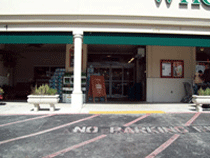
    As in many places, the poor economy is forcing many families in affluent Winter Park, Florida to make some necessary adjustments. One of the most basic adjustments relates to shopping for food and staples. In better times, Winter Park was ruled by two Publix supermarkets and a Whole Foods. Grocery-cart conversation among friends became a common event; now this smooth, middle-class lifestyle pattern has been disrupted.

    Hard times are driving people to less intimate settings, largely to Wal-Mart and other discount stores, whose offerings and management are largely interchangeable between places. In this way hard times could be shifting the pendulum swing away from localism and towards globalism. For now, Wal-Mart’s globalism offers the advantage of low prices, overcoming the disdain that many in Winter Park expressed at this store; for it is the antithesis of Winter Park’s treasured shopping culture epitomized by Park Avenue, a quaint strip of unique boutiques. Even if you did buy those steaks at Wal-Mart, you didn’t exactly advertise the fact at your dinner party.

    Winter Parkers had thought that their basic food needs had been comfortably institutionalized. As neighborhood touchstones go, Publix is Florida’s gold standard. Winn-Dixie, Albertson’s, and other competition paled in comparison to the customer loyalty that Publix brought. Their brands weren’t much different, and neither were their prices. There was just something about that kelly green logo that inspired people to integrate Publix into their own personal culture and lexicon.

    For years, this chain has built a loyal following in Florida. Good customer service, great store brands, convenient and quality stores all contributed to their preeminence in the grocery market, and allowed them to expand in the Southeast. Today, however, Publix is challenged by its own reputation, and has become vulnerable to competition as local shoppers tighten their pocketbooks.

    Winter Parkers had two choices between their Publix: Hollyanna and Lakemont. The brand veneer, both in content and in form, was subtly bent to suit local tastes. People referred to their favorite as “my Publix”, and even when the Baldwin Park Publix opened in 2003 closer to many folks, their loyalty with their particular store kept them from going to the Baldwin Park store. (Its architecture doesn’t help; this storefront might have been designed by Albert Speer).

    Suddenly, however, Publix faces real competition from stores that traditionally do not overlap with its market share. This Lakeland-based company, which boasts an excellent reputation, finds itself now with both emptier parking lots and smaller cash register totals. What’s going on here?

    At the Lakemont Publix, the organic produce area has grown, in direct response to hip, organic Whole Foods up the street. Whole Foods, however, is suffering mightily in this economy – who needs $8.00 strawberries? If you are skeptical about this, a tour of their largely deserted parking lots and front entry areas on Sunday afternoon, when grocery shopping is near-peak, can be quite telling.


    Whole Foods has some great parking spaces right near the front door, and the entry area, usually clogged with shoppers, seemed to be nearly desolate. A few students sat at the bistro tables tapping on laptops; not the usual rich scene for this upscale store.

    Publix at Lakemont also had some great parking spaces right near the front door, and an even more desolate entry area. In fact, where are the Girl Scouts?


    Where have all these people gone? The answer lies up State Road 436 to the left, ladies and gentlemen – Wal-Mart! Parking near the front…forget it. At the entry, a line of people going in and full shopping carts coming out! And the Girl Scouts are smart enough to realize that this is where the local culture is going these days! Is Wal-Mart the new Publix?

    As everyone is frantically re-tooling their own personal economy, Wal-Mart has become the grocer of choice for more and more of Winter Park. Are the prices really lower? A little bit. Will Publix adapt to the new, changing times to meet this challenge? For this 79-year-old Florida-based grocery store chain, and all its loyal (but more loyal to their checkbooks) customers, we certainly hope so.

    The buying power of globalism continues to disrupt and shift local patterns. As Wal-Mart, Costco, and others compete in this New Economy, local and regional chains need to react quickly to gain back their customer base, or they will find themselves in for a difficult struggle to regain lost ground.

    Richard Reep is an Architect and artist living in Winter Park, Florida. His practice has centered around hospitality-driven mixed use, and has contributed in various capacities to urban mixed-use projects, both nationally and internationally, for the last 25 years.

  • PARIS: Urban Museum Amidst a Suburban Sea

    I arrived in Paris on March 1 for my annual visiting professor assignment at the Conservatoire National des Arts et Metiers. Again, I have taken a flat (apartment) in the 1st arrondissement (district) in the heart of the ville de Paris, one of the world’s great pedestrian expanses. It is also one of the great virtual experiences – a place oddly disembodied from its setting.

    The flat is just a couple of doors to the right on the first perpendicular street in the picture below, which was taken at the entrance of the Chatalet-Les Halles Metro-RER station, less than 200 yards away.

    It is 300 yards to the Pompideau Museum, a structure whose hideousness is compensated for only by the fact that because of its dense surroundings it cannot be seen from anywhere more than a block away. The Louvre and the Hotel de Ville (city hall) are each one-half mile away and Notre Dame is less than three-quarters of a mile away. This is probably the ultimate in urbanization outside of Hong Kong.

    Sundays are very relaxing in Paris. There are people on the streets. The atmosphere is informal. Crowds are out examining the art works, books, maps and posters of the vendors that line both banks of the River Seine. I always like to attend Vepres (Vespers) at Notre Dame at 5:45 on Sunday evening. This is bit ecumenical for an Anglican, although not much of an ecumenical stretch to Roman Catholicism. I understand nothing, but the singing and the organ are inspirational nonetheless.

    There are many advantages to living in central Paris. Nearly the entire ville de Paris is an outdoor museum of architecture. There is the dense, irregular urbanization of the ancient Marais, a relic of the pre-Hausmann city, as well as walks along the well planned Champs d’Elysee toward Etoile and the Arc de Triomphe on the newer 19th Century boulevards created by the master-planner.

    Everything is so close that there is no need for either car or transit. The classroom is a 15 minute walk. This small section of Paris is a model for walkability. Yet this does not, however, necessarily translate into the social connections advocates of walkability suggest. I took a survey in Montorgueil, another busy pedestrian quarter, for a few days. Out of more than 5,000 people who had stopped to talk to someone or were on cell phones, 80 percent were on the phone. This illustrates how technology has made it possible for us to interact more with those we have common interest, wherever they are, instead of being limited to those who just happen to be in geographical proximity.

    We also have to understand the ephemeral nature of the Parisian core. It is now more museum and place of “experience” than a thriving residential neighborhood. The center of the area – the 1st arrondissement (there are 20) – is a shadow of its former self in population. Today, the 1st arrondissement has 18,000 people, 80 percent below its 1861 figure of 90,000, and probably lower than the 1836 Paris core peak. The overall city has lost population as well, dropping from 2.95 million in 1921 to less than 2.2 million today, a decline on the order of some US central cities (such as Chicago).

    One reason: living in central Paris has its disadvantages. One of them is shopping. Perhaps no city has more grocery markets per capita than Paris. But they are so small that probably no city has less grocery square footage than Paris. It is quite an adventure. Not all stores carry the same products, which makes it necessary to go to more than one grocery store to fill the larder. Not surprisingly, such small stores prices have much higher prices than the supercenters – Carrefour, Auchan and other Wal-Mart lookalikes (though often larger) – that have located just outside the Boulevard Peripherique, the six to eight lane freeway that surrounds the city.

    Some of the Metro lines extend beyond the Boulevard Peripherique, allowing urban Parisians to take advantage of lower suburban supercenter prices. Suburbanites can also shop at supercenters on the second ring freeway (the A-86) and the third ring freeway (the “Franciliene”). It may not be as famous as Le Metro, but Paris possesses the best freeway system in Europe outside of the Dusseldorf-Essen (Rhine-Ruhr) area. But the stores are not permitted, by law, to be open on Sunday, which makes parking lots and adjacent streets so crowded on Saturdays that both employees and police are used to direct the traffic.

    The biggest surprise to many Americans would be the extent of the Paris suburbs. Many, especially in the urban planning community, have long deluded themselves and others into believing that Europe, unlike America, has no suburbs. The core of Paris is very small, with most of the monuments and museums that are of interest being within a less than five square mile area. The ville de Paris itself covers approximately 40 square miles. The suburbs extend outward for more than another 1,000 square miles, 25 times the area of the ville de Paris.

    So, yes Paris has suburbs, as does every big city in Europe. In fact, virtually all European urban growth in the last 40 years has occurred in the suburbs, while virtually all of the cores have either experience slow growth or lost population, much like the United States. The European suburbs continue to attract residents from the cities, and whatever gains are achieved by some core cities are the result of international migration, not domestic migration from suburbs to the cities.

    Overall more than 80 percent of Parisians live in the suburbs and exurbs. The ville de Paris has less than 2.2 million people, while the rest of the urban area has nearly 8 million people, according to the French national statistical agency (INSEE). Another 2 million people are included in the rural and exurban portions of the metropolitan area (the “aire urbaine”) which are the French equivalent of exurbs.

    There is also a perception – oft reported in the New York Times and other urban-centric media – that the suburbs of Paris are made up of poor people. Certainly, like many American cities, Paris has poor suburbs, particularly in the department of Seine-St. Denis, to the north of the city. This area has high rise public housing blocks that look every bit as decrepit as the mercifully demolished Robert Taylor Homes on the south side of Chicago. But most Paris suburbs are predominately middle class housing, just like in America. There are also some very wealthy areas, as we find in the periphery of our own metropolitan regions.

    For two months, the ville de Paris is an absolutely delightful place to live. But once my Parisian sojourn is over, I, for one, will be very happy to return home to the suburbs of St. Louis which may be duller, less colorful and historic than Paris, but far more comfortable and affordable for the experience of everyday living.

    For additional information, see the Paris Rental Car Tour at http://www.rentalcartours.net/rac-paris.pdf.

    Wendell Cox is a Visiting Professor, Conservatoire National des Arts et Metiers, Paris. He was born in Los Angeles and was appointed to three terms on the Los Angeles County Transportation Commission by Mayor Tom Bradley. He is the author of “War on the Dream: How Anti-Sprawl Policy Threatens the Quality of Life.