Category: Urban Issues

  • Jerry Brown’s Housing Hypocrisy

    Jerry Brown worrying about the California housing crisis is akin to the French policeman played by Claude Rains in “Casablanca” being “shocked, shocked” about gambling at the bar where he himself collects his winnings.

    Brown has long been at the forefront on drafting and enforcing regulations that make building housing both difficult and very expensive. And now he has pushed new legislation, which seems certain to be passed by the Legislature and signed by the governor, that makes it worse by imposing even more stringent regulations on greenhouse gas emissions, mandating a 40 percent cut from 1990 levels by 2030.

    The press and activists may cheer the new bill, which will require massively expensive and intrusive measures likely to further raise housing costs. A 2012 study by the California Council on Science and Technology found that, given existing and potentially feasible technology, cutting back carbon emissions by 60 percent, roughly comparable with the new legal mandate, would require that “all buildings … either have to be demolished, retrofitted or built new to very high efficiency standards.” Needless to say, this won’t do much for housing affordability.

    Brown’s bona fides in promoting housing inflation goes back, at least to his days as attorney general. Throughout his career, Brown has fostered policies that have contributed to the regulatory quagmire largely responsible for helping drive house values in California up more than three times the national rate in the last half century. Over that period, a dense mesh of regional and local regulations have seriously restricted land for urban development, adding significant costs for housing developers.

    Some have seen Brown’s recent suggestions to loosen up some regulations and add to housing subsidies as positive, although they have little chance of making it through Sacramento due to environmental, labor and municipal opposition.

    Read the entire piece at The Orange County Register.

    Joel Kotkin is executive editor of NewGeography.com. He is the Roger Hobbs Distinguished Fellow in Urban Studies at Chapman University and executive director of the Houston-based Center for Opportunity Urbanism. His newest book, The Human City: Urbanism for the rest of us, will be published in April by Agate. He is also author of The New Class ConflictThe City: A Global History, and The Next Hundred Million: America in 2050. He lives in Orange County, CA.

  • The Perils of Public Capital

    Most discussions of our slow economic growth includes a seemingly compulsory demand for increased public capital spending, so-called infrastructure spending or simply “roads and bridges.”  Both Donald Trump and Hillary Clinton promise increased public capital spending on their websites.   Larry Summers made perhaps the best case for public spending when he claimed that our failure to invest in public capital creates the “worst and most toxic debts.”

    I’m not buying it.

    Interest rates are low as is investment, by all types of entities.  This implies that the return on investments is low.  Why should government investments be any different?

    There are many reasons to believe that government investment provides a low return in the best of times.  Government investment decisions are the outcome of a political process.  One result of the political process is that one senator’s low-return project is funded in order to obtain concurrence for funding another senator’s high-return project. 

    The Bridge to Nowhere is an excellent example of the political process forcing low-return investments.  Fortunately, that project was abandoned due to widespread ridicule, but just as worthless projects are funded.  I just Googled “wasteful government projects” and had 538,000 results in 0.45 seconds.  You find things like spending hundreds of thousands of dollars on running shrimp and mountain lions on treadmills, $387,000 for Swedish massages for rabbits, and $18 million to renovate the airport for Sun Valley Ski Resort’s airport, and $800,000 to develop a food-fight video game.  These are hardly our most pressing issues.    

    The existence of low-return projects leads to a higher required return on the profitable projects in order for the average project to be profitable.

    Then, there is the problem of fads.  Governments tend to make popular investments and popular doesn’t mean profitable.  After the success of the Erie Canal in 1825, other states started building canals.  Eventually eight states defaulted on their debt because of those canals.

    More recently, Californians voted in 2004 to provide $3 billion they didn’t have to support stem cell research that private industry was already pursuing. 

    Government investment may be appropriate for projects where the return can’t be realized by the investor, or for investments that private firms won’t make because they lack information.  Neither condition applied to the stem cell research.  Stem cell research’s potential was a well-discussed topic in 2004.  The many private firms that are investing in stem cell research will have no problem capturing the returns.

    Any project well known enough to carry an election fails to meet the second condition for government investment.  If it’s well known enough to carry an election, private firms know all about it.

    Government projects have other costs because of the approval process.  These include the costs of lobbying, selling the project to the public, and sometimes elections.  These costs, and the uncertainty associated with them, increase the required return for profitability.  It may be that costs of approval are so high that a net-positive return is impossible.

    Consider harbor expansion.  California’s ports are major import-export facilities.  Huge amounts of goods are imported through these ports, with final destinations throughout the United States.  Large amounts of goods from throughout the United States are exported through these ports.

    Because of a lack of investment, California’s ports are destined to become increasingly less important.  It’s been consensus for years that these ports need larger and more efficient breakdown and distribution centers, but serious hurdles may prevent any significant improvement.  

    More importantly, California’s ports cannot accept the largest tankers or container ships, and there is no will to expand the ports to accept these very large vessels.  Canadian and Mexican Pacific port expansions and a widened Panama Canal will handle traffic that traditionally would go through California’s ports, if the ports could accommodate the ships.

    At this point, I believe that the political costs of significant harbor expansion, and in fact any large infrastructure project in California, are so high that profitable investments are impossible.  

    There is also the question of government competency.  Can government still build things efficiently?  There are lots of examples that suggest maybe not: 

    • The American Recovery and Reinvestment Act of 2009 was to fund almost a Trillion dollars of “shovel ready” projects.  Some roads were repaved, but nothing of real significance was built.
    • In August 2015, the EPA released three million gallons of toxic waste into the Animus River while trying to clean the site of the Gold King Mine near Silverton Colorado.
    • The eastern span of California’s San Francisco-Oakland Bay Bridge was damaged in the 1989 Loma Prieta earthquake.  Reconstruction was originally expected to cost $250 million and be completed by 2007.  It finally opened in September 2013 at a cost of $6.5 billion, and it’s still plagued with very serious problems.
    • Solyndra received a $535 million federal loan in September 2009.  It filed bankruptcy in August 2011.

    There was the I35 Bridge collapse in Minneapolis.  California’s High Speed Train is an ongoing disaster.  Americas publicly run, once very successful, manned space program has been abandoned because of accidents.  We built an airport security system after 9/11 that is ineffective, hugely disruptive, and very expensive.  The list could go on and on.  Even public capital’s most prominent proponent, Larry Summers, has come to see this as a challenge to public capital.

    Even if government was efficient and competent at building capital, it’s not clear what to build.  Proponents of more government capital look longingly back to the 1930s.  They talk about bridges, roads and dams.

    Good luck building a major dam today.  Environmentally motivated resistance makes it impossible, which is good.  Dams are not an appropriate investment today.  Dam building in the 1930s was critical in bringing electricity to millions of Americans and reducing the frequency of major floods, but those gains have mostly been realized.  The return on future dams is far less. 

    Most of the gains from new roads have also been exploited.  Slowing population growth implies that fewer new lane miles will be needed, while drone technology and autonomous vehicles may increase efficiency of existing roads.

    Dams and roads are the technology of the 20th Century.  We don’t know what the technology will drive the 21st Century, but it appears that private industry will provide it.  There have been attempts to make wireless internet service a government-supplied good, but markets seem to be providing it just fine.  Is there a coffee shop in America that doesn’t provide free wireless?

    Perhaps worse, governments are essentially prohibited, because of political pressures, from some potentially very profitable projects.  Call them taboo projects.  Taboo projects cannot be built no matter how profitable they may be.  These include nuclear facilities, coal or oil based energy projects, and canals.

    So.  Governments are self-prohibited from some profitable projects.  The political process requires the funding of worthless projects.  And when they have a good project, governments appear incompetent at actually building it.  I’d ask why more government projects are in the platforms of the two major presidential candidates, but I’m still trying to figure out why the two major parties selected such flawed presidential candidates.  Still, those candidates provide an excellent example of how our political process leads to far-from-optimal decisions.

    Bill Watkins is a professor at California Lutheran University and runs the Center for Economic Research and Forecasting, which can be found at clucerf.org.

  • Trump’s Pitch to Blacks

    After Trump made a recent speech in Milwaukee in which he directly asked for black votes, I was asked to write a about it. My piece is now online in City Journal and is called “Trump’s Pitch to Blacks.”

    I personally doubt whether he’s really going after black votes (though of course he wouldn’t mind getting some). Rather, this is designed to polish his image as more inclusive. What’s more, his language of “law and order” seems more designed to appeal to whites, and he mentions nothing about black grievances with the police (in contrast to his previous rhetoric in which he labeled the shootings of Alton Sterling and Philandro Castile “terrible” and “disgusting”).

    He also talked about his economic policies, etc. But the focus of my piece was on his immigration pitch. Large scale immigration seems likely to downgrade black aspirations and social justice claims in the American political sphere over the long term:

    As ethnic groups multiply and grow in America, often borrowing the template of the civil rights movement for their own goals, they dilute the claims of black Americans. A study by sociologists Mary C. Waters, Philip Kasinitz, and Asad L. Asad argued that “the increasing racial diversity of the population owing to immigration means policies that aim to promote racial equality but that are framed in terms of diversity often do not address the needs of native African Americans who, arguably, need such policies the most.” Diversity used to mean “black.” Now it can mean anything from a Mexican small-business owner to a Chinese software developer to a Pakistani doctor. Major Silicon Valley firms actually employ a lower share of whites than the population as a whole—and virtually no blacks.

    Click through to read the whole thing.

    I have generally been a proponent of immigration (or outsiders generally), arguing that a critical mass of outsiders is necessary to civic dynamism, and that we have actually sucked out many of the risk takers and entrepreneurs from Mexico.

    But we can have too much of a good thing. Clearly, we’ve reached the point where the level of immigration is having socially destablizing consequences. Brexit is a perfect example. You can say that’s just racism or whatever. But even if it is, it doesn’t excuse Remainers who refused to make any changes from their share of the blame. Politics exists in the realm of human reality, not utopian ideals.

    One likely consequence of U.S. diversification resulting from the current immigration trend is that the claims of blacks will be downgraded in society. Black Americans are longstanding citizens who have suffered unique historic injustices and have yet to be integrated into the economic and cultural mainstream of the country. I believe that’s an urgent task. But it doesn’t seem likely that immigrants and their children will feel a special debt to black Americans in the way that whites – soon to be a minority themselves – do.

    Indeed, immigration has already shifted demographics in some cities to make the prospect of future black mayors very unlikely. I highlight this in the piece with regards to Chicago:

    Immigration has also badly diluted black voting power and political influence in many cities. In 1980, Chicago was about 40 percent black and 14 percent Hispanic. Blacks and lakefront liberals formed an electoral alliance to elect Harold Washington as the city’s first black mayor in 1983. Today, after black population losses and a doubling of Latino population share, the city’s one-third white, one-third black, and one-third Latino population produces a divide-and-rule dynamic benefiting white mayors like Richard M. Daley and Rahm Emanuel.

    Again, read the whole thing.

    Aaron M. Renn is a senior fellow at the Manhattan Institute, a contributing editor of City Journal, and an economic development columnist for Governing magazine. He focuses on ways to help America’s cities thrive in an ever more complex, competitive, globalized, and diverse twenty-first century. During Renn’s 15-year career in management and technology consulting, he was a partner at Accenture and held several technology strategy roles and directed multimillion-dollar global technology implementations. He has contributed to The Guardian, Forbes.com, and numerous other publications. Renn holds a B.S. from Indiana University, where he coauthored an early social-networking platform in 1991.

    Image at top my photo of an anti-Trump rally in New York. Cover photo by Gage Skidmore. CC BY-SA 3.0

  • Geographies of Inequality

    Joel Kotkin’s new report, “Geographies of Inequality,” is the latest in a series of ahead-of-the-curve, groundbreaking pieces published through Third Way’s NEXT initiative. NEXT is made up of in-depth, commissioned academic research papers that look at trends that will shape policy over the coming decades. In particular, we are aiming to unpack some of the prevailing assumptions that routinely define, and often constrain, Democratic and progressive economic and social policy debates.

    Dowload the .pdf report or read it on the web here.


    EXECUTIVE SUMMARY

    There’s little argument that inequality, and the depressed prospects for the middle class, will be a dominant issue in this year’s election, and beyond. Yet the class divide is not monolithic in its nature, causes, or geography. To paraphrase George Orwell’s Animal Farm, some places are more unequal than others.

    Housing represents a central, if not dominant, factor in the rise of inequality. Although the cost of food, fuel, electricity, and tax burdens vary, the largest variation tends to be in terms of housing prices. Even adjusted for income, the price differentials for houses in places like the San Francisco Bay Area or Los Angeles are commonly two to three times as much as in most of the country, including the prosperous cities of Texas, the mid-south and the Intermountain West.

    These housing differences also apply to rents, which follow the trajectory of home prices. In many markets, particularly along the coast, upwards of 40% of renters and new buyers spend close to half their income on housing. This has a particularly powerful impact on the poor, the working class, younger people, and middle class families, all of whom find their upward trajectory blocked by steadily rising housing costs.

    In response to higher prices, many Americans, now including educated Millennials, are heading to parts of the country where housing is more affordable. Jobs too have been moving to such places, particularly in Texas, the southeast and the Intermountain West. As middle income people head for more affordable places, the high-priced coastal areas are becoming ever more sharply bifurcated, between a well-educated, older, and affluent population and a growing rank of people with little chance to ever buy a house or move solidly into the middle class. 

    Ironically, these divergences are taking place precisely in those places where political rhetoric over inequality is often most heated and strident. Progressive attempts, such as raising minimum wages, attempt to address the problem, but often other policies, notably strict land-use regulation, exacerbate inequality.

    The other major divide is not so much between regions but within them. Even in expensive regions, middle class families tend to cluster in suburban and exurban areas, which are once again growing faster than areas closer to the core. Progressive policies in some states, such as Oregon and California, have been calculated to slow suburban growth and force density onto often unwilling communities. By shutting down the production of family-friendly housing, these areas are driving prices up and, to some extent, driving middle and working class people out of whole regions.

    To address the rise of ever more bifurcated regions, we may need to return to policies reminiscent of President Franklin Roosevelt, but supported by both parties, to encourage dispersion and home ownership. Without allowing for greater options for the middle class and ways to accumulate assets, the country could be headed not toward some imagined social democratic paradise but to something that more accurately prefigures a new feudalism.

    Dowload the .pdf report or read it on the web here.

    Joel Kotkin is executive editor of NewGeography.com. He is the Roger Hobbs Distinguished Fellow in Urban Studies at Chapman University and executive director of the Houston-based Center for Opportunity Urbanism. His newest book, The Human City: Urbanism for the rest of us, will be published in April by Agate. He is also author of The New Class ConflictThe City: A Global History, and The Next Hundred Million: America in 2050. He lives in Orange County, CA.

  • Why Most Cities Will Never Be All They Used to Be

    Recently I published a piece on my Forbes site that discusses the disparate impact that demographic and social shifts had on larger, older U.S. cities over the second half of the 20th century.  Basically, the smaller American household size, generated by later marriages, rising divorce rates, lower fertility rates and rising life expectancy, among other things, has meant that unless cities were adding housing, they simply weren’t growing.  Yeah, I know I’m quoting myself, but here’s a sample:

    “Most people intuitively understand the economic underpinnings of urban decline, and the economic advantages that have led to their rebound. The loss of manufacturing destroyed the economic base; the spread of globalization and the new economy has created new opportunity in cities. But far less well understood are the far-reaching cultural and social changes that impacted the demographic makeup of cities — and would have caused population loss, even without economic restructuring.”

    I encourage you to check it out.

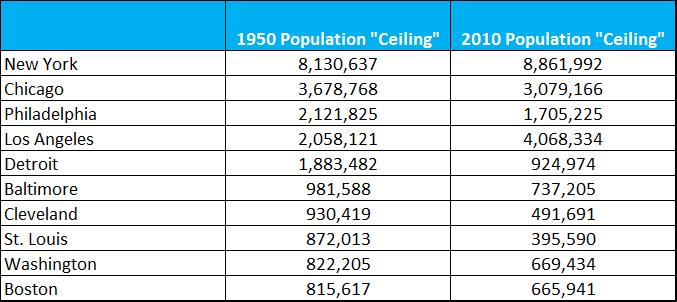
    I go on to suggest that population loss was inevitable for the most of the largest cities of mid-century America, and point out that today’s cities may never reach their previous population peaks.  I put together a cool table that demonstrates this:

    However, in putting this piece together I left quite a bit on the table, both in terms of graphics and additional content.  So consider this an addendum to the Forbes piece.

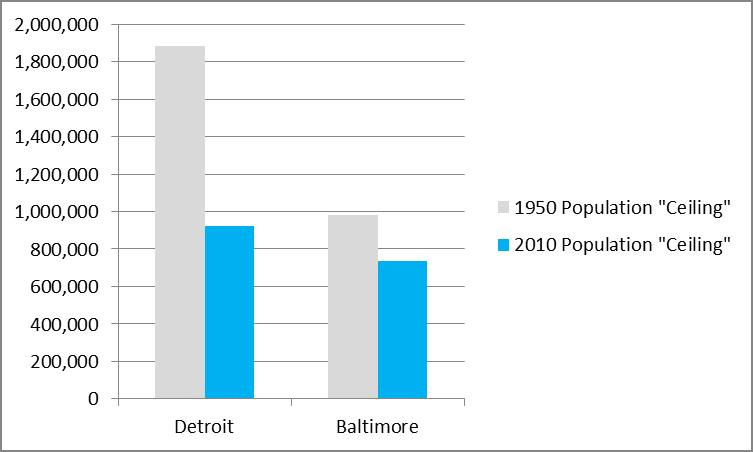
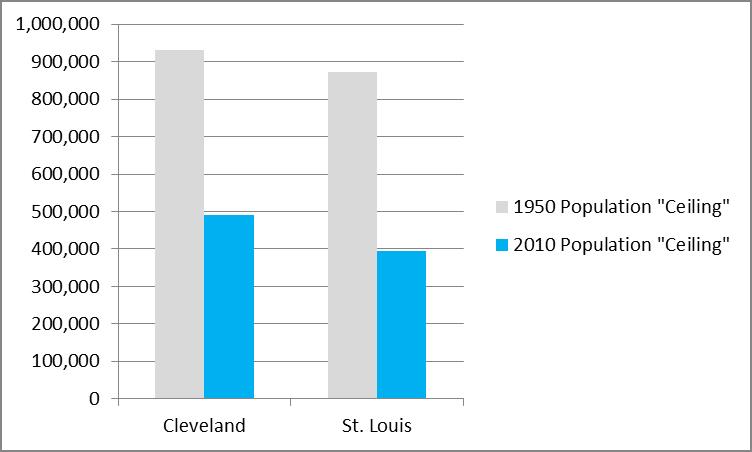
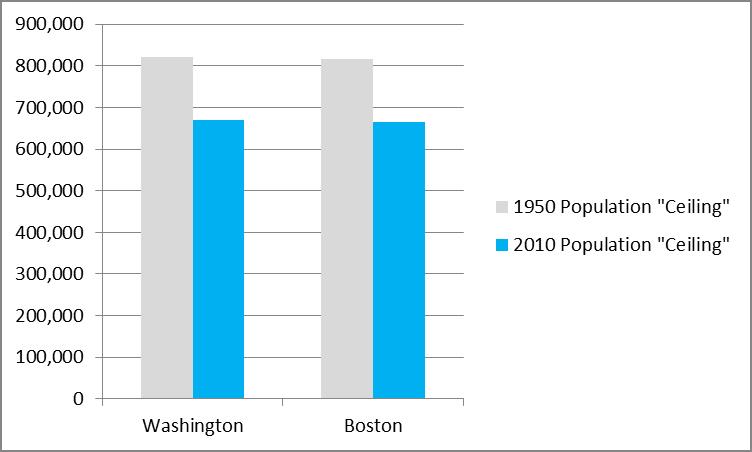
    First, I think it’s stunning to see a visual that illustrates the differences in a 1950 and 2010 population ceiling for the ten cities examined.  Check these out, shown two cities at a time:

    I think it is absolutely stunning to see that cities like Cleveland, Detroit and St. Louis could at best (at least right now) attain maybe half of their population in 1950.  And a case could be made that smaller household size may be the most significant factor in their decline.

    Three points I was unable to expand on in the Forbes piece.  First, now that the pendulum is swinging back in favor of cities, their influence is ascending faster than their population growth.  Cities are leading discussions now the economy, on infrastructure, on energy, on housing.  For the latter third of the 20th century the suburbs led that discussion.  But today, cities have reclaimed that role.  Their actual size, in terms of population, matters less today than it did 60 years ago.  

    Second, the American preference for new over old has nearly as much to do with this shift as shrinking household size.  For nearly 50 years the suburbs (and by extension, the Sun Belt) was new, and that was a main feature of their attraction.  But there’s also that saying, “everything old is new again.”  Cities are the new thing, and while they’re not everyone’s cup of tea, they are doing better than at any time in the last 50 years.

    Third, it’s conceivable that many suburbs and/or Sun Belt cities may find themselves impacted by emerging demographic or social shifts.  Having a huge inventory of single family homes in a world that is asking for multifamily options?  A strong auto-oriented landscape when more people are looking for walkable environments?  

    I’m not suggesting that all older cities are ascendant, and the suburbs and Sun Belt are doomed.  But staying ahead of trends may be the lesson all need to heed.

    Pete Saunders is a Detroit native who has worked as a public and private sector urban planner in the Chicago area for more than twenty years.  He is also the author of “The Corner Side Yard,” an urban planning blog that focuses on the redevelopment and revitalization of Rust Belt cities.

    Top photo: Vacant homes in Philadelphia, awaiting their revitalization.  Source: smartgrowthamerica.org

  • Welcome To Y’all Street: The Cities Challenging New York For Financial Supremacy

    From the earliest days of the Republic, banking and finance has largely been the purview of what one historian calls the “Yankee Empire.” Based largely in New York and Boston, later on financial centers grew along the main route of Yankee migration to Chicago and San Francisco.

    Yet, if you look at where financial jobs are now headed, perhaps it’s time, as the Dallas Morning News cheekily suggested recently, to substitute Y’all Street for Wall Street. Finance, increasingly conducted electronically, is no longer tethered to its traditional centers. Large global financial companies like UBSDeutsche Bank Morgan Stanley and Goldman Sachs are all committed to relocating operations to less expensive locations.

    In the U.S., this has benefited the South the most. This year’s list of the metro areas that are increasing employment in financial services at the fastest rate is led by first-place Nashville-Davidson-Murfreesboro-Franklin, Tenn., No. 2 Dallas-Plano-Irving, Texas, No. 4 Austin-Round Rock, Texas, and No. 5 Charlotte-Concord-Gastonia N.C.-S.C.

    Financial service employment is important, particularly since the recovery from the 2008 financial meltdown. The industry is second in the U.S. only to the professional and business services sector in terms of the number of people it employs in high-paying jobs (average salary: $62,860), and its recent growth has been spread across the country. Of the 70 large metro areas we studied, only three have lost financial jobs since 2010.

    Methodology

    To generate our ranking, we looked at employment growth in the 366 metropolitan statistical areas for which BLS has complete data going back to 2005, weighting growth over the short-, medium- and long-term in that span, and factoring in momentum — whether growth is slowing or accelerating. (For a detailed description of our methodology, click here.)

    The South Rises Again

    The shift to the South seems to be based on several factors: lower costs (including for housing), less regulation and expanding markets, driven by rapid population growth. As population has shifted to the South, most notably low-tax states like Tennessee and Texas, it has clearly increased local demand for financial services. But there’s also another factor: the migration of financial jobs from traditional centers such as New York, Chicago and Los Angeles.

    Our top emerging financial superstar, Nashville, has all these characteristics.

    Since 2010, the area’s financial workforce has expanded 24.5 percent to 60,900. Population growth and in-migration rates have been spectacular.

    Between 2010 and 2014, in-migration accounted for 65.4 percent of local population growth, the fifth highest proportion among the nation’s top 25 metro areas that added more than 100,000 people, while the overall population soared 10 percent.  Since the recession ended in 2009, employment has grown 21 percent while per capita income has risen 4 percent. Financial sector growth has come from firms with U.S. headquarters in the New York area, such as Switzerland-based UBS, as well as from locally based financial firms, like the investment bank Avondale Partners.

    But the biggest raw job gains, as we also found in professional and business services, are in No. 2 Dallas-Plano-Irving, where financial employment has expanded 23.2 percent since 2010 to 226,100 jobs, making the metro area the third-biggest financial services hub in the nation behind New York and Chicago. If the adjacent Ft. Worth area is added in, the region boasts a total of 282,000 financial job, behind only New York. Unlike Houston, slowed by the oil industry downturn, Dallas is on a super-sized roll.

    The Big D’s drive to become “y’all street” also stems from the recipe of large-scale population growth, low taxes, affordable housing and business friendliness. Large corporate relocations, such as Toyota from California, creates new demand both from business and consumers.

    To be sure, a New Yorker could scoff at the idea of Dallas replacing Manhattan as a financial center as something akin to the old Texas insult: all hat and no cattle. Yet it might behoove uppity Gothamites to pay more attention to the big Texas metroplex. The area’s dispersed financial institutions may not look like those associated with Manhattan, but they are growing more quickly, and in a place where middle managers can thrive on modest salaries. Then there’s the advantages of its central location, one of the things that led Comerica to move its headquarters to Dallas in 2007. More recently, State Farm and Liberty Mutual have opened large operations in the northern suburbs.

    But it’s not just Texas and Tennessee that are dominating the dispersion of financial services jobs. Before the recession, No. 5 Charlotte, N.C., had risen to become the second-largest financial center in the country, home to Bank of America and Wachovia. Wachovia fell hard in the financial crisis, and was swallowed by Wells Fargo, but BofA soldiers on, and the area clearly has recovered from the recession doldrums. Since 2010, the metro area’s financial workforce has grown 14.2 percent to 86,100 jobs, with 5 percent growth last year alone.

    The Rise Of The Mormon Belt?

    Outside the south, the other big growth area for financial services lies in the Intermountain West, the vast region between California’s Sierras and the Rockies. Two metro areas stand out in terms of financial growth: No. 3 Salt Lake City area and No. 6 Phoenix. Like the Texas cities, these metro areas offer middle managers a huge housing advantage; home prices, adjusted for incomes, are roughly half those in New York, Los Angeles and San Francisco.

    Salt Lake City’s financial services job count has grown 19.9 percent since 2010 to 55,200 jobs, with 6.2 percent growth last year alone. The Utah capital has gained particular renown as Goldman Sachs’fourth-largest global hub, and is slated to keep growing. Particularly attractive for Goldman is the language skills of returning Mormon missionaries.

    Rapid financial growth is now common across the “Mormon belt” that stretches from Arizona to Idaho. Among mid-sized metro areas (those with less than 450,000 nonfarm jobs),  Boise ranks second for financial services job growth, followed byProvo-Orem, Utah, and No. 5 Clearfield-Ogden. With young and well-educated workforce, and relatively low (particularly compared to California) housing prices, these areas are creating a whole new archipelago of financial centers.

    At the southern end of the Mormon belt sits Phoenix. Like the southern financial boom towns, the Valley of the Sun is booming both demographically and in terms of jobs; financial positions are up 19.7 percent since 2010.

    Much of this follows the movement of people from other parts of the country, notably California and the Midwest. Financial companies, too, are migrating south such as Chicago-based Northern Trust, which moved 1,000 jobs last year to Tempe, a close in Phoenix suburb. Growth in financial services has helped bring some life back to the long torpid office market, attracting new investors.

    The Big Boys

    Despite the growth in the top cities on our list, the central position of New York remains unassailable. After hard times amid the financial crisis, employment has risen a modest 6.3 percent since 2010 to 461,500, over 200,000 more than second-place Chicago, and salaries are on the rise again.

    What has changed is where the challenges may come from. Its onetime main rivals, 56th place Chicago-Naperville- Arlington Heights and Los Angeles (57th) are not even keeping pace, and seem destined to fall even further behind. Similarly,  other likely financial rivals, like No. 21 San Francisco-Redwood City-South San Francisco, No. 39 Boston-Cambridge-Newton or No. 49 Seattle-Bellevue-Everett aren’t growing fast enough to mount a major challenge.

    If New York’s supremacy is to be challenged, it will instead likely be from the lower-cost places that dominate our list in the South and Intermountain West. With the exception of Dallas, no single one of these metro areas could conceivably grow to be big enough to threaten Gotham’s leadership, but over time they could in aggregate weaken its predominance, spreading financial power to what are largely relatively youthful financial centers.

    This piece originally appeared in Forbes.

    Joel Kotkin is executive editor of NewGeography.com. He is the Roger Hobbs Distinguished Fellow in Urban Studies at Chapman University and executive director of the Houston-based Center for Opportunity Urbanism. His newest book, The Human City: Urbanism for the rest of us, will be published in April by Agate. He is also author of The New Class ConflictThe City: A Global History, and The Next Hundred Million: America in 2050. He lives in Orange County, CA.

    Michael Shires, Ph.D. is a professor at Pepperdine University School of Public Policy.

  • Life Is Beautiful in America When You’re Paul Krugman

    I live on the Upper West Side in New York and love it. But when Paul Krugman wrote a blog post using the UWS an example of what’s right in America – “If you want to feel good about the state of America, you could do a lot worse than what I did this morning: take a run in Riverside Park” –  I had to respond.  Not only is the UWS obviously unrepresentative of America, but many people see its prosperity as purchased at least in part at their expense.

    My piece “Paul Krugman’s Bubble” is now online at City Journal:

    Most Americans have never heard of gorgeous Riverside Park. In fact, they may have only a vague idea about the Upper West Side of Manhattan, the neighborhood where Riverside Park is located. But they understand that life on the Upper West Side—and places like it—is fabulous for the people who live there. Such places have boomed thanks to changes in the economy, but also from deliberate government policies designed to make them prosper. Wall Street, unlike Main Street, got bailed out during the financial crash. Most Americans may not be able to tell you what TARP stands for, or what quantitative easing is, but they have a good understanding of who profited the most from them—and that such people often take morning jogs in places like Riverside Park.

    Click through to read the whole thing.

    Aaron M. Renn is a senior fellow at the Manhattan Institute, a contributing editor of City Journal, and an economic development columnist for Governing magazine. He focuses on ways to help America’s cities thrive in an ever more complex, competitive, globalized, and diverse twenty-first century. During Renn’s 15-year career in management and technology consulting, he was a partner at Accenture and held several technology strategy roles and directed multimillion-dollar global technology implementations. He has contributed to The Guardian, Forbes.com, and numerous other publications. Renn holds a B.S. from Indiana University, where he coauthored an early social-networking platform in 1991.

    The Upper West Side of New York – Image via City Journal

  • Notes From An Upzoning Heretic

    I recently got into a discussion on Twitter about the soundness of upzoning, or the increase in the allowance of residential units in cities, as a rational and reasonable response to the lack of affordable housing in our nation’s large cities.  Anyone who’s been reading my writing knows that I’ve disagreed with this for quite some time, and tried many ways to articulate my views and reach some understanding. From the discussion I learned two things: 1) Twitter is a really poor vehicle for debate when nuance is critical (OK, I really knew that already), and 2) the orthodoxy of the upzoners is so strong that my views on this might put me on the pariah end of the urbanism spectrum. 

    It started innocently enough.  Ramsin Canon suggested upzoning major streets in Chicago for more residential units.  That brought several supporters, including City Observatory writer and fellow Chicago blogger Daniel Kay Hertz, who (gracefully, I might add) noted my objections.  I then chimed in, and shortly thereafter I found myself swimming against the tide of upzoners hoping to prove that upzoning helps improve housing affordability. 

    Look, upzoners, I understand the problem and the sentiment.  I understand the desire to find the right policy response to address the issue.  But I remain unconvinced that upzoning will help any more than a handful of American cities.  Here’s why.

    An Abstract Argument

    Surely a big part of the appeal of upzoning is its abstract simplicity.  Increasing the supply of housing units in extremely tight housing markets can unleash market forces that drive home prices and rents downward, making cities more affordable to affluent and poor alike.  And in housing markets that have an almost even distribution of high priced housing within them, like San Francisco or New York, this makes sense.  Allowing more units will have the effect of bringing prices down.  (I’d also add parenthetically that the tightest and most expensive housing markets nationally also tend to be the most geographically constrained, by either water or mountains, and that constraint does not hold for all cities nationwide.  This escapes many people.)

    The reality, however, is that nationally gentrification is just a pittance compared to the expansion of urban poverty.  As Carol Coletta of the Knight Foundation put it in a speech last month at the Congress of the New Urbanism:

    “In 1970, about eleven hundred urban Census tracts were classified as high poverty.

    By 2010—40 years later—the number of high poverty Census tracts in urban America had increased from 1100 to more than 3,000. (3165)

    The number of people living in those high poverty Census tracts had increased from 5 million to almost 11 million. And the number of poor people in high poverty Census tracts had increased from 2 million to more than 4 million.

    So over a 40-year period, the number of high poverty Census tracts in America’s core cities had tripled, their population had doubled, and the number of poor people in those neighborhoods had doubled.

    Given that record, I’ll bet a lot of people are hoping for a little gentrification– if gentrification means new investment, new housing, new shops without displacement.

    The idea that places might benefit from gentrification runs against the popular narrative. But here’s the really startling fact: only 105 of the eleven hundred Census tracts that were high poverty in 1970 had rebounded to below poverty status by 2010. That’s only ten percent! Over 40 years!”

    Most American cities are not like San Francisco or New York, where the high prices and rents cannot be avoided and the return-to-the-city demand remains very high.  Most cities have greater variance in prices and rents, from very high to very low.  This takes away the first layer of abstraction for prices and rents and allows those with money to rationally widen their consideration when choosing to live in cities.  On the surface this sounds great. 

    But — and this is where the second layer of abstraction is shed — people don’t make housing decisions or neighborhood decisions rationally.  They take in all sorts of information and put it to subjective use, and justify its rationality later.  Historical perceptions of neighborhoods linger far longer than their reality.  Media perceptions can distort the reality of neighborhoods.  Egos can get involved and people select neighborhoods that have a certain cache or brand.  For urban neighborhoods in most cities, we find that affluence clusters in certain areas and moves outward slowly.  Poverty expands quickly, as those who have the ability to escape it do so, and further destabilize a neighborhood in the process.  The end result, again for cities that do not have the same strong return-to-the-city demand or the uniformly high home prices and rents, is affluent enclaves surrounded by expansive and increasingly impoverished neighborhoods.

    Upzoning can accelerate this process.  If a major city undergoes an upzoning process and allows a substantial increase in the number of housing units, what do you think the development community’s response to that will be?  My guess is that they will work hard to fulfill the market demand where the demand is strongest — in the most desirable neighborhoods or in the areas immediately adjacent to them.  Only after that demand is tapped out will developers move into other areas, and most will elect to build in areas that are adjacent to the newly saturated neighborhood.  Those who live in the path of development will see prices and rents remain high; those away from the path of development will likely see  prices and rents crater, and lament the lack of investment in their community. 

    The Need for Investment

    TAt one point in the Twitter discussion.  Daniel Kay Hertz asked me, “Would there be more or fewer Latinos in Logan Square if there was more new housing in Lincoln Park?”  For non-Chicagoans, Logan Square is the rapidly gentrifying neighborhood immediately west of the quite-gentrified Lincoln Park neighborhood on the lakefront.  My response was that Logan Square would indeed have more Latinos in that scenario and that it would have no discernible impact on other neighborhoods outside of the “hot zone” as well.  But that sets up the scenario I cite above — an affluent neighborhood next to an eternally poor/working class one, possibly lamenting the lack of investment in their midst.  And the further one’s home or neighborhood is from the “hot zone”, the more that lament turns into angst, frustration and resentment.

    It’s worth bringing back a portion of the quote above from Carol Coletta:

    Given that record, I’ll bet a lot of people are hoping for a little gentrification– if gentrification means new investment, new housing, new shops without displacement.The idea that places might benefit from gentrification runs against the popular narrative.

    Despite the growing problems of affordability in select neighborhoods in major cities across the nation, there are many more neighborhoods that wish they had that problem.  Many people rue the fact that maybe one-quarter or one-third of a city is priced beyond their means.  That leaves two-thirds to three-quarters of a city to explore and find a place worthy of investment.  Upzoning can have the impact of further concentrating development within the “hot zone” and drive a deeper inequality wedge between urban haves and have-nots.

    Upzoners are not doing cities a favor more broadly by addressing an issue that helps them directly.

    Ultimately I see high prices and rents as being demand-driven and not supply-driven.  Prices and rents are high because there are too many people focusing on too few neighborhoods — and squandering the opportunity to take some of that investment to other neighborhoods that could use it.

    Pete Saunders is a Detroit native who has worked as a public and private sector urban planner in the Chicago area for more than twenty years.  He is also the author of “The Corner Side Yard,” an urban planning blog that focuses on the redevelopment and revitalization of Rust Belt cities.

  • California: The Economics of Delusion

    In Sacramento, and much of the media, California is enjoying a “comeback” that puts a lie to the argument that regulations and high taxes actually matter. The hero of this recovery, Gov. Jerry Brown, in Bill Maher’s assessment, “took a broken state and fixed it.”

    Yet, if you look at the long-term employment trends, housing affordability, inequality and the state’s long-term fiscal health, the comeback seems far less miraculous. Silicon Valley flacks may insist that the “landscape now has been altered,” so prosperity is now permanent, but this view is both not sustainable and deeply flawed.

    Jobs: The long view

    Since 2010, California has begun to generate jobs at a rate somewhat faster than the nation, but this still has just barely made up for the deep recession in 2007. The celebratory notion that true-blue California is outperforming red states like Texas is valid only in a very short-term perspective. Indeed, even since 2010, the job growth in Austin and Dallas has been higher than that in the Bay Area, while Los Angeles has lagged well behind.

    If you go back to 2000, the gap is even more marked. Between 2000 and 2015, Austin has increased its jobs by 50 percent, while Raleigh, Houston, San Antonio, Dallas, Nashville, Orlando, Charlotte, Phoenix and Salt Lake City – all in lower-tax, regulation-light states – have seen job growth of 24 percent or above. In contrast, since 2000, Los Angeles and San Francisco expanded jobs by barely 10 percent. San Jose, the home of Silicon Valley, has seen only a 6 percent expansion over that period.

    Regional concentration

    As Chapman University economist and forecaster Jim Doti recently suggested, the California boom is exceedingly concentrated in one region. “It’s not a California miracle, but really should be called a Silicon Valley miracle,” Doti noted in his latest forecast. “The rest of the state really isn’t doing well.”

    Read the entire piece at The Orange County Register.

    Joel Kotkin is executive editor of NewGeography.com. He is the Roger Hobbs Distinguished Fellow in Urban Studies at Chapman University and executive director of the Houston-based Center for Opportunity Urbanism. His newest book, The Human City: Urbanism for the rest of us, will be published in April by Agate. He is also author of The New Class ConflictThe City: A Global History, and The Next Hundred Million: America in 2050. He lives in Orange County, CA.

    Bill Watkins is a professor at California Lutheran University and runs the Center for Economic Research and Forecasting, which can be found at clucerf.org.

  • Shanghai to Manchuria and Central China by Train

    There is no better way to see China than by train. This is especially true because foreigners are not allowed to drive rental cars without first obtaining a Chinese drivers license. China has developed the world’s largest high-speed rail system, which includes one of only three profitable routes in the world, along with Tokyo to Osaka and Paris to Lyon.

    Travel by train in China is now more convenient for people who do not speak Mandarin. Tickets may now be purchased over the internet. Details of the trains and ticketing are provided at the end of the article.

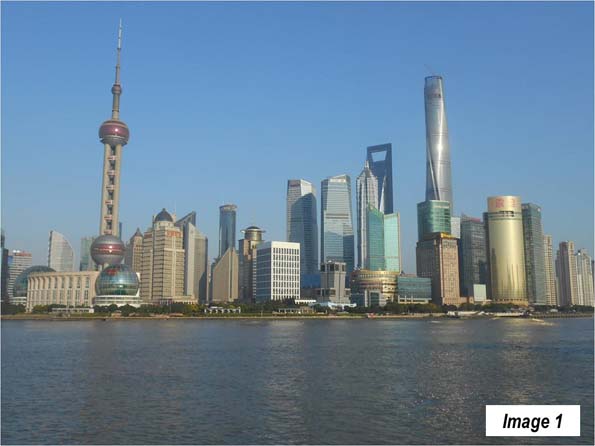
    Last month I traveled from Shanghai (Image 1 from a previous trip) to Changchun and Jilin, in Manchuria’s Jilin Province (Manchuria includes the northeastern provinces of Liaoning, Jilin and Heliongjiang, and is called the "Dong Bei" or the "east north") and then to Beijing and on to Nanchang, in Jiangxi Province, finally returning to Shanghai.

    Shanghai is China’s largest urban area, with 22.7 million residents (Note). I started out from Shanghai’s Hongqiao Railway Station, which is one of the most important rail hubs in the country. It is located across the runways from Hongqiao International Airport, from which most domestic flights operate. Most international flights operate from Pudong International Airport, which is 34 miles (55 kilometers) to the east.

    The train used the main Shanghai to Beijing line as far as Tianjin, where the train continues along Bohai Bay toward Manchuria, while the main line turns left toward Beijing.

    It is not long before the train reaches speeds above 300 kilometers per hour (186 miles per hour). For at least the first 135 miles (220 kilometers), to the far edge of Changzhou, there is a mix of primarily urban development with some rural development. There are also many high-rise residential developments and "peri-urban" developments, with rural areas transitioning to urbanization.

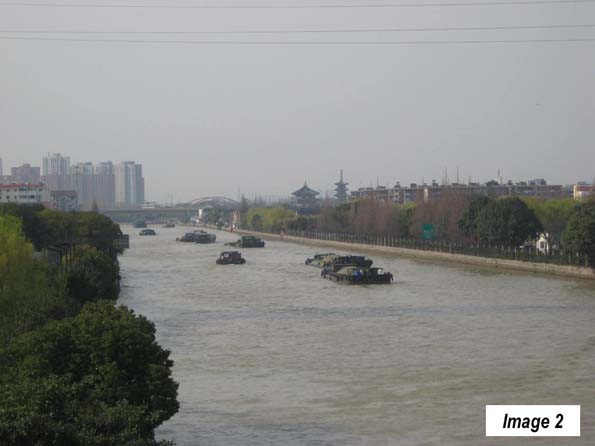
    The train travels west through Kunshan, an urban area of 1.9 million residents, part of Suzhou municipality, which also contains the Suzhou urban area (5.4 million). There are particularly good views of the Grand Canal in Suzhou (Image 2, from a previous visit). The Grand Canal was completed approximately 1,400 years ago and for centuries has provided a means for water transport between Hangzhou, to the south of Shanghai, across the Yangtze River and to Tianjin, near Beijing. It is the longest canal in the world, at 1,100 miles (1,800 kilometers).

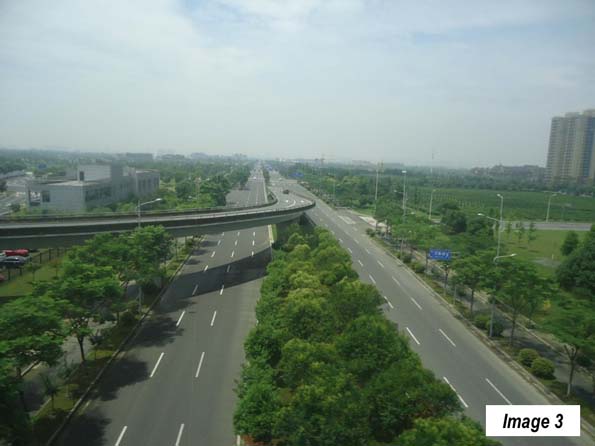
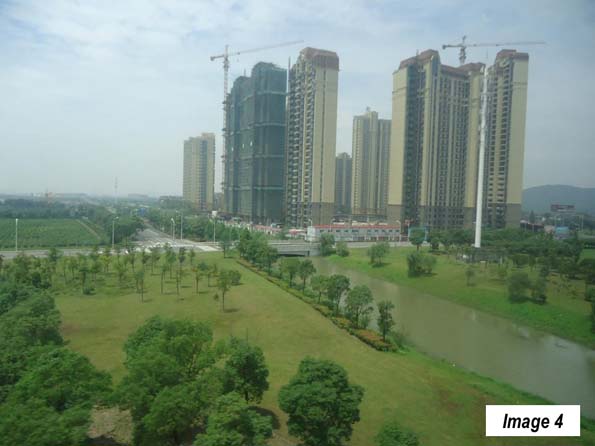
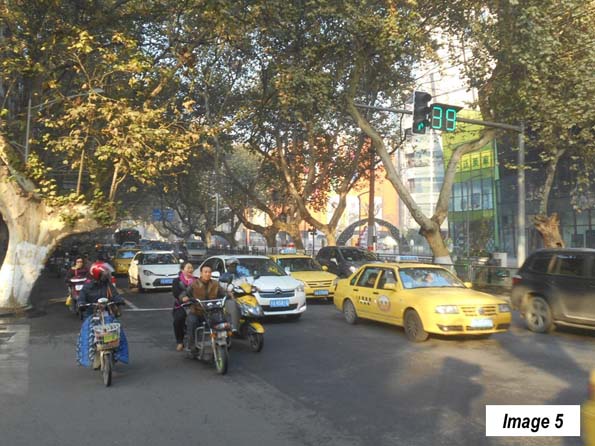
    From Suzhou, the train continues into Wuxi, an urban area of 3.7 million population (Images 3 and 4). The route continues into Changzhou (urban area population 3.7 million). Finally, is some open country, as the main route travels through a valley to the south of Zhenjiang to Nanjing, an urban area of 6.4 million population, which serves as the capital of Jiangsu. Nanjing was the former capital of China and its streets are lined and cooled in the summer by its "French trees" (Image 5, from a previous visit).
    Leaving Nanjing, the train crosses the Yangtze River and travel through largely agricultural country. It passes through the smaller Suzhou (Anhui province) of Nobel Literature Prize winner Pearl S. Buck, and then through Xuzhou, Jiangsu (1.3 million). In Xuzhou, I noted the elevated connections for the new rail line to Zhengzhou (and also saw them in Zhengzhou). Service will begin in September, cutting three hours off the Shanghai to Zhengzhou travel time, and placing historic tourist attraction Xi’an, with its Terracotta Army, within seven hours of Shanghai.

    The farmland continues to Jinan (3.9 million), the capital of Shandong province, which largely consists of the peninsula of the same name that forms the southern boundary of Bohai Bay. Just north of Jinan, the train crosses the second of China’s great rivers, the Yellow River (Image 6), which is again crossed north of Zhengzhou (below).

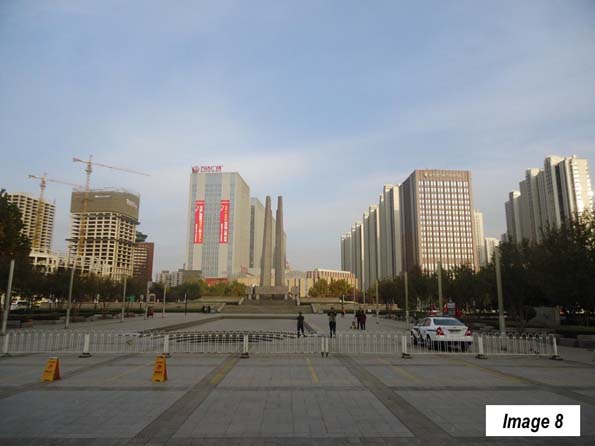
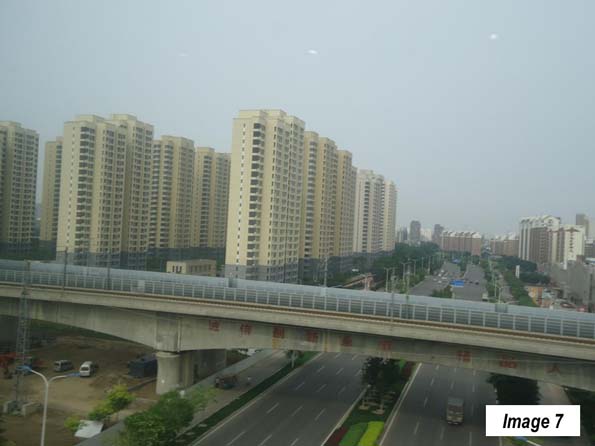
    Then there follows the longest stretch of agriculture between Shanghai and Beijing, most of the way to Tianjin (Image 7), an urban area of 11.3 million residents and is now the fastest growing large municipality in China, at more than four percent per year. Soon, we passed through Tangshan (2.4 million) which suffered a disastrous earthquake in 1976 but has been rebuilt (Image 8).

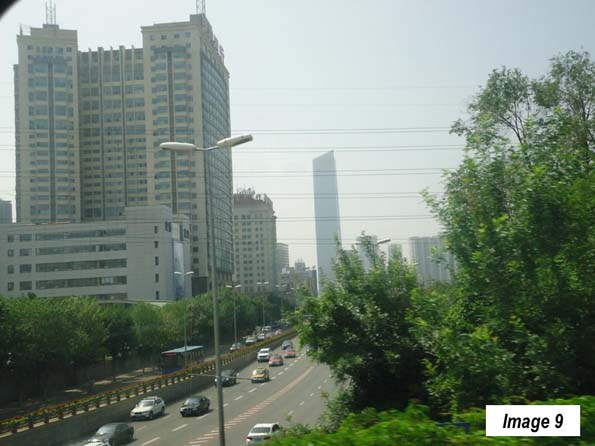
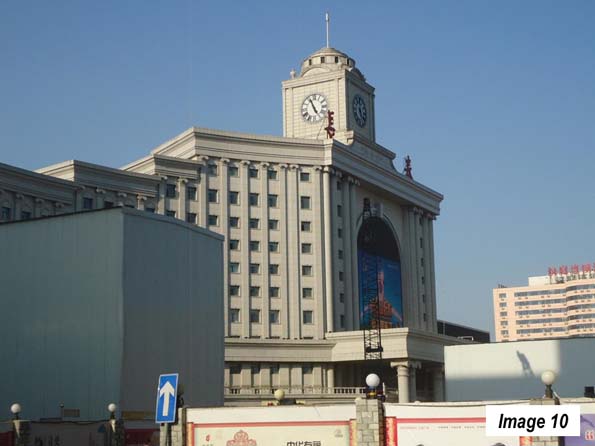
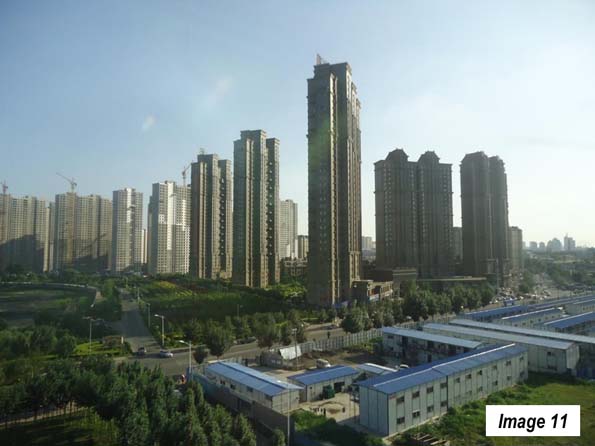
    The train continued northward to Shenyang (3.4 million), the capital of Liaoning (Image 9). Finally, the train reached the destination of Changchun Railway Station (Image 10), 1,500 miles (2,400 kilometers) and 11 hours from Shanghai. Changchun (Image 11) is the capital of Jilin province and has 3.4 million residents.

    Changchun is called the "automobile city," because the government placed the first automobile manufacturing plant here in the late 1950s. This was where the Red Flag limousine was built, favorite of government ministers and which carried President Richard Nixon around Beijing in his 1972 visit. My hotel in Ordos had a classic Red Flag on exhibition (Image 12). Now, automobile manufacturing is spread around the country and includes virtually all of the world’s leading brands. Last year, Chinese bought 21.1 million cars, compared to 17.5 million in the United States, both records.

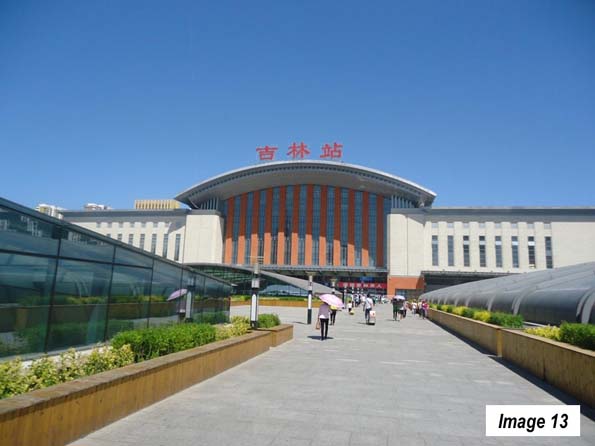
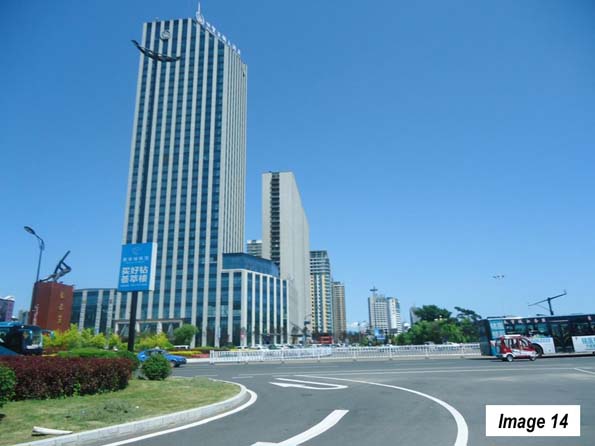
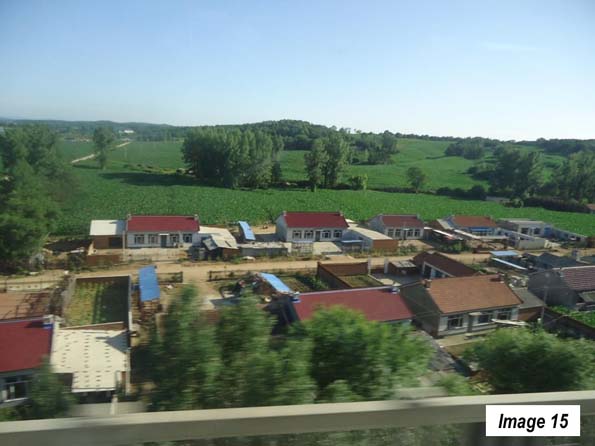
    Jilin, an urban area with 1.7 million residents,(Images 13, Jilin Railway Station & 14) is only 45 minutes away by train, separated by picturesque rolling agricultural country from Changchun (Images 15 & 16). The corn looks at least as good in Jilin as it does now in Illinois.

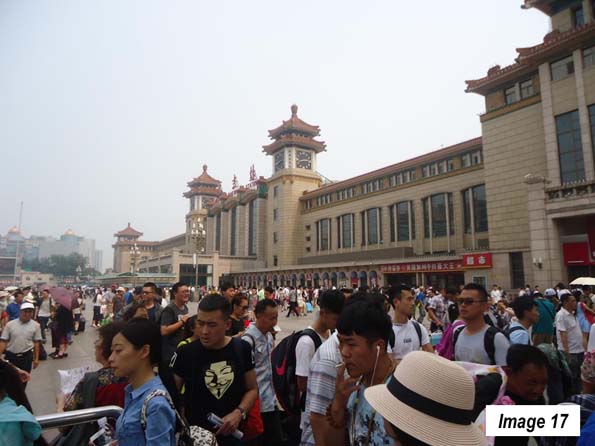
    A few days later I took the train from Changchun to Beijing South Railway Station (Image 17) to connect for the flight to Ordos, Inner Mongolia (See: Surprising Ordos: The Evolving Urban Form). Beijing is the nation’s second largest urban area, with 20.4 million residents.

    Flying back from Ordos, my next train trip was from Beijing West Railway Station. I could have traveled by subway, but since the view underground is not as good, traveled by taxi. Early Sunday morning, the traffic on the Third Ring Road from my hotel near the CCTV Tower (across town) was horrific.

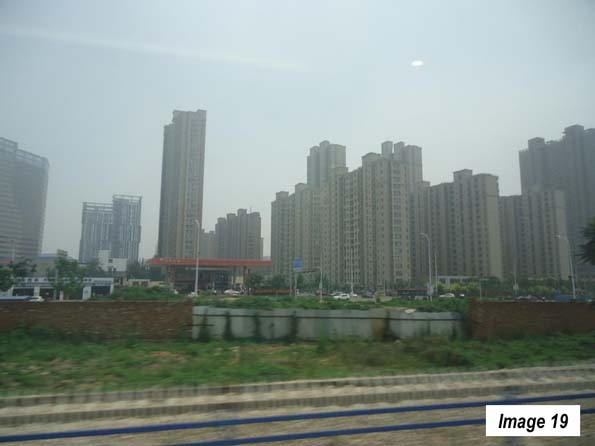
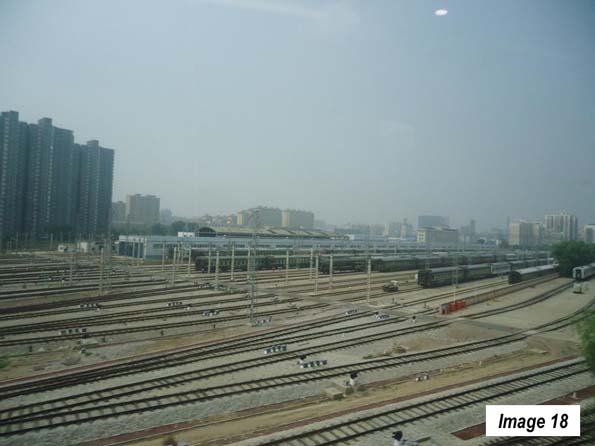
    The next train ride was to Nanchang, along the Beijing to Guangzhou line. This is the other principal north-south route though its traffic appears to be light compared to the Shanghai to Being route. The train traveled (Image 18) toward, Shijiazhuang, an urban area of 3.5 million residents and the capital of Hebei province (Images 19 and 20).
    Parts of these first three trips coursed through the planned Jin-Jing-Ji megacity, which will better integrate the urban areas between Beijing, Tangshan, Tianjin and Shijiazhuang.

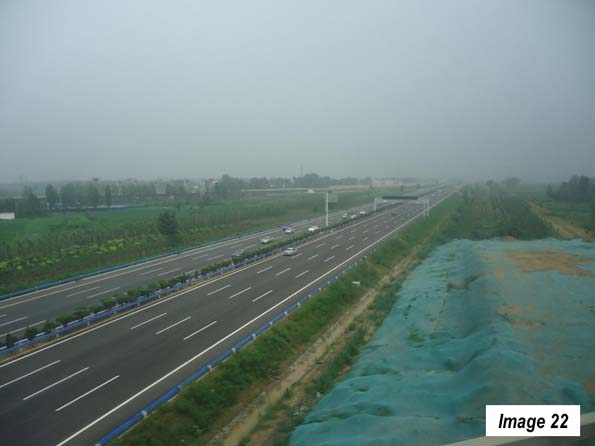
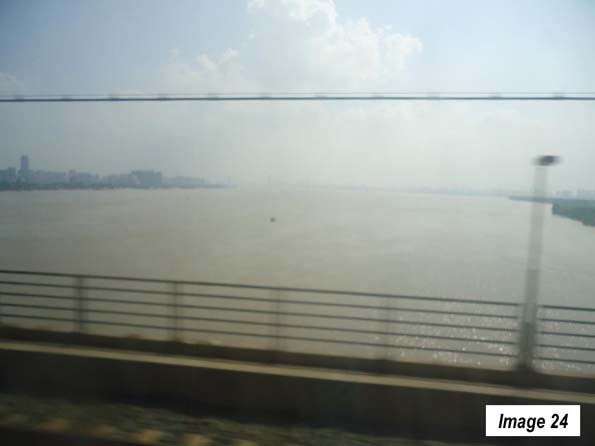
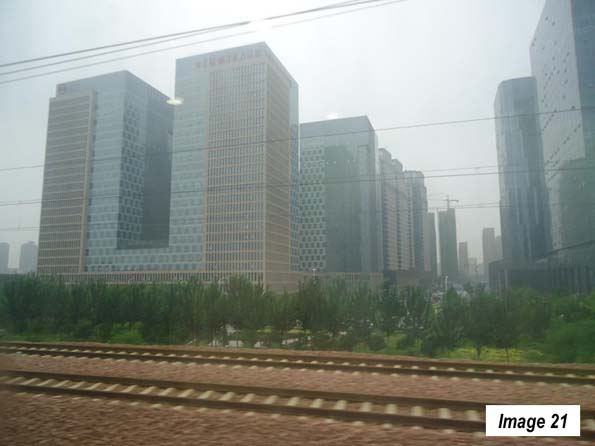
    Continuing south, the train stopped at Zhengzhou, the capital of Henan (5.8 million), with its impressive extension of the Zhengzhou new area and the new railway station (Images 21 & 22). The train then headed south toward Wuhan, (7.6 million residents), the capital of Hubei and  a heavy industrial area that is been called the "Chicago" of China. Before reaching Wuhan, there was attractive rolling scenery in northern Hubei (Image 23), then the Yangtze River crossing in Wuhan (Image 24). Just a few miles upriver (the direction of the camera shot), Chairman Mao, at 72 years old, is reputed to have swam across the Yangtze in 1966.

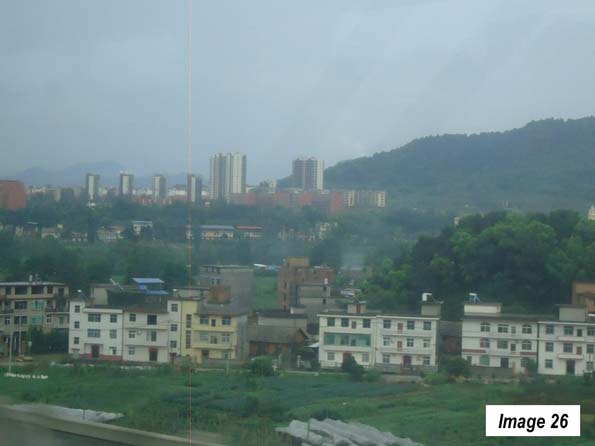
    The July greenery of central China was impressive. It continued into northern Hunan province (Image 25) and its capital of Changsha, an urban area of 3.8 million. In Changsha, the train diverted from the Beijing to Guangzhou line and turned eastward toward Nanchang. Along the way, the "peri-urban" development seemed to get more intense (Image 26). 
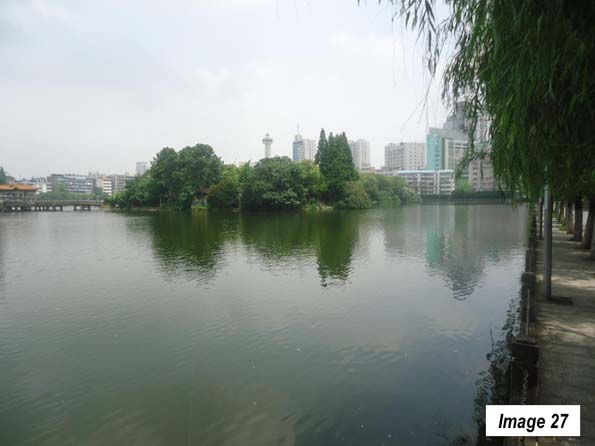
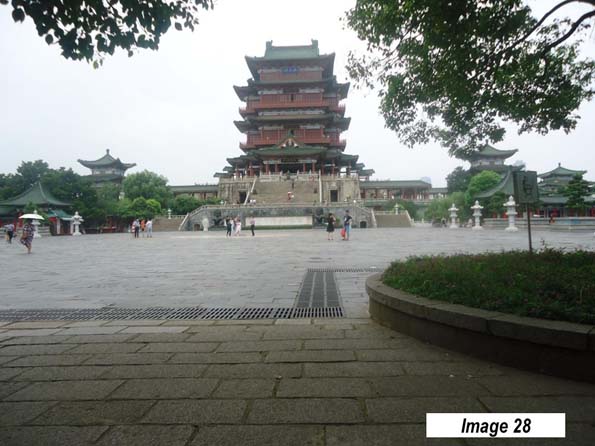
    The Nanchang urban area (Image 27) has a population of 2.8 million and sits on the Gan River, which eventually flows into the Yangtze, to the north. It is home of the Pavilion of Prince Teng, on the older east bank city, across from the newer development on the west bank (Image 28).

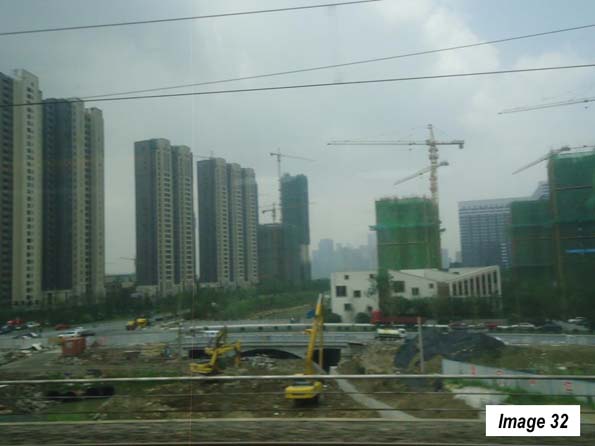
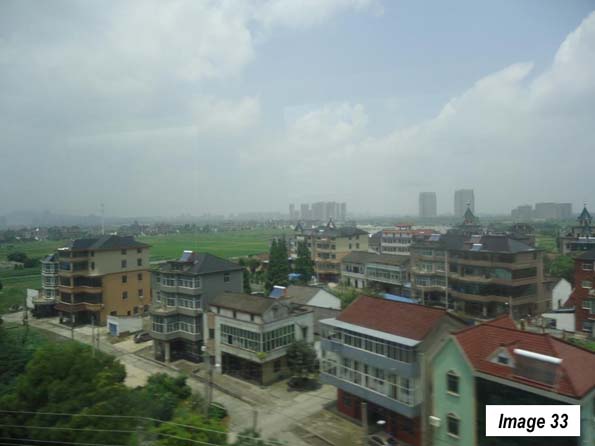
    A few days later, the last leg of the trip from Nanchang to Shanghai Hongqiao took less than four hours. Between Nanchang and Hangzhou, (7.6 million), the capital of Zhejiang, there was more greenery, rolling and mountain country and intense peri-urban development (Images 29-31). Hangzhou has been undergoing a huge construction boom (Image 32). It was less than one hour to Shanghai, and the peri-urban development continued to intensify (Image 33).

    All in all, the five train trips had covered more than 3,700 miles (6,000 kilometers) and passed through 14 provincial level jurisdictions.
    Trains

    The best trains in China are the "G" trains, the "D" trains, and the "C" trains, all of which are of European high-speed rail quality. The "G" trains have a top speed of more than 300 kilometers per hour. The "D" trains have a top speed of 250 kilometers per hour, while the "C" trains are shuttles, such as those operating between Tianjin and Beijing or Changchun and Jilin and tend to operate at 250 kilometers per hour or more.

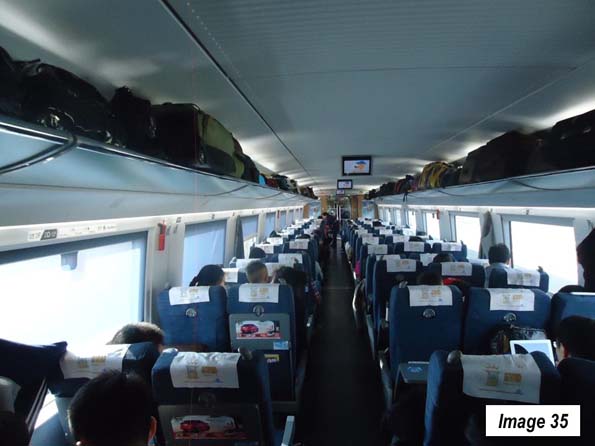
    All of these trains use similar equipment (Image 34). Image 35 is the inside of a 2nd class coach, which have with reclining seats and snack service. All of the trains have information displays in each car indicating train speed, time, etc. (Image 36). Stations may be central as in Tianjin or near-airport distances from the urban core, as in Jilin and Wuhan.

    Tickets

    Ticket purchase has become simple. Tickets can now be booked from virtually anywhere and paid for by credit card. US residents will pay a service fee of up to $6 per ticket. Confirmation documents are provided over the internet and can be presented at any station in China to receive the tickets all at once. My ticket pickup took no more than 10 minutes at the downtown Shanghai Railway Station.

    I would recommend using a travel agency that is located in China, has a toll-free 24 hour number from one’s home country, has agents with good English skills, and a local China number for use when there. I was very happy with travelchinaguide (https://www.travelchinaguide.com/), which meets this description. Train schedules can be accessed at https://www.travelchinaguide.com/china-trains/.

    Note: The urban area populations are as estimated in 2016, taken from Demographia World Urban Areas: 12th Annual Edition (2016).

    Wendell Cox is principal of Demographia, an international pubilc policy and demographics firm. He is a Senior Fellow of the Center for Opportunity Urbanism (US), Senior Fellow for Housing Affordability and Municipal Policy for the Frontier Centre for Public Policy (Canada), and a member of the Board of Advisors of the Center for Demographics and Policy at Chapman University (California). He is co-author of the "Demographia International Housing Affordability Survey" and author of "Demographia World Urban Areas" and "War on the Dream: How Anti-Sprawl Policy Threatens the Quality of Life." He was appointed to three terms on the Los Angeles County Transportation Commission, where he served with the leading city and county leadership as the only non-elected member. He served as a visiting professor at the Conservatoire National des Arts et Metiers, a national university in Paris.

    Photo: Changchun, Jilin, China: urban core (by author)