Blog

  • Where Manufacturing Is Thriving In The U.S.

    Throughout the dismal presidential campaign, the plight of America’s manufacturing sector played a central role. Yet despite all the concerns raised about factory jobs leaving the country, all but 18 of the country’s 70 largest metropolitan regions have seen an uptick in industrial employment since 2011. And despite the slowdown in car sales, the job count continues to expand, albeit more slowly. 

    Although the share of industrial jobs has shrunken from 10.5% of all nonfarm employment in 2005 to 8.5% today, manufacturing continues to have an outsized influence on regional economies, as is spelled out in the latest paper from the Center for Opportunity Urbanism. This stems in large part from the industrial sectors productivity gains since 2001– almost twice as much as the economy-wide average,  according to the Bureau of Labor Statistics — and it has a far higher multiplier effect (the boost it provides to local job and wealth creation) than virtually any other sector. Manufacturing generates $1.40 in economic activity for every dollar put in, according to the U.S. Bureau of Economic Analysis, far greater than the multiplier generated by business services, information, retail trade or finance. 

    To determine the places where manufacturing growth is the strongest, we looked at employment in the sector over time, assessing short-, medium- and long-term trends going back to 2005 and adding in variables for persistence and momentum as well. The results of these trends, based on three-month averages, are normalized and each MSA is assigned a score based on its relative position in each area. (For a more detailed description of the methodology, click here.) The rankings this year produced some surprising results, as well as some familiar stories. 

    Gallery: The U.S. Cities Where Manufacturing is Thriving

    Red States And The Rust Belt Win

    Nine of this year’s top 10 regions for manufacturing job growth are in red states, led by top-ranked Louisville-Jefferson County, which straddles the border between Kentucky and Indiana. Since 2011, manufacturing employment in the metropolitan area has expanded 30.2% to a total of 83,300 jobs, led by a resurgent auto industry that accounts for 27,000 jobs in the area. Due to a slowdown in auto sales, the job count may be peaking, but the hub of the Bluegrass State has had a pretty good ride. 

    Louisville is no outlier in the old Rust Belt. Second-ranked Grand Rapids-Wyoming, Mich., has logged a 22% gain in industrial jobs over the same span, spread across a range of sectors including aerospace, advanced metals, automotive, office furniture and medical device manufacturing. In the longtime furniture-making center, 20% of jobs are in manufacturing, the highest proportion among the nation’s largest metro areas 

    Our ranking features several other Midwestern cities on the industrial upswing: No. 4 Kansas City, Mo., No. 5 Warren-Troy-Farmington Hills, Mich., and No. 10 Detroit-Dearborn-Livonia. Taken together the latter two Michigan metro areas are now home to over 245,000 manufacturing jobs, up dramatically from the 205,500 manufacturing jobs they accounted for in 2011 and just below the 252,300 jobs they tallied a decade ago, before the Great Recession hit. 

    Among the other red state winners are Florida with third place West Palm Beach-Boca Raton-Delray Beach, where the industrial job count has grown 27.67% since 2011, in part from older industries such as food as well as technology, and No. 8 Orlando-Kissimmee-Sanford, where manufacturing growth is tied to the burgeoning aerospace sector. And then there’s the Beehive State’s economically buzzing capital of Salt Lake City in ninth place, where manufacturing job growth is spread along many industries, including aerospace, construction materials, metals and oil and gas-related manufacturing. 

    Blue State Surprises 

    Only one region outside the red states made it to the top 10: seventh-place Albany-Schenectady, N.Y. In a state and region that has been losing industrial jobs since the late 1960s, Albany has bucked the trend with a 17.6% gain in manufacturing jobs from 2011 to 2016 to to 25,800 positions. The area boasts factories that produce steam and gas turbines, computer chips and medical supplies — an impressive and diverse collection of cuttingedge industries. Meanwhile the industrial workforce in once-mighty New York City continues to whither. In 1950 the city had nearly a million manufacturing workers; now there are 74,100 after 4.7% shrinkage in 2016. New York ranks second to last in our survey among the 70 largest metro areas in the U.S. 

    Gallery: The 15 U.S. Cities Leading An Industrial Renaissance

     Even in heavily regulated California, which has been continuously shedding industrial jobs since 1988 (about 800,000 manufacturing jobs lost to date), some areas are showing surprising new strength. Take Oakland-Hayward-Berkeley, which has seen a 12.7% jump in industrial jobs to 89,600 since 2011, ranking it 13th on our list. The big player here appears to be Tesla, whose Fremont factory employs 6,500. The Fremont area has become something of a hotspot, with more than 900 manufacturing companies including AlterG and LAM Research. 

    Some believe it’s a byproduct of the Valley’s attempt to lay claim to “the Internet of things,” but other parts of the Bay Area are showing some signs of an industrial renaissance, including No. 18 San Francisco-Redwood City-South San Francisco and 22nd-ranked San Jose-Sunnyvale-Santa Clara. One big problem in some of these areas is attracting enough skilled workers given ultra-high housing prices. 

    Industrial Players In Decline 

    Many of the largest industrial areas are not doing so well. Houston, the nation’s third-largest manufacturing center, has seen industrial employment drop since 2011 by 5.49% to 220,900 jobs amid the skid in energy prices. Other oil patch economies have lost industrial jobs, including No. 57 Oklahoma City and No. 64 New Orleans-Metairie, La. Hopefully improved conditions for energy companies, particularly under President Trump, may improve prospects there as well. 

     It’s somewhat harder to find much hope for the nation’s two largest industrial regions. The Chicago-Arlington-Naperville region ranks 56th, having lost 1.85% of its industrial jobs since 2011, continuing decades of decline. Manufacturing in the City of Broad Shoulders has slumped from just under a million jobs in 1966 to 520,000 in 1990, 465,000 in 2000 and 281,000 today 

    Even worse is the performance of Los Angeles-Glendale-Long Beach, which still has the most industrial jobs in the nation, some 356,000. Since 2011, the region has lost 3.47% of its industrial jobs, and 2.10% last year alone. On paper the L.A. region should be benefiting from hosting the headquarters of Elon Musk’s SpaceX and buzzy startups like Hyperloop and AIO Robotics. But whatever is being gained by way of these companies has been more than canceled out by downsizing, outsourcing and automation across the sector, as well as continuing losses in the aerospace and apparel industries. 

    Ultimately the future of high-cost metro areas like L.A. and the Bay Area may rest to a surprising extent on their ability to link up with cuttingedge tech industries. Elsewhere lowercost regions should experience some continued growth as the current presidential administration seeks to encourage more on-shoring of basic production.

    This piece originally appeared on Forbes.

    Joel Kotkin is executive editor of NewGeography.com. He is the Roger Hobbs Distinguished Fellow in Urban Studies at Chapman University and executive director of the Houston-based Center for Opportunity Urbanism. His newest book is The Human City: Urbanism for the rest of us. He is also author of The New Class ConflictThe City: A Global History, and The Next Hundred Million: America in 2050. He lives in Orange County, CA.

    Dr. Michael Shires primary areas of teaching and research include state, regional and local policy; technology and democracy; higher education policy; strategic, political and organizational issues in public policy; and quantitative analysis. He often serves as a consultant to local and state government on issues related to finance, education policy and governance. Dr. Shires has been quoted as an expert in various publications including USA TodayNewsweekThe EconomistThe Sacramento Bee, San Francisco Chronicle, and LA Times. He has also appeared as a guest commentator on CNN, KTLA and KCAL to name a few.

    Photo by Industrial Traffic.com, via Flickr, using CC License.
  • California’s Descent to Socialism

    California is widely celebrated as the fount of technical, cultural and political innovation. Now we seem primed to outdo even ourselves, creating a new kind of socialism that, in the end, more resembles feudalism than social democracy.

    The new consensus is being pushed by, among others, hedge-fund-billionaire-turned-green-patriarch Tom Steyer. The financier now insists that, to reverse our worsening inequality, we must double down on environmental and land-use regulation, and make up for it by boosting subsidies for the struggling poor and middle class. This new progressive synthesis promises not upward mobility and independence, but rather the prospect of turning most Californians into either tax slaves or dependent serfs.

    California’s progressive regime of severe land-use controls has helped to make the state among the most unaffordable in the nation, driving homeownership rates to the lowest levels since the 1940s. It has also spurred a steady hegira of middle-aged, middle-class families — the kind of tax-burdened people Gov. Jerry Brown now denounces as “freeloaders” — from the state. They may have access to smartphones and virtual reality, but the increasingly propertyless masses seem destined to live in the kind of cramped conditions that their parents and grandparents had escaped decades earlier.

    A green people’s republic?

    There is some irony in a new kind of socialism blessed by some of the world’s richest people. The new policy framework is driven, in large part, by a desire to assume world leadership on climate-related issues. The biggest losers will be manufacturing, energy and homebuilding workers, who will see their jobs headed to other states and countries.

    Under the new socialism, expect more controls over the agribusiness sector, notably the cattle industry, California’s original boom industry, which will be punished for its cows’ flatulence. Limits on building in the periphery of cities also threaten future growth in construction employment, once the new regulations are fully in place.

    Sadly, these steps don’t actually do anything for the climate, given the state’s already low carbon footprint and the fact that the people and firms driven out of the state tend to simply expand their carbon footprints elsewhere in their new homes. But effectiveness is not the motivation here. Instead, “combating climate change” has become an opportunity for Brown, Steyer and the Sacramento bureaucracy to perform a passion play, where they preen as saviors of the planet, with the unlikable President Donald Trump playing his role as the devil incarnate. In following with this line of reasoning, Bay Area officials and environmental activists are even proposing a campaign to promote meatless meals. It’s Gaia meets Lent.

    Read the entire piece at The Orange County Register.

    Joel Kotkin is executive editor of NewGeography.com. He is the Roger Hobbs Distinguished Fellow in Urban Studies at Chapman University and executive director of the Houston-based Center for Opportunity Urbanism. His newest book is The Human City: Urbanism for the rest of us. He is also author of The New Class ConflictThe City: A Global History, and The Next Hundred Million: America in 2050. He lives in Orange County, CA.

    Photo by Fortune Live Media, via Flickr, using CC License.

  • How Does Housing Stock Affect Urban Revitalization?

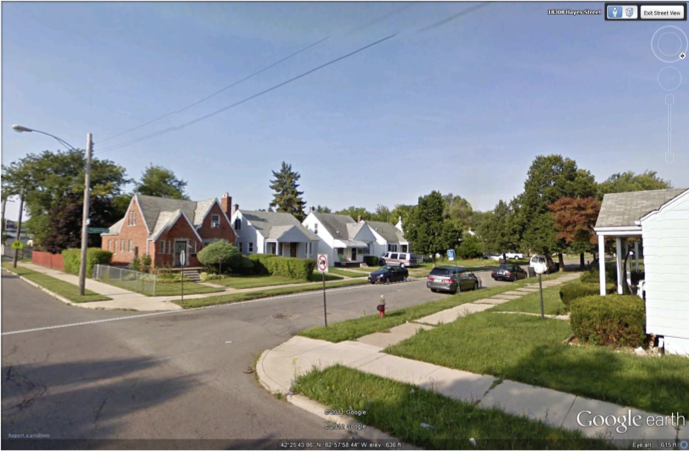
    The second of Pete Saunders’ nine reasons why Detroit failed is “poor housing stock,” particularly its overweighting towards small, early postwar cottages. Here’s a sample:


    Here’s what Pete had to say:

    Detroit may be well-known for its so-called ruins, but much of the city is relentlessly covered with small, Cape Cod-style, 3-bedroom and one-bath single family homes on slabs that are not in keeping with contemporary standards for size and quality…..The truth, however, is that Detroit may have one of the greatest concentrations of post-World War II tract housing of any major U.S. city….True, Detroit has more than its share of abandoned ruins that negatively impact housing prices. But it also has many more homes that simply don’t generate the demand that higher quality housing would. That is a major contributor to the city’s abundance of very cheap housing.

    I have often been struck by the same thing in Philadelphia. There are some districts of great buildings, but most of the city is made up of mile after mile of two-story, very small row houses. Here’s a snap I took in the Kensington neighborhood that provides a sample.

    This is decent density of these to be sure. However, keep in mind that most of these row houses contain a single unit. The Upper West Side brownstone I live in has been converted into ten units. Also, many of these rowhouse units are extremely shallow. Here’s a picture I found online that illustrates a typical depth.

    Photo credit: Flickr/pwbaker CC BY-NC 2.0

    As it happens, there has been some redevelopment activity in Kensington, both in residential and industrial spaces. (Some neighborhoods nearby are seeing significant redevelopment).

    Someone I know recently bought and renovated a rowhouse in the neighborhood, so I got to tour it. It’s a two-bedroom unit, but very small. It’s barely bigger than your average one bedroom apartment. Unsurprisingly, the person who bought it is in her 20s and single.

    As nice as this unit was, it’s basically a starter home, much like those Detroit Cape Cods. Cities need to have housing like that, but if it is overwhelmingly dominant, that’s not healthy.

    It’s similar to how so many downtowns are seeing tons of Millennial targeting apartment construction. Older families can have trouble finding housing in these areas because there isn’t great housing to take you through your full lifecycle.

    Philadelphia should be fine in the near term. The city has great bones and I really find it compelling in a lot of ways. But I wonder if this type of housing stock is one reason the city has seen less demand than other old major tier one urban centers with great transit.

    I put out a poll on Twitter about this and most people didn’t seem to agree with me on the potential negative of being overweight very small rowhouses. We will see how this plays out for Philly.

    Aaron M. Renn is a senior fellow at the Manhattan Institute, a contributing editor of City Journal, and an economic development columnist for Governing magazine. He focuses on ways to help America’s cities thrive in an ever more complex, competitive, globalized, and diverse twenty-first century. During Renn’s 15-year career in management and technology consulting, he was a partner at Accenture and held several technology strategy roles and directed multimillion-dollar global technology implementations. He has contributed to The Guardian, Forbes.com, and numerous other publications. Renn holds a B.S. from Indiana University, where he coauthored an early social-networking platform in 1991.

    This piece originally appeared on Urbanophile.

    Top photo by Aaron M. Renn.

  • Is Your Transportation Project a Boondoggle?

    Tony Dutzik, writing for the progressive Frontier Group, offers a ten ways of recognizing whether a highway project is a boondoggle. A few of his ideas are valid: a highway widening project aimed simply at creating a continuous four-lane road even when there is no demand for four lanes seems silly. But most of his suggestions are wrong: for example, he thinks that, if environmentalists have delayed a project long enough, that proves it shouldn’t be built, when in fact all it proves is that our current planning process allows people to indefinitely delay projects for little or no reason.

    In response, I’d like to offer my own list of ten ways to determine whether a transportation project is a boondoggle. His list focused on highways, though some of his suggestions (“It is sold as needed for economic development”) are valid for transit. Although my list starts out with transit projects, it eventually applies to all types of transportation projects.

    1. It’s a streetcar. Streetcar technology is 130 years old and has since been replaced by less expensive, more flexible buses. Streetcars being built today are no faster and are far more expensive than the ones built 130 years ago. All new streetcar projects and rehabilitations of existing streetcar lines are boondoggles.

    2. It’s light rail. What we call light rail is a slight improvement on streetcars developed in the 1930s, meaning it is “only” 80 years old. Light-rail lines constructed today are no better, and far more expensive, than ones built in the 1930s. Buses can move more people faster and for far less money. All light-rail lines, new and rehabilitations, are boondoggles.

    3. It’s commuter rail outside of the New York metropolitan area. New York City is the only city in America with jobs and populations so dense that buses can’t substitute for rail. Elsewhere, new commuter rail lines in places such as Dallas-Ft. Worth, Nashville, Orlando, Salt Lake City, South Florida, and elsewhere are so ridiculously expensive and carry so few commuters that in many cases it would have been less expensive to give every daily round-trip commuter a new Toyota Prius every single year for the life of the train. This also includes what the FTA calls “hybrid rail“–Diesel-powered railcars operating on commuter-rail or light-rail schedules. The New York exception doesn’t mean it makes sense to start new commuter trains there, but maintenance and rehabilitation of existing trains may be worthwhile (though see #9 below). All new commuter trains, and rehabilitations of trains outside of New York, are boondoggles.

    4. It’s rapid transit, a.k.a. heavy rail, outside of New York City. Again with the exception of New York (though this time the city, not the metro area), electric-powered rapid transit–which was invented in the early 1890s by the same man who perfected the electric streetcar–has been rendered obsolete by buses. A dedicated busway can move more people at higher speeds and lower costs than the Chicago Transit Authority or Washington Metro. No new rapid-transit lines should be built anywhere–even New York–and as older rapid-transit lines wear out–except in New York (again, see #9 below)–they should be replaced by buses. All new rapid-transit lines, and rehabilitations of rapid transit outside of New York, are boondoggles.

    5. It’s a dedicated busway. I just wrote that dedicated busways can replace rapid transit, but very few places in America need dedicated busways. Instead, build high-occupancy/toll lanes, and as bus traffic increases, raise the tolls to insure the lanes never get congested. At some point, the tolls may get so high that they effectively become dedicated busways, but at that point the buses will be moving far more people than almost any rail line outside of, again, New York City. All dedicated busways are boondoggles.

    6. It’s an intercity passenger train. Conventional speed, higher speed, high speed, it doesn’t matter: intercity passenger trains were rendered obsolete by cars, buses, and planes. Their infrastructure and maintenance costs are much higher than any of the alternatives, and their operating costs will always be higher than at least some of the alternatives. Amtrak claims its Northeast Corridor is profitable, but that’s only by pretending maintenance and depreciation don’t count. Railroads make sense for freight; they no longer make sense for passengers. All intercity passenger trains are boondoggles.

    7. It’s a smart highway. Various electronics companies want the government to spend hundreds of billions of dollars building intelligent transportation systems into roads to prepare the way for self-driving cars. But this is dumb; it is much more cost-effective to put all the smarts in the cars and keep the infrastructure simple, especially since local governments can’t afford to maintain the infrastructure they have now, much less smart infrastructure. Since cars are replaced more often than infrastructure, this also enables more rapid updates in technology. All intelligent highway projects that require vehicle-to-infrastructure communications are boondoggles.

    8. It’s a bike lane project that reduces the number of lanes for automobiles. Many cities are attempting to encourage cycling while simultaneously discouraging driving by converting auto lanes to bike lanes, such as by changing a four-lane street to a two-lane street with a center left-turn lane and two bike lanes. This probably doesn’t increase bicycle safety, but it does increase traffic congestion. It is nearly alway possible to find parallel local streets that can be turned into bicycle boulevards without impeding through or local auto traffic. All bicycle projects that reduce the capacity of arterial or collector streets to move automobiles are boondoggles.

    9. It can’t be paid for out of user fees. The primary beneficiaries of all transportation projects are the transportation users. Paying for transportation out of user fees is equitable since it is only fair for users to pay for what they use. More important, user fees send signals to both users and transportation providers informing users of when and where travel is most cost effective and informing providers of where new transportation facilities might be needed. User fees also impose a discipline on both providers and users that prevents boondoggles from taking place. Any transportation facility that can’t be paid for out of user fees is a boondoggle.

    10. It doesn’t generate increased travel or shipping. Anti-highway groups complain that new roads “induce” more driving, and they think that is a bad thing. They advocate instead for transit projects whose users were former auto drivers. They have it backwards. Transportation projects that merely transfer users from one mode of travel to another more expensive mode are a drag on society. Projects that generate new travel create new economic opportunities. Only by generating new travel can projects stimulate economic development. Given a choice between projects that can be paid for out of user fees, the ones that generate the most new travel should be funded first.

    In truth, the last two points cover everything. But the first eight are important because there is so much pressure to do those things that are actually boondoggles.

    This piece first appeared on The Antiplanner.

    Randal O’Toole is a senior fellow with the Cato Institute specializing in land use and transportation policy. He has written several books demonstrating the futility of government planning. Prior to working for Cato, he taught environmental economics at Yale, UC Berkeley, and Utah State University.

    Photo by Josh Truelson (San Diego Trolley) [CC BY-SA 2.0], via Wikimedia Commons

  • Las Vegas Lessons, Part 1

    I spent much of last week in Las Vegas for the International Council of Shopping Centers’ RECON 2017, the world’s largest real estate convention. It’s a gathering for developers, brokers, property owners, retailers, architects, landscape designers, construction companies, municipalities and more to get together to discuss real estate possibilities, in the one city that owes its very existence to aggressive real estate ventures.

    I had a good time, at least as much as I could; being there for a convention is far different from being there for pleasure. In fact, I’ve been to Vegas many times before, but always within a business context and never for pleasure. Also, I had not been in about 15 years, which is important for two reasons: 1) in Vegas time, with the rapid pace of development there, 15 years is an eternity; and 2) it completely predates the establishment of this blog, so I can include my thoughts on the city in this forum.

    In that vein, here’s a Corner Side Yard take on the Sin City — part urbanist, part sociologist, part economist, all observational — that details my thoughts on a truly unique place.

    The Strip and the city of Las Vegas are two entirely different entities. I think this subtle distinction, which few outsiders really know about, is key to understanding Las Vegas’ growth and development. Hal Rothman’s book Neon Metropolis, published in 2003, notes that the Las Vegas Valley grew in three distinct phases: the Union Pacific Railroad, the construction of Hoover Dam and military investment enter the picture prior to 1945; organized crime arrives and Nevada legalizes gambling, driving investment and perceptions through the 1960s; and the passage of two Corporate Gaming Acts in 1967 and 1969, which drew corporate investment into the area (partly as a means to dilute criminal investment). In that second phase, and continuing into the third, casino developers sought to avoid city development and permitting regulations by setting up outside of the city boundaries, which is at Sahara Avenue on Las Vegas Boulevard (aka the Strip). What most people recognize as Las Vegas is actually the unincorporated communiites of Winchester, Paradise and Spring Valley — significantly sized communities of their own, but under the jurisdiction of Clark County, Nevada. The county, which has two-thirds of Nevadans within its boundaries, takes a far more laissez-faire approach to development than the city of Las Vegas does, and directly reaps the benefits of development without having to pass through the city. That being said…

    The Strip is a great pedestrian experience. Anyone familiar with the Strip knows that a stroll of the roadway is an experience unto itself. From north to south, the Strip builds as a visual spectacle beginning at the Stratosphere toward Circus Circus and continuing to the Wynn and Encore, before reaching a crescendo at the intersection of the Strip with Flamingo Road, where the Bellagio, the Venetian, the Flamingo, Caesar’s Palace, Paris, and Planet Hollywood converge (see the picture above). The dense concentration of resorts continues southward past the MGM Grand to include the Tropicana, the Escalibur, the Luxor, and Mandalay Bay. Architects and urbanists Robert Venturi, Denise Scott Brown and Scott Izenour wrote of the Strip in their 1972 book Learning From Las Vegas, and one of their criticisms at the time was the isolation of the resorts via massive parking lots. If anything, the developers should be commended for revising their thinking on the Strip by creating the pedestrian environment. Yes, it’s gaudy, yes, it’s a jarring juxtaposition of architectural styles, but it does what so many other cities still fail to do — bring the experience right to the street. A great addition to the Strip is the usage of escalators and pedestrian bridges to minimize pedestrian interaction with the high-traffic Strip, serving a dual purpose as entrances into connected resorts. Which means…

    The Strip is an exclusively private space. It might be better to think of the Strip as the world’s largest mall, because its private management reminds me of enclosed shopping centers, writ very large. It’s clear that every inch of the Strip has been thought out as a way to collect and divert traffic into the resorts — the Monorail stops, the signage on the pedestrian walkways. If you’re looking dial down the Strip’s intensity through quiet public open spaces, you’re out of luck. The best you can do is find something inside one of the many resorts.

    Downtown Las Vegas is quite different from the Strip. Continue northward on Las Vegas Boulevard and eventually you will enter downtown Las Vegas. This is where the earliest hotels and casinos were established, the ones that drew visitors in by railroad as opposed to automobile. Resorts here are smaller and less overwhelming. It has a long-standing reputation for being a little more downscale, even seedier, than the Strip further south, but the city has worked hard to clean up its image and make it a fantastic destination in its own right. The Fremont Street Experience, an open-air pedestrian mall with a super-sized LED canopy display, unites several of the downtown casinos with an experience that’s completely different from the more well-known Strip. However, downtown Las Vegas probably maintains a secondary status in the Las Vegas Valley because…

    There are poor linkages between downtown Las Vegas and the Strip. The Fremont Street Experience in downtown Las Vegas sits about two miles north of the city’s southern boundary, where the Stratosphere hotel and casino are located. Downtown is about three miles north of where the real action and activity begins near the Wynn and Encore resorts. In between are the kinds of warehousing, light industrial, marginal commercial and grimy multifamily structures often found on the outskirts of downtown areas. There are wedding chapels, auto repair shops, convenience stores, and the like. There’s nothing that easily draws visitors between the Strip and downtown. Why?

    The north end of the Strip is plagued with high-profile failed projects. The Fountainbleau Resort Las Vegas and Echelon Place stand out as two high-profile casualties of the Great Recession, proposed just as the Strip was developing a continuous string of modern resorts that would reach from the Strip all the way into downtown. The Fountainbleau, a $2.8 billion project first proposed in 2005 with the second tallest structure in the Las Vegas Valley, managed to reach 70 percent completion before construction stopped in 2009 when the project went into bankruptcy. The $7.2 billion Echelon Place was announced in 2004, and the implosion of the Stardust Hotel and Casino, which it was to replace, happened in 2007. However, there were fits and starts in its construction due to the economy, until the developers sold the site in 2013. The new owners are proposing a new venture called Resorts World Las Vegas, but that project too has been plagued with delays. It’s clear that had these two projects been developed, they would have had a catalytic impact on further development northward toward downtown.

    That’s enough about the city and the Strip; I’ll follow up soon with more thoughts on the overall region’s built environment, economy and potential future.

    This piece originally appeared on The Corner Side Yard.

    Pete Saunders is a Detroit native who has worked as a public and private sector urban planner in the Chicago area for more than twenty years.  He is also the author of “The Corner Side Yard,” an urban planning blog that focuses on the redevelopment and revitalization of Rust Belt cities.

    Photo by Carol M. Highsmith [Public domain], via Wikimedia Commons

  • America’s Most Suburbanized Cities

    Recently, The Wall Street Journal and Newsday, in a photographic spread, trumpeted the 70th anniversary of Levittown, the New York suburban development that provided the model for much of the rapid suburbanization that occurred after the Second World War in the United States. Levittown’s production line building also set the stage for the similar suburbs of cities in Canada, Australia, New Zealand and elsewhere.

    Over the last seven decades, the United States has become a predominantly suburban nation. In 2011-2015, 85 percent of the population in the 53 major metropolitan areas (over 1,000,000 population) lived in the suburbs or exurbs. This is based on analysis at the small area level (zip code tabulation areas) from the American Community Survey that classifies population based on demographic data (Figure 1).

    Generally similar findings have been made about Canada and Australia by research teams led by Professor David L. A. Gordon of Queen’s University in Kingston, Ontario. Gordon and his Canadian team pioneered this type of analysis, which is not dependent on core municipality versus surrounding area analysis. Core municipalities often do not reflect the realities of metropolitan areas because they vary so greatly in their share of metropolitan area population. For example, the city of Atlanta has only 8 percent of the metropolitan area population, while San Antonio has more than 60 percent of the metropolitan area population.

    Suburban Nation: United States

    Many people, including urban analysts, are unaware of the extent to which American cities have become suburbanized. But the former mono-centricity that characterized most metropolitan areas at the end of World War II has been replaced first by multi-centered suburban employment development (polycentricity) and more recently by dispersion of employment. As early as 2000, more people worked in dispersed worksites in the major metropolitan areas, including New York, than in the downtowns (CBD’s) and suburban office centers, according to research by Bumsoo Lee and Peter Gordon. City Sector Model analysis shows that CBDs lost two percent of their market share from 2000 to 2015, based on a City Sector Analysis of County Business Patterns data. It seems likely that the trend of dispersion has continued (Figure 2).

    We took a look at the population distribution of the 53 major metropolitan areas (those with more than 1,000,000 population) to rate down by the extent to which they are suburban. The City Sector Model classifies the population of any area where there is an employment density of 20,000 or more as a CBD considers the urban core inner ring to have population densities exceeding 7500 per square mile. Such densities were characteristic of pre-automobile urban areas in the United States. According to estimates prepared by the Urban Land Institute, in 1920 the 24 urban areas with more 250,000 residents had an average population density of 7500.

    As it turns out, 10 metropolitan areas have virtually no urban core population by this definition. To rank these metropolitan areas by their extent of suburbanization, we broke the 10 way tie by ranking the metropolitan areas by the extent of their exurban population. Exurban areas have very low population densities (250 per square mile or less) and are generally outside the urban area, which includes all contiguous built up area, surrounded by rural territory.

    Seven of the 10 most suburban cities are in three states. Three are in Florida and two each in North Carolina and Arizona. They are listed in the Table 1, and data is provided for all 53 in Table 2.

    Table 1
    Most Suburban Cities: (Metroplitan Areas)
    1 Charlotte, NC-SC
    2 Riverside-San Bernardino, CA
    3 Raleigh, NC
    4 Orlando, FL
    5 Birmingham, AL
    6 Jacksonville, FL
    7 Phoenix, AZ
    8 San Antonio, TX
    9 Tampa-St. Petersburg, FL
    10 Tucson, AZ
    Out of 53 with more than 1,000,000 population

    The Most Suburban: Charlotte, NC-SC

    Charlotte turns out to be the country’s most suburban metropolitan area. The exurban commuting patterns of Charlotte expanded substantially over the 2000 to 2010 decade, which resulted in the largest geographic expansion of any major metropolitan area. Its exurban population is 51 percent and its urban population density is approximately 1,700.

    2nd Most Suburban: Riverside-San Bernardino, CA

    Second ranked Riverside-San Bernardino, which in many ways is an extension of the Los Angeles metropolitan area (and is included in the Los Angeles combined statistical area), ranked as the second most suburban city. However, like other California cities, Riverside-San Bernardino is comparatively dense as an urban area, ranking above both Chicago and world renown densification model Portland as the 11th densest major urban area in the nation.

    3rd Most Suburban: Raleigh, NC

    At the opposite end of the density scale is third ranked Raleigh, a high tech center with an exurban population of 42 percent. Raleigh has an urban area population density of approximately 1,700, about the same as top ranked Charlotte and 16th ranked Atlanta.

    4th Most Suburban: Orlando, FL

    Fourth ranked Orlando has an exurban population of 34 percent and is suburban by nature. This is not surprising considering that it is virtually all new, having principally been developed since Walt Disney World made its decision to locate there and other entertainment venues followed.

    5th Most Suburban: Birmingham, AL

    Fifth ranked Birmingham, Alabama’s largest city, had far slower growth than most major metropolitan areas of the South. In 1950, the metropolitan population was approximately 20 percent behind Atlanta, according to the 1950 census. Now, virtually all-suburban Atlanta has grown to nearly 5 times that of Birmingham since that time. Even so, Birmingham has expanded to have the lowest density of any principal urban area in a major metropolitan area.

    6th Most Suburban: Jacksonville, FL

    Sixth ranked Jacksonville, another all-suburban metropolitan area has an exurban population of 25 percent.

    7th Most Suburban: Phoenix, AZ

    Phoenix, like Orlando is virtually all a postwar product. With its 100 percent suburban population, 19 percent of it is in the exurbs ranking Phoenix as seventh most suburban. Phoenix is the largest among the all-suburban cities, with more than 4.6 million residents and is likely to displace San Francisco to become the nation’s 11th largest metropolitan area this year, and could take 10th position away from Boston by the 2020 Census.

    8th Most Suburban: San Antonio, TX

    San Antonio, ranked as eighth most suburban, with an exurban population of 17 percent.

    9th Most Suburban: Tampa-St. Petersburg, FL

    Tampa – St. Petersburg ranks as the ninth most suburban city, with a 14 percent exurban population. Like San Antonio, Tampa has a comparatively strong downtown area, but its inner densities do not reach the levels necessary for population to be classified as urban core.

    10th Most Suburban: Tucson, AZ

    Tucson, the newest entry among the nations 53 major metropolitan areas takes the 10th position and rounds out the cities that are 100 percent suburban.

    Other Cities

    Nashville and San Jose ranked 11th, but are very different. Nashville, as the capital of Tennessee, has a comparatively strong CBD, but the urban area is one of the least dense. On the other hand, San Jose, which is really an extension of the San Francisco metropolitan area and a part of the San Francisco Bay combined statistical area has a weak CBD, but a very high urban area density. San Jose ranks after only Los Angeles and San Francisco in its urban density and ahead of the sprawling New York urban area.

    There are a total of 34 metropolitan areas that are 95 percent or more suburban. These include examples such as Atlanta, at 99.2 percent San Diego at 98.9 percent Sacramento at 98.3 percent, Austin and 97.9 percent, Denver at 96.9 percent and Portland at 90.0 percent.

    Los Angeles, with the nation’s densest urban area, is 89.4 percent suburban, nearly matched by Seattle’s 89.3 percent.

    A number of older cities are overwhelmingly suburban as well, such as St. Louis at 88.4 suburban, Minneapolis-St. Paul at 86.8 percent, Washington at 83.3 percent, and Milwaukee at 76.6 percent. Chicago, Philadelphia, Providence, San Francisco – Oakland and Buffalo are all more than 70 percent suburban.

    Boston and New York are considerably less suburban than the other 51 major metropolitan areas. Boston is 64.3 percent suburban, while New York is the only major metropolitan area that has a larger urban core population than its suburban and exurban area. New York is only 46.7 percent suburban.

    Fast Growing and Automobile Oriented

    As with all suburban areas, these suburban cities are automobile oriented. The journey to work transit market shares average 1.7 percent, one third of the national average for all areas. They are also among the fastest growing, with six ranking in the top 10 for 2010 to 2016 growth. A close look shows that the American urban form is changing, but not in ways commonly discussed among planners, urban land speculators and many academics.

    Table 2
    Cities (Metropolitan Areas) Ranked by Extent of Suburbanization
    Major Metropolitan Areas: 2011-2015
    Share (%) of Metropolitan Population by Sector
    Rank Metropolitan Area % Suburban CBD Urban Core: Inner Ring Earlier Suburbs Later Suburbs Exurbs
    1 Charlotte, NC-SC 100.0% 0.0% 0.0% 10.2% 39.2% 50.6%
    2 Riverside-San Bernardino, CA 100.0% 0.0% 0.0% 28.9% 29.6% 41.5%
    3 Raleigh, NC 100.0% 0.0% 0.0% 7.4% 56.8% 35.8%
    4 Orlando, FL 100.0% 0.0% 0.0% 15.7% 50.6% 33.7%
    5 Birmingham, AL 100.0% 0.0% 0.0% 41.6% 25.2% 33.2%
    6 Jacksonville, FL 100.0% 0.0% 0.0% 25.6% 49.0% 25.4%
    7 Phoenix, AZ 100.0% 0.0% 0.0% 29.1% 52.0% 18.9%
    8 San Antonio, TX 100.0% 0.0% 0.0% 38.6% 44.1% 17.3%
    9 Tampa-St. Petersburg, FL 100.0% 0.0% 0.0% 44.2% 41.7% 14.1%
    10 Tucson, AZ 100.0% 0.0% 0.0% 46.9% 41.0% 12.2%
    11 Nashville, TN 99.8% 0.2% 0.0% 24.4% 36.9% 38.5%
    12 San Jose, CA 99.8% 0.1% 0.1% 77.5% 9.3% 13.0%
    13 Houston, TX 99.6% 0.4% 0.0% 33.2% 50.0% 16.4%
    14 Dallas-Fort Worth, TX 99.5% 0.2% 0.3% 33.7% 43.1% 22.7%
    15 Virginia Beach-Norfolk, VA-NC 99.5% 0.0% 0.5% 45.9% 38.0% 15.7%
    16 Atlanta, GA 99.2% 0.2% 0.6% 14.8% 70.8% 13.6%
    17 San Diego, CA 98.9% 0.0% 1.1% 61.3% 30.9% 6.7%
    18 Sacramento, CA 98.3% 0.0% 1.7% 37.7% 40.9% 19.8%
    19 Memphis, TN-MS-AR 98.1% 0.0% 1.9% 39.9% 35.3% 23.0%
    20 Austin, TX 97.9% 0.4% 1.7% 15.4% 63.0% 19.6%
    21 Las Vegas, NV 97.6% 0.4% 2.0% 16.2% 77.7% 3.8%
    22 Oklahoma City, OK 97.2% 0.4% 2.4% 34.1% 32.6% 30.6%
    23 Miami, FL 97.1% 0.3% 2.6% 50.0% 44.8% 2.4%
    24 Denver, CO 96.9% 0.5% 2.7% 42.7% 42.7% 11.4%
    25 Grand Rapids, MI 96.5% 0.0% 3.5% 33.0% 15.4% 48.0%
    26 Salt Lake City, UT 96.5% 0.0% 3.5% 47.9% 39.2% 9.3%
    27 Richmond, VA 95.6% 0.0% 4.4% 38.5% 38.4% 18.6%
    28 Columbus, OH 95.3% 0.0% 4.7% 28.5% 38.6% 28.3%
    29 Indianapolis. IN 95.0% 0.3% 4.6% 27.3% 42.6% 25.2%
    30 Kansas City, MO-KS 94.8% 0.2% 5.0% 37.5% 26.9% 30.4%
    31 Detroit,  MI 93.7% 0.1% 6.1% 60.2% 16.6% 17.0%
    32 Louisville, KY-IN 91.2% 0.5% 8.3% 44.5% 26.0% 20.8%
    33 Cincinnati, OH-KY-IN 90.0% 0.6% 9.4% 40.3% 27.9% 21.8%
    34 Portland, OR-WA 90.0% 0.7% 9.3% 36.0% 39.7% 14.3%
    35 Los Angeles, CA 89.4% 0.4% 10.1% 76.1% 5.3% 8.0%
    36 Seattle, WA 89.3% 1.1% 9.7% 35.9% 40.7% 12.6%
    37 New Orleans. LA 89.1% 0.2% 10.7% 50.3% 7.0% 31.8%
    38 Hartford, CT 88.7% 0.1% 11.2% 77.4% 1.0% 10.3%
    39 Rochester, NY 88.6% 0.3% 11.1% 46.8% 7.9% 34.0%
    40 St. Louis,, MO-IL 88.4% 0.1% 11.5% 39.6% 26.1% 22.7%
    41 Minneapolis-St. Paul, MN-WI 86.8% 0.5% 12.7% 31.4% 33.7% 21.7%
    42 Baltimore, MD 84.3% 1.4% 14.3% 42.0% 20.6% 21.8%
    43 Pittsburgh, PA 84.1% 1.3% 14.5% 56.0% 5.0% 23.1%
    44 Washington, DC-VA-MD-WV 83.3% 1.6% 15.1% 28.2% 36.6% 18.4%
    45 Cleveland, OH 78.3% 0.0% 21.7% 48.5% 13.6% 16.2%
    46 Milwaukee,WI 76.6% 1.6% 21.7% 50.7% 10.5% 15.4%
    47 Chicago, IL-IN-WI 74.2% 1.2% 24.6% 44.9% 18.5% 10.8%
    48 Philadelphia, PA-NJ-DE-MD 74.1% 0.9% 25.0% 50.5% 15.1% 8.5%
    49 Providence, RI-MA 73.9% 0.6% 25.5% 47.9% 2.8% 23.1%
    50 San Francisco-Oakland, CA 73.0% 3.3% 23.7% 54.0% 7.6% 11.4%
    51 Buffalo, NY 71.0% 0.3% 28.7% 51.3% 3.1% 16.6%
    52 Boston, MA-NH 64.3% 3.2% 32.5% 48.6% 3.6% 12.2%
    53 New York, NY-NJ-PA 46.7% 6.5% 46.8% 35.2% 5.5% 6.0%
    Derived from American Community Survey using City Sector Model


    Wendell Cox is principal of Demographia, an international public policy and demographics firm. He is a Senior Fellow of the Center for Opportunity Urbanism (US), Senior Fellow for Housing Affordability and Municipal Policy for the Frontier Centre for Public Policy (Canada), and a member of the Board of Advisors of the Center for Demographics and Policy at Chapman University (California). He is co-author of the “Demographia International Housing Affordability Survey” and author of “Demographia World Urban Areas” and “War on the Dream: How Anti-Sprawl Policy Threatens the Quality of Life.” He was appointed to three terms on the Los Angeles County Transportation Commission, where he served with the leading city and county leadership as the only non-elected member. He served as a visiting professor at the Conservatoire National des Arts et Metiers, a national university in Paris.

    Top photograph: Exurban Charlotte, by author.

  • The Coming Democratic Civil War

    Even before the election of Donald Trump, and more so afterwards, the dysfunction of the GOP has been glaringly obvious. Yet, despite the miserable favorability ratings for both Trump and the Republicans, those of the Democrats, notes Gallup, also have been dropping, and are nearly identical to that of the Republicans.

    What gives? Simply put, the Democrats seem to know only what they are against — Trump — but have provided no clear sense of where they want to take the country. The party, and much of the nation, despises Trump, but there does not seem to be any huge pent-up national demand for the Democrats to take over — at least, not yet.

    Part of the problem is major chasms underneath the absurd faux solidarity of the “resistance” movement on the left. These have been largely hidden in the increasingly uniformly pro-Democratic media. These differences extend beyond personal fiefdoms or stylistic differences. They reflect deep divides in terms of class and geography, and will not be easy for the party leadership to reconcile.

    The gentry vs. populists

    The two most remarkable campaigns of 2016 — those of Trump and Bernie Sanders — were driven by different faces of populist resentment. Yet, increasingly, the Democrats’ populist pretensions conflict with their alliance with ascendant “sovereigns of cyberspace,” whose power and wealth have waxed to almost absurd heights. Other parts of their upscale coalition include the media, academia and the upper bureaucracy.

    This affluent base can embrace the progressives’ social agenda — meeting the demands of feminists, gays and minority activists. But they are less enthusiastic about the social democratic income redistribution proposed by Bernie Sanders, who is now, by some measurements, the nation’s most popular political figure. This new putative ruling class, notes author Michael Lind, sees its rise, and the decline of the rest, not as a reflection of social inequity, but rather their meritocratic virtue. Only racism, homophobia or misogyny — in other words, the sins of the “deplorables” — matter.

    The Washington Post, owned by Jeff Bezos, the world’s third-richest man, reflects this socially liberal, but oligopolistic, worldview. Last spring, Bezos worked assiduously to undermine Sanders’ campaign, then promoted Clinton, and now has become a leading voice in the anti-Trump “resistance.” The gentry wing of the party, which dominates fundraising and media, as the opposition to Sanders reveals, likes its money. The tech community is famously adept at avoiding taxes.

    How long can this odd pairing of socialism and oligopoly persist? There are growing sentiments on the left to begin confiscating some of the massive wealth of the tech firms. Bank of America’s Michael Harnett recently warned that continued growth of stock market wealth in a handful of tech stocks “could ultimately lead to populist calls for redistribution of the increasingly concentrated wealth of Silicon Valley.”

    Read the entire piece at The Orange County Register.

    Joel Kotkin is executive editor of NewGeography.com. He is the Roger Hobbs Distinguished Fellow in Urban Studies at Chapman University and executive director of the Houston-based Center for Opportunity Urbanism. His newest book is The Human City: Urbanism for the rest of us. He is also author of The New Class ConflictThe City: A Global History, and The Next Hundred Million: America in 2050. He lives in Orange County, CA.

    Photo by AFGE, via Flickr, using CC License.

  • The Great Betrayal of Middle America

    America’s vast midsection, a region that has been hammered by globalists of both parties, has been abandoned by the great corporations that grew fat on its labor and resources.

    To many from the Appalachians to the Rockies, Donald Trump projected a beacon of hope. Despite the conventional wisdom among the well-heeled of the great coastal cities, these resource and manufacturing hubs elected the new president.

    Yet barely six months after his election, Trump is emerging as the latest politician to betray middle America.

    Some of this is his awful management and communications style, which may well leave the country frozen until it is returned to the care of the coastal hegemons, tech oligarchs, high-level bureaucrats, academics, and media elitists whose views of the Heartland range from indifferent to hostile. The rise of China may have been a convenient source of cheap labor and more recently investment capital and lots of full load tuitions for universities, but according to the left-leaning Economic Policy Institute, our deficit cost the country 3.4 million jobs, most in manufacturing.

    Trump’s trade rhetoric, like that of Bernie Sanders, excited the people and communities affected by these policies, but it remains questionable whether his own voters will benefit from his regime. Certainly the president’s tax proposals have been tailored to appeal to his billionaire friends more than the middle class. His health care reforms failed to prioritize those who feel threatened by loss of coverage, however much they gripe about the inanities of Obamacare.

    Meanwhile promises that could help middle-America, like a massive infrastructure program, appear to be roadkill squashed beneath Trump’s staggering ineptitude and his Republican Party’s dysfunction.

    There is no chance he will succeed in convincing voters he’s making America great again, let alone in actually doing so, if he cannot address the reasons why companies desert our towns and cities for all but elite functions, leaving so much of America in tatters.

    A Failed Peasant’s Revolt

    In its incoherence and lack of organization, Trump’s victory less resembled a modern social movement than a peasant’s revolt from the Middle Ages. His campaign lacked a coherent program, although its messenger, a New York narcissist, possessed a sixth sense that people “out there” were angry. Trump’s message was negative largely because he had nothing positive to say, though that had the useful effect of driving his enemies slightly insane.

    So while he’s succeeded in stirring the blue hornet’s nest, he’s created no productive movement. Successful social movements—the Jacksonians, the New Dealers, the Reaganites, and the European social democrats—directly appealed to the working class with policies that for better or worse, challenged the existing social and economic hierarchy.

    Trump, like Jackson, identified with the plight of the “left behind” America, notably rural areas and small towns that have seen their business communities shrink, while larger metropolitan areas have grown much faster. The new economic order, evident throughout the Obama era, represents what urban analyst Aaron Ren describes as “the decoupling of success in America. Those who are succeeding in America no longer need the overall prosperity of the country to personally do well. They can become enriched as a small, albeit sizable, minority.”

    Trump brilliantly played off this geographic and class segmentation. But unlike others who successfully played populist themes, Trump did not emerge from and understand the mindset of those further down the social order, as did Jackson, Lincoln, Truman, Reagan, Nixon, and Bill Clinton. Trump simply stoked resentments, many but not all well-justified.

    Trump has taken few concrete steps to address the causes of his supporters’ distress. Changes in trade negotiations and jawboning corporations are good first steps but limited in their effect. There is little in what he’s proposed since January that would help the middle and working class. Unlike Reagan, who cut rates across the board, Trump seems to be listening mostly to the Goldman Sachs grandees to whom he has entrusted our economy.

    In the end Trump’s modern-day peasants will be left stranded like the supporters of European peasant rebellions of the European middle ages, like England’s Jack Cade in the 15th century, or the Taiping rebels in mid-19th century China. These movements grew bright, stormed across the countryside, and conquered cities, until the forces or order imposed themselves and eliminated the most rebellious of their subjects. Hong Xiuquan, the leader of the Taiping, committed suicide in 1864, as the 14-year rebellion failed. Cade, of course, was killed, as recounted in Shakespeare’s Henry the 6th, still proud of his “unconquered soul” but nevertheless despised by the ruling classes.

    The Revenge of the Clerisy

    Trump, of course, won’t end up executed, but simply excommunicated from polite society. He will creep back to his Manhattan keep, surrounded by gold and glitter, celebrated by as many retainers as he can afford. The same, however, cannot be said for those who rallied to his cause in the thus-far unrealized hopes that we could protect them from the cognoscenti’s plans to refashion, and largely diminish, ordinary American’s daily lives and economic prospects.

    Trump’s faltering rebellion has been manna from heaven for the same swamp people—in both parties—who have been steering our democratic republic toward feudalism for a generation. Their ideology, notes author Michael Lind, sees themselves as a deserving meritocracy rather than a reflection of the persistence of social class.

    In the end, Trump may succeed in doing something that, a few months ago, would have seemed impossible. He has elevated the very people who concocted policies, from “free trade” to open borders to the wars of the Middle East and Obamacare, that alienated millions of Americans. He has woken up the entire apparatus, from the CIA and FBI to the State Department and the EPA, who now send their insider effluence to the remaining journalists who consider bringing down the president as the new crusade.

    It is not too much of an exaggeration that the media is now a fundamental part of progressive clerisy. According to the Center for Public Integrity, 96 percent of all media outlet donations went to Hillary Clinton last year. This process has been accelerated by the shift of media to an ever smaller, and ever more blue series of cities. More than half of all journalism jobs are now in cities which Clinton won by over 30 points; in 2008 they had less than a third.

    This may explain why celebrating and even being participants in the “deep state resistance”—which would seem to be contrary to traditional liberal views about popular sovereignty—has become a critical part of the media messaging. Yet, particularly after Trump, the clerisy no longer feels it needs to contain its contempt for the population. One does not have to be a Trump supporter to see the long-term dangers to democratic governance from over-empowered civil servants openly contemptuous of voters and the people they vote for.

    Over the next few years, Trump’s failure will elevate these “experts” who, in the anti-expert Trump, have found a perfect foil. Every time the president, or his minions, say something stupid (which is often), the talking heads and academics can harrumph about how the country should be run by Ph.D.s and J.D.s who, they feel, should direct rule on the unruly masses from above. To combat them, Trump lacks the eloquence of a Reagan, or the ferocity of a Jackson.

    Oligarchs Restored

    The notion of “Making America Great Again” had its flaws, but appealed to people who hoped to see middle-class jobs return to the country. It energized the suburbs and small cities who now find themselves led by an incompetent leader who appears to have used them, like patrons of a casino. Lured by an image of glamour they will find their wallets lightened rather than their spirits lifted.

    The big winners long-term as Trump fails to deliver will be the country’s emergent tech oligarchy. Allied with the clerisy, and with an expanding, soon to be dominant, role in the media, they will create the conditions and define the future culture. Hollywood and Wall Street will be partners, but the nerds of the Valley will rule the economy.

    To be sure automation and digitization brings many benefits, but Silicon Valley firms have secured advantage for reasons beyond being technically adept. Firms like Apple pay little in the way of taxes (thanks as much to Republicans as Democrats), and companies like Google manage to avoid anti-trust action. The rules are different for the oligarchs; they can afford to raise money without making a profit, as was the case of Amazon, Uber, and others. The shop on Main Street, or the store owner in the strip mall, enjoy no such advantage.

    It is almost impossible to overestimate the power of these corporations. Apple alone for example has more cash on hand than the total reserves of both the United Kingdom and Canada. Four of the world’s richest people come from either the Seattle or Silicon Valley tech community. More important for the future, techno-nerds account for the most of 23 American billionaires under 40; 12 live in San Francisco, the de facto blue capital, alone.

    The triumph of the oligarchs may spell the end of America as we have known it. Increasingly the core functions—and the big rewards—are concentrated in fewer hands and in fewer places. The distress being felt in rural areas and second-tier cities has its roots in globalization which, as Chicago sociologist Richard Longworth suggested two decades ago, undermines the industrial and routine business functions while boosting the already fantastic wealth of top echelon of executives, and those who serve them.

    To keep the voters and the people they vote for at bay, the oligarchs will make common cause with the social justice warriors (as we saw during the election) and the greens to confine and control the terms of our national conversation as they work to expand and enforce a neo-feudal order.

    The hoi polloi? They will get a stipend from the wealth generated by the oligarchs like Mark Zuckerberg. Likely not enough to start a business or own a home, but good enough to stave off homelessness or starvation. Silicon Valley and its media tools will forge a generation plugged into its phone but that owns little, and spends its limited capital on media, gadgets, and other idle pursuits. Americans will become more like a nature of serfs, their daily bread dependent on the kindness of their betters, their iPhone serving as both the new confessional and ephemeral town square.

    This is precisely the America that Trump’s supporters sought to prevent, but may soon be stuck with. Not because the middle and working class has failed, but because Trump, due to his dysfunctional ways and inborn class biases, has betrayed the very people who put him in office.

    This piece originally appeared on The Daily Beast.

    Joel Kotkin is executive editor of NewGeography.com. He is the Roger Hobbs Distinguished Fellow in Urban Studies at Chapman University and executive director of the Houston-based Center for Opportunity Urbanism. His newest book is The Human City: Urbanism for the rest of us. He is also author of The New Class ConflictThe City: A Global History, and The Next Hundred Million: America in 2050. He lives in Orange County, CA.

    Photo by Jax House, via Flickr, using CC License.

  • The Silicon Valley Mindset

    The tech industry is one of the most powerful entities affecting our world. But who are these people? And what do they believe and how do they think about the world? A couple of recent articles provide a window into this.

    Rationalist Demographics

    The first is a set of demographics from the reader survey (unscientific, but with 5500 respondents) of the popular blog Slate Star Codex. SSC is the web site of Scott Alexander, pen name of a Midwest psychiatrist. It’s explicitly associated with the Rationalist movement and especially the Less Wrong community. If you’d like to get a feel for the Rationalist way of life, see the New York Times Magazine profile of them. One site says of them:

    …typical rationalist philosophical positions include reductionism, materialism, moral non-realism, utilitarianism, anti-deathism and transhumanism. Rationalists across all three groups tend to have high opinions of the Sequences and Slate Star Codex and cite both in arguments; rationalist discourse norms were shaped by How To Actually Change Your Mind and 37 Ways Words Can Be Wrong, among others.

    They analyze the world in terms of Bayesianism, game theory, trying to become aware of personal biases, etc. They are trying to improve themselves and the world through a clearer sense of reality as informed by their philosophical worldview above. Their heartland is Silicon Valley, though there’s a group of them NYC too of course.

    Alexander is a psychiatrist, but this community, and the Rationalists generally, is highly tech centric. Alexander himself is a defender of Silicon Valley. His readership is predominantly in computer science and other related tech professions, and overlaps heavily with Silicon Valley.

    His readers are 90% male, 89% white (Asians under-represented vs the Valley), and 81% atheist or agnostic. They skew significantly left in their politics. 55% of them are explicitly politically left, with another 24% libertarian. A higher percentage actually describe themselves as neoreactionary or alt-right (6.3%) than conservative (5.7%).

    The following table shows their responses on various topics:

    Item Left/Globalist Position Right/Populist Positions
    Immigration 55.8% more permissive 20.3% more restrictive
    Feminism 48.1% favorable 28.4% unfavorable
    Donald Trump 82.3% unfavorable 6.6% favorable
    Basic Income 60.1% favor 18.6% oppose
    Global Warming 72.8% requires action 13.7% does not require action
    Weightlifting 64.4% no/rarely 22.5% yes/often

    Silicon Valley Founders Survey

    A second source comes from a recent City Journal article by former Tech Crunch reporter Gregory Ferenstein. He used the Crunchbase database to survey 147 tech founders, including a few billionaires and other influentials, to get a sense of their belief system.

    One of his core findings is that Silicon Valley founders are strong believers in income inequality.

    The most common answer I received in Silicon Valley was this: over the (very) long run, an increasingly greater share of economic wealth will be generated by a smaller slice of very talented or original people. Everyone else will increasingly subsist on some combination of part-time entrepreneurial “gig work” and government aid. The way the Valley elite see it, everyone can try to be an entrepreneur; some small percentage will achieve wild success and create enough wealth that others can live comfortably. Many tech leaders appear optimistic that this type of economy will provide the vast majority of people with unprecedented prosperity and leisure, though no one quite knows when.

    The founders he surveyed (a tiny subset so beware of error margins) 2/3 believed that the top 10% of people would collect 50% or more of all the income in a meritocracy (the system they endorse).

    Y Combinator Paul Graham got in trouble for openly talking about inequality as inevitable. Not because other Valley execs thought he was wrong, but because the optics are bad. It’s similar to Uber CEO Travis Kalanick. His real crime was being so gauche as to put a picture of Ayn Rand as his Twitter avatar. He should have known that he was supposed to spout politically palatable bromides while running his company in a Rand-like mode, which seems to be how many of these firms in fact operate.

    Speaking of which, the politics of Silicon Valley are an odd mix of leftism and hyper-market economics. Overwhelmingly, Silicon Valley donates money to the Democrats and to progressive causes. (They also largely hate Donald Trump with a passion). What’s more, they have a communitarian streak and don’t think of themselves as hard core individualists:

    Indeed, in my survey, founders displayed a strong orientation toward collectivism. Fifty-nine percent believed in a health-care mandate, compared with just 21 percent of self-identified libertarians. They also believed that the government should coerce people into making wise personal decisions, such as whether to eat healthier foods. Sixty-two percent said that individual decisions had an impact on many other people, justifying government intervention.

    But they also support a neoliberal vision of the economy.

    Silicon Valley’s reputation as a haven for small-government activists isn’t entirely off base: the Valley does support some staunchly libertarian ideas, and the tech elite are not typical Democrats. They don’t like regulations or labor unions. For instance, Bill Gates and Mark Zuckerberg have both given hundreds of millions of dollars to charter schools and supported policies that would allow public schools to fire teachers more readily and dodge union membership. Big tech lobbyists are also strong supporters of free trade. According to Maplight, several telecommunications companies have lobbied for the Trans-Pacific Partnership (TPP) trade deal that union groups and many Democrats oppose.

    Theirs is a move to make public schools more like charters—a different focus from a libertarian vision of simply privatizing the education system. The tech elite want to bring the essence of free markets to all things public and private. Using traditional American political categories, this would land them in the Republican camp.

    This is most evident in their techno-utopianism and belief that unbridled creative destruction always brings long run benefits:

    On the capitalistic side, tech founders were extraordinarily optimistic about the nature of change, especially the kind of unpredictable “creative destruction” associated with free markets. Philosophically, most tech founders believe that “change over the long run is inherently positive.” Or, as Hillary Clinton supporter and billionaire Reid Hoffman told me: “I tend to believe that most Silicon Valley people are very much long-term optimists. . . . Could we have a bad 20 years? Absolutely. But if you’re working toward progress, your future will be better than your present.”

    They in part reconcile all these through a belief in high taxation and redistribution, especially in the form of a basic income. This policy idea, nowhere fully implemented, is probably completely unknown to most Americans, yet has strong majority support in Silicon Valley (60% of SSC’s readers).

    The Silicon Valley State of Mind

    Combining these, what we see is that Silicon Valley is made up overwhelmingly of men, who are highly intelligent and with extreme faith in their intelligence and rationality, largely atheist, and largely leftist in their thinking, but who believe in an aristocracy of talent.

    They exhibit extreme faith in the goodness of technical progress and seem to believe that human problems can be resolved almost entirely through the realm of technology and engineering. They believe in policy, but a technocratic vision of it in which their rationalist designs, powered by technology, inform government decisions.

    One might say they are naive, but their track record of success gives them reasons for confidence. Consider Uber. Uber is effectively a technological workaround to dysfunctional politics and regulation. It has revolutionized transportation in many cities were taxis were before almost not available. Where almost all other reform efforts failed, Uber was a spectacular success. Apple, Google, Amazon, Facebook, etc. have all been extremely successful at what they do. And in any case, Silicon Valley’s “fail false” mentality means that they don’t necessarily see their failures – say, Mark Zuckerberg’s $100 million schools fiasco in Newark – as a reflection on their capabilities. Many failures and a handful of grand slams is how their system is designed to function.

    What’s more, it’s not just them who thinks they can fix things. Much of the rest of society seems to believe it too. For example, Alon Levy just put up a post examining the composition of NY Gov. Cuomo’s “MTA Genius Grant” panel, and how it is heavily slanted towards tech people vs. transportation people. Of course, the politicians and transport people have failed with the MTA to date. So they lose credibility by failures as Silicon Valley gains it with successes.

    However, their techno-optimistic view perhaps leads them to underestimate second and third order consequences and overestimate their ability to deal with them. For example, perhaps more than anyone else, Mark Zuckerberg and Jack Dorsey made Donald Trump’s presidency possible. Without his social media impact, and the ability of his troll army to drive news cycles, I very much doubt he would have gotten over the top. That’s a second order effect they never anticipated.

    Also, Trump himself is a classic example of creative destruction. He disrupted the politics business in the same way Netflix disrupted the video rental one. Yet they despise him and don’t think this is a positive change. It seems that they only like disruption when they are the ones controlling it, and don’t really believe in creative destruction per se. Instead it’s just another term of art for their taking over one industry after another.

    They themselves have no problem at all radically reordering society with unproven policies at levels far beyond what almost any political figure would do. Their blasé acceptance of massive job destruction and embrace of a speculative basic income scheme to compensate illustrate that. It’s no surprise to me that Mencius Moldbug, the founder of neoreaction (one of the sub-tribes commonly grouped with the alt-right that believes in absolute monarchy or the state as a publicly traded sovereign corporation), is a Silicon Valley techie and startup founder who reportedly started out in the Rationalist movement.

    They are also comfortable with an almost feudal distribution of wealth, so long as it’s based on an aristocracy of talent rather than heredity. And it’s an aristocracy that believes it should rule as well as profit. When they talk about a communitarian ethos in which the government needs to compel people to act properly, it’s pretty clear who the determinant of that is. It will of course be intelligent “rationalists” like them, who know what is right, have the technology to bring it into being, and whose motivations are beyond question (at least in their own mind).

    It’s a stunningly grandiose vision. Much like the EU, I suspect the public’s tolerance for it will be directly proportional to benefits continuously delivered. To the extent that Silicon Valley is able to deliver benefits to the common good, few will stand in their way. If the benefits slow, or the costs (including second and third order costs) start exceeding the benefits, we’ll see how it turns out for them.

    Aaron M. Renn is a senior fellow at the Manhattan Institute, a contributing editor of City Journal, and an economic development columnist for Governing magazine. He focuses on ways to help America’s cities thrive in an ever more complex, competitive, globalized, and diverse twenty-first century. During Renn’s 15-year career in management and technology consulting, he was a partner at Accenture and held several technology strategy roles and directed multimillion-dollar global technology implementations. He has contributed to The Guardian, Forbes.com, and numerous other publications. Renn holds a B.S. from Indiana University, where he coauthored an early social-networking platform in 1991.

    Photo by Maurizio Pesce via Flickr, using CC License.

  • Amtrak and Express Coach Lines: What’s Competition Have To Do With It?

    Express coach lines like BoltBus and Megabus have grown dramatically in recent years, providing millions of Americans with new mobility options. When the subject of competition between bus and train arises, however, many transportation wonks instantly become minimizers. Some cite growing rail traffic to make the case that this competition hardly matters. Others point to severe congestion on the Northeast Corridor (NEC)—Amtrak’s busiest route—to build the argument that attempting to lure passengers from buses to trains is a pointless exercise. Still, others note that trains are roomier and more comfortable than buses. This implies that the latter will forever be a last-resort option.

    There may be a grain of truth in some of these assertions, but the fact is that today’s travel market is increasingly cutthroat. Neither Amtrak nor bus lines can continue to expect robust growth of traffic merely by doing more of the same. The national average price of gasoline has, stubbornly, remained below $2.50 for more than two years, nullifying much of the advantage buses and trains had as relatively more fuel-efficient modes. The average round trip ticket price for airline trips fell to $361.20 in 2016, down almost $20 from 2015.

    In this tough environment, air and automobile travel has grown while bus and rail traffic has ebbed. After years of steady growth, Amtrak experienced a slight drop in passenger miles of traffic during its 2016 fiscal year, despite an improving economy. FirstGroup, owner of Greyhound, which operates the popular express coach line BoltBus, and Stagecoach Ltd., which owns Megabus, both experienced revenue drops from their North American operations during the 2016 fiscal year.

    That means the gloves are coming off in the fight for market share. Amtrak is experimenting with new pricing strategies and has added free Wi-Fi to most routes, matching the amenities of express coach lines. BoltBus and Megabus have also lowered fares and created apps allowing travelers to quickly change their reservations at only a nominal cost. Megabus has also rolled out reserved seating, allowing passengers to choose a specific seat – even one at a table – when booking to appeal to those wanting to work on their trip or who are concerned about a lack of comfort and privacy.

    Amtrak & Express Coaches – What’s Really Going On?

    Intrigued at the shifting contours of bus versus rail competition, I evaluated the competition between Amtrak and relatively new express coach lines. Five results stand out:

    1) On short- and medium-distance corridors with several daily trains, competition with Amtrak from express coach lines is fierce. Among the 4,854 miles of such corridors with more than one Amtrak train each day, almost three quarters (74%) have parallel express coach service, with Megabus easily the most pervasive. The entire NEC operation runs head-to-head against not only BoltBus and Megabus, but smaller lines like Go Buses as well. Every mile of the Pacific Northwest’s Cascade Corridor is traversed by BoltBus, while Amtrak’s busiest medium-distance corridors in the Carolinas and the Midwest are served by Megabus’ double-deckers.

    Click here for an enlarged map.

    By comparison, on long-distance routes and corridors having only one daily train, only about a third of mileage is subject to express coach competition. You will not find express coach lines paralleling any stretch of the Chicago – Los Angeles Southwest Chief route, yet every mile of the Crescent’s New York – New Orleans route is covered. Still, new bus lines are regularly popping up.

    2) The “sweet spot” for express bus lines are 125 – 300 mile routes, which allow for trips between 2.5 and 6 hours. Anything longer can seem insufferable in a bus, while shorter trips are often avoided due to many travelers’ desire to stay flexible. Plus, on short-hop routes, a large portion of the ride can be spent on traffic-clogged urban expressways, making travel times more unpredictable.

    This means than when trips are less than 125 miles, the train often wins. Both BoltBus and Megabus have withdrawn from the approximately 120 mile Los Angeles – San Diego route, and they provide scant competition on the Oakland – Sacramento “Capitol Corridor” and Chicago – Milwaukee “Hiawatha Corridor”, running no more than a pair of daily trips. Express coaches are more popular between New York – Philadelphia (90 miles) partially due to abnormally high train fares on this route, which often run four times the normal bus fare.

    3) Amtrak’s greatest advantage lies in serving intermediate stops. Another bright spot for Amtrak is that express coaches bypass many places generating extensive Amtrak business. Megabus, for example, runs express between Chicago and St. Louis (except for rest stops), while Amtrak calls on ten intermediate points, including Springfield, IL, the state capital. A similar pattern exists along other corridors.

    Express coach bus lines reach deeper in the NEC, serving not only Boston, New York, Philadelphia, Baltimore and Washington, D.C., but smaller points as well. Still, the railroad’s “string of pearls” network allows for direct trips between dozens of city combinations in a way not possible on express coaches, which tend to run direct to major hubs like New York.

    4) Express coach bus lines no longer operate predominately from Amtrak’s doorstep, which makes for a fairer fight. It may have once been true that express bus lines poached passengers eager to save a few bucks by leaving from curbs outside major train stations, but this is now rare. Almost two thirds of Megabus departures leave from points at least a half-mile away from the train. In New York, these buses now leave from about a mile away, on Manhattan’s west side. Only about a quarter of express coach departures operate from points a third-of-a-mile or less from Amtrak. This is the case in Boston and Washington, D.C., where dedicated bus terminals are connected to train stations.

    What’s more, development pressures and other urban issues are pushing the express coach lines to more remote spots. Earlier this year, for example, Megabus moved its loading zone to a location four blocks farther away from Chicago’s Union Station, where it had been located since its inception.

    Driving Up Demand

    Increasing demand over the next several years could take the sting out of the upsurge in competition. Oil prices are expected to inch up and the economy is improving. Moreover, working together could help give these modes a competitive edge in some circumstances. Buses can fill gaps in train schedules to provide better ground-travel options (while respecting federal rules limiting Amtrak’s involvement in the motor coach business). Intercity buses could more intensively feed Amtrak routes, as is done in California, who pioneered this approach, and Michigan, which has a similar strategy.

    But the bigger story is that bus-train competition has left the station and is speeding down the tracks. Expect bus lines to add new stops and continue to roll out amenities, while Amtrak works to boost frequency and speed, and grapple with its nemesis—delays—without the expectation of significant increases in federal funding over the short term. May the best mode win!

    Joseph Schwieterman, Ph.D., is professor of Public Services and director of the Chaddick Institute for Metropolitan Development at DePaul University in Chicago. He is the author of several books on railroads and a widely read annual report on the intercity bus industry.

    Photo by Chaddick Institute.