Blog

  • Los Angeles Metro Bus System Compares Favorably With its Peer Group

    As the Los Angeles County Metropolitan Transportation Authority (Metro) prepared for its most recent round of major bus operations reductions, Metro CEO Art Leahy has been quoted:

    "(T)oo many bus lines with excessive service has led to regular budget deficits1."

    "How full are Metro buses today? Overall, Metro buses are running at an average of 42 percent capacity. Of course, that doesn’t mean that all Metro buses are less than half full. Another measure to gauge bus usage is called ‘load ratio’ — the ratio of passengers to bus seats at the most crowded part of a bus route. By that count Metro’s average load factor is an average of 1.2. (For example, 48 passengers on a 40 seat bus). Many other large transit agencies are running load factors of 1.5 to 1.72 ."

    The "42 percent" capacity is evidently the average passenger load (APL) divided by the number of seats – in other words, on average for the full year, each 40-seat MTA bus had about 17 passengers on board.

    Forty-two percent might appear to be a low value, particularly in comparison to other modes of transportation like scheduled airlines, where it is common to have a 100% load factor on some flights.  However, Lufthansa doesn’t stop at Wilshire/Vermont to pick up passengers between LAX and JFK – transit service is scheduled for peak load factor; that is, attempting to approach, but not exceed, a maximum load factor at the point on the line where the number of people on board is largest.

    In the second quote, we have a mixture of load factors terms and data.  Almost all transit operators have load factor standards, which they set for each mode of service (bus, light rail), time of day, day of week, and type of service (main line arterial bus service, long-haul commuter, neighborhood circulator).  For Metro, the peak load factor criterion had been 1.20 – the 48 passengers on a 40-seat bus – since this was imposed by the Consent Decree that settled Labor/Community Strategy Center v MTA in late 1996 until very recently.

    In that quote, Metro is comparing services standards to actual performance.  It is certainly true that, until the passage of the new policy a few months ago, Metro’s 1.20 service standard was one of the lowest in the industry for larger city operators.  However, Metro routinely failed to meet this standard, which was a major source of complaints by the plaintiffs in L/CSC v MTA – and MTA’s overall average passenger loads have among the highest in the industry for decades.

    Comparing actual results to actual results is far more meaningful than comparing service standards to service standards.  Is 42 percent low, high, or what?  The standard methodology for determining this is peer group comparison.  The Federal Government makes transit data available though its National Transit Database – which we used for the 2009 reporting year3.

    We then constructed our peer group, the twenty largest U.S. transit operators by annual unlinked passenger trips that operate both bus and rail service4 and developed the data for: 

    APL:  Average Passenger Load
    BHr:   Boardings/Hour
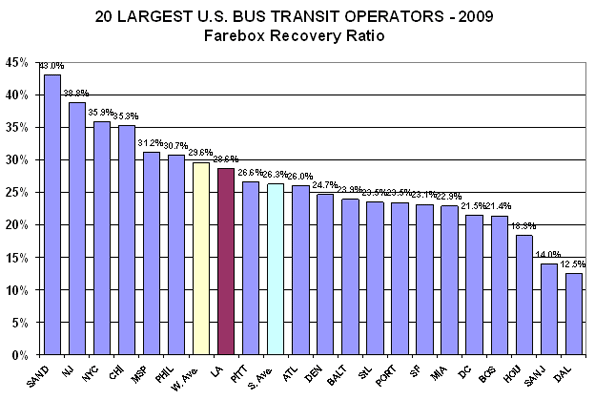
    FRR:   Farebox Recovery Ratio
    SP:       Subsidy/Passenger
    SPM:   Subsidy/Passenger Mile

    The results are:

    1.         FRR: Higher is better – but, this statistic can often be misunderstood.  For example, a high cost operator with high fare can have a higher FRR than a low cost operator, but the low cost operator will be providing a better deal, financially, for both the riders and the taxpayers.
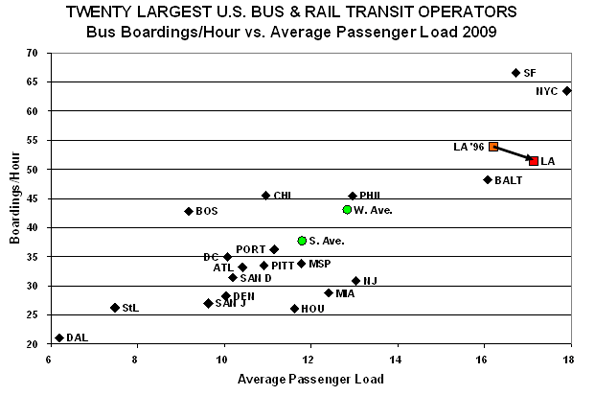
    2.  APL/BHr: Appearing and to the right on the next graph indicates higher load factors.  Higher is better; however, at some point, overcrowding impacts service quality and reliability.
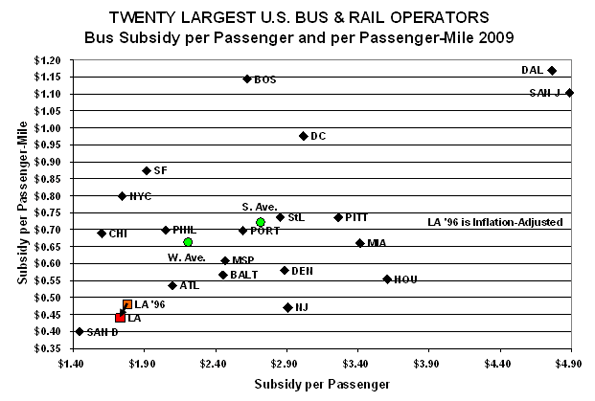
    3.  SP/SPM: On this graph, lower is better, so down and the left is superior – except that, at some point, low cost can indicate concerns about quality of service and safety.
    While Metro is not among the highest in FRR, it has more than twice as many ranked below it (13) than above it (six).  Considered with the subsidy metrics, Metro bus service is a fair deal to the riders and a great deal for the taxpayers.

    On the service utilization graph, Metro is second highest in APL, beaten by NYC, and third on BHr, beaten by NYC and SF.  We added, "LA ’96," for 1996, the year before the Consent Decree went into effect part-way through Metro’s 1997 fiscal year.  BHr has decreased slightly (53.9 to 51.4, or ~4.6%), while APL has increased slightly (16.2 to 17.1, or ~5.6%).  The increase in APL is interesting because Metro’s on-going replacement of primarily 43-seat "hi-floor" with 40-seat "low-floor" buses means that Metro is carrying more people in smaller buses.

    Metro bus service again does well on cost-effectiveness.  San Diego beats Metro on both SP and SPM and Chicago beats Metro on SP.  Metro reduced both of these from 1996 to 2009 after adjusting for inflation5.

    Finally, we decided to do a combined performance index, based on Metro’s own "Route Performance Index" (RPI), which Metro utilizes to eliminate low performers6:

    We have adapted METRO’s RPI in three ways:

    1.  We use it for bus system performance, rather than route performance.

    2.  The "standard" is Metro’s performance on each individual indicator.  The overall score is set at 1.00 for Metro, broken into four components, each of which Metro scores .25.  Operators scoring better on an indicator receives a score higher than .25; performing poorer, lower than .25, with the specific score a direct ratio against Metro’s score (remember that, for subsidy, lower is better, while for route utilization, higher is better).

    3.  Metro utilizes three metrics in its RPI, SP, BHr, and APL.  We added SPM.
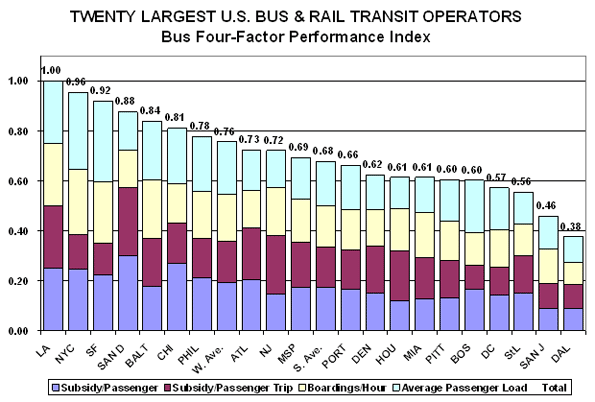
    What we see is Metro rated the highest overall among its peers.  Metro does not win on any single criterion, but its two seconds and two thirds put it ahead of the rest overall.

    Metro’s Transit Service Policy (page 32) states:

    "Lines with an RPI lower than 0.6 are defined as performing poorly and targeted for corrective action.  Lines that been subjected to correction actions and do not meet the 0.60 productivity index after six additional months of operations may be cancelled  …"

    If this .60 cut-off is applied to the 20 bus systems, several would be in major trouble.  Dallas (.38), San Jose (.46), Saint Louis (.56), and Washington, DC, (.57) are below the cut-off.  Boston and Pittsburgh (both at .60) are right on the line, and Miami (.61), Houston (.61), and Denver (.62) only slightly above.

    If one takes the Metro RPI and applies it to the nation’s Top 20, nine of the 20 are either below or very close to the cut-off point. This implies that a high portion of the individual lines, a majority in at several cases, are below the Metro route-by-route cutoff point.

    Circling back to Metro routes, this could mean that many of the routes that Metro would cut, using its RFI procedure, would be average or even above-average routes for many of the nation’s larger bus systems.  Failing to meet the Metro average is actually a very high cut-off point when compared to the national performance.

    This is not to say that no Metro service should ever be cut or eliminated.  What we are saying is, don’t make the cut-off point too high; there is a lot of well-utilized service, by national standards, that does not pass Metro’s methodology.  More important, where there are bus lines with service reduced, put that back on the many, many Metro bus lines that are underserved – which is the usual condition.

    From the above, we see Metro working very hard to cut to reduce the service operated by the most cost-effective and productive major city bus system in the nation – why?  Unlike most other U.S. transit operators, it is not due to lack of funding – but the explanation will have to wait for my next blog entry.

    1           Steve Hymon, "Metro Proposes Bus Service Changes in June, The Source (Metro’s blog), January 3, 2011, access July 9, 2011:
    http://thesource.metro.net/2011/01/03/metro-proposes-bus-service-changes-in-june/

    2               Ibid.

    3               National Transit Database, accessed July 7, 2011:
    http://www.ntdprogram.gov/ntdprogram/data.htm

    4           American Public Transportation Association, 2011 Public Transportation Fact Book, Table 3: 50 Largest Transit Agencies Ranked by Unlinked Passenger Trips and Passenger Miles, Report Year 2009 (Thousands), page 8, accessed July 7, 2011.
    http://www.apta.com/resources/statistics/Documents/FactBook/APTA_2011_Fact_Book.pdf

    5               U.S. Department of Labor, Bureau of Labor Statistics, CPI-U for LA/Riverside-Orange County, accessed July 7, 2011:
    http://data.bls.gov/pdq/SurveyOutputServlet?data_tool=dropmap&series_id=CUURA421SA0,CUUSA421SA0

    6           Metro, 2011 Metro Transit Service Policy, page 31 and Appendix F, accessed July 7, 2011
    http://www.metro.net/board/Items/2011/02_February/20110224RBMItem9.pdf

  • “A Cloud of Contagion”: States, Cities, and Federal Default

    The Pew Center on the States has released a new report examining the impact a potential federal default would have on state and municipal governments. The picture isn’t pretty.

    According to Pew, “A federal default could have a serious impact on states and cities by constricting their borrowing and budgets while they are still feeling the aftershocks of the Great Recession.” Loss of faith in federal debt securities could have a knock-on effect on government debt at all levels, causing jittery ratings agencies to downgrade state and local credit ratings in turn. One ratings agency, Moody’s, has already warned that up to 7000 municipalities could see their bond ratings lowered in the wake of a federal default, and has placed five currently AAA rated states on a downgrade watch list. Ratings downgrades would lead to increased borrowing costs for state and local governments, restricting their long-term ability to finance desperately needed infrastructure upgrades.

    In addition to raising borrowing costs, a federal default could also directly impact federal program dollars currently allocated to state and local governments. According to Pew, such transfers amounted to “$478 billion in 2010 alone.” States and municipalities, already stressed by years of budget challenges, might suddenly find themselves even more cash strapped. In addition, the report points out that the suspension of federal payments to individuals, such as social security recipients and government contractors, could cause a drop in state and local tax receipts as individual incomes drop and commerce slows. While Pew feels states and local governments are “highly unlikely” to face a shutdown as a result of a federal default, they could be left scrambling to find alternative funding sources to cover already budgeted expenses they were expecting to meet with federal support.

  • Cities Have Outgrown Their Role as Mere Creatures of the Provinces

    The Martin Prosperity Institute recently released the map below, which compares the GDP of several US metropolitan areas to the size of national economies. For instance, the Boston-Cambridge-Quincy metropolitan statistical area (MSA) has a GDP of $311.3 billion dollars. If it were a country, it would be the 40th biggest national economy on earth, ahead of countries such as Denmark ($310.1) and Greece ($303.4). The Houston-Sugar Land-Baytown MSA has a GDP of $378.9 billion, which would make it the 31st biggest national economy, bigger than Austria ($375.5) and Argentina ($368.9). New York-Long Island-Northern New Jersey ($1.28 trillion) isn’t all that far behind Canada ($1.57 trillion).


    While trotting out such comparisons is an interesting exercise, the comparison also gives us some important perspective.  Despite the fact that these cities, as well as many others, produce as much as large countries, they have nowhere near the same fiscal levers at their disposal. Further, they are subservient to higher levels of government. The same problem exists in Canada. The Greater Toronto Area’s economic output ($233.9) is nearly equivalent to Finland’s total GDP ($270.6). Note that this definition is far less expansive than the US metro areas listed above. If the definition were expanded to include the entire Golden Horseshoe, it would be closer to the Size of Norway ($414.3 billion).  Yet the City of Toronto can’t finance a public transit expansion without the two senior levels of government. Calgary ($62.5 billion), roughly the size of Lithuania, couldn’t decide to create a municipal sales tax. Vancouver ($85.5 billion), slightly bigger than Serbia, can’t even decide how to allocate gas tax dollars without a special deal with the federal government.

    The problem isn’t that we have too little government spending, but that revenue collection and spending decisions often happen at the wrong level. Revenue generation and spending should take place as close as possible to the point of delivery. There is no reason why someone in Moose Jaw should pay federal income taxes so that the Federal Government could partner with the province of New Brunswick to build a highway near Moncton. Similarly, there’s no reason why someone in Edmonton should send property tax dollars to the province so that it can pay for a transit expansion in Calgary. Not only is filtering money through multiple layers of bureaucracy inefficient, but it leads to bad decision making. Decisions both on the revenue, and expenditure side need to be made at the lowest level of government possible.

    In order to ensure that cities can meet their infrastructure requirements, provincial governments should gradually devolve spending responsibilities and revenue generating capacities to the municipalities, and the federal government should end the practice of intervening in infrastructure issues altogether. Some municipalities may choose to raise property taxes, others may increase user fees, and still others may experiment with municipal sales taxes. But regardless of how municipalities decide to raise revenue, they are better placed to determine how much revenue is required, and which projects are really essential. More importantly, devolution gives more direct control over decision making to the people that are actually impacted by the decisions. Devolution means more accountability, and more local input. And if tiny Iceland can fund it’s own infrastructure, there’s no reason why Winnipeg or Edmonton couldn’t do the same.

    This piece originally appeared at the Frontier Centre for Public Policy Blog.

    Steve Lafleur is a public policy analyst with the Frontier Center for Public Policy.

  • Zipcars: The Car Sharing Market Gets Zapped

    A growing sector of the urban populace is turning to “car sharing” — sharing vehicles through membership in nonprofit or for-profit organizations — for cost and convenience. Since 2006, membership in car sharing organizations has grown from about 100,000 to more than 500,000 people.

    Although the car sharing market is still tiny compared to the demand for privately owned vehicles, there is much to like about it, particularly when it is available in residential neighborhoods. Research by Susan Shaheen, professor at the University of California-Berkeley, shows that people who turn to car sharing drive less, use more fuel-efficient vehicles, and increase their use of “non motorized” transportation (walking and biking). Data is mixed about whether car sharing adds or subtracts from use of public transportation, but the overall impact appears to be negligible.

    The way car sharing works is simple: Members join an organization to gain access to a fleet of vehicles for use on a pay-as-you-go basis. The vehicle is picked-up and dropped-off at unattended location called a “pod”; the sites are generally located throughout a service area, rather than at a centralized location.

    Members typically pay annual or monthly fees on top of variable fees based on the number of hours, and sometimes the mileage, of each trip. The reservation and check in process is fully automated, as bookings are made online or via a smartphone, and vehicles are accessed using a smartcard.

    Car sharing often fills a missing link in a package of transportation options that can substitute for private vehicle ownership. Members often use transit service (or walk or bike) for daily commutes, use taxis for one-way trips or those that are short in distance but long in duration; rental cars, airlines or trains for long-distance trips; and car share vehicles for trips that might, for example, involve shopping, transporting heavy items, or visiting a suburb or nearby city.

    Zipcar, the nation’s largest car sharing provider, now offers its services in 11 major metropolitan areas and on over 150 college campuses. The Boston-based company issued its first publically traded stock in April 2011. Among nonprofits, City CarShare in the San Francisco Bay Area, I-GO in metropolitan Chicago, and PhillyCarShare in the Philadelphia area are the largest.

    Traditional car-rental companies are also getting in on the act. Enterprise Rent-A-Car operates WeCar, while Hertz Corporation has created Hertz on Demand, which has a foothold on 44 college campuses in 26 states and commands a significant presence in metropolitan New York. U-Haul’s U Car Share, primarily serves Salt Lake City, Utah, and ten college/corporate campuses in nine states.

    Of course, car sharing will likely account for only a small share of the travel market for the foreseeable future. The opportunity costs of time spent finding an available car, booking a reservation, and traveling to a pod can potentially be high, and prospective members accustomed to vehicle ownership may be hesitant to try a new transportation lifestyle. Car sharing is still rare in low-density areas. In addition, it’s been slow to show it can be profitable, although the sector’s rapid expansion may mask the profitability of mature markets.

    Also standing in the way are high taxes imposed by municipal governments. Many such taxes were created with the idea of extracting revenue from airport travelers visiting from out-of-town for business or tourism. As our research shows, however, these taxes increasingly fall on neighborhood folks who simply want to make do without owning a car.

    Scott Griffith, CEO of Zipcar, the nation’s largest car sharing provider, points to the “tax-related headwinds” slowing the growth of this sector.

    In many cities, consumers pay taxes of more than 40 percent for a one-hour trip to the grocery store. Three cities — Boston, Chicago, and Portland, Oregon — have re-defined car sharing to provide waivers from certain taxes. But most cities still levy the full spectrum of fees that apply to car rentals. Our study shows that these taxes average almost 18 percent on one-hour reservations, and about 16 percent on the average reservation, rates that are more than twice the prevailing sales tax, which averages only about 8 percent.

    The situation is at its worst where consumers must pay flat amounts per transaction, regardless of the duration of the trip. Car sharers in New Jersey pay a $5 per-transaction fee, plus sales taxes, each time they use a vehicle. When coupled with other fees, this generally results in a tax rate of around 60 per cent on one-hour car sharing reservations. Passionate appeals have laid the groundwork for a bill presently under consideration to exempt car sharing organizations from this tax, but the prospects for passage remain uncertain.

    Maricopa County (Phoenix), Arizona imposes surcharges of $2.50 or more, while Colorado, Connecticut, Florida, New Mexico, Pennsylvania, and Allegheny County (Pittsburgh), Pennsylvania, each levy $2 surcharges. Cities without such fees tax car sharing heavily, as well. Car share users in New York City and in Seattle pay a combined tax of more than 19 percent, a levy that’s akin to the “sin taxes” on alcoholic beverages.

    Most of these fees were created before car sharing became a popular alternative. When establishing fees, it seems unlikely that legislative bodies contemplated that large numbers of local residents would have “virtual” access to cars in their neighborhood and seek to use them for less than a day.

    So, if the high taxes are the product of misguided government policy that can and should be corrected, why isn’t it fixed? Predictably, efforts to lower the burden have been complicated by the severe budgetary shortfalls facing governments. Some policymakers are nervous that technological innovations will blur the distinction between car sharing and the traditional rental car business, creating a slippery slope. As the car-rental business shifts away from airports, it faces similar problems.

    Investment in car rental models which give customers access to cars in a few keystrokes, and which offer hourly rentals at neighborhood pick-up locations, suggest that more changes in how people use cars are on the horizon.

    Municipal government espousing to be green need to take a hard look at their fees. Market-based innovations such as car sharing can’t reach their potential with today’s punitive tax structure. Reducing taxes for neighborhood car sharing organizations to levels comparable to the general sales tax is a necessary step to ending the penalty for life without a private car.

    Joseph P. Schwieterman is director and Alice Bieszczat a research associate at the Chaddick Institute for Metropolitan Development at DePaul University in Chicago. They are the co-authors of a new study, Are Taxes on Car Sharing Too High: A Review of a Tax Burden Facing an Expanding Transportation Mode?.

    Photo by Romana Klee, #113 zipcar

  • Attracting National and Global Tourists to Houston

    PWC ranked Houston #11 *in the world* for business, life, and innovation – a really amazingly high ranking when you think about it.  Here’s what they said:

    Best : #2 in cost of owning business space, entrepreneurial environment and life satisfaction, #3 in commute time and cost of living  

    Worst : Last in foreign job-creating investment and international tourists  

    Details: Houstonians love Houston. So do US business owners. The rest of the world … not so much. With lax zoning laws and plentiful space, Houston’s low cost of living and doing business is a dream for American businesses and middle class workers, but the rest of the world pretends as though the city doesn’t exist. The city has fewer international tourists than any other comparable global city.

    That sparked an interesting debate started over at HAIF on how to improve Houston’s tourism, especially for foreign visitors.  This has always been a tough issue for Houston.  We just don’t get tourism proportionate to our global economic standing, and out-of-sight is out-of-mind.  But what would a realistic strategy possibly be?

    • Out family-fun Orlando?
    • Out weather California?
    • Out beach Florida or Hawaii?
    • Out culture New York?
    • Out museum DC or New York?
    • Out gamble/adult-fun Las Vegas? (or South Beach?)
    • Out ski Denver or Salt Lake City?
    • Out history New Orleans, Boston, Savannah or Charleston? (or even San Antonio)

    See what I mean?  People choose vacation locations for specific reasons, and the winners are pretty damn dominant.  We’re stuck as a local/regional “big city” tourism destination like Chicago is for the midwest and Atlanta is for the southeast, with our share of great museums, restaurants, shopping, and a few attractions – but not enough to pull people from across the country – much less the world – to vacation here.  Our one niche exception – something with some global pull – has been NASA JSC and Space Center Houston, but who knows what the future is there.
    Here’s a long-shot proposal I made a few years ago on my blog, one that would build on the NASA niche:

    Finally, Houston needs to upgrade its tourism experience. All great, world-class cities offer a compelling tourism experience, even if only for a short trip. Even with NASA, the Galleria, and solid museum and theater districts, this has been one of Houston’s most glaring weaknesses, and one that has kept us off the radar for educated, well-traveled professionals. Again, the light rail network and some vibrant pedestrian districts will help greatly, but we really need one powerful, anchor “mega-attraction” that will actually draw people to Houston for at least a long weekend. One niche where I think Houston could be distinctive would be the world’s largest engineering and technology museum – something along the lines of DC’s National Air & Space Museum, Munich’s Deutsches Museum, and Chicago’s Museum of Science and Industry. It could even be one of the Smithsonian’s network of National Museums, which have started to move out beyond Washington DC (Design in NYC, Industrial History planned for Pittsburgh). Think of it as Houston’s version of Paris’ Louvre or London’s British Museum. The combination with Space Center Houston could create a national draw, not to mention a wonderful source of educational and career inspiration for our youth. As far as sites, 109 acres just became available at the end of the light rail line with the closing of Astroworld – not to mention the old Astrodome – both easily accessible to downtown and Reliant Park conventioneers. Any well-heeled philanthropists out there?

    Done on a large enough scale, I could see it attracting not just the usual tourists, but multi-day student group field trips from all over like Space Camp does in Huntsville or the Smithsonian complex in DC – inspiring a new generation of scientists and engineers.  It should not just focus on history, but articulate the great engineering and technology challenges we face going forward.  It would be a big, bold, expensive gamble – but could be just the ticket to move us up to the next level in tourism and international recognition.

  • California Wages War On Single-Family Homes

    In recent years, homeowners have been made to feel a bit like villains rather than the victims of hard times, Wall Street shenanigans and inept regulators. Instead of being praised for braving the elements, suburban homeowners have been made to feel responsible for everything from the Great Recession to obesity to global warming.

    In California, the assault on the house has gained official sanction. Once the heartland of the American dream, the Golden State has begun implementing new planning laws designed to combat global warming. These draconian measures could lead to a ban on the construction of private residences, particularly on the suburban fringe. The new legislation’s goal is to cram future generations of Californians into multi-family apartment buildings, turning them from car-driving suburbanites into strap-hanging urbanistas.

    That’s not what Californians want: Some 71% of adults in the state cite a preference for single-family houses. Furthermore, the vast majority of growth over the past decade has taken place not in high-density urban centers but in lower-density peripheral areas such as Riverside-San Bernardino. Yet popular preferences mean little in a state where environmental zealotry increasingly dictates how people should live their lives.

    Some advocates do cite market forces to justify their policies. Economists on the left and right have cited the recent housing bust as proof that homes are not great investments, suggesting people would be better off leaving their money to the tender mercies of Wall Street speculators. Some demographers also suggest that young people will choose to live in high-density regions throughout their lives and that as boomers age they too will opt out of suburbs for urban apartment living.

    These “facts” may be more grounded in academic mythology than reality. Some widely quoted experts, like the Anderson Forecast at UCLA, cite Census information to say that demographics are shifting demand from single-family homes to condos and apartments, although the Census asked no such question. These experts also fail to address why condo prices have dropped even more in the major California markets than single-family home prices; the percentage of starts that come from single-family houses shifts from year to year, but last year’s number tracks around the same level as seen in the 1980s.

    Perhaps the biggest weakness in the analysis lies with long-term demographic factors. As I wrote last week, many of the “young and restless” folks whom city planners try to court tend to move into suburbs and affordable low-density regions as they grow older and begin starting families. Similarly, the vast majority of boomers, according to AARP, want to remain in their old homes as long as possible. Most of those homes are located in suburban, low- to medium-density neighborhoods.

    But who needs facts when you have religion? Take the Association of Bay Area Governments (ABAG) and Metropolitan Transit Commission’s (MTC) new “sustainable communities strategy,” a document designed to meet the requirements of the state’s draconian anti-greenhouse gas legislation.

    This “strategy” seeks to all but reduce growth in the region’s lower-density outer fringe – eastern Contra Costa County as well as the Napa, Vallejo and Santa Rosa metropolitan areas — which grew more than twice as fast as the core and inner suburbs. Instead the ABAG-MTC projects a soaring increase in demand for high-density housing and its latest “vision” report calls for 97% of all the region’s future housing be built in urban areas, virtually all of it multi-family apartments, to accommodate an estimated 2 million residents

    The projections underpinning ABAG’s strategy are absurd. Over the past decade the population of the region’s historic core cites San Francisco and Oakland — where much of the dense growth would be expected to take place — increased by 1.7%, compared with 6.5% for the suburbs. Overall regional growth stood at a modest 5.1%, roughly half that of the previous decade and just about half of the national and state averages.

    Given this record, a more reasonable assumption would be population growth at something closer to 1 million, half the projected amount. Assumptions about the economy to support even this growth are also dubious. The ABAG report, for example, fantasizes that by 2030 the Bay Area will increase its employment by 900,000 — a neat trick for an area that overall lost 300,000 positions over the past decade.

    So, why wage war on the house? Some greens seem to regard the single-family house as an assault on eco-consciousness. Yet in many cases, these objections are overstated. Research supporting higher-density housing , for example, has routinely excluded the greater emissions from construction material extraction and production, building construction itself and& greenhouse gas emissions from common areas like parking levels, entrances and elevators.

    Further, higher densities are associated with greater congestion, which retards fuel efficiency and increases greenhouse gas emissions, a factor not sufficiently considered. Given that less than 10% of Bay Area residents take transit — and barely 3% in its economic engine Silicon Valley — higher density likely would create greater, not fewer, emissions.

    The ABAG report also studiously avoids mentioning the potential greenhouse gas reductions to be had by expanding telecommuting, which is growing six times faster than the fervently pushed transit commuting in the region. The Silicon Valley already has 25% more telecommuters than transit users. Clearly, by pushing telecommuting, you could get big reductions in GHG without a “cramming” agenda.

    Ultimately the density agenda reflects less a credible strategy to reduce GHG than a push among planners to “force” Californians, as one explained to me, out of their homes and into apartments. In pursuit of their “cramming” agenda planners have also enlisted powerful allies – or perhaps better understood as ”useful idiots” — developers and speculators who see profit in the eradication of the single family by forcibly boosting the value of urban core properties.

    In the end, however, substituting religion for markets and people’s preferences is counterproductive. For one thing, people “forced” to live densely will find other places to live the way they like — even if it means leaving California. This is already happening to middle class families in places like San Francisco and may soon be true of California’s traditionally middle-class-friendly interior as well.

    In the end, two markets are likely to grow in the Bay Area. One is low-end rental housing for students and an expanding servant class — after all Google millionaires need people to walk their dogs and paint their toenails. The other is luxury retirement facilities for the region’s growing population of aging affluents. Once a self-consciously “cool” youth magnet, Marin County, for example, is now one of the country’s oldest urban counties, with a median age of 44.5; San Francisco is headed in the same direction.

    Developers can drool over the prospects of building high-end assisted living joints for all those aging hippies who made their bundle during the state’s glory days and settled into places like Mill Valley. After all, unlike young families, these affluent oldsters will be able to afford indulging in the state’s mild climate, natural food restaurants and brilliant scenery. And with easily accessible medical marijuana and a good sound system for playing Grateful Dead recordings, the gray-ponytail set could be in for a hell of a good time, at least as long as it lasts.

    This piece originally appeared at Forbes.com.

    Joel Kotkin is executive editor of NewGeography.com and is a distinguished presidential fellow in urban futures at Chapman University, and an adjunct fellow of the Legatum Institute in London. He is author of The City: A Global History. His newest book is The Next Hundred Million: America in 2050, released in February, 2010.

    Photo by Mike Behnken

  • India Conquers the World

    From the exclusive Club Lounge on the 19th floor of Singapore’s Mandarin Oriental, Anish Lalvani gazes out at the city’s skyline, a dazzling array of glass and steel and vertical ambition. The Lalvani family has come a long way since the days when Anish’s paternal grandfather, Tirath Singh Lalvani, got his start in business by retailing medicines to King George VI’s soldiers in Karachi. Back then the city was a part of British colonial India—until independence arrived in 1947, and its inhabitants suddenly found themselves amid the bloody turmoil of the newborn Pakistan. The Lalvanis, like millions of others on both sides of the border, fled for their lives. But instead of making new homes in present-day India, the Lalvanis sought their fortunes abroad. Today the family’s Hong Kong–based Binatone Group employs some 400 people on four continents. “We couldn’t break the old boys’ network,” says Anish. “But overseas we created our own.”

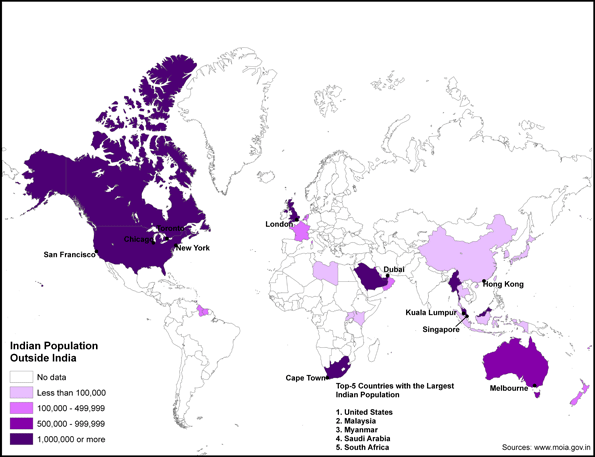
    The Lalvanis’ voyage from refugees to moguls embodies a worldwide phenomenon: the growing size and sway of the Indian diaspora. The exile population now numbers some 40 million people, spread across West Africa, the Americas, and East Asia. And in many of those countries—including the United States, Britain, Canada, Singapore, and Australia—Indian immigrants and their offspring have both higher incomes and higher education levels than the general population.

    The international importance of India itself is rising to an extent unmatched since the onset of the European-dominated global economy in the 17th century. And with the country’s economy growing at roughly 8 percent a year for the past decade—more than double the rate of the United States—India’s influence can only continue to strengthen. Most economists predict that by 2025 the country will outstrip Japan to become the world’s third-largest economy.

    India is more dynamic than any other major country in demographic terms as well. Its population today is 1.21 billion, second only to China’s 1.3 billion, and thanks to the latter’s one-child policy, India’s numbers are expected to surpass those of China by the late ’20s, when India will have an estimated 1.4 billion people versus China’s 1.39 billion. Currently home to the world’s second-largest contingent of English speakers, India seems destined to step into first place, ahead of the United States, by 2020.

    But the mother country’s rise has been more than equaled by that of India’s émigrés. In fact, the diaspora remains one of India’s most important sources of foreign capital. According to the most recent available figures, workers from India in 2009 sent $49 billion in remittances to relatives back home, outpacing China by $2 billion and Mexico by $4 billion. Four percent of India’s gross domestic product comes from North American remittances alone.

    In fact, India’s business community tends to be family–centered, both at home and abroad. Chinese entrepreneurs are more than twice as likely to be financed through banks, most of them state-owned. In contrast, Indian firms and business networks tend to be essentially familial and tribal, extending in networks across the world. “Much of the Indian middle class has ties outside India,” notes researcher Vatsala Pant, formerly with the Nielsen office in Mumbai. “Our ties around the world are also family ties.”

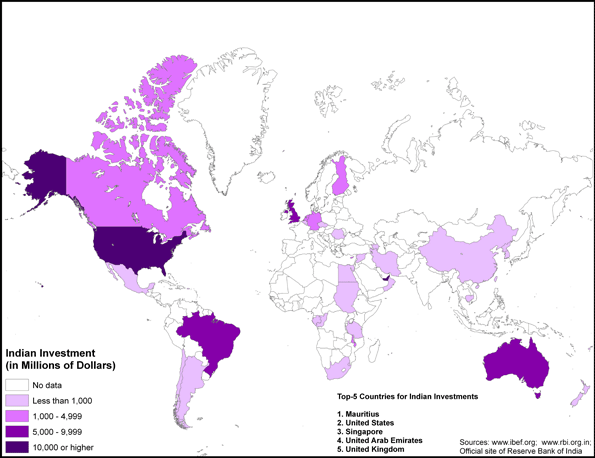
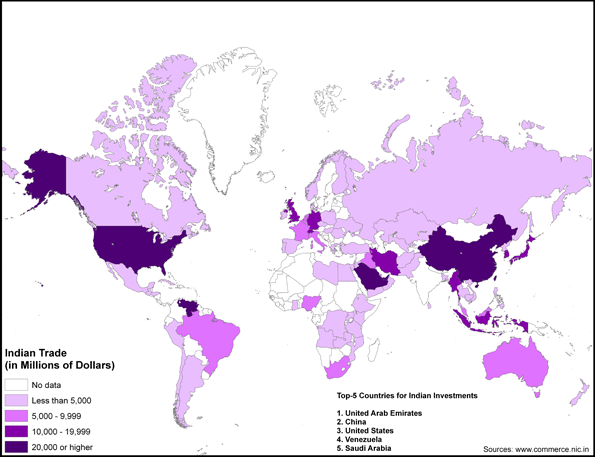
    The importance of such familial links can be seen in the close relationship between diaspora settlement and commerce. The top five areas for Indian investment—Mauritius, the Americas, Singapore, the United Arab Emirates, and the U.K.—have large, established Indian communities and -Indian-run companies that are particularly active in electronics and software.

    Today, even the largest Indian firms, such as Tata and the Reliance Group, are controlled by groups of relatives whose power is enhanced by their wide geographic reach. “We’re very flexible about doing business,” notes Lalvani, who was raised in Britain, is a permanent resident of Hong Kong, and is married to an Indian-American. “We’re global and cosmopolitan—ethnically Indian but also tied to the U.S., U.K., and Hong Kong. They’re all things that make me who I am, and make our business work.”

    That business illustrates nicely the worldwide extent of India’s entrepreneurship. In 1958 Anish’s father, Partap Lalvani, and his uncle Gulu teamed up in London to launch Binatone as a supplier of Asian-built consumer electronics and electrical goods. Its range of products grew to include domestic appliances like kettles, toasters, and irons, and today its employees are active in otherwise neglected markets, such as the former Soviet republics of Central Asia and off-the-grid corners of Africa.

    The Indian diaspora began when Indian workers fanned out across the British Empire during the late 18th century. The exodus intensified after Britain abolished slavery in 1834, setting off a major demand for labor around the globe. Indians were sent out to become contract laborers on Malaya’s rubber plantations, or to work as indentured servants in the West Indies. Although many eventually returned home, others stayed in their new countries, and in many cases became integral parts of the national economy. Some rose to skilled positions in the colonial civil service and military, while others became businessmen, teachers, doctors, and moneylenders.

    Even after the empire’s end, émigrés kept pouring out of India to seek better lives abroad—and with them they brought brains and a willingness to work hard. In the United States, where the Indian diaspora represents less than 1 percent of the population, its members account for roughly 13 percent of the graduate students at the country’s top universities. Overall, 67 percent of people of Indian descent living in America hold at least a bachelor’s degree, compared with 28 percent of the total population. And those statistics are echoed elsewhere in the world. In Canada, people of Indian descent are twice as likely to hold graduate or professional degrees. In Britain, some 40 percent of the medical students and doctors in the National Health Service are of Indian, Pakistani, or Bangladeshi origin.

    Indians’ presence in the business realm is no less notable than in the world of higher learning. According to the latest survey by the University of Essex, the per capita income of ethnic Indians in Britain is about £15,860 (nearly $26,000), higher than that of any other ethnic group in the country and almost 10 percent above the median nation-al income. The study found that the unemployment rate among ethnic Indians is close to half the national average. In the United States, recently published data estimate average household income at $50,000, but it’s $90,000 for ethnic Indians—and a 2007 survey found that between 1995 and 2005, more companies were launched by ethnic Indians than by immigrants from Britain, China, Japan, and Taiwan combined.

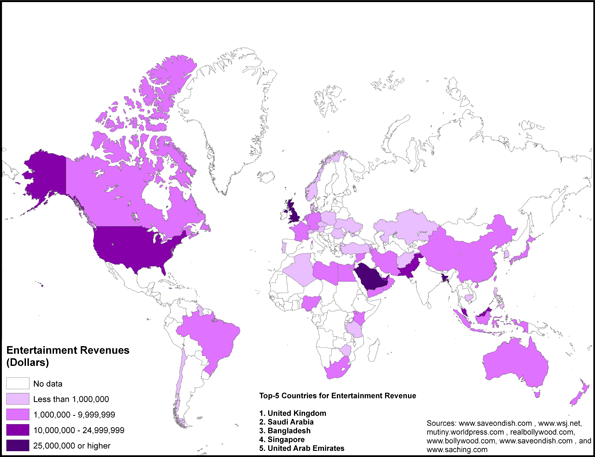
    The expatriates have brought their culture with them—and that too is spreading into the general population wherever they go. Two million Brits enjoy at least one Indian meal per week, and onscreen entertainment from India has permeated the global market. Not so long ago, Bollywood movies were largely intended for domestic consumption, but foreign sales have become significant in recent years, with the large markets in the dominant diaspora countries. Today, Bollywood movies and television shows command an estimated $3 billion to $4 billion in overseas receipts, placing India’s film industry second only to Hollywood itself. In fact, India beats the rest of the world in the number of movies made and tickets sold, and industry sources estimate that as many as a third of ticket buyers in the West are non-Indians.

    Back in India, conditions remain harsh despite the country’s recent advances. The average life span in Mumbai is barely 56 years, a full quarter century less than in Britain and the United States, and poverty across the country remains at shocking levels, with four in 10 Indians living on less than $1.25 a day. Statistics like that are scarcely an incentive for members of the diaspora to return to their homeland.

    For entrepreneurs like Anish Lalvani, however, there’s a more compelling reason to remain abroad: it helps them stay in closer touch with the global marketplace. Having his home base in Hong Kong provides Lalvani with access to Chinese manufacturing and a broad talent pool. “We don’t have many Indians in our management,” he says proudly of the Binatone Group’s operations. “We get the talent from around the world.”

    As large as it may be, Binatone is far from the scale of its Chinese, American, or Japanese competitors. That means it has to keep a keen eye out for new opportunities that the bigger guys have overlooked. Building family businesses through such dogged opportunism is what has driven the expansion of Greater India. “The emerging markets are small, and it takes a lot of flexibility to get in there,” Lalvani says. “We have to go into places where the costs are low, and there are minimal chain stores, so we can get our stuff on the shelves.” But as far as Lalvani and others like him are concerned, it’s a matter of fundamental self-respect. “It’s more than just ginning up cash,” he says. “It’s about not screwing up what your father started.”

    This piece originally appeared in Newsweek.

    Joel Kotkin is executive editor of NewGeography.com and is a distinguished presidential fellow in urban futures at Chapman University, and an adjunct fellow of the Legatum Institute in London. He is author of The City: A Global History. His newest book is The Next Hundred Million: America in 2050, released in February, 2010.

    Parulekar is an engineer by training. He holds a master’s in -finance and an M.B.A.

    Research for this piece was financed by the Legatum Institute.

    Maps by Ali Modarres.

    Photo by lecercle

  • Permeable Pavement: Looking Below The Surface

    How can we prevent situations where environmental ‘solutions’ end up in failure? The tale of problems encountered with the misuse of pervious pavers (also known as porous or permeable pavers), used as an eco- friendly option, provides some answers.

    Low impact sidewalk and street installations can become economic problems. Why? Because failed environmental solutions placed on public property are then replaced with conventional construction, using tax dollars. The EPA Section 438 mandating all owned and leased Federal Facilities be converted into low impact development promotes permeable pavement, that is, paving that allows rainwater to pour through it, instead of running off at high speed to an inlet and overloading the storm sewer system, taking pollutants downstream with the water, and eventually infecting our streams and oceans. To understand more about it, read reporter Dave Peterson’s exposés in the Minneapolis Star Tribune.

    On the surface, permeable pavers seems logical: pavement that allows rain to fall through. But what happens after the rain falls through the pavement – where does the floodwater go? A sub-base is needed to support the pavement. The rainfall must fall not only through the pavers, but also through the ground below. If you were to place permeable pavers on your back yard patio, supporting the weight of people and furniture would require very little sub-structure. If your lot was made of sandy soil that allows rain to quickly filter through, better yet. But if the ground underneath is clay or rock, the water must be retained or piped off with a sub-drainage system. If this is starting to sound expensive, as we say in Minnesota, you betcha!

    This sub-surface material must be sponge-like, and allow a conduit for water to either pass through to a piped system to be transported elsewhere, or have enough small void areas to retain the water until it can slowly be filtered through its lowest layer seeping back to the earth. To create a ‘base’ with properties that has ‘void spaces’, plenty of rock and large stone is used.

    Of course this means digging a very deep channel under the proposed pavement, moving (removing) the old soil and hauling in this sub-base material. A 100 foot long 30 foot wide road would require a five foot deep excavation with 555 cubic yards of soil to be removed, and almost the same in sub-base to be hauled in. Since a large dump truck holds up to 20 cubic yards (typically less), that small section of street would require at least 27 trips to and from the destination with 27 truckloads of rock, no doubt consuming massive amounts of petroleum.

    Anybody who has been in Minnesota in the winter knows that during, those seven months of freezing weather, cold is redefined. Water expands about nine percent as it freezes, so 555 cubic yards of water would increase about 50 cubic yards. Where does the water go? Up! Water pressure can lift pavers and cause havoc in the winter, so before cold weather sets in it is recommended that the liquid be vacuumed out of the sub-surface and hauled away. Now how much energy does that take?

    People and patio furniture are not that heavy, certainly not as heavy as a bus, which weighs somewhere between 26 and 40 thousand pounds transferred to the tires, depending upon the size and how many it is carrying. This weight is then transferred to the pavement, which is on top of rocks and stone that are intentionally ‘loose,’ to hold water.

    There is another problem with permeable pavement in some applications: water settles to a level surface. A few years ago we designed a low-impact, clustered neighborhood in Minnesota. At the ‘consultants’ meeting with the developer, the young engineer pushed the permeable paver idea. We had designed the neighborhood by harnessing the natural grade, embracing the heavily wooded site’s natural drainage to save most of the existing trees on the steep slopes. In other words, we planned to use what nature provided, eliminating much of the grading, costs and environmental impacts. On this site there were some fairly steep grades, in many cases exceeding a five foot drop in its length along private drives.

    The engineer aggressively insisted on permeable pavers. His idea was to create a five foot deep sub-base under the private drives (26’ wide) and run the gutters of the roofs underground to the sub-surface drainage system. In such meetings it is not polite to scream, “Are you out of your mind?” Instead, after the meeting I told the developer to kill the idea for being far too expensive. The developer did not heed my advice, and when the economics of the engineering was done, the cost escalated out of control. Several months of the engineer trying to (unsuccessfully) convince the city that the permeable pavers was a great solution caused the project to be delayed. By the time it was approved (with the natural drainage solution), the recession was in full swing and the development went dormant.

    From a personal experience, when I built my Green Certified home in 2008, MNGreenstar provided points for permeable pavement but only if the underlying base held the storm water underneath. The soil of my lot is sandy, and could have quickly absorbed the rainwater, allowing a fairly cheap sub-base, but the ‘green’ certification did not allow for compromise. The green certification ‘all or nothing’ approach meant that my sub-surface would have added $5,000 to the construction to get a few green ‘points’ encouraging the ‘nothing’ side of the equation. So, instead of designing the driveway with permeable pavement, we used sculpted landscaped strips (like the driveways of yesterday) to reduce the paved surface area and the overall costs. It is not unusual to see people taking pictures of my ‘low impact’ driveway, which adds curb appeal and value, however, we gained no green points for this logical solution.

    Why the motivation to push permeable pavement? In many cases it might indeed make sense. One reason is profitability, not by those selling the pavement alternatives, but by the consulting industry that specifies materials charging fees based upon a percentage of the construction cost. Permeable pavers and other ‘green’ alternatives can add a considerable amount to costs, and to the profitability of a consulting firm. If all bids were based upon rewarding solutions that cost less, with a penalty for solutions that cost more, consultants would truly deliver on the promise of sustainability; development costs and future maintenance burdens would plummet, while the environment would benefit. If we rewarded engineers employed by government agencies by allowing them to share a percentage of the money they saved by introducing green solutions that are cost effective, it would bring about change overnight.

    Can this be done? Absolutely. The technology and educational materials have been developed for this overhaul, but it would take effort and investment, since we’re currently in an economy where up to 65% of the architectural and land consultants are unemployed, and those remaining are not exactly overloaded with work.

    The EPA Section 438 is the Federal agenda to rebuild existing facilities and have all new construction (including all military bases) comply with low impact standards. On some new construction and redevelopment, permeable pavement could be effective, but it is unlikely to be cost effective where heavy loads, bad soils, and/or frigid weather occur.

    The decreased pavement width of New Urbanism is a start in the right direction, as long as safety and functionality are maintained. Combined with the reduced ‘length’ of infrastructure in plans like Prefurbia, it is entirely possible to reduce the environmental impact of newly paved development by about 30%, and of re-developed areas (i.e. EPA Section 438) by more than 50%, while increasing function and value. Now that we have the knowledge to do so, isn’t it time to start reaping the benefits of design techniques that reduce pavement without harming function?

    Photo by Mockney Rebel; “Pavement Archeology”

    Rick Harrison is President of Rick Harrison Site Design Studio and Neighborhood Innovations, LLC. He is author of Prefurbia: Reinventing The Suburbs From Disdainable To Sustainable and creator of Performance Planning System. His websites are rhsdplanning.com and performanceplanningsystem.com.