Blog

  • Nixon’s Revolutionary Vision for American Governance

    President Nixon, though possessing the instincts and speaking the increasingly conservative language of the mainstream Republican Party all his life (his writings on domestic policy attest to this,) governed within the boundaries set by the New Deal. Where other conservatives like Barry Goldwater had no interest in “streamlining government,” “making it more efficient,” and “promoting welfare,” Nixon sought to do exactly these things. He might be considered a “good-government conservative,” seeking, as did his mentor Eisenhower, to make the institutions of the New Deal state work more effectively and efficiently for the American people. At the time, liberal Democrats had no interest in reforming governance in this way, while more conservative Republicans offered no solutions but “starve-the-beast.” Nixon was pioneering a pragmatic middle ground.

    If there was a single animating principle behind Nixon’s good-government reform efforts, it was this: lessen the power of the federal bureaucracy. There were various ways Nixon went about this, but this article will examine three. Nixon would empower the poor and those dependent on federal aid by replacing strings-attached welfare and social programs with no-strings-attached payments, believing poor people would be better at deciding how to spend their money than bureaucrats. Nixon would empower officials (and bureaucrats) at the state, city, and county levels by passing revenue sharing aid along to them. Finally, Nixon would oversee the smoother management of the federal government, by reorganizing the federal departments into departments based on broad purpose and function rather than on sector or constituency.

    These initiatives-the Family Assistance Plan, General Revenue Sharing, and Executive Reorganization- made up a significant chunk of Nixon’s domestic policy, also known as the “New Federalism.” There were other aspects, including Keynesian full-employment spending, creation of new federal regulatory departments, and a push for universal healthcare. But the Family Assistance Plan, Revenue Sharing, and Executive Reorganization were the boldest in terms of reforming the New Deal and Great Society institutions for a new era, and incidentally, they all failed to gather sufficient popular support to be institutionalized in the long term. The Reagan Administration ended most Revenue Sharing plans in 1986, while the Family Assistance Plan and Executive Reorganization never passed in Congress (in the latter case, largely due to the distracting factor of Watergate.)

    But these bold good-government reforms are worth revisiting today, if only to gain insight into the unique governing philosophy of President Nixon.

    The Family Assistance Plan

    Daniel Patrick Moynihan, head of Nixon’s Urban Affairs Council, strongly advocated for what he called the “income strategy-“ a resolution to fight poverty by boosting incomes and putting money in poor people’s pockets, rather than providing social services staffed by career bureaucrats. After much internal jockeying over such issues as the enforcement of work requirements and rates of support payments, the “Family Assistance Plan” became the administration’s keystone domestic policy initiative, the vital core of its New Federalism.

    The Family Assistance Plan (FAP) was designed to largely replace the Aid to Families with Dependent Children (AFDC) put in place by the New Deal and expanded under the Great Society. FAP’s logic was simple: poor families would have a better knowledge and understanding of how to help themselves if given welfare payments than would the social workers and bureaucrats whose programs those dollars might otherwise fund. There was also a strong work requirement and work incentive, distinguishing the plan from previous versions of welfare programs. As President Nixon said in his August 8, 1969 Address to the Nation on Domestic Programs,

    … I, therefore, propose that we will abolish the present welfare system and that we adopt in its place a new family assistance system. Initially, this new system will cost more than welfare. But, unlike welfare, it is designed to correct the condition it deals with and, thus, to lessen the long-range burden and cost.…The new family assistance system I propose in its place rests essentially on these three principles: equality of treatment across the Nation, a work requirement, and a work incentive.

    The FAP would have been the most significant reform in American social welfare policy since the 1930s and one of the most transformative domestic policies of the latter half of the 20th Century. It would have served the administration’s goal of weakening the bureaucracy by reducing the responsibilities of federal service agencies, opting instead for a cash handouts approach that incentivized job attainment.

    Ultimately, due to lengthy conflicts over the substance of welfare reform between the Moynihan and Burns camps, the administration never put forth a bulletproof proposal to Congress, and Congressional conservatives and liberals united to defeat what they respectively regarded as too generous and too stingy a proposal.

    Revenue Sharing

    If the purpose of the Family Assistance Plan was to remove the bureaucratic middleman from welfare policy, then the point of Revenue Sharing was to remove the bureaucratic middleman from many other aspects of federal policy, particularly social services. Revenue Sharing in its various forms- General Revenue Sharing, which did not have any strings attached, and Special Revenue Sharing, which was directed at specific sectors but still had few strings attached- was conceived in the spirit of decentralizing policymaking power to states, counties, and municipalities. As President Nixon said in his February 4, 1971 Special Message to Congress proposing General Revenue Sharing,

    There is too much to be done in America today for the Federal Government to try to do it all. When we divide up decision-making, then each decision can be made at the place where it has the best chance of being decided in the best way. When we give more people the power to decide, then each decision will receive greater time and attention. This also means that Federal officials will have a greater opportunity to focus on those matters which ought to be handled at the Federal level.

    Strengthening the States and localities will make our system more diversified and more flexible. Once again these units will be able to serve–as they so often did in the 19th century and during the Progressive Era–as laboratories for modern government. Here ideas can be tested more easily than they can on a national scale. Here the results can be assessed, the failures repaired, the successes proven and publicized. Revitalized State and local governments will be able to tap a variety of energies and express a variety of values. Learning from one another and even competing with one another, they will help us develop better ways of governing.

    The ability of every individual to feel a sense of participation in government will also increase as State and local power increases. As more decisions are made at the scene of the action, more of our citizens can have a piece of the action. As we multiply the centers of effective power in this country, we will also multiply the opportunity for every individual to make his own mark on the events of his time.

    Finally, let us remember this central point: the purpose of revenue sharing is not to prevent action but rather to promote action. It is not a means of fighting power but a means of focusing power. Our ultimate goal must always be to locate power at that place–public or private-Federal or local–where it can be used most responsibly and most responsively, with the greatest efficiency and with the greatest effectiveness.

    Integral to the Revenue Sharing programs, and indeed to the New Federalism as a whole, was the urge to, as Richard P. Nathan put it, “sort out and rearrange responsibilities among the various types and levels of government in American federalism.” With the complex ecosystem of American federalism approaching incomprehensibility, Nixon’s administration sought to rationalize it somewhat by decentralizing some functions and centralizing others. Nathan argues that inherently trans-regional issues, such as air and water quality or basic minimum welfare standards, were best managed at the federal level, as were basic income transfer payments. Meanwhile, more complex and regionally variant issues, such as social services and healthcare and education, might be better dealt with locally.

    Many of the functions of powerful federal departments would thereby increasingly be taken up by states and cities, which would now have the federal funding to manage things they once could not. In this way, Nixon weakened the federal bureaucracy by empowering political entities far away from the national bureaucracy’s central core in Washington.

    Revenue Sharing of all sorts was broadly popular across party lines, but was terminated by the middle of the Reagan Administration.

    Executive Reorganization

    The third significant aspect of President Nixon’s domestic agenda was the wholesale reorganization of the Executive Branch’s departments. The twelve departments existing at the time of Nixon’s presidency had all been born out of necessity over the first two centuries of American history, and typically corresponded to particular economic or infrastructural sectors (for example, the Department of Agriculture.) New agencies proliferated within the departments, and often times different departments would pass conflicting regulations on the same subjects, making a tangled environment for citizens navigating through the mess.

    The solution developed by the President’s Advisory Council on Executive Organization (PACEO) was to completely reorganize the Executive Branch based on function rather than constituency. The Departments of Defense, State, Treasury, and Justice would remain largely as they were; the remaining departments would be reorganized into a Department of Human Resources, a Department of Natural Resources, a Department of Community Development, and a Department of Economic Development. As President Nixon said in his March 21, 1971 Special Message to Congress on Executive Reorganization,

    We must rebuild the executive branch according to a new understanding of how government can best be organized to perform effectively.

    The key to that new understanding is the concept that the executive branch of the government should be organized around basic goals. Instead of grouping activities by narrow subjects or by limited constituencies, we should organize them around the great purposes of government in modern society. For only when a department is set up to achieve a given set of purposes, can we effectively hold that department accountable for achieving them. Only when the responsibility for realizing basic objectives is clearly focused in a specific governmental unit, can we reasonably hope that those objectives will be realized.

    When government is organized by goals, then we can fairly expect that it will pay more attention to results and less attention to procedures. Then the success of government will at last be clearly linked to the things that happen in society rather than the things that happen in government.

    Rather than being a conscious component of the New Federalism, the Executive Reorganization is more rightly thought of as a part of what Richard P. Nathan calls the “Administrative Presidency-“ Nixon’s attempts after 1972 to bring the federal bureaucracy much more directly under his personal control, through reorganizing the Executive Branch and through appointing personal loyalists to Cabinet positions and other spots. This, of course, would have lessened the influence of career bureaucrats and directly increased the President’s power over policy implementation.

    The Executive Reorganization failed largely due to the Watergate scandal.

    Conclusion

    It’s very likely that much of Nixon’s plan to weaken the federal bureaucracy and fundamentally reform the federal government was driven by his own distrust of the “Establishment.” That does not, however, detract from the very real fact that the U.S. federal government of 1968, after almost three-and-a-half decades of near-continuous expansion, was cumbersome, overbearing, and inefficient at fulfilling the tasks assigned it by the American people. Much of this dysfunction, it could be argued, lay in the fact that the federal bureaucracy was becoming an interest group committed to its own perpetuation and loathe to undergo reforms imposed from the outside.

    Nixon’s plans to lessen the federal bureaucracy’s authority, responsibility, and power, whatever their fundamental motive, bore much potential to transform the federal government from a hulking behemoth into a sleeker, more responsive, and fundamentally more effective machine attuned to the needs of the last few decades of the 20th Century. Had the Family Assistance Plan, Revenue Sharing and policy decentralization, and the Executive Reorganization passed, the apparatus of the federal government might well look different today. Agencies and departments would be more goal-oriented than constituency-oriented; many federal services would be outsourced to newly-vibrant state and local governing entities; the welfare system would be entirely transformed into a payments system rather than a services system.

    President Nixon’s legacy as a good-government reformer ought to be examined more closely, both for its own sake, and for the sake of better informing government reform efforts in the 21st Century. There is potentially much we could learn from many of Nixon’s initiatives.

    Luke Phillips is a political activist and writer in California state politics. His work has been published in a variety of publications, including Fox&Hounds, NewGeography, and The American Interest. He is a Research Assistant to Joel Kotkin at the Center for Opportunity Urbanism.

    Photo: Oliver F. Atkins [Public domain], via Wikimedia Commons

    Sources

    “The Plot That Failed: Nixon and the Administrative Presidency,” Richard P. Nathan, 1975

    “Richard M. Nixon: Politician, President, Administrator,” Leon Friedman and William F. Levantrosser, 1991

    “Address to the Nation on Domestic Programs,” Richard Nixon, August 8th 1969

    “Special Message to Congress Proposing General Revenue Sharing,” Richard Nixon, February 4th 1971

    “Special Message to Congress on Executive Reorganization,” Richard Nixon, March 21st, 1971
  • Kevin Starr, chronicler of the California dream

    “From the Beginning, California promised much. While yet barely a name on the map, it entered American awareness as a symbol of renewal. It was a final frontier: of geography and of expectation.”

    — Kevin Starr, “Americans and the California Dream, 1850-1915” (1973)

    In a way, now rare and almost archaic, Kevin Starr, who died last week at age 76, believed in the possibilities of California, not just as an economy or a center for innovation, but also as precursor of a new way of life. His life’s work focused on the broadest view of our state — not just the literary lions and industrial moguls but also the farmworkers, the plain “folks” from the Midwest, the grasping suburbanites who did so much to shape and define the state.

    His California was not just movie stars, tech moguls, radical academics, talentless celebrities and equally woeful party hacks who dominate the upper echelons. A native San Franciscan, who grew up in a contentious working-class Irish family and never forgot his roots, Kevin’s California was centered on providing, as he said in a recent interview with Boom California magazine, “a better life for ordinary people.” The diverging fortunes of our people — with many in semi-permanent poverty while others enjoy unprecedented bounty — disturbed him profoundly, and, in his last years, darkened his perspective on the state.

    Over recent years, Kevin was increasingly distraught by what he saw as “the growing divide between the very wealthy and the very poor, as well as the waning of the middle class” that now so characterizes the state. He saw San Francisco changing from the diverse city of his youth, made up of largely ethnic neighborhoods, to a hipster monoculture. With typical humor, he labeled his hometown as essentially “a Disneyland for restaurants,” a playground with little place for raising middle-class families. California has, indeed, changed over the decades, but not always in a good way.

    Kevin Starr’s California

    Kevin Starr represented another, more congenial California, one where people could still disagree on issues, but work for common goods. He was, as his wife Sheila told the New York Times, largely a man of the 1950s, a creature of consensus seekers. He served as state librarian under governors Pete Wilson, Gray Davis and Arnold Schwarzenegger. A conservative-leaning centrist Democrat, he did not fit comfortably in a state that has drifted from a vibrant two-party culture to a dominant progressive monoculture with little more than a Republican rump.

    In today’s hyperpartisan environment, the Golden State must either be a dystopia (the conservative view) or an emerging paradise on earth (the common progressive mantra). Starr, as a fair-minded historian, saw both realities — not only today but through time. In his multipart “California Dream” series, Starr both confronted reaction against ethnic change and celebrated the process of integration, whether for Latinos, Asians or Anglo Okies, whose unique presence, outside of their descendants, is all but lost in contemporary California.

    But what most separated Kevin’s view of California from many others were his humanity and empathy with the aspirations of the state’s middle- and working-class families. Many intellectuals denounce suburbs as racist and exclusionary, as well as environmentally and culturally damaging. Starr saw in them something else — what author D.J. Waldie has described as “Holy Land” — in places like Lakewood, the Bay Area suburbs and Orange County. To him, these were not only places of opportunity, but also landscapes of a reborn “more intimate America,” home to an expanding middle class.

    Read the entire piece at The Orange County Register.

    Joel Kotkin is executive editor of NewGeography.com. He is the Roger Hobbs Distinguished Fellow in Urban Studies at Chapman University and executive director of the Houston-based Center for Opportunity Urbanism. His newest book, The Human City: Urbanism for the rest of us, was published in April by Agate. He is also author of The New Class ConflictThe City: A Global History, and The Next Hundred Million: America in 2050. He lives in Orange County, CA.

    Photo: Institute of Museum and Libraries Service (IMLS website) [Public domain], via Wikimedia Commons

  • Best Cities for Middle-Income Households: The Demographia Housing Affordability Survey

    The 13th Annual Demographia International Housing Affordability Survey measures middle-income housing affordability in 92 major housing markets (metropolitan areas with more than 1,000,000 population) in Australia, Canada, China (Hong Kong ), Ireland, Japan, New Zealand, Singapore, the United Kingdom and the United States. These include five of the largest metropolitan areas in the high income world, the megacities of Tokyo-Yokohama, New York, Osaka-Kobe-Kyoto, Los Angeles, and London, all with more than 10 million population.

    Rating Middle-Income Housing Affordability

    The Demographia International Housing Affordability Survey rates middle-income housing affordability using the “Median Multiple,” which is the median house price divided by the median household income. Historically, liberally regulated markets have exhibited median house prices that are three times or less that of median household incomes, for a Median Multiple of 3.0 or less. The ratings are in Table 1.

    Table 1

    Demographia International Housing Affordability Survey

    Housing Affordability Ratings

    Housing Affordability Rating

    Median Multiple

    Affordable

    3.0 & Under

    Moderately Unaffordable

    3.1 to 4.0

    Seriously Unaffordable

    4.1 to 5.0

    Severely Unaffordable

    5.1 & Over

    Median multiple: Median house price divided by median household income


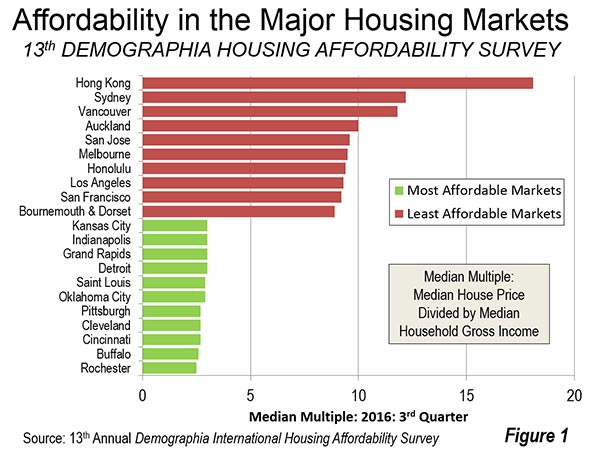
    This year, the least affordable major housing markets Hong Kong (with an 18.1 median multiple — the median house price divided by the median household income). Sydney is second least affordable, at 12.2 and Vancouver is 11.8 is third, suffering a huge deterioration from last year’s 10.8. Auckland is fourth, at 10.0, San Jose at 9.6, Honolulu at 9.4, Los Angeles at 9.3 and San Francisco at 9.2 (Figure 1).

    Overall, there are 29 severely unaffordable major housing markets, including all in Australia (5), New Zealand (1) and China (1). There are 13 severely unaffordable major markets in the United States, out of 54. Seven of the United Kingdom’s 21 major markets are severely unaffordable and two in Canada. Toronto, Canada’s second most costly market experienced a deterioration in housing affordability equal to that of Vancouver, rising to a median multiple of 7.7 from 6.7.

    There are 11 affordable major housing markets in 2016, all in the United States. Rochester is the most affordable, with a Median Multiple of 2.5, followed by Buffalo (2.6), Cincinnati (2.7), Cleveland (2.7), Pittsburgh (2.7), Oklahoma City (2.9), St. Louis (2.9) and four at 3.0, Detroit, Grand Rapids, Indianapolis and Kansas City.

    Among the megacities, Osaka-Kobe-Kyoto is the most affordable, with a median multiple of 3.4, while Tokyo, the world’s largest urban area, has a seriously unaffordable median multiple of 4.7.

     “Best Cities” for Middle-Income Households

    Every year, “best cities” and “most livable cities” lists are produced by various organizations. Aimed at the high end of the housing market, these surveys evaluate housing affordability. Yet, the media often mischaracterizes the findings as relevant to the majority of households.

    In fact, a city cannot be livable, nor can it be a “best city” to middle-income households that cannot afford to live there. Households need adequate housing.

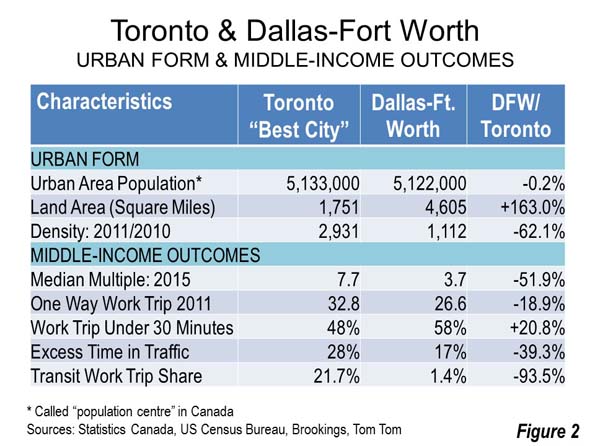
    The “best cities” for housing affordability are often better on middle-income outcomes that the high-end best cities that attract media attention for their luxury lifestyles. This is illustrated by a comparison between Dallas-Fort Worth, where housing affordability is far better and Toronto, which was rated as the “best city” by The Economist. In addition to better housing affordability, traffic congestion is better. Dallas-Fort Worth has the least traffic congestion of any city over 5,000,000 in the world. This is despite the fact that Toronto employs the most favored urban strategies, which Dallas-Fort Worth does not (such as densification and discouragement of auto use). This is not to dispute Toronto’s luxury rating, but it is of little use to the much larger number of middle-income households being priced out of home ownership (Figure 2).

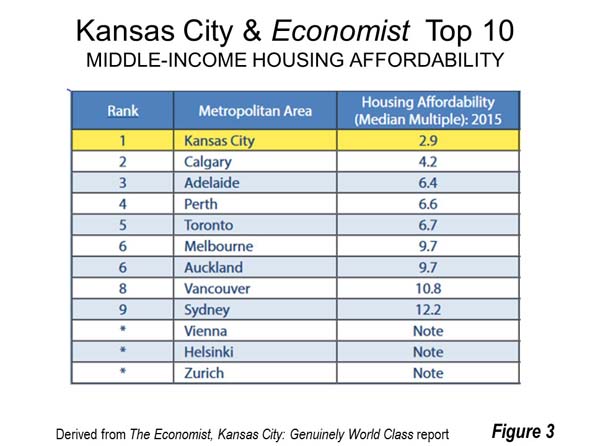
    Another comparison shows that Kansas City has substantially better housing affordability than all of The Economist’s top 10 cities. In addition, Kansas City has the least traffic congestion of any city with more than 1,000,000 population (Figure 3) in the world (tied with Richmond).

    Urban Containment and Severely Unaffordable Housing

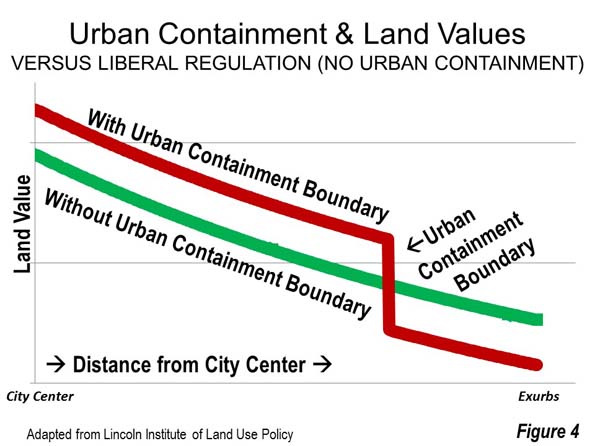
    Excessive land use regulation (housing regulation), principally urban containment policy, has been implemented in the major housing markets with severely unaffordable housing. Urban containment has been associated with much higher house prices, which is to be expected, because severe limitations on supply drive prices higher (as the experience with oil and OPEC shows). The process is illustrated in Figure 4.

    Prime Minister Bill English of New Zealand (then Deputy Prime Minister) noted in his introduction to the 9th Annual Demographia International Housing Affordability Survey that “Land has been made artificially scarce by regulation” locking up land for development. “This regulation has made land supply unresponsive to demand” and “translates to higher prices rather than more houses …”

    Excessive housing regulation has also been identified as having significantly reduced economic growth in the United States (nearly $2 trillion annually) and inequality internationally. It has made the job of central reserve banks more difficult by fueling inflation.

    Economic uncertainty is a substantial concern for households. It is important to keep housing affordable, so that households can have a better standard of living and poverty rates can be lower. This requires avoiding urban planning policies associated with artificially raising house prices, specifically the “killer app” of urban containment. Failing that, housing affordability is likely to worsen further.
    Paul Cheshire, Max Nathan and Henry Overman of the London School of Economics recently suggested that “… that the ultimate objective of urban policy is to improve outcomes for people rather than places” and that “… improving places is a means to an end, rather than an end in itself.”

    Following that policy prescription, a number of cities (such as Dallas-Fort Worth, Kansas City and others) have achieved the objective of putting people over place. For most of society, middle-income households as well as lower income households, the best cities are where governments have overseen local housing markets competently, evidenced by housing that is affordable, all else equal. In such cities, the cost of living tends to be lower, as households are able to afford a more affluent life.

    Oliver Hartwich, of the New Zealand Initiative notes in his introduction, “We should not accept extreme price levels in our housing markets. High house prices are not a sign of city’s success but a sign of failure to deliver the housing that its citizens need.”

    Wendell Cox is principal of Demographia, an international public policy and demographics firm. He is a Senior Fellow of the Center for Opportunity Urbanism (US), Senior Fellow for Housing Affordability and Municipal Policy for the Frontier Centre for Public Policy (Canada), and a member of the Board of Advisors of the Center for Demographics and Policy at Chapman University (California). He is co-author of the “Demographia International Housing Affordability Survey” and author of “Demographia World Urban Areas” and “War on the Dream: How Anti-Sprawl Policy Threatens the Quality of Life.” He was appointed to three terms on the Los Angeles County Transportation Commission, where he served with the leading city and county leadership as the only non-elected member. He served as a visiting professor at the Conservatoire National des Arts et Metiers, a national university in Paris.

    Photograph: Rochester, New York: Most Affordable Major Housing Market in 2016 by Theresa Marconi (Personal Communication) [CC BY-SA 3.0], via Wikimedia Commons

  • Doing What Actually Works

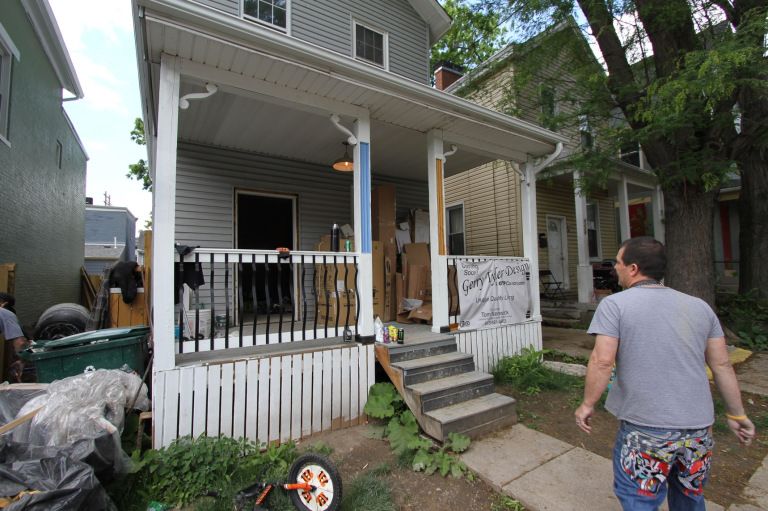
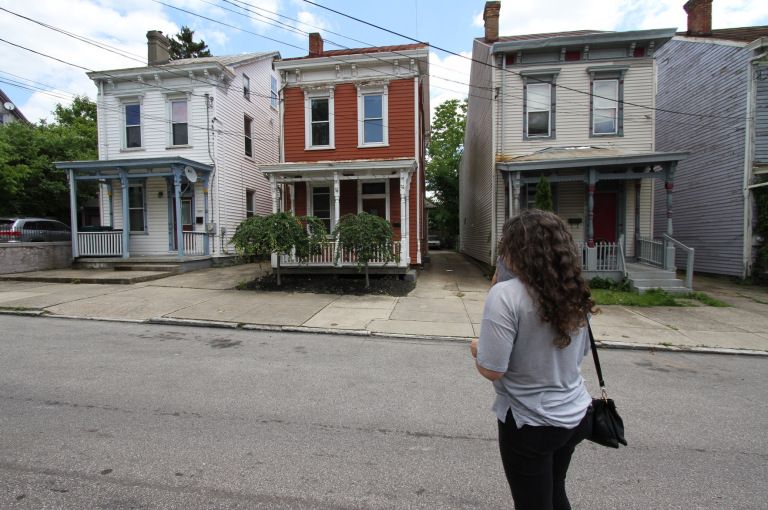
    Last year I engaged in a failed attempt to renovate and expand an old house in an 1890’s era neighborhood in Ohio. It ended badly. So I thought I’d do a follow up on what actually does work given the legal parameters and cultural context.


    I sold the house to a smart young local guy who bought eight similarly run down properties on the same block within a short period of time. He gathered private funds from a group of personal investors to finance the venture. Then he hired a family owned contracting company from across the river in Kentucky to renovate all the homes. He’s selling the properties as they become ready for market and distributing the profits to his investors, keeping a percentage for himself. It’s a really good economic model with a fast lucrative turn around.

    The new owner and his contractor never dreamed of changing any of these buildings in a way that would have required any kind of special permission or variances from the city authorities. That way lies ruin. This smart team of savvy professionals brought these abused and neglected husks up to respectable middle class standards quickly and efficiently in a way that only marginally involved municipal officials with plain vanilla over-the-counter permits and ho-hum inspections. Once the new kitchen cabinets and fancy appliances go in along with the new windows and flooring these homes have instant market appeal. They’ve been selling very well, particularly because the collective renovations of multiple buildings at the same time in the same concentrated area feeds a palpable sense that the neighborhood is rapidly gaining value.

    It helps that the new owner went to high school in the area. In a provincial town like Cincinnati these things really matter to the locals. And he’s selling single family homes, presumably to future owner/occupants. In contrast, I was reviled in social media as both a carpetbagging gentrifier who was driving out long time working class residents and an absentee slumlord who would dump “the wrong element” on to the neighborhood and degrade property values and the quality of life for nearby homeowners.

    The end result is that the house I paid $15,000 for will ultimate sell for six figures even though it’s still exactly the same size and shape – give or take a nice cosmetic skin job – after it’s flipped at a generous profit. So the folks who worry about gentrification will experience the same resultant condition relative to what I had in mind for the place. And there’s no guarantee that it won’t eventually be purchased by someone who will choose to rent the property rather than live in it themselves. But all that is beside the point. The regulatory environment and cultural perceptions are the defining constraints. The new owner is just a whole lot better at effectively piloting his way around those shoals. I have to respect his business acumen.

    Over the past five years I’ve followed a variety of young talented industrious people in the neighborhood. One couple has been engaged in another business model that works beautifully. They buy a distressed property at a reasonable price point. They move in and occupy the space themselves for about a year while they renovate it. Then they buy their next property, move in, and rent the one they just completed. Instead of flipping properties they’re steadily building a long term portfolio with positive cash flow and equity. They’re currently managing a dozen units and filling them with good quality people from the community.

    The crucial point is that they never buy a property that requires special permission to upgrade or needs extraordinary amounts of structural work to bring it up to code. They buy a solid shell and clean it up. Full stop. If they encounter an otherwise great building that happens to need fire sprinklers, or an elevator, or a zoning variance they steer well clear of it. Let some other poor bastard kill themselves in the meat grinder of endless bureaucracy and public outrage. (That was me…)

    To do absolutely anything else is technically possible, but hideously time consuming, difficult, and untenably expensive – and your neighbors will call you all sorts of terrible names and project all their fears on to you. For folks who believe in building great new places that mirror the charming old compact mixed use walkable neighborhoods of a century ago… Let it go. We have the dregs we inherited from previous generations and they can be shined up. But that’s it.

    John Sanphillippo lives in San Francisco and blogs about urbanism, adaptation, and resilience at granolashotgun.com. He’s a member of the Congress for New Urbanism, films videos for faircompanies.com, and is a regular contributor to Strongtowns.org. He earns his living by buying, renovating, and renting undervalued properties in places that have good long term prospects. He is a graduate of Rutgers University.

    All photos by Johnny Sanphillippo

  • Are America’s Cities Doomed to Go Bankrupt?

    I’m a fan of Strong Towns and share their thesis that the biggest sustainability problem with much of suburbia is its financial sustainability.

    recent article there about Lafayette, Louisiana has been making the rounds. That city’s public works director made some estimates of infrastructure maintenance costs and which parts of the city turned a “profit” from taxes and which were losses. Here’s their profit and loss map.

    The obvious conclusion that we are supposed to draw is that dense, compact, traditional urban development is profitable and good, but low density sprawl is a money loser and bad.

    There’s some truth in this, but taking that simplistic view can give a misleading impression. For example, let’s consider why high density central business districts tend to have such density of development and high property values per acre (and thus taxes). It’s obvious that these districts derive a great part of their value from the overall scale of the community, i.e., sprawl.

    Let’s do a quick thought experiment. Lower Manhattan below 59th St. is certainly incredible valuable property. However, if the rest of the metro area were some how chopped away leaving only this super-valuable part, how much value would that land retain? In part, Manhattan is valuable because it’s the center of a vast megacity region where tremendous amounts of human capital that lives in dispersed communities can be concentrated in a small area for commercial purposes.

    This article says that only about five cities in America don’t suffer from a fatally flawed financial model. I seem to recall that elsewhere they said NYC and SF are the only two cities that can survive in the long run financially.

    But it wasn’t that long ago that NYC nearly went bankrupt and had to be rescued. A recent study just said that its structural finances are the second worst of any major city in the country, primarily because of its gigantic liability for retiree health care. NYC looks good now because its economy has been booming. Let’s see how it does it a major downturn, particularly without a strong fiscal hand like Bloomberg at the tiller.

    San Francisco is unaffordable to all but very high income residents. It’s a de facto gated community. It may well be that pricing everybody but the rich out is a viable strategy for financial sustainability, but that’s obviously a path foreclosed to most places, even if they wanted to try it.

    We also need to consider that there’s infrastructure we have maintained. By and large our telecommunications infrastructure and electricity infrastructure are in very good shape, for example.  For telecom especially we’ve made vast investments to not only maintain, but dramatically upgrade our infrastructure. How did we manage to pull that off if it’s financially impossible to maintain and upgrade infrastructure? What lessons could we learn from that?

    In short, I agree with the general Strong Towns thesis that we need to look at the long run “total cost of ownership” of sprawl. In many cases, the math just doesn’t add up and some cities are in an infrastructure hole so deep they’re unlikely ever to get out. But they are overstating their case here.

    Aaron M. Renn is a senior fellow at the Manhattan Institute, a contributing editor of City Journal, and an economic development columnist for Governing magazine. He focuses on ways to help America’s cities thrive in an ever more complex, competitive, globalized, and diverse twenty-first century. During Renn’s 15-year career in management and technology consulting, he was a partner at Accenture and held several technology strategy roles and directed multimillion-dollar global technology implementations. He has contributed to The Guardian, Forbes.com, and numerous other publications. Renn holds a B.S. from Indiana University, where he coauthored an early social-networking platform in 1991.

    Photo "Downtown Lafayette, Louisiana" by Patriarca12 (Own work) [CC BY 3.0], via Wikimedia Commons

  • Loyal Opposition Versus Resistance to Trump

    Perhaps nothing has made modern progressivism look sillier than the often hysterical reaction to the election of Donald Trump. This has spanned everything from street protests, claims of Russian electoral manipulation and even reports of sudden weight gain and loss of sexual interest. Rather than become more introspective in the face of defeat, the bulk of left-leaning media and their intellectual allies have embraced the notion — even before the new president proposes anything — of following what UC Berkeley public policy professor and former U.S. labor secretary Robert Reich calls “the resistance agenda.”

    The notion of modern progressives donning berets and fighting the modern-day version of Nazis is absurd. Donald Trump may be wrongheaded, and personally venal, but he is not Adolph Hitler, or even Benito Mussolini. Critically, he is not particularly popular, as were those demagogues. Trump’s election certainly was not a mandate, as many liberals correctly point out.

    The election showed a still deeply divided nation. Hillary Clinton won the popular vote, but the GOP triumphed everywhere else, notably at the congressional level, where they won by 3.5 million votes, and it did even better at the state and local levels. Certainly, the progressives can get back into the game, but first they need to toss out the berets, stop talking civil disobedience and instead embrace the role of loyal opposition, using counter-arguments rather than histrionics.

    Progressives still have wind at their backs

    Democrats, time is still largely on your side. All the constituencies that backed Hillary Clinton — minorities, millennials, college-educated professionals — are demographically ascendant. Those that backed Trump, such as boomers, seniors and members of the white working class, are destined to fade.

    To return to power in the short run, however, the Democrats need to appeal to parts of the largely white, older Trump base, many of them former Democrats. The meme, as seen in Slate’s assertion that the election proved “how racist, sexist and unjust America is,” does not seem the best way to win over these wavering voters. There are opportunities galore to do this.

    Read the entire piece at The Orange County Register.

    Joel Kotkin is executive editor of NewGeography.com. He is the Roger Hobbs Distinguished Fellow in Urban Studies at Chapman University and executive director of the Houston-based Center for Opportunity Urbanism. His newest book, The Human City: Urbanism for the rest of us, was published in April by Agate. He is also author of The New Class ConflictThe City: A Global History, and The Next Hundred Million: America in 2050. He lives in Orange County, CA.

    Trump protest photo by i threw a guitar at him. (https://www.flickr.com/photos/becc/26879649373/) [CC BY 2.0], via Wikimedia Commons

  • Detroit’s New Streetlights Show Service Rebuilding in Action

    I’ve been arguing that one thing struggling post-industrial cities need to do is take care of their own business, doing things like addressing legacy liabilities and rebuilding of core public services.

    Last week I write about Buffalo doing just this by completely re-writing its zoning code and creating a new land use map of the city to bring its planning ordinances up to date for the 21st century.

    Michael Kimmelman, architecture critic at the New York Times, recently wrote a feature on another good example: the replacement of Detroit’s entire street light inventory.

    Detroit had 88,000 street lights, but only about half of them worked. Many of them were ridiculously old, some dating to the early 20th century I believe. Many of these were historic and charming as a result, but alas they didn’t work and couldn’t be maintained either. What’s more, thieves kept stealing the wire out of them for the copper.

    The new system consists of 65,000 new LED lamps. As the Times puts it:

    Let’s hope that if anyone writes a history of Detroit’s rejuvenation, a chapter is devoted to the lights returning. Like picking up the trash, fixing potholes and responding to emergencies, these efforts signal that no matter where you live in Detroit, you are no longer forgotten — that government here can finally keep its basic promises.

    This is where the new lights come in. They’re spread all across town. The project cost $185 million, paid by the city and the state. The Public Lighting Authority of Detroit, backed by the mayor, received a critical assist from the Obama administration: Energy Department experts advised local officials to swap out the old, costly, broken-down sodium lamps, which vandals had been stripping bare for copper wire.

    They recommended LED technology. Investments by the Obama administration in energy-efficient lighting have reduced costs, making LEDs feasible for a city like Detroit. Three years ago, nearly half the 88,000 streetlights in the city were out of commission. The more potent LED lights allow the authority to replace those 88,000 old fixtures with 65,000 new ones, strong enough for you to read one of those glossy magazines after dark.

    Detroit said that it needed to actually deliver high quality services to its residents. Streetlighting is literally a high visibility service. And unlike some human services areas or economic development, it’s a straightforward piece of physical infrastructure that should be well within the ability of the city to actually deliver. And the new lighting authority did deliver:

    The whole thing came in under budget and on time. When was the last time anyone could say that about a major infrastructure project in Detroit? “An example of how good government should work,” as Lorna L. Thomas, chairwoman of the lighting authority, put it at the switch-flipping ceremony.

    It’s also an example of how one smart urban-design decision can have ripple effects. Some residents here grumbled about fewer lights. That said, the stronger new ones turn out to save Detroit nearly $3 million in electric bills. They use aluminum wiring, which nobody wants to strip, discouraging crime. The technology even cuts carbon emissions by more than 40,000 tons a year — equivalent to “taking 11,000 cars off of your streets,” [said Shaun Donovan].

    Part of creating a willingness to spend more money on government is recreating a sense that government is actually competent. Delivering a project on time, under budget, that will save millions in operating costs, reduce theft, and be more environmentally friendly is a step in the right direction.

    I’m not the biggest fan of LEDs and might be with the grumblers on wanting a higher density solution. But my preferences for gold level services aren’t always realistic. This appears to be a high quality, cost effective solution the city should feel good about. Other post-industrial cities should take note.

    Click over to read the rest of the Times piece.

    Image via Laura McDermott/The New York Times

    Aaron M. Renn is a senior fellow at the Manhattan Institute, a contributing editor of City Journal, and an economic development columnist for Governing magazine. He focuses on ways to help America’s cities thrive in an ever more complex, competitive, globalized, and diverse twenty-first century. During Renn’s 15-year career in management and technology consulting, he was a partner at Accenture and held several technology strategy roles and directed multimillion-dollar global technology implementations. He has contributed to The Guardian, Forbes.com, and numerous other publications. Renn holds a B.S. from Indiana University, where he coauthored an early social-networking platform in 1991.

  • Them that’s got shall have. Them that’s not shall lose.

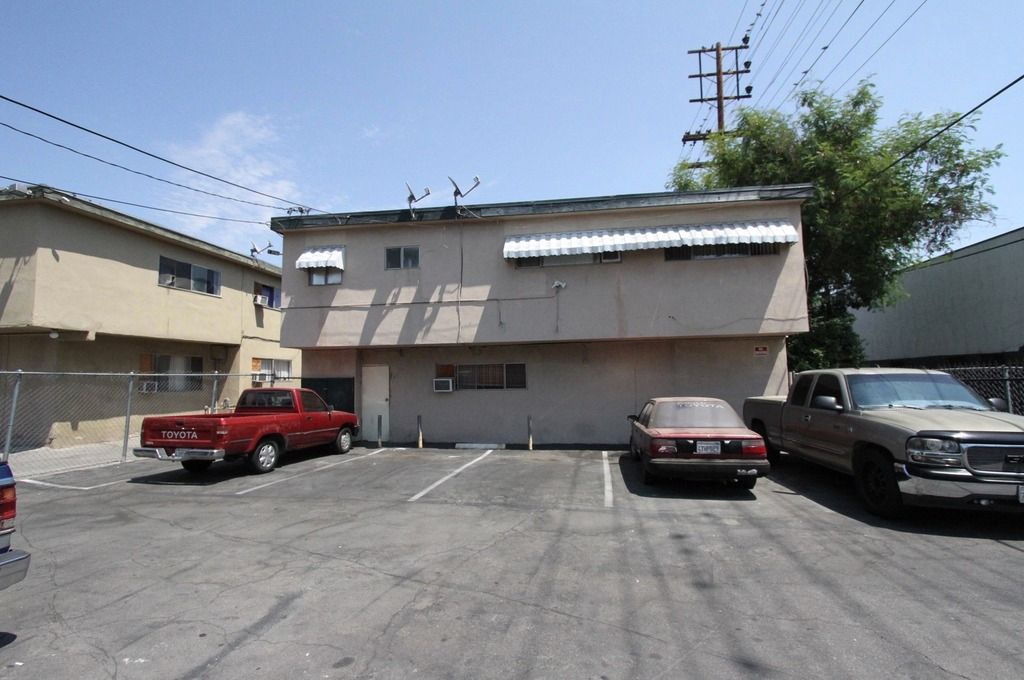
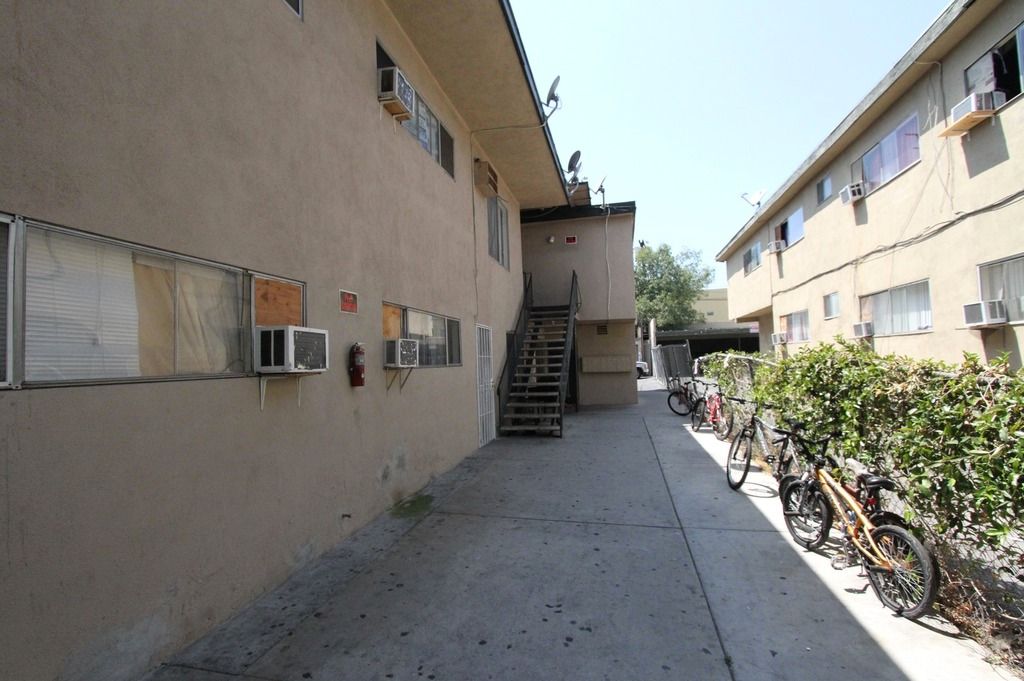
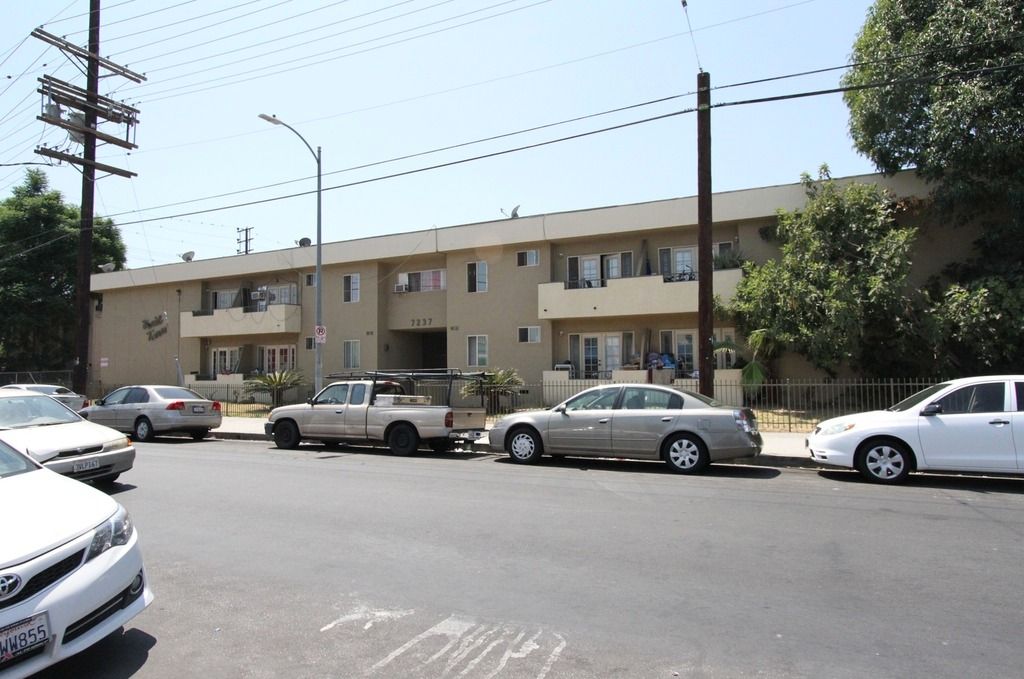
    My family lived in this building when I was a kid in the 1970’s. This was the door to our old apartment. It’s in a nondescript part of the San Fernando Valley in Los Angeles. There are a million places just like this all over the Southland. These beige stucco boxes are the workhorses of semi-affordable market rate housing in California. The place hasn’t changed in forty years other than the on-going deferred maintenance.

    I walked around the block to see the buildings where my friends used to live and the shops where we bought groceries and such. I can’t say I felt nostalgia. These weren’t happy times. But I was aware of the fact that the people who live here now are the same as my family was then – basically good people who are scraping by with almost no money doing the best they can with what they have. These are the minimum wage workers who do all the invisible dirty work of the city. Real incomes for these folks haven’t changed since I was a kid. But the cost of everything important from owning a home to health care to a proper education has skyrocketed.

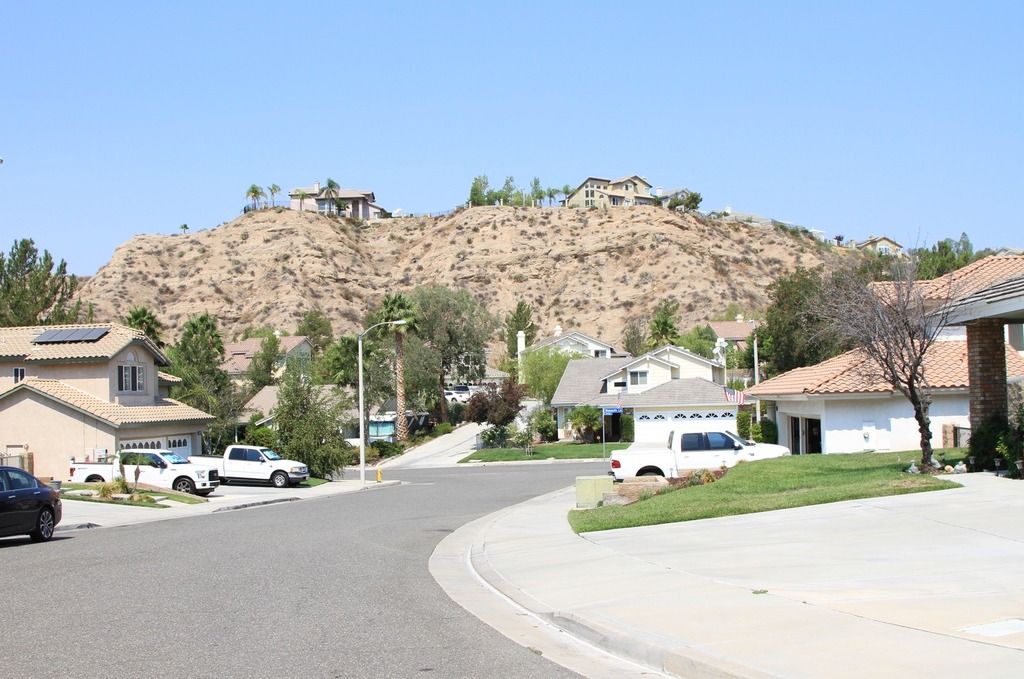
    I want to go back to my last post about the exclusive homes in the fringe suburbs. The people who can afford to live here do so in large part so they can distance themselves from the people in my old neighborhood. Fair enough. I completely understand. I don’t want to live in my old neighborhood again either.

    But there’s that lingering problem of public infrastructure vs. the tax base of various forms of development. The city has spent almost nothing on my old block for decades. Yet those sad buildings keep spinning off revenue year after year. And there are a lot of them. Collectively they generate enough excess cash that the authorities can siphon it off to fund other activities. When it comes time to allocate resources who do you think has the most likely chance of getting what they need? The people who live in my old apartment, or the folks who live in the $700,000 homes up on the hill?

    As a society we want to believe that the poor are draining the public coffers dry. We need to blame the lower end of the working class for whatever we don’t like about the country. We want it to be true that they are undeserving compared to the better people who begrudgingly support them from a distance. Welfare. Food stamps. Section 8. But the reality – if you look at the budget and the actual numbers – is that without the poor packed tightly in their crappy apartments all working for crumbs in underfunded sections of town there could be no exclusive enclaves.

    Billie Holiday said it best. Them that’s got shall have. Them that’s not shall lose.

    John Sanphillippo lives in San Francisco and blogs about urbanism, adaptation, and resilience at granolashotgun.com. He’s a member of the Congress for New Urbanism, films videos for faircompanies.com, and is a regular contributor to Strongtowns.org. He earns his living by buying, renovating, and renting undervalued properties in places that have good long term prospects. He is a graduate of Rutgers University.

    All photos by Johnny Sanphillippo

  • The Irony That Could Trip Up Trump’s Quest To Make The U.S. Economy ‘Great Again’

    Perhaps no president in recent history has more pressure on him to perform economic miracles than Donald Trump. As someone who ran on the promise that he could fix the economy — and largely won because of it — Trump faces two severe challenges, one that is largely perceptual and another more critical one that is very real.

    To start, Trump must cope with the widespread idea, accepted by much of the media, that we are experiencing something of an “Obama boom.”

    He is widely portrayed as inheriting a very strong economy, notes MSNBC, in which the U.S. is “the envy of the world.” Fortune sees Trump inheriting “the best economy in a generation.”

    Yet this is more a matter of perception than reality, a kind of “fake news.” To be sure, President Barack Obama inherited a disastrous economy from George W. Bush and can claim, with some justification, that on his watch millions of jobs were restored and the economy achieved steady, if unspectacular, growth. Under Obama average GDP growth has been almost twice as high as under his predecessor, but roughly half that of either President Reagan or Clinton.

    Less appreciated, however, are the fundamental long-term weaknesses in the U.S. economy that Obama and Bush have left for Trump. A recent report from the U.S. Council on Competitiveness details a litany of profound, lingering flaws — historically slow growth, rising inequality, stagnant incomes, slumping productivity and declining lifespans. As the report concludes: “The Great Recession may be over, but America is dangerously running on empty.”

    These make for challenging conditions for Trump to make good on his promise to “make America great again.”

    Since 2005 the vast majority of new jobs created have been part-time, and most have been in low-end service professions. Full-time middle-class employment, particularly in fields like manufacturing, construction and energy, has recovered some, but not enough to rekindle a broad sense of economic opportunity. Both the numbers of the rich, and those of the poor, grew markedly under our now departing President. There are now 16 million more people on food stamps than in 2008, and homeownership is down to the lowest level in nearly 50 years.

    Trump may have lost the popular vote but given his awful approval numbers, it’s a testament to how deep the distress is for millions amid this economic malaise that he managed to come even close. Perhaps more importantly House Republicans, also running against the economy, outpolled their rivals by 3.5 million votes. Their constituents differ from that of the blue states won by Hillary Clinton. These states, whose economies depend more on financial engineers, real estate speculation, media and technology development, did well – or at least those who worked in these industries did.

    Trump’s Biggest Challenge

    Trump won because of Middle America — largely white, suburban and small town, mainly in the vast region between the Appalachians and the Rockies. To consolidate his grip on power, and that of his unruly party, he needs to extend the weak, but long-lasting Obama recovery into something that drives up higher wage employment in manufacturing, energy and services.

    This is where Trump’s emerging nationalist policies could come into play. Conservatives and liberals alike sneer at his needling of big corporations, foreign and domestic, over jobs, but what is the job of a President? Shouldn’t he be on the side of average citizen in Podunk, USA? If Trump can bring good jobs back to Middle America, notes analyst Aaron Renn , a native of southern Indiana, they’ll appreciate it. Trump, he notes, is “sending a powerful message to workers that they matter and he will fight for their interests. “

    His jawboning of CarrierFordGM and Sprint, and even the mighty Apple, could all be dissected as dependent on subsidies, incentives and intimidation. But people in Indianapolis, southeast Michigan and Kansas City are not theoretical beings waiting for the welfare leavings of the coastal super-rich. Their desires matter as much as those of sensitive souls in San Francisco or Brooklyn.

    There are certainly ways — tax policies, regulatory reform, infrastructure investment — that might spark growth and get companies to create more jobs here.

    Is Trump Up To The Job?

    There is nothing better for an economy than mass prosperity, which is something now sorely missing. That means people buying houses, getting married, having babies, the essentials of a strong middle class economy. Anyone who delivers those goods — last accomplished by Bill Clinton and Ronald Reagan — seems certain of re-election. This is particularly critical for the roughly seven in 10 Americans who have less than $1,000 in savings.

    Of course, Trump seeks to achieve this goal is using a very different approach than either Clinton or Reagan. He has chosen to follow an economic nationalist course that, in some ways, seek to reverse the approach embraced by both of these successful Presidents and much of the nation’s establishment. In contrast to virtually everyone who has held the White House since the 1940s, Trump did not run for leader of the world; he ran, very purposely, as the candidate of Americans. Clinton, like the European Union have offered more complexity, notes the Guardian; Trump, like many effective leaders, boiled everything down to simple memes.

    Whether this populist course will work is not clear. Critics in the Democratic Party have pointed out, correctly, that Trump’s cabinet hardly fits a populist mold. It’s full of Wall Street financiers and high level corporate executives. He also will face opposition within his own party, which remains largely chained to big business interests and includes many advocates for ever expanding globalization. Similarly many “routine” jobs that paid well have fallen not simply to foreigners, but to automation and technology.

    Yet ultimately Trump has proven himself something of savvy politician — far more than anyone suspected — and seems, at least for now, to be keeping his eye on the ball. The specter of tax, regulatory reform and more infrastructure spending is already ramping up projections of long lagging investment from businesses. And the general population, however deeply divided, seems more optimistic than in previous years, which could further stimulate the economy.

    This could reinforce the notion that Trump’s hectoring of executives, and pushing economic nationalism, could prove effective in creating broad based economic growth for the emerging post-globalization era. Now it’s a matter of whether he can pull this off without sparking a trade war, an international meltdown or another recession that could turn him not into the new Reagan, but the latest version of Herbert Hoover.

    This piece originally appeared in Forbes.

    Joel Kotkin is executive editor of NewGeography.com. He is the Roger Hobbs Distinguished Fellow in Urban Studies at Chapman University and executive director of the Houston-based Center for Opportunity Urbanism. His newest book, The Human City: Urbanism for the rest of us, was published in April by Agate. He is also author of The New Class ConflictThe City: A Global History, and The Next Hundred Million: America in 2050. He lives in Orange County, CA.

    Photo by Gage Skidmore from Peoria, AZ, United States of America (Donald Trump) [CC BY-SA 2.0], via Wikimedia Commons

  • World Automotive Sales Setting New Records

    The world has come a long way since 1929, when 80 percent of the world’s car registrations were in the United States, which also manufactured 90 percent of the vehicles. Now China produces the most cars and its annual sales rank top in the world. China overtook the United States in vehicle sales during the Great Recession. But it’s not like Americans are no longer buying cars; the US broke its own record last year. In 2016, sales records were also set in nations as diverse as China, the United Kingdom, Canada, Australia and Mexico.  

    China

    China has emerged as the world’s largest automotive market. In 2016, China’s sales of passenger cars, light trucks (including sport utility vehicles, or SUVs) and commercial vehicles reached 23.9 million. This is 6.5 million more cars than were sold in the United States. This gap is likely to grow, because China’s large population offers greater opportunity for growth. The United States has about eight times as many vehicles per 1,000 population as China. The US leads in total vehicles with 260 million compared to China’s 140 million, according to OICA, the international vehicle manufacturers organization (Organisation Internationale des Constructeurs d’Automobiles), 

    From virtually the beginning of motorization more than a century ago, the United States dominated world automotive production but during  the Great Recession   China assumed sales leadership. As sales dropped precipitously in the US, Chinese sales rose 47 percent in 2009.

    Sales in 2016 were aided by temporarily lower taxes on small engine vehicles, which ended on December 31. Still, analysts expect another four to five percent growth in vehicle sales in 2017.

    As in a number of other nations with rising volumes, SUVs took an increasing share of total sales figures. SUV sales were up 44 percent, eight times the increase in passenger car sales. Now, nearly three-quarters as many SUVs as passenger cars are sold in China (Note).

    Buick was one of the international pioneers in China’s automobile market, from agreements after US President Richard Nixon’s early 1970s visit. Buicks had been favored by some government officials. and were the first American cars built in China (in a joint venture with local SAIC ). China’s Premier Zhou Enlai, who served from 1949 to 1976, owned one before World War II (Photo: Premier Zhou En Lai’s Buick, Museum in Nanjing). Today, 80 percent of the world’s Buicks are sold in China.

    In recent years the Chinese  market has become more diverse. Virtually all of the international players sell in China and there are a number of local manufacturers. Sweden’s flagship brand, Volvo, now owned by Chinese interests, who now ship a “made in China”  model to the United States (the only Chinese import).

    China’s infrastructure is well prepared for its record breaking sales. China leads the world in its length of motorways (freeways or controlled access expressways), with 123,500 kilometers (76,700 miles) as of the end of 2015 (Photo: G4 Expressway between Zhengzhou, Henan and Wuhan, Hubei). This compares to the latest available US total of 104,500 (64,900 miles) in 2014.

    China’s cities are served by extensive freeway systems. In Beijing  there are five freeway ring roads and a sixth partially opened. But cars have become so popular that the high city densities have predictably created both horrific traffic. Further, despite effective emission controls, the high density of traffic contributes to the country’s severe air pollution problems . The plan for a more decentralized Beijing and environs (Jin-Jing-Ji) is aimed at least partially at reducing traffic congestion.

    Photo: Zhou En Lai’s Buick, Zhou En Lai Museum, Nanjing

    Photo: G4 Expressway between Zhengzhou, Henan and Wuhan, Hubei
    United States

    A record 17.6 million light vehicles were sold in the second largest market, the United States, which broke last year’s record of record of 17.4 million. Light duty truck sales captured nearly 60 percent of the market, with an annual increase of 7.2 percent. This included SUV’s, (and “crossovers”) with 38 percent of the market and a 7.4 percent increase. Passenger cars continued their decline by 8.1 percent, to 40 percent of the market.

    Western Europe

    The core European Union 15 nations, along with Norway and Switzerland taken together account for the third largest car market.  . There was no new record there last year but the strongest volume since 2007. Nearly 14 million light vehicles were sold, approximately six percent below the record set in 1999.

    The United Kingdom set a record, with sales of 2.6 million vehicles, up two percent from 2015. Fifteen of the seventeen nations had sales increases. Italy, Portugal and Ireland had the greatest gains, at 17.5 percent, 16.2 percent and 15.8 percent respectively. Spain also exceeded a ten percent gain (10.9 percent), while Finland gained 9.3.

    Strong gains were also posted in Sweden, Finland, Denmark and Belgium, with increases of from seven to eight percent. However, neighboring Netherlands had by far the largest drop, 14.7 percent. Large markets France (up 5.1 percent) and Germany (4.5 percent) contributed importantly to the higher Western Europe sales number. Sales were down 2 percent in Switzerland.

    A More Mobile World

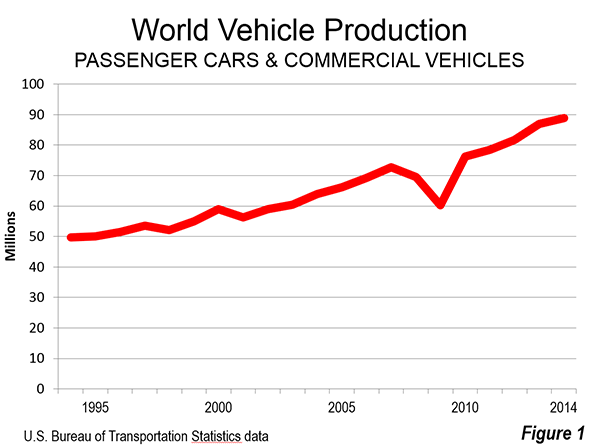
    In 2014, world vehicle sales reached 89 million (Figure 1). Between 2004 and 2014, world car sales rose at a rate of 3.3 percent annually. Even with the reverses of the Great Recession, this was a more than one-quarter increase from the 2.6 percent rate of the previous decade. If the trend of recent years continues, production will exceed 100 million by 2020.

    According to OICA, international vehicle manufacturers organization (Organisation Internationale des Constructeurs d’Automobiles), there were 1.2 billion vehicles in the world in 2014, 180 per 1,000 population.

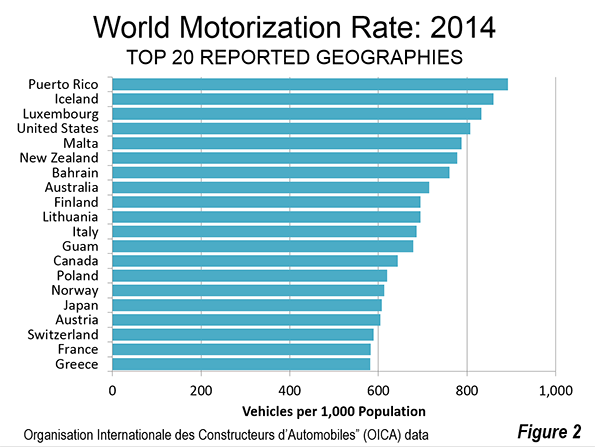
    It might be expected that the greatest motorization would have been reached in the United States, the most affluent of the larger nations. That would be partly right, but not the 50 states, rather Puerto Rico is the most intensively motorized geography in the world, with 892 vehicles per 1,000 residents, according to OICA (Puerto Rico is routinely reported separately, for cars and other data .  This is surprising, given that Puerto Rico’s median household income was only one-third of the 50 states in 2015, and less than one-half that of 50th ranked Mississippi (Figure 2).

    The United States has to settle for fourth position, following Iceland and Luxembourg. Even that may seem high, especially in view of data in The Economist’s The World in Figures, which says that the US  ranks 36th in cars per 1,000 population. But in the United States, cars aren’t even half the story. In the US, peak sales of traditional passenger cars  was reached in 1974 and sales have dropped nearly 40 percent. Consumers have been buying SUVs and pickups instead. Motorization is measured by personal vehicles, not cars. According to OICA, in 2014 86 percent of Western European vehicles were cars, compared to 47 percent in the United States, In fact, in 2016, the top three selling vehicles in the United States were pickups, led by the Ford F Series, which is also the top seller in Canada (photo: Ford F-150 Pickup), where nearly two-thirds of 2016 sales were pickups and SUVs.

    Photo: Ford F-150 (2017 model)

    World motorization continues to grow strongly. The cars are cleaner , safer and will continue to get more environmentally friendly. The mobility they have facilitated has made an important contribution to the continuing improvements in the quality of life and will continue to do so, despite efforts of governments and planners to discourage their use.

    Note: Vehicle types may not be standardized in national reporting and thus caution is required in interpreting this data.

    Wendell Cox is principal of Demographia, an international public policy and demographics firm. He is a Senior Fellow of the Center for Opportunity Urbanism (US), Senior Fellow for Housing Affordability and Municipal Policy for the Frontier Centre for Public Policy (Canada), and a member of the Board of Advisors of the Center for Demographics and Policy at Chapman University (California). He is co-author of the “Demographia International Housing Affordability Survey” and author of “Demographia World Urban Areas” and “War on the Dream: How Anti-Sprawl Policy Threatens the Quality of Life.” He was appointed to three terms on the Los Angeles County Transportation Commission, where he served with the leading city and county leadership as the only non-elected member. He served as a visiting professor at the Conservatoire National des Arts et Metiers, a national university in Paris.

    Photo: Chang’an Avenue, Beijing by Australian cowboy at the English language Wikipedia [GFDL], via Wikimedia Commons