Blog

  • High Speed Rail: The Dream Scheme Scenario

    Ever since Jay Gould, Leland Stanford, and Cornelius Vanderbilt acquired their first legislatures, railroads have been best understood as political networks, rather than as transportation lines. The Obama administration is hyping high-speed rail (HSR) with a $53 billion proposal not because the president is a trainspotter or because he collects back copies of the Official Guide of the Railways (like I do). Rather, it’s because politicians understand that the states blew their money on generous pension plans, pretentious sports stadiums, and bridges to nowhere, and now need billions to plug their budget deficits. It’s easier to funnel money into tapped–out state capitals under the smoke and mirrors of a feel-good rail project than it is to announce that the federal government stands behind states’ subprime debts. The Government Accounting Office estimates unfunded state liabilities at $405 billion, which is probably what HSR would, in the end, cost. Think of it as the Stimulus Express.

    The high-speed scheme is a dream of superfast trains, traveling at 150 m.p.h., linking Portland, Maine, and Charlotte, North Carolina; Chicago with St. Louis and Kansas City; the Orlando corridor in Florida (which the governor there has rejected); and express trains in Texas and California. Another way to look at the proposed HSR network is to imagine it connecting the cities and states that Obama needs to carry if he is to have a chance of winning the 2012 election.

    Along the high-speed tracks-to-be are stops in Michigan, Ohio, North Carolina, Florida and Pennsylvania, which are key 2012 electoral contests. Red states west of the Mississippi, by contrast, will have to wait for Amtrak’s Southwest Chief to arrive three hours late in Dodge City.

    Before the U.S. goes into hock over HSR, it might consider making a virtue of low-speed rail. Slow food has it followers. Why not the same for slow trains, since that’s the best that Amtrak can offer? Herewith are ten ideas that will get more (fare-paying) Americans back on the (less-than-perfect) rails. Implementing them wouldn’t cost anywhere near $53 billion. Done right, they would even make money.

    • Privatize the corridor services between Boston and Washington, Chicago and St. Louis, and San Diego and Los Angeles. But mandate that at least two competing companies operate passenger service on the lines. If American railroads are not interested in the job, French or German national rail companies would bid on the service.
    • Sell off the franchise rights to Amtrak passenger cars to mall stores, restaurants, and bars. A movie car could run between Philadelphia and Pittsburgh, and a discotheque (Pullman 54) could operate, for example, on the night train from New Orleans to Atlanta. I am sure the Outback restaurant chain would want some cars in the West. Who cares about speed if you are having fun or can use the time productively? I would happily ride the Barnes & Noble to Charlotte or the L.L. Bean to see my family in Maine. Why can’t Amtrak add a few FedEx Kinko cars?
    • Auction off Amtrak’s sleeping car services to Hyatt, Holiday Inn, Embassy Suites or Motel 6. They know more than Amtrak does about making beds.
    • Instead of catering to the gun lobby (Amtrak now allows passengers to pack heat), work with the car rental agencies to create a car-sharing alliance at Amtrak stations to solve the problem of getting anywhere from far-flung places like the Richmond station, which is located miles from downtown.
    • Spin off Amtrak Vacations to Outward Bound, the American Youth Hostel Association, Carnival Cruises, the Boy Scouts, or the Green Tortoise (a hippie bus tour company), and let them offer rail cruises to national parks, jazz festivals, fall foliage, major league stadiums, and jamborees.
    • Create Amtrak University, and outfit trains to take high school and college students to places like Gettysburg, Little Big Horn, Bunker Hill, the Grassy Knoll, Mark Twain’s museum in Hannibal, Missouri, and Marion, Ohio (where Warren Harding ran the local newspaper).
    • Invent a clean steam engine that runs on scrubbed American coal, and market passenger railroads as green travel, locally grown.
    • Retrofit some baggage cars to carry bicycles easily and cheaply, and develop a national network of “Rails and Trails,” so that passengers can have a seamless connection between the train and their bikes. At the moment, it’s easier to ship a gun on Amtrak than it is to take a bike.
    • Deregulate passenger service, to encourage the flourishing short-line rail industry to carry passengers on some of their freight lines, as the Housatonic R.R. Is proposing to Pittsfield, Massachusetts.
    • Invest surplus funds in commuter rail projects, including the proposed Hudson River tunnels that New Jersey Governor Chris Christie turned down. Commuter rail is a proven, if dreary commodity. High-speed rail dreams are the stuff of State of the Union addresses, but the top ten commuter systems together transport about 1.63 million passengers daily (Amtrak has 74,000 a day).

      Most commuter systems need nicer stations, easier links to other lines and buses, and to provide comfort zones with better coffee (not a federal budget concern), clean restrooms, and Wifi. I love the coming Long Island Rail Road link to Grand Central and the new BikePorts of the Massachusetts Bay Transportation Authority.

    Had the United States integrated high-speed rail into the Interstate Highway system — imagine tracks in the median strips — the idea might have worked. Imposed on a society addled with cars and planes, it has the risk of becoming a cost-overrun nightmare of $82 million a mile versus $2.4 million for traditional rails.

    Much of the infrastructure is already in place to develop a national revival of low-speed rail, at a fraction of the costs of subsidized HSR. The trains we have can be privatized, franchised, hot spotted, double-bedded, and showered, and no one will care about the engine speed. To save billions, if not to make money, why can’t the U.S. subscribe to the words of author Paul Theroux: “Better to go first class than to arrive.”

    Photo by Jeramey Jannene of train tracks right outside of Havenwoods State Forest in Milwaukee, Wisconsin.

    Matthew Stevenson is the author of Remembering the Twentieth Century Limited, a collection of historical essays. He is also editor of Rules of the Game: The Best Sports Writing from Harper’s Magazine.

  • Major Metropolitan Areas: Summary of the First 20

    Data is now available for 20 of the nation’s 52 metropolitan areas with more than 1,000,000 population. The early results indicate a pattern of accelerating dispersion of the population to the suburbs as is indicated in the table below. Thus far, historic core municipality growth has been approximately one-half the 1990s rate. During the 2000s, the historic cores have accounted for 8.8 percent of metropolitan growth, down nearly one-half from the 1990s rate.

    Summary of 2010 Census Results
    Major Metropolitan Areas (Over 1,000,000 Population)
    Historical Core Municipalities
    Suburbs
    Metropolitan Areas
    2000-2010
    Population Gain 682,000 7,047,000 7,729,000
    Percentage Increase 6.7% 23.7% 17.7%
    Share of Growth 8.8% 91.2% 100.0%
    1990-2000
    Population Gain 1,229,000 6,718,000 7,948,000
    Percentage Increase 10.8% 30.5% 23.7%
    Share of Growth 15.5% 84.5% 100.0%
    Includes 20 of 52 metropolitan areas released by 3-3-2010

  • Kansas City MO-KS: Moving Toward Kansas?

    Results just announced for the 2010 Census show that the Kansas City metropolitan area grew 10.8 percent from 2010, from 1,836,000 to 2,035,000 persons. As in all of the major metropolitan areas (over 1,000,000 population) for which data has been reported, the bulk of the growth was in the suburbs, rather than in the historical core municipality (Kansas City).

    The suburbs captured 91 percent of the metropolitan area growth, with a growth rate of 13.0 percent. Nearly one-half of the metropolitan area growth was in Johnson County, Kansas. The Kansas City metropolitan area is unusual among bi-state metropolitan areas, because the population is relatively evenly split between Missouri (location of the historical core municipality) and Kansas, with 58 percent in Missouri and 42 percent in Kansas.

    The historical core municipality of Kansas City gained 4.1 percent, from 442,000 to 460,000. Based upon the 2009 Census estimates, this population was approximately 24,000 lower than expected. The 2010 population remains below the 1970 peak of 507,000 and is only marginally above the 1950 figure (457,000). However, in 1950, the density of the city was substantially higher, contained in a land area of 81 square miles. Kansas City now covers nearly four times as much land area, at 314 square miles. A large portion of Kansas City is actually rural and thus outside the urban area (See 2000 urban area map). This open land provides the city of Kansas City with greenfield land for new suburban development. The suburban development within Kansas City, however, has been substantially less than in other suburban areas of the metropolitan area.

    Kansas City, Kansas, which was also developed around a pre-World War II core, had a population decline from 147,000 to 146,000.

    The continuing dispersion of the Kansas City metropolitan area is indicated by the employment trends from 2001 to 2010 (June). Employment was down 22,000 in the metropolitan area. However, employment was down 42,000 in Jackson County, which includes the urban core of the region (the non-suburban portion of Kansas City). All employment growth has been in the suburbs (20,000).

  • From the Great Moderation to the Great Stagnation

    For much of the past decade, I was a proponent of the thesis that that the American economy had entered a “great moderation,” where expansions lasted longer and recessions were fewer, shorter and milder. Productivity had seemingly reached a permanently high plateau; inflation seemed tamed. The spreading of financial risk, across institutions and around the world, seemed to have reduced the odds of a crisis.

    Events of the past 30 months have put that thesis to rest.  I gave my mea culpa in Growth Strategies #1039 (October 2009), and also explained why we would instead be experiencing slow growth, high unemployment, low productivity growth, and higher taxes for the foreseeable future. That future has come to pass, and will continue to play out for years to come.

    Where does the economy go from here? Profits are up, the markets are up. Inflation and interest rates are still tame. How to reconcile rising profits, a robust stock market, and other positive indicators with unprecedented bankruptcies, foreclosures, underwater mortgages, business failures, unemployment and underemployment? The “working” economy has decided to move ahead and do fine and just leave millions behind. The future would be bright for many, okay for some and dark for many, and recommend being in the first group. 

    What about the overhang of debt and toxic assets? We seem to have opted for a long and slow process of rationalization, rather than a short, sharp and fast one. That means years of mixed messages and mixed trends: the good, bad and ugly.

    The Shattered American Dream

    A national survey of workers who lost their jobs during the Great Recession, conducted by two professors at Rutgers University, paints a gloomy view of the economic prospects for ordinary Americans.

    More than 15 million Americans are officially classified as jobless. The professors at the John J. Heldrich Center for Workforce Development at Rutgers have been following their representative sample of workers since the summer of 2009. The report on their latest survey, just out this month, is titled: “The Shattered American Dream: Unemployed Workers Lose Ground, Hope, and Faith in Their Futures.”

    Over the 15 months that the surveys have been conducted, just one-quarter of the workers have found full-time jobs, nearly all of them for less pay and with fewer or no benefits. As the report states: “The recession has been a cataclysm that will have an enduring effect. It is hard to overstate the dire shape of the unemployed.”

    Nearly two-thirds of the unemployed workers who were surveyed have been out of work for a year or more. More than a third have been jobless for two years. With their savings exhausted, many have borrowed money from relatives or friends, sold possessions to make ends meet and decided against medical examinations or treatments they previously would have considered essential.

    Older workers who are jobless are caught in a particularly precarious state of affairs. As the report put it:

    We are witnessing the birth of a new class — the involuntarily retired. Many of those over age 50 believe they will not work again at a full-time “real” job commensurate with their education and training. More than one-quarter say they expect to retire earlier than they want, which has long-term consequences for themselves and society. Many will file for Social Security as soon as they are eligible, despite the fact that they would receive greater benefits if they were able to delay retiring for a few years.

    There is a fundamental disconnect between economic indicators pointing in a positive direction and the experience of millions of American families fighting desperately to fend off destitution. Some three out of every four Americans have been personally touched by the recession — either they’ve lost a job or a relative or close friend has. And the outlook, despite the spin being put on the latest data, is not promising.

    No one is forecasting a substantial reduction in unemployment rates next year.
    Carl Van Horn, the director of the Heldrich Center and one of the two professors (the other is Cliff Zukin) conducting the survey, said he was struck by how pessimistic some of the respondents have become — not just about their own situation but about the nation’s future. The survey found that workers in general are increasingly accepting the notion that the effects of the recession will be permanent, that they are the result of fundamental changes in the national economy.

    Fundamental Changes

    Fundamental changes in the American workforce are taking place, and they hold tremendous implications for employers and employees alike. According to an Annual Workforce Trends Study commissioned by Yoh, a human resources firm, 80% of employers expect the size of their non-employee workforce (defined as consultants, independent contractors, temporary employees, and project teams) to stay the same or increase within the next year, even as the economy regains its footing.

    This new, temporary workforce presents issues for employers who will need to manage, compensate, and motivate workers who no longer view themselves as employees committed to a single employer. At the same time, for employees, this new workforce ushers in a new era of free agency, and holds vast implications for how they will build careers in a flexible work environment, where knowledge and skill trump seniority and security.

    Employers’ protracted reliance on a non-employee workforce as the US emerges from a severe recession represents a marked change from past economic recoveries when employers would add temporary talent before transitioning to full-time employees. Historically, temporary employment has served as a bellwether for permanent hiring, but these findings suggest that something much more substantial is occurring to overall workforce composition. Employers are saying that the recent recession has fundamentally changed their employment strategies and led to a “just-in-time” hiring strategy that will make temporary employees an even greater pillar of the American economy.

    The transformation of the workforce composition will have significant implications for both employers and employees. Employers now have the flexibility to quickly adjust the size of their workforce depending on project load.

    Employees, meanwhile, will have to overcome the stigma associated with “temporary talent.” Now that it’s here to stay, “temporary” workers might find themselves engaged in projects for longer periods of time, frequently transitioning into new opportunities and gaining access to jobs that were perhaps previously filled with full-time employees.

    The Great Stagnation

    Tyler Cowen of George Mason University is author of the e-book The Great Stagnation: How America Ate All The Low-Hanging Fruit of Modern History, Got Sick, and Will (Eventually) Feel Better. Cowen argues that in the last four decades, the growth in prosperity for the average family has slowed dramatically in the United States relative to earlier decades and time periods. Cowen argues that this is the result of a natural slowing in innovation, and does not expect a return to prosperity until new areas of research dramatically improve productivity growth.
    Part of Cowen’s core point is that up until sometime around 1974, the American economy was able to experience rapid growth by harvesting low-hanging fruit. There was cheap land to be exploited. There was the tremendous increase in education levels during the postwar world. There were technological revolutions occasioned by the spread of electricity, plastics and the car.

    But that low-hanging fruit is exhausted, Cowen continues, and since 1974, the United States has experienced slower growth, slower increases in median income, slower job creation, slower productivity gains, slower life-expectancy improvements and slower rates of technological change. Cowen argues that our society, for the moment, has hit a technological plateau.

    Is Cowen right? In my view he overlooks the growth of government over the last 40 years as an economic drag. Creative individuals and companies would be a lot more innovative if taxes were lower, regulations fewer, and the system of patents more reasonable.

    If stagnation is to be the new normal, we just can’t afford it. We are a nation, an economy, a society, based on growth. America needs to grow   We must therefore constantly replace, replenish, invent, create, innovate.

    For a long time I have been worried that the US was going the way of Europe: slow growth, high taxes, overregulation, high unemployment and underemployment, debt, deficits and little prospect of change. But perhaps we may have to worry instead is going the way of South America: an oligarchy of prosperous elites, and a great mass of the undereducated, under-skilled and underemployed, with little prospect of hope, change or opportunity.

    If you think I overstate the case, consider the disconnect between the people and governing classes. Only a minority of Americans express confidence in major institutions, according to Gallup. Only a minority of Americans believe that the federal government has the consent of the governed (Rasmussen).  In my view this disconnect may be an even bigger issue than stagnation.

    Dr. Roger Selbert is a trend analyst, researcher, writer and speaker. Growth Strategies is his newsletter on economic, social and demographic trends. Roger is economic analyst, North American representative and Principal for the US Consumer Demand Index, a monthly survey of American households’ buying intentions.

    Photo by Martin Deutsch

  • Virginia Metropolitan Areas Dispersing

    Population data from the 2010 Census has been made available for Richmond and Virginia Beach- Norfolk. In both cases, the bulk of the population growth is in the suburbs.

    Virginia Beach-Norfolk: The Virginia Beach-Norfolk metropolitan area grew from 1,576,000 in 2000 to 1,672,000 in 2010, a gain of 6.0 percent, which is a decline from 8.8 percent in the 1990s. The municipal core municipality of Norfolk gained from 234,000 to 243,000, an increase of 3.6 percent.

    Suburban growth was 6.5 percent and the suburbs accounted for 91 percent of the population growth. The suburbs include Virginia Beach, which is largely a post-World War II suburban municipality. The metropolitan area is principally named for Virginia Beach because it is the largest municipality.

    Richmond: The Richmond metropolitan area grew from 1,097,000 in 2000 to 1,258,000 in 2010, a gain of 14.7 percent. The historical core municipality of Richmond grew from 198,000 to 204,000, for an increase of 3.2 percent. Richmond remains below its population peak of 249,000, reached in 1970. In both the 2010 and 1970 censuses, Richmond’s land area was 60 square miles. In 1950, the population (237,000) was higher than in 2010, despite a land area of only 37 square miles.

    The suburbs added 17.2 percent to their population and accounted for 96 percent of the metropolitan area growth.

  • Is Nashville the Next Boomtown of the New South?

    I traveled to Nashville for the first time in 2007, spending most of my time in the downtown area. I posted my impressions here, noting the high growth and high ambition level as well as the fantastic freeways, but also the generally unimpressive development and built environment.

    I did another fly-by in April 2008. I made a conscious effort to try to get out and see different areas this time around. My tour guide was an Indy native who had spent the last decade or so in the northeast. He’d moved to the city about a year previously, so was seeing some of this for the first time himself. But it worked well, I thought.

    I believe Nashville is an extremely important case study for metros in the Midwest to examine. Here is a city that was a sleepy state capital for many years while other southern towns such as Atlanta and Charlotte took off. Then it began heading on an upwards trajectory. It is not yet at such a high growth rate that it appears to be a completely different sort of place than the Midwest. Its population growth is only 1.9% per year, for example, not much higher than Midwest growth champion Indianapolis at 1.5%. But all the trend lines are accelerating. Corporate headquarters are flocking, in city development is booming, transplants from the north are arriving. It would not surprise me to see this city pop into a higher gear when the economy turns upwards again.

    Nashville is a great case study because we can observe the inflection point in growth more or less as it happens. And also try to make sense of what is driving it. And to understand why Midwestern cities aren’t seeing it. I look at Nashville and ask myself: what does this place have on the Midwest? Compare it to Columbus, Cincinnati, Indianapolis, Louisville, Kansas City, and Milwaukee and see if anything jumps out that would explain it. Some unique factor of Nashville. Consider:

    • Nashville is smaller than most of those places today, so it isn’t size
    • It can’t be just because Nashville is in the south or a no income tax right to work state. Memphis in the exact same state and is hurting. Birmingham and Montgomery haven’t done much in right to work Alabama.
    • Its college degree attainment of 31% is below many comparable Midwest cities, though it should be noted that Nashville is moving up the league tables fast. It was recently ranked the 4th biggest “brain magnet” in the United States.
    • It has no particular unique industry or assets. It can cite its Music City USA image, which certainly drives tourism and money. But Midwestern cities have other equivalent things they can counter with. Plus, it was Music City USA all the time it was a sleepy state capital as well.
    • Just being the state capital doesn’t explain it. Indy and Columbus are both in that role and are getting out paced by Nashville.
    • Having a consolidated city-county government is not unique. Indy and Louisville are both consolidated, and Columbus is quasi-consolidated because of the ability of that city to annex most of Franklin County and even parts of several adjacent counties.
    • There are mountains, but the geography does not appear to be particularly compelling.
    • There are not fabulous historic districts in every region. In fact, while there are some nicer neighborhoods, much of the city is built out exactly like most Midwestern burgs of equivalent size. A lot of it is outright dumpy.
    • Its cultural institutions are not as advanced as Midwestern ones. The Nashville Symphony isn’t going to take on the Cincinnati Symphony any time soon, that’s for sure.
    • It doesn’t have some fortress home grown companies that are driving it.
    • It has Vanderbilt University, but most Midwestern cities have a good school in them too.

    I compare Nashville to the top performing Midwest metros and just scratch my head. Nashville’s arguably got nothing on the Midwest and in many ways is playing from an inferior position. So what is going on?

    I’ll take a shot at explaining a few things I’ve noticed. I’m not saying these are necessarily the answers. But they are things to consider. If I were head of strategy for a Midwestern metro, I’d be conducting an extensive peer city comparison of Nashville to try to figure it out in more detail. But here are some thoughts:

    • First, as I previously noted, is the extremely high ambition level. These guys are clearly looking at places like Atlanta, Dallas, Charlotte, etc. and saying “Why not us?” Their mission is to become one of America’s great cities. There’s no “era of limits” in Nashville. You see this come through, for example, in their convention center plans, which call for 1.2 million square feet. It comes through in their highways, which are being built 8-10 lanes with HOV lanes, as if getting ready to become the much bigger city they plan to be. It shows in the numerous residential high rise and midrise projects. It shows in how Nashville, unlike every comparable Midwest metro, already has a commuter rail line in service. Midwesterners recoil from change, and would view becoming the next Charlotte or Atlanta with horror. But Nashville is eager to move up to the premier league, so to speak.
    • Second is the unabashedly pro-growth and pro-business stance. Every development in the Midwest is opposed by some group of NIMBY’s. Densification, even in downtown areas, is often anathema to influential neighbors. Not in Nashville. Huge tracts of inner city are being rebuilt from vacant lots or single family homes into multi-story town houses or condos. There are midrises all over the place. It does not appear that development has any problem getting approved there.
    • Third is low taxes and costs. Tennessee does not have a state income tax. Electricity from the TVA is dirt cheap. Property taxes cannot be increased without a public vote. It remains to be seen if this environment can be sustained, but for right now, cost appears to be an advantage.
    • Fourth is that they’ve embraced instead of rejecting their heritage. Rather than saying that country music is for hillbillies and an embarrassment to their new ambitions as a big league city, they’ve proudly embraced it. They updated the image with a glitzy, “Nashvegas” spin and made it the core of what Nashville is all about. Most Midwestern elites seem to view their existing heritage negatively. But great cities have to spring from the native soil in which they are born. Their character has to be organic. Import all the fancy stores, restaurants, sports teams, transit lines, etc. you want, but it won’t distinguish your city. Nashville learned this lesson well, probably from Atlanta. The southern boomtowns took their existing Southern heritage, dropped the negative items that needed to be changed, updated the core positive elements, and created the vision of the “New South”. This is something that can be embraced by the masses, unlike the elitist transformations that are often promulgated.
    • Fifth is that, again, they appear to have studied the lessons of places like Dallas, Atlanta, Charlotte, etc. They’ve seen the need for freeways. They’ve looked at the style of development and the neo-traditional urban form. I was very impressed to see that there while most condo developments and such were fairly undistinctive, I did not note any that exhibited poor urban design form. When I consider the poorly designed projects that are frequently implemented in, say, downtown Indianapolis, it is easy to see who gets out more. Nashville has done its homework.
    • Sixth, Nashville is realistic and open to self-criticism without being self-flagellating. I posted my previous take on the city on a discussion forum dedicated to that city. Given the modestly negative tone contained in much of it, I expected to get crucified. Surprisingly, most of them basically agreed with it. Too many cities in the Midwest either engage in naive boosterism or wallow in woe-is-us. Perhaps because of the large number of newcomers, there’s a more realistic assessment of where Nashville stands. And this enables rational decisions about where it needs to go.

    If anyone else has observations to share, I would love to hear them.

    Here are some photographs I took while there. First, a view of the Tennessee capitol building across a green space I believe is called the Bicentennial Mall.


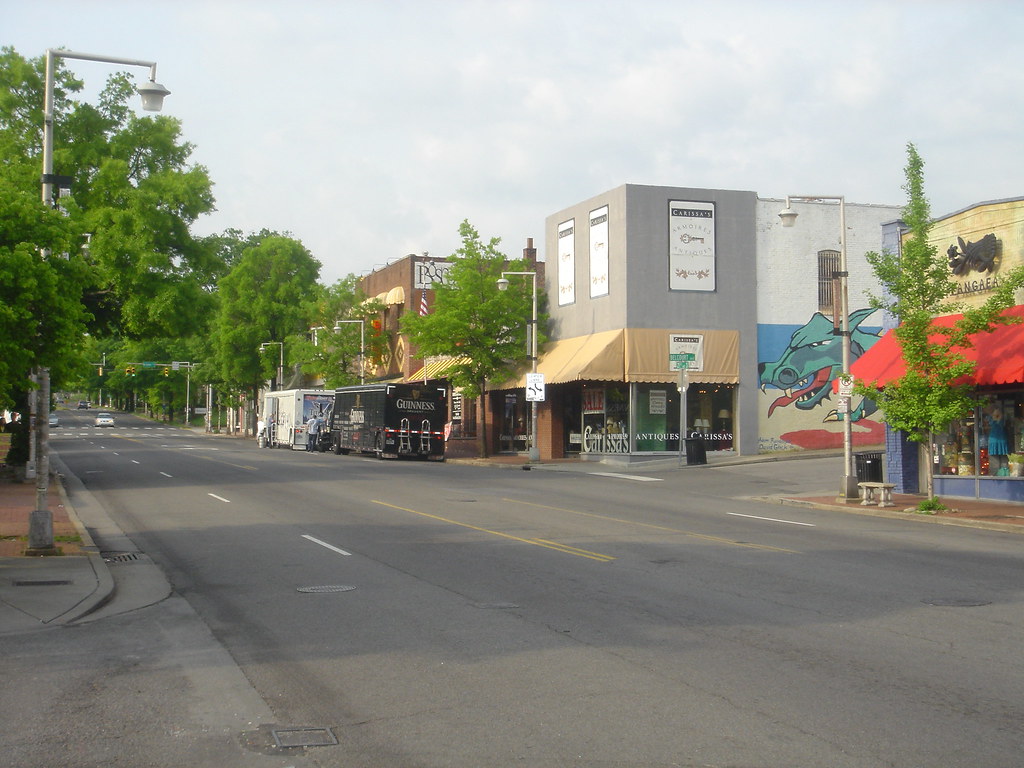
    A street scape in Hillsboro Village, a small commercial district near Vanderbilt University.


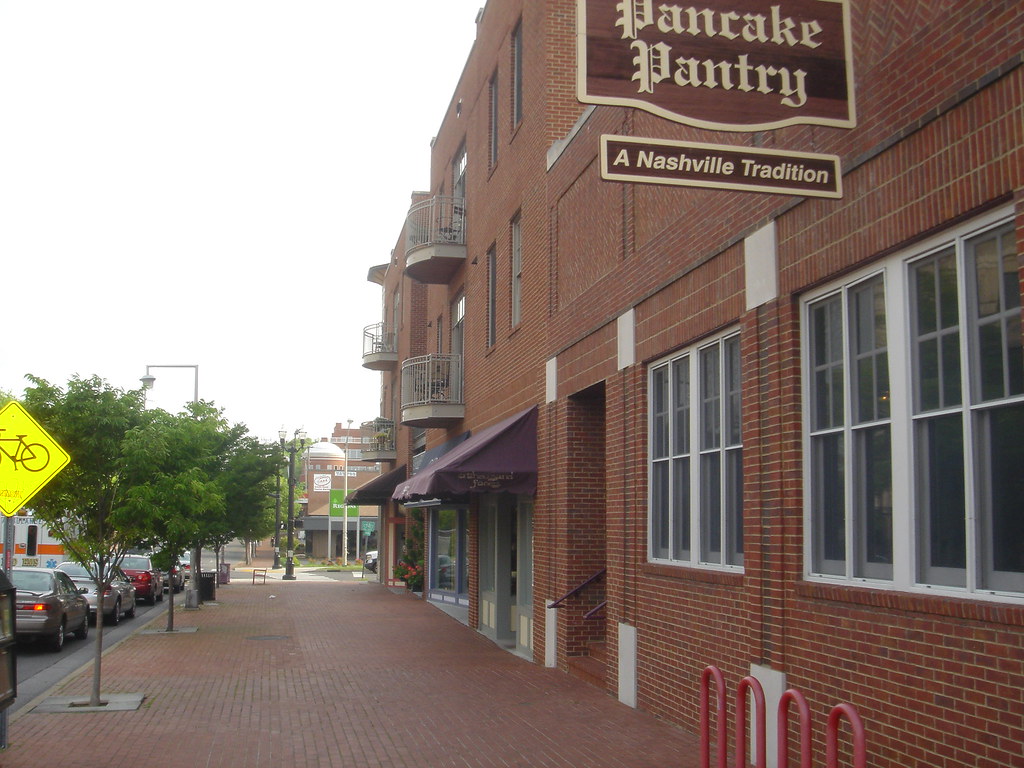
    The Pancake Pantry in Hillsboro Village, a breakfast place of high local repute. I was initially skeptical but the food was actually pretty darn good. This place is huge and there was still a line out the door at 10am on a Friday morning. Pretty crazy.


    The storefronts are a nice urban touch, but if you look behind this building you see a gigantic parking lot. This is perhaps an example of faux-urbanism. Putting the parking lot in the back doesn’t make it any less a strip mall. It is a difference in form, not function.


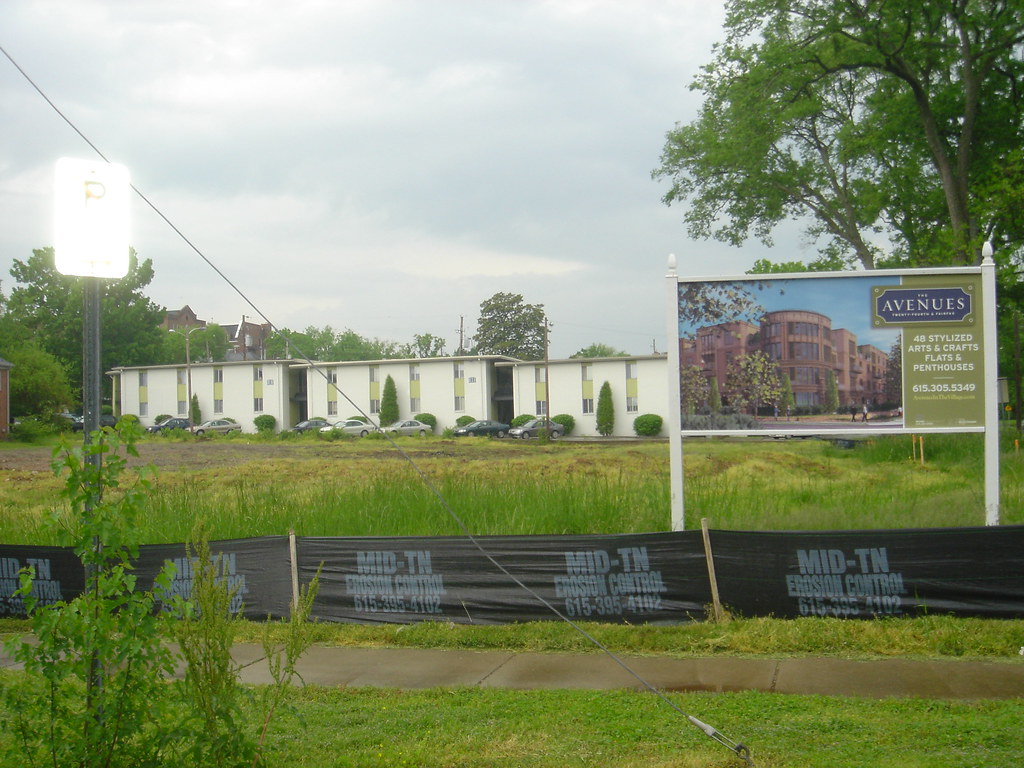
    One of the many vacant lots with a “condos coming soon” sign.


    The main road heading west of out downtown, West End Avenue, is developed at very high densities. I haven’t seen much in the way of this in most Midwestern cities. Midrises line both sides of the road basically from downtown to the interstate loop. It’s a six lane mega-street that moves tons of cars, but appears to have great bus service as well.


    Here is another one under construction.


    A proposed, but I believe not yet funded, high rise development. Indianapolis readers will no doubt recognize one of the towers as a clone of the proposed Intercontinental hotel for Pan Am Plaza that lost out as the convention center anchor hotel.


    If you continue out to the west from here, you run into neighborhoods like Green Hills, which is where the most premier shopping in the area is found, and the suburb of Belle Meade, which serves as Nashville’s mansion district. Unlike traditional Midwestern mansion districts, this one is more rural in nature, with large estates that wouldn’t be out of place in a plantation. I did not take pictures of these areas, however.

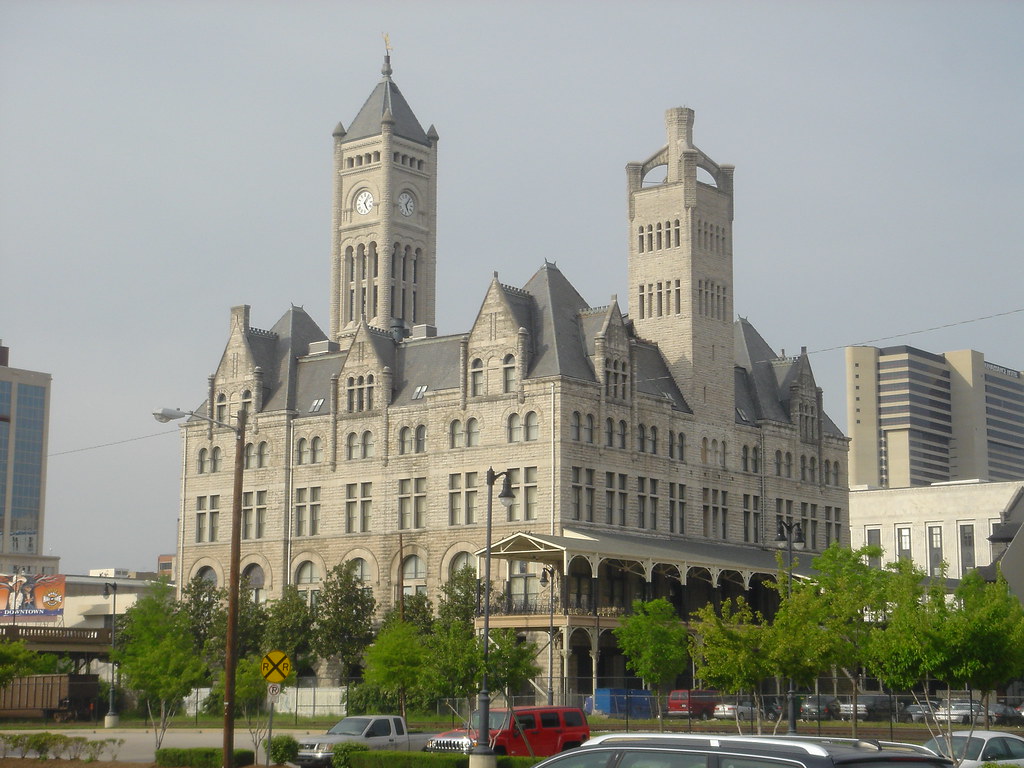
    Back closer to downtown is a nearby area known as the “Gulch”. It is not too far from Nashville’s Union Station.


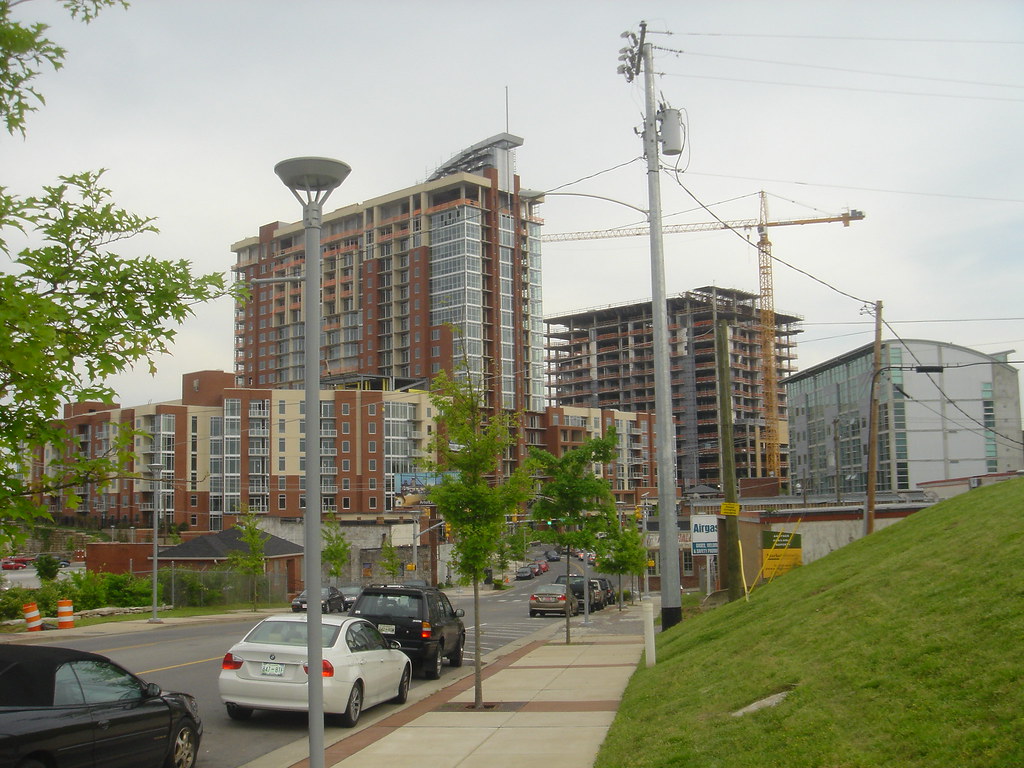
    This appears to be some seedy industrial district that is being transformed all at once by a series of large developments. It also has several clubs and restaurants. I ate at a seafood place called Watermark that was surprisingly good. I believe most of the places are upscale chains, though I’m not sure if Watermark is or not. Here’s a picture of some of the development.


    More development


    North of downtown is a small historic district called Germantown. This was rather unimpressive if you ask me. I didn’t see much that was German about it. It sure isn’t Columbus’ German Village, that’s for sure. There were some restaurants there. I had lunch at one of them which, fortunately for them, I can’t remember the name of because it was terrible. This area is mostly older single family homes.


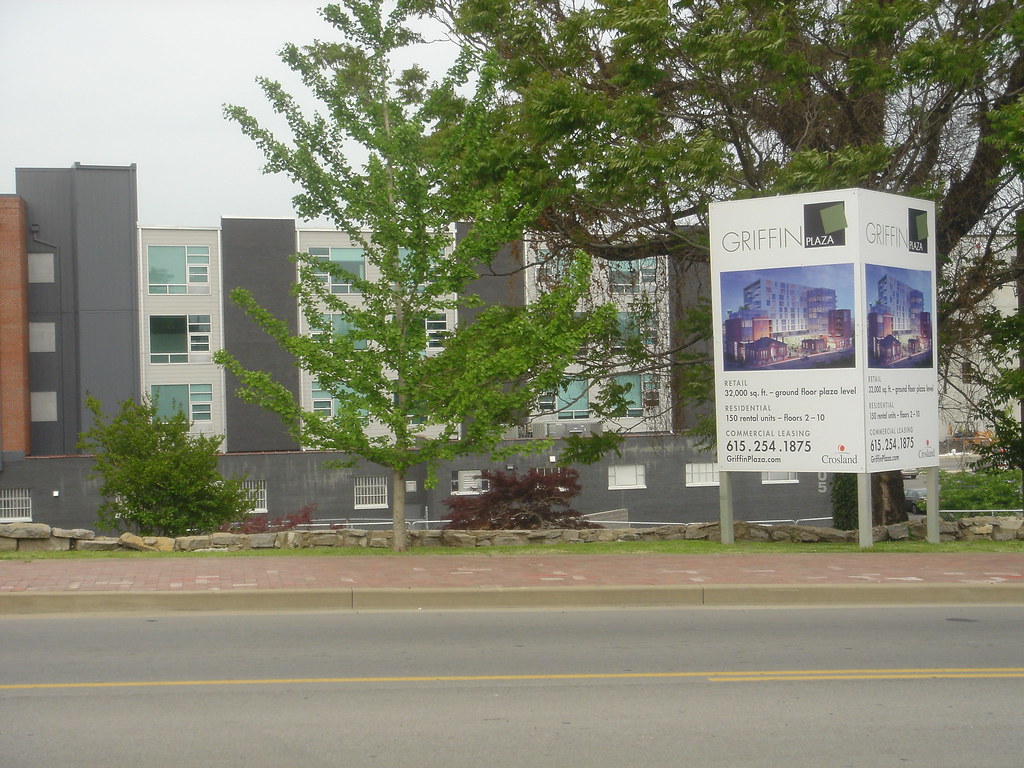
    The amazing thing about this area is that almost every vacant or industrial parcel was being redeveloped as condos. This really brought home to me the difference between Nashville and the Midwest. Were this, say, the Cottage Home area in Indianapolis, the local neighborhood association would use their historic district status to keep developments like these out. In Nashville, they are seen as a positive. Here are some examples.


    More condos


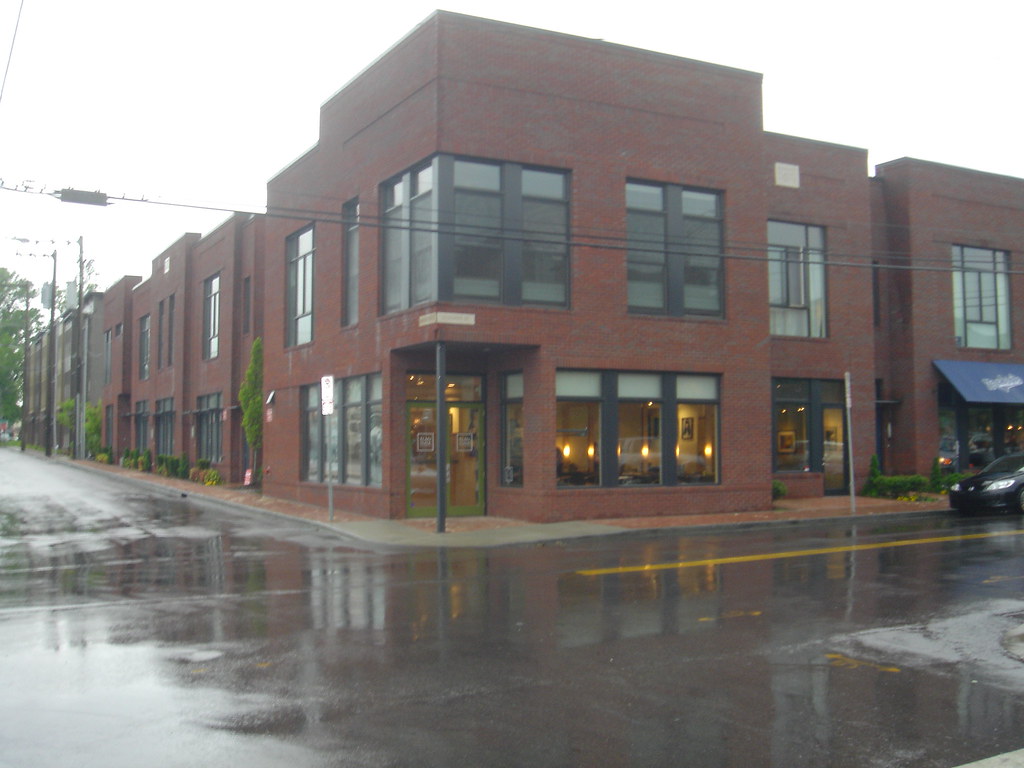
    More condos with retail space. Sorry for the very blurry pic but it was raining as you can see.


    More condos being built, and still more proposed.


    You get the picture. Also, note from all these photos the lack of design disasters. These are all workmanlike structures. The challenge for Nashville is that while there is a ton of new development, all of it is in a relatively generic, undistinguished style that could be in the downtown of almost any city. I did not get a strong sense of any type of vernacular style emerging. That is something I’d be looking for if I were them.

    Lastly, here’s one suburban example that shows something I pointed out last time. Namely that even in brand new, upscale subdivisions they aren’t putting in sidewalks on both sides of the street. I find this very odd. While I noticed some bike lanes this time around, Nashville’s definitely got a long ways to go when it comes to pedestrian and bicycle friendliness.


    Nashville is definitely a city that is on an upward trajectory. The volume of urban development and the business attraction success are impressive. It is exceeding even the best performing Midwest metros in that regard. However, it still lags the top southern and western metros. The current rate is very healthy, but probably isn’t sufficient to realize the civic ambitions. It remains to be seen whether Nashville can put it in another gear and take its place among the boomtowns, or whether it will merely stay on its current growth path. Either path is possible or a valid civic choice. While always possible, the likelihood that Nashville is going to take a major downtown does not appear high in the short term.


    Aaron M. Renn is an independent writer on urban affairs based in the Midwest. His writings appear at The Urbanophile, where this piece originally appeared.

  • Dispersion in Delaware

    The 2010 census data, just released, shows a strong trend toward dispersal in Delaware. The state’s largest county, New Castle, added eight percent to its population, rising from 500,000 to 538,000. All of that gain in the county was outside the city of Wilmington, which lost three percent of its population (from 73,000 to 71,000). Wilmington and New Castle County is a former metropolitan area that has been engulfed by the growth of the larger Philadelphia metropolitan area. Philadelphia has spread from its Pennsylvania base, with a large share of the metropolitan area now in New Jersey, along with New Castle County in Delaware and Cecil County in Maryland.

    Delaware’s other two counties, both to the south of New Castle County, are growing rapidly as the population moves outside metropolitan areas. Kent County, with the state capital in Dover, gained 28 percent from 127,000 to 162,000. Southern most Sussex County added 26 percent to its population, rising from 157,000 to 197,000. Thus, much smaller Sussex County added more people than New Castle County, which began the decade of the 2000s with three times the population.

  • Raleigh: Suburbanizing the City and Suburbs

    New 2010 Census results indicate that the Raleigh metropolitan area (Raleigh-Cary) grew 42 percent from 2000 to 2010. This growth rate is projected to be the highest of any metropolitan area in the nation for the 2000 to 2010 period.

    The historical core municipality of Raleigh grew strongly, from 288,000 to 404,000, a gain of 40 percent. This gain was aided by annexations that added nearly 30 percent to the area of the municipality (from 113 to 143 square miles). The annexations of recent decades have left the city of Raleigh with an overwhelmingly suburban urban form. In 1950, at the beginning of the post-World War II suburban boom, the city of Raleigh had a population of 66,000, living in a land area of only 11 square miles.

    The suburbs (area outside the city of Raleigh) gained nearly two-thirds of the metropolitan area growth (65 percent) and now have 64 percent of the population. Over the last ten years, the suburbs have grown 43 percent.

    The core urban area of Raleigh was one of the least densely populated in a major metropolitan areas in 2000, with under 1,700 persons per square mile, at slightly less than Charlotte, Nashville and Atlanta.

  • Telecommuting and Satellite Cities

    Smaller satellite cities throughout the Midwest may have an advantage that they have yet to realize: strong bases for telecommuters. Cities such as Iowa City, IA; Albert Lea, MN; and Hastings, NE have this advantage, where over four percent of the city’s population works from home according to American Community Survey’s information from 2009. The average rates for larger metros tended to be in the mid 3% range. Here are a few Midwestern cities that were of note:


    % Population working from home

    Albert Lea, MN

    5.7

    Athens, OH

    5.0

    Brainerd, MN

    6.4

    Dubuque, IA

    4.1

    Freeport, IL

    4.8

    Hastings, NE

    5.7

    Iowa City, IA

    4.7

    La Crosse, WI

    4.7

    Source:  U.S. Census American Community Survey, 2009

    These cities have similar attributes: relatively small populations, mostly remote locations, and within 200 miles of a large metro. These characteristics may be a foundation for increased telecommunication in these cities. Could these cities one day become far-flung constituents of a larger conurbation?

    For example, of the eight cities cited above, three of them could call Chicago their focal city. Other cities that act as cardinal municipalities in this list are Madison, Minneapolis, and Omaha. While millions from the labor force pile into large, over-populated metros throughout the Midwest for work, others may be able to find integral employment in these smaller regions, while still in close enough proximity to benefit from the larger markets.

    Telecommuting may also have a positive affect on the quality of life of the individuals who take advantage of the opportunity. A smaller city often makes for lower costs, cheaper housing, less time driving from place to place, and more access to the community. On top of this, rising oil prices have less affect on the telecommuter. Furthermore, some of the cities listed are in an optimal location for natural amenities of the region to be factored in. For instance, Brainerd’s prime location amidst a plethora of lakes and forestry helps to add to the city’s natural lure, while remaining twice daily flight or a 130 mile drive to downtown Minneapolis. 

    If these satellite cities can adapt to be friendly to telecommuters, they may be able to help strengthen the regional economies with a more specialized, more productive workforce. Businesses in the area must be inclined to initiate telecommuting as a part of their workforce and have trust in their workers. A smaller community may make this an opportune place for this, as it forms a more cohesive social unity amongst citizens.

    If these smaller places can maintain reasonable air and telecommunications access, affordable housing, high-end schools and child care, and perhaps flexible small office space or business assistance for lone eagle entrepreneurs, these places could become hubs for this growing segment of workers.  However, the big incentive for those desiring and learning about telecommuting work may simply be the opportunity to do important work in their pajamas.