Blog

  • More Cap and Trade Delays in California

    The California Air Resources Board had good intentions when it developed a cap-and-trade plan to meet greenhouse gas standards, but according to a San Francisco Superior Court Judge, the Board made a few mistakes that will delay their efforts. The Air Resources Board is acting in response to AB32, California’s Global Warming Solutions Act of 2006, which calls for the reduction of carbon emissions to 1990 levels by 2020.

    They are being sued by a team of environmental groups, represented by the San Francisco’s Center on Race, Poverty and the Environment, who disapprove of the Board’s inadequate analysis of alternatives to cap and trade. Not only that, but Judge Ernest Goldsmith found that the Board’s “analysis provides no evidence to support its chosen approach.” These issues are becoming commonplace in California these days, as they echo the criticisms of California’s High Speed Rail Authority’s quick decisions in building new rail lines.

    The California Air Resources Board will not be able to move forward until it complies with the California Environmental Quality Act of 1970, which Governor Reagan enacted to make sure agencies in California both determined and prevented the environmental consequences of their projects. The environmental groups who raised this lawsuit, who would be disappointed if AB32 were to be delayed or abolished, want to assure that any environmental legislation would not hurt disadvantage communities in the state. Therefore, they are willing to wait for the Air Resources Board to comply with the California Environmental Quality Act and explore the possibilities beyond cap-and-trade.

    Acting too quickly without fully exploring all options has become a theme in California politics, mainly because the state is in such a rush to meet deadlines outlined in the legislation or that dictate the disbursement of federal funds. This haste to develop may ultimately hinder new projects since the public will be extra vigilant in making sure agencies find solutions that support their well-being.

  • A New Tribe for New Geographies: Reasonable People of Goodwill

    I am Singaporean, with a half-Indian, half-Eurasian father; a half-Pakistani, half-Malay mother. Dad converted to Islam from Roman Catholicism; each year my brothers and I celebrate Eid ful Fitr, Eid ul Adha and Christmas with different parts of our family. Cousins, aunts and uncles have married outside their ethnicity and faith – to Chinese Christians and Indian Hindus – so the Lunar New Year and Deepavali, the South Indian “Festival of Lights”, are also bustling times.

    This interstitial existence, both within and among different ethnic, religious and linguistic communities, has given me more than my fair share of diversity-related stories. Once, I ordered drinks from an Indian stall owner at Newton Circus, a popular food centre in Singapore. I asked in Malay for “tek dua, bandung satu” [two teas and one bandung, a local drink mixing syrup and condensed milk]. The stall owner replied in Tamil. When I said I didn’t speak it, he asked: “Apa macam punya Mama, tak tahu cakap …” [What kind of Indian cannot speak Tamil?], with a look of total disdain. The expectation that people of Indian ethnicity in Singapore speak Tamil is common, given that most Singaporean Indians are Tamil.

    On another occasion, I was the Master of Ceremonies at an awards ceremony and was faced with the challenge of pronouncing the sometimes complex names of Tamil recipients. Thankfully, a very patient staff member was willing to walk me through the intricacies of what, in a poem I later wrote about the experience, I described as “rolling l’s and lolling r’s”.

    We often hear exhortations to find “unity in diversity”, to manage our differences so they do not become sources of conflict. This is particularly critical in modern cities like multi-religious, multi-ethnic Singapore, which increasingly attract a globally cosmopolitan class of multiple backgrounds, heritages and cultures, all densely-packed into an area slightly smaller than New York City.  

    My personal history has often prompted me to wonder how such diversity can be more than managed, but also celebrated and optimized. I suggest some tentative thoughts on three principles that can help individuals and urban societies navigate their respective diversities, encapsulated in the idea that we must all strive to form a new sort of tribe, comprising “reasonable persons of goodwill”.

    Reason and Rationality

    To succeed, diverse societies, need to be peopled by reasonable individuals who apply logic and vigorous scientific thinking rather than isms and ologies which, unfettered, can precipitate conflict. My family background has made me instinctively aware of this idea since as a child, I knew but could not always articulate how they were at the same time both similar and distinct from my brothers and me.

    I first encountered the idea of a reasonable person when, as a first-year undergraduate at Oxford, I listened to Amartya Sen deliver a lecture about the need to apply “Reason before Identity” in making assessments and decisions – similar to what the philosopher Rene Descartes called shining “the natural light of Reason” to situations.

    I’ve realised now that being reasonable provides three critical insights. First, each of us, while individual, is also plural, with many interacting identities.

    This may seem counterintuitive, given that the term “diversity” is usually applied to mark particular groups from others. Such conceptions of “Us vs Them” can be based on a range of markers: gender, ethnicity, race, religion, language, nation, professional affiliation, tribe, educational background, among others.

    However, a less frequently used, but equally resonant, definition of diversity applies within individuals – those like me, with mixed parentage and “hyphenated identities”, or who balance the different aspects of their professional, personal and other identities in a dynamic equilibrium.

    Second, an individual’s different identities matter more or less at different times.

    Being at work underscores my professional affiliations as a civil servant; going to the mosque on Fridays is a spiritual experience; visiting my paternal grandmother for Christmas is about spending time with family. I recall dressing up as Santa Claus in 2009, because many of my younger nieces and nephews were old enough to appreciate getting presents on Christmas Eve. Was it ironic that a Muslim adopted the garb of a traditional Christmas icon? Perhaps, but it made perfect sense in my head after I reasoned that this was in the spirit of fun, festivity and family.

    Identities, like our ethnicity or faith, define us in profound ways, but   their salience varies with situations. Even as our identities interact, Reason helps us keep them conceptually distinct. A similar argument is made in Amartya Sen’s Identity and Violence (2006); its telling subtitle suggests that primordial identities like race and religion create “The Illusion of Destiny”, whereas logic tells us that no part of our identity should be tyrannical over all others, no matter how resonant and powerful it may be.

    Third, Reason helps us realise that each aspect of our multiple identities generates connections between us and many, if not all, other people.

    I feel this particularly strongly when interacting with family on my father’s side. Growing up, my paternal grandmother told me stories from the Old Testament, emphasizing how both the Christian and Muslim segments of our family  celebrate the lives of Abraham, Moses, David and Jesus. Recently, when one of Dad’s Catholic aunts passed away, I was reminded of a further similarity, in different faiths’ prayers for the dead. Muslims, many Christians and some of the Hindus in our family hold prayers on the first three days after a funeral, then on the seventh, 40th and 100th days. There is a lattice of shared cultural links between groups of ostensibly different backgrounds, even if our rituals differ.

    The Importance of Persons

    Applied alone, Reason can come across as cold and clinical. It is therefore useful to temper it by recognising and valuing the person-hood in each individual. This is critical in making us “reasonable persons”, rather than mere automatons applying a Reason-imitating algorithm.

    Belief in person-hood is not a new idea. Across a range of belief systems, we find an emphasis on the core of humanity, resident in any individual.  The liberal humanist tradition is one source of this approach, but it can also be justified spiritually in the belief that there is an element of the divine in all of us, like the Christian idea of being made “in the image of God” or the Muslim concept of each person occupying a special position in Creation as God’s vicegerent on Earth.

    Belief in individual person-hood is a prerequisite for meaningful reciprocity among people, where one obeys the Golden Rule and “does unto others”. I find an emphasis on person-hood a wonderful antidote to simplistic thinking about people who are ostensibly “different” from us. It would be easy to see some of my non-Indian friends as utterly distinct, or some of my non-Muslim family as irrevocably different. But once I start remembering that they are each unique individuals, not just abstract “Others”, it is easier to embrace fully the many connections we share.

    Goodwill and Good Will

    Goodwill is also critical for moving beyond toleration to celebrating diversity.  Generally, people reluctantly put up with differences.  Goodwill allows us a richer appreciation of those distinctions. There are different conceptions of such an expanded diversity – America’s “melting pot”, from which the many become one; or the non-assimilationist ‘unity in diversity’ of Singapore and other countries. All rely on a fundamental bedrock of goodwill among peoples, with three important consequences.

    First, we learn together what we cannot know alone. This was brought home to me very powerfully, when one participant at a conference asked a Hindu if he worshipped “one or many Gods”. The answer was zen-like in its simple complexity: it does not matter whether is one or are many Gods. What matters is that there is “Only God”. This reminded me that human ideas often pale in comparison to life’s larger truths. Sometimes, deeper understanding of our own beliefs can be suggested by traditions outside our own.

    Second, goodwill reminds us to give others the benefit of the doubt.  Others have obligations not to cause offence in speech and action, but each of us also has the prerogative not to take offence. After all, offensive remarks often stem from ignorance rather than malice. We can reply to such ignorance with   information, rather than indignation. Like all ethnic and religious minorities, I have experienced a fair number of awkward situations – being served pork, or invited to drink alcohol, or to eat during daytime during the fasting month of Ramadhan. Not taking take offence is not always easy, but does serve to maintain friendships and creates sometimes risible memories.

    The third benefit of goodwill lies in helping build   trust and accommodating differences. Land-scarce Singapore has a quaint practice where the street-level floors of the apartments provided by our Housing and Development Board (HDB) – called void decks – can be leased by residents. They are frequently used for Malay weddings and Chinese funerals – and uncomfortable double-bookings do arise. Often, these have been defused with a little reasoned give-and-take.

    Balancing Ideals & Pragmatism

    Being reasonable persons of goodwill helps us navigate the choppy and sometimes uncharted waters of diversity. But Reason is neither uniformly nor universally distributed in most societies, so it must be carefully nurtured through education and exposure, rather than left to chance. Even where it is widespread, Reason also has limits, at which points powerful emotions start to come into play.

    Rising above these challenges requires not just vision, but healthy realism. Rather than a final destination, it is better to view the navigation of diversity as a journey – where we are all, in the words of a friend who is a Catholic priest, “fellow pilgrims” and part of a tribe with common values, even if we don’t all wear the same outer markings.

    Aaron Maniam is a Singaporean Muslim from a large and diverse family. He volunteers with Singapore’s National Youth Council and groups of young leaders in Singapore’s Muslim and Indian communities. He was identified by the Asia Society as an Asia 21 Young Leader in 2006 and a “Next Generation Policy Leader” in 2010.

    Photo by AndyLeo@Photography

  • Brown’s California Budget Proposals: a Big Step in the Right Direction

    I admit it. I had low expectations for Jerry Brown’s third term as governor. After seeing his budget proposal, I’m ready to reconsider my expectations. I think it is a great effort, and it deserves the support of all of us tired of seeing our state reduced to laughing stock.

    Being an economist, I first went to the Economic Outlook section of the Proposed Budget Summary. This is where governors put in rosy expectations and forecasts, thus enabling a multitude of fiscal sins. I was shocked to find a realistic and sober economic analysis. In fact the U.S. and California GDP projections were lower than ours, and we are among the least optimistic forecasters in America. There is no smoke here. There are no mirrors. It is apparent to me that if Brown is to be surprised, he only wants good ones.

    This may be the most honest forecast accompanying a proposed budget that Californian’s have seen in decades.

    The realistic economic forecast leads, reasonably, to lower budget revenue assumptions, lower by billions of dollars. With more realistic revenue assumptions, Brown forecasts a larger budget problem than did his more easily deluded predecessor.

    Then, Brown demonstrates that he’s learned some things over his lifetime in politics. He splits the budget problem in half, proposing cuts for half of the problem and proposing extending temporary taxes for the other half. Predictably, the dinosaurs in both parties howled.

    The howling was all for show.

    The Democrats can’t possibly believe that they can solve California’s budget problems by raising taxes. California is already one of the United States most difficult places to establish and maintain a business, burdened as it is by an expensive soup consisting of delay, uncertainty, regulation, and among the nation’s highest marginal tax rates. Increasing taxes to solve the deficit would only further weaken California’s already ailing economy, ultimately resulting in lower state revenues and new budget shortfalls. It would be a self-reinforcing death spiral.

    The Republicans are, if anything, even more disingenuous. After telling us for months, on a national level, that allowing temporary tax cuts to expire is a tax increase, they now want us to believe that extending a temporary tax is a tax increase. I have news for them. People aren’t that stupid. If allowing temporary tax cuts to expire is a tax increase, allowing temporary taxes to expire is a tax cut. Extending the temporary taxes is simply not cutting taxes. Calling it a tax increase insults our intelligence. Reducing revenues when the budget is so imbalanced would be irresponsible.

    Then, there is the composition of the cuts. Deciding where to cut government spending is extremely difficult. Cutting any spending is going to hurt someone, which means that every nickel has a constituency. Here again, Brown showed his savvy by exempting K-12 education, placing himself in the calculated intersection of economic virtue and political expediency.

    If I was going to prioritize government spending by its impact on future government budgets, I would prioritize those spending items that prevented future costs and increased future revenues. Given the high social and government costs associated with failed educational outcomes–teen pregnancies, high crime, low productivity–there is a strong practical incentive to improve educational outcomes. To the extent that K-12 educational spending improves outcomes, preserving that spending makes strong economic sense, though the research is far from conclusive that spending does improve educational outcomes.

    Politically, preserving K-12 spending is probably necessary if Brown is to have a successful governorship. Schwarzenegger provides the counter example. His governorship was doomed after the 2005 special election. Each of Schwarzenegger’s 2005 proposals had merit, but by bringing all of them to the voters at one time, he committed the tactical error that destroyed his governorship. He allowed the enemies of each proposal to band together, and they mugged him.

    When the dust settled, Schwarzenegger was as badly beaten as any of his action-film opponents. The Terminator became Arnold, and Arnold didn’t look very tough. He abandoned any real effort to deal with California’s budget issues, searching instead for a legacy built on imposing a green wish list of environmental regulation.

    In contrast, Brown showed his street smarts and sidestepped the problem of fighting too many constituencies. Like an aging martial artist, he channeled their energy to his benefit. Instead of fighting the powerful K-12 education lobby, he can count on them helping him convince California voters to extend the temporary taxes. They know what a failure to extend the temporary tax means for them- and their children.

    I do have one problem with Brown’s proposal. I see the cuts as a down payment on California’s budget issue, and the expiration of the temporary taxes as the due date for the balance. I would have preferred to have the due date come in Brown’s term, say in three years instead of five. As it is, if the temporary taxes are extended, Brown has put the budget problem behind him, and he has no incentive to finish the job. That will be up to the next governor.

    But by putting the budget behind him, Brown will be free to deal with California’s other big problem, its economy. California, with all its natural advantages and former economic glory, has managed to become one of the Unites States basket cases, with extraordinary unemployment, decimated real estate markets, and an accelerating stream of businesses and individuals leaving the state. If Brown can deal as adroitly with the economy as he has with the budget, he can go down as one of California’s great governors — with a legacy more akin to his father Pat Brown than the one Jerry accumulated in his first two terms.

    Bill Watkins is a professor at California Lutheran University and runs the Center for Economic Research and Forecasting, which can be found at clucerf.org.

    Photo by Troy Holden

  • Brookings Economist Decries Transit Subsidies, Calls For Privatization

    In his new book, Last Exit: Privatization and Deregulation of the U.S. Transportation System, Brookings Institution economist Clifford Winston contends that transit subsidies are largely the result of labor productivity losses, inefficient operations and counterproductive federal regulations.
    Winston finds that transit service is so underutilized, that load factors were at 18 percent for rail and 14 percent for buses in the 1990s, before the Federal transit administration stopped requiring transit agencies to report that information.

    Six Years Severance Pay: Winston cites the fact that dismissed transit employees may be eligible for up to six years severance pay, under requirements of federal law. For example, less costly services that could be provided under contract by private providers could result in the six-year severance payments if transit employees are laid off. No such benefit is available to other workers in the nation and an impediment that discourages cost-effective innovation.

    Costly Rail Systems: The nation’s urban rail systems, which have consumed so much of transit tax funding in recent decades, are the subject of considerable criticism.

    Winston reminds readers of the considerable literature that shows that "the cost of building rail systems are notorious for exceeding expectations, while ridership levels tend to be much lower than anticipated" and that "continuing capital investments are swelling the deficit." At the same time Winston questions transits high subsidy levels for rail transit, for example, noting that the average income of rail transit riders is approximately double that of bus transit riders.

    In particular, Winston criticizes the now under construction Dulles Airport rail line that will become a part of the Washington DC area transit system, noting that the route is not cost-effective. He characterizes cost overruns on the Dulles rail line and on the soon to be under construction Honolulu rail line as "inevitable." (This is despite the fact that both lines have already experienced substantial cost escalation.)

    Indeed, Winston notes that among all of the US rail systems, the subsidies exceed the benefits on all systems except for San Francisco’s BART.

    Public Sector Mismanagement: Winston offers an ominous conclusion. He says that "social desirability is hardly a demanding standard for a public enterprise to meet" and indicates that is that it is rare to find a public service not meeting that standard. However, of transit Winston concludes that "the fact that transit’s performance is questionable … Is indicative of the extent that transit and bus rail services have been mismanaged in the public sector and been compromised by public policy. It is notable that over the quarter century since transit began receiving income from the federal gasoline tax that its share of urban travel has dropped one third.

    Competition as an Answer: Last Exit indicates that transit can produce beneficial results, but makes a compelling case for reform. Winston suggests that transit could be improved by greater involvement of the private sector, following models such as the competitive tendering (competitive contracting) that now accounts for approximately one-half of Denver’s bus system.

    The international evidence, which Winston does not cite, is even more substantial. This includes the all of the world’s largest bus transit system, in London, the entire Copenhagen bus system, and the entire subway, commuter rail and bus systems of Stockholm. However the ultimate in privatization is Tokyo, the world’s largest urban area, where transit ridership is 1.5 times that of the entire United States. More than two-thirds of all transit ridership is carried by unsubsidized private rail and bus operators.

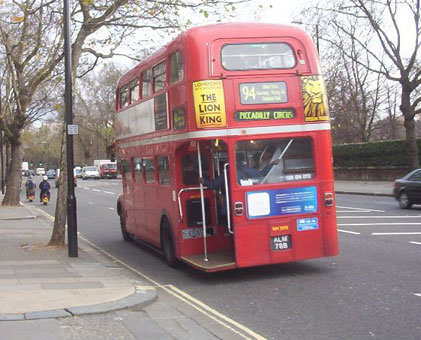
    Photo: Competitively tendered bus in London (photo by author)

  • Housing Crisis in Australia

    Even if Australia is a beautiful place to live, it is far from affordable. Results from the Demographia International Housing Affordability Survey show that some of the country’s major cities rank near the bottom of the list of areas with affordable housing. Out of the 325 cities analyzed, Perth ranks 291st, Melbourne ranks 321st, and Sydney ranks 324th. At 6.3, 9, and 9.6 respectively, each one has a median housing price to median household income ratio at least three to six points higher than the 3.0 price to income ratio demarcating affordable from unaffordable housing. Compared to these places in Australia, living in New York or London seems almost reasonable.

    Residential property prices in Australia have risen 250% in the past ten years, mainly due to the Government’s concentration on incentives for investors and speculators. A first home buyer’s program and negative gearing incentives for home and property owners have taken a toll on the housing market, creating such “inexcusable” conditions according to Australian Greens housing spokesman Senator Scott Ludlam.

    The 2008 Senate Select Committee on Housing Affordability’s investigation into this issue reveals that the Government spent about $50 billion annually on capital gains exemptions and negative gearing incentives, while only spending $512 million over the course of five years to improve the supply of affordable housing. Rental affordability is not much better, as indicated by the gap of 493,000 affordable and available rental properties in Australia.

    Ludlam and others have started to call this a “crisis,” an adequate term given migration trends all over the world. Cities with unaffordable housing, such as New York, London, and San Francisco, are losing people moving to the less expensive suburban areas. If Australia continues to have housing bubbles and affordability issues, cities like Melbourne and Sydney may experience high out-migration rates in the coming years, which would not bode well for cities on the rise.

  • Super Bowl XLV: The $10 Billion Bag of Chips

    I am raining on the big parade by equating the Super Bowl with trade deficits, budget shortfalls, state bonds on the edge of default, and unemployment close to ten percent. But if thirty-second ads that cost $2.7 million or The Black Eyed Peas at halftime can’t lift the economy out of its doldrums, how can we expect the same miracles from Troy Polamalu or Aaron Rodgers?

    From the perch of anyone staring at a TV or looking down from a skybox, what industry could be more bullish for America than the National Football League? Revenue for this year will top out between eight and nine billion dollars, which is roughly shared among the thirty-two professional teams. Does it not speak of economic recovery when even the fan-owned Green Bay Packers, with their retro stadium and rust-belt market, are given a market valuation in Forbes Magazine at more than $1 billion?

    How can it be fourth-and-long for America if, at the Super Bowl, tickets on the thirty yard line cost $10,366? Or if half of a sky box is fetching $384,993 at the Dallas stadium, which itself cost $1.5 billion to build?

    For the partners in what Theodore Roosevelt might have called “the football trust,” the economics of the game puts every NFL team owner in the Super Bowl. That the Buffalo Bills chose to pocket their subsidies instead of investing in a quarterback who didn’t graduate from Harvard is their business, and a good one at that. In 2009, they earned $28 million while the New York Giants, fresh from a Super Bowl win, only made $2 million.

    A closer look at football economics, however, makes the touchdown business a perfect metaphor for an industry—not unlike the nation—that talks up competition, “good conduct”, fair play, and free enterprise, but then goes to the subprime bank with hand-offs from sweetheart contracts, congressional subsidies, tax breaks, restrictive labor agreements, and underwater municipal bonds.

    Twenty-eight of the thirty-two NFL stadiums were financed with some public money, and eleven were built entirely on the dole. The NFL has enjoyed something like $10 billion in stadium subsidies in recent years. I wonder how many depleted state and city governments (Cincinnati gave the Bengals $450 million for their stadium) wish that a financial booth review could challenge the ruling on the field. As China built steel mills and high-speed rail, American cities went with skyboxes and entertainment venues that are used on about twelve days a year.

    The MVP of subsidies for the NFL is its antitrust exemption, which limits the number of teams at the professional level. Were free enterprise to govern the sport, instead of a medieval guild, anyone could put together a club.

    The NFL would simply be the best thirty-two teams in any given year. Teams that were improving would move up; bad teams, like the Browns, would be relegated to lesser leagues. Golf is played by this principle. Every town and city in America could compete.

    With Congress stuffing the competition at the line, the NFL enjoys a football monopoly, which allows it to dictate the prices of everything from official jerseys to cable subscriptions. “You want the NFL?….Go to the NFL…with about ten grand for an upper deck seat.”

    To be sure, the NFL has an engaging product and, if you can sit through the hours of time-outs and commercials, even some exciting games. But given that football is staged to sell things, what trots out on the field at the Super Bowl has more in common with billboards or beach banners than with sport.

    The advertisers at this year’s Super Bowl, paying $90,000 a second, include Volkswagen, Bud Light, Cars.com, Mars, Pepsi, Pizza Hut, CareerBuilder, Coca-Cola, and no doubt the knowing leer of the Viagra man, looking over his wife as if she were a Dallas Cowboys cheerleader.

    Their products will be seen in forty-eight million homes and by almost 100 million Americans. Fifty million Americans, myself among them, watched the first Super Bowl in 1967, in which a hung-over Max McGee twice took it to the house against the Kansas City Chiefs. The networks thought so little of the spectacle that no videotape of the game remains.

    The Super Bowl is a windfall for caterers, pizza joints that deliver, beer distributors, and guacamole middle men, not to mention the Dallas escorts who are charging $24,000 for a week of bump-and-run. But does it not also suggest a spectator nation, day dreaming about cars, sex, and getting a job?

    Under the current NFL contract, which expires March 3, the salary cap for each team is between 56 and 60 percent of the league’s revenues. The fans are told that the cap is to insure parity in the league, so that on any give Sunday the Panthers might not lose by more than twenty points. The salary cap also keeps the word “free” out of the enterprise, and fixes the game to insure a profit for every team owner (except maybe the Lions).

    Few NFL player contracts have much in the way of long-term financial guarantees, and teams can cut veterans, even those who have sustained serious injuries, to clear “space” from their cap.

    Very much in the spirit of earlier monopolists, NFL owners are not content with their billion dollar team valuations, subsidized stadiums, cozy TV contracts, and parking lot rebates.

    Now owners are asking the players’ association to accept an 18 percent pay cut in the next Collective Bargaining Agreement. Among the owners’ negotiating demands are a reduction in player salaries, especially for rookies, and an addition of two more games to the schedule.

    Owners are threatening to lockout the players (as if they were Pullman workers) and suspend football for next year. Or the games could be played with scabs, as happened in 1987. Shutdown losses would run into the billions.

    Fans can only hope that Taft-Hartley would be invoked to keep the Oakland Raiders on the field, or that President Obama would pass a Football Recovery and Mall Consumption Act to rush stimulus money into the red zone.

    After such a diatribe, will I be watching Super Bowl XLV? Of course I will. From the first Super Bowl (which was really an exhibition game at which tickets were $12) onward, I have seen some or all of the other forty-three games. Along with cheering McGee, I have seen the Packers’ Donny Anderson knock out the Chiefs’ Fred Williamson (aka “The Hammer”), the reigns of Terry Bradshaw and Joe Montana, and even those four terrible Super Bowls that the Buffalo Bills lost in a row.

    As a fan of the New York Jets, I remember Super Bowl III more clearly than some others. (As Joe Namath said, “I never drink at halftime.”) But I know where I was when the “Refrigerator” (William Perry) scored in Super Bowl XX, and I cannot read anything about Armenia without thinking about Miami Dolphin kicker Garo Yepremian and that absurd pass.

    Despite my institutional memory for the Super Bowl, I wonder whether it makes sense to elevate a sporting event into a national consumer revival meeting (“brought to you by Cialis…when shopping isn’t enough”). Nor do I think that the hoopla fulfills Vince Lombardi’s dreams, unless they involved Janet Jackson.

    Although he wasn’t speaking about economic competitiveness, former Washington Redskin and current TV announcer Joe Theismann revealed a truth about the big game when he said, “Nobody in football should be called a genius. A genius is a guy like Norman Einstein.”

    Photo by americanistadechiapas

    Matthew Stevenson is the author of Remembering the Twentieth Century Limited, a collection of historical essays. He is also editor of Rules of the Game: The Best Sports Writing from Harper’s Magazine.

  • Orange County Vantage Point: One Eye on Egypt as Little Saigon Rebrands Tet

    Scenes from Egypt, Tunisia and other places in the Middle East provide a stark reminder of the chaos that can consume entire nations. The scene on Bolsa Avenue in Little Saigon last week offered evidence that chaos can be overcome.

    Don’t get me wrong—chaos had a place along Bolsa as streams of drivers sought rare parking spaces, crowds gathered around impromptu fireworks displays on the streets, and shoppers elbowed their way among dozens of flower merchants who set up shop in parking lots.

    The buzz came in advance of Tet, the Vietnamese New Year celebration. Flowers are a big part of the tradition, and peddlers offered their best orchids and other selections.
    Restaurants and ad hoc vendors of various goods also aimed for some business, with everything from silk fabrics to baked goods on sale.

    The jumble of commerce, tradition and celebration that made parking so hard in Little Saigon was a relatively nice sort of problem for all involved. It was certainly nicer than the American experience in the Vietnam War, which ended in utter chaos.

    Many historians say the end started with the Tet Offensive in 1968. Vietcong forces picked the New Year holiday to unleash a campaign of attacks that sowed chaos throughout South Vietnam.

    The Tet Offensive failed to score any military victories by standard measures. Yet it succeeded in fostering a perception of chaos that struck a significant blow against the South Vietnamese government, which stumbled along with U.S. aid for another seven years.

    The chaos that started with the Tet Offensive and ended with crammed refugee boats fleeing Vietnam also led to the creation of Little Saigon. It’s a sprawling district that takes in parts of five cities in Orange County, just south of Los Angeles.

    Little Saigon is now home to the largest concentration of ethnic Vietnamese outside of Vietnam itself. It’s where refugees staked a claim to something more than—better than—the chaos they faced as their native country crumbled.

    What better place to rebrand Tet by reclaiming the celebratory sense of a new year and laying to rest darker images tied to yesteryear’s misfortunes? There are no doubt many who continue think of the Vietnam War when they hear the word Tet.

    Little Saigon’s recent hustle and bustle built around flower peddlers indicates another view, though. It shows that many others have remembered that the holiday existed before war and survived combat. They do not ignore history by considering Tet’s traditional meaning. They allow room for a larger view and an eye on the future.

    Jim Schlusemeyer, owner of Tuyet’s Orchid, is a good example. He sells his flowers to retailers and the general public, working the weekly swap meet at the Orange County Fairgrounds in Costa Mesa.

    Schlusemeyer was born in Vietnam and came here as a refugee, eventually taking the last name of his stepfather. He’s a competitive businessman who needs unique product, so he breeds his own orchids. Land in Orange County is either too expensive to make commercial flower growing worthwhile or too far inland to provide the cooler atmosphere that orchids require. So he breeds small lots of hybrids here and leases space at growing operations in Northern California for commercial production.

    Schlusemeyer enjoyed the big crowd in Little Saigon in the days leading up to Tet. His business has taken hits along with most others the past few years. The holiday and its call for flowers is a nice spike.

    Schlusemeyer says Tet sales get helped along each year by growing numbers of whites and Latinos who come to Little Saigon. Word has gotten around that the Tet holiday brings out the best orchids. There still aren’t a lot of shoppers from outside the local Vietnamese community, but the numbers are rising and appreciated.

    Not bad for a holiday that bears a name once firmly associated with one of the most frustrating and fractious periods in American history.

    Rather impressive for a community of refugees who only recently carved a new life for themselves as Americans.

    Any doubts about the rebranding of Tet were answered by a small booth set up amid the flower peddlers on Bolsa. It was sponsored by Sam’s Club—a division of retail giant Wal-Mart Stores Inc. A salesperson pitched the crowd on home improvements looking to sell everything from patio covers to vinyl fencing.

    You’d be hard-pressed to come up with a better example of putting the hyphen in Vietnamese-American. Keep those hyphens handy considering events in the Middle East. There’s a neighborhood known as Little Arabia just a few miles away from Little Saigon.

    Jerry Sullivan is a contributing editor to New Geography and managing editor of the Orange County Business Journal.