Blog

  • Misunderstanding the Bubble and Burst in Sacramento

    An opinion piece in the Sacramento Bee by Sean Wirth of the Environmental Council of Sacramento could not have been more wrong in its characterization of the causes of the housing bubble in Sacramento.

    The article starts out promisingly, correctly noting that:

    • The housing bubble spawned the Great Recession
    • Demand exceeded the inventory of houses in the Sacramento area
    • Sacramento prices “soared sky high”


    But it is all downhill from there, with the suggestion that the extraordinary price increases in Sacramento were the result of too much suburbanization (the theological term in urban planning circles is “sprawl”). In fact, all things being equal, house prices tend to escalate where the supply is more constrained, not less. Where suburbanization is allowed, the market can supply enough housing to avoid inordinate house price increases. Where suburbanization is severely constrained, a legion of evidence indicates that house prices are prone to rise. It is all a matter of basic economics. George Mason University economist Daniel Klein puts it this way:

    Basic economics acknowledges that whatever redeeming features a restriction may have, it increases the cost of production and exchange, making goods and services less affordable. There may be exceptions to the general case, but they would be atypical.

    Housing is not atypical and Sacramento house prices soared in response to the tough use regulations. By the peak of the bubble, the Median Multiple (median house price divided by median household income) had risen to 6.8, well above the historic norm of 3.0. Many houses were built, but not enough to satisfy the demand, as Mr. Wirth indicates. Building many houses is not enough. There need to be enough houses to supply the demand, otherwise land prices soar, driving up house prices.

    Unless a sufficient supply is allowed, speculators and flippers will “smell the blood” of windfall profits, which are there for the taking in excessively regulated markets.

    During the housing bubble, house prices rose well above the historic Median Multiple norm only in metropolitan areas that had severe constraints land use constraints (called “smart growth” or “growth management”). This included Sacramento, other California markets, Miami, Portland, and Seattle and other markets around the country.

    At the same time, more liberal development regulations allowed a sufficient inventory of housing to meet the demand in high growth areas like Atlanta, Dallas-Fort Worth, Houston and Austin. In each of these places (and many others), the Median Multiple remained near or below the historic norm of 3.0, even with the heightened demand generated by a finance sector that had lost interest in credit-worthiness. As would be expected, speculators and flippers avoided the traditionally regulated markets, where an adequate supply of affordably priced housing continued to be produced.

    Wirth expresses understandable concern about the house price losses since the bust. From the peak to the trough, the drop in Sacramento median house prices was more than 55%. However, this is to be expected once a serious economic decline is precipitated, especially in the sector that precipitated the crash (in this case housing). Economists Ed Glaeser of Harvard and Joseph Gyourko of Wharton have shown that not only (1) are house prices higher in more restricted markets but also that (2) there is greater price volatility in more highly regulated markets. Indeed, it is likely that the housing bust would have been much less severe or even avoided altogether if constraints on land had not driven the prices and subsequent mortgage losses so high in California and a few other states that they could not be absorbed by financial institutions. At the time of the Lehman Brothers collapse, 11 “ground zero” markets (including Sacramento), all highly regulated, accounted for 75% of the mortgage losses in the nation, with a per house loss rate of 15 times that of traditionally regulated markets.

    Wirth’s article expresses opposition to a Sacramento County decision to allow more development to occur on the urban fringe. He would prefer to force development into the existing urban footprint. The economic consequences of such folly are well known. In Australia, such policies have driven led to a doubling or tripling of house costs relative to incomes. The annual mortgage cost of the median priced house has risen to 50% of the median pre-tax household income, in a country that defines mortgage stress at the 35% level. Before the adoption of smart growth policies, Australia’s housing affordability was similar to that of liberally regulated markets in the United States.

    Avoiding the next housing bubble requires not repeating the mistakes that led to the last. Sacramento’s young and lower income households can only hope that the additional land approved by the Board of Supervisors will be enough of a safety valve to keep housing affordable so that they can become owners rather than renters.

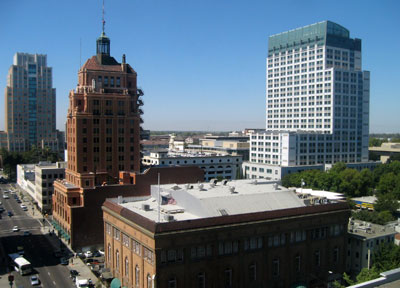
    Photograph: Sacramento (author)

  • Millennials Are Looking for Something Completely Different

    As the country’s political distemper grows, many commentators, reflecting their own generational biases, mistakenly assume that voters are looking for less government as the solution to the nation’s ills. But survey research data from Washington think tank, NDN, shows that a majority of Americans (54%), and particularly the country’s youngest generation, Millennials, born 1982-2003, (58%), actually favor a more active government, rather than one that “stays out of society and the economy.”

    “Dissatisfaction with Obama and the Democratic Congress,” generational expert Neil Howe has observed, “is probably more fed by their failure to use government boldly and vigorously to face hard challenges than by their excessive boldness.”.

    What Millennials are looking for in terms of public policy, to borrow John Cleese’s warning to his Monty Python audience, is something completely different. They are not buying into the tired approaches of either party that have produced the current partisan gridlock in Washington.

    Millennials are not interested in letting ideological posturing stand in the way of “getting stuff done,” as they like to say. Their generation’s idealism – in sharp contrast to the more ideological approach adopted by Boomers – is characterized by a pragmatic impulse focused on finding practical solutions to problems. Much like the civic generations – most notably the World War II era “greatest generation” – before them, Millennials want to reinvigorate the nation’s institutions utilizing government to improve basic conditions in areas as diverse as health care, education and environmental protection.

    However, unlike America’s last civic generation, the GI Generation (born 1901-1924), Millennials do not want to place responsibility for achieving their desired results in a remote, opaque bureaucracy. After all, Millennials were not shaped either by the New Deal era or the Second World War, when government expanded to deal with economic and international concerns that threatened the very existence of American democracy. . Instead they tend to see government’s role more like that of their parents who set the rules but left room for negotiation on what the rewards would be for abiding by the rules as well as the consequences for not doing so. In this Millennialist approach, government provides information and resources to help individuals connect and learn from each other but let’s each person decide how best to discharge their civic obligations.

    The healthcare reform legislation that was forged out of the white heat of the political debate in Congress came surprisingly close to this model. It disappointed ideological Boomers on both sides of the aisle. Liberals didn’t get their dream of a single payer system or even its “nose-under-the-tent” counterpart, the so-called public option. But conservatives were unable, even after Republican Scott Brown’s surprise election as a United States Senator from deep blue Massachusetts, to prevent Congress from mandating that every person in America buy health insurance in order to achieve the goal of universal access. By building a framework for universal coverage on the scaffolding of the existing private insurance system, the final legislative solution used the liberal approach of regulation and national mandates to create a new role for government, but kept government out of the business of actually providing health care.

    The final shape of that reform reflects a new Millennialist approach to the making and implementation of public policy. This approach will result in setting new national standards in many aspects of our national life while, at the same time, allowing individuals to make their own choices about how to comply with those standards.

    The recent adoption by a majority of states of national curriculum standards for what students must learn in core disciplines such as English, math and science is further evidence of this trend. These standards, developed and coordinated by the National Governors Association Center for Best Practices and the Council of Chief State School Officers, outlines “the knowledge and skills students should have within their K-12 education careers,” without dictating how schools should teach the material.

    Meanwhile the Obama administration’s “Race to the Top” grant program, has sparked a firestorm of educational reform legislation in states competing for the money that weaken the hold of administrators and teachers’ unions on what goes on in the classroom. The demands of the parents of Millennials for bottom line results, reflected in such grass roots initiatives as the Parent Revolution in California and Connecticut, is providing the political support needed to take on the current educational monopoly. This will help open the door to widespread experimentation about what works best at the local school level.

    As of yet, there is no sign at the national level that a more Millennialist approach to addressing concerns over global warming and environmental degradation has been achieved. But the failure of Congress to pass more bureaucratic approaches, such as cap-and-trade, suggest there is an opportunity for such ideas to take hold in the future. For instance, a campaign to reduce the carbon intensive nature of the nation’s infrastructure could include a government sponsored effort to display the carbon footprint of most consumer products. This would allow individuals decide how to alter their personal purchasing decisions to produce the most environmentally favorable results.

    Similarly, the goal of reducing fuel consumption per family could be achieved by providing tax incentives for telecommuting or for trading in aging gas guzzlers for vehicles that exceed the newly strengthened fuel economy standards for passenger cars. These policies, and others like them, would leave it up to each individual to decide the extent to which they wish to contribute to environmental improvement. Just as anti- smoking campaigns financed by taxes on cigarettes has been found to be an effective deterrent to smoking , the strategy would be to “nudge” rather than command behavior in order to achieve the desired policy goal. Given the strong environmental sensitivity of the younger generation, this approach will likely accomplish more in terms of actual carbon usage reduction than the ideologically-driven schemes proposed by Boomers in Congress.

    The trajectory of public policy in a Millennial Era is becoming increasingly evident. The push for an increasing number of national standards and preferred behavior will cause libertarians to decry the evolving “nanny state” and argue strenuously against an increasingly intrusive government. But liberals, too, may be upset by approaches that eschew “top down” bureaucratic solutions and focus on using government to improve society without new administrative burden.

    In the future the public, led by Millennials, will be the one forging sustainable solutions. National consensus, coupled with localism and individual choice, will become the watchwords of the nation’s newest civic era.

    Morley Winograd and Michael D. Hais are fellows of the New Democrat Network and the New Policy Institute and co-authors of Millennial Makeover: MySpace, YouTube, and the Future of American Politics (Rutgers University Press: 2008), named one of the 10 favorite books by the New York Times in 2008.

    Photo by Vincent J. Brown

  • A Localist Solution

    By Richard Reep

    “There is a great deal of historical evidence to suggest that a society which loses its identity with posterity and which loses its positive image of the future loses also its capacity to deal with present problems, and soon falls apart.”
    –Kenneth Boulding, economist and philosopher (1966)

    Written in the depths of the Cold War, when nuclear annihilation appeared imminent, if not inevitable to some, Boulding’s words remain applicable to today’s popular culture. Increasingly unable to imagine a positive future since the 1990s, we have largely replaced the end of the nuclear threat with the beginning of global warming, among other environmental threats. Others have raised the spectre of Chinese global domination or a prolonged and destructive jihad from the Islamic world.

    Fatigued by perpetual threat, our society appears today to have largely lost its capacity to deal with present problems. Government, media and academia all have largely adopted, and even sought to expand their own power, by exacerbating this sense of omnipresent threat. Pick your thesis and line up your dialectical arguments, and you can almost hear the politicians and business leaders talking past each other already. And so goes our contemporary cultural conversation.

    In this circumstance, the task of rebuilding a sense of optimism and resilience has fallen on a number of local community groups seeking to find an alternative pathway out of the current zeitgeist. As the politicians turn up the volume, individuals are simply turning them off, and inventing solutions that address tomorrow’s needs. From these efforts come the most significant optimism for the future.

    Nondialectical change seems to be the only hope in a society where progress, particularly for the hard-pressed middle class, seems increasingly dubious. Small, isolated, cumulative efforts that begin on the grassroots level – localism – are our best, most positive pathway out of the seemingly intractable argument engaging western scientific society.

    Based in communities, families and churches, these groups are very different from those – on both sides of the political aisle, in the corporate world, the media, the scientific and academic communities – who hope to benefit from a climate of gloom and hopelessness. These are people who are thinking not how to gain more power or influence, but to make lives better for themselves, their neighbors and their children.

    Intentional communities. People creating a community around the intention of responsible environmental stewardship began this movement in Vermont in the 1990s. They represent a vehicle for a community to take responsibility for its environmental impact, wherein homeowners’ dues go towards an engineer’s time to monitor the community’s own wastewater treatment system, electrical power generation, and other needs defined by the community. It has parted company with conventional towns and cities, and today this movement represents any groupings of like-minded individuals around ecological concerns, religious affiliations, and other niche interests as a way of dropping out of the mainstream. Coping with stress by removing oneself from the city helps the individual, but leaves the city behind.

    The transition movement, begun in the United Kingdom, may be another pathway, based on the notion of peak oil. Encouraging bicycle riding, walking, and preparation for a low-hydrocarbon future, transition at least increases everyone’s exercise level. It is spreading quickly across America with local organizers creating visioning meetings and action plans, hoping that community strength will be a force multiplier. These movements are building in cities, where the hard work needs to be done. In Central Florida, Transition Orlando leader Jim Belcher facilitates community workshops focused on creating a shared vision for the future of this region. By July, its third gathering attracted over 60 people coming to realize that the future starts here, not in Washington or New York.

    The Living Building Challenge, begun in the Pacific Northwest, is yet another pathway, based on the notion that buildings can actually produce energy and clean water while cleaning pollution. Turning the conventional model on its head, building owners engaging in this process have already produced a few examples that appear to meet their self-imposed requirements to be restorative in character. This initiative takes the existing real estate development industry, sorely in need of reform, down a new road as well. With over 70 buildings being analyzed for compliance with this very new standard, four are close to meeting this challenge: a residence in Victoria, British Columbia; the Tyson Living Learning Center in Eureka, Missouri; the Omega Center for Sustainable Living in Rhinebeck, New York; the Hawaii Preparatory Academy Energy Laboratory in Waimea, Hawaii and the EcoCenter at Heron’s Head Park in San Francisco, California. More projects like these will have an impact on how people think about the role of buildings in society.

    In all these movements, the emphasis is on the process rather than the product. No leadership claims to have all the answers. The importance of this cannot be overstated. With a sense of desperation, communities seem too quick to turn solutions – often concocted from the outside by groups with distinct national or global agendas – that closes off all future dialogue and process, as if the future cannot be trusted to meet its own needs. These approaches may appear to address this generation’s anxiety over the future, but zips the lips of the future generation. A more open, indeterminate vision allows inconsistencies and conflicts to be solved as they arise. Teleological fantasies can only go so far.

    Due to their small size these micro-movements and others mean little if considered individually, and they are easy to dismiss as experiments. They are also reactions to the dialectic, whether peak oil or global warming. The important thing about them is not which side they react to, but rather what they are doing about it, and the gradual, step-by-step basis through which individuals and communities can act.

    These developments should be watched carefully if a positive image of the future is yet to be regained. Enough destruction has occurred, and rather than bemoan the loss of our past lifestyles and bemoan a future of scarcity, the middle class might look at it rather as a freedom to change and grow stronger, more resilient, and less dependent upon the oligarchy of organized interest groups, academic influence, media money and power.

    Richard Reep is an Architect and artist living in Winter Park, Florida. His practice has centered around hospitality-driven mixed use, and has contributed in various capacities to urban mixed-use projects, both nationally and internationally, for the last 25 years.

    Photo by photobunny

  • Mass Transit: The Great Train Robbery

    Last month promoters of the Metropolitan Transit Authority’s Los Angeles rail projects, both past and future, held a party to celebrate their “success.” Although this may well have been justified for transit-builders and urban land speculators, there may be far less call for celebration among L.A.’s beleaguered commuters.

    Despite promises that the $8 billion invested in rail lines over the past two decades would lessen L.A.’s traffic congestion and reshape how Angelenos get to work, the sad reality is that there has been no increase in MTA transit ridership since before the rail expansion began in 1985.

    Much of the problem, notes Tom Rubin, a former chief financial officers for the MTA’s predecessor agency, stems from the shift of funding priorities to trains from the city’s more affordable and flexible bus network. Meanwhile, traffic has gotten worse, with delay hours growing from 44 hours a year in 1982 to 70 hours in 2007.

    Sadly, this situation is not unique to Los Angeles. In cities across the country where there have been massive investments in light rail–from the Portland area to Dallas and Charlotte, N.C., and a host of others–the percentage of people taking transit has stagnated or even declined. Nationwide, the percentage of people taking transit to work is now lower than it was in 1980.

    None of this is to argue that we should not invest in transit. It even makes sense if the subsidy required for each transit trip is far higher than for a motorist on the streets or highways. Transit should be considered a public good, particularly for those without access to a car–notably young people, the disabled, the poor and the elderly. Policy should focus on how we invest, at what cost and, ultimately, for whose benefit.

    In some regions with large concentrations of employment, downtown major rail systems often attract many riders (although virtually all lose lots of money). The primary example would be the New York City area, which is one of only two regions (the other being Washington, D.C.) with over one-fifth of total employment in the urban core. In the country as a whole barely 10% of employment is in the city; and in many cities that grew most in the 20th century, such as Dallas, Miami, Los Angeles and Phoenix, the central business district’s share falls well under 5%.

    Some other urban routes–for example between Houston’s relatively buoyant downtown and the massive, ever expanding Texas Medical Center–could potentially prove suitable for trains. But most transit investments would be far more financially sustainable if focused on more cost-efficient methods such as rapid bus lanes, which, according to the Government Accountability Office, is roughly one-third the cost of light rail.

    Making the right choices has become more crucial during the economic downturn, even in New York City. The city and the federal government continue to pour billions into a gold-plated Second Avenue subway but now plan to cut back drastically on the bus service that serves large numbers of commuters from the outer boroughs and more remote parts of Manhattan.

    Ultimately the choice to invest in new subways and light rail as opposed to buses reflects both a class bias and the agenda of what may best described as the “density lobby.” The people who will ride the eight-mile long Second Avenue subway, now under construction for what New York magazine reports may be a total cost of over $17 billion, are largely a very affluent group. The new subway line will also provide opportunity for big developers to build high-density residential towers along the route. In contrast, the bus-riders, as the left-of-center City Limits points out, tend to be working- and middle-class residents from more unfashionable, lower-density districts in the Bronx, Queens, Brooklyn and Staten Island.

    The proposals for High Speed Rail–a favorite boondoggle of the Obama administration and some state administrators–reveals some of the same misplaced fiscal priorities. California’s State Treasurer, Democrat Bill Lockyer, has lambasted the proposed HSR line between Los Angeles and the Bay Area, suggesting the state may not be able to sell private investors on between $10 billion and $12 billion in bonds without additional public subsidies.

    Other prominent Democrats as well as the State Auditor’s office have challenged the promoters’ claims about the viability of the system and its potential drain on more reasonable priced transit project.

    This issue funding priorities was raised recently by the current administrator of the Federal Transportation Authority, Peter Rogoff, who questioned the wisdom of expanding expensive rail and other transit projects when many districts “can’t afford to operate” their own systems. He noted that already almost 30% of all existing “transit assets” are in “poor or marginal condition.”

    Ultimately we need to ask what constitutes transit’s primary mission: to carry more people to work or to reshape our metropolitan areas for ever denser development. As opposed to buses, which largely serve those without access to cars, light rail lines are often aimed at middle-class residents who would also be potential buyers of high-density luxury housing. In this sense, light rail constitutes a critical element in an expanded effort to reshape the metropolis in a way preferred by many new urbanists, planners and urban land speculators.

    The problem facing these so-called visionaries lies in the evolving nature of the workplace in most parts of the country, where jobs, outside of government employment, are increasingly dispersed. Given these realities, transit agencies should be looking at innovative ways to reach farther to the periphery, in part to provide access to inner-city residents to a wider range of employment options. Considering more than 80% of all commuter trips are between areas outside downtown, priority should be given to more flexible, less costly systems such as rapid commuter bus lines, bus rapid transit, as well as subsidized dial-a-ride and jitney services that can work between suburban centers.

    If reducing energy use and carbon emissions remains the goal, much more emphasis should be placed as well on telecommuting. In many cities that have invested heavily in rail transit–Dallas, Denver and Salt Lake City, for example–the percentage of people working from home is now markedly larger than those taking any form of mass transit. Since the approval of the Dallas light rail system in the 1980s, for example, the transit share of work trips has dropped from 4.3% to 2.1%; the work-at-home share has grown from 2.3% to 4.3%.

    In fact, people who work from home now surpass transit users in 36 out of 52 metropolitan areas with populations over 1 million–and receive virtually no financial backing from governments. Yet if New York, home to roughly 40% of the nation’s transit commuters, was taken out of the calculations, at-home workers already outnumber the number of people taking transit to work; and since 2000 their numbers have been growing roughly twice as fast as those of transit riders.

    Clearly we should not spend our ever more scarce transit resources on a nostalgia crusade to make our cities function much the way they did in the late 1800s. Instead, we need to construct systems reflecting the technology and geographic realities of the 21st century and place our primary focus on helping people, particularly those in need, find efficient, economically sustainable ways to get around.

    This article originally appeared at Forbes.com.

    Joel Kotkin is executive editor of NewGeography.com and is a distinguished presidential fellow in urban futures at Chapman University. He is author of The City: A Global History. His newest book is The Next Hundred Million: America in 2050, released in February, 2010.

    Photo: Michael | Ruiz

  • Cars, People & Carbon Neutrality: A Symbiosis

    The potential for a symbiotic relationship between the environment, cars and people may be about to take a giant leap forward. London’s Daily Telegraph reports that a group of engineers from Genco have developed a bio-bug (Volkswagen bug) that runs on human waste. The car is powered for 10,000 miles from the excrement from 70 households (annually). The human waste bio-bug would be carbon neutral because it would not add any greenhouse gas to that already produced. The fuel would be produced at sewage plants, which already produce the necessary methane fuel from waste. While the technology, fully implemented, would not produce sufficient methane to power the entire fleet of cars, it would be a significant step forward and is further indication of the potential for technology to make substantial greenhouse gas emission reductions.

    Bio-Bug Photo

  • Guys Gone Wild: Sturgis Motorcycle Rally Begins

    Yesterday marked the opening of the outrageous phenomenon known as the Sturgis Motorcycle Rally, a week-long, $987 million party for about 500,000 people. Every year in early August my sleepy hometown, Sturgis, population 6,500, hosts a half million biking enthusiasts who swarm here for a combination carnival, racing event, party, music festival, and shopping mall.

    Tucked into the scenic Black Hills of western South Dakota, for one memorable week each year Sturgis becomes the epicenter of the oldest, biggest, loudest, most authentic and out-of-control motorcycle rally in the world. We become the largest city in the state by a factor of three. That equates to each household in town hosting 183 “guests.” Nearly 500 festival-goers will land in jail; hundreds will be issued tickets for violations such as indecent exposure, open container, or driving on the sidewalk; 350 or so will require hospital emergency room visits; two or three will die of heart attacks; and a half-dozen or more will be killed in traffic accidents. Keeping its guests safe costs the city of Sturgis over $1 million in insurance, increased law enforcement, attorney costs, fire and ambulance services, and the like.

    Our temporary denizens are clad in skull caps, sunglasses, boots, sleeveless shirts, and black leather. Tattoos are required; piercings are optional. Body paint, thongs, and pasties will do for women. For men, cleanliness is not a virtue; grimy grubbiness is fine and chest hair encouraged. Don’t come to Sturgis looking for metrosexuals—you won’t find any.

    The streets are teeming with beautiful, scantily dressed women, but the real beauties are the motorcycles, their chrome sparkling in the sun as though they had just left the showroom floor. Few things you will ever see are as impressive as thousands of custom-painted Harley Davidsons parked four rows deep and lined up for blocks, many of them true works of art. Few things you will encounter can compare to the noise made by an undulating river of 700-pound motorcycles. Hunter S. Thompson described it as “a burst of dirty thunder.”

    The Sturgis Rally is an economic engine that drives state tourism and represents capitalism at its finest. According to a survey funded by the Sturgis Motorcycle Rally itself, $987 million comes into South Dakota annually from the event. Rally-goers will need to pay an inflated $5.50 for a beer at the world’s largest biker bar, but Mt. Rushmore, Custer State Park, and some of the most scenic drives in the country are complimentary. A free pancake breakfast is provided daily by the Son of Light Ministry whose sign proclaims, “Flapjacks along with the word of God. And the best part—they’re both free!” In the same vein, the Christian Motorcycle Association will bless your bike while offering you a free bike wash, coffee and pancakes.

    Tens of thousands of people will be “inked” at the rally. “A decision that will last a lifetime,” warns the tattoo artist doing business out of a small concrete building that just last week was my beauty parlor. Many local businesses have been “repurposed,” in other words, closed down and rented out to vendors for handsome sums. Grocery stores, gas stations, and the local department store remain open for business; items in high demand include sunscreen, pillows, and energy drinks. The city-owned liquor store, creatively named Sturgis Liquor, is the only liquor store in town, a pretty smart move on the part of our founding fathers, given that rally goers drink an estimated three million gallons of beer. On average, visitors stay 5.5 days and spend $180 per day. Says one local, “It’s like a really loud relative comes to your house, stuffs your pockets full of money, and leaves a week later.”

    Demand exceeds the supply of hotel rooms, camping spots, and bathrooms. Hotel rates double and triple, climbing as high as $300 a night for a room and are sold out for a 50-mile radius. It seems as though every square foot in town is rented to someone: Locals rent out their homes for $3,000 to $10,000 a week and rent their yards to campers who pitch tents or park bikes. City law limits homeowners to 19 renters per property.

    Consider this for comparison: New York City: 26,402 persons per square mile. South Dakota: 9.9 persons per square mile. Sturgis, South Dakota (August 9-16, 2010, projected) : 160,427 persons per square mile.

    There are three types of people who come to the Sturgis Rally. First, the casual observers who may ride occasionally, but more than likely not at all. They’re easy to spot — they point a lot and look like kindergarteners on the first day of school. They carry shopping bags filled with t-shirts as proof to the folks back home that they were here to experience the mayhem and rub shoulders with the real thing.

    Next are the recreational riders. Mostly in their late 40s and 50s, they own bikes but don’t belong to biker clubs. They ride their Harleys only on sunny and mild weekends. They trailered their $35,000 bikes to the rally behind 2010 Ford F-series pickups with heated leather captain’s seats. This group offers the best opportunity for venders. They look like walking billboards for the Harley-Davidson brand, and buying the fantasy of the biker subculture does not come cheap.

    Finally, there are the bikers whose leather jackets have a cracked “been there, done that” patina that matches their sunburned faces. (You don’t get to look like that by hauling your bike on a trailer or riding only on weekends.) Their bikes have never seen a trailer, they do their own tune-ups, they sport socially offensive tattoos, and they don’t own rain gear.

    Although it’s impossible to determine the exact number of people at the rally, there are several metrics used by the city to estimate annual attendance, including traffic counts and taxable receipts. Over 700 temporary vendors set up shop in the city, hawking everything from $2 rubber bracelets to $125,000 custom-made motorcycles. A more ingenious method of estimating crowd size is by examining the quantity of artifacts left behind. Six hundred tons of “rally garbage” was hauled away in 2009, and we don’t expect this year’s guests to leave any less.

    The rally has been held every year in Sturgis since 1938 with the exception of two years during WWII when gas rationing rules prevented recreational travel. Nine racers participated in the first rally, competing for $750 in prize money in front of a small crowd of racing enthusiasts who had paid 50 cents each for the experience. By 1960 attendance was 800, by 1970 that number had grown to 2,000, and in 2010, for the rally’s 70th anniversary, projections are for over 600,000 attendees.

    Campgrounds which are empty fields during the rest of the year pound with rock bands from high noon until early the next morning. The largest campground, the 600 acre Buffalo Chip, has been estimated to host 25,000 rowdy revelers, transforming it overnight into the third largest city in the state. Like several local campgrounds it is also a concert venue. This year’s lineup includes Kid Rock, Bob Dylan, ZZ Top, Ozzie Osbourne, and . . . wait for it . . . Pee-wee Herman. The Buffalo Chip also offers “less conventional” entertainment, such as topless beauty contests, redneck games, and a shooting arcade for grownups billed as the ultimate Second Amendment experience. Participants can choose from WWI, WWII, Korean, and Vietnam War era weapons and receive the training required for a 35-state concealed carry permit.

    Events like the Sturgis Motorcycle Rally hearken back to the Roman Empire. The Romans celebrated what anthropologists call rituals of reversal, times in the yearly calendar that allowed patricians, plebeians, and slaves to abandon the constraints of an ordered society. The society enjoyed a “time out” during these festivals. when people could break the rules without fear of recrimination. Reversal rituals included a strong sexual focus, anonymity, costumes, feasting to excess, and some form of intoxicant that reduces inhibitions.

    I asked my friend Tony Bender, an avid biker and former news director and publisher of Sturgis’s local newspaper, what the Sturgis Motorcycle Rally really means. “I think it is one of the great expressions of American freedom,” he told me. “The open road, the sense of rebellion, the pulse of the V-twin motors… and yet, a real sense of brotherhood. Modern day cowboys… Americans being utterly American.”

    Unleash your id. Come to Sturgis for an experience you’ll never forget. My 6,500 neighbors and I are happy to see you come, but to be honest, we’re looking forward to seeing our little town return to normal. Go home, shower and shave, put on your khaki dockers and your loafers, and squeeze back into your cubicle. In other words, get back to work — you are going need to pay off your August credit card bill.

    Photo: The author in Sturgis

    Debora Dragseth, Ph.D. is an associate professor of business at Dickinson State University who lives in Sturgis, South Dakota.

  • The Golden State’s War on Itself

    California has long been a destination for those seeking a better place to live. For most of its history, the state enacted sensible policies that created one of the wealthiest and most innovative economies in human history. California realized the American dream but better, fostering a huge middle class that, for the most part, owned their homes, sent their kids to public schools, and found meaningful work connected to the state’s amazingly diverse, innovative economy.

    Recently, though, the dream has been evaporating. Between 2003 and 2007, California state and local government spending grew 31 percent, even as the state’s population grew just 5 percent. The overall tax burden as a percentage of state income, once middling among the states, has risen to the sixth-highest in the nation, says the Tax Foundation. Since 1990, according to an analysis by California Lutheran University, the state’s share of overall U.S. employment has dropped a remarkable 10 percent. When the state economy has done well, it has usually been the result of asset inflation—first during the dot-com bubble of the late 1990s, and then during the housing boom, which was responsible for nearly half of all jobs created earlier in this decade.

    Since the financial crisis began in 2008, the state has fared even worse. Last year, California personal income fell 2.5 percent, the first such fall since the Great Depression and well below the 1.7 percent drop for the rest of the country. Unemployment may be starting to ebb nationwide, but not in California, where it approaches 13 percent, among the highest rates in the nation. Between 2008 and 2009, not one of California’s biggest cities outperformed such traditional laggards as New York, Pittsburgh, and Philadelphia in employment growth, and four cities—Los Angeles, Oakland, Santa Ana, and San Bernardino–Riverside—sit very close to the bottom among the nation’s largest metro areas, just slightly ahead of basket cases like Detroit. Long a global exemplar, California is in danger of becoming, as historian Kevin Starr has warned, a “failed state.”

    What went so wrong? The answer lies in a change in the nature of progressive politics in California. During the second half of the twentieth century, the state shifted from an older progressivism, which emphasized infrastructure investment and business growth, to a newer version, which views the private sector much the way the Huns viewed a city—as something to be sacked and plundered. The result is two separate California realities: a lucrative one for the wealthy and for government workers, who are largely insulated from economic decline; and a grim one for the private-sector middle and working classes, who are fleeing the state.

    Graph by Alberto Mena.

    The old progressivism began in the early 1900s and lasted for half a century. It was a nonpartisan and largely middle-class movement that emphasized fostering economic growth—the progressives themselves tended to have business backgrounds—and building infrastructure, such as the Los Angeles Aqueduct and the Hetch Hetchy Reservoir. One powerful progressive was Republican Earl Warren, who governed the state between 1943 and 1953 and spent much of the prospering state’s surplus tax revenue on roads, mental health facilities, and schools. Another was Edmund G. “Pat” Brown, elected in 1958, who oversaw an aggressive program of public works, a rapid expansion of higher education, and the massive California Water Project.

    But by the mid-1960s, as I noted in an essay in The American two years ago, Brown’s traditional progressivism was being destabilized by forces that would eventually transform liberal politics around the nation: public-sector workers, liberal lobbying organizations, and minorities, which demanded more and more social spending. This spending irritated the business interests that had formerly seen government as their friend, contributing to Brown’s defeat in 1966 by Ronald Reagan. Reagan was far more budget-conscious than Brown had been, and large declines in infrastructure spending occurred on his watch, mostly to meet a major budget deficit.

    The decline of progressivism continued under the next governor: Pat Brown’s son, Edmund G. “Jerry” Brown, Jr., who took office in 1975. Brown scuttled infrastructure spending, in large part because of his opposition to growth and concern for the environment. Encouraged by “reforms” backed by Brown—such as the 1978 Dill Act, which legalized collective bargaining for them—the public-employee unions became the best-organized political force in California and currently dominate Democrats in the legislature (see “The Beholden State,” Spring 2010). According to the unions, public funds should be spent on inflating workers’ salaries and pensions—or else on expanding social services, often provided by public employees—and not on infrastructure or higher education, which is why Brown famously opposed new freeway construction and water projects and even tried to rein in the state’s university system.

    The power of the public-employee lobby would come to haunt the recall-shortened gubernatorial reign of Gray Davis, Brown’s former chief of staff. The government workers’ growing demands on the budget, green groups’ opposition to expanding physical infrastructure, and Republican opposition to tax increases made it impossible for either Davis or his successor, Arnold Schwarzenegger, to expand the state’s infrastructure at a scale necessary to accommodate its growing population.

    The new progressives were as unenthusiastic about welcoming business as about building infrastructure. Fundamentally indifferent or even hostile to the existing private sector, they embraced two peculiar notions about what could sustain California’s economy in its place. The first of these was California’s inherent creativity—a delusion held not only by liberal Democrats. David Crane, Governor Schwarzenegger’s top economic advisor, once told me that California could easily afford to give up blue-collar jobs in warehousing, manufacturing, or even business services because the state’s vaunted “creative economy” would find ways to replace the lost employment and income. California would always come out ahead, he said, because it represented “ground zero for creative destruction.”

    Graph by Alberto Mena.

    The second engine that could supposedly keep California humming was the so-called green economy. Michael Grunwald recently wrote in Time, for example, that venture capital, high tech, and, above all, “green” technology were already laying the foundation of a miraculous economic turnaround in California. Though there are certainly opportunities in new energy-saving technologies, this is an enthusiasm that requires some serious curbing. One recent study hailing the new industry found that California was creating some 10,000 green jobs annually before the recession. But that won’t heal a state that has lost 700,000 jobs since then.

    At the same time, green promoters underestimate the impact of California’s draconian environmental rules on the economy as a whole. Take the state’s Global Warming Solutions Act, which will force any new development to meet standards for being “carbon-neutral.” It requires the state to reduce its carbon-emissions levels by 30 percent between 1990 and 2020, virtually assuring that California’s energy costs, already among the nation’s highest, will climb still higher. Aided by the nominally Republican governor, the legislation seems certain to slow any future recovery in the suffering housing, industrial, and warehousing sectors and to make California less competitive with other states. Costs of the act to small businesses alone, according to a report by California State University professors Sanjay Varshney and Dennis Tootelian, will likely cut gross state product by $182 billion over the next decade and cost some 1.1 million jobs.

    It’s sad to consider the greens such an impediment to social and economic health. Historically, California did an enviable job in traditional approaches to conservation—protecting its coastline, preserving water and air resources, and turning large tracts of land into state parks. But much like the public-sector unions, California’s environmental movement has become so powerful that it feels free to push its agenda without regard for collateral damage done to the state’s economy and people. With productive industry in decline and the business community in disarray, even the harshest regulatory policies often meet little resistance in Sacramento.

    In the Central Valley, for instance, regulations designed to save certain fish species have required 450,000 acres to go fallow. Unemployment is at 17 percent across the Valley; in some towns, like Mendota, it’s higher than 40 percent. Rick Wartzman, director of the Peter Drucker Institute, has described the vast agricultural region around Fresno as “California’s Detroit,” an area where workers and businesspeople “are fast becoming a more endangered species than Chinook salmon or delta smelt.” The fact that governments dominated by “progressives” are impoverishing whole regions isn’t merely an irony; it’s an abomination.

    So much for the creative green economy. As for the old progressives’ belief that government shouldn’t scare away productive, competitive, long-term enterprise, that, too, has been abandoned by their successors. “Our economy is not inducing the right kind of business,” says Larry Kosmont, a prominent business consultant in Los Angeles. “It’s too expensive to operate here, and managers feel squeezed. They feel they can’t control the circumstances any more and have to look somewhere else.” The problem isn’t just corporate costs, either. The regulatory restraints, high taxes, and onerous rules enacted by the new progressives lead to high housing prices, making much of California too expensive for middle- and working-class employees and encouraging their employers to move elsewhere.

    Silicon Valley, for instance—despite the celebrated success of Google and Apple—has 130,000 fewer jobs now than it had a decade ago, with office vacancy above 20 percent. In Los Angeles, garment factories and aerospace companies alike are shutting down. Toyota has abandoned its Fremont plant. California lost nearly 400,000 manufacturing jobs between 2000 and 2007, according to a report by the Milken Institute—even as industrial employment grew in Texas and Arizona. A sign of the times: transferring factory equipment from the Bay Area to other locales has become a thriving business, notes Tom Abate of the San Francisco Chronicle.

    Optimists sometimes point out that “new economy” companies like Disney, Google, Hewlett-Packard, and Apple, as well as scores of smaller innovative firms, continue to keep their headquarters in the state. But this is to ignore the fact that many of these companies are sending their middle- and working-class employees to other locales. Evidence of middle-class flight: since 1999, according to California Lutheran University, the state has seen a far steeper decline in households earning between $35,000 and $75,000 than the national average. And blue-collar areas—Oakland, the eastern expanses of greater Los Angeles, and much of central California—have been hit even harder. California’s overall poverty rate has been consistently higher than the national average. In Los Angeles County alone, some 20 percent of the population—2.2 million people—receives some form of public aid.

    Graph by Alberto Mena.

    In short, the economy created by the new progressives can pay off only those at the peak of the employment pyramid—top researchers, CEOs, entertainment honchos, highly skilled engineers and programmers. As a result, California suffers from an increasingly bifurcated social structure. Between 1993 and 2007, the share of the state’s income that went to the top 1 percent of earners more than doubled, to one-quarter—the eighth-largest share in the country.

    For these lucky earners, a low-growth or negative-growth economy works just fine, so long as stock prices rise. For their public-employee allies, the same is true, so long as pensions remain inviolate. Global-warming legislation may drive down employment in warehouses and factories, but if it’s couched in rhetoric about saving the planet, these elites can even feel good about it.

    Under the new progressives, it’s always hoi polloi who need to lower their expectations. More than four out of five Californians favor single-family homes, for example, but progressive thinkers like Robert Cruickshank, writing in California Progress Report, want to replace “the late 20th century suburban model of the California Dream” with “an urban, sustainable model that is backed by a strong public sector.” Of course, this new urban model will apply not to the wealthy progressives who own spacious homes in the suburbs but to the next generation, largely Latino and Asian. Robert Eyler, chair of the economics department at Sonoma State University, points out that wealthy aging yuppies in Sonoma County have little interest in reviving growth in the local economy, where office vacancy rates are close to those in Detroit. Instead, they favor policies, such as “smart growth” and an insistence on “renewable” energy sources, that would make the area look like a gated community—a green one, naturally.

    Graph by Alberto Mena.

    California’s supposedly progressive economics have had profound demographic consequences. After serving as a beacon for millions of Americans, California now ranks second to New York—and just ahead of New Jersey—in the number of moving vans leaving the state. Between 2004 and 2007, 500,000 more Americans left California than arrived; in 2008, the net outflow reached 135,000, much of it to the very “dust bowl” states, like Oklahoma and Texas, from which many Californians trace their origins. California now has a lower percentage of people who moved there within the last year than any state except Michigan. Even immigration from abroad seems to be waning: a recent University of Southern California study shows the percentage of Californians who are foreign-born declining for the first time in half a century. For the first time in its history as a state, as political analyst Michael Barone has noted, California is not on track to gain a new congressional district after the 2010 census.

    This demographic pattern only reinforces the hegemony of environmentalists and public employees. In the past, both political parties had to answer to middle- and lower-middle-class voters sensitive to taxes and dependent on economic growth. But these days, with much of the middle class leaving, power is won largely by mobilizing activists and public employees. There is little countervailing pressure from local entrepreneurs and businesses, which tend to be poorly organized and whose employee base consists heavily of noncitizens. And the legislature’s growing Latino caucus doesn’t resist regulations that stifle jobs—perhaps because of the proliferation of the California equivalent of “rotten boroughs”: Latino districts with few voters where politicians can rely on public employees and activists to dominate elections.

    Blessed with resources of topography, climate, and human skill, California does not need to continue its trajectory from global paragon to planetary laughingstock. A coalition of inland Latinos and Anglos, along with independent suburban middle-class voters in the coastal areas, could begin a shift in policy, reining in both public-sector costs and harsh climate-change legislation. Above all, Californians need to recognize the importance of the economic base—particularly such linchpins as agriculture, manufacturing, and trade—in reenergizing the state’s economy.

    The changes needed are clear. For one thing, California must shift its public priorities away from lavish pensions for bureaucrats and toward the infrastructure critical to reinvigorating the private sector. The state’s once-vaunted power system routinely experiences summer brownouts; water supplies remain uncertain, thanks to environmental legislation and a reluctance to make new investments; the ports are highly congested and under constant threat of increased competition from the southeastern United States, the Pacific Northwest, and eventually Mexico’s Baja California. Fixing these problems would benefit the state’s middle and working classes. Lower electrical costs would help preserve industrial facilities—from semiconductor and aerospace plants to textile mills. Reinvestment in trade infrastructure, such as ports, bridges, and freeways, would be a huge boon to working-class aspirations, since ports in Southern California account for as much as 20 percent of the area’s total employment, much of it in highly paid, blue-collar sectors.

    Another potential opportunity lies in energy, particularly oil. California has enormous reserves not just along its coast but also in its interior. The Democrats in the legislature, which seems determined to block expanded production, have recently announced plans to increase taxes on oil producers. A better solution would be a reasonable program of more drilling, particularly inland, which would create jobs and also bring a consistent, long-term stream of much-needed tax revenue.

    These shifts would likely appeal to voters in the areas—such as the Central Valley and the “Inland Empire” around Riverside—that have been hurt most by the recession and the depredations of the hyper-regulatory state. Indeed, the disquiet in the state’s interior could make the coming gubernatorial election the most competitive in a decade. Jerry Brown, the Democratic candidate, certainly appears vulnerable: his campaign is largely financed by the same public-sector unions whose expansion he fostered as governor; more recently, serving as state attorney general, he was the fiercest enforcer of the Global Warming Solutions Act, which opens him to charges that he opposes economic growth. One hopeful sign that pragmatism may be back in fashion: a new proposed ballot measure to reverse the act until unemployment drops below 5.5 percent, where it stood before the recession. Since unemployment is currently near 13 percent, that would take radical change off the table for quite a while.

    Still, it isn’t certain that California’s inept and often clueless Republicans will mount a strong challenge. For them to do so, business leaders need to get back in the game and remind voters and politicians alike of the truth that they have forgotten: only sustained, broadly based economic growth can restore the state’s promise.

    This article originally appeared at The City Journal.

    Thanks to the Economic Research and Forecasting Project at California Lutheran University for providing analysis and charts.

    Joel Kotkin is executive editor of NewGeography.com and is a distinguished presidential fellow in urban futures at Chapman University. He is author of The City: A Global History. His newest book is The Next Hundred Million: America in 2050, released in February, 2010.

    Photo: Stuck in Customs
  • Flexible Forecasting: Looking for the Next Economic Model

    Last autumn I gave a talk in California’s San Fernando Valley. I was the last of three economists speaking that day, and I watched the other economists’ presentations, each a rosy forecast of recovery and imminent prosperity. So, I was a bit nervous when it was my turn to speak, because I had a forecast of extended malaise. People don’t like to hear bad news, and they do blame the messenger. In the end, I was relieved. No tomatoes, no catcalls.

    That’s how things went last fall and winter. Many economists confidently predicted a rapid recovery, while my group’s forecasts were pretty dismal: weak economic growth with little if any job creation. Today, many of those same economists’ forecasts are far closer to ours. Why?

    Part of the problem is the fact that macroeconomics is an unsettled discipline. We have lots of macroeconomic models, none of which is adequate for all states of the world all the time. Each provides insight, but no single model can cope with the awesome complexity of the world. A large part of the art of forecasting is determining which model is most applicable to the current situation; which ones include insights that are dominant today.

    The problem is exacerbated when economists become excessively committed to a particular model. This isn’t religion or politics, it’s forecasting. It is hard enough. There is no reason to handicap yourself by excessive fealty to some model or doctrine.

    There was another problem that resulted in the change of tune. The world changed in September 2008. We call it a regime shift. It’s a move from one (good) equilibrium to another (bad) equilibrium. Statistical models that worked well in the old regime don’t work in the new regime. We hustled to adjust our models, but admitted that with limited experience in the new regime, we were less confident in our forecasts.

    The problem with a regime shift is that it is similar to a change in the rules of a game. Old relationships don’t hold anymore. Football is an example: If you changed the rules to allow five downs instead of four, nobody would predict punts on fourth down.

    Some economists didn’t recognize the regime shift. They went about their business using the same old models in a new world. Comments about the length of a typical recession or about how sharp declines are followed by rapid recoveries were clear signals that the speaker didn’t understand the situation.

    Some economists were fooled by the stimulus. The rules of accounting cause government spending to be reflected as an increase in economic activity. Stimulus plans such as Cash for Clunkers and tax credits for home purchases moved the timing of transactions, artificially reinforcing the direct spending impacts. Similarly, bailouts and foreclosure prevention programs postponed the recognition of losses.

    Many interpreted the resulting increase in last winter’s reported activity as permanent, but that could not be. We were not building anything or laying the groundwork for sustained prosperity. Instead, we were just continuing the previous decade’s consumption binge. The banks had failed, but the government had stepped in. It became the mother of all banks, borrowing from future citizens and other countries to fuel today’s consumption.

    Regime shifts that lead to a bad equilibrium appear to be similar to bank runs. There need be no basis for panic, but a panic can guarantee the demise of a bank. The result of a panic on a bank ends there. The bank is failed, gone. There may or may not be a contagion effect on another bank.

    A panic can also guarantee an economic decline. But our economy is different than a bank. It can’t fail, in the sense that we can’t shut it down and walk away. We’re all still here after a regime shift. We’re stuck with a mess.

    We did have a mess after September 2008. All of a sudden, everyone’s wealth had declined, a lot. Businesses, consumers and governments were over-leveraged. Risk aversion had increased, perhaps to remain high for decades. Our understanding of economic risks had changed. We had discovered black swans – rare and unexpected outliers — in our system.

    The problem with regime shifts is that we don’t know how to initiate or cause them. We see shifts to bad regimes, and we can see their self-fulfilling nature. Can there be some self-fulfilling process that leads to a shift to a better regime? I hoped so, and I hoped that Obama’s election would initiate such an event. Our forecasts aren’t based on hope though, and it’s just as well that we didn’t forecast that his election would generate a spontaneous recovery.

    Today, enough time has passed that even the most slowly adapting forecasters are forced to confront the post-2008 data and the government’s failed economic efforts. As forecasters confront these facts, their forecasts are becoming increasingly gloomy. Now, forecasts of protracted malaise or even a double-dip recession are increasingly common. Why?

    Because we borrowed to extend a consumption binge, and we compounded that error with omissions and perverse policy.

    The stimulus’s omissions are glaring. We didn’t significantly invest in infrastructure that would improve our future growth. We failed to address the weaknesses in our education sector that fuel increasing inequality, sentence many to a life of hopelessness, and permanently constrain our economic growth. We did nothing to encourage small business’s growth; in an example of perverse policy, we are actually creating a new regulatory regime that favors large companies.

    Then there were the actions that will probably restrain future economic growth. The minimum wage was raised. We had health care reform, but we didn’t address the real problem: the fact that the health care consumer pays an insignificant portion of the bill at the time of consumption. We had financial reform that failed to address the fundamental problems of too-big-to-fail, and we protected risky activities, increasing the regulatory burden and crippling the ability of small banks. We halted much of our offshore drilling.

    Looking forward, there is little reason for optimism. We’re considering huge increases in our energy costs through greenhouse gas regulation. We have a massive tax increase scheduled at the end of the year.

    While a double-dip recession is not the most likely outcome, we can’t reject the possibility. More likely, we face a long slow struggle to overcome ourselves and restore real prosperity. The forecasters’ consensus appears to be moving toward accepting that reality.

    Flickr photo of Petra’s Yoga Poses Around The World

    Bill Watkins is a professor at California Lutheran University and runs the Center for Economic Research and Forecasting, which can be found at clucerf.org.

  • Supporting Small Business in NYC: The Harlem Metro Market Project

    The Harlem Community Development Corporation has come up with a rather unique plan to combat high real estate prices in the district. It proposes establishing an open-air market under the Metro North tracks spanning one mile, or 22 city blocks. This new market would accommodate about 900 vendors, helping to increase the now low number of local entrepreneurs and independent retail stores in Harlem.

    The market would not only attract vendors, but tourist traffic as well, which would help rejuvenate a neighborhood hampered by soaring commercial real estate costs. It costs anywhere from $125 to $225 per square foot for commercial space in Harlem’s prime locations, resulting in only 42 stores for every 10,000 residents. The Metro market project would ease pressure on small, independent retailers and allow potential entrepreneurs the chance to create viable businesses in the city.

    This need for such a project reflects the economic trends and challenges facing the larger New York urban area’s middle class. New York City has the nation’s highest cost of living, and like the rest of the nation, is still experiencing the effects of the recession. The middle class, including small business owners facing high rents, struggles to make the six-figure salaries needed to meet the city’s high cost of living.

    Harlem’s Metro market project, which would encourage an independent entrepreneurial spirit, embodies the required plan of action for New York City. The city needs to find inventive ways to deal with its economic reality in order to reverse the recession and revitalize its appeal to the energetic and the ambitious.

  • Vancouver: Moving to the Suburbs

    A few weeks ago, The New York Times touted purported savings that a household would save by living in the core city of New York (in Brooklyn) instead of the suburbs (South Orange, New Jersey). The article downplayed the 1,000 fewer square feet the money bought in Brooklyn and did not consider the 40% higher cost of living.

    The Province in Vancouver has now followed with a near identical story, except that the urban household in will make do with even less space. The city of Vancouver household will live in 800 square feet, or 1,200 fewer square feet in the high rise condominium than in a suburban Coquitlam detached house used in the comparison. Like The Times, The Province is little concerned with the smaller size of the house and misses the fact that the cost of living is from 10% to 20% less in the suburbs and exurbs than it is in the city of Vancouver.

    Nonetheless, according to Tsur Somerville, director of the University of British Columbia UBC Centre for Urban Economics and Real Estate, who assisted in developing the figures for The Province, “If all they cared about were the dollars, they wanted to have $600,000 worth of real estate and then minimize their out-of-pocket costs, all else being considered, then being in the city is better,” A commenter appropriately notes the volatility of strata (condominium association) fees, which suggests that out-of-pocket costs could rise significantly.

    Canadians are not listening to “their betters” any more than Americans. US Census data indicates a continuing strong migration of people from the central cities and strong migration to the suburbs, despite heroic efforts on the part of the media and others to mask the reality.

    “Being in the city” may be preferable to some in the Vancouver area, however not to the majority of the age group (25 to 44 years) most likely to move is voting for the suburbs, according to a recent Statistics Canada report. According to the report:

    “… there continues to be a migration of many young adults and families from central municipalities to surrounding municipalities, while few move in the opposite direction.”

    For every one person who moved from the suburbs to the city of Vancouver between 2001 and 2006 (in the age group):

    • Among all in the age group, 1.8 people moved to the suburbs from the city for every person moving to city from the suburbs.
    • Among those in the age group with advanced degrees, 1.7 people moved to the suburbs for every person moving to the city.
    • Among those earning $100,000 to $150,000, 3.4 people moved to the suburbs for every person moving to the city. The ratio fell to 2.0 times for those making over $150,000.
    • More than 25% of the age group population who had their first children between 2001 and 2006 moved to the suburbs from the city, more than five times as many as moved to the city from the suburbs.

    A table in the Statistics Canada report shows people in “creative class” occupations moving in greater numbers to the suburbs than to the city.

    However, not everyone is moving in larger numbers to the suburbs.

    • More of the lowest income people are moving to the city than to the suburbs.
    • Artists have moved in greater numbers to the city than to the suburbs.
    • University professors and other university personnel have moved in greater numbers to the city than to the suburbs, perhaps explaining why so many in these groups misunderstand the direction of the migration.

    The Statistics Canada report provided a similar analysis for Canada’s two larger metropolitan areas, Toronto and Montreal. In Toronto, moves to the suburbs were 3.5 times moves to the city, while in Montreal 2.7 central city dwellers moved to the suburbs for every suburbanite moving to the city. This does not, however, necessarily indicate that the exodus to the suburbs is stronger in Toronto and Montreal. It is rather an indication of the fact that these two central cities represent a larger share of their metropolitan population than Vancouver. This means that more of the core out-migration is captured in Toronto and Montreal.

    So, the media continues the “drumbeat” and the people keep marching — in the opposite direction.