Blog

  • Leading a Los Angeles Renaissance

    Surprisingly, despite the real challenges Los Angeles faces today, the city is out in front of many of its urban competitors in transforming its capacity to provide a safe place to raise and properly educate children, exactly the criteria Millennials use in deciding where to settle down and start a family. It is the kind of challenge that cities around the country must meet if they wish to thrive in the coming decade.

    LA’s biggest win in this respect derives from the political courage of former Mayor James Hahn. It was Hahn who appointed Bill Bratton as police chief, who then deployed his COMPSTAT process for continuously reducing crime. During his tenure as the city’s Police Commissioner under both Mayor Hahn and his successor, Antonio Villaraigosa, Bratton achieved the same improvement in LA as he did previously in New York,– in a city with many of the same societal problems but about one-fourth the police resources and a much larger area to patrol. Even as unemployment soared in 2009 during the Great Recession to 12.3 percent in Los Angeles County, the city saw a 17 percent drop in homicides, an 8 percent reduction in property crime and a 10 percent drop in violent crime. This is a first great step in restoring Los Angeles, once the destination for families, back to its historic promise. Today, Angelinos feel safer than they have in decades.

    COMPSTAT is above all a vehicle for changing bureaucratic cultures. In his initial dialogue with the brass of the New York Police Department (NYPD) Bratton told his management team that he planned on holding them accountable for the crime reductions he had promised Mayor Rudy Giuliani.

    Citing the FBI’s national crime reports, they responded by telling Bratton that since crime “is largely a societal problem which is beyond the control of the police,” it was completely unfair to hold them accountable for reducing it. Since the police department was not responsible for the city’s economic vitality, its housing stock, its school system, and certainly not its racial and ethnic tensions, all of which were the root causes of crime, the managers felt it was unreasonable to expect them to actually reduce crime.

    When Bratton asked them what they could be held accountable for, the leadership replied that they were prepared to accept responsibility for the “perception of crime in New York City” and that their existing tactics of high profile drug busts, neighborhood sweeps, and the like were effective ways to manage that perception. Bratton adamantly refused to accept this definition of accountability from his team and went about creating a system that placed accountability for crime reduction on the NYPD’s leadership, something that also worked its way down through the ranks of every precinct in the city and into the fabric of the department’s culture.

    This fully captures the type of cultural change that every part of any city’s bureaucracy must undergo to become a Millennial city.

    During Mayor Hahn’s tenure in Los Angeles, for example, he expanded the COMPSTAT process to all departments in order to hold General Managers accountable for their performance under a program called “CITISTATS.” Some departments, such as Street Services, Sanitation, and Street Lighting, are still using the lessons learned in that experience to continuously improve the cost and quality of their services.

    But Los Angeles’s recovery has often been blocked by the City Council which has proven reluctant to cede its traditional right to intervene in department operations and to direct resources to specific projects or programs in their Councilmanic districts regardless of the overall city’s needs. When Villaraigosa ascended to the Mayor’s office he removed the potential irritant to his relationship with the Council by disbanding CITISTATS. That decision has deprived Los Angeles of key insights that could have been used to help deal with its current budget challenges.

    It also removed one of the more promising vehicles for Neighborhood Councils to hold city bureaucrats accountable for the services they deliver. The Councils, although far from perfect, remain one of the city’s best hopes for fulfilling Millennials’ desire for direct, locally-oriented involvement.

    In contrast, Mayor Villaraigosa’s determination to hold the Los Angeles Unified School District (LAUSD) accountable for the performance of its students has begun to pay dividends. Recently the board voted 6-1 to adopt a policy mandating competitive bids eventually be issued for the management of all 250 “demonstrably failing schools” as defined by federal education law. The parent revolution that spurred this new approach would not have been successful without the support of LAUSD board members that the Mayor had helped to elect.

    Including parents armed with new information on student performance in the process of reforming LAUSD’s schools promises to produce schools that deliver superior results at lower costs and to create a new, decentralized, parent-controlled, educational decision-making system that will be especially attractive to Millennials and their parents.

    Now that the Great Recession has brought single family housing back to affordable levels in many parts of Los Angeles, the building blocks of safer streets and better schools give the metropolitan area an opportunity to establish an environment that can attract large numbers of Millennials just as they enter young adulthood. To take advantage of this opportunity, however, all members of the city’s leadership will need to learn one more Millennial lesson.

    Unlike the Baby Boomers running the Los Angeles City Hall today, Millennials aren’t interested in confrontation and debilitating debates focused on making sure one side wins and the other loses. They want what business people term “win-win” solutions that take into account everyone’s needs and produce outcomes that benefit the group or community as a whole. Los Angeles, a city built on the expectations of the last civic GI Generation that came to LA in the 1940s, must realign itself to the tastes of the emerging next civic generation, the Millennials.

    Finding such solutions, given the many challenges LA faces, will not be easy. LA continues to be run by Boomer politicians, like those in Congress, who know how to play up divisive issues, but haven’t demonstrated an ability to get results.

    But if today’s leaders in cities like Los Angeles aren’t up to the task, it won’t be long before a new generation of leaders who have grown up believing in such an approach will emerge to take their place. As Ryan Munoz, a politically active high school senior put it, “With all the technology at our disposal, our approach is different. We can be less partisan, less confrontational and work better together.”

    Rachel Lester, who at 15 years old just won election as the youngest member of any Los Angeles Neighborhood Council by campaigning with her Facebook friends, captured the potential power of the generation. “When a few teenagers do something, a lot of teenagers do something.” When cities develop leaders as great as America’s newest civic generation, the Millennials, those cities will once again take their rightful place in the pantheon of America’s most desired places to live. Los Angeles would be an ideal place to start that movement.

    Morley Winograd and Michael D. Hais are fellows of the New Democrat Network and the New Policy Institute and co-authors of Millennial Makeover: MySpace, YouTube, and the Future of American Politics (Rutgers University Press: 2008), named one of the 10 favorite books by the New York Times in 2008. Morley Winograd served as a consultant to Mayor Hahn on the implementation of the CITISTAT process.

    Photo by Lucas Janin

  • Financial Reform or Con Game?

    The news that Goldman Sachs is facing civil fraud charges from the Securities and Exchange Commission came just days before a Washington Examiner story reported that Goldman Sachs, in the company’s annual letter to shareholders, reassured investors that the financial regulatory reform being voted on this week in Congress will “help Goldman’s bottom line.” Yikes!!

    Since the autumn of 2008, all things concerning financial regulation have been moving very rapidly. I often find it impossible to stay in front of it. The legislation is barely made public before it is changed–they even change bills in the days after they are passed. This makes it really hard for the ordinary citizen or even an informed researcher to clearly see where there bill is finally.

    Ultimately, this reminds me of a con game I’ve seen played on the streets in New York called Three-card Monte. It requires very fast hands to effectively manipulate the cards. As the professional con artist rapidly moves three cards – two aces and the queen of hearts – around the table, he challenges you to keep your eye on the queen. You are encouraged by the con and his shill – the co-conspirator among the audience – to place a bet on your ability to keep up with the movements. Of course, you can’t win because the game is fixed. But – and here’s why Goldman’s joy at the financial regulatory reform makes me nervous – you will think that you can win when you see the shill winning.

    Everybody and their brother have gone on record with some argument for or against the current version of financial regulatory reform in Congress this week. The question most often asked is: Will it end “too big to fail?” In my view, it is not the size of the firms but the size of the risks that are the real problem. While I don’t mind losing $5 on a street corner, all Americans mind losing $3.8 trillion in the Bailout.

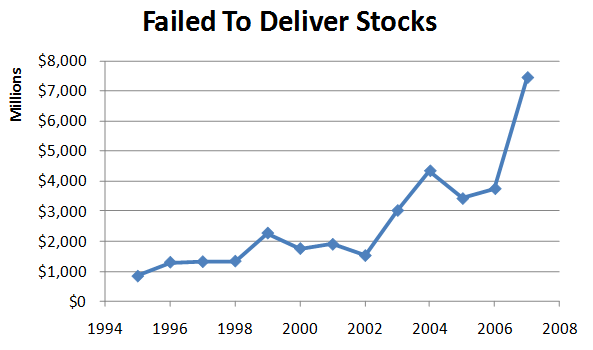
    Here’s the heart of the problem. There is something going on back-stage at Wall Street called the centralized clearing and settlement system. I worked in it in the US and have studied and consulted to the system in the rest of the world. The system we have in the US was exported around the world thanks to the United States Agency for International Development. The system is designed to let all the stocks and bonds traded on the stock exchanges be paid for electronically. To expedite the process – known as settling trades in stocks, bonds and all the other financial instruments – the system accepts an electronic “IOU” for the shares until the real financial papers can be delivered. It requires that the money be paid immediately. The problem is that the system permits dealers to sell more stocks and bonds than exist without any incentive to deliver on time. The centralized settlement system simply holds the “failed to deliver” open indefinitely in the form of an electronic IOU. The value of the IOUs in the system has risen dramatically since 2001.


    Source: Public data, available in annual reports of Depository Trust and Clearing Corporation and its subsidiaries.


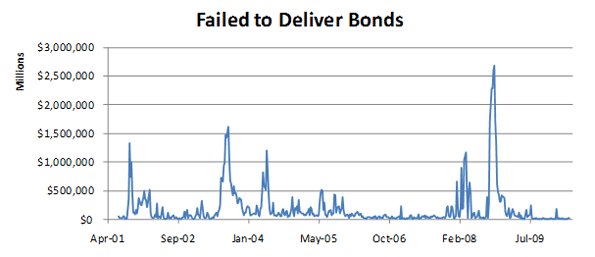
    Source: Public data, available from the Federal Reserve Bank of New York.

    Notice the relationship of the timing of the spike in the bond failures to the financial crisis: the 17 primary dealers reporting to the New York Federal Reserve Bank failed to deliver about $2.5 trillion worth of US Treasury securities for 7 weeks in late 2008 – no fines, no sanctions; worst of all, very little press coverage.

    This is the core of the problem – both in practice and in theory. This means supply is infinite – there is no limit to how many bonds can be sold because no one is enforcing delivery. In reality, no one should be able to sell more US Government bonds than the US Government has issued. That’s a problem in the practices supported by the system. The theoretical problem is that all financial instruments, including the bonds issued by city and state governments,, are being sold without any attachment to the real assets. This damages not only buyers in the stock market, but also the companies and governments who are trying to raise the money needed to keep delivering the services that we depend on them to provide.

    The practice of allowing the delivery of electronic IOUs in place of shares of stock or Treasury bills is a process that rewards financial manipulation instead of allocating resources to productive uses – the activity that capital markets should be doing. All the Congressional and the Administration talk about Wall Street reform is to centralize more trades into the existing settlement system – the one with the trillion-dollar hole in it! Someone has convinced them that the centralized system can easily track and account for positions – the actual statistics present a very different picture.

  • The Downtown Seattle Jobs Rush to the Suburbs

    There are few downtown areas in the nation that are more attractive than Seattle. Downtown Seattle is a dream of spontaneous order and a fascinating place well worth exploring. It is one of the nation’s great walkable downtown areas, with a mixture of older and newer buildings, hills, Ivars Acres of Clams and the Chief Seattle fire boat on Elliot Bay, Pioneer Square, the Pike Place Market (itself the home of the first Starbuck’s coffee) and a hyper-dense 100,000 jobs per square mile.

    Downtown boasts the L. C. Smith Tower, which from 1914 to 1966 was the tallest office tower in the west, at 42 floors and nearly 500 feet. Now Smith Tower ranks no better than 35th tallest downtown. Seattle has built so aggressively that a visitor to the observation deck would see more looking up than down. Smith Tower is dwarfed by a skyline containing some of the nation’s most impressive office architecture, such as Columbia Center and the Washington Mutual Building, which was named for the subprime mortgage lending champion.

    Downtown has many more historic landmarks, such as the Olympic Hotel and the Washington Athletic Club. The art-deco Northern Life Tower was the second tallest until the building boom of the 1960s and would have been the pride of more downtown areas than not. The 1970s Henry M. (Scoop) Jackson federal building is a rare gem of its age, while the Rainier Bank Building is perched on a tapered base that begs the question as to whether it will collapse before the Alaskan Way Viaduct in the great Cascadian subduction zone earthquake (which is due to strike sometime between now and the end of time).

    The Condominium Bust: Downtown Seattle has experienced one of the nation’s strongest central city condominium booms, though its success (and that of others) has long been drowned out by the high pitched chorus of the Portland missionary society. As in Portland, Atlanta, San Diego, Los Angeles and other newly resurgent downtown areas, Seattle’s condominium boom is now a bust as resembling that of a subprime-baby remote desert exurb halfway between San Bernardino and Las Vegas. Even so, the condominium neighborhoods of downtown Seattle are more attractive than what they replaced. Eventually, the large inventory of empty units will be sold or converted into rental units.

    The Office Bust: Downtown’s condominium bust has spread to its office market as well. The vacancy rate is now over 20%.

    The Employment Bust: Data from the Puget Sound Regional Council of Governments (PSRG) indicates the depth of the problem. From 2000 to 2009, employment in the downtown core declined more than 12%, with a loss of 20,000 jobs. But it would be a mistake to conclude that downtown Seattle’s employment decline stems from the Great Recession. The losses occurred before. In 2007, the last year before the recession, employment had fallen nearly 18,000 from 2000.

    Downtown Seattle’s employment decline mirrors trends around the nation and around the world. Now, downtown Seattle accounts for only 8.4% of employment in the four county area, something that would surprise an airline passenger looking at its verticalness from above.

    The balance of the city of Seattle has done somewhat better, having lost 3% of its employment since 2000.

    Suburban Job Ascendancy: All of the employment growth in the Seattle area has been in the suburbs. While the city, including downtown, was losing nearly 30,000 jobs, the suburbs of King, Pierce, Snohomish and Kitsap counties added 90,000 jobs (Table). Suburban Redmond, home of Microsoft, added 19,000 jobs all by itself. Even Tacoma, the old second central city and long since defeated challenger to Seattle added a modest number of jobs between 2000 and 2009.

    EMPLOYMENT IN THE SEATTLE AREA: 2000-2009
    Area 2000 2009 Change % Change
    Downtown         164,255         143,952       (20,303) -12.4%
    Balance: Downtown         338,580         329,182        (9,398) -2.8%
    Balance: King County         646,807         662,470        15,663 2.4%
    Kitsap County           70,854           81,617        10,763 15.2%
    Pierce County         234,619         264,402        29,783 12.7%
    Snohomish County         207,764         241,569        33,805 16.3%
    4-County Area       1,662,879       1,723,192        60,313 3.6%
    Compiled from Puget Sound Regional Council of Governments data.

    If You Built it, They Must be Going: With these trends, it might be expected that local transportation agencies would be rushing to provide sufficient infrastructure to the growing suburbs. Not so. Planners are scurrying about to build one of the nation’s most expensive light rail systems with lines converging on downtown, to feed 20,000 fewer jobs today and perhaps 30,000 or 40,000 fewer in the future. Perhaps this is the train “got a whole city moving again” as the television commercials put it?

    What about growing Redmond? It’s on the map. The line is scheduled to reach Redmond sometime between now and the end of time.

  • The Best Cities For Jobs

    This year’s “best places for jobs” list is easily the most depressing since we began compiling our annual rankings almost a decade ago. In the past–even in bad years–there were always stalwart areas creating lots of new jobs. In 2007’s survey 283 out of 393 metros areas showed job growth, and those at the top were often growing employment by at least 5% to 6%. Last year the number dropped to 63. This year’s survey, measuring growth from January 2009 to January 2010, found only 13 metros with any growth.

    Mike Shires at the Pepperdine School of Public Policy, who develops the survey, calls it “an awful year.” Making it even worse, the source of new jobs in almost all areas were either government employment or highly tax payer-funded sectors like education and health. This year’s best-performing regions were those that suffered the smallest losses in the private economy while bulking up on government steroids.

    So far the recovery has favored the government-dominated apparat and those places where public workers congregate.After all, besides Wall Street, public-financed workers have been the big beneficiaries of the stimulus, with state and local governments receiving more than one-third of all funds. Public employment grew by nearly 2% over the past three years, while private employment has dropped by 7%.

    Private sector workers have also seen their wages decline, while those working for the various levels of government have held their own. Federal workers now enjoy an average salary roughly 10% higher than their private sector counterparts, while their health, pension and other benefits are as much as four times higher.

    Not surprisingly government workers, according to a recent survey, are more likely to see the economy improving than those engaged in the private sector. It’s not so pretty a picture on Main Street; personal bankruptcy filings rose 23% in the year ending in March.

    Small Is Still Beautiful

    Despite these differences, some patterns from previous years still persist. The most prominent is the almost total domination of the top overall rankings by smaller communities. With the exception of Austin, Texas, all the top 10 growers–and all the net gainers–were small communities. Americans have been moving to smaller towns and cities for much of the past decade, as well as jobs, and this recession may end up accelerating the trend.

    At the top of the list stands No. 1 Jacksonville, N.C., whose economy grew 1.4%, paced by 3.3% growth in government jobs. Fast growth, however, is not a stranger to this Southern community, whose employment base has grown 22.8% since 1998. The area includes the massive Marine Base at Camp Lejeune, a beehive of activity since the U.S. started waging two wars in Afghanistan and Iraq. Fort Hood-Temple-Fort Hood in Texas came in fourth place overall with Fayetteville, N.C., home to the Army’s Fort Bragg, placing sixth and Lawton, Okla., home of Fort Sill, close behind at No. 7. Similar explanations can apply to war economy hot spots Fort Stewart (No. 20 overall) and Warner Robbins (No. 26), both in Georgia.

    But perhaps nothing captures the current zeitgeist more than the presence, at No. 23, of Hanford-Corcoran, Calif. A large Air Force base and a state prison have bolstered Hanford-Corcoran’s economy, which shows that even in the Golden State–an economic basket case whose unemployment keeps rising–a large concentration of government jobs still guarantees some degree of growth.

    Not all our top-ranked small stars got their stimulus from Uncle Sam. Energy-related growth explains strong performances from Bismarck and ag-rich Fargo, N.D., at Nos. 2 and 8, respectively. You can also credit some energy-related growth to the high standing of Morgantown, W.Va., (No. 17) and Anchorage, Alaska, (No. 18), which have benefited from consistently high prices of oil and other sources of energy.

    Texas at the Top of Big Cities

    Our list of best places among big cities is dominated this year, as last, by Texas, with the Lone Star State producing fully half of our top 10. This year, like last, the No. 1 big city (those with a more than 450,000 non-farm jobs) was Austin, Texas, which enjoys the benefits of being both the state capital and the home to the University of Texas, as well as a large, and growing, tech sector.

    But the Texas story also includes places that do not enjoy Austin’s often overwrought “hip and cool” image. Broad-based economies, partly in energy, have paced the growth of No. 2 San Antonio, No. 3 Houston, No. 5 Dallas and No. 7 Fort Worth. Other consistent big-city Southern performers include No. 8 big metro Raleigh-Cary, N.C., as well as two ascendant Great Plains metropolises, No. 9 Omaha and No. 11 Oklahoma City. None of these places were too hard-hit by the mortgage meltdown, and they all have retained reputations as business-friendly areas.

    The other big winner among the large areas is an obvious one: No. 6 ranked greater Washington, D.C. While most American communities suffer, our putative Moscow on the Potomac has emerged as the big winner under Barack Obama and the congressional centralizers. Remarkably, federal employment in the area has grown at a smart pace throughout the recession. One partial result: Washington office space is now–for the first time ever–more expensive than that in Manhattan. Northern Virginia, home to many beltway bandit companies, ranks No. 4 on our list.

    The Eds and Meds Economy

    With the productive economy outside energy only now getting its footing, the biggest relative winners have been what could be called the “eds and meds” economies. This includes de-industrialized places such as Pittsburgh (ranked a surprising No. 13), Rochester, N.Y., (ranked No. 17) and Buffalo, N.Y. (No. 20). If you have few more factory jobs to lose, little in-migration and a huge collection of institutions relatively immune to the economic turndown, you have a better chance to look good in bad times. The stimulus tilted more toward education and health than to construction and infrastructure, something that has worked to the favor of these cities.

    We can see this in New York City, whose huge and growing concentration of colleges and hospitals helped propel it to No. 10 among the big regions, its best ranking ever, despite losing almost 130,000 jobs. This is all the more remarkable since the Big Apple was the epicenter of the financial collapse, although that also made it the prime beneficiary of the federal bailout and Wall Street’s boom. Soaring salaries for hedge fund managers and new hires at financial firms could be pacing new growth in the city’s elaborate service industry, from toenail painters, restaurateurs and psychologists to dog walkers and yoga instructors.

    The health of the eds and meds economy, however, has even been enough to lift some traditional bottom-dwelling sad sacks, such as No. 14’s Philadelphia, to unfamiliar, if rather relative, heights. With private-sector growth weak everywhere, cities with lots of big hospitals, universities and nonprofit foundations look better for the time being than they have in a generation.

    The Road Ahead

    We expect our list to change next year, but how it will do so will depend as much on politics as economics. The current policy approaches–with healthy increases in government employment and strong support for education–have worked relatively well for taxpayer-financed economies including those with a strong “eds and meds” sectors. State universities, now confronted with the real pain of the recession felt by state taxpayers, are already crying for heavy increases in federal support.

    But if Congress takes a turn to the center, or even right, after November, the advantageous position of the favored government-supported sectors may erode. Particularly vulnerable will be state workers, whose current federally sanctioned reprieve could be terminated if voters force legislators to start addressing concerns over the huge governmental deficits both locally and nationally. Given D.C.’s unique ability to print money, Washington and its environs will likely continue to expand, as they did under the spendthrift Bush regime, but many state and local governments may be forced onto a stringent diet.

    On the other hand, a welcome return to basic growth in overall economy would further boost those relatively low-cost areas–notably in Texas, the Great Plains and the Intermountain West–that have in recent years enjoyed the strongest trajectory in the non-government related sectors, including natural resource-based industries . These places have pro-business regulatory and tax regimes, lots of available land and affordable housing, which will attract new businesses and workers to their areas.

    This change could also benefit some places, such as Silicon Valley, parts of Southern California and the Pacific Northwest, which despite high costs still retain globally competitive, tech-related sectors. A resurgent job market in these areas would erase the current apparent advantage enjoyed by “eds and meds” based economies in favor of those places that will serve as the real incubators for a revived private sector economy. With the resumption growth, hopefully, our economy next year will begin resembling the more capitalist, competitive one we have enjoyed in the past.

    This article originally appeared at Forbes.com.

    Joel Kotkin is executive editor of NewGeography.com and is a distinguished presidential fellow in urban futures at Chapman University. He is author of The City: A Global History. His newest book is The Next Hundred Million: America in 2050, released in Febuary, 2010.

    Photo: kiril106

  • 2010 How We Pick the Best Cities For Job Growth


    By Michael Shires

    The methodology for the 2010 rankings largely corresponds to that used last year, which emphasizes the robustness of a region’s growth both recently and over time. It allows the rankings to include all of the metropolitan statistical areas (MSAs) for which the Bureau of Labor Statistics reports monthly employment data. They are derived from three-month rolling averages of U.S. Bureau of Labor Statistics “state and area” unadjusted employment data reported from November 1999 to January 2010.

    The data reflect the North American Industry Classification System categories, including total nonfarm employment, manufacturing, financial services, business and professional services, educational and health services, information, retail and wholesale trade, transportation and utilities, leisure and hospitality, and government.

    “Large” areas include those with a current nonfarm employment base of at least 450,000 jobs. “Midsize” areas range from 150,000 to 450,000 jobs. “Small” areas have as many as 150,000 jobs. Because of the significant declines in employment across the nation which caused some MSAs to drop below the 450,000 and 150,000 job thresholds, the size category for each MSA in the 2010 ranking is kept the same as it was in 2009 to maximize comparability between the rankings.

    This year’s rankings use four measures of growth to rank all areas for which full data sets were available from the past 10 years. Because of the expanded availability of data since last year, we were able to include another 61 small MSAs in this year’s rankings for a total of 397 regions. As a result, this year’s rankings can be directly compared to the 2009 rankings for MSAs for the large and midsize categories, but there are some adjustments needed for year-to-year comparisons in small MSA category. In instances where the analysis refers to changes in ranking order, these adjustments are made accordingly.

    The index is calculated from a normalized, weighted summary of: 1) recent growth trend: the current and prior year’s employment growth rates, with the current year emphasized (two points); 2) mid-term growth: the average annual 2004-2009 growth rate (two points); 3) long-term trend and momentum: the sum of the 2004-2009 and 1999-2003 employment growth rates multiplied by the ratio of the 1999-2003 growth rate over the 2004-2009 growth rate (two points); and 4) current year growth (one point).

  • Small Cities Rankings – 2010 Best Cities for Job Growth

    Read how we pick the best cities.

    Size Rank 2010  Area
    2010 Weighted INDEX
    2009 Nonfarm Emplmnt (1000s)
    Size Rank Change 2010
    1 Jacksonville, NC
    99.8
    48.2
    2 Bismarck, ND
    95.1
    62.0
    12
    3 College Station-Bryan, TX
    94.8
    98.2
    9
    4 Killeen-Temple-Fort Hood, TX
    92.7
    125.9
    2
    5 St. Joseph, MO-KS
    92.0
    59.1
    33
    6 Fayetteville, NC
    91.9
    129.7
    17
    7 Lawton, OK
    91.2
    43.9
    8 Fargo, ND-MN
    90.8
    121.5
    4
    9 Yakima, WA
    84.9
    77.3
    70
    10 Bloomington, IN
    84.9
    84.8
    96
    11 Hattiesburg, MS
    83.6
    59.5
    50
    12 Kennewick-Pasco-Richland, WA
    82.1
    95.9
    -2
    13 Morgantown, WV
    81.7
    63.5
    -2
    14 Hinesville-Fort Stewart, GA
    81.0
    19.5
    15 Great Falls, MT
    80.9
    35.0
    16 Hanford-Corcoran, CA
    80.0
    36.8
    17 Ithaca, NY
    79.9
    64.7
    42
    18 Warner Robins, GA
    79.8
    58.8
    20
    19 Iowa City, IA
    79.0
    90.2
    18
    20 State College, PA
    78.6
    74.2
    47
    21 Pascagoula, MS
    77.8
    57.3
    39
    22 Brownsville-Harlingen, TX
    77.7
    124.1
    24
    23 Columbia, MO
    77.5
    91.5
    11
    24 Las Cruces, NM
    77.2
    67.9
    1
    25 Pueblo, CO
    77.2
    56.9
    26
    26 Wenatchee-East Wenatchee, WA
    76.9
    38.3
    27 Grand Forks, ND-MN
    76.4
    53.7
    21
    28 Lubbock, TX
    76.1
    129.3
    21
    29 Kankakee-Bradley, IL
    76.1
    43.5
    30 Waco, TX
    76.0
    106.1
    37
    31 Fairbanks, AK
    75.9
    36.7
    32 Jonesboro, AR
    75.8
    48.7
    33 Cheyenne, WY
    75.6
    43.7
    -9
    34 Cedar Rapids, IA
    75.3
    135.9
    20
    35 Glens Falls, NY
    75.2
    52.6
    55
    36 Sioux Falls, SD
    75.0
    132.4
    -10
    37 Greenville, NC
    74.5
    74.9
    -4
    38 Rapid City, SD
    73.8
    58.9
    5
    39 Amarillo, TX
    73.6
    109.7
    5
    40 Cape Girardeau-Jackson, MO-IL
    72.5
    44.5
    41 Lawrence, KS
    72.4
    51.9
    42 Springfield, IL
    72.2
    109.7
    39
    43 Portsmouth, NH-ME NECTA
    72.2
    53.6
    51
    44 Billings, MT
    72.0
    78.4
    7
    45 Midland, TX
    71.7
    64.6
    -8
    46 Alexandria, LA
    71.5
    64.3
    -21
    47 Abilene, TX
    71.4
    65.2
    15
    48 Haverhill-North Andover-Amesbury, MA-NH  NECTA Division
    71.3
    75.4
    63
    49 Tyler, TX
    70.7
    92.7
    -19
    50 Fort Collins-Loveland, CO
    70.3
    131.9
    -14
    51 Harrisonburg, VA
    70.2
    62.0
    85
    52 Olympia, WA
    69.8
    99.1
    -25
    53 Rochester, MN
    69.6
    103.0
    21
    54 St. Cloud, MN
    69.5
    98.6
    13
    55 Texarkana, TX-Texarkana, AR
    69.1
    56.1
    -21
    56 Madera-Chowchilla, CA
    68.8
    33.7
    57 Florence-Muscle Shoals, AL
    68.7
    54.5
    35
    58 Auburn-Opelika, AL
    68.6
    52.2
    -18
    59 Wheeling, WV-OH
    67.8
    66.6
    31
    60 Utica-Rome, NY
    67.8
    131.0
    42
    61 Jefferson City, MO
    67.7
    77.8
    30
    62 Charlottesville, VA
    67.6
    98.0
    3
    63 San Angelo, TX
    67.5
    43.8
    64 Bloomington-Normal, IL
    67.4
    88.5
    16
    65 Odessa, TX
    67.2
    57.7
    -51
    66 Waterloo-Cedar Falls, IA
    67.1
    88.0
    18
    67 Panama City-Lynn Haven-Panama City Beach, FL
    66.7
    71.0
    32
    68 Dubuque, IA
    66.6
    53.7
    -24
    69 Athens-Clarke County, GA
    66.6
    80.8
    -49
    70 Laredo, TX
    66.6
    86.8
    -51
    71 Manchester, NH NECTA
    66.5
    98.5
    15
    72 Ames, IA
    66.4
    47.0
    73 Houma-Bayou Cane-Thibodaux, LA
    66.1
    91.6
    -55
    74 Sioux City, IA-NE-SD
    65.8
    73.1
    -13
    75 Flagstaff, AZ
    65.8
    61.8
    3
    76 Wilmington, NC
    65.4
    136.6
    -26
    77 Elizabethtown, KY
    65.3
    46.1
    78 Joplin, MO
    65.1
    77.7
    -42
    79 Lebanon, PA
    65.0
    48.1
    80 Coeur d’Alene, ID
    64.7
    53.0
    -52
    81 Logan, UT-ID
    64.5
    52.5
    82 Barnstable Town, MA NECTA
    64.3
    92.0
    54
    83 Altoona, PA
    64.1
    60.3
    72
    84 Bangor, ME NECTA
    63.6
    64.9
    30
    85 Bremerton-Silverdale, WA
    63.4
    82.9
    54
    86 Clarksville, TN-KY
    63.2
    81.0
    64
    87 Tuscaloosa, AL
    62.9
    93.1
    -5
    88 Cumberland, MD-WV
    62.7
    38.7
    89 Johnstown, PA
    62.6
    59.7
    16
    90 Ocean City, NJ
    62.3
    35.8
    91 El Centro, CA
    61.6
    44.6
    92 New Bedford, MA NECTA
    61.5
    63.7
    43
    93 Topeka, KS
    61.2
    107.8
    -12
    94 Longview, TX
    61.0
    93.3
    -71
    95 Columbus, GA-AL
    60.4
    116.8
    38
    96 Oshkosh-Neenah, WI
    59.9
    90.0
    -18
    97 Owensboro, KY
    59.5
    49.1
    98 Idaho Falls, ID
    58.5
    48.3
    99 Binghamton, NY
    57.6
    109.8
    14
    100 Norwich-New London, CT-RI NECTA
    57.4
    130.4
    36
    101 Lynchburg, VA
    57.4
    104.5
    -49
    102 Goldsboro, NC
    57.0
    43.2
    103 La Crosse, WI-MN
    56.9
    71.8
    -14
    104 Huntington-Ashland, WV-KY-OH
    56.7
    115.5
    8
    105 Missoula, MT
    56.7
    54.1
    60
    106 Sherman-Denison, TX
    56.3
    42.2
    107 Hot Springs, AR
    56.2
    36.5
    108 Blacksburg-Christiansburg-Radford, VA
    56.1
    68.8
    -1
    109 Crestview-Fort Walton Beach-Destin, FL
    55.8
    78.0
    61
    110 Kingston, NY
    55.8
    60.5
    59
    111 Dover, DE
    55.8
    62.6
    31
    112 Gainesville, FL
    55.3
    128.3
    -13
    113 Palm Coast, FL
    55.2
    17.9
    114 Monroe, LA
    55.0
    75.7
    33
    115 Rochester-Dover, NH-ME NECTA
    54.9
    55.5
    -51
    116 Vineland-Millville-Bridgeton, NJ
    54.7
    60.0
    17
    117 Eau Claire, WI
    54.4
    78.2
    -15
    118 Champaign-Urbana, IL
    54.1
    109.0
    -43
    119 Mankato-North Mankato, MN
    53.9
    51.5
    120 Anderson, IN
    53.8
    40.8
    121 Lewiston-Auburn, ME NECTA
    53.5
    47.2
    122 Lewiston, ID-WA
    53.2
    25.9
    123 Santa Fe, NM
    53.1
    60.6
    -54
    124 Gulfport-Biloxi, MS
    52.9
    106.2
    45
    125 Burlington-South Burlington, VT NECTA
    52.6
    109.9
    61
    126 Parkersburg-Marietta-Vienna, WV-OH
    52.1
    70.0
    6
    127 Casper, WY
    51.9
    37.9
    128 Myrtle Beach-North Myrtle Beach-Conway, SC
    51.9
    108.4
    19
    129 Brockton-Bridgewater-Easton, MA  NECTA Division
    51.6
    85.7
    53
    130 Greeley, CO
    51.4
    77.0
    -81
    131 Williamsport, PA
    51.4
    51.8
    52
    132 Sandusky, OH
    51.0
    34.2
    133 Lake Charles, LA
    50.9
    88.6
    -33
    134 Appleton, WI
    50.7
    113.3
    16
    135 Albany, GA
    50.3
    61.5
    28
    136 Pine Bluff, AR
    49.7
    37.4
    137 Elmira, NY
    49.2
    39.1
    138 Duluth, MN-WI
    49.1
    125.8
    -9
    139 Visalia-Porterville, CA
    49.0
    106.3
    -30
    140 Bellingham, WA
    48.8
    79.2
    -62
    141 Victoria, TX
    48.4
    48.1
    142 Peabody, MA  NECTA Division
    48.4
    97.4
    25
    143 Chico, CA
    47.3
    70.3
    27
    144 Lowell-Billerica-Chelmsford, MA-NH  NECTA Division
    47.3
    112.8
    11
    145 Lafayette, IN
    47.0
    91.1
    -60
    146 Grand Junction, CO
    46.9
    59.6
    -109
    147 Rome, GA
    46.7
    39.7
    148 Gainesville, GA
    46.0
    71.2
    -85
    149 Valdosta, GA
    45.8
    52.8
    -65
    150 Winchester, VA-WV
    45.8
    53.2
    41
    151 Pocatello, ID
    45.2
    36.3
    152 Salinas, CA
    44.5
    120.5
    -16
    153 Hagerstown-Martinsburg, MD-WV
    44.2
    95.9
    7
    154 Nashua, NH-MA  NECTA Division
    44.0
    126.0
    -24
    155 Springfield, OH
    43.9
    49.8
    8
    156 Anniston-Oxford, AL
    43.8
    49.6
    -8
    157 Fort Smith, AR-OK
    43.7
    115.9
    -68
    158 Bowling Green, KY
    43.2
    57.6
    -64
    159 Yuba City, CA
    43.1
    37.6
    160 Johnson City, TN
    43.1
    76.8
    -14
    161 Decatur, IL
    43.0
    51.9
    -35
    162 Salisbury, MD
    42.7
    52.2
    3
    163 Napa, CA
    42.7
    59.5
    -24
    164 St. George, UT
    42.6
    46.4
    -54
    165 Macon, GA
    41.8
    96.2
    -43
    166 Corvallis, OR
    41.7
    36.7
    167 San Luis Obispo-Paso Robles, CA
    41.2
    96.5
    -34
    168 Mount Vernon-Anacortes, WA
    40.3
    43.4
    169 Pittsfield, MA NECTA
    40.1
    34.4
    170 Longview, WA
    39.7
    35.1
    171 Brunswick, GA
    39.5
    41.8
    172 Battle Creek, MI
    39.1
    55.7
    41
    173 Florence, SC
    39.0
    82.8
    -34
    174 Merced, CA
    38.9
    54.3
    -28
    175 Cleveland, TN
    38.9
    38.9
    176 Farmington, NM
    38.5
    48.2
    177 Terre Haute, IN
    38.2
    69.9
    15
    178 Danville, IL
    37.9
    29.4
    179 Punta Gorda, FL
    36.5
    39.3
    180 Erie, PA
    36.3
    125.1
    -48
    181 Vallejo-Fairfield, CA
    35.9
    117.1
    19
    182 Kingsport-Bristol-Bristol, TN-VA
    35.8
    115.3
    -37
    183 Santa Cruz-Watsonville, CA
    35.3
    87.7
    1
    184 Bend, OR
    34.8
    60.5
    -45
    185 Kalamazoo-Portage, MI
    34.6
    136.8
    19
    186 Saginaw-Saginaw Township North, MI
    33.8
    83.3
    33
    187 Michigan City-La Porte, IN
    33.7
    43.2
    188 Columbus, IN
    33.5
    41.5
    189 Redding, CA
    33.1
    57.9
    27
    190 Prescott, AZ
    32.7
    55.9
    -13
    191 Port St. Lucie, FL
    31.0
    118.7
    8
    192 Wichita Falls, TX
    30.3
    57.6
    -37
    193 Medford, OR
    29.9
    75.7
    -20
    194 Dothan, AL
    29.8
    57.6
    -5
    195 Atlantic City-Hammonton, NJ
    29.7
    136.0
    12
    196 Rocky Mount, NC
    29.0
    60.2
    12
    197 Lake Havasu City-Kingman, AZ
    28.0
    46.5
    13
    198 Sebastian-Vero Beach, FL
    27.4
    43.5
    199 Decatur, AL
    26.7
    53.3
    -40
    200 Gadsden, AL
    26.6
    35.1
    201 Leominster-Fitchburg-Gardner, MA NECTA
    26.1
    47.1
    202 Carson City, NV
    26.0
    29.2
    203 Bay City, MI
    25.5
    35.8
    204 Yuma, AZ
    25.4
    49.4
    -14
    205 Jackson, TN
    25.4
    57.1
    -41
    206 Lima, OH
    25.2
    51.7
    8
    207 Muncie, IN
    23.4
    49.1
    -4
    208 Danbury, CT NECTA
    22.4
    64.6
    -13
    209 Burlington, NC
    22.1
    55.6
    -9
    210 Wausau, WI
    21.3
    65.7
    -13
    211 Danville, VA
    21.3
    39.2
    212 Mansfield, OH
    21.0
    52.9
    -9
    213 Niles-Benton Harbor, MI
    20.8
    58.5
    -29
    214 Spartanburg, SC
    20.5
    116.3
    -90
    215 Ocala, FL
    20.5
    90.8
    -48
    216 Sheboygan, WI
    20.0
    58.3
    -56
    217 Fond du Lac, WI
    17.7
    43.9
    218 Flint, MI
    17.4
    133.7
    9
    219 Naples-Marco Island, FL
    16.8
    109.8
    -9
    220 Muskegon-Norton Shores, MI
    16.2
    57.8
    2
    221 Racine, WI
    15.7
    73.3
    -35
    222 Steubenville-Weirton, OH-WV
    15.6
    43.9
    223 Monroe, MI
    13.4
    37.0
    224 South Bend-Mishawaka, IN-MI
    12.6
    130.8
    -32
    225 Sumter, SC
    11.3
    35.1
    226 Anderson, SC
    10.8
    58.0
    -3
    227 Jackson, MI
    10.6
    53.2
    5
    228 Waterbury, CT NECTA
    8.9
    61.2
    -6
    229 Dalton, GA
    7.6
    66.0
    -1
    230 Janesville, WI
    7.5
    60.3
    -9
    231 Kokomo, IN
    6.0
    39.4
    232 Holland-Grand Haven, MI
    4.7
    100.7
    -7
    233 Elkhart-Goshen, IN
    2.5
    97.8
    -5
    234 Morristown, TN
    1.5
    44.5
  • Midsized Cities Rankings – 2010 Best Cities for Job Growth

    Read how we pick the best cities.

    Size Rank 2010  Area
    2010 Weighted INDEX
    2009 Nonfarm Emplmnt (1000s)
    Size Rank Change 2010
    1 Durham-Chapel Hill, NC
    86.6
    283.2
    3
    2 Baton Rouge, LA
    83.2
    367.5
    5
    3 Anchorage, AK
    81.1
    168.0
    6
    4 Huntsville, AL
    81.1
    207.9
    8
    5 El Paso, TX
    79.8
    271.9
    6
    6 McAllen-Edinburg-Mission, TX
    78.7
    219.0
    -5
    7 Corpus Christi, TX
    76.2
    175.8
    -1
    8 Lafayette, LA
    75.6
    145.4
    -5
    9 Des Moines-West Des Moines, IA
    74.5
    313.9
    8
    10 Lincoln, NE
    71.2
    170.1
    23
    11 Trenton-Ewing, NJ
    69.7
    235.2
    28
    12 Shreveport-Bossier City, LA
    69.5
    174.3
    -4
    13 Fayetteville-Springdale-Rogers, AR-MO
    69.5
    199.6
    6
    14 Lexington-Fayette, KY
    66.7
    247.4
    44
    15 Little Rock-North Little Rock-Conway, AR
    66.6
    335.0
    16
    16 Tallahassee, FL
    65.3
    171.4
    46
    17 Albany-Schenectady-Troy, NY
    64.9
    438.9
    33
    18 Syracuse, NY
    64.2
    315.6
    20
    19 Ogden-Clearfield, UT
    64.2
    191.7
    9
    20 Albuquerque, NM
    64.2
    377.5
    6
    21 Harrisburg-Carlisle, PA
    64.0
    318.1
    23
    22 Augusta-Richmond County, GA-SC
    63.0
    209.2
    26
    23 Salem, OR
    62.8
    144.7
    4
    24 Springfield, MO
    62.6
    190.6
    5
    25 Charleston-North Charleston-Summerville, SC
    61.6
    282.7
    -10
    26 Allentown-Bethlehem-Easton, PA-NJ
    60.9
    329.6
    15
    27 Jackson, MS
    60.3
    251.4
    25
    28 Scranton–Wilkes-Barre, PA
    59.8
    252.5
    35
    29 Poughkeepsie-Newburgh-Middletown, NY
    59.8
    247.4
    17
    30 Provo-Orem, UT
    59.7
    179.8
    -16
    31 Spokane, WA
    59.5
    207.6
    -7
    32 Kansas City, KS
    59.2
    424.1
    -27
    33 Madison, WI
    58.6
    335.1
    10
    34 Charleston, WV
    58.6
    146.3
    0
    35 Boulder, CO
    57.8
    159.1
    -14
    36 Bakersfield-Delano, CA
    57.2
    225.4
    -23
    37 Tulsa, OK
    56.9
    406.9
    -35
    38 Beaumont-Port Arthur, TX
    55.9
    156.1
    -1
    39 Tacoma, WA Metropolitan Division
    55.5
    265.1
    -17
    40 Savannah, GA
    55.1
    150.2
    -20
    41 Portland-South Portland-Biddeford, ME NECTA
    54.5
    186.2
    26
    42 Columbia, SC
    54.2
    345.8
    -7
    43 Knoxville, TN
    53.9
    319.9
    16
    44 New Haven, CT NECTA
    52.0
    266.4
    3
    45 Pensacola-Ferry Pass-Brent, FL
    51.9
    158.4
    40
    46 York-Hanover, PA
    51.6
    173.3
    -21
    47 Winston-Salem, NC
    51.4
    207.5
    10
    48 Calvert-Charles-Prince George’s, MD
    51.1
    375.9
    25
    49 Colorado Springs, CO
    50.8
    244.4
    6
    50 Ann Arbor, MI
    50.7
    192.8
    43
    51 Roanoke, VA
    50.4
    154.2
    9
    52 Montgomery, AL
    49.6
    167.7
    -16
    53 Framingham, MA  NECTA Division
    49.1
    150.9
    -37
    54 Bridgeport-Stamford-Norwalk, CT NECTA
    48.5
    397.6
    20
    55 Reading, PA
    48.0
    164.6
    11
    56 Green Bay, WI
    47.8
    160.6
    9
    57 Evansville, IN-KY
    47.4
    169.2
    24
    58 Tucson, AZ
    46.2
    359.8
    10
    59 Worcester, MA-CT NECTA
    46.0
    235.1
    11
    60 Asheville, NC
    46.0
    164.5
    -11
    61 Boise City-Nampa, ID
    45.9
    250.4
    -5
    62 Lancaster, PA
    45.9
    224.5
    -11
    63 Mobile, AL
    45.3
    171.7
    -53
    64 Wichita, KS
    44.8
    286.0
    -41
    65 Peoria, IL
    43.4
    174.9
    -47
    66 Santa Barbara-Santa Maria-Goleta, CA
    41.5
    161.8
    -24
    67 Fresno, CA
    41.1
    281.1
    -22
    68 Lansing-East Lansing, MI
    41.0
    215.9
    11
    69 Davenport-Moline-Rock Island, IA-IL
    40.5
    176.7
    -39
    70 Lakeland-Winter Haven, FL
    40.3
    195.2
    -9
    71 Lake County-Kenosha County, IL-WI Metropolitan Division
    39.4
    372.4
    -31
    72 Wilmington, DE-MD-NJ Metropolitan Division
    38.9
    333.3
    6
    73 Baltimore City, MD
    37.6
    345.6
    3
    74 Greenville-Mauldin-Easley, SC
    36.9
    292.7
    -42
    75 Palm Bay-Melbourne-Titusville, FL
    34.8
    193.9
    16
    76 Gary, IN Metropolitan Division
    34.7
    262.7
    -23
    77 Springfield, MA-CT NECTA
    33.6
    280.2
    -2
    78 Stockton, CA
    33.2
    191.8
    -7
    79 Fort Wayne, IN
    33.0
    200.4
    -7
    80 Oxnard-Thousand Oaks-Ventura, CA
    31.1
    271.2
    7
    81 Modesto, CA
    29.6
    143.6
    -1
    82 Chattanooga, TN-GA
    29.2
    225.3
    -28
    83 Deltona-Daytona Beach-Ormond Beach, FL
    27.8
    154.4
    6
    84 Eugene-Springfield, OR
    26.0
    141.5
    -20
    85 Greensboro-High Point, NC
    25.5
    340.8
    -1
    86 Grand Rapids-Wyoming, MI
    24.2
    360.2
    0
    87 Akron, OH
    21.8
    313.2
    -18
    88 Santa Rosa-Petaluma, CA
    20.7
    169.1
    0
    89 North Port-Bradenton-Sarasota, FL
    20.4
    245.6
    6
    90 Dayton, OH
    20.3
    368.4
    4
    91 Cape Coral-Fort Myers, FL
    19.8
    195.9
    -8
    92 Reno-Sparks, NV
    19.4
    190.6
    -2
    93 Youngstown-Warren-Boardman, OH-PA
    17.7
    217.1
    -1
    94 Canton-Massillon, OH
    14.6
    157.6
    -12
    95 Toledo, OH
    14.4
    294.6
    2
    96 Rockford, IL
    12.8
    140.9
    -19
    97 Hickory-Lenoir-Morganton, NC
    8.8
    142.2
    -1
  • Large Cities Rankings – 2010 Best Cities for Job Growth

    Read how we pick the best cities.

    Size Rank 2010  Area
    2010 Weighted INDEX
     

    2009 Nonfarm Emplmnt (1000s) 
    Size Rank Change 2010
    1 Austin-Round Rock-San Marcos, TX
    88.9
           756.8
    0
    2 San Antonio-New Braunfels, TX
    84.9
           827.2
    1
    3 Houston-Sugar Land-Baytown, TX
    81.0
       2,513.6
    -1
    4 Northern Virginia, VA
    77.1
       1,291.4
    9
    5 Dallas-Plano-Irving, TX Metropolitan Division
    75.7
       2,006.9
    0
    6 Washington-Arlington-Alexandria, DC-VA-MD-WV Metropolitan Division
    75.3
       2,380.0
    6
    7 Fort Worth-Arlington, TX Metropolitan Division
    75.2
           844.9
    -3
    8 Raleigh-Cary, NC
    74.4
           496.9
    0
    9 Omaha-Council Bluffs, NE-IA
    68.5
           453.6
    2
    10 New York City, NY
    66.7
       3,655.7
    4
    11 Oklahoma City, OK
    65.1
           555.3
    -2
    12 Salt Lake City, UT
    64.9
           606.9
    -5
    13 Pittsburgh, PA
    64.5
       1,112.7
    16
    14 Philadelphia City, PA
    64.4
           647.2
    17
    15 Bethesda-Rockville-Frederick, MD Metropolitan Division
    64.3
           556.1
    9
    16 Nassau-Suffolk, NY Metropolitan Division
    63.7
       1,225.2
    18
    17 Rochester, NY
    63.6
           502.8
    4
    18 Hartford-West Hartford-East Hartford, CT NECTA
    61.9
           536.9
    18
    19 Boston-Cambridge-Quincy, MA NECTA Division
    61.7
       1,644.2
    -3
    20 Buffalo-Niagara Falls, NY
    61.6
           536.3
    10
    21 Kansas City, MO
    61.2
           544.0
    7
    22 Honolulu, HI
    60.9
           437.2
    -3
    23 Virginia Beach-Norfolk-Newport News, VA-NC
    55.2
           729.7
    4
    24 Denver-Aurora-Broomfield, CO
    54.3
       1,178.7
    -9
    25 Louisville-Jefferson County, KY-IN
    54.3
           591.5
    12
    26 Columbus, OH
    52.6
           898.2
    6
    27 St. Louis, MO-IL
    50.5
       1,286.5
    6
    28 Seattle-Bellevue-Everett, WA Metropolitan Division
    50.3
       1,374.6
    -22
    29 Camden, NJ Metropolitan Division
    49.7
           512.1
    26
    30 Nashville-Davidson–Murfreesboro–Franklin, TN
    49.7
           719.2
    -5
    31 Charlotte-Gastonia-Rock Hill, NC-SC
    48.6
           802.5
    -13
    32 Richmond, VA
    47.8
           595.6
    10
    33 Putnam-Rockland-Westchester, NY
    46.0
           548.5
    -16
    34 Indianapolis-Carmel, IN
    45.6
           859.4
    1
    35 Cincinnati-Middletown, OH-KY-IN
    45.2
           984.7
    3
    36 Orlando-Kissimmee-Sanford, FL
    43.8
           998.4
    -10
    37 Jacksonville, FL
    43.3
           581.8
    7
    38 Bergen-Hudson-Passaic, NJ
    42.7
           865.0
    15
    39 Edison-New Brunswick, NJ Metropolitan Division
    42.6
           966.4
    15
    40 Minneapolis-St. Paul-Bloomington, MN-WI
    42.3
       1,677.2
    8
    41 Portland-Vancouver-Hillsboro, OR-WA
    42.2
           959.1
    -31
    42 San Francisco-San Mateo-Redwood City, CA Metropolitan Division
    42.1
           926.1
    -19
    43 Atlanta-Sandy Springs-Marietta, GA
    42.1
       2,259.3
    -2
    44 Newark-Union, NJ-PA Metropolitan Division
    39.8
           970.5
    3
    45 Miami-Miami Beach-Kendall, FL Metropolitan Division
    38.8
           981.9
    -5
    46 New Orleans-Metairie-Kenner, LA
    38.3
           519.2
    -1
    47 San Jose-Sunnyvale-Santa Clara, CA
    37.6
           841.9
    -27
    48 San Diego-Carlsbad-San Marcos, CA
    37.4
       1,213.2
    -9
    49 Milwaukee-Waukesha-West Allis, WI
    35.0
           796.3
    2
    50 Chicago-Joliet-Naperville, IL Metropolitan Division
    33.7
       3,583.0
    2
    51 Phoenix-Mesa-Glendale, AZ
    32.6
       1,701.0
    -8
    52 Memphis, TN-MS-AR
    31.7
           591.7
    -6
    53 Sacramento–Arden-Arcade–Roseville, CA
    31.5
           818.2
    7
    54 Tampa-St. Petersburg-Clearwater, FL
    30.6
       1,122.8
    4
    55 Providence-Fall River-Warwick, RI-MA NECTA
    27.2
           530.2
    10
    56 Fort Lauderdale-Pompano Beach-Deerfield Beach, FL Metropolitan Division
    26.9
           703.5
    -6
    57 Las Vegas-Paradise, NV
    26.7
           806.3
    -35
    58 Cleveland-Elyria-Mentor, OH
    24.4
           983.2
    6
    59 Los Angeles-Long Beach-Glendale, CA Metropolitan Division
    22.8
       3,778.6
    -3
    60 Santa Ana-Anaheim-Irvine, CA Metropolitan Division
    22.8
       1,347.1
    3
    61 West Palm Beach-Boca Raton-Boynton Beach, FL Metropolitan Division
    22.4
           498.9
    0
    62 Oakland-Fremont-Hayward, CA Metropolitan Division
    21.9
           948.4
    0
    63 Riverside-San Bernardino-Ontario, CA
    21.4
       1,108.7
    -6
    64 Birmingham-Hoover, AL
    20.8
           485.1
    -15
    65 Detroit-Livonia-Dearborn, MI Metropolitan Division
    4.1
           689.6
    1
    66 Warren-Troy-Farmington Hills, MI Metropolitan Division
    1.1
       1,019.3
    -7
  • All Cities Rankings – 2010 Best Cities for Job Growth

    Read how we pick the best cities.

    Overall
    Rank
    2010
    Area
    2010 Weighted INDEX
     2009 Nonfarm Emplymt (1000s) 
    Overall Rank 2009
    Overall Rank Change
    1 Jacksonville, NC
    99.8
            48.2
    2 Bismarck, ND
    95.1
            62.0
    18
    17
    3 College Station-Bryan, TX
    94.8
            98.2
    16
    14
    4 Killeen-Temple-Fort Hood, TX
    92.7
          125.9
    5
    2
    5 St. Joseph, MO-KS
    92.0
            59.1
    63
    59
    6 Fayetteville, NC
    91.9
          129.7
    42
    37
    7 Lawton, OK
    91.2
            43.9
    8 Fargo, ND-MN
    90.8
          121.5
    15
    9
    9 Austin-Round Rock-San Marcos, TX
    88.9
          756.8
    6
    -1
    10 Durham-Chapel Hill, NC
    86.6
          283.2
    19
    11
    11 Yakima, WA
    84.9
            77.3
    136
    127
    12 San Antonio-New Braunfels, TX
    84.9
          827.2
    20
    10
    13 Bloomington, IN
    84.9
            84.8
    201
    190
    14 Hattiesburg, MS
    83.6
            59.5
    99
    87
    15 Baton Rouge, LA
    83.2
          367.5
    27
    14
    16 Kennewick-Pasco-Richland, WA
    82.1
            95.9
    12
    -2
    17 Morgantown, WV
    81.7
            63.5
    13
    -2
    18 Anchorage, AK
    81.1
          168.0
    35
    19
    19 Huntsville, AL
    81.1
          207.9
    40
    23
    20 Hinesville-Fort Stewart, GA
    81.0
            19.5
    21 Houston-Sugar Land-Baytown, TX
    81.0
       2,513.6
    9
    -9
    22 Great Falls, MT
    80.9
            35.0
    23 Hanford-Corcoran, CA
    80.0
            36.8
    24 Ithaca, NY
    79.9
            64.7
    90
    71
    25 El Paso, TX
    79.8
          271.9
    39
    19
    26 Warner Robins, GA
    79.8
            58.8
    57
    36
    27 Iowa City, IA
    79.0
            90.2
    56
    34
    28 McAllen-Edinburg-Mission, TX
    78.7
          219.0
    7
    -16
    29 State College, PA
    78.6
            74.2
    108
    84
    30 Pascagoula, MS
    77.8
            57.3
    93
    68
    31 Brownsville-Harlingen, TX
    77.7
          124.1
    68
    42
    32 Columbia, MO
    77.5
            91.5
    51
    24
    33 Las Cruces, NM
    77.2
            67.9
    31
    3
    34 Pueblo, CO
    77.2
            56.9
    78
    49
    35 Northern Virginia, VA
    77.1
       1,291.4
    84
    54
    36 Wenatchee-East Wenatchee, WA
    76.9
            38.3
    37 Grand Forks, ND-MN
    76.4
            53.7
    70
    39
    38 Corpus Christi, TX
    76.2
          175.8
    23
    -9
    39 Lubbock, TX
    76.1
          129.3
    74
    41
    40 Kankakee-Bradley, IL
    76.1
            43.5
    41 Waco, TX
    76.0
          106.1
    103
    69
    42 Fairbanks, AK
    75.9
            36.7
    43 Jonesboro, AR
    75.8
            48.7
    44 Dallas-Plano-Irving, TX Metropolitan Division
    75.7
       2,006.9
    32
    -3
    45 Cheyenne, WY
    75.6
            43.7
    24
    -12
    46 Lafayette, LA
    75.6
          145.4
    14
    -23
    47 Washtn-Artn-Alexdria, DC-VA-MD-WV Mt Dv
    75.3
       2,380.0
    76
    38
    48 Cedar Rapids, IA
    75.3
          135.9
    77
    38
    49 Fort Worth-Arlington, TX Metropolitan Division
    75.2
          844.9
    30
    -10
    50 Glens Falls, NY
    75.2
            52.6
    141
    100
    51 Sioux Falls, SD
    75.0
          132.4
    26
    -16
    52 Greenville, NC
    74.5
            74.9
    45
    2
    53 Des Moines-West Des Moines, IA
    74.5
          313.9
    65
    21
    54 Raleigh-Cary, NC
    74.4
          496.9
    38
    -7
    55 Rapid City, SD
    73.8
            58.9
    59
    13
    56 Amarillo, TX
    73.6
          109.7
    60
    13
    57 Cape Girardeau-Jackson, MO-IL
    72.5
            44.5
    58 Lawrence, KS
    72.4
            51.9
    59 Springfield, IL
    72.2
          109.7
    122
    74
    60 Portsmouth, NH-ME NECTA
    72.2
            53.6
    146
    97
    61 Billings, MT
    72.0
            78.4
    67
    17
    62 Midland, TX
    71.7
            64.6
    47
    -4
    63 Alexandria, LA
    71.5
            64.3
    21
    -31
    64 Abilene, TX
    71.4
            65.2
    86
    33
    65 Haverhill-North Andvr-Ambry, MA-NH  NECTA Div
    71.3
            75.4
    187
    133
    66 Lincoln, NE
    71.2
          170.1
    109
    54
    67 Tyler, TX
    70.7
            92.7
    29
    -27
    68 Fort Collins-Loveland, CO
    70.3
          131.9
    46
    -11
    69 Harrisonburg, VA
    70.2
            62.0
    249
    191
    70 Olympia, WA
    69.8
            99.1
    25
    -34
    71 Trenton-Ewing, NJ
    69.7
          235.2
    130
    70
    72 Rochester, MN
    69.6
          103.0
    110
    49
    73 Shreveport-Bossier City, LA
    69.5
          174.3
    33
    -29
    74 St. Cloud, MN
    69.5
            98.6
    96
    33
    75 Fayetteville-Springdale-Rogers, AR-MO
    69.5
          199.6
    71
    7
    76 Texarkana, TX-Texarkana, AR
    69.1
            56.1
    43
    -22
    77 Madera-Chowchilla, CA
    68.8
            33.7
    78 Florence-Muscle Shoals, AL
    68.7
            54.5
    140
    74
    79 Auburn-Opelika, AL
    68.6
            52.2
    49
    -18
    80 Omaha-Council Bluffs, NE-IA
    68.5
          453.6
    72
    4
    81 Wheeling, WV-OH
    67.8
            66.6
    138
    69
    82 Utica-Rome, NY
    67.8
          131.0
    163
    93
    83 Jefferson City, MO
    67.7
            77.8
    139
    68
    84 Charlottesville, VA
    67.6
            98.0
    89
    17
    85 San Angelo, TX
    67.5
            43.8
    86 Bloomington-Normal, IL
    67.4
            88.5
    117
    44
    87 Odessa, TX
    67.2
            57.7
    1
    -73
    88 Waterloo-Cedar Falls, IA
    67.1
            88.0
    124
    49
    89 New York City, NY
    66.7
       3,655.7
    95
    19
    90 Lexington-Fayette, KY
    66.7
          247.4
    194
    117
    91 Panama City-Lynn Haven-Panama City Beach, FL
    66.7
            71.0
    150
    72
    92 Little Rock-North Little Rock-Conway, AR
    66.6
          335.0
    106
    27
    93 Dubuque, IA
    66.6
            53.7
    53
    -27
    94 Athens-Clarke County, GA
    66.6
            80.8
    11
    -70
    95 Laredo, TX
    66.6
            86.8
    8
    -74
    96 Manchester, NH NECTA
    66.5
            98.5
    128
    45
    97 Ames, IA
    66.4
            47.0
    98 Houma-Bayou Cane-Thibodaux, LA
    66.1
            91.6
    4
    -80
    99 Sioux City, IA-NE-SD
    65.8
            73.1
    80
    -5
    100 Flagstaff, AZ
    65.8
            61.8
    111
    25
    101 Wilmington, NC
    65.4
          136.6
    61
    -26
    102 Tallahassee, FL
    65.3
          171.4
    202
    114
    103 Elizabethtown, KY
    65.3
            46.1
    104 Oklahoma City, OK
    65.1
          555.3
    44
    -45
    105 Joplin, MO
    65.1
            77.7
    41
    -49
    106 Lebanon, PA
    65.0
            48.1
    107 Salt Lake City, UT
    64.9
          606.9
    36
    -55
    108 Albany-Schenectady-Troy, NY
    64.9
          438.9
    177
    85
    109 Coeur d’Alene, ID
    64.7
            53.0
    17
    -76
    110 Logan, UT-ID
    64.5
            52.5
    111 Pittsburgh, PA
    64.5
       1,112.7
    169
    75
    112 Philadelphia City, PA
    64.4
          647.2
    176
    81
    113 Barnstable Town, MA NECTA
    64.3
            92.0
    238
    142
    114 Bethesda-Rockville-Frederick, MD Metr Div
    64.3
          556.1
    145
    48
    115 Syracuse, NY
    64.2
          315.6
    129
    31
    116 Ogden-Clearfield, UT
    64.2
          191.7
    101
    2
    117 Albuquerque, NM
    64.2
          377.5
    94
    -6
    118 Altoona, PA
    64.1
            60.3
    268
    167
    119 Harrisburg-Carlisle, PA
    64.0
          318.1
    159
    57
    120 Nassau-Suffolk, NY Metropolitan Division
    63.7
       1,225.2
    180
    77
    121 Bangor, ME NECTA
    63.6
            64.9
    181
    77
    122 Rochester, NY
    63.6
          502.8
    137
    32
    123 Bremerton-Silverdale, WA
    63.4
            82.9
    246
    140
    124 Clarksville, TN-KY
    63.2
            81.0
    263
    156
    125 Augusta-Richmond County, GA-SC
    63.0
          209.2
    167
    59
    126 Tuscaloosa, AL
    62.9
            93.1
    112
    3
    127 Salem, OR
    62.8
          144.7
    100
    -10
    128 Cumberland, MD-WV
    62.7
            38.7
    129 Johnstown, PA
    62.6
            59.7
    155
    44
    130 Springfield, MO
    62.6
          190.6
    102
    -10
    131 Ocean City, NJ
    62.3
            35.8
    132 Hartford-West Hartford-East Hartford, CT NECTA
    61.9
          536.9
    199
    86
    133 Boston-Cambridge-Quincy, MA NECTA Division
    61.7
       1,644.2
    118
    4
    134 El Centro, CA
    61.6
            44.6
    135 Buffalo-Niagara Falls, NY
    61.6
          536.3
    174
    59
    136 Charleston-North Charleston-Summerville, SC
    61.6
          282.7
    58
    -58
    137 New Bedford, MA NECTA
    61.5
            63.7
    229
    112
    138 Topeka, KS
    61.2
          107.8
    104
    -14
    139 Kansas City, MO
    61.2
          544.0
    164
    45
    140 Longview, TX
    61.0
            93.3
    3
    -117
    141 Honolulu, HI
    60.9
          437.2
    132
    11
    142 Allentown-Bethlehem-Easton, PA-NJ
    60.9
          329.6
    151
    29
    143 Columbus, GA-AL
    60.4
          116.8
    224
    101
    144 Jackson, MS
    60.3
          251.4
    184
    60
    145 Oshkosh-Neenah, WI
    59.9
            90.0
    98
    -27
    146 Scranton–Wilkes-Barre, PA
    59.8
          252.5
    203
    77
    147 Poughkeepsie-Newburgh-Middletown, NY
    59.8
          247.4
    162
    35
    148 Provo-Orem, UT
    59.7
          179.8
    54
    -74
    149 Owensboro, KY
    59.5
            49.1
    150 Spokane, WA
    59.5
          207.6
    91
    -38
    151 Kansas City, KS
    59.2
          424.1
    22
    -108
    152 Madison, WI
    58.6
          335.1
    158
    27
    153 Charleston, WV
    58.6
          146.3
    114
    -18
    154 Idaho Falls, ID
    58.5
            48.3
    155 Boulder, CO
    57.8
          159.1
    79
    -54
    156 Binghamton, NY
    57.6
          109.8
    165
    31
    157 Norwich-New London, CT-RI NECTA
    57.4
          130.4
    226
    91
    158 Lynchburg, VA
    57.4
          104.5
    52
    -84
    159 Bakersfield-Delano, CA
    57.2
          225.4
    50
    -87
    160 Goldsboro, NC
    57.0
            43.2
    161 Tulsa, OK
    56.9
          406.9
    10
    -128
    162 La Crosse, WI-MN
    56.9
            71.8
    115
    -24
    163 Huntington-Ashland, WV-KY-OH
    56.7
          115.5
    157
    17
    164 Missoula, MT
    56.7
            54.1
    276
    135
    165 Sherman-Denison, TX
    56.3
            42.2
    166 Hot Springs, AR
    56.2
            36.5
    167 Blacksburg-Christiansburg-Radford, VA
    56.1
            68.8
    143
    1
    168 Beaumont-Port Arthur, TX
    55.9
          156.1
    127
    -16
    169 Crestview-Fort Walton Beach-Destin, FL
    55.8
            78.0
    282
    138
    170 Kingston, NY
    55.8
            60.5
    281
    136
    171 Dover, DE
    55.8
            62.6
    231
    85
    172 Tacoma, WA Metropolitan Division
    55.5
          265.1
    81
    -66
    173 Gainesville, FL
    55.3
          128.3
    131
    -17
    174 Virginia Beach-Norfolk-Newport News, VA-NC
    55.2
          729.7
    160
    11
    175 Palm Coast, FL
    55.2
            17.9
    176 Savannah, GA
    55.1
          150.2
    73
    -77
    177 Monroe, LA
    55.0
            75.7
    243
    92
    178 Rochester-Dover, NH-ME NECTA
    54.9
            55.5
    64
    -88
    179 Vineland-Millville-Bridgeton, NJ
    54.7
            60.0
    210
    57
    180 Portland-South Portland-Biddeford, ME NECTA
    54.5
          186.2
    221
    67
    181 Eau Claire, WI
    54.4
            78.2
    135
    -20
    182 Denver-Aurora-Broomfield, CO
    54.3
       1,178.7
    113
    -43
    183 Louisville-Jefferson County, KY-IN
    54.3
          591.5
    204
    47
    184 Columbia, SC
    54.2
          345.8
    116
    -42
    185 Champaign-Urbana, IL
    54.1
          109.0
    83
    -76
    186 Mankato-North Mankato, MN
    53.9
            51.5
    187 Knoxville, TN
    53.9
          319.9
    195
    35
    188 Anderson, IN
    53.8
            40.8
    189 Lewiston-Auburn, ME NECTA
    53.5
            47.2
    190 Lewiston, ID-WA
    53.2
            25.9
    191 Santa Fe, NM
    53.1
            60.6
    66
    -95
    192 Gulfport-Biloxi, MS
    52.9
          106.2
    270
    108
    193 Burlington-South Burlington, VT NECTA
    52.6
          109.9
    300
    137
    194 Columbus, OH
    52.6
          898.2
    178
    14
    195 Parkersburg-Marietta-Vienna, WV-OH
    52.1
            70.0
    193
    28
    196 New Haven, CT NECTA
    52.0
          266.4
    166
    0
    197 Pensacola-Ferry Pass-Brent, FL
    51.9
          158.4
    302
    135
    198 Casper, WY
    51.9
            37.9
    199 Myrtle Beach-North Myrtle Beach-Conway, SC
    51.9
          108.4
    230
    62
    200 Brockton-Bridgewater-Easton, MA  NECTA Div
    51.6
            85.7
    292
    123
    201 York-Hanover, PA
    51.6
          173.3
    92
    -78
    202 Greeley, CO
    51.4
            77.0
    28
    -143
    203 Williamsport, PA
    51.4
            51.8
    293
    121
    204 Winston-Salem, NC
    51.4
          207.5
    192
    19
    205 Calvert-Charles-Prince George’s, MD
    51.1
          375.9
    236
    62
    206 Sandusky, OH
    51.0
            34.2
    207 Lake Charles, LA
    50.9
            88.6
    119
    -56
    208 Colorado Springs, CO
    50.8
          244.4
    190
    14
    209 Ann Arbor, MI
    50.7
          192.8
    322
    145
    210 Appleton, WI
    50.7
          113.3
    232
    54
    211 St. Louis, MO-IL
    50.5
       1,286.5
    179
    0
    212 Roanoke, VA
    50.4
          154.2
    196
    16
    213 Albany, GA
    50.3
            61.5
    260
    79
    214 Seattle-Bellevue-Everett, WA Metr Div
    50.3
       1,374.6
    34
    -148
    215 Pine Bluff, AR
    49.7
            37.4
    216 Camden, NJ Metropolitan Division
    49.7
          512.1
    277
    94
    217 Nashville-Davidson–Murfreesboro–Franklin, TN
    49.7
          719.2
    153
    -31
    218 Montgomery, AL
    49.6
          167.7
    123
    -62
    219 Elmira, NY
    49.2
            39.1
    220 Duluth, MN-WI
    49.1
          125.8
    173
    -13
    221 Framingham, MA  NECTA Division
    49.1
          150.9
    62
    -125
    222 Visalia-Porterville, CA
    49.0
          106.3
    133
    -55
    223 Bellingham, WA
    48.8
            79.2
    75
    -114
    224 Charlotte-Gastonia-Rock Hill, NC-SC
    48.6
          802.5
    125
    -65
    225 Bridgeport-Stamford-Norwalk, CT NECTA
    48.5
          397.6
    240
    49
    226 Victoria, TX
    48.4
            48.1
    227 Peabody, MA  NECTA Division
    48.4
            97.4
    261
    69
    228 Reading, PA
    48.0
          164.6
    219
    26
    229 Green Bay, WI
    47.8
          160.6
    212
    18
    230 Richmond, VA
    47.8
          595.6
    218
    23
    231 Evansville, IN-KY
    47.4
          169.2
    280
    84
    232 Chico, CA
    47.3
            70.3
    265
    68
    233 Lowell-Billerica-Chelmsford, MA-NH  NECTA Div
    47.3
          112.8
    239
    41
    234 Lafayette, IN
    47.0
            91.1
    85
    -114
    235 Grand Junction, CO
    46.9
            59.6
    2
    -198
    236 Rome, GA
    46.7
            39.7
    237 Tucson, AZ
    46.2
          359.8
    222
    21
    238 Putnam-Rockland-Westchester, NY
    46.0
          548.5
    121
    -81
    239 Worcester, MA-CT NECTA
    46.0
          235.1
    228
    25
    240 Asheville, NC
    46.0
          164.5
    168
    -36
    241 Gainesville, GA
    46.0
            71.2
    48
    -157
    242 Boise City-Nampa, ID
    45.9
          250.4
    191
    -15
    243 Lancaster, PA
    45.9
          224.5
    182
    -25
    244 Valdosta, GA
    45.8
            52.8
    82
    -126
    245 Winchester, VA-WV
    45.8
            53.2
    299
    90
    246 Indianapolis-Carmel, IN
    45.6
          859.4
    197
    -13
    247 Mobile, AL
    45.3
          171.7
    37
    -174
    248 Cincinnati-Middletown, OH-KY-IN
    45.2
          984.7
    207
    -5
    249 Pocatello, ID
    45.2
            36.3
    250 Wichita, KS
    44.8
          286.0
    88
    -125
    251 Salinas, CA
    44.5
          120.5
    185
    -29
    252 Hagerstown-Martinsburg, MD-WV
    44.2
            95.9
    247
    32
    253 Nashua, NH-MA  NECTA Division
    44.0
          126.0
    171
    -45
    254 Springfield, OH
    43.9
            49.8
    250
    33
    255 Anniston-Oxford, AL
    43.8
            49.6
    215
    -3
    256 Orlando-Kissimmee-Sanford, FL
    43.8
          998.4
    154
    -65
    257 Fort Smith, AR-OK
    43.7
          115.9
    87
    -133
    258 Peoria, IL
    43.4
          174.9
    69
    -152
    259 Jacksonville, FL
    43.3
          581.8
    227
    5
    260 Bowling Green, KY
    43.2
            57.6
    97
    -126
    261 Yuba City, CA
    43.1
            37.6
    262 Johnson City, TN
    43.1
            76.8
    211
    -13
    263 Decatur, IL
    43.0
            51.9
    156
    -69
    264 Salisbury, MD
    42.7
            52.2
    251
    25
    265 Bergen-Hudson-Passaic, NJ
    42.7
          865.0
    258
    31
    266 Napa, CA
    42.7
            59.5
    189
    -39
    267 St. George, UT
    42.6
            46.4
    126
    -103
    268 Edison-New Brunswick, NJ Metropolitan Division
    42.6
          966.4
    269
    39
    269 Minneapolis-St. Paul-Bloomington, MN-WI
    42.3
       1,677.2
    242
    11
    270 Portland-Vancouver-Hillsboro, OR-WA
    42.2
          959.1
    55
    -177
    271 San Fran-San Mateo-Redwood City, CA Metr Div
    42.1
          926.1
    144
    -89
    272 Atlanta-Sandy Springs-Marietta, GA
    42.1
       2,259.3
    217
    -17
    273 Macon, GA
    41.8
            96.2
    147
    -88
    274 Corvallis, OR
    41.7
            36.7
    275 Santa Barbara-Santa Maria-Goleta, CA
    41.5
          161.8
    152
    -84
    276 San Luis Obispo-Paso Robles, CA
    41.2
            96.5
    172
    -65
    277 Fresno, CA
    41.1
          281.1
    161
    -77
    278 Lansing-East Lansing, MI
    41.0
          215.9
    273
    34
    279 Davenport-Moline-Rock Island, IA-IL
    40.5
          176.7
    105
    -135
    280 Lakeland-Winter Haven, FL
    40.3
          195.2
    200
    -41
    281 Mount Vernon-Anacortes, WA
    40.3
            43.4
    282 Pittsfield, MA NECTA
    40.1
            34.4
    283 Newark-Union, NJ-PA Metropolitan Division
    39.8
          970.5
    241
    -1
    284 Longview, WA
    39.7
            35.1
    285 Brunswick, GA
    39.5
            41.8
    286 Lake County-Kenosha County, IL-WI Metr Div
    39.4
          372.4
    148
    -95
    287 Battle Creek, MI
    39.1
            55.7
    331
    87
    288 Florence, SC
    39.0
            82.8
    175
    -70
    289 Merced, CA
    38.9
            54.3
    198
    -48
    290 Wilmington, DE-MD-NJ Metropolitan Division
    38.9
          333.3
    272
    25
    291 Cleveland, TN
    38.9
            38.9
    292 Miami-Miami Beach-Kendall, FL Metr Div
    38.8
          981.9
    216
    -32
    293 Farmington, NM
    38.5
            48.2
    294 New Orleans-Metairie-Kenner, LA
    38.3
          519.2
    234
    -15
    295 Terre Haute, IN
    38.2
            69.9
    287
    37
    296 Danville, IL
    37.9
            29.4
    297 San Jose-Sunnyvale-Santa Clara, CA
    37.6
          841.9
    134
    -117
    298 Baltimore City, MD
    37.6
          345.6
    256
    4
    299 San Diego-Carlsbad-San Marcos, CA
    37.4
       1,213.2
    208
    -45
    300 Greenville-Mauldin-Easley, SC
    36.9
          292.7
    107
    -147
    301 Punta Gorda, FL
    36.5
            39.3
    302 Erie, PA
    36.3
          125.1
    149
    -106
    303 Vallejo-Fairfield, CA
    35.9
          117.1
    295
    39
    304 Kingsport-Bristol-Bristol, TN-VA
    35.8
          115.3
    183
    -74
    305 Santa Cruz-Watsonville, CA
    35.3
            87.7
    267
    9
    306 Milwaukee-Waukesha-West Allis, WI
    35.0
          796.3
    254
    -5
    307 Palm Bay-Melbourne-Titusville, FL
    34.8
          193.9
    319
    59
    308 Bend, OR
    34.8
            60.5
    170
    -91
    309 Gary, IN Metropolitan Division
    34.7
          262.7
    186
    -76
    310 Kalamazoo-Portage, MI
    34.6
          136.8
    303
    40
    311 Saginaw-Saginaw Township North, MI
    33.8
            83.3
    334
    70
    312 Chicago-Joliet-Naperville, IL Metropolitan Division
    33.7
       3,583.0
    255
    -10
    313 Michigan City-La Porte, IN
    33.7
            43.2
    314 Springfield, MA-CT NECTA
    33.6
          280.2
    245
    -21
    315 Columbus, IN
    33.5
            41.5
    316 Stockton, CA
    33.2
          191.8
    233
    -34
    317 Redding, CA
    33.1
            57.9
    328
    60
    318 Fort Wayne, IN
    33.0
          200.4
    235
    -34
    319 Prescott, AZ
    32.7
            55.9
    252
    -18
    320 Phoenix-Mesa-Glendale, AZ
    32.6
       1,701.0
    223
    -48
    321 Memphis, TN-MS-AR
    31.7
          591.7
    237
    -35
    322 Sacramento–Arden-Arcade–Roseville, CA
    31.5
          818.2
    297
    24
    323 Oxnard-Thousand Oaks-Ventura, CA
    31.1
          271.2
    311
    37
    324 Port St. Lucie, FL
    31.0
          118.7
    290
    15
    325 Tampa-St. Petersburg-Clearwater, FL
    30.6
       1,122.8
    285
    9
    326 Wichita Falls, TX
    30.3
            57.6
    209
    -68
    327 Medford, OR
    29.9
            75.7
    248
    -30
    328 Dothan, AL
    29.8
            57.6
    271
    -8
    329 Atlantic City-Hammonton, NJ
    29.7
          136.0
    305
    25
    330 Modesto, CA
    29.6
          143.6
    274
    -7
    331 Chattanooga, TN-GA
    29.2
          225.3
    188
    -94
    332 Rocky Mount, NC
    29.0
            60.2
    307
    24
    333 Lake Havasu City-Kingman, AZ
    28.0
            46.5
    315
    31
    334 Deltona-Daytona Beach-Ormond Beach, FL
    27.8
          154.4
    313
    28
    335 Sebastian-Vero Beach, FL
    27.4
            43.5
    336 Providence-Fall River-Warwick, RI-MA NECTA
    27.2
          530.2
    318
    32
    337 Fort Lauderdale-Pomp Bch-Deerfield Bch, FL Metr Div
    26.9
          703.5
    253
    -34
    338 Decatur, AL
    26.7
            53.3
    213
    -75
    339 Las Vegas-Paradise, NV
    26.7
          806.3
    142
    -147
    340 Gadsden, AL
    26.6
            35.1
    341 Leominster-Fitchburg-Gardner, MA NECTA
    26.1
            47.1
    342 Carson City, NV
    26.0
            29.2
    343 Eugene-Springfield, OR
    26.0
          141.5
    206
    -84
    344 Bay City, MI
    25.5
            35.8
    345 Greensboro-High Point, NC
    25.5
          340.8
    296
    5
    346 Yuma, AZ
    25.4
            49.4
    266
    -26
    347 Jackson, TN
    25.4
            57.1
    214
    -79
    348 Lima, OH
    25.2
            51.7
    308
    14
    349 Cleveland-Elyria-Mentor, OH
    24.4
          983.2
    309
    14
    350 Grand Rapids-Wyoming, MI
    24.2
          360.2
    310
    14
    351 Muncie, IN
    23.4
            49.1
    289
    -8
    352 Los Angeles-Long Beach-Glendale, CA Metr Div
    22.8
       3,778.6
    279
    -19
    353 Santa Ana-Anaheim-Irvine, CA Metropolitan Division
    22.8
       1,347.1
    306
    7
    354 West Palm Bch-Boca Raton-Btn Beach, FL Metr Div
    22.4
          498.9
    301
    1
    355 Danbury, CT NECTA
    22.4
            64.6
    275
    -26
    356 Burlington, NC
    22.1
            55.6
    286
    -16
    357 Oakland-Fremont-Hayward, CA Metropolitan Division
    21.9
          948.4
    304
    1
    358 Akron, OH
    21.8
          313.2
    225
    -79
    359 Riverside-San Bernardino-Ontario, CA
    21.4
       1,108.7
    283
    -22
    360 Wausau, WI
    21.3
            65.7
    278
    -28
    361 Danville, VA
    21.3
            39.2
    362 Mansfield, OH
    21.0
            52.9
    288
    -19
    363 Niles-Benton Harbor, MI
    20.8
            58.5
    257
    -51
    364 Birmingham-Hoover, AL
    20.8
          485.1
    244
    -65
    365 Santa Rosa-Petaluma, CA
    20.7
          169.1
    312
    2
    366 Spartanburg, SC
    20.5
          116.3
    120
    -191
    367 Ocala, FL
    20.5
            90.8
    220
    -92
    368 North Port-Bradenton-Sarasota, FL
    20.4
          245.6
    325
    12
    369 Dayton, OH
    20.3
          368.4
    323
    9
    370 Sheboygan, WI
    20.0
            58.3
    205
    -110
    371 Cape Coral-Fort Myers, FL
    19.8
          195.9
    291
    -25
    372 Reno-Sparks, NV
    19.4
          190.6
    314
    -3
    373 Fond du Lac, WI
    17.7
            43.9
    374 Youngstown-Warren-Boardman, OH-PA
    17.7
          217.1
    321
    3
    375 Flint, MI
    17.4
          133.7
    333
    14
    376 Naples-Marco Island, FL
    16.8
          109.8
    298
    -22
    377 Muskegon-Norton Shores, MI
    16.2
            57.8
    326
    5
    378 Racine, WI
    15.7
            73.3
    259
    -63
    379 Steubenville-Weirton, OH-WV
    15.6
            43.9
    380 Canton-Massillon, OH
    14.6
          157.6
    284
    -39
    381 Toledo, OH
    14.4
          294.6
    332
    8
    382 Monroe, MI
    13.4
            37.0
    383 Rockford, IL
    12.8
          140.9
    262
    -63
    384 South Bend-Mishawaka, IN-MI
    12.6
          130.8
    264
    -62
    385 Sumter, SC
    11.3
            35.1
    386 Anderson, SC
    10.8
            58.0
    320
    -7
    387 Jackson, MI
    10.6
            53.2
    336
    8
    388 Waterbury, CT NECTA
    8.9
            61.2
    317
    -12
    389 Hickory-Lenoir-Morganton, NC
    8.8
          142.2
    327
    -3
    390 Dalton, GA
    7.6
            66.0
    330
    -1
    391 Janesville, WI
    7.5
            60.3
    316
    -16
    392 Kokomo, IN
    6.0
            39.4
    393 Holland-Grand Haven, MI
    4.7
          100.7
    324
    -9
    394 Detroit-Livonia-Dearborn, MI Metropolitan Division
    4.1
          689.6
    335
    1
    395 Elkhart-Goshen, IN
    2.5
            97.8
    329
    -6
    396 Morristown, TN
    1.5
            44.5
    397 Warren-Troy-Farmington Hills, MI Metropolitan Division
    1.1
       1,019.3
    294
    -42
  • The Millennial Metropolis

    Back in the 1950s and 60s when Baby Boomers were young, places like Los Angeles led the nation’s explosive growth in suburban living that has defined the American Dream ever since. As Kevin Roderick observed, the San Fernando Valley became, by extension, “America’s suburb” – a model which would be repeated in virtually every community across the country.

    These suburbs – perfectly suited to the sun-washed car culture of Southern California – have remained the ideal for most Americans. And they remain so for the children of Boomer and Generation X parents, Millennials,(born 1982-2003), who express the same strong interest in raising their families in suburban settings.

    According to the most recent generational survey research, done for Washington-based think tank, NDN, by Frank N. Magid Associates, 43 percent of Millennials describe suburbs as their “ideal place to live,” compared to just 31 percent of older generations. In the same survey, a majority of older generations (56%) expressed a preference for either small town or rural living. This may reflect the roots of many older Americans, who are more likely to have grown up outside of a major metropolis, or it may indicate a desire of older people for a presumably simpler lifestyle.

    By contrast, these locations were cited by only 34 percent of Millennials as their
    preferred place to live. A majority (54%) of Millennials live in suburban America and most of those who do express a preference for raising their own families in similar settings. Even though big cities are often thought of as the place where young people prefer to live and work, only 17 percent of Millennials say they want to live in one, less than a third of those expressing a preference for suburban living. Nor are they particularly anxious to spend their lives as renters in dense, urban locations. A full 64 percent of Millennials surveyed, said it was “very important” to have an opportunity to own their own home. Twenty percent of adult Millennials named owning a home as one of their most important priorities in life, right behind being a good parent and having a successful marriage.

    This suggests that some of the greatest opportunities in housing will be in those metropolitan areas that can provide the same amenities of suburban life that Los Angeles did sixty years ago. In this Millennials are just like their parents who moved to the suburbs in order to buy their own home, with a front and back yard, however small, in a safe neighborhood with good schools.

    Given the fact that nearly four in five Millennials express a desire to have children, cities that wish to attract Millennials for the long-term will have to offer these same benefits. These Millennial metropolises also will need to be built with the active participation of their citizens, using the most modern communication technologies, to create a community that reflects this generation’s community-oriented values and beliefs. Metropolises that wish to attract Millennials, will also need to include them in their governing institutions. Such cities will have a leg up on those run by closed, good old boy networks that don’t reflect the tolerance and transparency Millennials believe in.

    The passion of Millennials for social networking and smart phones reflects their need to stay in touch with their wide circle of friends every moment of the day and night. In fact, 83 percent of this generation say that they go to sleep with their cell phone. This group-oriented behavior is reflected in the efforts of Millennials to find win-win solutions to any problem and their strong desire to strengthen civic institutions. Seventy percent of college age Millennials have performed some sort of community service and virtually every member of the generation (94%) considers volunteer service as an effective way to deal with challenges in their local community.

    The other key characteristic of the Millenial metropolis will be how it carves out a safe place for children. The Boomer parents of Millennials took intense interest in every aspect of their children’s lives, earning them the sobriquet “helicopter parents” because of their constant hovering. Now the Generation X “stealth fighter parents” of younger Millennials are turning the Boomer desire to hover and talk into a push for action and better bottom line results.

    This can already be seen in cities like Los Angeles where a parent revolution is successfully challenging the entrenched interests in the Los Angeles Unified School District (LAUSD).

    The idea began with a website, www.parentrevolution.org, that offered a bargain to parents willing to participate in a grass roots effort to improve individual schools. The organizers, led by Ben Austin, a long time advocate on behalf of Los Angeles’s kids, promised that if half of the parents in a school attendance district signed an online petition indicating their willingness to participate in improving their local school, they would “give you a great school for your child to attend.”

    This process has worked both in working class areas like East Los Angeles’ Garfield High School and the Mark Twain Middle School in affluent West LA. With the backing of the parents, Austin went to the Los Angeles school district and demanded that they either put the management of the school “out to bid,” or his organization would be forced to respond to the parent’s demands by starting a charter school in competition with the LAUSD school. Since each child has seven thousand dollars of potential state funding in their back pack, a newly enlightened LAUSD agreed to these demands. When 3000 parents showed up to demonstrate their support of the concept, the school district voted 6-1 to adopt a policy mandating competitive bids eventually be issued for the management of all 250 “demonstrably failing schools” as defined by federal education law.

    The key to building the Millenial metropolis will be to accommodate such changes. Places like Dallas, Houston, Austin, or Raleigh-Durham that have survived the Great Recession reasonably well now are focusing on producing open, accessible communities with good schools and safe streets. These communities appear best positioned to take advantage of the next bloom of urban growth. Of course the ability to provide America’s next great generation with good jobs and a growing economy will also be required if any metropolis wants to attract Millennials. But with the right leadership and a sustained effort to focus on the basics of family living, almost any city has the opportunity to become a leader in the rebirth of America’s Millennial Era metropolises.

    Morley Winograd and Michael D. Hais are fellows of the New Democrat Network and the New Policy Institute and co-authors of Millennial Makeover: MySpace, YouTube, and the Future of American Politics (Rutgers University Press: 2008), named one of the 10 favorite books by the New York Times in 2008.

    Photo: Papalars