Blog

  • The Fate of Detroit – Revisited Green Shoots? The Changing Landscape of America

    During the first ten days of October 2008, the Dow Jones dropped 2,399.47 points, losing 22.11% of its value and trillions of investor equity. The Federal Government pushed a $700 billion bail-out through Congress to rescue the beleaguered financial institutions. The collapse of the financial system in the fall of 2008 was likened to an earthquake. In reality, what happened was more like a shift of tectonic plates.

    *******************************************************

    By May of last year, when the first of this series appeared, it was clear that the American auto industry was about to fundamentally change. It has been just eight months and the changes have already been monumental. In 2009, China overtook America as the largest market for automobiles in the world. Sadly, America will never see that title again.

    Industry CEOs flew into Washington, DC on their private jets asking for billions in federal hand-outs. They were chastised and embarrassed for their greed and insensitivity by politicians who have mastered that fine art of public outrage. GM’s CEO Rick Wagoner was publicly fired. The next day, GM put all eleven corporate jets on the market causing the resale market for G-5s to collapse overnight.

    Since then, GM has entered and exited bankruptcy and senior debt holders were wiped out so the government could give ownership of GM to the UAW, in contravention of all existing bankruptcy laws. A thousand dealers were summarily terminated without compensation, or a hearing. The Saturn brand was snuffed out and the Saab brand will follow unless a miracle occurs – an unlikely prospect. Pontiac and Hummer have already been terminated.

    Chysler is now owned by Fiat, the government and the UAW. It too wiped out 1,000 loyal dealers without compensation, or a hearing. Chrysler sales, down 36%, were the worst since 1962. The company is on life support. The Italians will attempt to resuscitate the ailing brand with a fuel efficient Fiat 500 and curvaceous Alfa-Romero. Chrylser called on Lee Iacocca to help them recover in the 1980s. This time, they may need Sophia Loren to coax buyers back into the showroom.

    Ford did not take TARP bail out money and the public responded by buying Ford products. While their sales were down 15%, they gained market share because GM and Chrysler sales were down 30% and 36% respectively. Sales in December were actually up 33% from a year ago. Ford dumped loser Volvo to the Chinese automaker, Geely, who coveted the domestic dealer network. Expect to see Chinese cars in an auto mall near you sooner rather than later.

    Clunkers
    Government showed its ignorance of the automible industry by sponsoring a Cash for Clunkers program. They will claim it was a great success, selling 677,842 new cars, but critics will remind that it cost $3 billion dollars. Edmunds.com reports that all but 125,000 sales would have taken place anyway. So taxpayers forked over about $24,000 per car for 125,000 sales. The National Highway Transportation Board reported that 20,000,000 barrels of oil will be saved over 20 years but critics will remind that we import that much in just two days. In addition, the cost to administer a program that lasted just six months was $100,000,000. The government was loathe to mention the top two brands purchased in the Cash for Clunkers progran were Honda and Toyota, not American brands.

    Electrics
    As promised, the government supported the move to electric vehicles. The U.S Department of Energy gave Tesla Motors a loan of $465 million to build the $87,900 electric Karma in California. Tesla claims it has sold 1,000 cars. That means Tesla sales represent a little over one hundredth of one percent of the domestic car business. The financial wisdom of such a loan would be questionable if it were not for the equally stunning announcement that Fisker would receive $529 million from the DOE to build its $100,000 electric car – in Finland. Al Gore is a shareholder of Fisker. Honda, which sells the $20,000 Insight hybrid vehicle and achieved just 25% of forecasted sales. If Honda has trouble selling a $20,000 electric hybrid, one wonders how many $100,000 electrics Fisker and Tesla models must be sold to repay our billion dollar loan.

    Winners
    The surprise winner of the last year was Korean car manufacturer, Hyundai. With a potent combo of great styling, affordable pricing on its Kia brand and new upscale products, Hyundai sales increased a surprising 10%. They project a 17% increase in 2010. Hyundai is doing so well it may spin off its own luxury brand, Genesis, as Toyota did so successfully with Lexus. The new Equus luxury sedan is about the same size as a large Mercedes, BMW or Lexus but $25,000 less. This basic formula worked to establish the Lexus and Infiniti brands in 1989. Expect it to be repeated by Hyundai in the near future.

    Green shoots
    Even though it has relinquished its title as top dog to the Chinese, there are signs of life in the American automobile industry. Buick is the top brand in China and is resurgent in our domestic market. The new Buick Lacrosse and Regal are superb automobiles. Chevy rests its hopes on a trio of new attractive products like an all electric Volt, a retro-styled Camaro and the 40 MPG Cruze. Cadillac released a new fleet of gorgeous CTS and SRX models and announced a new full-size XTS is on the way. Cadillac will get its own stunning version of the Volt called the Converj. And Government Motors (GM) announced it will invest a billion dollars to create the fuel efficient trucks of the future in time for the economic recovery.

    At Ford, they hope the 2011 Ford Focus will be a huge success. This small car is a move upscale for Ford. It has great styling and amenities, a higher price tag and therefore higher profits. Will Ford be able to sell an expensive small car to replace the profitable SUVs like the Explorer and Expedition?

    Chrysler’s future is much murkier. A mini Fiat 500 is coming but the Alfa-Romeros have been delayed. The new Jeep Grand Cherokee and the Chrysler 300 are attractive, but the Chysler Lancia is simply weird. Chrysler revealed a new 200C EV, a surprise all electric concept. Will these models be enough to save Chrysler? We will see.

    The car business is changing. Green Shoots, as our president likes to muse. We hope he is correct.

    ***********************************

    This is the seventh in a series on the Changing Landscape of America.

    Robert J. Cristiano PhD is a successful real estate developer and the Real Estate Professional in Residence at Chapman University in Orange, CA.

    PART ONE – THE AUTOMOBILE INDUSTRY (May 2009)
    PART TWO – THE HOME BUILDING INDUSTRY (June 2009)
    PART THREE – THE ENERGY INDUSTRY (July 2009)
    PART FOUR – THE ROLLER COASTER RECESSION (September 2009)
    PART FIVE – THE STATE OF COMMERCIAL REAL ESTATE (October 2009)
    PART SIX – WHEN GRANNY COMES MARCHING HOME – MULTI-GENERATIONAL HOUSING (November 2009)

  • Connecting Facts to Forecast 2010

    Anyone can figure out the State of the Union by taking a good look around. I mean, I was born in the afternoon – but not yesterday afternoon – I don’t need four days of press coverage and a long speech by the President to tell me that Americans are suffering.

    This time of year, though, everyone is looking for some hint of what is to come. Even the most rational among us are tempted to seek out some prediction of the future. Economists often rate high on the list of seers sought out by most Americans – right up there with stock brokers, Dionne Warwick’s Psychic Friends Network, and Joan Quigley (White House astrologer to the Reagans).

    In this article, I’ll give you a few of my own predictions and then invite you to tell me the subject areas you want predicted. When pressed for my vision of the future, I like to add up what I already know to arrive at what I think will happen. Here’s an example:

    1. Consumer debt is about $2.5 trillion + The Federal Government Bailout commitment topped out at $12.8 trillion = American consumers, no matter how voracious their appetite for debt and foreign goods, are not the problem and cannot be the solution.

    See how it works? I confess I learned to do this while working with Mike Milken on the Global Conferences at his Milken Institute in Santa Monica, California. He called it taking the “view from 35,000 feet.” It entails taking two or more pieces of information that most people don’t hold in their heads at one time and trying to see how the ideas are connected. Here’s another one:

    2. The eight largest bank holding companies decreased lending year-over-year in the first and second quarters of 2009 + Domestic deposits are growing at double digit rates = Too Big to Fail has created monster institutions that do not have to respond to market forces or consumer demands.

    The largest bank holding companies in order of commercial banking assets are JPMorgan Chase, Bank of America, Citigroup, Wells Fargo, PNC Financial Services Group, US Bancorp, Bank of New York Mellon, and Suntrust. That you may not have a “Suntrust” branch on the corner in your town tells you something about how big the first seven are. These banks are so big that they aren’t even using the excess reserves that the Federal Reserve Bank is making available to them – they just let it sit in the Federal Reserve accounts earning zero interest. They are no longer simply U.S. banks, subject to controls by the Fed’s monetary policy actions. They can reach out for funding across the world – including funding from sovereign wealth funds controlled by governments from China to Kuwait.

    Here’s one more, just to get the ball rolling. Then, I’ll turn to your questions and see if we can manage a few more predictions for 2010 and beyond, just using the facts as we know them today.

    3. The Federal Reserve System more than doubled the money in the banking system virtually overnight (from $984 billion on September 17, 2008) and kept it at that level ever since ($2,249 billion as of last week) + the third quarter 2009 increase in economic activity (output or gross domestic product) only got us back to where we were at the same period in 2007 = There’s enough money building up in the banking system to meet the definition of “inflation”: too much money chasing too few goods.

    The rise in GDP, while it may signal the technical end of the recession, does not put an end to the financial stress we are suffering. In the seven years before the technical beginning of the recession, the U.S. economy was growing at more than five percent each year. Basically, that means the recent recession put us about $1 trillion in the hole to economic prosperity. The much-touted improvement in the economy in the third quarter of 2009 was about $90 billion. At this rate, it will take 11 quarters (nearly 3 years) to catch up. That’s why so many economists are more pessimistic than many politicians.

    For the rest of 2010, I invite you to submit comments below or drop me an email with two or three facts that you would like to see connected. I’ll take on the challenge of finding the connections, the relationships and interpreting the signals for what those facts might mean for you and the economy in the coming months.

    Susanne Trimbath, Ph.D. is CEO and Chief Economist of STP Advisory Services. Her training in finance and economics began with editing briefing documents for the Economic Research Department of the Federal Reserve Bank of San Francisco. She worked in operations at depository trust and clearing corporations in San Francisco and New York, including Depository Trust Company, a subsidiary of DTCC; formerly, she was a Senior Research Economist studying capital markets at the Milken Institute. Her PhD in economics is from New York University. In addition to teaching economics and finance at New York University and University of Southern California (Marshall School of Business), Trimbath is co-author of Beyond Junk Bonds: Expanding High Yield Markets.

    Photo: Vermin Inc

  • How the new Apple iPad (and other mobile tech) changes the commuting equation

    Apple’s much anticipated iPad tablet computer was announced today, albeit to some mixed reviews. While the iPad itself may or may not succeed, the overall technology trend line is clear: increasingly rich mobile access to the Internet and email. Oddly, this Business Week columnist thinks the iPad may lead to more telecommuting, when what it really favors is tipping the balance for commuters from driving to transit, where the usually “dead” commuting time can become really productive. Most people are already spending more than two hours a day on email and the Internet – why not put those hours at the beginning and end of the day while commuting so you can spend less time in the office and more time with your family?

    A decade ago, the workplace was much more call and voice-mail driven, which matched up just fine with long driving commutes and cell phones. But the shift has moved strongly towards email and other data-driven communications (texting, Twitter, Facebook, collaboration applications, etc.). Most messages have multiple recipients and can expect to have a string of replies – something voice mail simply can’t handle. People are trying to do this data-driven communication while driving, with very bad effects that are leading rapidly to a comprehensive legal ban.

    As more people realize the productivity advantage of a transit commute, I think there could be a substantial shift. But it might not be quite what you’d expect. Mobile productivity favors one long ride in a comfortable seat – no transfers, no standing ‘strap-hanging’ (like on a subway or full light rail or local bus), and minimal walking (which is not only incompatible with mobile productivity, but also has weather risk and is especially hard on women in heels). That argues for express buses over trains. I recently met with a friend that lives in Manhattan but works in Connecticut. Does he take the subway and then ride the train? Nope – a luxury shuttle bus with wi-fi picks him (and the other Manhattan employees) up right near his apartment and drops him at the front door of work. Point-to-point express buses are the future of commuting. All you need are a couple dozen people that need to get from the same neighborhood to the same job cluster on roughly a similar schedule to justify a daily round trip – and they can all be productive the whole way, whether through individual 3G data connections on their devices or wi-fi on the bus (by far the cheapest option).

    While the climate-concerned may cheer increased transit use, an ironic side effect may actually be increased sprawl. When commuting is truly unproductive time, as driving is, people really hesitate for it to be more than an hour a day, which puts a pretty hard limit on how far home can be from work. But if you can be productive on a bus doing work you’d have to do anyway, you might consider two or more hours a day commuting (as my Manhattan friend does) and look at exurban communities you wouldn’t have even considered before, especially if they have more affordable or newer houses with better amenities and public schools.

    This is the commute of the future, and cities that offer it conveniently, affordably, and comprehensively (all neighborhoods to all job centers) through some combination of public transit, private buses, and HOT lanes will continue to grow and thrive in the coming decades, while those that don’t, won’t.

    This piece is a cross-post from HoustonStrategies.com

  • Millennials Need to Stand Up and Be Counted

    As the campaign to ensure a complete and accurate count of every American in this year’s census gets off the ground, a new survey of American attitudes toward participating in the census shows that young Americans, members of the Millennial Generation, born 1982-2003, may prove least likely to stand up and be counted. The Pew Research Center for the People and the Press found that roughly one-third of 18-29 year olds hadn’t heard of the census, and even after having the process described to them, 17 percent were still unaware of just what the census involved. This lack of knowledge translated directly into this key demographic segment’s unwillingness to participate, with only 36 percent of 18-29 year olds indicating that they “definitely” would respond to the form when it arrives, compared to large majorities in all other age segments who said they would do so.

    The Census Bureau has a plan to address this lack of knowledge, but it’s not clear yet if its approach will successfully reach, let alone motivate, this generation. This month the Bureau launched the first ad about the census as part of an overall $340 million public awareness campaign, $133 million of which will be spent on television advertising.

    The new ad features one of Hollywood’s best-known environmentalists, Ed Begley, Jr. in another of his satirical roles portraying a clueless corporate executive. In the Census Bureau ads he plays a Hollywood director pitching the idea of taking a literal snapshot of everyone in American all at once, even as others in the spot point out that the Census Bureau already has a plan to “get the shot.” All the actors in this humorous spot are white Baby Boomers, two generations older than Millennials and not exactly the demographic most needing to be educated about the census. Maybe even more serious, broadcast television is not the Millennials’ favorite way to absorb information.

    More promising is the allocation of much of the rest of the awareness campaign’s budget for social networking and appearances at major crowd events like the Super Bowl and Daytona 500. In addition, information on the need to respond to the census will be translated into 27 different languages, which will help with the very multi-ethnic Millennial generation as well as Latinos and Asian of all ages. Still, the campaign needs to go beyond awareness if it wants to convince Millennials to participate.

    Those who know what the census is used for, and that participation is required by law, are much more likely to say they will definitely participate. But the survey found that only 15 percent of Millennials knew that the law requires their participation. Only about half knew that the final count will be used to allocate government money to their community and determine its level of representation in Congress. They also represented the smallest group to know that the census will not be used to locate illegal immigrants. Millennials are more than willing to participate in civic activities and follow social rules, but right now they are dangerously uninformed about why they need to be a part of the nation’s most important decennial civic undertaking.

    Millennials continually share information with each other to reach a group consensus on what they should do next. Someone other than those with strictly Boomer sensibilities needs to engage the generation in a conversation about the census. If that happens, America will have gone a long way toward ensuring a complete and accurate snapshot of its increasingly diverse, and youthful, population.

    Morley Winograd and Michael D. Hais are fellows of the New Democrat Network and the New Policy Institute and co-authors of Millennial Makeover: MySpace, YouTube, and the Future of American Politics (Rutgers University Press: 2008), named one of the 10 favorite books by the New York Times in 2008.
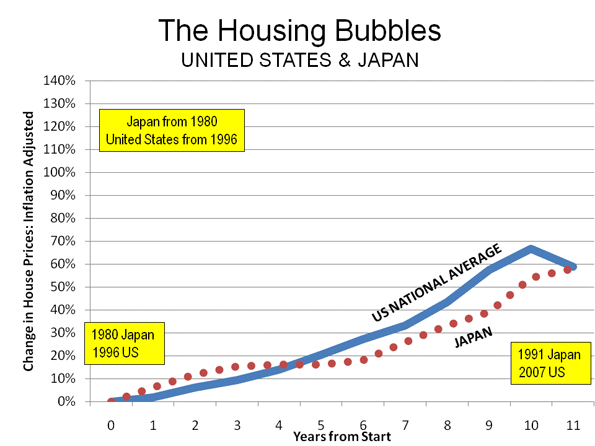
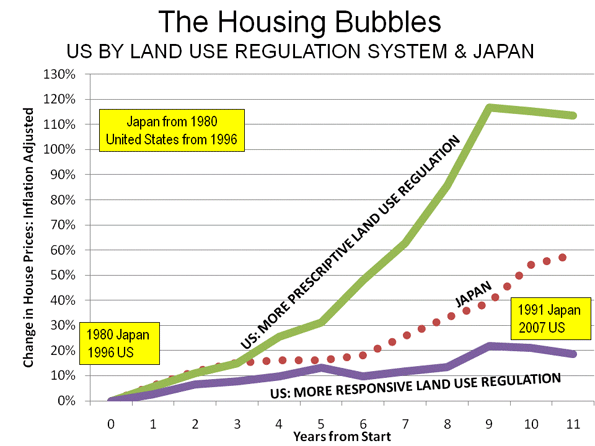
    Photo: Travelin’ Librarian

  • MILLENNIAL PERSPECTIVE: Education Economics

    Almost three years ago, shortly after graduating from college, Jeffrey Rogers found himself with a degree and no job. The economy had just taken a dramatic turn for the worse and he was struggling to get by.

    “He was literally living off peanut butter and jelly sandwiches,” said Kathryn Rogers, his younger sister and a first-year graduate student at Chapman University in Southern California.

    Jeffrey went to their father for help in a last-ditch effort to meet his monthly living expenses, but his Dad refused. “He definitely is into tough love,” said Kathryn. “He said, ‘He’ll make ends meet in one way or another…’ [his] attitude is, ‘Once you graduate, you’re cut off’.”

    Jeffrey ended up borrowing money from friends to pay rent for the next six months. But Kathryn is grateful for her father’s “tough love”. She believes it has strongly contributed to her own sense of financial responsibility. While her parents paid her rent and tuition, with the help of an academic scholarship during her four years of undergraduate studies, she was in charge of everything else. “I paid for food, I paid for gas, I paid for activities, I paid for my sorority,” she said.

    Kathryn has always had a job since the age of 16. Being aware of how much things actually cost has helped her keep her budget balanced now that she is on her own. But not having that awareness is a huge problem for many college students. “If you’ve always had everything given to you, you wouldn’t think about [cost of things] because it wouldn’t be an issue,” she said.

    A majority of Kathryn’s student acquaintances don’t know the basics of personal finances. “You talk to people our age, they’re 18 and they have $12,000 in credit card debt or they don’t know how to pay bills or how to do their taxes,” she said.

    Kathryn believes a financial management class in high school should be mandatory. “If your parents don’t teach you, where are you supposed to learn?” she asks.

    Catie Robbins, a senior screenwriting major at Chapman, agrees. “Your parents figure you’re going to learn along the way. But then you always feel so much guilt and disappointment when you’re not being responsible with your money. It’d be nice if there was more guidance available.”

    Robbins has taken out student loans and receives financial aid, which helps her parents pay for her tuition. But they also take care of her rent, food, and other necessities.

    “Basically I don’t have to pay for anything. But it’s scary because they only send me enough money for my food and lodging, so I can’t buy anything else,” she said. “If you want to do fun, random stuff or if you go overboard on your food expenditures, you can be very poor. It’s fine – it’s just kind of sad to be dependent on my parents.”

    Robbins looks forward to graduating and getting a job. But right now her financial aid package limits the amount of money she can make from employment to $2,000 a year, which she said she can easily earn during the summer. “As soon as I make that much, I have to quit,” she said. She points out that, counter-intuitive as it is, students are given financial aid because they don’t have enough money, but then are stopped from earning more because of the aid they receive.

    There is also a certain irony in being given dreams and goals during college, and then being unable to fulfill them because of the financial burden of college.

    “Originally, I had all these ideas for traveling,” said Robbins, who has studied abroad. “But you definitely can’t just take off after school and be youthful and pursue all these silly things. You have to be responsible. I am kind of excited to finally be free and living on my own, and not having to ask my parents for money,” she added.

    While financial aid is limiting for some students, and asking your parents for money is never easy, it is definitely a preferable alternative to being entirely dependent on student loans. That’s the situation in which junior Dave Casey finds himself.

    Without the minimum required 2.0 GPA, Casey was not eligible for federal student aid this semester. Taking out loans was his only option for staying in college. Currently, he owes about $60,000 with two more years of school to go. He is paying a monthly $187 in interest alone.

    “I could have gone to the University of Rhode Island for $6,000 a year,” said Casey, a native of Warwick, R.I. “But I didn’t want to. I was willing to pay because I wanted to go off, I wanted to experience something else, I wanted to be surrounded by a different environment, different people. And I think that’s how you really learn.”

    Casey’s father helps him out with rent, and he works over 20 hours a week at a local restaurant. “What stresses me out is that my mother is on food stamps, and I have no money to give her,” said Casey, whose parents are divorced. “I can’t [help], because I’m in a hole myself. Do I send hundreds of dollars a month back to my mom, or do I pay off these loans and then turn to help her? Either way there’s not enough money to go around.” Like Kathryn Rogers and Robbins, Casey’s only hope is to get a steady job after he’s graduated and start paying off his mountainous debt.

    “The only reason why I’m not freaking out hardcore about this is because I can’t comprehend it. Set $60,000 in front of me; I’d like to see it. It’s so abstract to me,” he said. “These loan agencies definitely benefit from our naiveté.”

    Donald Booth, a professor of economics at Chapman and board member of Consumer Credit Counseling Service, thinks that technology is a major contributor to the lack of financial knowledge.

    “The traditional way was the bill came to your house, you wrote a check, licked a stamp and mailed it back. Now you have automatic pay, it withdraws it from your account,” he said. “[People] don’t even know what they have in their checking account.”

    The transition to so much financial activity online has been difficult for generations both young and old. “Don’t think it’s just students who don’t know how to manage money – it’s almost everybody,” he said.

    Older people are naturally resistant to new technology because they like doing things the way they’re used to, according to Booth. On the other hand, there was no one to teach students to use the Internet as a financial tool.

    So we’re basically in the banks’ pockets now, because people aren’t keeping track of the money they’re spending, how much they have, how much they owe. “And everything seems free. You almost never get turned down anytime you want to buy something. Until it catches up with you.”

    Rachel Yeung is a senior at Chapman University in Orange County, California.

  • The Fed: Reappoint Captain Smith?

    The debate surrounding the re-appointment of Ben Bernanke as Chairman of the Board of Governors of the Federal Reserve (the Fed) is not without historical parallel.

    Just recall the RMS Titanic: It was April 14, 1912, when White Star’s “unsinkable” RMS Titanic, the largest and newest passenger liner in the world, was steaming from Southampton and Ireland to New York. The ship was traveling through a part of the North Atlantic where icebergs had been reported. The highly decorated Captain Edward J. Smith had rerouted the Titanic a bit to the south, but was aware that there were icebergs in the area. Urgent reports were radioed to the Titanic from other ships in the vicinity. These reports were not delivered to Captain Smith.

    Nonetheless, Captain Smith was confident enough that he ordered the ship to continue at its normal speed and apparently saw no reason to be on the bridge through the evening. The story is familiar to everyone. Just before midnight, lookouts spotted an iceberg dead ahead. The ship could not be steered away in time to avoid a collision that fatally wounded the Titanic.

    Unsinkable Economy: In the middle of the decade, the American economy, too, was steaming into dangerous waters. Yet the Fed, the nation’s financial watchdog, missed it big and makes one wonder if its website’s claim that it provides the nation with a safe, flexible and stable monetary and financial system is a line they borrowed from Conan O’Brien.

    The country thrust at near full speed into an abyss of phony mortgage debt in late 2008, which plunged the nation and the world into the worst economic downturn since the Great Depression.

    Ben Bernanke had taken over as Chairman of the Board of Governors of the Federal Reserve Bank in early 2006, but his late arrival does not excuse his role, or that of the Fed. Bernanke had long been involved in leading economic roles, immediately before as Chairman of President Bush’s Council of Economic Advisors and before that as a member of the Board of Governors of the Federal Reserve (from 2002 to 2005). There is no indication that Bernanke did anything to sound a serious alarm while in these positions.

    Signs of Trouble: Yet the signs were clear. How could it be that the urgent radio reports were not forwarded to Captain Smith? It might have been expected that he or a deputy might be checking frequently with the radio operators. Perhaps the failure resulted from the belief that the Titanic was unsinkable.

    Similarly, the warnings of the housing bubble were clear, if only someone had been looking. There is no indication that Ben Bernanke, in any of his capacities, understood the extreme threat that the housing bubble had to the economy or its perverse nature. Many of the nation’s leading economists, Bernanke included, continued to look only at national averages, completely missing the point that a dangerous concentration of far greater intensity plagued many specific markets. These far more severe bubbles represented a far greater threat to financial stability than would have been the case if the national averages had been representative.

    Captain Smith was well aware of the dangers of icebergs and knew that they were in the area. Presumably, Ben Bernanke knew – or should have known – of the dangers of an unprecedented housing bubble and of the dangers it could create for the economy. Perhaps he thought the US economy was unsinkable.

    How Bad It Was: It’s not like this was a bubble without precedent. Bernanke and the Fed should have been alarmed that the American housing bubble was equal in its overvaluation to the fabled housing bubble in Japan that hobbled that economy for many years (Figure 1).

    But the problem was even bigger. During the housing bubble, the economic community, Bernanke and the Fed were afflicted with a myopia that prevented looking beyond national average house prices. But those few willing to “dirty their hands” and look further found even more troubling developments.

    In 2005, eventual Nobel Prize winner Paul Krugman pointed out that the housing bubble was limited to only part of the market; what he called the “zoned zone.” The “zoned zone” refers to what I have been calling the areas with “more prescriptive” land use regulation (also called “growth management” or “smart growth”). These are the types of intensive interventions that reduce the supply of land for development, raise its costs and provide an open invitation to speculators seeking short term, but occasionally enormous profits. It is important to note that not all land regulation produces such results, but that the regulation typical of the bubble markets did exactly that.

    This was missed by Bernanke and the Fed. In the more prescriptively regulated markets house prices had risen at double the national rate and double the Japanese bubble rate. In other areas (what Krugman called “flatland” and I call “more responsively regulated” markets), house prices rose at one-third the average rate (Figure 2).

    This concentration meant that the bubble in the more prescriptive markets was far more unstable and threatening. In the end, at least 85% of the gross value increase occurred in the more prescriptive markets, with particular concentrations in California, Florida, Phoenix and Las Vegas. When the bubbles in these markets burst, it ravaged the national mortgage finance industry even in the face of far more reasonable prices elsewhere in the country.

    Wandering in the Wilderness: That Chairman Bernanke still does not understand this dynamic was amply illustrated by his recent Atlanta speech to the American Economic Association, in which he claimed that the easy money policies of the Fed had little to do with the Great Recession. Instead he blamed lax regulation that permitted “exotic mortgages.” Moreover, it is clear that neither he nor the Fed have managed to scratch below the surface of the bubble in specific markets and its ability to create enormous havoc on the national and world economy.

    A Bully Pulpit: What could Bernanke and the Fed have done? First of all, they could have sounded the alarm about the profligate lending that has reduced this nation’s “soundness of banks” rating to 108th out of 133, just behind Tanzania, and seven places behind Bangladesh and 21 behind Nigeria. Second, Bernanke and the Fed could have bothered to suggest corrective actions to prevent development of the unsustainable values in the “zoned-zone.” At a minimum, Bernanke and the Fed could have used their bully pulpit in hopes of sparing the nation and the world an unnecessary financial catastrophe.

    The Rescuer: Of course, Chairman Bernanke has earned high marks for his work to avoid a depression. If Captain Smith had somehow survived the ordeal caused by his misjudgments, however, White Star probably would not have awarded him another command.

    Wendell Cox is a Visiting Professor, Conservatoire National des Arts et Metiers, Paris. He was born in Los Angeles and was appointed to three terms on the Los Angeles County Transportation Commission by Mayor Tom Bradley. He is the author of “War on the Dream: How Anti-Sprawl Policy Threatens the Quality of Life.

  • The Death Of Gentry Liberalism

    Gentry liberalism, so hot just a year ago, is now in full retreat, a victim of its hypocrisy and fundamental contradictions. Its collapse threatens the coherence of President Barack Obama’s message as he prepares for his State of the Union speech on Wednesday.

    Gentry liberalism combines four basic elements: faith in postindustrial “creative” financial capitalism, cultural liberalism, Gore-ite environmentalism and the backing of the nation’s arguably best-organized political force, public employee unions. Obama rose to power on the back of all these forces and, until now, has governed as their tribune.

    Obama’s problems stem primarily from gentry liberalism’s class contradictions. Focused on ultra-affluent greens, the media, Wall Street and the public sector, gentry liberalism generally gives short shrift to upward mobility, the basic aspiration of the middle class.

    Scott Brown’s shocking victory in Massachusetts–like earlier GOP triumphs in Virginia and New Jersey–can be explained best by class. Analysis by demographer Wendell Cox, among others, shows that Brown won his margin in largely middle- and working-class suburbs, where many backed Obama in 2008. He lost by almost 2-to-1 among poor voters and also among those earning over $85,000 a year. He also won a slight margin among union members–remarkable given the lockstep support of their organizations for Brown’s Democratic opponent, Martha Coakley.

    Geography played a role, of course, but class proved the divider. Coakley did well in the wealthiest suburbs largely north and northwest of Boston. But Brown’s edge in the more middle- and working-class suburbs proved insurmountable.

    Obama, a genius at handling race, has always had problems with class. His early primary victories in 2008 resulted not only from superior organization but the preponderance of students and upper-income professionals in early primary states. Once Hillary Clinton morphed, just a bit late, into Harry Truman in a pants suit, she proved unstoppable, rolling over Obama in critical states like Pennsylvania, Texas, California, Florida, Michigan and throughout Appalachia.

    In the general election Obama succeeded in winning over a significant portion of these voters. Long-simmering disgust with the Bush administration and the Republican Congress, combined with a catastrophic economic collapse, undermined the GOP’s hold on middle-class suburbanites.

    Now that the ball is in his court, the president and his party must abandon their gentry-liberal game plan. The emphasis on bailing out Wall Street and public employees, supporting social welfare and manufacturing “green” jobs appealed to the core gentry coalition but left many voters, including lifelong Democrats, wondering what was in it for them and their families.

    In the next few elections there’s an even greater threat of alienation among millennial voters, who in 2008 accounted for much of the president’s margin of victory. Generational researchers Morley Winograd and Mike Hais note that millennials are starting to enter the workforce in big numbers. Right now their prospects are not pretty. The unemployment rate for those under 25 stands at 19%. Even for college graduates, wages are declining even as opportunities dry up.

    The greatest political danger is not so much a millennial switch to the GOP but a loss of enthusiasm that will diminish the youth vote. Winograd and Hais estimate only about one-third of those who voted in 2008 in Massachusetts voted in this last special Senate election. “Republicans will keep on celebrating victories until Democrats turn their attention to young voters and get them as excited as Obama did in 2008,” Winograd warns.

    Ever deepening disillusionment–not only among millennials–is inevitable unless Obama changes course and starts building a broad-based recovery. The president’s economic team is as pro-big-bank as any conjured up by the most rock-ribbed Republican. Its motto could be a reworking of that old notion by onetime GM CEO and Eisenhower Defense Secretary Charles Wilson: “What’s good for General Motors is good for the USA”–just substitute Wall Street for GM.

    But where GM brought jobs and prosperity to millions, the current Wall Street focus has forged a recovery that works for the gentry but fails to promote upward mobility. Bailed out from their disastrous risky bets and then provided with easy access to cheap credit, the financiers have had themselves a fine party while the rest of the private sector economy suffered. The partygoers have become so rarified that they are unable to lift even the New York City economy, whose unemployment rate now surpasses the national average.

    This spectacle has forced Obama to try locating his hidden populist, but dangers lurk in this shift. If he attacks Wall Street with any real ferocity, the only linchpin of the current weak recovery could crumple. An administration that has focused on finance as the essence of the economy may prove poorly suited to skewer its primary object of affection.

    Yet it may not be too late for the president to recover some of his economic mojo. Although his financial tax plan represents little more than petty cash at today’s absurd Wall Street rates, Obama’s endorsement of Paul Volcker’s more muscular reform agenda could rally Democrats while forcing Republicans into a doctrinal crisis. Some, like Sen. John McCain, may favor a policy to downsize the megabanks and limit their activities. But many others who hold up the holy grail of free markets über alles will expose themselves again as mindless corporate lackeys.

    But badmouthing the financial aristocracy is not enough. Obama also must jettison some of the lamer parts of the gentry agenda. Cap and trade, a gentry favorite that satisfies both green piety and Wall Street’s greedy desire for yet another speculative market, needs to be scrapped as a potential job-killer for many industries. Similarly, the administration needs to delay measures to impose draconian limits of greenhouse gas emissions through the Environmental Protection Agency, which could devastate large sectors of the economy, including manufacturing, agriculture and construction.

    Obama, particularly after the Copenhagen fiasco, needs to shift to more practical, job-creating conservation measures like tree-planting and reducing traffic congestion–notably by promoting telecommuting–while continuing research and development of all kinds of cleaner fuels. Measures that make America more energy-efficient and self-sufficient–without ruining the economy with ruinously high prices–would be far more saleable to the public than the current quasi-religious obsession with wind and solar.

    Obama also needs to stop his naive promotion of the chimera of “green jobs” as his signature answer to the country’s mounting employment woes. There is no way a few thousand, mostly heavily subsidized, jobs creating ever more expensive energy can turn around any economy. Just look at the economic carnage in Spain–where youth unemployment has now reached a remarkable 44%–which has bet much of its resources targeting “green” energy.

    More than anything the president needs to make the case that government can help the productive economy. This requires a scaling down of regulatory measures that are now scaring off entrepreneurs–including some aspects of health care reform–and beginning to demonstrate a direct concern for basic industries like manufacturing, agriculture and trade.

    Pivoting away from gentry liberalism will no doubt offend some of the president’s core constituencies. But if he does not do this soon, and decisively, he will find that the middle-class anger seen in Massachusetts will spread throughout the country. As a result Barack Obama, a man who would be Franklin Roosevelt and could settle on being the next Bill Clinton, will end up looking more like that sad sack of Democratic presidents, James Earl Carter.

    This article originally appeared at Forbes.com.

    Joel Kotkin is executive editor of NewGeography.com and is a distinguished presidential fellow in urban futures at Chapman University. He is author of The City: A Global History. His next book, The Next Hundred Million: America in 2050, will be published by Penguin Press February 4th, 2010.
  • Housing Unaffordability as Public Policy: The New Demographia International Housing Affordability Survey

    The just released 6th Annual Demographia International Housing Affordability Survey shows some improvement in housing affordability, especially in the United States and Ireland but a continuing loss of housing affordability, especially in Australia.

    The Survey, co-authored by Hugh Pavletich of Performance Urban Planning, covers 272 metropolitan markets in 6 nations (the United States, the United Kingdom, Canada, Australia, Ireland and New Zealand). The Survey estimates housing affordability using the “Median Multiple,” which is the median house price divided by the median household income. As recently as the late 1980s, the Median Multiple virtually everywhere was 3.0 or below. Over the past 10 to 20 years, however, the Median Multiple has risen worryingly in all major markets of the United Kingdom, Australia, New Zealand and Ireland and in some markets in the United States and Canada.

    Housing affordability is rated on a four category scale, from “affordable” to “severely unaffordable” (Table 1).

    Table 1
    Demographia Housing Affordability Rating Categories

    Housing Affordability Rating

    Median Multiple

    Severely Unaffordable

    5.1 & Over

    Seriously Unaffordable

    4.1 to 5.0

    Moderately Unaffordable

    3.1 to 4.0

    Affordable

    3.0 or Less

    Affordable Markets: The Survey found affordable markets in both the United States and Canada. This included fast-growing markets, such as Atlanta, Dallas-Fort Worth and Houston, which have had the highest underlying demand of any metropolitan areas with more than 5,000,000 population in the high-income world. It also includes the “Rust Belt” metropolitan areas, such as Detroit, which has experienced severe declines in demand in the Great Recession. There were also a number of additional metropolitan areas that are neither fast growing nor in dire economic straits, such as Indianapolis, Kansas City and Cincinnati (Table 2).

    Table 2
    Affordable Major Markets: 2009: Third Quarter
    Affordability Rank Nation Market Median Multiple
    1 United States Detroit, MI 1.6
    2 United States Atlanta, GA 2.1
    3 United States Indianapolis, IN 2.2
    4 United States Rochester, NY 2.3
    5 United States Cincinnati, OH-KY-IN 2.4
    5 United States Cleveland, OH 2.4
    5 United States Las Vegas, NV 2.4
    8 United States Buffalo, NY 2.5
    9 United States Columbus, OH 2.6
    9 United States Kansas City, MO-KS 2.6
    9 United States Phoenix, AZ 2.6
    9 United States Pittsburgh, PA 2.6
    9 United States St. Louis, MO-IL 2.6
    14 United States Dallas-Fort Worth, TX 2.7
    14 United States Jacksonville, FL 2.7
    16 United States Memphis, TN-AR-MS 2.8
    16 United States Minneapolis-St. Paul, MN-WI 2.8
    16 United States Louisville, KY-IN 2.8
    19 United States Houston, TX 2.9
    20 United States Oklahoma City, OK 3.0
    20 United States Riverside-San Bernardino, CA 3.0
    20 United States Tampa-St. Petersburg, FL 3.0

    Severely Unaffordable Markets: There were also 18 severely unaffordable markets, in five nations. The least unaffordable market was Vancouver (Canada), with a Median Multiple of 9.3. Sydney (Australia) was the second least affordable market (9.1), followed by Melbourne (8.0) and Adelaide (7.4). The most unaffordable markets also London (GLA or inside the greenbelt), with a Median Multiple of 7.1, San Francisco (7.0), New York (7.0), Perth, Australia (6.9), Brisbane, Australia (6.7), Auckland, New Zealand (6.7) and the London Exurbs (outside the greenbelt), at 6.7. Los Angeles-Orange County, which was the most unaffordable metropolitan area in the first four Surveys, remained severely unaffordable, at 5.7 (Table 3).

    Table 3
    Severely Unffordable Major Markets: Third Quarter: 2009
    Unaffordability Rank Nation Market Median Multiple
    1 Canada Vancouver 9.3
    2 Australia Sydney 9.1
    3 Australia Melbourne 8.0
    4 Australia Adelaide 7.4
    5 United Kingdom London (GLA) 7.1
    6 United States New York, NY-NJ,-CT-PA 7.0
    6 United States San Francisco, CA 7.0
    8 Australia Perth 6.9
    9 Australia Brisbane 6.7
    9 New Zealand Auckland 6.7
    9 United Kingdom London Exurbs 6.7
    12 United States San Jose, CA 6.4
    13 United Kingdom Bristol-Bath 6.1
    14 United States San Diego, CA 6.0
    15 United States Los Angeles-Orange County, CA 5.7
    16 United Kingdom Stoke on Trent & Staffordshire 5.3
    17 Canada Toronto 5.2
    18 United Kingdom Newcastle & Tyneside 5.1

    Severely Unaffordable Markets: There were also 18 severely unaffordable markets, in five nations. The least unaffordable market was Vancouver (Canada), with a Median Multiple of 9.3. Sydney (Australia) was the second least affordable market (9.1), followed by Melbourne (8.0) and Adelaide (7.4). The most unaffordable markets also London (GLA or inside the greenbelt), with a Median Multiple of 7.1, San Francisco (7.0), New York (7.0), Perth, Australia (6.9), Brisbane, Australia (6.7), Auckland, New Zealand (6.7) and the London Exurbs (outside the greenbelt), at 6.7. Los Angeles-Orange County, which was the most unaffordable metropolitan area in the first four Surveys, remained severely unaffordable, at 5.7 (Table 3).

    Summary by Nation: As in the five previous Surveys, there is a close relationship between housing unaffordability and categories of land use regulation. Virtually all severely unaffordable markets are characterized by “more prescriptive” land use regulation policies (also called “compact city,” “urban consolidation,” “growth management,” or “smart growth”). At the same time, the affordable markets overwhelmingly have “more responsive” land use regulation, in which new residential development is demand driven.

    Australia: The most extreme housing unaffordability has evolved in Australia. Australia’s overall Median Multiple was 6.8, with a housing affordability rating of severely unaffordable. A recent Bank West report also noted the deteriorating housing affordability and indicated housing affordability was a thing of the past for “key workers.” This is a dramatic turnaround; housing had been affordable widely in Australia in the late 1980s, with a Median Multiple of under 3.0 and remained under 3.5 until the late 1990s. All but one of Australia’s 23 markets were severely unaffordable, with one being seriously unaffordable. All of Australia’s major markets (over 1,000,000 population) have strong “urban consolidation” policies that have resulted in unaffordable land on the urban fringe and a substantial decline in house construction, despite the highest national population growth rate among the surveyed nations.

    Canada: Canada has an overall Median Multiple of 3.7 and is thus rated moderately unaffordable. Housing had been affordable in Canada in the late 1990s, with a Median Multiple of 3.0. Canada has 5 affordable markets and 4 severely unaffordable markets. Thirteen markets were rated moderately unaffordable, while 6 were rated seriously unaffordable. Like the United States, land use regulation is under the control of sub-national governments and thus ranges from demand driven to plan driven regimes.

    Ireland: Ireland has experienced a substantial improvement in its housing affordability. Ireland has a Median Multiple of 3.7, and is rated moderately unaffordable. Housing had been affordable as late as the middle 1990s, with a Median Multiple below 3.0.

    New Zealand: New Zealand’s overall Median Multiple was 5.7, for a severely unaffordable rating. Housing had been affordable in the early 1990s, with a Median Multiple of under 3.0. Five of the 8 markets were rated severely unaffordable, while 3 markets were seriously unaffordable. As in Australia, more prescriptive land use regulation is pervasive.

    United Kingdom: The overall Median Multiple in the United Kingdom was 5.1, for a severely unaffordable rating. Housing had been affordable in the late 1990s, with a Median Multiple of under 3.0. Despite the recent house price declines, 19 of the 33 surveyed markets were rated severely unaffordable and 14 were rated seriously unaffordable. The connection between the UK’s housing unaffordability and its plan-driven regulation has been documented in Labour government commissioned report by Kate Barker, a member of the Monetary Policy Committee of the Bank of England.

    United States: The United States is the first nation in Survey history to have achieved an overall affordable rating, with a Median Multiple of 2.9. The recent house price declines have restored national housing affordability to the below 3.0 historic norm (last achieved in the early 2000s), as the price bubble burst in many markets. There were 98 affordable markets, most of which experienced an increase in demand. There were also 58 moderately affordable markets. Even with the price decreases, however, house prices remain far above historic norms in some markets. Eight of the markets were seriously unaffordable, while 11 were severely unaffordable. Plan-driven land use regulation is in place in all of the major markets with severely unaffordable housing affordability.

    Comparing Sydney, Melbourne, Dallas-Fort Worth and Atlanta

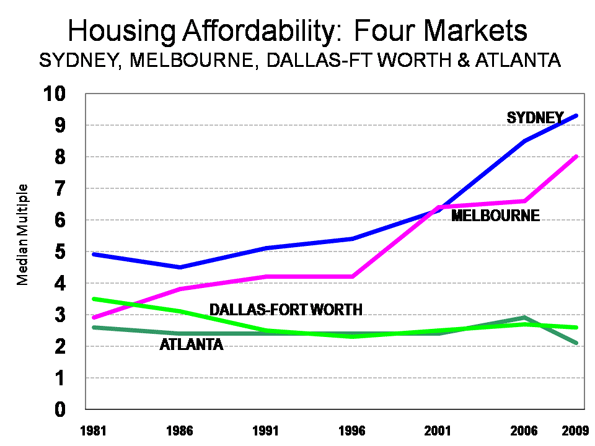
    Australia: A Nation in Mortgage Stress: The Survey includes a comparison of four similar markets, Sydney and Melbourne in Australia to Dallas-Fort Worth and Atlanta in the United States. In the early 1980s, Sydney had a higher population than Dallas-Fort Worth and Melbourne had a higher population than Atlanta. Since that time, the two US metropolitan areas have passed the Australian metropolitan areas in population, having added more people than Australia’s five largest metropolitan areas combined (Sydney, Melbourne, Brisbane, Perth and Adelaide). At the same time, despite their far higher demand, housing affordability has improved in Dallas-Fort Worth and Atlanta, while it has deteriorated markedly in Sydney and Melbourne (Figure 1). During this period, “plan driven” or more prescriptive land use policies were strongly enforced in Sydney and Melbourne in contrast to the “demand driven” land use policies in place in both Atlanta and Dallas-Fort Worth.

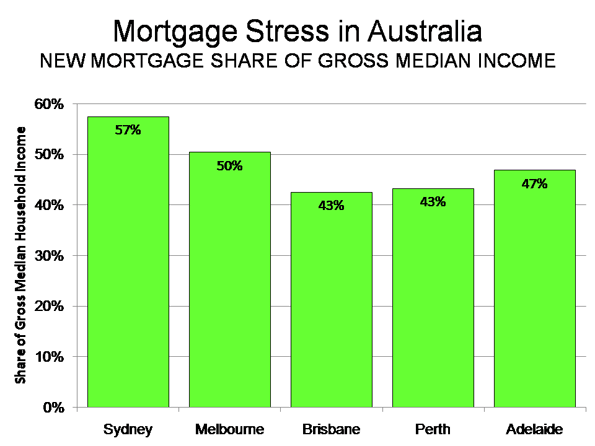
    Australian government agencies consider any household paying more than 30% of its gross income for housing to be in “housing stress.” At this point, a median income household in Sydney or Melbourne would pay more 50% or more of its gross income annually for a new mortgage on a median priced house. In Brisbane, Perth and Adelaide, the figure is above 40%. (Figure 2). By comparison, in Dallas-Fort Worth and Atlanta, however, the median income household would pay less than 20% of its income for the mortgage. Not surprising then is the huge loss in housing affordability in Australia, and a decline in home ownership rates from 72% to 68% between 1995 and 2008.

    Unaffordable Housing as Public Policy: It is clear that much of the cause for the differences in affordability lies with contrasting public policy approaches. The strong intervention in land markets under plan-driven regulation raises the price of land inordinately. Governments appear to have, however unwittingly, established unaffordable housing as an objective of public policy. Yet despite this, there is pressure – including from the US Obama administration, to adopt plan-driven regulation throughout the United States, despite the substantial economic disruption that such policies produced in the US bubble markets. Besides making houses unaffordable for many households, this could set the stage for even more housing bubbles in the future.

    If this trend continues, future generations will pay far more for their housing than did their parents. This seems likely to stunt economic growth and job creation, while facilitating higher levels of poverty and class stratification throughout the English speaking world.

    Wendell Cox is a Visiting Professor, Conservatoire National des Arts et Metiers, Paris. He was born in Los Angeles and was appointed to three terms on the Los Angeles County Transportation Commission by Mayor Tom Bradley. He is the author of “War on the Dream: How Anti-Sprawl Policy Threatens the Quality of Life.