Blog

  • A Tour of The Bund in Shanghai

    One of the great pleasures of China is a walk along the Bund promenade.

    Shanghai’s Bund is one of China’s great tourist and historic sites. Its history lessons are from two distinctively different periods. All of this can be witnessed from the raised promenade along the west bank of the Huang Pu River, which separates the old Puxi (west of the river) commercial core of Shanghai from the new, iconic business district that has grown up in Pudong (east of the river). It is clear that the promenade at the Bund is a very popular local tourist attraction as well.

    The Bund became a center of British commerce in the mid-19th century and remained a part of the Shanghai International Settlement (through a 1860s merger of the British and American concessions) until the beginning of World War II. Most of the buildings were built in the first quarter of the 20th century.

    This article will provide a quick tour of the western style buildings in Puxi, behind the promenade and a few views of Pudong (the Lujiazui business district) across the river. The tour starts at the south end of the Bund and continues approximately 1.2 kilometers (0.75 miles) to Suzhou Creek, just beyond the north end of the Bund. The western buildings are located along Zhongshan East #1 Road, facing the Huang Pu. The promenade is between the buildings and the Huang Pu, across from which is the Lujiazui business district of Pudong. Generally, the names used for the buildings are the original or pre-World War II, though the there can be conflicting names. I would be pleased to be advised of any corrections.

    Image 1 shows a broad sweep of the central Bund from the south to north. It includes the four most iconic buildings.
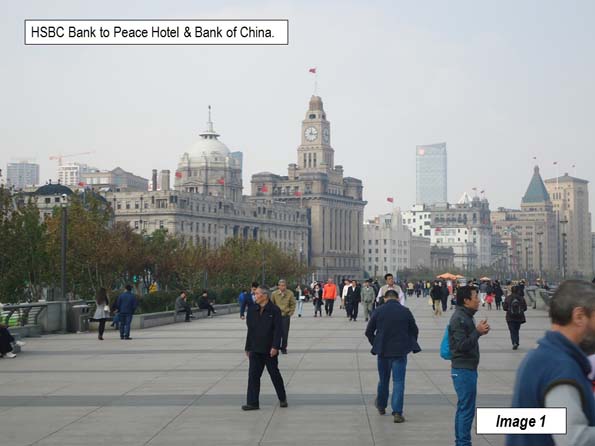
    The Hong Kong and Shanghai Banking Corporation (HSBC) Building is the large domed building near the left of the picture. It was constructed in 1923 and served as the local branch of this UK bank until 1955, six years after the establishment of the People’s Republic of China. When the bank left, it ceded title to the Shanghai People’s Government, which used the building as its headquarters for some years. It is now the Shanghai Pudong Development Bank Building.

    The Customs House is just to the north of the Shanghai Pudong Development Bank Building, with the tall clock tower was opened in 1927.

    The Peace Hotel is farther north, with the green peaked tower. It was originally the Sassoon Hotel and was the north building of the hotel complex. It is now the Fairmont Peace Hotel. Across the street, is the south building of the Peace Hotel, now called the Swatch Art Peace Hotel.

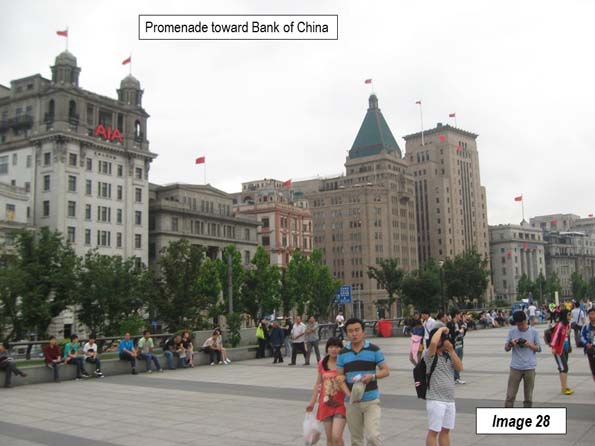
    The Bank of China Building is just to the north of the Peace Hotel. Construction began on the building in the mid-1930s and it was opened after the start of World War II, in 1942.

    The illustrations start at the south end of the Bund, just north of the Pudong Ferry Terminal

    Image 2: Asia Building
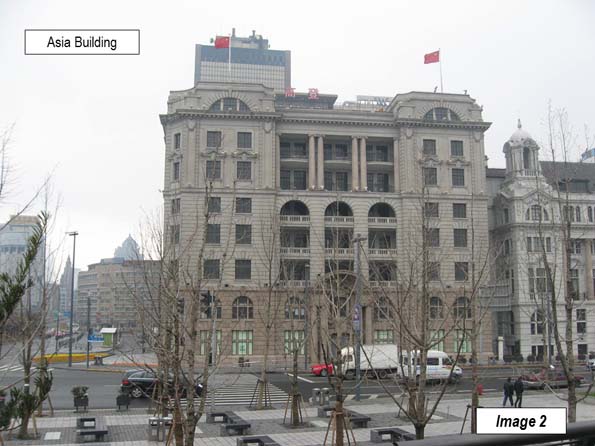
    Image 3: Shanghai Club
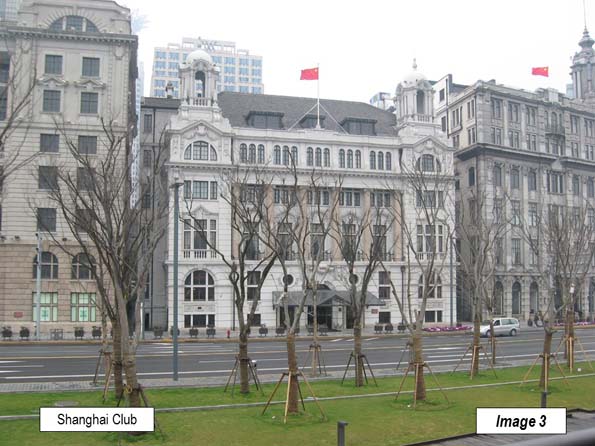
    Image 4: Union & Nish in Navigation Buildings
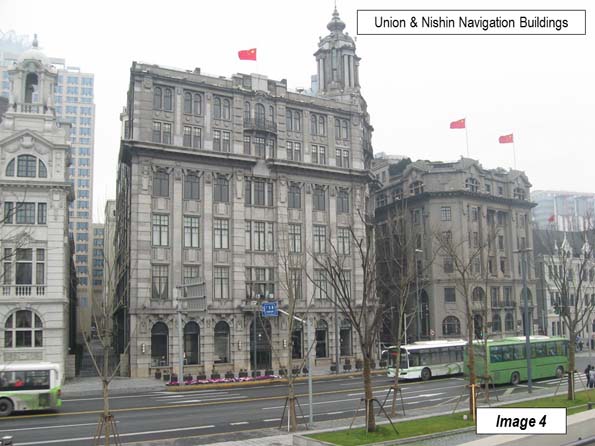
    Image 5: Nishin Navigation & China Merchants Bank Buildings
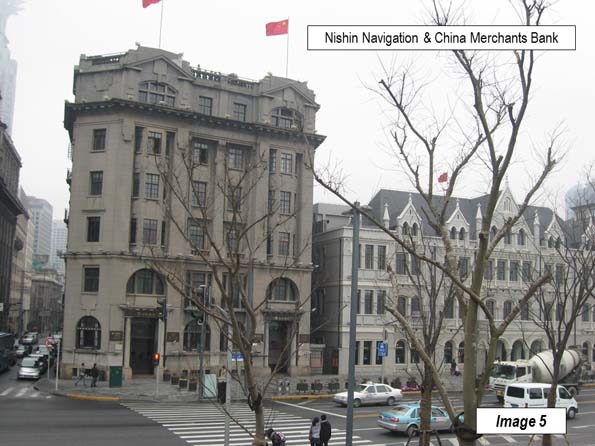
    Image 6: Great Northern Telegraph to HSBC Building
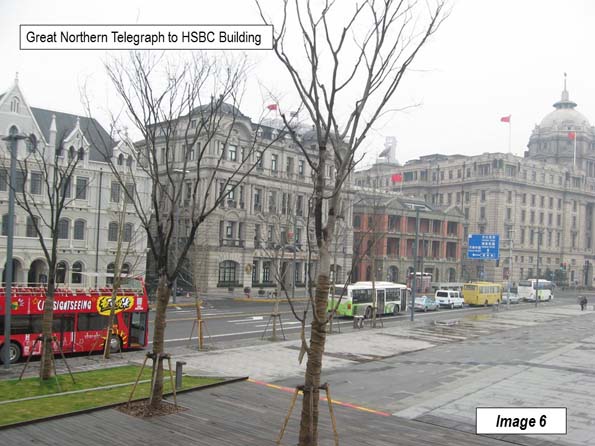
    Image 7: Great Northern Telegraph & Bund #6
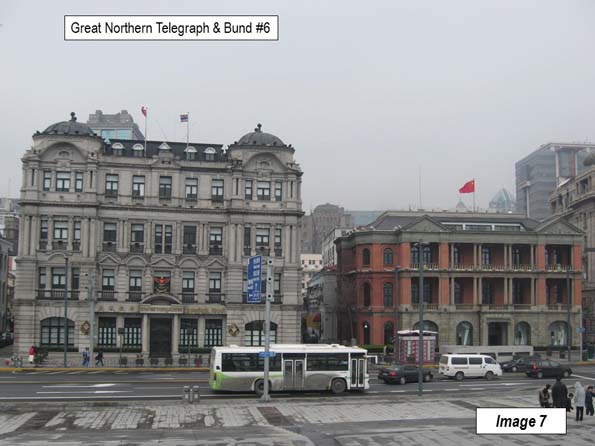
    Between Bund #6 and the Hong Kong & Shanghai Bank Buildings, Fuzhou Road reaches Zhongshan Road. Fuzhou Road has been known for its bookstores, though there have been fewer in recent years.

    Image 8: Original Hong Kong & Shanghai Bank (HSBC) Building, now Shanghai Pudong Development Bank.
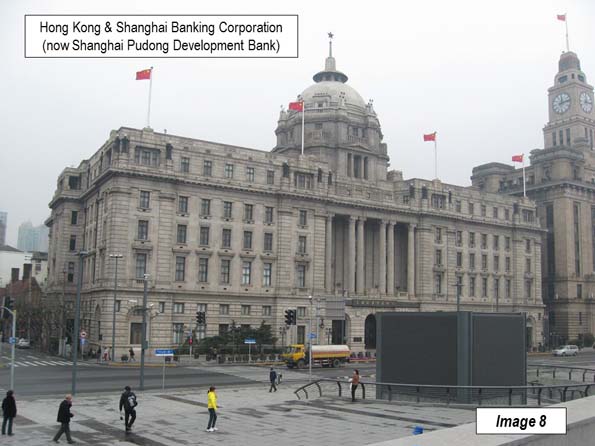
    Image 9: HSBC Bank & Customs House Buildings
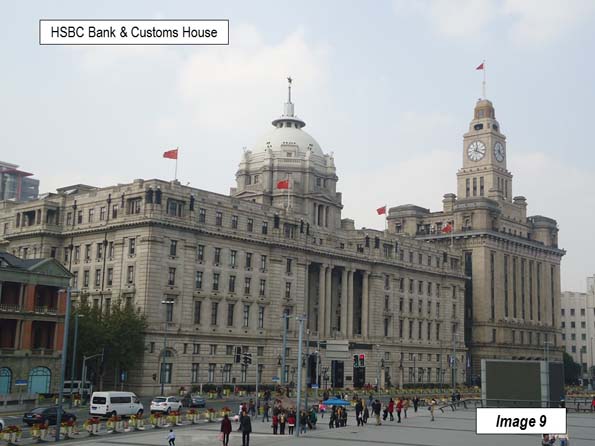
    Image 10: Customs House and buildings to the south
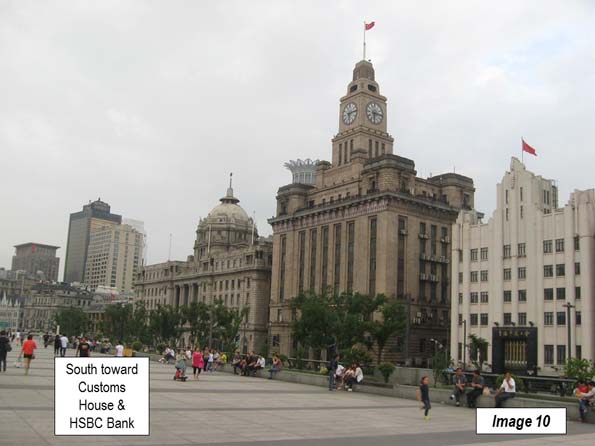
    Image 11: Customs House
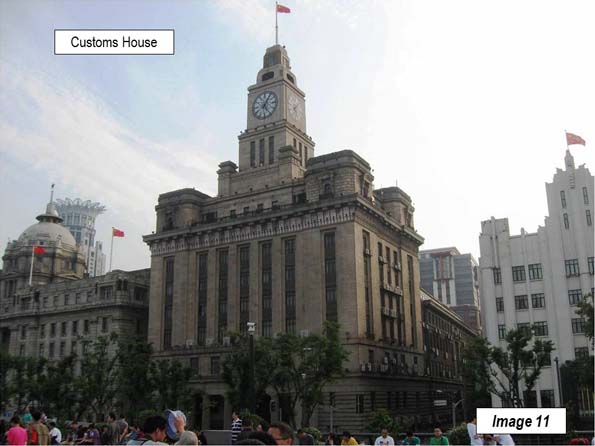
    Image 12: Bank of Shanghai & Russo-Chinese Bank
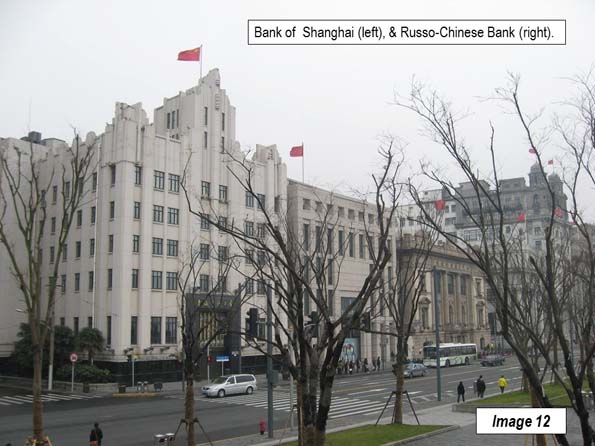
    Image 13: Russo-Chinese Bank, Bank of Taiwan (original name, Taiwan was occupied by Japan when built) and the North China Daily News buildings. The North China Daily News was the leading English newspaper of China until it closed at the beginning of World War II.
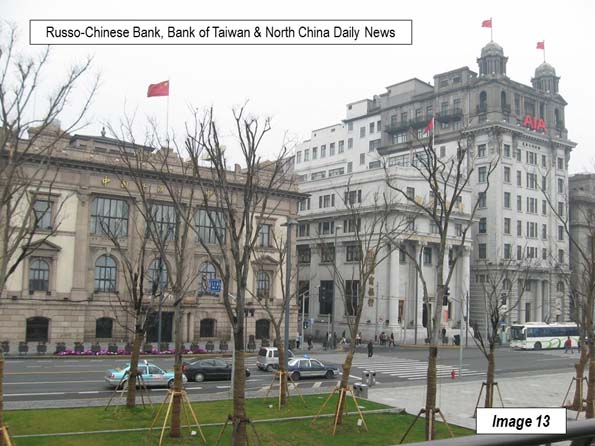
    Image 14: Bank of Taiwan, North China Daily News & Chartered Bank
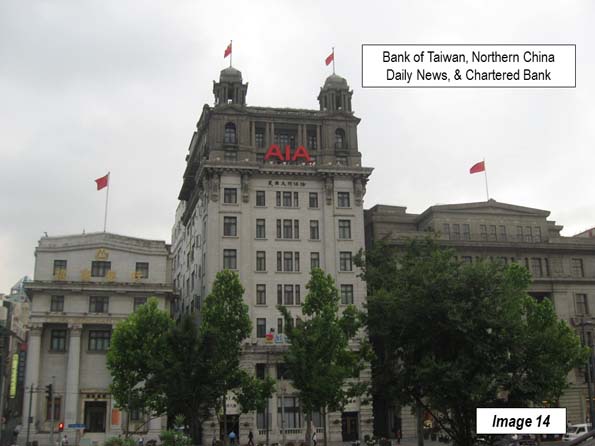
    Image 15: North China Daily News Peace Hotel South Building, Peace Hotel (North) and Bank of China buildings
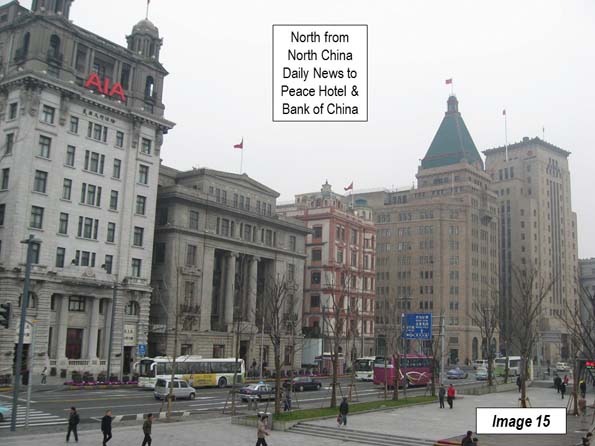
    The Peace Hotel north and south buildings are across Nanjing Road opposite one another. Nanjing Road is an important shopping street, and a few more blocks inland becomes a pedestrian mall. It is also famous for offers from local students to join them in tea drinking ceremonies or at art exhibitions at which they claim to have work on display. This can be a costly experience and is not recommended.

    Image 16: Peace Hotel (North) and Bank of China
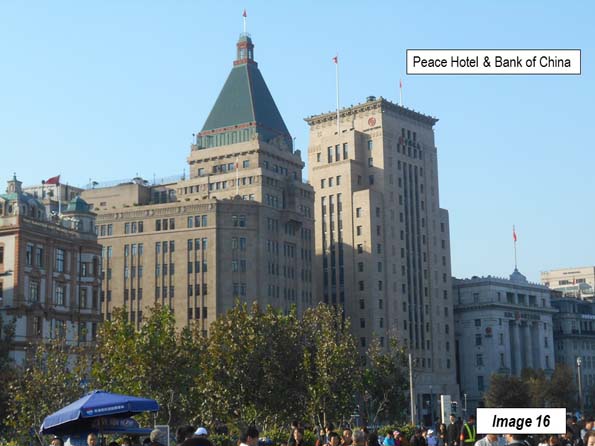
    Image 17: Peace Hotel (North) and Bank of China
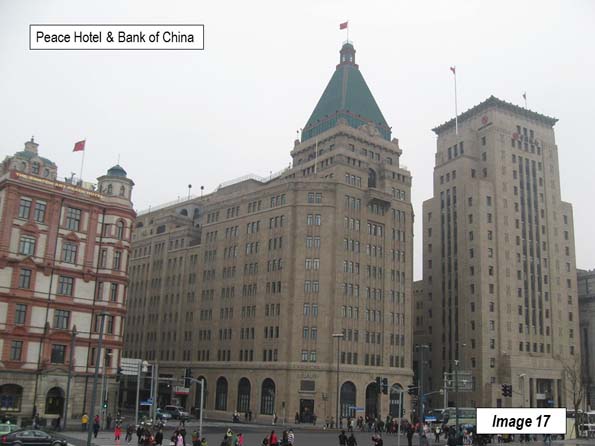
    Image 18: South from Peace Hotel (North) to North China Daily News
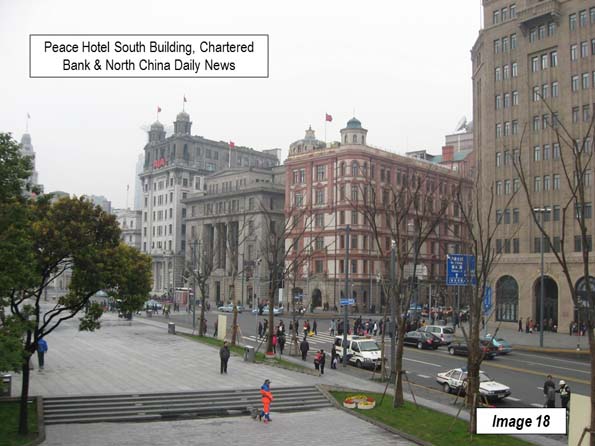
    Image 19: Yokohama Specie Bank and Yangtze Insurance buildings
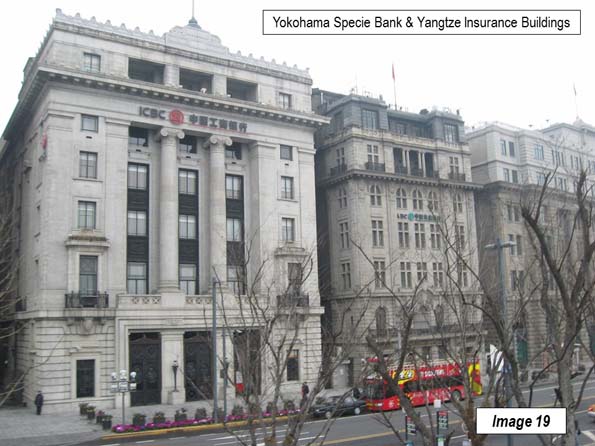
    Image 20: Jardine Matheson, Yangtze Insurance, Yokohama Specie Bank and Peace Hotel (north and south buildings). Jardine Matheson was an early trading company that got its start in Guanghou (Canton) and Hong Kong.
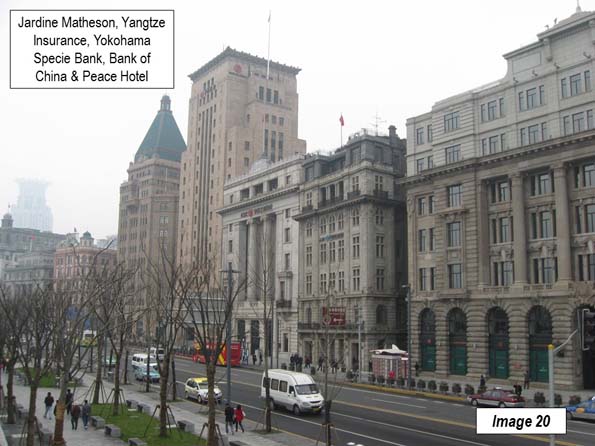
    Image 21: Glen Steamship Lines and Bank of Indochina
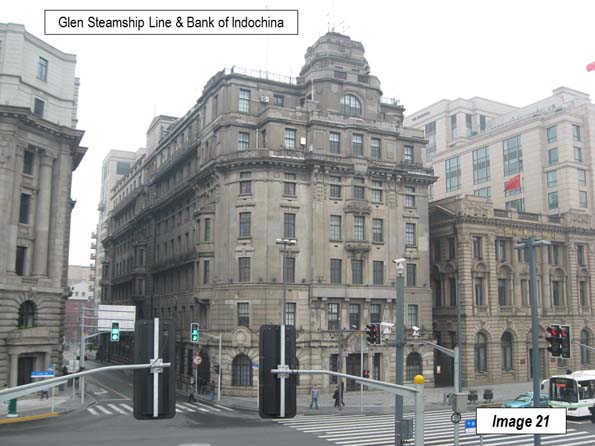
    Image 22: North end of the historic bund buildings on Zhongshan Road (Glen Steamship Lines and Bank of Indochina).
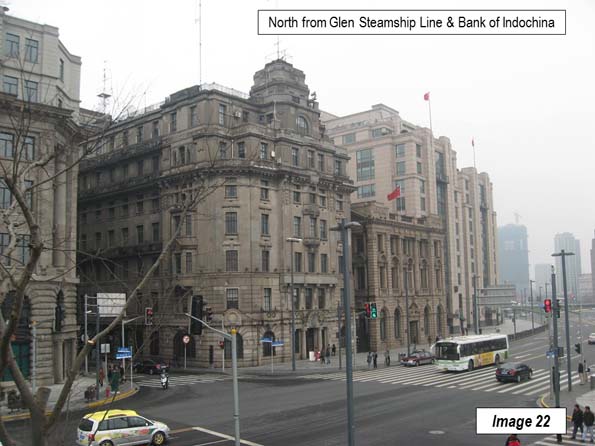
    Image 23: Waibaidu Bridge over Suzhou Creek, Broadway Mansions and Russian Consulate
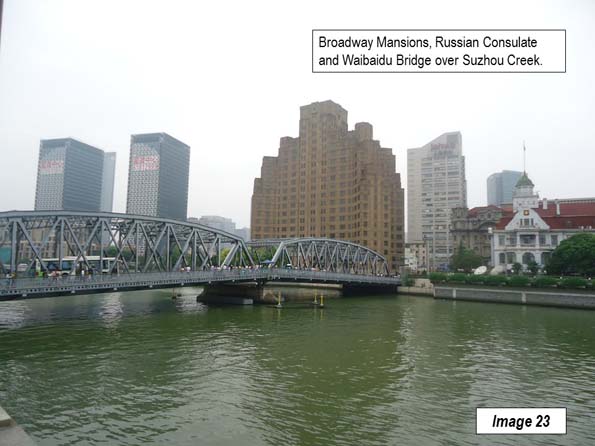
    Image 24: Central Bund, including HSBC, Customs House and North China Daily News buildings from the World Finance Centre. The Shanghai World Finance Center has an opening at the top and locals refer to it as the “bottle opener” for its resemblance (Image 33).
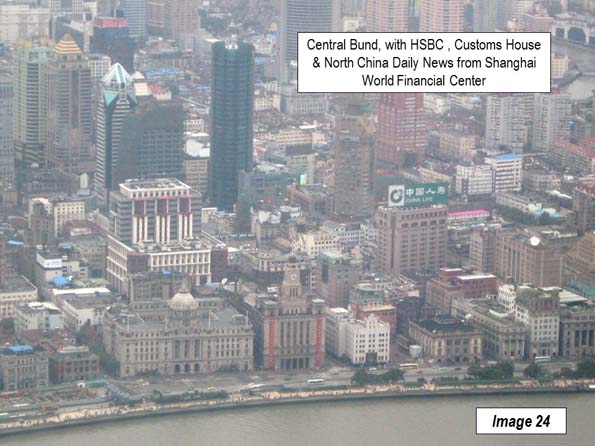
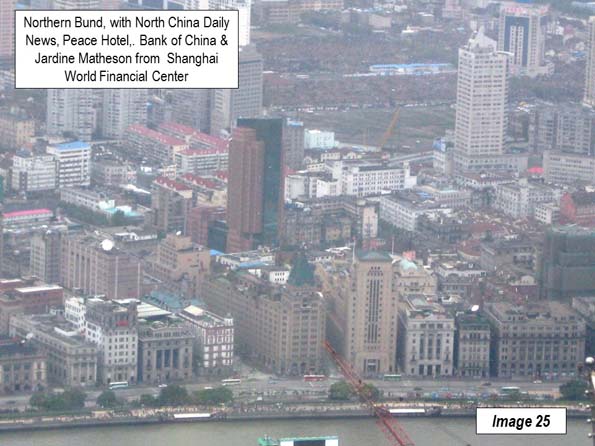
    Image 25: Northern Bund, including North China Daily News, Peace Hotel, Bank of China and Jardine Matheson Buildings from the Shanghai World Financial Tower.
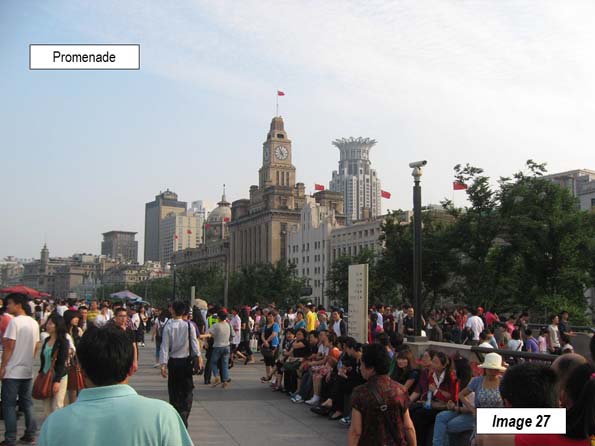
    Images 26 to 28: Promenade views
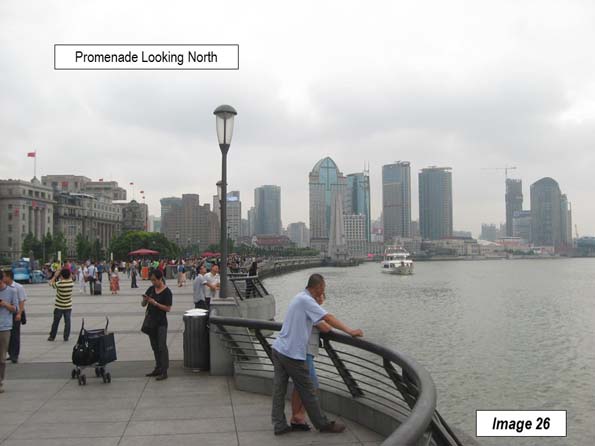
    Image 29: View of Pudong’s Lujiazui business district from the Bund promenade (across the Huang Pu). The Pearl of the Orient Tower is to the left. The tallest building, on the right, is the Shanghai Tower, second tallest building in the world (127 stories).
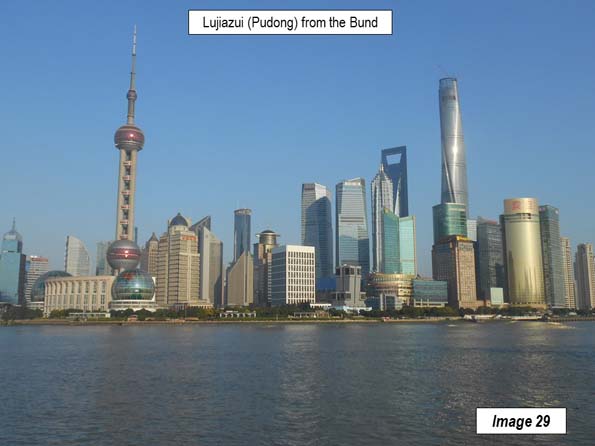
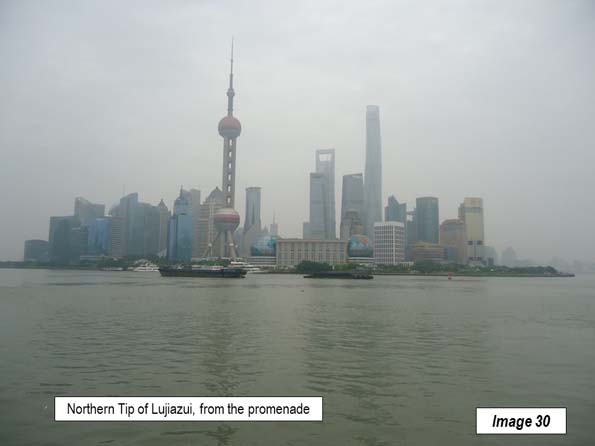
    Image 30: Northern tip of Lujiazui business district from the promenade
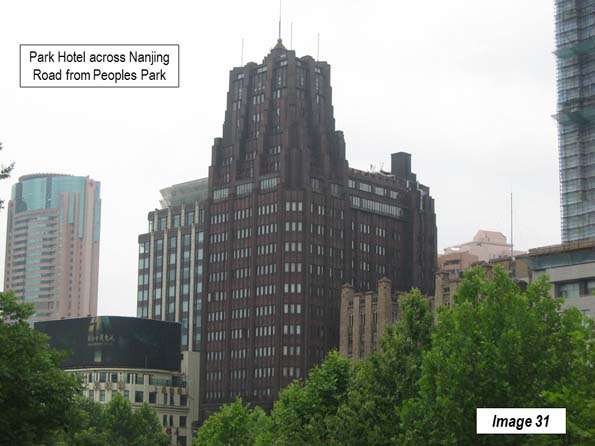
    There are a number of additional Western-style buildings that were a part of the International Settlement in Puxi. Many are on the East – West streets leading from Zhongshan Road as well as on some North – South streets, such as Sichuan Middle Road. Some buildings of the same era are located on Nanjing Road. The Park Hotel, located across the street from People’s Park was the tallest building in Asia when it was built in 1934 (Image 31), and may be the best known local hotel, along with the Peace Hotel, on the Bund.

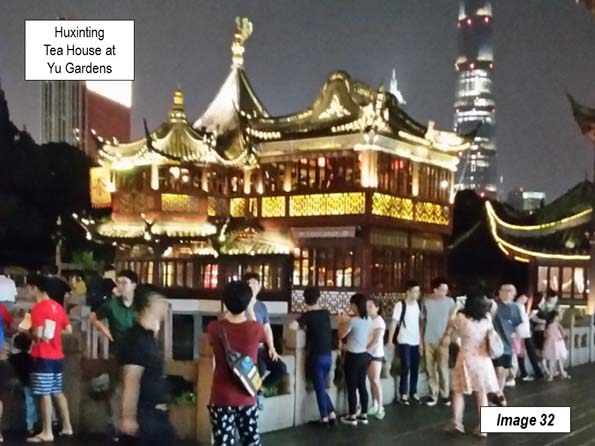
    The Bund is close to other interesting tourist areas. The Yu Garden dates to the 16th century and is the very architectural conception of China for some tourists. As Chinese as is its appearance, not much of Chinese cities looks like this. Yu Garden now hosts extensive shopping, as well as the Huxinting Teahouse (Image 32, at night).

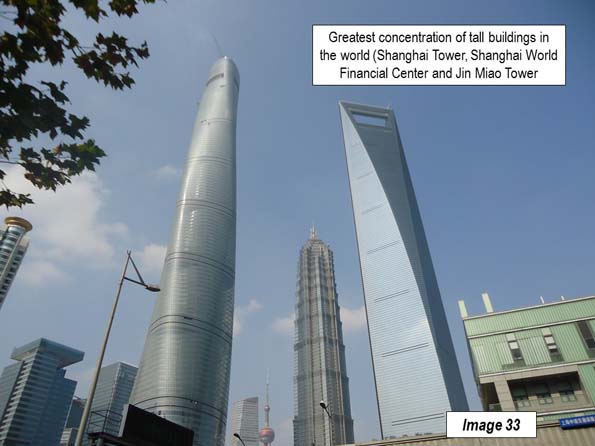
    The Bund sightseeing tunnel provides a short rail service from East Beijing Road (across the street from the Bank of China) under the Huang Pu to Lujiazui, near the Pearl of the Orient Tower. From there overhead walkways provide access to Lujiazui skyscrapers, include the three tallest (Image 33), which are virtually across the street from one another. These include the Shanghai Tower (second tallest in the world), the Shanghai World Financial Center and the shortest, the Jin Miao Tower, which is taller than the Empire State Building in New York and nearly as tall as the Willis Tower (former Sears Tower), in Chicago, the tallest in the world for a quarter of a century.

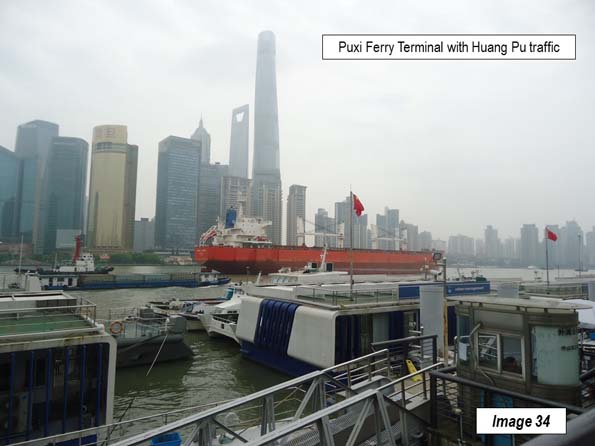
    From here, it is a short walk to the ferry terminal for a short right to the south end of the Bund (Image 34), completing the circle tour that began with Image 2.
    Finally, the Bund promenade is also a very well designed urban space that has become one of Shanghai’s most important public meeting spaces. It is well appointed with places to sit, relax or read a book. Like Le Jardine du Luxembourg in Paris and New York’s Central Park, there are few places to better spend a Saturday afternoon.

    Photograph at Top: Central Bund (Hong Kong & Shanghai Bank and Customs House), by author

    Wendell Cox is principal of Demographia, an international public policy and demographics firm. He is a Senior Fellow of the Center for Opportunity Urbanism (US), Senior Fellow for Housing Affordability and Municipal Policy for the Frontier Centre for Public Policy (Canada), and a member of the Board of Advisors of the Center for Demographics and Policy at Chapman University (California). He is co-author of the "Demographia International Housing Affordability Survey" and author of "Demographia World Urban Areas" and "War on the Dream: How Anti-Sprawl Policy Threatens the Quality of Life." He was appointed to three terms on the Los Angeles County Transportation Commission, where he served with the leading city and county leadership as the only non-elected member. He served as a visiting professor at the Conservatoire National des Arts et Metiers, a national university in Paris.

  • Erasing Anglo cultural heritage risks what makes our republic diverse

    It’s increasingly unfashionable to celebrate those who made this republic and established its core values. On college campuses, the media and, increasingly, in corporate circles, the embrace of “diversity” extends to demeaning the founding designers who arose from a white population that was 80 percent British.

    In this American version of Mao’s “Cultural Revolution,” which tried to eviscerate traces of China’s past, venerable buildings are being renamed, athletes refuse to stand for the national anthem and, on some campuses, waving the American flag is now considered a “microaggression,” while English students at Yale want to avoid reading the likes of Milton, Shakespeare and Chaucer.

    Of course, some changes are justified. Asking anyone, particularly African Americans, to revere the Confederate flag or attend schools named after the founder of the Ku Klux Klan is, indeed, offensive. But in our zeal to address old wrongs, we may also be sacrificing the very things that have made this republic so attractive to millions from distinctly different backgrounds for the last two centuries.

    Why we come here

    Just to clear the air, I have not a single drop of British blood in me. The closest ties I have to what I consider my cultural and political home country come from my great uncle Simon, who served in Gen. Allenby’s Jewish brigade in World War I, and that my wife, born in Montreal, came into the world a subject of Her Majesty, Queen Elizabeth. Career wise, I did work for a think tank in London for several years.

    But what ties most Americans to the founders is not race, but our embrace of a political and legal culture based on distinctly Anglo-Saxon ideas about due process, representative government, property rights and free speech. These proved infinitely superior to the divine right of czars, kaisers, emperors and other hereditary autocrats for generations of non-Anglo-Americans.

    This system, always capable of amendment, has allowed waves of traditional outsider groups — African Americans, Latinos, women, Mormons, Jews and Muslims — to join the economic, political and cultural mainstream. In some cases, as in the case of President Obama, they have also secured the highest reaches in the national firmament.

    Read the entire piece at the Orange County Register.

    Joel Kotkin is executive editor of NewGeography.com. He is the Roger Hobbs Distinguished Fellow in Urban Studies at Chapman University and executive director of the Houston-based Center for Opportunity Urbanism. His newest book, The Human City: Urbanism for the rest of us, will be published in April by Agate. He is also author of The New Class ConflictThe City: A Global History, and The Next Hundred Million: America in 2050. He lives in Orange County, CA.

    Photo: William Robert Shepherd [Public domain], via Wikimedia Commons

  • Suburban. Comma. Transit.

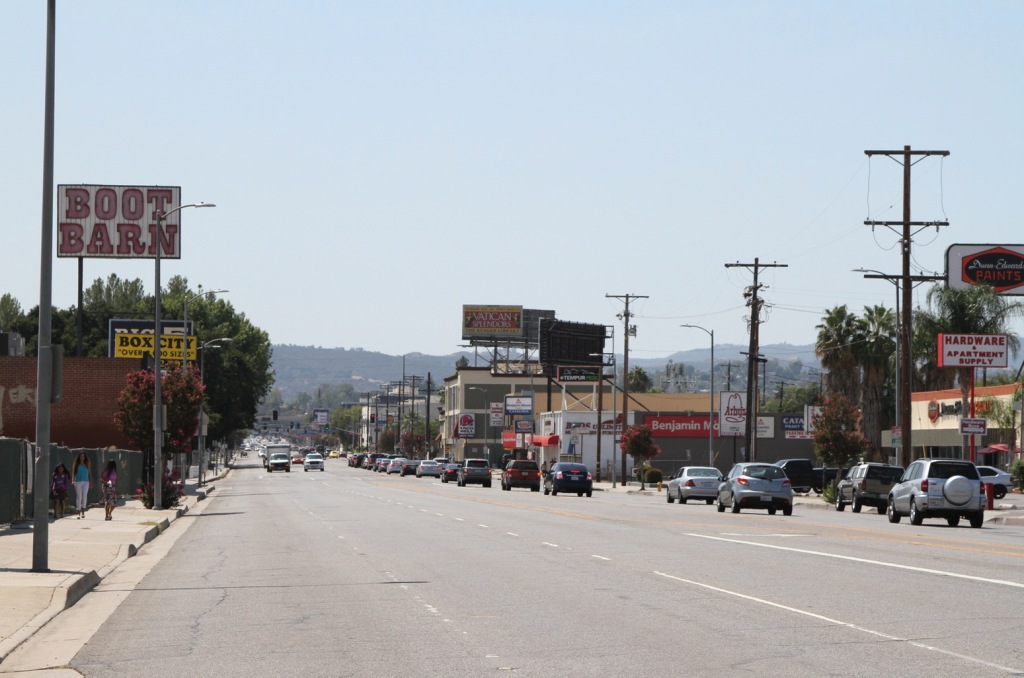
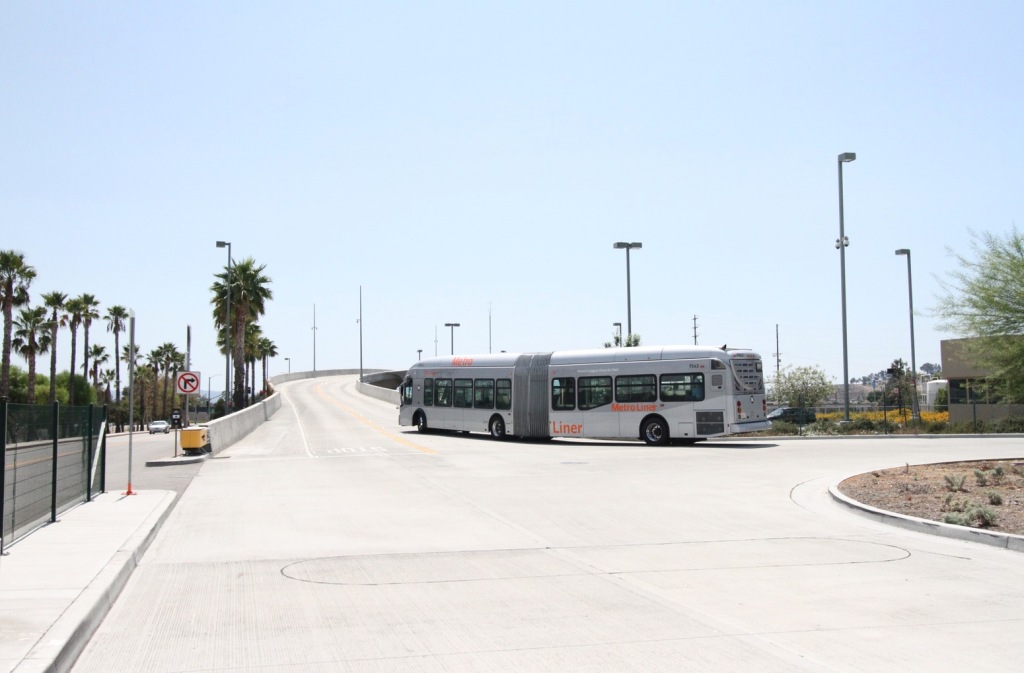
    I explored the Orange Line Bus Rapid Transit (BRT) system that runs for eighteen miles across the San Fernando Valley in Los Angeles. The Valley is a profoundly suburban city-within-a-city and home to 1.8 million people spread out over 260 square miles. Attempts to upgrade public transit by the central authorities in LA proper have been fought tooth and nail by folks in the Valley and illustrate why transit just doesn’t work when the local culture doesn’t want it. I’m not sure why LA keeps pushing on this particular string.

    Screen Shot 2016-09-04 at 7.29.48 AM

    screen-shot-2016-09-06-at-1-33-01-pm

    screen-shot-2016-09-06-at-1-37-08-pm

    Transit works best when one compact highly productive walkable neighborhood is connected to another compact highly productive walkable neighborhood. Manhattan or Hong Kong isn’t required. A plain vanilla Main Street with two and three story buildings works just fine.

    Suburbia is the exact opposite. Everything is spread out and oriented around private space, leisure, and consumption. Public space is an afterthought and any hint of density is anathema. Transit is believed to attract “the wrong element.” If this is the kind of world these folks want to inhabit… I say walk away and let them all enjoy the Jiffy Lubes and drive-thru burger joints without transit.

    Screen Shot 2016-09-04 at 7.44.46 AM

    Screen Shot 2016-09-04 at 7.45.15 AM

    Screen Shot 2016-09-04 at 7.29.12 AM

    Screen Shot 2016-09-04 at 8.36.14 AM

    This is the standard suburban environment with its sad begrudging crumbs of half assed bus service. It’s a monumental waste of scarce public funds to attempt to operate public transit here. The land use pattern and culture are in direct conflict with efficient cost-effective transit. And it’s punishing for the people who have no choice but to walk or take the bus: the young, the elderly, the infirm, and the poor.

    Screen Shot 2016-09-04 at 8.35.25 AM

    Screen Shot 2016-09-04 at 8.36.39 AM

    Screen Shot 2016-09-04 at 8.37.30 AM

    Screen Shot 2016-09-04 at 8.35.04 AM

    Screen Shot 2016-09-05 at 3.14.34 AM

    Screen Shot 2016-09-05 at 3.13.22 AM

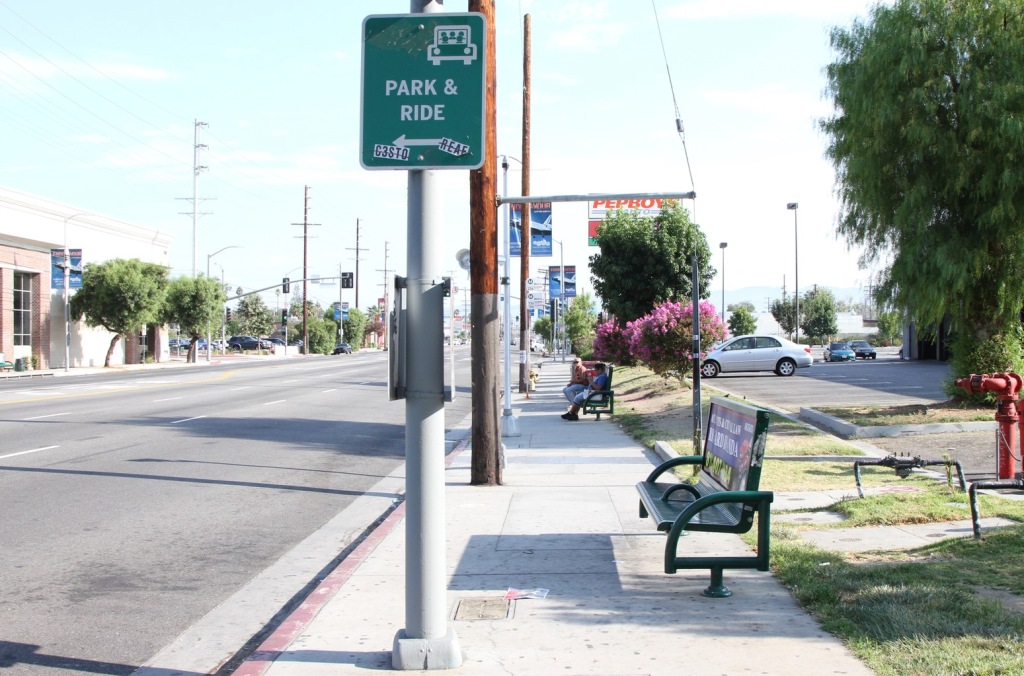
    Here’s how suburban communities typically deal with transit. To the extent that it’s tolerated at all the transit station is hidden away behind a row of self storage facilities and plumbing supply warehouses. The entrance is treated as if it were an office park. There’s an enormous amount of surface parking. The assumption is that people will drive to the bus or train station since transit is a bridge between the comforts of the private automobile and the necessary evil of commuting to a more congested urban destination.

    Screen Shot 2016-09-04 at 8.32.46 AM

    Screen Shot 2016-09-04 at 8.32.12 AM

    Screen Shot 2016-09-05 at 3.14.07 AM

    Screen Shot 2016-09-04 at 8.31.57 AM

    Screen Shot 2016-09-04 at 8.33.55 AM

    The Park and Ride model of transit like this Metro stop in Chatsworth (the terminus of the Orange Line) is moderately acceptable to middle class suburbanites so long as the station is properly landscaped. Absolutely nothing can be built anywhere near the station. Loitering must be prevented at all costs. Theoretically it’s possible to walk to and from the station, but the location and design of the place ensure it isn’t a common practice.

    Screen Shot 2016-09-05 at 4.07.31 AM

    Screen Shot 2016-09-05 at 4.06.35 AM

    Screen Shot 2016-09-04 at 9.04.15 AM

    Screen Shot 2016-09-04 at 9.03.57 AM

    Screen Shot 2016-09-04 at 9.04.53 AM

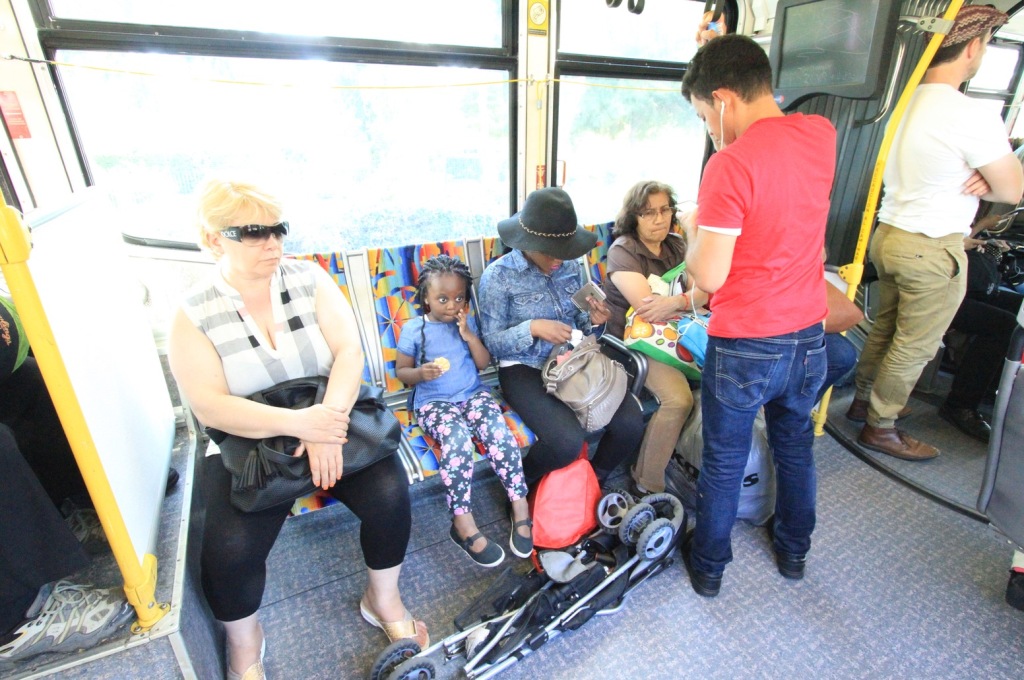
    I followed the entire route of the Orange Line and found the stations themselves are well designed, convenient, and efficient. The fully segregated busway disguised in a tunnel of greenery mean buses are never stuck in the same traffic that afflicts cars and trucks. The buses come frequently and predictably and travel is comfortable and fast. BRT simulates the benefits of a light rail system, but at a tenth the cost.

    Screen Shot 2016-09-04 at 9.06.44 AM

    Screen Shot 2016-09-04 at 11.53.30 PM

    Screen Shot 2016-09-04 at 9.05.59 AM

    Screen Shot 2016-09-04 at 9.06.25 AM

    Screen Shot 2016-09-04 at 9.07.05 AM

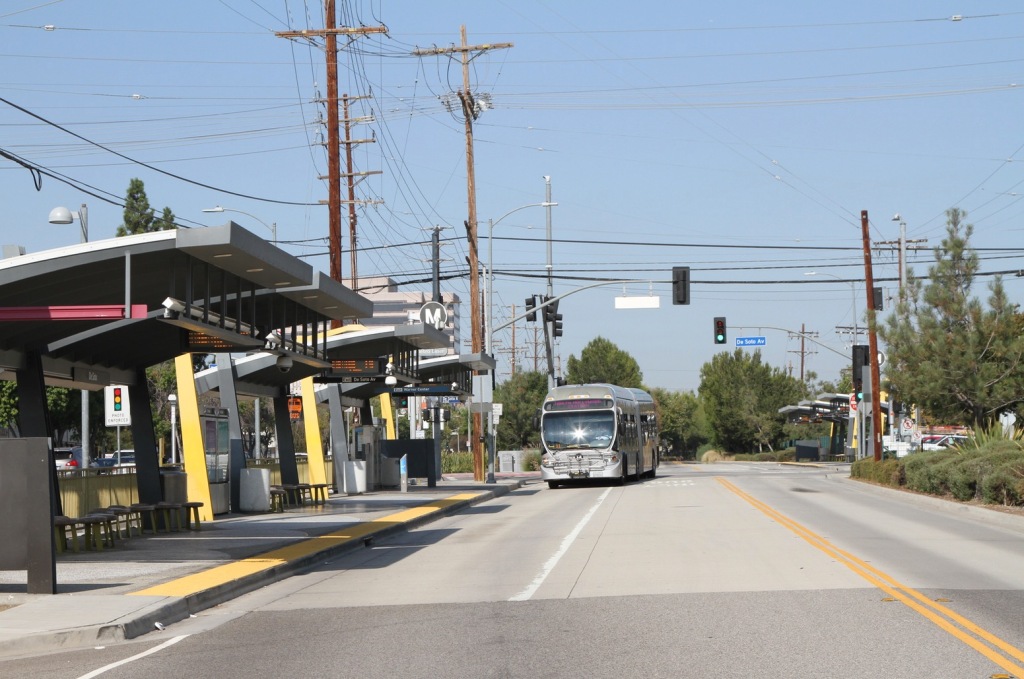
    But each station was built in a spot that makes it unlikely that transit will live up to its full potential. This is the De Soto stop. The buses do a great job of getting passengers from one isolated station to another. This isn’t an accident. It’s the only set of arrangements the locals would tolerate – and the locals have a lot of lawyers. Transit is associated with the lower class and home owners here want no part of it. So they litigated for years until the proposed rail line was beaten back to a bus route and some decorative shrubbery that didn’t go anywhere too offensive.

    Screen Shot 2016-09-05 at 12.37.57 AM

    screen-shot-2016-09-06-at-9-41-43-am

    screen-shot-2016-09-06-at-9-40-09-am

    screen-shot-2016-09-06-at-9-41-24-am

    screen-shot-2016-09-06-at-9-40-35-am

    screen-shot-2016-09-06-at-9-46-41-am

    Here’s the Balboa station. Abundant surface parking, plenty of landscaped strips, and a location that doesn’t infringe on nearby private property lets people drive to the bus. Unfortunately the effectiveness of good transit is negated by the barren surroundings. If you had access to a car and could drive to the bus… you wouldn’t really need the bus.

    Screen Shot 2016-09-04 at 11.57.48 PM

    Screen Shot 2016-09-04 at 11.54.47 PM

    Screen Shot 2016-09-05 at 12.09.34 AM

    Screen Shot 2016-09-04 at 11.51.50 PM

    Screen Shot 2016-09-04 at 11.52.09 PM

    Here’s the Sepulveda station. Notice how the pattern repeats. In the Valley it’s now possible to take a highly effective bus trip from the Costco parking lot in Van Nuys to a strip mall a dozen miles away in Canoga Park. That’s progress of a sort since the BRT is so much better than traditional suburban bus service. But the public investment in infrastructure isn’t being complimented by the required private investment near any of the stations. That’s because the culture rejects the kind of infill development that would make the stations economically meaningful.

    Screen Shot 2016-09-04 at 11.55.42 PM

    Screen Shot 2016-09-04 at 11.50.02 PM

    Screen Shot 2016-09-04 at 7.25.03 AM

    Screen Shot 2016-09-04 at 7.31.10 AM

    Screen Shot 2016-09-04 at 7.23.44 AM

    Screen Shot 2016-09-04 at 7.24.28 AM

    Bicycle and pedestrian paths parallel the BRT busway along many miles of the system. This allows people to get from Point A to Point B in a way that doesn’t rile up the locals quite as much as the proposed light rail did. Fenced in landscaped bike paths follow the suburban “Sunday in the park” model of leisure that’s at least borderline socially acceptable in the Valley. The fact that low income people also use the paths to peddle to work is an unfortunate and much lamented side effect. I noticed more than a few Spandexed guys on $4,000 bikes yelling at slow moving folks to get out of the way.

    screen-shot-2016-09-06-at-10-40-38-am

    The eighteen miles of Bus Rapid Transit in the Valley cost $324 million dollars to construct. That’s $18 million per mile. Compare that to the recent $1.1 billion road improvement project on a ten mile stretch of freeway in the Valley. The freeway was already ten lanes wide so adding slightly better on and off ramps and tweaking the car pool lanes did exactly nothing to relieve traffic congestion. That’s $110 million dollars per mile. The same people who lament the waste of taxpayer money on transit think the city should be spending more to upgrade the roads.

    Over the years community groups and their elected representatives in the Valley have created legislation that forbids the construction of light rail or the use of sales tax revenue to fund a subway. Other local groups created rules that mandated a fully underground subway system because they objected to surface or elevated rail lines in their neighborhoods. And the ubiquitous anti-infill and anti-density brigades continue as always.

    Personally, I don’t see the point of fighting locals who don’t value transit. I say give this part of the city no transit at all. But also require the locals to fund their own road projects from their own immediate tax base as well. Actually, I would love to see things taken a step farther. Cut the Valley loose from the City of Los Angeles altogether as so many folks in the Valley have attempted to do for decades. Let the Valley keep its own tax revenue and pay for its own services and infrastructure as an independent city. And let Los Angeles be free to focus on projects that actually make sense in the coastal communities that actively want transit and more intensive development. If that means the region is less integrated as a result… I don’t see how things could be worse.

    John Sanphillippo lives in San Francisco and blogs about urbanism, adaptation, and resilience at granolashotgun.com. He’s a member of the Congress for New Urbanism, films videos for faircompanies.com, and is a regular contributor to Strongtowns.org. He earns his living by buying, renovating, and renting undervalued properties in places that have good long term prospects. He is a graduate of Rutgers University.

  • Corporate Mustard Showroom Helps Explain New York’s Retail Rent Crisis

    The story of skyrocketing rents has two components: residential and commercial.

    My New York neighborhood, the Upper West Side, features fairly stable residential rents, but commercial rents seem to have been soaring. This has caused the familiar angst over the loss of neighborhood businesses to the ubiquitous bank branches and drug stores.

    But today even chains are getting priced out. The quintessential marker of gentrification, Starbucks, was recently forced to relocate in my neighborhood. They vacated their stores at 67th and Columbus when the landlord raised their rent to $140,550/month.

    You’ve got to sell a lot of grande’s to cover that kind of rent check. How many businesses can realistically survive at this location? (Maybe none – it’s still vacant).

    A block up the street, another store helps illustrate the forces sending retail rents through the roof. It’s the Maille “mustard boutique” at 68th and Columbus pictured above.

    Maille is a supermarket brand of dijon mustard. It’s a product of Unilever, the Anglo-Dutch food and consumer products giant. You may not know Unilever, but you know their brands, including Hellman’s, Dove, Lipton, and even Ben and Jerry’s.

    This particular location provides mustard tastings, and sells dijon in a variety of flavors not typically available. I believe they also have some vinegars. I was once needed some dijon and purchased a jar of their regular flavor for $7 – which is $3 more it sells for at the grocery store a few blocks away.  They apparently charge as much as $99 for a jar of black truffle mustard.

    I don’t know what their monthly rent is. It’s a smaller, mid-block store than the former Starbucks location. Based on square footage equivalents, the rent would be somewhere around $30,000 a month.

    Can you really sell enough mustard to cover that kind of rent (to say nothing of the “mustard sommelier” and other employees they have on staff and all the other costs of operations)? I see people in the store, but it’s never crowded. And it’s rare to see someone walking out with a shopping bag.

    It strikes me as dubious that this store could even break even, much less turn a profit that would earn the required return on invested capital.

    But ultimately it doesn’t matter if this store makes money or not. The rent isn’t even a rounding error to Unilever and can easily be justified as a marketing expense.

    If there’s one thing it’s not hard to find in this world, it’s gourmet mustard. This neighborhood needs a corporate mustard showroom like it needs a hole in the head.

    But we have one anyway. And there’s actually a second location in the Flatiron. These are the only Maille stores in the US, save for what appears to be a popup going into a Connecticut mall.

    You can tell a lot of amazing “only in New York” stories. But this is an example of a bad one. These showrooms may be exclusive to the city, but they put upward pressure on retail rents and make it harder for actual neighborhood serving businesses to make it. (This location was closed over the summer for a sidewalk replacement project and I was hopeful it wouldn’t reopen – alas, it was to be denied).

    Multiply two Maille mustard showrooms by all the other major corporations who use NYC as a branding platform, and it’s easy to get a sense as to why retail rents are so high in Manhattan.

    Aaron M. Renn is a senior fellow at the Manhattan Institute, a contributing editor of City Journal, and an economic development columnist for Governing magazine. He focuses on ways to help America’s cities thrive in an ever more complex, competitive, globalized, and diverse twenty-first century. During Renn’s 15-year career in management and technology consulting, he was a partner at Accenture and held several technology strategy roles and directed multimillion-dollar global technology implementations. He has contributed to The Guardian, Forbes.com, and numerous other publications. Renn holds a B.S. from Indiana University, where he coauthored an early social-networking platform in 1991.

    Photo: Maille mustard “boutique” on Columbus Ave at 68th St.

  • Toronto Area Housing Market Rigged Against Millennials

    In a Globe and Mail column, Margaret Wente accurately describes Toronto’s housing affordability crisis and its principal cause. The Toronto area’s house prices have escalated strongly relative to incomes since the province enacted its “Places to Grow” urban planning regime. The resulting destruction of the competitive market for new residential has driven prices up, just as oil prices rise when OPEC implements strong supply restrictions.

    Wente concluded her article:

    “The solution to the affordability crisis isn’t high-density housing and mass transit in the burbs. It’s to give people what they want – by getting the ideologues out of the way and restoring a sensible balance between supply and demand. Can we do that and be environmentally responsible too? Central planners who think we can’t should be required to raise their families in an apartment block in Oshawa and take the bus to work. They’d find a better way soon enough.”

    It’s no wonder that international researchers are increasingly pointing to house price escalation as a leading driver of rising inequality. Nor should it be surprising that a new Canada Mortgage and Housing Corporation report will issue its first “red warning” on Canada’s housing market, principally due to out of control house price escalation in the Vancouver and Toronto metropolitan areas.

  • Zoning and Urban Containment: The Need for Clarity

    It is a terrible mistake to be confusing ALL zoning rules with the single true determinant of inequity in housing and economic mobility.

    That is, can rural land at rural land prices, be converted to urban use?

    This suppresses the price of all urban land to the extent that it is such a small input into “housing costs” relative to the cost of structures, it is very hard to push “house prices” up into unaffordable territory.

    There is absolutely no city in the UK that does not have “house prices” at least double the price of the affordable, median-multiple-3 cities of the USA, in spite of the UK cities being 4 to 10 times denser than the US examples.

    As long as you have urban planning or proxies for it, that rations the overall land supply, site values are highly elastic to allowed density, so much so that density correlates the wrong way with “affordability”.

    This is a very important lesson that needs to be understood, fast, or there will be years or even decades of wrong policy made.

  • Can California Transition to Next Tech Wave?

    The consumer technology boom, largely responsible for a resurgence in California’s economy after the tech wreck of 2001, seems to be coming to an end. The signs are widespread: slowing employment, layoffs from bell-weather social media companies, the almost embarrassing difficulty of finding buyers for Twitter, the absorption of Yahoo by Verizon and the acquisition by Microsoft of LinkedIn.

    This is not to minimize the great things which have been accomplished over 15 years of massive investment in these technologies. Mark Zuckerberg founded Facebook in 2004, and is now worth some $55 billion, up $15 billion from last year. In 2015, more than 1 billion people globally used Facebook applications every single day. The “app economy” created by Steve Jobs and Apple is equally impressive. What would we have done with our free time if it were not for Farmville, Angry Birds and Pokemon Go?

    The tech boom has changed the face of wealth in America. Tech oligarchs, mostly clustered in the Bay Area, which dominates some 40 percent of employment in search and web publishing, now account for one quarter of the wealth of the Forbes 400 richest Americans. This tilting of wealth is not going away, and may shape the business world for a generation.

    Concentration and contraction

    Overall though, the economic impact of these technologies has been limited. Google’s Alphabet Inc. and Facebook Inc. together employ fewer than 75,000 people, one-third fewer than Microsoft, worth only a fraction its value. Snapchat, the star of Silicon Beach, employs several hundred people, hardly enough to reverse a long-term decline in Southern California tech employment.

    More troubling still are changes in the Bay Area tech culture. In its 1980s heyday, Silicon Valley was a Wild West of start-ups, new companies and ideas, and lots of jobs. Today, it resembles increasingly the cozy and fundamentally uncompetitive world of Detroit’s Big Three — Ford, Chrysler and General Motors. The Valley is increasingly dominated by a handful of companies — Google, Facebook and Apple — while conditions for startups, even well-funded ones, have deteriorated markedly.

    Read the entire piece at The Orange County Register.

    Joel Kotkin is executive editor of NewGeography.com. He is the Roger Hobbs Distinguished Fellow in Urban Studies at Chapman University and executive director of the Houston-based Center for Opportunity Urbanism. His newest book, The Human City: Urbanism for the rest of us, will be published in April by Agate. He is also author of The New Class ConflictThe City: A Global History, and The Next Hundred Million: America in 2050. He lives in Orange County, CA.

    Marshall Toplansky is Senior Advisor to Chapman University in the area of Data & Analytics, as well as adjunct faculty member at the Argyros School of Business and Economics. Formerly Managing Director of KPMG’s national center of excellence in Data & Analytics, Marshall co-founded big data company Wise Window, a pioneer in analyzing social media, blogs and news stories to track and predict business and political trends. Marshall is Chairman of the Cicero Institute, a strategy and research institution in Salt Lake City, Utah. He is past Managing Director of the Harvard Business School Association of Orange County, and was elected to the Computing Industry Hall of Fame for his role in creating the industry’s largest technical service certification program, A+, which has certified more than 3 million computer technicians worldwide.

  • Trump Will Go Away, but the Anger He’s Stirred Up Is Just Getting Started

    For progressives, the gloating is about to begin. The Washington Monthly proclaims that we are on the cusp of a “second progressive era,” where the technocratic “new class” overcomes a Republican Party reduced to “know-nothing madness.”

    To be sure, Trump himself proved a mean-spirited and ultimately ineffective political vessel. But the forces that he aroused will outlive him and could get stronger in the future. In this respect Trump may reprise the role played another intemperate figure, the late Senator Barry Goldwater. Like Trump, Goldwater openly spurned political consensus, opposing everything from civil rights and Medicare to détente. His defeat led to huge losses at the congressional level, as could indeed occur this year as well.

    Goldwater might have failed in 1964, but his defeat did not augur a second New Deal, as some, including President Lyndon Johnson, may have hoped. Instead, his campaign set the stage for something of a right-wing resurgence that defined American politics until the election of President Obama. Pushing the deep South into the GOP, Goldwater created the “Southern strategy” that in 1968 helped elect Richard Nixon; this was followed in 1980 by the victory of Goldwater acolyte Ronald Reagan.

    History could repeat itself after this fall’s disaster. People who wrote off the GOP in 1964 soon became victims of their own hubris, believing they could extend the welfare state and the federal government without limits and, as it turned out, without broad popular support. In this notion they were sustained by the even then liberally oriented media and a wide section of the “respectable” business community.

    Three decades later a similar constellation of forces —- Hollywood, Silicon Valley, Wall Street—have locked in behind Hillary Clinton. But it is the transformation of the media itself both more ideologically uniform and concentrated more than ever on the true-blue coasts, that threatens to exacerbate Progressive Triumphalism. In this election, notes Carl Cannon, no Trump fan himself, coverage has become so utterly partisan that “the 2016 election will be remembered as one in which much of the mainstream media all but admitted aligning itself with the Democratic Party.”

     Progressive Triumphalism may lead the Clintonites to believe her election represented not just a rejection of the unique horribleness of Trump, but proof of wide support for their favored progressive agenda. Yet in reality, modern progressivism faces significant cultural, geographic, economic and demographic headwinds that will not ease once the New York poseur dispatched.

    Successful modern Democratic candidates, including President Obama and former President Clinton, generally avoid openly embracing an ever bigger federal government. Obama, of course, proved a centralizer par excellence, but he did it stealthily and, for the most part, without the approval of Congress. This allowed him to take some bold actions, but limited the ability to “transform” the country into some variant of European welfare, crony capitalist state.

    Hillary Clinton lacks both Obama’s rhetorical skills and her erstwhile husband’s political ones. Her entire approach in the campaign has been based on creating an ever more intrusive and ever larger federal government. Even during Bill Clinton’s reign, she was known to be the most enthusiastic supporter of governmental regulation, and it’s unlikely that, approaching 70, she will change her approach. It seems almost certain, for example, that she will push HUD and the EPA to reshape local communities in ways pleasing to the bureaucracy.

    Yet most Americans do not seem to want a bigger state to interfere with their daily life. A solid majority—some 54 percent—recently told Gallup they favor a less intrusive federal government, compared to only 41 percent who want a more activist Washington. The federal government is now regarded by half of all Americans, according to another poll by Gallup, as “an immediate threat to the rights and freedoms of ordinary citizens.” In 2003 only 30 percent of Americans felt that way.

    Nor is this trend likely to fade with time. Millennials may be liberal on issues like immigration and gay marriage, but are not generally fans of centralization, fewer than one-third favor federal solutions over locally based ones. 

    Due largely to Trump’s awful persona, Hillary likely will get some wins in “flyover country,” the vast territory that stretches from the Appalachians to the coastal ranges. In certain areas with strong sense of traditional morality, such as in Germanic Wisconsin and parts of Michigan, notes Mike Barone, Trump’s lewdness and celebrity-mania proved in the primaries incompatible with even conservative small town and rural sensibilities, more so in fact than in the cosmopolitan cores, where sexual obsessions are more celebrated than denounced.

    Yet Trump’s strongest states, with some exceptions, remain in the country’s mid-section; he still clings to leads in most of the Intermountain West, Texas, the mid-south and the Great Plains. He is still killing it in West Virginia. This edge extends beyond a preponderance of “deplorables” and what Bubba himself has referred to as “your standard redneck.”

    Exacerbating this cultural and class discussion is the growing division between the coastal and interior economies. Essentially, as I have argued elsewhere, the country is split fundamentally by how regions makes money. The heartland regions generally thrive by producing and transporting “stuff”—food, energy, manufactured goods —while the Democrats do best where the economy revolves around images, media, financial engineering and tourism.

    Energy is the issue that most separates the heartland from the coasts. The increasingly radical calls for “decarbonization” by leading Democrats spell the loss of jobs throughout the heartland, either directly by attacking fossil fuels or by boosting energy costs. Since 2010, the energy boom has helped create hundreds of thousands of jobs throughout the heartland, many of them in manufacturing. At the same time, most big city Democratic strongholds continued to deindustrialize and shed factory employment. No surprise then that the increasingly anti-carbon Democrats control just one legislature, Illinois, outside the Northeast and the West Coast.

    Trump’s romp through the primaries, like that of Bernie Sanders, rode on the perceived relative decline of the country’s middle and working classes. For all her well-calculated programmatic appeals, Hillary Clinton emerged as the willing candidate of the ruling economic oligarchy, something made more painfully obvious from the recent WikiLeaks tapes. Her likely approach to the economy, more of the same, is no doubt attractive to the Wall Street investment banks, Silicon Valley venture capitalists, renewable energy providers and inner city real estate speculators who have thrived under Obama.

    Yet more of the same seems unlikely to reverse income stagnation, as exemplified by the huge reserve army of unemployed, many of them middle aged men, outside the labor force. The fact remains that Obama’s vaunted “era of hope and change,” as liberal journalist Thomas Frank has noted, has not brought much positive improvement for the middle class or historically disadvantaged minorities.

    The notion that free trade and illegal immigration have harmed the prospects for millions of Americans will continue to gain adherents with many middle and working class voters—particularly in the heartland. We are likely to hear this appeal again in the future. If the GOP could find a better, less divisive face for their policies, a Reagan rather than a Goldwater, this working-class base could be expanded enough to overcome the progressive tide as early as 2018.

    The one place where the progressives seem to have won most handily is on issues of culture. Virtually the entire entertainment, fashion, and food establishments now openly allied with the left; the culture of luxury, expressed in the page of The New York Times, has found its political voice by identifying with such issues as gay rights, transgender bathrooms , abortion and, to some extent, Black Lives Matter. In contrast, the Republicans cultural constituency has devolved to a bunch of country music crooners, open cultural reactionaries and, yes, a revolting collection of racist and misogynist “deplorables.”

    Yet perhaps nowhere is the danger of Progressive Triumphalism more acute. Despite the cultural progressive embrace of the notion that more diversity is always good, the reality is that our racial divide remains stark and is arguably getting worse. As for immigration, polls say that more people want to decrease not just the undocumented but even legal immigration than increase it.

    And then there’s the mountain rebellion against political correctness. Relative few Americans have much patience with such things as “micro-aggressions,” “safe spaces,” the generally anti-American tone of history instruction whose adherents are largely concentrated in the media and college campuses. Fewer still would endorse the anti-police agitation now sweeping progressive circles. For some, voting for Trump represents the opportunity to extend a “middle finger” to the ruling elites of both parties.

    Yet Trump’s appeal also represented something of a poke in the eye for the old-school religious right; Trump has actually helped the GOP by embracing openly gay figures like Peter Thiel. He may have caused many bad things, but the New Yorker succeeded, as no Republican in a generation, in making the holy rollers largely irrelevant.

    The dangers for the Democrats lie in going too far in their secularism. As recent emails hacked by WikiLeaks have demonstrated, there is widespread contempt in left circles for most organized religion, most importantly for the moral teachings of the Roman Catholic Church, even under a more progressive Pope. Some Democrats may argue that irreligiosity will remain “in” among millennials. Yet this was also said about boomers and turned out to be wrong. Few sociologists in the 1970s would have expected a religious revival that arose in the next decade.

    Simply put, millennials’ economic and cultural views could shift, as they become somewhat less “idealistic” and more concerned with buying homes and raising children. They could shift more the center and right, much as Baby Boomers have done.

    No matter what happens this year, the battle for America’s political soul is not remotely over. Trump may fade into deserved ignominy and hopefully obscurity, but his nationalist and populist message will not fade with him as long as concerns over jobs, America’s role in the world, and disdain for political correctness remain. If Hillary and her supporters over-shoot their nonexistent mandate and try to impose their whole agenda before achieving a supportable consensus, American politics could well end up going in directions that the progressives, and their media claque, might either not anticipate or much like.

    This piece first appeared in The Daily Beast.

    Joel Kotkin is executive editor of NewGeography.com. He is the Roger Hobbs Distinguished Fellow in Urban Studies at Chapman University and executive director of the Houston-based Center for Opportunity Urbanism. His newest book, The Human City: Urbanism for the rest of us, will be published in April by Agate. He is also author of The New Class ConflictThe City: A Global History, and The Next Hundred Million: America in 2050. He lives in Orange County, CA.

    Photo by Gage Skidmore [CC BY-SA 3.0], via Wikimedia Commons

  • Unsustainable solutions in the name of sustainability

    The other day when I was riding my bike in Minneapolis crossing I-94 near Riverside I encountered a small townhome project built during the first (failed) green era under the Carter administration. It was built to showcase the future. One thing I’ve learned over the years building my own green homes is to not listen blindly to the experts who parrot others’ ideas without thinking of the ramifications.

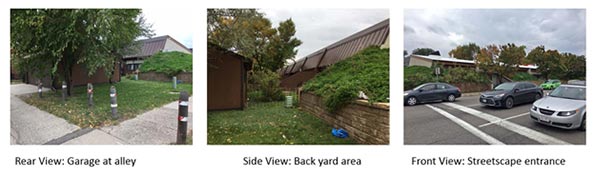
    The world’s first solar and earth-berm grass-roof townhome projects look like this today:

    image of townhome

    The original townhomes were built with earth covered roofs, with south facing solar panels for heating, and stored the heat collected over a long period of time in a room full of boulders. In 1983, I also owned an earth-berm solar heated home overlooking a lake in another part of town. Back then we thought, as the world freezes over (no global warming at that time), we would be nice and toasty in our ‘energy-independent’ homes powered by the sun itself. I went even further with a 10kW Bergey Wind Generator on a 100′ tall tower. Heated by the sun and powered by the wind.

    As you see in the above pictures, this experiment, which had the University of Minnesota involved (from what I remember), did not age well, nor did it work – at all! Gone are the solar panels that used to collect the heat positioned along the bare brown steel roof panels, and gone is grass roof that leaked. Banished is the room full of boulders to store the heat, which got so hot often windows needed to be opened to let in cold winter air, a problem my own solar home had also.

    In 1983, my 4,000 square foot lake front solar home cost $120,000 and after tax credits, my Wind Generator cost $12,000. These smaller townhome units cost $80,000 at the time. One of the original residents who stayed over the decades experienced failed systems and lawsuits. They eventually sold their home – for $80,000! Quite the investment these fancy schmancy trendy homes. A Nigerian investment scheme via an E-Mail might have been less risky. You would think the first home owners would have been the architects and professors who were behind this project – but they themselves didn’t buy in, so there’s an indication that maybe the idea was not so terrific. This is the lesson I’ve learned, never take advice from anyone who is not willing to personally invest and take the same risk as they suggest to others in a new concept.

    The Carter era was a troubled one, with energy widely predicted to be running out, and home mortgage rates as high as 18%. It’s hard to imagine there was any new housing being built, but some were. The initial residents of these townhomes (including myself) believed we were the smart ones, preparing for the energy costs skyrocketing and never having to worry. Hell could freeze over – but we wouldn’t.

    That was then, but how does this apply to now, especially with an election just days away?

    Hillary Clinton was promising half a billion solar panels on rooftops. OK, now picture the above bare rooftops – that’s how the roofs will look when the lifespan of those half billion heavily subsidized solar panels reach the end of their usefulness – in two decades. Where do you think most solar panels are made today? If you answered China, you deserve a star! And if a roof needs repair or replacement prior to the end of the panels’ lifespan, will the government subsidize the extra cost of repairs? Who will pay for cutting down the mature trees along the streets so that the sun can reach these panels? Oh, wait, you are supposed to keep those mature, beautiful, and value increasing shade trees? My bad. You think Obama Care was a terrible idea… just wait for the Hillary program, and the social engineering sure to follow, and sure to fail.

    Trump? I imagine he’d be politically incorrect of course, calling those solar townhomes: ugly, hideously, awful useless, fat, blemished, blight… only unlike comments about women, he’d have a lot who would agree. I don’t know what a Trump administration would look like, but I’m pretty confident that it would not involve social engineering, nor have subsidies go to China or Mexico. I hope that if he had a wind or solar agenda, the panels would be produced here with a fair and proper competition to award the vendors with the best price/performance ratio and make them bond a 20 or 30-year fund if the mechanisms wear prematurely.

    I hope that Trump or Clinton look into creating new programs that encourage private new developments or large scale redevelopment to have their own ground based solar gardens instead of the current wave of public investments of solar farms which have federal tax advantages but seem, at least to me, a questionable investment at best. They are even promoting these solar investments at the Best Buy store in Minnetonka, Minnesota with the promise of a consistent energy cost, but they require a 20-year commitment, even though the average home sells once every 6 years.

    These are heavily subsidized by you, the tax payers. Some of these solar fields are supposed to supply the power companies themselves, for example Ivanpah in the California desert which was to supply power for PG&E. Ivanpah was a solar system using mirrors heating up over 170,000 panels to create steam, but failed to deliver the power the ‘experts’ promised. Besides killing thousands of birds, the 1.5 billion dollars of your tax money was pretty much a really bad investment – oopsie! A more viable alternative is to create a more localized system as part of new developments or large scale redevelopments.

    Having a solar garden in a subdivision eliminates the problem with roof-top application, cleaning ice and snow off the panels, and streets could still have those shade trees. Each resident in the subdivision would have their share of the power and as technology improves, every resident would benefit from the latest technologies – be it solar, wind, or both. Such a Federal program does not exist – but should.

    Top photo by https://pixabay.com/en/users/Kenueone-2397379/ [CC0], via Wikimedia Commons

    Rick Harrison is President of Rick Harrison Site Design Studio and Neighborhood Innovations, LLC. He is author of Prefurbia: Reinventing The Suburbs From Disdainable To Sustainable and creator of LandMentor. His websites are rhsdplanning.com and LandMentor.com

  • The House Prices are Too Damned High

    In recent years, the plight of renters in a stagnant economy has been covered extensively. A book title incorporated the phrase “the rent is too damn high” (by Matthew Iglesias). The “Rent is Too Damn High Party” ran candidates in both city and state of New York elections. However, as bad as rent increases have been, more serious has been the escalation of house prices in the major metropolitan areas of the United States.

    The Expected Nexus

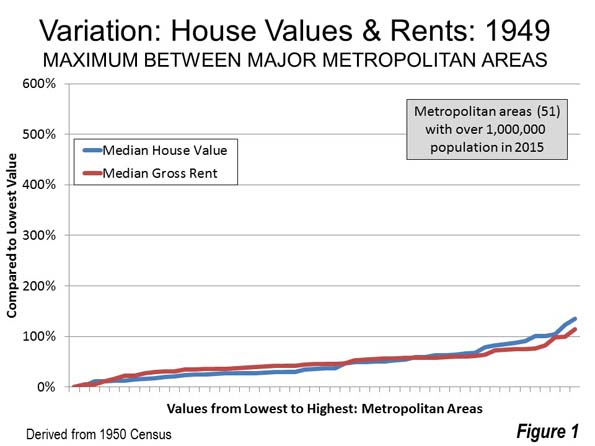
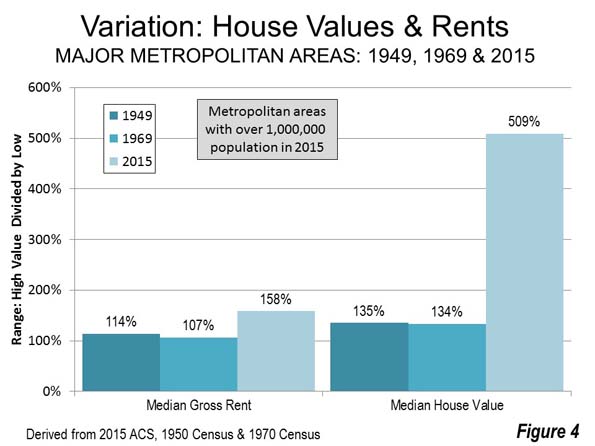
    Generally, a closely aligned relationship between trends in owner occupied and rented housing costs would be expected . This was certainly true until 1970 (Note 1).  In 1949 there was a 135 percent difference between the lowest median household value and the highest in the major metropolitan areas (Note 2). There was a similar 114 percent difference between the lowest gross rent and the highest (Figure 1). The house value variation was 18 percent higher than the rent variation.

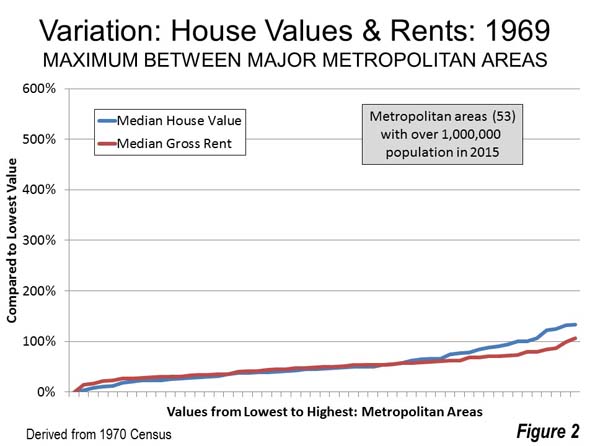
    By 1969 median house values varied a maximum of 134 percent from the lowest figure to the highest, a slight reduction from the 135 percent difference across the United States in 1949. Median gross rents varied a maximum of 107 percent among the same metropolitan areas, down modestly from 1949’s 114 percent (Figure 2). The house value variation was 25 percent higher than the rent variation.

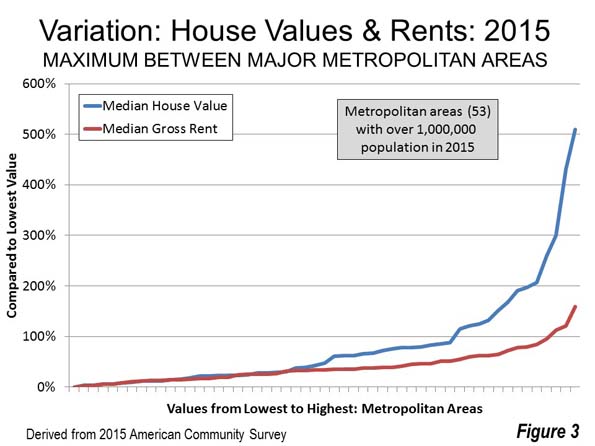
    The close relationship between the variations in house value and rent   was substantially broken in more recent decades. The 2015 American Community Survey shows that the variation among the major metropolitan areas in median house values is now a staggering 509 percent. The range between the least expensive and most expensive rental markets is a much smaller 158 percent (Figure 3). The difference in the variations between house value and rents across the nation rose to 222 percent, nearly nine times the 1969 figure.

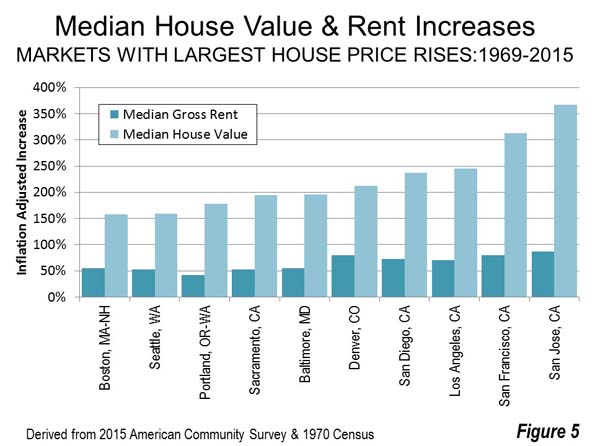
    Among the 10 metropolitan areas with the largest house price increases between 1969 and 2015, house values increases averaged 226 percent, nearly 350 percent more than the 65 increase in median rents, both figures inflation adjusted (Figure 4).

    Of course, the hideously expensive California metropolitan areas are well represented, such as San Jose, San Francisco, Los Angeles and San Diego, among the most impacted. Even inland Sacramento, with significant housing affordability problems often over-shadowed by the Bay Area, is included. However, the huge differences extend to metropolitan areas outside California, such as Denver, Baltimore, Portland, Seattle and Boston.

    The broken relationship between rent and house value could imply severe distortion in either the rental market or the owned housing market.

    If the Rent is Too Damn Low

    Distortions in the market could have prevented rents to retain their relationship with rising house values.

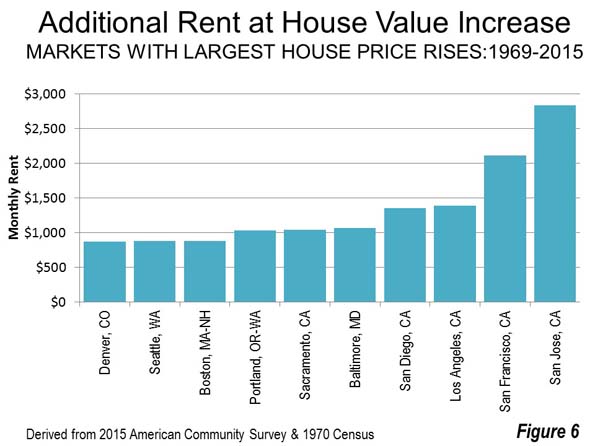
    The implications are ominous. If the increase in rents had kept up with the increase in house values, the median gross rent in the San Francisco metropolitan area would have been approximately $3,700 per month, compared to the actual $1,600 per month in 2015. This would suggest that rents in 2015 were $2,100 below market in San Francisco. If this is true, then the rent is too damn low in San Francisco. The situation would be even worse down the road in San Jose where to keep up with house prices rents need to be $4,700 per month, $2,800 per month higher than market.

    If the rental market is distorted, then rents are far too low in other metropolitan areas. In Los Angeles, San Diego, Baltimore, Sacramento and Portland rents are between $1,000 and $1,400 too low. Rents would be at least $800 below market in Boston, Seattle and Denver (Figure 5).

    If House Prices are Too Damn High

    If the owned housing market became distorted relative to the rental market between 1969 and 2015, then it is the rents that are too damn high.  If house values had risen at the same rate as rents, none of the 53 markets would have exceeded a price to income ratio of 5.0, which denotes is denoted as “severely unaffordable” in the Demographia International Housing Affordability Survey. This would be a substantial improvement, given that 11 major markets actually were severely unaffordable in 2015.

    The 10 major metropolitan areas with the largest house value increases would have had hugely lower house prices. In San Jose, the median house value would have been equal to 3.2 years of median household income in 2015. This is considerably better than the actual 8.1 years, representing a 55 percent improvement. In San Francisco the median house value would have been equal to 3.5 years of median household income. This would be a 60 percent improvement on the actual 8.1 ratio in 2015 (Note 3). 

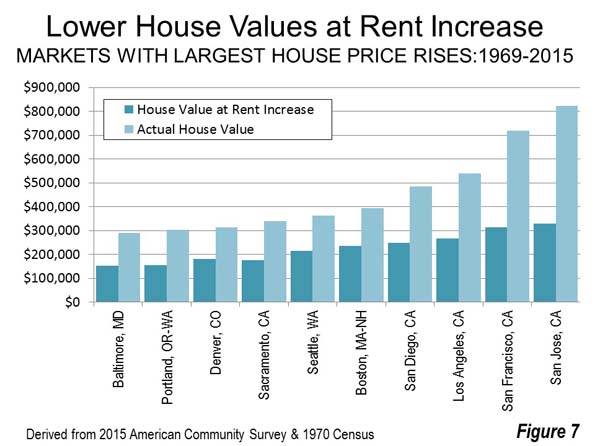
    In Los Angeles, Portland, Sacramento and San Diego, house values would have been about 50 percent less if they had risen at the same rate as rents. In Boston, Denver and Seattle, house prices would have been between 40 percent and 45 percent less (Figure 6).

    It’s the House Prices that are Too Damned High

    Rents have risen faster than incomes, but nothing compared to the increase in house prices. Clearly, house prices are too damn high. The huge increase between 1969 and 2015 in house prices is an anomaly that has become extreme in recent decades. The ranges in rents (1949, 1969 and 2015) and the ranges in house values in 1949 and 1969 were far more similar and reflected a reality more in line with the stability that would be expected in non-distorted markets (Figure 7). Indeed, the large increase in the 1969-2015 rent range could well have been influenced upward by the virulent house price increase (reflected in land prices).

    It seems likely that rents across the country are much more reflective of an efficiently operating market, while there are serious distortions in the owned housing market.

    Finally, owner-occupied housing, especially detached housing, has been under assault by restrictive urban planning regulations since 1970. House prices are most out of alignment in markets where this has occurred, especially in California, Oregon, Washington, and the Denver, Baltimore and Washington, DC metropolitan areas. More often than not, these regulations have evolved into urban containment policy (Note 4), which draws arbitrary lines around cities beyond which detached housing tracts are not permitted (See: Urban Containment, Endangered Working Families and Beleaguered Minorities). Obviously, as in goods and services generally, this regulatory over-reach makes housing less affordable (See: People Rather than Places, Ends Rather than Means: LSE Economists on Urban Containment).

    There has been no such assault on multi-family building, which represents the bulk of rentals. This is not to suggest that rental regulation is perfect, only that the market distortions have been far more severe in reference to the owned housing market in some metropolitan areas, such as those identified above.

    All of this has serious consequences for the nation and its threatened middle income households. With median household incomes below nearly two decades ago (perhaps for the first time in US history), economic stagnation and younger people burdened by rising college debt, lower house prices are a necessity in the over-regulated metropolitan areas. Yet there seems little desire on the part of most governments, particularly in the most severely impacted markets, to do much about it.

    Note 1: These censuses collected house value and rent data for the previous year, 1949 and 1969 respectively. The rent and house value data referenced in this article was first available in the 1950 census.

    Note 2: The 53 metropolitan areas with more than 1,000,000 population in 2015 (in 1950, only 51 of these had achieved metropolitan area status). The rent ranges cited in this article are calculated by dividing the highest major metropolitan area rent by the lowest major metropolitan area rent in the particular year. The house value ranges cited in this article are calculated by dividing the highest major metropolitan area house value by the lowest major metropolitan area house value in the particular year.

    Note 3: Some analysts cite topographic barriers for creating the scarcity of land that has driven house price up so much in the San Francisco Bay Area (which includes both the San Francisco and San Jose metropolitan areas). As indicated in a previous article, there is far more land available for greenfield residential development in the Bay Area than would be required by even the strongest population growth.

    Note 4: With respect to urban containment policy, Boston is an exception, which is the only seriously unaffordable major metropolitan area in the Demographia International Housing Affordability Survey that does not have urban containment policy. Boston has large lot zoning so expansive that it has created a severe shortage of land for development, with urban containment-like effects on house prices. Boston’s urbanization covers more land area than all urban areas in the world except New York and Tokyo, despite having only a fraction of their populations (See: The Evolving Urban Form: Sprawling Boston).

    Photo: Sacramento: An inland California unaffordable housing market (by author)

    Wendell Cox is principal of Demographia, an international public policy and demographics firm. He is a Senior Fellow of the Center for Opportunity Urbanism (US), Senior Fellow for Housing Affordability and Municipal Policy for the Frontier Centre for Public Policy (Canada), and a member of the Board of Advisors of the Center for Demographics and Policy at Chapman University (California). He is co-author of the "Demographia International Housing Affordability Survey" and author of "Demographia World Urban Areas" and "War on the Dream: How Anti-Sprawl Policy Threatens the Quality of Life." He was appointed to three terms on the Los Angeles County Transportation Commission, where he served with the leading city and county leadership as the only non-elected member. He served as a visiting professor at the Conservatoire National des Arts et Metiers, a national university in Paris.