Blog

  • Mapping US Metropolitan Unemployment Rates, May 2009

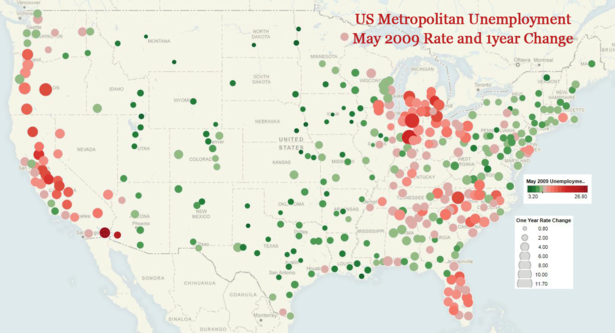
    Here’s a quick map of the newly released May 2009 metropolitan area unemployment numbers. On this map, color signifies the rate in May 2009 and size of bubble indicates the rate point change since May of last year. Green dots are below the national unemployment level of 9.1 in May, and red dots are above the national number.

    We can see that highest unemployment is concentrated on the west coast and California, manufacturing dependend Michigan, Indiana, and Ohio, parts of Appalachia, the Carolinas, and Florida.

    Unemployment is increasing the fastest in Kokomo and Elkhart-Goshen, IN; Bend, Eugene, Medford, and Portland, OR; Hickory-Lenoir-Morganton, NC; and Muskegon and Monroe, MI.

    While every metropolitan area of the country saw increased unemployment over May 2008, the Great Plains from Texas to North Dakota, the Mountain West, and parts of New England are still holding employment better than the rest of the nation.

  • Did Homeowners Cause The Great Recession?

    The person who caused the current world recession can be found not on Wall Street or the city of London, but instead could be you, and your next-door neighbor–the people who put so much of their savings and credit to buy a house.

    Increasingly, conventional wisdom places the fundamental blame for the worldwide downturn on people’s desire–particularly in places like the U.K., the U.S. and Spain–to own their own home. Acceptance of the long-term serfdom of renting, the logic increasingly goes, could help restore order and the rightful balance of nature.

    Once considered sacrosanct by conservatives and social democrats alike, homeownership is increasingly seen as a form of economic derangement. The critics of the small owner include economists like Paul Krugman and Ed Glaeser, who identify the over-hot pursuit of homes as one critical cause for the recession. Others suggest it would be perhaps nobler to put money into something more consequential, like stocks.

    Homeowners also get spanked by leading new urbanists, like Brookings scholar and urban real estate developer Chris Leinberger. He lays blame for the downturn not on unscrupulous financiers but squarely on aspiring suburban home buyers. “Sprawl,” he intones, “is the root cause of the financial crisis.”

    If only we built more high-density, transit-oriented housing–which, incidentally, is not exactly thriving–the crisis could be happily resolved, he believes. This approach is echoed by big-city theoreticians like Richard Florida, who believes that both homeownership and the single-family house “has outlived its usefulness.” In his “creative age,” we won’t have much room for either single-family homes or owners. Instead, we will be leasing our ever-more-tiny cribs–just like yuppies with their BMWs–as we wander from job to job.

    To be sure, many people who bought homes in the last few years should not have qualified. Weak lending standards, promoted by both unscrupulous industry figures like Countrywide’s Angelo Mozillo as well as Congress–including the many “friends” receiving cut-rate loans from the disgraced mortgage firm–clearly made things worse.

    Yet the recent real estate debacles should not obscure the tremendous positives associated with homeownership. Widespread and diffuse ownership of property has been a critical element in successful republics, from early Rome and the Dutch Republic to the foundation of the United States. Jefferson held that “small land holders are the most precious part of a state.” In the ensuing generation, progressives embraced widespread ownership of property as central to democratic aims. Lincoln’s Homestead Act stands out as a prime example.

    Even by the 1940s, this model was only partially realized. Barely 40% of the population owned their homes. Homeownership remained confined largely to small-town denizens and the urban upper classes. No one in my mother’s family–growing up in the tenements of Brownsville, Brooklyn–even considered homeownership an achievable goal. It was hard enough simply to pay the rent and put food on the table.

    Yet by the 1960s, rising prosperity and government-subsidized loans helped most of my numerous aunts and uncles own their residence.

    Presidents from Roosevelt to Clinton all identified homeownership as a critical social goal. Government loan programs exploded as housing starts doubled in the post-war era. By 2005, the homeownership rate was approaching 70%.

    This trend also took place in other advanced countries, from the U.K. and Australia to Canada and Spain. It reflected what the Italian urbanist Edgardo Contini once referred to as “the universal aspiration.” In some cases, such as Japan, societies that had been divided between landlords and peasants for millennia now boasted a huge, and growing, cadre of small owners.

    In virtually every country, this was largely a suburban phenomenon. People bought houses where land was cheaper, stores and schools newer. Here, too, people could transcend the often confining social limits of the old neighborhood. It was also, as the novelist Ralph G. Martin, noted “a paradise for children.”

    Through all this, the chattering class never lost its contempt for homeowners and their suburban refuges. Old gentry long disliked the idea of dispersed ownership of property–even if many got rich selling their own estates to developers. Aesthetes disliked the seemingly banal housing tracts “rising hideously,” as Robert Caro put it, from the urban periphery. This critique was applied not only to Queens and Long Island but also to places like Milton Keynes or Basildon outside London, and greater Tokyo’s Chiba prefecture.

    Along with the fashion police, the new owners also took criticism from their urban betters, many of them also owners of country homes, for deserting the city. Some on the left feared the homeowners as a bastion of conservative politics. Architects, planners and developers identified them as opponents of their grand plans to refashion suburbia into a denser, more rental-oriented environment.

    Yet, despite the disdain, the dream of homeownership survived. Many boomers, who in their 1960s radical phase denounced suburban tracts as sterile and racist, meekly ended up buying homes there. So, increasingly, did middle-class minorities, whose rates of homeownership rose faster after 1994 than that of whites.

    To be sure, the financial crisis has led to a sharp drop in levels of homeownership, as occurred in the last big recession of the early 1990s. In the future, some suggest that aging boomers will force the home market to collapse even more due both to the current mortgage meltdown and changing demographics.

    Yet there are limits to how far homeownership will drop. Urban boosters, apartment-builders and greens–all advocates of expanding the renter class–tend to ignore several key facts. For one thing, the vast majority of boomers are holding onto their mostly suburban homes far longer than ever suspected. Many will remain there until forced into assisted living, nursing homes or the cemetery.

    Then we have the X generation, who, if anything, has favored large homes and exurbs in large numbers. In addition, behind them lie the large cohorts of millenials, who according to surveys conducted by generational chroniclers Morley Winograd and Mike Hais, prioritize the ownership idea even more than their boomer parents do.

    No doubt, the weak economy will slow this generation’s push into the home market. However, by the next decade, as this generation enters the late 20s and early 30s, they will find their economic footing and be ready to enter the market for houses in a big way.

    The real question then will become which companies and regions will meet the expanding demand. Over the past decade, we saw the demand for housing push middle-class families toward destinations as varied as Las Vegas and Phoenix, Austin, Houston, Dallas and Atlanta. Others have started heading to more affordable markets in the nation’s heartland, to the metropolitan areas like Kansas City, Des Moines and Sioux Falls.

    Rather than a source of economic weakness, this renewed quest for homeownership could underpin a sustainable recovery. As prices fall to reasonable levels, more people will qualify for reasonable loans. First, the empty houses and somewhat later, the condominiums now on the market will find buyers, in most places in a matter of a few years.

    This shift will create huge opportunities for a diverse set of geographies. For urban areas like New York or Los Angeles, there will be a unique–perhaps once in a generation–chance to induce middle-class people to settle down in big-city homes or condominiums. If they become homeowners, they will be more likely to stay than move elsewhere to the suburbs or other regions when the time comes to buy a home.

    Other, more affordable, less regulated and often more economically dynamic places like Texas and the Great Plains may realize even greater gains. Over time, we will likely see a recovery in some now-suffering parts of the Sunbelt. The renewal of home demand could also help revitalize many of our hardest-hit sectors, including construction and manufacturing.

    Sadly, some policymakers in Washington seem less than enthusiastic about this prospect. Many close to President Obama seem to dislike single-family homes and suburbs. Some embrace the policy which the British called “cramming,” essentially forcing people into ever smaller, denser units. Energy Secretary Steven Chu recently praised the notion of small apartments with numerous people. “You know, body heat keeps a lot of the apartment warm,” he suggested. You can’t do this in a big apartment with a few people.”

    My suspicion is that most Americans are not quite ready to become their own heaters, any more than modern farm families like having farm animals live with them–although they, too, generate warmth. Instead, we should explore less unpleasant ways to cut energy use though such things as incentives for decentralizing work, promoting home-based labor, more tree planning and effective insulation.

    An administration that places itself at odds with the “universal aspiration” that has driven growth in the advanced world for over a half-century could delay a full recovery unnecessarily. Advocacy of what amounts to declining living standards and a return to feudalism might also prove a less than successful political strategy.

    This article originally appeared at Forbes.

    Joel Kotkin is executive editor of NewGeography.com and is a presidential fellow in urban futures at Chapman University. He is author of The City: A Global History. His next book, The Next Hundred Million: America in 2050, will be published by Penguin early next year.

  • Manhattan’s Declining Share of New York City Jobs

    The amount of private sector jobs in Manhattan has been declining since 1958, according to the Center for an Urban Future. An increase in job-spread among the other four boroughs – Queens, Brooklyn, the Bronx, and Staten Island – has led to a shift in the New York City job market.

    Still, Manhattan has the largest slice of the Big Apple job pie with a share of 61.59 % in 2008. This number has fallen about 6 percentage points over the past 5 decades. In 1958 Manhattan had a hefty 67.59% share of private sector jobs.

    Needless to say, as Manhattan’s shares have declined, the other borough’s collective shares have increased overall. However, Queens has grown to eclipse Brooklyn with the second largest share in 1978 and has yet to rescind the title. Queens share of private sector jobs sits at 15.07%, while Brooklyn has a 14.09% share. From 1958 to 2008, the Bronx’s share has increased from 5.36% to 6.50% while Staten Island’s share has grown from a minute 0.75% to 2.76%.

    This shift away from the city’s traditional financial sector of Manhattan can seem alarming to those not living in the Outer Boroughs. However, Manhattan-ites can take comfort in the fact that the city’s unemployment rate remains slightly lower than the national average.

  • The Suburban Economy and its Enemies

    Treasury Secretary Ken Henry’s recent address to business economists was an apt prism through which to survey Sydney’s immediate past and distant future. According to reports, he said ‘the [Chinese] resources boom had produced a “two-speed” economy, with unemployment rising in the south-eastern states but falling in the west and north’. Dr Henry is reported to have told his Sydney audience, ‘I don’t think everybody in this room should be moving to Perth. But let me make this prediction: some of you will’.

    These comments serve as a reminder of how quickly the ground shifts in an open and dynamic economy. It wasn’t so long ago that New South Wales, dominated by Sydney, was dubbed the powerhouse of Australia’s extended boom.

    Even the most elaborate attempts at urban planning can be superseded by events. After all, modern Sydney was itself, until recently, shaped by forces that outpaced the bureaucrats and planners. These forces are assuming a new dynamic in the conditions described by Dr Henry. Competition from the interstate resources boom is a now major factor driving state politics, together with slowing jobs and property markets and nagging infrastructure constraints. All are feeding the momentum for revitalization – for a new phase of urban growth that will push the limits advocated by planners, environmentalists and others campaigning to turn the city’s socio-economic tide.

    The suburban economy

    There is surprisingly little acknowledgement that, overall, the transformation of suburban Sydney in the wake of globalisation has been a success story. Over the last twenty years, the middle to outer suburbs adapted to volatile domestic and international environments, as well as technological change at breakneck speed, with an effective model of economic development. The key point is that this had more to do with the interplay of space and mobility than good planning.

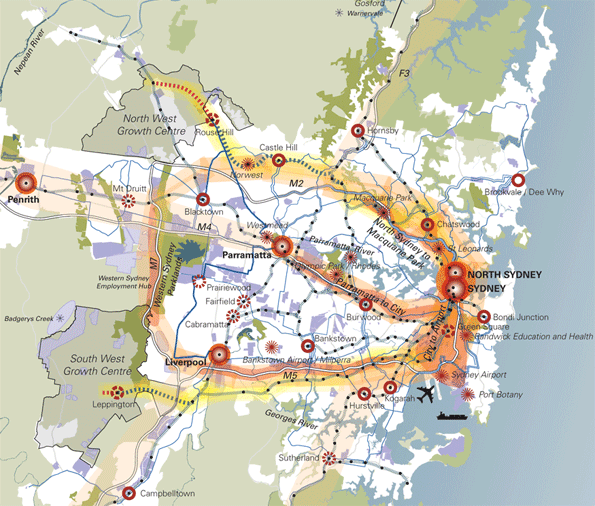
    By no means was this inevitable. Sydney could have succumbed to the downside of what urban theorists call the ‘world city’ phenomenon. According to the research group Globalisation and World Cities (GaWC), world cities are major international hubs with stronger ties to the global economy in terms of capital flows, trade and movement of people and information than to their own hinterlands. GaWC ranks Sydney in the second or ‘beta’ echelon of world cities, along with places like San Francisco and Mexico City (Melbourne is ranked in the third or ‘gamma’ echelon). Hence Sydney’s ‘global arc corridor’, which stretches from Macquarie Park south to the CBD’s gleaming towers and onto Sydney Airport and Port Botany, hosts the cream of the country’s finance, legal and business services, information technology, engineering and marketing industries.
    Some world cities are distinguished by vast disparities in wealth and economic opportunity – between such globally oriented zones, sucking up the region’s capital, infrastructure capacity, skills base and government services, and stagnant hinterlands inhabited by struggling workers in declining, marginal industries or masses of unemployed. But that was not Sydney’s fate.

    Why and how did a viable economy develop in the middle to outer suburbs of the city? To answer this question it is necessary to recall some of the constants of Sydney’s recent history. The gradual emergence of global Sydney generated higher land values throughout the inner-city. Consequently, many inner-city land uses associated with nineteenth century transport nodes, such as the light industrial plants, depots and warehouses clustered near the railway junction south of the CBD or along the harbour foreshores of the inner-west were no longer sustainable in the face of escalating demands for office space and gentrification.

    Combined with the growth of motor vehicle mobility for passenger and freight transport, particularly since the 1950s, this led to the transfer of many industrial, transport and warehousing activities to cheaper land on the western and south-western fringes. At that stage of the city’s evolution, there were relatively few restrictions on the acquisition of space for these and related purposes. And the growth of road transport relative to maritime and rail sealed the necessary links to international gateways on the eastern seaboard, like Sydney Harbour, Port Botany and the airport.

    These trends were intensified by the construction of a road network to service the interstices of Sydney’s nineteenth century ‘hub-and-spokes’ or radial railway lines, culminating in the orbital motorway network (the dreaded ‘tollways’). Not only did motor vehicle mobility facilitate industrial dispersion, but also residential settlement adjacent to the new industrial jobs. The radial railway lines were Sydney’s nineteenth and early twentieth century template; the orbital motorway is the city’s contemporary template.

    As in the case of industrial relocation, there were fewer restrictions on residential development for the workers employed in these dispersed industries (this began to change by the mid-1990s). Inexpensive housing, a mild climate, out-door lifestyles and a preference for detached houses on sizeable blocks were also attractions. Over time western Sydney achieved 75 per cent regional employment self-containment, and key travel patterns are now intra-regional.

    Later phases of globalisation reinforced this spatial pattern. The rise of global Sydney was a major driver, at least since the early 1980s, of economic policies that favoured the liberalisation of economic activity. Naturally, this had repercussions across the rest of the city. One fundamental outcome was the expansion of services – such as retail – relative to manufacturing and commodities as a proportion of the national economy. The appearance of diverse service industries in the outer suburbs was yet another function of space and mobility. In western Sydney, this was closely associated with the region’s booming population growth. From the 1970s to recent times, western Sydney’s population growth outstripped the rest of the city and country.

    By the early 1990s, market oriented reform had ushered in a period of low inflation, interest rates and input costs, the latter having been wrung from difficult reforms to energy and other public utilities. The interaction of steady economic and population growth powered a strong consumer economy linked to settlement of the fringe suburbs. Such areas experienced a boom in residential and commercial construction, and the related demand for household fixtures, appliances and goods.

    These conditions unleashed a thriving small business sector in services, operating in a competitive market characterised by low entry barriers (low costs and overheads) and narrow profit margins. This, too, was a by-product of globalisation, as SGS Economics and Planning explain: ‘The concentration of small business activity in NSW (and Sydney) and the more rapid growth in the share of employment in this sector compared with other parts of Australia may reflect the tendency for heightened fragmentation of supply chains in globally engaged economic regions’. Presumably, this is why Mark Latham harped on about ‘the small business-people, the contractors, franchisees and consultants of the new economy’.

    While market pressures caused the ‘unbundling’ of service providers, advanced information and communications technologies were integrating head office, back office, manufacturing and distribution activities in land extensive facilities like the 50,000 plus square metre Coles Myer and Coca Cola distribution centres at Eastern Creek, and, in a different way, cutting-edge business and technology parks like Norwest and Macquarie Park. These facilities, contiguous with the orbital motorway, are creatures of space and motor vehicle mobility, and always will be.

    That is why the best elements of the NSW government’s City of Cities plan represent responsive rather than prescriptive planning; they reinforce successful trends emerging from the interplay of market forces. Plans for intensive commercial development along orbital motorway corridors, such as the M7 and particularly at its intersection with the M4, dubbed ‘the western Sydney employment hub’, the refocus on important western centres like Parramatta, Liverpool and Penrith as ‘regional cities’, and the series of road-rail transport interchanges (also land extensive) are prime examples.

    Its enemies

    This vibrant though vulnerable web of socio-economic connections is always at the mercy of global conditions – witness the impact of petrol prices – but also increasingly under challenge from domestic political actors, principally environmentalists, urban planners, some property developers and opinion makers. Their determination to freeze urban boundaries and, as far as possible, reduce mobility to public transport capacity, particularly rail, is hurting Sydney. Hopefully, their influence is gradually receding under Morris Iemma’s leadership.

    Environmentalists and planners – two increasingly interchangeable categories – are oblivious to the prospect that their creeping regulations and imposts, and misallocated resources, could unravel the suburban economy. Yet they will always struggle to mobilise public opinion. Their all-purpose pretext, the climate change hypothesis, relies on aggregated data which can’t be used to argue particular cases. Take the NSW government’s recent decision to review the costly ‘energy efficiency building sustainability’ rules. While the Housing Industry Association came to the issue armed with a raft of statistics about price impacts and falling housing starts, green outfits like the Total Environment Centre could do little but sputter the magic words ‘greenhouse’ and ‘global warming’. They were not in a position to show why, how and to what extent this particular decision would exacerbate climate change.

    Their other weapon is the peculiar concept of ecological or urban ‘footprint’. This purports to measure how much productive land and water an individual, a city, a country, or humanity requires to produce all the resources it consumes. On this measure, Sydney has a footprint that covers 49 per cent of NSW or 150 times its actual size, so its expansion must be constrained. The notion that wealth can be equated to an amount of land, however, is a throwback to pre-modern times. In advanced economies, wealth creation has more to do with the elaborate transformation of natural inputs, capital accumulation, forms of business organisation and services. And as one scathing writer points out, the concept fails to acknowledge that a stretch of land can be used for several different purposes simultaneously. Nevertheless, this absurd idea continues to pass unmolested into almost every discussion of urban planning, including City of Cities.

    If environmentalists are taken seriously at all, it is because they ride on the back of vested interests who benefit from artificially inflated land values, since this is the inevitable consequence of restricting new releases. Alan Moran of the Institute of Public Affairs argues that the reluctance of governments to burst the bubble of housing unaffordability by releasing more land for development can be traced to the undue influence of existing property owners, including powerful developers, who stand to suffer a capital loss if the scarcity value of land is diminished. It is a case of the ‘haves’ depriving the ‘have nots’, such as low income earners and young first home buyers.

    Then there are the progressive academics and commentators who insist the suburbs are zones of social alienation, inimical to personal contentment and well-being. Consider the Australian Financial Review’s property writer Tina Perinotto, who opposes sprawl because we can’t afford the ‘psychologists to deal with people who end up in the lonely greenfield sites’, or left-wing writer Natasha Cica, who raves about ‘the aesthetic and ethical slums of McMansion affluenza’, or Sydney Morning Herald planning and architecture writer Elizabeth Farrelly, who calls suburbanisation ‘total-indulgence parenting’, or urban policy academic Brendan Gleeson, who believes ‘shadows of fear and antipathy are spreading across’ the suburbs.

    Progressives clearly feel a need to delegitimise suburban life. This stems from their barely suppressed rage against people they can’t control. Like Kurtz in Joseph Conrad’s Heart of Darkness, suburban people have strayed too far from civilisation, they contend, and will lose their minds. Yet they fail to explain why surveys indicate an overwhelming preference for detached housing on sizeable blocks, or why the latest Australian Unity Wellbeing Index registers higher rates of happiness amongst suburban people than their inner-city counterparts.

    The left’s new poster-boy of urbanism, Gleeson, in particular, leads a tortured existence: he idealises suburbs as the nation’s ‘heartlands’ while hating almost everything about them. Gleeson has latched on to the emergence of so-called ‘gated’ communities as ‘harmful to collective democratic purpose’. This sort of socio-economic segregation is a recognised downside of the ‘world city’ scenario, especially in developing countries. In Sydney, however, it is more likely to mark a transitional stage of historically disadvantaged areas attracting more prosperous residents, eager to replicate the superior amenity of affluent suburbs. To the extent that it heralds the arrival of generally higher living standards in these localities, it is not necessarily the evil denounced by Gleeson.

    Of course, the enemies of growth don’t give a damn about the storm clouds perceived by Dr Henry. Sooner or later, however, they will bow to the inevitable: space and mobility made Sydney’s past; they will make the city’s future, if it is to be a future worth having.

    This article originally appeared at The New City Journal
  • Letter From Asia’s Co-Prosperity Sphere

    To visit banks in Hong Kong and Kuala Lumpur, I recently flew into Shanghai and out from Singapore. In two weeks, I rode a lot of trains and met a lot of bankers. When I got home to Europe, it felt like I had traversed a Greater Economic Co-Prosperity Sphere, although I was never sure if it was one that belonged to China, Japan, or the international banking system. Here’s a highly personal, thumbnail report on the region’s development and some of the local rail network:

    China: The complexities of its currency are less significant than the feeling that the renmimbi certainly feels undervalued, when you can buy dinner for $3. Shanghai is an Asian cross between New York and Las Vegas, a port city of grandeur and skyscrapers that, at night, pulse like slot machines. Behind and facing the French colonial façades on the Bund, modern capitalism’s famous boardwalk, Shanghai is awash in modernistic, high-rise towers, as if the Chinese miracle is to produce office cubicles.

    The underground metro lacks the efficiency of Moscow or the elegance of Paris, although the trains are clean and the signs are in English, and the ticket machines feel like off-track betting. Changing from one line to another was often a nightmare. Trips across the city frequently involved long subterranean walks through arcades, on Escher-like stairways, or what felt like the Great Patriotic Underground Long March. But I never tired of the metro signage, such as one billboard that implored: “No jumping off the platform and onto the track.”

    Hong Kong Night Train: On the overnight train from Shanghai, I had a Pullman-like berth in a first-class compartment, where my easy chair looked like it was borrowed from Mao’s office. In the dining car, what I hoped might be blackened tuna was four small, boney fish, more bait than a main course. I went to sleep around what looked like the steel belt of Wheeling, West Virginia, and woke up to a misty, terraced, landscape painting.

    Guangzhou: Housing for the Chinese revolution is a phalanx of high-rise apartment buildings, which can be seen in every village, town, and city, grimly marching their tenants into a brave new world that finds heaven in sixty stories. What will happen to China when the housing projects become slums? On the ride south, in the two hours between Guangzhou and Hong Kong I crossed territories with a population of more than one hundred million. Contemplated from the train, Mao looks less like a revolutionary and more like Robert Moses, New York’s superbuilder.

    Hong Kong: Shanghai may well represent the future working, but, when compared to Hong Kong as a financial center, it remains a second city. In the Special Administrative Region (Hong Kong’s married Chinese name), I talked with bankers who are convinced that the former British colony, still splendid and affluent, is playing the same role for Beijing communists that it once did for the Jardine family: that is, to serve its masters as an entrepôt, money changer, front company, merchant bank, fiduciary, gold vault, and deep-water port for the goods of empire.

    The pleasure of Hong Kong was to visit banks that are not at death’s door. In Europe and the United States, all I ever come across are banks that have lent $500 on the collateral of a toaster. In Hong Kong, not to mention Asia at large, I only encountered banks that had ample deposits, liquid collateral, and positive cash flow. The question I heard most often was what to do with excess deposits; the assumption all around was that the money markets in London and New York are variations on Macau dog tracks.

    Malaysia: The state railway charges about $30 for a night in a compartment, and has fish tanks on the platform in Alor Setar. George Town, the colonial capital of Penang, is Asia’s Jerusalem, a warren of shops owned by Chinese, Malays, Indonesians, Armenians, Indians, Thais, and Englishmen. Penang is the place to go if you want to change your money, faith or identity.

    Down Penang’s east coast, not far from a Chinese temple with ceremonial snakes, is an urban enterprise zone of out-sourced, offshore semiconductor companies, many American, which import chips parts and workers and export the internal combustion engines of the information super highway.

    Kuala Lumpur’s large banks straddle the disparate worlds of retail and Islamic finance. Much of the Asian economic miracle has been fueled with local currency bonds; in Malaysia, they are issued in ringget. But modern finance does not work for those Islamic clients for whom interest is not an article of faith. Hence, banks in Muslim countries like Malaysia and Indonesia often transmute deposits into assets that are veiled to look like interest-bearing bonds.

    Singapore reminds me of a shopping mall with a national flag. To get home to Europe, I flew on Air France as opposed to continuing the journey by train. I knew from a meeting with the Malaysia state railways that there is a gap in the international connections between Singapore and Europe.

    Before leaving, I met with a railroad man who is working to complete the network in Southeast Asia. With this finger on a map, he traced the missing track through the Thai jungle and Cambodian rice paddies, grimly pointing out that one way to tie in the overland service would be to complete the line that crosses the River Kwai.

    One day, tracks will connect Singapore to Kunming, in southern China. And from there, perhaps someday, I will begin my journey home, using an ATM machine to buy my ticket and then to pay for it in renmimbi.

    Matthew Stevenson was born in New York, but has lived in Switzerland since 1991. He is the author of, among other books, Letters of Transit: Essays on Travel, History, Politics, and Family Life Abroad. His most recent book is An April Across America. In addition to their availability on Amazon, they can be ordered at Odysseus Books, or located toll-free at 1-800-345-6665. He may be contacted at matthewstevenson@sunrise.ch.

  • Amid Obama’s Change is More of the Same

    The Obama administration has been, so far, hierarchical and even conservative in its thinking. Following and even surpassing the Bush administration’s reliance on an M.B.A.-trained elite, which drove the country nearly to ruin, the Obama approach seems to boil down to finding the smartest guy in the room, rather than utilizing people with hands-on experience or acquired wisdom.

    This fixation on hierarchy has been unexpected for an administration whose stock sold on the notion of being something other than the same old, same old. Yet as it turns out, the Obamanians seem to be as narrow, if not narrower, than their much-disdained predecessors.

    Early on, President Barack Obama’s magical mystery tour gained power in places you would not expect it to — winning critical victories in overwhelmingly white, socially conservative Great Plains and Midwestern states. Yet today, he has built one of the narrowest administrations, both ideologically and regionally, in recent memory.

    This trend became apparent in a new National Journal study of the administration’s top 366 officials. To be sure, the Obama team has more Hispanics, African-Americans and women than its predecessors. But beyond gender and color, the Journal reports, this is an administration of remarkable sameness.

    For one thing, people with practical business experience — outside of finance — have little role in formulating economic policy. This differs from the Bush administration’s tilt toward traditional autocracies; this is more rule by the cognitive elites. A history of real problem solving seems to matter less than the quality of university pedigrees; the Obama team appears to be a bit like a giant law review, drawing on only the best and brightest from places such as the University of Chicago, Oxford, Harvard and Stanford, as well as some elite think-tank denizens.

    This narrow gauge is even clearer geographically. There are few people around the president who come directly from exurbs or small towns; virtually all the inner circle hail from a handful of locales — Washington, Chicago, New York, Boston and the Bay Area. Remarkably, according to the National Journal, only 7 percent worked last year in a state carried by John McCain. Red appears to be one color that does not pass diversity muster for this administration.

    The danger here is not so much inexperience but a vision clouded by similar experiences and prejudices from the liberal wing of the baby boomer generation. The president remains broadly popular with the young, yet his administration is actually older than that of President George W. Bush. Obama may be a millennial matinee idol, but his administration appears boomer-dominated in its point of view.

    This may explain why Obama has focused so much on the old obsessions of left-leaning boomer elites — health care, civil rights, pacifistic foreign policy — and less on the issues, notably job and wealth creation, that matter most to those younger than 50. Even on the environment, an issue with great appeal to millennial Americans, his approach has been less community-based and consensual and more dogmatically and centrally directed than might appeal to a generation shaped by social networking and the Internet.

    Of course, Obama still could change course and evolve into the bold, innovative leader needed for these fast-changing times. However, to get there, he must be more than merely articulate. This president needs a surer and more current approach to dealing with epochal challenges whether on the public squares of Tehran or on this country’s Main Streets.

    This article first appeared at Politico.

    Joel Kotkin is executive editor of NewGeography.com and is a presidential fellow in urban futures at Chapman University. He is author of The City: A Global History. His next book, The Next Hundred Million: America in 2050, will be published by Penguin early next year.

  • America’s Energy Future: The Changing Landscape of America

    During the first ten days of October 2008, the Dow Jones dropped 2,399.47 points, losing 22.11% of its value and trillions of investor equity. The Federal Government pushed a $700 billion bail-out through Congress to rescue the beleaguered financial institutions. The collapse of the financial system in the fall of 2008 was likened to an earthquake. In reality, what happened was more like a shift of tectonic plates.

    History will record that the tectonic plates of our financial world began to drift apart in the fall of 2008. The scale of this change may be most visible in who controls the energy that powers our world.
    ***********************************

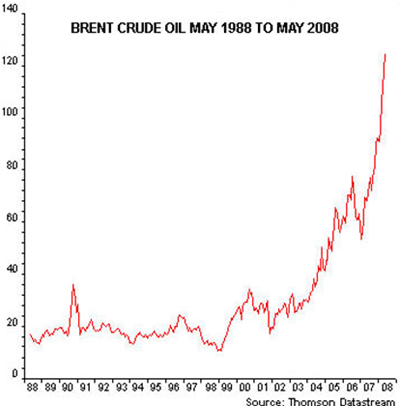
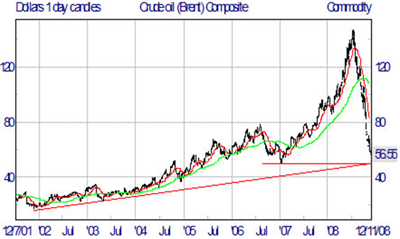
    May 2008 brought with it the highest price on record for Brent Crude Oil – $148 per barrel. At the pump that translated into prices in excess of $4.00 per gallon. A sixteen gallon fill-up of a Toyota Prius in Los Angeles cost its owner $72.00 and a fill-up of a twenty-five gallon Cadillac Escalade set its owner back more than $100.00. The largest transfer of wealth in the history of mankind was underway and consumers were feeling the pinch.

    The countries that border the Persian Gulf produce and export 20,000,000 barrels of oil per day. At its peak in May of 2008, the Persian Gulf producers (Saudi Arabia, Iran, Iraq, Kuwait, Qatar and the U.A.E) were receiving $3 billion per day, $90 billion per month and $1 trillion per year in revenues from the industrialized nations of the world, including the EU, North America and, most importantly, the rising powers of India and China.

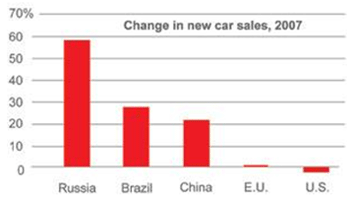
    These Persian Gulf nations are mostly monarchies controlled by individuals, royal families or at best a few power brokers. American consumers abandoned their love affair with the SUV and Detroit’s assembly lines began to grind to a halt. New car sales which peaked at 17 million units in 2007 plummeted to a rate of 9.2 million within six months. The inventory of unsold vehicles built up and led inexorably to the bankruptcies of Chrysler and General Motors.

    At the same time, the airlines began charging for checked bags and discontinued the ubiquitous bag of peanuts as they reeled under the cost of jet fuel. Bellicose despots in oil rich lands outside the Middle East used their new found wealth to rattle their sabers. Russia, the world’s second largest oil producer after Saudi Arabia, began flying their venerable Backfire bombers to the American coast. Hugo Chavez of Venezuela, the world’s ninth largest oil producer, used his oil wealth to turn himself into an icon of the anti-gringo sentiment always beneath the surface throughout Latin America.

    Politicians, who placed America’s coastline off limits for drilling, were forced to recant their precious moratorium under the growing chorus of “Drill here and drill now”. Environmentalists, who destroyed the nuclear power industry with fearmongering over its safety, were increasingly on the defensive. T. Boone Pickens invested millions of his own money to promote wind farms – and more importantly natural gas – across America’s heartland. Sales of little known Jatropha seeds, a plant indigenous to India that produces an oil clean enough to run a diesel engine, skyrocketed. By the fall of 2008, the financial markets were buckling under the strain.

    As the economies of the world contracted, demand for oil plummeted and the price of crude collapsed. Terrified by the apparent mismanagement of the economy by the Republicans, Americans elected an untested junior Senator to the most powerful position in the world. Predictably, plans for alternative energy withered as prices plummeted and gas dropped to $1.50 per gallon. Russia, whose cost to develop crude is $50 per barrel, lost its swagger as its currency and stock market collapsed with the price of crude. The collapse of oil to $35 per barrel even silenced Hugo Chavez, at least for a moment.

    Sadly, the America public lost interest in energy as they were distracted by a 40% loss in their 401ks, corporate bankruptcies and the growing numbers of lay-offs. Politicians quickly shifted their focus from drilling, nuclear energy and independence from imported oil and began espousing the Obama administration mantra of “green energy” and “green collar jobs”. Unfortunately, these words are just a chimera since they are likely, even with massive subsidy, to produce only a small fraction of the nation’s energy for at least decade or two.

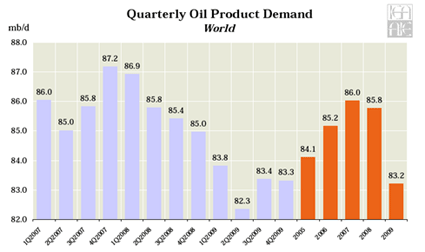
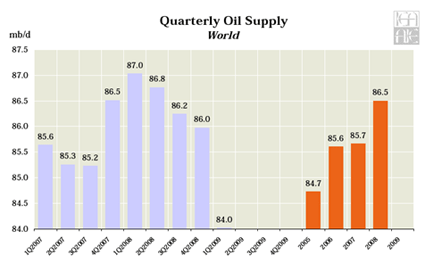
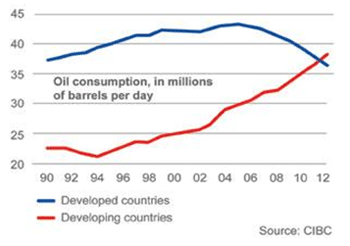
    These ephemeral goals only mask the real problem: America’s dependence on imported oil. The world demand for oil averages 85 mbd (million barrels per day). In the darkest days of the global financial crisis during the spring, when we stood at the abyss of The Great Depression, demand dropped to just 82.3 mbd. Conversely, world oil supply peaked at 87 mbd in 2007. This relative parity between supply and demand eliminates the elasticity that puts some control on prices. With literally no elasticity, speculators know that buyers will purchase every barrel of oil and prices rise. The proof of this market force is visible at the pump where gasoline has crested $3.00 per gallon in California and more than $2.66 per gallon nationwide. The United States consumes 20,000,000 barrels of oil per day or 24% of the world’s supply. In previous decades this was not a problem because the United States was a major producer of oil. But our peak production was reached in the 1970s when the US imported just 35% of its oil. Today we import more than 66% and no longer can influence the price of black gold. That price is now determined by despots in the Persian Gulf, Russia and Venezuela.

    This problem is not going away soon. According to the Energy Information Agency of the U.S. Government, the world demand for oil will require an additional 44 million barrels of oil every day to meet projected demand. The increase of demand is not going to come from the American or European markets. The developed nations through conservation, fuel standards, a reinvigorated nuclear power industry and, over time, the push for alternative fuels will actually reduce their consumption over the next twenty years. The push will come from India, Russia, Brazil, and of course China.

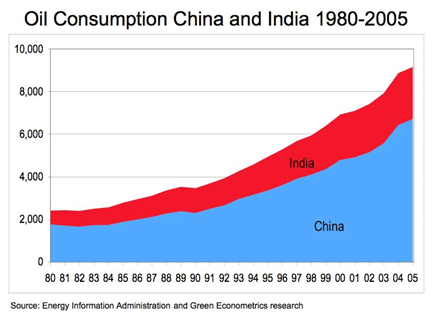
    India, with a population over one billion, has announced its version of the Interstate Highway System that opened America to its great Middle Class. After the acquisition of Jaguar and Land Rover, Tata Industries has begun production of the Nano, a car that sells for $2,000 in India. The demand for oil to power the cars for an educated and increasingly affluent Indian society will keep pressure on oil prices for years to come. India uses just 2.7 mbd today but expects that demand to grow to 4.5 mbd by 2030.

    There are now more than a billion Chinese. China consumed just 2 mbd of oil in 1990. Oil consumption jumped to 7.6 mbd in 2007 and is projected to grow to 15 mbd in 2030. The Chinese automobile industry grew at 21% last year while the US auto industry contracted by 40%. China displaced Germany as the third largest auto producer and will soon eclipse the damaged US auto industry which is contracting to a mere shadow of its former self. Chinese brands such as Chery and Geely, unknown to American consumers, may soon become as well known in America as Nissan or Hyundai.

    Demand will push oil over $100 barrels again. Vast capital will pour into the Persian Gulf, Russia and Venezuela once again. Into this tempest comes America with a thirst for 20,000,000 barrels each day. The major oil producers in the Middle East, Russia and Venezuela are not America’s friends. Russia will use its oil wealth to thwart the US and veto in the United Nations any effort to subdue the North Koreas and Irans of the world. China, with its surplus of US dollars, will continue to harvest natural resources around the world, and forge strategic alliances with the likes of Iran as it secures the flow of oil and natural resources to its industries for years to come.

    Meanwhile our politicians ignore our growing dependence on unfriendly nations and our weakening credit rating in the world to chase the chimera of green collar jobs and a green economy. Wind and solar will never power more than a minuscule fraction of America’s engines. America needs the equivalent of the Apollo moon project, a national challenge to move America off its dependence on foreign oil. We need simultaneous development of domestic oil and natural gas drilling, nuclear power, development of hydrogen fuel cells and clean coal technologies along with wind and solar power plants.

    A year from now the landscape of America will be forever changed. Five years from now, will American find the fortitude to grasp its energy independence? Or will our weak politicians in both parties keep their heads buried in the sand until China and India emerge to deny us what we are no longer in a financial position to demand?

    ***********************************

    This is the third in a series on The Changing Landscape of America. Future articles will discuss real estate, politics, healthcare and other aspects of our economy and our society. Robert J. Cristiano PhD is a successful real estate developer and the Real Estate Professional in Residence at Chapman University in Orange, CA.

    PART ONE – THE AUTOMOBILE INDUSTRY (May 2009)

    PART TWO – THE HOMEBUILDING INDUSTRY (June 2009)

  • Mobility on the Decline

    Faced with an economic downturn and a bursting real estate bubble, Americans look to be staying put in greater numbers. According to Ball State demographer Michael Hicks, interviewed in an article examining the trend in the San Francisco Chronicle, “Property values have dropped so much, people can’t pick up and move the way they used to.”

    In April, the Census Bureau reported that in 2008, the “national mover rate,” declined to 11.9 percent, down from 13.2 percent in 2007. This marks the “lowest rate since the bureau began tracking these data in 1948.” As William Frey, a demographer at the Brookings Institute, puts it, “the most footloose nation in the world is now staying put.”

    According to Frey, the middle of the decade was marked by a “mobility bubble,” spurred on “by easy credit and superheated housing growth in newer parts of the Sun Belt and exurbs throughout the country”. As the recession took hold through 2008, migration to suburbs and exurbs fell “flat in a hurry,” showing “just how rapidly changing housing market conditions can affect population shifts.”

    While, as Frey suggests, people may be moving into suburbs and exurbs at a slower rate, central cities within metro areas continue to lose population. The Census Bureau reports that during 2008 “principal cities within metropolitan areas experienced a net loss of 2 million movers, while the suburbs had a net gain of 2.2 million movers.” While the downturn in migration may help central cities hold onto some of their population, Frey contends that “it remains to be seen whether the migration-fueled engines of the early 2000s—especially the Sun Belt and outer metropolitan suburbs—will regain their former status.”

  • Why Attitude Matters: How Nebraska is Reaping the Stimulus

    In what are tough times for most states, conditions for business remain surprisingly good in Nebraska. Like other states in the “zone of sanity” Nebraska is especially supportive of small businesses.

    Nebraska is one of a series out of mid-American outliers. In 2008 – a year of a severe national contraction – the state experienced a 3.6 percent growth in gross domestic product. Its current unemployment rate of just 4.4 percent stands at less than half the U.S. rate of 9.4 percent (latest available from Bureau of Labor Statistics).

    The state itself is in good financial shape, with a cash reserve over $500 million (including a $20 million to $30 million operating surplus every year since 2001). I believe there are two important factors fundamental to Nebraska’s health. The first lies in cooperation across levels and borders – which was described in my piece on regional cooperation in the Omaha World-Herald. This positive attitude toward growth and economic development in Nebraska extends through every level – you find it at the state, regional, county and city level. A supportive attitude toward development plays an important role in making things work.

    The second and perhaps more important factor critical to fostering an environment supportive of growth and prosperity lies with a broad acceptance of the benefits of on-going economic development as a source of continued quality of life. This attitude can be described – as opposed to the traditional NIMBYism seen so often in more crowded, coastal states – as “Yes, In My BackYard” or YIMBYism. Nebraska has pockets of pro-development populations, like Sarpy County, on the southern border of the city of Omaha.

    Before moving to Omaha, my business was based in Santa Monica, California. With a population of about 89,000, Santa Monica is a beautiful city consisting of smart people who often make foolish choices. Many residents in Santa Monica, like those in Portland and other NIMBY-areas of the country, oppose development in their neighborhoods.

    Many who live in million-dollar single-family homes in Santa Monica were opposed to building new middle-class jobs and homes in their neighborhood, although they often favor building homes for the poor, albeit somewhere not in their bailiwick. This promotes a “haves versus have-nots” social order, and also doesn’t make sense from a personal point of view. Whenever the growth debate was on the table (which it often is in Santa Monica), I would tell people, “Wouldn’t you like to build jobs and housing so your children can work and live in Santa Monica, too? Do you want your grandchildren to move to Texas? Because I assure you they are building middle-class jobs and housing in Texas.”

    In contrast I’ve found some pro-growth Nebraskans who relentlessly seek making development happen. For the mayors of the United Cities of Sarpy County, the emphasis is on cooperation as a path to success. Recent developments around my adopted hometown of Bellevue, Nebraska – home to Offutt Air Force Base and U.S. Strategic Command – provide a simple, straight-forward example of how YIMBYism works in practice.

    About seven years ago, the City of Bellevue, along with the Bellevue Chamber of Commerce, funded an economic development plan that could be used to set a community agenda for growth. The resulting plan highlighted several locations where development was feasible, desirable and likely to lead to greater growth. One of the initial designated areas is a 6.5 mile corridor along Fort Crook Road. “Fort Crook Road,” says Megan Lucas, President of the Bellevue Chamber of Commerce, “is the spine of Bellevue. Other nodes of economic development will fill-in around Fort Crook when it is ready to move forward.”

    The City and the Chamber then devised a development plan specific for the Fort Crook Road Corridor. The Fort Crook Road Plan was approved as part of a new comprehensive plan for City development – with zoning updated to accommodate retail development along the entire length. The long-range plan is to shift the road west, closer to an existing active railroad line, and to create a linear park along the median strip to connect two existing trail systems – the Lewis & Clark in the north and the Bellevue Loop of the Keystone Trail on south end.

    Two points make this specific example interesting. The foresight in developing the comprehensive plans for the area positioned it perfectly for the current environment. A good chunk of the Fort Crook Road Corridor is currently occupied by an abandoned concrete production facility. These blighted structures need to be demolished to get the property ready for development. But since the City already owns the property and a comprehensive development plan is in place, the project is “shovel ready” – those magic words that qualify any development project for federal stimulus funding under the American Recovery and Reinvestment Act of 2009.

    In contrast, there are hundreds of worthy projects in every state that will not qualify for Stimulus money because they fail to meet the “shovel ready” requirement. Part of the Fort Crook Road Plan made it through the initial review stages for stimulus funding in Nebraska. The project ranked in the top three in the state for eligibility and suitability. According to Mayor Ed Babbitt, some stimulus funding has been allocated to revise traffic signals in the corridor; funding to remove blighted structures will likely come later this year from an environmental clean-up fund.

    The second point that makes the Fort Crook Road Corridor an interesting example is that one of its biggest proponents – Megan Lucas – lives in the Corridor. The development and expansion of Fort Crook Road is in her backyard. She and many other residents in Bellevue are saying, “Yes, In My Backyard.” Even more recently, three cities in Sarpy County vied to be the location of a Triple-A ballpark to be built in cooperation with the Omaha Royals of the Pacific Coast League. YIMBY-ite residents far out-numbered the NIMBY-ites at every public forum on the choice of location. A positive attitude toward economic development has emerged as a major factor in getting ready for the stimulus – something many in the Obama bastions in the blue states might want to consider.

    Susanne Trimbath, Ph.D. is CEO and Chief Economist of STP Advisory Services. Her training in finance and economics began with editing briefing documents for the Economic Research Department of the Federal Reserve Bank of San Francisco. She worked in operations at depository trust and clearing corporations in San Francisco and New York, including Depository Trust Company, a subsidiary of DTCC; formerly, she was a Senior Research Economist studying capital markets at the Milken Institute. Her PhD in economics is from New York University. In addition to teaching economics and finance at New York University and University of Southern California (Marshall School of Business), Trimbath is co-author of Beyond Junk Bonds: Expanding High Yield Markets.