Blog

  • America Without Immigration 2015-50

    Be careful what you wish for, if that is what you wish for.

    Except for the oil shocks of the 1970s and a few other recessionary years, the US economy has generally been strong in the postwar era since 1945. Huge advances in technology and trade, a favorable business environment and strong demographics combined to create tens of trillions of dollars of new wealth in the US and around the world.

    The demographic component played an important supporting role. During the baby boom years, the number of Americans grew at an average annualized rate of 1.6% (see chart). In subsequent years starting in the mid 1960s, this growth faded to about 1% where it remained until 2007-08. Since then, it has fallen to 0.7% and, on current UN projections, it will continue to fall through 2050 when it may dip under 0.4%.

    Screen Shot 2016-08-01 at 11.00.53 AM

    Put another way, the population grew 1% per year on average in the years 1950-2015 and is expected to grow at half this rate, or 0.5% per year, from today to 2050. As a result, the US population will be at 356 million in 2030 and 389 million in 2050, equivalent to 18 million and 67 million fewer Americans in those years than if the growth rate had remained on its historic 1% trajectory.

    (In the charts below, ‘At 1% CAGR’ refers to the (not expected) continuation of the historic 1% trend; ‘Medium’ refers to current projections, including continued immigration; ‘Zero Migration’ refers to a scenario with no new immigrants starting in 2005-10.)

    Screen Shot 2016-07-30 at 7.36.15 AM

    Screen Shot 2016-07-30 at 7.37.01 AM

    What accounts for this slowdown? Mainly the boomer phenomenon. First, baby boomers had fewer children than their parents. The Total Fertility Rate (TFR = average children per woman) stood at near 2.0 in the 1980s and 1990s, compared to near 3.5 in the 1950s and early 1960s. Second, the number of US deaths will surge in 2025-45, echoing eighty years later the surge in births in 1945-65. Barring a leap in life expectancy, this death boom will put the brakes on demographic growth.

    So even before we start talking about immigration, the US population will be slowing down and slowing down by a big number, recording a shortfall or “deficit” of 67 million vs. the historic trend by 2050.

    Version 2

    Version 2

    In addition, the aging of the population will create another challenge with a rising dependency ratio (number of dependents per worker) reducing discretionary spending and investing, and straining pensions and entitlements. On current trends, the dependency ratio is expected to rise from 50.9 in 2015 to 65.8 in 2050. This ratio was at 66.5 in 1960 and its subsequent decline in four consecutive decades provided a big boost to the US economy.

    Screen Shot 2016-07-30 at 7.36.23 AM

    Adding immigration to the discussion further complicates the picture. If America had taken in no more immigrants starting in 2005-10, its population would be 48 million smaller (114.9 minus 66.9 in the table above) in 2050 than if it had remained on the present course and 115 million smaller than if it had remained on its historic trajectory. Further, the dependency ratio would climb to 69.6 in 2050. Note how the population would stop growing around 2035 because the number of deaths would roughly equal the number of births. (See also America Heading Towards Zero Population Growth?)

    It is important to highlight the demographic shortfall vs. the historic trajectory because some of today’s more extreme anti-immigration rhetoric is being presented as a promised return to the better economic conditions of the past. These conditions can be recovered through other paths but not through measures that exacerbate the population slowdown. Indeed if we judge by the figures above, it is clear that returning to the past is not in the realm of the possible, at least as far as demographics are concerned.

    In order for the US population to grow at 1% again without immigration, the birth rate would have to jump to levels not seen since the baby boom or higher. Even then, the dependency ratio would climb more steeply for two decades because of the millions of new babies.

    The US economy can and most likely will have a bright future but it cannot count on population growth to fulfill its historic supportive role. The economy benefited for decades from the demographic sweet spot of a rising population and a declining dependency ratio. Neither of these measures will be as supportive in the future. Instead greater gains will have to come from technology and automation and from investments in productivity and education.

    Related:

    This chart shows the number of Americans aged 20-64 and 30-59 under the Medium scenario. The working age population (20-64) is expected to remain flat for fifteen years and then to grow at a lower rate than in the past. This population would decline under a Zero Migration scenario. While it is true that automation will take over a number of functions and would dampen the impact of a stagnant or falling work force, demand for goods and services would certainly take a hit unless new export markets are opened up.

    Screen Shot 2016-03-10 at 2.58.14 PM (1)

    For more on the role of demographics in the economy, we suggest that you listen to this podcast.

    It should also be remembered that world demographics are far from standing still. See here and here or consult the Populyst demography archive.

    Sami Karam is the founder and editor of populyst.net and the creator of the populyst index™. populyst is about innovation, demography and society. Before populyst, he was the founder and manager of the Seven Global funds and a fund manager at leading asset managers in Boston and New York. In addition to a finance MBA from the Wharton School, he holds a Master’s in Civil Engineering from Cornell and a Bachelor of Architecture from UT Austin.

    Statue of Liberty photo, Public Domain via Wikimedia Commons

  • Zika, Rio And The Rising Health Hazards Of Megacities

    In 2009, when Rio de Janeiro was awarded the Summer Games, many saw it as a validation of Brazil’s ascension on the world stage. Yet seven years later, this estimation seems to have been a bit premature, as Rio and other Brazilian cities struggle to meet the basic needs of the Olympians.

    The biggest problem facing the Rio Games may not be the filthy venues for aquatic events, or even security concerns in one of the world’s highest crime cities, but basic public health. The fears of transmission of Zika virus may be overblown, given that it’s the winter in Brazil and mosquito populations will be lower, but travelers run a real risk of contracting food-borne illnesses and influenza, according to the European Center for Disease Prevention and Control.

    Rio, covering an urban area of over 11 million, belongs to a class of developing world megacities that, in too many cases, have become “a breeding ground for infectious diseases,” according to researcher Carl-Johan Neiderud, including another feared mosquito-born scourge, dengue.

    Dr. Seth Berkley, CEO of the vaccine alliance Gavi, points to the recent increase in the scale of densely populated urban areas, many without adequate sanitation, as turning containable illnesses like Zika and Ebola into pandemics. Dense urbanization may not have created Zika, which causes newborns to have unusually small heads, he notes, but it has accelerated its spread from a mere handful to a current tally of 1.5 million cases this year.

    Outbreaks of new pandemics have become increasingly common in the developing world, where urban growth is now three times faster in low-income countries than in their higher-income counterparts. Developing country megacities already represent the majority of the world’s 29 urban areas with over 10 million residents. The United Nations predicts 16 more megacities could emerge by 2030, all but one in the developing world.

    This is a problem not only for developing countries, but the health of the world. Zika, like dengue, may have proliferated in unsanitary, dense cities in the developing world, but it’s spreading to the United States. The FDA just called for Miami and Fort Lauderdale to halt blood donations due to cases discovered locally. The number of those infected is climbing in Puerto Rico as well. How long before other wet, hot parts of America — say east Texas and Louisiana – also report infections?

    Why is this happening? David Heymann, head of the center on global health security at Chatham House and a professor at the London School of Hygiene and Tropical Medicine, blames our interconnected world. Even megacities in the most impoverished countriesare just an airline trip away from the rest of the world. Once a disease starts in a developing country, he says, it’s likely to find its way into more prosperous ones as well.

    Historic Precedents

    Cities afflicted by massive poverty have long been primary breeders of disease. Plagues and pestilences were commonplace in the earliest urban centers, from ancient Greece and Rome to Baghdad, Beijing and Cairo. Cut off often from clean water, living cheek to jowl, large cities were often assaulted, and sometimes all but emptied, by waves of infectious diseases. Rome’s sewer system may have been well ahead of its time, but the higher floors in buildings lacked plumbing hookups, which made this system less than effective in stemming disease.

    Conditions got, if anything, worse when the Empire’s capital shifted to Constantinople. The largest city in the Mediterranean at the time, and one of greatest in the world, nearly half the population died from plague in the middle of the sixth century.

     Much the same process occurred in the great cities of the Muslim world. Cairo, which in the 14th century had a population of 400,000, or eight times that of contemporary London, was racked by repeated epidemics that forced rulers and high officials to escape to the countryside. So great were these plagues, the Arab historian Ibn Khaldun noted, buildings and even palaces were abandoned, and “the entire inhabited world changed.”

    Arguably, the industrial cities of the West provide the most compelling precursor of what is occurring in megacities today. London, in the 19th century the world’s largest city, suffered mortality rates higher than the countryside until the 1920s. Raw sewage ran down the streets of Berlin as late as the 1870s; only 8 percent of housing had toilets. Not surprisingly, as Berliners dumped their sewage into the river, there were recurrent outbreaks of cholera, typhus, and other devastating diseases. In St. Petersburg, at the dawn of the Russian Revolution, living conditions were even worse than Berlin’s; nearly half of all deaths in the city were traceable to infectious diseases.

    Time To Rethink Megacities?

    This sad history is repeating itself, in certain respects. We might think that city residents with access to healthcare would be healthier. In many places, that’s not the case. The average lifespan in Mumbai is 57 years, seven years short shorter then the Indian average. Gaps in life expectancy can be found in other developing world megacities, including Tehran and Cairo. “Megacity life,” notes Dr. Marc Reidl, a specialist in respiratory disease at UCLA, “is an unprecedented insult to the immune system.”

    Yet despite this, some Western pundits embrace “the inexorable logic of the mega-city” as a blessing for both their residents and the planet. A recent article in Foreign Policy was bizarrely titled “In Praise of Slums,” arguing that megacities are “a force for good” because they provide more opportunities than villages.

    Yet rather than accept misery common to such places, perhaps Westerners might think how to apply their past experience to solve megacities’ worst problems. It can be done. After all, Paris cleaned itself and became much healthier after Georges-Eugène Haussman’s renovation of Paris, commissioned by Napoléon III in the mid-1800s. Much can be accomplished by improving basic sanitation; in Dhaka for example, the sewer system covers barely 25 percent of the city, something that would seem strange to a denizen of imperial Rome, much less modern London or New York.

    In many countries, including in the United States and Great Britain, particularly in the 20th century, health conditions improved as inner cities depopulated and more people moved to the periphery. This was one of the prime objectives of Ebenezer Howard’s bold vision for the growth of “garden cities,” which greatly influenced town planning in many parts of the high-income world.

    Following Howard’s admonitions for the filthy cities of Edwardian England, perhaps we should be encouraging developing countries not to concentrate their people in megacities, but spread them out into more healthful environments. These ideas are not far-fetched. An impressive 2014 study by the McKinsey Global Institute, called “Mapping the Economic Power of Cities,” found that growth is already shifting to smaller cities.

    This decentralizing process, notes Singapore-based scholar Kris Hartley, could take advantage of a growing shift of industrial and even service businesses to more rural locales, particularly in Asia. As megacities become more crowded, congested and difficult to manage, Hartley suggests, companies are finding it more convenient, less costly and, critically, better for the families to locate farther from the giant cities.

    India, where some of the most impoverished megacities are located, is already experiencing a slowdown in megacity growth. The government of Prime Minister Narendra Modi has targeted small cities and villages for growth, rather than concentrating more people in larger cities.

    Rather than foster the creation of unhealthy cities that incubate diseases like Zika, we in the high-income world should be looking for ways to slow the spread of pandemics that threaten millions of people, not only in the poorer countries, but also, as is plainly clear, closer to home.

    This piece originally appeared in Forbes.

    Joel Kotkin is executive editor of NewGeography.com. He is the Roger Hobbs Distinguished Fellow in Urban Studies at Chapman University and executive director of the Houston-based Center for Opportunity Urbanism. His newest book, The Human City: Urbanism for the rest of us, will be published in April by Agate. He is also author of The New Class ConflictThe City: A Global History, and The Next Hundred Million: America in 2050. He lives in Orange County, CA.

    Photo of eco-barrier designed to prevent trash flow into Guanabara Bay in Rio de Janeiro prior to the 2016 Olympics, by Tomaz Silva/Agência Brasil [CC BY 3.0 br], via Wikimedia Commons

  • A Window Into the World of Working Class Collapse

    Some time back my brother recommended I watch the documentary film Medora, about a high school basketball team from rural Southern Indiana. I finally got around to doing it.

    Someone described this film as an “inverse Hoosiers“, which is an apt description. Hoosiers is a fictional retelling of the Milan Miracle, the legendary story of how tiny Milan High School (enrollment 161) won the state’s then single-class basketball championship in 1954.

    There’s no such happy ending in prospect in Medora (available on Netflix). The town’s basketball team had gone 0-22 the season before the film. The question is not whether they will win a championship or even the sectional, but if they can win just a single game.

    The basketball team is a proxy for the community as a whole, a once proud town fallen on hard times.  The town of Medora (pop ~700) and its surrounds, locals believe, used to be prosperous, socially cohesive, and have a great basketball team too.

    This history is part mythological. I don’t doubt that these towns once had all the doctors and lawyers and such that people say they did. I’ve heard the same stories about where I grew up (two counties south). But that was a different era and I doubt there was ever real prosperity. Rural and small town life has always been tough in America.

    But the social history certainly has much truth.  Even in my own childhood I remember that people not only didn’t lock their houses, they left their keys in their cars.  City water service, cable TV, garbage pickup, and even private telephone lines may not have been available, but it had its upsides too.

    Today those Mayberry like characteristics are long gone.

    In Medora we see not only poverty, but nearly complete social breakdown. I don’t recall a single player on the team raised in an intact family. Many of them lived in trailer parks. One kid had never even met his father. Others had mothers who themselves were alcoholics or barely functional individuals. They sometimes bounced around from home to home (grandmother, etc.) or dropped out of school to take care of a problematic mother.

    These kids are also remarkably unsophisticated about the world. Once we see someone drive to Louisville – to pick his mother up from a rehab center – and another time one kid visits a seminary, but otherwise there’s no indication that these kids have spent much time or in some cases ever left Medora. One flirts with enlisting in the military. Another with what appears to be a for-profit technical college. But all of these are clearly unable to apply an independent knowledge or critical thought to what the sales reps for these entities are telling them.

    Much of what structure exists in the town and the kids lives appears to be imported. Both the coach and one assistant coach appear to be from Bedford – 30 miles away. Neither really seems equipped to deal with these troubled kids.

    Nothing indicates that these kids have much prospect of success in life.

    Yet we see that there’s also little motivation on the part of the people in the town to actually change that.  They are steeped in nostalgia and cling to a idealized vision of a past community that they surely know can never be reclaimed, yet insist on grasping until it is physically pried from their grip.

    Medora is one of the last unconsolidated small town high schools left in Indiana. (I attended a small school, but one that was already consolidated, with the uninspiring name of South Central High School).  It’s clearly not really viable as an independent school – it’s facing a major budget shortfall during the film – yet they steadfastly refuse to consider consolidation.

    The town residents believe that the loss of the school would be the death knell of their community. They aren’t wrong about that. Merging the school would destroy the locus of identity. But the cold reality is that the modern world doesn’t need towns like Medora anymore. Always changing is the future as they say, but it’s hard to imagine anything that would sustainably restore the town.  America is full of towns like Medoras. Some of them may experience a miracle. Most won’t, and will slowly bleed away to a dysfunctional rump community. (Interesting, Medora’s population grew by 23% during the 2000s, something worthy of further investigation).

    The residents of Medora refuse to surrender their town and resolutely refuse to leave. In that they are not unlike the handful of people hanging on in depopulated Detroit neighborhoods who will accept planned shrinkage only over their dead bodies. It’s irrational to those of us who have no such attachment to a place, but it is clearly a sentiment that animates many such people all over the world.

    The National Review’s Kevin Williamson blames the residents of these towns for their own demise. This is manifestly false. The people in these communities did not change the structure of the economy to render their homes obsolete. They did not invent the technology that destroyed the need for agricultural labor. They did not create the divorce revolution. They did not invent Oxycontin.  These towns have always been belated, sometimes unwilling consumers of what is created elsewhere.

    Yet the fact that outside forces acted on them does not absolve them from taking action now. Williamson is right about that. Much of the rural Midwest was settled by homesteaders who ventured off into the risky unknown, or German immigrants like the Renn family. These places were created by people who embodied different values than those who live there now, people who had no choice but to do something desperate in response to desperate conditions.

    I chose to leave my hometown. Many other chose to stay. I know that many people there think it is God’s country and can’t imagine anyone ever leaving. I don’t want to claim that their attachment to place is less valid than my lack of it. Even in the city, to the extent that no one is attached to the place, to their neighborhood, for anything other than immediate self-interest, that’s not a good sign for the long term. I see today the consequences of viewing places purely as a mechanism for extracting personal or corporate profit in the now.

    Yet the reality is that to the extent that people do choose to stay in the Medoras of this world, their future prospects aren’t good. Nor are those of their children. But if they leave their towns will die, along with a way of life. This isn’t a pleasant choice. They didn’t ask to be faced with it. But it’s the choice they face nevertheless.

    Aaron M. Renn is a senior fellow at the Manhattan Institute, a contributing editor of City Journal, and an economic development columnist for Governing magazine. He focuses on ways to help America’s cities thrive in an ever more complex, competitive, globalized, and diverse twenty-first century. During Renn’s 15-year career in management and technology consulting, he was a partner at Accenture and held several technology strategy roles and directed multimillion-dollar global technology implementations. He has contributed to The Guardian, Forbes.com, and numerous other publications. Renn holds a B.S. from Indiana University, where he coauthored an early social-networking platform in 1991. His personal urban affairs website is Urbanophile, where this piece originally appeared.

  • How Art Critics Create Community

    Orlando has taken on a new “web city” form. Its dispersal over a wide geographical area allows distinct and unique pockets of culture to arise within it, a kind of archipelago of art and design. It is a microcosm of the archipelago of many Florida cities. The overall effect is marvelous, if somewhat diluted by distance, and the broad metropolitan area has come to be a proving ground for artists, architects, and urban designers. As an artist and designer commenting on these topics, the single biggest trend I have seen in the last fifteen or so years is a growing sense of maturation. What else have I seen? And, over the years, what have my observations, and those of other critics, contributed to the art scene?

    In a city like Orlando, the art and design critic must have an exceptionally broad range, because the arts scene is flung between Daytona and Winter Haven, two poles that are each about 110 miles away from the city’s downtown area. The art scene in pre-World War II Central Florida consisted of a rare, purpose-built art colony simply called “The Research Studio,” where artists from the northeast wintered and pursued creativity.

    Near Winter Haven, Edward Bok, retired Harvard president and publisher of the Ladies’ Home Journal, created a cultural retreat of his own. Daytona, meanwhile, attracted automotive technology aficionados to the race track, bringing with them a uniquely American appreciation of pop culture and art. The artistic geography of Central Florida reflects the artistic range of America in many ways as a whole.

    More than one of Frank Lloyd Wright’s disciples relocated to Orlando as early as World War I, eying Florida’s inevitable growth potential. Few creatives sought Orlando specifically, and they gravitated here for different reasons. Jack Kerouac, for example, came to live with his sister while On the Road was prepared for publication, using Orlando as a place to escape. This escapism instinct would later inform millions of people a year, when tourism came to the area.

    In the aftermath of World War II, Orlando was a sleepy railroad and citrus-shipping town. Its binary heart was born in the ’60s with the arrival of Disney. Escapism as an industry brought thousands of performers, artists, and writers to the area. Downtown Orlando today is a hub where artists and writers congregate, while the themed-entertainment industry focuses artistic talents around the southwest side of town.

    As in any city, artists and designers have day jobs as well. But the Orlando area is one of the nation’s few metropolitan places of affordability and ease of lifestyle. We have artists whose work is collected nationally; artists who have works in major museums across the United States, and art events such as Snap! Orlando, a regional photography exhibition.

    Today, these artistic pursuits are being supplemented by new efforts in a wider range of locations. West Volusia County’s mixture of Stetson University and the Museum of Art – DeLand has become an artist’s haven. The Atlantic Center for the Arts, in New Smyrna Beach, has continued to program international artists, musicians, and writers in a secluded, tree-canopied forest near the Intracoastal Waterway. In financial parlance, these creative expressions are thriving new ventures.

    Art and design have always had an impact on quality of life. This is more important than ever in the twenty-first century as we re-invent the meaning of human habitation, and artists and designers articulate our current age visually. Performing arts and music also have profoundly influenced the visual arts and the notion of good design. The impact works in reverse as well: our thriving farm-to-table food scene nurtures — literally! — our creative community.

    But it is the conversation about art that is key, and the critic stimulates that discussion. As Oscar Wilde said, “The only thing worse than being talked about is not being talked about.” I come to the role of critic as a practitioner, one who walks in the shoes of the creative individual or team. I’d rather make art than talk about it, but still, I have a few thoughts to offer on what constitutes good criticism.

    Foremost, it is important to have standards, but standards are a little different than rules. Many urban designers are like artists who fret about using complimentary colors in the wrong way, overlooking the big picture. Standards of good art and design are universal, and are about getting an idea, a story, or a theme across in a satisfying or visually compelling way.

    I also pay little attention to credentials. Some of the best artists and designers come to the art world without any credentials at all. In this age, credentials are everything, but they haven’t made a great deal of difference in art and design. Some of the nation’s most highly credentialed urban designers were involved in creating Orlando’s Baldwin Park, which suffers from low business occupancy and high residential turnover.

    Meanwhile, the frowsy Audubon Park, just a half mile away, built in the 1940s, is a 2016 Great American Main Street Award-winner, and is bursting with independent entrepreneurial projects: coffeehouses, urban farms, an exquisite fishing gear business, and some of the best food in the city. Successful design isn’t about credentials; it is about the practical world of what works.

    In the fine arts, local museum leadership has undergone a transition, and curators have been set free to show relevant, impactful work. What the curators do with this freedom will be telling. So far, they have created an annual cash prize for the best Florida contemporary artist, unleashed a world-class private art collection free to the public, extended exhibitions to a college museum, and served as juries on artist-in-residence programs. All of this has been fueling the exchange of ideas and stories.

    Telling the exciting story of Central Florida art and design has been part of my good fortune. Because it is such a great story, the Association of Alternative Newsmedias has selected three stories about the Central Florida arts scene as finalists in a national competition, beating out stories from rivals such as Austin, Oakland, and Charlotte, three cities of similar size.

    An experimental building or a stunning painting is nothing if it is hidden or ignored. Today, with technology and imagination pushing the boundaries, it is often difficult to have a conversation about new art and architecture. Criticism helps to frame the conversation; it sets a standard for the dialogue about what we see. It also serves the purpose of applauding good results, and pointing out results that should be good, but are not. We make our cities better by agreeing on what works.

    Since coming to Central Florida in the mid 1990s, I have seen the artistic scene here mature. Experimental work, street art, and emerging talent continues to “bubble up” into the mix. In the past, the bubbles tended to pop, or to float away to places like New York City where the art would be noticed. Now, it seems that good artists are sticking around, trying to make this place better — and beginning to take us to the next level.

    Richard Reep is an award-winning artist and architect who writes art and design criticism for a variety of publications. You may nominate him as Best Arts Advocate 2016 by clicking http://orlandoweekly.secondstreetapp.com/l/Orlando-Weeklys-Best-of-Orlando-Readers-Poll-2016/Ballot/ARTSampCULTURE.
    Anyone visiting Central Florida can find a discussion of visually compelling aspects of the area in Reep’s Orlando Weekly column.

    Photograph by the author: “Cedar of Lebanon” by local artist Jacob Harmeling graces the southern quarter of Lake Eola Park in Downtown Orlando, one of the few original artworks commissioned as part of the city’s public art program.

  • What Happened to My Party?

    The nomination of Hillary Clinton has been secured, but the future of the Democratic Party is far from certain. Despite the patina of unity at the end, the Democrats, like their GOP adversaries, seem divided as to their future direction. Each party is being pulled to the extremes by an increasingly unruly base which regards its own establishment as a cesspool of corruption, influence-peddling and naked opportunism.

    The devolution of the parties is reflected generally in the record distaste among the electorate toward the two nominees. Nebraska Republican Sen. Ben Sasse recently remarked, “There are dumpster fires in my town more popular than these awful candidates.” Count me among those looking for some smoldering garbage.

    For virtually all of my adult life, I have been a registered Democrat. But as the party has abandoned critical commitments to color-blind racial equality, upward mobility and economic growth, I have moved on to become a registered independent. This makes me part of the fastest-growing “party” in America – the politically homeless.

    From economic growth to cronyism and socialism

    Historian Michael Lind suggests in his magisterial “Land of Promise” that, generally, all political parties have embraced the gospel of economic growth. Jacksonians in the early 19th century focused heavily on “producerism,” seeking to help those who actually created goods. The original progressives, in both parties, adopted policies favoring modern industry, from infrastructure to education and training. Herbert Croly, the influential early 20th century progressive journalist, described these as “economic agents” leading to greater prosperity.

    President Franklin D. Roosevelt’s New Deal, with its panoply of price supports and infrastructure projects, was, if nothing else, aimed at restoring prosperity. These policies may have had debatable impact, but certainly by the 1940s – in large part due to World War II – the economy was fully stoked. Later, Democrats from Harry Truman to Bill Clinton generally embraced growth as a means to improve the conditions of most Americans, including the working- and middle-class families with whom the party identified itself.

    Read the entire piece at The Orange County Register.

    Joel Kotkin is executive editor of NewGeography.com. He is the Roger Hobbs Distinguished Fellow in Urban Studies at Chapman University and executive director of the Houston-based Center for Opportunity Urbanism. His newest book, The Human City: Urbanism for the rest of us, will be published in April by Agate. He is also author of The New Class ConflictThe City: A Global History, and The Next Hundred Million: America in 2050. He lives in Orange County, CA.

  • Commie Skin Jobs

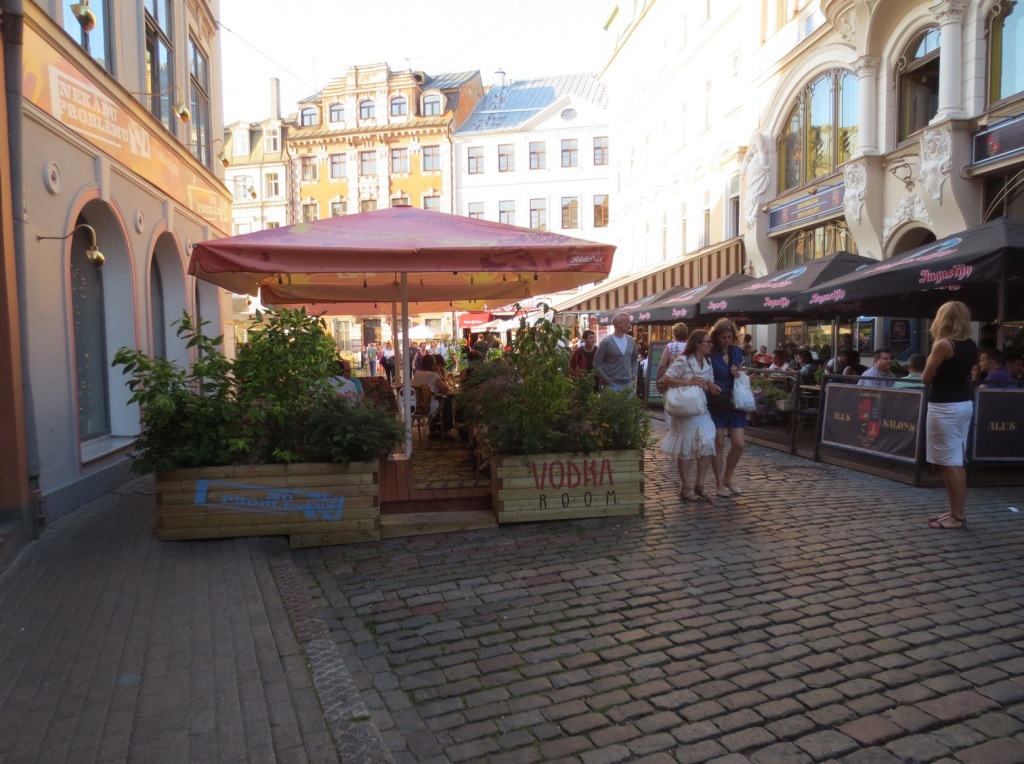
    This is Riga, Latvia. The Baltic Republics had a particularly difficult time during the twentieth century with Nazi Germany invading in 1941 and Soviet Russia occupying them until 1991. What had been a prosperous group of small Scandinavian style countries became relatively impoverished and isolated.


    Screen Shot 2016-04-15 at 1.23.01 PM

    Screen Shot 2016-04-15 at 12.43.07 PM

    Screen Shot 2016-04-15 at 12.38.34 PM

    Screen Shot 2016-07-25 at 12.20.40 PM

    This is Riga, Latvia. The Baltic Republics had a particularly difficult time during the twentieth century with Nazi Germany invading in 1941 and Soviet Russia occupying them until 1991. What had been a prosperous group of small Scandinavian style countries became relatively impoverished and isolated.

    Screen Shot 2016-07-26 at 1.52.14 AM

    Screen Shot 2016-07-26 at 1.45.59 AM

    Screen Shot 2016-07-25 at 8.57.20 PM

    Screen Shot 2016-07-25 at 10.38.32 AM

    Screen Shot 2016-07-25 at 10.37.13 AM

    Screen Shot 2016-07-25 at 8.52.43 PM

    This is nothing new. The Baltic has been repeatedly dominated by larger nations since the 1200’s. Riga is equidistant from both Berlin and Moscow. It’s a rough neighborhood and it seems likely there will be more such impositions in the future. The region is too important to left alone. But the people will adapt as they always have.

    Screen Shot 2016-04-15 at 12.43.47 PM

    Screen Shot 2016-07-25 at 8.57.48 PM

    Screen Shot 2016-07-25 at 8.58.01 PM

    Screen Shot 2016-04-15 at 12.44.00 PM

    Between the various wars and occupations when the country was allowed to flourish on its own Latvia proved to be industrious and highly cultured. The buildings that survived the tumults of history attest to the quality of the people, economy, and place.

    Screen Shot 2016-07-25 at 9.22.34 PM

    Screen Shot 2016-07-25 at 9.23.13 PM

    Screen Shot 2016-07-25 at 9.22.03 PM

    Screen Shot 2016-07-25 at 9.49.04 PM

    Screen Shot 2016-04-15 at 1.26.03 PM

    Screen Shot 2016-04-15 at 1.23.58 PM

    Screen Shot 2016-07-25 at 9.49.21 PM

    It was a matter of national pride for the Latvian people to completely restore the historic core of Riga after the Soviets left things in Havana style dishevelment. This is their homeland and the repository of their culture, language, music, and history. It was also an excellent business model. The city is a dynamic and highly profitable venue for foreign investment, trade, and tourism. Every inch of the old city is productive.

    Screen Shot 2016-04-15 at 1.06.58 PM

    Screen Shot 2016-07-25 at 10.33.44 AM

    Screen Shot 2016-07-26 at 12.44.15 AM

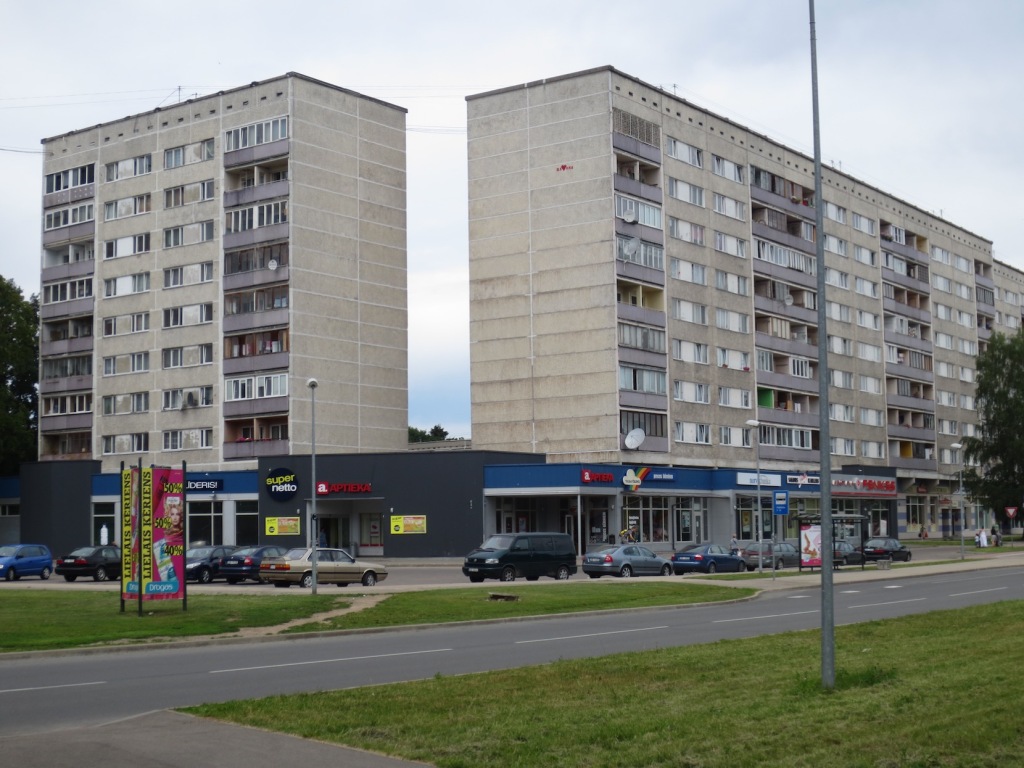
    But then there’s all that left over communist stuff ringing the city. What exactly do you do with it all? Pulling it down and replacing it is too expensive. And many of these buildings are occupied by ethnic Russians not Latvians. (Latvia is a quarter Russian as a result of the Soviet occupation, but the city of Riga is closer to half Russian.)

    Screen Shot 2016-07-26 at 1.38.49 AM

    Screen Shot 2016-07-26 at 1.39.50 AM

    Screen Shot 2016-07-26 at 1.33.09 AM

    Screen Shot 2016-07-26 at 12.44.29 AM

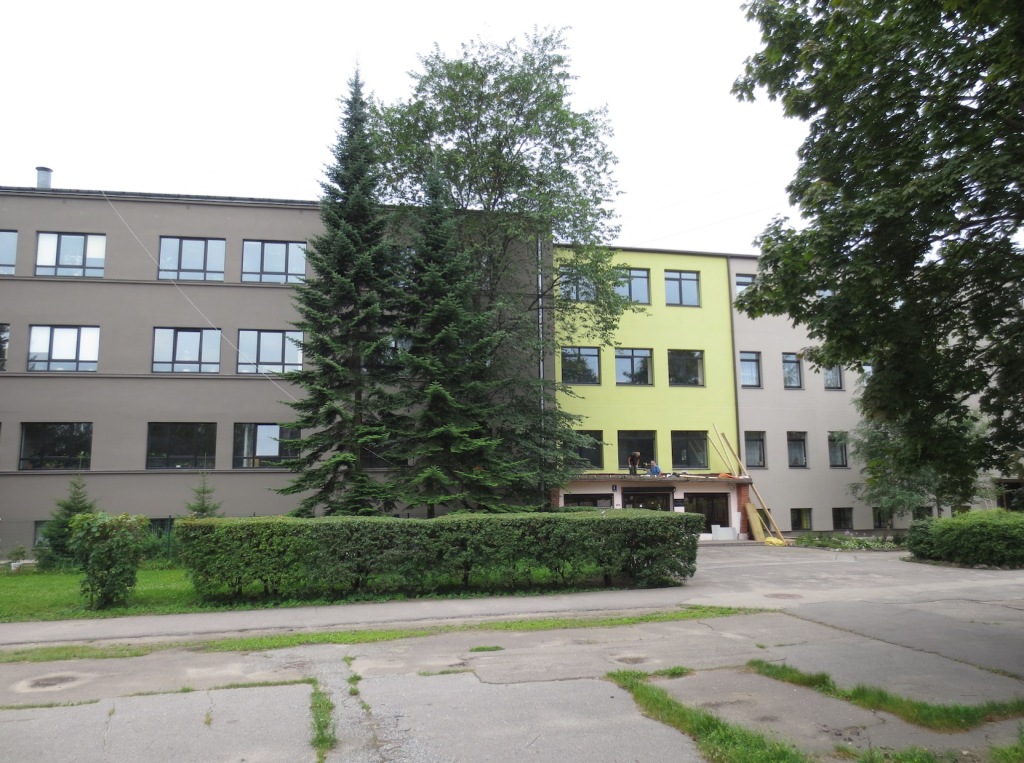
    This was top down bureaucratic central planning at its finest. Residential buildings were isolated from industry and from each other for health and safety. Operating a business of any kind in these apartment buildings was strictly forbidden. Tightly regulated shops were provided at convenient but segregated locations. Highly consolidated schools and isolated office and manufacturing parks were constructed in their own little pods at some distance.

    Screen Shot 2016-07-25 at 9.47.26 PM

    Screen Shot 2016-07-25 at 12.24.22 PM

    The preservation of green open space was a hallmark of Soviet design. Grass and trees were necessary for recreation, health, and social tranquility. There’s also a coincidental side effect of this kind of land use planning that worked in favor of central authority. Where exactly would people organize a protest rally in this environment? There is no prominent central square or iconic rallying point. What exactly would the rebel cry be here? Rise up and storm the shrubbery!

    Screen Shot 2016-07-25 at 12.25.50 PM

    Screen Shot 2016-07-26 at 1.37.09 AM

    Screen Shot 2016-07-26 at 1.42.37 AM

    Honestly it’s not that different from American suburbia. Communists just preferred concrete tower blocks to wood framed tract homes. If you’ve ever been inside an original 1947 Levittown house then you’ve essentially been inside one of these Soviet apartments. I spent a chunk of my childhood in a beige stucco apartment in Los Angeles that was nearly identical on the inside. The kitchens are small, there’s only one bath, the ceilings are low, there’s no craft or workmanship in the architecture. It’s utilitarian. It’s not terrible. People can and do live perfectly comfortable lives in these places. It’s just bland and there’s never anything to do in the neighborhood. It’s the precise opposite of the historic city center. No tourist ever ventures out to this part of town and you’ll never see photos of these neighborhoods in brochures.

    Screen Shot 2016-07-25 at 10.35.31 AM

    Screen Shot 2016-07-25 at 10.34.48 AM

    Screen Shot 2016-07-25 at 10.40.09 AM

    Screen Shot 2016-07-26 at 1.39.07 AM

    Screen Shot 2016-07-26 at 1.35.13 AM

    So here’s what the pragmatic Latvians are doing. First, these inherited communist buildings are given a quick skin job. They’re scrubbed clean, fitted with new cupboards and fixtures, painted, given new windows and doors, and generally made to feel fresh. If you squint these buildings look like the lesser offerings of 1960s Sweden or Germany. There are worse places to live in the world. A tidy apartment in a boring suburb of Riga is what some people genuinely prefer. There’s plenty on offer here for them. And there isn’t much else that can be done with these places.

    John Sanphillippo lives in San Francisco and blogs about urbanism, adaptation, and resilience at granolashotgun.com. He’s a member of the Congress for New Urbanism, films videos for faircompanies.com, and is a regular contributor to Strongtowns.org. He earns his living by buying, renovating, and renting undervalued properties in places that have good long term prospects. He is a graduate of Rutgers University.

  • Ireland Adopts Plan to Increase Housing Supply and Improve Housing Affordability

    The government of Ireland has adopted a new policy (Rebuilding Ireland: Action Plan for Housing and Homelessness) intended to improve the quality of life and the national economy by making housing more affordable. In this regard, Ireland joins New Zealand (and Florida) in having recognized the disadvantages of overpriced housing and signaling reforms to alleviate the problem.

    Background: The Great Recession in Ireland

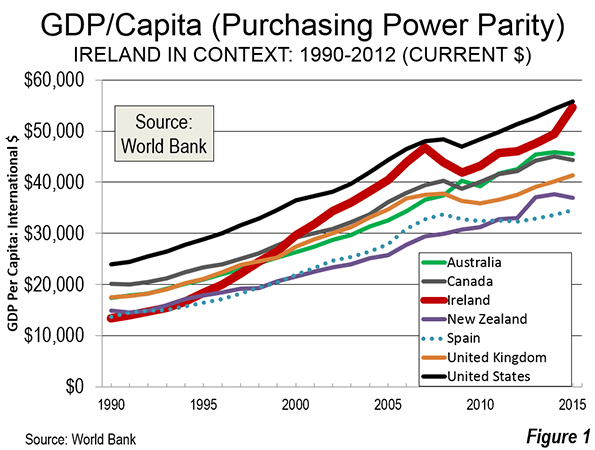
    Probably no nation suffered more during the housing bust induced Great Recession than Ireland. By 2007, the Irish economy had reached its peak, having achieved a gross domestic product (GDP) per capita, purchasing power adjusted, only 2.8 percent below that of the United States. This was an incredible accomplishment, given that as late as 1990 Ireland’s GDP per capita was approximately 45 percent below that of the United States, Australia, Canada, the United Kingdom, New Zealand and Spain, which are shown on Figure 1.  .

    However, as the overheated housing market tanked, Ireland’s GDP per capita dropped 8.4 percent relative to that of the United States, despite own housing bust economic losses. Things were so bad that Ireland was forced to take a large loan from the European Union and the International Monetary Fund to help stabilize its economy.

    Ireland’s economic losses were even greater than that of Spain, which had a particularly severe housing bust and whose economy continues to languish. But Ireland has done much better. The EU loan has been repaid. According to World Bank data, Ireland has reached a new peak, reaching within 2.1 percent of the US GDP per capita (Figure 1).

    The Housing Bubble and Bust

    During the housing bubble,   Dublin and Cork became severely unaffordable, where the median multiples (median house price divided by median household income) reached 6.0 and 5.4, respectively. This was to be expected as demand increased, well beyond the supply permitted by Ireland’s urban containment land-use regulations. As Dublin economist Colm McCarthy of  University College, put it: "Ireland passed its first major piece of land-use planning legislation in 1963, modeled on the UK’s Town and Country Planning Act of 1947. The intentions were laudable, to restrict the construction of unwelcome developments and to empower local authorities to take a more active role in shaping the built environment. There was no desire to screw up the residential housing market, but that is eventually what happened."

    As the economy get began to recover, house prices again began their rise simply because the reforms in   that would have prevented it were not implemented.

    Rebuilding Ireland

    The new housing policy announced July 20  is comprehensive, with strategies to reduce homelessness, improve the rental market and supply sufficient owned housing at affordable prices. Ireland has a high homeownership rate, at 68.6 percent and is important to the national economy.

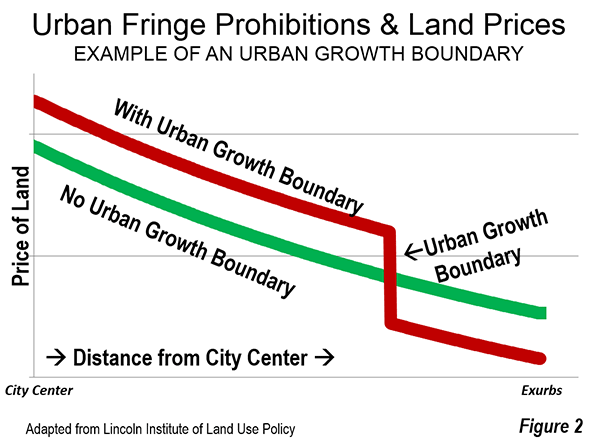
    As has occurred in the United Kingdom, Australia, New Zealand and some markets in Canada and the United States, large  house price increases relative to incomes were   experienced where urban containment policies were in effect. This is because urban fringe development prohibitions are associated with higher land prices inside urban containment boundaries (Figure 2). Indeed, this type of urban fringe regulation is present in virtually all major markets rated as severely unaffordable in the Demographia International Housing Affordability Survey, which rates 87 such markets in nine nations.

    Rebuilding Ireland policy acknowledges the importance of the housing market the national economy. As has been typical under urban containment planning regimes, house construction has fallen significantly short of demand. Under this policy, the government intends to accelerate the release of land for new development, especially in making government owned land available for development.

    Rebuilding Ireland is intended to double the rate of home building in Ireland over the period of 2017 to 2021. This will be aided by "Opening up land supply and low-cost State lands." This is important not only to meet the needs of Irish households, but also to diminish the potential for a highly volatile housing market that led to Ireland’s financial distress in the Great Recession.

    The government also intends to take action to support infrastructure development for new housing projects. A €200 million "Local Infrastructure Housing Activation Fund" will assist in "enabling infrastructure that opens up large sites for early development."

    As in California, virtually all large new housing projects today are appealed on various grounds. In recognition of this, Ireland intends to speed up the development process by allowing larger developments to proceed directly to the national planning appeals board ("An Bord Pleanála") for approval. The intention is to "jumpstart" the development of new housing.

    Defining Affordability

    Unlike most governments, the government of Ireland has supplied a definition of housing affordability. Rebuilding Ireland will hold a competition to develop new housing that can be delivered for than €200,000 in construction costs.

    Rebuilding Ireland also notes that land costs must be kept affordable and should add no more than €30,000 to €50,000 to the price of a new home. This would result in a "development ratio" of 15 percent to 20 percent (land price divided by total price including land). This development ratio is similar to US development ratios where urban containment policy has not been implemented and similar to development ratios in Australia and New Zealand before urban containment policy was adopted across those nations.

    Moreover, based on Irish household incomes, housing that costs between €230,000 and €250,000 would be generally consistent with the median multiple of 3.0 or less that is rated by the Demographia International Housing Affordability Survey as affordable (new house prices are generally more expensive than those of existing housing).

    Enforcement

    The government is signaling the seriousness of its intentions, indicating that local authorities must strive in their statutory development plans for “affordable prices to meet the housing needs of each local authority area, across tenures and types as well as the social housing requirement."

    This is a unique requirement in view of the fact that there has been virtually no serious attention to the issue of delivering housing affordability in other markets that have had strong urban containment policies.

    Implementation will not be without challenges. In the longer run, the inertia of currently in vogue planning philosophy could well prevent achievement of the housing affordability goals of Rebuilding Ireland. Yet, as Rebuilding Ireland indicates, the stakes are high. Rebuilding Ireland notes that "Excessive housing costs have demographic impacts, including a tendency for households to defer important lifecycle choices in order to prioritise home purchase" (such as having children).

    Further, as Rebuilding Ireland indicates: "Rising prices for residential accommodation impact adversely on competitiveness. The attractiveness of Ireland as a potential investment location and, of course, the cost base for existing businesses will be impaired should price inflation continue, as rising prices place upward pressure on wages, deter inward migration and impede the labour market."

    This could be particularly important in light of Brexit (the exit of the United Kingdom from the European Union). To the extent that international businesses may decide to leave the United Kingdom to stay within the European Union, Ireland and especially Dublin could be attractive for relocation because of the dominance in the nation of the English language, which would be made more attractive by improved housing affordability.

    Wendell Cox is principal of Demographia, an international pubilc policy and demographics firm. He is a Senior Fellow of the Center for Opportunity Urbanism (US), Senior Fellow for Housing Affordability and Municipal Policy for the Frontier Centre for Public Policy (Canada), and a member of the Board of Advisors of the Center for Demographics and Policy at Chapman University (California). He is co-author of the "Demographia International Housing Affordability Survey" and author of "Demographia World Urban Areas" and "War on the Dream: How Anti-Sprawl Policy Threatens the Quality of Life." He was appointed to three terms on the Los Angeles County Transportation Commission, where he served with the leading city and county leadership as the only non-elected member. He served as a visiting professor at the Conservatoire National des Arts et Metiers, a national university in Paris.

    Photo: Custom House, Dublin by Peter Brown from Dublin, Ireland (The Custom House, Dublin) [CC BY 2.0], via Wikimedia Commons

  • Portland Columnist Calls for Abandonment of the WES Commuter Rail Line

    Portland Tribune columnist (see "My View: WES is a Mess: Time to Pull the Plug") Bill MacKenzie took the occasion of a Tri-Met (transit agency for the Oregon side of the Portland, OR-WA metropolitan area) approval to purchase two used Budd Rail Diesel Cars (RDC) for the Wilsonville to Beaverton commuter rail line to call for its abandonment.Fconcl In addition to the $1.5 million purchase cost, $550,000 will be required for refurbishment. When then are ready for service, they will surely older than most Tri-Met employees, since the last Budd RDC’s were built in the early 1960s.

    He mocks the agency’s general manager, Neil MacFarlane, who justified the purchase as necessary to accomodate future passenger growth: "Oh sure, plan for massive ridership growth,"MacKenzie scoffs. He continues, In early 2009, TriMet predicted WES would have 2,400 daily riders its first year of operations and 3,000 by 2020." In 2015, the line carried fewer than 1,900 riders each weekday, and its cost per boarding was more than four times that of buses (not counting capital costs).

    He concluded that: "Even if WES reaches 3,000 average daily boardings, operating costs per boarding ride will remain much higher than for buses and MAX. The fact is, WES is a train wreck. It’s time to shut it down."

  • UberPool & LyftLine: How the New Carpools Will Change Travel

    How will new carpool options like LyftLine and UberPool affect the marketplace of transit services? When mobility conversations turn to Lyft, Uber and other ridesourcing — or ridesharing — companies, the discussion typically centers on their effects on the taxicab business. Here in Chicago, Lyft and Uber recently survived a turbo-charged regulatory battle with cabbies that could have forced them to entirely withdraw from our city.

    Ridesharing carpools add a new dimension to the extraordinary rise of these companies. Many users have not until recently begun experimenting with carpooling options, but by all indications their popularity is accelerating. Both LyftLine and UberPool were unveiled in summer of 2014, and then rolled out gradually.

    To use LyftLine or UberPool, a rider inputs his or her location and destination on a smartphone, which then displays two options — a traditional rate, and a discounted rate for those who choose to ‘pool’. The driver of a pool may make other pickups and drop-offs. A four-mile trip on UberPool may cost around $6, whereas on UberX (the standard Uber service) it might cost $10; a taxi ride would run much higher.

    In communities with lackluster public transit, carpooling fills an enormous void by giving millions without a private vehicle a new, lower cost travel option. Even in areas saturated with public transit, however, this new option promises to reshuffle how people move about.

    The opportunity raises critical questions. Will significant numbers of time-sensitive travelers, including commuters, opt to use public transit less, in favor of rideshare service carpools? How much time can they expect to save? To what extent do the additional stops negate the benefits of this option, compared to using transit?

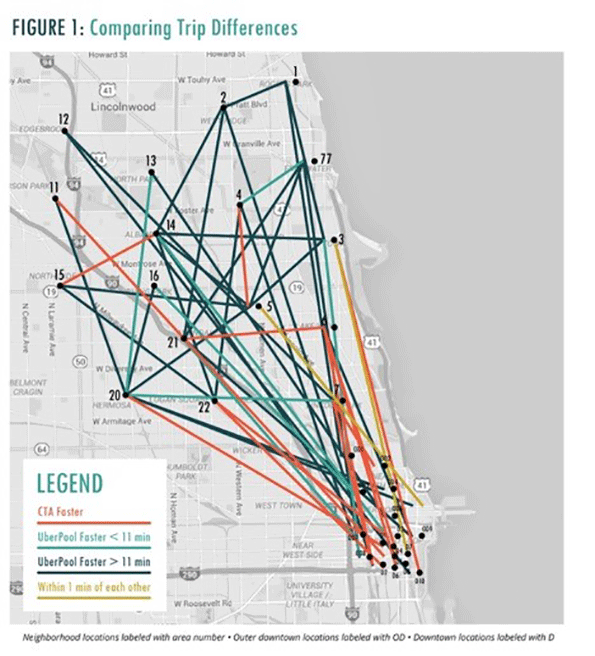
    I created a controlled experiment involving 50 one-way trips between various urban locations in a transit-rich part of Chicago. Data collectors measured the differing costs, time, and conveniences associated with UberPool, trains, and buses. One person used Chicago Transit Authority (CTA) services while the other hailed an UberPool (Figure 1).

    We evaluated only weekday trips during daytime hours to and from the north and northwest sides of the city, in order to focus on a transit-rich environment. Our trips, which linked the centroids of community areas, averaged about six miles long.

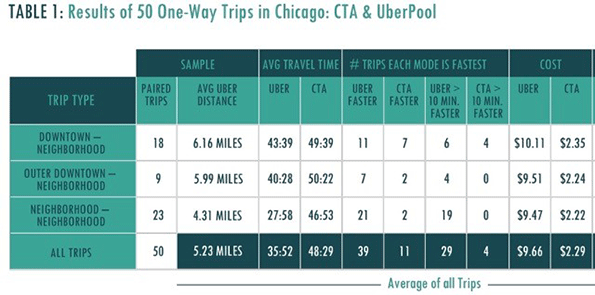
    UberPool did not disappoint. Regardless of the type of trip involved, our study found that carpooling tended to get you there faster than public transit, although often not by enough for to justify — for many passengers — the cost difference. The average elapsed time for all UberPool trips was about 36 minutes, besting transit by about 12 minutes. UberPool was faster on 39 trips, while the CTA was faster on 11 (Table 1). The carpooling costs averaged $9.66, compared to transit’s $2.29.

    Stops to pick up other passengers were not as prevalent as many might expect, with UberPool trips averaging just under one extra stop. Still, one fifth of all trips made at least two extra stops, while two out of the 50 trips involved three extra stops

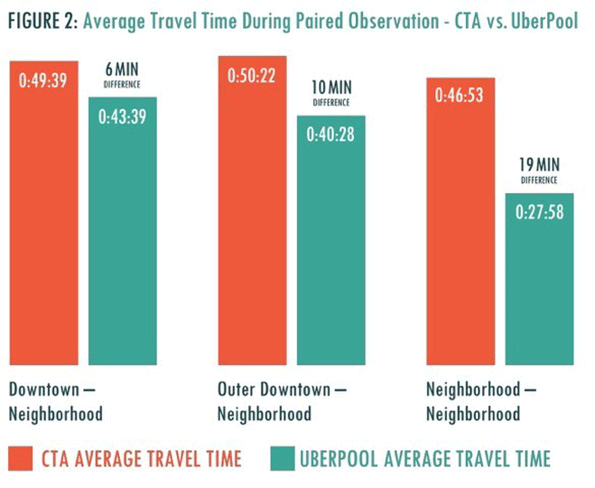
    The appeal of carpooling may depend on the type of travel involved. On downtown-oriented trips, the time savings averaged a mere six minutes. UberPool was faster on eleven of these, and the CTA on seven.

    Moreover, UberPool can be challenging during rush hour, when it is slowed by traffic congestion and taking rapid transit is often faster due to the heightened schedule frequency.

    We suspect that primarily people in a hurry, those carrying heavy or bulky items, or those uncomfortable with transit would be inclined to regularly carpool to work downtown. The level of exertion is also greater on public transit. Our transit passengers were unable to find seats on about one-fifth of trips, and walked more often. UberPool involves minimal walking, whereas the average transit trip involved about a half-mile trek. Eleven transit trips required passengers to hoof it for at least two-thirds of a mile, while three involved doing so for more than a mile.

    On trips from the peripheral ‘outer downtown’ to the neighborhoods, though, UberPool outpaced transit by ten minutes. Carpooling starts to look more tempting to the transit rider in this scenario.

    The most dramatic benefits from carpooling, however, involve neighborhood-to-neighborhood travel (Figure 2). Such trips can be painful to transit users in Chicago, in part due to our slow pace of getting bus rapid transit off the ground and our ‘legacy’ rail system, with its radial design that focuses primarily on travel to and from downtown. And busses on some routes stop every few blocks.

    On these trips, UberPool dominates, averaging 28 minutes per trip, almost 19 minutes faster (about 40 percent) than transit. Carpooling was more than 10 minutes faster on all but four of our 23 trips, and more than an hour faster on one.

    A notable negative aspect of using UberPool is, of course, the variability in pricing. Six of the 50 trips involved ‘surge’ pricing (premium fares due to heavy demand), resulting in prices as much as 60 percent above the normal fare. We did not study the price and speed of UberPool during the evening and late-night hours, when demand is reportedly heaviest, and when surge pricing appears to be more prevalent.

    The inescapable conclusion is that carpooling services are appealing to far more than transit-averse and extremely time-conscious travelers, although perhaps not as an option that many commuters would use daily. UberPool tends to perform best precisely where transit is at its worst, e.g., on trips between the neighborhoods, especially during the off-peak periods when traffic is lighter.

    On one level, our results support the conclusions of a new Shared Use Mobility Center/American Public Transit Association report showing that such mobility innovations tend to be complementary to public transit. Shared-use services like Lyft and Uber fill the gaps that exist in urban bus and rail operations, and encourage people to pursue lifestyles that do not center on private cars.

    Still, carpooling should also be regarded as a potential game-changer. Federal guidelines recommend that analysts assume the average urban traveler values time savings at $24 per hour. An average traveler on an UberPool making a neighborhood-to-neighborhood trip may, therefore, by arriving about 20 minute earlier than a transit rider, derive a benefit from carpooling of around $8 per trip, which would be a far greater amount than the extra cost. The most time-sensitive travelers and groups of travellers would derive an even higher benefit.

    Even though rideshare carpools represent a mobility breakthrough, it unfortunately continues to take a backseat in the taxi-centric debate over Lyft and Uber. It is certainly going to pose an increasing challenge to public transit agencies. Heightened competition in urban transit markets appears here to stay, and is now poised to bring dramatic changes to the way we travel.

    Joseph P. Schwieterman is director of the Chaddick Institute for Metropolitan Development and Professor of Public Service at DePaul University in Chicago.

    Flickr photo of the S2 smartwatch from Samsung Newsroom: Travel NYC with the Gear S2 and Uber

  • Lessons Learned from Long-Term Privatizations

    Is long term privatization of government assets in the form of leases or concessions a good idea?

    The answer is not Yes or No but rather What and How.

    Done right, long-term privatization can be a great thing to the public. But given the multi-decade nature of some of these deals, the risk of getting it wrong is high.

    My new Manhattan Institute research paper The Lessons of Long-Term Privatizations: Why Chicago Got It Wrong and Indiana Got It Right looks at two privatization deals, the Chicago parking meter lease and the Indiana toll road lease, and draws lessons about the right kinds of assets to lease and the things you need to get right while leasing them.

    I identify several flaws in the Chicago parking meter lease as compared to the Indiana Toll Road one, grouped into two categories:

    • Things Chicago managed poorly in the transaction (how items). These include the public review process, the transition to the private vendor, squandering the proceeds, and impairing future revenue streams. None of these invalidates the idea of privatization, but rather are areas where governments need to focus to get it right.
    • Reasons why parking meters are a bad kind of asset for long term leases (what items). These include regular, recurring compensation events and the dynamic and close interaction of on street parking with neighborhood health and other public policy considerations.

    Note that I do not critique the amount of money Chicago got for leasing its parking meters. This is a debatable item at best.

    I also do not criticize privatization of parking meter operations. Nobody cares who takes the quarters out of the meter.

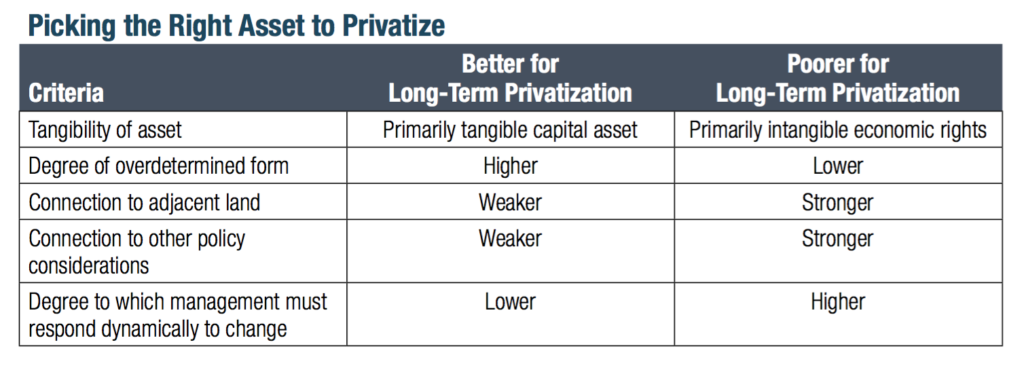
    Contrasting toll roads with parking meters, I created a matrix of characteristics to help determine whether or not an asset is a good candidate for privatization.

    privatization-asset-matrix

    Items that would appear to be better candidates for long term privatizations would be toll roads and bridges, airports, ports, and hospitals.

    Click through to read the entire report.

    Greg Hinz at Crain’s Chicago Business kindly posted some of his thoughts about the study.

    Aaron M. Renn is a senior fellow at the Manhattan Institute, a contributing editor of City Journal, and an economic development columnist for Governing magazine. He focuses on ways to help America’s cities thrive in an ever more complex, competitive, globalized, and diverse twenty-first century. During Renn’s 15-year career in management and technology consulting, he was a partner at Accenture and held several technology strategy roles and directed multimillion-dollar global technology implementations. He has contributed to The Guardian, Forbes.com, and numerous other publications. Renn holds a B.S. from Indiana University, where he coauthored an early social-networking platform in 1991.