Blog

  • Mid Sized Cities Rankings – 2016 Best Cities for Job Growth

    Read about how we selected the 2015 Best Cities for Job Growth

    2016 Size Ranking – Midsized MSAs Area 2016 Weighted INDEX  2015 Nonfarm Emplymt (1000s)  2016 Size Movement
    1 Provo-Orem, UT 98.4       230.0 0
    2 Fayetteville-Springdale-Rogers, AR-MO 96.6       240.7 1
    3 Fort Collins, CO 94.2       157.0 6
    4 Ogden-Clearfield, UT 92.6       244.2 3
    5 Savannah, GA 92.6       174.5 0
    6 Cape Coral-Fort Myers, FL 91.9       254.2 -4
    7 Charleston-North Charleston, SC 91.4       336.8 1
    8 Boise City, ID 84.1       294.6 7
    9 Myrtle Beach-Conway-North Myrtle Beach, SC-NC 81.9       150.9 1
    10 Stockton-Lodi, CA 79.7       222.5 10
    11 Sioux Falls, SD 79.6       152.3 19
    12 Fresno, CA 78.5       329.0 -2
    13 Greenville-Anderson-Mauldin, SC 78.0       406.6 -4
    14 Trenton, NJ 77.2       265.2 30
    15 North Port-Sarasota-Bradenton, FL 76.5       287.6 -11
    16 Santa Rosa, CA 76.1       199.2 -4
    17 Boulder, CO 76.0       182.0 -3
    18 Asheville, NC 75.5       184.7 0
    19 Salem, OR 75.4       157.4 11
    20 Tacoma-Lakewood, WA Metropolitan Division 75.1       301.2 2
    21 Columbia, SC 73.9       391.4 18
    22 Colorado Springs, CO 73.1       274.1 15
    23 Baton Rouge, LA 70.5       409.0 -2
    24 Lexington-Fayette, KY 68.9       274.5 -5
    25 El Paso, TX 68.7       308.0 26
    26 McAllen-Edinburg-Mission, TX 68.4       251.8 -13
    27 Modesto, CA 68.1       168.2 -11
    28 Knoxville, TN 67.8       392.8 0
    29 Bakersfield, CA 67.3       262.5 -23
    30 Reno, NV 66.9       214.2 3
    31 Springfield, MO 64.8       210.0 -2
    32 Santa Maria-Santa Barbara, CA 64.2       182.7 -15
    33 Corpus Christi, TX 64.2       196.3 -22
    34 Salisbury, MD-DE 63.6       150.1 51
    35 Deltona-Daytona Beach-Ormond Beach, FL 62.9       191.7 5
    36 Lakeland-Winter Haven, FL 62.5       212.6 14
    37 Des Moines-West Des Moines, IA 61.8       349.5 -13
    38 Madison, WI 61.3       393.7 -13
    39 Durham-Chapel Hill, NC 61.3       298.1 -12
    40 Chattanooga, TN-GA 57.8       249.9 17
    41 Ann Arbor, MI 56.0       218.1 26
    42 Wilmington, DE-MD-NJ Metropolitan Division 55.9       363.5 3
    43 Eugene, OR 55.6       154.4 13
    44 Fort Wayne, IN 53.3       220.6 21
    45 Lincoln, NE 53.3       187.5 -9
    46 Lancaster, PA 52.4       246.3 -4
    47 Pensacola-Ferry Pass-Brent, FL 51.8       168.7 -24
    48 Spokane-Spokane Valley, WA 51.4       236.6 -14
    49 Huntsville, AL 48.8       221.7 7
    50 Akron, OH 46.6       343.4 24
    51 Reading, PA 46.5       178.3 -13
    52 Calvert-Charles-Prince George’s, MD 46.4       398.4 26
    53 Tulsa, OK 43.5       446.4 -18
    54 Beaumont-Port Arthur, TX 43.1       167.9 -28
    55 Allentown-Bethlehem-Easton, PA-NJ 42.5       357.9 -3
    56 Framingham, MA NECTA Division 42.3       172.0 -13
    57 York-Hanover, PA 41.9       184.0 22
    58 Lake County-Kenosha County, IL-WI Metropolitan Division 40.7       404.4 3
    59 Tucson, AZ 40.5       378.5 23
    60 Little Rock-North Little Rock-Conway, AR 40.3       353.5 15
    61 Augusta-Richmond County, GA-SC 40.2       228.4 -29
    62 Palm Bay-Melbourne-Titusville, FL 40.2       204.0 10
    63 Toledo, OH 40.0       308.1 22
    64 Harrisburg-Carlisle, PA 39.9       335.4 7
    65 Elgin, IL Metropolitan Division 39.7       254.8 -5
    66 Winston-Salem, NC 39.6       258.8 2
    67 Greensboro-High Point, NC 39.6       359.2 -3
    68 Rockford, IL 39.4       152.8 -6
    69 Jackson, MS 39.4       276.3 -15
    70 Delaware County, PA 39.0       233.6 -21
    71 Worcester, MA-CT NECTA 38.7       279.3 -40
    72 Anchorage, AK 36.3       178.4 -9
    73 Dayton, OH 35.5       383.0 8
    74 Springfield, MA-CT NECTA 34.9       327.5 -19
    75 Green Bay, WI 34.6       173.7 -34
    76 Lansing-East Lansing, MI 34.5       228.6 1
    77 Roanoke, VA 34.1       163.2 -4
    78 Wichita, KS 33.1       298.0 5
    79 Oxnard-Thousand Oaks-Ventura, CA 32.6       297.6 -32
    80 Portland-South Portland, ME NECTA 30.9       195.9 -4
    81 Tallahassee, FL 30.5       175.5 -35
    82 Bridgeport-Stamford-Norwalk, CT NECTA 29.8       410.5 -23
    83 New Haven, CT NECTA 28.6       281.5 -25
    84 Canton-Massillon, OH 27.6       171.9 -15
    85 Albuquerque, NM 26.7       383.0 1
    86 Montgomery, AL 26.1       171.2 -2
    87 Evansville, IN-KY 25.4       156.8 -34
    88 Baltimore City, MD 25.3       365.2 -8
    89 Gary, IN Metropolitan Division 24.0       275.5 -19
    90 Lafayette, LA 23.3       210.4 -42
    91 Mobile, AL 23.1       176.9 -2
    92 Gulfport-Biloxi-Pascagoula, MS 22.6       153.3 0
    93 Scranton–Wilkes-Barre–Hazleton, PA 19.6       259.6 -27
    94 Syracuse, NY 18.6       318.5 -4
    95 Peoria, IL 17.2       177.7 -8
    96 Youngstown-Warren-Boardman, OH-PA 15.5       226.1 -5
    97 Shreveport-Bossier City, LA 12.7       183.2 -4
    98 Davenport-Moline-Rock Island, IA-IL 12.2       180.7 -10
  • Large Cities Rankings – 2016 Best Cities for Job Growth

    Read about how we selected the 2015 Best Cities for Job Growth

    2016 Size Ranking – Large MSAs Area 2016 Weighted INDEX  2015 Nonfarm Emplymt (1000s)  2016 Rank Change
    1 San Francisco-Redwood City-South San Francisco, CA Metro Div 98.3        1,072.8 0
    2 San Jose-Sunnyvale-Santa Clara, CA 96.8        1,063.1 0
    3 Orlando-Kissimmee-Sanford, FL 95.5        1,184.4 5
    4 Nashville-Davidson–Murfreesboro–Franklin, TN 95.2           931.6 1
    5 Dallas-Plano-Irving, TX Metro Div 95.2        2,459.2 -2
    6 Austin-Round Rock, TX 94.8           980.5 -2
    7 Denver-Aurora-Lakewood, CO 91.5        1,407.2 0
    8 Charlotte-Concord-Gastonia, NC-SC 91.3        1,122.4 1
    9 Raleigh, NC 90.5           593.6 6
    10 Portland-Vancouver-Hillsboro, OR-WA 86.8        1,128.6 12
    11 Seattle-Bellevue-Everett, WA Metro Div 86.7        1,614.4 3
    12 San Antonio-New Braunfels, TX 85.5           992.3 -2
    13 Atlanta-Sandy Springs-Roswell, GA 85.2        2,628.8 -1
    14 Riverside-San Bernardino-Ontario, CA 83.8        1,381.2 -3
    15 Salt Lake City, UT 83.1           685.6 4
    16 New York City, NY 83.1        4,287.0 1
    17 Phoenix-Mesa-Scottsdale, AZ 82.6        1,970.2 10
    18 Jacksonville, FL 80.5           662.1 16
    19 West Palm Beach-Boca Raton-Delray Beach, FL Metro Div 79.8           600.9 -1
    20 Richmond, VA 79.4           667.7 20
    21 Las Vegas-Henderson-Paradise, NV 76.0           926.7 9
    22 Miami-Miami Beach-Kendall, FL Metro Div 75.6        1,141.8 -6
    23 Fort Lauderdale-Pompano Beach-Deerfield Beach, FL Metro Div 75.3           817.2 -3
    24 Houston-The Woodlands-Sugar Land, TX 74.8        3,003.4 -18
    25 Tampa-St. Petersburg-Clearwater, FL 74.3        1,274.2 7
    26 Louisville-Jefferson County, KY-IN 74.2           654.9 -5
    27 Grand Rapids-Wyoming, MI 73.8           534.4 -3
    28 Fort Worth-Arlington, TX Metro Div 71.7        1,001.2 -15
    29 San Diego-Carlsbad, CA 71.2        1,406.7 -1
    30 Columbus, OH 70.9        1,052.3 -5
    31 Indianapolis-Carmel-Anderson, IN 70.6        1,027.8 0
    32 Oakland-Hayward-Berkeley, CA Metro Div 70.0        1,110.2 -3
    33 Anaheim-Santa Ana-Irvine, CA Metro Div 69.0        1,567.9 -7
    34 Kansas City, KS 65.8           463.1 -11
    35 Boston-Cambridge-Newton, MA NECTA Division 62.8        1,781.9 2
    36 Warren-Troy-Farmington Hills, MI Metro Div 62.3        1,212.3 3
    37 Oklahoma City, OK 61.8           633.7 -4
    38 Sacramento–Roseville–Arden-Arcade, CA 61.8           926.6 -2
    39 Washington-Arlington-Alexandria, DC-VA-MD-WV Metro Div 57.2        2,613.8 8
    40 Middlesex-Monmouth-Ocean, NJ 57.0           877.5 11
    41 Minneapolis-St. Paul-Bloomington, MN-WI 53.7        1,936.4 -3
    42 Los Angeles-Long Beach-Glendale, CA Metro Div 53.1        4,337.3 -7
    43 Kansas City, MO 52.5           583.9 3
    44 Northern Virginia, VA 52.1        1,415.6 6
    45 Omaha-Council Bluffs, NE-IA 51.0           494.4 -3
    46 Urban Honolulu, HI 48.6           474.1 -1
    47 Chicago-Naperville-Arlington Heights, IL Metro Div 48.4        3,670.5 -3
    48 New Orleans-Metairie, LA 47.5           573.8 -5
    49 Orange-Rockland-Westchester, NY 45.9           707.1 11
    50 Cincinnati, OH-KY-IN 45.1        1,062.5 -9
    51 Philadelphia City, PA 42.7           693.8 -3
    52 Silver Spring-Frederick-Rockville, MD Metro Div 40.4           590.6 12
    53 Nassau County-Suffolk County, NY Metro Div 39.4        1,309.4 -4
    54 Memphis, TN-MS-AR 38.1           634.3 7
    55 Montgomery County-Bucks County-Chester County, PA Metro Div 37.7        1,040.2 2
    56 Bergen-Hudson-Passaic, NJ 37.3           917.6 12
    57 Camden, NJ Metro Div 36.8           525.3 13
    58 St. Louis, MO-IL 36.7        1,347.4 7
    59 Providence-Warwick, RI-MA NECTA 36.0           577.9 -3
    60 Hartford-West Hartford-East Hartford, CT NECTA 32.2           572.7 -8
    61 Milwaukee-Waukesha-West Allis, WI 31.9           855.5 -7
    62 Detroit-Dearborn-Livonia, MI Metro Div 31.6           741.3 -3
    63 Albany-Schenectady-Troy, NY 31.5           457.6 -10
    64 Virginia Beach-Norfolk-Newport News, VA-NC 29.8           765.9 3
    65 Birmingham-Hoover, AL 29.0           518.1 -10
    66 Cleveland-Elyria, OH 27.7        1,048.2 0
    67 Newark, NJ-PA Metro Div 27.2        1,196.5 2
    68 Pittsburgh, PA 23.5        1,160.4 -10
    69 Buffalo-Cheektowaga-Niagara Falls, NY 22.7           555.8 -7
    70 Rochester, NY 19.4           524.9 -7
  • All Cities Rankings – 2016 Best Cities for Job Growth

    Read about how we selected the 2015 Best Cities for Job Growth

    2016 Overall Ranking Area 2016 Weighted INDEX 2016 Size  2015 Nonfarm Emplymt (1000s)  Overall Rank Change
    1 St. George, UT 98.9 S       59.0 30
    2 Provo-Orem, UT 98.4 M     230.0 4
    3 San Francisco-Redwood City-South San Francisco, CA Metro Div 98.3 L  1,072.8 1
    4 Gainesville, GA 97.3 S       85.6 12
    5 San Jose-Sunnyvale-Santa Clara, CA 96.8 L  1,063.1 0
    6 Fayetteville-Springdale-Rogers, AR-MO 96.6 M     240.7 14
    7 Orlando-Kissimmee-Sanford, FL 95.5 L  1,184.4 14
    8 Nashville-Davidson–Murfreesboro–Franklin, TN 95.2 L     931.6 5
    9 Dallas-Plano-Irving, TX Metro Div 95.2 L  2,459.2 1
    10 Columbus, IN 95.1 S       53.1 -1
    11 Austin-Round Rock, TX 94.8 L     980.5 1
    12 Fort Collins, CO 94.2 M     157.0 35
    13 Napa, CA 93.2 S       71.5 2
    14 Bend-Redmond, OR 92.9 S       74.7 9
    15 Ogden-Clearfield, UT 92.6 M     244.2 25
    16 Savannah, GA 92.6 M     174.5 18
    17 Cape Coral-Fort Myers, FL 91.9 M     254.2 -9
    18 Denver-Aurora-Lakewood, CO 91.5 L  1,407.2 1
    19 Charleston-North Charleston, SC 91.4 M     336.8 23
    20 Lake Charles, LA 91.3 S     103.9 5
    21 Charlotte-Concord-Gastonia, NC-SC 91.3 L  1,122.4 5
    22 The Villages, FL 90.9 S       26.9 5
    23 Raleigh, NC 90.5 L     593.6 18
    24 Portland-Vancouver-Hillsboro, OR-WA 86.8 L  1,128.6 31
    25 Daphne-Fairhope-Foley, AL 86.7 S       69.2 41
    26 Seattle-Bellevue-Everett, WA Metro Div 86.7 L  1,614.4 12
    27 Greeley, CO 86.3 S     101.0 -25
    28 San Antonio-New Braunfels, TX 85.5 L     992.3 2
    29 Wenatchee, WA 85.4 S       42.8 47
    30 Atlanta-Sandy Springs-Roswell, GA 85.2 L  2,628.8 6
    31 College Station-Bryan, TX 84.9 S     111.8 104
    32 Haverhill-Newburyport-Amesbury Town, MA-NH NECTA Div 84.7 S       65.7 99
    33 Boise City, ID 84.1 M     294.6 42
    34 Jonesboro, AR 83.8 S       55.3 -6
    35 Riverside-San Bernardino-Ontario, CA 83.8 L  1,381.2 -2
    36 Salt Lake City, UT 83.1 L     685.6 14
    37 New York City, NY 83.1 L  4,287.0 8
    38 Phoenix-Mesa-Scottsdale, AZ 82.6 L  1,970.2 43
    39 Portsmouth, NH-ME NECTA 82.5 S       88.8 192
    40 Myrtle Beach-Conway-North Myrtle Beach, SC-NC 81.9 M     150.9 8
    41 Coeur d’Alene, ID 81.8 S       59.0 2
    42 Lawrence-Methuen Town-Salem, MA-NH NECTA Div 81.6 S       83.3 76
    43 Port St. Lucie, FL 81.5 S     141.1 15
    44 Naples-Immokalee-Marco Island, FL 81.4 S     139.0 -37
    45 Hilton Head Island-Bluffton-Beaufort, SC 81.3 S       74.6 14
    46 San Luis Obispo-Paso Robles-Arroyo Grande, CA 80.8 S     115.1 3
    47 Auburn-Opelika, AL 80.7 S       61.8 -33
    48 Jacksonville, FL 80.5 L     662.1 62
    49 Laredo, TX 80.3 S     103.1 15
    50 West Palm Beach-Boca Raton-Delray Beach, FL Metro Div 79.8 L     600.9 -4
    51 Stockton-Lodi, CA 79.7 M     222.5 45
    52 Sioux Falls, SD 79.6 M     152.3 92
    53 Richmond, VA 79.4 L     667.7 141
    54 Visalia-Porterville, CA 78.8 S     120.3 65
    55 Winchester, VA-WV 78.8 S       62.4 -3
    56 Fargo, ND-MN 78.5 S     140.8 -45
    57 Fresno, CA 78.5 M     329.0 4
    58 Greenville-Anderson-Mauldin, SC 78.0 M     406.6 -1
    59 Elkhart-Goshen, IN 78.0 S     127.8 -30
    60 Logan, UT-ID 77.8 S       60.2 41
    61 Trenton, NJ 77.2 M     265.2 153
    62 Charlottesville, VA 76.7 S     114.0 27
    63 North Port-Sarasota-Bradenton, FL 76.5 M     287.6 -31
    64 Ames, IA 76.2 S       53.7 -47
    65 Punta Gorda, FL 76.1 S       46.8 107
    66 Santa Rosa, CA 76.1 M     199.2 6
    67 Boulder, CO 76.0 M     182.0 7
    68 Las Vegas-Henderson-Paradise, NV 76.0 L     926.7 25
    69 Killeen-Temple, TX 75.9 S     141.0 86
    70 Spartanburg, SC 75.7 S     145.7 38
    71 Miami-Miami Beach-Kendall, FL Metro Div 75.6 L  1,141.8 -27
    72 Asheville, NC 75.5 M     184.7 14
    73 Clarksville, TN-KY 75.4 S       89.6 -5
    74 Salem, OR 75.4 M     157.4 90
    75 Fort Lauderdale-Pompano Beach-Deerfield Beach, FL Metro Div 75.3 L     817.2 -24
    76 Tacoma-Lakewood, WA Metro Div 75.1 M     301.2 36
    77 Prescott, AZ 74.9 S       62.2 23
    78 Idaho Falls, ID 74.8 S       63.0 79
    79 Houston-The Woodlands-Sugar Land, TX 74.8 L  3,003.4 -61
    80 Manhattan, KS 74.4 S       45.5 135
    81 Tampa-St. Petersburg-Clearwater, FL 74.3 L  1,274.2 17
    82 Louisville-Jefferson County, KY-IN 74.2 L     654.9 -28
    83 Columbia, SC 73.9 M     391.4 106
    84 Grand Rapids-Wyoming, MI 73.8 L     534.4 -13
    85 Olympia-Tumwater, WA 73.7 S     110.4 -8
    86 Kahului-Wailuku-Lahaina, HI 73.5 S       74.3 8
    87 Colorado Springs, CO 73.1 M     274.1 98
    88 Fort Worth-Arlington, TX Metro Div 71.7 L  1,001.2 -51
    89 Elizabethtown-Fort Knox, KY 71.4 S       56.5 48
    90 San Diego-Carlsbad, CA 71.2 L  1,406.7 -6
    91 Vallejo-Fairfield, CA 71.0 S     135.0 45
    92 Columbus, OH 70.9 L  1,052.3 -14
    93 Indianapolis-Carmel-Anderson, IN 70.6 L  1,027.8 4
    94 Baton Rouge, LA 70.5 M     409.0 12
    95 Oakland-Hayward-Berkeley, CA Metro Div 70.0 L  1,110.2 -7
    96 Lubbock, TX 70.0 S     142.6 38
    97 Merced, CA 69.6 S       64.1 -75
    98 Columbia, MO 69.4 S     100.6 52
    99 Anaheim-Santa Ana-Irvine, CA Metro Div 69.0 L  1,567.9 -19
    100 Lexington-Fayette, KY 68.9 M     274.5 -8
    101 Tuscaloosa, AL 68.9 S     105.9 -48
    102 Bismarck, ND 68.9 S       74.5 -67
    103 Bowling Green, KY 68.7 S       73.1 -40
    104 El Paso, TX 68.7 M     308.0 129
    105 San Rafael, CA Metro Div 68.7 S     114.9 -40
    106 McAllen-Edinburg-Mission, TX 68.4 M     251.8 -33
    107 Modesto, CA 68.1 M     168.2 -25
    108 Knoxville, TN 67.8 M     392.8 52
    109 Bakersfield, CA 67.3 M     262.5 -70
    110 Kennewick-Richland, WA 67.3 S     107.9 23
    111 Tyler, TX 67.2 S     102.4 10
    112 Reno, NV 66.9 M     214.2 64
    113 Athens-Clarke County, GA 66.6 S       93.5 0
    114 Salinas, CA 66.5 S     135.7 -15
    115 Victoria, TX 66.4 S       45.1 -91
    116 Kansas City, KS 65.8 L     463.1 -47
    117 Billings, MT 65.6 S       84.7 103
    118 Madera, CA 65.5 S       36.6 40
    119 Springfield, MO 64.8 M     210.0 43
    120 Wilmington, NC 64.4 S     118.9 -11
    121 Brockton-Bridgewater-Easton, MA NECTA Div 64.2 S       82.0 -14
    122 Santa Maria-Santa Barbara, CA 64.2 M     182.7 -39
    123 Corpus Christi, TX 64.2 M     196.3 -61
    124 Salisbury, MD-DE 63.6 M     150.1 214
    125 Chambersburg-Waynesboro, PA 63.2 S       61.0 36
    126 Deltona-Daytona Beach-Ormond Beach, FL 62.9 M     191.7 67
    127 Boston-Cambridge-Newton, MA NECTA Div 62.8 L  1,781.9 24
    128 Sebastian-Vero Beach, FL 62.6 S       49.7 -8
    129 Lakeland-Winter Haven, FL 62.5 M     212.6 101
    130 Yuba City, CA 62.4 S       41.6 10
    131 Cleveland, TN 62.4 S       49.9 -2
    132 Warren-Troy-Farmington Hills, MI Metro Div 62.3 L  1,212.3 27
    133 Oklahoma City, OK 61.8 L     633.7 -31
    134 Sacramento–Roseville–Arden-Arcade, CA 61.8 L     926.6 12
    135 Des Moines-West Des Moines, IA 61.8 M     349.5 -12
    136 Brownsville-Harlingen, TX 61.4 S     140.7 11
    137 Madison, WI 61.3 M     393.7 1
    138 Durham-Chapel Hill, NC 61.3 M     298.1 5
    139 Midland, TX 61.3 S       91.3 -138
    140 Longview, WA 61.2 S       39.5 -84
    141 Santa Cruz-Watsonville, CA 61.0 S       98.0 -46
    142 Lafayette-West Lafayette, IN 61.0 S     103.1 -63
    143 Burlington-South Burlington, VT NECTA 60.9 S     126.4 -11
    144 Yakima, WA 60.7 S       82.5 78
    145 St. Cloud, MN 60.6 S     108.5 -4
    146 Janesville-Beloit, WI 59.9 S       67.6 -16
    147 Chico, CA 59.7 S       78.6 -33
    148 San Angelo, TX 59.6 S       49.5 -88
    149 Pueblo, CO 59.2 S       61.4 0
    150 Medford, OR 59.0 S       83.5 -47
    151 Ocean City, NJ 58.8 S       37.2 26
    152 Monroe, MI 58.7 S       43.0 31
    153 Manchester, NH NECTA 58.4 S     110.0 -63
    154 Hanford-Corcoran, CA 57.8 S       38.6 58
    155 Chattanooga, TN-GA 57.8 M     249.9 97
    156 El Centro, CA 57.5 S       53.3 -69
    157 Washington-Arlington-Alexandria, DC-VA-MD-WV Metro Div 57.2 L  2,613.8 89
    158 Hattiesburg, MS 57.1 S       63.8 28
    159 Iowa City, IA 57.1 S       99.6 -44
    160 Middlesex-Monmouth-Ocean, NJ 57.0 L     877.5 103
    161 Gainesville, FL 56.6 S     137.7 39
    162 Grants Pass, OR 56.5 S       24.9 -77
    163 Bellingham, WA 56.3 S       87.8 -96
    164 Dubuque, IA 56.3 S       60.7 -37
    165 Barnstable Town, MA NECTA 56.2 S       99.3 31
    166 Ann Arbor, MI 56.0 M     218.1 111
    167 Wilmington, DE-MD-NJ Metro Div 55.9 M     363.5 52
    168 New Bedford, MA NECTA 55.9 S       67.1 -57
    169 Sherman-Denison, TX 55.9 S       46.6 38
    170 Morgantown, WV 55.8 S       72.0 21
    171 Panama City, FL 55.7 S       80.5 -2
    172 Corvallis, OR 55.7 S       41.4 -27
    173 Eugene, OR 55.6 M     154.4 64
    174 Mount Vernon-Anacortes, WA 55.6 S       48.3 -70
    175 Pocatello, ID 55.1 S       36.0 30
    176 Odessa, TX 54.9 S       73.8 -173
    177 Missoula, MT 54.6 S       58.7 101
    178 Flagstaff, AZ 54.4 S       65.3 9
    179 Minneapolis-St. Paul-Bloomington, MN-WI 53.7 L  1,936.4 -26
    180 Fort Wayne, IN 53.3 M     220.6 95
    181 Lincoln, NE 53.3 M     187.5 1
    182 Los Angeles-Long Beach-Glendale, CA Metro Div 53.1 L  4,337.3 -65
    183 Bremerton-Silverdale, WA 52.8 S       89.0 59
    184 Kansas City, MO 52.5 L     583.9 55
    185 Lancaster, PA 52.4 M     246.3 19
    186 Brunswick, GA 52.3 S       42.4 100
    187 Northern Virginia, VA 52.1 L  1,415.6 75
    188 Waco, TX 51.9 S     116.1 100
    189 Crestview-Fort Walton Beach-Destin, FL 51.8 S     105.0 -26
    190 Pensacola-Ferry Pass-Brent, FL 51.8 M     168.7 -74
    191 Spokane-Spokane Valley, WA 51.4 M     236.6 -13
    192 Omaha-Council Bluffs, NE-IA 51.0 L     494.4 16
    193 Owensboro, KY 50.6 S       53.5 50
    194 Redding, CA 50.5 S       64.0 -29
    195 Amarillo, TX 50.5 S     119.6 71
    196 Lowell-Billerica-Chelmsford, MA-NH NECTA Div 49.8 S     149.6 -12
    197 Florence, SC 49.7 S       87.1 62
    198 Morristown, TN 49.4 S       45.5 86
    199 Macon, GA 49.0 S     103.7 -32
    200 Appleton, WI 48.9 S     124.0 2
    201 Huntsville, AL 48.8 M     221.7 44
    202 Jackson, TN 48.7 S       66.9 -3
    203 Urban Honolulu, HI 48.6 L     474.1 24
    204 Chicago-Naperville-Arlington Heights, IL Metro Div 48.4 L  3,670.5 13
    205 Blacksburg-Christiansburg-Radford, VA 48.4 S       77.2 -51
    206 Cheyenne, WY 47.9 S       46.9 -82
    207 Ocala, FL 47.6 S       98.6 -79
    208 New Orleans-Metairie, LA 47.5 L     573.8 8
    209 Sioux City, IA-NE-SD 47.0 S       88.5 4
    210 Rochester, MN 46.8 S     116.4 77
    211 Kalamazoo-Portage, MI 46.6 S     145.4 107
    212 Akron, OH 46.6 M     343.4 104
    213 Reading, PA 46.5 M     178.3 -25
    214 South Bend-Mishawaka, IN-MI 46.4 S     141.5 98
    215 Calvert-Charles-Prince George’s, MD 46.4 M     398.4 115
    216 Orange-Rockland-Westchester, NY 45.9 L     707.1 103
    217 Dover, DE 45.2 S       69.1 -11
    218 Cincinnati, OH-KY-IN 45.1 L  1,062.5 -21
    219 Yuma, AZ 44.7 S       54.8 155
    220 Mankato-North Mankato, MN 44.6 S       56.5 -52
    221 Lewiston, ID-WA 43.6 S       27.7 -20
    222 Tulsa, OK 43.5 M     446.4 -42
    223 Beaumont-Port Arthur, TX 43.1 M     167.9 -84
    224 Philadelphia City, PA 42.7 L     693.8 24
    225 Allentown-Bethlehem-Easton, PA-NJ 42.5 M     357.9 10
    226 Framingham, MA NECTA Div 42.3 M     172.0 -17
    227 York-Hanover, PA 41.9 M     184.0 107
    228 Kokomo, IN 41.8 S       40.7 -54
    229 Sebring, FL 41.7 S       25.4 -103
    230 Wausau, WI 41.5 S       72.9 2
    231 Lynn-Saugus-Marblehead, MA NECTA Div 41.3 S       44.8 -126
    232 Carbondale-Marion, IL 41.2 S       58.2 177
    233 Lake County-Kenosha County, IL-WI Metro Div 40.7 M     404.4 35
    234 Tucson, AZ 40.5 M     378.5 112
    235 Albany, OR 40.5 S       41.7 5
    236 Silver Spring-Frederick-Rockville, MD Metro Div 40.4 L     590.6 101
    237 Gadsden, AL 40.3 S       38.0 13
    238 Little Rock-North Little Rock-Conway, AR 40.3 M     353.5 84
    239 Augusta-Richmond County, GA-SC 40.2 M     228.4 -64
    240 Palm Bay-Melbourne-Titusville, FL 40.2 M     204.0 62
    241 Toledo, OH 40.0 M     308.1 110
    242 Dover-Durham, NH-ME NECTA 40.0 S       52.5 -63
    243 Harrisburg-Carlisle, PA 39.9 M     335.4 58
    244 Pittsfield, MA NECTA 39.9 S       42.3 97
    245 Midland, MI 39.7 S       37.9 -75
    246 Elgin, IL Metro Div 39.7 M     254.8 19
    247 Winston-Salem, NC 39.6 M     258.8 32
    248 Greensboro-High Point, NC 39.6 M     359.2 26
    249 Ithaca, NY 39.6 S       70.4 -51
    250 Rockford, IL 39.4 M     152.8 22
    251 Jackson, MS 39.4 M     276.3 -13
    252 Nassau County-Suffolk County, NY Metro Div 39.4 L  1,309.4 3
    253 Greenville, NC 39.3 S       78.6 -27
    254 Saginaw, MI 39.3 S       90.0 66
    255 Delaware County, PA 39.0 M     233.6 -26
    256 Muncie, IN 39.0 S       52.2 132
    257 Dalton, GA 38.9 S       68.0 -29
    258 Worcester, MA-CT NECTA 38.7 M     279.3 -85
    259 Walla Walla, WA 38.3 S       27.3 1
    260 Memphis, TN-MS-AR 38.1 L     634.3 61
    261 Muskegon, MI 38.0 S       63.7 -12
    262 Sumter, SC 37.8 S       39.2 -9
    263 Leominster-Gardner, MA NECTA 37.8 S       51.3 7
    264 Montgomery County-Bucks County-Chester County, PA Metro Div 37.7 L  1,040.2 40
    265 Eau Claire, WI 37.7 S       85.3 -47
    266 Texarkana, TX-AR 37.7 S       61.1 134
    267 Battle Creek, MI 37.7 S       58.9 -57
    268 Lawrence, KS 37.6 S       53.1 -10
    269 Bergen-Hudson-Passaic, NJ 37.3 L     917.6 90
    270 Grand Forks, ND-MN 37.2 S       57.4 -104
    271 California-Lexington Park, MD 37.2 S       44.8 43
    272 Camden, NJ Metro Div 36.8 L     525.3 121
    273 St. Louis, MO-IL 36.7 L  1,347.4 75
    274 La Crosse-Onalaska, WI-MN 36.6 S       77.9 29
    275 Grand Junction, CO 36.6 S       61.8 -94
    276 Niles-Benton Harbor, MI 36.5 S       61.4 68
    277 Valdosta, GA 36.4 S       55.6 -30
    278 Anchorage, AK 36.3 M     178.4 -5
    279 Danbury, CT NECTA 36.1 S       78.8 -157
    280 Providence-Warwick, RI-MA NECTA 36.0 L     577.9 17
    281 Casper, WY 35.6 S       40.7 -156
    282 Dayton, OH 35.5 M     383.0 63
    283 Lewiston-Auburn, ME NECTA 35.4 S       51.0 -22
    284 Oshkosh-Neenah, WI 35.0 S       95.4 9
    285 Springfield, MA-CT NECTA 34.9 M     327.5 -44
    286 Green Bay, WI 34.6 M     173.7 -83
    287 Lansing-East Lansing, MI 34.5 M     228.6 41
    288 New Bern, NC 34.4 S       44.5 20
    289 Roanoke, VA 34.1 M     163.2 20
    290 Kingsport-Bristol-Bristol, TN-VA 34.0 S     123.0 5
    291 Kankakee, IL 33.8 S       45.1 -47
    292 Santa Fe, NM 33.8 S       62.7 69
    293 Fond du Lac, WI 33.8 S       48.1 -137
    294 St. Joseph, MO-KS 33.8 S       62.9 -3
    295 Harrisonburg, VA 33.5 S       65.4 -39
    296 Farmington, NM 33.4 S       51.1 -205
    297 Johnson City, TN 33.1 S       79.2 32
    298 Wichita, KS 33.1 M     298.0 49
    299 Cedar Rapids, IA 32.9 S     143.5 41
    300 Jacksonville, NC 32.7 S       49.1 -105
    301 Oxnard-Thousand Oaks-Ventura, CA 32.6 M     297.6 -78
    302 Hagerstown-Martinsburg, MD-WV 32.6 S     104.0 -51
    303 Springfield, IL 32.6 S     113.6 65
    304 Rapid City, SD 32.5 S       64.2 -112
    305 Lake Havasu City-Kingman, AZ 32.4 S       47.5 27
    306 Hartford-West Hartford-East Hartford, CT NECTA 32.2 L     572.7 -24
    307 Lima, OH 32.0 S       53.5 88
    308 Milwaukee-Waukesha-West Allis, WI 31.9 L     855.5 -16
    309 Detroit-Dearborn-Livonia, MI Metro Div 31.6 L     741.3 4
    310 Albany-Schenectady-Troy, NY 31.5 L     457.6 -27
    311 Abilene, TX 31.4 S       68.8 -77
    312 Peabody-Salem-Beverly, MA NECTA Div 31.0 S       96.0 -122
    313 Portland-South Portland, ME NECTA 30.9 M     195.9 10
    314 Tallahassee, FL 30.5 M     175.5 -93
    315 Joplin, MO 30.0 S       81.5 -9
    316 Glens Falls, NY 29.9 S       54.1 48
    317 Rome, GA 29.9 S       40.6 -50
    318 Bridgeport-Stamford-Norwalk, CT NECTA 29.8 M     410.5 -54
    319 Virginia Beach-Norfolk-Newport News, VA-NC 29.8 L     765.9 36
    320 Longview, TX 29.7 S     100.4 -250
    321 Burlington, NC 29.6 S       59.8 -169
    322 Sheboygan, WI 29.3 S       60.7 -98
    323 Champaign-Urbana, IL 29.2 S     109.6 34
    324 Birmingham-Hoover, AL 29.0 L     518.1 -28
    325 Houma-Thibodaux, LA 28.8 S       93.9 -183
    326 Lawton, OK 28.7 S       46.4 56
    327 Lebanon, PA 28.7 S       51.3 -42
    328 New Haven, CT NECTA 28.6 M     281.5 -74
    329 Bloomsburg-Berwick, PA 28.6 S       42.5 -48
    330 Watertown-Fort Drum, NY 28.6 S       42.2 42
    331 Nashua, NH-MA NECTA Div 28.5 S     126.7 23
    332 State College, PA 28.5 S       76.9 -27
    333 Hinesville, GA 28.5 S       19.8 -43
    334 Homosassa Springs, FL 27.9 S       32.9 64
    335 Taunton-Middleborough-Norton, MA NECTA Div 27.7 S       59.2 -9
    336 Warner Robins, GA 27.7 S       70.6 7
    337 Cleveland-Elyria, OH 27.7 L  1,048.2 12
    338 Canton-Massillon, OH 27.6 M     171.9 -49
    339 Newark, NJ-PA Metro Div 27.2 L  1,196.5 23
    340 Hammond, LA 26.9 S       43.8 -129
    341 Kingston, NY 26.8 S       61.3 -2
    342 Albuquerque, NM 26.7 M     383.0 10
    343 Las Cruces, NM 26.6 S       71.2 -26
    344 Montgomery, AL 26.1 M     171.2 6
    345 Great Falls, MT 26.1 S       35.9 26
    346 Monroe, LA 25.8 S       79.1 35
    347 Evansville, IN-KY 25.4 M     156.8 -111
    348 Baltimore City, MD 25.3 M     365.2 -13
    349 Florence-Muscle Shoals, AL 25.0 S       56.5 -50
    350 Hot Springs, AR 24.9 S       37.6 -70
    351 Fayetteville, NC 24.3 S     128.9 25
    352 Gary, IN Metro Div 24.0 M     275.5 -54
    353 Gettysburg, PA 24.0 S       34.1 -205
    354 Staunton-Waynesboro, VA 23.9 S       49.2 26
    355 East Stroudsburg, PA 23.5 S       56.4 58
    356 Pittsburgh, PA 23.5 L  1,160.4 -45
    357 Goldsboro, NC 23.3 S       42.6 42
    358 Lafayette, LA 23.3 M     210.4 -133
    359 Bangor, ME NECTA 23.2 S       66.6 -6
    360 Mobile, AL 23.1 M     176.9 19
    361 Altoona, PA 22.8 S       61.3 5
    362 Buffalo-Cheektowaga-Niagara Falls, NY 22.7 L     555.8 -31
    363 Gulfport-Biloxi-Pascagoula, MS 22.6 M     153.3 31
    364 Alexandria, LA 22.6 S       64.2 -49
    365 Grand Island, NE 22.4 S       42.0 -108
    366 Lynchburg, VA 22.4 S     104.3 9
    367 Danville, IL 21.6 S       29.3 -4
    368 Columbus, GA-AL 21.1 S     122.2 -61
    369 Cape Girardeau, MO-IL 21.0 S       44.5 -4
    370 Norwich-New London-Westerly, CT-RI NECTA 20.9 S     128.3 44
    371 Dutchess County-Putnam County, NY Metro Div 20.0 S     144.2 20
    372 Duluth, MN-WI 19.8 S     132.7 -62
    373 Scranton–Wilkes-Barre–Hazleton, PA 19.6 M     259.6 -97
    374 Waterloo-Cedar Falls, IA 19.6 S       91.0 -80
    375 Albany, GA 19.6 S       62.2 21
    376 Rochester, NY 19.4 L     524.9 -43
    377 Topeka, KS 19.4 S     110.4 -50
    378 Decatur, IL 19.3 S       51.5 32
    379 Flint, MI 19.1 S     140.0 -110
    380 Fort Smith, AR-OK 18.7 S     113.7 -24
    381 Hickory-Lenoir-Morganton, NC 18.7 S     147.2 -23
    382 Syracuse, NY 18.6 M     318.5 1
    383 Williamsport, PA 18.2 S       54.6 -212
    384 Racine, WI 17.6 S       76.3 -15
    385 Erie, PA 17.5 S     129.8 -60
    386 Peoria, IL 17.2 M     177.7 -13
    387 Terre Haute, IN 16.4 S       71.2 18
    388 Bloomington, IN 16.4 S       76.3 -52
    389 Waterbury, CT NECTA 16.3 S       67.0 -65
    390 Vineland-Bridgeton, NJ 16.3 S       57.8 31
    391 Wichita Falls, TX 16.1 S       58.7 10
    392 Utica-Rome, NY 15.7 S     127.4 12
    393 Jefferson City, MO 15.5 S       76.0 10
    394 Youngstown-Warren-Boardman, OH-PA 15.5 M     226.1 -10
    395 Fairbanks, AK 14.8 S       37.1 -10
    396 Wheeling, WV-OH 14.8 S       68.2 -54
    397 Weirton-Steubenville, WV-OH 14.6 S       43.3 20
    398 Rocky Mount, NC 14.4 S       58.0 20
    399 Dothan, AL 14.3 S       57.2 -9
    400 Bay City, MI 14.2 S       36.7 -30
    401 Jackson, MI 13.2 S       55.0 -101
    402 Bloomington, IL 13.1 S       94.6 4
    403 Shreveport-Bossier City, LA 12.7 M     183.2 -6
    404 Decatur, AL 12.5 S       53.8 -2
    405 Davenport-Moline-Rock Island, IA-IL 12.2 M     180.7 -27
    406 Springfield, OH 12.0 S       50.7 -135
    407 Huntington-Ashland, WV-KY-OH 11.9 S     140.7 -21
    408 Mansfield, OH 11.2 S       52.3 -48
    409 Elmira, NY 10.2 S       38.7 -22
    410 Carson City, NV 10.1 S       27.7 -18
    411 Michigan City-La Porte, IN 9.9 S       41.5 1
    412 Beckley, WV 9.2 S       46.4 -23
    413 Cumberland, MD-WV 9.1 S       38.8 -36
    414 Parkersburg-Vienna, WV 9.1 S       42.2 -47
    415 Anniston-Oxford-Jacksonville, AL 9.0 S       46.0 1
    416 Charleston, WV 8.0 S     122.4 -9
    417 Binghamton, NY 7.5 S     103.5 -2
    418 Sierra Vista-Douglas, AZ 6.8 S       34.1 -7
    419 Atlantic City-Hammonton, NJ 6.6 S     127.0 1
    420 Pine Bluff, AR 6.1 S       33.8 -1
    421 Johnstown, PA 5.7 S       56.5 -13


  • Manhattan Ultra-Luxury ‘Battling the Serpent of Chaos’

    The deceleration of China and resulting commodities crash have created a problem for developers of ultra luxury condominiums.

    The ancient Egyptians believed that the sky was a solid dome, the belly of the goddess Nut who arched her body from one side of the horizon to the other. Every day, the sun god Ra emerged in the east and sailed in his boat across the sky until dusk when he disappeared in the west by dipping below the surface of Nun, the ocean upon which the whole flat earth floated.

    This story would have been useful two years ago when Manhattan real estate was soaring and many participants were proclaiming that the sky was the limit. It turns out that that particular sky, the ‘real estate sky’, is not as infinite and rich in wonders as the real sky. It is instead very finite like the sky of ancient Egyptian cosmology, its hard boundary formed not by Nut’s belly but by the marginal buyer’s stomach for paying ever rising prices.

    Until recently, the strong Chinese economy and resulting surge in commodity prices had fueled an economic boom in many developing countries. With this boom came rapid wealth to a segment of the population sometimes referred to as the oligarchy, or the world elite, or the global UHNW (ultra high net worth) class. And with that wealth, largely earned within the borders of countries with an unpredictable polity, came the logical and prudent decision to place some of it abroad where the likelihood of seizure or expropriation by unfriendly authorities was deemed to be low or nonexistent.

    There seemed to be a large conduit, a money superhighway, running beneath the world’s oceans through which trillions of dollars flowed smoothly for thousands of miles from that Chinese demand to that commodities boom to that sudden wealth and finally to this prudent decision. A great many of this conduit’s outlets were invisible and hidden in the hushed basements of Swiss or other offshore private banks. Yet others were semi-visible in the proliferation of hedge funds, private equity funds and other ventures solely dedicated to the management of paper assets.

    And finally some outlets were very visible in the real estate markets of London, New York, Miami and other cities. The trillions of dollars on the money superhighway traveling inbound from Russia, China, Brazil, Qatar and other places have seeded and fertilized Manhattan’s Billionaire’s Row on 57th street and other parts of Midtown, resulting in the sudden emergence, like weeds out of the ground, of tall and super-tall condominium towers.

    If they were trees instead of buildings, they would follow the normal cycle of nature rationing their reserves in winter and flourishing in the summer. But human constructs are less well calibrated and real estate cycles can be difficult to navigate. It takes a long time to carry a new building from conception to delivery. Few developers have the wherewithal or the resources to make big plans in the trough of a bust. But many embark on long cycle projects during boom times, accepting the risk that completion may not come before the next downturn.

    IMG_4249

    15 Central Park West.

    Until now, the way to market these new condominiums was to sell as many units as possible pre-construction or during construction, thereby transferring the time-related risk to the buyer. This approach worked beautifully in recent years as evidenced by the huge success of the Time Warner Center, 15 Central Park West and of a good part ofOne57, the first in this cycle among several tall ultra-luxury towers.

    How did we get here in the first place? And why was Manhattan a choice destination for this foreign wealth? The answer is that, in addition to offering the promise of secrecy and safety, new condominiums benefited from lax regulation and zoning and preferential tax treatments.

    When secrecy was no longer as readily on offer at Swiss private banks, foreigners shifted their sights to other havens and found US real estate to be a uniquely welcoming alternative. Here, it was still possible for agents to transact via shell companies that were organized onshore or offshore, ostensibly to conceal the identity of foreign parties who preferred to remain anonymous.

    A recent Washington Post article explains:

    What many Americans might not realize is that foreign-owned shell companies play a big role in the U.S. economy through the real estate market. When purchased through a shell company, an offshore company or a trust, U.S. real estate offers wealthy foreigners a stable and secretive investment.

    In the last quarter of 2015, 58 percent of all property purchases of more than $3 million in the United States were made by limited liability corporations, rather than named people. Altogether, those transactions totaled $61.2 billion, according to data from real estate database company Zillow.

    And further:

    The U.S. government doesn’t ask real estate brokers to monitor their clients for money laundering risks, the way that banks and other financial institutions – and real estate brokers in some other countries — are required to do. The 2001 Patriot Act gave the Treasury Department the ability to do this, but lobbying from the real estate industry has helped secure an exemption for the last 15 years.

    One57

    One57 dominates today but taller condominiums are now under construction.

    Last year, an extensive report by the New York Times titled Towers of Secrecy investigated shell companies that invest in Manhattan real estate. The report estimated that in six of Manhattan’s most expensive buildings including 15 Central Park West, One57, The Plaza and the Time Warner Center, shell companies owned between 57% and 77% of the condominiums.

    Across the United States in recent years, nearly half the residential purchases of over $5 million were made by shell companies rather than named people, according to data from First American Data Tree analyzed by The Times.

    In addition to favorable regulation welcoming this wave of cash, New York’s tax policy also made it easier for developers to meet the surging demand. Some ultra-luxury buildings received tax abatements initially intended to encourage the construction of affordable housing.

    Today however, the money flow, safety, secrecy, regulation and tax policy that enabled the boom are all threatening to reverse course at the same time, creating a new reality that may be problematic for investors and developers.

    It is a new reality that could also be problematic for the city. Money in Swiss private banking accounts can be easily withdrawn but money withdrawn from luxury condos with limited local appeal leaves a large footprint behind. Foreign money can be quickly gone but the buildings will be here quasi-forever.

    China’s economy has softened, commodities have crashed and the money flow from emerging markets to midtown Manhattan has slowed from a gusher to a stream, or perhaps a trickle. As a result, the profitability of many condominiums that are now under construction looks less assured than it was eighteen or twenty-four months ago.

    In addition, there are new calls for better monitoring of shell companies and for disallowing tax abatements in the case of super luxury apartments.

    This seems to all be coming at a bad time with several of the newest towers now rising above street level and boosting the pre-construction inventory. The surge in supply is taking place just as demand is slackening.

    A top Manhattan broker told populyst that the high luxury segment (apartments priced over $10 million) had buckled under a worsening macro environment, with signed contracts running at 38% below last year. Meanwhile, new supply is up 5.4% from last year and expected to continue growing.

    Sales at some of the new condominiums are likely to do well while others suffer. Because of its location and the success of 15 Central Park West designed by the same architect Robert A. M. Stern, it is fair to expect that 220 Central Park South will do fine by attracting demand from New Yorkers and wealthy Americans. Other buildings with less enviable locations will probably do well in their upper reaches but may have trouble selling mid-height units where views do not clear surrounding buildings.

    IMG_4248

    220 Central Park South.

    Asking prices are already being adjusted downward. Extell Development lowered its total sellout price by more than $200 million to $1.87 billion for its One Manhattan Squareproject. Toll Brothers has had price reductions at 1110 Park Avenue and 400 Park Avenue South. World Wide Group and Rose Associates have followed suit at 252 East 57th Street. And at 111 East 57th, JDS Development Group and Property Markets Group will wait about a year before launching sales at their ‘Billionaires’ Row’ tower.

    The broader market seems to also be coming under pressure. A recent study by research firm Miller Samuel for the Real Deal estimated that “by the end of 2017, Manhattan will have five years of excess inventory”.

    Roughly 14,500 units are expected to hit the market between 2015 and 2017But by the end of 2017, just over 5,000 of those units are expected to have sold, and going by the current rate of sales, it would take more than five years to sell all that excess inventory.

    The analysis looks at all new units that have launched or are set to launch in Manhattan over a three-year period, across all price points. It assumes the same rate of sales the new development market saw during the second half of 2015, which equates to just under 1,850 closed sales per year.

    Based on that absorption rate, more than 9,400 new units would be unsold by the end of 2017.

    What may retrenchment look like for Manhattan now? According to a recent New York Post article,

    In the past five years, about $8 billion worth of apartments worth $5 million or more have been bought, or three times higher than years previous. Most troubling is that 50 percent of these have been bought for cash, forked out by shell companies controlled by persons unknown.

    And further:

    An end to secrecy is supported by the G7, United Nations and the Organization for Economic Cooperation and Development. The concern is that countries with hot money outflows are being destabilized, while countries inundated with illicit cash are developing real estate bubbles and high housing costs for ordinary residents.

    The biggest losers are China, where $1.39 trillion left between 2004 and 2013; Russia, with $1 trillion hidden, and Mexico, with an outflow of $528 billion.

    In some African nations, the outflow of funds is so sizable that it is shrinking the size of their economies and sabotaging their societies.

    Meanwhile, in New York, the flood of buying by persons unknown is damaging the housing market. Between 2010 and 2015, the average square-foot price of a residence in New York City jumped from $1,000 to $1,450, an increase of 45 percent.

    The bottom line is that there are now many factors conspiring to slow down the tens of billions of dollars moving from emerging markets into US and European property markets. Profitability models for individual projects drawn during the boom are now incorporating less ambitious assumptions. Can the global economy reaccelerate in the next two years to vindicate the initial return projections? Anything is possible but this would require a stabilization of the Chinese economy and some recovery in commodity prices.

    Instead of the soaring rocket of boom years, the real estate cycle is more akin to the journey of the sun god Ra, who at night “visited the underworld, a watery realm of the demons of the dead, where he battled with the serpent of chaos, and victoriously returned to the day each morning”.

    Sami Karam is the founder and editor of populyst.net and the creator of the populyst index™. populyst is about innovation, demography and society. Before populyst, he was the founder and manager of the Seven Global funds and a fund manager at leading asset managers in Boston and New York. In addition to a finance MBA from the Wharton School, he holds a Master’s in Civil Engineering from Cornell and a Bachelor of Architecture from UT Austin.

  • How to Make Cities Livable Again

    In his new book, The Human City, Joel Kotkin looks at the ways cities succeed or fail in terms of how their residents are best served. Here’s a tour of some past models.

    Throughout history, urban areas have taken on many functions, which have often changed over time. Today, this trend continues as technology, globalization, and information technology both undermine and transform the nature of urban life. Developing a new urban paradigm requires, first and foremost, integrating the traditional roles of cities—religious, political, economic—with the new realities and possibilities of the age. Most importantly, we need to see how we can preserve the best, and most critical, aspects of urbanism. Cities should not be made to serve some ideological or aesthetic principle, but they should make life better for the vast majority of citizens.

    In building a new approach to urbanism, I propose starting at the ground level. “Everyday life,” observed the French historian Fernand Braudel, “consists of the little things one hardly notices in time and space.” Braudel’s work focused on people who lived largely mundane lives, worried about feeding and housing their families, and concerned with their place in local society. Towns may differ in their form, noted Braudel, but ultimately, they all “speak the same basic language” that has persisted throughout history.

    Contemporary urban students can adopt Braudel’s approach to the modern day by focusing on how people live every day and understanding the pragmatic choices they make that determine where and how they live. By focusing on these mundane aspects of life, particularly those of families and middle-class households, we can move beyond the dominant contemporary narrative about cities, which concentrates mostly on the young “creative” population and the global wealthy. This is not a break with the urban tradition but a validation of older and more venerable ideals of what city life should be about. Cities, in a word, are about people, and to survive as sustainable entities they need to focus on helping residents achieve the material and spiritual rewards that have come with urban life throughout history.

    Cities have thrived most when they have attracted newcomers hoping to find better conditions for themselves and their families and when they have improved conditions for already settled residents. Critical here are not only schools, roads, and basic forms of transport, which depend on the government, but also a host of other benefits—special events, sports leagues, church festivals—that can be experienced at the neighborhood, community, and family levels.

    This urban terroir—the soil upon which cities and communities thrive—has far less to do with actions taken from above than is commonly assumed by students of urban life. Instead, it is part of what New York folklorist Barbara Kirshenblatt-Gimblett calls, “everyday urbanism,” which “take[s] shape outside planning, design, zoning, regulation, and covenants, if not in spite of them.”

    This divergence in perspective, notes Los Angeles architect John Kaliski, stems in part from the desire of planners and architects to construct “the conceptually pure notion of what a city is or should be.” The search for a planned utopia, he says, also ignores the “situational rhythm” that fits each specific place and fits the demand of consumers in the marketplace. No surprise then that grand ideas, epitomized by soaring towers, often prove less successful than those more pragmatic, market-oriented efforts of, say, Victor Gruen to recreate the plaza and urban streetscape within the framework of modern-day suburbia.

    So rather than just focusing on grand narratives about how to transform the metropolis and its denizens, we need to pay more attention to what people actually do, what they prefer, and those things to which they can reasonably aspire. The history of successful cities reveals that, although their functions change, cities have to achieve two things: a better way of life for their residents and a degree of transcendence critical to their identities.

    In addressing the wider issues faced by urban residents, we need to also draw on older urban traditions that have emerged over the last three millennia. Jane Jacobs’s idealistic notions of cities, however outdated, contain meaningful insights—about the importance of diverse, child-friendly, dense city neighborhoods, for example. By exploring the deeper veins of urbanity—spiritual, political, economic—we can begin to hone our efforts to improve and develop our cities so that they are more pleasant, and particularly more accommodating, for people as they go through the various stages of life.

    THE CITY OF GOD

    Early cities rested largely on urban studies scholar Robert Park’s notion of cities as “a state of mind [and] a body of customs and traditions.” The earliest urban residents built their cities with the idea that they were part of something larger than themselves, connected not only to their own traditions but to divinity itself. Great ancient cities were almost always spiritual centers, and as the great urban historian Lewis Mumford noted, religion provided a critical unifying principle for the city and its civic identity:

    “Behind the wall of the city life rested on a common foundation, set as deep as the universe itself: the city was nothing less than the home of a powerful god. The architectural and sculptural symbols that made this fact visible lifted the city far above the village or country town … To be a resident of the city was to have a place in man’s true home, the great cosmos itself.”

    In the decidedly non-urban world of early times, the city’s spiritual power helped define a place and animate its residents with a sense of common identity. This attachment still remains notable in cities such as Jerusalem and Mecca. Jerusalem, shortly after its conquest by the Hebrews, began as a powerful and strategic fortress but evolved, with the building of David’s temple, into the “holy city,” a status it has maintained for three major religions to this day. “Jerusalem,” notes one historian, “had no natural industries but holiness.” Even today, as political scientist Avner de-Shalit suggests, “Many Jerusalemites are proud of living in a city where spirituality is more important than materialism and wealth.”

    Many other cities, perhaps less cherished for holiness, have served as repositories for essential cultural ideas and ethnic memories—a role that still exists today. The special appeal of cities such as Kyoto, Beijing, Rome, Paris, and Mexico City stems in part from their being built on foundations of earlier civilizations, even those like the Aztecs’ ancient Tenochtitlan, whose religious structures were systematically destroyed and replaced by those of their Catholic conquerors.

    In this sense, great cities—even as they expanded via armed conquest and the control of an ever-expanding hinterland—cultivated the notion of their distinct connection to eternity. In many cases, from Babylon to China, kingship was “lowered from heaven,” thus connect- ing early theologically-based urbanism to the notion of power. In Babylon, for example, all property was theologically under the sovereignty of god, for whom the human ruler served as “steward.”

    Today, urban thinkers barely reflect on such considerations, particularly those concerning religion or the role of the sacred, which has been historically critical to creating the moral order that sustains cities. Indeed, some have argued that higher degrees of secularism are essential to the creation of a more advanced and progressive society.

    But one does not have to view traditional religious underpinnings as the only way to nurture “sacred space.” Today, notes urban analyst Aaron Renn, this sense of identity often extends to secular places like Times Square in New York or the Indiana War Memorial in Indianapolis; it could be the Eiffel Tower in Paris, Trafalgar Square in London, or the mountains visible from the great cities of the American West: Los Angeles, Denver, Phoenix, San Francisco, Seattle, and Portland. Cities in continental Europe have been defined by their countless squares, such as Place de la République in Paris, Piazza del Duomo in Milan, and the Grote Markt in Brussels, as well as the manicured parks in Australian and Chinese city centers, such as Sydney’s Hyde Park and Beijing’s Beihai Park.

    THE IMPERIAL CITY

    equivalents, drove city life to aspire to higher ideals, the notion of power—notably that of the supreme and absolute monarch—was critical in the development of the first giant cities. The imperial city not only expressed the egotism of rulers and the ambition of builders but also reflected a critical notion of the city as being deeply connected to a sense of transcendence over other, less exalted places. Peter the Great, for example, believed that in Saint Petersburg, he was building something divine on earth. “Truly,” he commented, “we live here in heaven.”

    Saint Petersburg epitomized another critical role of cities: to function as windows, or gateways, to a wider world. The late British philosopher Stephen Toulmin suggested that, in the merger of “the polis” with “cosmos,” the city takes the lead in ordering nature and society alike. This sense of possibility, of creating better and newer ways of life, has long been an important function of cities.

    In the imperial city, God was hardly banished; instead, the focus turned more toward mastery of the human condition. Imperial Athens, for example, sought to export not so much religion but rather a more generalized culture that reflected the Greek way of life, such as its political forms, art, and fashion. The Greek city-states also exported such prosaic practices as the use of olive oil to both trading partners and conquered territories. Here we first see a distinct urban culture on the march, defiant about its superiority over the countryside. As Socrates is said to have remarked, “The country places and trees won’t teach me anything, and the people in the city do.”

    Athens’s successor, Rome, was built on the idea of the state—the res publica, which Romans perceived as being inherently superior and deserving of global preeminence. There was clearly a spiritual element here. Ancient Roman historian Titus Livius Patavinus, known today as Livy, spoke of how the Gods “inhabit[ed]” the city—but the primary exports of Rome were its power, systems of urbanization, and legal system.

    With Rome, we also see the emergence, for the first time, of a city with a population of 1 million or more, bringing with it the great challenges still faced by large cities today. Most Romans were descended from slaves and many, like their contemporaries in today’s megacities, lived in crowded, unsanitary, and dangerous conditions—and often paid exorbitant rents. As the empire expanded, many of the old plebeian class were driven into poverty as they were replaced with slave labor. As we’ll discuss later, this misery amid all the splendor and elegance associated with the imperial elite has remained a common reality in great cities throughout much of urban history.

    This “princely city” dominated by political power, as German sociologist Max Weber noted, produced what Weber identified as “the consumer city,” a place driven by the wealth of individuals connected to the political or clerical regime. These areas were dominated by privileged rentiers, and the large servile class, free or not, was employed to tend to their needs.

    As we’ll see, this earliest consumer city—tied to the presence of the court and courtiers—was a precursor of the luxury urban cores of today. As Rome declined, this role was assumed by the new capital, Byzantium (later Constantinople), which emerged as the world’s largest city, reaching its peak population in 500 AD. The city’s power was based largely on its serving as center of what remained of the empire as well as the headquarters of the Orthodox Church. As a result, it created a large consuming class of priests, bureaucrats, and soldiers who enjoyed its many pleasures.

    Over the next two millennia, similar patterns could be seen in Beijing, Damascus, Tokyo, Paris, Vienna, and Cairo, all of which grew largely as the result of imperial expansion and centralized government, with its attendant need for bureaucrats, scribes, and religious leaders. For example, Vienna, a city not noted for its commercial prowess, grew fivefold between 1600 and 1800, outpacing the other cities of central Europe. Such centralization of power often led to ambitious building projects, not only in Vienna but also in Imperial Paris and later in the capital of a rising Prussian and then German empire, Berlin.

    In some cases, such as in Washington, D.C., political power, rather than the patronage of the rich, transformed a once sleepy metropolis. As late as 1990, the British geographer Emrys Jones considered it “doubtful” that Washington could ever be considered among the world’s leading cities. Yet, as the U.S. federal government grew in size and complexity, so, too, did the area. Washington is now very much a global metropolis, with one of the strongest economies in North America and a growing immigrant population.

    Some of today’s large Asian cities—Beijing, Seoul, and Tokyo— also derive their importance, in part, from serving as centers of political power. In the case of Beijing, this focus on centralization remained intact after the Communist takeover in 1949, with party cadres playing the leading role and turning the capital into the country’s dominant city over the old commercial capital of Shanghai. In all of these capitals, the central governments exercised inordinate influence over both the economy and society.

    THE PRODUCER CITY

    Most major cities today depend largely on their prowess as economic units. This development, as Karl Marx suggested, reflected the replacement of the wealthy land-owning aristocracy with the merchant and money-lending classes, the earliest capitalists. In contrast to the aforementioned consumer city dominated by princes, Weber described these as “producer cities.” Venice was an early example. This Italian city-state pioneered the use of industrial districts built largely to meet export demand. Venice was primarily a mercantile city, dependent on the export of goods and services to the rest of the world for its livelihood.

    Arguably, the most evolved of the early producer cities emerged in the Netherlands, a place that limited both imperial and ecclesiastical power. The Netherlands crafted a great urban legacy that, in its initial phases, involved rising living standards and remarkable social mobility. These trends led the Dutch to be widely denounced as avaricious people who valued physical possessions more than spiritual or cultural values.

    Yet this urban culture, as English historian Simon Schama noted, offered a high quality of life to its middle and working classes and even served its poorest class reasonably well. These Dutch cities—home to over 40 percent of Netherlanders—not only remained wealthier than those of other European countries but also managed to improve such things as hygiene and provide a better environment for children and families. They also accommodated many outsiders, a pattern still seen today, particularly in key global cities. Many outsiders, such as Jews and Huguenots, flocked to Dutch cities, in large part for both economic opportunities and greater religious freedom. The religious and ethnic heterogeneity of the Dutch cities also encouraged independent thinking and the mixing of cultures; in the second half of the 17th century, more than one-third of Amsterdam’s new citizens came from outside the Netherlands. This openness was critical to developing innovative approaches to the arts and philosophy, such as the groundbreaking writings of Baruch Spinoza.

    The producer city provided the template for a city that served its commercial interests and nurtured a middle class, rather than being built around the needs of kings, aristocrats, prelates, and bureaucrats. These cities were both expansive and outward-looking, in part because artillery made walled cities infeasible. This encouraged these cities to spread into the countryside, as their security increasingly came to rely on the mobilization of armed citizens or mercenaries. In contrast to the walled-in city of the imperial era, the producer city’s walls were moved back, and new populations were absorbed into suburbs, much like in the modern city.

    THE RISE OF THE INDUSTRIAL CITY

    The modern city emerged from the producer city but in ways fundamentally transformed by the Industrial Revolution. Futurist and author Alvin Toffler points out that this “second wave,” or industrial, society accelerated urban density and concentration, in part due to the need to keep the workforces of new factories and associated businesses in close proximity. It did so by “stripping the countryside of people and relocating them in giant urban centers.” This was most notable in Britain in the centuries leading up to the Industrial Revolution. Britain’s urban population grew 600 percent between the dawn of the 17th century and that of the 19th century, six times the country’s overall rate of increase.

    The capitalist-driven industrial city exacted a huge toll, at least initially, on its residents. Artisans who had been living in smaller villages and towns moved into cities that served as homes for giant factories. Many came to the city not for love of adventure or opportunity but due to dramatic changes in the pattern of land ownership in the countryside, particularly in Britain after the Enclosure Act of 1801, which took property that had been considered common and placed it under private ownership. As we see today in the megacities of the developing world, this sparked an urban migration as farmers lost access to fields and pastures.

    Once in the city, migrants often found conditions harsher than when they lived in smaller towns or villages; their life spans were shortened by crowded conditions, incessant labor, and lack of leisure. Yet at the same time, a rising affluent class enjoyed unprecedented wealth and access to country estates that allowed them to skip the worst aspects of urban living, particularly in the summer. “The townsman,” noted one observer of Manchester and London in the 1860s, “does everything in his power not to be a townsman and tries to fit a country house and a bit of the country into a corner of the town.”

    Conditions were so hard for the working classes—and the wealth of the upper classes so great—that roughly 15 percent of London’s population worked in domestic service while an estimated 35 percent lived in poverty. For those who did not have the chance to live in the relative comfort of “downstairs,” life became, as one doctor observed, “infernal,” made much worse by “vile housing conditions.” Death rates soared well above those seen in the British countryside by as much as 40 percent. The German observer Friedrich Engels notes in his searing 1845 book, The Condition of the Working Class in England, that cities like Manchester and London were marked by “the most distressing scenes of misery and poverty to be found anywhere.” Crowding and density, he noted, had an impact on the character of British city dwellers: “The more that Londoners are packed into a tiny space, the more repulsive and disgraceful becomes the brutal indifference with which they ignore their neighbours and selfishly concentrate upon their private affairs.”

    Later, these conditions also spread to North America, despite the continent’s ample landmass. As early as the 1820s, slums where whole families were confined to a room or two were spreading in cities such as Cincinnati. In the 1850s, a local reporter found families in that city clustered in a “small, dirty, dilapidated” tenement room, containing “confused rags for beds and a meager supply of old and broken furniture.”

    Overcrowding was considerably bad in the older Northeast cities, particularly in New York City, and the achievement of homeownership extremely rare. Densities on New York’s Lower East Side reached as high as 100,000 an acre in the late 19th century, which was equal to those in inner London, Paris, and even Bombay, according to historian Robert Fogelson. Meanwhile, Chicago, the industrial hub of the era, was described by one Swedish visitor as “one of the most miserable and ugly cities I have seen in America.” Yet people, largely immigrants, continued to go to Chicago, making it the fastest-growing large city of its time.

    It was not until later in the 19th century—and even more so in the 20th century—that many of the depravities of the early industrial city diminished. Living standards improved, as did life expectancy and the quality of housing. These advancements came in part as a result of reform movements that pushed for improvements in hygiene and sanitation, as well as for the development of parks. But perhaps the most important answer to the ills of the industrial city came about—in a manner many thought, and continue to believe, unsuitable—through urban expansion into the countryside.

    ONE OPTION: THE RISE OF SUBURBIA

    Some early progressive reformers, such as H. G. Wells, advocated the dispersion of the population into the periphery as a means to improve the lot of urban residents. As early as the mid-19th century, London was already spreading out, losing density in its core as middle- and working-class people sought out a less cramped, more pleasant existence. In many cases, the new locales also gave them easy access to employment, which was growing more rapidly in the suburbs. Between 1911 and 1981, the population of inner London declined by 45 percent. Similarly, by the 21st century, the inner arrondissements of Paris lost three-fourths of their population in 1860.

    This movement also included attempts to create what the British visionary planner Sir Ebenezer Howard labeled the “garden city.” Horrified by the disorder, disease, and crime of the early 20th century industrial metropolis, he advocated the creation of “garden cities” on the suburban periphery. These self-contained towns, with populations of roughly 30,000, would have their own employment base, neighborhoods of pleasant cottages, and rural surroundings.

    Determined to turn his theories into reality, Howard was the driving force behind two of England’s first planned towns, Letchworth in 1903 and Welwyn in 1912. These garden cities were meant to be planned, self-sufficient communities surrounded by “greenbelts,” which included proportional areas of residence, industry, and agriculture. Howard’s approach, focusing on the needs of normal citizens, was in sharp contrast to not only the denser grandiosity brilliantly expressed by Napoleon III’s Paris but also to Hitler’s proposed brutalist Germania, the socialist cities of Eastern Europe, and the ambitions of some of today’s retro-urbanists. In contrast, Howard saw instead “the great value of little things if done in the right manner and in the right spirit.” By the late 19th century, Howard’s “garden city” model of development soon influenced planners around the world—in America, Germany, Australia, Japan, and elsewhere. In the United States, innovative urban thinkers—such as Frederick Law Olmsted—suggested the idea of building at a modest density in a multipolar environment built around basic human needs.

    The new suburban ethos fit well in America. If anything, as Alexis de Tocqueville and others noted, Americans had a peculiar penchant for settling in small towns and villages. Contemporary suburban critics and visitors like Tocqueville, particularly those from Europe, denounced the sameness that characterized the country’s seemingly endless progression of smaller towns. The auto-centered nature of today’s metropolis reflects the essentially pragmatic and functional orientation common to American settlements.

    By the ’20s, noted National Geographic, the United States were “spreading out.” Once a nation of farms and cities, America was being transformed into a primarily suburban country. No longer confined to old towns or “streetcar suburbs” near the urban core, subur- banites increasingly lived in ever more spread-out new developments such as Levittown, which arose out on the Long Island flatlands in the late ’40s and early ’50s. The suburbs, noted historian Jon C. Tea-ford, provided more than an endless procession of lawns and carports as well as “a mixture of escapism and reality.”

    Although much of this building was uninspired, there were attempts to develop a better kind of community. One of the earliest and most innovative examples emerged in 1929 with the development of Radburn, New Jersey. Visualized as “a town for the motor age,” the community offered a wide range of residential units, with interior parklands and access to walkways. Car and pedestrian traffic was to be strictly separated, with houses grouped around cul-de-sacs with a small access road. To Lewis Mumford, Radburn represented “the first departure in city planning since Venice.”

    Radburn focused on creating a secure and healthful environment for the residents. There were extensive recreation opportunities for the community, and the town emphasized providing an ideal environment for raising children. Initially planned to house 25,000 people, the Radburn development sadly was derailed by the Great Depression, which drove the builder into bankruptcy. Today, the city houses some 3,100 residents.

    The architects of the New Deal also embraced suburban development. Early efforts to develop garden cities in America received a huge boost during the New Deal, which led to the construction of the first great master-planned communities—Greenbelt, Maryland; Greenhills, Ohio, near Cincinnati; and Greendale, Wisconsin, outside Milwaukee. These communities were designed with offices, industrial facilities, parks, and playgrounds. Provisions were also made for a diversity of housing units and income groups.

    Eventually, these federal efforts were stymied by strong opposition from builders and conservatives who denounced them as “communist farms.” Plans to build some 3,000 such towns were never realized. Yet after the war, the principles behind such places were observed in the breach as massive demand, fueled by new federal loan programs, led to the building of massive conventional production suburbs that incorporated a few of these principles.

    Even without the planned towns, the movement of people into the suburbs—which took place with both government assistance and the enthusiastic participation of the populace—was great enough to shrink the industrial city. Inner-city areas, which had constituted half of metropolitan populations by 1950, have dropped to barely 25 percent today. The prospect of single-family houses within the metropolitan region, once reserved for the more affluent, was suddenly within reach of most working-class families.

    THE TRANSACTIONAL CITY—AND THOSE LEFT BEHIND

    By the ’50s and ’60s, the growing popularity of suburbs—for both businesses and residents—generated a harsh reaction from urbanist intellectuals such as Jane Jacobs, who saw the suburbs taking the middle class away from what they perceived as a socially and culturally richer experience in the city. It also led some developers and city officials to find ways to resuscitate their city cores, an effort that continues to this day. Some of the early attempts to reinvent the city center worked, notably in more attractive “legacy” cities—such as New York, Chicago, Boston, and San Francisco—which possessed a strong trading tradition, great universities, unique architecture, and attractive physical settings. This approach was not as effective, generally, in cities whose origins lay in the manufacturing era or whose demographics and economic structures were not ideally suited for the transition to an information-based economy.

    Those places that managed to emerge triumphantly out of the wreck- age of the industrial era were no longer defined by smoke-belching industrial plants. The symbol of the new successful city was the high-rise office or residential tower, the arts district, and other high-end amenities.

    The visionary urbanist Jean Gottmann envisioned the emergence of what he called “the transactional city” over three decades ago. Like cities such as Amsterdam and Venice in the early modern period, which managed the trade and financial needs of vastly larger territories, these cities would benefit from the need for the production of information and the coordination of both services and finance in a globalized economy. Gottmann predicted that the suburbs would also grow, but he placed emphasis on the strong expansion of city cores, which he said would benefit most from serving as “crossroads for economic transactions.”

    In the emerging urban hierarchy, the best-positioned cities—New York, San Francisco, Boston—were able to rebound smartly, often through redevelopment and the cultivation of knowledge-based industries. This often also had the effect of displacing whole communities, primarily working-class whites and African Americans, while replacing them with higher-income, more educated residents. But the revitalization efforts of the ’70s and ’80s that succeeded in places like Boston’s Quincy Market, notes historian John C. Teaford, were notably less successful in far less historically blessed places, such as Buffalo, Cleveland, and Toledo. While some cities were able to transform themselves into successful information-era hubs, many other cities—and their residents—were left behind.

    By the dawn of the 21st century, 70 percent of children in New Orleans, nearly 60 percent in Cleveland, and 41 percent in Baltimore lived in poverty. Cities such as Chicago, Cleveland, and Detroit continued to lose population. Detroit, a century earlier renowned for its “broad and cleanly streets,” presented arguably the worst-case scenario, losing most of its residents as both industry and the middle class decamped for the periphery and other parts of the country. “This,” author Scott Martelle wrote about Detroit, “is what the abject collapse of an industrial society looks like.”

    ANOTHER OPTION: THE SOCIALIST CITY

    Some planners sought to remedy the predicament of the industrial city without suburbanization. Their response to the failures of industrialism drew from a socialist ideology, which some thought would aid them in creating cities along more equitable lines. Like some of today’s retro-urbanists, socialist city-builders evolved their own planning “religion,” albeit in a more oppressive form, to address the problems associated with growing cities.

    The socialist vision of the city found early expression in the writings of German sociologist Ferdinand Tönnies. Heavily influenced by Marx, Tönnies envisioned a future in which the entire world would become “one large city” run not by the populace in general but “by thinkers, scholars, and writers” who would construct and control this planetary metropolis.

    Once established, the Soviet Union provided the primary model for this new urban ideal. Under Joseph Stalin’s rule from 1929 to 1953, numerous “socialist cities” were built by importing the peasantry from the countryside, sometimes through coercion and forced migration. This was intended both to further enlarge the working class and to accelerate the transformation of the Soviet Union into an industrial superpower. Built from scratch, the new factory towns “were intended to prove, definitively, that when unhindered by pre-existing economic relationships, central planning could produce more rapid economic growth than capitalism.”

    At the same time, large existing cities also were transformed to fit the model of “socialist cities.” As they sought to rebuild the former Saint Petersburg, Petrograd (soon to be renamed Leningrad), and Moscow, the Bolsheviks quickly occupied many of the old mansions and fashionable apartments of the aristocracy and the bourgeoisie, whom they had overthrown. But the rest of the population was instructed to live as the party required. As novelist Aleksey Tolstoy suggested, this was a society where “everything was cancelled,” including, he noted “the right to live as one wished.”

    The new Communist rulers sought to build their urban areas by obliterating the civic past—not too unlike, as we’ll see, the redevelopers in the West during the ’60s and ’70s. Stalin, for example, demolished the Cathedral of Christ the Savior, which had been com- pleted in 1882 after 40 years of construction. In its place, the Soviet regime constructed the new Palace of the Soviets. Thousands of other historic buildings also went down under Bolshevik edicts. “In reconstructing Moscow,” proclaimed Nikita Khrushchev in 1937, “we should not be afraid to remove a tree, a little church, or some cathedral or other.” When his own architects asked him to spare some historical monuments, the future Soviet leader responded that his crew would continue “sharpening [their] axes.”

    But the goal was not merely to transform the physical city. Socialist planners also saw cities as the ideal place to create a new kind of urban person, what some critics labeled Homo sovieticus, or “Soviet Man.” As one historian wrote, the socialist city was to be a place “free of historical burdens, where a new human being was to come into existence, the city and the factory were to be a laboratory of a future society, culture, and way of life.”

    Socialist planners sought to achieve this new urban paradigm by constructing cities along lines that would promote their notion of community. Nurseries and preschools were built within walking distance of residential areas. Theaters and sports halls were also placed nearby. Instead of individual kitchens, communal eating areas were developed. Private space was minimized while planners constructed wide boulevards crucial for marches and impressive public structures. Sadly, the construction was often shoddy—despite Soviet propaganda depicting ideal construction sites with happy workers and well-managed cities with happy families. “In the new socialist cities,” writes historian Anne Applebaum, “the gap between the utopian propaganda and the sometimes catastrophic reality of daily life was so wide that the communist parties scrambled constantly to explain it away.”

    What did a “socialist” city look like? It certainly did not resemble contemporary suburbs in the West. The new model—much like that of today’s retro-urbanists—favored multistory apartment blocks over leafy suburbs. Alexei Gutnov, one of the authors of the book The Ideal Communist City, acknowledged that suburban development provided “ideal conditions for rest and privacy … offered by the individual house situated in the midst of nature …” But this approach, he decided, did not fit the communist ideal of a more egalitarian, socially reconstructed society. Gutnov feared that the highly private nature of such housing might lead the citizen to “separate himself from others, rest, sleep, and live his family life,” which would make it harder for the state to steer him toward the proper “cultural options.”

    As part of its commitment to equality, the socialist city sought to provide equal mobility for all residents, with each neighborhood being at equal walking distance from the center of the community and from the rural area surrounding it. Like the radiant city of Le Corbusier, these dense developments would be surrounded by open land on at least two sides, creating a green belt. Not surprisingly, socialist planners also strongly preferred public transportation over privately owned vehicles, high-density apartment housing over detached private homes, and maximizing common areas over private backyards.

    These notions, notes Applebaum, were quickly adopted by the Soviet satellites in Eastern Europe, who sought out “the destruction of the property-owning classes,” which included small homeowners. Influenced by modernist ideas, identical pre-fab tower blocks in park- like settings were mass produced all over the Soviet Union and its satellite states. CalledPlattenbau in German and paneláky in Czech and Slovak, these panel buildings were constructed of pre-fabricated, pre- pressed concrete and often poorly constructed. One-third of all Czechs still live in a panelák.

    One particularly sad example of socialist planning—and its authoritarian Nazi counterpoint—could be seen in and around Berlin. In the prewar era, Berlin’s raucous lifestyle and socialist leanings offended both conservatives and Nazis. The Nazi Party leader for Berlin (and later, Hitler’s propaganda minister), Joseph Goebbels, initially denounced the city as “a sink of inequity.” But as the capital became synonymous with the Third Reich, Goebbels began to describe it as “magnificent,” “electric,” and a city that exhaled “the breath of history.” Hitler himself, to the consternation of his völkisch, rural-oriented supporters, centralized power in the capital and determined to make Berlin the most magnificent city in Europe. Before being halted by their defeat in World War II, the Nazis planned to turn Berlin into a monumental city of Germania, which would have been one of the most extensive urban building projects in history.

    The Communist inheritors of the then-ruined eastern half of Berlin may have shared Hitler’s passion for authoritarian ideology, but unlike the Nazis, they never possessed enough resources to rebuild the city. Following the Bolshevik model, party leaders seized what was left for their own good, absconding with country estates and the few remaining comfortable city apartments. But they also followed Soviet ideas in how they constructed the urban environment for their supposed masters, the proletarians. East German architects and planners made the obligatory pilgrimages to Moscow, Kiev, Leningrad, and Stalingrad to find out what a socialist city looked like. They soon learned that their Soviet colleagues, among other things, preferred large apartment blocks to tree-lined, lower-density suburbs.

    The results were depressingly bleak. The city, with its dense apartment blocks and blocky office buildings, reflected much of the modernist tradition but in a particularly uninspired and dehumanized manner. As anyone who visited there at the time could recall, socialist Berlin loomed as a very gray city with little charm; once the East German state disappeared, many residents, including those in Leipzig, left for the more frankly capitalist cities in the West.

    THE EMERGENCE OF THE NEW CONSUMER CITY

    Even as many of the old industrial cities continued to fail—not only in America but also in eastern Asia and Europe—Gottmann’s “transactional city” burgeoned in pockets around the world. By the ’80s, these revitalized cities were beginning to newly invigorate the urban role as centers of consumption and wealth.

    In this new calculus, a city’s value had less to do with its physical geography—for example, access to rivers or power sources—than with its ability to attract high-service industries and a workforce that could operate them. Unlike the more industrially based cities throughout the world, which were left with little after the factories closed, these cities enjoyed a smoother transition into the information era. The new consumer city also represented, fundamentally, a city of choice—that is, a place where certain consumers came not so much for opportunity but rather to partake in the pleasures of high-end urban life.

    Factories in Detroit and Manchester lay idle and useless for decades, but the centers of the transaction economy often succeeded by repurposing the residue of the old industrial era. In some places, old warehouses and factories were brilliantly transformed into areas for higher-level services as well as restaurants, bars, and retail shops. This was particularly true along rivers and lakefronts. Similarly, churches, which had served as the fulcrum for Renaissance urbanism, were shut down, and even more will be in the future. It’s been predicted that in the next 20 years, some two-thirds of the 1,600 churches now operating in Germany will close—but they may find new life as boutiques, entertainment venues, or luxury condos.

    This trend started as early as the ’60s. English author and journalist A. N. Wilson, for example, wrote about the shift in London from its dock and manufacturing economy to one dominated increasingly by media and finance, as well as the shift toward more luxury con- sumption, clubs, and shops. This new urban economy, Wilson noted, allowed London, with its concentration of business, financial services, and media, to remain remarkably vibrant, while the old industrial cities of the Midlands, like their counterparts elsewhere, essentially lost their fundamental purpose and faced a secular decline from which they have not recovered.

    With its rich array of cultural amenities, the new consumer city exercises an almost magnetic attraction for the very wealthy, students, and people at the early stages of their careers. Its core economy revolves around the arts and high-end managerial and financial positions. Modern, post-industrial London, observed English novelist Ford Madox Ford, is irresistible to some as it “attracts men from a distance with a glamour like that of a great and green gaming table.”

    This trend evolved, if anything, even more profoundly in America’s premier city, New York. In 1950, notes historian Fernand Braudel, New York was “the dominant industrial city in the world,” populated largely by small, specialized firms that often employed 30 people or fewer. Collectively, they employed a million people and were key to the rise of many immigrant families, including my own. Today, the city has fewer than 200,000 people working in industry; the loss of these firms, Braudel notes, left “a gap in the heart of New York which will never be filled.”

    Yet if the industrial heart was emptied, New York was not without recourse. The old industry base was supplanted by the “information economy,” which as early as 1982 already accounted for the majority of Manhattan’s jobs. So while plants were slowly going dark throughout the city, new office towers were rising over Gotham. In many ways, this transformation built on New York’s early history of being, first and foremost, a trading and port city. The difference was that the primary raw material was no longer in trading commodities but rather in harnessing skills in the production of information.

    This successful evolution led some, including Terry Nichols Clark, to suggest that urban success depends not so much on new office construction, or even corporate expansion, but on the locational decisions of individuals who rely largely on the city’s cultural and lifestyle attributes. Clearly, locational preferences play an important role in sustaining these cities. The same spectacular scenery of such cities as Seattle or San Francisco that appeals to visitors also lures well-heeled populations who can live every day amid the splendor that most experience only as tourists.

    The new consumer city depends upon attracting those who seek out the thrills of urban life—a trend that Clark defines as “the city as entertainment machine.” In this approach to urbanity, a city thrives by creating an ideal locale for hipsters and older, sophisticated urban dwellers, becoming a kind of adult Disneyland with plenty of chic restaurants, shops, and festivals. In Clark’s estimation, amenities and a “cool” factor make up the essence of the modern city, where perception is as important as reality, if not more so. He suggests: “for persons pondering where to live and work, restaurants are more than food on the plate. The presence of distinct restaurants redefines the context, even for people who do not eat in them. They are part of the local market basket of amenities that vary from place to place.”

    THE NEW GEOGRAPHY OF INEQUALITY

    In this new consumer city, the role that priests and aristocrats played in imperial cities has been assumed by the global wealthy, financial engineers, media moguls, and other top business executives and service providers. One thing the new consumer city does share with its historic counterpart is a limited role for an expanding middle class.

    Some of this stems from the structure of the successful transactional city. In recent decades, these cities have grown two ends of their economies: an affluent, well-educated, tech-savvy base and an ever-expanding poor service class. Mass middle-class employment is fading. Unlike in the ’60s and ’70s, these cities have not produced anything like the office towers built to house middle managers, clerical staff, and others who are neither rich nor poor. In fact, by 2014, office space was being built at barely one-tenth the level in American cities as that of the ’80s. Instead, the new consumer city expresses itself largely through the construction of residential structures, aimed largely at the high-skilled workforce as well as a nomadic population made up of wealthy, highly gifted, or top specialists. The growth of these cities, note historians John Logan and Harvey Molotch, was less a result of local economic expansion as it was of the cities’ ability to use their capital to acquire firms from elsewhere, which helped secure their place in “the hierarchy of urban dominance.”

    This frankly elitist vision of the city is widely embraced by many urban developers and politicians. Former New York Mayor Michael Bloomberg suggests that today, a successful city must be primarily “a luxury product,” a place that focuses on the very wealthy, whose surplus can underwrite the rest of the population. “If we can find a bunch of billionaires around the world to move here, that would be a godsend,” Bloomberg, himself a multibillionaire, says. “Because that’s where the revenue comes to take care of everybody else.”

    This reliance on the rich, notes a Citigroup study, creates an urban employment structure based on “plutonomy,” an economy and society driven largely by the wealthy class’s investment and spending. In this way, the playground of these “luxury cores” around the world serve less as places of aspiration than as geographies of inequality. New York, for example, is by some measurements the most unequal of American major cities, with a level of inequality that approximates South Africa before apartheid. New York’s wealthiest 1 percent earn a third of the entire municipality’s personal income—almost twice the proportion for the rest of the country.

    Other luxury cores exhibit somewhat similar patterns. A recent Brookings Institution report found that virtually all the most unequal metropolitan areas—with the exception of Atlanta and Miami—are luxury-oriented cities, including San Francisco, Boston, New York, Chicago, Los Angeles, and Washington, DC. As urban studies author Stephen J. K. Walters notes, these cities tend to develop highly bifurcated economies, divided between an elite sector and a large service class. “This,” he notes, “is the opposite of [Jane] Jacobs’s vision of cities … as places they are ‘constantly transforming many poor people into middle-class people.’” These trends are particularly notable in places such as Kendall Square in Cambridge, just across the Charles River from Boston. The expansion of technology and biomedical firms has transformed this traditionally working-class redoubt into an increasingly bifurcated society divided between the affluent and highly educated and a large poor population. The median price of a one-bedroom apartment in Cambridge is $2,200 a month, according to the online real estate company Zillow—more than many local residents make in a month. As the Boston Globe reports:

    “As global pharmaceutical companies build new labs, Internet giants Google and Twitter expand, and startups snap up office space at ever-higher rents, families living in the shadow of the innovation economy are flocking to the local food pantry at three times the rate of a decade ago. The waiting list for public housing is double what it was five years ago. The beds in the Salvation Army homeless shelter on Massachusetts Avenue are always full.”

    These patterns contradict the notion of the middle-class, family-oriented city that Jane Jacobs so evocatively raised. On the ground, as Witold Rybczynski notes, the rise of successful urban cores increasingly has very little to do with Jacobs’s romantic notions about bottom-up organic urbanism: “The most successful urban neighborhoods have attracted not the blue-collar families that she celebrated, but the rich and the young. The urban vitality that she espoused—and correctly saw as a barometer of healthy city life—has found new expressions in planned commercial and residential developments whose scale rivals that of the urban renewal of which she was so critical. These developments are the work of real estate entrepreneurs, who were absent from the city described … but loom large today, having long ago replaced planners and our chief urban strategists.”

    As Rybczynski notes, the current rise of “urban vitality” derives not from the idiosyncratic, diverse, and, if you will, democratic form that Jacobs celebrated but from a more manufactured form. This is very much the experience of modern Paris, London, Brussels, Hong Kong, and Singapore, where high housing prices are driving many longtime residents and even some affluent families out of the core city and, in some cases, out of the country.

    In the process, we see a city that is increasingly divided by class and provides limited options for upward mobility. In the past decade, for example, there has been considerable gentrification around Chicago’s lakefront. But during this period, Chicago’s middle class has declined precipitously. At the same time, despite all the talk about “the great inversion” with the poor replaced by the rich, it turns out that it is mostly the middle and working classes who have exited.

    Urban analyst Pete Saunders suggests that Chicago is really two different cities now, with different geographies and sizes. Prosperous and greatly hyped “super-global Chicago” has income and education levels well above those of the suburban areas, but the majority of city residents live in “rust belt Chicago,” with education and income levels well below suburban levels. “Chicago,” Saunders says, “may be better understood in thirds—one-third San Francisco, two-thirds Detroit.”

    It’s ironic that many of the cities that have done best in the post-industrial era have also been those that have become ever less diverse; they have evolved in ways that contradict Jacobs’s idealized urbanity, in which dense neighborhoods seemed to be the most permanent as opposed to the most transient. Successful transactional centers increasingly have less room for either the poor or the middle-class families who have traditionally inhabited them. San Francisco’s black population, for example, is a fraction of what it was in 1970. In Portland, the nation’s whitest major city, African Americans are being driven out of the urban core by gentrification, partly supported by city funding. Similar phenomena can be seen in Seattle and Boston, where long-existing black communities are gradually disappearing.

    Whatever their successes, the transactional cities have not found a way to address the problem of inequality, the role of families, or the preservation of the urban middle class. Most shocking of all, the shift to an information-based economy has not succeeded in eliminating poverty. Indeed, during the first 10 years of the new millennium, neighborhoods with entrenched urban poverty actually grew, increasing in numbers from 1,100 to 3,100 and in population from 2 to 4 million. “This growing concentration of poverty,” note urban researchers Joe Cortright and Dillon Mahmoudi, “is the biggest problem confronting American cities.”

    TOWARD A NEW URBAN PARADIGM

    The transactional city model, it is clear, does not provide a workable urban future for the vast majority of society. For one thing, due to their high prices, these cities are profoundly challenged in providing what most residents of the metropolis actually want: homeownership, rapid access to employment throughout the metropolitan area, good schools, and human-scaled neighborhoods.

    Instead, the transactional city represents a profound sociological departure from the more democratic form of urbanism that emerged first in the 17th century and again in the 20thcentury. Their appeal is not for middle-income families or ambitious newcomers from out- side but rather for those attracted to—and able to afford—what Terry Nichols Clark refers to as the urban “basket of amenities.” As we’ve seen, these primarily include the educated young, the childless affluent, and, most particularly, the very wealthy.

    The current urban discussion all too often ignores the issue of how to offer opportunity to the vast majority of the population. In a world where most people live in cities and towns, all efforts should be made to make these places accessible and livable for the vast majority of citizens. The dense, luxury city model may work well for certain people at particular points in their lives, but the greatest challenge remains, as it was in the past, accommodating the aspirations of the majority, who have long gone to the city for opportunity, cultural inspiration, and a sense of identity.

    GENUINE SUSTAINABILITY

    No doubt the luxury core model will continue to flourish in places, particularly for the well-heeled and those located in a limited number of historic cities that boast historical structures, unique amenities, and usually excellent mass transit. But this paradigm is not applicable, in any case, to a whole city—even a New York or London—where most people live outside the glamorous districts. If we want an urbanism that works for most, cities need to develop a very different focus, emphasizing such things as economic growth and opportunity—a geography that increases the opportunities for a broad array of citizens.

    Properly defined, sustainability must extend beyond the environment, around which the term “sustainability” is usually hung, to a broader concept that includes the health of the entire society. In the past, the city—and later the suburb—provided “a profoundly democratic phenomenon,” which upgraded the living conditions of the middle and working classes. In contrast, the evolution of the new consumer city works against the improvement of middle- and working-class residents. Planning policies to restrict peripheral growth, so favored in the luxury cities, also serve to raise rents and home prices, as is most evident in highly regulated places like California, Australia, and the United Kingdom.

    In this sense, then, we need to look at social sustainability—that is, the preservation and expansion of the middle class—as a critical value for the future of society and its overall health. Building out into the periphery has provided this option more than any other model. “Sprawl,” notes author Kenneth Kolson, “serves their [the middle class’s] interest far more than the growth girdles and other market restraints of ‘smart growth.’”

    What we need is to extend our definition of “sustainable” to go beyond the lower standards of living and higher levels of poverty that would occur from forcing human beings into ever smaller, and usually more expensive, places. The attempt to reduce the space and privacy enjoyed by households is not “progressive” but fundamentally regressive. In this sense, notes British author Austin Williams, sustainability has evolved into “an insidiously dangerous concept, masquerading as progress.” By limiting housing options and focusing on the most affluent quarters, sustainability advocates sometimes suggest policies that make things more expensive for the middle and working classes. They also make the formation of families increasingly difficult. In this most basic biological sense, Williams says, “the ideology of sustainability is unsustainable.”

    Instead of focusing only on environmental and design concerns, we need to place far more emphasis on the human factor as we construct and develop our cities. Residents may, and generally do, desire cleaner air and water, but they may not think this also means they have to accept crowded conditions that they may find depressing, too expensive, and inimical to family formation.

    Perhaps most maddening is that many of those who most actively push densification do not have to live with the consequences. Increasingly, those calling for more densification are people who, as one Los Angeles newspaper found, enjoy the very lifestyle—in gated communities and large houses located far from transit routes—they wish to eradicate for others.

    The ultimate absurdity of this new approach to urbanity was on display at the World Economic Forum’s 2015 Davos meeting, epitomized in the focus on climate change by people who used some 1,700 private jets to attend the Swiss event. The people blowing fuel on private jets somehow feel empowered to ask everyone else to live more modestly. One has to wonder about Davos-goers like billionaire real estate investor Jeff Greene, who says that to fight climate change, America needs to “live a smaller existence.” This coming from a man who lives ultra-large with five houses, including an un-small $195 million Beverly Hills estate that may be the country’s priciest residence.

    SEARCHING FOR THE HUMAN CITY

    In many ways, we are faced with a crisis that parallels that of the industrial city, with ever-widening inequality, widespread poverty, and social alienation.

    Frank Lloyd Wright came up with what may be seen as the most ambitious vision in response to the current emphasis on ever-increasing density. Wright detested the way high-rise buildings cast shadows on the urban landscape, and in his proposals for Broadacre City, made in 1958, he posited a model in which many urban functions were dis- persed into the countryside. In sharp contradiction to Le Corbusier, Wright saw the densification of cities as a “destructive fixation.” Universal electrification and modern transportation, he argued, had made densification unnecessary and made possible a greater dispersion of cities. He equated decentralization with democratic principles and with the provision of a better life for those strangled by “urban constriction.” Wright, perhaps somewhat impractically, thereby proposed “an acre to each individual man, woman and child.”

    Wright’s ideas, or those of Ebenezer Howard, for that matter, were never fully adopted, but these principles—developed in reaction to the industrial city—remain highly applicable in the information age as well. The desire for space, light, and access to green spaces has not changed; these are universal and intrinsically human desires. This is true for the low-density cities of the West but also, if anything, more imperative in the dense cities of Asia, where most people do not have access to their own backyards.

    Great cities that want to attract and retain families must maintain that spiritual nourishment that comes from contact with nature. Olmsted’s vision of Central Park, for example, was to provide working-class families “a specimen of God’s handiwork.” Today, many of the most ambitious programs for park-building are taking place in suburbs, such as Orange County’s Great Park, which is slated to be twice the size of Central Park, or in sprawling family-friendly cities, such as Raleigh’s nearly completed $30 million Neuse River Trail, which cuts through 28 miles of heavily forested areas. There’s Houston’s rapidly developing bayou park system and Dallas’s vast new 6,000-acre reserve along the Trinity River that easily overshadows New York’s 840-acre Central Park. These ambitious new parks often start close to the urban core but also provide open space for the widely dispersed settlements attached to them.

    This suggests a radically different approach to the urban future, one that can be not only “greener” but also, most importantly, better for people and their families. In the end, it is not the magnificence of a city that matters, or its degree of hipness, but how well people live, both in terms of their standard of living and their ability to rise economically. It is a question of accomplishing those things that have made cities work in the past: an expansive economy, thriving families, and a powerful sense of place.


    Agate B2

    ‘The Human City: Urbanism for the Rest of Us’ by Joel Kotkin. 302 p .Agate B2. $16.13

    In reality, for most residents of cities, life is not about engaging the urban “entertainment machine” or enjoying the most spectacular views from a high-rise tower. To them, the goal is to achieve residence in a small home in a modest neighborhood, whether in a suburb or in the city, where children can be raised and also where, of increasing importance, seniors can grow old amid familiar places and faces. As the Southern California writer D. J. Waldie writes of his home in working-class Lakewood: “I believe that people and places form each other … the touch of one returning the touch of the other. What we seek, I think, is tenderness in this encounter, but that goes both ways, too. I believe that places acquire their sacredness through this giving and taking. And with that ever-returning touch, we acquire something sacred from the place where we live. What we acquire, of course, is a home.

    Such a notion of “home” remains generally undervalued in our current discussion of the urban form. People clustering in ever more crowded cities, living atop one another, may fulfill the ambitions of corporate leaders, urbanist visionaries, and planners. But in the end, such ambitions may not fulfill, for most people, what a less congested place or a house cooled by even a touch of green and trees might provide. As the world urbanizes, this is not merely an American or high-income country issue but one of increased global significance.

    Excerpted from The Human City: Urbanism for the Rest of Us and reprinted here with the permission of the author.

    This piece first appeared at The Daily Beast.

    Joel Kotkin is executive editor of NewGeography.com. He is the Roger Hobbs Distinguished Fellow in Urban Studies at Chapman University and executive director of the Houston-based Center for Opportunity Urbanism. His newest book, The Human City: Urbanism for the rest of us, will be published in April by Agate. He is also author of The New Class ConflictThe City: A Global History, and The Next Hundred Million: America in 2050. He lives in Orange County, CA.
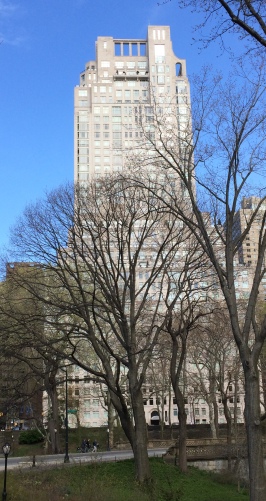
  • Politics Move Left, Americans Move Right

    In an election year in which the top likely candidates come from New York, big cities arguably dominate American politics more than at any time since New Deal. The dynamics of urban politics, which are characterized by high levels of inequality and racial tensions—may be pushing Democrats ever further to the left and Republicans toward the inchoate resentment of Donald Trump. 

    Yet if politics are now being dominated by big cities along the coasts, the most recent U.S. Census Bureau data suggests that when it comes to their own lives, Americans are moving increasingly elsewhere, largely to generally Republican-leaning suburbs and Sunbelt states. In other words, politics and power are headed one way, demographics the other.

    Perhaps no American president has been less sympathetic to suburbs than Barack Obama. Shaun Donovan, Obama’s first secretary of Housing and Urban Development, proclaimed the suburbs’ were “over” as people were “voting with their feet” and moving to dense, transit-oriented urban centers. More recently, Donovan’s successor, Julian Castro, has targeted suburbs by proposing to force them to densify and take more poor people into their communities. Other Democrats, notably California’s Jerry Brown, have sought to use concerns over climate change to make future suburban development all but impossible.

    This divergence between politics and how people choose to live has never been greater. As economist Jed Kolko has observed, the perceived “historic” shift back to the inner city has turned out to be a relatively brief phenomena. Since 2012, suburbs and exurbs, which have seven times as many people, again are growing faster than core cities.

    This is not likely to be a short-lived phenomena. Generally speaking, Kolko notes that an aging population tends to make the country more suburban. The overwhelming trend among seniors is not to move “back to the city” but to stay in or move out to suburban or exurban areas. Between 2000 and 2012, notes demographer Wendell Cox, 99.6 percent of the senior population increase in major metropolitan areas was in the suburbs, a gain of 4.3 million compared to the gain of 17,000 in the urban core.

    There is also the well-demonstrated tendency for people entering their 30s, prime child-bearing age, to move to suburban locations for safety, space and better schools. Here’s the basic score: Core counties last year lost a net 185,000 domestic migrants, while the suburban counties gained 187,000. Rather than a reversal of suburbanizing trends, we see something of an acceleration.

    Primarily Republican-leaning areas may be losing their political power for now, but their demographic growth is relentless. Like the suburbs, the sprawling Sunbelt metros were widely predicted by urban pundits to be heading toward an inevitable extinction.      

    Yet the 2015 census data shows something quite different: Virtually every fast-growing metro region in the country is located far from the Eastern Seaboard, and increasingly outside of California. Houston, Dallas-Fort Worth, Atlanta and Phoenix each gained more people last year than either New York or Los Angeles, which are three to four times larger.

    Among America’s 53 largest metropolitan areas, nine of the 10 fastest-growing ones are in the Sunbelt: Austin, Orlando, Raleigh, Houston, Las Vegas, San Antonio, Dallas-Fort Worth, Nashville and Tampa-St. Petersburg. The only outlier is Denver, which has become a destination for people and companies fleeing higher priced areas, particularly the West Coast.

    Perhaps even more revealing are the trends in domestic migration. The leaders in total domestic net migration parallel almost precisely those that have experienced the strongest total population growth, led by Houston, Dallas-Fort Worth and Phoenix; together these metro areas added 150,000 net domestic residents. In percentage terms the big winners are Austin, Tampa-St. Petersburg, Raleigh, and Orlando.

    So which states are losing out among domestic migrants? The biggest loser is the home of our likely next president. New York experienced a net out-migration of 160,000 between 2014 and 2015. Over the past five years its metropolitan area has lost 701,000 net domestic migrants after suffering a population loss of nearly 2 million in the first decade of the new millennium. Chicago and Los Angeles also have experienced net out-migration as have some cities—such as San Jose and Washington, D.C.—even as they experienced impressive economic booms.

    These latest numbers confirm the likelihood that highly suburbanized areas, particularly in the Sunbelt, will continue to represent our demographic future. For all the hype and hysteria surrounding the urban revival, dense cities are not irresistible lures to most people. For the most part, they are experiencing sub-normal, and even declining, growth. The most urban of our urban cores, New York City, illustrates this slackening of population. For one year, the Big Apple grew at 1.2 percent (2011), above the national average of 0.7 percent. Yet, its growth dropped in 2015 to 0.6 percent, well below the national average. Brooklyn’s population growth declined in half from 2011 to 2015, while Manhattan’s declined by two-thirds. The only borough to show strong growth has been its poorest, the Bronx.

    None of this suggests that dense core cities are irrelevant to the future. As economist  Kolko suggests, inner city gentrification, particularly close to the urban core, has accompanied strong income growth and remains attractive to relatively small parts of the population: the highly educated, the affluent childless, single as well as the uber-rich. These places loom large also because that’s where the media is increasingly concentrated. And with a big city, East Coast-oriented person in the Oval Office next year, they could find themselves more influential, at least in the short run, than at any time in recent history.  

    This divergence between power and population sets the stage for future political conflicts, particularly given likely Democratic Party electoral gains this year. Attempts to crack down on suburban housing and resource industries, notably fossil fuels, seems likely to hit hardest many   places that are growing quickly, and which generally lean to the GOP.

    It could well be, as some progressives have forecast for over a decade, that the movement of New Yorkers and Californians, combined with the growth of minorities, in places like Texas and Arizona will paint these places Democratic blue. This seems reasonable, but what happens when Washington adopts policies that clearly hurt the new suburban homeowners, and the industries that have sparked Sunbelt growth?

    The new Texans and Arizonans may well be more socially liberal than the current denizens, but one has to wonder if they would like to see the prospect of better professional opportunities and affordable homes squelched by Washington’s urban-centric elite.

    This could turn out to be a bad election for those middle American aspirations, but over time progressive triumphalism could engender a grassroots rebellion capable of overturning the 2016 election results in shockingly fast fashion.

    This piece first appeared by Real Clear Politics.

    Joel Kotkin is executive editor of NewGeography.com. He is the Roger Hobbs Distinguished Fellow in Urban Studies at Chapman University and executive director of the Houston-based Center for Opportunity Urbanism. His newest book, The Human City: Urbanism for the rest of us, will be published in April by Agate. He is also author of The New Class ConflictThe City: A Global History, and The Next Hundred Million: America in 2050. He lives in Orange County, CA.

    Dallas photo by Bigstock.

  • Black Residents Matter

    Black lives matter, we’re told—but in many American cities, black residents are either scarce or dwindling in number, chased away by misguided progressive policies that hinder working- and middle-class people. Such policies more severely affect blacks than whites because blacks start from further behind economically. Black median household income is only $35,481 per year, compared with $57,355 for whites. The wealth gap is even wider, with median black household wealth at only $7,133, compared with $111,146 for whites, according to a study by Demos and the Institute on Assets and Social Policy.

    How, then, are cities faring in meeting the aspirations of their black residents, judged especially by the ultimate barometer: whether blacks choose to move to these cities, or stay in them? Among major American cities, three main typologies emerge: the high-flying progressive enclaves of the West, the historically large cities of the Northeast and the Midwest, and the fast-growing boomtowns of the South. Though results vary to some extent, the broad trend is clear: the most progressive-minded cities are either seeing a significant exodus of blacks or, never having had substantial black populations, are failing to attract them. These same cities, home to some of the loudest voices alleging conservative insensitivity to blacks, are failing to provide economic environments where blacks can prosper.

    In theory, prosperous, growing western cities—the San Francisco Bay Area, Portland, Seattle, and Denver—should find it easier to provide upward mobility, as they have fewer disadvantaged people. Far from the South and not part of the Rust Belt industrial complex, they attracted far fewer blacks during the twentieth century’s Great Migration, when millions of blacks moved north. As a result, their black populations are small, compared with those of eastern cities—just 5.6 percent in the city of Portland, for example, compared with 53.4 percent in Cleveland and 46.9 percent in St. Louis. And many western cities are driving their small number of black residents out.

    Portland is part of the fifth-whitest major metropolitan area in America. Almost 75 percent of the region is white, and it has the third-lowest percentage of blacks, at only 3.1 percent. (America as a whole is 13.2 percent black.) Portland proper is often portrayed as a boomtown, but the city’s tiny (and shrinking) black population doesn’t seem to think so. The city has lost more than 11.5 percent of its black residents in just four years. Metro Portland’s black population share grew by 0.3 percentage points from 2000, but that trailed the nation’s 0.5 percentage-point growth. This implies that some of Portland’s blacks are being displaced from the transit- and amenity-rich city to the suburbs that progressives themselves insist are inferior.

    The San Francisco Bay metro area has lost black residents since 2000, though recent estimates suggest that it may have halted the exodus since 2010. The Los Angeles metro area, too, has fewer black residents today than in 2000. The performance in the central cities is even worse. America’s most liberal city, San Francisco, is only 5.4 percent black, and the rate is falling. It’s a similar tale in Seattle—“one of the most progressive cities in the United States,” as a Black Lives Matter protester noted. One city bucking the western trend is Denver. Though the Rocky Mountain city has a small black population—6.1 percent in the region and 9.5 percent in the city proper—that population is growing in both areas, if slowly.

    These figures might not be important if they merely reflected a choice by blacks to move to more auspicious locations, but the evidence suggests that specific public policies in these cities have effectively excluded and even driven out blacks. Primary among them are restrictive planning regulations that make it hard to expand the supply of housing. In a market with rising demand and static supply, prices go up. As a rule, a household should spend no more than three times its annual income on a home. But in West Coast markets, housing-price levels far exceed that benchmark. According to the Demographia International Housing Affordability Survey, the “median multiple”—the median home price divided by the median household income—should average about 3.0. But the median multiple is 5.1 in Portland, 5.1 in Denver, 5.2 in Seattle, 8.1 in Los Angeles and San Diego, 9.4 in San Francisco, and 9.7 in San Jose. As the Demos/IASP report found, differences in homeownership rates between whites and blacks account for a large share of the racial wealth gap. Policies that put the price of homeownership out of reach for black families exacerbate the problem.

    Even some on the left recognize how development restrictions hurt lower- and middle-income people. Liberal commentator Matt Yglesias has called housing affordability “Blue America’s greatest failing.” Yglesias and others criticize zoning policies that mandate single-family homes, or approval processes, like that in San Francisco, that prohibit as-of-right development and allow NIMBYism to keep out unwanted construction—and, by implication, unwanted people. They don’t mention the role of environmental policy in creating these high housing prices. Portland, for example, has drawn a so-called urban-growth boundary that severely restricts land development and drives up prices inside the approved perimeter. The development-stifling effects of the California Environmental Quality Act (CEQA) are notorious. California also imposes some of the nation’s toughest energy regulations, putting a huge financial burden on lower-income (and disproportionately black) households. Nearly 1 million households in the Golden State spend 10 percent or more of their income on energy bills, according to a Manhattan Institute report by Jonathan Lesser. While liberals are quick to point out that in suburban communities, land-use restrictions that appear race-neutral can be functionally discriminatory, they don’t acknowledge that their own environmental-based restrictions on housing and energy are similarly exclusionary.

    The Windy City’s black population loss accounted for the lion’s share of the city’s total shrinkage during the 2000s.

    In some cases, western cities’ support for gentrification has come at the expense of long-standing black communities. In Portland, residents of the historically black Albina neighborhood complained about bike lanes—a progressive fetish—being built in their neighborhood. In Oakland, recent upscale arrivals got the government to cite Pleasant Grove Baptist Church, a fixture in the city for 65 years, for creating a public nuisance—because its gospel-choir practice was disturbing the newcomers.

    During the Great Migration, cities of the Midwest and the Northeast were industrial magnets, sucking in vast quantities of labor not just from the American South but also from Europe. As northern industry declined during the Rust Belt era, the great northern cities fell on trying times, and black residents, who had struggled to gain equal opportunity in factory jobs and in housing, were hit hard. Racial turbulence, often including riots, intensified, and helped drive a white exodus. Suburb-bound whites left behind an often-impoverished black underclass in segregated neighborhoods that, in many cases, remain so today.

    The most distressed cities in this region are the usual suspects: Detroit, Cleveland, Flint, and Youngstown. All have declining black populations, both in their urban cores and region-wide. Others, like St. Louis, have maintained their black populations only through natural increase (births outnumbering deaths). They are losing black residents to migration.

    The greatest demographic transition is taking place in Chicago. The Windy City’s black population loss of 177,000 accounted for the lion’s share of the city’s total shrinkage during the 2000s. Another 53,000 blacks have fled the city since 2010. In fact, the entire metro Chicago area lost nearly 23,000 blacks in aggregate, the biggest decline in the United States.

    By contrast, in northern cities with more robust middle-class economies—even if job growth doesn’t match Sunbelt levels—black populations are expanding. Since 2010, for example, metro Indianapolis added more than 19,000 blacks (6.9 percent growth), Columbus more than 25,000 (9 percent), and Boston nearly 40,000 (10.2 percent). New York’s and Philadelphia’s black population growth rates are low but positive, in line with slow overall regional growth. Washington, D.C., a traditional hub of black American life, is seeing declining black population share in the district itself, but the overall D.C. region continues to show solid black population growth.

    The somewhat unlikely champion for northern black population growth is Minneapolis–St. Paul. Though its black population makes up a much smaller proportion than many of its midwestern peers—at only 8 percent in the region and 19.5 percent in the city—Minneapolis’s black population has grown at a strong rate. Since 2010, the black population in the city has grown by 15,000 people, or 23 percent. The region added 30,400 black residents, growing by 12.1 percent. Part of the Minneapolis story (and that of Columbus as well) involves an influx of Somali immigrants—the metropolitan area has more Somalis than anywhere else in the United States. But immigration doesn’t explain everything. Minneapolis is also the third-leading destination for blacks leaving Chicago (behind Atlanta and Davenport, Iowa). About 1,000 black Chicagoans make the move north every year.

    Obviously, many blacks like what they see in places like Minneapolis, Indianapolis, and Columbus. One key is a development environment that keeps housing affordable. This is dramatically clear in Minneapolis, a liberal, historically white city often likened to western cities like Seattle and Denver. But being more housing-development-friendly, and also perhaps in part because of its famously brutal winters, Minneapolis is much more affordable than those cities, with a home-price median multiple of only 3.2. Similarly, in Columbus (with a median multiple of 2.9) and Indianapolis (also 2.9), black families can afford the American dream. When cities get the basics (planning policy, job growth, and reasonable taxation levels) right, even tough winters are no obstacle to a growing population—of whites and blacks.

    Where else do blacks go when they leave declining Rust Belt cities? Some seek opportunity in better-off regional cities, but others head to smaller regional communities that, if anything, are even worse off. Census Bureau data suggest that a significant number of blacks leaving Chicago are ending up in struggling downstate Illinois communities like Danville or Carbondale, where they’re unlikely to find economic opportunity. Why move to these places? One answer: they’re dirt cheap. But there’s a particular reason for that—demand has collapsed along with local economies. This creates a false allure. Harvard economist Edward Glaeser noted that some failing cities become so cheap that they turn into “magnets for poor people.” This left-behind population of blacks in places with low opportunity will prove challenging for these regions. The North also remains racially stratified. Milwaukee, New York, and Chicago are the three most segregated regions in the country. The maps of where black and white residents live in cities like Detroit shock the conscience. Urban school districts tasked with educating predominantly black students are failing miserably. Powerful public-employee unions make reform a difficult prospect.

    But for those blacks leaving the West, Midwest, and Northeast, one destination dominates: the South. A century ago, in search of economic and social opportunity, blacks were leaving the South to go north and west; today, they are reversing that journey, in what the Manhattan Institute’s Daniel DiSalvo dubbed “The Great Remigration” (Autumn 2012). DiSalvo found that blacks now choose the South in pursuit of jobs, lower costs and taxes, better public services (notably, schools), and sunny weather for retirement. The new arrivals aren’t solely working-class, either. Even better-off blacks, with household incomes over $100,000, are heading south from cities like Chicago.

    Historically, Southern blacks lived in rural areas. A large rural black population remains in the South today, often living in the same types of conditions as rural whites, which is to say, under significant economic strain. But the new black migrants to the South are increasingly flocking to the same metro areas that white people are—especially Atlanta, the new cultural and economic capital of black America, with a black population of nearly 2 million. The Atlanta metro area, one-third black, continues to add more black residents (150,000 since 2010 alone) than any other region.

    In Texas, Dallas has drawn 110,000 black residents (11.3 percent growth) and Houston just under 100,000 (9.2 percent) since 2010. Austin, a rare liberal city in the South, remains, at 53.4 percent, the whitest major Texas metro—Dallas and Houston double its black population share—but it, too, has seen strong black population growth. Miami, with its powerful Latino presence that includes both historically American as well as Afro-Latinos, also added about 100,000 blacks (8.3 percent). Today, Dallas, Houston, and Miami are all home to more than 1 million black residents.

    Many smaller southern cities—including Charlotte, Orlando, Tampa, and Nashville—are also seeing robust black population growth. Even New Orleans has seen a rebound in its black population since 2010. Not surprisingly, these southern cities are extremely affordable. A combination of pro-business policies combined with a development regime that permits housing supply to expand as needed has proved a winner. Among these southern cities, only Miami, with its massive influx of Latin American wealth, is rated as unaffordable, with a median multiple of 5.6. In addition to their sensible policies, many of these southern cities have also viewed their black communities not as a problem to be solved but as a potential civic asset and engine of growth. Atlanta embraced its emerging status as the capital of black America. Houston famously opened its doors and offered temporary shelter to thousands of poor black residents of New Orleans displaced by Hurricane Katrina. Many of those refugees stayed in Houston, attracted by its job opportunities and quality of life.

    Blacks are returning to southern cities, like Atlanta, drawn by economic opportunity and lower costs, especially compared with progressive cities like San Francisco, where restrictive housing policies have made living unaffordable for many. JIM WILSON/THE NEW YORK TIMES/REDUXBlacks are returning to southern cities, like Atlanta, drawn by economic opportunity and lower costs, especially compared with progressive cities like San Francisco, where restrictive housing policies have made living unaffordable for many. JIM WILSON/THE NEW YORK TIMES/REDUX
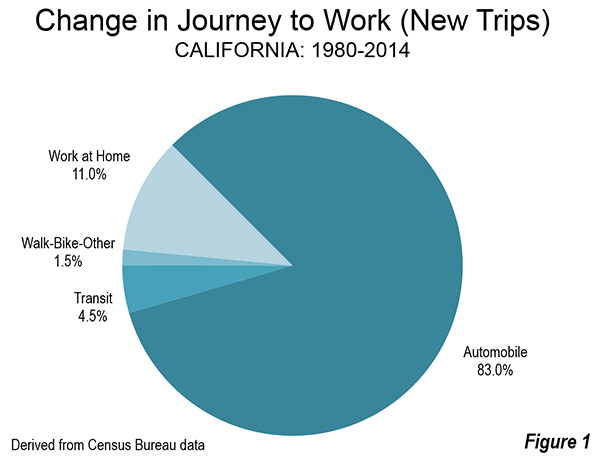
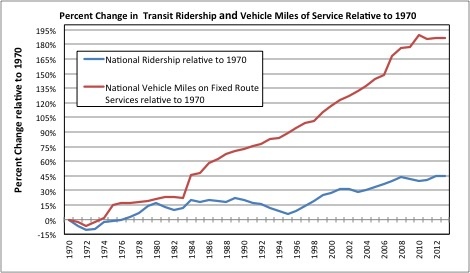
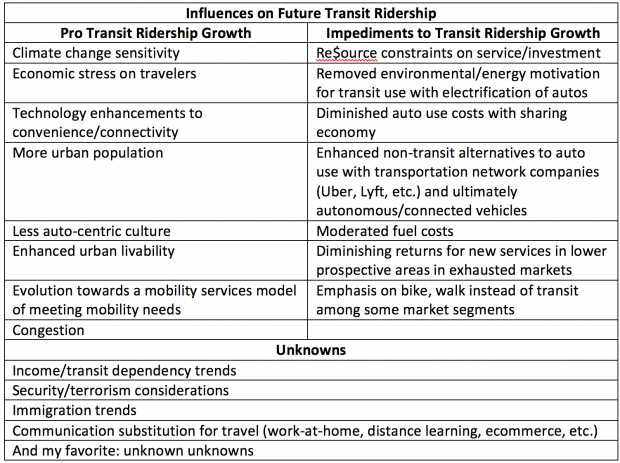
    These regional trends reveal two basic patterns. First, like whites, blacks are attracted by strong, broad-based economies. Pro-growth polices that allow workaday, not just elite, businesses to flourish are foundational to inclusive success. Second, with lower household incomes, black families are vulnerable to high housing costs. A few high-cost cities attract black residents; but for the most part, blacks are flocking to cities that are not only economically vibrant but generally affordable. Even strong urban economies can’t keep blacks from being displaced from cities, such as many on the West Coast, where housing costs remain stratospheric.

    Another conclusion revealed by the data: when it comes to how state and local policies affect black residents, the track record of the most liberal cities in the United States is truly dismal. These results should be troubling to progressives touting blue-state planning, economic, and energy policies as models for the nation. After all, if wealthy cities like San Francisco, Portland, and Seattle—where progressives have near-total political control—can’t produce positive outcomes for working-class and middle-class blacks, why should we expect their urban approach to succeed anywhere else?

    This piece first appeared at The City Journal.

    Aaron M. Renn is a senior fellow at the Manhattan Institute, a contributing editor of City Journal, and an economic development columnist for Governing magazine. He focuses on ways to help America’s cities thrive in an ever more complex, competitive, globalized, and diverse twenty-first century. During Renn’s 15-year career in management and technology consulting, he was a partner at Accenture and held several technology strategy roles and directed multimillion-dollar global technology implementations. He has contributed to The Guardian, Forbes.com, and numerous other publications. Renn holds a B.S. from Indiana University, where he coauthored an early social-networking platform in 1991.

  • Focus on Cost-Effective GHG Emissions: Report

    The Reason Foundation has published my new research reviewing the potential for urban containment (or other restrictive policies that are sometimes called “smart growth”) to reduce greenhouse gas (GHG) emissions. Principal reports cited by advocates of urban containment are reviewed. The conclusion is that only minimal reductions if the gains from improved automobile fuel economy are excluded. Of course, fuel economy improvements have nothing to do with urban containment policy, but are unrelated policy options that allow people to avoid draconian lifestyle changes that probably are impossible anyway.

    The report, "Urban Containment: The Social and Economic Consequences of Limiting Housing and Travel Options" expresses concern that the use of costly GHG reduction strategies, such as urban containment, has the potential to create significant economic disruption and unemployment. The report concludes that sufficient GHG emission reductions can be achieved without urban containment policy and its attendant economic problems: "The key is focusing on the most cost-effective strategy, without unnecessarily interfering with the dynamics that have produced the nation’s affluence."

    Read more and download the full report at Reason.com

    Photograph: BMW i3. 124 miles per gallon equivalent electric car (currently available)
    by TTTNISOwn work, CC0, https://commons.wikimedia.org/w/index.php?curid=34818839

  • More Californian’s Continue to Drive Despite Policies to Discourage

    “California Commuters Continue to Choose Single Occupant Vehicles,” according to a report by the California Center for Jobs and the Economy. The Center indicated:

    “The recent release of the 2014 American Community Survey data provides an opportunity to gauge how California commuters have responded to this shifting policy. The data clearly reflects that even with the well-documented and rapidly rising costs of the state’s traffic congestion and costs associated with the deteriorating condition of the state’s roads, California workers continue to rely on single occupant vehicles for the primary mode of commuting.  Moreover, their reliance on this mode of travel continues to grow both in absolute and relative terms (emphasis in original).

    California has experienced substantial growth since 1980. There are approximately 7,000,000 more workers today than 35 years ago. The Census Bureau data shows that 83 percent of the new commuting has been by single-occupant automobile. Working at home accounted for 11 percent of the new commuting, while transit accounted for less than one half that figure, at 4.5 percent (Figure). In 1980, transit accounted for more than three times the volume as working at home. By 2014, the number of people working at home exceeded that of transit commuters.

    The Center noted that state policies to discourage single-occupant commuting had been of little effect:

    “The substantial investments in public transit, bike lanes, and other alternative modes have not produced major gains in commuter use.  Instead, these investments appear to have simply shifted the choices made by commuters who already are committed to getting to work through modes other than single occupant vehicles.   From 1980 to 2000, public transit use grew by 116,000 while “other” modes dropped by the same amount.  From 1980 to 2005, public transit use grew by 121,000 while “other” modes dropped by 113,000.  In the following years, 1/3 of the growth in public transit and “other” modes was offset by reductions in carpool use.”

    The report credited impressive public transit gains in the San Francisco Bay Area, but went on to say that:

    “even in the Bay Area, growth of public transit and the “other modes” has come largely from the shrinking relative use of carpooling.” 

    While improving transit ridership is a good thing, to the extent that it removes passengers from car pools, there is no gain in traffic, because the car and driver are still on the road.

    The report laid considerable blame on the cost of houses in California:

    “California, the growing body of land use, energy, CEQA, and other regulations affecting housing cost and supply has put both the cost of housing ownership and rents within traditional employment centers out of the reach of many households.” 

    California’s housing affordability is legendarily desperate. Since the imposition of strong land use regulations began in the early 1970s, the median house price has risen from three times (or less) times median household incomes in of the state’s metropolitan areas to over nine times today in the San Jose and San Francisco metropolitan areas, over eight times in the Los Angeles and San Diego areas and over five times in the Riverside-San Bernardino area (Inland Empire).

    Perhaps the most important “take-away” from the report was that: “The current de facto policy of trying to reduce commuting by increasing congestion and its associated costs to commuters has to date not shown itself to be successful.” Simply stated, the vast majority of jobs and destinations in all of California’s urban areas are not accessible by transit in a reasonable time. The question for most California commuters is, for example, not whether to drive or take transit to work, but whether to go to work at all, since most jobs are not readily accessible except by car.

  • Public Transportation Ridership: Three Steps Forward, Two Steps Back?

    The Bureau of Transportation Statistics recently released preliminary data summarizing public transportation ridership in the United States for the calendar year 2015. The preliminary data from the National Transit Data program showed transit ridership in 2015 of 10.4 billion annual riders approximately 2.5% below the 2014 count and also smaller than the 2013 count. The American Public Transit Association using a slightly different methodology released data showing 10.6 billion annual riders versus 10.7 billion in calendar year 2014, a 1.26% year-over-year decline. Such differences between sources are common, resulting from differences in methodology and definitions, and unsurprising, given that data is preliminary and national data is dependent upon reporting from hundreds of different agencies. 

    It is important to recognize that it’s extraordinarily difficult to consistently grow transit ridership. We have had growing population, a rebounding economy, growing total employment, and an aggressively argued hypothesis that the millennial generation is meaningfully different than their forefathers—with urban centric aspirations and indifference toward auto ownership and use. Yet, transit ridership has remained stubbornly modest. 

    Indicator

    2015 versus 2014

    Source

    U.S. Population

    +0.8%

    Census

    Total Employment

    +1.7%

    BLS

    Real GDP

    +2.4%

    BEA (third estimate)

    Gas Price

    -28%

    EIA

    VMT

    +3.5%

    FHWA

    Public Transit Ridership

    -1.3% to -2.5%

    APTA and NTD

    Amtrak Ridership (FY)

    -0.1%

    Amtrak

    Airline Passengers

    +5.0%

    USDOT, BTS

    The rebound in national vehicle miles traveled totals in 2015 (+3.5%) grabbed attention, as many had anticipated continued moderation. Couple that with modest declines in transit and Amtrak use and strong airline traffic growth, and one could argue the new normal for travel trends is looking more like the old normal. 

    When I entered full-time employment with a transit agency in 1980, industry leaders were touting the growth opportunities for public transit in light of the energy shortages in the late ’70s. Throughout the intervening time, there have been myriad seemingly logical events that led to expectations of strong transit growth. Growing congestion, a growing appreciation of the role of transportation in influencing land-use, growing federal support, increasing gasoline prices, expansion of rail systems, sensitivity to the safety benefits of transit travel, potential economic benefits for passengers who reduce auto ownership and use costs, air quality concerns and, subsequently, climate impact concerns, and, more have collectively created almost perpetual expectations of a more promising future for public transportation. Indeed, transit ridership has grown some since its low point in the early ’70s and subsequent dip in the mid-’90s, but the often-expected, sustained, or robust growth has never materialized. 

    More recently, demographic conditions, such as growing urbanization, declining driver’s-license-holding and auto-ownership rates for young people, and evidence that the love affair with the automobile has waned, have renewed expectations. Sprinkle in technology enhancements that enable real-time information, robust trip planning, automated and more convenient fare collection, and integrated first-mile last-mile opportunities; add a dash of heightened concerns about climate change; and there remains a credible argument that transit has a bright future. 

    An often-cited constraint on the growth of public transit has been the assertion of resource constraints for providing the quality of service that would be attractive to more travelers who have other options. While transit supply remains well below the aspirational levels of many transit users and transit advocates, the data in the graph below indicates that supply has grown far more rapidly than demand for the past several decades. This is a report card on productivity that mom and dad would hardly be proud of. And a larger share of the ridership has moved to more capital intensive (and larger vehicle capacity) rail systems.


    Source: 2015 APTA Public Transportation Fact Book, Appendix A, Historical Tables 2 and 8.

    Gas prices have certainly been a factor in recent trends, but they can’t explain the fact that growing transit ridership seems as tough as getting bipartisan harmony in the nation’s legislative bodies. Some cities are moving headlong into a more transit intensive future with aspirations of big ridership growth, like Seattle, where aggressive, multi-decade plans with big local funding commitment requests promise more transit supply. Other areas like Washington, D.C. are digesting the reality that more resources are required to sustain existing services, maintain infrastructure and meet underfunded pension obligations. The factors supporting or opposing ridership growth are numerous, with uncertainties dominating the lists. 


    I generally like to have a theoretically robust basis for speculating on the future, but in light of the complexity of factors involved and the uncertainty in their trends, transit ridership forecasts are speculative. The per capita transit ridership trend in the graph below (red line) is a pretty straight horizontal line since about 1970 and just might be pointing to the future. History tells us to be careful in presuming we understand causal factors governing complex behaviors; if anything the degree of uncertainty is greater than ever. 

    Transit remains very important to each trip maker but how many trips are made in the future remains a guess, one that should be informed by a keen understanding of travel behavior and history and not just aspirations.


    Source: APTA Public Transportation Fact Book, various years, Census.

    This piece first appeared at Planetizen.

    Dr. Polzin is the director of mobility policy research at the Center for Urban Transportation Research at the University of South Florida and is responsible for coordinating the Center’s involvement in the University’s educational program. Dr. Polzin carries out research in mobility analysis, public transportation, travel behavior, planning process development, and transportation decision-making. Dr. Polzin is on the editorial board of the Journal of Public Transportation and serves on several Transportation Research Board and APTA Committees. The opinions are those of the author—or maybe not—but are intended to provoke reflection and do not reflect the policy positions of any associated entities or clients.