Blog

  • Trump, Sanders, and the Precariat

    While the white working class is shrinking in the US, it remains the largest voting block in the country. That may be why leaders of both parties are concerned that white working-class voters, especially in the Midwest and South, are supporting populist candidates like Donald Trump and Bernie Sanders. They don’t understand that many of these voters blame Wall Street, corporate leaders, and politicians – the East Coast establishment –for destroying their jobs and communities over the past few decades.

    Recent polls suggest that almost 60% of Americans, both Democrats and Republicans, “don’t identify with what America has become.” According to Cliff Young and Chris Jackson, these “nativist” Americans are older, whiter, and less educated than the rest of the population – more working-class, in other words. For some middle-class professionals, this “nativism,” exemplified in support for Donald Trump’s racial comments, simply reinforces the assumption that the white working class is inherently racist and foolish. They conveniently ignore the way racism is resurfacing among the middle class as they, too, feel resentment over their economic displacement. As Barbara Ehrenreich warns, “Whole professions have fallen on hard times, from college teaching to journalism and the law. One of the worst mistakes this relative elite could make is to try to pump up its own pride by hating on those — of any color or ethnicity — who are falling even faster.”

    The focus on racism and xenophobia ignores an essential reality: precarity is bringing working-class and middle-class voters together politically. As Guy Standing has argued, the emerging precariat is a political class in the making. We see this in the “Fight for $15.” The struggle to increase the minimum wage seeks economic improvement for both the non-college and college educated.

    This growing political block not only shares economic resentment but also the underlying racism that has been baked into American culture. No doubt, many college-educated whites looking for work have blamed multiculturalism and affirmative action for their current economic position, and they are just as likely as working-class people to respond to Trump’s racist rhetoric.

    As Dan Bolz has suggested, “Trump’s appeal . . . underscores the resistance to the changes the country’s transition have brought forward.” Paul Krugman has suggested that “moderate Republicans and Third Way Democrats” who had tried to explain inequality in terms of skill-biased technological change are now lamenting the rise of Democratic populism. At the same time, progressive Democrats have complained that Sanders has ignored racial inequality while pandering to those facing economic inequality.

    Leading Republican pundits like David Brooks and George Will have tried to dismiss Trump, a sure sign of conservative establishment fear. This has led to a squabble with Will calling Trump a “bloviating ignoramus” and Trump responding that Will is the “dumbest and most overrated political columnist of all time.” Some would say that Trump’s attack on political correctness and emphasis on “hot button” issues offer just type of mud fight the white working-class base wants. But more thoughtful moderate Republican pundits understand that such battles will not secure that base. For example, writers like Ross Douthat and Michael Gerson have been ignored and marginalized by the Republican establishment. A decade ago, Douthat and Rahein Salem tried to solidify working-class support by developing sound policy proposals that would appeal to what they called “Sam’s Club” Republicans. The Republican establishment trashed their ideas, and these writers have been reduced to rehashing the social values debate of an earlier era. E.J. Dionne has said Republicans are having trouble taking on Trump not only because “they have delivered next to nothing to their loyal white, working-class supporters.”

    The Democratic Party establishment has its own set of fears — about Bernie Sanders. With significant contributions from Elizabeth Warren, Sanders has tried to move the party to embrace policies that are consistent with its New Deal roots. In a speech at Georgetown University, Sanders stressed the disappearance of the middle class, noting that productivity gains and income have been going to 1% of Americans. According to Sanders, a handful of oligarchs now control economic and political life in the U.S. He reminded the audience of the fight over New Deal reforms and types of security it brought to working Americans. Sanders’s takeaway was that “True freedom does not occur without economic security.”

    Hillary Clinton has much less appeal for many working-class and minority Democratic voters. While she has sidestepped her past support for her husband’s policies on crime, drugs, welfare, and trade, these voters have not forgotten his legacy. In commenting on these issues, Clinton tends to pander to voters, as when she says that she opposes the Trans Pacific Partnership (TPP “at this time.” No wonder polls consistently show that the American public doesn’t trust her (though polls suggest they do trust Hillary more than the current crop of Republican candidates on some issues).

    The Democratic establishment doesn’t worry about Clinton’s occasional forays in populism, which they see as political maneuvering. As Politico has reported, “None of them think she really means her populism.” But Sanders’s populist talk makes them cringe, because he connects with working-class resentment. His speeches appeal to the deep sense of injustice, unfairness, and inequality that many in the new precariat, especially millennials and African Americans, feel toward the East Coast establishment that took away their jobs, houses, and community and now even threatens their Social Security.

    Clinton’s wealthy donor base recognizes Sanders’s appeal as a threat to their interests. Democratic Party leaders and their Wall Street backers hope that the Sanders fever will pass quickly and their adherents will then fall in line and embrace Clinton as the only viable option.

    If Clinton and her advisors can’t connect with the new populism, voters may well heed the implication from Republicans that nothing will change no matter who is elected. They’re wrong, of course. With a fragile and deeply unequal economy and an aging Supreme Court, the stakes are too high.   But if Democrats are to win this year, they must understand that the populism that drives support for Trump is also central to Sanders’s appeal. Winning the 2016 election will require the kind of grassroots support that helped elect President Obama twice, but to build that support Democrats will have to address the disaffection and resentment of the new precariat.

    This piece first appeared at Working Class Perspectives.

    John Russo is a visiting fellow at Kalmanovitz Initiative for Labor and Working Poor at Georgetown University and at the Metropolitan Institute at Virginia Tech. He is the co-author with Sherry Linkon of Steeltown U.S.A.: Work and Memory in Youngstown (8th printing).

    Photo by Gage Skidmore [CC BY-SA 3.0], via Wikimedia Commons

  • What’s the Best Way Up for Minorities?

    In presidential election years, it is natural to see our political leaders also as the brokers of our economic salvation. Some, such as columnist Harold Meyerson, long have embraced politics as a primary lever of upward mobility for minorities. He has positively contrasted the rise of Latino politicians in California, and particularly Los Angeles, with the relative dearth of top Latino office-holders in heavily Hispanic Texas. In Los Angeles, he notes, political activism represents the “biggest game in town” while, in Houston, he laments, politics takes second place to business interests and economic growth.

    In examining the economic and social mobility of ethnic groups across the country, however, the politics-first strategy has shown limited effectiveness. Latinos, for example, have dramatically increased their elected representatives nationally since the 1990s, particularly in California. But both Latinos and African Americans continue to move to, and appear to do better in, the more free-market, politically conservative states, largely in the South.

    Two Paths to Success

    Throughout American history, immigrants and minorities have had two primary pathways to success. One, by using the political system, seeks to redirect resources to a particular group and also to protect it from majoritarian discrimination, something particularly necessary in the case of the formerly enslaved African Americans.

    The other approach, generally less well-covered, has defined social uplift through such things as education, hard work and familial values. This path was embraced by early African American leaders such as Booker T. Washington and Marcus Garvey. Today, the most successful ethnic groups – Koreans, Middle Easterners, Jews, Greeks and Russians – demonstrate the validity of this method through high levels of both entrepreneurial and educational achievement.

    Read the entire piece at The Orange County Register.

    Joel Kotkin is executive editor of NewGeography.com and Roger Hobbs Distinguished Fellow in Urban Studies at Chapman University, and a member of the editorial board of the Orange County Register. He is also executive director of the Houston-based Center for Opportunity Urbanism. His newest book, The New Class Conflict is now available at Amazon and Telos Press. He is also author of The City: A Global History and The Next Hundred Million: America in 2050. He lives in Orange County, CA.

    Photo “asian american” by flicker user centinel.

  • What If Singapore and Las Vegas Had a Love Child?

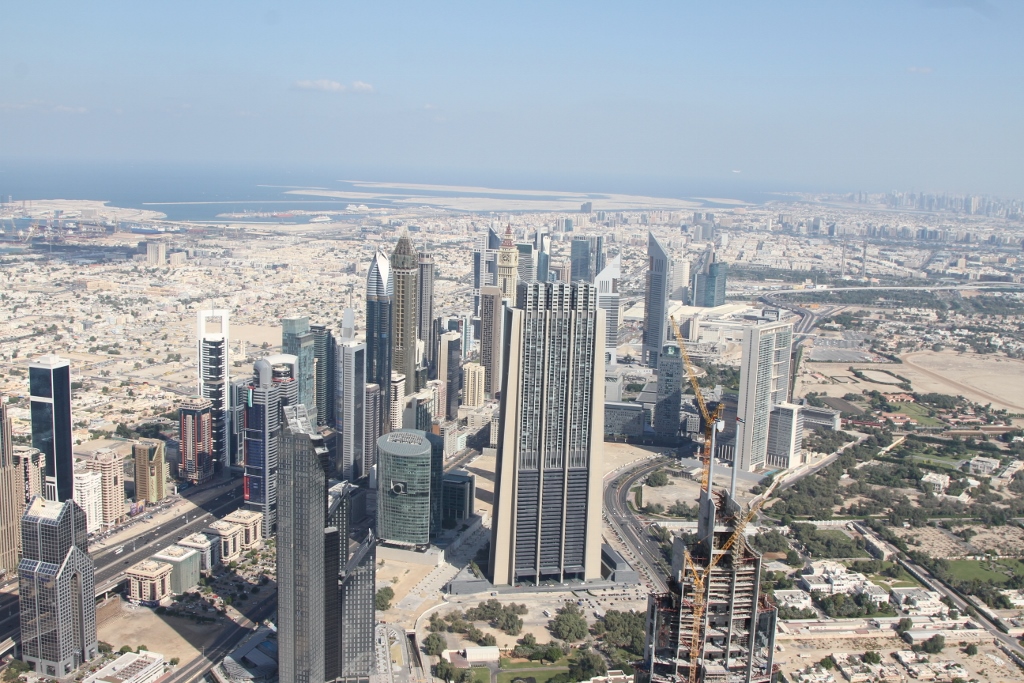
    Compared to what? That’s the question I kept asking myself as I explored Dubai for the second time. Like many people I have serious concerns about the glistening new city-state. But in the end I’ve decided that it’s all really a matter of degree, not kind. I came to this conclusion unexpectedly and begrudgingly. I wanted to hate the place much more than I ultimately did. For all its behind-the-scenes repression and social injustice Dubai is thriving primarily because so many other places are failing so spectacularly. It’s a carnival mirror held up to the rest of the world reflecting the things we don’t like to acknowledge in our own backyards.

    Screen Shot 2015-12-10 at 3.20.48 PM

    IMG_6817 (1024x646)

    IMG_6245 (1024x683)

    IMG_6355 (1024x683)

    Screen Shot 2015-12-10 at 4.42.53 PM

    Screen Shot 2015-12-10 at 4.43.28 PM

    Screen Shot 2015-12-10 at 4.27.16 PM

    Screen Shot 2015-12-10 at 5.55.32 PM

    How is an indoor ski resort in the Persian Gulf all that different from ice hockey stadiums in Houston, Miami, or Los Angeles? How is the Edmonton Mall in the frozen plains of Alberta really different from the Dubai Mall out in the desert? How is a city of over two million people kept alive in a forbidding landscape with no water or farm land? Ever been to Henderson, Nevada or Scottsdale, Arizona? Isn’t it cruel and immoral to use underpaid and exploited immigrant workers who are systematically threatened with deportation? Really? Really? Do I need to go there?

    Screen Shot 2015-12-10 at 5.02.14 PM

    Screen Shot 2015-12-10 at 5.47.14 PM

    Screen Shot 2015-12-11 at 1.07.31 AM

    Dubai is the love child of Singapore and Las Vegas. I choose these two “parents” very carefully. The founder of modern Singapore, Lee Kuan Yew, was fond of saying that what impoverished countries lacked most is good governance. Singapore was transformed from a tiny hardscrabble island nation with no hinterland or natural resources to a world class economy in a matter of forty or fifty years. Skilled management was responsible for most of that success. Singapore’s puritanical one party rule can be criticized on many levels, but providing a safe prosperous life for its people is not on that list. And its inhabitants are free to leave if they feel oppressed – which some do.

    Screen Shot 2015-12-10 at 4.46.46 PM

    Screen Shot 2015-12-10 at 5.00.33 PM

    Screen Shot 2015-12-10 at 5.02.44 PM

    Screen Shot 2015-12-10 at 5.03.10 PM

    Screen Shot 2015-12-10 at 4.48.26 PM

    Las Vegas cultivated an economy based on strategically pulling in money from outside the region. Tourism, tax havens, property investment, and retirement villas turned a one horse town in a desert wasteland into a massive growth machine. Is Vegas built to last? Probably not. But it has demonstrated some basic principles that, for the time being, are highly effective.

    IMG_5863 (1024x683)

    IMG_5852 (1024x683)

    Dubai has far less oil than its neighbors. The emires (Arabic kings) understood that once their modest supplies were pumped dry there would be nothing to fall back on. Their nation would sink into poverty and chaos. You don’t have to look very far in the region to see what happened to other nations whose leaders weren’t so thoughtful or wise. Nearby Yemen is the poster child for depletion, population overshoot, and collapse into bloodshed. 

    Screen Shot 2015-12-10 at 11.56.47 PM

    Screen Shot 2015-12-11 at 3.11.43 AM

    Screen Shot 2015-12-11 at 3.10.25 AM

    Dubai provides stability and order in a world where that’s often hard to find,so long as you can afford it. Pakistan, Sudan, and many other places are simply incapable of getting their sh*# together. In a troubled world middle and upper class people are looking for a safe haven to stash their money and their families. Dubai skims the cream off the turbulent bits of the planet. It’s a pure pay-per-view environment and the ultimate gated community. I honestly can’t blame people for choosing to relocate to Dubai when the alternative back home in Syria or Zimbabwe is what it is. This is especially true when so many other destinations aren’t so welcoming.

    Screen Shot 2015-12-10 at 4.23.20 PM

    Screen Shot 2015-12-10 at 10.44.35 PM

    Screen Shot 2015-12-10 at 10.46.06 PM

    Screen Shot 2015-12-10 at 10.47.08 PM

    Screen Shot 2015-12-11 at 3.08.52 AM

    Screen Shot 2015-12-10 at 5.58.59 PM

    Screen Shot 2015-12-10 at 6.00.07 PM

    Screen Shot 2015-12-10 at 6.08.29 PM

    Screen Shot 2015-12-10 at 6.04.38 PM

    At the same time armies of desperate workers from failed states are invited in to do the dirty heavy lifting on the cheap. Bangladesh, Pakistan, Ukraine, Burma, Nigeria, Bosnia… Depending on their skill set there’s a special niche for each type. Illiterate Malaysian men have one kind of use in construction. Pretty young women from the Philippines and Bulgaria are put to use as cleaners and nannies (among other things.) These workers are “guests” who are cycled through every couple of years thereby eliminating the need for pensions, schools, proper housing, health care, and other long term social obligations. This is the purest expression of neoconservative Reagan/Thatcherism. For better. And worse. But these workers wouldn’t be in Dubai at all if their home countries provided them with proper education and employment. 

    Screen Shot 2015-12-10 at 11.56.24 PM

    Screen Shot 2015-12-10 at 5.53.28 PM

    Screen Shot 2015-12-10 at 5.52.21 PM

    Screen Shot 2015-12-10 at 5.52.05 PM

    Screen Shot 2015-12-10 at 5.51.04 PM

    I can’t say I love Dubai or that I would ever want live there myself. But I understand it more now that I’ve poked around in person a couple times. I simply can’t criticize it in isolation without acknowledging how much Dubai is merely taking global trends to their logical extensions. From that perspective it’s a great mirror to examine conditions everywhere rather than indulge in obsessing about Dubai’s particular shortcomings. If you don’t like the place and what it stands for you might want to re-examine your own country first. They may be more similar than you think.

    John Sanphillippo lives in San Francisco and blogs about urbanism, adaptation, and resilience at granolashotgun.com. He’s a member of the Congress for New Urbanism, films videos for faircompanies.com, and is a regular contributor to Strongtowns.org. He earns his living by buying, renovating, and renting undervalued properties in places that have good long term prospects. He is a graduate of Rutgers University.

  • Land Regulation Making Us Poorer: Emerging Left-Right Consensus

    There is an emerging consensus about the destructiveness of excessive land use regulation, both with respect to its impact on housing affordability but also its overall impacts on economies. This is most evident in a recent New Zealand commentary.

    New Zealand

    Both the center-Left and center-Right have come together in agreement on the depth of New Zealand’s housing affordability and its principal cause, overly restrictive urban planning regulations. Labour Party housing spokesperson (shadow minister) Phil Twyford and Oliver Hartwich, executive director of the New Zealand Initiative, wrote in a co-authored New Zealand Herald commentary:“Our own research leaves no doubt that planning rules are a root cause of the housing crisis, particularly in Auckland…” (See: “Planning Rules the Cause of Housing Crisis.”).

    The Labour Party is the largest opposition party in Parliament, and has traded governing with the currently ruling National Party more than eight decades. The New Zealand Initiative is "an association of business leaders that is also a research institute."

    Planning and the New Zealand Housing Crisis

    New Zealand’s housing crisis has been building for more than two decades. New house construction has fallen dramatically. According to Twyford and Hartwich, house construction has declined nearly 40 percent from 1973. At the same time the demand for housing has increased. The authors note that New Zealand’s population has increased 50 percent since that time. The housing shortage is further exacerbated by the falling average size of households, which means more new dwellings are required than  indicated by the increase in population

    Across the Pacific nation, far more restrictive land use regulations have been adopted, including urban containment boundaries (urban growth boundaries), which have been associated with higher house prices relative to incomes. Before the imposition of strict land use regulation, houses typically cost three times or less that of household incomes. Since then, house prices have double or tripled relative to household incomes. Twyford and Hartich note that houses now cost a “severely unaffordable” 9 times household incomes in Auckland: They say that “A big part of the problem in Auckland is escalating land costs. Linked to this, too few houses are being built. The houses that are being built are too expensive.”

    Twyford and Hartwich indicated an even broader general agreement, endorsing comments by the ruling National Party government’s as indicated by Deputy Prime Minister Bill English: “It costs too much and takes too long to build a house in New Zealand. Land has been made artificially scarce by regulation that locks up land for development. This regulation has made land supply on responsive to demand” (also see: "Planning has Become the Externality")

    Broad Consequences

    Twyford and Hartwich starkly described the consequences of New Zealand’s urban planning regime.

    “Rising house prices are making us poorer as a nation. They force people to spend an ever larger proportion of their incomes on housing, and it ties up vast amounts of the nation’s wealth in housing instead of investing it in businesses that create jobs and exports.”

    Twyford and Hartwich also agreed that there is more than enough blame to go around for the mess that has arisen in New Zealand (a criticism that would be appropriate across Australia, the United Kingdom, some markets in the Unites States and the largest markets in Canada):

    "Because this is a national housing crisis that has grown over decades and under governments of different hues, playing political blame games is pointless. You cannot solve problems in retrospect. We need to face the facts and work together for real reform."

    The authors identified three issues for reform: “First, urban growth boundaries driving up section costs. Second, anti-density restrictions stopping affordable housing. Third, the expensive and inefficient way we fund infrastructure.” They also indicated a familiarity with the economics of development fees (also called impact fees”), often missed by planners in Australia, Canada, the United States and elsewhere. “Even though developers nominally pay for all these costs,” “they note, these costs “are immediately passed on to the new home-buyer.”

    Twyford and Hartwich propose what they refer to as "modest" reforms:

    “• Instead of using urban growth boundaries, empower communities to protect places that are of special character and value to them.

    • Free up density and height controls and rely more on high urban design standards including requirements for open and green space, to allow more affordable housing in the city. Let the market discover where and how people want to live.

    • Take developers out of the business of financing new infrastructure. Instead, spread the cost over the assets’ lifetime, either by issuing local government bonds or establishing Community Development Districts” (These could be similar to the Municipal Utility Districts of Texas).

    Importantly, in their second proposal, Twyford and Hartwich exhibit the appropriateness of consumer choice in housing. As in other goods and services, consumers should be free to make their own housing choices, rather than being limited to those permitted by urban planning  decrees. Yet, urban planning, in recent years, has attempted to reduce house sizes and force higher densities, attempting to drive many households into smaller houses and into condominiums who prefer larger detached houses. 

    The concluded that:

    "It is an issue of national importance and concerns all of us – all councils and political parties, developers and the wider business community – and of course the people of this country who would benefit the most from restored housing affordability.

    The time for reform is now."

    The Twyford-Hartwich commentary follows other significant developments in New Zealand.

    Indicating the depth of concern about the impact of planning policies on housing prices, the city of Auckland’s Chief Economist has proposed setting a target to nearly halve house prices relative to incomes over the next 15 years (to a price-to-income ratio of 5.0, compared to its now reported near 10). This represents an important turnaround in thinking in the city.

    Moreover, economic research produced recently for the  Productivity Commission of New Zealand indicated that the housing market distortion has become so bad that “After controlling for a range of other influences, the gradient in land prices (per hectare) from Auckland’s CBD to the rural land adjacent to the city undergoes a step change at the point of the MUL [metropolitan urban limit or urban containment boundary].” The differential was identified at approximately 10 times and the Commission noted that the land value gap has “increasingly binding as housing demand pressures have intensified” (Note 1).

    The Emerging International Consensus

    Consistent with the Productivity Commission recommendation, London School of Economics professors Paul Cheshire, Max Nathan and Henry Overman, in their recent book, Urban Economics and Urban Policy: Challenging Conventional Policy Wisdom, that (see: “People Rather than Places, Ends Rather than Means”):

    “…observed price discontinuities – the difference in market prices across boundaries categories – should become a ‘material consideration’ leading to a presumption in favour of any proposed development unless (a very important ‘unless’) it could be shown that the observed monetary value of the discontinuity reflected wider environmental, amenity or social values of the land in its current use.”

    Shortly after the Twyford-Hartwich article, George Mason University professor Ilya Somin wrote of an “emerging cross-ideological consensus” in his Washington Post column. Somin mentions economists perceived as representative of right of center and left of center positions, such as Harvard’s Edward Glaeser and Nobel Laureate and New York Times columnist Paul Krugman, as well as Jason Furman, Chair of the White House Council of Economic Advisors. He quotes Krugman: “this is an issue on which you don’t have to be a conservative to believe that we have too much regulation.”

    If there is any issue that the Left and Right should be able to unite around, it is policies that keep cities affordable (a prerequisite to livability) not only for both the threatened middle-class and for lower income citizens. More than 40 years ago, legendary urbanist Sir Peter Hall’s raised these as principal points in his critique of urban containment policy. Twyford, Krugman, Cheshire and Harwich are right. This is not an ideological issue but one about the human future in our cities.

    Wendell Cox is Chair, Housing Affordability and Municipal Policy for the Frontier Centre for Public Policy (Canada), is a Senior Fellow of the Center for Opportunity Urbanism (US), a member of the Board of Advisors of the Center for Demographics and Policy at Chapman University (California) and principal of Demographia, an international public policy and demographics firm. He is co-author of the “Demographia International Housing Affordability Survey” and author of “Demographia World Urban Areas” and “War on the Dream: How Anti-Sprawl Policy Threatens the Quality of Life.” He was appointed to three terms on the Los Angeles County Transportation Commission, where he served with the leading city and county leadership as the only non-elected member. He served as a visiting professor at the Conservatoire National des Arts et Metiers, a national university in Paris.

    —-

    Photograph: Phil Twyford, Labour Party housing spokesperson (shadow minister)

  • Where American Families Are Moving

    Much is made, and rightfully so, about the future trends of America’s demographics, notably the rise of racial minorities and singles as a growing part of our population. Yet far less attention is paid to a factor that will also shape future decades: where families are most likely to settle.

    However hip and cool San Francisco, Manhattan, Boston or coastal California may seem, they are not where families are moving.

    In a new study by the Chapman Center for Demographics and Policy, we found that the best cities for middle-class families tend to be located outside the largest metropolitan areas. This was based on such factors as housing affordability, migration, income growth, commute times, and middle-income jobs. Many of our best-rated cities tend to mid-sized. The three most highly rated were Des Moines, Iowa, Madison, Wis., and Albany, N.Y., all with populations of less than 1 million. Among our top 10 metropolitan areas for families, five are larger than this, but only two—the Washington, D.C. area and Minneapolis-St. Paul—are among the nation’s 20 largest metropolitan areas.

    Download the full report (pdf) here.

    Our bottom 10 includes the media’s favorite two cities, New York and Los Angeles, also the largest metropolitan areas in the nation. Three other large metropolitan areas rank in the bottom 10: Miami, Riverside-San Bernardino, Calif., and Las Vegas. The hipster cities, in other words, are not so amenable to the new generation of young families.   

    Why Families Head to the Suburbs

    In the 1960s, renowned urbanist Jane Jacobs asserted that “suburbs must be a difficult place to raise children.” But they remain popular nonetheless. According to U.S. Census Bureau statistics, in 2011, children between ages 5 and 14 constituted about 7 percent in urban core Central Business Districts (CBDs) across the country, less than half the level in newer suburbs and exurbs. In Manhattan, singles comprise half of all households, based on the American Community Survey. The highest percentage of women over 40 without children, notes geographer Ali Modarres, can be found in expensive and dense Washington, D.C.

    One clear example of the new child-free city is San Francisco, which is now home to 80,000 more dogs than children. In 1970, children made up 22 percent of the population of San Francisco. Four decades later, they comprised just 13.4 percent of the town’s 800,000 residents. Nearly half of parents of young children there, according to 2011 survey conducted by the city, planned to leave in the next three years, largely due to high housing costs. This pattern is accelerating: Since 2011, less-dense ZIP codes have been growing far faster than the more dense ones.

    The desire for affordable, single-family homes is driving this trend. Over 80 percent of married couples live in such housing, compared to barely 50 percent of households of unrelated individuals and single. The choice to move to the suburbs also reflects the preference for a safer setting. FBI crime statistics show the violent crime rate in the core cities of major metropolitan areas is nearly 3½ times higher than in the suburbs. Given the murder rate in many major cities, this gap can be expected to grow.

    Another key motivation in choosing the suburbs, especially for families with children, is frustration with the quality of urban public education. Suburban schools still consistently out-perform those of inner cities in terms of achievement, graduation and college admission.

    In the coming years the progressive penchant for enforced densification—contrary to the preferences of most Americans—could cause some serious intra-party rifts, even in areas that today are reliably Democratic “blue.” The biggest opposition to building more single family housing has often been in liberal bastions such as Marin County, Calif., Boulder, Colo., and Westchester County, N.Y., the official residence of Hillary and Bill Clinton after they left the White House. As one Bay Area blogger observed, “suburb-hating is anti-child”—because it seeks to undermine neighborhoods with children.

    Exclusionary and Opportunity Regions

    America has always had its fancy neighborhoods, often associated also with racial or ethnic exclusion. But increasingly large parts of the country, and this is true in certain cities and suburbs, are evolving into what Dartmouth College’s William Fischel has called “exclusionary regions”—too expensive for middle-class families to access.

    Fischel traces much of this development to regulatory policies that restrict housing supply. In 1970, for example, housing affordability in coastal California metropolitan areas was similar to the rest of the country, as measured by the median multiple (the median house price divided by the median household income). Today, due in part to a generation of strict growth controls, home prices in places like San Francisco and Los Angeles are now three or more times higher than in some other metropolitan areas.

    The impact is being felt disproportionately by younger adults, who, unlike earlier generations, do not benefit from housing inflation, and who face other barriers to home-buying ranging from student debt to weak income growth. Coupled with an overall weak economy, the net worth of people under age 35 has plummeted almost 70 percent from 2004 levels, making affordable housing an even more pressing issue.

    This cash-short generation is moving to more affordable places. Since 2010, the fastest growth in the ranks of college-educated millennials has been to lower-cost regions such as the four large Texas cities (Dallas-Fort Worth, Houston, San Antonio and Austin), Nashville, Tenn., and Orlando, Fla., as well as such Rust Belt cities as Pittsburgh and Cleveland. These cities offer what the “exclusionary” regions once did: an affordable inner-city option for the young and childless as well as suburbs they can move to as they start families. Other families are settling in small, relatively inexpensive metropolitan areas: Fayetteville, Ark., Cape Coral and Melbourne, Fla., Columbia, S.C., Colorado Springs, Colo., and Boise, Idaho.

    High rents, which now constitute the largest share of income in modern U.S. history, could be determining these change in youthful migration. Since 1990, renters’ income has been stagnant, but inflation-adjusted rents have soared 14.7 percent. Housing, long the largest expenditure item, now takes an even larger share of family costs, while expenditures on food, apparel and transportation have dropped or stayed about the same. In 2015, increases in housing costs essentially swallowed gains made elsewhere, notably savings on the cost of energy.

    This situation is most severe in the highest-priced markets. In New York, Los Angeles, Miami and San Francisco, for example, renters spend 40 percent of their income on rent, well above the national average of under 30 percent. In each of these markets there have been strong increases (income adjusted) relative to historic averages. In New York, rents increased between 2010 and 2015 by 50 percent, while incomes for renters between ages 25 and 44 grew by just 8 percent.

    Where the Future Is Being Built

    This wide disparity between “opportunity” and “exclusionary” areas is being locked in place by the persistent lack of new housing in most high-priced regions. Since 2010, among the 10 areas that experienced the biggest increases in housing supply, only one was in a deep-blue urban area: Seattle. The cities producing the most new units—Austin, Raleigh, N.C., Houston, Dallas-Fort Worth, Nashville, Charlotte, N.C., Orlando, Oklahoma City, and Jacksonville, Fla.—have managed to keep their housing costs, and rents, to levels acceptable to middle- and working-class families.

    In contrast New York, San Francisco, Los Angeles and Boston are authorizing far fewer new units per capita than these rising cities. Houston and Dallas-Ft. Worth, with a population roughly one-third of Los Angeles-Orange Country, have produced close to two times as many new units. Overall, California’s rate of new housing permits is one-third that of the Lone Star State.

    This divide will become more pronounced as progressives work to undermine lower-density lifestyles, often in the name of combatting climate change. In California, new single-family homes are gradually being made the exclusive province of the super-affluent, while multi-family units often face opposition from neighbors and even environmentalists. Older residents, with lower property taxes and ideal weather, may stick around, but young people likely will be forced to migrate, particularly as they enter their 30s or get tired of living in their parents’ spare rooms.

    No surprise, then, that expensive and highly regulated markets have seen declines in their numbers of children since 2000. In contrast, affordable cities continue to gain families with children in the 5 to 14 age range. Dallas-Ft. Worth, for example, gained 230,000 youngsters between 2000-2013. In Houston, the number was 190,000 and in Atlanta it was more 167,000 over that span. During the same period, Los Angeles’ child population dropped by 303,000, or 15 percent. In New York it fell by 238,000 kids.

    Increasingly, employers are factoring affordable local housing stock as an equation into their decisions about where they locate—or relocate. A recent SMU study found that high housing prices to be the biggest reason why Toyota left Los Angeles for the Dallas-Fort Worth area.

    The Emerging Family/Childless Divide 

    Although American localities are being pitted against one another not just by politics but by their ability to attract young families, the emerging map of where families live is not necessarily custom-made for conservatives.

    Key Democratic groups, including African-Americans, are also moving to the suburbs, particularly in less expensive cities, largely in the southeast and Texas. The suburbs are also increasingly the chosen destination of immigrants and their offspring, another blue-leaning cohort. Roughly 60 percent of Hispanics and Asians already live in suburbs. Between 2000 and 2012, the Asian population in suburban areas of the nation’s 52 biggest metro areas grew 66.2 percent, while in the core cities it expanded by 34.9 percent. Of the top 20 cities with an Asian population of more than 50,000, all but two are suburbs.

    Republicans also will be challenged to appeal to the rising number of suburban millennials, who also lean Democratic. But there’s some good news for Republicans in that the political future is not going to be shaped primarily in the Obama hotbeds along the coasts, but places, such as the South and the suburbs, where conservatives at are more competitive.

    To compete for diversifying suburban, Sunbelt and smaller city electorates, conservatives need to better show why families of all ethnicities should support them. They must make the case that Republican policies are better for voters economically and can provide the most efficient and effective services, particularly for their children.

    As for Democratic Party leaders, they would do well to push back the narrative of their urban core elites, who tend to characterize suburbs and Sunbelt cities as soulless enemies of culture and killers of the planet. It is time to recognize that most American families, whatever their ethnicity, desire a decent home in a nice neighborhood, whether in a suburb or a city, where children can be raised. In addition, and this is of increasing importance, they want a place where seniors can grow old amid familiar places and faces. These homeowners will likely yield disproportionate influence over elections since they are more likely to vote — and be active in local affairs — than the general population.

    Ultimately, these families will determine the political future of the country. After all, there is no “replacement” generation for singles and childless couples. In the long run, wooing families will determine who wins the political wars not only this year but in the decades ahead.

    Download the full report (pdf) here.

    Joel Kotkin is executive editor of NewGeography.com and Roger Hobbs Distinguished Fellow in Urban Studies at Chapman University, and a member of the editorial board of the Orange County Register. He is also executive director of the Houston-based Center for Opportunity Urbanism. His newest book, The New Class Conflict is now available at Amazon and Telos Press. He is also author of The City: A Global History and The Next Hundred Million: America in 2050. He lives in Orange County, CA.

  • New Report: Building Cities for People

    This is the introduction to a new report: “Building Cities for People” published by the Center for Demographics and Policy. The report was authored by Joel Kotkin with help from Wendell Cox, Mark Schill, and Ali Modarres. Download the full report (pdf) here.

    Cities succeed by making life better for the vast majority of their citizens. This requires less of a focus on grand theories, architecture or being fashionable, and more on what occurs on the ground level. “Everyday life,” observed the French historian Fernand Braudel, “consists of the little things one hardly notices in time and space.” Braudel’s work focused on people who lived normal lives; they worried about feeding and housing their families, keeping warm, and making a livelihood.

    Adapting Braudel’s approach to the modern day, we concentrate on how families make the pragmatic decisions that determine where they choose to locate. To construct this new, family- centric model, we have employed various tools: historical reasoning, Census Bureau data, market data and economic statistics, as well as surveys of potential and actual home-buyers.

    This approach does not underestimate the critical role that the dense, traditional city plays in intellectual, cultural and economic life. Traditional cities will continue to attract many of our brightest and most capable citizens, particularly among the young and childless. But our evidence indicates strongly that, for the most part, families today are heading away from the most elite, more congested cities, and towards less expensive cities and the suburban periphery. (See report appendix “Best Cities for Families”)

    New York, San Francisco, and Los Angeles long have been among the cities that defined the American urban experience. But today, families with children seem to be settling instead in small, relatively inexpensive metropolitan areas, such as Fayetteville in Arkansas and Missouri; Cape Coral and Melbourne in Florida; Columbia, South Carolina; Colorado Springs; and Boise. They are also moving to less celebrated middle-sized metropolitan areas, such as Austin, Raleigh, San Antonio and Atlanta.

    Traditional cities will continue to attract many of our brightest and most capable citizens, particularly among the young and childless. But our evidence indicates strongly that, for the most part, families today are heading away from the most elite, celebrated cities, and towards less expensive cities and the suburban periphery.

    Download the full report (pdf).

  • Urban Residents Aren’t Abandoning Buses; Buses Are Abandoning Them

    “Pity the poor city bus,” writes Jacob Anbinder in an interesting essay at The Century Foundation’s website. Anbinder brings some of his own data to a finding that’s been bouncing around the web for a while: that even as American subways and light rail systems experience a renaissance across the country, bus ridership has been falling nationally since the start of the Great Recession.

    But it’s not buses that are being abandoned. It’s bus riders.

    The drop in bus ridership over the last several years has been mirrored by a decline in bus service, even as transit agencies have managed to resume increasing frequency and hours on all types of rail lines – heavy, light, and commuter.* (In this post, “service” means vehicle revenue miles – literally, multiplying a city’s bus or rail vehicles by the number of miles they run on their routes.) After a post-recession low in 2011, by 2013 rail service had increased by over 4% nationally in urban areas of at least one million people. Light rail in particular has continued its decade-plus boom, with a service increase of more than 12% in just two years. By contrast, bus service – which already took a heavier hit in the first years of the recession – was cut an additional 5.8%.


    And it turns out that when you disaggregate the national data by urban area, there’s a very tight relationship between places that cut bus service between 2000 and 2013 and those that saw the largest drops in ridership. If you live in a city where bus service has been increased, it’s likely that your city has actually grown its bus ridership, despite the national trends. In other words, the problem doesn’t seem to be that bus riders are deciding they’d rather just walk, bike, or take their city’s new light rail line. It’s that too many cities are cutting bus service to the point that people are giving up on it.


    Admittedly, this is a crude way to demonstrate a very complicated relationship. To rigorously test the impact of bus service on ridership, you’d want to take into account all sorts of other things: the presence of other transit services; population density; gas prices; demographics; and so on.

    Fortunately, we don’t have to do that, because researchers at San Jose State University’s Mineta Transportation Institute just did it for us. And they found that even if you control for those other factors, service levels are still the number one predictor of bus ridership.

    Still, I can imagine two big objections to the idea that cuts to bus operations are behind ridership declines. First, a lot of cities have opened new rail lines since 2000 – many of which, if not most, replaced heavily-trafficked bus routes. In those cases, cities are adding rail service and reducing bus service, but it obviously wouldn’t be right to say that those bus riders are being abandoned.

    But while that has surely happened in some places, it just doesn’t match the overall data. Rail service, including new lines, has been booming since long before the recession – but up until about 2009, bus service was growing, too, or at least holding steady. If rail expansions were driving bus cuts, you’d expect to see those cuts all the way back to the beginning of the data. But you don’t. Instead, cuts to bus routes appear right as transit funding was hit hard by the recession.

    Second, you might argue that service and ridership are linked, but the other way around: as ridership declines, agencies cut back on hours and frequency to match demand. Teasing out which way the causation runs would be difficult – and the answer would almost certainly include at least some examples in both directions. One quick-and-dirty way to get an idea, though, is to compare ridership changes from one year to service changes in the next year. If agencies cut service because of earlier ridership declines, then you’d expect to see that places with larger drops in ridership in “Year One” tend to be the places with larger cuts to service in “Year Two.”


    But, again, they don’t. In fact, just 3% of the variation in service cuts is explained by ridership changes from the year before.

    So while that’s hardly ironclad – and I look forward to further research that sheds more light on this problem – it does appear that a major part of the divergence in bus and rail ridership is a result of a divergence in bus and rail service: since the recession, transit agencies have cut bus service year after year, while returning service to rail relatively quickly.

    Why did they do that? I don’t know. But I can speculate that it has something to do with the fact that bus transit supporters are not always the same kinds of people as rail transit supporters. Even though more people take buses than trains in nearly every metropolitan area in the country, train riders, on average, tend to bewealthier and whiter. Not only that, but many civic and business leaders who don’t use transit at all are heavily invested in rail service as an economic development catalyst for central city neighborhoods. In other words, rail tends to have a more politically powerful constituency behind it than buses.

    As a result, when the recession blew a hole in transit budgets around the country, it may have been politically easier for local governments to fill those holes by sustaining cuts to bus lines, rather than rail.

    To be clear, the problem here has nothing to do with whether transit agencies are running more services that are rubber-on-asphalt or steel-on-tracks. As Jarrett Walker has eloquently argued, the technology used by a particular line matters far less than the quality of service: how often it runs, how quickly, for how much of the day.

    But there are at least two problems here. First, because of the spread-out nature of even relatively dense American cities, it will be a very, very long time before rail transit can connect truly large numbers of people to large numbers of jobs and amenities. When Minneapolis opened the 12-mile Blue Line light rail in 2004, for example, it was a major step forward for Twin Cities transit – but still, only 2% of the region’s population lived close enough to walk to one of the stations. For everyone else, transit still meant taking the bus, even if they were taking the bus to a train station.

    And even in places with well-developed rail networks, those systems are usually oriented to serve downtown commuters. Especially in outer neighborhoods, crosstown trips in places like Chicago, Boston, or DC are heavily reliant on buses. Abandoning buses means abandoning those trips, and the people who depend on them.


    Boston's T reaches both Dorchester and Jamaica Plain, but a bus is by far the easiest way to get from one to the other on transit. Credit: Google Maps
    Boston’s T reaches both Dorchester and Jamaica Plain, but a bus is by far the easiest way to get from one to the other on transit. Credit: Google Maps


    Second, there are serious equity issues with shifting resources from bus to rail – again, not because of anything inherent to those technologies, but simply because of who happens to use them in modern American cities. In most cases, shifting funding from bus to rail means shifting funding from services disproportionately used by lower-income people to ones with with a stronger middle- and upper-middle-class constituency. And while transit ought to be viewed as much more than just a service for the poor, we can’t ignore the equity impacts of transit policy.

    In light of all this, we have to stop talking about America’s bus woes as a ridership problem. All the evidence suggests that when service is strong, and buses are a reliable way to get to work, school, or the grocery store, people will take them. Instead, the problem is that fewer and fewer people have access to that kind of strong bus line. If we care about ridership, we need to restore and enhance the kind of transit services that people can rely on.

    * “Heavy rail” includes traditional subways and elevated trains found in cities like New York, Washington, and Chicago. “Light rail” includes many newer systems, with smaller train sets that are sometimes designed to run on streets as well as in their own right of way. Rail lines in Seattle, the Twin Cities, and Dallas are typical of light rail. “Commuter rail” services generally reach from central business districts far out into the suburbs, and are meant almost exclusively for peak-hour workers.

    This piece was first published by City Observatory on its CityCommentary blog.

    Daniel Kay Hertz is completing his graduate studies at the University of Chicago Harris School of Public Policy. He has written about urban demographics, neighborhood change, housing policy, and public transit for the Washington Post, CityLab, Next City, and other publications, as well as on his personal blog.

    Image from BigStockPhoto.com: A metro bus in Madison, Wisconsin.

  • The End of Localism

    This could be how our experiment with grassroots democracy finally ends. World leaders—the super-rich, their pet nonprofits, their media boosters, and their allies in the global apparat—gather in Paris to hammer out a deal to transform the planet, and our lives. No one asks much about what the states and the communities, the electorate, or even Congress, thinks of the arrangement. The executive now presumes to rule on these issues.

    For many of the world’s leading countries—China, Russia, Saudi Arabia—such top-down edicts are fine and dandy, particularly since their supreme leaders won’t have to adhere to them if inconvenienced. But the desire for centralized control is also spreading among  the shrinking remnant of actual democracies, where political give and take is baked into the system.

    The will to power is unmistakable. California Gov. Jerry Brown, now posturing as  the aged philosopher-prince fresh from Paris, hails the “coercive power of the state” to make people live properly by his lights. California’s high electricity prices, regulation-driven spikes in home values, and the highest energy prices in the continental United States, may be a bane for middle- and working-class families, but are sold as a wonderful achievement among our presumptive masters.

    The Authoritarian Impulse

    Under President Obama, rule by decree has become commonplace, with federal edicts dictating policies on everything from immigration and labor laws to climate change. No modern leader since Nixon has been so bold in trying to consolidate power. But the current president is also building on a trend: Since 1910 the federal government has doubled its share of government spending to 60 percent. Its share of GDP has now grown to the highest level since World War II.

    Today climate change has become the killer app for expanding state control, for example, helping Jerry Brown find  his inner Duce. But the authoritarian urge is hardly limited to climate-related issues. It can be seen on college campuses, where uniformity of belief is increasingly mandated. In Europe, the other democratic bastion, the continental bureaucracy now controls ever more of daily life on the continent. You don’t want thousands of Syrian refugees in your town, but the EU knows better. You will take them and like it, or be labeled a racist.

    Already the disconnect between the hoi polloi and the new bureaucratic master race has spawned a powerful blowback, as evidenced by the rise of rightist, even quasi-fascist parties throughout the old continent. The people at the top—including much of the business leadership—may like the idea of a central European master-state, but support for the EU is at record low. Increasingly Europeans want, at the very least, to dial down the centralization and bring back some control to the local level, and something of the primacy of traditional cultures and what are still perceived  as “European values.”

    In some ways, the extreme discontent in America—epitomized by the xenophobic Trump campaign—reflects a similar opposition to bureaucratic overreach. This conflict can be expected to grow as new federal initiatives—initiatives that seek, among other things, to enforce racial and class “balance” in neighborhoods and high-density housing in low-density suburbs—stomp on even the pretense that cities might have any control over their immediate environment. This policy is being adopted already in some regions, notably Minnesota, where planners now seek to change communities that are too white and affluent populations need to meet new goals of class and economic diversity.

    The Rule of the Wise-people

    Historically, advocacy for the rule of “betters” has been largely a prerogative of the right. Indeed the very basis of traditional conservativism—epitomized by the Tory ideal—was that society is best run by those with the greatest stake in its success, and by those who have been educated, nurtured, and otherwise prepared to rule over others with a sense of justice and enlightenment. In this century, the idea of handing power to a properly indoctrinated cadre also found radical expression in totalitarian ideologies such as communism, fascism, and national socialism.

    In contemporary North American and the EU, the ascendant controlling power comes from a new configuration of the cognitively superior, i.e., the academy, the mainstream media, and the entertainment and technology communities. This new centralist ruling class, unlike the Tories, relies not on tradition, Christianity, or social hierarchy to justify its actions, but worships instead at the altar of expertise and political correctness.

    Ironically this is occurring at a time when many progressives celebrates localism in terms of food and culture. Some even embrace localism as an economic development tool, an environmental win, and a form of resistance to ever greater centralized big-business control.

    Yet some of the same progressives who promote localism often simultaneously favor centralized control of everything from planning and zoning to education. They may want local music, wine, or song, but all communities then must conform in how they operate, are run, and developed. Advocates of strict land-use policies claim that traditional architecture and increased densities will enable us to once again enjoy the kind of “meaningful community” that supposedly cannot be achieved in conventional suburbs.

    In the process, long-standing local control is being squeezed out of existence. Ontario, California, Mayor pro-tem Alan Wapner notes that powers once reserved for localities, such as zoning and planning, are being systematically usurped by regulators from Sacramento and Washington. “They are basically dictating land use,” he says. “We just don’t matter that much.”

    The Road to Imperium

    As the Obama era grinds to its denouement, grassroots democracy, once favored by liberals, is losing its historic appeal to the left. Important progressive voices like Matt Yglesias now suggest that “democracy is doomed.” Other prominent progressives, such as American Prospect’s Robert Kuttner, see the more authoritarian model of China as successful while the U.S. and European political systems seem tired.

    Increasingly the call is not so much for a benevolent and charismatic dictator, but for an impaneled committee of experts to rule over our lives. Former Obama budget adviser Peter Orszag and Thomas Friedman argue openly that power should shift from naturally contentious elected bodies—subject to pressure from the lower orders—to credentialed “experts” operating in Washington, Brussels, or the United Nations.

    The new progressive mindset was laid out recently in an article in The Atlantic that openly called for the creation of a “technocracy” to determine energy, economic, and land-use policies. According to this article, mechanisms like the market or even technological change are simply not up to the challenge. Instead the entire world needs to be put on a “war footing” that forces compliance with the technocracy’s edicts. This includes a drive to impose energy austerity on analready fading middle class, limiting mundane pleasures like cheap air travel, cars, freeways, suburbs, and single-family housing.

    The vagaries of America’s political system have contributed to the left’s growing embrace of centralism. The Republican ascendency in virtually all states away from the coasts all but guarantees their control of most legislative branches. In contrast, the Democrat control of major cities, particularly along the coasts, and their ability to woo voters who come out only every four years, gives them a tremendous advantage on the presidential level.

    This creates the ideal preconditions for  what Ross Douthat accurately notes is a rising “Caesarism of the left” since the 2010 Republican congressional sweep. There is broad backing among liberals for President Obama’s tack of avoiding Congress through presidential decrees. Nor is this tendency likely to end soon. Hillary Clinton, whose husband’s success was in part derived from working with Republicans, is already stating her intention to go over Congress if they don’t go along with her ideas.

    My word to liberal friends: Think a bit about this embrace of  imperial presidential power if the person ruling from above was, say, Ted Cruz, Marco Rubio, or, worst of all, Donald Trump.

    Slouching towards Imperium

    The centralization of power reflects disturbing tendencies in our economic life. Despite all the hopes for a more distributed, less concentrated “new economy,” we appear to be moving ever more toward economic centralization on a massive scale. Indeed, after decades of losing market share to smaller firms, the share of GDP controlled by the Fortune 500 has risen from 58 percent of nominal GDP in 1994 to 73 percent in 2013. 

    Part of this is driven by the relentless growth of large financial institutions, the very folks who precipitated the financial crisis with their ill-advised speculations. They have taken advantage of new regulations to greatly increase their share of the financial market to an unprecedented 44 percent.

    This economic consolidation, and how it plays into centralization, is rarely recognized by Republicans, living in mortal fear of offending their cherished K Street collaborators. A powerful central state often rains money on well-connected capitalists who have flourished under state-dominated systems in places as varied as Venezuela and Iran. Similarly, a draconian climate regime certainly enhances the fortunes of  capitalists such as Elon Musk as well as other Silicon Valley and Wall Street supporters who seek to force consumers and businesses into purchasing expensive, often unreliable renewable power from favored wind and solar projects.

    The increasing power of the central state, in contrast, is the bane of small companies, who are far less well-positioned to deal with ever-increasingly regulation. Washington’s efforts to control financial activities proved a disaster for the country’s entrepreneurial economy, long dependent on small community banks for loans. Overall for the first time in recent memory (PDF), more businesses are being destroyed than created. Concurrently, if unsurprisingly, themiddle class is shrinking, and seeing its share of the economy steadily diminish.

    There are some alarming parallels between these developments and the last days of the Roman Republic. There, too, developed a similar tendency toward vicious partisanship and a growing concentration of wealth in a few hands. In Rome’s case, the old middle classes and yeoman farmers were gradually replaced by patricians with access to slave labor; in our society, cheap foreign labor has been perceived as doing much the same for our oligarchs. Much as in Rome, our republican virtues are also fading. Instead, society seems to require a sure hand, particularly if the central authorities decide to transform society in ways that the vast majority might not like (for example, essentially banning suburban development or gas-powered cars). It may take a strict nanny state, to paraphrase Mary Poppins, to make the bitter medicine go down.

    The Coming Conflict

    Yet there’s a problem with centralization: People don’t trust the very institutions that would be charged with carrying out their policies. Levels of trust for the dominant institutions like the federal government, Congress, the courts, big banks, media, and the academy are at historically low levels.

    Roughly half of all Americans, according to Gallup, now consider the federal government “an immediate threat to the rights and freedoms of ordinary citizens.” In 2003 only 30 percent of Americans felt that way. Even in my home state of California—now a mecca for ever-expanding government—large majorities favor transferring tax dollars out of Sacramento to the localities, according to a December Public Policy Institute of California poll.

    Critically this blowback is not among conservatives or exurbanites. Much of the strongest opposition to the federal and state planning regimes are in areas such as California’s Marin County, north of San Francisco, where residents have objected to densification schemes that, they maintain, would undermine the “the small-town, semi-rural, and rural character of their neighborhoods”—the very qualities that attracted them there in the first place.

    Similar attempts to enforce density on suburban population have also led to uproars in  blue bastions such as the northern Virgina suburbs, the famously progressive University of California at Davis, and hip Boulder, Colorado. The New York Times’s Tom Edsall notes that the federal Department of Housing and Urban Development’s dictates may have already shifted politics in affluent Westchester County, an early target of the social engineers seeking to enforce HUD policies, to the right.

    Some leading progressives, like Nation contributor and Bay Area activist Zelda Bronstein, attack the growth of regional governments, designated to force compliance with state and federal mandates, as fundamentally undemocratic, embracing “insular, peremptory style of decision making.” Even millennials, who have tended to the left, are skeptical about over-centralized government. A recentNational Journal poll showed that they, like most Americans, are not enamored of top-down solutions: Less than a third favor federal over locally-based solutions.

    Simply put, there is no huge appetite for ever expanding federal power among the majority of the populace. What is missing, outside of nihilistic opposition to all government, is a strong movement advocating for more authority in the hands of local communities, families, and volunteer organization. This does not necessarily mean a decline in environmental standards, since most people care most about the places where they and their families reside. Even with climate change, a carbon tax could be approved without adopting the California formula of ever more mega-regulations covering virtually every aspect of life.

    As Alexis de Tocqueville noted in the 1830s, the genius of this republic lies not in its central state, but in its dispersion, voluntary association, and ideological diversity. If we undermine the legacy of our federal structure to something more akin to that, say, of France or Russia, the United States could no longer play its historic role as a rare beacon of independence and self-government in a world increasingly dominated by various manifestations of centralized tyranny.

    This piece first appeared at The Daily Beast

    .

    Joel Kotkin is executive editor of NewGeography.com and Roger Hobbs Distinguished Fellow in Urban Studies at Chapman University, and a member of the editorial board of the Orange County Register. He is also executive director of the Houston-based Center for Opportunity Urbanism. His newest book, The New Class Conflict is now available at Amazon and Telos Press. He is also author of The City: A Global History and The Next Hundred Million: America in 2050. He lives in Orange County, CA.

    Barack Obama Photo by Bigstock.

  • What the Midwest can learn from the Middle East

    Why is Saudi Arabia suddenly the pit stop of choice for an impressive laundry list of major companies? How is it positioned among the growing number of Middle-Eastern industrial free zones? And should Rust Belt cities like Cincinnati look this way for answers?

    If a nation’s cities are the products of their ingredients, the Saudi Arabian pantry leaves much to be desired, with a grueling climate, a monopolistic economy built on the extraction of fossil fuels, looming regional threats, and conservative social practices that hinder freedoms, especially for women.

    The resulting menu reflects the bleak inputs. Expansive wealth has combined with poor urban design to generate an unsavory cocktail of high-speed pedestrian-hostile highways and walled single-use compounds. Erratic industrial development and heavy utility infrastructure haphazardly dot the desert landscape. For decades, Saudi Arabia’s physical development has emulated American suburbia, prioritizing privacy over community to the extent it’s been organized at all. The nation’s prosperity, driven by oil, yields few private sector jobs. Reform has been slow and modest, and educational advances, primarily for men, have focused on growing computer and technical skills with little attention to intellectual fields.

    But, despite all of its downsides, Saudi Arabia is advancing because it has recognized that oil wealth cannot drive the country forever. Much like America’s Rust Belt, Saudi Arabia is confronting the reality that, in the future, the economy needs to find new drivers.

    To do this, Saudi Arabia committed to developing several new cities designed to generate opportunities for the country’s exploding young population to stay at home. The intent was to invest existing surpluses to develop new and different kinds of economies to fuel the country’s future. This contrasts with the region’s reputation for lavish “living in the moment.”

    Rather than pressing solely for an emergence of finance or innovation that it is ill-equipped to attract, Saudi Arabia has made a tactical decision to leverage its industrial infrastructure, considering the regional advantage of its unique global positioning along the Red Sea at the confluence of busy shipping routes.

    One of these cities, the King Abdullah Economic City, is by some measures the biggest development project in the history of the world. KAEC includes an unusual confluence of many modes of industrial transport, matching a seaport with a rail port and highways connecting the Indian Ocean and Suez Canal into the Middle East and Eastern Europe. Smartly, much of its investment has focused on increasing and humanizing its industrial infrastructure, leveraging the location by luring major industrial and shipping outfits to conduct midstream logistics activities here, midway through their global journey.

    By increasing the attractiveness of this junction to global companies, KAEC is hoping to trade one heavy industry — oil — for a diverse array of others. Unlike recent Chinese megaprojects designed to passively accommodate inevitable increases in demand around existing economic drivers, KAEC is endeavoring to actively spur the organic emergence of a new economy by making the world take notice: first, of the things that Saudi Arabia’s population is capable of handling today, and later, of more cosmopolitan industries that can only thrive once slowly-materializing social advances have taken root. It’s well-understood that, as part of the logical phasing by which most cities historically have grown, short-term industrial growth is the key to driving future gains in white collar fields over time.

    KAEC is also the world’s first publicly-traded city. While growth has been slow, the city has stayed afloat through investment by half of the Saudi population and a rising stock price that over the last three years has outpaced the Dow. Its growth is predicated on continued public buy-in of its strategies; its fortunes are intrinsically tied to national transformations.

    KAEC is one of many industrial free zones that are all the rage in this part of the world. The Middle East is now dotted with hundreds of them, and their power and attractiveness is leading the world to slowly reshape logistics activities around them. The massive economic shifts that these strategic investments have attracted seem by and large to be working. Another economic zone known as Al Duqm is rumored to be high on the military’s list of landing spots for relocating US military operations in the Middle East; it is a site that a few years ago could barely sustain a small fishing village.

    On the other side of the world, thousands of miles away in the heartland of the United States, dozens of cities once buoyed by manufacturing are similarly trying to reshape their identities, among them Detroit, Buffalo, Pittsburgh, Milwaukee, Cleveland and Cincinnati. For some of them, a Saudi-inspired back-to-the-basics industrial approach could be part of the answer.

    Many of these cities have already identified an increased midstream logistics role brought on by the ripple effect of the planned expansion of the Panama Canal. Chicago, the traditional link between the Mississippi River and the St. Lawrence Seaway, is reducing its water-based industrial volumes as it orients its river toward tourism. This further emboldens the ambitions of cities like Cincinnati to take up the slack — it has recently worked to up the profile of its river port from forty-ninth to ninth-largest by merging with adjacent cities.

    A realignment in the nation’s energy transport arteries is also opening the door for smaller inland cities to become energy transport hubs. A decrease in energy from the Middle East, an increase from Canada and the northern United States, and increased local cultivation through renewables, natural gas, and small-scale drilling are broadening the energy transport infrastructure beyond well-established coastal ports.

    As America’s manufacturing profile has shifted, freight transport has remained steady between water, rail, ground, and air modes. As a result, cities that link them are well-positioned as potential logistics hubs. New trends in shipping demands also suggest positive prospects for ports that can accommodate water-based deliveries further inland. Cincinnati is particularly well-positioned, because its proximity to the wide Ohio River makes it more attractive than similar cities on smaller rivers.

    Despite many reasons for cities like Cincinnati to embrace a logistics-based future, obstacles have stood in the way. For one, trends in modern urban design and economic development do not favor industry. Even though manufacturing makes up 35 percent of the American economy, most planning theory has focused on eliminating or reusing industrial sites for dense urbanism, rather than embracing them for industry, taking humane factors into greater account. The latter would be a logical approach, given that many industrial nuisance qualities have been eliminated. Instead, planners have shunned most industrial activity as inherently hostile to cities, even amid a chorus of advocates for an increase in local production.

    Many Midwest mayors have paid lip service to manufacturing, recognizing the need to accommodate the logistics needs of major companies. Simultaneously, however, planners have been empowered to transform large swaths of industrial land into developments full of the urban frills popular on the East Coast. Uniquely positioning cities to spur organic growth seems far less popular than trying to out-duel other cities for a share of millennial and corporate migration to duplicate versions of generic amenities. The limited embrace of industry has come through so-called “innovation districts,” geared at capturing a piece of the creative tech economy, rather than more place-specific heavier logistics.

    Today, many hot spots are emerging that will be barometers of the struggle between the industrial opportunists and the urban development hegemony. In Cincinnati, these battles are subtly being waged over sites like Queensgate, a rare swath of intact industrial land at the precious confluence of water, rail, and highway. Its proximity to downtown has won it attention – and made it a prized trophy – in the strategy struggle between those who want to capitalize on a strategic industrial position and those who want to grow Cincinnati’s urban core. As Cincinnati works to attract companies away from flashier cities, it can do both, by embracing Queensgate’s unique industrial potential as an asset.

    As Cincinnati looks for an answer, it may consider turning to the unlikeliest of case studies. Somewhere between the character of Midwestern cities and those on the East coast, there may be an answer that lies in the Middle East.

    Roger Weber is a city planner specializing in global urban and industrial strategy, urban design, zoning, and real estate. He holds a Master’s degree from the Harvard Graduate School of Design. Research interests include fiscal policy, demographics, architecture, housing, and land use.

    Flickr photo by Joel Willis: John A. Roebling Bridge, Ohio River, Cincinnati

  • My Other Bicycle Is An Airbus A380

    I could be a pompous prick and brag about how I live in a compact, walkable, mixed use, transit served neighborhood in a seven hundred square foot apartment. My commute to work is measured in blocks not miles. Compared to the average North American I use tiny little sips of water and power. I already own all the physical stuff I’m ever going to need or want. I’m practically invisible in terms of my personal impact on the environment. Yet I enjoying a very high quality of life.

    oihygty

    Where’s my halo, damn it!

    Except…

    image1 (1024x765)

    IMG_7959 (1024x683)

    IMG_7965 (1024x683)

    21414f18-d6cc-481d-908f-1d8bbc5a10aa

    96d539a1-c905-49c7-8db1-3248cc2e7ad4

    I fly a lot. I mean… a lot. Sometimes I feel like I’m in the air more than on the ground. I fly primarily because I can. I have access to various personal and business connections that allow me to travel at heavily subsidized rates which in no way reflect the real cost of the flights – on many levels. I may as well live in a giant house on the edge of the metroplex and drive a massive SUV two hours to work every day as far as my environmental footprint is concerned. I’m really just a cheap carbon whore.

    Screen Shot 2015-07-23 at 8.59.17 PM

    Screen Shot 2015-03-30 at 1.33.16 AM

    Screen Shot 2015-03-29 at 5.03.45 PM

    I occasionally attempt to rationalize my activities. For example, I know for a fact that if I exercise restraint and stop flying entirely for the rest of my life someone else somewhere on the planet will burn up that fuel instead. The oil isn’t going to stay in the ground just because I don’t use it. The global demand for fuel is insatiable. It might be burned by an entire village of rural peasants in India over a lifetime of heating and cooking. Or it might be used in an instant to convert sea water into irrigation for a golf course in Dubai. But it’s going to be burned regardless of my individual piety.

     Screen Shot 2015-12-16 at 11.08.36 AM

    Screen Shot 2015-12-16 at 11.18.56 AM

    Screen Shot 2015-12-16 at 9.10.19 AM

    Screen Shot 2015-12-16 at 11.17.11 AM

    Like I said. This is a self serving rationalization. But it still reflects reality. And I have 7.3 billion data points to back me up. That’s the current human population all dipping in to the oil well together – and it’s a race to the bottom.

    72

    69

    71

    So here’s how I think about my nasty flying habit instead. It’s entirely discretionary. So is driving, which I do very little of. So is eating meat, which I could live without. So are most of the things I do in my life. My base consumption is very very low and it can get even lower without me feeling deprived in any way. I have a degree of personal resilience in my life. There’s slack and wiggle room. If I believed that I was part of a much larger global movement to voluntarily pull back, to make modest adjustments in order to serve a larger cohesive cause for social justice… I absolutely would. But for the moment, I see no point. We either all do this together or we don’t do it at all.

    John Sanphillippo lives in San Francisco and blogs about urbanism, adaptation, and resilience at granolashotgun.com. He’s a member of the Congress for New Urbanism, films videos for faircompanies.com, and is a regular contributor to Strongtowns.org. He earns his living by buying, renovating, and renting undervalued properties in places that have good long term prospects. He is a graduate of Rutgers University.