Tag: Australia

  • Australian Opposition to Loosen Land for Housing

    The opposition Liberal-National Coalition, locked in a close battle with the ruling Labor Party in Australia’s Saturday elections, has adopted a housing policy to improve the nation’s housing affordability. The policy would require states to monitor housing affordability and to release more land for development. There would also be a review of the efficacy of development charges.

    Australia suffers from some of the most unaffordable housing in the world, with a Median Multiple (median house price divided by median household income) of 6.8, which is more than double the historic norm of 3.0. With recent interest rate increases, the median household would have to pay more than 50% of its gross income to service a mortgage on the median priced house. Little more than 15 years ago, house prices were affordable in Australia, which had seen home ownership rise from approximately 40% before World War II to approximately 70%. The principal cause of the loss of housing affordability has been the virtual universal adoption of “smart growth” (“urban consolidation”) land use restrictions, which have (among other things) made it virtually impossible to develop inexpensive housing on the urban fringes, with the price of rationed land driven up many times.

    The Coalition’s housing policy includes the following provisions that are directly related to removing the urban consolidation barriers to affordable housing:

    In order to continue to receive federal funds, States and Territories will need to increase land supply and reform their planning and approval systems under the National Affordable Housing Agreement (NAHA).
    States and Territories will need to set affordability targets to guide land releases and dwelling approvals. In order to receive federal funds States and Territories would need to demonstrate that they had a plan for delivering these targets and those approvals and land releases occurred consistent with the targets established.
    The Coalition will review of State, Territory and local developer charges, which have been contributing an increasing component to the cost of development. State and local governments that build higher charges into the cost of housing will be less able to meet their home affordability obligations under the Compact.

    Housing affordability has been an issue of substantial concern in Australia for years and has emerged as the top concern among voters in this election. State governments have talked about housing affordability, but have done little. Over the past five years, house prices have continued to rise relative to incomes. Just in the last nine months, a mortgage payment on the median priced house has risen from $500 in Adelaide to more than $800 in Sydney.
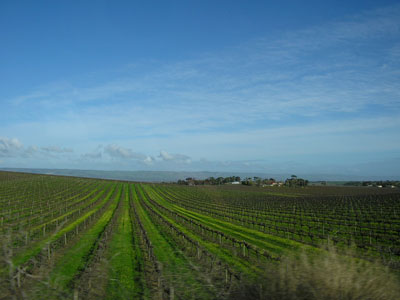
    The Coalition policy, however, represents the second significant development in recent weeks (Note). The first was an expansion of the Melbourne urban growth boundary by 440 square kilometers. All of this may signal an overdue attention to housing affordability in Australia.

    —–

    Note: Performance Urban Planning statement on the Coalition housing policy.

    —–

    Photograph: Adelaide: Urban fringe land (no houses allowed). Photograph by author
  • Queensland: Housing Relief on the Horizon?

    Queensland might be thought of as the Florida of Australia. Like Florida, Queensland is the “Sunshine state.” For years, Queensland has been the fastest growing state in the nation, just as Florida has been the fastest growing large state in the United States. The Gold Coast in Southeast Queensland might be characterized as Miami Beach on steroids.

    Both states have also faced housing difficulties. With its smart growth land rationing policies, house prices escalated wildly in Florida and then collapsed as America’s “drunken sailor” lending policies came home to roost. Queensland has had similar “urban consolidation” land rationing policies and the same house price escalation has occurred. However, the price bust did not follow, because lending standards were more strict. This is because adults were in charge of finance in Australia instead of the cartoon characters that drove policy in the United States. Australian lenders at least asked borrowers if they had a job and checked their pulse.

    But there are still housing problems in Queensland. The Urban Development Institute of Australia Queensland has just released its two Richardson reports that, among other things, suggest that restrictions on housing are increasing household sizes. In recent years, only one new house has been produced for each new resident, which compares to an average household size of 2.5. Presumably younger people are living longer with their parents and perhaps, with the strong foreign immigration to Australia, there is substantial “doubling up,” as houses are shared by people who would not otherwise live together, such as multiple families (internationally, census authorities define a household as all of the people living in a single house).
    Median lot prices and median house prices have risen strongly in Queensland, which has led to a decline in housing construction and a loss of construction jobs. The report recommends allowing more housing development on greenfield sites and developing additional infrastructure on the urban fringe where more housing would be developed. Finally, the report urges that the state establish benchmarks for the time it takes to approve and build greenfield developments.

    The Richardson reports are just another indication that the severity of the housing crisis and its causes is more broadly understood in Australia. Queensland would do well to follow its recommendations.

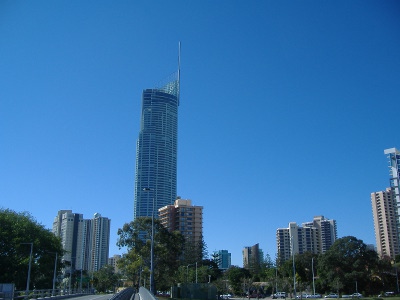
    Photo: Gold Coast

  • Sydney: Choking in its Own Density

    The Daily Telegraph reports that air pollution is getting worse in Sydney, with one in ten days rating “poor” in 2009. Critics of the ruling Labor state government claim that increasing air pollution and the lack of public transport are the cause. They are half right.

    Sydney’s Densification is Intensifying Traffic Congestion: Sydney’s intensifying traffic congestion contributes substantially to rising air pollution.

    The increasing traffic congestion is an inevitable consequence of the state government’ s “metropolitan strategy” which is “jamming” high rise residential buildings into suburban detached housing neighborhoods. The mathematics of traffic and densification is that unless each additional resident drives minus kilometers and minus hours, there will be more traffic, even before considering the impacts of intensifying commercial and heavy vehicle traffic.

    The road system was not built for higher densities and neither was other infrastructure such as sewers or the water system, as Tony Recsei has noted in his preface to the 6th Annual Demographia International Housing Survey.

    The fact is that higher densities are strongly associated with more traffic, which means greater traffic congestion. The additional stop and go traffic produces greater pollution on the roads adjacent to which people and their children live. It also means more greenhouse gas emissions, because fuel consumption increases as traffic congestion intensifies.

    The association between higher densities and greater traffic congestion is also indicated by the ICLEI-Local Governments for Sustainability Density-VMT Calculator, based upon Sierra Club research. According to the Calculator, under the urban consolidation (“smart growth”) scenario, residential housing would be 37 housing units per hectare, as opposed to its “business as usual” scenario at a density of 10 housing units per hectare. The density of traffic (vehicle kilometers per square kilometer) under the higher density “urban consolidation” strategy would be 2.5 times as high as under the “business as usual” scenario.

    According to federal Bureau of Transport and Regional Economics, Sydney’s total traffic volume is projected to increase nearly 20% over the next decade. Nearly half of the increase will come from commercial and heavy vehicles. With little or no expansion of the urban footprint, there will be nowhere for the new traffic to go except onto the existing already over-crowded roadways.

    Stuck in Sydney’s Traffic: Already, the average one-way trip to work in Sydney is longer than in all but one of the 52 metropolitan areas in the United States with more than 1,000,000 population. Only New York takes as long as Sydney, because so many people use public transport, which is inherently slower for nearly all trips.

    Of Blind Faith: Public Transport: Public transport serves as an article of faith to which officials cling in the innocent or cynical hope that it can reduce traffic congestion. There is no doubt of the good that public transport can do to get people to the central city (CBD), with its highly concentrated employment. However, Sydney’s CBD oriented system is over-crowded. A succession of state governments have been incapable of providing sufficient service to make the trip comfortable for the less than 20% of Sydney employees who work there. Proposals to centralize more of Sydney’s employment in the CBD could not be more wrong-headed.

    Transit is about the CBD, whether in Sydney, Toronto, Portland or Atlanta. The public transport system capable of attracting a significant number of commuters to the smaller concentrated centers like Chatswood, Parramatta, or Norwest (much less the dispersed employment throughout the rest of the metropolitan area) has never been conceived, much less seriously proposed or built.

    Why We Regulate Air Pollution: Public health was the very justification for regulating air pollution. Air pollution’s negative impacts are principally local. The consequences are measured reduce the quality of life of people intimately exposed to the more intense air pollution from nearby roads.

    Higher densities come with a price. Higher densities are producing greater traffic congestion, higher levels of air pollution and greater public health risks. This is just the beginning.

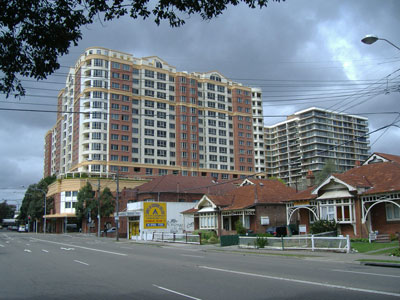
    Photograph: Strathfied, Sydney: Densification of detached housing neighborhood.

  • Australian Treasurer Calls for Reasonable Land Regulation

    Australia’s Treasurer Wayne Swan called for reducing restrictions on building houses, to improve housing affordability. The Treasurer’s comments came amid growing concern about housing cost escalation that has been highlighted by recent reports, including the 6th Annual Demographia International Housing Affordability Survey (which identified Australia as the most expensive nation surveyed).

    Treasurer Swan told the Herald Sun in Melbourne “Unless constraints to the supply side of the market are addressed, our cities will not adapt to meet the needs of a growing population and we will see continued problems of affordability for ordinary Australians.” He continued: “We are not building enough houses and if this continues then we will all be paying increasingly more and more for our housing whether it be in terms of repayments or in terms of rent.”

    Australia’s housing affordability crisis, has been the result of overly restrictive land use policies (called “urban consolidation” or “smart growth”), which by intensively controlling the land supply, raise its price and that of housing. This association between prescriptive land use regulations and the loss of housing affordability has been documented by a number of the world’s most eminent economists, such as Kate Barker, a member of the Monetary Policy Committee of the Bank of England and Donald Brash, former Governor of the Reserve Bank of New Zealand. Brash has said that “the affordability of housing is overwhelmingly a function of just one thing, the extent to which governments place artificial restrictions on the supply of residential land.

    Indicating the “can do” attitude so typical of Australia, the Treasurer said: “We can and must do better than this.”

  • Housing Affordability in Darwin, Australia: Still Dreadful

    Darwin, capital of Australia’s Northern Territory is located next to the sea, across from the Indonesian archipelago. Darwin is also located next to a sea of developable land in one of the world’s least developed nations. Only 0.3% of Australia’s land is developed, approximately 1/10th the rate of the United States or Canada (in the agricultural belt) and even less compared to European nations.

    Local Officials Report Erroneous Data: Yet, Darwin has severely unaffordable housing in our 6th Annual Demographia International Housing Affordability Survey. Upon initial publication of this year’s report, local officials identified a mistake in the median house price figure that they had made available to the press (and that we had used). Rather than a median house price of $607,000 (US$510,000), they announced that the median house price in September 2009 was $499,000 (US$425,000). Officials also corrected the median house price figure for the previous quarter.

    Housing Affordability: Still Dreadful” The result was that the Median Multiple (median house price divided by median household income) fell from 8.6 to 7.1. Affordable markets have a Median Multiple of 3.0 or below. As originally reported Darwin was the 4th least affordable market out of 272. We have revised our report to reflect the newly revised data. Darwin is now rated as 13th least affordable market, which is only marginally less dreadful.

    Still As Unaffordable as New York or London: This was cause for celebration by the Chief Minister (Premier) of the Northern Territory, Paul Henderson, who noted that housing was less expensive in Darwin than in Tokyo. We do not know the Median Multiple for the Tokyo metropolitan area, because data is not readily available. However, Darwin is as expensive relative to incomes as New York and London.

    Darwin: A Metropolitan Area in Housing Stress: At the median house price, the median household will pay half its income for the mortgage. This is well above the “mortgage stress” level of 30% as defined by government agencies. The overwhelming majority of Darwin’s future households will be faced with housing stress or could be life-long renters. The price for most residential building lots (blocks) in the new suburb of Johnston is approximately the same as the US median house price, even after adjusting for currency differences.

    High Demand Markets are More Affordable: Atlanta and Dallas-Fort Worth each have added the equivalent of Darwin’s population annually during the 2000s and have exhibited far higher underlying demand for housing. Yet housing is affordable (Median Multiples under 3.0). If Darwin had the same price to income ratio as Atlanta, the median house price would be little more than $150,000.

    Extinguishing the “Great Australian Dream:” It was not always this way. Before the widespread adoption of “urban consolidation” policies (also called growth management, smart growth or compact city policies), sufficient land was always available to build on across Australia. In the last two decades, however, urban consolidation policies have ravaged Australia’s household wealth, driving prices to the highest levels in the English speaking world.

    Few places in the world are more unaffordable than Darwin. Few places have more land to grow. Heavy handed and stingy planning has extinguished the Great Australian Dream in Darwin.