Tag: California

  • California Expenses Putting a Strain on Business

    Is it any wonder why California’s economy has been so sluggish during the recession? According to the 2010 Kosmont-Rose Institute Cost of Doing Business Survey, one-third of the nation’s forty most expensive cities are located in California, deterring businesses from setting up shop in the state. The increases in sales, income, and vehicle taxes in 2009 further depressed the business climate and exacerbated the problem of unemployment. Though local governments are trying to cut costs and boost local businesses, they have not been able to reverse the effects of outrageous taxes and fees.

    As one would predict, the ten most expensive cities in California in 2010 are located almost exclusively in the Bay Area or Los Angeles Area. Berkeley, Oakland, and San Francisco round out the Bay Area localities with San Francisco actually making the top ten national rankings as well. Beverly Hills, Culver City, Inglewood, Los Angeles, San Bernardino, and Santa Monica all represent Los Angeles County while Rancho Santa Margarita fills the final spot. However, none of these cities joined San Francisco on the national list.

    There is one thing missing from Kosmont’s national list of most expensive cities: the Great Plains states and Midwest. With the exception of Chicago, there are no cities on the list from the area between Arizona and Ohio. Even in the West, there are only three cities, San Francisco, Portland, and Phoenix, that made the top ten.

    Where do we find the least expensive cities? They are in the middle of the country, of course. Five of 2010’s least expensive cities are in Texas, one is in Nevada, and one is in Wyoming. Texas has fared surprisingly well during the recession, as have states like North Dakota. Low business costs and a bustling energy industry have made these states havens for new businesses and job seekers alike.

    Companies in California are now packing up and moving north and west to save money. Friendlier and more stimulating business climates in states such as Arizona, Washington, Oregon, and Colorado are luring companies like Google, Hilton, and Genentech. As Larry Kosmont, President and CEO of Kosmont Companies, commented, “Just being located in California, cities are at a ‘cost’ disadvantage right out of the gate.” If California wants to keep the companies that bolstered its success during the beginning of the decade, it must reconsider its recent tax hikes and have faith that improving the business climate will stimulate the economic growth that the state sorely needs.

  • California’s New Grassroots Movement: High-Speed Rail on the Peninsula

    In 2008, California voters approved Proposition 1A to allocate $9.95 billion of the state’s money to a high-speed rail system. Just two years later, many of these same voters are yelling and screaming at the High-Speed Rail Authority to revise their plans. Why have Californians turned against this project so quickly?

    Initially High Speed Rail seemed like a wise investment. The California High-Speed Rail Authority posts a video on its website of President Obama outlining the benefits of high-speed rail systems. However, by now this video seems a bit dated. In this April 2009 speech, Obama claims that not only would high-speed reduce travel time and emissions, but it would also decrease gridlock and save or create 150,000 jobs. It would be faster, cheaper, and easier. As if that were not enough to convince you, he goes on to say that the project is “on schedule and under budget.”

    Yet today, the California’s high-speed rail system has stalled. Citizens and state officials alike have lost faith in the rail authority to competently plan, fund, and build a rail line from San Francisco to Los Angeles. The project’s developers continue to scramble to secure funding.

    Not surprisingly, the cost of HSR in California has soared well above initial projections. Estimated costs for the first phase alone have risen from $30.7 billion in 2008 to $42.6 billion, adding over $10 billion to the original total of $45 billion. This is a problem. Though it received $9.95 billion in bonds through Proposition 1A, the California Rail Authority still must depend heavily on private business to foot a significant, and likely growing, portion of the bill. California treasurer Bill Lockyer has doubts that the rail authority will be able to sell the deal – due in part to a lack of consistent estimates in ridership or cost – to either potential bond-buyers or California consumers.

    Perhaps an even more serious problem has been caused by the hastiness with which California’s HSR is being developed. There often has been little consideration for local public opinion.

    A case in point lies on the Peninsula just south of San Francisco. The rail authority is hurrying to build on the Peninsula so that it can qualify for federal funding. But they have run into a flurry of complaints from city governments and citizens. Though it initially proposed building a trench system, essentially a shallow box for the train that would be covered at street crossings, it backed off on the idea in an August 6 application for federal monetary support. Instead, the Authority plans to run the line mainly on aerial structures to save money for later construction. “If the trench solution is selected,” it claims, “then less infrastructure could be implemented.” Since then it has switched to erecting aerial structures in Burlingame as well.

    Many cities along the Peninsula have rebelled over these abrupt adjustments. One of the primary arguments for high-speed rail has been to help the environment, but qualms about aerial structures are also rooted in environmental concerns. Menlo Park, Atherton, and later Palo Alto filed a lawsuit against the rail authority in 2008 in a partnership with four environmental groups, complaining that the authority did not conduct a thorough environmental review of the trench system before scrapping the idea. Judges in Sacramento are currently reviewing the authority’s plan to use the southern Pacheco Pass entrance from Merced, which the plaintiffs claim is less ecologically friendly. Decisions like these do not fit with California state environmental laws that require agencies to study several alternatives before approving a project.

    This lawsuit only made minor gains in addressing the cities’ complaints. While a Sacramento judge required the rail authority to make some concessions in the 2009 ruling, it sided with them on most of the issues, mainly because the state’s responsibility in this project remains unclear. However, recent developments over aerial structures have stimulated a tsunami of lawsuit threats. In one editorial, Martin Engel, a transportation commissioner for Menlo Park and opponent of California’s high-speed rail, rallies the Bay Area using a mob mentality: “Those towns that have refused to join the PCC out of fear of Atherton, Menlo Park and Palo Alto’s penchant for lawsuits, now have to re-assess their reluctance. Lawsuits are the only genuine legal negotiating tools at our disposal.”

    But, in reality, lawsuits are not the only weapons in the Peninsula’s arsenal. Democratic Assemblyman Jerry Hill of San Mateo has threatened to put high-speed rail back on the ballot if costs start to surpass initial estimates. This puts enormous pressure on the California Rail Authority since every day delayed means a rise in costs. If it does not secure the support of Peninsula cities soon, these extra expenses will push costs over the estimate and push the project back to the voters.

    San Mateo and Burlingame, though not involved in Atherton and Menlo Park’s original lawsuit, have just as much cause to complain. Almost one-third of the track crossings on the Peninsula would be in both cities. Building will certainly disrupt the businesses in the cities’ respective downtowns, many of which have flourished with locally owned boutiques and restaurants. Burlingame, “The City of Trees,” prides itself on the natural beauty of its neighborhoods. Cement walls carrying clamorous trains will undoubtedly disrupt this bucolic reality. If high-speed rail is put back on the ballot, it is likely that these cities will vote it down.

    Communities, not just city governments, are coming together to stop high-speed rail. The Community Coalition on High Speed Rail in Palo Alto, for example, is holding a presentation about the rail authority’s use of eminent domain in this project. The proposed elevated rail structure would displace residents, some permanently, and would lower the value of surrounding homes because of the elevated noise and traffic. The Coalition has been very active throughout the summer and will continue to fight for Peninsula residents.

    The already dire situation with Caltrain, the Peninsula’s current rail system, should provide a warning for city officials about the viability of high-speed rail. It has cut costs recently because of decreased ridership, which now averages 2,000 fewer riders per weekday compared to 2009, a 5% drop. Train stops have already been eliminated from Tamien in San Jose down to Gilroy. Caltrain’s experience has hardly shown the viability of expanded rail service.

    To some, high-speed rail epitomizes a new era of California infrastructure innovation. Yet a less sanguine reality is seeping in. Project costs continue to rise even as ridership estimates decline. The resulting increase in ticket prices creates even less of an incentive to choose rail over air travel. Even worse, the California Rail Authority is beginning to alienate potential riders from the Peninsula down to Los Angeles, many of whom could conceive of more useful ways to employ the state’s slender resources.

    Kirsten Moore is an undergraduate student at Chapman University and native of the Bay Area. She is a double major in history and screenwriting, focusing primarily on US social history.

    Photo of high speed rail station groundbreaking by mayorgavinnewsom

  • California’s Failed Statesmen

    The good news? Like most rock or movie stars, there’s nothing fundamentally wrong with California. It’s still talented, and retains great physical gifts. Our climate, fertility and location remain without parallel. The state remains pre-eminent in a host of critical fields from agriculture to technology, entertainment to Pacific Rim trade.

    California can come back only if it takes a 12-step program to jettison its delusions. This requires, perhaps more than anything, a return to adult supervision. Most legislators, in both parties, appear to be hacks, ideologues and time-servers. This time, when the danger is even greater, we see no such sense of urgency. Instead we have a government that reminds one more of the brutally childish anarchy of William Golding’s 1954 novel “Lord of the Flies.”

    Arnold Schwarzenegger has not turned out to be that supervision. Rather than the “post-partisan” leader hailed by the East Coast press, he has proven to be the political equivalent of the multi-personality Sybil. One day he’s a tough pro-business fiscal conservative; next he’s the Jolly Green Giant who seems determined to push the green agenda to a point of making California ever more uncompetitive.

    Contrast this pathetic performance with what happened after our last giant recession in the early 1990s. At that time, a bipartisan coalition of leaders – Speaker Willie Brown, State Senator John Vasconcellos and Governor Pete Wilson – worked together to address what was perceived as a deep economic crisis. They addressed some key problems and brought the state back from the brink. California recovered smartly between the mid-90s and the new millennium.

    Overall though, things are worse now. California has been flirting for the past year with its highest unemployment rate since the Great Depression. The last time we could blame the end of the Cold War for much of our economic distress; now the problem is a more broadly based, largely self-inflicted secular decline.

    A bloated government is part of the problem: Between 2003 and 2007, California state and local government spending grew 31 percent, even as the state’s population grew just 5 percent. The overall tax burden as a percentage of state income, once middling among the 50 states, has risen to the sixth-highest in the nation, says the Tax Foundation. Even worse, the state is getting ever less benefit from these revenues; since the Pat Brown era the percentage of budget spent on basic infrastructure has dropped from 20 to barely 5 percent.

    Although these taxes are often portrayed as “progressive,” California has continued to become more socially bifurcated. Our ranks of middle-wage earners are dropping faster than the national average even as the numbers of the affluent and poor swell. Overall California’s per capita income, roughly 20 percent above the national average in 1980, now barely stays with the national average. When housing and other costs are factored in, Los Angeles, San Francisco and Fresno rank among the top five major urban areas in America in terms of percentage of people in poverty, according researcher Deborah Reed of the Public Policy Institute of California. Only New York and Washington, D.C. do worse.

    At the root of these problems is an increasing lack of economic competitiveness. An analysis of the economy made for the Manhattan Institute shows California losing its edge in everything from migration, income, jobs and in entertainment industry employment. Tech companies may cluster in Silicon Valley but many are sending their new jobs abroad or to other sites. Recently, several leading Bay Area firms – Twitter, Adobe, eBay, Oracle and Adobe – have established major new operations in the Salt Lake area alone.

    So how do we turn it around? First, let’s find some adults, like former Speaker Robert Hertzberg or GOP financer Gerald Parsky, who know what it is to run a business and comprehend that the economy actually matters, and get them to head up a commission on the economy. Second, our leaders and policy elites must engage the emerging new business leadership of the state, which is increasingly immigrant, Asian and Latino.

    Right now neither party seems focused on the state’s future besides enriching their core constituencies. Lower taxes – the favored strategy of the right – on the already wealthy reflects an understandable desire to preserve one’s asset but is insufficient as a strategy.

    Democrats meanwhile seem determined to defend public sector pensions, Draconian labor, the high-speed rail boondoggle and environmental regulations, no matter what the cost to the economy.

    However contradictory their sound bites, the established parties are each following a script that would assure the next generation of Californians – largely Latino – remain an underclass that will have to move elsewhere to reach their aspirations. The left would do it by killing jobs in such fields as agriculture, manufacturing, construction and warehousing. As Robert Eyler, chairman of the economics department Sonoma State puts it, “the progressives have become the regressives.”

    For their part the GOP would kill the new California by starving it. They have no plan to bolster the basic services – like community colleges, roads, water and power systems – that will allow future working-class Californians to thrive.

    Their interests ignored by the parties, the immigrants and their offspring still represent the very key source of demographic energy and entrepreneurship that can revitalize the state. If you still want to see hopeful stirrings in California, go to places like Plaza Mexico in Lynwood or the new Irvine center recently built by the Diamond Development Group. Appealing to young families and distinct tastes, these retail facilities have thrived as the rest of the state’s overall retail economy has declined.

    More important still are the companies started by immigrant entrepreneurs like John Tu, CEO of Kingston Technology or scores of smaller Asian-owned firms in places like the San Gabriel Valley. Since the 1990s, newcomers have launched roughly one in four Silicon Valley startups.

    Add to this the muscle of the emerging Latino economy, led by food processing companies like the Cardenas Brothers, who now provide Costco with its frozen Mexican food.

    Due to their strong family and cultural ties in California, such ethnic firms appear less likely to move than more Anglo-dominated companies. But if the state keeps eroding public services and adding new regulations, these firms – like their counterparts in Silicon Valley and elsewhere – will place most of their new jobs as well in Utah, Texas or overseas.

    What we have here, in the end, is a massive disconnect between economics and politics. Does anyone in Sacramento talk to or even know about the largely Middle Eastern-led L.A. fashion industry? Is anyone talking to the hip sportswear mavens of Orange County’s own “Velcro valley”? Or what about agriculture, our traditional ace in the hole, which is largely disdained by the state’s intellectual and media class who see in large farms the work of the corporate devil?

    Somehow these productive voices – essential to our comeback – must be placed at the center of the debate. Sacramento’s leaders need to talk not just to lobbyists but to the key job-creators.

    These are the people who, even in hard times, are showing how we can grow an economy based on our natural advantages of climate, ethnic diversity, entrepreneurship and location.

    Ultimately we must make the creation of new jobs a priority that goes beyond formulaic mantras about lower taxes or illusory, state-supported “green jobs.” With a return to growth, California can still address its basic problems and challenges. But first we must corral the ideological hobbyhorses now running wild through Sacramento and make the needs of job-creators the central issue for our policy-makers.

    This article originally appeared in the Orange County Register.

    Joel Kotkin is executive editor of NewGeography.com and is a distinguished presidential fellow in urban futures at Chapman University. He is author of The City: A Global History. His newest book is The Next Hundred Million: America in 2050, released in February, 2010.

    Photo by Nate Mandos

  • Latino Dems Should Rethink Loyalty

    Given the awful state of the economy, it’s no surprise that Democrats are losing some support among Latinos. But they can still consider the ethnic group to be in their pocket. Though Latinos have not displayed the lock-step party loyalty of African-Americans, they still favor President Barack Obama by 57 percent, according to one Gallup Poll — down just 10 percentage points from his high number early in the administration.

    This support is particularly unusual, given that probably no large ethnic group in America has suffered more than Latinos from the Great Recession. This is true, in large part, because Latino employment is heavily concentrated in manufacturing, and even more so in construction.

    A half-million Latino workers in the construction sector — in which their share of the work force is double what it is in the broader economy — have lost their jobs since the start of the recession.

    Unfortunately, the Obama stimulus plan was light on physical infrastructure. It favored Wall Street, public-sector unions and large research universities. Big winners included education and health services — in which Latinos are under-represented.

    Not surprisingly, Latino communities across the country are in trouble. Today, of the 10 most economically “stressed” counties, seven are majority or heavily Latino, according to The Associated Press.

    Theoretically, Republicans should be able to take advantage of this situation. But not with the party’s increasing embrace of its noisy nativist right — evident not only in support of the controversial Arizona immigration law but also in the strong move against “birthright citizenship.” This makes the prospect of earning back President George W. Bush’s 40-plus-percentage-point support difficult at best.

    Thus, Latinos remain allied with Democrats whose policies inhibit the growth of construction and manufacturing jobs. This dichotomy puzzles many in the business community.

    “You have all these job losses in Latino districts represented by Latino legislators who don’t realize what they are doing to their own people,” said Larry Kosmont, a California business consultant. “They have forgotten there’s an economy to think about.”

    Despite that economic logic, Latino Democrats mindlessly follow liberal Democrats such as House Speaker Nancy Pelosi and Rep. Henry Waxman of California and Sen. John Kerry of Massachusetts, who represent largely white, affluent white-collar constituencies on issues such as cap and trade and federal regulation of greenhouse gases. Whatever the intent, these policies are likely to further decimate blue-collar employment in Latino districts.

    If they had independent thoughts, Latino Democratic politicians would be advocating positions that create new opportunities for their districts — particularly among young people. They could push, for example, a Works Progress Administration-like public works program that could provide new opportunities and skills training.

    One possible reason for not doing so is the opposition of public employee unions, which dominate Democratic politics, particularly in urban districts, and would see such a program as competing against their special interests.

    In contrast, Obama administration policies favor Ivy League schools, high-speed rail and light-rail service — issues with predominantly well-to-do, Anglo constituencies.

    This disjunction between interests and politics is particularly evident in California, the state with the largest Latino population. Latino Democrats have generally embraced the state’s draconian environmental and planning policies.

    The state’s fertile Central Valley offers one example. A green-inspired diversion of water from farms to save an obscure species of fish has forced more than 450,000 acres to lie fallow. Thousands of agricultural jobs — held mostly by Latinos — have been lost, perhaps permanently. Unemployment, which stands at 17 percent across the valley, reaches upward of 40 percent in towns like Mendota.

    These policy positions speak to the limits of the current Latino leadership. Latino political power has waxed in Sacramento since 1999 — the state Assembly has had three Latino speakers. But on the ground, things have waned for the state’s Latino working class. During the past decade, according to research from California Lutheran University, the state has experienced one of the nation’s most dramatic drops in household earnings — between $35,000 and $75,000 in lost income.

    The pain at the bottom of the economic ladder is even greater. Indeed, according to Deborah Reed of the left-leaning Public Policy Institute of California, when housing and other costs are factored in, three heavily Latino counties — Los Angeles, Fresno and Monterey — rank among the 10 poorest metropolitan areas in the United States. Increasing numbers of working- and middle-class Latinos have been migrating to more job-friendly areas such as Texas and the Plains states.

    Latino Democratic politics are equally dysfunctional at the local level. In the largely Hispanic industrial belt south of downtown Los Angeles, for example, a sprawling Latino machine, marked by near Chicago-scale corruption, now controls most elective posts. Many of its leaders — most outrageously in the city of Bell — have proved far more adept at feathering their own nests than at reviving local economies.

    A similar disconnect can be seen in the City of Los Angeles, where corruption and inefficiency have led some local entrepreneurs to invest in other regions. “It’s extremely difficult to do business in Los Angeles,” said retail developer Jose de Jesus Legaspi. “The regulations are difficult to manage. … Everyone has to kiss the rings of the [City Hall politicians].”

    L.A. Mayor Antonio Villaraigosa epitomizes this self-defeating ethnic politics. Last year, for example, Cecilia Estolano, executive director of the Los Angeles Community Redevelopment Agency, supported shifting resources from building high-end housing and amenities downtown to rejuvenating the large industrial district, a major employer of blue-collar Latinos.

    Her efforts quickly ran afoul of Villaraigosa, whose staff favors pouring more money into downtown amenities — even if doing so drives out industrial jobs. Estolano, who now works for a local nonprofit, says the lack of interest in manufacturing and the blue-collar economy is easy to explain: campaign contributions.

    “The problem is manufacturers in L.A. are mostly small and don’t contribute to campaigns,” Estolano said. “L.A.’s politics are controlled by real estate interests, their lawyers and consultants.”

    As Latinos become a critical part of our emerging economy, they need to develop a policy agenda that focuses less on old-style, machine ethnic politics and more on the critical issue of upward mobility.

    Latino voters might also consider avoiding the African-American one-party model by embracing both growth-oriented Democrats and enlightened Republicans. This is most likely to increase their political leverage, while creating a politics that supports their most fundamental interests.

    This article originally appeared at Politico.

    Joel Kotkin is executive editor of NewGeography.com and is a distinguished presidential fellow in urban futures at Chapman University. He is author of The City: A Global History. His newest book is The Next Hundred Million: America in 2050, released in February, 2010.

    Photo by chadlewis76

  • Political Decisions Matter in State Economic Performance

    California has pending legislation, AB 2529, to require an economic impact analysis of proposed new regulation. Its opponents correctly point out that AB 2529 will delay and increase the cost of new regulation. There will be lawsuits and arguments over the proper methodology and over assumptions. It is not easy to complete a thorough and unbiased economic impact analysis.

    Should California incur the costs and delays of economic impact studies?

    California should, because political decisions matter and too many California politicians don’t believe it. I’ve had a State Legislator, sitting in her office in the Capital, tell me in essence that decisions made in this building won’t impact California’s economy.

    She’s not alone. It is common to hear politicians or their advisors claim that “California will come back” or something similar. They believe that California’s climate and abundant amenities are enough to guarantee prosperity. They are wrong.

    Consider North Dakota, and its booming economy. As of July 2010, North Dakota’s unemployment rate was 3.6 percent, and in 2008, the most recent year for which we have data, its economy grew at a 7.3 percent rate. California’s unemployment rate was 12.3 percent in July 2010, and its 2008 economic growth rate was an anemic 0.4 percent.

    That’s a very big difference. If California had North Dakota’s unemployment rate, it would have over 1.3 million jobs than it has today. That is almost the entire population of Sacramento County and 30 percent more than the entire population of Northern California’s Contra Costa County.

    Why the big difference? Why is North Dakota booming, as the United States suffers its most devastating economic decline in over 70 years? Why is California’s economy, with almost 30 percent higher unemployment than the United States, performing so poorly?

    Does North Dakota have some naturally endowed advantage over California? If so, nobody has noticed it before. It is not climate. California has a friendly Mediterranean climate, while North Dakota has a Northern Continental climate. North Dakota’s mean minimum temperature is below freezing six months of the year, and it gets as low as -60F! Many Californians, living on the coast, can go decades without witnessing a freezing temperature. I remember when we had a multi-day freeze in my hometown of Ventura, sometime in the 1980s. I was freezing; a North Dakotan would be walking around in a t-shirt.

    California has oil and gas. North Dakota has oil and gas. California has over 2,000 miles of beaches. North Dakota doesn’t have beaches. California has magnificent mountains. North Dakota doesn’t have any mountains and only a few hilly areas. Over 20 species of trees reach their largest size in California. Most of North Dakota doesn’t naturally grow many trees.

    Let’s face it. Most Californian’s consider North Dakota to be a cold, windy, God-forsaken piece of dirt best left to the bison. North Dakota’s natural endowment doesn’t explain why it has been growing with vigor while California has been stagnating.

    Maybe North Dakota has been lucky while California has been unlucky? Luck can play a part in economic performance, and North Dakota has almost surely been luckier than California over the past few years, but that can’t be the only explanation.

    It’s hard to point to a single source of North Dakota’s prosperity. Its taxes aren’t particularly low. It has a reasonable safety net for the unfortunate. It does have a booming oil and gas business. Its agriculture sector is doing well. It has a small, but dynamic, tech sector. Its universities remain well funded since the state is actually running surpluses. It has a hardworking, well educated, Midwestern population. Governments and politicians in both parties tend to be business friendly, willing to support business and enter into occasional partnerships. North Dakotans have done lots of things right, and they’ve probably also been a bit lucky.

    It’s just as hard to point to a single source of California’s dismal performance. California hasn’t maximized the economic potential of its oil and gas resources, but its economy is large, and oil and gas alone can’t explain the differences between California and North Dakota. California hasn’t updated its ports to accommodate the most recent and planned ships, but those ports see lots of activity. Many California communities are not business friendly, but some are, particularly some smaller ones inland. California has lost some military bases, but many remain. California is a relatively expensive place to do business, because of taxes and regulation, but California’s workers are more productive, even after adjustment for industrial composition and capital, and California’s consumers still constitute a huge market.

    California’s economy is dying the death of a thousand cuts: a tax here, a regulation there, an unfriendly city council in Coastal California, a lack of infrastructure investment everywhere. These things add up to a significant net negative for California, its businesses, and its workers.

    Californians have done lots of things wrong, and they’ve been a bit unlucky.

    That’s why AB 2529 is a good idea for California, why it’s worth the costs and delays. The analysis will require regulators to consider the economic costs of regulation, something many green activists and Sacramento politicians simply ignore. Perhaps if this regulation had been in place over the past few years, some of California’s 2.2 million unemployed workers would have jobs and once Golden State would not be on the verge of becoming, as historian Kevin Starr has noted, “a failed state”.

    Bill Watkins is a professor at California Lutheran University and runs the Center for Economic Research and Forecasting, which can be found at clucerf.org.

    Photo by Willem van Bergen

  • California’s Cities Should Look to Oxfordshire

    California, now in the midst of a heated debate on high-speed rail, could learn a thing or two from a few small villages in England about consolidating their opposition. Residents from five villages in Oxfordshire created the Villages of Oxfordshire Opposing HS2 (High-Speed Rail 2) action group to voice their concerns about the proposed project.

    HS2 would link London and Birmingham by 2025, going through Finmere, Mixbury, Fingford, Fulwell, and Newton Purcell in north Oxfordshire. Not only would the rail line greatly alter the countryside landscape, but it would also create an immense amount of noise pollution. Trains would run through these villages at 250 mph about every three minutes. On top of that, rail authorities are giving out little information to citizens who are growing frustrated.

    The Chairman of Villages of Oxfordshire Opposing HS2, Bernie Douglas, wants the group to influence rail authorities to route the line away from the area and raise awareness about the detriments of a high-speed rail line in the countryside. He has certainly succeeded in the latter goal. The group’s meeting in April drew more than 80 people from an area with only 100 homes. However, their efforts for the former cause have been largely in vain. Transport Minister Phillip Hammond and HS2 Ltd, the company behind the project, have not responded to the group’s letters.

    There is hope for Oxfordshire, though. A spokesman for the Department of Transport claims that “No final decision will be made on whether to proceed with a high-speed rail line or on its route until any scheme has undergone a full public consultation.” If this is true, it is almost certain that the rail line will not run through Oxfordshire.

    Cities on the Peninsula have similarly started to band together to oppose the California Rail Authority, who has decided against using the much preferred trench system to cut costs, but opposition remains scattered throughout many different groups. Lawsuits from a few cities and organizations have driven the authority to reconsider the trench system, but the project seems like it will continue to progress, much to the dismay of many unhappy California residents.

    Palo Alto, Menlo Park, and Atherton, who are at the forefront of the opposition, need to gather support from other cities on the Peninsula to truly affect the future of high-speed rail in the state. It is easy for the California Rail Authority, backed by Governor Schwarzenegger, to defend its position from a few cities, but a united Peninsula coalition would be a tough obstacle to overcome. Maybe Burlingame, San Mateo, and their neighbors should take a page out of the book of Oxfordshire and use collective action to more effectively voice their concerns.

  • A Pill For Los Angeles? Medicating the Megacities

    Los Angeles — and other modern megacities — conjure increasingly unique genetic profiles that point the way to a new medical industry: Call it urbo-pharmaceuticals. Investors are needed.

    Is there a pill that might inoculate us from smog?
    Is there a gene we can target that would make us resistant to resurgent infectious diseases?
    And is there a way to use genetic data to insulate new immigrants from some of the metabolic challenges of living in a new land of plenty?

    Welcome to the slowly emerging world of environmental medicine and its inevitable outgrowth, environmental pharmaceuticals: compounds specifically suited for mitigating the physiological challenges of mega-city life in the 21st century.

    The inchoate drive for such pills — disparate, proceeding in entrepreneurial fits and starts — is fueled by twin facts.

    First: Inflammation, the chronic-over-firing of the body’s immune system, now sits at the core of almost all scientific discussion of chronic diseases, diseases that persist despite thirty years of lifestyle advice, medication and surgical intervention.

    Second: Urban environments today are physiologically inflammatory beyond belief, their brew of fumes, crowding, germs and bad food wreaking all kinds of internal damage and prompting no end of lifelong medical problems. As Dr Marc Reidl, a specialist in respiratory disease at UCLA puts it, “Mega city life is an unprecedented insult to the immune system.”

    The consequent diseases — asthma and COPD, heart disease, diabetes, alcohol and drug addiction — are costly and life-sapping. They are accentuated by the huge inflows of young populations, many from poor rural environments, from Mexico to the Middle East. These new migrants bring their own unique pathogens, and their own unique vulnerabilities. Poverty fuels excess consumption of cheap fruits and sugars, pushes people into smog-proximate neighborhoods and pest-filled homes, and drives them to unhealthful behaviors. And certain genes — most notably the well-studied “hungry gene” — exacerbate the reaction. Consider:

    Asthma and COPD, considered among the world’s top medical concerns, seem to be activated by special sets of genes, some of which accentuate the impact of smog (along with tobacco smoke, the principle culprit in the industrialized world). Other genetic profiles seem to mitigate it. Researchers at the University of Southern California have identified both versions.

    In the Latino population, mutations in liver genes, particularly one well-known one named CYP450, seem not only to fuel alcohol abuse, but also to accentuate some of its gravest consequences: fatty liver disease and cirrhosis.

    Heart disease, as well as problem pregnancies, uncontrolled diabetes, and even sleep apnea, are increasingly driven not just by the traditional devils of unhealthy lifestyle and poverty, but by genes activated by uniquely urban pathogens and concentrated diesel and auto exhaust.

    Genes governing stress responses may be at the root of why traditional antibiotics do not work within the germy reality of big cities. For years, speaking the words “genes,” “immigrants,” and “public health” was the proverbial ticket to a social and political nether-land. It was almost as bad as talking about obesity. It is still a messy brew.

    Yet outside of “nannyism” (not necessarily such a bad thing), or trying to scare away any new migrants (which is), what can be done? One tack might be to take a cue from modern pharmacology’s attempt to develop a pill for Metabolic Syndrome, the debilitating mix of diabetes, high blood pressure and high cholesterol now prevalent in most developed nations. Can we design an urban poly-pill, one built specifically for the inflammatory storms of the mega-city? And can we point it at what might be called the big three: the impairment of respiration, metabolism and cardio vascular processes?

    UCLA’s Riedl, a specialist in respiratory disease, has zeroed in on oxidative stress — the damage caused by unstable, burned-up nutrient particles in the blood stream. He knew that anti-oxidant supplement regimes have been an overwhelming bust, most of them weak and not very good at targeting the body’s native anti-oxidant systems. Then came a number of insights made possible by genetics. Perhaps the most important was a molecule dubbed GSTM1. It is deeply implicated in fighting oxidative stress from smog and other pollutants. Riedl traced the pathway upstream and found that it was driven by another gene product called Nrf-2.

    Then he decided to pharmaceuticalize one molecule derived from broccoli sprouts, sulphoraphane, crafting a concoction using concentrates of the vegetable mixed with daikon root essence. The result was a compound he could try out in various concentrations in humans, then measure whether its effect on Nrf-2 were, in the lexicon of pharmaceutical development, “dose dependent.” It was. The next step will be to test how well it works in people exposed to constant high levels of smog.

    Though the path to any therapy remains long and arduous, Riedl holds a picture in his mind of one possible future. “The Holy Grail for us is if we could identify the population sub group that is most likely to have the mutation that impairs Nrf-2, and who are environmentally vulnerable —say, people who live close to freeways — and essentially do targeted chemotherapy for environmental insults.”

    Among urban woes, metabolic disorders are particularly troublesome. The NIH has singled out type 2 diabetes and fatty liver disease as the two biggest factors driving hospitalization, amputations and prescription drug use. Their effect on health care expenditure is huge and growing. Treatment — let alone prevention — has proved vexing.

    Two promising compounds are under serious study. The first is the grape skin compound known as Resveratrol. Though mainly known for its claim to extend mammalian lifespan, its true value is quietly emerging in diabetes treatment, where early clinical trials showed promising results but, unfortunately, several safety issues.

    And Metformin, a diabetes drug originally synthesized from the French lilac plant, may have huge protective benefits for urbanites. Researchers at UCLA Riverside have used microchip arrays to discover that it activates liver genes that dampen high insulin levels and vascular inflammation.

    At USC, one of the world’s leading centers for studying diabetes and liver diseases, scholars have pinpointed a gene that, when activated, causes fatty liver disease, another potential urbo-drug target. As Michael Goran, the head of USC’s diabetes research, notes: “In Mexican Americans there is mutation in a gene called PNPLA1 which is related to an elevation in liver fat which could be related to increased diabetes risk and definitely [is] related to longer term increase in liver disease; this mutation is highly prevalent in Hispanics/Mexican Americans; moreover, in our own research we have just discovered that: a) the effect of this gene is manifested very early in life and b) the effect of this gene on increasing liver fat is promoted by high sugar intake.”

    What about the heart? UCLA heart researcher Alan Fogelman, the dean of modern HDL research, has two compounds in small clinical trials that would help the body restore its ability to make good cholesterol, a process increasingly undermined by the smog, virii and bad food of mega-cities. Both are peptides — short, protein-like molecules — that target specific gene products activated by chronic inflammation, which can include everything from the flu to sleep apnea to unchecked diabetes. The compounds are being developed by Bruin Pharma, a commercial venture in which Fogelman is a principal and an officer.

    What are his HDL peptide’s chances? “It is so early to try to tell something like that,” he says. “We have no idea where that effort will take us, or whether it will hit the target we hope. We have to wait for the trials.”

    Yet waiting, especially when it requires patience and foresightedness, is something we as a society seem incapable of, especially when dealing with complicated public health issues. But what if there were a faster, cheaper way? Urbo-pharmaceuticals might be one ticket. After all, we are patient and forgiving when it comes to pills and the time, cost and uncertainty that comes with their development.

    Chalk that up to the ease-seeking nature of humans, something for which there is no pill, but which, in itself, might drive us to invest in a poly pill for modern life.

    Greg Critser’s new book is Eternity Soup: Inside the Quest to End Aging (Random/Harmony 2010).

    Photo by ilmungo / Luigi Anzivino, Los Angeles from the top of Temescal Canyon Trail, “…taken not at sunset, but at 11AM… that pretty peach-colored layer in the sky is the famous LA smog.”

  • In California Cool is the Rule, but Sometimes, Bad is Bad

    Californians value cool. I’m not sure how this came to be. It might be the weather. It might be the entertainment industry. Whatever the reason, Californians don’t get excited. Better to go with flow than to get excited. Things will be ok. Concerned about the economy? Stay cool Dude. It’ll come back. Always has. Always will. Relax.

    It’s not cool to get excited, or heaven forbid, panic. Californians are not quick to react to problems, so confident that eventually the problem will just go away. This was forcefully brought home to me when a member of California’s legislature told me that “It doesn’t matter what we do in this building. California will always rebound.”

    California’s governance is seemingly designed to enforce cool in the government. Term limits, two-thirds requirements, and bipartisan gerrymandering combine to insure that change is not legislated. So you see absurdities, such as the legislature’s worrying about the asbestos content of the State Rock while the budget-less State goes down the path of bankruptcy and economy collapse.

    Institutionalized stasis is why I don’t think it matters who wins the upcoming gubernatorial election. Neither Mercurial Meg Whitman nor Moonbeam Jerry Brown will cause Sacramento to actually do anything to change California’s trajectory.

    Veteran capital-watcher Dan Walters likes to say that when legislators do agree and actually do something important, it’s usually bad. He cites California’s failed “electricity deregulation” back in 2000 as a case in point. The state does have a release valve, the initiative, which is much hated by the political class. But it is their fault. Legislative inaction is probably one reason for the increase we’ve seen in ballot initiatives. Of course, initiatives are seldom the optimal way to create change.

    Proposition 13 is an excellent example. Sacramento was aware of the property-tax problem, but was unable to deal with it. That created a vacuum, and the radical tax reformers stepped in. The result was a far more draconian and less flexible law than necessary or desirable. That’s the way initiatives work. The legislature fails to legislate. Inaction creates a vacuum. The vacuum is filled by more extreme interests. The resulting law is almost always flawed.

    California cool may be legendary, but as the Huey Lewis song says, sometimes bad is bad, and California’s economy is bad, very bad, and it’s not going to get better soon without real change. Plenty of lawmakers, especially the governor, are counting on renewable energy and green industry to provide California with an economic rebirth. It won’t happen. Read why here and here.

    I’m thinking that now would be a good time for Californians to lose their cool.

    Recently, Boeing announced that it is moving two programs from Long Beach California to Oklahoma. The move will cost California about 800 mostly well-paid engineering jobs. This is a relatively small event in an economy the size of California’s, but it is part of a steady drumbeat of businesses leaving California. Northrop Grumman has already decamped. General Dynamics’ San Diego shipbuilding subsidiary, Nassco, is shrinking its workforce by 300 workers, most of them highly skilled. Even the entertainment industry is slowly reducing its footprint in California. The list goes on and on.

    The main reason: California is an expensive place to do business, and the expense is made more onerous by uncertainty about future taxes and regulation. Consequently, those businesses that can increasingly are departing for more reliable, friendlier climes.

    Policy makers may find excuses for each of these events, but the persistence and size of the differences between California’s economic performance and those of better-managed states indicate something few in Sacramento understand: many of California’s economic problems are self inflicted. How big is the difference between California’s economy and other states? The unemployment rate provides one answer: California’s unemployment rate is about 30 percent higher than that of the rest of the country. That’s big, far larger than can be explained by demographic factors.

    High and persistent unemployment is not the only result of California’s job-killing environment. Income inequality is increasing, a legacy of declining opportunity for skilled blue collar workers and a failed educational system. Home prices and sales will not recover for years. Commercial real estate is in freefall, and we may not see anything approaching full occupancy for a decade. Real-per-capita retail sales may never recover, a result of joblessness, high taxes, and increased internet competition. Perhaps the most telling trend is that domestic migration has been negative for most of the past 15 years, as people vote with their feet and seek opportunity in other states.

    About the only source of hope, in a perverse way, is that government revenues are down. By now, it should be clear, even to those who thought their income was independent of economic activity, that a prosperous private sector is a necessary precondition for general prosperity. Professors, non-profit-sector workers, and government employees are learning the hard way their dependence on the private sector. We can hope that personal interest will drive them to more enlightened policy.

    That hope is tempered, though, by the political class’s willingness to embrace the mirage of a free lunch. The AB 32 climate change and SB 375 anti-sprawl bills were the result of a well-meaning search for the Holy Grail of costless environmental and economic virtue.

    Environmental and economic interests are not inherently incompatible, but environmental quality is not costless. In fact, it is a luxury good. Wealthier societies invest far more in environmental protection and rehabilitation than do subsistence societies whose primary concern is finding the next meal. In short, environmental protection requires investment, and wealthier societies are better able to pay the price.

    California’s leadership’s embrace of AB32/SB375 is unlikely to achieve any of its goals. It will be a drag on economic activity. Its impact on global greenhouse gasses will be negligible. Worse, it is very inefficient. Economic research is not ambiguous. Subsidies and command-and-control regulation are far from the cheapest way of improving the environment. The best way to reduce greenhouse gas emissions is through a rebated tax. This would be a carbon tax, where the tax revenue would be rebated to offset a more distortionary tax, say a labor or capital tax. This simultaneously discourages the bad, pollution, while encouraging the good, work or investment.

    AB32/SB375 is certainly not the source of all of California’s problems. The state has lots of them, and it’s time we took a serious approach of addressing them. Maybe, we should lose our cool and demand real leadership from Sacramento.

    Bill Watkins is a professor at California Lutheran University and runs the Center for Economic Research and Forecasting, which can be found at clucerf.org.

    Photo by Duncan H

  • Misunderstanding the Bubble and Burst in Sacramento

    An opinion piece in the Sacramento Bee by Sean Wirth of the Environmental Council of Sacramento could not have been more wrong in its characterization of the causes of the housing bubble in Sacramento.

    The article starts out promisingly, correctly noting that:

    • The housing bubble spawned the Great Recession
    • Demand exceeded the inventory of houses in the Sacramento area
    • Sacramento prices “soared sky high”


    But it is all downhill from there, with the suggestion that the extraordinary price increases in Sacramento were the result of too much suburbanization (the theological term in urban planning circles is “sprawl”). In fact, all things being equal, house prices tend to escalate where the supply is more constrained, not less. Where suburbanization is allowed, the market can supply enough housing to avoid inordinate house price increases. Where suburbanization is severely constrained, a legion of evidence indicates that house prices are prone to rise. It is all a matter of basic economics. George Mason University economist Daniel Klein puts it this way:

    Basic economics acknowledges that whatever redeeming features a restriction may have, it increases the cost of production and exchange, making goods and services less affordable. There may be exceptions to the general case, but they would be atypical.

    Housing is not atypical and Sacramento house prices soared in response to the tough use regulations. By the peak of the bubble, the Median Multiple (median house price divided by median household income) had risen to 6.8, well above the historic norm of 3.0. Many houses were built, but not enough to satisfy the demand, as Mr. Wirth indicates. Building many houses is not enough. There need to be enough houses to supply the demand, otherwise land prices soar, driving up house prices.

    Unless a sufficient supply is allowed, speculators and flippers will “smell the blood” of windfall profits, which are there for the taking in excessively regulated markets.

    During the housing bubble, house prices rose well above the historic Median Multiple norm only in metropolitan areas that had severe constraints land use constraints (called “smart growth” or “growth management”). This included Sacramento, other California markets, Miami, Portland, and Seattle and other markets around the country.

    At the same time, more liberal development regulations allowed a sufficient inventory of housing to meet the demand in high growth areas like Atlanta, Dallas-Fort Worth, Houston and Austin. In each of these places (and many others), the Median Multiple remained near or below the historic norm of 3.0, even with the heightened demand generated by a finance sector that had lost interest in credit-worthiness. As would be expected, speculators and flippers avoided the traditionally regulated markets, where an adequate supply of affordably priced housing continued to be produced.

    Wirth expresses understandable concern about the house price losses since the bust. From the peak to the trough, the drop in Sacramento median house prices was more than 55%. However, this is to be expected once a serious economic decline is precipitated, especially in the sector that precipitated the crash (in this case housing). Economists Ed Glaeser of Harvard and Joseph Gyourko of Wharton have shown that not only (1) are house prices higher in more restricted markets but also that (2) there is greater price volatility in more highly regulated markets. Indeed, it is likely that the housing bust would have been much less severe or even avoided altogether if constraints on land had not driven the prices and subsequent mortgage losses so high in California and a few other states that they could not be absorbed by financial institutions. At the time of the Lehman Brothers collapse, 11 “ground zero” markets (including Sacramento), all highly regulated, accounted for 75% of the mortgage losses in the nation, with a per house loss rate of 15 times that of traditionally regulated markets.

    Wirth’s article expresses opposition to a Sacramento County decision to allow more development to occur on the urban fringe. He would prefer to force development into the existing urban footprint. The economic consequences of such folly are well known. In Australia, such policies have driven led to a doubling or tripling of house costs relative to incomes. The annual mortgage cost of the median priced house has risen to 50% of the median pre-tax household income, in a country that defines mortgage stress at the 35% level. Before the adoption of smart growth policies, Australia’s housing affordability was similar to that of liberally regulated markets in the United States.

    Avoiding the next housing bubble requires not repeating the mistakes that led to the last. Sacramento’s young and lower income households can only hope that the additional land approved by the Board of Supervisors will be enough of a safety valve to keep housing affordable so that they can become owners rather than renters.

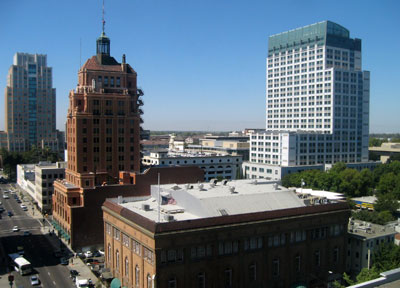
    Photograph: Sacramento (author)

  • The Golden State’s War on Itself

    California has long been a destination for those seeking a better place to live. For most of its history, the state enacted sensible policies that created one of the wealthiest and most innovative economies in human history. California realized the American dream but better, fostering a huge middle class that, for the most part, owned their homes, sent their kids to public schools, and found meaningful work connected to the state’s amazingly diverse, innovative economy.

    Recently, though, the dream has been evaporating. Between 2003 and 2007, California state and local government spending grew 31 percent, even as the state’s population grew just 5 percent. The overall tax burden as a percentage of state income, once middling among the states, has risen to the sixth-highest in the nation, says the Tax Foundation. Since 1990, according to an analysis by California Lutheran University, the state’s share of overall U.S. employment has dropped a remarkable 10 percent. When the state economy has done well, it has usually been the result of asset inflation—first during the dot-com bubble of the late 1990s, and then during the housing boom, which was responsible for nearly half of all jobs created earlier in this decade.

    Since the financial crisis began in 2008, the state has fared even worse. Last year, California personal income fell 2.5 percent, the first such fall since the Great Depression and well below the 1.7 percent drop for the rest of the country. Unemployment may be starting to ebb nationwide, but not in California, where it approaches 13 percent, among the highest rates in the nation. Between 2008 and 2009, not one of California’s biggest cities outperformed such traditional laggards as New York, Pittsburgh, and Philadelphia in employment growth, and four cities—Los Angeles, Oakland, Santa Ana, and San Bernardino–Riverside—sit very close to the bottom among the nation’s largest metro areas, just slightly ahead of basket cases like Detroit. Long a global exemplar, California is in danger of becoming, as historian Kevin Starr has warned, a “failed state.”

    What went so wrong? The answer lies in a change in the nature of progressive politics in California. During the second half of the twentieth century, the state shifted from an older progressivism, which emphasized infrastructure investment and business growth, to a newer version, which views the private sector much the way the Huns viewed a city—as something to be sacked and plundered. The result is two separate California realities: a lucrative one for the wealthy and for government workers, who are largely insulated from economic decline; and a grim one for the private-sector middle and working classes, who are fleeing the state.

    Graph by Alberto Mena.

    The old progressivism began in the early 1900s and lasted for half a century. It was a nonpartisan and largely middle-class movement that emphasized fostering economic growth—the progressives themselves tended to have business backgrounds—and building infrastructure, such as the Los Angeles Aqueduct and the Hetch Hetchy Reservoir. One powerful progressive was Republican Earl Warren, who governed the state between 1943 and 1953 and spent much of the prospering state’s surplus tax revenue on roads, mental health facilities, and schools. Another was Edmund G. “Pat” Brown, elected in 1958, who oversaw an aggressive program of public works, a rapid expansion of higher education, and the massive California Water Project.

    But by the mid-1960s, as I noted in an essay in The American two years ago, Brown’s traditional progressivism was being destabilized by forces that would eventually transform liberal politics around the nation: public-sector workers, liberal lobbying organizations, and minorities, which demanded more and more social spending. This spending irritated the business interests that had formerly seen government as their friend, contributing to Brown’s defeat in 1966 by Ronald Reagan. Reagan was far more budget-conscious than Brown had been, and large declines in infrastructure spending occurred on his watch, mostly to meet a major budget deficit.

    The decline of progressivism continued under the next governor: Pat Brown’s son, Edmund G. “Jerry” Brown, Jr., who took office in 1975. Brown scuttled infrastructure spending, in large part because of his opposition to growth and concern for the environment. Encouraged by “reforms” backed by Brown—such as the 1978 Dill Act, which legalized collective bargaining for them—the public-employee unions became the best-organized political force in California and currently dominate Democrats in the legislature (see “The Beholden State,” Spring 2010). According to the unions, public funds should be spent on inflating workers’ salaries and pensions—or else on expanding social services, often provided by public employees—and not on infrastructure or higher education, which is why Brown famously opposed new freeway construction and water projects and even tried to rein in the state’s university system.

    The power of the public-employee lobby would come to haunt the recall-shortened gubernatorial reign of Gray Davis, Brown’s former chief of staff. The government workers’ growing demands on the budget, green groups’ opposition to expanding physical infrastructure, and Republican opposition to tax increases made it impossible for either Davis or his successor, Arnold Schwarzenegger, to expand the state’s infrastructure at a scale necessary to accommodate its growing population.

    The new progressives were as unenthusiastic about welcoming business as about building infrastructure. Fundamentally indifferent or even hostile to the existing private sector, they embraced two peculiar notions about what could sustain California’s economy in its place. The first of these was California’s inherent creativity—a delusion held not only by liberal Democrats. David Crane, Governor Schwarzenegger’s top economic advisor, once told me that California could easily afford to give up blue-collar jobs in warehousing, manufacturing, or even business services because the state’s vaunted “creative economy” would find ways to replace the lost employment and income. California would always come out ahead, he said, because it represented “ground zero for creative destruction.”

    Graph by Alberto Mena.

    The second engine that could supposedly keep California humming was the so-called green economy. Michael Grunwald recently wrote in Time, for example, that venture capital, high tech, and, above all, “green” technology were already laying the foundation of a miraculous economic turnaround in California. Though there are certainly opportunities in new energy-saving technologies, this is an enthusiasm that requires some serious curbing. One recent study hailing the new industry found that California was creating some 10,000 green jobs annually before the recession. But that won’t heal a state that has lost 700,000 jobs since then.

    At the same time, green promoters underestimate the impact of California’s draconian environmental rules on the economy as a whole. Take the state’s Global Warming Solutions Act, which will force any new development to meet standards for being “carbon-neutral.” It requires the state to reduce its carbon-emissions levels by 30 percent between 1990 and 2020, virtually assuring that California’s energy costs, already among the nation’s highest, will climb still higher. Aided by the nominally Republican governor, the legislation seems certain to slow any future recovery in the suffering housing, industrial, and warehousing sectors and to make California less competitive with other states. Costs of the act to small businesses alone, according to a report by California State University professors Sanjay Varshney and Dennis Tootelian, will likely cut gross state product by $182 billion over the next decade and cost some 1.1 million jobs.

    It’s sad to consider the greens such an impediment to social and economic health. Historically, California did an enviable job in traditional approaches to conservation—protecting its coastline, preserving water and air resources, and turning large tracts of land into state parks. But much like the public-sector unions, California’s environmental movement has become so powerful that it feels free to push its agenda without regard for collateral damage done to the state’s economy and people. With productive industry in decline and the business community in disarray, even the harshest regulatory policies often meet little resistance in Sacramento.

    In the Central Valley, for instance, regulations designed to save certain fish species have required 450,000 acres to go fallow. Unemployment is at 17 percent across the Valley; in some towns, like Mendota, it’s higher than 40 percent. Rick Wartzman, director of the Peter Drucker Institute, has described the vast agricultural region around Fresno as “California’s Detroit,” an area where workers and businesspeople “are fast becoming a more endangered species than Chinook salmon or delta smelt.” The fact that governments dominated by “progressives” are impoverishing whole regions isn’t merely an irony; it’s an abomination.

    So much for the creative green economy. As for the old progressives’ belief that government shouldn’t scare away productive, competitive, long-term enterprise, that, too, has been abandoned by their successors. “Our economy is not inducing the right kind of business,” says Larry Kosmont, a prominent business consultant in Los Angeles. “It’s too expensive to operate here, and managers feel squeezed. They feel they can’t control the circumstances any more and have to look somewhere else.” The problem isn’t just corporate costs, either. The regulatory restraints, high taxes, and onerous rules enacted by the new progressives lead to high housing prices, making much of California too expensive for middle- and working-class employees and encouraging their employers to move elsewhere.

    Silicon Valley, for instance—despite the celebrated success of Google and Apple—has 130,000 fewer jobs now than it had a decade ago, with office vacancy above 20 percent. In Los Angeles, garment factories and aerospace companies alike are shutting down. Toyota has abandoned its Fremont plant. California lost nearly 400,000 manufacturing jobs between 2000 and 2007, according to a report by the Milken Institute—even as industrial employment grew in Texas and Arizona. A sign of the times: transferring factory equipment from the Bay Area to other locales has become a thriving business, notes Tom Abate of the San Francisco Chronicle.

    Optimists sometimes point out that “new economy” companies like Disney, Google, Hewlett-Packard, and Apple, as well as scores of smaller innovative firms, continue to keep their headquarters in the state. But this is to ignore the fact that many of these companies are sending their middle- and working-class employees to other locales. Evidence of middle-class flight: since 1999, according to California Lutheran University, the state has seen a far steeper decline in households earning between $35,000 and $75,000 than the national average. And blue-collar areas—Oakland, the eastern expanses of greater Los Angeles, and much of central California—have been hit even harder. California’s overall poverty rate has been consistently higher than the national average. In Los Angeles County alone, some 20 percent of the population—2.2 million people—receives some form of public aid.

    Graph by Alberto Mena.

    In short, the economy created by the new progressives can pay off only those at the peak of the employment pyramid—top researchers, CEOs, entertainment honchos, highly skilled engineers and programmers. As a result, California suffers from an increasingly bifurcated social structure. Between 1993 and 2007, the share of the state’s income that went to the top 1 percent of earners more than doubled, to one-quarter—the eighth-largest share in the country.

    For these lucky earners, a low-growth or negative-growth economy works just fine, so long as stock prices rise. For their public-employee allies, the same is true, so long as pensions remain inviolate. Global-warming legislation may drive down employment in warehouses and factories, but if it’s couched in rhetoric about saving the planet, these elites can even feel good about it.

    Under the new progressives, it’s always hoi polloi who need to lower their expectations. More than four out of five Californians favor single-family homes, for example, but progressive thinkers like Robert Cruickshank, writing in California Progress Report, want to replace “the late 20th century suburban model of the California Dream” with “an urban, sustainable model that is backed by a strong public sector.” Of course, this new urban model will apply not to the wealthy progressives who own spacious homes in the suburbs but to the next generation, largely Latino and Asian. Robert Eyler, chair of the economics department at Sonoma State University, points out that wealthy aging yuppies in Sonoma County have little interest in reviving growth in the local economy, where office vacancy rates are close to those in Detroit. Instead, they favor policies, such as “smart growth” and an insistence on “renewable” energy sources, that would make the area look like a gated community—a green one, naturally.

    Graph by Alberto Mena.

    California’s supposedly progressive economics have had profound demographic consequences. After serving as a beacon for millions of Americans, California now ranks second to New York—and just ahead of New Jersey—in the number of moving vans leaving the state. Between 2004 and 2007, 500,000 more Americans left California than arrived; in 2008, the net outflow reached 135,000, much of it to the very “dust bowl” states, like Oklahoma and Texas, from which many Californians trace their origins. California now has a lower percentage of people who moved there within the last year than any state except Michigan. Even immigration from abroad seems to be waning: a recent University of Southern California study shows the percentage of Californians who are foreign-born declining for the first time in half a century. For the first time in its history as a state, as political analyst Michael Barone has noted, California is not on track to gain a new congressional district after the 2010 census.

    This demographic pattern only reinforces the hegemony of environmentalists and public employees. In the past, both political parties had to answer to middle- and lower-middle-class voters sensitive to taxes and dependent on economic growth. But these days, with much of the middle class leaving, power is won largely by mobilizing activists and public employees. There is little countervailing pressure from local entrepreneurs and businesses, which tend to be poorly organized and whose employee base consists heavily of noncitizens. And the legislature’s growing Latino caucus doesn’t resist regulations that stifle jobs—perhaps because of the proliferation of the California equivalent of “rotten boroughs”: Latino districts with few voters where politicians can rely on public employees and activists to dominate elections.

    Blessed with resources of topography, climate, and human skill, California does not need to continue its trajectory from global paragon to planetary laughingstock. A coalition of inland Latinos and Anglos, along with independent suburban middle-class voters in the coastal areas, could begin a shift in policy, reining in both public-sector costs and harsh climate-change legislation. Above all, Californians need to recognize the importance of the economic base—particularly such linchpins as agriculture, manufacturing, and trade—in reenergizing the state’s economy.

    The changes needed are clear. For one thing, California must shift its public priorities away from lavish pensions for bureaucrats and toward the infrastructure critical to reinvigorating the private sector. The state’s once-vaunted power system routinely experiences summer brownouts; water supplies remain uncertain, thanks to environmental legislation and a reluctance to make new investments; the ports are highly congested and under constant threat of increased competition from the southeastern United States, the Pacific Northwest, and eventually Mexico’s Baja California. Fixing these problems would benefit the state’s middle and working classes. Lower electrical costs would help preserve industrial facilities—from semiconductor and aerospace plants to textile mills. Reinvestment in trade infrastructure, such as ports, bridges, and freeways, would be a huge boon to working-class aspirations, since ports in Southern California account for as much as 20 percent of the area’s total employment, much of it in highly paid, blue-collar sectors.

    Another potential opportunity lies in energy, particularly oil. California has enormous reserves not just along its coast but also in its interior. The Democrats in the legislature, which seems determined to block expanded production, have recently announced plans to increase taxes on oil producers. A better solution would be a reasonable program of more drilling, particularly inland, which would create jobs and also bring a consistent, long-term stream of much-needed tax revenue.

    These shifts would likely appeal to voters in the areas—such as the Central Valley and the “Inland Empire” around Riverside—that have been hurt most by the recession and the depredations of the hyper-regulatory state. Indeed, the disquiet in the state’s interior could make the coming gubernatorial election the most competitive in a decade. Jerry Brown, the Democratic candidate, certainly appears vulnerable: his campaign is largely financed by the same public-sector unions whose expansion he fostered as governor; more recently, serving as state attorney general, he was the fiercest enforcer of the Global Warming Solutions Act, which opens him to charges that he opposes economic growth. One hopeful sign that pragmatism may be back in fashion: a new proposed ballot measure to reverse the act until unemployment drops below 5.5 percent, where it stood before the recession. Since unemployment is currently near 13 percent, that would take radical change off the table for quite a while.

    Still, it isn’t certain that California’s inept and often clueless Republicans will mount a strong challenge. For them to do so, business leaders need to get back in the game and remind voters and politicians alike of the truth that they have forgotten: only sustained, broadly based economic growth can restore the state’s promise.

    This article originally appeared at The City Journal.

    Thanks to the Economic Research and Forecasting Project at California Lutheran University for providing analysis and charts.

    Joel Kotkin is executive editor of NewGeography.com and is a distinguished presidential fellow in urban futures at Chapman University. He is author of The City: A Global History. His newest book is The Next Hundred Million: America in 2050, released in February, 2010.

    Photo: Stuck in Customs