Tag: Canada

  • Canada’s Changing Income Patterns

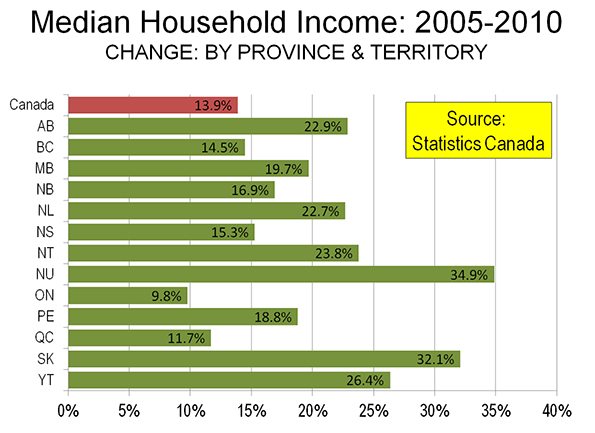
    Statistics Canada’s newly released National Household Survey indicates changes in the distribution of median household incomes among the provinces and territories. The new data is for 2010, and indicates that an increase of 13.9 percent per household at the national level from the 2005 data collected in the 2006 census.

    The big story, however, is the progress in parts of Canada that have grown used to laggard economic performance. In 2005, few would have expected the progress made in the provinces of Saskatchewan and Newfoundland & Labrador. In both cases, the resource boom had much to do with the turnaround.

    Gains in Saskatchewan and the Prairies

    Saskatchewan’s median household income grew 32.1 percent, out-distancing perennial champion Alberta and emerging Newfoundland & Labrador by nearly a third (Figure). Alberta’s income was up 22.9 percent, while Newfoundland & Labrador experienced a nearly as great 22.7 percent increase. Saskatchewan had trailed British Columbia by more than 10 percent five years before, but had edged ahead by 2010. Saskatchewan’s income level now leads all of the provinces except Alberta and Ontario.

    All three of the Prairie Provinces did well. In addition to Saskatchewan and Alberta, household income in Manitoba grew at a 20 percent, stronger than all provinces outside the prairies except for Newfoundland & Labrador.

    A New Day in Newfoundland and Labrador

    While Saskatchewan has experienced prosperity from time to time in its history, the same is not so true in Newfoundland and Labrador. In fact, in 1933, the government of Newfoundland (as it was then known) voted itself out of existence as a Dominion of the British Empire because of its serious financial difficulties. Effectively, the Dominion was relegated to the status of a British crown colony (like former Hong Kong). Newfoundland joined Canada as the 10th province in 1949. With that, representative government was restored, but Newfoundland always lagged behind (generally along with the Maritime provinces of New Brunswick, Nova Scotia and Prince Edward Island). In 2005, Newfoundland and Labrador ranked 10th out of the 10 provinces in median household income. By 2010, the ranking had improved to 7th.

    The Prosperous Territories

    The greatest income growth (35 percent) was in the territory of Nunavut, which was created by carving out the eastern portion of the Northwest Territories in 1999. Nunavut covers a land area about 1.3 times that of Alaska, but has only 30,000 residents (about the same as live in a square kilometer of Manhattan or Paris). The Yukon experienced a 26 percent increase, while the Northwest Territories had a 24 percent increase. The Yukon and the Northwest Territories had stronger income growth than all of the provinces, except Saskatchewan.

    The Old Dynamos Trail

    Meanwhile, the economic dynamo of the nation, Ontario experienced household income growth of less than 10 percent, nearly a third less than the national average, and less than one-third of Saskatchewan. Ontario is home to more than one-third of the national population. British Columbia, which has historically experienced strong economic growth, could muster only slightly above average household income growth (14.4 percent compared to the national 13.9 percent).

  • Canada’s Central Bank Issues Warning on Toronto Condominium Market

    For a few years, concern has been expressed about house price increases in Canada, which have been disproportionate compared to household incomes.

    In this regard, the latest, semi-annual Bank of Canada Financial System Review points to the overbuilt multi-unit market, especially the Toronto condominium market, as having the potential to inflict serious harm on the economy (see A Toronto Condo Bubble?), including “reduced household net worth.” In its report, Canada’s central bank said:

    “…the total number of housing units under construction remains significantly above its historical average relative to the population. This development is almost entirely attributable to multiple-unit dwellings (which include condominium units). In the Toronto condominium market, the number of unsold high-rise units in the pre-construction and under-construction stages has remained near the high levels observed since early 2012. If the investor component of demand has boosted construction in the condominium market beyond demographic requirements, this market may be more susceptible to shifts in buyer sentiment. Furthermore, if the upcoming supply of units is not absorbed by demand as they are completed over the next 12 to 30 months, the supply-demand discrepancy would become more apparent, increasing the risk of an abrupt correction in prices and residential construction activity.

    Any correction in condominium prices could spread to other segments of the housing market as buyers and sellers adjust their expectations. Such a correction would reduce household net worth, confidence and consumption spending, with negative spillovers to income and employment. These adverse effects would weaken the credit quality of banks’ loan portfolios and could lead to tighter lending conditions for households and businesses. This chain of events could then feed back into the housing market, causing the drop in house prices to overshoot.

    (Emphasis by author)

    Canadian analysts have long been concerned about the potential for its rising house prices to collapse, as occurred in the overheated US markets. Just as the housing bust in California, Florida, Arizona and Nevada threw the US economy and that of the world into the worst economic decline since the Great Depression, a housing price bust could inflict serious damage to the Canadian economy, which has performed strongly in recent years.

    In the United States, the housing bust led to a nearly 20 percent reduction in household net worth, while recent reports show that the loss has been recovered. However, this recovery has been anything but equal. Many households who suffered losses, such as in investments intended to finance retirement, have not seen their wealth restored.

    There is plenty about housing market distortion for Canada to be concerned about.

  • Does the Post Office Deliver in Today’s Urban Culture?

    The postal service has been ravaged by enormous deficits and massive layoffs. It will inevitably see the closing of thousands of buildings. Planners have taken notice. Countless journalists have lamented the loss of post-office buildings, praised their often remarkable architecture and called for pressure to save them. These buildings are catalysts of “community”, the authors have suggested, citing the chance encounters of townspeople. Something is profoundly wrong, we are told, when community incubators are eradicated.

    Certainly, the loss of these buildings signals the decline of an economic sector and inevitable job losses. Is it possible, though, that the focus on post office buildings overlooks contemporary urbanism? Could it signal inattention to the evolution of “community,” and an obsession with the 19th century?

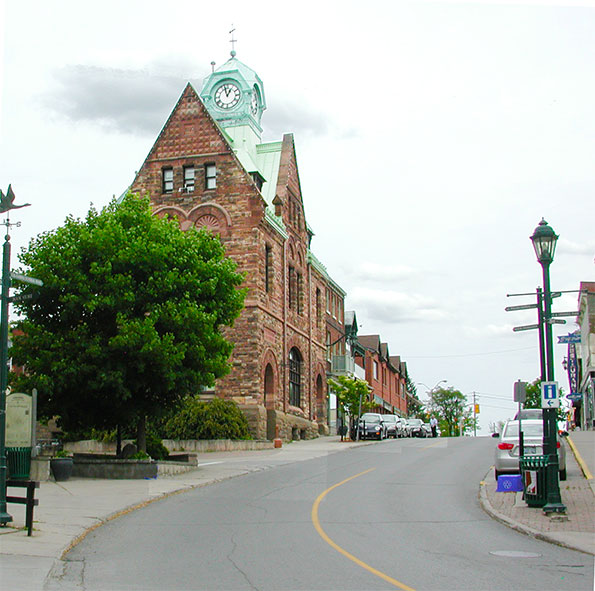
    The Evolving PO: The post office building pictured at the opening of this article began its life in a traditional Canadian village of the 1860s. The 1800s was an era of the small entrepreneur and family business; fewer than 20% of families relied on a paycheque, compared to 80% today. The timber-merchant owner of this enterprise lived in a sprawling, classical style house that boasted status and refinement. By contrast, his 650 square foot store was a humble wood building. Even though its sign advertized dry goods groceries, it provided much more — it was a virtual mini-department store — including a postal service. It also supplied credit for up to a year, because farmers paid all their bills in the fall, after harvest. A similar pragmatic and profitable strategy of blending services now prevails in the K-mart, Wall-Mart and Target superstores.

    The idea is simple: a single service means only one source of revenue for the owner and single purpose trips for his customers. Neither is efficient, particularly in a small, walkable town. The store’s role as a community catalyst in comparison to the local tavern or church remains a matter of speculation.

    This 1891 example (below), is a stylish, elaborate 2000 square feet building in a town of 3,000 people, during the era of government-run postal service. Nearly four times larger than the first, it retails no other goods. Railway expansion, a bustling regional economy and a total reliance on postal delivery for communication, boosted business in Canada to annual revenues of $4,600 by the time this building surpassed its predecessor; a venerable sum when average daily wages were $1.50. The vast difference in building quality, size, civic importance and services, can be easily explained by the brisk business, the revenue size and, importantly, government ownership. Status and state symbolism could be financed with pride.

    Not for long. By the late 1960s only half of the 33 ornamented buildings in Ontario were still standing and none were owned by the government. The loss and shift in ownership had little to do with planning. A new urban culture of instant, and distant, paperless exchange had emerged that forced the transition to the next “building”.

    The Village Option: Today, it is not uncommon to see locations where the postal service counter occupies a miniscule portion of a small drugstore on the ground floor of a 20-storey apartment building. It resides on a principal artery, but without street facade, not even a sign announcing it. As in the village example, the service is only one of many the building houses: habitation, car park and a chain drugstore that offers the gamut of goods including convenience foods and drinks. Management’s “building” choice has reinvented the village option, where the PO is not housed in a separate building.

    In his turn, the retailer, opting to rent space for a postal service, knew the benefit of luring customers by mixing services on the same premises. The new urban condition, by now in full swing, puts the postal service in an appropriate symbiotic niche, reflecting its cultural status and economic value. The uncertain “community” incubator role that it might have played in the 1800s cannot be discerned in its current form.

    The postal service trajectory is not unique. The 20th century saw the decline of the church, the pub, live theatres and classic movie theatres.

    Of all the buildings that are presumed to play a catalytic community role, none rivals the church. Historically, innumerable towns sprang up through faith groups. Church buildings were their focus and intellectual well-spring. Nonetheless, the 20th century treated the church no differently than it did the pub and the post office.

    By 2005, of the 60% of US citizens who said they were religious, less than 20% attended church regularly. Attendance among US Roman Catholics fell from 75% to 45% in the last 60 years. In the UK, annual church attendance stands at 12%, in Sweden at 5%, and in Denmark at 3%. These are striking figures for an institution that has been a cornerstone of “community”. The outcome of this abstention is inevitable: churches are demolished or converted.

    Should the Pub Get a Sub? Pubs in Britain were closing at the rate of 27 a week in 2007 and 2008, continuing a downward trend that affected their small town numbers disproportionately. The media lamented the loss of a celebrated social tradition and, with it, exquisite examples of architecture and interior design.

    This loss of building-and-function raises the question of preservation, which leads to the question of subsidization. Should the pub get a sub to support its important value as social cement? Should other such buildings and their functions be subsidized? Some planners think so, in sharp contrast to the historic Protestant ethic of self-reliance.

    In a 2002 Urban Land article we read: “… In any case, the main street in a new urbanist community should not necessarily be considered a profit center; instead, it plays the role of the principal amenity.” And further on, “…However, had the [main street] shops been located there [where traffic is heavy], the regional traffic may have overwhelmed the small main street and undermined its role as a social condenser of the community.”

    This view permeates the pro-preservation articles on post offices and pubs. It implies that social incubator functions may well deserve a subsidy, and may function better when protected from heavy traffic. In contrast to this view is the vast array of traditional village and towns of exemplar urbanism, where a thriving Main Street is also a main thoroughfare through the town.

    A New Era: The loss of post office, church and pub buildings does not stem from some wrongheaded, antisocial planning philosophy that needs to be debunked, denigrated and disposed of. It is simply symptomatic of cultural, technological and economic shifts that go way beyond the realm of urban planning. To stop the loss of post offices, for example, it would be imperative to rescind the use of e-mail, fax and phone, an absurd proposition. For the salvation of the church, it might mean a new wave of proselytizing that would result in commitment to attendance, also a bizarre projection.

    Subsidies, protestations and benevolent planning decrees are hardly the answer for either existing or new communities. The urbanist’s “community” dilemma dissolves when the transition to a new era is recognized and embraced. Rather than compulsively hold on to “community’s” past loci, let’s stir the imagination toward its emergent places.

    Fanis Grammenos is the founder of Urban Pattern Associates (UPA), and was a Senior Researcher at Canada Mortgage and Housing Corporation for over 20 years, focused on housing affordability, building adaptability, municipal regulations and sustainable planning. Research on street network patterns produced the innovative Fused Grid. He holds a degree in Architecture from the U of Waterloo.

    Photos by the author.

  • MoneySense Top 10 Best Places to Live in Canada in 2013

    Here we go again! Another ranking of the “best” places to live. I wonder how many of those there are.  They just pop up on your computer screen like unwanted ads. Perhaps there are so many “best” cities rankings that at some point most cities end up winning or being in the top 10. Mayors and chambers of commerce know it, just like car companies. If you don’t win the top prize you will simply pick a category and exploit it to death to sell your product. It could be safety, trunk size, fuel efficiency, resale value. In the case of cities, it can be average house price, commuting time, unemployment rate, safety and the pièce de resistance, the vaguest criteria of all, the one that makes rankings such subjective tool: amenities.

    What does it mean for MoneySense to be the best? A look at the methodology shows that the criteria are quite typical of most rankings: crime, amenities, commuting, heath, housing etc.  Also, the number of points given to each criterion varies from one to another and are totally based on the mood of those who design the ranking. If you think that dry weather is important then you will give it more points. If you dislike bike paths you give it less point. If professional sport teams seem unimportant, you simply don’t use it as a criterion.

    One big mistake that those guys do is to mess up distinctions between metropolitan areas and suburbs. Too often, they only include the boundaries of municipalities and break up larger cities into pieces even though they are really parts of greater metropolitan areas.  For example, The Greater Toronto Area (GTA) has close to 6 million residents. The Municipality (or City) of Toronto has about 2.5 million people. Mississauga, a populous suburb of the GTA, but has its own place  in the very same ranking. How can this be? This is major flaw, a very common one.

    So let’s take look at the ranking. We indicate when a city was part of a Census Metropolitan area):

    1. Calgary, Alberta
    2. St. Albert, Alberta ( a suburb of the Census Metropolitan Area of Edmonton)
    3. Burlington, Ontario (a suburb of the Census Metropolitan Are of Toronto)
    4. Strathcona County, Alberta ( a suburb of the Census Metropolitan Area of Edmonton)
    5. Oakville, Ontario (a suburb of the Census Metropolitan Are of Toronto)
    6. Ottawa, Ontario (Since all suburbs of Ottawa has been amalgamated it couldn’t be broken down like Edmonton or Toronto)
    7. Saanich, British Columbia ( a suburb of the Census Metropolitan Area of Victoria)
    8. Lacombe, Alberta ( a suburb of the Census Metropolitan Area of Edmonton)
    9. Lethbridge, Alberta
    10. Newmarket, Ontario (a suburb of the Census Metropolitan Are of Toronto)

    It would be hard to end up with a more flawed ranking. There is a mix of small cities (Lethbridge), the mid-size city of Ottawa, with suburbs that have been amalgamated into one unified City of Ottawa, without taking account that the Census Metropolitan Area includes the City of Gatineau, across the Ottawa River, in the Province of Québec. It is simply impossible to judge a suburb or a city that is part of a metropolitan area and ignore the fact that its amenities, transportation system, jobs, highways etc. are all linked. How would Mississauga’s economy perform if it wasn’t of Toronto, or its airport, (located in Mississauga!)? How would Ottawa do if they didn’t have its pool Gatineau and its pool of 75,000 civil servants living in its more affordable houses, commuting by across the Ottawa River by one of its 5 bridges?

    I am not pro-gentrification nor a big fan of downtown living, at least not until my kids will live at home. I myself live in an Ontario suburb of Ottawa, while commuting by train to Montreal a few times a month. However, I am fully aware that my suburb would not exist if not for downtown Ottawa. When 75% of the labour force living in my suburb commutes to downtown Ottawa each day to go to work, if the city had not been amalgamated in 2000, I would have laughed at any ranking that would have considered my suburb as a stand- alone city.

    Please guys, you do not rank cities like you rank sports teams.

  • Toward More Competitive Canadian Metropolitan Areas

    The Federation of Canadian Municipalities (FCN) and the Canadian Urban Transit Association (CUTA) have expressed serious concern about generally longer commute trip times making Canadian metropolitan areas less competitive. Each has called for additional funding for transit at the federal level to help reduce commute times and improve metropolitan competitiveness.

    The Right Concern

    The concern over commute times is well placed. Economic research generally concludes that greater economic and employment growth is likely where people can quickly reach their jobs in the metropolitan area. Five of the nation’s six major metropolitan areas (Toronto, Montréal, Vancouver, Ottawa-Gatineau and Calgary) have average one-way work trip travel times that are among the highest in their size classes among 109 metropolitan areas in the more developed world for which data is available. Only Edmonton has an average commute time that is among the shortest (Table 1).

    Table 1
    Average One-way Commute Times: Major Metropolitan Areas
    Compared with International Major Metropolitan Areas
    Major Metropolitan Area One-way Commute Time (Minutes) Overall One-way Commute: Rank out of 109 One-way Commute: Rank in Population Class
    Population Size Class
    Toronto 33 97th  Over 5,000,000 11th out of 19
    Montréal 31 90th  2,500,000 – 5,000,000 19th out of 23
    Vancouver 30 86th  1,000,000 – 2,500,000 60th out of 67
    Ottawa-Gatineau 27 60th  1,000,000 – 2,500,000 55th out of 67
    Calgary 26 58th  1,000,000 – 2,500,000 50th out of 67
    Edmonton 23 15th  1,000,000 – 2,500,000 15th out of 67


    The Wrong Answer

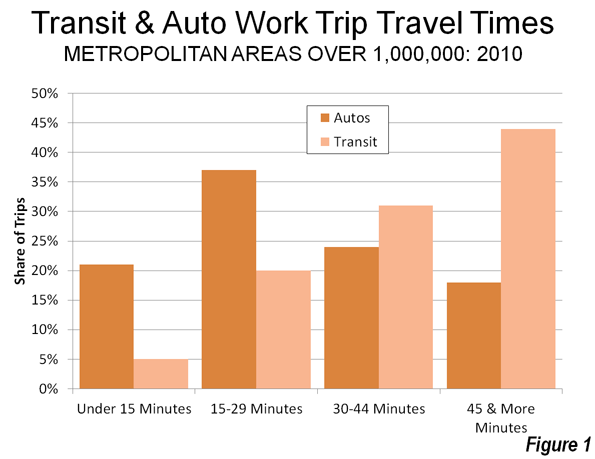
    Yet the solution – more transit and funding for transit – misses the mark. Transit does many things well, but it does not reduce commute times (Figure 1). According to Statistics Canada, average commute times by transit in the Toronto, Montréal and Vancouver metropolitan areas are from 30 per cent longer to nearly double those of average automobile commuters (Note 2). Some 58 percent of car users (drivers and passengers) reach their work locations in under 30 minutes, something accomplished by merely y 25 percent of transit commuters. Overall Toronto commute times are longer than either Los Angeles – famed for its traffic – as well as much less dense, and far less transit dependent, Dallas-Fort Worth. In Toronto, 21 percent of commuters take transit, compared to two percent in Dallas-Fort Worth. Among Montréal commuters, 20 percent use transit and spend more time commuting than their counterparts in more decentralized Phoenix, where less than two percent take transit. Commute times in transit-focused Vancouver are worse than much larger Los Angeles and indeed longer than nearly American metropolitan area, including Dallas-Fort Worth, Houston, and Philadelphia (Table 2).

    Given this pattern, transferring car travel to transit likely would increase commute times and make metropolitan areas even less competitive.

    Table 2
    30- and 40-minute Commute Shares:
    Representative Metropolitan Areas
    Population Classification Work Trip Under 30 Minutes Work Trip 30 to 44 Minutes Work Trip Under 45 Minutes
    5,000,000 and Over      
    Dallas-Fort Worth 59% 24% 83%
    Los Angeles 55% 24% 79%
    Toronto 48% 25% 73%
    Paris 45% 22% 67%
    2,500,000 – 5,000,000      
    Phoenix 57% 26% 83%
    Montréal 47% 27% 74%
    1,000,000 – 2,500,000       
    Edmonton 68% 20% 88%
    Indianapolis 66% 22% 88%
    Ottawa-Gatineau 65% 21% 86%
    Tampa-St. Petersburg 62% 22% 84%
    Calgary 54% 29% 83%
    Vancouver 55% 21% 76%
    Source: Statistics Canada, U.S. American Community Survey, National Institute of Statistics and Economic Studies (France)


    The Geography of Transit

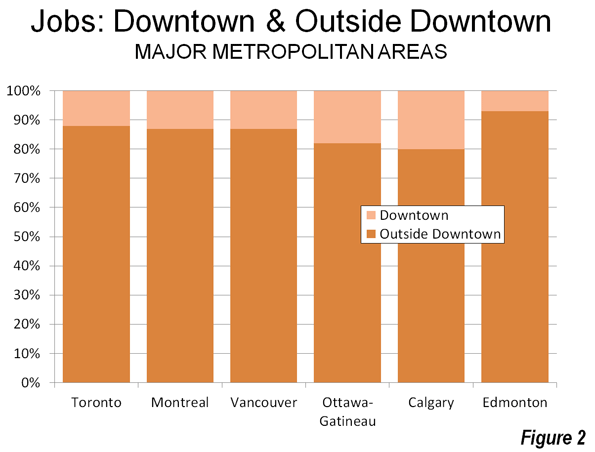
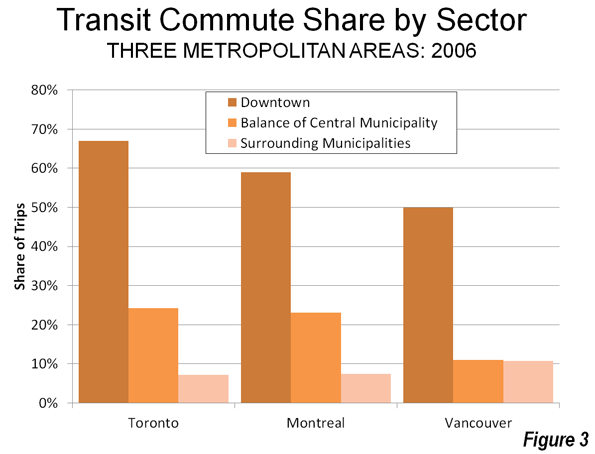
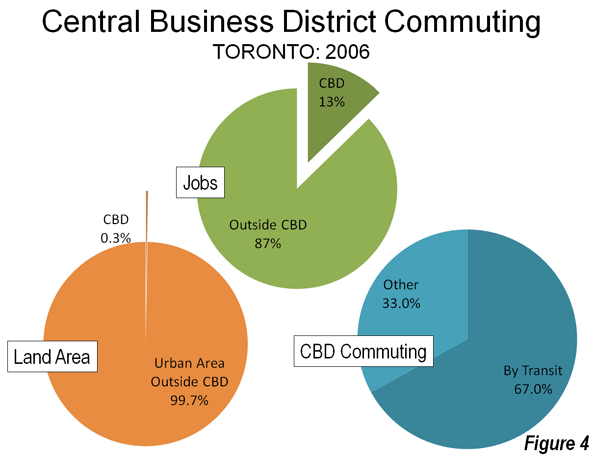
    Rational Transit and Downtown:Transit’s greatest strength is in providing access to the largest downtown areas. These areas have the greatest job densities (jobs per square kilometre) in their metropolitan areas and are typically well served by frequent, rapid and convenient transit service from throughout the metropolitan area. This combination of high employment density and superior transit service attracts one-half or more of all downtown commuters in Canada’s major metropolitan areas to transit (Figure 2). Transit is meets the needs of people who commute to downtown and is the rational choice for many, if not most. However, downtowns contain only a relatively small share (14 per cent) of metropolitan area jobs (Figure 3).

    Rational Personal Mobility Elsewhere: Areas outside downtown lack any such intense concentration of jobs. The area outside downtown, accounting for 6 out of every 7 jobs (Figure 4), maintain much lower employment densities and generally lacks transit service. This is illustrated by the nation’s largest employment center, which surrounds Pearson International Airport in Toronto. Its more than 350,000 employees are spread around an area the size of city of Vancouver (or the city of San Francisco) at a density so low that quick and efficient transit is simply impossible.

    For the overwhelming share of work trips to outside the downtown area, the car does the job and transit accounts for less than 10 percent of commuters. Thus, the automobile is the rational choice for most people who commute to locations outside downtown. And things are not getting better for transit. According to Statistics Canada, employment has been growing much faster outside of downtown than in the high density core areas suited for transit. The 2011 census indicated a continuing dispersion of population as well.


    Transit’s Robust Funding Growth and Declining Productivity

    Strongly Rising Transit Subsidies: Transit subsidies have been growing strongly. According to Transport Canada data, from 1999 to 2008 subsidies grew 83 percent (adjusted for inflation), which is more than three times the 26 percent ridership growth rate and 3.5 times the rate of general inflation. Transit’s declining productivity could indicate a substantial potential for improved cost effectiveness and service expansion within the generous present funding levels.

    Declining Transit Productivity: At the same time, there are concerns about transit productivity. The Conference Board of Canada has documented a 1.2 percent annual decline in productivity for two decades. The same analysis found productivity in other transport sectors to be generally improving. Transit costs have risen well in excess of inflation, service levels and ridership. Rising costs seriously limit transit’s ability to increase its share of travel in metropolitan areas and limits the important role that it is called upon to play in providing door-to-door mobility for the transportation-impaired, such as disabled citizens, the elderly, and students.

    Land Use Strategies that Retard Metropolitan Competitiveness

    Policies that Could Make Metropolitan Areas Less Competitive: While the prospects for improving transit commute times are discouraging, some current land use strategies further increase traffic congestion and lengthen commute times and make metropolitan areas and make metropolitan areas less competitive . Compact cities (also called smart growth) policies have been adopted across Canada in an effort to reduce automobile use and increase urban densities. The planning expectation is that housing should be placed near rail stations. Yet job locations throughout metropolitan areas remain highly dispersed, and with the rise of working at home, are becoming more so. The potential for transit systems (or walking or cycling) to materially impact commuting is very limited in the least.

    International data indicate that higher densities are associated with greater traffic congestion. Further, higher traffic densities are strongly associated with higher levels of air pollution. Improvements in vehicle technology will make reductions in automobile use to reduce greenhouse gas emissions unnecessary, according to U.S. research by McKinsey & Company. Finally, smart growth type policies have been found to retard metropolitan economic growth in the Netherlands, the United Kingdom and the United States (Note 2).

    Improving Metropolitan Competitiveness

    Strategies that reduce commute times can improve metropolitan competitiveness. Expanded telecommuting reduces average commute times by its very nature (though the reported commute times routinely exclude the working at home sector, both in Canada and the US). There are also lessons to be learned from Edmonton and the international metropolitan areas that have been more successful in maintaining shorter commutes: more dispersed employment, lower population densities and a larger share of travel by car (Table 3).

    Table 3
    Comparison of Canadian and U.S. Major Metropolitan Areas
    Average One-way Commute Times and Urban Area Densities
     
    CANADA Canada Metropolitan Areas United States: Metropolitan Area Size Classes
    Commute Time Principal Population Centre Density (per KM2) Average Commute Time Average Principal Population Centre Density (per KM2)
    5,000,000 and Over        
    Toronto 33 2,900 28 1,400
    2,500,000 – 5,000,000        
    Montréal 31 2,200 26 1,200
    1,000,000 – 2,500,00        
    Vancouver 30 1,900 23 1,100
    Ottawa-Gatineau 27 1,900
    Calgary 26 1,600
    Edmonton 23 1,100
    Principal Population Centre: Largest population centre (Statistics Canada term for urban area) in the metropolitan area.


    Focusing on Objectives: To become more competitive, Canada’s metropolitan areas need to improve their average commute times. This requires focusing on strategies that have the highest potential to reduce traffic congestion.

    Residents and businesses in metropolitan areas would be best served by goal-oriented and objective policies squarely directed toward getting people to work faster. The focus should be on what makes commutes shorter, regardless of transport mode, rather than on idealistic notions of how a city should look or how people should travel.

    Wendell Cox is a Visiting Professor, Conservatoire National des Arts et Metiers, Paris and the author of “War on the Dream: How Anti-Sprawl Policy Threatens the Quality of Life”.

    –––

    Note: This article is based upon the recently released Frontier Centre for Public Policy report Improving the Competitiveness of Metropolitan Areas by Wendell Cox, who also serves as a senior fellow at the Centre.

    Note 1: Data not provided for other metropolitan areas.

    Note 2: On a related note, the Bank of Canada (the central bank) and others have indicated a concern about rising house costs relative to incomes. This is to be expected in metropolitan areas adopting green belts, urban growth boundaries and other land rationing policies. Huge housing price increases have occurred in Vancouver, Toronto, Montréal and Calgary (for example), in response to such policies (This is evident from the annual editions of the Demographia International Housing Affordability Survey, sponsored in Canada by the Frontier Centre for Public Policy). The Bank of Canada may be virtually powerless to slow this loss of housing affordability, since its cause (constraining metropolitan land supply) is beyond the reach of the Bank’s monetary policies.

    Photo: Suburban Montreal (by author)

  • Special Report: Census 2011: Urban Dispersion in Canada

    Canada now has fastest-growing population in the G-8 (Note 1), according to the results of the 2011 census, released last week. Canada’s growth rate from 2006 to 2011 exceeded that of the United States by nearly one-third and is nearly one half greater than just a decade ago. The population rose from 31.6 million in 2006 to 33.5 million in 2011.

    The move west continues. For the first time in history, the provinces west of Ontario (Manitoba, Saskatchewan, Alberta and British Columbia) account for more population than the provinces east of Ontario (Quebec, New Brunswick, Nova Scotia, Prince Edward Island and Newfoundland). Two-thirds of the growth was due to immigration, a development cited in a census editorial by the Toronto Star as a solution to the nation’s fertility deficit.

    … we need to make more babies. But we are not, to the extent we need to. Canada’s birth rate of 1.67 children per woman is well below the minimum of 2.0 required. Therefore, we need to get more immigrants, which we are.

    The Major Metropolitan Areas

    Canada’s six major metropolitan areas (over 1,000,000 population) grew even half again as quickly as the nation — 9.3% over five years. Within these metropolitan areas, the pattern of urban dispersion continued, with 83% of the population increase in the largest metropolitan areas (Toronto, Montréal and Vancouver) occurring outside the central municipalities. For the first time, the population in the suburbs of "905" (so-called for its area code), exceeded the population of the amalgamated municipality of Toronto. Similarly, for the first time, the island of Montréal (this includes the ville de Montréal and other municipalities) had a smaller population than the rest of the metropolitan area. According to the The Gazette:

    Most of the people who leave the 514-area (the island -ed) for the 450 (off the island -ed) do so reluctantly. They are often young people with children (or who hope to have children). They enjoy the city’s stimulation and its proximity to workplaces, shopping and entertainment. But they leave because there’s not enough suitable housing in their price range. The taxes are also high and services spotty. Not the greatest place to to raise a family.

    Dispersion continued in Ottawa- Gatineau, Calgary and Edmonton, though not as obvious because most suburban areas are inside these proportionately larger central municipalities. Even so, 56% of the growth in the six major metropolitan areas was outside the central municipalities (Table 1).

    Table 1
    Metropolitan Area Population Trend:
    Central Municipalities & Peripheral Municipalities
    Population (000) Change (000)
    Central Muncipality Surrounding Muncipalities Metropolitan Area Central Muncipality Surrounding Muncipalities Metropolitan Area
    Toronto         2,615            2,968          5,583            112               358             470
    Montreal         1,650            2,175          3,824               29               160             189
    Vancouver            604            1,710          2,313               25               171             197
    Ottawa-Gatineau            883               353          1,236               71                 31             103
    Calgary         1,079               136          1,215               90                 28             118
    Edmonton            812               348          1,160               82                 43             125
    Total         7,643            7,689       15,332            410               791          1,201
    Change in Population Share of Growth
    Central Muncipality Surrounding Muncipalities Metropolitan Area Central Muncipality Surrounding Muncipalities Metropolitan Area
    Toronto 4.5% 13.7% 9.2% 23.8% 76.2% 100.0%
    Montreal 1.8% 7.9% 5.2% 15.3% 84.7% 100.0%
    Vancouver 4.4% 11.1% 9.3% 12.9% 87.1% 100.0%
    Ottawa-Gatineau 8.8% 9.8% 9.1% 69.4% 30.6% 100.0%
    Calgary 9.2% 25.5% 10.8% 76.7% 23.3% 100.0%
    Edmonton 11.2% 14.1% 12.1% 65.5% 34.5% 100.0%
    Average 6.6% 13.7% 9.3% 43.9% 56.1% 100.0%


    Urban Core Analysis

    Recent amalgamations and aggressive annexation policies make more difficult an analysis of the growth between urban cores and more suburban areas. Only one of the six central municipalities retains boundaries that reflect the core urbanization that preceded the explosive automobile-oriented suburban expansion (Table 2). The same situation exists in US metropolitan areas, where only 19 of the 51 largest metropolitan areas have central municipalities with boundaries that have remained relatively constant over the past 60 years (see Suburbanized Core Cities).

    Table 2
    Metropolitan Area Population Trend:
    Urban Core & Outside
    Change in Population Change (000)
    Urban Core Outside Metropolitan Area Urban Core Outside Metropolitan Area
    Toronto            703            4,880          5,583               45               425             470
    Montreal            930            2,894          3,824                 9               180             189
    Vancouver            604            1,710          2,313               25               171             197
    Ottawa-Gatineau            218            1,019          1,236                 7                 96             103
    Calgary            128            1,087          1,215                 4               114             118
    Edmonton            123            1,037          1,160                 2               123             125
    Total         2,705          12,626       15,332               92           1,109          1,201
    Change in Population Share of Growth
    Urban Core Outside Metropolitan Area Urban Core Outside Metropolitan Area
    Toronto 6.8% 9.5% 9.2% 9.5% 90.5% 100.0%
    Montreal 0.9% 6.6% 5.2% 4.6% 95.4% 100.0%
    Vancouver 4.4% 11.1% 9.3% 12.9% 87.1% 100.0%
    Ottawa-Gatineau 3.2% 10.4% 9.1% 6.6% 93.4% 100.0%
    Calgary 3.0% 11.8% 10.8% 3.1% 96.9% 100.0%
    Edmonton 2.0% 13.4% 12.1% 1.9% 98.1% 100.0%
    Average 3.4% 10.5% 9.3% 6.5% 93.5% 100.0%
    Urban core based upon federal electoral districts (see text)


    The core versus suburban trends are better illustrated by examining areas more representative of the historic cores. This following analysis uses federal electoral districts that roughly conform to the urban cores as they existed in the early 1950s, at the beginning of the automobile oriented expansion. Federal electoral districts generally had a population of approximately 100,000 in 2006.

    Toronto: The Toronto metropolitan area grew 9.5%, adding 470,000 new residents.

    The central municipality of Toronto contains considerable post World War II suburban development, as a result of a late 1990s municipal amalgamation imposed by the provincial government. Federal electoral districts (Note 2) that roughly match to the former municipality of Toronto’s early 1950s boundaries grew 45,000, from a population of 658,000 in 2006 to 703,000 in 2011. This 6.8% increase represents some of the strongest growth in 80 years, though the population of the former municipality tended to hover between 600,000 to 700,000. The core growth between 2006 and 2011 was concentrated in the Trinity-Spadina and Toronto Centre electoral districts, where the population rose 38,000 (16%). These two districts have grown strongly as a result of Toronto’s high rise condominium boom. The balance of the urban core grew only 2%.

    Areas outside the core added 425,000 population, nearly 10 times the increase of the core. The percentage increase was also stronger, at 9.5%. Approximately 85% of this region’s growth was outside the municipality of Toronto, which The National Post characterized as explosive.

    Montréal: Montréal was the slowest growing major metropolitan area, at 5.9%, adding 189,000 new residents.

    Like Toronto, expansion of Montréal’s municipality boundaries include considerable amounts of post-war development. Yet the core of the ville de Montréal has become considerably less dense. In 1951, the ville de Montréal had a population of 1,022,000 people in 131 square kilometers. By1996 (before an amalgamation), the population had dropped to 1,017,000 in 186 square kilometers. This represents a 30% loss in density. Between 2006 and 2011, nine federal electoral districts (Note 3) in the urban core experienced 0.9% population growth from 922,000 in 2006 to 930,000 2011. No significant densification was evident in these districts.

    The areas outside the core added 180,000 people, 95% of the population growth. Nearly 90% of this growth was outside the ville de Montréal.

    Vancouver: The Vancouver metropolitan area grew 9.3% between 2006 and 2011 and, despite all the popular literature about the city’s “smart growth” policies, most growth was dispersed. "The population of the City of Vancouver, the urban core, is flat-lining or even declining notes the Globe and Mail. In contrast, "Surrey, Coquitlam and … Port Moody are growing fast — shifting Metro Vancouver’s centre of gravity east." The Vancouver Sun reported that suburban Surrey would surpass the population of the municipality of Vancouver in the next decade (Note 4).

    The municipality of Vancouver has retained virtually its early 1950s boundaries. The municipality grew 4.4% from 2006 to 2011, adding 25,000 residents. One -half the growth was in the densifying Vancouver-Centre electoral district, which includes downtown and English Bay. The rest of the core municipality grew at only one-fourth the rate of downtown. Despite the downtown gains, the suburbs accounted for 87% of the metropolitan area growth. Seven new suburban residents were added for every new resident in the municipality of Vancouver.

    Ottawa-Gatineau:  The Ottawa-Gatineau metropolitan area straddles the Ontario-Québec border, with the national capital in Ottawa. Ottawa-Gatineau added 9.1% to its population between 2006 and 2011, rising to 1,236,000.

    A 1990s amalgamation brought much of the former suburban area into the central municipality. Two federal electoral districts (Note 5) that are representative of the urban core grew 3.2%, from 211,000 to 217,000. Areas outside this core grew 10.4%, from a population of 923,000 to 1,019,000. Non-core area growth accounted for 94% of the metropolitan area’s population growth.

    Calgary: The Calgary metropolitan area grew 12.6%, to a population of 1,215,000 (Note 6). Calgary is one of the world’s most successful post World War II metropolitan areas. Like Edmonton, Phoenix and San Jose, Calgary has virtually no pre-automobile core. However, uncharacteristic for a new metropolitan area, Calgary has developed one of the strongest central business districts – largely due to the oil industry – in North America, and Emporis ranks Calgary’s skyline as 57th in the world, just ahead of Seattle.

    The core federal electoral district (Calgary-Centre), the most dense in the Calgary metropolitan area, experienced growth of 3.0% from 2006 to 2011. This district is comparatively large in land area, but has a   population density one-third that of Vancouver-Centre. All of the electoral districts surrounding Calgary-Centre have much lower densities.

    Most of the growth occurred the northern and western portion of the municipality of Calgary and beyond. Overall, the population growth rate outside the core electoral district was 11.8%. Non-core areas of the Calgary metropolitan area accounted for 97% of the growth.

    Edmonton: Like Calgary, Edmonton is a post-World War II metropolitan area. The Edmonton metropolitan area added 12.1%, to its population, growing to 1,160,000. The core Edmonton-Centre electoral district, the most dense in the metropolitan area, grew only 2.0%, from 121,000 to 123,000. This district has less than one-quarter the density of Vancouver-Centre. Areas outside the core grew 13.4% from 914,000 to 1,037,000. The non-core areas accounted for 98% of the area’s growth. Some of the greatest growth was in the western half of the municipality of Edmonton.

    Suburban Gains Dwarf Core Densification

    Toronto and Vancouver are experiencing significant increases in downtown populations. But the base is so small that these gains are dwarfed by the scale of suburban population increases. At the same time, central municipality areas outside downtown have lagged. Thus, the 2011 census shows that across Canada, urban dispersion continues, results similar to recent results from the United States as well as a number of major metropolitan areas in the both the developed and the developing world. More than 93% of growth was outside the urban cores.

    Wendell Cox is a Visiting Professor, Conservatoire National des Arts et Metiers, Paris and the author of “War on the Dream: How Anti-Sprawl Policy Threatens the Quality of Life

    ————

    Note 1: The G-9 includes Canada, France, Germany, Italy, Japan, the Russian Federation, the United Kingdom, and the United States.

    Note 2: Toronto Centre, Toronto-Danforth, Trinity-Spadina, Parkdale-High Park, Davenport and St. Paul’s.

    Note 3: Westmount-Ville Marie, Mount Royal, Notre-Dame-de-Grâce – Lachine, Outremont, Papineau, Ahutsic, Jeanne-Le Ber, Laurier-Sainte-Marie and Rosemont-La Petite-Patrie

    Note 4: If Surrey exceeds Vancouver in population, it is to be wondered if Canada’s third largest metropolitan area will be called Surrey instead of Vancouver. A similar displacement of the historic core municipality occurred in the United States when the population of Norfolk was exceeded by suburban Virginia Beach, with the first name of the metropolitan area changing accordingly.

    Note 5: Ottawa-Centre and Ottawa Vanier

    Note 6: This 12.6% figure differs from the 10.8% in Tables 1 & 2, which is calculated using actual data reported by Statistics Canada. Statistics Canada indicates that the data "excludes census data for one or more incompletely enumerated Indian reserves or Indian settlements."

    Photo: Condominium buildings and the CN Tower, Downtown Toronto (by author)
  • 2011 Canada Census: Strong Growth & Suburbanization Continues

    Statistics Canada has just released the first results of the 2011 census. The nation’s population rose to 33.5 million, from 31.6 million in 2006. This is a 5.9 percent growth rate, up from a 5.4 percent rate between 2001 and 2006 and nearly one-half above the 4.0 percent growth rate from 1996 to 2001.

    Suburbanization continued apace in Canada’s largest metropolitan areas. Overall, the suburbs accounted for 83 percent of the population growth in Toronto, Montreal and Vancouver, with 17 percent of the growth in the central municipalities. In the other major metropolitan areas (Ottawa-Gatineau, Calgary and Edmonton), the central municipalities themselves encompass nearly all of the suburban development, so that the core-suburban population increase proportion is masked.

  • The Decline and Fall of the French Language?

    It’s been indisputable for some time that English is becoming the ‘universal language’. As the number of living languages has steadily decreased, the use of English has expanded on every continent. And though English has not — despite predictions — crushed all other languages (German, Russian, and Spanish, to cite the prime examples, all remain strong), one language does seem to be undergoing the predicted cataclysmic collapse. English may not yet have won the globe, but French has definitely lost it.

    The reasons for the decline of French are many, including geography. Francophone regions are spread out: think of France, Vietnam, Quebec, and Guadeloupe, to start. Many of these regions are without direct connections to other French-speaking countries. The result is that many of the people choose to abandon French for more useful languages within the region. In contrast, German, Russian and Spanish speakers are based in numerous adjacent countries, each supporting the others.

    French has been most visibly hurt in the last few decades in Africa. In North Africa, French has had to compete with Arabic, a language which Arabs are now clinging to as proudly as the French have traditionally clung to French. South of the Sahara, countries which formerly had large French-speaking populations are making the switch to English due to its relevance in Southern Africa, as well as internationally.

    In Algeria, after the Algerian War, French was mostly expunged. Its decline has continued, including the recent closure of French schools, as Arabic and English become the standard.

    More dramatically, in Zaire, in 1997, fueled by anti-French sentiment, the French language was replaced with native languages. And in nearby Rwanda the president has pushed for the abandonment of French in favor of English. It is questionable whether any Africans will be speaking French in a few decades.

    English, meanwhile, is becoming the most important Western language in Africa, replacing both French and Portuguese. An English derivative is the majority language of Sierra Leone, and remains an important language in South Africa, of course, as well as Nigeria, and various other smaller countries.

    Former French-speaking colonies beyond Africa have been hostile to the French language. French has been collapsing even faster in Asia than it is in Africa, due to the isolation of French-speaking populations. In Vietnam, students have protested having to learn French, stressing the need to learn English instead. And in the Middle East, the Lebanese have been shucking off French in favor of English.

    French has also seen a drastic decline in North America. In the U.S., between 1990 and 1995, college applicants for French class declined by twenty-four percent. In Canada, the number of French students enrolling in English classes is rising rapidly, while the overall percentage of French speakers across Canada is falling.

    Across Europe, French has gradually declined from being the lingua franca to falling behind German and English. English is spoken by 41% of Europeans, while only 19% speak French. English is now the language of business in Europe, a fact which even French ambassador for international investment Clara Gaymard was forced to admit. And French has fallen so far behind in Eastern Europe, in particular, that it is the third-most studied language, behind English and Spanish.

    While once the language of culture, French has been pushed off the global stage. Perhaps the most symbolic example of this was in 2008 when Sebastian Tiller, the French representative at the Eurovision contest, planned to sing ‘Divine’ almost exclusively in English. That the French singer did not choose to represent the jealously guarded language of his country internationally came as a shock to many. This cultural decline was mirrored when New York’s Metropolitan Opera decided to reject the libretto of the musical star Rufus Wainwright (who was raised in Canada), because he chose not to translate his opera into English.

    The calamitous decline in French seems irreversible, even to the French. In 2008, the budget of La Francophonie, the governing body of the French language, was six million euros; in contrast, the British Council announced it would spend 150 million euros in efforts to advance English.

    In any Darwinian model, a characteristic can become prominent, or it can be driven out of existence. Use of the French language has been globally dispersed, and French culture is without historical significance in many of its colonies. These are not the characteristics that increase a language’s chances of survival.

    Photo by funtik.cat (Dasha Bondareva).

    Gary Girod graduated Cum Laude from Chapman University in Spring, 2011 with a dual major in European History and French. His work includes creating historical collections for Chapman’s Leatherby Libraries. He is also analyzing unpublished primary materials which will be turned into a narrative-driven history of one business magnate’s life during the Industrial Revolution, for Paragon Publishing.

  • Cities Have Outgrown Their Role as Mere Creatures of the Provinces

    The Martin Prosperity Institute recently released the map below, which compares the GDP of several US metropolitan areas to the size of national economies. For instance, the Boston-Cambridge-Quincy metropolitan statistical area (MSA) has a GDP of $311.3 billion dollars. If it were a country, it would be the 40th biggest national economy on earth, ahead of countries such as Denmark ($310.1) and Greece ($303.4). The Houston-Sugar Land-Baytown MSA has a GDP of $378.9 billion, which would make it the 31st biggest national economy, bigger than Austria ($375.5) and Argentina ($368.9). New York-Long Island-Northern New Jersey ($1.28 trillion) isn’t all that far behind Canada ($1.57 trillion).


    While trotting out such comparisons is an interesting exercise, the comparison also gives us some important perspective.  Despite the fact that these cities, as well as many others, produce as much as large countries, they have nowhere near the same fiscal levers at their disposal. Further, they are subservient to higher levels of government. The same problem exists in Canada. The Greater Toronto Area’s economic output ($233.9) is nearly equivalent to Finland’s total GDP ($270.6). Note that this definition is far less expansive than the US metro areas listed above. If the definition were expanded to include the entire Golden Horseshoe, it would be closer to the Size of Norway ($414.3 billion).  Yet the City of Toronto can’t finance a public transit expansion without the two senior levels of government. Calgary ($62.5 billion), roughly the size of Lithuania, couldn’t decide to create a municipal sales tax. Vancouver ($85.5 billion), slightly bigger than Serbia, can’t even decide how to allocate gas tax dollars without a special deal with the federal government.

    The problem isn’t that we have too little government spending, but that revenue collection and spending decisions often happen at the wrong level. Revenue generation and spending should take place as close as possible to the point of delivery. There is no reason why someone in Moose Jaw should pay federal income taxes so that the Federal Government could partner with the province of New Brunswick to build a highway near Moncton. Similarly, there’s no reason why someone in Edmonton should send property tax dollars to the province so that it can pay for a transit expansion in Calgary. Not only is filtering money through multiple layers of bureaucracy inefficient, but it leads to bad decision making. Decisions both on the revenue, and expenditure side need to be made at the lowest level of government possible.

    In order to ensure that cities can meet their infrastructure requirements, provincial governments should gradually devolve spending responsibilities and revenue generating capacities to the municipalities, and the federal government should end the practice of intervening in infrastructure issues altogether. Some municipalities may choose to raise property taxes, others may increase user fees, and still others may experiment with municipal sales taxes. But regardless of how municipalities decide to raise revenue, they are better placed to determine how much revenue is required, and which projects are really essential. More importantly, devolution gives more direct control over decision making to the people that are actually impacted by the decisions. Devolution means more accountability, and more local input. And if tiny Iceland can fund it’s own infrastructure, there’s no reason why Winnipeg or Edmonton couldn’t do the same.

    This piece originally appeared at the Frontier Centre for Public Policy Blog.

    Steve Lafleur is a public policy analyst with the Frontier Center for Public Policy.

  • Can the Winnipeg Model Save Detroit?

    Detroit, not only in the US but across the globe, has become the poster child for urban decay.  The city lost 25% of its population between 2000-2010, and over half its population since 1950.  Over 90,000 houses stand empty, and many neighborhoods have been completely abandoned. 

    The burden of maintaining infrastructure and law enforcement in a city with an eroding tax base and sparse population has lead to attempts to “shrink” the city.  This means bulldozing several areas of the city, and relocating existing residents.  Current Mayor Dave Bing realizes this, and has pledged to knock down a staggering 10,000 structures during his first term.  In the past such slum clearances lead to vigorous opposition from urbanists like Jane Jacobs, who argued that top down approaches to urban redevelopment would cause a great deal of pain, for little to no benefit.  Yet despite the fact that Jacobs is widely admired by planners, the plan to shrink the city has met with little opposition in Detroit.  Frankly, unless Detroit sees a major population surge, shrinking the city may sadly be necessary.  

    Last week, New York Mayor Michael Bloomberg appeared on NBC’s Meet the Press, and at one point mused about using immigration policy to repopulate the city.   Bloomberg didn’t offer a substantive policy proposal, but the premise makes perfect sense.  Most of Detroit’s problems stem from the fact that fewer and fewer people are working and paying taxes in the city.  There is more infrastructure than people need or the city can afford. 

    Ultimately the issue then is getting people to live in Detroit. But the biggest problem, even with a mild resurgence in the auto sector, is that Americans, and even most Michiganders, don’t want to live in Detroit, even with jobs.

    But for many immigrants, Detroit would seem like a major upgrade over their current living situation. This is not as far-fetched a notion as some may believe. Here’s a proposal for Detroit based on an unlikely Canadian immigration success story: Winnipeg.

    Learning from Winnipeg

    When Americans think of Winnipeg, they think of white guys wearing earmuffs in July, speaking with the kind of Canadian accents typically ridiculed on American sitcoms.  When Canadians from outside of Manitoba think of Winnipeg, they think of a former industrial city that is hardly a draw to the much sought after “creative class” even though  the city has the nation’s lowest housing cost.  What no one from outside the city associates with Winnipeg is immigration.

    Winnipeg’s immigration success is not well known outside of the province, but it is hard to dispute the facts.  Smart immigration policies have helped Winnipeg stabilize its population and reverse the city’s decline.

    Between 1971-1996, the city of Winnipeg grew by just under 16%, or roughly 0.6% per year.  Like many North American cities, all of the growth was taking place in the suburbs.  In fact, the population of Downtown Winnipeg shrunk by 23.25% during that period.  Though the rate of decline is nowhere near that of Detroit, the causes and effects are similar.  Manufacturing declined; people moved to the suburbs, aided by highway expansions and low cost automobiles; residents moved to more entrepreneurial cities, such as Calgary; ensuing job and population decline lead to a decline in safety.  The most notable difference is that racial tensions in Detroit exacerbated suburban flight.  But the similarities are sufficient to use Winnipeg as a model.

    Using immigration to reverse population decline in Manitoba

    In 1998, the Province of Manitoba introduced the Provincial Nominee Program, which gave the province the ability to recruit immigrants over and above federal immigration quotas.  Since Manitoba was not seen as the most attractive place for new immigrants to settle, only 1.8% of immigrants to Canada settled in the province between 1996-2000 (Note 1).  Since the introduction of the nominee program, immigration to the province has increased by 250%.  The increase in the City of Winnipeg has been staggering.  In the years 1996-2000, the city saw 15,809 new immigrants.  In just one year, 2007-2008, the city attracted 16,585 immigrants.  Equally as important, 78% of Manitoba immigrants stay in the province, which is a significant improvement over the 1980s, when they had a retention rate of less than 50%.  Increased immigration ended Manitoba’s population stagnation, and the province now enjoys consistently positive net migration.

    Economic outcomes of Manitoba immigrants

    A survey of immigrants who migrated to Manitoba through the provincial nominee program shows promising results.  Three quarters of participants surveyed have never experienced involuntary unemployment.  Of those surveyed, 85% were employed, and 7% were in school.  While the average annual household income of $49,066 for participants is lower than the provincial average of $60,242, they are generally making enough money to live reasonably well, contributing to the provincial and municipal tax bases. 

    Reasons for the program’s success

    Of course, mass immigration often creates challenges for recipient regions.  Aside from the need for immigrants to find jobs, they also often require language training, and educational upgrading to meet certification levels for their professions. However, the success of the program shows that participants were by and large able to overcome these difficulties.  Some of this can likely be attributed to the fact that immigrants of similar backgrounds tended to cluster together, some integrating into communities with existing settlers of similar backgrounds.  The primary examples of these two patterns are the concentration of Filipino immigrants in Winnipeg, and the large number of Mennonites from Germany, Mexico, and South America who integrated into existing Mennonite communities.  This can be important, since it allows for them to develop, or take advantage of informal support networks.  Living in a community with speakers of the same language makes it easier for immigrants whose first language is not English to integrate into the community, and can help with finding employment. 

    Benefits of targeted immigration to Detroit

    Immigration is often a source of innovation and entrepreneurship.  Recent studies have shown that immigrant entrepreneurs in America have created more jobs for existing Americans than  for other    immigrants.  More people moving to Detroit would also mean more customers for the service industry in the city.  And by paying property taxes, they would help to keep the city government afloat.  Perhaps the most important benefit would be that more people generally would make the city safer.  Criminals, after all, hate witnesses. 

    Hopeful signs from recent immigration to Detroit

    Recently, Detroit has experienced an influx of Latino and Muslim immigration.  Despite the stigma attached to these groups by many Americans, anecdotal evidence suggests that these newcomers have been a boon to the city.  According to the Immigration Policy Center, Arab American employment now contributes $7.7 billion to the Detroit metro economy, and provides $544 million in tax revenue to the state.  They now support over 140,000 jobs in the city.  Latino immigrants are being credited with helping to revitalize Southwest Detroit, which saw $200 million of investments between 1993-2008, and the area’s population grew by nearly 7% between 1990-2000 even as most of the city declined.  The City is now home to nearly 50,000 Latinos, up from under 20,000 in 1990.    

    And for those who claim immigrants take American jobs, the evidence suggests the opposite.  Despite the fact that immigrants have lower average wages than non-immigrants, they manage to have a disproportionate economic impact in many cities, Detroit being one of the best examples.  According to the Fiscal Policy Institute, immigrants contribute 1.3 times as much to the economy per capita as non-immigrants in Detroit.  This means, among other things, they disproportionately create jobs and contribute to the tax base.    

    Policy recommendations

    Creating a targeted immigration program would require co-operation between municipal, state and federal governments.  The policies recommended here are one set of options among many.

    • The federal government should create an ”urban revitalization” visa category to allow for municipalities with severe demographic declines to accept immigrants without counting them towards immigration quotas.
    • The state of Michigan, or other similarly challenged states, should create a specific program modeled on Manitoba’s provincial nominee program.
    • Immigrants should be required to prove that they have the financial means to support themselves for a specified amount of time in the absence of income.  This would ensure that they didn’t burden the existing welfare system.
    • Participants in the program could be required to undertake language training at their own expense, or to prove a basic competence in English. 
    • The City of Detroit should move more aggressively towards allocating abandoned buildings to provide housing or places for businesses of immigrants, or anyone else who wants to occupy them for that matter.  Filling buildings means more property taxes.
    • The City should concentrate on settling new immigrants of similar ethno-linguistic backgrounds into specific underpopulated areas.  Rather than simply allowing a certain number of immigrants into the city, they could create zones with high vacancy levels, and allow immigrants who apply to the program to move into these zones initially.  The aim should be to populate one neighborhood every two years to fill current vacancies.
    • Instead of punitive measures to force immigrants to stay in Detroit, the city should provide incentives to stay.  This could include requiring immigrants under this program to sign long term leases with large deposits, or to purchase property.  This is preferable to attempting to monitor the movement of immigrants. 
    • The city and state should attempt to partner with businesses, who may be interested in opening operations in the city due to the influx of immigrant labor.  This could help to give further incentives for new immigrants to stay, and create jobs for existing unemployed residents.

    Many of these recommendations require more micromanagement than I’d personally prefer, but address political and economic realities.  Simply allowing anyone and everyone to immigrate to Detroit or anywhere else in America is a political non-starter.  Also, the dire budgetary situation facing the City of Detroit and the state of Michigan means that neither can afford to allow new immigrants to become economic liabilities.  After all, the justification for this program is to replace the tax base and reduce crime, not to create a new underclass.  Though there would certainly be some hiccups, evidence in Winnipeg and Manitoba could help to revitalize both Detroit and much of the state of Michigan.  Failure to undertake an aggressive revitalization strategy will make an aggressive shrinking strategy inevitable.  Given the two choices, revitalization seems vastly preferable.

    Note 1: Unless otherwise noted, data on the Manitoba Provincial Nominees Program is based on http://www2.immigratemanitoba.com/asset_library/en/resources/pdf/pnp-manitoba-provincial-nominee-program-tom-carter-report-2009.pdf


    Steve Lafleur is a public policy analyst and political consultant based out of Calgary, Alberta. For more detail, see his blog.

    Photo by Arlo Bates