Tag: Chicago

  • What Does Urban Success Look Like?

    What does urban success look like? Ask people around the country and they’ll probably say it looks something like Chicago.

    Arguably no American city over the past decade has experienced a greater urban core renaissance than Chicago. It is a city totally transformed. The skyline has been radically enhanced as dozens of skyscrapers were added to the greater downtown area. Millennium Park opened as a $475 million community showplace full of cutting edge contemporary architecture and art. There has been an explosion in upscale dining and shopping options, as well as large numbers of new art galleries, hotels, clubs and restaurants.

    But perhaps nothing shows the transformation of Chicago more than the huge condo boom, with thousands of new units coming online every year. This sent development waves rippling out from the Loop and North Lakefront, often into places that just a short time ago were no man’s lands. If you told someone 15 years ago you lived in the South Loop, they would have said, “Huh?” If you had told them you lived by the old Chicago Stadium, they would have thought you had lost your mind. These and other neighborhoods that were once derelict or dangerous, as well as some that were low key ethnic enclaves, have been transformed into bustling yuppie playgrounds for the new “creative class”.

    But there has been a downside to this for Chicago as well. The influx of the educated elite into the city has significantly raised housing prices in large parts of the city, rendering it unaffordable to others. Supporting the amenities demanded by the city’s new residents costs money, so taxes have gone up, doubling the squeeze on the city’s traditional residents, forcing many of them out.

    So in the end, despite its building boom, it is actually losing people. The Census Bureau estimates the city of Chicago’s population declined by about 60,000 people since 2000. That’s not much on a percentage basis, but, considering the urban core boom, it is telling. While Chicago’s metropolitan area continues to grow, it is doing so slower than the national average and has significant domestic out-migration. Chicago’s metropolitan area saw net domestic out-migration of 42,000 in 2008 and 57,000 in 2007. To put this in perspective, the poster child metro for urban decline, Detroit, Michigan, only lost 62,000 and 58,000 people in those years respectively. Only Chicago’s continued appeal as an immigrant magnet kept it from posting large overall migration losses as it had very high international in-migration.

    Chicago is an incredible urban success story, but only for some. International immigrants and the creative class are flocking, but everyone else is leaving.

    But there is another group of cities in the Midwest, much smaller cities, that are often overlooked, but which offer an alternative model. Places like Columbus, Indianapolis, and Kansas City provide a mirror image of Chicago. Their downtowns have resurged, if not from their glory days in the 1950s, then since their nadir in the 1970s. There is also significant condo construction in their cities. But, beyond these superficial similarities, they are nothing like Chicago. They lack the urban energy of that colossus, its huge inventory of swanky shops and high-end fine dining. They haven’t had a skyscraper boom. Most of their downtown development still requires significant tax subsidies. They feature largely vanilla brand images that don’t give them the coolness factor. And they continue to struggle in attracting top talent to live there.

    Yet in many ways these cities show signs of demographic and economic health that Chicago could only dream about. The Columbus, Indy, and KC regions are all growing faster than the national average in population and, unlike the vast bulk of the Midwest, have significant domestic in-migration. They are outperforming the nation in employment. In fact, it can be argued that they have as much in common with the Sun Belt as the Rust Belt. People are voting with their feet to move to these places. Between 2000 and 2005, about 7,000 net people moved from the Chicago metro area to Indianapolis, for example.

    One key to this lies in affordability. For years Indianapolis has been ranked as the least expensive major housing market in America. Blessed with few natural barriers and pro-private sector governments, housing supply in these cities has grown along with population. Yet at the same time the negative impacts of sprawl have been mitigated by their modest – compared say to Dallas, Phoenix or Houston – growth rates and relatively small size. This leaves them attractive, affordable, and offering a very high quality of life to people without elite professional incomes.

    In short, these cities are just as successful as Chicago; they just do it their own way and serve a different market.

    Indeed what we can see is that there are different forms of urban success. In an ever more diverse America, people define the good life differently. Too much urban policy is focused on one size fits all solutions that assume cities should look and function something like Chicago. But America’s cities are very diverse and require tailored policies to suit the local landscape, and the unique local geography, demography, history, culture, and values that our cities bring to the table. Great cities, like great wines, have to express their terroir.

    As with the consumer market, cities too need to recognize our increasingly complex and diverse population, and sharpen their strategic focus to the target segments they best serve. Chicago is tailoring its offerings to where it believes it can most effectively compete – new immigrants and world class talent. Places like Columbus, Indianapolis, and Kansas City are focusing on a broader middle class. Neither way is right or wrong. Both types of places, and others too, can all find success by offering unique places for people to realize their own personal American Dream.

    Aaron M. Renn is an independent writer on urban affairs based in the Midwest. His writings appear at The Urbanophile.
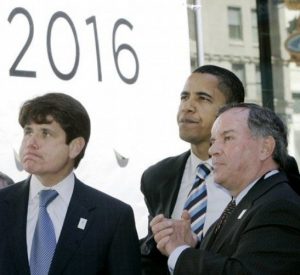
  • Mayor Daley Offers Tips on Fighting Corruption

    Is this a story from the Onion? No. Too Implausible. The Chicago Tribune reports:

    Coming from as far away as Azerbaijan, dozens of corporate executives and government bureaucrats gathered at a downtown hotel Wednesday to hear Mayor Richard Daley share his tips for preventing corruption.

    Absent from his speech at the international event was any talk of city hiring fraud, the Hired Truck program or the myriad other scandals that put Daley aides in federal prison or left them free pending appeals of official misconduct convictions.

    In 2005, The Chicago Sun-Times explained “From an exhaustive Hired Truck investigation to a probe into patronage hiring at City Hall, there’s so much corruption to investigate in the Chicago area, the FBI is adding manpower.” Chicago got a third public corruption squad while New York and L.A. only had two. The Hired Truck scandal was one of the biggest in recent history, where private trucking companies were paid to do nothing. Mayor Daley has yet to explain why a Chicago Mob bookmaker was running the program.

    But, it’s not only Hired Truck. Mayor Daley’s Water Department was described by the Justice Department as a racketeering enterprise for at least 10 years. Just a week ago,the Chicago Democratic Machine’s own Rod Blagojevich was indicted for running a racketeering scheme even before he took office as Governor.

    Blagojevich earned the early endorsement of the Machine in 2001. The Daily Herald reported powerful Alderman Burke’s glowing endorsement, “I am with Rod 100% because he has what it takes to win – money, message and an army of supporters.”

    Mayor Daley’s son and nephew have just hired a prominent criminal lawyer for their questionable business dealings with the city of Chicago.

    Mayor Daley isn’t the only Chicago Democrat lecturing audiences about ethics. Recently, Illinois Supreme Court Justice Anne Burke(wife of Alderman Ed Burke) lectured Illinois state workers on “Ethics in the Workplace” at University of Illinois-Chicago.Anne Burke has been accused by a top FBI informant of corruption.

    Since 1971, 31 Chicago Aldermen have been convicted of felonies. Sometimes you just have to laugh. Or cry.

  • A Tale of Two Blizzards

    January 1979 saw one of the worst blizzards in city history hit Chicago, dumping 20 inches of snow, closing O’Hare airport for 46 hours, and paralyzing traffic in the city for days. Despite the record snowfall, the city’s ineffectual response was widely credited for the defeat of Mayor Michael Bilandic in his re-election bid, leading to Jane Bryne becoming the city’s first female mayor.

    In January 1978, a similar blizzard had struck the city of Indianapolis, also burying the city in a record 20 inches of snow. Mayor Bill Hudnut stayed awake nearly two days straight, coordinating the response and frequently updating the city on the snow fighting efforts through numerous media appearances. Nevertheless, the airport closed and it was several days before even major streets were passable. But when it was all over, Hudnut emerged a folk hero and went on to become arguably the most popular mayor in city history, serving four terms before voluntarily stepping aside.

    While major snow is much less frequent in Indianapolis than Chicago, and Hudnut’s response certainly bettered Bilandic’s, these twin blizzards illustrate a powerful difference in citizen expectations between these two cities, reflecting two of the broad approaches to urban service provision in America today.

    People in Chicago expect and demand high quality public services. Chicago is the “City that Works”, and woe be to the mayor when it doesn’t. That’s why every mayor since Bilandic has treated snow clearance like a military operation, deploying a division of armored snow trucks to assault the elements at the merest hint of a flake, often leaving more salt than snow in their wake. If Chicagoans pay relatively higher taxes than the rest of the country, at least its citizens know that they are getting something for their money, whether it be snow clearance, garbage collection, street lighting, landscaped boulevards, or bike lanes.

    In Indianapolis, by contrast, public services are not the main concern. People gripe if snow is not cleared, but are not outraged. No Indianapolis mayor ever lost his job for failing to deliver good services. Rather, taxes have always been the primary issue. Nothing illustrates this better than the most recent mayoral election. Buoyed by an emerging demographic super-majority, a large campaign war chest, and the support of almost every establishment figure of both parties, Mayor Bart Peterson confidently raised city income taxes by 0.65 percentage points shortly on the heels of a major property tax jump. In the fall, however, he lost his re-election bid to political neophyte Greg Ballard, who ran on a taxpayers first platform. Ballard won without significant backing from his own Republican party, supported only by a collection of grass roots activists, bloggers, and his own relentless door-knocking campaign.

    The divergent citizen and policy preferences of both cities continue to the present, amply illustrated by this very winter. Mayor Daley, facing a recession-induced budget gap, decided to save money by ordering that residential streets not be cleared by workers clocking overtime. Citizen unhappiness over the state of the streets during December snows led even the widely popular Daley to backtrack on this experiment, reverting to the traditional all out assault for the balance of winter.

    In Indianapolis, after 12.5 inches blanketed the city this January, crews took several days to clear its snow routes and, as per its standard operating procedure, did not plow residential streets at all. The local media carried tales of people’s laments, but ultimately the city government knows that the response to the snow will be forgotten soon after it melts. Higher tax bills, by contrast, are long remembered. In an inverse situation to Chicago, people in Indianapolis sleep at night knowing that, if services haven’t been all that great, they at least have more money in their pockets.

    While both cities have long seemed happy pursuing their respective courses, storm clouds are gathering over both strategic models of operation.

    Backing down from a high service stance in government is almost impossible. Government spending only ever seems to go one way. Faced with that logic, and the clear expectations of its citizens, Chicago in effect decided to double down. With the much celebrated resurgence of urbanism, Chicago put its chips on a soaring Loop economy driven by an emerging status as one of the top global cities, a real estate boom, and a series of tax and fee increases. It embarked on a civic transformation epitomized by community showplaces like Millennium Park, miles of top quality streetscape improvements, a new terminal at Midway Airport and the start of a multi-billion dollar O’Hare modernization, one of the nation’s best bicycling infrastructures, and perhaps most ambitiously, a bid for the 2016 Olympic Games.

    This model is increasingly showing signs of strain, however. Many taxes and fees, including the nation’s highest sales tax at 10.25%, appear to be close to maxed out. The real estate crunch hit hard at Chicago’s transfer tax revenue, another key source of city funds. This, in combination with a weak economy, has hammered the city’s budget, leaving Daley with tough, often unpopular choices to make. The CTA recently raised fares. City parking meter rates will be quadrupling under a privatization plan recently signed, hopefully plugging operating budget holes – something Daley had previously resisted. As with New York City, Chicago may be faced with the cold reality of both service cuts and tax increases.

    More importantly, as with the dot-com bubble before it, there are real questions as to whether the financial and real estate driven economy that fueled Chicago’s boom will come back in full force any time soon. In the meantime, the economy and cost of living in the city are squeezing the middle class harder by the day, and despite perhaps America’s biggest condo boom, the city’s population is slowly shrinking. All this leaves Mayor Daley, although still very popular, with perhaps the toughest leadership challenge of his tenure.

    Meanwhile Indianapolis faces problems of its own. It too has budget challenges, just as years of deferred investment are finally catching up with the city. Indianapolis has a $900 million unfunded backlog of curb and sidewalk repairs alone. It is the 13th largest municipality in America, but has the 99th largest transit system. And, more troubling, the city now finds itself outflanked by its own suburbs.

    At one time Indianapolis could comfortably decide to purchase bronze-level services while other cities paid more for gold. But now its own suburbs are offering silver, and at a lower price point in taxes than the city is selling bronze. Many of its suburbs today not only have better schools and safer streets than the central city, they feature fully professional fire departments, large park acreage, lavishly landscaped parkways exceeding city standards, and even better snow removal. In the recent storm, upscale north suburban Carmel finished plowing its cul-de-sacs before Indianapolis finished its main arteries. When people can pay less and get more just by moving to the collar counties, that’s what they do. Tens of thousands of people have left the merged central city-county in recent years. Only a large influx of the foreign born has kept Indianapolis from losing population.

    The current economy is exposing the long term structural weaknesses of both civic strategies. Chicago and Indianapolis show that both higher service and lower service models face big challenges and that neither approach represents a safe harbor in the current economic storm.

    Aaron M. Renn is an independent writer on urban affairs based in the Midwest. His writings appear at The Urbanophile.

  • Washington Wins…Everyone Else (except maybe Chicago) Loses

    What could prove to be the worst economic decline since 1929 may also have the unintended consequence of creating a booming real estate market for the Washington, D.C. metropolitan area over the next few years. Ironically this has been brought on not, as one might expect, by Democrats – traditionally the party of Washington – but by the often fervently anti-DC Republicans.

    This process was set in motion by the Bush Administration’s $700 billion financial bailout. This has caused a potential geographic shift in power from Wall Street to Pennsylvania Avenue. By concentrating decision-making power and institutional ownership in the Nation’s Capital, the Administration has essentially drained power away from financial institutions historically headquartered in New York City. The local real estate market impacts of this shift in the locus of private-sector financial power will only be accelerated by the impact in that real estate market by the changing of the guard in Washington following the November 4th election.

    To start with, the $700 billion federal bail-out of Wall Street being spearheaded by the Treasury Secretary is certain to involve a spate of new Treasury Department hirings, bringing in the employees needed to manage this herculean task. And, while that in and of itself does not a real estate boom make, there is a remarkable confluence of other factors to be considered as well.

    For example, the November 4th election results are projected to generate 40,000 real estate transactions in the metro Washington marketplace over the next nine weeks, as those currently in power leave the Nation’s Capital and those elected to power move in. That is 40,000 transactions that otherwise would not be occurring in the prevailing economic climate. Any time you introduce a large number of buyers into the marketplace competing for product that might not be entirely fungible in terms of geography (in-town versus out of town; D.C. vs. suburban Maryland vs. Northern Virginia) or housing typologies (pied-a-tier versus exurban McMansion, for example), you drive prices up. Add to the equation that not everyone voted out of power actually ever leaves the D.C. area – this is after all the center of the universe for many law firms and lobbyists, as well as both major political parties – and there is the potential for increased demand for and a constrained supply of houses.

    Add to this residential real estate boom a coincident commercial development boom. Consider that the federal government will become a major owner of some of the country’s most important financial institutions with, at the very least, monitoring and oversight responsibilities (if not also investment policy input). Under this scenario it is easy to imagine a whole new industry being born almost overnight in the District of Columbia, with private interests seeking debt and equity financing not by meeting with Wall Street investment bankers but by meeting with their investment bankers’ new regulator at 1500 Pennsylvania Avenue in Washington, D.C. (the headquarters for the U.S. Treasury Department).

    This is not nearly as far-fetched a notion as it may first appear. Forty years ago most Washington, D.C. law firms and lobbyists were focused primarily on what today are viewed as pretty stodgy federal agencies: The Interstate Commerce Commission; the Federal Trade Commission; the Food and Drug Administration; the Interstate Highway Commission. Lobbying became more sophisticated, impacting to a much greater degree federal policies related to taxation, banking, and capital markets, as well as emerging policy areas like healthcare, energy, and the environment, causing the private-sector workforce feeding off of the federal presence in Washington, D.C. to grow exponentially.

    The District of Columbia has the third-largest downtown in the U.S., ranking only behind New York and Chicago. More than 10 million square feet of commercial office space was added to the District between 1996 and 2005, with another 10 million having been brought on-line or underway since then. Additionally, geographic areas that in the 1960s were entirely rural farmland – such as Tysons Corner, VA, and Gaithersburg, Maryland – have grown so fast that they are today unrecognizable. For example, Tysons Corner has over 46 million square feet of office and retail space, and a daytime population of over 100,000. The Washington metropolitan area is the eight largest market in the country – and comprises the fifth largest market when combined with the Baltimore metro area – with a 2007 population of over 5.3 million people, yet almost nothing is manufactured here. It makes one wonder exactly how many people are required to properly rearrange the deck chairs on the Titanic.

    Finally, add to the foregoing scenarios the very real prospect for a major expansion of our federal government under the incoming Obama Administration and an energized and slightly larger Democratic majority in the House and Senate. There is the distinct possibility (if not, in reality, the promise) of a New Deal Era federal program to re-build the nation’s infrastructure both to meet long overlooked needs but, more-importantly, to also create a vast number of new public sector-financed jobs . The stage is set for what could be the greatest Washington, D.C. real estate boom since the New Deal (the residential population exceeding 500,000 for the first time in the 1930s) or the Second World War (in 1950 Washington, D.C. reached its peak population of over 800,000 residents, although today that number is just under 600,000). The last boom transformed a sleepy southern town into a major northern metropolis; the next could turn greater Washington into first-rank conurbation on the scale of New York, Los Angeles, and Chicago.

    Under less ominous circumstances this might all be considered the natural order of things. And from a purely personal perspective, I guess it wouldn’t be so bad to see my home appreciation return to the double-digit annual escalations to which Washingtonians have become accustomed.

    But then there are questions of whether this is good for the country. Most metropolitan areas are suffering (some, like Miami, Las Vegas, and Phoenix are hemorrhaging) while only perhaps Chicago – the geographic power base of President-Elect Obama – seems well-positioned to gather in the spoils of the new political order. Meanwhile DHL’s recently announced layoffs in Wilmington, Ohio, may impact an estimated one-third of the employable residents in that community. By way of this stark contrast, there’s something truly unseemly in the notion that the very place fundamentally responsible for many of our current economic woes should benefit from being both the cause and the cure of the economic maladies plaguing the country.

    Peter Smirniotopoulos, Vice President – Development of UniDev, LLC, is based in the company’s headquarters in Bethesda, Maryland, and works throughout the U.S. He is on the faculty of the Masters in Science in Real Estate program at Johns Hopkins University. The views expressed herein are solely his own.

  • The Two Obamas

    President-Elect Obama has promised us a new day but early signals show that if change is on the way, it might follow the course most expect. Just look at his choice of Chief of Staff, Rahm Emanuel. It appears Mr. Obama has picked a very partisan Democrat from Chicago’s Democratic Machine. Rahm Emanuel’s closeness to Mayor Daley and William Daley should raise eyebrows.

    Emanuel presents the other grittier face of our new President. As Obama reminds reporters on occasion, he is no political weakling. He comes from the world of Chicago politics, where the ends always justify the means. Power, patronage and influence are the primary currency of the regime; consistent good performance is nice, just not as important. In some senses, we need to see this as the Chicago Machine going national. The aldermen are already salivating at the prospect of unprecedented new pork coming direct from the heart of national power.

    They can certainly expect sympathy from Rahm Emanuel since, at heart, he is one of them. Emanuel rose to power with the help of an illegal patronage operation still the continuing subject of a major federal criminal investigation. Rahm Emanuel became a Congressman by defeating a grass roots local Democrat with the help of Mayor Daley’s illegal patronage army. John Kass of The Chicago Tribune reports:

    It’s likely that if City Hall had not sent Don Tomczak, the corrupt city water department boss, to Emanuel’s congressional campaign in 2002, he may not have ever been elected. Tomczak’s political army of hundreds of city workers stumped the precincts with the promise of overtime.

    Don Tomczak is now a convicted felon for his efforts.The New York Times explained some of the methods of the patronage army working for Rahm Emanuel: “concocted ‘blessed lists’ of preselected winners for certain jobs and promotions based on political work or union sponsorship. The scheme involved sham interviews, falsified ratings forms and the destruction of files to cover it up.”

    Ok, so that’s inside Chicago politics. But how about this? Before coming to Congress, Bill Clinton appointed Rahm Emanuel to the board of directors of Freddie Mac.Few can say they’ve ever been on the board of directors of an S&P 500 company – particularly before the age of 40. What did Rahm Emanuel know about the bogus accounting numbers of Freddie Mac? Obviously, Barack Obama should be concerned about having someone so associated with the housing debacle being a major part of his administration.

    Ultimately, the rest of America is going to have to get used to two Obamas – one a rough edged Chicago poll and the other the spinner of rhetoric brilliance and the beloved of the planet. The Chicago side could prove troublesome even with allies. Emanuel once proposed taking away the driver’s licenses of high school drop outs – an idea which made members of the Congressional Black Caucus irate.

    On the other hand, Emanuel’s practical, “yes to power” political views might play a positive role on issues such as trade. His relatively pro-free trade stance already has created the first panic among left-wingers about what many thought would be the administration of their dreams.

    And what about the slide of America Emanuel has been representing all these years? Between 2000 and 2005, his district lost 5.1 percent of its population. It was one of the country’s ten fastest-shrinking districts. Bad public schools, high taxes, and high crime have caused the middle class to leave Emanuel’s district for the suburbs.

    An Obama Administration with Rahm Emanuel in the key position of Chief of Staff has great symbolic value. It suggests less attention to be paid to the post-partisan reform and more to hardboiled politics. It grows from an economic climate that has over the past few decades lost jobs, the middle class and families.

    In this sense, Rahm Emanuel does not symbolize a change in the way politics is conducted. If our new President wants to do this, he will have to do so over the likely objections of his chief of staff – and also in contrast to his own record of conciliation with one of the most corrupt city machines in American history.

    Can someone who works with the Chicago Democratic Machine be for political change? History would suggest it would be a first.

    Steve Bartin is a resident of Cook County and native who blogs regularly about urban affairs at http://nalert.blogspot.com. He works in Internet sales.

  • Obama and Chicago: Saying Yes to Power?

    With Barack Obama possibly becoming the next President, it’s time to look at the Senator’s hometown. The Senator may have talked a great deal about change as a candidate, but to a large extent he has worked closely with what may be one of the most corrupt political cultures in America.

    Of course every politician has his or her skeletons – McCain for example with Charles Keating and his assorted scandals. But with Chicago, Obama has links to an entire cemetery of corruption. It’s not surprising, for example, that the FBI has its largest public corruption squad located in its city limits. This is the ultimate one-party city: Chicago has had a Democratic mayor since 1931, something of a record for a major city. Today, 49 of the city’s 50 Aldermen are Democrats. Things like the skyline and demographics change in Chicago, but not the politics.

    A a result of this one party system, the city has one of the most expansive and expensive governments in the country. Recently, Chicago’s sales tax made national news because, at 10.25 %, it is the highest in the nation. A major reason taxes are so high: corruption is costly.

    This is not a hard case to make.

    Chicago’s Aldermen have a felony conviction rate that would shock outsiders. Since 1973, 27 Chicago Aldermen have been convicted by U.S. Attorney of the Northern District of Illinois. This includes former Alderman Fred Roti whose amazing criminal career helped turn Chicago’s City government into a racketeering enterprise.

    Roti was a Chicago Alderman from 1968-1991. At the time of his indictment in 1990, Roti was Chicago’s longest serving Alderman. Here’s a description of Roti by the Justice Department, “ Fred Roti was convicted of RICO conspiracy, bribery and extortion regarding the fixing of criminal cases in the Circuit Court of Cook County, including murder cases involving organized crime members or associates and was sentenced to 48 months’ imprisonment.” At Roti’s sentencing, federal judge Marvin Aspen reminded everyone of the danger of Alderman Roti. “But there is a bigger victim, and that’s the whole democratic process. When you have the courts of law that are fixed, when you have a city government that is fixed, what are doing, really, is attacking the core of democracy. You’re saying that this democracy…is the same as any other banana republic or corrupt regime.”

    During his time as an elected Alderman, Roti effectively controlled Chicago’s legislative branch. The Chicago Tribune wrote, describing his tenure at Chicago’s City Council, “It’s often said that roll calls could stop after Roti votes-the outcome is already known. Roti, an affable fellow, controls the Chicago City Council with an iron fist.”

    In August of 1999, the Justice Department named Alderman Fred Roti as a “high ranking made member” of the Chicago Mob. Roti’s mission was to hijack the political system and load up Chicago’s government and labor unions with friends, relatives, and Chicago Mob associates. Roti succeeded in his mission. Today, in 2008, Roti’s friends and relatives still make the news for their ability to get caught up in scandal.

    Chicago political corruption is not merely a colorful historical artifact. Alderman Roti’s friends and relatives remain at the forefront of recent political scandals. Chicago’s Hired Truck program, under which private trucks were hired to do city work, lead to several felony convictions. Many of the trucks hired did no work but were paid taxpayer dollars. The Chicago Sun-Times reported 17 trucking companies in the Hired Truck program had ties to the Roti family. Roti relative Nick “the Stick” LoCoco was the boss of the program. Nick LoCoco was a Mob bookie in charge of the $40 Million a year program.

    Alderman Roti’s prolific criminal legacy includes getting Chicago Police Officer William Hanhardt appointed Chief of Detectives. Hanhardt was the Chicago Mob’s long term plant on the force. With Hanhardt as Chief of Detectives, the Chicago Mob had a person who could promote corrupt cops and control criminal investigations. Before and after leaving the Chicago Police force in 1986, Hanhardt ran the most successful jewelry theft ring in United States history which he ran until he was indicted in 2000.

    U.S. Attorney Scott Lassar described Hanhardt’s operation,“Hanhardt’s organization surpasses, in duration and sophistication, just about any other jewelry theft ring we’ve seen.” John Kass of The Chicago Tribune recently described the Hanhardt legacy as an illustration of what he called “the Chicago way.” U.S Attorney Patrick Fitzgerald reminded everyone when Hanhardt pled guilty in 2001 of the danger of William Hanhardt, “It’s remarkable that a person who was chief of detectives of the Chicago Police Department admits to being part of a racketeering conspiracy.”

    In July of 2006, the Justice Department convicted top Daley administration officials for running a massive illegal political patronage operation. Robert Sorich , one of Mayor Daley’s top aids, was convicted of running a massive political scheme in which favored political patronage workers were placed on Chicago’s payroll. As The New York Times reported, “the scheme involved sham interviews, falsified ratings forms and the destruction of files to cover it up.”. One of Alderman Roti’s nephews, Bruno Caruso, was the second most successful individual in terms of getting people jobs. In 1999, according to The Chicago Sun-Times, the FBI named Bruno Caruso as a “made member” of The Chicago Mob.

    The people who run Chicago today still have a soft spot for mobsters

    Six weeks after being named a high ranking “made member” of the Chicago Mob, Roti died. One of the first orders of business when the City Council met on September 29,1999 was to honor his life with a resolution supported by the two most important political figures in Chicago, Mayor Daley and Alderman Ed Burke. The resolution called “Fred B.Roti, a committed public servant, a cherished friend of many and good neighbor to all, will be greatly missed and fondly remembered by his many family members, friends and associates” and Roti “is remembered as a kind, considerate person, who had great love for his family and community.”

    In the summer of 2007, the Justice Department brought one of their largest Mob trials in years. It was dubbed the Family Secrets trial for charging the mob with 18 unsolved murders. This historic trial indicted the entire Chicago Mob as a racketeering enterprise. Not only did Alderman Roti‘s name come up at the trial, but the name of his nephew Fred Barbara also surfaced. Fred Barbara was accused of taking part in bombing a business. Barbara was described by The Chicago Sun-Times as “a close friend of Mayor Daley’s”.

    Senator Obama’s relationship with Tony Rezko is much more significant than his association with a bunch of radicals. Obama decided joining the status quo in Chicago was an excellent career move. Tony Rezko’s ties to the Chicago’s establishment are the basis of a major Justice Department investigation titled Operation Board Games. As Rezko’s career shows, Chicago remains a town very much cast in the spirit of Alderman Roti.

    This machine has had far more to do with the rise of Barack Obama’s political career than Bill Ayers, Reverend Wright and the equally unseemly radicals who so unnerve some right-wingers. In contrast, the implications of his close ties to the Chicago machine may tell us more about the man, and the kind of people he might bring into the highest offices.

    Except for an occasional article on Tony Rezko, Obama’s ability to work with, and to nurture his own place within one of the most corrupt regimes in nation has not been a major political issue. Some of this may reflect the press’s infatuation with the man and his well-crafted image; it also suggests the incompetence of the McCain campaign.

    But those of us who will be living with a President Obama for the next four years should consider the implications of his Chicago connection. At very least, his ability to cohabit with the machine says something of his deft ability to talk one way – as a change agent – and to walk another.

    It does not mean that Senator Obama himself is corrupt or even intellectually dishonest. And perhaps his ability to work with the machine suggests a skill that may be useful in dealing with the many thugs who run powerful regimes around the world. Yet it also suggests that, when push comes to shove, he could be more likely to say ‘yes’ to power rather than speak truth to it.

    Steve Bartin is a resident of Cook County and native who blogs regularly about urban affairs at http://nalert.blogspot.com. He works in Internet sales.

  • No More Urban Hype

    Just months ago, urban revivalists could see the rosy dawn of a new era for America’s cities. With rising gas prices and soaring foreclosures hitting the long-despised hinterland, urban boosters and their media claque were proclaiming suburbia home to, as the Atlantic put it, “the next slums.” Time magazine, the Financial Times, CNN and, of course, The New York Times all embraced the notion of a new urban epoch.

    Yet in one of those ironies that markets play on hypesters, the mortgage crisis is now puncturing the urbanists’ bubble. The mortgage meltdown that first singed the suburbs and exurbs, after all, was largely financed by Wall Street, the hedge funds, the investment banks, insurers and the rest of the highly city-centric top of the paper food chain.

    So, now we can expect some of the biggest layoffs and drops in income next to be found in the once high-flying urban cores. In New York alone, Wall Street has shed over 25,000 jobs – and the region could shed a total of 165,000 over the next two years.

    Not surprisingly, the property crisis once seen as the problem of the silly, aspiring working class and the McMansion nouveaus has now spread deep into the bailiwick of the urban sophisticates. For the first time in years, many Manhattan apartments are selling for well below purchase price, something unheard of during the boom. In Brooklyn, a 24% drop in sales over the last three months even has boosters talking of an imminent “Brownstone bust.”

    Even San Francisco – arguably the most recession-resistant big city due to its large concentration of nonprofits and “trustifarians” – is seeing prices drop for the first time in years. Far more vulnerable are fledgling neo-urban markets like Los Angeles, Atlanta, Oakland, Calif., San Diego, Memphis, Tenn., Miami and Dallas. Sales are down in most of these markets, as are prices.

    Signs of the times: desperate developers offering goodies to buyers. One downtown Los Angeles property owner has even offered to buy a Mini Cooper for anyone bold enough to buy a loft. Others, in Oakland, Boston and Atlanta, are resorting to auctions to offload their product. Foreclosures have taken place in several other markets, including Charlotte, N.C., and Philadelphia.

    Not surprisingly, many new projects conceived at the height of the bubble are being canceled, and some newly minted condominiums converted into rentals. The rental option makes immediate sense but does not help create the ambiance of luxury so coveted by wannabe cool cities. High-end buyers generally do not covet the idea of having a bunch of college-student renters enjoying a similarly granite-counter-topped unit next door. This is not necessarily good news for expensive restaurants or boutiques either.

    In addition, just if anyone is checking, even at the peak of gas prices, there remains virtually no evidence of any massive movement of the bourgeoisie back into the burghs. One assumes that the now plunging oil prices will not hurt suburban commuters.

    In reality, what we have is a market that is stuck in almost all geographies. Rather than shift people into the urban cores, or vice-versa, the mortgage crisis is simply stopping everyone in their tracks. Even if people wanted to move into the core cities, they could not sell their suburban houses to make the down payments.

    Nor is there ample reason to believe the urban migration will pick up in the near future. Crime has soared in some cities such as Oakland and Chicago. (“Obamastan” has suffered more murders this year than much larger New York and Los Angeles.) Overall, urban crime remains three times that of suburbs; a suddenly rising instance of mayhem threatens many urban recoveries.

    And in the end, it’s really all about the economy. The looming massive layoffs in many key urban markets – notably New York, Chicago and San Francisco – cannot possibly help. Finance has remained one industry that has continued to cluster in core cities, even as most others moved to the suburbs and smaller towns.

    Moreover, it is not just New York. Now, as the butcher’s bill for mortgage mania comes due, Chicago, Boston and San Francisco are all facing large-scale layoffs. The office market in the Windy City, for example, is being decimated by cutbacks at JPMorgan Chase, Merrill Lynch, Lehman Brothers and Wachovia, as well as at the commodity exchanges. So far, the less finance-dependent suburban market appears less impacted.

    A recent visit to Chicago confirmed these trends. The once ballyhooed Trump Tower, once seen as the nation’s tallest luxury condominium, remains incomplete, with a massive crane still perched at its top and troubled by persistent rumors of failing financial support. Another hyped project, Santiago Calatrava’s 2000-foot, 150-story Chicago Spire, is stuck in the ground because the developer has stopped paying his “starchitect’s” bill. All this is not too surprising, given a reported 73% drop in downtown home sales for the first half of the year.

    For a decade or more, city leaders have kept thinking that something from outside – demographic changes, high fuel prices or changing consumer tastes – would create a revival for them. This allowed them to avoid doing hard, nasty things like cutting often-outrageous public employee pensions, streamlining regulations, cutting taxes levied on businesses or improving often-dismal schools and basic infrastructure.

    Maybe the current downturn can be a wake-up call for city boosters. Overall, since 2000, the average job growth in cities has averaged less than one-sixth that of suburbs, according to research by my colleagues at the Praxis Strategy Group. This has been particularly notable in higher-paying blue collar positions in manufacturing and warehousing, but increasingly applies also to higher-end business services.

    Cities should start realizing that their biggest problem is not a shortage of cultural venues and performance artists but a chronic lack of decent, middle class jobs. And to be sure, older cities do possess critical advantages such as already existing, if often tattered, transportation systems and the best strategic locations. Their old industrial districts possess an existing infrastructure and, in some cases, a residual pool of skilled labor and some decent job-training facilities. If properly prodded, local universities could also become part of the solution by seeding new entrepreneurial ventures.

    But such a return to basics may be nullified by the prospect of an urban Democrat coming into the White House and a Congress dominated by the likes of Speaker Nancy Pelosi, Charles Rangel and Barney Frank. This will revive hope that largely suburban middle-class taxpayers will now bail out bloated city budgets and often-absurd projects (convention centers, stadia and associated nonsense).

    City leaders and land speculators may also play the Al Gore card of combating “global warming” to block new roads, single-family housing estates and even the transfer of jobs to the supposedly energy-inefficient suburbs. However, over time, the suburban-exurban majority is unlikely to support this approach. To experience a real renaissance, cities need to learn how to make themselves more congenial again to those – industry, entrepreneurs and the middle class – who have found themselves forced to head to the fringes for almost a half century.

    This article originally appeared at Forbes.

    Joel Kotkin is executive editor of NewGeography.com and is a presidential fellow in urban futures at Chapman University. He is author of The City: A Global History and is finishing a book on the American future.

  • A New Model for New York — San Francisco Anyone?

    From the beginning of the mortgage crisis New York and other financial centers have acted as if they were immune to the suffering in the rest of country. As suburbs, exurbs and hard-scrabble out of the way urban neighborhoods suffered with foreclosures and endured predictions of their demise, the cognitive elites in places like Manhattan felt confident about their own prospects, property values and jobs. So what if the rubes in Phoenix, Las Vegas, Tampa and Riverside all teetered on the brink?

    Now only a deluded real estate speculator — or a flack for Mayor Michael Bloomberg — could deny that the mortgage crisis wolf is now at Gotham’s door. Having underwritten and profited obscenely from the loans that launched the crisis, Wall Street is now reeling from the collapse of several of its strongest linchpins, including Lehman Brothers and Bear Stearns, while Merrill Lynch has become little more than an annex to Charlotte-based Bank of America. AIG has been forced on the federal teat and other giants, even Citibank, could be next.

    With perhaps tens of thousands of high-paying jobs about to evaporate, and with them the rich bonuses that fueled Mayor Bloomberg’s grandiose vision of a “luxury city,” New Yorkers should brace themselves for hard times. Bloomberg’s brave talk about media, tourism, bioscience or the arts making up the difference should not be taken too seriously. In reality New York has never been more dependent on Wall Street than it is today, in large part because most other middle class sectors, like manufacturing and warehousing, declined massively over the past seven years.

    As a result, nearly one out of four dollars earned in New York — although accounting for less than five percent of all jobs — are tied to the financial sector. Overall job growth has been slow in finance, and stood well below historic highs even at the crest of the boom, and are now dropping radically. This means, as a result, a group of relatively few big earners are more and more important as overall employment in finance declines.

    Tourism certainly cannot make up the balance since it is a notoriously low wage sector and may soon be subject to a major decline in visitors due to higher airline prices and a growing downturn in Europe. New York has a decent bioscience sector, but Gotham is far as dominant here as in finance or media. There’s strong competition from a host of places, notably St. Louis, Houston, Boston, San Diego and Silicon Valley.

    So where can a plutocratic Mayor look for inspiration for the future? He may not like it but arguably the best model for New York may be San Francisco. More than any American city, San Francisco epitomizes one possible future for American urbanism of the “luxury” variety.

    The parallels between San Francisco and underlying trends in New York, and to some extent Chicago, are striking. Like New York on a smaller scale, San Francisco was once a corporate headquarters town and a powerful financial center. But starting in the 1980s and 1990s that all started to change. Corporations fled for the suburbs, or got merged with firms located elsewhere. It started with the exodus of Crocker Bank. In 1998 its most important company, started by an Italian immigrant in the city, the Bank of America, fled to North Carolina. Like New York, it has flushed away virtually its entire industrial sector and lost ground as a port.

    Yet through this all, San Francisco managed to reinvent itself. First it anchored itself to Silicon Valley, becoming the playground, advertising and media center for the nerdistan to the south. Then, after the collapse of the dot.com bubble, the city fell back on its intrinsic appeal as a place, relying largely on tourism and its ability to attract high-end residents.

    This discreet charm has allowed San Francisco to enjoy a reasonable economic comeback, not so much as a corporate or economic center, but as a high-end destination for the nomadic rich, the culturally curious and the still adolescent twenty and even thirty somethings. Many of this last group have strong skills sets and remain a powerful asset to the city.

    You can see the changes just by walking the streets. Three decades ago, when I worked in the City, San Francisco was still in large part a city of suits and blue-collar workers; today it’s black-garbed cool and casually elegant. There are more wealthy residents and decidedly less minorities, even Hispanics, and ever fewer children.

    This pattern could represent the future — and even the present — in parts of New York and even on the fringes of Brooklyn. We have seen that the “baby boom” in Manhattan does not last much past age five. When Wall Streeters lose their ability to pay for nannies, summer camps, private schools, etc, many affluent families may not be able to hang out that long.

    But then again there are those residents there will not lose their jobs. These include those tied to “luxury” industries, media, and non-profits. Not to be ignored also are the growing ranks of trustifarians, wealthy people living off their parents or grandparents’ labor. These are not the prototypical New Yorker on the make, like Charlie Sheen in “Wall Street,” but they have spending power, connections and often political influence.

    None of these groups are likely to disappear because of a mere trifle like a financial system collapse. These are committed denizens of the urban pleasure dome, content either to live minimally or (for the time being at least) pursue such generally non-remunerative activities like working in the arts or making documentary films.

    Of course, cities like New York and Chicago, also likely to be hard hit by the securities industry meltdown, may not be able to live as richly in hard times like San Francisco. Parts of Manhattan and Manhattanized Brooklyn might endure a metropolitan recession, but it may be tougher on the mostly minority, poor and working class residents who inhabit the outer reaches of the outer boroughs . These residents will suffer from the inevitable cutbacks in city services as well as the loss of retail, hospitality and construction jobs.

    In contrast, “The City,” as San Francisco likes to be known, is both small, compact and surrounded largely by affluent, low-density suburbs. It effectively has no real analogue to the outer boroughs. To see the dark side of America’s urban reality, you increasingly have to go east across the Bay to the crime-infested streets of Oakland, where the once proud dream of civic renaissance appears to be slowly fading.

    Of course, New Yorkers may reject this vision of their future. San Franciscans, have long prioritized joie de vive over imperial visions. In contrast, New Yorkers derive much of their civic self-esteem from their city’s role as the “capital of the world.”

    But if New Yorkers want to keep this slogan to be more than a marketing jingle, they will have to transcend the lame “luxury city” zeitgiest. Spending nearly four billion on new sparkling sports stadiums, and even Bloomberg’s media mastery, won’t get it done. It will take hard work, a commitment to infrastructure and broad-based job growth.

    It’s hard to know if New York still has the stomach for this kind of hard work. As someone whose familial roots in the city span over a century, I hope so. New Yorkers are a resilient lot, as they have shown many times in the past. But if they have lost their appetite for hard struggle, well, they can always consider becoming the next San Francisco.

    Joel Kotkin is Executive Editor of NewGeography.com

  • Los Angeles & Chicago’s Summer Homicide Numbers

    With 84 homicides, Los Angeles just recorded its lowest number of summer homicides since 1967. Overall, numbers are down this year compared to last year – which saw the fewest homicides in the city in 40 years. Made infamous by Rodney King just over 15 years ago, the LAPD is rising to the task of stemming violent crime.

    Contrast this with Chicago, a city with a million fewer people than LA, which saw 123 murders this summer. What gives?

  • Chicago Ascendent?: A Questionable Proposition

    Recently, Chicago-based lobbyist and election attorney Dan Johnson-Weinberger wrote a rather positive blog entry for The Huffington Post. The subject matter was how great a place Chicago is. Here’s a quote:

    Proudly multi-racial, ruthlessly pragmatic, open to hustling newcomers and somewhat audacious, Chicago’s unique culture is ascendant.

    The most recent U.S. Census Bureau estimates suggest something not mentioned in the Johnson-Weinberger puff piece. Since the year 2000,Chicago is the only city of America’s top five largest to lose population. While New York, Los Angeles, Houston, and Phoenix all gained population: Chicago lost over 59,000 people. From 2000 to 2007, Chicago had a greater population loss than Detroit’s decline of 39,000. If things are moving in Chicago, it’s not all “positive.”

    Take crime. According to the Chicago Tribune, the murder rate in Chicago is ascending:

    Violent crime continued to rise in Chicago after a deadly July in which 62 people were killed, according to unofficial numbers provided by a police source.

    For the first seven months of 2008, murders rose by 18 percent over the same period in 2007 and by nine percent for the same period in 2006. According to internal police data, 291 people were killed from January through July, up from 246 in 2007 and 266 in 2006.

    Few cities can claim over one murder a day.

    Overall, despite the political success of Senator Obama, 2008 has been a rather difficult year for Chicago. The city is currently in an economic recession. Mayor Daley estimates a budget shortfall of $400 million. Government worker layoffs are being proposed. Mayor Daley is throwing around numbers of 1000 to 2000 workers. Some suggest the number may reach 5000 to 7000 due to shrinking revenues. The revenue shortfall may even lead to Chicago’s credit rating being downgraded.

    One key reason for the slowing down of revenues lies with the reduction of new real estate transaction. Sales tax revenues are also slowing. Recently, Cook County raised the sales tax rate. Chicago now has the highest sales tax rate in the country at 10.25 percent. In downtown Chicago, which is designated as a special taxing district to fleece tourists, the sales tax rate is 11.25 percent. Higher oil costs have cut down on air travel which has affected the tourist trade in downtown Chicago.

    On top of all this, corruption, particularly relating to the Mafia, continues to thrive. As former Chicago criminal defense attorney Robert Cooley has stated, no amount of accomplishment or image-boosting can reverse this reality. A “high ranking made member” of the Chicago Mob was elected to Chicago’s City Council for 23 years. Today, in 2008, the FBI is still dealing with the fallout of this. No wonder the FBI has its largest public corruption squad located in Chicago. For the rest of the country to view Chicago as something positive or “progressive” reveals the ultimate triumph of good PR and hype over a far grittier reality.