Tag: crime

  • Rio Among the Most Dangerous Cities?

    The travel website escapehere.com has published an article with a list of the world’s "10 most dangerous cities to travel." I was obviously interested, but was soon deterred by advertisements that kept popping up and a web architecture intended to ensure that for every city viewed another ad would be placed in the way.

    At the same time, this could be important information, and is especially untimely for Rio de Janeiro, which will soon host World Cup and Olympics events. So I put up with the inconvenience, with the intention of making the information more readily available (the explanations were very short).

    Here is the list, according to escapehere.com, in order of dangerousness.

    1. San Pedro Sula, Honduras
    2. Karachi
    3. Kabul
    4. Baghdad
    5. Acapulco
    6. Guatemala City
    7. Rio de Janiero
    8. Cape Town
    9. Ciudad Juarez
    10. Caracas

    I was pleased to see that two places I would like to visit, Lagos and Kinshasa were not on the list, two places I have been avoiding. I hope the escapehere.com report is an indication that things have gotten better. As for Rio, to be on a list with Baghdad and Juarez is a real "downer."

    I can attest to having encountered no difficulty during my two week visit to Rio about 10 years ago and I would recommend any to visit.

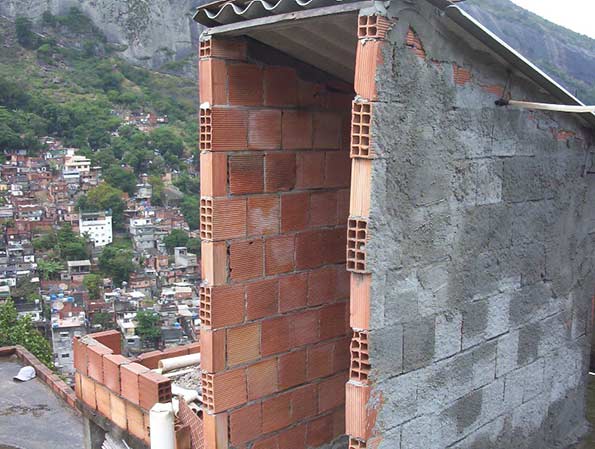
    Photo: Rocinha Favela, Rio de Janiero (by author)

  • Rahm Emanuel’s Chicago More Violent than Al Capone’s Chicago and the Old West

    Since Rahm Emanuel entered the political scene years ago, he’s been a master at manipulating the press to his benefit. A pliant media has largely gone along with whatever talking point Emanuel desired. Lately, some of the media has begun to put the spotlight on violent Chicago with its rather high murder rate. Banning or restricting handguns has not been very successful in combatting violence in Chicago.  The website Big Government reports the bloody details:

    After Chicago recorded a terrible homicide total of 53 in August, September wasn’t much better for Rahm’s "world class" city. The city suffered 41 homicides, 30 of which resulted from 184 total shootings

    September brings more bad news for Chicago residents. While Mayor Rahm Emanuel, Police Superintendent Garry McCarthy, and the Chicago media have continued to hammer the point that the "crime rate is down," and "murder is down," as of September 22, the homicide total for 2013 now exceeds the rate up to the same date in 2011 by two percent at 350, according to the Chicago Police Crime Data Portal.

    How does today’s Chicago hold up at the violent memory of Al Capone’s Chicago of the 1920s? Not very well.  WLS-TV investigated the data and the evidence is rather stunning report in February:

    Let’s compare two months: January 1929, leading up to the St. Valentine’s Day Massacre, and last month, January 2013. Forty-two people were killed in Chicago last month, the most in January since 2002, and far worse than the city’s most notorious crime era at the end of the Roaring Twenties.

    Even though the image of Chicago, perpetuated by Hollywood over the years, was that mobsters routinely mowed down people on the streets, the crime stats tell us that we were safer under Capone than Emmanuel. In January 1929 there were 26 killings. Forty-two people were killed in Chicago last month, the most in January since 2002.

    Even though the image of Chicago, perpetuated by Hollywood over the years, was that mobsters routinely mowed down people on the streets, the crime stats tell a different story. The figures from January 2013 are significantly higher than the January of Al Capone’s most famous year.

    It’s not just the Capone era violence that doesn’t hold up to scrutiny. Constantly we hear from the media and advocates of gun control that we don’t want things to become “the Wild West”. In the last several years, historians have begun to look at this long time legend that was promoted by Hollywood movies.  As Ryan McMaken explains:

    Historian Richard Shenkman largely attributes this to the legacy of those reliably-violent Western films. "Many more people have died in Hollywood Westerns than ever died on the real Frontier…[i]n the real Dodge City, for example, there were just five killings in 1878, the most homicidal year in the little town’s Frontier history: scarcely enough to sustain a typical two-hour movie."

    The old West with its minimal government and armed populace has never been too popular with progressives. But, the reality is it was never really violent according to Terry Anderson and Peter Hill. So, the murder rate of the Capone era and Dodge city of 1878 would be a major improvement for Mayor Rahm Emanuel.

    Note: This post was originally incorrectly attributed to Wendell Cox.

  • Central Valley Noir: California’s Changing Geography of Murder

    Phillip Marlowe, Joe Friday, pack your bags. Your talents are needed elsewhere. The City of Angels is starting to live up to its namesake but the same cannot be said of the state’s agricultural communities.

    Homicide has long been associated with the inner city, the worst crime suffered disproportionately by those who fare the worst. But the annual report on homicide released this month by the California Attorney General reveals that counties traditionally dominated by agriculture have the highest rates. Monterey, Merced, San Joaquin and Kern counties top the list where the largest city to be found is Bakersfield with under 350,000 residents. In fact, the counties that hold the state’s four largest cities, Los Angeles, San Jose, San Diego and San Francisco, are not even in the top ten. Alameda, Fresno and Contra Costa are the only arguably urban-dominated counties to be in the top ten and including Fresno on this list is a stretch.

    Why is this the case? The city of Salinas in Monterey County has a horrible gang problem as does Fresno. Although most criminologists do not link murder to a poor economy, the Central Valley has suffered tremendously in recent years, causing one observer to call it “California’s Detroit .” Los Angeles, which had the state’s second highest murder rate in 2001, saw a precipitous drop in violent crime in the last decade under LAPD Chief Bill Bratton. It’s 2010 murder rate (5.9 homicides per 100,000 residents) was nearly half of the rate in 2001 (11).

    Another eye-popper in the report was the incidence of homicide in the Hispanic community: Hispanics comprised nearly 45 percent of the state’s homicide victims and nearly 49 percent of those arrested for the crime (27 percent of victims were black and 18 percent were white for comparison).

    Other interesting highlights of the report:

    • The homicide rate went down for the fifth year in the row to a rate of 4.7 homicides per 100,000 residents – the lowest rate since 1966. Monterey and Merced both had rates of 10.
    • Thirty-six percent of all homicides were gang-related. Another thirty-six percent occurred as a result of an argument.
    • Whites who murder and are murdered tend to be older than other ethnic groups: 40 percent of white arrestees were age 40 or over, and 52 percent of white murder victims were over 40.
    • For cases in which the cause of murder is known, 71 percent of homicides involve a firearm.

  • It’s Not the Economy Stupid: Crime Still Dropping in L.A.

    Unemployment may be at 11.4% in LA County, pundits may mock the dysfunctional state budget system, but crime is still dropping from already historic lows in the City of Los Angeles.

    According to statistics released by the LAPD yesterday, homicides are down a third compared to the first half of last year with violent crime down 6% and assaults down 8%.

    It seems to be received wisdom – I’ll call it pop criminology – that a spike in criminal activity always accompanies an economic crisis and a drop in employment. The recent movie “Public Enemies” milks this association most explicitly, and it may have been more true in the Depression. Overall, however, this is not the case in the U.S. these days and the numbers for property crime in LA also show a decrease: auto thefts fell 17% and property crime 7% overall compared to Jan. 1-June 30, 2008.

    Obviously, the relationship between crime and economic hardship is more complex and requires critical thinking about a host of sociological factors to attempt to explain the causality of crime. But these numbers, and similar findings in other cities, should debunk the common assertion that economic downturns correlate with criminal resurgence.

    The forthcoming book, “When Brute Force Fails” by UCLA Professor Mark Kleiman is an important contribution to the subject which I look forward to reading. It should be read by pop criminologists and criminologists alike.

    For those of you who have incredible interest in the subject, the LA Times Homicide Blog is an interesting resource. Increasingly, strapped papers like the L.A. Times (which recently discontinued its California section, merging it into the main section) are putting content like this on-line.

  • LA is as Safe as 1956, Fact or Political Spin?

    In the weeks leading up to the tepid re-election of Los Angeles Mayor Antonio Villaraigosa last month, Bill Bratton, the statistics-driven chief of the Los Angeles Police Department, appeared on TV in a political advertisement paid for by the Villaraigosa campaign. He cited a seemingly amazing figure about this city’s livability.

    “Crime is down to levels of the 1950s,” said a confident-looking Bratton, who wore a black jacket and dark tie as he sat in an office conference room with downtown views.

    Flashing across the screen as he delivered the line with his heavy Boston accent was a Los Angeles Daily News headline from early 2008 borrowed by the Villaraigosa campaign to further emphasize the chief’s claim. It read in bold, black letters: “Safest streets since ’56.”

    On March 2, 24 hours before Election Day, Villaraigosa and Bratton teamed up again. This time, they appeared together at a morning press conference at the Police Academy in Elysian Park, where a statement from the Mayor’s Office made the rounds and trumpeted a “citywide crime-rate drop to the lowest level since 1956, the total number of homicides fall[ing] to a 38-year low. Gang homicides were down more than 24 percent in 2008.”

    The 1956 number was simply incredible — Los Angeles had time-warped back more than 50 years to the era of the Beat Generation, Elvis Presley and Howdy Doody, when serious crime was still so titillating that murder trials featuring unknown faces were followed like big celebrity events. It wasn’t the first time Bratton made the claim — the chief had also made the bold comparison in 2006 and again in 2008, lugging it out to warn voters that the low crime rate could be jeopardized if they didn’t pass the City Council’s telephone-utility-tax referendum, a phone tax that Villaraigosa and Bratton said was needed for the hiring of more cops.

    The press barely challenged the notion that Los Angeles has somehow been transported back five decades, and some instead focused on Bratton’s widely criticized political endorsement of the mayor — an unsettling and, many people believe, unethical move for a hired hand like a chief of police to engage in. One of the first to criticize Bratton’s claim was long-shot mayoral candidate Walter Moore. Moore couldn’t wrap his mind around the idea that Los Angeles is now as safe as the year that the L.A. Angels played baseball at a now-destroyed civic landmark — the beautiful old Wrigley Field in then-quiet, then-tidy South-Central Los Angeles.

    “I’ve talked to people who grew up here in the 1950s,” Moore argued to nodding heads during a February debate between several mayoral candidates, held in the hilly, suburbanlike community of Sunland-Tujunga (sans Villaraigosa). “And believe me, nobody in L.A. remembers crime in the 1950s being like it is today.”

    Moore isn’t the only one who finds it fishy, and just plain strange, to attempt to paint the city as similar to a time when 2.3 million residents lived in a far more suburban and far less dense metropolis, one in which residents often did not bother to lock their doors.

    “It’s a silly comparison,” Malcolm Klein, professor emeritus of sociology at USC and a gang-crime expert, says bluntly. An author of numerous books on gang crime, Klein says that when Bratton starts publicly comparing crime levels of the 1950s to today, “You’re not listening to a chief of police, you’re listening to a politician.”

    Read the extended version of this piece at LAWeekly.com
  • When The City You Love Starts To Scare You

    Colin McEnroe’s piece in the Hartford Courant is a frightening tale about the indifference of the police to crime when it becomes so commonplace. A two hour wait for a call about a burglary. “I live in Gotham City, but there’s no Batman.”