Tag: Energy

  • Oh, for those good days without fossil fuels!

    Maybe it’s time to start scaling back on our leisurely lifestyle to lower our greenhouse gas emissions and start reverting back to the pre-1900 horse and buggy days for our transportation systems, and the “snake oil” pitchmen for our healthcare system, and no medications, no cosmetics, no fertilizers, no computers nor IPhones, and shorter life spans. Our leisurely lifestyle has been driven by those “chemical ingredients” that are derived from the fossil fuels of oil, coal and natural gas that make all the “stuff” associated with our lifestyles, as they are NOT derived from nuclear electrical power, nor from intermittent electricity from solar panels and wind turbines.

    Looking back, the development of the internal combustion engine at the beginning of the 20th century, combined with the introduction of mass-produced affordable vehicles, got people moving on an unprecedented scale — and we haven’t looked back. Yes, it’s crude oil from which we have produced transportation fuels, but more importantly for civilization, it’s the related chemicals and by-products that have revolutionized our infrastructures and dramatically improved our quality of life and especially our leisurely lifestyle.

    The good news is that the chemicals and energy from fossil fuels have enabled us to cheaply build and run wondrous machines that give us the mobility to choose any particular climate and the ability to increase the livability of the climate, has made us safer and masters of climate from natural and man-made threats.

    The international aviation industry has been booming, with aviation fuel consumption more than double what it was 30 years ago in 1986. Worldwide, the consumption of jet fuels is astoundingly in excess of 225 MILLION gallons PER DAY to fly those huge aircrafts.

    Those huge cruise ships are consuming on average, 140-150 tons of fuel per day, which works out to roughly 30 to 50 gallons of fuel PER MILE !

    And by the way, it’s those two industries, the airlines and cruise ships, that were the catalyst to the hotel and theme park leisure industries that were not accessible in the horse and buggy times of our society.

    Complimentary to the international aviation and cruise industry are the billions of gallons of transportation fuels being consumed to get passengers back and forth from airports and the various ports, all in an effort to travel and see the beautiful cities and sites around the world, i.e., the tourism industry.

    The good news is that the fossil fuel industry has been the major contributor to industrialization, economic growth and the creation of jobs in all the infrastructure sectors and all the industries that are the basis of our lifestyle and economy, and technology continues to get ever better at minimizing and neutralizing the risks. The bad news is that we’re all getting older and sicker.

    Interestingly, a few side benefits associated with shorter life spans associated with those pre-1900 horse and buggy days would solve a few of our current financial problems:

    •   The unfunded liabilities of every city and state for those growing defined benefit retirement entitlement plans would be instantly solved by eliminating decades of retirement benefits per person.

    •   The single payer health care program to provide free health care for everyone may work be eliminating the exponential medical expenses associated with older folks.

    •   Social Security would never run out of funds by eliminating decades of payments per person.

    •   World population growth would be stagnated and relieve pressure on the world’s food supplies.

    Rather than reverting back to those good-old emission free days without fossil fuels when lives were dirty, smelly, difficult – and short, we should continue to efficiently utilize the elements from crude oil, coal, and natural gas that have provided all the “stuff” in our lifestyle, to improve the lifestyles of all those on this planet! In addition, we should also be augmenting electricity from intermittent renewables to operate all of our ”stuff” and gradually reduce the burning of our crude oil and coal.

    Ronald Stein is founder of PTS Staffing Solutions, a technical staffing agency headquartered in Irvine.

    Photo: Aero Icarus from Zürich, Switzerland (570dc) [CC BY-SA 2.0], via Wikimedia Commons

  • California’s Descent to Socialism

    California is widely celebrated as the fount of technical, cultural and political innovation. Now we seem primed to outdo even ourselves, creating a new kind of socialism that, in the end, more resembles feudalism than social democracy.

    The new consensus is being pushed by, among others, hedge-fund-billionaire-turned-green-patriarch Tom Steyer. The financier now insists that, to reverse our worsening inequality, we must double down on environmental and land-use regulation, and make up for it by boosting subsidies for the struggling poor and middle class. This new progressive synthesis promises not upward mobility and independence, but rather the prospect of turning most Californians into either tax slaves or dependent serfs.

    California’s progressive regime of severe land-use controls has helped to make the state among the most unaffordable in the nation, driving homeownership rates to the lowest levels since the 1940s. It has also spurred a steady hegira of middle-aged, middle-class families — the kind of tax-burdened people Gov. Jerry Brown now denounces as “freeloaders” — from the state. They may have access to smartphones and virtual reality, but the increasingly propertyless masses seem destined to live in the kind of cramped conditions that their parents and grandparents had escaped decades earlier.

    A green people’s republic?

    There is some irony in a new kind of socialism blessed by some of the world’s richest people. The new policy framework is driven, in large part, by a desire to assume world leadership on climate-related issues. The biggest losers will be manufacturing, energy and homebuilding workers, who will see their jobs headed to other states and countries.

    Under the new socialism, expect more controls over the agribusiness sector, notably the cattle industry, California’s original boom industry, which will be punished for its cows’ flatulence. Limits on building in the periphery of cities also threaten future growth in construction employment, once the new regulations are fully in place.

    Sadly, these steps don’t actually do anything for the climate, given the state’s already low carbon footprint and the fact that the people and firms driven out of the state tend to simply expand their carbon footprints elsewhere in their new homes. But effectiveness is not the motivation here. Instead, “combating climate change” has become an opportunity for Brown, Steyer and the Sacramento bureaucracy to perform a passion play, where they preen as saviors of the planet, with the unlikable President Donald Trump playing his role as the devil incarnate. In following with this line of reasoning, Bay Area officials and environmental activists are even proposing a campaign to promote meatless meals. It’s Gaia meets Lent.

    Read the entire piece at The Orange County Register.

    Joel Kotkin is executive editor of NewGeography.com. He is the Roger Hobbs Distinguished Fellow in Urban Studies at Chapman University and executive director of the Houston-based Center for Opportunity Urbanism. His newest book is The Human City: Urbanism for the rest of us. He is also author of The New Class ConflictThe City: A Global History, and The Next Hundred Million: America in 2050. He lives in Orange County, CA.

    Photo by Fortune Live Media, via Flickr, using CC License.

  • California: The Republic of Climate

    To some progressives, California’s huge endorsement for the losing side for president reflects our state’s moral superiority. Some even embrace the notion that California should secede so that we don’t have to associate with the “deplorables” who tilted less enlightened places to President-elect Donald Trump. One can imagine our political leaders even inviting President Barack Obama, who reportedly now plans to move to our state, to serve as the California Republic’s first chief executive.

    As a standalone country, California could accelerate its ongoing emergence as what could be called “the Republic of Climate.” This would be true in two ways. Dominated by climate concerns, California’s political leaders will produce policies that discourage blue-collar growth and keep energy and housing prices high. This is ideal for the state’s wealthier, mostly white, coastal ruling classes. Yet, at the same time, the California gentry can enjoy what, for the most part, remains a temperate climate. Due to our open borders policies, they can also enjoy an inexhaustible supply of cheap service workers.

    Of course, most Californians, particularly in the interior, will not do so well. They will continue to experience a climate of declining social mobility due to rising costs, and businesses, particularly those employing blue-collar and middle-income workers, will continue to flee to more hospitable, if less idyllic, climes.

    California in the Trump era

    Barring a rush to independence, Californians now must adapt to a new regime in Washington that does not owe anything to the state, much less its policy agenda. Under the new regime, our high tax rates and ever-intensifying regulatory regime will become even more distinct from national norms.

    President Obama saw California’s regulatory program, particularly its obsession with climate change, as a role model leading the rest of the nation — and even the world. Trump’s victory turns this amicable situation on its head. California now must compete with other states, which can only salivate at the growing gap in costs.

    At the same time, foreign competitors, such as the Chinese, courted by Gov. Jerry Brown and others to follow its climate agenda, will be more than happy to take energy-dependent business off our hands. They will make gestures to impress what Vladimir Lenin labeled “useful idiots” in our ruling circles, but will continue to add coal-fired plants to power their job-sapping export industries.

    Read the entire piece at The Orange County Register.

    Joel Kotkin is executive editor of NewGeography.com. He is the Roger Hobbs Distinguished Fellow in Urban Studies at Chapman University and executive director of the Houston-based Center for Opportunity Urbanism. His newest book, The Human City: Urbanism for the rest of us, was published in April by Agate. He is also author of The New Class ConflictThe City: A Global History, and The Next Hundred Million: America in 2050. He lives in Orange County, CA.

    Photo: By User “Neon Tommy” (https://www.flickr.com/photos/neontommy/8117052872) [CC BY-SA 2.0], via Wikimedia Commons

  • Trump and California’s Economy

    Defenders of California’s status-quo claim to be proud of California’s economic growth and worry about what Trump will do to that growth. If you are so impolite as to mention that this has been California’s slowest recovery in 70 years, as the following chart shows, you will be told that slow growth is good. It avoids the excesses of previous business cycles.

    That’s nonsense. Slow growth is anti-poor and anti-minority. Here’s a simple way to analyze economic policy: Ask how the policy changes the probability of a young person finding a job. If the policy increases their chances, it’s good policy. If it decreases the probability, it’s bad policy.

    I go farther than that. To me, deliberately enacting a policy that reduces a young person’s prospects is immoral.

    California, and the nation, have lots of policies that reduce young people’s job prospects. So, there are lots of opportunities to increase economic growth. Certainly, it’s possible to present a set of policy proposals that would increase California’s economic growth.

    Evaluating Trump’s economic plan is difficult, though. So far, it’s a mixed bag. It has policies that would increase economic growth. It also has some that would decrease economic growth. I think the best way to evaluate the impact is to look at his major proposals for their growth impact and probability of becoming law.

    Trump has promised to reduce American business’s regulatory burden. That would reduce costs, encourage domestic production and jobs, and provide a strong economic boost. Some of that overhead was created by executive action and can be reversed by executive action. The probability of reversing those regulations is high, as are the economic benefits.

    He’s also promised to eliminate or “fix” Dodd-Frank and the Affordable Healthcare Act. Exactly what he intends to do, fix or eliminate, depends on the tweet of the day. It’s also not clear what fix means. Still, any real change will face significant hurdles, even with a Republican controlled Congress. To be conservative, we need to assume that he will be unsuccessful in his attempts to significantly change these laws. If he does, and it’s done in a way that reduces costs, it will be a happy plus.

    Then there is his immigration policy, if you can figure out what it is. He’s been all over the map, from shipping out all undocumented residents to only shipping out the criminals. Of course, if he is able, as some fear, to move millions of our workers, the economic impact would be seriously negative.

    Realistically, the most he is likely to accomplish is exporting criminals and slowing immigration. The numbers of undocumented criminals is small enough to have no measurable impact on the economy. Decreasing immigration tends to slow economic growth, but it may reduce inequality a bit by reducing competition faced by our low-productivity workers. Overall, Trump’s immigration policies will likely have modest negative economic impacts.

    As in all things Trump, his trade proposals are inconsistent and vague. One thing has been consistent. Trump wants to reduce trade. We can only hope that he’s unsuccessful. The economic impacts of reducing trade would be large and negative. Presumably, Congress will effectively resist his most egregious proposals.

    Reducing trade would particularly hurt California’s economy, as a large percentage of what the United States exports and imports goes through California’s ports, which are a significant portion of the state’s limited remaining industrial assets.

    Taxes are one area of Trump policy clarity. He wants to reduce corporate taxes and reduce the tax impediments to repatriating foreign corporate earnings. By themselves, these would provide an economic stimulus. Repatriating foreign earnings has no obvious downside. By contrast, without some action somewhere else, reducing corporate taxes could increase the severity of our already severe budget challenges. Eliminating deductions, as proposed, would lessen the budget impacts, as would taxing repatriated earnings at the suggested 10 percent rate. These, combined with increased economic activity, potentially brings the long-run budget impact to near zero. Supply-siders would argue that the package would reduce deficits. That’s probably a stretch, although the combination of regulatory reform and tax reform could very well reduce the deficit.

    Trump proposes a stimulus package that appears to be another public capital spending spree. This would add to our budget challenge, but it’s far worse than cutting taxes to businesses. Cutting taxes at least has the benefit of generating new economic activity to offset some of the budget impact. Public capital spending at the national level is non-stimulative and inefficient. Given the budget impacts, zero economic impact is the best we can hope for.

    Some California leaders worry that Trump will retaliate economically for California giving Hillary Clinton a popular-vote victory. I don’t believe that the presidency has enough power for a vindictive new president to exact revenge by economically punishing states that voted for his opponent. If he does, the presidency is way too powerful.

    Overall, it’s likely that Trump’s economic impacts will be a small positive, but with an increase in an already too-large budget deficit. California’s impact could be smaller, or even negative, depending on Trump’s success reducing trade.

    Whatever Trump’s impacts on the national economy, they are likely to be far less for California, as his program will be swamped by California’s own unilateral deindustrialization. While the rest of the nation will be enacting a program intended to be pro-business and pro-job, California is firmly embarked on an agenda that promises to be anti-business and anti-job, with increased regulation and costs for businesses and consumers.

    Examples of California’s anti-business agenda are easy to come by. Governor Brown has recently asked the Federal Government to ban all offshore oil and gas drilling off of California. In the most recent election, Californians renewed their commitment to environmental purity, embracing carbon emissions targets 40 percent below 1990 levels by 2030. Nothing is beyond the reach of California’s environmentally devout. They’ve already regulated cow flatulence, which could lead to backpacks and plumbing to collect cow gas. More likely, it will lead to fewer cows in California, but more in other places and no change in global bovine emissions.

    While it’s entertaining to speculate what California regulates after cow flatulence, there are serious consequences to the state’s regulatory enthusiasm. Unless the rest of the country embraces California’s agenda, very unlikely under a Trump administration, its economy and the nation’s will eventually diverge, even with California’s location, climate, and tech advantages. This will lead to slower economic growth and increased migration out of the Golden State.

    Bill Watkins is a professor at California Lutheran University and runs the Center for Economic Research and Forecasting, which can be found at clucerf.org.

    Photo: Wendell, Flickr

  • The Emergence of Texas Urbanism; The Triangle Takes Off

    This essay is part of a new report from the Center for Opportunity Urbanism titled "The Texas Way of Urbanism". Download the entire report here.

    Throughout the history of the United States, much of the nation’s economic vitality can be traced to specific regions and their mastery of the productive sectors which propelled the country forward. Today we see this most evident in the remarkable emergence of the “Texas Triangle” encompassing Houston, Dallas-Ft. Worth, and Austin-San Antonio.

    The role of metropolitan regions reflects a steady theme of shifting economic power throughout American urban history. The early stages of commercial growth and then the first wave of industrial innovation established the economic strength of the New York-Connecticut-Massachusetts region; the global roles of New York City and Boston owe much to this early start, in part due to the talent networks and capital that clustered in these cities.

    Heavy industry, the next phase of industrial growth — autos, steel, and appliances — blossomed in the early Twentieth Century, transforming metros from Cleveland to Chicago into global economic powers. These areas provided the country much of the wherewithal to win the Second World War. Over the last 75 years, technology breakthroughs and Asia-Pacific trade relationships have steadily accelerated the importance of the extended West Coast region from Seattle to San Diego.

    More recent has been the rise of other regions, many which were once backwaters. This includes Miami, with its strong ties to the Caribbean and South America; the Southern belt of cities reaching in an arc from Charlotte and Raleigh to Atlanta and Nashville. Then there’s the rising Intermountain West, centered largely in the metros of Denver, Salt Lake City and Phoenix.

    But no place has seen more dramatic and steady economic and demographic growth than the Texas Triangle, formed by the Dallas-Fort Worth metro at its northern point in North Texas; the Houston metro at its southeastern edge on the Gulf Coast; and Austin-San Antonio at its western tip in Central Texas.

    The growth of these areas has transformed Texas from a largely agricultural and commodities-producing state into a highly urbanized and economically sophisticated place. Together the metropolitan areas of the Texas Triangle have a population of more than 18 million residents. The Texas Triangle metros together account for more than 66% of the population of Texas and 77% of the GDP of the nation’s second largest state.

    This emergence is now globally acknowledged. In terms of economic strength, each of the Texas Triangle metros ranked among the top six strongest urban areas in the nation in a post-recession analysis by the Praxis group and their economic output together would position the Texas Triangle as the fifth strongest regional economy in the U.S. in a framework created by metropolitan scholar Richard Florida. The fact that these measurements use a variety of factors suggests the powerful and pervasive nature of the Texas urban ascendency.

    One way to look at the importance of the Texas Triangle is to examine the vital and often quite unique economic contributions which each metropolitan area contributes to the nation’s well-being.

    • Houston is the acknowledged energy capital of the world with its complex of energy headquarters, financing institutions, research centers, and petroleum processing and transportation facilities. Its medical center houses more clinical institutions and life sciences research facilities than any other medical complex in the world.

    • Dallas-Fort Worth is an established financial center, telecommunications pioneer, and its two airports are the hubs of flights connecting the Southwestern U.S. to the nation and to the world. It has become a favored location for corporate expansions and relocations for both domestic and foreign companies.

    • Austin and San Antonio are connected by 75 miles of continuous urbanization, including the vital region around San Marcos and a string of the fastest growing small cities in the nation. Austin is home to world-class companies, particularly in technology, the University of Texas, and also is home to the government of the nation’s second largest state. San Antonio is home to the nation’s second largest concentration of cybersecurity companies, to three major Armed Forces commands, to an international automotive manufacturing hub centered on Toyota, and to the most visited destinations in the state, the Alamo and the Riverwalk.

    Although not as established as a global center as the metropolitan networks on the East and West coasts, the Texas Triangle now occupies an increasingly important place among the world’s commercial centers. There are now 53 Fortune 500 firms headquartered in the Triangle metros, including American Airlines, AT&T, and Exxon Mobil in Dallas-Fort Worth; USAA and Valero, and Whole Foods in San Antonio and Austin; and Conoco-Phillips and Halliburton in Houston. Global headquarters, such as Occidental Petroleum, and national operational headquarters, such as those of Toyota USA and Mitsubishi Heavy Industries, underscore that the global role of the Texas Triangle is ascendant.

    The Texas Triangle is also home to a concentration of high-quality higher education. Nationally-ranked research institutions such as the University of Texas at Austin and Rice University in Houston are joined by such major public institutions as the University of Houston; the University of Texas campuses at San Antonio, Dallas, and Arlington; and the Texas A&M campus in San Antonio. Excellent private institutions include Southern Methodist University in Dallas, Texas Christian University in Fort Worth, and Trinity University and Incarnate Word University in San Antonio. Within the geographic expense of the Texas Triangle are such powerhouses as Texas A&M University in College Station and Baylor University in Waco.

    The Texas Triangle is connected to the commercial centers of the globe through its impressive transportation assets. The Port of Houston is the second largest port by volume of tonnage in the U.S. The state boosts major airline hubs for American Airlines at DFW Airport, for United Airlines at George Bush Houston International, and for Southwest Airlines at Love Field in Dallas, as well as extensive international airline connections from Austin and San Antonio. Major cargo volumes flow on the state’s highway grid, most notably on the NAFTA Highway, IH-35, which delineates the western spine of the Texas Triangle and expedites the greatest volume of international freight from any inland port to markets across the nation.

    This economic ascendency owes much to pro – business Texas policies, largely embraced by both major political parties, that stress job creation and wage growth as the best strategies for continued and broadened prosperity. Investments in roads, water, power, broadband, ports and essential public facilities, such as higher education campuses, remain priorities in state and municipal budgets.

    But what really makes the Triangle grow is its people, animated by the spirit of new opportunity luring work-ready in-migrants from other states and ambitious immigrants from around the world. Texas attracts investors, entrepreneurs, researchers, inventors, and workers who recognize a state committed to reducing barriers to economic success and to creating the financial, educational, and physical conditions for growth and upward mobility.

    That combination of the policy regime, the physical facilities, and the human energies has created an economic juggernaut now claiming its place among the great commercial networks of the world. The nation can look to the Texas Triangle for future breakthroughs in innovative products and creative services. But beyond that the world can look to the Texas Triangle for examples of cities that combine a passion for growth with a determination to improve the lives of people.

    Henry Cisneros is Chairman of City View companies, which have invested in and built more than 90 urban residential projects since 2000 in 13 states. Mr. Cisneros is also Chairman of the Executive Committee of Siebert Cisneros Shank, one of the nation’s most successful minority-owned public finance and capital markets firms, having participated in more than $2.5 trillion in municipal and public authority issuances and corporate transactions. Mr. Cisneros was Mayor of San Antonio for four terms and was Secretary of the U.S. Department of Housing and Urban Development in President Clinton’s Cabinet from 1993-97. He is a corporate board member of Univision Communications and La Quinta Holdings and is Vice Chairman of Habitat for Humanity International and a board member of the Bipartisan Policy Center in Washington D.C.

    Photo: NASA [Public domain], via Wikimedia Commons

  • Five Ideas to Make America Greater

    Donald Trump’s presidential campaign was based on the notion that he could “Make America Great Again.” But beyond the rhetoric — sometimes lurching into demagoguery — the newly elected president comes to office, as one commentator suggests, “the least policy-savvy president in history.”

    To succeed, Trump must adopt innovative policies that transcend traditional right-left divides. He needs to find ways to help his heavily white, working-class base while expanding his appeal to minorities, millennials and educated people who are now largely horrified by his ascendency.

    In the short run, his biggest problem may lie with his own Republican Party establishment, which, rather than “drain the swamp,” would simply like to create one of its own. The looming presence of corporate lobbyists, swarming around the administration like hungry flies, is not encouraging at all, nor are GOP congressional plans to re-establish “earmarks.”

    The key lies not in empowering a different set of K Street parasites, but rather in reversing income stagnation. If he cannot, his triumph may prove to be no more consequential than an absurdist, Latin American-style telenovela.

    A flatter, fairer tax

    The basic instinct among many Republicans tends toward reducing taxes on their richest donors and making life easier for the ultrarich, including some on Trump’s economic team. Trump’s imperative should, instead, be to make the tax system fairer for the middle and working classes. One way would be to make a graduated flat tax that would mean that the rich, who make most of their money from investments, pay the same rate for capital gains as the rest of us do for income.

    Democrats will, no doubt, still charge Trump with being “unfair,” but, as Ronald Reagan proved 20 years ago, Americans support incentives for work if they don’t unfairly tilt conditions to the ultrarich. Main Street business owners, the most hostile constituency to the Obama administration’s policies, pay taxes based on their income and can’t manipulate the system like Apple, Google, Wall Streeters or, for that matter, real estate developers like Trump himself.

    A middle ground for immigration

    Opposition to illegal immigration helped drive the Trump campaign early on, but, outside of the GOP base, there is little support for a mass roundup of the undocumented. The vast majority of Americans, over 70 percent, also oppose “open borders.” After all, even President Obama evicted 2 million people during his two terms in office.

    Trump also can begin reordering our immigration policies toward skilled workers who are interested in becoming citizens. At the same time, Trump could score points by undermining the H1-B visa program, which allows Silicon Valley firms, along with corporations like Disney and Southern California Edison, to lay off American workers and replace them with temporary indentured servants.

    Read the entire piece at The Orange County Register.

    Joel Kotkin is executive editor of NewGeography.com. He is the Roger Hobbs Distinguished Fellow in Urban Studies at Chapman University and executive director of the Houston-based Center for Opportunity Urbanism. His newest book, The Human City: Urbanism for the rest of us, will be published in April by Agate. He is also author of The New Class ConflictThe City: A Global History, and The Next Hundred Million: America in 2050. He lives in Orange County, CA.

    Photo: Gage Skidmore from Peoria, AZ, United States of America (Make America Great Again hat) [CC BY-SA 2.0], via Wikimedia Commons

  • Unsustainable solutions in the name of sustainability

    The other day when I was riding my bike in Minneapolis crossing I-94 near Riverside I encountered a small townhome project built during the first (failed) green era under the Carter administration. It was built to showcase the future. One thing I’ve learned over the years building my own green homes is to not listen blindly to the experts who parrot others’ ideas without thinking of the ramifications.

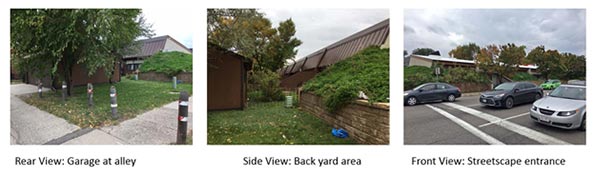
    The world’s first solar and earth-berm grass-roof townhome projects look like this today:

    image of townhome

    The original townhomes were built with earth covered roofs, with south facing solar panels for heating, and stored the heat collected over a long period of time in a room full of boulders. In 1983, I also owned an earth-berm solar heated home overlooking a lake in another part of town. Back then we thought, as the world freezes over (no global warming at that time), we would be nice and toasty in our ‘energy-independent’ homes powered by the sun itself. I went even further with a 10kW Bergey Wind Generator on a 100′ tall tower. Heated by the sun and powered by the wind.

    As you see in the above pictures, this experiment, which had the University of Minnesota involved (from what I remember), did not age well, nor did it work – at all! Gone are the solar panels that used to collect the heat positioned along the bare brown steel roof panels, and gone is grass roof that leaked. Banished is the room full of boulders to store the heat, which got so hot often windows needed to be opened to let in cold winter air, a problem my own solar home had also.

    In 1983, my 4,000 square foot lake front solar home cost $120,000 and after tax credits, my Wind Generator cost $12,000. These smaller townhome units cost $80,000 at the time. One of the original residents who stayed over the decades experienced failed systems and lawsuits. They eventually sold their home – for $80,000! Quite the investment these fancy schmancy trendy homes. A Nigerian investment scheme via an E-Mail might have been less risky. You would think the first home owners would have been the architects and professors who were behind this project – but they themselves didn’t buy in, so there’s an indication that maybe the idea was not so terrific. This is the lesson I’ve learned, never take advice from anyone who is not willing to personally invest and take the same risk as they suggest to others in a new concept.

    The Carter era was a troubled one, with energy widely predicted to be running out, and home mortgage rates as high as 18%. It’s hard to imagine there was any new housing being built, but some were. The initial residents of these townhomes (including myself) believed we were the smart ones, preparing for the energy costs skyrocketing and never having to worry. Hell could freeze over – but we wouldn’t.

    That was then, but how does this apply to now, especially with an election just days away?

    Hillary Clinton was promising half a billion solar panels on rooftops. OK, now picture the above bare rooftops – that’s how the roofs will look when the lifespan of those half billion heavily subsidized solar panels reach the end of their usefulness – in two decades. Where do you think most solar panels are made today? If you answered China, you deserve a star! And if a roof needs repair or replacement prior to the end of the panels’ lifespan, will the government subsidize the extra cost of repairs? Who will pay for cutting down the mature trees along the streets so that the sun can reach these panels? Oh, wait, you are supposed to keep those mature, beautiful, and value increasing shade trees? My bad. You think Obama Care was a terrible idea… just wait for the Hillary program, and the social engineering sure to follow, and sure to fail.

    Trump? I imagine he’d be politically incorrect of course, calling those solar townhomes: ugly, hideously, awful useless, fat, blemished, blight… only unlike comments about women, he’d have a lot who would agree. I don’t know what a Trump administration would look like, but I’m pretty confident that it would not involve social engineering, nor have subsidies go to China or Mexico. I hope that if he had a wind or solar agenda, the panels would be produced here with a fair and proper competition to award the vendors with the best price/performance ratio and make them bond a 20 or 30-year fund if the mechanisms wear prematurely.

    I hope that Trump or Clinton look into creating new programs that encourage private new developments or large scale redevelopment to have their own ground based solar gardens instead of the current wave of public investments of solar farms which have federal tax advantages but seem, at least to me, a questionable investment at best. They are even promoting these solar investments at the Best Buy store in Minnetonka, Minnesota with the promise of a consistent energy cost, but they require a 20-year commitment, even though the average home sells once every 6 years.

    These are heavily subsidized by you, the tax payers. Some of these solar fields are supposed to supply the power companies themselves, for example Ivanpah in the California desert which was to supply power for PG&E. Ivanpah was a solar system using mirrors heating up over 170,000 panels to create steam, but failed to deliver the power the ‘experts’ promised. Besides killing thousands of birds, the 1.5 billion dollars of your tax money was pretty much a really bad investment – oopsie! A more viable alternative is to create a more localized system as part of new developments or large scale redevelopments.

    Having a solar garden in a subdivision eliminates the problem with roof-top application, cleaning ice and snow off the panels, and streets could still have those shade trees. Each resident in the subdivision would have their share of the power and as technology improves, every resident would benefit from the latest technologies – be it solar, wind, or both. Such a Federal program does not exist – but should.

    Top photo by https://pixabay.com/en/users/Kenueone-2397379/ [CC0], via Wikimedia Commons

    Rick Harrison is President of Rick Harrison Site Design Studio and Neighborhood Innovations, LLC. He is author of Prefurbia: Reinventing The Suburbs From Disdainable To Sustainable and creator of LandMentor. His websites are rhsdplanning.com and LandMentor.com

  • Jerry Brown’s Insufferable Green Piety

    At the site of real and immediate tragedy, an old man comes, wielding not a sword to protect civilization from ghastly present threats but to preach the sanctity of California’s green religion. The Paris Climate Change Conference offers a moment of triumph for the 77-year-old Jerry Brown, the apogee of his odd public odyssey.

    Jerry Brown has always been essentially two people—one the calculating, Machiavellian politician, the other the dour former Jesuit who publically dismisses worldly pleasures for austere dogma. Like a modern-day Torquemada, he is warning the masses that if they fail to adhere in all ways of the new faith or face, as he suggested recently humanity’s “extinction.”

    Brown is important because many other green cheerleaders like Al Gore grate on the public, in part because of rampant greed and a penchant for unsupportablepredictions. In contrast, Brown presents, with some justification, the very model of enlightened leadership and smart management, certainly in comparison with the ideologues and public employee pawns who dominate his party, and the blatant wealthy hypocrites who rule the green universe.

    Increasingly, Brown has become the patron saint of climate change, while at the same time exposing the effort’s flaws and contradictions most clearly. Railing against the satanic greenhouse gases, Brown, one supposes unwittingly, seems unconcerned he is waging what amounts to a war against the state’s own middle and working classes. His intolerance of dissent—albeit less extreme than some—reflects the current trajectory of environmentalism, which increasingly seeks to silence and even criminalize those who dispute their analyses and prescriptions.

    Like the Spanish father of the Inquisition, Brown has it in for anyone who dissents from his “God is not mocked,” as he suggested recently, attacking critics of his policies as “falsifying the scientific record,” something climate change advocates have also been caught doing on more than one occasion. Brown dismisses allclimate skeptics, even those who admit some carbon-caused warming,  as “a well funded cult.”

    Like a religious adept, Brown shows his need to link everything to one sin—greenhouse gas emissions—to explain virtually everything from wildfires to the current drought on climate change, although with little support from scientists who study such things. As was common in the worst aspects of the medieval Catholic Church, one increasingly cannot dissent in any way from revealed doctrine without being essentially evil.

    Between Image and Reality

    In Paris, Brown hopes to present himself as the great green success story, leader of an economy that has thrived despite some of the world’s most draconian climate change measures. And he has something of a case since California, after suffering greatly in the recession, has finally recovered its lost jobs and has bolstered its critical role as the dominant technology power on the planet.

    For many progressives, California represents “a beacon of hope.” Its “comeback” has been dutifully noted and applauded by left-wing economist Paul Krugman, and Michael Kinsley and the Washington Post’s Chris Cilizza have even suggested that Brown should run for president—at the ripe age of 77.

    These fans miss a big part of the reality. Outsiders think of California as a prosperous place that mints billionaires, but overall the state’s economic recovery has done little for many, if not most, state residents. Even with the boom in Silicon Valley, roughly one in three Californians live check to check, the state hashigher rate of poverty than Mississippi, as well as one-third of the nation’s welfare recipients. Among the emerging Latino majority, a prime Brown constituency, the state’s cost-adjusted poverty rate is more than 33 percent, compared to just 22.7 percent in Texas, a state often derided as unenlightened and cruel.

    During this “boom,” most California blue-collar workers in farming, fishing, and forestry have experienced actual average wage decreases. Employment in fields such as construction and manufacturing remain well below their 2007 levels. Much of this has to do with environmental regulation, which has raised energy costs almost twice those of nearby competitors and also helped raise housing prices to an unsustainable level.

    Once the beacon of opportunity, California is becoming a graveyard of middle-class aspiration, particularly for the young. In a recent survey of states where “the middle class is dying,” based on earning trajectories for middle-income cohorts, Business Insider ranked California first, with shrinking middle-class earnings and the third-highest proportion of wealth concentrated in the top 20 percent.

    Most hurt, though, are the poor. California is home to a remarkable 77 of the country’s  297 most “economically challenged,” cities based on levels of poverty and employment, according to a recent USC study; altogether these cities have a population of more than 12 million. Some stressed cities exist cheek-to-jowl with the state’s uber-rich—Oakland, Los Angeles, as well as Coachella, near Palm Springs. Most others are in the poorer, more heavily Latino interior, places like Riverside, Stockton, and Vallejo. Journalists who come to California to praise the governor may think it’s still “California Dreamin’” but for all too many, particularly away from the coast (PDF), it’s more like The Grapes of Wrath.

    The Making of a Modern Medievalist

    Of course, there’s a long history of such bifurcated society, where people tend to stay in their class and the poor depend largely on handouts from their spiritual “betters.” It’s called feudalism.

    In many ways, Jerry Brown is a perfect medievalist—the son of a self-made man, a person who largely inherited his position. Without the legacy of his father, Edmund G. “Pat” Brown, a natural politician and arguably the greatest governor in the state’s history, it’s unlikely the shy, awkward, although unquestionably bright kid would have been elected the first time in his mid-thirties.

    Brown came to politics bathed not in the practicum of politics but in theology. As a seminarian, he imbibed the Jesuitical approach—highly intellectualized, hierarchical, and accepting of class distinctions. Although he occasionally dabbled in populist politics, particularly in his presidential runs, Brown’s achievement has been to undermine not just the Reaganite regime but also the pro-growth progressive structure left behind by his father and earlier California governors.

    Brown’s acuity has often been on target, as, for example, when he took on the encrusted bureaucracy at the University of California and inside state government. But Brown’s maverick approach also revealed a streak that reflected a harshness toward those who were weaker, including the poor. In his first term, Brown’s callous treatment of the mentally ill left 30,000 mental patients in worsening conditions in inadequate nursing facilities. As the Los Angeles director of mental health told me at the time, under Reagan there was “genuine concern for people,” while under Brown he didn’t “see much concern for people at all.”

    He came into office, recalled top aide Tom Quinn, “questioning the values of the Democratic Party” and rejecting the “build, build, build thing” of his father. Like the 15th century Florentine Catholic monk Girolamo Savonarola, he came to Sacramento, in part, to rid it of suberbia and luxuria. Most important, he did not restart the infrastructure building, most portentously for water storage, that marked his father’s regime; the severity of the drought and the awful condition of the state’s roads are, to some extent, his legacy.

    Brown’s initial politics were built around three principles—“serve the people, save the earth, and explore the universe.” Some, such as farmworkers, owe him much. But the biggest winners under Brown were the well-financed green lobby and public employee unions have become so powerful that that replaced the coalition of developers, farmers, and industrialists who had accepted, and often bankrolled, his father.

    In recent years, Brown, after being praised for his moderation in his first four years as second time governor, has become more “crotchety,” according to the Los Angeles Times’ George Skelton. He has insisted on funding his favorite project, the much maligned “bullet train,” even though many on the left, including Mother Jones, have identified it not as an environmental benefit but a colossal waste of time and money.

    In contrast, on most everything else, Brown leans toward austerity—he even reveals a fondness for the ration cards used during World War II. Yet surprisingly, Brown, the supposed ascetic, appears increasingly comfortable with his own wealth. He has speculated freely in Bay Area real estate and stocks, essentially creating a multimillion-dollar estate that, as the San Jose Mercury put it kindly, “belie [the] monastic image.” Recently he shocked his own green supporters by having a state agency perform a detailed analysis of the oil, gas, and mineralresources on his family’s 2,700-acre Northern California ranch, a service not readily available to other mere mortals.

    As for the poor left behind in California’s recovery, this, Brown insists, is not due to policy failure but because the state is an irresistible “magnet” for the masses.

    The High Priest of the Oligarchy

    Early on Brown cleverly cultivated the emerging tech oligarchy in Silicon Valley. This has created a new class of major donors who, along with the unions and Hollywood, have financed his political re-ascendency.

    The oligarchs seem kindred souls for Brown, with little patience for less advanced beings. He also knew that their success has allowed him to show economic gains without having to concede to the regulatory concerns of more traditional industries. In the new Silicon Valley, most of the “dirty work” is shoved off to other more benighted states, or abroad; regulatory overreach poses only limited problems. For his part, Brown sees the oligarchs as the state’s economic foundation. “We’ve got a few problems, we have lots of little burdens and regulations and taxes,” he said recently, “but smart people figure out how to make it.”

    Brown’s Bay Area connection is helped by the fact that the venture and tech firm oligarchy often share his climate concerns. He has further tightened this alliance by lavishing enormous subsidies for often dodgy, expensive renewable energy schemes backed by companies such as Google and by many among the venture capitalist elite.

    Ironically, none of Brown’s moves will, by themselves, have any demonstrable impact on climate. California is too small, too temperate, and, at this stage, too de-industrialized to make a difference. Indeed, as one recent study found, California could literally disappear tomorrow with virtually no effect on the climate. Perhaps less recognized, its efforts to reduce emissions have accounted for naught, since so much industry and so many people—some 2 million in the last decade—have taken their carbon footprint elsewhere, usually to places where climate and less stringent regulation allow for greater emissions. Some states, rather than embrace Brown’s formula and seeing an opportunity to score, have detached themselves from renewable mandates entirely.

    And now the world

    So why the dogged insistence on draconian policies? It’s very much for the same reason people take priestly vows, or why penitents whip themselves: moral posturing before the rest of the world and, for politicians, the prospect of attracting the adoring masses (or at least the media). President Obama looks to California policies for his future climate policies. On this issue Brown is the rock star, and will be in Paris, cool again after all these years.

    Brown’s green religion now has a most powerful ally, the leading Jesuit on the planet, Pope Francis. This alliance offers something of a religious redemption for Brown, a former seminarian who has rejected most traditional Catholic teachings on such things as gay marriage, abortion, population control, and, most recently,euthanasia.

    In Paris, Brown’s claims of economic infallibility should be questioned particularly among leaders of developing countries. Some 3 billion people suffer from pollution created by burning wood, coal, or dung. Some 4.3 million die annually from the resultant indoor pollution compared to 250,000 deaths that might be assigned to climate change by 2050. For many, fossil fuels represent a lifesaver today. To offer these people expensive and inefficient solar panels instead of basic necessities, as economist Bjorn Lonborg has suggested, represents nothing more than “inexcusable self-indulgence.”

    Some developing countries are making their intentions clear. Indian Prime Minister Narendra Modi has thrown out Greenpeace for agitating against coal mines in his energy-starved country. China, whose world-leading emissions are now almost twice those of the U.S., recently admitted to burning 17 percent more coal than previously estimated. No doubt they will happily wink and nod their assent to a vague green agreement while Western countries, following Brown, Obama, and the Pope, adopt ever stricter regulations. By the time we get to 2030, when China might begin reducing emissions, the West itself may be so weakenedeconomically that it won’t be able to question anything Beijing wants to do anyway.

    Russia and virtually the entire Middle East also are not likely to give up on fossil fuels, which is the only thing that makes the world pay attention to them. Rather than use our energy boom to create leverage against these autocracies, Brown and his confederates are pushing policies that consequently make them more influential, also allowing them to finance and arm terrorists, whether ISIS, al Qaeda, or theocratic Iran and their satraps.

    A decade from now, the futility and wasted economic potential of this posturing will be clear. What could have been accomplished, at least initially, by replacing coal with natural gas and the careful expansion of nuclear power, will instead lead to a lower quality of life for all but the rich in the West, with perhaps worse ill-effects elsewhere. But by then Brown will likely have faded from the scene, although he may manage to get his wife, former Gap attorney Ann Gust Brown, elected to succeed him.

    What will be Brown’s main legacy? A more environmentally pure but severely bifurcated California and, if he and his compatriots have their way, an accelerating decline of the Western world and arguably the stagnation of the entire world economy. But Brown and his crony capitalist and priestly friends will be happy. They may have messed up the world, but they will always have Paris.

    This piece first appeared at The Daily Beast.

    Joel Kotkin is executive editor of NewGeography.com and Roger Hobbs Distinguished Fellow in Urban Studies at Chapman University, and a member of the editorial board of the Orange County Register. He is also executive director of the Houston-based Center for Opportunity Urbanism. His newest book, The New Class Conflict is now available at Amazon and Telos Press. He is also author of The City: A Global History and The Next Hundred Million: America in 2050. He lives in Orange County, CA.

    Facebook photo by BigStockPhoto.com.

    Photo: Troy Holden

  • The Green Urbanization Myth

    Once a fringe idea, the notion of using technology to allow humanity to “decouple” from nature is winning new attention, as a central element of what the Breakthrough Institute calls “ecomodernism.” The origins of the decoupling idea can be found in 20th century science fiction visions of domed or underground, climate-controlled, recycling-based cities separated by forests or deserts. A version of decoupling was promoted in the 1960s and 1970s by the British science writer Nigel Calder in The Environment Game (1967) and the radical ecologist Paul Shepard in The Tender Carnivore and the Sacred Game (1973). More recent champions of decoupling include Martin Lewis, Jesse Ausubel, Stewart Brand, and Linus Blomqvist.  

    Proponents of decoupling point out correctly that the greatest threat to wilderness is not urban sprawl, but agricultural sprawl. The amount of the earth’s surface devoted to the unnatural, simplified ecosystems of agriculture—that is, farms and ranches—dwarfs the small amount consumed by cities, including low-density suburbs. Industrial, energy- and fertilizer-intensive agriculture has permitted us to grow far more food on far less land—with costs, to be sure, including water pollution from fertilizer runoff. Genetically modified crops will make it possible to shrink the footprint of global agriculture altogether, and if human beings ever derive most of their diet from laboratory-synthesized foods like in vitro meat and vegetables created from stem cells, most of today’s farmland can be freed for other uses.

    The decouplers are right to predict that technology will free up vast amounts of land for purposes other than farming. But many of them go wrong, I believe, when they assume that the decline of agricultural sprawl will be accompanied by the decline of urban sprawl, for two reasons. First, as societies become richer, more and more people choose low-density housing and can afford it. Second, whatever may be the case in other countries, in the United States, the private market for land—including retired farmland—ensures that little if any of the land freed by technology from agriculture will be turned into public wilderness preserves.

    One of the great urban legends of our time is the claim, endlessly repeated by urban gentry journalists, that Americans are tired of the suburbs and are moving back into the city in the search of walkable neighborhoods. The data disprove the claim. As Wendell Cox points out at Newgeography:

    But the core municipalities now contain such a small share of major metropolitan area population that the suburbs have continued to add population at about three times the numbers of the core municipalities…Indeed, if the respective 2010-2013 annual growth rates were to prevail for the next century,  the core municipalities would house only 28.0 percent of the major metropolitan area population in 2113 (up from 26.4 percent in 2013).           

    Thanks to decoupling, the low-density metro areas will probably become even bigger and even less dense. As farmland on the periphery of metro areas is retired from agriculture, much of it will be converted into cheap housing, low-rent office parks and inexpensive production facilities.

    The rise of robocars may accelerate metro area decentralization. Congestion will be reduced, and the greater safety of driverless cars may permit higher speeds on metro area beltways and cross-town freeways. Once taxi drivers are replaced by robot taxis, the cost of taxis will plummet and the greater convenience of point-to-point personal travel anywhere in a sprawling metro area will make rail-based mass transit obsolete except in places like airports and tourist-haven downtowns.  As in the past, most working-class families with children will probably prefer a combination of a longer commute with a bigger single-family house and yard to a shorter commute and life in a cramped apartment or condo. 

    Nor will most working-class and middle-class retirees move to walkable downtowns. They won’t be able to afford to. And robocars plus in-home medical technology will make it much easier for the elderly to age in place in car-based suburbs. 

    As great numbers of middle- and low-income Americans move to bigger, cheaper homes on the former farmland that rings expanding metro areas, they will be leap-frogged by the rich. Absent a reversal of today’s top-heavy income concentration, much of America’s wealth will continue to be concentrated in the hands of a few people. And when farmland is retired, thanks to GM crops, in vitro food, or other new land-sparing technologies, a lot of the former farm acreage will be bought by One Percenters and turned into rural retreats.

    The decouplers hope that retired farmland will be “rewilded” and transformed into nature parks that everyone can enjoy. But how realistic is this hope? At least in the United States, it is impossible to imagine federal or state governments buying more than a negligible portion of retired farmland and turning it into public parks. What is more likely, that most retired Midwestern farmland will be turned into rewilded public prairie preserves—or that it will be divided into the vast baronial estates of super-rich bankers, tech oligarchs, and trust-fund heirs and heiresses, who commute from their downtown skyscraper penthouses to their high-tech Downtown Abbeys?

    A certain amount of the former farm acreage owned by the plutocracy may be rewilded, with the encouragement of tax incentives like conservation easement laws. But rewilding on the scale imagined by some environmentalists is unlikely. For one thing, the former farmland will still be chopped up by fences, roads, power lines, and other structures. And all but the greatest recreational ranches will be too small to support self-sustaining populations of bison and other megafauna. Nor are voters likely to smile on the restoration of predators like wolves, coyotes, bears, and mountain lions, even if a few of eccentric rich landowners fancied the idea.

    And then there is the aesthetic factor. The biologist E.O. Wilson has suggested that, because we are descended from hominids who evolved on African savannahs, we naturally prefer vistas with grassy expanses to forests, deserts, and other biomes. Some evidence for this comes from the work of the Russian artists Komar and Melamid, who polled members of different nationalities and then painted the “Most Wanted Paintings” based on the results. In most countries, if they are to be believed, the favorite sofa painting shows a grassy landscape with a river and some woods in the background. 

    As Paul Shepard pointed out, the country-house landscape of 18th century Britain was anything but natural. The natural landscape of most of Britain, as of most of Western Europe, is dense forest. But the British rural upper class cleared the forests to create grassy vistas—the ancestors of the modern British and American suburban lawn. Shepard blamed this on the influence of Renaissance Italian landscape painting, which showed once-forested Mediterranean coast land that had been denuded by goats and sheep. But the Wilson theory may provide another explanation.

    Whether for cultural or instinctive reasons, the rich who buy up most of the land spared by technology may wish to keep open spaces, even if the area would naturally be forest. The late architect Philip Johnson waged a constant war on the New England forest in order to maintain grassy lawns over which to view his Glass House and other iconic buildings on his 47-acre New Canaan, Connecticut, estate. In prairie biomes, conversely, the rural rich are likely to plant some trees, to make the land conform to conventional notions of the scenic.   

    If the American rich are given a free hand to shape the former farm acreage they have bought, the most likely result will be a park-like landscape, with open vistas and clumps of trees—regardless of what the natural environment of the area would look like. The rewilding would be limited chiefly to small animals and birds, like raccoons and turkeys. No bison herds and no wolf packs. And as acreage was converted from farmland to One Percenter parkland, the already excessive deer population, freed from natural predators and rural American hunters alike, would swell even more. 

    The decouplers are right, I believe, to predict that advances in food production technology will free enormous amounts of former farmland for other uses. But very little of that land will be converted into the public wilderness preserves envisioned by Calder and Shepard and others. A minority of the former farmland will be converted into single-family housing on the edges of major metro areas. Most of the land retired from farming, instead of being spared for nature, will become rural estates for the plutocracy, surrounded by signs reading PRIVATE PROPERTY: KEEP OUT and overrun by starving deer.

    Michael Lind is the Policy Director of the Economic Growth Program at the New America Foundation in Washington, D.C., editor of New American Contract and its blogValue Added, and a columnist forSalon magazine. He is also the author of Land of Promise: An Economic History of the United States. Lind was a guest lecturer at Harvard Law School and has taught at Johns Hopkins and Virginia Tech. He has been an editor or staff writer at the New YorkerHarper’s Magazine, the New Republic and the National Interest.

    Image from BigStockPhoto.com

  • Gas Tax Still a Tax

    Governor Jerry Brown recently released a plan to find funds to fix California’s roads. Infrastructure funding is one of the essential roles of government, so it’s refreshing to hear that our otherwise dysfunctional state government is taking action on this front. But who will be paying for it? Those who use the roads most, that is, California’s drivers, who disproportionately tend to be members of the middle and working classes.

    The Brown plan has two main components: a $65 highway user fee, and a lifting of the gas tax by 6 cents per gallon. The rise of the California state gas tax from 66 cents to 72 cents and the imposition of an additional registration fee are the products of a fairly standard view on infrastructure funding. The underlying thought is that the people who use infrastructure should contribute to its maintenance. After all, this is how private enterprises and public utilities from the Washington State Ferries system to the Los Angeles Department of Water and Power stay afloat. Tolls and fees for road use are nothing new, so why should anybody be concerned with small increases in California’s fees, especially when the funds go to so crucial a cause as infrastructure repair?

    Because although these new costs may seem to be a pittance, for middle and working-class families every rise in the cost of living eats away at social mobility by reducing the amount of cash individuals can invest in homeownership, education, and other middle-class privileges

    The service-fee model of infrastructure maintenance is theoretically sound. But every policy comes with unintended consequences. In California, the cost of living is driving middle and working-class families to cheaper climes like Texas and Florida in droves every year.

    The blue regulate-and-tax model does have its uses. It’s important that there are reasonable regulations addressing every area of economic activity, and for certain public goods like vehicle and firearm registration, slight fees are sensible. But regulations have a way of cropping up frequently and never going away, even once they’ve become irrelevant. One regulation turns to four, four to twelve, and taxes and fees proliferate as well. What was once a fair and reasonable system devolves into a tangled web of incomprehensible rules and restrictions, veritably stifling growth, innovation, and freedom.

    That’s where the regulate-and-tax model of Governor Brown’s infrastructure funding plan is leading us. California drivers already face a plethora of rules and fees, and adding a gas tax and registration fee only complicates the system more. Whatever the benefits are for the state’s coffers, the results are disastrous for those who will be most affected.

    And it’s not as if the proposed new fees revolutionize California’s infrastructure in any way. The funding plan won’t reduce congestion or improve the flow of people, goods or ideas around the state. The American Interest reports on some important trends in transportation which the money-grubbing Brown plan largely ignores, including smarter cars and busses and ultimately autonomous vehicles.

    This funding plan is a short-term fix to repair crumbling infrastructure that was built decades ago. Were it something more visionary and transformative, like a series of test courses for driverless electric vehicles, perhaps the added weight on the middle class could be justified. But, like all blue policies, it is merely an attempt to repair a system that was built in another time, for another world. There’s nothing imaginative in it at all.

    There must be a better way.

    Most sensible political observers would agree that investment in infrastructure funding is one of the state’s most important responsibilities. It pays for itself in time, and the upfront cost is too high for the private sector to take on. The government is the only actor that can adequately plan for and fund infrastructure on a mass scale, and it should do it well.

    But to pay for the repair of infrastructure, we shouldn’t soak the very people whom that repair is meant to help — the masses of middle-class and working-class California drivers. While service fees are justifiable at times, there are some things, like convenient transportation and quality education, that the government should strive to provide as a workable starting point for upward mobility.

    The money has to come from somewhere. In the $168 million 2015 California state budget, only $12 million went to transportation and infrastructure development. And of the funds that went to other areas, especially the $50 million apiece going to K-12 Education and Health and Human Services, not all of the money the state spends is going into teaching children or healing illnesses. Public employee pensions make up an estimated 19% of the state’s budget, and while pensions are important for government workers, they don’t particularly benefit the broader economy or the masses of California’s population. They also tend to drive polities into bankruptcy, as the fates of Stockton, Mammoth Lakes, and San Bernardino demonstrate.

    California’s misaligned spending priorities are as titanic as those of the federal government. Funds ought to be redistributed to investments in infrastructure. More importantly, funding to other areas should be more efficient, with more money going directly to services the government is pledged to provide, so that existing taxation could be better dedicated to crucial public investments without soaking the middle and working classes.

    Budget reform is the most pressing issue California faces today. That’s why the issue of Governor Brown’s gas tax proposal is so important this year. Only under a reformed budget system can the state make investments in infrastructure, education, and innovation, and run them properly, to promote broad-based economic growth and social mobility. Slapping taxes on the lower classes is a cheap, easy way out of making the uncomfortable steps necessary to realign the state budget.

    Flickr photo by Pranav Bhatt of drivers in Los Angeles

    Luke Phillips is a student studying International Relations at the University of Southern California. He has written for the magazine The American Interest and is a research associate at the Center for Opportunity Urbanism.