Tag: Energy

  • EPA Joins the Green Building Party

    By Richard Reep

    Well into the last decade, green design and smart growth operated as two separate and distinct reform movements. Both were widely celebrated in media, academic and planning circles, seeing themselves as noble causes albeit underdogs in the struggle against the mighty capitalistic enterprise of real estate development. Starting in 2009, the frozen credit market has kept private development moribund, and these two movements are somewhat moot as development takes a cease-fire.

    Yet now the two movements appear to be joined at the hip, a move encouraged by a federal bureaucracy and an Administration that embraces both groups’ agenda. In the process, what was once seen as an alternative to conventional development appears to be well on the way to becoming federally-mandated regulatory policy. The EPA, DOT, and HUD recently signed a memorandum of understanding to start making policy around green design and smart growth, turning these choices into federal standards.

    The standard bearer for green building, LEED certification, is the U. S. Green Building Council’s definition of energy efficiency and green design. A reform-focused movement, LEED established criteria by which a building’s energy and water use could be measured against a baseline, and the USGBC awards credits to the building when energy efficiency measures are achieved. LEED increases a building’s construction cost but reduces the building’s life cycle cost – monthly electric bills – and real estate developers, who gain nothing from lower energy costs, were slow to become interested in this choice. LEED was the domain of owner-operators like governments, who have a vested interest in keeping their future costs as low as possible, and was adopted as a criterion for capital expenditures by the GSA as well as many cities and counties by the close of the last millennium.

    Smart growth’s official champion is the Congress of the New Urbanism, which offers a design style choice for real estate developers. Developers, being profit oriented, historically have been loathe to tinker with what sells, and thus only in a few areas has New Urbanism gained a foothold. At its best, new urbanism represents a choice for homeowners who prefer dense, mixed-use communities that resemble traditional American towns, accentuating walkability and reducing residents’ dependence upon the car. In this key feature, Smart Growth advocates lobbied the U. S. Green Building Council to create a special category of LEED for Neighborhoods.

    Both movements promised reform. Both movements increased cost. Neither program was particularly effective at penetrating the real estate development market as long as the investment community favored large, formula-driven, profit-oriented real estate developers, and innovation consisted of product cost-cutting. The cost premium associated with each movement left them largely the playthings of boutique, niche-oriented developers aspiring to nobility while protecting their bottom line.

    Changes afoot in the last several months, however, are combining these two movements into one powerful force that turns these laudable movements away from choice and towards a prescriptive, and ultimately restrictive policy. Beginning in 2006, the Environmental Protection Agency encouraged communities to build walkable, energy-efficient growth within their boundaries, rather than continue spreading out – a surprising focus for an agency created to reduce pollution. Little else happened until late 2009, when suddenly the EPA began linking Energy Star (a Department of Energy program) to New Urbanist values such as walkability and mixed-use development. The EPA, which regulates pollution, has suddenly moved front-and-center into regulating growth, as if it were another type of pollution.

    At the same time, the U. S. Green Building Council yielded to heavy lobbying by the New Urbanist movement to create a new criterion, LEED Neighborhood Development. A developer may now submit a new land plan for certification to this LEED standard, and “smart growth” is being codified and standardized into a checklist and formula to be measured against a baseline. Like LEED for New Construction, these standards will also increase the cost for the developer desiring to build to these standards.

    Investors and developers may, on the surface, appear to have lost these dramatic battles. In the bigger picture, however, while the economy retools itself, it is not unusual to see regulation increase. If anyone remembers the S&L crisis of 1990-92, one of the biggest regulatory acts to affect real estate in modern times hit developers right between the eyes: The Americans with Disabilities Act. This reform removed physical barriers for all citizens with disabilities, but as a cost burden to developers it pales in comparison to the premiums that will be paid to meet the smart/green regulations currently being formulated by the Feds.

    Banks – hardly institutions with widely popular standing – stand to gain the most, because a developer who borrowed $10 million for a project in 2006 will probably need to borrow $11 or $12 million for the same project by the time bankers get around to discussing credit again. Developers also stand to gain, because as the cost goes up, so does the price. Coming out of the Millenial Depression, new construction will be faced with higher energy performance requirements, the higher costs associated with urban development, and a longer regulatory review process than ever before seen.

    The losers, of course, will be the vast majority of Americans who work hard and earn modest incomes. New home prices will increase, and renters will have to pay their landlords more to cover the increased costs of politically sanctioned development. While the affluent will be able to enjoy the benefits of a green, urbane lifestyle, the grocery store cashiers, dry cleaner clerks, housekeepers and artists who make up so much of our community will be forced out by the sheer cost of this movement – out to the suburbs, out to the exurbs, and out to the trailer parks beyond them. No green for you: your commute time just got much longer.

    Technology, of course, will eventually decrease in price and become more affordable; like VCRs and DVD players, the early adopters pay the freight until the appliance becomes a commodity. The same is likely true for exotic solutions like photovoltaics or low-voltage lighting as the marketplace sorts out what works from what doesn’t. So the impetus to go green will impose a crushing cost burden on new construction, which may gradually, over time, be absorbed into the mix.

    An affordable starter home in a low-cost subdivision, however, may be as doomed as leaded gasoline, and the American Dream will likely shift away from the landowner-based society once vaunted by Thomas Jefferson. The walkable lifestyle, now being exercised by free will, is well on its way to becoming federal government policy in a grand effort to incorporate reform and regulation into our lives from above.

    Whether or not this achieves the EPA’s mission to reduce pollution will only be discovered in the decades ahead as we incorporate the next hundred million Americans into the urban boundaries we have already set upon the land. It may be entirely possible to reach some of these goals without prescriptive overly burdensome regulation, yet this may only occur if political realities begin to reign in the current regulatory onslaught.

    Richard Reep is an Architect and artist living in Winter Park, Florida. His practice has centered around hospitality-driven mixed use, and has contributed in various capacities to urban mixed-use projects, both nationally and internationally, for the last 25 years.

    Photo by eng1ne

  • Freeing Energy Policy From The Climate Change Debate

    The 20-year effort by environmentalists to establish climate science as the primary basis for far-reaching action to decarbonize the global energy economy today lies in ruins. Backlash in reaction to “Climategate” and recent controversies involving the Intergovernmental Panel on Climate Change (IPCC)’s 2007 assessment report are but the latest evidence that such efforts have evidently failed.

    While the urge to blame fossil-fuel-funded skeptics for this recent bad turn of events has proven irresistible for most environmental leaders and pundits, forward-looking greens wishing to ascertain what might be salvaged from the wreckage would be well advised to look closer to home. Climate science, even at its most uncontroversial, could never motivate the remaking of the entire global energy economy. Efforts to use climate science to threaten an apocalyptic future should we fail to embrace green proposals, and to characterize present-day natural disasters as terrifying previews of an impending day of reckoning, have only served to undermine the credibility of both climate science and progressive energy policy.

    The Endless Weather Wars

    The habit of overstating the current state of climate science knowledge, and in particular our understanding of the relationship between global warming and present-day weather events, has been difficult for environmentalists to give up because, on one level, it has worked so well for them.

    Global warming first exploded into mass public consciousness in the summer of 1988, when droughts, fires in the Amazon, and heat waves in the United States were widely attributed as warning signs of an eco-apocalypse to come. Former U.S. Senator Tim Wirth held the first widely covered congressional hearing on the subject that summer and admits having targeted the hearing for the hottest day of the year and turned off the air conditioning in the room to ensure that the conditions would be sweltering for the assembled media.

    Such tactics have only intensified over the past two decades. In the run-up to U.N. climate talks in Kyoto in 1997, the Clinton Administration recruited Al Roker and other weathermen to explain global warming to the public. In 2006, Al Gore used his “Inconvenient Truth” slide show to link Hurricane Katrina, droughts, and floods to warming. And some environmental groups have routinely implied that present-day extreme weather and natural disasters are evidence of anthropogenic warming.

    But it turned out that both sides could play the weather game. Skeptics also started pointing to weather events like snowstorms as evidence of no warming. While environmental advocates frequently criticize opponents such as Sen. James Inhofe for conflating weather with climate, the reality is that both sides abuse the science in the service of their political agendas. Climate change models, created in an effort to understand the potential long-term effect of global warming on regional weather trends, can no more tell us anything useful about today’s extreme weather events than last month’s snow storms can inform us as to whether global warming is occurring.

    Climate Science Disasters

    For more than 20 years, advocates have simultaneously overestimated the certainty with which climate science could predict the future and underestimated the economic and technological challenges associated with rapidly decarbonizing the energy economy. The oft-heard mantra that “All we lack is political will” assumes that the solutions to global warming are close at hand and that the primary obstacle to implementing them is public ignorance fed by fossil-fuel-funded skeptics.

    Environmental advocates — with help from pollsters, psychologists, and cognitive scientists — have long understood that global warming represented a particularly problematic threat around which to mobilize public opinion. The threat is distant, abstract, and difficult to visualize. Faced with a public that has seemed largely indifferent to the possibility of severe climactic disruptions resulting from global warming, some environmentalists have tried to characterize the threat as more immediate, mostly by suggesting that global warming was already adversely impacting human societies, primarily in the form of increasingly deadly natural disasters.

    The result has been an ever-escalating set of demands on climate science, with greens and their allies often attempting to represent climate science as apocalyptic, imminent, and certain, in no small part so that they could characterize all resistance as corrupt, anti-scientific, short-sighted, or ignorant. Greens pushed climate scientists to become outspoken advocates of action to address global warming. Captivated by the notion that their voices and expertise were singularly necessary to save the world, some climate scientists attempted to oblige. The result is that the use, and misuse, of climate science by advocates began to wash back into the science itself.

    Little surprise then, that most of the recent controversies besetting climate science involve efforts to move the proximity of the global warming threat closer to the present. The most
    explosive revelations of Climategate involved disputed methodological techniques to merge multiple data sets (e.g., ice cores, tree rings, 20th century weather station readings) into a single global temperature trend line, the “hockey stick” graph. Whatever one thinks of the quality of the data sets, the methods used to combine them, or the efforts by some to shield the underlying data from critics, it is difficult to avoid the conclusion that those involved were trying to fit the data to a trend that they already expected to see – namely that the spike in global carbon emissions in recent decades tracked virtually in lockstep with a concomitant spike in present-day global temperatures.

    Other faulty or sloppy claims in the IPCC’s voluminous reports — such as the contention that global warming could melt Himalayan glaciers by 2035 — followed the same pattern.

    Perhaps most problematic of all, with some environmentalists convinced that connecting global warming to natural disasters was the key to climate policy progress, researchers felt enormous pressure to demonstrate a link. But multiple studies using different methodologies and data sets show no statistically significant relationship between the rising cost of natural disasters and global warming. And according to a review sponsored by the U.S. National Science Foundation and Munich Re, researchers are unlikely to be able to unequivocally link storm or flood losses to anthropogenic warming for several decades, if even then. This is not because there is no evidence of increasing extreme weather, but rather because the rising costs of natural disasters have been driven so overwhelmingly by social and economic factors — more people with more wealth living in harm’s way.

    Yet prominent environmental advocates, including Al Gore, have continued to make claims linking global warming to natural disasters. And in its 2007 report, the IPCC — ignoring evidence to the contrary — misrepresented disaster-loss science when it published a graph linking global temperature increases with rising financial losses from natural disasters.

    Action in the Face of Uncertainty

    It was only a matter of time before such claims would begin to undermine public confidence in climate science. Weather is not climate and linguistic subterfuges, such as the oft-repeated assertion that extreme weather events and natural disasters are “consistent with” climate change, do not change the reality that advocates and scientists who make such assertions are conflating short-term weather events with long-term climactic trends in a way that simply cannot be supported by the science.

    For 20 years, greens and many scientists have overstated the certainty of climate disaster out of the belief that governments could not be motivated to act if they viewed the science as highly uncertain. And yet governments routinely take strong action in the face of highly uncertainty events. California requires strict building codes and has invested billions to protect against earthquakes even as earthquake science has shifted its focus from prediction to preparedness. Recently, the federal government mobilized impressively and effectively to prevent an avian flu epidemic whose severity was unknown.

    In the end, there is no avoiding the enormous uncertainties inherent to our understanding of climate change. Whether 350 parts per million of CO2 in the atmosphere, or 450 or 550, is the right number in terms of atmospheric stabilization, any prudent strategy to minimize future risks associated with catastrophic climate change involves decarbonizing our economy as rapidly as possible. Stronger evidence of climate change from scientists was never going to drive Americans to demand economically painful limits on carbon emissions or energy use. And uncertainty about climate science will not deter Americans from embracing energy and other policies that they perceive to be in the nation’s economic, national security, and environmental interest. This was the case in 1988 and is still largely the case today.

    But the danger now is that having spent two decades demanding that the public and policy-makers obey climate science, and having established certainty and scientific consensus as the standard by which climate action should be judged, environmentalists risk undermining the case for building a clean-energy economy. Having allowed the demands of advocacy efforts to wash back into the production of climate science, the danger today is that the discrediting of the science will wash back into the larger effort to transform our energy policy.

    Now is the time to free energy policy from climate science. In recent years, bipartisan agreement has grown on the need to decarbonize our energy supply through the expansion of renewables, nuclear power, and natural gas, as well as increased funding of research and development of new energy technologies. Carbon caps may remain as aspirational targets, but the primary role for carbon pricing, whether through auctioning pollution permits or a carbon tax, should be to fund low-carbon energy research, development, and deployment.

    No longer conscripted to justify and rationalize binding carbon caps or the modernization and decarbonization of our energy systems, climate science can get back to being primarily a scientific enterprise. The truth is that once climate science becomes detached from the expectation that it will establish a standard for allowable global carbon emissions that every nation on earth will heed, no one will much care about the hockey stick or the disaster-loss record, save those whose business, as scientists, is to attend to such matters.

    Climate science can still usefully inform us about the possible trajectories of the global climate and help us prepare for extreme weather and natural disasters, whether climate change ultimately results in their intensification or not. And understood in its proper role, as one of many reasons why we should decarbonize the global economy, climate science can even help contribute to the case for taking such action. But so long as environmentalists continue to demand that climate science drive the transformation of the global energy economy, neither the science, nor efforts to address climate change, will be well served.

    Ted Nordhaus and Michael Shellenberger are the authors of Break Through: From the Death of Environmentalism to the Politics of Possibility and a recent collection of energy and climate writings, The Emerging Climate Consensus, with a preface by Ross Gelbspan, available for download at www.TheBreakthrough.org. In previous articles for Yale Environment 360, they have written about what they consider flaws in the cap-and-trade debate and why public concern in the U.S. about global warming has declined.

    Photo by ItzaFineDay

  • Green Jobs Sink Down Under

    Remember when President Obama declared that insulation was sexy? In the wake of the global economic downturn, a “green jobs” formulation has been launched, not just here, but in every major world capital. While the White House’s financial and rhetorical commitments to the creation of green jobs are significant, no administration has made these policies as central to their government as that of Prime Minister Kevin Rudd in Australia. The results there should provide a cautionary tale for President Obama, whose trip “Down Under” is currently scheduled for June.

    The creation of “green jobs” fits a simple (if not simplistic) Keynesian/Van Jonesian paradigm: Let’s pay people to retrofit their homes and offices for greater energy efficiency, and in doing so drive down unemployment and green house gas emissions in one fell swoop.

    In Australia, a hastily assembled $2.7 billion(AUS) plan to insulate over two million homes started in July has led to thousands of lay-offs, the electrocution deaths of four insulation installers, almost 100 house fires, and the demotion of Australia’s Environment Minister – former “Midnight Oil” frontman Peter Garrett. It stretches the imagination to think of a national public policy going any more wrong.

    It all seemed so straightforward last summer. In a nation where around half the homes have little to no insulation (partially due to the country’s temperate climes) and emit a significant portion of overall green house gases, the idea of giving Australians a $1,600 credit towards insulating their houses made perfect progressive sense – both ecologically and politically.

    Rudd’s Administration made the insulation plan the centerpiece of a $4 billion “energy efficient homes” package. Treasurer Wayne Swan, in his first address after Australia’s stimulus bill was passed, trotted out Craig Langstone, the owner of a small insulation company. In disturbingly glowing terms, Swan predicted happy days with the green jobs program: “Thinking of Craig Langstone makes me think about what we can do together if we try, the jobs we can create and the jobs we can save.”

    Within a month of the program’s start, problems arose. At their root was a profound breaking of central economic tenets: the laws of supply and demand. The massive and immediate Federal intrusion into the insulation marketplace created significant shortages in supply of materials, as well as of qualified labor, with deadly results. Along with this, it incentivized a huge market for scamming (or “rorting,” as the Aussies say).

    Supplies of standard, paper-backed “pink” insulation sold out across the country, leaving installers to use the much more dangerous foil-based reflective insulation. Stapling this insulation into the tight and dark attics of older homes with exposed wiring became a cruel game of “Australian Roulette”. In October following the first electrocution death of an installer using foil insulation, Malcolm Richards, president of the nation’s Master Electricians Association, forecast more danger ahead based solely on the government program: “In the normal course of events, foil products would not be used,” but with the inflated demand, workers were “grabbing whatever they can lay their hands on.”

    Meanwhile, an international con operation emerged, prompted by the opportunity to earn a quick $1,600. Installers who couldn’t even spell insulation telephoned unsuspecting Australians, urging them to remove their insulation, even though many did not qualify for the program. The Herald Sun recently interviewed a resident of Mount Martha, who received a call from an offshore telemarketer who claimed to work with the Australian Government: “I could barely understand them. They just said they were authorized by the Government. I said I already had insulation, my home was only built in 1995. But they wouldn’t take no for an answer, they said it didn’t matter.”

    There have been hundreds of cases where predominantly older Australians have been duped into having good insulation removed, only to be replaced by an inferior – and, in some instances dangerous – product. Some of these “cowboy” installers paid for their shoddy work and inexperience with their lives, others paid with their “client’s” houses; nearly one hundred homes suffered electrical fires caused by the foil insulation. A recent Federal audit revealed that 16% of homes insulated under the program do not meet government standards, while at least 8% have been made “unsafe”.

    The Rudd government’s initial response to the debacle was deflection, blaming both the installers and even the installation process. After the third installer was electrocuted in early February, Minister Garrett laid the responsibility at the feet of the dead: “Metallic foil is conductive, and when installed incorrectly, without undertaking the mandatory risk assessments and in breach of clear program requirements, this product can be dangerous.”

    Another senior administration official, Robyn Kruk, testified: “With all respect, the strategies were put in place in an industry that has inherent risk,” adding, with words which perhaps deserved more serious deliberation last spring: “There is probably only one way of ensuring a risk free environment in this regard and that is not to go into ceilings to put in place insulation.”

    The fiasco has resulted in the program’s suspension with a possible re-authorization in June.

    And as for the green jobs? Experienced insulation installers have, ironically, been swept up in the program’s failure. Insulation company owners like Tony Arundell of Eureka Insulation in Sydney find themselves on the verge of bankruptcy, having horded evermore costly supplies, which now sit in warehouses, and hired dozens of workers who now must be laid off. In a recent interview for Australia’s ABC News, Arundell, who’s run the business for almost three decades, cited the debt he’s incurred due to the Federal program. “Now we’re held with stock and Yellow Pages commitments that we can’t get out of to the value of $250,000. It’s hit us pretty hard.” He and others have let go thousands of workers who may not be available if the program re-initiates in June.

    Most disturbing is that the full deleterious impact of the program – both in safety and financially – has yet to be realized. Environment Minister Garrett recently commissioned the inspection of thousands of newly insulated homes to assure their safety at the cost of tens of millions of dollars. It is believed that almost 1,000 homes may be unsafe. Joe Hockey, spokesman for the Opposition Treasurer forecast that government costs due to future lawsuits could top $1 billion.

    For the recently fired installers, Rudd has announced a new $41 million fund for re-training. Some are understandably suspicious. Michael Tempny – another insulation company owner, interviewed by Australia’s The Age newspaper , demurred, ‘‘If it was something that was going to help my employees then I would definitely look at it, but if it’s just a way that we can re-employ them to do nothing, then that doesn’t really work.”

    All this said, the story of the Rudd government’s insulation program is not simply one of incompetence – though it is certainly that – but a tale of how an ideology clouded the minds of senior government officials in the creation of the program itself, causing them to run through a number of red lights in the pursuit of “green jobs”. A singular theme of recent attacks on both the Prime Minister and Environment Minister has been criticism of their repeated dismissals of contrarian studies and voices leading up to the bill’s passage. Garrett’s job hangs in the balance because an April 2009 independent risk analysis which warned of “major fall-out” due the rushed launch date apparently didn’t make it to his desk until February.

    Rudd turned a deaf ear to industry experts who called for better accreditation guarantees for installers, and a more customized and focused approach to the program rather than the blanket $1,600.00 credit. Last October, Opposition climate change spokesman Greg Hunt, accused: “It appears that his industry consultations made it absolutely clear that a figure of $1000 to $1100 would have been appropriate as a cap for the [insulation] rebate. Most significantly, he [Rudd] and Mr. Garrett appear to have been warned that if they over-inflated the price by fifty per cent, retailers would simply lift the price to the $1600 figure.” That’s exactly what happened.

    In light of these actions, it is difficult to view the Rudd government as anything other than a progressive bull in the policy china shop. To continue the bovine imagery, the implosion of the insulation program gores progressive oxen from Keynesianism to “green jobs.”

    But the principal of centralized decision-making must also come under severe inspection. Janet Albrechtsen, a columnist for the right-leaning Australian puts it best: “Here is a textbook lesson in what happens when government throws money at industries they don’t understand and have no business being in. In short, we are learning that the bigger the government, the bigger the problems.”

    At each stage in the policy-making process, when administrative officials were presented with options, they leaned towards the most expensive, the broadest, and the fastest course with the least amount of local input or oversight. Maybe when President Obama steps off Air Force One in Sydney later this month his first words to the Australian Prime Minister should be, “Heckuva job Rudd-y.”

    Pete Peterson is executive director of Common Sense California, a multipartisan organization that supports citizen participation in policy-making (his views do not necessarily represent those of CSC). He also lectures on state and local governance at Pepperdine’s School of Public Policy.

    Photo:

  • Ruining our Cities to Save Them

    Latching onto Kevin Rudd’s call for “a big Australia” and forecasts that our population will grow by 60 per cent to 35 million in 2050, urban planners are ramping up their war against suburbia. In paper after paper, academics across the country have been pushing the same line. Climate change, peak oil and the financial crisis mean we can’t go on driving and borrowing for low-density housing. Choices must be narrowed to buying or renting compact homes in high-density, multi-unit developments along public transport corridors, preferably rail lines.

    Underlying it all is a radical vision of suburban doom. “That is one of my themes”, said Professor Peter Newman, anti-car activist and head of Curtin University‘s Sustainable Policy Institute, “that we stop cities developing into eco enclaves surrounded byMad Max suburbs”.

    The alarming truth is that planners are blasé about prosperity, living standards and choice because they see them as second-rate issues. The point is to save us from eco-apocalypse.

    And their voice grows louder by the day. The mantra of green urbanism has long been heard on ABC radio programs like Background Briefing and Future Tense, but matters reached a crescendo in January when ABC TV’s 7:30 Report rounded up the usual suspects for a four-part series on preparing our cities for the population boom. Framed by scary graphics and a menacing soundtrack, the series delivered a stream of breathless dialogue from talking heads like Newman, who declared that “if we just roll out those suburbs one after the other, making a more and more carbon intensive world in our cities, then we’re stuffed.”

    This current of thought has always lurked beneath the Rudd Government’s “nation building” agenda. But last October it burst open when the prime minister announced his plans to wrest control of urban policy from the states.

    Rattling off tenets of the planning ideology, Mr Rudd said “we must ensure that communities are not separated from jobs and services”, that “increasing density in cities is part of the solution to urban growth”, that “forms of development need to be fully integrated with current and future transport networks”, that “climate change requires a whole of government response”, and that “we must make long-term investments in transport networks that minimise carbon emissions.” It’s all a question of government action, if he is to be believed.

    That too was the message from infrastructure minister Anthony Albanese at the recent launch of State of Australian Cities 2010. Little wonder that he appointed Newman to the board of Infrastructure Australia.

    Defying urban laws of gravity

    “Cities are an immense laboratory of trial and error, failure and success” said the great urbanist Jane Jacobs, but today’s planners seem to think they’re as pliable as dough. Just tweak a couple of variables, say transport modes and population densities, and everything falls into place.

    As a discipline, urban planning never emerged from behind Berlin Wall of command economics, albeit with a green face. Early hopes that the financial crisis would shift public sentiment in this direction have faded, and climate change hasn’t registered as an issue for commuters and home buyers.

    Despite this, planners show no sign of losing confidence in their power to abolish fundamental laws of supply and demand. They’re still apt to dream up grand schemes for zoning, development and infrastructure controls with barely a thought about the impact on land values and bid-rents, two price inputs with far-reaching implications for urban commerce.

    Nor have they managed to repeal the law of unintended consequences. Year after year, the Demographia housing affordability survey confirms the link between “more prescriptive land use regulation” and high median house prices. This is elementary economics. Restricting the supply of land for development, a starting point for all green planning, combined with rising demand from population growth, will ratchet up values, with knock-on effects for the whole economy. The survey continues to rank all of our capital cities, and some of our regional centres, in the “severely unaffordable” category. No amount of “cutting-edge design” or “more imaginative” planning can counter this effect.

    The claim that concentrating development in dense “activity centres”, “urban villages” or “transport corridors” will ease the problem is a sham. Development controls will always drive up the price of land. When planners talk about affordability in this context, they really mean inferior housing in terms of space, amenity and title, even if it’s dressed-up as “design innovation” or “green rated building”.

    But inferior quality may not be enough to compensate for escalating land values, so consumers get less housing for higher prices. And more are stuck renting instead of buying. Large numbers of low to middle income earners will be shut out of the housing market

    Interestingly, Perth appears in Demographia’s “severely unaffordable” category along with Sydney and Melbourne, despite having only around a quarter of the population. Newman neglected this detail while praising the city’s rail network on the 7:30 Report.

    Though Perth can fall back on the resources boom, south-eastern cities aren’t so lucky. They are service-based regions with very dispersed patterns of employment, even by world standards.

    Writing in a publication of the 2008 9th World Congress of Metropolis, Sydney University’s John Black observed that “apart from some noticeable peaks, employment density is quite uniform across the [Sydney metropolitan] region”. According to the NSW Department of Transport, only 12 per cent of Sydney’s jobs are in the CBD and second tier centres like North Sydney, Chatswood, Parramatta, Hurstville and Penrith have less than 2 per cent each. David McCloskey, Bob Birrell and Rose Yip of Monash University (demographers, not urban planners) report the same about Melbourne. The CBD hosts around 20 per cent of jobs and the rest are scattered all over the metropolitan region.

    Platitudes like “we must locate people close to where they work”, or “we must locate jobs close to where people live”, have little basis in reality. They infringe another immovable law of economics, relating to economic rents or bid-rents. This mechanism determines how industries and firms are distributed. Put simply, a parcel of land will go to whichever use delivers the highest profits. Centrally located land (near major transport or infrastructure hubs) commands high prices, and goes to the most profitable uses. Peripheral land goes to less profitable or marginal activities.

    Over the last thirty years, economic deregulation, flexible transport, advanced communications and population growth have raised up a sector in the latter category, extracting value from cheap outer-metropolitan land and low rents. It includes industries like transport and distribution, building and construction, food, consumer products, personal services, wholesale and retail. They depend on favourable location costs and proximity to urban markets and labour pools. According to the Greater Western Sydney Economic Development Board, “prime industrial land with direct access to transport infrastructure is 75% cheaper [in GWS] than other areas of Sydney”.

    Ultimately, green planning will phase out cheap urban land, undermining this sector and destroying jobs in the process. Breakthroughs in automotive and energy technologies offer the prospect of adaptation to a distant future of expensive oil. There’s no way to adapt to rising land values.

    Green rated chaos

    Many are in denial about this, recycling visions of the “concentric ring model” of urban form. This relic of pre-war sociology allocated industry to the core, or cores, and residences to the periphery. Take the Sydney Morning Herald sponsored Long Term Public Transport Plan, recently released with great fanfare. Authored by a committee of green-tinged experts and academics, the plan proclaims, according to a Herald feature, that “Sydney retains a strong centre-based structure, with nearly 40 per cent of the city’s jobs and most of its major retail, educational and entertainment facilities located within 26 key centres”. This is an essential precondition for the proposed network of denser rail infrastructure.

    But the plan’s own figures don’t add up to Sydney having a “strong centre-based structure”. A hefty 60 per cent of jobs aren’t centralised and the plan actually cites 33 “centres” flung all over the Sydney region, from Norwest Business Park in the north, to Penrith in the west and Hurstville in the south. Apart from the CBD with 12 per cent, none of the centres have more than 1.8 per cent of Sydney’s jobs.

    Concentrating housing in a city of dispersed jobs means horrendous traffic congestion, the costs of which loom large in State of Australian Cities 2010. Currently, around 72.3 per cent of Sydney’s people drive to work. No configuration of public transport will be efficient, leaving motorists to converge on dense localities. This is a city projected to explode from today’s 4.2 million people to 7 million in 2050. In Melbourne’s case, McCloskey, Birrell and Yip state plainly that raising densities along tram and train lines will end in chaos. Of the 1.4 million people who work outside central Melbourne, only 4.4 per cent use public transport.

    On the other hand, attempts to concentrate jobs will throw thousands onto the dole queues. At least this is a type of solution: the unemployed don’t commute.

    Ironically, some thriving “centres” in the Herald plan wouldn’t exist without the expansion of Sydney’s arterial road network. Examining the “edge city” phenomenon in Sydney, Peter Murphy and Robert Freestone conceded, way back in 1994, that the jobs-rich “global arc corridor” owed a lot to strategic road junctions like the intersection of Lane Cove Road with Epping Road in North Ryde and with the Pacific Highway in Gordon.

    “The most prestigious development has overwhelmingly favoured the middle-ring northern and north-western parts of Sydney in centres easily accessible by car …” say Murphy and Freestone, having explained that “there are now diversified employment centres in the suburbs which have grown up almost despite, rather than because of, traditional land-use planning policies”. These days the NSW Government bows to green intimidation, failing in its new Metropolitan Transport Plan to complete the highly successful Orbital Motorway Network, leaving M4 West, the F3 link and duplication of the M5 tunnel in limbo.

    Demands that at we reshape our cities to fight climate change are illogical. Let’s assume, for argument’s sake, that there’s a case to cut Australia’s 1.4 per cent contribution to global carbon. Even the Australian Conservation Foundation’s Consumption Atlas ranks urban settlement patterns well below the general level of consumption as a factor in emissions. And general consumption is a function of living standards, not urban form. Since the world is far from putting constraints on consumption, calls for a transformation of settlement patterns are baseless.

    But it’s worse. The Consumption Atlas and an analysis by Demographia’s Wendell Cox disclose that emissions across affluent inner-urban areas exceed those on the fringe. By focusing on settlement patterns rather than consumption levels, green planners engage in a form of class discrimination. The costs of climate change are heaped on outer-suburban working people, who lose jobs, mobility and housing amenity, while the affluent emerge unscathed.

    This article first apeared at The New City Journal

    Photo by Amit (Sydney)

  • The Harvard $7 Per Gallon Study: Missing the Point Completely

    A new study by researchers at the Belfer Center for Science and International Affairs at Harvard University suggests that President Obama’s greenhouse gas (GHG) reduction goal will require gasoline prices of from $7.15 to $8.71 per gallon by 2030. This is not only untrue, but also represents a “roadmap” to economic and environmental folly.

    The study begins with the assumption that the transportation sector would need to reduce its GHG emissions by the same 14% percentage as the overall goal for the economy, as proposed by President Obama (Note).

    “Across the Board Reductions” are Absurd: The Harvard assumption is flawed from the start. GHG emissions reduction is not about “across the board” reductions of the same percentages applied to economic sectors. Such an approach could result in serious misallocation of resources, as opportunities for less expensive GHG emissions reductions in some sectors are ignored, while more expensive strategies are implemented in other sectors.

    The Appropriate Price for GHG Reduction: The study itself assumes that the present GHG price is $30 and that the price will rise to $60 by 2030. Reports by the Intergovernmental Panel on Climate Change and McKinsey/The Conference Board say that sufficient GHG emission reductions can be achieved at below $50 per ton. It is fair to suggest, therefore, that any strategy costing more than the $50-$60 range must be rejected as being too expensive.

    The Harvard study notes that GHG

    …prices at their projected levels are far too small to create a significant incentive to drive less. Fuel prices above $8/gallon may be needed to significantly reduce U.S. GHG emissions and oil imports.

    This should tell us something. Achieving the proposed reduction is GHG emissions from the transportation sector is just too expensive. If the current market price for GHG emissions cannot significantly reduce gasoline usage, then strategies that can be achieved for the market price should be implemented (in other sectors). Such an approach would by no means interfere with the potential to achieve GHG emissions reductions, rather it would facilitate less disruptive achievement.

    $7 Per Gallon Gasoline: The Harvard study goes on to suggest that gasoline prices of $7.15 to $8.71 per gallon by 2030 might be necessary to achieve the overall GHG reduction goal in the transportation sector. These higher prices would be the result of significantly higher fuel taxes. The resulting cost of GHG emissions reductions could be more than $500 per ton (compared to the Department of Energy 2030 gasoline price projection). While the Harvard report “poo-poos” the economic impact of doubling gasoline prices, a Reason Foundation report (and previous research at the University of Paris by Remy Prud’homme and Chang Wong Lee) has found a strong relationship between mobility (driving more) and economic growth.

    Focusing on Ends, Not Means: No one should believe it will be easy to achieve any eventual GHG emission objective. Success will be greatly enhanced by focusing on “ends” rather than “means.” This means employing the least costly and least disruptive strategies, without regard to how much we drive, where we live, how much power we consume or any other peripheral (and irrelevant) consideration.

    At a price of $500 or more, the Harvard report’s price per ton could be nearly 10 times as much as the $60 GHG price assumed in the very same report. Such an increase in the price of gasoline would be both absurd and unnecessary.

    ——

    Note: There are multiple proposals for economy wide GHG emissions reductions. Congressional have been for 17% to 20% reductions by 2020.

  • Florida: From Hard Times in the Sunnier Climes

    By Richard Reep

    Florida’s era of hard times continues. Last week we held a “Jobs Summit ” here in Orlando but heard little but self-congratulation by politicians like Governor Charlie Crist. He praised the Legislature’s budget cuts but had little to claim when it came to reviving the economy.

    The basic reality is this: Florida is not only troubled, but in danger of falling further behind. For example, Suntech China, a solar cell manufacturer, recently worked with the State of Florida to build a solar cell manufacturing plant – in Arizona. Thanks to Florida’s unconvincing efforts, this employer decided to call Arizona its new home.

    The television and movie industry is rapidly expanding out of California into states like New York, Louisiana and New Mexico, thanks to incentives by these states to attract film and TV producers. Florida, with MGM, Universal Studios, Full Sail, and other venues, remains stagnant in this industry.

    While Central Florida is one of the country’s top ten “super regions” of population clusters, it consistently fails to get on the national stage regarding transportation, employment, and return on its federal tax money. For every dollar of income tax sent by Central Florida citizens each year, far less than a dollar comes back in terms of federal spending. Other states, like New Mexico and Alaska, receive our portion of that dollar.

    Publicly funded capital improvement projects, such as Nemours Hospital, continue to be awarded to out-of-state companies, leaving companies here in Florida, already reeling from the collapse of the real estate bubble, in even worse shape.

    Florida, which has little onshore energy resources such as oil or gas, has offshore energy resources that could pump billions of dollars into its coffers. Instead the riches of the Gulf are being exploited by Texas, Louisana, and Alabama.

    Florida, the “Sunshine State,” with vast solar and agricultural potential, has no renewable energy policy. Instead, biofuel and solar research leadership seems headed to Michigan, California and other states.

    Florida has yet to create a policy of sustainability at a statewide level. Instead, the state relies on growth, tourism, and agriculture for employment, hardly a sustainable policy given the catastrophe of 2009.

    While statewide unemployment is over 11%, labeled “Great Recession” by the press, those in the design and construction industry face unemployment estimates between 25% and 33%, levels matching that of the Great Depression.

    Nor are politics in our favor, even though Florida, reversing its generally conservative past, cast its lot with Obama in 2008. But now the promises of Transportation Secretary Ray LaHood in return for the State’s funding of commuter rail seem to be largely forsaken. During the Jobs summit, Obama’s railroad czar Joseph Szabo assured Florida that its priority would be yielded to Illinois. High-speed rail in Florida is unlikely in our lifetime. Chicago is simply more important than Orlando in today’s politics.

    Clearly Florida is not yet a basket case. With the right help from Tallahassee, Florida can reinvent itself and take advantage of the following natural assets:

    Sunshine still can bring talent and jobs. Sure, we are behind right now, but sunshine brought jobs before WW2 when Florida was ahead in aviation training. The mild climate is far more forgiving on student pilots than places where harsh winters ground light aircraft.

    Suntech should serve as Florida’s Pearl Harbor. Sure, we lost one solar cell manufacturer, but that technology is barely efficient enough to be viable. Florida could take advantage of this failure to revamp its poor growth management process, which was the reason for the failure to begin with, and actively seek out the best candidate for research and development of photovoltaic technology that would compete with Suntech and win.

    Deregulate Power Generation: The Sunshine State should be a net energy producer, not consumer. We could build a conduit to supply energy, through solar fields, up into the Southeast, as well as down into the Caribbean. There is a rather large island in need of vast amounts of clean power 90 miles away that will need this someday soon.

    Agricultural jobs: The statewide emergency declared as a result of the freeze should be a wake-up call to assist agriculture with some new ideas. Rather than sell dead orange groves out to developers, Florida should assist farmers to convert a portion of cropland to power generation, using solar collectors, photovoltaics, and biofuel crops.

    Media: This is a no-brainer for jobs. The movie industry grew in California because of the climate but is unionized and regulated to death. It’s time for Florida to compete. The next wave of entertainment culture is interactive virtual reality anyway, and the center of this activity has yet to be established, although there is an emerging concentration of firms like Raytheon doing research here. Florida could become a virtual reality technopole if it attracts the right players and provides the right resources.

    Transportation and the National Stage: For too long, Florida’s congressional delegation seems to have labored in the background, and Florida sends too few effective people to Washington. As a state made up of people escaping hard reality up north, we seem to have taken our “live and let live” beach culture too far and it has cost us credibility, capital, and clout. It’s time to reverse this trend and get passionate about our worth as a state and our contribution to America in items that matter. As a destination, Florida must rank much higher than Illinois for travel, and high speed rail should be awarded based on need rather than political favoritism.

    Meanwhile, growth and tourism will come back. They always do. And Florida, instead of losing designers to its competition, could find ways to retain them for the next generation of entertainment and leisure destinations. Housing, presently overbuilt, shouldn’t be ignored, but Florida has much to fix in terms of the quality of housing. Public/private partnerships to increase quality of life over quantity are necessary to make housing attractive and affordable and create quality, desirable communities for the 21st century.

    Florida is truly at a crossroads. For the last hundred and sixty-five years it relied on agriculture, growth, and tourism, but these narrow economic bands perpetuate cyclical booms and busts. Fundamental change can occur if the state’s leadership declares war on business as usual. The state needs to get nimbler to stay competitive when the economy does return. For those who want to stick it out and see Florida through this economic transition, it is imperative that the leadership respond now not just with words, but with actions that effect true, deep, and meaningful change.

    Richard Reep is an Architect and artist living in Winter Park, Florida. His practice has centered around hospitality-driven mixed use, and has contributed in various capacities to urban mixed-use projects, both nationally and internationally, for the last 25 years.

  • America’s Agricultural Angst

    In this high-tech information age few look to the most basic industries as sources of national economic power. Yet no sector in America is better positioned for the future than agriculture–if we allow it to reach its potential.

    Like manufacturers and homebuilders before them, farmers have found themselves in the crosshairs of urban aesthetes and green activists who hope to impose their own Utopian vision of agriculture. This vision includes shutting down large-scale scientifically run farms and replacing them with small organic homesteads and urban gardens.

    Troublingly, the assault on mainstream farmers is moving into the policy arena. It extends to cut-offs on water, stricter rules on the use of pesticides, prohibitions on the caging of chickens and a growing movement to ban the use of genetic engineering in crops. And it could undermine a sector that has performed well over the past decade and has excellent long-term prospects.

    Over the next 40 years the world will be adding some 3 billion people. These people will not only want to eat, they will want to improve their intake of proteins, grains, fresh vegetables and fruits. The U.S., with the most arable land and developed agricultural production, stands to gain from these growing markets. Last year the U.S.’ export surplus in agriculture grew to nearly $35 billion, compared with roughly $5 billion in 2005.

    The overall impact of agriculture on the economy is much greater than generally assumed, notes my colleague Delore Zimmerman, of Praxis Strategy Group. Roughly 4.1 million people are directly employed in production agriculture as farmers, ranchers and laborers, but the industry directly or indirectly employs approximately one out of six American workers, including those working in food processing, marketing, shipping and supermarkets.

    Yet none of this seems to be slowing the mounting criticisms of “corporate agriculture.” A typical article in Time, called “Getting Real About the High Price of Cheap Food,” assailed the “U.S. agricultural industry” for precipitating an ecological disaster. “With the exhaustion of the soil, the impact of global warming and the inevitably rising price of oil–which will affect everything from fertilizer to supermarket electricity bills–our industrial style of food production,” the article predicts, “will end sooner or later.”

    The romantic model being promoted by Time and agri-intellectuals like Michael Pollan hearkens back to European and Tolstoyan notions of small family farms run by generations of happy peasants. But this really has little to do with the essential ethos of American agriculture.

    Back in the early 19th century Alexis de Tocqueville noted that American farmers viewed their holdings more like capitalists than peasants. They would sell their farms and move on to other businesses or other lands–a practice unheard of in Europe. “Almost all the farmers of the United States,” he wrote, “combine some trade with agriculture; most of them make agriculture itself a trade.”

    Despite the perceptions of a corporatized farm sector, this entrepreneurial spirit remains. Families own almost 96% of the nation’s 2.2 million farms, including the vast majority of the largest spreads. And small-scale agriculture, after decreasing for years, is on the upswing; between 2002 and 2009 the number of farms increased by 4%.

    This trend toward smaller-scale specialized production represents a positive trend, but large-scale, scientifically advanced farming still produces the majority of the average family’s foodstuffs, as well as the bulk of our exports. Overall, organic foods and beverages account for less than 3% of all food sales in the U.S.–hardly enough to feed a nation, much less a growing, hungry planet.

    Then there’s the even more fanciful notion–promoted by Columbia University’s Dickson D. Despommier–of moving food production into massive urban hothouses. In a recent op-ed in the New York Times he argues we are running out of land and need to take agriculture off the farm. According to Despommier, “The traditional soil-based farming model developed over the last 12,000 years will no longer be a sustainable option.”

    Yet Praxis Strategy’s Matthew Lephion, who grew up on a family farm, points out that such projects hardly represent a credible alternative in terms of food production. Urban land is far more expensive–often at least 10 times as much as rural. Energy and other costs of maintaining farms in big cities also are likely to be higher.

    Furthermore the notion that America is running out of land–one justification for subsidizing urban farming–seems fanciful at best. The past 30 years have seen some loss of farmland, but the amount of land that actually grows harvested crops has remained stable. Though some prime farmland close to metropolitan centers should be protected, agriculture has over the past decades returned to nature–forests, wetlands, prairie–millions of acres, far more than the land that has been devoted to housing and other urban needs.

    However ludicrous the arguments, the Obama administration remains influenced by green groups and is the cultural prisoner of the lifestyle left, with its powerful organic foodie contingent. That leaves farmers and the small towns dependent on them with little voice.

    The ability of greens and others to wreak havoc on agriculture can be seen in the disaster now unfolding in California’s fertile Central Valley. Large swaths of this area are being de-developed back to desert–due less to a mild drought than to regulations designed to save obscure fish species in the state’s delta. Over 450,000 acres have already been allowed to go fallow. Nearly 30,000 agriculture jobs–held mostly by Latinos–have been lost, and many farm towns suffer conditions that recall The Grapes of Wrath.

    Not satisfied with these results, the green lobby has prompted the National Marine Fisheries Service to further cut water supplies, in part to improve the conditions for whales and other species out in the ocean. Given these attitudes, farmers, including those I have worked with in Salinas, are fretting about what steps federal and state regulators may take next.

    One particular concern revolves around the movement against genetically modified food. Already there are calls for banning GMOs in Monterey County. Local officials worry this would cripple the area’s nascent agricultural biotech industry as well as the long-term ability of existing farmers to compete with less regulated competitors elsewhere. The fact that a less advanced form of genetic engineering also sparked the “green revolution” that greatly reduced world hunger after 1965 seems, to them at least, irrelevant.

    When viewed globally, the anti-big farm movement seems even more misguided. As Chapman University’s professor of food science Anuradha Prakash observes, India’s own organic farms serve a small portion of the market and cannot possibly meet the nutritional needs of the country’s expanding population. “You just don’t get the yields you need for Africa and Asia from organic methods,” she explains.

    A formula that works for high-end foodies of the Bay Area or Manhattan can’t produce enough affordable food to feed the masses–whether in Minnesota or Mumbai. The emerging war on agriculture threatens not only the livelihoods of millions of American workers; it could undermine our ability to help feed the world.

    This article originally appeared at Forbes.com.

    Joel Kotkin is executive editor of NewGeography.com and is a distinguished presidential fellow in urban futures at Chapman University. He is author of The City: A Global History. His next book, The Next Hundred Million: America in 2050, will be published by Penguin Press February 4th, 2010.
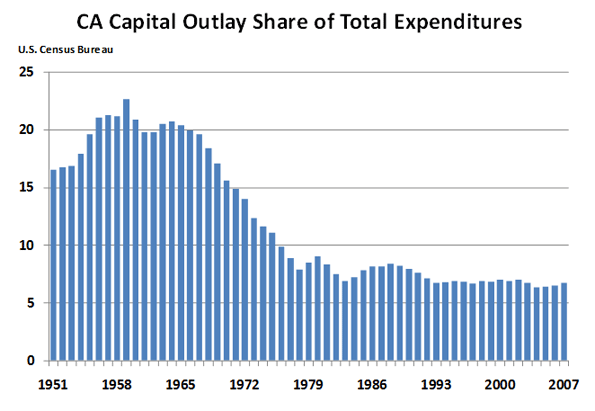
    Photo:

  • Copenhagen: the Fall of Green Statism

    Now we have the Copenhagen deniers. These are people who won’t accept that the UN’s climate change process has been derailed. The highest emitting nations refuse to be bound by an enforceable treaty. Instead of bedding down a replacement for the near-defunct Kyoto Protocol, they asked for a rain check.

    If the grandly named Copenhagen Accord is “a first step”, as President Obama put it, what were Rio (1992), Geneva (1996), Kyoto (1997), Buenos Aires (1998), Lyon (2000), The Hague (2000), Marrakech (2001), New Delhi (2002), Milan (2003), Buenos Aires (2004), Montreal (2005), Nairobi (2006), Vienna (2007), Bali (2007), Bangkok (2008), Ghana (2008), Poznan (2008), Bangkok (2009) and Barcelona (2009)?

    Apparently these earlier meetings of the UN Framework Convention on Climate Change were just for cocktails. And the list doesn’t include the eleven or so gatherings since 1998 of the Convention’s “subsidiary bodies”, all held in Bonn.

    Copenhagen wasn’t meant to be just another UNFCCC meeting. It was the Conference of Participants (the Convention’s supreme body) where member nations were to sign off on a successor to Kyoto, which only covers the period to 2012. Their failure to do so means the process is in disarray. Consisting of twelve short clauses, the Accord is little more than a face-saving device full of vague and unenforceable aspirations. The final clause calls “for an assessment of the implementation of this Accord to be completed by 2015”, so the world won’t have a binding operational treaty for some time, if ever.

    Copenhagen wasn’t a first step; it was the last step. It marked the end point in a long cycle of top-down, bureaucratic, multilateralism launched at the 1992 Rio Earth Summit. This all came unstuck in the very different world of 2009.

    The geo-political rifts on display at Copenhagen can’t be papered over with the diplomatic equivalent of a Hallmark greeting card. Essentially, the UN process is hostage to a standoff between the two largest emitters and their respective camps. On the one hand there’s China (for which read the Communist Party, whose grip on power depends on high rates of carbon-spewing growth) and so-called rapidly industrialising countries like India, Brazil, South Africa and Indonesia. On the other there’s the United States (for which read representatives of energy-producing regions in Congress, which must ratify any treaty negotiated by the President) and most of the developed world.

    Negotiations are rarely successful when both parties can only lose. Climate talks are about the apportionment of pain and blame, with benefits flowing to a third category of poorer countries, so the prospect of a workable compromise between the major camps is remote. Expect emissions to go on rising.

    Australia counts for little in all of this and was rebuffed at Copenhagen. Our 1.4 per cent contribution to global emissions has zero impact on the climate.

    Despite all the guff about Copenhagen being “a first step” or “a good beginning”, the collapse of the UNFCCC process changes everything. Absent a binding multilateral instrument, or the realistic prospect of such an instrument, the rationale for government-level, legislative and tax-funded initiatives disappears. The contention that we must enact a framework complementing the Kyoto Protocol and succeeding protocols, and demonstrate a credible intention to achieve prescribed emission targets, has been swept away.

    Bizarrely, our government persists with the argument that early action is essential to avoid the higher costs of delay. This claim rests on the assumption that acting now will prevent adverse climate effects. But that assumption was demolished at Copenhagen. Assuming the IPCC is right, only action by the major emitters, not Australia, can avoid such effects and they aren’t playing ball.

    If this is really about climate change, the government should call a moratorium on climate-related legislation and spending until the international position is clearer.

    Of course, individuals, firms and organizations in the private sector are always entitled to act on their own initiative, should they feel strongly about the issue. There just isn’t a rationale, or moral justification, for coercive state action.

    As John Humphreys of the Centre for Independent Studies points out, “it is an indication of the sorry state of community groups that when faced with a problem, they spend millions of dollars whingeing and asking other people to do something“. He proposes that “instead of whinging and waiting for politicians to become benevolent, people who are worried about anthropogenic global warming can take immediate action”. Climate activists and concerned citizens should put their money where their mouths are.

    On a practical level, Humphreys estimates that if activists were to organise a system of voluntary “workplace giving”, whereby people could opt to allow 0.5 per cent (or more) of their income to go directly into a “climate fighting fund“, more that $1 billion would be raised if only one third of Australians participated. These funds could be used to buy low-emission energy from alternative energy producers for sale to into the power grid at the going market price. For one thing, this would spur investment in alternative energy technologies without inefficient meddling from government.

    This is one of many courses open to those who profess to be alarmed about the coming cataclysm. We’re often told they’re in the majority. Since the future of the planet is at stake, why should higher contributions matter?

    If green activists and entrepreneurs can generate demand for expensive but clean energy sources, the government should facilitate this market by removing barriers to entry, not by mandating or subsidising particular energy options. If property developers can generate demand for high-density “green” housing, planning officials shouldn’t regulate against this, just as they shouldn’t regulate against low-density housing. The same applies to transport and cars. Let consumers choose. This is the real “market solution” to climate change (assuming a solution is needed), not the fake market represented by a cap-and-trade ETS.

    Surveys and electoral returns show that the affluent tend to be more concerned about green issues, so this approach has an added advantage. It relieves wealthy greens of the moral hypocrisy inherent in demanding state interventions which produce glittering opportunities for them, while shifting the pain disproportionately to the most vulnerable in the community.

    This article first apeared at The New City Journal

    Photo:

  • Will Anyone Stand Up for American Industry?

    “Esau for one morsel of meat sold his birthright. For ye know how that afterward, when he would have inherited the blessing, he was rejected: for he found no place of repentance, though he sought it carefully with tears.” – Hebrews 12:16-17

    Built from 1933-1936, the Bay Bridge linking San Francisco to Oakland was an engineering marvel of its day. A complex series of multiple spans, when it opened – six months ahead of the more famous Golden Gate Bridge – it was both the longest suspended bridge deck in the world and the longest cantilever bridge in the world. The western suspension bridge section, technically two bridges in one, had to settle for being only the second and third longest suspension bridges in the world.

    The 1989 Loma Prieta earthquake badly damaged the Bay Bridge. The iconic western suspension span was seismically reinforced, but the eastern steel truss section required replacement. San Francisco wanted another iconic span, not just a functional one. A striking self-anchored suspension structure was selected and is under construction.

    The dubious part of this new span isn’t the usual matter of being way late and massively over budget – though it is – but where it’s being made. The steel for the bridge is not being built in America but in China.

    Why is this bridge being fabricated in China? The troubling answer, according to a lengthy article in the SF Public Press, is that no American company can do the job. America, a country that once pulled off the most audacious of engineering projects with panache, one that put a man on the moon in the 1960s, now can’t even build a bridge to replace one it constructed with ease in the 1930s.

    What’s more disturbing, is that China can’t really build it either – but we are teaching them, and paying for them to learn how.

    When you drive across that new Bay Bridge, your tolls will literally be helping to finance the advancement of China’s industrial base and the evisceration of America’s.

    I believe in free trade, strongly. I believe America can compete in a free market. But the United States is a country curiously uncommitted to industry. Other countries build, promote and protect industrial champions. They blockade their markets against American competitors. India freely sells us software and BPO, but passes laws to hamper Wal-Mart and other American firms. China demands many foreign companies do business there only through joint ventures, and transfer technology to local partners. It also intervenes to keep its currency artificially low. Many countries outright ban foreign involvement in many sectors such as energy. They view even their privately owned firms, many of which have close and corrupt ties to the state, as instruments of national and foreign policy.

    These places see Japan as a model to follow, a country that used its closed market to build industrial champions, even in high technology markets. Perhaps in time the same problems that hobbled Japan – asset bubbles, debt, demographic collapse, or an inflexible economy – will similarly afflict these emerging markets. But by that time it might be too late for American industry. And those problems are just as likely to affect us as them.

    This raises difficult questions about the future of America. Can we thrive as a purely post-industrial economy? Can we have a long term prosperous society built on little more than selling each other ever more exotic pieces of financial paper, creative consultancies, typing away at computers, serving up caffe lattes, and the like? Can we have a just social order as a two-tier society of only highly-paid elite knowledge workers and a low end service class, but not the robust middle class a manufacturing economy – along with agriculture and energy – supported?

    Can America even retain its military industrial strength under such conditions? In the past, military technologies launched spin-offs to the commercial world. Today, the reverse is as likely to happen. Already the only major ship builders left in America are captive suppliers to the US Navy. Only the anomalous Jones Act has kept a tradition of small and medium sized commercial shipbuilding alive.

    There’s a positive reinforcement cycle at work. The less we manufacture, the less we can manufacture. We slowly lose the skills, the facilities, the institutions, and the culture that enable a robust manufacturing economy to thrive. Eventually, we won’t be able to recover.

    Maybe we won’t even want to. The less we make, the less we want to make. As we become unmoored from our agro-industrial roots, we fail to see them as central to our national identity and frequently treat them with hostility. As Douglas and Wildavsky put it in Risk and Culture (1982):

    A larger proportion of the population of working age was disengaged from the production process than had been before. The economic boom and educational boom together produced a cohort of articulate, critical people with no commitment to commerce and industry.

    Increasingly, Americans have no personal experience with industry, and even no family experience with it. What was once common is just another niche, much like military service has become. This means most people have little familiarity or affection for industry, agriculture, or energy production. Many, especially urban dwellers, view most productive industry as a negative, as a source of blight where once others saw jobs and a strong tax base.

    Portland provides the perfect example. It views its waterfront as prime territory for residences and recreation, but not for industry. As the Oregonian reports:

    The question makes Jay Zidell uncomfortable. When will he stop building barges on the waterfront and start building high-rises? The room goes silent….Oregon power brokers have nudged the Zidell family for decades to do more with their prime Portland real estate…In the 1970s, Gov. Tom McCall called Jay Zidell’s late father, Emery, to suggest he stop adding industrial buildings. As Jay Zidell has told the story, McCall said: “We have big plans for the waterfront.”

    Those big plans don’t include manufacturing. Portland is the perfect example of where America is heading. It’s a place where thousands of highly educated but often underemployed young people sip lattes by the light rail while on the waiting list for a job at Starbucks. Meanwhile people in third world countries, hungry for more, hustle to build an ambitious future for themselves and their nation. Americans increasingly view manufacturing as an undesirable activity, particularly in an urban context, when in fact we should be looking to build new industrial cities – updated, re-imagined, and re-designed for a 21st century economy.

    Also, too often industry is viewed only as a source of pollution. Many industrial expansions are opposed on environmental grounds. But from a global, not local perspective, an ever stricter regime of regulation is sending firms offshore where pollution standards are usually far laxer. Corporations put a green gloss on their branding campaigns while building their products in China, where they get electricity from one of the new coal fired power plants that open at a rate of more than one per week. They also escape independent unions, anything like the Environment Impact Statement process in the US, and operate in a regime of weak property rights, questionable worker health and safety conditions, and a limited ability for the public to dissent. It’s not just cheap labor, it’s regulatory arbitrage. It’s like inverse colonialism, only this time the joke’s on the West. And the end result is a global environment that ends up worse, not better.

    To really protect the environment, we should be doing more manufacturing at home, where we can keep an eye on it and prevent the worst abuses. It’s like the Steak ‘n Shake boast about their open kitchens: “In sight, it must be right”.

    The sometimes exception to this negative take on manufacturing is, of course, “green” industry, notwithstanding that the concept does not exist except as a transitory state. In a decade there will just be “manufacturing”, and virtually all will adhere to green standards. But if America can’t succeed at traditional manufacturing, why would anyone think it will be different with green manufacturing? Even if so, by then there might not be many major American producers left to succeed.

    American firms and labor have made many mistakes over the years, but more often today they are adopting the new approaches needed to compete in tomorrow’s world. American labor can compete, even against cheap foreign workers, since it is the best and most productive workforce in the world. But not when public policy implicitly favors shipping manufacturing overseas.

    The answer is not protectionism, it’s freeing American labor to compete and developing policies designed to advance American manufacturing interests. Alexis de Tocqueville talked about Americans knowing the difference between raw, naked self interest, and “self-interest well-understood”. Likewise, we need to find a new approach to create “free trade, well understood”, a modern day trade equivalent of speaking softly, but carrying a big stick. Billions for American infrastructure, but not one $4 Bay Bridge toll to finance China’s technology ambitions.

    Alas, this seems unlikely. American industry is trapped between a political right that can’t see beyond instinctive anti-federalism and an overly ideological vision of free trade, and a political left that, while paying lip service to labor interests, no longer embraces industry. Almost alone among nations, America today lacks political champions for its industry. That, more than anything, is why it is being left to wither. Will anyone stand up and be counted before it’s too late?

    Aaron M. Renn is an independent writer on urban affairs based in the Midwest. His writings appear at The Urbanophile.

  • How California Went From Top of the Class to the Bottom

    California was once the world’s leading economy. People came here even during the depression and in the recession after World War II. In bad times, California’s economy provided a safe haven, hope, more opportunity than anywhere else. In good times, California was spectacular. Its economy was vibrant and growing. Opportunity was abundant. Housing was affordable. The state’s schools, K through Ph.D., were the envy of the world. A family could thrive for generations.

    Californians did big things back then. The Golden State built the world’s most productive agricultural sector. It built unprecedented highway systems. It built universities that nurtured technologies that have changed the way people interact and created entire new industries. It built a water system on a scale never before attempted. It built magnificent cities. California had the audacity to build a subway under San Francisco Bay, one of the world’s most active earthquake zones. The Golden State was a fount of opportunities.

    Things are different today.

    Today, California’s economy is not vibrant and growing. Housing is not affordable. There is little opportunity. Inequality is increasing. The state’s schools, including the once-mighty University of California, are declining. The agricultural sector is threatened by water shortages and regulation. Its aging, cracking, highways are unable to handle today’s demands. California’s power system is archaic and expensive. The entire state infrastructure is out of date, in decline, and unable to meet the demands of a 21st century economy.

    Indications of California’s decline are everywhere. California’s share of United States jobs peaked at 11.4 percent in 1990. Today, it is down to 10.9 percent. In this recession, California has been losing jobs at a faster pace than most of the United States. Domestic migration has been negative in 10 of the past 15 years. People are leaving California for places like Texas, places with opportunity and affordable family housing.

    California’s economy is declining. Those of us who live here can all see it. Yet, Californians don’t have the will to make the necessary changes. Like a punch-drunk fighter, sitting helpless in the corner, California is unable to answer the bell for a new round.

    Pat Brown’s California – between 1958 and 1966 – crafted the Master Plan for Higher Education, guaranteeing every Californian the right to a college education, a plan that has served the state very well. That system is threatened by today’s budget crisis and may be on the verge of a long-term secular decline. California was a state where people said yes, a state where businesses could be created, grow, and prosper. Some of these businesses were run by Democrats, others Republicans but all celebrated a culture of growth and achievement.

    Today’s California is a state where building a home requires charrettes with the neighbors, years in the planning department, architects, engineers, and environmental impact studies – we built the transcontinental railroad in three years, faster than a builder can get a building permit in many California communities. People here dream of a green future but plan and build nothing. There’s big talk about the future, but California now turns more and more of our children away from college, and too many of our least advantaged children don’t even make it through high school.

    Once, California was a political model of enlightened government. Now it’s a chaotic place where everyone has a veto on everything; a state where people say no; a state where business is wrapped up in bureaucracy and red tape; a state our children leave, searching for opportunity; a state with more of a past than a future.

    Some things have not changed. California’s physical endowment is still wonderful. The state is blessed with broad oak-studded valleys, incredible deserts, magnificent mountains, hundreds of miles of seashore, and an optimal climate. California’s location on the Pacific Rim situates the state to profit from growing international trade with the dynamic Asian economies. California didn’t change, Californians changed. Californians have forgotten basics that Pat Brown knew instinctively.

    How did California get to this point? How did it move from Pat Brown’s aspirational California to today’s sad-sack version? What did Pat Brown know in 1960 that Californians now forget?

    First thing: Pat Brown knew that quality of life begins with a job, opportunity, and an affordable home. Other Californians in Pat Brown’s time knew that too. His achievements weren’t his alone. They were California’s achievements.

    It seems that California has forgotten the fundamentals of quality of life. Instead, the state has embraced a cynical philosophy of consumption and denial. The state’s affluent citizens celebrate their enjoyment of California’s pleasures while denying access to those less fortunate, denying not only the ticket, but the opportunity to earn the ticket. At best California offers elaborate social services in place of opportunity.

    Today, too many Californians don’t rely on the local economy for their income. For them, quality of life has nothing to do with jobs, opportunity, or affordable homes. Many see the creation of new jobs as bad, something to be avoided. They see no virtue in opportunity. They have theirs, after all. It is their attitude that if someone else needs a job, let them go to Texas; if people are leaving California, so much the better.

    They see someone else’s opportunity as a threat to them. Perhaps the upstarts will want a house, which might obstruct their view. They see economic growth as a zero sum game. Someone wins. Someone loses.

    This type of thinking is unsustainable. Opportunity is not a zero sum game. It may be a cliché, but it is true, that if something is not growing it is dying. Many of the things that make California the place it is are not part of our natural endowment. The Yosemite Valley is part of the state’s natural endowment, but the Ahwahnee Hotel is not. Monterey, Santa Barbara, San Francisco, the wine countries, and California’s many other destinations were made possible and built because of economic growth. Will California add to this impressive list in the 21st century?

    Not likely. Today, we are not even maintaining our infrastructure. Infrastructure investment’s share of California’s budget has declined for decades. In Pat Brown’s day California often spent over 20 percent of its budget on capital items. Today, that number is less than seven percent. It shows.

    Pat Brown also knew that with California’s natural endowment, all he had to do was build the public infrastructure and welcome business, business will come. Too many today act as if they believe that business will come, even without the infrastructure or a welcoming business climate. Indeed, many Californians – particularly in the leadership in Sacramento – seem to think that business will come no matter how difficult or expensive the state makes doing business in California. This is just not true.

    California needs to embrace opportunity and economic growth. It is necessary if California is to achieve its potential. It is necessary if California is to avoid a stagnant future characterized by a bi-modal population of consuming haves and an underclass with little hope or opportunity and few choices, except to leave.

    Bill Watkins is a professor at California Lutheran University and runs the Center for Economic Research and Forecasting, which can be found at clucerf.org.