Tag: Environment

  • Congress and the Administration Take Aim at Local Democracy

    Local democracy has been a mainstay of the US political system. This is evident from the town hall governments in New England to the small towns that the majority of Americans choose to live in today.

    In most states and metropolitan areas, substantial policy issues – such as zoning and land use decisions – are largely under the control of those who have a principal interest: local voters who actually live in the nation’s cities, towns, villages, townships and unincorporated county areas. This may be about to change. Two congressional initiatives – the Boxer-Kerry Cap and Trade Bill and the Oberstar Transportation Reauthorization Bill – and the Administration’s “Livability Partnership” take direct aim at local democracy as we know it.

    The Boxer-Kerry Bill: The first threat is the proposed Senate version of the “cap and trade” bill authored by Senator Barbara Boxer-Kerry (D-California) and Senator John Kerry (D-Massachusetts). This bill, the Clean Energy Jobs and American Power Act (S. 1733), would require metropolitan planning organizations (MPOs) to develop greenhouse gas emission reduction plans. In these plans, the legislation would require consideration of issues such as increasing transit service, improvements to intercity rail service and “implementation of zoning and other land use regulations and plans to support infill, transit-oriented development or mixed use development.” This represents a significant step toward federal adoption of much of the “smart growth” or “compact development” agenda.

    At first glance, it may seem that merely requiring MPOs to consider such zoning and land use regulations seems innocent enough. However, the incentives that are created by this language could well spell the end of local control over zoning and land use decisions in the local area.

    True enough, the bill includes language to indicate that the bill does not intend to infringe “on the existing authority of local governments to plan or control land use.” Experience suggests, however, that this would provide precious little comfort in the behind-the-scenes negotiations that occur when a metropolitan area runs afoul of Washington bureaucrats.

    The federal housing, transportation and environmental bureaucracies have also been supportive of compact development policies. As these agencies develop regulations to implement the legislation, they could well be emboldened to make it far more difficult for local voters to retain control over land use decisions. There could be multiple repeats of the heavy-handedness exercised by the EPA when it singled out Atlanta for punishment over air quality issues. In response, the Georgia legislature was, in effect, coerced into enacting planning and oversight legislation more consistent with the planning theology endorsed by EPA’s bureaucrats. No federal legislation granted EPA the authority to seek such legislative changes, yet they were sought and obtained.

    There is also considerable support for the compact development agenda at the metropolitan area level. The proclivity of metropolitan and urban planners toward compact development is so strong as to require no encouragement by federal law. The emerging clear intent of federal policy to move land use development to the regional level and to densify existing communities could encourage MPOs to propose plans that pressure local governments to conform their zoning to central plans (or overarching “visions”) developed at the regional level. Along the way, smaller local jurisdictions could well be influenced, if not coerced into actions by over-zealous MPO staff claiming that federal law and regulation require more than the reality. It would not be the first time. Further, MPOs and organizations with similar views can be expected to lobby state legislatures to impose compact development policies that strip effective control of zoning and land use decisions from local governments.

    Surface Transportation Reauthorization: The second threat is the Surface Transportation Authorization Act (STAA or reauthorization) draft that has been released by Chairman James Oberstar (D-Minnesota) of the House Transportation and Infrastructure Committee. This bill is riddled with requirements regarding consideration of land use restrictions by MPOs and states. Unlike the Boxer-Kerry bill, the proposed STAA includes no language denying any intention to interfere with local land use regulation authority.

    Like the Boxer-Kerry Bill, the Oberstar bill significantly empowers the Department of Transportation and the Environmental Protection Agency and poses similar longer term risks.

    The Administration’s “Livability Agenda:” These legislative initiatives are reinforced by the Administration’s “Livability Agenda,” which is a partnership between the EPA, the Department of Housing and Urban Development and the Department of Transportation. Among other things, this program is principally composed of compact development strategies, including directing development to certain areas, which would materially reduce the choices available to local government. Elements such as these could be included in an eventual STAA bill by the Obama Administration.

    The Livability Agenda: Regrettably, the Boxer-Kerry bill, the Oberstar bill and the “Livability Agenda” will make virtually nothing more livable. If they are successful in materially densifying the nation’s urban areas, communities will be faced with greater traffic congestion, higher congestion costs and greater air pollution. Despite the ideology to the contrary, higher densities increase traffic volumes within areas and produce more health hazards through more intense local air pollution. As federal data indicates, slower, more congested traffic congestion produces more pollution than more freely flowing traffic, and the resulting higher traffic volumes make this intensification even greater.

    There are also devastating impacts on housing affordability that occur when “development is directed.” This tends to increase land prices, which makes houses more expensive. This hurts all future home buyers and renters, particularly low income and minority households, since rent increases tend to follow housing prices. It is particularly injurious to low income households, which are disproportionately minority. The large gap between majority and minority home ownership rates likely widen further. So much for the American Dream for many who have not attained it already.

    The Marginal Returns of Compact Development Policies: These compact development initiatives continue to be pursued even in the face of research requested by the Congress indicating that such policies have precious little potential. The congressionally mandated Driving and the Built Environment report indicates that driving and greenhouse gas emissions could be higher in 2050 than in 2000 even under the maximum deployment of compact development strategies.

    Local Governments at the Table? The nation’s local governments should “weigh in” on these issues now, while the legislation is being developed. If they wait, they could find bullied by EPA and MPOs to follow not what the local voters want, but what the planners prefer. Local democracy will be largely dead, a product of a system that concentrates authority – and perceived wisdom – in the hands of the central governments, at the regional and national level.

    Even more, local citizens and voters need to be aware of the risk. It will be too late when MPOs or other organizations, whether at their own behest or that of a federal agency, force the character of neighborhoods to be radically changed, as Tony Recsei pointed out is
    already occurring in Australia.

    Wendell Cox is a Visiting Professor, Conservatoire National des Arts et Metiers, Paris. He was born in Los Angeles and was appointed to three terms on the Los Angeles County Transportation Commission by Mayor Tom Bradley. He is the author of “War on the Dream: How Anti-Sprawl Policy Threatens the Quality of Life.

  • Getting Real About “Green” Jobs

    Over the past year, Economic Modeling Specialists, Inc. (EMSI) has been fielding questions from local planners (workforce boards, community colleges, and economic developers) on how to look at green jobs, particularly at the regional level. Perhaps nothing has been more hyped, or misunderstood, than the potential impact of this sector on local economies.

    In order to wade through the rhetoric and often overblown expectations, we’ve been doing our best to link labor market data to potential green sectors so people can gain an understanding of trends, earnings, education levels, and skills associated with “green occupation clusters”. So far, we have made three general observations:

    1. Many of these jobs are going to fall within the construction and manufacturing sectors (e.g., welders, roofers, HVAC installers, etc.),
    2. Based on a lack of understanding, concrete information, and large scale demand, green jobs pose a very difficult development mission for local planners, and
    3. It is vital to speak “from the data” as much as possible.

    Such realism is necessary. Given the recession, job loss, and our nation’s otherwise dismal financial condition, many are now questioning the continued emphasis on green jobs, climate change, and cap-and-trade legislation. In recent months we have seen a sizable pushback against some of this policy from groups ranging from the American Farm bureau and even the educational community. Recently, for example, Inside Higher Ed wrote about how “some leaders in workforce development are concerned that more traditional skill trades within the manufacturing and construction fields are being deemphasized by community colleges looking for federal dollars to support newfangled programs.”

    The public is also getting skeptical. A Gallup poll indicated that the recession has dried up some of the support for increased environmental regulation. Similar surveys by Rasmussen and Pew suggest a similar trend in popular opinion.

    None of this suggests that most Americans, or most business, oppose environmental protection. It’s just that that economic growth and environmental protection should not be mutually exclusive.

    Increasingly we find ourselves at a crossroads between two competing points of view – one that thinks that we need to restore economic stability before we deal with environmental issues, and one that believes that if we fail to address environmental concerns aggressively right now, we are forfeiting our future.

    Chasing Trends vs. Being Demand Driven

    The promise of “green jobs” has the allure to square this circle, and reconcile the needs of the economy and the environment. This causes a kind of thinking reminiscent of that associated with the ‘90s dot-com boom. In that era, software and information was the next big thing. Many regional developers tried to get into the game, and some failed miserably. When the bubble burst, many were left empty-handed and embarrassed that they had essentially just wasted a lot of the public’s time, energy, and money on something that they frankly didn’t understand or have any real reason (in a regional context) to be pursuing.

    Given this experience, it’s not surprising that green is being met with skepticism by some local planners, who can and should be rigorously dedicated to spending their dollars wisely and only on things that will advance their region’s businesses and people. This seems to come from an understandable concern that economic development should essentially be “demand-driven” and in touch with needs of the local community.

    At the same time, regional development can be traced back to the needs of local industry. The activities, interests, and employment of local industries directly and indirectly drive much of the employment and earnings in an area (the concept of an economic base). This leads some loath to invest resources into an emerging sector or a new policy, such as green, where there is little demand, enough jobs, or the background to justify the efforts.

    “Policy” vs. “Environment”

    Right now, the primary struggles with green development come from: (1) actually understanding what “green” is and (2) knowing which industries people need to be prepared/trained for. Some of the problem stems from the fact that green is happening according to a top-down, policy driven approach rather than an industry driven one.

    In the U.S. we often see industry development happening from the ground up (e.g., from the local level and up to the national level). Industries develop hubs of production (e.g., Silicon Valley, the Research Triangle, and Hollywood). Regions benefit from this and become specialized and competitive at producing and exporting something that is demanded by the larger economy. This gives rise to specific skill and knowledge sets which further enhance the development of a region. Green jobs don’t really work this way. The “greening” of our economy has sprouted from a particular ideological point of view (global warming, overpopulation, etc.), that drive the initiatives, many of them associated with the stimulus.

    As is often the case, it is not particularly easy to translate the broad rhetoric, concepts, and policy (things like “clean tech”) into local industries, impacts, skills, training programs, and demand. At the local level, it is also incredibly difficult to project future trends of what jobs and industries will begin to thrive or fail. Those who try to use only national predictions to implement new regional training programs or to develop local policies could find their new programs may not result in tangible benefits to the region. In a recession folks need and want jobs (in some cases, any job will do), and discussions about how something like clean tech is going to be the next big thing can be really frustrating (think “dot-com” bubble).

    Finally, a big part of the frustration around green jobs actually comes down to semantics. Politicians and news anchors often refer to green jobs as some sort of new “industry.” Yet in reality green is much less about “what” is being produced than “how” things are produced.

    In this sense, in order to have “green” industry, you first need to have an industry that can be, if you will, “greened”. Here is an illustration that points out the nuance: let’s imagine you have two tire manufacturers. One produces tires using traditional “non-green” methods and the other uses recycled materials and can be classified as “green.” At the end of the day are they both manufacturing tires? Well, yes of course. Are they part of different industries? No. Both companies also likely employ the same sort of people, use the same sort of equipment, and have similar sales and supply chains. Also, from a training/workforce development perspective these industries are going to look pretty identical – with maybe a few minor skills differences.

    Seen from this angle, green is not actually about creating a new industry sector in either a general or specific sense. Rather, it’s more about changing and retooling all existing industry sectors to make them operate differently.

    It Needs to Be Data-Driven

    In the United States, we have a huge amount of data at our disposal for development decisions. Our nation has over 1,800 (and counting) well-established industry codes (NAICS codes) that are standardized for the entire country. The 20 big industry sectors that compose our economy exist because of broad, long-lasting, nationwide demand. But right now, local developers cannot take such a well-researched, data-driven approach to green. There are a lot of people who are highly in favor of green, but in many ways, they don’t bring the sort of objectivity needed to hash things out for the sake of the local workforce. What if green actually isn’t a good idea for a specific community? Something like Biotech is great if you can have it, but if it’s not the right fit for the community, forcing it can be a bad thing.

    Final Remark

    For green to work at the local level, it needs to be demand-driven. It needs to be harmonized with local development efforts, and it must complement and not fight against regional economies. This means helping and not hurting local industries with too much regulation, and allowing regional developers to stay focused on longer-term efforts as opposed to short-term trends.

    Do we want green to succeed? Well, sure. However, as the polls show, we will not have these things at the expense of economic growth. All this is to say that people are going to be more supportive of the green movement if it embraces another aspect of sustainability – economic sustainability. The green movement and economic considerations are not mutually exclusive. If the economy continues to suffer, the green movement will suffer as there will be no money or opportunities to invest in green technologies. Only a broad based economic recovery – based in the revival of productive industry – can make green industry not only desirable, but practicable.

    Rob Sentz is the marketing director at EMSI, an Idaho-based economics firm that provides data and analysis to workforce boards, economic development agencies, higher education institutions and the private sector. He is the author of a series of green jobs white papers.

    Illustration by Mark Beauchamp

  • GOP Needs Economic Populism

    You would think, given the massive dissatisfaction with an economy that guarantees mega-bonuses for the rich and continued high unemployment, that the GOP would smell an opportunity. In my travels around the country — including in midstream places like suburban Kansas City and Kentucky — few, including Democrats, express any faith in the president’s basic economic strategy.

    Ask a local mayor or chamber of commerce executive in Kentucky or Kansas City about the stimulus, and at best you get a shrug. Many feel the only people really benefiting from Obamanomics are Wall Street grandees, public employees, subsidized “green” companies and various other professional rent seekers.

    It’s not surprising, then, that most Americans — upward of 60 percent — feel the country is headed in the “wrong direction.” Most of these malcontents are not zealots such as those you might find at a tea party. They are more akin to villagers watching in horror as two armies, each fighting in their name, wage war on each other, leaving desolation in their wake.

    Yet it’s unlikely that the independent-minded will move to the GOP until the party comes up with a credible economic plan that addresses popular concerns. One big problem lies in the very nature of the Republican Party. Since Theodore Roosevelt, the party has devolved into a de facto shill for large corporate interests. One notable exception, to some extent, was Ronald Reagan, whose rise challenged the hegemony of some in the corporate establishment, first in California, when he was governor, and later nationally.

    Republicans may now find it convenient to rail against the Troubled Asset Relief Program, but it’s something many supported under George W. Bush. Even now, most are loath to fight excessive pay and bonuses at places like Goldman Sachs. Instead, it’s populists like North Dakota Democrat Byron Dorgan and Vermont independent Bernie Sanders who seem most outraged by the massive rip-off of taxpayers.

    Republicans also do not seem sympathetic to pro­posals by former Fed chief Paul Volcker and others to break up “too big to fail” banks or reimpose distinctions between investment and mainstream banks. If anything, this illustrates that for all the rhetoric about self-sufficiency and small business, they remain more attuned to Wall Street and K Street than Main Street.

    Yet there may be new opportunities for Republicans on the economic front. This winter, the focus of political debate will shift from health care to energy legislation. Whatever the negatives associated with President Barack Obama’s proposals, Republicans’ long-standing inability to reform clearly flawed health care systems has undermined their credibility. The health insurance industry and right-wing ideologues may applaud their efforts, but it’s unlikely to impress the many middle- and working-class Americans for whom the current system is not working.

    In sharp contrast, the coming debate over energy and climate plays to the weaknesses of the Democrats. All the administration’s talk of reducing our “addiction” to foreign energy can be painted as fraudulent, since the powerful green lobby will militate against developing our country’s huge natural gas and other fossil-fuel deposits, as well as nuclear power.

    In the past election, some of the few good moments for John McCain came in the wake of his embracing a nationalistic, growth-oriented “Drill, baby, drill” agenda. This approach remains popular not only with conservatives but also with moderates and independents, particularly in energy-producing states.

    Obama’s climate change proposals offer an additional opportunity. The mainstream media remain slavishly tied to the Al Gore warming thesis, but skepticism toward the anti-carbon jihad is building via the Web. In recent months, Gallup, Pew and Rasmussen have reported reduced enthusiasm for radical steps to battle climate change. Right now, this seems to be a major concern for barely one in three Americans.

    Yet the “cap and trade” proposals could prove a boon to some of the very corporate interests — on Wall Street and among utilities — still considered core supporters by some Republicans. GOP leaders seem simply incapable of comprehending the discreet charm that Timothy Geithner’s collusive capitalism holds for many corporate chieftains. In this, they resemble the boyfriend who ignores the implications of finding someone else’s Jockeys on his girlfriend’s bed.

    Sadly, those who do tend toward populism, like current front-runners Mike Huckabee and Sarah Palin, appear too socially regressive to appeal to the suburban independents who will decide the elections in 2010 and 2012. Americans may yearn for an economically populist alternative, but not if they think it will bring back the Inquisition.

    In the end, economic populism, not social conservatism, can transform Republicans into something other than a scarecrow party. And they could make this strategy work, if they only had a brain.

    This article originally appeared at Politico.com.

    Joel Kotkin is executive editor of NewGeography.com and is a distinguished presidential fellow in urban futures at Chapman University. He is author of The City: A Global History. His next book, The Next Hundred Million: America in 2050, will be published by Penguin Press early next year.
  • American Agriculture’s Cornucopia of Opportunity and Responsibility

    A complex agriculture, along with urban culture, is one of the fundamental pillars of human civilization, and one of the fundamental bulkwarks of American prosperity. For families and communities involved in farming and ranching it’s also a way of life that is cherished, oftentimes passed on through generations, taking on reverential if not religious overtones.

    At the same time in today’s overwhelmingly urban culture, cooking has become prime time entertainment, dining a social event, and what a person eats is increasingly associated with a healthy body and mind – sometimes a sort of spiritual well being. This elevates agriculture to an important issue even among those who have never spent a day on a farm.

    Sadly, recent years have seen mounting efforts to discount the value, in particular, of the industry’s productive core. A just published feature story in Time magazine – Getting Real About the High Price of Cheap Food – makes the following claim. “With the exhaustion of the soil, the impact of global warming and the inevitably rising price of oil — which will affect everything from fertilizer to supermarket electricity bills — our industrial style of food production will end sooner or later.”

    Yet it is industrial, highly commercialized agriculture that first transformed America – and increasingly such countries as Australia, Brazil, Argentina and Canada – major forces in the world economy. The trend towards smaller-scale specialized production is indeed a welcome addition to our agricultural economy, but it is principally large-scale, scientifically advanced farming that produces the vast majority of the average family’s foodstuffs and accounts for all but a tiny percentage of our exports.

    The attack on “industrial” agriculture reflects a growing trend by environmentalists to subordinate all productive industry to their own particular agenda. Some extremists in the local food movement would discourage cold climate inhabitants from the luxury of a midwinter tropical fruit because of the energy used in shipping. Others propose elaborate schemes for urban farming so that land can be left to nature instead of cultivation.

    For others agriculture is guilty of producing a calorie-heavy, protein-rich diet that has made Americans unhealthy. In this lexicon ranchers, corn, and wheat farmers are not far removed from Afghan poppy growers or coca cultivators in South America.

    The assault on agricultural production and the food system as we know it is certainly not limited to the United States. Farmers in Great Britain, where the often well-heeled advocates of bucolic romanticism hold great sway, have faced withering criticism. The National Farmers Union recently stated that the pressures on land use and practices could seriously damage the agricultural economy, with serious global and moral consequences.

    Farming, they argue, depends “crucially on the productive core business remaining profitable. Without this core, British agriculture would “wither on the vine”, reducing both the global supply of food and making the UK ever more dependent on imports.

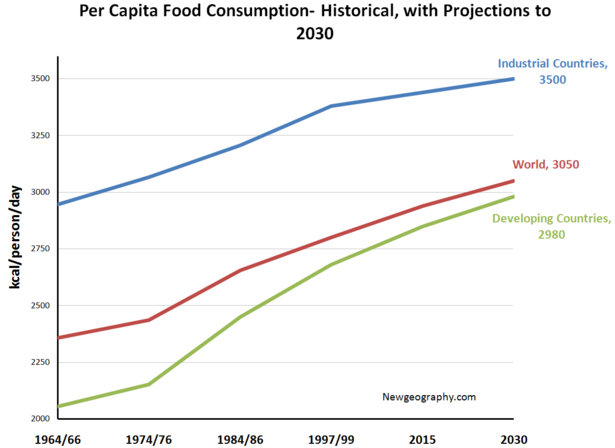
    When applied to the United States, the world’s largest food exporter, the consequences could be devastating. By 2050 the population of the planet will reach around 9 billion people with more than 85 percent of the world’s population located in developing countries. Roughly half will live in developing-country cities. In the United States the population is expected to grow by another 100-milion people by 2050.

    In this context, taking steps to reduce large-scale efficient production does not seem to be either a practical or humane choice. Certainly, better production and stewardship practices should be implemented and consumers can and could do more to drive these practices by making better nutritional decisions and choosing more responsible lifestyles.

    But these concerns should not obscure the fact that American agriculture stands at the core of meeting the challenge of feeding the world’s expanding population. It does this not only by producing a staggeringly diverse array of crops with amazing efficiency, but also by leading the world in the export of the agricultural technology that helps other countries, notably in the developing world, feed their own people.

    Greater Food Security and a Stronger Economy
    America’s agricultural producers have never been more productive and efficient than they are today. In 1953, the nation had a total of 5 million farms, working a total of 1.2 billion acres of land – the peak in production at that time. Over fifty years later, the number of farms in America has fallen by two-thirds, and the amount of land in use by producers has dropped by 25 percent, to around 900 million acres. Of the 2.2 million remaining farms, almost 96% are family owned. Even among the largest two percent of farms, 84% are family owned, challenging the commonly held perception of corporate domination.

    The US food industry is now the biggest in the world. In 2006, it was a $1.4 trillion sector, accounting for 12.3 percent of gross domestic product (GDP) and 17 percent of the country’s workforce – the second largest U.S. employer behind government. In some regional economies such as the Midwest and Upper Great Plains the demand by farmers here, and now increasingly abroad, for sophisticated machinery and equipment has spawned entire new industry sectors in electronics, wireless networks, and new material fabrication. The continual demand for new and improved practices in both crop and livestock production and processing has created new opportunities in the life sciences and biotechnology.

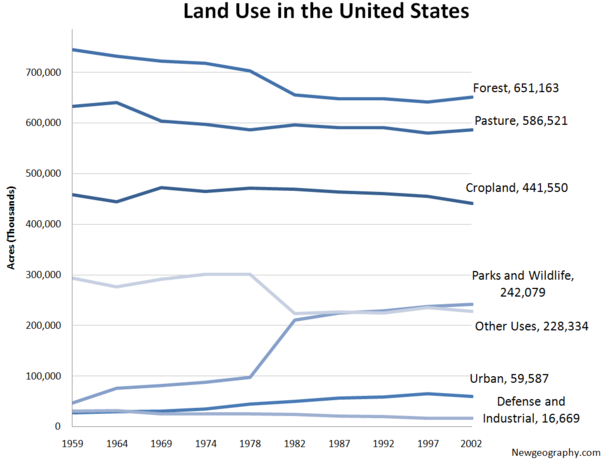
    This represents both an economic achievement and a great environmental benefit. Inputs of capital, labor, and materials have remained nearly steady, yet overall output has increased over two and one half fold over the same period of time. At the same time, efficient agriculture has returned to nature – forests, wetlands, prairie – millions of acres, far more than the land that has been devoted to housing and other urban needs.

    Like successful industrialists, American farmers and ranchers have taken advantage of the latest advances in engineering, technology, and science to do more with less, creating “arguably the most productive, efficient, and technologically advanced production agriculture sector in the world”. Indeed as many American manufacturing industries have fallen behind their foreign competitors, agriculture has remained in the forefront, a bastion of American competitiveness.

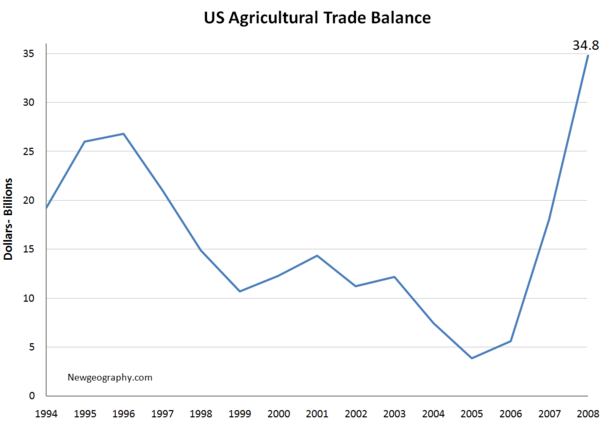
    These increasing levels of productivity have allowed American agriculture to become a powerful player in world agricultural trade. As the nation has seen overall trade deficits mount to record levels in recent years, the agricultural sector has proven a notable exception. American farms, able to “produce far beyond domestic demand for many crops,” have looked to the world market to absorb their output. In 2008, the United States exported over $115 billion worth of agricultural products, a record high.

    For the year, agricultural products made up ten percent of overall American exports, and the nation enjoyed an agricultural trade surplus of 35 billion dollars. While high commodity prices played their part in driving 2008’s export values higher, the agricultural sector has consistently shown export surpluses over the past 15 years, with the nation’s “share of the global market for agricultural goods,” averaging slightly over 20%.

    On the domestic front, production agriculture – and the wider world of agribusiness – provides not only food, fuel, and fiber for Americans, but also a source of employment. Roughly 4.1 million people are directly employed in production agriculture as farmers, ranchers, and laborers; but up to 21 million Americans work in jobs that are tied in some way to agriculture –approximately one out of six participants in the U.S. workforce.

    According to the USDA, the agricultural export industry supported as many as “841,000 full-time civilian jobs,” including “482,000 jobs in the nonfarm sector,” as of 2006. Production of food, fuel, and fiber involves support industries to supply the necessary inputs, and handle the product output, spurring economic activity in associated industries, including the “manufacturing, trade, and transportation sectors.”

    The continual adoption of advanced technologies and methodologies by American farmers and ranchers also creates demand for advanced research and development activity, from both the public and private sectors.These, in turn, spawn educational and entrepreneurial opportunities in a multitude of scientific and engineering fields. USDA research suggests that “each dollar spent on agricultural research returned about $10 worth of benefits to the economy.”

    Scaling Up Sustainable Agriculture

    None of this suggests that there is not room as well for what is known as sustainable, usually smaller scale, agriculture. Organic agriculture, where farmers minimize external inputs and are not permitted to use artificial fertilizers, pesticides or herbicides, is the most widely recognized segment of the sustainable farming industry. U.S. sales of organic food and beverages have grown from $1 billion in 1990 to an estimated $20 billion in 2007, and are projected to reach nearly $23 billion in 2008.

    This is clearly a growing industry, with organic food sales anticipated to increase an average of 18 percent each year from 2007 to 2010, according to an Organic Trade Association Manufacturing Survey. Yet organic foods and beverages account for less than 3 percent of all food sales in the United States – hardly enough supply or demand to feed a nation, much less a growing, hungry planet.

    The same technology that drives commercial, large scale agriculture – and is largely paid for by its profits – could expand the role of this specialized sector. This includes a greater role for what is commonly called precision agriculture. With the aid of technologies such as global positioning (GPS), sensors, satellites or aerial images, and geographic information management tools (GIS), every input can be applied optimally to meet the exact needs of the crop, and can be tracked and tailored with precision. Precision agriculture can be used to reduce energy usage and environmental effects of production agriculture.

    Precision agriculture builds on the strengths of America’s fundamental edge in innovation on the farm and in the factory. In the past, technology has been a major force in driving the shift of agricultural activities of the farm into the agribusiness input industries. Precision agriculture creates new and higher-value opportunities for agribusiness but also enables the farmer to apply the technology right in the field, thereby increasing the competitiveness and viability of farm operations of any size or ownership structure.

    This suggests that there is, in many cases, a false dichotomy between industrial and sustainable agriculture. American agriculture now competes in a truly global marketplace with a cornucopia of opportunities that extend to both systems. Technology and a focus on productivity can help sustainable farming expand, but this should not be at the expense of the larger, commercial sector that not only funds most new research but will continue to play a dominant role in both feeding the world and sustaining that most endangered of species – the American economy.

    Delore Zimmerman is the President of the Praxis Strategy Group an economic research and development strategy consulting company. Matthew Leiphon is a Research Associate with Praxis Strategy Group. Delore grew up in a small farming community in North Dakota, hauling bales and picking rocks for local farmers and ranchers. Matthew is from a North Dakota farm family and spends his fall weekends harvesting small grains and canola.

  • On Cities, GHG Emissions, Apples & Oranges

    Every day or so a new greenhouse gas emission report crosses my desk. Often these reports are very useful, other times they add little of value to the subject. The problem is separating the “wheat” from the “chaff.”

    This dilemma is well illustrated by a paper called “Greenhouse Gas Emissions from Global Cities,” authored by 10 academics. I had received notification of the paper from Science Daily, a useful website that provides notification of new research on a wide range of scientific subjects.

    The Science Daily article indicated that Denver produces the most greenhouse gases per capita annually, while Barcelona produces the least. I am always interested in reports that compare the performance of “cities,” both out of general interest and because of the gross errors that often are the result of invalid comparisons. So, immediately I ran down the report, and to my surprise the report dealt with only 10 “cities.” This seems rather a small number, since the smallest in the sample, Geneva, is not even among the top 700 urban areas in the world. This seems to be a rather incomplete sample: 10 out of more than 700.

    That was just the beginning. There were serious problems of comparison between the 10 “cities.” Whenever someone starts talking about “cities,” it is best to ask what they mean. The word “cities” has so many meanings and is subject to such confusion that I generally avoid using it.

    “Cities” might be municipalities, such as the city of New York or the ville de Paris.

    Cities could be urban areas (urbanized areas or urban agglomerations), which are the urban footprints one observes from an airplane on a clear night.

    “Cities” could be metropolitan areas, which are labor markets and are generally larger than urban areas, because people commute from rural areas (outside the urban footprint) to work in the urban area.

    In nearly the entire world, with the exception of China, urban areas and metropolitan areas are larger than municipalities.

    Or, “cities” could be used in the sense of Chinese prefectural, sub-provincial or provincial level cities, which tend to be far larger than any reasonable definition of a metropolitan area. Nearly all of China is divided into cities, in the same way that most of the United States is divided into counties.

    These Chinese “cities” themselves often contain county level “cities” that are separate from the principal urban areas.

    These differing definitions of municipalities make any international comparison of these entities difficult and often misleading. The ville de Paris represents barely 20 percent of the Paris region. The “city” of Atlanta represents barely 10 percent of its metropolitan area. The “city” of Melbourne represents only 5 percent of its metropolitan area. Yet, other “cities” are larger than their metropolitan areas, such as Chongqing, China, which has at least five times the population of its genuine metropolitan area (the “city” covers an area the size of Austria or Indiana). The city of San Antonio, with its vast stretches of suburbanization is surely not comparable to the city of Hartford, which is dominated by an urban core.

    Any genuine comparison of “cities” must be at the metropolitan area or urban area level. These definitions both represent the city as the organism it is, rather than simply the happenstance of municipal boundaries. Of course, comparisons must be either between metropolitan areas or urban areas to be valid. It will not do to compare metropolitan areas with urban areas; they are as apples and oranges. Moreover, there are no international standards for delineation of metropolitan areas, which makes metropolitan comparisons more complex.

    All of this raises the principal problem with the “Global Cities” paper. There is no consistency to the city definitions the paper uses and its results are thus meaningless (though “headline grabbing”). For example, “Global Cities” uses the geographic areas of the following barely comparable “cities”:

    The municipality of Barcelona, which represents less than one half of the urban area and excludes the expansive suburbs that stretch in every direction but the Mediterranean.

    The municipalities of Bangkok, Denver and New York, which are only parts of their respective metropolitan or urban areas.

    The municipality of Cape Town, which could be considered a metropolitan area because of the large expanse of rural area under its jurisdiction.

    The canton (province) of Geneva might probably qualify as a metropolitan area, except that it excludes the suburbs in France, from which virtually free movement of labor is permitted.

    The Greater London Authority which is nearly co-existent with the London urban area, while Prague as the report defines it is somewhat larger than its urban area.

    The Greater Toronto Area which meets none of the “city” definitions above and is larger than both the metropolitan area and the urban area as defined by Statistics Canada.

    Los Angeles County, which meets none of the “city” definitions and is part of the larger Los Angeles-Orange County metropolitan area.

    All in all, as charitably as it can be put, the “Global City” compares four municipalities, three metropolitan areas, two urban areas, one area larger than a metropolitan area and one that is part of a metropolitan area. Put another way, it tries to make comparisons between four apples, three oranges, two peaches, one banana and one sweet potato.

    Granted, the paper indicates the geographical definitions it uses. That, does not, however, change the fact that treating apples and oranges as comparable is simply invalid.

    There are other problems with the “Global Cities” paper, but one more is enough. In the obligatory fashion, the authors stress how important it is to adopt “smart growth” policies in North America. They cite a US Department of Transportation study to indicate that a doubling of density reduces vehicle miles traveled by 40 percent.

    A bit closer reading would have indicated that the study says doubling density would reduce new vehicle miles by 40 percent, where population densities are already 6,000 to 7,000 per square mile. Only two large urban areas in the United States have densities that high, San Francisco and Los Angeles (which the authors characterize as having urban densities at least 40 percent below the US Bureau of the Census number for the Los Angeles urban area). A 40 percent reduction in “new” vehicle miles means that overall vehicle miles traveled increase 60 percent when the population is doubled, rather than 100 percent. Thus, even with the high density qualification in the US Department of Transportation study, vehicle miles would increase 60 percent as population densities double.

    Maybe tomorrow will bring a better report. One can always hope.

    Photograph: The “city” of Chongqing (part of its vast rural countryside)

    Wendell Cox is a Visiting Professor, Conservatoire National des Arts et Metiers, Paris. He was born in Los Angeles and was appointed to three terms on the Los Angeles County Transportation Commission by Mayor Tom Bradley. He is the author of “War on the Dream: How Anti-Sprawl Policy Threatens the Quality of Life.

  • Germany’s Role in the Green Energy Economy

    Germany likes to brag about its green credentials. It is a source of pride and it is justified to a certain extent. The country, which is located on the same latitude as Canada, had the largest number of installed solar panels as of 2007.

    The key to growth clearly has not been abundant sunshine, but massive subsidies. Germany sponsors its solar industry with generous tax credits that take the form of feed-in tariffs, i.e. payment above the going market rate for energy from renewable sources like solar panels, it can run anywhere from twice to three times the market rate for a conventionally produced kilowatt. These tariffs can run high. They are being lowered slowly but perhaps a bit too slowly. As we have recently seen with the disasters impacting Spain’s renewable energy industry, dependence on subsidies can create a potential catastrophic downturn once the spigot is turned off.

    Would a similar model be appropriate for sponsoring renewable energy in the US? Probably not, in large part the technology is already developed. The Germans and now the Chinese have already subsidized their industries. The legwork has been done and anti-greenhouse legislation will sustain the market without massive subsidization.

    The first factor is that most of the investment in research and development has created the pre-conditions for grid parity within the next few years for southern countries. Even Germany will achieve it by 2012 according to the German business newspaper Handelsblatt. The economies of scale are sinking unit costs dramatically and production technologies like thin film are allowing solar cell manufacturers to produce ever more efficient panels with less and less silicon. Several silicon production plants are set to come on line in China soon.

    The US, whose fiscal situation is parlous compared to China and even Germany, wants to waste years developing already available technologies from scratch. It could try the European approach but would probably be much better off to follow the same path that it followed with the automobile or the motion picture: allow other countries to get the basic technology in place and concentrate its exceptional energy on marketing and scaling up the technologies from abroad.

    China’s entry into the market seems destined to create a dramatic collapse in the price of what was until a few years ago essentially a cost plus industry. China has low labor costs and inflation busting economies of scale. China’s entry into the silicon wafer market already has depressed prices for the once dear raw material. They are also working on a massive power plant with First Solar of the United States.

    Some are predicting that China’s entry into the renewable energy market will have the same effect as its entry into the consumer electronics market, i.e. it will make the expensive affordable and then cheap. German solar cell production companies have suffered much like its chip producers but to the general benefit of the economy. China will drive production costs further down. Germany is still coming to terms with this.

    A recent article in Die Zeit illustrates the growing discrepancy between renewable energy policy and the market potential. The feed-in tariffs have the perverse effect of making solar energy far more expensive than it actually needs to be. The government subsidies are essentially shielding domestic producers from China making the consumers pay the higher rates. Germany needs to focus on its traditional strengths in producing industrial machinery and carve a niche for itself. The US would be better off to maintain trade relations with China and let Adam Smith’s invisible hand work its magic. It would be far cheaper than trying to use protectionist measures to protect domestic manufacturers.

    All this is predicated on the assumption that the price of oil will only increase in price in the coming decades as China and India motorize their masses. This in turn will drive up conventional power costs. Even at its current price of around $70 a barrel, oil is still 7 times more expensive than it was just a decade ago. Some are predicting that that last year’s prices of almost a $150 a barrel represent a taste of what will confront the world when the economy begins to grow again

    This, however, will be a gradual process, based on undulating prices. The hysterical claims of Peak Oil have been delayed again and again by technological improvements. The latest finds off of Brazil and the Gulf of Mexico represent dramatic examples. Massive new gas reserves in North America represent another countervailing force. In the end, fossil fuels will be more expensive, but they will make renewable energy more competitive only at reasonable price points.

    Politics will also play a role. Climate change and the perceived need to combat it has gained enormous currency among world leaders including German Chancellor Angela Merkel. Regardless of what one thinks of the arguments calling for action, we will probably see some sort of carbon tax in the future, whether it be cap and trade or some other means of increasing the costs of carbon emissions. Conventional fuels like coal, oil, and natural gas are only going to get more expensive for political if not economic reasons. The growing consensus, regardless of its veracity, is set to create huge costs for non-renewable sources of energy.

    Over time, this will make renewable energy more attractive and unit costs will shrink as economies of scale start to kick in. The European cheerleaders of climate legislation are not doing it out of the goodness of their heart. They want to see a return on the billions spent on developing renewable technology. The US would be ill-advised to simply try to create technologies that are already up and running. Take the technology, commercialize it and thank the Europeans for footing the bill.

    The US would be well advised to keep their renewable energy markets open. The Europeans will come and are coming. The solar energy trade fairs in Germany focus on the immense potential available in the US market. Several large German producers are expanding aggressively on the American market bringing with them the technologies that they have created. China will also start to flood the market with cheap silicon wafers and further reduce solar panel costs. The US does not need to subsidize this technology lavishly. It simply needs to allow the companies that have it to sell it on their market. The initial support provided by countries like Germany was more than enough to get the technology to the point where it is ready to survive on the free market.

    Kirk Rogers resides in Bubenreuth on the outer edges of Nuremberg and teaches languages and Amercan culture at the University of Erlangen-Nuremberg’s Institut für Fremdsprachen und Auslandskunde. He has been living in Germany for about ten years now due to an inexplicable fascination with German culture.

  • The Crisis of Academic Urban Planning

    A wide gulf has opened up between mainstream Australian values and the prescriptions of our urban planning academics. So much so that the latter are at risk of degenerating into a cult. While it’s usually unfair to criticise a group in generalised terms, there are ample grounds in this case. Anyone who doubts the existence of an urban planning “establishment” in and around the Australian university system, and that it’s in thrall to ultra-green groupthink, should revisit some recent correspondence to our newspapers.

    A perfect example appeared in the Australian Financial Review of 31 July 2009. On that day, the paper carried a joint missive penned by no less than eight leading-lights from various urban and planning related faculties, along with two others from like-minded institutions.

    Stirred by the perennial bugbear of residential development on the urban fringe, the authors wrote to denounce the Victorian Government’s plans to develop 40,000 hectares of new suburbs.

    The signatories included the Dean and the Chair of Melbourne University’s architecture faculty, leaders of the university’s Nossal Institute for Global Health and Eco-Innovation Lab, the Director of Curtin University’s Sustainability Policy Institute, a Professor of Planning and the Dean of Global Studies at Royal Melbourne Institute of Technology (RMIT), and the Director of Urban Research at Griffith University.

    They were joined by two holders of non-academic posts, one in the City of Melbourne’s Design and Urban Environment Department, the other at the Melbourne Sustainable Society Institute.

    Since they’re all attracted to some variant of the command economy, let’s call them “the ten commandants”.

    Their letter opens with the standard formula of green urbanism. The Victorian Government’s plans are “unsustainable – environmentally, economically and socially”. This highly abstract phrase, a mainstay of the urban planning literature, implies a seamless and mutually reinforcing compatibility amongst the three dimensions of sustainability. In the real world things aren’t so simple.

    The formula conceals far more than it reveals. It’s not at all clear that environmental sustainability, as conceived by the commandants, is compatible with economic sustainability. More than likely, it isn’t. As most prescriptions for environmental sustainability include measures to suppress economic activity, including regulations and cost imposts, the more likely outcome is economic stagnation.

    Economic stagnation may well be compatible with environmental sustainability, at least in the eyes of ultra-green academics, but it’s hardly compatible with social sustainability. A society without economic opportunities will descend into division and conflict.

    In this regard the commandants’ agenda is ominous. “[W]e will have these [new fringe suburbs] to deal with”, they complain, “when we finally commit to a low carbon economy”.

    This paternalistic tone pervades the whole letter, even when the public are offered apparent choices. Having spilt a lot of ink on how, in the sustainable future, “developments will be denser than the surrounding suburbs”, the commandants still claim “we will live with … more choice of housing type”. And the false choices keep coming. Consider this intriguing paragraph: “Not everyone wants or needs to live in an activity centre or on the tramline, but a sustainable city is one where you can get there without a car”. You can live wherever you like, as long as you don’t need a car. Plenty of choice there.

    “This is a future”, they say of their vision, “where we will be fitter rather than fatter”. This is a future, more accurately, where intellectuals treat people like laboratory rats.

    What it all means, of course, is that the public won’t have a say, let alone a choice. “The fear of a suburban backlash is unfounded”, say the commandants, “and attitudes will become more supportive when imaginative design visions and construction projects demonstrate what is possible”. Behind the condescending verbiage lurks a strategy of imposing a fait accompli. Indeed, they end up hoping that the federal government will intervene.

    There’s one good thing about the letter. It concedes that releasing more land does improve housing affordability. Planners have tended to argue that it doesn’t work, since nobody wants to live on the fringe. Still, the commandants question the benefits, arguing these are “short term” and “outweighed by the long-term costs in capital expenditure and car-dependency”. Such criticisms underestimate the substantial and positive ripple effects of affordable housing on disposable incomes, consumer demand, job creation and ultimately state revenues.

    Green platitudes usually get a pass in the media, but on 3 August the AFR published a valiant letter in reply from Alan Moran of the Institute of Public Affairs, aptly titled “Planners’ patrician arrogance”.

    Moran makes two powerful points. First, had the commandants bothered to canvass public opinion, they would have discovered that “consumers around the world overwhelmingly prefer [separate houses to apartments] … One United Kingdom survey showed that only 2 per cent of people prefer to live in apartments”. Second, despite all the guff about the “sustainability” of denser development, the Australian Conservation Foundation found that “emissions from inner city households are a third greater than those on the fringe”.

    Leading up to the global financial crisis, demand for residential property was subdued, especially in Sydney. Buyers baulked at the combination of rising interest rates and developer costs, together with inflated prices linked to stymied land supply. Commentators speculated about a cultural shift away from outer suburbia. But things changed.

    Since the crisis, plummeting interest rates and government incentives have unleashed a new wave of demand. Buyers, including a substantial proportion of first home buyers, have flocked to new fringe suburbs. According to one report “[p]roject-home builders are reporting a boom in new house sales in parts of Sydney that were until recently green pasture.” NSW Department of Planning figures show that in the current financial year building on Sydney’s fringe made up just under 20 per cent of all construction, compared with 10 per cent in 2005-06.

    Things are no different in Melbourne. The city’s fastest growing area is the outer western suburb of Werribee.

    Where does that leave the commandants? They would agree that urban planning should alleviate socio-economic disadvantage. If so, they and the planning establishment need to acknowledge that most low to middle income Australians reject their vision of a compact ecopolis. These Australians cherish their lifestyle, and sense that the social and economic costs of planning fetters will far outweigh the environmental benefits.

    The suburbs have spoken. Unless planners ditch their utopian dreams and integrate academic research with social reality, they face increasing alienation from the policymaking process.

    This article first apeared at The New City Journal

  • Play It Cool at the G-20, Mr. President

    Barack Obama goes to this week’s Pittsburgh G-20 with what seems the weakest hand of any American president since Gerald Ford. In reality, he has a far stronger set of cards to play — he just needs to recognize it.

    Our adversaries may like our new president, but they don’t fear him. And, on the surface, why should they? The national debt is rising faster than the vig for a compulsive, debt-ridden gambler. And our primary rivals, the Chinese, continue to put the squeeze on American producers by devaluing their currency, subsidizing exports and penalizing imports.

    When the Chinese threaten to call in their debts, they can count on Timmy Geithner to kowtow like an obedient vassal. Some of Obama’s most important supporters — like Warren Buffett and The New York Times‘ Thomas Friedman — have discovered what Friedman calls “the great advantages” of autocracy over our cockamamie, boisterous democracy.

    From Virgil, Maecenas and the court of August to Hitler-admirers Henry Ford and George Bernard Shaw, as well as Stalin-fan Max Eastman, imperial scribes and money lenders have long demonstrated a weakness for even the worst autocrats. But our bedraggled democracy may have a lot more aces to play than many recognize.

    Just look at the other players around the table. French President Nicolas Sarkozy, when not worrying about his (lack of) height, tells his countrymen to stop worrying about gross domestic product. Productivity, one presumes, doesn’t mean as much as a good baguette, long vacation or wet kiss from a former model.

    Across the channel, Prime Minister Gordon Brown seems determined to take the Good Ship Brittania further underwater. According to Tony Travers of the London School of Economics, Britain, with the exception of London, is already well on its way to becoming “a second- or third-tier country.” And as my colleague Ryan Streeter points out, New Labour’s response to the economic crisis — basically raising taxes and doubling down on regulation — doesn’t seem a formula for a vibrant economy.

    Germany, Italy, Spain and the rest of E.U. face equally daunting problems. These “progressive” role models suffer from unsustainably low birthrates, and many face a future more Islamic than European. Their “green” rhetoric may thrill some fans in the U.S., but these economies still run largely on oil and natural gas, which makes them ever more dependent on the autocrat of all — Russia.

    And Japan, once considered the mega-tiger of the future by American policy wonks, is transforming itself into something of a post-modern pussycat. It won’t take immigrants even as its population begins to shrink. Largely dependent on exports, its new government does not like globalization and wants to expand its welfare state. Moreover, Japan seems to be wobbling toward a future as a quiescent vassal for the Greater Chinese East Asian sphere.

    So how does America compare? Let’s start with the basics. The U.S. is the only major advanced country that enjoys a steady population increase. Yes, immigrants are driving much of that growth, but our newcomers are generally very different from the largely alienated and isolated Muslim communities now nesting in Europe. America’s Mexicans, Chinese, Indians, Armenians, Caribbeans and Africans — and more pointedly Arabs and Iranians — do not constitute a hostile “them.” Instead they are the ones redefining us by adding new dimensions to what Nathan Glazer once described as “a permanently unfinished country.”

    Of course, it helps to be the only serious global military presence in the world. A strong military represents an invaluable asset in a world dominated by autocrats and lunatics. That doesn’t mean Obama should swagger like a Viagra-enhanced neo-con. He just needs to follow Teddy Roosevelt’s dictum: Speak softly, but keep a hold on that big stick.

    A powerful military and better demographics represent just part of America’s strong hand. Compared with the E.U., Japan, China or even India, the U.S. remains phenomenally rich in resources.

    Take our most basic need: food. The U.S. has the most arable land in the world and is its largest food exporter. Our $1.4 trillion food sector accounts for 12% of our economy, and prospects for expansion are enormous. By 2050, the population of the planet will be around 9 billion people — up from 6 billion today. More than 85% of the world’s population will reside in developing countries, most in cities, and they will constitute a gigantic future market.

    Equally important, the U.S. is sitting on huge energy resources. Of course, renewable fuels should become a major, even dominant, factor, but in the short- and maybe mid-term, oil, gas and even coal will continue driving the economy. The Great Plains and even the Northeast, particularly Pennsylvania, have enough natural gas to become a junior Abu Dhabi.

    Furthermore, despite its many weak links, our industrial base remains the most advanced in the world. If mindless “green” policies don’t force us to dismantle it, we could produce, through the use of new technology and a better-trained workforce, virtually everything we buy from the Chinese and the Europeans.

    This is not to argue for strict protectionism. But right now we buy almost $4.50 from the China for every $1 we sell there. China’s trade with us is worth 13 times to its economy what our trade with them is worth to us.

    Fundamentally, this means that the Chinese are more exposed to a potential trade war than we are. Without rising exports to the U.S., China’s leaders could face massive unemployment and internal unrest. For us, reducing Chinese imports means somewhat higher prices at Wal-Mart — and perhaps more vigorous business with better partners such as Mexico, whose future prosperity is directly tied to ours.

    All this suggests that Obama has more leverage to demand better trade terms than some might think. There’s nothing in the Constitution that mandates that Americans be the world’s trade chumps. So you want trade war, President Hu? Give him a little Clint Eastwood. Make. My. Day. Then give them a wink or a chance to think about it.

    How about the $1.5 trillion that the Chinese are holding? Well, they could call in their $1.5 trillion for yen or euros, ruining those economies by inflating their currencies. Polish zlotys? Iranian rials?

    Of course, losing Chinese investors and cheap products would hurt in the short term, but it could prove beneficial in the long run. After all, during World War II, we learned to thrive without German machinery or Southeast Asian rubber. Best of all, a Chinese withdrawal could force Washington to live on a budget, just like the rest of us.

    None of this suggests that Obama should discard his charm and morph into a svelte Dick Cheney. America’s preeminence rests on far more than missiles, resources, land or machines. The U.S. is more than a geographic place, or the home of a race, but, as Lincoln noted, the great human experiment about self-government and individual aspirations.

    Whatever his faults — and there are plenty — Obama epitomizes this ideal with his very being. When he arrives in Pittsburgh, our president should play the American hand like the guy who knows he holds aces in the hole.

    This article originally appeared at Forbes.

    Joel Kotkin is executive editor of NewGeography.com and is a distinguished presidential fellow in urban futures at Chapman University. He is author of The City: A Global History. His next book, The Next Hundred Million: America in 2050, will be published by Penguin Press early next year.
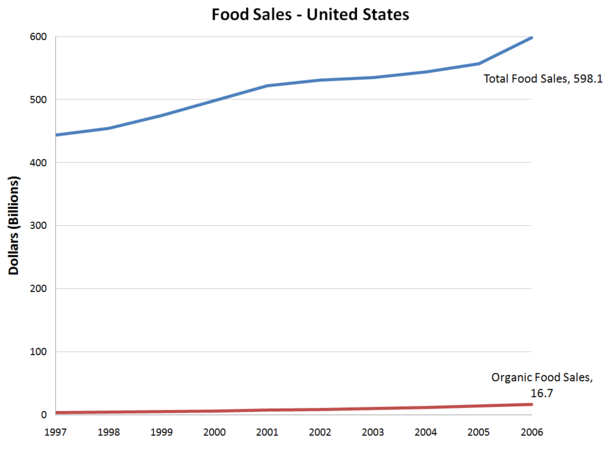
    Photo: White House Photo/Pete Souza

  • Traffic Congestion, Time, Money & Productivity

    It is an old saying, but true as ever: “Time is money.” A company that can produce quality products in less time than its competitors is likely to be more profitable and productive. An urban area where employees travel less time to get to work is likely to be more productive than one where travel times are longer, all things being equal. Productivity is a principal aim of economic policy. Productivity means greater economic growth, greater job creation and less poverty.

    Congestion Costs: This is why such serious attention is paid to the Texas Transportation Institute’s (TTI) Annual Mobility Report, which estimates the costs of traffic congestion, principally the value of lost time as well as excess fuel costs. The fundamental premise, long a principle of transportation planning and policy, holds that more time spent traveling costs money, to employers, employees and shippers.

    Mobility & Productivity: Groundbreaking Research: Yet, until fairly recently, very little research was available to document the connection between travel times and the productivity of urban areas. The pioneering work has now been done by Remy Prud’homme and Chang-Woon Lee at the University of Paris. From reviewing French and Korean urban areas, they showed that productivity improves as the number of jobs that can be reached by employees in a particular period of time (such as 30 minutes) increases.

    Focused US Research: US reports on mobility’s role in reducing poverty came to similar conclusions. A middle 1990s report for the Federal Transit Administration found that low income households in inner city Boston were at a particular disadvantage in obtaining jobs in the fast growing suburbs because transit service was either spotty or non-existent. Margy Waller and Mark Allen Hughes noted in a report for the Progressive Policy Institute that “In most cases, the shortest distance between a poor person and a job is along a line driven in a car”. Steven Raphael and Michael Stoll at the University of California found that access to an automobile nearly halved the difference between African American unemployment and that of non-Hispanic Whites.

    New, Comprehensive US Research: But it was only last month that the Prud’homme-Chang research was broadly replicated in the United States. The Reason Foundation published “Gridlock and Growth: The Effect of Traffic Congestion on Regional Economic Performance” by David Hartgen and M. Gregory Fields, which looked at job accessibility in 8 US urban areas (Atlanta, Charlotte, Dallas, Denver, Detroit, Salt Lake City, San Francisco and Seattle, ). Hartgen and Fields chose a 25 minute commute period (the approximate national average one-way work trip) to evaluate accessibility and found, generally, that each 10 percent increase in the number of jobs accessible in that period resulted in a 1 percent increase in productivity, as measured by the Gross Domestic Product of the urban area. They also found that if free-flow traffic conditions could be established, considerable improvements in urban productivity would be achieved, because employees could get to more jobs in less time. At the same time, they show that traffic congestion will worsen considerably by 2030 under present plans as adopted by metropolitan planning organizations.

    Hartgen and Lee looked at five sample work destinations in each urban area, the central business district, the airport, a university, a mall and a major suburb. The results by sub region were surprising:

    “Contrary to conventional planning wisdom, the research suggests that regional economies might be more dependent on access to major suburbs, malls and universities than on access to downtowns or airports. Not only are models of productivity somewhat stronger for these sites than for CBD accessibility, but access to them has a stronger effect on regional productivity.”

    The research indicates that achieving free flow traffic conditions to major suburbs, universities and malls would increase gross domestic products by from 6 to 30 percent. The gain in central business districts would be between 4 and 10 percent, while airports showed the least potential for adding to urban productivity, at 2 to 8 percent. These productivity gains are far from unachievable. Hartgen and Fields find that there is more than enough transportation funding in each of the urban areas to remove severe traffic congestion by 2030. These conclusions find fault with the growing emphasis by many in Washington to force people out of cars and into transit. Transit is simply not viable for the non-downtown markets, which have the greatest potential for improving job creation and economic growth.

    Hartgen and Fields also show that achieving free flow operations in the studied urban areas would generally produce more in increased tax revenues by 2030 than the costs associated with reducing it.

    American Urban Areas: Superior Productivity and Mobility: American urban areas are among the most mobile in the world. When compared to international urban areas of similar size, work trip travel times in the United States tend to be less. That is one of the reasons that US metropolitan areas are the most productive in the world.

    For example, the Japanese megacity of Osaka-Kobe-Kyoto has somewhat fewer people than the New York consolidated (metropolitan) area and slightly more than the Los Angeles-Riverside consolidated area. Osaka-Kobe-Kyoto has perhaps the world’s second most heavily patronized transit system (after Tokyo), which carries at least 50% as many riders on its rail lines alone as all of the transit systems in the United States. Yet, in Osaka-Kobe-Kyoto, workers spend 20 percent more time traveling between work and home each year as New Yorkers. They spend 40 percent more time commuting than workers in Los Angeles, despite its having the worst traffic congestion in the nation. The difference between Osaka-Kobe-Kyoto and New York and Los Angeles lies in the fact that in the two American metropolitan areas, most workers travel to work by car, to destinations throughout the areas (Note 1).

    Naïve Proponents of Poverty: However, not everyone understands that time is money. Some members of the US Senate and House of Representatives and Washington special interests would seek to restrict highway funding, making traffic congestion even worse. They would seek to reduce the number of miles that Americans travel by car in an attempt to achieve marginal greenhouse gas emission reductions (that is before the higher greenhouse gas emissions that occur in slower, more congested traffic is factored in). Secretary of Transportation Ray LaHood has indicated a desire to coerce people out of their cars.

    Transit: Inherently Less Productive and Expensive: One common claim is that transit will provide alternative mobility. However, transit trips tend to be twice as long as car trips and no transit vision has ever been put forward that would replicate the efficiency of the automobile. There is good reason for this, since such a transit system would cost on the order of a metropolitan area’s entire income, each year, to operate and amortize. And, transit is expensive. The recent compact cities policy lobbying paper, Moving Cooler, shows that transit is far from a cost effective means for reducing greenhouse gas emissions, costing 20 times the maximum $50 per ton guideline as established by the United Nations Intergovernmental Panel on Climate Change.

    None of this is to deny the inestimable value of transit in serving the nation’s largest downtown areas (such as Manhattan, Brooklyn, Boston, Philadelphia, Chicago and San Francisco). However these locations are commercial hyper-density aberrations in much larger low-density seas and are exceptional among America’s more diffuse metropolitan areas. Rather, the problem is overselling transit in markets that it cannot competitively serve. Disinvesting in highways (forcing people into transit) makes no more sense than to require the injection of blood clots into the bloodstreams of patients under the guise of improving the health and livability of patients.

    It’s the Economy, Stupid: The United States has had enough recent experience with rising unemployment and falling economic performance. It hardly needs public policies that would increase travel time, reduce productivity and increase poverty, no matter how fervently and sincerely held are the misconceptions of the proponents. Hartgen and Fields have provided an invaluable work that could not have come at a better time.


    Note 1: Calculated from United States Bureau of the Census American Community Survey and Japan Statistics Bureau data.


    Wendell Cox is a Visiting Professor, Conservatoire National des Arts et Metiers, Paris. He was born in Los Angeles and was appointed to three terms on the Los Angeles County Transportation Commission by Mayor Tom Bradley. He is the author of “War on the Dream: How Anti-Sprawl Policy Threatens the Quality of Life.

  • Cap And Trade And The Smog Market Ripoff

    Now that Senators have reconvened from summer hiatus, one of their first tasks will be to contemplate the greenhouse-gas cap-and-trade carbon market that President Obama would like to institute to blunt global warming. Their necks better be limber. Partisans of Keynesian, market-based regulations will undoubtedly point to the Midwest’s federally run “acid rain” program to reduce harmful power-plant emissions as proof that giving industry profit incentives in cleaning up their operations can be successful. Regulation skeptics will wave that example off dismissively, urging Senators to swivel their heads for a look across the Atlantic, where the European Union’s Emissions Trading System has registered lousy results.

    Whatever those markets do or don’t foreshadow, if the American Clean Energy and Security Act of 2009 and its mandated cap-and-trade become law, a glimpse of an unintended — and unsavory — future may reside in the tale of the inscrutable businesswoman from smog-bound Southern California who scammed the area’s pollution exchange…twice (see my site, www.chipjacobs.com, for the newest revelations of a second scam). Rather than a tale of a dreamer’s demise, Anne Sholtz’s story is a bracing reminder that to create a market, no matter its aim, is also to inspire a class of people determined to game it.

    If Wall Street traders can commodify sub-prime mortgages with impunity, and the Enrons of the world can manipulate energy markets like a pinball machine, imagine a future when tradeable permits for carbon dioxide and other heat-trapping gases are auctioned and swapped over the public’s head. A Heritage Foundation economist expects the action to hit $5.7 trillion in value, and many experts say it all adds up to an irresistible buffet for chicanery.

    Few in Washington ever heard of Sholtz, 44, before last spring, when the former Caltech economist was sentenced in federal court to a year of home-detention and five years of probation for defrauding the nation’s first air pollution cap-and-trade market. Sholtz was cozy with the RECLAIM program and the bureaucrats who run it at the South Coast Air Quality Management District (AQMD). That’s because in the early-1990s she had helped design the concept as an adviser.

    Her know-how proved dangerous. Between November 2000 and April 2001, Sholtz tried fooling one of her clients, a New York-based energy trader, into believing she could complete a fat, multimillion-dollar deal with what is now ExxonMobil Corp. when in fact she could not. Stringing executives at the client company along until she could reactivate a transaction, she emailed and faxed falsified sales documents, including phony invoices.

    Pleasant, brainy and ever-hustling, Anne Sholtz was not somebody folks expected to see handcuffed. Her 2004-arrest by EPA agents on white-collar fraud charges shocked and mystified local environmental circles. She and her companies, Automated Credit Exchange and EonXchange, had boasted a heavyweight list of clients and financial partners, and had worked with the Dutch government on an emissions test-market. As one of California’s rising green-entrepreneurs, Sholtz was a niche-celebrity with access to powerful politicians and regulators, and a hillside mansion, fine cars and whatnot to show for her ingenuity.

    For our purposes, the reasons she’d risk all that matters less than the fact she was able to do so undetected. (You can read the entire expose here.) And that Obama’s proposed carbon market would look a lot like L.A.’s now 15-year-old smog bazaar. RECLAIM sets progressively lower emissions’ limits for roughly 330 of the Southland’s largest oil refineries, power plants and other manufacturers, and allocates credits calculated for each one. Companies that install new particle-trapping equipment or develop cleaner operations in other ways to reduce oxides of nitrogen and sulfur can sell their unused credits to peers who may exceed their allotment. Since 1994, there have been about $1 billion in trades, which brokers help negotiate, and about 40-million pounds of smog chemicals transacted.

    AQMD contends that, after a languid start, its regimen has achieved its emission-cutting goals. At first, an over-allocation of credits to ease industry into the new system simply encouraged many companies to delay purchasing greener equipment. (Using the same logic, the current Obama-backed energy bill, sponsored by House Democrats Henry Waxman of California and Edward Markey of Massachusetts, would initially give away an eye-popping 85 percent of greenhouse-gas credits to cushion carbon-dependent states. This means dramatic emission reductions likely won’t happen for years.)

    RECLAIM added another bold move to Southern California’s environmental pedigree, a change that industry actually wanted. But in developing such an open-ended, boutique market officials essentially flaunted their gullibility to cheaters, scammers and profiteers. It took AQMD several years to learn of Sholtz’s deceit, and only then after nine of her clients complained about being cheated.

    A year before that, in 2001, the air district had been blindsided by California’s electricity crisis, and the subsequent order by then-Gov. Gray Davis that power-plants run nonstop to prevent rolling brownouts. Speculators from Texas to New York with no industrial operations in the South Coast basin hoarded RECLAIM credits they knew utilities needed, later reselling them at huge markups. The market teetered near meltdown, and district brass had to yank power companies from the market.

    Ironically, one reason AQMD officials were oblivious to Sholtz’s actions was because they’d nixed her very own recommendation during RECLAIM’s design phase to stamp each credit with identifying marks, somewhat akin to a bar code. Loose trade-reporting requirements added more vulnerability. As California’s experience makes clear, building an incorruptible greenhouse-gas market may not be just formidable, it may be impossible, because the money and opportunities for deception are so tantalizing.

    This May, two Republican congressmen skeptical of Obama’s cap-and-trade plan, Joe Barton of Texas and Greg Walden of Oregon demanded extensive answers from the EPA about the Sholtz case. Why, they asked, were so many case documents still sealed by the Justice Department? How could this have happened on regulators’ watch, and what does it portend for a greenhouse-gas market?

    On their heels, AQMD executive officer Barry Wallerstein defended his market as virtually bulletproof to further criminality, while the EPA downplayed the matter as an isolated case. Those declarations occurred before documents emerged showing that Sholtz had told prosecutors during her 2005 settlement plea about “rampant” violations and graft by AQMD executives administering the market.

    All of which is to say Senators should look straight forward with furrowed, “prove-it” brows when fellow members and environmental glitterati pronounce that a greenhouse gas market will operate cleanly because really smart people with nifty technology will be policing it. As the Waxman-Markey legislation stands, the Federal Energy Regulatory Commission, the EPA, and perhaps several more agencies will be patrolling for fraud, speculation, price manipulation and so-forth. Other enforcement details are hazy.

    Chip Jacobs is the co-author, with William J. Kelly, of Smogtown: The Lung-Burning History of Pollution in Los Angeles. Jacobs can be reached at chip@chipjacobs.com