Tag: Environment

  • “Cash For Clunkers” Doesn’t Utilize Junkyard Efficiency

    My father owned and operated a junkyard in Tucson for a number of years, and I learned a lot about the auto recycling industry helping around the office and as a delivery driver. So as a junkyard enthusiast, the “Cash For Clunkers” program naturally caught my interest lately. Though it looks to be the product of good intentions, I don’t think the legislation understands that junkyards already comprise an efficient, well developed recycling system for salvaging vehicles, with a beneficial result for the environment overall. I’m skeptical that quickly scrapping so many government-defined “clunkers” and replacing them with new, fuel-efficient models will have a substantial environmental benefit, because the plan has the potential to waste many useful materials in these cars.

    A junkyard may appear to be little more than a landfill for old cars if you’re just driving by, but in fact, to succeed, it must function as a highly efficient recycling operation. Junkyards sell parts to other junkyards, mechanics, and directly to consumers, and attempt to make as much of a profit as possible from each part on every car in their inventories.

    There is also a network of scavengers who travel around to junkyards gathering large core items, like alternators and starters, and a number of precious metals in small amounts that most don’t even recognize as in our cars. (Catalytic converters, for example, contain platinum and palladium, which are quite valuable when salvaged.) But a car needs to sit on the lot for a considerable period of time for this recycling process to work itself through. Parts from a car are usually sold one at a time over a period of months or even years; scavengers work on their own schedules. A scavenger may only come by a junkyard a few times a year to core out a particular metal or gather the useful components. Meanwhile, the junkyard needs to be selling parts off the car for it to be financially worth keeping in the inventory. A car is only sent off to be crushed for scrap metal when it no longer retains enough value to justify filling the space on the lot.

    If the Cash For Clunkers program is successful, it has the potential to throw a wrench into the system. The program’s rules require that the engine of a trade-in car be destroyed with an injection of sodium silicate so that the car won’t be resold and put back on the road. The rules seem to encourage the immediate crushing and shredding of the trade-in cars, but should they remain on junkyard lots, their inventory value would take an immediate hit with a non-functioning engine (the most valuable part of the car). To what degree the value decreases depends on the extent of the engine damage, the demand for the particular engine, and the age of the engine.

    A genuine old clunker would be likely to have a well used, and therefore less valuable engine, but then, the “clunker” program nickname (its official title is the “Car Allowance Rebate System”) is something of a misnomer. To be eligible for the program, cars must fall into certain categories of fuel inefficiency, be less than 25 years old, and worth less than $4500. This includes a number of models from the nineties. A working engine in many of the models targeted for the program is likely to have fewer miles on it, and therefore a higher inventory value, than a more traditionally defined clunker.

    But engine issues aside, if the program succeeds in taking a large number of particular models off the road, it could have an even more drastic effect on the junkyard value of those models, simply by lowering the demand for their parts. If there are only a few of a given model on the road, few consumers will buy parts for them from junkyards. Many junkyards are picky about which models they purchase for inventory, and won’t even bother with a model if there is little or no demand for its parts. So if Cash For Clunkers leaves some car models without junkyard value, those models would start going directly to the crusher, taking many of their valuable components with them. The scrap metal from crushed cars is used to make things like rebar and fence posts, so it isn’t as though the scrap winds up in the landfill. But it’s still a waste for precious metals and other valuable components to be crushed down with the low-end materials for low-end product.

    And even beyond the metals, something mundane like a plastic glove box has its own environmental impact. The overall junkyard process, where cars without “street” value become parts donors for cars still in use, prevents a great deal of after-market manufacturing of glove boxes and all the other parts that wear out or get damaged in cars on the road. If entire models are abruptly taken off the road, devalued at the junkyard, and crushed, it means that many new glove boxes must be manufactured – both for the new cars replacing the model, and for any other models and even makes still on the road for which that model of glove box, or stereo, or steering column fits (and many parts are surprisingly versatile this way). That could mean a boost in manufacturing, sure – but it also means an environmental impact that offsets some of the gains from the new fuel-efficient car that replaces the clunker.

    Cash For Clunkers is scheduled to end November 1, so it’s unlikely to have a long-term effect on the auto recycling industry beyond burdening it with a glut of devalued inventory. But so far the program is popular, and may be expanded or set a precedent for future programs. If this happens it could take a toll on the junkyards and their ability to recycle effectively. If there are suddenly millions of brand new car models on the road, there would be a period of hardship for the auto recycling industry, as the new cars would be running well, with any repairs done mostly under warranty at the dealerships with new parts. This whole scenario could also, by extension, tax the junkyard consumer base of low income, self-sufficient individuals whose cars are older, skillfully maintained, and perhaps most importantly, paid off.

    It’s beyond my pay rate to comprehensively evaluate the net difference in environmental impact between manufacturing and selling new, fuel-efficient cars for these quick “clunker” trade-ins and letting the older models stay on the road. But a legitimate evaluation would clearly involve more complex factors than a simple comparison of fuel efficiencies. Yet it’s clear that the program doesn’t appear to insert any innovative solutions into an already dynamic and effective recycling system. Even if it has some positive outcomes, it doesn’t look like Cash For Clunkers will utilize the industry’s full potential for environmental benefit.

    Perhaps its primary motive lies elsewhere, in its attempt to jump-start the auto industry with a “green” marketing gimmick. But in the process we may have reaped some unintended damage on a sometimes unsightly but remarkably environmentally resourceful industry.

    Andrea Gregovich lives in Anchorage, Alaska. She has written a novel about a junkyard called Martyred Cars and is looking for a publisher.

  • Koyaanisqatsi Redux

    I went to Hollywood one night last week to watch my favorite film of all time, Koyaanisqatsi (released in 1983). It was being shown on a big screen at the Hollywood Bowl, accompanied by orchestra playing the original score, conducted by its composer, Philip Glass. Oh, I didn’t go to the Bowl; I watched it at my daughter’s apartment about half a mile away (hi def DVD and digital sound system turned way up, thank you). It was much more enjoyable than going to the Bowl; after all, I didn’t want to share the experience with an audience that undoubtedly would have, shall we say, a different appreciation of the art.

    You see, the message and meaning most of the Hollywood crowd take from Koyannisqatsi (Hopi Indian for “life out of balance” or “crazy life”) is that man has despoiled and separated himself from his natural environment. Frankly, it has always had the exact opposite effect on me. Even after what must be 100 viewings, I am continually overwhelmed, impressed and delighted by the images of what man has been able to create, invent and build to control his environment, increase his wealth, provide him his food and energy, raise his standard of living, and transport him around the planet (or across the city).

    I am sure most of the Hollywood Bowl crowd has a different response, and finds the images disturbing and disgusting. This is the reactionary impulse, born of an anti-industrial, anti-development mindset. I would wager the majority of that audience has bought completely into the scaremongering of catastrophic man-made global warming, which to the properly skeptical and scientifically literate remains unproven (oh hell, it’s ludicrous on its face). This is deliciously ironic, as many sequences in Koyaanisqatsi were filmed in the 1970s, when most of the same crowd were hectoring us about global cooling (doubly ironic, as a cooling may now actually be upon us).

    My first review of the film, published some 25 years ago, needs only minor updating.

    This truly remarkable film by Godrey Reggio has no plot, no characters, no dialogue. The images of the film are awe-inspiring: first, huge expanses of pristine nature: deserts, rivers, mountains, mesas, lakes, waterfalls, clouds. Then grand-scale technology: huge earth-moving machines, power plants (nuclear and otherwise), oil refineries, food-processing plants, space shuttles, rockets, jets, freeways, subways, skyscrapers, shopping malls, train stations (and of course the obligatory atomic bomb explosions and mushroom clouds) – all shot in fascinating slow-motion and/or time-lapse format by cinematographer Ron Fricke. The accompanying music by Philip Glass is eerie, haunting and perfect.

    The film is a visual, aural and emotional feast. If it bores you, you don’t understand you are looking at, in juxtaposition, the majestic indifference of nature; the supreme accomplishments of physical engineering; and some of the most awful consequences of attempts at social engineering. Some of the images that make indelible impressions, all set to a majestic, driving score:

    • desert rock formations unchanged through thousands, if not millions of years
    • huge power transmission lines stretching forever across barren desolation
    • the implausible flying behemoth that is a 747
    • the flow of vehicles on a freeway, at night, from 50 stories up, that in time-lapse photography really does look just like the flow of blood through vessels, arteries and capillaries as seen through a microscope
    • row upon row of huge, empty, abandoned south Bronx tenements
    • the razing of the Pruitt-Igoe housing project in St. Louis (the most graphic depiction of public policy failure ever committed to film, I should think)
    • the rush of commuters who in time-lapse photography look like ants swarming an anthill
    • various mass production activities: mail-sorting machines, industrial assembly lines, escalators, elevators, revolving doors, conveyor belts, money counting machines, huge bowling alleys, movie theaters
    • finally, the high resolution satellite photograph of a massive city grid (Los Angeles, of course) overlaid, first, on a printed circuit microchip board, and secondly, on an intricate Hopi Indian woven blanket. The matches are nearly perfect.

    A very noticeable detail of the ’70s-era footage from Los Angeles is the blanket of smog that covers the city; I can tell you, having lived here all of these years, that the situation is dramatically improved. (I now see far-off mountain ranges daily; in the ’70s that was rare.) Environmental quality has been improving over the decades (read The Skeptical Environmentalist by Bjorn Lomborg for the statistical evidence). The solutions to the problems that technology causes often end up being more technology, sensibly and carefully applied.

    The single greatest contributor to the amelioration of LA smog, for example, is the catalytic converter. Instigated and required by government, you say? Developed and produced by industry in response to marketplace demand, says I.

    I find the movie very relevant today. It seems some of our new political overlords seem to think they can have a productive economy without production, without what the film depicts: heavy industry; mass processing of food, clothes, consumer and industrial goods; massive residential and commercial development; huge efforts devoted to energy extraction, production and transmission; untrammeled mobility for goods, people and vehicles. Now I’m a “new economy” guy myself, but I realize that our wealth, standard of living and quality of life – the current and future prospects for hundreds of millions of us – are dependent upon these activities, and that the health of the industries that make them possible are far more important than any particular small sub-species of bird, fish, ant or rat (the threats to which are always exaggerated anyway).

    We are really talking about the role of government here, not only in protecting nature. What the film shows me is that it is in fact government’s job to protect the “other” environment: the environment that encourages, promotes and allows incentives for production. Part of this environment is the need for massive infrastructure: energy systems, water systems, waste systems, transport systems, roads, dams, etc., etc., in adequate capacity and in good repair. Mass production and economies of scale bring good quality cheap to millions, and provide opportunities to generate incomes, grow wealth and lead productive, modern lives. More efficiency can also create more nature; for example, the millions of acres of non-redundant farmland turned into forest or open space.

    We used to know and understand this as a society. Our political elites were devoted to it. Now, not so much. We need to relearn the basic lessons and regain that consensus again.

    Dr. Roger Selbert is a trend analyst, researcher, writer and speaker. Growth Strategies is his newsletter on economic, social and demographic trends; IntegratedRetailing.com is his web site on retail trends. Roger is US economic analyst for the Institute for Business Cycle Analysis and its US Consumer Demand Index, a monthly survey of American households’ buying intentions.

  • ULI Moving Cooler Report: Greenhouse Gases, Exaggerations and Misdirections

    Yesterday a group of environmental advocacy groups, foundations and other organizations released a report, Moving Cooler, amid much fanfare, seeking to have us believe that it is a serious study of GHG reduction options in the transportation sector. It is immensely disappointing. The world could use a dispassionate, objective and broad-based assessment of petroleum reduction options as well as their positive and negative consequences. This is not it.

    As one reads one can’t help but feel that you are being hit with a sales pitch, or a legal brief from advocacy groups and those who would benefit financially from the derived policy options. The main point, amidst all the array of statistics, confirms the dogma of the already convinced that the only solution to greenhouse gases is major re-structuring of society.

    These notions, critically, were already on the front burner of these same groups long before the climate change issue came to prominence. “Progressive” foundations, new urbanists, planners and urban landowners long have advocated the re-assembly of urban living into high density transit-oriented bikeable/walkable communities. Even though their numbers as reported in the text don’t bear it out, the rhetoric is all focused towards that end and the pricing out of existence the automobile and all the evils it represents: suburban living and long trips.

    This is a report meant to be waved rather than read as the Congress goes about its fulminations in the coming months. It understates the prospect of gaining the full potential of greater energy efficiency from the vehicle fleet – the only way to justify the wholesale reorganization of society. In fact, if the vehicle/fuel assumptions had been as comparably optimistic as the land use assumptions, with a robust and honest assessment of fuel and vehicle technological development opportunities, one wonders whether this report would be worth doing at all.

    We have been here before. In the struggle to improve air quality, it turned out that the solution was not so much changing people’s behavior as it was technological – largely the improvement of fuel and vehicle technology. In the 1970s we were told we could not have cleaner air and automobiles; yet in fact that’s exactly what happened, without having to heed a sermon about our need to repent and change our suburban, car-driving ways. Some people just have a penchant for telling others how to live.

    Maybe the saddest part of it all, the authors appear not to take global warming or energy security very seriously at all. Rather these public concerns are just a convenient hook, the cause du jour, on which to hang their favorite solutions. If global warming matters – and it does; if energy security matters – and it does; then early action is clearly called for, particularly given the cumulative nature of GHG gases. But somehow the things easily done and carrying with them little in the way of disruption or public costs – carpooling, telecommuting, dispersed work – are largely written off. Such immediate, low-cost actions as highway operations strategies including better traffic signalization, improved traveler information and accident response systems receive little emphasis.

    Overall, the treatment of costs and benefits will leave readers gasping:

    • Travel times don’t get counted – so shifting from a 15 minute car trip to an hour on transit or walking has no penalty.
    • Transit subsidies don’t get counted – so doubling subsidies to increase ridership has only benefits.
    • Every possible pricing strategy is invoked – congestion pricing, cordon pricing, on-street parking fees, extreme fuel prices – in order to get people out of cars, and then the loss of their cars is counted as a benefit.

    At the same time the benefits and the costs involved are so corrupted to be meaningless. It will take weeks for analysts to tease out what really was done in the way of assumptions to create winners and losers. And there is no effort to tally all the costs exacted on the average household, or the typical business or even governments for that matter. The costs would add up to a permanent recession.

    I am sure the millions affected by these policies, particularly the middle and working class people who can now just barely afford a car, who would be priced out of the system by these policies, will say thank you for this “benefit”.

    As we work our way through the recession, workers will be willing to travel farther and farther to find the right job – or any job. With continuing increased specialization in our society larger and larger market sheds for jobs and for workers, quality transportation will be critical to our national productivity. This is the work that transportation does and it is totally dismissed by this report. It can not be addressed adequately by rail or transit even with a complete radical reorganization of work and society.

    In order to further bolster their ineffective case the proponents use a tool called “bundles” in which packages of actions are assembled for their “synergistic” qualities and either given a boost or cut based on the assertion that some things work well together. How this was done is not explained. So land use plans, which will take 30 years to come to fruition, are coupled with carbon pricing policies in a sort of horse and rabbit stew, that help make density solutions seem effective.

    Those who see the solution of so many of our present ills by cramming people into ever higher densities miss the point. Residential density is one of the most fundamental choices households make. Changing residential densities to make transit work better is the smallest tail wagging the biggest dog I can think of. It puts planning dogma ahead of the most basic human needs and rights.

    It is clear that most people, excepting a small but often very loud minority, opt for lower density living when income permits. As the society changes and choice patterns evolve, the marketplace must be ready to respond with development that is both responsive to household choices and to the demands of environmental needs. Any public policies that inhibit a market trend toward higher densities must be addressed. But the market place must be the final arbiter in a free society. People do not live “efficiently” in order to optimize some imposed societal goal, certainly not commuting.

    The serious work that needs to be done in this area still awaits an independent and credible group to undertake this work. It can’t come soon enough.

    For almost 40 years Alan E. Pisarski has been involved in the national transportation policy scene, from vantage points at the original Tri-State Transportation Commission in New York, the Metropolitan Washington COG, the Office of the Secretary, U.S. DOT, or in a personal consulting capacity. In his work he has measured the transportation activities of our nation from the metropolitan, state, national and international levels. In the U.S. DOT he organized the major travel surveys of the nation and designed and managed the U.S. transportation statistical system under the Assistant Secretary for Policy, establishing programs that are still the basis of much of the U.S. transportation statistical system today.

  • Salinas Dispatch: A Silver Lining in the Golden State

    From a distance, a crisis often takes on ideological colorings. This is true in California, where the ongoing fiscal meltdown has devolved into a struggle between anti-tax conservatives and free-spending green leftist liberals.

    Yet more nuances surface when you approach a crisis from the context of a specific place. Over the past two years my North Dakota-based consulting partner, Delore Zimmerman, and I have been working in Salinas, a farm community of 150,000, 10 miles inland from the Monterey coast and an hour’s drive south of San Jose. Our work has been funded by a variety of sources, including the city, local business interests and the Chamber of Commerce.

    Our goal has been to find ways to promote upward mobility in the town, which is almost two-thirds Hispanic. Poverty is widespread, and gang problems rank among the worst in California. Unemployment, devastated by the recent recession, hangs at around 15%.

    These conditions are not at all unusual for inland California, and they are particularly prevalent in farm regions. In the Central Valley, over the next range of mountains, conditions are far worse, with some communities losing thousands of acres in production and unemployment rushing upward of 40%.

    One liberal journalist, Rick Wartzman, recently described the vast agricultural region around Fresno as “California’s Detroit.” As environmentalists push to cut back on water supplies and protect fish populations in the San Francisco Bay Delta, Wartzman notes, its local workers and businesspeople “are fast becoming a more endangered species than Chinook salmon or delta smelt.”

    In Salinas, where water comes from local aquifers, wells and the Salinas River, death seems less imminent, but there is a profound sense that things may be deteriorating. Local growers worry about regulatory constraints that will drive up costs to meet new state greenhouse gas standards. They also fear a possible county initiative, promoted by the well-funded local greens, to ban the growing of genetically modified foods.

    The growers’ response to the pressure – as with other businesses in California – is not to quit but to scale down operations. Some are cutting back thousands of acres of lettuce and other green crops that have been the prime business for the area for nearly a century.

    Yet we also see many reasons for hope. Salinas remains a unique place with an amazing richness in what the French call terroir, a combination of climate and soil. The city’s most famous son, John Steinbeck, wrote of the Valley’s unique topography:

    “The high gray-flannel fog of winter closed off the Salinas Valley from the sky and the rest of the world. On every side it sat like a lid on the mountains and made of the great valley a closed pot.”

    Growing conditions in Salinas cannot be easily duplicated elsewhere. Its richness has created a cornucopia responsible for the predominant part of the area’s private-sector employment.

    But it’s not just physical factors that make Salinas – and California – so productive. People matter too. The area is populated by scores of hard-driving agricultural families, people whose forebears transformed the place into the “salad bowl” of a nation. By 1952, when Steinbeck published East of Eden, Salinas produced 70% of the nation’s lettuce and much of its fresh vegetables.

    Salinas’ growers are not hereditary gentry; talk to local farmers and you find people whose roots lay in Italy, Portugal, Ireland, Japan and, increasingly, Mexico. “People, if given opportunity, can accomplish anything,” notes Lorri Kester, CEO of Mann Packing, a leading broccoli producer. “Many of the firms that lead us now were started by ‘Okies’ who worked the land. Now we see the same things with Latinos who started out as hands and now are foremen or managers.”

    What the Salinas growers do best – like their high-tech counterparts up in the Santa Clara Valley – is innovate. Working with the USDA and University of California-Davis scientists, they have led the way in creating new strains of vegetables and new ways of marketing, including the notion of “salad in a bag.”

    But not all the knowledge that makes Salinas such an economic powerhouse comes from entrepreneurs or PhDs. Like many agricultural communities, Salinas has had a sometime brutal labor history, particularly in the 1930s. The worst of this is now thankfully over, but farm labor remains a tough and often unrewarding profession.

    Yet even the hardest-edged growers acknowledge the importance of their labor force. Although education levels remain relatively low, our research revealed an extraordinarily high concentration of people with practical skills that can be applied to growing the agricultural economy. Future mechanization may reduce the overall employee counts but will make growers even more dependent on skilled workers in the fields.

    This proficiency, acquired in the fields and the processing sheds, has helped create another product for the Valley: expertise. Salinas growers, foreman, irrigation workers and marketers now sell their knowledge in other parts of California, as well as to Arizona, Mexico and, increasingly, East Asia. “I am seeing a lot of product and technical products from Salinas go to China and elsewhere,” notes Frank Pierce, a local agricultural consultant.

    Salinas also teaches you to avoid the great distinction made by many pundits between the “knowledge” industry and the productive type that focuses on tangible goods. A successful economy draws on information but also creates real products. There is a relationship between the two that is dynamic and has long been a critical component of California’s economic vitality.

    This is not just true of Salinas. I learned long ago from the founding fathers of Silicon Valley – people like Intel founder Bob Noyce and venture capitalist Don Valentine – that the practical knowledge from making circuits and chips helped create the Valley’s unique engineering terroir. Similarly, the “magic” of Hollywood does not emerge full-blown from the brain storms of stars and moguls. The entertainment complex’s unique abilities grow from the interplay of practical knowledge of less glamorous camera people, grips, editors, caterers and prop-managers servicing what Angelenos invariably refer to as “the industry.”

    Sadly, this insight largely has been lost on California’s political and business leadership. Among the so-called “progressive” community, production of any kind, outside of small artisanal farms or funky software shops, is disdained.

    This anti-development ethos has gained extra traction by claims that large farms and factories might add to the “carbon footprint” of a given place. Among well-funded foundations and some corporate leaders there remains an implicit sense that California can still mine enough riches in cyberspace to support the vast hoi polloi.

    Yet in reality, Californians need hard jobs, even mundane ones. The farm, sound stage or electronics factory provide the employment essential to broad-based prosperity. And when those jobs leave California they usually migrate to a place – whether over the border or abroad – where wages are lower and environmental controls are far weaker.

    This is not to argue that California’s right has the answers either. Lower taxes are generally preferable to higher ones. But in Salinas – and California – sometimes higher taxes might be preferable to cutting services, like the critical training offered by community colleges, which make the economy work and offer hope to the younger generation.

    In Salinas, Mayor Dennis Donahue, a Democrat of the Pat Brown variety, has embraced a call to raise the sales tax in order to maintain basic services. It’s not an ideal solution, but in the real world of running a city, particularly one with a big gang problem, you don’t want to cut back on police and libraries or add to already surging unemployment.

    What California needs most now is what it’s most missing: common sense and a sense of balance. This is what we learned in Salinas. California cannot be saved by ideologies – it needs to be saved from them.

    To be sure, preserving the land and air quality should remain a priority; it is the basis of California’s riches and unique appeal. But sustainability – the great buzzword of our time – needs to apply not only to the environment but also the economy and society. The right-wing solution of lower taxes even at the price of eviscerating the public sector and letting the infrastructure deteriorate does not constitute a program for long-term prosperity.

    We prefer an approach that focuses on practical steps for private and public sectors to collaborate on restoring economic growth. In Salinas, this means establishing – through cooperation with Hartnell, the local community college – a center for the development of agricultural technology. Salinas could use its combination of intellectual and grassroots knowledge to become the Silicon Valley of the “fresh” economy. It would also serve as a center of practical research on E. coli and other diseases that threaten the entire agricultural industry.

    Another step would be to expand the area’s thriving wine corridor to promote the region’s vintages. And there needs to be a plan to restore the historic central core into a bustling business district and to attract the predominately Latino shoppers, now lured to malls and outlet centers outside the city, back into town.

    These steps will take effort and money, but neither free market ideology nor green zealotry alone will get it done. California’s greatness was created not just by entrepreneurs or through its public sector, but in a clever, pragmatic melding of the two. Blessed with resources of topography, climate and human skill, our state should not allow dueling extremes to turn a global paragon into a planetary laughingstock.

    This article originally appeared at Forbes.

    Joel Kotkin is executive editor of NewGeography.com and is a presidential fellow in urban futures at Chapman University. He is author of The City: A Global History. His next book, The Next Hundred Million: America in 2050, will be published by Penguin early next year.


  • UK Green Path leads to Deindustrialization and Worsening Housing Shortage

    The First Secretary of State, Secretary of State for Business, Innovation and Skills, and Lord President of the Council, Peter Mandelson, together with Ed Miliband, the Secretary of State for Energy and Climate Change, have published The UK Low Carbon Industrial Strategy. They are claiming it promises an “economic revolution” but is in fact an environmentalist retreat from industrial production It is a disastrous strategy that will result in further de-industrialisation, supposedly with the aim of addressing a rather vague threat of climate change.

    Mandelson and Miliband insist The UK Low Carbon Industrial Strategy “can ensure that our economy emerges from the global downturn at the forefront of the technological and social shift that will define the next century.” Yet this is typical establishment “greenwash”, which many institutional and corporate leaders of the construction industry will sadly rush to endorse. It will shift us towards the laborious construction of new eco-homes, and the laborious refurbishment of the stock of mostly draughty, poorly insulated, and badly serviced housing. All this is aimed to achieve, at least on paper, a contribution to a national carbon reduction target by 2020.

    Government thinks that it will be building 240,000 “zero carbon” homes every year by 2106. In fact at least 500,000 homes are needed every year to meet household growth and replace the oldest of the stock at a rate of 1% a year. Yet in reality this year new house building is down to 100,000 a year, and there is no reason why that level of production will increase even when, as is starting to happen, house price inflation returns. Instead of promoting mass production, most house builders are quite likely to follow The UK Low Carbon Industrial Strategy to become luxury eco-home builders. They will be content to build around 100,000 “green” homes a year to get through the planning system. They will build homes that show their environmental credentials by the thickness of walls and roofs – full of sheep’s wool or hemp, packed with straw bales, or made from low-fired clay blocks.

    This, of course, is the approach to new house building promoted by Prince Charles and the other would be green gentry. He advocates “the use of local materials to create local identity which, when combined with cutting-edge developments in building technology, can enhance a sense of place and real community.” Just as Mandelson and Miliband claim theirs is an industrial strategy, Charles promotes green building technology.

    Charles talks of building walls and roofs thickly in “volume”, but what does his royal greenness know of the market? Government also imagines it can use renewable insulation materials to produce “affordable” housing. Walls and roofs will get thicker, but housing will not be built in sufficient quantity for a growing population, and will not be affordable on most British household incomes.

    The green tendency will be to use greater thicknesses of less processed, more laborious-to-install insulation materials, cut-to-fit on site. This will make the walls and roofs on new eco-homes around half a metre thick, but that might be fashionable. Having more material in the walls and roof will show how little energy is used in the new and expensive eco-home.

    Thick insulation is an immediate problem in the refurbishment of the stock of 26 million existing houses and flats. It is not always possible to cover the outside with great thicknesses of natural materials that, contrary to the Prince’s claim, have a low capacity to insulate. Even industrially produced fibres and foams, which green purists think are too processed, must be used thickly. It is less possible to apply thicknesses of insulation inside the existing home, when most British homes are so small. A lot of filling of masonry cavity walls has been carried out under energy efficiency schemes, with little regard for why the drained air cavity was there in the first place. But no existing housing has walls with cavities of up to the 300mm that would be required for insulants that satisfy greens.

    The architectural fact is that only made-to-fit insulation, prefabricated as an industrially processed product, can achieve the thermal performance being discussed with a minimal thickness.

    Sheep’s wool and hemp, straw bales, and low-fired clay blocks are positioned increasingly off the scale to the right on thickness. Foam glass as an industrial product is poor as an insulant, as is cellulose fibre. The sorts of glass and mineral fibre insulation that can be bought in any builder’s merchant require substantial thicknesses. Foams have better performance, and are familiar as cut-to-fit insulation. However only the use of processed vacuum insulation, as a made-to-fit industrial product reduces insulation thicknesses to the architectural dimensions required.

    On behalf of New Labour Miliband boasts that Britain has produced a carbon reduction plan to 2020 that should inspire other industrial and industrialising nations. “Having been the first country in the world to set legally binding carbon budgets, we are now the first country in the world to assign every department a carbon budget alongside its financial budget,” he told the House of Commons. We seem to be the first country in the world to ignore the space- and time-saving potential of construction technologies that require energy in their production processes, but save energy in the long term operation of well serviced buildings.

    Britain is retreating from industry and makes an environmental fetish out of bulky “natural” materials that don’t work well. Why favour materials that are lightly processed as agricultural crops, or are low-fired but need rendering? Why not accept processing, as all timber is processed, and welcome the durability of fully fired bricks? This carbon obsessed idiocy in construction works against other great materials like concrete, glass, steel and aluminium.

    For their part government is insisting that insulation must be renewable and crop-based rather than an industrially processed product. This means that small British houses and flats will be thickly walled and roofed and will be built in too few numbers to accommodate British household growth. Every existing home must be refurbished indefinitely. That is truly pitiful for an old industrial democracy like Britain.

    Government abuses the words Industrial and Strategy, sharing the Prince’s low aspirations for twenty-first century construction and architecture. An industrial strategy worthy of the name would promote the development of highly processed vacuum insulation, and would expect skills in design, manufacture, installation, and maintenance.

    An attempt to make “green jobs” rather than raise productivity and wages, The UK Low Carbon Industrial Strategy should be seen and criticised as an environmentalist strategy of de-industrialisation, because that is precisely what it is.

    Ian Abley, Project Manager for audacity, an experienced site Architect, and a Research Engineer at the Centre for Innovative and Collaborative Engineering, Loughborough University. He is co-author of Why is construction so backward? (2004) and co-editor of Manmade Modular Megastructures. (2006) He is planning 250 new British towns.

  • The Rich Home on the Range

    Have your home on the range, access to a few thousand acres …without paying for it all!

    By Candace Evans

    Mark Lowham was raised on a ranch in Casper, Wyoming. He got away from roping steers and repairing fences to study at Stanford Business School. Lowham thought he might return to ranching one day, but he never dreamed that instead of roping steers, he’d be marketing ways to rope adults into a herd of conservation-minded land-owners.

    Lowham is senior vice president of WEST*GROUP, where he works with Gerald T. Halpin, a former rocket scientist renowned for having the perfect nose for real estate deals. Halpin’s best to date, according to Lowham, was his 1962 acquisition of two dairy farms, Storm and Ulfelder, in the Washington suburbs. They became a significant part of Tyson’s Corner, now the 12th largest commercial business district in the United States. Tyson’s Corner, says Lowham, is larger than downtown Atlanta or Denver. WEST*GROUP, the company Halpin started in 1962 with partners Thomas F. Nicholson, Col. Rudolph G. Seeley and Charles B. Ewing, Jr. is the largest landowner in Tyson’s with more than thirty three city blocks still under Halpin’s sharp eye.

    Though he launched in the greater Washington area, Halpin had seen the west in his extensive travels, and focused on the natural beauty of the Grand Tetons near Jackson Hole, Wyoming.

    In 1989, WEST*GROUP formed a partnership called Meridian, whose mission was to develop a 1400 acre ranch in Jackson Hole, Wyoming, just minutes from the most perfect snow midway between the town of Jackson Hole and the Jackson Hole ski area.

    The spread was initially zoned and approved for 1160 home sites but Halpin decided to turn what he called Indian Springs Ranch into a hybrid of private land ownership and common space sharing. Owners would hold title to a specific portion of the overall ranch – their homestead – and have access to the rest, much like a country club.
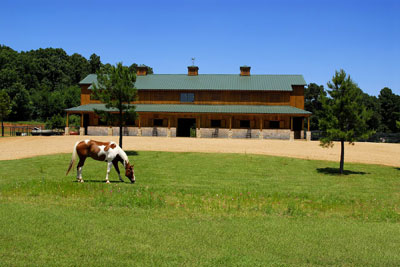
    Those 1400 acres would only house 46 home sites of approximately seven acres each, enough really to be anyone’s Ponderosa. But you’d still get all the perks of ranch ownership: acres of protected ranch land, grazing cattle, horses to ride, barns, pool, tennis courts and a gathering lodge for community. The seven acre parcels of land on the ranch would be separated by several acres between homesteads, on which owners could build in their “envelope”.

    This trend has been growing for a decade. Movies like the 1991 film “City Slickers” projected the romance of ranching into every movie theatre in America. Ted Turner and other significantly high net worth individuals began buying up huge land parcels in the west – Wyoming, Montana, and Colorado, “glamorizing” recreational ranch ownership. Halpin’s first vision for Indian Springs, circa 1989, was to have a small exclusive guest ranch on the order of Lost Creek Ranch & Spa, the exclusive Jackson Hole guest ranch run by Halpin’s son and daughter in law. Lost Creek is one of those places where city slickers can temporarily escape the city and play cowboy outdoors while dining indoors on lobster claw salad, Venison Rosini, and halibut stuffed with crab. Then they get to dunk boot-weary toes in the Jacuzzi after a hard day riding herd and fall asleep beneath the stars on Frette sheets.

    Prominent people bought early sites: Connie Stevens, the actress; Carol and Robin Farkus, he the N.Y.C. Chairman of Alexanders Department Stores, Tom Bolger, chairman of Bell Atlantic. Buyers came from California, New York, the Midwest, the Minneapolis region. They attracted other well-heeled people, which helped sell out the homesites.
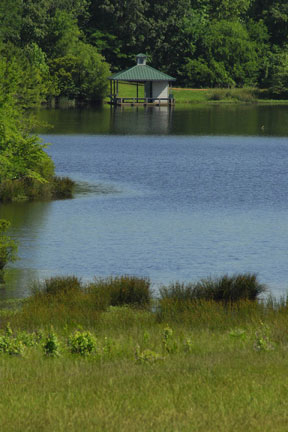
    Meridian’s first venture was so profitable, Lowham led the company to develop a Texas Hill Country ranch in 1998; a new ranch in Mesquite, Nevada is currently in the works.

    Though vacation home sales are now slower than they once were, they are not dead. The shared ownership ranch offers owners a shot at full home ownership while splitting the costs of the ranching operation as well as amenities. Some operations even eek out a small profit, but what these buyers are really looking for is a way to pay a fraction of the operating costs while enjoying the whole property. There’s a strong conservationist edge: most shared ownership ranches, like Indian Springs, its Texas Hill Country sibling, The Preserve at Walnut Springs (Ken Starr is an owner, as is yours truly), and Cross Pines Ranch Preserve in East Texas near Mineola, scatter a handful of homes across the vast acreage to create a true sense of isolation, leaving the majority of land to breathe.

    “Ranchers are looking for a way to preserve land and conserve it while not going bankrupt,” says Dallas Addison, developer of Cross Pines, based on a conservation easement where each owner has a one-fortieth interest in the entire property. The conservation concept will soon be crossing the Pacific. Addison has partnered with fellow Texan Alan Friedman, owner of Trisept Inc., to develop Bosque Canyon Ranch at Lake Whitney in the Texas Hill Country, and a 7,000-acre project on Hawaii’s Big Island.

    Other ranches cluster homesteads in one area to preserve as much raw open space as possible; the forever-open range becomes a prime selling point.

    “Clustering is a much better land use process,” says Larry Corson, senior vice president with Dallas-based Hunt Realty Investments. Hunt is the developer of Cornerstone, a 6,000 acre ranch near Telluride, CO. “Our owners actually prefer it, knowing what they have preserved in perpetuity for the environment and wildlife.”

    Cornerstone was once a plain Jane hunting ranch owned by Texans. It was foreclosed and sold at auction to a local investor. Corson literally spotted the site for his employer, Dallas oilman Ray Hunt, off a dirt road. After two years of working with local officials on the development plan, construction began in 2004. The property opened in 2006. Homesteads range from one to one hundred acres, starting prices at $175,000 to seven figures plus an $80,000 club initiation fee and $6,000 a year dues, which are fairly typical.

    Perhaps helped by the relatively vibrant Texas economy, in 2008 the company reported $8 million in sales. The land Corson saw had full potential for a five-star plus ranch: horseback riding, an extensive trail system for hiking, riding or jeeping, fly fishing onsite and private access to the nearby Uncompahgre River, snow mobiles, cross-country skiing, snow shoeing, ice skating, toboggans, and downhill skiing at nearby Telluride in the winter months. But the best selling point of all was the art in every window – breathtaking views of the San Juan Mountain range from every angle.

    It’s City Slickers roughing it on Gulfstreams.

    Corson immediately saw potential for the one thing Telluride was sorely lacking: a high quality, private golf course. The spread held a natural plateau for what has become a world-class, Greg Norman-designed golf course. So there you have it – take a hike, go fish, study the migration patterns of deer and elk, saddle up for a Kamikaze ride, or golf.

    The owners come from all over, but most are from Texas, like investment banker Richard Moses, who was in Telluride for all of 24 hours when he bought not one but two lots. In a tough market, says Corson, if people are going to make a real estate purchase it’s going to be a lifestyle decision: is this the place I really want to be? And of course, are there enough toys to keep me entertained for weeks?

    “At Cornerstone, we once had a little bear cub one morning sitting on our outside barbecue licking the grease off the grill,” he says.

    Just because it’s a ranch, doesn’t mean there must be cattle. At Cornerstone, management discovered that as soon as they stopped running cattle on the property, the songbirds returned – not a bad trade. The grazing killed off the shallow grassland savannah that the bison had once protected.

    Sometimes the city slickers are more conservation conscious than the country folk, and more self-conscious and contentious. Owners at one shared-ownership ranch recently disagreed, albeit briefly, over the herd. Some owners thought keeping methane-producing Longhorns was not worth the massive carbon footprint, or hoof print, for 2,500 lbs of western eye candy. Of course, they were not as concerned over the carbon footprint etched by their private jet flights to the local FBO.

    Shared ownership of course has its downside: you actually have to share – opinions, design, tastes and common areas. You may not have quite everything the way you would if the whole place was yours alone. Strong management, which can sometimes double as a counseling service, is essential.

    “In this market,” says Corson, “buyers are really doing their homework to make sure the developer can deliver on all the promises.”

    Or just keep peace at the ranch.

    Candace Evans is the Editor of DallasDirt, a Dallas-based real estate blog for D Magazine Media Partners.

  • The Next Culture War

    The culture war over religion and values that dominated much of the last quarter of the 20th century has ended, mostly in a rout of the right-wing zealots who waged it.

    Yet even as this old conflict has receded , a new culture war may be beginning. This one is being launched largely by the religious right’s long-time secularist enemies who are now enjoying unprecedented influence over our national politics.

    For all the manifest differences between these two groups, these culture warriors have much in common. Each represents an effort by a highly motivated minority to impose a particular vision of life on a population that does not share either their level of conviction or specific policy preferences.

    The Christian right saw its mission as using government policy to restore family and faith to a country they saw losing adherence to both. Not content with hometown pieties, they wanted to use government power to regulate areas ranging from abortion and gay marriage to stem cell research, in ways reflecting their values and agenda.

    For a while, their agenda also appealed to white ethnics in urban areas, largely Catholics, who recoiled against the crime and disorder in city streets. When they moved en masse to the suburbs, the religious right’s social base narrowed further.

    One critical weakness of the movement stemmed from the fact that many prominent figures like Pat Robertson, Jerry Falwell and Jesse Helms rose from the segregationist South. This limited their appeal outside the white Confederate ethnic enclaves in small towns and some Southern suburbs. They were notably less successful in the fastest-growing, more ethnically and socially diverse communities, where the future of evangelical Christianity now is being shaped.

    Many of the goals espoused by Christian political activists are clearly commendable – promoting charity and respect for human life. In some areas, such as abortion, they have made real inroads on influencing broader society’s attitudes. But overall, their political attempts to impose a narrow religious agenda has fallen into disrepute even among Republicans.

    Today, the locus of the culture war has shifted to the secularist left, whose primary geographic base lies in our densest, most elite cities. This group has evolved into its own version of what the Calvinists would call “the elect” – those chosen to thrive amid a sinful nation. They might also be called “the cognitive elite,” since their self-image comes not from religious worship but from a sense of higher intelligence, greater rationality and even superior healthfulness.

    Perhaps the most honest description of this largely urban grouping was made in the Seattle alternative paper The Stranger shortly after George Bush’s 2004 re-election. Shocked by John Kerry’s defeat, The Stranger defined their preferred constituency as “islands of sanity, liberalism and compassion.” The red regions, they concluded, were the abode of “people [who] are fatter and slower and dumber.”

    At the time, The Stranger’s solution was to secede in spirit from the red states and build a new America hewing to what they considered humane and scientific values. Yet four years later, the self-proclaimed “islands of sanity” now dominate the government in a manner unprecedented in recent American history.

    The rapid ascendancy of the new culture warriors has everything to do with class and caste. The religious right’s base lay predominately in the small towns and lower middle class. They may have had more votes than the sophisticated city-dwellers, but in the end they had little influence among Bush-era policy-makers, whose greater allegiance was to Wall Street, energy and other corporate interests.

    In sharp contrast, the cognitive elites rise straight from the critical bastions of Obama-era power. They draw strength from the mainstream media, the vast “progressive” non-profit community, the universities, and the professional policy elites. University and think-tank denizens, according to a recent National Journal survey, constitute 37 percent of the top 366 appointees by the Obama administration, far more than under the Bush regime.

    One group, not surprisingly far less well-represented, are white Christians, whose number, according to the National Journal, has dropped from 71 percent under Bush to 46 percent. It’s not that the Obamites lack faith, just that they lean less to conservative Christianity and more toward the gospel according to Al Gore.

    Like their Christian right counterparts, the cognitive elite’s agenda does address some important issues. You do not have to embrace the theology of global warming (aka climate change) to favor incentives for reducing energy use and cleaning up pollution. Advocating healthier outcomes through more walking, bike riding and better school lunches also make sense as public goals. And a planning approach that allows for more housing options in suburbs and better access to transit also could be useful.

    The problem here, as with the Christian right, lies with overzealousness and intolerance. Whether environmentalism qualifies as a religion or ideology for legal purposes, it is clearly being embraced in a quasi-theological way. As Bjorn Lomborg and others have pointed out, any objection to the Gorite carbon emissions agenda invites scorn and denunciation for, as Paul Krugman recently suggested, “treason against the planet.” Even mild skeptics can expect to be treated like a strident atheist at a mega-church – although probably with likely far less compassion or politeness.

    Critically, the climate-change zealots likely will be in our faces and wallets far more than the religious fulminators. Although the public is widely skeptical of the whole climate change agenda, they will have to confront a huge new bureaucratic apparatus that could impact millions of businesses and local planning decisions down to the household level.

    This desire to micromanage in the public interest also extends well beyond climate change. There is clear desire now to influence everything from how we live to what we eat. You can see the beginnings in everything from ever-higher cigarette taxes to bans on trans-fats at your local hot dog stand.

    San Francisco, always ground zero for such intrusive lunacy, now has determined to find ways to shove healthy foods on the plates of city residents, preferably from urban gardens. The city is even taking steps to prevent city workers from ordering donuts for meetings. Now bureaucrats must follow guidelines from the Health Department.

    City workers even have to cut bagels into quarters or halves, presumably so that workers may all look as svelte as Mayor Gavin Newsom. “We have an eating and drinking problem in America,” declared Newsom, a candidate for governor with an admitted former alcohol problem of his own.

    But perhaps the most intrusive changes may come in terms of planning and development. The Obama administration has already declared its desire to “coerce” people out of their cars and discourage sprawl in order to promote its health and carbon-cutting agendas.

    This could evolve into a concerted attempt to force more Americans into the high-density housing as opposed to the single family suburban homes they prefer for reasons ranging from cost to privacy and safety. It may be questionable how much these steps will improve health or the environment, but this may not matter much given the current theological consensus.

    What we now see is policy enacted in the name of scientific dogma, even though science’s essence lies in open inquiry and debate. In the process, agendas are often conflated; reports even mildly contrary to the received wisdom of climate change are ridiculed or ignored. For some urbanists, climate change also provides a convenient excuse to reverse the dispersion to suburbs that they have railed against for decades.

    What we need now is not self-interested dogma, but open, wide-ranging debate designed to find the most effective ways to achieve energy efficiency in both cities and suburbs. Amid the worst economic downturn in a half-century, we also might want to weigh the impact of some “green” policies on the employment, income and wealth prospects for middle- and working-class Americans.

    The anointed secular clerisy seems destined to become very unpopular. Americans do not like to be preached to by their political leaders about how to manage the details of their lives, particularly when the preachers often fail to follow their own precepts; this was a core problem with those who aligned with the religious right. Environmental and health activists would do better to focus more on suasion as opposed to coercion and to offer incentives rather than dictates to achieve their goals.

    They should also learn that problems are addressed most effectively at the local, community and familial levels. The wide access to information through the Internet undermines the very logic for relentlessly centralized solutions; the best “green” policies may be those that evolve organically and fit specific local conditions.

    Basically, cultural warfare makes for stupid politics, as the Republicans should have – but likely have not – learned by now. The new culture war now developing could pose similar dangers for the Democrats, if they are not careful.

    This article originally appeared at Forbes.

    Joel Kotkin is executive editor of NewGeography.com and is a presidential fellow in urban futures at Chapman University. He is author of The City: A Global History. His next book, The Next Hundred Million: America in 2050, will be published by Penguin early next year.

  • Housing the Next Generation with Old Shipping Containers

    If the predictions are accurate, America will have to house some 100 million more people by 2040 to mid-century than is now the case. Despite the current round of foreclosures and rising apartment vacancy, over the long term the demand for humane, affordable, sustainable housing is going to escalate dramatically in the coming years.

    In this recessionary time, it may be tempting to ignore the coming boost in housing demand. Yet eventually growth will pick up and the housing market will become re-invigorated. Nonetheless, the problem of meeting the demand for affordable housing will remain. For now, the federal government is trying to help state and local governments acquire, renovate and sell foreclosed properties, and individual homeowners to reduce their mortgage payments to 31 percent of their income. Federal efforts are also being aimed at increasing funds to redevelop public housing and at giving first-time homebuyers an $8,000 tax credit.

    But these are short-term measures. Others, with more lasting impact, may be more effective. One will be the size of houses. Although some may still choose to build large lot homes and McMansions, the longer-term trend will be for somewhat more compact houses. Contrary to the visions of some urban boosters, Americans will continue to favor single family homes over apartments. But these houses seem likely to trend back to the more traditional, modest scale. Between 2006 and 2007, after years of expanding, the size of a median single-family house actually decreased slightly.

    Another critical element of a housing solution lies in building workforce housing close to the workplace. For years, many moderate income Americans have been forced to “drive ‘til they qualify.” Throughout the nation’s metropolitan areas, teachers, police officers, firefighters, salesclerks, municipal workers, and young people, among others, are being elbowed out of the local housing market. In a recent survey conducted by the Urban Land Institute in cooperation with Harris interactive, of the 110 larger firms (over 100 employees) surveyed, fifty-five percent reported a lack of affordable housing nearby, sixty-seven percent of the workers interviewed (who earned less than $50,000 per year) said they would move closer to work if more housing in their price range were available, and fifty-eight percent of the companies reported having lost employees due in part to long commute times.

    For most Americans, particularly between ages 30 and 70, the demand for affordable homes near workplaces will be paramount. In some areas, there may also be greater demand for apartments, even though these too are suffering due to the recession.

    Many zoning and building codes are obsolete and need to be updated, because as written they restrict the construction of low and moderate income housing and segregate residential, retail, and industrial/commercial land uses. Changing zoning to permit and provide incentives for mixed use development, more intense land uses, and higher density development would make workforce housing more affordable.

    The steps above do not apply only to city living. Through good design, suburban living can be made slightly more compact without sacrificing quality of life. Accessory buildings can often be added on a lot, “granny flats” can be built, large old single family homes can be converted into duplexes, empty spaces could be filled in, and other steps can be taken to meet the need for more housing when that need materializes.

    But perhaps the biggest gains can come by using innovative approaches to expanding housing. One novel idea that has begun to emerge is to use old shipping containers that have been transformed into building blocks for home-building materials. Actually, one can hardly call the idea novel, because shipping crates have been used in construction for thousands of years. But today, the old practice is being revived with entrepreneurial, innovative, outside-the-box thinking.

    These reconfigured containers have the advantages of being more economical and durable than conventional materials, speedier to construct, highly customizable, fire-, termite-, water-, and earthquake/hurricane-resistant, strong, safe and green, with a lower carbon footprint. Hence the name of one of the companies working in this field, one with which I am associated, SG Blocks LLC (SG stands for “safe and green”). As the company puts it, “We are in the business of converting instruments of trade into instruments of construction.”

    Shipping containers are big: each weighs 9,000 pounds and measures 8 feet wide by 40 feet long by 9 feet tall. Hundreds and thousands of them are sitting empty in ports around the country. What possible use could they be, one may wonder, in building a new residential or office complex?

    Consider, therefore, that these steel-on-steel containers, when used as re-fabricated “blocks,” are stronger than conventional house framing. They can be cut, fabricated, re-modeled, and turned into a basic home structure for approximately $25-$27 a square foot. Stevan Armstrong, COO of SG Blocks, has pointed out that multi-family mid-rise units built with containers cost 10 to 15 percent less than typical “stick frame” houses. When appropriate coatings are installed, says Dan Rosenthal, a principal with the Lawrence Group, “we have an envelope that reflects about 95 percent of outside radiation, resists the loss of interior heat, provides an excellent air infiltration barrier and does not allow water to migrate in. Because of the superior roof structure, it is easier to incorporate ‘green’ roof systems.”

    Using shipping containers also saves energy on the front end. It takes 6,481 kilowatt-hours to make a ton of steel from virgin materials, 9,000 kilowatt hours of energy to melt down a container, but only 400 kilowatt-hours of energy to convert shipping containers into SG Blocks.

    The possibilities for utilizing this type of construction – infill housing in urban and suburban communities, new construction for residential, commercial, industrial and retail buildings, single- and multi-family homes – are practically limitless. From a design perspective, SG Blocks claims that their modified containers “can be used to build virtually any style of construction, from traditional to modern and all in between…from traditional Main Street to ultra-contemporary.” In short, they can provide people with an opportunity for ownership and economic mobility in a decent community environment.

    To cite a few examples:

    • A continuing care community for seniors on the historic Mission San Luis Rey grounds in Oceanside, CA, 340,000 square feet with 450 SG Blocks, is going up.
    • In Salt Lake City, the first mid-rise container building is being planned for downtown; it will be called City Center Lofts, with eight units and a ground level art gallery.
    • In Ft. Collins, CO, discussions are being held about creating “block” homes for 500 families as part of the city’s Homeless Shelter Program.
    • John Knott, the guiding light in the Noisette Community in North Charleston, SC, wants to build a six- to eight-story “container” building, retail on the first floor with residential units above, topped with a green roof. He proposes using ninety prison re-entry men to do the construction.
    • Work is in process on a three- to four-story student housing and recreational mixed use facility at Lubbock Christian University in Texas.
    • In Panama, “blocks” are being used to build four buildings that will house community and education centers for the U.S. Southern Command.
    • Attached to the top of this article is a photo of a house built with SGBlocks in St. Petersburg, FL.

    Demography is destiny, as has been said so many times. With 100 million more people in the pipeline, we have to find humane, innovative, affordable ways to house them and provide them with opportunity for advancement. Salvaging empty shipping containers to address this problem is only one step, but a most interesting one that is well worth the trying.

    William H. Hudnut III, former Member of Congress and sixteen-year Mayor of Indianapolis, is the principal in his firm, Bill Hudnut Consultants LLC, and an associate of SG Blocks LLC. His email address is: bhudnut3@gmail.com.

  • Here Come Wall Street’s Carbon Trading Wizards?

    If you think that Wall Street’s vapor traders helped house the nation’s people then you are probably eagerly looking forward to how they will keep our environment clean. Under current “free-market” cap and trade proposals the same people who brought you the housing bubble and have contributed to wild swings in energy prices are eagerly anticipating their next vaporous bonanza. Senator Byron Dorgan of North Dakota, one of the few elected officials vigilant enough years ago to foresee the effects of financial deregulation, believes there is a better way. And his proposed solutions will reduce carbon emissions without leaving the future our environment in the hands of speculators – wizards though they may be. Let’s hope, as The Who was once proclaimed, we won’t get fooled again.

  • Solar Gains On The Green Competition

    The living room of my electrician friend Harry Gres was filled with solar panels which were destined for his roof to demonstrate the advantages of his new eco-business venture. In the spirit of Herbert Hoover’s campaign pledge of a car in every garage, Harry envisions solar panels on every roof (including garages).

    I know very little about solar electric generation, but I was once a very satisfied owner of a 10kW wind energy system back in the (failed) green era in the early 1980s. Wind generation is very visible. When the blades spin on a wind system one can imagine a generator producing power. The whop-whop noise means the electric meter is turning backwards, a beautiful noise indeed. Harry Gres will have a silent 5kW system on top of his roof; the only visual excitement will be to see the electric meter spinning backwards during sunlit hours. Fortunately, here in Minnesota we have an abundance of both wind and sun.

    Harry’s excitement about a self-sufficient future was apparent. He explained how in his latest- generation solar system, each panel powers its own inverter, so shade in one area does not shut down production. I did not know that in earlier, typical solar systems the entire grid shut down if one panel was in the shade.

    I asked the million dollar question: What’s the cost? Harry explained that you could buy a $50,000 SUV that in 5 years would have little value, or purchase a solar array that would produce electricity for 25 years. I was able to figure out that the system cost 50 big ones. He then went on about how it was not the price, but rather the stewardship of the earth that was important. He also went on about the 30% tax credits which I’m not a fan of for a variety of reasons that are too lengthy to get into here.

    I was skeptical about a 5kW, $50,000 solar system, even though I’ve been deeply rooted in the green industry for 25 years. As a customer, I recently built my own green certified home, and back in 1983 I built a net-zero home (it produced more energy than it used) that used wind generation.

    As a professional, my business is designing sustainable neighborhoods for my developer customers. When I built my green home there were about a dozen other “green” homes that had recently been built and were on tours or home parades. All of them had elaborate — and expensive — geothermal heating/ventilating/air conditioning systems as part of their green packaging. I decided that spending a few thousand dollars on a highly efficient conventional HVAC system was a better investment than spending upwards of $50,000 on a geothermal design. My $200 natural gas bill for my 3,600 sq. ft. house during one of the coldest Januarys on record proved that I had made the right choice.

    Geothermal systems get a lot of buzz. The green certified homes I visited sold quickly at the asking price in a terrible housing market. Most sold for over a million dollars. But a new green home has a low energy bill not because of its geothermal design, but because its emulation of “thermos bottle” construction means that it requires little heating or cooling.

    While Harry was giving me the sales pitch on the $50,000 panels I began to ponder: What if those green homes on parade had been designed with solar arrays instead of geothermal systems? Had they used highly efficient HVAC systems instead of geothermal ones, the homes could have come to the market at the same selling price, and then had free electricity.

    Wind generation may be cheaper to install, but the chances that you’ll get a wind system approved in your dense neighborhood is pretty much a fantasy, whereas the solar array is likely acceptable anywhere. A wind generator is really cool: Directions are not necessary and guests always have something to converse about. The owner of a wind generator does not have to worry about shadows or cloudy days, only about those times when the wind is calm. Wind can happen 24 hours a day. On the other hand, the solar array does not produce the loud whop-whop-whop sound similar to a helicopter hovering a few feet over your and your neighbor’s homes.

    The $26,000 I spent in 1983 for the wind generator would be equivalent, after inflation, to spending $54,000 today. So— those who purchase solar systems like Harry’s today will spend about the same post-inflation dollars that I spent in 1983, and they will have the prospect of free electricity.

    Given the mindset of the new green home buyer, and the apparent success of those who sell homes with geothermal systems, maybe $50,000 for the prospect of solar electricity is not so farfetched. The more I began thinking about this the more excited I became for my friend’s new venture.

    Unlike wind power, which can never hope to achieve high volume distribution, solar panels have the potential for high production numbers. Relatively high sales numbers foster competition, which drives research and development for product evolution.

    As an example, back in the 1980s I sold $10,000 desktop Hewlett Packard Workstations along with a $5,000 Civil Engineering Software package we developed. For today’s market, we developed a $995.00 sustainable neighborhood design software package that works great on a $300 notebook. Comparing the systems we sold in the 1980s to those we sell today at 1/10 the cost is like comparing the Model T Ford to a ZR1 Corvette. Profits from the early adopters of those expensive computer systems financed the research and development that eventually led to the price/performance ratio we take for granted today.

    So is Harry onto something?

    I hope Harry, his family, and all those who jump in during a deep recession profit greatly from this risk he’s taken on. I hope the day comes when we look up at the low cost energy producing tiles on our roofs and think back to the entrepreneurs like Harry Gres that risked all on a venture to make it possible. That’s the American spirit that we need to get back to.

    Rick Harrison is President of Rick Harrison Site Design Studio and author of Prefurbia: Reinventing The Suburbs From Disdainable To Sustainable. His websites are rhsdplanning and prefurbia.