Tag: Environment

  • New Climate Report Misses Point on US Cities

    The doubtful claim that low density US cities impose a cost to the economy of $400 billion is countered by their being the most affluent in the world. Nine of the top 10 cities in GDP per capita are in the US and more than 70% of the top 50. The highest GDP per capita city in the world is one of the least compact, Hartford, with an urban population density among the bottom 10 out of more the than 900 urban areas larger than 500,000 (See here and here).

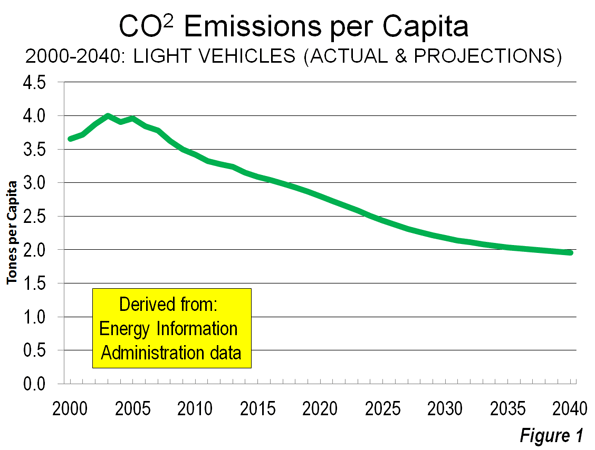
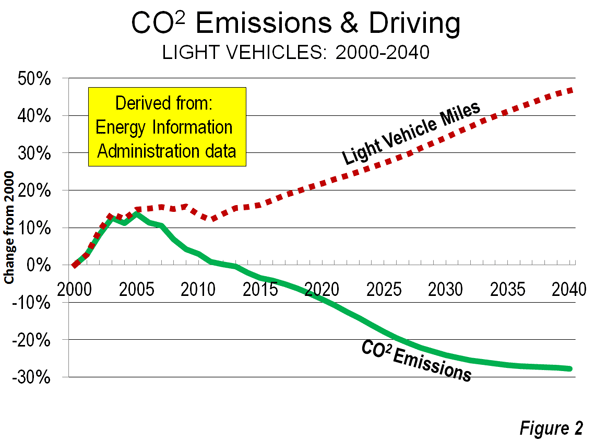
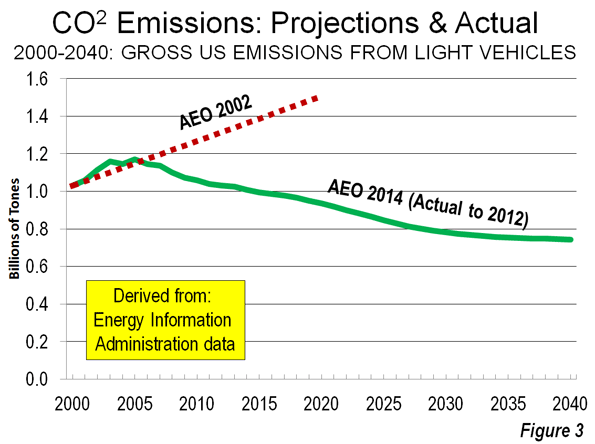
    Mobility is an important driver of economic performance. US cities have less traffic congestion, and shorter work trip travel times than their international peers (Los Angeles has the shortest work trip travel times of any megacity for which there is data). The key to this productivity is more dispersed residential and employment locations (less than 10% of jobs are downtown) and the less intense traffic congestion that is associated with such development. In the US, just as in Western Europe, commuting by car is much faster than by transit. The coming fuel efficiency improvements will narrow or eliminate the gap between personal vehicle and transit GHG emissions per passenger kilometer. US fuel efficiency standards are projected to reduce gross car GHG emissions by more than a quarter by 2040, according to the US Department of Energy. That’s before any de-carbonization.

    The US has some of the best housing affordability in the world (excluding cities like San Francisco and Portland, where politically correct policies raise prices, lowering the standard of living and increasing poverty). The miniscule reductions from favored urban policies are exceedingly expensive per tonne and incapable of making a serious contribution to GHG emission reduction.

    Maintaining the standard of living and reducing poverty requires cities that are mobile and affordable. It is important that GHG emissions reductions be chosen for their cost effectiveness, rather than consistency with expensive academic theories that long predate GHG emissions reduction concerns.

    This piece was posted to comments at The Economist.

  • Welcome to the Billion-Man Slum

    When our urban pundit class speaks of the future of cities, we are offered glittering images of London, New York, Singapore, or Shanghai. In reality, the future for most of the world’s megacities—places with more than 10 million people—may look more like Dhaka, Mumbai, or Kinshasa: dirty, poverty- and disease-ridden, and environmentally disastrous.

    Harvard’s Ed Glaeser suggests that megacities grow because “globalization” and “technological change have increased the returns to being smart.” And to be sure, megacities such as Jakarta, Kolkata (in India), Mumbai, Manila, Karachi, and Lagos—all among the top 25 most populous cities in the world—present a great opportunity for large corporate development firms and thrilling treasure troves for both journalists and academic researchers. But surely there’s a better alternative to celebrating misery, as one prominent author did recently in aForeign Policy article bizarrely entitled “In Praise of Slums.”

    Bigger is no longer better.

    Let’s start with the idea that, in an urbanizing world, bigger is no longer necessarily better. In a recent study I conducted with Ali Modarres, Aaron Renn, and Wendell Cox for Singapore’s Civil Service College and Chapman University, we ranked cities by importance as global centers. Of the world’s estimated 29 megacities, only a handful made into the top 20. Most leading megacities were either long-established Western cities—Tokyo, New York, London, Los Angeles—or located in booming East Asia, including Beijing, Shanghai, and Seoul.

    Notably missing are fast-growing growing megacities such as Lagos, Karachi, and Dhaka, as well as the 16 additional megacities—mostly in developing countries in Africa and south Asia—that will pass the 10 million mark by 2030. Yet despite their girth, the majority of megacities are not particularly attractive for foreign investors or as locations for regional corporate offices. These firms tend to cluster instead in westernized cities such as Singapore, Hong Kong, or Dubai, and visit places like Jakarta, Manila, and Cairo only when necessary.

    History drives some of this. The great global cities rose as centers of industry and trade, while developing from there an excellence in related services. They created pockets of a more advanced economy to serve the predominately rural hinterland, or in some cases colonial possessions. This imperial relationship spurred the rise of London, Paris, and New York in the early 20th century, and also that of Tokyo, still the world’s biggest city.

    Some new megacities, some such as Guangzhou and Shenzhen (which in 1979 had roughly 30,000 people, compared to its 10.6 million today) have a real economic shot at becoming top global cities due to China’s emergence as the world’s workshop. But, as we explain in a recent paper from Chapman University, this is far less the case for most megacities in the developing world.

    Unlike their Chinese counterparts, these megacities’ expansion has not been driven by economic growth but more by bringing people from their own impoverished countryside into the city. Critically, in contrast to the peasants who came to Tokyo in the ’50s or Shanghai in the ’90s, there is no huge demand for an industrial workforce in cities in South Asia, Africa, or Latin America, where manufacturing is far less prevalent—manufacturing’s share of India’s GDP, for example, is half that of China.

    Here’s the difficult truth: Most emerging megacities, particularly outside of China, face bleak prospects. Emerging megacities like Kinshasa or Lima do not command important global niches. Their problems are often ignored or minimized by those who inhabit what commentator Rajiv Desai has described as “the VIP zone of cities,” where there is “reliable electric power, adequate water supply, and any sanitation at all.” Outside the zone, Desai notes, even much of the middle class have to “endure inhuman conditions” of congested, cratered roads, unreliable energy, and undrinkable water.

    The slums of Bangladesh’s capital, Dhaka, swell by as many as 400,000 new migrants each year. Some argue that these migrants are better off than previous slum dwellers since they ride motorcycles and have cellphones. Yet access to the wonders of transportation and “information technology” don’t compensate for physical conditions demonstrably worse than those endured even by Depression-era poor New Yorkers. My mother’s generation at least could drink water out of a tap and expect consistent electricity, if the bill was paid, something not taken for granted by their modern-day counterparts (PDF) in the developing world.

    More serious still, the slum dwellers face enormous risk from unsafely built environments. Traffic, as anyone who has spent time in these cities easily notices, poses particular threats to riders and pedestrian alike. According to researchers, developing countries now experience a “neglected epidemic” of road-related injuries accounting for 85 percent of the world’s traffic fatalities.

    And don’t drink the water, please. Nearly two-thirds of the sewage in the megacity of Dhaka, with 15 million people, is untreated. As Dr. Marc Reidl, a specialist in respiratory disease at UCLA, puts it, “Megacity life is an unprecedented insult to the immune system.”

    Cities of disappointment.

    Over these environmental problems loom arguably greater social ones. Many of the megacities—including the fastest growing, Dhaka—are essentially conurbations dominated by very-low-income people; roughly 70 percent of Dhaka households earn less than $170 (U.S.) a month, and many of them far less. “The megacity of the poor,” is how the urban geographer Nazrul Islam describes his hometown.

    Inequality is expanding in most of these places. A recent Euromonitor International study found that larger “city size remains the key explanatory factor for income inequalities across the world’s urban agglomerations.” Even megacities that we might refer to as “middle income,” such as Tehran and Istanbul, are becoming what geographer Ali Modarres calls “cities of disappointment.” In many cases, high housing prices and a lack of space have already reduced the birthrate to well below the replacement level. Increasingly, many women are choosing to remain single—heretofore something rare in these countries.

    One scholar, Jan Nijman, suggests that most gains in recent years have accrued to the upper echelons of the middle class in Indian cities while “the ranks of the lower middle income classes have shrunk, and the ranks of the poor have expanded rapidly.” Much of the growth in a perceived middle class, Nijman argues, is based not on income but on consumption driven by credit. The informal sector—drivers, stall-owners, repair-people, household industries—account for much of Mumbai’s employment growth.

    Housing costs are the key here. Researcher Vatsala Pant estimates a monthly total household “middle class income” in Mumbai at 40,000-50,000 rupees; equivalent to less than $1,000 U.S. dollars. Yet monthly salaries for teachers, police officers, and other mid-level jobs are often half that amount. Not surprisingly, even these workers often find themselves living in slum neighborhoods, which are also known as jhopad-patti, jhuggi-jhopadi or busties. “It’s the dream of an immigrant for a place in Mumbai … and ends up with a slum,” she notes.

    Is there a better alternative?

    Future urbanization does not need to pose a choice between rural hopelessness and urban despair. This is a critical issue, even for high-income countries. The rise of a mass of poor slum dwellers—estimated as high as 1 billion—threatens the social stability not only of the countries they inhabit, but the world, as they tend to generate high levels of both random violence and more organized forms ofthuggery, including terrorism.

    Fortunately, an alternative structure of urbanization is beginning to emerge that emphasizes a spreading diversity of cities as opposed to gigantic agglomerations. In the coming decade, McKinsey predicts megacities will underperform economically and demographically, as growth shifts to “fast growing middleweights,” many of them in China and India.

    There needs to be a far greater emphasis on these smaller cities, as well as working to develop a viable economy for the villages. In India, migration to large cities already is beginning to slow, as more potential migrants weigh the costs and opportunities of making such a move as opposed to staying closer to home. This phenomenon has been called “rurbanization” and was an important provision of the campaign of India’s new prime minister, Narendra Modi, who implemented such programs as chief minister of the state of Gujarat. Modi speaks of human settlements with the “heart of a village” and developing “the facilities of the city.”

    A growing array of critics understand the need to break with the megacity mantraAshok R. Datar, chairman of the Mumbai Environmental Social Network and a longtime adviser to the Ambani corporate group, says the emerging megacities of the developing world need to stop emulating the Western model of rapid, dense urbanization. “We are copying the Western experience in our own stupid and silly way,” Datar says.

    He suggests a policy focusing on more human-scale growth. One does not have to be a Gandhian idealist to suggest that Ebenezer Howard’s “garden city” concept—conceived as a response to miserable conditions in early 20th century urban Britain—may be a better guide to future urban growth than the current trend of relentless concentration.

    The “garden city” alternative could help ameliorate the downsides of  mass urbanization in China as well, where the government is seeking to move 250 million more people from the countryside to urban areas over the next decade. “There’s this feeling that we have to modernize, we have to urbanize, and this is our national-development strategy,” said Gao Yu, China country director for the Landesa Rural Development Institute, based in Seattle. Referring to the disastrous Maoist campaign to industrialize overnight, he added, “it’s almost like another Great Leap Forward.”

    As the world urbanizes, we need to start thinking about how to make cities better, not simply bigger. The primary goal of a city should not be to enrich already wealthy landlords and construction companies. It should not be to make politicians more powerful. And it certainly should not be mindless, pointless growth for its own sake. Urbanism should not be defined by the egos of planners, architects, politicians, or the über-rich but by what works best for the most people.

    This piece originally appeared at The Daily Beast.

    Joel Kotkin is executive editor of NewGeography.com and Distinguished Presidential Fellow in Urban Futures at Chapman University, and a member of the editorial board of the Orange County Register. His newest book, The New Class Conflict is now available for pre-order atAmazon and Telos Press. He is author of The City: A Global History and The Next Hundred Million: America in 2050. His most recent study, The Rise of Postfamilialism, has been widely discussed and distributed internationally. He lives in Los Angeles, CA.

    Dhaka photo by Wendell Cox.

  • California Drought: How To Share An Emergency

    California has big troubles. It hasn’t rained for two years. Our reservoirs are almost depleted. Our aquifers are being overdrawn. Forecasts for next winter’s rain, which were optimistic not long ago, have become increasingly pessimistic.

    Of course, everybody knows California is in a drought. So, California is doing things. We have education programs. We have shaming apps and neighbors reporting on neighbors. We have fines for water wasters. We have Water Cops. We have the Lawn Dude.

    Still, Californians underestimate the drought’s total cost.

    The drought’s environmental costs are especially underappreciated. It is an environmental disaster. When water gets tight, fish, birds, and other wildlife suffer. We see increasing numbers of confrontations between snakes and predators, like mountain lions and bears, and people. Animals l ose most of these confrontations. In some areas, we are losing entire riparian and wetland ecosystems.

    Ocean water is intruding into coastal groundwater basins. Nitrate and sulfate levels in drinking water are rising, and in some areas exceed levels permitted by public health standards.

    Even the land is changing. Persistent aquifer overdrafts are causing land to sink. Infrastructure and buildings, breaking under the strain of sinking land, will need to be rebuilt or repaired. All these factors increase the costs of the drought. Worse, once an aquifer is collapsed, it can never be restored. Our storage capacity is permanently reduced. Persistent aquifer overdrafts may even increase the frequency of earthquakes.

    Over-drafting of aquifers needs to stop. Riparian and wetland habitats need to be maintained. The price that water users pay should reflect all costs.

    California’s current response is increasing the drought’s costs. Education programs are expensive. So are water cops and the systems to prosecute and punish profligate water users. And yet, water usage has not significantly decreased.

    Some costs are immeasurable. A society with water cops driving around looking for people watering their lawns, where neighbors shame each other on social media or report neighbors to authorities, starts to look oppressive. The mutual trust necessary for an efficient and well-ordered society starts to erode.

    The damage could be far less. Nixon made the OPEC oil shocks worse by capping prices and using coercive government tools to reduce demand. This is exactly what California is doing with water. Demand exceeds supply. The price to users is too low.

    It would be simpler to let water prices rise to a market-clearing price. This would quickly reduce aquifer overdrafts, while leaving sufficient water to support ecosystems and the species they support. It would also mean that most Californians would see prices increase a lot.

    This proposal tends to drive people crazy, yet we allocate few resources the way we allocate water.

    Consider that life-giving resource, coffee. Between January and April of 2014, coffee bean prices increased 72 percent on global markets. The United States retail price rose about 33 percent. The price increases reflected a drought in Brazil. Coffee consumers did not need to have detailed information about South American weather patterns. The price provided all they needed to know.

    Consider gasoline, too. In a market where powerful cartels manipulate global supplies, the price of gasoline conveys detailed signals about the state of global supply. Whether a large refinery in California is temporarily shuttered, or political unrest roils a Middle East oil producer, consumers can stay abreast of changing conditions by observing price changes at the pump.

    Why not with water?

    Many people object on fairness grounds, arguing that water is a necessity, and market prices would deny that necessity to poor people. Others object on legal grounds, arguing that our water prices are a complex result of history, legal precedent, and sometimes contradictory laws. Still others object to leaving some water for animals and plants while people suffer.

    The fairness argument is easy to dismiss. The price that matters is the price of the last gallon sold. We could easily give everyone some minimum allocation of water for free (or nearly-free) and then charge a market-clearing price for everything beyond that.

    Voilà! Problem solved. No oppressive government measures.

    This system is employed in Tucson, Arizona. There, steep block pricing has allowed the city to allocate scarce water to vitally important uses. One need only compare an image of Tucson homes to one of Phoenix homes to see the strategy’s effectiveness. In Phoenix, where flat-rate pricing is used, you occasionally see residential landscaping a Seattle home owner would envy. In Tucson, it’s all cactus and rock gardens.

    The argument against leaving water for plants and animals relies on the concept that people are more important than other living things. We don’t need to debate that. It’s only important in a situation where human life is at stake, and California’s water situation is not a threat to mankind. Twenty-first century America is fabulously wealthy. Leaving some water for the critters may cost us, but we can pay it and still have a standard of living that most of mankind throughout history would have envied.

    The legal objection is also easy to challenge. Fortunately for all of us, California’s water laws weren’t brought down from Mount Sinai by Moses, and, like the Commandments, they are routinely violated. Most of California’s water law, with the exception of transfer and resale legislation, is pretty good. The problem is that it isn’t being enforced.

    Assertion of the existing laws can improve the situation. Only 23 of California’s approximately 400 groundwater basins have undergone “adjudication”. Generally, adjudicated basins are models of efficient allocation. Water prices in these jurisdictions are connected to supply and demand and are also, predictably, significantly higher than in non-adjudicated basins.

    There are two important issues with California’s water laws that need to be addressed. One relates to owners of agricultural land; they are entitled to “reasonable and beneficial use” of water under the land. This is called an “overlying right.” Unfortunately, they’re not allowed to sell or transfer the water to other users. This needs to change.

    Another is that the California Environmental Quality Act, the Endangered Species Act, and the State Water Resources Control Board prevent the building of the infrastructure that’s required to move water. About 75 percent of California’s supply of water originates north of Sacramento, while 75 percent of California’s demand for water originates south of Sacramento. Water needs to move, and the California State Water Project is insufficient to allow local and regional transfers. Northern Colorado and parts of Oregon provide examples of regions that effectively transfer water between users.

    Asserting California’s existing water laws and changing inefficient parts of those laws are revolutionary ideas, and a first-order political challenge. To do so would require leadership and courage, two characteristics that are almost non-existent in American political leadership. It’s worth the effort. It would fundamentally improve California’s future.

    Unfortunately, it could take five to ten years, a time frame not conducive to managing today’s emergency. Californians need to understand that we have a crisis, and we need to act now.

    Matthew Fienup teaches graduate econometrics and works for the Center for Economic Research and Forecasting at California Lutheran University, where he specializes in applied econometric analysis and the economics of land use. He is currently working on his PhD at the Bren School of Environmental Science and Management at the University of California Santa Barbara. He holds a Masters Degree in Economics from UCSB. Bill Watkins is a professor at California Lutheran University and runs the Center for Economic Research and Forecasting, which can be found at clucerf.org

    Flickr photo by M. Dolly, California Garden: “Hacking out the lawn and replacing it with drought tolerant and native plants… Best decision ever! Shown here: Abutilon palmeri – Indian Mallow, and Salvia mellifera – Black Sage.”

  • Germany Also Having Big Problems Building Infrastructure

    Der Spiegel had an interesting article recently called “Angry Germans: Big Projects Face Growing Resistance.” The article (linked version is English) talks about how it is increasingly difficult to get infrastructure projects built in Germany.

    Wherever ambitious construction ventures loom on the horizon in Germany — from the cities to the countryside, from the coastlines in the north to the Black Forest in the south — opponents are taking to the streets…. As the public’s enthusiasm for constant innovation has lessened, so has the appeal of these sorts of projects, and, as a result, they now inevitably come accompanied by picketers. Germany’s graying society, it seems, is so cozy and settled that it resists anything threatening to upset the status quo. In the process, it has lost sight of the bigger picture.

    There are a lot of key points in this article that immediately raised parallels to the United States, where infrastructure projects are also under increasing siege. In fact, some of this reminded me of elements of the Tea Party movement. The protestors are uninterested in compromise. They are devoted, full time activists who are unrelentingly opposed to the projects in question:

    [Hartmut] Binner’s form of protest has a radical undercurrent: Well-informed, confrontational and devoid of respect for authority, he is typical of the new grassroots activism spreading across Germany.
    ….
    Binner’s entire life revolves around the campaign. He monitors the routes of departing and landing planes. He plays his self-designed noise simulator on market squares. He kicks off his court appearances by singing the Bavarian national anthem. “If you want to be heard as a member of the public, you need to push the envelope,” he shrugs.

    These days, he sees grassroots protests, activism and political responsibility from a different perspective. “The typical protesters are gray-haired, know-it-alls and very networked,” [Freiburg Mayor Dieter Salomon] says. “But they’re not remotely interested in consensus-building, political processes and pluralism.”

    Grassroots groups have become so livid, intransigent and single-minded that even the most respected politician in the country, Angela Merkel, is feeling their sting. In early May, hundreds of furious residents had gathered in central Ingolstadt to protest against the construction of a power line from Bad Lauchstädt in Sachsen-Anhalt to Meitingen in Bavaria.

    This certainly reminds me of the no-compromises view of the Tea Party. Also, a number of early American Tea Party activists were unemployed, and thus able to basically be full time activists. Even the singing of national anthem has echoes of the Tea Party and their tricorn hats. I don’t want to claim there’s a philosophical or other link between the Tea Partiers and Germany, however.

    Not everything lines up with the Tea Party, however. In Germany it seems to be disproportionately retirees who are the most engaged and militant:

    Germany’s graying society, it seems, is so cozy and settled that it resists anything threatening to upset the status quo. In the process, it has lost sight of the bigger picture.

    Many of the protestors are pensioners with no vested interest in Germany’s future. “It’s striking that the leader of the protests against the Munich runway is a 75-year-old and not someone in the middle of his working life,” [Munich Airport CEO Michael Kerkloh] points out.

    Salomon’s nemesis is Gerlinde Schrempp, a determined and argumentative 67-year-old retired teacher with attitude to spare. She’s the leader of the Freiburg Lebenswert movement, which translates roughly to “make Freiburg worth living in. The movement just got elected on to the district council and is first and foremost opposed to any new building in the city.

    There’s a stereotype out there of the average Republican voter as an old white guy. But the average Tea Party activist I’ve seen tends to be working age. I look at this one a bit differently. We need to see these types of controversies against the substrate of an aging population. Aging populations are not noted for dynamism, and older people’s self-interest is better served by starving investment for the future in order to save money and avoid uncomfortable change in the present. As a country whose population is projected to decline into the future thanks to this demographic inversion, we are seeing in Germany what’s likely a preview of coming attractions elsewhere around the world.

    Indeed, I’m reminded of what one analyst friend of mine in Indiana has said about the property tax caps there. He sees the push to cap property taxes as driven by an aging population in a stagnant state. Old people generally aren’t earning a lot of taxable income nor are they buying huge amounts of stuff, so they are disproportionately less affected by income and sales tax hikes, whereas they often own homes and are hit hard by property taxes. Thus property tax caps serve as another income transfer mechanism from young to old, holding revenue constant. They are in part an artifact of an aging society. Disinvestment in infrastructure can be seen in the same light.

    But there’s another part of this that shines a light on yet another group of opponents, namely the intelligentsia.

    The term “Wutbürger” (“enraged citizen”) was coined during the Stuttgart 21 fiasco to describe people like Hartmut Binner, and much has been written about them since. They often aren’t the “common man.” According to the Göttingen Institute for Democracy Studies, they tend to be highly educated people with steady incomes and white collar jobs. And while protests movements of the past were often steered by sociologists, today their leaders are more likely to stem from the technical professions, the researchers found.

    When we look at opposition to infrastructure in the United States, at least certain types of infrastructure, we see a similar profile of people (though not necessarily technical) behind it. It’s the leftist intelligentsia that oppose the Keystone Pipeline, suburban highway projects, fracking, and many other types of things, often with a militant unwillingness to compromise similar to the Tea Party.

    As with Germany, this opposition is enabled by environmental reviews and public participation laws that, while they serve important public purposes, make it easy to delay projects for years through repeated objections and scorched earth litigation. Traditionally environmental lawsuits were associated with the left, but conservatives have started saying, why not us too? Hence litigation against San Francisco’s regional plan. The Hollywood densification plan was recently overturned by lawsuits, and lawsuits have plagued California’s proposed high speed rail line as well.

    Whatever the project, it’s sure that somebody on the left and/or the right hates it, and thus will do everything in their power to kill it, which probably means years of delays and untold millions in increased costs.

    Also as with the United States, German governments have shot themselves in the foot with a series of financial debacles:

    Political and bureaucratic bodies are partly to blame for their own diminished authority. Every major venture seems to entail spiraling costs. Berlin’s new airport was supposed to cost €1.7 billion, a price tag that has shot up to well over €5 billion. Meanwhile, the €187 million earmarked for the Elbphilharmonie concert hall under construction in Hamburg is expected to exceed €865 million by the time the project is completed. Albig is well aware how bad this looks. “People see us as financially incompetent,” he says.

    Until politicians can convince the public they have a handle on this, the taxpayer will remain rightly skeptical of many major megaprojects. This is doubly true since it’s very clear, as has been documented by folks like Oxford professor Bent Flyvbjerg, that in many of these cases the politicians were simply lying all along about the real costs.

    I’m not sure what all the takeaways are, but there are clearly many forces operating on a global basis to inhibit the development of infrastructure in the West.

    Aaron M. Renn is an independent writer on urban affairs and the founder of Telestrian, a data analysis and mapping tool. He writes at The Urbanophile, where this piece originally appeared.

    MittlererSchlossgartenKundgebung 2010-10-01” by MussklprozzOwn work. Licensed under CC BY-SA 3.0 via Wikimedia Commons.

  • California’s Green Bantustans

    One of the core barriers to economic prosperity in California is the price of housing. But it doesn’t have to be this way. Policies designed to stifle the ability to develop land are based on flawed premises. These policies prevail because they are backed by environmentalists, and, most importantly, because they have played into the agenda of crony capitalists, Wall Street financiers, and public sector unions. But while the elites have benefit, ordinary working families have been condemned to pay extreme prices in mortgages, property taxes, or rents, to live in confined, unhealthy, ultra high-density neighborhoods. It is reminiscent of apartheid South Africa, but instead of racial superiority as the supposed moral justification, environmentalism is the religion of the day. The result is identical.

    Earlier this month an economist writing for the American Enterprise Institute, Mark J. Perry, published a chart proving that over the past four years, more new homes were built in one city, Houston Texas, than in the entire state of California. We republished Perry’s article earlier this week, “California vs. Texas in one chart.” The population of greater Houston is 6.3 million people. The population of California is 38.4 million people. California, with six times as many people as Houston, built fewer homes.

    And when there’s a shortage, prices rise. The median home price in Houston is $184,000. The median price of a home in Los Angeles is $530,000, nearly three times as much as a home in Houston. The median price of a home in San Francisco is $843,000, nearly five times as much as home in Houston. What is the reason for this? There may be a shortage of homes, but there is no shortage of land in California, a state of 163,000 square miles containing vast expanses of open space. What happened?

    You can argue that San Francisco and Los Angeles are hemmed in by ocean and mountains, respectively, but that really doesn’t answer the question. In most cases, these cities can expand along endless freeway corridors to the north, south, and east, if not west, and new urban centers can arise along these corridors to attract jobs. But they don’t, and the reason for this are the so-called “smart growth” policies. In an interesting report entitled “America’s Emerging Housing Crisis,” Joel Kotkin calls this policy “urban containment.” And along with urban containment, comes downsizing. From another critic of smart growth/urban containment, economist Thomas Sowell, here’s a description of what downsizing means in the San Francisco Bay Area suburb Palo Alto:

    “The house is for sale at $1,498,000. It is a 1,010 square foot bungalow with two bedrooms, one bath and a garage. Although the announcement does not mention it, this bungalow is located near a commuter railroad line, with trains passing regularly throughout the day. The second house has 1,200 square feet and was listed for $1.3 million. Intense competition for the house drove the sale price to $1.7 million. The third, with 1,292 square feet (120 square meters) and built in 1895 is on the market for $2.3 million.”

    And as Sowell points out, there are vast rolling foothills immediately west of Palo Alto that are completely empty – the beneficiaries of urban containment.

    The reason for all of this ostensibly is to preserve open space. This is a worthy goal when kept in perspective. But in California, NO open space is considered immediately acceptable for development. There are hundreds of square miles of rolling foothills on the east slopes of the Mt. Hamilton range that are virtually empty. With reasonable freeway improvements, residents there could commute to points throughout the Silicon Valley in 30-60 minutes. But entrepreneurs have spent millions of dollars and decades of efforts to develop this land, and there is always a reason their projects are held up.

    The misanthropic cruelty of these polices can be illustrated by the following two photographs. The first one is from Soweto, a notorious shantytown that was once one of the most chilling warehouses for human beings in the world, during the era of apartheid in South Africa. The second one is from a suburb in North Sacramento. The scale is identical. Needless to say, the quality of the homes in Sacramento is better, but isn’t it telling that the environmentally enlightened planners in this California city didn’t think a homeowner needed any more dirt to call their own than the Afrikaners deigned to allocate to the oppressed blacks of South Africa?

    The Racist Bantustan

    201402_Soweto-500px


    Soweto, South Africa  –  40′ x 80′ lots, single family dwellings

    When you view these two studies in urban containment, consider what a person who wants to install a toilet, or add a window, or remodel their kitchen may have to go through, today in South Africa, vs. today in Sacramento. Rest assured the ability to improve one’s circumstances in Soweto would be a lot easier than in Sacramento. In Sacramento, just acquiring the permits would probably cost more time and money than doing the entire job in Soweto. And the price of these lovely, environmentally correct, smart-growth havens in Sacramento? According to Zillow, they are currently selling for right around $250,000, more than five times the median household income in that city.

    The Environmentalist Bantustan

    201402_Sacramento-500px


    Sacramento, California  –  40′ x 80′ lots, single family dwellings

    When you increase supply you lower prices, and homes are no exception. The idea that there isn’t enough land in California to develop abundant and competitively priced housing is preposterous. According to the American Farmland Trust, of California’s 163,000 square miles, there are 25,000 square miles of grazing land and 42,000 square miles of agricultural land; of that, 14,000 square miles are prime agricultural land. Think about this. You could put 10 million new residents into homes, four per household, on half-acre lots, and you would only consume 1,953 square miles. If you built those homes on the best prime agricultural land California’s got, you would only use up 14% of it. If you scattered those homes among all of California’s farmland and grazing land – which is far more likely – you would only use up 3% of it. Three percent loss of agricultural land, to allow ten million people to live on half-acre lots!

    And what of these lots in North Sacramento? What of these homes that cost a quarter-million each, five times the median household income? They sit thirteen per acre. Not even enough room in the yard for a trampoline.

    There is a reason to belabor these points, this simple algebra. Because the notion that we have to engage in urban containment is a cruel, entirely unfounded, self-serving lie. You may examine this question of development in any context you wish, and the lie remains intact. If there is an energy shortage, then develop California’s shale reserves. If fracking shale is unacceptable, then drill for natural gas in the Santa Barbara channel. If all fossil fuel is unacceptable, then build nuclear power stations in the geologically stable areas in California’s interior. If there is a water shortage, than build high dams. If high dams are forbidden, then develop aquifer storage to collect runoff. Or desalinate seawater off the Southern California coast. Or recycle sewage. Or let rice farmers sell their allotments. There are answers to every question.

    Environmentalists generate an avalanche of studies, however, that in effect demonize all development, everywhere. The values of environmentalism are important, but if it weren’t for the trillions to be made by trial lawyers, academic careerists, government bureaucrats and their union patrons, crony green capitalist oligarchs, and government pension fund managers and their partners in the hedge funds whose portfolio asset appreciation depends on artificially elevated prices, environmentalism would be reined in. If it weren’t for opportunists following this trillion dollar opportunity, environmentalist values would be kept in their proper perspective.

    The Californians who are hurt by urban containment are not the wealthy elites who find it comforting to believe and lucrative to propagate the enabling big lie. The victims are the underprivileged, the immigrants, the minority communities, retirees who collect Social Security, low wage earners and the disappearing middle class. Anyone who aspires to improve their circumstances can move to Houston and buy a home with relative ease, but in California, they have to struggle for shelter, endlessly, needlessly – contained and allegedly environmentally correct.

    Ed Ring is the executive director of the California Policy Center.

  • Fracking, Youngstown and The Right to the City

    What happens when the Chamber of Commerce, labor leaders, and government officials, most of whom live outside the city, are pitted against a small yet influential group of community and university activists? That’s what’s going on right now in a debate over a ballot initiative that would prevent gas extraction by hydraulic fracturing — fracking — in Youngstown, Ohio. The proposed ordinance, Community Bill of Rights (CBR), is modeled on similar anti-drilling legislation in other Ohio communities that would largely block drilling, as well as shale gas extraction and injection wells, especially in urban areas.

    This is the third attempt during the last two years to pass such legislation in Youngstown, and the vote has become closer each time. In the most recent try, 45 per cent supported the ordinance and 55 per cent opposed it. Supporters hope to shift the balance this time.

    The underlying legal issue is whether local community restrictions can preempt Ohio’s legal framework for gas and oil drilling. Ohio is a home rule state where municipalities have authority “to exercise all powers of local self-government and to adopt and enforce within their limits such local police, sanitary and other similar regulations, as are not in conflict with general laws”. As proponents of the Youngstown ordinance point out, there is no exception in the Constitution for the oil and gas industry.

    The Constitution would seem to give Youngstown the right to regulate fracking on the local level, but in 2004, the Ohio legislature passed a bill HB 278 explicitly denying that right. The bill was largely written by the oil and gas industry, which recruited support for it by flooding both Republicans and Democrats with campaign contributions, according to former Ohio Attorney General Marc Dann. This happened before the industry expanded drilling in the Marcellus and Utica Shale regions of Eastern Ohio, suggesting that the industry knew it would encounter local resistance.

    Resistance to fracking reflects concerns about the well-documented relationship between fracking and earthquakes, both nationally and in Youngstown, and related health concerns. But what makes the Youngstown fight so remarkable is the setting: a community with a long history of economic struggle.

    Youngstown has been the poster child for deindustrialization and disinvestment since 1977. The city has lost over 30 per cent of its population in the last quarter century, and it has demolished over 3000 properties in the last five years. The average sale price for a home is $21,327. Other challenges include a median household income of $24,880 and a 36 per cent poverty rate. It’s also home to several prisons; one of every 20 residents is a prisoner. Alan Mallach, an urbanist and senior fellow of the National Housing Institute, notes that economic development efforts have not sufficiently addressed these problems, pointing out that “… factories or warehouses that the city has attracted usually move to the nearby suburbs, and four out of five jobs in the city are filled by people who commute from out of town.”

    Those opposing the Community Bill of Rights capitalize on these difficulties. They have spent large sums to set up phone banks in black urban churches, promoting the idea that fracking will create jobs. Yet there is very little evidence that African Americans have benefited from the fracking industry, except as precarious laborers.

    Many of those who are pushing for fracking don’t live in the city, and won’t have to live with its problems. These include Chamber members, labor unionists (especially the skilled trades), and city government employees who are exempted from local city residency requirements – a policy that contributed to the flight of middle-class white residents and the hollowing out of the city.

    The difference between the influence of these non-residents and the less well-financed voices of those who live in the city has not been lost on Community Bill of Rights supporters. CBR leaders Ray and Susie Beiersdorfer, city residents and Youngstown State University geologists, recognize that the blitz of advertising by the oil and natural gas industry, promising future jobs, appeals to the largely working-class, mostly black residents who are most affected by the city’s high levels of poverty and unemployment. But as a group of YSU academics noted in a letter to a Youngstown newspaper, “The same can be said for the manufacturing of cigarettes, alcohol, drones, high-range missiles, and nuclear warheads.”

    Youngstown, of course, is especially susceptible to the promise of jobs, even at the expense of the environment and health, and that has led some on the political left to either stay out of the fight or to oppose the CBR. Younger, environmentally-conscious city residents, including proponents of urban farming and sustainability, support the CBR. Other community groups think that the ban is too localized, and want to work on statewide fights. They argue that, because of the 2004 legislation, the local CBR is unenforceable and largely symbolic. Many local Democratic Party leaders also are visibly and vocally opposing the CBR. Democratic voters see their local leadership standing arm and arm with the many of same people who have attempted to undermine unionism and voting rights in Ohio.

    The proponents of the ban have been particularly troubled by the role of the city’s largest institution, Youngstown State University, and the resources it has accepted from the oil and gas industry. The impact of the university’s support of fracking has been powerful. YSU has downsized or abolished Humanities and Arts programs, while expanding its STEM (science, tech, engineering and math) college and trumpeting its training programs for promised oil and gas industry jobs that have yet to materialize in any significant degree. Some educators, like Deborah Mower, have argued that this should not be the role of the University: “Instead of merely responding to the industry need and ignoring the problems of fracking that have plagued the industry for decades, the university could create an epicenter for redressing their problems…. Perhaps lost in this discussion is the nature of education.”

    CBR proponents agree with that sentiment, but they might also point out that what is really at stake is, as the organizers of an upcoming international conference phrase it, the “right to the city” versus the influence of non-residents (disclosure: I’ll be speaking in May on so-called “smart shrinkage” at The Right to the City in an Era of Austerity (1973-2014) .

    The oil and gas industry has spent over $100,000 to defeat the CBR, and proponents have been sued to keep it off the ballot. Meanwhile, the Beiersdofers and other CBR organizers increasingly believe that public health, science and the ballot box are being overpowered by money. But they won’t let that happen in Youngstown without a fight.

    John Russo is a visiting research fellow at the Metropolitan Institute of Virginia Tech, and former co-director of the Center for Working-Class Studies / professor (emeritus) in the Williamson College of Business Administration at Youngstown State University. He is a board member of the Mahoning Valley Organizing Collaborative (MVOC) (Youngstown-Warren), and the co-author, with Sherry Linkon, of Steeltown U.S.A.: Work and Memory in Youngstown.

    Flickr photo by Don O’Brien, Red, White and Blue: In Ohio, 100-barrel tanks used to contain crude oil from gas wells.

  • Deutschland on the Pacific?

    California and Germany may not immediately come to mind as a doppelganger, but they do share several characteristics, particularly when it comes to their attitudes toward energy production and consumption.

    Both “States” have large populations which seem to agree that the world will be a better place if renewable sources of energy are given precedence over hydrocarbon based options in powering their economies.

    For both, this translates into an emphasis on preferentially using wind and photovoltaic sources. Initiatives include 1) the use of state and federal financial support for building and operating renewable generation and 2) preferential access to the grid for exporting the net power produced.

    On the “regulation” side the two “States” differ substantially.     

    California is relatively tough on coal based generation – long a major source of power to Los Angeles through Utah – while encouraging additional load following natural gas powered generation. Despite the shutdown of the nuclear plant at San Onofre, California is also viewed as being relatively tolerant of nuclear generation which does provide copious quantities of “base load” electric power without measurable amounts of air pollution. Of course California also likes hydropower when – during wet years – they can get it.

    Germany also likes wind, solar and hydro generation, but nuclear power units? Not so much. The draconian nuclear shutdown is a reaction Japan’s Fukushima disaster. However, the unrelated shutdown of natural gas plants in favor of coal based generation is a big surprise. By comparison, Japan, which really has a nuclear generation problem, is running their gas plants hard while trying to restart at least some of their existing nuclear units.

    The German natural gas plant cutbacks stem from the relatively high price of Russian sourced natural gas under long term contract. Such gas is simply unaffordable given the mandated subsidies charged to utilities. Ironically, Germany’s political and regulatory priorities have had the unintended consequence of encouraging the use of older coal based generation. Germany does have access to affordable coal as well as to existing power infrastructure that can use it. Due to the lack of politically viable alternatives, Germany is relying on their least attractive option.

    Power supply and demand is not created equal

    Residential power consumption varies significantly over the typical 24 hour day as people wake up, take showers, eat breakfast, go to work, return home, watch TV or play with their computers, and then go to bed. This is overlaid by seasonal needs for electrically powered air conditioning or heating units as well as by demand from industrial consumers. Output needs to vary directly with consumption.

    They do this by dispatching power from two different classes of equipment, “base load” and “load following”. (Think fixed and variable output). The time of daily peaks and troughs vary for each utility, but peaks generally occur in the late afternoon with troughs are observed in the late evening or early morning hours. The difference between the peak and trough can vary by a factor of three. Because electric power can’t be stored, utilities need the capability to follow the demand load by using generators capable of changing output quickly, hence “load following generation”. Gas turbines and hydropower are both good examples of load following generators. The other category “base load” is typically provided by nuclear and coal fired units. These power plants run 24/7 and cannot alter their output in the short term. They are capital intensive but can produce power at relatively low unit costs as long as they maintain full output. Because of pollution issues, coal powered generation is least welcome in California.

    Industrial power clients tend to be major consumers of base load power as their manufacturing plants run “24/7” and their need for variable power is much lower than that of the residential sector. Adding together industrial, residential, and commercial minimum demand defines the capacity need for base load generation. Adding together the maximum needs for all categories of load following capacity provides the utility’s total capacity requirement. The difference between the maximum and the minimum defines the need for load following capacity.

    California Dreaming

    There is at least one other category of power generation. We call it “intermittent”. By that, we mean a power source whose output cannot be predicted, such as wind and solar. Adding socially desirable, but intermittent, renewable power generation to a utility’s supply mix requires that the utility also acquire more predictable supplies, as the utility now needs to react to uncertainty of supply as well as to uncertainty of demand. As a state, California has been able to add new renewable sources, albeit with the result of higher residential rates.

    Germany has also added significant amounts of intermittent power to the supply mix, with wind turbines in the North and solar panels in the South. However, the economic impact of these additions has been much more severe for residential rate payers. Germany’s “Energiewende” policy has resulted in multiyear, double digit increases in power prices as the residential sector as well as the “non-energy intensive” industrial sector bear the cost of the experiment.

    Because Germany is, uber alles an export led economy, with exports representing 24% of GDP, the planners of the renewables initiative initially exempted large, energy intensive industry from paying the higher rates. Logically enough, they concluded that high power prices would compromise Germany’s ability to compete internationally. More recently, a new coalition government has proposed that, in the interest of “political peace in the family”, these previously exempt energy intensive industrial consumers must now bear part of the high costs of the energy transition. The industrial reaction has been to vote with their feet. BASF announced a multiyear investment program that assume the majority of new capital spending will occur outside of Germany, indeed outside of Europe.

    Physician, Heal Thyself

    Some economists have argued that Germany should simply purchase additional load following power from better-endowed neighbors. In fact, to some extent, that has occurred with Germany purchasing spot power from France and other neighboring countries. However, Germany’s attempts to sell surplus renewable power back to these same neighbors has been less than successful. This is because intermittent renewables are only available when the wind blows or when sunlight is available, not when the neighbors actually need the power. Germany’s neighbors, who have not yet bought in entirely to the new religion, do not have the ability to rapidly reduce their own domestic production in order to accommodate unpredictable foreign (German) surpluses. As a result, the Germans are exporting grid instability to their neighbors.

    With no other options, German utilities have resorted to using coal in order to create power to compensate for the variability in renewable output. American hands are not exactly “clean” as we have become a major supplier of steam coal to Germany, coal we no longer need to burn in US based power plants.

    Bipolar personalities and orphan power

    “Energiewende”, a national policy intended to accelerate the use of renewables and to reduce both CO2 emissions and particulate air pollution, has instead produced the unintended consequence of multiyear increases in pollution levels. It has caused higher prices to be paid for power in order to accomplish this dubious result. At the same time the policy has irritated Germany’s partners on the European Grid by producing intermittent power when it isn’t needed. I have to believe that Germany’s engineering class foretold this result…Too bad the politicians weren’t listening.

    Power to the People

    Back in California, the state government has been figuratively wringing its hands over the potential for the development of shale gas. Californians like to use natural gas, most of it imported from other western states and Canada. Ordinarily they would love to have a new local source of supply. However, the problem for California is that much of the state is dry during the best of times and, from a water standpoint, this is not the best of times.

    Low snow and rain levels are producing a “double whammy” for the state’s economy. While the legislature passed laws that legalize fracking, the implementation of enabling regulations has run afoul of the incremental need for water, either surface or subterranean, to support the fracking process. In a state renowned for its water wars between urban and rural interests, a new incremental need for water, even with the benefit of additional gas supply, is not good news.  

    For Germany, the solution is a bit more intractable. The energy intensive manufacturers in Germany   are now being threatened by a political compromise that has them also paying for the higher costs of renewable penetration of the German power market. The government has now recognized that the residential polity can no longer bare the “unsustainable” higher costs of Energiewende without help from heavy industry.

    The result is that their export oriented manufacturing economy is about to export itself to areas with a more welcoming attitude to affordable and sustainable energy supply.  Here on the US Gulf Coast the response is “Y’all come on down!”

    German companies as diverse as BASF and Volkswagen have announced new and expanded production facilities along the US Gulf Coast (also known as “The American Ruhr”). As long as German political authorities continue to pander to their fantasies, they will have no choice. Of course we will continue to ship them all the coal they can buy. The Germans have a word for political fantasy that grounds on economic reality. They call it “Realpolitik”.

    Eric Smith is a Professor of Practice at the A.B. Freeman School of Business at Tulane University. He serves as the Associate Director of the Tulane Energy Institute. He is a Chemical Engineer and has an MBA from the A. B. Freeman School at Tulane University. 

    Renewable energy photo from BigStockPhoto.com

  • Energy Running Out of California

    The recent decision by Occidental Petroleum to move its headquarters to Houston from Los Angeles, where it was founded over a half-century ago, confirms the futility and delusion embodied in California’s ultragreen energy policies. By embracing solar and wind as preferred sources of generating power, the state promotes an ever-widening gap between its declining middle- and working-class populations and a smaller, self-satisfied group of environmental campaigners and their corporate backers.

    Talk to people who work in the fossil-fuel industry, and they tell you they feel ostracized and even hated; to be an oil firm in California is like being a pork producer in an ultra-Orthodox section of Jerusalem. One top industry executive told me that many of his colleagues in California cringe at the prospect of being attacked by politicians and activists as something akin to war criminals. “I wouldn’t subject my kids to that environment,” the Gulf Coast-based oilman suggested.

    What matters here is not the hurt feelings of energy executives, but a massive lost opportunity to create loads of desperately needed jobs, particularly for blue-collar workers. The nation may be undergoing a massive “energy revolution,” based largely on new supplies of oil and, particularly, cleaner natural gas, but California so far has decided not to play.

    In all but forcing out fossil-fuel firms, California is shedding one of its historic core industries. Not long ago, California was home to a host of top 10 energy firms – ARCO, Getty Oil, Union Oil, Oxy and Chevron; in 1970, oil firms constituted the five largest industrial companies in the state. Now, only Chevron, which has been reducing its headcount in Northern California and is clearly shifting its emphasis to Texas, will remain.

    These are losses that California can not easily absorb. Despite all the hype about the ill-defined “green jobs” sector, the real growth engine remains fossil fuels, which have added a half-million jobs in the past five years. If you don’t believe it, just take a trip to Houston, where Occidental is moving. Houston now has more new office construction, some 9 million square feet, than any region in the country outside New York; Los Angeles barely has 1 million. Indeed, most of the office markets that have performed best in reducing vacancies since 2009 – Pittsburgh, Denver, Houston and Dallas – are all, to some degree, driven by energy.

    Everywhere you drive in Houston, now leading the nation in corporate expansions, one sees new office buildings. Last time I checked, I didn’t see much in the way of a Solyndra, Fisker or other green-business headquarters being constructed anywhere in our Golden State. Energy is driving Houston’s surge of some 50 new office buildings, led by ExxonMobil’s campus, the second-largest office complex under construction in the U.S. (after New York’s Freedom Tower).

    Chevron, once Standard Oil of California, has announced plans to construct a second tower for its downtown Houston campus, yet another signal of how that company is shifting emphasis from its roots in the Golden State to the Lone Star State. Relocating employees will have many people with whom to reminisce about old times; both Fluor and Calpine, major energy-related firms, have already made the Texas two-step.

    California clearly is squandering an opportunity to restart a large part of its economy. Texas energy has created some 200,000 new jobs over the past decade, while California has barely mustered 20,000. These energy jobs pay well, roughly $20,000 a year more than those in the information sector, according to EMSI. In 2011, this sector accounted for nearly 10 percent of all new jobs created in the nation. This has transformed much of the vast energy zone, from the Gulf to North Dakota. Houston, despite strong in-migration, now boasts an unemployment rate of 5.5 percent, almost four points below the jobless rate in Los Angeles.

    What about “green jobs”? Overall, California leads in green jobs, simply by dint of size; but on a per-capita basis, notes a recent Brookings study, California is about average. In wind energy, in fact, California is not even in first place; that honor goes to, of all places, Texas, which boasts twice California’s level of production.

    Ironically, one reason for this mediocre performance lies in environmental regulationsthat make California a tough place even for renewables. Even the New York Times has described Gov. Jerry Brown’s promise about creating a half-million new jobs as something of a “pipe dream.” Even though surviving solar firms are busy, in part to meet the state’s strict renewable mandates, solar firms acknowledge that they won’t be doing much of the manufacturing here, anyway.

    The would-be visionaries who manage the state are selling Californians a lot of pixie dust. Barely 700,000 Americans work in green energy, including building retrofits, compared with 9 million in fossil fuels. Nationwide employment in solar and wind, meanwhile, is well under 200,000. Overall, officials with fossil-fuel-related companies predict 1.4 million jobs in the sector by 2030.

    This predicament can’t be blamed on California running out of oil and gas; some estimates of the state’s oil and gas reserves as considerably larger than those of Texas. The Monterey Shale, located under the state’s economically struggling midsection, holds, according to federal Energy Department estimates, almost two-thirds of the nation’s total supply of shale oil. Tapping this source, notes a recent USC study, could bring as many as 500,000 new jobs to the state over the balance of this decade.

    Despite a bounty of fossil fuels, including along the coast, California’s oil production has continued to drop, and now ranks third among the states, behind No. 1 Texas, which has doubled its oil output in less than three years, and once-insignificant North Dakota. Californians have made a decision, based on green theology, that we don’t want to produce much of the stuff.

    Ordinary Californians bear the brunt of these policies, paying almost 40 percent above the national average for electricity. Rather than produce energy here, we appear set to import much of the oil and gas that, according to the state, still feeds well over 90 percent of California’s energy consumption.

    Particularly hard-hit has been California’s once-vibrant manufacturing sector, which has not mounted anything like the recovery being experienced in other parts of the country. From 2010-13, the country added 510,000 jobs, while California produced fewer than 8,000. Electricity prices are particularly uncompetitive, roughly twice as high in California, as those in prime competitors such Texas, Nevada, Arizona – as well as the hydro-powered Pacific Northwest.

    This has – discouraged manufacturers, such as Intel, from locating or expanding in the state. No surprise, then, that, just last week, it was revealed that the Lone Star State had also surpassed California in exports of high-tech goods.

    The worst impact of this deindustrialization is felt by blue-collar California. Even San Jose, the Central Valley’s traditional manufacturing hub, looks, as analyst Jim Russell suggests, more and more like a “rust-belt town.” Worse off still are the venerable agricultural and manufacturing regions, from the Central Valley to Los Angeles, where one person in five now lives in poverty. California’s green energy fixations, notes economist John Husing, are widening an ever-growing chasm based on “geography, class and race.”

    Despite these conditions, it’s hard to imagine a reversal of our current energy costs. The grip of green interests and their corporate allies in places like Silicon Valley suggests Californians will continue to endure ever-higher energy prices, lagging construction and manufacturing as a regular feature of the economy. This may make the green clerisy in the state happy, but is likely to have the opposite effect on the rest of us and on our economy as it becomes ever more narrowly based and fragile.

    This story originally appeared at The Orange County Register.

    Joel Kotkin is executive editor of NewGeography.com and Distinguished Presidential Fellow in Urban Futures at Chapman University, and a member of the editorial board of the Orange County Register. He is author of The City: A Global History and The Next Hundred Million: America in 2050. His most recent study, The Rise of Postfamilialism, has been widely discussed and distributed internationally. He lives in Los Angeles, CA.

    Oil well photo by BigStockPhoto.com.

  • Sustaining Prosperity: A Long Term Vision for the New Orleans Region

    This is the executive summary from a new report Sustaining Prosperity: A Long Term Vision for the New Orleans Region, authored by Joel Kotkin for Greater New Orleans, Inc. Download the full report from GNO, Inc. here: gnoinc.org/sustainingprosperity

    The recovery of greater New Orleans represents one of the great urban achievements of our era. After decades of slow economic, political and social decline, hurricane Katrina seemed a kind of coup de grâce, smothering the last embers of the region’s vitality. In the fall of 2005 it was entirely logical to see New Orleans as just a potential exemplar of failed urbanization, much as we might see in Detroit1, Cleveland, and a host of other once great cities – for example Naples, Lisbon, Antwerp and Osaka – that have tumbled from their once great importance.2

    Yet in New Orleans’ case, disaster engendered not continued decline, but the revival of the en­tire region, its economy, and social and political institutions. Like Chicago after the great fire of 1871, San Francisco in the wake of the 1906 earthquake and fire, or New York following 9-ll, New Orleans has rebounded in ways that have defied expectations.

    Critical to making New Orleans a resilient city has been the transformation of the civic culture. This has much to do with the commitment of New Orleanians to their city – like Chicagoans, New Yorkers and San Franciscans in the past. “A city,” notes urban historian Kevin Lynch,” is hard to kill if it possesses unique cultural appeal, geographic assets and people who are determined to save the city they love.”3

    New Orleans resiliency since Katrina constitutes much more than improved levees or better evacuation procedures; more than new brick and mortar applied to what had been an aging, deterio­rating region. New Orleans has made enormous progress in cleaning up its famously corrupt political system, and also made huge strides in improving its educational infrastructure. Once considered one of the worst places to do business, the region, and the state of Louisiana, has undergone a marked improvement to its reputation. It has emerged as a good place for commerce – something of a “Cin­derella” in economic development terms.4 Allison Plyer of the Greater New Orleans Community Data Center put it, “Greater New Orleans is in some ways rebuilding better than before”.5

    Our analysis shows this progress in a host of indicators. Once a below-average job producer, the region has expanded its employment since the 2007 recession far faster than the national average. It recovered all the jobs lost in the recession by 2012 – and then some – while the nation remained three percent below its pre-recession level. Entrepreneurial activity also has grown faster than the national average by a wide margin.6

    More important still, the region finally began to reverse a demographic decline that, for a gen­eration or more, saw young, educated people and families depart for other locales to seek out a better life. The concentration of 25 to 35 year olds has increased far more quickly in the region than it has in the nation as a whole. Indeed since 2007, New Orleans region has experienced the fastest growth in educated population in the nation.7

    Many economic trends favor the region’s continued ascendency. These include the still nascent US energy boom, which represents arguably the greatest shift in global economic power since the end of the Cold War and the rise of China; the massive flow of investment, domestic and foreign, into lower-cost locales and most particularly into the Third Coast, the burgeoning region around the Gulf of Mexico; and finally the expansion of US trade with Latin America and the Caribbean basin.

    To these powerful forces we can also add demographic and social factors that work to the region’s advantage. One key is a relatively low cost of living, which, in effect, gives area residents and businesses a leg up on their East and West coast rivals. This is critical in attracting net migration from those regions, with their storehouse of educated residents and skilled workers.8 Another force is the breadth of skills that can be easily found in the region, including higher paid skilled professionals ex­perienced in transportation and material moving, installation, maintenance and repair, construction, manufacturing and energy.

    A future scenario can be constructed where greater New Orleans emerges as one of the bright­est spots in the North American economy. Not only does the region have natural advantages in terms of energy resources and transportation, it can claim primary sources of higher-wage employment. It also possesses a cultural cachet that attracts educated workers, but in a cost and regulatory environ­ment that appeals to business investors.

    This is most notable in the growth of the region’s rapidly evolving information industry, in­cluding software, videogames and an expanding film/television industry. Over the past five years, New Orleans has come to enjoy a locational concentration equal to that of New York, and has emerged as a major player in this sector.

    Challenges Ahead: Economic, Social and Environmental

    As the region moves further from the immediate post-Katrina crisis, the great momentum of the last five years is clearly slowing down. Job creation remains positive, but has gradually fallen towards national norms. Indeed, since 2010, after years of running ahead, the region’s job growth rate actually trailed the national average. This could be simply a sign that, after recovering more slowly, the rest of the country is now catching up. But the slowdown relative to other cities should be taken seriously, as it could represent a loss of critical momentum.

    “Concert Of Economic Forces” That Can Make Recovery Permanent

    To overcome its legacy of poverty and inequality, the New Orleans region needs to focus not on just one sector but on five critical ones. In a highly competitive national and global economy, re­gions need to work on their unique strengths, establishing advantages that can lead to more, and bet­ter, job creation. Most particularly, the region needs to develop a broad, but still highly selective, base of industries that can create the higher-wage jobs necessary for the uplift not of a few New Orleani­ans, but for the many.

    1. The first, and most evident, is the region’s cultural legacy, which serves as a major source of jobs for local people as well as a lure for talented people from elsewhere. This, of course, includes the still very important tourism industry, but also encompasses generally higher-wage professions in film, television, video game software and even medical research.

    The growth in information sector employment, something relatively new to the region, rep­resents a clear breakthrough. It allows the region to take advantage of its essential cultural assets, by attracting companies and highly skilled workers. Although it is unlikely that the New Orleans region will ever become as tech-dependent as, say, Silicon Valley — which may prove a good thing, given that industry’s volatility — New Orleans can look forward to a sustained increase in high-paying, and high-visibility, employment. Perhaps most critically, it has an excellent opportunity to make itself the cultural capital of the Third Coast, the burgeoning region around the Gulf, something the region desperately needs and a role that New Orleans is uniquely positioned to fulfill.

    Yet although these industries are important, they alone cannot sustain a long-term, broad recovery. Wages in the tourism industry and the arts tend to be low – one reason for the city’s per­sistently poor income distribution in the past – and higher-wage jobs, except in engineering services and entertainment, remain below national norms in total jobs and will take many years to reach true critical mass. Perhaps most critically, these industries alone cannot produce enough high-wage skilled jobs for the region’s working class population.9

    2. The river system. Its location at the shipping terminus of the Mississippi River, across the regions the region’s ports – New Orleans, South Louisiana, St. Bernard, Manchac, Plaquemines and Grand Isle Port – is the historic reason for the region’s existence and one of the key factors in its future success. The region needs to work to compete successfully with its Third Coast rivals, notably Houston, as well as Mobile and Tampa. Growing trade with the Caribbean and the completion of the Panama Canal expansion project increase the opportunities for expanded logistics and cargo han­dling. In addition, the river provides an ideal spur to new industrial production, such as the Nucor Steel plant in St. James Parish, which some see as the precursor of a new zone, akin to Germany’s Ruhr Valley, that could emerge between New Orleans and Baton Rouge.

    Given the devastation of the region’s unique ecological environment, the river presents unique challenges to be addressed. At the same time, the river offers the region new opportunities to develop yet another nascent sector: environmental remediation. The RESTORE Act funds will bring billions to the Gulf help alleviate the region’s own environmental issues, but could also support the unique expertise and skills related to the profound challenges of maintaining coastal regions. This can be seen already in the over $210 million that has flowed to expert Louisiana companies as a result of Hurricane Sandy.10

    3. The energy revolution. Perhaps no sector has more potential to generate higher wage jobs across the region, particularly for working class residents, than the current energy revolution. This is rapidly shifting economic power to North America, and it’s a shift for which the region has a front row seat. Louisiana and the greater New Orleans area boast enormous oil and gas reserves, but the region has not kept up with Houston or even smaller cities in terms of energy-related jobs. Yet there has been continued growth in many upstream services, such as petro-industrial development and exploration, even if headquarters employment has dropped. With the resolution of the BP disaster, it is hoped that the region will recover more employment in this high-wage sector.

    4. Environmental remediation. This is both a major challenge and an opportunity for economic development. Simply put, there is no long-term future for the region if the environment that sup­ports it collapses. Katrina, after all, was not the first ecological disaster to hit the region, and it won’t be the last. Finding ways to restore coastal wetlands and manage the river and other water resources in a sustainable manner not only preserves the environment that New Orleanians cherish, but could also create significant business opportunities down the road; More than 4% of Dutch GDP is related to water management, and more than 50% of that is related to international projects and the export of water expertise and services.11

    The region has already received $1.3 billion from various BP criminal settlements that will be applied to river diversion and barrier island restoration projects. Over $600 million is already budget­ed for projects being let in 2014 alone, signifying great potential to expand the region’s expertise and capacity in this sector.12

    5. The construction of infrastructure. New industries require new or improved roads, better freight and harbor access, reliable, inexpensive electricity, and improved air service. The region is moving ahead on many of these fronts, from the expansion of the airport to major port improvements and the development of a new biomedical district along the Canal Street corridor. A region that has historically lagged in forward-looking improvements is showing clear signs of determination to catch up with competitors in the country and around the world.13

    Yet all these efforts must be done in conjunction with a long-term commitment to preserve the very environment that New Orleanians treasure. This is the ultimate challenge to sustaining and expanding regional prosperity in the era ahead.

    This concert of economic forces is critical to driving down poverty rates and raising incomes across class and racial lines. This can only be realized if there is a conscious effort to promote broad-based, sustainable growth in a diversity of industries. This requires placing a greater emphasis, among other things, on higher education, particularly on engineering and the biosciences, and, per­haps even more, on community colleges, technical schools and certificate training. The area may now be attracting more college-educated workers, but it still lags behind the national average, reflecting a legacy of out-migration of skilled workers over the past few decades.14

    This is the executive summary from a new report Sustaining Prosperity: A Long Term Vision for the New Orleans Region, authored by Joel Kotkin for Greater New Orleans, Inc. Download the full report from GNO, Inc. here: gnoinc.org/sustainingprosperity

    Joel Kotkin is executive editor of NewGeography.com and Distinguished Presidential Fellow in Urban Futures at Chapman University, and a member of the editorial board of the Orange County Register. He is author of The City: A Global History and The Next Hundred Million: America in 2050. His most recent study, The Rise of Postfamilialism, has been widely discussed and distributed internationally. He lives in Los Angeles, CA.

    Endnotes
    1 http://www.newgeography.com/content/003897-root-causes-detroit-s-decline-should-not-go-ignored
    2 http://www.theatlantic.com/business/archive/2012/01/the-10-fastest-growing-and-fastest-declining-cities-in-the-world/251602/#slide16
    3 Lawrence J. Vale and Thomas J. Campanella, “Conclusion: Axioms of Resilience”, in The Resilient City, editors, Lawrence J. Vale and Thomas J. Campanella, Oxford University Press, (New York: 2005), pp.335-353
    4 http://chiefexecutive.net/best-worst-states-for-business-2012
    5 The New Orleans Index, by Allison Player, 2013
    6 Allison Plyer, Elaine Ortiz, Ben Horwitz and George Hobor, The New Orleans Index at Eight: Measuring Greater New Orleans Progress Towards Prosperity, Greater New Orleans Community Data Center August 13, 2013, p.6-7
    7 newgeography.com/content/002044-americas-biggest-brain-magnets
    8 http://www.newgeography.com/content/002950-the-cities-where-a-paycheck-stretches-the-furthest
    9 Author’s analysis of data from EMSI, Inc.
    10 http://www.bp.com/en/global/corporate/sustainability/environment/managing-our-impact-on-the-environ­ment/complying-with-regulations/clean-water-act-provision.html; http://www.restorethegulf.gov/council/about-gulf-coast-ecosystem-restoration-council
    11 Dale Morris, Senior Economist, Royal Netherlands Embassy
    12 http://www.nfwf.org/gulf/Pages/home.aspx;
    13 http://biodistrictneworleans.org/
    14 Plyer, etal, op. cit., p.12

  • Urban Planning For People

    The recent publication of the United States Department of Energy, Energy Information Administration’s (EIA) 2014 Annual Energy Outlook provides a good backdrop for examining the importance of current information in transportation and land-use planning. I have written about two recent cases in which urban plans were fatally flawed due to their reliance on outdated information. In one case, San Francisco’s Plan Bay Area, the planners are ignoring reality, and a court challenge is underway. In the other, a court invalidated the city of Los Angeles Hollywood Plan.

    Progress In Automobile CO2 Emissions

    The new Annual Energy Outlook forecasts continuing and material progress in improving energy efficiency, reducing fossil fuel consumption and reducing carbon dioxide emissions from cars and light trucks (light vehicles). Per capita carbon dioxide emissions from light vehicles are projected by EIA to fall to 51 percent below the peak year of 2003 (Figure 1).

    The gross (not per capita) 2040 carbon dioxide reduction from light vehicles is projected to decline 28 percent in 2040 from 2003. Most significantly, the reduction is to occur as gross driving miles increases 29 percent (Figure 2). The actual 2040 emissions are likely to be even lower, because the 2014 Annual Energy Outlook assumes no vehicle fuel economy improvements after 2025. Improvements in vehicle technologies and cars using alternative fuels, and under government incentives, seem likely.

    The emissions forecast improvements have been stunning, to say the least. The 2002 Annual Energy Outlook had expected a 46 percent increase in carbon dioxide emissions from light vehicles between 2000 and 2020. The revised forecast – which takes into account what actually has occurred – says there will be a 9 percent decrease.

    This is the result of multiple factors. In 2002, EIA predicted a 55 percent increase in driving between 2000 and 2020. The 2014 Annual Energy Outlook revises that figure to 22 percent (Figure 3). Fuel economy is improving, which is being driven by stronger regulations as well as technological advances.  

    Driving is Down

    Driving per capita fell nine percent from the peak year of 2003 to 2012. This decline is not surprising given the sorry state of the economy and high unemployment. Gas prices have risen 85 percent (inflation adjusted) over the same period. The decline in driving is modest compared to the increase in gas prices – a 0.9 percent reduction in driving per capita for each 10 percent increase in gasoline (Figure 4), inflation adjusted. This is half or less the reduction in transit ridership that would be expected if fares were raised by the same percentage.  

    Meanwhile, little of this reduction in driving has been transferred to transit. The increase in transit per passenger miles per capita captured less than one percent of the driving decline. Indeed, the daily increase in per capita transit use is less than the perimeter of a 20-to-the-acre townhouse lot.

    With fewer jobs, higher gas prices and the new reliance on social media, as well as a rise in people working at home, people may have become more efficient and selective in their driving patterns (such as by consolidating shopping trips). Certainly those with jobs use their cars for those trips above as much as before.

    Meanwhile, the EIA forecasts that driving per capita will rise gain, once the economy is released from intensive care. However, with the near universality of automobile ownership, the potential for substantial increases is very limited.

    Hiding Success?

    It might be thought that the planning community, with its emphasis on reducing greenhouse gas emissions, would be rushing to incorporate these into their plans and even to herald the improvements.

    Yet, this is not the case. San Francisco Bay Area planners hid behind over-reaching state directives to "pretend-it-was yesterday" and employed out of date forecasts for vehicle emissions. Data in Plan Bay Area documentation shows that 95 percent of the projected improvement in greenhouse gas emissions would be from energy efficiency improvements. These have nothing whatever to do with its intrusive land use and transport strategies. The additional five percent requires social engineering residents into "pack and stack" high density developments, virtually outlaw detached housing on plentiful urban fringe land and will likely cause even more intense traffic congestion.

    California’s high speed rail planners have made the same kind of mistake, using out-dated fuel economy data in their excessively optimistic greenhouse gas emissions reductions.

    The Illusion of Transit Mobility

    Part of the problem is an illusion that people in the modern metropolitan area can be forced out of their cars into transit, walking, and biking, without serious economic impacts (such as a lower standard of living and greater poverty).

    Transit is structurally incapable of providing automobile competitive mobility throughout the metropolitan area without consuming much or all of its personal income (of course, a practical impossibility). But there is no doubt of transit effectiveness and importance in providing mobility to the largest central business districts (downtowns) with their astronomic employment densities (Note 1). Yet, outside the relatively small dense cores, automobile use is dominant, whether in the United States, Canada, Australia, or Western Europe. The transit legacy cities (municipalities) of New York, Chicago, Philadelphia, San Francisco, Boston, and Washington, with the six largest downtown areas account for 55 percent of all transit commuting in the United States.

    The Delusion of Walking and Cycling as Substitutes for Driving

    Illusion becomes delusion when it comes to cycling and walking. Walking and cycling work well for some people for short single purpose trips, especially in agreeable weather. However, walking and cycling are inherently unable to provide the geographical mobility on which large metropolitan areas rely to produce economic growth. True, cycling does approximate transit commute shares in smaller metropolitan areas, like Amsterdam, Rotterdam, and Bremen, but still accounts for barely a third of commuting by car according to Eurostat data. Prud’homme and Lee at the University of Paris and others have shown in their research that the economic performance of metropolitan areas is better where more of an area’s employment can be reached within a specific period of time (such as 30 minutes). That leaves only a limited role for walking and cycling.

    Toward an A Non-Existent Nirvana?

    The "Nirvana" of a transit-, walking-, and cycling-oriented metropolitan area proves to be no Nirvana at all. We don’t need theory to prove this point. Take Hong Kong, for example, with its urban population density six times that of Paris, nine times that of Toronto, 10 times Los Angeles, 12 times New York nearly 20 times Portland, and nearly 40 times that of Atlanta.

    This vibrant, exciting metropolitan area cannot deliver on a standard of living that competes with Western Europe, much less the United States. Despite the high density, the overwhelming dominance of transit, walking, and cycling, Hong Kongers spend much longer traveling to and from work each day than their counterparts in all large US metropolitan areas, including New York and in most cases the difference is from more than 50 percent (as in Los Angeles) to nearly 100 percent.

    The problem goes beyond the time that could be used for more productive for rewarding activities. Housing costs are the highest among the major metropolitan areas in the eight nations covered by the Demographia International Housing Affordability Survey. Hong Kong’s housing costs relative to incomes are more than 1.5 times as high as in the San Francisco metropolitan area and almost five times as high as Dallas-Fort Worth. Meanwhile, the average new house in Hong Kong is less approximately 485 square feet (45 square meters), less than one-fifth the size of a new single family US American house (2,500 square feet or 230 square meters), though Hong Kong households, are larger (Note 2).

    When households are required to spend more of their income for housing, they have less discretionary income and necessarily a lower standard of living. This loss of discretionary income trickles down to people in poverty, whose numbers are swelled by higher than necessary housing costs.

    Planning is for People

    Contrary to the current conventional wisdom, the prime goal of planning should not be to achieve any particular urban form. What should matter most is the extent to which a metropolitan area facilitates a higher standard of living and less poverty.

    ——————

    Note 1: In 2000, employment densities in the nation’s six largest downtown areas (New York, Chicago, Washington, Boston, San Francisco and Philadelphia) was three times that of the downtowns in the balance of the 50 largest urban areas, and 14 times as dense as outside the downtown areas.

    Note 2: According to the 2011 census, the average household size in Hong Kong was 2.9 persons. This is more than 10 percent larger than the US figure of 2.6 from the 2010 census.

    ——-

    Wendell Cox is a Visiting Professor, Conservatoire National des Arts et Metiers, Paris and the author of “War on the Dream: How Anti-Sprawl Policy Threatens the Quality of Life.

    Photo: Prius photo by Bigstock.