Tag: Financial Crisis

  • More Money for Bailout CEOs

    The day before leaving town to vacation in an opulent $9 million, 5-bedroom home in Hawaii, the Obama administration pledged unlimited financial support for Fannie Mae and Freddie Mac. The mortgage giants are already beneficiaries of $200 billion in taxpayer aid. On Christmas Eve, regulatory filings reported that the CEOs of the two firms are in line for $6 million in compensation. Merry Christmas!

    Executive compensation is the subject of many academic studies, but one focused on Fannie Mae from two Harvard Law School professors is especially well-named: “Perverse Incentives, Nonperformance Pay and Camouflage”. Executives are able to take unlimited risks and reap unlimited upside rewards knowing that US taxpayers will foot the bill on the downside. The mortgage-backed securities issued by the two firms remain at the center of the causes-and-effects of the financial meltdown.

    The compensation for Fannie Mae’s senior managers is recommended by the Compensation Committee “in consultation and with the approval of the Conservator”, which is the U.S. Federal Housing Finance Agency (FHFA). The FHFA was created in July 2008 when Bush signed the Housing and Economic Recovery Act. At the time, the Congressional Budget Office estimated that the $200 billion Act would save 400,000 homeowners – in the first six months, exactly one homeowner was able to refinance under the program. The Act also was supposed to clean up the subprime mortgage crisis – which it did not do as evidenced by the collapse of the global financial markets a few months later.

    Back to the current problem of paying $6 million to run a bankrupt company whose every financial obligation is guaranteed by taxpayer money. Who is on the compensation committee that recommended this pay day? Dennis Beresford from Ernst & Young (E&Y); Brenda Gaines, recently from Citigroup; Jonathan Plutzik, from Credit Suisse First Boston; and David Sidwell, from Morgan Stanley.

    Back in 2004, Ernst & Young was engaged as a consultant to Fannie Mae – right after the Securities and Exchange Commission banned E&Y from taking on new clients. Citigroup took $25 billion in TARP bailout money and Morgan Stanley took $10 billion. Credit Suisse benefited by a mere $400 million as their share of the AIG Financial Products group bailout. Needless to say, this Compensation Committee knows a thing or two about controversies and federal aid!

    Enjoy your luxury Christmas vacation, Mr. President, while 45 out of 50 U.S. states are enjoying statistically significant decreases in employment in the face of rising prices. Please take some time to contemplate the words GE Chairman and CEO Jeff Immelt used in describing the leadership traits that need to change in America: “The richest people made the worst mistakes with the least accountability.”

    And to the rest of you out there reading this, take some time to contemplate the words of Bill Moyers as he concluded a rather shocking essay of the role of lobbyists in the recent “healthcare reform” legislation: “Outrageous? You bet. But don’t just get mad. Get busy.

  • The Crisis Next Time: Public Finance

    The financial crisis of 2008 paved the way for the employment crisis of 2009, which has now paved the way for the upcoming public finance crisis of 2010. Most federal, state and municipal budgets are strained to the breaking point while the economy still has not found its footing. Meanwhile our national politics is obsessed with expensive overhauls of environmental policy and healthcare reform. Our latest policy strategy is an attempt to borrow and spend our way to prosperity, ala Japan of the past twenty years.

    It’s tempting to point to a few simple causes of these economic misfortunes, such as mortgage subsidies, loose credit standards, or excess financial leverage, but the truth is that we are experiencing the fallout of a failed policy paradigm.

    This paradigm was rooted in the past century with the creation of the Federal Reserve in 1913, the Employment Act of 1946 and the Humphrey-Hawkins Full Employment and Stabilization Act of 1978. It’s a paradigm dependent on many admittedly useful policy tools, including both Keynesian demand stimulus and the Austrian school’s theory of money and credit, the monetarism of Friedman, as well as the supply-siders of the 1980s.

    So, in what ways have these approaches failed?

    The policy goals are clearly stated: stable GDP growth and full employment. But the economic results have been decidedly mixed: the growth of real incomes laden with an exploding entitlement state, structural budget crises, widening wealth disparities, a catastrophe-prone banking system, and volatile asset markets. We’ve heard the term “systemic risk” bandied about the recent financial crisis, but this report card captures the true risks of the system we’ve created.

    Politically and socially, Americans clearly want a society where a growing middle class thrives, opportunity exists for individual success and advancement, and a prosperous elite accepts the responsibilities of power not to exploit the weak and disadvantaged. Instead, our political economy is hollowing out the middle class, creating more dependency among the poor, and fostering a culture of corruption and irresponsibility among the elites. Elsewhere I’ve characterized this current state of affairs as Casino Capitalism and Crapshoot Politics.

    Second question: why has our democratic politics failed to deliver? The short answer: Our government is doing too much of what it shouldn’t be doing and not enough of what it should.

    Free market economies are very good at producing wealth by harnessing the incentives of market participants. Market prices are valuable information signals that tell everyone how much of each good to produce. Governments, however, no matter how enlightened, cannot attain this efficiency. But, due to the political imperative to “do something” in response to countless demands, they feel compelled to try. Thus the focus on “growing the economy” and “creating jobs.”

    Unfortunately, these goals often demand incompatible policies, highlighting the differences between the private and public sectors. Private firms earn profits (i.e., create wealth) by increasing productivity, often by reducing labor costs. However, the public sector follows no profit criteria, so the government increases employment without attention to productivity. Thus, with more public sector jobs we create more employment while producing less. At the same time, the growth of the public sector empowers a politically powerful public union interest in its continued expansion. This is no way for a nation to grow rich.

    When we peel away the logic we find the true goal of public sector job creation: political redistribution of the economy’s wealth-creating capacity in order to mitigate the effects of markets. This is not an unworthy societal goal, but our public policies adopt counterproductive means to achieve it.

    To be fair, the political problem arises because private markets are agnostic towards the distributional effects of their success. Inequality, poverty, pollution, environmental degradation, the concentration of economic and political power – all these are unfavorable distributional effects of markets that give rise to political demands. The question is over how government should meet these demands.

    The 20th century attempt to tax and redistribute wealth has landed the modern welfare state in a cul-de-sac of exploding budgets, rising costs of living, slower economic growth and structural unemployment. We’re robbing Peter to pay Paul and neither – except for a relative handful of bureaucrats and rent-seeking capitalists – is better off for it. This adds up to less opportunity all around. Again, the problem is with our failed paradigm. We need to align our policies with behavioral incentives without surrendering our policy goals to an agnostic market mechanism.

    To construct a new paradigm we might do best to return to first principles of what Americans want: freedom, opportunity and justice. In order to enjoy these principles, citizens need to be empowered with choice, autonomy, and protection from unmanageable risks. Only functioning free and competitive markets can provide the necessary resources.

    So, what should be the proper role for government?

    The maldistribution of resources can be mitigated if citizens participate in the wealth creating process as more than an input labor cost. Public policy should cease deficit spending to promote employment and instead look to creating the necessary environment for private risk-taking, saving, investment, and production. This includes insuring market competition and mitigating the effects of economic risk and uncertainty. Tax and regulatory policies should promote the widespread accumulation, diversification, and access to capital to empower individuals and families with the necessary resources to build wealth and insure themselves against uncertainty. Where private insurance markets are incomplete, there is a role for limited social insurance to fill the gap.

    Numerous specific policies flow from this general paradigm shift, for example, we can stop penalizing savings through overly loose credit and onerous tax policies on interest and dividend income. There is no reason not to have a tax-free threshold for capital income that reflects the desired savings level of the median annual income household.

    Why have we stuck with a failed policy paradigm? Part of the answer is the Kuhnian nature of scientific revolutions, but the pursuit of power and influence by narrow interests is certainly a determinant factor. Economically and socially, we know where we need to go. Getting there politically is another matter. Our present political leadership (of both parties) certainly is not taking us in that direction.

    Michael Harrington is a policy analyst and writer with a multidisciplinary background in economics, finance and political science. His specialties are international capital markets, trade, and social insurance. He has taught political science at UCLA and conducted economic research for The Reason Foundation, The Milken Institute and the US Chamber of Commerce. His published writings and opinions have appeared in numerous business journals, including the Wall Street Journal, Barron’s, BusinessWeek, the Economist, the Christian Science Monitor and the Los Angeles Times.

  • The Economic Fallout of the Chicago Way

    Many large American cities are hurting from the recent recession. Unrealistic revenue assumptions based on ever higher real estate prices and sales tax receipts have left cities unable to pay their basic bills. As asset and consumer prices deflate, from a lack of demand, those cities with “sticky” costs – the result of overly powerful unions and excessive business regulations – are stuck in an economic quagmire.

    Chicago has become a leading poster child for recent urban economic malaise. With the election of Barack Obama, 2009 was supposed to be a year in which the Windy City basked in glory. The world was supposed to see the benefits of an administration run by Chicago Machine operatives such as David Axelrod, Rahm Emanuel, Valeria Jarret and Desiree Rogers.

    Yet despite the new power in Washington, the Chicago Way has not turned out well back home. A series of events has put Chicago in a funk, along with structural economic problems. In June, Chicago’s unemployment rate peaked at 11.3%, far outpacing the national unemployment rate.

    Since 2007 the region has lost more jobs than Detroit, and more than twice as many as New York. Over the decade that is about to end Chicagoland’s total loss was greater than any region outside Detroit. It has lost about as many jobs – 250,000 – as up and comer Houston has gained.

    Columnist Mary Schmich of the Chicago Tribune, usually a reliable booster, has described the situation:

    Chicago has a mood problem.

    It seems edgy lately, a little sullen and scared, verging on depressed. Some days, it feels more like the angry, confused place I moved to in 1985 than the exuberant city that has swaggered through the past two decades.

    One can question Schmich’s past description of Chicago as “exuberant”. But recently there’s been many Chicago problems.

    Chicago’s bid for the 2016 Olympics failed. Even with Chicago’s most prominent citizens, President Obama and Oprah Winfrey, making a pitch to the International Olympic Committee, the Windy City came up short, behind all the finalists.

    Oprah’s recent announcement that she’s ending her long run talk show will end Chicago’s most visible export. It appears much of the Oprah’s empire is moving to California to be closer to America’s entertainment capital, more celebrities and, of course, better weather.

    On a more serious note, Chicago also has had to deal with two high profile political suicides. Chicago Board of Education President Michael Scott committed suicide in November. Scott was subpoenaed before a federal grand jury that was investigating the sale of admissions to magnet schools.

    In September, a prolific Chicago fundraiser, Chris Kelley, committed suicide after pleading guilty to felony charges concerning the Blagojevich federal case. Kelly’s death was another reminder of the fallout of Chicago corruption.

    But it’s just the top of the social heap that’s hurting. The national recession also has been particularly harsh for union-dominated Chicago. The loss of employment has put pressure on Chicago’s politicians to allow Wal-Mart to expand their number of stores in the city. With only one Wal-Mart store in the city, the thousands of potential new jobs could be just what Chicago needs right now. Mayor Daley wants to let Wal-Mart open several more stores but faces stiff opposition in City Council. Alderman Burke, the Chairman of the Finance Committee, is the key decision maker concerning Wal-Mart, whose local expansion is anathema to the unions. Mayor Daley said this concerning when Alderman Burke is going to hold hearings on Wal-Mart:

    “That’s up to him. He could have had it six months ago or two months ago.”

    The other big union problem can be found in Chicago’s fast-eroding convention business. The union run McCormick Place has been making big news lately because of its loss of three major conventions. In November when two major conventions announced they were leaving Chicago, Crain’s Chicago Business made this stunning indictment:

    The chief executive officer won his post after raising campaign cash for disgraced Gov. Rod Blagojevich. The just-departed human resources director owed her job to a powerful state senator. Other top executives have long ties to Mayor Richard M. Daley’s political machine.

    That’s what clout looks like at the Metropolitan Pier and Exposition Authority, known as McPier, a little-understood government entity that operates the city’s primary convention venue, the vast McCormick Place complex; the adjacent McCormick Hyatt Regency Hotel, and the lakefront tourist center Navy Pier.

    The loss of two major trade shows this month and a deepening financial crisis raise questions of how the Chicago Way can compete with more efficient, warm-weather convention centers such as Orlando, Fla., and Las Vegas.

    With labor costs much cheaper in other venues, competing becomes very difficult, particularly in tough times.

    Fiscal incompetence has made the problems worse. To help with Chicago’s downturn a “rainy day” fund was set up by leasing major city assets. Chicago leased its parking meters to a private company. This controversial move was supposed to yield generous revenue up front. When Chicago recently passed the new city budget, the Chicago Sun-Times reported:

    Chicago’s 75-year, $1.15 billion parking meter windfall would be nearly drained in just one year to provide token property tax relief and stave off tax increases, thanks to a $6.1 billion 2010 budget approved Wednesday.

    Despite complaints that Chicago’s future was being mortgaged, the City Council voted 38-to-12 to approve Mayor Daley’s plan to drain reserves generated by asset sales to solve the city’s worst budget crisis in modern history.

    Chicago’s recent economic decline is also affecting the state of Illinois’ budget. It may be unfair to blame the Chicago Machine for Illinois’ budget situation, but they certainly have played their role. Just days ago Moody’s and S&P downgraded the state of Illinois debt. Only California now has a lower debt rating.

    Worse may be in the offing. Chicago’s recent economic malaise has been revealed in the stunning new documentary on the coming elimination of futures floor trading:

    The exchange, a critical element of Chicago’s economy, may be on the way to downsizing if not oblivion. That’s more bad news for a city that seems to be falling apart even as its operatives try to run the country.

    Steve Bartin is a resident of Cook County and native who blogs regularly about urban affairs at http://nalert.blogspot.com. He works in Internet sales.

  • Memo to Big City Pols: Voters’ Suspicions on Influence Peddling Is Far Cry From Stupidity

    A significant clue on why the City of Los Angeles is facing budget deficits of hundreds of million annually for the foreseeable future can be found in the relationship between elected officials and AEG, the company that’s controlled by Denver-based multi-billionaire Philip Anschutz.

    AEG owns the Staples Center and the adjacent L.A. Live, which includes shops and restaurants to go with one nice hotel and another luxurious establishment that will be topped by high-priced condominiums when completed.

    AEG has a prime a seat on a gravy train of benefits ladled out by our city and state governments. Those hotels came with a tax break that is expected to amount to tens of millions of dollars over coming years. The city also provided attractive terms on a $70 million loan for the project. State legislators have passed laws that appear to many rational observers to have been crafted specifically to steer tens of millions of dollars worth of benefits to AEG.

    Some politicians like to say that AEG is deserving of such largesse because it has brought development and jobs to the city’s center. That’s appreciated, but let’s not forget that AEG is a private enterprise that’s in the business of making money. The company had to develop some land and hire some workers to make money on its plans Downtown. It would be nice to see the company’s investment earn a tidy profit, but there’s no case for sainthood in any of the business plan.

    Meanwhile, AEG has been a patron saint of sorts when it comes to local politics, giving hundreds of thousands of dollars to various candidates and campaigns. The company even pitched in with $137,000 – the largest of all contributors – to a ballot measure that extended term limits for members of the City Council.

    Do you see some possible connection there? Is there a chance that some corporate executives have used money to gain influence over public officials?

    Ask around and you’ll find that most everyday, working voters see a connection – or at least the possibility of one.

    And here’s where we get to the explanation on the hundreds of millions of dollars in budget deficits: It seems that members of the political class don’t ask around – and they don’t think regular folks are smart enough to call elected officials to account.

    What else to make of recent comments by 9th District City Councilmember Jan Perry, who represents most of Downtown. Perry has looked like AEG’s personal body guard during the recent fan dance over suggestions that the company should pay some re-imbursement for public services dedicated to the memorial service for Michael Jackson earlier this year, a tab that came to approximately $3.2 million. Some say that AEG should pay up because the company benefited from the spectacle surrounding the singer’s death by selling rights to film footage from his final days, when he used the Staples Center for preparations on what was to be a global tour.

    Perry recently took the opportunity of the flap to dismiss concerns that AEG uses political donations to exercise undue influence over city officials.

    “AEG doesn’t own the place,” said Perry, referring to City Hall in a recent story in the Los Angeles Times. “I think that’s a really stupid way to think.”

    Perry got away with an old political trick there, putting over-the-top words in the mouths of any mere taxpayers who might have questions about the relationship between AEG and elected officials. She ramped up the charges in a pre-emptive logical fallacy that dismisses anyone with suspicions of influence peddling as unworthy of an opinion on the matter.

    Perry must think that anyone outside of City Hall is stupid, indeed. Stupid enough to fall for that verbal twist. Stupid enough to think that there’s nothing to any suspicions unless it can be proved that AEG actually holds a mortgage on City Hall.

    The people are not stupid, though. Voters know that influence peddling is a shadowy business, and that big corporations and the executives who run them are careful about the legalities and perceptions that come with the flexing of their political muscles.

    You’d think a politician with Perry’s experience would be just as careful about calling voters stupid. After all, they’re smart enough to pay for all of those breaks for AEG – not to mention her salary.

    Jerry Sullivan is the Editor & Publisher of the Los Angeles Garment & Citizen, a weekly community newspaper that covers Downtown Los Angeles and surrounding districts (www.garmentandcitizen.com)

    Photo:

  • What Happens When California Defaults?

    The California Legislative Analyst’s Office recently reported that the State faces a $21 billion shortfall in the current as well as the next fiscal year. That’s a problem, a really big problem. My young son would say it was a ginormous problem. In fact, it may be an insurmountable problem.

    Our governor and legislature used every trick in their books when they created the most recent budget. They even resorted to mandatory interest-free loans from the taxpayers. Now, they have no idea where to go. The Democrats have declared that they will not allow budget cuts. The Republicans will not allow tax increases. They have probably run out of smoke and mirrors, although their ability to engage in budget gimmickry is enough to make an Enron accountant blush. No one is considering raising revenues by increasing economic activity.

    In my opinion, California is now more likely to default than it is to not default. It is not a certainty, but it is a possibility that is increasingly likely.

    Then what?

    Ideally, we’d see a court-supervised, orderly bankruptcy similar to what we see when a company defaults. All creditors, including direct lenders, vendors, employees, pensioners, and more would share in the losses based on established precedent and law. Perhaps salaries would be reduced. Some programs could see significant changes. This is distressing, but it is better than other options.

    Unfortunately, a formal bankruptcy is not the likely scenario. There is no provision for it in the law. Consequently, absent framework and rules of bankruptcy, the eventual default is likely to be very messy, contentious and political.

    Other states have defaulted. Nine states defaulted on credit obligations in the 1840s. Most of those states eventually repaid all of their creditors (see William E. English “Understanding the Costs of Sovereign Default: U.S. State Debts in the 1840s,” American Economic Review, vol. 86 (March 1996), pp. 259-75.) Unfortunately, the examples in the 1840s are not much help in anticipating the impacts of a modern default. Circumstances are different, and things have changed, a lot.

    We’re left with the question: what happens when California defaults?

    The worst case would be the mother of all financial crises. According to the California State Treasurer’s office, California has over $68 billion in public debt, but the Sacramento Bee’s Dan Walters has tried to count total California public debt, including that of local municipalities, and his total reaches $500 billion. Whatever the amount, the impact of default could be larger than the debt amount would imply. Other states – New York, Illinois, New Jersey, for example – are in almost as bad shape as California, and they could follow California’s example. The realization that a state could default would shock markets every bit as much as when Lehman Brothers failed. Given the precarious state of our economy and the financial sector, another fiscal crisis would be disastrous, with impacts far beyond California’s borders.

    What would a California default look like? In a sense, we’ve already seen California default, when that state issued vouchers. If any company tried that, they would be in bankruptcy court in days. Issuing vouchers didn’t trigger a California crisis because banks were willing to honor the vouchers. If banks refuse to honor the vouchers next time, employees and vendors won’t be paid, and state operations will come to a halt. This could happen if our legislature locks up and is unable to act on the current $21 billion problem.

    Another possible California scenario is that the State will try to sell or roll over some debt, and no one buys it. Already, we’ve seen California officials surprised with the interest rates they have had to pay. What happens if no one buys California’s debt? We saw last September what happens when lenders refuse to lend to large creditors.

    If we continue on the current path, the worst case is also the more likely case. Bad news keeps dribbling out. One day we find we are paying 30-percent-higher-than-anticipated interest on a bond issue. A few days later, we find the budget shortfall is billions of dollars higher than projected just a short time ago. Every month brings new bad news. The risk that one of those news events triggers a crisis grows with every news event.

    Given California’s recent history, it is difficult to believe that the people with the authority and responsibility for California’s finances can act responsibly, but that is what we need. Responsible action would be creating a gimmick-free budget that places California finances on a sustainable path, and provides an environment that allows for opportunity and job creation. But, sadly, Sacramento probably cannot draft an honest balanced budget, and will thus need to plan for California’s eventual default. They need to work with Federal Government and Federal Reserve Bank officials to insure a coordinated plan to limit damage to financial markets. That plan needs to be ready to release when markets go crazy, which is exactly what could happen when participants realize that default is possible. It could be needed sooner than they think.

    Bill Watkins is a professor at California Lutheran University and runs the Center for Economic Research and Forecasting, which can be found at clucerf.org.

  • Goldman’s Gunslingers: 401k + 9mm = 666?

    In the new Wall Street math of the post-9/08 world, it seems that some people turn to humor and others to rage. First they burned down our 401k plans: some people found this funny and made jokes about their “201k” plans. The French got angry and took CEOs hostage. Now, Goldman bankers are buying semi-automatic weapons to protect themselves from the angry mob. Matt Taibbi is desperately seeking humor in this, currently rating it a 7 on a scale of 1 to 10. Alice Schroeder, the story’s originator, finds it humorless, suggesting there could (should?) be “proles…brandishing pitchforks at the doors of Park Avenue.”

    In true on-the-ground reporting, a Bloomberg reporter wrote a story after a friend told her that he had written a character reference so that a Goldman Sachs banker could get a gun permit. Alice Schroeder (author of “The Snowball: Warren Buffett and the Business of Life”) also recounts a few examples of Goldman bankers using their other-worldly prescience to protect themselves: Goldman Sachs Chief Executive Office Lloyd Blankfein – only too well known now for saying that Goldman is doing “God’s work” – got a permit “to install a security gate at his house two months before Bear Stearns Cos. collapsed.”

    All of this contributes to the view that Goldman Sachs is, indeed, “a great vampire squid wrapped around the face of humanity, relentlessly jamming its blood funnel into anything that smells like money.” I’m certain that Rolling Stone and Bloomberg have taken action to protect their right to be critical of Goldman. I’ve spent plenty of time on the phone with their fact checkers to know they put a lot of effort into being able to support every word they print. Blogger Mike Morgan, who founded www.GoldmanSachs666.com, had to defend his right to be critical of Government Sachs by going to court last April when Goldman lawyers Chadbourne & Parke threatened him with trademark infringement.

    But it isn’t just Goldman and it isn’t just our 401k retirement plans that have been damaged. There are fundamental problems in the way our capital markets are being run. The people running the system have known about these problems since at least the Crash of 1987 – I warned the U.S. central depository for all securities (Depository Trust Company) about it in 1993. Brooksley Born warned a presidential working group about it at a Treasury Department meeting in 1998 – and it contributed to the crash of 2008. As you read this today, nothing has been done to stop it from happening again. The real question is: which group will be the first to turn to action? Those with a sense of humor, those with a sense of security provided by a handgunor those with the sense to make changes?

  • DUBAI: A High Stakes Bet on the Future

    I picked up a copy of The Wall Street Journal-Europe on the concourse while boarding my Emirates Air flight from Paris to Dubai. The lead story provided an unexpected relevance to the trip – my first to Dubai. Dubai World, owned by the Dubai government, had announced a 6-month moratorium on payments of some of its $60 billion in debt. Since the announcement, stock markets have been dropping and recovering, company officials have attempted to calm borrowers and government officials have provided considerably less assurance than Dubai’s investors would have preferred.

    Here’s a brief guide to Dubai and some thoughts about its future.

    The United Arab Emirates: Dubai is one of the seven emirates of the United Arab Emirates (UAE), which like the United States and Canada is a federation. Broadly speaking, the emirates represent states or provinces. By far the richest is Abu Dhabi, with something like 10% of the world’s oil reserves. Just 100 miles up the eight-lane freeway is Dubai, with little in oil reserves, but which has used its previous income and massive borrowings to create one of the most spectacular urban environments in the world.

    An Architectural Feast: Dubai is a feast of modern high-rise architecture on shore, off shore and in man-made islands shaped like palms and a map of the world. A tour of the world’s most spectacular modern high-rise architecture could take many trips to China, including Shanghai’s Pudong, the developing western downtown of Beijing, the transforming core of Nanjing, around north station in Shenyang and the world’s largest boom-town, Shenzhen. But Dubai provides nearly as impressive a list of attractions within a comparatively few square miles.

    The Burj: Soon, the new world’s tallest building will open in Dubai. The Burj is virtually complete, with 160 floors and rising nearly 2,700 feet or more than 800 meters. The Burj is more than twice the height of the Empire State Building and a full 60% higher than the previous world record holder, Taipei 101. Adjacent to the Burj is Dubai Mall, which when completed will be the largest in the world. Another Mall, Emirates Mall, has an indoor ski area, a rather unique feature for the desert.

    The Main Street Freeway: The main thoroughfare in Dubai is Sheikh Zayad Road, a 12-14 lane freeway, with additional service lanes on both sides. On either side, there is a row of some of the world’s tallest buildings, often not more than a few feet apart. Except in the Burj area, the tall buildings tend to be in single rows, with low rise development beginning virtually at the rear lot lines.

    Dubai’s Upper North and South Sides: Manhattan has its upper east and west sides, while Dubai has its upper north and south sides. It is an open question which is more impressive, but if all of the planned construction is completed, Dubai’s skyline will overshadow that of New York. On the north side of Sheikh Zayed Road, there is the Dubai Marina, which played prominently in press reports expressing concern about the debt moratorium. Much of the Dubai Marina is still under construction. On the north side of Sheikh Zayed Road there is another development that appears to be at least as large as Dubai Marina, Jumeirah Towers, with many buildings still under construction. These two developments line the freeway for two miles and stretch at least 0.5 miles in each direction from the freeway. There are twin towers that appear to be generally modeled on New York’s classic Chrysler Building just to the east of the Marina on Sheikh Zayed Road. However, uncharacteristically for Dubai, they are not as tall.

    The Palms and the World: Some of the most spectacular architecture is just to the west of the Marina, in and around the Palm Jumeirah Island (actually four islands). The Palm Jumeirah is home to the Atlantis Hotel, which would be the talk of any town in the world, except Dubai, that is. The Jumerirah Palm island includes single family housing on its “fronds” and high rise condominiums at the entrance. A monorail operates, largely empty, to the Atlantis Hotel from the mainland, though does not connect to the Dubai Metro.

    The developer of the Palms and a group of islands called “The World” (in a shape somewhat like the world) is Nakheel, a subsidiary of Dubai World. This subsidiary was the unit that first indicated it would not be able to meet its financial obligations on time

    Burj Al Arab Hotel: Just to the east of Jumeirah Palm is one of Dubai’s oldest and best known architectural masterpieces, the Burj Al Arab Hotel, which sits offshore, though not at the distance many of the publicity photos suggest. This is a prehistoric structure by Dubai standards, having opened in 1999.

    Ring Roads and the Silicon Oasis: Dubai has two incomplete ring roads. The inner ring (Route 311 or “Emirates Road”), 12 lanes, runs through partially developed desert. The outer ring (Route 611), which is up to 10 lanes, runs through even less developed desert. There are, nonetheless, interesting projects along both roads. Dubai’s Silicon Oasis contains massive commercial buildings, still under construction, high rise condominium buildings and single family housing, which is behind security. This impressive development would be illegal in virtually all Australian urban areas, all of the UK and some US urban areas, because it would lie outside the urban growth boundaries that have been imposed by planners in those places.

    Academic City: On the edge of Silicon Oasis lies the Academic City, which contains branches of universities such as Murdoch (Perth, Australia) and Michigan State. Perhaps someday there will be an annual gridiron or soccer match played between the two in the nearby new Cricket Stadium nearby the Academic City.

    The Urban Area: The Emriate of Sharjah is to the immediate east of Dubai and continues the urbanization for many miles. The urban area (containing both Dubai and Sharjah) has approximately 2 million people. This is a very small population (less than that of Sacramento or Portland) for an urban area of such world significance and monumental architecture.

    The Dominant Ethnic Minority: The native or citizen population of “Emiratis” is much smaller, estimated at under 20%. The balance of the population is primarily expatriate workers who are in Dubai on temporary visas. So long as the hundreds of thousands of Indians, Pakistanis and others have employment, they can stay.

    Future Plans: Dubai has every intention of continuing its building binge. Already, a huge new international airport is under construction, which will have an annual capacity as much as 50% greater than the world’s largest airport (Atlanta). Unbelievably, the present airport, which has had significant recent expansion, would remain open. The two airports together would provide Dubai with more passenger capacity than the five airports of Los Angeles (with its 18 million consolidated metropolitan area population). There are many more hotels, large condominium and residential projects on the drawing boards. There are plans for a luxury hotel under water.

    Projects on Hold: However, Dubai may not be the master of its own fate. The UAE and the Emirate of Abu Dhabi, both with much more in financial resources, are expected to provide Dubai some relief. However, any assistance will come at a price. Control of crown jewel “Emirates Airlines” could be lost. The new international airport could be put off, particularly with nearby Abu Dhabi also expanding its airport

    The question is whether Dubai can rebound. There are plenty of uncompleted projects like the “City of Arabia” development along the Emirates Ring Road, far from the core. The project’s website says it will be completed in 2008. It is nearly 2010, and to put it mildly, from Emirates Road, the project appears to be a bit behind schedule.

    The undersea hotel project also appears to be on hold. The proposed Nakheel Tower could rise to over 4,000 feet and would be located just to the east of Jumeirah Towers. It was, however, put on hold in early 2009. Nakheel, of course, is at the heart of the Dubai financial crisis. Construction has apparently stopped on Nakheel’s Deira Palm (the largest of the palms) and the World.

    Of course, Dubai is not the only place where financial difficulties have put buildings on hold. Chicago’s “Spire” is little more than a circular hole next to Lake Shore Drive, rather than a rapidly rising edifice that would have been the world’s second tallest tower, after Dubai’s Burj.

    Whither Dubai? It seems fair to ask what Dubai was seeking to accomplish. On one hand, there was an interest in developing a strong tourism base, and tourism has increased over the past decade. Yet, Dubai attracts only 1/10th of tourism of Las Vegas, while having more than one-half the hotel rooms. One challenge is that what has been built may already be too large to be supported by the permanent population, Emirati or expatriate.

    But the real question is where Dubai goes from here. Late reports indicate that Dubai World intends to restructure nearly one-half of its debt. Creditors had hoped that the richer Emirate of Abu Dhabi would bail out Dubai, not much different from Texas bailing out a virtually bankrupt California. The more likely possibility could be that the UAE federal government itself might guarantee some debts but neither seem in any hurry to provide blanket relief. This could be reflective of the growing revulsion to the massive government bailouts from the Great Recession.

    At this point, the international repercussions appear unlikely to be large enough to start phase II of the Great Recession. Yet the notion of providing a safe “haven” in a tough neighborhood could still pay off in the long run as it has for cities like Singapore. It may not be conventional wisdom to say this, but the Emiratis could end up with the last laugh.

    Top photograph: Dubai Silicon Oasis
    Second Photograph: The Burj (November 27, 2009)

    Wendell Cox is a Visiting Professor, Conservatoire National des Arts et Metiers, Paris. He was born in Los Angeles and was appointed to three terms on the Los Angeles County Transportation Commission by Mayor Tom Bradley. He is the author of “War on the Dream: How Anti-Sprawl Policy Threatens the Quality of Life.

  • Dubai Debt Debacle

    When a bunch of American bankers woke up last Thursday, I hope they found more to be thankful for than just a traditional turkey dinner. It’s thought that the American banks will have less exposure to Dubai World than most European or Asian banks – although the American banking industry is known to hide a thing or two up their sleeves. Dubai World is asking creditors for a “standstill” – meaning they want the interest to stop accumulating on their debt. It’s a polite way of saying they can’t afford the interest payments anymore.

    Dubai is one of the seven states that make up the United Arab Emirates (UAE). Dubai borrowed heavily to finance a building boom supported by high oil prices. They now lay claim to the world’s tallest building and an island in the shape of a palm tree – at least General Motors went broke building cars. The capital of the UAE is Abu Dhabi. It’s unlikely that Abu Dhabi can come to the rescue. Just last February Abu Dhabi injected $4.5 billion into five banks that were coming under financial pressure when the real estate market shifted. Bailing out banks seemed to stop the U.S. government from bailing out General Motors.

    Dubai World is said to be in debt for $60 billion, although some reports put the figure much higher at about $90 billion. Even at the low end, that figure is equal to all the foreign direct investment in the UAE. (Foreign direct investment is all the money that foreigners invested in UAE.) By comparison, the direct investment of all UAE residents in other countries is less than one half that amount (about $29 billion at the end of December 2008). But don’t think that means that Dubai World’s investments are of little consequence outside the Gulf region. Recent projects include ports in London and Vancouver. DP World was at the center of a controversy in February 2006 when they announced the purchase of a firm that oversees operations at six U.S. ports – DP World subsequently sold them off.

    Dubai World is the UAE government’s investment conglomerate. That makes this a crisis in sovereign (public) debt – possibly only the first shoe to drop in the coming crisis I warned about back in July. Hope you don’t get tired of hearing me say “told ya’ so” – I suspect it will happen with increasing frequency during the next twelve months. The real problem with defaulting sovereigns is that there is no Chapter 11 bankruptcy process for them, like there was for General Motors. When a country defaults on their debt, they just stop paying – “governments can change the rules on a whim.”

  • Housing Bubbles: Why are Americans Ignoring Reality?

    Dr. Housing Bubble (based in California), in “The comprehensive state of the US housing market”, asserts that of the 129 million residential units in the United States, some 15,950,000 are vacant, resulting in a huge oversupply of residential stock across the country.

    Other United States commentators are making the same assertions, such as Colin Barr of Fortune magazine with “Housing market still faces a big glut”.

    However – after a close read of the “US Census Residential Vacancies and Homeownership Report” released October 29, 2009, the figures are hardly cause for alarm.

    As of the 3rd Quarter 2009, Table 3 illustrates that there are an estimated 130.302 million housing units in the United States, of which 111.459 million (85.5%) are occupied, with 75.339 million (57.8%) owned and 36.119 million (27.7%) rented. The balance, being some 18.843 million (14.5%), is described as “vacant” (with a revised 3rd Qtr 2008 18.448 million units alongside). The “vacant” are loosely broken out in to year round, for rent, for sale only and seasonal. There has been no dramatic shift in these figures over the past 12 months.

    The US Census Population Clock states that the present US population is 308 million.

    The Census Bureau Residential Report illustrates that in the 3rd Quarter 2009, the estimated vacancy rate for usually occupied rentals was 11.1% (9.9% 3rd Quarter 2008) and 2.6% (2.8% 3rd Quarter 2008) for homeowner housing. There is nothing much to get excited about there, and in fact the somewhat elevated “rental vacancy” could prove a boon to the poor, particularly in regions with grossly excessive rents.

    The importance of “vacancy cushions” cannot be over emphasized, as they provide the necessary time for the construction industries to gear up, so that unnecessary property inflation does not occur.

    The US Census Quickfacts (Texas page – with US figures alongside) states that the 2008 US population for persons per occupied household in 2000 was 2.59.

    As societies become more affluent, people per household should fall (note: Texas persons per household is slightly higher on these 2000 figures at 2.74 per household, likely due to the higher Hispanic population with larger families).

    Conversely – through these economic downturns, it is likely that household sizes would also increase somewhat.

    For example, in using the US Population Clock as a rough guide with the 308 million population figure (and deliberately ignoring, for the purpose of this discussion, those in institutional care etc), if the people per household overall increased from, say, 2.59 per household requiring 118.53 million residential units – to, say, 2.79 people per household (as economic conditions worsen), just 110.03 million residential units would be required for occupation. Around 8.5 million less were occupied during the peak of the boom.

    Furthermore, significant numbers of second/vacation homes would no longer be required, as households struggle to lower their expenses through this economic phase.

    As an example, during the decade of the 1990s in Australia – as people became more affluent and family sizes decreased – household sizes moved from around 2.8 per household to approximately 2.6 per household, which was a big driver of the residential construction industry in that country. As they became more affluent, they bought or built more second/vacation homes as well. Australia’s population increased by about 12% through this period, as its housing stock increased by in excess of 22% (access Australian Bureau of Statistics for further information).

    Property commentators’ “estimates” are always interesting of course, but as with my own, should be treated with greatest caution. The critical issue in terms of housing is not necessarily demographics but THE ONLY TRUE MEASURE OF SCARCITY AND ABUNDANCE: PRICE.

    Over the years, Dr. Housing Bubble and many other American commentators have persisted in ignoring the glaring contrasts of the California and Texas housing markets. They have treated all markets as the same, without looking into profound regional differences.

    The latest “Houston Association of Realtors Sept 09 Monthly Report” makes very interesting reading indeed. For the months of September 2008 and September 2009, the numbers are as follows: property sales from 4,336 to 5,654 (+30.4%), dollar volume from $0.877 billion to $1.102 billion (+25.7%) and median single family sales price $155,920 to $156,200 (+0.2%).

    This performance reflects the reality that Houston (as with Texas and most of American heartland) is a “normal market” where supply is not purposely constrained and politicized. I touched on these matters in an article in February this year.

    Now let’s turn to discussing some numbers about “abnormal markets” and what is accurately referred to as the “Failed State of California” (“Failed states: Washington Examiner”), where it appears the politicians are determined to wipe the residential construction industry off the map.

    The state of the residential construction market in California can only be described as “horrific”.

    On October 26 2009, the California Building Industry Association released its report on the residential construction permit activity for the month of September 2009, stating that there were just 2,920 permits issued for the month, and that they have lowered their permit estimates for 2009 to an appalling 37,700 units.

    These are unbelievable figures when one considers that the estimated population of this State is 37 million.

    The internationally recognized measure for housing production and permitting is the build/permit rate per thousand population. The California residential permit rate for 2009 is therefore a shocking one unit per thousand population. I cannot recall a permit rate this low in recorded history anywhere in the world.

    Yes – it’s that bad.

    If Texas was permitting at the same rate for 2009, just 24,000 permits would be issued (Houston 5,600). On an international basis at 1/1000 population the figures would be: the United States overall 307,000, Canada 37,000, Australia 21,000, the United Kingdom 61,000 and New Zealand and Ireland around 4,400 each.

    The reason of course for these unbelievably low California permit rates, is because the Governments at all levels in the State have essentially banned the construction of affordable housing. Essentially the planners have erected a Berlin Wall around the state, all but stopping the building of housing, particularly single family units vastly preferred by the population.

    Meanwhile, back in the normal market of Houston, they are merrily building starter homes of 235 square meters (2,529 square feet) for $140,000 on the fringes ($30,000 for the lot, $110,000 for actual house construction).

    The Annual Demographia Surveys (5th Annual Edition), the Harvard Median Multiples and many other income-to-house price studies (e.g. Randal O’Toole of Cato’s extensive work), clearly illustrate that when house prices exceed three times annual household income it causes inevitable supply constraint issues.

    It appears too that Dr. Housing Bubble is “baffled” why California had such an inordinate share of sub-prime, Option ARMs and other grossly distorted mortgage structures, and delights in blaming the Bankers (banksters as he sometimes refers to them) for the unholy mess that is California (the epicenter of the Global Financial Crisis).

    Households should not spend any more than three times their gross annual household income to house themselves, and importantly, not load themselves up with any more than two and a half times their gross annual household income in mortgage debt. As the California bubble inflated, financial institutions simply had to increasingly lend outside these historic norms, if they wished to maintain market share.

    The financial institutions – not all dumb, and no doubt acutely aware of the risks – were very keen to securitize it and off load the risks to others.

    The only mistake they made was not offloading the risks adequately or fast enough! Herb Greenberg outlines this financial circus in Straight Talk on the Mortgage Mess from an Insider on his MarketWatch blog. Professor Robert Shiller of Yale University noted he was “terribly conflicted” about what is happening in his recent extraordinary Fox Business television interview (Shiller on Housing: ‘I am Terribly Conflicted’ (Glick Report))

    What is really needed here is the understanding – as is being developed in Australia and New Zealand – that structural changes need to be put in place to ensure that these disastrous housing bubbles don’t get underway again (refer to Performance Urban Planning for access to New Zealand Government statements. For recent Australian news and reports: Bottlenecks choking recovery | The Australian, More houses, not taxes | The Australian, AdelaideNow… Home ownership dream fading, say Flinders University researchers).

    These issues are not “ideological” or “environmental”, but have much more to do with deliberately misleading information being generated by professionals in collusion often with political and commercial elites, who are keen to promote housing bubbles for their own ends.

    Yet most Americans seem to persist in ignoring the real structural issues – and instead are choosing to “paper over the cracks” by financially bailing out everything in sight. This is an exercise in futility if ever there was one, as the Japanese have learned to their cost, following the collapse of their property bubble in 1989.

    It is to be hoped that the Americans belatedly start getting the public conversation underway, in working together exploring real solutions – like unnecessary supply constraints – to these unnecessary housing bubbles. We have done this in Australia and New Zealand these past five years and it is beginning to work.

    Hugh Pavletich is a New Zealander with thirty years experience as a commercial property development practitioner. He served as President of the South Island Division of the Property Council during the early 1990’s. In 2004 he was elected a fellow with the Unban Development Institute of Australia for services to the property industry. He has been involved with changes to local government financial management, heritage and land supply. During 2004 he teamed up with Wendell Cox of Demographia to develop and co author the Annual Demographia International Housing Affordability Survey. The 5th Annual Edition of this Survey was released January this year. His website is www.PerformanceUrbanPlanning.org.

  • When the Fat Lady Sings: The Fate of Commercial Real Estate

    During the first ten days of October 2008, the Dow Jones dropped 2,399.47 points, losing trillions of investor equity. The Federal Government pushed TARP, a $700 billion bail-out, through Congress to rescue the beleaguered financial institutions. The collapse of the financial system was likened to an earthquake. In reality, what happened was more like a shift of tectonic plates.

    ***********************************

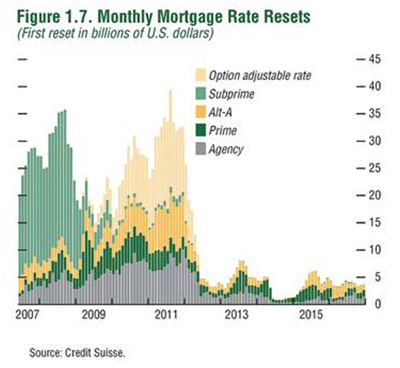
    Like the Roaring Twenties of a century ago, the real estate bull market of the last ten years crashed in dramatic style in late 2008. The collapse of the residential market was led by massive defaults in ill-conceived “sub-prime loans”. Millions of American homes are now in default and in the process of loan modification, abandonment or foreclosure. There is no end in sight as Prime, Alt-A, and Option ARM loan resets come due beginning in 2010.

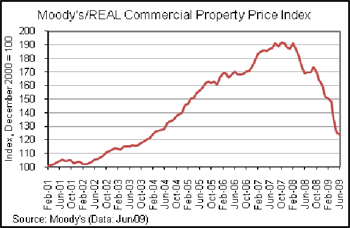
    Lurking around the corner, literally unnoticed by the average American worried about keeping his home, is a similar crisis in commercial real estate. For over a year commercial property values have been plummeting and have not begun to recover. A drive through both major cities and suburbia tells the story. Vacant stores, empty shopping malls, cancelled mixed use developments and eerily empty car lots presage bad things to come.

    We have discussed the origins of the housing crash before and the role played by feckless politicians and over-ambitious bankers. Now this crisis has spread to the commercial sector. Banks and commercial lenders saw in the new housing starts an equally promising demand for new shopping malls and suburban offices. Lenders forgot about pre-leasing requirements and made speculative loans on buildings that had no pre-leasing. As with housing, the rule book was thrown out the window. Like the aftermath of any wild party, there is hell to pay in the morning. It is morning in the commercial marketplace and the fat lady is singing.

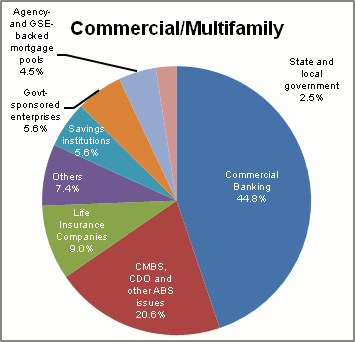
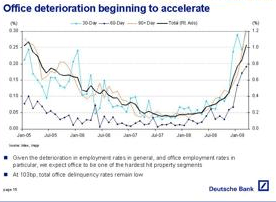
    Depository institutions hold about half of the $3.2 trillion of debt on US commercial property. The default rate in the first quarter of 2009 was just 2.25%. Sounds OK until you do the math and realize that $36 billion was in default and it is just beginning. The FDIC puts troubled banks on “the problem list”. In early 2008, there was one bank on the list. At the end of June 2009 there were 416, up from 305 at the end of the first quarter when the default rate was just 2.25%. Total assets at these problem institutions total $299 billion. The problem is that the total reserves of the FDIC are just $42 billion. The FDIC has closed over 100 banks and one good estimate is that they will close around 10% of US banks, 500 to 1,000, before the crisis runs its course. The losses will dwarf the $394 billion of the RTC and may surpass a trillion dollars. Is there any wonder why banks are loathe to make new loans?

    So what happens to commercial real estate? With prices plummeting, there must be some great buys out there, one must assume. But do not bet on it. This was not just an earthquake. The plates shifted, and like musical chairs, when the music stops there will be fewer chairs and many people left standing. Consolidation is the next step. There will be the inevitable drop in rents and with it property values. The better and stronger tenants will flee the less attractive Class B and Class C space and move to Class A properties. Class A properties will survive due to full occupancy and stable cash flow. But the lesser properties that were leased will empty.

    Like the suddenly quiet auto malls with the empty Pontiac, Saturn and Chrysler dealerships, lesser properties will lose their anchor grocery stores, Targets, and big box users. With the anchors gone, and traffic with it, the mom and pop small businesses cannot survive. There is no future for the marginal Class C shopping center. Tenants will flee to better locations and more affordable lease rates. Class A offices will survive. Well located and attractive Class B properties may muddle through at reduced revenues – if they can survive the refinancing maze. But, the poorly located Class C office will remain a “see-through” for years to come. Old, tired, and mostly vacant Class C office buildings line the crumbling freeways of Detroit, Cleveland, Youngstown, and countless smaller rust belt cities where excess capacity has eliminated the need for new development.

    A year from now, the landscape of America will be forever changed. The office and retail markets will be vastly different than they look today. Not much of it will be good. Five years from now, will empty shopping centers and auto dealerships remain shuttered or will they be rebuilt or torn down and their use converted to something more productive? Will our politicians cease their meddling in the market and allow the market to heal itself? These are questions that will haunt our economy for the next decade.

    ***********************************

    This is the fourth in a series on The Changing Landscape of America. Future articles will discuss real estate, politics, healthcare and other aspects of our economy and our society.

    Robert J. Cristiano PhD is a successful real estate developer and the Real Estate Professional in Residence at Chapman University in Orange, CA.

    PART ONE – THE AUTOMOBILE INDUSTRY (May 2009)
    PART TWO – THE HOME BUILDING INDUSTRY (June 2009)
    PART THREE – THE ENERGY INDUSTRY (July 2009)
    PART FOUR – THE ROLLER COASTER RECESSION (September 2009)