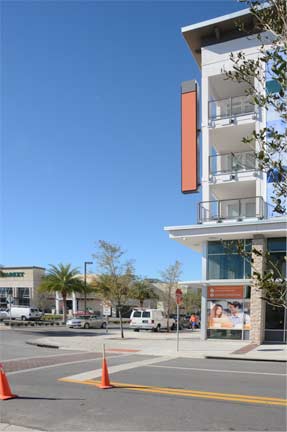
Tag: Florida

  • How Art Critics Create Community

    Orlando has taken on a new “web city” form. Its dispersal over a wide geographical area allows distinct and unique pockets of culture to arise within it, a kind of archipelago of art and design. It is a microcosm of the archipelago of many Florida cities. The overall effect is marvelous, if somewhat diluted by distance, and the broad metropolitan area has come to be a proving ground for artists, architects, and urban designers. As an artist and designer commenting on these topics, the single biggest trend I have seen in the last fifteen or so years is a growing sense of maturation. What else have I seen? And, over the years, what have my observations, and those of other critics, contributed to the art scene?

    In a city like Orlando, the art and design critic must have an exceptionally broad range, because the arts scene is flung between Daytona and Winter Haven, two poles that are each about 110 miles away from the city’s downtown area. The art scene in pre-World War II Central Florida consisted of a rare, purpose-built art colony simply called “The Research Studio,” where artists from the northeast wintered and pursued creativity.

    Near Winter Haven, Edward Bok, retired Harvard president and publisher of the Ladies’ Home Journal, created a cultural retreat of his own. Daytona, meanwhile, attracted automotive technology aficionados to the race track, bringing with them a uniquely American appreciation of pop culture and art. The artistic geography of Central Florida reflects the artistic range of America in many ways as a whole.

    More than one of Frank Lloyd Wright’s disciples relocated to Orlando as early as World War I, eying Florida’s inevitable growth potential. Few creatives sought Orlando specifically, and they gravitated here for different reasons. Jack Kerouac, for example, came to live with his sister while On the Road was prepared for publication, using Orlando as a place to escape. This escapism instinct would later inform millions of people a year, when tourism came to the area.

    In the aftermath of World War II, Orlando was a sleepy railroad and citrus-shipping town. Its binary heart was born in the ’60s with the arrival of Disney. Escapism as an industry brought thousands of performers, artists, and writers to the area. Downtown Orlando today is a hub where artists and writers congregate, while the themed-entertainment industry focuses artistic talents around the southwest side of town.

    As in any city, artists and designers have day jobs as well. But the Orlando area is one of the nation’s few metropolitan places of affordability and ease of lifestyle. We have artists whose work is collected nationally; artists who have works in major museums across the United States, and art events such as Snap! Orlando, a regional photography exhibition.

    Today, these artistic pursuits are being supplemented by new efforts in a wider range of locations. West Volusia County’s mixture of Stetson University and the Museum of Art – DeLand has become an artist’s haven. The Atlantic Center for the Arts, in New Smyrna Beach, has continued to program international artists, musicians, and writers in a secluded, tree-canopied forest near the Intracoastal Waterway. In financial parlance, these creative expressions are thriving new ventures.

    Art and design have always had an impact on quality of life. This is more important than ever in the twenty-first century as we re-invent the meaning of human habitation, and artists and designers articulate our current age visually. Performing arts and music also have profoundly influenced the visual arts and the notion of good design. The impact works in reverse as well: our thriving farm-to-table food scene nurtures — literally! — our creative community.

    But it is the conversation about art that is key, and the critic stimulates that discussion. As Oscar Wilde said, “The only thing worse than being talked about is not being talked about.” I come to the role of critic as a practitioner, one who walks in the shoes of the creative individual or team. I’d rather make art than talk about it, but still, I have a few thoughts to offer on what constitutes good criticism.

    Foremost, it is important to have standards, but standards are a little different than rules. Many urban designers are like artists who fret about using complimentary colors in the wrong way, overlooking the big picture. Standards of good art and design are universal, and are about getting an idea, a story, or a theme across in a satisfying or visually compelling way.

    I also pay little attention to credentials. Some of the best artists and designers come to the art world without any credentials at all. In this age, credentials are everything, but they haven’t made a great deal of difference in art and design. Some of the nation’s most highly credentialed urban designers were involved in creating Orlando’s Baldwin Park, which suffers from low business occupancy and high residential turnover.

    Meanwhile, the frowsy Audubon Park, just a half mile away, built in the 1940s, is a 2016 Great American Main Street Award-winner, and is bursting with independent entrepreneurial projects: coffeehouses, urban farms, an exquisite fishing gear business, and some of the best food in the city. Successful design isn’t about credentials; it is about the practical world of what works.

    In the fine arts, local museum leadership has undergone a transition, and curators have been set free to show relevant, impactful work. What the curators do with this freedom will be telling. So far, they have created an annual cash prize for the best Florida contemporary artist, unleashed a world-class private art collection free to the public, extended exhibitions to a college museum, and served as juries on artist-in-residence programs. All of this has been fueling the exchange of ideas and stories.

    Telling the exciting story of Central Florida art and design has been part of my good fortune. Because it is such a great story, the Association of Alternative Newsmedias has selected three stories about the Central Florida arts scene as finalists in a national competition, beating out stories from rivals such as Austin, Oakland, and Charlotte, three cities of similar size.

    An experimental building or a stunning painting is nothing if it is hidden or ignored. Today, with technology and imagination pushing the boundaries, it is often difficult to have a conversation about new art and architecture. Criticism helps to frame the conversation; it sets a standard for the dialogue about what we see. It also serves the purpose of applauding good results, and pointing out results that should be good, but are not. We make our cities better by agreeing on what works.

    Since coming to Central Florida in the mid 1990s, I have seen the artistic scene here mature. Experimental work, street art, and emerging talent continues to “bubble up” into the mix. In the past, the bubbles tended to pop, or to float away to places like New York City where the art would be noticed. Now, it seems that good artists are sticking around, trying to make this place better — and beginning to take us to the next level.

    Richard Reep is an award-winning artist and architect who writes art and design criticism for a variety of publications. You may nominate him as Best Arts Advocate 2016 by clicking http://orlandoweekly.secondstreetapp.com/l/Orlando-Weeklys-Best-of-Orlando-Readers-Poll-2016/Ballot/ARTSampCULTURE.
    Anyone visiting Central Florida can find a discussion of visually compelling aspects of the area in Reep’s Orlando Weekly column.

    Photograph by the author: “Cedar of Lebanon” by local artist Jacob Harmeling graces the southern quarter of Lake Eola Park in Downtown Orlando, one of the few original artworks commissioned as part of the city’s public art program.
  • Orlando: Shrines in the Urban Space

    Orlando is now a place where suffering may finally catalyze a response to social violence. The spontaneous outpouring of grief and reconciliation by its people shows that public space lives, and has a useful function in our digital age. In multiple places around the city remembrances of the victims of the Pulse nightclub shooting, and of musician and Voice contestant Christina Grimmie who was shot the previous day, are poignant, tangible evidence of the human spirit that one cannot ignore.

    In the aftermath of the cascading tragedies of early June, the city had lain grieving and stunned under merciless heat and a tropical storm. But vigils and public gatherings ignored the weather to show solidarity with the victims and their families and loved ones. Last week’s cool, dry, spring-like weather broke the city’s sickened fever. Gatherings at multiple sites gained momentum and size.

    Since ancient times, the plaza in front of a city’s political seat has held civic importance, and Orlando is no exception. The plaza at City Hall is sculpted into a multilevel maze with fountains and public art, so Orlando’s community adopted the much more open city block across South Orange Avenue as a gathering place — it’s a blank slate more adaptable to self-expression. In a synchronicity of events, its owner had recently demolished the 1960s architecture on this block to make way for future development. It is here that President Obama and Vice President Biden laid flowers for the victims of the Pulse nightclub shooting.

    South of downtown, Pulse nightclub itself had been quickly fenced off in black fabric, but beyond the fence and at nearby Orlando Regional Medical Center additional shrines spontaneously blossomed. By a week later, groups were still using them to stage vigils and gather to grieve, to struggle to understand, and to cleanse together in public. This function is so powerful, and so overriding, that the normally rigid traffic and parking regime has been adapted to allow people the space that they need.

    Throughout the twentieth century, public property in cities shrank while private property grew. Malls replaced Main Street. Large condominium complexes, primarily accessed from off-street garages, replaced brownstones that fronted sidewalks. In modern urban patterns, little remains of the old village green, the Italian piazza, or Greek agora. These spaces seemed to be relics, even burdens on the public realm that required upkeep and worry. Orlando’s open space is emblematic of this transition.

    Many think the death knell of these spaces has been the internet, with social media replacing the sidewalk as a forum for casual contact. Social media is all privately owned, so if this were true, it would mean that even more of life was spent on someone else’s private property. Photos of people lounging on sidewalks while staring at tiny screens seem to illustrate this point. Public space, some have claimed, is truly dead to the world, with little function other than as the pathway to private real estate development.

    Much has been written about this so-called collapse of the public realm, tying it to the extinction of civility and the twilight of civilization. It is fashionable to favor greedy selfishness to the exclusion of the common good, and private interests have little use for garbage-strewn plazas, broken-down town squares, or creaky old Main Streets. Private space is where it’s at, and the public is drowned out by amoral monologues of personal righteousness.

    Yet the urge to gather publicly continues, and in Orlando it happened on a scale large enough to be noticed. People still need their open space. Orlando’s famously tolerant and progressive community has come together in a heartbeat of vigils, religious ceremonies, speeches, spiritual gatherings, and memorial services, and it has done so out in the open.

    These are not orchestrated or premeditated gatherings. For those, people are renting halls or churches. Instead, these spontaneous gatherings are express an effort to right the wrongs suffered in our city. Ignoring the public/private boundaries, Orlandoans are using their open space for its most important function of all. Privatization of open space, it turns out, is little help in the face of the destruction that happened here.

    In the most personal of such shrines, the Plaza Theater, where young singer Christina Grimmie was senselessly shot, has received masses of flowers, candles, and testimonials. A steady stream of visitors spend a few moments in quiet prayer before moving on. At the theater’s narrow sidewalk the singer’s life was taken away, but her memory remains with us all.

    The block across from City Hall has five separate memorials constructed of flowers, posters, and banners, and is visited in steady, large numbers. Families, friends, and children pass by, moving quietly and slowly with few words to say. The tropical rains that come and go do not diminish the crowd: umbrellas come up and go down, but the elegiac procession continues.

    If Orlando has multiple hearts, the more formal of them is the regular rectangle between City Hall and the Dr. Phillips Performing Arts Center. The city’s other public space of any size is Lake Eola Park, a 16-block rectangle on downtown Orlando’s eastern edge, filled mostly with, well, Lake Eola. On the park’s western edge, facing downtown’s denser core, stands the Lake Eola amphitheater, the site of Orlando’s larger public gatherings.

    The amphitheater’s 200-odd seats were insufficient to hold the Sunday night crowd of 50,000 strong that gathered despite rain. People spilled onto nearby Rosalind Avenue, enlarging the public space of this corner of the park, to city-sized proportions. In this huge outpouring of grief, with chants of “One Orlando United” and “We Remember,” the names of the dead rang through the city streets and gave voice to our citizens’ grief as an actual rainbow emerged from the cloudy sky just at sunset.

    In times when the polarization of our country feels unbridgeable, and the dialectic seems to be reaching a crescendo, Orlando’s voice has said “one love.” LGBTWQ acceptance has always been available here, and replacing the acronym with “one love” in the face of violence has been Orlando’s mantra, both before and after our darkest weekend. More broadly, the unhealthy, antisocial violence that sparked two shooters to destroy so many lives has met with a startling voice of solidarity and purpose in Orlando. The blackness of our worst week is behind us, and the city’s emergence as a voice of tolerance is now just beginning.

    Richard Reep is an architect with VOA Associates, Inc. who has designed award-winning urban mixed-use and hospitality projects. His work has been featured domestically and internationally for the last thirty years. An Adjunct Professor for the Environmental and Growth Studies Department at Rollins College, he teaches urban design and sustainable development; he is also president of the Orlando Foundation for Architecture. Reep resides in Winter Park, Florida with his family.

    Photo by the author: Downtown Orlando at City Hall

  • Florida’s Interstate-Adjacent Fantasy

    As 2015 wanes, many swimming in Florida’s new wave of growth are still being carried by a swift current. Everywhere one gazes, new apartments can be seen that accommodate some of the million-plus new residents who have moved here in the last five years. With over 140,000 people migrating to Florida from other states during 2014, and over 100,000 people moving to Florida from other countries, Florida’s GDP is predicted to have grown 3.2% in 2015, the highest in the country and well ahead of the national average. The tide has definitely come in.

    For natives and long-term residents, it feels like everyone up north woke up one Tuesday morning and said, “Hey honey, let’s quit our jobs, move to Florida, and get an apartment overlooking the interstate.” From Tampa to Daytona, mid-rise wood frame structures loom over semi-trucks and cars that whizz by, a new voyeur culture in the making.

    At first glance, the recent growth seems low quality and monolithic, blandly designed and structured to meet a uniform real estate development formula. The land along Interstate 4 is cheap and available for development. Like coral reefs that grow on the poisonous crags of undersea volcanoes, however, these apartments are an infrastructure for an ecology of both dreams and nightmares. Dispossessed by capitalism, many laid-off Americans seek a new start in the apartments of the Sunshine State. In these drywall-lined niches grow polyps of hope.

    Some newcomers come to Florida with job offers. Along with those taking advantage of the economic climate, there are others who show up without employment; many without jobs move to Florida and fill apartments only with the hope of a new life and prosperity. Such is the Florida of the nation’s imagination, a place of such bountiful employment opportunities that one can pick a job off a tree, like a wild orange. Do-over dreams hang in the air around these giant rental reefs, interwoven with expectations of an easy, low-cost retirement lifestyle. “I have several friends,” writes one retiree, “who all went south from Connecticut to Ft. Lauderdale years ago, and drifted north to Melbourne over the years… it seems like a nice place to live.” An image of retirees drifting around the state, like so many jellyfish drifting along a reef face, seems idyllic.

    Many have suffered more severe economic hardships. The third busiest bankruptcy court in the nation none other than the Middle District of Florida, housed in sunny Ft. Myers. Those without the means or the qualifications for a mortgage often retreat into Florida’s apartment culture, licking their financial wounds. Setting one’s sights a little lower and squeezing into a small apartment cosigned by a family member may be a humiliating, but necessary step towards a new beginning. The symbiotic relationship between debt and dreams can be seen through the glass walls of these buildings.

    Quite a few renters are also paying off student debt. “We cannot afford a house right now. Maybe not ever,” writes Selena in Florida about the student loans she and her husband have. The rental life, tinged with a very bitter dose of recent reality, is the color of all of the aspirations that swirl around the stucco, false mansard roofs, clubhouses and glittery swimming pools.

    The Florida resort lifestyle, jammed up against the interstate highway, is an unlikely scaffold for dreams. Percolating between the swaying palms are new beginnings, fresh starts, and resolutions to do better. Some of these dreams may blossom and grow out of the balconies and windows of these monolithic blocks of monthly rent, making these apartments a nomad’s brief sanctuary on the journey back to prosperity. These are the lucky ones, the temporary renters; those who stay in an apartment for a year or two while getting back on their feet.

    As viewed from the middle lane of I-4, these giant rental shoals, and the thought of the imagination that supports them, seem at once reassuring and terrible. Reassuring, because the idea that Florida is universally beloved still makes Floridians smile. Terrible, because this new biodiversity is voracious, and brings with it congestion. These mid-rises inhale a dense population, only to exhale them out onto Florida’s flat expanse of rooftops that spread ever further into Florida’s vanishing natural environment.

    Like coral reefs, which grow in the ocean where the surf is most active, these apartments grow in Florida where the weather is most active. The hurricane capital of America, the lightning capital of the world, and the humid heat are the real parts of the lingering illusion of a tropical wilderness that comes with this postcard paradise. Once arrived, many of the newcomers find the weather intense. Hopes and dreams cling to the apartments like barnacles, fluttering from the windows and balconies, despite the heavy summer rains.

    Apartment dwellers are a transient lot, often staying not longer than their lease term. When one moves out, workers clean and repair the unit to be ready for the next. Each new dweller from out-of-state brings his or her own illusions of Florida. Others bring a more grounded reality from their previous Florida experience. Either way, the dwellers’ new impressions blend with the redolent ecosystem of hopes and dreams surrounding the edifice.

    These Florida apartments are inspiration-gardens, attracting migrants seeking a better life. Only the individuals who dwell within them can activate their hopes. As rather expensive offerings, they are not analogous to the New York tenements of the nineteenth century, which were full of families crowded off of the European boats. Instead, these are high amenity, middle-income places to live. They act in the same way, as a distribution system for dreams, but are far more luxurious and appointed than the slums of old.

    The urgent, massive dream-reef construction project that has gone up alongside I-4 is in its peak phase, with a few nodes already complete between Tampa and Daytona. Apartments are clustered like a gigantic fringe along the denser population centers: Lakeland, Lake Buena Vista, Orlando, and Winter Park. Those living in earshot of the interstate’s mighty roar of traffic must have an ironic, contemporary sense of place. As a concrete reality, the I-4 corridor is not a particularly prestigious address. But as an abstraction that speaks of today’s politics, it has an importance of the first magnitude. If these two opposites— the dream of the America we desire and the reality of the America being constructed now — can be reconciled, then Florida’s growth is a healthy ecosystem that offers hope for the future.

    Richard Reep is an architect with VOA Associates, Inc. who has designed award-winning urban mixed-use and hospitality projects. His work has been featured domestically and internationally for the last thirty years. An Adjunct Professor for the Environmental and Growth Studies Department at Rollins College, he teaches urban design and sustainable development; he is also president of the Orlando Foundation for Architecture. Reep resides in Winter Park, Florida with his family.

    Photo by Cooper Reep: Typical new mid-rise on I-4 in Florida

  • Cities That Locate Art In Odd Places

    The city sidewalk today is pretty empty, with online shopping and social media having replaced shoe leather on pavement. Restrictions in the name of safety have also become more common since 9/11. One result of these trends is a movement called Art in Odd Places : the work of artists that use public space itself as a huge, blank canvas. Orlando is the most recent city to experiment in this fashion. This month, more than fifty artists there reasserted the right to an unfettered exchange of ideas in public space, reinventing the sidewalk. It was an interesting experiment that led to some bigger questions about the relationship between public space and civic involvement.

    Art in Odd Places was started by New York artist Ed Woodham in 1996 during the Cultural Olympiad in Atlanta, which coincided with the Olympics. With the media focused on sports, few recall that the Olympics is a celebration of mind and spirit, as well as of the body. Olympic cities host poets on the street reciting verses, and painters and sculptors exhibiting their pieces. Woodham struggled with officials to bring performance art to the event, and went home determined to keep the town square in its rightful place as the unfettered medium of exchange for art and ideas.

    All the way through the nineties, movies and television documented sidewalks thronging with people, parks full of activity, and public plazas alive with protests or festivals. Despite popular rhetoric that accuses the car of killing public space, something different was happening. Sidewalks and plazas have continued as the arena for public encounters in our cities. They reached capacity, but as cities spread out the car had little effect on, for example, Times Square, or on any other city’s sidewalk.

    Something funny started happening however; something only a few like Ed Woodham noticed. “In Atlanta, we were placed in a designated ‘free speech zone,’ which I found odd,” he commented to me while preparing for Orlando’s event. “I wondered when the city was no longer a free speech zone in its entirety.” Woodham noted, in particular, the clampdown after 9/11. Any sort of organized activity on the sidewalk was more and more regulated, in part due to a heightened sense of security.

    Today the value of public space is open to debate. Nicolett Mall, a pedestrian zone in downtown Minneapolis, is hardwired into the city’s soul and is being rejuvenated. Meanwhile, New York Mayor Bill de Blasio is considering removal of the plazas in Times Square that have attracted a lively crowd and the presence of costumed characters and street performers, many of them seeking tips.

    In 2013, Greensboro, North Carolina hosted Art in Odd Places, and the director of downtown Orlando’s Gallery at Avalon Island art curator Pat Greene visited. Two years later, Greene successfully co-curated the Orlando show, along with Voci Dance Director Genevieve Bernard. Between September 17th and 20th this year, Orlando became a host to dozens of artists on the street. The theme in Orlando is “Tone,” which is interpreted by each artist individually; pieces have been created around audio tones, color tones or other meanings of this word (I reviewed the work in a recent critique for the Orlando Weekly).

    For example, Forrest MacDonald’s subtle water pipes, inserted next to actual storm water pipes, were sprinkled down Magnolia Avenue, with hands reaching out of the pipes to stroke tufts of grass. Nathan Selikoff fed a microphone into a computer, and then onto a giant screen, projecting an “Audiograph” that mapped the soundwaves of the city like a huge EEG.

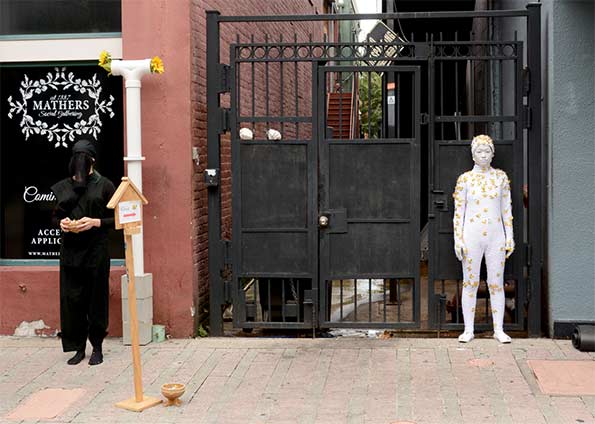
    On the more ethereal side, performance artist Masami Koshikawa created “Self Portrait as Butterfly Woman,” posing in white while an assistant invited passersby to place gold origami butterflies on her body suit. This gesture broke the barriers between strangers and the taboo of touch, and represented a sublime moment in the festival. Koshikawa eventually collected hundreds of butterflies.

    Arvid Tomayko paraded up and down Magnolia Street in his “Wearable Tentacle Horn,” a suit with trumpets coming out the ends of various sleeves. And Chris Scala pulled a wire mesh camper into a parking lot and slept in it, LED lights washing over his sleeping form, in a piece entitled “X-Ray Camper”. These are only a few examples of artists using public space to make a spectacle in a traditional manner.

    I visited Art in Odd Places at the height of the lunch rush on one day. A few scattered pedestrians wandered in and out of restaurants, and a preschool teacher led her little ones back to school from a library trip. The artists and their supporters comprised the largest single population group. (More people came by in the evening, according to Greene.)

    In the last ten years, the number of people living in downtown Orlando has actually increased, with more and more residential housing available in and around the city’s core. What has sucked the life out of sidewalks, it turns out, isn’t the suburbs; instead, it’s the tiny screen and the big screen that have occupied more and more of our lives, taking over the social space that was once reserved for the street. Casual shopping encounters, mixing social and economic activity, walking to business appointments, encounters on the once-active courthouse steps: all of this has become the archaic activity of yesteryear.

    Art in Odd Places did interrupt the tiny screen focus of the average pedestrian who braved the sunny weather that day. Some of the artists deliberately sought to enter the cell phones of bystanders: Sound artist Jeff Knowlton created an app called “Sonify: Orlando” which, when downloaded, provided an acoustic narrative with sounds triggered by the immediate location. A new art form, which Knowlton describes as “locative media,” is born. And overall, Woodham, in an optimistic manner, has aroused artists in city after city to reinvent the sidewalk. In Orlando, the event was a success.

    The darker issue of the regulation of the sidewalk, has, however, remained unaddressed. Woodham feels that well-meaning but overly stiff regulation has turned people out of their public space, and is working hard to reinvigorate the streets with art. Where a vacuum exists, artists often rush in, and the result reflects our contemporary culture. This type of activist art is not seeking to right a gross injustice or advocate a cause, except for that of free speech. It is spurred by open conjecture about the future use of the sidewalk, and asks pedestrians to re-invent the nature of our public space in the twenty-first century.

    Richard Reep is an architect with VOA Associates, Inc. who has designed award-winning urban mixed-use and hospitality projects. His work has been featured domestically and internationally for the last thirty years. An Adjunct Professor for the Environmental and Growth Studies Department at Rollins College, he teaches urban design and sustainable development; he is also president of the Orlando Foundation for Architecture. Reep resides in Winter Park, Florida with his family.

    Photos by the author: Anna McCambridge interacting with a piece of “Storm Water;” Koshikawa, right, with butterfly assistant.

  • Historic Districts: The Past or The Future?

    Preservation seems like an easy idea to support. Who would be against it? History, character, and a sense of place are what great communities are all about. They generate tourism and makes us all culturally richer. Landowners in historic districts even enjoy higher land values than nearby landowners in newer, usually blander developments. What’s not to like?

    Apparently, a lot. Cities unilaterally impose ordinances from time to time, regulating building size, shape and use, and rarely are there complaints, although the changes affect everyone in the city. Here in Florida, building codes were recently stiffened, causing buildings in the entire state to become more expensive, and there were no complaints to speak of. But in the small community of Winter Park, when a proposal was floated to make obtaining historic district status less onerous, indignant protesters with cries of “property rights” were voiced. Protesters who were shy about fighting the State and the City may have finally found, in individual neighborhoods, a small enough foe to bully.

    Protesters claim that they fear restraint of trade, and they’re hoping to cash in on rising land values, particularly where they have been historically low. A historic designation might make an owner think twice before knocking a house down.

    There’s mirth in Cyria Underwood’s eyes as she tells us about coming here to Winter Park from Louisville, Kentucky. A tall, elegant African American woman, Underwood works at the Hannibal Square Heritage Center, and observes Winter Park’s preservation battles like this: “Black people have an oral history tradition, and it’s a good thing we do. We don’t expect our own buildings to get preserved. So here on the West Side, we hand down our oral history from mother to child, father to son. It’d be nice to see preservation taken seriously,” she muses, her eyes still smiling, “but African Americans have learned to make do without it.”

    Interest rates remain low. In neighborhoods like the West Side, where Cyria works, owners feel the pressure to sell. Hannibal Square, built originally for blacks in the 1880s, today houses a mix of families, some of whom go back to the town’s early days. Walkability, playgrounds and parks make this a dream community for urbanists; many residents ride the buses that travel up and down Denning Avenue, and Sunrail’s Winter Park Station is a couple of blocks away. Finally, it seems, this area has come into its own and become a hip, urban community at long last.

    “However,” murmurs Cyria, her eyes twinkling, “the wolf is at the door.” She’s referring to developers who buy small houses on small lots and replace them with much larger homes, townhomes, and even multifamily clusters. West-siders have been clinging on by the skin of their teeth. Service jobs with modest incomes and part-time work (much of it a long bus ride away) have kept this neighborhood afloat. While land values all around have skyrocketed, the West Side — historically African-American — has not been rewarded with such good fortune. Property values are, to put it politely, stable.

    Fairolyn Livingston moved out of the West Side in the ’70s, but comes back frequently. She explains that when a West Side homeowner sells, he or she walks off counting the cash. But Livingston cites more than one seller who couldn’t replace the Winter Park lifestyle with the proceeds from his or her home, and ended up moving into poorer and even less upwardly mobile parts of town. So goes gentrification: the new buyer, often white, unwittingly banishes an African American family to a lower stratum, hardening class divisions.

    Livingston is candid about the younger newcomers. Asked whether they join the neighborhood churches, she chuckles. “Oh, no. There’s no interaction with our community.” The new buyers, however, benefit from the short walk to Park Avenue’s chic restaurants and shops, and can Sunrail to happy hour downtown. The West Side’s character, meanwhile, dissolves under the homogenous new face of urban America, where everywhere resembles everywhere else.

    Cyria Underwood, Fairolyn Livingston and many others are unworried about the preservation battles being waged in Winter Park right now. This is not surprising: preservation of the West Side has not been high on the City’s agenda. The same development pressures are being fought all over.

    Locally, Friends of Casa Feliz, a Winter Park preservation organization, will be co-hosting a West Side History panel discussion this autumn to help keep what is left of the architecture.

    It’s part of keeping a conversation going about the local urban future. Historic districts come into being in most places with a simple majority, but Winter Park’s requirement of a supermajority makes them difficult and rare. Protesters against preservation see this as just fine, and do not want property rights to change.

    While he isn’t a vocal protester, realtor Mark Squires is a realist. With a Clark Gable smile and wink, he is a true denizen of Winter Park real estate. “Everyone wants historic character,” Squires offers, “but nobody wants to pay for it.” Smaller, older homes have tiny kitchens and bathrooms, and are often hard to maintain. Squires and his colleagues find that, for many young couples with kids, Winter Park’s lifestyle is in high demand. The last thing on their busy agendas is fixing cast iron pipes or repainting wood trim. Many buyers want new, as the developers, builders, realtors and lenders are well aware. Every home becomes a potential knockdown, if the price fits the formula.

    Squires’ local reality is that historic preservation, while it might make everyone a little better off, makes home sales harder. Our local economy is geared towards short-term private profit, and the notion that preservation can also be profitable is rarely considered. While developers in Boston, Chicago, and elsewhere have proven that historic preservation can make money, it has yet to be seen as a both/and proposition in Central Florida. City Hall dithers over the proposed historic district ordinance while the bulldozers roll.

    Underwood is philosophical about it. “Willing seller, willing buyer, you know? You can’t control what someone does after you go.” Rich or poor, the same argument applies. The individual decides whether to push the easy button and go for new, or save a little bit of quality for future generations.

    The current wave of transactions, fueled by low interest rates and demand for in-town living, is recasting the character of her neighborhood, as well as of the more affluent areas of the East Side. If the City Commission votes to ease historic district formation, perhaps there will be more than just oral history to remember Old Winter Park by. If not, and more bungalows succumb to the McMansion, we’ll all just have to huddle up around her chair and ask for stories about the buildings that used to be here, and the people who lived within them.

    Richard Reep is an architect with VOA Associates, Inc. who has designed award-winning urban mixed-use and hospitality projects. His work has been featured domestically and internationally for the last thirty years. An Adjunct Professor for the Environmental and Growth Studies Department at Rollins College, he teaches urban design and sustainable development; he is also president of the Orlando Foundation for Architecture. Reep resides in Winter Park, Florida with his family.

    Photo of Cyria Underwood by the author

  • Small Towns: The Value of Unique Places

    Rural and small towns suffer from a loss of faith in their place, and seem desperate to be recognized in our new, standardized world. Plenty of our developed land remains specific and even unique, but the highway does not go to it. Outside the cities, unpretty feed stores, the availability of tractor parts, and the presence of cattle hardly contribute to scientifically measured success. The refuge of the individual, the ability of a person to see his or her life as meaningful while it is separate and apart from a larger mass, is crippled. You’re only as good as your income; you’re only as witty as your social media posts, and you’re only red or blue.

    In Sanford, Florida, the mayor recently sat down with my urban design students and discussed the future of this small town. Sanford, once larger than Orlando, was a significant port, loading Central Florida’s farm produce onto ships and railroad cars for hungry Northeasterners. Now diminished, its quaint downtown reeks of history, beautifully preserved, but only a few jobs exist. Today’s brick-paved Main Street, with its galleries, bookstores, and restaurants, caters to a trickle of visitors, but Sanford feels the effects of being on Orlando’s periphery.

    “People come to me,” said Mayor Jeff Triplett, “and ask me to help bring jobs to Sanford. They wish we had a national chain drugstore like a Walgreens or CVS on Main Street. That,” he declared,” is their measure of having arrived.” Sanford citizens, he explained, see something like this as true progress.

    “That would kill your Main Street,” protested one student. Enjoying Sanford’s originality, the students encouraged the Mayor to consider that Sanford could do better than a franchise’s low-paying jobs. The quest, however, for some sign of progress continues.

    The conversation reflects how meaning, or a sense of place, is measured only in relation to a greater national homogeneity. People petition their leaders to bring meaning to their towns via a national chain. This monolithic built environment is, by itself, a giver of meaning. To someone living in a small town, the standardization of our lifestyle is the normal condition, and the lack of homogeneity is seen as impoverishment. It is somehow a disease, a condition of malnutrition, to be deprived of the physical structures of standardization.

    Today’s homogeneity can be a strength, providing a level playing field for society. Its virtues are equity, efficiency, and supermobility. As a single, unified scaffold, our homogenous built environment has grown outward and filled our land to the edges, and it places cities at the focal points of a grand grid. Mainstream literature extols the virtues of this grid, and celebrates today’s urban life. But homogeneity has its downsides, and places that are outside of this grand grid of progress suffer deeply. Variety is subsumed by today’s great global culture.

    Once, writers like Alvin and Heidi Toffler, and George Orwell, warned against this kind of growth, citing the hazards of the rational, scientific underpinnings of modernity. Objectifying everything and extinguishing the mystery of life seemed to them to be an exercise in nihilism. Other thinkers in the 1930s and 1940s also foresaw that the monolith of western civilization would consume everything in its path. Indeed, this consumption of unique places has been largely accomplished, and those that remain are considered stunted and backward. Everywhere one looks, the loss of variety and individualism is profound.

    And so small towns suffer in silence, their best and brightest arriving like refugees into bigger cities. Smooth, suburban density levels set our current standards, while agriculture and ranching seem unable to retain people.

    Science has brought us to this point, but blaming science is like blaming the trash can for the garbage within it. If the manmade environment we’ve created is imperfect, then it is a reflection of us. It probably isn’t going away anytime soon. We now exist in a nearly wholly manmade environment. Even the most rural exurban dweller lives in a substantially more technological and manmade environment — house, car, job — than the most urbane city dweller did a century ago.

    No, this crisis of is not a failure of science. It is a lack of quality. What we’ve built is everywhere, but it isn’t very good… yet.

    What to do with this homogenous world is the next generation’s big task. But we, too, must act now to confront the physical evidence of this imperfection. Change will come when we accept that we must fix it, and not wait for a deus ex machina to swoop down. Those longing for an apocalypse are seeking the easy way out: let flood, fire, or epidemic take care of the mess.

    I’d rather take responsibility for what has been created, and take better care of it. This monolithic, homogenous latticework of roads and buildings is the new frontier. Where man has already strongly modified nature, there is plenty of room for improvement.

    More cities that nurture native industry will create this new future. Balancing that approach with the Jeffersonian ideals of a strong, rural economy will bring equity to areas that are suffering. And that will build upon our strength.

    Richard Reep is an architect with VOA Associates, Inc. who has designed award-winning urban mixed-use and hospitality projects. His work has been featured domestically and internationally for the last thirty years. An Adjunct Professor for the Environmental and Growth Studies Department at Rollins College, he teaches urban design and sustainable development; he is also president of the Orlando Foundation for Architecture. Reep resides in Winter Park, Florida with his family.

    Photo of Sanford by Christine Wood

  • The Simulated City Vs The Urban Downtown

    While the city’s star is rising in popular literature, it has fallen in popular usage. Where have our sidewalks gone—and why is sidewalk activity disappearing? Sidewalk life has declined in urbanized areas, while population has swelled. Here in Florida, the third most populated state in the country, the average town’s sidewalks should be teeming with colorful crowds of businessmen, shoppers, and people on errands going to and fro. We should see sidewalks full of people happy to be out in the sunshine, and even happier to have escaped the gray cold and the snow. Instead, on weekdays, a trickle of lunch-goers emerges from towers. On weekends, there’s a brief crush of crowds before events. This seems to be all that our downtowns can manage anymore.

    The simulated city is the new place to be. It’s a manufactured copy of our downtowns, and can be found in theme parks and places where throngs congregate to experience the sidewalk in its current incarnation.

    The simulated city carries none of urbanity’s institutional hardware: no visible governmental facilities, religious institutions, schools or civic centers clutter the street wall. The simulated city eschews manufacturing and offices, instead making itself the chief enterprise: a mecca of retail, dining, and entertainment. It has cherry-picked the good stuff from the old urban form, presenting a cosmetically perfect face without blemish or quirk, redolent in its synthetic beauty.

    In Florida, with few natural resources and scant manufacturing, the simulated city takes advantage of tourism and growth. With the number of annual visitors approximately four and a half times its permanent population, Florida is a natural place for simulated cities to sprout. The earliest was the Magic Kingdom’s Main Street at Walt Disney World. This ancestor of the simulated city engendered replicants in other theme parks, each one topping the other in surprise and delight.

    This spring, Orlando’s Downtown Disney reopened as Disney Springs, a retail, dining, and entertainment district that is themed to resemble a lost small town. Nearby, Universal’s Citywalk incrementally reinvents itself, restaurant by restaurant. Further south, Miami’s South Beach has enjoyed an upsurge as well. With some of the highest real estate prices in Florida, South Beach has jumped species to become a simulated city too, enjoying a sidewalk life that is the envy of downtown Miami and, frankly, of the rest of Florida’s beach communities. There is magic on Ocean Boulevard’s pavement that is not found anywhere else in the state.

    What groups these together is simple: sidewalks full of people. Unlike the shadow-world of Florida’s urban downtowns, riverwalks, boardwalks, and Main Streets, throngs of people crowd these places every day and every night. For all the hoopla about the reinvigorated city, Florida’s urban scene fails to deliver even a fraction of the sidewalk life that these places have. The simulated city is the powerhouse of the future.

    Once going out meant heading to Main Street, and then, briefly, it was to the mall. Today, in the simulated cities one must carefully navigate between families, stepping between neon sneakers and wheeled strollers, flip-flops and brogans. This delicate ballet occurs while eye contact flickers between faces and facades; the traffic and the sky. The sum of such casual contact gives people a feeling for their public identity, and the simulated city is a tool to deliver this identity in the best possible light. The simulated city has become the choice for people to display their social selves.

    Dry cleaners, dentists, and others who provide services that imply an unclean recipient are banished completely from the synthetic city. In South Beach, the providers are in the less expensive real estate many blocks from the beach. The city is an unabashed celebration of sybaritic pleasure, the frosting on the urban experience without any of the cake.

    It is a city where your expectations as an urban connoisseur are completely fulfilled; decrepitude, blight, and eyesores are disallowed. Even better, a simulated city’s employees are rigorously trained to be cheerful and bright. No homeless people lounge on park benches, and there’s no visible crime, since there is no apparent indigence, want, or fear. Although it would not be turned away, the riskiest tranche of society seems to shun the simulated city. Its design reflects mainstream success, and discourages subversion, by having no alleys, no trashy areas, and no low income community adjacent to it.

    South Beach was able to jump species from being a regular city and evolve into a simulated city partly because of this last feature, what with being an island. No low-income edge rankles its visitors, or exposes them to a broad cross section of society. It is unique among Florida’s simulated cities because it does have housing (upscale, of course) in its mix.

    Urban boosters vaunt the ancient metropolitan core as if it still mattered. While urbanists are still fighting against the influences of the car, under their noses a new mobility trend threatens, one that will dwarf the damage done by the automobile.

    This, of course, is the internet, that global marketplace of goods and services that makes nearly everything but a haircut available online. Downtowns and suburban commercial clusters alike are fighting for their lives, and between telecommuting, online shopping, and social media, fewer and fewer folk find reasons to step out onto the sidewalk. Soon, if we go online to vote, even our civic duty can be done without stepping on pavement.

    Disney Springs presents a heady abundance of experiences to visitors along a lakeside walkway near Orlando. Families cluster together, friends walk in groups or split apart for different adventures. No obligation exists for greater social contact, since you are a visitor among visitors, and your anonymous bubble is preserved. This is a different state of mind than when you are in your own city where you may run into an acquaintance. As in a theme park, you are unlikely to run into someone you know.

    And because people are in a place that is made especially for pleasure, the sense of self tends to magnify, as evidenced by ubiquitous and annoying selfie sticks. Without the glowering facades of authoritarian institutions like churches, police stations, or city halls, the sense of place is completely recreational and mildly celebratory, inducing a temporary state of pleasant expansiveness.

    To see solid evidence for the simulated city’s high desirability, look at its twin conditions: Huge crowds coupled with high barriers to entry. South Beach requires visitors to take a slow crawl over a traffic-choked bridge onto the island, and pay stiff parking fees. Theme parks also charge parking fees, and entry requires a long, hot trudge through a parking lot. Driving, paying for parking, and then walking? Simulated cities must deliver high perceived value in exchange for this effort.

    As the twenty-first century lifestyle migrates from the urban-centric past into the online and suburbanized future, the sidewalk seems destined to become a playground. Florida’s three or four simulated cities, enormously successful places, tell us that people will overcome hurdles to seek out urban experiences, including light social contact as a recreational activity, while shunning their own urban core back home. This paradox, particularly easy to see here in Florida, may point to a future where people prefer to sip the urban water, rather than swim in it.

    Richard Reep is an architect with VOA Associates, Inc. who has designed award-winning urban mixed-use and hospitality projects. His work has been featured domestically and internationally for the last thirty years. An Adjunct Professor for the Environmental and Growth Studies Department at Rollins College, he teaches urban design and sustainable development; he is also president of the Orlando Foundation for Architecture. Reep resides in Winter Park, Florida with his family.

    Photograph by the author: Downtown Disney, a simulated small town, around lunchtime on a recent Sunday.

  • Florida’s Everglades: A Vernacular Far From Miami

    South Florida connotes a certain lifestyle in media and popular culture. Miami’s bright, tall energy has always been intertwined with the Florida Everglades’ quiet, flat landscape – low, grassy plains soaked with swamp water and edged by dense jungle. The seam where these two opposites meet is neither active nor passive; it is, instead, a third thing, where man’s activity has subtly modified the landscape, and nature has slowed man’s pace closer to its own. The edge of the Everglades has an almost off-kilter Caribbean or Central American sense of place that feels exotic and familiar at the same time. Its pleasant tension reassures me there is still an edge to Florida, when the scratchy blanket of protective regulation is thrown off to reveal informal, naturalized structures that blend beautifully into the natural environment.

    Southwest of Miami lies the city of Homestead, Florida, famous for being the front door through which Hurricane Andrew entered Florida in 1992. Today, Homestead is an exurb of Miami, with a relentless street grid extending west and south. Homestead’s housing, schools, and commercial strips grew after Andrew’s devastation, ending only at the hard edge of the Everglades National Park.

    Along this line, the housing and farmland stops, and is taken over by the wide ‘River of Grass’ –the term of the writer Marjory Stoneman Douglas, which has come to be synonymous with the Everglades’ ecosystems of marshes, swamps, mangrove forests, rocky land, and marine environments. Douglas, as well as local writers Patrick Smith and Carl Hiassen, has brought this unique place to life, with vivid descriptions of the colorful, offbeat character of the people who seem attracted to its vastness, and the freshwater river under it that flows down to the Caribbean Sea.

    Homestead’s western frontier is a jagged edge, a squared-off, pixilated curve defined by a patchwork of rear property lines and rural roads. On one side, houses pop up in between rows of beans; on the other, there grows a green a jumble of ficus and palmetto. At more than one location abandoned asphalt strips crumble into the jungle’s interior, a subdivision extended a little too far. Here, no one ever built a home, and the empty lots pass into a suburban archeology of rusted street signs and vine-choked fire hydrants, a developer’s dream faded away.

    In the agricultural areas, open fields with crops alternate with tropical fruit groves. Mango, papaya, banana, and coconut bloom in the spring, their fragrant scents wafting in the early morning air. Workers in the field are dwarfed by the flat landscape, a world away from the America’s eighth largest metropolitan area.

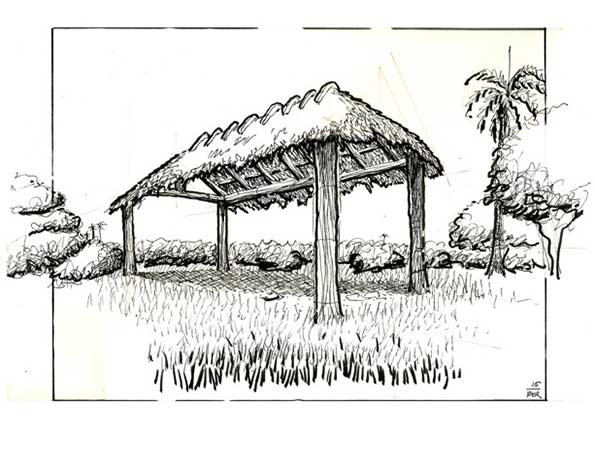
    Here, the vernacular building style is a colorful, deliciously un-Miami-like mix of shipping containers and barn tin. The traditional Seminole chickee —a rough, open hut with a raised floor, on a log frame — lends a tropical, exotic flair to this spotty rim of human inhabitation, pressed against nature’s vast size. The chickee’s thatched palm fronds create a natural insulation barrier that blocks the sun’s heat, and the fully open sides allow the tiniest of breezes to move air through the space underneath. This native response to the land is more appropriate than the thick-walled, stucco-buttered architecture imported from arid Spain and grafted onto Florida’s humid, wet character. The Seminole answer was to work with nature, have a light touch, and when a hurricane blows it all away, build it again. The classic Florida Chickee is an informal structure that the Seminole tribe builds. Some still use as living quarters in a way similar to camping (for those who prefer air conditioning, power, and plumbing, a more modern house is used).This zen approach to fulfilling the human need for shelter is decidedly un-modern and soft, and the chickee presence at the edge of the Everglades lends a certain amount of respect to the power of nature just beyond.

    Civilized life is stripped away, layer by layer, on the margin of the city. Abandoned subdivisions and Native American chickees coexist together, creating a sense of place that overlays the premodern chickee onto the failed subdivisions of modernity. This sense of place tends to mark man’s over-reach into the wilderness. Yet another marker can be found on buildings constructed by modern means, where layers of veneer have not been added: raw materials, unpainted and unadorned, stand crude and timeless against the trees and the sky. The edge’s presence can be sensed where structures start to dissolve into informality.

    Everglades National Park is a hard, urban boundary on the map, but on the ground it is a blurred zone where the slow-moving river of grass influences human activities. The nuanced edge continues into the Everglades themselves, where Florida’s subtle water-nature is uninterrupted. Water flows in a gentle, slow sheet across Florida’s flat limestone bed, coated with organic material barely thick enough for life to cling to. Where the limestone base dips a few inches, grass fails to grow; where a nub rises a few inches above this hard plain, unique tree islands gather. These islands are too densely vegetated to admit any human. Their edges are wrapped in a thick tangle of branches and leaves, a sort of bonsai-forest in miniature. Insects, birds, and other small creatures inhabit these infrastructures, forming their own natural urban civilizations of city-states, out of man’s reach.

    In between approaching jets and the distant rumble of airboats, a larger silence takes over. Penetrating the membrane between inside and outside gives us a new perspective. To confine our efforts to areas that are already strongly modified by human activities suddenly makes philosophical sense. Boundaries, once created, harden over time, and the softness of the western edge of humanity against the eastern boundary of the Everglades seems destined to harden. In its current state, this snapshot of the feathered, nuanced edge of civilization seems to be delicately balanced between the rural and the natural. Agricultural industry on the periphery of the great conurbation of Miami moves at a pace that is in between the seasonal flow of the Everglades and the nanosecond street culture of contemporary western civilization.

    Florida’s ubiquitous industry, tourism, mixes with agriculture even here at the edge of the wetlands, with the airboat rides, fruit stands, and alligator wrestling shows that pepper it. The vernacular architecture of the Everglades is not quite agricultural, yet not quite contemporary Florida either. Its flavor is connected to the Caribbean tropicalism one finds on islands like Puerto Rico, Barbados, and Hispañola. Endlessly adaptable shipping containers sit cheek-by-jowl with chicken coops and thatch awnings to create an ad hoc pedestrian space under palm trees. All is a little too clean and, well, ‘inspected,’ to be really offshore. But it’s also a little more relaxed than the uptight, postmodern built environment we’ve come to expect in America.

    Heading east out of the Everglades is a somewhat wistful journey forward in time. Rural roads lined with mango trees abruptly give way to fruit processing plants, which back up to grocery store strips, and the standard parade of global brand names enters the windshield, a gateway back into contemporary America. Stoplights take longer, the traffic pace quickens, and today’s Florida, like a hair shirt, envelops you in a cocoon of highly regulated infrastructure, put there for your own protection.

    Richard Reep is an architect with VOA Associates, Inc. who has designed award-winning urban mixed-use and hospitality projects. His work has been featured domestically and internationally for the last thirty years. An Adjunct Professor for the Environmental and Growth Studies Department at Rollins College, he teaches urban design and sustainable development; he is also president of the Orlando Foundation for Architecture. Reep resides in Winter Park, Florida with his family.

    Photos by the author: (top) vernacular building style on the edge of the Everglades; early morning workers arrive in Homestead by bus; protypical Chickee hut; unpainted structure, common on the edge of the Everglades.

  • The Gilded Age Makes A Comeback

    The historian Carl Degler, who recently died, studied the rapid urbanization and industrialization of the late 19th century. That period has striking parallels to our country at the beginning of the 21st century. Between 1880 and 1915 the country’s face changed, and today the same phenomenon is occurring. The polarization of society and the divisive politics of that time were resolved, according to Degler, only by the rise of progressivism, which returned America to a sense of balance. The lack of a progressive “third way” today is startling, given that the concentrations of wealth and power are higher than ever existed in the Gilded Age.

    At the time, America was about to leave behind Jefferson’s ideals of an agrarian-based egalitarian society: the principles of free education, democracy, and land ownership. Now, we are urbanizing again, to a new and greater degree. As we evolve from industrialization to digitalization, the same cycle appears to be occurring. Here in Florida, urbanization is nearly complete, with a single archipelago of semi-urbanity having spread its web across nearly the entire peninsula.

    While this may seem like advancement, a gradually disempowered class feels increasingly resentful of the fast-moving cities. Here in Florida, those cities are woven in and around the rural populations. The situation seems dire, but it’s only a shadow of the human toll taken during the industrial revolution. Still, it is easy to see why social issues and moral values are central to those feeling left out of the cosmopolitan, prosperous cities.

    In the 1890s, no amount of handwringing by do-gooders helped reduce the suffering of children in mines, or the shameful exploitation of railroad workers. Populists, labor firebrands, and utopians contributed little to the solution, only sparking more controversy. Strikes increased divisiveness and polarized the country.

    Ultimately, it was through the emergence of progressivism in the reasonable center that true progress was made, and that the balance of the original founding principles was restored. No such movement exists today.

    An iconoclastic thinker, Degler called the progressive movement an essentially conservative one, pointing out that Fred Howe and its other luminaries pressed to conserve the original Jeffersonian goals of American reform. Degler quoted Howe: “The great problem now before the American people is, how can opportunity be kept open; how can industry be saved from privilege; how can our politics be left to the unimpeded action of talent and ability?” The progressives formed the American Creed around the new city and industry which were then rising. Howe’s questions are apt in this era’s uncertain world.

    A progressive center has yet to emerge from today’s highly polarized political climate. We continue to see and hear more divisiveness, and the upcoming presidential campaign promises to be nasty. Neither party has brought the two sides together. Our political campaigns in Florida reflect this same dialectic. Local races, once a bit more genteel, seem to be modeled after the national scene. A vacuum has opened up in the center. And today, just as at the end of the ninteenth century, there is little incentive yet to fill the vacuum.

    Degler saw turn-of-the-century American society as riven into the many poor and the few rich, and viewed the country’s founding democratic ideal as having been permanently subverted. His penetrating analysis of the last Gilded Age, and of an America that was gradual splintering, influenced a generation of scholars and historians. Degler’s essay, “New World A’Comin,’” noted that the rise of progressivism came only after decades of serious abuse and human tragedy at the end of the Industrial revolution.

    Progressives such as Howe and fellow reformer E. A. Ross encouraged the shouldering of a certain moral responsibility from top to bottom. But up until Ross’s treatise, Sin and Society in 1907, forty years of increasingly grisly and dark times for workers passed before things got much better.

    In today’s America, we don’t see dead children carried out of coal mines; no dead strikers, and no labor riots in the streets. ‘Worker abuse’ does not signify starvation or mortal danger. Protest against the privileged wealthy class is also less strident than it was a hundred years ago. Thus, if a progressive movement emerges from our current troubles, it is likely to be comparatively mild, and will need to fight against much more powerful odds to emerge. For one, the news media has no vested interest in settling disputes. And for another, the working class isn’t in peril for its life, and any great settling of accounts between the working class and the elite seems as though it will be put off to the distant future.

    I was a student in Florida in the 1970s when I first studied Carl Degler’s ideas during a unique period. The Vietnam War had just ended, and the national identity was sensitive. In Florida, we were highly conscious of the difficult relationship with Cuba. So, along with American history, the state required a course called “Americanism vs. Communism.” The notion of Americanism— not capitalism, you may notice, or democracy, but “Americanism”—included the terms “melting pot,” “exceptionalism,” and “The American Dream.” In a rural state with wide-open land at the time, this anxiety to present a unified, signature American identity had a powerful effect on those of us coming of age: Americanism was on the defensive.

    In that mix, Degler’s ideas were provocative. “Wherever men have striven to realize their moral visions, they have demonstrated that ideas, as well as economic forces, can change the direction of history,” Degler wrote in Out of Our Past. With Degler’s death, the notion of history’s moral trajectory may finally have died also. He challenged pat concepts: he refuted the notion of “melting pot,” citing the lack of assimilation of many ethnicities, and the stubborn refusal of a few to put racism behind them. Instead, he called America a “salad bowl.” He also rejected the idea of American exceptionalism, and noted that Jeffersonian ideals were only renewed through hard work. Maintaining these ideals today, in America’s new urban face, seems a fading dream as well.

    Here in Florida, the rancor of last autumn’s gubernatorial race seems forgotten. People are back at work, tourists are flowing into the state, and the population is swelling. Construction, thanks to easy credit, is everywhere. Reform is unlikely while the good times are here. Americanism, it seems, has triumphed, and the quaint, Jeffersonian notions of an agrarian, egalitarian society are again collecting dust for the time being.

    Instead, we have a superficial choice between two political parties that seems less and less substantive, and more and more like a marketer’s dream: Coke or Pepsi. Degler’s notion of history as a continual evolution of ideas, and of the rise of a progressive ‘third way’ is, for now, dormant. Many of us who were lucky enough to read Out of Our Past in Florida’s public schools still keep Degler’s provocative ideas with us. Those ideas may be put to good use when today’s soft drinks go out of style, and the public is thirsty for a middle ground once again.

    Richard Reep is an architect with VOA Associates, Inc. who has designed award-winning urban mixed-use and hospitality projects. His work has been featured domestically and internationally for the last thirty years. An Adjunct Professor for the Environmental and Growth Studies Department at Rollins College, he teaches urban design and sustainable development; he is also president of the Orlando Foundation for Architecture. Reep resides in Winter Park, Florida with his family.

    Flickr photo by Cliff: That Other Gilded Age. Edith Wharton, oil on canvas by Edward Harrison May, seen here during her privileged childhood. Wharton’s fiction became acclaimed for its critical view of Gilded Age society.

  • Central Florida: Stepping Into Deep Density

    Florida is on track to break the 20 million population mark by 2016, or possibly even this year. The Sunshine State will displace New York as the third most populous state in the country, just behind California and Texas. Nationally, rural counties absorb a lot of newcomers of modest income or fixed income seeking affordable places to live. Here in Orlando, however, banks and developers are betting big on a newfound taste for the urban lifestyle, beckoning new arrivals with hip-looking apartments and parking garages, often coupled with shopping plazas full of pricey, name-brand retailers. This is a gamble of huge proportions. Regrettably, it’s just another bubble waiting to burst.

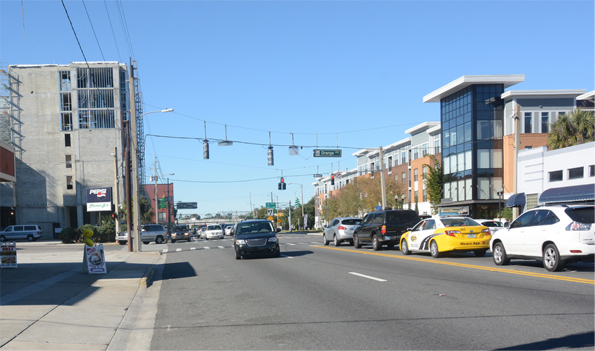
    North of downtown Orlando, two commercial corridors wind through various towns. Orange Avenue is Orlando’s version of Main Street (below: high density housing with a view of Interstate 4, Orange Avenue, and Highway 50 in Orlando, the three busiest roads in town).

    Six new multifamily projects here are open or nearly completed. These are mid-rise buildings, four stories or greater, taking advantage of downtown’s proximity. Of course, each of these structures sports a new parking garage, acknowledging that our love affair with the car is still going strong.

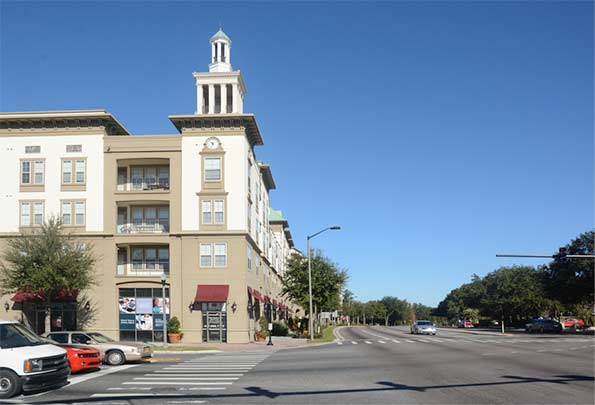
    US 17-92 is an even larger, 4-lane commercial strip running from downtown all the way up through Winter Park, Eatonville, Maitland, Altamonte Springs, Longwood, and beyond. It’s an Orlando version of Broadway, linking multiple neighborhoods and districts. It’s also a traffic-choked crawl, best to be avoided at certain times of the day. Nevertheless, three mid-rise apartment blocks loom over the cars, a high-rise senior living building is open for retirees, and several more are in the works (see below, at a rare, quiet moment. Still, this mock-historical apartment complex holds the street line).

    Each one of these developments ventures deeper and deeper into urban renewal territory, looking for the market’s edge. A recent proposal will displace warehouses along Orange Avenue, but is still firmly entrenched on the more profitable side of the railroad tracks. All of these developments take old or underperforming suburban sites and convert them into new, higher density blocks. The city, it seems, has finally triumphed in the battle for the hip and the cool.

    And it is a victory of sorts, at least for the short term. Each lender who funds a suburban infill project saves, for the time being, a greenfield exurban parcel that might otherwise have been chosen for the project. Florida is a state with a remarkably stressed natural environment, and these projects keep people close to the action, reducing the need for future corridors in the wilderness.

    Before the closing credits roll, however, the long-term impacts of these developments bear a closer look. While cities clap their hands for urbanism and the tax dollars it brings in, local citizens quite sensibly ask certain pointed questions… like, ‘what about traffic’? None of these new residents will do without a car, and at least one local development, approved blithely by municipal officials, now frustrates drivers for blocks around. More of the same is coming.

    Symptomatic, perhaps, of the current economy’s consumer weakness, most of these projects displace local producer activities. Instead of protecting home-grown businesses, municipal power has hastened their demise, driven by a real estate market which judged that they were not contributing to the economy at a high enough level. Gone are local commercial artists, two local sawmills and lumberyards, and a local hotel, all of which were net producers in the local economy.

    What has come in their place are yet more grocery stores — the adjacent grocery store is always a part of the formula — more hair salons, and name-brand apparel shops. Minimum-wage workers, many working for tips, now stand at cash registers where once business owners and entrepreneurs stood. These local independent businesses close down, or scatter to the more affordable periphery, which is becoming home to a new sprawl of producers. Shipping giant Amazon, for example, just completed a large facility in Florida. Near its customers in a metropolitan area?

    Nope: in rural Ruskin, locally famous for its beefsteak tomatoes. Elsewhere, local entrepreneur Carola Seminario, manufactures cosmetics in suburban Plantation, Florida, inland from Ft. Lauderdale. These businesses are far away from the dense urban core that traditionally hosted new business ventures. Like England, lampooned for becoming a “nation of shopkeepers” in the expansionist Victorian era, Florida’s urban population is becoming a reef of retail clerks and restaurant servers laboring for franchise bosses.

    In the meantime, Office occupancy rates are at a ghastly low in Central Florida, so urban development of office space is anemic. Instead, our oversupply of retail outlets just seems to keep rising. The multistory apartment stack, perched over a retail/restaurant base, has become a copy and paste routine. None of the tenants are local, independent retailers, either; the triple-net lease is only affordable to big national brands. Density is a game only the big boys can play, it seems.

    With Central Florida’s new commuter train rolling through town, the density might make some sense. But land value around rail stops has spiked in anticipation. Instead, development is occurring in the soft pockets of town, places where older, overlooked properties can be assembled with a minimum of fuss and cost. The result is that none of the new multifamily locations are really walkable to a train station. Hence, huge parking garages.

    After the applause has died down, a flush of new apartment dwellers may soon find out that a mortgage payment outside of the central city wouldn’t have been much higher than the monthly rent in town. Most people with kids, or planning for them, believe that raising them in apartments isn’t much fun. Grass, literally, is always greener. Meanwhile, Orlando cannibalized its local economy in a rush to approve these places, and became just another bland, warm commercial amalgam not much different than anywhere else in the southeast.

    By the time the city’s changes are fully visible, the transformation will be complete. Central Florida will have lost independent businesses to a miasma of ubiquitous name-brand franchises. A few service jobs will have been created, but the real careers are in corner offices of the chains’ corporate headquarters, way beyond the reach of Orlando’s residents. Rental rates will decline as growth stretches the market for a limited number of connoisseurs of the high-density lifestyle, and a gradual, insidious wealth disparity creates a new urban poor.

    The only vision, however, may be hindsight. After the bubble has burst, high density housing will remain. City planners have already begun rearranging infrastructure around this supposed densification: school boards, for example, are consolidating K-8 schools in anticipation of this new population. Urban planning, however, has to be measured in decades. School district planning, a long, slow, consensus-driven political process, takes years to implement. By the time a new school might open for the children in these places, the demographics might have shifted once again.

    Density is good in principle. It can breed efficiency, intensify business, and make a town throb with life. But in practice today, it seems to hollow out parts of the city. Dad doesn’t work on the ground floor of the apartment block; he drives to work, just like in the suburbs. Mom doesn’t hang around all day watching the kids and baking cookies; she drives to work also. The sidewalks aren’t filled with pedestrians on their way somewhere, cars slip in and out of garages, silently activating gate arms, and the kids are safely ensconced in front of electronics, not playing outside down below.

    The pricey tenant space on the ground floor doesn’t house local bakers, tailors, or professionals that live up above. Instead it houses a few minimum-wage store clerks scanning merchandise. The building form resembles this turn-of-the-century dream state — often stylistically, as well as functionally — but it’s a monstrous hybrid of the old and the new. Localism is traded away, and in its place a new feudalism, where remote landlords control vast segments of the urban realm, takes its place. With Florida’s population growth, there will still be places to prosper, but they seem less and less likely to be in the metropolis.

    Richard Reep is an architect with VOA Associates, Inc. who has designed award-winning urban mixed-use and hospitality projects. His work has been featured domestically and internationally for the last thirty years. An Adjunct Professor for the Environmental and Growth Studies Department at Rollins College, he teaches urban design and sustainable development; he is also president of the Orlando Foundation for Architecture. Reep resides in Winter Park, Florida with his family.

    photos by the author