Tag: Florida

  • Florida Goes Underground

    By Richard Reep

    Last year’s report that Florida had lost people marked a new low in our state’s boom-and-bust history. But this autumn’s news seems to surpass even that sorry milestone with a combination of sluggish tourism, empty state coffers, and a reputation as one of the top real estate foreclosure states. Florida just can’t seem to get out of its own way, and with the fourth highest population in the country, it could have competed with Texas to replace California as one of the best business climates in the nation. Instead, Florida, which boasts one of the lowest tax rates in the nation, continues to see businesses and citizens depart, with newly elected governor Rick Scott recommending even lower taxes as the best solution. Instead, it is high time that Florida fix its real problems of economic monoculturalism and anti-education policies that drive it further and further away from America’s future potential.

    It is no secret by now that a diverse income source is the only way to survive the Millenial Depression. States that have more than one income source, like Texas, were able to adapt policies to favor resilient businesses and industries. In Florida, despite loud and clear input to the state legislature, no change in state policies have been effected this year, once again making tourism and construction growth the focus of job creation.

    The tourism industry knows well its position as “first in, last out” when a recession hits, diversifying its products and geography, enabling at least something to run while everything else stands idle. Thus Marriott International, in the late nineteen eighties, invested in senior living facilities, which bore well through the 1990-93 recession. Regulatory burdens on this market segment eventually caused Marriott to focus on other, less regulated markets, and today its global diversity has caused the company to remain economically sustainable. Florida, with so much sunk cost in tourism, seems unaware that its former tourism dominance has been quietly replaced by such glittering destinations as Brazil, Dubai, and China.

    Agriculture is, of course, Florida’s economic mainstay: even in a recession, people must eat. This industry, however, employs a whopping 44,000 farmers, about a month’s worth of laid-off Florida workers. Clearly, the state should be looking elsewhere to create jobs.

    Governor-elect Scott’s vague promise to increase state venture capital spending while cutting taxes is amusing, in light of similar promises from past politicians. While the state’s Capital Formation Act has attracted investment in biomedical clusters, it takes a great deal of spending to sustain this fund. Similar promises created tax incentives for the film industry, which built studios in the nineteen nineties. Then, when the going got rough, these subsidies evaporated, and the studios promptly moved to New Mexico.

    The money for such schemes comes from the same place that Florida politicians seem to always find money: the education system. Florida, after struggling to get up to 27th in spending per pupil, seems about to find out what it is like to be 50th. And this is a last place finish the state should avoid.

    An educated population can adapt more easily to the changing times, can more competently choose its leaders, and can create wealth for itself. None of these qualities have been demonstrated by Floridians in recent years (think of the 2000 election) and, if the newly elected leadership has its way, none are likely to spring forth in the near future either.

    Florida’s two best hopes are to invest more in its public education system, not less, and to diversify its economy. Recent immigrants from states like Wisconsin and New Jersey, where schools are well funded and taken seriously, express shock and dismay at the public schools in Florida. While states like New York debate the worth of comprehensive assessment tests, Florida has been busy distilling its education system down to a teaching-the-test model, producing little else but test results. Regaining an educated, aware citizenry is critical if the state is to see a future as a contributor to the nation’s recovery.

    The potential to diversify its economy remains strong in Florida. Instead of lowering taxes, however, the new state leadership would do well to consider a more guided regulatory approach that favors a diverse economy. Come and gone are many industries which could return with the right incentives: aviation training, movies and television, solar energy research, and the space program. Research, manufacturing, and commercial jobs in all of these industries could contribute to a rebirth of Florida and spark investment that would produce lasting results.

    Florida’s tax climate favors business, but is oddly mismatched by its regulatory climate. The dodged a bullet with the failure of Amendment 4 – a proposal that all new development would have to face a public vote – and the state’s development industry congratulated itself heartily on this success. This proposal made the ballot because of the cumbersome development process regulated by the state’s Department of Community Affairs, which has widely been perceived to fail at its task, protecting neither nature nor the quality of life for its citizens. Whether or not the new governor gets his wish to eliminate this bloated state bureaucracy remains to be seen, but regulatory reform in the state’s development codes needs to be in the works.

    And tourism, which has been a great economic engine, has a chance to come back. Florida will always be a destination, and while other world places have leapfrogged ahead, tourism is highly competitive, as destinations age rapidly. The enduring romance with Florida will continue, but its famous beaches and theme parks will need to reinvent themselves bigger and better than ever. With a new Legoland in the design phase, and redevelopment at some of the world’s most hallowed ground in the Magic Kingdom, tourism’s long-term future bodes well.

    The smoke has cleared from the election battles. Now, more than ever, Florida’s leadership should be nurturing a more educated citizenry and reforming its regulatory system, rather than keep its tax system at ultra-low levels, to pull itself out of this nosedive. Florida’s natural advantages in climate and accessibility make it ideal for such a wide variety of businesses that very little should stand in its way to diversify the economy and create a productive, vibrant, educated workforce.

    Richard Reep is an Architect and artist living in Winter Park, Florida. His practice has centered around hospitality-driven mixed use, and has contributed in various capacities to urban mixed-use projects, both nationally and internationally, for the last 25 years.
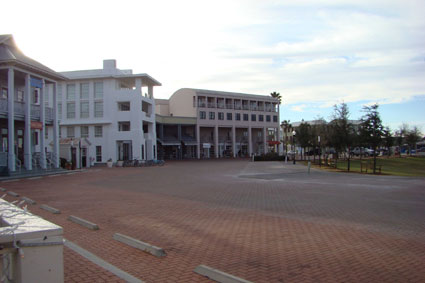
    Photo by Captain Kimo

  • Health Care Development in Central Florida

    By Richard Reep

    In this still cooling economy, Florida seems to be continually buffeted by a perfect storm of unemployment, record foreclosures, and stagnant population growth. As the state continues to suffer, the health care industry has unfolded two planning efforts aimed at building some economic momentum.

    Florida Hospital’s Health Village, an urban revitalization of one of Orlando’s older core neighborhoods, is one planning effort to watch. The other, Lake Nona, is a classic suburban mixed-use campus planned around R&D facilities gilded with stellar names like Scripps and Nemours, occurring in the southeast periphery of Orlando. The vastly different values of their developers underscore the striking contrasts between the development strategies of Health Village and Lake Nona.

    Lake Nona, a small lake just east of Orlando’s airport, is a new development centered around six major research facilities, four of which are under construction. Financing came from a 2006 program, the Florida Capital Formation Act, that has contributed millions to start up biomedical research in the state. Florida’s state venture capital fund lured Scripps, Nemours, Burnham, and M. D. Anderson. Two state universities are also participating, as well as the Veterans Administration with a new facility. This taxpayer investment was supplemented by Tavistock, the master developer of Isleworth fame, and smaller contributions by city, county, and other private investors all creating the impetus to develop this campus.

    Lake Nona’s Robert Adams described his “model” as San Diego’s biomedical cluster, which combines commercial, clinical, research, and educational facilities forming. Employment, in the form of the research facilities, was preceded by a country club and an indistinct mix of Florida residential building types – estate homes, smaller single family homes, and multifamily clusters that are sprinkled amongst golf courses, pretty lakes, and remnant pockets of old Florida wilderness. It’s obvious upon visiting the campus that this is first and foremost a real estate development scheme. Like most developers, Tavistock programmed the uses and zones as if all the land, being flat, were relatively equal in nature except for the slightly more lucrative edges of lakes and the even more lucrative engineered waterways. Currently, the Town Center is an open, flat D-shaped parcel conveniently accessed from Orlando’s beltway, the 417. A comfortable, safe land development scheme with all the usual regulatory battles is underway, and eventually Orlando will find a new, attractive community themed around medical research competing with other new developments for market share.

    In contrast, Florida Hospital selected, among its multiple sites in the state, about 96 acres squeezed between two close, parallel roads (Orange Avenue and Interstate 4) in a dense part of the city where the Adventist Health System quietly bought up dozens of individual parcels of 1930s era Orlando. Like most neighborhoods still suffering in the shadow of Eisenhower’s grand interstate system, this one has languished, and Florida Hospital intends to convert this neighborhood into a Health Village campus anchored by its adjacent hospital campus in a slow, organically grown and financed process.

    Orange Avenue bisects this Health Village, with towering hospital facilities on one side and an aged, mostly 2-story commercial neighborhood on the other. Much of the older residential stock is past its useful life, and owners, grateful for a buyer to release them from the ragged edge of Interstate 4, quickly sold out and left. Inserting the Burnham Institute’s Clinical Research Institute for Diabetes will be the latest revitalization project, and the interior land is intended for residential development catering to hospital professionals and staff within walking distance.

    With 17 hospital locations in Florida alone (the Adventist Health System operates medical facilities throughout the South and Midwest), the choice to locate a health village in a congested urban site is an interesting one. The city deal-making involved in such a move is reminiscent of the negotiations for New York’s Lincoln Center near Columbus Circle in the 1960s, and is rare in Florida where land is cheap. At first glance, it seems like Florida Hospital willingly hamstrung itself with this strategy, as compared to the huge blank slate being developed by Tavistock in Lake Nona.

    Tavistock also has eyes firmly watching the global health care market, and hopes to compete with San Diego, Research Triangle, Dubai’s Medical City, Singapore’s Biopolis, and other stellar research clusters. Lake Nona’s growth potential is relatively large, assuming a smooth flow of funding and continuation of markets. The science-themed real estate development brochures for Lake Nona exude a breezy, hip confidence, putting biomedical research in the background and projecting an alluring lifestyle in the foreground.

    Instead of amping up its marketing campaign to overcome its vastly smaller size, Florida Hospital’s Health Village eschews marketing altogether, as if it is too busy developing it to talk about it. The Adventist Health System is not visibly interested in the temporal nature of global markets, and its stated position as a Christian health care institution quietly suggests that reviving a struggling neighborhood – an exercise most developers would shy away from – is worth the effort. Florida Hospital’s ultimate end appears to be planned on a much longer timescale.

    Both projects are refreshing pathways for Florida, as they represent an attempt to develop future jobs away from the dependence on tourism and second home development. Of the two, right now Lake
    Nona seems much more poised for growth. With a vision for 16,000 jobs at maturity, Lake Nona hopes to capture a substantial portion of the real estate growth attached to those jobs, which is the tried-and-true Old Florida model. Shopping areas, recreational activities, and lifestyle creation will add one more new neighborhood cluster to a multipolar, decentralized region at the expense of 7,000 acres of Florida’s natural environment.

    In contrast, Florida Hospital’s urban build out will benefit existing neighborhoods, certainly a new concept for Floridians. In this respect, Florida Hospital’s tiny contribution to growth (some 800 new residential units are proposed to replace the 150 existing homes) is more than offset by its larger contribution to Orlando’s development as a city. And it delivers this at no expense to Florida’s natural environment.

    Each model offers something to a revived Florida. Florida Hospital’s campus in congested Orlando is instructive as a model for economic activity in the urban future. Religious institutions may become a more important force in the community, given the lack of wealth creation by the standard players in Wall Street and real estate speculation.

    Tavistock could contribute as well, particularly as a move towards a new modality of wealth creation that transcends the traditional Florida focus on consumption activities: shopping malls, hotels, and theme parks. Placing the region on the world stage as a contender in health research can move Florida away from its failed model and towards a future shaped by important diversifications of its employment base.

    Richard Reep is an Architect and artist living in Winter Park, Florida. His practice has centered around hospitality-driven mixed use, and has contributed in various capacities to urban mixed-use projects, both nationally and internationally, for the last 25 years.

    Photo pf Lake Nona development by saikofish

  • Florida: Amendment 4 Pushes the Reset Button on Development

    by Richard Reep

    Like a heroin addict going cold turkey, Florida appears poised to get off the growth drug this coming fall. If massive overbuilding, unemployment, depopulation, and a tourist-chasing oil slick weren’t enough, Florida’s voters are in the mood to vote yes on a referendum called Amendment 4, which would make every future change to the state’s comprehensive plan subject to voter approval, rather than be reviewed through a representative public process. The referendum capitalizes on short-term voter outrage over everything. But in the long term, Florida will likely languish in the twilight of missed opportunities as businesses relocate elsewhere to avoid risky, lengthy public campaigns to build their presence in this state.

    Between 1845 and 2009 Florida became the fourth most populous state in the nation. Because of its immense desirability, land developers have become legitimate partners in Florida politics, and have dictated much of its growth management legislation in the modern era. A byproduct of this process, however, has been increasing resentment among those who came for affordability and a low-density lifestyle, as cow pastures and orange groves got mowed down for subdivisions and malls.

    Traffic and congestion, which many migrants thought they would magically leave behind up north, came with them. Since before the 1980s, the popular press has published article after article about citizens who came for the good life, only to see nature replaced by concrete. Many who came seemed genuinely puzzled about this transformation, as if they expected that human activity would have no noticeable impact.

    Laissez-faire politicians kept the debate from becoming a serious topic, for the land seemed limitless, and the state’s leadership preferred not to dignify this seeming selfishness with a response. The response to those who wanted to lock the door after they had arrived was silence. This time around, emotions have acquired a larger momentum in the form of Amendment 4. Those who support it, such as writer Dori Sutter of the Orlando Sentinel, claim that Florida is overbuilt and has the ability “to create jobs and revenue and to accommodate population growth of more than 80 million people.”. In other words, Sutter’s point is that the current growth management model will accommodate an additional 60 million people over Florida’s current population – if the future immigrants are content to use this model exactly as it is drawn today, with no exceptions.

    Right now is an opportune moment for Florida to clean up its act. Voters might be more likely to approve housekeeping moves to repurpose abandoned properties and improve the aesthetics of the built environment. This kind of activity, however, depends upon businesses moving in, and most business owners handle enough risk without adding a political campaign to their plates. If Florida resembled, say, Europe in its sense of place, then Amendment 4 would be a stroke of genius.

    As it is, Amendment 4 would be the mother of all reset buttons, and voters who push this button in November would freeze the state’s built environment at its worst, not its best. This pause would bifurcate the state’s economic pathway away from the previous course of growth for growth’s sake, and set the stage to diversify the economy and allow Floridians to discover their own destiny through direct democracy. As such, it represents a grand experiment in process, replicating New England-style town hall debates over the nature and the future of the community.

    In the long term, however, this new pathway is far from guaranteed to make for a better process. For one thing, rational facts and figures hold little stock compared to emotional appeals during an election campaign, and every change to the built environment will face as many detractors as it will supporters. Decision-making will likely result in as many bad calls as the process does now.
    Property development is a complex, high-stakes game involving many public and private players. Emotional appeals to voters will tend to reduce this process to matters of style and aesthetic appeal, glossing over technical issues. And, when these matters are put to broad votes, safe pathways will likely win over innovative pathways and inventive ideas, further miring the state in the past. This is why property development has historically been left to the government to handle, with representative democracy in the form of public development commissions, and limited participation by way of public hearings.

    Those who want to put every 7-11 and office building to the vote recognize the change that it would make to Florida’s growth management process, as well as to the state itself. This season of voter outrage seems to be the moment to punish Florida’s favorite villain, the evil developer, as well. Florida seems to have hit an impasse where the current process has yielded an unfavorable product. While citizen input has largely gotten the state where it is today, the results are widely viewed as unsatisfactory.
    Currently, no compelling argument has been put forth against Amendment 4. Homebuilders and developers protest that the process is fine as it stands. Citizen boards, administrative review boards, and public hearing stakeholders are made up of Floridians who approve a Comprehensive Plan every five years, and then review changes to the Comprehensive Plan when landowners request these changes to suit their needs. Sophisticated and complex, this process already involves environmental protection, detailed technical work, and deep pockets.

    Those put in charge of growth management find it hard to say “no” when the state’s property tax coffers, (along with sales taxes) fund much of the public realm. Since growth — development — funds much of the state government’s activities, growth management acts as a financial conduit, one hardly likely to be restricted by those in charge of it. Saying “no” is just not part of the process.

    If the process represents a public conversation about how a city or a region should grow, disgust with the conversation has risen to new levels. Floridians are in the mood for grand solutions: witness last October’s vote in Miami for Miami 21, a form-based zoning code that replaces the zoning process with a product, a Master Plan, of sorts, for the city. Miami 21 appears to be stopping the conversation by limiting future generations’ ability to influence the pathways on which the city may economically develop.

    Amendment 4, rather than reforming the process, also tries for a grand solution. Public debate will be characterized by posturing and politicizing, hardly conducive to rational discussion of complex, technical issues. Where growth is already been well-managed, this might be acceptable, as these regions will organically fine-tune their infrastructure. Where growth has been poorly managed, however, lack of services, traffic congestion, and patchwork development patterns will punish residents and governments alike with declining property values and reduced quality of life.
    The long-term consequences will inexorably reshape Florida’s future, and income from activities other than real estate development will have to be considered for the very first time in Florida’s history. Gaming – already looming large in Florida’s future – is one possibility. A state income tax is a distant possibility, although a state with a large, low-wage service population will likely be unsatisfied with this kind of shot in the arm.

    Thomas Jefferson said, “The government you elect is the government you deserve,” and Florida’s government managed growth in a way that Floridians deserve. Today, with profound disgust at the result, voters appear poised to start over, this time without the government’s help. If growth is no longer Florida’s favorite drug, then with Amendment 4 the state will suffer through cold turkey as businesses relocate elsewhere. A diverse, robust economy may or may not result from this dramatic change. If it does, then Florida will truly get the state that it deserves, and emerge stronger from the depths to which it has sunk. If, however, this move cripples the state’s recovery, then politicians will have some hard work ahead to reestablish trust among voters, and adapt the state’s revenue system and growth management system to a new, no-growth public mentality.

    Flickr photo of a vintage Florida postcard by Mary-Lynn

    Richard Reep is an Architect and artist living in Winter Park, Florida. His practice has centered around hospitality-driven mixed use, and has contributed in various capacities to urban mixed-use projects, both nationally and internationally, for the last 25 years.

  • Florida and Oil

    By Richard Reep

    Some say it took Mrs. O’Leary’s cow to make Chicago the city of great architecture that it is today: after the fire of 1871 that destroyed many of its buildings, leading citizens recognized the critical importance of their built environment. Today, we have a city that boasts some of the world’s best architecture. If BP’s oil disaster is a new millennium cow starting another conflagration, the nation may ironically benefit from seeing the ominous oil slick spreading across the gulf, spelling the end to our dependence on oil as the dominant energy source for the nation.

    Cries of “drill baby drill” are suddenly silent as the horror of rusty streaks spreads from MC252, and Florida’s governor Charlie Crist has already viewed the oil slick twice – aware that the tourism industry, already on its knees, will suffer yet another blow amid unemployment, the credit freeze, and state depopulation. The massive disaster looming in the Gulf of Mexico appears to be a giant, ugly metaphor for some choices that America will make in the near future. If we are going to stay dependent upon oil as our energy source of choice, we better grit our teeth, clean it up, and hope for a technological fix to reduce the risk of this happening again.

    Instead of reducing our dependence upon foreign oil, this disaster is causing many in Florida to question whether we should depend on oil at all, foreign or domestic. Ironically, in a state that has consistently banned offshore drilling to prevent such as disaster, Florida’s beaches are likely to suffer from environmental damage anyway. 4,000 or so oil rigs exist in the Gulf of Mexico making this event likely to occur again in the future, and as the engineers experiment with one repair after another it is evident that we are a long way from making these rigs risk-free.

    Over in Florida, the dismay over this event is palpable, and since nothing can be done about it, there is only speculation about what direction to head in the future. Despite the “sunshine state” moniker, the oil industry’s grip on the state is so strong that solar energy is losing market share rather than gaining as an energy resource. The legislature, starved for money to balance the budget, had to kill a rebate program that subsidized building owners when they add solar energy systems to their property. Florida, despite its abundance of renewable energy potential, has yet to see policy that diversifies the energy needs of the state, and sources like solar energy require extraordinarily heavy subsidies to be palpable to most owners.

    While the recession is pushing most prices downward, energy costs are rising across the country, whether fossil fuels or notFlorida is heavily dependent upon fossil fuels, making renewable energy resources someone else’s profit center, judging from California, Oregon, Washington, and Minnesota’s contribution to the top ten cities using renewable energy. Florida, with vast agricultural lands beset by freezes that destroyed much of the cold-sensitive citrus crop this year, has yet to consider energy crops like sugar cane, sorghum, switchgrass, or other biofuels.

    So while Florida sits and watches the oil slick move closer to its shores, some big questions deserve to be asked, and answered. Individuals without the means are generally conserving energy by driving less, biking more, and slowing their lives down to match the pace of their income. All of this is natural conservation of energy is occurring without nannies and big brother shaking a code book at people and may, in the long run, do more to reduce energy consumption than anything else.

    It will take a fundamental shift in thinking to really abandon oil, foreign or otherwise, in Florida or elsewhere. It will take recognition of the incredible abundance of other forms of energy that exist and a passion to seek out ways to use this energy effectively for our needs. This will be only successful with a combination of grass roots and top-down thinking, and perhaps the disaster in the Gulf of will have a legacy similar to the 1969 Santa Barbara oil spill, after which came the Environmental Protection Agency, the Clean Air and Water Act, and a galvanizing of the fledgling environmental movement.

    Sustainability is about preserving the future generation’s ability to choose its own destiny. With this criterion, we should move forward with a pluralist approach to finding energy sources, and consciously step towards them. We won’t abandon oil tomorrow, or the next day, but we can begin to say goodbye to atrocious wastes of nature like the one unfolding in the Gulf of Mexico right now, and we can begin to say hello to a transformation of our lifestyle to embrace different forms of energy for different needs. If this disaster is truly Mrs. O’Leary’s cow, then future generations must truly benefit from the event in order for it to have meaning.

    Richard Reep is an Architect and artist living in Winter Park, Florida. His practice has centered around hospitality-driven mixed use, and has contributed in various capacities to urban mixed-use projects, both nationally and internationally, for the last 25 years.

    Photo by Fabio – Miami

  • How Tough Times May Lead to Better Architecture

    By Richard Reep

    While Ben Bernanke fantasizes about the Recovery, most people in the building industry – especially in overbuilt Florida – will correct this gross error immediately and emphatically. The recession may be over for the Fed Chairman, but unemployment in the design and construction professions is probably in the 25-30% range, matching that of the Great Depression.

    Even so, tiny glimmers of light shine in what many design professionals call the “microeconomy” of building – small commercial renovations, house additions, tenant improvements, and other projects normally too small to even be counted. Although they lack the whallop, or the profits of big stuff – hotels, hospitals, or new towns – these do count, and are anecdotally turning towards local vernacular design and even contemporary architectural design as a strategy to beat the system, possibly pointing the way for the future.

    Architectural styles are a slow-moving parade of fashions, too often divorced from climate, regional characteristics, or the cultural backgrounds of those who choose them. For most commercial and residential architecture that sprang up around neighborhoods, a mix of Victorian and Spanish Mediterranean styles seemed to be universally implemented by developers trying to please the largest quantity of people in the shortest period of time. Homes with terra cotta tiles and beige arches seemed to lurk behind bland Victorian Main Streets that sprouted everywhere from Montana to Alabama, betrayed by skin-tight fixed windows and paper-thin detailing. As branding elements, these styles nationalized what was once regional and climate-specific design.

    Once again, we seem to be repeating history. In the 1870s and 1880s, suburbs began in many cities, and for the first time homeowners could choose custom-designed houses rather than production homes. Relative peace and prosperity begat a rush to consumerism matched only by our recent ambitions, and the Victorians became well known for an architecture and interior design style that promoted fussy detailing, the display of ornate and exotic materials, and homes overlaid with a frenzy of patterned wood siding, stained glass, carved woodwork, and high-pitched rooflines so that even the roof shingles could be a place to show off wealth. Furniture makers and material suppliers invented new products to feed the demand for consumer goods.

    Yet this all crashed right at the turn of the 20th century, mostly because of the economic transitions suffered going back to the Panic of 1893. Suppressed until that time, modernism came out as a style in the Edwardian era that was much more sensitive to the modest budgets of homeowners building in the 20th century. Even Frank Lloyd Wright, whose career was famously independent of the vagaries of fashion, conceded that affordability was part of the appeal of his style – his “usonian” architecture reveled in simplicity and he took low-budget commissions to prove that good design need not be cluttered with doodads.

    Today, after a similar consumerist run-up, residential architecture is suffering from a similar hangover, as we recover from the granite countertops and carved stone lions of the pre-recession era. These egregious displays of affluence may be gone for a long, long time. But people are still going about the business of adjusting their homes and businesses to suit their needs – and there is a steady microeconomy of residential and small commercial construction.

    Cost, however, is the single overriding factor in most small projects today, and a focus on localism favors the budget. For one thing, a region’s vernacular style usually responds best to the climate, and typically employs materials that can be locally sourced – no stone from Chinese quarries is necessary. In Florida, for example, the vernacular style suspends the floor over a crawl space and includes deep roof eaves extending over the walls – both in response to the combination of harsh sun and heavy rains that task the building envelope. The benefit of this style is lower construction cost (gone are all the elaborate carved woodworking pieces, the high rooflines with multiple dormers and turrets) and also lower energy costs.

    Other clients are waking up to the simple fact that contemporary architecture costs less. Like the Edwardians before who developed a taste for the modern, owners building homes and additions in today’s economy have a newfound simplicity in their styles. With a few choice materials around the entry, some simple, strong lines, and a restrained approach to details, contemporary architecture is making a comeback in the residential market. Midcentury modern, a residential style all but forgotten in the McMansion era, was particularly suited to the returning GIs after World War 2 who desired a home but possessed the most modest of budgets. This affordability is the key driving factor to the rise of this style, and is also a naturally “green” architectural style because of what it does without. Modernist Mies Van Der Rohe’s dictum “less is more” can mean here that less ornament and fussy detailing means more money in the owner’s pocketbook at the end of the day.

    Even more interestingly, house additions and remodeling still seems to exist in this economy. Owners are taking advantage of the construction market’s reduced material costs, are building in more home offices, and enlarging their homes to accommodate a multigenerational lifestyle – parents living at home, or grown children living at home. Larger family clusters within single residences point to reduced mobility, and an evolving, relatively easy re-densification of suburbs that have been winnowed by a plethora of empty nesters.

    This new respect for budget has some naturally green outcomes, as families cluster together to save money and energy, and home offices save commuting. By adapting a home in a budget conscious way, taking advantage of vernacular architecture and developing a taste for simple, clean design, many owners are unconsciously working with sustainable strategies already. If sustainability means the preservation of future generation’s choices, then by conserving money and aggregating closer together, owners have already implemented their own sustainability policy.

    Green design should be seen as a grassroots response to the local climate, rather than a prescriptive code forced down from above. And it can produce a magnificent architecture in a timeless style. No federal program or international design guru can impact this like the microeconomy; instead people are making pragmatic choices, and once again discovering that the local vernacular architecture has a lot of good, commonsense clues about how to live a sustainable lifestyle.

    Richard Reep is an Architect and artist living in Winter Park, Florida. His practice has centered around hospitality-driven mixed use, and has contributed in various capacities to urban mixed-use projects, both nationally and internationally, for the last 25 years.

    Photo by cliff1066™

  • New Urbanism, Smart Growth, & Andres Duany: A Critique From Suburbia

    In 1998 Hollywood introduced us to a new star when it released The Truman Show, shot on location at Seaside in Florida. No I’m not talking about Jim Carrey, Laura Linney or Ed Harris. I’m talking about none other than Andres Duany.

    A few months ago, I stayed at the magnificent WaterColor Inn, which is in the neighborhood adjacent to Seaside. Watercolor is closer in feel to a suburban development’s sense of space (more open), but WaterColor’s Town Center doesn’t offer a large choice of restaurants, so Seaside serves as a destination. Other than a sign marking the border, one does not immediately feel as if Seaside and WaterColor are two very different developments.

    While both Duany and Peter Calthorpe seem to make claims to be the founders of the New Urbanism, Duany gets more attention. I’ve only met him once, at a conference. I was impressed with his presentation as honest and straightforward, even though I’m not a New Urbanist — quite the opposite, in fact. He spoke of his disdain for the suburbs, but agreed that 80% of the housing market preferred them, and then went on to speak of the benefits of New Urbanism.

    What I experienced in Seaside was much different than what I expected from watching The Truman Show. When the film was released, the main feature of a typical cookie-cutter suburban home was… well, uh, hmm… I guess you could describe it as quite featureless. But some developers and builders ventured forth into New Urbanism, or an emulation of the look. The home buyer was now faced with a choice: the requisite aluminum, white, three car garage door with the home hidden somewhere behind it, or a home with a front porch instead. Buyers became smitten. They may have still bought the garage snout home, but the writing was on the wall. The days of the vinyl clad / garage forward / featureless home were numbered, and if builders were smart, then they had to increase their architectural character. Many suburban homes gained a porch, some architectural detail, and a somewhat less prominent garage. Buyers started demanding walks and other amenities… and builders and developers responded until the housing market crashed.
    This evolution can be attributed more to the efforts of Duany than of anyone else. The Duany developments stand apart from some other New Urbanist development partly because of their detail and character, and partly because of their high price point. I’ve been to the Kentlands, I’on, Celebration, and now Seaside. The architectural and landscape detailing is outstanding. When I went to Kentlands, a decade ago, I got lost; it breaks from the Smart Growth grid theory. There was nobody sitting on the porches, and I saw only one person walking. To be fair it was during the workday. I was really looking forward to a stroll to the local coffee shop, but instead, the K-Mart strip center defined the entrance with no apparent internal commercial development. I understand that today there are more walkable services.

    On my I’on visit (on a nice weekend) I saw very large homes with only single car garages or no garages at all. Again, nobody was sitting on any of the porches (which were spacious and beautiful), but there were people strolling. I’on is a very large development, and the only one I visited that seemed to be planned on a grid. The only local businesses (at the time) were a chocolate shop, a hair stylist, and the I’on sales office. For anything else you would probably need to drive.

    Upon entering Celebration we were greeted by massive, majestic homes that align the main street. Very cool. This gives a feeling of arrival, as opposed to a suburban development that would typically showcase the highest density and cheapest product at the front entrance (blame Levittown transitional zoning for that). On a Sunday morning my wife and I had a coffee in the Celebration town center. We were alone, other than one other table where a real estate salesman was trying to sell one of the homes. The stores were open, but either people aren’t shopping before 11:00AM on Sunday mornings, or they simply get tired of frequenting that same shop that sells all items with “Celebration” logos. Again, not a soul on the front porches, and only a few on the walks.

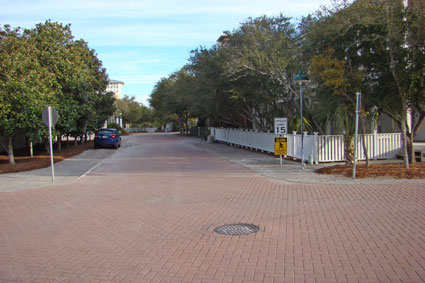
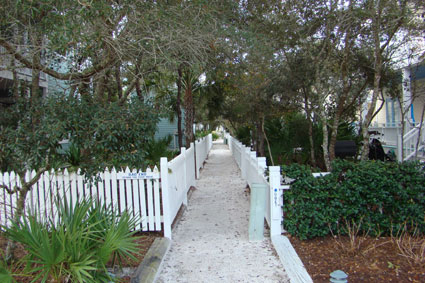
    I distinctly remember Seaside from The Truman Show as well coiffed and manicured. Homes all behind picket fences. When we strolled the streets, the landscaping between each home and white picket fence was overgrown, making it difficult to see the homes and closing up space along the streets. There were no walks along the streets. There were natural trails in a straight pedestrian system behind each home along the rear yards, with paths so narrow (about 4’ between picket fences) that I needed to follow behind my wife as we strolled through the blocks (these paths were not in the movie).
    Many of the homes had observation towers hovering over the rooftops, cool architectural features that would allow a view of the shoreline. A decade after the development’s premiere, that open view was closed up by a wall of very large ocean view homes, blocking all those great views that the towers would have provided. There’s now little tie from the community to the shore other than a single bar elevated above the shops allowing a good view.

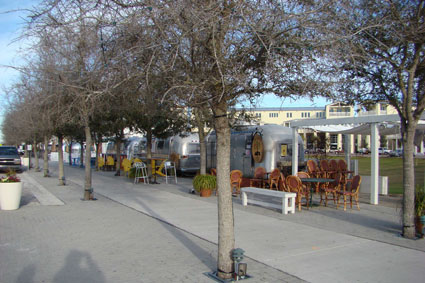
    In general, much of Seaside is overgrown with landscape that blocks the feeling of space. We were told by a few sources that only about twenty residences have full time owners, with the rest rented. There were a few restaurants and bars, and the same grocery store that was in The Truman Show, but the feel of the development was much different than what I expected after seeing the movie. The main street has rows of Airstream trailers with street vendors selling various food items, something I found distracting from the image of New Urbansim; very touristy. The general pattern of Seaside is quite maze-like, requiring us to carry a map as we took a stroll.

    By contrast, WaterColor has similar architectural character, but is much more diverse in its open spaces and provides the look of Seaside with a more suburban sense of space. Seaside homes generally lacked vehicle storage or protection from the elements; WaterColor homes had the convenience of garages — mostly, but not all, in alleys — and some carports. Garages are an indication of permanent residence, not a weekend jaunt. They keep many of the cars off the street and out of sight. Unlike a standard New Urbanism design that separates the garage from the home (as if a car contained some negative aura that could take control of our lives), the WaterColor homes had the garages attached. WaterColor is a place you can live in, not just rent for a week.

    If the nation’s suburban architectural character has improved, I think much of it is due to the effort that Duany has taken to showcase New Urbanism, which has had a positive influence in the overall character of land development. Whether New Urbanism thrives or it fails, he has left us this lasting gift. Duany developments I’ve visited are beautiful, even with their flaws and their high priced entry.

    But architecture and landscaping are NOT planning. And here lies the problem. You can take the worst planned neighborhood and showcase it with the Duany style of high quality elements —- his eye for architecture and landscaping —- and it will look great. In a well-planned suburban neighborhood, on the other hand, the display of repetitive garage-grove facades with plain vinyl siding, void of landscaping other than the requisite sod, will look awful. As people drive or stroll through the Duany development, they will naturally say it’s well planned, even if it’s dysfunctional, inefficient, and has a high environmental impact. This is not to say that it necessarily is, but you can’t feel those things from street level. The plain subdivision will be identified as terribly planned, even if the plan is functional and efficient with low environmental impacts.

    I’m not a follower of Duany and disagree with much of his ideology. But I do thank him for making the real world, suburban and urban —- not just the make-believe world of The Truman Show —- a better place.

    Rick Harrison is President of Rick Harrison Site Design Studio and Neighborhood Innovations, LLC. He is author of Prefurbia: Reinventing The Suburbs From Disdainable To Sustainable and creator of Performance Planning System. His websites are rhsdplanning.com and performanceplanningsystem.com.

    Photo: Seaside, Florida’s Post Office — Where they filmed ‘The Truman Show’

  • Biotech Research No Silver Bullet for Florida

    By Richard Reep

    Until recently, Florida was the king of growth, agriculture, and tourism. Growth – at 900 immigrants a day from other states – characterized Florida’s landscape for over 30 years, and growing cities were in perennial battle with agriculture up until the watershed year of 2009. As a tourist destination, Florida claimed world-class status, which once served the state just fine. Now, gasping for breath and facing financial uncertainty, Florida’s leadership frantically seeks a new silver bullet to create jobs, focusing on biomedical research. This focus is timely and important, and can truly move the state in a new direction, and the state leadership’s resolve to diversify the economy should stay strong, even with a short-term lack of results.

    Thanks to the Florida State Legislature’s 2006 Florida Capital Formation Act, It is now home to new facilities for Torrey Pines, Scripps, Max Planck, Nemours, the Miami Institute for Human Genomics, SRI International, the Vaccine & Gene Therapy Institute, and Charles Stark Draper Laboratory, Inc. However, the Millennial Depression has slowed growth and delayed the much-needed spinoffs that the state was counting on for job creation. Now, with the state’s coffers empty, the lack of instant job growth is causing a search for another, new instant success instead.

    Seven world-class life science research institutes in three years actually constitutes a remarkable achievement. Two are already off the ground and operational: Max Planck Institute and Torrey Pines. As they enter the operational phase, the laboratories are discovering that there is tough competition to attract top research scientists to Florida, with its noted lack of cultural amenities and its reputation for being, well, not exactly a progressive state in terms of education, culture, or environmental values.

    In January, however, the state legislature’s own analysis office recommended dropping life sciences research investment, because the return on this investment is measured in years. The politically correct unit of measurement today is apparently months or even minutes. In a published report, this office complained that its investment – all of three years old – had “not yet resulted in the growth of technology clusters”. It then recommended that Florida shift focus from research institutes to attracting biotech manufacturing companies, perhaps shortening the payback cycle.

    Only in our current times is failure defined as the lack of instant success. The report cites a lack of private venture capital as the reason for failure in Florida, yet digs no further into the reasons why Florida is low on the list of venture capital firms. This, along with government and large non-profit investment, is historically the only true source of funding for pure research, and is usually tightly tied to the region in which the research is to occur.

    As Thomas Edison’s winter home, Florida has always had a reputation among scientists and inventors as a vacation spot, rather than a real research venue. Venture capitalists prefer to cluster their investments around known quantities, and like most other investors, associate the unknown with high risk. By 2002, the Progressive Policy Institute ranked Florida 49th in employment of scientists and engineers, hardly news in a state dominated by service workers, construction laborers and immigrant farm labor.

    Unfortunately, scientists and their families tend to like the things that Florida is not good at: sensitivity towards the natural environment, excellent, competitive schools and universities, highly trained workforces and public philanthropy for arts and cultural activities. When it comes to private research grants, scientists tend to find their homes in places like San Diego, Boston, Berlin, and London. Beaches and theme parks just don’t appear on their radar screens.

    Thus, the state’s massive injection of capital has yet to produce any spin-off laboratories or manufacturing facilities around these new facilities. Private venture capital is simply shy to develop add-ons, knowing it will be a real hard sell to the main class of research scientists so desperately needed. And this fact, in these tough times, is what calls into question the whole investment strategy. On the surface, the state’s ambition to become king of research appears to be ludicrous.

    Yet, this lunacy may have method in it: Florida has many factors that do, in fact, favor life science research. It does have specific, although lightly funded, university research in biotech and medical study already in place. The state also has a gerontological population that provides a natural study base for much of the growing research in aging.

    Also, the scientific community is as diverse in its leisure and cultural choices as anybody, and Florida’s mild climate and recreational activities have already contributed to the attraction of new researchers. Unlike other, more established clusters in places like Boston and San Diego, Florida is also highly affordable, an important factor given the compensation levels to which many science professionals are accustomed. This is one reason Southern California gained an early foothold in aviation and science research and has maintained the lead in these areas.

    And lastly, sometimes it’s good to be the new kid on the block, for the competitive politics within other clusters has yet to develop in Florida. Even Florida’s former governor Jeb Bush expressed surprise at how “the state’s universities have played so well together” to gain its early foothold in science research. Florida has shown great energy and creativity in attracting these new research venues, and can continue to outperform the established, stable locations if it keeps its eye on the long-term goal and uses its natural advantages to sell the state to the scientific community worldwide.

    The strategic payoff is a more stable, educated state population that can ride out the boom/bust employment cycle better. This payoff, however, can only come if Florida’s leadership quits seeking a magic “silver bullet” to fix things in the next fifteen minutes, and does the hard work to attract and retain venture capital, invest in its educational system, and keep its collective eye on a long-term goal to become competitive in more than just a cheap place to live and vacation. Florida’s business and political leadership made some good choices to create a state-funded venture capital arm in 2006, and should stick to their commitments. If they pay their dues, eventually they may just find themselves a new crown to wear.

    Richard Reep is an Architect and artist living in Winter Park, Florida. His practice has centered around hospitality-driven mixed use, and has contributed in various capacities to urban mixed-use projects, both nationally and internationally, for the last 25 years.

    Photo: alternatePhotography

  • Obama Throws Life-Line to Smart Growth Areas

    President Obama has announced a special program of assistance for home owners in the five states that have been hit hardest by the housing crisis. The proposed program is targeted at California, Florida, Arizona, Nevada and Michigan, where house price declines are more than 20% from the peak of the bubble.

    The greatest losses occurred in California, Florida, Arizona and Nevada (see note), where peak to trough house price loses exceeded 40% in all 12 metropolitan areas over 1,000,000 population except Jacksonville. These markets accounted for 70% of the gross housing value loss in the nation before the Lehman Brothers collapse. House prices were driven to unprecedented levels of up to four times historic norms by overly prescriptive land use regulations (“growth management” or “smart growth”) that makes land unaffordable.

    Average losses were more than $175,000 in the markets of these states, more than 10 times those in traditionally regulated markets such as Atlanta, Dallas-Fort Worth, Houston, Indianapolis, Kansas City and Cincinnati. These intense losses were beyond the ability of the mortgage industry to sustain and it is generally acknowledged that this precipitated the Great Recession.

    Smart growth had nothing to do with the Michigan price collapse. There, the strong economic downturn pushed prices down even as the state escaped without a housing bubble.

    The President’s program means that the nation is now paying twice for smart growth policies. The first payment was, of course larger, which cascaded into the huge household wealth losses in the Great Recession.


    Note: While Las Vegas and Phoenix are sometimes perceived as not having prescriptive land use policies, the Brookings Institution ranks both metropolitan areas as toward the more restrictive end of the regulatory spectrum. These overly prescriptive regulatory environments are exacerbated by the fact that in both metropolitan areas much of the developable suburban land is owned by government, and is being auctioned, though at a rate less than demand. These factors combined to drive auction prices per acre up nearly 500% in Phoenix and nearly 400% in Las Vegas during the housing bubble.

  • Who’s Dependent on Cars? Try Mass Transit

    The Smart Growth movement has long demonstrated a keen understanding of the importance of rhetoric. Terms like livability, transportation choice, and even “smart growth” enable advocates to argue by assertion rather than by evidence. Smart Growth rhetoric thrives in a political culture that rewards the clever catchphrase over drab data analysis, but often fails to identify the risks for cities inherent in their war against “auto-dependency” and promotion of large-scale mass transit to boost the “sustainability” of communities.

    Yet in pursuing this transit-friendly future political leaders rarely confront this inescapable reality: public transportation is fiscally unsustainable and utterly dependent on the very car-drivers transit boosters so often excoriate. For example, a major source of funding for transit comes from taxes paid by motorists, which include principally fuel taxes but also sales taxes, registration fees and transportation grants. The amount of tax diversion varies from place to place, but whether the metro region is small or large the subsidies are significant. In Gainesville, Florida – a college town of 120,000 – the regional transit system received 80 percent of the city’s local option gas tax in 2008. In New York City, the Triborough Bridge and Tunnel Authority diverts 68 percent of its toll revenues to subways and buses.

    In addition to local subsidies, state and federal agencies fund transit operations with revenue from gas taxes and other motorist user fees. In 2007 transit agencies received $10.7 billion from the federal Highway Trust Fund, and that is a conservative figure since another $11.7 billion was diverted for vaguely phrased “non-highway purposes.”

    In contrast, fare box recovery doesn’t come close to covering operating expenses. Nor can transit pay for its own capital outlay. Last year the Metropolitan Washington Airports Authority moved to dedicate toll revenue and toll bonds to cover half the cost of the $5.26 billion Dulles Metrorail project.

    The implications of transit’s auto-dependency are serious. Americans drove 11 billion fewer miles between 2008 and 2009, and for each mile not traveled local, state, and federal taxes were not collected. Without these anticipated revenues, transit systems across the country have suffered and, ironically, those hit hardest are the people who are dependent on public transportation ,that is in most cities, the poor and the young.

    In D.C., transit riders are being warned by Metro officials to expect half-hour waits for buses and trains and more crowded rides as they cut services and lay off positions to close a $40 million budget shortfall. Santa Clara County’s Valley Transit Authority has announced plans to reduce bus service by 8 percent and light rail service by 6.5 percent. In Arizona, both Tempe and Phoenix face major cuts that will lengthen wait times and eliminate routes. Even as demand for transit increases in states like Minnesota, the decline in funding is leading to major readjustments in service.

    The situation is so dire in New York City – with by far the most extensive transit system in the country – that advocates used students as props to protest service cuts caused by a $400 million budget shortfall. Though transit receives funding from other sources, there can be no mistaking the key role played by motorists.

    The decline in driving can be attributed largely to the economic downturn and increased unemployment, but even when the recession ends transit agencies will face an uncertain funding future. New technologies are making automobiles cleaner and more fuel efficient, which will allow people to drive more while paying and polluting less. If auto makers meet new federal standards, cars will soon be achieving 35.5 miles per gallon instead of today’s 27.5 mpg average. Economic growth continues to disperse and there has been a strong uptick in telecommuting.

    But perhaps the biggest threat to the future of auto-dependent transit is the very “cause” that seeks to establish it as the preferred travel mode. The planning doctrine called Smart Growth with its rationale of sustainable development is growing in popularity in urban areas across the country. Local officials are enamored with visions of auto-light cities where the buses are full, sidewalks are crowded and there are more bicycles on the road than cars.

    Beneath the appealing rhetoric of Smart Growth rests the assumption that automobiles are intrinsically bad and that public policy should be directed at restricting their use. Rarely do policymakers weigh the automobile’s many benefits and the improving technologies that are mitigating its negative environmental impact. Even rarer is discussion of whether transit can realistically match the convenience and flexibility of the automobile for both individuals and families.

    Distracted perhaps by pictures of ornate transit hubs and shiny rail cars, many policy makers fail to focus on developing a fiscally sustainable plan for public transportation. They miss the fundamental problem that anything heavily subsidized –particularly in a budget constrained atmosphere – is, by definition, unsustainable. (To the extent roads are subsidized, it breaks down to about a half-penny per passenger mile; transit subsidies are 100 times more than driving subsidies.) Ideally, user fees would cover all expenses of all transportation modes, including driving.

    A responsible policy goal should be for transit users to put their fair share in the fare box. However, given the current tax diversion imbalance, local officials should at least target a near-term goal for fare box recovery of 85 percent of costs instead of its current one-third average. This will reduce both their fatal auto-dependency and the instability that comes when external revenue sources are impacted by external factors like an economic downturn.

    Transit agencies should also right-size their bus fleets. Despite visions of large 55-passenger vehicles filled to capacity with contented commuters, only a small portion of routes in any urban area can fill these big box buses even during certain peak times. A smaller sized fleet would be not only less expensive but also more flexible, allowing cities to adjust routes and increase headways for greater service. It would also have a smaller carbon footprint.

    Finally, responsible policymakers should suspend most of their plans to build rail transit. In addition to routinely running over-budget, rail transit- outside of a few cities such as Washington DC and New York- simply does not carry many passengers relative to automobiles to justify its enormous operating expenses . The Santa Clara Valley Transportation Authority, for example, spent $55.5 million in operating expenses in 2008, recovering just $8.6 million from passenger fares and costing taxpayers an average of $5.88 per trip.

    Rubber tire transit is more efficient compared to rail as a service to those needing public transportation. Santa Clara’s operating expenses per vehicle revenue mile were 25 percent less for bus than for light rail. Additionally, bus transit is far more flexible, easier to expand and less disruptive in the construction phase.

    Essentially, policymakers need to see transit as a service with an important but limited role to play in most urban regions. With jobs and more activities spreading to the suburbs and exurbs – a process often accelerated by economically disruptive urban policies, cities should focus transit on a limited number of central core commuters as well as those people who cannot drive. Unfortunately, such goals are too modest for planners who envision transit as the catalyst for large scale social engineering and who have little concern for their regions’ economic bottom line.

    The dirty little secret remains that public transportation would collapse without the automobile. It will remain unsustainable as long as it remains dependent on that which public policy is trying to discourage. Smart Growth rhetoric makes for great campaign literature but not for smart decision-making. Responsible officials should question the underlying assumptions about automobiles and begin reconsidering the fiscal calculus that underlies transit policy.

    Ed Braddy is the executive director of the American Dream Coalition, a non-profit public policy organization that examines transportation and land-use policies at the local level. The ADC’s annual conference will be held this year on June 10-12 in Orlando, Florida.

    Photo: ahockley

  • Florida: From Hard Times in the Sunnier Climes

    By Richard Reep

    Florida’s era of hard times continues. Last week we held a “Jobs Summit ” here in Orlando but heard little but self-congratulation by politicians like Governor Charlie Crist. He praised the Legislature’s budget cuts but had little to claim when it came to reviving the economy.

    The basic reality is this: Florida is not only troubled, but in danger of falling further behind. For example, Suntech China, a solar cell manufacturer, recently worked with the State of Florida to build a solar cell manufacturing plant – in Arizona. Thanks to Florida’s unconvincing efforts, this employer decided to call Arizona its new home.

    The television and movie industry is rapidly expanding out of California into states like New York, Louisiana and New Mexico, thanks to incentives by these states to attract film and TV producers. Florida, with MGM, Universal Studios, Full Sail, and other venues, remains stagnant in this industry.

    While Central Florida is one of the country’s top ten “super regions” of population clusters, it consistently fails to get on the national stage regarding transportation, employment, and return on its federal tax money. For every dollar of income tax sent by Central Florida citizens each year, far less than a dollar comes back in terms of federal spending. Other states, like New Mexico and Alaska, receive our portion of that dollar.

    Publicly funded capital improvement projects, such as Nemours Hospital, continue to be awarded to out-of-state companies, leaving companies here in Florida, already reeling from the collapse of the real estate bubble, in even worse shape.

    Florida, which has little onshore energy resources such as oil or gas, has offshore energy resources that could pump billions of dollars into its coffers. Instead the riches of the Gulf are being exploited by Texas, Louisana, and Alabama.

    Florida, the “Sunshine State,” with vast solar and agricultural potential, has no renewable energy policy. Instead, biofuel and solar research leadership seems headed to Michigan, California and other states.

    Florida has yet to create a policy of sustainability at a statewide level. Instead, the state relies on growth, tourism, and agriculture for employment, hardly a sustainable policy given the catastrophe of 2009.

    While statewide unemployment is over 11%, labeled “Great Recession” by the press, those in the design and construction industry face unemployment estimates between 25% and 33%, levels matching that of the Great Depression.

    Nor are politics in our favor, even though Florida, reversing its generally conservative past, cast its lot with Obama in 2008. But now the promises of Transportation Secretary Ray LaHood in return for the State’s funding of commuter rail seem to be largely forsaken. During the Jobs summit, Obama’s railroad czar Joseph Szabo assured Florida that its priority would be yielded to Illinois. High-speed rail in Florida is unlikely in our lifetime. Chicago is simply more important than Orlando in today’s politics.

    Clearly Florida is not yet a basket case. With the right help from Tallahassee, Florida can reinvent itself and take advantage of the following natural assets:

    Sunshine still can bring talent and jobs. Sure, we are behind right now, but sunshine brought jobs before WW2 when Florida was ahead in aviation training. The mild climate is far more forgiving on student pilots than places where harsh winters ground light aircraft.

    Suntech should serve as Florida’s Pearl Harbor. Sure, we lost one solar cell manufacturer, but that technology is barely efficient enough to be viable. Florida could take advantage of this failure to revamp its poor growth management process, which was the reason for the failure to begin with, and actively seek out the best candidate for research and development of photovoltaic technology that would compete with Suntech and win.

    Deregulate Power Generation: The Sunshine State should be a net energy producer, not consumer. We could build a conduit to supply energy, through solar fields, up into the Southeast, as well as down into the Caribbean. There is a rather large island in need of vast amounts of clean power 90 miles away that will need this someday soon.

    Agricultural jobs: The statewide emergency declared as a result of the freeze should be a wake-up call to assist agriculture with some new ideas. Rather than sell dead orange groves out to developers, Florida should assist farmers to convert a portion of cropland to power generation, using solar collectors, photovoltaics, and biofuel crops.

    Media: This is a no-brainer for jobs. The movie industry grew in California because of the climate but is unionized and regulated to death. It’s time for Florida to compete. The next wave of entertainment culture is interactive virtual reality anyway, and the center of this activity has yet to be established, although there is an emerging concentration of firms like Raytheon doing research here. Florida could become a virtual reality technopole if it attracts the right players and provides the right resources.

    Transportation and the National Stage: For too long, Florida’s congressional delegation seems to have labored in the background, and Florida sends too few effective people to Washington. As a state made up of people escaping hard reality up north, we seem to have taken our “live and let live” beach culture too far and it has cost us credibility, capital, and clout. It’s time to reverse this trend and get passionate about our worth as a state and our contribution to America in items that matter. As a destination, Florida must rank much higher than Illinois for travel, and high speed rail should be awarded based on need rather than political favoritism.

    Meanwhile, growth and tourism will come back. They always do. And Florida, instead of losing designers to its competition, could find ways to retain them for the next generation of entertainment and leisure destinations. Housing, presently overbuilt, shouldn’t be ignored, but Florida has much to fix in terms of the quality of housing. Public/private partnerships to increase quality of life over quantity are necessary to make housing attractive and affordable and create quality, desirable communities for the 21st century.

    Florida is truly at a crossroads. For the last hundred and sixty-five years it relied on agriculture, growth, and tourism, but these narrow economic bands perpetuate cyclical booms and busts. Fundamental change can occur if the state’s leadership declares war on business as usual. The state needs to get nimbler to stay competitive when the economy does return. For those who want to stick it out and see Florida through this economic transition, it is imperative that the leadership respond now not just with words, but with actions that effect true, deep, and meaningful change.

    Richard Reep is an Architect and artist living in Winter Park, Florida. His practice has centered around hospitality-driven mixed use, and has contributed in various capacities to urban mixed-use projects, both nationally and internationally, for the last 25 years.