Tag: geography

  • Anaheim Transit: Suck It Up

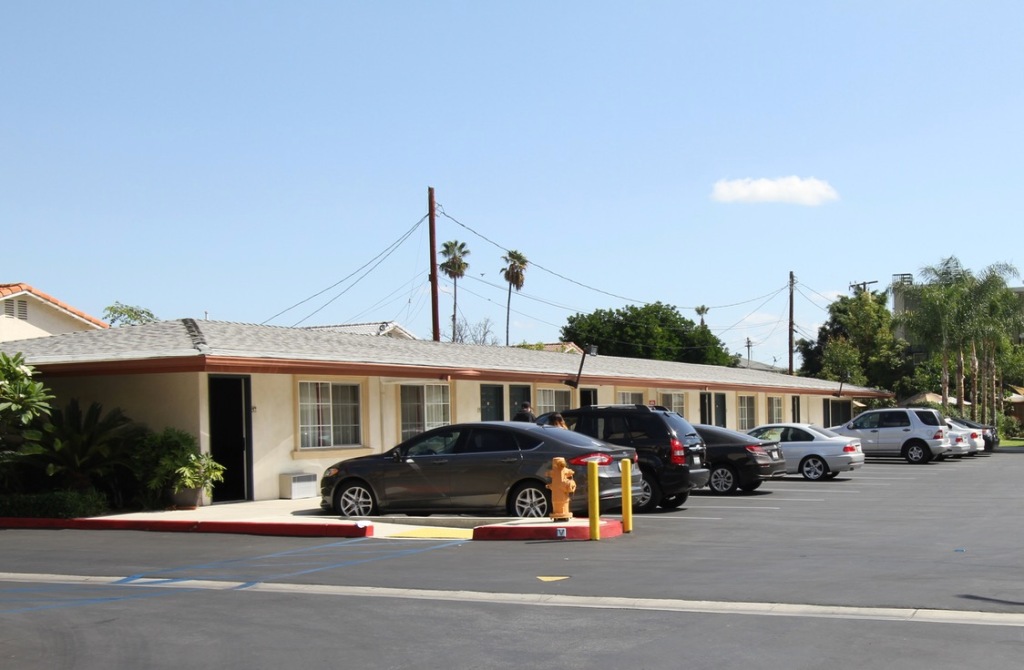
    When I was a kid back in 1971 I lived in Anaheim, California where my mom was a waitress at a local amusement park. Exploring Orange County as an adult recently it all felt more or less the same as I remembered – only more so. The primary adjective has always been beige. The last vestiges of orange groves that still lingered in my youth are long gone, but the tidy neighborhoods of modest tract homes, strip malls, and motels are all still there behind the shiny new stuff.

    I was asked to write about Orange County as part of a land use and transportation conference so I went straight to the new ARTIC intermodal transit center. The boosters for ARTIC use words like “iconic,” “transformative,” “unique,” “prestigious,” and “catalytic” to describe the transit hub. There’s a lot of talk about the cooperation of numerous agencies and private firms that all collaborated to make the $185 million project happen. The structure is about getting people excited about Anaheim. The nuts and bolts of transportation itself are peripheral.

    Cut to the poor bastard out there somewhere on an anonymous street in Orange County waiting (and waiting, and waiting) for a bus to arrive so he can catch his transfer and get from Point A to Point B. The really transformative thing that would get him excited about transit would be more frequent service and a trip that took twenty minutes instead of an hour and a half. ARTIC does nothing for him. But that was never the point. ARTIC isn’t about transit.
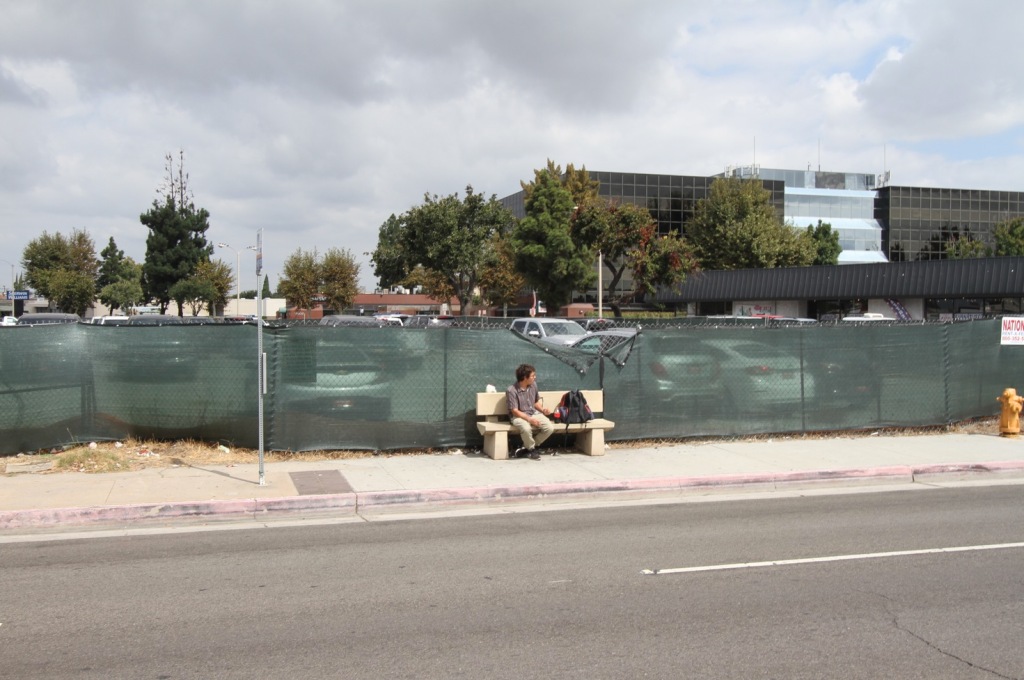
    I was staying in nearby Garden Grove six miles away from ARTIC and I decided to test the process of moving around Orange County by public transit. An internet query described a trip of an hour and five minutes by bus. I sat at a bus stop and waited with my fellow travelers and chatted with them about their daily experience. The bus got them where they needed to go, but it wasn’t great. After thirty minutes the bus appeared. I calculated the wait for the transfer along the way and then the trip back again and realized the bus would suck up three hours of my day. And I was going to be cutting it close for an appointment that afternoon.

    Traveling by bike was going to take thirty seven minutes and it was all flat. I live in a transit rich neighborhood in San Francisco and I prefer my bike to transit most of the time. But as an out-of-town visitor I didn’t have a bike. I searched for bike rental facilities and there weren’t any near me. And there was the reality that most of the trip would be on the side of high speed eight lane arterials. It would have been doable, but not amazingly fun.

    Driving the six miles to ARTIC would take thirteen minutes so I walked back to my car. Here’s where I got a glimpse in to the prevailing culture of Orange County. I parked on a quiet residential side street and when I reached my car a note had been left on my wind shield. I was parked legally on a public street that had no restrictions. I wasn’t blocking anyone’s access and the street was mostly empty. The house in question had a two car garage and a driveway that could accommodate half a dozen vehicles. The parking problem wasn’t physical. It was emotional. Suburbanites don’t like their psychic space interfered with by interlopers. This goes a long way to explaining the transportation dynamics in the region.


    Google

    Google


    Google


    Google

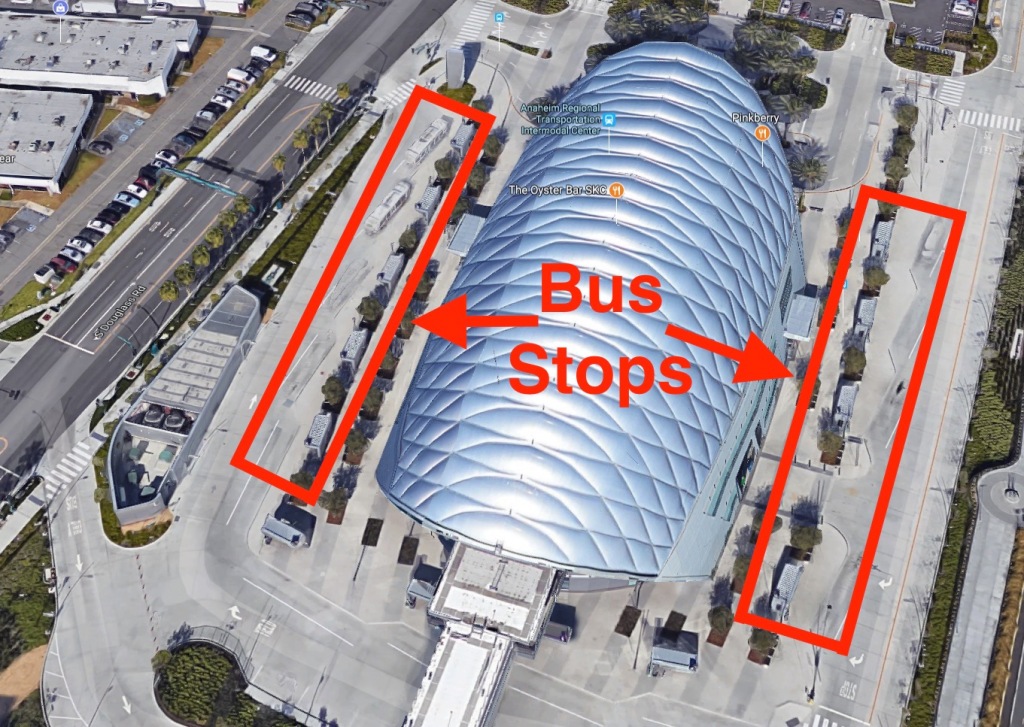
    ARTIC is so big that it’s easier to get a feel for the place on Google rather than on the ground. The train platform is at one end, the bus stops are on either side, there’s a bike path along one edge of the property, and parking is everywhere. You’ll notice that the elegant structure itself has no real function. It’s purely decorative and designed to make a statement on the skyline. It could be replaced by a few porta-potties and a food truck and the transit stuff would be totally unaffected.


    Google

    Notice the transit hub is in the middle of absolutely nothing. The site is bound by the Santa Ana River on one side, a giant freeway on the other, and massive parking lots for Angel’s Stadium and Honda Center. I dare anyone to walk from one of these buildings to another. Even if I had managed to take a bus or train to ARTIC the destination wouldn’t have rewarded the effort.


    Google

    During the boom of the early 2000s plans were drawn up to transform the aging industrial properties in the area to higher value residential, commercial, and professional uses. The authorities in Anaheim built ARTIC as a shiny temple to lever development of the nascent urban center called the Platinum Triangle. Those plans crashed with the 2008 financial crisis and are only now ramping back up.

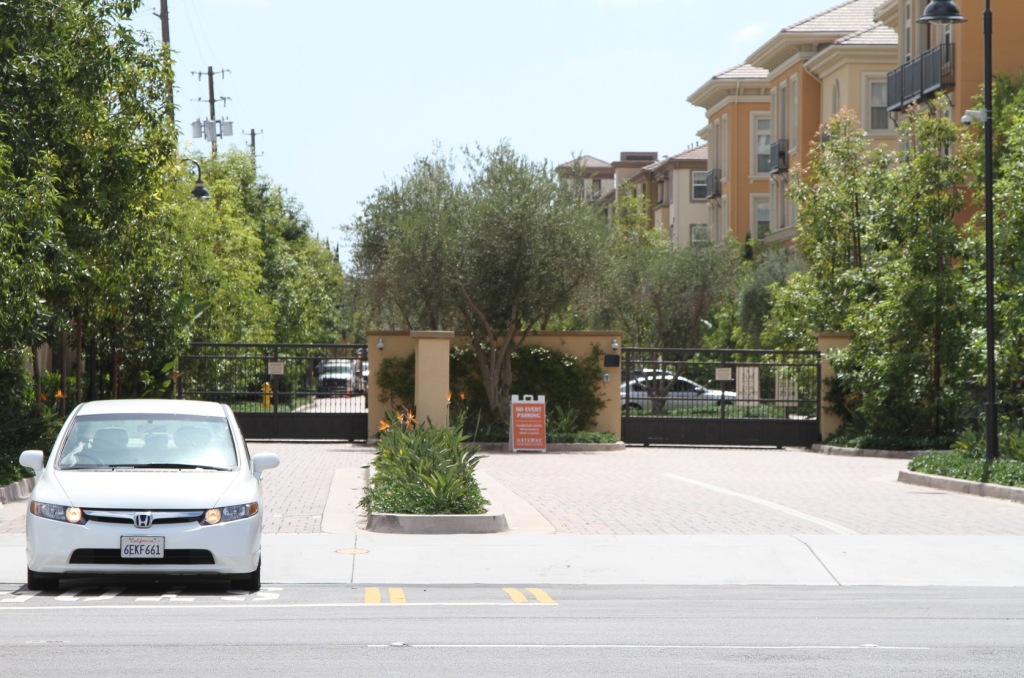
    The predominant design criteria for most of these new buildings involves suburban expectations. The interiors of the apartments as well as the private amenities within these complexes are quite nice and reflect the kinds of things affluent people have come to expect from single family homes in gated communities: greenery, swimming pools, convenient parking, privacy and security protocols. It’s all just been super sized at higher density. But when you’re outside of these buildings you stand between fortified shrubbery and ten lanes of traffic. People drive to the parking deck at the shopping mall or office park which is also hermetically sealed. It ain’t Paris.

    Ridership at ARTIC is considerably lower than anticipated for the simple reason that the physical environment is brutal for anyone who isn’t in a car – and that isn’t likely to change for a very long time. The density is coming. The urbanism isn’t. As I explored these new complexes I discovered that each of the lobbies and sales offices were accessed by the parking garage rather than the street. No one expects future residents to ever arrive on foot. This is Orange County… I talked to many of the low wage workers like the parking attendants. They all live in other more affordable cities at some distance. I asked them if they take transit. Not if they can possibly avoid it.
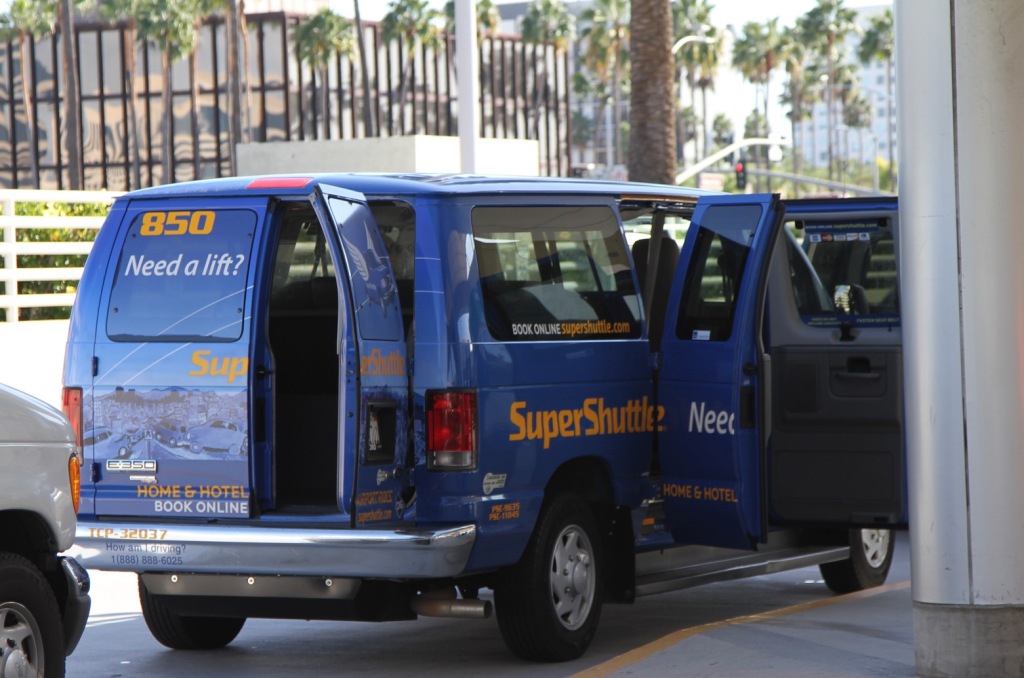
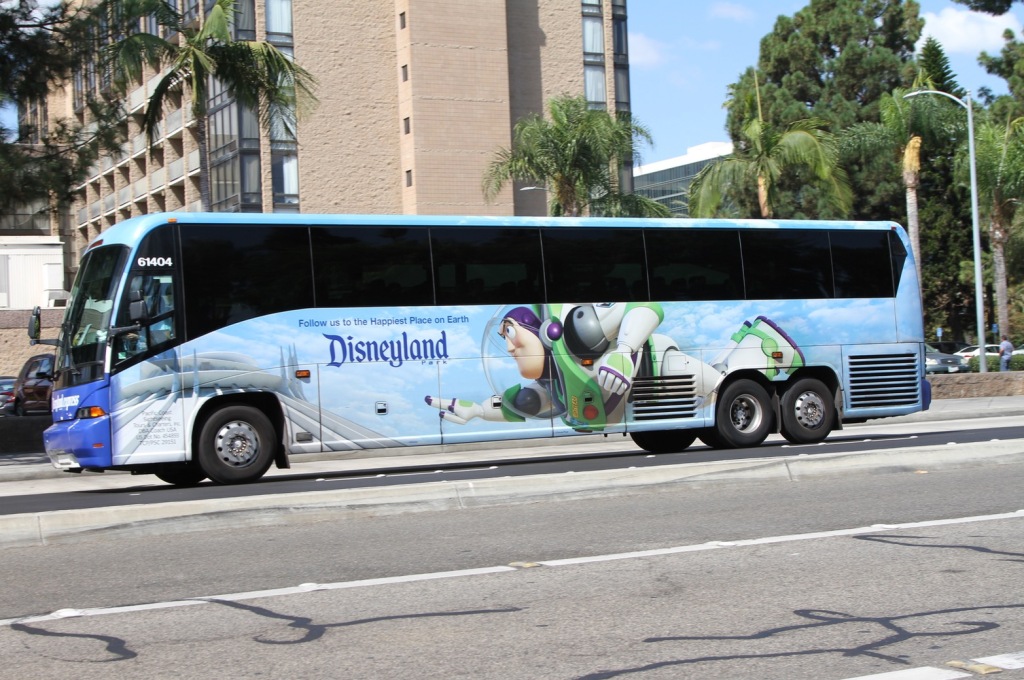
    Here’s how transit really works in Anaheim. Specific vehicle fleets take certain kinds of people to particular sorts of destinations. Both the populations and the destinations are cherry picked. The right kinds of people get to where they need to go quickly and efficiently. Everyone else… Suck it up.

    This piece first appeared on Granola Shotgun.

    John Sanphillippo lives in San Francisco and blogs about urbanism, adaptation, and resilience at granolashotgun.com. He’s a member of the Congress for New Urbanism, films videos for faircompanies.com, and is a regular contributor to Strongtowns.org. He earns his living by buying, renovating, and renting undervalued properties in places that have good long term prospects. He is a graduate of Rutgers University.
  • Where America’s Highest Earners Live

    The mainstream media commonly assumes that affluent Americans like to cluster in the dense cores of cities. This impression has been heightened by some eye-catching recent announcements by big companies of plans to move their headquarters from the ‘burbs to big cities, like General Electric to Boston and McDonald’s to Chicago.

    Yet a thorough examination of Census data shows something quite different. In our 53 largest metro areas, barely 3% of full-time employed high earners (over $75,000 a year) live downtown, according to Wendell Cox’s City Sector Model, while another 11.4% live in inner ring neighborhoods around the core. In contrast, about as many (14.1%) live in exurbs while suburbs, both older and new ones, are home to 71.5% of such high earners.

    New county-level research by Chapman University researcher Erika Nicole Orejola also sheds light on the geography of wealth. Orejola ranked the nation’s 136 largest counties by the proportion of full-time workers in the population who earned over $75,000 in 2015, which represented the 77th percentile of incomes then, and by the share of households earning over $200,000.

    She found that 16 of the 20 counties with the largest share of full-time employed residents earning over $75,000 were functionally suburban, with most people driving to work and living in low to moderate density environments. The other four, interestingly enough, are among the most urbanized parts of the country, including Manhattan and San Francisco.

    Where The High-Wage Earners Are

    The very top of this pyramid consists largely of two archetypes, elite “superstar” cities, but more so well-located suburbs, often near the most dynamic cores. Many are areas that have benefited the most from the post-Great Recession boom in technology as well as in the much larger business and professional services sector.

    Ranking first is New York County, otherwise known as Manhattan, where a remarkable 49.2% of all full-time workers earn over $75,000. That’s up from 40.2% in 2006. Other big counties with high concentrations of high earners include No. 3 San Francisco (49.1%), No. 7 Washington, D.C. (44.9%, up sharply from 29.5% in ’06), and No. 14 King County, Wash. (41.3%), which includes Seattle and its closer in suburbs.

    Virtually all the rest are counties that are primarily suburban, usually close to high-wage core cities. These include, not surprisingly, the California counties of Santa Clara (fourth place) and San Mateo (ninth), which make up Silicon Valley. (In Santa Clara, a whopping 21% of households have annual incomes over $200,000, tops in the country.) Several New York suburbs make the top 20, including Monmouth, N.J. (eighth), Westchester, N.Y. (10th), Fairfield, Conn. (11th), and Nassau County, N.Y. (Long Island) (13th).

    There are also strong pockets of high-wage workers in suburban counties surrounding Boston, including Norfolk (fifth) and Middlesex (12th). Washington, D.C., is flanked by wealthy suburban Fairfax County, which ties with Manhattan for the highest percentage of resident full-time workers making over $75,000 (49.2%) – we gave Manhattan the top ranking for its greater population (1.63 million vs. 1.13 million for Fairfax). Another D.C. suburb, Montgomery County, Md., ranks sixth. And outside Philadelphia, Chester County ranks 17th.

    The pattern holds away from the East and West coasts. The Houston suburb of Fort Bend County ranks 18th and the Dallas suburb of Colin County ranks 19th. Near Chicago, DuPage County ranks 24th and Lake County 27th. Oakland County outside of Detroit ranks 25th, and 29th-ranked Johnson County, Kan., is the most dynamic part of the Kansas City regional economy.

    Counties housing some of the nation’s largest cities don’t fare well in this ranking, but that isn’t necessarily because the wealthy aren’t there. The nation’s largest county, Los Angeles, ranks a mere 74th, with 24% of the full-time employed population earning over $75,000; in nearby suburban Orange County the proportion is 33.8%. But that’s because L.A. is much larger– L.A. County has more than double the number of high earners as Orange Country, 808,000 vs. 360,000. Similarly Cook County in Illinois, which includes Chicago and its closer in suburbs, places 55th with a 27.7% share of high earners, but it’s still home to 499,350 people making over $75,000, 2.3 times as many as live in higher-ranked DuPage and Lake County combined, and the high earner population in Cook County has been growing faster. Kings County, N.Y., aka Brooklyn, comes in 66th with 25.4% of the full-time working population making over $75k, but that’s still 221,000 high earners, and it’s had the second fastest growth rate in its high earner population of any large county since 2006.

    The Bronx, long a poster child for urban poverty, clocks in 132nd, fourth from the bottom, but it ranks 11th for the growth rate in the proportion of its population that earns high incomes, up from 7.2% in 2006 to 12.3% in 2015.

    Households Over $200,000 Income: The Suburban Connection

    Much the same pattern applies to households with incomes over $200,000 annually. The same four urban core counties rank highly: San Francisco is third with 20.4% of households making over $200,000 a year, more than double the proportion in 2006, New York County is fifth, Washington, D.C., ranks 16th and the mixed suburban-urban core of the Seattle area, King County, Wash., places 20th. All the rest of the top 20 are firmly suburban, led by Santa Clara, where 21% of households earn $200,000 a year, followed closely by the D.C. suburb of Fairfax County, Va.

    So what gives here? The Center for Demographics and Policy at Chapman University just completed a national survey, fielded and tabulated by The Cicero Group, of 1,191 professionals aged 25-64 with household incomes greater than $80,000, and who work in education, healthcare, information technology, finance or other professional services jobs. What we found may help us understand what high income professionals are looking for in terms of location.

    The survey found priorities for actual high-end workers do not largely follow the “hip and cool” agenda so promoted by some urban pundits and inner city developers. In fact, the biggest factors influencing location, the respondents told us, are such prosaic factors as housing costs — generally the number one issue — jobs for a spouse, commute times, proximity to family, and K-12 quality.

    Features commonly cited as reasons for an urban revival, like cultural amenities and nightlife, are not so critical with this demographic. In our survey, nearly 40% cited housing costs and 30% commute times as reasons why they would choose not to move to a place. In contrast, barely 5% prioritized “access to culture” or “nightlife.”

    The needs of families seem paramount. There are certain factors that are “must haves , such as affordable housing, jobs for spouses and reasonable commute times,” notes the survey’s designer, Chapman University analytics expert Marshall Toplansky.

    The message for cities and counties seeking to lure professionals may be, think parks and playgrounds rather than edgy music venues — focus on the basics that shape quality of life for families.

    The Future

    Where are these folks likely to go in the coming years?

    There may be some good news here for central cities. Some of the biggest increases in the proportion of high earners in the population took place in places like Kings (Brooklyn) and Queens counties, which have been prime areas for gentrification over the past decade as Manhattan has become extraordinarily pricey. Since 2006, Kings has seen its number of high income earners soar by almost 94% while Queens saw a jump of 78%.

    Other urban core counties have seen some impressive gains, although from a low base, including Baltimore and Philadelphia counties. But here too some suburban areas have shown strong increases, notably Snohomish County, Wash., just outside Seattle, which saw its $75k cohort grow by over 90%. Other suburban areas with strong growth trajectories including Utah County, south of Salt Lake City, Ft. Bend and Montgomery counties outside Houston, as well as several suburban counties outside Boston.

    What appears to be occurring are two things at the same time. There’s a strong concentration of affluent households both in select suburbs of major cities and another one, far more urban, that is beginning to spread, but in many older cities although still at a much lower concentration. Other hotspots appear to be in the newer suburbs of the Sun Belt. The geography of affluence is changing, but in ways that are as diverse as the country as a whole.

    This piece originally appeared on Forbes.com.

    Joel Kotkin is executive editor of NewGeography.com. He is the Roger Hobbs Distinguished Fellow in Urban Studies at Chapman University and executive director of the Houston-based Center for Opportunity Urbanism. His newest book is The Human City: Urbanism for the rest of us. He is also author of The New Class ConflictThe City: A Global History, and The Next Hundred Million: America in 2050. He lives in Orange County, CA.

    Photo: About Fairfax County website.

  • How To Deal With An Age of Disasters

    When Hurricane Harvey flooded Houston, followed by a strong hurricane in Florida, much of the media response indicated that the severe weather was a sign of catastrophic climate change, payback for mass suburbanization — and even a backlash by Mother Nature against the election of President Donald Trump.

    Yet, these assumptions are often exaggerated. Although climate change could well worsen these incidents, this recent surge of hurricanes followed a decade of relative quiescence. Hurricanes, like droughts and heavy rains, are part of the reality along the Gulf Coast and the South Atlantic, just as droughts and earthquakes plague those of us who live in Southern California.

    The best response to disasters is not to advance hysterical claims about impending doom, but rather resilience. This means placing primary attention on bolstering our defenses against catastrophic events, whether in protecting against floods, ice storms, earthquakes or droughts.

    The limits of original sin

    Days after Hurricane Harvey hit, Quartz opined that “Houston’s flooding shows what happens when you ignore science and let developers run rampant.” The Guardian’s climate columnist, George Monbiot, even portrayed the event as a kind of payback for being the world capital of planet-destroying climate change.

    In ascribing every disaster — even the Syrian civil war — to human-caused warming, we may be venturing into something more akin to the religious notion of original sin than to rational science. We should want to reduce greenhouse gases, but, as both rational skeptics like Bjorn Lomborg and true believers like NASA’s James Hansen agree, such things as the Paris climate accord are unlikely to make much of an impact on the actual climate in the near term — or even in the medium term.

    In the short run, then, who sits in the White House is pretty irrelevant. Having Barack Obama, or even Bill Nye, the “Science Guy,” in the White House would not make an appreciable difference in addressing nature’s fury.

    Read the entire piece at The Orange County Register.

    Joel Kotkin is executive editor of NewGeography.com. He is the Roger Hobbs Distinguished Fellow in Urban Studies at Chapman University and executive director of the Houston-based Center for Opportunity Urbanism. His newest book is The Human City: Urbanism for the rest of us. He is also author of The New Class ConflictThe City: A Global History, and The Next Hundred Million: America in 2050. He lives in Orange County, CA.

    Photo: Jill Carlson (jillcarlson.org) from Roman Forest, Texas, USA (Hurricane Harvey Flooding and Damage) [CC BY 2.0], via Wikimedia Commons

  • Toward a Science of Cities: “The Atlas of Urban Expansion”

    New York University Professor Shlomo Angel and his colleagues (Alejandro M. Blei, Jason Parent, Patrick Lamson-Hall, and Nicolás Galarza Sánchez, with Daniel L. Civco, Rachel Qian Lei, and Kevin Thom) have produced the Atlas of Urban Expansion: 2016 edition, which represents the most detailed available spatial analysis of world urbanization, relying on a sample of 200 urban areas. It was published jointly United Nations Habitat, New York University, and the Lincoln Institute of Land Policy and released in conjunction with the Habitat III conference in Quito. The Atlas follows the publication of Angel’s Planet of Cities, published by the Lincoln Institute of Land Policy which was reviewed in New Geography in A Planet of People: Angel’s Planet of Cities.

    In his Foreword, Joan Clos, Under-Secretary-General, United Nations and UN-Habitat Executive Director Joan Clos describes the Atlas findings as “quite shocking.” Indeed, for urban planners and others who have been misled into believing that the cities of the world are becoming denser as they grow larger, the message of the Atlas should be a “wake-up call.”

    In his Foreword, Professor Angel notes that: “The anti-sprawl agenda—decrying unplanned, low density, fragmented and non-compact urban expansion—has been guiding city planners for decades and we now find that the majority of cities have adopted land use plans that seek to contain their outward expansion in one form or another.” The clear message is an inconvenient truth that despite such planning, urban areas have continued to expand spatially faster than they had added population. Worldwide urban densities continue to drop virtually without regard their relative affluence or poverty.

    Under-Secretary-General Clos describes the purpose of the Atlas as: “to provide informed analyses to policy makers, public officials, research administrators, and scientists for use in their decision-making processes. In this sense, the Atlas of Urban Expansion is part of the emerging ‘science of policy’ that is dedicated to the production of knowledge that best serves the public interest.” Obviously, that is a laudable goal and improving cities — which at a minimum requires both improving affluence and reducing poverty — should design their policies to achieve these objectives.

    The Atlas shows that the densities of urban areas have been dropping 1.5 percent annually over the past 25 years in more developed countries. The decline in density has been even greater, 2.1 percent, in less developed countries, which is where the vast majority of urban growth is taking place. The Atlas predicts that this trend will generally continue.

    These trends are likely to continue in one form or another. Between 2015 and 2050, urban extents in more developed countries can be expected to increase by a factor of 1.9 at the current rate of increase in land consumption, by a factor of 1.5 at half the current rate, and by a factor of 1.1 if land consumption per capita remains constant over time. During this period, urban extents in less developed countries will increase by a factor of 3.7 at the current rate of increase in land consumption, by a factor of 2.5 at half the current rate, and by a factor of 1.8 if land consumption remains constant.

    The Atlas has data that will not be found anywhere else, as it delves deep into the fabric of the urban area sample. There is data for each of the urban areas on each of these measures (too detailed for examination here): fragmentation, compactness, infill development and “leap frog” development.

    Some of the individual urban area density trends over the past 25 years are particularly shocking. For example:

          • Guangzhou, China (which includes the urbanization of huge Foshan) is now 10 times its 1990       population, yet has experienced an urban density decline of about 75 percent.

          • Seoul has added more than a third to its population, yet its urban density has dropped by       more than 50 percent.

          • Bangkok‘s urban population density dropped by one-third, even as the population more than       doubled.

          • Budapest and Warsaw have seen their urban densities decline by more than 40 percent.

          • Tokyo, Paris, Tehran, and New York have experienced urban density reductions of at least 20       percent.

          • Mumbai, still the fourth highest urban density in the sample, has dropped more than 10       percent, as have Santiago, Chile and Buenos Aires. Since the 1947 census, virtually all       population growth in Buenos Aires has been suburban (outside the core city of Buenos Aires).

          • Curitiba, Brazil, which has received at least as much international acclaim from urban       planners for its model policies as Portland, has seen its population density drop one third in the       last 25 years. Still, Curitiba’s urban density is nearly triple that of sprawling Portland (which       ranks 189 the out of 200 in urban density, see Note 1).

    One of the exceptions to the falling density “rule of thumb” is Dhaka, which the Atlas shows as having the highest density of any urban area (Note 2). Dhaka’s urban density has risen three percent over the last 25 years, as much of the additional population has been housed in low-rise, unhealthful shantytowns (see: The Evolving Urban Form: Dhaka), where densities are reported to be as high as 2.5 million per square mile or 1 million per square kilometer (photograph above). This is 35 times the 70,000 per square mile density of Manhattan (27,000 per square kilometer) in 2010.

    As the Atlas puts it: “When cities grow in population and wealth they expand. As cities expand, they need to convert and prepare lands for urban use. Stated as a broad policy goal, cities need adequate lands to accommodate their growing populations and these lands need to be affordable, properly serviced, and accessible to jobs to be of optimum use to their inhabitants.” The concern of the Atlas is that this urban expansion be well managed.

    Regrettably, this would be at considerable odds with the distortion of land markets and destruction of housing affordability (and the standard of living) associated with urban containment policy. The favored planning approach flies in the face of economic reality (See: People Rather than Places: Ends Rather than Means: LSE Economists on Urban Containment and A Question of Values: Middle – Income Housing Affordability and Urban Containment Policy).

    As The Economist has pointed out, suburbanization (pejoratively called urban sprawl) can be stopped only forcibly, “But the consequences of doing that are severe.” Urban residents can only hope for a future of policies fashioned from reality rather than dogma.

    Note 1: Portland’s urban density lower than that of 94 of the 200 urban areas in the Atlas sample. This is nearly the same as its the ranking in Demographia World Urban Areas, where Portland’s urban density is lower than that of 93 percent out of more than 1000. Demographia World Urban Areas provides population, urban land area and urban population density for the more than 1000 identified with 500,000 or more population.

    Note 2: Dhaka is also shown to be the highest density urban area in Demographia World Urban Areas, which provides population, urban land area and urban population density for the more than 1000 identified with 500,000 or more population.

    Wendell Cox is principal of Demographia, an international public policy and demographics firm. He is a Senior Fellow of the Center for Opportunity Urbanism (US), Senior Fellow for Housing Affordability and Municipal Policy for the Frontier Centre for Public Policy (Canada), and a member of the Board of Advisors of the Center for Demographics and Policy at Chapman University (California). He is co-author of the “Demographia International Housing Affordability Survey” and author of “Demographia World Urban Areas” and “War on the Dream: How Anti-Sprawl Policy Threatens the Quality of Life.” He was appointed to three terms on the Los Angeles County Transportation Commission, where he served with the leading city and county leadership as the only non-elected member. He served as a visiting professor at the Conservatoire National des Arts et Metiers, a national university in Paris.

    Photograph: In a Dhaka shantytown (by author).

  • Amazon’s HQ2 Is a Golden Opportunity for the Heartland

    The Wall Street Journal is reporting that Amazon is seeking bids for a second headquarters location that will be equal in size to its current Seattle base. (You can read their RFP here). It would ultimately employ 50,000 people in eight million square feet of office space at an average salary of over $100,000.

    This is going to be the feeding frenzy of the century.

    This seems to suggest that Amazon thinks they are about capped out in Seattle. To give a sense of Amazon’s place in Seattle, the Seattle Times recently labeled it “America’s biggest company town.” The company has over eight million square feet of office space and accounts for nearly 20% of the city’s total office space. They have a graphic that illustrates this. The next biggest footprint of any user in any city is Citi in New York with only about 3.7 million square feet. (Interestingly, Columbus, Ohio is in second place when it comes to being dominated by a single office user; Nationwide Insurance has 16% of the total market. It looks like these may be city, not regional totals).

    The impact of Amazon on Seattle has been huge. The pressure Amazon growth has put on things like housing availability and pricing is tough to measure, but surely huge. Amazon appears to have concluded that the city can’t take anymore.

    Seattle is the 15th largest metropolitan area in the US, with 3.8 million people. It’s also a highly attractive region with no trouble luring people to move there. So while Amazon says that they are open to metro areas of over a million people, realistically, if you want to be as big as Amazon is in Seattle toady, you probably need to be in a market as big as Seattle or bigger.

    50,000 is a huge number of workers, especially when they are high skill white collar ones. Very few cities could easily supply that labor force. Which ones might? Let’s game this out.

    Well, the usual coastal suspects probably can. But they have the problem of already having very high costs and hot labor markets for exactly the skills Amazon is seeking – and building restrictions that make growth hard. The Bay Area would be an obvious choice for an HQ, but can they really accommodate it? (A better question might be, do they want to)? I would suggest similar questions apply to Boston.

    Los Angeles/SoCal, New York, and Washington could accommodate an employer that big. Again, high costs, etc. But especially LA and NYC are so huge, they can do things other cities can’t. Washington is by its DNA a government town. It’s high tech, but a lot of that tech is government related.

    One intriguing option for Amazon would be Hudson Yards. Amazon is putting a huge premium on real estate in this RFP, and assuming they want an urban location, this is one that’s nearly pre-baked. Right now it’s only planned for six million square feet of office, with some of that already leased. But I would guess changes could be made and/or other real estate in the area added to the mix. Newark might be a dark horse here.

    What then are the other cities that could potentially compete. I see four strong contenders: Chicago, Dallas, Philadelphia, and Atlanta. (Houston is very energy focused and dealing with bigger problems right now. Miami and Phoenix are big enough, but could they attract the quantity of tech workers needed?) All of these are large markets with good air service. Chicago and Philly have genuine urban options with genuine urban transit. (I should note Amazon hasn’t ruled out a suburban location). All of them would surely clear the decks of any obstacles to construction, etc. All of them have much more affordable housing than coastal cities. All have an ability to draw college grads from a large footprint.

    I would expect these cities to bid aggressively. Dallas and Atlanta really don’t need Amazon, though they would surely want it. For Chicago and Philly this represents a transformational opportunity.

    Rahm Emanuel in Chicago says he’s already had conversations with Bezos. If I were making the choice, Chicago would be at the top of my list. It’s an established urban center a reasonably flight distance from Seattle (cf Boeing decision), with transit, a huge airline, etc. It’s also a slam dunk draw for every Big Ten school. You can bet that Illinois political dysfunction would mysteriously disappear to get a deal done here. One person says Amazon’s staunchly anti-union stance rules out Chicago. We’ll see, but Seattle has strong unions too, and unions are less applicable to a while collar workforce. Chicago has been looking for a transformational event, and this could be it.

    Possibly Amazon could also take a chance on scaling some smaller places, like Denver or Minneapolis. I expect everybody to be all over this. And yes, there will be huge government money on the table. Not even the most ardent anti-subsidy person out there is going to take a pass on this.

    To me this is a big test of the thesis that the coasts are capped out, which will force growth into the interior. If Amazon picks a big, established, high cost coastal center, that will tend to undercut it. We will see.

    This piece originally appeared on Urbanophile.

    Aaron M. Renn is a senior fellow at the Manhattan Institute, a contributing editor of City Journal, and an economic development columnist for Governing magazine. He focuses on ways to help America’s cities thrive in an ever more complex, competitive, globalized, and diverse twenty-first century. During Renn’s 15-year career in management and technology consulting, he was a partner at Accenture and held several technology strategy roles and directed multimillion-dollar global technology implementations. He has contributed to The Guardian, Forbes.com, and numerous other publications. Renn holds a B.S. from Indiana University, where he coauthored an early social-networking platform in 1991.

    Photo: Rober Scoble, CC BY 2.0

  • The Changing World of Aviation

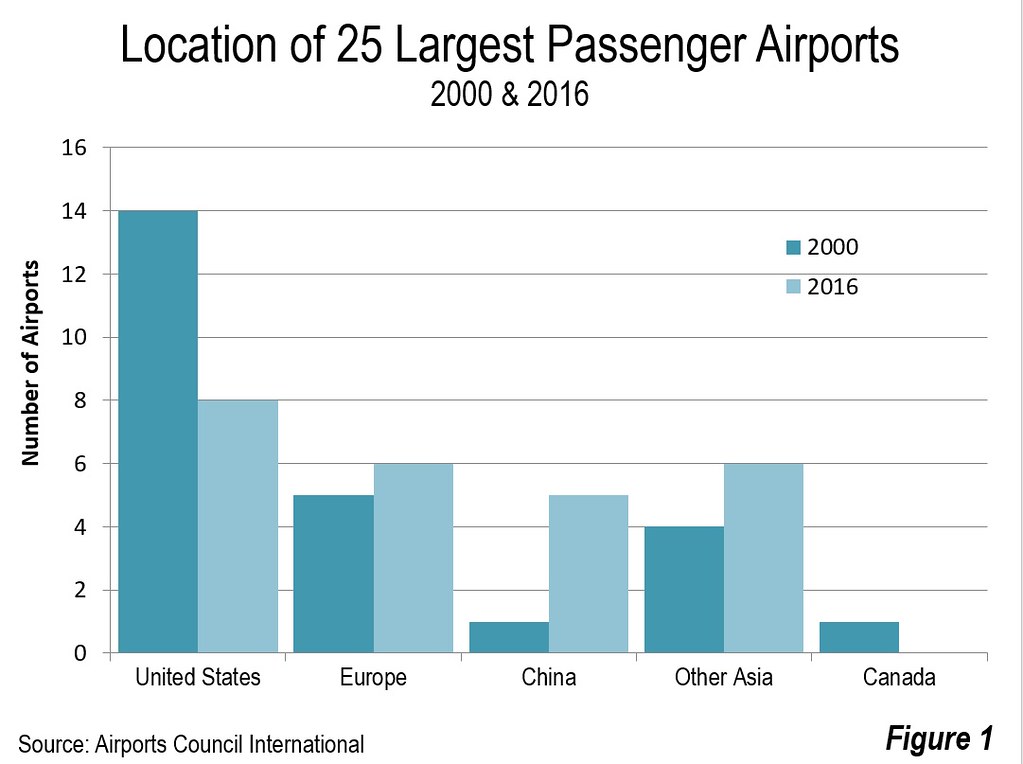
    Perhaps nothing more illustrates the shifts in the global economy than the geography of the largest airports. In 2000, world air passenger statistics were dominated by high income world economies. Among the 25 busiest passenger airports, 14 were in the United States, five in Europe and five in Asia and one in Canada, according to data from the Airports Council International and the Port Authority of New York and New Jersey.

    Among the largest airports in 2000, all but Bangkok were in a high income economies. Things have changed significantly. Today, only eight of the largest airports are in the United States, six in Europe, and five in China and six in Asia outside China. Airports in middle income countries — largely not on the list in 2000 — come from Beijing, Shanghai, Guangzhou and Chengdu in China, Kuala Lumpur in Malaysia, and Turkey’s Istanbul (Figure 1).

    The Largest Airports

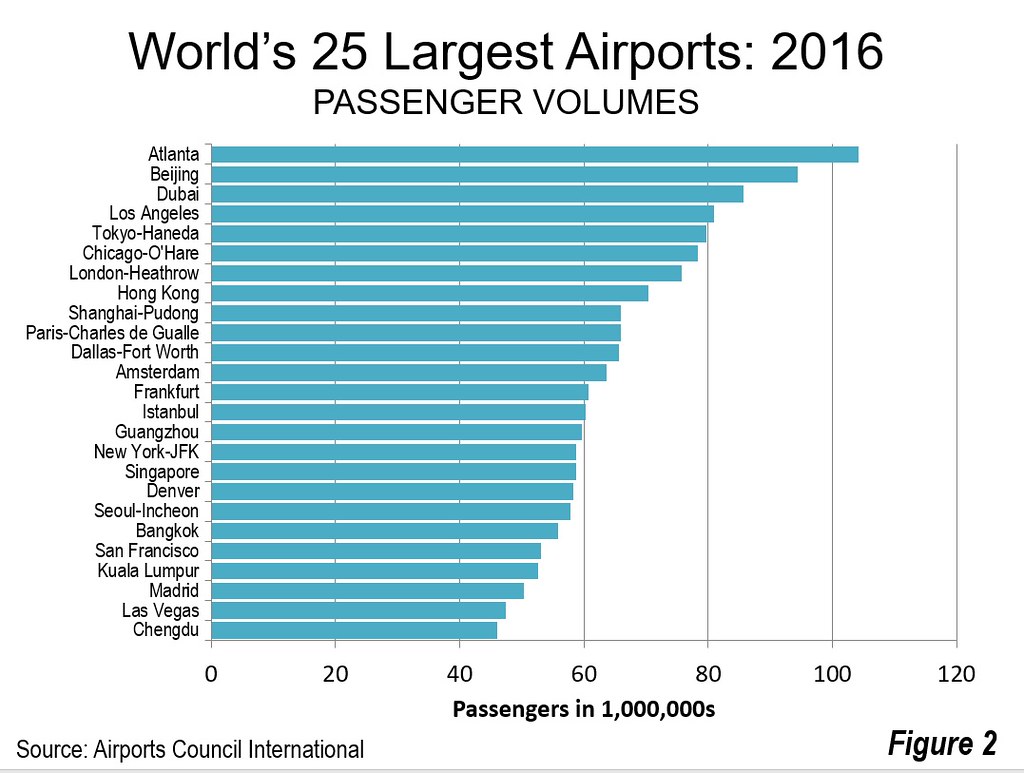
    Since 1998, Hartsfield-Jackson International Airport has been the busiest passenger airport in the world, after it replaced Chicago’s O’Hare International. In 2016, the airport handled nearly 104.2 million annual passengers. This is quite an accomplishment for an urban area that is only the 81st largest in the world. Since 2000, Atlanta’s passenger count has increased 30 percent.

    Yet, Atlanta has been challenged in recent years by Beijing Capital City International Airport, which was substantially remodeled and enlarged for the 2008 Olympics. Beijing handled 94.4 million passengers in 2016. In 2000, Beijing Capital City International was not among the world’s 25 largest airports but has experienced a 335 percent increase in passenger use. Capital City could pass Atlanta in the next few years, but will soon thereafter split air traffic with the Beijing-Daxing International Airport, due to open in 2019, probably making any number one ranking temporary. In the long run, local officials expect Beijing-Daxing to be the busiest in the world.

    The new airport will be located south of the city and far better situated for access from the entire Jin-Jing-Ji megacity complex, around which many of the current functions of Beijing are being dispersed. Jin-Jing-Ji includes Beijing, Tianjin and much of the northern part of Hebei province. Construction progress can be viewed at this location on Google Earth: 39°30′52″N 116°24′25″E (copy into the Search box or a “’Google” search will bring up the location on Google maps).

    Dubai International Airport, the world’s third largest airport, has seen its passenger traffic growth much faster than even Beijing Capital City International. Dubai saw nearly 600 percent growth from 2000 to 85.7 million passengers. In 2000, Dubai International was not among the world’s 25 largest airports.

    Los Angeles International is the world’s fourth busiest airport. LAX handled 80.9 million annual passengers, up 22 percent from 2000.

    Tokyo’s centrally located Haneda International Airport ranked fifth, with 79.7 million annual passengers. Haneda has grown strongly, up 42 percent since 2000, when it ranked 6th. During that time, Japan’s regulators have allowed a considerable increase in international flights. Haneda’s overall volume is approximately twice that of far more remote Narita International Airport, which handles most international flights.

    Chicago’s O’Hare International Airport was the world’s busiest as late as 1997, but has fallen to sixth most patronized. O’Hare handled 78.3 million passengers in 2016, with its strong United Airlines and American Airlines hubs. However, O’Hare’s growth has been modest, adding only 8 percent to its 2000 volume, when it ranked 2nd to Atlanta (see photo above).

    London’s Heathrow Airport ranked 7th in the world, with 75.7 million annual passengers. Growth was also somewhat muted, Heathrow’s volume grew 17 percent from 2000 to 2016.

    Hong Kong has experienced considerable growth after having closed its obsolete Kai Tak airport in the late 1990s. Hong Kong International has experienced a 115 percent increase in passengers since 2000 and handled 70.6 million passengers in 2016. In 2000, Hong Kong was the 22nd busiest airport in the world, compared to its 8th ranking in 2016.

    Shanghai’s Pudong International Airport experienced the largest handled 66.0 million passengers in 2016 and was not among the top 25 in 2000. The world’s 9th ranked airport opened in 1999 and is served by the world’s fastest train, a Mag-Lev (magnetic levitation) that carries passengers 19 miles (30.4 kilometers) to the Longyang Road station at a top speed of 268 miles per hour (431 kilometers per hour) during weekday peak periods. By comparison, the fastest high speed rail trains in the world will operate at up to 218 miles per hour (350 kilometers per hour) between Shanghai Hongqiao Station and Beijing starting this month. From Longyang Road station travelers can transfer to taxis or Metro Line 2 to complete the final 7 miles (12 kilometers) to People’s Park in the central business district, or to other locations in the area.

    Charles de Gualle International Airport in Paris ranks 10th, handling slightly fewer passengers than Pudong International (65.95 million). CDG’s volume is up 37 percent since 2000, when it ranked 8th in the world.

    The 11th through 16th positions include Dallas-Fort Worth, Amsterdam, Frankfurt, Istanbul and Guangzhou. Istanbul has seen its passenger volume increase more than 300 percent since 2000, while Guangzhou has exceeded 360 percent.

    The next five (16th through 20th) include New York’s JFK, Singapore, Denver, Seoul’s new Incheon Airport, and Bangkok, also a relatively new facility. Singapore has had the greatest growth, at 105 percent.

    The final five of the top 25 include San Francisco, Kuala Lumpur, Madrid, Las Vegas and Chengdu. Kuala Lumpur’s growth was more than 250 percent, while Chengdu posted the largest gain, at more than 730 percent (Figure 2).

    A number of US airports that were among the top 25 in 2000 dropped out over the next 16 years. These include Seattle, Miami, Phoenix, New York La Guardia, Orlando, Houston, Newark, Minneapolis-St. Paul, Boston, Detroit and St. Louis. All of them experienced passenger increases, with the exception of St. Louis, where traffic was down more than 50 percent, with the demise of the American Airlines (former TWA) hub. Toronto’s Pearson International also dropped out of the top 25.

    More and More Flying

    The world is flying more and more, According to World Bank data, the volume of air passengers increased 120 percent between 2000 and 2016, with a nearly 7 percent increase between 2015 and 2016. As airline use increases, significant airport construction is underway. Istanbul is building an airport intended to have the highest passenger capacity in the world (41°15′39.97″N 28°44′32.54″E), claims mirrored by Beijing-Daxing and expanding Dubai World Central-Al Maktoum International (24°55′06″N 55°10′32″E). Mexico City will replace aging Benito Juarez International (19.5°N 98.9975°W construction not yet evident), while two cities in China are also building new airports. Dalian is constructing an off-shore facility (39°06′32″N 121°36′56″E) while Qingdao (36°21′43″N 120°5′18″E)is building one in the exurbs, which will be reached from the central business districts with a trip over the Jiaozhou Bay Bridge, the world’s longest over-water bridge (25 miles or 41 kilometers). Berlin’s notoriously behind schedule Brandenburg (Willy Brandt Airport) continues to struggle toward completion (52°22′00″N 013°30′12″E). Meanwhile, with the exploding volume of passengers in Chengdu, construction is starting on a new airport more than 30 miles (50 kilometers) away (30.319°N 104.445°E).

    The rise in air traffic suggests rising affluence, particularly in developing countries, as progress continues to be made in reducing poverty. It seems likely that by 2030, the list of the largest airports will include fewer from today’s most affluent economies and many more from emerging economies.

    Wendell Cox is principal of Demographia, an international public policy and demographics firm. He is a Senior Fellow of the Center for Opportunity Urbanism (US), Senior Fellow for Housing Affordability and Municipal Policy for the Frontier Centre for Public Policy (Canada), and a member of the Board of Advisors of the Center for Demographics and Policy at Chapman University (California). He is co-author of the “Demographia International Housing Affordability Survey” and author of “Demographia World Urban Areas” and “War on the Dream: How Anti-Sprawl Policy Threatens the Quality of Life.” He was appointed to three terms on the Los Angeles County Transportation Commission, where he served with the leading city and county leadership as the only non-elected member. He served as a visiting professor at the Conservatoire National des Arts et Metiers, a national university in Paris.

    Photograph: O’Hare International Airport, by Author

  • The ‘Not Good’, Bad & Ugly of Mapping

    Today, useful demographic, real estate, and economic information is instantly accessed from your bedroom laptop. A few decades ago you would have to make a trip to city hall and wait for someone to go through hundreds of files.

    Information (data) is only as good as the source, hand entered from someone – subject to human error. Yet in reality, after 3 decades of use, mapping software — used by virtually every city and county agency — is actually getting worse not better.

    What is occurring

    To understand the decline of mapping data, let’s go back in time – three decades ago when GIS was first introduced. There were many players competing to be the leader in the industry, however, the graphic capability and speed of computers was pitiful back then. Yet even today, with much faster computers and infinitely more storage, the quality of mapping programs has declined.

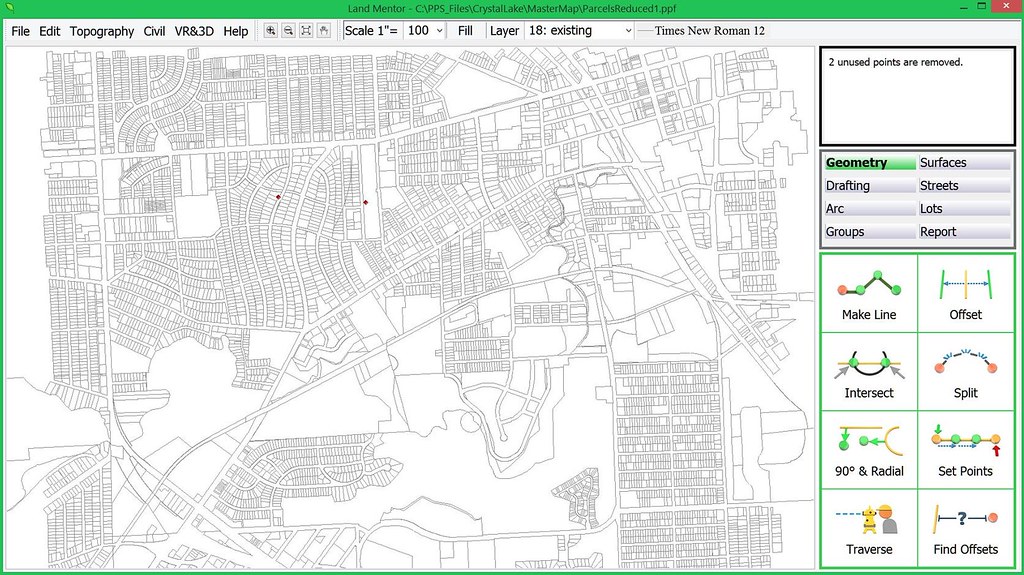
    Today’s GIS industry leader, ESRI, a company from Redlands, California, overcame speed limitations by defining parcel of land into a single ‘polyline’ which is a series of straight lines along a boundary bypassing the need to draw curves. They coined these parcels (or lots): ‘shapes’, thus a GIS ‘shape map’ is essentially the parcel information of a city.

    How can a curve be represented by straight lines? By having a series of itsy-bitsy lines drawn along an arc so that it appears as a curve, requiring a massive number of additional points to be generated.

    The problem is that in the typical city with many curved streets, a shape map would add hundreds of thousands (likely millions) of inaccurate traced points.

    Take for example this small area in Pontiac, Michigan which took over 160,000 lines to define – none of which are precise:

    Today, ESRI pretty much controls the multi-billion dollar GIS industry. There’s no intent in this article to say ESRI provides bad or good software, but to hopefully reverse a very disturbing trend in the data in which maps are based upon and why it’s counter-productive to sustainable growth.

    Ask yourself:

    • With multiple billions of dollars invested in GIS technology and mapping – most by you – the tax payer, why is the very fabric of today’s growth worse, than that of the 1960’s – before any digital technology existed?

    • Why is it that at every city council and planning commission meeting are presentations and submittals materially no different today than in the past 6 decades?

    • Why is it that the regulatory system continues to produce (actually promote) the cookie-cutter mundaneness that plagues every city?

    Why we need to go back to surveying

    At this point to understand the problem in GIS mapping, you need a short lesson on land surveying. The person in blue jeans standing on the roadside looking into the scope of the transit is a land surveyor.

    Land surveying is more art than science. A proper boundary survey requires those in the field to find the corners along the streets and nearby. The land surveyor looks for differences between adjacent site dimensions of what is recorded, if any. Using judgments based upon extensive knowledge, the land surveyor can adjust the inconsistencies and set new corners.

    Why Accuracy is Critical

    Once the actual corners of a boundary are known, the land surveyor collects all man-made improvements (stuff) on the site to determine if fences overlaps onto the neighbor’s property, or their shed encroaches within the parcels boundary. Is the home set the required minimum 10’ from the side yard or is it less? This would be a violation. This is stuff lawsuits are made of.

    How can bad data be fixed?

    Those purchasing the GIS are told that they could quickly put a map in and then later on collect accurate control points which cold be ‘rubber sheeted’ (stretched). In other words, an inaccurate map that was traced decades ago, then rubber sheeted 10 or 20 feet (or more) to be made ‘accurate’, produces results in 4 good points and hundreds of thousand bad ones. Those GIS purchasers with no knowledge of surveying somehow saw logic in this false premise.

    Are there any accurate base maps?

    Yes! For example, decades ago, Gary Stevenson the County Surveyor in Dakota County, Minnesota decided to hand key in the plat dimensions of deeds and recorded plats (site plans of developments) into a coordinated geometry system upon which land surveying and civil engineering is based upon.

    The Dakota County Surveyors office created a map, complete with parcels of land and subdivision plats that conflict with each other showing overlaps and void areas. This precision map using recorded information adjusts each parcel and plat to a common angle basis (rotation). This way a land surveyor can use the information to determine problems in the adjoining property and can make an attempt to adjust conflicts and solve them ultimately fixing the map and creating a geometrically perfect city.

    Technology that changed land surveying

    Today’s Global Positioning Systems (GPS) has a much higher degree of accuracy for land surveying applications and has made exact measurements of control points along great distances without error possible. However, with all the technology, the skill and knowledge of the land surveyor is required to work the puzzle pieces of creating an accurate base map, as well as correctly defining any property – even yours!

    Can an inaccurate map be fixed over time?

    Absolutely, but only if a city or county wanted to pay far more to fix a bad map than starting over with a good map from scratch. Today, there are far better software technologies, based upon the future of mapping without data structures designed in the past when speed was the ball and chain.

    The ‘not good’, bad & ugly of today’s mapping

    The software our firm develops is designed the same way as we did nearly four decades ago – extremely efficient with data to let the lightning fast processor work, needing very little disk space for storage and access.

    The problem in particular with the leading CAD and GIS software developers is that they have access to a massive amount of memory and disk space. This allows programmers to work with less effort.

    Throwing excessive amount of information to the disk is a quick way to write software code – why not? – you got the space.

    Efficient coding is painfully long and expensive.

    The problem with monopoly

    Today’s mapping systems have essentially the same data structure as four decades ago because they have almost no competition that forces change. This is an increasingly common problem in a tech world increasingly dominated by an ever smaller group of increasingly giant companies.

    One thing about inefficiency: For those with overwhelming market share, it’s also potentially very profitable, as Microsoft, Google, Apple and Facebook can tell us.

    Back to Basics

    It was just few decades ago that contours showing the varied organic shape of the land surface was somewhat efficient and accurate.

    With just a few hundred points collected on the ground by a land surveyor an accurate representation of the ground surface could quickly be computed and drawn by software. You could clearly see where the elevation of the ground changed direction and where walls, curb lines, or drainage ditches were.

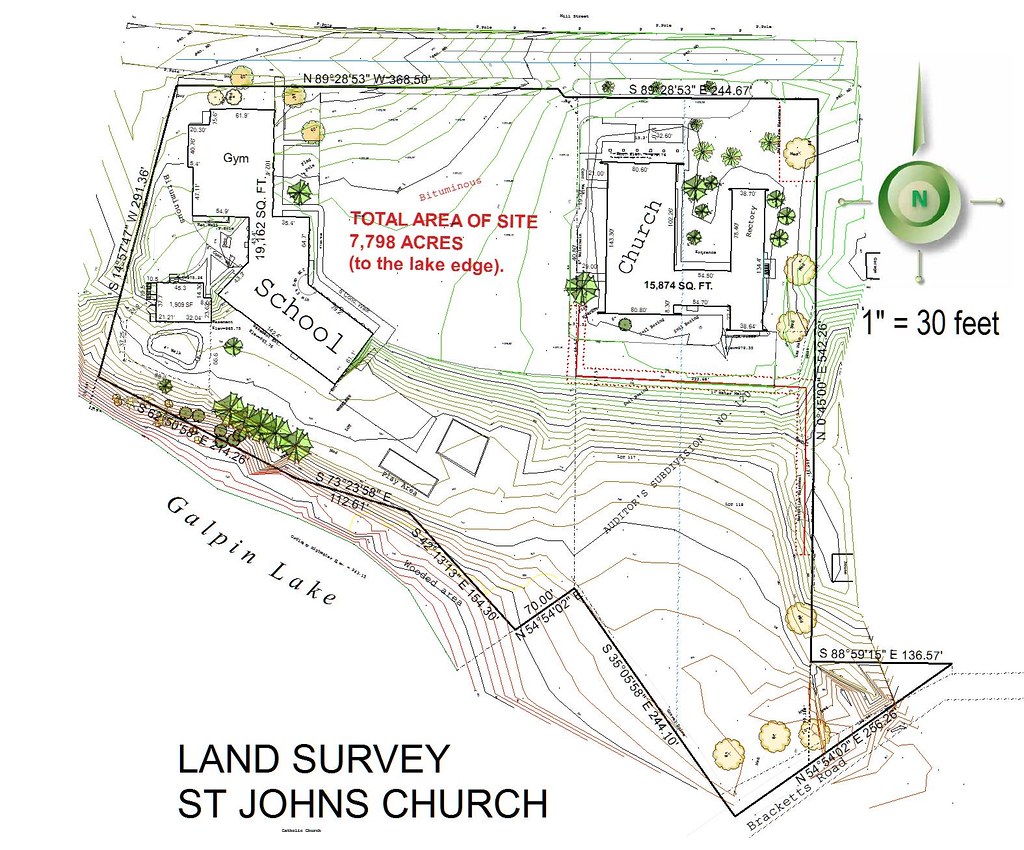
    In other words, in general, from a physical data structure perspective, there was little to be concerned with working with contours of the land. Below is an example from decades ago of an on the ground survey with all the boundary and improvements, created from a total 640 field collected points:


    The depiction above is the exact land surface essential for reconstruction and earthwork calculations. Note the contours along the street which show the fine detail of the center of the street along with contour lines that adjust at the street curb line. Because of the digital terrain model is created with only 640 total data points, all calculations such as earthwork and street redesign will be instant.

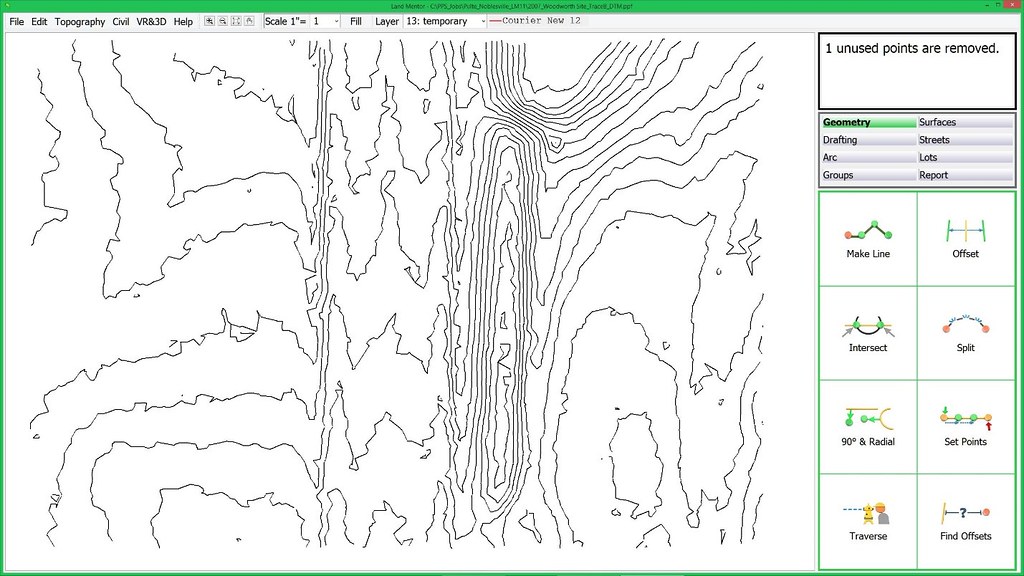
    Modern laser-based remote sensing technology allows the creation of complete topographic maps without requiring any manual labor to create as was the case in the past, or at least in theory – but not in the real world use for using the data for design and 3D application.

    Essentially the industry was really efficient until modern computers effectively threw topographic efficiency into the garbage, and producing what can be best described as ‘spastic’ jiggly contour lines as shown on this typical LiDAR map:

    The Mayors and Administrators in charge of tax payer funded contracts approving contours such as the above are not aware that this information is pure garbage, because they, nor did their staff (who should have known better) did not have this knowledge.

    With all the information and technological abilities we have today, why are these contours so awful? Because software cannot think – it can only use math. When the land is relatively flat, as most land, streets, and parking areas are, to draw a contour line when points exist within a few feet of each other, it will need to create a short line a particular direction, a few feet in length. Then it needs to determine a direction for the next short line, and ignores a trend or path and simply goes ‘to and fro’ not ‘knowing’ where to go. This of course, is because software cannot ‘know’ anything – only a person can make such judgments.

    You take the person out of the equation, and bad things like this happen.

    Can this excess data be filtered?

    Why has nobody brought this up as a key issue?

    Well, the consultants serving cities – why should they give up all that continual updating of a map to reinvent their services offering accurate consulting requiring the services of a Professional Land Surveyor instead of CAD and GIS technicians? Virtually every convention, periodical, and blog that serves government agencies depend heavily of the advertising dollars of the current GIS and CAD leaders – they would never print a series like this which could damage their relationships with the enormous companies and cut their income stream.

    We can reverse the damage, but it will take key decision makers in government to stop writing tax payer funded checks for substandard, wasteful, and just plain bad – mapping data.

    Rick Harrison is President of Rick Harrison Site Design Studio and Neighborhood Innovations, LLC. He is author of Prefurbia: Reinventing The Suburbs From Disdainable To Sustainable and creator of LandMentor. His websites are rhsdplanning.com and LandMentor.com

    By Karen Capria (esri.com) [Public domain], via Wikimedia Commons

  • Las Vegas Lessons, Part II

    A couple weeks ago I wrote some thoughts after a recent visit to Las Vegas. Most of what I wrote about concerned the Strip and downtown areas of the city, without question the two most recognizable and most frequently visited parts of the region. But in a rapidly growing region of nearly 2.2 million people (the Las Vegas Valley held only 273,000 residents in 1970, meaning it has increased its population by 8 times since then), clearly there’s much more to the region than its most iconic and visible parts. Here I’ll offer some thoughts on the broader region, its built environment, its economy, and thoughts on its future.

    First, for those tl;dr readers who won’t click through to read Part I, here’s a quick summary of it:

    • The Strip and Las Vegas are two entirely different entities.
    • Strip is a great pedestrian experience.
    • The Strip is an exclusively private space.
    • Downtown Las Vegas is quite different from the Strip.
    • There are poor linkages between Downtown Las Vegas and the Strip.
    • The north end of the Strip is plagued with high-profile failed projects.

    Again, as someone who’s “part urbanist, part sociologist, and part economist,” I offer some observations and thoughts on the rest of the city and region.

    The balance of the city and region consists of unremarkable suburbia. This is probably evident to anyone who puts any amount of thought into it, but it does bear repeating. Step away from the Strip and downtown, and Las Vegas’s built environment is amazingly consistent: according to the U.S. Census Bureau American Community Survey in 2015, the metro area is about 60% single family detached homes, with about 4,000-6,000 people per square mile throughout. There’s no sudden or even slight gradation in density as one commonly finds in many eastern cities; the city quickly establishes its suburban character and spits it out relentlessly. And, I’ve been struck on this visit and previous ones at how similar Vegas looks to suburbia in other places. Yes, there are newer, upscale areas that stand out (Summerlin comes to mind), but if you replace Vegas’s palm trees with oaks and elms, it looks a lot like suburbia anywhere else in America, except with Spanish tile roofs. Similarly…

    Nothing in the region is old; the region will have to learn the art and skills of redevelopment. Fifteen years ago when I did some consulting work in Las Vegas, I thought it was weird when city officials referred to West Las Vegas, just northwest of downtown, as “historic”. Most of the homes and businesses there were built in the ’50s and through the ’70s, and in my mind they were the kind of structures that were just beginning to establish some character. But when the median year of structure built in the region is 1995 (the same for Chicago’s metro is 1967), you simply won’t find the pre-WWII type of development that is called historic in other places. There will come a time when the structures of the Las Vegas Valley will be viewed as obsolete and inconsistent with modern living (whatever that is), and the region will have to undergo one of the more difficult transitions for municipalities — shifting from easy greenfield development to complex redevelopment.

    Low wage and low skill jobs proliferate in the region. Like the unremarkable nature of the suburban pattern, here’s another conventional observation that bears repeating. As one would expect, the accommodations/food services employment sector dominates in Las Vegas — nearly one-third of all Las Vegas workers work in hospitality. Those have traditionally been low-paying jobs, and that’s true of the region today. Overall, 44% of Vegas workers earn less than $40,000 a year. Contrast that with Austin, a similarly-sized and similarly-fast-growth metro, where only 9% of workers are employed in accommodations/food services, and just 34% of workers earn less than $40,000 a year (and consider that Austin is a college town that has many recent grads, possibly pushing incomes downward). My concern for Vegas in this regard is that there is growing research that suggests that the kind of work automation that decimated much of the Rust Belt’s manufacturing jobs may now enter a phase that targets food services, administration and office support, sales and even retail jobs — precisely the kinds of jobs that many new Las Vegas residents moved there to occupy. Las Vegas workers could be quite vulnerable to the kinds of challenges that reshaped the Rust Belt.

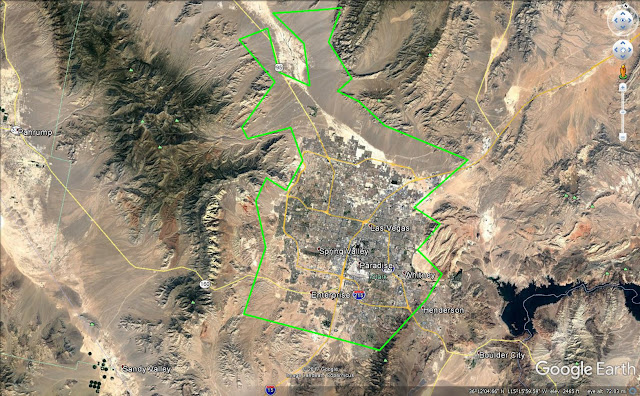
    The Las Vegas Valley is nearing its physical limits. According to Wikipedia, the Las Vegas Valley is a 600 sq. mi. basin surrounded on all sides by mountains. I don’t know the precise delineations between flat and inclined topography, but a look at Google Earth tells me the region is near its limit:

    I could be wrong, but it looks as if Vegas has available land to the north and southwest, and the Valley might be approaching 90% developed. It could be that the region hits the wall (literally) within the next 10 years. What will that mean for a region that is as low-density suburban as this one? Will the Valley’s communities have the ability to shift their focus inward? Time will tell.

    What happens to the region if tourism… changes? Wikipedia’s Atlantic City page has a good explanation for the decline of tourism there after World War II. It connects its decline with the car; prior to the war, people generally traveled to Atlantic City by train and stayed for a week or two. Cars made people more mobile and they made shorter visits. Suburbanization and its creature comforts, like backyards and air conditioning, also took visitors away from AC. The final nail in the coffin was affordable jet service, opening up vacation spots like Miami, Havana, and the Bahamas (and Vegas) in the 50’s and onward. I don’t know what challenge is out there for Vegas now, but what will be crucial to the region’s survival is how it responds.

    What impact will climate change have on a desert resort city? When flying into Las Vegas I couldn’t help but notice the low level of Lake Mead, just southeast of the city. It was clear from the air; bleached rock that had once been under water now exposed. Las Vegas is blessed to have one of the largest reservoirs in the nation at its back door, but could continued drought and increased demand for water undermine everything? The Strip’s casinos tout themselves as leaders in water conservation, but whether their efforts will be enough as conditions worsen is an open question.

    Las Vegas is truly a unique place. It’s a place that seems to serve a certain time and space, and is concerned about now more than its future. But I’m sure if the region squints its eyes and looks, it will see the future is getting closer. It will need to figure out how it will be sustainable as that future approaches.

    This piece originally appeared on The Corner Side Yard.

    Pete Saunders is a Detroit native who has worked as a public and private sector urban planner in the Chicago area for more than twenty years.  He is also the author of “The Corner Side Yard,” an urban planning blog that focuses on the redevelopment and revitalization of Rust Belt cities.

    Photo by Stan Shebs [GFDL, CC BY-SA 3.0 or CC BY-SA 2.5], via Wikimedia Commons

  • Las Vegas Lessons, Part 1

    I spent much of last week in Las Vegas for the International Council of Shopping Centers’ RECON 2017, the world’s largest real estate convention. It’s a gathering for developers, brokers, property owners, retailers, architects, landscape designers, construction companies, municipalities and more to get together to discuss real estate possibilities, in the one city that owes its very existence to aggressive real estate ventures.

    I had a good time, at least as much as I could; being there for a convention is far different from being there for pleasure. In fact, I’ve been to Vegas many times before, but always within a business context and never for pleasure. Also, I had not been in about 15 years, which is important for two reasons: 1) in Vegas time, with the rapid pace of development there, 15 years is an eternity; and 2) it completely predates the establishment of this blog, so I can include my thoughts on the city in this forum.

    In that vein, here’s a Corner Side Yard take on the Sin City — part urbanist, part sociologist, part economist, all observational — that details my thoughts on a truly unique place.

    The Strip and the city of Las Vegas are two entirely different entities. I think this subtle distinction, which few outsiders really know about, is key to understanding Las Vegas’ growth and development. Hal Rothman’s book Neon Metropolis, published in 2003, notes that the Las Vegas Valley grew in three distinct phases: the Union Pacific Railroad, the construction of Hoover Dam and military investment enter the picture prior to 1945; organized crime arrives and Nevada legalizes gambling, driving investment and perceptions through the 1960s; and the passage of two Corporate Gaming Acts in 1967 and 1969, which drew corporate investment into the area (partly as a means to dilute criminal investment). In that second phase, and continuing into the third, casino developers sought to avoid city development and permitting regulations by setting up outside of the city boundaries, which is at Sahara Avenue on Las Vegas Boulevard (aka the Strip). What most people recognize as Las Vegas is actually the unincorporated communiites of Winchester, Paradise and Spring Valley — significantly sized communities of their own, but under the jurisdiction of Clark County, Nevada. The county, which has two-thirds of Nevadans within its boundaries, takes a far more laissez-faire approach to development than the city of Las Vegas does, and directly reaps the benefits of development without having to pass through the city. That being said…

    The Strip is a great pedestrian experience. Anyone familiar with the Strip knows that a stroll of the roadway is an experience unto itself. From north to south, the Strip builds as a visual spectacle beginning at the Stratosphere toward Circus Circus and continuing to the Wynn and Encore, before reaching a crescendo at the intersection of the Strip with Flamingo Road, where the Bellagio, the Venetian, the Flamingo, Caesar’s Palace, Paris, and Planet Hollywood converge (see the picture above). The dense concentration of resorts continues southward past the MGM Grand to include the Tropicana, the Escalibur, the Luxor, and Mandalay Bay. Architects and urbanists Robert Venturi, Denise Scott Brown and Scott Izenour wrote of the Strip in their 1972 book Learning From Las Vegas, and one of their criticisms at the time was the isolation of the resorts via massive parking lots. If anything, the developers should be commended for revising their thinking on the Strip by creating the pedestrian environment. Yes, it’s gaudy, yes, it’s a jarring juxtaposition of architectural styles, but it does what so many other cities still fail to do — bring the experience right to the street. A great addition to the Strip is the usage of escalators and pedestrian bridges to minimize pedestrian interaction with the high-traffic Strip, serving a dual purpose as entrances into connected resorts. Which means…

    The Strip is an exclusively private space. It might be better to think of the Strip as the world’s largest mall, because its private management reminds me of enclosed shopping centers, writ very large. It’s clear that every inch of the Strip has been thought out as a way to collect and divert traffic into the resorts — the Monorail stops, the signage on the pedestrian walkways. If you’re looking dial down the Strip’s intensity through quiet public open spaces, you’re out of luck. The best you can do is find something inside one of the many resorts.

    Downtown Las Vegas is quite different from the Strip. Continue northward on Las Vegas Boulevard and eventually you will enter downtown Las Vegas. This is where the earliest hotels and casinos were established, the ones that drew visitors in by railroad as opposed to automobile. Resorts here are smaller and less overwhelming. It has a long-standing reputation for being a little more downscale, even seedier, than the Strip further south, but the city has worked hard to clean up its image and make it a fantastic destination in its own right. The Fremont Street Experience, an open-air pedestrian mall with a super-sized LED canopy display, unites several of the downtown casinos with an experience that’s completely different from the more well-known Strip. However, downtown Las Vegas probably maintains a secondary status in the Las Vegas Valley because…

    There are poor linkages between downtown Las Vegas and the Strip. The Fremont Street Experience in downtown Las Vegas sits about two miles north of the city’s southern boundary, where the Stratosphere hotel and casino are located. Downtown is about three miles north of where the real action and activity begins near the Wynn and Encore resorts. In between are the kinds of warehousing, light industrial, marginal commercial and grimy multifamily structures often found on the outskirts of downtown areas. There are wedding chapels, auto repair shops, convenience stores, and the like. There’s nothing that easily draws visitors between the Strip and downtown. Why?

    The north end of the Strip is plagued with high-profile failed projects. The Fountainbleau Resort Las Vegas and Echelon Place stand out as two high-profile casualties of the Great Recession, proposed just as the Strip was developing a continuous string of modern resorts that would reach from the Strip all the way into downtown. The Fountainbleau, a $2.8 billion project first proposed in 2005 with the second tallest structure in the Las Vegas Valley, managed to reach 70 percent completion before construction stopped in 2009 when the project went into bankruptcy. The $7.2 billion Echelon Place was announced in 2004, and the implosion of the Stardust Hotel and Casino, which it was to replace, happened in 2007. However, there were fits and starts in its construction due to the economy, until the developers sold the site in 2013. The new owners are proposing a new venture called Resorts World Las Vegas, but that project too has been plagued with delays. It’s clear that had these two projects been developed, they would have had a catalytic impact on further development northward toward downtown.

    That’s enough about the city and the Strip; I’ll follow up soon with more thoughts on the overall region’s built environment, economy and potential future.

    This piece originally appeared on The Corner Side Yard.

    Pete Saunders is a Detroit native who has worked as a public and private sector urban planner in the Chicago area for more than twenty years.  He is also the author of “The Corner Side Yard,” an urban planning blog that focuses on the redevelopment and revitalization of Rust Belt cities.

    Photo by Carol M. Highsmith [Public domain], via Wikimedia Commons

  • The Coming Democratic Civil War

    Even before the election of Donald Trump, and more so afterwards, the dysfunction of the GOP has been glaringly obvious. Yet, despite the miserable favorability ratings for both Trump and the Republicans, those of the Democrats, notes Gallup, also have been dropping, and are nearly identical to that of the Republicans.

    What gives? Simply put, the Democrats seem to know only what they are against — Trump — but have provided no clear sense of where they want to take the country. The party, and much of the nation, despises Trump, but there does not seem to be any huge pent-up national demand for the Democrats to take over — at least, not yet.

    Part of the problem is major chasms underneath the absurd faux solidarity of the “resistance” movement on the left. These have been largely hidden in the increasingly uniformly pro-Democratic media. These differences extend beyond personal fiefdoms or stylistic differences. They reflect deep divides in terms of class and geography, and will not be easy for the party leadership to reconcile.

    The gentry vs. populists

    The two most remarkable campaigns of 2016 — those of Trump and Bernie Sanders — were driven by different faces of populist resentment. Yet, increasingly, the Democrats’ populist pretensions conflict with their alliance with ascendant “sovereigns of cyberspace,” whose power and wealth have waxed to almost absurd heights. Other parts of their upscale coalition include the media, academia and the upper bureaucracy.

    This affluent base can embrace the progressives’ social agenda — meeting the demands of feminists, gays and minority activists. But they are less enthusiastic about the social democratic income redistribution proposed by Bernie Sanders, who is now, by some measurements, the nation’s most popular political figure. This new putative ruling class, notes author Michael Lind, sees its rise, and the decline of the rest, not as a reflection of social inequity, but rather their meritocratic virtue. Only racism, homophobia or misogyny — in other words, the sins of the “deplorables” — matter.

    The Washington Post, owned by Jeff Bezos, the world’s third-richest man, reflects this socially liberal, but oligopolistic, worldview. Last spring, Bezos worked assiduously to undermine Sanders’ campaign, then promoted Clinton, and now has become a leading voice in the anti-Trump “resistance.” The gentry wing of the party, which dominates fundraising and media, as the opposition to Sanders reveals, likes its money. The tech community is famously adept at avoiding taxes.

    How long can this odd pairing of socialism and oligopoly persist? There are growing sentiments on the left to begin confiscating some of the massive wealth of the tech firms. Bank of America’s Michael Harnett recently warned that continued growth of stock market wealth in a handful of tech stocks “could ultimately lead to populist calls for redistribution of the increasingly concentrated wealth of Silicon Valley.”

    Read the entire piece at The Orange County Register.

    Joel Kotkin is executive editor of NewGeography.com. He is the Roger Hobbs Distinguished Fellow in Urban Studies at Chapman University and executive director of the Houston-based Center for Opportunity Urbanism. His newest book is The Human City: Urbanism for the rest of us. He is also author of The New Class ConflictThe City: A Global History, and The Next Hundred Million: America in 2050. He lives in Orange County, CA.

    Photo by AFGE, via Flickr, using CC License.